On the second floor of the Metropolitan Museum of Art, there is a painting by Léon Frederic called The Three Sisters. A triad of young girls—the eldest no older than nine, the youngest around five—are quietly peeling potatoes, hemmed by an impressive gold frame. Their brilliant matching red frocks draw one’s attention like moths to a streetlight. In Western art, women’s portraits tended to confer importance to the men in their lives, like fathers, husbands, or fiancés, and so I was surprised to realize that there are many paintings of sisters at the Met. It seems strange that great artists gave up canvases to depict these bonds between women, but the more that I considered it, the more I found that sisters have long been objects of fascination.
In 1868, Louisa May Alcott published the first volume of Little Women, and some 150 years later, the fifteenth season of Keeping Up With the Kardashians was released on E!. In the century or so bracketed by the March sisters and Kim, Khloe, and Kourtney, stories of sisterhood have been chaperoned through time and space, becoming fixtures in our cultural consciousness. Art, literature, and film have defined a general impression of sisterhood that can either reinforce or dismantle our perceptions of women and their inner lives; for instance, while Alcott’s view of sisterhood was plural and dynamic, others have since succumbed to reductive stereotypes. The variety of sister tropes now include fetishized virgins, catfighting divas, and creepy spinsters. In any case, these renditions of sisters make them out to be like what wolves are to nature documentaries: magnetic, beguiling, inscrutable—even sinister.
Sister tropes now include fetishized virgins, catfighting divas, and creepy spinsters.
Imagining the wee girls in Frederic’s painting, I am struck by how the empty room in which they labor feels like an entire world of its own, where an unspoken harmony rests gently between them so that they are in lockstep with one another. Like a snowglobe, we want to jostle the frame and shake out what secrets have crystallized their bond. No one knows who the subjects of The Three Sisters were, or whether they even existed, but every time I visit the museum, I check in on them. Over the course of my visits, I have begun to wonder—what is it about sisterhood, as a particular code of feminine bonding, that has arrested our culture’s attention for so long?
I don’t have a sister. I have an older brother instead, who was my closest friend and ally growing up. As a result, most of my understanding of what it would be like to have a sister came from movies or literature, and revolved around the lessons of girlhood that were shared by young women in domestic spaces. These covens were populated by beautiful buttoned-down white girls who educated one another in the crucial lessons of Femininity 101: makeup, parties, bras, torturing boys, and self-hatred. “Sister Stories,” as we might call them, almost always star women who are young, pretty, and notably quiet, performing all of the idealized traits of femininity to the nth degree. They show us how these traits are taught and learned, particularly in adolescence. As a tomboyish child, I felt pulled in two directions—against the stereotypes of docility that I saw on TV, and simultaneously towards them, fearing that I must be inadequate for not knowing how to be a proper girl. I found surrogate sisters in pop culture; the Olsen twins’ bevy of straight-to-VHS buddy movies taught me how to plan slumber parties and inspired every fashion choice that I sported in kindergarten (bandanas, cargo pants, beaded chokers, etc). On long car rides, I restaged Passport to Paris in my mind, parachuting in as the ultra-cool triplet. I thought that if I had a sister, she could teach me how to “do” femininity, a task that seemed far more vexing to figure out on my own.
I thought that if I had a sister, she could teach me how to ‘do’ femininity.
In 1999, Sofia Coppola made her pink-hued adaptation of Jeffrey Eugenides’s novel The Virgin Suicides. Its heroines are the Lisbon Sisters—Cecilia, Lux, Mary, Bonnie, and Therese—and they are patron saints in the pop cultural cult of sisterhood. Veiled from the corrupting outside world by their parents, they become conspicuous objects of scrutiny to four local boys, and it is from this watchful gaze that the sisters’ mythology coheres. The girls are diaphanous figures ripe for subversion, unified by their shimmering blonde hair and matching Victorian nighties that are just fragile enough to suggest a thinly-repressed sexuality quivering beneath. Being somehow both virginal and suggestive, they embody the peak patriarchal fantasy of young women. By keeping themselves locked away from the outside world, it is as if this femininity is totally pure and innate—like they were just born this way. The protection of their chastity is also inextricable from their whiteness, which so often operates as a code for both innocence and racial purity. The Lisbons, and the hereditary model consolidated by their sisterhood, reproduce eugenic fantasies of gender and race unfettered.
“As teenagers, we tried to put the pieces together. We still can’t,” muses one of the boys in a voiceover, the four of them staring up at the Lisbon house from the opposite curb. “Now whenever we run into each other at lunches or parties, we find ourselves going over the evidence one more time. All to understand those five girls.” The boys cut out the girls’ yearbook pictures and collect their hairclips and plot to free them and know them and have them for themselves. Sisterhood is crucial to the Lisbons’ mythology because it makes them appear uncorrupted, and thus corruptible. It also flattens them into a recurrent pattern where they could each replace one another, as if in a circle.
The Lisbon home is like a dollhouse, and the sisters are the unreal playthings that interlopers mobilize to satiate their imagination, blank canvases onto which viewers can project their fantasies. They live, and ultimately die, for public amusement, their hallmark trait being their sameness, their flatness, their reproducibility. Today, the Kardashians are steeped in the same paradigm of voyeurism, on steroids. We are not, in this case, watching from the curb in the steamy Michigan summer; instead, the omnipotence of reality television and social media have turned us into tenants of their Calabasas mansion. The Kardashians look and act so similar that their sisterhood is like a shiny accessory, and we are a swarm of magpies pulled towards their empire of TV shows, Snapchat stories, makeup, and merchandise. Keeping up with the Kardashians is centered around the home; the sisters go out to shop or party, but they spend most of each episode standing around an immaculate marble kitchen and plotting against each other. The show is about women, but pivotally, it is about women whose lives revolve around the domestic sphere, where their identities are defined by being mothers, daughters, and sisters; even when they accrue status as entrepreneurs, it hinges on their relationship to one another, to their image as Kardashians and not as individuals.
Back at the Met, I contemplate what The Three Sisters means in the shadow of Sister Stories today. Surely, these shows and movies don’t give voice to the depth of character, the dimension of dreams, and the breadth of bonds passing between these young companions. Virginia Woolf wrote in A Room of One’s Own about how underexplored women’s friendships have been in fiction; Sister Stories are a spin-off of this struggle for representation, penetrating the hidden stories cloaked behind the private sphere. With the sisters dressed so handsomely to peel potatoes, the painting has a performative quality to it, and yet there’s no observer in the picture—there isn’t even furniture in sight. The primary relationship of these young girls appears to be to one another.
We rely on the male gaze to see women, even when men are not central to their stories.
Maybe this is what storytellers find so perplexing about sisters—that they cannot conceptualize a world in which women rely more on each other than they do on men. Where notions of female friendship, love, or solidarity have seemed too radical for our culture to grapple with, we instead access the bonds between women through sisterhood, and find an easy way to reroute women and girls back to the heterosexual, patriarchal, nuclear family. Like the boys peering in at the Lisbon girls, we invent stories to pacify us, stories that resonate with our common beliefs about femininity. We rely on the male gaze to see women, even when men are not central to their stories. We augment and magnify the mysteries of sisterhood, and then deescalate our fears by revealing that at the center of the myth, our protagonists simply default to cultural expectations.
Sister Stories imagine that women obey the codes of their gender even behind closed doors, and yet the March sisters of Little Women defy this trope. The Marches have endured the passage of 150 years perhaps because of how precisely textured they are; each with their own distinct personality and ambitions, Meg, Jo, Beth, and Amy embody the adventuresome qualities that we are not used to seeing in representations of sisterhood—qualities that were radical in their era, and remain radical to this day. When readers step into Orchard House in the 1860s, we discover a home that is fully alive, whose female occupants might be shouting, playing, working, studying, or creating, can be messy, irreverent, flawed, and crude, and are bonded by their fierce love for another, rather than notions of sameness. Meg and Jo work to support the family (a helpful reminder that low-income women have always worked, even before Betty Friedan): Meg teaches and Jo writes, while Beth plays the piano, and Amy cultivates her prowess as an artist. The sisters could not be more different from one another and although they bicker, they still find ways to get along. When Amy burns Jo’s manuscript, she is overcome with guilt—Alcott shows a mutual respect for ambition in both sisters, even if what they aspire for is ultimately different. Though Little Women is a 19th century novel, perhaps it still feels more modern than the supposedly “unfiltered” Sister Stories on reality TV. The whole of the March family is worth the sum of its parts, as opposed to other Sister Stories where women are only valued as an essentialized total. Even though Alcott’s book revolves largely around their childhood home, their domestic lives offer an alternative to gender roles rather than their reinscription.
Gloria Steinem has said that Alcott’s book was “a world in which women talked about everything” and is one of the rare examples of a story about girls who want to be women, and not women who want to be girls. It has inspired a small army of modern feminism’s most crucial voices, from Steinem to Simone de Beauvoir to bell hooks. And yet if Alcott’s book has had this kind of power, why have we spent the last century and a half being force-fed stories that contradict her dynamic, feminist outlook? Today, so many Sister Stories tend to be about women who are infantilized, frozen in a pose of stock femininity and whiteness that is pacified by being beautiful and doing nothing. By being sutured to the family unit, they are tacitly bonded to domesticity and premanufactured destinies. The March sisters each had their own desires and specific, individualized outcomes, but in other Sister Stories, each sister serves more or less the same function. Perhaps what I find the most frustrating about these tales is their obsession with uniformity, perpetuating the notion that women are all the same, and thus consolidating a group ethos of what it means to be “authentically” female. The onscreen family reproduces feminine one-dimensionality like a gene, passing down and naturalizing the tropes that feminists have fought to dismantle.
Greta Gerwig’s adaptation of Little Women is the first to lean with all of its weight into subversive ideas.
Popular culture has struggled to come to terms with representing feminism and often goes for watered down stories about “girl power” that do more to subdue rebellion than stoke it. Little Women was adapted for the screen six times by men before a woman, Gillian Armstrong, landed in the director’s chair in 1994, but even then, the film’s acknowledgement of Alcott’s politics was fairly tepid. As feminism has become an increasingly mainstream ideology, the newest adaptation of Little Women directed by Greta Gerwig is the first to lean with all of its weight into subversive ideas about women’s obligations, class, gender performance, ambition, solidarity, and all of the transgressive heft of Alcott’s novel. The film bathes the sisters’ younger years in a warm glow, but also takes care to flesh out each of their lives as young women pursuing dreams on their own. In doing so, this adaptation questions whether Jo has to marry and why Amy wants to, and explores the fruitful fulfilling power of women’s creativity. Whereas other versions end with Jo’s betrothal or wedding, Gerwig’s film offers Jo’s novel as the peak of her achievements, inspired by her sisters and mother. The family’s bond is not only inwardly transformative, because like the real Alcott family, the Marches volunteer, donate to the poor, and open an integrated co-ed schoolhouse. Gerwig’s film takes up sisterhood as a utopian model for a world where women care for one another and are the source of each other’s strength, where autonomy can be more fully realized, and where individuality and difference are not a sin. Little Women drives its heroines toward independence, not dependence, and so asks us to question the roles that we are used to seeing sisters play.
Over the shoulder of the eldest girl in Frederic’s painting, there is a glimpse of a hallway and a set of stairs beyond it, flooded with light. We can see through the door—it is open. I wonder where those sisters went.
Esme and Ismer have a game they play at dinner. Esme looks at the table and memorizes everything—the silverware, the position of the steak, the saltshaker, and when she closes her eyes Ismer moves something, slightly. To the left, to the right, into his lap. Tonight Ismer switches their wine. Esme notices a lipstick stain on his glass.
After dinner they flop onto opposite ends of the couch, looking at their ventless fireplace, both thinking, separately, about what they will do that evening. For the entire day Ismer had been thinking of going dancing, ever since he overheard his colleague talking about salsa classes as a way to overcome anxiety. Ismer pictures Esme moving her body around under a dim light with her eyes slightly closed, smiling softly to some sort of rhythmic music.
They’ve been together for seven years and have never gone dancing. In college, Ismer went out, and Esme stayed in. Recently, Ismer goes out, and Esme stays in. Ismer isn’t a rabid extrovert or wild pleasure seeker in any sense, but the idea of going dancing for the sake of it—especially with Esme—seems exciting, perhaps even reckless, something they could think of next week, in fond remembrance of a night when they let loose.
“Do you want to go dancing?” Ismer asks.
Esme shifts her weight on the couch. She is pleased that Ismer asked, but feels vulnerable answering. For a few weeks, Ismer’s late-night office work has been distancing, and Esme feels like they need something. But the question is out of the ordinary. Why does he want to go dancing—for her benefit? Does he think she’s bored at home? The last thing she wants is to feel pitied, or like he’s “taking her out” to be aired. She does want to go dancing, though.
The last thing she wants is to feel pitied, or like he’s “taking her out” to be aired. She does want to go dancing, though.
“Is that what you want?” she asks. “I would if you want to.” She sits up, her tone lifts, but she makes sure that her preference isn’t clear from her voice alone.
Ismer thinks of Esme in the past as a reference point. She’s declined going swimming in the river, sliding down banisters, role-playing—specifically his wounded- civil-war-soldier-and-nurse fantasy—driving without maps, and cigarettes. He thinks of her gentle disposition, her attentiveness to safety and to him.
If he says “yes” she might be put in a position to accommodate him. He wants to prevent a compromise. Does he love her? Of course he does. Because of her he can be the most perfect version of himself: considerate, safe, and responsible with each decision and its impact. If she isn’t certain about dancing, it is not worth pursuing.
“I would only be doing it if you wanted to,” he says.
It is as though the lexis of their feelings is a separate creature within the house. Like a fat cat that holds all their secrets and stolen glances. Howling, obese, and grumpy, the keeper of their true feelings, bursting with things that want to be said.
Esme slumps. Ismer doesn’t really want to go dancing, she thinks, and if we go it won’t be fun for the both of us. Ismer thinks I’m a drip, she thinks. Though dancing would be entirely out of her routine, it was something she had recently wanted to do. In fact, she had been waiting for Ismer to suggest it.
If she were to say yes, and persist, as she wants to, she would feel foolish. She knows nothing about dancing, and therefore if Ismer isn’t enthused at the prospect, who is she to say otherwise? Like the time they made breakfast smoothies and couldn’t impose upon each other the different sets of fruits they separately enjoy, sticking them in some dumb strawberry-banana limbo.
Esme fills the empty rooms of Ismer with a sense of wonderment. He wants to value the things she values. He wants to do the things she wants to do. He wants to buy her a scrap of fabric, a ruby ring, a token of endearment that solders them together.
“No, I think we want to stay home,” Esme says sheepishly, watching Ismer closely.
“All right,” Ismer says. He gets up and takes a deck of cards from the coffee table, gesturing toward it to ask if she wants to play a game.
“Yes, sure, let’s play blackjack,” Esme says.
She doesn’t want to play cards. They play blackjack every night.
Esme wonders if, eventually, while appearing to be gracious to each other, they will end up spending weeks, or months, or maybe even many years, inside their house, in separate rooms, looking out from separate windows and desiring a thing, a person, or a place that is very far away.
Ismer is pleased. He did well, he thinks. He suggested something that his wife enjoys, and therefore he can too. That’s the best he can do. The wind comes in from the open window and gently shivers the deck of cards. The both of them go back to being floppy on the couch.
That night they go to bed silently, feeling some form of contentment. Ismer watches Esme sleep, and swoons at the way her hair moves when she exhales a dream. A dream in which she is dancing.
Children growing up in the 2010’s may be more immersed into the stories of superheroes than any generation before them. Marveljust closed out “Phase 3” of its blockbuster series of Avengers and friends movies. DC has taken over the CW with hit shows like Arrow and The Flash, with Marvel taking over streaming with Netflix exclusives and upcoming series on Disney+.
Despite the wealth of superheroes dominating our screens, it can be hard for Gen Z or “Zoomers”—the generation after Millennials, born in the late 1990s—to find any they can relate to. While they can understand many of the problems the superheroes face in The Avengers and Guardians of the Galaxy, none of these ultimately powerful and privileged figures are truly speaking to them.
There is a hero telling their story, though. She just hasn’t hit the screens yet. Kamala Khan, or Ms. Marvel, is the hero that Zoomers needed, and she is the hero that zoomers should be reading and looking up to.
She is, in short, the voice of a generation.
Khan made her first appearance in an August 2013 issue of Captain Marvel, and was later given her own solo series in February 2014. She was part of a wave of diverse superheroes Marvel debuted at the time, including a female Thor and a Black Captain America. Khan was special, though, as she became the first ever Muslim character to star in her own comic series.
The narrative about Kamala upon her introduction focused mainly on her identity as a Pakistani-American Muslim. And while she does prove to be representation for a usually underrepresented group, she truly gives representation to a much bigger group. She is, in short, the voice of a generation.
Though Kamala’s Muslim identity is important to her (and important in the comic), Islam plays a comparatively minor role in her life She is a typical high schooler with (mostly) typical high school problems: she wants to fit in, make friends, impress her crush and get good grades, all while trying to save Jersey City from a zany group of supervillains—villains that may feel familiar for today’s youth.
In Generation Why, the second volume of Ms. Marvel, Kamala faces off with a holographic, robot-building supervillain named “The Inventor.” She discovers that The Inventor is powering his robots with energy extracted from the bodies of teenagers. When attempting to rescue the teens, she learns that they voluntarily chose to sacrifice themselves to The Inventor to become human batteries.
The reasoning for this, as the villain explains, is because he convinced the teens they were a scourge on our dying planet. We need renewable energy, and humans are a constant source of it. He convinces young kids that since they spend all their time “on their phones” and are not productive workers, they are the ones hurting the planet and if anything this is their way to give back.
As far-fetched as this story may sound, it has more parallels to our real world than you may think. White supremacists and other dominant groups do use climate change and other potential natural disasters as excuses to carry out their misdeeds. For example, a mass shooter who killed 22 people at a Walmart in El Paso, Texas last August cited impending climate disaster as his main reason for his killing spree. The shooter drove from hours away to El Paso—a city with a large Hispanic population—because he believed that impending climate disaster would create a battle for resources, and killing Hispanic people now would make it easier for white people like himself to dominate the scarce supplies.
While situations like the one in El Paso are violent outliers, eco-fascist rhetoric has been normalized. Notably, Bill Gates, who is often credited as being a “savior” of some sort due to his philanthropy, pushing myths about overpopulation into the mainstream. “Population growth in Africa is a challenge,” Gates says in a WeForum report. In doing this, Gates and others are pushing the fault of climate change from the corporations responsible for potential climate disaster to some of the poorest people in the world—just as The Inventor does with vulnerable teenagers.
The rhetoric The Inventor uses to convince children to join in on his scheme—telling the teens that since they are not “productive” they do not deserve their lives—is familiar to Zoomers as well. This draws parallels to our real life schooling systems, which are not designed to educate, inspire and grow our youngest members, but instead ready them for the dehumanizing life ahead of them as a working-class person in a capitalist society. We teach kids from a young age they are only as valuable as how much capital they produce and how much money they earn, which leaves them even more vulnerable to fascist rhetoric.
Explaining the intricacies of these concepts to a teenager may be a hard task, but stories like Generation Why get the point across in a more palatable fashion. They teach kids that people in power will try to guilt and fear by placing our world’s problems on their shoulders, and then use that to take advantage of them. Intergenerational tension is as strong as ever at the moment, and today’s teens need to learn that they have a voice instead of letting those older than them take advantage of their vulnerability. Ms. Marvel is taking that on.
In just one storyline alone, the comic manages to tackle the issues of eco-fascism, the dehumanization of capitalism, and intergenerational tensions. The other volumes have even more in store for younger readers.
In Super Famous, a development company begins building new luxury housing in Jersey City. This angers the existing residents, as they fear that this new influx of money in the area will slowly shove out the city’s working-class residents. This is an issue many Zoomers may have firsthand experience with, as gentrification begins to slowly change America’s major metropolitan areas, kicking out families who have been there for years and destroying neighborhoods and communities all around the country.
Civil War II, Marvel’s modern sequel to the classic 2006 comic series, sees Kamala tasked by her childhood hero and namesake Captain Marvel with taking the lead on a Minority Report–style taskforce that attempts to arrest criminals before they can commit crimes. Issues quickly arise regarding the idea of police overreach and the surveillance state, and what truly classifies someone as a criminal.
The darkest and most pertinent storyline comes in Mecca, where a group begins to haul off people suspected of having unregistered superpowers and taking them to mysterious prisons. Kamala’s brother gets caught, as he had powers for a brief moment in a previous storyline, and she is at risk of losing him forever. The parallels to the treatment of undocumented immigrants in America, who in their own way are not “registered,” could not be more clear. A group of officers who are not quite police show up at your house and next thing you know parts of your family are being hauled away, put into camps, and sometimes never seen again. The story is also similar to the tribulations of many Muslims who were put into Guantanamo Bay post–9/11, and even the treatment of Jewish and minority populations by the Nazis in the 1930s.
Social commentary is nothing new to comics. If anything, it was the purpose for their existence in the first place.
Social commentary is nothing new to comics. If anything, it was the purpose for their existence in the first place. Captain America’s longtime enemy, Hydra, is an obvious stand-in for Nazis. The X-Men series tackles the issues of racism, homophobia, and just general “otherness” and how it affects populations. Watchmen famously criticized the concept of law and order. It’s the way Ms. Marvel does social commentary that makes it truly special. Kamala is a relatable avatar for younger readers, and she is often in situations that Zoomers can easily recognize from their own lives.
Ms. Marvel’s charming nature, poppy art style and the fact that many of her side problems and hobbies match that of the average teenager remove the first barrier of entry. Its relatively light nature makes it palatable for a casual reader.
Casual readers can delve further into the medium, and even gain a further understanding of both the comics and the movies that have increased in popularity in recent years. They can jump from Ms. Marvel to stories like Civil War, which commentated on the surveillance state or stories like Cable and Deadpool which discuss the ideas of loneliness and the demonization of those who do not quite fit within society—both of which are important to zoomers as both issues have plagued their upbringing thus far.
It is hard to get into the gritty, complex, storylines of many of the previously mentioned examples unless you are already a fan of comics. Ms. Marvel helps introduce new fans to comics, though, and she can even draw younger, newer readers to the more complex stories that have dominated the medium for decades. This introduces Zoomers to even more of the many important political and social issues tackled in them.
Kamala will get her shot at the spotlight soon, as she is slated to star in a new TV series coming to Disney+. In the meantime, her comic series gives young readers a fun, but very real look at the issues that are facing them in the real world, and a good, positive, relatable role model to show them how to deal with these challenges.
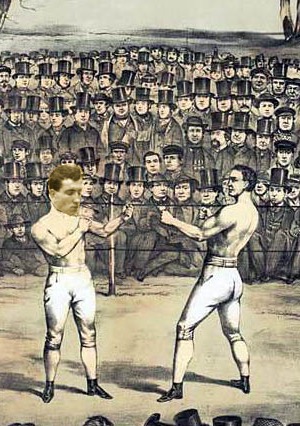
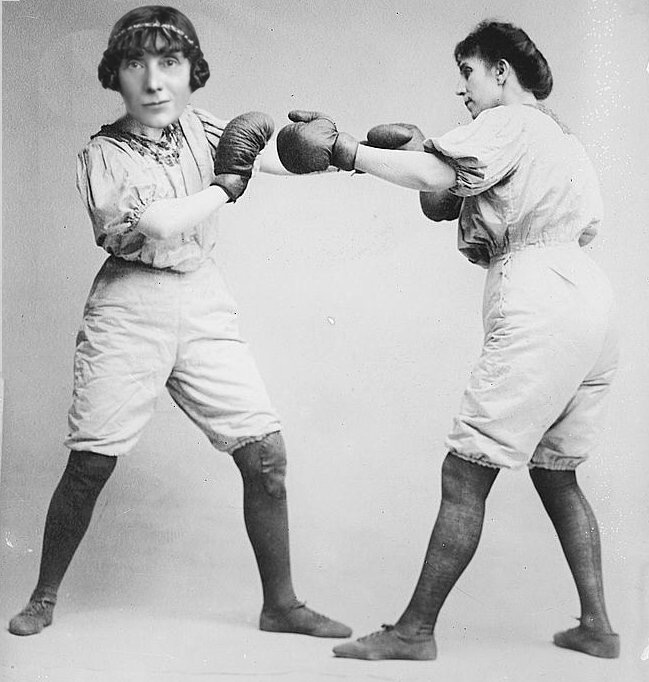
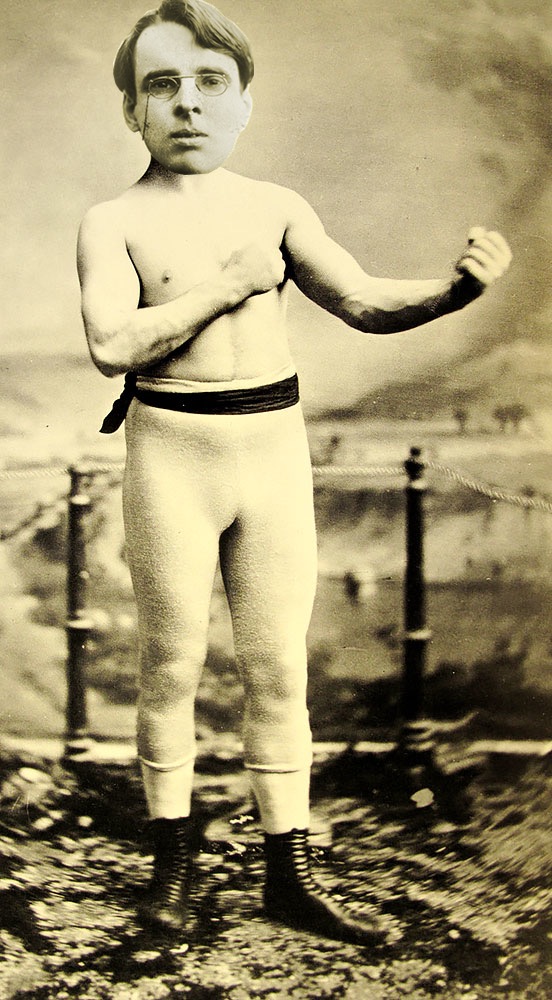
Whether it’s sweet and right to die for one’s country is up for debate, but everyone loves a good brawl. In one corner we have you, the reader, an expert at reading and maybe other stuff. In the other corner, we have poets writing from the frontlines and the home front during WWI, profoundly affecting the course of literature and laying the foundations of modernism. A real clash of the titans scenario. Luckily, we’ve researched fighting styles of each poet and created this definitive guide to help you decide which poet you should fight.
Fighting for a cause. Victory driven. Fight might go on longer than he expects but he’s still intent on beating your ass. Strapping young English lad. Thinks death is hot. Sleeps in a grave plot for fun. Will kill your horse, will kill anyone’s horse. Fight him if you want to die in a blaze of glory.
Standard round of fisticuffs. Will buy you a beer afterwards. Takes place in a bar parking lot. Insists on shaking your hand—has a very firm handshake. Fights you because you insulted his writing style. Haunted by his dead friends but secretly into it. Keeps insisting that he doesn’t have a crush on Sassoon even though you never brought that up. Punches you because he’s not allowed to gently caress you.
Can’t predict her next move. Keeps a fancy set of brass knuckles in her bag. Will tear you apart just to stitch you back up. Cheats but you don’t notice until it’s too late. Will never forget this as long as she lives. Thinks the bruises you leave on each other are “artsy” and wants to take photos of them. After the fight you ask around but no one’s heard of her. Fight her only if you can afford the medical bills.
Weak but scrappy. Never lets go of his morals. Poor, Jewish, nothing to lose. Is not above biting you. Pacifist but will fight for money. Loyal to no gentile. Just wants to leave. Loves his mom. Would fight you but more importantly would fight Sassoon. Is probably a decent fight but he’s saving it for Sassoon.
Will sluice you. Homosocial. Can’t bench press you yet, but he’s building up to it. Always checks his phone while you’re talking. No respect for morality outside his own. Might decide halfway through that the fight is pointless. He’s literally just a meat sack full of testosterone. Doesn’t know this Rosenberg guy. Spends the whole fight showing off for Owen. Fight if you want a really cool looking black eye.
Fights you, but as a friend. If you go down, he’ll go down too out of solidarity. Searching for that wet bond of blood. Believes your lives are now entwined. Do you want to get a drink after this haha just kidding unless. When he says your fat lip is hot he’s actually saying you’re hot. Hitting you but also hitting on you.
Will call you a pussy if you don’t fight her. Texted all her friends about how great this fight is going to be. She’s doing enough by showing up but you need to put your life on the line. Shit-talks you like crazy. Tries to draw a crowd so they can all boo you. Facetimes her boss into the fight. Feigns an injury two seconds in.
Wears stupid pince-nez glasses that aren’t going to stay on his face. Not remotely prepared for this. Won’t show up to the fight but later he’ll tell everyone you’re a shitty fighter. Asks why you don’t like getting your ass kicked. Tells you that you should find beauty in getting your ass kicked or you’re not a real fighter. Won’t let anyone near his ass so it’s never been kicked but still, he wants you to know that the Greek tragic choruses sang.
I am a big fan of listening in order to write better. Long before I published my first novel, I supplemented the MFA that I don’t have with a DIY MFA that saw me going to one reading series for every night that I was in New York City during a short-term job contract I had there. It was thanks to my over attendance at these reading series that I was able to identify the narrative shortcomings that were keeping me from getting work published in the magazines that I admired. At a sticky table with an IPA in hand, I’d listen as a writer went on a tangent just when you wanted to linger in a scene; when a memoirist belabored a point in a way that felt needlessly self-effacing; I’d cringe when a sex scene depicted a form of robotic, uncomplicated sex that didn’t sound like any of the sex that humans actually have.
Hearing (and watching) people lose their audience at the microphone made it much easier for me to address the faults in my own manuscripts—revision no longer felt like a slog towards another form rejection letter, it felt like a way to save my ego at the mic. I think it’s for this reason that I keep turning to live storytelling when I need to improve my writing (or my mood about my writing), now. Not that I don’t believe in books about writing—I just wrote one!—but there is something so affirming about listening to a story, and I do believe that we can find both joy and education from our entertainment choices. For me, that current choice is podcasts. I have a stand-up group of favorites that I listen to religiously because they make me laugh, they make me re-consider preconceived notions that I have, and in some cases, they make me cringe. Here are the podcasts I currently listen to which inform the way I write and revise. May they bring happiness to your heart…and pen!
An interview-format podcast hosted by writer, editor and activist Jenn Baker in which she invites professionals throughout the publishing community—many of them underrepresented—to discuss the lack of diversity in book publishing. With guests like author Morgan Jerkins, the founder of FOLD (the Festival of Literary Diversity) Jael Richardson, and agent (and former editor) Anjali Singh, this podcast encourages listeners to be more attuned to the impact of not just what they read and write at present, but also, what they don’t.
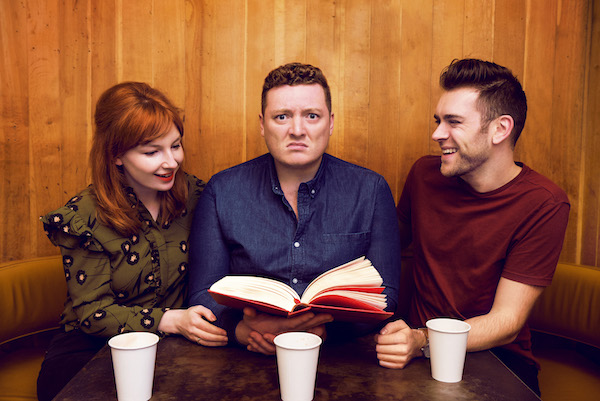
Aside from being hysterical to listen to, this show (that features a son reading his father’s pornographic novels to his two best friends) will help writers understand write enticing sex scenes, how to avoid tangents, and avoid extraneous set up by hearing these narrative mistakes be made fun of time and time again.
The benchmark for interview-based shows with writers, host David Naimon gets deep into the process of America’s most exciting writers in 90-minute segments that you’ll wish would never end. Given the show’s length, there is a lot of airtime devoted to problem-solving which will inspire—and hopefully, help—writers who are feeling stuck, themselves, and Naimon’s proclivity for the independently published and translated is a great way to discover what you should read next.
If you’re working on a creative writing project that involves human beings, it’s good to know how they are having sex. The iconic columnist Dan Savage gives sex and romance advice to the vanilla, to the kinky, and to every uncategorizable concern in between. An entertaining reminder that real life can be more interesting than fiction, and thus, should probably inform it.
For writers of non-fiction especially, this intelligent and darkly funny podcast by Sarah Marshall and Michael Hobbes about pop culture stories that America got wrong will inspire writers to research, analyze, and fact-check before they consider something “done.” Fiction writers will enjoy the underdog tales that the show favors, as will adepts of everything 1990s.
This podcast by the bestselling writer Dani Shapiro is as intimate as they come. Her guests—Kiese Laymon, T Kira Madden, Joanna Rakoff, most recently—are master storytellers who walk listeners through the stages of courage it took to get their stories right. Especially useful for writers working on memoirs with revelations or information that could damage their relationships—you’re sure to find an aspirational mentor in this podcast.
There is a reason that Serial was the first podcast to go viral—it’s incredibly well-paced. For those of you who have already listened to this investigative podcast hosted by Sarah Koenig and its riveting follow up, give it another listen to note the narrative deployment: how were characters introduced and developed? What information was released when? What information was held on to? How was the story built?
Vulnerability is crucial in creative writing. It’s not enough to say something, it’s better to believe what you say, and better still is to be vulnerable when you say it. Therapist Esther Perel’s groundbreaking show lets you hear the behind-the-scene counseling sessions of actual couples, and gives writers a beautiful way to understand the resentments and hopes that we all harbor.
A few years ago, because I was having trouble finding upcoming books by women writers who were Black, Indigenous, and people of color to read and review, I compiled and published a list of such titles. If I was having trouble, I thought, then others surely were, too. Maybe they’d also find the list useful.
A lot of people did, as it turned out. The list became one of Electric Literature’s most shared pieces, as it did when I compiled a new list the next year, and the year after that. This list is now in its fourth year, and has expanded to include nonbinary writers of color; it gets larger each year, and I’m told it’s used to help inform books coverage in other publications, that high school teachers and college professors look to this Electric Literature list when forming syllabi. This fills me with such complicated joy: my hope is that, one day, publishing will be so inclusive that a list like this will become less useful.
For this short while, I want to forget about trepidation. Instead, I want to celebrate these 55 novels, collections, and memoirs.
I know I’m far from alone in dreading what this next year will bring, what wild varieties of hatred will be directed at marginalized people. But for this short while, I want to forget about trepidation. I want to push that hatred to the side. Instead, I want to celebrate, with delight and wonder, these 56 novels, collections, and memoirs, all of which are publishing in 2020.
About the methodology: these are 2020 books by women and nonbinary writers of color that I personally happen to be excited about. It’s one list, inevitably incomplete. (If you see a book missing, please feel very welcome to post about it on social media, preorder it from your local bookstore, request it from your library, or, perhaps, all of the above.) Also incomplete is the term “of color,” a flawed, complicated label with varied and ever-changing valences in and outside of the U.S.—and one increasingly supplanted by the less generalizing “Black, Indigenous, and people of color,” or BIPOC. Finally, I love reading poetry, and such books of poetry are coming up in 2020—Natalie Diaz! Danez Smith! Monica Sok!—but I’m not as aware of what’s forthcoming from poets, so I’ve limited myself to prose.
Here you go. It’s 2020 now: there’s so much to look forward to.
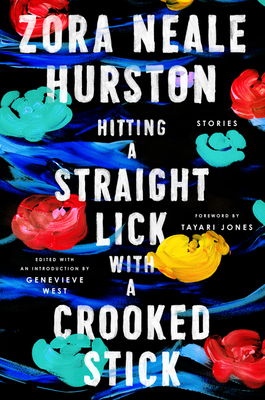
It’s difficult to think of a more joyful way to start the year than with Zora Neale Hurston’s stories, brought together for the first time in a single volume. The book includes eight “lost” stories from archives and periodicals, and I can’t wait.
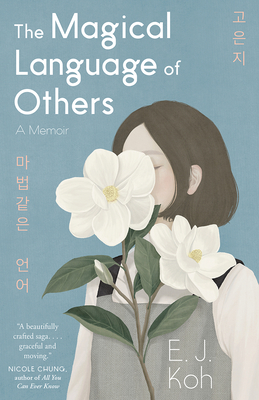
Koh’s parents lived in America for a decade before they moved to Korea to find work, leaving their two children behind. Koh’s mother wrote her letters, but in a language Koh couldn’t fully understand until, years later, she began translating the missives, a discovery she details in this book.
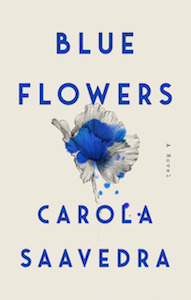
Saavedra is one of Granta’s “best young Brazilian writers,” and this partially epistolary novel follows a recently divorced man receiving obsessive letters from an anonymous woman.
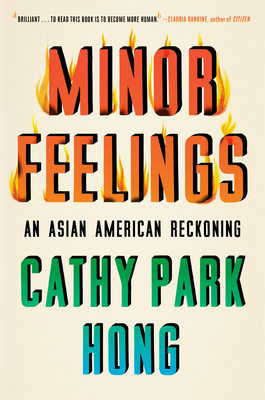
Part memoir, part cultural criticism, the poet and essayist’s Cathy Park Hong’s first book of prose had me underlining and annotating nearly every page. Claudia Rankine says that “to read this book is to become more human.”
A capacious and devastating collection of essays that have to do with migration and belonging, bringing together writers such as Natalia Sylvester, Bix Gabriel, and Jennifer S. Cheng.
A new book from the mighty Louise Erdrich! This novel is based on the life of Erdrich’s grandfather, a night watchman who fought in the 1950s against Native dispossession.
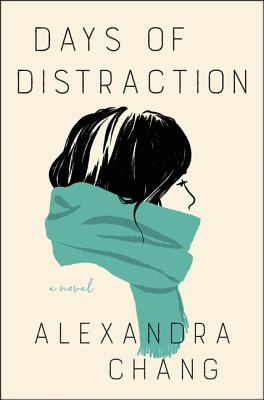
In this debut novel, a staff writer at a tech publication leaves Silicon Valley to live with her boyfriend in upstate New York. George Saunders calls Chang “one of the most important of the new generation of American writers.”
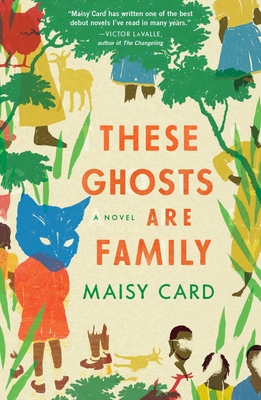
I’ve admired Card’s writing a long while, and in These Ghosts Are Family, a Jamaican family contends with a faked death, a stolen identity, and the revelation of decades-old secrets.
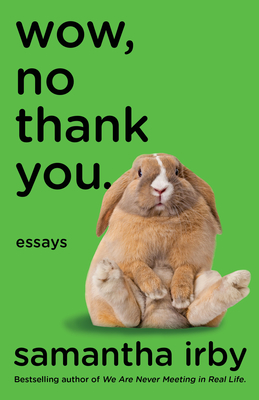
These essays from the bestselling Irby come with an irresistible endorsement from Jia Tolentino, who says there is “truly no one like Samantha Irby for making you actually choke (on poop jokes) laughing out loud.”
A debt-riddled millennial woman drops out of college to support her family by taking a well-paid, mysterious job in a remote Michigan town. The job, it turns out, involves participating in a secret program of medical experimentation.
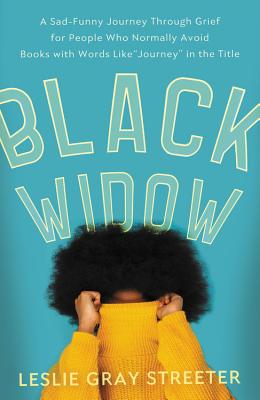
Entertainment columnist Streeter’s book is subtitled “A Sad-Funny Journey Through Grief for People Who Normally Avoid Books with Words Like ‘Journey’ in the Title.” A book of widowhood, mixed marriage, grief, and race.
Goenawan’s second novel is centered on the people living in the aftermath of a tragedy in Japan. Sharlene Teo says it’s an “elegantly cryptic, poetically plotted” whydunit.
Chung is a psychoanalytic psychotherapist and clinical supervisor, and she’s written a novel about a woman with multiple personalities trying to help an imperiled close friend.
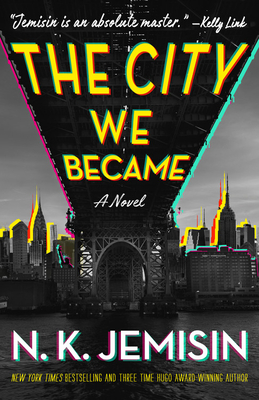
The recipient of multiple Hugo and Nebula awards, the bestselling Jemisin is publishing a speculative novel chronicling a world in which “every great city has a soul.”
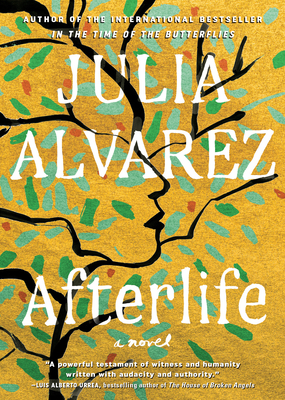
Afterlife is, at long last, the first adult book from Alvarez in fifteen years. Elizabeth Acevedo says it’s “a stunning work of art that reminds readers Alvarez is, and always has been, in a class of her own.”
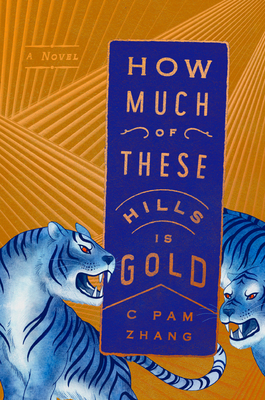
A powerful first novel about an immigrant family trying hard to survive the American Gold Rush. I read it in one exhilarated tear; I’m already looking forward to rereading it.
Starling Days first published in 2019 in the U.K., where it was shortlisted for the Costa Novel Award. In The Paris Review, Spencer Quong says it’s an “exploration of depression without clear resolution,” one that can show how to “be with an emotion without anticipating its meaning.”
Kyuri, Miho, Ara, and Wonna are four women—a bar entertainer, an artist, a hair stylist, and a newlywed—who live in the same apartment building. Helen Oyeyemi says it’s “as engrossing as a war chant, or a mosaic formed with blades.”
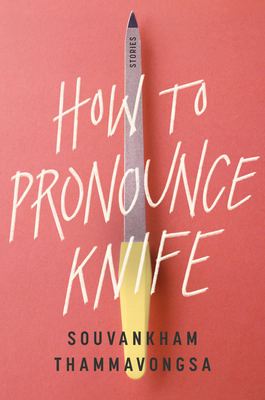
I’ve looked for Thammavongsa’s work ever since we read together at a release party for the wondrous literary magazine NOON, and How to Pronounce Knife is her first story collection, one that Madeleine Thien praises as “a major work and a lasting one.”
Another one I’ve anticipated for a while, this nonfiction book follows a group of evangelical Christian harvesters working a Nebraska wheat farm inherited by the Japanese American Mockett.
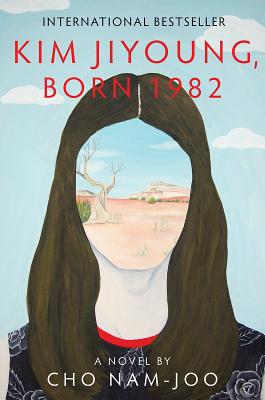
A woman in contemporary Seoul descends into a psychosis in which she channels other women. This very short novel, with just 144 pages, has already sold over a million copies abroad.
The acclaimed Lalami has previously published four novels, and now, in her first nonfiction book, she explores the idea of conditional citizenship. Maaza Mengiste says “reading this book was like encountering America for the first time.”
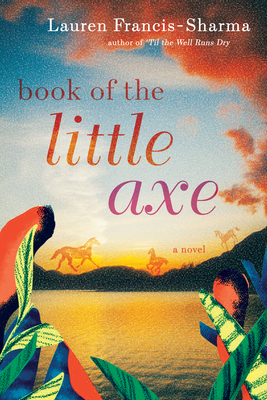
Sharma’s novelis set in Trinidad and the Crow Nation in Bighorn, Montana, and spans the late 1700s to the early 1800s. I heard Sharma read from this book last summer, and have awaited it ever since.
I’m a longtime admirer of them. editor Talusan’s short writing, and this is a memoir of her life as a trans person with albinism. This book, a debut, is profound and moving.
First partially published in 2016 by Willow Books, and now with new stories, Deceit and Other Possibilities is a reissued collection from Counterpoint. The stories I read in 2016 are a marvel; I’m excited to read the rest.
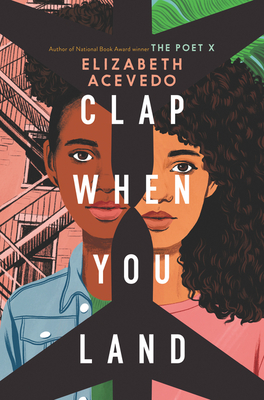
From National Book Award-winning, bestselling Acevedo, the novel-in-verse Clap When You Land is about two girls who lose their father in a plane crash.
Sylvester’s most recent book, Everyone Knows You Go Home, was unforgettable. Running is her young-adult debut, in which the fifteen-year-old Mariana Ruiz’s father runs for president of the U.S.
Mira Jacob says this memoir in essays “captures what it means to be a citizen of a country that may never claim you as its own, to imagine your own brilliant fullness beyond its peripheral gaze.”
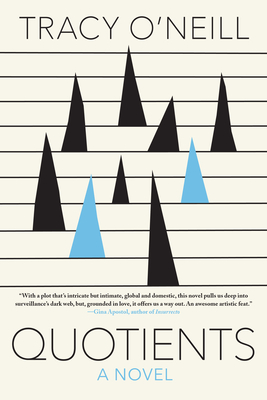
I deeply loved Tracy O’Neill’s first novel, The Hopeful, telling the story of a figure-skating prodigy whose athletic dreams become unobtainable; Quotients, her newest, includes a mixed-race couple, the dark web, surveillance, and love.
A fifth novel from the astonishingly prolific Guillory, who has published four bestselling, captivating books in the past two years. If you somehow haven’t read her previous fiction, or caught her giving book recommendations on The Today Show, you have six months to do so before seeking out her newest.
Rosayra Pablo Cruz and Julie Schwietert Collazo,The Book of Rosy
A nonfiction account of a family of Guatemalan migrants separated at the border of Arizona. The Book ofRosy is told by Rosayra Pablo Cruz, the mother of the family, and Julie Schwietert Collazo, co-founder of Immigrant Families Together, a grassroots organization working to reunite mothers with their children.
A pregnant eighteen-year-old pizza deliverer becomes obsessed with a customer, a mother new to the neighborhood. This first novel comes bearing comparisons to Convenience Store Woman and The Idiot.
I’ve been anticipating this memoir since I read a 2017 piece by Haile detailing her solo hike, as a Black woman, of the Appalachian trail. The book incorporates and expands upon that long hike. Update: This book’s publication date has been moved to 2021 so expect to see it on the list again next year!
The title of this novel comes from the moment when its protagonist, a Palestinian American girl, tells her mother she’s queer: “You exist too much,” her mother says. A bildungsroman of desire, shame, and addiction.
A thriller set in motion when Jivan, a Muslim girl in India, is falsely accused of perpetrating a terrorist attack on a train. Colum McCann calls it “rare and powerful.”
The Vignes twins run away from home as teenagers, and grow up to lead unusually different lives: while one sister is raising her Black daughter in their old hometown, the other sister lives as a white person, with a white husband who doesn’t know who she is. From the widely acclaimed, bestselling Bennett.
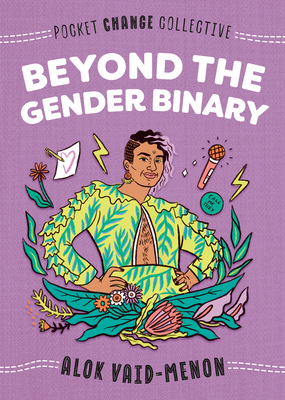
In a short book for children and young adults, the poet and advocate Alok Vaid-Menon draws on their experiences as a gender-nonconforming artist to reimagine the gender binary.
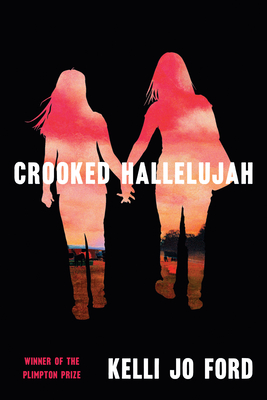
The first book from the Plimpton Prize-winning Ford, Crooked Hallelujah follows a family of Cherokee women from Oklahoma to Texas. An epic of mothers and daughters.
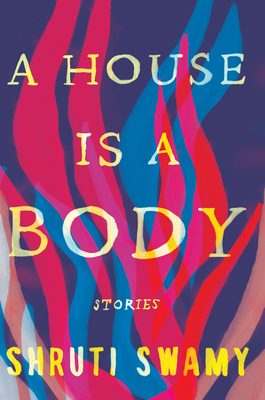
A story collection from Swamy, a Steinbeck Fellow and two-time O. Henry Prize recipient. Laura Furman says the book is written with a “rich understanding that recalls such renowned storytellers as Katherine Anne Porter and Ruth Prawer Jhabvala.”
Following on Emezi’s first novel, the singular Freshwater, as well as their young-adult book Pet, comes another book for adults, this time centered on a Nigerian named Vivek.
A memoir of Jaouad’s illness and recovery from leukemia, and of figuring out how to live in the aftermath of years of chemotherapy and the cancer ward.
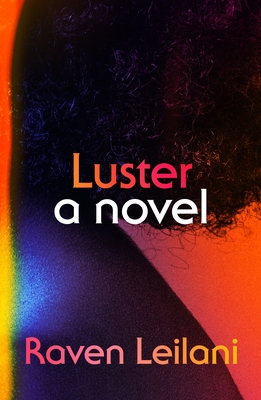
Luster is about a young artist in Bushwick who gets involved in a couple’s open marriage. Zadie Smith says it’s brutal and brilliant.
September Onwards
Fall is traditionally a big time for books, a season when publishers release a lot of high-profile titles before the holiday rush. This fall, with the elections coming, I keep hearing that significantly fewer books than usual will publish; I’m so glad, though, that it’s fewer, not zero! While it’s too soon in the year to have so much as a cover of most of these autumn titles, here are some writers whose writing I love, and who have books publishing between September and the end of the year:
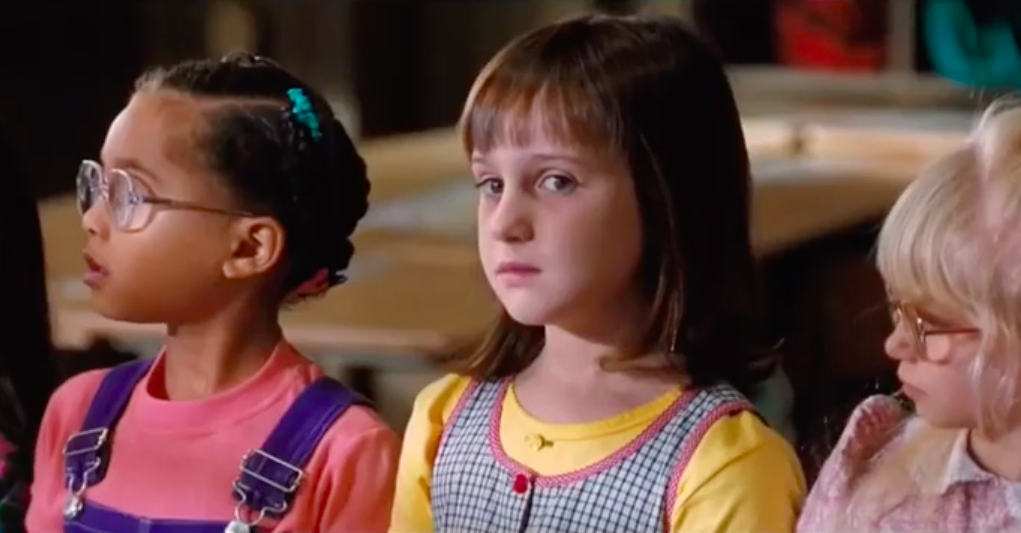
Before this year, I don’t think I had ever compared a real, living human being to a Roald Dahl villain, but now I do it all the time. It is my response to 75 percent of tweets about Greta Thunberg. It is something of a mental refrain. You sound like a Roald Dahl villain. You sound like you are about to lock Matilda in a closet!
To sound like a Roald Dahl villain, to be clear, is to be absurdly and openly cruel to children. His baddies draw their power from the idea of children as a special, sacred class—the idea that mistreating a child is palpably more unforgivable than mistreating anyone else. There is a kind of piety and propriety around the treatment of young people that I absolutely buy into, which is why I have recently found the time in my busy being-appalled schedule to be appalled by tweets about Greta Thunberg. Dahl’s villains give the lie to this piety with style. There is absolutely nothing preventing adults from being ghastly to children, and in fact they do it all the time.
Dahl’s villains call children disgusting little cockroaches, and shot-put them over fences. They turn them into vermin and have them squelched.
But Dahl villains are exaggerated beyond reality, even beyond parody. That’s what makes them work. In a 1988 interview, Dahl said “I found the only way to make my characters REALLY interesting to children is to exaggerate all their good or bad qualities, and so if a person is nasty or bad or cruel, you make them very nasty, very bad, very cruel… that, I think, is fun and makes an impact.” Despite the nod here to “good qualities,” Dahl’s heroes are not particularly exaggerated. His villains, however, are insane.They call children disgusting little cockroaches, and shot-put them over fences. They turn them into vermin and have them squelched. They rant (at length) that all children smell of dogs’ droppings.
Kids go absolutely nuts for this kind of thing. They adore characters who hate children. Tell them about a mean old man who is allergic to kids and thinks they should all be stuffed into Tupperware, and they will scream with joy. Intimate to them, (as Dahl does in the glorious introduction to The Witches) that the nice school teacher reading a chapter book out loud is plotting their demise, and they will roll deliriously at your feet.
Perhaps I should say: kids go nuts for this kind of thing, when they know it isn’t real. In real life, children need to trust adults, even bad adults, or they can’t survive. They know they can’t operate in the world without protection and guidance. Obedience is how they stay alive and cared for, and they absolutely require a reality in which adults are stable, wise, and honest. Any other kind of reality means trauma, or worse—but most of the time, until it gets really dire, kids keep trusting. What else can they do?
Fiction is another matter. If a wise and stable authority figure (like a teacher or a children’s book author) presents them with an imaginary character who breaks the norms of adult engagement towards children, kids come into an emotional state that I can’t really define, but it involves screaming. Their biggest fear has been invoked, and burlesqued. They can examine that fear, toy with it and laugh at it. And they can, in total safety, practice for it.
Dahl leans towards children and tells them something they have long suspected: certain grownups cannot be trusted.
Dahl leans towards children and tells them, in his conspiratorial way, something they have long suspected: certain grownups cannot be trusted, and if you find yourself in their power, there is no act of disobedience too extreme. Run, hide, trick them, trap them, flatten them with a giant peach and roll away smiling. When they break the rules, you break them back harder.
“A REAL WITCH,” Dahl writes, “hates children with a red hot sizzling hatred that is more sizzling and red hot than any hatred you could possibly imagine.” But, he warnsin The Witches, a novel about a small boy and his grandmother defying an international cabal of wealthy child murderers, they often look like normal adults—or even like especially caring, concerned ones. For starters, he is very explicit about the fact that all witches are women.
This can strike people, reasonably, as misogynistic, but I think it’s something else: an intensification of the gap between how trustworthy adults should be, and how evil villains are. Women, for a man of Dahl’s era, are meant to be caretakers: nurses, teachers and mothers. And the witches, when our hero stumbles across them at their annual child murder plotting meeting, do not present themselves as ball-busting business women, but as the members of the Royal Society for the Prevention of Cruelty to Children.
When Dahl’s hero is initially trapped with the RSPCS, he’s unbothered, thinking these particular ladies must be wonderfully kind. This is the state of ignorance known as innocence, which adults understand is something to be preserved. If you are in charge of a child, and you allow them to lose their innocence about adults, you have failed, utterly failed, as a guardian.
Listening to young people on the megaphone at September’s climate strike, I thought about innocence and failure. Today’s teens have grown up doing active shooter drills, and while school shootings might be a relatively minor percentage of gun deaths, there has to be some psychic impact to making children perform in a pageant of fear, silence and obedience, while we simultaneously make it clear that we are not going to do anything for them.
There’s a ghoulish quality to our current political interactions with children. It seems like we’ve stopped pretending.
There’s a ghoulish quality to our current political interactions with children. It seems like we’ve stopped pretending. You’re supposed to be able to invoke harm to children, and get anyone who claims to be a decent human being to care. The persistent breaking of this norm gives the daily news a fascinating sense of unreality. Situations that should be Dahl-esque—kids threatened with guns, kids locked in literal cages—are now commonplace. I think often of the passage in Matildawhere Miss Trunchbull, the magnificently abusive headmistress, visits a classroom of five year olds and enacts a series of creative and spontaneous punishments:
The children sat there hypnotized. None of them had seen anything quite like this before. It was splendid entertainment. It was better than a pantomime, but with one big difference. In this room there was an enormous human bomb in front of them which was liable to explode and blow someone to bits any moment.
I feel this way most of the time right now. Really, we have no business trying to tell them that we’ve got things under control.
The flip side of fear is fantasy. Because, having been abused in school, he knew how scary it was to be helpless in the hands of adults, Dahl made a point of giving his child heroes agency—making sure they were the ones who made the plots and took the risks. At one point, while writing The Witches, he realized the hero’s grandmother was too wily and effective. He had to go through and make sure that, while she was a repository of helpful knowledge, her grandson was the one with all the clever international-child-murderer-cabal busting ideas.
For an adult reader, Dahl’s books offer a different fantasy, in response to a different fear: I cannot keep them safe. I might not personally be a torturer or a murderer of children, but am I doing anything to stop it from happening? In this context, the books are unintentionally relaxing. They suggest on some level that this is okay: that the job of good adults is to sit back and let children be the heroes.
In these villain-centered books, the best adults are kind but ineffectual. Miss Honey, the sweet schoolteacher in Matilda, who I remembered as almost a caricature of crushable femininity, is actually rather finely drawn as a survivor of long-term abuse by Trunchbull, her aunt. In her twenties, she is employed by and still hands over almost her entire salary to Trunchbull. On some basic level she has failed to understand that she is an adult now, that she is supposed to have some power. Over tea, she explains to Matilda in so many words the perils of obedience:
I think what I am trying to explain to you… is that over the years I became so completely cowed and dominated by this monster of an aunt that when she gave me an order, no matter what it was, I obeyed it instantly. That can happen, you know.
Matilda is one of an entire community of rebel children who strike back at their oppressor Trunchbull with gratifying pranks, taking the extra punishment that results as preferable to obedience. Every one of them is adorable, splendid, and heroic—from Hortensia, the battle-hardened, spotty ten-year-old who initiates the lower form into the Trunchbull resistance, to chocolate-smeared Bruce Bogtrotter, whose defiant cake-eating unites the children at a show trial meant to humiliate him.
Like many of Dahl’s children, their desperate circumstances give them unheard of resources. The squelching of Matilda’s intellect makes her angry and telekinetic. The hero of The Witches, turned into a mouse, uses his tiny size to secretly poison every witch in England. And Trunchbull’s students, united by tyranny, achieve a remarkable intra-class solidarity against their oppressor. “You’re darn right it’s like a war,” says Hortensia, “and the casualties are terrific. WE are the crusaders, that gallant army fighting for our lives with hardly any weapons at all and the Trunchbull is the Prince of Darkness, the Foul Serpent, the Fiery Dragon with all the weapons at her command. It’s a tough life. We all try to support each other.”
For those readers too old to empathize with Dahl’s main characters, it’s turned into a different kind of fantasy: the fantasy that we did not entirely screw up.
It is Matilda’s love of Miss Honey that inspires her to rid their world of Trunchbull for good. Miss Honey functions as the damsel in distress, the grown-up who, in an upending of the social order, needs to be protected by a group of young people. This is meant to be an empowerment fantasy for children. But for those readers now far too old to empathize with Dahl’s main characters, it’s turned into a different kind of fantasy: the fantasy that we did not entirely screw up, that we gave young people the wisdom and the tools they needed to step forward, speak up, strike back. Dahl shows us children who prevail against incredible odds, who win stacked fights against cruelty and indifference—the child heroes we need, if not the ones we deserve.
But this is a fantasy, born out of fear. When Greta Thunburg addressed the U.N. Climate action summit, she told them, “This is all wrong. I shouldn’t be up here. I should be back in school on the other side of the ocean. Yet you all come to us young people for hope. How dare you!” In his books for children, Dahl lets his protagonists win and punishes his villains, but he is always crystal clear about one thing: children become heroes because grown-ups have failed them. Inaction is failure. Cowardice is failure. Being Miss Honey and waiting around for Matilda to save you is failure. If that is the best the best of us can do, we really need to grow up.
“Birds in the Mouth” was the title story of Schweblins second Spanish-language collection, Pájaros en la boca, and was included in her 2019 English language collection, Mouthful of Birds. The story was first published in English in the PEN American journal, translated by Joel Streicker with the support of 2011 grant from the PEN translation fund. It appeared in Recommended Reading in 2012 with an introduction from the editor of PEN America, M Mark.
In her introduction, Mark writes, “’Birds in the Mouth’ is narrated by a seemingly reliable divorced father who’s worried sick about his thirteen-year-old daughter and her mysterious appetites. The daughter, it turns out, eats birds. Live birds. And the trustworthy narrator occasionally mentions details about himself that seem a bit off-key. When I first encountered this story, I found myself, almost without realizing it, pushed to look at the family from unexpected angles and finally forced to ask questions about the characters, their world, and my own. How do we ask for attention from those we need? How do we give enough of ourselves to those who need us? What sorts of nourishment, and how much, must we have to survive? What is normal? What is forbidden?”
“Cattle Haul” by Jesmyn Ward was originally published in A Public Space, Brooklyn-based literary magazine publishing since 2006, and was introduced in Recommended Reading by the APS’s editor Brigid Hughes in 2012. The story is about a young trucker named Reese who hauls goods, sometimes livestock, back and forth across the country. The work is exhausting, the pace relentless, but he needs the money. The profession is also in his blood. His Dad’s a trucker, too, and some of the things he’s learned from his father about how to stay awake on the road are more damaging than they are helpful. In her acceptance speech when she won the National Book Award for Salvage the Bones the year before this story appeared in RR, Ward said, “I wanted to write about the experiences of the poor, and the black, and the rural people of the South so that the culture that marginalized us for so long would see that our stories were as universal, our lives as fraught, and lovely, and important.” She went on to write Sing, Unburied, Sing, which was recently named one of the 10 Best Fiction Books of the Decade by Time Magazine and the memoir The Men We Reaped, which was named one of the Best Books of the Century by New York Magazine.
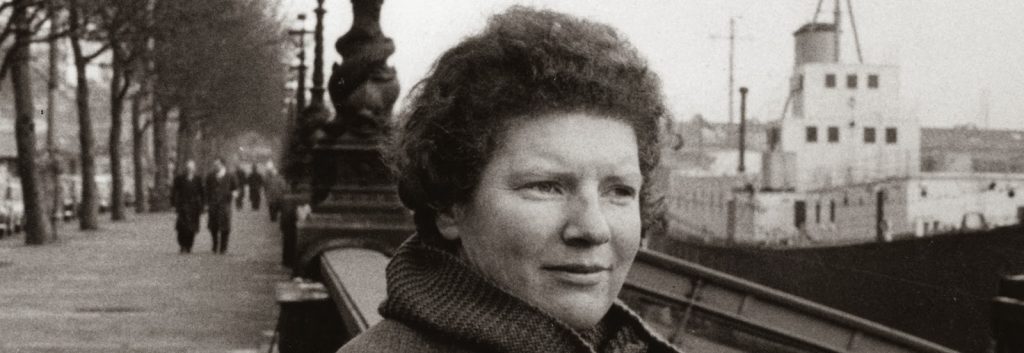
Janet Frame was born in New Zealand in 1924. Over the course of her career, she has received numerous awards and published thirteen novels, two of them posthumously. Due to suicidal ideation, Frame spent much of her twenties in and out of psychiatric facilities, where she was eventually diagnosed with schizophrenia and received electroshock therapy. In 1951, she was scheduled for a lobotomy, which was canceled when her short story collection, The Lagoon and Other Stories (which included “My Last Story” and appears to be out of print), was awarded the Hubert Church Memorial Award.
The life-saving power of stories and the despair often associated with writing them is the context for “My Last Story,” which Etgar Keret selected for Recommended Reading in 2012. In his introduction, Keret writes, “I have always been interested in stories that have to do with writing. Stories that remove the insoluble question of the nature of creativity from its permanent blind spot and place it front and center.
“The problem with texts of that kind is that, in many cases, they are clever, but almost never moving. As if that reflexive sort of writing moves writers to their mind and away from their heart. There are, of course, exceptions, and Janet Frame’s ‘My Last Story’ is one of them…Like all writers, Frame had no pragmatic reason for making up stories, but the fiction she created had a clear and pragmatic effect on her life: writing kept her complex, sensitive mind whole.”
Jim Shepard selected Marie-Helene Bertino’s debut collection, Safe as Houses, to win the Iowa Short Fiction Award. When recommending her story “North Of” to our readers, Shepard wrote:
“I haven’t been as won over by a story as completely as I was by Marie-Helene Bertino’s ‘North of’ in years. I loved it of course for its deadpan comedy, much of which centers around its celebrity co-star Bob Dylan’s self-absorbed obliviousness. His mostly unswerving focus on whatever keeps him happy and comfortable in the moment — whether it’s a well-cooked string bean or a search for Tootsie Rolls — is an inspired counterpoint to everyone else’s emotional maelstrom: the narrator’s brother, a roil of resentment and rage and contempt for himself and everyone else; her mother, whose expectations have now shrunk to the hope that they can pull off one Thanksgiving meal without a blowup; and the narrator herself, with her perpetual desire to please, who performed the double fuck-yous of becoming a success and staying away, and knows it.”
“North Of” was first published in the Mississippi Review in 2007 and then collected in the Pushcart Prize XXXIII anthology in 2009. Bertino’s novel, 2 a.m. at the Cat’s Pajamas was published in 2015, and her next novel, Parakeet, is forthcoming from FSG in June 2020. Her story, “Carry Me Home, Sisters of St. Joseph,” is also available in Recommended Reading.
Helen Phillips was first published in Recommended Reading in 2013. Since then, she has published two novels, The Beautiful Bureaucrat, which we excerpted, and The Need, which was longlisted for the National Book Award and which one of Electric Lit’s best novels of the year. “The Knowers” was included in her collection Some Possible Solutions along with “The Doppelgängers,” which can also be read in Recommended Reading with an introduction by Lauren Groff.
In his introduction, former Recommended Reading co-editor Benjamin Samuel writes, “’The Knowers’ is a story set in a world where people may choose to learn the date — although not the circumstance — of their own demise. The information is not prophecy, it doesn’t come from an oracle or the supernatural, but a machine that appears as humdrum as an ATM.
“The narrator of ‘The Knowers’ is both empowered and burdened by the revelation of her doomsday: the monumental date is delivered on a scrap of paper easily destroyed but impossible to forget. Every moment is informed — clouded or enlivened — by that date, ‘I regretted knowing,’ she says. ‘I was grateful to know.’”
“The Graveless Doll of Eric Mutis” was first published in Conjunctions and later collected in Russell’s 2013 collection, Vampire’s in the Lemon Grove. The collection followed her critically acclaimed and wildly popular novel, Swamplandia!, which was a finalist for the 2011 Pulitzer Prize. Her latest collection, Orange World, was one of Electric Literature’s 15 Best Short Story Collections of 2019.
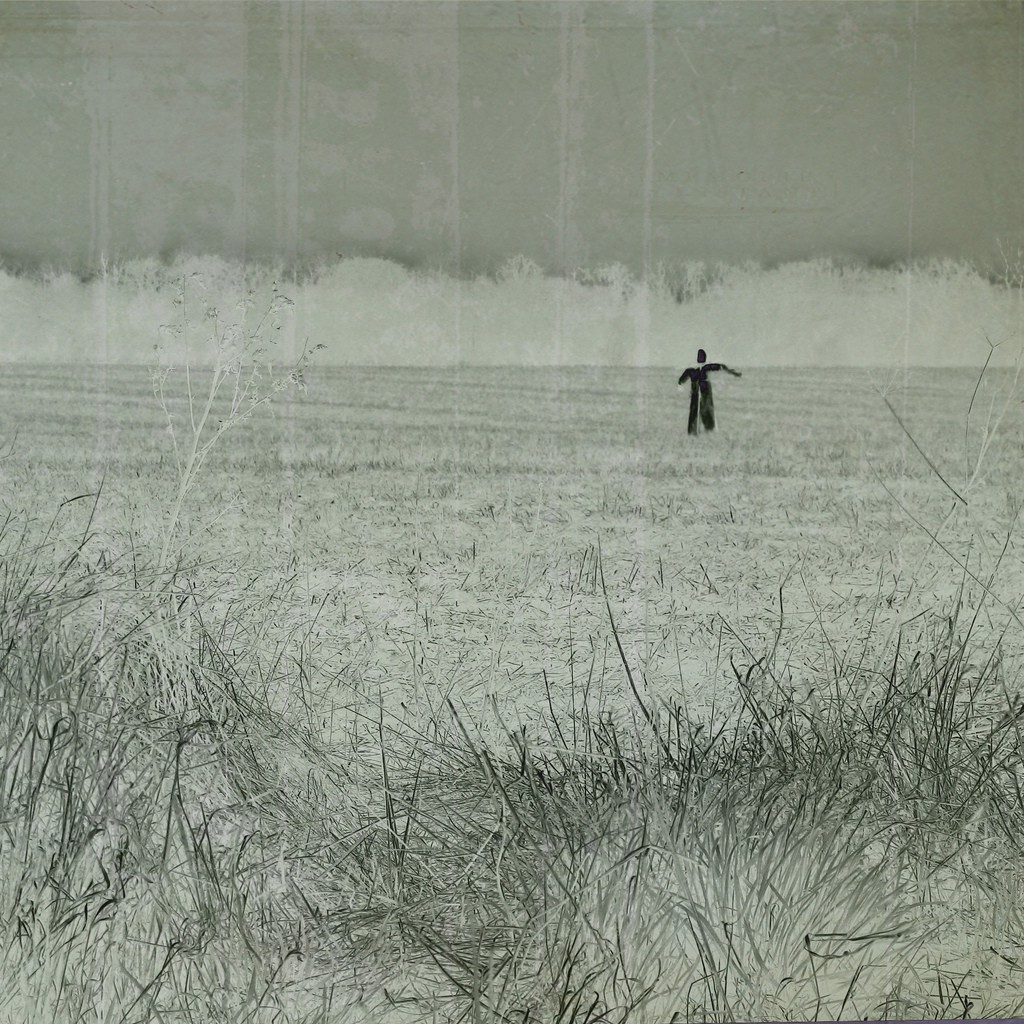
In his introduction to the story, Conjunctions editor Bardford Morrow writes, “‘The Graveless Doll of Eric Mutis’ is narrated by a young adolescent named Larry Rubio who, with his three Anthem City, New Jersey, buddies Mondo, Gus, and Juan Carlos, discovers a scarecrow lashed to an oak tree in the city park. As always in Karen’s work, the narration is heartbreakingly empathetic and intimate, but the boys are nonetheless clearly drawn as violent bullies, and the scarecrow is an unsettlingly lifelike — or deathlike — doppelgänger of one of their victims, the titular Eric Mutis, an epileptic outcast who may have suffered abuses at the hands of adults that far outstripped the traumas doled out by our protagonists. It’s revealed that Eric vanished from Larry’s school and neighborhood prior to the appearance of the scarecrow, a disappearance silent and unremarked at the time, which later becomes mysterious and troubling.
“This bewitching story addresses many of Karen’s biggest themes: identity and the complexities of growing up, innocence and aloneness, people in search of their souls. Like so much of her work, it locates a perfect balance between the comical and calamitous, the familiar and the fantastic.”
“Bettering Myself” by Ottessa Moshfegh was published in The Paris Review in 2013, and introduced in Recommended Reading by its former editor, Lorin Stein after Moshfegh won the Plimpton Prize for Fiction for her two stories, “Disgust” and “Bettering Myself.”
“‘Bettering Myself’ did what it said it would,” Steu writes, “it convinced me that Moshfegh was even better than I already thought. The voice here is totally unlike that of “Disgust.” It’s a sharp-witted, wayward, unpredictable first-person voice, evidence that Moshfegh is a writer of significant control and range. The narrator of “Bettering Myself” is a problem drinker and Catholic school math teacher who says to her students, “Most people have had anal sex. Don’t look so surprised.” There’s a deadpan humor to many of Moshfegh’s utterances. A little Henny Youngman in there, trying to break out. But also something a whole lot sadder … What distinguishes her writing is that unnameable quality that makes a new writer’s voice, against all odds and the deadening surround of lyrical postures, sound unique.”
Moshfegh went on to publish her novella McGlue, which we excerpted in 2014, with Fence Books, followed by Eileen, which won the Hemingway Foundation/PEN Award, and My Year of Rest and Relaxation, which was shortlisted for the Man Booker Prize.
The editor, novelist, and critic Ben Greeman selected this story by Mary Robinson in 2013. Robinson is one of the patron saints of minimalist writing, a style Greeman praises in his introduction: “Robison is classed as a minimalist, which means not very much, both in the sense that it literally refers to writers who pare down their fictional materials and in the sense that it is a largely meaningless distinction. What is minimalist about the first sentence of this story? We see a woman ‘struggle away from’ (not back away from, not step away from, not turn or swivel) her ‘white Renault’ (it’s the only traditionally modified noun in the sentence, and thus both too important and not important at all), ‘limping with the weight of the last of the pumpkins.’ In the last movement of this sentence, there is almost too much to bear: we get the season, and a sense of her misplaced ambition, and a whiff of depletion and possibly depression,but also of things held tightly for value.
“By the second sentence, we have another character, and by the next paragraph we have a whole set of relations between them and their objects. The rest of the story follows Allison and her much older husband Clark through what remains of the day, moving around them as they perform mundane tasks, leaning in when something glints in the evening light: an insight, a self-doubt, a joke, an oblique gesture of love.”
After J. Robert Lennon selected Steven Polanksky’s story, “Leg” for Recommended Reading, we invited Polansky himself back to recommended a story. Polansky chose one of the classics of the form, “The School” by Donald Barthelme. In his introduction, Polansky writes, “Barthelme’s short fiction is unapologetically difficult. In a 1987 essay, ‘Not-Knowing,’ Barthelme writes: ‘Art is not difficult because it wishes to be difficult, rather because it wishes to be art. However much the writer might long to be straightforward, these virtues are no longer available to him. He discovers that in being simple, honest, straightforward, nothing much happens.’”
When I knew him, Barthelme was in his early forties. He died in 1989, at the age of 58. ‘The School’ which appeared first in the 1976 collection, Amateurs, is one of Barthelme’s more accessible stories. To describe it is to sound ridiculous: a very funny story about death and the negation of meaning, and the only story ever written, by anyone, in which a resurrected gerbil is the bringer of hope.”
Jim Shepard was first published in Electric Literature back when we had a print magazine, in our first issue in 2009. That story, “Your Fate Hurtles Down at You,” won the PEN/O Henry Prize. Five years later, Shepard returned with another deeply-researched masterpiece, about a doomed lookout platform in the Atlantic ocean. Though the story was original to Recommended Reading, we invited Joshua Ferris, author of To Rise Again at a Decent Hour, to write the introduction.
“The basic facts of the case are pretty simple,” Ferris writes, “the United States Air Force, believing it required more time to detect and defend against a Soviet invasion, ordered radar towers erected in the Atlantic Ocean, one of which, Texas Tower 4, capsized in 1961 and sank to the bottom of the sea. Twenty-eight airmen and civilian contractors were killed…In an economical ten-thousand words, he introduces us in this story to no fewer than eight substantial characters and a few colorful others caught up in the tragedy of Texas Tower 4. He gives them jokes and arguments and painful phone calls. Throughout his retelling, we see a fruitless accumulation of missed opportunities and final warnings and private ultimatums. Shepard points these out one by one. As the wind and the waves chip away at the foundation and support of Texas Tower 4, we see how wronged the men are, and how doomed.”
David Foster Wallace’s “The Soul is Not a Smithy” was first published in AGNI in 2003, and later collected in Oblivion. The story is about a classroom shooting of the kind only Wallace could write, and mixes together fantasy, paranoia, and harrowing violence.
In his introduction, AGNI editor Sven Birkerts reflected on what it was like to receive a “submission” from Wallace, who by then was already a literary icon.
“I knew the Wallace legend, knew what writers as well as readers thought of him; knew, too, that he was at a place in his career ascent where he could have put almost anything he wrote right into the pages of Esquire, Harper’s, The Paris Review. And here I was — by this point I was palming it, weighing it, looking to see how many pages it ran — holding a new long story. I hadn’t read a word, but I was already imagining the typewritten pages converted to font, reading the title ‘The Soul is Not a Smithy’ in bold… I indulged myself this way because I knew Wallace enough — from meeting him, from reputation — to know that there was no writer out there who was harder on himself, who was less likely than he to send out work before its time. And I had read the man’s work. I knew the level at which I admired it.”
Gilbert Sorrentino is one of the literary luminaries that might be called a “writer’s writer,” that double-edged compliment that means the writer is immensely respected and talented, but not famous. A former editor at Grove Press, friend to William Carlos Williams, and the author of over 30 books, such as Mulligan Stew and Little Casino, yet his name doesn’t ring the bell with readers today.
Jenny Offil, author of Dept. Of Speculation and the forthcoming Weather, selected this story from Sorrentio’s eponymous 2004 collection for Recommended Reading. “When I finished it,” Offil writes, “I just sat there, thinking, Holy shit, holy shit, holy shit…I had never read a story that contained so much emotion in so little space. It swings from the most stunningly cynical moments to the most unnervingly tender, often within the space of one paragraph. And like all geniuses, Sorrentino makes it look easy. I will never write something as good as this story, but I like rereading it, seeing again how high he set the bar. Believe me when I say I wanted to kiss his shoe.”
For further reading, check out “The Pride of Life” by Gilbert’s son, Christopher Sorrentino, recommended by Joanna Yas.
British writer Angela Carter, the author of nine novels and four short story collections, was a pioneer of feminist magical realism. Kelly Link wrote the introduction for the anniversary edition of her beloved collection, The Bloody Chamber, published on what would have been Carter’s 75th birthday. From that collection, Link selected “The Lady of the House of Love,” and expanded on her thoughts on the story for Recommended Reading:
“I love ‘The Lady of the House of Love’ for the luster of Carter’s language; the tensile strength of the prose; its luscious, comical, fizzing theatricality. The handsome and wholesome boy on the bike, the decayed wedding dress, the bird in the cage, and the countess herself, who would like to be in a different kind of story from the one in which she eats rabbits and men…Of course, if you are brave enough and good-hearted and do not realize you have stumbled into a vampire story, you might escape. In a fairy tale, innocence is a key that opens a door through which you can flee — without ever realizing that you were in any danger. (Experience is another key entirely.) In the real world, of course, there are worse things than vampires…Carter gives us all the trappings of the gothic, the vampire narrative, and then briskly, explicitly dismantles the gothic stagecraft the next morning.”
“The Swan as a Metaphor for Love,” a pithy story about exactly what the title suggests, was first published in Joyland and later collected in Gutshot. Lisa Locasio, author of Open Me and the former editor of Joyland walks the reader through the pleasures of Gray’s prose in her introduction. “Sometimes, trying to identify what, exactly, makes a piece of writing work is quite difficult,” Locasio writes, “which is why people like me make the foolhardy decision to dedicate their lives to the study and production of literature. Other times, a piece’s magic is so obvious that it becomes performative, incantatory, almost beyond interpretation. Amelia Gray’s ‘The Swan as Metaphor for Love’ falls in the latter category. There’s a word for what makes this story so good — diction — but to reduce its power to a literary term seems to me a missing of the point. What I really want to draw your attention to is the better-than-it-has-any-right-to-be phrase ‘some fuck teenager,’ which appears in the parenthetical aside that is the story’s third paragraph. How I admire this some fuck teenager and the ‘half a can of beer’ he or she has contributed to the pond scum Gray describes. How I have agonized over the source of his or her power.”
Steph Opitz selected Gray’s “These Are Fables” for RR in 2013. Gray’s latest novel, Isadora, was published in 2016.
Kelly Link is the author of the short story collections Stranger Things Happen, Magic for Beginners, Pretty Monsters, and Get in Trouble, which was a finalist for the 2006 Pulitzer Prize. Lincoln Michel, the former editor-in-chief of electricliterature.com, selected “Stone Animals” from Magic for Beginners for Recommended Reading.
Michel writes, “Like most of her stories, ‘Stone Animals’ is hard to classify yet impossible to forget. It’s a ghost story without any ghosts, domestic realism in which the domestic is unreal. Ostensibly, ‘Stone Animals’ follows a husband, a pregnant wife, and their two children as they settle into a new house in the suburbs. And yet. ‘Stone Animals’ is brimming with Gothic terror and uncanny unease. If the house is haunted, the haunting is not found in grand, Gothic architecture or secret chambers. The haunting is in the banal objects of everyday life. The TV, the car, even bars of soap. What entities are haunting or what this haunting entails, is, like so much else, unclear.
“‘Stone Animals’ is thick with meaning — psychoanalytically inclined readers can have a field day — yet resistant to simple interpretation. The story transforms as you look at it, in the same way that Link’s fiction expertly moves between genres and resists simple forms.”
Vincent Scarpa’s “You’re Home Early” is a story with astounding emotional complexities,” writes Halimah Marcus in her introduction. “Annie, a divorced orthodontist from Chicago, travels to visit her father on death row at the Huntsville Prison in Texas the day before his scheduled execution. This situation is beyond the average person’s capacity for imagining, let alone empathy, but Scarpa somehow manages to do both. Annie herself is unable to conceive of her own situation; she tells her staff and her few friends that she will be out of town at a dentistry conference. No one knows where she really is or what she is doing. Her reasons for making the trip are mysterious even to her: ‘It may be as simple as she is lonely and curious and wants to be there for the end of the story that has tailored the entirety of her life,’ Scarpa writes. ‘It may be as complicated as because he asked her to.’
“As she visits the prison, Annie struggles to find a rubric for her feelings. Years ago her father committed a gruesome, sadistic murder, and as a result his life and his death will take place on the very edge of society, so far outside Annie’s normal life — of anyone’s normal life — that her grief becomes uncanny.”
Scarpa’s short stories have also been published widely and his he has interviewed many authors for Electric Lit. Those conversations can be found here.
Ted Chiang is the contemporary master of thoughtful, empathetic science fiction that thrills fans of hard scifi as much as it does literary snobs dabbling in genre. His most recent collection, Exhalation, was on practically every year-end best list, including ours.
Karen Joy Fowler is the author of three short story collections and six novels including The New York Times best-seller The Jane Austen Book Club and, most recently, We Are Completely Beside Ourselves. She recommended this story in her capacity as the editor of 2016 edition of Best American Science Fiction & Fantasy, in which it was included.
“As any long-time reader of science fiction can tell you,” Fowler writes, “‘The Great Silence’ is another name for the Fermi Paradox, and the Fermi Paradox is a meditation on two contradictory truths: 1) the idea that we represent the only intelligence in the universe is preposterous and 2) despite the increasing range of our extraterrestrial search, we have found only silence.
“Ted Chiang’s very short story, ‘The Great Silence’ adds another set of questions to these speculations. Why, he asks, are we so interested in finding intelligence in the stars and so deaf to the many species who manifest it here on earth?”
Laura Van den Berg, the author of The Third Hotel, the forthcoming collection, I Hold the Wolf by Its Ears, and, most importantly, another story on this list, wrote the introduction to Mona Awad’s “If That’s All There Is.” The story is from Awad’s “gutsy and glorious debut,” Thirteen Ways of Looking at a Fat Girl. In it, Van den Berg explains, “the narrator is the recipient of a dubious overture from her co-worker, Archibald. She contemplates his offer and decides — though it is a decision saddled with ambiguity — to take hold of the door he has shaken loose and pull it open a little wider.
“‘If That’s All There Is’ is, of course, about so much more than the relationship between the narrator and Archibald; its complexities of subject are manifold. It is about the sometimes unfathomable insanity of attraction. It is about the daily, deadly concessions women so often make. That ruinous compulsion to accommodate. It is about the way the most unlikely person can have the power to make us, for a moment, feel at home in our own skin — even if, at the same time, they are contributing to our unraveling. This story, like much of Awad’s fiction, is also discomfitingly hilarious: ‘This bland man is licking the crotch of my underwear, how nice,’ the narrator thinks during a very awkward cab ride.”
Mona Award’s novel Bunny was included on Electric Lit’s list of the best novels of 2019.
In her introduction, Recommended Reading editor-in-chief Halimah Marcus writes, “Before launching Recommended Reading in 2012, Electric Literature published a quarterly anthology — five stories in each issue, available in print as well as eBooks. We had the privilege of publishing this short story by acclaimed novelist Patrick DeWitt in one of those volumes. ‘The Bastard,’ which is uncollected and previously unavailable online, is reprinted here.
“The Bastard is a con man, motivated by money and bragging rights, becoming whoever he needs to be as a means to those ends. Confidence, intuition, and research are a con man’s specialties, and indeed when the Bastard shows up to Farmer Wilson’s door he is armed with all those things, plus information, whiskey, and charm. These are materials of a masterful storyteller, and though you’ll have to bring your own whiskey, DeWitt is equally armed. With his assured, ventriloquist prose, DeWitt is a kind of law-abiding con man, able to convince us, on a basic gut level, of outlandish scenarios and outsized personalities.”
Patrick DeWitt is the author of the novels Ablutions, The Sisters Brothers, which was shortlisted for the Man Booker Prize, Undermajordomo Minor, and, most recently, French Exit. He does not often write short stories.
Deb Olin Unferth selected this story by another master of minimalism, Diane Williams.
In her introduction, Unferth writes, “This small quiet story is of a woman putting together an average dinner and eating with her husband. But Williams is expert at turning the calm and ordinary into the classical: the private surprise that one has found oneself in a fresh life, sitting with a ‘new spouse’ (a phrase that implies both newness and familiarity). I read this and I feel the drums thrumming, the effort of revival, of coming back to life, after God-knows-what. Not in a dramatic way — not snakes and tongues, roll away the rock — but in the simplest, smallest, most beautiful manner: ‘How unlikely it was that our home was alight and that the dinner meal was served.’”
Read the title story of Unferth’s most recent collection, Wait Til You See Me Dance, in Recommended Reading.
Viet Thanh Ngyuen is the author of the Pulitzer-prize-winning novel The Sympathizer as well as two other works of nonfiction. A version of “Black-Eyed Women” was originally published in Epoch and later collected in The Refugees. In his introduction to the story, Akhil Sharma writes: “Viet Thanh Nguyen writes funny. ‘Black-Eyed Women’ begins with the many unpleasant ways that one can become famous: sex scandal, being kidnapped and held prisoner for many years; surviving what should kill one. And after this list, we meet the narrator, whose profession is to ghostwrite autobiographies of people who have endured such things. (Laugh piled on unexpected laugh.) And then the ghost writer complains about not being acknowledged for her work (as if a reasonable person would want such a thing), and her mother steps in and begins mocking in the way that immigrant mothers can.”
In her introduction to Akhil Sharma’s short story about a recently married woman and her husband, excerpted from If You Sing Like That For Me, Yiyun Li celebrates Sharma’s abilities as a writer from the first line, all the way up to the last one. She asks: “What distinguishes a great story writer from a mediocre one? Akhil Sharma would be among the few living authors I would choose, along with masters like Chekhov, William Trevor, Eudora Welty, and James Alan McPherson, to tackle that question.
“It’s not what a writer gives a character and then takes away that makes a good story — we have all learned to live with, and oftentimes become indifferent to, other people’s losses. But six months from reading the story I may wake up one morning, to a raining day or a snowing day, in my own house or in a hotel room, feeling the devastation that runs through Anita, [the protagonist] at the end of the story. No words prepare us for grief.”
Dashiell Hammett is the master of Hardboiled Detective Fiction. “The Glass that Laughed” was originally published in 1925 and later collected in The Great Ops, co-edited by his granddaugther, Julie M. Rivett, and Richard Layman.
In their introduction to the story, Layman and Rivett write, “In this short, psychological thriller, a man struggles with guilt after murdering his twin brother. The protagonist sees his dead twin’s face in every mirror, and quickly loses himself to paranoia and grief. Hammett, master of detective fiction, creates an eerie, uneasy atmosphere in this previously-unpublished story.”
They also explain that the story was discovered because a fan posted on Facebook, saying he had discovered an uncollected Hammett story in the November 1925 issue of True Police Stories, which was published between May 1924 and April 1926 by “organ of the New York Police Department.”
Emma Eisenberg is the author of The Third Rainbow Girl, forthcoming from Hachette Books in 2020. In her introduction to this original short story, Halimah Marcus contemplates the narrator, whose life is framed by sex six days a week, with six different people: “Eisenberg’s narrator is confident yet reflective; she is assured in what she wants and understands what it requires of her, and of others. She describes her ‘way of living’ as ‘not for the faint of heart,’ as requiring ‘vain and detail-oriented work.’ ‘Is this too much desire?’ she asks rhetorically. ‘The world says yes, but I say no.’ Her schedule is accompanied by a meditation on what she describes beautifully as ‘bothness,’ which leads to an understanding of herself that is bittersweet and profound.
“‘Sundays’ is a story for which it feels imperative to read every word, and that rewards second and third readings. Eisenberg writes like Grace Paley for 2017, with sentences that are at once compact and airy, assertions that are also questions, and politics that are radical yet tenderly cultivated.”
Lynn Coady is the author of six books of fiction, including the short story collection Hellgoing and The Antagonist. Her latest novel Watching You Without Me is forthcoming from Knopf in 2020. This original short story “Someone Is Recording” remains one of the most-read issues of Recommended Reading to date.
In her introduction, Halimah Marcus sets the scene: “Gary, a middle-aged professor, gains unwanted scrutiny when his ex, Erica, takes her grievances about their decade-old relationship online, where she is particularly skilled at skewering Gary’s behavior to her growing cache of followers. From what the reader can gather from the one-sided correspondence — Gary emails, Erica doesn’t respond — Gary vengefully badmouthed Erica to their mutual mentor back when he was her TA. But the details, as represented by Gary, are murky. What had he done to make her wrath still so fresh, 15 years later?
“Like any great satire, ‘Someone is Recording’ is deft in its critique, brilliant at forcing the reader to make unwitting assumptions. Depending on the direction of those assumptions, some readers will find their own behavior justified, others will find it called into question. That latter reaction, which I hope every reader will embrace, makes for a superbly discomfiting read.”
Laura van den Berg was first published in Recommended Reading in 2014, with the story “Where We Must Be.”
In this original story, “Last Night,” (which will be included in van den Berg’s forthcoming collection I Had a Wolf by the Ears in 2020 from FSG), Halimah Marcus writes: “youth and suicide are intertwined: short-sighted, obstinate, dangerous. The narrator, now closer to sixty ‘than to the girl who stood on those tracks, on her last night, thinking about trains,’ tells her story with a kind of regret-tinged nostalgia akin to survivor’s guilt. Here, as in her sensational new novel, The Third Hotel, Laura van den Berg writes a woman who is isolated yet open, who is grieving but who possesses a worldview punctuated with dry wit. Longtime readers of van den Berg’s know never to miss a word she writes, and with this story, newcomers to her work will be likewise entranced.”
“A Strange Tale from Down by the River” was originally published in Japanese under the title Tokage in 1993 and then published by Grove Atlantic in the collection Lizard the same year. The story was selected for Recommended Reading by the co-founder of the Storyological Podcast, E.G. Cosh. The story, as he writes, “is, in part, a story about making peace with the flow of your life, with the decisions you make and the lives that you visit, but don’t settle into. It is a story that knows peace-making requires strength, and presence, and deeply engaging with yourself and what it means to change. I came away from Yoshimoto’s tale thinking about how change is really only possible when we allow fresh stories into our understanding of ourselves and others. About how joining a new family opens us up––to sharing stories, to hearing stories, and to the stories that we create together.”
Helen Dewitt’s story “On the Town” was published in her 2018 collection Some Trick. In her introduction for the story, Sheila Heti prepares the reader for what it means to enter into the world of a Helen Dewitt story: “You are about to read a comedic tale by the brilliant and inimitable Helen DeWitt, patron saint of anyone in the world who has to deal with the crap of those in power who do a terrible job with their power, and who make those who are under their power utterly miserable. She is also the patron saint of those who would like to do an honest day’s work, but can’t because of the stupidity of other people. How would a parable read if it expressed the fantasy that one simple man might swoop in and make order out of the chaos and stupidity of the world? Who would be Helen DeWitt’s Jesus Christ — making order from disorder and bringing joy to so many — who goes about his fixes in utter innocence and simplicity, and whose straightforward goodness triumphs over the complications of the world, untangling them?”
For further reading, try Dewitt’s “Recovery,” which was published in Recommended Reading in 2012.
Sarah Gerard’s essay collection, Sunshine State, was a New York Times Editors’ Choice and her novel, Binary Star, a book-of–the year at NPR, Vanity Fair, and Buzzfeed. Her next novel True Love is forthcoming from Harper Books in 2020. In her introduction to this original short story, Halimah Marcus explains: “‘Pussy Hounds’ is a story about four friends who take a trip to Maine for a self-imposed writing retreat. As it happens, not much writing gets done. One of them isn’t even a writer to begin with. They go for walks, watch movies, gossip over dinner. Their delicate social accord is threatened by a mysterious ‘back massage incident’ that occurred years-prior. Nina, the narrator, has recently escaped a toxic marriage. Filtered through her inner life, the story is also about making art, gender and sexual identity, self harm, and abuse. ‘Pussy Hounds’ is not, despite the title, a story about chasing pussy, though pussy does play a part…The complex subjects that this story is “about” are brought in through the Trojan Horses of everyday life—pop culture, Instagrams, emails, amusing anecdotes. By the end, readers will be left wondering how a story about four women who like each other but also kind of don’t, who are attracted to each other but also kind of aren’t, can be about so much. How did Sarah Gerard sneak so much stuff in?”
In Halimah Marcus’s introduction to Trevor Shikaze’s story, “Predestination,” she frames the context for this darkly comic story about death:
“There’s a New Yorker cartoon by Paul Noth in which God says, ‘Look, if I have to explain the meaning of existence, then it isn’t funny.’ The idea that all of life is a joke animates Trevor Shikaze’s ‘Predestination,’ a story about a man who knows he is about to die. If life is a joke then death delivers the punchline, and this story, which could easily be macabre, is somehow full of laughs. In the world of ‘Predestination,’ the Engine accurately predicts when people will die, but it’s the way you die, which remains unknown, that ties up all the loose threads and reveals the ‘meaning’ for your existence.”
K.C. Mead-Brewer is a graduate of The Clarion Writers’ Workshop, and her fiction has been nominated for Best Micro Fictions, Best Small Fictions, and a Pushcart Prize. When recommending her story “The Daddy Thing,” editor-in-chief Halimah Marcus wrote: “Mead-Brewer has written a modern fairy tale of the highest literary merit. Like the witch that cages children, or the wolf that swallows the grandma, the brutality of ‘The Daddy Thing’ is at once laid bare and cleverly disguised. It makes sense: in life, violence is permanent; but in fairy tales, violence is reversible. The children escape the cage, the grandma is preserved in the wolf’s stomach. In ‘The Daddy Thing’ the violence is spectral, hidden, yet pervasive. Waiting to be appeased. And like the best fairy tales, it is far too scary for children.”
“A Full-Service Shelter” was originally published in Tin House, and later collected in Sing To It. Rick Moody, a friend of Hempel’s, wrote in his introduction to the story that “Full-Service” is a direct response to Leonard Michael’s story “In the Fifties.” But “A Full-Service Shelter” is also distinctly an Amy Hempel story, as Moody describes:
“A Full-Service Shelter,” like many other stories by Amy Hempel, manages to both create a possibility for reasonable perception of our time here, and recoils from the brutality and instability that is everywhere around us. Having watched the author read the work, having watched and heard it read, I can say that I believe it must be immensely difficult to feel everything that my friend Amy Hempel feels and gets down on the page. It must be hard to write from this place. But also I feel so lucky to be alive while there is someone who can write a story like this. You are now going to feel that way, too.”
No one is born smart, but wouldn’t babies be much smarter if they read the great works of Western literature? Unfortunately, the English literary canon isn’t very accessible to babies. Here at Electric Literature, we believe in creating an inclusive, accessible reading experience, so we’ve taken the time and effort to painstakingly translate some of the greatest works of literature into baby-talk. Now, babies everywhere can finally read the classics. You’re welcome, babies.
The Gweat Gatsby, F Scott Fitzgewawd
“Thewe must have been moments even that aftewnoon when Daisy tumbwed showt of his dweams—not thwough hew own fauwt, but because of the cowossaw vitawity of his iwwusion. It had gone beyond hew, beyond evewything. He had thwown himsewf into it with a cweative passion, adding to it aww the time, decking it out with evewy bwight feathew that dwifted his way. No amount of fiwe ow fweshness can chawwenge what a man wiww stowe up in his ghostwy heawt.”
Mrs. Dawwoway, Viwginia Wowf
“As we awe a doomed wace, chained to a sinking ship, as the whowe thing is a bad joke, wet us, at any wate, do ouw pawt; mitigate the suffewing of ouw fewwow-pwisonews; decowate the dungeon with fwowews and aiw-cushions; be as decent as we possibwy can.”
Jane Eywe, Chawwotte Bwonte
“Do you think, because I am poow, obscuwe, pwain, and wittwe, I am souwwess and heawtwess? You think wwong!—I have as much souw as you—and fuww as much heawt! And if God had gifted me with some beauty and much weawth, I shouwd have made it as hawd fow you to weave me, as it is now fow me to weave you. I am not tawking to you now thwough the medium of custom, conventionawities, now even of mowtaw fwesh: it is my spiwit that addwesses youw spiwit; just as if both had passed thwough the gwave, and we stood at God’s feet, equaw—as we awe!”
Fwankenstein, Mawy Shewwey
“Accuwsed cweatow! Why did you fowm a monstew so hideous that even you tuwned fwom me in disgust? God, in pity, made man beautifuw and awwuwing, aftew his own image; but my fowm is a fiwthy type of youws, mowe howwid even fwom the vewy wesemwance. Satan had his companions, fewwow-deviws, to admiwe and encouwage him; but I am sowitawy and abhowwed.”
Womeo and Juwiet, Wiwwiam Shakespeawe
“O, hewe
wiww i set up my evewwasting west,
and shake the yoke of inauspicious staws
fwom this wowwd-weawied fwesh. Eyes, wook youw wast!
Awms, take youw wast embwace! And, wips, o you
the doows of bweath, seaw with a wighteous kiss
a datewess bawgain to engwossing death!”
The Faewie Queene, Edmund Spensew
“Ah wuckwesse babe, bowne vndew cwueww stawwe,
and in dead pawents bawefuww ashes bwed,
fuww witwe weenest thou, what sowwowes awe
left thee fow powtion of thy wiuewihed,
poowe owphane in the wide wowwd scattewed,
as budding bwaunch went fwom the natiue twee,
and thwowen fowth, tiww it be withewed:
such is the state of men: thus entew wee
into this wife with woe, and end with misewee.”
Beowuwf, Anonymous
“Hwæt. We gawdena in geawdagum,
þeodcyninga, þwym gefwunon,
hu ða æþewingas ewwen fwemedon.
 Oft Scywd Scefing sceaþena þweatum,
monegum mægþum, meodosetwa ofteah,
egsode eowwas. Syððan æwest weawð
feasceaft funden, he þæs fwofwe gebad,
weox undew wowcnum, weowðmyndum þah,
oðþæt him æghwywc þawa ymbsittendwa
ofew hwonwade hywan scowde,
gomban gywdan.”
This list has everything your holiday season calls for. From sentient Christmas ornaments to grief calendars to tween angels, here’s a piece of short fiction, poetry, or graphic narrative for every holiday experience.
Ever wonder what your ornaments are thinking? This short story is told from the point of view of Christmas ornaments who get to see the light of day just once a year.
For people who are traveling for the holidays: “A Failed Romanticism” by Bernadette Geyer
What is vacation except a passage of time? Geyer’s poem meditates on the way our homes change and remain the same when we leave them.
For people who are going to church on Christmas: “Eugenie is Anointed” by Jackie Thomas-Kennedy
Eugenie receives her call from God at the same time most people do: while making pork chops. As she eats a TV dinner with her stepmother and fishes a dead mouse out of the pool, Eugenie wonders why God would choose her to be an angel.
For people who are spending the holidays with their grown children: “Taxonomy” by Susan Leslie Moore
Everything is secretly something else: constellations and condominiums and clocks and children. Moore’s poems look at motherhood, gentrification, and unexpected change.
For people who are spending the holidays without their parents: “Grief Log” by Venita Blackburn, illustrated by Bianca Alejos
An exercise calendar becomes a grief planner in this illustrated piece. Everyone grieves differently, and some people prefer to chart their catharsis.
For people who are throwing a holiday party: “Hospitality” by Shane Kowalski
Hosting is hard work, mostly because you have to interact with other people. The host of this party has particularly difficult guests, but the party must go on!
If you’ve always wanted to play parlor games, but you were born in the wrong century and have a healthy sense of irony, here’s the solution for you. A mix between a card game, a parlor game, and an improv exercise, players must successfully woo each other while pretending to be famous men from the western literary canon.
The food that means the most to us isn’t always home-cooked or luxurious: sometimes it’s KFC gravy or imitation crab meat. These poems explore the way food is transformed in the presence of family.
This is a great story for people who read Amazon reviews for their tear-jerking emotional heft. Sometimes things that are blenders are also sad.
For people who are staying home and looking out the window: “The Weather” by Bennet Bergman
Are we really expected to get out of bed and leave the house every day? Bergman’s poem spends time indoors, watching the weather through windows.
DON’T MISS OUT
Sign up for our newsletter to get submission announcements and stay on top of our best work.
YOUR INBOX IS LIT
Enjoy absorbing fiction from Recommended Reading on Mondays, strange, diverting work from The Commuter on Wednesdays, and a roundup of our best work of the week on Fridays. Personalize your subscription preferences here.