We’re All Terrified of Turning Into Our Parents

Few are able to plunge the depths of familial complexity like Jami Attenberg, and even fewer are able to reflect the nesting doll of desires, secrets, and contradictions the individual becomes when put into the context of family. In her seventh novel, All This Could Be Yours, the New York Times bestselling author delivers her signature wit and emotionally powerful prose in a family saga set against the backdrop of a sweltering New Orleans summer.
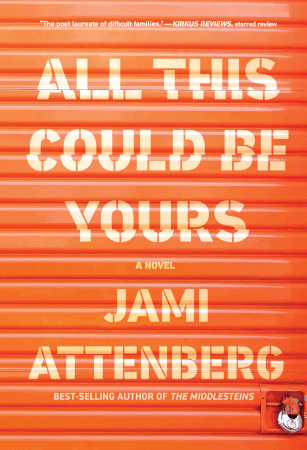
Image result for All This Could Be Yours
Buy the book

Victor Tuchman is, unequivocally, from the get-go, a bad man. The power-hungry real estate developer is also the nucleus of a family irrevocably altered from standing his imperious shadow. As his condition deteriorates in a hospital from a heart attack, his family is forced to reckon with the legacy he leaves behind. His daughter, Alex Tuchman, comes to New Orleans seeking answers about who her father was. Her mother, Barbara, who nurtures a perpetual need bordering on obsession for the material, remains tight-lipped as Alex tries to learn the truth about her father. Victor’s son, Gary, misses flight after flight, remaining in Los Angeles as his wife, Victor’s daughter-in-law, Twyla, is forced to contend with her own secret born directly from the misdeeds of Victor Tuchman. Attenberg charts what one man leaves behind, and questions if a family can rebuild, find forgiveness, and, ultimately, move on.

I hopped on the phone with Jami Attenberg to discuss her latest opus, toxic masculinity, legacy and how it’s passed down.


Greg Mania: I’m very much interested in talking about how family relates to identity, something you examine in your work, especially in The Middlesteins and All Grown Up. What is some new territory you explore in that regard in this book?

Jami Attenberg: Well, it comes down to physical proximity. In All Grown Up, [Andrea] lives in New York and sees her mother once every few weeks. In The Middlesteins, they all live within driving distance of each other. The kids in this book, Alex and Gary, have made a series of conscious choices in their life to physically move as far away from their parents as possible. They didn’t want to connect their adulthood to their childhood. Over the course of the book, they’re forced to contemplate their parents—their father is in the hospital, on the verge of death—and I was interested in seeing how these two characters, who have done everything they can to walk away from their family, consider their parents, again, and see if they’re anything like them.

GM: Even though Victor is in the hospital, unconscious, for the majority of the book, he is very much present, especially in the scenes that take place in the past. But it’s almost as though he’s more of an ominous presence rather than an explicit voice. Was this intentional?

JA: Yeah, that was a specific choice on my part. He appears in the first couple of pages, and that’s the only time you see a close third person. He wasn’t originally going to appear in the book. In the first three drafts, I just had no interest in him having his say. I just felt like men like him have had their chance. We’ve heard from that perspective many-a-time, and I’m tired of it. I just wasn’t interested in who he is. The book was only going to be these, at least, four strong female voices. But on the fourth draft, I realized I needed to put him in there, because his perspective was necessary to the book. I created him as a whole character, but from a sort of removed perspective. 

GM:The city of New Orleans is almost a character itself in this book. How has being a full-time resident influenced this story?

JA: I was nervous about writing a book set [in New Orleans], because I’ve only lived here for two years. I sort of had to give myself permission to write about New Orleans. I’m just very protective of it. I didn’t want to screw it up. The other thing was that I didn’t want it to be a love letter, like some sort of starry-eyed interpretation. This city is complicated. It has problems. It’s an incredible place, but it also has a crumbling infrastructure. But it’s also special. I feel happier here than anywhere else I’ve lived. I tried to write about it in a clear-eyed way, and I tried to make sure I didn’t talk about the clichés. And my trick was that, if I did mention a cliché, I had a character who didn’t really like it there. So Barbara was sort of forced to move down there, and it’s not really her scene. She’s sort of this cold, New England ice queen who isn’t interested in what New Orleans has to offer her. 

GM: She misses the sweater tied around her neck.

JA: [Laughs.] Yes, exactly. But there are plenty of love notes to the city tucked inside throughout the whole book. 

GM: I noticed that! You talk about the different types of flora in people’s gardens, the way Spanish moss drips from the old trees. I love your attention to detail, specifically how you also include the perspective of passers-by, like the CVS employee and the ferry operator. What was your intention with including these brief glimpses into other people’s lives?

JA: They just kind of showed up. My intention starting out was to write about these outsiders, in this case, the Tuchmans. That was my entry point. And then, as I was writing these voices, the ones of the native New Orleanians, they were insistent that they be heard. My first draft, as messy as it was, was this kaleidoscopic view. I just let these passing characters grow.

GM: This novel is very much set in the present. Even though you don’t explicitly mention Trump, we know who the president is. Why was it important to note the current political climate in this book?

JA: I just think it was impossible not to. I have thought a lot about how once Trump became president, someone could say he or him, and you’d know who they were talking about, which is just incredibly powerful. I hate to give him that power, but it’s true. And it’s not just him. He represents this existential threat overall, and I didn’t really have to do very much work to let the reader know what’s going on outside of the characters’ world. It’s really a way of inviting the reader into the conversation of the book. 

GM: There’s also an intergenerational perspective—we meet Victor’s grandchildren, Sadie and Avery. If this book were to continue, do you think Victor would have any influence on their lives? Would he loom over them like he’s loomed over their parents? 

The patriarchy is a fucked-up system, and I wanted to investigate what this can do to a family.

JA: I think the trail Victor leaves behind is one of the points of the book, which is that we have a fucked-up system, called the patriarchy, a system that is both broken and functioning at the same time, and I wanted to demonstrate and investigate what this kind of toxic male behavior can do to a family. I wanted to examine what Victor leaves behind, what his legacy is, and what it means. But, for the most part, I invite the reader to consider what kind of impact this man has on his family. 

GM: What came first: the character of Victor or what Victor represents? What it means to be abusive, powerful, manipulative? 

JA: I’m a character-driven novelist, so it doesn’t work for me if I’m just trying to be political. I always see these characters in my head first. But then whatever you care about or are thinking about at the time infuses itself naturally into the characters. I don’t think I’m a heavy-handed writer, maybe earlier in my career I was, but I’ve had to learn to let the characters talk, let the characters be. If I were to put him, or any of the other characters into a box, they just wouldn’t be believable or successful characters. My books are character-driven before anything else. 

GM: You put mortality through a humorous prism, which, to me, makes it more palatable. Is this how you’re able to navigate mortality on the whole?

JA: For sure. I used to be so freaked out about mortality. When I turned 40, all of a sudden I was like, “oh, I could die.” It just didn’t register for me up until that point. I thought about it for a lot for a few years. I have a friend who’s about six years older than me, and she told me that one day you’ll wake up and you just won’t be worried about it anymore. That’s just what happened. It’s like when you break up with somebody, and for a while you think that it’s the worst break-up ever, that you’ll never get over it, then comes a day you find out you’re just fine. You got over it.

GM: Kirkus Reviews called you the “poet laureate of difficult families,” what about the family dynamic do you hope to examine next?

JA: Well, my next book is going to be a memoir. And even though my mom is a reader for me—she’ll read a draft of a work-in-progress—I don’t always necessarily tell her what I’m working on in advance. I’ve been tweeting about it a little bit, and my mom, who follows me on social media, messaged me to tell me she’s seen my tweets about writing a memoir, and then proceeded to ask me if there wasn’t anything I wanted to talk about. [Laughs.] She was like, “am I going to be in it?” My mom and I really close, so this isn’t going to be Mommie Dearest. I’m writing about being a writer and a woman, so it’s less about family. But I have about three different ideas for the novel following this one. I think that it’s good for me to store up my feelings, innovate, and meet new characters. 

The Children of Latinx Immigrants Need a New American Dream

My mother believed in the American Dream when she had me, and she worked tirelessly in order to provide me with a great life with no worries about not having the basic necessities: food, a roof over our heads, and love. For her, and other immigrants of her generation, that’s what the American Dream meant: financial stability, no stress, the ability to provide for her family. But for the first-generation children of these true believers, it’s becoming clear that the dream is more complicated.

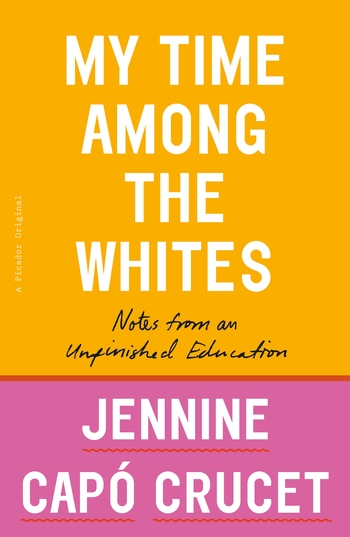
My Time Among the Whites

In My Time Among The Whites, Jennine Capó Crucet delves, via essays, into the experiences she’s had as a first-generation American child of Cuban immigrants who depended on the American Dream to survive and have a better life. In the essay “¡Nothing is Impossible in America!,” Crucet discusses the definition of the American Dream her parents knew and that she was raised with, along with the realities she discovered after believing it herself for so long. “The American Dream, commonly told: You can accomplish anything if you work hard enough for it,” Crucet proclaims. “All you have to do is work hard. My parents really believed this, and I believed it long enough to get me to college, where I learned to see this idea for the dangerous lie it is, one that doesn’t take into account many things like, for instance, history.” 

Millions of immigrants have striven for a similar American Dream. To drop everything you know and leave a place you once called home is a significant and unimaginably difficult decision to make, especially when it ends up being the only option to survive wars, protests, corrupt police raids, and other horrendous events caused by outside political, economic, or environmental reasons. This was a reality for so many Latinx immigrants who made that sacrifice and more, working long hours under strenuous conditions in order to be able to keep living in this new home. To go through that, they had to believe in the promise of America—and in some ways, Crucet points out, that dream was realized.  “We have privileges [our mothers and grandmothers] never thought possible,” she writes in “¡Nothing is Impossible in America!” “We are standing inside that privilege right here, talking about this. We have conjured the key not from nothing, but from their sacrifices and from the futures we glimpsed that sat just beyond the limits of their dreams for us.” Children of the diaspora, including myself, have had privileges of all kinds in result of what those who came before us have endured. 

Here’s what first-generation children have learned from the life our parents sacrificed to give us: The American Dream doesn’t apply to everyone.

But here’s what first-generation children have learned from the life our parents sacrificed to give us: No matter how sweet it might look or how close one might feel to achieving it, the American Dream doesn’t apply to everyone equally. My mother embraced the dream of financial success and stability when she had me. She believed in it so that she could provide me with a good life, a life where I wouldn’t have to struggle as much as she did. As a single parent, through working tireless hours and going to college when she didn’t previously plan on it, she was determined to provide me with as much security and love as possible. Growing up, I felt it was only right to aspire to the American Dream. 

But as I realized the inequalities my community and other marginalized communities face, I resented the American Dream that I grew up idealizing. The harsh truth is that it truly can never apply to me or those like me. Injustice towards marginalized communities in the U.S. spans across many groups, but Latinx immigrants and even those of the diaspora have been increasingly faced with racism, xenophobia, and violence. There also continues to be pay inequality between Latinx workers, both citizens and undocumented, and white workers. Even when immigrants (and their children) work an immense amount of tireless hours, they’re still further from the dream of financial security. 

Crucet forged her own path to get where she is now—a novelist and associate professor—without having to diminish her heritage. In her book, she discusses her parents’ confusion when they attend her readings and see the central role her Latinx identity plays in her work—and how popular her work is despite this, even among strangers, even among white strangers.. “While they understand that by many measures, I’m successful in ways they’ve learned to recognize,” Crucet writes, “they don’t totally understand how I did this while asserting–rather than muting–my ethnic heritage in my work. They don’t understand why I would do this work when they’d given me what they thought was a key to escape it, a way of avoiding the work entirely.” Just as Crucet learned about the major falsity of the American Dream, many Latinxs of the diaspora likely have learned the same, especially given the political and social climate within the U.S. since the 2016 presidential election. 

We have to force our way into the dream through constant struggle to survive.

The white-centered aspects of the American Dream continuously reinforce barriers that keep Latinxs, including myself, from having that big house, that picket fence, the job that promises financial stability. Because we’re not the country’s ideal, we have to force our way into the dream through constant struggle to survive. Crucet writes about how her parents’ version of the American Dream, the one they passed on to her, incorporated that inequality: “I am someone whose parents taught her that to survive and thrive in this country, I would have to work twice as hard as a white person,” Crucet stated. “They never took issue with the unfairness of this; they said that’s just how it is until the work itself leads to success that allows you to transcend the unfairness somehow.” I, too, have learned to sense the moments where I know that I have to push a hundred times more compared to others, but is this the way for us to continue living, to work and work just to still be seen as lesser in a country where its so-called universal dream never considered us in its origins? 

Considering this inequality, it’s no surprise that many Latinxs of the diaspora have more resentment towards the traditional idea of the American Dream than their parents or grandparents. After all, that American Dream wasn’t created with them in mind. The Latinx community has become a significant and crucial part of the U.S. population, but we are still not part of how America envisions itself. In the essay “Imagine Me Here, or How I Became a Professor,” Crucet discusses the resistance she practices in her position. “I teach as if I have nothing to lose, which helps me tell my students the truth–about why the faces in the room are mostly a certain color, or how we are all part of an oppressive structure perpetuating all sorts of bigotry just by sitting in that room,” she says. ”I don’t believe these institutions will figure out a way to solve their own problems. They were designed to do the opposite. When I speak at other predominantly white campuses, I’ve reminded the students of color and the women about this fact: This place never imagined you here, and your exclusion was a fundamental premise in its initial design.” The way higher education in the U.S. doesn’t truly make the initiative to consider the Latinx community and people of color as a whole in these spaces is a part of the wider inequality that spreads throughout the entire country: we weren’t and aren’t expected, imagined, acknowledged, and considered. Our ancestors, up to the recent generations that came before us, fought at different levels to make it possible for the Latinx community to continue to exist, especially in a racist, xenophobic country that continues to try to erase our existence.  

This shift from previous generations’ white-influenced idea of success to the goals and values of Latinx generations suggest that it’s time for a full overhaul of the American Dream—one that leaves room for more the Latinx community and marginalized communities in general. Perhaps becoming disillusioned with the American Dream is actually the first step to creating a more inclusive one. Crucet’s book offers us a blueprint for how this might look; she first embraced the general idea of success passed down by her parents, but then dissected it, interrogated its white-centered ideology, and finally took portions of it and made her own way to success. Is a wider interrogation and overhaul of the American Dream going to be the driving force to a better future for the Latinx community? One can only hope that the generations to succeed us face less injustice and inequality so that the U.S., especially as a new home to millions, can finally offer promise to us all. 

Finally, A Book About Miscarriage and Infant Loss for Women of Color

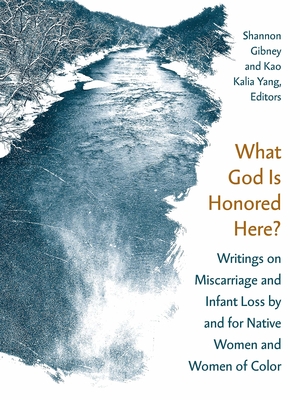
Studies by the Center for Disease Control show that 15–20% of pregnant people in the United States will suffer a miscarriage, and 1 percent of U.S. pregnancies end in stillbirth. These are astonishingly high numbers for an industrialized country. Still more distressing is that the infant mortality rates for Black babies are more than twice that of White babies. I learned all this from the introduction to the anthology What God is Honored Here?: Writings on Miscarriage and Infant Loss by and for Native Women and Women of Color, written by editors Shannon Gibney and Kao Kalia Yang. Before then, I had heard the numbers were grim but I didn’t know the degree. It makes the publication of this anthology even more urgent. Gibney and Yang are award-winning authors working in a variety of genres for a diverse range of age groups at the intersection of race, gender, class, family, power, and identity. Gibney is the author of the novels Dream Country and See No Color, and the textbook: Working Toward Racial Equity in First Year Composition. Yang has written a children’s book, A Map into the World, and the memoirs, The Song Poet and The Latehomecomer: A Hmong Family Memoir.

The result of their collaboration is a ground-breaking array of perspectives that take us deep into  the prejudices and limitations of science and the medical establishment; the toll, the grace, the in-between where Indigenous women and women of color wait for miracles, and where we plunge in our grief at losing an infant or lose the possibility of an infant.

I have to admit I was nervous about opening this book, afraid of what it would bring up for me. At a time when we need our armor for so much that is fucked up in our world, this book would make me vulnerable. As the editors say eloquently in their introduction about their contributors: “Although their mode of expression was words, what they were really doing, what we were really doing, was expelling, processing, and addressing trauma.”

And I found they were right. The artfulness of each piece buoyed me along. This anthology helped me to the other side of grief. I had a chance to talk with Gibney and Yang about their vision and their experience working with writers handling difficult emotional material.


Jimin Han: How did the two of you come to work on this project together?

Shannon Gibney: Kalia and I had been friends for a long time, and had always admired each other’s work. I knew she had suffered a loss, and that she had talked about it a little bit publicly. After I lost my daughter and was living through the aftermath of little to no discussion of infant loss, stillbirth, and miscarriage in our culture and communities, I reached out to her about the possibility of putting an anthology together of Indigenous and women of color’s voices about the experience. Kalia got back to me right away and said, “Absolutely. This is vital work. There’s nothing else I’d rather be doing.”

Although we were friends before, the relationship was more collegial. Now, over the process of putting out the call for submissions, going through pieces and accepting and rejecting them, finding a press, editing and guiding writers through revision, examining proofs, organizing readings and events, and getting the word out about the book, we have become very close. I would say we are now dear, dear friends. Every Black, Native, Asian American, and Latinx woman writer should have at least one fellow BIWOC friend and colleague who they can bounce ideas off of, collaborate on projects with, get professional and personal advice from, or just call to vent.

Kao Kalia Yang: We chanced upon love, marriage, and children in the same span of years. When I had my miscarriage, I posted about it on Facebook to let my friends and family know that the baby I had been hoping for was no more. When Shannon experienced her stillbirth with Sianneh, I was at the hospital. The news of Sianneh’s birth via Facebook helped me make the decision to induce. In this way, we became more than just women out to push the boundaries of American literature, we became—in my mind and my heart—sisters in our grief. Some months later, Shannon wrote and asked if I’d be interested in working with her on a collection on miscarriage and infant loss by and for native women and women of color. I, too, had been looking and finding nothing reflective of my experience. I agreed but it was not until years later—after the stories of our childbearing years were through—that we both were ready to tackle the project. 

JH: You’re both accomplished writers with your own individual books. (Congrats, Kalia, on being a finalist for the Chautauqua Prize.) How different was the experience of collaborating on this anthology from working on your solo books?

We were asking folks who had already lived through incredible pain to dig back into their wounds.

SG: Neither of us had ever assembled an anthology, and certainly, neither of us had ever attempted to put together something as triggering as this. Throughout the entire process, we were both very, very clear, and had to keep reminding ourselves that yes, although this is a piece of literature, it is also a process and even a template for working through trauma. Although we definitely had a baseline for writing quality, and many of the contributors more than met it, we were also cognizant that in asking for first-person narratives of miscarriage and infant loss, we were asking folks who had already lived through incredible physical, emotional, and spiritual pain (and in many cases, had “put it behind them,”) to dig back into their wounds. Especially in the revision process, we became aware of just how much we were asking from them. So then, the question became, “How do we create the conditions and support for these women to get at the depth of their own truths while not creating any more unnecessary pain?” This became a delicate balance in terms of editing and revising. Luckily, our editor and the press were incredibly supportive throughout the entire process.

KKY: The experience of working on this book, even with such a wonderful partner, is harrowing. We both got ourselves on this rollercoaster and held fast, believing the track would hold, picking up more and more people along the way, knowing the train was getting heavier, knowing we were acquiring more strength. On a solo project, at this phase of a book, you’re looking ahead. On this project, we’re looking toward each other and the women on the train. It is a different set of responsibilities we’re tangling with this time. 

JH:  Where did you post calls for pieces and what was the response? And how did you decide what would go into the final collection?

KKY: We published an essay via Women’s Press on our individual and shared experience of loss and put forth the call. We wrote to different networks that we knew, reached out to Native women writers and women writers of color we respected, asking them to share it with their networks. We used social media (and received in return some horrible messages about how we were isolating white women in the process, being divisive by focusing on and culling forth particular voices only). We cast a net as wide as we knew how through the many relationships we’ve made on our individual journeys in our varied roles as writers, teachers, and activists. We received all kinds of pieces, poetry and prose, from men and women, white and non-white. We reviewed them all. We thoughtfully discussed what this collection means to us and the work we believed it would do in the world. No men. No white women. We sifted through and looked for the pieces that spoke to our hearts, pushed our boundaries of understanding, asked the hard questions of themselves and the world. We wanted to be as representative as we could be.

JH: Any thoughts about why it’s taken so long for an anthology in this area to be published?

The realm of creative nonfiction has always been dominated by white men and their stories.

KKY: The realm of creative nonfiction has always been dominated by white men and their stories, their truths, their perceptions of importance. I have many thoughts about why a collection like this has waited for us: you needed women, not just women but women of color. And you needed not just one, but at least two women who share a deep, living understanding of not only their own experiences of loss but other women’s. And then you needed these two women to be educated enough, formally and informally, to understand the context of such losses, and then to each have built a strong enough resume of work to show each other and the bigger community that they were trustworthy and able to carry such stories as contained in the pages of What God is Honored Here? to the bright light of day with sensitivity, care, and a measure or rebelliousnessShannon and I are both anomalies, by ourselves and as a team. We had to come together, then we had to find a publisher who was interested and capable and willing to ride this fine line with us, and an editor who understood where this collection could stand and what it could do. 

JH: Being where you are in your careers and having the strength of many networks seems to have really worked for you in this anthology. Can you tell us more about your discussions? Specifically, what was most challenging?

KKY: For me, there were three parts. First: not responding to the inflammatory responses of white men and women who felt that we were denying them access through this collection. Two: learning how to cry for another woman’s experiences and then crying your way through the editing of their pieces. Three: writing my mother’s story of miscarriages was particularly hard, inhabiting them, addressing their outcomes. 

JH: Your inclusion of a variety of genres, from poetry to essays to fiction gave me some space as I was reading pieces that triggered memories for me. How did this decision come about and why did you choose to include a variety of genres?

KKY: We knew that the collection was going to be hard. We knew we needed to cross genre lines to give our readers reflection, contemplation, meditation room. For us, as writers, we’ve found those spaces, that generosity of breath–as you so beautifully put it–across genre lines. As importantly, these different genres exists because different writers find their truths in different forms. We didn’t want to limit ourselves, our writers, or our readers.

JH:  How has the experience been for you as advance copies of the bound book arrived?

SG: It has really been incredibly moving to actually hold the book in our hands. I mean, it always is, with any book you write, to see these years of labor, all these resources, all this belief and commitment finally come to fruition. But with this book, and all the sorrow it’s carrying, and conversely, all the potential it holds to deeply heal, it’s even weightier. The book feels like something significant we can offer to the world out of that deep well of sadness.

The bigness of the book grew when I saw it living in the hands of my children.

KKY: My children were as excited to receive the advanced copies as I was. We all walked around the house carrying copies close to our hearts. It wasn’t until I took a step back, watched my daughter and my sons holding the books that I felt—for the very first time—that the book was not only for me and Shannon and the women whose voices are inside, or the lives that were lost along the way, but also for those who did make it. This book was a celebration of life in its most precious form. The bigness of the book grew when I saw it living in the hands of my children.

JH: Have you heard from your contributors about their reactions as they received their contributor copies and see that the project is now real and will be received soon by a larger community?

SG: Reviews have started coming in—from established publications as well as everyday people. And they move you. When you hear that your story has made someone feel less alone in their grief, when a nursing instructor says that the book should be required reading for everyone in the OBGYN field. These are the things contributors have been hearing about the anthology and their pieces, and yes, they have told me and I can see that they find it incredibly powerful. At Minneapolis College, the institution where I teach, What God Is Honored Here? is already being taught in the Gender, Women, and the Environment class, and the Resisting Gender Violence class—and it hasn’t even come out yet! Contributors were thrilled to hear this.

KKY: One contributor told me that the book surprised her. She hadn’t expected to feel so deeply and connected to the other women in the book and their stories. Just today our editor told me when I asked him if he was happy with the way the book turned out, he said, “With other books, I can say yes, it is beautiful or it is so good, but this one: it is so big, Kalia, it carries so much.”

Grieving for Fascists

My father had been dead for almost seven years by the time I learned about his suicide, the amount of time it takes to have someone declared dead in absentia in the state of Massachusetts. I’m still not sure why his mother—and my mother, for that matter—kept me in the dark during that time. Before he left a note and walked into the ocean, he told me he was moving to Atlanta for a job. I suppose I had simply assumed that he wasn’t interested in keeping up a long distance relationship with me, his only child. 

I also don’t know why my mother and my father’s mother chose to tell me in the way that they did: His mother mailed me a manila envelope shortly before my 14th birthday. It contained a copy of his will, his suicide note, and his baby ring. My mother feigned ignorance when I read through the documents on our front lawn, just next to the mailbox. 

“Well,” she said, “at least we know where he’s been all these years.” 

His mother mailed me a manila envelope shortly before my 14th birthday. It contained a copy of his will, his suicide note, and his baby ring.

It wouldn’t be until I was getting ready for college, going through my mother’s safe for some financial aid documents, that I saw her file on my dad. She’d started it in the days after his note was found. Even though they had divorced five years before he decided to end his life, she was the lead in having his estate settled. But we never discussed it, not after that first conversation over the manila envelope. Around the topic, we lapsed into a dull and speechless state. 

“Dull speechlessness” is also the state Peter Handke describes falling into when he learned of his own mother’s suicide in November, 1971. Several weeks later, he began to write the taut, at times clinical work of autofiction A Sorrow Beyond Dreams (titled in the original German Wunschloses Unglück). 

From the outset, Sorrow resonated with me. I first read it when I was 25, about to get married, and just beginning therapy—the first time in my life I would begin to unravel the emotional tangle of my father’s death that I’d previously kept shelved. Prior to that, however, I’d plumbed the canon of suicide memoirs in high school and college. I didn’t have any emotional reactions to them, but I nevertheless devoured them the way other people scarf up every available celebrity gossip rag—compulsively and clandestinely, often with the same empty-calorie value. 

This sense of compulsiveness isn’t uncommon for children who lose their parents in this way. American psychologist Albert Cain, who has studied the topic extensively, places tremendous importance on the act of telling a child about their parent’s suicide. In keeping with the pace at which a child’s mind develops, it’s not simply one act of telling, but rather an act of telling and retelling over time. If the telling amounts to “a few brief, charged exchanges” that “put an end to overt questions,” the child is likely to be left “to his or her own constructions, patching together fragments of information and fantasy or joining an alliance of suppression.” In the absence of the internet, family communication, or any other real facts, I was using the grief of others to patch together my own information. 

With suicide memoirs, the results were mostly a disappointment for me, the tone consistently overly-emotional. After spending so many years divorced from grief, trying to process someone else’s was like trying to eat beef bourguignon after a weeklong fast. Perhaps that’s why Sorrow had such an impact on me: It was a work that, in under 100 pages, told and retold the story of a mother’s suicide without letting emotion take the wheel. As he pieces together information about his mother’s childhood in Nazi Austria, her unhappy marriage to an alcoholic, and the nervous breakdown that would be an omen of her eventual fatal overdose, Handke notes: 

The danger of all these abstractions and formulations is of course that they tend to become independent. When that happens, the individual that gave rise to them is forgotten — like images in a dream, phrases and sentences enter into a chain reaction, and the result is a literary ritual in which an individual life ceases to be anything more than a pretext.

This gave me a sense of comfort in the emotional bardo. It also allowed me to see my father’s death not from my own perspective, but from his. Just as Emile Durkheim examined suicide as a problem of society, Handke examined his mother through the world and culture that shaped her. More accurately, he looked at the role she was expected to fill in this world, and the increasing chasm between that role and her inner life. Through this, I was able to see my father and the role he was slated for as the first (and only) son born into a military family as part of the post-War baby boom. With what little I knew of him (aided by files and reports), I could see how he’d tried to cross the gap between his own sensitivities, his failed marriages, his depression, and his checkered career, and the role he was born to fill. I also came to see how easily that bridge can crumble. I felt I had Handke to thank for that. 

And then I fucking Googled him. 

Even before last week’s Nobel Prize in Literature announcement, Handke’s reputation as a genocide apologist couldn’t outrun search engine algorithms. The front page of Google included documentation of his denial of the Srebrenica genocide and his false claim that Bosnian Muslims staged their own massacres. What’s more, he didn’t seem inclined to bury these viewpoints, having spoken at the funeral of Slobodan Milošević (who died in prison, shortly before the conclusion of his trial for war crimes, crimes against humanity, and genocide). Handke published an entire book on the country and the “purity” he found in the Serbs. It’s currently available used on Amazon for a minimum of $999.  

But in the last week, the spotlight pointed onto Handke by the Nobel Committee has only heightened the critical response — and rightly so. Bosnian-American author Aleksandar Hemon dubbed Handke “the Bob Dylan of genocide apologists.” The press has been quick to reprint Jonathan Littell’s more succinct assessment from 2008: “He’s an asshole.” 

In general, I’ve always preferred to keep emotion at arm’s length, in favor of intellectual thought. I struggled with this instinct most acutely in my first few years of therapy, around most topics of discussion. My therapist would say she understood what I was saying, but not what I was feeling. Such prompts to get me out of my own head and into something more elemental or gut-felt were the first tentative bites of emotional nutrition. It was a kind, but rigorous, effort to break the fast. I would push back and shut down, she would refuse to honor the alliance of suppression. I imagine that, for her, working with me early on must have been like running into a brick wall over and over and expecting the result to eventually change. 

It was around this time that I also began to develop a taste for Wagner, thanks in part to reviewing the full Ring Cycle when a new, multi-year production premiered in 2010 at the Metropolitan Opera. Where Handke eschews beauty in his depiction of death, Wagner overdoses on it, creating what he called the Gesamtkunstwerk (literally, a “total-art-work”). I’d flirted with the composer’s works in the past, but always found them a bit too long, a bit too overblown. In Die Walküre, the second installment of the Ring Cycle, however, something shifted. From somewhere, an emotion was sparked. 

It’s the scene of a daughter recognizing her father’s suffering, begging to take it from him.

“Endless rage! Eternal grief! I am the saddest of all men,” Wotan moans to his daughter Brünnhilde in Act II of the opera. Even for the gods, the only truth in life is chaos. Ever specific with his stage directions, Wagner instructs Brünnhilde to lay her head on Wotan’s knee as she begs him to unburden his sorrows onto her. Wotan, in turn, gazes into her eyes “for a long while” while stroking her hair “with unconscious tenderness.” In a low, faraway voice, he wonders if his will would be broken if he were to do so. “Who am I if not your will?” Brünnhilde responds. It’s the scene of a daughter recognizing her father’s suffering, begging to take it from him, to inherit his burden as her own responsibility. (Wagner, too, struggled with depression and suicidal ideation.)

Such a response is uncomfortably familiar to children of suicide, who are likely to hold themselves responsible for their parents either in the face of a depressive episode or, after the fact, insist (in Albert Cain’s words) “in the face of therapists’ interpretations and reality confrontations, that it was their fault.” Seeing that moment play out on stage, I didn’t know if I was thinking about anything. But I was certainly feeling the desperate need to lay my own head on my father’s knee and beg him to give me his endless rage and eternal grief. To tap into these ideas through his art was to tap into my own grief. 

I didn’t need to Google Wagner. As both a Jew and a classical music critic, I knew about the composer’s well-documented and unabashed antisemitism. His essay “Jewishness in Music” is an unapologetic diatribe on “the involuntary repellence possessed for us by the nature and personality of the Jews, so as to vindicate that instinctive dislike which we plainly recognise as stronger and more overpowering than our conscious zeal to rid ourselves thereof.” It’s available on Amazon Prime for a sum that’s about one-one-hundredth the asking price of Handke’s book on Serbia. In an echo of Littell, Auden described Wagner as “an absolute shit.” 

This was a common reaction in the 20th Century as the trend of casual antisemitism wore off and the specter of World War II rose. Wagner’s legacy is rendered all the more discomfiting when you take into account that he was idolized by Hitler. “Out of [Wagner’s] Parsifal I am building my religion—the solemnity of the Mass without theological party-bickering,” Hitler once told Nazi Party lawyer Hans Frank. Fellow classical critic and author of the forthcoming Wagnerism: Art in the Shadow of Music Alex Ross has spent years unpacking the Wagner complex. He referenced the Parsifal conversation in an August 1998 article for the magazine, “The Unforgiven,” wherein he also drew parallels between the opera’s text and three speeches delivered by Hitler between 1939 and 1942. Handke’s own mother lived through this era, and what came after it.

While Wagner could never have predicted the rise of Hitler and a genocide that defies all adjectives (as all genocides should), scholars and fans alike have spent the better part of the last century debating what to do with his music. It’s not simply that he inspired Hitler, but that the philosophy that Hitler shaped in Wagner’s image was made (in Ross’s words) “not by distorting Wagner but by taking his words literally… the manipulation of reality in the service of one idea, the blend of mysticism and hate.” 

Would Wagner have denied the Holocaust? Such questions and parallels seem even more pressing over the last week, not because of the Nobel Prize, but because of Turkey’s attacks against Syrian Kurds. I think about what Handke would say to this development. In the next breath, I think about my grandmother, a Syrian minority who was named for her slaughtered sister. I think and I struggle to feel. Other times, I feel and try not to think. 

In some ways, it’s easier to condemn the dead while still embracing their work. The buffer of history (“it was a different time”) acts as both a cushion and a dodge. Hundreds of books have been written about Wagner’s art and politics, with titles like The Terrible Man and His Truthful Art and The Trouble with Wagner. Some scholars have taken apart his works, brick by brick, to find musical representations of antisemitism, or read key characters from his operas as stand-ins for Jewish stereotypes. But we still perform his music. According to the website Operabase, over 150 productions of Wagner’s operas are scheduled around the world throughout the next year. Even today, Jewish musicians have made his canon central to their repertoire. Conductor Daniel Barenboim, in contextualizing Wagner’s world, writes: “It was nothing extraordinary to blame the Jews for all current problems, whether political, economical, or cultural.” 

We look to history as an explanation, even an excuse. But we’re also reckoning with the abhorrent behavior of living artists, like Handke.

We look to history as an explanation, at times even as an excuse for the behavior of the past that contradicts the values of the present. But currently, we’re also reckoning—on a public scale and in real time—with the abhorrent behavior of living artists, like Handke, who ought to know better. Caught in history as it’s unfolding, we’re not 100% sure what to do with each case. One group denounces Handke; another group (which recently struggled with its own allegations of misconduct) gives him one of the most prestigious awards a writer can get. 

For me, the art of others has always been a means of catharsis, an outward manifestation of my internal life. I can point to Wotan’s heartbreaking farewell to his favorite child at the end of Die Walküre as though I was pointing to my own reflection in a mirror. It’s beyond a reflection, in fact, as I myself never got a farewell from my own father. In this sense, art became a means for me to achieve. And yet, just when I think I have some sense of closure around the legacy of my father through a work like Sorrow (not a total, complete closure — I’m not sure any one work of art could do that — but at least some sliver of resolution), the legacies of those artists then leave me with more discomfort and uncertainty. 

I can’t defend Handke. I can’t even, in good conscience, defend his art at the expense of the man. But I also can’t immediately give up his works. I can’t ride into them as a hired assassin (as Patricia Lockwood recently did for the canon of John Updike), leaving blood on the ceiling in my wake. I don’t have the energy for the (justifiable) rage that others have over the Nobel Committee honoring a man who, when told that there were corpses to prove the Srebrenica Genocide, responded “You can stick your corpses up your ass!” I’m too exhausted from reliving the sadness that comes with being let down by yet another man who is old enough to be my father. 

My first instinct, as a result, is to bury my head; to wipe my memory clean of the headlines and essays on Serbian purity. In the absence of that, I can, at the very least, say nothing. I can stash my copy of Sorrow (which also houses a small envelope containing the only photos I have of my father) deep in the back of my bookshelf. But all of this feels like yet another alliance of suppression. As blissful as ignorance might be, I know from experience that the truth will eventually arrive, often in an unannounced manila envelope. 

Many recent pieces questioning what we should do with the great art of monstrous people invariably include the same Walter Benjamin quote: “At the base of every major work of art is a pile of barbarism.” I keep reading these articles, because it’s easier to think about this question rather than deal with the sense of loss that comes from works that once meant something to me, without any asterisk or caveat. This is its own form of complicated grief. 

This is its own form of complicated grief.

Benjamin’s quote is an explanation, but not an excuse. It’s a holding container for more thought and emotional contemplation, sitting with one of the most pernicious and uncomfortable emotions, uncertainty. Not only uncertainty about an asshole author or an absolute shit of a composer. It’s uncertainty about all of the artists I admire who haven’t been exposed as reproachable—but all of whom might be. 

It’s uncertainty about my father. For all I know, the image I have of him, a man I last saw nearly 30 years ago, is a false one. My conscious experiences with him constitute a handful of days in contrast to the 41 years he was alive. As far as I remember, he was loving and kind. But there’s a prisoner’s dilemma of synching this memory with the stories I’ve heard about him from others—that he was a deadbeat who couldn’t hold down a job, that he’s likely still alive since he would never have killed himself, that he was a shyster from a long line of Italian shysters. Perhaps, in the alternative universe where he is alive, I would hate him today. 

And here’s what really terrifies me: It’s uncertainty about myself. Realizing that this essay may be read, either in the future or right now, as morally reprehensible paralyzes me. My hands hover above the keys, afraid of triggering a landmine. I’m aware that the work I’ve done to process my father’s death was predicated in part on the work of terrible men, which may or may not render it invalid. I’m also even more acutely aware that I, too, will one day die and not be able to defend whatever remains of me to those who would call me terrible. 

We can’t outrun uncertainty any more than we can outrun our own mortality. Perhaps this is, in fact, the real takeaway of the good art/bad artist dilemma: that there is no answer, that seeking certainty and clarity only makes you more vulnerable. Finding closure to one grief opens you up to another grief.

Throughout all of this, I keep going back to a line from a poem by Sylvia Plath: “Every woman adores a fascist.” It’s both a comfort and a curse to know that I’m not alone in falling for someone on the wrong side of history. That person for Plath? Her father. 

9 Mind-Bending Books about Parallel Universes

Tired of waking up every morning in the same old reality? Do you feel trapped by the physics of your world? Are you interested in hopping to a new world just for a change of pace? Have we got the book list for you. If you’re interested in magic doors, other worlds, time travel, and alternate realities, these books might fill a void in your life—or maybe they’ll open a new wormhole. 

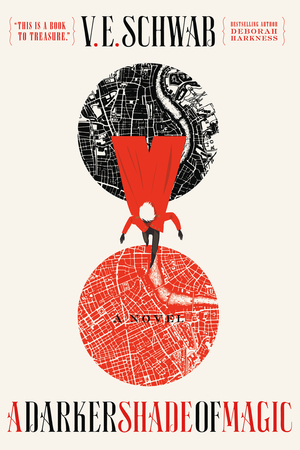
A Darker Shade of Magic by VE Schwab

Only a select few magicians can travel between the three Londons—Red, Grey, and White—and Kell is one of them. He operates secretly as a smuggler between the worlds, but when he’s robbed by Lila, a thief from Grey London, the two come face-to-face with the dark side of magic. Lila convinces Kell to spirit her away to the other Londons, and a magical adventure between worlds begins.

Image result for ten thousand doors of january

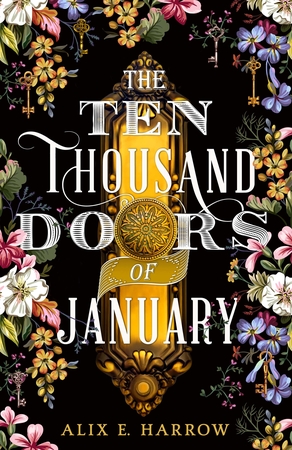
The Ten Thousand Doors of January by Alix E Harrow

January Scaller feels trapped in the mansion of her father’s business partner, a man who collects magical and unusual objects. Until, that is, January’s father disappears and she discovers a mysterious book, and an even more mysterious door that can lead her to other worlds. 

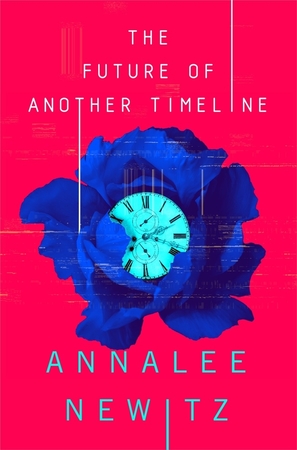
The Future of Another Timeline by Annalee Newitz

Tess is a time-traveling rebel bent on destroying a group of time-traveling misogynists who want to strip women of their rights and autonomy. When Tess lands at a punk concert in 1992 California, she meets Beth, a normal girl looking for freedom. As the girls become closer, they must face the threat of war that reaches through their timelines, and defend the past in order to save the future.

Image result for light brigade kameron hurley

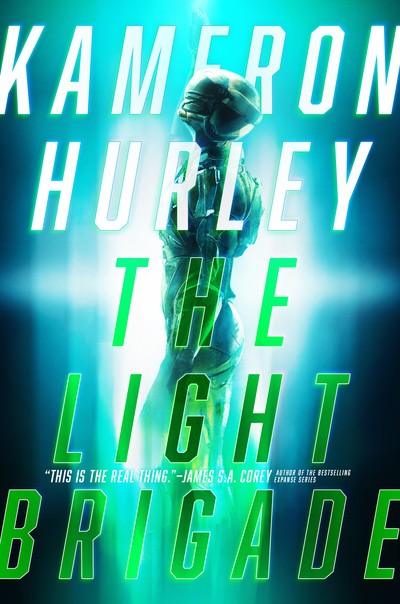
The Light Brigade by Kameron Hurley

The Light Brigade is the nickname for shell-shocked soldiers of the war with Mars. But what’s actually happening to these soldiers? When Dietz joins the war and begins to experience lapses in reality—memories that don’t line up with the platoon’s, orders that lead to nothing—the new recruit is forced to wonder what this war is really about.

Image result for you lose the time war

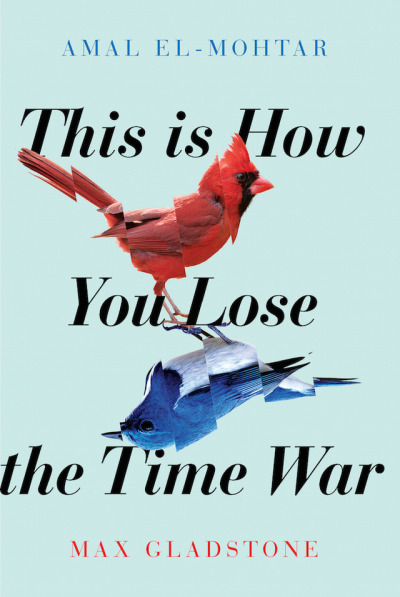
This is How You Lose the Time War by Amal El-Mohtar and Max Gladstone

Red is part of a glittering, technological utopia; Blue is a member of an organic mass-consciousness. When Red finds Blue’s letter at the end of the world, it begins a correspondence that spans time and space, connecting the two through different timelines until the bitter end. While they begin as enemies, Red and Blue slowly realize that when you’re the last two humans on earth, the only people you can depend on are each other.

Image result for shining girls lauren beukes

The Shining Girls by Lauren Beukes

In 1931, Harper Curtis finds the key to a strange house with a list of girls names on written on the wall. Harper realizes the house allows him to travel in time, and he must traverse different decades in order to kill all the girls listed on the walls—until one of his potential victims begins hunting him in return.

Image result for heavens sandra newman

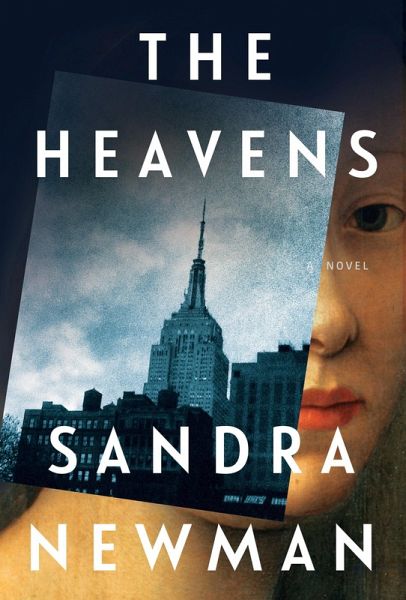
The Heavens by Sandra Newman

When Ben meets Kate at a party in 2000, he’s immediately drawn to her. But as he gets to know Kate better, he finds out that she’s plagued by dreams in which she lives in Elizabethan England as a nobleman’s mistress. Kate is convinced that these dreams are real, and that her actions in 1593 are affecting the present. As Kate becomes more convinced that her dreams are reality, Ben worries that he’ll lose the woman he loves to a world he doesn’t understand.

Image result for map of salt and stars a novel

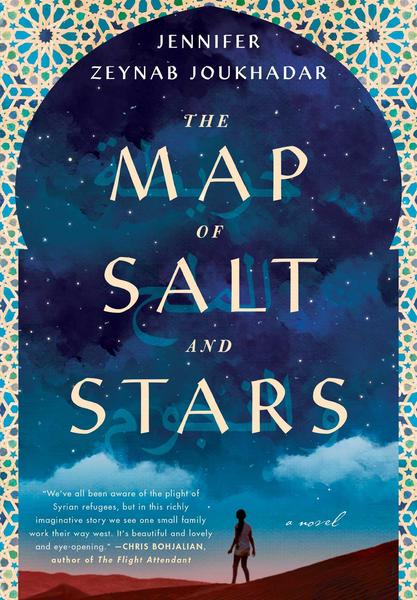
The Map of Salt and Stars by Jennifer Zeynab Joukhadar

Nour grew up in Manhattan, but when her father dies of cancer, her mother moves their family back to Syria. After a bomb destroys their new home and nearly kills Nour, her family begins a search for safety that will take Nour through the Middle East and North Africa. During their flight, Nour takes comfort in the story of a fatherless girl from eight hundred years ago who follows the same path. The story follows Nour and Rawiya as they search for new lives hundreds of years apart.

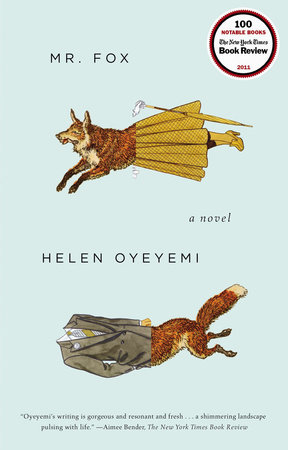
Mr. Fox by Helen Oyeyemi

Mr. Fox by Helen Oyeyemi

When Mary confronts Mr. Fox one afternoon in 1938, he isn’t expecting to see her, mostly because he made her up. Mr. Fox is an author who kills off his heroines, and Mary is an imaginary muse with a challenge: Mr. Fox must stop murdering fictional women. As Mary and Mr. Fox begin rewriting classic fables, the lines begin to blur between creator and creation, author and vision, reality and alternate realities. 

Gabby Rivera Wants Queer Brown Girls to Feel Seen

Gabby Rivera’s YA novel follows Juliet Palante, a Puerto Rican teen from the Bronx, who is reckoning with her feminism and queerness. After coming out to her family, she goes to Portland to be a summer intern for her favorite feminist author, Harlowe Brisbane. Juliet believes this will be the summer that answers all of her questions and teaches her how to navigate life. 

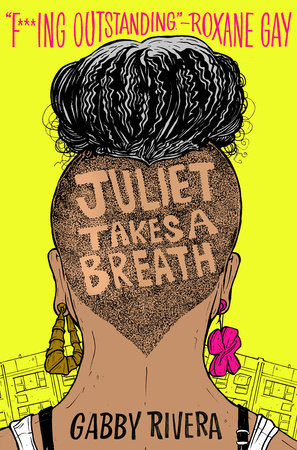
Juliet Takes a Breath by Gabby Rivera

Juliet Takes a Breath allows Juliet to learn, be free, and resist all at the same time. Once I read Juliet’s letter to Harlowe, full of curse words and jokes and the word pussy, I knew I’d have a great time figuring out who Juliet is, and who she’d become.

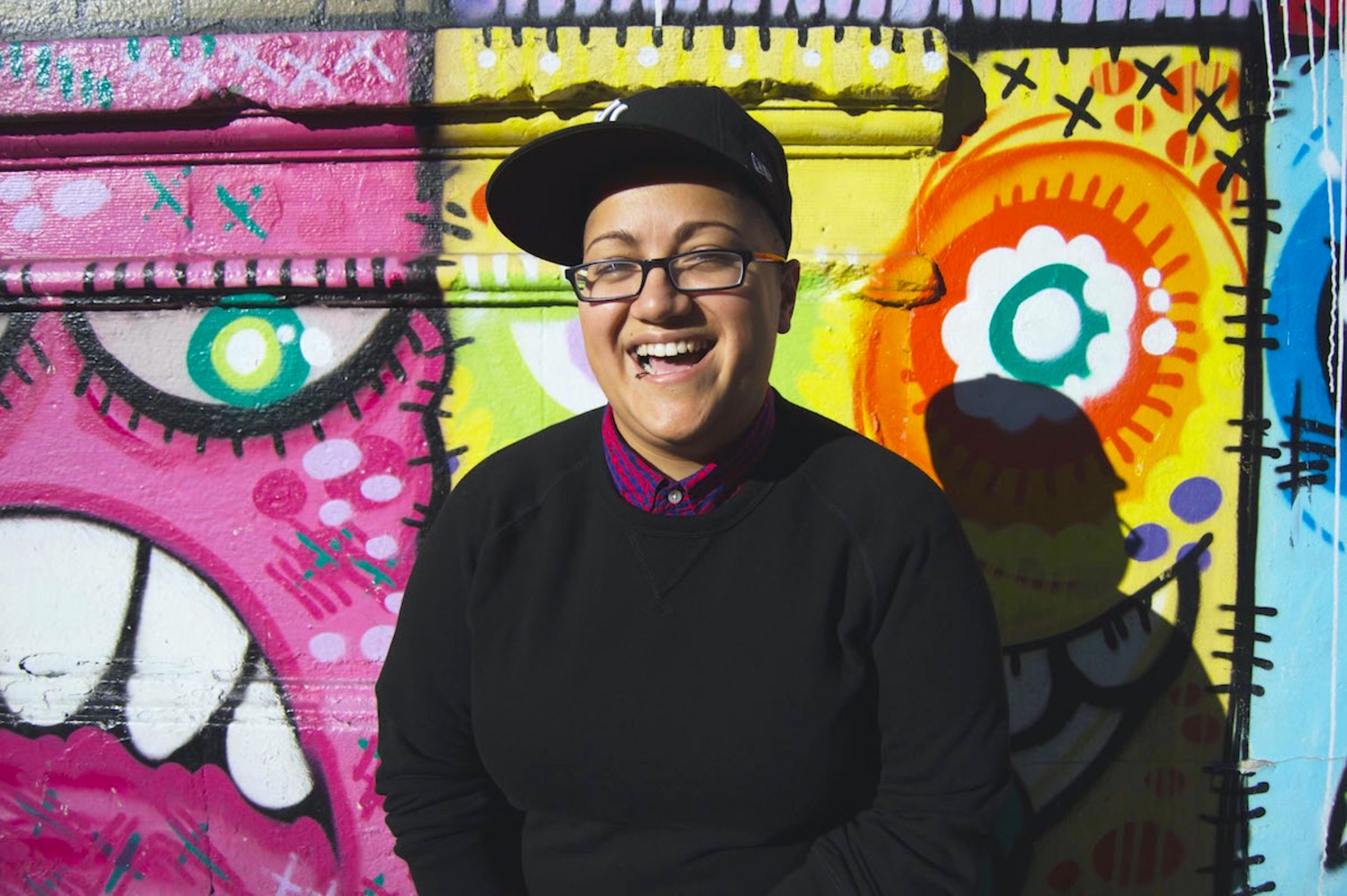
Gabby Rivera is a queer, Puerto Rican writer from the Bronx. She wrote the solo series AMERICA about the adventures of America Chavez, Marvel’s first queer Latina superhero. Rivera has also been named a top comic creator by SyFy Network, and one of NBC’s #Pride30 Innovators. 

I talked to Gabby Rivera about how white feminism won’t save brown people, reckoning with Evangelical Christianity, and thriving as a loved, supported queer adult.


Arriel Vinson: How did the idea for Juliet Takes a Breath come about, and how did it change in the reprinting of the novel?

Gabby Rivera: In Juliet Takes a Breath, Juliet is mesmerized by the [fictional] book, Raging Flower: Empowering Your Pussy by Empowering Your Mind. So much so that she snags an internship with the author, Harlowe Brisbane, and takes her newly out, round brown Puerto Rican self from the Bronx to Portland Oregon.

And that’s exactly what I did when I was nineteen. Navigating white hippie lesbian Portland as a Bronx Nuyorican was incredible and so damn ridiculous and funny. But I didn’t think about crafting a story about the experience until Ariel Gore, author of Hexing the Patriarchy, asked me to submit for her 2009 anthology Portland Queer. That anthology has the first iteration of Juliet Takes a Breath and it’s super autobiographical. Juliet’s family, her Bronx neighborhood, her crush on a super sweet and cute librarian, all of that is based off of my life. 

AV: The novel begins with Juliet writing a white feminist author, Harlowe Brisbane. This lets readers know that space will either be made for Juliet, or taken for Juliet and girls who look like her. Tell me more about this decision.

There’s this idea that if you’re not from the rich white suburbs, that your neighborhood isn’t good enough so you gotta get out.

GR: There’s this idea that if you’re from the Bronx or any neighborhood that isn’t the rich white suburbs, that your neighborhood isn’t good enough for you to flourish or find yourself in so you gotta get out. I heard that refrain all the damn time in the Bronx. People are either Bronx for life or just itching, waiting, and hoping to get out. It makes sense, it feels like there’s never a moment of quiet. The Bronx is jam-packed with people, city buses, sirens, beauty salons, Pentecostal churches, beef patties, graffiti, and baby strollers. Feels like there’s never a moment to honor the brave chubby round girls of color that are trying to navigate the world around them while catching the train to school and helping their baby siblings with their homework. 
Juliet writes the letter to Harlowe cuz she’s steeped in the myth that she’s gotta get out of the Bronx to be somebody, to figure out queerness and feminism. 

And yet at the very same time, Juliet Takes a Breath opens with a welcoming to all round brown girls encouraging them to take up all the space they need and to love themselves and each other. 

AV: When Juliet comes out, her family responds with anger/shock, then love, though resistant. Why did Juliet need those reactions instead of more positive ones?

GR: Hah! Juliet comes out at the dinner table after her Titi Wepa, who’s a cop, tells a story about her chasing down a perp by Yankee Stadium. So like the family’s already hype and laughing and at first they don’t take Juliet seriously at all. So she’s gotta fight for her space and then everything gets quiet.

It’s gotta sink in and again, Juliet’s coming out scene is similar to mine. I came out at the dinner table and was met with the deepest silence I’ve ever felt from my mother in my whole life. Like the wild silence right before a glacier breaks off on its own. My dad was chill, quiet, but still there. 

Not everyone in Juliet’s family is resistant. Her grandma offers her big love right away and so does her Titi Wepa. It’s Juliet’s mom that takes her coming out super hard and that felt right to me. Juliet and her mom are also trying to find their way back to each other.

AV: This isn’t only a novel about queerness, but a novel about stepping out of your comfort zone. Juliet grew up Christian with a Latinx family in the Bronx, a stark difference from what she saw in Portland. Why was this important for Juliet, and how does this mirror your life experience, if at all?

All you are to these white folks is some brown other who needs to be saved.

GR: So much of the Evangelical Christianity that I experienced growing up was about making sure women knew their place. Women had to be obedient to their husbands and let them lead the house. You know all that stuff. And of course the real deep homophobia, sex-shaming, and rigid rules about gender presentation. Women wear skirts and men were suits etc. All that stuff that’s designed to keep everyone in place cuz apparently God can’t handle it otherwise.

There’s a lot of guilt and fear that comes with being told that there’s only one acceptable way to be a girl, to be someone worthy of divine love. Lots of Juliet’s anxieties in the novel stem from that upbringing. She feels connected to God and is trying to also work through how being queer and a sin verguenza impacts her relationship with God.

AV: In Juliet Takes a Breath, themes of womanism and white feminism are present. How did this help Juliet understand her queerness and place in the world? Why did Harlowe need to disappoint for Juliet to gain a greater understanding?

GR: Harlowe actually kinda crushes Juliet. Juliet is convinced that this writer, this white lady feminist, that she looks up to actually sees her as a whole person and not just the stereotypes of her identities. And in one fell swoop, Juliet feels what so many people of color feel either in their classrooms, boardrooms, court rooms, that in this moment all you are to these white folks is some brown other who needs to be saved.

That shit is violent and it happens every day, under the radar or right in folks faces and Juliet needs to be able to develop the language to name what that is.

And via Maxine, Zaira, and their womanist circles, Juliet receives that real community love and understanding. Max and Zaire consent to offering Juliet that education and understanding of what it can mean to be a woman of color claiming her queerness and body and boriquaness and self. They urge her to find her own way. 

AV: All of the things that make Juliet Juliet, are also things that further marginalize her identity—her queerness, her race, her class, her body size, and so on. What made you create such a complex character?

GR: Um, this is me, I am her. Like, I am a queer Puerto Rican writer from the Bronx. I’m thick bodied, and my gender presentation is butch dyke papi so like hi, the complex character is me. It’s all my friends who embody the limitless possibilities of sexuality and gender every single day. Like we’re real people. And we deserve to see ourselves everywhere. 

AV: In an interview with Sarah Enni from First Draft, you said you wanted to be a responsible community member for the LGBTQ community. What does that look like for you, both in the novel and outside of it?

There’s a lot of guilt and fear that comes with being told that there’s only one acceptable way to be a girl.

GR: I am alive. I’m a thriving, loved, supported queer adult. I’m a fucking miracle. So many of us in LGBTQ communities don’t make it to see 30 or even 13. I’ve lost loved ones, kids in LGBTQ youth groups, all cuz the pain and rejection folks feel specifically for being LGBTQ is so damn horrific sometimes. And so my job is to offer all the love and care I can at all times to all the queer kids of color.

I gotta keep telling stories that uplift and offer as much truth and gentleness as I possibly can. I gotta listen to and offer access, resources, money, time, energy, hugs, to all the queer kids out in the world trying to live and live good.

In the novel, that’s Juliet getting loved on by her cousin Ava, her Titi Penny, Maxine, Zaira, and finally writing a love letter to herself. In real life, it’s me going to schools and talking to young people about how loved they are and how important their stories are. 

AV: What are you working on now? 

GR: I’ve got a new original series coming out with BOOM! Studios in December titled b.b. free. b.b.’s fifteen, ready to take on the world, and secretly manifesting cosmic powers that turn a road trip with her best friend into an epic eco-divine adventure! b.b. and Chulita take on the Fractured States of America, healing polluted earth and ocean while still just trying to figure out what it means to be fifteen.

Also, I have a podcast coming soon called Gabby Rivera’s Joy Revolution. So get ready to listen to me talk to my favorite revolutionary QTPOC humans and allies about how we maintain joy in a chaotic ass world.

Coming Out in the Home of the Brave

Democracy Was

1. Democracy was being told by my mother that I shouldn’t marry anyone without first living with that person for a year. Compatibility, she said, was crucial to a good marriage. I wanted to ask her if she wished she’d lived with my father for a year before marrying him, but I didn’t. It was 1976, and I was eleven years old. She assumed, as I did, that one day I would marry a woman.

2. Democracy was watching Barney Miller with my family and laughing at the gay characters and at the way the straight cops reacted to them. My father laughed along with us, but he wasn’t amused when I started mincing around the living room the way the gay characters had. “You know,” he said, “they didn’t used to have characters like that on TV.”

“What about Mr. Mooney?” I asked, still mincing. “What about Uncle Arthur? What about Dr. Smith?”

3. Democracy was discovering, upon turning eighteen, that when I did my compulsory registration for the selective service, I could also register as a conscientious objector. I told my parents my intention, and my father became irate. Only communists and homosexuals were conscientious objectors, he said. My mother defended me, said the choice was mine to make.

4. Democracy was cowering with my college boyfriend in his dorm room while some of the other young men who lived on his floor tried to kick the door in, yelling that they would kill us both if they got the chance. They didn’t know us but had caught on. My boyfriend called the campus police and explained what was going on. The banging and shouting were so loud that he couldn’t hear the response on the other end of the line.

“Can you repeat that?” he asked.

“You’re just going to have to deal with this yourselves,” the voice said.

5. Democracy was coming out to my recently-divorced mother when I was twenty-three and having her cry and say she was worried I’d get AIDS. And coming out to my father when I was twenty-five and having him reply, without the slightest change in his expression, “I know that. I’ve known since you were eighteen.” When I asked him how he’d known, he said, “You’re not a communist.”

6. Democracy was telling my father, nine years later, that I’d been seeing someone named Fred, that it was serious, and that I was in love. “I’m not saying I understand it,” my father said, “but I want you to be happy.” I thanked him for that. He said, “You’re welcome.”

7. Democracy was arguing with my father about “Don’t Ask, Don’t Tell.” While I clearly had no intention of ever joining the military, I said, “You think that if I were in the Army, I should have to hide who I am from my commander?” The word commander felt ridiculous on my tongue. But it didn’t matter; we were having two different conversations. “What I’m saying,” he told me, “is I don’t think it’s healthy to have homosexuals and heterosexuals in combat together.” I pointed out that he’d never been in combat.

8. Democracy was one of our last conversations, not long before he died. He told me he thought the Defense of Marriage Act was reasonable. “How can you think that?” I asked. “I’m your son.”

“It should be left up to the states,” he said.

Appalled, I spun a scenario wherein Fred and I were on a road trip, and as we drove across state lines, we were married in one state and not married in the next. Married, not married, state after state. And let’s say we got into a car wreck in one of the anti-gay marriage states and I went to the hospital, and Fred wasn’t allowed to visit me because he wasn’t considered family. Was that okay?

“Don’t bully me,” my father said. “You don’t have to drive through those states. Who’s holding a gun to your head?” I left the question unanswered.

All the Presidential Candidates Need to Read These Books About Climate Disaster

There’s a strong need to build climate empathy. Hundreds of media organizations worldwide have banded together through the Covering Climate Now project. Millions of people, led by youth activists, are marching in the streets demanding action. Yet some people, including many politicians, still don’t seem convinced we’re in the middle of an emergency. Maybe it’s because they don’t recognize themselves in the crisis. Maybe it’s because they don’t want to. The books I’m recommending invite us inside the lives of people already fighting for water rights, riding out extreme weather events, and trying to survive in future landscapes. Sometimes fiction can convey truth more effectively than facts can. Yes, we desperately need the facts, the science, and a healthy dose of fear. But we also need an infusion of empathy and belief if we’re going to motivate people to act. 

The Water Knife by Paolo Bacigalupi

The Water Knife by Paolo Bacigalupi 

By the end of the first chapter, you will be thirsty. Let the thirst sink in as you enter a future where the American Southwest has dried up, and people routinely drink their own filtered urine to avoid wasting water. Racism and anti-immigrant sentiments are on full display in The Water Knife. Economic inequality manifests in compounds that rise up with lush green vegetation and abundant water—but only if you can buy your way in. Characters jostle for control of water rights along the Colorado River and a mysterious ancient deed could change everything. As the mystery of the deed unfolds, and  characters battle over water, we are reminded they are doing so on stolen land. Feeling uncomfortable yet? Good. Sit with the discomfort and ask who in this country, on this planet, is experiencing this reality. 

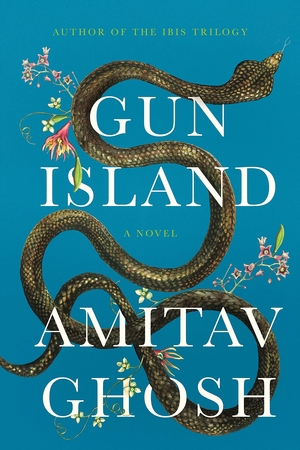
Gun Island by Amitav Ghosh

Deen, a rare book and antique dealer, is beguiled by an old Bengali myth that seems to be reasserting itself in the present. As he follows the legend into the ecologically precarious Sundarbans in India, Deen is pulled into a world of climate refugees, human trafficking, changing landscapes, and unsettled nature. Animal habitats shift, oceans warm, and wildfires rage. Close your eyes and allow yourselves to imagine the unstable mud of the Sundarbans between your toes. When you open your eyes, you might notice the ground beneath your own feet is shifting as well. 

Image result for wall book john lanchester

The Wall by John Lanchester

Well, we finally did it. We built the wall. But not the one you might be thinking of. In Lanchester’s near-future novel, the United States has constructed a wall along its coastal borders to keep out boats full of desperate climate refugees known merely as “others.” Lanchester does not tell us the nature of the climate catastrophe that altered the world, but the blame lands squarely on the shoulders of the generations who refused to step up when they still had the chance to contain the climate crisis. The Wall not-so-subtly indicts us all. 

The Water Cure by Sophie Mackintosh

The Water Cure by Sophie Mackintosh

The Water Cure is a deep dive into a dreamlike stew of environmental anxiety mixed with toxic masculinity. Mackintosh invites us into a tension-filled household masquerading as an island utopia. The main characters – a mother and her three young daughters – have been taught to fear everything: the outside world, environmental toxins, and, most of all, men. The Water Cure connects toxic masculinity and ecological contamination in ways the reader and the characters don’t fully understand through much of the book. This book might leave you anxious and angry about the lies we have been fed. Stay angry. We need you to be angry and acknowledge hope. 

The Lost Book of Adana Moreau by Michael Zapata

The Lost Book of Adana Moreau by Michael Zapata

This sweeping debut novel publishes next year and centers a mysterious unpublished manuscript written just after the Great Depression by Adana Moreau, a prescient science fiction writer from the Dominican Republic who immigrated to the United States at age sixteen. Generations later, a man named Saul discovers the manuscript and embarks on a mission to return it to Adana’s son Maxwell, now a prominent theoretical physicist. Accompanied by Javier, a natural-disaster-obsessed journalist, Saul goes to New Orleans in search of Maxwell shortly after Hurricane Katrina hits. With references to other disasters in the U.S., Ecuador, Argentina, and Chile, Zapata will leave you pondering the damage humans inflict on each other after the water recedes. What is our role as observers in the never-ending stream of crises? As Javier notes: “The whole fucking media is addicted to disaster and the money that comes pouring in during one.” Who profits off the damage inflicted by climate disasters? Who benefits from the chaos? How can we do better?

Image result for trail of lightning by rebecca roanhorse

Trail of Lightning by Rebecca Roanhorse

This urban fantasy is set on the Navajo reservation of Dinétah in a future after the climate crisis has drastically altered our world. When monsters from Navajo legend rise up from this new landscape, people look to a young woman to stand up against the evil. As our young heroine confronts the beasts elders cower from, you may find yourself thinking of real-world teens, like Autumn Peltier, who are assuming the roles of climate protectors. 
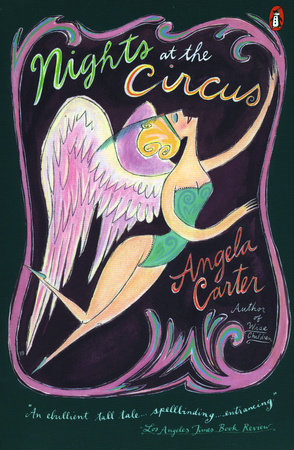
Image result for overstory richard powers cover

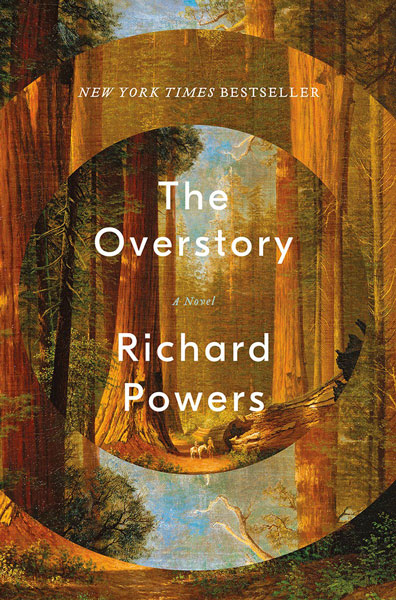
The Overstory by Richard Powers

This book aches for the forests we are losing. As a reader, you will experience life in a self-contained ecosystem that exists only in the canopy of a redwood forest. You will fall from a plane and be rescued by a tree that emerges from the ground just in time to catch you. The Overstory leaves readers with a sense of awe for the wisdom that exists in a centuries-old forest, and in a single resilient tree. Through his broad and diverse cast of characters, Powers will push you to acknowledge the loss of biodiversity and planetary health as the world’s trees fall to timber operations, agriculture, development, and wildfires. The Overstory will challenge you to recognize forests not as objects or locations, but as sentient repositories of history, time, and knowledge.
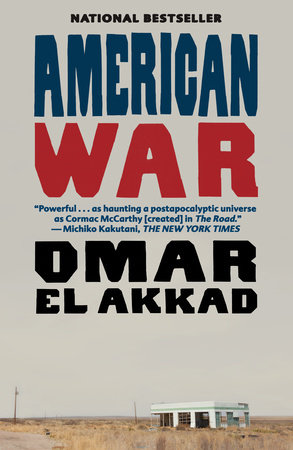
American War by Omar El Akkad

American War by Omar El Akkad

American War reads like U.S. history that just hasn’t happened yet. In this near-future setting, most of the United States has banned the use of fossil fuels, but the South clings to oil, triggering a second civil war. Florida has all but disappeared into the ocean, and New Orleans only survives in history books. Sarat, the main character, grows up in a refugee camp in the Free Southern States, where resources are scarce. She transforms herself into a calculating warrior, but even she questions what is right and who to trust in the unstable political climate. American War shows us a vision of our country divided against itself as climate change eats away our shores and our national identity. The good news is that we haven’t hit this tipping point yet. We can still break our addiction to fossil fuels if politicians and industry leaders choose to be brave. 

Image result for south pole station by ashley shelby

South Pole Station by Ashley Shelby

South Pole Station follows Cooper, an artist serving a residency at the South Pole, where a fun and sometimes prickly cast of characters live together in a claustrophobic research setting. When a climate-denialist shows up to conduct research intended to disprove generally accepted climate science, the other residents resent the resources being allocated to pseudoscience. As a non-scientist, Cooper serves as an observer in the world of climate research and allows the reader to question whether it is unfair to limit scientific inquiry. Shelby lifts the curtain on how private interests often fund climate-denial research, leaving the reader with a deep respect for the scientists who dedicate their lives to real climate work.

Image result for salvage the bones book

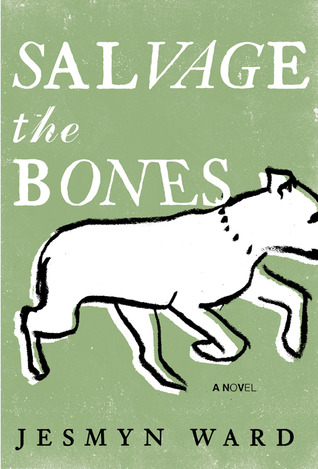
Salvage the Bones by Jesymn Ward

Salvage the Bones depicts a poor, Black family in Mississippi dealing with loss, longing, and uncertainty as Hurricane Katrina approaches. Ward organizes the chapters as a twelve-day countdown to Katrina’s landfall. Wealthy white landowners board up their properties and evacuate as Katrina edges closer. Meanwhile, Ward’s characters are left to scavenge for scrap wood to secure their windows as they prepare to ride out the storm. Vast swaths of our country are vulnerable to climate-related disasters, but communities of color are usually the ones hit first and worst. The ticking clock Ward establishes is a warning to all of us. The next storm, fueled by warming oceans, is coming. 

7 Novels about Mythical Creatures

When we are kids, every adult is a mythical beast. Whether it’s Uncle Larry Fartpits bursting into trollish spurts of unearthly armpit noises, or Haddy the hirsute neighbor beckoning us back to see her recently tenanted rat traps, or our best friend’s dad groping out of the daytime dark after sleeping off the night shift—monsters have always been around us.

It can be hard early on to determine what a human being is and isn’t, what we can and cannot do, what we should and shouldn’t say and think. How do we know what to emulate? How do we know what to avoid? Is it normal that the babysitter served us Kool-Aid from the water in the toilet tank? Is it odd that our nanna flicks droppings from her couch before sitting us on it? Should we really try that game at camp with the mud and the eggs and the blindfolds? Where are the adults here?

Isn’t that where they all come from—all those mythical creatures, beasts, and ghouls of our childhood—these first fears and fantasies of what is human, of who and what we’re vulnerable to, of what we ourselves are capable of and expected to do?

Buy the book

Then we grow up. Some of us never get to relive the lusty abandon of running, or the slick bewitchments of fingerpainting, or the gritty gastronomy of beach sand. The world may still be full of glory and distortion, but it’s not breathing down our necks anymore—nor is it opening its sweaty, effluvious bloom to us. Our smallness no longer feels big; we no longer pulsate with dread and delight over our own human prospects. So what do we do? We get out our best playing cards and look back and reminisce, we recreate and reinvent with our own children, we get a little drunk and watch a few movies and read a few books.

When I wrote From Hell to Breakfast, I didn’t expect to see monsters populate it. They just came, without invitation, trampling my intentions, sitting down to the dinner table in their funk and their glee. I was intending to write about people—the absurd and indolent ways we indignify our intimacy, the way we abuse our close proximity, the way we entomb ourselves in our versions of the self. But people are monsters and monsters are people. Most of these humdrum savages have started out as our own friends and family. So when I was done writing I went looking for others, more of these blithe homunculi that flossed their teeth with the mail on the front porch, the ones more human than human, the ones more familiar than not. The books I found are a special breed: they bring us back to the mythical creatures inside us and around us, and they show us once again that they are us.

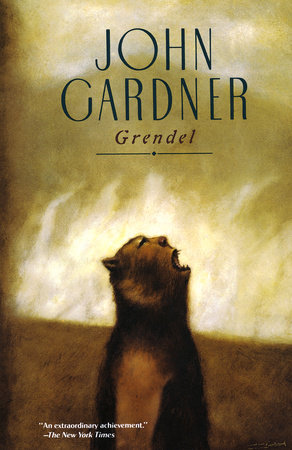
Grendel by John Gardner

Grendel by John Gardner

Poignantly visceral and mystical, this is the Grendel of the infamous old-English tale who fed on the poor saps at the meadhall. But what we find out is how tortured, how debilitated he is–by the universe, by the close enclaves of the wretched and warring humans, by the blithe and blundering beasts of his own woebegone wilderness, by the rank domesticity of his dear and rumbling mother. This book is everything under the stars colluding with his own interminable slurping of blood, which he does ambivalently, feeding on victims who seem to be unfolding all the evils and mercies of human history right out in front of him. It’s an enthralling and poignant tale of monstrous forbearance, the plaguing mysteries of brute existence, and the chasms that are crossed between cohabitation, fellowship, and conquest.

Labrador by Kathryn Davis

An angel, mysterious and instrumental, goes incarnate in the top floor of a house where two sisters are growing up. It’s the cusp of the 1960’s and the sisters are beset by the gross distortions of male desire—a grandfather’s original betrayal, a father’s ogling eye, an admirer’s perverse attention, a community’s uncouth children—even a civilization’s storytelling and mythmaking. The angel, Rogni, bristles with a perilous consuming light—not the protector of either sister. As they grow up, these sisters turn against each other and fail each other over and over, trying off and on to touch upon a time when things did radiate a pure light, when love was fresh and fertile and unbeseiged by others, when one could belong to another and in that way be her whole self.

Image result for The Little Girl Who Was Too Fond of Matches

Little Girl Who Was Too Fond of Matches by Gaetan Soucy 

In this one, there is a beast of a father. Everyone and everything is distorted by his original vision, and the reclusive siblings that live with him have been spooled into being on his lies and cruelties. He is dead now, and his chirpy and delusional progeny must tend to the practical matters of his dispatch. The jaunty and singsong raconteur of this story slowly and atrociously opens a vault on a life of vicious neglect and abuse, without a hint of awareness. What comes through is such an alienated version of self that this becomes the very beast that we thought had already been dispatched, or at least a new one, begotten by the father and sent alone and luckless into the wilderness.

Orlando: A Biography

Orlando: A Biography by Virginia Woolf

Our hero takes shape under the tender scrutiny of a doting biographer—over and over again. From young nobleman to foreign ambassador to gypsy vagabond to wife and mother, Orlando is the quintessential changeling, traversing centuries with epic aplomb, shifting sex and gender with serene relish, endearingly earnest—eternally a poet—Orlando charmingly courts all of life’s vagaries and insults, trailing a series of philosophical, existential and civil questions behind. Though it can sometimes be lonely and dissonant, Orlando ultimately captures an optimistic sense of possibility, a celebration of human potential, a promise that human transformation, and therefore transcendence, is always on the verge.

Autobiography of Red by Anne Carson

Autobiography of Red by Anne Carson

In Greek myth, Geryon was but a minor character dispatched quite summarily by Herakles in the tenth labor. In Carson’s rendition, he is transplanted into modern times and with us from boyhood: getting walked to kindergarten, dreading the babysitter, hiding behind his manual-lens camera, hooded up under his coat. He has a brother who sexually abuses him and a mother who laconically dotes on him. His red wings are pinched and tidied under his coat. He makes it to adolescence and meets Herakles, after which he scrawls some graffiti, leaves home, takes day drives to volcanoes. Thus he seems to re-write the tale about himself, allegorically-yet-factually, the volcano looming ever larger as a newfangled manifestation of his red self—of a red, raw fate he may actually seize, or sidle up to, forgetting for a moment the lens of his camera, and coming out clean and sure.

Nights at the Circus by Angela Carter

Nights At The Circus by Angela Carter

This novel about a 19th century aerialiste extraordinaire is fanciful and flamboyant in its attentions to Sophie Fevvers, the part woman-part swan who runs the show of this book. Or so she claims. She’s a self-cultivated spectacle, glitzy and lurid and flaunting an air of greasy hoax, and she wields a raunchy feminine virility that wins everybody’s adulation. For all her audacity, Fevvers is sly and calculating, as she must be, for she exists in a man’s world and must fly torpidly into the swarm. While we cling to her migrations across London with the circus, through St. Petersberg, and into the wilds of Siberia, we experience her great soaring escape, which is always a woman’s dubious triumph, and especially at the end of a restless century—as if it is the natural order of things to slip from gaudy spectacle to the strange tribulations of the unmade self, and finally go out on the truancy of real myth.

Image result for we were animals

When We Were Animals by Joshua Gaylord

During the full moon, the pubescent population of this town goes gruesomely carnal, thrashing and sexing it up in the neighborhoods while their parents and other institutional wardens cower behind locked doors. The next day, baths are run for them. This seems to be the way of things as Lumen, a late bloomer, finds herself slowly unraveling into the fray. Among other things, she wants to know why her mother did not succumb to the “breach.” Her mother who is dead now. The story is told by a Lumen who is reflecting back on this lost time of lycanthropy as a mother and wife, now far away and long gone. This is an interesting novel about the horrors of growing up and how harrowing it is to be ushered into a world that will grope and brutalize you, one that you have made yourself and will surely pass along. 

Am I Allowed to Break Up with My Book Agent?

The Blunt Instrument is an advice column for writers, written by Elisa Gabbert (specializing in nonfiction), John Cotter (specializing in fiction), and Ruoxi Chen (specializing in publishing). If you need tough advice for a writing problem, send your question to blunt@electricliterature.com.


Dear Blunt Instrument,

I struggled to find an agent for my memoir and I was thrilled when one finally reached out based on an essay I wrote. But now that the book is sold (for a tiny advance, after many rejections, but to a publisher I feel good about), I’m realizing that I could have used… a lot more hand-holding and information throughout the process. It felt like everything happened offscreen for me, and I don’t even fully understand the details of the deal. I also find my agent brusque in a way that’s embarrassing by proxy—he has always been nice to me on the phone and in person, but when he emails editors I have to fight the desire to apologize for him. I haven’t signed anything saying I would work with him exclusively, but I’m not sure how to break up, or even whether to. What are my responsibilities here? Or should I stick with this guy because beggars can’t be choosers?


If everyone in the publishing industry had a true bird’s eye view on things, we’d make capitalism work a lot better for us. So we guess. Your agent, your editor, and your publishing team are guessing right alongside you, with more information and more context, yes, but we’re guessing all the same. That feeling of “we’re all in this together” can be one of the great pleasures of writing and publishing, an industry that can feel stitched together out of targeted naïveté, low margins, long hours, and the hope that you’re creating more than just widgets. But it can also make you forget that you’re in a business—that, if you’re a writer, you are a business. You shouldn’t. You’ve set out to make a career out of something that may feel emotional and intangible and impossible to quantify. You’ve hired someone you trust to help navigate. The fact that we’re all bumbling along together doesn’t change the fact that you get to decide how to guess—and decide whether you guessed wrong.

In your letter, you sound like a thoughtful person who doesn’t want to hurt any feelings unnecessarily, but this is not about feelings. It’s OK—and important—to prioritize yourself. We are trained to romanticize the work in a way that often blurs the lines between the personal and professional, and even if we weren’t, the job of an agent doesn’t slot easily into most professional metaphors. An agent is not your employee, or your coworker; you’re not exactly his product, but your role as his client is also atypical (you’re not paying him for a service; he’s taking a cut of what he gets for you). The “finding an agent is like dating” metaphor gets tossed around a lot—I notice you also talk about parting ways with your agent as “breaking up.” Sometimes it’s an imperfect lens (no one should imagine themselves trapped in a loveless agent marriage) and sometimes it’s right on the nose (this is a business relationship but it’s also absolutely about chemistry). Here’s what there’s no question about: it is a professional relationship, and it’s one where you get the final say. 

Part of your agent’s job is to be your proxy, your voice to your publisher.

It’s also one in which you should have the final say, because your agent is representing you. Part of your agent’s job is to be your proxy, your voice to your publisher. If that voice is embarrassing you, he’s not doing that job. This doesn’t mean he’s a bad agent; he may be the perfect champion for a different author. Some authors don’t want to know any of the gory details or have a contract broken down into every little sub-clause. Others might want to know what toothpaste their sales reps are using. Most are somewhere in between.

When you write a book, especially a memoir, you are taking something vulnerable and visceral and introducing it to a world of strangers. When you sell that book, you are putting this fragile piece of yourself into the hands of a huge team of people, many of whom you will never meet. Your agent’s job is to make this process feel manageable and safe. It sounds like that hasn’t happened in this case, and it’s perfectly fine for you step away. It’s not uncommon for authors to leave agents (and vice versa), and for it to take a few tries before you find the right agent for you. There are also so many factors—a genre switch, a career shift, a geographic move—that could be involved. If you’ve never had a check-in conversation where you bring up your reservations, I might do that first to gauge his response, but if you know in your gut that you’d be more comfortable working with someone else, don’t be afraid to listen to your gut. There is so much uncertainty and cause for anxiety baked into the process—your agent shouldn’t be part of that.

As for how to break up, as long as you’re doing it definitively and clearly (and before you start querying other agents), the medium will depend on your communication style and his. Keep in mind that he’ll still be the agent of record on your first book and that one of you will need to coordinate with the publisher on how to distribute royalties if you don’t want to keep getting payments through your old agency. Same goes for any unsold rights on the project. If you have your next project ready to go, you might want to start the process right away. If you’re still working on it and need the time to strategize, you might want to wait.

I know authors who are still personal friends with their former agents even though the business part of their relationship stopped making sense. Editors will find themselves having friendly heart-to-hearts (as friends) with the same agent they might have to send an awkward email to the next week (as colleagues). It’s a small, close-knit industry and social intimacy happens. Everyone understands that sometimes you have to make hard decisions because sooner or later, they’ll be in the same shoes. If you make them thoughtfully and kindly and remember to be human about it, that’s all anyone expects. Publishing is wonderful because you get to work with friends on something you love. Publishing is terrible because you have to work with your friends on something that can break your heart.

You sound like you have a clear idea of what didn’t work for you with your agent. If you’re just asking for permission to pull the trigger, here’s my permission. Congratulations on having this first book out in the world and good luck on finding the right person to champion all the books to come.