“The Future of Another Timeline” Pits Time-Traveling Riot Grrrls Against Time-Traveling MRAs

Nothing grabs my attention like an email featuring the words “time travel” and “riot grrrl.” I hadn’t realized I was dying to read a novel fusing those subjects, but I’m thrilled they were tackled by Annalee Newitz, a veteran of both science journalism and the riot grrrl scene.

The founder of io9—Gawker’s immensely popular science and sci-fi blog—Newitz also co-founded other magazine with Charlie Jane Anders, with whom they currently co-host the Hugo Award-winning podcast Our Opinions Are Correct. Newitz’s non-fiction has tackled everything from mass extinction survival strategies to capitalist monsters (the latter even has a riot grrl title, Pretend We’re Dead). Their Lambda Award-winning first novel, Autonomous, follows a drug pirate hacker scientist in a biotech-fueled future.
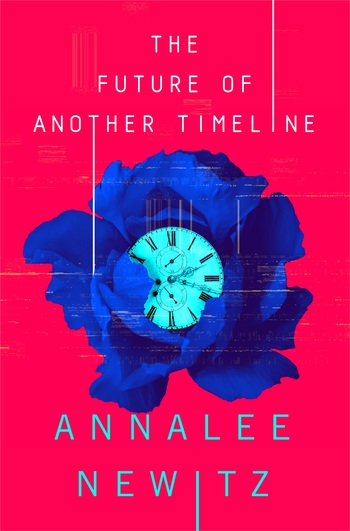
The Future of Another Timeline

Their latest, The Future of Another Timeline, imagines a parallel reality that feels uncomfortably familiar, despite time travel being an accepted academic strain of geology. Devices called “Machines” have been found in the earth, with “control interfaces embedded in rock that originated before life on land.” With the proper paperwork and credentials, scientists can travel to different periods in history by jumping in and out of wormholes contained by the Machines. In some cases, travelers can “edit” the timeline, and see the results of that edit in their own present. In 2022, one such geologist, Tess, embarks on a mission to stop a radical group of travelers—who, in this timeline, might be called Men’s Rights Activists—from permanently editing women’s rights out of the timeline.

In alternating chapters, we hear from Beth, a riot grrrl in 1992 who witnesses the murder of her friend’s abusive boyfriend. As the two women navigate questions of murder and morality across the timeline, their lives intertwine in unexpected ways.

Over the phone, Annalee Newitz and I discussed Harriet Tubman, Wonder Woman, Reconstruction, and, of course, riot grrrl.


Deirdre Coyle: The Future of Another Timeline seamlessly blends familiar and unfamiliar elements of our timeline in politics and pop culture, to the point where I kept second-guessing my own knowledge of history and having to check whether I was remembering our timeline correctly.

Annalee Newitz: So my scheme worked.

DC: It really worked. Did you ever start to second-guess our 2019 timeline while you were writing?

AN: The whole book is about second-guessing it, and I certainly was trying to imagine a world that’s basically a step away from ours, but one that felt lived-in, in the sense that certain things are worse, from a feminist perspective. Women have no access to abortion legally. But at the same time, there are things that are—again, from a feminist perspective—better. At various points, I just put stuff in that, from a feminist perspective, felt real, and almost like a timeline that I’ve lived.

I’ll give you an example: the whole set-up for this alternate timeline is that Harriet Tubman is elected a senator in 1880. That’s the result of universal suffrage being declared in 1870, so women get the vote and can run for office. Especially now, when we look back on the 19th century and we center the histories of women and people of color that haven’t been [centered] previously, there’s almost a way in which we’re able to install figures like Harriet Tubman back into their rightful place as heroes. Because at the time that she was alive, she was incredibly famous. She really was a Civil War hero, no one would have doubted that. Everyone would have known her name. It’s in the process of history being written that she’s been forgotten as really anything other than the woman who ran the Underground Railroad, or who was the popularizer of the Underground Railroad. People don’t know about her Civil War career, they don’t know about her legal battle to get a pension from the government. Because she was a woman, [the U.S. government] didn’t want to give her a pension, even though she risked her life millions of times. Because I think of Harriet Tubman as such a hero, and so many people now look back and see her that way, it’s almost like that history that I was writing is becoming more real. Even though she wasn’t actually a Senator, we’re starting to understand that she was perhaps more important than a Senator. She occupied this position that was so important for the course of 19th century history. Without her, we would be living in a very different world.

And of course, there’s stuff in the book that was just totally, like, alternate timeline Mary Sue stuff, like where Tim Burton makes Wonder Woman movies instead of Batman movies. That was my “I wish it happened.”

DC: I never knew I wanted those movies so badly until I read about them [“the Tim Burton Wonder Woman movies…with their badass heroine in fishnets and leather”].

AN: Not only do I want those movies, but I want them to have existed in the 1990s. So that now, when we get a Wonder Woman movie, we’re like, “Oh, we’ve already re-imagined Wonder Woman, and now we can do an even better job.” It makes me so annoyed that it’s only right now that we’re having to figure out what Wonder Woman looks like, because, you know, she could be better. I just want us to be on the second or third iteration of Wonder Woman movies.

DC: Like we are with Spider-Man.

AN: Exactly. Like we are with Spider-Man, like we are with Batman. We could argue about whether [Batman’s] getting better, but Spider-Man’s getting better, gosh. The Spider-Verse movie is the greatest ever.

DC: It’s so good.

AN: [Laughs] I know.

DC: A really important premise of this timeline is that women and freed slaves got the right to vote at the same time, and intersectionality seems to be a deeply ingrained tenet of 20th century feminism in the book’s timeline. Can you talk a little about how you re-imagined the ’90s riot grrrl scene with this in mind?

AN: That’s a great question. And actually, it was one of the very first thought experiments that I did when I was coming up with the premise of the book. I was part of the [’90s riot grrrl] scene, and I knew tons of women of color in the scene. There were lots of bands with women of color. But the bands that really achieved national recognition were almost exclusively white. Not entirely, but mostly fronted by white women. And I was like, what would have had to have changed in our culture for the riot grrrl scene to have big, internationally famous bands that were fronted by women of color? So because I’m a nerd, I was like, “Well actually, you’d have to go all the way back to the 1870s!” Because I was like, okay, what would be the things that we would have to edit historically? One thing would be, how do we undermine white feminism? There’s always going to be white feminism, because there’s always going to be sort of liberal, racist white ladies—that’s just life—but you could have less institutional support for it, and less of a long movement. I really do think that this toxic white feminism we have now grows partly out of the fact that the suffrage movement and the abolitionist movement, which had been so closely linked in the 1850s and ’60s, are driven apart when Congress decides that freed men will get the vote, but women won’t. And so then, white women who might have been enthusiastic about abolition—we actually see, in the literature and in things that they’re arguing, that they start to become more openly racist and questioning, “Well, why would Black people get the vote, when women couldn’t?” So it creates this rift, it creates this space for a really toxic form of white feminism, and it also means that feminist culture gets, I think, more heavily associated with white women than with a diverse group of women. So I was like, okay, we go back, we get rid of that rift, and we have a feminism developing that is completely still connected to the abolitionist movement. What does that look like? 

This toxic white feminism we have now grows partly out of the the suffrage movement and the abolitionist movement being driven apart.

I’ve read historians saying that Harriet Tubman very likely would have become a politician because of her fame, and because of her role in the Civil War. If we had a figure like that in women’s history being acknowledged and remembered in the history books, I think, again, that that would have this kind of orthogonal cultural effect where women who are involved in fighting for women’s rights don’t see their movement as being separate from movements for civil rights for people of color, and fighting for Jim Crow in the 20th century, for example. I can’t be sure. I wish that we could run an experiment and see if that would work. But it struck me as a good place to start an alternate history of feminism. 

I feel like alternate histories and time travel stories, they’re all obsessed with the Civil War for very different reasons. There are these historical turning points in the U.S., and if we start to center the experiences of women and people of color, the important parts of that time are not, “Did the North or the South win the war?” Of course that’s also important, but also, how does the vote shake out? How does suffrage work after that? How does Reconstruction work? There’s a whole other book that could have been written just about Reconstruction, and there is a character that we know has been going back and working with slaves in the 18th century. To me, ultimately, what was fun about it was thinking, “Well, what are the historical turning points that are actually important for people who aren’t white guys that lead battalions? All of the rest of the people, what’s important for them, historically?” It’s really this moment, when Congress decides who’s going to get the vote.

DC: I love that it brought us to a very different riot grrrl scene.

AN: Yeah, and so then the ultimate payoff, of course, is that we get way better music [laughs]. An unexpected benefit of having given women the vote early is that one hundred years later, we’re rocking out to women of color on a stage, and it’s not just white ladies yelling—which is great, everyone should be able to yell, it’s just—that’s the point. Everyone should be able to yell.

DC: You co-created a music video for the riot grrrl band in your book, Grape Ape, starring Desi López as the charismatic lead singer. What was it like to see one of your creations come to life and literally take the stage?

AN: It was amazing. It actually was intensely moving, and I think that was partly because when we did both the recording of the song, and then when we filmed the video, there were a number of people there, so it was the energy of the whole crowd participating in this alternate history where we got to dance to a different kind of music, or we got to scream with a different kind of singer. I’m a huge fan of Desi’s music, and I’ve been following her various bands for a while now. There was a little bit of a tiny, personal piece in this book, where I was like, “I want a world where she becomes really famous, and she’s onstage and yelling.” Especially the day that we filmed, there were a bunch of people there, who I invited, who were extras, and the energy was so great. When we all started screaming, “SLUT,” a lot of people afterwards were like, “That was so cathartic!” There was a little bit of crying. It was pretty rad. And we got to tie up the Comstocker, so that was fun.

DC: The video turned out amazing.

AN: I was super hyped. [Director] Fivestar did an amazing job. She’s a great videographer, a great director.

DC: In the scientific world of the book, the time travel methods are ancient and geological. They’re literally embedded in the earth. When you describe the way these Machines work, I could so clearly envision them and these wormholes that are part of them, despite the fact that even academics in this world don’t fully understand how they work. What kinds of research did you do to create the Machines and explain their functionality?

AN: There were two things. One was that when I started the book, because I am a science journalist, and my previous novel was—people described it as “hard science fiction,” even though that whole hard/soft dichotomy is kind of dumb, but—I still have the urge to always consult scientists, and I want the science in my books to be as realistic as possible, because I’m a science nerd. So I talked to a couple of physicists, and both of them said time travel is not possible. There’s no way to have scientifically accurate time travel because it just will never happen. So that was sad. One of them, Adam Becker, said, “You know, look, it’s not a scientific device, it’s a literary device.” That was a very freeing moment. Oh, and they did give me permission to use wormholes, even though that’s kind of silly, it was like, okay, the scientist said it was fine. So once I was thinking of time travel as a literary device, it allowed me to really explore what I wanted to, which was the cultural experience of watching history change in front of you—which happens all the time, it’s happening in the United States right now with our politics veering wildly to the right. We’ve had a lot of revisionist history, also coming from progressives who are uncovering new perspectives on history from people who’ve been ignored. 

On top of the literary conceit, I did want the science to feel real. One of the things that Sean Carroll, one of the physicists I talked to, said, was like, “Look, the science isn’t real, but you can make the scientists real. You can kind of give them a world where there’s time travel and imagine how they would go about studying it.” That was great because one of my favorite subjects to write about is geology, and also paleontology and archeology, which are fields where there is a bit of—especially in archaeology—there’s a bit of overlap with the humanities anyway, because we’re filling in cultural history, we’re discovering things that are out there and trying to put explanations on top of them, as opposed to things like computer science, where you build something yourself, so you essentially know how it works. You put it out into the world, as opposed to going out into the world and saying, well, why do we have time? Or, why do our cells divide the way they do? Or, how did this rock come to be in this shape, or have this piece of metal embedded in it? So, it gave me the opportunity to scratch that itch of wanting to talk about discovery science and what that feels like. And that’s the area of science where we have the greatest sense of wonder as well. I mean, that’s the feeling of looking up into the night sky and saying, “Wow.” We know that there are these other worlds out there; we can only speculate about what they would really be like. 

The other thing [that] was fun about it is that, because of how things like geology work, people have been engaging in the science of geology for a really long time, from before we had the scientific method. People have been banging on rocks and using rocks to do all kinds of stuff, and quarrying rocks, and investigating them, for thousands and thousands of years, I mean, for probably a million years, actually, because Homo erectus was, like, totally into geology. They were like inventing biface tools and stuff. So it’s just a fun way to get to describe how science works but then also have this crunchy cultural center to what’s going on where really you’re in the realm of thinking about society and culture and looking at it from a literary perspective, if that makes sense.

DC: Totally. So, when the characters are going back and forward in time and making edits, they’re adjusting the timeline. There are a few discussions between characters in the book about whether there’s only one timeline that’s just constantly being edited or if there are these parallel timelines. We have characters with memories that don’t match up as they’re editing, and it’s done really seamlessly in a way that makes sense within the story. But I was wondering, how did you avoid, for lack of a better phrase, breaking your brain while thinking about all this merging and splitting of the timeline?

AN: [Laughs] I had a big document where I was keeping track of everything, so that I would hopefully maintain continuity. I worried a lot about plot holes. When I had beta readers reading it, and my editor at Tor reading it, they would give me lists of, like, “Well, why isn’t this happening? Well, how are they able to do that?” Finally I got so frustrated that I actually just have a scene where a character goes to the office hours of a time traveler at UCLA—because all the time travelers are academics in this book—and so there’s just an office hours scene. Like, all right, let’s go to office hours and ask the questions that you have! It’s a little bit info-dumpy, but it’s also fun, because you get to know these characters better in the course of the conversation. But there are so many questions, because the scientists themselves don’t understand it. 

If I could travel back in time, James Watson would just get punched when he tried to steal a woman’s ideas.

Part of what I wanted to do was leave this space in the middle of the Machine where there really is just an unsolvable mystery. It really is possible that there might be multiple timelines. The characters are assuming that there’s one timeline. They have a lot of evidence that there’s one timeline, because when they make edits, they can go forward in time again and see the results of the edits. Whereas if you had a multiverse (they think), you would be able to jump between those multiverses and see one version of the universe where the edit didn’t happen, and another version where it did. But they don’t really know, because, as one of the characters points out, if you’re in a universe, it looks the same whether it’s a multiverse, or a monoverse, or whatever. So they might actually be spawning a whole bunch of other universes, and just creating a million versions of history. They just have to live with that uncertainty, in the same way that, today, when we’re doing, say, experimental medical therapies, we have to live with the uncertainty that they may not work, or they may cause unexpected side effects. It’s just a risk that they have to take because they want so badly to make these edits and make women’s lives better.

DC: Ambiguity is something that I, personally, could use more of in science fiction. I like a little mystery, I guess.

AN: Yeah, ambiguity is my favorite. I’m always going to throw in a lot of ambiguity.

DC: So if you got a time travel grant tomorrow, what’s the first edit you would make?

AN: Wow. That’s a good question. I mean, I have been thinking a lot about this question of suffrage. It’s a pretty tough edit. I wouldn’t be able to do it on my own; I’d have to have a lot of help. But I think having universal suffrage as early as possible would be great. That would be a good edit. 

I also have this fantasy of being able to go back in time and rescue Rosalind Franklin from her early death. I’m not sure how I would do that, because she wouldn’t have made her discoveries without exposing herself to radiation. But I wish I could just go back and prevent James Watson from snooping in the drawer and stealing her ideas. If I could have just, like, punched James Watson right at that moment! I really have a lot of feelings about that. So maybe that would be the edit that I would make, that he would just get punched really hard when he tried to steal a woman’s ideas, and that Rosalind Franklin could have been recognized as the discoverer of DNA instead of this sexist douchebag.

DC: That’s a great answer.

AN: Punch James Watson. Leave.
9 Spooky Graphic Novels for Halloween and Beyond

Is there really a chill in the air, or did you just walk through a ghost? Just in time for Halloween, these graphic novels will bring your fears to life with vivid, unforgettable images and spooky stories. Graphic novels can add an element of horror not present in text stories: there’s reading about a zombie, and then there’s seeing it right in front of you. These books are like pocket-sized horror movies that let readers dwell on each individual frame. From murder to monsters, this list is full of ghoulishly good reads that are sure to keep you up all night—for more than one reason. 

18659623

Through the Woods by Emily Carroll

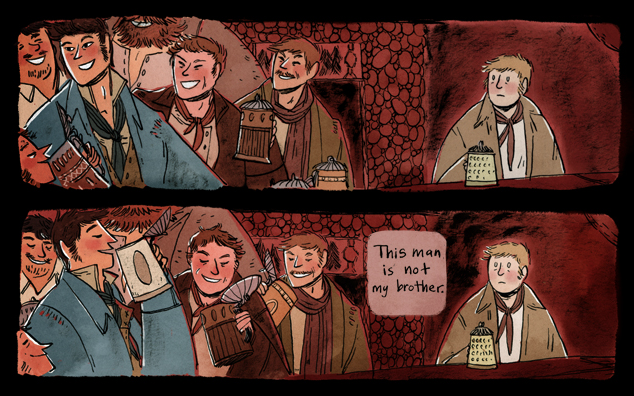
In five spooky stories, Carroll explores possession, murder, and monsters in her trademark frightening-fable style of storytelling. The author doesn’t shy away from painting all the gory details, but she also knows when it would be scarier to keep a creature in the shadows. If you want a taste of Carroll’s style before diving into this book, check out “His Face All Red,” which is available for free online.

36140710. sy475

Archival Quality by Ivy Noelle Weir and Steenz

After Cel’s mental illness causes her to be fired from her previous job, she’s happy to find an archivist gig at the Logan Museum—even if she’s required to live in the spooky on-site apartment and do most of her work at night. While the job starts out okay, it soon becomes clear that someone is trying to get Cel’s attention: someone who used to live in the museum when it was still an asylum, someone who needs Cel to help her seek justice from beyond the grave.
Image result for uzumaki junji ito

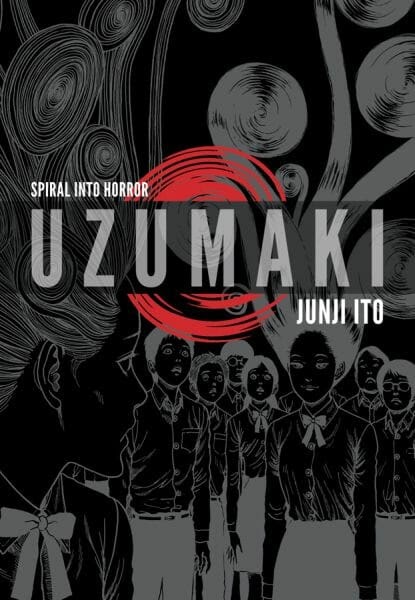
Uzumaki by Junji Ito

Kurōzu-cho is a town cursed by spirals. First, a man is found dead, his body curled into a spiral. As matters progress, everyone in town is plagued by spirals that threaten to destroy them. Kirie and her boyfriend, Shuichi, are determined to escape the coil of their fate, but can they make it out alive?  

24778945. sx318

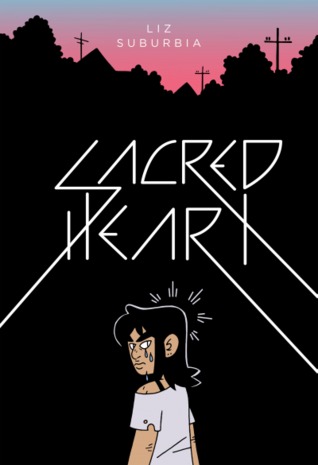
Sacred Heart by Liz Suburbia

Alexandria seems like a normal, American suburb—except for the serial killer prowling around, the absence of everyone’s parents, and the certainty of impending doom. Ben Schiller and her friends are just trying to chill and hookup and play music, but something dark is coming, and life is about to get weirder than anyone bargained for. 

Victor LaValle’s Destroyer by Victor LaValle, Dietrich Smith, Joana Lafuente, Jim Campbell, and Micaela Dawn

In this modern retelling of Frankenstein, the monster has returned to wipe humanity off the face of the earth. He’s joined by the last descendant of Victor Frankenstein, a scientist named Dr. Baker whose young son was a recent victim of police brutality. When Dr. Baker uses her scientific genius to bring her son back to life, a mysterious government agency begins pursuing the brilliant scientist without realizing how dangerous she can be.

17287069

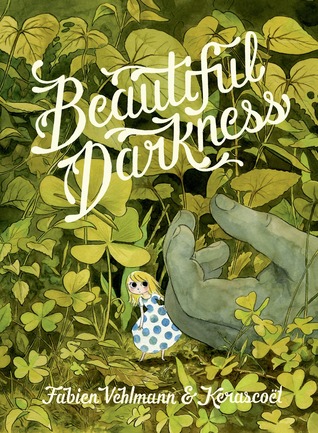
Beautiful Darkness by Fabien Vehlmann & Kerascoët

Aurora’s life among her fairy friends seems perfect, until readers realize their beautiful home is really the corpse of a young girl. When Aurora and her friends are forced out of the corpse and into the woods, the horror intensifies as the fairies are preyed upon by insects, mice, birds, and—worst of all—each other. 

29069374. sx318

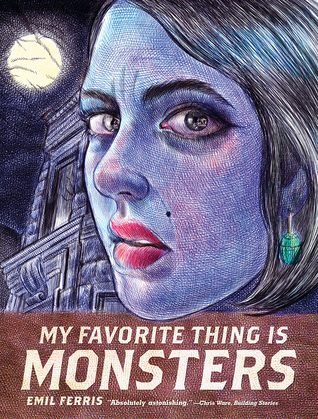
My Favorite Thing is Monsters by Emil Ferris

10-year-old Karen Reyes loves monsters. Growing up in 1960s Chicago, she spends much of her time watching B-horror movies and reading pulp-horror magazines. But the murder of Karen’s friend and upstairs neighbor, holocaust survivor Anka Silverberg, changes Karen’s understanding of monsters. In her quest to solve the murder, Karen begins to see the monsters that lurk all around her—and not all of them are good.

6136798

Miss Don’t Touch Me by Hubert and Kerascoët

It’s 1930s Paris, and a serial killer named the “Butcher of the Dance” is on the hunt for young, female sex workers. When Blanche’s sister turns up dead, everyone calls it a suicide. But Blanche knows it was a murder. In an effort to expose the Butcher, Blanche begins working at a famous and exclusive bordello. As she becomes a popular dominatrix, Blanche must keep her wits about her to stay alive, while also searching for her sister’s killer.  

3373234

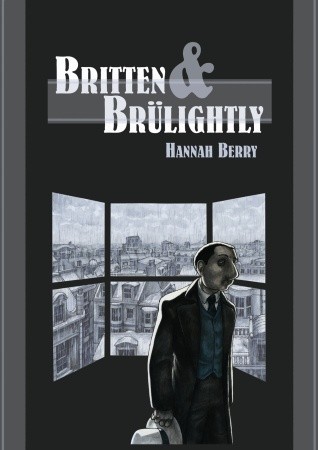
Britten and Brülightly by Hannah Berry

In this graphic novel noir, burnt-out private investigator Fernández Britten has decided not to accept any new cases unless they’re murders. So when the publishing heiress Charlotte Maughton asks him to solve her fiance’s suicide, he’s not interested. Until, that is, she reveals that the suicide may have been a murder involving blackmail, family secrets, and revenge. Britten and his partner, Brülightly, must work to uncover the truth of what really happened to Charlotte’s fiance, but the truth becomes more twisted at every turn.

What Does It Mean to Be an Ordinary Girl?

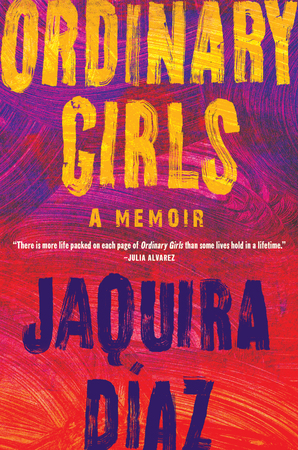
In her nonfiction debut, Jaquira Díaz drops us into the life of an ordinary girl. An ordinary girl who spends a childhood in Puerto Rico and Miami, whose mother grapples with mental illness and addiction, “who spent hours climbing the tangled branches of the flamboyanes… barefoot, splashing in puddles, catching lizards…” An ordinary girl who speaks English with an accent, who fights in the streets, who joins the Marines, who becomes a writer. 

Image result for Ordinary Girls: A Memoir

Ordinary Girls is both lyrical and fearless, facing trauma head-on and with a candor that grapples with the identity-defining questions of girlhood. Do our families and home environments determine who are? Or are we worlds of our own making, filled with the joy, food, music, and friendship that carried us through? 

When I finished Ordinary Girls,  I had a deep wish that I could go back in time and hand it to my younger self. I had the pleasure of speaking to Jaquira Díaz over the phone about writing difficult material, time travel in memoir, and what it means to be an ordinary girl. 


Yohanca Delgado: You’ve written both fiction and nonfiction; what drew you to memoir?

Jaquira Diaz: I tried to avoid it. I wrote stories based on real life. I used myself as a character, I used people from my life as characters. I started thinking of this as a novel because I didn’t want to confront the truth. I wanted the authority to change things to suit the narrative. But the truth kept coming up and I couldn’t avoid it. The truth is that I was afraid of confronting real people in my real life, my experience with abuse, addiction, and other things. 
I had already written some essays that made it into the book. I went back to those very early essays and expanded them. I went back to those early stories and rewrote them as essays. I thought about what it was I was trying to say before I started making shit up. The book went through many, many versions until I finally decided that I was going to write a memoir. 

This book would not let me move on. I couldn’t write anything else until I got this out of the way. Until I started facing the past and thinking about who I was, and my place in the story. I also started addressing what I had been avoiding: writing about my mother. 

YD: So this was not… an enjoyable process?  

JD: It was torture! Everyone asks: Is it cathartic?  It was not an enjoyable process. It was very hard work. Especially when I was writing about sexual violence. I was re-traumatizing myself by reliving these events in order to write about them truthfully. I was interrogating my role and the reasons I did things, not just what would serve the narrative. 

It was torture! Everyone asks: Is it cathartic?  It was not an enjoyable process.

YD: Part of what makes this book extraordinary is that it grapples with a difficult mother–daughter relationship almost in real time. And in many ways, this story is part elegy, part love letter to your relationship with your mother. This memoir portrays her mental illness and descent into drug addiction with a vivid honesty, but it also insists on portraying what makes her human, her teaching you to love your body, her love. 

JD: The first draft didn’t have a single word about my mother. I was avoiding writing about my mother, but I was writing about other mothers. I wrote about all kinds of other mothers, obsessively. I wrote stories about La Llorona, Ana María Cardona. I wrote about my mother’s mother, my grandmother Mercy, who was racist and couldn’t accept that my mother had married a black man, that she’d had his children. 

I wrote about 100 pages of this book, gave it to a friend, and when she read it, she said, “Where’s your mother? Where was your mother during all this?” 

So I asked myself why I was avoiding even mentioning my mother, when all I wanted was to write about her. And then I started writing about who my mother was before her mental illness took over her life, the stories that my sister and I told at family gatherings. I wrote about who she actually was, who she might’ve been. 

I made an actual physical list of things: how she always told us she loved us. She would tell me she loved me, even after she kicked my ass. The way she was sex positive and never let anyone slut shame her. She’d say, “Fuck you— I love my body and you should love yours, too.” I wrote about who she might have been. There was joy and music. But she was not like other mothers. 

YD: You write about armed robbery and partner violence, homophobic harassment, physical and sexual assault. How did you approach these memories? How did you take care of yourself as you were writing them? 

JD: Writing this book, I realized, for the first time, that I hadn’t told a single person about my first time having sex, which was a sexual assault. Why was I keeping it a secret? It wasn’t for me. It definitely wasn’t helping me. So I decided to write it. I kept writing, and it was like reliving the trauma. I suffered from insomnia, I got very sick. I couldn’t sleep for four straight days at one point, and had to go to the hospital. I gained weight, I lost weight. My hair started falling out. I got very depressed. I don’t know if I could write another memoir. 

It helped to take breaks and write about something else. I wrote some essays about music. I wrote a profile on Kali Uchis. I started a novel and wrote stories. I started working on a YA novel with my friend Keith Wilson. I went to therapy, to talk about why I was even writing this book, and whether or not it was worth it to finish. I feel like it was, but I didn’t know that then. 

YD: I can’t barge in here and say it was worth it because I can’t fully grasp the sacrifices you made to write this book. But I can tell you that this book will change lives. I would have loved to have encountered Ordinary Girls growing up. There are so many girls and women who will feel seen and represented. You even dedicate the book  to the “ordinary girls.” How do you define “the ordinary girl”? 

JD: The way I define “ordinary girls” changed while I was writing. And I think the definition kind of evolves as the book progresses. 

I spent most of my adolescence hiding who I was. There were times when I thought what I wanted most was to be ordinary.

When I moved to Miami Beach from Puerto Rico, I didn’t fit in at all. I was a girl who looked like a boy. I only spoke Spanish. I didn’t feel seen. I didn’t look like my father’s black family or my mother’s white family. There were times when being queer and closeted and Black and Puerto Rican meant I felt hyper-visible and invisible all at once. I spent most of my adolescence hiding who I was, pretending to be someone else. There were times when I thought what I wanted most was to be ordinary. I just wanted to be some ordinary girl. 

As I got older and started fighting and getting arrested, as I fell deeper into depression, something shifted: I didn’t want to be an ordinary girl. I decided that that was probably the worst thing I could be. I was so depressed at times I wanted to die, but mostly, I wanted someone—my parents, especially—to listen, to see me.  

But then, all these years later, as I was writing the book, thinking about what I actually wanted, I realized that I just wanted a quiet life with my books and my music. I wanted to be ordinary. 

As the book ends, there’s a moment when you get to see who I am with my friends—who were the “ordinary girls” for most of the book, these ordinary women who live and love and go to work and raise children. These women who loved me and took care of me. Ironically, they are what saved me. 

YD: The structure of this book is really interesting: it’s divided into four parts: Madre Patria, Monstruo, Familia, and Regresando, and bookended by two short essays about girlhood. How did this structure come together and how does it reflect how you want the reader to move through this narrative? 

JD: The separation of parts came after the whole book was written. After it was written, I had to do a lot of rearranging to make it one cohesive narrative with several different arcs in each chapter, so that it felt like it had movement and momentum, but also that it was moving in a circular motion. I arranged the chapters thematically rather than chronologically, although some sections move chronologically as well. 

The one that came to me without even thinking too much about it was “Monstruo,” because [that section of the book] is asking the reader to think about monstrosity and how we label women who don’t fit into what our definition of womanhood, Some of the women I mention, such as Cardona, were immediately labeled as monsters. I’m implicating the reader, asking her to think about what this section is really talking about. 

In “Madre Patria,” I wanted for the reader to think about what the world patria means in Spanish. It’s a section about colonialism and identity. The “Familia” section is about a search for family and a search for self, all the different places I sought a sense of family and community. “Regresando,” the final section, is about returning again and again. “Returning” [a chapter in Regresando] does what the rest of the book was supposed to do. It asks the reader to think about what it means to return. Have we really lost something when we return and realize that everything we built is gone? 

YD: On a craft level, you do something really interesting with time. It kind of reminds me of a DJ record scratch, if that makes sense? The narrative will describe the present moment and then zip the narrative forward in time before returning to the present moment again. 

JD: You mean like a DJ cross-fader? 

YD: Yes! Is that what it’s called? 

JD:The poet John Murillo, whose poem I use as an epigraph for “Girls, Monsters,” was a huge influence. He has a poem called “Ode to the Crossfader.” The first time I heard him read, and I was reading along with the book, I realized he did this interesting thing, moving back and forth in the lines of the poem, almost like moving through time. Listening to him really made me think about my work and what my work was doing. 

I wanted to be able to have a narrator who sees the current moment and also sees the future.

I like to time travel in my work. To tether something to the present, or to the narrator’s present, and remind the reader that the narrator is an adult now, knows the past, present, and future, and has lived past that moment. This moment will affect the future. What our mothers do affect us in the future, as girls. I wanted to evoke the way that memory feels. How memory works, some things come of nowhere and some things are connected. I wanted to be able to do that, to have a narrator who sees the current moment and also sees the future. That’s something I’m really interested in, in speculative nonfiction. 

YD: Speaking of time, one of the things that’s most impressive to me is that the book ends in 2018, so close to now. Some of these relationships are still in play, still in development. How did you find the editorial distance to write about recent, raw events? 

JD: That’s a great question. I have no idea how I found editorial distance. Sometimes I had to sit with a sentence for weeks. Those later chapters were some of the most difficult to write. 

It took a lot of trial and error and writing and rewriting. I didn’t have a vision for those later chapters. I wrote diary entries and then tried to shape them into something.

Sometimes the words poured out. After Hurricane Maria, I was so angry and so hurt; I just kept thinking about Puerto Rico and my family and other Puerto Ricans. Around that time, my uncle was missing and it felt like no one was paying attention. There were so many things that didn’t make it into the book, too. There was so much I had to cut. 

YD: What did you cut?

JD: There were a lot of characters that didn’t make it into the book. A lot of people in my life that I didn’t include in order to protect their privacy. I wanted to be able to look people in the eye. I wanted to be able to hold up this book and have every person who knows me read it and if [including something] meant I couldn’t do that then I didn’t put it in. 

I also cut a lot of what happened when I was a runway. I have at least six or seven stories about running away that may or may not make it into another memoir. Stories about what happened on the road. Another one that people have asked me about—leaving the military—that was all cut. 

YD: Ordinary Girls explores individual histories like those of Ana Maria Cardona, who is serving life in prison for the death of her three-year-old son in 1990, and Lolita Lebrón, a Puerto Rican nationalist who led an armed attack on the U.S. House of Representatives in 1954. These stories are very different, yet they appear throughout the narrative with a frequency that feels both intentional and distinctive. What was it about using those stories that felt rich or inspiring to you? 

JD: I’m interested in different people at different times for very different reasons. For a while in college I was obsessed with Lolita Lebrón—because of the cultural moment. I loved Lebrón when I was younger. To me, she was a hero. But I kept thinking about it and going back, and I realized that it wasn’t just that. She was a normal person, divisive and human. An ordinary woman who inspired both tremendous love and hatred. Some Puerto Ricans see her as criminal and some see her as a hero. For me, she was a symbol of Puerto Rican freedom.

Part of what drew me to Cardona was that she was gay and I was a closeted queer kid. The media used her sexuality as part of what she had done wrong. She had dared to fall in love with a woman and dared to let this woman care for and abuse her child.  Baby Lollipops was also found close to our neighborhood and I couldn’t help but connect our stories. She was gay, Latina, her mother suffered from mental illness, she suffered from mental illness. There were so many ways that our stories overlapped. 

YD: How did this book surprise you? Is there anything that you set out to include that didn’t make it, or anything that found its way into the text unexpectedly? 

JD: My abuela and food. I didn’t know that I would actually enjoy writing about food. We cooked together—she taught me to cook. Writing that piece about cooking with my abuela made me realize how much I actually enjoyed writing about food. 

I was also surprised that I wrote about my best friend’s quinceañera—surprised I hadn’t written about it before. A moment when we felt invincible: we love each other and these are the best years of our lives. I was very surprised about how much I loved writing about teenagers. 

10 Contemporary Books of Poetry That Use Mythology

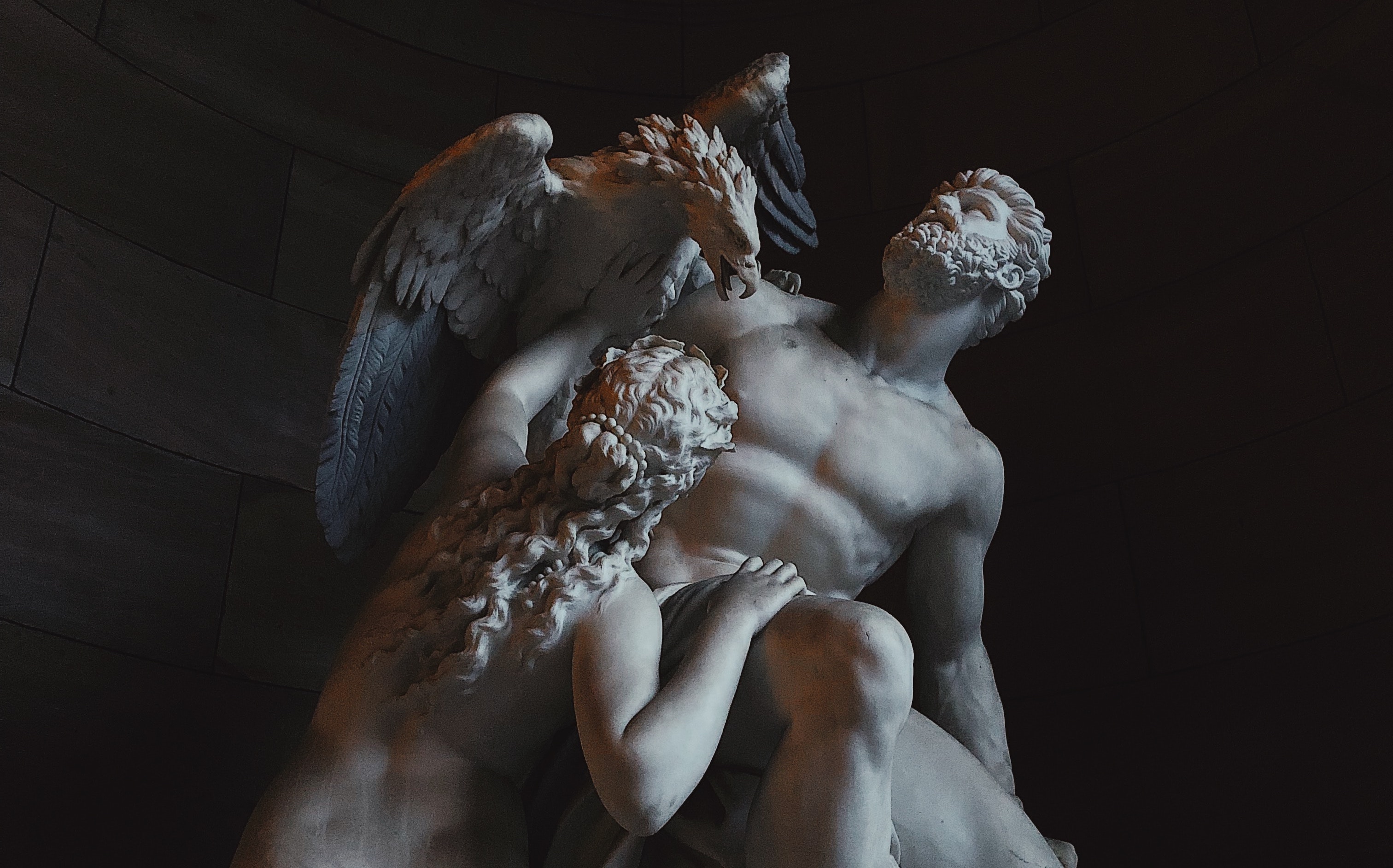
Why do poets turn and return to myth? Why do we find these stories compelling? So compelling that there is currently a Tony-award-winning rock opera, Hadestown, that retells the story of Persephone as a commentary on modern love, income disparity, racial division, and wall-building.

Maybe it is because, as Roberto Colasso says in his remarkable compellation of myth and story, The Marriage of Cadmus and Harmony: “Mythical figures live many lives, die many deaths….But in each of these lives and deaths all the others are present, and we can hear their echo.” Myths are beautiful muddles and wonderful mirrors in the tangled funhouse of literature where we might glimpse ourselves once more, again and again. 

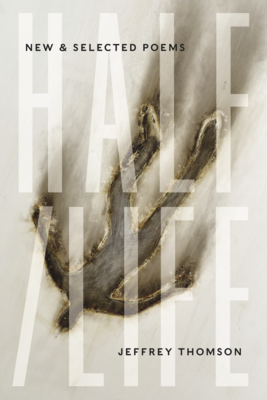
When I was putting together the poems from my previous five books for Half/Life: New and Selected Poems, I noted the myths that I returned to again and again. I noticed the stories I value and echo: Achilles and Hector, Dionysus, Agamemnon, Penelope and Odysseus. These stories are a vector into something deep and complicated. They are a complicated tapestry woven with all the wonders of language and self. For me, each time I return to them I find a new thread in the weaving, a new entrance, a new song.

Here are a few books of poems that keep telling the stories we need to hear.

76544

Meadowlands by Louise Glück

Louise Glück is one of contemporary poetry’s most accomplished retellers of myth. She has examined Achilles and Patroclus, Dante, and much more. In Meadowlands, she casts her potent gaze on Odysseus and finds a one-man wrecking crew who leaves damage and distrust in his wake. Glück weaves the story of a contemporary (perhaps her own?) marriage into the weft of Odysseus trying to return to Penelope. In doing so, she shows us the heroic resilience of the ordinary and the ordinary damage of heroism.

Image result for The Great Fires

The Great Fires by Jack Gilbert

Jack Gilbert is Orpheus. Orpheus bereft, without Eurydice. Orpheus alone and singing. He is Orpheus who has seen the underworld and cannot stop seeing it. Loss is his subject and the songs he sings from the death of his beloved wife cannot be unheard. The great fires that fill our lives are at once desire and damage and, as Jack Gilbert tells us, there is no way to have one without the other.

1655539

In a Time of Violence by Eavan Boland

Boland puts myth inside the domestic pastoral. The stories of Ireland and Greece come to life inside her small suburban cul-de-sac, and thus the past becomes the present. Her teenage daughter on the floor with her magazines becomes Persephone—the child lost to the underworld—just as she was once, as an Irish child adrift in the mist of England. That means that, in turn, she must become Demeter, the mother bereft. So, the cycle continues, because as she asks, “what else / can a mother give her daughter but such / beautiful rifts in time?”

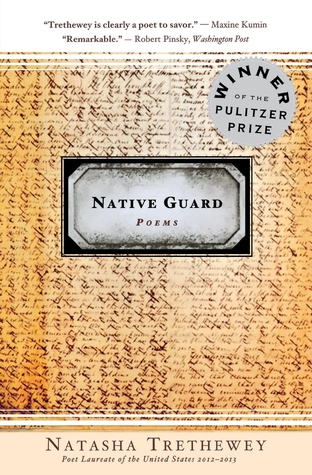
Native Guard by Natasha Trethewey

There are the myths we tell ourselves as storytellers, and then then are the myths we tell ourselves about ourselves as a country.  Those stories that make us feel better about who we are. And the stories we tell don’t. Because they don’t. An inventive formalist, Natasha Trethewey exposes the mythic tragedy of our common language and our shared history. In poems that make use of ancient stories and the newest forms of the American language—blues and jazz—she honors her own family and the forgotten history of the South.  

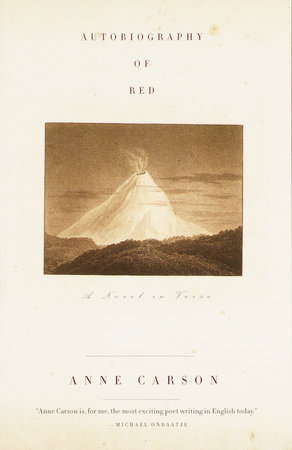
Autobiography of Red by Anne Carson

Autobiography of Red by Anne Carson

Reading Anne Carson makes me want to start my life over and become a classicist. Under her eye, the world of myth becomes as rich and real as any cinematic universe Marvel might invent. In this collection, Carson retells the story of a love-lorn Geryon (a damaged, lost boy/red-winged monster) who pines for release and finds it in photography and a young man named Herakles. Called a novel-in-verse, Autobiography of Red is really a critical study of a lost Greek myth from the ancient Greek poet Stesichoros combined with a contemporary gay-love-triangle—and because Anne Carson wrote it, it all makes sense. Perfect, beautiful sense.

13124956

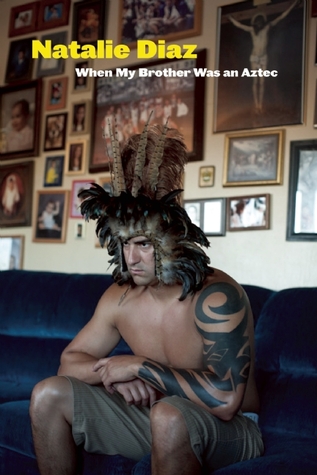
When My Brother Was an Aztec by Natalie Díaz

Natalie Díaz knows that myths aren’t just stories we tell. They are ways of seeing. And being seen. What we see in her poems is a vast jamboree of mythic figures and voices—Persephone and Barbie, Huitizilopochtli and Jesus—who come and go and toss themselves into a juke-joint of poetic forms unleashed. In a book that is party elegy, part cornucopia of form and character, Diaz wanders the North American west, slipping between cultures and languages and finding the the convergence between seemingly incompatible worlds.

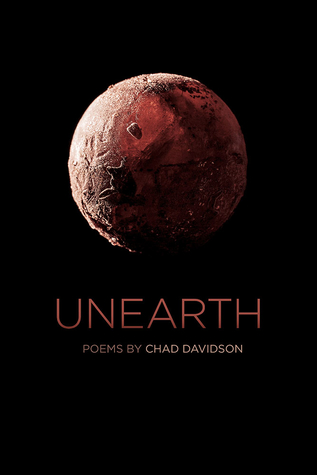
Unearth by Chad Davidson

Davidson is a new Odysseus. He’s a traveler and a wanderer who finds the stories of our damaged world—from the loss of his mother to the labyrinthian back-alleyways of Rome wet with black rain—and brings them back to our lonely Ithacas. He is the Odysseus who has heard the terrible and lovely songs of the sirens and lived to tell the tale. He brings us the spoils and the salvage—beautiful rage and elegant despair—because, as he tells us, “Disasters also tell us stories.” 

Duende by Tracy K. Smith

Duende is dark and mystery, according to Lorca. It is shadow-power of the artist who both creates and consumes. For Smith, duende lives in story and in myth. In the quiet language of the people. In resistance. Like a spare and modern Ovid, the voices of her characters blend and transform into one story of the unheard, the silenced, and the forgotten.  

19199

The Spirit Level by Seamus Heaney

Heaney is one of the great re-tellers of our age. He can take an old tale (like a house you thought you knew) and find a new window or even a whole new room in it, never noticed before. A secret life. Just as he did with his translations of Beowulf, he recreates the past so that it is clearly very much the present. In his long retelling of Aeschylus’ Orestia, he puts us in a walled city beset by trouble—a city that might as well be Derry, Northern Ireland—where there is “No such thing/ as innocent bystanding” and hate, love, and violence all blend as one.

135915

Sweet Ruin by Tony Hoagland

Tony Hoagland’s gift is to make myth as modern and contemporary as a trip to the mall. He is our Homer of irony and wit, cataloging the way the modern self—in its various forms—confronts its own losses and failures in stories large and small. He takes the Homeric simile—that long, drawn out comparison where Homer gets to talk about what is really important to him—and through it Hoagland shows us the hidden mythology at the thorny, mixed-up syncopated heart of ruined America.

6 Famous Writers Inspired by the Occult

The occult makes many of us feel uncomfortable, perhaps because we’re so hardwired as humans to hate uncertainty. Yet writing, like life in general, is full of uncertainties; often there’s no saying what words or images will enter our strange minds and work their way onto the blank page in front of us. Whether you’re writing about demonic possession or a fictional character growing up in suburbia, writing is an inherently mysterious process. To understand it better and learn more about their sense of self, many writers, artists and thinkers have looked to the occult, that strange territory between art and science.

The late Victorian period is largely remembered as a period of disenchantment, but it also witnessed a revival of occult and magical belief.  In the drive for modernity came a crisis of faith; people sought new means of spiritual development, of communicating with the dead and manipulating reality. As spoils from the far flung reaches of the British Empire returned to the British Museum, including the Rosetta Stone, new and established beliefs and practices (re)-emerged.

Arthur Conan Doyle (1859–1930)

Like his character Sherlock Holmes, Arthur Conan Doyle was a man of reason. He was a trained doctor and a celebrated author in the most logical genre of fiction. Yet he also became a prominent public proponent of spiritualism, a new religious movement whose adherents believed the spirit survived death, and could be contacted through séances. Spiritualists found comfort in the belief that death was only the death of the material self. 

Like Charles Dickens, Doyle was a member of The Ghost Club, a paranormal research organization.

Deaths in his family, including the death of his son in 1918 during the Battle of the Somme, and his brother in 1919 of pneumonia, likely reinforced his beliefs, though Doyle became a spiritualist before these bereavements. In earlier life, like many of his contemporaries, he dabbled in mesmerism and expressed interest in other esoteric ideas, but according to biographer Christopher Sandford he may have politely turned down an invitation to join the Hermetic Order of the Golden Dawn. 

Like Charles Dickens, Doyle was also a member of The Ghost Club, a paranormal investigation and research organization. In 1983, Doyle joined the British Society for Psychical Research, and in 1925, he became president of The College of Psychic Studies in London, an institution which still opens its doors to students eager to develop spiritual awareness.

Bram Stoker (1847–1912)

Some say Bram Stoker was a member of the Hermetic Order of the Golden Dawn. Whether or not the rumors are true, he was likely exposed to some of the order’s ideas through friends who were, including J. W. Brodie-Innis and Pamela Coleman Smith. 

We learn little of Count Dracula’s early life, but we know he had a deep knowledge of alchemy and black magic. Like many writers of his era, Bram Stoker was likely familiar with mesmerism, or animal magnetism. Based on the theories of Austrian doctor Franz Anton Mesmer (1734-1815), mesmerism claimed that practitioners could manipulate a “universal fluid” that ran through all matter. It piqued the curiosity of several prominent scientists, and for a while “caused not a few Victorians to re-evaluate traditional magic,” writes Thomas Waters in Cursed Britain. Among Count Dracula’s supernatural abilities are telepathy, the power of illusions and hypnosis, likely derived from this widespread belief in mesmerism. Philip Holden notes “it is difficult to find a late Victorian novel that does not in some way touch upon hypnotism, possession, somnambulism, or the paranormal.”

To literature scholar Christine Ferguson, the clearest occult borrowings in Dracula are structural. Professor Abraham Van Helsing enlists a team of vampire hunters, who swear an initiatory oath of secrecy in order to gain the tools necessary for fighting against vampirism, or black magic. This process of concealing and revealing occult knowledge, says religious studies scholar Kocku Von Stuckrad, is an integral part of Western occultism. 

One reading of Dracula: Modernity cannot kill vampires or their hunters, or the connections humans have with the old gods and spirits. It just turns them into secret occult beliefs, practiced underground, from which only a select few have the tools and knowledge to defend themselves.

W. B. Yeats (1865–1939)

In 1891, “a neurotic German” named Mrs Ellis banned W. B. Yeats from her Bedford Park home because she thought he was bewitching her husband Edwin Ellis, with whom Yeats collaborated. She may well have been right. 

Most significant for Yeats was his time in the secret initiatory order The Hermetic Order of The Golden Dawn.

Yeats was one of his era’s great searchers. Inspired by Irish folk tales and the work of Blake and Swedenborg, he studied Eastern and Western religions, joined the Theosophical Society, and in later life explored spiritualism. Most significant for Yeats, perhaps, was his time in the secret initiatory order The Hermetic Order of The Golden Dawn. Initiates (among which were Annie Horniman, Florence Farr, Arthur Machen, Aleister Crowley and allegedly E. Nesbit), worked their way through levels of magical study and practiced ceremonial magic in pursuit of the “hidden knowledge.” The curriculum drew from multiple antique sources, including medieval grimoires, tarot, papyri from the British Museum, freemasonry, the work of Elizabethan alchemist and astrologer John Dee, and an 1887 book written by the order’s co-founder MacGregor Mathers, The Kabbalah Unveiled.

Writers and critics mocked Yeats for his fascination with the uncanny, often distinguishing the poet from the magician. Among them, Terry Eagleton in the [London] Independent wrote: “Yeats was a lot sillier than most of us. Few poets of comparable greatness have believed such extravagant nonsense.” But in 1892 Yeats wrote this in a letter to his mentor John O’Leary: “The mystical life is the centre of all that I do and all that I think and all that I write.” 

Sylvia Plath (1932–1963) & Ted Hughes (1930–1998)

In a letter to her mother dated October 23, 1956, Sylvia Plath wrote that when she and Ted Hughes moved in together, they hoped to make a team “better than Mr. And Mrs Yeats.” He would be the astrologer, she wrote, while she would read the tarot.

In the early days of their relationship, Plath was curious about Hughes’s knowledge of astrology. (Years later, during a visit to his family home in Yorkshire in 1960, she heard the rumors about his mother Edith, who—according to Plath’s biographer Paul Alexander—”studied magic and passed the knowledge on to her children.”)

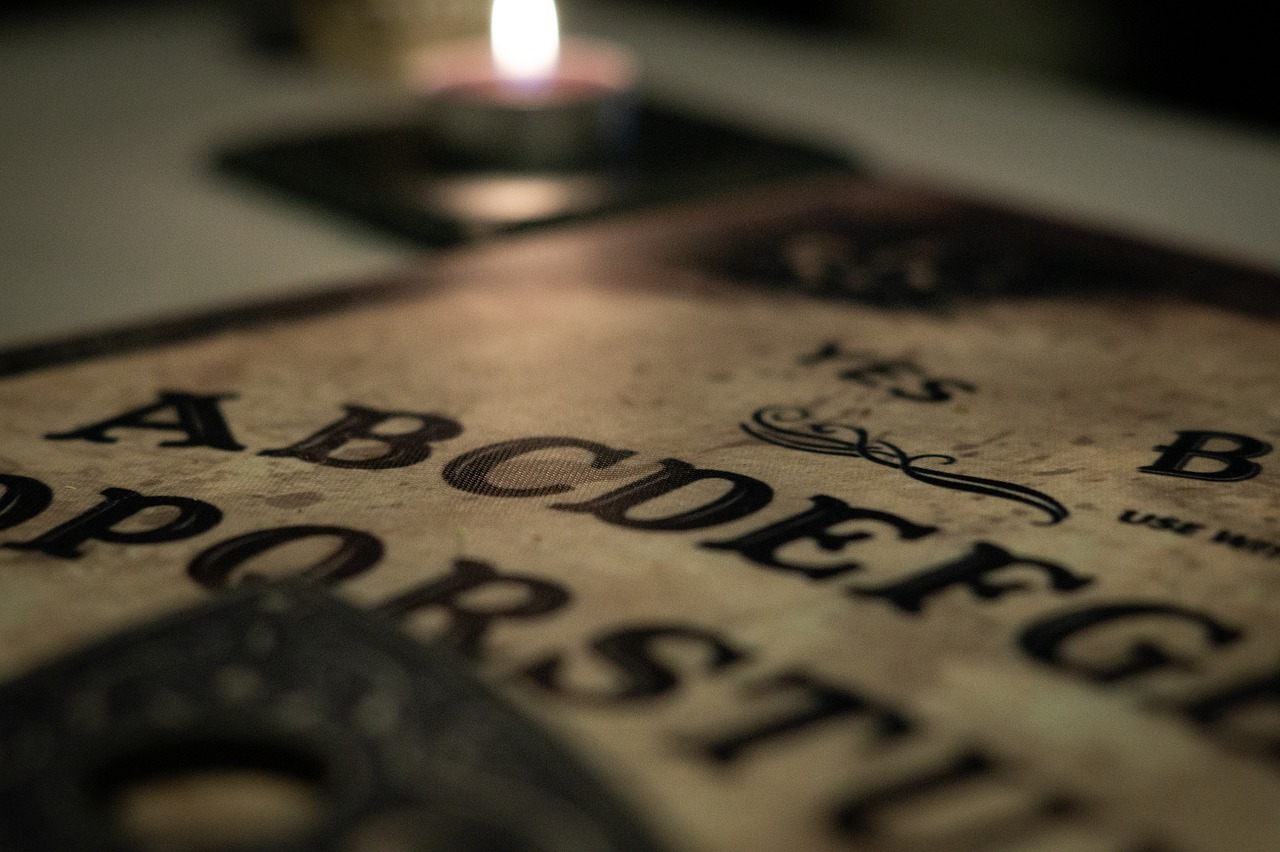
She and Ted regularly consulted a homemade Ouija board they’d made from a wine glass, cut-out letters, and a coffee table. Through private seances they met many spirits, among which were Keva, Pan, and G.A, Alexander tells us; the latter suggested he could predict the weekly football pool, but ultimately got it wrong. The spirits were more helpful in providing artistic inspiration. Plath’s verse poem Dialogue over a Ouija board: a Verse Dialogue, Hughes claimed, was basically a transcript of a conversation he and she had with spirits Sibyl and Leroy. Plath thought the poem so obscure that it wasn’t published until after her death in Collected Poems

Plath made a ritual bonfire from Ted’s fingernails, dandruff, and manuscripts.

In 1962 Hughes left Plath for another woman. Plath made a ritual bonfire from Ted’s fingernails, dandruff, and manuscripts. Here the history becomes mythical: some say she did this to kill her cheating husband—an act of witchcraft. Her poem “Burning the Letters” suggests she was trying to ascertain the name of Ted’s lover. By some accounts, a single piece of paper fell by her foot revealing the name. According to Ted Hughes biographer Elaine Feinstein, the woman telephoned their house once the bonfire was lit, and Plath answered. Either way, soon after lighting the fire, Plath learnt the other woman was Assia Wevill. 

Reaching out to another world, or the lower reaches of her internal world, helped Plath write some of her best poems. As the poet Al Alvarez writes, perhaps this also came at a cost. With a history of mental illness and one prior suicide attempt, Plath had already been to hell and back—but Hughes’s own demons may have helped Plath sink further into the darker chambers of her mind. 

William S. Burroughs (1914–1997)

William S. Burroughs was obsessed with finding order in the chaos. In pursuit of visions, he scried in mirrors and experimented with psychedelics and other drugs, which he documents in The Yage letters. He explored aforementioned animal magnetism in his first published essay. He also accidentally killed his wife when drunk. (His explanation? Demonic possession—he was being controlled by the “Ugly Spirit.” He always sought, as “order addicts” tend to do, an explanation for the seemingly unexplainable). 

From the Dadaists and Surrealists, Burroughs borrowed and helped popularize the cut-up method, whereby he would cut up a complete text and rearrange the pieces to create a new one. In his science fiction series The Nova Trilogy, he explored his obsession with control and addiction and explained how and why he employed this method. He aimed to destroy “word and image locks,” which he believed enter, shape, and control our minds by locking us into conventional patterns of thinking, and keeping us trapped in a false reality. The Ticket That Exploded (1962) is the second book in the trilogy, and in it Burroughs introduces the concept that language “is a virus from outer space.” He tells us “modern man has lost the opportunity of silence,” and challenges us to “Try to achieve even ten seconds of inner silence … You will encounter an organism that forces you to talk. That organism is the word. In the beginning was the word. In the beginning of what exactly?” 

The cutup method, he believed, could free us from this language virus by exposing a true, hidden meaning. This he believed could break down our conception of time, among other things: 

When you experiment with cut-ups over a period of time you find that some of the cut-ups in re-arranged texts seemed to refer to future events. I cut-up an article written by John-Paul Getty and got, “It’s a bad thing to sue your own father.” This was a re-arrangement and wasn’t in the original text, and a year later, one of his sons did sue him…Perhaps events are pre-written and pre-recorded and when you cut word lines the future leaks out.

Shirley Jackson (1916–1965)

Jackson’s dark, psychologically unsettling plots were not born out of dark nights in gothic mansions in the woods; she imagined many of them in the drudgery of domesticity. “The Lottery” was one such story, conjured up while running errands in her ordinary town. It was so shocking to readers of the New Yorker at the time that many cancelled their subscriptions. Jackson had a knack for seeing and exposing everyday evil.

Jackson was marketed as a witch by her first publisher, who wrote that ‘Miss Jackson writes not with a pen but a broomstick.’

Unsurprising, then, that she was marketed as a witch by her first publisher, Roger Strauss, who wrote that “Miss Jackson writes not with a pen but a broomstick,” and by her husband, who wrote of Jackson in the biographical note to accompany The Road in the Wall: “…She is an authority on witchcraft and magic, has a remarkable private library of works in English on the subject, and is perhaps the only contemporary writer who is a practicing amateur witch, specializing in small-scale black magic and fortune-telling with a Tarot deck…” This was a persona Jackson sometimes wore with zeal, sometimes denied. 

Did this private library really exist? Jackson knew well the history of the Salem witch trials. In her non-fiction work the Witchcraft of Salem Village she showed how the town fell into mass hysteria, pinning the blame for its troubles on a number of women and some men, all trialled, some executed. Scapegoating, reminiscent of witch hunts, is a recurring theme in her works, including her novel We Have Always Lived in the Castle and her short story “The Lottery.”

Her biographer Ruth Franklin tells us Jackson also read tarot cards. The protagonist of her novel Hangsaman, Natalie Waite, is an obvious nod to the maker of the iconic Rider-Waite-Smith deck, conceived by the occultist Arthur E. Waite and illustrated by Pamela Coleman Smith. The novel draws on the symbolism of a card from the major arcana, The Hanged Man, which can indicate spiritual transformation.

Seeing reality from the perspective of the hanged man is central to Jackson’s fiction. In a lecture on writing (“Experience and Fiction in the posthumous collection Come Along with me), Jackson wrote: “I like writing fiction better than anything, because just being a writer of fiction gives you an absolutely unassailable protection against reality; nothing is ever seen clearly or starkly, but always through a thin veil of words.” Franklin emphasises that “…on some level writing was a form of witchcraft to Jackson—a way to transform everyday life into something rich and strange, something more than it appeared to be.”

Please Bless Us, Colonel Sanders

KFC, or the taste of success is—wait for it—tender on the outside, tough on the inside

 Birmingham
 Heart of Dixie
 Winter March
 Superstorm 1993

 Were we between
 homes? Piecemeal
 family packed into
 North American

 green four-door
 Pontiac parked in
 the swirl of cold
 bundled together

 Dad fed the engine
 set to burn gas paid
 with lesser Washingtons
 who was there with

 the five of us? Colonel
 Sanders visited in
 his pressure-fryer
 bucket to bless us

 with a secret incense
 of eleven herbs and
 spices wrapping up
 a good paper meal

 for a Korean household
 christened again in
 the name of chicken
 new snow people

 biting into crisp
 country Southern
 hospitality to melt
 water crystals

 We wasted nothing
 even without power
 waited for the gravy
 train not knowing

 what it meant to live
 like it’s all gravy we
 were warm enough
 eating our laughs

 one at a time
 piling up joy
 an avalanche
 to remember 

Real Imitation Crab Meat

 you, semipelagic, you, 
           schooling, you, bering sea spawn
                     you, low-value, you, 
                               chum, you, product,
                                         you, imitation, you, 
                                                   water-logged luxury
  
  
                                                             short-lived species,
                                                                     storms serve you well
  
  
                        hunger gatherer, 
                                  get big while you
                                            can for the lean years
  
  
 muscle pounded into a fine gel that can hold itself, 
            chuck sugar over your left shoulder to fast-forward centuries to glaciate
                    in the name of scale and shelf life expectancy of my crab-flavored flesh
  
  
             i dream of my other bodies:
                    myeongtae (living)
                    saengtae (fresh caught)
                    dongtae (ice bound)
                    bugeo (air dried)
                    hwangtae (freeze dried)
                    nogari (dried while young)
                    kodari (semi-dried young)
                    and my pickled roe (myeongnanjeot)
                    and my pickled guts (changnanjeot) 
  
  
                         i’ve become a beloved phony fish baloney, 
                         i have no stomach to stomach myself 

What Happens When the Apocalypse You’re Writing Starts to Come True?

What if you’re a writer, and the post-apocalyptic world you carefully created seems to be coming true?  How do you disentangle your professional catastrophizing from reality? How do you cope with despair about the future and our continuing damage to the planet? If you’ve raised your kids and you’re reaching 60, why carry on living when the world is overpopulated and resources are running out?  

These were questions I wrestled with over the five years I spent writing my Fiery Spiral trilogy. The answers changed me fundamentally.  I discovered that I needed to create a web of connection, and the best way to do this was through kindness—to myself, to the planet and to the people around me.    

My trilogy is set in Cape Town in 2055, sixteen years after a major nuclear war has melted the ice caps and sea levels have risen 83 meters. Those who haven’t been killed by war have been wiped out by nuclear fallout, disease, famine and extreme weather events. Only 20,000 people remain alive, clustered around the southern tip of Africa, where the earliest humans lived. Two thousand of those are young adults trapped in a bunker inside Table Mountain, forced to farm food, the highest value commodity in a world low on land and technology. 

To get an idea of how both individuals and the government might prepare for the cataclysmic destruction a nuclear World War III would bring, I made a clay model of the city, marking off the anticipated sea level rise. In my story, the wealthiest group, who have seized control of the city, build themselves a network of luxury bunkers on the highest land in Cape Town and surrounded it with a huge granite wall to keep out both the sea and outsiders desperate to share their vast stockpile of essentials. This group worships Prospiroh, the god of prosperity, and are manipulating the system to ensure their survival at the expense of everyone else. 

The majority of Capetonians would find their homes underwater. They could escape into caves to avoid the expected nuclear fallout, but after that where could they live? How could they be safe from extreme weather? I created a community of raft dwellers and had them move into a fjord created by the flooding of Hout Bay, the leafy valley behind Table Mountain. 

Next I needed an economic system based around availability of resources like food, clean water, shelter and medicine. Lastly, I designed a society where nothing has been learned by the devastation of the planet. 

Books one and two were relatively easy to plot—I turned to my old favorite, John Truby’s Anatomy of Story, and worked in  reveals and plot twists to show the unfolding events as things darkened politically for the heroine. 

But the more I wrote, the more sensitive I became to the political events I saw on the news.   

President Trump came into power and began reversing environmental legislation. He demanded a wall across the Mexican border to keep away outsiders.  Extreme weather events were becoming more frequent, and social media’s reporting of them became ever more shrill. It was starting to look uncannily like the events I was writing about. 

I began to reflect on the way I could see people around me, and particularly on social media responding to the news. There were various responses that arose again and again.

  • To go into denial and pretend everything was fine. Just a few storms… There have always been refugees… Nothing more than usual—it’s just social media whipping up our emotions. 
  • To be outraged for a day or two, and then forget about it all. 
  • To become bitter and angry. To point fingers. I’m doing my bit  but ‘they’ keep littering/using plastic bags/etc. 
  • To become an activist and fight for change. This was rare.  
  • To express it through art. I was trying to do that in my book, and all that was happening was my depression was worsening the more I focused on it. 

I started book three as Cape Town’s four-year drought reached a critical level. President Trump and Kim Jong Un started their war rhetoric about the size of their nuclear missiles, and the news began to fill with devastating images of drowned refugees, starving children in Yemen, communities devastated by hurricanes. 

Those of us living in Cape Town had less than a month until Day Zero when the taps would finally run dry. Our dams were at less than 10%. We were allowed 50 liters a day per person. We joined queues of people collecting water from mountain springs, made plans for composting toilets, did only essential laundry, cut our showers to three minutes maximum (collecting every drop in buckets to flush the toilets), and used greywater to water our gardens. And this wasn’t a once off problem.

Scientists told us to expect more droughts like this one in the future. More droughts would mean more devastating wildfires, more expensive food, more protesting citizens, the rise of the super-rich who could throw money at the problem to maintain their lifestyles, more refugees as wars over dwindling arable land became more frequent.  We were faced with a planet imploding environmentally, and meanwhile we bickered on social media about who had pushed their way to the front of the queue at the mountain spring, and newspapers published lists of households who had used more than their allowance of water. 

The theme of this final book is the battle between green and greed, and I could see it playing out more and more clearly. My generation—with our baby-boomer lust for new, shinier, bigger things—had fueled this destruction and now our children were going to pay for it. We were too focused on our quests for personal happiness and success to see that we were we losing the best parts of being human—our empathy, compassion and generosity of spirit. Meanwhile we needed more and more material things to distract us because we felt starved of real engagement with nature, with our communities and with ourselves.  

I’d spent so much time thinking about a post-apocalyptic future that I couldn’t stop fixating on the disastrous world I had created.

I fell into a depression. Maybe I’d outstayed my usefulness on the planet, I thought. I’m nearly 60 years old. Perhaps it’s my duty to remove myself from the list of people using its dwindling resources. My kids told me I was catastrophizing, but I’d spent so much time thinking about a post-apocalyptic future that I couldn’t find a midpoint between hiding my head in the sand and fixating on the disastrous world I had created.  But I couldn’t separate the two. 

I had to tackle book three, and a technical challenge I couldn’t see a way around. At the opening, my heroine Ebba finds herself alone in a barren landscape. She must cross a desert to continue her journey. I couldn’t think of a way to make this a compelling narrative without dialogue or regular plot events to push the story forward.  

The emptiness of the landscape echoed my depression. My imagination had dried up as much as the city I lived in.  What was the point of finishing it? I spent more and more time escaping into the blingy world of Candy Crush, where the dopamine rushes are inbuilt. 

Strangely, it was the drought that showed me the way through. One way to save water was to have a morning swim instead of a shower. But it was getting colder and I hate cold water. 

I happened to watch a documentary on Lewis Pugh preparing to swim at Antarctica. “Courage is a muscle,” he says. “You have to exercise it.”  I began to force myself to get in without stopping to anticipate the unpleasantness.

But as the water temperatures dropped to under 15 degrees Celsius I started to feel energized, jolted out of my head. It wasn’t just the stimulation of my vagus nerve and dopamine rush—it was the fact that I was pushing myself into feeling my hands and feet burn from the cold, into looking upwards and seeing the sea gulls swirling through the clouds before a storm, the flamingos clustered in the shallows of the vlei, the bright red aloes against the winter sky. I was connecting with nature and with my body in a way I hadn’t before.

Maybe all that was needed for my book was the courage to push myself into unknown territory.

Maybe all that was needed for my book was the courage to push myself into unknown territory. Maybe I could immerse myself in my subconscious, and let the book filter up from the depths, instead of trying to force it to conform to my conscious process.  

I bought a dictaphone, and every morning after my swim, swaddled in blankets I sat quietly, closed my eyes, and told myself the story. I didn’t control it or plan—just let it flow out, trusting that somewhere in my subconscious the muse had a plot. And so the second connection happened—to a deeper part of myself, the inner storyteller. It was like free-diving to a coral reef and finding a marine display of extraordinary richness that was invisible from the surface. 

The muse brought up solutions to the plot line, ones that my conscious mind would never have thought up. She had ideas for the characters too.  The heroine was still the insecure girl she’d always been, too afraid to step into her power and lead. But now I found there was a second narrator—a complex, damaged man who could be a potential love interest if only he could find the courage to trust other people. 

The muse brought my two main characters to a place in the story that my conscious mind would never have thought up. They find themselves in an infinite space between worlds and are confronted with their vulnerability. They are forced to reach out to each other and to connect in order to survive. They see that they are just part of a huge net of connectedness, one that not only joins them to others, but will hold them if they fall. 

It was the answer I was looking for. I needed to leave my introvert safe space and start making deeper connections. 

I started by sewing knickers and posting photos on my Facebook page. Many of my friends wanted a pair, so I made them as gifts, personalizing them to suit that person as I perceived them, and making sure I delivered them face to face or through other people I knew. I made several hundred, sending them all over South Africa, to Ethiopia, Kenya, Australia and New Zealand, the U.S. and U.K. And each one brought a deeper engagement with its recipient, reaching through the screen with something tangible.  

I couldn’t do anything about the forest fires in Brazil, but I could do something about the people I encountered every day.

But what about the people around me? I couldn’t do anything about the dying child in Yemen, the drowned refugee on a European beach, the forest fires in Brazil. But I could do something about the people I encountered every day who needed something I could give. I could engage with intent and kindness. 

In a city like Cape Town where so many people live below the poverty line, I could do my bit to ensure they had essentials. I could sew underwear for the local homeless community, for children in orphanages, and those who had lost everything in fires in the informal settlement near me. 

I started sewing washable menstrual pads for a maternity hospital, and issued an open invitation on Facebook for anyone to join me. A group of twelve women formed, and we met regularly to sew, upcycling barely-used towels and facecloths from a luxury hotel into postpartum pads. I learned that there are few things more powerful than a group of strong women focused on a mutual task. 

And as I started reaching across the divide and forming tiny communications with many different people, I realized I was feeling better. Each act of giving gave me a dopamine boost as good as the one I get from cold water swimming. I wasn’t doing it to be “good” or “nice” or “thoughtful.” My primary reason was to ease my own pain. 

What surprised me though was the warmth and kindness that came flooding back to me. I realized in practical terms what a net of connection means—that it not only connected me to  other people in a more meaningful way, but it could catch me when I was falling into despair. 

As Ebba and Lucas reached the end of their journey, as they reached the end of their own self-absorption and engaged with each other and the world around them, I found my depression lifting. 

Connection and kindness. That was the answer I’d been looking for. Connection and kindness.  

8 Nonfiction Books on Motherhood by Writers of Color

I have birthed three babies these past eight years: one girl with dark hair and a penchant for haiku, and two nonfiction books that have unearthed previously buried memories of childhood—that is to say, memories of my mother. Or, more accurately, my many mothers. 

Image result for Malaya: Essays on Freedom

I was adopted into the United States at age sixteen after having escaped a harrowing life with a mentally ill and criminally notorious biological mother—only to become undocumented at age seventeen, when my adoptive mother learned that I was too old to be naturalized through adoption. 

I detail my unexpected immigration from the Philippines, the complex transnational adoption process, my anxious and precarious years as an undocumented teen, and finally, my life as a young mother of color in the American South in Malaya: Essays on Freedom. While it has been rewarding, I’d be lying if I said that the writing of this book (and the previous one) has been easy. It has required the kind of strength that, as some might say, only a mother has. To survive these eight years, I sought wisdom and sustenance from eight nonfiction books written by women (daughters, mothers, caregivers of various kinds) of color.

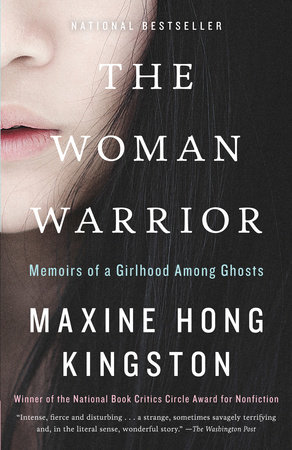
The Woman Warrior by Maxine Hong Kingston

Woman Warrior by Maxine Hong Kingston

I first read Maxine Hong Kingston’s memoir while finishing my MFA in the thick of early motherhood. In the chaos of it all, I found comfort in Kingston’s reimagining of her childhood. The world she built on the page mirrored for me the tension that I would say is commonly found between Asian daughters and mothers. Kingston understands that in our cultures, daughters and mothers are bound—constrained—by physical, linguistic, economic, and even spiritual ties, and that these constrains can become abusive. It was helpful to read a book that portrayed girlhood similar to how I experienced it as a child, among “ghosts.” It reminded me of what I did not want for my daughter. 

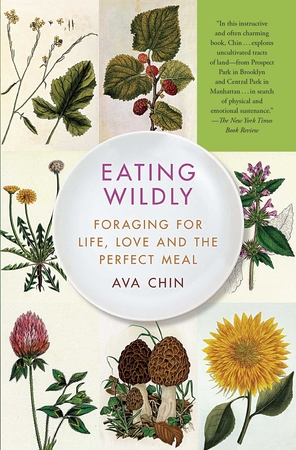
Eating Wildly: Foraging for Life, Love, and the Perfect Meal by Ava Chin

I met Ava Chin when I took her creative nonfiction workshop through Kundiman. At the time, my daughter was already a toddler—a little human who subsisted on yogurt and only yogurt. This was one of the many rants I took with me to the workshop. But Chin—I’ll call her Ava, actually—understood my griping. Because Ava, too, was a mother and an immigrant’s daughter, she knew that I had used precious diaper money on a flight to New York City because I needed sustenance. She provided nourishment in two ways: by carving out a literary space that was safe for Asian nonfiction writers and by reading us excerpts from her book, a memoir about her single mother, her ailing grandmother, and her quest for wisdom and edible flora, fauna, and fungi.  

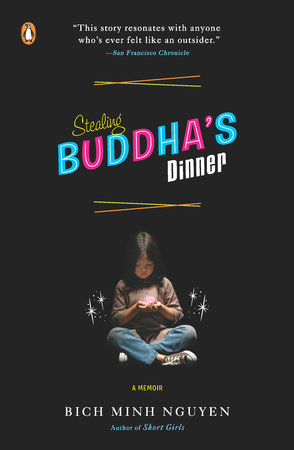
Stealing Buddha's Dinner by Bich Minh Nguyen

Stealing Buddha’s Dinner by Bich Minh Nguyen

In Stealing Buddha’s Dinner, which I read when my daughter was in kindergarten, I met young Bich, a new refugee from Vietnam with a voracious appetite for American food. That is, junk food. Consumed by her desire to belong and to be American enough, she hankers after Pringles, Kit Kat, and Jell-O. But as loud as her stomach’s growling is her desire to connect with a mother figure: a mysterious and absent birth mother and a Puerto Rican stepmother who at times is just as much an enigma. 

Image result for Krystal Sital

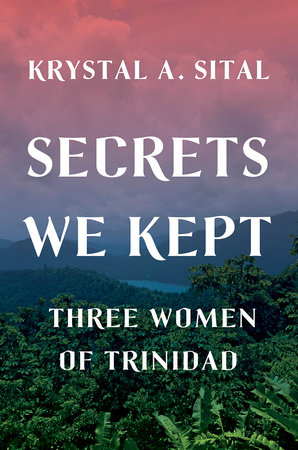
Secrets We Keep: Three Women of Trinidad by Krystal A. Sital

My daughter had taken upon herself the role of book-tour sidekick when I was introduced to Krystal A. Sital’s work. I remember reading the first pages of Secrets We Keep on a plane when my daughter asked if it was anything like my first book, Monsoon Mansion. I told her, vaguely but truthfully, that the stories were similar in that they both depicted how joy and pain traveled through families. Sital’s Trinidadian family narrative, like mine, showed how trauma traveled through generations—and how storytelling can break cycles of terror and abuse.

Image result for all you can ever know nicole chung

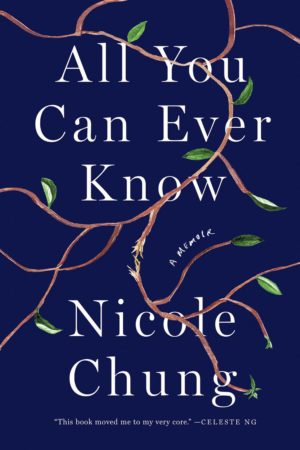
All You Can Ever Know by Nicole Chung

Fellow adoptee Nicole Chung gave me the courage to write about my own adoption story. In her memoir, she details her search for her biological mother, father, and sister, and how this coincided with the birth of her own child. The search—and the result of it—reawakened contemplations and questions from childhood: Who was she? Where was home? Who was family? To whom did she belong? These are questions I’ve also asked and have tried to address in Malaya: Essays on Freedom.

Revolutionary Mothering: Love on the Front Lines edited by Alexis Pauline Gumbs, China Martens, and Mai’a Williams

I wish I had known about this book much earlier in motherhood. So many of my concerns as a brown mother raising a Filipino American daughter in the South wouldn’t have seemed so peculiar (thus making me feel so alone) had I consulted this anthology sooner. The essays in Revolutionary Mothering, which center mothers of color and marginalized mothers’ voices, confirm so many of the doubts and fears I’ve had since birthing a dark-skinned girl into this profoundly white world.

Good Talk by Mira Jacob

Good Talk by Mira Jacob

My daughter, now almost eight, frequently asks questions that could very well be the beginning of another book. This is, actually, how Mira Jacob’s hilarious, edifying, and intimate graphic memoir, Good Talk, came about. Jacob’s half-Indian, half-Jewish son asks innocent questions about family, Michael Jackson, being biracial, and life in New York post-9/11. 

Mom & Me & Mom by Maya Angelou

Mom & Me & Mom by Maya Angelou

A literary mother to many, Maya Angelou has bequeathed to us tomes that I believe will continue to nurture us, teach us, and heal us. In the prologue for Mom & Me & Mom, she says, “Love heals. Heals and liberates…. This book has been written to examine some of the way love heals…” Born to a woman with an arresting presence yet who was absent for most of her early life, Angelou tells us what could be her most personal story: how she reconciled with Vivian Baxter, the mother who abandoned her. I listened to the audio version of this book because I could not pass up hearing Angelou’s story in Angelou’s voice. In the audio version, I could still hear the trepidation with which she approached her estranged mother—a trepidation I know so well. Listening to how Angelou found healing and love inspired hope for my relationship with my own estranged mother.

The 13 Fiercest Feminist Witches in Modern Literature

Witches have cast a captivating shadow over centuries of storytelling, though they have traditionally occupied a rather unsettling role. More often than not, they’ve been depicted as homicidal monstresses like murder-mother Medea of Greek mythology or Roald Dahl’s child-hating, rodent-obsessed Grand High Witch. Otherwise they’re shown as morally ambiguous and untrustworthy: it’s difficult to discern whether Shakespeare’s Weird Sisters or Slavic folklore’s Baba Yaga have the protagonist’s best interests at heart.

Today, however, novels are populated by far more friendly witch depictions—not to mention the plethora of people like myself who proudly call themselves witches, whether for spiritual or political reasons (or in my case, both). So how did the witch go from a hideous hag to, well, Hermione?

Image result for waking the witch book

This is the question I set out to answer in my book, Waking the Witch: Reflections on Women, Magic, and Power. In it, I explore how the figure of the witch is inextricably linked to our anxieties and aspirations regarding female power. Looking at witches in fiction became a crucial part of my research because, as I quickly discovered, the archetype of the witch is constantly evolving, and beliefs about “real” witches are deeply influenced by the stories we tell about them. In other words, our conception of witches is a cross-pollination—or even a cross-pollution—between reality and fantasy. 

Though witches in fiction were almost always villains, that all began to change when L. Frank Baum set his good witches sparkling from the pages of his 1900 children’s book, The Wonderful Wizard of Oz. Glinda the Good Witch of the South was allegedly modeled after Baum’s mother-in-law, the American suffragist and abolitionist Matilda Joslyn Gage. Her own non-fiction book, Woman, Church, and State (1893), posited that the women who were accused as witches during the European and New England witch hunts were in fact “among the most profoundly scientific persons of the age,” and that they were persecuted by the Church because they were deemed a threat to the patriarchy. Whether historically accurate or not, this reframing of witches as sympathetic figures who stand in opposition to misogyny made a huge impression on Baum, thus both Glinda and the unnamed Good Witch of the North were born. Baum’s vision of witches as strong women with positive powers gained momentum, and heroic, feminist witches have become a common trope in modern fiction ever since.

Here are 13 of the fiercest witches in literature:

Image result for lolly willowes

Lolly Willowes in Lolly Willowes or The Loving Huntsman by Sylvia Townsend Warner

Laura “Lolly” Willowes is a spinster at the age of 28, living with her brother’s family in London. She longs to abandon the stifling domestic duties that come with being relegated to the sad, single auntie. After nearly two decades, she can take it no longer, and gives into a dark urge she feels calling her to the country hamlet of Great Mop. Here, she realizes she is a witch, having pledged herself to the Devil in exchange for a life of revelry and freedom in the forest:

That’s why we become witches: to show our scorn of pretending life’s a safe business, to satisfy our passion for adventure. . . . One doesn’t become a witch to run round being harmful, or to run round being helpful either, a district visitor on a broomstick. It’s to escape all that—to have a life of one’s own. 

Though presumably influenced by such non-fiction writers as Gage and French historian Jules Michelet, Warner is also notable for her early subversive positioning of Satan as a feminist liberator nearly 100 years before films like The Witch and shows like Chilling Adventures of Sabrina did the same.

Image result for circe madeline miller cover

Circe in Circe by Madeline Miller

Many will recall Circe as the sorceress from The Odyssey who turns Odysseus’s men into pigs. But Miller’s expansion of this small episode into an entire book about Circe’s life is an act of great alchemy itself. This Circe is a black sheep—or disdained demi-goddess—whose witchy ways mean she doesn’t quite fit in with her illustrious Olympian family. However, her supernatural skills allow her to tap into the powers of plants and animals, and witchcraft becomes a means for her to protect those she cares about. Circe spends much of the novel in isolation on the island of Aiaia. But rather than feeling imprisoned, she turns her solitude into an oasis of self-actualization. Like any good witch, she relishes having sovereignty over her home—and herself.

Marie Laveau in Voodoo Dreams by Jewell Parker Rhodes

Voodoo Queen Marie Laveau has enjoyed a recent surge in popularity thanks to Angela Bassett’s depiction of her in the FX series American Horror Story: Coven. But Rhodes’ version of Laveau’s story is a far richer and more nuanced imagining of the infamous New Orleanian’s life. In her novel, Laveau is a free, young black woman in early 19th-century Louisiana who is taken in by a seductive and violent charlatan named John. He grooms her to pretend to be a voodoo priestess so he can gain power and money from unwitting followers, but drama ensues when it becomes clear that Marie has true spiritual gifts and real miracles start to occur. Themes of lineage, religion, responsibility, and autonomy undulate beautifully throughout Rhode’s lush prose, as does the majestic snake deity that Marie comes to worship and embody.

Hermione Granger in Harry Potter and the Goblet of Fire by J.K. Rowling

I know, I know, Hermione is not lacking for appreciation. But one would be hard-pressed to make a list of feminist witches without putting her on it. It’s true that she comes across an all-around badass throughout Rowling’s entire series—she’s brilliant, outspoken, and consistently brave whether facing down homework or homicidal tyrants. But it’s in this fourth installment that her social justice side begins to emerge. Concerned about the mistreatment of House Elves, Hermione starts S.P.E.W., or the Society for the Promotion of Elfish Welfare, and thus begins her ongoing devotion to equal rights issues. Witches are often associated with outsiders and marginalized populations, which makes many of us more empathetic to the plight of oppressed people. Hermione is an excellent example of an activist witch who uses her powers to change the world for the better.

Image result for good omens book

Anathema Device in Good Omens by Neil Gaiman & Terry Pratchett

It’s difficult to choose a favorite witch from Neil Gaiman and Terry Pratchett’s individual enchanting oeuvres, but lucky for me they teamed up to create one of the most badass witches in lit. Anathema Device is the great-great-great-great-great granddaughter of the 17th-century prophetic witch Agnes Nutter, and using her ancestor’s book she must attempt to thwart the Apocalypse itself. Anathema is described by Gaiman and Pratchett as “more psychic than was good for her” as well as “precocious, and self-possessed.” She also carries a foot-long bread knife with her everywhere, finding it a more sensible protective tool than amulets or spells. She’s smart, pragmatic, and more than up to the task of saving the world—if she doesn’t die trying. It must also be mentioned that Good Omens is the source of this oft-shared, scrumptious quote: “Most books on witchcraft will tell you that witches work naked. This is because most books on witchcraft are written by men.” Indeed. Lucky for us the writers of this one chose to wear their feminism on their sorcerers’ sleeves.

Tituba in I, Tituba: Black Witch of Salem by Maryse Condé

Many are familiar with the depiction of Tituba as a minor if pivotal character in Arthur Miller’s The Crucible: a voodoo-practicing slave who is accused of teaching witchcraft to a bunch of Salem teens. Maryse Condé’s novel seeks to set the record straight by centering Tituba in the narrative, and drawing from the real-life figure’s Caribbean background (though some historians have since posited that she was originally from an Arawak village in present-day Guyana or Venezuela, and not born in Barbados as the novel suggests). Condé’s Tituba is gifted in spirit communication and herbalism. She is also unashamed of sex and pleasure, and many of her adventures and hardships hinge upon moments when she follows her desires. Though at times a heartbreaking read, this version of Tituba has far more autonomy and complexity than one usually encounters in history books and Salem Trial dramatizations. As Angela Y. Davis puts it in her introduction to Condé’s book, here, Tituba “has an active, constitutive voice…shattering all the racist and misogynist misconceptions that have defined the place of black women.”

Dune: Deluxe Edition by Frank Herbert

Lady Jessica in Dune by Frank Herbert

This sci-fi classic has given us so many iconic images and phrases, from “sandworms” and “the spice” to the mantra “Fear is the mind-killer.” My favorite element of Dune is the Bene Gesserit, a group of all-mighty women who have powers such as using a special “Voice” to control people’s minds as well as the ability to select the sex of their embryos in utero. Lady Jessica is a formidable Bene Gesserit witch who defies orders by choosing to give birth to a male heir instead of a female one. She teaches her son, Paul Atreides, some of her otherworldly techniques, and together they end up training a group of rebels in the “weirding way” in order to attempt to overthrow the universe’s corrupt emperor. Eventually Jessica becomes the group’s religious leader, and as their Reverend Mother, she gives birth to yet another miraculous child. I especially appreciate that unlike the Virgin Mary she is clearly modeled on, this Dune witch gets to rule, fight, and fuck.

Image result for witches of new york

Eleanor St. Clair in The Witches of New York by Ami McKay

There are several wonderful witch women in Ami McKay’s charming late-19th-century New York City yarn, but Eleanor St. Clair holds a special place in my heart. As co-owner of a tea shop, the potions she brews help her female clientele in all respects: “‘Witches see to things best sorted by magic: sorrows of the heart, troubles of the mind, regrets of the flesh,’” Eleanor recalls her mother telling her, and she is determined to live up to these words. Aphrodisiacs and dream teas are in her bewitching wheelhouse, but so are herbal contraceptives and abortifacients, reminding us that women’s reproductive freedom has long been associated with witches as well. A queer woman in the Victorian era, Eleanor is also a symbol of living one’s truth without shame. “The world has need of more witches,” she states. It certainly needs more like her.

Akata Witch by Nnedi Okorafor

Sunny Nwazue in Akata Witch by Nnedi Okorafor

Okorafor’s Akata series is an example of “Africanjujuism,” a term she coined to describe, in her words, “a subcategory of fantasy that respectfully acknowledges the seamless blend of true existing African spiritualities and cosmologies with the imaginative.” In the series’s first book, Nigerian-American protagonist Sunny Nwazue is 12 years old, an age when many young people find themselves subject to strange, new forces of all sorts. In Sunny’s case, she not only has supernatural visions—she also has to contend with a strict, sexist father, as well as the cruelty of her peers who tease her for being albino. Fortunately for her, she falls into a group of friends who initiate her into the magical community of Leopard People. Through their encouragement, and that of the magical teachers she meets along the way, she learns to hone her juju and face down her fears.

Image result for bless me ultima book cover

Ultima in Bless Me, Ultima by Rudolfo Anaya

The protagonist of this novel is a young boy named Antonio Marez y Luna, but it’s the book’s titular character Ultima who is the real star of the story. Ultima is an elderly curandera, healer, who is living out her twilight years with Antonio’s family in their New Mexico home. She becomes Antonio’s mentor and passes along her spiritual wisdom to him. Though their community makes a distinction between benevolent curanderas and evil brujas, witches, Ultima has all the marks of a good witch. She has an owl who accompanies her wherever she goes, and she uses the power of herbs and nature to heal the sick and protect the people she cares about. As Antonio states, “…that is what Ultima tried to teach me, that the tragic consequences of life can be overcome by the magical strength that resides in the human heart.”

Image result for poster

Ariel in We Were Witches by Ariel Gore

The narrator of Ariel Gore’s book is also named Ariel, and the novel is very much drawn from the author’s life. As a young, single mother living below the poverty line in California, Ariel the character wants nothing more than to be a writer and to provide her daughter with a good life. She reads the works of such feminist powerhouses as Audre Lorde, Adrienne Rich, and Diane di Prima, and laces their words throughout her own spells. Bit by bit this blend of witchery and women’s studies fortifies her and helps her transform her circumstances. We Were Witches is a glorious celebration of the relationship between creative craftsmanship and witchcraft, and both Ariel the author and Ariel the narrator show us that there are such things as magic words.

Image result for leonora carrington the hearing trumpet

Marian Leatherby in The Hearing Trumpet by Leonora Carrington

Surrealist artist Leonora Carrington is best known for her marvelous, mythic paintings, but she was also a spectacular writer. Her novella’s story is told from the perspective of Marian Leatherby, a deaf, toothless 92-year-old who has been unceremoniously placed in an old folk’s home. But ceremonies eventually do ensue, as Marian discovers that the institution is a deadly cult. And so she bands together with a group of geriatric misfits to try and flee. Their escape plans involve invocations to ancient goddesses, alchemical riddles, and a heaping helping of other strange magic. The author herself was enchanted by notions of the divine feminine and witchcraft practices of all stripes, and Marian is a witch that can only have been concocted from Carrington’s specifically magnificent mind.

540489

Juniper in Wise Child by Monica Furlong

I’m often asked how I came to identify as a witch myself, and while there are many answers to that question, this childhood favorite of mine played a giant part in making me want to be one and not just read about them. Wise Child is a young Scottish villager who, after being abandoned by her parents, gets taken in by Juniper, a kind and mysterious witch. Juniper is feared by the other villagers who believe her to be a devil worshipper, but they also secretly visit her when they are in need of healing. Juniper teaches Wise Child botany, astronomy, tarot, animal communication, and many other mystical arts, and over time becomes a surrogate mother. And, I too learned from Juniper that witches are not only magical, but could also be conjurors of compassion and immense, wild love. 

Plan Your Literary Halloween Costume With Our Handy Chart

So you want a Halloween costume that will convey the depth of your literary knowledge, but you’ve also expended all your creative energy on your unpublished novel draft. Never fear! Feed your birthday into our Halloween costume generator, and it’ll spit out an effortlessly bookish, if possibly a little high-concept, idea. Now you just have to figure out how to pull it together in time for your party.

Click to enlarge