“Bunny” Shows MFA Programs for the Dark Horror They Truly Are

If you’ve ever entertained dark fantasies about what really goes on at exclusive MFA programs, Bunny will fulfill your wildest dreams. If you’ve attended an MFA program and had a positive experience—as author Mona Awad did—the book will still blow your mind, though perhaps in a different direction. If you have no interest in MFA programs, Bunny will still—you see what I’m getting at.
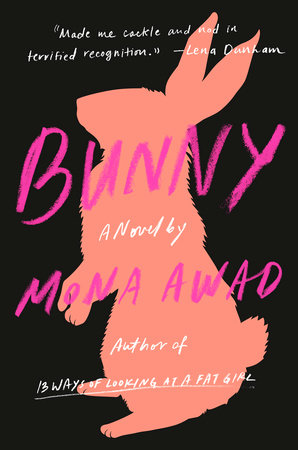
Bunny by Mona Awad
Buy the book

Mona Awad’s critically acclaimed first novel, 13 Ways of Looking at Fat Girl, deals incisively with body image, self-worth, and womanhood in a series of thirteen vignettes. Her sophomore novel, Bunny, also grapples with alienation, but in a wholly different direction.

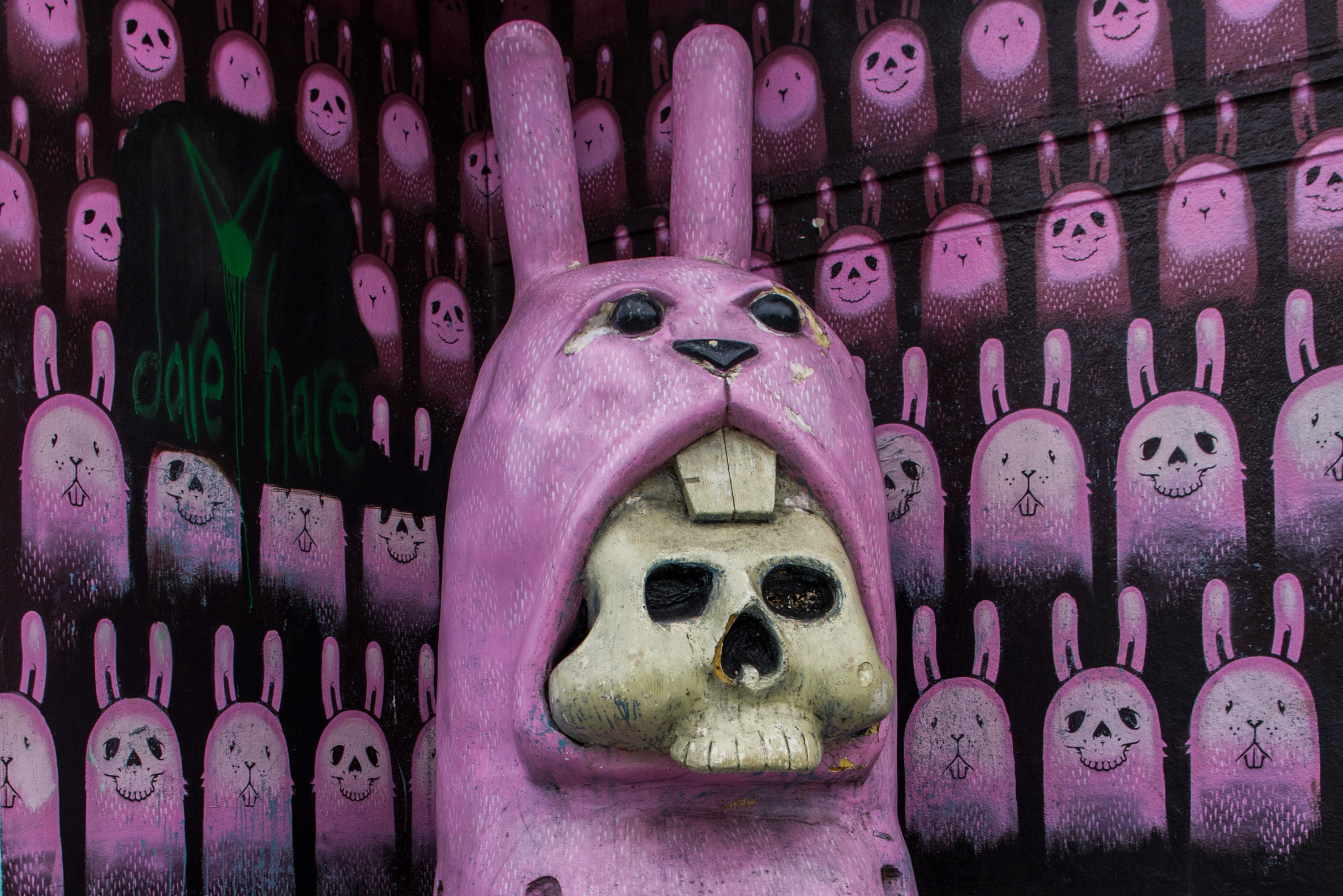
Bunny follows writer Samantha Heather “Smackie” Mackey through the second year of her MFA program at the elite Warren University. Initially, Samantha despises her cohort—four A-line-dress-wearing, “proem”-writing, Heathcliff-worshipping, upper-class women she nicknames “the Bunnies.” Her only friend, Ava—a cynical, goth-leaning artist (“dark clothes, her veil, her mesh-covered fingers gripping a cigarette like she could easily take out an eye with it”)—is the Bunnies’ antithesis. But slowly, Samantha falls away from Ava as she becomes sucked into the Bunnies’ cloying world of smut salons, mystery pills, and private, mystical gatherings they call “workshops.” The novel twists from familiar campus realism to a dark fairytale, all the while traversing the emotional highs and lows of the writing process.

A veteran of academe herself, Mona Awad has attended Brown University, the University of Edinburgh, and the University of Denver, earning her MFA in fiction, MScR in English, and Ph.D. in Creative Writing and English Literature, respectively. I normally don’t inquire too deeply about autofictional elements of anything, but I did speculate on what academic experiences may or may not have inspired Bunny’s comic horrors. And while I never attended an MFA program, Bunny still resonated with my own academic experiences: I’ve spent plenty of time watching more intellectually secure and/or better-dressed classmates clique together. I’ve always regretted my lack of invitation to secret smut salons.

Over the phone, Mona Awad and I discussed writer’s block, fairy tales, and—surely relevant to all Electric Lit readers—the frenzied coupling of terror and euphoria that comes with a creative imagination.


Deirdre Coyle: A meta-narrative runs through the novel about Samantha having writer’s block. Did you experience dry spells while working on Bunny?

Mona Awad: Oddly, no. My first book took a long time, about six years, stopping and starting. But Bunny, when I got the idea, I just kind of went with it, and I finished a first draft in three months. The story did unfold pretty organically for me, which was, given the subject matter, probably a little surprising to hear. But it’s not that I haven’t experienced writer’s block, I certainly have. The terrible thing about writer’s block, of course, is that you never really know what’s going to get you out of it. The creative writing process, and the creative process in general, is mysterious that way. There are no guarantees, so it can be a very terrifying space to occupy. I think that’s part of what generates the unease and the uncertainty, and even the horror, in the book.

DC: The speculative reveal in Bunny—when Samantha becomes aware that the Bunnies are literally practicing a kind of witchcraft—happens after we’ve already seen a lot of horror realism about writer’s block, cliques, and assholes generally. Did you always know you wanted Bunny to take a speculative turn, or did that happen as you were writing?

MA: Oh, I always knew, from the very beginning. Because I was drawing, in part, from fairy tales. And there were things about the creative process that I wanted to literalize: the idea of darlings, and killing your darlings, and the very, very complicated and often violent relationship that creators can have with their creations. The fear and the wonder and all the emotions around it—there’s just so many. It’s so ripe. To me, there is something magical about the creative process, so mysterious, and the speculative felt like it was an absolutely natural turn for the narrative to take. Fairy tales engage those feelings of wonder, too, and there’s always the possibility of transformation in a fairy tale. I thought in a book about creativity, “fairy tale” seemed like the right direction to go in. Magic was there from the very beginning, in my head.

DC: Aside from a writing MFA, what graduate programs do you think would be most conducive to this kind of horror story?

Living in my imagination and exploring my fears and my what-ifs and my desires, in narrative form, helps me cope.

MA: I think any environment in which people who are sensitive, people who are creative, are being asked to activate their imaginations at the same time, you know? Because that’s what’s generating the horror. A small group of people have been sequestered away from their usual lives, and they’re being asked to tap in to their emotions and create something. They have to do that in front of other people and expose themselves. A lot can go wrong if you really think about that situation. To me, the situation is rife with danger, rife with horror, rife with anxiety. I think that that extends even beyond graduate programs, you know? Any endeavor in which you’re putting yourself out there in front of a group of people can generate those feelings, can create that really deep unease—and can really mess with your head. That’s the other thing that Bunny plays with, this notion that perspective can really warp reality. My main character is an artist, and she is feeling very vulnerable for a number of reasons, and she’s feeling very anxious. How much of that anxiety and how much of that vulnerability is shaping the world around her, and her experience of her peers? 

DC: Right, and she’s coming from a different class background than her peers.

MA: That’s part of it, too.

DC: Would you say that creative people are more prone to seeing horror in the world around them, in general?

MA: Wow, that’s a great question. If I speak for myself as a creative person, I can go in two very wildly different directions, and I can do it in a given moment. I think a lot of creative people live in their heads, they live in their imaginations, and their imaginations are really rich territory where they process the world around them. In that space, anything is possible and your wildest dreams can come true. On the other side of it, things can look really bleak, and really scary, and you can go down some really dark roads in your head. So Bunny kind of does both. Samantha has these really wondrous, exhilarating moments of creativity and of encounters with true wonder and magic and then she also has these terrifying, nightmarish experiences. You could argue that they’re both generated from the same place inside of her, that imaginative place.

DC: I think about that all the time, how the way that I see the world, and the way that creative people in my life see the world, can sometimes be…

MA: You can go pretty dark if you want to.

DC: Would you be willing to divulge any horrors from your own MFA experience?

MA: I would happily, except that I have to say—in spite of the picture that I paint of the MFA experience [in Bunny]—I finished my first novel, 13 Ways of Looking at a Fat Girl, because I went to an MFA program. I had a really supportive group of people, both professors and colleagues, at Brown, and actually, the experimentalism, which I think Bunny takes a bit of a jab at—even though it is kind of an experimental book—helped me write 13 Ways. It helped me get outside of my own ideas about how a story was supposed to be told. So it shook me up in ways that were very productive, but certainly, as a creative person, just trying to finish this book, I had a lot of anxiety. I almost dropped out in the middle of my MFA—and it had nothing to do with Brown or my peers or anything like that. I just didn’t think I was going to finish my book. And that was awful. So probably some of the writer’s block stuff that Samantha has, that’s where some of my horror stories come from, just getting in my own head and thinking that there was no way I could finish this book. And it mattered so much to me, you know? The book mattered so much to me, and this idea that I couldn’t finish it was just so scary. But then, of course, I did finish it, in part because I did stay, and I told myself that I had to at least stay and try. And if I stayed and tried, at least I’d gone through the program.

Probably one genuine experience of horror that I had—and this is definitely in the book, to some degree—was my surprise at how sketchy Providence was. I’m glad, in a way, that I had that experience, because it’s such a beautiful town. The houses are stately, even in their ruin. It’s a stunning place. I can see why H.P. Lovecraft was so inspired by it and had such a profound creative relationship with it. But it’s also kind of creepy. There’s a real divide between the Ivy bubble of Brown and RISD, and then the town beyond that. That took me by surprise, a little, even though it is a lot better than it used to be. It was kind of scary. It was useful, too, in Bunny—it inspired me to draw from those social, class differences, and really bring them out in the book and really use that as a way to generate a sense of unease in the reader, and a sense of the Gothic. The horror, in part, comes from the setting. It’s very, very charged.

DC: We kind of see that where Samantha and Ava live, versus where the Bunnies live.

MA: Exactly. Very different parts of town.

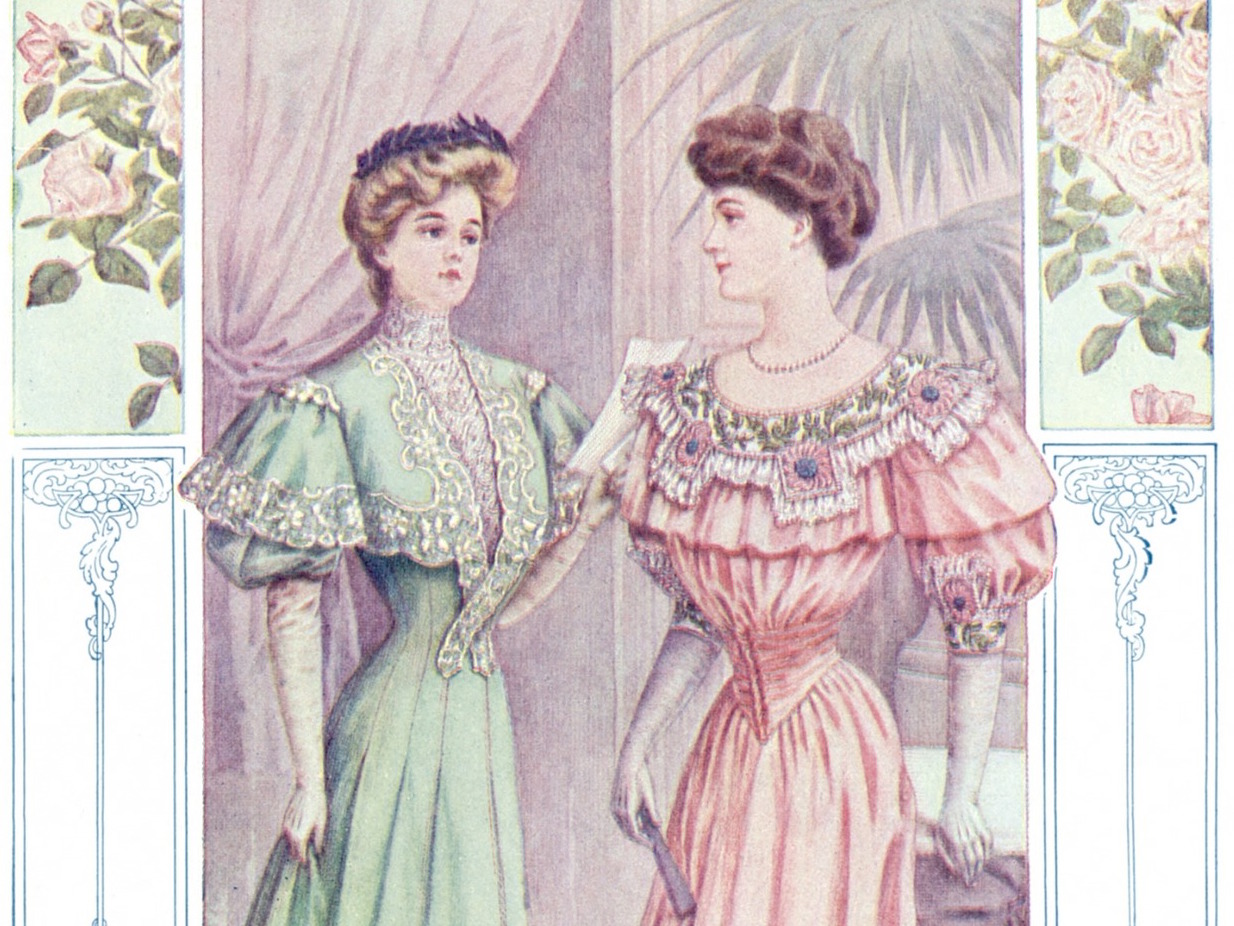
DC: Clothes signify so much in Bunny: personality traits, lifestyle changes, even betrayal. I loved the descriptions of Ava’s outfits, and her black veil. She’s very much my personal style icon. And then on the Bunny side of things, I liked the dress covered in kittens “wearing crowns because they are the kings and queens of this world.” What kind of “research” did you do to make these sartorial details so sharp?

MA: Oh, yeah. First of all, I’m obsessed with clothing. It’s a very charged thing for me, and it’s always been a source of inspiration for me, in my first book and in this one. Maybe it’s because of my own struggles with body image, but I have a very, very layered relationship to clothing. So I’ll pay attention to clothes, a lot of attention.

I feel like a boring tree murderess very often. Why put it out in the world if it’s never going to be as good as a tree?

For the creepy-cute outfits that the Bunnies wear, I was really drawing from that kawaii idea of the cute being a little monstrous. One site that I did visit a lot was the ModCloth site. I looked at the comments a lot. Because in the comments, people reveal the things that they hate, but they’re trying to accept that they still love the dress, and they don’t want to part with it. There are such interesting little monologues that reveal so much about the very layered conflicts that people have with their clothes. I tend to look at the comments on dress sites, not just on ModCloth, to get inspiration. And I love the names of the ModCloth dresses, I think they’re hysterical. They have such outlandish names. 

Then the darker, more vintage, glam, punk aesthetic that Ava has—I love those looks and I love the subcultures associated with those looks. So it was fun for me to kind of go crazy describing Ava. She’s totally the antithesis, obviously, of the Bunnies and their kind of fashion.

DC: The description of Ava’s apartment made me feel like she was living in my dream apartment (“this living room that smells like a thousand old frankincense sticks…The turntable playing tango or some weird French sixties stuff that sounds exactly like the music you dream of but can never find. The lady-shaped lamps lit all around us”).

MA: I know, right? It’s my dream apartment, too.

DC: During one of Samantha’s inner monologues during workshop, she imagines one of the Bunnies saying, “I’m sorry that I think I’m so goddamned interesting when it is clear that I am not interesting. Here’s what I am: I’m a boring tree murderess.” I’ve been thinking about this a lot because I relate to it so deeply. Do you have any advice for those of us who feel like boring tree murderesses most, if not all, of the time we sit down to write?

MA: I mean, I would want to take [that advice] too, because I feel like a boring tree murderess very often. I always think, ‘Is this as good as a tree?’ It’s never going to be as good as a tree. Why put it out in the world? We need trees. I don’t know, I think—oh. It’s so hard, isn’t it? The tree murderess comment aside, it really is true that being creative is essential to engaging with what it is to be alive. So I think that’s where the permission has to come in, you know? It’s like, this is my way of actually being alive, and communing with something beyond myself, communing with the world. That’s what I always try to tell myself: that living in my imagination and exploring my fears and my what-ifs and my desires, in narrative form, helps me cope.

The Antifascist Message Hidden in This Greek Coming-of-Age Novel

Earlier this summer, the news out of Greece was good for a change, at least for the global financial markets. In July, the once defiant leftist party, Syriza, lost parliamentary elections to the right-wing, pro-business New Democracy, and investors bought up Greek bonds, celebrating the country’s return to normalcy. Better times, after all, were supposedly ahead—but for whom? For Greece’s thousands of waylaid refugees, the forecast is definitely dreary. That became evident on August 26, when Athenian police evicted at least 100 refugees from squats in the Exarcheia neighborhood—a well-known “anarchist stronghold” where migrants had been able to build ramshackle homes. 

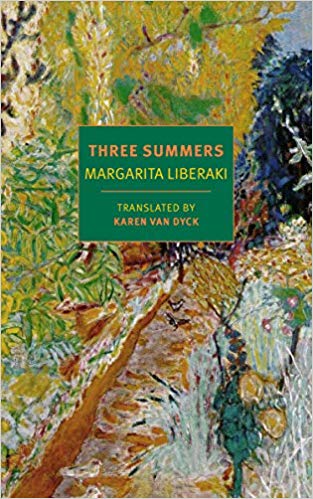
Such physical clashes between fascists and the left—and an unhesitating insistence on naming the “right” as fascist—are politics as usual in Greece. This dynamic dates back to the Greek Civil War, a conflict between leftists and the U.S.-backed conservative Greek government that historians consider one of the first theaters of the Cold War. Margarita Liberaki’s Three Summers, published in Greece in 1946 as Τα Ψάθινα Καπέλα, or The Straw Hats, and recently republished by New York Review Books, debuted right as this crucible was forming. Today, this novel’s republication feels particularly well-appointed, as countries contend with an emboldened, fascist-leaning right—circumstances so similar to 1946.

But to read Three Summers is not to step into the shoes of Greek antifascists, at least not immediately. In fact, the book is conspicuously apolitical, scrupulously omitting any information that could situate its events chronologically or telegraph the author’s politics. Instead, it tells the story of three sisters coming of age in the leafy outskirts of interwar Athens, courting young men and confronting family secrets over the course of three summers. 

For this reason, as much as for its hazy and lush prose, the novel must have felt like printed-and-bound sunshine to its first readers. Their lives had been darkened first by WWII and the German invasion of Greece, and then by the civil war, which would continue until 1949. To these readers, Three Summers ”offered an oasis from the unbearable realities of the day,” according to translator Dr. Karen Van Dyck’s introduction. I think this is true—and true today, too—but there is another dimension to this book that bears further discussion. 

Before broaching that aspect, it’s necessary to consider the author’s background. Liberaki, the granddaughter of a prominent Athenian publisher and bookseller, was 27 at the time of the book’s publication. It was her second novel, the first after getting married and graduating law school, and the last before she would divorce her husband and decamp to Paris, leaving behind her daughter (as she herself had been left behind by an expatriate mother). In Paris, she mingled with intellectuals and expatriate Greek leftists and continued to write (in both Greek and French) novels and plays. Much of that work, such as the 1951 novel, The Other Alexander, quite explicitly engages with the politicization of Greek society and the enduring rifts between the right and the left, turning traumatic recent events into allegorical and mythological narratives. 

Three Summers is a bittersweet indictment of a culture’s reluctance to confront its own pathologies.

Considered alongside these other works, the sunlight and nostalgia of Three Summers—its painstaking avoidance of politics—begins to suggest strongly that which it refuses to name. Yes, this book is a chronicle of both a girl’s coming of age and an artist’s development. But in the context of post-war Greece, such a book was political. Beyond being an Arcadian withdrawal to better times, Three Summers is a bittersweet indictment of a culture’s reluctance to confront its own pathologies—and each individual’s complicity in it. 


Apropos of the Greek title, the novel opens with three sisters sitting in a garden in a suburb of Athens, each crowned with a differently decorated straw hat. Cherries adorn the straw hat of the eldest sister Maria; forget-me-nots for the youngest and most beautiful, Infanta; and for Katerina, the middle sister, narrator, and possible author-proxy, “poppies red as fire.” They flow into one another, “the three of us melted into one,” but the growing individuality of each sister is already disrupting their harmony. Maria is drawn to marriage, engaged to a wealthy doctor’s son who will follow in his father’s footsteps. Infanta is the protégé to the girls’ spinster aunt, a survivor of sexual assault named Theresa, and devotes herself to mastering embroidery. 

But Katerina—“the pure one,” as her name means—can’t quite commit to one of the traditional callings that have, as far as she is concerned, ensnared her sisters. Inordinately adventurous like her Polish grandmother, who abandoned the family for a foreign lover, Katerina is restless and capricious. A budding writer (but as yet unaware of it), she wants to travel the world and “live a thousand lives,” but can’t renounce her affection for the tiny world of the Greek bourgeoisie, where it is enough for a woman to be content with a fine home, its corners swept clean of dust. 

Katerina can’t renounce her affection for the tiny world of the Greek bourgeoisie.

It had to be enough. Greek society at the time was rigidly patriarchal, precluding women from social existence independent of their nearest male kin. The language itself, like several other languages, does not even grammatically allow a woman to stand alone: Women’s surnames in Greek are always rendered in the genitive case, which designates nouns as owned by someone else (consider “Offred”). 

These conditions denied women any kind of public presence or to speak on their own behalf in any venue (unless it was denounce communism). For a girl’s name to appear in the newspaper, even for academic achievement or athletic prowess, was to risk bringing shame to the family, according to research conducted by scholar Janet Hart in her book New Voices in the Nation: Women and the Greek Resistance, 1941–1964. 

Within this context, the so-called “Generation of the Thirties,” a cohort of writers and poets, deliberately brought Greek letters up to speed with the modernist trends that had been prevalent in Western Europe since the 1920s. According to scholar Roderick Beaton’s An Introduction To Modern Greek Literature, Liberaki’s novel, despite its 1946 publication date, continued the work of the previous decade, incorporating modernist devices to limited, amateurish effect. Consequently, the  novel occasionally reads like a poorly thought-out imitation of Virginia Woolf: whereas Woolf’s elisions and ellipses are devastatingly effective and clearly intentional, Liberaki’s imitations sometimes register more like hastily removed “TKs.”

But over and above this innovation in the form of the Greek novel, Liberaki also made what we might consider a feminist political contribution to Greek letters. Following Woolf, she captures life as it is lived in small “moments of being,” especially of female domestic rituals, which Katerina cherishes rather than disdains—surprising considering her willfulness—translating these private moments into the public language that had effectively been forbidden to Greek women.


Over the course of the book, boys, desire, jealousy, and secrets pull the sisters apart and push them back together, contouring them into separate beings. At times, Katerina mourns the loss of effortless communion with her sisters. At others, she bursts with affection for the rites of passage—explicit or otherwise—that help children put aside childish things. “I wish I could take it all in, holding it in my arms or being held in its arms. Something is swelling inside me, getting larger and larger…I sigh,” Katerina says, speaking with not an insignificant amount of bitterness. 

Katerina’s father and uncle are both best understood as Large Adult Sons.

As the sisters find out, the men in their world are not expected to put those childish things away thoroughly or for good: Katerina’s father and uncle, for example, are both best understood as Large Adult Sons. “It didn’t matter that the eldest was forty-eight and the other forty. They were still children,” she recalls, with more than a hint of bitterness. That bitterness combines with an anxiety about the future—a kind anticipatory nostalgia for things that are not yet gone. Liberaki’s language braids the present moment’s optimism and the devastated near future together in downward spirals of exuberance, apprehension, doubt and concession. 

To a Greek woman in 1946, such a pattern was all too familiar. They had, after all, had only just been churned through the same cycle, and hope for a better future was as scarce as any other resource. In some ways, there was arguably more hope to be had a few years prior, when the war was still being fought against the Axis Powers. 

A robust Greek resistance aligned with the political left had resiliently fought against the quisling government, not just for the freedom of their homeland, but for an entirely new future. Part of that future was equality among genders, and in pursuit of that goal, the left-wing resistance had in 1944 granted women the right to vote for the first time in modern Greek history. Two years later, when the left had been demoted from ally to enemy of the conservative, capitalist post-war Greek state, women’s suffrage was repealed. 

Likewise, the women who had exercised it and fought for it were recast as traitors to the Greek nation. “To have been a woman in the resistance and thus to have been exposed to hubristic notions of female personal and political power was now to inhabit the realm of the morally suspect,” Hart writes in New Voices in the Nation. It is precisely for this reason that Three Summers is a subversively political text, particularly if we take Katerina to be a stand-in for the author. 


Although it is dangerous to superimpose Liberaki’s life onto Three Summers, the composite image is telling and persuasive. The book takes place over three summers in the mid 1930s, beginning when Katerina is 16—a little younger than Liberaki would have been around 1936. That year was, for Greece as for the rest of the world, a pivotal one. Prime Minister Ioannis Metaxas successfully persuaded the Greek monarch to suspend parliamentary democracy, effectively elevating Metaxas into a dictator. Such autocrats were not new to Greece, but Metaxas was different. 

“Metaxas, by all accounts, was not simply interested in political power (as had been true of all previous political formations in Greece), instead, he was interested in form(ulat)ing whatever it was that he understood as ‘the Greek psyche’ and ‘the Greek mind,’” writes scholar Neni Panourgia in her book Dangerous Citizens: The Greek Left and the Terror of the State. “Metaxas held that both these entities, psyche and mind (psyche and pneuma), ought to constitute a monolithic, monadic, singular articulation,” and that such entities could only come into being under the aegis of an autocratic authority (him). 

By 1946, Metaxas had been dead for five years, but his philosophies had been poisoning the well of Greek thought for more than a decade, thanks to his aggressive indoctrination programs. Modeled after Hitler Youth, Metaxas Youth recruited young Greeks, especially those from the middle class, in an attempt to educate them about the leftist menace and instil in them love of king and country (Metaxas was a staunch monarchist). His efforts were successful, at least until the war broke out and, as one Cretan woman Hart interviewed in her book said, it “woke us up a lot more intensely…Later on, in the war, I saw what fascism was and that the youth group I had been in was a fascist organization, and I was very ashamed. I was very sorry that I participated, but I just didn’t know.”

What do the dog whistles of dead Greeks mean to us today?

The woman’s language, its metaphor of wakefulness, is coincidentally similar to Katerina’s in a cryptic, gnomic chapter in the first part of this three-part book. “So the days slipped by without our noticing. Up until now our memories and expectations had been enough. But one day we woke up. We could no longer stand in the sun with our eyes half-closed, letting our skin tan, watching it get darker and darker. Nor was our morning exercise satisfying the way it used to be.” For the women (and men) who had lived through one war only to begin fighting another and who were now reading Three Summers, the meaning of Katerina’s words was likely more than what is obvious on the page. 

But what do the dog whistles of dead Greeks mean to us today?


Three Summers‘s strongest blows come in the form of devastating understatements, as if a child had found something dirty and brought it out to play, naive to what it really was. In a similar manner, Katerina recollects aspects of these three summers in such a way that it’s as if she is encountering them for the first time, unsure of how they all fit together. Occasionally, she intervenes in the past from her privileged position in the future, punctuating the text with a weary, “Now, [we know better].” 

When is now? One can only assume that it’s the brief period between the end of WWII and the start of the Civil War, when Liberaki and all of her compatriots were funnelling downward from exuberance, to apprehension, to doubt, and finally to concession. From this distance, Katerina can connect the dots between the experiences she has chosen to remember in this novel, mapping constellations on the faraway sky of her youth. 

It’s thus especially meaningful that Katerina is in love with her neighbor, David, an aspiring astronomer. The handsome young man reappears in her life after a four-year absence, toward the end of the first summer–bearded and barely recognizable. “I was about to greet him, welcome him but instead I just looked at him and went on walking. It was a strange moment that floated in space and then flew away before I could catch it, hazy, and yet perfectly clear because it captured all my old hatred and jealousy for the colorful rubber balls and the striped jackets with gold buttons that used to be sent to David from England.”

The son of a Greek shipowner and English Jewish woman, Ruth, David is a walking enigma for Katerina. She is confounded by the seeming boundlessness of his ambition and interests (he is writing a book-length study of a star), as well as by his Jewishness—particularly because of his mother’s blond hair and blue eyes and other deviations from an antisemitic stereotype: “I couldn’t get rid of the image I had from reading the Old Testament of Jews as dark-skinned, pensive people with dark shiny hair. I thought of them as having olive oil skin, yellow fingers, a repelling yet intriguing nature, sweet and sneaky voices, a bitter soul. Ruth, on the other hand, was always laughing.” 

The novel is an understated confession of an entire generation’s culpability in fascism.

That such thoughts could have fatal implications would have gone without saying to the readers of this novel, which itself is, like some of its best prose, an understated confession of an entire generation’s culpability in fascism. For although “she was curious and noticed everything,” Katerina does not seem to notice what is happening around her. “I look up at the moon between the two eucalyptuses; it touches the ledge of the cistern, and I can see the silhouette of a frog in its circle of light. But the frog is not on the moon. Like me, it is on the ground looking up.” 

Given the explicit political content of her later works, Liberaki’s Three Summers is something like the swansong of her adolescent bourgeois ignorance, as if she is asking herself how, back then, did she not see that all the pieces of a puzzle were right in front of her? Or rather, that all the symptoms of a disease were there for the diagnosis? Registering the shame of one’s own complicity in fascism, Three Summers is a call to wake up for all generations, in all seasons. 

8 Books About the (Sometimes Toxic) Intensity of School Friendships

A new school year means an opportunity to make new friends. But what happens when the intensity of school life turns friendship into something unexpected, and possibly sinister? On this list, you’ll find innocent school friends turned into lovers, enemies, and accomplices in ritualistic murders. With friends like these, you probably won’t be getting any homework done.

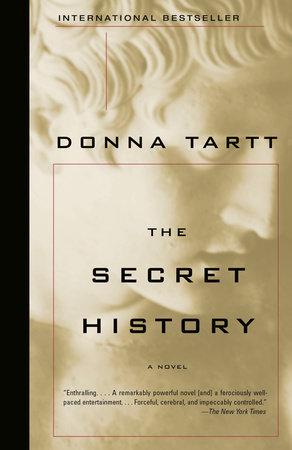
The Secret History by Donna Tartt

The Secret History by Donna Tartt

Richard Papen, a California boy longing for an escape from his less-than-romantic life, gets more than he bargained for when he transfers to a private college in Vermont. Upon his arrival, Richard is sucked into a Dionysian cult in the form of his insular Classics class. When things go too far and the students murder one of their peers, these Greek-obsessed friends must confront the tragedy they’ve created.

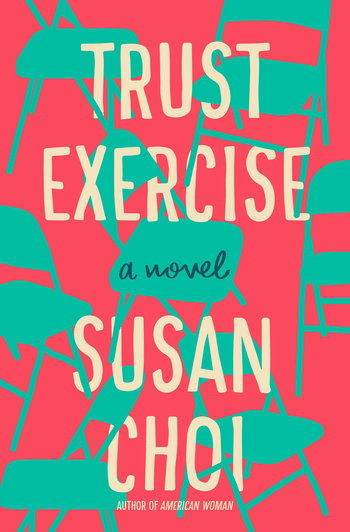
Trust Exercise

Trust Exercise by Susan Choi

These high-schoolers and their enigmatic theater teacher aren’t to be trusted—not even the book’s narrator. Full of secrets, lies, and twists, this novel about students at a performing-arts high school examines the stories we tell about ourselves and how far they can veer from the truth. 

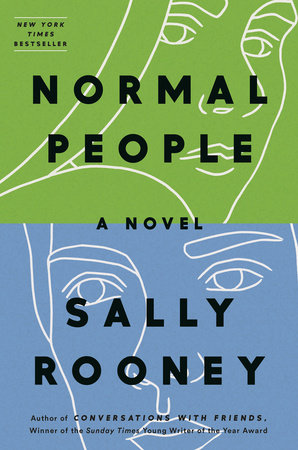
Normal People by Sally Rooney

Normal People by Sally Rooney

Marianne and Connell are two teenagers from opposite worlds. However, when their lives pull them together, they begin a secret affair that follows them from high school to college, an affair that helps them align their painful pasts with their present selves as they grow up together.

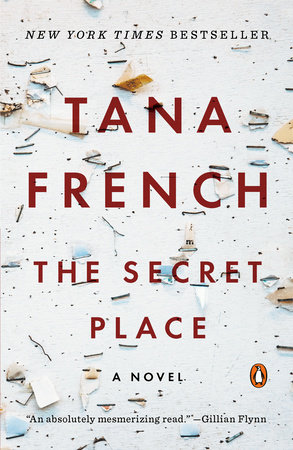
The Secret Place by Tana French

The Secret Place by Tana French

When a young boy is found dead at an all-girls school, the lives of two close-knit groups of girls are thrown into chaos and question. Told alternately from the perspective of the girls in the year before the death, and from the murder investigators months after, this detective novel explores the dark sides of friendship and loyalty. 

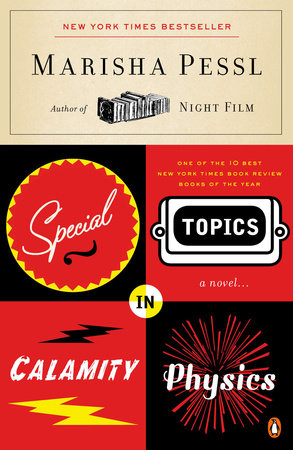
Special Topics in Calamity Physics by Marisha Pessl

Special Topics in Calamity Physics by Marisha Pessl

Blue Van Meer is an intelligent, eccentric high school senior who has been hopping from school to school for the last few years. When she finally gets to settle in North Carolina, she immediately falls in with a group of “genius” students and their strange professor, Hannah. But when Hannah is found dead, Blue must unravel a tightly-knotted murder mystery. 

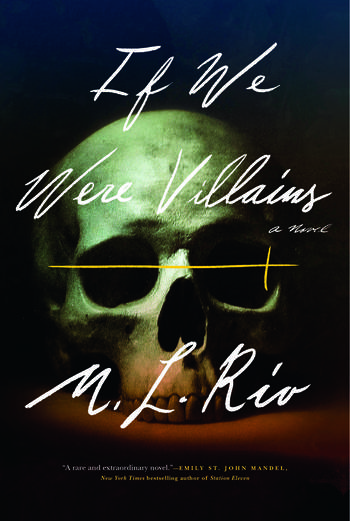
If We Were Villains

If We Were Villains by ML Rio

At the end of Oliver Marks’ ten-year prison sentence, he finally agrees to tell police the true story of the night that landed Oliver in jail. Over the course of their senior year Dellecher Classical Conservatory, seven drama students spiral into murderers as Oliver describes the increasing madness and violence of his Shakespeare-obsessed peers. 

The Fall of Rome by Martha Southgate

Jerome Washington is the only Black teacher at a Connecticut boarding school for boys. When Rashid Bryson, a Black student from Brooklyn, is accepted to the school as part of an affirmative-action initiative, he looks for friendship in Jerome. Jerome’s rejection leads Rashid to Jana Hansen, a white teacher who wants to support him. As these three protagonists’ lives tangle together, their shared tragedies are revealed as their lives begin to crumble.

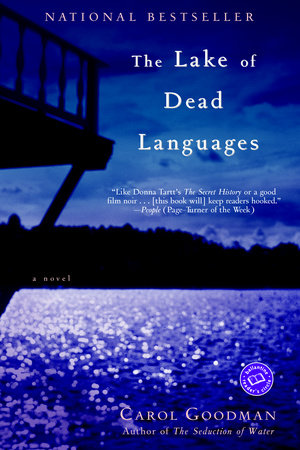
The Lake of Dead Languages by Carol Goodman

The Lake of Dead Languages by Carol Goodman

When Jane Hudson returns to her former all-girls school to teach Latin, her past resurfaces in unexpected ways. As we learn about Jane’s past at the school and the deaths that plagued her childhood there, we see sinister patterns repeat when one of Jane’s students tries to kill herself. 

Where Are All the Memoirs About Abortion?

I scoured the parenting and pregnancy sections in Barnes & Noble, but the only books I could find about pregnancy exclaimed about it happily. I moved on to memoir, fingers running over the bindings of book after book. Where are the ones for women like me? I wondered. Women who don’t know what to do?

It didn’t matter how many rows I wandered: there was nothing there. You are going through something shameful, a voice in my head said. You’re supposed to figure it out for yourself. I had hoped to find memoirs of women grappling with a choice and describing at length how they made up their mind. I wanted a step-by-step how-to. I wanted rich, fraught, real stories. It’s 2013where are the books about people who hadn’t planned on being pregnant, or who hadn’t kept their pregnancies? 

The bookstore failed me, so I tried the internet. I found one memoir about a woman who got pregnant unexpectedly—Rattled by Christine Coppa—but she kept her baby. I bought Coppa’s book and devoured it over the next few days alongside pints of strawberry fro-yo. I dissected her sentences, looking for clues. “Okay, here is the moment she realizes she’s pregnant. And here is the moment where she decides to keep it.” But there was no such road map—-her decision seemed immediate. I couldn’t find any memoirs by people who’d considered abortion, let alone a memoir by someone who’d actually had one. I hadn’t decided whether to keep or end my pregnancy, but abortion was on my mind, and I wanted to find books about other women thinking about it and going through with it. After reading Coppa’s memoir, however, I accepted that, in this case, there were no books that could help me know what to do. 

The first six books that come up for ‘memoir’ and ‘abortion’ are published by Christian presses and are clearly anti-choice.

This was six years ago, but, even now, when I go to Amazon and enter the search terms “memoir” and “abortion,” the results are not much better. The first six books that come up have been published by Christian presses and, based on their descriptions, are clearly anti-choice. They include titles like Memoirs of a Christian Who Chose Abortion; Just Another Girl’s Story: A Memoir on Finding Redemption; A Voice for Victoria: A Memoir of Healing from Post-Abortion Trauma. These stories imply that after ending a pregnancy, one will have trauma and will require redemption. 

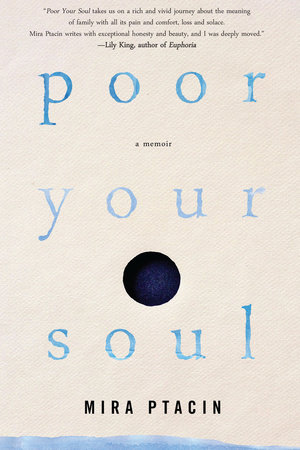
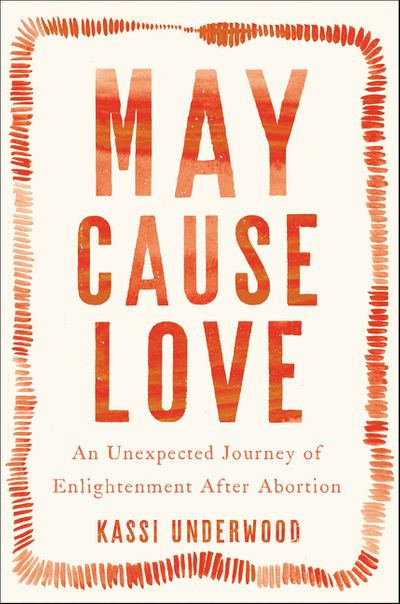
After combing Google, scouring bookstore sites, and asking groups of nonfiction writers online and in-person, I have found a total of four books in which a pro-choice author devotes the whole story to her pregnancy, abortion, and its aftermath. They are: May Cause Love: An Unexpected Journey of Enlightenment After Abortion by Kassi Underwood (2017; HarperOne), Poor Your Soul by Mira Ptacin (2016; Soho Press), Deep Salt Water by Marianne Apostolides (2017; BookThug), and Impossible Motherhood: Testimony of an Abortion Addict by Irene Vilar (2009; Other Press).

Let me repeat: after much searching, I found four, all published in the past decade. Why is this the case? Why are these stories still so untold in contemporary nonfiction? 


When I first reached out to Mira Ptacin, she was surprised I’d even heard of her.  Although her book did get reviewed when it came out, Ptacin began our phone call by asking, “How did you come across my memoir? No one has heard of it. How the hell did you find my book?” Poor Your Soul had been published with a smaller press after multiple big New York houses turned it down. They told her they weren’t sure how to market a book like that. 

Poor Your Soul by Mira Ptacin

Ptacin sensed a cop-out. “They just really didn’t wanna go there,” she said. “Even the women. Women think they’re so progressive, and they say: ‘This book is so important.’ But when it’s time to make a bold move, they don’t do it. And we need these books. They provide empathy. It’s not an easy decision [to end a pregnancy]. It’s not simple. [People who make that choice] are not evil. And until all these stories come out and we have a variety of them, abortion is going to be stereotyped.”

Ptacin was told that her book needed to be about something more than “just her abortion,” as though abortion and grief could not possibly constitute sufficient material for a memoir. She was told to expand her manuscript: to bring in her family, to make the tale about her mother’s loss of a child in addition to her own story, and to braid the narratives. The back cover copy of her book states: “Far more than her personal story of abortion, Ptacin’s brutally honest account incorporates her own mother’s tragic loss of a child.” This blurb comes from Ms. Magazine, yet the phrasing here is problematic. Why does the book need to be “far more” than just her personal story of abortion? The phrasing of the rest of the sentence implies that the story really worth telling here is the mother’s loss of a child. Ptacin ended a wanted pregnancy because of severe fetal abnormalities in her second trimester. Did she not also lose a child? 

Are authors who write about their history of substance abuse told their stories need to be about more? Are authors who write memoirs about a struggle with cancer told this? Or authors who write about the loss of a child who has been born? Why are publishers ready to publish true stories of alcoholism, sexual promiscuity, and illness, but not unplanned pregnancy and abortion? 

If I’d had true stories from other writers to read, I might have felt less ashamed.

Nearly half of all U.S. pregnancies are unplanned, making this one of the most common experiences a person can have. One in four women in America will terminate a pregnancy by age 45. Those women—women like me—often search for solace and guidance in the true stories of authors. But our searches often turn up empty and we are left feeling alone. If I’d had true stories from other writers to read, I might have judged myself less harshly when this happened to me; I might have felt less ashamed. I was enraged with myself for getting pregnant. I did not understand until much later, when I began to volunteer as an abortion doula, how incredibly common this was and that there was no need to feel shame. As a doula, I watched women walk into and out of procedure rooms for hours on end, day after day. College students chatting about classes. Moms with little kids at home. Teenagers and older people. Meeting and supporting them taught me firsthand how many people experience this. When they were on the surgical table, I held their hands, wiped tears from their eyes, and felt a level of compassion I hadn’t been able to grant myself. 


Ptacin also couldn’t find any memoirs on the topic when she was grieving after her termination. Hers was a complicated and difficult situation. To have had access to others’ experiences would have been a balm. “There’re no books about abortion,” she says. Ptacin was given Elizabeth McCracken’s book An Exact Replica of a Figment of My Imagination, a novel about stillbirth, and said that was the closest thing she had to what she was going through.

Ptacin explained that she’d had a hard time relating to McCracken when she first read that book because “my rage about all of it—losing a baby, the accidental pregnancy, the broken healthcare system, how women’s bodies are controlled by white men in office, the lack of support for child loss/reproductive choices—hadn’t hit me yet. 

“The ‘post’ part of PTSD hadn’t quite arrived, so I was watching McCracken’s experience when I read her, rather than relating to it. But now, I can relate and can feel what she felt; I can empathize and feel her as a companion. But it took some time for my raw pain to sink in.”

Poor Your Soul was named a Kirkus Best Book of 2016 and was reviewed by the Boston Globe, Booklist, Publishers Weekly, Ms. Magazine, Michigan Quarterly Review, the Harvard Review, and others—so I asked why she was surprised I’d found it. She mentioned that sales were low and that “few people had heard of it, hardly any so-called feminist magazines—like Marie Claire, Cosmo, Elle, etc., or feminist reproductive groups such as Lady Parts Justice League, or even just feminist influencers—had anything to do with the book.” These places hadn’t answered her or her publicist’s pitches about Poor Your Soul. “[It]…didn’t prompt the discussion I had hoped it would among people in general. Mostly, I heard back from literary groups in praise of my writing and from women who had lost babies. That was it.” 

In the text, after the abortion, Ptacin is afraid to have sex again, and relays advice from her mother. Her mom states “Losing a baby is very traumatic, but you will sanctify your body again…will feel better about your body, connect body with soul.” 

Even though I terminated my pregnancy at six weeks—nowhere near as far along as Ptacin’s pregnancy—it felt like Mira’s mom was giving me advice too. My own mother was wonderful when I told her I was pregnant, but the experience was the most earth-shaking of my life, so I sought out advice from anyone who’d experienced pregnancy, particularly mothers. Nothing in my life felt the same the moment that second line on the stick turned blue. That summer, I had the chance to be a mother and had not taken it. It felt like I had played God. I doubted my choice even as I felt assured in it. I felt like it was the only sensible thing to do at the time, and I was grateful to have had access to a safe and legal procedure, but I wondered constantly about what could have been. And I felt alienated from my body, which I felt had betrayed me by getting pregnant. 

I did not realize then that there is not a ‘kind of woman’ that this happens to, partly because these experiences are so hushed up.

After my abortion, I bled for three months. I had to take antibiotics to prevent infection. I could not swim, and I couldn’t drink because of the medication. My favorite means of summertime relaxation had been robbed from me, along with an understanding of the kind of woman I was. I did not realize then that there is not a “kind of woman” that this happens to, partly because these experiences are so hushed up. And there was no guidance about the physical aftermath—no one to tell me if the prolonged bleeding was normal, so I scrounged for advice on Internet forums. During these months, I picked fights with the man who’d gotten me pregnant, often calling him in tears. I wanted him to mourn like I was. In Poor Your Soul, Ptacin tells her partner Andrew, “ ‘I need you to see it…try to see how I might feel.’” She realizes, though, that this is impossible: “But I knew he couldn’t, and he never would.” I knew my partner never would either. He couldn’t. The baby had been growing in my body, not his. I was haunted by the muscle memory of the experience, of what it had physically felt like to be pregnant. Reading the words of another woman talking frankly about emotions and fights that had echoed my own helped me to see I was not unreasonable for the reactions I had at the time. They were my body and brain’s means of processing grief. Reading the words of even one other author who shared these experiences showed me I was not alone.

Like Mira Ptacin and me, author Kassi Underwood also struggled to find books about this topic when she was navigating an unplanned pregnancy. Underwood’s memoir May Cause Love: An Unexpected Journey of Enlightenment After Abortion, therefore sprung, in part, from a need to fill a gap in literature: “Authoring the book I couldn’t find in the library was the first idea that had given me a sense of purpose in a long time,” she writes in her memoir. Underwood captured the whole story on the page, along with the complex range of emotions she felt. And she achieved her goal, writing the book she had needed to read. When author Melissa Febos later read the book, she commented, “While reading May Cause Love, I found myself continually shocked that such a book has not already been written, that this experience shared by so many women in this country is not already available in myriad variations in every bookstore in America.” 

At least with the publication of Underwood’s book, we have one more true iteration of what it’s like. She was unmarried, broke, and drinking heavily when she discovered she was pregnant at nineteen. She does not feel her abortion was the wrong choice for her, yet she grieved after ending the pregnancy, and felt the need to go on a journey of spiritual healing, which she discusses at length. 

After my abortion, I felt the need to go on a similar journey. Reading Underwood’s book five years after my pregnancy was emotional. Much of the narrative felt like it could have been taken directly from my mind. Lines like “part of me didn’t want to finish grieving” resonated deeply with me. For years guilt and sadness sang through me. I felt obligated to hold onto the grief. I held that obligation as though the only thing I could do was remember that my pregnancy had existed. In my imagination I pictured another life in vivid detail: their birth. Their toddlerhood. The person she or he or they would have been. 

I did not realize that holding onto this grief was hurting me. In the end, it was other women who pulled me out.

I did not realize that holding onto this grief was hurting me. In the end, it was other women who pulled me out of this, and Kassi Underwood was one of them. She had seen herself as “the bad girl” for getting pregnant. Reading how she had internalized such ideas, like I had, helped me so much. Underwood’s eventual realization that “if you want to live the life you chose, one day you will have to stand still and hold all of it—scorched heart and broken brain, bones and skeletons of the past, the black wave of grief and the lucid thoughts of forgiveness.” You would have to make peace with your story, I saw, five years after the fact. To acknowledge your lack of control, your humanity, your imperfection. You would have to let it wash over you and mix in with all the good things about you to see the picture as a whole. 

Even though it had a big publisher—HarperOne—May Cause Love got about 10 trade reviews spanning a year. Underwood surmises that perhaps the degree of nuance in her tale, and her need for spiritual healing after the experience, turned the pro-choice camp away from her book, kept it from coming out in paperback, and prevented it from being reviewed more widely.

“What raised flags for me,” she said, “was in the months leading up to publication, multiple journalists were pitching major feminist women’s magazines that regularly cover books about abortion (as long as it’s the typical ‘I feel relief and gratitude and abortion should be accessible’ narrative) and getting turned down or ghosted by editors they otherwise had a good relationship with. May Cause Love did not get any reviews in women’s magazines, despite lots of journalists pitching them—though a friend of mine interviewed me for BUST.”

As helpful as it is that Underwood’s book has found its way onto library shelves at all, had it additionally come out in paperback, the number of women who would have had access to at least one real, complex story would have increased, particularly because paperbacks are more affordable than hardcover books. There was a paperback deal in the works—Underwood had written an afterword, and the cover design had been updated—but it was killed at the eleventh hour. She suspects the fact that she writes openly about the “messy middle,” or the gray area of gratitude for having had access to abortion, yet being conflicted about the choice, is the reason why. Underwood is pro-choice, but did not simply feel relief after her abortion, and some in the pro-choice camp don’t like to hear this. This is a real problem because that messy middle is where many may fall—myself included.

The ‘A’ word is not popular in marketing.

Some memoirs and essay collections do include true stories of the author’s termination, only you’d never know it from the book copy. Abortion also isn’t often discussed in a book’s synopsis. The “A” word is not popular in marketing.

For example, many people will tell you that Cheryl Strayed’s breakaway hit Wild: From Lost to Found on the Pacific Crest Trail is about a woman who went on a life-changing hike in the wake of her mother’s death from cancer. While this is true, what they do not mention, and often don’t know, is that she also went on this hike after having an abortion. You’d have to read the memoir to know this: it’s not mentioned anywhere on the book jacket. 

Anna Akana’s recent work of nonfiction So Much I Want to Tell You: Letters to My Little Sister (2017; Ballatine Books) likewise does not mention abortion on the back jacket. The reader must get to the chapter “Take Your Birth Control” to learn that Akana ended an unplanned pregnancy. This is the kind of information that should be mentioned in a synopsis, so that the people seeking such books can actually find them, but the word “abortion” itself is still heavily stigmatized. The Kirkus review of Ptacin’s book uses words like “teratology” —the birth of monsters—to describe the major focus of the book. This is ridiculous: no one knows what this word means. We need to just call the subject what it is.

It’s 2019, and we haven’t broken through all the stigmas, silences, and boundaries that keep people with a uterus siloed off by their bodies. If I had been pregnant in 2018 instead of 2013, I might have found the book I was looking for when I went to Barnes & Noble that hot July day. I might have gone home and devoured the tale, more secure in the knowledge that others go through this, and the reassurance that no matter what I chose to do, I could have—and still deserved—a good life. 

‘Gun Island’ Is a Surreal Novel About Climate Change and Migration

The specter of climate change swirls around the characters of Amitav Ghosh’s latest novel, Gun Island. Deen, a New York-based antiquarian book dealer goes into the Sundarbans, the (disappearing) wetlands wedged between India and Bangladesh, in search of a shrine—and the truth behind the myth of the Gun Merchant and Manasi Devi, the goddess of snakes. 

Gun Island
Buy the book

This journey sets off a chain of others and brings in Piya, an American scientist monitoring dolphins in the Sundarbans; Tipu, a slippery, ever-hustling young man who schools Deen; the earnest Rafi who goes from the Sundarbans to Venice via a convoluted, dangerous route taken by migrants today, and Cinta, the glamorous Italian academic, whose faith and insight glimmer through the book. Ghosh weaves the myth of the Gun Merchant into contemporary weather-related realities such as the Los Angeles wildfires, the unusual travels of dolphins and spiders, and the sinking buildings of Venice, to create a pacy, absurdist, and ultimately hopeful tale of our times. 


J.R. Ramakrishnan: I feel like rare books and book dealers make for the best characters. Your novel made me think of Amin Maalouf’s Balthasar’s Odyssey which has a protagonist chasing down antiquarian book dealers in search of book containing the 100th name of Allah set in the 17th century, a time period that is very much present in your book too. How did Deen as a character come to you? 

Climate change is all around us and it affects us in different ways

Amitav Ghosh: I don’t think it’s an accident that Amin Maalouf and I have rare book dealers as characters. He’s a man who reads a lot and who is steeped in history. That’s true of me as well. The reason why my character became a rare book dealer is because he’s not the central character. He’s the narrator but not the protagonist. He’s just an observer. He’s not trying to take center stage. He became the narrator at a very early point. I’ve only written one novel in the first person so I wanted to get back into that and he emerged out of that. 

JRR: The book contains multiple journeys. I felt like I was right there in the Sundarbans with Deen when he goes to the shrine early in the novel. You obviously know the area very well.

AG: As you may know, I wrote an earlier book about the Sundarbans. It’s called The Hungry Tide. The Sundarbans just worked its way into this story. I think that happens when you have a very powerful landscape—it tends to impose itself on you. I’ve been there a lot. It’s very much part of my imaginative life. I guess it was inevitable that it would be part of this book as the Sundarbans are very, very badly affected by climate change and it’s an ongoing disaster. 

JRR: I guess it is one of the frontlines of climate change? 

AG: Yes, absolutely. Actually way back when I first started writing about the Sundarbans in 2000, I could already see some of the effects. I didn’t understand exactly what was happening. Only later when the science became clearer, and more and more was written about it, that it became apparent to me.

JRR: I wanted to ask you about the scene when Deen is on the flight to Los Angeles and is anxious about the wildfires in the city. He accidentally turns on his Bluetooth speaker in the luggage bin and Nusrat Fateh Ali Khan’s “Allah Hoo” comes on. Things get worse for him and he’s detained upon arrival in LAX. In your non-fiction book, The Great Derangement: Climate Change and the Unthinkable, you write that fiction writers should not treat weather events as surrealism or magical realism. How did you consider this episode (and others like it) when you were writing this book? 

As a brown person traveling in America, you have to be constantly hyper aware of your surroundings and everything that could go wrong.

AG: In every book one tends to put in one’s own fears and hopes and so on. I am always amazed about the things that phones and Bluetooth speakers do. How they suddenly come and you have no awareness of why they coming on and what they are on about. You know these things do happen. As a brown person traveling in America, you have to be constantly hyper aware of your surroundings and everything that could go wrong. I guess all of that set into it.

And about that scene that you mentioned in Los Angeles, you know the real strange thing was, that it actually happened that the Getty Museum was almost in the path of one the wildfires. The strangest part of it is that I wrote that section before it happened. It was jolting when it happened. That’s an experience that happened several times in the writing of the book. What I can say? It’s like fact is outrunning fiction when it comes to climate change. 

JRR: And also perhaps that fiction might have predictive qualities? 

AG: It’s something even weirder than that. It was uncanny. Things that were unimaginable happen around you. Just the other day, my friend sent me pictures of this massive hailstorm in Venice, which is another scene in the book. Another sent me pictures of tornadoes near Venice, which are very unusual. Another friend in Venice wrote to me and said he had to take his son to the hospital because he’d been bitten by a dangerous spider. It’s just so weird. (Writer’s note: A tornado and a strange spider make appearances in Gun Island.) 

JRR: What a difference between the people who get to move around the world freely and those to have to plot their trips and sneak past borders! Piya gets to fly and forth between India and the U.S. to research marine life, and Deen, despite his anxieties about money, is mobile and gets a paid trip to Venice to help with a documentary. On the other hand, Tipu and Rafi have to undergo extreme journeys to move. At the same time, Deen is somewhat jealous when Tipu tells him about crossing borders without passports. Deen recalls the amount of time he’s spent in “official” immigration processes. Would you talk about about this dynamic in the book please?

AG: Well, there is definitely a national and racial coding to who can travel and who can’t. Especially if you have an Indian passport as I do, it’s so glaringly obvious. Every time I get an invitation, I have to go and stand in some visa [line] somewhere where people often treat you badly. I think it gets so ingrained in you and that fear and anxiety remains with you always. I see the difference all the time. People who have certain passports, say American, Canadian, or Australian passports, just don’t have any anxiety. They know that even without their passports, they will be fine! These systems are so racialized that even when some who have Western passports have trouble. This is such a marked difference in the world. But you have to remember that the world we live in today is defined by travel. The largest industry in the world is tourism. 

One of the real elements behind this enormous movement you are seeing in the world is that people just don’t want to feel they are confined, that are in some kind of reservation that they can’t leave. That in itself creates a wild anxiety and yearning for movement. I myself am very aware of this. When I was 18 or 19, when I had just graduated from college, I was desperate to travel. I wanted to see the world. I read books by Naipaul, Octavio Paz, and all the great travelers. I wrote this letter offering to teach English and went to 77 embassies and dropped it off. I did get a couple of answers and they went something like this: “We have plenty of Indians of our own and we don’t need anymore.” Fortunately, I got a scholarship that let me go to Oxford. Often when I was talking to the young refugees and migrants in Italy, I really had the sense, I would have done exactly what they did. 

JRR: I spoke to your colleague Suketu Mehta about his new book. When we spoke, he said that we really haven’t seen nothing yet on the immigration crisis front, that when climate change really kicks in, we’ll see what crisis will truly mean.

AG: I haven’t read Suketu’s book yet but I plan to! When I read articles that he’s written, I get the sense that he’s approaching the subject from the point of view of is this a good thing or is this a bad thing? He’s obviously all for it, as indeed am I. I was more interested in how immigration was happening. In what way was it happening? The reason why this subject interested me so much was climate change. I made the assumption that climate change was the prime driver behind the movement but it’s not that simple. It is true that many, many of these people are displaced by climate change, especially those from Bangladesh, Pakistan, and parts of Africa. But there are other factors too. 

There is a national and racial coding to who can travel and who can’t. Especially if you have an Indian passport as I do, it’s obvious.

For example, I met this young Pakistani man in Italy. His land was swept away in a flood. He told me that if this had happened in an earlier time, he would have moved to a city or gone somewhere else and waited for the flood to subside and for his land to come back. But this time, he had his phone and he knew of this whole network of people who could help you travel. Instead of investing his money in his land, he decided to sell his land and go abroad.

A lot of this is happening because the systems exist, and these systems are not trivial systems. The human trafficking business is the biggest clandestine industry in the world, even bigger than the drug trade. It reaches very deep into society, especially poor societies. On top of that, you have the information system. If you are a poor kid in say Bangladesh or Pakistan—both of these countries have higher rates of internet penetration rates than the U.S.—you see these pictures on your cheap smartphone. You have social media and you are connected to people who can help you move. These technologies are absolutely at the heart of movement.

JRR: I fell in love with the character of Cinta. I want to talk to you about when she and Deen are talking about how the story of the Gun Merchant and Manasi Devi was not written down. She says “Maybe they believed the story wasn’t over – that it would reach out into the future?” What can stories do for us in this time? 

AG: First of all, I am really glad that you like her. She’s my favorite as well. She’s the main character in the book for me. But I have to say that I don’t think a book can do much. I’m not one of those who believe if you tell a better story, everyone will change their minds. I don’t think that’s the case. Sometimes the stories will help you understand and inhabit a certain kind of predicament. After my book The Hungry Tide came out, I saw that people who read it had a completely different way of relating and imagining the Sundarbans. I do think that in that way a story can make a difference.

JRR: In spite of Cinta’s tragedies, she has a lot of faith, something that Deen grapples with a lot. You have him praying by the book’s end. And there’s Piya whose belief system is science. Would you talk about the role of faith in the book, and dealing with climate change? The novel ends on a hopeful note. 

AG: I do think that we have a duty to work towards to a better outcome. I am not someone who thinks in terms of the apocalypse. That’s a very male Western thing, these apocalyptic narratives. I don’t want to be associated with that. I don’t think my book is climate fiction at all. It’s actually a reality that it is in hard circumstances that humans often discover joy and faith. When you talk about people who’ve been through wars, they talk about how terrifying it was but also how it gave their lives deep meaning. The same will be true of this time and you see that already. Every time there are these floods or other catastrophes, you hear people talking about coming together, how there was a sense of renewal and hope, and so on. Climate change is all around us and it affects us in different ways. If the reality we live in now alters our mind in relation to what we think about, I think that it is a positive. If we stop thinking about commodities and constantly writing about pop culture, and think about deeper human meanings, I think something positive is already there. 

10 Books About Trying to Survive Under Late Capitalism

My father was an accountant and yet we hardly talked about money in a way that was calm, rational, or made any sense to me. I remember my mother—overworked from raising us, keeping the house together, taking care of my father, and working a full-time job—hunched over the checkbook in the dining room while she paid the bills. Sometimes when she was fighting with my father, she’d say, “Let’s go to the mall,” and we’d spend money. Later when my parents got divorced, I saw how money can divide a family even further.  

Buy the book

I’ve always been interested in who has money and who doesn’t. And like most women, people of color, artists, teachers, parents, queer, and trans people I know, I never have enough money. I have student loans, I live in an expensive city, I make half of what my tenured colleagues make, I’m a single mom, and I work a couple of different jobs. I’m not special that way, and I’m lucky enough to have health insurance when so many Americans don’t. It’s called the gig economy.  

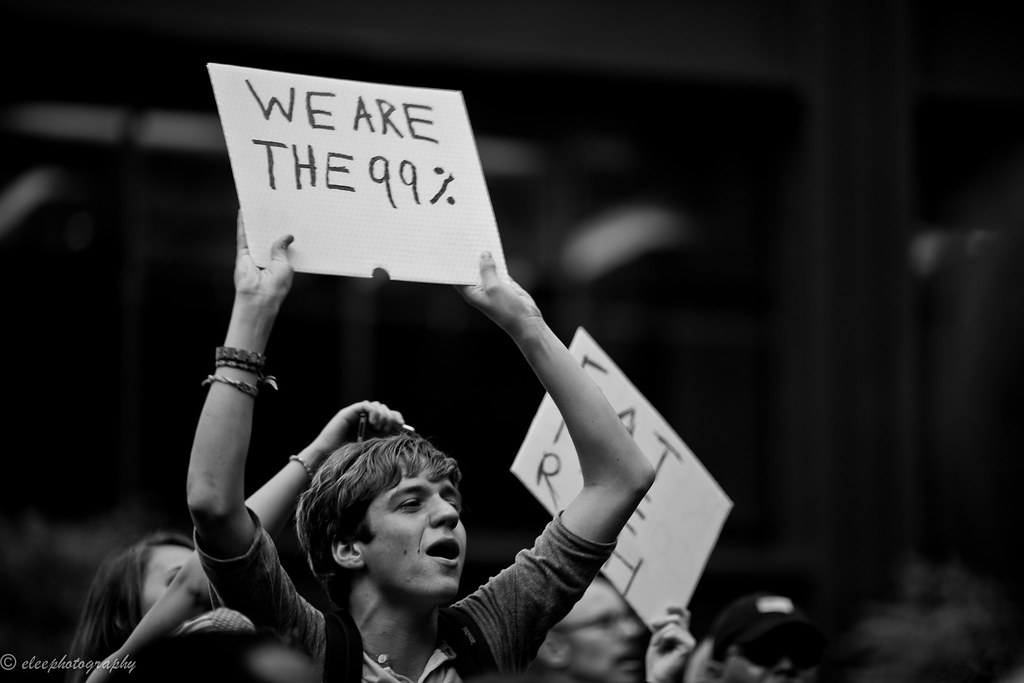
When I first visited Occupy Wall Street, I was amazed at the world the protesters created and their focus on debt and Wall Street accountability. They shifted the narrative about debt in this country and they moved it out of shame and into the light. A couple of years later, when I began to work on my debut novel The Not Wives, I knew that Occupy, gentrification, and strong, sex-positive women in financial precarity would be at the heart of the book. Because those are the women I know and love, and the world so many of us live in right now in Trump’s America.

What gets us through late capitalism and gigging? Friends, lovers, family, art, activism, dancing, and for me, books! Here are just a few of my favorites.  

Image result for little fish casey plett

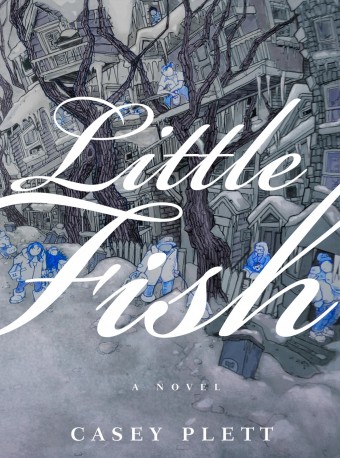
Little Fish by Casey Plett

If you believe that sex work is work, then you’ll be happy to know that there are a couple of books I’ve loved in the last couple of years that treat it as just another gig with ups and downs, bad days and good days. Little Fish by Casey Plett won the 2018 LAMMY for best Transgender Fiction and tells the story of Wendy Reimer, a trans woman living in Winnipeg, Canada. After the death of her Oma, Wendy receives a phone call from a distant family friend, who tells her that her Opa might have been transgender too. I loved this book for many reasons—its frank treatment of sex and dating for a trans woman, the closeness that Wendy has with her father, the tight friendships between trans women both queer and straight, and the loving and truthful way Plett deals with suicide, family, and religion. When Wendy loses her job at a gift shop, she returns to sex work because it pays well and allows her to make her own schedule. It’s not a harrowing plot point or a failure. As Plett writes, “She felt okay about where her life was headed.” I savored this book and I was sad when it was over because I’d grown attached to Wendy and her friends.  

Image result for sketchtasy by mattilda bernstein sycamore

Sketchtasy by Mattilda Bernstein Sycamore

Sketchtasy was also nominated for a LAMMY for transgender fiction (we need more awards for trans writers!). The novel takes us back to homophobic Boston in the mid-90s when queer desire and HIV status were inextricably linked. Written in roving, ecstatic, runaway prose, Bernstein Sycamore conjures up Alexa—a smart queen who has been through some tough shit. This book captures life on a dime, sex work, sexual abuse, trauma, clubbing, and drugs with such honesty and insight that I wanted to get dressed up in my Salvation Army green pleather skirt and go back. Nobody writes like Bernstein Sycamore. I am especially in awe of her dialogue and voice, and the book’s fearless fuck you to capitalism, homophobia, and gentrification.    

Image result for Ana Castillo

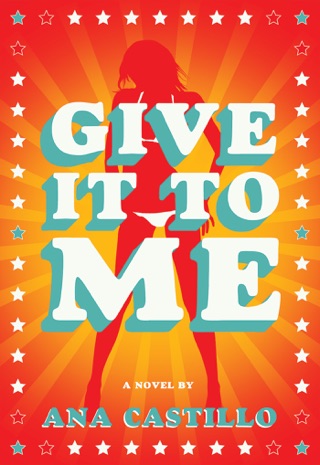
Give It To Me by Ana Castillo

I laughed a lot when I read Give It To Me by Ana Castillo and I’ve really never read another book like it. Our protagonist is Palma Piedras, a bisexual 43-year-old divorced Latina who tries to find her parents, while rekindling a love affair with her cousin who just got out of jail, and working as a translator and Hollywood extra to pay the bills. There are too few books with sex-positive bi/pan women at the center, and I was delighted to follow Palma through hook-ups, revenge sex, and lovers who aren’t always what they seem. The book is tender too, as Palma remembers her childhood with her difficult abuela and lazy uncle, reunites with her family, and grapples with the freedom and solitude of middle-age. Palma’s cheeky asides, mix of Spanish and English, and her love for trouble make this an unforgettable book about scraping by as your complicated, wounded self.  This book, and Palma too, are 100% hustle.  

Severance by Ling Ma

Speaking of hustle, there is no protagonist willing to work as hard as Candance Chen, a millennial office drone who specializes in Bible sales in the riveting, scary, and unputdownable novel about the end of the world. Set in a New York City decimated by Shen Fever, Candance eventually leaves the city and winds up in a survivalist religious cult run by a sad man that some of us have definitely dated. Sure there are uncanny, scary zombies in this book, but at its core Severance is a book about grief, loss, and the rituals we’re made to enact in order to survive. Ma’s ability to craft a believable deserted New York, left with only a few workers and armed guards is deft and terrifying.  

Image result for lucy jamaica kincaid

Lucy by Jamaica Kincaid

If you can’t do futuristic zombies, why not babies—another dank engine of the gig economy since we don’t yet have universal daycare in this country? I love everything Jamaica Kincaid has ever written, but Lucy is my favorite. Kincaid published this slim gem in 1990 New York and it’s a thrilling groundbreaker about a young immigrant from the West Indies who becomes a live-in au pair for a wealthy white couple and their four perfect children. When I first moved to NYC, I babysat to survive, and briefly I was a nanny for a family not unlike the one Kincaid describes. Eventually, I ran away too. Kincaid writes with fierce honesty, disdain, love, and wit about the stupidity of white people, sexual longing, art-making, and loss. I reread the book in just three hours. It’s perfect.  

Image result for graphic design

Sleeping on Jupiter by Anuradha Roy

If you have a heart, this book will break it. The novel is told from the perspective of multiple characters who converge in the seaside town of Jarmuli, India including a documentary filmmaker, three women in their 60s on vacation, and a temple guide. Roy explores sexual abuse, queer love, parenting, adoption, trauma, religion, and migration with care. I’ve read this book three times, and each time I find something new to admire. Roy’s craft is like no other, and she’s able to get so much feeling and action into one town. It’s easy to see why Roy is considered an activist and a novelist because she links these parts of herself fearlessly in all of her books. I was especially moved by Bodah’s daily grind as a temple guide and the young boy he falls in love with, Raghu. Johnny Toppo, the seaside coffee and chai vendor, is another unforgettable character in literature—traumatized, forever working and singing, and full of secrets.

Image result for landscape with sex and violence

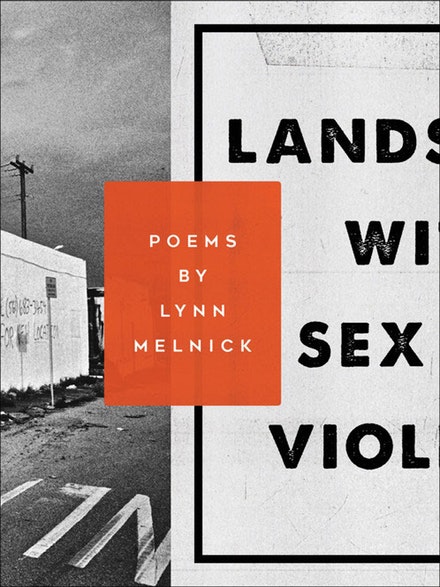
Landscape with Sex and Violence by Lynn Melnick

One of the best poetry collections I’ve read in a long while! Melnick writes into vivid neon life, a late 80s world of Hollywood California, sex work, rape, teenage freedom, Courtney Love’s band Hole, part-time jobs at video stores, and panhandling on the Sunset Strip—all amidst the lush greenery of California. Written with humor, honesty, and a fuck-you aesthetic that we need more than ever in this time of Jeffrey Epstein and Larry Nasser. Melnick’s book kicks the patriarchy’s ass while also staying tender and true to girls and women. In one of my favorite poems in the collection, Melnick writes, “Lynn! they lied to you/don’t you know?/Your womb will be the first thing to heal./What you smell is pleasure, not the rot of the thing/amid the waste/You will have babies./You will write poems about flowers that turn on in darkness.”    

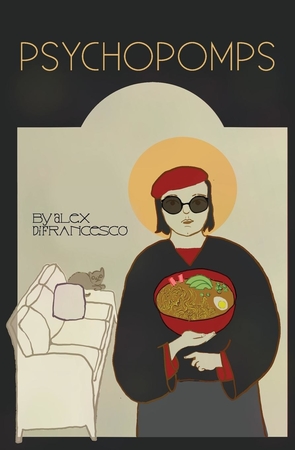
Psychopomps by Alex DiFrancesco

This collection of personal essays by the unflinchingly honest and deeply reflective DiFrancesco, had me from the beginning. DiFrancesco writes about New York City, dating while trans, their girlfriend leaving them, their toxic family, mental illness, and trying to eke out an existence in a bookstore and as a baker in New York City and Ohio. The book is also a testament to queer history, trans families, and the kinds of friendships that happen when we’re drunk and lost. I am deeply in love with the titular essay in the collection about Vivian, a trans mom, who tries to save as many trans kids as she can, and is often righteously and understandably angry. There’s also an essay about a gay man who was murdered in the town DiFrancesco grew up in, Bobby Evans, an exploration of a trans and queer murder that asks us all to consider the stories and ghosts we’ve hidden or tried to ignore because it would be easier.  his book asks us to consider some hard shit, and why shouldn’t we? Still, I read it in two hours and held it to my heart when I finished.  

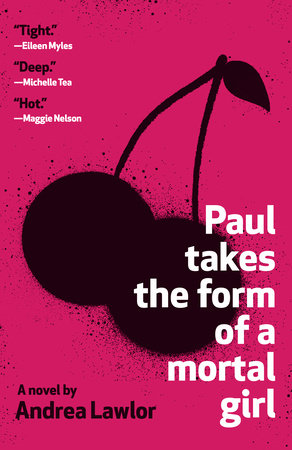
Paul Takes the Form of a Mortal Girl by Andrea Lawlor

Paul Take the Form of a Mortal Girl by Andrea Lawlor

Paul Take the Form of a Mortal Girl is another dreamy novel set in the 90s. Paul has magical powers and can shapeshift into a woman with a pussy, Polly, and back again to Paul with a dick. Paul can also grow his dick and muscles to fit into queer subcultures and bars of his choosing. The fantasy of this book is joyous and as one of my trans students said when we read it in class, “I’m jealous of Paul.  I want this for all trans people.” Wouldn’t it be an amazing world? No medical interventions, just joy and fucking and getting dressed and going out, and transformation when and how you want it. Paul is one of my favorite characters ever, and it’s a joy to see Lawlor play with his sexy, funny, smart mind as he travels from the Midwest to the Michigan Women’s Fair, to P-Town, and then to San Francisco. Paul is a bar back, a dishwasher, a queer bookstore clerk, and along his journey, he’s counting his money because like most of us, he’s on a tight budget.  The sex in this book is hot and dirty, just like I like it.    

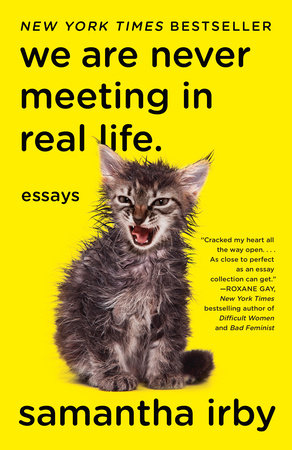
We Are Never Meeting in Real Life. by Samantha Irby

We Are Never Meeting in Real Life by Samantha Irby

This is my go-to book for anyone in a bookstore who doesn’t know what they want. I give them Samantha Irby and their lives are forever changed. I laughed really hard when I read this book. I might have peed myself, but that’s okay because this is a book that among other topics covers shitting yourself, Crohn’s Disease, being poor, learning how to eat pussy, staying fat, making rent, getting shit delivered, buying a strap on, and falling in love with a woman. With essay titles like, “You Don’t Have to Be Grateful for Sex,” “Fuck It, Bitch. Stay Fat,” and “Yo, I Need a Job,” I can’t really see what you’re waiting for. Get the book. Get all of these books.  

Watching You Through Windows, Hearing You Through Walls

My Neighbors

I listen to them at night, the neighbors making love. They don’t always make love. Some nights they fuck. Some nights they screw. Some nights they bang. Some nights it’s more about her. Some nights him. It’s never equal because it never is. Some nights it’s not night but I usually go to sleep afterward because after coming comes shame.   

But when I can’t sleep, when I am out of sleep and there is only shame, I listen closer. Nestled in a tiny crook of my tiny apartment that is not mine, in my tiny building that is not mine, beside my open window adjacent to their open window, our sounds walled in by the airshaft. He asks if she picked up soy sauce and she says she got tamari and he says he likes soy sauce and she says you don’t know the difference and he says I got a promo code for the rental car, 20% off, and she says that’s fucking amazing, and he says it’s not like your sister’s going to stay married to this assclown and she says don’t start please don’t fucking start we’re going, and there is silence and it is in the silences that I feel every pulse in my body. It is in the silence that I wait for the silence to end and it is everything.

I love you he or she says. I love you he or she replies. I want to masturbate again only slightly more than I want to kill myself. So I masturbate and don’t kill myself and then a new day.

This is my secret. It’s the only one I have. I do not know them. I have never known anyone so completely. I don’t look at them in the hallway. I wish they looked at me. They are not attractive. I want them always. Their sex arouses me like no lover or gem of pornography ever has. I have always been more comfortable with other people’s intimacies. I have always trusted witnesses over participants.

At the library, I charge my phone and ask the Internet if I am wrong to listen. The Internet says I am. I am a pervert. I am voyeur. I am violating the sanctity of their home and the social contract by which all moral homo sapiens agree to live.

I ask again, and the Internet says I am not wrong.  I am in my home and these are their sounds, their lovemakingfuckingscrewingbanging, that are violating my space. Sound travels by waves, the Internet explains to me. There are no listening waves. I am a victim. I am harmless. My innocence is a law of physics. I prefer this answer and the next time I see them together I nod. He nods back. She doesn’t notice me.

That night they fuck and screw and I come so hard my legs give out and I sigh and I pray that they hear me but they don’t because they are still focusing on each other and I hate myself with a certainty so profound it must be divine.

Weeks pass. I hear nothing from them. See nothing of them. One night, I’m woken by clumsy footfalls. Key fumbling. Their drunk sex is my favorite. It is rare and loud and unforgiving and I’ll remember more than either of them. I get naked. Crouch by the window. My sweaty back plastered to the drywall, so horny I am lightheaded, so lightheaded I am free. I wait and I wait and I wait and wait, losing my freedom, and then I hear them. He’s coughing and then he’s hacking and then he’s vomiting. It sounds like a bucket of water poured onto a rusting chainsaw. Her voice is steady long after his goes silent. I stay by the window. I get myself off. I am angry and I do it angrily, and I leave myself raw. It feels honest and I hate them.

A week later, I see him on my way to the food pantry. He looks sallow, thin.

Two days after that, coming home from the library, I see her. She looks like she’s been crying from the moment of conception, like her mother told her that the secret to soft skin is abject misery. I say hello. She does not look at me.

At first, I assume he is sick and then I know he is sick and then I realize he was never sick but simply dying and there is a difference and that difference is hope. Sex was two three maybe four times a week. Dying is every day, every night.

I listen.

Some nights he wheezes. Some nights she bawls. Some nights he is in agony. Some nights she prays aloud. Some nights it’s more about him. Some nights her. It’s never equal because it never is.

One evening I come home to this place that is not a home but it is where I live and will die and in between settle and settle for less and less and less, and their apartment door is open and the apartment is empty and everything is gone and I walk into the bedroom and I stand by the window abutting the airshaft, the window from which I cannot see my window but I hope they heard me, even if they listened separately and never told each other, like I was an inexplicable secret between lovers, like I was a life worth eavesdropping on, and I open the window higher, stick out my head farther and farther, staring into my apartment, empty of life and longing and voice, and then farther still, into this dank cloister, listening for anyone. Anyone at all.   

Why Aren’t White Writers Asked About Authenticity?

I cannot describe interviewing Tash Aw as a dream come true. This is because I did not ever imagine the possibility of interviewing Tash Aw. During the many years that I was an aspiring Malaysian writer, I followed Aw’s career spanning three novels and a slim memoir, always thrilled by his reinvention of styles with each successive book. His novels, whether set in Malaysia, Indonesia, or China, all attempt something new while maintaining cores of empathy for our common foibles.

Aw’s celebrated debut novel The Harmony Silk Factory came out not long after I published my first short story. I remember having questions when I read the book, questions that I tossed off into the void as unanswerable. Years later, I find myself squinting to retrieve them for this interview. How does one thrive as a writer in English while living far from the publishing hubs of New York and London? What does it mean to write precisely for those who might never read our words?

I thought I had moved past these questions, but now I know that they had only been pushed to the back of my mind, waiting. Something lifted when I shared these questions with Tash Aw. 

In the second part of my interview with Tash Aw, we talked about being writers of outsiders, who gets to be a “real Malaysian,” and the questions that aren’t asked of white novelists. Translations below are mine. Read part one of the interview here


YZ Chin: You’ve said that you felt to become a novelist was about as likely as becoming an astronaut. What was the impetus and process of internal transformation like, for you to eventually pursue the career of a novelist? Many writers, when asked, will say they have “always known” they wanted to write. I’m curious about other paths to authorship.

Tash Aw: I hear that too—usually from established writers—and wonder if it isn’t their way of glossing over the uncertainties of the path to authorship and claiming a sort of genius, or at least a talent so raw and powerful that it left them incapable of being anything other than a writer. Knowing that you want to write isn’t the same thing as knowing that you will be writing ten or twenty years later. But I guess there is at least that knowledge of what it means to write. To have the desire to write requires the existence of role models who inspire those ambitions, who show you that it’s possible to make writing a part of your life—a part of normal, regular life. 

To have the desire to write requires the existence of role models who inspire those ambitions.

When I came to university in England I suddenly met people—other students—who were “going to be writers.” That’s what they said when I asked what they thought of doing after college. Then I found out that their parents were writers or editors themselves, or at least academics, or artists. They knew how Flaubert and Virginia Woolf had lived, they’d been given Chekhov’s journals as Christmas presents when they were sixteen by parents who wrote art monographs for a living. They had a writer’s life laid out for them—a particular kind of writer’s life. I’d been writing stories secretly, for no other reason than simply to describe to myself the world I came from, which existed so marginally that it didn’t seem to have a literary life at all. On hearing these students speak, I knew that I wasn’t going to be a writer in the same model. I was going to have to figure it all out myself, work out how to be a writer from outside the world they lived in, with my own set of priorities and rules for living. 

YZC: When my first ever story was published, I excitedly showed it to my parents. They read it and told me they didn’t “get it.” I have been haunted by that ever since, the idea that who I write for does not include my immediate family. If it’s not too personal a question, does your family read your books? How do you feel about that either way?

TA: I know how that must have felt for you—it’s such an unsettling experience to discover the disconnect between how you feel about your work as a writer, and how your closest family see it. And it’s not just your family—it’s your closest friends from school, the wider community. It’s a question that writers who don’t come from long bourgeois traditions have to deal with: how to write for and about people who might never read your work.

The truth is that I don’t really know whether my parents have read my books–we certainly haven’t had any meaningful conversations about them. My sisters have absolutely read everything I’ve written, but that’s not a surprise, given that they have the same kind of educational background as I do and are on my wavelength. But I’m still not sure about my parents–I think my father has, but I’m fairly certain my mother hasn’t attempted the novels. They’re long books, and for people who are not used to reading 300-plus pages, it’s not easy, particularly in a language that isn’t their mother tongue; so I’ve never made an issue of my writing, never put any pressure on them to read. But, as you say, we are Asian writers, and Asian children, exploring the world we live in. And that world involves our parents. 

One of the main reasons I wanted to write Strangers on a Pier, which is only 12,000 words long and makes a very short book, is that I wanted to make my writing accessible to those closest to me, whose lives inform every sentence I have ever written, but who would be intimidated by a long novel. I wanted to write something that was very obviously about them, addressed to them, in terms that would be as familiar to them as to someone who lived in Ang Mo Kio [in Singapore] or Balik Pulau [in Penang, Malaysia] or Park Slope [in Brooklyn, New York]. The physical size of that book was therefore crucial. 

I told my parents it was about them, and that it was short, and maybe they should read it. I’d never done that before, and didn’t have any expectations. Eventually my mother rang me and said she’d read it, said she’d liked it, but that I got one detail wrong: when I said that my grandfather had arrived in Malaysia on his own, that was not true. He hadn’t been on his own, he’d been with another boy from his village in Fujian province. My mother knew this because, one day when she was still a child, the family received a call from Tanjung Rambutan, the local psychiatric hospital. There was a man, the hospital said, who was totally lost. No family, no home. The only name he had, the only person he knew, was my grandfather. My grandmother said, no way, don’t let that man into the house, he will bring bad luck. But my grandfather insisted, said he had no choice; so the man came, moped around the house silently for a few days. Then he drowned himself in the river, just thirty yards away. 

I asked my mother why she had never told me this story. The whole of Strangers on a Pier is about the silences that exist within and shape the identity of families, especially immigrant families. Asian families. Our family. ‘Aiya,’ she said, briefly, before ringing off. ‘Such a boring story.’ 

Once I got over the initial feeling of being dumbfounded, I understood that it was her way–that very oblique, old-fashioned Asian way that I’m sure you know all too well—of saying to me that she cared about my work, that she knew it was important to me, that she was touched by it; but, also, that she would never fully be part of it. Her priorities were too different from mine; all her life she had fought to achieve different things: a sense of self, of being a strong-minded woman in a time and a society that didn’t encourage that identity; to protect and raise her children with the limited resources available to her. In the moments after I hung up the telephone, I thought about the gulf between our respective experiences. Her struggles were real. She had been living them, consumed by them; I was only describing them. 

When you write about the people who are your own, who live outside the circles of middle-class dominance and who are therefore invisible in literature, you think that your work is the most important thing to them, since it’s the most important thing for you. But the truth is that they are too busy fighting the battles they have always fought to pay much attention to what you are doing. Your role and mine—that of the writer of outsiders—is just our way of continuing those struggles.

YZC: There’s a lot of bold imagination and drama injected into the characters’ narratives in your first novel The Harmony Silk Factory, whereas in your latest, We, The Survivors, the character’s story feels stripped down, consisting mostly of evocative everyday minutiae. 

Do you think the role of storytelling differs for different social classes? Or has your thinking about that role changed over time?

TA: I see both the flamboyant storytelling of The Harmony Silk Factory and the stripped down portrait of Ah Hock’s life in We, The Survivors as part of the way Asia sees itself — the way we are trying to create modern narratives about ourselves in a rapidly changing world. For all the decades since the Second World War and the beginning of the end of colonization, we’ve fought to define our political and cultural identity, and that has required us to fashion new ideas about our histories, which in turn determine how we envisage our future. 

I’ve never heard any white middle-class writer asked whether their novel is ‘truly English’ or ‘truly representative of the American mentality.’

In The Harmony Silk Factory, the characters are all engaged in myth-making on a monumental scale. It’s the only way they can deal with personal tragedy; with sacrifice; with loss; with emotional trauma; with having made terrible choices that they knew, even at the time, were mistakes. They made choices—in love, in work, in friendships—that they knew they would regret later, and yet they did so because it seemed like the only way they could survive in a confusing, chaotic world. Later, they had to invent stories about themselves in order to make everything seem stable and acceptable in their lives. In that way, they did exactly the same thing that Malaysia and Singapore and most other countries in Southeast Asia did on a national level.  

The narratives that the characters in The Harmony Silk Factory created for themselves are based on the same, simple story that drives all of contemporary Asia: once we were poor, but now we are rich. Times were hard, now they are good. Now we can match the West in every way; in fact we are superior to the West. We believe in the hubris of modern Asia. My problem with this narrative is that it denies the complexity of our stories, pushes out the deeply troubling ways in which we have had to silence our fears, sacrifice rich human emotions and all kinds of social justice in order to fit into this smooth story of success. With that novel, I wanted to burrow underneath that shiny surface and talk about all that we gave up in order to become a modern, middle-class country. 

But now we have reached a situation where it’s very hard to believe in this simplistic trajectory of growth and social mobility. “If you just keep your head down and work hard, things will turn out ok, you can achieve anything you want.” People like Ah Hock–incredibly hard-working, naturally intelligent, sensitive, with a high tolerance of suffering–can strive as much as they want, but they will never enjoy the same lifestyle as the urban middle-classes because they don’t enjoy the same education, the same parental support, the same conditions that help them find a stable job. I wanted to question this idea of agency in Asia, this belief that you can change your life simply because you want to. It’s a way of thinking that places the blame squarely on the individual if she or he is poor or deprived. I hear affluent people in town saying all the time: Well, what do you expect, if she’d worked harder at school, she wouldn’t be a shampoo girl/waitress/gas station attendant. We deny collective responsibility, deny the fact that social factors weigh heavily on our lives. But people are starting to realize that we live in an unequal society, and no matter how much personal will you have, things might be stacked against you. 

YZC: Your new novel addresses some themes from your previous nonfiction book Strangers on a Pier, such as Asia’s stigmatization of poverty as personal shortcoming, and certain immigrants and their descendents’ tendency to accept hardship as a given. What are some differences for you between exploring a subject in fiction versus in nonfiction?

TA: They are part of the same conversation for me—I see them as complementary ways of exploring ideas that are important to me. I wrote Strangers on a Pier fairly quickly, because I wanted to address something in a rapid, direct fashion. It was about the immigrant family through the lens of my own family, and I don’t have to explain to you how difficult it is to confront stories of a Chinese-Malaysian family, shielded by the silence of parents in their late 70’s who are hugely resistant to the idea of talking about themselves. I felt I had to write about that distance between me and them, the same distance that exists in virtually every immigrant family I know in virtually every country I know. Nonfiction seemed a quicker way of dealing with these sensitive questions—I wanted to write it before I lost my nerve. Talking about things like mental health and poverty within the family experience–which don’t seem unusual in the West—felt incredibly difficult, and I didn’t want to risk losing the momentum. 

For the longest time, growing up in Malaysia, I had no idea that my family was an immigrant family. I just couldn’t equate being Chinese with being an outsider. The fact that we spoke Chinese at home, and that I knew that some of my grandparents had come to Malaysia from China, didn’t affect my single Malaysian identity. I was some way into my teens, after years of hearing casual remarks like Cina babi [“Chinese pig”], Balik Tongsan [“Go back to China”], that I realized these comments were aimed at me, and not some random, unknown, foreign Chinese person. I realized that the political structure aimed to exclude me, and not some other vaguely foreign person. 

I realized just a few years ago that my parents must have fought very hard to give me that untroubled “Malaysian” identity, and that they must have had to suppress their own instincts to connect with their racial and cultural heritage simply in order to make life happier for their children. Realizing this made me sad, and my instinct was to push that feeling aside, not to acknowledge it. If I’d spent years writing a novel just at that point, I might have flattened out that sadness, tried to make it prettier and more acceptable. I wanted to capture the immediacy of how I felt. 

YZC: Raman Krishnan, publisher of Malaysia’s Silverfish Books, called We, the Survivors your first “truly Malaysian novel.” As someone who struggles with the concept of authenticity, I had mixed feelings when I read that. But I’m projecting again, of course. How do you feel about it? Has your thinking about how to write for a “global” audience that may be unfamiliar with your novels’ contexts evolved over your career?

TA: I didn’t see Raman’s comments, so I can’t address them directly, but in general terms, like you, I’m troubled by the notion of authenticity. It seems to me that only writers from outside the dominant white, western, middle-class canon are subject to questions of authenticity and veracity: writers of color, Asian and African writers, LGBTQ writers, writers who come from working-class backgrounds. 

Writers from outside the canon are constantly subjected to higher levels of scrutiny, as if we have to justify our existence in the publishing world.

I’ve been writing and attending festivals and readings for over twenty years, and I’ve never—not once—heard any white middle-class British or American writer asked whether their portrayal of dinner parties in North London is “truly English,” or whether their novel set on an Ivy League campus is “truly representative of the American mentality.” Those writers are never asked, “So, who do you write for?” (The suggestion being that you’re making up stuff just to sell books). Readers simply judge those books on their own terms. Writers from outside this canon are constantly subjected to higher levels of scrutiny, as if we have to justify our existence in the publishing world. 

It all seems to me to be somewhat colonial, and we need to question why this still exists; why we, as Asian readers ourselves, have ingested this essentially western need to doubt our own experience. Asian writers have as much power as anyone to commit to stylistic inventions, to thematic experiments; we have the right to fail at these just as any other writer does, to be unconvincing, or to be magnificently persuasive. We need to allow ourselves those freedoms—if we don’t, we are essentially surrendering the terrain of publishing to those who already dominate English-language publishing, which makes literature poorer and less interesting for everyone, all over the world. 

My thinking about writing for any audience hasn’t changed at all since my first novel. I’ve never thought of readers in separate categories, and the question of who will read my writing never arises until the editing process, when my editors ask to clarify certain matters. Obviously, some readers will find greater resonance in my work than others, because they know the geographical or cultural spaces I talk about. (I’ve had many messages from friends in Malaysia recently, people who grew up in Klang and knew the exact spots I write about in We, the Survivors.) I’ve always assumed that writing is universal in its specificity. The books that spoke to me most intimately when I was younger were those by writers like James Baldwin, Toni Morrison, Alice Walker, Marguerite Duras, Pramoedya—whose circumstances couldn’t have been more different from mine. 

To take the point further, I find it troubling to talk about what a “real Malaysian” novel is, because it’s an extension of the question of what a “real Malaysian” is—a mentality that aims to exclude, rather than include, people. Is someone “really Malaysian” because they were born in Bangladesh? Because their parents immigrated from China? Because one of their parents is African, and they don’t look “really Malaysian”? Because they live abroad? Like so many countries these days, Malaysia functions on the politics of exclusion. We’re obsessed by finding ways of defining ourselves in the narrowest possible manner, in which various groups of people are pitted against each other rather than left to form naturally inclusive communities. 

YZC: I like that“writing is universal in its specificity.” If your thinking about audience hasn’t changed since your early writing days, what has changed? What about writing, or being a writer, has morphed for you over the course of five books?

TA: I don’t know—on the one hand, it feels as though nothing has changed. I still struggle with every book, I still doubt whether any line that I commit to the page is worthy of being written, never mind published. Artistically, I still feel anxious, I still feel that I’m testing my boundaries, and that there’s so much I want to achieve in my writing but never will. I’m not sure if I like that feeling of insecurity but I’ve come to appreciate it as something fundamental to a writer’s life.

I guess I’m more comfortable these days about saying I’m a writer. For the longest time, it used to feel so fake, so forced—as if I was claiming an identity that wasn’t mine to claim. That fear has at least abated even if it hasn’t dissipated entirely. Writers like us, who don’t come from long lines of writers, have to work harder to anchor ourselves in our literary identities. Life had other plans for us, pushed us towards other jobs, other ways of living, but instead we’ve fought to have this one. After all these years, I’m finally starting to inhabit this life fully.

Why It Matters That Amazon Shipped Margaret Atwood’s “The Testaments” a Week Early

Back in May, I signed an embargo agreement on behalf of my bookstore stating that I would “ensure that [The Testaments by Margaret Atwood] is stored in a monitored and locked, secured area and not placed on the selling floor prior to the on-sale date.” The idea behind such agreements is that retailers must sign them in order to receive their inventory in a timely fashion, a common practice for newsworthy, highly anticipated books with huge print runs. This was certainly the case when I was responsible for getting these affidavits signed on behalf of Simon & Schuster, where I worked in sales from 2003–2005.

On Tuesday, September 3, customers began reporting that Amazon.com was shipping copies of The Testaments already, and in fact that many have received their orders that day. The official on sale date for this book is Tuesday, September 10, a rare international embargo date. Most books go on sale on Tuesdays in the U.S. and on Thursdays in the U.K., and a universal date only happens for the highest of profile authors. Breaking such a significant embargo is a newsworthy event in the weird world of bookselling.

It’s hard to imagine Jeff Bezos getting too worried about a financial penalty.

I do not expect that Nan A. Talese, the imprint that publishes Margaret Atwood’s books in the U.S., or Penguin Random House, the corporate entity behind that imprint, will pursue any of the theoretical consequences Amazon.com might face. Even for smaller retailers, the effects of breaking an embargo are generally practical rather than legal: publishers may hold back future sensitive shipments, forcing the bookseller to turn people away when they come looking for the hottest new book on release day. The terms of the agreement I signed state that if the embargo is broken, the publisher has the right to withhold “resupply” of the book, meaning they would not ship any more copies for a period of time. But even if PRH did hold back reshipments of The Testaments, that would do nothing to stop third party vendors who use Amazon.com as a marketplace from selling copies, so it seems unlikely that it would ever be completely unavailable on the site. The agreement also refers to remedies “in equity or otherwise,” and “injunctive relief.” My employees who formerly worked for Borders (RIP) and Barnes & Noble both were told in the past that their employers would be fined monetarily if they sold books prior to embargo dates. It’s hard to imagine Jeff Bezos getting too worried about a financial penalty. 

For smaller booksellers, embargos are serious business. I once posted a photo of a SEALED carton of Harry Potter and the Cursed Child on social media, which was in fact (bafflingly) in violation of the embargo agreement I had signed with Scholastic in order to receive the books in time for a midnight release party. I got a call from my sales rep on a Sunday morning asking me to take down the photo, which I did immediately. I was terrified that the publisher was going to punish me through delayed shipments of key titles after that, which was how I had been made to understand the consequences of violating embargo agreements. But I’m betting there will be ZERO consequences for Amazon violating not just the fine print but the entire basis of this agreement, which some exec surely signed digitally through Adobe Sign just like the rest of us did.

The real problem is that even a publisher the size of PRH can’t afford to muddy its relationship with Amazon.

The real problem is that even a publisher the size of PRH can’t afford to muddy its relationship with Amazon. Preventing its biggest customer from selling what might turn out to be the biggest book of the year would only hurt the publisher in the long run. Amazon.com has taken retributive measures in the past against even large publishers who tried to fight their policies. And when a company gets this large and this powerful, too powerful to punish or risk alienating, the contracts the rest of us live by become meaningless. The best I can hope, as the owner of a small bookstore hoping to sell a good number of this book, is that The Testaments is a high enough profile publication that federal anti-trust lawyers will finally see exactly how unlevel the bookselling playing field is. (And in fact, the American Booksellers Association has reached out to the Department of Justice and the Federal Trade Commission about this incident and the patterns of which it is indicative.)

The kicker is that Amazon will make hardly any money selling this book. Books (especially big splashy publications like this) have always been a loss leader for them—whereas I and many other independent retailers are counting on this release to pay our bills. Penguin Random House has made a public statement to the effect that it was only “a very small number of copies” were released early, but The Guardian reports that it was around 800 copies—a small number in terms of the expected print run, but huge to a small retailer like me. If I were to sell 800 copies of this book, the income would pay nearly a year of wages for one hourly full-time employee at my store. “A very small number” is a relative term. 

I understand the marketing strategy behind strict on sale dates, and as a member of the book industry, I respect it. For the most part it’s a ploy to push books onto the elite New York Times Best Sellers list, by concentrating initial sales into one calendar week. But you can’t argue that embargo agreements matter if your biggest account gets to be the exception. As Tom Stoppard wrote in Rosencrantz & Guildenstern Are Dead, “There may be nothing behind it, but it doesn’t make any difference so long as it is honored.” Don’t tell me to honor something and then look the other way when the big dogs spit on that agreement.

A Victorian Novelist Attempts To Write Queer Characters Without Getting Censored

The Resident At Christopher St. 

He was a peculiar man, certainly. He was not peculiar for his stature, nor his gait, nor his standing in society. Yes, he held an interest in astrology, but that was not peculiar either. Nor was it peculiar that he did receive fifteen hundred a month, as was the custom of the day. He did, however, from time to time, entertain a close friend in his flat, and hopefully by now one gets the gist of the exact way in which he was “peculiar” without having to come out and say it.

A Fabulous Socialite

A woman of style, Miss Hughes delighted the less adventurous with her daring taste. Sometimes she appeared as a coquette, with a curl of hair daintily askew. Sometimes she appeared as a dandy, in colorful suits and a handsome boot. She was known as a socialite, with a surprising array of close friends, both men and women, and everyone agreed she was incredibly brave for it. Also brave? This author, for including Miss Hughes in the narrative at all.

A Most Amiable Correspondence!

Miss Whitlock and Miss Davies composed each other letters throughout the month: “I do so admire you,” “no I do so admire YOU,” “I find you quite admirable,” “perhaps we should admire one another in person, at Mrs. Shaw’s salon this coming fortnight,” and so forth. They were friends, but not yet close friends, and that made it all the more exciting, especially given that at any point they could be tried for profanity for using the word “admirable.”

On Matters Of Public Perception

Beverly opened the closet with a great deal of incredulity. How was one to choose between dandy, gentleman, ruffian, spinster, lonely governess etc. for the day’s appearance? In fact, it was all so overwhelming that Beverly didn’t dress or go outside at all, and became a side character who was always wandering indoors in a nightgown.

A Web Of Close Friendship

“Previously,” said Mr. Ashley, “I was close friends with Mr. Chattermore, however our close friendship grew more distant when he became even closer friends with Mr. Allen and Mr. Griffiths, who are themselves close friends of each other but the latter of whom also previously had been a close friend of mine, because their friendship is an open close friendship. But the thing is, recently Mr. Chattermore has been insisting that we revive our close friendship, collectively, hence my confusion.” In a sobering turn of events, they were all arrested for indecency later that day after being accused of having wrists.

The Ladies Who Cross-Stitched

The women spent the night sitting chastely side by side, making small cross-stitch patterns with unmentionable sayings on them, a twinkle of close friendship in their eyes, and nothing else happened. At all.

The Leather Shoppe

Upon noticing Mr. Phillips had taken interest in the hardware, the leather thonger, eager for a sale, approached.

“Perhaps you’ll find these useful in entertaining a close friend or two.” said the craftsman, gesturing to several sturdy riding crops.

It’s actually more of an acquaintanceship that happens once a month. Even though we all know it shouldn’t, because of God.

“Oh,” said Mr. Phillips, flushed by the brazenness of the leathersmith, whose strong arms seemed so assured, in both the crafting and sale of goods, “It’s not a particularly close friendship. It’s actually more of an acquaintanceship that happens once a month. Even though we all know it shouldn’t,” he added, nervously, “because of God.”

La Douleur… De L’amitié Intime

Miss Wood returned from her studies in France quite distressed. Though she had enjoyed the countryside and the cuisine, she had developed a close friendship with a French countrywoman, Miss Chevalier, with whom she had explored the streets and coffeeshops of Paris, and, upon their parting, had become quite inconsolable.

“Aah, well, there is no greater delight than going to Paris with a close friend,” said Madame Clarke, who had herself taken a semester abroad in France in her younger years.

“Oh yes,” said Miss Wood, gripping the arm of the settee rather strongly, “We went to Paris over and over. It seemed we would never tire… of the sights of Paris.” Miss Wood eventually succumbed to hysteria, and the author’s manuscript was finally seen by a publisher.

Close Friends Indeed!

The two men, both unmarried professors, were buried in a single grave, literally on top of one another. They were close fr— in fact, they were barely even that, one might say they were more like roommates.