20 Small Press Books You Might Have Missed

The small indie press boom is among us. In both 2017 and 2018, a whopping 40% or more of the National Book Awards longlists included titles from university and independent presses. It’s an exciting time for small presses— never before have there been so many diverse books in the mainstream reading radar. Think about it: could something like Citizen by Claudia Rankine or When I Grow Up I Want to Be a List of Further Possibilities by Chen Chen have been published if indie presses weren’t around?

We’ve curated twenty books published in 2019 from twenty small presses to add to your to-be-read pile.

Akashic

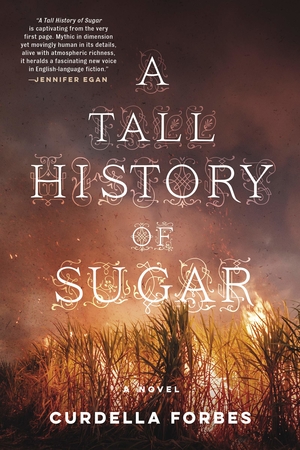
A Tall History of Sugar by Curdella Forbes

This Brooklyn-based indie press prides itself on taking risks. Akashic Books is devoted to publishing urban literary fiction from around the world and nonfiction with a political focus.

Curdella Forbes seamlessly weaves Jamaican English and the Queen’s English in this captivating novel. Four years before Jamaica’s independence, a woman adopts an unusual-looking baby that she discovered abandoned in a wicker basket. The novel follows Moshe Fisher, the man who was “born without skin,” as he comes of age as an outsider in Jamaica and moves to England in search for his birth father. Part love story and part historical fiction, Tall History of Sugar is a refreshing take on race and colonialism that moves between Jamaica and England.

Image result for remainder by alia trabucco zerán

Coffee House Press

The Remainder by Alia Trabucco Zerán, translated by Sophie Hughes

Founded in 1972, Minneapolis-based Coffee House Press “aims to better reflect the wide range of voices that exists in the literature of the Americas.” Their community-based Books in Action program features writers, artists, and activists leading workshops, readings, residencies, screenings, and more.

The Remainder is a multi-generational story about the effects of living under a military dictatorship in Santiago, Chile. Under Pinochet’s regime, over 3,000 Chileans died or disappeared. In the novel, three friends try to find closure for themselves and for their families. The Remainder is Alia Trabucco Zerán’s answer to how we can reconcile violent history and kinship. Her deft and lyrical story on intergenerational trauma was shortlisted for the 2019 Man Booker International Prize.

Image result for parallel

Deep Vellum Publishing

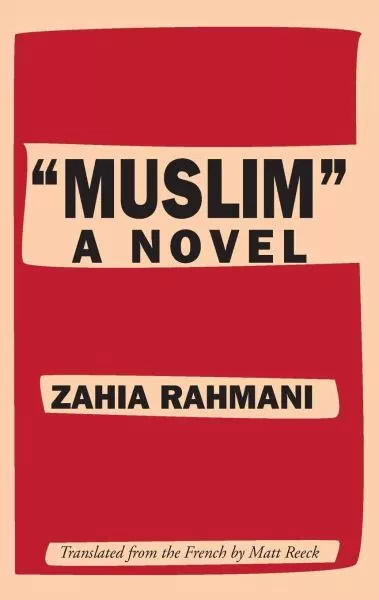
“Muslim”: A Novel by Zahia Rahmani, translated by Matt Reeck

Deep Vellum Publishing has been publishing works in translation by underrepresented and marginalized writers for American readers since 2013. Named after the fine parchment paper made from calf or lambskin, Vellum “is a place where tongues of men freed after war turned Elm into Ellum.” The small publisher’s original translations can be also found at their brick-and-mortar bookstore, Deep Vellum Books in Dallas, Texas.

“Muslim”: A Novel follows a narrator born at the end of the Algerian War of Independence to her family’s relocation to the French countryside. Zahia Rahmani, one of France’s leading writers, inserts us into her isolating world of survival through this masterful hybrid work of fiction and lyric essay. 

Dorothy

The Hanky of Pippin’s Daughter by Rosmarie Waldrop

Founded by Martin Riker and Danielle Dutton, Dorothy is a publishing project that “is dedicated to works of fiction or near fiction or about fiction, mostly by women.”

A re-issue of the 1986 epistolary novel, The Hanky of Pippin’s Daughter is a reminder that Rosmarie Waldrop is a master of prose fiction and poetry. A young woman in America writes to her sister in Germany as she tries to piece together the lives of her parents, “just those ‘ordinary people’ who helped Hitler rise.” Reading about a country and a family that is falling apart helped me to realize how much memories haunt our everyday lives.

Image result for girl goes into the forest

Dzanc Books

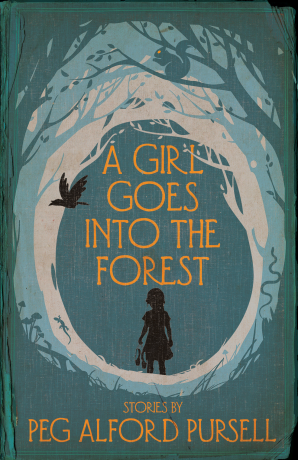
A Girl Goes Into the Forest by Peg Alford Pursell

Since 2006, Dzanc Books has been publishing indie titles, offering creative writing workshops and curating readings. Originally operating from the suburbs of Detroit, former lawyer Steven Gillis and book reviewer Dan Wickett settled on the name “Dzanc” by combining the first initials of their children’s names.

Not to be confused as an opening to a bad joke, A Girl Goes Into the Forest consists of 78 hybrid stories and fables based on epigraphs from Hans Christian Andersen’s fairy tale, “The Snow Queen.” In nine sections, Pursell captures intimate moments in short, sometimes single-paragraph, stories of mothers and daughters exploring their sometimes illuminating, sometimes dangerous, sometimes contradictory worlds.

Europa Editions

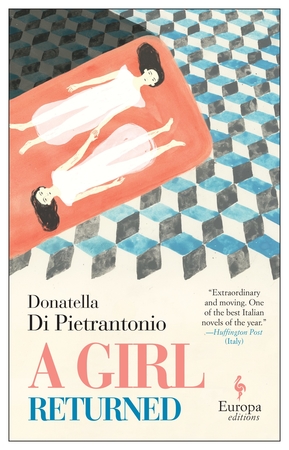
A Girl Returned by Donatella Di Pietrantonio, translated by Ann Goldstein

Europa Editions was founded in 2015 by Italian publishers Sandro Ferri and Sandra Ozzola Ferri. The couple own Rome-based press, Edizioni E/O, which served as inspiration for Europa, as they wanted to bring eclectic and expansive titles from abroad over to American and British readers. Most notable for publishing Elena Ferrante’s the Neapolitan Quartet, Europa Editions aims to deliver high-quality literary fiction.

In A Girl Returned, an unnamed 13-year-old girl finds out that her mother is actually a distant aunt. She’s taken away from the only home she has ever known in the city and “returned” to her birth family—who she has never met—in the impoverished outskirts. Throughout the novel, familial relationships are questioned, torn apart, and brought back together. A Girl Returned is a meditation on belonging, poverty, and inequality seen through the eyes of a teenage girl.

Image result for dance as though no one

Feminist Press

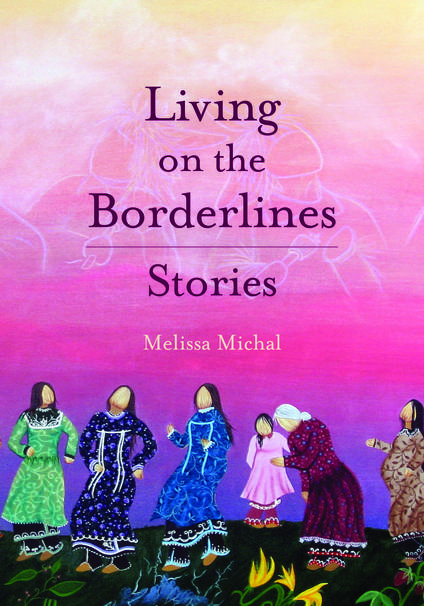
Living on the Borderlines by Melissa Michal

Feminist Press publishes a diverse catalog of women writers with an activist spirit who promote equality. Founded in 1970s during the peak of the second-wave feminist movement, Feminist Press seeks “to advance women’s rights and amplify feminist perspectives.” Since then, the non-profit press has published and reissued the works of trail-blazing authors like Grace Paley, Michelle Tea, and Zora Neale Hurston.

Native American professor Melissa Michal’s debut collection, Living on the Borderlines, centers around the Seneca people living on and off the reservation in upstate New York. In this complex and ruminating short stories, the characters find themselves at a crossroads with preserving history, navigating identity, and fostering connection.

Image result for collected schizophrenias

Graywolf Press

The Collected Schizophrenias by Esmé Wang

Graywolf started as a chapbook-making coalition (hand-sewn!) that has now transformed into one of the biggest small presses in America. Graywolf publishes 30-35 books a year from their headquarters in Minneapolis. From non-fiction to fiction to poetry, their diverse line-up of books aim to “foster new thinking about what it means to live in the world today.”

Very rarely are books about mental and chronic illnesses written by someone who has actually lived with them. Esmé Wang is changing that with The Collected Schizophrenias, a detailed, ravenous essay collection about living with schizophrenia. Along with the intimate details of being committed in a psychiatric institution and managing her illness while attending an ivy league college, Wang incorporates historical research to shed light on how society discriminates against people with disabilities.

Hub City Press

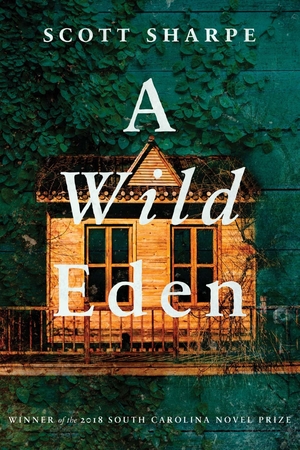
A Wild Eden by Scott Sharpe

Since 1995, Hub City Press, based in Spartanburg, South Carolina, publishes critical and diverse Southern voices.

Scott Sharpe’s writing is influenced by nature and his home region of the South. In A Wild Eden, he writes about a son who uncovers a hidden past, and witnesses the effects of the opioid epidemic while mourning the death of his father.

Image result for jose garcia villa famous works

Kaya Press

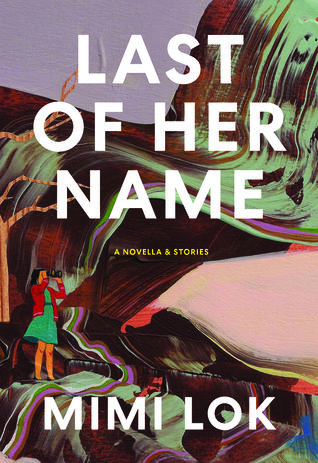
Last of Her Name by Mimi Lok

Kaya Press was founded in 1994 in New York as an outlet for creative, provocative, and enticing literary works by Asian and Pacific Island writers diasporic writers. The press is now housed in the Department of American Studies and Ethnicity at the University of Southern California. Kaya brings to light “works that have been unfairly overlooked or forgotten, whether because they were ahead of their times or because no one recognized their worth.”

Comprised of eight short stories, Last of Her Name, spans time and place: from the British suburbs in the 80s to Hong Kong during WWII to California in the present day. In this eclectic and humorous debut collection, Lok intimately explores the lives of her Chinese diasporic characters as they wander through a lonely world, searching for emotional connection.

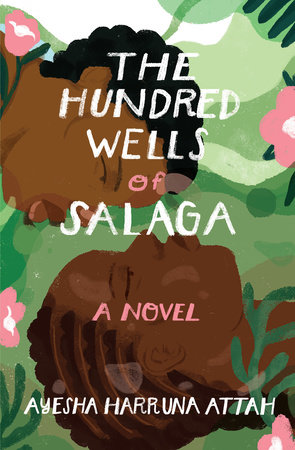
The Hundred Wells of Salaga by Ayesha Harruna Attah

Other Press

The Hundred Wells of Salaga by Ayesha Harruna Attah

In 1998, Other Press published academic and psychoanalytic titles. Now, this small press publishes both prose and poetry. Other Press is “guided by a passion to discover the limits of knowledge and imagination.”

Salaga is a small town in northern Ghana notorious for its 100 wells that were built to support the slave trade. The Hundred Wells of Salaga follows Aminah and Wurche, who live converging lives in precolonial 19th century Ghana. Rich with detail and history, the novel examines the fate of these two women—one who is sold as a slave and the other whose father is a slave-trader.

Image result for all city by alex difrancesco

Seven Stories

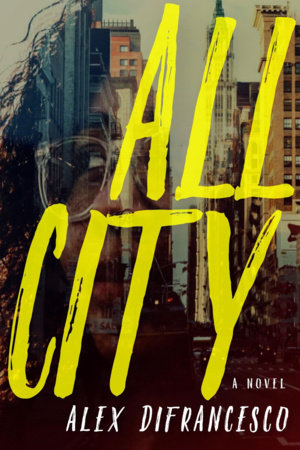
All City by Alex DiFrancesco

Founded by Dan Simon, Seven Stories began as a venture to obtain the rights for Nelson Algren’s out-of-print books. Seven Stories publishes “uncompromising political books, fiction, and poetry” including the works of Noam Chomsky, Kurt Vonnegut, and Octavia E. Butler.

All City is a speculative fiction novel about squatters, climate change, and gentrification. Set in a near future New York City, a convenience store worker and a teenage, genderqueer anarchist are the leftovers who find refuge in an abandoned luxury building after a superstorm leaves the city in ruins.

Soft Skull Press

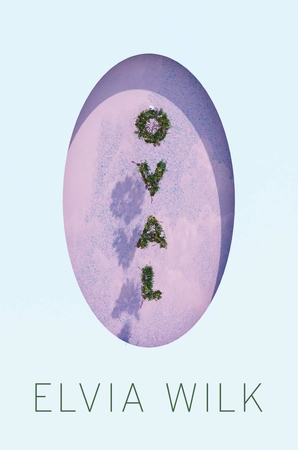
Oval by Elvia Wilk

An unsupervised night shift at Kinko’s enabled Sander Hicks to found Soft Skull Press when he started surreptitiously printing and binding his own books on the job in 1992. Since its Kinko days, Soft Skull Press has published hundreds of books—including titles by Eileen Myles, Maggie Nelson, and Lydia Millet—that “offer a refuge from, and an alternative to, and an argument against mainstream culture and mainstream thinking.”

A writer covering art, architecture, and technology, Elvia Wilk is based in New York and Berlin. Her debut, Oval, is a satire about artists living in a (seemingly not so distant) future Berlin where success equals selling out and working in a corporation. The setting of Berlin also doesn’t seem like too far of a stretch, as the city is now running on a tight, eco-friendly agenda, only to make the cost of living in the city skyrocket. Oval is a dark and riveting critique of gentrification and the art world.

Image result for hamid ismailov the devils dance

Tilted Axis

The Devils’ Dance by Hamid Ismailov, translated by Donald Rayfield

Tilted Axis is THE press for contemporary literature in translation. Their mission is right in their name: the press works to shift focus from the center towards the margins with their innovative approaches toward publishing and translation. Based in London, Seoul, Toronto, and Vienna, Tilted Axis aims to publish “books that might not otherwise make it into English.”

Originally published as a series on author Hamid Ismailov’s Facebook page, The Devils’ Dance is a poetic, brutal, and mesmerizing novel about a 19th-century Central Asian slave girl.

Image result for fortune for your disaster

Tin House

A Fortune for Your Disaster by Hanif Abdurraqib

The legacy of acclaimed literary magazine Tin House lives on through its publishing press. Based in Portland, Oregon, Tin House Books publishes established writers as well as up-and-coming writers.

Hanif Abdurraqib is one of the leading American voices in cultural criticism and poetry. With a cover alluding to his first collection of poems, The Crown Ain’t Worth Much, A Fortune for Your Disaster is a poetry collection that centers around heartbreak, pop culture, and racism.

Transit Books

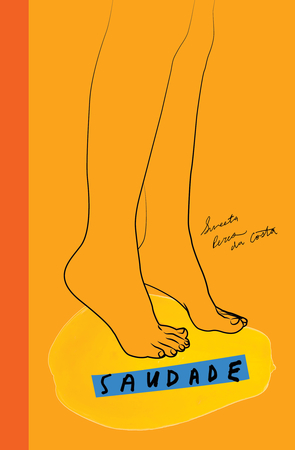
Saudade by Suneeta Peres da Costa

In 2015, two Columbia MFA graduates were dissatisfied with the New York publishing industry and decided to start their own press. After Adam and Ashley Nelson Levy moved to Oakland, California, Transit Books was formed out of their apartment. Transit Books is dedicated “to the discovery and promotion of enduring works that carry readers across borders and communities.”

Goan Australian writer Suneeta Peres da Costa’s novella follows a young girl and her affluent Goan parents who live in colonial Angola. A coming of age tale set amidst the end of the Portuguese Empire, Saudade explores what it means for colonial subjects to be complicit in oppression and racism. The title, Saudade, comes from a Portuguese word meaning “a lostness, a feeling of not having a place in the world.”

Two Dollar Radio

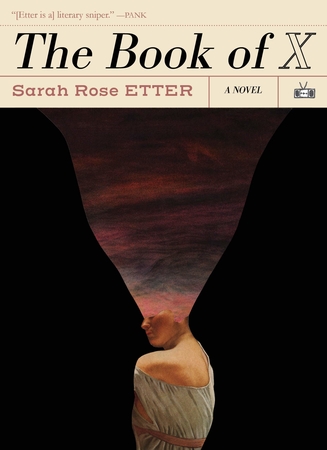
The Book of X by Sarah Rose Etter

Two Dollar Radio has been operating as a family-run indie press, film production, AND bookstore cafe since 2005. Founders Eric Obenauf and Eliza Wood-Obenauf originally operated out of their living room before moving their headquarters to the south side of Columbus, Ohio.

The narrator of The Book of X is descended from a lineage of women born with a knot in their stomachs. This surrealist debut is an exploration of loneliness, toxic masculinity, and the unrealistic expectations placed on women’s bodies.

Unnamed Press

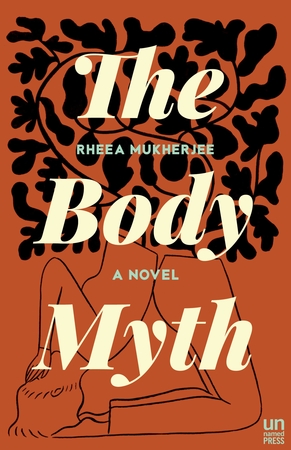
The Body Myth by Rheea Mukherjee

Based in L.A., Unnamed Press publishes books from around the world. Their books feature “unlikely protagonists, undiscovered territories and courageous voices.”

The Body Myth takes place in the vibrant fictional city of Suryam in India, the only place in the world where the Rasagura fruit is grown. Recently widowed Mira becomes enamored with a mysterious woman who has a seizure in a park. What follows is an exploration of indefinable illness, complicated relationships, and an unlikely ménage à trois.

Kitchen Curse by Eka Kurniawan

Verso Books

Kitchen Curse by Eka Kurniawan, translated by Benedict Anderson, Maggie Tiojakin, Tiffany Tsao, and Annie Tucker

Verso Books is the largest indie radical publisher in the English-speaking world.

Celebrated Indonesian novelist Eka Kurniawan’s short story collection is twisted and grossly humorous. Not for the squeamish or the faint-hearted, Kitchen Curse includes scatological stories and violent tales of revenge.

Image result for voyage of life: youth

7.13 Books

Portrait of Sebastian Khan by Aatif Rashid

7.13 is more than what their Twitter bio, “Just another Brooklyn indie publisher,” suggests. A haven for new authors, 7.13 exclusively publishes debuts. What’s better than a press that roots for the underdog?

Aatif Rashid’s debut follows Muslim American art history student, Sebastian Khan. A couple hundred days away from graduating, Sebastian joins the Model UN at his college—not because he’s interested in world affairs, but “for the glamor of international diplomacy without any of the responsibility”— and spends his time attending conferences at different colleges across the country where he starts fretting over his future. In this witty, semi-satirical coming-of-age story, Sebastian navigates the anxiety of graduating and leaving the safe bubble of college for the uncertainty of adult world.

This Cookbook from 1942 Is a Textbook for Making a Better World

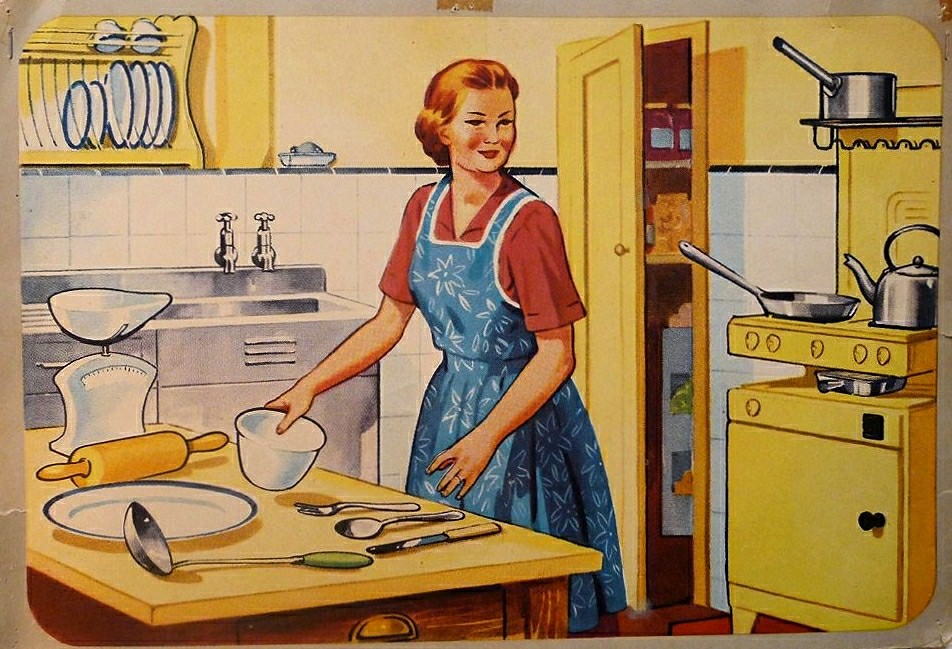
My stove and I have been at odds for some time now. Beautiful and wasteful, it is the kind that is ubiquitous in Los Angeles kitchens of a certain vintage and which has chrome fins like a muscle car. And like those muscle cars, it is a gas guzzler. Aside from the standard four burners, there is a griddle as big as an atlas, and a multi-tiered “broyl-oven” (also branded, in mid century ad-speak, as a Grillevator). And most of all, a whopping five pilot lights to keep it all going. When I wipe down the stovetop, my sponge sizzles. It emits heat like a radiator through the winter season, and after a first sweltering summer in the apartment, I learned to cut the gas on the hottest days.

But as the news comes in more and more about the warming planet and the runaway waste that is fueling it, I’ve tried to put myself in the mindset of a 1942 manual for cooking during wartime, gorgeously written by M.F.K Fisher in an era of strict rationing. Though Fisher is better known for sumptuous reflections on food like Serve it Forth and Consider the Oyster, it is her book on austerity that has set me on a path towards winning that battle against the oven. So in spite of the awkward shuffling of burner covers and matches it takes to re-light the stove, in between meals I tighten the valve and let those five busy pilot lights go out.

Fisher, an elegant, witty writer, was as aware as anyone that thrift is always in dire need of rebranding.

Fisher, a Californian by birth, probably cooked on just such a behemoth on her return from time spent abroad during the Second World War. But it is not the type of appliance that makes an appearance in How to Cook a Wolf, a book where nothing is done with abandon, especially not burning fuel. Actually, the fuel economies that she suggests in this book are elaborate: she treats the oven as though roasts and casseroles and baked goods must be taught how to carpool. She suggests always, whenever the oven is used for anything, to throw something else in on the bottom rack, like a tray of apples (dessert for the week!), or a baking sheet of stale bread (melba toast!). She describes the haybox, a way to slow-cook through insulation rather than by fire: one takes a heated pot off the flame and packs it tightly in straw until it cooks in its own residual heat. Not only does she suggest cooking the week’s market vegetables all at once to save fuel as they are rolled out for individual meals, but she also recommends saving their blanching water in an empty gin bottle, to be drunk later with lemon juice as a pick-me-up when nutrients are scarce.

So cutting the gas and conserving the cooking water (I use mine to water herbs) are things I add to my to do list: avoiding and reusing plastics, filling the vermicompost bin, freezing that stale bread for something, sometime… But Fisher, an elegant, witty writer, was as aware as anyone that thrift is always in dire need of rebranding. If I feel awkward and small scraping my restaurant leftovers into an old yogurt container, or planning a meal with tofu when the meat looks so good, that is no new phenomenon. The folks we think of as bleeding heart, crunchy granola types now were once the thrifty church ladies who populate Fisher’s book. And she mocks them gently; her grandmother was one. But as she reminds us on page after page, the tips she writes about in this book, some extreme, others practical, are mostly gleaned from the pages of cookbooks put out by just such dowdy church groups or ladies’ circles. Even when they are ridiculous, they are creative and admirable for it. On removing kitchen smells from the house when everyone is holed with windows blacked out for an air raid, Fisher writes humorously of all the different registers in which one might perform this mundane task:

You can do it, according to the Stark Realism school, by lighting a crumpled piece of newspaper and dashing through the rooms with it. You can, much more effectively […and tidily…] pour a drop or two of oil or eucalyptus or pine on a hot shovel and wave it around. If you want to feel like a character from one of the James brother’s looser romantic moments you can float a few drops of oil of lavender in a silver bowl filled with hot water.

One of the most wonderful things about this volume is that, though it was published in 1941 at the height of war rationing and scarcity, it was “revised” in 1952, when food was abundant once again, and gas guzzling stoves came on the scene. The revisions are embedded in the text but visible, appearing in brackets throughout. We get to be privy to her evolution. So what we at first assume will be an exercise in pointing out the way bounty has made so many of her tips and tricks obsolete, instead is a conversation she has with her past self.

Sometimes her notes are about the way culture has changed—beneath a recipe for minestrone she reflects on the ways the anti-Italian sentiment that made people revolt against the bean soup a mere decade later, in cold war times, is transferred over to a suspicion of borscht (not shared by her). Sometimes, she exclaims over a split infinitive or a poor word choice of which her older, wiser self now disapproves. She compliments herself, too: at the end of a chapter about feeding pets through times of famine, she proclaims “for one of the few times in the past thirty-odd years I am pleased with something I have written. I think it is a good chapter.”

Beneath a recipe for minestrone she reflects on the ways the anti-Italian sentiment was transferred over to a suspicion of borscht.

There is gravity when she acknowledges her own changed perspective, one war, ten years, and two children later (it is also three close deaths and one divorce later, though she doesn’t mention these things). Her aged self, she says, is stricken by the wolf (“by now almost a member of the family”) with hunger pangs at 4am these days rather than the midnight as it used to be. And there is levity, too, in the juxtaposition of her 1941 and 1952 selves:

It is all a question of weeding out what you yourself like best to do, so that you can live most agreeably in a world full of an increasing number of disagreeable surprises. [Some of them are merely funny, like the carefully sealed cans full of milk-solids, nitrous-oxide gas, and suchlike, which spit out a ‘dessert topping’ vaguely reminiscent of whipped cream when held correctly downwards, and a fine social catastrophe when sprayed, heedlessly upright, about the room.]

But serious or silly, her approach to food and life is ever evolving. Like with the “whipped cream,” she warns now and again throughout the book, one can’t really economize through consumerism — an idea that certainly still holds water with some of the “greenwashed” foods and goods we see today. But she emphasizes framing luxuries and concessions alike with a sense of humor and distance.

Almost as constant in this book as the voice of Fisher’s near future self, is the image of the wolf. Though the book takes its title from the idea of fending off hunger or “the wolf at the door,” the wolf is whimsical and comic enough that we know it to be written by someone privileged enough to have avoided true hunger. But it serves a purpose here, a nemesis keeping the writer (and the chef) on her toes. It is just as much about the threat of scarcity as it is about the internal drive of appetite. Fisher reminds us to see appetite as more than just a problem to be solved: this wolf is a timeless one, a fairytale one who can always be foiled by smarts and by “keeping one canny eye on the cooking time.”

The wolf is just as much about the threat of scarcity as it is about the internal drive of appetite.

And re-reading the book and writing this essay, I’ve found myself consumed by thinking through what  the wolf of our own global crisis might be today, what mascot might throw our morals and our appetites into balance, when in this time of plenty our consumption must be self-policing. All my ideas fall flat—how to chill a whale, anyone? It seems like a crass exercise. And in scrounging for a joke that somehow updates, I could find no animals. The penguin is toddling northward, the bees are dying off—no time to wait around at the door. It’s a flood, really that is pounding for attention—not the disastrous one ready to take out Manhattan or Miami, not that yet—but the one of ready abundances. The one that targets us and calls out to us and is at us to consume more, consume thoughtlessly. So what to do in this day and age when scarcity does not give us an assist in being our better selves? When the waves are lapping at the door? Pull hard on the shut-off valve, and take some time to regroup, to evaluate, to strategize. Fisher writes:

As long as the gas or electric current supply you, your stove will function and your kitchen will be warm and savory. Use as many fresh things as you can, always, and then trust to luck and your blackout cupboard and what you have decided, inside yourself, about the dignity of man.

The last part in this formula is the constant that, according to Fisher, does not change with the times. At the end of the book, she adds a chapter containing a number of the richest, most opulent recipes she can think of, noting at every turn that these “half-remembered delicate impossible dishes” are most likely out of reach. At first it seems like a taunt to her reader, to herself, until it becomes clear that what she promotes here is not actually fresh fruit soaked in champagne or shrimp pâté or beef moreno, but the simplest of sensory delights—the ones to be found in memory and in words. Her way to conquer the appetites: lend writerly attention to food and cooking and the practices of life. Dignity will follow, crisis times or not.

When Your First Date Is Orchestrated by an Otter

“Bottles of Beaujolais”
by David Wong Louie

I will move storms . . .

—a midsummer night’s dream

It was a little after eight one morning in late November. Fog, fat with brine, snailed uptown. Bits of the wayward cloud beaded between my lashes, crept into the creases of my clothing, and infiltrated my every pore, seeping a dank chill throughout my body. On the radio the man said the fog had set a new record for low visibility. Later, as the taxi pulled in front of the sashimi bar where I worked, the cabbie said that by nightfall the city would be covered with snow. Unlocking the door to the sashimi bar, I watched Mushimono in the show window standing upright on his hindquarters. He was thick and cylindrical, a furry replug. The otter, whose love for fish had inspired my employer to install him as a sales gimmick to lure other fish connoisseurs to the shop, seemed baffled by the fog. From his home—an exact replica of the otter’s natural habitat that stretched twelve feet long, reached as high as the ceiling, and jutted six feet into the shop—Mushimono snapped his anvil-like head from side to side, like a blind man lost, following the sounds of traffic he could not see. Mushimono was one of those peculiar creatures evolution had thrown together like a zoological mulligan stew; he had a duck’s webbed feet, the whiskered snout and licorice disc eyes of a seal, a cat’s quickness, and fishlike maneuverability in water. His fur was a rich burnt-coffee color and it grew thicker with each shrinking day of the year.

Mr. Tanaka, the sashimi master, met me at the door. He had the appearance of a box. The bib of his apron cut across his throat, exaggerating his dearth of neck. An imaginary line that extended up from his thin black necktie and past his purplish lips met his mustache at a perfect perpendicular, reinforcing this illusion of squareness. Above this plane sat two tiny eyes that shimmered like black roe.

Without ceremony Mr. Tanaka told me to make fog. “It not good this way,” he said. “Fog outside and no fog inside make Mushimono crazy.” He sliced each syllable from his lips with the precision of one of his knives.

The otter stood frozen, as if a mortal enemy were perched nearby. Yet, in spite of this stasis, I saw movement. Perhaps it was the eerie quality of the fog-sifted light or some strange trick of the eye that caused the twin curves of Mushimono’s belly and spine to run congruously, before tapering together at the S of his thick, sibilant tail. Silken motion where there was none at all. Strong but delicate lines. My thoughts drifted off to a moving figure of another sort: Luna, and the gentle crook of her neck, the soft slope of her shoulders, the slight downward turn of the corners of her mouth.

“Don’t forget, only fresh fish for Mushimono,” Mr. Tanaka warned.

“I know, I know.”

“Sluggishness no substitute for nature,” he said, clasping his hands behind his back as he paced the length of the trout-spawning tank. “For Mushimono a fish dead even if it look alive to you. If eyes not clear like— ”

“Saki—”

“Their center dark like—”

“Obsidian. Then—”

“They dead,” Mr. Tanaka said, completing a favorite adage.

“You mean good as dead.”

The sashimi master furrowed his brow, stroked an imaginary beard, and stared at me with those two lightless eyes before he headed for the sashimi bar.


When I was first hired, Mr. Tanaka had promised to teach me the art of sushi and sashimi. In fact, during my interview he had said, “Good mind,” a reference to the fact I had graduated cum laude, “make for steady hand.” But as the weeks passed, so did my hopes of ever learning how to wield the razor-sharp knives that could turn chunks of tuna into exquisite paper-thin slices. My primary task, as it turned out, was to be Mushimono’s keeper. The food fishes and shellfishes were off limits to me. Even when I offered to help scale and shuck, he said, “This operation too delicate a matter for my business, for my sashimi, and for the fish himself for me to permit this ever.” I was unhappy at first, but Mr. Tanaka managed to keep me with a more than generous salary. And the job had its share of benefits—all the sush I could eat and Luna’s daily stroll past the shop.


I netted three speckled trout from the spawning tank and put them in a pail. All the way to Mushimono’s, they nibbled the water’s surface and sounded like castanets. As I released the trout into the murky pond in the show window, which extended deep into the basement of the shop, Mushimono regarded me with uncharacteristic calm, undisturbed by my intrusion into his world. I wondered if the odd atmospheric conditions were to blame.

Mushimono’s world was an exact reproduction of the lakeshore environment of southern Maine from which he came. Mr. Tanaka had hired experts in the fields of ecology, zoology, and horticulture to duplicate the appropriate balance of vegetation, animals, and microorganisms found in the wild.

But I made the weather. From an aluminum-plated console attached to the otter chamber, replete with blinking amber lights and grave black knobs, I was the north wind, the cumulonimbus, the offshore breeze, the ozone layer. I was the catalyst of photosynthesis. I was the warm front that collided with my own cold front—I let it rain, I held it up. I greened the grasses, swelled the summer mosses, sweetened the air, and then plucked bare the trees. I was responsible for the death of all summer’s children. In time I would freeze the pond. Yes, I had the aid of refrigerators, barometers, thermometers, hydrographs, heaters, humidifiers, sunlamps, and fans. But I threw the switches. I possessed nature’s secret formulas. What were all those transistors, tubes, wires, and coils without me? I made the weather. I was night and day. It was no illusion. I turned the seasons. I manipulated metabolism. I made things grow. Humidifier set high. Saturation point. Dew point. Refrigerated air. Steamy wisps of white rose from the pond—an immense caldron of meteorological soup—and evaporated the further they curled from the water. In no time the show window was filled with fog as dense as surgical gauze. By increments, Mushimono disappeared.


There was a clock inside me. Its alarm—my accelerated pulse, my shortened breaths—went o each day at the same time. I crouched at the foot of the show window beside the weather console, and anticipated Luna’s imminent arrival. I fancied there was something organic between us: a chemical bond, a pheromone she emitted that only I could sniff from the air that telegraphed her approach to the shop. Or perhaps it was something mystical, perhaps our souls had been linked in former lifetimes. Or was it some strange configuration of the ions in the atmosphere that drew us together? From the hundreds of feet that shuffled past the sashimi bar each morning, I always knew which belonged to Luna, for hers were like distant fingers snapping. When she walked, there was music on the pavement.

No. It was not some cosmic magnetism that pulled us together, and our molecules were not aligned in any extra-physical way. This was plain, pedestrian infatuation.


Luna’s lacquered nails tapped the glass pane. She stopped each day at the same hour to see Mushimono and lavish her attentions on a creature insensitive to her charms. My stomach gurgled in anticipation. I heard a splash of water as the otter dived into his pond. Unable to see Luna through the fog, I pricked up my ears and listened for her. Past the fog and the layers of glass I heard the wet suckling noise, like a child nursing, that she was making with her lips, those succulent, baby shrimp. As always, her kisses were not meant for me.

I longed to see her and I could have satisfied my longing simply by flicking on the sunlamps and burning off the fog. I had the power but not the nerve. Mushimono’s welfare was my first priority, my second was to stay employed, and sadly the yearnings of the heart could do no better than a distant third.

Luna tapped once more. Through the fog her red beret was a muted shade of plum. She was no more than a shadow whose substance fluctuated with her proximity to the glass. The fog hid Luna; it caressed her, as Zeus, disguised as a cloud, once caressed Io. And since this cloud was mine, then I was Zeus to Luna’s Io.

After several minutes, when Mushimono failed to materialize from the pond, Luna’s impatient ghost vanished in the mist.


By the lunch hour the fog outside had worsened. For the very first time, Luna entered the shop. She had a parcel tucked under her arm. Our first meeting without glass. Even sopping wet, she was beautiful. Water droplets sparkled in her hair. Her eyes were as blue as lapis. Her voice was unexpectedly deep. But even more of a surprise was the narrow gap between her two front teeth, a gap so dark and rare and suggestive of the mysteries that draw men to women.

“These are for the weasel,” she said as she handed me the parcel. “I hope it likes Nova.” She adored Mushimono, Luna explained, and was concerned when he failed to make an appearance that morning. I assured her of his good health. Luna lit a cigarette. Smoke rose and slowly curled up and formed a jagged halo in the damp air around her head. She seemed distracted, gazing at the rear of the shop where Mr. Tanaka’s customers lunched at the sushi counter and the Italian-café tables. I leaned my elbow on the weather console and explained—I might have bragged a little, but how could I resist?—that I had made the fog that obscured her view of Mushimono.

“Give me summer,” she said, her voice as raspy as July sparklers.

“I’m afraid snow’s predicted for tonight.”

“Snow, fog, what’s the difference?” She drew more smoke into her lungs. “It’s a mess any way you slice it. In a month the winter solstice, and your Mistermomo will hibernate for the duration. It’s a waste and a shame. I mean it. That weasel makes my day; a little life in all this concrete.” She exhaled a long agonized breath. “I’m getting depressed just talking about it.” Luna removed her beret and shook off the water. “I think I was a Californian in a former life.” She dragged on the cigarette and then added as an afterthought, “Hey, if you’re the weather wiz, why don’t you do something about this fog?”

I told her that a sudden change in barometric pressure in Mushimono’s tank might cause him grave discomfort. This wasn’t the total truth but she trusted me at my word. She got ready to leave and said she would stop in on her way home from work if the fog cleared by then. She wanted to make sure Mushimono was in good health. I told her if it was snowing out when she arrived, I would demonstrate how I made snow. She sighed. “All morning long, all I hear is talk of the bottom line; everything with those brokers is the bottom line.” Luna crushed her cigarette under the sole of her snakeskin pump. “I come here to get away from all that, to see my Mistermomo, but I don’t get weasel. You give me snow. Snow, snow, snow. It’s so depressing.” She knotted her belt and turned up the collar of her raincoat. She spun on her heel and started to leave. As she reached for the door, she turned suddenly and apologized for the outburst. “See you later.” Here she grinned. “By the way, my name’s Peg.” Peg! I thought. Peg? One hangs coats on pegs. How could my Luna be this monosyllable? This Peg?


By afternoon the fog had lifted, and I burned off the fog from the otter chamber. Mushimono was indifferent to the change in weather, surfacing only for quick breaths before returning to his underwater lair. At three Mr. Tanaka left for the day. I closed shop. In anticipation of Luna’s visit, I went shopping and returned with candles and bottles of wine. I lit the candles and waited for Luna. When finally she tapped at the front door, it was already dark and the candles had burned to half their original length.

We had barely said hello, and I was still holding the door open, when she handed me her Burberry and whisked past me, losing me in her perfume. She sped to the little café table I had set up, with its dancing flames and breathing wine. She did not even ask after Mushimono.

Luna took the bottle in her hands, cradling the neck up like the delicate head of a baby. “Beaujolais!” she shrieked. “I can’t believe it! How fortuitous. I think I might cry.” She sniffed the bottle. “This is the wine of summer, the picnic wine.” She lit a cigarette and puffed anxiously. “This is the wine for lovers. Oh, you don’t understand, do you? I just had the best summer of my life.”

I poured equal amounts of the ruby-red liquid into porce- lain saki bowls. The color of her fingertips matched the beaujolais. We lifted our bowls and, after a moment of deliberation, she offered a toast: “To Mistermomo and Édouard Manet. Or is it Monet? No, Manet.” We drank the bittersweet juice of love. As I sipped, I watched Luna over the rim of my bowl. Her skin glowed as if lit from within. “Those guys in Manet’s, or maybe it is Monet’s, ‘Déjeuner,’” she said, putting emphasis on the middle syllable, which she pronounced “June,” “were crazy for beaujolais. They drank it by the gallon. Honestly. I read it in an art magazine.” Her cheeks were flushed from the wine. I admired her cameo earrings. Luna said the Impressionists were her favorite painters, and they and the wine reminded her of summer.

“Baudelaire—” I began, having recalled his immortal line, One should always be drunk.

“No, no, it’s pronounced ‘beaujolais,’” Luna said. “See here? Beaujolais.” She pointed a finger at the wine label.

“Of course,” I said. “My French is terrible.” I refilled the bowls.

I never cared for the smell of burning tobacco, but the smoke rings rising from her pursed lips seemed fragrant, almost sweet, as if her body had purified the smoke. Then Luna let out a terrible cough. “Bronchitis,” she muttered as she raised the bowl up to her mouth.

“You should take care of yourself,” I said. “You ever think what those cigarettes are doing to you? Maybe you can try something athletic, like skating or skiing.”

She narrowed her eyes and fixed me with a stare. “What’s with you and snow?” And as if that had not already chilled my blood, she said the one thing a lover hates to hear from his beloved: “You sound like my mother.”

I apologized. Then she apologized.

“It’s me,” she said. “The bum lungs, the cigarettes are part of the package. You can say I live life on the edge. I mean van Gogh called it quits before he was forty.” She coughed. “This sounds crazy,” she said, “but each time I have an attack I feel that much closer to the inner me.” Luna drained her bowl and then replenished it with the dregs from the bottle of beaujolais.

I went behind the sashimi bar to prepare a snack for us. I selected a long shiny knife from Mr. Tanaka’s impressive collection. I was surprised by how light it felt in my hand. I removed a block of yellowfin from the refrigerated case and started cutting the fish into crude cubes. The steel seemed to melt through the flesh. At first, I was tentative in my approach to the fish, but soon, caught up in the sensuality of slicing, in the thrill of moving through flesh, I was imitating the sashimi master’s speedy hands, approximating his ashy blade act. Where was the mystery of his art? It was mine already. I looked over at Luna and smiled while my busy hands whittled away at the shrinking hunk of fish. I imagined how I might one day audition for Mr. Tanaka, with Luna there for inspiration, and dazzle him with my newfound skills. I glanced down to admire my handiwork. My hand was a bloody mess.

“I fancy myself a burgundy,” Luna said.

I clenched my fist, sticky with red pearls of trouble. I felt dizzy but worked hard to hold myself together.

“But, you know,” she said, “people like to classify me in the sauterne family.” I wanted to be brave, but every man has his limits, especially when he is watching his blood run from his body.

“I’m bleeding,” I said.

“Oh. You say you’re a burgundy too?”

“No, I’m bleeding, like a pig!” I flicked my wrist, spattering the pristine countertop with bright red beads.

“Put some mercury on it,” she said.

“Some what?”

“Grab ahold of that tuna. It’s full of mercury. I read it in–

“You mean Mercurochrome. That’s not the same as—Ah, forget it.” I tightened my fist, hoping to staunch the flow. I saw my evening with Luna slipping away.

“Call it what you want, it’s probably in the tuna anyway.”

I ran cold tap water over my hand. My blood turned a rust color in the stainless-steel sink. There were three major cuts— on the thumb, the heel, and the meaty tip of the middle finger—and numerous nicks. Moments later I bandaged my aching hand in a linen napkin. Luna sipped her beaujolais and then offered me a taste. I drank. She marked the spot where my lips had come in contact with the bowl and drank the final swallow with her mouth positioned on the very same spot. I retrieved the second bottle of wine, a chablis, from the refrigerator. I had to ask Luna to uncork it.

“To me, you are a burgundy,” I said. Each syllable echoed in my ears long after it had left my lips. My face burned but my extremities felt cold. “There’s nothing remotely sauterne about you. You’re not even blond.” The wines raced through my veins, their friction swelled my wounded hand. I could have sworn my lungs had shrunk—there seemed to be much less air to breathe. “I won’t hear another word about you and sauternes. You’re definitely burgundy, Luna.”

“What did you call me?”

“Burgundy, Luna.”

“Peg. I’m Peg.”

“You don’t have to test me. You’re burgundy all the way.

“Yes. Burgundy. Simple and elegant—”

“Rich and full-bodied, Luna.”

“Peg!”

“But burgundy—”

“Yes. Earthy, robust, and generous.”

“Soft-eyed, soft-lipped, Luna-Peg.”

Fires smoldered under my lids. My jaw dropped. My skin drooped from sore bones. And in their core the marrow had hardened.

“Drinking burgundy is an event,” she said.

“I adore a fine burgundy.”

We drank our wine by the mouthful.

“I don’t get it,” she said. “Sauternes are such flippant, insignificant wines. Silly vacuous fruit juice—”

“But, Luna, you’re not silly or vacant.”

“And you, sir, are—let me see—yes, a mature port. I mean it. You have those superior powers of discernment that are the trademark of all good ports.” She raised her bowl to my lips. “Drink,” she said softly. “You must mend your blood.” I gulped her offering, obeying her angelic voice. She refilled her bowl and drank.

I rested my wounded hand on my thigh. The napkin was badly stained. I needed to rest. My heart pounded like the surf, and when the sea receded, I baked under the hot suns beneath my lids until the tide washed over me once more. My head kept time with my pulse, rocking back and forth, from shoulder to shoulder. I unwrapped my hand and dipped the hot digits in the chilled wine. The wounds gaped, the skin around them twitching. The wine rusted. Luna lifted my hand from the bowl and kissed each finger, alternating the kisses with puffs off a cigarette.

“Beaujolais,” Luna lamented, staring longingly at the empty bottle. “All gone. The end of summer. No more Monet, Manet— oh, hell. No more of all that crazy light and sun and heat and color; the boys and girls at play. The boys on the beaches and wonderful beaujolais.” I closed my eyes. They had outgrown their sockets. As I dozed in and out of sleep, I slipped to the borderlines of consciousness where the heres and theres overlap. I sat on my spine with Luna here beside me. But when sleep swept me under, dreams became the intimate here while the things defined by time and space were the distant theres. Luna, repainting her lips as I opened my eyes—here. Then she was there, untouchable, a shadow in my fuzzy dreams. In this place her words turned to music.

“Give me the summer any day of the week,” she sang.

I skinned back my lids and was blessed by the sight of her sad cool blues staring at me. “Luna,” I said, smiling. “Burgundy Luna.” I took her by the wrist, as big around as a sparrow’s breast, and directed her eyes to Mushimono’s lakeshore. “Consider it summer again,” I said languorously. “Your wish is my command.”

“Don’t tease,” Luna said. “You’re two months too late and five months too early.” Her words were lyrics to a love song. What did it matter what they meant? After all, who made the weather? I said, “Who is day and night? Who turns the seasons? Who makes things grow?”

“You sick or what?” She checked my temperature. “You’re hot.”

I blew out the candles and watched the complex spirals of smoke twist to the ceiling. “Suddenly, it’s no more,” I said. “Like that, I’ll rid us of winter. Summer will be yours again, my dear Luna.” “It’s Peg. My name is Peg. You’re not well, are you?”

Then the tide inside me ebbed; my body flowed into the chair like a Dali watch. Luna, I thought, is Helen of Troy and Raphael’s Madonnas rolled up in one. Luna is Penelope at the loom. Eurydice in Hades. Luna is Mozart at seven. Shirley Temple at eight. Luna is that side of the moon we see, and all we imagine the invisible half to be. Luna is Titania kissing Bottom. Io snatched by Zeus. Marilyn married to DiMaggio. “Luna is Peg,” I said out loud, “a lovely mystery, a mysterious loveliness.”

“God, if you feel that way, call me Luna. Call me Lunatic. I mean it. Burgundy Luna. I sort of like that.”

“I can make summer come and go.” My words trickled off my shoulder and down the front of my shirt. “We’ll picnic,” I said, “picnic.”

She sat up excitedly, then slumped back into her seat. “It won’t be the same,” she said. “How can we have a picnic without the right wine?”

I suggested saki.

“Oh, saki is so—Ceremonial. Let’s face facts. Chardonnay goes with fish, cabernet goes with meat, but beaujolais is the stuff of picnics.”

I grabbed the empty beaujolais bottle and funneled some saki into it.

“That’s indecent,” she said. “That stunt might work on a two-year-old but not on me.” She joined me behind the sashimi bar and held the bottle up to the light. “I guess an emergency’s an emergency, but the color’s all wrong.”

Suddenly, she reached for one of Mr. Tanaka’s special knives. Silver ashed between us. Luna’s eyes were the sky. In them I soared. Back on earth I was trembling. The cold steel parted the earlier, now crusted cuts. Thin red lines appeared across my fingers and palm. She took my hand and smiled mischievously. She squeezed it over the funnel until blood streaked from palm to heel, where droplets hung like lizard tongues. The blood rolled slowly through the funnel and splashed thickly in the saki. In time, we had translated the saki into a bottle of beaujolais.

“I know we could’ve pretended,” she said as she pressed my hand to her lips. “But why exhaust our imaginations?” The tip of her tongue traced the wounds, splitting, stinging, and soothing them all in the same lick. “You’re wonderfully strong port.”

She squeezed my hand over the funnel once more. The heavy droplets pinged the saki’s surface faster and faster until she achieved the coloration she desired. It resembled an orange rosé. Pleased with her work, Luna raised my hand and smeared my blood over her lips. I took the bottle by the neck and intoned, “To Luna.”

“To summer,” she said, clasping her hand over mine.


Outside the lakeshore, Luna worked the controls of the weather console as I gave her instructions. I was too dizzy and weak to perform the magic myself.

Luna poured beaujolais into a bowl. “Drink,” she beckoned, “wine mends blood.” I drank from the bowl she held to my lips. The wine was warm and unpleasantly salty. I felt hot, then cold, then hot again. I closed my eyes. The lids seemed lined with sand. I dreamed of Luna, naked as the otter, standing in the street outside the lakeshore, tapping at the window. Then I woke and saw her at the controls, and this seemed like an equally implausible dream.

The sunlamps burned at noontime intensity. Though the fans were idle, convection stirred a gentle breeze in the lakeshore that rustled the dead leaves along the ground. Soon, because of the contrast between the heat inside and the relative cold outside, dew started to form on the chamber’s four glass walls.

“Eighty-two degrees and climbing,” Luna sang out. The otter suddenly sprang out of the pond. He scurried up the muddy embankment and darted from one end of the compartment to the other. He pawed the glass, but Luna, fixed on her work at the weather console, did not notice.

“Humidity, let’s see, is up to sixty-eight percent,” she said. “Barometric pressure reads thirty-point-two-three and rising.” Mushimono stood erect on his haunches and stared devotedly at her, as if he were kneeling, waiting to receive Communion.


We entered the lakeshore. The otter dived into the torpid water. Luna spread her plaid blanket on the ground. I basked under the brilliant suns, whose healing rays sealed my wounds. Beside me Luna arranged a still life of bowls, lox, and the beaujolais.

“This is great,” Luna said as she untied the laces of my shoes. “They won’t believe me tomorrow at work.”

“Lovely day, if you don’t mind me saying so myself.” Thick dew clung to the window, blocking any view of the world beyond.

“This is really great. Better than Bermuda. I mean it. Summer in winter, day at night.” Luna turned her back to me and rolled her stockings off her ankles. “There’s money in this operation. I’ll tell the brokers about it. They’ll probably flip but they’ll know what to do.” She stretched out alongside me, undoing the third and fourth buttons of her silky blouse, hiking her skirt past her thighs. She poured a bowl of the new beaujolais and made me drink. “You remind me of someone. It’s your eyes. So big and round and black.” She scratched her head for the answer. She picked up the lox. “I see it now,” she said, “Mistermomo! You and that sweet weasel.”

Luna knelt by the lake and floated the slices of lox, orange-pink rafts, one by one, on the stagnant water. “Oh, Mistermomo,” she called, “I have a treat for you.” She made her suckling sound, so odd and wet.

“Where’s that weasel?”

“He likes fish, not filets.”

“Filets,” she said, “are fish.”

“Mushimono likes his fish with gills and fins.”

Luna clenched her teeth, perfect white shells, tightening the skin around her mouth. She glared at me as if I were mad. Tucking the hem of her skirt into the waistband, she waded knee- deep into the lake.

“Jesus, it’s freezing!”

With her next step she suddenly plunged into thigh-deep water, stirring a turbulence that sucked the lilylike filets toward her. When the ripples subsided, one filet was clinging to the front of a bare thigh. Rather than removing it, she smoothed the lox against her skin with caresses and pats that produced sounds like those of lovers’ stomachs pressed together. The lake, she discovered, was too deep. As she emerged from it, Luna shivered and coughed. She unhitched her algae-blotched skirt and let it fall in a pile at her feet. She seemed frail and small. She gestured for the beaujolais. I picked up a bowl and was horrified by what I saw. The contents had been retranslated by the suns. The blood had coagulated into a cinnamon crust, sealing in the saki underneath. “I need some wine,” she said, “my lovely summery beaujolais. I’m freezing.”

I started to feel the ache in my hand. My head throbbed from the alcohol. “It’s gone,” I said as I stared at the bowl, the hardened blood, the obscene saki. The sunlamps stung my eyes.


I’m cold,” she said. She reached across me for the bowl, and when she glimpsed the cruel scab bobbing on the dirty saki, she dropped the bowl, and it cracked against a rock. The fire was gone from her eyes and skin. Beads of pond water seemed frozen upon her arms. She trembled. Her pale face was the leaden-gray of cod steak and filled with the indecisiveness of a three-quarters moon. “It’s a nightmare,” she said.

I wiped a portion of the window clear of dew. No moon in the sky, but snow, lots of snow, just as the cabbie had forecast. Flakes fell in bunches. I shook my sore hand. I heard her pick her raincoat up off the ground, overturning the bowls, the bottle, and all the picnic things that had been resting upon it. I followed the flight of several flakes from the lamplight’s nimbus to the white street below. She tiptoed from the show window. A gust of cool air shot in from the shop. Not a soul was on the street. Absolutely quiet, as it must have been at the beginning of time. I could hear my hand throb. In the pond the lox was being semi-poached by the sunlamps, and gave off a rank smell. Not far away I detected the gentle hiss of nylons inching over her legs. Then the rustle of raincoat, the click of her pumps, and the squeak of the front door opening. She crossed the street. Her collar brushed up alongside her ears; each flake seemed to make her flinch and shrink deeper into her coat, like a tortoise into its shell. She struggled, small, shivering, solitary, against the storm.

Peg, I thought. I wiped away some dew. The snowfall was spectacular. “Peg,” I whispered. She slipped from sight.

I ran outdoors, following the pair of unbroken footprints leading from the sashimi bar to where she stood on the avenue hailing a cab. “Peg!” I shouted as the cab pulled up to the curb. I began to run. “Peg!” I glided like a cross-country skier in the narrow lane she had cut in the wet snow. “Peg!” There on the sidewalk I saw a salmon filet. “Peg.” I was my own echo. Then I became aware of a strange sound coming from behind. Imagine mah-jongg tiles tossed together in a tin can. I took a quick look back, but saw nothing. “Peg.” She was climbing into the cab. I ran harder and with my increased speed the mah-jongg tiles grew louder, more urgent. “Peg.” My eyes fixed on the amber lamp shining at her shins through the balls of exhaust at the foot of the open car door.

I slid in next to her and slammed the door. Immediately I heard a metallic scratching. I opened the door and there, illuminated by the footlamp, I saw the otter, upright on his hind legs. He was panting, out of breath. “What is it, a dog?” Peg asked. She clutched my arm as she peeked over my shoulder at Mushimono.

“Don’t be afraid,” I said as the otter flopped into the compartment with us. “He seems very gentle tonight.” I closed the door gingerly behind him.

“You’ve got to take him back,” she said, sliding into a corner, away from the otter.

No, I thought, no. Not this night, with my happily aching hand and Peg so near. We were warm and cozy in the cab. She nestled close to me; the otter, stretched to its full length over half of the backseat, seemed to purr; the wheels of our taxi hummed as snow beneath them turned to slush.

I tapped the glass that divided the cab into two compartments. “Central Park,” I told the cabbie. “To the lake where you rent those boats in the summer, you know, where the ducks live.” The otter first. Before my hand, before Peg’s wet clothes. Before whatever might pass between us next. It was my duty— the otter’s care.

The cab swerved uptown. Snow kept falling. It covered the city, softening edges, blurring lines. But I had never seen things any clearer than I did that night. Blizzard-force gusts made our journey difficult. I told the cabbie not to rush. We could not out-race the storm. There would be snow, plenty of snow. I knew by daybreak the snow would turn to rain and by noon it would all be forgotten.

A Handbook for Fighting Racism in America

Ibram X. Kendi opens his latest book with his worst memory as a high school student competing in an oratorical contest. Having spent his short lifetime internalizing negative messages about Black people from Black people, from white people, and from the media and culture at large, Kendi delivered a remix of Martin Luther King Jr.’s “I Have a Dream” speech, one that served up racist ideas about Black people to Black people. “The Black judge seemed to be eating it up and clapping me on my back for more. I kept giving more… I was a dupe, a chump who saw the ongoing struggles of Black people on MLK Day 2000 and decided that Black people themselves were the problem. This is the consistent function of racist ideas,” Kendi explains, “And of any kind of bigotry more broadly: to manipulate us into seeing people as the problem, instead of the policies that ensnare them.”

How to Be an Antiracist by Ibram X. Kendi
Buy the book

In How to Be An Antiracist, Kendi traces his journey in overcoming the effects of those racist ideas. He describes how racial inequity is a result of bad policy (not bad people) and how racist power leads to racist policies. He uses his life story to identify and define antiracist concepts and possibilities in a way that helps readers see all forms of racism, classism and sexism clearly so we can all work together to oppose their destructive effects both within ourselves and in society. 

Ibram X. Kendi is a professor of history and international relations and the founding director of the Antiracist Research and Policy Center at American University. His first book, The Black Campus Movement, won the 2011-12 W.E.B. Du Bois Book prize. His second book, Stamped from the Beginning: The Definitive History of Racist Ideas in America, won the National Book Award for Nonfiction in 2017. 

Kendi and I spoke by phone about how the erasure of the past has led to the resurgence of white supremacy and nationalism in this present moment, how the focus on test scores in education leads to discrimination against children of color, and how we can fight racism.


Deirdre Sugiuchi: I feel like I’ve been waiting for your books all my life. I want to thank you for all that you’ve done. Not to center this discussion on myself, but I grew up in Greenwood, Mississippi, which as you know was an integral site in the civil rights movement. Many brutalities occurred there, leading Stokely Carmichael to give the Black Power speech in Lay Park,  something I didn’t know about until I left Mississippi and discovered in my own research. 

Can you talk about how this erasure and denial of the past, particularly as it pertains to people of color, is connected to the resurgence of nationalism and white supremacy and this present moment?

Ibram X Kendi: First and foremost you have many white people who are struggling socially, economically, and other capacities. They are also simultaneously being told that they have white privilege, and they can’t really understand how they have privilege when they’re struggling, especially because they are not necessarily told about the long history of racism that people who are not like them suffered and endured, and the enduring impact of that racism. They just think that their past is the same as the past of the people of color, so as a result when a white man, a white supremacist organizer comes to them and says, “You don’t have anything wrong with you. You’re being discriminated against,” of course that’s extremely enticing to them.

DS: Thank you. That’s really amazing. In How to Be an Antiracist, you say that the history of the racialized world is a three-way fight between between assimilationists, segregationists, and antiracists. Can you explain the terminology and what you mean?

IXK: The easiest way to understand the distinction between segregationists, antiracists, and assimilationists is over a simple idea. Like when Jefferson said, “all men are created equal,” you could change that to “all racial groups are created equal.” So in that sense, a segregationist would say all the racial groups are created unequal, that Black people, let’s say, are permanently and genetically inferior, and therefore the inequities  in our society are caused by their inferiority, and those inequities are permanent.

In order to essentially eliminate racism or inequity, we must eliminate racist policies.

An assimilationist would say that we’re all created equal, but Black people became inferior as a result of their environment, whether their environment is their so-called barbaric and pathological culture, or even that environment is oppression. Therefore they say that Black people are partly the cause, or Black behavior is the cause, of racial inequity but those behaviors and inferiorities are temporary. We can civilize and develop Black people as we challenge racism.

While an antiracist would say that all the racial groups are equal, meaning currently and historically there’s been nothing wrong or right with any of the racial groups, and there has been everything wrong with racist policies and racist power, and it’s racist policy that is fundamentally behind racial inequity, and in order to essentially eliminate racism or inequity, we must eliminate racist policies.

DS: You discuss racist power leading to racist policies, and the denial of racism being central to racism. How does this intersection of racism and capitalism contribute to inequality?

IXK: For instance, when you consider poverty in the United States, or even poverty around the world, people who are poor are disproportionately people of color. By 2030 forecasters are estimating that 90% of people living in extreme poverty will be living in sub-saharan Africa. So what that fundamentally means is when you talk about an issue like poverty, there are two different questions we should be asking. What is making large numbers of people poor, and what is making people of color disproportionately poor? 

The answer to the first question is capitalism. Inherently and historically capitalism has manufactured large numbers of poor people. The answer to the second question is racism. Racism is the reason why people of color are disproportionately poor. And what’s interesting is that relationship, of  people of color being disproportionately poor, has always existed within the life of both racism and capitalism, because they have been fundamentally reinforcing each other from both of their beginnings.

DS: You have that beautiful section and the chapter on dueling consciousness, when you talk about the white body defining the American Body and the Black body is instructed to become an American Body, the white body. How do we free ourselves from this dueling consciousness and how does anti-racism free us from this?

IXK: I think the way we free ourselves from this dueling consciousness is to strive to be antiracist, to recognize that there is no such thing as a prototypical American, that there are many different ways to be Americans. We should not exclude people we don’t consider to be American or assimilate people we don’t consider to be American. The white sort of dueling consciousness has been between those who are trying to exclude people of color, who they did not consider to have the ability to be American, and trying to include and trying to assimilate people of color who they considered to have the ability to be American, only if they acted right.

While for Black people it’s been this desire to be a Negro, to be themselves, but then a simultaneous desire to be an American, or more or less to be white.  So the relationship between whiteness and American-ness, the relationship between whiteness as a standard, we need to free ourselves from that. While for an antiracist there’s no such thing as the racial standard, there’s no race which is the standard American or human race.

DS: I was a Title I public educator and school librarian for 15 years. In your book, you describe at the age of eight recognizing the lack of Black teachers. You also describe recognizing and witnessing what you now refuse to term as a microaggression and instead recognize as a racial abuse. 

Public schools are far less racially and ethnically diverse than their teachers. 80% of the teachers are white. How do we fix this?

IXK: First and foremost we have to think very clearly about why 80% of the teaching force in this country is white. What are the policies or lack thereof which is leading to a large percentage of teachers being white? What are the types of curriculums that schools of education are putting forward, the way in which teachers are included, the way in which teachers are being qualified, the way in which teachers are professionally developed, the way in which teachers are supported? Black and Latinx teachers are less likely to remain teachers. What is happening to them that is causing them to leave the profession?

To be antiracist is to recognize that there is no such thing as a prototypical American, that there are many different ways to be Americans.

We should aggressively try to create programs that recruit teachers of color, that provide incentives for people of color to become teachers. One of the reasons why people of color choose not to become teachers is because they may feel it’s not lucrative enough for them to pay off their student loans. 

We need to really figure out what are the reasons why people of color not choosing teaching. What are the barriers? What are the reasons why those people who are choosing teaching and are going to school to become teachers are not finishing? And those who do finish and become teachers, what are the reasons why they’re leaving? I think we have to do those wide-ranging studies or collect the evidence that has already been put forth, and create programming and policies to ensure that we have that pipeline.

DS: You say that the use of standardized tests to measure aptitude and intelligence is one of the most effective policies devised to degrade Black minds and legally exclude Black bodies, that we degrade Black bodies every time we speak of an academic achievement gap based on these numbers. How does the focus on test scores discriminate against children of color, and how is this an opportunity gap not an achievement gap? 

IXK: So the fundamental question that I always ask, and that we should always ask, is why does racial inequity exist? And in this case, there are very well-known racial inequities in test scores. Typically Latinx and Black children are scoring lower academically on standardized tests than white children and Asian students and there’s only two explanations for why that’s happening. There’s either the case that white and Asian kids are intellectually superior, that they are achieving at a higher level than Black and Latinx children, that they somehow are working harder or studying harder, that they value education more, they are better students, they’re smarter, or it is the case that there is something wrong with the test. There’s something wrong with the test takers who are not doing as well or there is something wrong with the test. From the beginning of the emergence of the standardized test, and these tests were largely created by eugenicists a century ago, these eugenicists were saying the reason why Black people are scoring lower is because there is something wrong with them. We’ve been saying that for a hundred years. 

What I’m saying is, there is nothing wrong with Black children, with Black students, and what could potentially be happening is their achievement looks different than the achievement of white students. What I also know is that if you have test prep companies and test prep tutors concentrated in your neighborhood, and whites and Asians do, then you’re going to do better on these tests.

So what I argue is that instead of us continuing to posit this idea that Black and Latinx children are intellectually inferior, we should be questioning the measuring device itself, and we should be ensuring that we don’t use standardized tests to reinforce one of the oldest racist ideas, which is that Black people are stupid.

DS: How do you think curriculum plays into this? Do you think that the curriculum that we use alienates Black and Latinx children?

IXK: Yeah. For instance if you are a Black or Latinx child and you’re not represented in the curriculum through the people and the places that are being studied. Even the examples the teachers are using to explain complex ideas—if the people, if the examples, if the places are not relevant to you, they seem foreign to you then first and foremost it’s going to be harder for you to essentially grasp that information because it’s unfamiliar to you. And not only that, it’s going to cause you to ask the question why is the teacher not sharing the literature of people who look like me. Some kids, their answer is going to be maybe there is something wrong with me, and to me it’s sort of indicative of racist ideas within the curriculum itself.

DS: Yes. When I began teaching back in 1999, I had a child tell me that Black people hadn’t written any books. And it was something that hurt me to understand that that middle school-aged child had no idea of what Black people had contributed to literature, that she had internalized that idea. That instance helped me. I focused my master’s program and later work on creating culturally relevant collections in the media center, but I don’t feel like until recently that people in the culture at large really began to understand (due to the work of activists and organizations like We Need Diverse Books and Well Read Black Girl) how important it was for children to see themselves, again because the literary gatekeepers were so predominantly white.

People of color are disproportionately poor because racism and capitalism have been fundamentally reinforcing each other from the beginning.

IXK: Well part of it also is that some of the teachers are white assimilationists who imagined that their job is to train these children away from their so-called ghetto culture. They actually prefer for them to not read. I should say they prefer for them to read high quality literature, which to them is written by white people. So to their mind, they are actually doing the child a favor, a service, in that they’re helping the child by exposing them to white writers. They do not perceive how a Black writer could help that child.

DS: You discuss the powerless defense, which shields people of color from charges of racism when they are reproducing racist policies, and justifying them with the same racist ideas as the white people they call racist. You say it empowers people of color to oppress people of color for their own personal gain. You use Justice Clarence Thomas as an example. Why is this distinction important for people to understand?

IXK: I wanted to send a message that is critical for people of color to be antiracist. If white people are commonly saying “I am not racist” and people of color are commonly saying “I can’t be racist,” neither of them are recognizing that the only distinction is between a racist and antiracist, and if you are not being antiracist, then you are being a racist. I also want to talk to through this defense that well-meaning people who I respect have put forth, that Black people can’t be racist because Black people don’t have power. 

When we think of power in a way I have described, essentially racist power is individual policy makers, people who literally have the power to make and shape policy, institutional, local, national, and even statewide and federal. There are individual Black people who have the power to shape policy. But power doesn’t just lie with those individual policy makers, it also lies with people,  sort of middle managers who are charged with carrying out policy that has been already made. So there are Black people in positions of power who can resist, who can say I’m not going to carry out that racist policy. That is power. Every single person on Earth has the power to resist racism, and there are people who are using and recognizing that power and there are people who are not. So we have power. Black people have power, and to say that Black people don’t have power is to essentially call us slaves. I think that Black people have used their power, however limited, over the course of American history to extract antiracist gains, and I think that’s also something we have to recognize. 

DS: I actually heard you interviewed on NPR this morning and it amazed me, I guess it shouldn’t, that they asked you if you thought Donald Trump was a racist. Why are we still asking this question and why is this important right now?

IXK: I don’t know at any other time in American history when the president of the United States was being recognized so widely as being racist. I mean almost every American president has said so many racist things, supported so many racist policies, I don’t think it was until Trump that a large swath of Americans were willing to finally identify a president is racist, so I think that Americans are still coming to grips with that reality, like, “Wow, the American president is racist in 2019.” And I think that’s probably what’s driving the question, because Americans are still coming to grips with that reality.

DS: I tend to think about history in cycles. Why is 2019 important in the context of 1919?

IXK: Because you had a pretty sizable immigration into the United States in the early 20th century, immigrants from people who are different from the Anglo-Saxon white Americans here, so those Italians and Jews and Russians were demonized as invaders, in certain types of ways that Latinx and immigrants from African nations are demonized today. And they were used as political pawns for people to gain power, particularly political power, a century ago, and that’s the way they’re being used again.

9 Novels Set in Boarding Schools

There’s something about the end of the summer that always engenders the subtle or, in some cases, deafening anxiety that comes along with the start of a new academic year. In elementary school, I dealt with my fair share of end-of-summer apprehension. But it wasn’t until high school, when I started boarding at a New England prep school, that the thought of going back to school–leaving behind my hometown, my family, my friends–was truly scary. Fourteen is an uncommonly young age to leave home, and, though we have roommates and dorm advisors, it can feel isolating and unnerving to be without our family during some of the most formative years of our life. Though many of us at boarding school feel we don’t belong in our new environment, we all believe that everyone else does, which results in unnecessary competition between peers and irreversible inferiority complexes.  

Here are nine coming-of-age novels that peer behind the ivy-covered walls and steel-wrought gates to interrogate wealth and privilege.

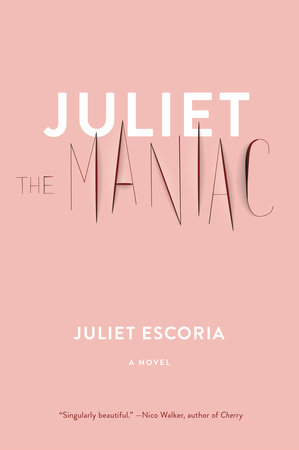
Juliet the Maniac by Juliet Escoria

Juliet the Maniac by Juliet Escoria

Escoria writes from personal experience in Juliet the Maniac, a fictional memoir of a teenage girl at a therapeutic boarding school. Told through hallucinations, notes, and patient logs, Escoria writes about bipolar disorder and the tumultuous journey to recovery in a raw and heartbreaking prose. Juliet’s time in the institution coupled with her seemingly unqualified health professionals reveals the complexities of being a young woman living with mental illness

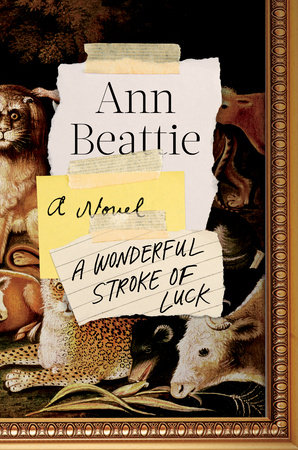
A Wonderful Stroke of Luck by Ann Beattie

A Wonderful Stroke of Luck by Ann Beattie

In A Wonderful Stroke of Luck, Beattie employs the shrewd and wry prose typical of her oeuvre. The intentionally meandering plot follows Ben as he starts attending a fictional elite New Hampshire boarding school. At Bailey Academy, he is surrounded by competition, privilege, and the pressure to succeed. With deft transitions into the minds of the characters in Ben’s life, Beattie explores the mental map of a generation coming of age during the 9/11 attack.

Tradition by Brendan Kiely

In the past decade, the misogyny that runs rampant in elite prep schools has finally been exposed. In Tradition, Kiely questions the gender divide that plays a key role in the traditions that keep school spirit alive while simultaneously forcing female students into silence. The novel follows Jules and Jamie, two students at the Fullbrook Academy, who feel—for different reasons—that they don’t belong in their tony boarding school.

Image result for town boy lat

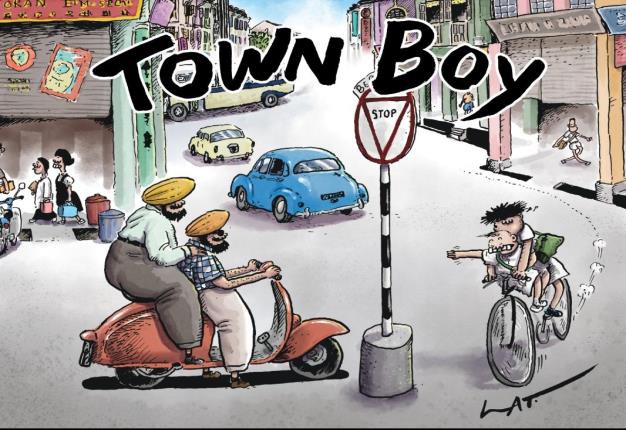
Town Boy by Lat

Cartoonist, Lat, brings readers to the industrial tin-mining city of Ipoh in Malaysia with his stunning drawings and sparse writing in this graphic novel. Set in the 70s, Town Boy is about Mat, a teenage boy who leaves his family and village behind to attend boarding school in the city. A charming coming-of-age tale, Mat is exposed to a multicultural community, falls in love, and discovers a love for the Beatles. 

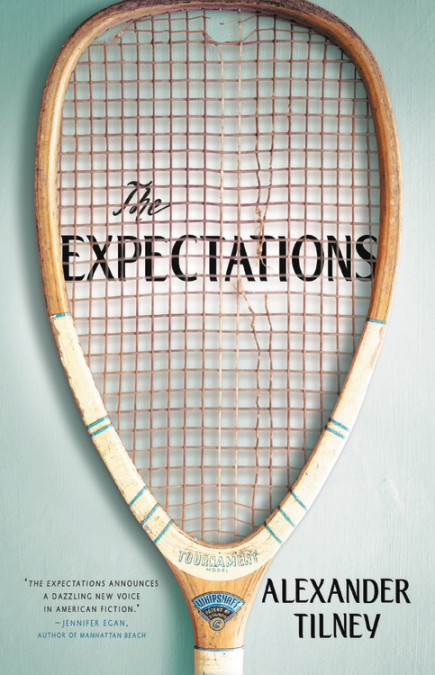
The Expectations

The Expectations by Alexander Tilney

Along with deep-rooted misogyny and archaic traditions, elite boarding schools also come with a wealth gap where popularity is defined by money and esteemed surnames. Tilney examines these socioeconomic issues in The Expectations. Set in a New Hampshire boarding school, Ben and his Dubai-born roommate Ahmed navigate the complex and fluid nature of teenage social life in a space dominated by blue bloods

Never Let Me Go by Kazuo Ishiguro

Never Let Me Go by Kazuo Ishiguro

The boarding school in Ishiguro’s Never Let Me Go is a lot more sinister than the other schools on this list. Spoiler alert: the children at Hailsham don’t attend school to become the next generation’s leaders, but to be bred as organ donors as soon as they’re mature enough. Ishiguro uses this dystopian world and his enchanting characters to examine the existential and ethical questions that plague our reality.  

Prep by Curtis Sittenfeld

Prep by Curtis Sittenfeld

Prep begins with Lee leaving her solidly middle-class family in South Bend, Indiana to begin freshman year as a scholarship student at Ault, an expensive private school in Massachusetts. Awkward and more than a little dorky, Lee doesn’t know where or how she fits into the complex social hierarchy of her new school. Set over four years from the first day of school to graduation, the novel shows Lee’s gradual transformation and highlights the inaccuracy of our perception when judging our peers. 

Old School by Tobias Wolff

Old School by Tobias Wolff

Set in the 1960s, the unnamed protagonist, a thriving writer and scholarship student, enters a literary competition held by his school. The ensuing rivalries accurately portray the toxic masculinity and ruthless ambition that rages in all-male boarding schools.

The Secret Place

The Secret Place by Tana French

Tana French takes a murder mystery to a boarding school in the fifth book of her series Dublin Murder Squad. Set in Ireland, Detective Stephen Moran is called to solve the death of a boy whose body was found at an all-girls’ boarding school. Along with the page-turning tension of a mystery, French deftly tackles the tension of cohabiting teenagers who spend every moment together at the fictional St. Kilda’s.

White Writers Pushed Me Out of Fiction and Into the Essay

“Nonfiction,” I said, when we had to go around in a circle and define our work at an artist’s residency in Minnesota. “I write nonfiction.”

“You said nonfiction twice,” said a very straightforward Dutch artist. “Like you want us to be extra sure.”

Trying to declare a genre for one’s entire body of work, past (20/20), present (sure), and future (how can you be so certain?) is a disingenuous if not fruitless exercise. My current project––on tigers, mental health, and the cultural fixation on wellness––may very well never be completed, and I could move on to work in any number of other forms. But perhaps my move from fiction to nonfiction was a more conscious one. 

I had originally gravitated to fiction as a way to escape the reality of my life.

I had originally gravitated to fiction as a way to escape the reality of my life. I started, as many writers do, as a doodling teenager, dreaming of somewhere else. Later, when I began writing essays, I felt like I was giving up some of the prestige associated with novels and short stories. Nonfiction was still considered, at least by my peers, a lesser form. It seemed so much harder to construct a believable world out of nothing—or at the very least, construct a world away from one’s own.

Annie Dillard felt differently. In her 1988 introduction to the Best American Essays, Dillard––who once taught in the same classrooms I slouched in during my undergrad––had prophesied that the “narrative essay may become the genre of choice for writers devoted to significant literature.” Unlike reaching for metaphors or “fabricated dramatic obsession,” the essay makes sense of the real world analytically or artistically. It is versatile, expansive. “The essay’s materials,” she believed, “are larger than the story’s.”


The first essay I ever read was Brian Doyle’s “Joyas Voladoras.” To start, Doyle considers the hummingbird’s heart, the size of a pencil eraser, “a lot of the hummingbird.” The essay is equal parts science and love. Lean, elegant, and virtually perfect, “Joyas Voladoras” is what I would call a “go-to”: useful to send to friends in times of enveloping grief and ecstatic love, imperative to read when nothing else will reach me. 

A professor of “Writing the Essay,” a mandatory course at my first college, assigned us Doyle. In the previous class session, I’d foolishly turned in a short story, playing fast and loose with my interpretation of the course title. The professor sat me down and asked: “Did this really happen to you?” It hadn’t. I was seventeen, flippant, and conscious of secrets. I held truth to be an intensely private experience, and after a lifetime of secret-keeping, had only one toolkit to tell stories. It was fiction: supernatural, psychological dramas situated in everyday life, often ending in murder by unlikely forces.

But fiction soon began to let me down. Professors would compare me to Jhumpa Lahiri, with whom my work had little to nothing in common, and congratulate  me on my “exotic looks” that would “go far in publishing.” When I took narrative risks, my peers would praise me for moving past the “same old boring immigrant story.” Every classroom would feature at least one white man whom the professor and other classmates would dote on, convinced they were witnessing a young Carver or Vonnegut. Writers, I learned, were measured by how distant their writing was from the entire class’ experience of life. 


It was the last writing workshop of my undergrad. I submitted a short story called “Clocks.” It was about a male writer, drunk and hoping that, if he switched to a typewriter, it might inspire him through a bout of writer’s block. Instead, he ends up fucking his maid, fucking his fiancee, and then gets fucked by a ghost, who kills him. 

When I took risks, my peers would praise me for moving past the “same old boring immigrant story.”

During my previous crit, my peers had personally consoled me  after reading a short story where the main character––a teenager in the Midwest––processes a violent assault that happened while she was protecting her younger brother. Yes, I had a younger brother, and once upon a time I’d lived in St. Louis, Missouri. But the uneasy feedback session triggered a new plan of action: I changed the names of my main characters in “Clocks,” which would be my final story. Originally called “Raj” and “Chaman,” I made them “John” and “Charles.”

Yes, the ghost sex-murder plot line made many people uncomfortable, myself included. But I was met with a degree of praise. “Congrats on coming out of your comfort zone,” said a white classmate. The workshop favorite, a burly white man who possessed an inexplicable sway over the petite white teacher, told me he thought it was “rather good.”

It is no secret that the writing of the marginalized is often read as autofiction. It is also no secret that fiction can be a cathartic way to reinterpret trauma and personal history. I knew after that workshop that any fiction I wrote would be measured doubly: against the writing of literary heroes whom I did not emulate, and then against an arbitrary standard of “is this interesting or is it just niche?”

Fiction now felt tyrannical. I had inadvertently gotten caught in a submissive relationship to it; one in which I had to minimize myself in order to feel authentic to the form. I gradually realized didn’t like writing anymore. I half-assed a translation of a Hindi poem and gave up. I tried to start a blog about a decade after the form’s true heyday. The experiments of writing continued—but the joy was forgotten.


In the beginning, trying to write nonfiction felt like giving up—a concession that I had no imagination and my impulse to write was “feminine,” confessional. The derision that meets essays written by anyone other than old white men is rank with misogyny and snobbery. The urge to share personal stories is universal, but certain people are kept from it by a society where divulging is associated with impulsivity. And yet those same people are rewarded for baring all with page views and low freelance rates, because the mainstream’s thirst for narratives of suffering is hard to slake. I thought that “real art” was found in glimpses of the self through layers of expression; anything simpler felt basic. Committing the personal to paper felt like a series of betrayals.

Committing the personal to paper felt like a series of betrayals.

I ended up in a nonfiction workshop in a liberal studies graduate program, my hand forced by the course catalog. I walked into that workshop with hesitation: after all, wasn’t writing a really good short story a lot harder than an essay or, as some said, even a novel?

We workshopped essays ranging from stories of unloving husbands to the history of boxing in a small town. I read copiously, surprised by a hunger I hadn’t felt before. I was searching not for truth but how the writer came to that truth––it became apparent to me that essays come after radical personal growth. 

In every session with the nonfiction professor and my empathetic peers—“mature” students with full-time jobs, a far cry from the private school-educated classmates who used the word “inchoate” excessively—I had some sort of revelation, miniscule as it was. I thought deeply about why I read what I did and wrote my first essay as a photo-text series on where I kept books around my cluttered apartment with that grimy grey carpet. I experimented, with joy. I wrote a series of essays and turned it in as my master’s project. I kept writing, keeping a list in my journal of ideas. I’d get bored, and I’d write an essay. I tell people I write nonfiction not once, but twice.

But even now, I’m not faithful to nonfiction. I wrote my first short story in years this March, after a residency in the Catskills. The innkeepers had given me The Friend, a deliciously succinct and poignant work about grief, connection, and the preposterous endeavor of devoting a life to writing. It felt more like nonfiction than anything I had ever written, by which I mean it felt true. I wrote a story that was perhaps in conversation with the book, critiquing pet culture and the need for love. It was clumsy; I was out of practice.

I worry whether it is useful or smart to identify with nonfiction; I wonder if I’ll wake up and realize I’ve just been playing to the establishment’s self-soothing desire for diversity and ruined both my credibility and my imagination. I am terrified that I will have said too much.

The genre-izing of every serious writer is inevitable, if we are writing for a mainstream market. It’s impossible to be proficient in every form. But I was pushed out of fiction by the white canon, unthinking peers, and my ruined pride, and I found my way to nonfiction. Despite its proclivity to mine trauma, the form has embraced all the idiosyncrasies of my writing and my life. Writing life feels simple. It feels true.

7 Books About Magic Doors for the People Narnia Left Behind

You know how these stories go: Someone, a misfit kid or an English schoolgirl, finds a mysterious door—and of course she walks through it, because she is a protagonist. The door leads Somewhere Else, where she faces trials and adventures, saves a kingdom or two, and returns in the final chapter to our own humdrum world.

These are stories about prophecies and pixie dust, about Wonderlands and Neverlands and those too-brief years when we are young enough to believe that, this time, we might find something other than old coats and mothballs in the back of the closet. They are pleasant, whimsical fantasies. 

Buy the book

But they are also—particularly if you squint too closely at their rotten nineteenth-century roots—colonial fantasies. Take Narnia: an imaginary kingdom in desperate need of four white foreigners to rule it, populated by grateful talking animals rather than resentful natives. Lewis imagined the perfect colony, at a time when Britain’s actual colonies were increasingly fractious.

Like most oddball kids stuck in inhospitable environments (rural Kentucky, mid-1990s), I wanted very badly to find my door, and made do with books. When I eventually wrote my own (rural Kentucky, mid 2010s), I wanted to write the same kind of whimsical, through-the-wardrobe fantasy that I’d loved as a kid—but I wanted to turn it inside-out and backwards. I wanted a Narnia without kings or queens.

I am not, of course, the first to decolonize the idea of the magic door. Here are seven other books whose doors don’t lead where you would expect.

His Dark Materials: The Golden Compass (Book 1) by Philip Pullman

The His Dark Materials series by Philip Pullman

On paper, Philip Pullman’s protagonists are excellent candidates to discover a passageway to another world and end up illegitimate monarchs. Lyra and Will are both intrepid, unsupervised English schoolkids, with at least one quasi-Biblical prophecy concerning their futures. But when they find ways to other worlds—through cuts in the air, near-invisible windows that I’m counting as doors—they don’t come as conquering heroes. Instead, they participate in a multi-world revolution against the Authority and reenact a second Fall from Eden. I can think of nothing Mr. Lewis would like less.
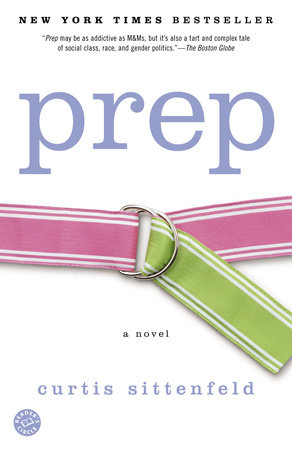
Strange the Dreamer by Laini Taylor

Strange the Dreamer by Laini Taylor

Most books about magic doors begin with the journey through the door and end with a battle. But Laini Taylor’s Strange the Dreamer duology is interested instead in the long, tangled aftermath that follows the battle. Imagine god-like strangers had slid into another world and crushed it beneath their boot heels; imagine the native citizens had one day risen up to slaughter their oppressors in turn; imagine five children surviving, navigating the scars where two worlds collided. In Taylor’s books, conquest is not a childish dream, but a terrible reality.

The Light Between Worlds by Laura E. Weymouth

Laura E. Weymouth’s book is also concerned with aftermaths, but hers are the intimate, personal aftermaths of human hearts. Philippa and Evelyn Hapwell are sisters who found their way to the Woodlands during World War II, but are trapped now in our own dreary world. Instead of confident child-queens, like Susan and Lucy, the Hapwells are just two lost girls. Aslan’s famous pronouncement—“once a king or queen of Narnia, always a king of Narnia”—has been replaced by a more wistful, personal promise that “a Woodland heart always finds its way home.”

Every Heart a Doorway by Seanan McGuire

Seanan McGuire is worried about the kids post-wardrobe, too. Her Wayward Children series takes place in a boarding school for children who have fallen into Wonderlands and come back haunted and homesick. While the doors the kids find are very familiar to fantasy readers, the children themselves are less so. Instead of straight, white, middle-class-ish kids named things like Alice or Edmund, Eleanor West’s Home for Wayward Children is filled with outcasts and misfits, the people shoved into the margins of our world and obliged to find others.

Coraline by Neil Gaiman

Neil Gaiman’s Coraline takes the cozy story of the little English girl finding a door—think of Lucy and the wardrobe or Mary Lennox and the secret garden—and makes it into a nightmare. Where other little girls found pleasantly untidy worlds in need of their civilized, domestic presence, Coraline finds a trap: a twisted mirror-world meant to lure her deeper, a gingerbread house constructed by her Other Mother. It is, like all the best horror, an inversion of a story we thought we knew well.

House of Leaves by Mark Z. Danielewski

House of Leaves by Mark Z. Danielewski

House of Leaves is what might happen if Coraline grew up and got an MFA. It’s an epistolary horror novel concerning a house on Ash Tree Lane, where a doorway appears that shouldn’t exist. It leads to an endless labyrinth of cold halls and a staircase that spirals down into an abyss, and the single scariest piece of wordplay in English literature (when the little girl asks her father to play always with her, he later realizes what she was really saying: hallways). It’s not a stretch to read House of Leaves as a colonial fantasy gone terribly wrong—the homeowners mount expeditions into the hallways, armed with maps and compasses and guns, and it ends poorly. This frontier has fangs.

Exit West by Mohsin Hamid

Exit West by Mohsin Hamid

In some ways, Exit West is the most thorough reclamation of the magic-door trope. Instead of doors that lead to other worlds, Hamid’s doors lead to different places within this one. Instead of permitting only the chosen few children through, these doors are used by thousands of fleeing refugees. Instead of white children colonizing imaginary frontiers, the citizens of the unnamed frontiers invade the metropole. Instead of a Victorian fantasy, Hamid’s doors are a Victorian’s worst fear.

Mary H.K. Choi Thinks That Instagram Is Doritos

Mary H.K. Choi needs no introduction. But I’m told I need to write one anyway, so I’ll use this space to tell you a few things I know to be true about her: She is a world-class connoisseur of all things bodega snacks. She is a believer in the evergreen nature of true coolness. And her new novel, Permanent Record, is a love story as vibrant and multi-faceted as the city its set in.
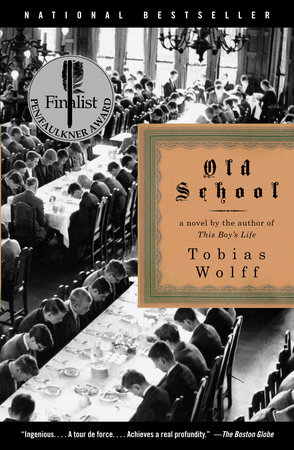
Permanent Record
Buy the book

Pablo, the book’s protagonist, struggles to balance a new relationship with a glamourous global pop star amidst a life in crisis, and its that—as much as the references to bodegas and Manhattan streets—that give the story its decidedly New York energy. Choi writes the New York City that I ran to when I, like Pablo, was on the precipice of the next big chapter of my life in all of its messy, complicated, beautiful glory. And it manages to remind me that just like Pab and his love story, just like this city, we’re all a little messy, complicated, and beautiful, too. 

Choi and I got to chat about the role of memes in the writing process, weaving a cast of characters that feels true-to-life, and interrogating the student debt crisis on the page.


Leah Johnson: Emergency Contact was such a huge hit in all of my circles—even folks who don’t believe themselves to be YA fans. What were your priorities when writing this novel—like the things you absolutely wanted to accomplish—especially in knowing that your debut resonated with readers so strongly? 

Mary H.K. Choi: When I’m inside a book I can barely look out of the eyeholes. I have very little sense of proprioception so steering any of it according to what I think will resonate with readers and what people will enjoy isn’t something I know how to do. It’s something I can waste a lot of time and energy trying to do.

With Permanent Record I knew I wanted to set a story in New York. And I wanted it to be a romance not just between the two main characters Pablo and Leanna but also between Pablo and his friends, his city, his family and the value he brings to his own art and creations. It’s also heavily influenced by this rhythm to the way New York people talk that I’m absolutely captivated by. 

Everything sounds like a snap or a joke but it’s cut through with so much love and familiarity. There’s an intimacy that’s foisted upon you by scarcity and proximity and you’re forced to support people and accept support in deeply uncomfortable ways. You can’t hide your shit. I knew I wanted to write about that. 

LJ: I hung out with my 17-year-old niece the other day and realized how wildly uncool I have become, even though I’ve always thought I was The Cool Aunt! The way teenagers live online now versus the way we existed online when you or I were teenagers feels so different to me, so I’m wondering how you think through and adapt to that change in your work?

MHKC: I mean, leaning all the way into deep uncoolness is a gift. It’s worth earning. Especially given the accelerated pace at which culture changes where obsolescence is near-immediate. But even talking about the state of uncoolness is really a phenomenon particular to those moments when you only first realize you’re not young anymore. It’s still shot through with the hope that someone will pipe up and be like, Nah, you’re still cool and cite some irrefutable examples. 

But true cool is evergreen. It’s kind of hilarious how uncomplicated it is and how little it changes. We love ingrained hierarchical structures. Those are just our ingredients. So much so that there’s always charisma in being sincerely indifferent to however coolness is defined. As long as you remember that there’s nothing more douche chill-inducing than the old person making declarative or prescriptive statements under the guise of “knowing what’s up” I think you’re OK. So I try not to do that. I’m not saying there aren’t objective differences in this generation from previous ones but otherizing teens because of Instagram, TikTok or Fortnite is being willfully obtuse.

Books take forever to write and an eternity to come out. Talking about trends is pointless. All I can do is tap into things I know to be true: everything is intense, friends are so important they may as well be celebrities, anxiety sucks and young adults are gobsmackingly resourceful when it comes to some things and heart-squishingly callow at others. I focus on interiorities. And how seismic the smallest things seem when they’re happening to you for the first time. 

LJ: Part two to that question is: HOW DO YOU STAY IN THE LOOP??

MHKC: Short answer: memes. Also, lurking people who lurk the right people. I’m still interested, I’ve just capitulated on the need to be the expert. Dodai Stewart is a fantastic purveyor of international and domestic TikTok memes. Aminatou Sow’s Instagram stories are as vital to me as regular news. Also I enjoy the Anti-Pop Spotify playlist (even though I think the viral hits playlist’s algo is suspect). Naomi Zeichner’s Shabbat Shalom weekly roundup of new music is very solid. And talking to my friends’ kids about [YouTube] beefs because those fiefdoms are fascinating. 

LJ: Both Emergency Contact and Permanent Record critique digital spaces and digital performance without creating a hierarchy of “this way of interacting with a human—in person, for instance—is more valid than interacting with them via a screen.” How do you strike that balance? 

MHKC: I knew that I wanted both books to navigate liminal spaces and the way intimacy develops when you’re totally unencumbered by your meat suit and proxemics and eye contact and how new your sneakers are. But it’s not a balance not really. It’s about teasing the tension and drama when logistics go awry when you go from having constant access to not being able to physically be together. 

Instagram is Doritos. It’s a weaponized diversion in the sense that it is optimized for addiction and designed to avert satiation.

But my favorite thing about using the internet and social media as a part of the story is that trick of the mind, that glorious plasticity of how we accommodate new communication modalities and stitch it all together to assemble what we know of a person. It’s like how you read words without vowels without skipping a beat. Nowadays you’re never like, oh this person said this meaningful thing and then parse the weight of it based on whether they said it to you in person or in a WhatsApp voice memo. It all goes into a general folder of goodfeeling that you associate with them. Of course, there is the performative aspect of the idealized hologram version of you that you’re swanning out into the world with social media but everything that goes down in the DMs engenders intimacy. I find it a lot easier to ask for help via text and voice memos just as I find it a lot easier to give help. 

That said, for me touch is crucial for intimacy, the pressure of a human body against my own and meaningful eye contact in times of conflict resolution but it’s important to acknowledge that it’s not actually the case for everyone. And that’s beautiful too. I have terrible social anxiety so groups can make me completely shut down and dissociate whereas group chats can be delightful and edifying when I need a chorus of support. 

LJ: You sometimes call social media an “instrument of self harm,” which I thought about often as I watched the ways Lee’s public persona affected every relationship in her life, including the one with herself. When you started working on Permanent Record, how were you thinking about the harm differently in this novel than the last?

MHKC: Instagram is Doritos. And I talk about it in the book. It’s a weaponized diversion in the sense that it is optimized for addiction and designed to avert satiation. And social media is a taxonomical prison. That’s the whole inspiration behind the title, this notion that your permanent record or all the metadata that quantifies your worth follows you around. It’s weird in how much it can feel permanent and predetermined when you have to seemingly carry your childhood mistakes around with you for the rest of your life. 

In Emergency Contact social media was barely an issue beyond how Penny used it to terrorize herself about her own inadequacies as it related to Sam’s ex. But for this book, the magnitudes are so different. Lee is famous. Mega-famous. If Pablo says Lee’s Instagram is harming him, that’s like taking the price of oil futures personally. The solution is so easy. Stop going there. Being butthurt at Disneyland or Beyoncé or Coca-Cola because you’ve skewed your self-perception to where you feel threatened by astronomical success of multinational conglomerates is a bad scene. That way lies madness.

The wild thing is, everyone can relate to this. Feeling as though someone else is best life-ing at you. 

And when you’re viewing yourself from the outside you just become this weird audience member to your own existence and before long you line yourself up in a race of your own making that has celebrities and the occasional dead icon mixed in where you all scrabble for stardom and happiness. It’s awful. You will always fall short. It’s all such a trap and at odds with contentment. The thing I try to remember is that Phoebe Waller-Bridge doesn’t have social and how fucking baller that is. I’m so curious as to whether or not I’ll one day have it in me to do that. I would probably miss my friends. 

LJ: So much about this book is fantastic, but what really struck me is that among the other drama Pab is dealing with, perhaps the most pressing—externally speaking at least—is his crushing debt. I haven’t seen many books aimed at teenagers talk about what it means to be a freshman in college, taking out loans and credit cards that can follow you for the rest of your life. Did you head into this story knowing that you wanted to tackle the debt crisis in this way, or did it just naturally evolve as you fleshed out who this character is?

MHKC: I read something that the student loan debt right now is hovering at about 1.5 trillion dollars. Trillion. I’m not going to launch into a diatribe about the systemic failings of for-profit college systems that function primarily as real estate companies but just that number trillion. When you’re confronted by a total clown number you stop counting and want to lay on the floor and expose your underbelly and get it over with. What are you supposed to do with that? Nothing about that number or whatever portion of that number is your particular number inspires you to create an action plan. You can’t chip away at these interest rates the way the loans metastasize. It’s all so staggeringly broken the way the system privileges the same people over and over. 

And I’m not saying that Pablo isn’t lucky—he is absolutely. But the second he faltered and failed out, that’s kind of it for him and whatever version of a life he thought he was working towards. I don’t know that I knew I wanted to deal with the debt crisis but in interrogating what a college-aged person was thinking about and preoccupied with, there’s no way to not address it. It’s so mercenary and predatory, it’s obscene. But it’s a racket and bum deal that we all buy into. Jacking up the cost of college to the point where you’ve mortgaged your future upon graduation is dystopic. It’s arguably the most fucked up thing you could do to someone who isn’t an adult yet. How do you make any decisions when failure will ruin you? 

LJ: I don’t know if it feels like this for you, but as a writer of color, I’m always considering ways that I’m writing into and writing against images of blackness I’ve seen throughout my life. I was thinking about this in Permanent Record quite a bit because of Pab’s self-awareness about his family and what stereotypes they play into and play against. 

In Emergency Contact, Celeste pushes back on the image of the “tiger mom,” and in Permanent Record, with Pablo’s mom, you aren’t doing that in quite the same way. I guess this is a long way of asking: Can you talk about how you conceptualized that shift in this book versus the last?

MHKC: I love Celeste. I loved the idea of a flaky Asian mom who doesn’t wear pants and shuffles in her Rocket Dog platform flip-flops and drives her daughter crazy. It’s like Edina Monsoon meets Bai Ling meets whatever energy makes Kylie Jenner seem convincingly 18 and 34 at the same time. But for Pablo and his mom I wanted that ambient wall of expectation and shame erected between them and I wanted to create a space to explore a lot of the intergenerational baggage that comes with being the mixed-race firstborn male son because that’s a true story as well. 

Jacking up the cost of college to the point where you’ve mortgaged your future upon graduation is dystopic.

Occasionally I’ll feel personally called out whenever someone on Twitter beefs about having to read yet another first-person essay about how orientalized they felt because their lunch smelled weird and the feelings of exclusion through the white lens and proximity to whiteness but the thing is, I’ve written that essay because that was a real thing that happened to me. I grew up in a British colony and then moved to a subdivision in a suburb of San Antonio. I didn’t grow up in Arcadia with the Asian mall as my mall eating ube pastries to the face and french fries with a grip of furikake on the top. 

I definitely see how so many of these narratives are commissioned by white editors and how that skews things. But I also wanted to explore the long shadow of expectation that might seem much more a part of the model minority myth or Tiger Mommishness because these tropes and stock character types merit exploration too. Even if they feel shopworn to some. Pablo’s mom isn’t a Tiger Mom because she needs her sons to be doctors. It’s because she is terrified by all the things that terrify all parents of all cultures since time immemorial. Honestly, how is a mom who wants her kids to be doctors or lawyers and do well in school not Nigerian? Or Pakistani? Or Haitian? So many immigrants believe that a scholastic pedigree levels the playing field. That you can only be safe if you’re tethered to a massive institution or industry and how name-brand schools are that lingua franca. 

I wanted to show the frailty of that. With Emergency Contact it was all about having one parent and that was so much fun to write but in Permanent Record I really wanted to dive into a loving, nuanced relationship between an East Asian mom and a South Asian dad. Bilal, Pab’s father is the most emo, most wavy patriarch ever. That was super important to me, figuring out the best character who would play as a counterpoint to the fallibility of the way Pablo’s mom Kay sees life. And someone who upends narratives and expectations around ambition, success, masculinity, and contentment on a moment-to-moment basis. Bilal was awesome to write. I want to hang out with him so bad. 

LJ: In honor of the iconic Instagram @Munchies_Paradise, what is your go-to snack and sneaker combo?

MHKC: Comme Nike Cortez platforms and Flamin Hot Funyuns. Oft-slept-on classics with a heavy twist. 

From Here Your Future Looks Very Small

 The Day is a Manhole

 The day is a manhole you drop into
 in broad daylight. Everything had been
 quite fine, though
 the electronic chirps of birds from the far east 
 roused you from an early dream in which 
 women were heaving their bodies 
 like Rusalkas into the sea. The way he squeezed you 
 was criminal. The way your future looks from here
 is very small. Through a telescope 
 you can see him by the pool, his pale children
 in their suits. He cannot hear Jeanne-Marie Darré 
 playing Chopin’s waltz
 or Rimsky’s Scheherazade popping with age 
 on the record player by the open window. 
 And outside? Miles
 of trees, reddish crowns you are too late
 identifying as fire, an emptiness both familiar 
 and penitent, like wondering 
 about a particular sign that says CAUTION
 as you’re falling. 

Birds in Space

On the list of things I can live without: 
tomato slicers, wedding speeches,
miniature replicas of the world’s majestic structures. 
The towering Cyclone with its 60-degree 
plunge. Everything starts somewhere, most obviously 
in the body where the multiplicate cells split 
and copy, 50 billion of them a day, while the nerves leap
and desist in turn. So many things designed 
to prompt them! The Romanian sculptor and his birds 
in space. Subjective sensations argued 
by Schopenhauer. Artificial lights; 
county fairs. I don’t want to get stuck 
in a car chain-linked to other cars, creeping up the back rail
of a trestle. I don’t want to be taken inside any
leery version of something else, debating the Principle
of Sufficient Reason, thrown into space 
and held there in a rusty portal
to bliss. At Coney Island, the benches line the boardwalk
like Neolithic stones to the Fun House. 
In the Hall of Mirrors, your actual body cannot 
be found. Each convexed figure peers out from the infinite, 
the thrill in the ad infinitum, the fun a vacuum 
of your own repeating face. 

Writing About Black Lives Matter in 2019

Melanie Hatter’s Malawi’s Sisters depicts an event taken straight from the pages of our national news. Malawi, a young Black woman from an affluent family in Washington D.C., gets into a car accident in Florida. She stumbles onto the property of a white man in search of help but is shot and killed. Through this murder, Hatter explores race, guilt, grief, confronting one’s own bigotry, and respectability politics, but mostly the inner workings of a family left to contemplate what it means to lose someone in such an inexplicable way. In choosing this book as the winner of the inaugural Kimbilio National Fiction Prize, Edwidge Danticat said, “This story is both timely and well executed. We rarely see the private side of the devastating aftermath of police/vigilante/help-seeking and shot-related deaths that this writer describes here in such a suspenseful and nuanced manner. This is the kind of book that might encourage and inspire in-depth conversations and discussions, and help readers think more deeply about a subject they might have mistakenly thought they knew all about.” 

Buy the book

Melanie S. Hatter is the author of two novels and one short story collection. Her book, The Color of My Soul won the 2011 Washington Writers’ Publishing House Fiction Prize. She is a participating author with the PEN/Faulkner Writers in Schools program in Washington D.C., and serves on the board of the Zora Neale Hurston/Richard Wright Foundation.

I spoke with Melanie about how to write about grief, how class operates within the Black community, and what Black writing organizations provide for aspiring and published authors. 


Tyrese L Coleman: Malawi’s Sisters comes straight from the headlines. You mention it in the back of the book that Renisha McBride was the push you needed to complete the novel. What, specifically, about her story made you want to get into this issue?

Melanie Hatter: It was a year after Trayvon Martin and there were a lot of headlines about shootings—vigilante and police shootings—and I think what horrified me the most was that this man thought that it was okay to just shoot someone through his door. It wasn’t someone who was climbing through his window, not someone who had broken in, not someone who was inside his home. Renisha McBride was someone who was knocking on his door. I don’t know. It just sort of hurt. It was one of those stories that stuck with me. My son is a little older than Trayvon would be, and so when that happened it felt like it could have happened to my son. And then with Renisha, I thought about myself as a young woman. I remember my car breaking down on the side of the road and seeking help. You don’t think, “Well maybe I shouldn’t go and knock on the door because they might shoot me.” You just think, “Hey, I’m in crisis and I need help.” It’s just not the way the world should be.

A couple of years prior to that, I had started a story about these two sisters, but I couldn’t quite figure out what the story was. I knew one was in a troubled marriage, and I knew that the other one was also having trouble, but I just couldn’t quite figure out what the story was. In the months that followed after Renisha’s shooting, these two characters talked to me, and I could hear them saying, “This was our sister.”

TLC: Do you see any changes with the way our country responds to incidents like police and vigilante shootings since that time? 

MH: Renisha’s shooting took place in 2013, but the book is present day. In terms of the news that inspired the book, it felt like, at least at that time, it was incessant. You would see something every other day.  Almost every other week we were hearing about a police shooting. I feel like we don’t see those headlines in quite the same way. As a society, we’re dealing with so much trauma in terms of the [presidential] races and the hatred. There’s so much of it. Some of those shootings are not getting the same kind of coverage because it’s not news anymore, unfortunately. We’re dealing with even bigger things. Mass shootings are happening and even those are starting to become part of today’s society.

I’m hoping that, through fiction, we can reawaken to reality.

What I’m hoping is that, through fiction, through this novel, we can re-awaken. Through fiction, we can awaken to reality. I’m hoping that people will read the story and start to think about the world we’re in right now and what needs to change.

TLC: That brings me to one of the things that I thought was well done, which is the different ways each character approaches their grief. What you’re saying in terms of being desensitized is that we’re all just kind of tired of grieving, a kind of grief fatigue. I see that in your character Bet where she is tired and depressed, but it feels like she’s so exhausted that she can’t even grieve. What did it take for you to get into that mind space? I would imagine that writing four characters who are all suffering from so much grief would have some effect on you.

MH: That’s an interesting question. I was IN this for a couple of years. I took a month and went on a writing retreat in Bali and this was where I wrote the bulk of the first draft. I was in this oasis, really, in Bali. I was there with about 30 other writers, mostly women, and we created this sisterhood and it was such a warm and nurturing and caring environment that I was able to kind of go into this darkness. But then, at the end of the day, come out of it and be with this sisterhood and be in this beautiful place. I think initially, at least through that first draft, I was able to have that kind of balance.

When I came back to the U.S., of course, there was this heaviness and sense of urgency around getting the story finished because there were so many headlines. It just seemed that every time I turned around, there was some version of my book happening in the news. How I emotionally got through that? I tried not to watch the news. I really found myself not tuning in. I don’t really watch the evening news anymore. I just stopped because the visual of it was just overwhelming, and I would be in tears at the end of the day, so I stopped.

The day my book was released was the same day of the massacre in New Zealand. It was supposed to be this great day of joy for me, and yet the headlines were coming out from New Zealand. It was a challenging day for me because I wanted to celebrate but at the same time it’s tough to celebrate a book talking about hatred and grief and how to deal with that.

It seemed that every time I turned around, there was some version of my book happening in the news.

TLC: The reality of the United States is that one part of the country is completely different than another. Malawi is murdered in Florida but she is from Washington D.C. and that is where her family lives. Most of the book takes place in D.C., formerly known as “Chocolate City.” A lot of us in the Washington DC area, and I assume New York and other large cities, feel incubated from other parts of the country we often see portrayed as having a “less than enlightened” look at the way society should work. In D.C., a Black family can be affluent, but that same person can go somewhere else and not be respected in the same way.

MH:  This was Chocolate City. It is changing now, of course, but I think in many ways Black D.C. was insulated because the majority of residents were Black. There was this culture of Blackness. There were all levels of economic status. You could easily grow up in D.C. and feel very privileged and that all the bad things that happen in the world don’t affect you. That was what I was looking at with Kenya, specifically. She has that sense of “we’re good people, bad things shouldn’t happen to us.” But this city is changing. Things are not quite as they were.

The shooting, of course, doesn’t happen here. It happens in Florida. The reason I put it down there was a nod to Trayvon. But it also had to be in a Stand-Your-Ground state. Florida was a place that I thought Malawi would go to. I wanted to have a Black, well-to-do, D.C. family deal with what so many communities are dealing with across the country.

TLC: For people who aren’t used to the Black affluence in the D.C. area it can be quite shocking, especially when you go to certain parts of Prince George’s county because it’s mostly Black people living in mansions and you think these people are insulated. But toward the end, Kenya and Ghana, Malawi’s sisters, create an organization that is meant to be a support group for families who have suffered from police and racially motivated violence. Part of that is how you confront respectability politics. The idea that, if I am respectable like Kenya these things won’t happen to me. And there’s one particular scene where Kenya is involved in a very minor accident, and she is afraid of the guy who gets out of his car. Can you talk about the contradictions in that scene and what you were trying to express?

MH: The thing about Kenya is that it’s all about presentation. She’s very caught up in how she looks. She really has trouble getting below that surface to the real stuff. I wanted to explore that, even in the Black community, whether we want to admit it or not, there is this bias and some feel very privileged and look down on fellow African Americans who are poor, who are not as well educated. Here, Kenya is faced with someone who has a stereotypical “Black thug look,” and it scares her because it’s not the world she knows.

It’s part of humanity. We get in this clannish kind of mindset and want to separate ourselves.

I think that often times within communities we have that sense of you’re not the same as me because you live in Southeast [D.C.] versus Northwest or because you drive this kind of a car, or because you live in that kind of neighborhood. I think it’s part of humanity. We get in this clannish kind of mindset and we want to separate ourselves. So, for Kenya, she’s suddenly aware of her own fear. It’s an irrational fear. This guy wasn’t packing a gun. He wasn’t threatening her. He had a look and that was pretty much it.

TLC: Essentially, it’s a very similar situation to Malawi’s murder. The person on the other end made assumptions and reacted without considering the situation further and then she lost her life.

MH: Entirely based on race. And again, you were talking before about rich versus poor. Well, here’s someone who comes to your door, he’s got his gun, he’s not thinking “what if she is well off” or if she is rich or poor. He’s not thinking about economics. It’s entirely race.

TLC: But it sounds like it’s also race for Kenya too.

MH: Absolutely. She’s forced to confront her thinking around how she feels about her own people, and how to manage that and deal with her own judgments, her own bias. Because it’s not just race, right? She’s also homophobic. She really is making judgments about same-sex couples, but then she’s sort of forced to think about that in a much deeper, more personal way than she might have if not for her son.

TLC: Ghana, dates a white cop (Ryan). I like the different arguments both Ghana and her boyfriend present regarding Black Lives Matter. And I thought it was interesting how Ryan calls her out on whether or not she has a real connection to the movement or if she is caught up in it because she is Black. Do you think that’s what Ghana’s doing? Do you think that people do that?

MH: Ghana is much more open-minded, but she grew up privileged. She likes to think of herself as “down with the people.” But she has to look at herself a little more closely. Are you really “down with the people” or is it just easier to be that way than to really delve into social justice? Are you really working for the people or just paying lip service? For most of her life, it’s really just been lip service but now Ghana is in a place where she’s starting to realize, wait, I really could do something that could change people’s lives.

She starts to question this concept of interracial couples. She always had a question around it. She had to check with Malawi like, “are you cool with this,” “is this okay,” because she wasn’t really sure. Now it’s coming back to her that maybe this wasn’t the right decision because Ryan represents something that “I don’t want to be a part of because I want to be down with the people and you’re not it. You’re representing the oppressive police.” What wins out? Is it, “I’m going to stand with the people and my social justice thing and push away what it is I’m feeling for this person?” Or is there a way to embrace him as this white cop and still be part of the bigger movement?

In this world that we’re in right now, you can’t write a story like this and not talk about Black Lives Matter.

The book wasn’t supposed to be about Black Lives Matter. I wasn’t writing about the movement, but in creating a story like this, in this world that we’re in right now, you can’t write a story like this and not talk about Black Lives Matter.

TLC: You work with the Hurston/Wright Foundation and this book is also a Kimbilio Fiction Prize winner. What do organizations like these do to elevate Black writers and put forth energy behind us?

MH: Organizations like ours are vitally important, even more so in these times of discord. There are so many amazing Black writers out there and there are so few opportunities to really give them the kind of platform that they deserve. I think both give that opportunity for Black writers to be in a community where they are nurtured, where they feel respected, where they feel heard and valued. There are so many amazing writers who are not getting the kind of respect at the national level that they deserve.

I love working with Hurston/Wright. I’ve been with the organization since around 2012-2013. I started out teaching the teens writing workshops and eventually joined the board. I served as chair for a couple of years. It’s a privilege to be in a position to create that kind of community and to honor some of these amazing writers. The Legacy Award is such an amazing experience. Every time I’m there, I’m just so wowed by seeing a space full of primarily Black writers. The array of talent in the room is inspiring for me as a writer.