Two Families Linked By Secrets, Deaths, and Regrets

Regina Porter’s debut novel The Travelers includes short chapters, photos, and a compendium of voices—a full cast is listed in the front matter. This includes the Vincents, with patriarch “the man James” and his son Rufus; the Christies, headed by Eddie and Agnes with their daughters Claudia (Rufus’s wife) and Beverly playing a substantial part; and the Camphors, whose link to these families is revealed to Hank Camphor at a funeral.
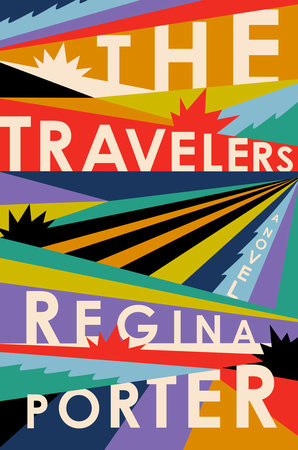
The Travelers by Regina Porter
Buy the book

As a whole this book is reminiscent of a photo album, steering readers through the nonlinear, emotional growth of several families, Black and white, connecting them in 2010 through secrets, death, and regrets. Characters weave in and out of each other’s lives, sometimes by choice or by force, which is reminiscent of reality. Repercussions from war, segregation, and past abuse allows readers to see how much, in Porter’s words, “trauma travels” over time and regions. Each story is at once secular from “the man James” to Beverly’s daughter Minerva to Eloise Delaney—childhood friend of Agnes—and also compellingly tied to the narrative as a whole. 

Though Travelers is Porter’s debut, she is not new to the writing scene, having been recognized for her playwriting. When it came to her novel Porter and I talked a lot about history, its importance in linked narratives such as this, the necessity of hearing a more inclusive and representative record, and how history may not be as much a part of the past as we think it is.


Jennifer Baker: You’ve been a playwright?

Regina Porter: Yes.

JB: Is that something you’re still doing?

RP: Not right now. Playwriting is very interesting. I always joke: with playwriting you need both ears. And when you have children, at least for me in my experience, one ear was always listening to what the children were doing and one ear was always listening for dialogue. And so I started to transition to writing fiction.

JB: So was fiction kind of a sharp turn for you? Or it’s always been part of your writing career? 

I think we’re more integrated and segregated than we’re often comfortable admitting.

RP: I think I used to say even when I was writing plays I wanted to write ones that were like a novel. I think because I was terrified to write a novel. So I want the layers that a novel has in a play. And by layers I think exactly what I did with the number of characters and that sort of movement of the characters in their lives in The Travelers. Sometimes in this world we meet someone once or twice and we never meet them again. Or we meet them once and they’re in a very different place the second time we meet them. And that’s life and I wanted to write something that captured that. I felt fiction was the way to do it. That sort of movement.

JB: Was that also something you found attributed to your playwriting process? 

RP: I think it’s similar, but I think it’s also different because the mediums are so different. Sometimes with a play you can talk your way to the next stage with dialogue. I didn’t think you can always do that with the novel. So when you’re stalled, sometimes with a novel, it can be frustrating in a very different way. But that’s a good question though because now you’re making me wonder. I listened to music. And so music like “Love Child” or whatever that’s language right. That’s dialogue in a way. So that’s filling the void of dialogue in a play. So the volume of music I listened to and the lyrics and stuff might’ve been functioning the way that dialogue in a play functions for me.

JB: Kia Corthron, a well-known playwright, her first novel came out a few years ago, The Castle Cross the Magnet Carter. I love that book. It’s 800 pages quite literally. It’s funny that you both kind of go with these similar themes since you’re both playwrights. You both work on historical novels that look at Black and white families and how they intersect with one another over time to now. Kia also mentioned that she was very interested in how history plays out over time and how it repeats itself. I feel like it also plays such a role in marginalized narratives because the past speaks to the present. 

RP: I think for me I used to say I don’t like history.

JB: Really

RP: What I discovered was it was not that I didn’t like history. It was that I did not like the history as it was told to me as a child. And I knew, but I could not always articulate that it wasn’t a complete history, that facts were missing. Facts that pertained to me and my people.

JB: You could sense that?

What I discovered was it was not that I didn’t like history. It was that I did not like the history as it was told to me as a child.

RP: Yes. I think one of the pleasures of going and writing this book is a chance to rediscover history. For example, the history my daughter is taught at school is vastly different from the history I was taught.

JB: And how old is she?

RP: She is eleven. It’s vastly different.

JB: Different as in— 

RP: Good different, yes. Writing The Travelers was a wonderful opportunity to sort of revisit history. And I include people in history who sometimes are, as you said, marginalized. And talk about someone being biased in a lot of different ways. There’s a way we’re oftentimes more comfortable with someone being, let’s say, an overt racist than a subtle racist. But that’s what happens more often than not, sometimes there is subtle bias on a daily basis. And so complex how we are when we deal with class and race. And I think now of [the characters] Charles Camphor or The Man James saying at one point “Oh I didn’t know” and really meaning that. I guess what I’m trying to say is I always suspect the history I was being taught was far more complicated because of some of the things that were omitted.

JB: Looking at the elements of history woven throughout The Travelers, it’s so critical to building timeline and space. It feels very specific in that way. Historically, New York City was a farming space and it doesn’t seem like that at all nowadays. Now gentrification, segregation are consistently happening, white flight, all this stuff is very much detailed within this book. I’m always intrigued with people’s process when it comes to embedding the historical into a narrative because it’s not an easy thing to actually thread through, especially when you’re going back and forth.

RP: One question that I get a lot is: Why this story now? And I think the questions of the present are embedded in the questions of the past. And we see it politically, we’re still grappling with our inability to discuss race and class. So I think going back and just looking at the character, I had to stop at one point and think “Well how is this character moving through history? And is this character even aware of how history is affecting him or her?” Sometimes the characters weren’t and sometimes the characters were. But as I wrote them sometimes I would pause and I would say “So how much was a bottle of milk in 1966?” And what else was else was happening in 1966 and I would look that up. And then think about and integrate that into that character’s life. And so I think that helped anchor in me in place as did music. So for like a character like Jebediah, well Jeb I would listen to Marvin Gaye’s “What’s Going On?” I think that would be a song he would love. And say for The Man James particularly his father, “It Was a Very Good Year” by Frank Sinatra. And these songs anchored in place. I mean music is a fabulous to anchor one in history and also to allow you to access POV of the character. So I would write the character and then I would pause and look up and say, “Well, what’s going on here with this character’s life and the historical backdrop?” But I never wanted a character’s life to be overshadowed by the historical elements of the story. Often we don’t make sense of history while it’s happening, it’s in retrospect.

JB: That points to something else I wanted to discuss: the effects of war. The expectation of fighting for your country. Your patriotism is reliant on celebrating even the worst parts of your country, rather than being able to critique. And it feels like this is a book that really looks at military life in a different way. Not in that kind of Apocalypse Now one we’re conditioned to. Especially through characters like Eddie and Eloise.

I think the questions of the present are embedded in the questions of the past.

RP: We don’t usually see that with African Americans either. And for me that was very important. It was very important to show how African American military men had to deal with post-traumatic stress syndrome. I think Eddie’s struggle was very moving to me because he knew in some ways he was broken and he wanted to be whole in his choice of how both he and Jeb ultimately come through—and also the circumstances of joining the military. Most soldiers are not prepared for war. It’s a hard thing to prepare a soldier for war, it really is. Male or female.

JB: Another recurring element to me was the need to hide. When we have the older generation growing up and the new generation trying to understand each other. Take Claudia and her mother, Agnes, near the end. Claudia’s trying to figure out her marriage and her mother says “Why do you need to know everything about each other?” Agnes didn’t want to share her own secrets and that seemed to be the norm. Like it’s fine you don’t need to know everything, but this is a different generation to Claudia, she wants to feel safe, she wants to know things are okay. There’s so much being hidden in the older generation, and in the current/younger generation there’s so much they want to know. Did you think about that or did you just sort of see it unravel? Sometimes that’s an unfair question to ask writers, but it seems very pertinent and very evident.

RP: I didn’t think about when I was writing. Certainly not the first draft. But once I had a whole draft I thought, Oh it’s there. It’s there! I made certain connections. In the initial writing. I made discoveries in the same way that you would make discoveries as a reader. So there were moments when I would go “Oh! I see, I had no idea this character had this… Oh so that’s why this has been happening.”

What I do know as fact is that my parents’ generation certainly did not like to talk about the past very much. We talk the past in some ways, our generation, a lot. I think they hide certain facts about their lives in order to keep going. And I find that especially interesting as a southerner and as a Black southerner because sometimes I think Black southerners are perceived as a little, I don’t know if I’d say docile, but it’s not the case. There’s a grace. There’s a quiet subversiveness. There’s a piercing wit. Survival mechanism. They don’t say certain things to protect their children, but I believe in genetic memory and I believe the children pick it up anyway. So for me I did think about how trauma moved. That’s what happened after I read the first draft. I said “Oh, I see trauma moving here.” The parents didn’t really deal with things and the children take it, and not even knowing what it is, may deal with it in their interpersonal relationships because it may prevent them from being intimate in a way. As much as they would be if secrets weren’t kept.

JB: Do you think they know that? Do you think Claudia kind of recognized that? As a teenager Minerva seems to be touching on that a little bit.

RP: Well, Minerva is from that younger generation. It would be very difficult for Claudia and Beverly to ask their parents some of their questions and say some of the things Minerva does. There’s a generational gap. I think Beverly and Claudia know something happened, but I don’t think they explore it. I think there’s enough of a wall up that it would be very difficult to come down. In a different story, I think.

JB: Is there also a reason you decided to connect a white and a Black family in this way? Because you have plenty of material to just look at [Black] characters like Agnes and Eloise and Eddie.

RP: But it’s the world I know and we are connected. And as much as the book seems to be about race, it’s about class. Class oftentimes trumps everything and race becomes what people use as a distraction, but I think we are a country obsessed with class. So it seems right in this time. I think we also we live very segregated lives, but we also live very integrated lives and coming from the south, well, Savannah where I’m from and New Orleans had the largest, at least used to, Irish Catholic population in the south. At one point there was a good deal of race-mixing or interracial relationships. I don’t know, it wouldn’t have been a part of my worldview to just write a story about one family. Because I think we’re more integrated and segregated than we’re often comfortable admitting.
Fact, Fiction, and Poetry About Exploring Outer Space

Outer space inspires. It overwhelms. It confounds. We can’t look up without realizing the smallness of our place within the cosmos. Except we can’t fully realize it because the scale exceeds human comprehension. Even the most practical history of spaceflight comes up against this sense of wonder, the questions we must ask in the face of the infinite. There’s a reason cosmonauts and astronauts are heroes. Piercing the heavens is downright biblical. 

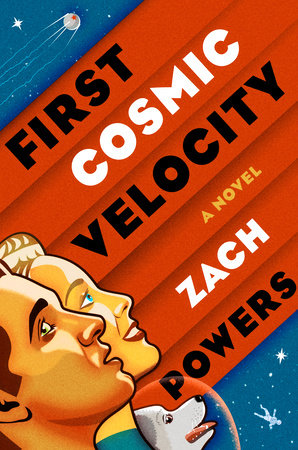
First Cosmic Velocity by Zach Powers
Buy the book

While I was working on my novel First Cosmic Velocity, set in a fictionalized version of the Soviet space program, I fought against this sense of wonder. If I think too much about the depths of space, I can’t help but realize anything I say amounts to zero. When I feel this way, though, I turn to the people who look up and don’t flinch. The people who believe, maybe we can go there.

I want to revere these heroes, but I also want to have them humanized. I want to know the mysteries of the universe, but I also look for metaphors that examine these mysteries on a scale my puny human brain can understand. Space exploration is a subject for poets as much as historians, comic books as much astrophysics texts. And, of course, science fiction, which deals in all these genres at once.

Here are nine books that address space exploration in some way, but maybe not in the way a reader would expect.  

Image result for life on mars tracy k smith

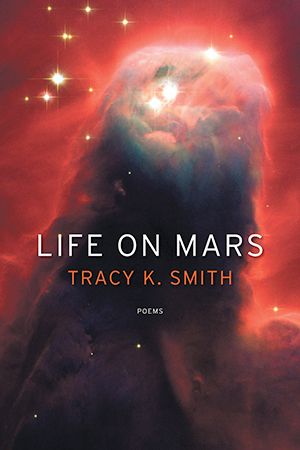
Life on Mars by Tracy K. Smith

Jodi Foster said in Contact they should have sent a poet, but space makes poets of us all. Tracy K. Smith, a poet whose father who worked on the Hubble Space Telescope, won the Pulitzer in part because she understands the point of looking up: “They live wondering / If they are the only ones, knowing only the wish to know, / And the great black distance they—we—flicker in.”

Image result for yuri gagarin

Sputnik and the Soviet Space Challenge by Asif A. Siddiqi

Siddiqi wrote this first comprehensive, English-language history of the Soviet space program after secret documents became available after the fall of the USSR. My copy of the book is full of tabs and highlights and notes, making this the most essential text I consulted when writing my novel. There are two broad takeaways: First, the Soviets were always as close to failure as they were success, and they only succeeded due to sheer hard-headedness. Second, launching something into space will always push humanity to the limits of our capabilities.

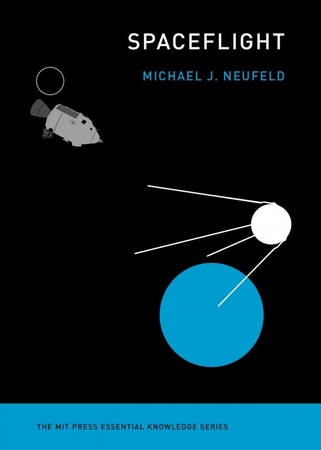
Spaceflight by Michael J. Neufeld

Part of The MIT Press Essential Knowledge Series, Spaceflight condenses the whole history of its title subject down to a lithe 200 pages. Neufeld, a Senior Curator at the National Air and Space Museum, uses his considerable expertise to craft a concise narrative, importantly including practical satellite infrastructure often overlooked in favor of more famous accomplishments. This is the Cliff’s Notes version of everything we’ve tried to launch into space and our most notable failures and successes.

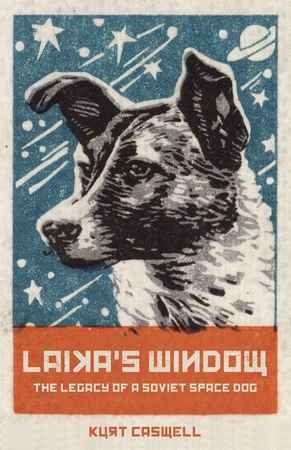
Laika’s Window by Kurt Caswell

I’ve often imagined Laika, the little space dog, inside Sputnik II, both sorrowful for her fate and envious of the view. I think it was cruel folly to launch her and the other space dogs (so many more were lost than most people know). The sacrifice was too great. But I also love Laika so deeply because of her role. I’d never have known her if she hadn’t flown. Caswell’s book is part chronicle and part reflection, and it insightfully captures the duality of the first living being to orbit the Earth, spaceflight’s first tragic hero.

Image result for laika nick abadzis

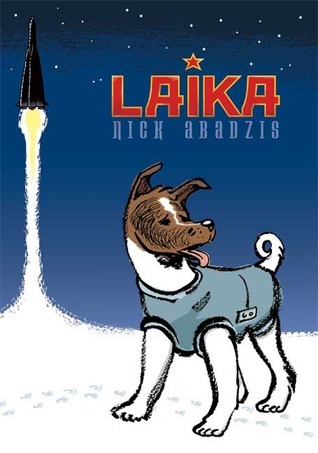
Laika by Nick Abadzis

Historical accounts depict Laika as a sweet, unbelievably patient dog. This comic book imagines her origin story and takes the reader behind the scenes of her training, blending fact with fiction. One true story that’s included in the book: before her launch, which the engineers, trainers, and technicians knew would be a one-way trip, Dr. Vladimir Yazdovsky took her home to spend time with his family. I don’t know if I feel better or worse knowing that the people behind Laika’s launch were often as conflicted about it as I am now.

Image result for binti book

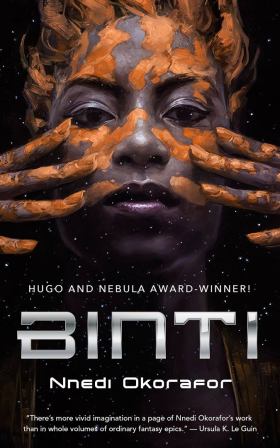
Binti by Nnedi Okorafor

My own imaginary journey to space began with science fiction, and I still think that’s the best place to look for people thinking deeply and revolutionarily about our future. Okorafor’s novella (and two sequels) takes readers to a far-future where humans are but one of many spacefaring races, imagining where an Earth girl from a desert village might find a place among the stars. The speculative elements of the story allow Okorafor to examine familiar human (and alien) biases in a new light. My favorite sci-fi stories are the ones that distance me from myself, giving me perspective to reconsider everyday things I take for granted.

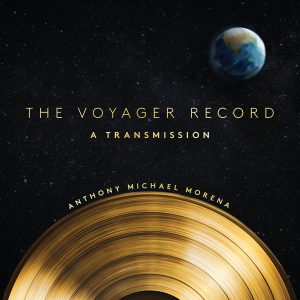
The Voyager Record: A Transmission by Anthony Michael Morena

Morena’s uncategorizable book consists of a series of vignettes about or inspired by the Voyager missions. Sometimes Morena presents the straight facts of the missions. Sometimes he reflects on his own life. Sometimes he imagines the different aliens that might discover Voyager’s golden record, and their almost universal inability to make anything of it at all. Throughout all these variations, Morena grapples with one key idea: we are specks that want so badly to be understood.

Image result for T-Minus: The Race to the Moon

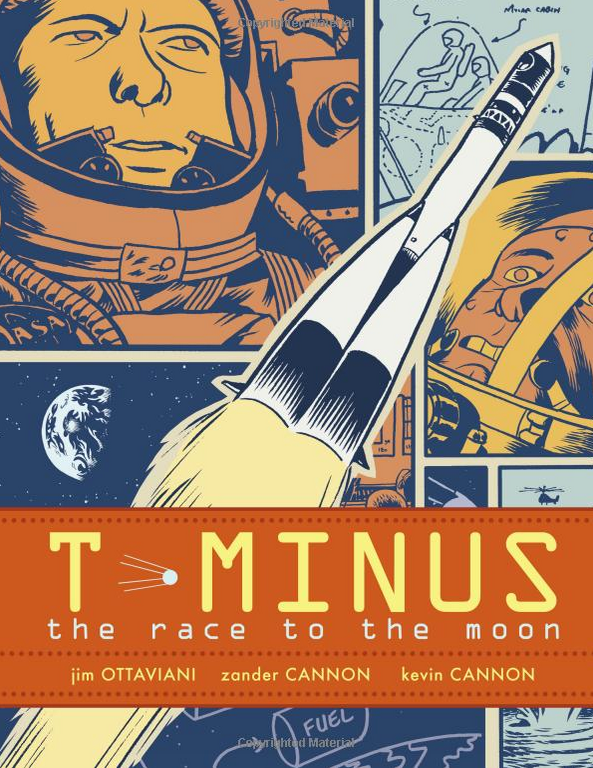
T-Minus: The Race to the Moon by Jim Ottoviani, Zander Cannon, and Kevin Cannon

This comic book presents a slightly fictionalized account of both the Soviet and American space programs, counting down from the beginning of the Space Race to the Moon landing. The creators don’t try to be comprehensive, and they do a good job of picking the right moments to dive into the narrative, especially when they choose a scene that’s related to, but isn’t itself one of the big events.

Another Science Fiction by Megan Prelinger

Orelinger presents a study of print advertisements from the first five years of the space race, including an amazing collection of high-quality reproductions. The book shows how much the myth of space affected the American consciousness, and how pervasive visions of the future were, even a decade before NASA put a person on the Moon.

A 5-Star Blender Review That Affirms Love Is Real

Osterizer Classic Series 10 Cycle Blender

I highly recommend this blender and came here to say so. Since people buy for their homes on Amazon now, I thought I should leave my review where the most shoppers will see it. I have the original version—Oster have rereleased it this year in their “Classics Collection,” but I’m sure the new one is just as good.

My husband and I received this blender for a wedding present in 1975, in a color called Harvest Gold, though it’s really more chartreuse than gold. My mother-in-law ordered it from the Sears catalog with a 10-year warranty—she told me, I think, to make sure I knew just how much she’d spent on it, how much she could afford to spend on it. But I can assure you we never needed that warranty (and the joke’s on her in the end, since the Osterizer has far outlived her).

A lot of things in our kitchen at that time—all around our home for that matter—were second-hand, so the blender was quite a novelty. But with my husband and I both working full-time I can’t pretend it got a lot of use. Mostly we used it to crush ice for drinks, to be sipped while dinner was in the oven. Everyone was drinking Harvey Wallbangers at that time, OJ and vodka with Galliano floating on top. Crushed ice made them seem fancier, and in the early days of a marriage it can be important to pretend things are a little better than they really are, even to each other.

I wasn’t much of a cook, but when our old college friends came over I’d try to make something really special so it didn’t feel like we were just playing at being adults. I learned to make fondue—blending cottage cheese, cheddar, and heavy cream—from the Standard Osterizer Recipes cookbook.

It was the ’70s—we could’ve been doing a lot worse than chipping ice for our mixed drinks. But we were still young in our own quiet way: we read poetry aloud in the den, Frank O’Hara and John Ashbery, and sang Beatles covers around an acoustic guitar. Surrounded by friends, everyone swaying into the couch cushions—I always felt so pleased with us in those moments. Later when the house was quiet, arms full of cups and ashtrays, I’d tell my husband what a nice night it had been, and he’d say that every night with me was a nice night.

It seems like I was always chipping ice for one thing or another. Snow cones were a lifesaver. Our twins always wanted a big birthday party, all their friends and a scavenger hunt around the house and our little yard. Since I’d stopped working by then, I could make my own fruit juice syrup instead of buying so much ice cream, and crush the ice fine as dust in the Osterizer. Almost a decade of birthday photos show the girls stained nose to chin with wine-colored juice—faces turned up to the camera lens, both arms twisted around each other’s shoulders.

As they got older, I found more time to cook. I applied myself to the Osterizer and its recipe book, and it rewarded me with quick breads, soups, salsa, even pancakes for slow Saturday mornings. Our kitchen was modest, and each year the new Sears catalog tempted me with shiny steel Oster appliances we couldn’t afford. But eventually I did save up for just one: a toaster that fit eight slices at once—perfect for the four of us. I’ve heard people say that you should always eat dinner “as a family,” but in my house breakfast was our time. At the table, before the frantic dash for books and bagged lunches, I soaked up their company. It was something to inhale, like a breath kept swelled inside until they returned from work and school and sports.

The year we both turned 60 my husband and I decided to start eating healthy and walking more, so only frozen fruit and leafy greens went into the blender. But his health seemed to get worse, not better. It was hard to find something to cook that didn’t bother his digestion. Then, the same week my daughters brought the grandkids for a visit, a doctor diagnosed him with stomach cancer. It was triggered by a very common bacterial stomach infection, a very treatable thing had we known it was there.

The details are not important for the purposes of this review, but I will say that the Osterizer is very good for pureeing foods. Anyone who has ever taken care of a loved one at home knows that there’s a time when swallowing becomes difficult, and from then on neither liquids or solid foods are advisable. And there’s a time too when blending food to mush is the only thing you can do for someone, and so you do it with fierce concentration as if it were the most challenging recipe you’d ever prepared. There’s even a time, though it seems impossible, when you will miss this unappetizing task, and all the other tasks, and long to do them again.

I hope this review will urge some newlyweds to buy this blender, or put it on their wedding registry. I have been to a fair number of weddings in my life, and I always gift the couple an Osterizer if I can find one. I suppose it’s my way of setting them up for all of it, the best way I know how. My daughter, I remember, playfully rolled her eyes at us when she unwrapped hers, but the next week invited us over for margaritas straight from the blender. We brought over old records to play on the new turntable, another gift. It was a perfect night, and I told my husband so as we brushed our teeth before bed. Every night is a perfect night with you, he told me.

Everything We Learned About Women’s Anatomy from Male Authors

Last year we all had a good time describing ourselves like a male author would (sample text: “I had big honking teeters, and I thought about them constantly”) and even created a handy chart for generating your own prurient prose. But honestly, male authors never needed our help, and they carried on regardless of mockery. Since May, the Twitter feed Men Write Women has been collecting the most egregious examples of the real deal: testosterone-fueled metaphor, icky plot points, and narrators who don’t appear to have actually talked to a woman for fifteen minutes, let alone lived as one.

You can learn a lot from spending some time with this Twitter feed, not least that you might be a better writer than you think. (“These are published authors,” the Men Write Women curator hastened to emphasize via email. “Someone wrote that and thought, ‘hmmm you know what? This sounds like a Very Real Description of a woman.'”) In particular, though, you can gain a lot of insight into female anatomy. Here’s what we now know about women, thanks to male authors:

Their breasts point directly upward…

“Small breasts pointing skyward like surface-to-air missiles”

…and also to each side…

“Like two puppies pulling on their leashes in slightly diverging directions”

…while laughing?

“Her breasts were laughing things that were firmly in place”

Instead of hair like other mammals, they are covered in clitorises! Clitorides? Clitorati?

“Every follicle on my arms and legs becoming a tiny clitoris”

Inside they’re just one big labyrinth…

“Everything about [men] was more direct, their insides weren’t the maze women’s were, for the pee to find its way through”

…culminating in a live rabbit…

“But from her underpants…an affectionate warm rabbit came springing, a kicking wet autonomous warm animal”

…that they use to store credit cards.

“The girl had a tiny purse tucked into her vagina, just big enough to hold her driver’s license, a credit card, and a few bucks”

Taking all of this into account, I have compiled the following sketch of A Woman, According to Male Authors:

A horrible sketch of a woman with upward- and outward-pointing breasts with laughing mouths, a maze belly, a rabbit crotch holding a credit card, and many tiny nubbins

Listen, we don’t like this any better than you do, but until male authors get their acts together, this is the artistic vision of women we’re stuck with. Fellas, we beg you: read an anatomy book. Preferably not one you wrote.

6 Literary Party Games for Your Next Salon

Writers, solitary creatures that we are, can have trouble connecting to other humans in casual social situations. These six new editions of classic board games, targeted to writers for the first time, provide the structure awkward writers need to interact.

These games can also inject new energy into your tired “I read half of it” book club, or your petty “I feel like this isn’t really a story?” writing group. So chose your piece, roll the dice, and may the most competitive writer win.

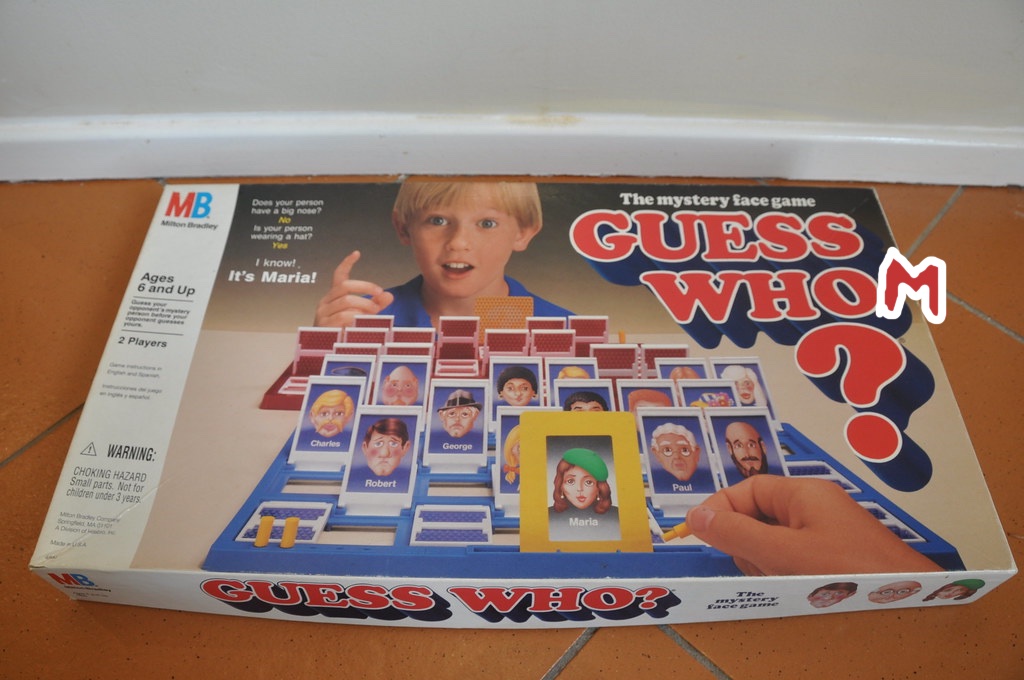
Guess Who? board altered so that the character with red curly hair and a square face is identified as Dylan Thomas
Original photo by Steve Berry

Guess Whom?

This grammatically correct guessing game asks players to identify authors by asking increasingly specific questions. “Did the writer offer scathing opinions of Joycean modernism?” “Is the author a post-structuralist working in the mode of Roland Barthes?”

Monopoly board altered to use names of presses and imprints as properties
Original photo by William Warby

Publishing Monopoly

First there were six, then there were five. Your mission is to reduce the corporate publishers to one conglomerate by buying up properties around the New York City board. The owner of SimonHachetteCollinsMacmillanPenguinHouse wins!

Game of Life board altered to say "Optioned for TV series, receive 40,000"
Original photo by Ian Hughes

The Game of Lifetime Copyright

The career of a writer is checked with many failures and few successes. Roll the dice to determine your path. Will you sell your first book in a “major deal” or be forced to self-publish? Will your contract grant you favorable royalty rates, or will you accidentally give away your masterpiece’s copyright? The winner’s best-selling novel gets turned into a prestige television show produced by Reese Witherspoon, the loser toils in obscurity and dies of scurvy. 

Sorry board altered so that each colored track leads to a blue star
This one’s subtle, sorry. (Original photo by Ashish Joy)

Sorry! I Stole Your Idea

Better to apologize instead of asking permission; that’s the motto of a true writer. Roll the dice to steal personal details, great and small, from your opponents’ lives. That clever remark they made over coffee? Fair game. The exact way your best friend’s mother died in that car accident? Use it. It’s all fine in the name of art, as long as you shout “Sorry!” as you barrel past. 

Risk board altered so that the Middle East is labeled "War Narratives"
Original photo by Avyfain

Risk Transfer

On the one hand, write what you know. On the other hand, you grew up in a boring suburb and have never experienced adversity of any kind. In this board game, writers achieve world domination by appropriating cultures around the globe for the purposes of their own financial gain. 

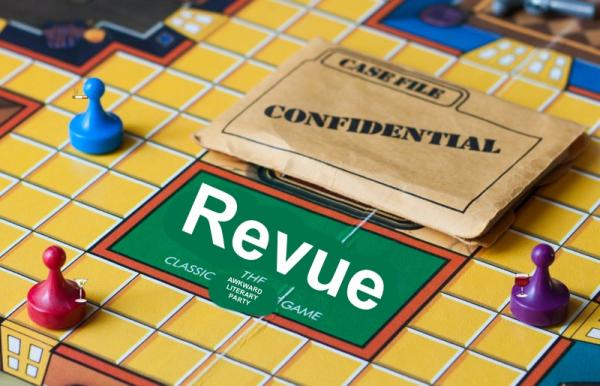
Clue board altered to say "Revue, the classic awkward literary party game." The pieces are holding drinks or cigarettes.

Revue

In this classic party game, players use context clues to pretend they’ve read canonical works and buzzy novels. Once a player feels they have collected sufficient evidence, they announce their opinion of a work they have not read to the group. The first player to formulate a plausible opinion wins. 

31 Poets Recommend 31 Poetry Books to Read Every Day in August

Back in the summer 2017 Nicole Sealey started to feel like she wasn’t doing as much reading as she normally did. This was understandable, seeing as she was serving Executive Director of Cave Canem—an organization dedicated to Black poets and poetry—and promoting her debut collection, Ordinary Beast, at the same time. And so she set herself a challenge: read an entire book of poetry every day during the month of August. Thirty-one days, 31 books. 

“The Sealey Challenge was, initially, just a conscious effort to return to the habit of reading poetry,” says Sealey, who has since stepped down as ED of Cave Canem. “I posted across social media to ask if anyone wanted to join me in reading a book a day in August. Folks did, and the challenge caught on. Now, it’s in its third year. Now it’s tradition.” Sealey is no stranger to building community—Cave Canem’s programming is all about creating a legacy of Black poetry through workshops, mentorship, readings, and support. So it’s no wonder the challenge has caught on like wildfire. Both poets and poetry readers alike use the hashtag #TheSealeyChallenge and post photos of the books they’re reading during the month, creating a storm of poetry on social media. 

But reading one book every day isn’t easy. Are they meant to be read individually, so readers allow them to sink in, or do we go through a poetry collection as we would a novel? Sealey recommends that “Poems should be consumed as individual readers see fit. As a poet myself, I read for pleasure and/or to better my craft. During the Sealey Challenge, however, I read for enjoyment. There’s no hard and fast rule. Really, I’m thrilled that folks are reading more books of poetry, many of which are chapbooks, and doing so together.” 

She adds that the books she selects are ones she’s been meaning to read for a while, but hasn’t yet. She has some suggestions to help those participating in the challenge:

  1. DO select collections that can be read in one day (I’m a slow reader, so I tend to select books with no more than 100 pages).
  2. DO use your time wisely (read on the train, during lunch, before bed, et cetera).
  3. DO take your time—poetry is deserving of our full attention (if reading a selection carries over to the next day or the day after that, so be it).
  4. DO read chapbooks—for every full-length, read a chapbook (chapbooks need audiences too and this will help us keep pace).
  5. Lastly, DO return to and study these books between September 1st and the next year’s #TheSealeyChallenge.
  6. We can DO it!

If you’re new to the poetry world, though, finding chapbooks and short poetry collections may be a challenge in itself. There is a lot of great work out there, and poetry doesn’t often get publicized as widely as other writing does. To help you along, I asked (read: straight up slid into their DMs) 31 poets to recommend just one book of poetry they’ve loved. Thirty-one poets, 31 collections. Maybe you’ll find your new favorite amongst these. 

Damn, just one, eh. Pardon My Heart by Ohioan poet Marcus Jackson.
Nicole Sealey, author of Ordinary Beast 

I’d recommend Harmony Holiday’s A Jazz Funeral For Uncle Tom, for how it blends lyric, imagery, and history to formulate a clear and striking narrative.
Hanif Abdurraqib, author of A Fortune For Your Disaster (September 2019)

Image result for sarah gambito loves you

Sarah Gambito’s Loves You is a remarkable folksong and jubilee of the heart—and stomach. The connections of food, love, and landscape bubble and froth together here in a stunningly and dazzlingly original compilation.
Aimee Nezhukumatathil, author of Oceanic

Image result for heart like a window mouth like a cliff

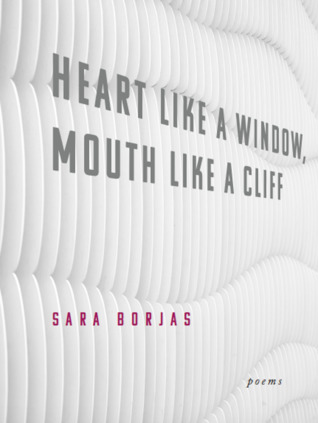
Sara Borjas’ Heart Like a Window, Mouth Like a Cliff.
Denice Frohman, co-organizer of #PoetsforPuertoRico

Eduardo C. Corral’s Slow Lightning. That book uses restlessness, in form, lexicons, languages, and styles to define a new way of living and thinking in otherness that is both homage to literary precursors as well as a treatise for healing and futurity for writers of color.
Ocean Vuong, author of Night Sky With Exit Wounds

Image result for song brigit pegeen kelly

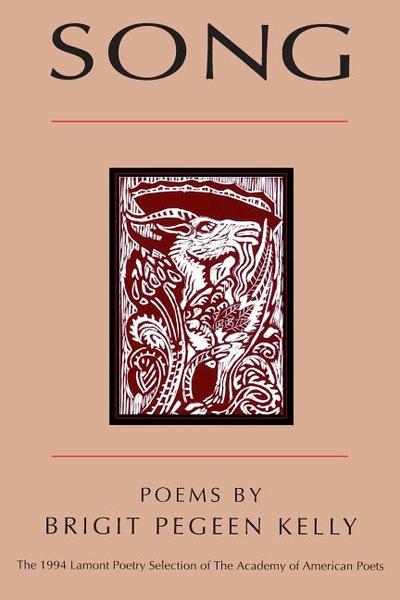
I love Brigit Pegeen Kelly’s Song. There’s so much beauty in that book.  There’s also quiet in the book. You can hear the quiet between the lines.  There’s also so much pain in that book. But the beauty overpowers all. It’s one of my favorite books of all time.
Victoria Chang, author of Barbie Chang

Image result for luis de mena virgin of guadalupe and castas 1750

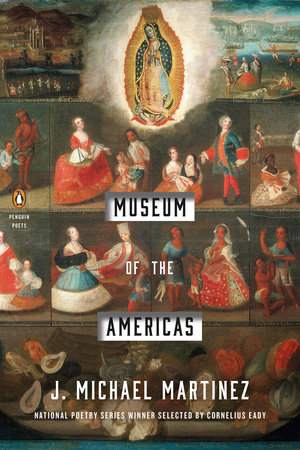
If you haven’t read J. Michael Martinez’s Museum of the Americas, you are missing out; this is one of my favorite collections of recent years for its lyrical inquiry into Mexican heritage and imperialism, and the Latinx body that emerges from that history of oppression and consumption.
Rosebud Ben-Oni, author of turn around, BRXGHT XYXS (forthcoming)

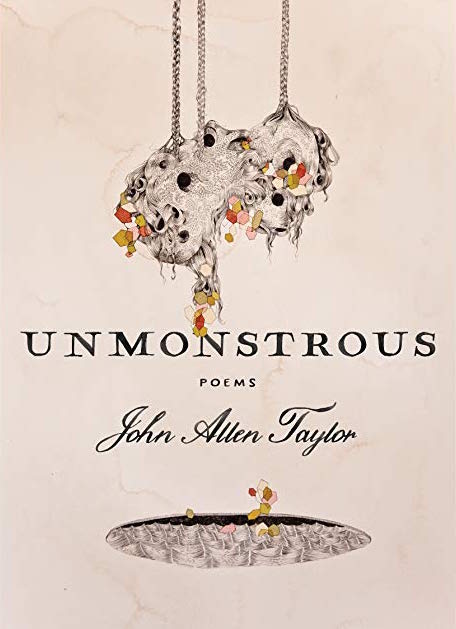
I would recommend John Allen Taylor’s chapbook Unmonstrous (YesYes Books). It is heart-wrenching and elegant, quiet and loud, recounting trespass, healing, and the beauty we find along the way.
Diannely Antigua, author of Ugly Music

Image result for olio book cover

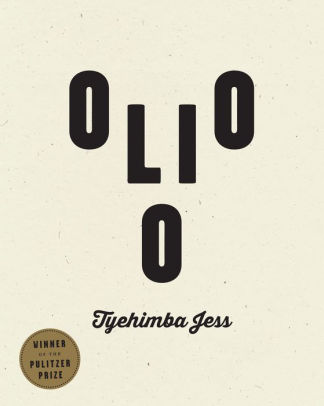
Olio by Tyehimba Jess. Olio makes me wonder about the future of poetry and consider how it could thrive both on and off of the page. The theatrical way in which the poems of Olio and the physical text itself are presented–resist institution and convince me that contemporary poetry is on the verge of yet another exciting renaissance!
Faylita Hicks, author of Hoodwitch (October 2019)

Image result for ordinary beast nicole sealey

Ordinary Beast by Nicole Sealey. An incredible experiment in quietness and solicitude.
Camonghne Felix, author of Build Yourself A Boat

Image result for jay bernard surge

The last book of poetry I read with deep interest was Jay Bernard’s Surge, which reckons not just with history but also literary tradition to call attention to the recursivity of social violence/ anti-black racism in the U.K. In Bernard’s hands, form and narrative are melded to produce a truly political poetry (in every sense of the political)!
Billy-Ray Belcort, author of This Wound is a World

Image result for While They Sleep (Under The Bed Is Another Country)

Raquel Salas Rivera’s while they sleep (under the bed is another country) sees and distills centuries. As the aftereffects of the U.S.’s violent response to Puerto Rico, in the wake of Hurricane Maria, grow, this book, its nuanced analysis and use of language, is a tool for surviving the future.
Andrés Cerpa, author of Bicycle in a Ransacked City: An Elegy

Image result for soft science franny choi

Franny Choi’s Soft Science. This book reads like a cross between an lyric erotic memoir and a Isaac Asimov story.  In these formally inventive poems, Choi explores the complicated mess that is the human psyche and find us all (America and beyond) both monstrous and beautiful.  You should really read this book.
Jeffrey Thomson, author of Half/Life: New & Selected Poems (October 2019)

Image result for Snakes

Joe Jiménez’s Rattlesnake Allegory: The lyric echoes & queer longing of Joe Jiménez’s Rattlesnake Allegory deftly deconstruct the space between the body & the environment it navigates. For Jiménez, the body itself takes form as “a nest braided in hush,” & desire a snake that coils within, & stays. 
Matty Layne Glasgow, author of Deciduous Qween

Image result for aracelis girmay book

I recommend everyone read Teeth by Aracelis Girmay. Girmay’s first book of poems is full of balms and rallying cries. It is a book to carry with you at all times. If you can read the poem, FOR ESTEFANI LORA, THIRD GRADE, WHO MADE ME A CARD, and not giggle to yourself with joy, then you might want to check your pulse. 
José Olivarez, author of Citizen Illegal

I recommend Mend (The University Press of Kentucky) by Kwoya Fagin Maples. There are so many things to love and study here, namely how Maples beautifully uses both personal and persona poems to investigate what it means for black women to have (literally) made history but not be apart of it.
Malcolm Tariq, author of Heed the Hollow

Image result for sea and fog etel adnan

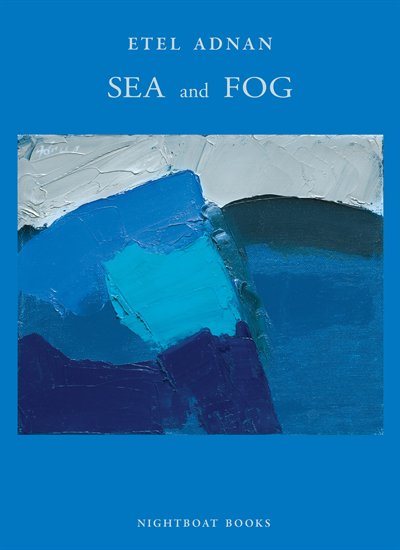
Etel Adnan’s Sea and Fog:  A quote from the book: “The forest is shaking terribly. Waves howl and break in jets of water. What beauty, this fury! Sea: It is because she is that we are, and when she disappears we’ll cease to be. It’s only in relation to her that we find some worth to our existence.”
Grace Shuyi Liew, author of Careen

Gabriel Ojeda-Sague’s Jazzercise is a Language: A friend thrust this book into my arms knowing what it would do to me and now I thrust it into yours. This book thinks, it sweats, it offers sweat-drenched leotards and leitmotifs of being doused in seltzer, it counts to a beat (one two one two, bodies impacting a floor) and inhabits/blows up the confounding — racialized, gendered, wild — language of FITNESS DANCE and its celebrities/practitioners/instructors — “when you’re smiling I know you’re breathing.” This is a fucking great book. Skip that cruel Richard SImmons podcast and read this instead.
Hannah Ensor, author of Love Dream with Television

Image result for guy marchant 1493

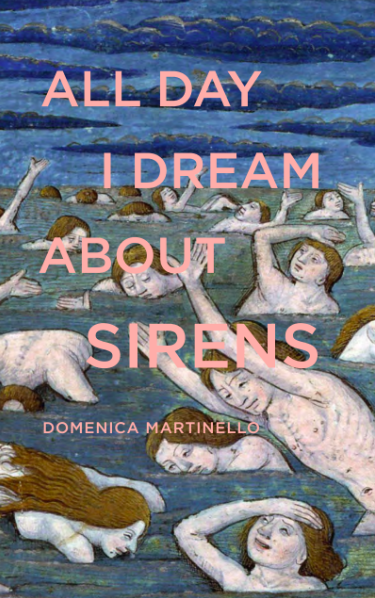
Domenica Martinello’s All Day I Dream About Sirens (Coach House Books, 2019): All Day I Dream About Sirens by Domenica Martinello is an intoxicating debut. She braids diction from mythology and late stage capitalism into language that’s vibrant and slippery. The varying linguistic registers and tone shifts both critique and enact our age of flickering attention spans. Her poems are dazzling, exhilarating. 
Eduardo C. Corral, author of Slow Lightning

Alberto Rios makes use of magical realism in order to infuse our world—which is full of such codified notions as nationality and gender—with the often-unacknowledged mysteries of our own shifting and mutable identities. Every one of his books is a lesson in sorcery, but The Smallest Muscle in the Human Body is slaying me these days: “What I could not have, / That’s what I was / Inside, an ache / Coming as I stood / Too many places.”
Keetje Kuipers, author of All Its Charms

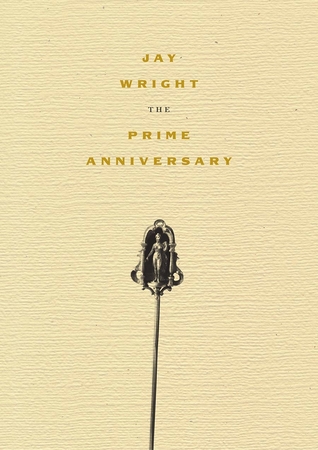
Jay Wright’s The Prime Anniversary (Flood Editions, 2019): With incomparable poetic vision, Jay Wright again reminds us of our sonic birthright. At the meeting place of Góngora and Ogotemmêli, his lines thoroughly reconfigure the perception of time and geography. With astounding lyrical precision—a music composed of fractions, infinity, proper names—The Prime Anniversary makes it desirable to inhabit the immensity beyond “this countable, nameable thing we call an individual.” Wright’s example allows us to rejoice in the justice that prevails in the present tense of what numbers know: “Nothing overcomes the radiant iambic; / no one forgets the geometry of lyric.”  
Roberto Tejada, author of Still Nowhere in an Empty Vastness

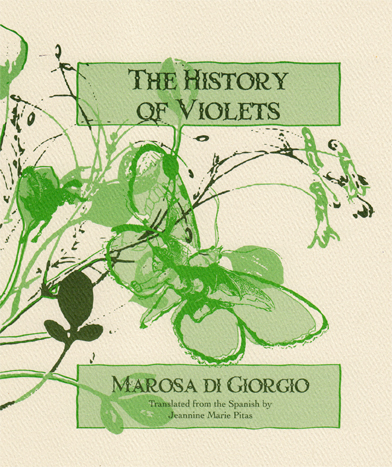
I recommend anything by Marosa di Giorgio (Ugly Duckling’s issuing of The History of Violets was my first introduction). Di Giorgio’s prose poetry locates and then often identifies with the perilous beauty of the natural world as it applies to selfhood, longing, ancestry, and eros. In her voice, I feel the coiled-up burgeoning of a lily caged because of its murder history, even as she praises its perfume.
Justin Wymer, author of Deed

Image result for Deciduous Qween

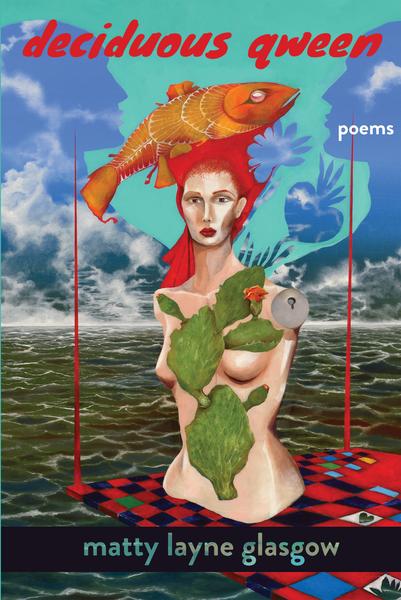
Deciduous Qween by Matty Layne Glasgow: The poems of Deciduous Qween excavate the body and talk about it fearlessly, with exact attention. They rustle with honest statements that fall as they become part of a greater nature. They exist in a desert where loss and restlessness have come to play and be. You will find yourself attached to these funny, pensive and tender poems. They will follow you around helping you name what you were actually feeling, not what you think you should feel because others have said so. Read this when you want to feel free.
Analicia Sotelo, author of Virgin

Image result for The Year of Blue Water

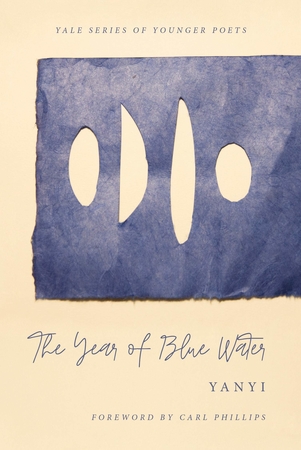
The Year of Blue Water by Yanyi—I keep returning to this book and it keeps returning me to myself, in all these gorgeously unexpected ways. Within these pages, memory, dream, friendship, and the everyday are sites of rigorous meditation and imaginative reconfiguring. 
Chen Chen, author of When I Grow Up I Want To Be A List of Further Possibilities

Book Jacket

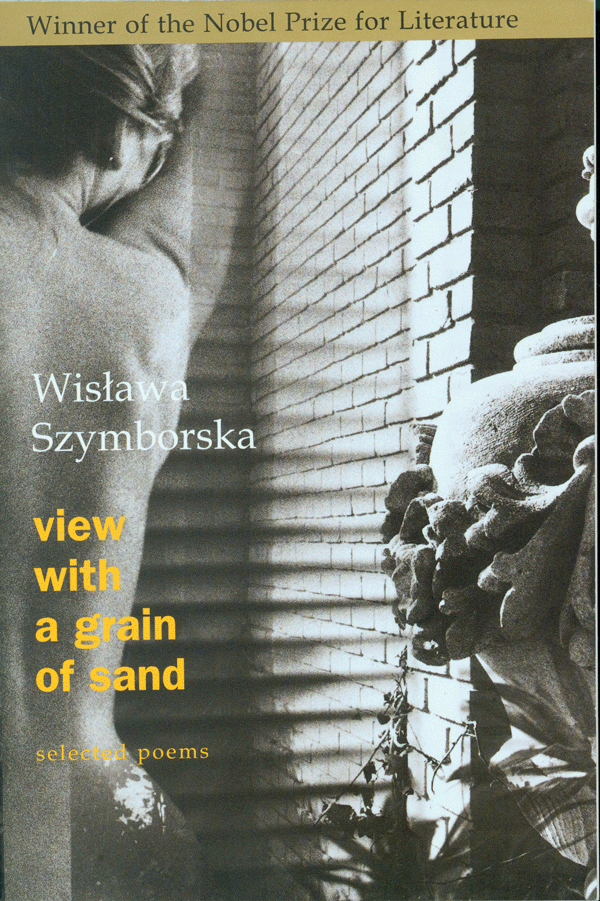
View With a Grain of Sand: Selected Poems by Wislawa Szymborska—Nobel Prize winner, hotel soap stealer, beloved scientist-poet-philosopher, and Patron Saint of Perpetual Noticing, Szymborska illuminates the paradox and wonder of being alive like no one else. She’s funny as hell too.
Shira Erlichman, author of Odes to Lithium

Image result for catalog of unabashed gratitude

Catalog of Unabashed Gratitude, Ross Gay (2015): One of the healthiest books I’ve ever read, Ross Gay’s Catalog of Unabashed Gratitude has recharged my own commitments to studying/exploring the radical observations and critical challenges of joy.
Geffrey Davis, author of Night Angler

A Bestiary

Although listed as an essay collection, Lily Hoang’s genre-defying book, A Bestiary, is an absolutely groundbreaking tour de force that took my breath away and compelled me to read it in one sitting late into the night, and then many times since. With its objects, statements, poems, movements, gestures, essays, recollections, fairy tails or however you want to define them, one thing is certain: I don’t think I will ever be the same writer after having read this beautiful book. 
Marcelo Hernandez Castillo, author of Cenzontle

Image result for afterland mai der vang

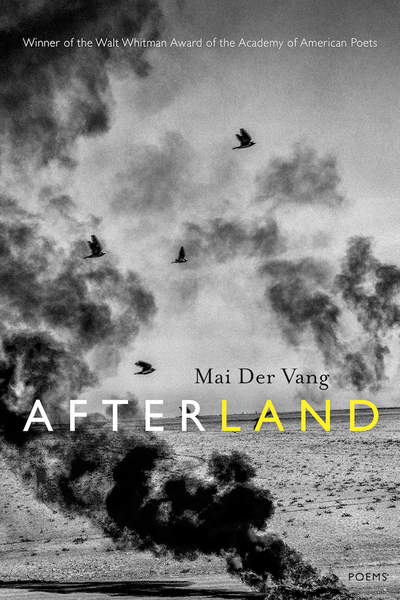
Of Mrs. Dalloway, Michael Cunningham says it’s the “first novel to split the atom.” Mai Der Vang’s Afterland continues in that nuclear spirit: stretching line breaks, imagery, and syntax to ambitious extremes. These poems are testaments to memory, war, exile, and trauma; they never forget to remind us why poetry is a powerful vehicle for survival.
Roy Guzmán, 2017 Ruth Lilly and Dorothy Sargent Rosenberg Poetry Fellow

It’s August, and your poetry should be as fierce as a NYC subway platform in a heat wave, so I recommend Beshrew (Dusie, 2019) by Danielle Pafunda. This snapshot-sized (4×6) feral book-length poem epigraphed with Shakespeare’s Sonnet 133 is love as crime-scene, duende, pleasure, and catastrophe. We are all on fire and these couplets roar through the ways in which we try to inhabit one another—the litany and ecstasy.
Erika Meitner, author of Holy Moly Carry Me

Image result for natalie shapero hard child

Natalie Shapero’s Hard Child (Copper Canyon, 2017) is brash and poignant and hilarious and upsetting. As a new parent and a misanthrope, I had never felt so seen by a poetry collection. Reading it was like hearing someone say the inappropriate thing that you’ve always known to be true but haven’t been able to articulate and you’re like OOOOOOH YEAH SAY IT LOUDER. My copy is dog-eared and the margins are thickly be-hearted. Next to the lines “It’s/ awful, to be a person” I have written “hi, yes.” You can too.
Claire Wahmanholm, author of Wilder

I would like to recommend Zaina Alsous’ A Theory of Birds. It’s a deeply rebellious, wild book that, like Dionne Brand’s work, attempts to map a radical vision of the world onto a girl’s body, give an Arab girl back her power to name the creatures, avenge those gone extinct, time travel. I’m thrilled by the formal experimentation and the referential nature of the work, using citation as a spiritual act to account for all the radical thinkers that made this debut possible.
Vanessa Angélica Villarreal, author of Beast Meridian 

7 Books about the Glamour and Intrigue of Old Hollywood

It’s difficult to imagine a time when defining yourself by an obsession with a movie, TV show, or celebrity wasn’t a natural part of life, like picking a favorite color as a child. In a time when the internet supplies a constant stream of celebrity news, takedowns, and an outlet for stanning, Old Hollywood seems impossibly mysterious and alluring. Even aesthetically it’s easy to romanticize—the meticulous hairstyling, tailored outfits, even black and white film, though plainly inferior to today’s technology, can be enough to beckon one in for a closer look. 

What took place as Hollywood was being built from the ground up, both as a city and an industry, shapes so much of the way we interact with media today. These books present a nuanced portrait of show business as it was taking shape, reminding us of the people who had to combat the repugnant cultural attitudes of the time, the scandals that dramatically altered lives, and of course, the endless glamour. 

Delayed Rays of a Star by Amanda Lee Koe

Delayed Rays of A Star by Amanda Lee Koe

Spurred by a real photo of three film figures—gender-bending performer Marlene Dietrich, Chinese American actress Anna May Wong, and Nazi propaganda director Leni Riefenstahl, Amanda Lee Koe’s Delayed Rays of a Star is a study of how the time we live in shapes who we are and how we live. It could be simple for a historical novel populated and led by real-life figures to coast on the novelty, or become so concerned with sticking to the facts that it remains superficial, but Lee Koe does neither. With great nuance, the novel documents the compromises necessary to reach one’s ambitions.

The Castle on Sunset by Shawn Levy

The Castle on Sunset by Shawn Levy

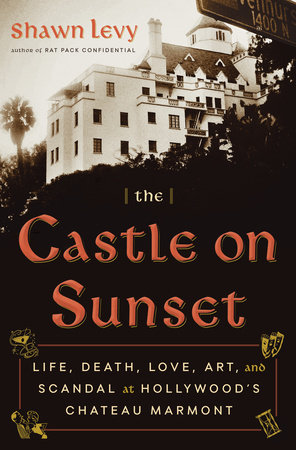
In Shawn Levy’s book about Los Angeles’s most mythologized hotel, Chateau Marmont serves as a portal to how much Hollywood has changed since the building was first erected, yet how precisely the structures (literally, in the case of the building) have remained intact. Levy turns his eye on the hordes of stars who’ve occupied the hotel and the infamous tales of what has occurred on its premises, but also less expectedly on the peculiarities of the building. Levy offers insight into West Hollywood in the 20s, and how exactly a site that is an emblem of sophistication managed to live through the 30s and a World War, while leaving its air of worldliness intact nearly 100 years later.

Scandals of Classic Hollywood by Anne Helen Petersen

Scandals of Classic Hollywood by Anne Helen Petersen

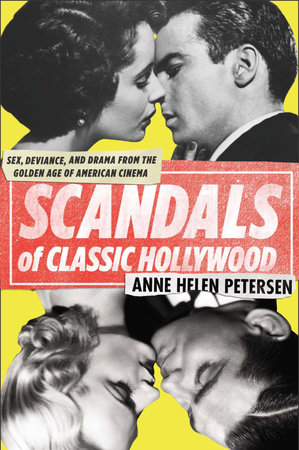
It’s disorienting to read a book about a time before celebrity news and gossip became many Americans’ primary cultural engagement. Anne Helen Petersen adeptly tells the tales of how the lives of 16 different stars of Old Hollywood were consumed by the public. It’s sad to see the personal lives of others ravaged for all to see, but it’s especially disturbing to read about the cases documented in Scandals. These pioneers of the silver screen didn’t know quite they were headed toward, the moral salve of thinking “they knew what they were signing up for” no longer relevant. Petersen writes about the stars of the time in a way accessible to both the classic film obsessive and those of us who know about the bare minimum by carefully linking the celebrity culture of yore to its current-day counterpart. 

A Way of Life, Like Any Other by Darcy O'Brien

A Way of Life, Like Any Other by Darcy O’Brien

Authored by Darcy O’Brien, the son of two actors, this semi-autobiographical novel presents a view of stardom we don’t often come across: that from the eyes of a celebrity’s child. With a wry sense of humor, O’Brien writes mercilessly of a boy’s childhood and teenage years made unstable by the narcissism of his parents. While this isn’t exactly an experience exclusive to the celebrity set, that context allows a little more humor—it’s more enjoyable to watch as a child is left to their own devices if it leads him to move in with a famous director, the father of a friend, who immediately opens him a checking account for his allowance. A Way of Life Like Any Other is both a peek into the ridiculous lavish lifestyle of the rich and famous and the melancholy of trying to return to one’s prime. 

The Kindness of Strangers by Salka Viertel

The Kindness of Strangers by Salka Viertel 

Though many of the key players in early movie-making were Eastern European Jews, few non-fiction books dive into the complex entanglement of the infancy of Hollywood movie-making and World War II like Salka Viertel’s memoir. In The Kindness of Strangers, Viertel recounts the experience of this intersection through the story of her own life. What we would now call a multi-hyphenate, Viertel took up post as an actress in her home country, a screenwriter, and a reviewer, among others.

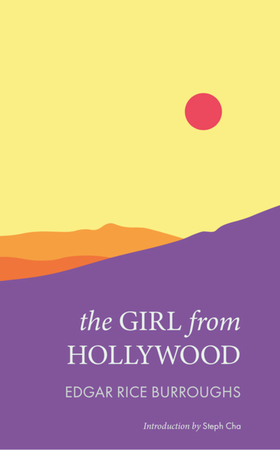
Girl From Hollywood by Edgar Rice Burroughs

Edgar Rice Burroughs is widely known as the creator of Tarzan, the book series he wrote between the 1910s and the 1940s, and this legacy lives on through Tarzana, the San Fernando Valley plot of land he bought and proudly named. Along with his countless sci-fi and adventure novels, he has a handful of books set in “the real world.” Recently reissued by the LA Review of Books is The Girl From Hollywood, a novel set in a town with physical descriptions that match Tarzana as it was at the time. The book follows Shannon, the titular girl, as she attempts to make her way in Prohibition Hollywood. The novel brings us to a period in time when the desire to work in film and become famous was less than popular—something that feels about as distant as Burroughs’s sci-fi when compared to our current day in age. As you might expect, there’s plenty of paternalism and moralizing as Shannon encounters the reality of the outside world.

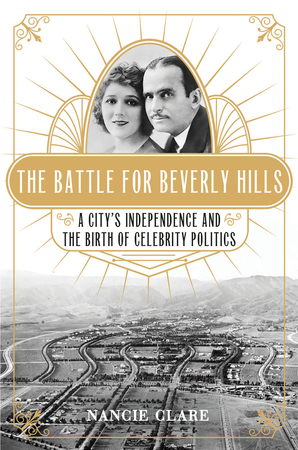
The Battle for Beverly Hills by Nancie Clare

The Battle for Beverly Hills is just as much a look at the physical making of the city as it is about the people who took part in its making. In the same way that it’s easy to take the structures of stardom for granted, it’s only natural to forget how townships, and in particular Beverly Hills smack in the middle of Los Angeles, come to be. The book captures the ridiculous capitalist attitudes that ran rampant at the time, most notably in how the town came to be, when its owners bought the plot of land that had already unsuccessfully been mined for oil with the hope that some would turn up the second time around. The Battle for Beverly Hills is a surprisingly dense history that marks one of the first instances of stars using their fame to lend attention to a political issue.
7 Books About Past Decades That Feel Like Traveling Back in Time

The Amazon review for my debut novel was glowing, including words like “compelling” and “fun.” And then there was this: “If you love historical fiction, you’ll love The Last Book Party.” Say what? How could my novel, which is set during the 1980s—a decade of my own youth—be historical fiction? How amusing that this blogger viewed my twenties through the lens of history. Did she find leg warmers as exotic as I did the paint-on hosiery of the 1940s? 

Apparently, historical fiction is in the age of the beholder.  

Image result for last book party karen dukess
Buy the book

When I started writing my novel, I wasn’t thinking about shoulder pads, step aerobics classes and other fads of the 1980s. I wanted to create a fictional version of what it was like to be a few years out of college, working in Manhattan in book publishing and feeling unsure about my future and my desire to write. But by including specifics of my life then—Dictaphones, progressive parties, Laura Ashley dresses, rolodexes and typewriter-written manuscripts submitted to publishers in cardboard boxes—I was conjuring a beloved, and vanished, New York.  

As I wrote, I realized how much my plot was tied to that time, when the internet and Amazon were inching toward us, but still unknown, and unimaginable.  My protagonist, Eve Rosen, obsesses about new people she meets, trying to figure out their histories and connections to each other, questions that today could be easily resolved by a Facebook search.  But then the mysteries about these people would have been gone and with them much of my plot, which concerns Eve discovering how wrong she had been about everyone. 

I’m thankful to that blogger for making me see that historical fiction isn’t all about corsets and hoop skirts. While The Last Book Party will be nostalgic for older readers, it offers younger readers a chance to immerse themselves in the 1980s, to imagine life when spinach dip in a bread bowl was a novelty and the best way to stay in touch with a college friend over the summer was to write a letter and put it in the mail.  In that spirit, I offer up a book for each of the seven decades before The Last Book Party takes place, books that were so transporting for me that they felt like time travel. 

Image result for ice storm rick moody

1970s: The Ice Storm by Rick Moody

I’ll never forget reading the first page of The Ice Storm soon after it was published in 1994. Listing all the things that were yet to exist at the time of the story in 1973—from caller ID to Frequent Flyer Mileage, computer viruses to perestroika—Moody’s novel made me realize both that I was old enough to have lived through an era that was gone and that I’d been shaped by that era. The novel’s myriad pop culture references may stymie readers with no visceral memories of the 1970s, but this story about unhappy parents and adolescents in an affluent Connecticut suburb is a devastating portrait of Me generation emptiness.

Image result for Loose Change: Three Women of the Sixties by Sara Davidson

1960s: Loose Change: Three Women of the Sixties by Sara Davidson

This memoir, which reads like fiction, convinced me how much I was not a child of the ’60s, even though I was born in 1962. Following three young women, including the author herself, who meet at the University of California at Berkeley in the early 1960s, this book visits touchstones of the era—the early women’s movement, anti-war protests, group sex, drugs, rock ‘n roll, and free speech. It’s a compelling chronicle that captures the exuberance and disillusionment of the era and how for three young women —a reporter, an activist of the radical Left and a member of the art world—coming of age meant looking back at their free-wheeling past with a new, sobering perspective.

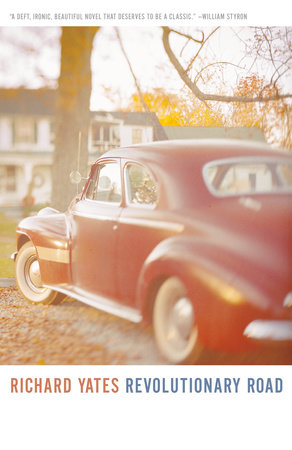
Revolutionary Road by Richard Yates

1950s: Revolutionary Road by Richard Yates

How fitting that I was introduced to this dark novel about 1950s suburban life on the East Coast by the first book club I joined shortly after moving to the suburbs of New York City. Our discussion was passionate—not because everyone loved the book, but because this story of a young couple wrestling with their conflicting desires to be utterly conformist and yet find personal fulfillment gave us all a disturbing sense of the restricted and oppressive lives we might have lived if we’d been born before the women’s movement. 

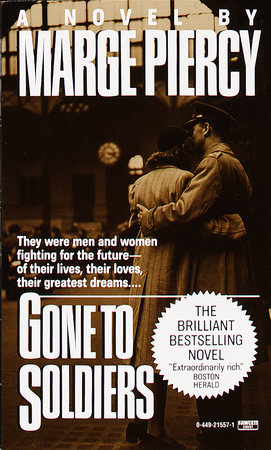
Gone to Soldiers by Marge Piercy

1940s: Gone to Soldiers by Marge Piercy

After this manuscript arrived in the mail at the literary agency where I was working in the mid-1980s, I pulled an all-nighter to finish it, swept away by this epic novel about World War II narrated mostly by women. The characters—among them a women’s magazine writer turned war correspondent, a female fighter pilot, a member of the French resistance and a Parisian Jew sent to safety with relatives in Detroit—allowed me to picture myself in the pages of history usually filled with stories of men. (It was also thrilling to see a novel I’d read in manuscript pages go on to become a New York Times bestseller.)

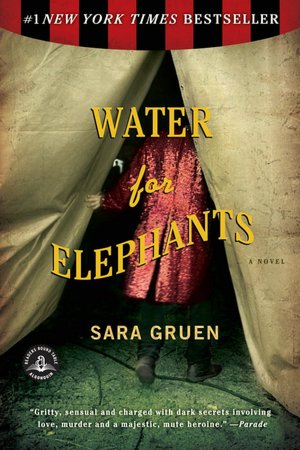
Image result for water for elephants book cover

1930s: Water for Elephants by Sara Gruen

This novel about a seedy traveling circus bringing its illusions to an audience craving distraction captures the mood of the Great Depression. The story is told in flashback by Jacob, who as a young veterinary student found himself unexpectedly orphaned and penniless, hopped a train (how 1930s is that?) and encountered the circus. Jacob became the caretaker of the animals and fell in love with one of the star performers, the abused wife of the sadistic circus director. Not an uplifting scenario, but this novel is packed with detailed circus lore and vividly evokes a bygone era and mood.

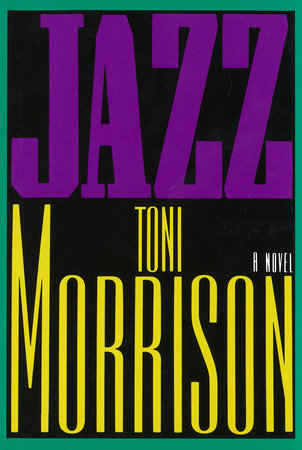
Jazz by Toni Morrison

1920s: Jazz by Toni Morrison

The spirit, sounds, and structure of jazz infuses this novel about desire, love and the weight of the past. Set in 1920s Harlem and told in overlapping narratives, the plot focuses on door-to door salesman Joe Trace, who murders his 17-year-old lover, Dorcas, and on Joe’s wife, Violet, who barges into Dorcas’s funeral and attempts to cut the dead girl’s face. Challenging and inventive, Jazz at once brings alive the mood of the Harlem Renaissance and delves into the scars of slavery that continued to reverberate into the next generations.

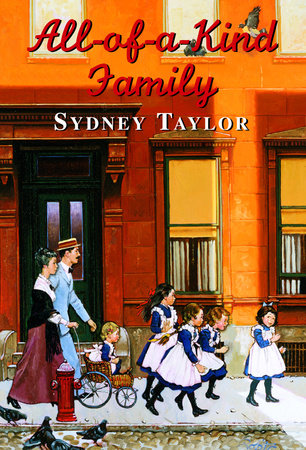
All-of-a-Kind Family by Sydney Taylor

Early 1900s: All of a Kind Family by Sydney Taylor

There’s something magical about a book that made this privileged, suburban Jewish girl wish she’d grown up in a poor, immigrant Jewish family on the lower East Side of New York. I was one of three sisters in a secular Jewish family, but I spent hours and hours re-reading this book (and the sequels) about five sisters—Ella, Henny, Sarah, Charlotte and Gertie—and their Yiddish-speaking parents.  Their adventures were admittedly small in scale—a lost library book, a dress borrowed without permission and accidentally stained with tea, cleaning for the Sabbath, a visit to their Papa’s junk shop for peddlers—but it was high drama for me. And it gave me a rare and welcome opportunity not only to read about Jewish girls but to learn at a very young age that sometimes the most powerful way to learn about our own history is through fiction.

“Supper Club” Imagines What Could Happen if Women Unleashed Their Hunger

The belief that women should be small and unassuming is so culturally ingrained that it’s normal for women to force themselves to stop eating when they’re still hungry, to stay quiet while someone else in the room speaks up, and to question whether they deserve more; not just food, but money, sex, power, autonomy, and space. But what would happen if a woman spent her energy asserting, rather than minimizing, herself? How difficult would it be to reclaim her body and her desires as her own?

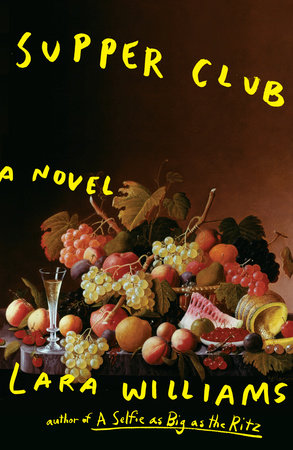
Supper Club by Lara Williams
Buy the book

Lara Williams confronts these questions in her debut novel, Supper Club, which tells the story of a young woman named Roberta who reaches her thirties “afraid and yet so desirous of everything.” For Roberta, fear typically wins—until she meets Stevie, an unapologetically brash artist who encourages her to reclaim her appetite. The two women start Supper Club, a traveling bacchanalian celebration where women can eat, drink, talk, dance—exist—in a completely uninhibited way.  

Supper Club will resonate with any woman who has ever tried to pare herself down to fit society’s ideals, but it’s not limited to physical hunger; Williams embraces a range of timely issues from sexual assault to female friendship with engaging openness and humor. Supper Club also makes a case for the joyful side of indulgence with detailed meals reminiscent of Heart Burn by Nora Ephron or Sweet Bitter by Stephanie Danler. 

I had the pleasure of speaking with Williams over email from her home in Manchester, England about how women inhabit space, air-conditioner bias, and the gendered way that public spaces are designed.


Carrie Mullins: In Supper Club, a group of women throw tremendous, bacchanalian feasts in rotating locations across a city. Where did you get the idea for the club?

Lara Williams: I knew I wanted to follow up on the idea of how women inhabit space, something I’d thought about in my short story collection  A Selfie as Big as the Ritz, but to do this in a more focused way. And I was also interested in this sort of primal scream or exposure therapy theory of aggressively and almost hysterically leaning into something that makes you anxious. For a while, I have been convinced the cure to my very irritating capacity for shyness is to take an improv class. And I remember listening to the Kanye West album Yeezus a lot when it first came out, and thinking it was interesting it was written just before he got married. Like there was some necessity for this frenetic, libidinal but completely clear-eyed exorcism before he settled down. Supper Club is perhaps similar to that: this excessive embodying of something in order to achieve a more neutral relationship with it. 

CM: Appetite is a key theme in this book. I often thought of Haruki Murakami’s line: “I never trust people with no appetite. It’s like they’re always holding something back on you.” At Supper Club, the women plan to indulge in food but end up letting go of all inhibitions. How do you think about this relationship between our physical appetite and our whole selves? 

LW: I really like that quote. It reminds me of the short story “Starving Again” by Lorrie Moore, and there’s the quote: “That was the thing with hunger: It opened something dangerous in you.” The story is about two friends meeting over dinner and they are both these tightly wound balls of absolute need, having this nervy, truncated conversation, too afraid to order anything particularly substantial off the menu lest they reveal the almost deranged desperation and extent of their needs and appetites. 

I think revealing an appetite for anything, really, makes you extremely vulnerable. But especially anything animal and basic, like food or sex or companionship. And I am perhaps a little suspicious of people who will not reveal any level of vulnerability, so I do relate to Murukami’s quote. It does sit a little at odds with his tendency to emphasize the slightness or wanness of his female characters, however. 

CM: Roberta in particular struggles with the dichotomy between her “bottomless hunger” and her inclination to be unobtrusive. Likewise, she sometimes enjoys being in a more conventional relationship or her mindless fashion job and at others she feels dissatisfied by these things. You portray how complicated it is to navigate our own desires, especially as women, when we’re so surrounded by messaging that it’s not always clear what’s being forced on us and what we genuinely want. Was it important to you to embrace this conflict on the page?

LW: One essay I read while writing Supper Club, which really stayed with me, was “Hunger Makes Me” by [Electric Literature’s editor-in-chief] Jess Zimmerman, in which she talks about priding herself on being a low maintenance girlfriend. She talks about there being a strange shame attached to wanting effort from a man you are in a relationship with. And I feel like I wanted to explore two levels of desire in Roberta—her more primal appetite for food, sex, nourishment, companionship—but also a more intellectual or emotional need for a stable relationship with a man who treats her kindly, or for secure and rewarding work. She finds them generally incompatible, and finds both broadly impossible to ask for, and even shameful in asserting that’s what she desires.  

CM: I recently read that most offices are air-conditioned to a temperature that is optimal for men and too cold for women. Yet while many of us have bemoaned the requisite summer office sweater, we don’t think about the AC as something that might be biased—or changed. In many ways, Supper Club is asking us to stop and consider our surroundings. Can you talk a little about engaging with the issue of space?

Revealing an appetite for anything makes you extremely vulnerable. But especially anything animal and basic, like food or sex or companionship.

LW: Yes, I am aware of the AC bias! When writing Supper Club, I was reading a bit into feminist geography and thinking a lot about how women engage with public space. There are statistics suggesting women make more trips on foot and cover more ground than men (and also use public transport more, except trains). And yet public space is rarely designed with women in mind, with inadequate lighting, narrow streets, not enough ramps for pushchairs, etc. An entirely well-meaning man recently gave me directions that involved using this dark, very lonely underpass, and I thought: a woman would definitely not have given me these directions without some kind of addendum. And even though it is most likely the underpass was perfectly safe, I felt uncomfortable and on-guard the entire time I was walking through it, which is ridiculous really. And I was also thinking about fatphobia and design, how public transport seats (and basically everything) are made with this presumed de facto thin sized person in mind. It was those kinds of frustrations that went into Supper Club.   

CM: Supper Club made me laugh. I’m curious about your approach to humor and also your experience publishing a book that’s funny while also exploring serious issues. I’ve found that humor isn’t thought of as marketable in the same way for female writers as for men, though both genders have to contend with the same old cliché that literary books aren’t funny.

LW: I’ve always been interested in how women often package stories of sexual harassment or even sexual assault as, like, funny stories (myself included), and I wondered what the impetus of that is—is it subdued rage or packaging anger in a more amenable guise or trying to make people comfortable while still trying to communicate something uncomfortable? Though I sometimes worry humor is a concession, a way of sneaking in the idea that you are not taking yourself seriously, perhaps, so no one else should? 

I’m currently drafting a new novel and I set myself the task of not writing any jokes in it, but within literally the first paragraph I had already failed. The majority of my favorite contemporary writing by women has humor woven into often seriously themed novels / stories – A Visit From The Goon Squad, Department of Speculation, Convenience Store Woman, Mary Gaitskill or Carmen Maria Machado’s short storiesthough they’re not really contextualized as “funny” writers, which I also find revealing. 

CM: Throughout the book you incorporate detailed passages about cooking, and I was reminded of Heartburn by Nora Ephron. What was your inspiration for these sections?

LW: The first passage I wrote was the section on caramelizing onions. I wanted to write something about the patient, slowed down, embodied experience of following a recipe, and to also spend time going into the methodical detail of this. And also almost testing the reader’s patience slightly in doing so in quite a laborious, meticulous way—which seems to be a somewhat male writerly trait.

But after that, I liked the idea of including not quite recipes, but either meditations on recipes, or embodied experiences of following a recipe. So for example, there is a description of Thai red curry, which is quite a simplified and anglicized version of that recipe, which comes at a point where Roberta is hurrying towards settling down and getting a sense of apparent normality with her boyfriend. It felt quite a domestic and slightly self-satisfied recipe, and also the sort of thing you might make to perform being an urbane, together grown-up. I wanted these sections to sit thematically with certain moments of the book.

Living Alone When Your Stomach is Literally in a Knot

An excerpt from The Book of X
by Sarah Rose Etter

I rent a small apartment in the belly of the city, far from where I grew up. I take my knot and my lessons and start again. 

Each month, I send in the rent. The apartment is mine that way: I pay to keep my body there at night.

Each morning, I read the jobs section of the newspaper, black print fingers streaking my face and the white walls of the apartment. The headlines read:

LEGAL CLERK NEEDED

ODD JOB EXPERT DESIRED

POSITION VACANT

CAREER OPPORTUNITY

WANTED: PASSIONATE TYPIST


Let me tell you how the city feels to me: It is an orchestra of rusting metal, heaving trucks and sharp silver buildings, full of bodies, faces, color, electricity.

On the small squares of grass, there are small piles of dog shit. In each concrete corner, there is a small pool of urine. On the walls, there are electric scrawls of graffiti in a language I do not know. 

At night, the skyline shoots out pinpricks of light and I am in awe. In the morning, I get trash caught on my ankles, greased Styrofoam making its sound against my skin. Even that is beautiful. 

I get trash caught on my ankles, greased Styrofoam making its sound against my skin. Even that is beautiful. 


On the streets, I blur into the population. I mix into the faces.

Here, no one notices my knotted body unless they get too close. They don’t even realize there is a pool of sweat in the largest crevice, into which one might toss a very small pebble, causing ripples.

“Got any change?” a man screams from a wheelchair.

His mouth hangs open, a single tooth protruding from the red of his collapsing gums. 

“This world is pain!” screams a woman next to him. 

Her eyes are bloodshot, watery, weary.

I slide a gold coin into each of their cups.

“What the fuck you looking at?” screams the woman. “Get moving, bitch! This isn’t a movie!”

I disappear quick, knot throbbing hard, into the smear of the city’s faces.


My apartment is up a wide flight of stairs. It is on the second floor, a small one bedroom with wide windows, dark wooden floors, white walls, a tiny kitchen. It is like the house at The Acres in this way.

I don’t have much: My clothes and books, a few rocks which glisten in the sun. 

Outside, a constant chorus of noise: Breaking glass, trash trucks, arguments, a baby sobbing out all the tragedies of the world through its wailing. 


The ad I choose from the paper says:

WANTED: PASSIONATE TYPIST

Can you type quickly and with passion? We want to add you to our vibrant, culturally dynamic office. We offer competitive salary, free water, and a positive workplace. To apply, please send a photograph from the neck up.


“And how would you contribute to the culture here in addition to typing up my daily notes?” the man in the suit asks.

The bald sheen of his head shines through several slicked, thin hairs. His skin is covered in strange red freckles, a blotching which travels beneath collar and shirt sleeve. The dead skin of his face is caught on his eye glasses, which are smeared with the thin yellow grease of his fingers and cheeks.

A stack of papers sits on his desk, many folders, an old mug of coffee. I picture myself typing up the notes every single day. Then, I picture my fingers in the brown sludge ringing his coffee mug, smearing it across my face like war paint.

I picture my fingers in the brown sludge ringing his coffee mug, smearing it across my face like war paint.

“I would smile pretty frequently,” I say, smiling. “I bring a positive energy to the workplace.”

“Excellent,” he says. “We don’t appreciate frowning here.”

“Absolutely,” I nod and smile.

“And as for your… condition?” he asks. He uses his eyes to gesture to my knot. “Are you with child?”

“Oh no, no. It’s just a knot. It won’t stop me from doing my job,” I explain. “It’s just how I look.”

“Fantastic. We like to give people opportunities,” he explains. “I believe in rewarding a hard worker, no matter the ah… circumstances.”

I shake his hand over the desk.


Each morning, I yank the stray hairs from my face, brush my teeth, apply my makeup. 

Then I put on the costume for work: Black pants, white blouse, green cardigan, low-heeled black shoes. 

Before I leave, I put in my false heart, which sits in front of my regular heart. The false heart is made of thin red plastic and covers my real heart, quiets the beating, an extra protection.

I walk slowly to the office. I have a short daydream about my body back home, in bed, in the warmth and sheets. The vision washes over me like a drug, what a pleasant pleasure just to imagine it. 


At my desk, I type the bald man’s notes. My fingers buzz across the keyboard, letters kicked up like the black wings of crushed bugs.

“My god, you’re fast,” the boss says. 

“Thank you,” I say.

“You’re like a goddamn automatic weapon,” he says. “What did you do this weekend?”

I go clammy, a bit of sweat on the brow, in the palms, beneath the arms. 

“Nothing much,” I say.

A deep silence stands between us, my mouth a closed shell I pry open.

“…And you?” I tack on.

“Oh, you know, took the old boat out, a few rounds of golf, a nice steak.”

“That sounds lovely,” I say.

He offers a wink through his greasy glasses, upon which I note the specific swirls of his fingerprints.

“You keep typing that fast, that could be your life someday,” he says.

I picture it: My mouth full of steak, the steak in my mouth, the steak between my teeth, strings of fat in the molars, my jaw aching from always chewing, chewing and swallowing until I’m so full that my throat sews itself shut.


  • Most workers spend 1,896 hours per year at the office
  • The average office worker spends 50 minutes per day looking for lost files
  • Stewardesses is one of the longest words typed with only the left hand
  • A typist’s fingers travel 12.6 miles on the average work day

There is nothing to it, the motions, I go through them each day.

I build a new life out of minutes filled with small actions, my distraction techniques:

WASHING HAIR

SHAVING BODY

STARING THROUGH WINDOW

EATING

MASTURBATING

SLEEPING

I repeat and I repeat and I repeat. I inch toward death.


I repeat and I repeat and I repeat. I inch toward death.

Each night at home, I wash off the mask. Then, I place the false heart in a small black box on the dresser.

After, I make a simple dinner: Chicken, starch, vegetable. The meat tastes gray in my mouth.

The silence of the apartment swells. Later, in bed, my mind churns, my organs grind against each other, a swarm of bees thrum through my veins until I slide my hand between my legs, until the sweet pink rush before I sleep.


Each Friday, the boss carries a small black velvet pouch. This is called PAY DAY and it is marked on the calendar with a single exclamation point.

“Good job again this week,” he says. “Here’s what makes the world go ’round, am I right?”

He gives me a wink.

“The world goes ’round,” I say.

The pouch settles on my desk with a thud. I can hear the weight of it. I open it slowly, pour the golden coins into my hand.

I count the coins, one by one, into my palm where they glint briefly in the sun. Soon enough the coins gone, out into the open mouths of debt and food.


In the bar, bottles line the mirrored walls. I catch a glimpse of my eyes between their necks.

A man sits next to me. His nose is sharp, his eyes are deep green, his hair brown. His smell is my father’s same smell: sour, sweet, a thin layer of meat at the base of it. 

“Hello,” I say.

“Hey there. You come here often?” he asks.

“No, I usually just stay home and cry in bed,” I say. 

He lets out a laugh.

“What do you do?”

“I type the company notes every day,” I say. “What do you do?”

“I’m a law man,” he says. “I deal with the laws.” 

“Oh.”

“Does that impress you?” 

“I guess.”

He reaches into his pocket and pulls out a handful of gold coins. He sits them on the bar. I smell him again, that deep smell, and I want his hands on me.

“Does it now?” 

“Sure,” I say.

His hand finds my leg and squeezes. I let it happen, I want it to happen, I follow that feeling with him, out into the night, then into my apartment.


In the dim light of my small kitchen, he puts his hands on my shoulders. I keep my mouth on him. He tastes sharp.

“You smell so good,” he says into my skin, into my shoulder. His hands slide down my arms to my waist, where they discover my knot.

“Wha…” he asks. 

“Oh, it’s just… I was born with it.”

“What the hell is it?” he asks, his fingers digging into the curves.

“It’s just this thing… my mother has it too, it’s a knot…” 

“Your body is a knot?”

“Well just… my stomach, yes…”

“Show it to me, right now.”

I step back and lift my dress slowly, until his eyes can take it all in, my warped body. 

“Look, you’re great. You are. But I don’t… I don’t think I can do this,” he mutters. “This isn’t for me.”

I drop my dress back down over the knot. I nod. 

“It’s OK, I understand.”

A succession of sounds: Doors opening and closing, the car engine starting, tires kicking up loose rock from the asphalt, then the silence again, always only silence for me.


The break room at work is painted orange. The refrigerator is filthy white from our fingerprints. A low light buzzes above my head. I spoon my soup into my mouth, split pea green between the lips.

“Whatcha got there?” asks Brenda.

The pain still trembles through my knot, a pain Brenda cannot see or comprehend. Brenda has chopped brown bangs, watery brown eyes. Her shirt hangs sloppily over her thin frame. A small barrette holds back her bangs, giving a childlike appearance to her grown body.

“Soup,” I say, gesturing to the soup. 

“Ooooh,” she says. “Soup! What kind?”

This is an attempt at friendship, a forcing, another labor among the current labor.

“I wish I had some soup!” she says, pulling her own lunch from her bag: A sandwich on square white bread with a limp piece of green lettuce between the crusts. She slides the sandwich between her thin lips, takes a bite, then speaks.

“You know, I know a guy who fixes that,” she says, her eyes on my torso. 

The longer her eyes are on my knot, the brighter my rage glows. I stuff it down into my belly.

“Oh?”

“Yep, he’s even been on the local news,” she says. “His name is Dr. Richard Richardson.”

“Is that right?”

“Mhmm, he’s got these special injections to help girls like you. He’s a miracle worker. I went to see him for the corns on my feet. He fixed all 12 of ’em, they never came back. He froze them right off!”

I picture a dozen pieces of bad toe skin fluttering to the floor, one by one. She takes a pen from her back pocket and jots the number in black ink on a white napkin, which I jam into my back pocket.

I picture a dozen pieces of bad toe skin fluttering to the floor, one by one.

“Thank you.”

I wash my bowl in the sink, imagining her awful feet, the awful frozen skin of her toes fluttering to the ground around her, the shed petals of a dead flower.


“You were late this morning,” the boss says, standing over my desk. “I came looking for you and couldn’t find you.”

My hair is dirty. There are dirty half-moons beneath my fingernails. I notice the faint scent of filth wafting from between my legs. My blood is sand in the veins.

“I’m sorry,” I say. “I overslept.”

“Work late,” he says. “Don’t let it happen again.”

A brief hallucination: I smash the windows out, scream until the metal cabinets collapse, until the fluorescent lights rain down on my face in a shatter of glass, blood streaking my face. Then I leave early.

Instead, I put my head down. I work. I sit at my desk, a good worker until the sun sets, until the clock’s hands touch a certain number.