In middle and high school, my best friend Heather and I would stay up until sunrise watching every slasher flick we could carry home from Blockbuster. We’d make each other laugh guessing which characters would die, how, and when. Scary movies are interactive. There are rules and formulas, pleasurably predictable, like line dancing with adrenaline. The same steps in the same order, but it feels good every time.
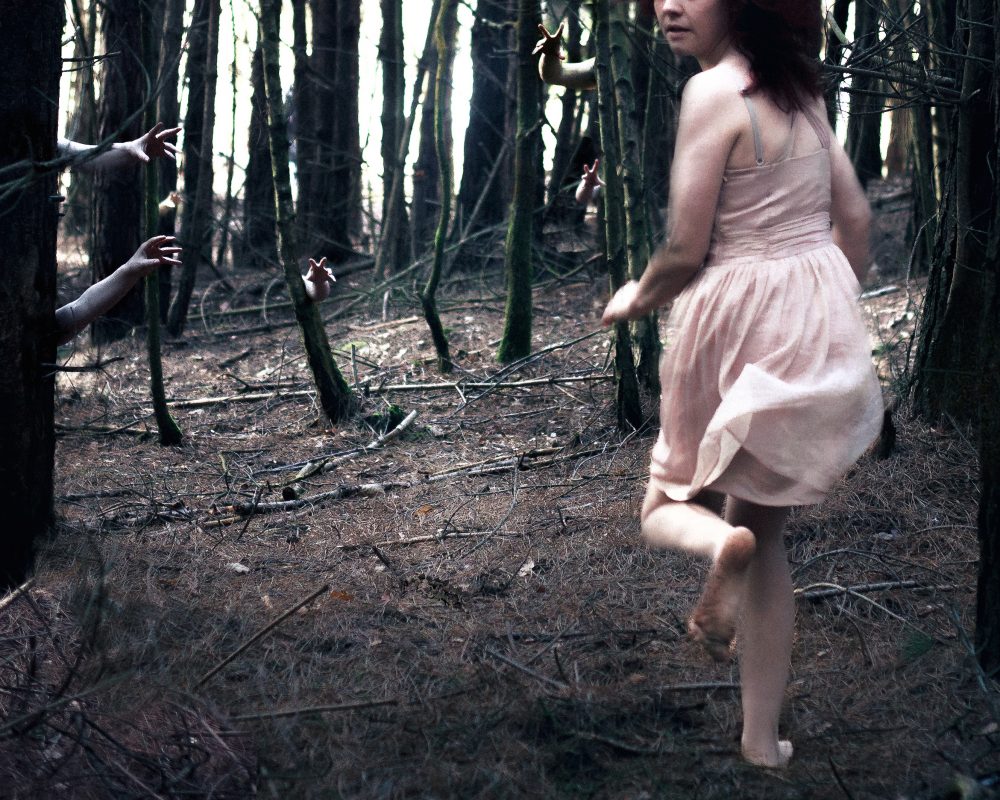
One of the rules: there has to be a last girl standing. It’s easy to pick out a film’s Final Girl, a term coined by Carol Clover in her brilliant work of horror theory Men, Women, and Chainsaws. She’s the one who will face the killer last, after he works his way through a gauntlet of her friends and classmates. She’s the only one who stands a chance of defeating him. If she dies, it will be face to face with her killer, as something close to equals. She begins as an ordinary girl but is transformed by loss and battle into a champion.
You can’t have a Final Girl without her counterpart. For one girl to be left standing, the others must fall.
But you can’t have a Final Girl without her counterpart. For one girl to be left standing, the others must fall.
The girls who die first don’t have a catchy title. We don’t tend to consider them as part of a group, as connected to each other. Each one is an individual point, so alike they are not worth connecting, so inseparable they are alone.
There is no grand unified theory of the girls who die first, but there are observable patterns. The rules for girls in horror movies are the same as the rules in the real world. Don’t fuck. Don’t drink. Don’t do drugs. Don’t go anywhere by yourself. A character who breaks those rules is doomed; a woman who breaks those rules is blamed.
There’s a morality play element to this, as countless film writers have explored: girls in horror movies are punished for doing things girls aren’t supposed to do, especially for having sex. But there’s an even simpler way of looking at it. In horror movies as in life, you’re supposed to direct your attention toward survival. Sex is a distraction. If you close your eyes for a kiss you won’t see the knife coming.
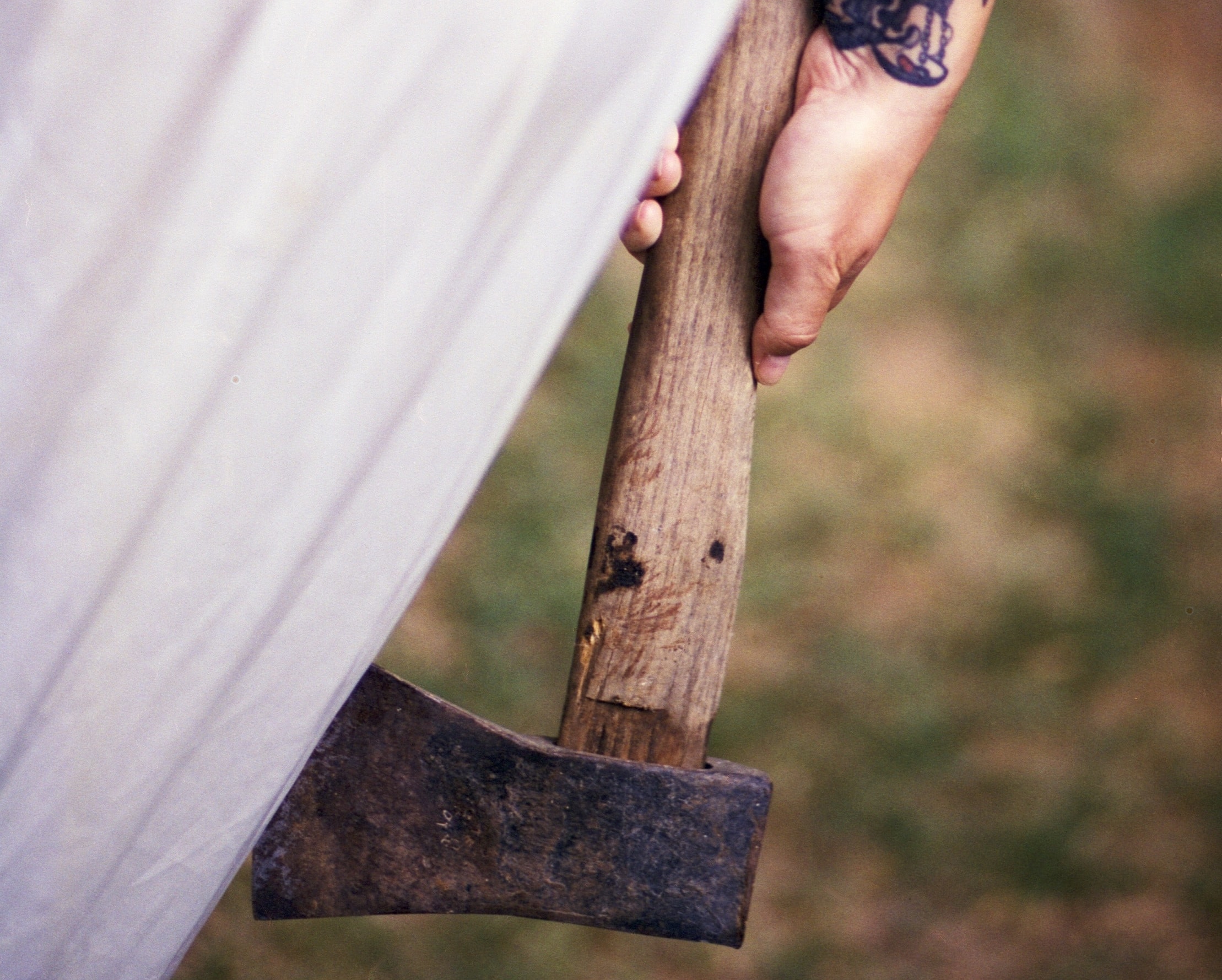
I’ve done the math. I am not a Final Girl. I’m loud and weird and queer and fat and tattooed. I can’t fit into a small hiding place, or climb out a window to safety without breaking my neck. I’m easily distracted by attractive people and shiny objects and good music and food. Put me in a horror movie and I won’t last an hour.
Heather was like me, only more so. In a movie, she’d die early. In real life, she died early too.
To survive a horror story you have to realize you’re in one. The girl who dies thinks she’s in a different kind of story, one that’s about her and what she wants: to dance, to party, to fuck, to feel good. She thinks she is the subject of this story, the one who watches, desires, sees, the one who acts upon the world. She does not feel the eyes on her, does not know she is being observed, that her fate is not to reshape the world but to be reshaped by it.
Recklessness is a coping mechanism, not a survival skill. In horror movies, if a girl is driving fast at night, there’s usually someone hiding in her backseat. Heather stomped on the gas in her platform boots, flew down the highway without looking over her shoulder, played her music loud enough to drown out whatever might have been trying to get her attention. She never got enough sleep, always either sneaking out of her room at night or sneaking boys in. She loved mosh pits and sugary drinks made with cotton candy vodka. We used to try to make each other laugh, shouting things at the top of a roller coaster right before the plummet: “What a lovely view!” She never stopped being afraid of heights, but there was no ride she wouldn’t go on.
The final girl is the one who perceives the threat. We know she’s the wisest because she is afraid. She looks over her shoulders. She hears the strange noise. She sees the footprint below the windowsill. She is on guard, and if she lives this is the reason. Because she’s looking for her death. She sees it coming.
When a woman is described as “asking for it,” for whatever trauma or violence has befallen her, what she’s really being accused of is not doing enough to prevent it. Harassment, assault, violence, death are supposed to be things women plan around as habitually as checking the weather forecast before getting dressed. We’re taught that someone wants to hurt us and our job is not to let them.
The final girl is the one who perceives the threat. We know she’s the wisest because she is afraid.
In Halloween (2018), Jamie Lee Curtis’s Laurie Strode, who survived Michael Meyers’s massacre in the first Halloween (1978), is forty years older, a mother and grandmother, but in some ways has never escaped her would-be killer. All these years, not dying has been her primary vocation. Her daughter is combat-trained, her house rigged with traps. The few people who maintain relationships with Laurie want her to move on, but when Michael escapes and goes on another killing spree, Laurie’s fixation is vindicated. Her obsession, her careful preparation, enables her to survive again. Everyone who disapproved of Laurie’s choices ends up either rescued by her or dead. Laurie was right, is the moral of the story.
You can live your life that way. It’s possible. It’s easier, even. But it’s less joyful. “Don’t die” is a demanding aspiration, but not a satisfying one.
But Laurie was miserable. Is that the life lesson—sacrifice everything, alienate your loved ones, be hard as a rock, but survive? I can’t imagine Laurie Strode on a roller coaster, or on the highway with the windows down and the music cranked up.
I don’t want to romanticize early death. Heather used to say “drive fast, die pretty,” but it wasn’t thrill-chasing that killed her. It was congenital heart disease, a vicious little fucker hunkered down in the backseat of her genetic code, waiting for its moment.
In real life, playing it safe doesn’t save you. You can do everything right and still end up ashes.
When we were seventeen, Heather wrote a letter to her mother and her friends, explaining why she had to run away from home. She never went. We found the letter a decade later, after she was dead. I wonder where we’d all be if she had gone and never looked back. In real life, playing it safe doesn’t save you. You can do everything right and still end up ashes in a mountain river, cascading back down into the hometown you never got around to leaving.
The Final Girl is an empty promise. What it seems to offer women is the guarantee of survival if we do everything right. But what it actually ensures is that, if you are hurt, there will be a way to trace it back to a rule you broke. You become the Final Girl by attrition, not achievement. You can’t earn the title. You can only outlast everyone who didn’t get it.
Slasher movies satisfy because they impose a pattern on mortality, make it a puzzle you can solve. But in real life, there’s no way to game the system. There’s no system. I don’t deserve to have outlived my best friend, yet here I am. I still like my music loud enough to drown out approaching footsteps. I still sleep with my window open.
On September 12, the Rona Jaffe Foundation Writers’ Awards celebrated its 25th anniversary. The program was created by novelist Rona Jaffe to identify and support women writers of unusual talent and promise in early career. Since its inception, the program has supported 158 outstanding emergent women writers for a total of $2.9 million. The 2019 winners Selena Anderson (fiction), Magogodi oaMphela Makhene (fiction), Sarah Passino (poetry), Nicolette Polek (fiction), Elizabeth Schambelan (nonfiction), and Debbie Urbanski (fiction/nonfiction) received awards of $40,000 at a private ceremony in New York City. Award-winning author Jacqueline Woodson delivered these remarks at the ceremony.Woodson’s newest novel, Red at the Bone, will be released on September 17.
When I was 10, I would lock myself into our tiny bathroom in the Bushwick section of Brooklyn and with a hairbrush as my microphone, I’d commence to giving my Pulitzer Prize acceptance speech. I’d thank my mom and my grandmother, my siblings for letting me tell my stories and my best friend, Maria, for always encouraging me to be a writer. In these speeches, which happened regularly, I stared at myself in the mirror—me as audience, me a jury, me as winner.
What I knew about this prize was that it was given to writers. That’s it. Writers got the Pulitzer Prize. I didn’t know anything else really. I didn’t know about the National Book Award or Nobel Prize or even the Newbery really—because the one Newbery Award winning book in my classroom was a novel I despised. And I won’t give the title of it because I truly don’t believe in censorship but believe that people should make their own judgments about a book but it was called Sounder. And I’ve forgotten who the author was. But it was a book about a Black family and a dog. And of course the dog dies. But that’s not why I hated it. I hated it because the only character in the whole book with a name was that dog. And I love dogs—I have two huge ones. But unlike that narrative, in my house, the dogs and the Black, brown, and white people have names. There’s my partner Juliet. And there are our children, Toshi and Jackson Leroi. Their names are thoughtful and deeply intentional. My dad was Jack, I’m Jacqueline, my son is Jackson Leroi. My daughter is Toshi. Named for her godmom, Toshi Reagon, who was named for her godmom, Toshi Seeger.
We gave our kids those names to show them our love, to show them their humanity, to show them their legacy. We gave them those names to let them know they are wholly human. They are here. And they matter.
I wanted the people I loved to have names.
In my books, when I leave a character unnamed, it is because he or she or they are just backdrop, just there to give the reader a sense of place, atmosphere. Those unnamed characters are not going to matter to the whole of the story. Not really. You’re not going to remember them, you’re going to remember the ones with names.
I wanted the people I loved to have names.
And as a child standing in front of that mirror, I already knew that my story had a right to exist in the world. That my characters would have names and people would remember them and because I knew there was this prize thing going on in the world—that seemed to be the next obvious step!
I think often how lucky we are. How there are so many speed bumps on the way to becoming. That [with] the everyday micro-aggressions and insidious messaging coming at us from our screens and our magazines and other people—how amazing it is that we are here telling our stories.
This year I gave my first TED Talk—which actually went up on the site this morning, so the day has been a tad distracting for me to say the least! TED talks didn’t exist when I was a kid. And the idea of a writer having to do this much public speaking—it wasn’t like that then either. Or maybe it was and I just wasn’t in those rooms. I swear that mirror speech was under five minutes. Even as a child I knew peeps didn’t want to hear me blathering on.
Wait—back to those rooms. I wasn’t in them. Not only because I was just a kid. The grown up versions of me weren’t in those rooms either. We weren’t getting those awards, we weren’t getting those meetings, we weren’t having those lunches or signing those big book deals.
But it didn’t stop me. Because for as long as I can remember, all I’ve ever really wanted to do is write. And write well. And push the boundaries of writing, literally change the narrative.
And so while I was waiting on the Pulitzer, I grew up, went to college, worked jobs I hated, applied for grants to help me buy a computer, pay the rent, travel for research, go out for a fancy meal—and never got a single one.
And kept on writing.
And then in 1990, after years of getting rejected from an artist colony called Yaddo that was rumored to have a pool, which was exciting to me, the idea of staying at a place where they bring you a basket lunch and you get to write by a pool (you know that song, “Young, Dumb and Broke”—I swear it was written with the young me in mind)—I don’t even love swimming but that pool idea was intriguing and too, it was the only artist colony I’d ever heard of, so I applied again and again and again and again, and got rejected again…and again… and again—I was accepted to the MacDowell Colony.
When you look at my long list of awards, you don’t see the form letter rejections.
And literally, my life was changed forever. When you look at my long list of awards (which, in case you don’t know does NOT include a Pulitzer) you don’t see the white space where the cricket songs played. You don’t see the form letter rejections coming via the United Postal Service. You don’t see the bounced rent checks or the many times I had to say no when friends who had weekly paychecks and/or trust funds were heading out to dinner and I had to decline the invites.
Yes—it was the crickets but the white space was also the journey, the hunger, the audacity to dream of a one day, of a world that is different and me still in it.
This year I began work on Baldwin for the Arts, an artist colony I’m creating in Brewster, New York, for writers, visual artists and composers of color at the early stages of their careers.
The MacDowell Colony, the Rona Jaffe Award, The Whiting Award, The Fine Arts Work Center, Baldwin for the Arts, this is what philanthropy looks like. When we can, we give back to the world—an offering, a thank you, a remembrance. When we can, if we can, we reach a hand to the artists coming up behind us—we blurb the books and read their manuscripts and introduce them to our agents and tell them they won’t always be hungry or afraid on this journey.
This is what humanity looks like. Each day we remember that our work is our gift and our tool for creating change—that with this gift comes deep responsibility. Not to write what sells but to write what matters. To write against our own erasure. To write so no one should ever feel like they’re walking through this world unseen.
At the ages four and three, my sons are learning about retaliation. One steals the coveted fire engine from the other and soon someone has been smacked. Quickly it becomes about more than the fire engine: it becomes about power. Who can keep the fire engine the longest? Who can come out on top after a brief skirmish between two bodies, each not yet tall enough to reach the kitchen sink?
Play nicely, I tell them, and it feels like asking a lion not to eat the antelope it just killed. Their passions and fears roil just beneath the surface, always ready to erupt. I try to teach them about managing their emotions, but sometimes it feels like I’m just imposing civility on them.
Buy the book
While in parenting I tell my children to be peaceful and avoid power plays, I seek out stories of revenge in literature. In my debut novel, After The Flood, the protagonist has experienced violation and betrayal, and vengeance brews under the surface of her other motivations, a steady fire she can neither resist nor extinguish.
Revenge literature revolves around obsession and how we cling to those who have wronged us, even when it may be better to push them away. It doesn’t shy away from how much hurt can become a hallowed memory, something we return to for reasons we can’t fully name. These stories are also inherently moral—they mine the limits of vigilante justice and question if it’s strength or weakness that makes us want to strike back. But beyond all that, these stories are primal and entertaining in the way tales around the campfire can be.
I’ve loved revenge novels like Moby Dick and the Revenant, but revenge stories with a woman playing a pivotal role capture my imagination more. Perhaps it’s because a woman taking power through violence is a story I haven’t heard as often. This rebuttal to the nurturing, self-sacrificial depiction of women feels like the other side of the story, a side of the story that acknowledges not just a woman’s complexity, but her humanity.
Here are seven novels that feature women and revenge—stretching from ancient Greek mythology to the American frontier.
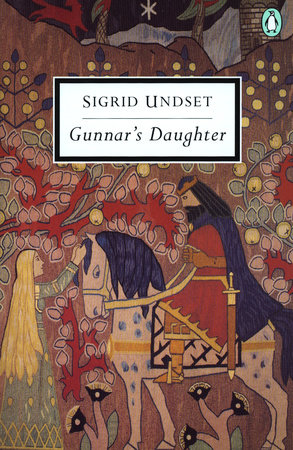
Written around the turn of the 20th century, Gunnar’s Daughter takes place several centuries before, at the beginning of the 11th century. Undset is a master of historical Scandinavian literature (for which she won a Nobel prize) and this novel is one of her slimmest: a taut book paced like a thriller, but written with the cadences of Icelandic sagas. It features Vigdis, a young woman who is raped by the man she wanted to love, leading her to embark on several vengeful missions that ultimately threaten to steal her own happiness.
Where would horror literature be without this classic? Carrie is a target of bullying and ridicule at her local school. She is humiliated and taunted when she menstruates for the first time and afterward, she discovers she has telekinetic powers. Throughout the novel, Carrie experiences hurt upon hurt, both from classmates and her own mother, culminating in a bloody act of revenge in the climatic scene.
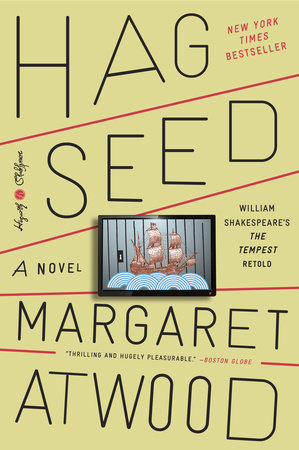
Atwood adapts Shakespeare’s The Tempest in this novel that follows Felix, a director seeking revenge after being fired and exiled from the theatrical elite. Felix speaks with his daughter’s ghost and obsesses over the ex-friend who betrayed him and brought about his downfall. When he begins to teach in a prison, he embarks on a plot to avenge himself against those who wronged him. While this novel doesn’t feature a female protagonist, the Miranda/Ariel character (Felix’s daughter) plays an active role in showing how Felix’s desire for revenge may be a literal prison.
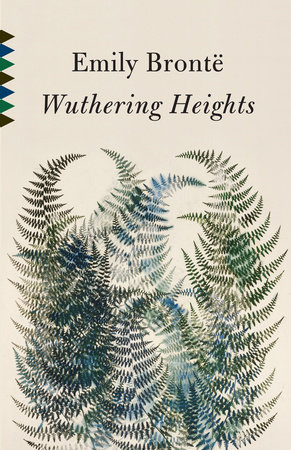
This classic novel examines the doomed love story of Catherine and Heathcliff, beginning when they were children and ending decades later with the story of their children. After Heathcliff is treated unfairly by Catherine’s brother, he harbors lifelong resentment, anger, and jealousy that brings havoc and ruin to both families. Catherine is both the recipient of Heathcliff’s hate and love and her responses to him further complicate this story that touches on vengeance, wealth, love, and power.
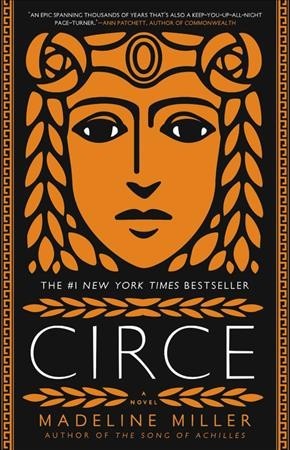
Another retelling on this list, Miller’s Circe reimagines the Greek goddess and witch in this epic story that covers centuries. Daughter of Helios, Circe has the ability to turn humans who offend her or threaten her into animals. While Miller’s novel does not focus exclusively on Circe’s vengeful magic, it does plumb the motivations and emotional wounds behind Circe’s darker magical acts. The novel humanizes this ancient character, all the while keeping her powerful, nonhuman abilities intact.
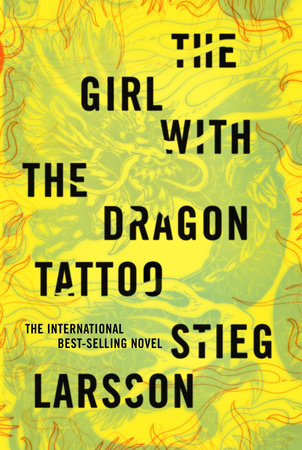
This novel helped start the Scandinavian crime fiction trend for good reason. Lisbeth Salander is a captivating heroine who helps solve a family’s murder mystery. In a revenge subplot, Lisbeth is assaulted. With some forethought, she fights for her independence, security, and a sense of justice. It’s a disturbing vengeance, featuring a tattoo gun and blackmail, but it doesn’t feel unfairly won.
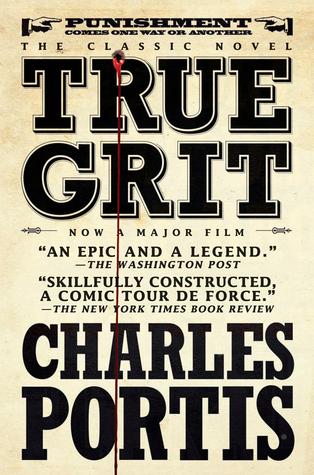
This western novel is about a fourteen-year-old girl named Mattie Ross who embarks on a journey to avenge her father’s murder by the hands of a “coward going by the name of Tom Chaney.” Along the way, Mattie is joined by two sidekicks—a Marshal nicknamed “Rooster” and a Texas Ranger. Narrated by Mattie when she is an elderly spinster, she looks back on her adventurous quest, and reveals herself to be a woman of independence and fierce intelligence.
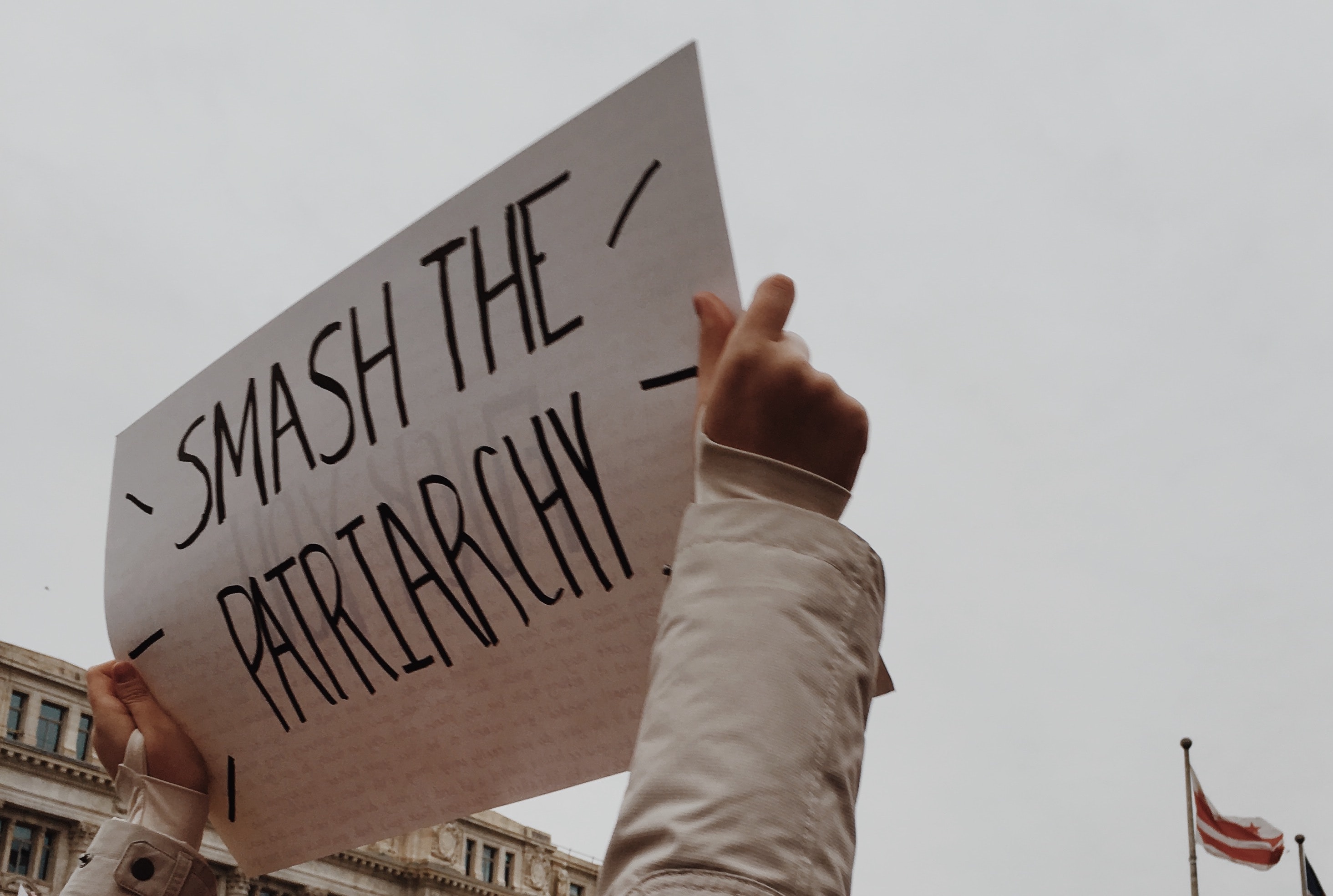
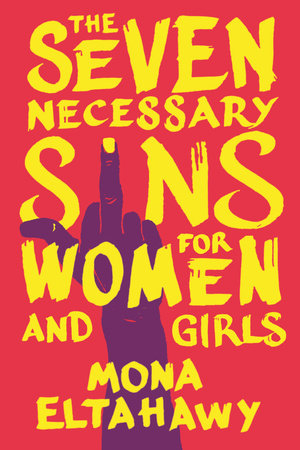
Eltahawy first addressed this in 2016’s Headscarves and Hymens: Why the Middle East Needs a Sexual Revolution, condemning patriarchal authoritarianism, the political, cultural, and religious repression that reduces women to second class citizens in the Arab world, connecting that to the oppression faced by women worldwide. In her latest book, The Seven Necessary Sins for Women and Girls, Eltahawy is out to destroy the social construct that privileges male dominance by illustrating the seven sins women and girls need to defy, disobey, and disrupt the patriarchy: anger, attention, profanity, ambition, power, violence, and lust. It’s a searing manifesto, illustrated with stories of global activists, like Uganda’s Stella Nyanzi who uses incivility to fight for women’s rights, or Islamic scholar Amina Wadud, who led Muslim prayers in New York City (a ritual traditionally reserved for men). The Seven Necessary Sins for Women and Girls is a must-read for any individual who seeks to resist.
Mona Eltahawy and I spoke by Skype. We discussed how the patriarchy is connected to the rise of authoritarian governments worldwide, why it is imperative that the patriarchy must be overthrown, and how silence protects no one.
DS: Can you describe what patriarchy is and why it needs to be smashed?
ME: Patriarchy is a system of oppression that works to privilege male dominance and work against the interests of anyone who is not a heterosexual and largely conservative man. I try to get people to imagine patriarchy is as an octopus, and the head of the octopus is patriarchy and each of the eight tentacles represent various forms of oppression. Patriarchy is the head, which exists globally and universally. It doesn’t matter if you’re in a theocratic state, an authoritarian state, or a democratic state, patriarchy is universal.
What does differ are the tentacles that patriarchy uses to privilege male dominance and to work against the interests of mostly women, people of color, and non-binary people. Those tentacles can be capitalism, racism, homophobia, ableism, classism, a whole host of oppressions, but I want people to focus on the head, which is patriarchy.
We must destroy patriarchy because it’s the last thing that we often talk about. We talk about the specifics of China or the U.S. but we forget that the backdrop of these specifics is patriarchy. That’s why I begin and end everything I do, every talk I give, with “Fuck the patriarchy,” because whether I’m speaking in Mumbai or Lahore or New York, patriarchy exists.
DS: Why is it important that this disruption happen globally and why now?
ME: Another concept that I talk about in my book is the trifecta of misogyny. I think that the Trump regime, and that is the word that we must use to describe what is happening in the US right now, is the perfect example of the trifecta of misogyny. It’s not just Trump. It’s decades and decades of patriarchy and racism and capitalism and misogyny and homophobia and ableism, etc., and it’s not just in the United States or Egypt or Saudi Arabia or anywhere else. It’s also what happens in the public space, which is what I call the street and in intimate spaces, which is what I call the home. The trifecta of misogyny connects the state, the street, and the home. At the center of that is patriarchy.
Focusing on patriarchy is a way to fight the Trump regime.
When people want to compartmentalize things, they will say, “You know you talked about feminism but this Trump regime fucks everyone over. Or the Egyptian regime is that for everyone. Or the Saudi regime oppresses men and women.” Yes, it’s true, but the state, the street, and the home together oppress women and non-binary people specifically and they work together. By tackling patriarchy, by tackling that head of the octopus, we recognize where the most power lies.
bell hooks says “Feminism is for everybody.” When you tackle social issues and social inequities, oppressions, and horrors through a feminist angle and through a feminist lens that focuses on patriarchy, then you are bound to focus on what she has long called for, which is a focus on the destruction of white supremacist capitalist patriarchy. Focusing on patriarchy is a way to fight the Trump regime.
DS: How is the rise of patriarchy connected to the rise of authoritarian governments worldwide?
ME: Whether you look at China where the Communist party has been in power for 70 years, or Saudi Arabia, where an absolute hereditary monarchy has been around for decades, or the United Kingdom, where you have a constitutional monarchy even though they don’t have a constitution, or the United States where they have a two party system, regardless of the political system—they all have patriarchy that lives and breathes through every system at play in those places.
People are finally beginning to look at it, because they see Mohammad bin Salman, who is the de facto leader of Saudi Arabia, and they see how close he is to Trump and how close he is to Brexit and Boris Johnson, and they see in Egypt, my country of birth, the fascist leader Sisi, a military ruler, and they see how Steve Bannon, the chief strategist for Trump, who has been going around Europe setting up a fascist movements, and now you have Jair Bolsonaro in Brazil, who they call the Trump of the Tropics, and now you see Modi in India, who could be the Trump of India, and now you see Netanyahu, the Trump of Israel, who just banned the entry of two [American] elected officials at the urging of Donald Trump.
When you see all of that, you see this thread called patriarchy, that ties all these patriarchal authoritarians together. Regardless of whatever political system they claim, inherently it is what is at play now and is on the rise. People prefer to say fascism is on the rise, or racism is on the rise, or white nationalism is on the rise, but what is on the rise is patriarchal authoritarianism. In some countries we call it fascism, in some countries we call it white supremacy. It’s the most dangerous ideology on the rise today.
DS: Recently you wrote an essay about Representatives Rashida Tlaib and Ilhan Omar being banned from visiting Israel. What is the import of this event? What is the message being sent to authoritarian governments?
Women are told that if you’re good and if you behave and that if you don’t talk about uncomfortable things, you’ll eventually get what you want.
ME: The message is that patriarchal authoritarians like Trump and Netanyahu know how to appeal to their base through racist, misogynist actions. This is essentially a racist and misogynistic act by Israel, a violation of freedom of speech and freedom of expression and the right of all of us to boycott. Essentially what Trump and Netanyahu were doing is punishing political rivals who have been outspoken in their opposition. And who are these rivals? They are women of color who have taken on a progressive political platform. They are the first two women who are elected Muslims in Congress, and one of them is the first Palestinian American. It is imperative that we recognize how these patriarchal authoritarians work together and signal each other about the ways they can oppress their political rivals.
You see these patriarchal authoritarians all around the world. Mohammad Bin Salman in Saudi Arabia imprisoning 17 women’s rights activists, and Trump has not said a word and is very happy to do business with MBS. The same thing with Sisi. You look at the global map and see how these patriarchal authoritarians are working together to punish outspoken women of color wherever we are.
DS: If you were going to tell people how to resist, what would you say?
ME: You must look for whatever candidates you can support, because we’re coming up to an election year, and not just for president, one that is pivotal for the Senate and House. We have to pay attention to the Senate races that are coming up. We flipped the House in 2018; we must flip the Senate. We have to take what happened to these two representatives and use that as fuel fodder for going out there and finding progressive candidates. If we want to stand up to the fascism of Trump, if we want to reverse his fascist policies, be they the concentration camps on the border, women’s rights, LGBTQ rights. We have to fight this in races that are not just presidency. We have to start electing more leftist and progressive candidates in every race possible.
DS: You started this work in the wake of a sexual assault. Can you discuss the context of this and other sexual assaults and how they are connected to sexual violence against women enacted worldwide?
Even if you’re a white woman who doesn’t associate with white supremacy, you still benefit from racism.
I started #MosqueMeToo for Muslim women to talk about their experiences but also to carve out a space for us in #MeToo. Because although Tarana Burkes launched #MeToo in 2006, #MeToo really took off globally in 2018 and became associated with very white, privileged women’s experiences, and I wanted women who were not white or privileged to have a space. Over five days it was really heartening to see many Muslim women and men share their experiences, but it was also disheartening to see Muslim men attacking us, saying, “Shut up! You’re making Muslims look bad.You’re too ugly to be assaulted, etc.”
Five days of this and I decided to go dancing. That’s my self care. I’m dancing and I feel a hand on my ass, and I’m like, “You are fucking kidding! How is this happening? I’m supposed to be here letting it out!”
This time I did not cry. Freezing and crying are perfectly acceptable reactions. Freezing is how many women react to sexual assault, because that’s how we survive. But at this stage of my life I did not freeze because I had built up a resistance, years of learning to yell at men and hit back at men. I found the man who sexually assaulted me. I grabbed him from the back of his shirt. He stumbled. I sat on him and I just began to punch. Every time I wanted to stop punching him I was like “Nope, I’m not done. I was yelling at him, “Don’t you ever touch a woman like that again.” It was glorious.
This guy from club management asked what happened and he says to me, “Why didn’t you tell security?”
This is patriarchy. Patriarchy essentially says patriarchy will protect you, as long as you behave of course, and patriarchy will protect you from the other branch of patriarchy that gives another man the right to assault you. So essentially my body is a proxy battlefield between patriarchy and patriarchy. If I behave the good patriarchy will protect me from the bad patriarchy. Fuck patriarchy. I don’t want protection. I will fucking beat you and glorify over it if you touch me without my consent.
DS: You say the most subversive thing a woman can do is to talk about her life as if it really mattered. Can you expound upon this?
ME: You’ll see a lot of women who will put a lot of emphasis on fighting everything but misogyny. They will fight racism, they will fight against capitalism, they will hide fight against a whole bunch of oppressions, and yet their own life is the last thing they’ll fight for. We’re told, “Oh, that’s just your personal experience. It doesn’t matter… Go away until you find a school of thought that tells me that your personal life does count.” My point in saying that the most important thing a woman can do is talk about her life as if it matters is because it does.
For those of us who are women of color, it’s about more than class. It’s about more than race. It’s about the octopus, and the best way to talk about the octopus is to talk about our lives. So when I say that the most subversive thing a woman can do is talk about her life as if it matters, it’s because it does. That goes to the heart of The Seven Necessary Sins for Women and Girls. We must embrace those sins and act those sins out in our day to day.
ME: We are socialized to be self-sacrificing. We are constantly told to wait. Waiting gets us nothing, because when you’re told to wait, as Martin Luther King Jr. says in Letter from a Birmingham Jail, basically it’s never going to happen. Half of society is told to wait. It’s a fucking disgrace. What are we going to wait for? If we focus on patriarchy first and foremost, everything falls into place. We’re told to focus on the individual tentacles of the octopus instead of focusing on the head of the octopus.
Defy, disobey, and disrupt the patriarchy because silence will not protect you.
Women are told that if you’re good and if you behave and that if you don’t talk about these really uncomfortable things, you’ll eventually get what you want. It’s never going to come. You have to make an incredible insurmountable fuss about what’s going on in your life for people to pay attention. You’re going to be caught attention-seeking. You’re going to be called a whore. If not an outright whore, an attention whore. People are going to tell you you’re too ambitious, too power hungry, too too much everything.
Audre Lorde wrote that essay while she was waiting to get a diagnosis of cancer which she eventually died from, and she said everything that I’ve been silent about has not protected me from illness, has not protected me from misogyny and patriarchy, has not protected me from sexism, from racism, from zero. Why be silent? Because silence protects you from nothing.
The reason that women especially are socialized into being silent is because it disturbs the status quo, because patriarchy would much rather us go about and preserve male dominance and the promise it gives to male dominance, that it’s entitled to our bodies, our time, our love, our affection, etc. That ties into what I call feminism in 3D: defy, disobey, and disrupt. Silence is the antithesis of all that. Defy, disobey, and disrupt the patriarchy because silence will not protect you.
DS: In your chapter on anger you call white women the foot soldiers of patriarchy. Can you explain this further and can you discuss what white women (like me) need to be doing right now?
ME: White women understand misogyny very well because it affects them by and large on a day-to-day level. I think they don’t understand that for those of us who are not white it is much more than just misogyny. When I talk about patriarchy being the head of the octopus, I always explain that the tentacles include racism, capitalism, homophobia. It’s what Kimberle Crenshaw terms intersectionality, and we recognize that these many oppressions work together to keep us underfoot.
I think that white women are much more comfortable talking about misogyny. They’re not comfortable about talking about more than that because it takes them into these uncomfortable places that reminds them that the majority of white women voters voted for Trump, that in Europe more white women than white men voted for right-wing parties in several elections, reminding white women that they have a privilege that does not extend to those who are not white and that privilege comes about through proximity to the privilege that white manhood gives them.
So what happens is this very dangerous and toxic exchange by which many white women accept crumbs that are thrown to them by the white supremacist patriarchy, that promise (white women) privilege, power, and protection in return for allowing their racial concerns to trump gender. You’ll see that in the women who are evangelical who submit to the man being head of the family, who fight reproductive rights, who fight women being more overt in their feminism and politics, but you’ll also find it in women who are not white evangelicals, women who do not associate with white supremacy, and those are women who do not see the insidious ways white power gives them a privilege that I don’t have.
Even if you’re a white woman who doesn’t associate with white supremacy, you still benefit from it. Unless you’re being overly and actively anti-racist, you benefit from racism. I want white women to know that unless you’re being overtly anti-white supremacist/capitalist/patriarchy, you actually benefit from white supremacy. I want white women to be very cognizant of that and to actively fight it.
Strange how much we find later.
Inside a dying river,

Good visibility.
The loss of silence we fear. And this:
Relics from June: I count in this pastoral the carcass of an orange,
An antropolise with its miniature chateaux

& water lilies overgrown;
Frail forts sprouting in the wild around us.

Even now I think of you as gentle
with some other lover —

How much walks out of a person through doors?
How much leaves
Through windows, the swell of incandescence

 *

Or smoke, inverse river moving with the tenderness
Of people pedaling farm bicycles late evening
Piled high with woods for home fires.
This procession, instead of gospel
Slow as I want it to be.

The air smells like a thing in search of home
I suppose you could think of it this way
Pre-loved bodies touched by rain breeze.

And to sit in sunlight tender at this angle
Passing through a tree — a way to make myself penetrable
By things falling from the sky flapping against gravity.
Saunas for Our Lifelong Displacements
Here, I am made human by silence,
rationed food and walking.
I stand by doors, afraid to approach mirrors.
Any closer, it’ll show the shape of
the years.
Each life we have lived re-imaged

In soot, spiders write their web histories
Across a silence so infinite it makes parliament
between birdsong, cricket,
A decade's forest with its animals.
And the dead (un)accounted for.

These days, I only think of people as mountains.
Not for praying on summits
where sun beaten rocks warm our feet,
Saunas for our lifelong displacements.
But for making slow ascents.

I am pacified by strange signs of gardening
Emergent along our roads. Some days, the begonias float
Vivid with each daydream.
Behind us, the moon's appearance is perfect, final.
As if we'd imagined each crescent phase.
As if this is the only shape we’ll ever know.

As if we’d want to joke about this.
And the black gothics of our nail polish.
And a colour like gun-mental. Said again and again

Because more than blood this poem too can be a love note
Said in the presence of our decaying.
Beloved slipstream writer Kelly Link has been publicly wrestling with a novel on Twitter for a while now (sample tweet: “gonna travel back in time and stop the baby who grew up to invent novels”). Link definitely knows what she’s doing when it comes to short stories—she’s gotten a MacArthur fellowship and one of her collections was a finalist for the Pulitzer Prize—but a novel is a whole other kind of animal. Or maybe a whole other kind of furniture?
Yesterday Link posted a metaphor about the Novel Problem that evoked the bit in Dirk Gently’s Holistic Detective Agency where the couch gets inextricably wedged in a stairwell in a way that’s not possible according to physics:
As a coda, she encouraged followers to describe their own writing projects in terms of sofas. The result is a charming tour through the discount furniture showroom of writerly despair and hope.
bright red velvet fainting couch with a subtle swelling in the middle such that, no matter how gingerly you lie on it, you find yourself rolling off
Mine is definitely the Chesterfield sofa in Life, the Universe, and Everything, especially the part where I'm desperately chasing it across the surface of another planet.
“I am truly excited about these descriptions and would sit on every one while I continue to work on my novel,” Link told Electric Lit. We couldn’t agree more, although it might be challenging getting up into that tree.
We’re living in the height of aspirational glamor. It feels as if every. single. person. on your social media feed is performing their best life at you: “Hey look at me, just casually sipping a Mai Tai on a white sandy beach in Waikiki, not even smiling at the camera because that’s how cool I am.” And the embodiment of that glamorous aspirational life we all want to have is, of course, the Instagram influencer. They’re almost always skinny, beautiful white women documenting their cinematic adventures while looking effortlessly chic at the same time. It’s the life we all want to have, but only the 1% can actually achieve.
But how much work goes into performing these glittering personas? What lies beneath the surface of that Glossier Cloud Paint? What dirt is hidden inside the seam of those Goyard tote bags? And how much of #LivingMyBestLife is real? These eight books unmasks the CoolGirl™ to reveal the mess we knew was there all along.
Struggling would-be writer Louise both envies and is obsessed with wealthy, beautiful socialite Lavinia, who is in turn obsessed with her persona and image on social media. Eventually Louise’s fascination with Lavinia becomes so overwhelming that she tries to actually become her friend. Ha ha! Fiction!
We’ve all heard the story of Anna Delvey, the would-be German socialite who gained acceptance into the inner circle of NYC cool kids by seducing them with one-on-one sessions with celebrity personal trainers, meals at fancy French restaurants that cost the average pleb a month’s salary, and five-star vacations abroad. Now Rachel DeLoache Williams, a photo editor at Vanity Fair, has written a tell-all about being betrayed by her “close friend.” Ahh, the irony of finding out that the rich friend you’re leeching off of is actually poor and conning you.
Ayoola is beautiful, beloved, and magnetic, which may be how she gets away with killing so many of her boyfriends. Or maybe it’s just because her sister Korede is always on call to help her clean up afterwards and stay out of trouble. This dark, funny debut novel was just longlisted for the Booker Prize.
Even though she’s dead, Roz, Charis, and Tony can’t stop obsessing over their college frenemy Zenia, a charismatic liar who compulsively stole their boyfriends and exploited their trust. After reconnecting at her funeral, they bond over their Zenia-related trauma—and then they find out that her death might be just another one of her scams.
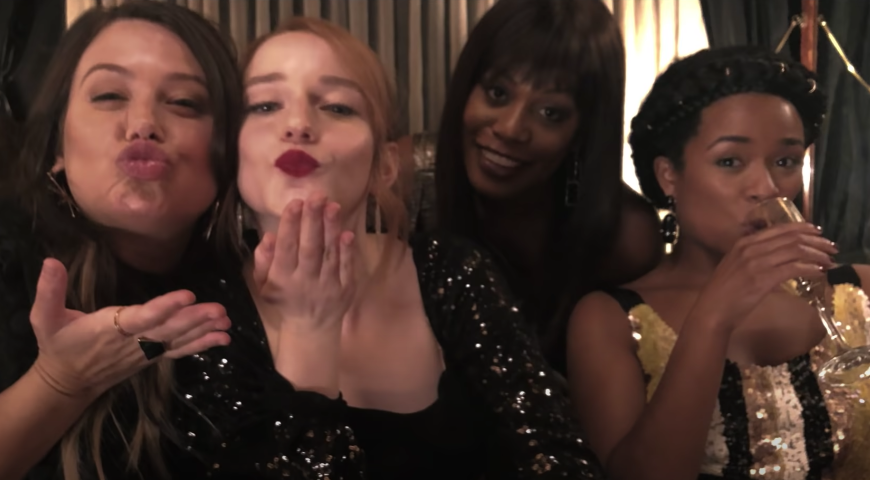
The Bunnies are the rich cool girls at the MFA program at Warren University (a fictional version of Brown). The four young women love Pinkberry frozen yogurt, wearing babydoll dresses, and eating miniature food. Samantha Heather Mackey—an angsty loner scholarship student—is definitely not a Bunny, but she can’t help being drawn to their syrupy sweet performative friendship. When Samantha gets an invitation to the Bunnies’ exclusive Smut Salon, well…it all gets very sinister very fast, especially when live rabbits are used in their performance art piece.
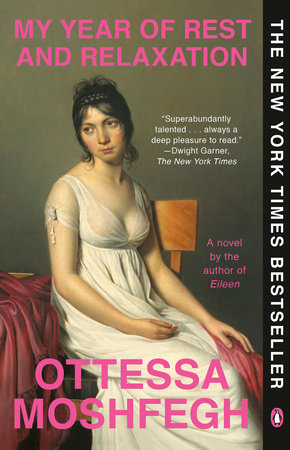
On the outside, the nameless narrator in My Year of Rest and Relaxation is the quintessential CoolGirl™: Rich! Blonde! Tall! Beautiful! Young! Thin! Well educated! Well dressed! She’s the sort of privileged woman who is fawningly profiled by Vogue while drinking champagne at Soho House. But yet, she feels like a switch has been turned off in her brain. Wallowing in ennui, she decides to get addicted to prescription meds (sound familiar?) and let those drugs put her to sleep for a whole year.
Before influencers were a thing, Cat Marnell was the internet’s favorite walking meltdown. This frenetic memoir traces her path from privileged prep school girl to New York beauty editor and prescription amphetamine addict—and then towards an uneasy sobriety, which is hard to achieve when your career is built around being a beautiful train wreck.
Jacaranda Leven is an It Girl who spends her nights in LA at cocaine-fueled bacchanalias in West Hollywood, partying with rock stars and artists. On a drug-fueled haze, she finds herself having a quarter-life crisis about the lack of purpose in her life. At 28, she decides to move away from the glamorous artifice of SoCal to start afresh in New York as a writer.
In his poignant and strikingly insightful novel of 1956, The Lonely Londoners, Samuel Selvon shapes his narrative through the eyes of Caribbean migrants (now commonly referred to as the Windrush generation) upon their arrival to London post-World War II. His Trinidadian characters, having been sold myths of a utopian society—the “motherland”—in which the streets are “paved with gold,” are greeted with a brutal and hostile reception in the capital they now call home.
The narrator perfectly encapsulates the level of ostracism faced by the migrants, describing the alienation which ensues as a result of British refusal to accept or even tolerate a culture unique to their own. Britain, the narrator writes, is a place divided into “little worlds, and you stay in the world you belong to and you don’t know anything about what happening in the other ones.’’ In just one quote, Selvon manages to voice an anti-multiculturalism rhetoric that is, regrettably, as pertinent now as it was then.
Often scapegoated by both media and political demonization, migrants bear the brunt of a manipulative and antagonistic agenda. As the U.K. is burdened with rising destitution and public service strains, a false narrative has been perpetuated to direct anger towards some of the most stigmatized in society as opposed to those accountable for austerity policies.
Britain’s systemic racism, its colonial past, and its inflated sense of patriotic pride are all symptoms of a nation haunted by xenophobic ideology.
There is an inextricable link between Brexit and anti-immigration ideology. The demographic of Brexiteers reveals that 81% of people who viewed multiculturalism as a force for ill (and 81% of those who considered immigration in the same light) voted for Brexit. As observed in Hope Not Hate’s “State of Hate 2019” report: “Many who voted to leave the EU on the basis that it would offer greater control over British borders also expected numbers of migrants, not just those from the EU, to return to their countries of origin once the decision had been made to leave the EU—with BAME [Black, Asian and minority ethnic] people often confused with migrants.”
This resurgence of a nationalistic identity and the coinciding bigotry surrounding cultural diversity point to a truth many will vehemently deny: that Britain’s systemic racism, its colonial past, and its inflated sense of patriotic pride are all symptoms of a nation haunted by and ingrained with xenophobic ideology. This ideology has a host of ramifications, from disenfranchisement of immigrants to hate crimes. Less discussed, though, are the more intangible effects on Britain’s culture—like the way that Brexit could undermine British literature and other creative fields.
Brexit and Britain’s subsequent immigration policy under the authority of Priti Patel—the new Home Secretary renowned for her concerning past voting record—may result in a blow to the U.K.’s creative industries, as we are set to lose some of the best talent the world has to offer, including writers.
Postcolonial literature such as Samuel Selvon’s has, among much else, evoked a wider understanding of the specific struggles faced by minorities and simultaneously the universal attributes shared. Without the talent and contribution of migrant writers who challenge cultural hegemony (i.e. the dominant class), our creative industries—specifically publishing—fail to represent an increasingly diverse audience.
Post-Brexit immigration policy presents an unwelcoming, complex process for both prospective international employees and employers alike. The skills-based system that the Home Office intends to strengthen will ironically fail to attract the “best and brightest” talent while annual salary requirements continue to dominate the U.K. visa system.
In a briefing on Brexit, the Society of Authors argues against the visa salary requirements of £30,000 for long-term migrant workers and £35,000 for indefinite leave to remain: “Authors in the UK earn an average of just £10,500 per year. The proposed threshold therefore does not reflect the ‘skills’ of writers or the cultural sector at large. Salary level is not an appropriate measure of skill or wider contribution to the UK’s social and economic life.” This emphasis on salary failing to represent skill highlights the necessity of reviewing the visa routes and the failure of immigration policy to consider vast cultural benefits—benefits that far exceed financial input. Reducing migrants to their salary not only diminishes their talent but also insults British authors who fall significantly below the warped perception of what it is to be “skilled.”
Reducing migrants to their salary not only diminishes their talent but also insults British authors.
The Creative Industries Federation similarly challenges immigration policy restrictions and the dismissal of “low-skilled workers,” arguing that many creative leaders “often begin their careers in a freelance capacity while doing casual or low-skilled work to support themselves.” Such “low-skilled” roles can be essential for the likes of freelancers to support themselves as they pursue creative careers.
However, regardless of economic benefits, migrants add value that cannot be measured by figures on a wage slip. Research conducted by Spread the Word illustrates the vital impact of migrant literature on social integration, suggesting that, ‘Fiction with origins from a diverse community drives understanding and wider cohesion within society’. Multiculturalism brings levels of creativity to our writing industry that cannot be surpassed; with diverse experiences comes a wealth of innovative perspective.
Without narratives that challenge or differ from the hegemonic experience, post-Brexit literature in the U.K. may be notably deficient. As Mairi Kidd writes in an article on migrant literature for Amnesty: “Unless we have books in which a range of people write their ‘normal’, we don’t have diversity, and the big risk is we don’t have authenticity either.” Literature ought to represent the myriad cultures it addresses.
For an example of how this can look when done successfully, we can look at Berlin, which has long been a creative center of Europe due in large part to encouraging diversity. Welcoming and embracing migrants from all walks of life—whether that be the more privileged expat or those seeking refuge—Berlin’s creative scene embodies the boundless benefits of coexisting cultures. CUCULA, the Refugees Company for Crafts and Design, is just one example of the remarkable efforts made by Berlin’s creative industries to both include and actively recognize the talent of migrants. Organizations such as CUCULA are the reason why the globalization of the city has been deemed “intrinsic to its cultural explosion,” with Kam Dhillon writing in 2017 that its “local economy owes a lot to a buzz engineered entirely by the diversity of its creative class.” With cities such as Berlin reaping the benefits of diversified industries, London’s creative scene seems set to appear archaic in comparison.
Without narratives that challenge or differ from the hegemonic experience, post-Brexit literature in the U.K. may be notably deficient.
European migrants applying for British citizenship are now discovering the brutal process that non-EU/EEA individuals face and fears have been voiced surrounding the consequences a strained relationship with Europe may have on publishing. The EU account for 36% of all U.K. book exports, a crucial component in the success and outreach of our literature.
As the Society of Authors briefing warns, “Should the current prohibitive visa system be applied to EU nationals, it is certain that European authors and other artists will be deterred from visiting the UK, leading to a significant drain of talent at our literary and cultural festivals.”
What is to prevent Europe from reciprocating such hostility? U.K. authors may fall victim to the repercussions of an acrimonious divorce, seeing limitations introduced for travel throughout Europe—something vital for both translators and author research.
If we wish to inspire future generations to embrace and value creative work, we must preserve the attributes that have historically seen the U.K. upheld as a cultural hub of talent. This means continuing to produce literature rich in diverse voices. We must not regress to the not-too-distant past and allow a rebirth of that familiar British literary canon which privileges the exclusionary narrative of white, middle-class, cisgender individuals.
Our publishing industry both craves and is nurtured by the exceptional talent of those creatives who subvert the dominant narrative. If we wish to keep our place at the table, we must exterminate the current epidemic of vermin spreading through the veins of the nation and maintain that our country is strictly no place for xenophobic ideology.
Holly Barrow is a political correspondant for the Immigration Advice Service, a team of lawyers offering support for immigrants in the U.K.
LGBTQ rights have suffered some recent setbacks in the U.S., but from a legal perspective, at least, it’s still one of the best times in recent history to be queer in this country. Gay marriage is legal at the federal level. Sodomy laws have been ruled unconstitutional since 2003, following the landmark decision in Lawrence v. Texas. Non-binary gender markers are now accepted in 11 U.S. states. It could be harder—and in 70 other countries, it is.
According to the International Lesbian, Gay, Bisexual, Trans and Intersex Association (ILGA), there are currently 70 United Nations member states that criminalize homosexuality, with punishments ranging from whipping in Malaysia to the death penalty in Iran. These governmental restrictions are obvious violations of human rights, seeking to police not only sexual activity but identity and self-expression. But, as the characters in these nine books prove, an unjust law isn’t enough to change who you are. Each of these books, both fiction and nonfiction, is about living in a country where being queer is either technically illegal or actively prosecuted—and the heartbreak, danger, and triumph that can follow when you do it anyway.
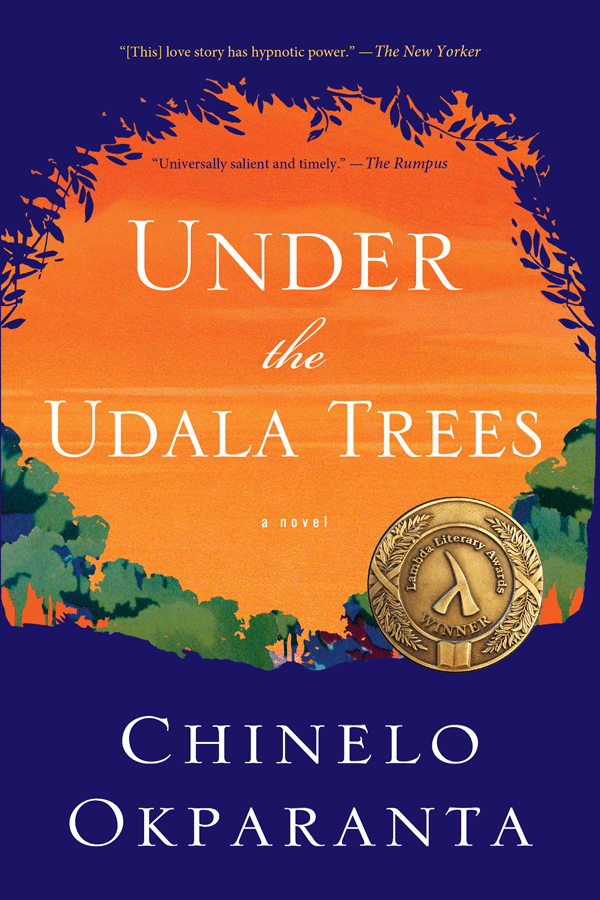
In Chinelo Okparanta’s debut novel, Under the Udala Trees, Nigeria ruptures in civil war, causing 11-year-old Ijeoma’s life to fall to turmoil when her father dies. Sent off to work, Ijeoma meets Amina and falls in love, despite the threat of persecution from her mother. With all the political unrest and deception around her, it’s a constant struggle between safety and truth while remaining herself.
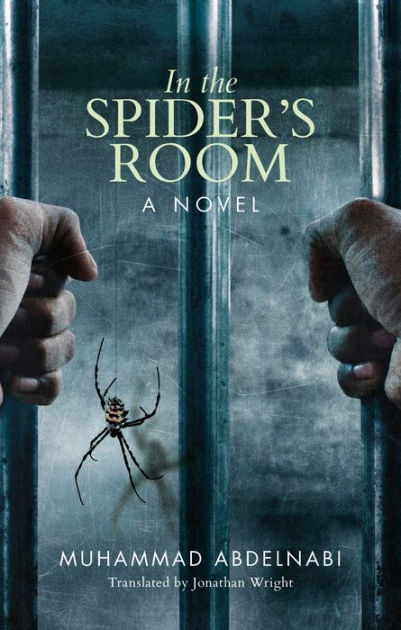
Set in Cairo, Egypt, In the Spider’s Room follows Hani during the Queen Boat trials, where 52 gay men were arrested on the Queen Boat, a floating disco club on the Nile. After seven months of legal onslaught, Hani is declared innocent but left speechless due to the emotional trauma. He documents his life thereafter, from his familial relationships to the love of his life and what it meant to be targeted and in danger of imprisonment as part of Egypt’s gay community.
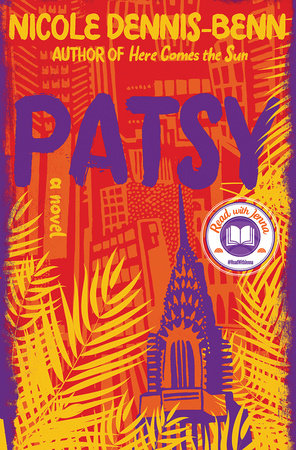
A story of motherhood, Patsy evokes the truth of our deepest selves. When Patsy chooses to leave Jamaica and immigrate to the United States, she realizes things are not what she had hoped. Rekindling her past love and starting anew seems more and more difficult, especially as across the ocean, her young daughter Tru is confronted with her mother’s choice to leave her behind to love freely. But when Tru questions her own sexuality and identity, she begins to understand her mother more than she anticipated.
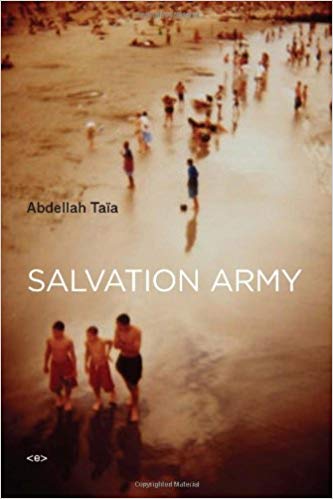
Salvation Armyby Abdellah Taïa, translated by Frank Stock
Recognized as Morocco’s first openly gay man, Abdullah Taïa portrays a coming-of-age that moves through his ordered childhood to his sexual exploration in Tangier to his adult life studying in Geneva. Throughout this autobiography, Taïa grapples with the memories of living openly in a body that is a crime.
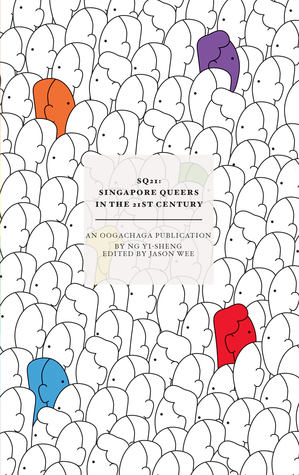
Although it’s rarely enforced, a colonial-era penal code criminalizes sex between men in Singapore. Together with photographer Alphonsus Lee, Ng Yi-Sheng highlights the everyday lives of 15 LGBTQ+ Singaporeans. From a polyamorous student to a mother of queer sons, this collection of real stories is an inspirational account of people celebrating their bodies and selves in a country that refuses to recognize them.
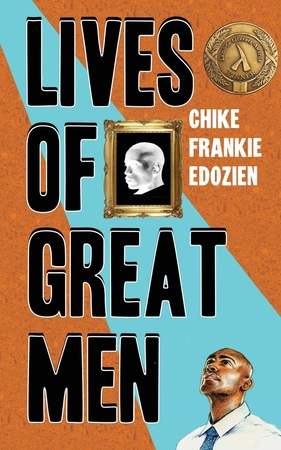
Lives of Great Men is not solely a memoir about Nigerian journalist Chike Frankie Edozien; the book is a tribute to the queer Africans living their love in political hardship. Moving through Lagos to the United States to Ghana and France, Edozien portrays the lives of men and women who are trying to maintain hope under a political discord that threatens their lives with imprisonment up to 14 years, police extortion, and even death by stoning.
Author of Guyana’s first LGBTQ+ poetry collection, Faizal Deen has now published two books working with gay culture and identity. His most recent book, The Greatest Films, is one long poem inspired by 20th century film and hybridity and delves into queer Caribbean Islamic identity. Deen moves through his history of living as an Indo-Guyanese Canadian man with a disjointed past to create a complete work of spliced images—a cinematic collision.
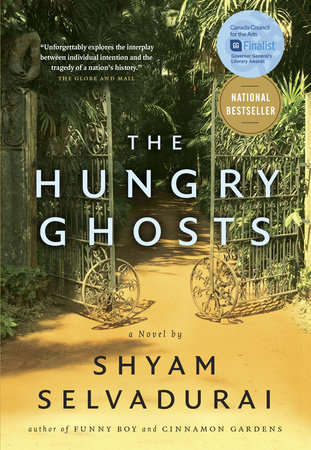
In The Hungry Ghosts, after learning of his dying grandmother, Shivan Rassiah travels back to war-torn Sri Lanka from Canada, where he had fled during his teenage years to find safety and acceptance. While preparing to bring his grandmother back to Toronto for her final days, Shivan is confronted with memories of their tumultuous relationship, while growing up gay, and the trapped ghosts that are as ravenous and haunting as ever.
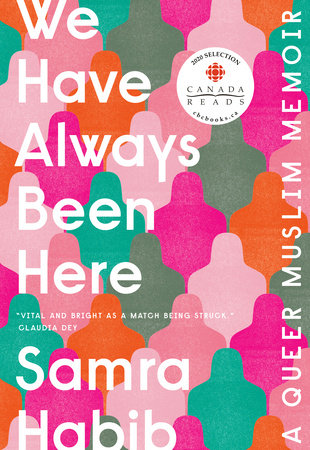
We Have Always Been Here is a heartrending, honest chronicle of writer and photographer Samra Habib’s life as an Ahmadi Muslim in Pakistan. Growing up, Habib faced countless familial and cultural pressures that policed her body along with threats of violence from religious extremists who were against her sect of Islam. After moving with her family to Canada as refugees, Habib has to reckon with racism and homophobia—causing her to fight for truth and power along the way to self-discovery.
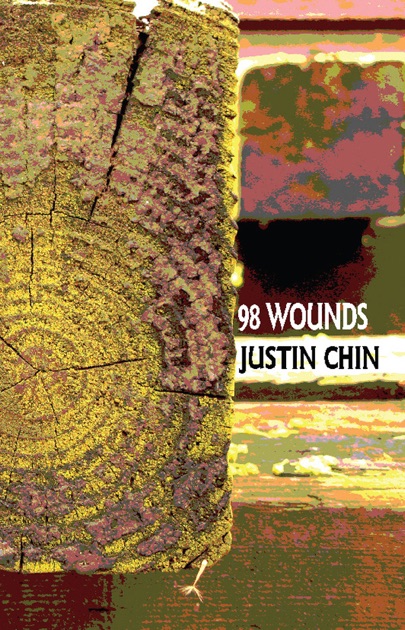
Poet and artist Justin Chin was born in Malaysia and grew up in Singapore before moving to the United States. His short stories explore the complex and emotionally unsettling lives of queer people. His first and only book of prose, 98 Wounds invites readers into a dizzying world constantly searching for identity and love. Said best in his work: “Come inside. You don’t have to prove anything here.” This was the last book Chin published before he passed away in 2015.
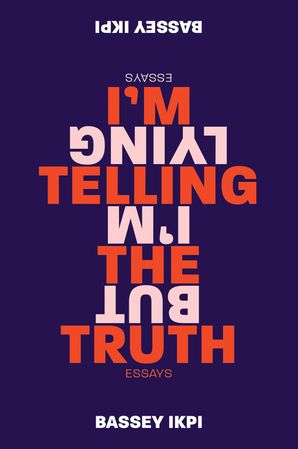
Within the first week it was published, Bassey Ikpi’s essay collection I’m Telling the Truth, but I’m Lying, a collection of personal essays illuminating and encapsulating the experience of having mental illness, hit the New York Times bestseller list. What Ikpi depicts in I’m Telling the Truth is a state of fragments and intense emotions, the feeling of something cataclysmic simultaneously with the deep desire to escape.
In her collection, and in her background as a poet who has toured with Def Poetry Jam, the language and rhythm of Ikpi’s work intensifies the reading experience and reveals a way to discuss memory—not always reliable—and storytelling in a way that’s immersive, constructive, and always breathtaking.
I spoke with Ikpi—a mental health advocate and former poet (as she calls herself)—about her experiences living with bipolar disorder and how to write from a personal truth for the Minorities in Publishing podcast, from which this interview is excerpted and slightly modified.
Jennifer Baker: What really hooked me was the first essay where you say you need to prove that “I had a childhood.” I thought about this need to prove upfront, and the word you use is “broken,” specifically. There’s something very specific you want to say even going through the act of childhood. So, when you’re starting out, how did that come to pass?
Bassey Ikpi: I think as much as I wrote this book for the world, I wrote it for myself as well. I am very clear in this book that I don’t have the most reliable memory. One of the things that people don’t understand or don’t discuss a lot about mental health is how it affects your memory.
A lot of the things I remember I remember in sporadic bursts, and there are chunks of childhood I don’t remember, and if I do remember I don’t know where exactly they fit. Was I four, was I eight? Four and eight seem to be the two years that jump out at me, knowing that I could have been three, I could have been nine, I could have been all these different ages, but for some reason 1984, the time before I came to the United States, those are the ages that I came from. So, it was more to prove to myself that I came from something. I’m not just these recent memories.
I needed to tell myself and I needed to tell the world that all these recent stories aren’t where I started from.
I started writing this book three years ago when I was in one of the worst depressive episodes of my entire life. And I didn’t think I was going to make it out, I’ll be perfectly honest with you. And I needed to remind myself that I came from something else. All of my memories were of that one time I had the breakdown, the time I was depressed, the time when not great things happened. I needed to tell myself and I needed to tell the world that all these recent stories aren’t where I started from. I wasn’t—and this is going to sound corny because now I know it’s a Whitney Houston lyric—I wasn’t built to break. I was this perfectly innocent child who just existed and had this history and people who cared about me. It wasn’t the most conventional upbringing, but it was mine, and there was nothing wrong with it at the time.
JB: I really do appreciate you talking about that because it just stuck in my mind that there’s this need to prove something to us, but your explanation makes so much sense.
I appreciate the fragmented nature [of the book], because I feel like I think about things in fragmented ways because it’s hard to pin down things after a while when you collect so much. As we get older, we collect a lot of information, theoretically. In one essay you spoke about the Challenger [disaster]—and I said, yeah when was that?
BI: I discovered just a couple weeks ago. I was reading something about the Mandela Effect, and I read that people have the Mandela effect when it comes to the Challenger. They don’t know what year it was—and I didn’t know that was a thing! I thought that I was just unable to place it, but yeah, people have no idea when that happened.
JB: But I also really love [this book] from the standpoint of teaching because that’s usually the concern writers have is “I don’t remember everything exactly.” And you come at this consistently saying “I think it’s this, and this, and this.” Even the essay where it’s “We were in Brooklyn or Chicago. We were in one of these places, I’m not sure.” There is such a confidence in being able to say this is going to be fragmented.
BI: I read books that tell you how to write a memoir or instructions or whatever, they always start with: if you have a bad memory, don’t write one. And I just don’t think that’s fair. I don’t think that memory exists the way we’ve been taught to think that it exists. So many of the memoir and autobiographical things we read, they couldn’t possibly be memories, they just couldn’t possibly.
They’re not lying, I’m not lying, but it’s not the same truth, you know.
But I think that people kind of give that some room, and say, well okay we’ll just smudge this. But I wanted to be very clear, especially because these are memories that involve other people, that this is my perspective, this is what I’m seeing, this is how it felt from where I am. And I know that because of these other things that went on in my head and went on in my life, I’m aware that it’s not going to be the same conversation, that if you asked my mom and my ex-boyfriend, that they probably wouldn’t see it the same way.
They’re not lying, I’m not lying, but it’s not the same truth, you know.
JB: I think that’s why part of why I latched onto this so much, because I felt as though this is one of the most honest pieces I’ve read. And because it’s gonna be what I can produce based on what is tangible in my mind right now.
BI: The things that I do remember I remember so vividly, and I tried in the writing to be clear, like “I remember this part,” “This part. I remember.”
And the stuff that came around it, what day it was, who was there, did I scream, did I yell, you know all that stuff. I don’t know, but I know I felt that way. And the emotional honesty, and the emotional truth, and the emotional memories I think are just as valid, even if they don’t appear that way to somebody who was in the moment with me.
JB: Did you choose to talk to a lot of the people in the book?
BI: I didn’t. And I was very deliberate about not researching it because I figured if I were to go into it—I mean there were certain things that I would call somebody and say hey. There was Derrick whose name I didn’t change because he told me not to change his name.
JB: Really?
I was very deliberate about the fact that these are nonfiction short stories as opposed to essays.
BI: I called him and I asked him if it was a kettle or if I broke a mug, and I thought that was important to know—and once I asked him, I said “Oh my god, I do remember,” and I could smell the smoke, and I was in my… I needed that to tell the story. But as far as whether we were in Brooklyn or in Chicago, I didn’t feel that was necessary to know. I felt like that confusion, that displacement was important, especially when it comes to other essays, especially the touring essays when I was with Def Poetry. That confusion about where I was and what I was doing was necessary to tell the story, but I didn’t want to research it. I didn’t want to turn it into a research project because that to me would be a different book. That would be a book that—and I struggled with this too—a book that needed statistics and facts, and a list of medical journals, and that was just not the type of thing I was doing. I was very deliberate about the fact that these are nonfiction short stories as opposed to essays. And the idea of it being an essay versus short story, is that a short story exists. You’re allowed to write it, and it exists the way that it exists and you can move onto the next thing. Whereas with essays, I feel like they need that research and they need all these facts to hold it down and I didn’t want it to be that kind of thing.
JB: Can we get into how the book came to fruition? Was it a proposal? Was it a completed book at that point?
BI: It was a proposal, but the funniest thing is it isn’t the book that I wrote. It had a different title, it had a different objective. It was a totally different book. It was still essays, but it was more self-help-y. Even the title—it was very much like “From the mountain top. Let me tell you people how I got to where I am.”
JB: Was that the title? “From the Mountain Top”?
BI: No. It was called Making Friends With Giants. It was this very self-help, very [much] telling the story of how I got “over”; and I was in the middle of, there was no “over.” It was full of lies, which is why this title was very important to me, because it was full of lies. It was the truth, but it wasn’t an emotional truth. It was very, very dishonest in that way. And I had a list of things that I didn’t want to talk about, and things that I wasn’t going to write about. And I wasn’t going to say this. And I wasn’t going to say that. I wanted it to be very inspirational, and gross, like Fix My Life, no, not that bad.
It was a totally different book. It was more self-help-y. I wanted it to be very inspirational, and gross.
JB: Not Iyanla level.
BI: No, but pretty much very distant from the subject matter. Like I had cured myself or something, and I was going to tell people how I did it. It just was false. It was difficult to write. This, I started writing earnestly a year ago. Because I remember around this time the university that I dropped out of gave me an office. And I was on the floor well into the night writing and cutting and pasting, and trying to put these essays together.
But for three years there was another book that I was trying to write, and it was going very, very slow. It wasn’t coming out the way that I wanted. I would take all of these writing sabbaticals and go away for six weeks, and go to a retreat somewhere and I just wasn’t writing. And I realized I wasn’t writing because I wasn’t being honest and it was forced.
I told my editor that I needed some room to write differently, from different perspectives and POVs. I said let me just go ahead and write it the way it comes out, and I’ll go back and change all the pronouns to I’s and me’s. And once I did that it was so freeing because I was in the middle of it. I was inside of the things that I was writing about, as opposed to the outside looking in. And once I entered them and realized I was in this vantage point where I could explain to people what this thing felt like as opposed to telling them what it felt like for me at the time. I wanted to really bring people inside, and once I did that it just opened things up completely for me.
JB: Because it was originally self-help and inspirational, did that come about through a conversation of “Oh, this is what people want. People want inspiration, so I guess I can write about that”?
BI: Yeah. It’s the thing that comes with being a mental health advocate. It’s the thing that comes with knowing that people for years would email me, or later on tweet me or DM me and ask, you know “my son is this, and I want to talk to him about that,” and “I’m feeling this way, but I’m not sure if…” And I’m talking, and being very sincere about what it is I’m saying and what it is I want for other people, but I wasn’t internalizing that. I felt that that’s what people wanted. People don’t want to hear the sob story, especially not from a Black woman. I was very, very aware of that. I didn’t think that that’s what people wanted from me. The dark—ugh, I hate the word dark, but you know what I mean.
JB: They wanted the caregiver Blackness, not the real Black woman.
BI: Exactly. Exactly. And I was trying to write it from that point and it just wasn’t working.
JB: So once it became freeing, did you think about what was coming out [in the writing]? Was there kind of that fear of, if I’m going to this place and if I’m taking that turn, I actually have to talk about a lot of stuff, potentially.
I learned so much about myself writing this book. This book has changed my life.
BI: I learned so much about myself writing this book. This book has changed my life. My therapist said “you are a much different person. You see yourself much differently than when we started working together four years ago.”
As much as it did free me in a way, I’m also very careful to know that these aren’t just my stories. These aren’t my stories to tell, so I try to tell it from my perspective as much as possible. There are versions and drafts where I’m like “Well his dad had multiple mental illnesses and this is the only way he knew how to relate to people,” and I had all of that in there, but that’s not my story. I can’t talk about somebody else’s family, and I can’t talk about what I suspect happened in my own family because I don’t know. I can only say what I suspect and how those suspicions interact with how I was exposed to those people that showed up in my life.
I wanted to be very careful about that because I wasn’t interested in—and again, being a Black woman—white people can kind of just blow up their lives and be rewarded for it, and I had no interest in blowing up my life because I love my family and I love my friends sincerely, but I had to be honest, and I had to find that balance. That balance was to focus as much as possible on where I was, and to check myself, and to have other people who read the work be very clear that I’m not just a victim of other people.
DON’T MISS OUT
Sign up for our newsletter to get submission announcements and stay on top of our best work.
YOUR INBOX IS LIT
Enjoy absorbing fiction from Recommended Reading on Mondays, strange, diverting work from The Commuter on Wednesdays, and a roundup of our best work of the week on Fridays. Personalize your subscription preferences here.