Night of the Living

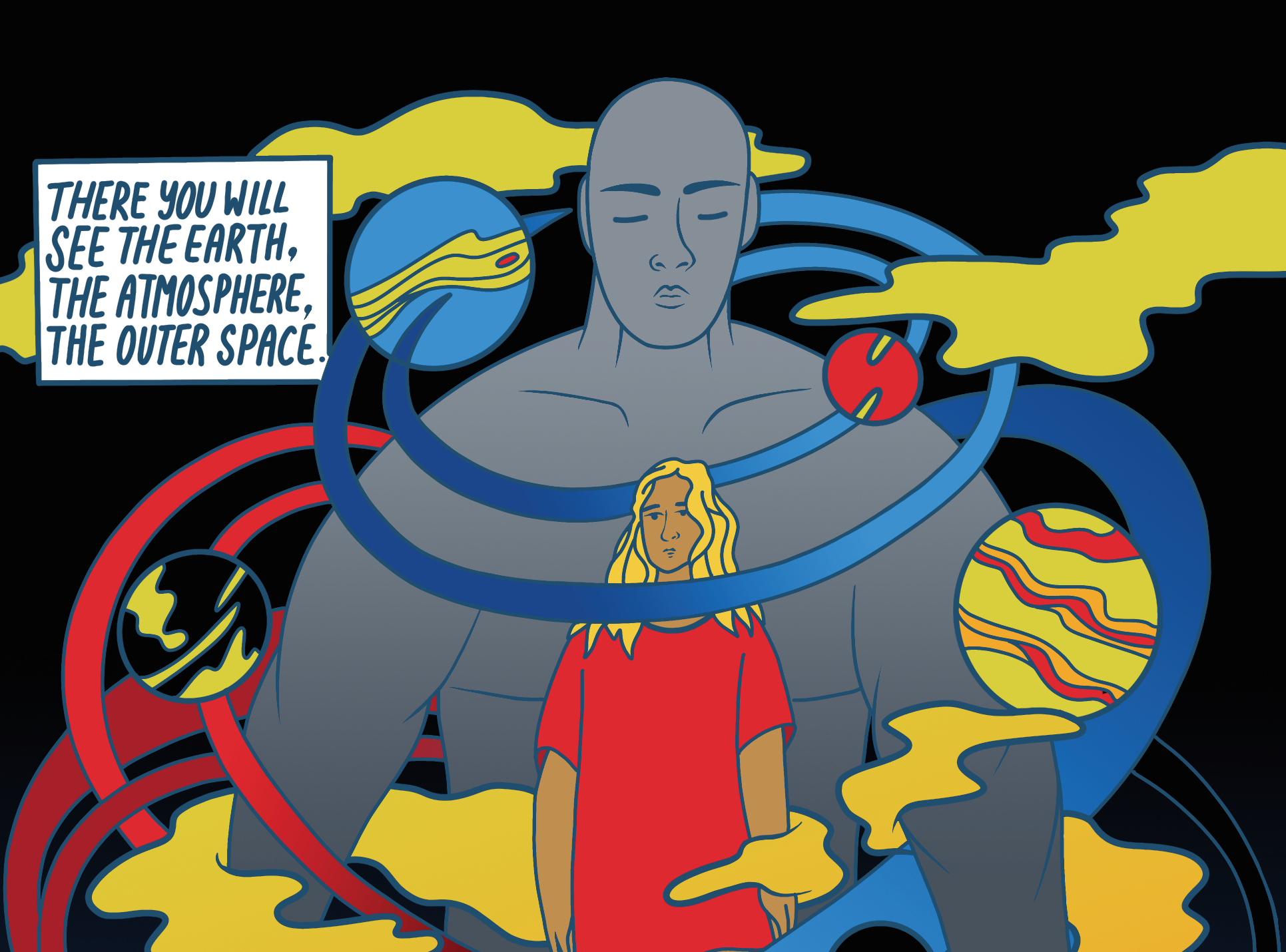
 If the constellation of stars
 above your house looks like
 a woman skating across a lake

 you could name it that. If someone
 long before you called it warrior with a sword
 or dragon at the gate, it doesn’t matter,

 it’s your sky now. If you’re lost in the evening
 fog all your former selves line up by the side
 of the road to show you the way home.

 If you want to pry open the moon
 and crawl inside, remember the sky
 waits like a clock for you to unwind.

 The planets contain the fur of wooly
 mammoths and fossilized ferns
 that never got to be trees. Your position

 relative to them is what you think about
 when night is a rabbit hole and sleep
 is a coin toss. A hand moves across your face

 in a dream you are having about being alive.
 When you wake up the hand disappears
 along with the way it felt to be dreaming,

 on the edge of some great adventure.
 The shadows of owls against the trees
 are not owls but you can pretend

 the sound of branches against the window
 is someone trying to get in. You can breathe
 and imagine the night breathes with you.
 Taxonomy

 A group of mathematicians is an equation.
 Unless they are at a party and then they are
 a problem. Two or three architects is a situation.
 More than that and the building collapses.
 A subdivision snakes through property
 that used to be farmland. Part of the field
 remains and a few rusted tractors linger like men
 at a grange hall gathering who would rather mumble
 to each other than dance. My son worries about gentrification
 in the old neighborhood. He thinks no one will have
 a place to live.  Neighborhood meetings with city planners
 are not funerals. No one sings and prayers are offered silently.
 Pray for the view of the mountain that will soon be obstructed
 by condominiums. Unless you find tall buildings beautiful.
 Then rejoice at the way concrete obliterates the field.
 A group of condo dwellers is the answer to a question
 posed by developers everywhere, but no one knows the question
 or how to measure its importance. When I was seven I lived
 across the street from a horse and fed it apples from a tree nearby.
 Its mouth scared me. I thought it  might devour my hand
 if it had the chance, thinking my hand was part of the apple.
 A horse behind a fence is progress, but only if you’re not the horse.
 The first time I let my kids walk to school by themselves
 I went with them to the end of the street and watched
 until they arrived at the top. They turned and waved at me,
 standing  at the bottom of the hill. Did I tell them I would
 stand and wait? Or did they just know. Then they turned
 the corner, out of my sight, to walk the few remaining blocks
 to school alone. Now my children are adults. A mother
 with grown children is a controlled experiment. How long
 can she go without thinking of them and how she used
 to hold their entire bodies in the width of her arms.
From the moment that Phoebe Waller-Bridge’s gaze first penetrates the camera, it’s evident that Fleabag will be one emotional gut-punch after another. The series follows the unnamed titular character as she copes with the death of her mother and the unexpected loss of her closest friend, poking fun at the bleakness of her situation, and the destructive coping mechanisms it has drawn her to along the way.
The appeal of Fleabag comes from the tension between the audience’s external perspective on Fleabag and her behavior (frequently awful!) and the vulnerable glimpses we’re afforded into her internal world when she breaks the fourth wall and addresses the viewer. Whether she’s falling in love with a (hot celibate) priest, trading passive-aggressive barbs with her former godmother (now stepmother-to-be), or punching her brother-in-law in the face (he deserved it), Waller-Bridge balances keenly-observed interpersonal dynamics with an almost unparalleled intimacy between the audience and the main character.
If you’re looking for something to do in between rewatches of Fleabag, these books will fulfill your desire for narratives exploring complex relationships, self-awareness, and grief.
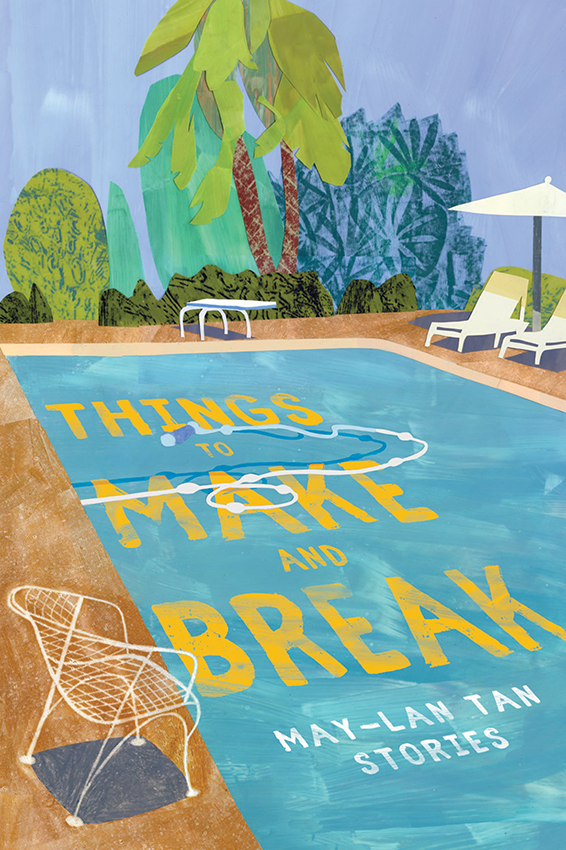
May-Lan Tan’s short stories are about the dynamics of interpersonal relationships. A couple stays the night in a hotel together as something of an endurance exercise, recommended by a therapist after one partner discovers that the other sees a professional domme. Twin brothers who are sleeping with the same girl attempt to navigate her memory loss after a car accident. A woman seems to finds her boyfriend’s ex-girlfriends the most interesting thing about him, reveling in the fact that she’ll one day be among them. Tan’s writing style enlivens even the most mundane of observations and makes the most bizarre of premises seem quotidian.
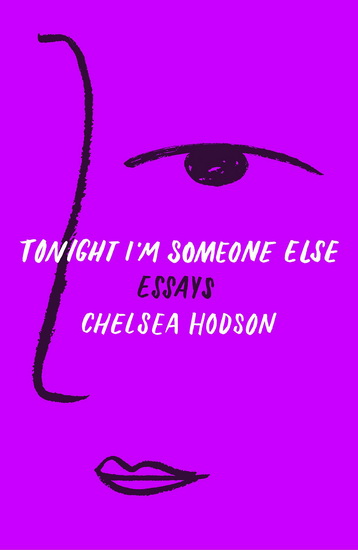
Throughout her first collection of essays, Hodson interrogates the relationship she has to beauty, money, lust, and the intersection of the three. “A theory my friend has: sleepovers are where girls learn to wake up in love. Remember when we knew our friends’ bodies as well as our own?” writes Hodson, articulating the unique discomforts of womanhood, without ignoring the rewarding moments, too.
“What do I regret—that in the end he didn’t need me, and now I can’t need him?” Sarah Manguso asks, succinctly articulating the grief she feels after the death of a friend that is the root of the book. Through the course of The Guardian’s 122 pages, Manguso tosses and turns over this loss, questioning whether or not the death really was a suicide or the result of a faulty medication’s side effects. Much like Fleabag, or any good eulogy, this grief isn’t grounded only in ruminations on the death and its aftereffects, but through vignettes of what made their friendship so strong. These memories are just as humorous as her recollection of his struggle with mental health is harrowing—at one point she recalls his infamously large dick, which she’ll never have the chance to glimpse now.
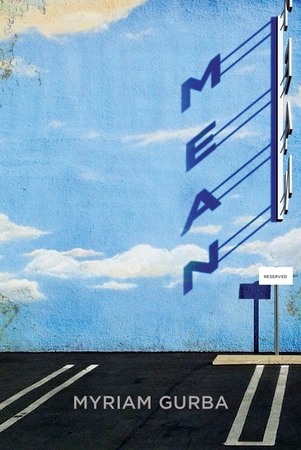
Crafted with a specificity of language that only a poet could muster, Mean is a reckoning with racism, misogyny, and homophobia by way of a coming of age tale. Though these are heavy subjects, Gurba approaches them with her striking dark sense of humor, as when she describes her period as “birthing blood clots”and worries that she’ll burn in hell for finding Anne Frank’s Diary boring. Just as Waller-Bridge’s accomplishes with Fleabag, Gurba’s sharp wit draws you in, giving her room to candidly consider the way her identity as a queer, mixed-race Chicana has shaped her life.
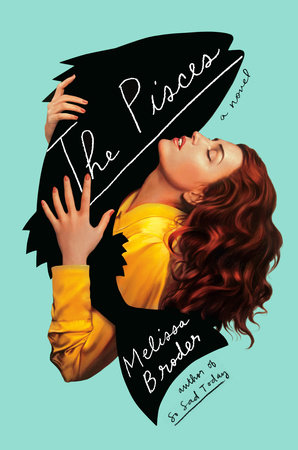
When I first picked up The Pisces, a novel about a depressed woman who falls in love with a merman, I was expecting to be dropped in the story of a life unimaginably different from mine. Yet even by the first page, it was clear that this wasn’t the story that Broder had written. I wound up underlining half of the book, so stricken by Broder’s ability to so skillfully nest the universal experience of loving what’s wrong for you within such an outlandish outer shell. The pull of Broder’s merman is not so much a result of his supernatural form but of his undeniable unavailability. Sound like a hot priest we know?
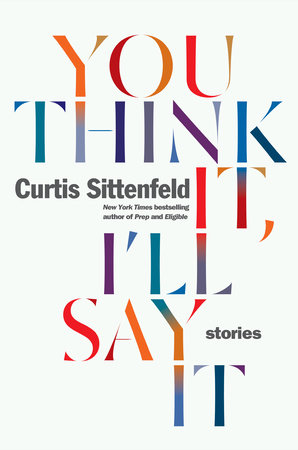
In her story collection You Think It, I’ll Say It, Curtis Sittenfield adeptly explores power dynamics and the minute indignities that result of them. A Regular Couple, one of the shining stars of the collection, zeroes in on an adult woman’s chance run in with a high school bully as she attempts to enjoy her honeymoon at a resort. As you wait for the expected explosion between them, Sittenfield heightens the tension between the protagonist and her husband. While she’s a morally corrupt money-making lawyer who made the news for representing a rapist, he works as a nonprofit immigration lawyer. The story hits its crescendo as the two relationships crumble, if only momentarily. Sittenfield presents such nuanced characters that you leave a story not sure who exactly you were rooting for, if only because you were made to root for every character.
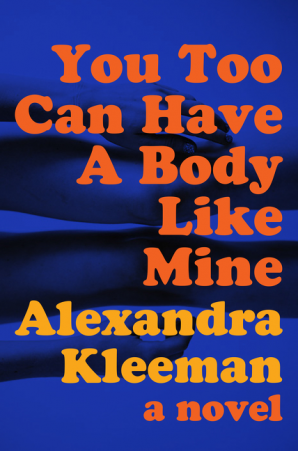
The main characters of Kleeman’s debut novel are named A, B, and C—the protagonist, her best friend, and her boyfriend, respectively—because of this, there’s no choice but to immediately acclimate within their peculiar, expertly crafted world. Everything in the book seems as though it’s taking place in an alternate dimension, a just slightly heightened version of our own reality. In reading the book, one becomes addicted to Kleeman’s style, just as the characters are addicted to ideal beauty standards and being an active member of consumerism (if those two aren’t one in the same). We follow A, B, and C as they gravitate closer to porn obsessions, a corporate cult, and reality TV, among the myriad other distractions that populate our everyday lives.
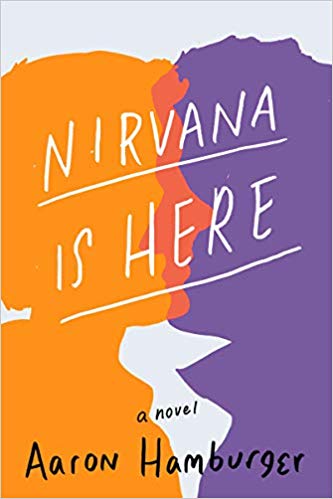
Among the myriad charms of Aaron Hamburger’s second novel, Nirvana is Here, is his protagonist, Ari Silverman, a medieval historian trying to reconnect with his high school crush, Justin. Ari’s search leads him to recall the events that led them to become friends—and more. By turns, Hamburger is tender and provocative in his examinations of sexual abuse, racial strife in ’90s Detroit, and the way that discovering Nirvana changes everything about Ari’s world. The complexities of this novel are deftly handled by Hamburger, whose sensitive and observant prose is a pure joy to read on every page. He’s the winner of the American Academy of Arts and Letter’s Rome Prize and a nominee for the Lambda Literary Award, and he and I spoke about his novel last week over email.
Kristopher Jansma: Aaron, your novel Nirvana is Here is in some ways a timeless story of coming-of-age. Young Ari struggles to find safety and love as a queer Jewish boy in ’90s suburban Detroit. And yet it also feels quite timely because you also delve into Ari’s life in middle-age, still processing his abuse, in the #metoo present day. To start, I wondered, is this a story you’ve wanted to write for a long time, or was it perhaps inspired by these conversations around rape and abuse that have begun happening more recently?
Aaron Hamburger: This is in many ways a story I’ve been attempting to write my entire life but it took me a while to find the right frame. My initial motivation was to write something that would force me to delve into the emotional realm, so I began doing various disconnected and fairly autobiographical pieces on the same theme, attempting to find my way into a story. And then I was talking to a fellow writer, Elizabeth Searle, with whom I teach at the Stonecoast MFA Program, about all these “reboot” type stories, like the novel Emma becoming the movie Clueless, and I was saying how I wanted to write a gay high school version of Thomas Hardy’s Tess of the D’Urbervilles, and she said, “Do it!” And that gave me the permission I needed to really launch into a larger plot line and take real events but transform them to make a more satisfying and more richly textured story. It took me a good six years to write it, and it’s striking that when I was finished, so much of what’s in the novel has now become so timely. Maybe the world is catching up to me? Or, in all seriousness, a lot of the issues the book raises, like the #metoo movement or race, are ones that have always been present in American life, and now for a whole host of reasons we’re having what feels like a very different national conversation about them than what’s gone on in the past.
KJ: Yes, absolutely, and can I add that “Gay high school Tess of the D’Urbervilles” is surely exactly what we all need right now? So there’s some classic Hardy in there and also, as the title suggests, some classic Nirvana. I’m curious why you centered Ari’s development around that band in particular?
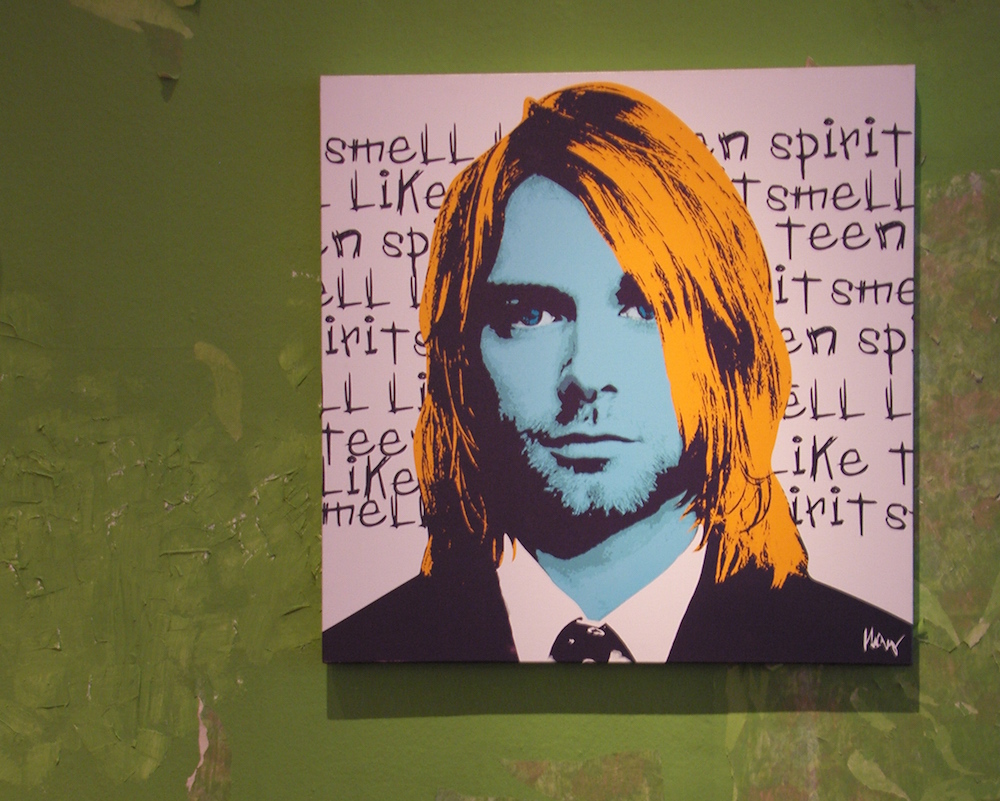
AH: I recently wrote a piece in The Washington Post about Kurt Cobain’s support of gay rights, which is more substantive than I think is generally known. In the book, Ari is not completely aware of all the things Cobain did and said regarding gay rights, yet he does feel a spirit of acceptance coming through the sound, the lyrics, and the image of Nirvana. Cobain and Nirvana positioned themselves as advocating for people to be different and find their own voices. While Cobain may have been an imperfect messenger in some ways, he had the right message for the right time, coming as he did at the end of the 1980s, when so much of the music that had their sound was associated with hetero-forward hair metal bands singing about bagging babes, “cherry pie.”
I was inspired by Kurt Cobain because he made it seem okay, cool, and defiant not to conform.
I too was inspired by Kurt Cobain because he made it seem okay, cool, and defiant not to conform, which maybe is not so original to him, but at the time it was original to me. Until Nirvana became popular, which was actually during my college life, not high school, I was unaware of what became known as “alternative” music and culture. As I explored that aspect of pop culture, I found a lot of personal liberation there, and I wanted to delve into that in this story.
Another reason I chose the Cobain story as a backdrop was that I liked the narrative frame that it provided: the book takes place during the three years between the unexpected success of Nirvana’s Nevermind and their quick rise in 1991 to Kurt Cobain’s death in 1994, which coincide neatly with Ari’s three years at Dalton and his three-year relationship with Justin.
I’ve noticed that in some reactions to the book, people note the title refers to the band, not the spiritual state of Nirvana, but I think they’re wrong. It’s both! The idea of the title is that we can find “nirvana,” aka what we need, right here, right now, in every moment. Even in moments that are painful, because they have the potential to teach so much. Or even if they don’t, we are lucky because they always end. If someone punches me in the face, as soon as that happens, it’s over. Isn’t that wonderful? Now I don’t have to be punched again unless I do it to myself in my own mind by reliving that moment and dwelling in it. Which is not to say I want to deny that it happened, but rather, to acknowledge the painful episode without having to feel the pain of it the way I did the first time.
KJ: Yes, and you connect those two nirvanas in the novel really well, which impressed me because I recall that Cobain, even, had only a pretty loose understanding of what “nirvana” meant in the Buddhist sense when he chose it as the band’s new name. But there’s a meaning there that listeners can find on their own–certainly much more than if they’d stuck with Fecal Matter or The Stiff Woodies or something like that. It speaks to what you bring up in the Post article, about how vocally political he was, that his anti-establishment raging was sort of wedded to a love for those that society was forcing to the margins, like Ari.
There’s a scene early in the novel I loved, where Ari finally gets the actual Nevermind albumso he can study the words better than on the mix tape Justin’s played for him–only to find that there aren’t any liner notes, so he’s still left to just interpret the bursts of words he can make out. You call it a “sound collage of resentment”: “Pick me, please pick me. I’m ugly, but that’s okay. No, stay away. A little group of self-assured pricks. A dream, a horny dream. I know it’s wrong, but there’s nothing I can do. Just stay away. Something’s in the way.”
You mix actual bits of lyrics together with Ari’s own thoughts, and it emphasized nicely how the incoherence oddly makes the music more relatable. I remember hearing the Tori Amos cover of “Smells Like Teen Spirit” for the first time in college and realizing I had sung along to that song in my car probably a thousand times and never once gotten 3/4 of the words correct! But it doesn’t really matter because there’s something in the tone that carries it all. You describe his “quivering voice a hair above a whisper, as if it were too painful to speak. As if he’d survived something worse than I had. As if he needed my sympathy, not the other way around.”
That line made me wonder—Ari has, actually, a surprising amount of sympathy in his childhood. His parents seem supportive, they put him in therapy after his assault, and send him to a private school away from his tormentor. Ari’s brother tells him about his gay roommate and suggests that things might get better when he gets to college. And then there’s Justin, who at times goes out of his way to be kind to Ari. Of course Ari faces a lot of cruelty, but there’s still a lot of genuine love in Ari’s life, which made this feel very different from other stories of queer youth I’ve read, where protagonists are surrounded with bigotry and hatred from all quarters… was it your intention here to tell a different kind of story?
I think at base, all of us want to be liked and want to like each other. It’s our true nature.
AH: That’s a really interesting question. My primary motivation in embarking on this book initially was to make use of emotion in my work, to practice what the writer Breena Clarke calls “radical empathy.” Or as George Saunders says, “Revision means asking myself, what could I know about these characters that would enable me to love them more.” Notice he does not say “like” them more, which is a very different thing. I don’t need to like someone like, oh, I don’t know, Donald Trump to recognize that he is a fellow human being just as I am. I think at base, all of us want to be liked and want to like each other. It’s our true nature, and when we go away from that, it causes us pain. And I don’t know if this is true or not, I’m just theorizing here, but maybe literature that doesn’t recognize this, that writes off its characters as being less than fully human, just isn’t deep or interesting enough. I’m sure I’ve done that in my work, but it’s an impulse that I want to get away from. Think of how Anne Frank famously wrote that deep down she believed all human beings were basically good. If she could write that from such a deeply dark place, then who are we to say we can’t find the humanity in those around us now?
Thinking about the plot of this book, I think you’re right that Ari gets a lot of sympathy. But I also think there’s quite a bit of misunderstanding of Ari’s situation, or well-intentioned moves that don’t work, and those have the potential to cause pain. Sometimes our best intentions aren’t enough when we want to help someone in pain. Sometimes that person has to do some work on his own, as Ari does. I think that’s what makes his relationship with Justin so special. Justin doesn’t necessarily treat him with sympathy or not with sympathy. He just takes him at face value, meets Ari where he is, without a story or judgment, which is incredibly attractive. Who wouldn’t want that?
KJ: Justin was such a fascinating character. He and Ari are from different worlds and yet Justin’s sincere curiosity allows them to connect. The way he praises Ari’s Israeli candies and tries to learn Hebrew words and Jewish holidays. And Ari, in turn, learns something about Justin’s community in Detroit. They, and you, are really working against a lot of long-standing racial divisions—was that a challenge?
AH: As I wrote about this subject, I knew it was something requiring work and thought. I wanted to address race in this story because to write about Detroit and not address race would be to write science fiction, and maybe that’s true of America as well. So I did my homework as much as I could. Research was invaluable, and I learned quite a bit about the complicated legacy of race in the history of Detroit. For example, I was reading interviews with African Americans living in Detroit describing the largely white suburbs surrounding the city as “the white noose.” That tells you something.
The advantage of writing about younger people is that they will do and say things that adults have learned not to do and say openly.
The advantage of writing about younger people in this context is that they will do and say things that adults have learned not to do and say openly when addressing issues of identity. I remember several frank discussions that took place in my high school about these issues, including a non-Jew who told me that we Jews should consider spreading ourselves around more instead of isolating ourselves in certain pockets of the Detroit suburbs, to show we were human beings just like everyone else, and that I had no idea the terrible things people said about us. Or I recall another conversation in which another student said, “I have no problem with homosexuality. It’s bisexuality that weirds me out. It’s like, make a choice one way or the other!” Those kinds of conversations always stuck with me, and that came through in the book.
KJ: Another very lively character is Ari’s present-day ex-husband, another professor who goes by “M”—”Not an initial, just the letter, to express solidarity with the transgendered.” He comes off as a comic character at first, teasing Ari to go online to reconnect with Justin. Meanwhile, Ari has been put on a committee at the college to review M’s potentially inappropriate interactions with a student at a party. At first this struck me as kind of comedic—and yet, as the book progresses it becomes a bigger question for Ari and for us. He’s gradually reflecting on his own rape, and suddenly he seems to be looking at his own former husband’s actions in a more serious light. “Who the hell is this treacherous predator?” Ari asks himself at one point—but then when he suggests that the committee should actually speak to M and the boy to get their versions of the event before drawing any conclusions, some of his colleagues get upset with him, as if he’s looking to excuse or defend M’s problematic behavior. Were you hoping to draw parallels between those parts of the story? Is there a sense of how those situations are, or aren’t different from one another, and how they should be addressed?
AH: The “#metoo” themes of this book may seem timely but in fact are an age-old question: How do we draw firm lines around the business of desire which is by nature slippery, formless, and shape-shifting? I think it was the Roman poet Catallus who compared love to a piece of ice held tight in your fist. You see this too in Ari’s specialty, the rules of courtly love, which were an attempt to get medieval knights to behave by a code that would constrain their awful behavior around women. The two situations in the book—Ari’s assault and M’s behavior—are linked by their sexual nature as well as issues of power and consent, but they are not the same. In our contemporary life we too often gloss over nuanced distinctions. These problems need to be addressed with thoughtfulness and care, not social media status updates, slogans, or quick fixes. And I will also say I do not believe universities should be in the business of judging crimes. Crimes should be handled by the judicial system.
KJ: As you mentioned earlier, the end of the novel comes to deal with the suicide of Kurt Cobain. Without giving too much away, we get to see what that meant to Ari at the time, and how he thinks about it all these years later. To wrap things up here, I wondered if you could talk a little bit about what Cobain means to you, as a fellow artist and writer. Is there something you’d want someone—perhaps a younger person like Noah at the end—to know about his music or his life?
AH: Kurt Cobain was an extremely talented and troubled man, one of those people who appear to the outside world to be bent on self-sabotage but during his short time on earth created great beauty. What struck me as I researched his life for this book is how controversial and outrageous many of the things he said and did at the time were and how routine they are now becoming. For example, there’s a picture of Kurt Cobain on the cover of a magazine in a dress and with painted fingernails—a gender-fuck pose that in the early ’90s was a good way to get yourself beaten up badly. Recently while on book tour, I met up with two friends of mine from those days each of whom lives in different cities and each has an adolescent boy who paints his nails, and it’s just the way it is. And their dads, if they have a problem with it, it’s their problem, not the kid’s. In my day, it would have been the other way around. That shift didn’t just happen out of nowhere. It took bold and brash people like Kurt Cobain who when thrust unexpectedly and uncomfortably into the limelight took the opportunity to rudely shove the rest of us into a better and more accepting future.
I grew up with a vigorous love for reading and storytelling. There was (and still is) a sense of ethereal magic that occurs when reading about other people, real or fiction, other worlds, other perspectives. At the time, I wasn’t looking to books for people who looked like me; I was looking for something outside myself. Eventually, though, I wanted to see myself reflected in the works I read—or at least know that it was possible, that other people reading fiction for other perspectives might find a perspective that looked a little like mine. What I found was that it was possible, but very rare. The great Sandra Cisneros and Julia Alvarez were some of the very few Latina authors that had pivotal works with Latinx characters heavily represented.
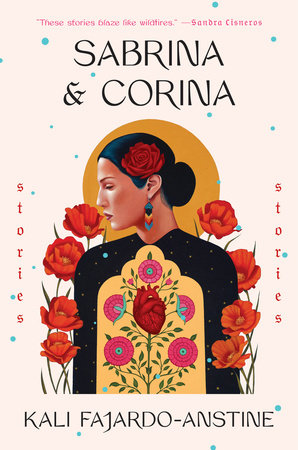
Over the last few years, Latinx representation in literature has slowly but surely increased. Among these new voices is Kali Fajardo-Anstine, whose debut short story collectionSabrina & Corina was published this year. Centered around multiple Latinas with indigenous ancestry and the trials they face, while also having their lives interwoven through their shared home of Denver Colorado, Sabrina & Corina features complex Latina characters that fall outside of the stereotypes that are normally attached to this community in various media. This has been something that felt so out of reach for a long time in my eyes, but reading the stories of these women, women whose cultures and struggles are similar to mine, has given me a feeling of fullness I longed for since realizing the need for representation of the community I’m a part of in the stories I read. Latinx representation in literature has been increasing, but now it’s time for us to ask for something more than representation. It’s not enough for Latinx characters to exist, instead of not existing; we’re ready for a range of Latinx characters as varied and vital as the white characters we’ve been reading for so long. With its cast of challenging and admirable Latinas, Sabrina & Corina has the potential to be the start of a new generation of Latinx literature.
This is not to diminish the work of iconic Latina authors like Cisneros and Alvarez. In previous decades, transcendent and remarkable works, including In the Time of the Butterflies, The House on Mango Street, Esperanza Rising, and Like Water for Chocolate, gave us deep insight into Latina characters from various generations. The problem has always been one of numbers. There have always been very few Latina authors with work in mainstream literature, compared to the number of white authors who have their narratives widely and continuously available.
I don’t want to have to only expect these stories one in a while.
The women in Sabrina & Corina are complex and imperfect, three-dimensional in a way Latina characters don’t always get to be (especially when written by white authors). In a recent interview, Fajardo-Anstine stated that she “was trying to portray a community that, often times, is invisible in the greater Latinx narrative. Southern Colorado, Northern New Mexico, mixed Latinx communities here in Denver—I was trying to create characters that were very individualistic, very human, in a way that I haven’t seen rendered before.” Her characters deal with traumas and intense situations, some of which are unique to the community and indigenous ancestry they come from, but many more of which face not only the broader Latinx community but humans everywhere: racism, classism, general and intergenerational trauma, and gentrification, among others. Fajardo-Anstine goes past the surface of her characters and digs deeper, pulling all the complexities, aches, doubts, and struggles, both internal and external, to the forefront. There’s no sense of hindrance in the way that Fajardo-Anstine writes so relentlessly raw, especially through the voices of the Latinas she’s manifested. These were stories that I had to sit with after finishing each one, ruminating on each of their unique and detailed environments and narratives.
Even though I was absolutely overjoyed that Sabrina & Corina exists just as it is, I couldn’t help but wonder how the literary world could better itself if Latinx narratives like Fajardo-Anstine’s became commonplace. In glimpsing into these lives, I gained a sense of comfort, a camaraderie between myself and the women of many generations in the book, especially knowing that we share similar experiences with many of the hardships faced by our community. To feel these things, especially in a time where we are seen as less than, is phenomenal, but I don’t want to have to only expect these stories one in a while.
In literature that I’ve read prior, there weren’t many characters like me that I could relate to and identify with in regards to their described viewpoint as a Latina. The Latinas in Sabrina & Corina display the layers of experience, both good and bad, that come with being a Latina in an ever-changing society. Social pressures, machismo, colorism within our own community; there was a sense of comfort in knowing that I was reading about Latinas that I could connect with if they existed in real life, that I could share an unspoken mutual understanding with them. This is a feeling that white readers get all the time, so often that they probably don’t even notice. I, and undoubtedly many other Latinas, deserve to experience it more often. Our voices are often silenced and disregarded as unimportant in mainstream literature. When we do get narratives in literature and in U.S. media, especially, they end up warped into unrealistic, exaggerated versions of us. Having our narratives be written by us and for us allows us to reclaim and strengthen our voices, while also emphasizing to the public that we aren’t the sidekicks, the gang bangers, or the maids.
In the next generation of Latinx literature, Latinas won’t need to search for the stories we can connect with.
Other Latina authors have preceded Fajardo-Anstine into the mainstream, including Elizabeth Acevedo (The Poet X), Lilliam Rivera (The Education of Margot Sanchez), Erika L. Sanchez (I Am Not Your Perfect Mexican Daughter), and Ingrid Rojas Contreras (Fruit of the Drunken Tree). It’s apparent that what’s been happening in Latinx literature lately can easily be called a cultural renaissance. I can already tell, or at least truly hope, that this next generation of Latinx literature will be vast, full of a wide variety of voices within our community. There will be a multitude of voices from so many diasporas, a constant stream of thoughts, discoveries and rediscoveries of the depths of our cultures, contemplations on what it means to be Latina and what those who came before us suffered through in order to have us exist today. In the next generation of Latinx literature, Latinas won’t need to search for the stories we can, as a community, connect with.
Signs of a new era have been showing through, filled with narratives that allow Latinas to be even more proud of our cultures and roots, where we came from and what lies ahead. Fajardo-Anstine has created multidimensional Latinas who have shared paths with those who came before, who have shared griefs and devastating cycles of abuse, who haven’t had the ability to voice their stories. She and other new Latina authors are reclaiming these real narratives we’ve been used to going without during our experiences reading mainstream literature. I only hope that other Latinas who are yearning to have their writing out in the world see that there is still a demand for the stories they are holding on to, their potential contribution to this exciting moment and movement that’s happening. I hope for this influx of literature written by us to inspire more undiscovered and upcoming Latina authors to grow and join this reclamation of our narratives and true depiction of ourselves, imperfections and all. It is more than possible to have our narratives be easily and readily accessible in mainstream literature, and this renaissance we’re in the middle of is only the beginning of what’s to come. Let it continue to thrive further, for the sake of the generations currently here and the ones yet to arrive.
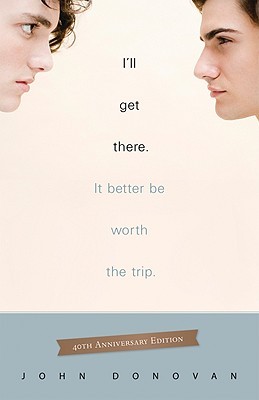
Two weeks before the Stonewall Riots, the first major young adult book to explicitly feature homosexuality hit the shelves. At the time, a book for teens that included a queer plot was so radical that, when John Donovan’s I’ll Get There. It Better Be Worth the Tripdebuted in June 1969, the publisher appended a blurb from a psychiatrist. “A moment of sex discovery is told simply but poignantly in the life of a thirteen-year-old boy through his relationship with a friend of his own age and sex. It is how he absorbs this experience that becomes the key to what will happen next,” Dr. Frances L. Ilg of Yale wrote. Ilg went on to assure potential readers that “Davy is able to face his experience.” Not exactly glowing praise, but an official sanction that seemed necessary at a time when homosexuality was still considered a psychological problem.
The book, like Ilg’s blurb, aspired to both assuage parental fears and carve out space for same-gender attraction. In it, thirteen-year-old Davy Ross develops a close relationship with his classmate Douglas Altschuler after he moves to a new school. At one point, Davy kisses Altschuler, and they spend the night together, where they have a sexual experience that in the following days Davy can only refer to as “it.” After, he struggles to make sense of what he’s done. Although his thought process reflects the prejudice of the era, the fact that he contemplates the legitimacy of his feelings at all was exceptional: “There’s nothing wrong with Altschuler and me, is there? I know it’s not like making out with a girl,” Davy asks himself. “It’s just something that happened. It’s not dirty, or anything like that. It’s all right, isn’t it?”
But the publication of Donovan’s book, along with its wide library and bookstore distribution, was not a success of Donovan’s alone. I’ll Get There got its life thanks to a series of literary activists, who, taking cues from the gay liberation movement that followed the Stonewall Riots, went to great lengths to push LGB literature for young people into the mainstream.
I’ll Get There, like most early works of queer literature for children, can trace its genesis to an early trailblazing editor: Ursula Nordstrom. Nordstrom is widely credited with pushing the burgeoning category of YA literature, which dates to the 1942 publication of Seventeenth Summer, out of its moralistic foundations. Whereas the earliest spate of YA books centered on books that taught kids how to act their best, Nordstrom championed books that dealt with “taboo”: drugs, sex, and family drama. She once wrote that she wanted the category to move out of “bad books for good children” and toward “good books for bad children.”
Ursula Nordstrom wanted young adult literature to move out of ‘bad books for good children’ and toward ‘good books for bad children.’
Herself a lesbian, Nordstrom had a penchant for hiring queer writers like Donovan, even when they weren’t open about their sexualities. In addition to Donovan, who lived with a man for fourteen years, Nordstrom sought out writers like Where the Wild Things Are’s Maurice Sendak and Harriet the Spy’s Louise Fitzhugh, who quietly shaped the burgeoning world of books for young adults while hiding or downplaying their sexualities.
After years of acclimating the category of children’s literature to heavy but true-to-life themes, Nordstrom dreamed of publishing a book like I’ll Get There. When in 1968 John Donovan wrote to her with his idea, Nordstrom responded that she had “been waiting a long time for a manuscript that includes ‘buddy-love problems’ and it will be fine if you are the one to do it successfully.”
For a major editor to lend her support to a book about gay teens was no small feat. In 1969, the American Psychiatric Association still classified homosexuality as a mental disorder, and because strict decency laws meant that books with homosexual themes could be confiscated, no writer dared broach the subject for young audiences. (“Gender identity disorder” was also a diagnosable illness, which wouldn’t be revised until 2013.) In fact, Nordstrom’s version of “good books for bad children” YA literature drew from the same well as lesbian pulp fiction, which offered literary representation outside the bounds of official book distribution networks in the 1950s and ’60s. Pulp writers like Marijane Meaker, whose 1952 lesbian romance/tragedy Spring Fire sold over 1.5 million copies during its lifespan, also wrote some of the first queer books for teens.
Even Nordstrom, despite her tireless support of books that dealt with the complexities of childhood and adolescence, knew that putting this novel out into the world was going to be a challenge. In a letter to Donovan in advance of I’ll Get There’s publication, Nordstrom wrote, “We’re going to meet a lot of resistance to this book and we will be eager to fight that resistance as intelligently and gracefully as possible. … I think it is going to mean a lot to a lot of young readers, if we can just get it past the adults who buy their books!”
Yet publishing the book was only half the battle. The work of getting I’ll Get There into the hands of kids fell not on Nordstrom but on a group of librarians who, in 1970, formed the Task Force on Gay Liberation during the American Library Association conference that year—the first LGBT caucus in any U.S. profession.
Israel Fishman, one of the creators of the Task Force, later credited the Stonewall Riots—which were celebrating their first anniversary on the day of the ALA conference—with providing the impetus for the organization. “I was inspired and truly touched by what was happening in New York hundreds of miles away,” Fishman told the crowd. “I want to emphasize that it was that shift in my consciousness—that I would no longer be afraid—that led me to bring about the birth of this Task Force, this miracle, this incredible tool/weapon for social change and liberation.”
The Task Force set about disseminating books about LGB people as widely as possible. Soon after its founding, lesbian activist Barbara Gittings compiled a list of positive books about queer people in the first ever Gay Bibliography, which launched in 1971. At the ALA conference that year, the Task Force set up a kissing booth to protest the lack of inclusion of queer books and queer librarians, launched a Gay Book Award (now called the Stonewall Book Award), organized a panel entitled “Sex and the Single Cataloger: New Thoughts on Some Unthinkable Subjects,” and passed a resolution to protect the library rights of homosexuals. The impact it had on a literary world that continued to skirt the issue of LGB identity was seismic. Still, its activism had its limits: although trans women like Sylvia Rivera played key roles in the contemporaneous gay liberation movement, the Task Force did not give much thought to trans narratives in literature. Only in 2004, with the publication of Luna by Julie Anne Peters, did a book for teens center an openly trans character.
Many of these books, while offering newfound visibility for queer teens, were riddled with tropes about homosexuality and suffering.
Around the time the Task Force took off, queer YA literature was exploding. John Donovan’s book seemed to have broken a dam. In the eighteen years after I’ll Get There, thirteen books for teens touched on same-sex attraction, including Rosa Guy’s Ruby (1976), the first to feature a queer Black girl. But many of these books, while offering newfound visibility for queer teens, were riddled with tropes about homosexuality and suffering. Even I’ll Get There ends on an ambivalent note: although Altschuler tells Davy that he doesn’t regret what they did together, prompting some critics to see a hopeful message in the book, Davy ends up blaming his escapades for a car accident that kills his beloved dog. “It certainly isn’t in my nature to queer around,” he says, fearing that his dog’s death is punishment.
As researcher Scott John Arbery put it in 2000, I’ll Get There, “while praised for being the first young adult text to ‘openly’ approach the topic of adolescent homosexuality, also provided the blue-print for subsequent texts dealing with the subject.” The spate of books that followed latched on to many of the same motifs that Donovan’s book did. Car crashes, gay shame, same-gender kissing relegated to scene transitions—many of these same patterns materialized in the spate of books that followed I’ll Get There, including The Man Without a Face by Isabelle Holland (1972), Sticks and Stones by Lynn Hall (1972), Trying Hard to Hear You by Sandra Scoppettone (1974), and What’s This About Pete? by Mary W. Sullivan (1976).
The new crop of queer literature advocates did not overlook these problems. Groups like the Gay Task Force made a point of calling out problematic tropes, foreshadowing the legacy of activism in YA literature that lives on today. For instance, in Lynn Hall’s Sticks and Stones (1972), Tom struggles with his feelings for his best friend just as a rumor spreads through his school that he’s a homosexual. Tom’s best friend later comes out as gay, and Tom learns to ignore the opinions of his classmates. But by the end of the book, the two boys end up as friends, not lovers, despite confessing their affection for each other.
The Task Force reached out to Hall to ask why the optimistic ending had not made space for the possibility that the two could be lovers as well as friends. Hall responded that although her original ending had included a romantic subplot, it evaporated during the editing process. “The publishers would not let me do it,” Hall wrote to the Task Force. “In their words, this was showing a homosexual relationship as a possible happy ending, and this might be dangerous to young people teetering on the brink. One editor wanted me to kill Tom in a car accident.”
Many authors internalized activist pushback to their books. After the Task Force criticized Trying Hard To Hear You (1974), Sandra Scoppettone noted that her book’s ending—in which a gay side character is hit by a car after he asks a girl on a date—“was misconstrued by many people. Perhaps this was my fault; I should have made the reason for this clearer. My intention was to show that he died trying to be something (heterosexual) he wasn’t and not because he was a homosexual.”
By 1976, the Task Force codified its aims into an official document entitled “What to Do Until the Utopia Arrives,” which directed librarians on how to approach books with queer themes. Decades later, the guidelines still mirror some of today’s discourse on representation. “Young gay women and men can and should be portrayed as heroes as simply as their nongay counterparts,” the Task Force wrote. “The positive acceptance of a parent, teacher, or best friend should be shown happening without destructive repercussions.”
The radical energy behind Stonewall spawned a parallel movement in the children’s literature world.
With the number of LGBT books for teens stretching into the hundreds in 2019, the lengths required to bring a book featuring same-gender teen kissing to the public fifty years ago feel increasingly hard to imagine. That isn’t an accident. Bookish activists organized for decades around the belief that queerness can and should thrive in children’s literature. The same radical energy behind Stonewall spawned a parallel movement in the children’s literature world—and that spirit of envisioning a richer, queerer, more complicated literature lives on today in the books of authors like Anna-Marie Mclemore, Mason Deaver, and Shaun David Hutchinson, who are pushing the genre to new heights.
The Gay Task Force, too, has become a mainstay of YA. Now the the Gay, Lesbian, Bisexual, and Transgender Round Table, it oversees the annual commemoration of the Stonewall Book Award, and its work of critiquing books that engage in harmful tropes has shifted to individual bloggers, writers, and booksellers who remain vigilant on Twitter and Goodreads. Yet while YA books framed around “punishing” queerness still exist, the landscape of positive LGBTQ novels for teens is growing so rapidly that some literary activists have the luxury of adopting a new approach. Rather than challenge the hurtful queer YA, as the Task Force had to, the unspoken mission of blogs like LGBTQ Reads is to drown out the bad books for children with the good.
In our monthly series Can Writing Be Taught? we partner with Catapult to ask their course instructors all our burning questions about the process of teaching writing. This time, we’re talking to Maria Kuznetsova, author of Oksana, Behave!, who’s teaching an upcoming six-week workshop about writing young narrators. If you’re interested in creating a teen viewpoint protagonist who’s relatable, entertaining, and not too precious for adult audiences, this class will help you analyze works that get it right and break down how you can use those techniques in your own writing.
What’s the best thing you’ve ever gotten out of a writing class or workshop as a student?
My teacher Ethan Canin often talks about how every story should have only one “emotional question.” It can have as many characters, settings, plots, and subplots as you want, but the story should only be actively investigating one thing, which can be as direct as “Why do people die?,” to hang together. My stories tend to be pretty packed with characters and subplots, and having this in the back of my head has helped me see how everything hangs together—and to be able to tell more easily when something is distracting or out of place.
What’s the worst thing you’ve ever gotten out of a writing class or workshop as a student?
The worst thing I’ve gotten out of a writing class is seeing an instructor or a group of students trying to make a story into something that is more easy to digest .
The worst thing I’ve gotten out of a writing class is seeing an instructor or a group of students trying to make a story into something it didn’t want to be—something that is more easy to digest or discuss as opposed to thinking of the goals of the writer. In other words, I’ve seen writers be discouraged for being “weird,” and encouraged the get rid of the strange parts of their writing because they didn’t quite feel plausible in the real world.
What is the lesson or piece of writing advice you return to most as an instructor?
Treat writing like a job. Though waiting for the muse to visit or the conditions to be sufficiently inspiring may make writing seem more exciting, treating my writing like a job I have to show up to no matter how sad, overwhelmed, distracted, or uninspired I’ve felt has helped me stick to my work, no matter what was going on. Sure, I was lucky to have many moments of inspiration in there, but that didn’t mean I didn’t get plenty of work done when I wasn’t feeling particularly excited to write.
Does everyone “have a novel in them”?
Yes, and as the old saying goes, “…and that’s where it should stay!” Just kidding—I actually don’t think that every writer has a novel in them, and that’s okay. Some writers are wildly talented short story writers and feel pressure to work on a novel for sales reasons, which is really a shame. And I think many novelists can’t write a story for their lives, and that’s okay too!
Would you ever encourage a student to give up writing? Under what circumstances?
I can’t imagine I would ever do this—unless writing is so very painful for the student that it was ruining their life in some major way.
What’s more valuable in a workshop, praise or criticism?
I think that praise is more important, especially for writers who are starting out, and I’m not just saying that for touchy-feely reasons, but because I really believe writers need to know where the heat of their writing is before they can get better. In workshop, there can be a tendency to focus on character and plot and on cutting out the weird parts that don’t quite fit in the story yet, so I like to point out the moments where the writing really came alive for me, even if that particular bit didn’t quite make sense in the current iteration of the story, so the writer can either expand that part, or take note and use it for something else. I think most writers can improve the scenes, characters, and plots of their writing, but it’s much harder to create electric moments, and nearly impossible to hit pure gold, so it’s important to know when you do.
Should students write with publication in mind? Why or why not?
I like to say, ‘Write about what you don’t know about what you know.’
No! Not at first, at least. I think you should write for several years, or for as long as it takes, to really find your voice and material—and only then should you worry about whether your material is “saleable” (one of my least favorite words on earth). Once you do find your footing as a writer, then of course it’s important to write, or at least to revise, with publication in mind, if you have the goal of finding an agent and selling your work to a publisher. But ideally, you should work on making your writing the best it can be on its own terms, instead of, say, throwing in a love affair or cutting back on the lyrical passages you love only because you think it’ll make your work more marketable. If you’re lucky—and this part does require a ton of luck—you’ll find someone who likes the best version of your work.
In one or two sentences, what’s your opinion of these writing maxims?
Kill your darlings—Do it when you need to, but you can always use your darlings in another story!
Show don’t tell—Telling can be important, especially when your readers are lost.
Write what you know—This can often get you started, but I like to say, “Write about what you don’t know about what you know” or “Write what you’re curious about.”
Character is plot—I thought character was…character? Though characters have to be interesting enough to make you follow them, which I suppose relates to plot.
What’s the best hobby for writers?
Anything that lets them turn off their brains! I recommend running or watching The Bachelorette.
It was one noon hour in the school library, where I usually hid during my lunch breaks, that I—a little brown Filipinx boy who had just started feeling the first vague stirrings of queer desire—discovered L.M. Montgomery’s Anne of Green Gables. The library’s books, I remember, were alphabetized by title, so Anne was probably one of the first three or four books in the fiction section.
I connected instantly with the cover art for Anne: it was the famous 1942 edition with the young protagonist propped atop a heap of wood, enclosed in an oblong iris, which was in turn enclosed by rows of green and white abstractions that ably and efficiently suggested gables. I was drawn to Anne’s plaintive looks—all old-soul melancholy eyes. Her aching solitariness—underpinned by a bursting, indescribable sweetness—moved me, I remember, utterly.
That I was a boy reading a “book for girls” was not something that overly concerned me—at least, not enough to dissuade me from borrowing it. I probably did have a vague notion linking the liking of “girl” things with being a “sissy”: I remember being careful to read Anne only at home, and to never be seen reading or carrying it in school. But I also had enough chutzpah to be true to myself—I had no interest in G.I. Joe, or even boy-focused classic literature like Huckleberry Finn.
There are obvious reasons why a little brown queer boy would fall in love with Anne Shirley. Anne is an orphan and, consequently, like virtually every queer child, an outsider in every family she ends up with. With her red hair and freckles, she is, in her own way, racialized, given the still-present stigma against redheads in white society. She is a girl in a world that vastly prefers boys, shipped by mistake to a family expecting and wanting a boy. In the face of these challenges she strives, Herculean, towards unadulterated poetry, beauty, transcendence. This she achieves with her most unassailable attribute, her imagination, constructing a divine counterworld to the colonial conservatism of early-20th-century Prince Edward Island.
In the face of these challenges Anne strives, Herculean, towards unadulterated poetry, beauty, transcendence.
But even in the actual world, Anne—as her guardian Marilla would drily say—does well for herself. She transforms her fury at the world into a ferocious work ethic, leading to impressive academic and artistic achievements. She stands up to bullies who belittle her orphan status and red hair—can anyone resist cheering her epic takedown of the town busybody, Rachel Lynde? She’s a feminist who stands up to and runs with the boys; her response to Gilbert Blythe is particularly admirable. Rather than crumble like Spanish shortbread before his good looks, she refuses to forgive him for the wrong he does her—he calls her “Carrots”—fiercely repudiating his advances for most of the book. Above all, she magically transforms her weaknesses into strengths, appropriating the stigmatized categories of “orphan girl” and “redhead” for her own triumphant individuation.
And, of course, there are the queer-tinged characters and relationships in the book. Anne’s guardians, the elderly, unmarried brother-and-sister duumvirate of Matthew and Marilla, are qualified early in the book by Rachel Lynde as “a little odd.” Gruff, angular, no-nonsense Marilla is emotionally guarded and uncomfortable with physical affection (she is “disturbed” by the “unaccustomedness and sweetness” of Anne’s spontaneous caresses). Timid, taciturn Matthew is debilitatingly shy, especially around women, whom he dreads because of “an uncomfortable feeling that the mysterious creatures were secretly laughing at him.” And Anne’s “bosom” friendship with Diana is described in terms that are unambiguous and absolute in their devotion and passion. When Anne accidentally gets Diana drunk, and the latter’s mother forbids their friendship to continue, Anne resorts to language worthy of Tennyson: “Fare thee well, my beloved friend. Henceforth we must be as strangers though we are living side by side. But my heart will ever be faithful to thee.”
Anne Shirley is one maniacally determined individual. She fights for her rights with a ferocity that verges on the transgressive. She stridently strives to be “the best,” and eventually becomes it. Finally, after much struggle, she gains acceptance from the dominant culture, to the point where, as we progress through the six Anne books, we barely remember she’s a red-headed orphan. The jewel in her crown: eventual marriage, sexual fulfillment and child-breeding with hunky Gilbert, the imagined Prince Charming of adolescent females the world over.
Why is it surprising, then, that a little brown Filipinx boy with burgeoning queer desires and a profound wish to be white should find inspiration in Anne’s triumphal narrative?
Growing up in Vancouver, Canada, as the child of immigrant parents from the Philippines, I was abnormally introverted, obsessive compulsive and anxious. Artsy and bookish, I had no interest in sports. I was scared of the outside world and spent most of my time in my room, consuming every artwork—high and low—I could get my hands on: books, music, films, TV shows; desperate, I now realize, for some reflection of myself, of concrete, tangible proof that I exist; that I matter. But, of course, there were no representations to be found of queer brown Filipinx boys, so I could only consume what was most accessible: artworks by, about and for white, mostly straight people. The implicit message transmitted to me by the easy accessibility and complete domination of white stories is that only white stories matter, and, by extension, only white lives matter. That, despite being a professional writer for over two decades, it’s been only the last few years that I’ve written explicitly about being brown and Filipinx, is evidence of how long I held on to the belief that the stories and lives of brown and Filipinx folks don’t matter. How could I have believed otherwise? Our lives had never, in my years growing up, been given the validation afforded by cultural representation.
But I needed something to empower me, something to help me survive; and Anne Shirley came along at just the right time. She offered solace and hope; she showed a way out. Perhaps, through smarts and hard work, I, too, could carve out space for myself in the world. And perhaps, I, too, despite my coarse black hair and brown skin, could make some (white) Prince Charming fall in love with me.
Perhaps, through smarts and hard work, I, too, could carve out space for myself in the world.
There was likely another, more basic reason behind my love for this book, although at the time I don’t think I was conscious of it. My body, I believe, carried trauma. Both the inherited trauma of being Filipinx—a population that has been systemically humiliated, subjugated and brutalized for centuries—and the trauma I’d just started experiencing as a queer boy, in the form of shunning, name-calling, bullying. Quite simply, Anne of Green Gables—with its feel-good narrative and its florid, purple prose—was a balm on my hypervigilant, traumatized being.
The famous 1985 CBC television adaptation of Anne premiered shortly after I finished reading the book. I was unhappy with the way the miniseries reordered a number of the novel’s scenes, and was disappointed that none of the actors spoke in British, or at least mid-Atlantic, accents (weren’t all Canadians supposed to sound sort of British in those days?). Overall, though, I was captivated. We recorded the film the two nights it aired, which allowed me to watch it virtually every day for the next year. I would talk about it incessantly to the few friends I had at school, and find ways to mention it in every writing assignment I could. (Whatever stigma was attached to a boy openly liking this movie my obsession for it easily overrode.) And I loudly proclaimed my crush on Megan Follows, who played Anne—not exactly a lie (less about wanting her than wanting to be her) but more a pushback against the accusations being leveled against me than an honest declaration of lust.
For there was another aspect of the film whose peculiar energies were most preoccupying me. The moment Jonathan Crombie as Gilbert first appeared on the screen, the tenor of the film changed. Until that point, the world of Anne was cozily familiar, full of women and all the colors, textures, and modes associated with matriarchy. The sudden inflow of young male energy—so foreign and exotic to my eleven-year-old self—made for something darker, more menacing, more exciting—so exciting that, sometimes, unbeknownst to my working mother (but known to my non-working Lola, who didn’t care, didn’t tell, and would write me sick notes to take to school the next morning), I’d cut class and stay home, just to watch the movie, again and again.
Once, around this time, my father took my mother and me out for lunch. In his car afterwards, my mother, sitting in the passenger seat while I was in the back, told him that she’d heard me yelling the name “Gilbert” in my sleep in a manner not generally considered normative for a prepubescent boy. My father screeched the car to a halt, swung abruptly around, and smacked me hard in the face.
My father took my mother and me out for lunch. In his car afterwards, my mother told him that she’d heard me yelling the name ‘Gilbert’ in my sleep.
I blocked this incident out of my mind as soon as it happened and never dwelled on it again.
I’ve never asked my mother why she chose to divulge this information. I know it was out of genuine, if misguided, concern. As for my father’s violence—even that I justified for the longest time: he’s a product of his times, a macho, conservative Filipinx. Who could blame him for genuinely thinking he could beat the queer out of his son? Most fathers then thought that. Many still do.
For all my faults, holding grudges isn’t one of them. My friends tell me repeatedly that I’m extremely forgiving.
Anne saved my life. She entered my life exactly when I needed her. Her strength lit a fire under the part of me that remained intact, even as obsessiveness and anxiety started colonizing my young being. In her determination and triumph, I found hope.
Three decades later, shortly after his premature death of a brain hemorrhage, I read that Jonathan Crombie was queer, and that he didn’t come out until his forties. At that moment, as I recalled the huge crush I had on him when I was a boy, an epiphanic shiver rushed up my spine. For how could Anne’s influence extend even here, the most private thoughts and fantasies of a queer brown boy born exactly 100 years after her creator was?
But perhaps this is the upside, the magic of melancholy. Melancholics, alienated from their own immediate milieux, can connect, comfort and speak to one another across vast expanses of space and time, in the most loving and revelatory of ways.
Sammy Tampari lies on his stomach on the floor of the living room, pretending to read. He is eight years old, and it is Saturday, early afternoon. He turns the pages of the book, licking his fingers, keeping a steady rhythm (too steady, if anyone paid attention), but what he’s really doing is observing his father, a man he calls Don. Don is actually reading. He’s a psychiatrist. When he comes home from work, he talks about his patients into a tape recorder, and then a transcription service turns these recordings into huge towers of paper, which Don can read silently, for hours, with no breaks to pee. Sammy likes to watch him, to study his face as he reads, but Don has said, repeatedly, “Stop spying on me, Samuel.” This is one of his father’s Traps, which is the best word Sammy has for it. Because Sammy wasn’t spying, not at first; he was just watching, right out in the open, not knowing it was wrong. But now that his father has told him to stop spying, Sammy has no choice but to spy, to watch his father secretly, to feel the shame of this disobedience.
Once, in reference to an important painting—six flowers surrounding a tomato—his father said, “Don’t even think about touching this,” and then it was all Sammy could think about, for that day and the next.
Sammy turns another page, sighing as he does it, and this makes Don look up from his papers. “Are you bored?” he asks.
“No, sir,” Sammy says.
Don grunts and returns to reading. He is a small man but handsome, even very handsome, with thick honey-blond hair and a broad dimpled chin that seems to lead Don from place to place, that seems to have—if this is possible for a chin—an awareness of its effect on people. On weekdays Don wears black suits, gray suits, or black-and-gray suits, but on Saturday, he dresses in a sweater and slacks. Sammy only sees his father in a T-shirt at bedtime, and it is hard to see him this way, like a turtle without its shell.
Directly behind Don’s of office sits a smaller room, cavelike and cold, where Don stores his coin collection. For Sammy, this collection is twice over a source of consternation. First of all, the coins are used, again and again, as example par excellence of a hobby, which Sammy’s parents feel he most urgently lacks. It’s true: Sammy does not have hobbies. He takes no pleasure in them. Second, despite its use as a rhetorical device, Sammy isn’t even permitted inside the collection room. He has been allowed, only once, to see the collection from the doorway. When he did, he was surprised to find the room filled not only with coins but also a very many books, which he presumed (incorrectly, it would turn out) to be about coins. Indeed (his father had used that word), it was the books, and their preservation, that rendered the room off-limits. Coins, his father explained, were very hard to destroy, even by children, and this was part of their appeal. With surprisingly little effort, Don said, you could find a coin that would be the oldest thing in your house, oldest by several hundred years. But books. Oh, no. Children, especially boys, must not be allowed to handle old books.
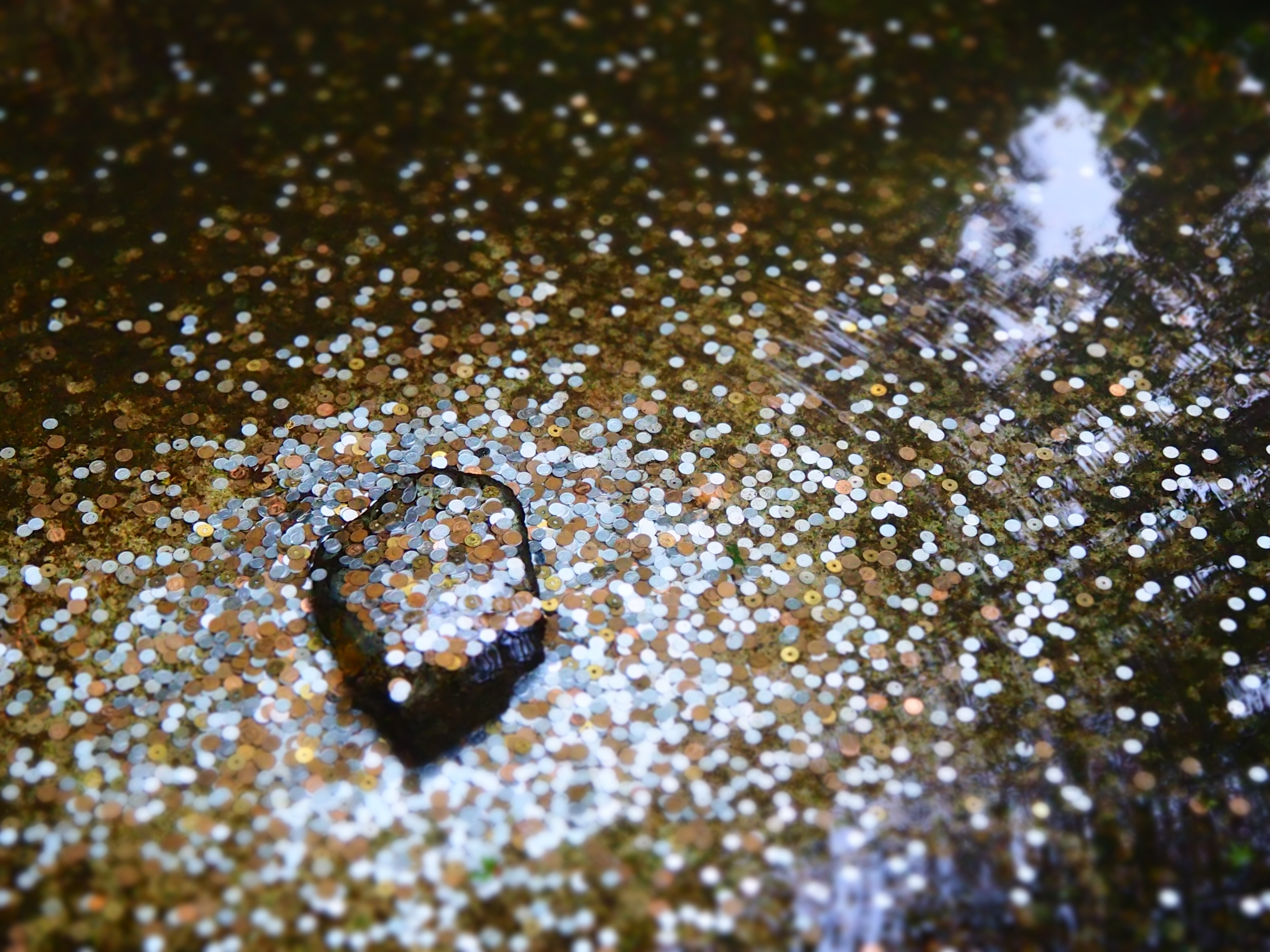
As for the coins themselves, they came in sizes large and small, bronze, silver, and gold, mostly circular, some more square. Sammy would admit that the sheer number of them was impressive— two whole walls full, plus several smaller displays—and he would admit that there was a certain magnetism to seeing, this close together, so many objects alike in size and shape and yet, in a profound way, completely foreign to one another. And it’s true, this nearness without exactness produced an interesting visual effect, so that when he tilted his head, a kind of shimmer passed over the coins, like the sun traveling quickly over a river, like a wink, a raise of the eyebrows, the promise of a secret.
Don grunts again, this time to himself, and Sammy thinks, What’s wrong with me?
From across the house, the long, empty hallways report the sound of the front door opening. His mother is home. The Tamparis live in a Manhattan brownstone, a building so old that Sammy can’t re-create it with LEGOs; he’s found the right colors, even a plastic door with a fake stained-glass window, but the shiny plastic simply can’t reproduce the history of the place. He hears his mother drop keys into her purse and kick off her shoes in the landing. He hears the sound of her bare feet in the hallway. The entryway is rich with windows, and the house is bright, but as you proceed, the rooms darken, so that coming home is, for Sammy, like falling asleep.
His mother, Leena, sweeps into the room, patting his head, inspecting the wall hangings—she’s an art appraiser—as though she hasn’t been home in years. Leena is more plain in the face than her husband but much taller and thinner; from behind, Sammy can see the beginning of her spine form below her neck and disappear into the low back of a cotton dress. Sammy knows he has inherited the best of them both, at least physically; he will be tall, thin, and pretty, and everywhere he goes, people will look at him. They already do.
“SonAndHusband,” Leena says, acknowledging them. She bends almost in half at the waist to kiss Don’s head, and when he looks up at her, there is warmth between them. Sammy can recognize these feelings in others, which he thinks must be good, must be a sign that he is not totally, irreversibly broken.
Leena adjusts the slider for the ceiling lights, which are recessed like the eyes of a doll, and the room brightens. Her hair is curly and red—last week it was brown—and she grabs a strand of it now, examines its color in this new light.
Sammy can recognize these feelings in others, which he thinks must be good, must be a sign that he is not totally, irreversibly broken.
When she’s done, she catches Sammy’s eye. “Your friends are outside. The sun is there, too. Go play and be free.”
Sammy closes his book. This is his mother’s version of a Trap, except it’s not a Trap really, just a Sadness: she tells Sammy to do the things that she’d like to be doing, but never does. His mother dreams of playing basketball for the New York Knicks. He knows this because when she naps on the couch, she updates the score in her sleep and sometimes, like a peaceful sigh, says, “Swoosh.”
He has accepted that his parents don’t love him.
Those boys outside, whichever boys she’s seen, are not his friends. They’re just neighborhood boys. To Leena, all young people know and admire one another. Sammy wonders if this assumption comes from some great happiness in her own childhood or whether, instead, it has formed in response to some unhappiness, some old wound. Sammy does not have any friends. At school, he is so much smarter than his classmates that he feels the weight of their stupidity on his chest—even after the bell rings, like waking up from a nightmare to find yourself suffocating, still, under the heart-crushing burden of your fear.
Nonetheless, he stands and stretches. With Leena home, Don will read in the bedroom, away from the noise of the television (which Leena is turning on now, checking the TV GUIDE for schedules) and away from spying eyes. Sammy might as well go outside if it will make Leena happy.
“Hey,” Leena says to him. “How many three-pointers did Trent Tucker make in 1986?”
“Sixty-eight.”
She laughs with delight. This is the one thing he knows can make his mother happy: his memory. Words, faces, field goal percentages, he can just . . . remember things.
“How about you teach him something useful,” Don says.
Sammy trudges down the hall, Leena calling to him to take his skateboard, so he does, though he’s never actually used it. On good days, he would confess that it does bring him pleasure to carry the board around, to be seen with it. He thinks it suggests to strangers some hidden swiftness, which he has chosen not to show them.
Outside, the sun is high and hot, the sky a distant river blue. There are boys, yes, four of them, playing four square in the street. This is a relief to Sammy: they will have no use for a fifth. He tucks his skateboard under his arm and sits on the shaded bricks of the stoop. His mother likes to say Manhattan is changing— she likes to say it even though it pains her—but to Sammy, everything looks the same as it always has, except maybe for the coffee trees planted along the sidewalk, which for some reason, this summer, have not grown leaves and now sit naked under the sun like skeletons. The cars in front of his house are parked very close together, their bumpers nearly kissing, and it gives Sammy a sick, shuddering feeling, as he imagines the drivers trying to extract these cars from their spaces.
Three stupid pigeons—one white, almost dovelike, the others as dirty and gray as the street—land near the neighborhood boys, who are hurling a spongy red ball across the chalk lines of the playing field. The pigeons line up in single file, as though they are waiting to play, and this distracts the tallest, oldest boy—who is not wearing a shirt, who has a thin line of hair emerging from his nylon shorts and rising to his belly button, it’s really something— and so he loses the point and throws the red ball at the pigeons, who scatter. Sammy looks away from the boy’s hair and follows the white pigeon as it flaps—in the inelegant way of pigeons— toward his house. He worries it might fly directly into his bedroom window, but at the last moment it thrusts upward, into the camouflage of some fast-moving clouds.
How high above the street is my bedroom? Sammy wonders, and the urgency of this question frightens him. He’s always being struck by thoughts like this, that arrive seemingly out of nowhere but desperately, with an insistence that reminds him of his father’s chin. He stacks imaginary versions of himself on top of each other until his hypothetical head has reached the window. His bedroom, he decides, is four and a half Sammies off the ground.
When he returns his attention to the street, there is a man standing in front of him, blocking his view of the boys. The man is wearing dark jeans and a green collared shirt. Wiry tufts of chest hair sprout from the neckline of this shirt, and it is not like the hair of the neighborhood boy—Sammy does not want to look at this.
“Hey, kid,” the guy says. “Got a minute?”
Here is why Sammy spies on his father.
Every Wednesday Don receives the package from the transcription service—delivered in person, it must be signed for, “And not by a kid, please,” said the delivery boy, once, when Sammy opened the door—with a box full of patient files. Every Thursday evening Don meets with the New York Society of Numismatics, i.e., coin collectors, and of course Sammy is not invited, while Leena goes to something she calls Fun Club. This Sammy has seen, and it’s just women smoking cigarettes. The babysitter hired to watch Sammy—a college girl with polychromatic eyes—doesn’t care what he does so long as he doesn’t go “out of sight,” the mere thought of which makes the girl breathe so frantically that Sammy can map the shape of her breasts.
This means that every Thursday evening, for four hours, Sammy can read his father’s files. The coin cave Don locks, but the files, miraculously, he leaves unprotected, perhaps assuming they’re too dry, or too complex, to attract Sammy’s interest. The first time, he read them out of boredom. Sammy really doesn’t have anything, not one thing, he particularly likes to do. He plays with LEGOs when ordered, but they make his mind anxious and his fingers feel raw. Reading books is okay, but only when they’re about science, and even then he could take them or leave them. In bed each night, he cries from 10:00 to 10:15 (he sets the timer on his bedside clock). It’s almost a relief, this crying, though he can’t explain from what. To use a phrase of his mother’s, “It’s just one of those things.” Why did the pigeons land near those boys, and not some other place? Why did they arrange themselves in a line?
These things could not be explained: the behavior of pigeons, the crying, his lack of pleasure in activities that drive other boys into frenzies of excitement (video games, cap guns), that his parents loved each other (proving they were capable of love) but not him, that if he listened carefully, in a quiet place, he could hear something rattling in the space between his shoulder and neck, as if a part of him had broken off. He did want to touch the babysitter’s breasts, and he did want to do . . . something with that neighborhood boy, but even these things he wanted vaguely, indifferently—he wouldn’t give up anything to have them. Or was it that he had nothing to give up? That there was nothing in life he valued?
All of these, he had thought, were questions without answers. But then he read his father’s les, and he found stacks upon stacks of pages of his father trying to answer them . . . for other people. He read about someone named Edna, who cried so much in public she lost her job, which made her cry even more, so then she lost her kids. He read about William, who felt unloved by his parents (this was Don writing this!), and for whom Don had prescribed medication. Sammy read about Christina, who told Sammy’s father—and these were her actual words, though Sammy could barely believe it—that she had always felt broken. To solve these people’s problems, Don had to take a cross-sectional view, plus a longitudinal view, to create a working hypothesis.
Sammy, too, would do this. He would read the files. He would watch Don read the files. He would figure out, once and for all, what was wrong with him.
“Seriously,” the guy with the chest hair is saying, “you’re a real beautiful kid.”
Sammy clutches his skateboard. He wonders how tall the man is, how many of him it would take to reach Sammy’s bedroom from the street.
“This is your house?” the guy says, responding to Sammy’s glance back at the window. The man has bad teeth, but his clothes look expensive, or at least they seem to have been chosen carefully. “Are your parents home?”
Like all children, Sammy has been instructed not to talk to strangers. But one of his thoughts comes to him, and he can’t help himself. “Are you a patient of Don’s?” he asks.
The man’s eyebrows narrow. “A patient I am not,” he says, very seriously, but then he smiles his crooked smile. “In fact, I’ve been told I’m rather impatient.” This makes him laugh. Behind him, the red ball escapes the playing field and goes bump-bump-bump down the street.
Sammy has lost his curiosity and stands to go inside. He tries to turn his back to the man, but the man has his arm.
“Wait,” the guy says. “Do you want to make a lot of money?”
Sammy considers this. It’s not a question he’s ever been asked before. “I think I already have a lot of money.”
The guy casts his eyes over Sammy’s house. “That’s probably true,” he admits. “But there’s more to it than money.”
“No, thank you,” Sammy says. “Goodbye.”
“So polite!” The guy still has Sammy’s arm. “Let me give you something.” The man fishes in his pocket with his other arm and produces a small business card, the kind Don keeps in his wallet. “I photograph kids. Beautiful kids.”
Sammy’s right arm is holding the skateboard, so the man has no choice but to release Sammy’s left and press the card into his hand. Sammy grips it tight, bending the paper, and the man grimaces. “Just show it to your folks.”
Sammy climbs the steps to his door. It has not occurred to him before now to meet one of his father’s patients, but now he wants to, badly. He imagines meeting all of them in a warm, public place—there are coins, and there is four square, and there is the smoking of cigarettes. It would be their own Fun Club.
“Hey, model boy!” the man yells from the street as Sammy opens the door. “Tell your folks to call that number. The world needs beauty.”
The world needs beauty.
Sammy says nothing and enters the bright foyer of his house. The sound of televised basketball wafts like a smell from the living room, and Leena has often dragged him to live games, so he really can smell it: the popcorn, the beer, the sweat from the players, which runs and runs down their muscled arms until the ball is slick with it and they start missing shots. Sammy wonders if athletes would ever need a psychiatrist or if their minds are too simple. He has heard his mother call Patrick Ewing a “head case.”
He goes upstairs to his bedroom, which is across the hall from his parents’ bedroom. Don is in there with the door closed, not to be disturbed. Sammy’s own room stays clean because of the housekeeper who comes once a week, but it is also cramped with his bed and bookshelf and homework desk and neon-colored beanbags, the fabric of which develops a weird film in summer. The walls are white, with a hint of yellow, and he’s covered them in glossy posters of the Ferrari Testarossa, a fast and flat car. This is one of those things he can’t explain. He has no interest in driving this car—no interest in driving, period—but something about its pancake geometry, its simplicity of form, excites him.
He goes to the window, opens it, and looks out at the neighborhood boys, still playing. The strange man is gone. The air smells of gasoline and heat. All of the cars parked in front of his house, he notices from above, are the same shade of blue. One of the boys makes a violent motion with the ball, and the tallest boy says, “Hey, no spikesies!,” and an argument ensues. The bleached limbs of the coffee trees cast fingered shadows over all of this, and it is pretty—actually, so pretty—and just one more reason for Sammy to go on living, to take pleasure from this good city, this good house, his good parents. What was it the man said?
The world needs beauty.
Sammy jumps out of the window.
Several weeks later, on a Thursday evening, Don takes Sammy to his first meeting of the New York Society of Numismatics. Sammy’s arm is still in a cast, his left arm—broken right where that strange man, the photographer, had grabbed him. It wasn’t the man who broke it—that was the fall, four and a half Sammies to the sidewalk. When he landed, the world went white with pain. Sometimes he thinks he never left that world, the pain world, as though his jumping flipped some switch on the universe. But still, the two events—the man grabbing him, the jump—have become linked in Sammy’s mind.
And not just his. Don and Leena have tried to convince him that he didn’t jump, exactly—the man scared him, and he ran, and he fell out of the window. An accident. Sammy is not convinced by this, nor is the psychiatrist he now visits once a week: Dr. Gillian Huang, an interesting woman—interesting because she seems to watch people, including his parents, with an intensity he recognizes as his own. She has black hair with heavy, side-parted bangs and thick-rimmed glasses that she adjusts constantly, forward and back. She does not buy the panic theory, but she did agree (reluctantly?) to consider his fall an act of “self-harm,” rather than a “suicide attempt,” considering his young age and the short distance from the window to the street. (It would take a drop of seven or eight Sammies, he’s since calculated, to ensure a fatal outcome.)
Dr. Huang did echo his parents on one central issue: hobbies. “You need some,” she said to him, and in their first group meeting, Dr. Huang suggested that each of them—Sammy, herself, and his parents—propose one such hobby. He would be allowed to veto one of these proposals; the others, he would have to try.
Sammy suggested reading. He was already doing it anyway.
Dr. Huang suggested journaling. Every day he would need to write about his life: what he did, how he was feeling. This didn’t sound so bad to Sammy, relative to his mother’s suggestion.
Leena said he should join a basketball team. VETOED.
When the needle landed on Don, he shifted uncomfortably in his chair, bereft of ideas in a way that seemed embarrassing— what kind of psychiatrist was he?
“How about this,” Dr. Huang said patiently. “Why don’t you tell Sam some of the hobbies you enjoy.”
“He collects coins!” Leena said, relieved to break the tension. She was sitting between Don and Sammy on the small couch that faced Dr. Huang’s chair. The office was carpeted, clean, and slightly too warm. A well-manicured-but-dehydrated ficus tree sat potted in the corner, the tips of its leaves pointing to the ground.
“Good.” Dr. Huang’s voice had a liquid quality that contrasted with the dry air and produced, in Sammy, a pleasurable hum. “Does his coin collection interest you, Sam?”
“He doesn’t let me near it.” It made Sammy feel good to say this to her, in front of them.
Don lifted his chin, defensive, but Leena interjected before he had the chance to explain himself. “Maybe you could take him to one of your coin meetings?”
“The New York Society of Numismatics,” Don clarified, in response to a single raised eyebrow from Dr. Huang. He clenched his teeth. “That’s a good idea,” he said, chewing the words.
Dr. Huang smiled, indifferent to his obvious displeasure, and focused her eyes on Sammy. “Reading, journals, coins.” She ticked them off on her fingers. “Showing up is half the battle.”
The coin is gold, or at least the color of gold, and the size of a half-dollar. The side of the coin that Sammy would call heads— though he now knows it’s called the obverse—shows a man standing on a pedestal, striking a pose that reminds Sammy of the ballet dancers he can see through the window of the studio near his house, their heads lifted, arms raised, fingers and toes extended. The man has wings like an angel, but he wears a hat that also has wings, and so do his boots. This, Don says, is a poetic redundancy. The man is actually a god, Mercury, and below him an inscription reads Arte de Industria—“art by industry.”
The tails (“The reverse,” Don corrects) is nothing but text, a full paragraph but circular, coiling around the coin like a sleeping snake. But now the coin collectors have lost interest in walking Sammy through his first close reading of a coin, and they only summarize it for him. “It basically says mankind can make stuff that is just as beautiful as found in nature,” says a much-older man, whom Sammy has identified as the leader of this group, even though he was not introduced this way. They are sitting in a circle, maybe twenty of them, but everyone’s chair—including Don’s—points toward this ancient fellow.
They are in the library of a house on the Upper East Side— whose house, Sammy isn’t sure. No one seems to be acting as host, the way his mother does at home, arranging seating, fixing drinks (or telling someone else to do those things). The air is thick with dust and wine (which everyone is drinking) and the smell of old books and old people. Sammy wouldn’t call it stuffy, exactly— the room is quite large—but there is a sense of permanence, of objects and people that either don’t move at all or move slowly. There are three walls of books, floor to ceiling, and their age gives them a uniformity of color, just as many of the men, even the Asian one, share an ashy, faded complexion. (Don is one of the youngest.) In the middle of the circle is a table, and on it are more books, several bottles of wine, and a sign-in sheet with a pen attached by string to a clipboard.
What there isn’t much of, surprisingly, is coins. “There’s a bit more to it than that,” Don says when Sammy remarks on this, and even the gold coin he now holds between his forefinger and thumb was produced offhandedly and without much interest. “Does anyone have something he can look at?” Don had said, and now Sammy feels the way he does at a restaurant when the waiter hands him a children’s menu.
“We approach the subjects of coins obliquely,” the ancient man explains, and Sammy likes that he uses this word: obliquely. It’s clear he does not speak often to children. “We approach the subject . . . alchemically.”
“Alchemy,” Sammy says. “Like chemistry?” At home, he has a chemistry set. It’s just a toy—used to make volcanoes or monsters that foam at the mouth—but Sammy has hacked it to test the paint in his house for lead. So far: negative.
Apparently his question was loaded because all of the adults, except Don, begin to laugh.
“There’s no difference between alchemy and chemistry,” the ancient man says quickly, as though to immediately curb debate.
He’s not fast enough. The Asian man clears his throat. “The continued existence of the two words—alchemy and chemistry— suggests there is a difference.”
The ancient man throws up his hands, but the subject has broken loose.
“For me,” says another man to Sammy, “chemistry is more practical, while alchemy is more thinky.”
Don leans forward in his seat, fingers caged, and Sammy wonders if this is how he talks to his patients. Sammy’s gut says the answer is no, that the way Don is acting is a performance for Sammy’s benefit. But why? “I believe you’re referring,” Don says in a low voice, “to what Goltz calls the science of matter versus the philosophy of matter.”
“Alchemy is a subset of chemistry,” says the only woman in the room, a white-haired wrinkle-face (that’s what Leena calls old women) with a faint Long Island accent. “Alchemy is chemistry with a specific purpose.”
“What purpose?” Sammy asks, his interest piqued by the dissent.
He is startled when several of the coin collectors answer this question at once, in unplanned unison: “The elixir of life.” This word, elixir, makes no impression on Sammy, but it clearly means a lot to these people. He picks at his cast.
“This leads us back to our proper subject,” continues the old man, trying to end the unwelcome digression. “Last week we examined the manuscript that claims to be the fourth volume of the Steganographia, proposing a fuller recipe for the elixir than that described in Trithemius’s other work. Do we have thoughts on the veracity of this manuscript?”
“The recipe’s use of spikenard root is consistent with Trithemius’s research,” Don says, glancing sidelong at Sammy in a way that seems—though this can’t be true—almost shy. Sammy’s thoughts keep being pulled to his cast, which is so itchy he could scream, but something in Don’s voice, a smallness, moves Sammy to alertness. In spite of himself, he’s drawn to it, the same way a distant plane, a fleck of white against a blue sky, makes him stand on his tiptoes. He wants to see that shyness again.
So he says, “I don’t get what this has to do with coins, even obliquely.”
Don’s face goes red—there it is!—but the white-haired wrinkle-face laughs. “There’s a centuries-old bond between alchemy and numismatics,” she explains.
“Look again at the coin you’re holding,” says the ancient man, so Sammy does. “‘Art by industry.’ The coin commemorates the supposed transmutation of mercury into gold.”
“It’s all fiction, of course,” Don says quickly, his face still bright. Seeing this, Sammy feels as if he were lighter than air, as if he jumped out of his window now, he would rise.
“So you talk about the history?” Sammy asks.
“Not history in a general sense,” says the Asian man. “The history of the elixir.”
“It’s just for fun,” Don says. “A thought experiment.”
The ancient man has been writing something on a slip a paper torn from the sign-in sheet. He holds it out to Sammy, who has to stand and cross the circle to take it with his one good arm. “There’s your homework. Next time, you can tell us why this is important.”
The paper says:
HgS+O2 → Hg + SO2
Sammy takes the formula to his chair. Everyone is staring at him, but not seriously—to them, he’s just a kid. A baby historian. “What is the elixir of life?” he asks. “Something that makes you immortal?”
“That depends who you ask,” says the ancient man, “and when they lived. But in most modern cultures, true immortality is not the objective. Do you know the word panacea?”
Sammy does know the word. “So if there was something wrong with someone, even if you didn’t know what it was, the elixir would make them feel better?”
Don is watching Sammy hard. “It’s all just stories. A hobby, remember? Don’t get excited.”
Sammy nods, but one of his thoughts comes to him, as hot and urgent as fire.
I didn’t read a book with a biracial protagonist until I was in my 20s. I had lived that long feeling out of place in a country where race was so closely connected to culture, community and belonging. I never considered someone else might feel the same. That first book brought me so much comfort I decided to seek out more that explored feeling like an other.
The more you dig into what it means to be of more than one race, the more complexities, perspectives, and inconsistencies you see. Some people whose parents are different races or ethnicities don’t even see themselves as biracial or multicultural. Others consider “mixed” to be their primary racial identity, more than either of their parents’ races.
What these books have in common is that they strive to approach identity as something beyond skin color.
What these books have in common is that they strive to approach identity as something beyond skin color. It’s a perspective I find many mixed individuals reach for—but at the same time, we know there’s a part of identity that will always linked to race.
So I keep reading these books, the ones that explore the day to day and philosophical experiences of being more than one race. I do it for the comfort in shared otherness but also to see what makes us just like everyone else. Here are some of the books I’ve encountered when looking for biracial voices. These books all show a different view of racial identity and identity itself in all its messy and undefined glory.
In James McBride’s memoir he documents his upbringing as a biracial child on the East Coast and his mother’s personal history—from a young Jewish immigrant to a runaway teenager to raising twelve biracial children. Both of their journeys to finding a place in the world are interwoven as if you’re sitting at the kitchen table with them as they recount it. The Color of Water is a reminder that though race, religion, and upbringing are important, you can’t let them consume you but rather let them guide you to your identity.
This young adult novel follows a teenage boy in what feels like a modern-day The Sandlot—because the main character is a baseball enthusiast, but also because the book clearly has heart from the beginning. De la Peña adds in a heavy dose of dealing with immigration laws and teenage insecurities, but it’s leavened with kids just being goofy. Moving back and forth between the Mexican and white sides of his life Danny explores his sense of self and growing up separated from his father who’s recently been deported.
If you’ve ever wondered what questions mixed people ask themselves, read the introduction to this book. O’Hearn gives you a SparkNotes version of a life spent with one foot in two (or more) places. Sometimes neither footing feels stable. Through a collection of essays from various multicultural people like Julia Alvarez and Malcolm Gladwell, Half and Half explores the questions they’re asked, the questions they still have, and whether we can redefine racial identity.
This novel taught me the word “miscegenation”: a sexual relationship between people from different racial groups. That’s how Birdie’s life starts off, with a white mother and a black father both steeped in the complexities of activism and black power in Boston during the mid ‘70s. As her family and life split into pieces Senna explores conflicting ideologies of race, raising mixed children when you’re not mixed yourself, and the struggle to find a connection to black culture when you’re white passing.
When teenage Lydia is found dead, her Chinese American family starts to fall apart. As secrets are revealed and the family of four try to understand each other the reader rotates through each family member’s point of view. With each character you piece together what their life is like as a mixed family living in small-town Ohio in the ‘70s.
Boys II Men, childhood shenanigans, and street fighter lay side by side with apartheid in this memoir by Daily Show host Trevor Noah. From the title on, he paints a vivid picture of growing up biracial in South Africa when sexual relations between black and white people was illegal.
Every niche of literature is sure to have a Pride and Prejudice retelling, and here’s the one for mixed-race girls. Pride features a family of Dominican and Haitian girls living in modern day Bushwick. It has all the romance of the classic original, but also features a subplot where Zuri (the Elizabeth Bennett analogue) works to stop the gentrification of her neighborhood from erasing the culture of her family and community.
An upcoming collection of poetry and stories, Mixed Feelings is the result of Avan Jorgia asking himself and other writers “what does it mean to be mixed?” Mixed Feelings is a peek into several perspectives of being multicultural and the possibility that we’re much more similar than we are different.
A series of cryptic and chilling emails form the foundation of Vivek Shraya’s latest book, Death Threat, a graphic novel made in collaboration with artist and illustrator Ness Lee. Featuring vibrant, surreal and haunting illustrations, Death Threat portrays the series of hate mail, its effects on Shraya’s psyche—which oscillates between terror and fascination—and the genesis of the book project itself, which becomes its own way of challenging her aggressor.
Buy the book
Although the book is charged at times with images of violence, it leans on humor and satire to portray the nuances of accessibility and embodiment in the internet age, and to complicate our ideas of online trolls. Trolls, as Shraya argues in the book, no longer conform to images of a lonely person living in the darkness of their mother’s basement. Trolls can be anyone, of any profession or background, anywhere.
Shraya’s bestselling book I’m Afraid of Menwas part memoir, part declaration of the violence and aggressions she has encountered from childhood to adulthood. Considering the alarming rates of violence against trans women of color, Shraya’s work continues to provide personal context and a searing look at the work needed to push against transphobia. Shraya and I spoke over the phone to discuss the origins of Death Threat, her and Lee’s collaborative process, and the craft of the graphic novel.
Roberto Rodriguez-Estrada: Something I found really fascinating about Death Threat is that the book’s origin story is embedded in the plot. Towards the end you begin to see the collaborative process that took place between you and Ness Lee. How did you decide to include the graphic novel’s creation as an integral part of the plot?
Vivek Shraya: Well, I think because the topic has the capacity to be a bit morbid and perhaps depressing, I was really looking at the project as a way to diffuse the violence of these letters. So using elements like email and color, and also a meta-perspective, all allowed for me to do this. I was really inspired a couple of years ago when I read Alison Bechdel’s Are You My Mother? And the way so much of that graphic novel is about the process of making a graphic novel. For me, Death Threat is not that different because of the way the letters themselves had a pretty visual component. In a lot of ways, it felt like the letters were demanding to be illustrated so it really made sense to explore them.
RRE: Right! In one of the letters, the author says, “you need to return to the forest…” which is extremely visual.
VS: Exactly. As someone who gets trolled on the internet semi-frequently—having someone say something homophobic or racist or transphobic on Twitter, for instance—I just block that stuff. But when someone says something like “you need to return to the forest and be put in a separate hut and you will be consumed by the atmosphere and the universe,” that sort of thing felt to me more … for lack of a better word, poetic, than your average email. Because of the nature of the emails I found myself really imagining them from the beginning, which made them harder to shake off, unlike other forms of hate I’ve received on the internet.
RRE: In what ways did the emails infiltrate your dreams and your psyche when you first received them?
VS: I don’t remember the specificity of my dreams at this time, but I do remember a general anxiousness whenever I’d wake up and I think that it was more that, again, with general hate I receive I’m more easily able to block it out. But with these letters, because of the ways this person was conjuring religious texts, in addition to my mother and my family, they had a deeper impact. So I found myself thinking about them all the time. At first I thought that the first sentence of the email was so outlandish it was entertaining. For instance, the notion that my name is being chanted in someone’s house and someone says she needs to die. Trying to picture this is very bizarre. But I come from a Hindu background, where chanting is used as a way to make something real, as a way to invoke God. So because of my religious background, the practice of chanting is not something I take lightly and because of these various elements, I found the emails harder to shake off, and my sleep at this time definitely became jagged.
RRE: The emails are written in cryptic English with some Hindi and Sanskrit words peppering the text. Did you have to undertake a sort of research process to figure out what things meant? Was there any meaning to them or were they just bizarre things the writer of the emails came up with?
VS: This is where I see the project as more fiction than nonfiction because I wasn’t really trying to research the parameters in which this person was trying to hurt me. It was more about: Okay, there’s this strange message and how do I illustrate this message. So, one of the figures that comes up is this sage and I have to go see them in the forest, but it’s less about trying to figure out if there’s some cultural, corrective practice that happens to trans people and more about drawing from the text.
RRE: Immediately after the first dream sequence, the character of Vivek is talking to her parents, explaining the email she received and that their names are mentioned in them. Have your parents seen the book? Do you show your parents everything you make or is there a boundary?
VS: No, they have not. There’s definitely a boundary and sometimes I’ve been accused of handling my parents with kid gloves. Being a person of color, I don’t come from an ideology that requires me to share everything that happens to me with my parents to have a healthy relationship—in scare quotes. When it comes to my art practice, they’ve gotten used to asking me, “So what’s your next book about?” And I might give them that sort of information, but they’ve never actually read a full book of mine. Maybe passages and sections. Actually, I take that back. They did read my children’s book.
But again there’s that accusation that I’m being overly protective of my parents, and that the things I’m trying to protect my parents from are my queerness and my gender. But really for the most part my parents are accepting in their own ways of those aspects of who I am. It’s often more the overt sexual elements of my work. Because I often feel like sexuality is missing from queer narratives or washed out from queer narratives, a lot of my books will feature explicit sexuality and that’s the kind of stuff where I just feel like, “Okay. I just don’t want my mom to know my relationship to penises or masturbating.”
RRE: And they’re in Canada, correct? Do they worry about you when you visit the U.S. given the overall climate under Trump’s administration?
VS: My parents don’t so much. They don’t really know a lot about what I do. [laughs] But my friends do. Some of my friends are very anxious every time I go to the U.S.
RRE: On a slightly different note, there are some particularly disturbing images of Donald Trump in the book. How did you end up including those?
VS: Well, again, it’s literally in one of the emails I received, saying something like Trump is going to ship me off to a military brothel. [Ness Lee] and I had several conversations about what to illustrate and what not to illustrate and I thought, why not a Trump figure? I remember getting a text from her really early in the morning saying something about the psychic difficulty of drawing Trump and I said that’s definitely something we should bring up in our interviews, is how I forced you to draw Trump.
RRE: In terms of the collaborative process, how did you and Ness determine the answers to big picture questions like what should be in the book and what shouldn’t, what to illustrate, what dialogue to include?
We decided to lean into the letter-after-letter structure, with the intention of creating that heightened feeling for the reader of receiving these non-stop letters.
VS: I think one of the biggest challenges for us was thinking about flow. The first Google Doc we had was just the letter themselves, and the starting point was: How do you construct a narrative from these letters? I knew the letters would be the emphasis of the book and I knew I didn’t want the book to be super text heavy. But beyond the letters, how do you tell the narrative from beginning to end? So I think that was the bulk of the conversations between me and Ness, trying to figure out what the action was taking place between the letters. We worried a lot about the monotony of including a letter, then oh! Here’s another letter, and oh! Here’s yet another letter, and so on. We didn’t want the narrative to get boring for the reader, so we asked: Should we be creating alternative scenes in between? But in some ways, we decided to lean into the letter-after-letter structure, with the intention of creating that heightened feeling for the reader of receiving these non-stop letters. This was definitely one of the many conversations we had.
In terms of what we decided to include and omit, Ness outlined every page and there were moments when we would ask whether two pages should be condensed into one page or one page should be split into a few pages, and I think a big part of it was about flow and pacing.
RRE: As someone who works with so many different media, how do you know which form is appropriate for a specific story or idea?
VS: Often it’s about being open to experimentation. Theoretically, Death Threat was really exciting as a concept for a graphic novel, but it wasn’t until I saw all the pages illustrated and printed that I thought, okay this works. There’s a part of me that definitely likes exploring different media, but it’s a leap of faith every time. And sometimes I’m wrong! I don’t always make the right decisions the first time. For example, a couple of years ago I wrote a song called “I’m Afraid of Men,” which was on my album Part-Time Woman, and it’s a song that nobody talks about, not in conversations with my friends or in reviews. Then a year later, I published a book by the same title that goes much deeper and it’s been one of my more successful projects. So there are definitely times when I make a choice around a theme and it doesn’t necessarily land how I hope. For me, that’s the sort of joy and pain of creation, having the willingness to try things out, and knowing that sometimes it’ll work and sometimes it won’t.
DON’T MISS OUT
Sign up for our newsletter to get submission announcements and stay on top of our best work.
YOUR INBOX IS LIT
Enjoy strange, diverting work from The Commuter on Mondays, absorbing fiction from Recommended Reading on Wednesdays, and a roundup of our best work of the week on Fridays. Personalize your subscription preferences here.