Racially Profiled in the Deodorant Aisle

“Security” by Yvvette Edwards

Merle noticed the security guard the moment she stepped through the entrance of Penny World: a tall, heavy-set white man, mid-forties, who had positioned himself on top of a barstool at the front of the store to have an unobstructed view of customers entering; and she knew he’d clocked her, because he stood up straightaway, trying to make the action seem natural by generally surveying the store, as if that had been his intention all along, and it surprised her, the anger she felt—hot and rapid, erupting inside her chest like a volcano come to life—surprised her at a time when she was upset with so many other things, proper problems with longevity attached, that this incident, when she’d just popped out to pick up some Sure deodorant and a roll of clingfilm, was the blow that finally swept her over the edge.

Her flight was tomorrow morning at 11 and arrangements had been made to pick her up at 5 a.m. so she didn’t miss it. She’d bought the suitcase last week, had to, because the only one she’d ever owned was the one she’d brought with her when she made the six-week boat journey from Jamaica to England in June 1964, which had for years been reclining on top of her wardrobe, the metal handle broken, clasps defunct, reduced in status to a storage container, nothing more. She’d not been back to Jamaica since arriving here, had never gone on holiday abroad, never had need of a passport, and here she was, at the age of seventy-eight, making the journey back with a suitcase from Cheap Cheaper Cheapest that had a zip that kept catching when she tried to close it, and brittle wheels that clattered noisily behind her, after she’d paid for it and hauled the brand-new empty thing home.

She’d packed—probably overpacked—it, and it sat open on her bed, just waiting for the Sure deodorant to be put inside. Once she’d done that and wrestled again with the dodgy zip, the clingfilm would be wrapped around the suitcase to give her the greatest chance of making it to Kingston, on this, her first journey back, with her dignity and its contents intact. The security guard wore a dark clean-pressed uniform and a flat black army cap pulled so low on his head, it almost touched the thin-rimmed frame of his large mirrored glasses, and he had the restless air of the American coppers Merle had seen in Hollywood action movies, lounging on the bonnet of a police car, impatient to use their gun. Ordinarily, she would’ve picked up a basket to put her goods in as she walked around, held the basket high and visible, would’ve kept it on the opposite side of her body to her handbag, in the hope of conveying the fact that she was an honest person who’d never shoplifted a thing in her life; but today her anger prevented her doing that. A voice in her head whispered a sentence she was too polite to dream of saying aloud, but it so perfectly synchronized with her mood, she nearly smiled: Let him kiss out me backside.

She knew the deodorants were shelved on Aisle 4, and the clingfilm on Aisle 5. The most direct route was to cut across the front corridor between the tills and the aisles, but she decided against that. Instead, she began walking the length of Aisle 1, stopping in front of shelves filled with nuts and dried fruit, stealing furtive glances upwards in the direction of the store camera fixed to the ceiling, in a manner she hoped looked very suspicious. She picked up some pistachios, examined the package, turning it over as though reading the information on the back, even though what was written there was in another language. She didn’t check in the direction she had just come, didn’t need to, because she knew the security guard had followed her. She felt him the same way she had felt him watching and following her around on previous visits. She peered up again at the camera, then away, put the packet back on the shelf, and carried on walking.

Seventy-eight years of age, and with the neat and tidy way she always dressed and carried herself, were she a stranger trying to work out what kind of person she might be, the word that would have come to mind is church. Despite this, in the fifty-four years she’d been living in England and spending her money in shops with security guards, she’d regularly been followed around like a thief.

Forty-one of those fifty-four years she’d worked as a care assistant in homes for the elderly, spoon-feeding geriatrics, dressing and undressing them, giving herself back problems that plagued her to this day, from lifting them in and out of bed and bath, on and off seats, toilets, floors; cleaning their dirty behinds and infronts, their soiled bedding, while acting like it was just sticks and stones to have them tell her they didn’t want her black hands touching them, their food, their cutlery and medicine cups. She’d been watched with suspicion by those same people she’d looked after, watched as she mopped up all manner of nastiness, as if the only reason she dressed in the uniform her employers issued, wearing gloves and carrying a mop and bucket, was to rob them of the little shekels in purses and wallets they hid under mattresses and at the back of their drawers. And had she harboured any grudges against them? Nope. She had not. After all that, she’d still given them kind words on Mother’s Day and birthdays and Christmas, when no family or children or friends from old times arrived to share their special day; doled out comfort in their isolation, smiles to stony faces, and fellowship in their final hours when they would otherwise have been alone.

Merle dawdled as she approached the end of the aisle, handling products she had no intention of buying, touching everything she felt like, without a backward glance. Then, as she rounded the corner, out of the security guard’s sight, she began marching briskly, nearly but not quite running, careful not to slip or trip and mash up her seventy-eight-year-old body, hurrying only as fast as she could manage safely, because if she injured herself, they’d probably say she’d done it on purpose to avoid the flight, and God alone knew whether after all the years of paying National Insurance contributions from her wages, she’d be entitled to treatment from the National Health Service. She scurried determinedly down Aisle 2 and around the corner so she was back in Aisle 1, continued swiftly along it, then for the second time rounded the top, slowing only when she spotted the security guard a few feet ahead, facing away from her, body alert, his head pinging back and forth like a meerkat, no doubt wondering where the old lady had vanished. She stopped immediately behind him, and as he turned around in confusion, Merle picked up a column of fifty disposable cups and stared at it, trying to calm her breathing, while joyfully basking in the vibe of his astonishment at discovering the woman he’d been following was now behind him.


Coming to England had cost Merle her son. She hadn’t realized she was trading motherhood for the Motherland. George was only eight when she’d left him in the care of Uncle Backfoot, traveled on a ticket she’d begged and borrowed to pay for—then had to pay back—with no job or place to live, just the knowledge she was welcome and would have opportunities, the chance to make something of herself, earn a decent living, provide a future for George; security, hope. It was supposed to be for a couple of years, just long enough to save up, return home, and build a little house for them both, with a small store or rum shop or cooked food served out front. But she’d underestimated how hard it would be, how long it would take just to get her oneself on her feet, never realized till she arrived here, in her scanty island dress and thin jacket, that no provision had been made for them, that she’d be subjected to so much resentment, at job interviews, in council offices, on the doorsteps of houses with rooms to rent. She had moved home so frequently, it took nine years to fulfill the five-year residency requirement to apply for local council help with housing; and by then George had grown up without her, and full of resentment. They hadn’t spoken in years. He lived in the States with grandkids she’d never seen.


As the security guard began walking away, Merle put the disposable cups back on the shelf and followed. She knew he knew he was being followed; she could see the strip of neck back between his hat and his jacket collar getting redder with every step. When he paused for a moment, probably hoping she’d continue past him, she stopped too, picking up a tea towel that unfurled as she held it to reveal an image of the Houses of Parliament printed on cheap cloth. At the periphery of her field of vision, she saw the security guard turn towards her as if about to speak, but he said nothing, just spun on his heels and started walking again, and she did too. He went right at the bottom, towards Aisle 3, and she tailed him, coming to an abrupt halt as she almost collided with his stationary body waiting around the corner. He was almost two feet taller than she was. Merle glared up at him and saw herself reflected in his mirrored glasses as he stared back.

She said, “It doesn’t feel very nice, does it?”

The security guard’s voice was deep, bassy, tinged with a strong accent that Merle couldn’t narrow down further than Eastern European. He said, “My job, stop steal.”

The fact of his accent broke her; she didn’t know why. It made no difference to what had happened, to this latest affront. Was it because despite being new to the country, he’d been endowed with the authority to treat her like a criminal? Did she feel because he wasn’t British, he didn’t have the right? Or because until he opened his mouth he’d been able to pass, to silently position himself within the system like a native, whereas fifty-four years on, she was still being made to feel like a foreigner? Now a foreigner officially.

She said, “Well you won’t have to worry about this woman stealing ever again. You’ll be happy to know, I’m being deported.” She thrust the tea towel she was still holding into his hand. She stepped around him and walked directly to Aisle 4, fiercely concentrating as she willed herself not to fall apart. She was confident there’d be plenty of deodorant in Jamaica, just not that they’d have Sure, her brand of choice. She picked up four of the roll-ons, remembered how hot Jamaica was, then took two more. The eruption in her chest was relocating to her head, which throbbed now, but she knew would soon begin to pound. She made her way to Aisle 5 to find the clingfilm.

At the till, after she had paid for her items and packed them in the carrier bag she’d brought along, she noticed the security guard was sitting on his barstool again, and realized she’d have to pass him on her way to the exit. She’d decided to just ignore him, but as she approached his perch, he gave her a smile and she was unable to interpret what it was meant to convey. Solidarity? Pity? Glee? Her pace slowed, but she did not stop. Reflected in his glasses she saw a proud old lady, head held high. Her voice was steady as she spoke: “It’s me today, but tomorrow, they’ll be back for you.”
New Comics That Reboot Your Favorite Childhood Franchises

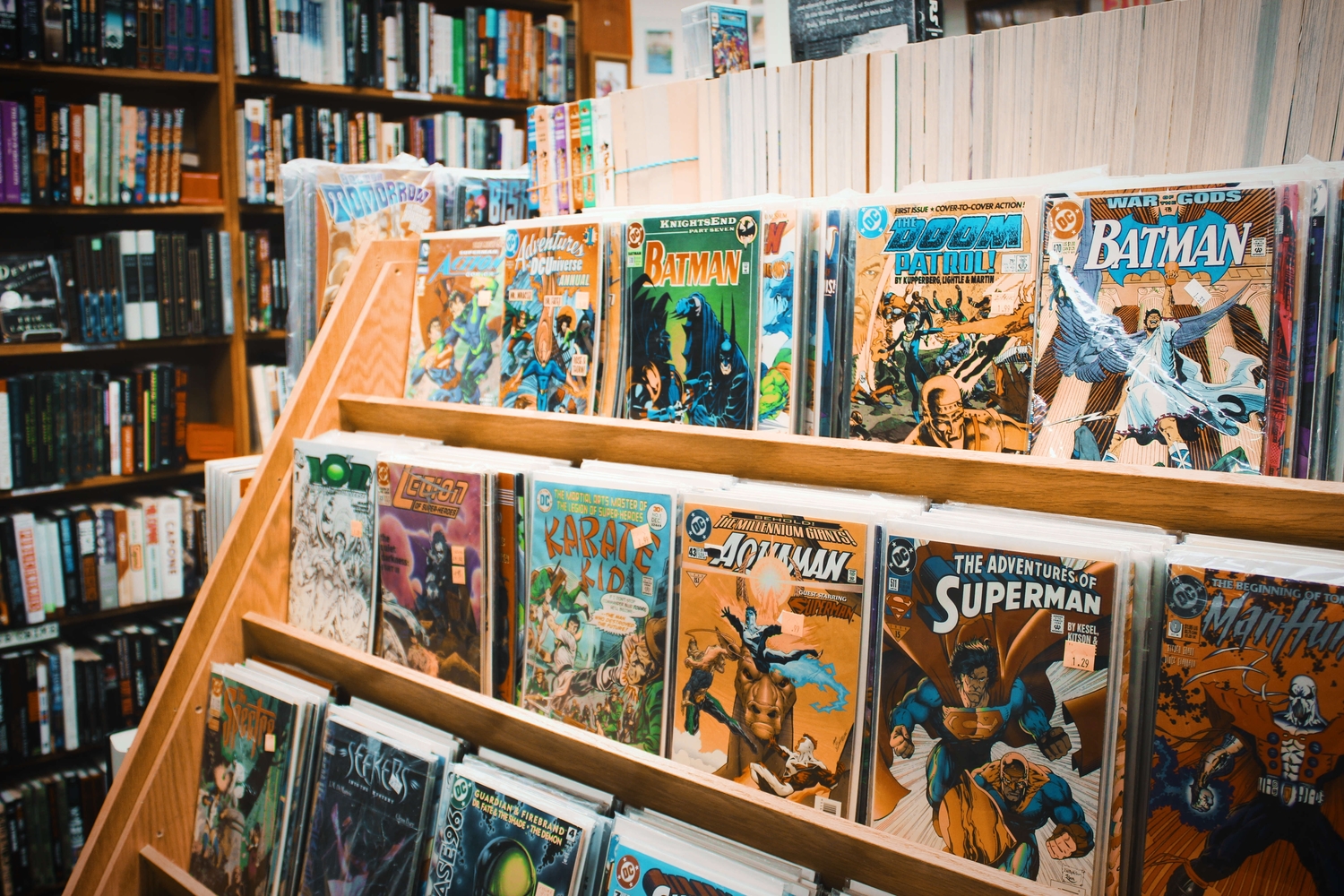
The past few years have seen a slew of retro reboots. Roseanne. Will & Grace. Queer Eye. Twin Peaks. Gilmore Girls. The Twilight Zone. I could keep going.

But while many publications have crowned this the era of the reboot, the practice is nothing new to comics. The medium has always taken what was old and beloved and made it new again.

Where some of the TV reboots rankle, however—I don’t need or want you, new Heathers!—comics publishing has been killing it lately by breathing new life into franchises I’d previously thought should remain untouched. As a 38-year-old woman who feels like she maybe, possibly, finally has her shit together, I’m surprised to say that these latest revivals make me feel young again in the best of ways.

Which comics are giving me new life? Below are the recent comics that are rebooting your favorite childhood franchises.

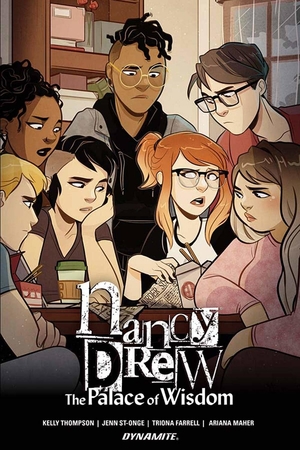
Nancy Drew: The Palace of Wisdom by Kelly Thompson, Jenn St-Onge, Triona Farrell, and Ariana Maher

Before I became obsessed with horror, I was Team Nancy Drew. I really dug the premise of a young girl using her smarts to outwit everyone else. There have been a number of attempts over the years to revive Nancy in comic form, but my favorite is this most recent iteration, from one of my favorite comic artists out there. In this arc, Nancy Drew is lured back to her hometown when she receives a mysterious message. There, she teams up with her old friends—including the Hardy Boys!—to solve an old murder. The story ended on a bit of a cliffhanger, so I have my fingers crossed that this won’t be the last we see of this creative team working on this franchise.

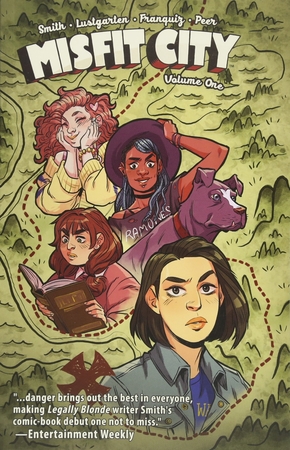
Misfit City by Kirsten “Kiwi” Smith, Kurt Lustgarten, Naomi Franquiz, Brittany Peer, and Jim Campbell

While this comic isn’t a straight reboot—and the first issues were published all the way back in 2017—I have to give it a nod for being the first comic to press all my nostalgia buttons. The book takes place in a town that has nothing much going for it—aside from the fact that a cult kids’ adventure movie was filmed there in the ’80s. But is there any truth behind the movie fiction? When a group of teens finds an old treasure map, we all get to find out. The comic is a direct nod to The Goonies (I mean, come on. The cult film in the comic is literally called The Gloomies), and it brought me right back to a time when hidden treasures and booby-trapped caves and kids saving the day seemed possible.

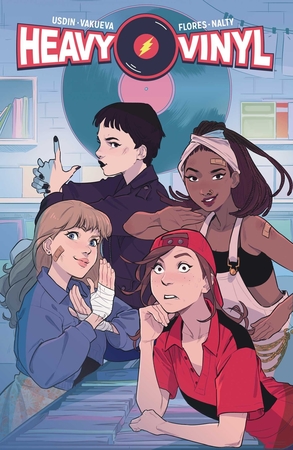
Heavy Vinyl by Carly Usdin, Nina Vakueva, Irene Flores, Rebecca Nalty, and Jim Campbell

Originally published as Hi-Fi Fight Club, Heavy Vinyl is another comic that is all its own—but which is also undeniably a throwback to a popular pop culture phenomenon. The series takes place in late-’90s New Jersey, where our young protagonist has recently landed her dream job at a local record store. But things are not quite what they seem—they’re actually even cooler. It turns out Vinyl Mayhem is a front for a teen girl vigilante fight club! This comic is a delight no matter your personal pop culture references, but what really endeared it to me were its strong Empire Records vibes.

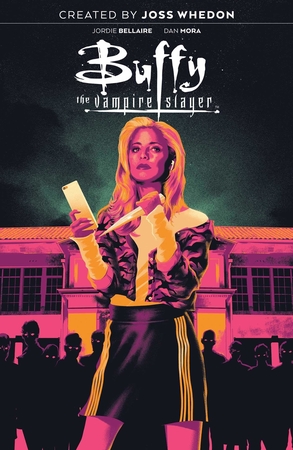
Buffy the Vampire Slayer by Jordie Bellaire, Dan Mora, Raúl Angulo, and Ed Dukeshire

Buffy’s another badass from the past who’s been revisited many times in the pages of various comics. This latest series is actually being overseen by original Buffy creator Joss Whedon, which is not a first for this character. But there’s something about the artwork in this iteration that takes me right back to the days when I marathone’d the show as a new mom. (And for those who are into this corner of the Whedonverse, you’ll be pleased to know that BOOM! Studios is bringing back Angel, too.)

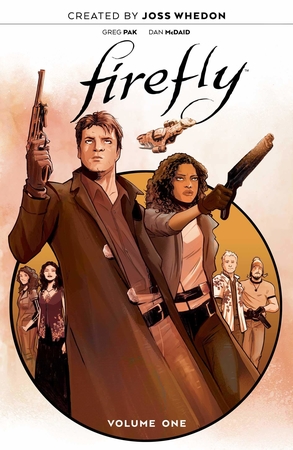
Firefly by Greg Pak and Dan McDaid

Speaking of the Whedonverse, BOOM! also recently revived Firefly, another show that has been reimagined in comic form many times over—perhaps because it ended so prematurely that our appetite for new iterations is boundless. I should note here that Whedon has come under heavy criticism over the years, especially after his ex-wife revealed back in 2017 that, all this time, he’d been a misogynist in faux-feminist clothing. This revelation led to feelings of deep betrayal among many of his fans. For that reason, I hesitated to even include these two entries. But when I first saw Firefly, I fell so deeply, fanatically in love that I’ve become incapable of turning away another chance of living in that world. In this arc, readers are shown the beginnings of Mal’s story, during the War of Unification.

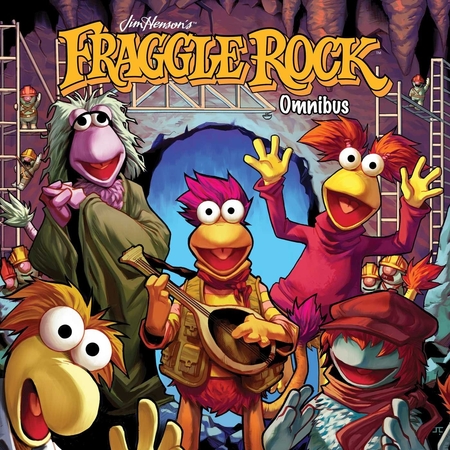
Jim Henson’s Fraggle Rock by Jared Cullum and Jay P. Fosgitt

Going back to a more innocent time, how many of you also watched the original Fraggle Rock series and then dreamed of finding a hidden passageway in your home that would lead you to a cave system where the Fraggles resided? No? Only me? In rewatching the series recently (no, you shut up), I can’t deny that the show is like one huge drug trip (how the hell did I forget about Marjory the Trash Heap?), but still. This new comic series brings the show alive in a form I enjoy sharing with my daughter.

The Legend of the Fire Princess by Noelle Stevenson, Gigi D.G., Ganucheau Paulina, Betsy Peterschmidt, and Eva de la Cruz

In all the reboot madness of the past few years, there’s one reboot that has given me life, and that is She-Ra and the Princesses of Power, an animated series developed by Noelle Stevenson (of Nimona and Lumberjanes fame), produced by DreamWorks Animation Television, and aired on Netflix. I may or may not have dressed up as She-Ra multiple times over the course of my life, and this re-envisioning of the series is the most awesome thing to have happened lately. Which is why, as I was writing this post, I engaged in a lot of “If only…” daydreaming. After all, with Stevenson’s resume, how could there not be a comic to go along with the new show? Well everyone (or just me). Your prayers have been answered. An original graphic novel based upon the series is slated to release in February 2020. Which seems unbearably far away, but we’ll get there!

IDW 20/20

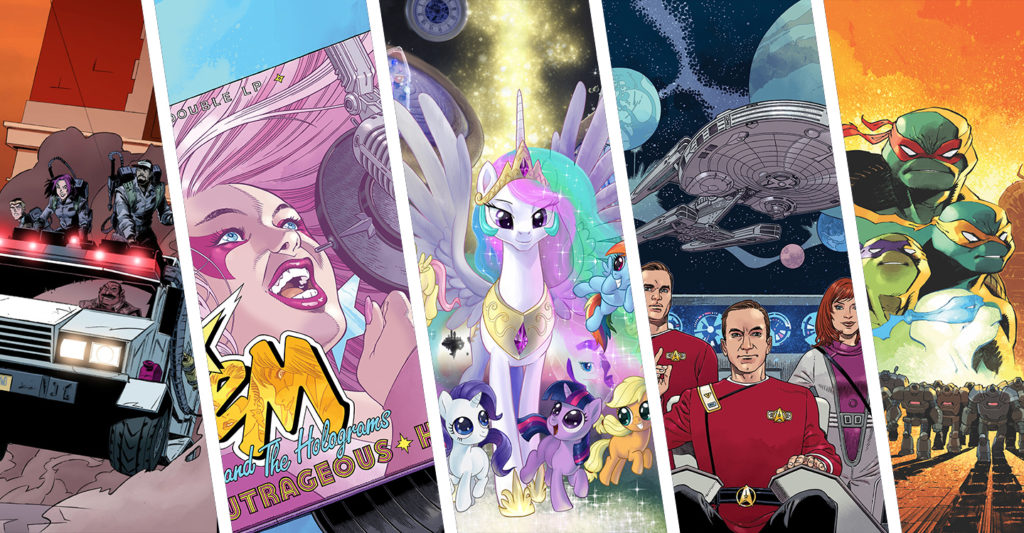
You may have noticed that I’m somewhat partial to the comics coming out of BOOM! Studios. I can’t help myself. They (and Image Comics) were my first exposure to comics, and they’ve been doing a lot of pop culture revivals lately. But nothing beats IDW’s back catalog where it comes to television reboots and, this year, the publisher is celebrating their 20th anniversary by bringing back a bunch of their fan favorites in a weekly event that sees the characters either 20 years into the future or 20 years into the past. Some of the shows making appearance during this event include Ghostbusters, My Little Pony, Star Trek, and Teenage Mutant Ninja Turtles. Who could resist?

If We Leave Earth, a Lot of Bullshit Will Fall Away

As Earthbound creatures, we might be forgiven for finding the universe—with its infinite distance, infinite space, infinite unknowability—a bit daunting. We are an explorer species, but exploration has historically proven to be dangerous work, both literally and morally so, provoking death, illness, and colonial bias in equal measures. If such perils can be found on Earth, what might we find in blackest space?

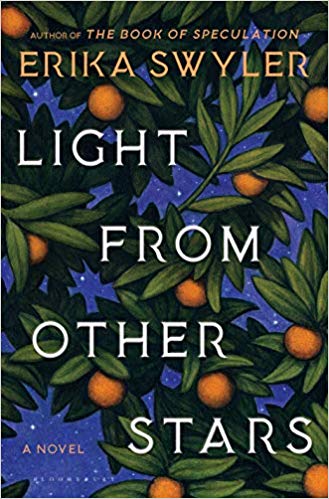
The wonderful thing about Erika Swyler’s new novel Light From Other Stars is the way it turns this question its head. What if, the novel dares to ask, a voyage into outer space was joyous? What if the things we found in space were liberty and equality?

Swyler’s book moves between two storylines, one set aboard the spacecraft Chawla, whose crew of four is on a mission to terraform a new planet in advance of settlers from the degrading Earth—and another that follows the young Nedda Pappas (also a Chawla crew member, as an adult) and her family in the town of Easter, Florida, over the course of a peculiar few days during which they become trapped in a bubble of time.

If that sounds far-flung, the story’s greatest success is how deeply human it is, no matter the setting—a hallmark of the best science fiction: it remembers that, no matter where we go, there we are. I read Light From Other Stars (hereafter LFOS) twice in preparation for this interview, and cried both times; I was therefore delighted to talk with Erika about science, family, and literary structure—all of them, for both of us, matters of the heart.


AC: Let me start with a question that may seem easy, but which sat with me often while I was reading LFOS. What is the genesis of the names in this book? From human names—Nedda, Betheen—to machine designations—Chawla, especially—everything feels precisely selected, very oriented in place and time. Was your process for this intuitive, or driven by specific goals?

ES: For me, naming is equal parts gut and design. There has to be something fun to a name because I’m a slow writer and I’m going to have to live with it for a few years. It also has to feel organic to the world. I think about Flannery O’Connor, and how her names are so deeply rooted in place: there’s no way anyone named June Star is from Greenwich, Connecticut. Betheen’s name had to conjure a particular type of woman, polished, but just about to fray, and it needed to have musicality. This applied to Nedda, though I was thinking more scientifically about her. When you get to small parts of the atom, you get all these fun names–quark, gluon, muon—and I wanted something that felt like it fit in that world. To me, Nedda sounds like both a girl and a subatomic particle. As for other people populating the world, well, you can’t write 1980s America without at least one Tiffany.

It’s important to me that when I consider space and the future, it’s not white and male. That’s not what’s in the universe.

When it comes to naming objects, on the other hand, it’s almost all logic. The bots and rovers had to reflect different languages because space exploration has always been multi-national. Chawla was an important choice for me. I needed to name against the whiteness of space exploration. Kalpana Chawla was an engineer who died when the shuttle Columbia broke apart. She was the first Indian-American woman in space. And while we name things for our heroes, we also name for ideals. It’s important to me that when I consider space and the future, it’s not white and male. That’s not what’s in the universe. The universe is beyond vast, and by our narrow definitions of gender and sexuality, it’s nonbinary and queer as hell.

AC: I love that. Let’s talk more about the science in this book, which is so vital—not just in the sense of being important to the plot, but in the sense of living and breathing alongside the characters, each of whom is a vehicle for a very different class of knowledge. Can you talk about how you approached the research for this book—what you knew going in, how you tailored your learning, etc.? I’m especially curious if you can talk to how you designed the Crucible, which is so vivid as a physical object, as well as its more, um, energetic qualities. 

ES:  I wanted to approach science in the way readers are accustomed to approaching magic. Most of us know a phrase or two of butchered Latin and what shouting it while holding a wand is supposed to do: fewer of us know why a strike-anywhere match works, even though we use it to literally carry fire with us. That lack of curiosity troubles me, not because we see magic as more interesting or fun than the sciences, but specifically because the physical world is magic. The less curious we are about it, the greater the likelihood that we lose it. I feel a responsibility to speak to curiosity, so that led to research, but nothing overly strenuous—novelists tend to fetishize research in a way that’s unhealthy for the form. Most of the work was reverse engineering. I’d write what I needed something to do, then find the science that did it. That’s no different from research for almost any other novel. We’ve been taught as a culture, wrongly, that science and math are extremely difficult and esoteric, but it’s more that so much science has been explained to us very, very badly. There’s almost no science in the book that’s outside the realm of a high school education, because most of it needed to be understandable to a smart preteen, and high school is, for many of us, when formal science education ends—myself included.

In designing Crucible, the entropy machine, it came down to how to represent chaos. I remember the day in physics when we learned about heat death, everyone left the class in silence. There is an “I just learned about entropy and heat death” face; it’s a mixture of wonder, horror, and the realization that you are incredibly small. I wanted that in Crucible. It needed to sound beautiful, but also a bit terrifying. For me that means glass, gold, and spiders. And I knew it had to spin because centrifugal force is one of those aspects of physics we all recognize. Spinning is physical, visceral. As for how it works—there’s a theory that spacetime behaves like a fluid, and when I’m writing about something as intangible as time, I jump on every way I can to physically represent it.

AC: Nedda is a young girl for much of the book, and I love how much she wants things: she wants the monkey she sees in the truck bed, she wants her dad’s attention, she wants all of Mr. Pete’s NASA memorabilia, she wants to go to space. She’s never afraid to name her wanting, at least to herself, and I found that to be a quietly magnificent portrayal of girlhood. 

In addition, we also see Annie’s desperation for a moment alone, and Betheen’s ambition (frustrated but palpable and deserved), and Marcanta’s casual sexuality…it all adds up to a fascinating portrait of women desiring things, and reckoning with the fallout from that desire. Not everyone gets what they want. Not everyone wants the same thing. But everyone is pushing and pulling against the boundaries of what they need and what their circumstances allow. Did you set out to portray that, or did it emerge naturally from your characters?

ES: We’re still at a point where we can’t write women without also writing what’s been forbidden to us. So while it may not have been my goal at the outset, it was unavoidable. When writing a young girl, you think and write about emotions much more intensely, because they haven’t had their edges dulled: each desire is totally novel and also seems possible, because managing expectations is one of aging’s coping mechanisms. Children’s wants are stronger. As I dug in, I got fixated on what dulled those edges and saw that so much of it was tied to gender, specifically what girls and boys are allowed to be excited about. Our desires and enthusiasm get gendered and directed during the preteen years. Yes, lots of people fight it, but rarely without repercussion. I got to thinking about widows and divorcees I’ve known, women who blossomed once they were on their own. It’s more complex than their husbands holding them back. Women typically have to push down one set of desires in order to pursue another. So it became important to juxtapose Nedda—who wants things and doesn’t understand compromise—with her mother, Betheen, who had enormous professional ambition but got forced into a different shape. Each form of desire has a cost.

In space, in the future chapters, the characters had to behave differently when it came to sex and affection. Not just because I’m hopeful that conventions will change, but because in a society of four there’s no hiding. For the same reason, it was important that the men in the crew, Amit and Evgeni, actually communicate emotion, that they’re affectionate in ways men haven’t been allowed. The four are entirely reliant on each other for happiness—for everything. I know it’s naïve, but I like to think that if we leave Earth, a lot of bullshit will fall away.

AC: That leads perfectly into my next question. LFOS is full of different kinds of families: Nedda’s immediate family, her “government of four” aboard Chawla, her near-sibling friendship with Denny. Can you talk about how you developed these different pictures of functional intimacy? The Chawla family, in particular, strikes me as nearly utopian—except that it only functions the way it does because it’s so very small. What does this say, for you, about how humans relate, especially at this point in time? Why does space seem like fertile ground for a utopian connection?

ES:  Functional intimacy means mutual reliance. I start there. Nedda needs someone who likes her intelligence, and doesn’t expect her to be anything other than who she is. Denny needs someone who is up for adventure, who doesn’t care who his dad is, and who is a safe person. These are basic needs that don’t change over time. Absent external forces, needs being met is the foundation of intimacy. Without mutual reliance, intimacy breaks, which is where Betheen and Theo are.

Large-scale utopias don’t work in part because of these same ideas of reliance and intimacy. Nations operating as individuals cause conflicts. Individuals operating without concern for group tank entire social systems. In the U.S., we’ve built this strange cult around self-reliance and it’s not working out well, because every glitch of personality becomes catastrophic when translated to a global scale.

Space seems like our best chance at creating utopias.

Space seems like our best chance at creating utopias, because we can only send so many people up, and we’re very careful about who we send. They can’t want to kill each other, they need to be able to cope with isolation, bad food, tight quarters, and the very real threat of death. They’ve got to have a strong sense of altruism. When you listen to astronauts speak, that hope is infectious, it’s the thing that makes utopias. We send people into space to live and work as a group, for the good of a group, and they’ll rely on each other or die. Manned space missions are examples of total human interdependence that exist outside the individualist bravado we’ve cooked up on Earth. There’s something profoundly hopeful in the thought of a tiny little society setting out to try to do this humanity thing right.

AC: I keep thinking about how, in the book, desire is so frequently an imperfect vehicle for success. For example, Betheen wants very sincerely to be a mother, to do science, for Nedda to love her—but her wanting is insufficient to achieve those ends, however noble they may be. Her desire only becomes clearer when viewed through the lens of responsibility—what Nedda needs; what will save the town—and I think this is true for Nedda, too, when she grows up. Her trip to outer space is not a joyride.

So here is my last question for you, which is as much a question about life as you see it as it is a question about the book: can we achieve anything when we achieve it just for ourselves? Or will we always be too perilously shortsighted, if we are not responsible for a little bit more?

ES: You’ve hit on my feelings about the razor edge of ambition. Ambition is important and we all have it, but it never leaves us where we expect, and we’re always struggling to reframe. That’s so much of Betheen as a character. I suppose I don’t believe there is any achievement that’s just for the self. Our egos are far too large and too fragile to do anything that’s just a personal achievement. When we can’t find a living person achieve something for, we haul up the dead and achieve things in memory of loved ones. We can’t escape our need to feel important, which is always in dialog with group and responsibility. Also, the ego isn’t strong enough to overcome the need for meaning, and meaning demands a world outside the self. Even with writing fiction, we tell ourselves it’s fine if no one reads it, that it’s something just for us. But it doesn’t feel that way, does it? We write to engage, to make people think. That is a kind of responsibility. Problems arise not necessarily from ambition or a desire to achieve things just for the self, but from the failure to realize the ways we are, and hunger to be, tied to the world. I need books and characters to confront that interconnectedness of things. We all start out perilously short-sighted. The human journey is finding responsibility, which is making meaning through finding group.

“Juliet the Maniac” Is a Raw Portrait of a Bipolar Teenage Girl

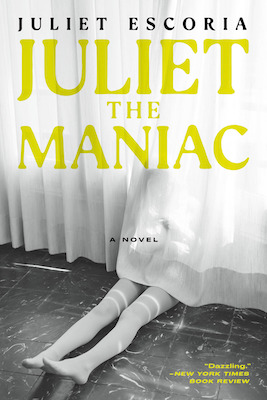
When I read Juliet the Maniac this winter, I found that I was no longer alone in my head. Juliet was with me too, her thought processes, her internal monologue. And then I started feeling a third person in my head, too, my own teenage self, woken up from the past by teenage Juliet. I too was a young woman whose mental illnesses were stopping me from engaging in life the way that those around me could, and Juliet Escoria captured this experience with pitch perfect resonance, both specifically for her character and universally in ways that the reader can recognize as their own.

I’ve known of Escoria’s work for a long time, so between that and the overlaps in our writer-network constellations, I was really excited to meet her IRL and discuss a book that I loved so much. The meeting did not disappoint! This interview was cut down from about five times this length, an hour in which we continually veered from the questions I had formulated from the book into digressions on our lives and personal experiences, only to return to the central gem that is Juliet the Maniac.

It’s no surprise to me that this book is resonating so strongly with readers—it’s always hard to know how a book will fare in the world, but Juliet the Maniac is special. If you haven’t read it yet, I hope to do my part in convincing you with this conversation, one of my favorites that I’ve had the pleasure of doing.

Juliet Escoria and I met at a cave-like coffee shop in Williamsburg, not far from where she was staying. We talked about why high school sucks, how mental illness can be seductive, writing a hologram version of herself, and why she doesn’t buy into the trope that sex can change you.


RS: During the weeks I was reading the book, even when I was doing other things, I would still get the internal sense of Juliet in my head. And I was wondering, is that something you intended, that you knew people might be feeling? Did you have a sense of trying to have such a strong internal monologue that it would imbed in people?

JE: What I wanted really to convey was what it felt to be a teenager. It’s weird because Juliet is me but not me, so it was odd to really get a sense of this character that shares a lot of traits with me but is still fictional.

RS: How did you navigate that line between you/not you?

JE: It was tough. I had to think of Juliet as a separate person than me, this mirror image, hologram-type of my personality. At the end of the book where it says “I am still haunted by her,” that was a very real feeling, of having this companion for years who’s this teenage girl who’s like me but not me, so I felt very much, not to sound mystical or whatever, but in communion with this thing that I created, that is based in truth, but not truth.

RS: When the narrator is in high school, I felt like I was getting a very strong commentary on the bad parts of education. The specific example I noted was when the narrator was turning in a paper on Macbeth, and the teacher is trying to be so nice and be like “Oh we could do this or this or this,” but I was like…why don’t you just let her not write the paper! Nothing matters!

JE: I went to a high school that was really highly rated, like Juliet, and it was a complete nightmare for me. I think it was a nightmare for a lot of kids who were outside of the norm, because it was wealthy, so there was a lot of emphasis on appearances, and being good at school and being popular.  As a natural perfectionist it really broke me, so I was glad that our district was big enough to have the continuation school.

Just because you have high test scores and good grades doesn’t mean you’re learning anything or it’s benefitting you in any way.

There’s so many ways to be different, and I think that a lot of high schools don’t account for that. In West Virginia, for example, the schools look radically different in terms of what is the norm, than they do in Southern California. But, still, there’s not a lot of room for people to be outside of that norm. I think that things like alternative schools are really important, and just realizing that people learn in all different ways. Just because you have high test scores and good grades doesn’t mean you’re learning anything or it’s benefitting you in any way. People are kind of rethinking education, but, of course, as in most things, we still have a long way to go.

My mom was a teacher, my dad was a teacher, I’m a teacher, so I do definitely believe in the importance and value of education. But I think it’s a little too rigid. Especially high school. High school sucks.

RS: It’s such a bad time. You captured that so well with the character. High school is probably the first time that so many people realize they have atypical brains. And to then be realizing that while you’re in this really stringent…

JE: Even the routine. I can’t imagine going to a job from 7:30 in the morning until 3:30 in the afternoon, five days a week. That just seems horrible.

RS: You also captured really well the intensity of a teenage friendship and how the progression of them can be so similar to relationships. I hadn’t thought about this in a while, but reading it, those teen friendships, you have one, and you think it’s going to be your big important one, and then one person kind of drops the other and it’s really intense, sad, scary. I don’t know, do adults do that in friendships?

JE: I don’t have that.

RS: I haven’t had it as an adult either! Do you think that is specific to teenagers?

JE: I wanted to represent the interchangeability of friends. I feel like I’ve seen a lot of books about the strangeness and intensity of teenage girl friendships, but it’s like a solid friendship. My experience was very amorphous, of one friend bleeding into another and getting replaced by the other. So that was important to me. It’s fucked up to make generalizations about gender, but I don’t know if teenage boys experience that quite so much. I do think it is practice for romantic relationships, but maybe practice for unhealthy romantic relationships.

I feel like a lot of teenagers could be diagnosed as borderline personality disorder, like a contemporary diagnosis of hysteria.

When I started to become an older teenager, I still had really intense best friendships that would last for a few years, and then be replaced by someone else, but it also happened with boyfriends. It’s a progression of someone who’s not good at emotional relationships. I feel like a lot of teenagers could be diagnosed as borderline personality disorder, kind of like a contemporary diagnosis of hysteria. I think that’s just something a lot of teenagers go through, the symptoms of borderline personality disorder. Basing your personality around a relationship, whether that’s a boyfriend or best friend.

RS: And enjoying the intensity, but not really understanding how much of it is based on the other person. Because then when you drop the person there’s no….at least I remember from my teenage years, I would feel the loss, but the other person I’m like well they clearly don’t care!

You did a great job displaying the phenomena. When I got to college, it never really happened to me again. Never, I don’t think. I’m still in touch with everyone I’ve ever been close with.

How did you write a difference between the friendships at the high school and the friendships at the therapeutic boarding school?

JE: The first friend, Nicole, I didn’t want her to be a bad person or a bad friend, but just a bad match. Like a proximity friendship rather than a “something in common” friendship. The superficial things that people have in common, like music and makeup. And I wanted Holly and Alyson to be more like real friendships, ones based on internal struggles, but still between two very flawed individuals who aren’t always able to help each other because they’re fucked up. Helping and hurting each other at the same time.

RS: That really translates to relationships too. And how that dynamic is not helpful for people in a friendship or a relationship, and it kind of underscores the similarities between intense friendships and relationships.

JE: If your flaws don’t mesh up, you’re going to hurt each other rather than help each other, which is what friendships and relationships are supposed to do.

RS: The dynamic can be so traumatic to a life that’s already lacking consistency. One line that I really noted within the narrator’s friendship with Holly was “my experiences, coming out of someone else’s mouth.” I feel like that is where a really strong friendship begins.

If your flaws in a relationship or friendship don’t mesh up, you’re going to hurt each other rather than help each other.

JE: I felt like such a freak with the bipolar disorder, and I don’t know why because I wasn’t alone in experiencing that. Not every bipolar experience looks like mine, but my friend was diagnosed with bipolar disorder, so I don’t know why I felt like such an alien. But I did have moments like that–moments of recognition–and I wanted Juliet to have moments like that too, feeling like an outsider, but sometimes with a Venn diagram of similarity, and that being significant to her, especially growing up in an area where blond-smiley-tan is the norm.

RS: I think I only became comfortable discussing mental illness and medication with my friends much more recently. Now with my friends here we joke about it, it feels safer than it did when I was a teenager.  

JE: We have come a lot further in terms of stigma, and of mental health treatment. I think part of it too is awareness. I don’t think people were as conscious of what bipolar disorder looked like and the fact that it’s a spectrum, in the nineties. As research for the book, I went through my parents’ old files about me from high school. One of them was a printout of bipolar disorder symptoms from like Yahoo.com, and it seemed so odd that you would need to go on the internet to find really basic information about your daughter’s psychiatric diagnosis and then print it out. Now I am surrounded by people who are versed in mental health issues, so I might not be the most objective, but I feel like people in general are pretty aware of what the basic symptoms of bipolar disorder are.

RS: I loved your line so much about the character getting her first credit card being more significant than losing her virginity. I’ve never read something that expressed that so well, but I had a very similar experience.

JE: I bought into the idea that somehow sex would change you and you could tell just by looking at someone, which is a very corny idea. I really don’t think it matters. I think if we didn’t place such a value on it, then teenage girls like me, teenage girls who are interested in being bad, probably wouldn’t be so interested in having sex. I also feel like that’s seen in literature: “Is the teen character a virgin or is she not a virgin?” That seems like such a stupid distinction, and I didn’t want to play into that binary. But I figured that people would want to know, and that I couldn’t just not acknowledge it.

I was kind of surprised that everyone let me keep that section in the book. I was waiting for [my agent] Monika to tell me to take it out, or for my editor to tell me to take it out, but no one told me to take it out.

RS: I thought it was amazing. I’d never heard it expressed that way. Virginity never seemed as big of a deal to me as emotional intimacy, which I didn’t experience for a while after I first had sex.

JE: That is actually significant, being vulnerable with someone who you’re having sex with. You’re putting yourself in an opportunity to get hurt. Just having sex with a guy that you think is cute, obviously there’s risk in that, but it doesn’t strike me as some sort of important milestone.

RS: There’s anxiety but I think it fades faster than the anxiety of emotional intimacy.

I bought into the idea that somehow sex would change you, which is a very corny idea.

JE: In high school the risk of being branded a slut—I felt like I was, but I don’t know if I actually was. But I wanted that branding. It seemed safe in a way. Teenage girls feeling the need to find themselves clearly marked as “good” or “bad” or somewhere in the middle. A need to categorize things, and categorize themselves, even if that categorization is harmful.

RS: At one point, I felt like being branded as a slut but sexual was better than being branded as not sexual at all. And those were the two options, it felt like.

JE: And it was like, if I go there, then I don’t have to worry about it anymore. I can do what I want. I don’t have to have that “Oh god am I going to turn to the dark side?” panic. Nope, I’m already there.

RS: My next question was talking about the medication, but I already did that! That’s always the best.

JE: We could talk about medication more if you want!

RS: I would love to talk about it more. I hadn’t read a book, at least recently, that went so in depth with it. The part about hair loss, this medication that I’m on now, a risk was hair loss, and that’s the only thing that really freaked me out which is so fucked up that that’s the one that made me so upset, but I was watching it like a hawk.

JE: I think doctors have gotten better than they were when I was first diagnosed about drugging the shit out of you. I feel like I haven’t had a psychiatrist who’s wanted to do that to me in over a decade, so that’s good.

When I was originally diagnosed, you’d be put on medicine that had side effects, and then you’d be medicated to manage the side effects, and it would just go on in this vicious cycle. By the time I was done with the boarding school, I was on at least four psych meds, which is a lot. When I was thirty, my doctor told me that I shouldn’t have any side effects, and if I experienced side effects it meant that I’m not on the right combination. That was mind blowing to me, that a doctor would say, “You deserve to not have side effects,” because it seemed like doctors were like, “Whatever, you’re bipolar, what do you expect?” I think they have gotten away from that line of thought.

RS: That representation of medication is a lot of the reason for me and people I know why we didn’t want to try them in the first place.

Mental illness can be seductive too. Manic episodes are scary, but also fun.

JE: Mental illness can be seductive too. Being bipolar is fun. Manic episodes are fun. They’re scary, but also fun. My brain has tricked me into thinking like “Oh, this medicine is bad for me because it makes this part of me fake.” People are drawn to that, the self-destructive streak, a fear of being totally stable.

RS: And for creative people being like, what if it ruins my creativity. That wasn’t necessarily my biggest fear. I was more lazy. But the thing that really changed me is I was in a really bad situation with a guy, and my mental state was really bad, and after that I was like wow it doesn’t really matter if I “lose” anything, stability is the most important thing.

JE: It took a long time for stability to feel like something I wanted. Sometimes I’ll still get like, “Oh it’d be nice to be manic, maybe I should stop taking my medicine,” and then I have to remind myself of what happens when I am not stable. And it’s just not worth it. I don’t think I’ll ever be normal in terms of my thoughts, and that’s cool, so even if I am stable it’s not like I’m going to turn into some totally normal person. And I like that. I like being bipolar.

RS: It’s amazing how much of this you made come through in the book without it being a straightforward statement.

JE: That was important to me too because I feel like, it’s so easy to lecture. I have a lot of thoughts and theories and issues with things that have happened to me, as anyone would, but I think that’s why I wanted to do a novel as opposed to nonfiction. The urge to lecture is lessened in fiction. So I felt like I was going to be able to say things about class and gender and mental illness stigma and what it means to be a young teenage girl in the world if I tried to be super specific and super honest rather than having a thesis statement.

I wanted to say something about class, because one thing that’s troubled me is, what if my parents didn’t have the means and desire to treat me? I don’t know if I’d be alive. That is disturbing to me. Money plays way too much into if someone has the ability to receive effective treatment. Living in West Virginia has been really frustrating, in terms of seeing what is actually out there for people who are mentally ill. There’s such a limited number of doctors and therapists.

Part of it has simply to do with what’s in your bank account— paying for a therapist, paying for a medication, paying for a therapeutic boarding school—but it’s also having the knowledge of how to navigate the hoops of the mental health system, and the ability to tell doctors that they’re wrong. That’s something that really angers me, how much class does play into mental health treatment and quality.

My psychiatrist in West Virginia, she’s great, one of the best ones I’ve ever had, but she’s an hour away, and if I had a different job, like a nine-to-five job, I don’t know how I’d see her.

There’s so many things that come into play in receiving quality treatment, that I think have to do with situation and class that aren’t fair.

We Deserve Better Than the Live-Action “Aladdin”

I spent the better part of 1993 watching two VHS tapes on endless repeat: Disney’s Aladdin and the lesser-known 1955 MGM musical Kismet. Directed by Vincente Minnelli (Liza’s dad), the latter was an adaptation of a Broadway show of the same name, which married a Cinderella-meets-Arabian-Nights tale with a score pulled, somewhat inexplicably, from the canon of 19th-century Russian composer Alexander Borodin. Growing up in a Syrian-American family, the granddaughter of refugees from a bloody, post-Ottoman Empire Syria, the closest I otherwise got to my roots was a steady diet of kibbeh and stuffed grape leaves.

The Azar family came to America in the generation of assimilation. My great-grandmother Nabiha’s name was changed to the more Americanized Mona. My grandmother and her sister picked up English and abandoned their fluency in Arabic. Because they were both Syrian Christians and fair-skinned, they passed more easily than many of their compatriots, which gave them an advantage in the United States. Instead of passing on our Syrian-ness from one generation to the next, we wholeheartedly embraced our American-ness.

Instead of passing on our Syrian-ness from one generation to the next, we wholeheartedly embraced our American-ness.

Still, it’s hard to be of two worlds and to feel like you don’t fit into either. And so I turned to two movies that, to my 8-year-old sensibilities, seemed to be faithful documentation of life in the Middle East. My fascination with Aladdin wore off more quickly along with my interest in animated features, but Kismet — a live-action musical with snappy dialogue and a classically-influenced score — is, admittedly, a DVD I still own.

If, as a teenager I had seen the movie’s trailer, in which its star Howard Keel introduces characters like “seductive Lalume, whose heart belongs to her Baghdad Daddy,” I may have understood that Kismet for the CinemaScope kitsch it is. Unlike the widely-acclaimed Aladdin, Kismet was a movie that never should have happened. When the musical opened on Broadway in 1953, reviews were delayed due to a newspaper strike. By the time the critical pans finally made it into print, the show’s popular appeal had spread and kept it running for nearly two years.

One of Kismet’s detractors was the director himself. Minnelli had originally refused to direct the adaptation for MGM, but finally consented in exchange for the greenlight on his Van Gogh biopic Lust for Life. But Minnelli phoned in Kismet while pouring all of his energy into his real passion project, and it showed. There was no newspaper strike to save it this time. The New York Times compared the lackluster direction to “the marching orders for the Macy [sic] parade.”

Without any of this context, I accepted the film at face value, as did the rest of my family. They loved Kismet. Three generations of us would watch it in my grandparents’ living room, despite it being as accurate a representation of our heritage as the Moroccan pavilion at Epcot. What’s more, it was a love that was kindled because of our heritage, rather than in spite of it.

Kismet itself was a form of propaganda, released during the height of the Cold War as a cultural salvo against the USSR. As film scholar Brian T. Edwards explains, both the lush, exotic setting of ancient Baghdad and the technological advancements of CinemaScope pitted American abundance against Soviet scarcity. In Kismet’s show-stopping number, “Not Since Nineveh,” the Wazir’s wife Lalume (clad in a gold bodysuit more Aladdin Sane than Ali Baba), lists Baghdad’s benefits to three uncertain newcomers:

“Our palaces are gaudier,
Our alleyways are bawdier.
Our princes more autocratic here,
Our beggars more distinctly aromatic here.”

Kismet was one of dozens of Middle Eastern films to come out of Hollywood in this era, with the “Middle East” often conflating (as Kismet does) various cultures from the Arabian peninsula, but also Northern Africa, India, and Southeast Asia. The common thread, as Edwards puts it, is excess. But Kismet also taps into a long-running history of Arabic representation by the West. In his landmark 1978 book Orientalism, Palestinian scholar Edward Said would codify this as both “a way of coming to terms with the Orient that is based on the Orient’s special place in European Western Experience” and “a Western style for dominating, restructuring, and having authority over the Orient.”

Part of this domination resulted in two common characterizations of the Middle East that are alive and well in Kismet, even if they are used as a “neutral ground” against the larger enemy of communism, and both trace their roots back to the lifetime of the Prophet Muhammad. Kismet originated as a play by written by Edward Knoblock in 1911 (just a few years before the end of the Ottoman Empire), whose notions of the Orient came in part from the literature of his era — which teemed with Romantics like Byron, Goethe, and Flaubert who imagined themselves in far-flung harems and bazaars.

Arab men were branded, as a rule, as despotic barbarians and women as sexual trophies.

In turn, these authors drew inspiration from legends of the Middle Ages, spread by Crusaders who worked to counter the perceived threat of Islam. Such legends began taking shape around Muhammad in the 7th Century. Christians were quick to brand the Prophet as an over-sexed despot who used religion to justify his own sexual behavior. This characterization soon spread to all Arabs (including those who weren’t Muslim) as a means of sequestering their influence, resulting in Arab men being branded, as a rule, as despotic barbarians and women as sexual trophies.

Continuing in this lineage, Kismet could have simply been one more knot in the thread. But it was revisited in the early ‘90s following two pivotal moments in 1989: The fall of the Berlin Wall, which precipitated the collapse of Ronald Reagan’s so-called “Evil Empire,” and the Disney Renaissance, which would in a few years lead to the release of Aladdin.

American attitudes towards the Middle East continued to change in the 37 years between Kismet and Aladdin. With the dissipation of the Soviet threat, the Middle East seemed less exotic and tantalizing and — with events like the 1972 attack on the Munich Olympics, the 1979 Iranian Revolution and Hostage Crisis, and the United States entering the Gulf War against Iraq in 1990 — more tyrannical and dangerous. Women who slinked around the MGM backlot in bikini tops and harem pants were now covered up in live-action films of the ‘90s and early 2000s to reflect the oppressive nature of the veil.

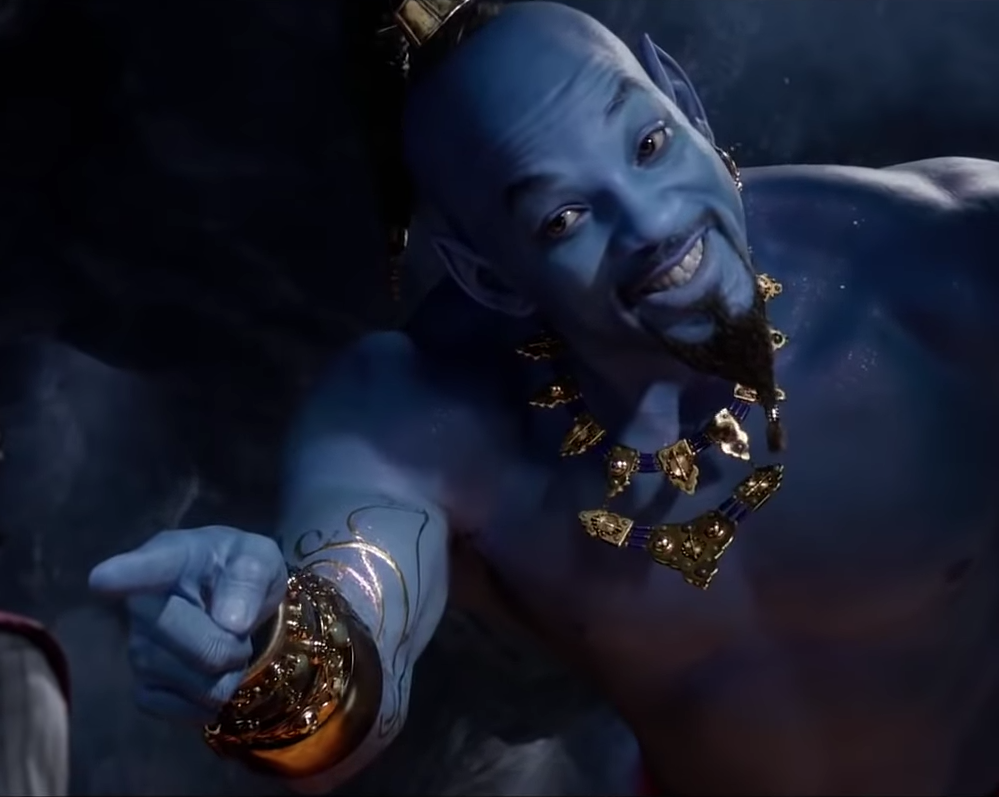
It’s out of this historical narrative that Aladdin was released by Walt Disney Pictures in 1992. Initially, Disney had planned on setting the film in Baghdad, but the progression Gulf War forced them to fictionalize the setting to Baghdad-assonant “Agrabah.” Nevertheless, Aladdin owes much of its actual playbook to the Baghdad that Kismet had recreated a generation earlier: showing off technical sophistication with a groundbreaking style of animation, while appropriating the story of an Oriental “Other” with what Edward Said would read as the attitude of authority. The underlying notion connecting Knoblock’s Kismet, Minnelli’s adaptation, and Aladdin was that a Western artist (or collective of artists) was best-suited to tell a Middle Eastern story.

In Aladdin’s case, it may be that the story is completely Western. French archaeologist Antoine Galland produced the first translation of the One Thousand and One Nights the early 18th Century. What began as a multi-authored, at times sexually-frank collection of Middle Eastern folk tales from Islam’s Golden Age gained new life in the West as a collection of children’s stories. Galland himself added a few new yarns to the compendium, including the tale of Aladdin, after claiming to have heard them from a Syrian traveler visiting Paris (no record of an Arabic version of Aladdin exists).

From there, One Thousand and One Nights went through seemingly as many translations in the ensuing centuries, each one adjusted to suit the sensibilities of its respective era. Galland held back on topics that would have been too salacious for his audiences, and the focus on capturing these stories as fairy-tales not only meant that many details were toned down, but also fueled the sense that the Middle East was far less moral than its European counterparts. By the late 1800s, Sir Richard Burton (to whom Knoblock’s original Kismet was dedicated) would subvert censorship laws of his time by self-publishing his own translation, which over-emphasized the sensual details in an attempt to course-correct the decades of prudish translations and building an adult readership.

As Syrian historian Rana Kabbani writes in Europe’s Myths of the Orient, “The mental barrier between Christian Occident and Muslim Orient was upheld by ignorance and related myth-making.” In the case of One Thousand and One Nights, the myth-making was literal.

Disney’s version of Galland’s story continued the themes of male barbarians and female trophies into the fictionalized world of Agrabah. Much like the Wazir in Kismet, who coerces a sham magician into helping him unseat the Caliph, Disney’s Jafar misuses his magic and the magic of the Genie towards absolute power. The hand of the Princess Jasmine (who claims she’s “not a prize to be won”), would be a bonus for the Sultan’s evil advisor, whom Disney’s animators took great pains to over-caricaturize to emphasize his undesirability (one model for his facial features: Nancy Reagan). While both Jafar and the Wazir, by virtue of being the antagonists of their respective films, are demonized in part for their commodification of women, their threat is neutered by both men being rendered as impotent, in another instance of the West maintaining the upper hand over the East. “I don’t need any more wives,” the Wazir moans to Lalume in Kismet. “In fact I’ve already got more than I have any use for.” “My lord, no one knows that better than I,” retorts Lalume, knowingly. (Compare this with a Rolling Stone ad from 1992 with a T-shirt that read  “America will not be Saddamized.”)

If Kismet in the 1950s was about reveling in material excess, Aladdin in the 1990s branded itself as a quest for something beyond material gain. Disney Renaissance characters sought a more metaphysical sense of self-realization, codified in the first 15 minutes or so of each movie since The Little Mermaid with a main character’s “I want” number. This desire, spelled out in song, drives the rest of the plot. “If only they’d look closer,” Aladdin laments early on, in one such moment. “Would they see a poor boy? No siree; they’d find out there’s so much more to me.”

The lack of anything genuinely Arabic about Aladdin became even more pronounced when the show landed on Broadway.

And yet, like Kismet, there’s very little attempt to go past the surface with Middle Eastern representation in Aladdin. Musical numbers like “Prince Ali” play out with Broadway showmanship, complete with Kismet’s groan-worthy rhyming schemes. The lack of anything genuinely Arabic about Aladdin despite Disney’s much-ballyhooed attention to animation detail in this era became even more pronounced when the show landed on Broadway in 2014. James Monroe Iglehart, who originated the role of the Genie for the stage, described the Cab Calloway-esque “Friend Like Me” number (as choreographed by Casey Nicholaw) as “MGM meets Mel Brooks meets Bugs Bunny.” These overtly American touches glossed over the fears many Americans had of the Middle East — fears stoked by the same legacy of mystification and obfuscation that led to Aladdin in the first place, and fears that didn’t exist in the MGM era that Aladdin’s animators borrowed from.  

Most infamous among Disney’s missteps in representing a fictionalized Arabic country came in the film’s opening song, which paints the Middle East as “a faraway place where the caravan camels roam,” and heighten both the danger and romance in a place whose nights are “hotter than hot in a lot of good ways.” Howard Ashman and Alan Menken’s original lyrics also included the line: “Where they cut off your ear/If they don’t like your face/It’s barbaric, but hey, it’s home.” Following complaints from the American-Arab Anti-Discrimination Committee, Disney altered the lyrics (“Where it’s flat and immense/And the heat is intense/It’s barbaric, but hey, it’s home”), still leaving in the link between the Middle East and barbarism. It was one of the rare instances in which Disney altered one of its films following release, and one of the fastest turnarounds. Regardless, the change didn’t do a fig leaf’s job of hiding the other elements that remain problematic nearly 30 years later.

The whitewashing continued beyond the musical numbers. Aladdin and Jasmine’s features and accents were among those that were Westernized and whitewashed: Aladdin was modeled after Tom Cruise and voiced by Scott Weinger for the film — and 21 subsequent spinoff iterations. Nowhere in Jasmine did I see my aquiline nose (inherited from my grandmother, along with an untamed bush of eyebrows and hair whose frizz triples in size at the mere mention of the word “humidity”). As a child, I was blissfully unaware of this cognitive dissonance, and perhaps that’s why I initially felt inclined to forgive if not forget. Aladdin, for all its faults, could have a second life, much like other Disney films whose problematic aspects appear more clearly in hindsight. We could use it as an exploration of representation of its time, and a benchmark for the progress we’ve made since then.

Then, Disney decided to make a live-action version of Aladdin.

Set for cinematic release this month, the live-action Aladdin could have been a chance for Disney to be its own before and after around representation. In the 27 years since the original Aladdin, ongoing scholarship around Orientalism, a continuing dialogue around Arabic representation in Western entertainment, and the larger context of the positive impact the Middle East and Islam have had on Western culture (on their own terms) in the wake of early-2000s Islamophobia and the last few years’ worth of Muslim-majority travel bans, Disney still seems to blithely miss the point. Instead, to borrow again from Said, Guy Ritchie’s production only seems to further “the ineradicable distinction between Western superiority and Oriental inferiority.”

“Although Disney managed to pretty much get the casting for its lead character [Egyptian-born Mena Massoud], there’s still a larger issue at play,” wrote Krystin Arneson for Glamour on the casting of British-Indian actress Naomi Scott as Jasmine. “It’s not cool that casting is still such that anyone who appears to be ‘ethnic’ is OK. It groups people of color into one, larger, ‘Other’ culture… when what the industry needs, more than ever, is a dedicated effort to be genuinely inclusive.”

Six months after Arneson’s editorial, Disney admitted that it was using makeup to darken the skin of dozens of white actors who played extras in the film. Fellow extra Kaushal Odedra, who broke the story to The Sunday Times, stated, “Disney are sending out a message that your skin color, your identity, your life experiences amount to nothing that can’t be powdered on and washed off.”

I recognize in my family the desire to trade heritage and a sense of home for an MGM-budget American dream.

Many Arabic emigres to the U.S., especially those in my grandmother’s generation, might have found that image desirable. The one consolation I have around my nonagenarian grandmother’s late-stage dementia is, at this point, she is unaware of the ongoing presidential tirades against those coming from her home country (including our own family members still living there). While many immigrant families maintained their culture in the United States, I recognize in my family the flip side: A desire to trade heritage and a sense of home for an MGM-budget American dream.

Perhaps that’s why my grandmother loved Kismet as much as I did: A vision of the Middle East in which the Illinois-born Howard Keel was a convincing beggar-turned-emir meant that her family wasn’t too far off from being convincing Syrians-turned-Americans. Perhaps this, too, is why I popped Kismet into our VHS player after my high school dismissed us early on September 11, 2001. I needed, in the face of Arab-demonizing propaganda, the sense that my Arabic identity was closer to that of Dolores Gray and Vic Damone.

The face-value of a Western representation of the Middle East, according to Said, “is always governed by some version of the truism that if the Orient could represent itself, it would. Since it cannot, the representation does the job.” Disney’s response to admitting that it was darkening the skin of extras was to say “This is the most diverse cast ever assembled for a Disney live action production. More than 400 of the 500 background performers were Indian, Middle Eastern, African, Mediterranean and Asian.”

As a child, and even as a teenager, I could have accepted this cultural gaslighting. But reading Said’s Orientalism for the first time in college made me reconsider my connection to both of these movies. If I, as a Syrian-American, could have represented myself at age 8, I would have. Since I could not, I let Kismet and Aladdin do the job. I now realize it was a shoddy job.

In 2019, Syria’s infrastructure continues to teeter on the brink of collapse between ISIS and the Assad regime. What memories my grandmother had of her parents and their home in Saidnaya (a town just 20 minutes north of Damascus), are also all but gone. But at the same time, we now have access more Arabic artists who can represent themselves on their own terms. Omar Souleyman and his dabke–inspired music went from being a hit at Syrian weddings to headlining SXSW and collaborating with Björk. Born in Aleppo to Armenian parents, folk musician Bedouine (also known as Azniv Korkejian), even merges her American identity with her Aleppine background in a way that’s more Laurel Canyon than “Ya Leily.”

I have more options than ever to understand my roots. But I have to contend with the fact that these roots are grounded in America’s view of the Middle East.

I have more options than ever to understand my roots. But now I have to contend with the fact that some of these roots are now grounded in two movies that, while set in the Middle East, were truly about America’s view of the Middle East. And as interested as I am in Arab and Arab-American representation in Western media, I would be ignoring an essential part of that representation if I ignored the works we allowed to stand in for that authenticity over the past 1400 years — and how that has shaped our world today far beyond the culture we consume.

Is it possible to undo this legacy? For third-generation immigrants who grew up, as I did, through the ‘80s and the ‘90s, I sense this drive to return to our cultural origins in a way that is more authentic than the amorphous pastiche of Eastern identity that was presented to us by American corporations. In this way, the Middle East remains mystified, both culturally and theologically. The Orient is still a faraway place where the caravan camels roam. It crosses the sands of time in ways mysterious, foreign, and — because history is written by the winners — inferior.

A former European colony ourselves, the United States has, in an effort to reinforce its identity as a world superpower, co-opted Europe’s colonization of the Middle East, retrofitting it to our own mythos. While steps are being made (from Ramy Youssef’s new series for Hulu, Ramy, to Ari’el Stachel winning a Tony Award in 2018 for his role in The Band’s Visit and using his acceptance speech to talk about the years he repressed his Middle Eastern heritage), we still can just as easily bar other performers under the guise of an executive order.

The problem with this is that we continue to rely on theory and stereotype versus experience and consideration. While we ban citizens from Muslim-majority countries from traveling to the U.S., we just as easily recreate their worlds and stories for our own entertainment, setting up a film crew in Jordan more easily than a Jordanian film crew could film in Hollywood. The real terror of the Middle East aren’t the mythical dangers we’ve concocted for it; it’s that we might rely on this outmoded theory versus actual experience. The real terror is that we may not care enough to understand.

What Does It Mean to Be a Thai Feminist?

Some months ago, a colleague asked me for the Thai word for “feminism”—a no-brainer, one would think. But I found myself bashing my head against the English word over and over, because it is what I would say, even when speaking Thai; the loan word is simply more common. And though my mother tongue does have a word for feminism—satreeniyom— I’d never heard the term “feminism” in any language until I was already an adolescent in America.

That moment prompted me to return to the question that had been on my mind since I first met the author Duanwad Pimwana: what does feminism mean in Thailand?

When I began translating Thai literature five years ago, of course I was going to seek out women authors sooner or later, imaging myself at least that much of a feminist. I reached out to various writers and asked: which contemporary women authors would you recommend? When the name of the social realist Duanwad Pimwana came up again and again, I circled it in my notebook. First, I went for the obvious: her SEA Write-Award winner, the book that became Bright in English. I fell in love with the novel, and thoughts of Pimwana being a woman writer and the fact that I had been scouting around for one faded into the background. Then I dove into her various story collections, of which she currently has many more than novels, and a feminist writer emerged in my mind. In between reading the novel and the story collections, however, I had reached out to Pimwana and arranged to meet her in Chonburi, her home province on the eastern seaboard. As she drove me around her neighborhoods past and present in her pickup truck, we chatted about how few female social realist writers there were, and I asked her if she felt that she was a representative for women. “Say yes!” I begged in my head (and this before having read her short stories). She did not oblige. I did not know it then, but I would continue to struggle to make sense of her relationship to Thai feminism for a long time.

Social realism is an influential literary movement among left-leaning writers in Thailand, but one that has been dominated by men from its inception. Pimwana is one of the rare female voices standing shoulder to shoulder with male peers. To me, this fact alone makes her a practitioner of sameness feminism—the feminist approach premised on the idea that men and women are the same for relevant purposes and therefore should be treated alike—and her many stories whose primary concern is class inequality (a theme particularly prominent in her earlier stories, a number of which are included in Arid Dreams) a practice of it. But that is not all: Pimwana has written piles of stories that reflect on the power dynamic between men and women, obliquely or otherwise: the objectification and commodification of women, in particular the value placed on their physical beauty (which some of her female characters use as their bargaining chips), the subordination of wives, and husbands’ callous attitude toward their own adultery and violence are among the issues her writing brings to light. These are all matters that sit easily within the purview of feminism in the West, what I had in mind when I attempted to steer her with my leading question.

In Thailand Duanwad Pimwana is not thought of as a feminist writer. Rather, she is called a ‘genderless’ writer.

But in Thailand Pimwana is not thought of as a feminist writer. Rather, she is called a “genderless” writer because to many her work reads as if it could have been written by a man, a far cry from the romances Thai readers traditionally expect from female authors. What’s more, Pimwana doesn’t self-identify as a feminist, something a person with a more American sense of feminism has to contend with. That the English word “feminism” is in more common usage than the Thai word “satreeniyom” seems to indicate that feminism in the Thai imagination is an imported concept, but one must be careful not to assume that the importation happens wholesale (or that a version of feminism wasn’t already in existence), such that the discourse of American feminism, with its vocabulary and yardsticks of progress, will prove entirely illuminating; it isn’t always helpful to conceive of movements around the world as linear or parallel. In his essay “Disjuncture and Difference in the Global Cultural Economy,” Arjun Appadurai proposes viewing the global cultural economy as a “complex, overlapping, disjunctive disorder, which cannot any longer be understood in terms of existing center-periphery models,” with the effect that “forces from various metropolises” do not show up in a new society unaltered but “tend to become indigenized in one way or another.” In the case of Thai feminism, we have a degree of synchronicity with the West in some respects (certain legal rights) but not in others (the cultural understanding of feminism, which affects the lens through which class and structural issues are viewed). Still, the foreign term “feminism” should have tipped me off to at least a certain level of Westernization of the speakers who use it—and with that the concomitant class implications.  

Growing up in Thailand in the ‘80s, I thought life as a girl wasn’t too shabby. I took for granted my future right to vote (a mistake, I would later find out, but not on account of my sex), and took as a given my right to an education. I always believed I would have a career outside the home. In my 30s, I beamed with pride when, at a lunch gathering during one of my visits home, my girlfriends from elementary school (not a particularly radical bunch) and I took a poll among ourselves to see who had changed her last name after marriage; most of us had not, and all of us continued to use the prefix “Miss.” These were two new choices allowed to us by law. In 2011, Thailand elected its first female prime minister, a controversial one, but her taking office a milestone nonetheless. The country does seem to be able to tick some feminist boxes. These rights-based benchmarks have partly been how I’ve measured progress, even as I’ve witnessed traditional gender roles being taught and performed at home and in the culture at large.

But my story is, at most, representative of the experience of heterosexual women in Bangkok’s upper or middle class, the kind of women who freely use the English word “feminism” when speaking in Thai. Our numbers, however, are dwarfed by those of our farming- and working-class counterparts, many of whom live outside the capital—and these are the women of Pimwana’s literary world. I had my blind spots to confront. Those feminist victories my friend and I enjoy, like the right to keep our maiden names, are the fortunate products of the movement that has come to define feminism in the Thai public consciousness. It is no accident that Thai women have been accorded certain legal rights, formal, concrete rights we can put our fingers on: these have been the focus of mainstream liberal feminists, women largely like myself. In a speech given at Cornell University in 2003, Virada Somswasdi, founder of the Women’s Studies Program at Chiang Mai University, said of the main Thai women’s movement in the late 1960s: “The campaign, even though [it] contributed greatly [toward] allowing women a better status in society, was seen by many as an outcry of wealthy elitist women whose concerns were vested in personal economic interests… It did not touch upon any societal patriarchal structural problems or gender equality. Nor did it touch upon problems of low-income and rural women.” This lack of inclusivity continues to plague mainstream Thai feminism today. In a blunt 2016 interview with Matichon newspaper, Chanida Chitbundit, director of Thammasat University’s graduate program in women’s studies, stated: “Upper- and middle-class women present their own problems as the problems of all women…The fight that society tends to be aware of is the fight of [these] educated women, which emphasizes legal reform. One can see that Thai laws relating to women are quite advanced, for example, family law, rape law, and laws regarding last names and prefixes.” Chitbundit also pointed out that the political activism of poor women (who, in her ballpark estimate, make up eighty percent of the Thai female population) tends to go unacknowledged as a feminist struggle, even though at the grassroot level, women, more so than men, are the driving force behind efforts against policies that directly threaten the livelihood of their communities, such as those controlling land use and natural-resource allocation that leave farmers landless. As she put it, “Women in the lower class will say, ‘It doesn’t matter whose last name I use, as long as I have enough money to take care of the mouth and stomach, as long as I have land to make a living off of.’”

We must not look for a woman well-versed in the discourse of (liberal) feminism before we would call her a feminist.

The Thai phrase “matters of the mouth and stomach” is used to imply or explicitly state that such matters must naturally take precedence, and they form the immediate concerns of many of Pimwana’s characters, in Bright, Arid Dreams and beyond, despite their harboring bigger dreams for their lives. The expression served as my wakeup call: should my gleeful modern-woman moment with my school friends, sitting in an air-conditioned mall, feel like bourgeois frivolousness? I don’t think so, for the legal gains we have made can help establish a framework, but at the same time I’m reminded of the example of post-independence Indian peasants, who, as discussed in Dipesh Chakrabarty’s essay “Europe as a Problem of Indian History,” became participants in the country’s political modernity despite being deemed unready from a historicist perspective. From Chakrabarty, I borrow the idea that we must not look for a woman well-versed in the discourse of (liberal) feminism before we would call her a feminist. We must learn to share the mic with women differently situated than ourselves.

In reading Pimwana, I’ve struggled with mapping: how feminism gets mapped in Thailand, how to map or not map Thai feminism against its Western counterpart. But I’m coming to understand the author’s position better now: when we talk about feminism in Thailand, we largely leave out class concerns, thereby ignoring the main intersectional identity of Thai womanhood: the low-income female. Moreover, structural—as opposed to legal—gender inequality has not been the principal battleground for Thai mainstream feminism. Thus, the term “feminist” as it is generally understood in Thailand does not cover the lion’s share of Pimwana’s work. It is no wonder then that she resists the label. As her translator, I’ve come to view her stance, her work and its local reception as a lesson in Thai feminism, with all the limitations of the term and its possibilities for expansion.

10 Charming Jerks in Fiction

The “beach read” most often refers to frivolous page-turners, with an implied correlation between fast paced, plot-driven novels and the reader’s proximity to a body of water. While I understand the appeal, come summer I’m drawn to books with charming jerks. Call it Danny Zuko syndrome.

Riots I Have Known
Buy the book

I have a professional interest, too: my novel Riots I Have Known is narrated by a sociopathic Sri Lankan prisoner in upstate New York. After accidentally triggering a large-scale riot he live-blogs his life story from the prison media lab, with aspirations of posthumous glory. To be clear, he’s a monster. But also, I loved writing his voice. (Reserve your judgments for later.) The narrator waxes nostalgic about his editorial stewardship of in-house lit journal The Holden Pen, his time as a Park Avenue doorman, and his youthful adventures in Sri Lanka’s black markets. His pretension knows no bounds, and it may not surprise you to learn I began writing Riots while living in Park Slope, Brooklyn.

Enough about me. Here are a few literary assholes to pair with your spritz and sunburn.

Money by Martin Amis

Money by Martin Amis

Steve Martin said a comedy should open with its silliest joke, so the audience knows what they’re in for. In that spirit, we may as well kick off the list with John Self, one of the 20th century’s great literary monsters. He’s equal parts alcohol, nicotine, racism, and buffoonery, careening through New York and London in the ostensible pursuit of financing a feature film. Self’s boorishness may test your patience, but Amis’s moral inquiry is deadly serious. Written in 1984, Money is a brilliant performance with regrettable relevance today.

Dancing Lessons for the Advanced in Age by Bohumil Hrabal

Dancing Lessons for the Advanced in Age by Bohumil Hrabal

Would you like to read a book-length sentence about an elderly cad relentlessly hitting on his fellow retirees? Of course you would. With this slim book the Czech master perfected his “palavering” technique of endless soliloquy, full of ribald hearsay and wince-inducing braggadocio.

Treasure Island!!! by Sara Levine

Levine’s heroine, a recent college graduate with dim work prospects, fixates on the titular Robert Louis Stevenson adventure as her personal bible: She vows to live by its “Core Values” of BOLDNESS, RESOLUTION, INDEPENDENCE, and HORN-BLOWING. The obsession leads to increasingly erratic behavior and much trying of her family’s patience. Can you love a book too much? Levine says YES.

Who Is Rich? by Matthew Klam

Who Is Rich? by Matthew Klam

It’s always refreshing to encounter a truly original jerk. Rich Fischer’s on the downslope of his career in cartooning and life in general. He teaches at a midsummer writing workshop in one of those New England seaside hamlets where everyone knows how to spell “coxswain.” His reason for doing so, besides the money, is to renew an affair with an adult student whose husband is a Trump-loving hedge fund manager. A lot of writers like to hover the protagonist’s finger over the self-destruct button; Klam smashes it repeatedly. A nuanced portrait of middle-age, middle-class failure.

Tirza by Arnon Grunberg

All Jorgen Hofmeester wants to do is throw his daughter a memorable graduation party. But his wife has left him, he’s lost his fortune, and his children are moving out of the country. This setup might induce eyerolling—more Updikean male suffering, really? Grunberg’s innovation is reveal Hofmeester’s narcissism while gently increasing his authorial distance, and to do so without condescension. This guy deserves everything he gets, but then, so do most of us.

Woodcutters by Thomas Bernhard

Woodcutters by Thomas Bernhard

The late Austrian has experienced a renaissance in recent years, and considering his novels’ high spleen, intense navel-gazing, and distrust of institutions, this may not be a good thing. But I’ll take it: Woodcutters features the world’s worst dinner guest ripping into Vienna’s creative set from the (dis)comfort of his wing-back chair.

Senselessness by Horacio Castellanos Moya

The Salvadoran writer (and Bernhard fan) fled the country in 1997 after book burnings and death threats, and this 2004 work is evidence of Moya’s dedication to speaking truth to power. It deftly avoids polemic and didacticism in capturing the political awakening of a priapic drunk. The protagonist takes a Church-funded freelance gig to edit an oral history of the army’s violence against El Salvador’s indigenous peoples. Thus begins a paranoid triangulation between the government and the Catholic church, with Pynchonesque mania and a final page that provokes both applause and professional jealousy.

Calvin & Hobbes by Bill Watterson

Hear me out. Calvin pelts Susie with snowballs, makes his parents’ lives hell, and proudly never learns his lesson. While he would most certainly grow up to attend Duke, we can enjoy Calvin’s youthful adventures. There was a late-career critical appreciation of Charles Schulz before his passing; I hope we can do the same for Bill Watterson, who—hot take!—bested Peanuts in ideas, formal invention, humor, and consistence. If you can swing it, the three-volume collected set is the best $100 you’ll ever spend.

The Vagina is Perpendicular to the Spine and Other Misconceptions of Female Anatomy

The Book for Every Woman

My mother bought books. She bought shelf-fillers, and the collected works of Erich Maria Remarque in ten volumes, which, for some reason, every middle-class family in Sarajevo owned and which no one ever read beyond the first volume, All Quiet on the Western Front; and thick Disney books that contained the retellings with pictures (a picture is a model of reality) of the usual tales—my favorite, The Sword in the Stone; and an encyclopedia of the world, which I’d flip through in disregard of the alphabetical order and collect the succinct information on, say, the Eiffel Tower (The tower is 324 meters tall, the tallest structure in Paris); and military histories of World War II, which I devoured, featuring battlefield maps where the black arrows represented the Germans, and the red arrows the Soviets, and they would rush at each other in an abstract landscape devoid of people and death (in a picture objects have the elements of the picture corresponding to them); and paperbacks of One Hundred Years of Solitude, The Joke, and Fear of Flying, which I wasn’t allowed to read but flipped through anyway and couldn’t grasp. She also had The Book for Every Woman, which contained—oh, I don’t know—tips and advice on good ways of being a woman. I read it all: recipes, crocheting patterns, household solutions (Have flies in your house? They are attracted to bright lights, etc.), and a section on sex and reproduction, where I discovered a lot of curious images and explanations. There was a side-view projection of a dangling penis and testicles, and, more importantly, a lily-shaped top view of the female reproductive apparatus: vagina, womb, ovaries. As far as I remember, the clitoris wasn’t part of that representation. I could not picture the whole structure fitting into an actual body, the angles confused me. For the longest time I thought that the vagina was perpendicular to the spine, a kind of a socket somewhere below the belly button where—I’d heard—a penis would be inserted, for which it would have to be—it stood to reason—perfectly horizontal. My early erections caused great distress, because my penis rose at an angle, and I could not imagine how it could be plugged in the socket the way nature and The Book for Every Woman intended it. I worried that I’d have to hang weight on my penis to make it grow horizontally, although there was no pressing need, as I was yet to reach a point where I would dare to declare to a girl that I liked her, beyond which horizon the next mountain I would have to climb was touching her hand. The wild and unexplored regions of genitalia were several steep mountain chains ahead of me. The Book for Every Woman only cursorily mentioned masturbation, the troubling joys of which I read about in a teenage music-and-sports magazine called Zdravo! (Hello!) where a letter from a young male reader, no doubt fabricated by the perverse editors, asked about the potential perils of self-abuse. The answer explained in detail how it worked—we picture facts to ourselves, so it was practically a manual—and suggested there was nothing particularly wrong with it, which was heartening to me, as the whole endeavor of genital pleasure had been sullied by Lućano’s kurac. But there was a small note of caution in the music-and-sports magazine: since semen is basically protein, ejaculation could lead to dizziness due to protein shortage or something, and those new to it—that is, those like me—had been known to pass out upon reaching, you know, the peak. I was eleven, maybe twelve, and I instantly applied myself to protein production; there was confusing pleasure, there was dizziness, but I did not pass out. What I ejaculated looked much like Lućano’s sluza, except it was semen. The Book for Every Woman featured a rendition of egg fertilization where semen, consisting of spermatozoids—spitting images of the puddle tadpoles—played a role. It was all terribly daunting—I had a body I didn’t know how to think about, let alone how to talk about—but I knew that what could be described could happen too. What was also described in The Book for Every Woman were sexually transmitted diseases. I read about gonorrhea (painful urination; yellow or green discharge), and about crabs (itching; nits in the pubic hair), and about syphilis (sores, rash). Syphilis scared me most, not least because I’d watched a Czechoslovakian movie in which the main character was a promiscuous-cum-rapacious officer of the Austro Hungarian Army who contracted syphilis, which eventually led to his nose falling off, and also dementia. I remember him tottering around noseless, going crazy, rotting inside and out. So when I discovered a sore on my penis, accompanied by rash on my limbs, I consulted The Book for Every Woman as per standard procedure, and became convinced I’d contracted syphilis. My trepidation wasn’t at all diminished by the fact that I couldn’t begin to imagine ways in which I could’ve been infected in a life absolutely devoid of sexual experiences. I hid in the bathroom, my tears soaking the paragraph on STD in The Book as I struggled to imagine a way to break the news to my parents: their firstborn son was destined to a syphilictic life of rot and dementia without ever having even held a girl’s hand. I looked for salvation, or at least a remedy in The Book, which suggested antibiotics, except that they worked only if taken immediately after the infection, and I had no idea how long I’d been infected. Moreover, antibiotics were certainly not going to alleviate the humiliation and stigma that came with being an STD survivor, the best-case scenario. When mixed with vinegar and water, honey can remove worms and parasites in your body, I discovered in the course of desperately browsing The Book, but there was no mention of how to cure syphilis. Eventually, as there are things that cannot be put into words, I had to make my rash manifest to my mother. She took me to a doctor. It turned out it wasn’t syphilis at all; the doctor told me I ought to wash myself more often, now that I was entering puberty. Thereafter I pursued sexual knowledge in the pages of Zdravo! (Hello!), while The Book provided mainly household advice. A flattened pillow? Put it in the sun for thirty minutes. The sun will plump it up.

The Responsibilities of a Book Critic in the Era of a Trump Presidency

Carlos Lozada was already a lauded writer prior to being awarded the 2019 Pulitzer Prize for Criticism. He was a finalist the year before, received a citation for excellence from the National Book Critics Circle, and was a long time editor before turning full-time critic less than half a decade ago.

His literary criticism for the Washington Post has covered a wide range of topics. Like most Americans, he has been preoccupied with politics and Trump since the 2016 election. His recent essays have covered all of the peaks in the Trump era political book world including Fire and Fury, A Higher Loyalty, and Chasing Hillary. Just days after winning the Pulitzer, the most important document released so far about the current presidency was released. As most of the world ignored the Mueller report or turned excerpts into memes on Twitter, Lozada got to work writing yet another thoughtful and critical essay on it.

I talked to Carlos Lozada over the phone about his approach to book criticism and the responsibilities of a book critic in the era of a Trump presidency.


Adam Vitcavage: What is your approach to book criticism?

Carlos Lozada: I was an editor for the first fifteen years in journalism and this was my first full-time writing job. I started it in 2015 mainly because I felt like such a poser editing terrific writers without having really written myself. Our longtime book critic announced he was going to step down from the role and I felt it would be interesting to try to tackle this and make it my own.

The thing I try to do with these pieces is to simply see what’s coming. What is interesting coming out? Start making your list. I did that at first. I felt I needed to review a lot.When I got into the role more, I felt picking big subjects I was interested in and then looking for the books that made sense to read in order to get into those subjects. That’s my approach that I have tried to take so I am not hostage to whatever books the publishing companies are putting out at the moment.

AV: I understand that feeling. So many books—I’m thinking of political ones—are all about similar topics with different spins. They’re all written well and researched thoroughly, but we are hostage to what sells. Because America is a business, after all.

You don’t have to like a book to write something interesting about it. Ideally if you dislike a book, you can dislike it in an interesting way.

CL: You can end up following along. There is not a lot of agency with that approach. Last year, I decided I wanted to read and write about truth. All of these people are afraid we’re entering a post-truth world. I realized there were recent and forthcoming books on the subject so I sat down and read five or six of them. I tried to tackle that theme together.

I’m also interested in how the right is dealing with the Trump phenomenon. I looked at a bunch of books by people on the right who are Trump opponents and the Never Trump crowd as well as those who bought into Trump right away. I wanted to understand what was going on in that world through these sets of books.

I didn’t anticipate I would be writing so much about politics when I took this job in 2015. Even working for the Post, I knew I would write some about politics. Luckily there are interesting ways into the political conversation without having to be just about the campaign.

AV: Reading those books from the Right, what are things you learned coming from that end of the political spectrum?

CL: The books of the Never Trump conservatives who very early on declared they were opposed of Trump being the nominee of the Republican party have a lot of principle, anger, and righteousness in those books. There aren’t a lot of grappling of their role in how the Republican Party got to a point where they could nominate Donald Trump. That was interesting to me. These are writers who, to some extent, were deeply involved in the transformation of the party over the last couple of years. There was no grappling with that.

I felt in reading those books, that was an angle I could write about. That’s what I try to do with all of my pieces. You don’t have to like a book to write something interesting about it. Ideally, if you dislike a book you can dislike it in an interesting way. Your critique has to be its own piece of writing. Readers have to enjoy that on its own.

AV: I feel like a lot of people think criticism is just that quick regurgitation of a piece of media because a lot of outlets on the internet are like that because they need clicks.

CL: It’s not really fun to write that way. A critique needs to stand alone. It’s a subject that is worthy on its own, there just happen to be books written about it. That’s how I have tried to do the job.

It takes a long time to do it this way because I end up reading a lot of books on a subject. It’s really tiring, but in the end I hopefully come out with something that is more interesting to the reader than if I was just reviewing each of these books individually and giving a thumbs up or thumbs down.

AV: Earlier, you mentioned about what the Right was grappling with since you started this position with the Post?

CL: That is something I want to tackle next. Especially now that we see the range of people who are putting themselves forward as nominees for the party or the new crowd that has been elected to the House of Representatives.

Parallel to all of that and those debates, you see all of these books coming out that are grappling with liberalism. Adam Gopnik has a book coming out in the next couple of months called A Thousand Small Sanities and I think it grew out of something he wrote at The New Yorker. It’s about liberalism and that is something I will probably do in the next couple of months: read books about liberalism.

It will be fun to do in parallel to the early portions of the 2020 race on the Democratic side. Then we can see how it’s playing out in the literary world and the political world.

AV: What subjects interest you in America now?

When Trump showed up, there were all these books on the working class. Suddenly the white working class was sexy for non-stop deconstruction.

CL: There is so much talk of class. When Trump showed up, you started getting all these books on the working class: White Trash by Nancy Isenberg, Strangers in Their Own Land by Arlie Hochschild, and recently Heartland by Sarah Smarsh which I really enjoyed. It became this fixation. Suddenly the white working class was sexy for non-stop deconstruction. There is so much more to that as a debate over identity. It’s almost as if it separate from the identity politics debate even though it’s all of a piece.

Those questions to be of identity and class are interesting and worth exploring. Late last year, I read several identity books that dealt with gender identity or racial identity.

The other thing I am thinking about is how Trump has made us focus on first principles in some ways. He’s questioning a lot of things people took for granted. Whether it is engagement with the world or the role of immigrants in American life. Books that help us think about first principles are interesting; like Jill Lepore’s These Truths is useful. Ibram X. Kendi’s Stamped from the Beginning is very useful.

Those kinds of books I find very useful right now as opposed to what craziness is going on inside of the White House. That is less appealing to me. I am glad those stories exist because I want to know what is going on. The Mueller report is the best version of that because it is all on the record and under oath.

AV: With the Mueller report, how did you approach that?

CL: I had very little time. It was the same week they announced the Pulitzer prizes so it was a very good way to stop basking in my reflective glory and get back to work. It went live on the internet on Thursday, April 18 and I printed it out to read it beginning to end. I wasn’t sure what I was looking for. Usually I go in with a few questions that I want resolved or want to think about.

In the end, I hopefully come out with something that is more interesting to reader than if I was just reviewing each of these books and giving a thumbs up or thumbs down.

Here I just read. I knew so many people, including folks in our newsroom, were writing about the details of it. I tried to treat it as a book even though I know it isn’t. I read so many of those inside the White House tell-alls that I could try to treat it as that to see what it feels like.

In some ways it had a lot of the same pieces as the those tell-alls that have a signature moment. The Mueller report has that. When Mueller was appointed, Trump says, “This is the end of my presidency; I’m fucked.”

The report has the official caught in the lie when Sarah Saunders says she really hadn’t heard from countless FBI agents saying they were happy James Comey was fired. There are the Nixon references.

The report felt familiar to a Trump era inside the White House book, but then it was just the authoritative manner that separated the book. Bob Woodward didn’t have subpoena power. Mueller was able to get these people under oath and on the record.

AV: Are there other types of Trump books you’re interested in?

CL: What I am most interested now are books that try to go deeper on specific aspects of the Trump presidency. Julie Davis and Mike Shear at the New York Times have a book coming out this fall on Trump and immigration. I am very interested in reading a book like that because it is far more specific and focused.  

AV: Are there longer or larger pieces in your peripheral?

CL: I’m not sure. I try to reinvent my job every few years or else it can get boring. I started by writing about as many books as I could. Then I delved into these multi-book essays connected by a theme. For now, I still think I want to do some of that. One thing I will try to do is read old books that are relevant to whatever we are experiencing now. A lot of great stuff was published before we were born. I might look back on books about old political campaigns leading into the 2020 election.

8 Shocking Heel Turns in Fiction

In the penultimate episode of HBO’s wildly popular fantasy epic “Game of Thrones,” teenage queen Daenerys went from one of television’s most beloved female characters to a woman hell bent on revenge and willing to slaughter innocents to get it. Dany’s heel turn—a borrowed pro wrestling term referring to when the hero turns villain—left fans in uproar, especially the ones who named their kids after her. Though the TV series might not have nailed the ending, when done well, this device can complicate a character’s narrative, subverting reader expectations to show there’s more to a person than meets the eye. These eight novels reveal just how dark a character can become down the path to heeldom.

Girls on Fire by Robin Wasserman

It is 1991, in Girls on Fire, when high schooler Hannah Dexter is befriended by Lacey Champlain, a girl who just moved into town during the midst of the local basketball star’s apparent suicide. They form a fast friendship that leads Dex away from stability toward rebellion and danger. When Lacey’s past catches up to them, Dex must decide who to trust and what she is willing to do to protect herself.

If We Were Villains by M.L. Rio

If We Were Villains tells the story of seven Shakespearean actors at the Dellecher Classical Conservatory, who act their roles as much off the stage as on it. When one of the players becomes obsessed with Julius Caesar, the group begins to crumble, leading to someone’s death during a reenactment of Macbeth on Halloween night.

What Was She Thinking?: Notes on a Scandal by Zoë Heller

Shortlisted for the Man Booker, What Was She Thinking? describes the burgeoning friendship between lonely schoolteacher Barbara Covett and the new art teacher, Sheba Hart. Jealousy ensues when Sheba incites a torrid affair with her underage student. In the public fallout, Barbara writes an account in defense of Sheba, and secrets are revealed—from more than one person.

The Golden Mean by Annabel Lyon

The Golden Mean reinvents philosopher Aristotle and his most famous pupil, Alexander the Great. After promising to teach Alexander, his childhood friend’s son, Aristotle faces his own culpability as he watches this charming and shocking boy grow into an unstoppable force who would conquer the known world, for better or worse.

Gone Girl by Gillian Flynn

This book-turned-movie is a bestseller for a reason. It is Nick and Amy Dunne’s fifth marriage anniversary when Amy disappears. As the police investigation continues, Nick and Amy’s seemingly perfect marriage unravels, exposing dark truths from both sides. No spoilers, but it turns out the bad guy is someone you probably didn’t expect.

The Secret History by Donna Tartt

In Donna Tartt’s first novel, The Secret History, a group of six Classics students at an elite Vermont college pull away from normality as they get wrapped in a spiral of deceit, obsession, and evil. Growing more isolated from their peers, the group becomes obsessed with the ancient Greeks, and in their attempt to perform a Bacchanalian rite, one boy is murdered. This novel explores the circumstances and isolation that forever changed these friends.

Alias Grace by Margaret Atwood

Margaret Atwood’s historical fiction begins with Grace Marks, a young, overworked servant convicted of murdering a household in 1843. Serving a life sentence, Grace claims to have no recollection of what happened. When a psychiatrist is solicited to interview her, more questions arise as she evades his questions. She instead tells the story of her life, and by the end, we are left asking who is really guilty in all of this.

The Girls by Emma Cline

Set in northern California during the 1960s, The Girls follows Evie Boyd, a lonely teenager who longs for acceptance. Soon enthralled by a group of girls devoted to Russell, the leader of a commune based on the Manson family, Evie gets involved with a series of murders committed by the group. The closer she gets to these girls, the harder it becomes to find herself.