A story: A wealthy man executes a heist and becomes embroiled in an elaborate game of cat and mouse with the woman investigating him for the crime. As their affair intensifies, she closes in on him—and with her, the law. In the end she must decide between her emotions and her principles, as he makes a final play to save himself.
How you present this story—especially its female lead—depends in part on what you expect of women. What does it mean for a woman to excel in her job, to try to get the best of a man, to weigh her feelings with her duties? Now that we may see another remake of The Thomas Crown Affair—a version starring Michael B. Jordan has reportedly been in development for the last few years—it’s informative to look back at the way its central female role has changed. Catherine Banning, of the 1999 film, was an unsung feminist hero. But what would her role look like in 2019?
The original 1968 Thomas Crown Affair is a man vs. society story, whose central question is: Will the man succeed in gaming the system, or will he get caught? Steve McQueen’s Thomas Crown is an anti-establishment, dark-humored playboy millionaire. He drives the story. Faye Dunaway’s Vicki Anderson is a young, stylish, bold (for her day) bounty hunter—the Hollywood Reporter review called her “aggressively amoral”—but her character is never in the driver’s seat. She’s a romantic foil for Crown. Seduction is her boldest move, but she ultimately weakens and becomes conventional, desiring some emotional truth in their romance. For him the affair is only part of the game—and he plays it expertly, pulling off a second heist, escaping scott free. She is left with nothing—not the man, and not the money she could’ve earned by nabbing him.
Her story is: An ambitious ingenue gets played for a fool by an older, smarter man.
The 1999 remake is a love story, whose central question is: Is it a game, or is it love? Is their love true—and if it is, can it transcend the traps they’ve laid for each other?
From the moment Rene Russo walks onscreen as Catherine Banning, possessing the kind of swagger that would easily befit James Bond (ironic, as Pierce Brosnan’s Thomas Crown has about as much swagger as a dead fish), it’s clear that she is film’s the driving force and protagonist. She is not only an updated version of Dunaway’s character—she’s also well ahead of her time. She is successful, financially independent, cosmopolitan, and single in her 40s.
(Pause there: a single woman in her forties. Also, she’s childless. Characters like this are rare even today.)
She has the confidence of a man who knows he’s good at his job. She is—in short—an icon of 1990s feminism.
She is Crown’s equal in age and intellect. While she is motivated by the money she stands to earn by returning the stolen goods, she’s clearly doing well for herself already. She lives in an uber-chic wardrobe of Céline and Halston, resides in Monaco, and keeps an apartment in New York. She boasts a prescient taste for green smoothies and a trail of spurned boyfriends across the globe. She has the confidence of a man who knows he’s good at his job. She is—in short—an icon of 1990s feminism.
While Catherine far exceeds her predecessor in capability and complexity, what she and Vicki share is a rules-be-damned approach to the job. Both women scoff the law and use seduction as a means to their end—which, they both insist, is the money—and both are shamed for doing so. In the original, the good-guy police detective grabs Vicki’s arm to scold her for her tactics.
“I do my job,” she says in her defence.
“Your job?” he scoffs. “What the hell kind of a job is that?”
“Alright,” she says. “I’m immoral. So is the world. I’m here for the money, okay?”
In the remake, the police detective is equally righteous, just with a lower voice. When he’s about to slut-shame Catherine for sleeping with Crown, she looks him dead in the eye and asks pointedly, “Are you gonna be a cliché?” But this nod to the tiredness of their gender dynamic does little to free Catherine from it; she still lives in a world mired in debate about what the correct relationship between sexuality and power should be. Should a woman use her sexuality as an instrument of power? Or does doing so only further empower the patriarchy?
In 1968, it was very clearly the latter. Vicki plays right into Crown’s hands with her sexual maneuvers, and he exploits her. Their attraction might be mutual, but we don’t expect him to fall in love with her. Eleven years his junior and less intelligent, Vicki is no match for him. Even with the muscle of the IRS behind her, we never really expect her to win. Although he’d have her believe that she successfully entrapped him, that he was ready to return the money and cut a deal with the law, in reality he is luring her into checkmate. Predictably, the man wins.
But in 1999, things go differently. In this version of the story, Crown falls in love with Catherine—which, given her allure, is easy to believe. The film’s tension stems from our disbelief that she would actually fall in love with him. Her spiritual and financial independence, her strength of intellect, her unwillingness to settle, all suggest an unlikeliness to swoon. But as their luxe affair unfurls—a private jet to the Caribbean, a jaw-dropping diamond necklace—we find ourselves wanting Catherine to be swept off her feet, just like we are. (Spoiler alert: She is, and love wins.)
This is undeniably a victory, a step forward. We are presented with a mature, successful, independent female character, who earns the love of a rich man with her intellect and strength of presence. His courtship is so lavish that we willfully cast aside the question: Does he deserve her? In his therapist’s estimation, he’s a “42-year-old self-involved loner.” He’s cold, and worse—he’s boring. All he’s got going for him is his money. But it’s a lot of money.
So her story is: An intelligent, independent woman over 40 finally finds her wealthy prince. She is swept off her feet. It’s a princess fantasy with a feminist princess. And we don’t care who the prince is—if he’s a felon, if he’s a drab financier.
Catherine’s character is emblematic of the power-suit feminism of the nineties: a woman cut in the mold of men. She’s driven by professional ambition, money, and a desire for dominance. A woman like this was—and still is, in many ways—a revolutionary thing to put on screen. That a desirable, high status man is attracted to her strength, rather than threatened by it, is revolutionary. But Catherine’s story, on the other hand, reflects the boundaries of the feminist imagination at the time.
Nineties feminism triangulates Catherine’s character, fencing her in with three distinct limitations:
That using female sexuality as an instrument of power is wrong.
That in moral terms, love > career.
That every woman wants to be swept off her feet by a rich man.
In the 20 years since the film was made, feminism has evolved enough to open up the first two boundaries. Today, we could imagine a story in which Catherine seduces Crown, nails him for the crime, and rides off into the sunset with her $5 million fee (adjusted for inflation)—and we’d be happy about it. But for that kind of story to work, Crown can’t be desirable. If he’s desirable, we will still brush up against the third limitation—that construct that is still deeply ingrained in our society: the princess fantasy. The fantasy that says that every woman—no matter how financially independent she is—wants to be coupled off to a wealthy prince, even if the life she has made for herself is undoubtedly more interesting than the life she’d have as his princess.
Today, we could imagine a story in which Catherine seduces Crown, nails him for the crime, and rides off into the sunset with her $5 million fee (adjusted for inflation).
Even if we updated Catherine’s character to have more dimension, to have a more emotionally rich backstory, or perhaps to be a woman of color—if we put a handsome and wealthy man in front of her, our expectation will still be that she will want him, that he becomes the prize. To reimagine this story in the context of contemporary feminism, two things would have to happen. One, the financial gap between Catherine and Crown has to be narrowed, so that the affair is motivated by more than money. Two, we have to have a better man for Catherine to fall in love with. If Crown’s character isn’t allowed to hide behind a mask of wealth, who is he? For Catherine to shine as an icon of modern feminism, she needs a feminist man to be her romantic foil.
Sometimes absurdist fiction is the only way to reflect on absurd times. The trippy alternate-universe Texas of Fernando Flores’s The Tears of the Trufflepig is strange, dreamlike, and darkly funny, but it’s also a commentary on immigration, mass extinction, late capitalism, and cultures on the margin. It’s been compared to Margaret Atwood, Hunter S. Thompson, and Warren Ellis. And, like Warren Ellis, Flores has collected five books by non-men he enjoyed and recommends.
Read More Women is Electric Literature’s series, presented in collaboration with MCD Books, in which we feature prominent authors, of any gender, recommending their favorite books by women and non-binary writers. Twice a month, you’ll hear about the five non-male authors who most delight, inspire, and influence your favorite writers.
This Venezuelan classic from the early 20th Century, influenced, no doubt, by the works of Jane Austen, is also a heavy critique on society, the roles women were expected to fulfill, and the government in Caracas as the time. De la Parra’s scope is wide; she creates poetic atmospheres, and unforgettable characters like her grandmother and uncle.
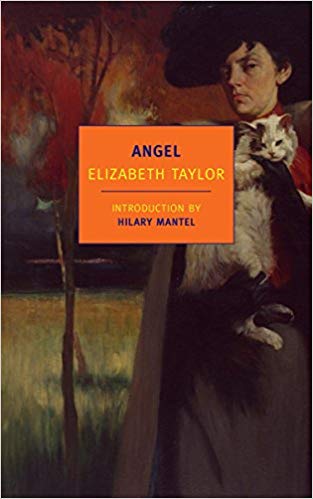
Since I read this about three years ago I think about the titular character, Angelica Deverell, at least once a week, as if she were a real person who once walked this earth, writing books. I am at once shocked and, against my better judgment, wholly impressed by her. It leads me to think about novelist Elizabeth Taylor—what could possibly have driven her to write a book like this? Whatever it was, I will defend this book until my dying day.
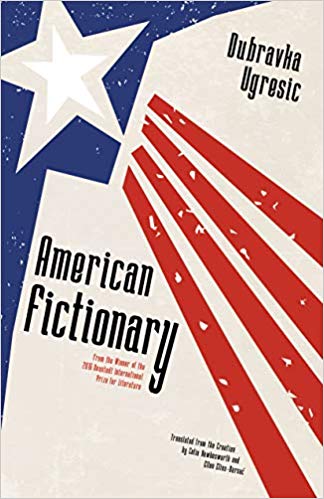
Ugrešić is one of the most loyal chroniclers of our crumbling world. When she wins the Nobel Prize, those who have read this cutting, humorous, and ultimately beautiful account, will not be surprised. I think about this line a lot: “Open letters are a wartime genre, a genre of extreme despair, envisaged as a public denunciation of another, but in practice a public declaration of one’s own feelings.”
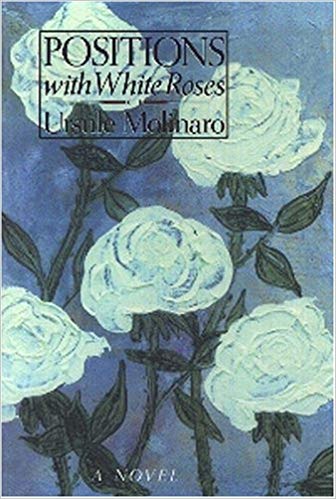
A few of you out there should read this and let me know if this is a masterpiece. Molinaro does something truly macabre and fascinating with the novel here. By the end of it I felt I’d read the story Carson McCullers’s evil twin would have written. Molinaro’s books are hard to find, and her body of work needs a closer look.
The first story in this collection, “An Extraterrestrial,” is one of those stories that there is absolutely nothing like, that takes the narrative as far as it can possibly go, then farther, until that very unique, stunning conclusion. Somebody needs to please make this more accessible, and translate her other works.
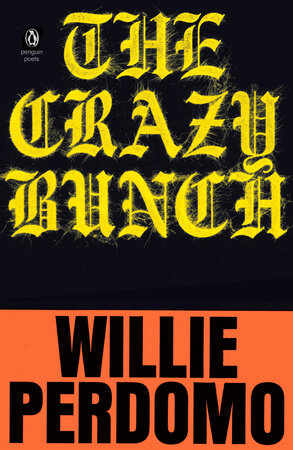
When I heard the New York City College of Technology planned to host a Willie Perdomo reading, I knew I had to attend. Perdomo is the author of numerous poetry collections and children’s books, including The Crazy Bunch and The Essential Hits of Shorty Bon Bon. He’s received numerous honors, such as the International Latino Book Award and a PEN Beyond Margins Award.
Buy the book
Before I ever heard or read his work, I knew all about his poetry and impact on NYC’s literary scene. Perdomo, to me, is basically a poetry legend–having performed on HBO’s Def Poetry Jam and at NYC’s Nuyorican Poets Cafe, spaces that value poets of color. In every poetry podcast or interview with writers of color, I can count on him being listed as an influence.
The Crazy Bunch is about an East Harlem crew during one summer weekend turned tragic. Perdomo revisits and recreates this 1990’s weekend with a strong narrative and the crew’s lingo, letting us non-East Harlem residents into a different world. A world full of joy, jokes, and tragedy. A world of looking out for one another, of trying to remember, and of trying to forget. The poetry collection explores being a member of a crew during the hip-hop era and how people of color often are—in attempting to remember—forced to face more trauma.
Arriel Vinson: What kind of crew was The Crazy Bunch, for readers who haven’t read the collection yet?
Willie Perdomo: It was a crew of us who grew up in the same neighborhood, we played baseball together, and over the years, we went to school together and basically grew up together in this neighborhood in East Harlem. Once the breakdance crews became popular, I think they evolved into more of a social club for those of us who did not break dance. So, all these crews suddenly started popping up as part of hip-hop culture in Manhattan and Harlem and Lower East Side and The Bronx and Queens and Brooklyn and so on. That’s the way it grew.
AV: How did this idea—to write about many summers ago in East Harlem—come to you? And how did you write East Harlem when you’re no longer there?
What makes recreating a story even more powerful is when there’s someone to step in and put their piece of the story into it.
WP: The second question is what I’ve been reflecting on since the book was published a few weeks ago. How was I able to maintain the vernacular, the diction, without being outdated? East Harlem has always been my focus as a place to set poems. The time I write about in The Crazy Bunch is specific as its imagery. It helped that I had someone from the crew, from the old neighborhood, ask me to write about that time. I think the language performs concurrently with the memory.
AV: Tell me more about someone from the crew asking you to write about that time.
WP: It wasn’t a literal asking as much as it was the kind of otherworldly asking. That voice on the other side is not physically present, but it still presented itself in my consciousness at the end of a documentary film about the making of an iconic hip-hop album that highlighted the effects of living in a war zone basically (HBO’s Time is Illmatic). And at the end of the film, I wrote the first lines of “In the Face of What You Remember” as if it were someone asking me, “Yo, what are you gonna write about?” More specifically, “What are you going to write about that summer?” Again, it’s not a physical person asking. It’s just a kind of voice out there.
AV: Your collection takes place during the drug war/hip-hop era. How did you and The Crazy Bunch find joy during this time?
WP: Part of it has to do with the extent to which we thought the violence was normalized and how it was portrayed (sometimes romanticized) in the music of the era. The joy was found in those ineffable moments where our innocence was not compromised. Laughter is what held us together, I think. A sense of the sublime, too. Storytelling, most definitely. You could break night in front of a story.
AV: You said storytelling held you all (The Crazy Bunch) together. Do you think that in The Crazy Bunch you all are still being held together? As you wrote, did you believe you were doing the holding together?
WP: I suppose so. That’s a really good question. I think the role that storytelling plays as a bonding agent, is positive–in terms of the folks that have been coming to the readings, people from the old neighborhood, and how much excitement there was when there was a book out there called The Crazy Bunch. There’s this one little book out in the world that kind of ties everyone together. The poetic documentation is there.
AV: That’s great to know that even a poetry collection can bring a neighborhood together.
WP: Yeah, even if it’s just two people from that neighborhood. More importantly, from a neighborhood that no longer exists. It’s like those voices from that world are appearing.
AV: The first poem in the collection is a conversation with a cop, which most POC try to stay away from. Tell me more about your choice to explore these power dynamics and tell The Crazy Bunch’s story this way.
WP: The Poetry Cops are specific cops. They are poetry cops. They probe and interrogate as a way of triggering memory. But it’s interesting, right? How did Papo get to a point where he had to talk to a sanctioned body of poets? I became interested in the role of inquiry or photographs as a vehicle to spark a narrative.
AV: Though the collection reflects on an entire summer, the focal point is Josephine’s Sweet 16, which resulted in the loss of Nestor. What was it like reliving these moments of trauma? How did these memories come back to you so vividly?
I didn’t relive the moments as much as I reimagined an entirety of summers into a single weekend.
WP: The memories were isolated in their own particular imagery. Yet, the imagery was supported by isolated reflective statements. As if the speaker, the You of the poem, was unafraid to offer commentary. He had seen enough to justify a reflection or two, no? I didn’t necessarily relive the moments as much as I reimagined an entirety of summers into a single weekend.
AV: You mentioned that you condensed an entirety of summers into a single weekend. What gets left out? What gets made new and created?
WP: The things that get left out are basically what you forgot, what you didn’t remember. I’m not sure there’s an intentionality in terms of leaving things out. As you are reliving this weekend, this is what you remember. In fact, this is what you remember in the face of remembering. To paraphrase the Langston line.
What gets recreated is the attempt at trying to tell the story. Sometimes you fall a little short because of the things you forgot. So, the beauty of it is that you keep attempting to tell the story. What makes it even more powerful is that there’s someone to step in—like Brother Lo, Phat Phil, Rosie, or any of the characters that pop up—to put their piece of the story into it. So then, it becomes a communal endeavor.
AV: I think that having those different characters lets the reader see the weekend from a lot of different views.
WP: Right.
AV: Tell me more about the loss in this collection. It’s addressed, but unaddressed. The characters avoid giving true answers about the night of the Sweet 16, and the words “suicide” and “death” aren’t used often, if at all.
WP: We never call it what it is even if we are in an era of name-calling. Diseases always had pseudonyms. Like Monsters, Beast, That Thing… The characters do give true answers; they’re just not the answers you’d like. Telling someone what you saw implies that you’re really telling a story about what you didn’t see.
AV: Because this collection is set in an earlier era, it required you to use a different type of language, which also seems like a type of joy. Did this make the pain any easier to write? What was it like using slang/language you used to use?
WP: I’m not sure it’s as cathartic as the question implies. If you mean being free as a form of happiness–definitely. The language does not pander at all. The language is liberated.
AV: Often times, writers of color are asked to explain the words/language they’re using. But like you said, the language you use in this collection is liberating. Can you say more about this choice to use the language from these moments and make that language alive again?
WP: The ultimate power of living in a democracy is that you are able to use your language as you think, as a poet at least. That you should be in a position where the language doesn’t restrict you. In a book like this, it was so specific to its time and it was so specific to the memory, that once I caught hold of the diction, once I caught hold of the syntax, once I let the music of that era make its way into the way the stories were being relayed—I knew that I was sort of living in the book.
The ultimate power of living in a democracy is that you are able to use your language as you think. That you’re in a position where the language doesn’t restrict you.
There’s a lot of language there. This is a whole ‘nother lexicon. Trying to do that and not feel like it’s corny or obsolete or outdated, that’s a challenge. Where you start to have the real, more intense conversations is when you start dropping the n-word. And that is when it gets a little tricky because you know, how much to use it and how much not to use it. And how to use it in a way that begs a level of authenticity even though it might not feel correct to the correct reader.
But once I sit down to start writing a book like this, and I start bleeping myself out, then there’s no use in writing the book. I think that’s a great question and I think it’s one that’s worth more conversation about what happens when you’re writing in a specific moment. You see really good movies of a certain period, and the language is always specific to that era.
And of course, there’s also the language of poetry. There’s also the reference to lines of great poems by Black and Latinx writers that have withstood the test of time. The draw is always of bringing multiple languages into one weekend, and seeing if they can really “exist together.”
By the time you get to the “Forget What You Saw” piece, the longest poem in the book, suddenly, after all the violence occurs, it shifts into this abstraction of language. You can’t really verbalize what you just saw. You’re trying to make sense of it!
AV: Right. That’s something I noticed as well. I was like, hmm, the language is still there but it’s changing.
WP: It’s changing. And as a result of the language changing while you are reading the book, that means the book is becoming a living thing.
If you had told me when I was in grad school that one day, I would be holding hands with a woman in a movie theater watching Molly Shannon play an explicitly lesbian Emily Dickinson, I would not have known it was possible. There wasn’t a lot that seemed possible in those days, though. I was working my way through a Ph.D. program in literature, dating a melancholy man on the gallows of the academic job market, and writing about Dickinson. More accurately, I was writing about critics who just could not seem to put their finger on why, exactly, her poetry was so difficult. I thought it odd to say such a thing about a poet—what good poetry wasn’t difficult? Was a Shakespeare sonnet easy? It was so clearly a gendered complaint, a charge you’d level against a woman you didn’t want to deal with. Many of Dickinson’s earliest critics in the first half of the twentieth century presented her particular, peculiar difficulty as self-evident, but struggled to find a way to articulate what it was about her poems that unsettled them so. As critic R.P. Blackmur quipped about reading Dickinson, “One exaggerates, but it sometimes seems as if in her work a cat came at us speaking English.”
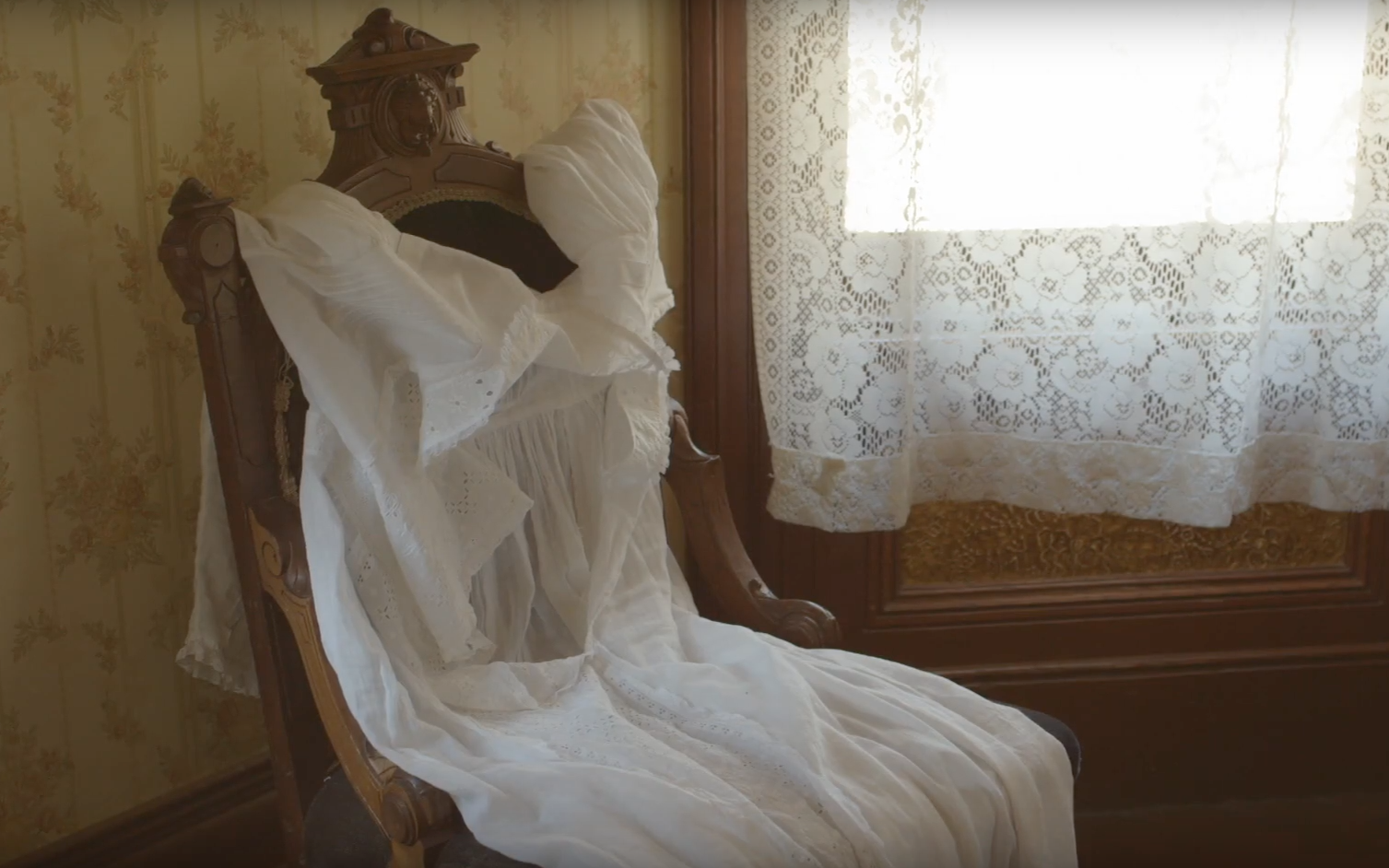
This is the popular image of Emily Dickinson: a Sphinxlike figure, difficult for normal minds to reconcile. Scholars have historically made much of her reclusiveness and her idiosyncrasies, which are seen as counterbalances to her genius rather than evidence thereof (Emily Dickinson’s white dress is, of course, not like Tom Wolfe’s white suit; Emily Dickinson’s reclusiveness is not like J.D. Salinger’s). But Madeline Olnek’s new film Wild Nights with Emily gives a new gloss on the poet: not a hermit or a saint, but a person who was aiming for a different literary and romantic audience. It’s a version of Emily that queer writers understand implicitly. She wasn’t incomprehensible, or difficult, or obscure, as some critics have suggested. She just wasn’t talking to them.
She wasn’t incomprehensible, or difficult, or obscure, as some critics have suggested. She just wasn’t talking to them.
Wild Nights with Emily dramatizes the first moment in history that anyone responded in such an unsettled way to Dickinson: her encounter with Thomas Wentworth Higginson. Dickinson sent him her poems and asked: “Are you too deeply occupied to say if my verse is alive?” He paid a visit, as dramatized in the film, using quotations from their correspondence. “When I read your poetry, Miss Dickinson,” he offers, “I’m left feeling… I’m not sure what.” He asks her to define what poetry is, and she does not hesitate to reply: “If I read a book and it makes my whole body so cold no fire can ever warm me, I know that is poetry. If I feel physically as if the top of my head were taken off, I know that is poetry.” Her response evokes a poetry that is embodied, yet uncanny, the hyperbole somehow offering a realistic description of what it feels like to read a poem that unsettles you. Instead of wanting to get to the bottom of poetry, she proposes that poetry should take your top off. Men like Higginson felt something after reading her poetry, but couldn’t name the feeling, or wouldn’t linger with the discomfort.
After she died, Higginson and a woman named Mabel Loomis Todd finally published Dickinson’s poetry. Wild Nights with Emily is framed with a lecture by Todd, the woman who presented Dickinson’s posthumous work to the world—heavily edited to her own liking, of course, after having a long affair with Dickinson’s brother, and without ever meeting the poet in person. Olnek doesn’t pull her punches when it comes to Todd, who is portrayed as a gaudy gossip limited by the poor taste of heterosexuality. This framing is ingenious because it allows us to see the Emily Dickinson that Todd diligently erased: social, singular, and in love with her sister in law, Susan.
The irreverence with which the film treats Dickinson’s critical lineage is matched only by the reverence with which it regards Dickinson’s relationship with Susan. The scenes with Susan sing. They fall onto a pile of coats at a party to steal a moment together, they have a lover’s quarrel over a mutual friend, they make the fuck out. The film is generous enough to wink knowingly at its queer audience:, as a teen, I had certainly invited a “friend” over for a “sleepover” with my parent’s full permission. As all queers know, you can get away with a great deal of mischief when you’re invisible—one feels almost ghostly. As Susan wrote a friend, “We frighten each other to death nearly every night — with that exception, we have very independent times.” But as queers also know, there can be a tradeoff between freedom to do as one pleases and recognition.
If Dickinson’s queerness has long been treated as subtext rather than text, it is thanks to Todd’s diligence, who committed a literal act of lesbian erasure by erasing Susan’s name from much of Dickinson’s correspondence, including the poems she sent to her. Casting Dickinson as an eccentric spinster recluse was Todd and Higginson’s mutual idea, and it still survives, as evidenced by Terence Davies’ film A Quiet Passion, which would be campy if it weren’t so played so irredeemably straight.
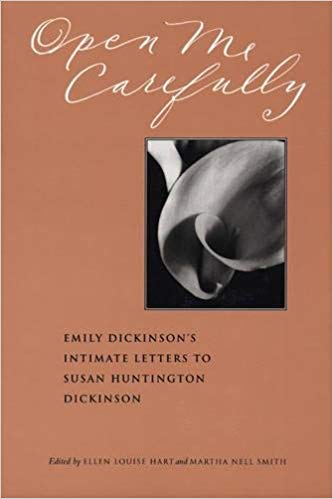
Olnek consulted with Dickinson scholar Martha Nell Smith, who gave the world Open Me Carefully, the 1998 collection of Dickinson’s letters to Susan. Much of the dialogue from the film in fact comes from this collection. Smith and her collaborator Ellen Louise Hart were able to use high-quality photographs to detect where Todd had erased Susan’s name, and, to the chagrin of more buttoned-up members of the academy, where Dickinson had written her most explicitly erotic letters to Susan.
Smith interrupted the Dickinson criticism mythmaking machine by showing how Dickinson was devoted to her work and to Susan, and did not withdraw from society, but rather chose it selectively, as any male poet might have. Thoreau, for example, is not pathologized as agoraphobic, as Dickinson was, because he lived alone in the woods for a brief time. We take him at his word—he wanted to live deliberately. For too long, we were unable to do so for Dickinson.
Olnek’s film takes Dickinson at her word — to the letter, even. “I taste a liquor never brewed, from tankards scooped in pearl?” She said what she said. I wasn’t surprised to laugh so much in her film because I knew Dickinson’s humor, but I was surprised to find myself in tears at a few touching moments. The film felt recuperative, giving back not only her passion (no longer quiet) but her presence, and how she shared it with the woman she loved.
The film felt recuperative, giving back not only her passion but her presence, and how she shared it with the woman she loved.
For a woman who left so much material behind, Dickinson’s “inheritors” have certainly had trouble evoking that presence in a way that doesn’t make her seem ghostly, a specter even in her own day. Though she published ten poems in her lifetime, she wrote around 1,800, many of which she sent to friends and family. After her death, her sister Lavinia discovered hundreds of her poems locked in a box, some bound together in fascicles, some left loose. Lavinia was the one who enlisted the help of Higginson and Todd. In 1890 and 1891, Higginson and Todd published two volumes of Poems of Emily Dickinson, and Todd published the third, along with a collection of letters, on her own in 1894 and 1896, respectively. Together, they made extensive edits to Dickinson’s poems: they normalized her punctuation, tinkered with word choice to make rhymes fit, and added titles that they deemed to reflect the poem’s meaning. Dickinson’s niece and Susan’s daughter, Martha Dickinson Bianchi, inherited her papers and edited new volumes of poetry that restored original word choice and rhyme scheme, and omitted the tacked-on titles.
A single edition of Dickinson’s complete poems was not available until 1955, when Harvard scholar Thomas H. Johnson published all 1,775, with variants, in chronological order—Dickinson remastered. Ralph W. Franklin published The Manuscript Books of Emily Dickinson in 1981, “restored as closely as possible to their original order…much as she left them for Lavinia and the world,” as well as a variorum edition of Dickinson’s poems in 1998, the same year Open Me Carefully appeared. Ironically, arguing for the primacy of the original materials written by Dickinson leads easily into speculation about her intent for her work: whether she wanted to be published and what audience she had in mind. Getting closer to the materiality of her work sometimes means a desire to get closer to the poet herself. Consider the poet Susan Howe’s remarks in a 1990 interview:
I think I have the best intentions when it comes to reading The Manuscript Books, but I often wake up in the night and think, No, I am wrong. She would not agree. She would be angry with me. It’s something to do with her way of not publishing, of copying her work into packages she sewed together herself, with what she left out (numbers, titles), with what she left in (variant word listings, various marks). I think she may have chosen to enter the space of silence, a space where power is no longer an issue, gender is no longer an issue, voice is no longer an issue, where the idea of a printed book appears as a trap.
It is as though the only space her critics are able to imagine the poet in is the grave.
This is how the ghostly spinster myth has persisted into a new century. In her tellingly named 2005 work, Dickinson’s Misery, Virginia Jackson writes, “her old-maidenly strangeness, her nunlike privacy worked (and still works) to make her poetry seem to readers like the voice that speaks to no one and therefore to all of us.” The opening scene of Jackson’s book uses the second person to rope the reader into imagining themselves in the position of Dickinson’s sister, Lavinia — “Suppose you are sorting through the effects of a woman who has just died and you find in her bedroom a locked wooden box” — furthering the ghostly image of Dickinson apart from mortal society. Jackson therefore asks us to scrutinize how we call a poem a poem and what reading practices have sprung up around what we call the lyric. In the case of Dickinson, who is to say what is a poem and what is a scrap of paper? But as Jackson shows, getting closer to what Dickinson wrote with her own living hand doesn’t undo the ghostly fantasy that has been projected onto the poet.
Even scholars who are attuned to gender concerns continue to comment on the unique sort of riddle a Dickinson poem poses. As University of Buffalo professor Christanne Miller observes,
The fascination of reading Dickinson’s poetry is one and the same with the frustration of reading it…The power of her words lies at least partly in their (and her) ability to give more than a reader can entirely understand but not enough to satisfy the desire to know. Regardless of how many times you read her best poems, and how many times you persuade others that you know what they “mean,” you feel the tickle of unsolved mystery in the poem; you do not convince yourself that you have gotten to the bottom of it; the poem, like the poet herself, is never quite your own.
Miller’s remarks are indicative of a critical desire not only for the poem’s meaning, but a drive towards mastering them. Meaning, for the Dickinson critic, is not something that can merely be divined through interpretation, but through a mastery achieved after you’ve “gotten to the bottom of it.” Her feminist critics, at least, seem to realize that there is no getting to the bottom of it, and that itself is part of the allure of her poetry, an elusive satisfaction.
Generations of Dickinson editors have chipped away at the early editorial changes to return to Dickinson’s original manuscripts. Finally, in 2016, Miller published Emily Dickinson’s Poems As She Preserved Them, which includes every poem she collected herself into fascicles, offers her alternate words and phrases, and separates out the poems that the poet herself had copied out from those she treated as unfinished. There is still infinite possibility for interpretation, for reading, with minimal editorial interruption. And possibility, in all its queer openness, was where Dickinson dwelled.
There is still infinite possibility for interpretation. And possibility, in all its queer openness, was where Dickinson dwelled.
Although I did not know it at the time, writing about Dickinson was good practice in learning how to let go (“First — Chill — then Stupor — then the letting go —”). Most of the time I was in grad school, or, for that matter, in my longest straight relationship, I kept thinking: not this. As I was preparing to leave academia, I started to believe that there might be a possibility of something else for me, which both institutions of the university and heterosexuality tend to block from view. A something had overtaken my mind, as Dickinson once wrote.
My last day as a professor, I taught Anne Boyer’s essay, “No.” “History is full of people who just didn’t,” she begins. Poets are “expert-class of refusers,” Boyer remarks, and includes Dickinson in the “pantheon of ‘not-this.’” I think of Dickinson as one such person, who declined to publish, declined to leave her home when it didn’t suit her, declined a life of straight norms. Funny how when you start saying no, you can start to dwell in possibility, you can throw open the windows and doors to the fairest visitors.
“Poetry’s no can protect a potential yes,” Boyer writes, articulating poetry’s power against the police who would erase our potential, our breath, our love. The grace of Wild Nights with Emily is that it allows us to see what she said “yes” to: namely, her committed and erotic partnership with Susan, the driving force behind her work and her creative collaborator. The film celebrates Emily and Susan’s great yes, the paradise they were able to gather in constant communication. The film also offers tenderness, particularly when Susan is asked to wash her lover’s body before her funeral. In real life, Susan wrote Emily’s obituary, and surrounded her body with violets. So let Susan have the last word on Emily: “Not disappointed with the world, not an invalid until within the past two years, not from any lack of sympathy, not because she was insufficient for any mental work or social career — her endowments being so exceptional — but the ‘mesh of her soul,’ as Browning calls the body, was too rare, and the sacred quiet of her own home proved the fit atmosphere for her worth and work. All that must be inviolate.”
“There and There and There and There” by Alexander Lumans
All the quality blankets: gone. They hadn’t vanished in some magical boom of smoke; everyone from our camp simply reached the wall by sunrise, commenced their trading with the women there, and now look who’s appearing out of the noon-time fog: me. The last wave to wash upon the shore of opportunity, aka really, really late. Yes, I really wanted a quality blanket over a current blanket. Current blanket: just, fuck. Bad wool, surprise, was badder than anyone realized. As comfortable as pine needles and as warm as a dead dog. Those earlybirds to the trade lot got to upgrade. One of us now had a nice wolverine fur blanket. And one of us now had a nice ermine fur blanket. And one of us now had a nice possum fur blanket with sleeves. And one of us now had a very nice snow leopard fur blanket, and most of us hadn’t even known of leopards’ existence in snowy climes or that their spotted fur looked like bread mold, felt like soft hope.
Winter had come early with the stalling cold and with the fog nowhere near gone. I couldn’t remember words to describe what the fog did,but what had fog ever really done? It blanketed, yes, but also, too obvious. It clouded? It devoured? It enshadowed without prejudice? It blurred, what, lines or nightmares or wants or cannibals? What I knew: the fog made day feel colder than all night combined. In our bivouac camp we’d already burned everything. Dictionaries lasted the longest. We all agreed on this as the fire died down and we crawled under current blankets. Even before we burned all the dictionaries, words were disappearing. It once took me an entire day to remember the name for those deep openings in the earth—no, not valleys or volcanoes—that’s it, crevasse. Meanwhile, I could no longer distinguish between types of makeup applicators and farm machinery; they all sounded frightening and the same. Blemish sorter? Closed-cell wedge? I at least still knew the small difference between blanket and casket.
The women at the wall then made an announcement to those of us at the trade lot. They had one quality blanket left: pony fur. A miniature pony, at that. But the blanket wasn’t miniature. Didn’t know how that worked. A gray area. Maybe two ponies? Probably four? But who had four miniature ponies with which to make one quality blanket? Miniature used to mean cute and rare; now it meant less getting lesser. All to say: still a very, very expensive quality blanket. Because what was money anymore, besides whatever someone else wanted it to be? Yes, even poison oak leaves could have been money. Or not. Think about it. Pony fur. And I know what you’re thinking: Pony fur? But it was important for me to want something when all I did was needneedneed. Want = choice. And my choice was to have the skins of four miniature ponies circling my shivering body all winter day. I had little extra money. I had little extra humanity.
No one else wanted—needed—the pony fur blanket. They just left for camp with their furry grails shimmering down their shoulders, leaving me at the wall alone, in need, a little in hope, a little afraid of it.
The women at the wall told me, “Hell no,” when I tried to barter what I had for the pony fur blanket. I offered them many sunglasses. I’d scavenged them from a hut in a mall that had already been very scavenged except for the hut. At the time I’d thought to call it luck; I didn’t realize it was better called my luck. A large gray area. Still, that was the day I thought my future was becoming much clearer. Many sunglasses would solve everything. My ticket to warmth and whatever else I could want after warmth. Then the women at the wall said, “What good are sunglasses when—” and they gesticulated in every direction including up.
The fog. There and there and there and there. Like it was becoming bigger. More getting more. Desperation was the only thing in the world not getting smaller. For that I’d been trying to compensate.
It was important for me to want something when all I did was needneedneed. Want = choice.
One of them tried on a pair of the sunglasses from my backpack full of many sunglasses. She looked directly at me like I was something bright. I felt colder and less in control of my life, of which I did not feel very much in control that day after sleeping in. She tugged the pair halfway down her nose and said, “You know these are prescription lenses, right?”
“Of course,” I lied, thinking, Me = Idiot. And yes, that was the word, finally: lenses. In my head I’d been calling them eye-windows or nothing at all.
The women at the wall said, “We want guns,” saying it like I didn’t know what that word meant. I almost didn’t anymore. “Guns and art,” they told me.
I gave them my only handgun from my backpack. No bullets. “More than enough,” I said.
“It’s half-enough,” they said. “Now bring us the other half. The art-half.”
“Sunglasses are art,” I said, thinking, Me = Prescription Idiot.
“If sunglasses are art,” they said, “then the world should have ended right before their invention.”
“The world didn’t end,” I said extra-despondently, craving seller’s pity. “Things just got…blurry.”
“Blurry, hazy, deathly, disappearing—whatever,” they said. “The walls inside our wall are gray and boring. We’re most afraid of the cannibals in the city. Plus, you know, the fog,” like the fog was a very, very ugly neighbor who had just moved in across the street and liked to mow the lawn at midnight. A nightmare inside a nightmare.
This happened to be my worst nightmare: falling into a hole inside one you already fell through.
I said, “At least you have walls,” and then decided that the world ended differently for different people, sometimes not at all, and that was okay as long as it didn’t guarantee a cold-related death for me.
“Originalart,” they said. “Not some shower curtain Starry Night. Can you say Target clearance rack?”
“I need more than that,” I said, meaning hints on general survival or at least on material satisfaction.
“A Duchamp,” they said. “Girl with a Pearl Earring,” they said. “You know,” they said, beginning to shimmer. They retreated inside the wall with the pony fur blanket, drew up their drawbridge. It looked like the lid of an eye closing but not exactly because this one closed up instead of down and it was not shaped like an eye and I couldn’t remember if the word was eyelid or something else and what was wrong with me?
This was the problem with people saying “you know.” No one ever actually knew. I certainly didn’t know art. But I didn’t say I didn’t. No matter what, couldn’t help deeming this strange—not strange because why would someone want good original art at a time like this, but strange in that the crux of their value system seemed to hold the once mostly unimportant artistic field now as a warm and lonely jewel deeply vital to survival, even happiness. A lot like saying frisbees had become the gold standard and weren’t we lucky to be queens of our own suffering. Wanted more advice than “you know” but I hated asking questions. It seemed like, since the fog, answers always complicated more than they did the opposite.
Are there cannibals out there in the urban sprawl?
Will I die before I am ready—I mean, will I die before, I don’t know, before I’m forty-two?
Why did I ask stupid questions in times that called for smart ones?
Where does loneliness come from?
There.
I left the wall and I walked toward the nearest city and I knew I couldn’t come back to camp with anything that wasn’t a quality blanket. Social suicide.
In walking, I stuck to non-major roadways siphoning into downtown. Cannibals liked major roadways. And eating people. Two things I did know. I knew also that even though the cannibals avoided the mall and the campus and the cemetery and the amphitheater, I needed to avoid these places too; the ones back in camp who’d been raped but survived their near-fatal predations warned the rest of us where these men lived and frequented.
To keep my mind off the cold—that is, to keep myself extra vigilant and extra-extra sharp while the fog kept dulling every sense and every surface into a rock-smooth gray—I tried to remember words. I discovered many gray areas that inspired more. If someone dies, are they still a “person”? If not, and if we eat a dead “non-person,” are we still cannibals? If we’re still cannibals, can we still go to the big church on Sunday and take delicious Communion?If we are eating of Christ’s body, doesn’t that make everyone who’s a Christian also already a cannibal?
Downtown. Walking through the fog, then momentarily out of it, but really only in it much, much more than I could tell. The museum was somewhere. I was somewhere other than that somewhere. I kept on walking. Crossed some railroad tracks without realizing it until I looked back; in so much gray there appeared farther down the tracks a grayer gray thing. A boxcar, all by itself. No other railcars or moldering engine or spray of dead cattle or stray prophet extolling the world’s new end. Everyone used to tell each other that you could be anything you wanted—just try. Tell that to trains. Tell that to the coldest person.
The railcar’s sliding door hung half-open, baring this thin strip of abyss. I went closer to it, thinking: blankets? before I backed away from it, thinking: mystery, miseries, mini-series, my story. Because I could read the railcar’s graffiti above the sliding door: There are definitely not some cannibals in here.
I didn’t like the sound of that but I was also confused. Complete sentence, prepositional phrase, punctuation, the whole gauntlet. Cannibals ≠ grammarians.
Once far enough back, I threw a rock. At the height of its arc: regret. I knew the rock would go far, bong the railcar’s side, and for a second there’d be something like peace on earth—then, immediately, a hundred-plus cannibals would come streaming out of the railcar because There are definitely not some cannibals in here. was definitely what some in-here cannibals would graffiti on the side of their sneak attack site.
I ran; not ashamed to say so.
While running, I lost a shoe; felt differently about that.
Once hidden behind a bridge, I waited to hear the cattledoor slide fully open before the pounding of cannibal feet. Thought I smelled smoke, heard birds. I badly wanted to hear birds, nothing else. Why did I always throw rocks—that is, why did I throw rocks at the most dangerous parts of the world?
No noise. I was safe. Also not: my shoe, left, back there. I pictured the cannibals coming upon it before yelling into the fog: “This better not be the shoe of the failure who threw a rock at our sneak attack site!”
Yeah: way more shame. No way would I continue on like this. Plus, nowadays, tetanus (behind cannibals and cold and cluelessness) was the number four killer. So I crept back toward the railcar.
There the shoe was. And there, also, a bird as black as sunglasses—Crow. Vulture. Ostrich. Hellspawn.—whatever it was was trying to yank out my shoelace and mostly succeeding. I tried to sound smart: crow.
With no gun, what else to do; I threw a rock. To all my surprises and also to the crow’s, the rock thunked the bird perfectly off my shoe. Dead. Whoa, I thought, maybe I shouldthrow more rocks at more things. I slid on my shoe and also considered kicking the crow. Were cannibals and crows friends? Allies? Did they just hang out? Was that a stupid question or a smart one? I was about to kick it when it ca-cawed or whatever the word. I looked anywhere for a rock. I stared through the fog in the direction of the railcar like that would change anything about fog. Then I knew I heard birds. Instead of cannibals, hundreds of in-here crows came streaming out of the railcar’s door. They filled the sky like nothing I could name. They came for me.
Birds.
I ran, thankful for two shoes and fog and a near-constant state of corporeal hypervigilance but not the consequences of returning anywhere emptyhanded.
I lost them while I got more lost. Kept on running. “Sound smart,” my mother used to say, “and everyone will believe you are.”I believed her until I didn’t. Now I was only interested in further being what I was. Everything except cold, shoeless, in danger of others’ predations, preparing to be eaten. To become anything I wasn’t already? That invited shame into the picture. And shame, like cannibals, ate the heart first. Some words needed to disappear so that no one remembered their old meanings or their new executions. Some of these words = mall, = campus, = cemetery, = amphitheater. Other words = shame, = need , = corporeal hypervigilance, = failure. I couldn’t tell my mother any of this. I kept running somewhere.
That’s how I found the city art museum.
It slowly appeared out of the fog. And here it was again, the word problem, what the fuck did fog do? Let’s say this: it acted the way a large wave acted upon a shore, taking it for its own gain. Let’s say it wrapped the building like a shawl belonging to the apprehensive elderly. None of this was right. Through broken windows the fog engaged the rooms. Every corner it suffused, if that was the right word. Suffuse = word? Whether the world had ended or not, someone needed to not torch all the dictionaries for warmth. They’re like bridges. Burning them was always a good idea.
Until you did.
The museum: had a bad feeling here. But: pony fur. So: my luck versus my, what?
In the lobby, a tall and plastic red ostrich guarded the staircase. It had no eyes. Or rather, it had eyes, but no pupils or anything that looked like an eye. Not good art. Not art, even. I shuddered, thinking I suddenly needed another rock to throw. Also: looked fucking heavy.
Had one of the women said she preferred tall portraits or sculptures of iron? Wished I‘d paid more attention but had been busy running my fingers over the pony fur blanket before slipping into a reverie in which I destroyed a lot of malls, grew weary from individualized destruction, and bedded down for the day in a pile of miniature ponies. They were all headless.
As I decided the red ostrich looked stupid and not dangerous in the fog, some other part of me decided I only had one chance at a quality blanket trade with the women at the wall. After that, I’d just be Oh, her. Same as Christmas. Back when someone would give me a shitty gift, I knew they’d give me a shitty gift the next year too. “Oh,” I’d say, “an aquarium shaped like a TV. That’s…an invention.” And next December I’d be saying the same: “Oh, a TV shaped like an aquarium. That’s…something?”
The first-floor gallery sign read “New Landscapes.” Yes: boring. All I wanted—needed—: grainy Kelvin-filtered photos of some abandoned drive-in theater with a title like Facile Disseminations of Humanity’s Plutarchy (I). I didn’t need to visit art museums to know that landscapes endured gladly without our approval.
Before I did the next inevitable thing in my life, I visited the gift shop. Feeling like I owed myself something positive for just getting here alive, I ate a bag of astronaut ice cream. Neapolitan. It tasted like you would think, like it was missing something fundamental. Also, I found in the shop a small but heavy bookend. The back half of a horse. Thanks to whomever took the front. My luck. Sometimes I felt headless. Still: the back half of a horse bookend could become a positive weapon to bring down on a cannibal’s head before the others chased, caught, ate, etc.
Upstairs most of the art was already scavenged or destroyed. The contemporary wing was bare.
However, in one far corner, a silent video was still showing. The title card read Snow Monkeys in Texas. The snow monkeys were inspecting a pile of snow the artist had shipped from the Arctic Circle and dumped in a prairie outside Lubbock. Snow monkeys, unlike snow leopards, were not real. No way. Not in Texas. Plus, their wiry gray fur did not look pertinent to the—what?—of a quality blanket or humanity.
Hope was walking into a foggy museum in search of good art without a gun.
In the video the snow monkeys looked at the snow. They played with the snow. They ate the snow. They let the snow sift through their prehensible fingers. Then they wouldn’t leave the snow alone. They wrestled over handfuls of snow. They attacked each other savagely for the snow. They killed each other for the snow. The snow grew redder and redder with snow monkey blood. The last four snow monkeys grew desperate. They circled the snow like cowboys protecting their wagon from attacking Indians. They made a peace pact to protect the snow no matter what. Then the snow monkeys killed each other some more. Finally, one snow monkey remained, surrounded by snow and other snow monkey bodies. That’s what happened when you got exactly what you wanted: you were alone. The lone snow monkey looked at the snow. While it was looking, the snow melted away completely under the fatal Texas sun. That’s also what happened when you got exactly what you wanted: you were even more alone. The lone snow monkey then looked directly at the camera with a snow monkey face that said, Fuuuuuuuuck. The video ended. The video began again. Snow Monkeys in Texas = art? Yes, lots of gray areas here. No clues.
I left the contemporary wing for the “Western Art” gallery and thought maybe, maybe.
Right away, this one painting, still there, miraculously, dim through the fog. It was called The Stagecoach.That word, yes, familiar, but it felt like a bridge to no meaning—was I getting worse?
I got up close to the painting and squinted at its large image and it just got blurrier. Hope was walking into a foggy museum in search of good art without a gun. The more it grew, the more desperation grew alongside it—until you couldn’t tell the difference.
In the painting, a stagecoach was driven by cowboys across a bridge over a crevasse. The stagecoach was being attacked by horse-riding Indians in front of a large golden bluff that looked more like a wave than a rock. The painting looked expensive—would fetch a million frisbees. And Rockwell: definitely a good name. I wanted—needed—it. Death, color, clear and present brushstrokes, some horses = perfect.
The painting stretched as wide as my arms and the frame looked maybe a little awkward with its weird—degree? pedigree? filigree? debauchery? Still tried to lift it from the wall. Did so successfully. But, very heavy. It slipped. Tried to catch it. It landed on the floor against my knee. I pushed it off, looked at the thing, and tried to quickly scheme a way out of my current problems.
I said “against my knee” but the right words were: “my knee went completely through it.”
The mesa bluff remained the hue of melted butter. The horses still looked as wild in the eye as the few alive today. But where the arrow-wracked stagecoach had been rolling across the desert bridge: now a hole. As if the canvas had been shot through by a miniature cannon. I thought of this painting as my one chance. I thought of this painting as my only chance. Those were not the same thing. Chance was suffused with suffering, yes? Stupid knee. I imagined the four miniature ponies all running away from me in different directions, yelling, “Ooooooooo, we’re so warm!” but it took a while because their legs weren’t as long as medium ponies’, so I watched until there and there and there and there they disappeared without me.
Why was I alone, I wondered in the museum of fog, and where were all my dead friends now?
I left that gallery for the lobby. No pony fur blanket for me—this felt like a new hole in the painting that was my life, and, very likely, that life now included cannibals waiting outside the museum with crows and a miniature cannon, so, some preparations were necessary to meet them head on, but no gun (the stupid half-trade still burned in me like a bridge to nowhere), and it was now clear my future had tiptoed into grimness without my notice. I announced my arrival and my departure: “I’m smart!” heading for death and the exit.
The red ostrich’s foot tripped me onto all fours. One day I might point to this spot on the lobby floor and tell the surrounding crowd, “Right there is where the offending bird tripped me and thusly changed everything,” to which everyone there would respond by saying, “Are you real?”
Why was I alone, I wondered in the museum of fog, and where were all my dead friends now?
Shame felt like warmth until you realized you were still—shimmering? shivering? silvering? suffering?
Needing this next moment to go better because I had never handled embarrassment well, I reached into my backpack. I pulled out the half-horse bookend. I brought it down hard on the red ostrich’s head.
The head caved in. No throwing rock needed. The ostrich was hollow. The ostrich was empty. The gray area between calling something hollow and calling something empty was so miniature as to be the kind of thing that melted away under squinting scrutiny. I didn’t need another lesson about the nature of the world. It was empty and hollow, yes—that’s why I’d been trying, however I could, to fill it.
Don’t go, I thought.
Stay longer, I thought.
Those were not the same thing.
Then, there: the gallery sign for “New Landscapes.”
I didn’t need another lesson about the nature of the world. It was empty and hollow, yes—that’s why I’d been trying, however I could, to fill it.
I imagined. Epics of carbonated waterfalls. One lone ship lost at bladed sea. Something like a river but negative and silver and caught disappearing on glossy paper. None of that sounded good. If I showed up at the wall with anything less than perfect, the women would take one look at my barter—say, cropfield-plus-treeline-plus-half-clouded-sky in watercolor—and they’d say, “Oh, good, I’m so glad you brought us motel art. We didn’t know if we could be more bored. What do you call this? Is it Loneliness with Wheat?”
The exhibit’s glass doors: I looked right through them and realized they were intact. No fog inside, no scavengers. I waited like there was something worth waiting for, there, on the other side of now. I waited more. I began to half-feel like a miniature pony, pre-slaughter and still shivering with my own fastidious thoughts. Was it strange to only have children and miniature adults ride you down the trail? Did evolution just give up at some point? Did that explain snow monkeys in Texas? Wasn’t a miniature pony just a small horse? This could have gone on. Did miniature ponies want something—say, to be more? Did something miniature even know that it was miniature in comparison to the rest of the shrinking world? Did miniature also mean vulnerable and vulnerable also weak and weak also doomed to die by the age of forty-two? Or was it one of those things no one talked about anymore because it was too difficult to remember life without it, like abject loneliness and current blankets?
Like that, stupefied into action, in I went. Of course, bad feelings abounded.
“This is stupid,” I said, thinking, Me = Miniature Idiot with Wheat.
The first corner revealed a room covered in giant black and white photographs all called: Untitled (Swamp). The photographs looked more like closeups of receding hairlines. No wonder the world ended.
In the next room, I found the photograph of a gray dress draped over a dead tree in some snowy forest that could have been someone’s backyard and someone else’s rejected bridesmaid’s attire. I shimmered. Loneliness with Wheat sounded better and better. I kept wandering toward an expected exit.
On one long wall hung a series of small photographs of the same ghost town. Small = not heavy = very promising = miniature pony fur blanket here I come. But all the photos felt like the drive-in theater idea. Very promising but very obvious. Like here I was, scavenging landscape art and absconding from cannibals and living in hard times with tremendous fog that did something all while being a cold woman who was afraid of doing stupid things even when no one was there and alive to watch. Wished I could call myself the synonyms for “smart,” but when I stepped back from it all, wordless, I only saw myself disappear.
Four of the framed photos had gone askew: a wig shop, a fountain, a teriyaki place, a small blast furnace. If these were my very last chances, I was going to hurt somebody with a half-horse bookend.
Leaving “New Landscapes,” coming to stand next to the headless red ostrich, not tripping, I squinted out the museum’s entrance into the fat wave of fog, expecting to catch the confirming glint of a bone knife. I could see nothing. I could see everything. Those were the same thing.
I realized I had not seen actual landscape in some time. Barely a field or a treeline or clouds in the shape of a flightless bird, let alone a horizon beyond which other things mattered differently than here. A place where Need never tripped up the likes of Want or Hope or Words or Warmth. Over that there grassy hill, snow leopards and frisbees for all.
So, I went back and stole the four photographs. Piled them in my backpack next to the half-horse bookend on top of the many sunglasses. However, instead of buoyed, my confidence felt punctured by something I could no longer name and then dropped into a crevasse inside a larger crevasse—I watched it disappear from the edge. Thought of the last snow monkey. How it watched the snow melt away for good between the bodies of the others, then thought, what? I feared the next shame more.
I know what you’re thinking. But I would not be trading the photographs for a quality blanket. I would not be trading humanity for miniature versions of it. I know what you’re still thinking.
Of course, the cold. Of course, a miniature pony fur blanket did amazing things to cold, depending on remaining dictionaries. Of course and of course, desperate people committed desperate acts, just as comfortable people committed desperate acts commiserate with their comfort level. Did not count myself in either camp. I was tired of being attacked, not attacking. See: snow monkeys. See: cowboys. See: crows and ostriches. See: gray areas. Me = ready to become the thing I already was.
With no beautiful reluctance, I walked out of the art museum and into the fog that would do whatever it did for as long as it needed—wanted—to, a kind of suffusing I had begun to understand.
I disappeared from my previous vantage point. I would be doing this a lot now. I wasn’t so much walking into a painting of my life as I was walking into a painting of some blurry landscape, one with a person-shaped hole in its corner. I already fit that hole. Perfectly. Still, as the fog blanketed me, I tried to look through it. I did not see the empty and hollow future—wig shop, fountain, teriyaki place, small blast furnace. Whatever I did see, it was right there, clear inside the nightmare, as blinding as .
It is estimated that only 3 percent of books sold in the U.S. are works in translation. The question is why don’t Americans read more translated literature? The American publishing industry is insular. The work necessary to find and acquire non-English texts seems insurmountable due to various economic costs and a lack of language diversity in publishing. Unlike global publishers, who have specialized foreign acquisitions or multilingual editors, American publishers rely on luck and the odd scout or agent to come across non-English works. This enforces a system of English dominance in the literary sphere where non-English books gets overlooked, even though there is interest (and demand) for international works.
This is not to say there are not publishers, literary non-profits, and small presses who are attempting to bring better awareness toward translation. As readers, we are agents of change. And we have an ability to focus the conversation and encourage access and inclusivity in publishing.
Here are 20 translated short story collections from around the world.
Where Europe Begins by Yōko Tawada, translated by Susan Bernofsky and Yumi Selden
National Book Award winner Yōko Tawada blends fiction and reality to create a fragmented sensation when moving between physical spaces like Japan, Russia, Siberia, and Germany.The reader becomes a stranger on a journey through this world.
The Teeth of the Comb is full of fables and political allegories that catch and reimagine Syrian realities in new and insightful ways. Some of these short stories are no longer than a sentence or two. Read two stories by Osama Alomar here.
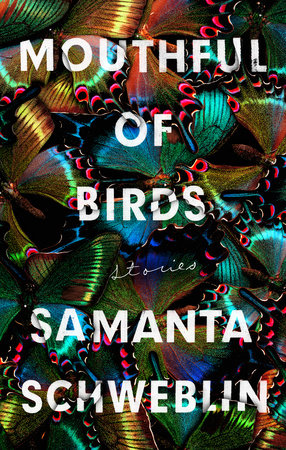
Mouthful of Birds by Samanta Schweblin, translated by Megan McDowell
This evocative collection of 20 strange and dark tales will leave your heart racing, as they journey through the resonant and impossible. From eerie butterflies to expectant parents and stranded businessmen, these stories push characters to confront the unexpected. Read an interview with Samanta Scweblin here and an interview with Megan McDowell about translating the dark surrealism of Mouthful of Birdshere.
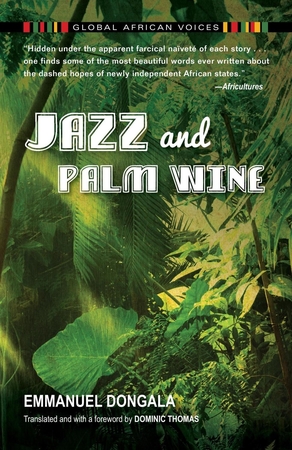
In this remarkable collection, race and history are contextualized in two parts.The first explores the struggle to live and confronts corrupt governments after successfully fighting toward a post-colonial era in the Congo, while the second is set in the U.S. during the 1960s civil rights movement.
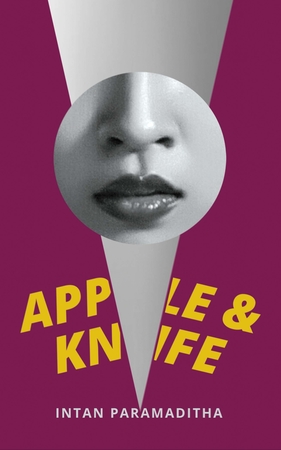
Apple and Knife by Intan Paramaditha, translated by Stephen J. Epstein
Set in rapidly evolving Indonesia, these women-centric stories are filled with macabre twists of myths, horror, and fairy tales. In “Blood,” a copywriter in charge of finding new ways to market sanitary pads recalls her grandmother’s folktale of a monstrous woman who licks the blood of used pads. In a retelling of Cinderella, the focus is on the ugly stepsister after her new princess’s happily-after-ever. In “Beauty and the Seventh Dwarf,” a disfigured woman pays a man to act out her rape fantasies.
Karate Chop by Dorthe Nors, translated by Martin Aitken
Published in collaboration between A Public Space and Graywolf Press, Karate Chop is a collection of 15 stories that examines the capacity of complex human emotion. From stories that range from a husband obsessed with female serial killers to a bureaucrat who converts to Buddhism, this collection highlights the ominousness that creeps into the everyday.
Written by a living dissident still in North Korean, these stories were hidden inside The Selected Works of Kim Il-sung and perilously smuggled out of the country. The Accusation features seven stories set during Kim Il-sung and Kim Jong-il’s dictatorships, rendering a portrait of life under the North Korean regime. From a privileged mother whose son attends a political rally to a husband who is denied a travel permit, these stories examine humanity during inhumane times.
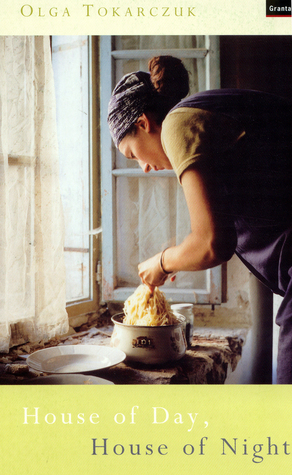
A Man Booker International Prize winner, Olga Tokarczuk descends into Nowa Ruda, a small town once a part of Poland, Germany, and the former Czechoslovakia. These short stories interlock to form bricks and structure the history of this town.
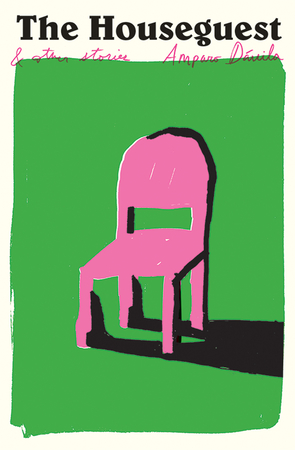
The Houseguest by Amparo Dávila, translated by Matthew Gleeson and Audrey Harris
Mexican author Amparo Dávila engages with the dark and surreal with this book, exploring loneliness and obsession with psychological acuity. Read a short story “The Breakfast” from the collection here.
Revenge by Yōko Ogawa, translated by Stephen Snyder
From a cabaret singer whose heart beats outside of her body to a jealous surgeon’s lover, Revenge is a collection of unsettling and haunting fates that converge together.
The Sad Part Was pierces through modern Bangkok life with these fresh, witty stories that pop through sci-fi, metafiction, and a Dracula-themed ad. Prabda Yoon brings the voice of a young and rapidly urbanzing generation into Thai literature.
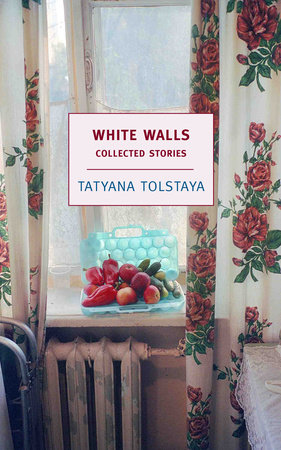
Containing two previous collections, On the Golden Porch and Sleepwalker in a Fog, and several uncollected stories, White Walls explores everything from lonely children to poets working as janitors. This stories by Russian author Tatyana Tolstaya take on a dream-like lucidity while attempting to understand the human condition in the day-to-day.
Impelled by Nayrouz Qarmout’s own experiences with growing up in a Syrian refugee camp and living in Gaza, The Sea Cloak contains 14 stories that explores what it means to be a woman in Palestine today.
Doppelgänger by Daša Drndić, translated by S.D. Curtis and Celia Hawkesworth
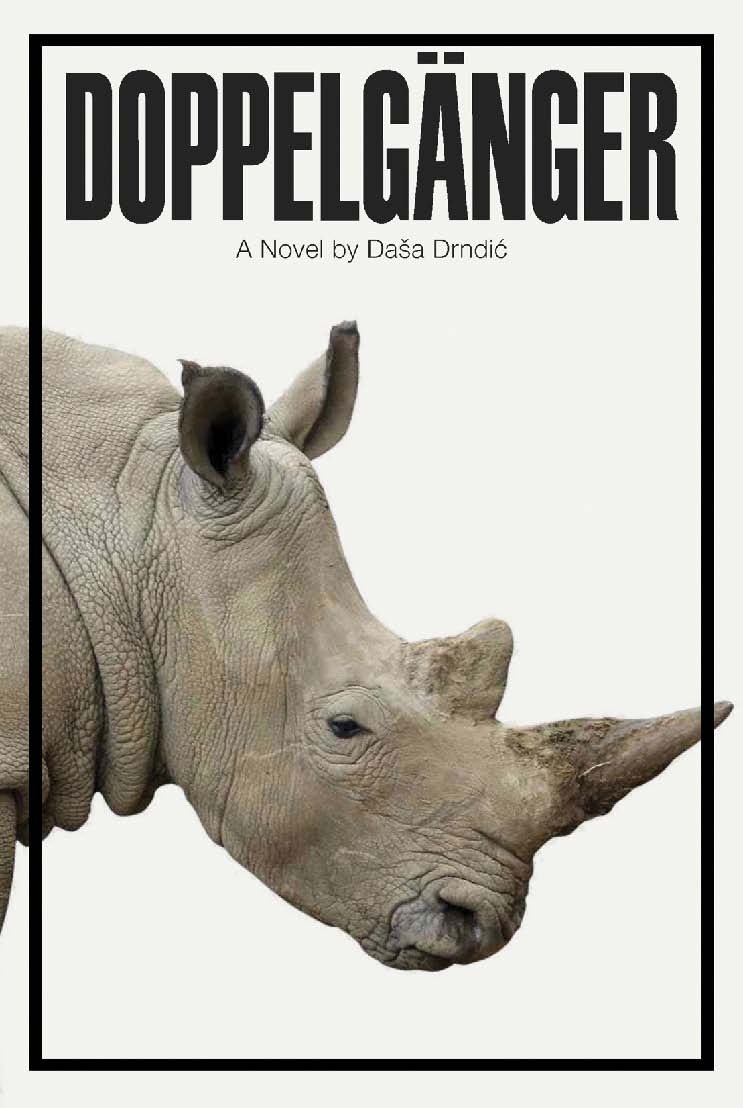
Doppelgänger written by Croatian authorDaša Drndić only features two stories: “Arthur and Isabella,” a story of an elderly couple who meet on New Year’s Eve in 1999, and “Pupi,” an unconventional story about the descent of Printz Dvorsky.
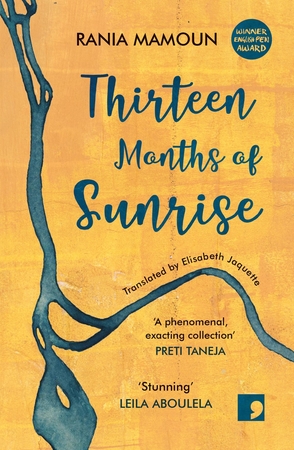
Thirteen Months of Sunrise portrays life in contemporary Sudan with characters who encounter love and isolation. This collection widens the measure of the human experience found in the complex lives of an urban city-dwellers.
Kitchen Curse by Eka Kurniawan, translated by Annie Tucker
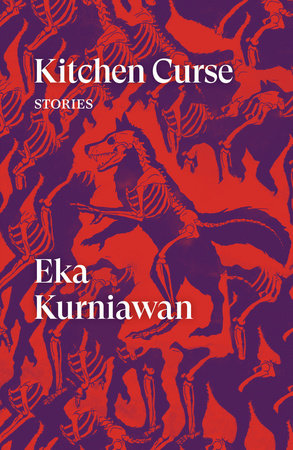
From a caronang, a dog that walks upright, to an ex-sex worker, Kitchen Curse is a darkly comedic adventure by the first Indonesian Man Booker Prize nominee. Read an interview with Eka Kurniawan about Indonesia and magical realism here.
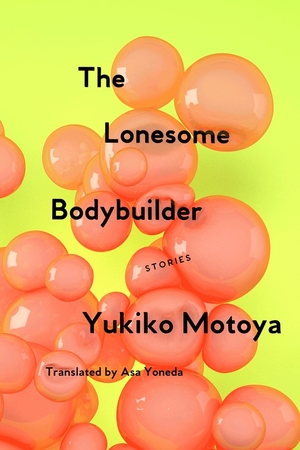
A wife who takes up bodybuilding, an aging supermodel’s Q&A, and a mysterious customer at a retail store—these 11 stories delight as they reveal the bizarre, absurd, and lonely of Japanese domestic life. Read a short story from the book here and check out an interview with translator Asa Yoneda here.
Written after Mozambique’s civil war, Rain confronts questions of war, peace, colonialism, and what the future of a country looks like after tremendous loss.
Trout, Belly Upby Rodrigo Fuentes, translated by Ellen Jones
Shortlisted for the 2018 Gabriel García Márquez Short Story Prize, Trout, Belly Up features seven interconnected short stories set in the Guatemalan farmlands, where Don Henrik lives his life in a landscape of inextricable beauty and violence.
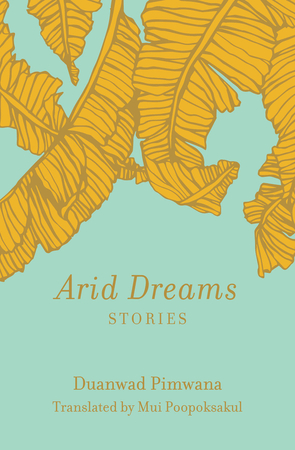
Arid Dreams by Duanwad Pimwana, translated by Mui Poopoksakul
Arid Dreams moves through working-class Thailand, looking at characters stuck in their existence and left wanting. From a wife who imagines her life if her husband had died in an accident to an elevator attendant immobilized in his position, these 13 stories find profundity in the everyday.
Novel Gazing is Electric Literature’s personal essay series about the way reading shapes our lives. This time, we asked: What’s a book that changed your mind?
My older sister never let me in her room. In 1982, I loved her as much as she loathed me. My mother had a no-closed-door policy, so I spent many an hour staring at my sister from the doorframe in the hallway, like she was a fish in an aquarium. I watched her reading, listening to music, talking on her transparent Lucite rotary phone with the curly cord. She glared at me occasionally, asked me why I was such a loser, but mostly she did a superb job of pretending I didn’t exist.
And then she went to boarding school. I didn’t know why she went, though I doubted it was in pursuit of a better education. She’d gotten into some sort of trouble for something (my imagination went wild with possibilities), but anyway she was suddenly gone and there was nobody to bar me from entering the kingdom of cool. The day she left I stretched myself out on her bed, wondering whether anyone would notice if I took her fleece comforter until she came home. I studied the Polaroids of my sister with her long-legged friends and the Pink Floyd posters taped to the ceiling. I thought about how fun it was going to be to try on the clothes she hadn’t packed: the striped Guess jeans, the strappy wedges and a satin Fiorrucci jacket I couldn’t believe she’d left behind. I went through her drawers collecting rubber bands, stale lip-gloss, a cracked tub of Nozxema, and old Interview Magazines. And then, almost as an afterthought, I went to her bookshelf.
As with most of the things in my sister’s room, I didn’t know how she’d acquired the much-thumbed book with the dark and creepy cover of a heavily shadowed, blurry face. I couldn’t even make out if the face belonged to a girl or a boy. The strangest part was that there was no author. Under the provocative title, Go Ask Alice, was the word “Anonymous.” What did that mean? Go ask Alice what? I wondered. The phrase had a note of nostalgia to it, as if I’d overheard it somewhere. Like the marijuana box in my mother’s vanity or the occasional tampons in the little garbage can next to the toilet, the book belonged to the realm of things not meant for me to see.
I took the book (and the comforter) back to my powder blue room and planted myself on the side of my bed that offered the most privacy in our open-door house. And I read the book, which turned out to be a “real diary” of a teenage girl who becomes addicted to drugs at age 15 and runs away from home. The unnamed teenage protagonist had a familiar voice; she was smart and popular and she sounded like my sister when she was in a good mood. Happening upon that anonymous diary felt like a great discovery. I moved through the pages rapt, feeling sophisticated in my new acquaintance with boys, sex, and drinking.
Then, almost imperceptibly, the tone of the book began to change. Anonymous, it turned out, had been drugged at a party and was now, accidentally, addicted to drugs! Her voice grew more absent, detached, as if she was being gradually unplugged. I turned the pages quickly now, guilty and thrilled that I had a front row seat to her private tragedy. Mostly I was shocked that something so terrible could happen to someone so normal, someone like me. I kept waiting for her to get better, to let her family help, but unlike the after school specials I’d grown up on, this narrative felt shapeless, as if to suggest that in real life no story arc existed, no moral compass at all. Just when I couldn’t stand the tension any longer, the diarist’s tone lightened and it seemed everything was going to be okay. I cheered, felt a visceral relief, before I realized I’d been mistaken. Instead of the happy ending I anticipated, the diary just stopped.I don’t remember the details, but I do remember the epilogue: The subject of this book died three weeks after her decision not to keep another diary.
I was shocked that something so terrible could happen to someone so normal, someone like me.
I read the book again before returning everything to my sister’s room (even the comforter) and deciding the world was a very dangerous place. I cried for a long time after that because, in my mind, everything had changed. I was worried about my sister, I was worried about growing up, and, most of all, I became terrified of social gatherings. I swore to myself that I would never do drugs and that, if I happened to find myself at a party by mistake, I would never accept a drink from a stranger. I vowed that if I ever took drugs “by accident,” I would check myself into a rehab facility immediately to avoid any possibility of addiction. Only a twelve-year-old neurotic could rationalize such thinking, but it felt very real at the time.
I clearly wouldn’t have been so susceptible to the horrors of Go Ask Alice had I not had an appetite for anxiety to begin with. Still, the book haunted me through my adolescence and beyond. As I grew up in Los Angeles, my worldly friends were confused by my abstinence, my prudishness. But any temptation was trumped by that epilogue, running like a Gloria Gaynor song in my head: The subject of this book died three weeks after her decision not to keep another diary. To this day, I’ve never been a real drinker, never indulged in drugs beyond weed. Refraining from drugs isn’t necessarily a bad thing, but I was acting out of fear, not prudence. Go Ask Alice cemented my childhood suspicions about the perils of losing control. I even stopped dancing for fear that somebody might spike my punch while I was doing the Reebok. (Really.) Anonymous had convinced me that if I didn’t keep a tight watch, bad things were inevitably going to happen. I’d wept for that dead girl, but at least she hadn’t died in vain. She’d convinced me (and, I’d imagine, lots of other teenagers) to walk the straight and narrow.
And then, at the age of 47, I happened upon an article in TheParis Reviewabout Go Ask Alice. The author, Frankie Thomas, describes the four stages of experience in reading the 1971 classic. First, the “titillated horror … at the book’s dramatic depictions of drug use.” Check. I definitely experienced that. Second, the “creeping suspicion” that there’s “something fishy” about a homeless drug addict keeping a diary fit for publication. Hmmm. I hadn’t really given it much thought at the time. Third, “the revelation, for the adult reader, that Go Ask Alice is not, in fact, a ‘real diary’ but a fictional hoax written by a Mormon youth counselor named Beatrice Sparks.” What’s that? Beatrice Sparks also penned Jay’s Journal, the “real diary” of a boy that died after getting involved with Satanism and It Happened To Nancy, yet another “real diary” of a girl, who got date-raped, got AIDS and died!What the fuck? Thomas describes the last stage of reading Go Ask Alice as a “howling hilarity upon rereading the book in this context.” Seen through this lens, according to Thomas, the book is basically a comedy.
Was I the only adult who didn’t know the truth? How was this even possible?
Well, I didn’t think it was funny. I was furious. Was I the only adult who didn’t know the truth? How was this even possible? I’m not an idiot. I’m a voracious reader; I went to college, grad school even. Is it really conceivable that a cheesy bit of anti-drug propaganda camp changed me into the fearful person I am today? Was I—am I—thatsusceptible, that naïve? Christ.
Many books have influenced my life and how I think, but very few have altered my sense of reality. In retrospect, I can see that reading Go Ask Alice at that particular stage of my adolescence had a profound effect on the person I became. I never blamed the book for fueling my anxieties—those wheels were clearly already in motion—but I do wonder if I might have moved through life with less useless armor had I not been so paranoid about becoming a victim, so concerned with what other people thought of me, so overly prepared to reject anyone who I thought might reject me first. Anonymous might have used drugs to escape her adolescent worries, but I would never be so foolish. My pre-teen mind equated letting go with putting myself in danger. My adult mind settled into those grooves and took refuge in their worn familiarity.
Maybe it’s no coincidence that I’ve always been drawn to novels with unreliable narrators; The Talented Mr. Ripley, What Was She Thinking, The Dinner, Fingersmith, Good Behavior. I find nothing more satisfying than being escorted through a story by someone I’m not sure I can trust. It feels like the most honest form of storytelling. After all, aren’t we all just the unreliable narrators of our own stories? And fiction, by definition, is a fabrication. But nobody enjoys being outright lied to, being made to feel duped. As I see it, Beatrice Sparks lied to me.
I think about James Frey’s public flaying over A Million Little Pieces, a purported addiction memoir which was later revealed to be a literary fraud, and wonder how Mrs. Sparks got off without ever having to answer for her trickery. I recently looked up Go Ask Alice on Amazon. The author is still listed as “Anonymous,” and it really isn’t manifestly obvious, as it should be, that Go Ask Alice is a work of fiction. In fact, the editorial review reads as follows: Although there is still some question as to whether this diary is real or fictional, there is no question that it has made a profound impact on millions of readers during the more than 25 years it has been in print. Maybe nobody who happens upon the book is as naïve as I was at twelve, or maybe the value of the faux memoir now lies in its conceit rather than its message. Whatever the case, the deception still rankles, even after all these years.
So should I be angry with Beatrice Sparks, or grateful? Did she save me from the horrors of addiction or prevent me from partaking in the normal, feel-good experimentation my peers enjoyed? I think about the “trips” I didn’t take, the drinks I didn’t drink, the fun I didn’t have. I’m delighted not to find myself a 48-year-old drug addict, but God knows I could have used some lightening up along the way.
When I called my friend Kelly to discuss my revelations about Go Ask Alice—Kelly is the self-deprecating friend I rely on to temper my personal humiliations with her reliably more outrageous gaffes—she wanted to know if I was joking. Of course she knew Go Ask Alice was a fake. Everybody knew. Who does LSD and then marijuana, she asked, as if I’d read the book for veracity at the ripe age of thirteen. She told me that she started doing drugs after she read the book, that’s how amusing the read was for her. I suspect she was exaggerating, but that’s not the point. At least, like most of my friends, Kelly knows how to have a good time—which, thanks to a Mormon youth counselor in Utah, is more than I can say.
Popular culture in America rarely looks Asian. Only one percent of Hollywood lead roles go to people of Asian descent, and the canon of “Great American novels” never includes Asian authors). Even when Asian characters are featured in books or movies or prime time TV, it’s often as the bumbling sidekick, evil warlord, suffering refugee, or silent manicurist—or just turned into white people in yellowface (I’m looking at you, Scarlett Johansson, Tilda Swinton and Emma Stone).
But sometimes—and, thankfully, increasingly often—we are seen, especially when we take matters into our own hands and create stories and characters that reflect the diversity of America. Feeling seen is a powerful thing. For Asian American Heritage Month, we asked authors that we admire about their first experience reading work by an Asian American writer, to highlight the importance of representation in American literature. Here are the trail-blazing Asian American writers made it possible for a new generation to see themselves as writers.
Jasmine by Bharati Mukherjee was the first book I ever read about an Indian woman in America, from her point of view. That meant she wasn’t the punchline or the sidekick or the nanny, but a fully realized person, one somewhere between my mom and I in age and experience. I remember putting the book down and thinking, whoa, is this what it’s like for other people who see themselves everywhere? Is this what it’s like to have your interiority externalized by someone who isn’t you, to have art that was made to represent you? It was such a new and wondrous feeling.
Recently I was in a bookshop in Oamaru, New Zealand, and came across a copy of Dictee by Theresa Hak Yung Cha. I have a copy but I bought it all the same. My husband had come found it first, drawn to the cover because, as he put it, “she looked like your grandmother.” A similarity I’d observed also, but never named. I have been re-reading it as a result as I travel here, and I love the way it remains as radical a text as it was when I first found it, daring to hold a space open somewhere in between several genres, and to let tensions remain unresolved, or ambiguous, to pursue if not the articulation of the inarticulate, then, to let the reader experience what is inarticulate within themselves still in a space that makes room for it or even values it.
To the extent I ever experienced it at the level of representation, I think of it as a text that gave me permission to be weird on the page, to speak to ghosts, to inhabit realms we view as “remote” or “inaccessible” like they are next door. It was a boldness, the insistence on recombining the material of several cultures in order to make meaning and to insist on it even, at the level of the sentence and the page. Cha wasn’t making any kind of conventional “record” of her life this way, but instead was writing into her imagination, finding heroes there like Joan of Arc and Yu Gua Soon and imagining the text as a space they could inhabit and even prepare something new. It is an invocation, a ceremony, an experimental film rendered in text. And as I prepare for my third novel, it is a perfect companion again, just as it was when I was a student.
I am a novelist, but the form that I most admire is the short story, as it depends on concision and insinuation, a combo that I aspire to within my own writing. I read “Yoneko’s Earthquake” by Hisaye Yamamoto (1921-2011) in my sophomore or junior year in college. Not the first work by an Asian American that I had read, but, as with Maxine Hong Kingston’s The Woman Warrior, it has stayed with me, instructing me in terms of substance and craft with every re-reading. Written in 1951 and set in 1933, it is the earthquake to come—the internment of Japanese Americans during World War II and the resulting near destruction of this community—that haunts ten-year-old Yoneko’s story of family upheaval.
Read it and you will see how the longer arc of history—what the reader possesses and the characters do not—can be used by a writer to infuse each act and detail of her narrative with significance and subtle weight. What Yamamoto teaches me, then and now, is how to use this history in order to create a double narrative—a double jeopardy for her characters, as it were. Yamamoto also teaches the importance of knowing Asian American history because without it, I would have had a lesser, only partial understanding of “Yoneko’s Earthquake.” Devoid of explicit foreshadowing or heavy-handed exposition, the story, however, does not aim to teach this history to the reader. Perhaps that is Yamamoto’s most important lesson: literature by Asian Americans is not here to provide a service or to enlighten, functioning as a quasi-native guide or cheat sheet to history. Literature is a participatory act. As a reader, you have to step up and do the work. That seems fair to me.
I didn’t start reading Korean American writers until after college, which felt, in many ways, so late. But once I’d started, I really got into it. I can’t quite recall whose books I encountered when; I think of it now as a glorious post-college feast, a jumble of books by Alexander Chee, Susan Choi, Marie Myung-Ok Lee, Chang-rae Lee, and Theresa Hak Kyung Cha. There was also Min Jin Lee’s first novel, Free Food for Millionaires, which a friend handed to me after we’d met for a drink. “You should read this,” he said—a little shyly, maybe because he wasn’t Korean, and he didn’t want to imply that I, also a Korean, would particularly want to read the book. But I did; I do; I read it immediately, through the night and into the morning, this compelling, profound story centered on a Korean American woman trying to make a life for herself. Maybe I read it at exactly the right time.
In college, I began to feel passionately about writing poetry. The problem was, I had no role models. I hadn’t encountered Asian American writing and it was difficult to imagine what my life as a writer might look like. When I began my poetry studies in graduate school, my first class focused on established poets and their first poetry collections. It was then that I encountered Li-Young Lee’s book, Rose. I turned to the back cover and I may have gasped. The back cover featured a striking Asian American man. The man could have been a family member, a close relative. The feeling of kinship was overwhelming.
Opening the book Rose felt like a miracle. Lee’s primary subjects were his Asian American background, romantic love, and a deep yearning for the spirit of a father long gone. He approached language, culture, identity in ways I think I had only dreamed of. His voice was meditative, serene, grounded yet otherworldly. There seemed to be an internal world before Li-Young and after Li-Young. The world after reading Li-Young’s work was full of permission, celebration, and full commitment to the Asian American themes I only dared to ponder. It was around the same time that Garrett Hongo’s anthology The Open Boat: Poems from Asian America was published which gathered voices such as Jessica Hagedorn, Marilyn Chin, David Mura, Arthur Sze, Agha Shahid Ali, among so many other luminaries. The gathering of these Asian American poets breathed life into me and from that moment my writing life was born.
Reading Paul Yoon’s debut short story collection Once The Shore changed me. I was in college, taking as many writing classes as possible and yet afraid of what it would mean to commit to this impractical, obsessive, unrelenting love of mine. As I read Paul’s stories about characters on a South Korean island, I felt my world of literary possibility expand. What relief. Here were the stories I didn’t know I needed—of love and mourning and family, but also of Koreans haunted by the effects of Japanese occupation and the Korean War. Until then, a part of me had been afraid of what it meant to be a Korean American writer. As an English major, I had been fed the white, western canon. Paul’s book broke something loose in me. His spare, evocative sentences gave me hope.
At Berkeley, in the early 1990s, I was introduced to the work of the poet Li-Young Lee. I was taking undergraduate poetry workshops and reading from the Norton Anthology, and that was great but it was also like going to the museum, seeing the poems that were already canonized, encased in amber and far away in space and time. There were certain books that students would talk about and pass around, like: here’s the real stuff. Lee’s collection, The City in Which I Love You was one of those books, and I remember the experience of encountering Lee’s voice (in my head, I mean) for the first time. It was music. It was intimate and gorgeous and perfect. And the fact that an Asian American man had written these poems–his face on the back cover–that was inspiring. He was someone I could model after, proof that it could be done. The idea of becoming a writer, for me, went from being an abstract, airy dream to a concrete possibility, however unlikely.
I forget which Boston library it was where I first encountered Jhumpa Lahiri, but I do remember the long wooden desks of a periodical room, a whole section devoted to literary journals. I’d arrived on a hunch because after nearly a lifetime of reading books, from a childhood learning English in the Philippines to becoming a literature major in college, it only just occurred to me that I could maybe write myself.
After more than a decade of literary education, I’d never read a story by an Asian American writer. So I wondered if such writers existed, and I perused those journals to find them. I somehow came upon a red volume of a journal called Epoch, and found a Lahiri story called “This Blessed House,” about the cultural conflicts between a newly-married Indian couple that felt both delightfully novel and intensely familiar. I looked for Lahiri’s stories in other journals, found in them people I could easily know in situations I could well envision, except that in her hands, their experiences transcended their own lives to reveal profound truths about the conflicts, griefs, and heartaches of living between continents. Jhumpa Lahiri was the first author who made me feel that I could also write, and I continue to marvel over her uncanny worlds.
“See, I was never one of those Asian chicks who grew up wanting to be white. And I like to eat, I like having an ass. I’ve never felt the need to change my looks from straight-up milk-and-rice-fed Chinese girl, not even with makeup.” “A Woman’s Ugliness Cannot Be Forgiven.”
Claudine Ko for Jane Magazine, August 2002
Okay, so I don’t know that this is literature and I can’t say that Jane Magazine in the late-nineties and aughts was my first experience reading an Asian American writer but for me it was easily the most informative.
I loved the conspiratorial tone, that super-bloggy voice, the self-obsessed lens. Sure, it reads extremely late-nineties and aughts—breathless and oblivious compared to the urgency of a world on fire in a 24-hour-news cycle like now, but the lens for me was key. I knew what Claudine Ko looked like. She was constantly in the magazine. As was Stephanie Trong and Tina Chadha and that clean blew my mind.
They constantly talked about themselves. Their bodies, their butts, their thighs, their skin, their bellies. What they ate, how they decorated, how to fake lofty conversation, they taught me to drink wine out of tumblers instead of stemware (not because we were chic but because we were clumsy) and how to make dinner for one.
Ko wrote about Yayoi Kusama, Maggie Cheung and whatever was up with eyelid glue but she also wrote about Sofia Coppola, Rick Owens, skater girls and the women who were sexually targeted by American Apparel founder Dov Charney. His vile behavior during her reporting is what she SEO’s for most readily when you search for her name and “Jane” but that’s not what I remember Ko for (though her matter-of-factness and preservation of agency astonished me at the time).
As a fashion student with an eating disorder who’d been fed a steady diet of American Vogue, W, and L’Officiel, whose parents and parents’ friends constantly remarked on her appearance, Ko was like me but also so not like me. The quote above is from her story on cosmetic surgery in Korea and her attitude rearranged my thinking. It would heavily influence the way I would think, write and write about thinking when launching my own magazine Missbehave a few years later. It wasn’t just that she lived in New York, worked at a glossy and was Asian. It was her confidence. Her mettle. It’s that she seemed to possess a quality that I thought was relegated to white girls with demonstrative parents—she liked herself and stood her ground. I wanted that. Some days, I still want that. That I knew to want it then is the gift.
Sigrid Nunez was my MFA professor and mentor. She won this year’s National Book Award for her astounding novel, The Friend, which I also highly recommend. Nunez is a writer I will be following for the rest of my life. I will read anything she writes, really. Stories, essays, book reviews, her prose is nothing short of excellent, imbued with humor and intellect, beauty and style. The first book of hers that I read was her debut novel, A Feather on the Breath of God. During that time, I was in the midst of my MFA. I had not read much before and certainly not any Asian American fiction. The first chapter of her novel centers on a Chinese father and a daughter’s relationship with this stoic and mysterious man. Needless to say, the story resonated with me, from its indelible details to its unique structure. Each chapter—there are only four—functions as both story and portraiture, the narrator comes of age and yet continuously dips back into memory, scenes explode on the page with vibrancy and urgency, momentum, yes, and often I would read a paragraph and have to set the book down as my heart would be racing from the force of her inimitable voice. A Feather on the Breath of God did so much for me at a time when I did not think I could write. What did I have to say? What could I do in prose? From Nunez, I learned it is rarely about the what, it is about the how. It is about a writer’s mind and her ability to continuously surprise us within the language itself.
Growing up in a mostly-white, conservative town in Michigan, where my refugee family was resettled after the end of the war in Vietnam, I understood isolation, racism, and the demand to assimilate long before I had any words to describe them. In school we were assigned the usual kind of books: Gatsby, Animal Farm, The Scarlet Letter, Ethan Frome. Whiteness, and the diminishment if not outright erasure of anything else, was the curriculum. It wasn’t until I got to college and took a class in Asian American Studies that I read books by Asian American writers. Before that, I didn’t even know such a thing could be done.
I went to college in the 90s when people didn’t say I felt seen. If we had, all the Asian Americans I knew would have said that about The Woman Warrior by Maxine Hong Kingston. The experience of Chinese Americans is not the same as that of Vietnamese Americans, but the overlap of understanding—isolation, racism, the demand to assimilate—more than resonates. In being seen, in seeing Kingston’s words on the page, I understood that maybe I could write my own experiences as well. It’s such a simple, fundamental thing, how seeing possibility creates more possibility. I’ll always be grateful to The Woman Warrior for that.
I remember the first time I read a book that contained characters who resembled the people in my own life: it was Carlos Bulosan’s America Is in the Heart, the seminal epic about immigrants from the rural poor of the Philippines (specifically, the area where my own rurally poor mother grew up) who struggle to make lives as migrant laborers along the American West Coast. It’s a book that still stays with me—and thanks to the era-defining work of Elda Rotor at Penguin Classics, it is being reissued this spring along with three other undersung classics of Asian American Literature. I was privileged enough to write the new foreword for America Is in the Heart, and it’s a book I hope will find new readers in this generation and beyond.
But it’s not the “first time” that came to mind when I was invited to write this feature. The readerly first time that came to my mind was the first time I read writer, artist and filmmaker Theresa Cha’s genre-busting masterpiece, Dictee. I think I was in my first year of college, maybe second, and Dictee was one of those formative books that blew my head wide open. Veering between prose, poetry, photography, and pulling from the devices of conceptual art, historical writing, autobiography and fiction, the book was as formally daring as it was intellectually and sensually exhilarating, especially to an impressionable young reader and writer. It was also one of the first times I was able to imagine a throughline of formally experimental and avant-garde writing that included Asian American women. Often, when white writers mix autobiography with the essayistic, the historical and the fictionalized, they’re lauded for their formal risks and genre innovations—and yet when writers of color do the same, they rarely receive the same critical engagement. I often think of the fact that the term “autofiction,” usually thrown around to describe experimental white writers, was coined in 1977–but Maxine Hong Kingston published her hybrid masterpiece The Woman Warrior in 1976.
Dictee was one of the first books that taught me the transformative power that art could have on the material of a life—that conceptual art wasn’t only populated by urban white folks, and lives like Cha’s or mine or my mother’s could make a strange and wild home there, too. That the prevailing wisdom of the time, which was that any whiff of the “ethnic” in art necessarily diminished the art, banished it to a lesser kingdom (reduced it to immigrant art, WOC art, sentimental family epic art), was racist gatekeeping nonsense. That a writer’s formal choices could be packed with emotional and historical density; that the words we use (or can’t use) are heavy. That sometimes it’s possible to carry that weight through to page—but sometimes it isn’t, and all we carry through is the impossibility, and that impossibility is worthy of our art, too. Dictee also taught me that you can write yourself a canon, as Cha does throughout the book, situating her speaker in a long line of women throughout history (the Korean revolutionary Yu Gwan-Sun, Joan of Arc, Cha’s own mother)—and that in writing yourself a canon, you can write yourself a history.
Cha was raped and murdered by serial rapist Joey Sanza in New York in 1982, a week after Dictee was published. When I first read Dictee, I didn’t know of the circumstances of her death. When I read Dictee as an adult (my second first time), I did. Jia Tolentino has written poignantly of the constant low-grade anxiety about how media coverage of the #MeToo movement—my own work included—had a way of reducing women to the abuses they’d experienced, much like sexual assault itself can cause women to feel reduced to their trauma. Such coverage can narrow a woman’s identity to her body, and what other people had wanted from it. It spotlights isolated moments of unwanted sexual contact, acts that tend to be predictable and formulaic in ways that the rest of our lives are not. I won’t say that the knowledge of Cha’s death single-handedly altered my reading of her work. But I also can’t say that the facts of her death don’t shake me to my core. #MeToo and the ongoing fight against sexual assault and femicide continues to be generation-defining, and most days, I hope that the descendants of Theresa Cha, myself included, go on to make work as heavy, as daring, as singular, as Dictee. But I also just wish Cha was here to make that work herself.
I’m here to talk about the first poem I’ve read by an Asian American woman poet, and that’s Marilyn Chin. She is an OG for a reason – her poetics never delicate, never polite or apologetic—her presence enduring, refusing to quit, refusing to be quiet. Marilyn Chin’s poems command the room—they can make you bowl over in laughter and bawl at the same time. I remember finding her name for the first time in my university library—in a Pushcart anthology. It was a love poem called “Portrait of the Self as a Nation, 1990-1991.” From this poem, a love poem, a celebration of the self, and also an elegy, came a stream of the most perfect unapologetic lines: “They convince us, yes,/our chastity will save the nation—Oh mothers,/all your sweet epithets didn’t make us wise!”
Marilyn Chin taught me how to write a love poem to the self. Not only was she the author of this poem, but her name was in the poem itself—significant, to declare so lovingly a name. And coincidentally, this poem has re-emerged in her new book, Portrait of the Self as a Nation, released in 2018 from W.W. Norton as Marilyn Chin’s new and selected works.
I was in college the first time I read Jhumpa Lahiri’s work. A friend recommended her, and, during a particularly cold winter afternoon, I decided to dig in. What struck me most was the clarity of Lahiri’s prose, like a spotless window, through which entire worlds could be seen. Before reading Interpreter of Maladies and The Namesake, I had never encountered the work of an Indian American writer before. Her characters were instantly familiar, her stories like pages from my life. I devoured both books in a matter of days. I still read Jhumpa Lahiri’s work today. She made writing seem possible for me. Like my parents, who crossed oceans to build a life for me in this country, Lahiri paved the way.
I was a nineteen-year-old studying in Rome when I read the novel The Inheritance of Loss by Kiran Desai. Since my adoption from South Korea as a baby, I’d not once left the United States, most of the books I’d read were set in places I had not travelled, and I had never read a book by an author born in Asia and living in the United States like me. It seemed, at the time, that my relationship to geography was shifting. Sai, one of the characters in the book, is reading when the novel begins. Her world then is plush with mist, but she is paging through a National Geographic, in search of the world beyond her frame. “No human had ever seen an adult giant squid alive,” Desai writes, “and though they had eyes as big as apples to scope the dark of the ocean, theirs was a solitude so profound they might never encounter another of their tribe. The melancholy of this situation washed over Sai.” To me, there was a sense that the book, which adopted such graceful rhythms as it alternated between the perspectives of characters across the world from each other, was like tightening the ocean, bringing closer lives I’d never seen in literature.
One of the first books I read that was by an Asian American author was Rice without Rain by Minfong Ho. The book follows seventeen-year-old Jinda, who lives with her family in rural Thailand, a place where rice farming sustains nearly everyone’s lives. However, as the book’s title suggests, the rice fields have lacked rain, and outsiders begin to plant the seeds of revolution within the minds of young people like Jinda. Although Rice without Rain is a work of fiction, the book reminded me of my grandmother’s rice fields in rural Vietnam, and the contrasts between urban students and rural families that Ho highlights were incredibly similar to the urban-rural divides between my own family members. Most importantly, Ho’s work demonstrated that my family’s story as Vietnamese Americans and as people from rural Southeast Asia was worth sharing. Ultimately, reading Rice without Rain inspired me to be less timid about writing about my family’s experiences.
In fifth grade, my class read Bette Bao Lord’s In the Year of the Boarand Jackie Robinson. While I can’t be totally certain that this was the first book by an Asian American author I’d ever read, it’s the first one that made an impression on me. Telling the story of Shirley Temple Wong, a young girl who moves from China to the United States the same year that Jackie Robinson joins the Brooklyn Dodgers, this book was the first I’d ever been assigned for homework that featured someone who looked like me. Though I was American-born Chinese, and the protagonist’s overt struggle to understand American culture didn’t completely resonate, nevertheless, I think I did relate to the challenges of balancing Chinese and American culture, even if I wasn’t self-aware enough at that point to be able to verbalize it yet. I also remember feeling a surge of pride that I had an “insider” knowledge of the culture Shirley came from, one that no one else in my class had access to. In class, my (white) teacher wanted to teach the class about Chinese culture, and I remember being proud that I could go up to the board and show everyone how to write the characters for “teacher” and “school.” I don’t know that there were a lot of opportunities for me to feel proud of being culturally different when I was young (I have a lot of memories of being made fun of for stinky food and being embarrassed by my Chinese middle name), but here was a distinct memory of one.
Looking back now, I also realize that this book was one of the first to illustrate for me the notion that Chinese Americans share struggles with other marginalized communities, particularly other communities of color. In the book, Shirley feels a kinship with Jackie Robinson, her idol, because she sees that he, too, is navigating a white space as an outsider. I don’t know that I ever thought, until that point, that the Civil Rights Movement and discourse around Black Americans had anything to do with me — but Lord’s book drew a parallel in which I could view that history through a non-white lens, one more informed by own personal feelings of difference, assimilation, marginalization, and identity as a Chinese American girl. Again, I don’t know that I knew enough to understand this is what the book was doing for me, but even to this day, I can’t separate the story of Jackie Robinson from my first exposure to it, through this book, and Shirley’s understanding of it.
As I grew into a teenager, Lord remained, along with Amy Tan, two of the only Asian American — and Chinese American — writers on my periphery, and I read her adult novels with the same attention I had with her middle grade book. While I always had the sense that her books — about a China I had no personal knowledge of— weren’t entirely about me, I was grateful for their existence. They were proof that a little Chinese American girl could grow up to publish a book about someone much like herself. Even more importantly, they were proof that who I was and where my family came from mattered in the canon of American literature.
Growing up in the 1980s in the US in the aftermath of the Secret War for Laos, there weren’t many books about the Asian American experience, especially in my corner of Michigan. At that time figures like Amy Tan, Maxine Hong Kingston, and Asian American poets weren’t a part of K-12 reading assignments. My first exposure to Asian American writers was through escapist literature – most notably, Japanese American writer Larry Hama, who wrote the stories for the modern incarnation of G.I. Joe.
Like Filipino American science fiction writer Robert Aspirin, Hama didn’t exactly make it easy for people at the time to guess he was Japanese American. But today, with a thoughtful re-reading, you can see at his best, he often offered readers a tantalizing glimpse into the Asian American experience, with a look at complex conflicts of loyalty, class and power, our global roles, and the people caught in between the schemes of the powerful. I found Hama’s approach fascinatingly subversive as he created complex villains who were not a faceless Yellow Peril, ethnic terrorist hordes or drug dealers so common for the 1980s. Instead, the main villains Hama warned us to beware of were uber-capitalists and would-be technocrats driven by greed, ruthlessness and ambition. This was a remarkably bold topic compared to his contemporaries. His approach to creating a widely-read Asian American literature informed much of my own as a poet and writer over the decades, and I hope in time people appreciate what he did.
As a footnote, Hama’s G.I. Joe #10 featured a throwaway line during the interrogation of a captured member of the G.I. Joe team that reveals his secret missions in “Berlin, Cuba, Cypress, Chile, Laos, and Cambodia…” For young 10-year old me, it was the first time I honestly felt seen among all of the books and films, TV shows and games of the day.
It was the ninth grade. We had a teacher, a new one, who was dreamy and knew it. There were stories, too, that he was not only too blunt, but dated girls. He didn’t try to date me. Yet he was blunt to the point where it hurt, saying that my writing was good only when I didn’t “over-explain.” I grew self-conscious, quiet in his class, but the books he assigned nearly made up for it. Of course there was The Catcher in the Rye, which seemed to be describing his fellow white prep school brothers. But then there was also The Woman Warrior by Maxine Hong Kingston, and reading that book made me a writer. Reading her, I wrote my first poem about an early and certain memory in nursery school when a little white boy I’d liked had mocked me for the brownness of my hands, jeering “Chaya can’t wash the brown dirt from her hands,” mispronouncing my name. Because of the book and the way it opened up secrets, I found myself alone at night typing – a process that has never stopped, transforming the “centuries of insults carved into my skin” into a song. My own.
Patrick Rosal: Oral Storytelling
If I told you my cousin Ed, who drives a truck in Atlanta and doesn’t read books but texts me on every January 1—“Happy New Year bro! God Bless!”—would he count as an Asian American writer? When we were drunk one night on my mom’s porch in New Jersey and he told me the story of being back in Balacad, Ilocos Norte, and running out into the woods early in the morning with other children, racing each other to see who could find the most mushrooms just sprung up overnight, was he not, at that exact moment, an Asian American writer? Were we not both descended from the peoples of an archipelago at the edge of the Pacific, colonized by Spain and America? When Edmond tells me that during his early morning foraging he once stopped short the instant he saw the familiar swell of dead leaves on the ground that shouted, “MUSHROOM RIGHT HERE!” and he joyfully plunged both his little hands into the earth to reap it, when he tells me he felt the soggy prize in his fingers before he smelled it, when he tells me that under the mound in the ground was no mushroom at all, when he says, ”It was a pile of shit!” for someone had beat him to the spot and unloaded their bowels, covering the stink with mulch, so it looked like a delicious fungus but was really a load of human crap, has he not composed a metaphor for the world to come?
All of my earliest experiences of Asian American literature—all—were oral. The stories emerged from rituals—formal and spontaneous. It meant that I was gathered with others. It meant I had a model not just for storytelling, but for listening and paying attention. Real people. Ordinary people. Complicated people. What I now read and what I make is informed by this rich, vigorous, and disappearing practice. Every Asian American book that I have loved from Bulosan to Hagedorn to Gamalinda has taught me the importance of preserving this. I shit you not.
Editor’s note: This piece originally misidentified Đỗ Nguyên Mai as Mai Der Vang. We apologize for the error
When I picked up Wuthering Heights for the first time I was at an age when I’d just started craving the drug it dealt: the first glimpse of the electric pleasure of wanting and being wanted. Here was a brand of love that came straight out of the murk, conjuring hell instead of heaven, yet, like all good stories, reading it felt likeentering my own head.Love is universal after all, even if the way it grabs hold of each of us is achingly bespoke. Wuthering Heights led me to Jane Eyre, and to Rebecca: books that burned themselves into memory while so much of the rest of the canon sank without a trace; books that were my companions as I charted my own path into adulthood.
Buy the book
Yetthose same books would have had me believe that black people had never been on the giving or receiving end of the kind of love that cuts two souls from the same cloth.Love might be universal, they whisper in a young black reader’s ear, but it isn’t meant for you. I’ve been haunted by this lack for as long as I’ve been haunted by the books themselves, because love is as much a measure of humanity as storytelling (which is why for a long time only certain types of people got to do both). So when I started writing my own novel, The Confessions of Frannie Langton, about a love affair between a Jamaican maid and her mistress in Georgian London, I wanted to forge the same fever-pitch of lust and madness that had slapped me awake on readingthose classic gothic romances. My protagonist, Frannie Langton, would be a black woman in the 19th century, but she would also be educated, passionate, angry–and, most importantly, in love.
Sadly, “classic” novels about black people in love have been all too rare. Here are seven of my favorites.
Janie’s desire for “self-revelation” withers through two stale marriages until Teacake leads her through the Florida Everglades into adventure and friendship, and a kind of lust-charged peace: “He drifted off into sleep and Janie looked down at him and felt a self-crushing love. So her soul crawled out of its hiding place.” But, if it’s love they find together, it’s the kind that straddles the fault-lines of male pride. Teacake, like Rochester and Heathcliff before him, doesn’t withstand close inspection as a romantic hero, not after we’re told that: “Being able to whip her reassured him in possession”. The turbulence at work beneath Janie and Teacake’s lovespins it from bright to dark, but her journey “to the horizon and back” teaches her that “Love is lak de sea. It’s uh movin’ thing, but still and all, it takes its shape from de shore it meets, and it’s different with every shore.”
Shug Avery is the fancy woman of Celie’s abusive husband, and she comes into Celie’s life with a smile “like a razor opening,” smiting her hard. Has a love story ever had a more auspicious start? Shug and Avery’s erotic connection is rendered in language made needle-thin by pure want: “I look at her and touch it with my finger. A little shiver go through me. Nothing much. Just enough.” So powerful is this book that every time I get to this sentence I want to set it down and weep: “Us kiss and kiss til us can’t hardly kiss no more. Then us touch each other.” Celie finds the audacity to love not only her husband’s erstwhile mistress but also herself.
Giovanni’s Room has cheated its way onto this list, since no one in the novel is black, but it’s one of the best love stories of all time, and written by a black writer, which is my excuse. David, a disenchanted American in Paris, plunges into a luminous affair withGiovanni, an Italian bartender: “He pulled me against him, putting himself in my arms as though he were giving me himself to carry…” Their interlude in Giovanni’s room is bookended by tragedy. David tells us at the start that Giovanni is “about to perish, sometime between this night and this morning, on the guillotine”. Yet we read on breathlessly, desperate for things to come good, every word as urgent as this exhortation from David’s quasi-friend, Jacques: “…love him and let him love you. Do you think anything else under heaven really matters?”
In “Stepping Back,” a woman contemplates a potential new lover, describing herself as “the first colored woman he ever seriously considered loving.” The pair (both “colored”) have each cultivated their tastes and behavior to make themselves seem and feel exceptional compared to other “colored” people. On the brink of honest desire, exchanging “soft kisses”, the woman pulls away. It’s an elliptical moment: “stepping back…retreating…In the face of our delicacy, our…how could I occupy the splendid four poster bed?” She has hidden so much behind her careful mask that she cannot reveal herself. Most of the stories in this collection serve as a commentary on the absence or impossibility of love, when it’s blunted by questions about the differences between people:“What of that nubile, fleeting sensation, when one is color-blind, religion-blind, name-, age-, aid-, vital statistics- blind?”
Is Jazz a love story? I would argue that it is, if we’re talking about love in the Toni Morrison sense, the kind that can’t be uncoupled from the history which soaks it in blood, madness and rage. Joe Trace loves Dorcas, his 18-year-old mistress, with “one of those deep-down spooky loves that made him so sad and happy he shot her just to keep the feeling going.” His wife, Violet, loves him so much she “went to the funeral to see the girl and to cut her dead face.” The love in this book is enraged, or adulterous, or homicidal, the kind that, if it doesn’t kill you, kicks you in the teeth. But even that kind of love can redeem, and be redeemed: “I like your fingers on and on, lifting, turning. I have watched your face for a long time now, and missed your eyes when you went away from me. Talking to you and hearing you answer – that’s the kick.”
A novel about maternal love, but there’s a glimmer of soul-cleaving love in whatever brings Paul D to visit Sethe, and keeps him there. When he muses on his friend Sixo’s affection for the Thirty-Mile Woman — “She is a friend of my mind. She gather me, man. The pieces I am, she gather them and give them back to me in all the right order” — we hope that may be the kind of love Sethe and Paul D can give each other.
Ifemelu and Obinze are high school sweethearts torn apart by misunderstanding, by grief,by his marriage to another, by the cruel geography taught to those forced to leave home in search of education or opportunity. The loneliness of their separation is interweaved with the twin shock of their experiences as immigrants–she in America, he in England. This novel is pitch-perfect on how loving someone is a knife-sharp risk:“Each [memory] brought with it a sense of unassailable loss, a great burden hurtling towards her, and she wished she could duck, lower herself so that it would bypass her, so that she would save herself. Love was a kind of grief.”
People who have never cooked a single recipe of Julia Child’s have still heard about that time she dropped and re-plated a chicken on live TV. That the dish was actually a potato pancake and only a few pieces fell onto the stovetop is representative of how mythic Child has become, a towering cultural icon in all senses of the word. Beyond the approachability of Child’s pragmatic advice for the fallen pancake (pick it up if no one else is in the kitchen), people love this anecdote because it’s so unscripted. We feel we’re seeing the “real” Julia Child.
Buy the book
The interviews in Julia Child: The Last Interview, collected for Melville House, offer the same pleasure. They span her career, starting in 1961 and ending with the titular final interview she gave in 2004, and allow us to see Child speaking passionately and spontaneously about topics from how to flute a mushroom to women’s reproductive rights. As Helen Rosner, the James Beard award-winning writer and current food correspondent for the New Yorker, writes in her wonderful introduction, “The six interviews in this volume together tell a richly dimensional story of how Julia McWilliams–a talky California girl, intelligent and outgoing and a gawky six-foot something–would grow to become Julia Child.”
I had the chance to sit down with Rosner at Caffe Reggio in the West Village and talk about the many sides of Julia Child, from her liberal politics and abhorrence of McCarthyism to why she always insisted on being called a teacher.
Carrie Mullins: I’m excited to talk about this book! I’ve worked in food writing for a long time and I’m a huge fan of Julia’s, but these interviews were new to me. Can you tell me a little about how the project came about?
Helen Rosner: The book is part of this really wonderful series that Melville House does called The Last Interview that has all kinds of incredible cultural figures like James Baldwin and Kurt Vonnegut. I know that they had already had Julia in the works, and an editor reached out to me and asked if I would write the introduction for it, which was really exciting. I mean it’s impossible to exist within the culinary world and not feel the presence of Julia Child and her legacy.
But I think that, like any titanic cultural figure, there is a sort of cachet to saying Julia’s overrated or not being into her. There appears to be a path to coolness to say she’s not as great as everyone says she is, or she doesn’t deserve the acclaim. I have never been one of those people. I think she was astonishingly influential. Her influence was in part a product of timing—the cultural trajectory of America in the 20th century—but her talent and her skill and her sweetness as a writer and a marketer and what we would now think of as a brand builder, was incredible. So to have the opportunity to take stock of her as a person and to put that in the context of these interviews which truly span her career—I think there is one of the first radio interviews that she gave when Mastering the Art had just been published all the way through to, as the title says, the very last interview she gave before her death—well, what a joy to be able to be part of that.
CM: What comes across in these interviews is how modern she was. Did you know much about her politics before reading them?
Julia Child was a very big supporter of Planned Parenthood.
HR: Yes and no. I would not qualify myself as a Julia Child scholar, I’m a fan. I’m also someone whose entire profession exists on a trail that she blazed, so to not know about her would be like professional malpractice on my part. I knew that she was a very big supporter of Planned Parenthood.
CM: I didn’t know that before reading these interviews. How vocal was she about the cause?
HR: She was exceptionally vocal, especially for someone of her public stature. What was interesting, especially with her support for reproductive rights, was that she and her husband really wanted to have children and never could. It’s really important to acknowledge, though, that she also talked about things we now understand to be coded references to racism or ableism—she talks about crack mothers, or how wouldn’t you want to abort a fetus if you knew it was mentally handicapped—things we now understand are an abhorrent way to think about reproductive rights.
CM: So she was progressive, but to a point?
HR: Right, and that was very of the time, that was the message Planned Parenthood was talking about in the 70s and 80s too. She had a very white and privileged perspective but at the same time her support of it wasn’t limited to those aspects that we now understand to be problematic. She was a famous woman who had eclipsed her husband in notoriety and earning power. She knew the importance to a woman’s life of being free from unwanted pregnancy. She had a contentious relationship with the word feminism and at various points pushed back on defining herself as a feminist, which again feels very of that time, but if you look at her actions she clearly was what we’d understand today to be a feminist. And she talked a lot about women’s lib, it was a movement that she was incredibly comfortable with. She talked a lot about “us women” and what “we women” have to do.
Child knew the importance to a woman’s life of being free from unwanted pregnancy.
I remember she was teaching a cooking class in Memphis, Tennessee, over the course of three or four days, and every day she was picketed outside the venue by protesters. She was really affected by it. She talks about it in an interview in the book, and she spoke about it really often afterwards. I think it was this sense of not only her discomfort and her frustration at the feeling that her beliefs and her actions were a subject of protest, but also just her horror at what she saw as an incredibly myopic, obsessive campaign to shut down anybody who was looking to aid reproductive freedom for women. She wound up writing about it in one of her columns in Parade magazine and readers started writing in like, keep your politics away from food. You know for the last three years, I think I get five emails a week from people being like, stick to food, you know? There is no path that any of us is walking now that Julia didn’t walk first.
CM: One of the things I find so interesting about Julia is how long it took her to write Mastering the Art of French Cooking. Those people who minimize her, they’re ignoring so much work, the years of research that she did.
HR: Yeah, I think that she definitely thought of her work as teaching and she was really academically interested in the pedagogy. It wasn’t just, you know, “I love food.” She was interested in how to transmit information. How do you transmit in writing a physical action? She went into TV because it added a whole other sensory vector for this thing that she was communicating and really passionate about teaching. I think there is something really compelling about that pedagogical posture: I’m teaching you this because I was also a student, as opposed to, I have some divinely inspired complete knowledge that you will never have, which I think is the attitude a lot of people, especially today, have writing cookbooks. Not that they’re setting out to have this vicious narcissism, but there is always this sense that these skills and dishes and lifestyle are a fait accompli, either you live it or you don’t.
Julia spoke very directly to you, the person who was reading or watching, and said, here’s who you are and what you know and let me help to push that farther. That’s rare, to find a cookbook or show that teaches in the way that she teaches. I think that’s why people get so excited about Samin Nosrat’s Salt, Fat, Acid, Heat, because that’s a teaching cookbook. It teaches in a conversational, passionate way where its primary concern isn’t showing off how intelligent Samin is, though of course that becomes abundantly clear. The goal of the cookbook is to make sure that you leave your experience measurably more confident and with a better vocabulary to do in the kitchen what you want to do.
CM: Julia’s attitude towards the home cook was, you don’t know how to do this and that’s fine. I don’t expect you know how to do this. She met people where they were.
Child wrote about reproductive freedom in her column and readers started writing in ‘keep your politics away from food.’
HR: Right. She didn’t assume that a lack of knowledge was a moral failure. If you’re a woman in your kitchen and it’s 1963 and you’re like, I don’t know what I’m doing, then she shows up with this book and says, here are some tricks. Part of what took Mastering the Art so long was its size and its comprehensiveness. This idea, we’re going to explain every step along the way, basically never existed before. It was incredibly democratizing.
CM: Did you choose the interviews in the book or did Melville House?
HR: No, they had chosen them before I signed on to do the intro, but honestly I don’t think I could have picked a better selection. It’s so wonderful, you get such a cross section of who she is, both in terms of time and interest. There is so much of cooking Julia, of course, but I loved the oral history one too.
CM: Yes! With Jewell Fenzi interviewing the wives of the foreign service agents. (The Foreign Affairs Oral History Project, Foreign Spouse Series, 1991)
HR: It’s so incredible that there is this oral history project about the wives that served. What a wonderful remedy to the erasure of women from that period of our foreign policy history. It’s so evident from their conversation that she (Julia) was so deeply involved and deeply passionate and so furious about McCarthyism. She was so invested in the notion of a good United States of America and so wounded by the people and practices that steered it away from what she thought was the course of righteousness.
CM: The McCarthy episode was really fascinating—I mean her husband was brought to DC from Germany and accused of being gay and a communist.
It’s impossible to exist within the culinary world and not feel the presence of Julia Child and her legacy.
HR: It’s unfortunate on a lot of levels. Another asterisk on her legacy is that she and Paul were casually homophobic. I mean they had a lot of friends who were gay, but they’d make glib comments. Her grandnephew Alex Prud’homme, in his book The French Chef in America, speculated about the rumors because it would be irresponsible not to. Their comments were probably in part a response to the fact they were so often accused themselves because she was very tall and broad shouldered and very independent, and he was small and dandily dressed and an artist. It was really affecting to her.
CM: For fans of Julia, what do you think will be the most surprising or interesting thing they’ll learn from this particular group of interviews?
HR: I think when we talk about fans of Julia, there is a small group of people who are fans of the complete Julia; fans of her as a cultural and historical figure who was one of the great women of history. And then there are people who are fans of the more Pinterest-y type. I don’t mean that in a dismissive way, but I think there is a model from Julie and Julia the movie, this fantasy of making a seven course French dinner for your family. That model of Julia fandom I think is much wider, the people who see her as like a precursor to Ina Garten–who also for the record has extensive CIA connections, and it’s interesting how so many of our incredible goddesses of domesticity maybe had access to nuclear codes. For those people, I would love them to read this book.
You know in broad strokes her biography, everyone knows she worked for the precursor to the CIA, but it’s what happens with these cultural figures— they get flattened a bit into caricature. Within these interviews, there is so much depth and so much of who she is. It’s interesting to hear anyone in the context of an interview. When you write, you can think forever about what you’re saying, you can revise and revise until the sentences are perfect. When you’re filming a TV show in front of a camera, you have a script. But when you’re sitting next to someone with a recorder in front of you, it ends up being natural. You can’t hide the quirks in your language and you don’t get to go back and revise the sentence to make it prettier. It’s rare and wonderful to see Julia in these moments where she is disarmingly intimate and candid and it’s exactly who she really is. It’s not that far off from who she was on the page or in front of the TV camera, but it’s enough of a difference that you can see how her intelligence glitters around everything that she does, and you can see her frustrations, how she’s motivated sometimes by anger. It’s wonderful. She’s hugely famous, a legend, and it’s so wonderful to be like oh, she totally deserved that.
DON’T MISS OUT
Sign up for our newsletter to get submission announcements and stay on top of our best work.
YOUR INBOX IS LIT
Enjoy strange, diverting work from The Commuter on Mondays, absorbing fiction from Recommended Reading on Wednesdays, and a roundup of our best work of the week on Fridays. Personalize your subscription preferences here.