HBO’s Game of Thrones has come to an end, but if you’re not ready to leave Westeros, at least you can read the book series it’s based on, right? Lol nope: fans have been waiting for George R. R. Martin to complete the A Song of Ice and Fire series since 2011, when he released book five (A Dance with Dragons). Even getting those five books done took 15 years. To be fair, the books are hefty, so you have nearly 1.8 million words to sate your Game of Thrones thirst—but then what?
Fortunately, Martin isn’t the only writer working with the themes Thrones viewers love, so the end of the show (and the delayed completion of the series) gives readers and viewers an opportunity to look to new authors and new stories. At its best, ASOIAF is both a page-turning adventure and a revisionist fantasy, surfacing some of the hard questions underneath the tropes of the genre. Who has a legitimate claim on power, and what can they do with it? How does the past determine and constrain today? How can women exert power in a cruel and oppressive world? How do personal relationships shape politics, and vice-versa? These are vital questions about our own world, but works of speculative fiction like Martin’s give us the chance to approach them from a new angle. The following works span genres, but all take a deeper dive into the themes that animate Game of Thrones.
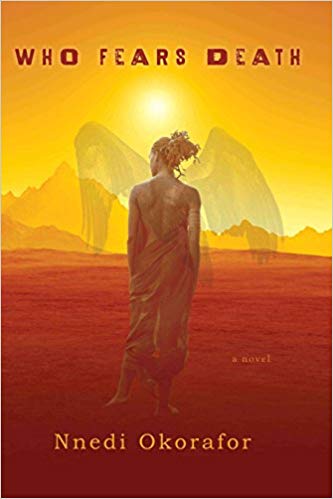
In many ways, Okorafor’s Who Fears Death follows a classic fantasy structure: a young woman with mysterious origins discovers her special powers and embarks on a high-stakes mission to set the past right. Okorafor sets her story in a surreal desert in a bleak future Africa, where protagonist Onyesonwu lives among a community beset by genocidal enemies. A recurrent theme of ASOIAF is the way the violence of the past hangs as a shadow over the present; that’s explored in Who Fears Death, as Onyesonwu gets deeper into her magical training, and uncovers more of the truth about herself. It’s both dreamlike and brutal, a richly-defined world drawn from Okorafor’s fascination with African history and legend. Who Fears Death is under development for a series at HBO.
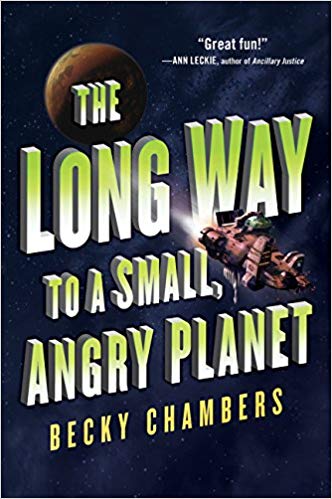
One of the joys of ASOIAF is getting to explore a sprawling world through multiple perspectives. Chambers takes this to a galactic dimension in this fast-reading, vivid novel. Along the way to the small angry planet in question, the crew of a spaceship called the Wayfarer travels through an incredibly detailed universe, an interstellar society in which humans are a junior partner. We get to learn how people in this universe—human, nonhuman, and even robotic—live, love, and fight. The Long Way to a Small, Angry Planet is absorbing and fun—easy to get into and hard to put down.
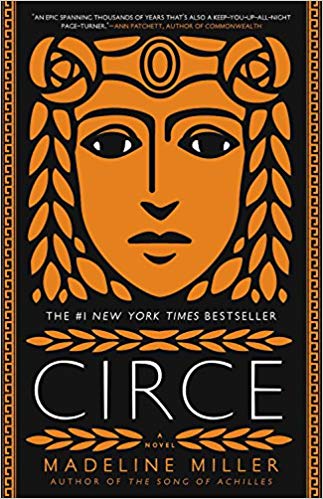
Martin uses the world of Westeros to unpack the ugly and unjust implications of heroic fantasy tropes. Madeline Miller uses her remarkable Circe to do the same for Greek mythology. As in ASOIAF, the stakes of the events are both world-historical and deeply personal; that’s just as true in Circe, where disputes and relationships among immortal gods and demigods are as vicious and petty and capricious as the internal politics of a small town. Through the eyes of the title character, a witch exiled by her divine family, we see the horror hiding behind the stories of the legendary heroes, especially Odysseus. In Circe’s world, men win glory by abuses of power, and gods are distinguished from men primarily by the extraordinary levels of power they can abuse. It’s a work of vivid detail, deep emotion and sharp sociological insight, a stunning new take on familiar stories.
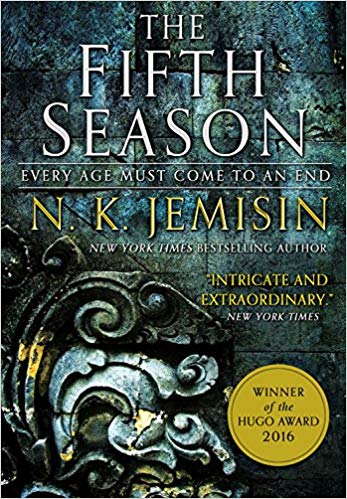
In Westeros, the seasons vary erratically, bringing dangerous and magically-charged winters at unpredictable intervals. In Jemisin’s Broken Earth series, the world is beset by even more catastrophic risk, with the constant threat of earthquakes and volcanic activity rising at times to threaten all of life and shape societies around the effort to survive. Those who can control the earth’s devastating seismic activity are vital to civilization, yet hated and feared. The first book in the series, The Fifth Season, is a feat of high difficulty, astonishingly well executed. It’s a grim but addictively readable saga, built of interlocking storylines that reveal a complex, incredibly well-defined world. (To get a sense of how deeply Jemisin thinks about the worlds she creates, check out her interview with Ezra Klein.) Jemisin pulled off a never-before-seen feat of a Hugo three-peat, with every book in the series taking home the prize for best novel, and with good reason: it’s a fully realized, emotionally gripping work with a lot to say about oppression and power in our own world.
Cersei Lannister wasn’t the first monarch to blow up a religious establishment to settle a personal matter. Mantel’s award-winning series looks into the court of Henry VIII through the eyes of Henry’s consigliere, Thomas Cromwell, a very modern man in a very medieval world. In the first two books of a planned trilogy, Cromwell helps engineer the end of the king’s first marriage and his second, upending the kingdom’s religious life in the process. The lines between divine command, statecraft, and interpersonal drama are blurred as Cromwell attempts to manage Henry’s capricious demands and settle his own scores. (The BBC miniseries, which covers the events of both books, is also terrific.)
Martin drew the inspiration for his books on medieval European history, with its clashes of armies, faiths and families. In her readable, in-depth biography, Downey makes the case that Isabella is one of the most significant figures of the past millennium. Like many members of Martin’s sprawling cast, Isabella lived in a male-dominated world but rose to the heights of power. Her ambition, fanatical devotion to the Catholic Church, and canny understanding of the ways of power make her a fascinating character. On her watch, Spain went from a fractured set of squabbling kingdoms to Europe’s dominant power and a truly global empire, with long-lasting and bloody consequences.
The following story was chosen by Kelly Link as the winner of the 2019 Stella Kupferberg Memorial Short Story Prize. The prize is awarded annually by Selected Shorts and a guest author judge. The winning entry receives $1000, a 10-week writing course with Gotham Writers Workshop and publication in Electric Literature. The winning work will also be performed live on Selected Shorts at Symphony Space in Manhattan on June 12, 2019.
Eugenie is Anointed
Like every Witness kid, Eugenie knows there are a limited number of future angels: 144,000, each alerted to their status while still on Earth, in a quiet but unpredictable way. Eugenie finds out as she drops a pork chop into a bag of seasoned flour. When Sofia, her stepmother, starts shaking the paper bag, Eugenie understands that God has chosen her: her chest tightens, and the knowledge thuds into her brain as clear and unchangeable as the date of her birth. At twelve, she is considered to be unreliable or mistaken much of the time, and she hesitates to mention her news. She pours a half inch of peanut oil into the skillet, then washes her hands and dries them on her shirt.
“What do you have against aprons?” Sofia says.
“What do you have against aprons?”
Sofia clucks her tongue. “Your father doesn’t like it when you echo.”
“I know,” Eugenie says.
This is Sofia’s disapproval at its strongest. When Eugenie’s father married Sofia, he ceded the disciplinary responsibilities to his wife, who turned out to dislike his methods. Wet your bed? Go stand in the corner. Talk back? Wear a strip of tape over your mouth. Sofia preferred to send Eugenie to her room to “think,” where, inevitably, Eugenie fell asleep on her bed.
But he isn’t mean, her dad. He saves sea glass for her in shoeboxes, sorted by color. He gave her a silver-plated necklace in the shape of a heart.
They eat in front of 60 Minutes: pork chops and rice with gravy, cabbage, canned fruit cocktail. Sofia, almost eight months pregnant, finishes the rice right out of the pot with a serving spoon, her GED study guide open on her lap. The ceiling fan makes small ripples in the skirt of her caftan. It’s hot as Hades, she used to say, until Eugenie’s father overheard her and told her to stop.
“Let’s go for a swim,” Sofia says, eyes closed.
Eugenie shudders.
“There’s still that dead animal we saw yesterday.”
“I think it’s just a field mouse.”
“It smells terrible.”
“That’s why they don’t make perfume out of a drowned field mouse.” Sofia stands up, holding her belly. “We’ll just scoop it out with the net.”
The back porch light is burned out, so they take a flashlight. Eugenie steps on what turns out to be a nectarine pit. She examines her upturned foot in the flashlight beam, then zigzags the beam across the surface of the water. Her head feels stuffed with questions – do angels have blood, and can they feel water, and what do they eat, and has there ever been an instance of two anointed congregants in one family? She looks at Sofia, who has started plunging the net into the shallow end of the pool, hoping to find the mouse by chance. Eugenie gags at a wave of rotten, wet-wool odor.
“It smells like –”
“Shhh.” Sofia shakes the net. “I’m concentrating.”
Which of the five senses, if any, does an angel get to keep? Eugenie hates her own stupid questions. She sits on the edge of the diving board and dips her feet into the pool, half-hoping the mouse will brush against her toes, because Sofia wants so badly to find it.
“Forget the flashlight.” Sofia’s out of breath. “It’s useless.”
Eugenie drops the light and lies back on the board. Her father is an elder in the congregation, and sometimes she brings her questions to him. If she asks about this, she already knows what he’ll say: some variation of You think you’re special? She doesn’t. She is stringy-haired and terrible at math. Someone at school told her that her breath smells like whole milk – not just milk but whole milk, as if she exhales a kind of fattiness. She gets so bored in meetings at the Kingdom Hall that she makes up secret meanings for Biblical words: Lasciviousness is spun sugar. Lamentations are harps or wind-chimes. Harlot is the perfect name for a flower.
She is not special, and she does not want to be anointed; she has plans for earthly paradise after Armageddon. She has plans to help Sofia with the baby. She has plans to pick berries and eat them without washing them first; her father has assured her that this will be possible in paradise. I am not special, she thinks, then decides to pray – to remind God, who seems to have made what is surely His first mistake.
Electric Literature seeks a part time Marketing and Development Assistant to join our team. This position will assist the Executive Director to grow Electric Literature’s membership and donor base, and market its merchandise, publications, and programs to targeted audiences. Specific responsibilities include liaising with members and donors, and helping to recruit advertisers and coordinate EL’s annual fundraising gala, the Masquerade of the Red Death. The Marketing and Development Assistant will also have administrative duties such as sending gift receipts to donors, pulling sales reports, and maintaining the advertising calendar. Though this is a part time position, there will be opportunities to advance and expand the role.
Electric Literature’s mission is to make literature more relevant, exciting, and inclusive. Here’s how you’ll contribute to those goals:
Raise awareness and enthusiasm for Electric Literature’s activities and mission
Strengthen and grow Electric Literature’s community
Think creatively about how Electric Literature can communicate its ideals most effectively, and how the organization should adapt to a changing media landscape
This is an ideal position for someone with entry-level experience who is looking to take their skills to the next level.
RESPONSIBILITIES
Marketing
Manage Electric Literature’s online store and merchandise, including customer service, order fulfillment, promotions, and marketing
Contribute ideas for new merchandise
Work with the Executive Director to establish and meet sales targets
Assist the Executive Director to recruit new advertisers and build those relationships
Help manage relationships with existing advertisers
Manage ad scheduling, reporting, and fulfillment
Create visual assets for marketing campaigns
Pursue promotional and press opportunities for Electric Literature
Development and Fundraising
Work with the Executive Director to develop strategies to attract new members and individual donors, and to strengthen the membership community through in-person events and online initiatives
Act as the communications liaison with members and individual donors, field requests and inquiries, etc.
Work with the Executive Director to establish and meet new membership targets
Track individual donations and manage gift acknowledgement
Events
Assist the Executive Director in planning EL’s fundraising gala The Masquerade of the Red Death, held annually in October
Assist in planning the occasional small community events such as readings and mingles
Assist in planning cultivation events for prospective members and donors
QUALIFICATIONS
The ideal candidate:
Is outgoing and friendly; the kind of person who will introduce him or herself to everyone in a room
Thinks creatively about how to connect with people
Is passionate about literature’s power to bring people together
Is patient and organized
Has at least one year of professional marketing experience (assistant level and freelance work qualifies)
Is able to set and work toward quantitative goals
Has professional event planning experience (intern and assistant level qualify)
Is organized, calm under pressure, and a quick thinker
Is familiar with the New York literary and cultural scenes
SKILLS
Mailchimp, mail merge
Strong communications skills
Familiarity with non-profit membership structures
Familiarity with online ad sales including Google ads and DFP, or a willingness to learn
Experience writing press releases and promotional material
Designs skills and proficiency with design programs such as Photoshop, inDesign, and/or Canva
This is a part time 15hr/week position with a $1,000 per month stipend. All candidates must be available to come into EL’s downtown Brooklyn office.
To apply, please send a resume and cover letter to editors@electricliterature.com by 11:59PM on Sunday, June 2, with the subject line Marketing and Development Assistant Application: Your Name.
Aristophanes’ Lysistrata was first staged in Athens over 24 centuries ago, yet its famous plot has cast a long shadow. In the play, an Athenian woman named Lysistrata organizes a Panhellenic league of wives and successfully convinces them to deny their husbands sex until the men agree to end the protracted Peloponnesian War. This heavily absurd—yet still quite amusing—comedic plot resurfaces periodically (in both life and art) as a genuine call to action. Its latest incarnation is Alyssa Milano’s attempt (on Twitter and in a subsequent op-ed) to rally American women to a nationwide sex strike. Her call came in the wake of Georgia governor Brian Kemp signing a fetal “heartbeat” bill that would essentially outlaw abortion in the state, which was shortly followed by an Alabama law that bans abortion outright, including in cases of rape or incest. These laws have as their ultimate goal the toppling of Roe v. Wade.
Why, women wondered, should we adopt an abstinence approach that anti-abortion advocates would gleefully commend?
Critical responses to Milano were swift to come. Pro-choice feminists rightly criticized the exclusive focus on heterosexual, cisgender women and men to the exclusion of LGBT+ voices, and the (ironic) framing of heterosexual sex as female labor in service to male pleasure. Why, many women wondered, should we give up something we enjoy and adopt an abstinence approach that anti-abortion advocates would (and did) gleefully commend? The strike also defies logic insofar as women are not a homogeneous group—these abortion bans have the support of many women, especially white conservative women, who will have no qualms about crossing this or any picket line. (In fact, most of the men who would need to take action against these laws would likely see little effect from such a strike.) Women sponsor these bills and indeed sign them into law.
Such shortcomings and oversights are in fact already present in Lysistrata’s sex strike—as part of its comedy. The play’s plot has to make some convenient and rather glaring omissions that do not accord with well-documented practices of ancient Greek sexuality. In a city famous for its male homoeroticism and its pederastic relationships, why can the husbands not simply have sex with young men? Classical Athens was also a slaveholding society, and a man had full sexual access to his slaves, whether men or women—but enslaved people are curiously absent from the play. Prostitution, moreover, was perfectly legal, and sex workers—often themselves enslaved and trafficked—would have had virtually no agency to refuse.
Sex with one’s legitimate wife was in truth only one of an array of sexual options that men—at least free citizen men—had. In the courtroom speechAgainst Neaera, written about 50 years after Lysistrata, the speaker Apollodorus carefully demarcates wives from other women whose sexual use is primarily for enjoyment: “Prostitutes we keep for pleasure, concubines for daily attendance upon our person, but wives for the procreation of legitimate children and to be the faithful guardians of our households.” The idea that men would be pining away sexually for their wives and only their wives is fanciful and, when staged in comedy, highly amusing—as are some of the logical leaps that have to be made to make sense of Alyssa Milano’s sex-strike.
In Aristophanes’ play, the strike is a patent absurdity—it is the stuff of comedy.
In Aristophanes’ play, the strike is therefore a patent absurdity—it is the stuff of comedy, a plot device meant to spill us out of our seats with uproarious laughter. Its absurdity defines its genre; there is a ludicrous, impossible idea at the heart of nearly all Aristophanic comedy. In Peace, the Athenian farmer Trygaeus rides a gigantic dung beetle to Olympus to urge the gods to end the Peloponnesian War. In Birds, a clever man named Peisetaerus founds a bird city in the sky and becomes the new Zeus. In Ecclesiazusae, the women of Athens (gasp!) take over the Assembly and thus political control of the city. The idea that women might similarly take control of their bodies and their sexuality speaks to the topsy-turvy world that ancient comedy performs before setting it right.
As a literal roadmap for 21st century activism, Lysistrata’s sex strike falls short. The play in fact endorses stereotypes about female sexual license that are still invoked by anti-abortion activists. In this view, women are so hypersexual that they can barely restrain themselves from fucking irresponsibly at every turn—they require patriarchal control. This is why, after the women have sworn oaths to abstain, Lysistrata does not let them go home to arouse their husbands with sexy lingerie (the original plan) but instead leads them behind the barred Acropolis. She must keep them away from their men, and even then they hatch plans to escape. As Lysistrata says of the women, “I’ll make it short: they’re dying to get laid.” Much of the play’s humor arises, as the Greeks would have seen it, from watching women attempt to maintain sexual self-control and men, thought to be more disciplined, lose theirs.
This basic premise about the essential unruliness of female sexuality permeated ancient Greek thought and life. It explains why the lives of (especially elite) women were often spent in seclusion within the women’s quarters of the home—this wasn’t to protect women from the outside but to protect the outside from women, whose sexual voracity could lead them into liaisons with off-limits men. A woman who acted on her sexual desires threatened the authority of her husband within the household and the state. In a city wherein citizenship was passed down through both the mother and the father and naturalization was nearly unheard-of, the female womb was subject to intense regulation.
Such fears about female sexuality also motivate many of those opposed to abortion rights today. Their constant advocacy of abstinence-only education and their high valuation of female sexual purity treats abortion as fundamentally a byproduct of women’s dangerous libidos. They constantly suggest that if women would just stop having promiscuous sex outside of wedlock (especially premarital sex), there would be no need for abortion. This is why Milano’s recommendation to abstain gave abortion opponents cause to celebrate, if only mockingly.
In Aristophanes’ play, Lysistrata is only successful because she herself exhibits no sexuality at all. She makes no mention of her own husband, and she vocally affirms the play’s stereotypes of women: “Oh, what a low and shameless race we are! / No wonder men write tragedies about us.” She is most likely a human embodiment of Athena herself, the famously asexual virgin goddess and patron deity of Athens. Both Athena and Lysistrata are exceptions to the presumed sexual lawlessness of women—as such, they are in fact gendered as masculine. The play’s male ambassadors hail Lysistrata, for example, as the “manliest” of women.
Rather than affirm the positive potential of female sexual agency, the play repeatedly upholds the notion that women’s desire must be checked by masculine control. Lysistrata’s sex strike ultimately fails to offer real strategies women can adopt today to assert their right to make decisions about their own bodies, and in fact the play echoes long-standing arguments that they should not have this right at all.
There are famously two plots in Lysistrata, and we need to be paying attention to the second.
And yet the play is by no means devoid of lessons for those seeking to empower women politically. They just require us to look beyond the sex strike plot, a gimmick that exists chiefly to elicit laughter. There are famously two plots in Lysistrata, and we need to be paying much more attention to the second, the takeover of the Acropolis.
This second plot is more deeply political, i.e. tied to the inner workings of the polis, the “city.” Aristophanes is perhaps the most political poet from Greco-Roman antiquity, and concerns about war, class, law, and justice permeate his comedies. He knows that for the women of Lysistrata to attain real power, it will take much more than a sex strike. It will require women to organize and take over political realms traditionally controlled and guarded by men. The play offers a lesson in concerted political action.
When Lysistrata takes her fellow conspirators to the Acropolis, it is not only to keep them away from their husbands. It is also because the Acropolis is the center of male monetary power. It is where the treasury is located, which is needed to fund the ships required for the continuation of the war. Asked by a (male) city magistrate why she has occupied the Acropolis, Lysistrata replies, “Confiscation of the money: / thus we put a stop to war.” The sex strike is only one front in a complex plan put in motion to strip official power from the men and put it in the hands of women. As Lysistrata tells the magistrate, “War is strictly for the women.” This alludes to and corrects the magistrate’s earlier use of a saying going all the way back to Homer’s Iliad: “War is strictly for the men.” Lysistrata has effectively overturned a longstanding pillar of masculine control, and she did not need to bargain with sex to do so.
Another realm of male power the women must seize is that of official speech. Throughout the Greco-Roman world, political speech was coded as masculine—women simply had no right to it at all. Only male citizens could speak in the Athenian Assembly, and in fact it was not acceptable for respectable women even to be named in most public situations. Lysistrata’s sex-strikers are aided by other groups of women who are not involved in the strike at all, particularly the city’s female elders, who form half of the play’s chorus and interact again and again with the male elders that make up the chorus’s other half. Their chief point of contention is not sex, but speech: “How’d you like to have your mouth shut?” the men ask. “Two or three punches ought to do it.” The women in turn assert their right to give the city “good advice” and cite their civic and religious contributions as giving them this right.
If sex is one prong in Lysistrata’s plan, it is because she aims to take over all the spheres that men traditionally control.
The traditional silencing of women is also central to Lysistrata’s own complaints to the magistrate: “All along we kept our silence, acquiesced as nice wives should…although we didn’t like it.” But now she has turned the tables on the men: “Want to hear some good advice? / Shut your mouth the way we used to, / let us save you from yourselves.” If sex is one prong in Lysistrata’s plan, it is not because she simply wants to make the men lose their minds with desire, but because she aims to take over all the spheres that men traditionally control—money, war, speech, and sex. And time after time these usurpations elicit male outrage and backlash.
Lysistrata in fact reveals how vigorously those benefitted by patriarchal systems will oppose women who defend their right to take part in the political process. In order to effect change, Lysistrata and her allies must challenge these patriarchal systems on multiple fronts, not through the sex-strike alone. This is true of all of the sex strikes often cited to prove the tactic’s efficacy. One well-known example, whose ties (or lack thereof) to Lysistrata have been nicely examined by Classicist Helen Morales, is the Women of Liberia Mass Action for Peace, organized in 2003 by Leymah Gbowee to end the Second Liberian Civil War. Crucially, this involved not only a sex strike but also a series of non-violent protests by a coalition of Muslim and Christian women. Their actions were effective and helped to usher in the first female head of state in Africa, Ellen Johnson Sirleaf. As Gbowee would later state, “It took three years of community awareness, sit-ins, and nonviolent demonstrations staged by ordinary ‘market women’….The sex-strike had little or no practical effect, but it was extremely valuable in getting us media attention.” In the end, it was concerted and wide-ranging intervention by women into the political sphere that affected real change.
What Lysistrata can teach to modern feminists is the urgency of getting progressive women into official corridors of traditionally masculine power. The Georgia ban would have gone nowhere were the governor’s office occupied by Stacey Abrams, whose razor-thin loss likely resulted from a series of massive voter purges orchestrated by her opponent, Brian Kemp, who as Georgia secretary of state oversaw the very election in which he was a candidate. In Georgia’s state senate, 33 of the 56 members are white Republican men, and Republican Renee Unterman was the only woman to vote for the abortion bill. While it is undeniable that conservative white women are helping to enable the abortion ban in Alabama, it is also true that the 25 Republicans who voted for it in the state senate are all white men. Women must loosen the grip of power these men have on state legislatures—and in Georgia it is women of color (who make up 8 of the 13 female Democrats in the state senate) who are especially taking up this challenge.
A more fitting way for women and the men who support them to be inspired by Lysistrata is not to dive into a nonsensical sex strike but to contribute to those organizations that aim to get progressive women candidates elected, organizations such as Emily’s List, Emerge America, Run for Something, the DLCC, and Higher Heights for America. A more fitting way to be inspired by the play is to recognize that money is power and to contribute to the organizations doing the hard work on the ground. A more fitting way to be inspired by the play is to speak up in support of women’s rights rather than stay silent as these rights are chipped away and, perhaps more importantly, to listen when women speak about their reproductive experiences. To quote the play’s chorus of women, “We bear the children and deserve our say.”
But we must also know where to draw the line between the present and the past. Lysistrata may hold lessons for our time, but it is not a play of our time. It assumes patriarchy as the status quo, and once peace has been brokered between the warring (and comically ithyphallic) Athenians and Spartans, the women are again silenced and relegated to the domestic sphere, while male sexual prerogatives are restored. Lysistrata’s last words enjoin each of the men to “take his wife and go on home.” She then simply vanishes, while the men bombastically celebrate for over 130 more lines. The workings of the ancient theater also expose the actions of the play’s women as a clear dramatic fiction. Since women did not have the right to perform in public in Classical Athens, the play’s indelible heroine and her female allies were all performed by men. The protests Lysistrata makes against the silencing of women were authored and spoken by a man. The staging of the play reassured the audience (who were most likely all men) that their political power ultimately remained unthreatened.
The play posits provocative and pointed questions to those worried about threats to women’s rights today. Will we too see so much women’s progress wiped away? Will the old status quo reassert itself here as well? Where will the backlash to women’s political achievements lead? Who will have the last word of this act? I do not yet know the answers to these questions, but I do know that those working to disempower me are far more threatened by my vote and my voice than by anything I do in the bedroom.
Each year, we are asked to take stock of ourselves — what, in the last 365 days, have we done to improve ourselves? Destroy ourselves? How have we changed–for better or for worse? Tremendous change can, and often does, happen with each rotation around the sun but we often forget that occurrences worthy of deep reflection can take place in as little as 24 hours. Discoveries–internal and external–are made, thoughts are altered, resolutions are endeavored, journeys both begin and end. From unexpected romances to mental breakdowns, here are 15 books that remind us how substantial the events of a single day can be.
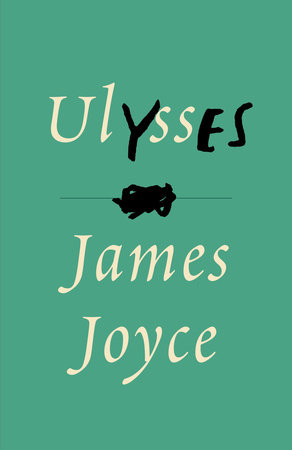
Leopold Bloom is a Jewish advertising canvasser whose thoughts are consumed by his wife’s infidelity. Stephen Dedalus is an aspiring poet. Ulysses follows the pair as they go about their day, at first separately as strangers and then together wandering aimlessly through Dublin.
Clarissa Dalloway is an upper-class woman whois preparing a dinner party for her Parliament member husband. Like Joyce’s Ulysses, Virginia Woolf’s Mrs. Dalloway employs a stream-of-conscious narrative and switches between characters–socialite Clarissa and shell-shocked war veteran Septimus. An introspective novel peppered with regret and anguish, Mrs. Dalloway explores the varying ways that depression manifests in different people.
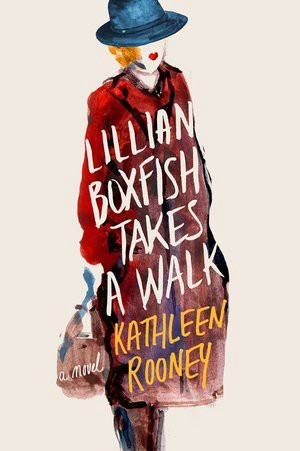
On the eve of 1985, Lillian Boxfish is heading to a New Years Eve party in her mink coat and navy-blue fedora. On her 10-mile walk around Manhattan, the octogenarian is reminiscing about her past from a junior copywriter in the 1930s to the highest paid woman in advertising. Lillian Boxfish Takes a Walk is an ode to an ever-changing New York City.
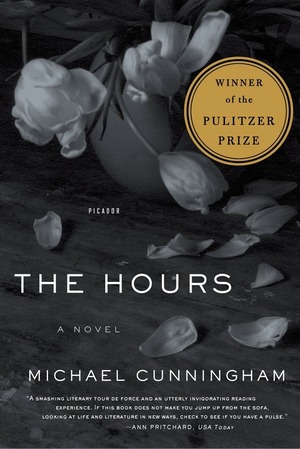
The Hours chronicles a single day in the lives of three different women across three different eras. In 1923, Virginia Woolf muses over the plot of Mrs. Dalloway. In the 1950s, pregnant housewife Laura Brown escapes to a local hotel to read, you guessed it, Mrs. Dalloway. In the present day, book editor Clarissa “Mrs. Dalloway” Vaughn plans a party for prize-winning poet Richard, a former-lover-turned-friend dying of AIDS.
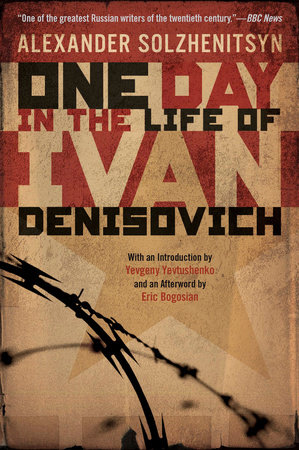
Imprisoned on trumped-up charges of treason, Ivan Denisovich is serving ten years of hard labor in a Soviet gulag. One Day in the Life of Ivan Denisovich is a searing account that highlights life in a communist labor camp and the inmates’ struggle to retain humanity in the face of dehumanizing circumstances.
Today Eleanor Flood will not be a mess. No. Today, Eleanor will have her shit together. Except she doesn’t. From her husband going on vacation he didn’t tell her about to a meeting-gone-so-wrong, Eleanor fields one mini-disaster to the next until a long simmering family secret threatens to erupt.
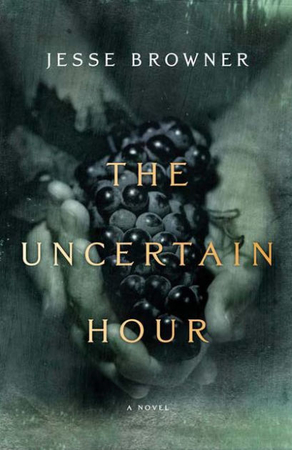
In Rome a.d. 66, aristocrat Titus Petronius has been falsely implicated in an assassination plot against Emperor Nero. Having chosen to commit suicide rather than submit to a dishonorable execution, Petronius invites his loved ones for a lavish final gathering. Death looming ever-present throughout, The Uncertain Hour is a reflective narrative that examines choices made in life and the restorative power of death.
George is English-born San Francisco-based professor coping with the death of his long-time partner Jim. Accompanying George through his daily routine and interactions with others, Christopher Isherwood’s A Single Man is a full and multi-layered depiction of grief in a gay relationship.
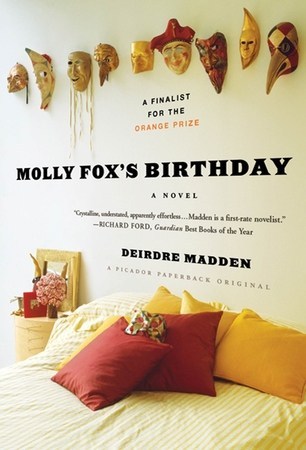
In Deirdre Madden’s novel, a nameless playwright housesits for her friend, the acclaimed actress Molly Fox. Searching for inspiration for her next play, the narrator reflects on her 20-year friendship with the homeowner. The novel takes place, as the title suggests on the invisible but ever-present Molly’s birthday, and explores how a once intimate friendship became estranged.
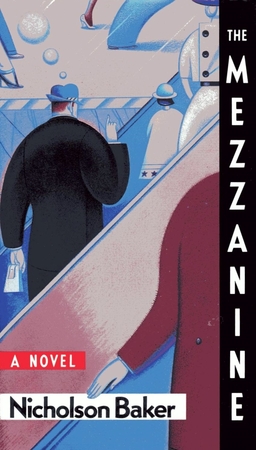
The Mezzanine follows office worker Howie while on his lunch break. Much like his job, Howie’s thoughts seem mundane: shoelaces, plastic straws, the evolution of milk cartons. But as readers venture further into Nicholson Baker’s 135-page novel, they are allowed a glimpse into Howie’s more formative years with his meal-time musings acting as portals into his childhood and coming-of-age experiences.
Franny Glass is falling apart. Frustrated by the ego of her professors and phoniness of her fellow students, Franny breaks down while at lunch with her college boyfriend. Crying in her family home, Franny is inconsolable and her older brother Zooey is tasked with diffusing the situation. What follows is an at first scathing but ultimately heartwarming exchange between the Glass family’s youngest children about religion, remembrance, and respect.
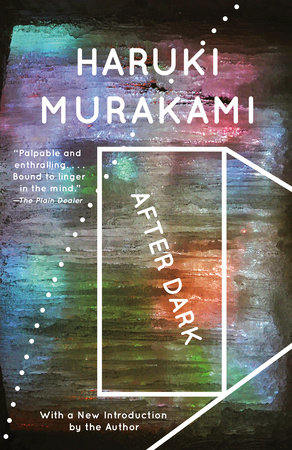
In Haruki Murakami’s eleventh book, Mari Asai wants only a late-night place to do some quiet studying. Minutes before midnight, the 19-year-old college student finds refuge in a 24-hour Denny’s. It’s not long, however, before her plans are deterred, books abandoned for the company of an attention-seeking trombonist, a “love hotel” owner, a Chinese-speaking prostitute, and an escort-battering businessman with connections to her coma-inflicted sister. The streets of Japan as the backdrop, After Dark explores how places and the people that populate them transform after the sun sets.
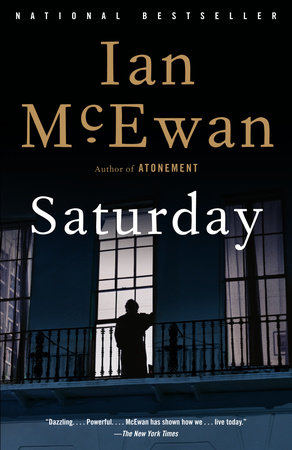
For neurosurgeon Henry Perowne, Saturdays are restful and reflective, a day that typically consists of lazy love-making with his lawyer wife, squash with his colleague, and visits to his mother. On this particular Saturday, however, Henry’s usually pleasant routine is overcast with dread when a series of unsettling events snowball into an explosive conclusion. Set in a post-9/11 Britain, Ian McEwan’s novel explores the unpredictable and the tension that results from the protest against the 2003 invasion of Iraq.
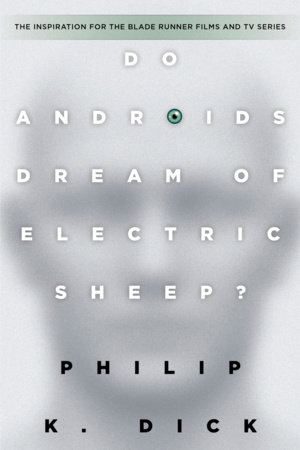
It’s 2021, World War Terminus has plunged earth into a post-apocalyptic state and humans have colonized other planets with their human-passing android slaves. Cut to Rick Deckhard, a bounty hunter tasked with “retiring” androids who have escaped servitude and live undetected among those that remain on earth. Inspiration for the Blade Runner franchise, Do Androids Dream of Electric Sheep follows Deckahard on a specific hunt, using his interactions with his prey to ask: “What makes humans human?”
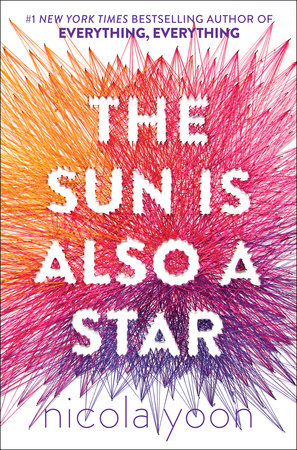
New York City high schoolers Natasha Kingsley and Daniel Bae meet cute and fall madly in love with each other over the course of a single day, but there’s just one problem: Natasha and her family are being deported to Jamaica in twelve hours.
When I was a little girl I loved stories about miniature people: first picture books about Tom Thumb and Thumbelina, then mighty Little My from Tove Janson’s Moomintroll books, Mistress Masham’s Respose by T.H. White, Rumer Godden’s The Dolls’ House, but above all, The Borrowers series by Mary Norton. The tiny Borrower family lead a secret life inside the walls of old houses, and once discovered, light out into the enormous wilderness of the front yard and the field. I loved The Borrowers beyond all reason.
Buy the book
In his memoir, C.S. Lewis describes his first experience of joy when, as a very young child, he first saw a miniature garden constructed by his older brother. He describes his feeling upon gazing on that tiny world as closest to “Milton’s ‘enormous bliss’ of Eden.” That’s it: the transcendent, numinous feeling of bliss upon an encounter with a miniature world.
The received wisdom is that children love stories about miniature people because they themselves are miniature people. But that doesn’t fully explain the intensity of this passion for the diminutive. Perhaps that “enormous bliss” can be explained by the concept of the uncanny valley. It’s the idea that things that appear almost human, but not quite, give us an eery jolt of recognition. The uncanny valley can elicit disgust, but for me, that uncanny, strangely familiar feeling when reading about tiny people turns the mundane magical. In 1917 literary theorist Victor Shklovsky wrote that poetry acts as a defamiliarization technique, “to make things unfamiliar,” so that we can really see and feel aspects of our existence as if for the first time. Tiny people are like tiny poems that remind us about what it means to be human.
And some of these tiny poems are definitely not for children. Narratives about miniature people can tell complicated, grown-up stories about pleasure and power, about what happens when ferocity is compressed into a very small space, about the ways love is imbricated with cruelty, about the uncomfortable side of that “enormous bliss.” Here, I give you seven stories of miniature people for adults that I hope will bring you enormous (uncanny, uncomfortable) bliss.
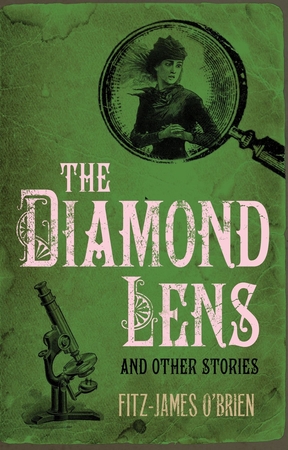
As a child, Linley, destined to become a mad scientist, finds his enormous bliss in the marvels under a microscope. He’s the main character in “The Diamond Lens,” written by Fitz James O’Brien and published in The Atlantic Monthly in 1858. O’Brien is a practitioner of what was then called Scientific Romance in the vein of Jules Verne or H.G. Wells. The story’s charms come from its 19th century mix of melodrama with the vision of the limitlessness possibilities of scientific discovery, including the “‘science”’ of speaking to the dead and finding a microscopic heaven. The story simmers along from spiritualism to theft to murder, with some ugly antisemitism along the way, and reaches the boiling point when Linley discovers a woman with “suave and enchanting curves” in a drop of water. Linley names her an “animalcule” and falls in love. You can probably guess this love story will not end well.
Jennifer Fliss’ contemporary story “Domestic Appliance” is also about the doomed love between a big man and a tiny woman, but here we find ourselves in the point of view of a woman who lives in a suburban stainless steel refrigerator and sleeps on a stick of butter. The tiny woman’s life in the refrigerator is antically rendered—she “stares into a (pickle) jar for hours” and “avoided the condiments” but she is a domestic captive, a miniature metaphor for the suburban wife who owns the refrigerator. Little woman and big woman both love the same untrustworthy man, and neither of them escape before the door slams shut.
The diminishing effects of suburbia is also a theme in Amy Silverberg’s “Suburbia!” first published in the Southern Review and republished in Best American Short Stories, 2018. A father bets his daughter she will leave home at eighteen and never return. If she returns, she loses the bet. A week after her eighteenth birthday, an age when she is “an egg balanced on a spoon,” the girl’s father hands her two wads of cash, puts her on a train, and she is sent off to seek her fortune. I don’t want to give away too much of this story that manages to be both buoyant and sad at the same time, but its surprisingly tiny end allows us to see “the way the past and the future could both shrink down to a manageable size, like a pill to be swallowed, or the head of a match.”
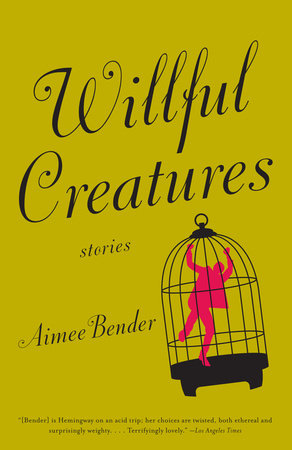
The complicated power of laughter is at the heart of a trio of stories about miniature people. Aimee Bender’s “End of the Line,” (made into a 14 minute film by Jessica Sanders) from her collection Willful Creatures begins: “The man went to the pet store to buy himself a little man to keep him company.” In this disturbing captivity narrative there are only two characters, a lonely, big man and the little man he’s caged. At first the big man laughs and laughs at the little man, but when the little man proves to have a wife and children, to have travelled, to be better at numbers, to emit his own high-pitched laughter, in fact to have a ‘bigger’ life than the lonely big man does, the big man begins torturing the little man. But the little man practices passive resistance: “A man familiar with pain has entered a new kind of freedom,” and, as in all these stories, the tiny character turns out to have his own surprising power.
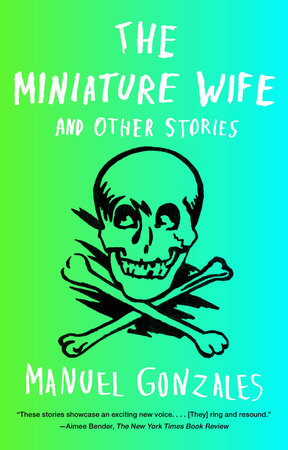
“The Miniature Wife” brings to mind Margaret Atwood’s famous statement: “Men are afraid that women will laugh at them. Women are afraid that men will kill them.” A man’s wife laughs at him too often, so he shrinks her with a device he stole from work. He reassures his outraged spouse that “he would take care of her now…He wondered if this could be the answer to all their marital woes?” It isn’t. When he is still unable to control her, he locks her in the dollhouse he has made for her, then burns it down. But hell hath no fury like a woman made to feel small.
Perhaps Bender and Gonzalez read and loved, as I did, “The Smallest Woman in the World,” by Clarice Lispector (published in 1960, translated from the Portuguese by the poet Elizabeth Bishop). At first this narrative seems to be upholding every stereotype of the “jungle” and the “great” explorer who discovers amongst the “lazy” green trees and the “swelling” fruit a tiny person as “black as a monkey.” The explorer immediately tries to “order” her, name her, get this “other” under control. The response of the smallest woman in the world makes the explorer “distinctly ill at ease.” It’s just a smile, but “a smile that the uncomfortable explorer did not succeed in classifying” because it is brimming with uncontainable, unclassifiable, acquisitive joy.
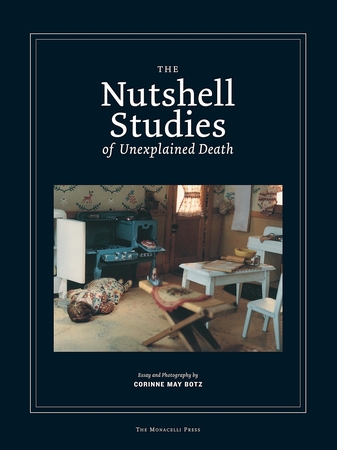
The Nutshell Studies of Unexplained Deaths, an essay and photographs by Corinne May Botz, tells the truly strange story of Frances Glessner Lee. Glessner Lee, born in 1878, grew up forced to bow to the injunction, “a woman’s place is in the home,” dependent on her extremely wealthy, autocratic father until his death. Botz writes that Glessner Lee never really began to live until she was fifty and free of her father. What living meant to her was spending all her time creating doll houses in which she staged murder scenes to help train detectives. Most of the doll corpses are women. She killed these tiny women and left them for the detectives to unravel the crime. She insisted the detectives call her Mother. Botz writes that “dominance and control are the adjectives that best characterize her relationship with the models.” Reading Botz’s intriguing essay and paging through her photographs, extreme close-ups of the murdered dolls shot in color with a warm filter, is perhaps the epitome of the creepy side of the human passion for the miniature. It is an uncomfortable truth that even the smallest woman in the world feels enormous bliss when she thinks “it is nice to possess, so nice to possess.”
Alexander Payne’s 2017 film Downsizing is more about goodness than joy. Matt Damon plays an earnest guy who decides to join a movement of people who are volunteering to be miniaturized to help the environment, but also help themselves. Because when you downsize, your dollars’ power becomes huge: you can live in miniature splendor for the rest of your life. Damon’s character and his wife cash in their lifesavings, but while he’s shrinking, she has a change of heart, returns home with all their money, and he emerges in Leisureland a miniature pauper. It turns out he’s not the only one. As in the big world, there is a community of poor people of color shrunken down to support the rich people. Damon ends up acting as the assistant to a Vietnamese activist who was involuntarily shrunk down and now serves the poor, played by Hong Chau. Downsizing runs the danger of being another Mighty Whitey tale like Dances with Wolves, Avatar, The Last Samurai, Elysiam, all those stories of white warrior men championing and becoming one with the brown people, but Damon’s Tiny Whitey is a downsized version, a gentle, weapon-less guy who is content to follow a mighty woman of color’s lead.
In our monthly series Can Writing Be Taught? we partner with Catapult to ask their course instructors all our burning questions about the process of teaching writing. This time, we’re talking to Alison Kinney, who’s teaching a six-week nonfiction workshop at Catapult’s New York headquarters, starting May 23. Alison is an accomplished essayist whose writing credits include The Paris Review, The New Yorker, Harper’s, Lapham’s Quarterly, The Guardian, The New York Times, Longreads, The Atlantic, L.A. Review of Books, and New Republic, and she’s devoted to helping new and established writers hone their nonfiction craft.
What’s the best thing you’ve ever gotten out of a writing class or workshop as a student?
Jill Ciment, who taught in my MFA program, reserved the right to intervene and shake up the traditional workshop whenever she believed a story needed it. It helped me see that writers approach audiences with different needs, and not all workshops are equal in their ability to recognize, welcome, or critique those needs. As workshop participants, we’re also learning how to read and respond better, and sometimes we need leadership for that, which is one kind of teaching.
What’s the worst thing you’ve ever gotten out of a writing class or workshop as a student?
I saw a teacher mock a student’s writing. Without having yet had the experience—which I’ve had since—of seeing a very raw beginner develop great craft, I knew that this was abusive, wrongful teaching. Beyond that, it reinforced the myth that writers are talented or untalented, rather than engaged in constantly shifting self-reinvention.
What is the lesson or piece of writing advice you return to most as an instructor?
We don’t have to be, and mostly aren’t, the writers we always thought we were.
We don’t have to be, and mostly aren’t, the writers we always thought we were. It’s easy to write when we’re teenagers journaling, or we get the optimal conditions of, say, silence, when we’re in the right mood, and it’s dawn on retreat in Tuscany. Optimal conditions exist, and lucky writers do get to enjoy them all the time. But the rest of us have to learn to scribble on the backs of bills on buses, or in text messages in line at the grocery. Many people fail to become the writers they could be, because they don’t know that this kind of haphazard, limited practice is not only acceptable, but also productive. Learning and accepting this is a kind of discipline, though: we need to believe that it’s okay, and keep working at it, so that if we do get six uninterrupted hours, we’re ready for that gift, too.
Does everyone “have a novel in them”?
We all have lives full of experiences and stories, and if we want to share them, we need communities to encourage the sharing. But a novel is a highly mediated, long piece of prose writing, not a life. Wanting to share a story, or to have shared it (!), is not the same thing as wanting to sit down for three or 30 years, giving up movies and vacations and developing bad posture, all for the sake of engagement with the form and the practice.
Would you ever encourage a student to give up writing? Under what circumstances?
A lot of writers give up because it’s hard. That’s not reason enough, because for many of us writing is always hard, it never lets up, and we prevail through it, not despite it.
But I would, and have, encouraged a student who really, really hated writing to concentrate, instead, on what she loved: editing other people’s work. Writing isn’t the only way to engage with words. But you might not hate it for all time: it’s okay to stop and to reassess this decision later. Art requires dedication and a practice—but these are not linear, not based on a capitalist notion of success on a timeline you’re supposed to achieve by the time you’re 24, or, god help us, 44. (I’m 44.) Or 74. You can stop—and later, only if you want to, because you want to, you can resume, differently.
What’s more valuable in a workshop, praise or criticism?
We all need both, but sometimes we need more one than the other so that we keep writing. So many wonderful writers are inhibited by fears that have nothing to do with their talent. The right kind of praise can show them opportunities and openings in their language that they didn’t have any faith in. But we should also be thinking of criticism as an opportunity to think better, to challenge ourselves to come up with better solutions.
Should students write with publication in mind? Why or why not?
So many wonderful writers are inhibited by fears that have nothing to do with their talent.
Sometimes? Let’s not kid ourselves that established writers don’t pee themselves when their agents successfully place their stories in The New Yorker, and that they didn’t write with this in the forefront of their minds, and that this isn’t a craft concern just as much as a market concern?
I think that a lot of students get told by gatekeepers to concentrate on their craft rather than the market, because teachers think of ourselves as guardians of true literary standards—standards that we, of course, meet, and should be paid money and given jobs and prestigious residencies for. But nobody who professionalizes is perfect; some of us start better prepared than others; and we are all, always, working on our craft all the time. Teachers should think really hard about how we determine readiness, and for whom.
I want us all to work on writing better, but thinking of classrooms and craft as the final arbiters of success and failure doesn’t totally square with reality. Good writers are competing against someone who doesn’t need to incorporate workshop feedback into her memoir because she’s the granddaughter of the CEO of the publishing house and got her first chapter published in Big Time Literary Magazine. So I don’t think we should pretend that the literary market isn’t willing to concede its high standards, all the time, for the sake of adjacency to power, and then redefine those standards to accommodate.
I try to teach about publication by preparing students to face inequitable literary markets. They need to know to fight for their voices as WELL as writing as well as they can. These realities exist, and we can simultaneously try to compete, try to change or burn down the standards, and try to build up our own communities and each other, to shift paradigms.
In one or two sentences, what’s your opinion of these writing maxims?
Kill your darlings—A lot of my students kill everything, too soon, by deleting everything, so that they have nothing to work with at all. So, until the rest of the draft has advanced to the point where your grooviest initial idea, the one that made you want to write the piece at all, has become comparatively trite or insufficient and needs to be reworked or cut, you shouldn’t delete anything.
Show don’t tell—I think that what we should be asking ourselves is, “Does sitting with this anecdote/scene, exploring it at length, add to the arc of the overall narrative, or is it jut a small factoid we need in order to reach another point? Which of these two decisions serves the narrative better?”
Write what you know—Rather, “write what you’ve learned.” The ways that we know, even about ourselves and more especially about others, should be active, reflective, searching, and both experience- and evidence-based.
Character is plot—Not all maxims apply to all stories, but sometimes any maxim can goad you to find the direction or shape you need to keep moving, regardless of your goals. I have all kinds of silly writing advice pasted into my drafts, and it’s not there to force me to conform, but to remind me that I can get absolutely LOST parsing irrelevant details, and a simple “WHAT EXACTLY ARE YOU TRYING TO SAY” can get me back on track.
What’s the best hobby for writers?
Any hobby that makes the prospect of writing feel more rewarding by comparison. But any writer would rather vacuum an apartment, dust all the books, and launder everything that doesn’t move, than sit down to write. I will do my taxes rather than write. Basically, I can’t have hobbies, or chores, or friends.
What’s the best workshop snack?
Something that nobody in workshop is allergic to, and something that doesn’t have a strong smell: containable. Since a lot of us are rife with eating and body issues: a snack that makes you feel well-cared-for, whether it’s indulgent, or it tamps down your triggers.
Reading a Yan Lianke novel is disorienting. His plots are both surreal and absurd, presented in a manner that never reaches the pitch of coy irony. Instead, readers are often subjected to discomfort and dissonance, leaving one to wonder: what exactly did this all mean?
The winner of the Franz Kafka Prize in 2014, and twice short-listed for the Man Booker International, Yan Lianke is one of the most well-known — and most controversial — writers in China. Much of his work is overtly political, exploring devastating events in modern China’s history and its subsequent rapid development with pointed enough satire that several of his works have been banned in his country.
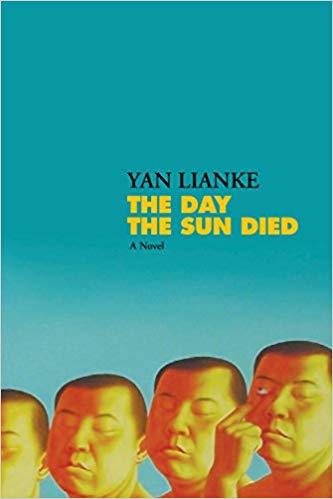
In Yan Lianke’s The Day the Sun Died, recently translated into English by Carlos Rojas (who also generously translated this interview), a young adolescent boy watches as his town descends into madness caused by “dreamwalking.” At first benign, the dreamwalkers grow more and more violent throughout the evening, and the narrator, Niannian, is one of the few who remains awake. He and his father, a funeral parlor owner, work through the night to try to help their neighbors.
Several English language reviews have interpreted the book as Yan’s critique of optimism behind “the Chinese Dream,” an ideal of national glory and collective prosperity coined by China’s current leader, Xi Jinping. But I wondered if Western readers — with our biases in our understanding of China — were conditioned to read a scathing indictment of the country, when in reality Yan’s intentions were more complicated. Over email, I asked Yan about critique and nuance, the nature of “dreams” and his views of humanity, and why he put a version of himself into this novel.
Karissa Chen: First of all, I wanted to let you know how much I admire your work. It’s characterized by its delicious strangeness, eeriness, and inventiveness, and this book is no exception. My first question for you is surrounding this word, “dream.” Of course, dreams play front and center in the book — the characters are seized by literal dreamwalking, but in the process they also enact other versions of dreams, from the dreams of wishful thinking and hopes to nightmares. Which type of dream was the seed of the book? Were you consciously exploring the many layers of meaning behind what a dream can be when you sat down to write this book?
Yan Lianke: Thank you so much for your thoughtful reading of my novel. With respect to your questions about daydreams, nightmares, and dreams-within-dreams, in The Day the Sun Died I was, of course, deliberately exploring the development and multifaceted nature of dreams. I wanted to use dreams to help develop a new understanding of humanity, reality, and of the world, and I sought to use dreams to find a new entry point into history. My starting point in writing about dreams, however, was actually not the dreams themselves, but rather reality. That is to say, I took inspiration from the sorts of daydreams that people have in real life. A daydream is a special term that can be used to describe China’s encounter with reality, and can also be used to refer to the way in which China, historically, has struggled and sacrificed in its quest for a utopia. Because people have daydreams, there will also be writings about dreams and dreamwalking; and it is precisely through the writing of dreams and dreamwalking that I hope to create a storytelling space for literature and writing.
I sought to use dreams to find a new entry point into history.
KC: Some reviewers and readers, particularly in the West, have read into the book a critique of this concept of “the Chinese Dream”; however, I found the book to be a greater indictment of any society driven by capitalism (America — and most of the world — included!), and how an extreme desire for material wealth can unravel a community. The first dreamwalkers harvest their grain while sleeping or prepare more funerary paper cuttings — these people are industrious even in their sleep. But as the night goes on, the dreamwalkers begin to steal from stores and beat people for their wares, eventually leading to murder and widespread battles. The chicken seems to feed the egg here — as people become more focused upon their own selfish, greedy desires, they become less caring about their neighbors, therefore leading to a more chaotic society, feeding more selfishness. (It’s interesting that the only time people band together is to fight against outsiders threatening to steal from them — an accurate portrayal of tribalism.) However, I don’t think it’s entirely clear which is the chicken and which is the egg — whether people are simply inherently selfish and greedy or whether it’s the society that influences to become this way. Perhaps it’s muddy the way the world is muddy, but I wondered if you might talk to this a bit.
YL: Thank you for using the paradox of the chicken and the egg to understand The Day the Sun Died. The first thing I want to say, however, is that the novel actually has no connection whatsoever with the Chinese Dream—for the simple reason that when I first came up with the idea for this story, the beautiful phrase China Dream had not yet been coined. At the time, Chinese society was still positioned in that era that the rest of the world found very recognizable and familiar. In other words, six or seven years ago, China’s highest power remained concentrated in the hands of another leader, and it was at that time that I first came up with the idea for The Day the Sun Died. Even after I finished the novel, it still didn’t occur to me that this work might be connected in any way to the Chinese Dream. It was only after it was published in English, meanwhile, that some critics began linking it to the Chinese Dream, and it was only then that I finally began thinking about this question.
Of course, after a novel is disseminated and enters the hands of its readers, those readers are free to interpret however they wish. However, what concerned me was how to make it such that this novel, despite being set in China, could address only China’s reality and its people, but also transcends these provincial limits and speaks more broadly to the world and humanity itself.
I hope this novel may function as an allegory for humanity itself.
With respect to the question of chicken and the egg, this is a paradox that describes the way that contemporary science and civilization are bringing humanity to the end of days. The inexorable development of robots and of the omnipotent internet, together with the tantalizing quest for immortality, which at times seems to be just around the corner—although these might appear to constitute the endpoint of humanity’s development, aren’t they also a force dragging humanity into a new abyss? Aren’t these developments simply a way of using human desires to control us, in the name of science and civilization? If you think carefully, just as China is unable to rouse itself from its current daydream, isn’t humanity similarly unable to rouse itself from its collective daydream?
Everyone is both chicken and egg. Everyone is pretending to be asleep with their eyes wide open.
“We are unable to rouse the sleepers”—this statement represents my understanding of the world. How can the dreamwalkers in The Day the Sun Died not be viewed as people pretending to be asleep? Which is the chicken and which is the egg—the answer to this question is actually not very important, because in reality everyone is both chicken and egg. Everyone is pretending to be asleep with their eyes wide open.
KC: Despite my cynical read of this book, I think you’ve also woven ample room for goodness to shine through. In particular, Niannian’s father’s journey is moving. Before the somnambulism even begins, he has tried to atone for his past by storing the corpse oil. But throughout the night he continues to do good by saving his neighbors, to increasing sacrifice, even while he is dreamwalking — his unconscious desires, in contrast to many around him, are to do the right thing. Still, his good deeds don’t go unpunished. Do you view Niannian’s father as the exception to inherently selfish human nature?
YL: The behavior of Niannian’s father is not an exception to that of the other dreamwalkers. In fact, Niannian’s entire family, together with the entire town, is actually trying to awaken the dreamwalkers. Their goodness, their love, and their tireless struggle against the darkness—this represents the light that exists within humanity’s darkness and the “instinctive love” that exists within human nature. However, I believe that for people today, desire is being actively smothered by civilization under the illumination of so-called reason. We can observe some individuals’ evil desires, but we are unable to see humanity’s collective desire. For instance, our inability to abandon our ceaseless quest for immortality is precisely the crystallization of humanity’s collective desire. Meanwhile, what we have lost is not only the “necessity of death,” and even less is it “the instinct of love.” We hypothesize that in the future everything, including life itself, will be handled by robots, but then what will be the point of the instinctive love that God gave humanity?
KC: Speaking of the corpse oil — I found this to be an extremely compelling (and horrifying) detail! I read it and I found myself thinking, “Oh my god, I suppose that must be true, if you can render pig fat, then this must be true of people too….” I’m afraid to Google this, so I’ll ask you directly — is this a real thing?
YL: This was made up. But don’t forget, humanity has its own history of cannibalism! Who knows how many cases of cannibalism occurred during China’s Great Famine. Given that people are capable of eating people, why wouldn’t “human oil” also have its uses?
KC: I think one of the fascinating aspects of the book is how it is narrated by someone who is viewed by others as being simple-minded and an “idiot” (a label Niannian seems to accept himself), and yet he seems to be the most clear-eyed character of all. Was the intent to let the readers in on the possibility that Niannian may not be as simple-minded as the rest of his neighbors believe, or did you simply think that having a person less likely to overanalyze allowed the events to be viewed slightly more objectively?
The combination of idiocy and idiocy may yield the basis of wisdom.
YL: Aside from the exigencies of the story and the narrative, I described Niannian in this way in order to suggest that if humanity is controlled by smart people, then perhaps a simple “idiot” might represent a more direct shortcut to our understanding of humanity and the world. The mathematical principle that the multiplication of two negatives yields a positive suggests that, to a certain extent, the combination of idiocy and idiocy may yield the basis of wisdom. Niannian’s simplicity is also precisely humanity’s “positiveness.” Moreover, it is precisely Niannian’s simplicity that lets him narrate this story, because this simple language is all that he has.
KC: I loved the appearance that an alternate version of yourself appears in this book, and that while chaos is happening around him, his only desire and fear revolves around his ability to write (although you could argue that since this is his job, his ability to feed himself and gain wealth depends on his writing success the way the paper cutters and the farmers depend on the output of their jobs). What was behind your decision to insert a version of yourself in your book? What role do you think the writer has in our society? Do you view the writer as possibly complicit in a society’s downfall, a mostly unaffected bystander, or a victim?
YL: To a certain extent, the “Yan Lianke” who appears in the novel is not merely a character written and created by the author Yan Lianke, but rather he is in fact the real-life Yan Lianke. He is a living author, while also being simultaneously a creator and someone who is created. I believe that in today’s China—as distinct from yesterday’s China or earlier historical periods—authors are certainly complicit in society’s downfall. They are not merely bystanders, nor should they be perceived as victims deserving of people’s sympathy.
I just finished writing a novel and am dreaming up a new one, and while I chafe at writing rules, your piece on moves in contemporary poetry gave me a fresh way of thinking about writing—challenges to meet, rather than rules to adhere to—but I’m not a poet! What are some moves in contemporary fiction?
That list of moves (which I cowrote with the poet Mike Young) has an enduring popularity. Almost every time I go to AWP, someone tells me they still use it as a teaching tool. Of course, it pissed some people off, as if I was trying to kill the “magic” in poetry. I wasn’t! And it wasn’t meant to be an indictment of recognizable moves. (A move is not necessarily a cliché, though it can be.) I just enjoy (some forms of) classification. The challenge, as you say, is to use moves well and surprisingly, as in dancing.
So here is a big, arbitrarily arranged list of recognizable moves in short and long fiction—some small (occurring at the level of the phrase or sentence), some large (occurring at the level of character or structure or narrative).
A few “duh” disclaimers: Some of these moves I like more than others; they are not limited to fiction, much less contemporary fiction (nothing is ever really new!); and the list is not meant to be in any way exhaustive.
Explicit symbolism via the “as if” or “as though” or “like” construction – A character does X, as if X (the author spells out the symbolism of the gesture or what it’s meant to suggest), e.g., “Her eyes darted around the room, as if she were looking for an escape hatch.” That’s a made up example, but here’s a real one from the Sally Rooney story “Color and Light”: “She looks around vaguely, as if she doesn’t know what he means by ‘here.’” Another, from My Name Is Lucy Barton: “My mother closed her eyes as though the very question might drop her into a nap.”
Filler lists – This is what an old antique shop is like, this is what a party at a rich person’s apartment is like, dusty clocks, platters of sushi, you get the idea. See the antique shop in The Goldfinch or the opening party scene The Heavens. Or, going further back, Orlando.
The “everything happens so much and so fast” – Evoking the fullness of life or history in a brief list (“The continents shifted, wars raged, factories were built, a plane flew into the north tower”).
Character looks in a mirror – They consider their reflection, so we can know what they look like. Or they don’t recognize themselves.
The move of no causation – A character “finds herself” somewhere or doing something, without having made the decision, as if they woke up there. Usually occurs at the opening of a chapter or section.
Unconscious action – A character does something for a reason, but they don’t know what the reason is. This is slightly different from the above, in that there is no gap in awareness.
Action against one’s will – A character seems to do the opposite of what they want (as in “Cat Person” or “Color and Light”).
The first sentence tells us a main character’s name – Rampant everywhere and everywhen but for old-school examples see Moby-Dick and Mrs. Bridge. More recently, Crudo.
The narrator has the same name as the author – Especially a first-person narrator (autofiction alert).
First-person narrator has no name(that we know of) – We can only refer to them as “the narrator.” E.g., The Sellout.
First-person narrator is obviously self-deluding – A variation on the unreliable narrator in that we’re not meant to trust them. See Sorry to Disrupt the Peace.
The Stranger – The protagonist’s spouse or partner suddenly seems like a stranger to them; are they a doppelganger or just being a dick or is the protagonist the one who has changed, does she have Capgras syndrome, etc.?
The Google – A character performs an internet search.
Art imitates art – A character or occurrence is compared to someone or something on TV or in a movie, or in another book.
Essayistic theorizing – See Flights, The Third Hotel, Pond.
Aphoristic, tweet-like fragments – See How to Be Safe, Literally Show Me a Healthy Person.
Protips – First-person narrator offers helpful tips to the reader for life and living. I associate this move most with A Far Cry from Kensington, but for a more contemporary example see The Anthologist, which actually has some good writing tips.
The long, detailed, “boring” digression.
Detailed sex acts or sexual fantasies – especially played for humor value (as in The First Bad Man).
Key to everything – A flashback to a moment that explains the protagonist’s whole worldview/personality (as in Tai Pei).
Extreme overreaction – A character decides to ruin his own life to punish someone/everyone.
The throwaway “times are dark” detail – The weather is always “unseasonably warm” (10:04), there’s war footage on a background TV.
Pathetic fallacy variation – Weather imitates scene. For example, in a moment of uncertainty, it may seem like it’s about to rain, but does not rain.
Full-on climate dystopia.
Ambiguous attribution – Requires dialogue with no quotation marks, but goes a step further to blur the line between dialogue and unspoken narration/free indirect, or between verbatim dialogue and paraphrase. See Outline.
The metanovel – A storyline that seems at first to be THE novel is revealed to be the creation of another character, a novel within the primary novel (see Trust Exercise; Eleanor, Or, The Rejection of the Progress of Love).
Ouroboros metafiction – The process/practice of writing the book is part of the book (as in Motherhood).
The withholding narrator – The narrator knows something you don’t, until they decide to reveal it at the end.
The extremely “unlikeable,” misanthropic narrator – See Ottessa Moshfegh.
Nicknames – Characters go by epithets instead of regular names. See “Pussy Hounds.”
He said, she said – Same story is told twice from two different viewpoints (see Fates and Furies).
The homage or “cover” novel – A retelling of a classic (see Paul Takes the Form of a Mortal Girl), sometimes corrective (Pym).
Extremely online – Inclusion of emails or texts or online chats, often preserving similar formatting to the original medium (Leaving the Atocha Station, The Idiot).
Rotating narrators – as in Boy, Snow, Bird.
Every chapter has a radically different form or voice/style – even if the narrator doesn’t change (Broken River, A Visit from the Goon Squad).
Unnumbered chapters – This has the effect of making chapters feel less chapter-y.
Narrative movement through a succession of encounters – See Rachel Cusk, Teju Cole; a non-comic version of the picaresque.
Unresolvable ambiguity – For example, is this character having a mental breakdown in response to trauma or grief, or is she living in an alternate reality? See The Heavens, Familiar, The Third Hotel, A Pale View of Hills.
The amalgam or stand-in setting – Action occurs in a familiar but made-up place.
Huge jumps forward in time – Especially entailing entirely new sets of characters (The Stranger’s Child, Comemadre).
Whole novel in a day – Action takes place over 24 hours or less, as in Lillian Boxfish Takes a Walk, The Mezzanine.
A theme is established through a narrator’s obsession or project – See the Jonestown research in New People.
Theme is extremely foregrounded via constant reminders – as in You Too Can Have a Body Like Mine.
First-personal plural POV – as in Then We Came to the End.
Second-person POV – as in How to Get Filthy Rich in Rising Asia.
Nonfiction and fiction published in the same volume – Blurring the distinction between essay and short story (see recent collections by Geoff Dyer, J.D. Daniels).
Story in the form of a list – See Carmen Maria Machado.
The modern epistolary novel – See We Need to Talk About Kevin.
Ending a chapter with a question – See Find Me.
Ending a chapter with the main character going to sleep.
It takes real skill to speed down the packed streets of the Zhongguancun district of Beijing, but the singer with the mohawk is handling it like a pro. His asymmetrical spikes are poking the roof of his dad’s sedan, so he’s compensating by tilting his head slightly to the left.
We are meeting with a new band to talk about shooting their music video. Sara is here to deal with the script details and she is leaning all the way forward to talk concept with the two guys up front. Sara’s long platinum blond hair is wavy and tumbling down her skinny back and Benji’s got his fingers in her curls. His other arm is pinching a cigarette out the window.
I’m staring at the women rhythmically patting their babies while selling counterfeit receipts and listening to taxi drivers ask about one another’s families as their cars slide back and forth.
Teenage part-timers are throwing advertisements in the air like confetti and somehow we’re managing not to kill anyone.
The band’s name is Brass Donkey and they’re blasting their music from the tiny speakers of the sedan. They sound a lot like Jump In on Box, the all-girl orbit-pop band that just got signed to Modern Sky Records. I’m digging the sound, but nobody asks for my opinion.
We finally make our way to the singer Dao’s apartment and more band members show up. He sits us down on the couch, and even though it’s only noon, he offers us Jack Daniel’s and Lucky Strikes. There are piles of discs everywhere and stacks of DVD players that the bootleg DVDs keep breaking.
“So this video, we want it to really stand out. We’re really into Talking Heads right now, you know them? Talking Heads?”
The drummer turns on the TV and David Byrne appears, jerking his head back and forth to his own beat. All the band members are talking to us at once.
“We’re no-wave Funstrumental, but we sound Brit pop.”
“For this video we want something perversely sexual, like really obscene.”
They look expectantly at Benji and Sara.
“Yeah, like really fucking sick, you know?”
“The more perverted the better!”
“Then we want this video to be blasting in the background during our debut performance at the next Strawberry Festival, on the big monitors.”
I smoke their cigarettes. “Aren’t you afraid of the police coming in and shutting it down?”
“That would be spec-fucking-tacular! It would be great to be shut down, even better if you could get us banned. Actually, let’s make that a goal,” says the singer, sinking back into his chair and turning up the music.
I watch Sara look down at her notes and then look up at me. I shrug. Benji stands up to leave and shakes everybody’s hand. Then we’re out of there. I can’t wait to tell JJ and Granzi, they’d definitely get a kick out of this story.
As for the video, we’ll do it if we feel like it, see how it goes.
We are what the people called Bei Piao—a term coined to describe the twentysomethings who drift aimlessly to the northern capital, a phenomenal tumble of new faces to Beijing. We are the generation who awoke to consciousness listening to rock and roll and who fed ourselves milk, McDonald’s, and box sets of Friends. We are not our parents, with their loveless marriages and party-assigned jobs, and we are out to prove it.
We come with uncertain dreams but our goal is to burn white-hot, to prove that the Chinese, too, can be decadent and reckless. We are not good at math or saving money but we are very good at being young. We are modern-day May Fourth– era superstars, only now we have MacBooks. We’ve read Kerouac in translation. We are marginally employed and falling behind on our filial-piety payments, but we are cool. Who is going to tell us otherwise?
Five of us live in part of a reconverted pencil factory outside of the fourth ring, smack in the middle of the 798 art district. We call our place The Fishtank and it covers four hundred square meters of brick and semi-exposed wall insulation. Before it became our home, it used to function as the women’s showers for the factory workers. As a result, it is cheap and it is damp. The real Beijing, with its post-Olympic skyscrapers, stadiums, and miles of shopping malls, rests comfortably in the distance, where we can glance fondly at the glow of lights while eating lamb sticks.
We are not our parents, with their loveless marriages and party-assigned jobs, and we are out to prove it.
Our roommates include JJ, the tall, dark-skinned half-Nigerian from Guangzhou, who is loudmouthed and full of swagger. He keeps his head shaved, favors monochromatic denim ensembles, and is either drinking or playing with his own band Frisky Me Tender. The resident cinematographer is Benji, who is so handsome waitresses burst into fits of giggles when taking his orders. He is working on a series about migrant workers whom he dresses in designer labels. Benji, whose Chinese name we’ve forgotten, was renamed by his white girlfriend, Sara, a former research scholar who has since found it impossible to leave. Sara, with her green eyes and blond hair, speaks with an authentic marbled northeastern Chinese accent, and somewhere along the line she became one of us as well. There is Granzi from Wenzhou, the photographer who shoots product photos of new consumer electronics as well as an ever-rotating roster of models from Russia and Hong Kong. Some of them keep us company when they are sufficiently drunk. Then there’s me and I’m short like Granzi, but sometimes I can’t help but feel like someone accidentally photoshopped me into this picture.
I’m a so-called producer and what that really means is that I just have more money than the rest of them. Actually my dad does. My family’s from Chong Qing, where my dad made a fortune in real estate and has more money than he can spend. After I dropped out of the Beijing Film Academy, I’ve been hiding from my dad for more than a year and living off the money I got from selling the BMW he gave me. I said I’d try to make it as a filmmaker, but I’m low on talent. Lately, I’ve been watching a lot of porn.
Our apartment is just around the corner from our new favorite bar See If, and that’s where Benji, Sara, and I go after our meeting. See If is three stories of homemade wood furniture and plexiglass floors. The drinks are named If Only, If Part, If Together, If No If, and so on. The alcohol is supposed to supplement your mood, but it basically all tastes the same. JJ and Granzi and a bunch of part-time male models are all there jamming together. JJ is walking around suggestively strumming everyone’s guitar.
Benji says to the group, “Hey, you have to hear the story about our meeting with the Brass Donkey guys. I think they want to get publicly flogged.”
I get passed a pipe and smoke something that makes me feel like I’m vaguely in trouble. I concentrate on looking at my friends and feel swell again.
JJ cuts in. “Dude, today a cabdriver point-blank asked me how big my dick was.” We listen to that story instead. Being a half-black Chinese guy, JJ is used to attention.
With the 2008 Olympics finally behind us, Beijing is getting its loud, openmouthed, wisecracking character back. The cops stopped checking identity papers on the street and all of us Bei Piao are letting out a collective sigh of relief as life goes back to normal.
But then this thing happened. Last week I received an email from my father. He was going to give me, his only son, the opportunity to make my own fortune. He purchased a dozen oil rigs in Louisiana and is getting the L-1 investment visa ready for me to move there and manage them. It has been decreed that my piece-of-shit ass is going to move to the United States and make use of itself. In his mind, what was I doing drifting around in Beijing with hipsters when there’s an oil field in Louisiana with my name on it?
I said I’d try to make it as a filmmaker, but I’m low on talent. Lately, I’ve been watching a lot of porn.
In the spring, we test-shoot the music video on our roof and even though it’s a Wednesday, I make a few calls to modeling agencies and within the hour half a dozen models are strutting across our tiles wearing nipple pasties and fishnets. Sara’s the one posing them in obscene variations, asking them to take their clothes off. She can get away with almost anything because she’s a white girl who speaks Chinese and everybody likes her. Benji’s doing the actual filming while Granzi takes stills. Sometimes I load some film, but mostly I just drink beer and enjoy the atmosphere.
Just as the sun is whimpering its way down the side of the sky, the last girl shows up. She is a model from Hong Kong who renamed herself Zi Yang, The Light. She’s got a good face, but like most girls who assume they deserve nice things, she is extremely unfriendly. Then, just as everyone is packing up to go, she emerges naked from the apartment wrapped in Granzi’s blue bedsheet. Her waist-length black hair licks at her face, her arms gather the bouquet of fabric against her small breasts, and the sheet clings to the silhouette of her long legs. Sitting among our coffee cups and cigarettes, the rest of us hardly notice her; we smile at her but not much more.
Not Granzi.
He ties his hair into a ponytail, picks up his medium format lens, and follows her onto the tile roof like a puppy. He takes her hand and helps ease her bare feet onto the chimney.
With the sheet dripping around her, she looks ten feet tall and glorious. She lowers the sheet and ties it around her waist, covers herself with her hair, and looks away, purring like a cat, in a halfhearted bargain for attention.
So there’s Granzi, from whose lips escapes a “My God,” and he fumbles with filters and straps to get the perfect photo of her. The loose tiles creak beneath his feet.
“You’re gorgeous, too gorgeous,” he said. “You should father my children or marry me, whatever comes first.”
Sara whispers to me, “I think this is going to be trouble.” And I know just as well as everyone else that Granzi’s falling for this girl and it isn’t going to be pretty.
If we could grant Granzi one wish, he’d probably wish to marry a tall girl. A very tall, very hot girl. He claims that he wants to give his children a fighting chance. Can we really blame him though? Even if he only claimed to be of average size for a man, he’s probably only five three—in the morning, after he’s taken a big breath and holds it. Most of the time the poor guy has to buy shoes in the children’s department.
But all that is bullshit, it’s just for show. Granzi, perpetually heartbroken Granzi, is the only one of us who can still memorize Tang Dynasty poetry, is always the first to notice if sorrow crosses any of our faces. I guess deep down we could all see that his wants were so simple—to be loved, respected, and not tossed away, for his meager holdings on this earth. It was all the wrong in him that made him so special and we were all protective of him, ready to hurt for him like we would hurt for no one else.
After the shoot is over, we go across town to D-22 to hear JJ’s band perform. D-22 is the first underground punk rock club literally screamed into existence by foreign exchange students in the university district. JJ is opening for Car Sick Cars whose hit song is five-minute repetitive screaming of the words “Zhong Nan Hai,” which is both the Beijing capitol building and the most popular brand of cigarettes among locals. Foreigners love it, and the audience throws cigarettes on the stage like projectile missiles.
When JJ and his band hit the stage, it’s obvious that he’s wasted and he tips over the mike stand as he gyrates in his Adidas tracksuit. He is singing in English, “I trim girls all night long, white and black, I know how to trim those.” It’s Cantonese slang for “hit on girls,” coarsely translated into English, being yelled through a broken mike. These lyrics are new, probably bits of conversation he’d heard earlier that day, grammatically Chinese with clauses that don’t finish, lyrics that don’t make sense. We all know he kind of sucks, but so does everybody else and everyone’s liking it. The Chinese groupies who took day-long buses into the city just to see the show are thrashing their heads from side to side as if they’re saying “No no no” when they’re really saying “Yes yes yes.” JJ finishes the set by jumping off the stage and feeling up a drunken Norwegian girl who doesn’t seem to mind.
Like everyone else I know, JJ drinks a ton. Unlike everyone else, he doesn’t seem to want to make it big. He says he just doesn’t see the use of being a hardworking citizen. I can’t argue with that. I know most ordinary people will work their whole lives at some stable job and yet they’ll never be able to afford so much as a one-bedroom in Beijing proper.
When the next band starts plugging in their instruments, Sara goes to mingle with the Canadian bar owner while JJ joins Benji and me by the bar.
“I am not writing for record labels. I just want to write music for the humiliated loser, the guy that gets hassled by the police, the night owl with no money who loves to get drunk,” he says. I don’t know if he knows that his description doesn’t include someone like me, but we toast to it anyway.
We all go clubbing in Sanlitun at a place called Fiona. A once-famous French architect purportedly designed it in one hour. Every piece of furniture is a unique creation, and as a result, it looks like a Liberace-themed junkyard. Rainbow, an old acquaintance who runs a foreign modeling agency, is throwing a birthday party for herself.
“Can you believe I’m turning twenty-nine again?” she says as a greeting while she ushers us into her private room. She kisses everyone on the mouth and presses tiny pills into our hands.
“Oh, to be young and charming, I can’t think of anything more fabulous,” she says in her signature mixture of Chinese and English as she drapes her arms around a new model boy- friend. His name is Kenny or Benny, and he looks like a skinny Hugh Jackman. He is obviously a homosexual, but that’s just not something Rainbow has to accept.
The DJ spins funky house tracks and the springboard dance floor floods with sweaty people who pant and paw at each other. Old businessmen drool at foreign girlfriends who lift up their skirts on elevated cages. Rainbow buys the drinks and toasts herself into oblivion, grooving around the dance floor yelling at the foreigners to “go nuts to apeshit!”
I can’t find Granzi or Benji, so instead I try striking up a conversation with the skinny Hugh Jackman. He asks me to teach him Chinese so I start by pointing to the items on the table.
“This is a bowl,” I say.
“Bowa! Ah bowl!” he says with a shit-eating grin on his face.
“Shot glass.” I push it across the table toward him.
“Shout place,” he slurs, laughing. “Oh yeaah, shout place!” It’s a good thing he’s handsome, I think. I want to leave, but I’m too high to wander around looking for my friends. I stick by the bar for a bit and talk to the attractive waitresses who swear they’ve met me before, in another city, in another life, and I am sad that they have nothing to say to me but lies.
Beijing is a city that is alive and growing. At any given moment, people are feasting on the streets, studying for exams, or singing ballads in KTVs. Somewhere a woman with a modest salary is buying ten-thousand-yuan pants from Chloé to prove her worth. Even though I couldn’t cut it at the Beijing Film Academy, I knew the city itself was for me. The dinosaur bones found underneath shopping malls, the peony gardens, the enclaves of art—these things were all exhilarating for me. I walk through new commercial complexes constructed at Guomao, which look at once like big awkward gangsters gawking at one another, as if hesitant to offer one another cigarettes, and I think, I belong here.
Tonight, somehow I end up crawling out of a cab to throw up by the side of the freeway. Traffic swirls around me even though the morning light’s not fully up. Then out of the blue, Sara and Benji appear, apparently because they happened to see my big head with the grooved patterns shaved into it projectile-vomiting as their cab was passing. They pat me on the back and we eat hot pot on the side of the road from an old Xin Jiang lady. I am so happy to be with them. It’s at this moment I realize that what’s going on is already slipping away, and while the cool air blows against my damp face in the taxi home, I can’t help but miss it already.
One night, my last real girlfriend He Jing calls me.
She says, “I’m moving to Shanghai next month, and I’m wondering if you could lend me some money to get settled. You know I’m good for it.” She knows more about me than anyone and there’s not even a hiccup of hesitation in her voice.
That’s just how He Jing did things, the girl couldn’t just sit on a chair, she had to lie in it, with her head cocked to the side and a cigarette dangling dangerously. She is a sound mixer I met at the academy and always dressed as if she had a Harley parked out back. Her playground was Mao’s Live House, where she rejoiced in the last blaze of China’s metalhead scene.
It’s at this moment I realize that what’s going on is already slipping away, and while the cool air blows against my damp face in the taxi home, I can’t help but miss it already.
There was never going to be a future for us, my father would never have accepted a poor musician into the family. Yet it was she who dumped me, simply saying, “I wish I could give you more, you should have more.”
I meet her for coffee and hand her an envelope of money and she accepts it as though it’s a book or a CD. She has cut her hair like a boy but is still fiercely radiant with confidence.
“We’re doing well, you know,” I say. “Benji’s trying to get British art dealers to buy his photographs and Sara’s in talks with a Dutch museum to exhibit her media installation. And Granzi just got published in a Finnish fashion magazine.”
She goes, “That’s impressive, but what are you doing?”
My throat is dry, and I’m not sure what to say, so I go, “I’m in between projects.”
“Right,” she says, reaching over and messing up my hair.
Granzi’s relationship with Zi Yang isn’t exactly normal either. Two days after they met, she moved into his room and began spending all her time in his bed. It is so weird in there even the pets stay away. For one, she would walk around topless, one minute laughing, the next waking us up with bawls.
“That girl should be taking antidepressants,” Sara said.
In the mornings Zi Yang tells Granzi she loves him and he believes it. In the afternoons she says he is disgusting to her and he believes that, too. “You can’t just pick and choose,” he tells us. “When you’re trying to get someone to love you, you have to take everything.” When she sleeps with him, he marvels at all the soft places on her body he can kiss. It amazes him how easily he bruises when she kicks him away.
Granzi’s website quickly becomes a shrine to Zi Yang’s face. She is so crazy it’s as if she stole his eyes and hung them above her at all times. Gone are all the projects he’s been working on and we hardly see him without her. It is only Zi Yang, her in the bathtub with goldfish, her on his bed with broken liquor bottles, lovingly captured and rendered over and over again.
We send one another his links over QQ. “This is kind of obsessive,” JJ types.
“It’s just a major muse mode,” responds Benji as he leans over to kiss Sara behind her ear.
More than anyone, Sara is the woman who helped all of us get over our shyness with and general distrust of white people. With Sara we learned many of her American customs, like hugging, and that took months of practice. “Arms out, touch face, squeeze!” We learned that Americans are able to take certain things for granted, such as the world appreciating their individuality. That they were raised believing they were special, loved, and that their parents wanted them to follow their dreams and be happy. It was endlessly amazing.
We also learned English. We realized how different it really was to speak Chinese. We didn’t used to have to say what we meant, because our old language allows for a certain amount of wiggle room.
In Chinese we can ask, “What’s it like?” because “it” can refer to anything going on, anything on your mind. The answer could be as simple sounding as the one-syllable “men,” which means that you’re feeling stifled but lonely. The character drawn out is a heart trapped within a doorway. Fear is literally the feeling of whiteness. The word for “marriage” is the character of a woman and the character of fainting. How is English, that clumsy barking, ever going to compare?
But learn we did, expressions like “Holy shit” and useful acronyms like DTF (Down to Fuck), and we also became really good at ordering coffee. We learned how to throw the word “love” around, say “LOL,” and laugh without laughing.
That afternoon, I buy He Jing a parting present at an outdoor flea market. A guoguo, a pet katydid in a woven bamboo orb. They were traditionally companion pets for lonely old men, and the louder their voice, the more they were favored. He Jing picks out a mute one. The boy selling it to me says it will live for a hundred days.
“A hundred days?” she says as she brings the woven bamboo orb up against her big eyes. “This wee trapped buddy is going to rhyme its own pitiful song for a hundred whole days?”
I tell her, “That’s not so long, it’s the length of summer in Beijing. That’s the length of a love affair.” I realize I am giving away all my secrets. I think, I want to roll you into the crook of my arm and take you somewhere far and green. When she turns back toward me, I know the answer to my question before I even ask it. I realize it is a mistake, the gesture, everything about me. She isn’t going anywhere with me.
The only thing I have to offer her is money, and she has it already. I want to tell her that there’s a lot of good shit about me that she would miss out on. But there’s no art in me and she sees it plainly in front of her. Instead I kiss her fingers goodbye. They smell like cigarettes and nail polish, and I swear I’ll never forget it.
How is English, that clumsy barking, ever going to compare?
By autumn, the trees shiver off their leaves and Zi Yang, too, becomes frigid and bored with Granzi. Our old friend Xiu Zhu comes back from “studying” abroad in Australia. She is a rich girl who looks like a rich boy. She has a crew cut, taped-up breasts, and an Audi TT, which she drives with one muscular arm on the steering wheel. Within an hour of meeting Zi Yang, we can all tell that she is stealing her. By the time they finish their first cocktail, Xiu Zhu is already whispering English love songs into Zi Yang’s ear.
We see less and less of Granzi after that. He still hangs out with both of them, going to lesbian lala bars and getting hammered. The girls hold hands and laugh while he drinks whiskey after whiskey. He mournfully watches them kiss as if he’s witnessing an eclipse. A group of confused lesbians politely ask where he got such a successful gender reassignment surgery and he drinks until he passes out.
For my part, my father stops writing me emails asking about my wellbeing and just sends me a plane ticket. I don’t tell anyone, but I go to get my visa picture taken. The agency makes me take my earring out. Within the hour, the hole closes and now it’s just a period of time manifested as a mole.
In winter, Zi Yang moves back to Hong Kong and breaks two hearts. Shortly after that, Granzi packs up his things as well. He tells us that under Beijing, beneath the web of shopping malls and housing complexes, lay the ruins of an ancient and desolate city. And beneath that there are two rivers, one that flows with politics and one that flows with art. If you drift here, you must quench your thirst with either of its waters, otherwise there is no way to sustain a life.
“I realize there is nothing for me here,” he says, “no love, not for a guy like me. It’s waiting for me back in Wenzhou, that’s where it must be.”
He sells his cameras, his clothes, even his cellphone.
“I don’t want to leave a road to come back by,” he says.
We all take him to the train station where he is leaving with the same grade-school backpack he arrived with. It’s as if a spell has broken and suddenly we feel like jokers in our pre-ripped jeans and purple Converses. We remember years ago, after having borrowed money from relatives, those first breaths taken inside that station. How timidly we walked forward with empty pockets and thin T-shirts. We had been tu, dirt, Chinese country bumpkins. And now one of us was giving up, but what could we have said to convince him he was wrong? What could have made him stay?
Everyone on the platform has his or her own confession to make, but when we open our mouths, the train arrives, just in time to keep our shameful secrets to ourselves. Someone is about to give away the mystery of loneliness and then the train comes. A reason for living, the train comes, why she never loved him, the train comes, source of hope, train, lifetime of regret, train, never-ending heartache, train, train, train, train, train.
Afterward we huddle inside the station’s Starbucks, quietly sipping our macchiatos. Our cigarette butts are swept up by street sweepers whose weekly salaries probably amounted to what we paid for our coffee. The misty mournful day is illuminated by the pollution that makes Beijing’s light pop, extending the slow orange days.
Out of nowhere JJ says, “I’m not sure if I actually like drinking coffee.”
Sara says something about leaving soon to go home, and from the look on Benji’s face it is clear to me that this time she might not be returning.
I want to say that I might be leaving, too, but instead I focus on an American couple sitting across the room from us. The woman holds in her arms a baby who doesn’t look anything like her. They are an older couple, ruddy-cheeked and healthy, and they order organic juice and cappuccinos in English. As we sit together in those chairs, their Chinese baby starts scream- ing and banging his juice on the table. The couple is starting to look despondent. The woman catches us staring, and the four of us look encouragingly at the baby. It’s going to be okay, Chinese baby. You’re a lucky boy. Such a lucky boy. Now please, please, shut up, before the Americans change their mind and give you back.
We somehow finish the Brass Donkey video and it’s a semi-pornographic piece of garbage that gets banned immediately, of course. The band is happy because they’re stamping “Banned in China” on their CDs and are being invited on a European tour. Without telling my friends I go to the embassy to pick up my visa, secretly building the bridge on which to leave them. As I get out of there, I push back swarms of shabbily dressed Chinese people just trying to get a glimpse of America, and it makes me feel lightheaded with good fortune.
The crowded scene reminds me of waiting at the ferry docks when I was a little boy, before my father had any money. Our region was very hilly and in order to get any kind of shopping done, we took ferries to reach the nearest shops. The rickety boats were always so overcrowded and flimsy that they would regularly tip over into the river, spilling both young and old into the river’s green waters. What I remember most were those brief moments of ecstasy, when the small, overloaded boat gave in and the waters were met with high-pitched screams. And we’d all swim to shore, resigned to and amused by our rotten luck. Everybody would then simply get on another boat dripping with water, letting our wet clothes dry in the breeze.
Brass Donkey’s now-banned song is playing loudly in my head. It’s actually pretty good, a protest song hiding behind a disco beat. “We have passion, but do not know why. What are we fighting for? Where is our direction? Do you want to be an individual? Or a grain of sand.”
DON’T MISS OUT
Sign up for our newsletter to get submission announcements and stay on top of our best work.
YOUR INBOX IS LIT
Enjoy strange, diverting work from The Commuter on Mondays, absorbing fiction from Recommended Reading on Wednesdays, and a roundup of our best work of the week on Fridays. Personalize your subscription preferences here.