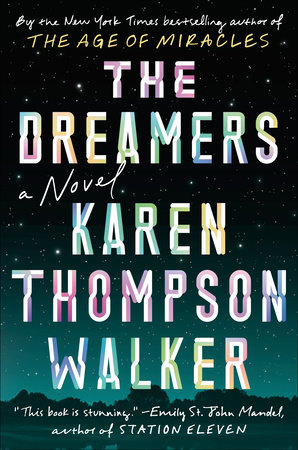
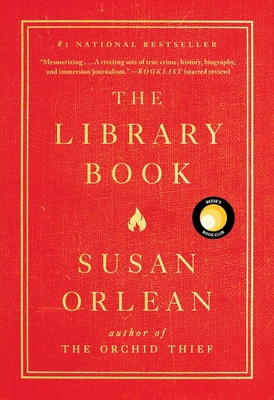
There is certain joy in discovering the brilliance of a new writer. With favorite, seasoned writers like Jesmyn Ward or Michael Chabon, I know to expect exceptional work. The gamble of picking up a name I am not familiar with could end with reading a jumbled mess. Yet, there is no greater rush than when I find a gem that I fall in love with. That rush has inspired me to create Debutiful, a literary website dedicated to celebrating debut authors and their books through book reviews and author interviews.
Narrowing down this list of debuts was difficult. There have already been a lot of stellar new works published and it would be impossible to read every single one that publishes in a single year. These are the newly published memoirs, novels, and short story collections that I have not stopped thinking about or titles that booksellers and writers have been enthusiastically recommending.
Here are the 20 best debut novels of the first half of 2019.
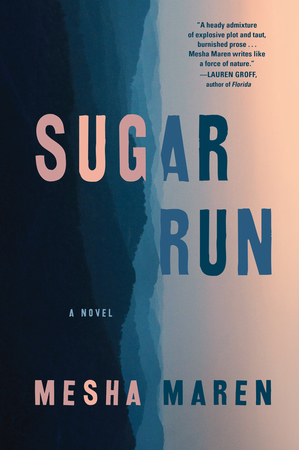
Mesha Maren’s atmospheric Southern noir was the first book I fell in love with this year. Her book explores queer sexuality and how where we live informs our life decisions. When Jodi McCarty is released after nearly two decades in prison, she is not exactly sure who she is or what she wants. Until she meets the enigmatic Miranda.
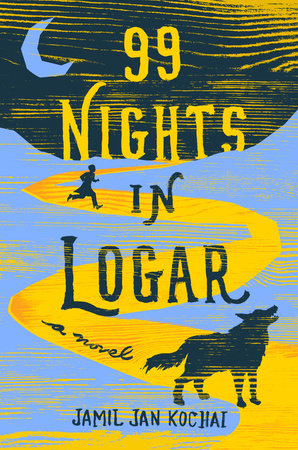
99 Nights in Logar follow a young boy in war-torn Afghanistan tracking down his family guard dog who bit his finger off. A coming-of-age tale, this novel offers a worldview into the ties of familial history.
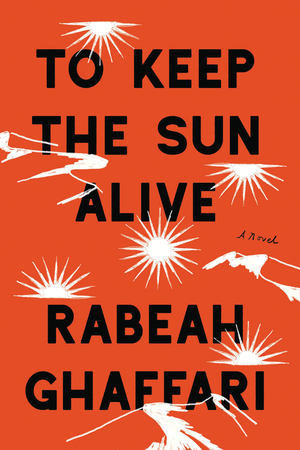
Rabeah Ghaffari’s story set during the 1979 Iranian Revolution is more than a history lesson. The saga is a character study about how our place in the world is viewed by others, but more importantly, what our place in the world means to us.
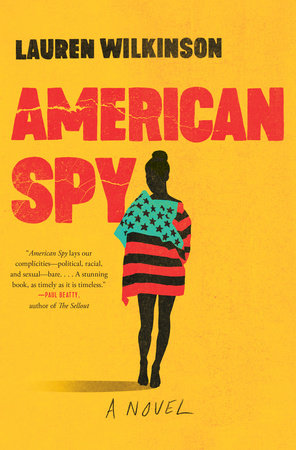
Lauren Wilkinson’s debut is a Cold War spy thriller starring a black, female intelligence officer. But it’s so much more. It’s a meditation on double consciousness and bounces from 1980s Burkina Faso to present day America through complex threads and clever prose. It is sincerely one of the best books I have read so far this year. Read my interview with Wilkinson here.
Pitchaya Sudbanthad explores the past, present, and near future of his native Bangkok through tangentially connected stories that reveal the essence of the city. Ranging from tales about a missionary doctor to a post-World War II relationship to present-day political uneasiness, he showcases the complexities of the city’s history and culture.
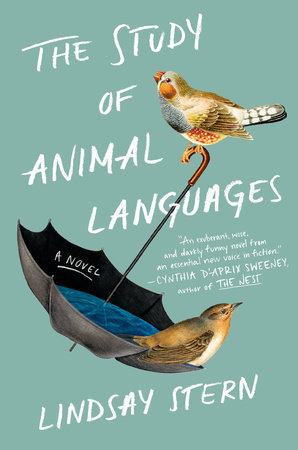
In her novel, Lindsay Stern provides an insightful look into the difficulties of communication within a marriage. Two married college professors have a wedge driven between them when an attractive new colleague comes to town. It is a fresh take on the unraveling of a relationship and the fragility of our egos.
Connected through life in the circus, these stories delve into the lonely worlds of misfits and outcasts. While it would be easy to put the freak label on some of these characters, Mayer finds the nuances in their lives that give them humanity. The collection of short stories is dizzyingly fantastical on every single page.
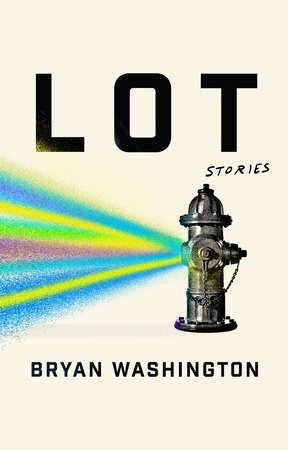
Bryan Washington’s portrait of his hometown Houston reveals the modern-day struggles of race, socioeconomic status, and sexuality. Woven throughout the stories is an unnamed teen who struggles from adolescence to adulthood. His upbringing by a hyper-masculine father is a reoccurring clash that unfolds as he navigates his own identity and status in the world.
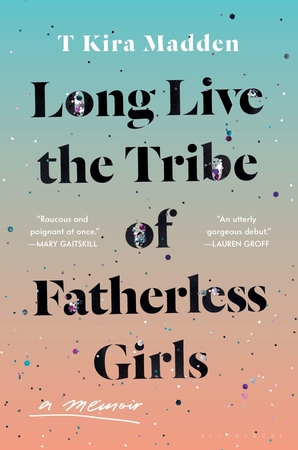
In this fiercely honest memoir, T Kira Madden offers a look into her unstable childhood through to her sexual awakening in her teenage years. She writes about her father’s alcoholism, being a misfit at her private school, and exploring her queerness that she never knew was there. Long Live the Tribe of Fatherless Girls is written with a raw emotional explosiveness that is so often hidden in our social media era.
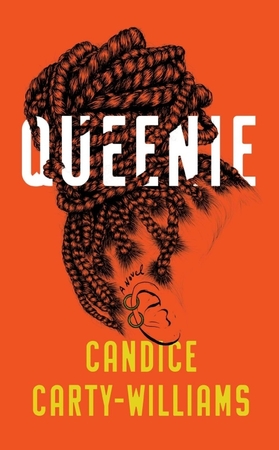
I stayed away from this book at first because it was billed as being reminiscent of Bridget Jones’ Diary, which isn’t exactly my cup of tea. Then, on a whim, I read half of it through a single night. Reader, don’t make the mistake I did. It was a pleasure to watch the titular Queenie go through messy breakups, figuring out how to balance her two cultures and stand out as an independent black woman among her white peers.
A Woman is No Man is a multi-generational saga of Palestinian American women that Etaf Rum says was “violating our code of silence.” Rum questions why there aren’t many books by and about Arab American women. Her novel follows Deya in modern-day Brooklyn who is approaching her high school graduation (and an arranged marriage.) The book also explores the traumatic pasts of her mother Isra and her grandmother Fareeda.
Sarah Blake has published two poetry books as well as an e-chapbook, but this is her first official novel. So, I’m counting it. It’s epic, biblically so. Blake reimagines the Great Flood and puts Noah’s wife at the center of saving civilization with the Ark. It allows Hollywood another original Bible story to adapt, which is good because I’m kind of getting tired of Russell Crowe prancing around with a bad accent.
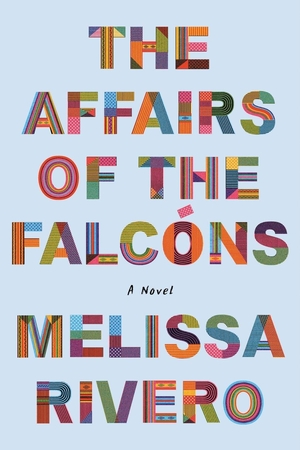
The Affairs of the Falcóns is a familial saga of undocumented Peruvians in the 1990s. Matriarch Ana struggles to keep her family afloat as the world lobs up every curve ball it can offer. Born in Peru, Melissa Rivero spent most of her childhood in America undocumented and became a U.S. citizen in her 20s. It is eye-opening to see exactly how much and how little immigration policy has changed.
Written by a former trial lawyer, Miracle Creek is a taut courtroom thriller. It moves from the courtroom to explore what it means to be a parent; more specifically, what it means to be a parent who is also an immigrant.
The Light Years is a memoir about hippies, psychedelic drugs, and life in the desert. Chris Rush is an artist by trade. He wrote this book to explore how LSD and acid shaped how he saw the world. This is an ideal narrative for anyone who is a fan of The Electric Kool-Aid Acid Test.
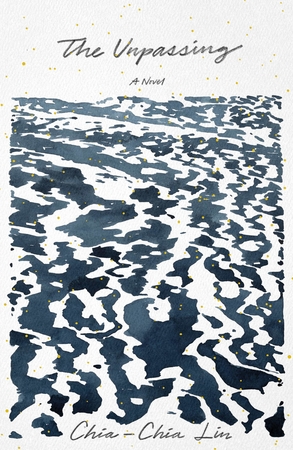
Beautiful. Bleak. Those are the two words I would ultimately use to describe Lin’s debut. It seems understated, mostly because a lot of people use beautiful to describe nearly everything. Everything from Lin’s prose to her characters to the unjust actions that happen to this Taiwanese family struggling to survive in Alaska is beautiful.
Stella is an Italian immigrant should have died a lot over the course of her century-long, but somehow survived. That is the general synopsis given for this book. Her name itself means “lucky star” in Italian. The book is twisty and complicated, but wholly original.
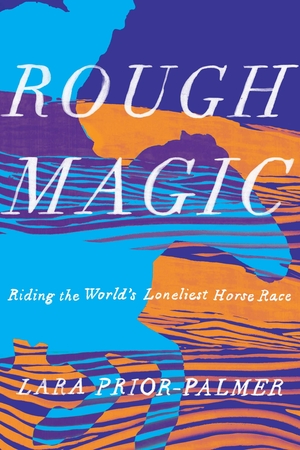
Subtitled “Riding the World’s Loneliest Horse Race,” this memoir lured me in with the story of a 1,000-kilometer horse race across the Mongolian grassland. Lara Prior-Palmer became the first woman champion of the Mongol Derby Champion at the age of 19.
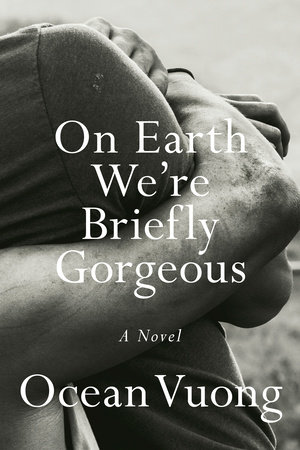
Again, technically Ocean Vuong is a published writer (Night Sky Exit Wounds is a breathtaking collection of poems) and I am bending the rules a bit. With On Earth We’re Briefly Gorgeous, he raises the bar with a novel that will surely be on numerous Top Ten lists by the end of the year. The book is written in the form of a letter from a son to his illterate mother, the book gracefully explores sexuality and masculinity as well as race and class. The novel has such a softness to the prose that it stayed with me weeks after I finally finished it.
Toby and Rachel Fleishman are separating after 15 years of marriage. It happens. But what he doesn’t expect is that Rachel would just disappear after leaving the kids at his. Fleishman is in Trouble sounds like a downer, but every advanced praise refers to how blisteringly funny the novel is.
Listen, just because we’re a literary website doesn’t mean we’re above loving comics giant Warren Ellis—author of Transmetropolitan, Planetary, The Authority, Nextwave, and the criminally underrated Desolation Jones among many, many others. So when we found out that Ellis also published his third non-graphic novel Normal with FSG, parent publisher of our Read More Women partner MCD Books, we just had to see whether he’d contribute to the series. Even in the macho world of comics, Ellis has always written interesting, funny, cliché-defying female characters—so which non-male authors does he recommend? These picks are adapted from Ellis’s newsletter Orbital Operations, which includes book reviews among other news. (On the subject of cribbing his RMW picks from his newsletter, Ellis writes: “Hi. I’m a man. We cheat. All the time.”)
Read More Women is Electric Literature’s series, presented in collaboration with MCD Books, in which we feature prominent authors, of any gender, recommending their favorite books by women and non-binary writers. Twice a month, you’ll hear about the five non-male authors who most delight, inspire, and influence your favorite writers.
The Book of Joan is a science fiction story about women. Women who love, women who hate, women who kill, women who destroy. It’s a story about what happens after the end of the world, where (another) other-humanly elite has gone to orbit to live out sexless, loveless lives of bizarre art and ritual.
Christine Pizan, a denizen of the orbiting station that may be all that’s left of the human race, is an artist of skin. Through a braille-like process of branding and skin grafts, she wears stories on her skin. She is the Book of Joan—Joan being Joan of Dirt, the superhuman child soldier who fought the good fight down below and was burned at the stake for it. The term used for Joan’s superhuman condition is engenderine—from engender, whose more archaic definition is “to cause to be born.”
Any book that starts with a quote from Doris Lessing’s mighty Shikasta has me on its side.
The medieval writer Christine de Pizan’s last work was an eulogy of Joan of Arc.
The station is run by a mad misogynist called Jean de Men. De Pizan’s intellectual status in her time was partly made by her dissection of the misogynist writer Jean de Meun. Not being a student of the period, these are things I learned after reading the book. Joan of Dirt is an obvious avatar of Joan of Arc, but I didn’t know the rest. It didn’t make the book any less fascinating to me.
It’s not a happy book, I warn you. There are moments of joy that blaze through it, but, contra to the first quote above, it’s a book about war and women, and birth and the earth. It’s a huge fable about the end of the world, told with pieces of history. It is ambitious, frequently beautiful, and weirdly haunting.
A short book full of big explosions of language. It is an alternate-history of the Radium Girls crime, mashed up with a few other historical occurrences that I don’t want to mention because spoilers. I’d love it if you could come to this book clean.
Which makes it more difficult to talk about.
There are three timelines. In the present day, Kat is trying to solve the problem of marking radioactive waste dumps so that future generations know to avoid them. Which is a real-world thing you should look into sometime, it’s fascinating. A hundred years ago, Regan, a Radium Girl, is dying of cancer and finding her agency. In the deep past, there are myths and legends of elephant culture, passed down through the elephant generations.
Elephant cognition has also been a subject of recent conjecture. This is proper speculative fiction. Bolander adds an elephant-human sign language to great effect. The book is beautifully structured, very inventive (the Disney connection is genius) and generally just a goddamn joy to have discovered in my Amazon Kindle trawling.
Bolander’s conjuring with language, though, is the greatest delight of all the book’s many pleasures.
Kat turns her back on the memorial and the roaring Atlantic dark and shuffles towards the garish electric dawn of Coney Island, some skeleton’s memory of what progress looked like.
Some skeleton’s memory of what progress looked like. I would have paid real money to write a sentence like that.
There’s a field of rogue mutant hair transplants, and the hair field is grazed upon by a trip of transgenic goats, and there’s like five pages on the digestive processes of these goats, including shoals of microsquid that live in one of the four stomachs. And it’s brilliant.
If you’re not up for that: the book is about people who use chopsticks to tie knots in spacetime for travel purposes. And art.
Rachel is a synthetic biologist—I met her at a think-tank in Eindhoven a few years ago—and Origamy is what happens when you let a synthetic biologist write a full work of speculative fiction. Possibly this practice will be banned after Origamy is released.
It’s an incredibly dense piece of bizarre fantastika balanced artfully on a very simple structure, a journey of discovery, secrets and ancient threats. Parts feel like they’ve come from fable, or folk tales about strange circus people. In reading it, I’ve gotten through about ten pages at a time before having to stop and stare into space and process everything that’s just been dumped into my head. It’s like she freebased twelve novels into one intense concentrated rock.
Origamy is a magnificent, glittering explosion of a book: a meditation on creation, the poetry of science and the insane beauty of everything. You’re going to need this. Frankly, there are only people who have read Origamy and people who have not, and neither of them are able to understand the other.
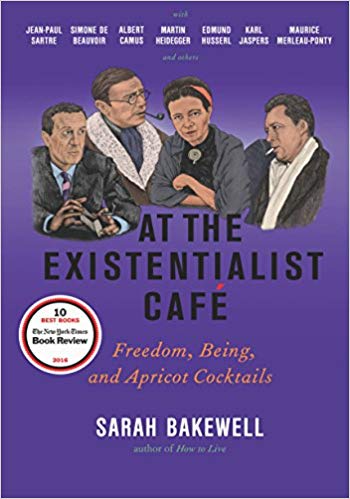
This book is a wonder. It’s the story of existentialism. By which I mean: this is the story of crazy people and wonderful people and fucked-up people and dancing and drinking and thinking people. It starts with someone in a cafe in Paris explaining a new form of philosophy using a cocktail. Meanwhile, in Germany, a man is yelling for coffee so that he can make that philosophy out of it. This is phenomenology, which gave rise to existentialism, and Bakewell tells it all in terms of cafe conversation and jazz clubs and old houses and shacks in the woods, in occupied cities and military stations and mad dashes across borders, alternating between biography and the sort of clear, warm explanations of philosophical ideas that even uneducated laypeople like me can grasp. Husserl, Heidegger, Camus and the like are all here, and, of course, Sartre, but also, thank god, Simone de Beauvoir gets significant space, and pleasingly, so does the dancing master of humanism, Merleau-Ponty. I did not want this book to end. It’s marvelous. A great story, and, in some ways, a valedictory one, of the days before philosophy was completely subsumed by academe and became a thing of technical language and minor considerations. (Side effect: if you’ve ever visited Paris, it will really make you miss it.)
It’s a crime story. It’s also a study in isolation and mental illness. And a masterclass in literary eccentricity. For example:
“He was a man of very few words, and as it was impossible to talk, one had to keep silent. It’s hard work talking to some people, most often males. I have a Theory about it. With age, many men come down with testosterone autism, the symptoms of which are a gradual decline in social intelligence and capacity for interpersonal communication, as well as a reduced ability to formulate thoughts. The Person beset by this Ailment becomes taciturn and appears to be lost in contemplation. He develops an interest in various Tools and machinery, and he’s drawn to the Second World War and the biographies of famous people, mainly politicians and villains. His capacity to read novels almost entirely vanishes; testosterone autism disturbs the character’s psychological understanding.”
The protagonist’s narration is just fascinating, and a joy to read. She lives on a plateau, somewhere in southern Poland near the Czech border, shares with a few other hermit types and a lot of animals. One night, one of those hermit types is found to have died. And the protagonist finds evidence suggesting it may not have been a simple death.
I don’t want to say a lot more about it, save that the mystery—and the deaths that follow—tangle up the supernatural with the ecological and the social and even the literary, without ever really breaking the spell of one estranged and lonely and aging woman who is a head smarter than anyone else she knows dealing with loss and damage and distance and an unexplained death that nobody else seems to want to solve.
It is fierce and golden and kind of heartbreaking and another phenomenal choice from one of my favorite publishers, Fitzcarraldo. There’s nothing else quite like it.
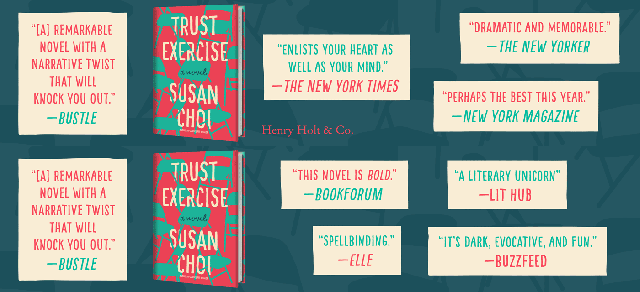
Set in and around a performing arts high school in the 1980s, Pulitzer prize finalist Susan Choi’s latest novel, Trust Exercise, introduces Sarah and David, caught in a teenage love affair that draws in everyone around them, including their classmates and their acting teacher, Mr. Kingsley. By turns witty, wise, and moving, around the halfway point a startling shift in point of view launches the characters forward in time in a reexamined conclusion that is both astonishing and memorable.
While at the AWP conference in Portland, Oregon, I had the chance to sit down with Susan in a hotel lobby for an interview. We spoke of everything from language play to Susan’s electric plot twists to the difficulties of being a teenager—and yes, spoilers, which, given the intricacies of Trust Exercise, were impossible to avoid during the interview but which of course have been omitted here.
Marci Cancio-Bello: I wanted to start with the way you use physical space in the book to portray the relationships between characters, describing who gets to observe whom, who is on stage versus who is in the audience, and which characters can move between these spaces. Can you talk about mapping out those spaces?
Buy the book
Susan Choi: I always think about spaces and have always had trouble writing scenes unless I knew what that physical space was like. While I was revising my last book, My Education. I was concerned that I had not depicted the evolution of a certain relationship in an effective way. These two people lived a certain distance apart, and in the scene they’re on the phone, and I thought, “She’s just going to hang up the phone and walk to this other person’s house.” Depicting that walk was one of my favorite scenes to write for that book, and once I wrote about her traversing that space, the emotional reality of the scene clicked for me.
WithTrust Exercise, I thought a lot about where people lived and what their homes were like. Even from the very first line—“Neither can drive”—I was interested in the attraction between these two young people who can’t traverse spaces to get together. I grew up in a car culture, where getting your driver’s license was possibly the most important thing because you had no freedom without it and were totally dependent upon other people to get you places. Sarah and David want to get together but they can’t drive and there’s all this space between them. How do they cross it? I realize now it was similar to that scene in My Education where I was trying to get these lovers across a physical space so they could be together. That has to be something I’m preoccupied by at some gut level.
MCB: Because you’re working with teenage characters, those moments are so heightened. It’s important to them what they drive, who gets in whose car, and even where they sit. In one of the trust circle exercises, Sarah has intense emotional reactions precisely because she can’t see where David is sitting. These details are so beautifully done. I stayed up late each night reading this book, trying to pick out the threads, and wanted to read it again as soon as I finished. I couldn’t stop.
SC: I’m sorry to have kept you up, but that’s really exciting. One of the things I’ve been laughing about is that this book started as a side project. I was working on a different book that I still haven’t finished. I was just looking for something to do because my work was not going that well, and I thought, “Maybe I’ll finally write a short story.”
My dream has always been to write a decent short story, which is challenging and rigorous, and you have to have your structure under control. This was my attempt at a short story, which is really just the shortest book I’ve ever published. Everything just started spooling out and getting more complicated instead of tying up. At some point, when it was around 70 pages long, I thought maybe it would become a novella, but that didn’t work out either.
MCB: I love that this novel was a side project. Do you think that freed you up to write this one with less pressure?
SC: I think somebody gave me the term “side project” as I was trying to explain how this book had come to exist, because I certainly never thought of it as a side project. I thought of it as something I did to put in my writing time for the day when everything was going poorly. I was freed up in a way because I thought of it as something just for fun.
MCB: One of the most entertaining passages for me was when you played with language itself, the way a word can become either noun or verb with a different emphasis. For example, “OBject vs. obJECT” and “PERmit vs. perMIT.” Could you talk a little bit about those moments?
SC: It was really fun. A fair amount of that came out of procrastination. The transition from physical dictionaries and thesauruses to online has created a real space for high-minded procrastination because I would sit in my writing space trying to think of the right word, and I could just look it up. It used to be that I found it onerous to turn to the dictionary or thesaurus because I’d have to go get it off the shelf, open it, remember how the alphabet works—true laziness—but with the online versions, you can sit there and google Merriam-Webster, OED, etc. It became a permitted form of procrastination. I would think, “This is educational. I’m finally being a good writer looking up different words,” when actually I was just wasting a lot of time.
I was spending so much time doing this that it folded itself into the character voice. I can’t remember how I found a word list similar to the one in the book, but over the course of looking things up, I kept thinking of more and more words that worked with the varied emphasis. I was interested in “audition” because I couldn’t understand why it was called that. It’s one of those words where, as it is described, the subject performing the action is changed. That was an example of when procrastination actually pays off.
MCB: The very act of writing for yourself, but also for everyone who is going to read it, seems similar to the idea that as a teenager, everything feels deeply private but also deeply public.
SC: Yes, it is a strange, contradictory thing to do. At one of my AWP panels, the moderator asked about inhibition or fear as you’re working on a project; did any of us ever feel like we can’t say this or can’t write that, or shouldn’t. My response to that, which is also appropriate to this, was that it would never occur to me to feel that way while I was writing, because it always felt very private, but then there’s this strange transition where you show the work and expose this thing that felt like something no one would ever see, which is not ever true. You have to pass through the looking glass and then ask, “Actually everyone will see this, and am I still okay with that?”
MCB: Yes. When we’re young, our feelings are so strictly policed by others and ourselves that we feel like everyone is watching, but nobody’s really paying attention because they’re all noticing themselves too. At one point, the movement teacher tells Sarah that these feelings are a difficult gift, which is really insightful. You’re able to capture the complex feelings of what it means to be a teenager more than most books for and about teens.
SC: Oh, thank you. I hope to have captured that, but at the same time, I would not want my teenage son to read this book. That’s the weird conundrum, that maybe this story captures what it means to be a teenager but is strangely inappropriate for actual teenagers. I don’t think of this as a book that I would want a young adult to read, because there is something terribly bleak and painful about so much of it. The emotional landscape of teenagers is extremely complex, arguably more complex than that of us adults, and I believe in that idea that the movement teacher expresses to Sarah when she says that your experience of your emotional life is so much more intense than it will be when you mature, and that is really difficult but it is a gift because you are going to lose this capacity for heightened feeling as you grow up; the edges get sanded down and you grow all of the armor that enables you to get through life without having a really terrible time of it, but that’s a loss too. I really do think that’s true.
That period of maturation, passing from childhood to adulthood, is critical for everything that comes after.
MCB: This story made me feel like I could better understand my teenage self better, but also understand other people better for their teenage selves.
SC: It has to be retrospective. I have heard of studies about music preference—and other forms of preference—there are reasons to believe that a lot of our lifelong preferences are set at this age, 14, 15, 16 where we’re exposed to things that sink into our emotional core and become the things that are precious to us, even though we might have an intellectual appreciation of other things later. I remember reading a particular study about music and thinking, “Oh no, no wonder I still tear up when I hear Journey on the radio. I’ll never be cured because I really liked Journey when I was 14.” But I think there’s a larger truth in it. That period of maturation when you’re passing from childhood to adulthood is critical for everything that comes after and makes us who we are, for better or worse.
MCB: It’s fascinating how your characters look back on their teenage years. At one point, David says, “They knew what they were doing. We knew what we were doing. Remember what we were like? […] We were never children.”
SC: It was as true as it was false. At that age, you are an adult, and you have opinions and judgments and you’re no longer this vessel for your parents’ ideas, and you’re also still a child. You’re so different from who you will end up being at 25 or 35 or 45. It is a difficult age for us to understand culturally. There is a weird social incoherence about the way we treat people at these different ages that we’ve chosen socially to represent adulthood: The age at which you can serve your nation in the military is different from the age at which you can drive a car or buy beer. You can look at a person and see an adult and also see a child, and you are right on both counts.
MCB: We can’t expect these characters to think about the repercussions of the decisions they make when they’re teenagers, but it deeply affects the rest of their lives. Can you talk about that level of complicity in their own journey?
SC: They make decisions that they make because they have agency, but they do not make decisions in the same way as they might later on. When my children were about three years old, I remember a friend of mine said that this is the stage at which children have all of this physical capability but no judgment, and there’s something analogous about their teen years. They have all of this knowledge and sophistication and agency and discernment and judgment, and yet they still lack a lot of those same things that they will acquire later, so it is possible to make decisions that seem really considered but if you put them in a time machine and push them forward ten years, they would never make that same decision. It’s quite complicated.
MCB: That movement teacher who recognizes this about Sarah is perhaps one of the most generous adults in the story, and yet the students make fun of her a bit.
SC: She is one of the few adults who actually recognizes that there is a difference between adults and teenagers, but the difference isn’t in the form of inferiority. She’s saying that they are different in this fundamental way that has to be respected, but since most of the other adults don’t acknowledge that difference, there is a difference in power that also goes unacknowledged. The movement teacher is one of the very few adults who sees them in their difference, respects them, and passionately supports who they are, and they are flattered by her generosity toward them, but they don’t actually recognize it for what it is. She’s really a minor character, but I loved what she said to Sarah because I felt like it’s one of the truths in the book, among a lot of non-truths.
You can look at a person and see an adult and also see a child.
MCB: I felt that this story teaches its readers about respect for the many subjects you’re tackling: respect for teenagers, respect for feelings, respect for other people’s emotional truths, which may not be your own. You’re teaching readers to pay attention to the complexities of other people’s place in the world.
SC: I started this book so long ago when I started procrastinating with it, that I was more interested in mining my memories of being a teenager, and my speculations about teenagers as a category, but this book took so long to evolve that in the course of it, I found myself the parent of a teenager. In a way, my child turned into a teenager more quickly than this procrastination turned into a book, but it’s been interesting having those two experiences in tandem. I got to thinking about the worlds of emotion and thought and experience that are locked inside my teenage child that I’ll never know. And it’s right that I shouldn’t know, right? They’re his. But it’s humbling to be aware of that.
MCB: Do you feel like you gave more space to the book because your son turned into a teenager while this was happening, and vice versa, that you gave him more space because you were understanding your characters better?
SC: The book was pretty far along to being what it was going to be as my son was becoming the young adult that he is continuing to become. It might surprise him to hear this, but I think that actually thinking about the book has made me a slightly different parent.
I think the book has changed my feelings as a parent more than my feelings as a parent have changed the book. Doing all the thinking the book required has powerfully reminded me that my teenage child is this separate world and it’s not for me to try to control that world, it’s not for me to try to spy on it or fully understand it. In a way, I have to figure out how to honor it and support it and protect it without trespassing. It’s tricky because in my own experience of being a teenager, in my recollection, that the adults in my life felt irrelevant. That’s probably as it should be to a certain degree, because you’re becoming an adult yourself, so you have to render the adults in your world irrelevant, but I think that still there was a role for the adults in my life that I still haven’t quite figured out, and I have to figure it out now as I’m the adult in my own child’s life. A lot of ink has been spilled on this subject, so I have a have a lot of help in figuring out how to be the right kind of adult. It’s a tough challenge.
When I entered the world of Indonesian literary translation several years ago, I was blissfully unaware of how dysfunctional it was. (Nor did I suspect that I would eventually become so troubled by its colonialistic aspects that I would write a controversial and impassioned Tweet thread on the subject.) What I’ve found, though, is that unequal power dynamics are determining how literature from Indonesia is being curated for consumption by the English-speaking world. The problem is systemic, evident in the condescending attitudes of Anglophone publishers and advocates of Indonesian fiction and poetry—and also which authors get to regularly represent Indonesia on the international stage.
A bit about myself: I am of Chinese-Indonesian descent, but only lived in Indonesia from the age of 9 to 15 (the rest of my childhood was spent in Singapore although I was born in the U.S.). I grew up hearing Indonesian spoken around me and though I occasionally used it myself, I only began making concerted efforts to improve my language abilities during graduate school by taking classes and reading Indonesian fiction.
I was driven by a desire to connect with a part of my heritage that my family, for their own reasons, had discouraged me from cultivating. I moved from being a reader of Indonesian literature to researching it as an academic before becoming a full-time writer and translator. Ever since, I have become increasingly horrified at the multiple layers of gatekeeping that distort the Western world’s impression of Indonesian writing. I attempt a partial exposure here to help with efforts to solve the problem—not only in the context of Indonesia, but also other countries that may be facing the same issues.
“Publishers Aren’t Looking For You.”
Does this book travel well? This question is maddeningly familiar to those operating in international writing and publishing networks. The variations of this question include: Can this story cross cultures? Will readers be able to relate? Is there too much historical and cultural detail for the reader to process? Publishers don’t mean that they are looking for “un-foreign” foreign work. Rather, foreign work needs to be foreign in familiar ways—exotic enough to give the reader satisfaction about foraying into another country or culture without overwhelming or alienating them. It’s like crafting the perfect tourist experience. Unfamiliar yet comfortable. Orientalizing, not disorienting. This is why once a few authors from a particular country win over the English-speaking market, other authors may follow suit: their subject matter has become more known and therefore more palatable.
If prodded, individuals in the publishing industry may be apologetic. They may acknowledge it’s unfair that Western readers get to be so finicky when the rest of the world (including Indonesia) readily consumes whatever books are taking the English-speaking world by storm. Nevertheless the expectation that the rest of the world cater to Anglophone tastes remains in place, informing the assessments of even those who earnestly profess to be seeking content from other countries. As a recent Guardian article has observed, English is colonizing the planet, which is also why getting the attention of the English-speaking market is key to global literary success.
Indonesia’s literature is no exception to the rule, subject to the same concerns about works “traveling well” even as they remain recognizably foreign. I was once asked to recommend a work to a publisher—something “classic” and “universal” was the stated preference. These terms are code for the question, Can the Western reader relate? I’ve also been asked to assess whether a novel “would speak across cultures” and whether its cultural and historical details would prove too challenging for readers.
Conversely, works have to be sufficiently “Indonesian” to excite interest. I found out from two friends who co-translated a short-story collection that a UK press rejected it for not engaging deeply enough with Indonesian political and social issues. As one longtime publisher and translator has baldly stated in a Jakarta Post interview: “Publishers aren’t looking for you, they’re looking for Indonesia.”
The parochialism of the Anglophone publishing industry also means that it is unwilling to trust the judgment of Indonesians concerning their own writers. While a positive reception back home may certainly earn an author’s work a closer look, they won’t ultimately compel an editor to accept a work for publication. This effectively means that Indonesian authors have to pass through two stages of screening to find a publisher abroad: one on its home turf, followed by another in which any accolades or rave reviews garnered may be discounted, or worse, contradicted.
I’ve received rejections from editors at anthologies and literary magazines, some of them supposedly eager to receive Indonesian submissions, who have dismissed short stories using language that suggests the works fall short of some objective non-culturally-specific literary standard—despite the fact that the same stories, among Indonesian readers, have garnered recognition and praise. For example, one journal expressed “concerns about the structure of the story”; another piece was deemed well-translated but “a bit muddled” with regards to its handling of time. The same two friends I mention above received in their rejection letter the remark that the writing “wasn’t arresting enough,” despite the fact that the author in question is widely considered one of the nation’s greatest revolutionary-era writers.
In short, Indonesian literature undergoes a transformation when it moves beyond its country’s borders. Beloved, acclaimed, or influential at home, the same literary text may be dismissed, even denigrated, by Western arbiters of taste abroad. One would hope, then, that those responsible for bringing these texts to the attention of the western world would do their best to counter such disdain. Unfortunately, by and large, those who advocate on Indonesian literature’s behalf are often guilty of perpetuating the problem.
“Limited at Best”
Anyone remotely familiar with Indonesian literature in translation will have heard of John McGlynn. Born in Wisconsin, McGlynn moved to Indonesia in his late twenties and is now the most prominent and powerful individual on the Indonesian-literature-in-translation scene. In addition to being a translator and chairman of the Lontar Foundation (which promotes and publishes Indonesian literature in translation), he sits on the National Book Committee as supervisor of its translation and literature funding programs. McGlynn was also responsible for coordinating Indonesia’s literary programming at both the 2015 Frankfurt Book Fair and last month’s London Book Fair, where Indonesia was, respectively, the guest of honor and market focus. I would hazard to say that he is regarded internationally as the foremost expert on Indonesian literature in translation, and the overwhelming majority of Indonesian literature showcases featured in literary magazines—at least within the past several years, have been curated or co-curated by him, including those featured in Words Without Borders’ 2015 and 2019 issues, Asia Literary Review, AAWW’s The Margins, Cordite Poetry Review, and Stand.
Given McGlynn’s power and visibility, he inevitably sets the tone for how to perceive and treat Indonesian writers. Therefore, it is somewhat concerning when he writes in Issue 52 of the translation journal In Other Words that the Lontar Foundation has resorted to publishing Indonesia’s most revered authors because their “chance for commercial success outside Indonesia’s borders is limited at best.” (The text of the journal article itself, originally made public on the National Centre for Writing website, was taken down due to some controversy caused by the thread I wrote and a Jakarta Globe article by an Indonesian writer published soon after.)
The statement I mention earlier in this essay—“Publishers aren’t looking for you, they’re looking for Indonesia”—hails from the same interview. McGlynn’s other remarks about “Indonesians” include their helpfulness in soliciting funds for Lontar: “donors look askance at giving money to an old white man, even if it is for a good cause. But a beautiful Indonesian woman, that’s another story.”
McGlynn is certainly entitled to his opinions, which come from more than forty years of experience as a translator and publisher. The real question is: does such experience give someone who is meant to champion the merits of Indonesia’s literature the right to speak so dismissively and pessimistically about its literary canon? Or the decisions its authors have made about what language to write in? Or their attractiveness to foreign publishers, which appears to reside solely in their Indonesianness? Or Indonesians’ pretty faces?
But McGlynn is not the only Western advocate of Indonesian writers who is guilty of condescension. We find patronization even in what is meant to pass as praise. For example, Benedict Anderson’s foreword to Eka Kurniawan’s Man Tiger, in which the late Indonesian studies scholar takes the liberty of remarking how much the author’s craft has improved. In Man Tiger, Anderson asserts, we find “a growing discipline in the use of the supernatural….a better grasp on chronology. In Beauty Is a Wound there are a great number of time-shifts but they often seem arbitrary and needlessly confusing…”.
Even dedicated Western translators of Indonesian literature may assume this attitude of superiority, regardless of good intentions, and whether they are aware of it or not.
For instance, in an essay appearing in the aforementioned issue of In Other Words, the respected and prolific literary translator Harry Aveling writes, “there was often a lot of opposition to my translations, particularly from critics who knew Indonesian well but had little appreciation of the subtleties of English.” I find it interesting that Aveling, who himself is a non-native speaker of Indonesian, assumes that his critics are wrong about the quality of his translations, not that his translations may indeed be flawed due to his inability to fully appreciate the subtleties of the language he translates from.
More recently, Words Without Borders published an essay in which seasoned translator Toni Pollard reflects on the challenges of translating gender fluidity in Clara Ng’s “Meteors.” Despite consulting Ng and the various non-binary options that Ng provided for translating the gender-neutral third-person pronouns of the story, including the grammatically acceptable gender-neutral singular “they/them,” Pollard appears to have chosen the option that Ng was least comfortable with. “As all translators must ultimately do,” she reflects, “I had to make a decision myself.” (Numerous people on Twitter expressed frustration at this outcome, including the author herself.)
Like it or not, the globe still reels from colonization’s effects. The resulting power imbalances—political, economic, and cultural—have enabled those from Western countries and backgrounds to occupy positions of authority over Indonesian writers with relative ease. (To test the truth of this assertion: imagine the likelihood of the reverse scenario occurring, where the foremost experts on American, British, or Australian literature are mostly Indonesian, or simply non-white.)
But lest we forget, Empire has historically relied on the complicity of the native ruling elite, and this is no less true of neo-colonialism today. A simplistic “West versus rest” opposition elides the power dynamics operating among Indonesian writers themselves. For example, a disproportionate number of the authors chosen to represent Indonesia at international events like festivals and book fairs tend to be affiliated with Komunitas Salihara—an arts centre founded by the journalist and writer Goenawan Mohamad that has been criticized within Indonesia for the undue influence they exert over the arts scene. (For a glimpse into the situation, see the section on Salihara in this article by Indonesian writer Wayan Jengki Sunarta).
It’s Broken. Let’s Fix It.
I have no doubt that Western translators and others who speak with authority about Indonesian literature act with the best of intentions—if not, why would they expend so much time and energy trying to further its cause? I also do not think that the Anglophone publishing industry is purposely attempting to shut out Indonesian authors’ voices. But I do believe both parties need to recognize that their roles as publishers, promoters, and translators do not give them license to disrespect the autonomy that Indonesians themselves should have when it comes to appraising the worth of their writing, having a say in translations of their writing, and deciding how “Indonesian” their written work should be and what language they want to use.
Additionally:
1. Anglophone publishers might think twice about whether their reasons for rejecting a manuscript rest on Eurocentric assumptions about what constitutes “good” writing. They might try to be open to the genuinely unfamiliar, especially when it comes to countries that are more underrepresented in the Anglophone literary world than others. (By daring to do this they’ll nudge readers in the same direction).
They might even consider seeking permission from relevant parties to publish (and publicize!) new translations of a work already available in English but that has gone out of print or been translated poorly. If multiple English editions of Kafka’s Metamorphosis exist and can be appreciated alongside each other, then why not multiple English editions of Indonesian literary texts?
2. The Anglophone world in general should also avoid relying too much on certain individuals or groups (including me) for their knowledge and experience of Indonesian writing. As with any literary scene, there are people that have more power and visibility than others. It is certainly easier to rely on ready-made connections, but it will come at the expense of doing justice to the diverse world of Indonesian writing.
3. Promoters of Indonesian literature in translation, like the Lontar Foundation, should have more faith in the marketability of the texts and authors they represent. And they should be willing to publicize other initiatives and individuals who have chosen to work independently rather than ignoring their activities or giving them minimal attention.
4. Translators should work closely with their authors if the latter are willing and able. They should do their best to respect their authors’ wishes, dialoguing until an agreement truly satisfactory to both parties is reached. I’ve learned from experience that even if a writer isn’t a native English speaker, their feedback can be invaluable and improve a translation dramatically, taking it in different directions and to new heights you wouldn’t feel comfortable with if you were acting alone.
I’m guessing that these observations and suggestions may also apply to literature in translation from other countries. I hope that they will be of some help in those situations as well. By working collectively and respectfully, we’ll hear the voices of those we translate, advocate, and publish. And we’ll also do a better job of making them heard.
The author would like to thank Intan Paramaditha for her feedback on an earlier version of this article. For more on decolonizing Indonesian translation, see Khairani Barokka’s article in Modern Poetry in Translation, published in parallel with this one.
The house lay behind a solid gray gate on a long arm. A winding driveway carried us deeper onto the property. It sat in a clear field, a boxy structure of glass and pale concrete. Instantly I could imagine the way it would take on the color of the seasons. White in winter, green in summer. Tonight with the lights off it looked nearly invisible in places, a suggestion of angular geometry against the night. It was an esoteric design object you could live in. It belonged on a plinth.
“The architect chose everything. The furnishings, the art,” Hugo was saying. “Unity being the idea. Blurring the line between indoors and outdoors. The dimensions of the recessed living room are the same as the pool. All of the materials are local. The granite. The wood. Every few years the state tries to make it a landmark.”
We climbed out of the car. Hugo insisted on carrying my tote. The straps were filthy, I noticed, and his arm was touch- ing a bottle of store-brand face wash I had crammed on top.
“Why not let them?”
“It’s a house,” he said. “Not a museum.”
He led me through the downstairs, turning on lights as we went. Through the windows: acres of moonlit field in every direction. The kitchen was white and stainless, opening seam-lessly into the living room. Beyond the sliding glass door the flat of the patio gave way to a dark, wobbly presence. The pool. I sat down at the marble slab of island to unpack our grocery bags. I took out high-concept crackers and pricey Côtes du Rhône, while Hugo busied himself retrieving silverware.
He had a whole drawer of tiny, specific knives and he looked down into it thoughtfully for a long time before giving up.
“So what’s your story?” he asked.
I was struggling with a wine opener evidently from the future. “Me? Nothing. I’m just over here trying to figure out how much manchego is acceptable to eat in this scenario. We should all get together as a species and nail down some cheese protocols.”
Hugo nodded. “A Geneva convention for dairy. I like it. But what I meant was what’s your story more generally. Your upbringing, et cetera. Are you from New York?”
“South Carolina,” I said. “Outside of Charleston.”
“You don’t seem southern.”
People always said this to me. I had lived in New York since college and didn’t have an accent. I was never sure how people expected southerners to act. The place I had grown up was a lot like this place. The Upscale Anywhere. Only the wealth was not as great and the worst of its ruthless villains were already dead.
“The South isn’t all that different. Except for the trees.”
“So why leave then?”
“Hope. Ambition. Belief in myself. You know, kid stuff.”
Hugo crossed his arms. He was tall and broad in an appealing way. His paunch seemed solid rather than flabby. What wrinkles he had appeared calculated, left intact so he’d look like a reasonable facsimile of a gently aged human being. Leaning against the sink in his shirtsleeves, he was just this side of too orange to be my thesis advisor, or my rumpled editor in chief, or—I didn’t want to think it but there it was—my father.
“What fucked you up enough to want to become a stand-up?” he asked.
“I’m a writer,” I said. “Not a stand-up, not really. No stage presence, you see.”
“Then why do it?” he said.
“It’s that or a Web series, right? Or improv.”
“Improv. Ick.”
He took the wine opener from me, negotiated its stainless steel levers. He poured us each a glass and held his up in a shy toast.
“Thank you for coming on short notice. I think you’re going to have fun. While you’re here you can treat this place as your own. That’s it. You can drink now.”
I clinked his glass and we both sipped.
“Mm,” I said, “tannins,” though I didn’t know what that meant.
He swirled his glass. “I like my wine like I like my women.”
I groaned. “For real?”
“Humor me.”
“Abundant? Great legs? Available for purchase?”
He looked pleased. “I was going to say dry.”
He handed me a plate and I laid out crackers.
“Your childhood,” he said.
“I wasn’t abused, if that’s what you’re asking.”
“It’s not always abuse. Sometimes it’s a stutter. Sometimes it’s childhood obesity. Sometimes, it’s, I don’t know, a back brace.”
“I didn’t have a back brace,” I said.
“You’re being literal. You were an outsider.”
“You mean because I’m Jewish.”
“There couldn’t have been many.”
“None. None that weren’t eighty years old. So few that people didn’t know. The possibility of a Jew didn’t even occur to them. My brother and I more or less passed. Kids at school would ask us where we went to church.”
“And what would you say?”
“Episcopalian was a safe bet. Evangelicals were too intense and Catholics could sniff you out. You had to know stuff to be a Catholic. When I got older I would tell the truth. People didn’t know what to do with that.”
“Well, there you go,” said Hugo. “That must have been isolating.”
“But everyone feels isolated as a teenager, don’t they? The reason is almost beside the point.”
“So nothing causes anything. That’s your thesis?”
“I don’t have a thesis,” I said. “I’ve got my woes like anyone. No one’s unscathed. My grandparents are dead. Three of four, anyway. I was only intermittently popular in my small town. Not, you know, full-on popular. Um what else? I don’t know . . . I’ve had an abortion?”
“Are you asking me?”
“No, I definitely had the abortion. And I’m not trying to be flip about it either. In case that kind of joke makes you uncomfortable. What I’m asking is, is that enough?”
He chewed a cracker, half smiling. There was a poppy seed stuck to his lower lip, and I thought of Gil. On Thursday afternoons Gil printed out bingo cards and the writers all played while we watched a live feed of the taping: B-plus ad-lib was a square. Glance at guest’s tits was a square. Spittle on lower lip was a square. Winner gets a raise, Gil always joked. I never knew what Hugo thought about these games, if he found them funny or insulting. If he saw them as a way for the staff to let off steam, if he knew about them at all.
“Is that enough what?” asked Hugo.
“Enough bad stuff. To convince you that I’m miserable or lonely or whatever it is you think qualifies me to be a comedian.”
“I never said you had to be miserable. I’m just saying that’s usually the case. I know a lot of comedians, too many, and they’re a pretty desolate bunch. It’s not always something in their past; sometimes it’s clinical. Is it clinical for you?”
I took a gulp of wine to conceal my surprise. “You’re asking if I’m depressed? I thought this was supposed to be a date. Or a datelike hang-out.” I blushed. “Maybe I misread it. Can we just eat these crackers? Damn.”
I shoved a handful into my mouth and coughed. They tasted earthy, like rosemary and dirt, and absorbed all my spit. I had to drink a lot of wine to get it all down.
“Nothing fucked me up,” I said, when I could speak again. “Nothing in particular.”
It was true. I hadn’t had a difficult life. My father was a dentist and my mother ran the practice. We had health care, school clothes, summer camp. We had an extra room just for the computer. A Honda Civic that my brother and I took turns backing into street signs, telephone poles, other cars. I could get a twenty from my dad on the way out the door anytime if I was willing to needle him for it.
And it wasn’t just money either. I hadn’t been beaten up or neglected. I hadn’t ever been mugged. I’d done well in school, well in college. I’d had a couple of iffy sexual experiences that I’d thankfully been able to shut down before things went too far. The worst I had suffered was nonsuccess. I was twenty-nine with an entry-level job and unable to pay my bills. I had been provided for. I hadn’t been harmed or held back, I hadn’t been scarred, but I had quietly failed anyway.
I said, “I don’t hold with sad clown theory. It’s facile, superficial. The idea that something horrible has to happen in a comedian’s past. Like all comics had shitty dads or dead mothers. Like that’s the only reason you could have for wanting to be funny.”
Hugo said, “Maybe that’s what you need. Something big to hurt you. Maybe it would make you funnier.”
“Is this a preamble to sexual assault?” I craned my neck and looked down the hall off the kitchen. “Does this place have a designated rape room?”
I knew my tone was nasty; he’d gotten under my skin.
Hugo shook his head. “Come on. I just mean that you probably need to have some more experiences.”
I said, “Maybe I just want to be funny because the world is funny. Maybe it’s the only way I can see of telling the truth.”
I looked at him, daring him to laugh at this preposterous statement.
When he didn’t I put down my wineglass, pushed back from the countertop. “Where’s the bathroom?”
It was cleverly hidden under the staircase, a cubbyhole with a smooth, black-tiled floor. I peed looking at the copper bowl of the sink and considered leaving. I pictured walking down the long drive and waiting outside the spooky gray gate for a car service. There was nothing actually spooky about the gate. I was drunk. I wondered if Hugo would follow me out. Come on, June. June, come on. He would use my name a lot like that, I was sure. Possibly, it would work.
Or if it didn’t I’d what? Call my own bluff? Get on the train? Ride back to the city, back to Brooklyn? Go to the roof party and drink a warm PBR? Pick up the mail on the floor of the vestibule?
It was too logistically difficult, I concluded. I had come this far and I was still curious. The experience hadn’t even amounted to a story I could bring back to Audrey yet. I washed my hands, reapplied lipstick, studied my reflection for signs of credulity. There was no medicine cabinet to check for pills. Better that way, because I’d have looked if there was. I’d have been unable to resist confirming for myself the things I suspected: his sadness and erectile dysfunction, his growing prostate and failing heart.
The kitchen was empty when I got back. Maybe he left, I thought, and the house belonged to me now. I picked up the cheese knife and held it in my hand. A pleasing silver heft.
“This is mine,” I said experimentally.
I got up and looked in the refrigerator. It was empty except for Diet Coke, pickles, and condiments. Even the condiments were sparse. The mustard lids looked crusted on. I opened a low cabinet and saw nothing. I opened another and saw a SodaStream still in its box. I didn’t want to get caught gazing at an unopened SodaStream, so I sat back down.
He returned from a door off the kitchen, brushing the dust from a bottle of wine. He held it up so I could inspect the label.
He said, “No offense, but the wine you picked out was garbage compared to this.”
“I read something awhile ago that said if wine tastes good then it is good.”
“Hm,” he said. “Not really.”
“But if it tastes good . . . it is . . . good.”
“You just said that. Are Hostess cupcakes good just because they taste good?”
“Yes. The theory holds.”
He poured me a glass. “Here. Try this.”
It tasted woody, like someone had dragged some grapes along the deck of an old boat. I told him that and he laughed. “You’re not actually wrong.”
We both sipped. He opened his mouth a couple of times to say something and closed it again. Finally he said, “I had the shitty father you mentioned.”
He was trying to apologize, I realized. The special wine was an apology. His sudden openness about his childhood was an apology, too.
“Shitty how?” I said.
I already knew the answer. I knew all about his upbringing. Years before I’d found his memoir on the one-dollar rack outside the Strand and stood skimming it while smoke from the halal cart on the corner stung my eyes. It had a purple cover with raised silver lettering and brittle yellow pages that kept falling onto the sidewalk. Finally I fished out a single and took it home.
“You name it,” he said. “Distant. Ragey. The type of person who would hit a kid with a closed fist.”
“Jesus,” I said.
“Yeah. He waited until I was ten, though. Double digits. That was his bizarre boundary. I probably weighed eighty pounds.”
“And your mother . . .”
“Did nothing. I could never really get a handle on her. She was this soft, creative person, but she let him do what he did. Maybe she didn’t like it, but she didn’t stop it either. She had boundary issues of her own, my mother. She was a dancer. She’d been a Rockette for about an hour when she was young, and she used to put on her costume and perform the whole Christmas extravaganza in our living room for fun. Oil up her legs.”
He fell silent. All of this, I remembered, took place in Woodside, Queens, in the crisscrossing shadow of the LIRR. They had a grim little row house, brown on beige, loose banister, silverfish in the tub. His room was divided from his sister’s with a particleboard partition that wobbled when one of them rolled over in bed. The mailbox said Bechkowiak.
“Is that why you changed your name? To distance yourself from them?”
“I changed my name because you can’t be Bechkowiak in Hollywood. Or you couldn’t back then.”
But yeah, he went on, he picked Best because it sounded good, was empty of association, and also because he was nineteen and pretty dumb. He picked Best because it said nothing except that he was the best, which made him laugh to this day.
“It wasn’t all bad,” he said. “My childhood. My dad was a mechanic and he taught me about cars. He had an incredible breadth of knowledge. He’d flown planes in World War II. Probably he should have been an engineer. He was smart enough. And we watched Carson together almost every night. That we did do. My father didn’t really like it, but I could tell he thought it was a bonding thing. I can’t remember if he ever laughed. I’m guessing not. I would have enjoyed it more on my own. But instead it was this weird solemn ritual. Glumly making popcorn, sitting down on the couch.”
“But you loved your sister,” I said. “Vivian.”
There was a photo insert in the middle of the book that included some family pictures. Hugo with a terrifying Easter bunny; Hugo and Vivian on roller skates in front of the house; the whole family posed for a frowning department store portrait. Hugo and Vivian looked alike. Tall, fair, and miserable.
He narrowed his eyes at me. “You read my book.”
“I might have. Does it have a purple cover?”
“I was against that cover. It was silly. It misrepresented the content of the book. People picked it up thinking it was this light, gossipy thing, and were surprised to find out it was really about a kid clawing his way out of an abusive home. It fell out of print.”
He ate the last sliver of manchego, tossed in a jagged shard of cracker after it. That was something you didn’t consider when you wrote a book, he said. That one day it would be out of print, and sooner than you’d like. Not thinking about endings didn’t stop them from happening. It only made the endings sneak up on you.
He stood to clear the plate, tilted the crumbs into the sink. He pressed buttons on the dishwasher, trying to get it open, but it seemed to be locked.
“Eco wash in progress,” he mumbled. “What does that mean? No it isn’t.”
He looked up at me and smiled abashedly. I went over and took the plate from him. “Let me.”
I punched a few buttons and opened the dishwasher, set the plate on the empty rack. As I was closing it again he grabbed my wrist. His hands were aging faster than the rest of him. They were lean, tanned to spotting, and the tendons stood out. His grip was urgent, but not painful, and the warmth, the give of his skin, startled me.
He said, “You’re not a sad clown, okay? It was wrong to assume that we’re the same, you and me. That you’re a mess just because I am.”
We stayed like that for a moment, not speaking. I thought he’d do something else, pull me closer to him, kiss me, but he didn’t. The dishwasher started to whoosh—all that water for one plate. I hadn’t meant to run it. I hadn’t meant to come to this beautiful house and needlessly run the dishwasher. It was the last thing I ever meant to do.
He let go and told me a joke, the classic Catskills one-liner about two old Jewish women in a restaurant. The joke went like this: two old Jewish women are sitting in a restaurant eating their food. Waiter walks up to them and says, “Is anything all right?”
I didn’t know exactly what he was trying to tell me, but because the joke was funny, and because he was a professional with perfect delivery, I laughed.
At midnight, we tuned in and caught the end of Hugo’s lead-in. We had finished the bottle of wine and I sent Hugo down to the cellar to retrieve an even nicer bottle. He came back with one that tasted like a Hershey bar and we sat drinking it on the hard charcoal couch in the recessed living room. I kept getting distracted by the room’s functional twenty-first-century objects, its flat-screen TV and sliding Jenga tower of remotes. It was as if a set dresser had let a few anachronisms slip through to see if anyone was paying attention.
On TV, a different middle-aged white man presided in a different signature suit. He had an America’s sweetheart of his own on, this one newly minted. Her dress zipped all the way up the front and Hugo wondered aloud whether some part of her felt tempted to unzip it in a single deranged swoop and continue telling her anecdote in her underwear.
“They’d burn her like a witch,” I said.
“She’d deserve it,” said Hugo.
I expected the host to acknowledge the end of Hugo’s show, pay tribute in some way. But he only said, “Don’t go anywhere. Stay Up is next.” The credits rolled and were interrupted immediately by a commercial for bleach.
Hugo’s intro music began, dominated by jazzy, dated sax. When Bony’s tenor boomed through the speakers announcing the night’s guests, a bad feeling crept into my chest.
I said, “Hey, let’s put on a movie instead.”
Hugo didn’t respond. His own face, his own body, had appeared on TV. He stood delivering his opening monologue.
Behind him, the purple curtain caught the light and shimmered like stardust.
“I, Hugo Best, being of sound mind and body,” he said, “declare this to be my last will and testament. I appoint my bandleader, Bony Saurez, as my personal representative to administer this will, and to make sure that there are no, you know . . .” He paused, rubbing his palms together. “Shenanigans.”
The audience laughed. Hugo said to Bony, standing off to one side behind an old radio mike, “That cool with you? You prepared to administer?”
Bony nodded. “On it, boss.”
“To the incoming host,” Hugo continued, “I devise, bequeath, and give all my hackiest material.” He paused. “And man, there have been some turkeys over the years, am I right?”
“Some clunkers,” agreed Bony. “Some whiffs. Some real, uh, what do you call it? Comedic misfires.”
“All right, Bony,” said Hugo. “We get it.”
“And that’s the best stuff. You guys should see what doesn’t make the show. Woof.”
“All right, Bony,” said Hugo again. He addressed the audience. “This guy’s a media expert all of a sudden. A bold and incisive critic of TV’s new golden age.”
Next to me, Hugo chuckled softly. I turned to look at him. The real version of the man sat with one leg crossed over the other, wineglass resting on his knee. But it was the version on the screen that caused a clenching in my chest. When I was ten, eleven, twelve, I lived for Hugo’s show.
It had seemed like such an act of largess on my parents’ part to allow me to watch him, even though it made me tired at school the next day. Hugo was younger then, cool, something of an iconoclast. My crush had been a mini-collision of forces, a science fair Krakatau. The double whammy of loving him and also wanting to be him. Here, for the first time, was a way of living. You could move to New York, be urbane, wry, ironic. You could be a wit and hover above the whole sad, grasping fracas.
Tonight he was up there for the last time, on the same set, in the same clothes, trying for the same vitality. His face was older. His body was heavier. He was carrying around the knowledge that it was all over. Even so he was almost pulling it off. Something was the same. His self. His Hugo-ness.
The Hugo on the couch reached over and put his hand on my knee.
The Hugo on the screen said, “I’m so happy you’re here with me. We have a great show planned for you tonight.”
Usually it’s a confession made over a two-person dinner. Occasionally it’s a hedged statement to a larger group, the words tethered to my mouth like a cartoon dialogue balloon, ready to be sucked back in at the first sign of resistance. I didn’t like that new book from Literary Bigwig. Why does such a statement feel provocative, a little heretical? Why all the secrecy and self-doubt? It’s because publishing suffers from Paul Varjak syndrome, and it’s worth asking what’s at stake.
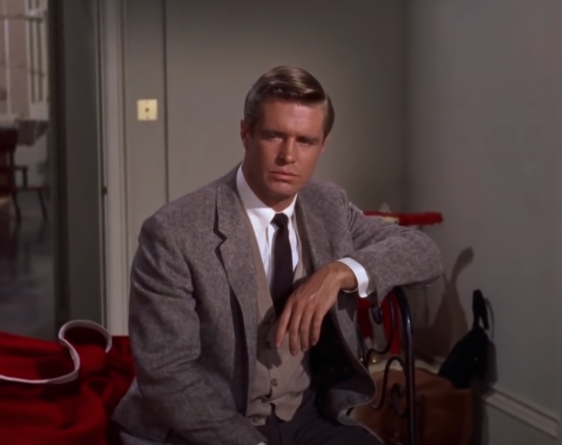
For those who didn’t watch Breakfast At Tiffany’s a thousand times during high school as I did, Paul Varjak is the handsome, lazy writer who falls in love with Holly Golightly. In the past, Paul wrote one best-selling book of short stories and, despite having written nothing else for half a decade, it’s understood whatever he writes next will be a whopping success because he’s already been established as a rare literary talent. That’s exactly what happens, even though Paul’s next stab at writing is a short story titled “My Friend” and doesn’t exactly indicate a work of towering genius: “There was once a very lonely, very frightened girl. She lived alone except for a nameless cat.” In short, Paul Varjak is the embodiment of the publishing phenomenon whereby writers who achieve a certain level of success with one book are always viewed positively afterwards, regardless of the work they produce.
It would take a combination of rare talent, extreme self-editing, and a trust fund for someone to only publish truly brilliant books.
The problem with Paul Varjak syndrome, of course, is that humans are inconsistent. It would take a combination of rare talent, extreme self-editing, and a trust fund for someone to only publish truly brilliant books. (And they’d probably still produce some mediocre stuff—they would just have the option not to sell it.) Yet while reading book coverage, browsing bookstores, and having conversations with friends, it becomes clear that there is a halo around certain faces. Why?
Publishing houses, for one, definitely stand to benefit from the myth of the flawless writer. If you were Hemingway’s publisher and he wrote something new, you’d publish it and call it the next great novel even if it was the worst thing you’d ever seen. It doesn’t make sense for publishers to publicly acknowledge that their established authors have written a dud; they’d only lose money. This may seem harmless, but because publishers inevitably benefit from the writers who gain that halo, they throw the weight of their marketing machines behind those same writers, creating a self-perpetuating cycle of favorable publicity that all but ensures certain writers’ success, regardless of the quality of the individual work.
In other words, to become a certain kind of literary star is to receive the benefit of the doubt, and not just from publishing houses, but from the media. Book reviews and profiles of established figures are more likely to be complementary rather than critical or nuanced.
Part of the reason for this is the loss of professional book reviewers. As broadsheets shrink and platforms like Goodreads rise, it’s hard for publications to pay for a dedicated reviewer. Instead, they employ freelancers to write the occasional review, which means reviews are often pitched only by the writers who are moved to do so—either because they’re excited to praise a big-name author or pan an enemy. This has led to a critical landscape that is overwhelmingly either positive or (more rarely) scathing. It’s not easy in any field to take a contradictory stand against an established figure, but the literary community can be particularly harsh to detractors. The irregular book reviewer stands to lose from writing a negative review; they risk insulting someone they know personally or professionally, and their taste could be questioned in a way that impedes their chance of getting employed again. Staff reviewers, on the other hand, are used to ignoring the noise, both around a particular author and from the masses, and if they give a negative review, it’s framed by their expertise.
You can tell just how rare it is to read a critical review of an established author because of how infamous it made the former New York Times book critic Michiko Kakutani. As a rule, Kakutani graded each book she read on its own merits, no matter who wrote it, and as a result she’d occasionally negatively review everyone from Philip Roth to Martin Amis. Though impartiality seems, to me, the first qualification required for being a book critic, Kakutani became newsworthy for hers, and tales of authors she’d critiqued headlined all the career recaps which proliferated the Internet upon her retirement in 2017. (The great authors themselves clearly weren’t used to such treatment; Jonathan Franzen called her “the stupidest person in New York City,” and Norman Mailer, “a one-woman kamikaze [who] disdains white male authors.”)
I’m not trying to minimize how hard it is to write even one truly great book, nor do I want to suggest that most people who are considered to be at the top of the field haven’t earned their status. But I think we should all be concerned about the tendency to reward the same writers and ignore their unevenness—to create literary gods— because it reinforces the stratified world of publishing.
More than ever, only a small percentage of writers can sustain themselves on the money made from publishing their books. The decline in author incomes is a complicated issue, but one factor is that the big publishing houses, who can typically offer more money than the independents, are taking less risks on the unknown in favor of promoting “sure” bets. This obviously feels unfair to debut writers, and it’s also unfair to career writers who write good books but don’t achieve this special level of fame that comes with a publicity support system, and instead have to prove themselves every time.
Publishing has become the kind of system that reinforces its own prophesies in order to make money. By promoting the belief that certain writers are capable of writing amazing books every time, you are encouraging people to spend their increasingly limited book money on a smaller circle of writers, thus limiting the opportunities for new and unproven works to enter the world. This also has the effect of enforcing a certain view of what “good literature” is, and sets unrealistic expectations about how art is created. We see this superhero franchise mentality—put your money in what’s worked once– in many creative industries, and it ultimately detracts from the quality and diversity of art.
We can praise great talent without forcing the narrative that certain people represent the ideal writer.
What’s the answer? I don’t think it’s aggressively negative book reviews—those certainly exist, and are their own click-bait phenomenon— nor is it to go after the old masters wielding pitchforks and red pens. I also understand that it’s unrealistic to expect publishing houses to openly critique their own clients. What is needed is for the media to judge every book on its own merits. Book reviewers should honestly review the work at hand, allowing for the natural spectrum of success. We can praise great talent without forcing the narrative that certain people represent the ideal writer. (And media presentation matters.) In turn, the public will feel more confident that great writing exists in many forms and may come from unexpected places, and will spend their money on a wider array of books. A more open public will enable editors to publish debut authors without worrying if they are going to be a superstar, and will encourage them to keep an open mind about established writers they already know.
We’re in a strange time, both for publishing and the American arts in general. Some of the best work is coming from unproven talent, but fear about declining sales means more money than ever is going to remakes and well-known names. There is nothing wrong with supporting artists you love, and I would totally preorder Paul Varjak’s second book if he were real. But I shouldn’t assume it would be perfect, or be afraid to voice my opinion if it wasn’t.
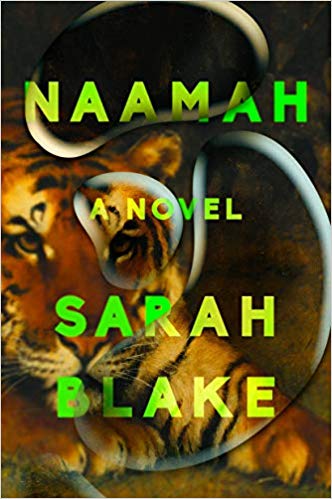
Sarah Blake and I met last year at the AWP Writing Conference in Tampa, where we bonded not over writing, but rewriting. The Bible, to be exact. I’d recently finished a version of The Book of Genesis for my nine-year-old son, stripping away the dogmatic aspects and giving the whole thing a secular-humanist, feminist spin. Blake’s work, on the other hand, was far more focused and ambitious: a novel entitled Naamah (Riverhead Books) that imagines the Great Flood from the perspective of Noah’s wife, Naamah.
The Biblical tale is a familiar one. Seeing that the world is wicked, God makes it rain for forty days and forty nights, flooding the earth and killing all its inhabitants. Well, almost all of them. Having second thoughts, God speaks to the virtuous Noah, detailing plans for a large boat, an ark. God tells him that once built, Noah is to take to the ark with his family and seven pairs of all the animals of earth. Once the flood waters recede, God essentially reboots his creation, promising never to punish humankind with such destruction again. Within that very short text, wherein the men — Noah and his three sons — are named while the women are referred to only as the wives, Blake’s wonderful novel takes place.
Purchase the book
While attending to the many duties of maintaining a floating menagerie, Naamah experiences a wide range of emotions. She grieves for her deceased lover, a woman named Bethel, and deals with the trauma that comes with surviving the apocalypse. She struggles with isolation, and the pressures of being the family matriarch, in charge of birthing animals and humans, doling advice to her sons and daughters-in-law, and helping to bolster spirits as days aboard the ark become months. Seeking a relief from monotony, she takes to the water in long swims and discovers a whole world beneath the waves, replete with an angel and ghosts. Meanwhile, at night, in dreams, she communicates with the birds, puzzling over the nature of God’s plan — should God even have one — and her place within it.
With prose as luminous and heady as it is grounded in Naamah’s strong physicality, Blake creates a complex woman in a complicated yet terrifyingly simple situation. It’s these juxtapositions — how Naamah is both human and mythic — that makes the book such a powerhouse of a debut. Blake spoke with me about it, unpacking some of the work that went into writing Naamah, and how her poetry background (her previous collections include Mr. West and Let’s Not Live on Earth) contributed to how she constructed her debut novel.
Brian Gresko: Though the legend of the Great Flood looms large in our culture, in the actual text of The Book of Genesis it’s a very short story. Of all the tales of The Bible, what drew you to this one?
Sarah Blake: I think it was when I got to this part of Genesis: “7:24 And the waters prevailed on the earth one hundred and fifty days. 8:1 Then God remembered Noah, and every living thing, and all the animals that were with him in the ark. And God made a wind to pass over the earth, and the waters subsided.” I thought of Naamah on that ark, adrift, with no sign for five months that the waters would ever go down. And with this implication that God had forgotten them, if he had to come to remember them. It was horrifying to me — the idea of the ark, the floating, the animals, the noises, the smells, the impossibility of it all. I became obsessed with the woman put in that position.
BG: The name Naamah isn’t one of your own choosing, it comes from a very old midrash, a Biblical exegesis written by Judaic scholars. Did you do a lot of research about Naamah in particular that informed her character? Or about the other women aboard the ark?
SB: All of the women’s names are taken from the ancient Jewish text the Book of Jubilees, or Leptogenesis. Sadie from Sedeqetelebab, Neela from Ne’elatama’uk, and Adata from Adataneses. But while the Book of Jubilees expands on their family, it doesn’t offer too much more information about the story of the ark. Mostly it’s more specifics about the timeline, the moons and months when particular things happened. There are some other stories that say that Naamah was in charge of the seeds and plants, and I brought that into my book. There are others that say she sang, but I gave that characteristic to Sadie instead. I never saw Naamah as much of a singer. I imagined her growing to detest the animals too much to sing to them.
BG: Naamah’s relationship with the animals is fascinating. At the book’s start, she’s literally become blind to them — her vision is unimpaired except for when it comes to the beasts, which she can’t see. I’d love to know more about that decision, which is so central to the book, and so surprising.
The ark is something we’re all somewhat familiar with, so as quickly as I could, I wanted to make the ark unfamiliar.
SB: I wanted the ark to be magical straight off — or if not the ark, the reality of the ark — or if not the reality of the ark, the reality of Naamah — or perhaps just Naamah herself. I imagined all the difficulties that the animals created, but the idea of not seeing them not only made them more dangerous but magnified their sounds, their smells. The ark is something we’re all somewhat familiar with, so as quickly as I could, I wanted to make the ark unfamiliar. I also needed a physical manifestation of Naamah’s discomfort in and distrustfulness of her position.
BG: Did Naamah come to you from the start as a character full of anger?
SB: Not anger — certainly frustration. But whenever she feels anger or doubt or frustration, it’s always balanced by the gratefulness she feels to be alive, to have been saved, chosen. And that constant tug, away from anger, is one that I think she resents. Greatly. So yes, she came to me right away with all of these layers to her feelings about surviving, survivor’s guilt, and all the implications that entails for her relationship with God. Getting to write into all of that — until I understood how she felt and how she would speak to those things and how that would affect her relationships and choices — that was one of my favorite parts of writing this book.
BG: That complex layering of emotions seems to play out directly in her sexual relationships. One of the most engaging aspects of this novel is that Naamah is both powerfully and centrally a maternal figure on the ark, a true matriarch, while also being alive to her sexuality as an individual. Some of my favorite scenes were of her with her former lover, a widow named Bethel. How did that aspect of Naamah’s character develop?
SB: Yes! That seems pretty inherent to the experience of parenting. I feel pretty asexual as a mother. I try to be shameless and direct about my body around my son. But of course I’m a sexual person. And my body is how I experience both sex and sexiness. So there’s this very strange duality to not just how I spend my time (when I’m being sexual or not) but also in my relationship to my own body, my very understanding of it. I guess it existed before motherhood, but, boy, did motherhood draw it out to its extremes. So I knew that same sort of thing would be happening for Naamah, mother of three adult sons and three adult daughters-in-law, wife of Noah, potentially, for centuries, and also the lover of many people as they came through her life. I’m so glad I captured that for her.
BG: The memories that Naamah has of caring for her sons as infants resonated with me as a stay-at-home father. It seems that at no other time is a human more god-like than when caring for a very young child; you create their entire reality for them, you are their world. I wondered if her experiences as a mother amplifies the crisis of faith she experiences on the ark. She has no assurance that God won’t destroy them again. For all she knows, God may continue to be a harsh and uncompromising father who scorches the Earth whenever He’s displeased. That’s a terrifying prospect to consider.
I think Naamah’s crisis of faith is most amplified by being put into a position of godliness for the very first time.
SB: I hadn’t thought about it like that — that she might have experienced a version of godliness and, because of it, been more thrown by her perilous position. I found raising my son led and leads me to more helpless feelings than god-like ones. I think I carried that into the book for Naamah as well. I think Naamah’s crisis of faith is most amplified by being put into a position of godliness for the very first time, something she’d never experienced, never imagined. And from that position, yes, I think she’s all the more certain that God might punish them all again. Until she gets to talk to Him later in the book.
BG: Pretty early on in the novel, Naamah begins a practice of taking long swims from the ark. Beneath the water she finds an angel, and later, the spirits of the dead. This, along with her dreams, is such a wonderful and surprising aspect of the book, and one that adds real tension as the story progresses. How did this element of Naamah’s story come about? Was this entirely of your own invention, or was there any precedent for it in the research that you did?
SB: Before I wrote prose about Naamah, I’d written poems about her, and even a short screenplay. The first thing I knew about the book, all the way back to that screenplay, was that Naamah was going to take up swimming. That seemed like the most logical response to this feeling of being trapped, which I imagined overwhelmed Naamah on the ark. But once she was in the water, what an opportunity! It felt like a space where anything could happen. In the short, Naamah sees a woman, but the screenplay is just about over at that point. I was so excited to figure out the mystery woman when I went forward with prose. Would she be only a vision? Or would it be God? A dead woman? Bethel even? Or an angel? I’ve always been curious about angels, fascinated by their characterizations and how they’ve been carried through into contemporary fiction/media. So once I thought that it could be an angel, that was all I could think about.
The angel and her village of dead are completely of my own invention, though it has been pointed out to me, since finishing, that she could be read as an origin story for the devil and hell.
BG: To me, this book perfectly sits in-between a kind of narrative realism — Naamah as a character has a familiar and specific psychology grounded in her body — and a fable in which she’s enacting a complex drama about a woman’s role in a patriarchal world, and an individual’s relationship to the divine, among other possible interpretations. From a process perspective, what was it like to walk that line?
SB: Perhaps this is where my being a poet helped me the most. I always try to stick as closely as I can to the truth of whatever narrative I’m telling, the truth of the character and their world, and I trust that any parallels that are developing will be fitting and, in their own way, true. Those parallels are not entirely my business; they’re the reader’s. I must only watch for ways I definitely don’t want the text to translate. But it was more of a concern for this book being a retelling of a tale from Genesis. I knew it was more of a concern for a novel than, say, a one-page narrative poem, where you can track the fable, the metaphor, and it never gets too unwieldy (if it goes astray in a poem, you can lead it back). Writing this book required more faith. I had to commit to all of the truths of Naamah and believe that the other side, the murkier depths, the reflections, would read over in a way that made sense to me. Of course, I got to revise, but I found that I was happy with the ways the story dipped into parable, the ways Naamah stands also as symbol.
Novel Gazing is Electric Literature’s personal essay series about the way reading shapes our lives. This time, we asked: What’s a book that changed your mind?
I was always skeptical of The Group, Mary McCarthy’s 1954 novel about the Vassar Class of ’33. Frankly, I figured it would bore me. I doubted that I’d relate to the struggles of eight women graduating from college in the aftermath of the Great Depression; these days, I’m barely interested in books that take place before the advent of the internet.
But it was free, and easily available, sitting on a community bookshelf outside a coffee shop in my neighborhood in New York. The cover was crumbling, but the pages were intact. Whenever I’m looking for a new book, my test is to read the first paragraph, and if I don’t find the opening lines compelling, I leave it on the stacks. With The Group, I accidentally missed the first paragraph and thumbed a few pages in, my eyes landing on the phrase “copious menstruation.” I laughed out loud, took the book home, and crammed it above a row on my own overflowing bookshelf.
I’d moved to New York from Boston in September to be closer to a man with whom I’d been in a long-distance relationship for two years. We moved into a gorgeous one-bedroom, my first, in his favorite part of Inwood. It was nice at first. We merged the art and cookbooks we’d been buying for each other; we brought in furniture his father had built many years ago, that we’d restored together. We were both finishing graduate school – I study literature at Harvard, he does physics at NYU – and confronting the pressures of the dissertation year and the job market.
Our romance had been something of a fairy tale. We’d met on the street one summer day when he was visiting a friend in Boston. Our one night-stand stand turned into a fling, which became a full-fledged relationship. On our fight night together, he identified his favorite spot on my body: the curve of waist, ribcage to hip, that is exaggerated when I lie on my side. Two years later, he still liked to put his hand there with a feeling somewhere between reverence and ownership.
Even his alcoholism didn’t ding the armor of perfection I thought he wore.
He had a drinking problem, but in our two years together, I’d helped him confront it, and steadied him on his path to sobriety. In solidarity, I never drank around him. We visited each other every three weeks, then every two weeks. When not together, spoke every night, including during the months I’d spent in Europe on a research trip. We were passionately in love and it made all the sense in the world that, as soon as I was able to leave Cambridge, we’d move in together. Even his alcoholism didn’t ding the armor of perfection I thought he wore. It only gave the armor a lovely patina.
In December, three months after we moved in, he relapsed. I knew about a couple incidents in which he’d gotten drunk—isolated ones, I thought. By January, we were fighting constantly and I kept catching him exchanging flirtatious texts with a colleague. I never found evidence that he had slept with her, but I kept feeling compelled to unlock his phone and read the messages they exchanged. And Dan Savage is right, snoopers always find what they’re looking for. Sometimes it made me so angry, I became violent, throwing wooden spoons while I stood at the stove or grabbing his neck, my manicured fingernails long enough to leave a mark. In early February, I decided to leave for two weeks, not the city but the apartment. I’d stay with friends, drinking in their sympathy and more wine than I had consumed in, well, two years. On my way out the door, I grabbed that stray copy of The Group and threw it in my backpack. I started reading it that night, on a friend’s couch in Crown Heights.
Buy the book
The eponymous group is eight women: Kay Strong, Elinor “Lakey” Eastlake, Dottie Renfrew, Polly Andrews, Priss Hartshorn, Pokey Prothero, Libby MacAusland and, my favorite, Helena Davison. They were all best friends in college which means, then as now, they all relate to each other with varying levels of envy, resentment, and condescension. The book begins soon after their graduation when they’ve mostly all moved to New York.
They’re all different, well-developed, three-dimensional (except Pokey, who basically provides comic relief, with her pilot’s license and puddle jumper that she uses to fly to agricultural courses at Cornell). They all have their conflicts, but the question they all struggle with is this: what kind of woman do I want to be? What kind of marriage do I want, if, they think, decades before Lisa Simpson, I choose to get married? Each one fancies herself modern, nothing at all like Mother and Daddy, but they have to face the realities of New York, the job market, sex and relationships to figure out what it means to be modern women.
I related to every single character; each one of them had problems that seemed an aspect of my own. Helena, who narrates events in her head even as they occur to her, preparing how she’ll later write them down or, more likely, relate them to her mom back in Cleveland. Polly who, when a relationship with a more experienced man ends, admits she never belonged among the built-in furniture he had in his beautiful office. “I’m a knickknack,” she tells him. And poor Priss, a victim of mansplaining avant la lettre.
But most of all, Kay, who had lately been the most devil-may-care member of the group. Outspoken to the point of coarseness, untamable, her move to New York was the most natural thing in the world, especially after all those steamy weekends she spent in the city with the romantic and impressive Harald Petersen. The book begins at their wedding; on the first page, Kay becomes Kay (Strong) Petersen.
Harald has a drinking problem, and a responsibility problem. When he gets fired from the theater he’s been working at, Kay wonders if he hadn’t been drunk on the job, but he claims it was because he refused to give in to the director’s advances:
“It was an uninviting prospect. The old fruit must be forty.” For a second, Kay was relieved and, at the same time (wasn’t that queer?), almost let down; then a fresh suspicion attacked her. “Harald! Do you mean you would have done it with someone younger? A chorus boy?” She felt sick thinking of the nights had had worked late, and yet there was this funny itch to know. “I can’t answer hypothetical questions,” Harald said, rather impatiently.
Kay suspects that Harald is unfaithful, but she doesn’t know for sure. The reader does, though, because Helena walks in on him in full canoodle with another woman. But Kay has no evidence, and she becomes trapped by the combination of distrust and a disinclination to express it. She’s also terrified of becoming an old-fashioned nag – she’s a modern woman, after all – even as she sees Harald yield to an increasingly dangerous drinking habit.
Harald had gone to the kitchen and fixed himself a gin and bitters; this was a bad sign – he knew Kay hated the taste of straight liquor and did not like to see him drink it. Now he put tobacco in his pipe, lit it, and poured a second. “What can I fix you?” he said. “A silver fizz?” Kay frowned; she was wounded by the mocking courtesy of his manner. “I don’t think I’ll have anything,” she replied thoughtfully. Harald’s dark, wiry eyebrows shot up. “Why this departure?” he said. Kay had suddenly determined to turn over a new leaf, but she felt this was not quite the right moment to announce it; you never knew how Harald would take things when he had been drinking. “I just don’t feel like it,” she said. “I’m going to start dinner.” She rose from her chair. Harald stared at her, with his hands on his hips and pursed lips. “My God!” he said. “You are the most tactless, blundering fool that ever lived.” “But what have I said?” cried Kay, too astonished, even, to be hurt. “’I don’t think I’ll have anything,’” he quoted, imitating her voice and adding a smug note that she could swear had not been there when she spoke. If only he knew, she was dying for a silver fizz.
I didn’t know what a silver fizz was (now I do: it’s gin, egg white, sugar, and lemon, all fizzed up), but I was becoming intimately familiar with the fear of saying the wrong thing to stop someone drinking. And I was learning about how name-calling works in the context of a relationship. It’s a seemingly powerless thing that completely disarms you, harms you. It’s a speech-act that turns you into the thing you’re accused of being. Harald weaponizes Kay’s outspokenness, even when she’s trying to rein it in. When my partner called me an asshole, a dick, an egotistical prick, the most hypocritical person he knows, he convinced me that I was.
During the two weeks my partner and I spent apart, I tore through the book, literally and figuratively. The paperback edition I had was the perfect size to fit in my purse, so I read it on long subway rides between the tippy-top of Manhattan where I lived, and the navel of Brooklyn, where I had gone to recover. But this copy had been printed in 1964, and had been left out on a community bookshelf by god knows who for god knows how long. It was crumbling in my hands. Every time I turned a page, I ripped the brittle paper. Its yellowed pages left ticker tape in my purse, on my lap, on the subway floor. I knew I’d be this copy’s final reader. Both covers loosed themselves, I taped them back on. The corners of the front cover and the first twenty or so pages were falling off too, until it looked like a limestone quarry. It was beautiful, but vulnerable.
Each chapter of the book switches perspective. Now you’re with Libby, who expects a marriage proposal from her new beau, and is subjected to his rape attempt instead. Now you’re with Dottie, who parts with her virginity cavalierly but is humiliated when her deflowerer rejects her offer of occasional NSA sex. It’s enough to drive her out of New York, but even after she becomes engaged to a kind Arizona widower, she still longs for good old Dick (McCarthy here anticipating Chris Kraus).
Each chapter was shocking, and shockingly familiar. Reading it on the train, I would gasp audibly. I would weep silently, reaching into the pocket of my old-fashioned cowl-necked wool coat for a handkerchief. I felt so in sync with these women that a group experience of “copious menstruation” couldn’t be far off.
I didn’t manage to stay away from my partner for the full two weeks. He had a crisis at work, and so I went back, wanting to be there for him, and also sick of cooking thank-you dinners and sleeping on couches. But he kept drinking, even more than I realized, more nights than not. He’d fall asleep and I’d go through his phone, looking for evidence of his infidelity. And I kept finding it. It was worse than I had suspected. His flirtation with his colleague had persisted, and there were other women, women with whom he was sexual and explicit. It didn’t seem like he had slept with any of them. No plans to meet were ever made, no details about encounters, even when he and I had been apart. Unless it had been arranged over the phone? Kay was right: “You could not love a man who was always playing hide-and-seek with you; that was the lesson she had learned.”
This is Kay’s revelation when she wakes up in the Payne Whitney Clinic, a psychiatric hospital. Harald had come home the previous day at seven in the morning; Kay knew he was drunk, and suspected he’d been unfaithful. He became violent, she threatened him with a kitchen knife, the police were called. Eventually he convinces her to check into a hospital, they could have some space from each other. She could rest, recover. But she’d been tricked; he’d had her committed. Until he shows up and signs her release papers, the doctors will assume that her black eye was self-inflicted.
When she realizes this, she doesn’t feel hurt or angry, but heartbroken. “She was grieving, she decided, for a Harald-That-Never-Was, not for the real Harald. But if she lost the real Harald, who was not such a muchness, she lost her only link with the Harald-That-Never-Was. Then it was really finished, her dream.”
I read that scene on my way back to Brooklyn. The night before, I’d found more messages with yet another woman. I also found the largest bottle of whiskey I’d ever seen—although “found” may be the wrong word. It wasn’t even hidden this time. It was on the floor in a black plastic bag, surrounded by the laundry he’d needed to borrow money to have cleaned. Every other time I’d found incriminating messages and woken him up, he’d first deny it, claiming I was reading into these texts. Then he’d admit it, and beg me not to leave him.
This time had been different. This time, I’d woken him up by pouring liquor all over him, shouting “You want your life soaked in whiskey?” This time, he’d become violent. This time, the police were called. How many times did I need this to happen?
I felt like a caricature of myself, so outlandish, a character from a 1930’s melodrama.
I felt like a caricature of myself, so outlandish, a character from a 1930’s melodrama. How could I love someone who was always playing hide-and-seek with me?
This time, there was no begging in the morning. Just an acknowledgment that it was really finished, our dream.
Two days later, riding the Manhattan-bound A to collect my things, I reached the end of the book. It ends sevenyears after it began, at Kay’s funeral. The 1930s are over, and she has died falling out a window, in what is almost certainly a suicide.
The Group is a collective coming-of-age story. The women are college graduates, and they think they’ve stepped fully into adulthood. But adulthood isn’t an age; it’s a stage you earn, through suffering, I suppose, and disappointment. By the end of the book, they have, collectively, dealt with: miscarriage, divorce, infidelity, assault, and the death of a peer. (And a lot of communism. Practically the only aspect of the book that’s dated is the debate between communists and Trotskyites.)
For most of my adult life, I’ve felt like I was only playing at adulthood. Even moving in with my partner felt like playing house. Now I’m subletting a room in an apartment with two women who are five years my junior. In some ways, it feels like a step backwards to be returning to a shared bathroom and a refrigerator full of redundant dairy products, bought because we don’t share. But in another way, I’ve never felt more mature. Alcoholism ages you, even if you’re not the alcoholic. I can’t tell if it’s the lighting in this new shared bathroom or the fact that the mirror hasn’t been cleaned since the lease was last signed, but my hair looks 20% grayer than it did two months ago. Moving out of the apartment I shared with my boyfriend was the hardest thing I’d ever had to do. But I couldn’t stay and wait for my life to deteriorate further.
When I finished the book, I thought about getting a tattoo of the disintegrated cover and the striations of the first few pages. I’d remove the title, the author’s name, and the daisy chain illustration (the Daisy Chain, capitalized thusly, is a symbol throughout the book of I don’t know what). It would be what was left of the book: an almost-rectangle, now a palimpsest. It would be a break-up tattoo, and I’d put it on that curve of my waist, where my now-ex liked to put his hand.
But a tattoo, like they say about suicide, is a permanent solution to a temporary problem. I didn’t want those months, that night, that pain etched permanently into my body. I can let the book disintegrate, and the relationship too. Kay dropped the Strong from her name. I’m just finding mine.
When I started working on what is now my debut novel, The Dream Peddler, I never gave much thought to how a book riddled with dream sequences might be received. I had no idea how many readers are turned off by dreams in fiction, although I can’t blame them if they don’t respond well to a long passage or chapter ending abruptly with the trick of “and then I woke up.” Dishonesty aside, though, I’ve always found that when used carefully, dream sequences can be a fascinating way to enrich a story, and I certainly loved incorporating them into my own book.
Buy the book
The Victorians, for instance, were fascinated by dreams, and Victorian authors instinctively understood that while dreams are often a jumble of things we experience during the day, they may also reveal our deepest fears or hidden desires. As such, they can provide a useful tool for an author to reveal more about their characters to the reader, and often a way to reveal things to us that the characters themselves don’t yet consciously realize.
I’ve done a little research on the long tradition of using dreams in literature, and I’m delighted to present this list of books whose authors have used the dreamworld ingeniously to mirror and explore the waking lives of their characters.
This is one of my all-time favorite Victorian novels, and one from which I even drew an epigraph for my own book. Brontë uses dreams sparingly in her classic tale of lost love, but the ones she does employ pack a punch. Frightening or foreboding dreams are the perfect device for Gothic literature, with its haunted mansions and lowering skies.
Very near the start of Wuthering Heights, our narrator, Mr. Lockwood, experiences a harrowing dream when he is forced to spend the night in the room that once belonged to the now long-dead Catherine. Towards the dream’s end, the child Catherine tries to get in at his window, and he is violent in his attempts to keep her out. Lockwood later describes the encounter to Heathcliff as a dream, yet Heathcliff’s fearful reaction makes us wonder if, in fact, Catherine’s ghost might be more than just a figment of Lockwood’s imagination.
The novel’s second dream comes from Catherine herself, as she describes it to Nelly in the kitchen shortly after accepting Linton’s proposal of marriage. In her dream, she chooses to be cast out of heaven and lands on the moor where she and Heathcliff spent so much of their childhood together. Her joy at being tossed back to earth by the angels speaks to her of her heart’s preference for Heathcliff over Linton. What is most interesting about this dream, however, is its timing, as her description of it sets off the biggest turning point in the book: Heathcliff, hiding in the shadows, only overhears Catherine saying that it would degrade her to marry him, and runs away before she goes on to describe the depth of her love for him.
Emily Brontë’s equally famous sister, Charlotte, uses dreams freely in Jane Eyre. One of the overarching themes of this book is Jane’s ability, despite a difficult childhood during which she she was prone to tempestuousness and outbursts of feeling, to become the ideal Victorian woman—outwardly calm, strong feelings always suppressed or hidden. Because of this, dreams offer the reader a valuable glimpse beyond Jane’s guarded demeanor and into the fears and longings she keeps hidden.
In keeping with common superstitions of the day, dreams in Jane Eyre are also instruments of foreboding. Whenever one of the characters dreams about children, for instance, they receive news of a death in the family soon afterward. When Jane dreams of children, which she does repeatedly over the course of a week, it also points the reader to her secret wish to marry Rochester and become a mother.
Jane’s dreams almost always center on this relationship and its doom, as she dreams of Rochester walking so far ahead of her that she can’t catch up, or, on another occasion, that she is climbing among the ruins of Thornfield (another apt premonition) while Rochester remains only a tiny speck in the distance. She also dreams that Blanche Ingram, the woman she believes for a time has Rochester’s heart, has shut the gates of Thornfield against her.
Even after her wedding is ruined and she runs away, Jane is still plagued by dreams of being in Rochester’s arms. Despite her outward resolve to cast him off forever, she can’t stop loving him and can’t forget him.
Since Du Maurier’s masterpiece is in many ways a retelling of Jane Eyre, it seems fitting that it, too, should open with an ominous dream and that famous line: “Last night I dreamt I went to Manderley again.” The dream, to which nearly the entire first chapter is devoted, does a fabulous job of setting the novel’s dark mood, of forecasting the narrator’s troubled journey as the drive to the house in the dream is choked with forest encroaching upon it.
Dreams are used sparingly in this book, but to great effect. The first time Maxim leaves his wife alone overnight, for instance, her dreams are troubled. Just as Jane Eyre dreamt of Rochester, Mrs. de Winter dreams that she is walking with Maxim in the woods but can’t keep up, his face always turned away from her.
Her dreams are also an effective device in revealing to us how impossible it is for the narrator to escape Rebecca’s haunting. As she puts it, “Even in my thoughts, my dreams, I met Rebecca.”
And the book ends with a series of dreams, as it began. Pages before the climax, Mrs. De Winter spends a long drive toward Manderley swimming in and out of consciousness, and in these dreams her connection to Rebecca is further tightened to a stranglehold. In one, she looks down to see that her own tiny handwriting has been replaced with Rebecca’s long, slanted letters. She looks in the mirror and sees that she looks like Rebecca, too.
This final series of dreams serves to recall the long dream of the opening, and reminds us that Mrs. De Winter will never truly be able to leave this ghost behind—she is still dreaming of Manderley after the events of the book are long past.
In Rhys’s brilliant postcolonial retelling of Jane Eyre from Bertha’s (Antoinette’s) point of view, each of the book’s three parts contains one important dream. Antionette’s first dream is short, consisting simply of walking in a forest, followed by the heavy footsteps of someone who hates her. It serves not merely to reflect her childish understanding that the recently emancipated black people of Jamaica harbor ill-will for Antoinette and her white Creole family, but also to hint at her future unfortunate relationship with Rochester.
Later on, when her stepfather informs her that a suitor is coming to visit her, she dreams of the forest again. This time, the dream is more complex, and her premonition of her marriage is no longer veiled: led through the forest by a strange, hateful man, Antionette is frightened yet feels she has no choice but to follow him.
By the time Antionette has her third and final dream in the attic at Thornfield, a dream of running through the house knocking lighted candles to the ground and setting curtains ablaze, we know her descent into madness—whether predestined or forced upon her by circumstance—is complete.
In the Victorian and Gothic traditions, dreams allow the subconscious of a narrator who is caged by her time and circumstances to run free, and they can be used to the same effect within the similar constraints of dystopian literature. In Winston Smith’s world of Oceania, history is constantly rewritten in order to meet the needs of the present, and any sort of dissent is known as thoughtcrime against The Party. In this environment, Winston’s dreams offer him an occasional chance for freedom.
For instance, they often serve as the place in which some form of his repressed memories manages to surface. In one, he dreams of watching his mother and sister on a sinking ship; from another, he wakes with the word “Shakespeare” on his lips but without any memory of what it means. Eventually, this dream freedom triggers a conscious memory, and he wakes from a dream of his mother to remember hiding with her and his sister in underground shelters during the war.
Many of Winston’s dreams are also prophetic. He dreams of his love interest, Julia, casting off her clothes in a sunlit field that he thinks of as The Golden Country, and when he finally meets with her, that dream comes true in every detail. Seven years before the events of the novel, he dreams of a voice telling him they will meet in the place where there is no darkness, and over time he becomes convinced the voice belongs to O’Brien, the man he believes is part of an underground resistance. Unfortunately, this dream becomes reality in the Ministry of Love, where Winston is tortured. Even here, however, his dreams give evidence of the tenaciousness of hope within him: his continued dreams of being with his mother and Julia in The Golden Country offer him respite and help him heal.
Atwood’s famous handmaid, Offred, dreams not of the future, but the past. Her life, of course, is even more repressive than Winston Smith’s, and because of this she actively tries to avoid remembering the family and friends she once had. Naturally, her former life still sometimes haunts her in her sleep. She dreams of being in the old apartment she once shared with her husband, but all the furniture is gone and none of the clothes in the closet fit her. She is also plagued by a recurring nightmare that recalls her attempt to flee with her daughter, dragging her through the bracken of a forest, pulling her down and trying to shield her, then watching her carried away, still holding her arms out toward her mother.
Offred is an openly unreliable narrator, trying to construct a life that is bearable out of one that is not. She sometimes recounts an event and then starts over, admitting the lies she has told us even as she continues to spin more of them. And this tendency, too, is reflected in dream sequences. In one instance, she has a lucid dream of waking in the morning and hugging her daughter, but is overcome with sadness because she knows it’s not real. Then, she dreams of waking from that dream to her own mother carrying a tray of food into her room. Eventually, she wakes a final time into her real life, but even then, she wonders if everything she experiences might be a delusion.
In this exceedingly clever, Kafkaesque detective novel, Berry leads us into a world where spies have learned to sleuth through people’s dreams. In fact, this entire book operates with a dream-like logic (it’s always raining, buildings are full of secret passages and tunnels), and it’s not always certain when one is asleep or awake.
When clerk Charles Unwin is mysteriously promoted to detective at The Agency where he works, he’s certain a mistake has been made, but in order to correct it he’ll have to hunt down his own missing boss, detective Travis T. Sivart. Eventually, it becomes apparent that Sivart may have become trapped in a dream he entered to catch a thief, and Unwin is forced to go in after him.
I don’t think there has ever been a book that uses dreaming as cleverly as this one. Lucid dreams, dreams from which one believes one has woken even as they continue, and shared dreams all play a role. In this world, dreams can even be recorded and played back to the mind of another. A most unusual take on the gumshoe detective genre!
In Thompson Walker’s latest gorgeous book, a small university town is hit with a mysterious sleeping sickness that appears to cause unusually vivid dreams in the infected. It begins with one student, then quickly spreads through the school and eventually, the town, with no experts able to determine how it originated, how to cure it, or how long it might last.
Thompson Walker uses many, many dreams to explore the lives of these characters alongside their waking hours, but in an interesting twist, most of the dreams we read about belong to those who are still healthy. Mei, the college student who happened to be roommates with the very first girl to fall ill, dreams of being in church with her family because she feels guilty about her behavior away from home. Ben, the young professor and new father, has nightmare after nightmare about his wife leaving him, his daughter dying. And a much older professor, Nathaniel, dreams of his partner, Henry, who no longer lives with him due to dementia.
Eventually, we do become privy to some of the dreams of the sick, and this is when things really get interesting. Thompson Walker plays with the idea of precognitive dreams and even the notion that a whole life might be lived in a dream, more real to the dreamer upon waking than the one left behind.
I survived growing up in Mississippi by reading. The Greenwood-Leflore Public Library was only three blocks from my house. At the time I didn’t understand how libraries were arranged and would spend long afternoons wandering the shelves at random, filling my arms with books. I’d read on the second floor benches overlooking West Washington, going on trial with Jeanne d’Arc for the heresy of cross-dressing, stomach clenching at Alexandra Feodorovna’s growing obsession with Rasputin, travelling from Auschwitz to Bergen-Belsen during Anne Frank’s last days.
Purchase the book
I loved libraries so much that I became a public school librarian. Library lover Susan Orlean did one better, writing The Library Book. Orlean combines her love of libraries and of literature into a fascinating exploration of the devastating arson which nearly destroyed the Los Angeles Library, chronicling the broader history of libraries and librarians in a way that has never been done before.
I spoke with Orlean over Skype about the history of libraries, access and gender discrimination, the actress Parker Posey’s influence on the profession, and the continuing relevance of libraries in the digital age.
Deirdre Sugiuchi: You have so many incredible details in this book, from the color of fire to the temperature when books burn, to sprinkler guidelines in the library, how did you research this book?
Susan Orlean: Very carefully. I interviewed a huge number of people–anyone from firefighters who were there, to a huge number of librarians both retired and current—and I went through a huge amount of archival material as well. The fire department had its log from the fire that I had access to, and it detailed minute to minute what was going on with the fire. But it really was tracking through archives, talking to tons of people, and reading old newspaper accounts—everything I could get my hands on.
DS: You spoke to and wrote about so many incredible librarians. Did you have a favorite?
SO: I did have a favorite. I probably shouldn’t say I had a favorite but I did, or rather two favorites. The most fun to write about was Charles Lummis because he is such an incredible figure, a fascinating, maddening, interesting genius. But my real favorite was Althea Warren, who led the library through the depression and through some very interesting times.
Warren was a strong interesting woman who was a great advocate of reading. She was really passionate about reading in a way that really defined her. Her goal was just to inspire people to read, not only patrons but the librarians as well; she wanted them to be as passionate about reading as she was. There was something very effecting about her story. She was an incredibly good head librarian. I think she probably didn’t get as much credit because it was during her time when the library had a lot of financial difficulties, and she had to lay staff off and make cuts. I think she was unfortunately stuck with some circumstances that weren’t ideal but there was something about her that really inspired me and moved me. and she seemed like a really valiant figure.
DS: Speaking of Charles Lummis, he basically helped force out his female predecessor, Mary Jones. You chronicle gender discrimination against librarians in the past. Would you care to expand on that?
We think of librarianship as being a feminized profession but it was not for a long time.
SO: We now think of librarianship as being a feminized profession but it was not for a long time. It was a very male profession and women entering it, particularly at the level of management, was a big change in the profession. And at the time Mary Jones was running the library, it was a little bit unusual to have a woman be the head of the library system. It’s always been a very gendered profession and it’s a very interesting one in the sense that it began as being so male dominated and then switched very quickly actually when it switched being a much more feminine profession. The change was very quick and dramatic. It really made for a huge change in the whole profession.
Now we are seeing a switch back into having many more young men going to library school. It’s just drawn more young people who were interested in it for the information management aspect of it but also a kind of the mission for social good. That I think has attracted a wider range of people, particularly young people. It’s a really interesting thing to observe from a gender perspective. You know women first were brought into the profession because there was a huge need for a lot of librarians as libraries were being built by the dozens around the country and the idea was that women would work for less money. It was a horrible way to staff all these new libraries so it really comes with some background that’s not very savory.
DS: You speaking of the influx of female librarians leads to the importance of the Carnegie Foundation and libraries in America.
SO: I don’t want to overstate my knowledge but the development of Carnegie libraries was such a significant stimulus for the huge expansion of libraries in this country. What happened was it was a little like cities who were competing for the Amazon headquarters. Cities were competing for these Carnegie libraries, and in some cases where they didn’t get the grant they went ahead and built the library anyway, but Carnegie triggered the idea of this great expansion of libraries and establishing many more libraries, particularly these branch libraries, and democratizing even more access to libraries. That really triggered an enormous growth of libraries in this country and I suspect in other countries where they were building libraries.
DS: You talk about access changing in libraries. Now we think of libraries being open for everyone, but in the beginning they were fee-based. Can you talk about how access has changed in libraries?
When the L.A library was founded, women were not permitted the use of the general library, and children were not allowed at all.
SO: If you look at the L.A. Library as an example, when it was founded women were not permitted the use of the general library, and children were not allowed the use at all.
Initially there was a membership fee that doesn’t sound like a lot of money to us [now], but actually represented a considerable amount of money to people [then]. A week’s wages. The first thing that some of the early head librarians did was lower the fee so it became a pretty insignificant amount of money.
Secondly they expanded women’s access to the library general. Children were allowed from a certain age. There were always all of these complicated restrictions. They had to have a certain grade average, be a certain age, be able to sign their name. There were all sorts of rules, which is funny when we go now and see a storytime with infants and toddlers running around. So these went from being, even though they were public institutions initially they weren’t truly public, to having the mission stated very clearly now that access for everyone is fundamental to the whole meaning of a library. That’s a huge change in considering the pace of history it hasn’t been that long of a time.
DS: I’m from the South where library use was restricted for people of color. They would have bookmobiles or no access. Librarian Althea Warren promoted African American librarians like Miriam Matthews in certain neighborhoods. I couldn’t tell from your book if people of color were ever prohibited from the L.A. library.
SO: Not that I know of. They weren’t segregated. What was sort of notable about Warren’s promotion of African American librarians was that she encouraged them to develop collections of books by African American authors, or about black history, and that was a very unusual thing to be collecting those books at that time, but as far as I know there was no segregation in the libraries in California.
DS: I think your book is the first time I’ve ever seen the Parker Posey movie Party Girl recognized as catalyst for the new wave of librarianship. That movie totally inspired me to become a librarian! Was that just something you observed, or did someone else talk to you about this?
Women first were brought into librarianship because of the idea that women would work for less money.
SO: That’s so funny! I had begun to wonder why becoming a librarian went from being something that seemed very nerdy and uncool to suddenly seeming very groovy and appealing to people.
I was trying to figure out was there some cultural touchstone that changed the perception of this profession when I was talking to the library about the launching of their teen department, and they said they had someone from Buffy the Vampire Slayer who was a librarian. I thought “Oh, I wonder if there was another librarian figure in a movie.” Because believe it or not that can be very influential to decisions that people make or just the perception that people have can be really influenced by a movie. I don’t remember now who pointed out Parker Posey but I thought “Oh my God that definitely would have had an impact.” And I believe that it did.
DS: Oh 100%! So you just wrote this incredible love letter to libraries. How has your interaction with them changed as a result of writing this?
SO: I think that it really made me fall deeply in love with libraries. Obviously that was a huge motivation in doing the book. Rather than having my fantasies about libraries be disproved, I came away feeling even more amazed and awed by what libraries do and what they can do. A lot of times you write a book and you come away a little bit cynical about what you’ve written about, but this had a very different effect in that it’s really made me value and savor the role that libraries have.
DS: You talk about as recently as 1979 when the Rand corporation was declaring libraries irrelevant. In the digital era there has been pushback against libraries. Can you talk about how important they are in this era?
We see libraries now as community centers for knowledge and information, rather than museums of books. That’s why they thrive.
SO: I think that the Rand corporation analysis now looks pretty silly and to put that into perspective I think that if libraries hadn’t evolved then maybe they would be irrelevant.
If libraries had decided their only mission was to be basically a depository for books, then maybe their relevance would be growing smaller and smaller. But instead the Rand analysis came out just about the time when many libraries were acknowledging that change in the way we get information, and rather than resisting, they were embracing it. They began programming everything from storytimes, to book clubs, to lecture series, to tax preparation workshops. They became a center for where you could use computers as opposed to resisting the idea of computers. They began lending e-media instead of being scared by the idea of e-media.
So in all fairness Rand was probably looking at the old model of libraries and simply didn’t realize that libraries were very aware of how things were changing and were willing and pretty eager I think to embrace and become central to it.
I think that we see libraries now as community centers for knowledge and information, rather than museums of books. That’s why they thrived and will continue to thrive and maybe even exceed where they are now in their importance to communities.
DON’T MISS OUT
Sign up for our newsletter to get submission announcements and stay on top of our best work.
YOUR INBOX IS LIT
Enjoy strange, diverting work from The Commuter on Mondays, absorbing fiction from Recommended Reading on Wednesdays, and a roundup of our best work of the week on Fridays. Personalize your subscription preferences here.