Being a student of Monica Ferrell’s was a singularly influential time in my life. Immediately upon meeting her, I wanted to be like her: to enter a room with the same serious allure, the same unassuming self-possession. And when I first read her poems—fierce, sophisticated, sensual in every sense of the word—I didn’t want to write poems like them; I wanted to have written them myself.
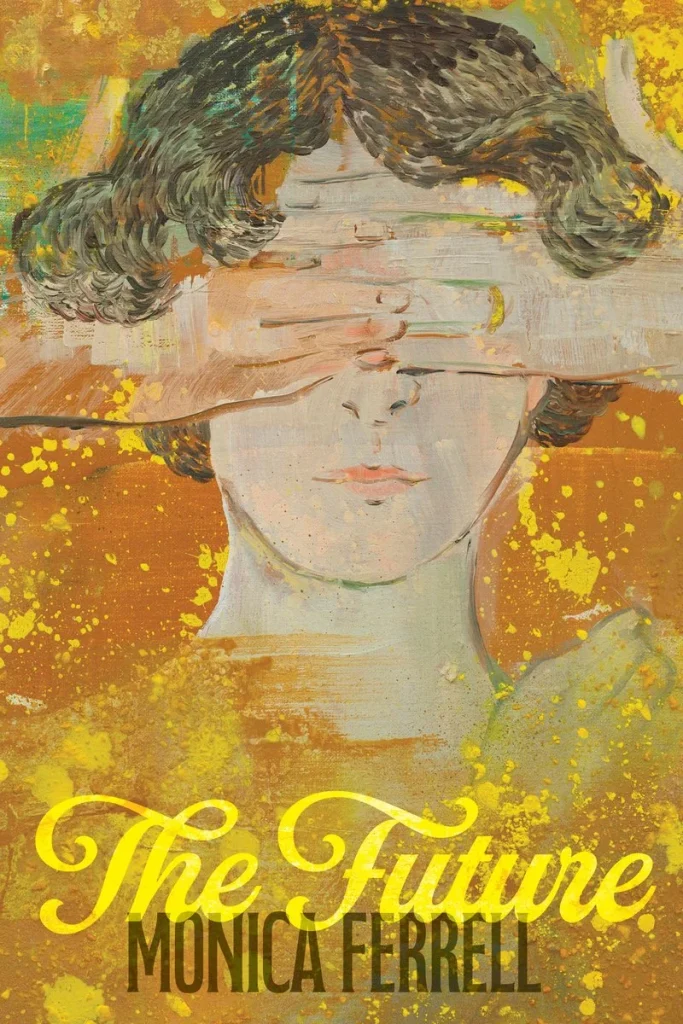
Now, instead of envy, I’m overwhelmed with gratitude for her new book, The Future, which continues to teach me how we can maintain an urbane, old-soul sensibility in the mundane horror of the new world order. The poems strike the most inevitable and surprising balance among the myths and archetypes from the past, the technological artifacts of the present, and the signs of mortality and rebirth always on the horizon.
Monica and I met to talk about The Future: its influences, its anxieties, and ultimately, its optimism.
Zachary Pace: Both You Darling Thing, your second book of poems, and The Future contain so much of the modern world, where your first book of poems, Beasts for the Chase, takes me back to less technological times. For example, the computer appears in a few poems of The Future. Has your writing process changed at all now that computers are such a central part of daily life?
Monica Ferrell: I wrote a lot of the first book by hand, in notebooks, and would transfer poems over to the computer, but by the time of writing the last poems in that book, I was typing directly into the computer. The second book was definitely written into the computer, but if I had writer’s block, I’d try experiments like writing on a typewriter. The Future was also written at the computer, and I felt a one-to-one relationship with the screen as opposed to the pen or notebook.
I’m also writing fiction, and in the last two years, I’ve gone completely longhand. For one thing, it’s too easy to move text around on the computer; I feel like I’m just rearranging chairs most of the time. When I’m writing a piece of fiction longhand, I feel like I have a single thread that I’m spinning through the pages. I feel continuity and forward motion.
When I open the computer now, as opposed to when I was a student, my main associations are bad news, work emails, or internet shopping. These things take me so far away from the sacred space of writing, that’s also why I’ve turned to writing fiction by hand. But the poems are still written on the computer, mainly because it’s so easy to move around the line breaks that way, and to change the stanza shape. Formal plasticity. Formal changes can be made instantly.
A lot of poets say that a first book is the invention of the self—inventing the myth of the self. My first book was made out of everything that I read as a child—stories that spun the thread of who I was making myself to be, those cultural artifacts that we cleave to as young people and derive a self out of. Some of the poems were inspired by travel. I was living in Brooklyn, but I don’t think much of Brooklyn is in there. My second book was more real-worldly, but the scenes are centered in romance, with some recognizable places: St. Petersburg in Russia, for example. I think of the second book in an urban setting. People are meeting each other in places of contemporary reality.
ZP: This new book is rooted firmly in a rural setting. How did moving to a new place change your writing?
A lot of poets say that a first book is the invention of the self—inventing the myth of the self.
MF: The Future contains so much Vermont. It’s on the first page: “Monica, you live in Vermont: / There are no volcanoes.” The pandemic was one reason for that. We were stuck at home for three good years there. The most exciting thing was planning dinner or having a package delivered, instead of the primary experiential quality of our lives being relational with others in a broad scope. During the pandemic, we also moved from Brooklyn to Vermont. I’m thinking of a line in a novel by a friend of mine: “In New York City, it’s easy to mistake the city’s bustle as your own.” It’s easy to get swept up in the great flows of financial capital and feel like you’re a part of it. In Vermont, that flow feels far away. The house you’re living in doesn’t touch other people’s houses. The silence is different. The month of March is different. A few of the poems are set in March. You hardly notice March in the city because of all the lights. In Vermont, there’s not a lot of bustle. The drama and the movement have to come from you.
The Future also has a lot to do with having kids, and being responsible for their reality. Nothing gets made unless I make it. These constitutive elements of their reality, which probably seem so firm to them—a toy chest, for example—only got there because somebody chose it. Having to provide a built environment for people who rely upon it is a big part of The Future.
ZP: “The future” itself is most tangible in the experience of having a child, in creating a life that extends beyond your lifetime. I was so moved by “The Life of Mary,” in how it imagines not only Mary, mother of Christ, but the mother of Mary, Saint Anne, who created a future that created the future that is the bedrock of our history.
MF: I applied for a grant to go to Munich because I wanted to see where Rilke was when he wrote his collection Life of the Virgin Mary, or Das Marien-Leben. While I was in Munich, I went to the Alte Pinakothek and found a room devoted to the Meister des Marienlebens, “Master of the Life of Mary,” where I saw a cycle of paintings with the same title as the Rilke cycle. It’s very clear to me that he was inspired by these paintings. But he hid his traces, because he never mentions this painting cycle. Actually, many years later, in his letters, he said he was thinking about Titian. I think he was trying to obfuscate the fact that he was heavily indebted to these paintings that had the exact same title. For my “Life of Mary,” I decided to go back to the source text, the paintings in Munich, and write one-to-one ekphrastic poems from those canvases.
The poem wound up thinking about my own experience of giving birth. I got out some of my resentments about how the mother and even the father are left behind in the sacralization of and wonderment around the baby. Over the course of the sections, the poem moves away from Jesus to see that every birth is a miracle. It’s really so crazy how we come from other people. Leaving aside Jesus, I was also thinking about the mother of John the Baptist—what it is to raise a child who will have his head cut off. All the children we raise . . . many of them will die horrifically, or struggle with schizophrenia, or perpetuate violence against somebody else. They’ve left your hands. Still, we keep spinning on into the future, with no idea how they’ll braid into the tapestry we weave together.
ZP: One of my “subway takes” is that misogyny has everything to do with the paranoid, phobic, and even envious response that male-bodied people have to the life-giving power of a woman’s body.
MF: I 100 percent agree. So many of the mythologies around the world are trying to wrest this power and accomplishment from women in order to reframe it as negative. I’ve always been so interested in prehistoric people, and they are a big focus of this book. Prehistoric art is overwhelmingly preoccupied by fertility and its crazy power.
ZP: In a few poems, when the speaker imagines the future, I sense a wistfulness around the language that the children will have to invent for things we don’t even know about yet.
I hate supermarkets. They super-depress me.
MF: In my “Duino Elegies,” I’m thinking about everything invented in the past—guns, woodwinds, all the random crap in the world—and how the child starts out with no language but will go on to invent names for all the things that will be invented in the future. And at the end of the poem “Subclinical”—“To greet this revelation of a future / With those new names it will need”—I’m thinking of a dystopian future, and how the child will have to invent new words for the horrors of climate catastrophe; these will be part of the child’s lingo, but we don’t know what they are yet. In the “Cosmos” poem, I give language to my children: “By filling their mouths with the whole jar of marbles: / English words in mincing syntax.”
To see a child start out with no language, and to explain every idiom or cultural artifact—even answering a question like, “What is an advertisement?” Well, an advertisement is used to sell someone something they don’t need. “Why would anyone do that?” Because people are greedy—to explain every word, you’re unveiling part of the cultural complex. It’s not as simple as giving a dictionary definition. I also don’t want to be too over-determining. I want to give the space for my children to reach their own conclusions.
You asked about wistfulness. That comes from an awareness of my mortality. I just turned 50. Like many young people, I once thought death was glamorous, reading Sylvia Plath and Thomas James. Now, among my peers and friends, we keep seeing people of our generation with their lives cut short. My dear friend Paul La Farge died of brain cancer at age 52. So, I’ve been grappling with this topic.
ZP: The speaker is put in touch with mortality in a profound way in the two poems that take place in a supermarket: “At the Stop & Shop” and “At the Price Chopper.”
MF: I hate supermarkets. They super-depress me. As a single person in New York, I could get by for a long time on very little in the way of food. But now . . . when we moved to Vermont during the pandemic, we’d go on one stock-up trip for the whole week. It was a horrible enterprise.
But in a rural place, especially in winter, it’s one of the only places you see anyone. It’s like the town square. It’s where you get to know who you’re living with. And in those poems, I’m thinking about where we are in relation to our ancient ancestors. Going to the supermarket to buy a jar of hot honey is so absurd compared to the life-and-death, communal quality of having to hunt the mammoth together and break down its body into parts. The animals that they were hunting became totems in their religious culture, so it was meaningful to their spiritual life, how they were feeding themselves. Now . . . there’s just so much plastic. You can’t go to the market without encountering plastic. The poems are a way for me to think about how I’m poisoning myself and everyone around me, even as I’m trying to nourish them. In the same way, the grocery store is a very intimate space, you’re standing at the conveyor belt watching a stranger’s Styrofoam tray go by with its cold chicken breast—that’s going to be part of his body pretty soon.
ZP: On the flip side of this communal feeling, I’m remembering the encounter in “You Can Fold Me,” when the speaker is belittled at a voting booth while the children are having a tantrum and responds: “Fuck you // I invented the future / What the hell is it // You do you think / You’re so big?”
MF: That really did happen, at a voting booth; a man cut in front of me in a queue of voters and said that I seemed to be too occupied. And it was already such a challenge for me to be standing there with my baby carriage and squirming little kid. I didn’t actually say “fuck you.” But the idea of having invented the future came out of feeling like to him my vote didn’t count or that I had less of a say because I had my two kids there, when in fact, I should probably have three votes.
We nourish ourselves on the words of others. Their writing enters your bloodstream.
Part of why I didn’t originally think I would have kids is because I wanted to give more of myself to writing. This is often a question for a female writer. And historically, there’s been a cultural bias against “domestic” subjects. Poets wouldn’t write a single word about cleaning the floors or tidying the house. It meant that you weren’t a serious writer, that your mind had been corrupted by the mundane. That’s why I laugh to myself about a poem like “At the Price Chopper”—why not put Alexander the Great alongside an Alas-poor-Yorick moment about my late father, all while the speaker is out looking at some Granny Smiths in the grocery store.
ZP: I think that has to do with how, historically, many writers were wealthy and had staff or spouses to do that work. I think it’s beautiful how the diurnal stuff comes into poems because we have to do it ourselves.
MF: Agreed, class is such a big part of it too: people thinking, “This is beneath me; let some other class of person handle it.” That need to categorize—this type of work is for women, this is work for lower-class citizens, this is work for people of color—that kind of societal hierarchical thinking is absolutely reflected in what shows up in the literature. And then if the domestic sphere becomes subject matter only for women, the working class, and people of color, that’s part of the machinery of how these groups of people can get dismissed as writers.
ZP: Literature is another one of the most tangible forms of the future, in this book and in your work at large. But in your “Duino Elegies,” the speaker says, “Every word of writing is a form of goodbye.” What do you think of that paradox?
MF: Writing is one way to have futurity. We nourish ourselves on the words of others. Their writing enters your bloodstream. And when I finished writing my first book, I thought, I can die now, because part of me is going into the future. My words will be part of the circulation, the discourse, and these words will keep getting inflected with other people’s associations. We become part of an inheritance—the cultural legacy. I’m thinking of something a professor once said: Even if you’ve never read Dante’s Inferno, you know Dante’s Inferno because it’s a part of cities; it’s a part of how we think about organizations of space. The interpenetration of literature and nonliterary realms is so intense.
I’m also interested in chemical traces and what happens to our bodies after we die. If I can somehow manage being left outside as a corpse, I will do it, because I want to put the magnesium and other elements back into the earth and have them reform into other things. The words we create are like that. And it’s not just literature, it’s being part of each other’s dreams. I’m going to go on remembering my dead friends. They are a constituent part of my present experience that goes into what I pass on as well. And that’s pretty joyful. As much as the book has to do with mortality, it has a joyful element: looking around and saying, hey, if I die, it’s okay, because others are carrying on—yes, the children, but so many other things I’ve entered into, just as I have been entered into too.
Families, whether given or chosen, are chimeric creatures. They’re difficult to describe in full, laden with temperaments, textures, and histories. I can’t recall the last time I spoke to someone who described their family as anything other than dysfunctional.
Of course, perspective matters. The story of a family is dictated by whomever undertakes the task of explaining why their family is like that. Depending on who’s asked among my own relatives, my Great-Aunt Cindy is either a heretic or a saint (though we all agree she should stop picking fights online). Even when the Great-Aunt Cindys of our worlds are on their best behavior, other characters emerge with their own brand of trouble, which we—often to our chagrin, sometimes to our delight—must help sort out.
For me, the best family portraits in fiction strike this balance: chaos outpaced by deep-rooted love. Love so big that words must stretch to contain all its particularities. There is sadness and grief because there are always those things, but it’s the love in these novels I remember, and that I hope other readers go looking for.
You are Candelaria, an 86-year-old Guatemalan immigrant living in Boston. You are making tortillas on Christmas Eve when your daughter Lucia calls: Candy, the youngest of your three granddaughters, is in trouble again. But she is not the only one. Your boyfriend Mauricio soon returns home smelling of nothing, a harbinger of the apocalypse to come. You stab him in the gut with your kitchen knife, and the earth begins to tremble. This is the opening scene that launches a romp of a novel, one that follows three generations of women—Candelaria, Lucia, and her daughters, Paola, Bianca, and Candy. Narrated in alternating second-person (Candelaria) and third-person (the granddaughters) perspectives, they grapple with a multitude of crises. Addiction and intergenerational trauma and Latinidad, but also, zombies, a fertility cult, cannibals, and the most persistent of horrors: men. Together, these women endure it all, laughing maniacally along the way.
After surviving a suicide attempt, Poppy moves in with her older sister and Worry’s narrator, Jules, a post-MFA writer surviving in Brooklyn through a patchwork of unfulfilling remote jobs. The arrangement is meant to be temporary while Poppy finds her footing in New York and works through her severe anxiety. Instead, Poppy stays. She adopts a three-legged dog named Amy Klobuchar who destroys most everything. Meanwhile Jules loses her job, her humdrum relationship, and all sense of privacy. For comfort, she nosedives into the anti-vaxx vortex of Mormon mommy bloggers, a move paralleled by their toxic mother’s flirtation with pyramid schemes and Jews for Jesus. As the year progresses, Jules and Poppy navigate their claustrophia—physical, emotional—and an ever-growing capitalist hellscape. It’s a wry, funny tailspin that captures the madness specific to sisters.
This debut novel follows four Nigerian-American siblings living in Chicago: Sola, Anjola, Ola, and Karen Longe. Their family relationship is strained due, in large part, to their mother, Latifat, and the pressures and/or leniencies she places on each of them (though their father’s passive tendencies don’t help). The resulting dynamic is—to invoke another popular diagnosis for families—messy. So messy, so heartwrenching, and so funny. Combined, these elements make their siblinghood incredibly vivid. As the novel rotates between the siblings’ perspectives, Akinola reveals layered histories and suppressed secrets that build to an explosive climax at Thanksgiving. The unfolding crisis forces the family into reflection. Some go willingly, while others resist accountability altogether. In the end, the siblings must decide for themselves which relationships are worth fighting for and which are better let go.
From his front porch across the Penobscot river, Charles Lamosway has watched his daughter, Elisabeth, grow up. She is oblivious to their connection. As far as she knows, her father is Roger, the man who raised her. This arrangement was predicated by Charles and Elisabeth’s mother, Mary, to ensure Elisabeth would be raised as a citizen of the Penobscot Nation. If her true parentage were known, she would not meet the tribe’s blood quantum requirement. Charles understands the gravity of this choice, having been raised on the Penobscot reservation for most of his young life by his mother and late stepfather, Frederick. When Charles became a legal adult, he was forced to move across the river, yet his connection to the Penobscot Nation endured. After Frederick’s passing, this connection frayed; when he discovers Elisabeth may have disappeared, it threatens to snap entirely. The fear of losing her spurs him into action, kicking up stones that might be better left unturned. The novel asks us to consider if there is more to belonging than blood, and seems to give its own answer: yes.
Chilean Poet by Alejandro Zambra, translated by Megan McDowell
Another tender novel featuring stepfamilies. Zambra is heralded as a writers’ writer; he is interested in writers and writing as subjects of narrative exploration. Chilean Poet fits this paradigm. Set in Santiago, a city of poets, the novel opens with Gonzalo and Carla, the former a fledgling poet, as randy teenaged lovers. They part ways, as teenagers are wont to do, and meet again at a gay bar nine years later. Clothes come off, and Gonzalo notices that Carla bears a curious new scar. Since they last met, she’s had a son, Vicente, now six years old. Slowly, they become a family. Seeing the bond between Vicente and Gonzalo grow—negotiating their new roles as surrogate parent and child, Gonzalo imparting his love of poetry to Vicente—is my favorite part of this novel. Their dynamic is kaleidoscopic: warmhearted, awkward, funny, full of care.
Then, there is a turn. This is Zambra, after all, who delights in chicanery, and poetry is the backdrop. Naturally, a volta is required: Betrayal upends the new family’s happiness, breaking them apart. Readers are left wondering how and if Vicente and Gonzalo will find their way back to one another. Luckily, it’s a joy to find out.
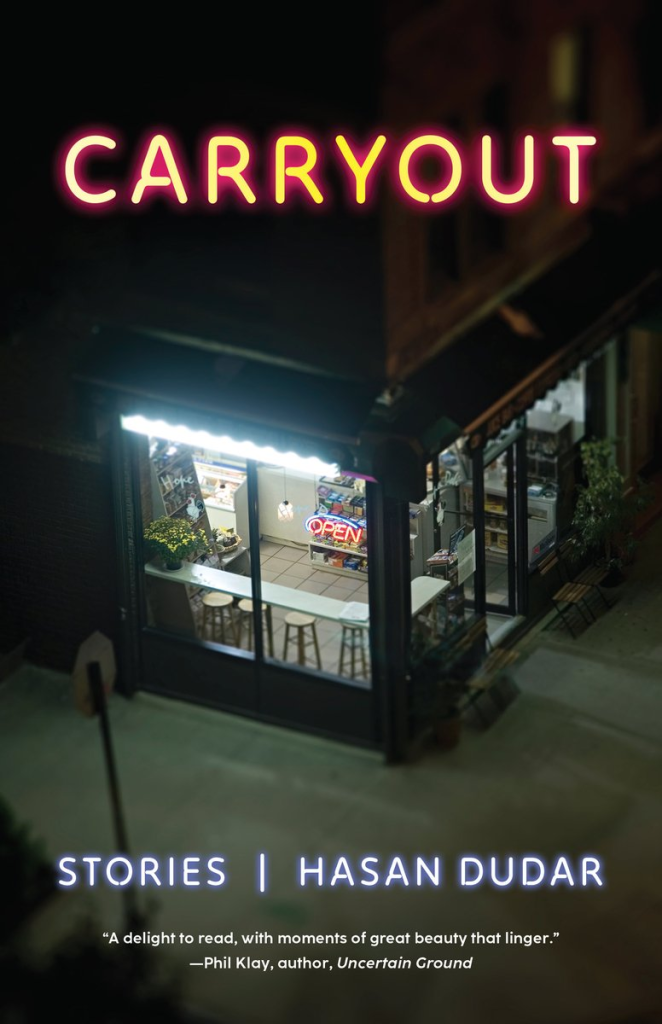
Firas Dareer is turning twenty-three. The stakes for this particular birthday have been upped: in addition to throwing a blowout bash, Firas will use this day to come out to his entire social circle, including his conservative Muslim parents. The Dareers are Palestinian refugees; they fled Gaza for Detroit after Firas’s grandmother was shot by an Israeli occupation soldier during the Second Intifada. Coming out means risking his family and his only tether to home. Despite a painstaking itinerary, disruptions abound that threaten to implode his special day: his cantankerous Jido, escaped from the nursing home; Maysa, the Dareers’ housekeeper, who constantly meddles with his decor and once caught him blowing another boy at a party; a brigade of neighbors, friends, and secret lovers; his evasive sister, Suhad, and his youngest brother, Mazen, who preoccupies the family’s collective imagination, having recently survived a suicide attempt. As the day unravels, Firas’s party snowballs into much more than a tragicomic birthday celebration; it becomes—without spoiling too much—a sort of homecoming.
For some friends, I am the only writer they know, which generally means I am also the only reader they know. That means I’m called upon as Book Recommender often, and Girl, Woman, Other is one of my staple suggestions. It’s an immersive book with equal parts seriousness and levity. There is something for everyone here. A novel-in-stories, it offers a window into the lives of 12 Black British women, ages spanning from their teens to well into their nineties. Though not all of the main cast meet on the page, they are almost all interconnected in some way—as mothers, daughters, aunts, mentors, friends, lovers. (For the curious, search engine results will reveal maps hand-drawn by readers who’ve gone through the trouble of sorting all the links.) The novel tackles several thorny topics through an intersectional lens: feminism, immigration, racism, sexuality, class, and gender identity, though these hardly scratch the surface. But the characters are not always victims. In an interview about the novel, Evaristo explained that the inclusion of “Other” in the title refers, yes, to how they’re othered by society, but also sometimes by one another. For me, this book encapsulates the full meaning of family, because it includes community as part of its working definition.
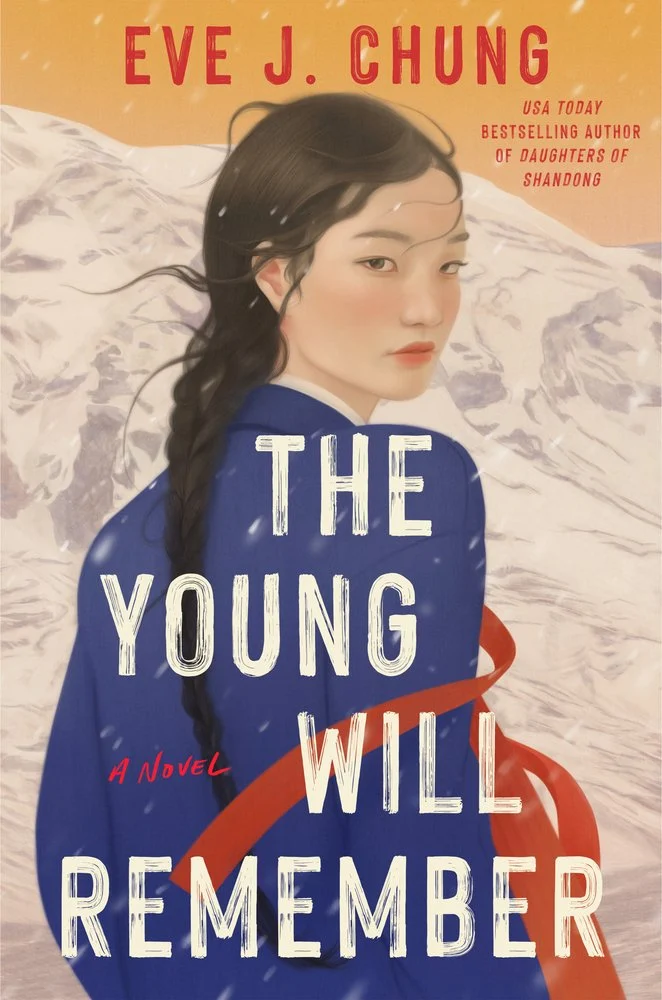
Eve J. Chung’s sophomore novel, The Young Will Remember, turns its gaze to a lesser-known corner of twentieth-century history—the Korean War and its aftershocks. At its center is Ellie, an American journalist whose plane crashes in enemy territory. She’s rescued by Emma, a North Korean woman searching for her daughter who was taken years earlier by the Japanese occupation forces to serve in “comfort stations.” From this meeting unfolds a story of two women bound by survival, silence, and the stories that war leaves untold.
Readers expecting a conventional World War II narrative will find something more searching here. Chung’s novel is about the “Forgotten War” and threads together the personal and political—the human cost of conflict, the burden of inherited history, and the question of who pays the true price of war. Her writing dwells on the mothers and daughters whose lives have been shaped, and sometimes erased, by forces larger than themselves.
Chung’s debut, Daughters of Shandong, was intimate and propulsive, and The Young Will Remember expands her canvas, offering history as backdrop while inviting immersion into what it must have been like.
When I spoke with Chung over e-mail, we discussed what it means to write about the atrocities of war without replicating their violence on the page, the challenge of portraying ordinary lives under extraordinary pressure, and the responsibility artists carry when turning collective trauma into narrative.
Cherry Lou Sy:As I read the novel, I was constantly aware of Ellie’s racial and ethnic background as a Taiwanese American woman moving through spaces we don’t often imagine Asian Americans occupying—particularly war reporting in that era. I found myself checking my own assumptions about visibility and belonging. Did questions of plausibility or historical erasure shape how you imagined Ellie’s movement through the world? Were there moments where you felt you were writing against the archive?
Eve J. Chung: It was important for me to write an American war story with a main character who is a woman, and specifically, an Asian American woman. As someone who studies war and history, I’ve generally found it difficult to find media about the 1940s and 1950s that address how BIPOC Americans might have experienced WWII, and the Cold War after that. Ellie’s Taiwanese American heritage is crucial to this story, because she is able to blend in somewhat in North Korea, and speak both Japanese and Chinese as a result of Taiwan’s colonial history. Thus, Ellie can communicate with some Koreans and some of the Chinese soldiers.
In order to write Ellie, I had to combine research, because Ellie, as a BIPOC woman, faces at least two different forms of discrimination. For this, I relied on Maggie Higgins’s books, which detailed the difficulties she faced as a woman journalist during the Korean War, and also biographies of Hazel Ying Lee, which described how “orientals” were banned from many establishments. Segregation was still legal during the Korean War, but the Korean War was the first war with integrated troops. However, integration in the military was difficult to enforce—despite the presidential order, commanders in the field still insisted on segregating their troops. This background would be important for someone like Ellie, who is fully aware that different types of Americans receive different treatment from their government. Most notably, the Korean War takes place only four years after the Japanese internment camps closed, so this is a major fear for Ellie. Today, even though it has been 80 years since those specific camps closed, I still worry about being put in one—and indeed, these camps are already operating right now, for immigrants who are allegedly undocumented, many of whom were taken without due process, so even their status as being undocumented is questionable. It is the present that makes me care so much about learning from the past, and much of my motivation for telling these stories is to fight against the erasure of history.
CS: Alexander Chee has written about the ethical questions writers should ask themselves when writing beyond their own direct experience. What questions did you return to while writing this novel—especially as it moves across cultures, languages, and borders?
My motivation for telling these stories is to fight against the erasure of history.
EJC: Interestingly, my husband, who is half-Korean, read the first draft of my novel, and commented that things would be logistically easier if I made my character a Korean American who could speak Korean. I did not want to write as a Korean American [main character], because a Korean American would have a significantly different inner thought process during this war than a Chinese American. In the US, there is a tendency to lump East Asians together, and while there are certainly overarching cultural similarities, Chinese, Koreans, and Japanese people have important distinctions, especially when it comes to geopolitics. Perhaps because I myself am of Chinese descent, I was particularly interested in the interactions between the US and the Chinese soldiers and the rising rivalry between the countries that continues to this day. For background, I was an international relations major, with a masters in international criminal law, and I currently work in international human rights. The perspective that I wanted to write from, and what I had more to say about, was that of someone who is ethnic Chinese, in an era in which American and Chinese relations were so bad that they were physically in combat, and General MacArthur was pushing to drop nuclear bombs on Manchuria. Like Ellie, I have at times found myself torn between being proud of my American identity and my Chinese heritage, but also able to see some of our global conflicts through a different lens because of that duality—and sometimes, I am deeply ashamed of the violence that my government is perpetuating abroad.
Writing as Ellie felt natural to me, but there were other challenges. Though Ellie herself is not Korean, the setting was in Korea, and I had many Korean characters, so I wanted to be able to portray them accurately. I do have many Korean friends and extended family members (though most of them are either Korean Americans, or Koreans who immigrated to the US decades ago), so I interviewed my mother-in-law about her childhood in Seoul, and also asked other friends about their parents’ experiences during the war, and did additional research about refugees and survivors, not just from the Korean War but also from World War II and the Japanese Colonial period. I had Korean friends, including fellow authors, who were kind enough to beta read my drafts, and I also had a Korean linguist, who I found via my mother-in-law, check as well. Despite having tried my best, I am sure that there will be things that I got wrong—but I hope that they are minor, and that readers will know that it certainly wasn’t from lack of care or effort!
There is the added complication of time, since culture in the 1950s is also different from what it is now—though I didn’t feel obligated to make my characters conform to gender or social norms, because they, like most women’s human rights defenders, purposefully defied the standards around them. Still, I asked myself how each woman might consider her juxtaposition with the rest of society. I wanted to ensure there were references to how difficult it was for them to break the conventions that they did, and how irritating or daunting it might have been for them to constantly defend their decisions.
CS: I was struck by how multilingualism functions almost as a form of mobility in the book—Ellie’s ability to move, blend, and survive is tied to language. How did your understanding of the formation of the 38th Parallel and the emergence of modern nation-states shape the way characters encounter one another across linguistic and cultural lines?
EJC: I love languages—I’ve loved learning them, and have noticed how being able to speak certain languages has opened opportunities and friendships for me. For context, I am conversationally fluent in Spanish, French, and Mandarin, but also studied Japanese and Korean. Just as Ellie manages to get her posting as a foreign correspondent because she is trilingual, I’ve also been hired for certain jobs because of my language skills. In the human rights field, as with the journalism field, gathering information depends on being able to converse with the right people, whether those are witnesses, government officials, or partners. Speaking through an interpreter works, but it is different when you are able to connect with a person directly. Through her language skills though, Ellie is able to connect with some Koreans, and some Chinese soldiers.
However, just as language connects us, we also see, from various colonies around the world, how language is also a tool for dominance and erasure. I was conscious of this while writing this story. From interviews, I understood that older Koreans who grew up under colonial rule hated having to speak Japanese—so Ellie also couldn’t randomly strike up conversations in Japanese either with the average Korean at the time. Pastor Pak ends up being someone she can speak to safely because he too has such a varied linguistic background. Through Pastor Pak and Ellie, I also hoped to show how learning another language does also open one’s mind to other people, and other ways of thinking.
I consider divisions such as nationality and religion to be arbitrary.
CS: Imo’s character stayed with me, particularly as the novel reveals the moral cost behind her comfort and stability. Reading her made me think about how nationalism can both protect and obscure—especially when viewed from our current, globalized moment. How did you think about patriotism and complicity while writing her? Did your understanding of “our country” shift as the book took shape?
EJC: I think I wrote this story as a response to my understanding of “our country.” There are several conversations in this book that are meant for the diaspora reader. For example, Ellie’s conversations with Pastor Pak about those who stay to fight, versus those who run from war. I am the granddaughter of refugees, so my family fled war. There is, in many contexts, a tension resulting from that decision, and resulting loyalties and affiliations are also personal to the individual.
I consider divisions such as nationality and religion to be arbitrary.Often, we choose a particular religion because it is what we grew up with, and yet, so many wars are fought along national and/or religious divides. Imo is a character who is willing to reject her own privilege when she understands that it comes with a tremendous cost to others around her—a decision that arises from seeing the common humanity between people, versus whatever categories that we choose to divide ourselves with. This is a quality that is not necessarily uncommon, but unusual enough that her actions stand out. In many countries, criticizing one’s government for human rights issues is considered unpatriotic. I try to emphasize that true patriotism is holding your country to standards, and trying to make life better for everyone in the country. This being said, my concept of “country” and citizenship are very fluid, because my grandparents, parents, and I were all born in different countries, and the same for my husband, so our children are a mix of ethnicities. I don’t know if I would have a different understanding of nationalism had I been born in China, for example. In the book, Ellie too wonders the same thing—how her life might be if her parents hadn’t come to the United States—but then she also later acknowledges that maybe the world would be a better place, with less war, if more people were between worlds, and knew that it is natural to love across those boundaries.
CS: The novel carries a great deal of historical research, and I know parts of the story are connected to your husband’s family history. Why did this story need to be a novel rather than nonfiction or memoir? What could fiction hold that those forms couldn’t?
EJC: One of the main reasons I wanted to write about the Korean War is because it is a nexus between American, Chinese, and Korean history, which are the cultural influences of my family, and also offered points for me to tie in human rights issues that are important to Taiwanese people as well, namely justice for survivors of WWII military sexual slavery. My husband’s grandfather was a pastor from Pyongyang, and I based many aspects of Pastor Pak’s character on him, but otherwise the stories do not overlap much. My grandfather-in-law fled North Korea because he was concerned about being persecuted for his religion, and was already in the South when the Korean War began. He ended up meeting his wife in a refugee camp, and together they came to the United States. I did end up using snippets of what he told my husband and my mother-in-law, but more for research about how life had been during the war than for the storyline itself. This being said, I know that my husband’s grandfather had been working on a memoir for himself, but nothing ever came of it. Perhaps that will be something that one of his grandchildren (or maybe great-grandchildren) will do!
CS:One of the most powerful moments for me is Ellie’s encounter with Song Yun-Hee while she is living as Lin Yan-Xi—it felt like a kind of haunting, as though identity itself had become spectral. Do you see this kind of transformation and silence as specific to war, or as something shared by many survivors of trauma? Did you always know this would be how their paths crossed?
I hope that people who finish this book might become more committed to opposing war.
EJC: When the idea for this book first formed, I had thought about calling it The Changeling, because of Emma substituting Ellie for her daughter. The message that I wanted to get across can perhaps be best summed up by one of James Baldwin’s famous quotes: “The children are always ours, every single one of them, all over the globe; and I am beginning to suspect that whoever is incapable of recognizing this may be incapable of morality.” It ties into the atrocity of mass bombing, which makes it impossible to distinguish between military targets and civilians—and notably, from the US military record, there seemed to be cases in which there wasn’t any effort to do so. Emma, as a name, is a play on “Emma,” and she is indeed meant to be “mother” because I intended for her character to represent motherhood in war. All mothers suffer in war, whether directly from violence, or from the loss of their children. I believe that what some of the leaders of this world have done to mothers is unforgiveable, and this book is the result of my anger at the willingness of men—often old men—to sacrifice young lives for their own legacies, or even just to keep themselves from losing power. I always imagined Ellie and Yun-Hee meeting, and saw the ending of the book early on. Professionally, I have previously worked on the issue of enforced disappearances as a form of torture. This was a type of violation that I wanted to make clear with Emma, and show that not knowing what has happened to a loved one who was taken by the State is indeed a pain amounting to torture.
CS: What did you learn while writing this novel? And what do you hope readers carry with them after finishing it?
I learned a lot of military history! Before deciding to write this book, I only knew the basics about the Korean war but was ignorant of the scale of damage. Though I had known that Chinese soldiers had fought in Korea, I did not know about the Battle of Chosin—I did not know that at one point, there were more Chinese soldiers than North Korean soldiers in North Korea, or that Mao had been poised to send a million more men across the Yalu River. From a Taiwanese perspective, I had known that the Korean War was essentially what saved Taiwan from invasion. At that point, Mao’s soldiers had been preparing for amphibious assault, but the US crossing the 38th parallel led him to divert those soldiers to the North, where they eventually clashed with UN troops in North Korea. I hope that readers will leave this story with more knowledge about this history, which is relatively forgotten in the US.
I also intended for this book to call attention to the lack of justice for survivors of sexual violence, then and now. Sexual violence remains the most difficult crime to prosecute because it is so normalized in this society—this idea that men will be men, and that certain powerful men never have to apologize. No one should be above the law, and the horror of sexual violence should never be minimized for the convenience of those in charge.
Lastly, I hope that people who finish this book might become more committed to opposing war.Lately, I find there are leaders who are willing to risk escalation, largely because they and their loved ones will not be at the front lines, and also to use war itself as a justification for holding onto power or saving themselves from prosecution for other crimes. It is always ordinary people who suffer more during armed conflict. In this sense, protecting our democracy is intimately tied with the prevention of war, because we must be able to hold our leaders accountable when they fail us.
Longtime readers of this column will be unsurprised to hear that the first quality I look for in a restaurant is not that restaurant’s willingness to accommodate an infant in arms. Such an attribute is not, after all, the marker of elegance, excellence, taste, or invention, all of which my devoted readers will recognize as my areas of primary interest. I believe that food and eating can be artful—indeed, can be art—and it is with this belief in mind that I approach each of my reviews. Families of course deserve helpful criticism of child-friendly establishments, but such readers more fruitfully seek guidance elsewhere. So has it always been.
But my friends, sometimes life finds a critic with no babysitter and a looming deadline, and in such cases the critic is grateful to be able to keep her reservation.
I entered Au Naturel on a night of constant drizzle, ducking in from the wet street to a womb-like space lit only with vintage lamps on an eclectic series of tables. Au Naturel—or Oh No as many have come to call it—uses their scant square footage to maximum advantage, with a variety of seating areas, including an archipelago of two-tops skidding off the bar and a single long table running riverine down the hallway. The atmosphere is meant to be cheeky and fluid, but still I was uncertain whether the other diners would appreciate my unannounced guest: a three-month old baby asleep in his car seat. This being my first assignment since his birth, I was not intending to bring him along, but circumstances conspired to find my husband out of town and my sitter canceling at the last minute, leaving me with no alternative than to pack up my small, slumbering companion. Incidentally, I appreciate the well-wishes we have received and am happy to say we are all in great health.
The host approached the baby’s makeshift cradle with a look of trepidation, and like any new parent, I held back a wince. There was a pause, in which the host regarded Nigel with curiosity and incomprehension, a failure of categorization and context I too well understood. But then he smiled.
While certain diners will not take it as a positive sign that the restaurant moved so quickly to make space for Nigel, perhaps they’ll rest easier knowing that I was seated at a booth in the very back corner, in a small enclave near the kitchen door. The table afforded me privacy for nursing or distracting the baby, and kept any noise away from the other patrons. Neither the host nor my waiter raised so much as an eyebrow in complaint. Although I never make reservations under my own name, I can’t rule out the idea that they recognized me and acted generously as a result of my position, but no matter the reason, the swift decency with which my needs as a mother were met frankly brought tears to my eyes. It had been a cold, anxious cab ride to the restaurant, and I will not soon forget the warmth that swept me to my high-backed booth.
Nonetheless, I endeavored not to let this color my views of the food.
Oh No, a joint venture of chef John Scott and the naturalist Laura Ashbury, is an evolving concept. The menu rarely repeats an item from one night to the next, though certain famous dishes appear just frequently enough for eager diners to seek out multiple bookings in pursuit of a specific experience. Both the fluctuation and the repetition are by design. As I scarcely need tell you, my devoted readers, Oh No seeks to replicate, through its food, the experience of existing in the natural world. That doesn’t mean anything so mundane as farm-to-table feasts: for a large stuck pig with an apple in its maw, please look to the numerous quotidian establishments still chugging away in the fashion of the early twenty-tens.
Here, the natural world has seasons. The natural world has wind whistling across the surface of a pond. The natural world contains predators and prey in balance with one another. All these must be felt when dining at Au Naturel. This is not me being poetic: the preceding sentences are printed on the restaurant’s nightly menus.
I was prepared for two possibilities. First, that the food would be high-concept esoteric drivel. A John Cage tone poem squeezed into edible drag.
Second, that the thinking would be sound, but too physical for my tastes. All flavor and no presentation. Brute force cuts of meat.
The décor did not do much to set my mind at ease in this regard, because though pleasing, there was little subtlety to its warm wood and fireplace, the low lighting that seemed to hint of your grandmother next door in a rocking chair. Whispering hush. But once I pushed Nigel’s car seat up against the wall and burrowed into my booth, there was no chance I would be leaving before eating every dish placed in front of me. The value of heavy sleep is not to be disregarded by any new parent. Nor is the possibility of looking at that tender place where one’s identity used to sit, and watching with held breath to see whether it might be growing back.
I never thought I would have a child, to be quite honest. I believed I would pursue the passions of my intellect and creativity, define the tastes of a generation and achieve a greater understanding of flavor’s architecture. I thought I would write columns, win awards, garner power. Insofar as my work involved food, my life involved the human body, but it was never food meant to nourish the body alone that held my interest.
I thought for many years that to have a child would mean to diminish myself, to debase my own existence beneath the necessity of caring for another person. Not that I thought such care was an unworthy pursuit, it just wasn’t mine.
But I have been surprised by the level of delight I feel in my son. That his needs in fact overwrite my own at times—the lack of sleep necessitated by his nocturnal infancy, the backaches that I don’t even realize are developing when I cradle him against my chest, the agonizingly precise way he holds my attention for hours on end—does not cheapen my wonder at realizing such a complete specimen was born from my own body. I touch his ribcage beneath his soft chest and think, You are whole. You are mine. Readers, yes: I eat for two. And with every mouthful I am newly aware of why we engage our physical senses.
Enter Oh No. The buzz around this restaurant built during the months of my pregnancy, and for some time I let it slide beneath my attention, because I knew that to do the place justice I would need to eat without restriction. The menus at Oh No are not printed or released in advance, and a pregnant woman can’t risk being served sea urchin, fresh-cut tuna, or frankly the appropriate amount of wine. A restaurant vaunted for its re-creation of untouched landscapes may realistically be assumed to offer raw foods, including meat. And so I continually implied that Oh No had not yet reached the level of acclaim to merit my regard, while also ensuring that my editors didn’t give the assignment to anyone else. This became trickier once Scott and Ashbury won a James Beard award in my eighth month, but I persevered.
Now, however, I was prepared. Now was my time. The transition of food into breastmilk may be miraculously direct, but there are still more stopgaps between Point A and Point B than when the child is a part of your body. Furthermore I was hungry for what they were serving: the world on a plate. Hungrier, perhaps, than I had ever been.
I had booked a late seating by design, as the plan was always that my baby would be asleep during the meal, although he was supposed to be home in his crib, where we had lately transitioned him out of the bassinet. I was ready and eager, excited to return to my work and exercise the loose muscle of my mind. In the three months since Nigel was born, I have read the occasional book, and spent enough time on social media that my colleagues still view me as being “in touch.” But I have not given sustained attention to any project of my own. That my son’s birth has increased the power and poignancy of the ideas I want to communicate does not, unfortunately, contradict the fact that I have less time in which to communicate them.
Thoughts come to me now, and if I don’t jot them down immediately they dissipate. There is difficulty in holding the thread of a complex and evolving idea—the beginning might be gone before I reach the end. There is a way in which this feels like death, when I compare it to my old life. Of course it’s not: it’s just exhaustion and distraction, both of which can be overcome with time, effort, and a judicious helping hand. But still, I feel it. I had no idea how undistracted I used to be. Even pregnant, in a constant hormonal haze, my mind was relatively clear and focused, and time unfurled in a steady fashion, like ribbon unspooling from a roll. Never before had I experienced entire days vanishing with no trace, no content. When we first got home from the hospital I would lie down in the bed and start to shiver uncontrollably as my body chemistry evened erratically out, breasts throbbing from phantom nursing even when the baby was elsewhere.
For the first time in my life, food was a necessity, and not a pleasure. We ate peanut butter crackers. Take-out burritos. Meals selected less for their flavor profile than for their ability to be hefted in one hand. My greatest culinary joy was the Baby-Eat-Mommy, Mommy-Eat-Baby game, in which I would nibble on Nigel’s face with the softest of lips and he in turn would bite my cheeks, bite my nose, bite my chin, as hard as he could with his pink wet gums. His mouth ever-abundant and perfectly satisfactory.
Or almost perfect. There was, it turned out, still a part of my brain that remembered other kinds of eating. A yearning, gnawing recollection that I had not always been the one on the plate.
So I pitched a review. This review, in fact. A visit to the natural world, the expansive world beyond my doorstep. My editor asked if I was really ready to go back to work, and I assured him that I was.
We are here on Earth to celebrate the experience of being here on Earth: a tautology. But also true. When we dance, when we eat, when we crack open an egg or stir cream into coffee, we are alive with our own vitality, our very being-ness. The energy which tells us how to get up in the morning, and why in god’s name we might reproduce. Because it tastes good. Because it feels good. Because it’s fun.
But being reminded that we are alive necessarily means being reminded of the alternative: death, and more than that, whatever comes after death, in our absence. The lack of self, the lack of everything. The fact you can’t uncrack an egg.
A laudable idea, but in a restaurant, it has to work on the plate.
Oh No was founded in part because John Scott and Laura Ashbury felt the urgency of this emptiness not only on a personal level but also as a kind of global project. It is their aim to use food to remind us of the rich and varied life on the planet—indeed to let us experience the breadth of that life—even as biodiversity is in a freefall of decay. To bring the death drive and the need for survival together into precarious balance. A laudable idea, but in a restaurant, it has to work on the plate.
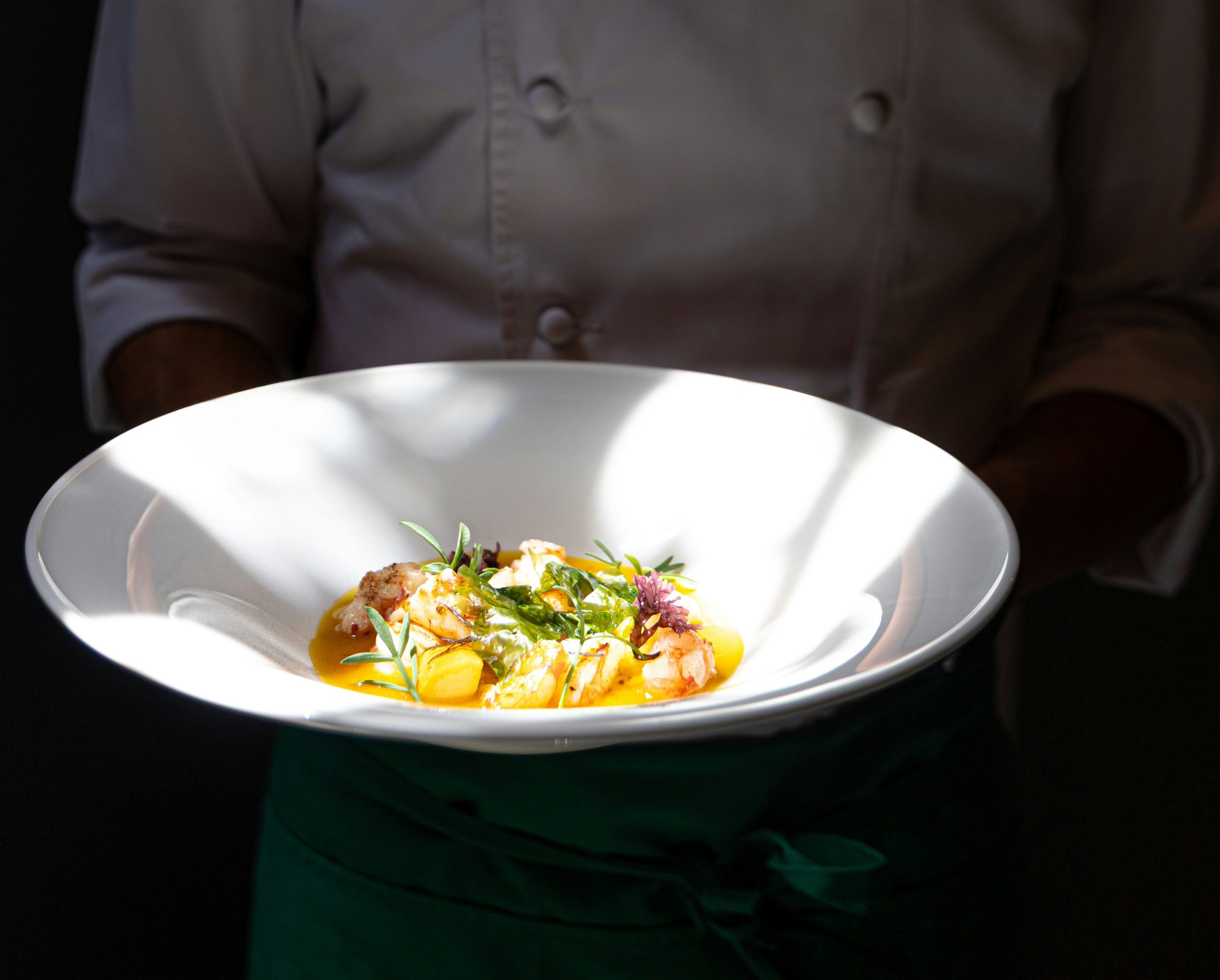
On the night of my visit to Oh No, I ordered the tasting menu, which was organized by location—the first few dishes being oceanic, as befits the cradle of all life. You likely know that I am suspicious of style, and how it so often comes at the expense of substance, but a first course is always a doorway, which must be stepped through before judging the room. So, the ocean.I received a glass sphere in which a jellyfish, pureed and reconstituted, was suspended in a foam of seawater. The presentation could be viewed from any angle so you might approach it with the boundless geometry of a fellow sea creature; the foam and the jelly were then to be swallowed in one mouthful which revealed an undertone of brine shrimp, giving one the sensation of being a baleen whale. Giving the impression of the sea, seething around one’s body, rushing through one’s teeth. I found the flavor refreshing, the textures layered, the surprise of the shrimp just enough to make me wonder what else was rushing towards me in the dark.
The next dish refined the locational specificity of the ocean, with a penguin liver served on a slab of Antarctic ice. Rare and bloody in appearance, the liver had been marinated in something light and citrus-adjacent: ordinarily I would have guessed yuzu, but no such fruit is to be found on the last continent, and I was informed that the flavor comes from a combination of seaweed and lichen, crushed into a red wine reduction. The thickened wine was also poured over the liver as a sauce, spreading across the ice like a murder victim’s blood in a police procedural. All this was served with chilled Aquavit, taken as a shot before swallowing the liver in order to lower one’s body temperature from within. Does this really give one the feeling of being a dismembered penguin? Or perhaps of being the leopard seal who tore the penguin’s liver free? It certainly gave me a chill, so perhaps the true goal is to share the experience of the ice on which the penguin’s blood will freeze, as it floats above the great aquamarine undersea. Perhaps.
At this point I was amused but unconvinced, a posture so familiar I almost wanted to wrap it around me and run out the door. Finishing off the last of the liver, I began composing a review in my head that was pleasant, encouraging, lukewarm. One that asked what I felt were the important questions—namely whether the food at Oh No was actually expressing a complex understanding of various ecosystems, or if it was just a very clever camouflage, a pretty but meaningless onomatopoeia of the tongue. Perhaps before my baby was born, I would have filed that review, in fact, slapping the restaurant on the wrist for stunt cooking, and then moving on with my life. But despite my best intentions of impartiality, I couldn’t stop thinking about the host. How he leaned so kindly over my child, and with a nod of the head, welcomed him into their version of the world. So I stayed.
And since I did, I should mention that the jellyfish was served with a crisp New Zealand white, which, while a bit insipid, dried the palate sufficiently to bring forth the oceanic purity of the dish.
When Nigel was born, I understood for the first time why fairy tales all claim that magic comes at a cost. In pregnancy and childbirth, the cost is visceral, as is the benefit. You definitely get something, and you definitely trade something.
In the first few weeks of my son’s life I sat in the same position on the couch for hours out of every day, with my feet propped up on a table laden with blankets: our ersatz ottoman. I had never before considered that we ought to have an ottoman at all, that the angle of my knees would ever be static for long enough that it might matter. I used to sit at my desk, twitching around as I wrote; I used to stand at the kitchen counter mincing garlic and wiping it with one finger off the knife. When I lay on the couch, I would spread across it lengthwise, or perch at the edge for conversation, or—forgive me—nestle inwards far enough to create the possibility of sex. I would watch movies. During which I would get up and go to the bathroom, or pour myself a finger of scotch. Never was I so still as I now needed to be with little, wrinkled Nigel, just seven and a half pounds with eyebrow hair so light that it was invisible. He was in all ways so small he seemed on the edge of disappearing. And yet so forceful, so needful. He could not be ignored. I did not sleep more than four hours a night. I felt milk come into my breasts so they ached at the armpit and tingled behind the areola like needles were being pushed out from within. My knees got sore.
Is this the trade? It isn’t. The pain, the exhaustion, is not the thing. You see, in those early weeks I spent hours scrolling through my phone, looking at and liking pictures of my friends on vacation all over the globe. Eating ceviche in Madrid. Lolling on blankets in front of a fireplace in a Vermont cabin. Popping their heads out of the water at an Australian beach, and dredging themselves onto shore for a cold beer and a bag of exotic chips. Each of them somehow managing to be in a place I’d often wanted to go: Japan, walking through a series of red gates by a temple. The Outer Hebrides of Scotland, wrapped in wool. Standing beneath a blue and orange wall in Mexico City, sipping a raspado thick with mango and cream. I thumbed through these photographs with a pathological furor, but the fact is that I did not want to be where they were. I wanted to be exactly where I was, and to know the wide world was still out there.
Meanwhile Nigel slept with his face pressed against my neck, his cheeks fattening in direct conjunction with the growing adroitness of his mouth on my breast. What I had lost was the desire, so potent at every previous point, that my body should be for my use only. I shed the part of me that only cared about my own forward momentum. Though in fact my life’s trajectory felt clearer than ever. He knew how to eat and I knew how to give. I was happy to be still, for a time, because ahead of me lay every day of my and Nigel’s life together, multiple and various and impossible to predict.
I still looked at the photographs, but in the way we peruse our memories of the dead. With a fondness that almost rises to the level of yearning, but must, by its very nature, be released like a puff of smoke.
After water came air.
This being my first step forward back into my existence as a thinking creature, a living mind, I was easily charmed by the simplicity of the menu’s layout. Water. Air. My brain, so recently scooped out, clung to the clarity of shared concepts, as if I might be served a triangle and a circle, floating in the sky, and then be asked to name them. The delight consisting in the fact that I could.
Naturally Oh No’s food was more complicated than that, but in another way, it wasn’t. I can easily tell you what I ate. The question is, can I tell you why?
The next course began with tiny grasshoppers flash fried and coated in crushed salt and herbs: sage, parsley, chamomile. These were brought to the table and then tossed in a hot metal bowl to pop like corn, and the effect was one of brushing insects away from one’s face in a grassy field in late summer, stepping on small plants with a careless shoe. Or of being that cloud of insects, one among a throng, pinging off one another’s reckless limbs. I watched Nigel twitch in his sleep while I ate; I licked the salt concoction off my fingers, as the atmosphere at Oh No is not especially decorous, and it fit with the overall picnicking sensation of the dish. Stretching on a blanket. Yawning. The pleasures of the flesh.
Following the grasshoppers was perhaps the silliest dish of the night, a light lemon soup evaporated into the form of a cloud and brought to the table in a glass tube to be huffed through a straw. Besides the obvious unintentional nod to smoking cheap dorm room marijuana, this worked better than it had any right to, hitting my tongue like a droplet of water warmed by a yellow sun. I would have preferred to simply eat the soup, if only to see how the chef might have garnished it, but as molecular gastronomy goes, the cloud was quite effective. And they do mean to have an effect.
There are many ways to prepare a meal with natural ingredients, but that isn’t the project of Au Naturel. They don’t care to teach the uninitiated that nopales are made from prickly pear cactuses, or that a flower can be used in a salad for a pop of color and a bit of surprise. They are looking to convey, through food, the way it feels to exist in certain places, certain forms. Each course and plate is transportive in the manner of art, because it appeals not just to the body or mind but to the spirit, in a kind of synthesis or synesthesia.
They are looking to convey, through food, the way it feels to exist in certain places, certain forms.
Parenthood is this way too. A project of transformation, ready or not. From the moment you become aware of the child in your body, you are imagining their future life, trying to picture the arrangement of their face and who they’ll take after; what they’ll look and smell like, how they’ll sound. It’s all theoretical, but you make choices—endless choices—trying to produce a happier theory. And in the process, a change occurs, not to the child, but to you.
My question as I ate was this: can a restaurant truly achieve this trembling precipice, simply by complicating the form of a soup? Wherein freedom is achieved through freedom discarded? Individuality junked in favor of collectivity? Self lost to the other? Ashbury and Scott claim that the premise of Oh No is that self is not lost in the other, but widened. And well. This is not a terrible premise. I’m just not sure that it’s theirs.
At this point you might be hoping I’ll get to the point: is Oh No worth the price of admission, or not? So let’s get this out of the way: for a tasting menu with wine pairings you can anticipate paying at least five hundred dollars per person, though the restaurant does not adhere to a specific price point, given the variability of their food. Expect to pay market price, though I have not heard of a single diner’s bill exceeding six hundred and fifty dollars, which included after-dinner cocktails and a small encore plate.
I didn’t stay that long.
By the time we wound to the end of Air, the clock had struck twelve and I was beginning to turn into a pumpkin, which is an idiom almost stupidly suited to Oh No’s concept—food, bodies, transmutation—but never mind. In the time honored tradition of the sleep deprived, I was desperate to stay up later, and also determined to finish my review with the greatest possible command of the establishment. I asked the waiter to bring me a cognac to help settle my stomach before the next plate, and he said that in fact it was strange I should request this, since the next dish was brandied. It was, he said, the coup de grâce of the evening, and in fact one of the staff favorite dishes among those who had been lucky enough to try it. He promised to bring me a cognac of his personal recommendation to accompany the food, and then he disappeared behind the bar.
Are you wondering, as I did at this moment—sitting back in my quiet booth and feeling the beginnings of a comfortably full stomach—how a restaurant like Au Naturel acquired a moniker as dour as Oh No?
There are multiple theories about this. Some people say it’s because the food is skirting the edge of conservation and exploitation: that to acquire a night’s worth of ice from Antarctica specifically to watch it melt is not the same as mourning the loss of the ice shelf or the attendant rise in sea level. Some say it’s due to an early reviewer’s assertion that there’s nothing naturel about the cooking, and others suggest that when John Scott and Laura Ashbury realized they’d talked themselves into opening a restaurant, Oh no is naturally what they exclaimed.
Any of these stories might contain the truth, and we can never be sure, but this at least was my experience. The waiter brought my snifter of cognac, a very nice ten-year Planat, and then returned with a tray covered with a linen napkin, which he brandished at me until I took it. Beneath the cloth was a dish which contained a thin layer of liquid and a creature I understood, after some scrutinizing, to be a hummingbird prepared in the manner of an ortolan.
The waiter indicated with one hand at my head. “The cloth,” he said.
If you aren’t familiar, an ortolan is a songbird that is force-fed with savory grain, and then consumed in its entirety after being drowned in Armagnac. Ah, what a way to go, some diners have been known to say, though those who eat these birds also cover their faces with veils—either to treat their sinuses to an infusion of hot liquored steam, or else to hide their shame from God, depending on your interpretation.
The hummingbird, my waiter explained, had been fed exclusively from honeysuckle and bleeding heart flowers, and kept for the maximum possible time from flying, as the bird’s rapid wingbeats generally expend its caloric intake almost faster than the bird can consume. The bird is given a final meal of sugar water before being plunged in Armagnac, and then boiled alive. It was served to me, at Oh No, as dessert.
Can you imagine what I whispered next?
I am not an unadventurous eater. If I was, I would fail at my profession. In fact, I would never have sought this profession at all. It is my pleasure to eat whatever is served to me and judge the meal on its aims and merits, outside any Western ethical system which forbids, for example, the consumption of horse or dog or any other such pet. I have eaten and enjoyed shark’s fin soup, and a thousand year egg, and a slice of my own sauteed placenta, which was served to me by my midwife and was nicely seasoned but too tough and gamey for my personal taste.
The hummingbird was elegant, minuscule; the notion was that I would pick it up with a spoon. And without hesitation, I did. I draped the cloth over my head and hunched over the bowl, and I put that marvelous small thing in my mouth and I bit through its bones to the sweet pocket of liquid within, which exploded on my tongue the way a berry bursts its skin.
The steam was heady; it cleared my sinuses and replaced my doubts and fears and regrets with a brief sugary high, and the desire for more.
If I were to eat this every day, I imagined, I would understand what it felt like to hover in the air suspended on currents of warmth and navigate by the vicissitudes of gravitational waves. All at once the entire evening’s menu washed back over me, with similar effect. If only I were to eat the sea, the ice, the summer, the sky, every hour then I would never lose anything I wanted, and the world would never die. Not as long as I lived.
I wanted to tell the waiter about my revelation—I wanted to tell everyone. For instance, you. But I pulled back the veil across my face, and immediately saw, not God, but Nigel, who had woken quietly and was sitting in his car seat, chewing on his hands. He smiled at me. An enormous smile of welcome and bliss, with which he now greets me every morning because—or so I tell myself, and assume—he has missed me in the night, almost as much as I miss him. And I realized that in my moment of perfect completion, I had forgotten him. I had left him alone.
Magic, I will remind you, comes at a cost. It always does.
After paying my bill I ordered a car and I took Nigel home. The lights were out, and I only turned on the smallest, lowest lamps as I brought my son to his bedroom and settled in to feed him. There was a bottle in the fridge that I had pumped earlier in the day, knowing I would be drinking too much alcohol to nurse him after I ate, but instead of preparing it I lifted my shirt and brought him to my breast, as we both prefer. His eyes briefly opened and considered me, as his mouth pursed around my areola in a perfect embouchure of hunger.
I gave birth to Nigel via caesarean section, my body splayed out on a table and paralyzed below the breasts. The room, cold. My legs immobile, my arms restrained on either side. A knife moving into my flesh and subcutaneous fat; no pain, but a sensation of rocking, pushing, squelch—for which the surgeons used the catchall term “pressure”—as my uterus was pulled out of my torso so the baby could be removed. Then the organ was shoved back in. In any other place or time, all of this—my bright white awareness, my frigid alarm—would have constituted horror. When in fact, it was one of the most beautiful rooms of my life. One of the great moments.
I remember shaking, laughing with the anesthesiologist who was perched at my shoulder. And I remember a hard crash. The anesthesiologist’s look of shock as the blood drained from my head—to somewhere. The bright room getting brighter, like iridescent milk, all the machine sounds suddenly stopping as I felt a heft and a lift. Something leaving my body, but not the baby; something leaving my body and that thing was me. Hovering up and above for just long enough to see the surgeon peel the uterine scrim away from Nigel’s face before I dropped back in with an intake of breath, to the anesthesiologist’s relieved expression. I came back, but I was different. I will never be who I was before.
Here is my final thought about Au Naturel, which offers excellent value for the money, and has created an atmosphere of comfort and intimacy that is truly conducive to the culinary exploration offered by its kitchen each night. Five stars for cuisine, and ambience, and service; indeed if I could offer more than five stars for service, I would. I remain grateful to the staff who helped me rest my son quietly in the corner, recognizing perhaps that he too is part of this life and this world, and a worthy guest of their establishment. Or perhaps just being kind.
But having experienced at least one small sliver of Oh No’s menu and their thinking, I cannot help but feel the two are irrevocably at odds. The work of a naturalist like Laura Ashbury is to study the various forms of life outside our own and to believe they can be, through our intervention, understood and sustained; while the work of a chef is to make something to eat. Of course there is nothing ignoble about eating: it nurtures body and mind, and has been my life’s work. But thinking and living, thinking and dying, none of these are quite the same.
I listened to Nigel suck and swallow, listened to his satisfied sounds, and occasionally wiped a bubble of milk off his lower lip when the stream came too fast for him to handle. The milk he consumed was mine, was me: to make it, my body liquifies the calcium from my very bones. Given that he eats such a meal every few hours, there is an argument to be made that I too will never die, as the idea of me will live in him, and we will both be thus sustained.
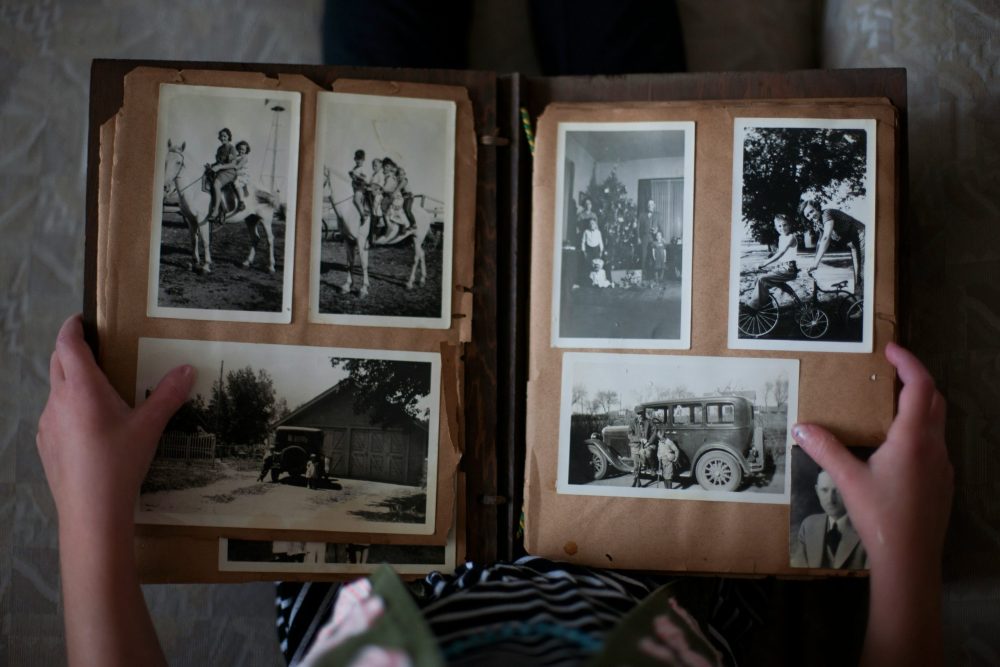
I grew up with a surprising amount of family archives. Photographs, scrapbooks, and even my Japanese grandparents’ passports, once nestled in old fruit packing boxes in closets and basements, now occupy space in my own home. As a third-generation Japanese American, the fact that I have so many of my family members’ materials is both surprising and poignant. My father and his family were among the more than 125,000 Japanese Americans incarcerated during World War II. Like many, they were forced to burn most of their possessions that had Japanese writing, including my grandfather’s collection of books and most of the family baby pictures—anything that could tie them to the then-enemy nation of Japan.
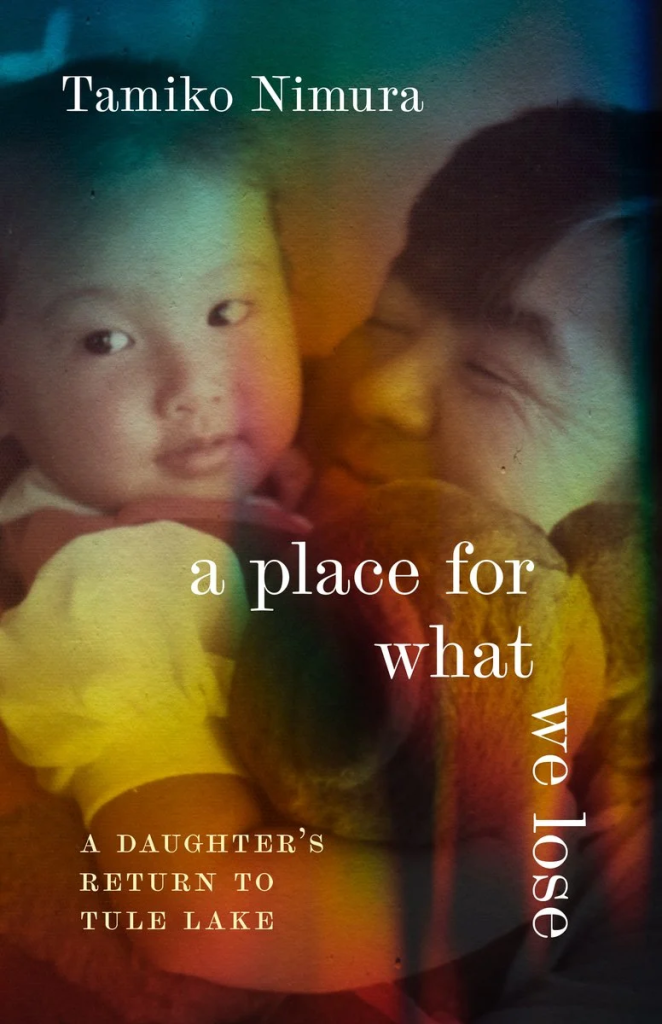
Among the archives is my father’s unpublished memoir, Daruma: The Indomitable Spirit, a chronicle of his imprisonment and release from Tule Lake, an incarceration camp in Northern California, where he spent nearly four years, from the age of 10 to 14. When I began to write my own memoir, A Place for What We Lose: A Daughter’s Return to Tule Lake, I knew that I needed to begin with my father’s words.
Building on the groundbreaking work of memoirists like Deborah Miranda (Bad Indians: A Tribal Memoir), I wanted an intergenerational, dialogic approach to writing about Japanese American incarceration. To accomplish this, I had to recontextualize, repurpose, and even contradict sections of my father’s book. Through this multivocal approach, I learned how to grieve, finally, the early loss of my dad and reckon with my family’s history.
In the books gathered below, authors unearth and incorporate family archives in creative, innovative, poetic, and genre-bending ways. By sharing their personal inheritances, they prevent history from becoming a faded-sepia matter of the past.
Psychotherapist Satsuki Ina is herself a survivor of Japanese American incarceration; she was born at Tule Lake, where my father and his family were incarcerated. Building on her documentary work, including Children of the Camps, her book is a painstaking compilation of her parents’ translated letters and poetry during their internment. But it is also a moving account of Ina’s reckoning with this legacy and her inspiring movement into cross-racial solidarity and activism.
The Unwritten Book is a hybrid literary memoir of essay and biography that deeply engages with Hunt’s father’s writing, found only after his death. Hunt includes part of his unfinished novel on the left-hand side with her annotations on the right-hand side. The resulting book is fascinated with haunting, hoarding, and the echoing significance of objects we leave behind after death.
The Grave on the Wall is an inventive, lyrical, and meditative journey in search of Shimoda’s Issei grandfather who was incarcerated during World War II, moving from California to Montana to Hiroshima, Japan. This essay collection uses photographs by and of the author’s grandfather as well as reminiscences from oral history interviews, emails from family members, and excerpts from his grandfather’s file in the National Archives. Shimoda’s work is thought-provoking and poignant, and this collection is no exception.
Described as an “image-text memoir” and “a collage” by Julia Fierro, the Dominican American author Erika Morillo’s work includes not just family photographs and letters but also film stills and portraits, resembling Theresa Hak Kyung Cha’s book Dictee. Morillo was also a photographer before the publication of MotherArchive. “[There] was so much of my family history I had to come to terms with or at least understand,” she noted in a 2020 interview. “Making work about it gave me some agency over my own history.” Once the memoir was published in 2024, Morillo described the book as “a personal case against erasure” and her “attempt to create the bond and spaces for discussion” that she had longed for in her own mother-daughter relationship. A finalist for the National Book Critics Circle Award, Morillo’s memoir is a striking exploration of motherhood and historical amnesia.
Letters to Memory began with Yamashita’s discovery of two manila folders full of typed letters on onionskin paper from her Aunt Kay after her death. Piecing together the story of her Japanese American family’s incarceration, the author quickly expanded the letters into this book as well as a family project: the Yamashita Family Archives housed at the University of California Santa Cruz. Some family artifacts appear in the book as color reproductions, while others are found in the pages dividing each section—addressed as letters to larger concerns such as poverty, modernity, love, death, and laughter. It’s difficult to describe this inventive journey through family history, wartime incarceration and resettlement, but it’s poetic, funny, and deeply intelligent.
Gibney’s speculative memoir uses a sort of “sliding doors” approach to her life as a transracial adoptee. Who would she be if she had been able to stay with her birth mother? Who did she become as a result of being adopted, and transracially? Gibney’s book includes facsimiles of different family documents and photographs that provide vivid illustrations of these two different lives.
Seattle Samurai is a loving and beautifully designed compilation of author Kelly Goto’s father Sam Goto’s comic strips, which he wrote and drew for The North American Post, a Japanese American community newspaper in Seattle. After his passing, Goto organized and selected her father’s comic strips and also took stock of his wider interests and collections, such as samurai swords, that provided historical and cultural context for his work. Kelly’s background in graphic design is evident in the photographs, the arrangements of the strips, and the white spaces which allow her father’s work to come to life off the page.
It feels good to type these next few words: The Pulitzer Prize announcement is nigh! On Monday, May 4th, at 3:00 p.m. EST, we’ll find out which book takes home one of the literary world’s most celebrated prizes. Live stream the announcement here!
To be honest, it’s nice to be able to celebrate something. The book that claims the title as the winner of the 2026 Pulitzer Prize for Fiction will get media attention, and it’ll be just plain wonderful to see some energy spent on books and stories.
My task of predicting what title might win is a tough one. Could we see a double winner, like in 2023, when Barbara Kingsolver’s Demon Copperhead and Hernan Diaz’s Trustclaimed the Prize? Could we see another 2012, with no winner? Could something shock us all—maybe a magnificent small wonder like Paul Harding’s Tinkers?
As per my usual, I’ve tried my best to stay away from my own literary opinions in compiling this prediction list, which is why you won’t find several of my favorite fiction books of the year—Dan Leach’s Junah at the End of the World, Julia Elliott’s Hellions, Susan Gregg Gilmore’s The Curious Calling of Leonard Bush, Scott Gould’s Peace Like a River, Emma Ensley’s The Computer Room, or Robert Busby’s Bodock—included below. Instead, I rely on other awards, critical and reader buzz, and my own intuition in offering these Pulitzer hopefuls.
So, here we go. In order from dark horses to definite contenders, below are my predictions for the 2026 Pulitzer Prize for Fiction:
The Slip was among the very first books I read during 2025, and it lingered with me throughout the year. It’s many things, but at its core, it’s a book about sports, sex, and race. It was one of the early winners in the literary award cycle, picking up the esteemed Kirkus Prize. It also showed up on multiple best-of lists. While The Slip is a debut, and debuts aren’t frequent winners for the Pulitzer, Schaefer’s novel is absolutely fantastic and would be a worthy winner.
I know this one is another debut, but when I talk to folks about books from 2025, Virginia Evans’ epistolary gemis the one I hear about the most. Readers absolutely love this book. However, it’s not only readers who are celebrating it. Critics are on board, too. Venues such as NPR, The Washington Post, and others included it on best-of lists, and it was longlisted for several prizes, including the Center for Fiction First Novel Prize.
Flournoy’s The Wilderness, which is the author’s follow-up to the hugely-acclaimed The Turner House, is another major win. The novel looks at friendship and closely examines modern life. It already received an endorsement from Barack Obama himself, and it was a finalist for the Kirkus Prize and the National Book Critics Circle Award. It’s one to watch!
Majumdar’s latest novel has done very well during the current award cycle, and such acclaim is definitely deserved. What a book this is, exploring issues of morality, climate, and love. A Guardian and a Thief took home the Andrew Carnegie Medal for Excellence in Fiction, and it was a finalist for the National Book Award.
Williams has been a finalist for the Pulitzer Prize in Fiction before with 2000’s The Quick and the Dead. Last year’s The Pelican Child, a timely story collection with wonderful reviews and accolades, including being longlisted for the National Book Award, brings Williams back as a strong—maybe a very strong—contender.
I know I mentioned how I try to keep my own personal feelings out of these predictions as much as I can, but this is the great Wendell Berry I’m writing about. During the summer of 2025, I spent time tending my garden, teaching a bit, and reading, again, all of Berry’s Port William series, which is set in the kind of place I don’t really want to leave. Marce Catlett features Berry writing about the things he writes about best of all. There is memory, love, family, and an exploration of our connection to the land. The book hasn’t garnered the literary trophies and buzz that often help in predicting these major literary awards, but Berry is deeply beloved, with a career that’s given us numerous masterpieces of rural America. Marce Catlett: The Force of a Story is an underdog, perhaps, but it’s a mighty one.
Patrick Ryan’s Buckeye is a brilliant book that captured me from the first page to the last one. It’s brimming with big moments and even bigger characters. It covers a lot of territory, including sex, secrets, grief, and redemption, as it spans multiple generations, and I think it definitely earns the title of “Great American Novel.” Readers love it. Critics adore it. It’s shown up on many, many “best-of” lists from venues such as The New York Times Book Review, NPR, and People.
Desai’s previous novel, The Inheritance of Loss, was a major critical success—a major one—when it was released nearly 20 years ago. The Loneliness of Sonia and Sunny, full of family and love and much more, is following in similarly successful footsteps. Among other accolades, the novel was shortlisted for the Man Booker Prize, was a finalist for the Kirkus Prize, and made the year-end lists of Lit Hub, The New Yorker, Library Journal, and others.
Choi’s widely-acclaimed new novel, Flashlight, depicts, among other things, the complexities of memory. It’s shown up at so many places as one of the best books of 2025, and it’s received nomination upon nomination, including being featured on longlists for the National Book Award, the Women’s Prize for Fiction, and the Andrew Carnegie Medal. I expect it to show up come Pulitzer day.
Karen Russell is a previous finalist for the Pulitzer, and I have to believe that this is her year to take it home. The Antidote is Russell at her absolute best. There is magic aplenty, and even more complexities of the human heart inside these pages. Set around the Dust Bowl, this wonderful novel explores memory in such a complex and important way, showing readers that to remember is to better understand our own identity. The Antidote is timely, certainly, but there’s also something about it that feels timeless. Like I said, there’s magic here. It’s already been named as a finalist for the National Book Award and the National Book Critics Circle Award. The New York Times, NPR, and numerous others loved it. I think it’s the winner.
Hasan Dudar’s debut collection, Carryout, follows a Palestinian-Lebanese family through their years in the shifting landscape of Toledo, Ohio. Dudar places the migrant experience at the heart of his book and offers a poignant examination of displacement and belonging in the Arab American community.
When Ziad Idilbi, a Palestinian refugee from Lebanon, meets Salma, a Lebanese refugee fleeing the war in Beirut, they are bound by a shared longing for their homeland. A desire to settle, build their own roots, leads them to buy a corner store in Toledo, across from the General Motors factory, amid a vibrant Arab community. Over decades, their lives and those of their children unfold. Mustafa, their oldest, navigates identity as a Lebanese American in the aftermath of 9/11. Walid, their youngest, broods and writes poetry, and later in life, becomes invested in his father’s refugee past. And Nawal, the only daughter, often remains in the shadows except for one tale about friendship and betrayal.
Hasan Dudar is a Toldeo native, based in Washington DC. In conversation over Zoom, Dudar told me he approaches fiction as a place to explore otherness, as a Palestinian, as a Muslim, and as an Arab. This resonates through Carryout, where the lives of this one family bring us closer to their experience, that of many Muslims and minorities trying to battle the nightmare that is America. We spoke about the Palestinian struggle, living in the US as Muslims under the shadow of Islamophobia, Western imperialism causing cultural and linguistic erasure in other parts of the world, and more.
Bareerah Ghani: I love the opening story, following Ziad in his early years in the US, especially the line, “That was no way to live, we knew, with half a mind on hold, treating every place like a hotel.” It is particularly poignant in Ziad’s case because his family are Palestinian, and they can’t return home. How do you contend with this fact that Palestinian refugees and others from war-torn places are essentially sentenced to a life of perpetual unease and false hope?
Hasan Dudar: That was one of the big questions of the book, and also one of the big questions in my own life, and that of my family. I’m a Palestinian-American, also Lebanese-American, by way of my mother. But the Palestinian identity somehow sticks through it all, and I think it’s because it’s one of those things that’s been unresolved. It’s a wound that really hasn’t healed.
This is what we see with Ziad. He is a Palestinian who was born in Lebanon. He grew up among Arabs, and yet he feels different. That is the essence of Palestinian identity––wherever you are, you feel a little different. And for the Palestinians in Lebanon, their predicament hasn’t been addressed properly. They’re still non-citizens after nearly 80 years. That has been felt through the generations.
I don’t want to generalize. There are so many different facets of the Palestinian identity. But I think one of the key parts is this sense of exile and displacement. You’re denied the acknowledgement of what’s taken place. And whether you’re born in Gaza, or West Bank, or Akka, where my father’s family came from, that sense sticks with you.
To experience the full breadth of life, you have to fail, taste something of your own folly.
BG: I’m curious about the epigraph. “On and on and on and on!” from A Portrait of the Artist as a Young Man by James Joyce. To me, it reflects displacement, but also resilience and survival. Can you share how and why the quote spoke to you?
HD: It comes from a longer passage that’s talking about our human capacity to both fall into error, and to find glory. And to experience the full breadth of life, you have to fail, taste something of your own folly. The passage ends with that line, which I thought captures life very well. How it doesn’t stop. And you continue to fail, and you continue to succeed, and it’s winding, sometimes you go backwards, sometimes sideways, sometimes you don’t know what direction you’re going, but you’re going on and on.
That constancy, the ability for life to surprise us, to upend us, is something I was after in my own work, especially dealing with characters who are displaced—something which is upending as much as it is full of constant surprises. You are forced to start over in many ways. And not just immigrants—for all of us this may be the case—we just sense it acutely in the life of the immigrant and the displaced. There are setbacks, major and minor, daily or yearly, but continuing may be its own form of glory.
BG: In “The Howara”, Walid talks about his family getting together and remembering the past but nothing is remembered as it was. What are your thoughts on the power of nostalgia in sustaining the idea of and sentiment around the homeland?
HD: Oh, it’s so strong. This book was born of nostalgia. When I began this, it was the first time I had really left home in a way that felt permanent. I had gone to Berkeley. From Ohio to California, it all felt different, and I was young. I really started to miss home, and that was very surprising to me. Because when you’re growing up, your whole being kind of rebels against being home. But in Berkeley, I found myself yearning for the life I had in Toledo, and the people that I was surrounded by. My father was sick at the time, and I would take any opportunity to go back home. On those visits, I really started to see the place with fresh eyes, what I’d left behind. My family, my community. Toledo, among the Arab community, was very village-like. People just dropped by. My parents had sold their convenience store, pretty much retired, and so had a lot of their friends. They had time on their hands, and they’d just visit my father. On those breaks, I would sit and listen as they shared their own nostalgia, about old Toledo when they first came, how good it was, and then sharing stories about Beirut, and if they were from different parts of Palestine, what it was like there in the cities and the villages.
I see nostalgia as a yearning to get back to an ideal that maybe you didn’t know was an ideal at the time. I think identity is so much molded by memory, and nostalgia is a way of forming yourself. You can never go back, but in that futile effort of attempting to go back, whether through telling stories, remembering, misremembering, a lot is gained. Your identity, personality, community, it can all form from there.
BG: Families in the book want Ziad to marry their daughters because they worry their later generations would lose their identity as Arabs, as Muslims. I wonder about the traumas we carry and how those might be broken through marriage. I would love your thoughts on this in connection with marriage as a way to influence identity, preserve heritage, especially for later generations.
The ability for life to surprise us, to upend us, is something I was after in dealing with characters who are displaced.
HD: Marriage is a very personal choice. To each their own, but in the context of being a minority somewhere, like in the US, wanting to stay within the same religion or ethnicity are serious, valid concerns. In terms of future generations, I can only speak from my own life. My wife is Lebanese, she mostly grew up between here and Lebanon. Our daughter speaks some Arabic, and this year, she got really into Ramadan. I wonder, would she have those things if both parents were not Arabic speakers, Muslim?
Another way I view this––with everything that’s been going on, my wife and I are chatting about the news in Lebanon, Iran, and we’re being careful of what we say around our daughter, because she’s young. But she still has the idea that Lebanon means something to us, and Palestine means something to us, and she’s now kind of starting to ask questions. It’s one of those moments that remind me of what it was like growing up. Every day my parents would turn on the news, my dad would always say in Arabic, ولّعت , like, it’s on fire now, and there was always this idea, that this is something important to him. That’s sort of where I learned from my parents about what was going on in Lebanon, in Palestine.
BG: In one place, you write that Lebanon hardly belonged to those who remained. And earlier in that chapter, Ziad meets a business contact in the Middle East who says something to the effect that soon, everywhere will be the same. I couldn’t help but think about Western imperialist notions driving cultural and even linguistic erasure in many parts of the world.
HD: The West has been influential through its culture’s ability to attract talent, viewers, and imitators. Worldwide, especially in the last 30 years, there’s been a struggle within cultures and countries, with people left wondering, do you assimilate to this more homogenous, westernized notion of the world or do you hold on to what’s more specific to you? And in a way, something specific to these characters, and to the Arab world more broadly, is the issue of Palestine. These characters are holding on to it, because it still needs holding on to, and where does that put them in relation to the world around them?
So the notion really came from the characters, how they viewed returning to the Arab world and Lebanon, in particular. I always try to take the character’s lead. They often know best. How did they view Lebanon, where even the Lebanese were being displaced? How did they view the Arab world, where you didn’t have to uproot yourself to live a life of Western comfort? And is this, in a way, its own uprooting? Perhaps there are many ways of being displaced, and the Palestinians, like Ziad, have mainly experienced one of those ways. It’s a terrible displacement, and through it, I sense Palestinians have held on to the identity to avoid having uprooted what’s left. In many ways, when it comes to assimilating, others may feel less guilt about it than someone like Ziad, who is more burdened, who feels there is more at stake.
BG: For Muslim immigrants in the US, this question of assimilation has been especially pressing in the last two decades. You masterfully depict the climate of terror in the Muslim community post-9/11. Given that Islamophobia continues to persist, how do you as a Muslim living in the US grapple with this reality, especially in your work as a journalist?
HD: I think there’s a lot of pressure on immigrants, on minorities, and on Muslims, more recently in the U.S. Things are asked of those groups that aren’t asked of others. There’s a sort of perfection that’s demanded of us. If someone screws up, does something illegal, it comes down on the whole community. The margin for error is very narrow. And there is a fear, a sense of doubting yourself, questioning your belonging.
I was fortunate to grow up in a community of Arabs and Muslims. The Arab community in Toledo goes back to the 1880s, and the Muslims maybe, the 1920s or so. It’s a very historic community that has really integrated itself in a lot of ways, but also remained itself in a lot of ways. I always found it kind of miraculous. I think that’s something the immigrants have, especially the children of immigrants and minorities, that other communities may not have access to. You get to come here, and you get to do it all over again. You get another chance at life, at your own self. And I think that’s something very original. That’s sort of what inspired me as I wrote this book. A lot of the people who were in my parents’ circle of friends in the Muslim or Arab community, they were eccentric. Which is to say, they had their own center. I felt that these people were so free, and authentic. They could be talking about wanting to go back to Lebanon, or the West Bank, wherever, and how life in America is awful, and why they came here and are regretting it. And then in the next sentence, they will say how wonderful it is. And all of it is true. They mean it all, and it’s sincere. They’re not apologizing for that mess of contradictions. I think that when we come here, we are asked to kind of give up all of that contradiction. It’s like, just sign up for this identity, and that’s it. But it’s so much more complex than that.
Identity is so much molded by memory, and nostalgia is a way of forming yourself.
BG: In my own community, I’ve noticed that people who migrated back in the day had this resolve to stay true to their roots, to hold on to our culture and identity. I feel like over time, my generation has slipped away. I see many Pakistanis whose kids don’t speak Urdu, and I find that appalling, because I think your language is so much of your culture and your identity, and you’re not passing that on. But their explanation is it’s just easier for the kids, and they can assimilate better in schools.
HD: It’s tough. I think we’re less social in a lot of face-to-face ways than we used to be. Growing up, we lived one house over from my uncle’s, and people were always at each other’s place. There was just always something going on in the community. I think that that impacted people’s identity, their language, their relationships with the community. I don’t want to speak for Toledo, because that may still be the case. I haven’t lived there in a while, at least as a father. But there was a kind of casual intent to get together, and that allowed so many other things to happen. Now you really have to fight for it.
My daughter understands Arabic. She can speak it, but she only really has me and her mother to speak Arabic with. When she went into daycare full-time, she was mostly speaking Arabic, but she quickly realized, where is this going to get me? I need food, I have needs. And so, it’s a fight, just on Arabic alone. For me and my wife, it’s not like: you have to learn this, this is important to us. It’s more like: this is part of who we are, and how we understand the world, so why wouldn’t we pass it down, or expose her to it? Once she’s old enough, if she wants to keep speaking it, it’s up to her.
BG: In “The Litani,” in the face of yet another experience of discrimination post 9/11, Mustafa notes his dad is always saying “Leave it to God.” For me, this idea of surrender is so integral to being Muslim, but I’m curious about your thoughts on the line between surrender and inaction, especially in face of injustice.
HD: That was kind of a recurring line, a recurring sense among the characters. I wanted something that felt true to where they were, to how they viewed the world. I think it can be many things at once. Leaving it to God can kind of be a capitulation. “I’m powerless here in these worldly matters.” But I also think that it can be a guiding principle; sometimes when you let go, things fall into place. And in these characters’ lives, I wanted to explore how they were in a world that they perhaps couldn’t change. And the only thing that they could really change is their approach, and it’s not to see the other side as right. It’s like when Ziad tells his son, let them have it-–don’t go after what’s not yours. It can be a liberating thing.
In the face of injustice, you should fight, stand up for your rights. But in that particular story, they’re facing the question of: Is there any changing this? You know who you are, and know what you stand for, and sometimes that’s as much as you can do. Sometimes, it’s not so much a capitulation or surrender as it is to understand that this wouldn’t change the reality of the injustice. I don’t have the answer for what would change a lot of these injustices. I think if people had those answers, it’d be a much simpler and better world. But I think through fiction and literature, you look at how people respond to these issues of power dynamics, of powerlessness, of being othered. And you try to look for what’s true to that character in that moment.
For six weeks, every painting on the wall is brown. Pretty, stoic deer stand and stare with wide wet eyes; slick panthers stalk across the frames; and dawn breaks over some craggy mountain tops. Entire galaxies churn, the panels bursting with starfields that could be anywhere, in our corner of the universe or another. So many worlds rendered in sepia.
“He paints with tar from the La Brea Tar Pits,” I explain whenever a visitor asks about the material—and they always ask about the material. They’re intrigued by the thick, sepia paint, all the subtle textures. What is this, what is that? They always want to know how a thing is made. I introduce the Tar Pits over and over. It’s the end of summer, and people are on vacation in Los Angeles, many for the first time. “It’s the only active Ice Age dig site in the world,” I say. “It’s in the middle of the city—if you go right now, it’ll only take you twenty-five minutes to get there.” Most seem surprised to hear this, but dismiss it as a random oddity. A few insist they’ll go as soon as they leave the gallery, where I am the director.
Explorers and scientists have spent the better part of a century pulling fossils out of the natural asphalt that bubbles up through the grass in Rancho La Brea, now a park where the tar pits are located. You can walk around the grounds and watch the staff work, ten feet, twenty feet deep in the earth, dredging up oil and dirt. This muck is called the matrix—an ancient mixture filled with microfossils, tiny toes and teeth, shreds of ancient leaves.
Walk into the museum at the park—an outpost of the LA’s Natural History Museum further downtown—and you’ll see the paleontologists working in the Fossil Lab, the fishbowl station where they prepare findings from the pits. They’re all wearing white coats and blue gloves, like doctors who might swab your throat in a different setting. Here, though, they rinse and sort bones. Once I saw a paleontologist with something large and meaty in her hands, maybe a femur. She held the bulge at one end as though it were a baby’s delicate head and used her other hand to swipe a long Q-tip along the length of the bone, probably cleaning off residue, though you couldn’t see any progress. The tar stains are impossible to remove. Her desk was crowded with tools, canisters of brushes and Q-tips, a large white microscope. If a specimen is broken or damaged, the paleontologist will try to reconstruct it with glue, putting all the little bits she can find back together. She set the bone down and shuffled muddy fragments across the desk, touching them carefully with green-gloved fingers. She was looking for something specific. She arranged the pieces, stepped back and considered her work—she saw something there, in the mess.
We visited the Tar Pits often when I was a kid, my parents eager to show my sister and me the layers of history buried under our city—a place they’d moved from Texas just a month before I was born. The pits were discovered by a Spanish expedition in 1769. A friar who tagged along with the group noted the strange climate and landscape of the area in his diary: “In the afternoon we felt new earthquakes, the continuation of which astonishes us,” he writes. “We judge that in the mountains that run to the west in front of us there are some volcanoes. The explorers saw some large marshes of a certain substance like pitch, they were boiling and bubbling.” He wondered about the relationship between the tar and the earthquakes, unfamiliar with both.
When I was seven and eight, I wanted to be a paleontologist. I drew myself on a dig for a school assignment, crouched in vibrant orange sand, wearing green cargo pants and a boxy red shirt. There was a bone outlined in thick black marker by my dusty knees, drawn the way all cartoon bones are, with big, bubbly ends. My face was obscured by a wide-brim hat, the kind I imagined you would wear for long days in the desert. I conjured myself as part-sleuth, part-storyteller, able to make sense of things that happened thousands of years ago with only the tiniest shards of information.
I was terrified of human bones, my own especially.
The obsession with this line of work perplexed my parents, even as they tried to feed my curiosity. I was terrified of human bones, my own especially. I sobbed when a pinky finger bent the wrong way when I caught it on a playground slide, sure it was going to fall off. Tears ran down my cheeks at the emergency room; I refused to make eye contact with anyone else waiting to be summoned deeper into the hospital, disturbed by our shared status as sick or injured.
I was anxious about obscure diseases, too, like Mad Cow, the scraps of information I heard on the radio or at someone else’s house plaguing me. West Nile was on the news at my uncle’s house, on the TV crowned by a stuffed pheasant, its dead wings spread wide across the wall as if in flight. There was an epidemic in Texas, the reporter said. I was there for the summer, bouncing between family members. Mosquitos loved me; I was already covered in red spots the size of quarters. I imagined my infection, my spinal cord stiffening and my brain swelling. I cried and cried on the phone with my mother, begging her to come get me and take me home, certain every second spent away from her was an exponentially greater risk.
There isn’t a clear connection between the pits and earthquake activity, though both are endemic to Los Angeles. The pits formed as crude oil moved up through fissures in the Earth’s crust, and when people began mining the asphalt here in the 1800s, one of the holes they left behind collected rain and groundwater until it became a bubbling pool, dark and pearlescent. Today it is the iconic Lake Pit, where model mammoths are arranged to show visitors exactly how so many animals and plants got stuck there. The tar looks like water but for its slight iridescence, the little methane bubbles, and the unmistakable petroleum smell. Covered in fallen leaves or other debris, the pits would have been perfectly camouflaged. Animals wouldn’t know they were stepping in tar until it was too late, before they stuck and sank, buried for tens of thousands of years.
The probability that any organism will be completely preserved after it dies is very low, which is why the troves at the Tar Pits are so special—a mecca for students of natural history. “Natural history” refers to the interdisciplinary study of the natural world, with its roots in Ancient Greece. It encompasses many modern subjects, including biology, paleontology, geology, and philosophy, but unlike contemporary sciences, it was mostly observational, not experimental. In the long lifetime of such study, there have been many points of convergence between science and religion, fact and fiction, as scientists and scholars tried to come up with stories that linked the phenomena they saw into a logical narrative without much concrete evidence to go on. The problem is, the fossil record is sparse. When an animal dies in nature, its flesh is mostly gone a few weeks later. Bacteria, fungi, insects, water, wind, light—all these forces pull it apart, scatter the pieces. But asphalt is an impermeable preservative, keeping things as tiny and fragile as hollow bird bones and broken leaves intact for thousands of years; no water or oxygen ever reaches them. The Tar Pits have preserved specimens so perfectly they still contain original biological minerals, like the apatite from bones and calcite from shells. Using the molecular data from this material, scientists can date the fossils very precisely. They can establish a clear record of the natural world as it once was, and create a detailed narrative of change.
The summer I turned 10, I saw the inside of my own body for the first time. After school, I bent over in my uniform skort and hospital gown, exposing my back to the new surgeon and my mother. The surgeon, a referral from my usual pediatrician, pointed out the slight hump of my ribcage—I could see him gesturing with a pencil in the air above me, tracing the shape of the curve. I could see the red and black checkers of his starchy shirt, the slick of dark hair on the side of his head, thick and wet with product. His olive skin was sallow in the hospital lighting, almost waxen.
I was right, my body was not safe. On a structural level, it was unreliable.
My pediatrician had suspected I had scoliosis, a spontaneous, abnormal curve of the spine. The surgeon confirmed it. The curve wasn’t severe then; it was still invisible to the untrained eye and unnoticeable under clothes. But it was there, on the computer screen. The surgeon annotated my X-ray, drawing a line across the top of the thoracic curve and another along the bottom, the lumbar. He traced a third line, an intersection. He measured the angle and typed quick notes. The nature of the condition, sudden and random and persistent, horrified me—but it was also, in a way, a relief. Here was confirmation of what I had often suspected as a small child: I was right, my body was not safe. On a structural level, it was unreliable.
There was nothing to do but wait for a while. Scoliosis like mine is quite common, especially in girls, and it doesn’t always become a bigger health concern. But the surgeon told my mother what might happen: I would grow, and so would the curve; I would need a back brace, and if that didn’t control the curve, I’d need a spinal fusion for permanent correction. Without surgery, my moving spine could twist my ribcage, forcing it against my heart and lungs. Potential complications were infertility, heart failure, pneumonia. Pain, certainly. Low self-esteem, likely.
It was a relatively routine surgery, he said, but it had its risks: fusion failure, chronic pain, paralysis, death. My mother held me close and tried to shush him as he rattled off the list of potential outcomes. She didn’t want me to hear those details, but it was too late. I had already stored them away, these new ways my body could betray me.
If my curve progressed past 45 degrees, we would have to move quickly. Once it hit that threshold, a curve would usually keep progressing even after the growth plates closed and the skeleton was fully developed. Plus, better correction is possible when patients are younger, when their bones are still pliable. Surgeons prefer to operate as soon as possible.
There has been only one human specimen ever shown at the Tar Pits: The La Brea Woman. She is the oldest human found in California, and her display case used to sit between a ground sloth’s and a suite of bird bones. It was almost too dark to see inside, her skeleton just barely illuminated in weak amber light. But every ten seconds or so, a hologram would turn her into an exaggerated woman with a neat hourglass figure—topless, brown eyes, and shiny hair down to her hips. Then the lights would change again, and she would shrink back to bone. When I stood in front of the La Brea Woman as a 10-year-old, we were about the same height, just under five feet; looking in the dark glass, my reflection slipped over her skeleton; I was her.
The La Brea Woman isn’t on display anymore. Sometime in the early 2000s, museum representatives decided it wasn’t right to display her remains: Her identity was mostly speculative, and she wasn’t actually found in the pits—she had been buried in a nearby grave. Her skull shape meant she may have been ethnically Chumash, and the museum’s director was worried about negative attention and demands for repatriation of the bones. So he put her remains in storage, where no one could see them. As far as I know, she’s still there.
I grew too much, too fast, and the new height twisted into deeper curves in my spine. For all of sixth and seventh grade, I wore a back brace molded to my body for 23 hours a day. At school, I layered t-shirts and sweatshirts to hide the bulk of the brace. Middle school cliques coagulated, but I was insular, and kept my distance from other kids. When a girl playfully poked me in the stomach before first period history, her finger bent back against the plastic under my clothes. Her eyes grew big and confused; I couldn’t explain. I just walked into class and sat down, the shame of it making me mute, skin sweating under the brace until I turned cold and stale. I was sure I would start crying if I tried to tell her what was wrong with me. I didn’t know where to begin.
I had X-rays taken every three months to monitor my spine’s movement. Each time was the same. Clothes off, drafty gown on. Wait in one room, then another. Bend over, then walk a few feet, let’s see how you move. The room is always cold, the doctor barely there. When he is, he notes another few degrees of movement in my spine.
We were waiting for my period. Your period means you’ll stop growing in a year or so, the surgeon told me. By the time it started, just days before my fourteenth birthday, my thoracic curve had already bent to 50 degrees.
This was the dynamic of treatment: pain now that would supposedly salvage my future.
The scoliosis had become more obvious in the skew of my shoulders and hips, the swing in my gait, but even then, it didn’t hurt much. I struggled with the dissonance of the impending surgery and my daily experience. My body looked bad, I was told, but I felt mostly fine. I got a little stiff after spending hours crunched into the small desks at school or in narrow airplane seats, but that didn’t seem significant. I was fencing competitively, successfully. I wanted to make the US national team. I saw myself as a promising athlete and a sharp student. I loved writing essays, sketching with charcoal. I wanted to be an artist, maybe. I was confused. I couldn’t feel the disease threatening me, though I was told it was. Now I see my mother’s fear was clearest in her willingness to try every treatment option, no matter how questionable. When the back brace didn’t stop my spine, she took me to a massage therapist who tried to move my vertebrae through violent bodywork, pushing muscle directly against bone. I lay on a table in his garage and cried quietly while he worked, tears squeaking a little against the faux-leather face rest. My bones seemed to burn where he pressed hardest, shoving my paraspinals against the curves with the full force of his large body.This was the dynamic of treatment: pain now that would supposedly salvage my future. I was taught every bad thing I felt was the mechanism of a cure.
There is a picture of me at 15, a few months before my spinal fusion. For years, the photo has moved with me from home to home, one of many in a box of keepsakes. My family went to a water park to celebrate my sister’s thirteenth birthday, and my mother gave my sister and me disposable waterproof cameras so we could document the day. In the photo, I am sitting on the top of a water slide, facing away, ready to go down. My arms are folded across my chest in preparation for the slide, my wet hair shellacked to my head, my whole back exposed in a string bikini such a pale shade of yellow, you can hardly tell I’m wearing anything. My spine presses against skin, each vertebra clearly articulated, the sequence forming a perfect S-shape down my back. My body appeared like an object I could see and describe, but it wasn’t me anymore. Before my last move, I threw the photo away.
It’s completely unusual for so many specimens in a natural history museum to be dug up on-site. Many of the world’s great collections, like those in the British Museum in London, or the Natural History Museum in New York, are the results of long colonial campaigns.
When Napoleon Bonaparte invaded Egypt at the turn of the nineteenth century, a commission of scientists and scholars went with him. They took detailed notes on Egyptian art, culture, and history; they found the Rosetta Stone, and they took that too. As explorers returned with more stolen corpses, Europeans began hosting unwrapping parties, which revolved around literally unrolling and examining mummified remains. At first, these gatherings served a purported medical purpose: Only surgeons were present, ostensibly there to learn more about the effects of mummification on the body and the natural history of certain diseases—mummification via salt preserves soft tissue well enough to stop the degradation of DNA. But surgical operations were often punishments and performances: Public autopsies might be retribution for extreme crimes, and the parties kept growing, hosted by wealthier people for intrigue and entertainment among friends. They started selling tickets to the public. You could pay to see a body excavated right in front of you.
An immersive King Tut exhibit recently toured the U.S. in honor of the 100th anniversary of the discovery of the child-pharaoh’s tomb—“the King Tut Experience takes you on a mythical journey through the afterlife!” There is something perversely soothing about experiencing death as fictive and fantastical, an experience so separate from your own. The bones I saw at the Tar Pits as a child were never real to me—they belonged to sublime creatures that no longer existed. I found comfort looking into empty eye sockets and between gaping ribs. It’s much easier to grapple with disease and decay when it affects an object, or even an animal, but not a person. But King Tut was hardly more than a boy when he died, only 18 or 19. He was buried with many things, most notably over 100 canes—generations of incest had left him with many medical issues, among them severe scoliosis and a rare bone disease that made it impossible for him to walk without assistance.
My dad asked me recently what he might’ve handled differently about my scoliosis treatment; I said I only wanted someone to ask me how I felt, how I wanted to approach it. Maybe it’s a parental prerogative to surrender their child’s body to science. The Mütter Museum in Philadelphia, where I went to college, is filled with medically anomalous remains donated for research. “The goal of the Museum is to help visitors understand the mysteries and beauty of the human body and appreciate the history of diagnosis and treatment of disease,” their website explains. Many are fetal remains; there are several babies’ skulls. No child, even an older one, can really sanction medical decisions regarding their own body in our current biomedical model. Legally, any patient under 18 cannot consent, or grant permission. They can only assent—they can agree with an opinion already given. But I don’t remember anyone truly asking me mine. It was my body in question, but the decisions affecting it would always be made by someone else.
I don’t have the records from the pediatrician who discovered my curve when I was 10, or the assessments from my original surgeon, who I saw for the first few years after my diagnosis. I don’t have the notes from the orthotist who strapped me to a glass table and created a three-dimensional image of my torso that would become the back brace I wore everyday for two years, until it was clear surgery was inevitable.
I do have years of X-rays, email attachments and PDF downloads showing my spectral spine bending between splayed ribs, the angles of each curve marked with red lines and numbers that keep ticking higher. I have 72 pages of password-protected notes from Children’s Hospital Los Angeles, where my operating surgeon was the head of orthopedic surgery, where I spent six hours on an operating table and a week recovering, hallucinating on oxycodone and learning how to walk again.
I didn’t read the operative report for my surgery until I was nearly 30. It took me a few weeks to get my records from the hospital staff, who had to find my papers in analog storage and scan them for me.
The patient: a 15-year-old girl of normal height, weight, appetite, and disposition. She presented on July 13, 2010, for a posterior spinal fusion of T-2 to T-11—her entire thoracic spine—to correct her case of adolescent idiopathic scoliosis. Her spine was twisted into an S-shape; surgically straightening the upper curve would pull the lower one along with it.
When the team opened her body on the operating table, conditions were more difficult than they anticipated. Her primary curve was extremely stiff. The vertebrae were wedged so tight, they had to remove more of the patient’s bone than planned. The patient’s right lung was severely impinged. The surgical team estimated it was only at 70 percent capacity.
It took nearly six hours to dissect the patient’s spine, apply grafts, and implement the hardware that would hold everything together. The surgeon used bone grafts scraped from the patient’s iliac crest and morsels from cadaver donors to close the gaps between her vertebrae. He added steel screws and a thick crossbar for extra support. The patient was an athlete. The extra stability would help her return to competition sooner.
The patient tolerated the procedure well.
There are holes in my hospital records. There’s no note about my return to the orthopedic floor, just three days after I’d gone home. The fainting episodes, which began in those days and continued for years after surgery, only get two lines, brief notes of “recurring syncope.” There’s no mention of my weight after surgery, of my concerningly low body fat percentage, of the number shrinking on the scale in my mother’s bathroom. There’s no mention of my intolerance to oxycodone, the hallucinations, my dad trying to strangle me, hands shoving my neck into the mattress. There was no inventory of the bottles of Advil I went through to control the pain without narcotics.
Recovery was mostly pain. Pain in my back, my chest, running down my legs and arms. The IVs pinching my wrists and ankles. The aching when I lay down, the stabbing when I stood up. I remember thinking, They did this to me, they did this to me.
Technically speaking, if a patient experiences any recurring pain after a spinal fusion, she has failed fusion syndrome. It’s been almost 13 years since my surgery and my back still bothers me. If I sit too long, there is pain; if I’m too active, pain. I’ve been hospitalized several times since for pain management. I’ve had more X-rays taken, seen more physical therapists, swallowed more Tramadol and steroids. There is nothing wrong, all the specialists say. There is nothing wrong.
Also, I didn’t know about the donors. It wasn’t just my vertebrae being fused, but flesh and metal, my bones and another’s. I feel displaced reading this, jolted out of my skin as if I’m on an airplane that’s suddenly losing altitude.
I understand that there’s a wide spectrum of reasons why a person isn’t allowed to make their own decisions. Maybe they’re too sick or simply insane, their skin the wrong shade, their bodies too big or too small. Maybe they’re just women, or girls with no grip on reality.
Public interest in personal medical narratives is not only about prurient curiosity; it’s also about individuals asserting the truths the medical system fails to acknowledge. That people, patients—women especially—are sharing their experiences, correcting records and insisting on the details that have been left out, is as essential to our cultural record as it is to medical knowledge. A natural history is also that of a disease without treatment, usually defined in four stages: susceptibility, subclinical, clinical, and of course, the final outcome. This last stage varies widely depending on the case. It could be recovery, disability, or death.
In the Mütter Museum, some of the dead people are disassembled. There are bones and body parts everywhere, spongey lungs soaking in jars of formaldehyde, tarnished skulls stacked along the walls. But hanging in a glass vitrine, Harry Eastlack’s bones look more sculptural than scientific. Harry had fibrodysplasia ossificans progressiva, or FOP, an extremely rare genetic disorder that turns connective tissue to bone. It was as though the artist hadn’t finished hewing the shape from stone, leaving tenuous connections between ribs and teeth. Harry’s remains remind me of Michelangelo’s Prisoners, a series of sculptures arranged in the hallway leading up to one of the most famously perfect works in the world, the David. Carved into huge chunks of marble, the Prisoners are unfinished, perpetually in the process of emerging. They’re examples of Michelangelo’s approach to his work, his manner of carving a subject from stone freehand. It’s believed the Prisoners were left like this on purpose to demonstrate man’s ongoing struggle to free himself from his own body.
“When my time comes, I would like to hang next to Harry,” Carol Ann Orzel told her doctor. A Philadelphian who had FOP too, Carol decided to donate her entire skeleton to the museum after she saw Harry’s there in 1995. She wanted more visibility for their terminal condition. More funding, more research, better chances at longer lives for future patients.
Carol died at 58, which was old for someone with FOP. There have only been about 900 patients ever diagnosed with the disease, and most don’t make it to 50. The overgrowth of bone itself doesn’t kill them, but the constraints on the rest of the body do. Over time, their mobility decreases. Eventually, their hearts give out, exhausted from lifetimes of pumping against chest cavities that cannot make space. I remember the way the brace wrapped around my ribcage, the intrusion of its foam wedges under my armpits. I remember the weight on my shoulders when I tried to get out of bed for the first time post-op, like a man shoving me down with both hands, refusing to let me stand. My left lung, trapped by twisted ribs for years, ached as it expanded again.
In a final act of self-determination, Carol requested her costume jewelry be shown alongside her skeleton. Now, under her fused feet, there is a pink rhinestone tiara, a black and white cameo ring, and a brooch made of thickly clustered pearls. From a certain angle, the brooch takes on the abstract shape of a woman, bulbous and shimmering.
I used to look away when my X-rays were up on the screen in exam rooms. I would wait for the surgeon to tell my mother what he saw, for my mother’s reaction to interpret his words. All the hospitals and hallways are mixed up into one spare, white room with vinyl floors and a drop ceiling. I am always sitting on an exam table, wearing a thin gown that gapes no matter how I pull at it. I am always looking down, denying the fact of my body even as it’s submitted to scrutiny. I am not asking any questions. In the hospital’s records, I am described as “tearful,” “agitated,” and “determined,” but my name is never used. I am always “patient,” or “pt,” abbreviated for efficiency.
I don’t want stories told in bones or blood cells. I’m after another kind of natural history now, one composed of personal reflections, records of sensation and emotion, structured by association, not cause and effect. Rather than list symptoms or attempt to pin down the slipperiness of chronic pain, I want to approach pain as structure: synaptic and expansive.
It’s still easier for me to look away and out, to observe and describe some other object, some other person. But more often now, this looking becomes a reflexive exercise. I talk to the artists at the gallery, ask them what sorts of clay they use, why they work in oil versus acrylic, how they know when a piece is finished. I draft their bios, describe their upbringings and educations and materials. Writing about art, I’m articulating what it means to make an object, to shape a narrative that honors this process. Not everything makes the cut. The ceramicists sometimes break the things they don’t like—it’s called “decommissioning.” One of them shows me a video on her phone: Face obscured by a gas mask, she takes a sledgehammer to a monumental vessel, slamming it and shattering it and stomping on the shrapnel.
The man who makes the tar paintings, with all his sharp, perfect lines, uses a number 11 Xacto knife to cut his images in relief. If you make the wrong mark, I ask, what do you do?
You can see a mammoth’s skull sitting on the ground in the middle of the Fossil Labs now, his jaws wedged with what looked like pieces of styrofoam and crumpled paper. The preparators decided to leave the matrix inside his skull for support, so that over time, gravity doesn’t pull the teeth out of his fragile mouth. Years before, conservationists had used basic adhesive and Elmer’s glue to keep his teeth consolidated. Over time, little bits of his bones would crumble off, and they’d just keep gluing them back together. Now, the team applies layers of Japanese rice paper and archival adhesive to the outside of his skull for extra stability. The Lab’s manager describes this process as a kind of papier-mache—an art form.
It only takes a few months, I learn, for bone grafts to grow into solid bone. My body has had years to integrate the cadaver tissue in my spine, to weave around the screws and insertions. Different cells move at different speeds, though. Some cells, like the musculoskeletal, can take decades to grow back. Others, like those in your spinal cord, never do.
In the gallery’s storage room, there is art everywhere. There’s an old ping pong table stacked with ceramics and sculptures. Rows of paintings lean against an overstuffed bookshelf on one wall; on the other, there are 20-foot-tall wooden bays filled with canvases and stacked with boxes of photographs, both personal and professional—the gallery owner has been here for 31 years. My entire lifetime.
We bring a client back to see some of the tar paintings, back in storage now that the show has ended, and he steps on something—I hear the soft crunch underfoot. It is a sculpture made of thousands of individual ceramic links, together mimicking a malleable pile of patinated chains. The client startles—he hadn’t noticed the piece against the grey carpet. The gallery owner, standing just behind me, sighs. I look back at him, and he shrugs. He knows the precarity of it all.
Electric Literature is pleased to reveal the cover of The Volcano Keeper by Bradley Sides, which will be published on October 20th, 2026 by Regal House Publishing. You can pre-order your copy here.
When a volcano suddenly emerges in the middle of his family’s Alabama cattle pasture, young Charlie Melvin is confronted with a promise his grandfather once made—that something extraordinary would rise from the land.
As Charlie comes of age, he wrestles with the meaning of the volcano and the legacy of his family. His story unfolds through evocative vignettes that explore love, loss, responsibility, and faith.
Graceful, tender, and emotionally resonant, Bradley Sides’ The Volcano Keeper is a moving portrait of a young man navigating grief while discovering the quiet miracles woven into the natural world.
Here is the cover, designed by Chiana Royal:
Bradley Sides: When I write, I almost always begin with an image. These images guide so much of my narratives–and, honestly, I’d be in trouble without them.
Not too long ago, I was in a writing workshop, and we were asked to create a scene from childhood. Here’s what I came up with: “I’m on my Alabama family’s back porch. Covering an algae-stained pond, there’s this big, top-heavy tree, full of all kinds of greenness extending from untamed branches, with its roots angled from the dirt and mud. There are mallard ducks flapping about under the shade, obsessively quacking. Leaves and feathers twirl about, like stray clouds. Cows abound at the periphery, and bringing it together, there’s this strange and soothing mix of sounds. Crickets. Tractors. Wind brushing against hay. Bullfrogs splashing.” As you can see, even with something so short, it began with an image. After I had that porch and, then, the pond, I could open up that memory. I could make it come alive, and I could make it real.
Chiana, the designer for my new book, The Volcano Keeper, which mixes the Rural South with magical realism, asked me a few questions about what I might like to see on the cover. I didn’t think I could offer much help, but I approached the process like I do my writing. I thought of images. Specifically, I began to list images that are heavy within The Volcano Keeper. I came up with several things, and I sent her the list.
Not too long later, I received the beautiful cover. It includes many of the images I suggested. The back jacket even features a cow that looks just like one named Rosie that I used to show at fairs across Alabama when I was younger, which makes the cover extra special. There is such vibrancy, too. It pops with life. The Volcano Keeper is, at the end of the day, about love–about how grief comes from a grand form of love. It’s also about how we find healing and peace, again, from love. The bright colors Chiana uses perfectly showcase the heart of this book. To me, it’s perfect.
Chiana Royal: Working on The Volcano Keeper by Bradley Sides was just as fun as it looks. The bright colors, detailed motifs, and segmented composition all played into the themes of the novel. . . also ensuring it would stand out on the bookshelf!
My design process is a collaborative one. To gain insight into Bradley’s novel, I sent over a questionnaire. Back came his design preferences and a list of motifs—the tractor, cow, firefly, and of course, the volcano. The “aha moment” came to me while flipping through one of my art history books and landing on Andy Warhol’s famous Campbell’s Soup Cans.
I particularly love the way pop art transforms everyday familiarities into icons. By drawing on the high-contrast palettes and the graphic punch of the mid-century pop art movement, I created a design that evokes The Volcano Keeper’s vibrant setting and magical realism.
The goal was to give a brief glimpse of the story, peeking through at hints of the novel’s world while mirroring the vignette format.
This cover has definitely made it on my list of favorites, and I hope to explore more modern art-inspired designs in the future!
Tell me a story, he said. A happy one. Your stories are always so sad.
It’s what I’m good at. Besides, it’s hard to write a happy story, I said. But I’ll try. What kind of story?
One with fairies, he said, after thinking for a moment. The kind with wings. I already know too many stories about the other kind.
We were in bed, with only our toes touching. We weren’t looking at each other but instead were gazing out the window overlooking the front yard. We had argued earlier and weren’t really mad anymore, but we were still trying to figure out how to make up.
The fight had started when his sister asked him to take his mother to the doctor, even though his sister doesn’t work and has plenty of free time. I had merely said he shouldn’t always be so willing to help, because he got taken advantage of. I don’t know why we were fighting, but for some reason I thought it was important to get him to admit he couldn’t stop doing it, even though I liked that he was always so giving. And he felt it was important to insist he could always refuse to help if he wanted, even though he never would. Such is the stupid way that even people who love each other communicate sometimes.
Do you know about the martini fairy? I asked.
That sounds more like that other kind of fairy, he said.
The martini fairy is a wonderful fairy. He’s the wittiest fairy. The most charming. Often in a tuxedo or white dinner jacket. He lives in our front garden, between the dogwood and the pink azalea, beneath that floppy lavender. He likes to lean against a mushroom, smoking a blade of grass, chatting with the gin-and-tonic fairy and the Manhattan fairy. And his nights with the champagne fairy are always special, but he thinks the pinot noir fairy is pretentious. He is suspicious of the white burgundy fairy and barely tolerates the beer fairy. And he loves staying up until dawn, swinging in a hammock made of spiderwebs, listening to the whiskey fairy unwind tales of lost love and forgotten empires.
Sounds like a lot of lushes in fairyland, he said.
Don’t interrupt. One night he was drinking a Pelligrino and looking sad and the Limoncello fairy, the most sensitive of all the fairies, asked what was wrong. And the martini fairy said they had run out of olives. They only had lemon twists and pearl onions. So the other fairies fanned out to search for olives in trash cans and dumpsters but all they found were black and kalamata olives, which clearly wouldn’t do. Some fairies tried to sneak into a pixies’ bar, but pixies are fairy-phobic and refused to share their olives.
He turned towards me now with a look of concern.
The Limoncello fairy came over and gave the martini fairy a hug. The Vermouth fairy, who understood the martini fairy in ways that no one else could, offered words of consolation, but the martini fairy would not be consoled. He felt suddenly incomplete. And, in truth, his white dinner jacket had started to wrinkle and the air of sophistication that always clung to him was beginning to evaporate.
I stopped there and looked out the window.
That’s as far as I got, I said. His foot moved away from mine.
That’s not a happy story, he said. The martini fairy needs his olives.
Unfortunately there aren’t any and all the fairy liquor stores are closed, I said. The only way to make it a happy story is for someone to get the martini fairy some olives.
You’re only stopping there to prove a point, he said. I shrugged.
He looked at me, clearly irritated, and shook his head.
You suck, he said. I shrugged again.
He pulled the blankets off and got up, leaving a small indentation in the mattress. I heard the refrigerator in the kitchen downstairs open and close. Then I looked out the window to see him walking barefoot across the damp grass, shivering in his boxer shorts and ragged t-shirt, holding a toothpick with three green olives speared on it. He squatted and slipped the toothpick gently underneath the lavender.
It’s a happy story now, he said, when he came upstairs.
Because of you, I said.
DON’T MISS OUT
Sign up for our newsletter to get submission announcements and stay on top of our best work.
YOUR INBOX IS LIT
Enjoy strange, diverting work from The Commuter on Mondays, absorbing fiction from Recommended Reading on Wednesdays, and a roundup of our best work of the week on Fridays. Personalize your subscription preferences here.