Philip K. Dick’s Unfinished Novel Was a Faustian Fever Dream

Each “Unfinished Business” will examine an unfinished work left behind by one of our greatest authors. What might have been genius, and what might have been better left locked in the drawer? How and why do we read these final words from our favorite writers — and what would they have to say about it? We’ll piece together the rumors and fragments and notes to find the real story.

On January 10, 1982, the science fiction author Philip K. Dick sat down for an interview with journalist and friend Gwen Lee to discuss The Owl in Daylight, a novel that he’d been composing in his mind since May of the previous year. He wouldn’t finish—or even really begin—the book before his death from a stroke a few weeks later, but the novel he outlined to Lee has had as strange an afterlife as Dick himself.

The title, The Owl in Daylight, derived from an expression Dick had heard used once by a television character from the Ozarks. Away from home and confused, unable to understand the world around him, the man described himself as being like “the owl in daylight,” and the phrase stuck with Dick thereafter.

After explaining the title, Dick told Lee how the idea first came to him as he’d finished his previous novel, The Transmigration of Timothy Archer. At some point he’d realized that that book’s protagonist, a young woman named Angel Archer, was actually smarter than he was. Specifically, Dick felt, she was wittier, better at logical deduction, and more insightful about others.

How could it be possible for someone to create a character that was more intelligent than themselves? This puzzled him. Dick couldn’t shake the sense that he had not actually created her.

“She didn’t come from my mind,” he explained. “She did not come from my mind, because it’s impossible, unless I somehow contain another human being.”

He had earlier explained to Lee that sometimes this happened to him. He’d write a character, thinking they were from his own imagination, only to meet them in real life later on. Was this just odd coincidence? Clairvoyance? Dick preferred to call it a “precognition”—an ability he’d had for a long time, and which he’d explored in his early novel, “The World Jones Made,” and elsewhere.

Real or not, Angel Archer was so close to Dick in his writing that he told Lee he felt real physical anguish upon finishing the novel. “The pain was so great at losing that woman as my friend […] after I sent the manuscript off, I discovered that I was hemorrhaging, gastrointestinal bleeding.” (It would turn out there was another, more direct reason.)

The puzzle over how he could have created Archer, and the real pain he connected with letting her go, inspired him to try and tackle a very difficult challenge in his next novel, which he told Lee would be “the hardest job of all.”

Every writer who’s any good is tempted at some time in his career to do a version of the Faust story.

“Every writer who’s any good is tempted at some time in his career to do a version of the Faust story,” Dick explains, “Because, I mean, it is almost the paradigm of the writer. Faust and the writer are almost the same person. A good writer is Faustian.” He speculates that this was the same impulse that led James Joyce to write Finnegans Wake, “which no one can understand.”

Dick proposed to mix Faust together with Beethoven— “the greatest genius, creative genius—not intellectual, creative—genius the world has ever seen.” Like Faust, or Beethoven, the central character would therefore have to be pursuing the “absolute ultimate” of something.

Only, Dick wondered, how could he figure out what this would even be, without himself being a genius on the level of his character? It seemed analogous to his Angel Archer conundrum.

In the interview, Dick then diverts into a long discussion of Pythagoras, millimicrons and Fraunhofer lines, and an error he’d detected in a centuries-old analysis of Parminedes that undermined the basis for 2,300 years of Western science… all to try and explain how, eventually he did come up with an “absolute ultimate” concept: a way to communicate information simultaneously through color, music, and mathematics.

“And I just couldn’t go on anymore,” he says, “I had now thought, I had literally thought of a concept which I could not think of.”

In an attempt to explain this better, Dick resumes his tangent about Parminedes, moves on to St. Anselm’s ontological arguments for proving the existence of God, the possibility of self-authenticating statements, and their relevance to German codebreakers in World War II…

The tape cuts off just as he is about to launch into Claude Shannon and the development of information theory.


Reading the transcript of the Lee interview has two simultaneous, conflicting effects. It makes one doubt Dick’s claim that he somehow created a smarter character than himself—for he comes off as incredibly well-read, brilliant, and witty.

But it also might make one wonder if he is totally out of his mind. His long discursive tangents seem to track logically from sentence to sentence, but looking back they seem to make no sense at all.

Was Dick out of his depth? Or had he gone far deeper than he could describe with words?

In a 1965 essay called “Schizophrenia and The Book of Changes,” Dick described himself as having a “preschizophrenic personality […] generally called ‘schizoid affective.’” He reflected on the nature of the schizophrenic’s universe as unchained from time, creating causal relationships between things that others don’t experience as being connected.

At one point he noted that this was not dissimilar from the effect of certain hallucinogenic drugs, which he also knew well.

“Anyhow, LSD has made this discovery available to everyone, and hence subject to consensual validation, hence within the realm of knowledge, hence a scientific fact (or just plain fact, if you prefer). Anybody can get into this state now, not just the schizophrenic. Yes, friends, you, too, can suffer forever; simply take 150 mg of LSD–and enjoy! If not satisfied, simply mail in–but enough. Because after two thousand years under LSD, participating in the Day of Judgement, one probably will be rather apathetic to asking for one’s five dollars back.”

Dick wrote often of his own vivid hallucinations, possibly a result of drug use. In addition to LSD, he experimented with mescaline, PCP, and amphetamines. It was while on doctor-prescribed sodium pentothal (after an impacted wisdom tooth) that he described seeing a “pink beam of light” reflecting off the fish-shaped pendant on a girl’s necklace (the girl was delivering him prescription opioids at the time).

“It invaded my mind and assumed control of my motor centers […] It set about healing me physically and my 4-year-old boy, who had an undiagnosed life-threatening birth defect that no one had been aware of. It had memories dating back over 2,000 years… there wasn’t anything that it didn’t seem to know.”

According to Dick, he brought his son to see a doctor after this, and they confirmed the “pink beam’s” diagnosis. He began to refer to the voice as the “Vast Active Living Intelligence System” or VALIS, and wrote a novel inspired by this “alien being” in 1981 as well as thousands of pages of a philosophical treatise he called “2-3-74” (the visions having come to him between February and March of 1974) in which he hoped to “fathom” the “entire universe transformed into information.” This project was eventually edited and annotated by scholar Pamela Jackson and the novelist Jonathan Lethem and published in 2011 as the 900 page “Exegesis of Philip K. Dick.”

“Dick wasn’t a legend and he wasn’t mad,” Lethem wrote. “He lived among us and he was a genius.”


Five days after Gwen Lee’s initial discussion with Philip K. Dick about The Owl in Daylight, she returned to resume the conversation. This time, Dick dove directly into the form and plot of the novel without getting sidetracked by the philosophical underpinnings.

It would begin from the viewpoint of an “entity that was not human but presumably from another star system.” This entity’s planet would have no earthlike atmosphere but only isolated “pockets” of breathable air and so the beings there would never have developed an ability to speak. They would therefore have “no art that is predicated on sound.” In other words— no music.

Instead of language, these beings would communicate visually, through their highly advanced abilities to see color and light. Dick notes then that their planet would seem mystical or heavenly to us, as many religions, from Sufism to Zoroastrianism to Judaism to Christianity, strongly associate light with “the next world.”

“And I got to thinking,” Dick says, “What if their world is our heaven and our world is their heaven?” (Lee liked this line so much she used part of it as the title to these published interviews.)

Dick’s protagonist then would be an entity from this other world—a “mystic” who has visions of this next world—where sound exists, and music was ubiquitous. In other words—Earth.

The novel will open with this protagonist entity on an intergalactic starship of some kind, travelling to Earth, to prove that his mystic visions are real.

Dick claims that his literary agent balked at this point, arguing it would not be possible for such a being to narrate a book. How could it, without access to our language—which is based in sound?

But Dick gladly smooths this wrinkle away with another long aside about how Bach and Beethoven composed music after having lost their hearing, because they could mathematically interpret the notations, and therefore the alien would simply use technology to create some kind of pressure-impression of sound, similar to how some sight can be restored to the blind through pressure on the eyeballs.

Lee brings him back to the story again, asking how the mystic would manage to bring all this technology all the way to Earth.

“Oh, that’s just a plot problem,” Dick replies.

Lee then asks if the entity’s mystic visions would be a kind of “precognition.” “I’ll gussy it all up so nobody will notice I’ve used it before,” Dick replies.

This settled, Dick returns to his Owl in Daylight plot. After arriving on Earth and discovering sound and music, the entity will believe it was on a sacred planet, which Dick compares to “finding God.” Except the entity wouldn’t be able to experience it, without the biological components to hear.  The only way is to download his consciousness onto a “biochip” and to then enter into a “symbiotic relationship” with a human being.

After a brief discussion of synesthesia and a memory of once seeing one of Beethoven’s quartets as a spiky cactus while on an LSD trip, Dick explains the lucky human to be biochipped will be named “Ed Firmley”—and here the POV would switch.

At first Dick claims he’ll be a “loser composer” and a real “Woody Allen character,” but then, mid-stream, he changes his mind. No, actually Firmley will be a somewhat successful but blasé composer, “a young nudnik nitwit” who writes film scores for cheap science fiction movies. “You know, these clones of Star Wars.” (He goes on to describe a movie Firmley could score that sounds a lot like Blade Runner, adapted from his novel Do Androids Dream of Electric Sheep, which he’d discussed at length with Lee earlier, and which would be released later that year.)

Either way, poor Ed is then kidnapped and bopped on the head in an alley, and the biochip is then implanted in his brain with the alien consciousness inside.

After Ed wakes up, he doesn’t know what’s happened, and resumes his regular life. Meanwhile, the alien in his brain is listening now to music for the first time ever. It’s a revelatory, mystical experience. Utterly blissful. Except for one thing… Ed has terrible taste. All he likes is dull “KJOY” music. Because of this, the heavenly/spiritual thrill of music soon wears thin for the alien-in-biochip, which desires more and more experimental and avant-garde stuff (Dick suggests perhaps Brian Eno).

One day Ed accidentally listens to part of a Mozart opera in the car and it thrills the alien-in-biochip like “the top level of Dante’s Divine Comedy,” Dick says. “He gets a glimpse—not a glimpse, see, it’s the audio equivalent of a glimpse.”

But then the glimpse is gone, as Ed goes back to KJOY again.

Furious, the biochip decides to take matters into its own circuitry. He feeds Ed more and more advanced mathematical ideas, which Ed uses to compose more and more outstanding, serious work for the alien to enjoy. Soon, Ed becomes “one of the most—if not the most—creative and original composers on earth.”

But as with any Faust story, there is a terrible price for this divine inspiration.

The stress the biochip imposes on Ed’s brain in passing him all these incredible mathematical ideas, begins to kill him. He goes in for a brain scan—at which point the doctors locate the biochip in his head.

The alien then addresses Ed and confesses to him what has been going on. (Dick likens this moment to Flowers for Algernon, which he tells Lee he finds very moving). The alien insists that Ed save himself by having the biochip removed and returning to his old life of writing “schmaltzy cornball nothings.”

But of course, Ed now cannot go along with this return to his old self, even if it means he’ll die. “He is now conscious of real art, he is no longer a hack.”

But, wait, another twist. The alien’s crewmates, who have been somewhere else this whole time, realize they can make Ed into a biochip. They can implant Ed into one of their alien brains and take him back to their world to symbiotically experience the human “next world” just as Ed has done for the original alien.

A happy ending, Lee wonders? Yes, Dick agrees, but well, actually, no.

A happy ending, Lee wonders? Yes, Dick agrees, but well, actually, no. Because this “heavenly exchange” will eventually kill the new alien, who Dick explains will be a sort of a Christlike figure, having sacrificed himself for Ed. And Ed will, of course, have to die along with the new Christ-alien.

“This is the paradigm of Faust,” Dick tells her, “Faust reaches into a Godlike realm, grasps this thing and brings it back. But dies at the very moment that his hand closes on it. Death and victory become one event for the Faustian man. It’s incredible. This is the Faustian victory.”

At this point Lee asks if the new alien, carrying Ed (carrying the original alien), could just biochip someone else. Or re-biochip the first alien—did he die, or what?

Swiftly, Dick devolves into a discussion about cloning and whether or not putting yourself on the biochip necessarily kills you, and on and on.

Eventually he just stops.

“I—I’m going to, uh, leave that open ‘cause I don’t want to write the end before I get right to it. It’ll be—this is—I guess it’s OK—this is something I better check, you know, to develop. This is something I’m pretty sure about, you know, we’re [unintelligible]. Yeah.”

There’s then a break in the tape, while Dick takes a phone call from his ex-wife Tessa.


Later, Dick and Lee resume their discussion, weirdly, right back at the beginning again. He re-explains the origin of the title The Owl in Daylight and the idea of it being Faustian, almost as if he had not just explained it all five days earlier. Has he forgotten?

This time, however, Dick moves further into the underlying and personal meaning of the bargain that Ed will be making.

“You know, the ratio, like you know on a graph where the cost rises in proportion to the output, is that the cost line is rising higher and closing the gap all the time, you know. So that you could look on the graph, you can see that those two lines are going to meet and finally the cost line is going to be higher than the yield line—the cost line is going to be higher than the yield line, you know.”

In a later interview with Lee, Dick would note that back in the 60s he’d written eighteen novels in just five years, and stories on top of that. Neither of them draw any connection to his struggle with amphetamine addiction during the same period.

Instead, Dick just reflects that his own physical stamina has been declining. That he can “still write well” but that it takes longer, and the costs are higher each time. Eventually, “it’s inevitable” that the costs will outweigh the output.

Lee asks, “Do you feel it’s imminent?” and Dick says he thinks it isn’t. He admits that while he personally finds writer’s block to be a relief, he hasn’t written anything since finishing the Archer novel, last May, and that this almost killed him: “Yeah, I was bleeding internally. When I got finished, I was living on aspirin, scotch, and potassium tablets.” He recalls drinking with his agent and “all of a sudden I started bleeding and I knew it was from everything […] I never even told the doctor about it because I figured it was, you know, it’s like your headaches, when they start—it’s a coefficient of all the stress, the fear of failure.

Lawrence Sutin, author of the biography Divine Invasions: A Life of Philip K. Dick explains that Dick was well aware of the state he’d left himself in. He feared dying of a heart attack. In a letter he recounted driving his car intentionally into the metal support beam of a parking garage. Previously he had “crushed an aluminum pop can so that it cut into his wrist.” Sutin speculates that he sensed that Timothy Archer would not be a big hit. And after the countless hours he’d spent on 2-3-74, he had failed to solve the mysteries of the universe after all. “What it is I simply do not know, nor do I expect ever to know,” Dick wrote.

He continued to receive visions and to hear voices. VALIS gave him a vision of a savior named “Tagore,” living in Ceylon, “the second incarnation of Christ” who is “taken to be Lord Krishna by the local population.” VALIS told him that Tagore was dying “voluntarily,” having “taken upon himself mankind’s sins against the ecosphere.”

Dick told friends that he was “receiving communications from God and that they troubled and confused him.”

A few weeks after his interview with Lee, Dick mentioned to his therapist that he was having trouble with his vision. Despite the doctor’s urging him to go to the emergency room, Dick returned home to rest. The next day he was found there, on the floor, having had a stroke. A few days later, now in the hospital, he had a second stroke and became brain dead. Five days later, he was taken off life support and died on March 2, 1982.


If Dick really did have precognitive abilities, they were only accurate about his “increasing costs vs. declining yields” in the short-term.

Yes, his final novel, The Transmigration of Timothy Archer would not sell terribly well. At first the posthumous reprintings of his other novels failed to attract many fresh readers.

But looming also was Blade Runner, the film adaptation of Do Androids Dream of Electric Sheep? which Dick told Lee in one interview that he was very excited about. He told her enthusiastically about the music, the special effects, and all about Ridley Scott’s visual style. Dick even gushed about liking Harrison Ford in Raiders of the Lost Ark. He told Lee about his publisher’s hopes to sell a half million copies of the novel if the film did well.

Unfortunately, that summer’s theatrical release of Blade Runner was met with mixed critical reviews and underwhelming ticket sales. But it also galvanized a new generation of dedicated Philip K. Dick fans, science fiction aficionados turned on by Star Wars and Star Trek but now ready for something grittier, darker, and deeper. As the ‘80s wore on, Philip K. Dick’s fans eventually lifted Blade Runner and Dick into the pantheon of cult classics.

Eight years later, the 1990 adaptation of Dick’s novel Total Recall, directed by Paul Verhoeven and starring Arnold Schwartzennager, was a #1 box office hit, given 3.5 stars by Roger Ebert, who declared it “one of the most complex and visually interesting science-fiction movies in a long time.”

And in the years since, Dick’s works have only gone on to more and more adapted success, including “Minority Report,” “A Scanner Darkly”, “The Man in the High Castle” on Hulu, and the Blade Runner 2049 sequel, it is hard to undersell the influence of Dick’s work on the world of film, science fiction—and all of fiction.

In 2003, Frank Rose wrote of “The Second Coming of Philip K. Dick” in Wired: “Dick’s anxious surrealism all but defines contemporary Hollywood science fiction and spills over into other kinds of movies as well. His influence is pervasive in The Matrix and its sequels, which present the world we know as nothing more than an information grid; Dick articulated the concept in a 1977 speech in which he posited the existence of multiple realities overlapping the “matrix world” that most of us experience.” Rose goes on to connect Dick’s influence to Vanilla Sky, Dark CityThe Thirteenth Floor, eXistenZMemento, The Truman Show, and The Eternal Sunshine of the Spotless Mind. “Memory, paranoia, alternate realities: Dick’s themes are everywhere.”

Perhaps it was a true Faustian victory after all, but with Dick’s very real costs already paid off, the yield line of his work has only continued its astronomical rise.


In recent years, among Dick’s hardcore fans online (or “Dickheads” as they call themselves) there has been continual fascination with The Owl in Daylight, and what might have been a final masterpiece.

However, there’s something of a split in which version of the novel to endorse.

There’s the “biochip” version that Dick explained to Lee in the interview, but also an almost completely different version that Dick described to his editor, David Hartwell, at Timescape Books just weeks before:

“It will be based somewhat (as I have discussed with you and Russell Galen) on Dante’s COMMEDIA—and also on Goethe’s FAUST Part One, In the future a scientist who is very old supervises the construction of an amusement park (something like the “lands” at Disneyland) of Berkeley, California circa 1949-1952 with all the various groups and subcultures of that time and place represented. In order to impose coherency on the Park he involves one of the planet’s leading computers in the operation of it, turning this high-level computer into the mind behind the Park. The computer resents this, since it prefers to solve abstract, theoretical problems of the highest order. The computer pays the scientist back by trapping him in the Park and making him subject to its mind (that is, the computer’s mind): the scientist is given the physical body of a high school boy, and he is deprived of his memories of his true identity (you can see the influence of Van Vogt on me, here, and also that of a number of my earlier novels) . Now the scientist, trapped in his own amusement Park and subject to the mind of the misused (misused and knowing it and keenly resenting it) must solve the maze that the Park represents and find his way out of it by solving problems propounded by the computer and presented to him in sequence.)”

It’s stunning how completely different this version of the book is from the other. Some biographies, like Sutin’s, have declared the Lee-interview-version the final and correct book, while other’s, like Andrew Butler’s The Pocket Essential Philip K. Dick leaves open the possibility that some other version would have prevailed, perhaps some kind of amalgamation of the two.

In an interview with The Twilight Zone magazine, Dick spoke to his eventual plans to merge the two books. “I’ve done two different outlines. I’ll probably wind up laminating them together and making one book out of it, which is what I like to do, develop independent outlines and then laminate them into one book,” he said. “That’s where I got my multiple plot ideas. I really enjoy doing that, a paste-up job. A synthesis, in other words.”

As a result, neither of the novel’s versions has ever quite become canonized, allowing fans to imagine how exactly Dick would have finished it.

One such re-imagining of The Owl in Daylight was written by Dick’s ex-wife Tessa. In 2009 she self-published a novel by the same name, in an effort to complete the project that Dick originally intended. She remarked that “some of Phil’s loyal readers begged me to write it” in an interview, and claimed to have at times felt as if Dick himself was writing the book through her: “Sometimes I do feel that Phil is communicating with me from beyond the grave, but that concept is too spooky for me to accept completely.  It’s probably just that I knew him so well that I can think the way he did.”

Tessa explained that she disregarded much of the other two plot versions and instead developed her own original ideas, loosely based on Dick’s own life. “The Owl in Daylight is my concept of what Phil’s novel should be,” she said. Her planned sequel, The Owl in Twilight, would build on her own ideas.

In the end, the Philip K. Dick estate, managed by his two daughters, asked Tessa to take down the publication and she obliged. (Used copies of the book now sell on Amazon for more than $150.)

Around this same time, the actor Paul Giamatti spoke to MTV News about a film adaptation of The Owl in Daylight, that he hoped to produce, which they called “a sort of Charlie Kauffman-esque experiment in blurring fiction and reality.”

But a few years later, in an interview with Collider, Giamatti described the complicated process behind the Dick biopic:

“Isa, one of his daughters, we were talking to about it.  I, I don’t know.  You know, it’s a tough thing.  They never did a script based on that story which was the last unpublished thing of his that still hasn’t ever been public—.  Well, he never wrote it. It only exists in the form of him telling somebody on tape, the plot to it. So, we were gonna use that actually ‘cause he got more and more into that thing of using himself as a character. So that seemed, actually, like a good launching pad for some kind of biopic about him ‘cause a straight biopic about him would be sort of pointless. So, it was always a tough thing to get the script right and that didn’t happen for a while. So, it’s gone in and out and I think they’ve gone back and forth about being willing to do it or not and, you know, it’s, he’s a tricky figure and, you know, for them I think it’s… There’s days when I think they’re very enthusiastic about it and then there’s days when they’re like, ‘You know what?  Maybe we should just…’”

He went on to discuss how the two versions of the novel could dovetail together even, calling that a “starting point.”

Currently the film adaptation has been taken down from IMDb. Its future is unknown. But as Dick’s work, and life, continues to inspire his fans all these years later, perhaps this starting point, this final novel, will someday find a finished form. Or maybe it will remain in some sense, an idea of a novel, something we can’t quite grasp.

Picture Dick, or Giamatti, or the biochipped Ed Firmley, about to die after having, at last arrived at the alien planet, the next world—our heaven.

“Death and victory” Dick told Lee, “become one event for the Faustian man. It’s incredible. This is the Faustian victory.”

And if, instead of victory, there is failure? Well, Dick thought, that’s just how it goes sometimes.

“If either occurs without the other it wouldn’t be Faustian. It would be something else. I don’t know what it would—you just die—I guess that’s just life, and you know that’s what—that’s the breaks, you know?”
What Does the Future of United States Look Like?

What is the United States?

In his introduction to the speculative fiction anthology A People’s Future of the United States, co-edited by Victor LaValle and John Joseph Adams, LaValle cites as inspiration Howard Zinn’s A People’s History of the United States. Of particular note is that Zinn begins the book not from the perspective of Columbus, alighting on verdant, virgin land, easy fruit to be plucked and tossed into the colonizer’s basket, but from the perspective of the Arawak tribe of the Bahama Islands, swimming out to greet the new arrivals. It is not Columbus who discovers this territory; it’s the people of the territory who discover Columbus.

Purchase the book

This reversal runs like a red-hot throughline, connecting the diverse and diversely brilliant stories in this collection. This vertebral column connects dragonriders to a miracle birth to an egomaniacal ruler willfully blind to the changing climate to a reluctant time traveler to a woman collecting the last effects of a loved one encaged and destroyed by prejudice. If speculative fiction is in the business of mythmaking, then these stories are doing double duty, both obliterating and remaking, in excellent alchemical fashion, the story of America.

What is the United States? Each story posits an answer. As varied as those answers are, they all take the terrifying, hopeful form of yet another question. What might the United States become?

Victor LaValle and I corresponded over email about the problem with Star Trek’s vision of the future, technology both as a tool of oppression and a tool for liberation, and why horror does best under Republican presidents.


Tochi Onyebuchi: This anthology is a godsend. Not only does it make me feel supremely seen as a fan of speculative fiction, but it stares issues of oppression straight in the face. We don’t stop being racist, sexist, misogynistic, transphobic in the future. Could you talk on the non-utopian impulse running through these stories? Does it run up against the stereotypical aim of science fiction to imagine our way into better selves?

Victor LaValle: I’m so happy to hear you call this book a “godsend” because that’s certainly how I felt when John Joseph Adams invited me to co-edit the stories with him. Even more so when we got down to our list of dream collaborators and then actually got nearly all of them to say yes. Looking at this table of contents felt like an embarrassment of riches, to use an embarrassing cliché.

As for the non-utopian impulse, I do think one of the more profound ideas for people–really any of us–is to grapple with the idea that our personal happiness does not necessarily equate to a universal happiness. It seems silly to have to even state such a thing, but how many folks need this lesson again and again? (Myself included.)

In the case of this anthology we took it for granted that if we invited a genuinely diverse group of wildly talented writers into the anthology, we would see wildly diverse pictures of the future. Somewhere in the world, someone always has a boot on their neck. That’s true of the past, and the present, and will be true of the future, too. It’s one of the reasons I always took issue with Star Trek’s vision of the future. Prejudice has been conquered. But don’t question why this white dude is still the boss. He’s a nice boss!

Somewhere in the world, someone always has a boot on their neck. That’s true of the past, and the present, and will be true of the future, too.

TO: Imagining a future with any measure of verisimilitude seems to necessitate contending with the fact that there will be people of color with white-supremacist capitalistic values as in Gabby Rivera’s story about this miracle birth. Prejudice follows us into the future.

VLV: One of my favorite things about this anthology is that it never turned into a simplistic white people versus POC kind of book. How could any thoughtful take on the future pretend that we all have our shit together all the time? It’s a nice dream, but I’ve never experienced it in reality. And it’s only more insidious when the people who look like us speak the ignorance of those who don’t. Hell of a ventriloquist act, really.

TO: I found Tobias Bucknell’s story fascinating, because it reified the idea of technology both as a tool of oppression and a tool for liberation. Smartphones track our locations and feed our info to the Feds, but they also let us record episodes of police brutality. Twitter facilitated so much communication during the Arab Spring, but it’s like 70% Nazi or Nazi-adjacent now. That’s part of why I found the idea of everyone getting tried in a court of law as a white man hilarious but depressing at the same time.

VLV: Tobias let that one play out like a such a gangster, I felt. Acknowledging the imbalance of the system and then showing how someone might be compelled to use it. It reminded me of a novel that came out recently, We Cast a Shadow by Maurice Carlos Ruffin. There’s a lot of potency in the idea of “passing” and how or why some of us do it. Some to blend in and enjoy the benefits of a corrupt system, but also sometimes to sneak in and smash the machine from the inside.

TO: Early on there are, I think, two stories prominently featuring libraries or bookstores, stories in which havens for books also very literally become havens for people. Could you talk about what stories in general can do for us, not only in this time, but whenever we’ve, historically, been kept under an oppressive yolk?

VLV: Stories are old technology. They bypass so many of our natural defenses. If human beings are naturally pack animals, then it can be difficult to get around that programming. There have been more than enough studies that show people don’t change their minds based on facts. The emotional impulse is just too strong. But stories, the good ones, can get around this problem by making a reader care about people who don’t look or act or live anything like them. It’s wondrous when it works. Few things do it as well.

Good stories can change people’s minds by making a reader care about people who don’t look or act or live anything like them.

TO: In Sam J. Miller’s story, resistance isn’t only marching and sit-ins and civil disobedience. It’s sex too. “I wanted to tell him that desire was not a distraction. Not something separate from the way we want freedom.” It was really poignant to see that in a story too where “Talking Politics with people” is seen as generally ineffective in bringing about change. Is pleasure an act of revolution?

VLV: I loved that aspect of Sam’s story. The story revels in the sex, the pleasure of it, and allows for a broad range of pleasures for our protagonist to enjoy. It felt genuinely revelatory that the character wasn’t punished for his pleasure, even more so as a gay protagonist. This country loves to crack the whip [on] people, and not in a fun way. That’s part of what makes the story such a great read. Pleasure can be an act of revolution, joy and optimism, too.

TO: In Omar El Akkad’s haunting story, “Riverbed,” you have these twin harbingers of change: climate catastrophe and immigration. It always seems as though it’s never just one thing at a time. Change is all these things braided together and it can seem like the fight for justice in the midst of backlash can feel like trying to outlast a siege more than anything else.

VLV: That story is one of the most haunting in the book. The retrospective nature of the piece only makes it more so. To learn of the horrors the narrator’s brother suffers in the past is to be placed into the same condition as the protagonist. Wishing one could do more, wishing it was still possible to save the one you love (and the planet you love) and having to reckon with the fact that you can’t.

How could any thoughtful take on the future pretend that we all have our shit together all the time?

TO: Even in what seemed like the kindest, most ostensibly hopeful story, there’s a thread of sadness. I’m thinking Seanan McGuire’s “Harmony,” where she writes: “[t]olerance could be legislated, could be demanded, but it couldn’t be guaranteed.” You can regulate behavior, make it easier for oppressed peoples to vote, to own homes, but the bigotry’s like sand in a jar full of stones. Always manages to fill the space. Is this part of the dystopia?

VLV: Well that’s the one-two punch of legislation, right? Someone’s got to pass the law, but then someone has to enforce it. The argument for state’s rights regularly falls into this sandpit. I get the desire for people to legislate themselves because they know their own locale best, but it’s amazing to me how often that local legislation decides the best way to govern is to put a boot on the throat of the most vulnerable. And with no federal oversight, who’s going to stop you? (And, of course, in the history of this nation, even when there is federal oversight you usually won’t be stopped.)

TO: Alice Sola Kim’s story, “Now Wait For This Week,” knocked me on my ass. The claustrophobia and the almost ever-present proximity to traumatic triggers. Women trapped in industries and professions with the men who harmed them, and it’s so eloquently married to the science-fictional conceit here. What struck me too was the sheer immediacy of it. The story could’ve taken place this year or last. This sort of hyperrealist depiction of our present or near-past feels just as science-fictional as anything else in this collection.

VLV: Yep, that joint is a killer. It seemed like a great way to end the book because it did bring us back to the present so clearly. In the span of the anthology you might go into the near or far future, you might enter a world filled with dragons, but at the end we wanted the reader to feel the real-world immediacy of the book. Alice’s story is happening, right now. Has been. Will be.

TO: It made me chuckle morbidly when Bonnie’s telling her parents about the horrible things that will happen this week—scandals, school shootings—and her parents are just like “um that’s all normal stuff we expect to happen based on existing data.”

VLV: There’s a great, grim sense of humor in that story. And not just there. I’ve been so happy to see how many of the stories have affected people deeply. I also hope that if they give the pieces second and third reads, they’ll see the ways these stories also make room for humor, wackiness, the mundane. All of that is part of the future, too.

One thing that seems true is that horror does best under Republican presidents.

TO: Around the time that Darren Wilson and Daniel Pantaleo got their non-indictments for the murders of Michael Brown and Eric Garner respectively, I heard a lot of talk—very mercenary—about how much good art was going to come out of that time, and it messed me up that these horrible things happen and some folks’ first thought is “wow, we’re gonna get a dope book out of this” or “Kendrick’s next album is gonna be flames.” At the same time, this art can and does provide solace in a world that doesn’t seem organized out of love for us. Could you speak to that tension?

VLV: I grew up as a horror head, books and movies. And one thing that seems true is that horror does best under Republican presidents. It can be fun to go back and track when the most sustained and lasting horror was produced, you’ll see it was under Reagan and Bush and Bush II and now, unfortunately, Trump. The same may be true for fantasy and scifi. Everyone is anxious and scared. The more conservative personality is, almost by definition, fear-based. And the liberal end is fearful because of who is running things. It’s a perfect combination for digging deep into our anxieties. Still, I would’ve much preferred Hillary and less good art.

TO: At your event at the New York Public Library, you asked “How do you wrestle with a thing you just. Can’t. Defeat?” I think about that so much. In fiction, in life. It’s Moses dying before reaching the Promised Land. Dr. King being murdered before seeing the more perfect union he envisioned. You don’t just whoop the Devil’s ass once. You gotta get up tomorrow morning and do it all over again. Sometimes it’s the Devil that whoops you. Is it “giving up” to fight knowing you won’t “win?” Whatever we take “win” to mean?

VLV: Few of the stories in the book are about a fight being won and the war coming to its end. Instead, most of the stories are about the triumph that comes from continuing to exist. That can seem like a small victory, but only if you’re the type of people who take “mere” existence for granted. I certainly don’t. And really, I’m baffled by any person, group, or civilization who takes their permanent dominance for granted. They’re the same people who believe this planet will sustain [us] for as long as we live, but they only think that way because they’re likely to die sooner than the rest of us. All there is in this life is fighting the Devil, and sometimes getting to rest long enough to embrace the ones you love. Here’s to the fight, but also to the love.

7 Books About Expanding Your Sexual Horizons

The theme of education—spiritual journeys, individual enlightenment—pervades much of the literary canon across cultures. Reading the narrative of a protagonist’s heuristic odyssey can open the eyes of the reader as it relates to their own life. Bildungsroman novels allow us to look at our own morals and dispositions, and consider the places in which we can grow. As the hero grows and learns, we grow and learn with them. This is true of novels about sexual exploration. A history of censorship has turned sex into a subject matter only disclosed behind closed doors (or during a 45 minute class in middle school), making it difficult to be comfortable with our bodies and the pleasures for which it lusts. But this prohibition only makes the conversation more relevant.

Written with sincerity and vulnerability, these seven books share the stories, both fictional and non-fictional, of sexual exploration. The characters give us insight into our own journeys; as they learn about their own sexual appetite and biological urges, we make discoveries of our own.

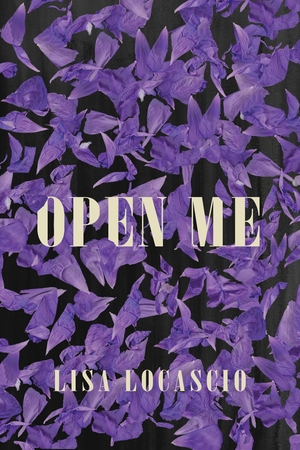
Open Me by Lisa Locascio

In Open Me, high school graduate Roxana, consumed with wanderlust and an awakening sexuality, goes on a study abroad trip to Denmark. Her adventure begins when she meets a beguiling Danish PhD student who woos her and whisks her away to stay with him in a remote town, where he tells her that he has only one key and she cannot leave the apartment while he is out working. Finding herself locked away in a stranger’s apartment in a foreign town, Roxana defies the “princess locked in a tower” trope. Rather than wasting away her time, dreaming of her prince or brushing her long golden locks, she takes the opportunity to explore the intricacies of her body, reflecting on her previous and current sexual experiences, to learn about her desires. Locascio writes about sex (and masturbation) with a vivid realism that no male writer could ever achieve.

The Pisces by Melissa Broder

For this hydro-erotic story, Melissa Broder pulls from her own insecurities and idiosyncrasies relating to sex. According to The New Yorker, Broder “could only orgasm when she imagined people vomiting” during her developing years. With the same vulnerability she uses to tell the public about her own sexual pleasures, she develops a protagonist willing to succumb to a lust for marine carnality. An addict to the feeling of being desired and adored, Lucy recognizes the same need in her partner, whose quasi-merman body has made him believe he will never receive love.

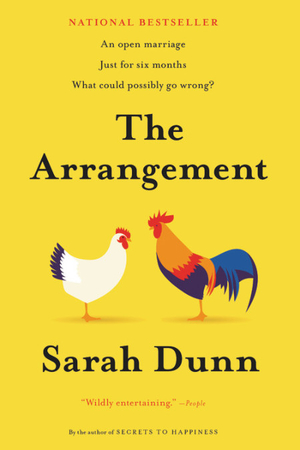
The Arrangement by Sarah Dunn

Sexual exploration and education goes far beyond adolescence and even young adulthood, it can exist even within the boundaries of a permanent relationship, even within the time honored tradition of marriage. With the changing of bodies and situations, with lives in constant flux, growth can be incessant. When the married couple in Sarah Dunn’s novel recognize this, they make a sincere effort to progress rather than stay in place. The Arrangement tells the story of an open marriage between Owen and Lucy, in their attempt to reclaim their marriage while simultaneously sanctioning one another’s implicit sexual desires. The Arrangement plays with the periphery of what has been long considered, in many parts of the world, the conventional way to live a life alongside one monogamous partner.

The Argonauts by Maggie Nelson

Using lyrical prose that bewitches from the first page and poignant references from philosophers, pediatricians, and writers, Nelson writes about her life with a nonbinary partner. Nelson’s style, which vacillates between poetry, theory, and memoir, offers the reader a sincere look into what it means for her to love, and lust after, someone who does not fall within the confines of the binary social construction of gender.

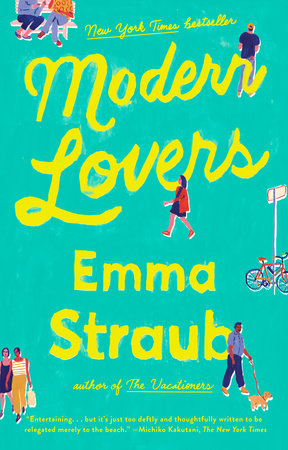
Modern Lovers by Emma Straub

Modern Lovers by Emma Straub

Educating yourself on sex and lust is one thing, educating your children is entirely another thing. In Emma Straub’s novel, set in modern day Brooklyn, two families simultaneously explore what it means to be in a relationship, whether it’s a lifelong connection or a newly flourishing one. While Jane, Zoe, Elizabeth and Andrew struggle with their own relationships after the death of a mutual college friend and bandmate, their respective children begin a fling. The juxtaposition of experienced and inexperienced, old and new, offers an interesting perspective on the development of sex and love—of growth from the one into the other.

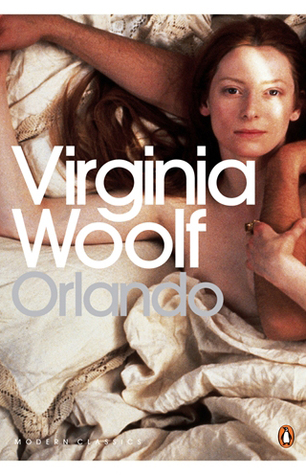
Orlando by Virginia Woolf

One of the first English novels about someone changing gender begins with, “He—for there could be no doubt of his sex…” Long before the public acknowledgement of gender fluidity, Woolf weaves the tale of a woman born in a man’s body—or a man who becomes a woman. Orlando lives hundreds of years, is exposed to centuries of chauvinism, and encounters the mistreatment of the female’s body from the perspective of a person who has lived on the other side of the coin. Orlando illuminates the brutal history of gender politics while recounting the experience of a person who lusts after both men and women.

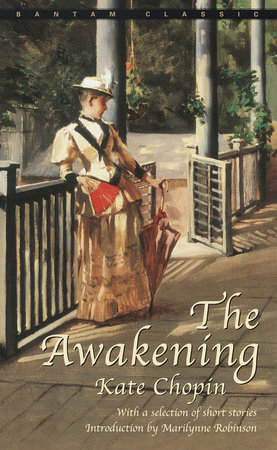
The Awakening by Kate Chopin

Lusting after a person can inspire a passion for creation. Edna, a married woman, learns this when her appetite for sex is aroused by a neighbor at the boarding houses on Grand Isle where she is staying for the summer. When autumn sets in and Robert—her muse—is gone, Edna continues her fervency. Now, the object of her fervor is no longer a man, but art. Her romance with Robert catalyzes a desire to create beauty. Edna rides on the high of that inspiration, forgoing the social norms of women of the time to zealously chase after the feeling of bringing something beautiful into existence. A feeling not unlike creating a bond between another person where before there was only unfamiliarity.

She Came to Stay by Simone de Beauvoir

Sexual exploration can be as painful as it can be pleasurable. Simone de Beauvoir, a cited expert on the condition of human suffering and the subjugation of women, wrote this novel loosely based on her relationship with Jean Paul Sartre. She Came to Stay follows the story of Françoise and Pierre as they invite a third person into their lives. Through these three characters, de Beauvoir examines the inherent paradox of love and desire; how can we feel the freedom of individuality that love promises us when we depend on the other to give it to us? As per the deep-rooted existentialism that pervades all of her texts, She Came to Stay is an investigation into meaning through the magnificence and monstrousness of sex and love.

Ann Beattie’s “A Wonderful Stroke of Luck” Is a Character Study of Generation Y

Who needs an introduction to Ann Beattie? The writer is an icon. Since the 1970s she has been publishing stories and novels we’ve marveled at, for their wit, intelligence, and their wry, affectless treatment of contemporary people navigating the messes of their contemporary lives. When I mentioned to a friend I was interviewing her for Electric Lit, my friend swooned. “Have you read Chilly Scenes of Winter? Chilly Scenes of Winter is amazing. I love Chilly Scenes of Winter.

That classic novella was published in 1976, years before my friend and I were born, but since then Beattie’s place in the American canon has been firmly established. Which has not protected her, by the way, from bad reviews. In 1998 she was accused in the New York Times of “irritating moral passivity” (the sort of a accusation that reveals more, I think, about the critic than it does about the fiction writer). In 2011 Beattie’s novel Mrs. Nixon: A Novelist Imagines a Life was widely declaimed for its meandering storyline and its bravado.

Image result for A Wonderful Stroke of Luck: A Novel
Purchase the novel

Beattie’s newest novel A Wonderful Stroke of Luck feels somewhat plotless, too, but I found its twists and shadows full of secrets and surprises (so to speak). What makes Beattie’s work so interesting, to me, is its resistance to conventional, formal narrative structure. Its artistry is in its wit and its humanity, its remarkable formal verisimilitude.

In 1983 Beattie was quoted in an unpublished interview for the Paris Review as saying, “I can’t help it if people make the mistake of thinking that I am a prophet and that I am disguising my wisdom as short fiction that’s published in The New Yorker.” Reading this book I kept thinking, What does it say about me, as a reader, that I am searching for hidden meaning in this narrative?

A Wonderful Stroke of Luck is best described, I think, as a novel-length character study. The narrative chiefly follows its protagonist Ben, from his late teenage years in the late 1990s at the fictional boarding school Bailey Academy (“that fancy school where everybody played to everybody else, so you came out thinking the whole world wanted to be your audience”) through his mid-30s in a New York exurb (“life on the lam as a reverse-snobbery style statement”). The voice is talky, funny, omniscient, and inconsistent. It dips in and out of different characters’ points of view in a jazzy, virtuosic free indirect discourse, occasionally informing us of things they cannot know. Every character, however tertiary, has his own thoughts, sense of humor, manner of speech, and opinions, “his own constant personal debate.” The story of Ben’s life is thus interrupted—often, incidentally, and delightfully—by brief, sharply observed forays into the lives of the characters around him, among them many of his boarding school cohort, his stepmother, his sister, his on-again-off-again girlfriend, his eventual neighbors, and—most oppressively—his teacher Pierre LaVerdere, who heads up the Bailey Academy honors society, LaVerdere’s Leading Lights, and who remains a (sometimes unwelcome) touchstone well into Ben’s adult life. A Wonderful Stroke Of Luck left me feeling as if I’d expanded my circle of real life acquaintances.

Especially because, coincidentally, their circumstances are familiar to me. I myself am just one year older than Beattie’s fictional characters. LaVerdere’s protégés are high school seniors when the planes hit the World Trade Center on 9/11. That day, I was in my first week of college, fresh out of a small private school as self-consciously liberal and intellectually dizzying as Bailey. So it was rather an out-of-body experience for me to read this wry, rambling account of the coming-of-age of my own microgeneration. I found myself frequently startled by the accuracy, perceptiveness, specificity, and humor of Beattie’s observations. I looked forward not just professionally, but personally, to asking her all about it.


Rachel Lyon: LaVerdere’s Leading Lights strikes me as a kind of alternate universe Dead Poets Society, Pierre LaVerdere playing the dark twin of Robin Williams’s character in the film. Where Williams’s John Keating is earnest, honest, inspiring, and dedicated to waking up his handsome young students, Pierre LaVerdere is perverse, opportunistic, given to prevarication, solipsistic yet bored by himself, often disappointing—and disappointed in them. When he admits he attempted and failed to write a book—a “humbling experience” (“I really did assume I had a book in me,” he says, “but then I thought: Why think in those terms? …What’s so great about an imaginary, internal book?”)

I found myself dying to know: what does Ann Beattie think of LaVerdere?

Ann Beattie: I love that description of him as the dark twin.  I think LaVerdere remains something of an enigma, though as you observe him through time, you get more information.  The LaVerdere we first meet is really Ben’s LaVerdere – and Ben has something invested in how he thinks of him. Ben has a limited point of view, as well as his own limited perceptions.  He’s young, defended, conflicted, and–no different than his teacher–he projects. I should also say that I cringed when LaVerdere made his spur-of-the-moment visit to Ben, because I really didn’t know what would happen.     

RL: Your scenes of LaVerdere’s heady classroom discussions, in the months and years just before 9/11 reflect a degree of creative and philosophical freedom that I feel I remember, and that in retrospect seems luxurious, even indulgent. As the novel goes on, however, we watch Ben and his peers come of age in a country that took a hard right in the ensuing years. They struggle to outgrow their education, attempting to unlearn what they were taught at Bailey. (“All those years in the debate club, along with all the years afterward trying to forget what he’d learned so he could talk like a human being again.”) We watch Ben grow up, intellectually, before our eyes:

Metaphor. It was insidious. You had to ignore that way of thinking, the same way you had to understand that your dreams contained straw men rather than real omens, the way you were obliged to admit your neurotic fears lacked legitimacy. Strangely, to admit you lacked intuition, that you realized symbolic stories were inert, that you had no special abilities, no second senses to go on, meant that you had achieved a sense of power.

The book engages, as Ben does, in a sort of relentless breaking down of abstraction. When Ben finds himself still in possession of his friend’s father’s beret, which has held some significance for him over the years, he finds that naming it—referring to it first as a souvenir and then, “more bluntly,” as just a hat—renders it powerless. LaVerdere is demoted in the course of a paragraph from the devil himself to “a sad approximation, a devil in a diorama,” Ben’s high school crush from “an enigma” to “only hard, hard and self-protective.” You write, “Men’s actions had little to do with language and metaphor, and everything to do with testosterone and cortisol.”

Tell me about the power to be found in resisting metaphor and symbolism.

All literary devices that writers invoke effectively can be hugely revealing, at the same time they also add another layer of veneer.

AB:That’s a complex question that seems to ask more than just what I feel about a couple of literary devices! I appreciate your reading the book so closely and for seeing that one of the questions of the book is about power. Flannery O’Connor says (I agree), that symbolism isn’t something you superimpose, though I think what it’s an outgrowth of–-whether, say, we’re talking about a plant shallowly rooted (descriptive; not a value judgment), or one with a long taproot–-is important to consider.

Let me try another answer: The narrative voice adheres closely, here, to Ben’s thoughts – that’s how the reader learns what Ben has concluded. I think that word “concluded” is important because these statements are obviously not where the book concludes.  In every case, with or without such revelations, Ben goes right on. I hope there’s something visceral and also painful about such sweeping assertions as the ones you point out — that they’re emphatic enough to get the reader’s attention, but that they also make the reader ask, “Really?”  I can’t help noticing that with these declarations, Ben’s like LaVerdere in his cynicism and his way of seeming to have everything figured out. Last response: all literary devices that writers invoke effectively can be hugely revealing, at the same time they also add another layer of veneer.    

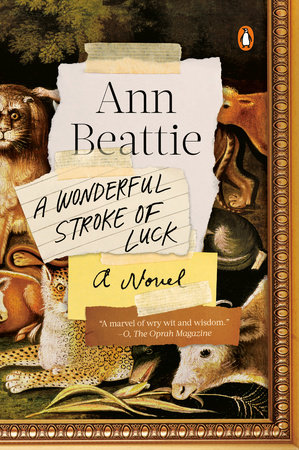
RL: The painting The Peaceable Kingdom appears and reappears in the book—on its cover, of course, and in its pages too. In one oblique reference, the painting is unconsciously channelled by a character whose mother, an eccentric zookeeper, used to dress in animal costumes: “She sat at the kitchen table and verbalized the animals’ thoughts into a Dictaphone, using a variety of voices. She believed she could read their minds.” What attracted you to this painting, and how do you understand its role in the book?

AB: I didn’t know what the cover would be. I wanted to conjure up a painting familiar enough that many readers would immediately have a sense of it (perhaps I should have caved and used Jeff Koons?) – and also, something LaVerdere would really be pained to have to talk about. That short chapter speaks to a serious concern in the novel, but it’s also played for laughs. My husband’s a painter, so we enjoyed poking fun of such ridiculous talk about art. Also, in general, I tried to get a vibration going in the novel between the natural world (I have to agree with LaVerdere: this painting’s idealized–-though that’s hardly the point), and the lives we’ve constructed as we live apart from nature, which is a concern of Ben’s when he leaves the city.  That dichotomy’s everywhere in the book.

RL: Ben makes a useful protagonist because he’s a natural observer; in fact, he seems to experience himself almost exclusively through his observations of the people around him. When he’s feeling uncomfortably vulnerable in a strange rendezvous-a-trois with his confrontational girlfriend and humorless sister, his attention turns to a child nearby, “a little boy in his overalls, bib and forearms streaked with ketchup.” Avoiding his feelings after an upsetting encounter with an ex, he wanders a CVS and witnesses a young woman shoplifting a bag of candy. Indeed he only recognizes his own anxiety when he reads about it in a magazine:

How strange that it took him some time to figure out that he was experiencing claustrophobia. …He read with interest pieces in New York magazine about people his age, or just a bit older, who’d decided to set up camp outside New York City. He admitted… that he felt restless, as if he’d been captured. Saying that word had surprised him, because it was the first time he’d put a name on his anxiety.

How would you characterize Ben, and the way he changes over the course of the book? Does his transformation reflect, in your mind, a broader, post-9/11, intellectual and emotional shift, among the privileged population he belongs to?

AB: He’s a natural observer, but there’s only so much you can learn by observation. Maybe he overly relies on this navigational tool. What exists apart from his vision-–apart from his knowing–-turns out to be crucial information.

RL: The title of the book is contextualized by its epigraph, from the Dalai Lama: “Remember that sometimes not getting what you want is a wonderful stroke of luck.” I puzzled over this for a while, because Ben seems neither to want anything very badly, on a conscious level, nor to be particularly “lucky,” whatever that means.

But in maybe my favorite passage, adult Ben thinks of LaVerdere after reading an essay by Flannery O’Connor:

It was one LaVerdere had particularly admired (for a long time, Ben had thought Flannery O’Connor was a man)—something to the effect that when writers succeed, it’s because their conscious mind, alone, hasn’t been the most significant factor. To the extent that LaVerdere could be called mystical (he wouldn’t have liked that word), he did seem to believe, as O’Connor did, that there were enormous realms—pre-existing realms, like as-yet-unseen galaxies—that contextualized for you. That was why writers were so often quoted as being paradoxically relieved to be surprised.

I am guessing this refers to O’Connor’s essay “The Nature and Aim of Fiction,” is that right? (Which, incidentally, opens with her remark—thematically relevant here!—that hearing different writers’ opine on the craft of writing is something like “having the zoo come to you, one animal at a time; and I suspect that what you hear one week from the giraffe is contradicted the next week by the baboon.”) I wonder if you see a connection between the epigraph and the passage above, something about the unknowability of the self. What is the value—comedic, creative, or otherwise—in not understanding ourselves—for fictional characters and for the writers who create them?

AB:I’ve read Mystery and Manners many times, though I didn’t remember that. It’s just wonderful. As in: a wonderful stroke of luck that animals figure explicitly in my novel – though I can’t pretend I was alluding to that.

Yes, I had in mind “The Nature and Aim of Fiction,” including, “The longer you look at one object, the more of the world you see in it, and it’s well to remember that the serious fiction writer always writes about the whole world, no matter how limited his particular scene.” LaVerdere also speaks loosely, though. Among many other things, he’s a bullshitter – so what he says often has different layers of meaning.

In partial answer to the last part of your question, let me recommend Missing Out, by the psychoanalyst Adam Phillips: “we can’t imagine our lives without the unlived lives they contain.  We have an abiding sense, however obscure and obscured, that the lives we do lead are informed by the lives that escape us.” My friend Susan Wood asked me to go with her to hear Adam Phillips talk with Paul Holdengraber years ago at the Miami Book Fair, and he was brilliant, I was riveted, but only now have I finished this fascinating book.         

7 Nigerian Novels About Toxic Relationships

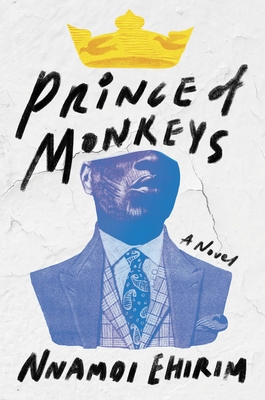
In Nigeria, romance has always been a popular medium for storytelling across all artforms. The first of the three parts of my novel, Prince of Monkeys, involves a budding love between the narrator, Ihechi, and the free spirited Zeenat, a relationship that is steered by Zeenat’s brazen personality and which eventually thrives despite Ihechi’s boyish shyness. But Ihechi’s innocence is quickly sacrificed at the altar of ambition when he develops a transactional relationship with Madame Messalina, a prostitution and political queenpin.

Purchase the novel

Toxic relationships often go beyond romance. Toxicity could stem from individual differences—whether cultural, economic, political or religious—that yield bitterness, envy, distrust or spite between friends and family. This is the primary theme of my novel, partly drawn from personal experiences, where the biases of backgrounds and loyalties to later associations threaten friendships as individuals within a tight-knit group come of age.

The portrayal of toxic conflict in relationships fascinates me because it asks questions beyond what people can achieve for love, hate, fear, grief or any other emotion. It queries further, asking what people can achieve in spite of these emotions.

To shed a bit more light on the theme, I composed a reading list of my favorite Nigerian books which contain stories of toxic relationships. Some of the protagonists stand against toxic relationships, some use it as a stepping stone to further personal aspirations, others are crushed by its oppressive weight, and some choose to simply navigate through it like water around rocks.

Purple Hibiscus by Chimamanda Ngozi Adichie

Before encountering Adichie’s work in 2005 when my mother stocked the very first editions of Purple Hibiscus in her Enugu bookstore, there were not too many writers I could read and relate to. Soyinka, Achebe, Emecheta and other pillars of the Nigerian literary canon were not writing about my era, and so, in my mind, being a writer was something for the wisdom and sacredness of old age. Purple Hibiscus destroyed that narrative.

The violently abusive nature of Eugene Achike, Kambili’s father, has become one of the novel’s most critical talking points and hardly needs more belaboring. Less discussed is the overly tender relationship between a fifteen-year-old Kambili and Father Amadi, a Catholic priest at her aunt’s church. They have seemingly pure-hearted interactions, though they harbor feelings for one another. I have spent a fair amount of my life arguing that the problematic nature of such a relationship, considering the age and maturity dynamics at play, is shrouded beneath, and eventually tolerated by most due to, the childishly innocent perspective of the teenage narrator.

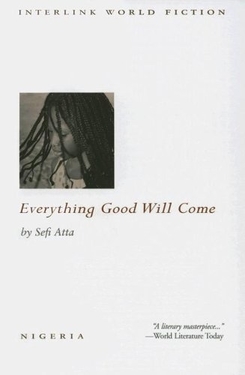
Everything Good Will Come by Sefi Atta

The strength of this novel is not necessarily its plot but the journey and gradual evolution of Enitan Taiwo, the central figure to the story, over 25 years. During this time, her relationships reshape her. She grapples with her mother’s unfolding as a cynical religious zealot following the premature death of her brother. Then she struggles to maintain a marriage that forces her to choose sides between her relationship and her politics, and she is also burdened by general distrust for men rooted in the trauma of witnessing the sexual abuse of her childhood best friend, Sheri. Despite the story being told in Enitan’s voice, Sheri is undoubtedly its heroine. Enitan often feels the need to compromise while Sheri is unrelenting in her resolve to defy the status quo and to demand more from fate than she has been dealt. Their enduring friendship is the redeeming narrative in a tale where all other relationships seem to bring more harm than good.

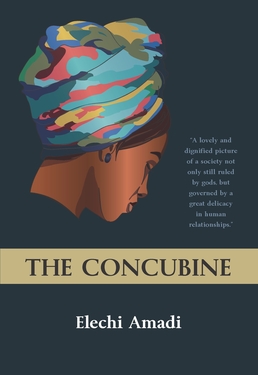
The Concubine by Elechi Amadi

Published in 1966 as part of the African Writers Series created by Heinemann to provide a platform for postcolonial era African writers to tell their own narratives, Elechi Amadi’s debut novel is an undisputed classic. Long after reading The Concubine, I realised that the fact that its protagonist, Ihuoma, is one of the most cherished characters in Nigerian literature is a major indictment on how we as a people have an endearment towards suffering which goes beyond, and should not be confused with, empathy. While Ihuoma is beautiful and beloved by her entire community, especially for her graciousness in widowhood, she endures suffering—at the hands of people in her village, their traditions and, ultimately, the sea god—for love. It is easier to simply root for her than to confront the precarious reality of a cultural system where women are often powerless victims in their own fate, for the sake of male ego, tradition and the whims of the gods.

Efuru by Flora Nwapa

Another product of the African Writers Series, Efuru is the first published novel by a Nigerian woman and a staple of the African feminist canon. Set in the same period and Igbo society as Achebe’s Things Fall Apart, it is not as famous and critically reviewed as Achebe’s work but it is arguably just as good and definitely as relevant. Its title character is beautiful and charming yet a perpetual victim of the machinations of the society she lives. Efuru survives two emotionally abusive marriages where she struggles with philandering spouses, self serving in-laws, child loss, and persecution for her inability to bear more children. But through it all, Efuru remains steadfastly loyal to herself, captured best when she says, “Perhaps self-imposed suffering appeals to her. It does not appeal to me. I know I am capable of suffering for greater things. But to suffer for a truant husband, an irresponsible husband like Adizua is to debase suffering. My own suffering will be noble.”

Jagua Nana by Cyprian Ekwensi

Ekwensi’s third novel is yet another postcolonial era narrative from the African Writers Series. Like my novel, Ekwensi’s noir fiction delves into Lagos as if it were a person of its own; worthy of character development, strengths, flaws, and interaction with other humans, of which the most relevant is Jagua Nana, a sex worker whose liberty and aspirations fuel her battle with political and class systems rigged against those who need it most. While good natured, her relationships are almost always transactional and, while justifiable and critical to her survival, they are eventually unsustainable. Also similar to my novel is Ekwensi’s representation of sex workers as worthy of respect, responsible for their own fate and wholly capable of masterminding grand aspirations. The major difference being he wrote this over fifty years ago, when such ideals were more scandalous to suggest.

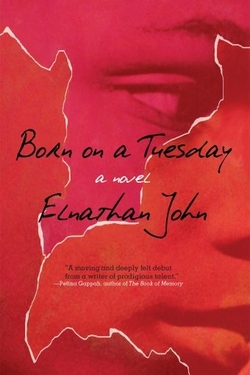
Born on a Tuesday by Elnathan John

Unlike Jagua Nana, John’s debut novel tells of a part of Nigeria more entrenched in poverty and religious fundamentalism.  His protagonist, Dantala, is more impressionable and probing than self assured and scheming. Dantala is also not as successful in battling the odds against him, but he is as adept at survival. Born on a Tuesday is an exploration of how people are made malleable in the heated forge of religion and propaganda, how self discovery is often less about the self but more about the friendships we keep and the leaders that guide us and, in a society steeped in stereotypes, how our choice of association is very easily the difference between life and death.

The Secret Lives of Baba Segi’s Wives by Lola Shoneyin

If the world was coming to an end and I had to preserve a single book to give whoever came after a glimpse into Nigerian life, I would recommend The Secret Lives of Baba Segi’s Wives at every chance. With its Nollywood-type plot twists and layered characters that use humor to bulldoze through each of their ordeals in a quintessentially Nigerian way, the novel captures our methods and mannerisms better than most. It also explores themes that are still fiercely debated everywhere from our beer parlors to our Twitter feeds: class systems and the divisive perceptions they perpetuate, family relationships across generations and the reduction of womanhood to gender roles. The book spotlights how we have grown accustomed to simply navigating, instead of combating, this toxicity in our personal lives. In a polygamous household of four wives and seven children, everyone is bound to be a victim. However, the family unit is held together by a common purpose—upholding lies and a grand secret—which is ultimately undone by jealous scheming and a twist of fate.

“Bad Boy” Publishers Aren’t Mavericks—They’re Depressingly Mainstream

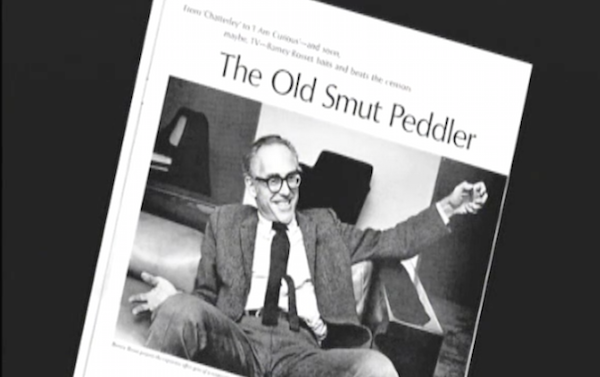
“Barney Rosset was a freak. He was a big, crazy freak who took everyone down with him. He was a nut. He was a radical. He was abusive. He was passionate.” So says Ira Silverberg, then-editor of Grove Press, in the opening moments of the documentary Obscene: A Portrait of Barney Rosset and Grove Press before giving the film its working thesis: “He really was the last maverick in American publishing.” Daniel O’Connor and Neil Ortenberg’s rather amateur-looking documentary, made in 2007 but screened last month at the Brooklyn Public Library’s LitFilm series, purports to tell the story of that “last maverick”—a bastion of a lost, freer literary world. But by the time the film ended, I realized that the shock value Obscene and Rosset traffic in was a juvenile provocation.

Here was a glowing portrait of one of those “bad boys” of publishing who’d changed the world, and what was he being lauded for? Union-busting his own company, firing self-described feminists who challenged his editorial eye, and making a career out of blurring the line (both legal and cultural) between pornography and literature. The documentary and its subject emerge as symptoms of a broader industry that remains wilfully blind to its own toxicity, beholden to a vision of success that imagines, as Ruoxi Chen put it recently, “iconoclastic (difficult) male authors creating art alongside dashing male editors with generous expense accounts and a certain panache.” This unvarnished look at Rosset merely does away with any pretense. He’s the kind of guy publishing has always lionized, in spite of his faults—or more accurately, because of them.

He’s the kind of guy publishing has always lionized, in spite of his faults—or more accurately, because of them.

Soon after Silverberg ends his fawning words on Rosset the film, without a hint of irony, cuts to footage of a 1989 interview with Rosset in a TV show called Midnight Blue. We first see its host, Al Goldstein (bushy beard, slightly overweight), wearing sunglasses, a printed black tee, and a hunting vest, with a shotgun in one hand and a fishing rod on the other, dancing. There’s two of him, the result of one of those cheap mirrored visual effects that were all the rage in the ‘80s. Cut to: a pair of breasts. Then a graphic (“Al Goldstein’s Fuck You Department”) overlaid over Goldstein giving us the finger, followed by images of Goldstein again flipping us the bird (with an American flag behind him, of course) as he yells, “Fuck you!” Then another stripper showing off her boobs. That’s when we’re told Goldstein will be sitting and interviewing Rosset. Did I mention the logo for this show that ran from 1974 to 2003 features a naked woman whose Uncle Sam costume has been ripped off riding a dick-shaped rocket Dr. Strangelove-style? Presented within the first 10 minutes of Obscene, Midnight Blue is as cringe-worthy as you’d imagine. (You’re welcome to check it for yourself as the O’Connor and Ortenberg doc is freely available on Kanopy.) The clip made me, and several other people in the audience at the screening, laugh out loud, but just in an awkward, what-the-fuck kind of way.

Rosset’s appearance on Midnight Blue makes sense given the persona he’d long nurtured. He was “crazy,” yes. But that craziness (not to mention his privilege) was always leveraged to advance irreverent propositions. He and Grove Press, after all, were the ones who took on the fight against censorship by daring to publish D.H. Lawrence’s Lady Chatterley’s Lover, Henry Miller’s The Tropic of Cancer and William Burroughs’s Naked Lunch, and succeeded in getting court rulings that slowly dismantled a system that had denied Americans the chance to read these titillating titles. Those legal fights are at the center of Obscene, but it’s also quite clear that O’Connor and Ortenberg are more interested in the man behind the cases. Interviews with the then-85-year-old Rosset are full of wistful reminisces that all but airbrush his more controversial decisions. Even those who knew him go out of their way to sidestep behavior that’s long been glorified but which should give anyone else pause. Richard Seaver, another then-Grove Press editor casually mentions that Rosset had a habit of spending his nights drinking and waltzing into the office straight from a bar. “That’s the Irish part. The Irish love to drink, they love bars,” he adds as both explanation and excuse. It’s one of the early signs that Obscene really thinks Rosset’s bad boy antics were integral to his persona, his success, and his legacy.

Rosset was, and perhaps remains, a god to many young men precisely because he could go on a show like Midnight Blue, where he was hailed as a legend—despite having driven Grove Press almost into the ground and eventually been forced to sell—while being asked whether he thought S&M got a bad rap for being inherently “anti-feminine.” What was intended as slyly shocking in 1989 — two men discussing whether specific strands of mainstream pornography were indeed anti-women — is all the more rankling in 2019. Especially as you then learn Rosset’s office at Grove could only be accessed by his private elevator, and that a young female employee once arrived at his door at 10 in the morning for a meeting she’d arranged, only to find him sipping wine and reading the weekly porn tabloid Screw.

Around that point in the documentary, I realized that Obscene fails as hagiography (clearly its intent) because it can’t smooth over its subject’s shortcomings; the filmmakers don’t recognize Rosset’s more unseemly characteristics as shortcomings at all. His flaws are never hidden or minimized, because they’re seen as necessary aspects of what him such a force within publishing. For starters, the doc doesn’t even attempt to hide its bias when it comes to covering the 1970 protest that had been prompted by the dismissal of eight Grove Press employees (six of them women, as the New York Times reported at the time) who’d been pushing for the formation of a union. “Grove Press won’t let women be anything but secretaries, scrub women, and sex symbols,” Emily Goodman, a lawyer for the women’s liberation group, told the New York Times. Footage from interviews with the protesters are framed by Rosset, who eventually claims those union-organizing women led to the downfall of Grove under his leadership. To hear Rosset tell the story in the film, he was the target of a bunch of angry feminists who couldn’t see, as he did, that there was liberation in the erotic. “In my opinion, they were also FBI agents,” he says with a straight face to Goldstein.

Obscene presents all these various tidbits as badges of honor. Look at this guy! the documentary suggests, Wasn’t he a total badass? He drank at work! His publishing instinct was to go after stuff that turned him on! He even shut down an attempt to form a union at Grove Press! Who wouldn’t be impressed and inspired by such a “maverick”? And that’s the most depressing part of Obscene: a lot of people still would. After all, Rosset is a walking archetype of those “bad boys” popular culture in general, and the publishing industry in particular, insists are to be fawned over and idolized. The ones whose misogyny is often seen as a byproduct of their own narcissistic drive. The ones who excuse their reckless behavior as necessary collateral to their ambition. The Lorin Steins who continue to play gatekeeper. The Dan Mallorys who ride their “charm” all the way to the top. The Don Drapers of the world whom we’re constantly encouraged to see as the heroes of their own stories—whose troubled lives, we’re told, are what make them such geniuses. (Fun fact: Don Draper actually brags in Mad Men about seeing the Rosset-distributed film I Am Curious (Yellow), which famously featured a scene where a young woman kisses a limp penis.)

Rosset is a walking archetype of those ‘bad boys’ the publishing industry insists are to be fawned over and idolized.

As the credits rolled, featuring a list of the esteemed writers Grove Press had published under Rosset, I started keeping a mental list of how many were women. I needed only one hand: out of 27 names listed, 24 were men. And I was being encouraged to see that as progress, as proof of how forward-thinking Grove Press and Rosset had been. Which is, perhaps, as insidious an indictment of the publishing industry writ large as one could find.

To watch Obscene in 2019 is to reckon with hitherto unexamined biases that come to light whenever an icon of years gone by is being rehabilitated. Should his successes overshadow his shortcomings? Should his attitude be exalted when it had a hand in both? What would it mean to critically acknowledge that seismic changes in the publishing industry went hand in hand with toxic work environments and “crazy freaks” who took everyone down with them? These are questions the documentary doesn’t quite set out to answer, but they should linger in contemporary audiences who are only now beginning to see what kind of structures Rosset and his ilk kept in place while tearing down others in the name of iconoclasm.  While I’ll always treasure the fact that Neruda and Paz and Rechy and Beckett and others found a fearless publishing house to print their works in the U.S. I will happily dispense with the notion that only someone like Rosset, “a big crazy freak,” could’ve made that happen. We should demand more of our idols. But also of ourselves.

Rick Moody Recommends “A Full-Service Shelter” by Amy Hempel

“A Full-Service Shelter”

by Amy Hempel

They knew me as one who shot reeking crap out of cages with a hose.

—Leonard Michaels, “In the Fifties”

They knew me as one who shot reeking crap out of cages with a hose—and liked it. And would rather do that than go to a movie or have dinner with a friend. They knew me as one who came two nights a week, who came at four and stayed till after ten, and knew it was not enough, because there was no such thing as enough at the animal shelter in Spanish Harlem that was run by the city, which kept cutting the funds.

They knew us as the ones who checked the day’s euth list for the names of the dogs scheduled to be killed the next morning, who came to take the death-row dogs, who were mostly pit bulls, for a last long walk, brought them good dinners, cleaned out their kennels, and made their beds with beach towels and bath mats and Scooby-Doo fleece blankets still warm from industrial dryers. They knew me as one who made their beds less neatly over the course of a difficult evening, who thought of the artist whose young daughter came to visit his studio, pointed to the painting she liked, and asked, “Why didn’t you make them all good?”

They knew us as the ones who put pigs’ ears on their pillows, like chocolates in a good hotel. They knew us as vocal vegetarians who brought them cooked meat—roast turkey, rare roast beef, and honey-glazed ham—to top off the canned food we supplied, which was still better than what they were fed there. They knew us as the ones who fed them when they were awake, instead of waking them at 2:00 a.m. for feeding, the way the overnight staff had been ordered by a director who felt they did not have enough to do.

They knew me as one who spoke no Spanish, who could say only “Sí, sí” when someone said about a dog I was walking, “Que lindo!” And when a thuggish guy approached too fast, then said, “That’s a handsome dude,” look how we exploded another stereotype in a neighborhood recovering from itself.

They knew us as the ones who had no time for the argument that caring about animals means you don’t also care about people; one of us did! Evelyne, a pediatrician who treated abused children.

They knew us as the ones who got tetanus shots and rabies shots—the latter still a series but no longer in the stomach— and who closed the bites and gashes on our arms with Krazy Glue—not the medical grade, but the kind you find at hardware stores, instead of going for stitches to the ER, where we would have had to report the dog, who would then be put to death.

They knew us as the ones who argued the names assigned at intake, saying, “Who will adopt a dog named Nixon?” And when Nixon’s name was changed—changed to Dahmer—we ragged on them again, then just let it go when the final name assigned was O.G., Original Gangster. There was always a “Baby” on one of the wards so that staff could write on the kennel card, “No one puts Baby in the corner,” and they finally stopped using “Precious” after a senior kennel worker said of a noble, aged rottie, “I fucking hate this name, but this is a good dog.” (Though often they got it right; they named the cowboy-colored pocket pit who thought he was a big stud Man Man.)

They knew me as one who did not bother wearing latex gloves or gauzy scrubs to handle the dogs in the sick ward, who wore gloves only when a dog had swallowed his rabies tag, and I had to feel for it in feces. They knew me as one who gave a pit bull a rawhide chew stick swirled in peanut butter, then, after he spit it up and wanted it back, cleaned it off and gave it to him so he could have . . . closure.

They knew us as the ones who put our fingers in mouths to retrieve a watch, a cell phone, a red bicycle reflector that a dog sucked on like a lozenge. They knew me as one who shot reeking crap out of cages with a hose, who scoured metal walls and perforated metal floors with Trifectant, the syrupy, yellow chemical wash that foamed into the mess, and then towel-dried the kennel and liked the tangible improvement—like mowing a lawn or ironing a shirt—that reduced their anxiety by even that much.

They knew me as one who, early on, went to tell a vet tech the good news that three dogs had been rescued from that morning’s list of twelve, to which the tech said, “That blows—I already filled twelve syringes.”

They knew us as the ones who repeatedly thanked the other vet tech, the one who was reprimanded for refusing to kill Charlie, the pit bull adopted less than twenty-four hours later by a family who sent us photos of their five-year-old daughter asleep atop Charlie, the whole story like a children’s book, or maybe a German children’s book. And we kept thanking the vet tech, until he was fired for killing two of the wrong dogs, their six-digit ID numbers one digit off. He didn’t catch the mistake, but neither had the kennel worker who brought him the wrong dogs, and who still had his job.

They knew us as those who found them magnificent with their wide-spaced eyes and powerfully muscled bodies, their sense of humor and spirit, the way they were “first to the dance and last to leave,” even in a House of Horrors, the way stillness would take them over as they pushed their heads into our stomachs while sitting in our laps. They knew us as those whose enthusiasm for them was palpable, Rebecca falling in love with them “at first sight, second sight, third sight,” and Yolanda tending to them with broken fingers still in a cast, and Joy and the rest with their surpassing competence and compassion. They knew us as those who would some- times need to take out a Chihuahua—“like walking an ant,” Laurie said—for a break. They knew us as those who didn’t mind when they backwashed our coffee, when they licked the paper cup the moment we looked away. They knew us as the ones who worked for free, who felt that an hour stroking a blanket-wrapped dog whose head never left your lap and who was killed the next morning was time well spent.

They knew me as the least knowledgeable one there, whose mistakes were witnessed by those who knew better.

They knew me as one who liked to apply the phrase “the ideal version of”—as in “Cure Chanel’s mange and you’ll see the ideal version of herself”—but did not like the term “comfort zone,” and thought one should try to move beyond it. They knew me as one who was unsure of small dogs, having grown up with large breeds and knowing how to read them, but still afraid of the Presa Canarios, the molossers bred in the Canary Islands, with their dark bulk and blood-shot bedroom eyes, since I had lived in San Francisco when a pair of them loose in a tony apartment house had killed a friend of mine who had stopped to check her mail and could not get her door unlocked before the attack began.

They knew me as one who called one of their number a dick when he knocked me over and I slammed into a steel bolt that left me bleeding from just above an eye. They knew me as one who guided them to step over the thick coiled hose in the packed garage that was being used weekly by a member of the board of directors to wash his car the city paid for. He never went inside the building

They knew us as the ones who attached a life-size plastic horse’s head to a tree in the fenced-in junkyard backyard, where the dogs could be taken to run off leash one at a time, and to sniff the horse’s head before lifting a leg against it. They knew us as those who circulated photos of two pit littermates dive-bombing each other under the blankets of a bed to get closer to the largehearted woman who had adopted them both.

They knew us as the ones who took them out, those rated “no concern” and “mild,” also “moderate,” and even “severe,” though never the red-stamped “caution” dogs. Although some of the sweetest dogs were the ones rated “moderate,” which was puzzling until we realized that behavior testing was done when a stray was brought in by police or a dog surrendered by his owner, when they were most scared. “Fearful” is the new “moderate.” And how do you think a starving dog will score on “resources guarding” when you try to take away a bowl of food! They knew me as one who never handled the “questionable” dogs, because that meant they could turn on you in an instant, you wouldn’t know what was coming, and some of us got enough of that outside the shelter.

They knew me as one whom Enrique had it in for, the kennel worker who had asked me to take out a 150-pound Cane Corso, and when I said, “Isn’t he ‘severe’?” said, “Naw, he’s a good boy,” and when I looked up his card he was not only “severe,” he was also DOH-HB hold—Department of Health hold for Human Bite. He had bitten his owner.

They knew me as one who forgave Enrique when he slipped on the newly installed floor while subduing a frightened mastiff, fell, and punctured a lung. After voting to spend nearly fifty thousand dollars to replace the facility’s floor, the board then had to allocate funds to bring in a crew with sanders to rough up the pricey new floor. The allocated funds were diverted from Supplies, so kennel staff had to ask us, the volunteers, for food when they ran out because feeding the dogs had not factored into the board’s decision.

They knew me as one who held the scarred muzzle of a long-nosed mutt in sick ward and sang “There is a nose in Spanish Harlem” until he slept.

They knew me as one who refused to lock the padlocks on their kennels, the locks a new requirement after someone stole a puppy from Small Dog Adoptions, and which guarantee the dogs will die in the event the place catches fire.

They knew me as one who asked them stupid questions— “How did you get so cute?”—and answered the questions stupidly, saying on behalf of the giddy dog, “I was born cute and kept getting cuter.” They knew me as one who talked baby talk to the babies, and spoke in a normal voice about current events to those who enjoyed this sort of discourse during their one-on-ones. I told an elderly pittie about the World War II hero who died in his nineties this year in a Florida hospital after having been subdued while in emotional distress by the use of a metal cage that was fixed in place over his bed. The Posey cage had been outlawed in Eastern Europe, yet was still somehow available in Florida. Caged in the space of his bed, “he died like a dog,” people said.

They knew us as the ones who wrote Congress in support of laws made necessary by human cruelty and named for canine victims: Oreo’s Law, Nitro’s Law, the law for the hero dog from Afghanistan, and that’s just this year.

They knew me as one who loved in them what I recoiled from in people: the patent need, the clinging, the appetite. They knew me as one who saw their souls in their faces, who had never seen eyes more expressive than theirs in colors of clover honey, root beer, riverbed, and the tricolor “cracked- glass” eyes of a Catahoula, rare to find up north. They knew us as the ones who wrote their biographies to post to rescue groups, campaigning for the rescue of dogs that we likened to Cleopatra, the Lone Ranger, or Charlie Chaplin’s little tramp, to John Wayne, Johnny Depp, and, of course, Brad Pitt, asking each other if we’d gone overboard or gone soft, like Lennie in Of Mice and Men. They knew us as the ones who tried to gauge what they had been through, as when Laurie said of a dog with shunts draining wounds on his head, “He looks exhausted even when he’s asleep.”

They knew us as the ones who wrote letters to the mayor pointing out that the Department of Health had vastly under-estimated the number of dogs in the city to clear itself of misconduct for failing to license more. The political term for this is “inflating their compliance record.” They knew Joy as the stellar investigator who told the rest of us that the governor helped boost the state budget by helping himself to funds that had been set aside to subsidize spay-neuter services throughout the state.

They knew that? They seemed to know that, just as they seemed to appreciate Joy’s attempt to make a new worker understand that staff had not “forgotten” to write down the times they had walked certain dogs, that the blank space under dates on the log sheets three days in a row meant that those dogs had not been walked in three days. “When the budget was cut by a million and a half,” Joy began. But the new worker did not believe her.

They knew us as the ones who decoded reasons for surrender and knew that “don’t have time” for an elderly, ill dog meant the owner had been hit hard by the ruined economy and could not afford veterinary bills. They knew us as the ones who doted on “throwaway moms,” lactating dogs left tied to posts in the Bronx after the owners sold their puppies, and the terrified young bait dogs—we would do anything for them—their heads and bodies crossed with scars like unlucky life lines in a human hand, yet whose tails still wagged when we reached to pet them. They knew me as one who changed her mind about Presa Canarios when I found one wearing an e-collar that kept him from reaching his food. I had to hold his bowl up to his mouth inside the plastic cone for him to eat; I lost my fear of Presas.

They knew me as one who had Bully Project on speed dial, who knew that owning more than five dogs in Connecticut was, legally, hoarding, who regularly “fake-pulled” a much-loved dog when I found that dog on the list, pretending to be a rescue group, so that in the twenty-four hours it took for the shelter manager to learn it was fake, the dog would have time to be pulled for real.

They knew me as one who got jacked up on rage and didn’t know what to do with it, until a dog dug a ball from a corner of his kennel and brought it to my side, as though to ask, “Have you thought of this?”

They knew me as one who learned a phrase of Spanish—“Lo siento mucho,” I am so sorry—and used it often in the lobby when handed a dog by owners who faced eviction by the New York City Housing Authority if they didn’t surrender their pit.

They knew me as one who wrote a plea for a dog named Storm, due to be killed the next morning, and posted the plea and then went home, to learn the next day that there had been two dogs named Storm in the shelter that night, and the one who needed the plea had been killed that morning—I had failed to check the ID number of the dog. So this is not about heroics; it’s about an impossible job. I joined them in filth and fear, and then I left them there.

They knew me as one who walked them past the homeless man on East 110th who said, “You want to rescue somebody, rescue me.

They knew me as one who saw through the windowed panel in a closed ward door a dog lift first one front paw and then the other, offering a paw to shake though there was no one there, doing a trick he had once been taught and praised for, a dog not yet damaged but desperate.

They knew me as one who decoded the civic boast of a “full-service” shelter, that it means the place kills animals, that the “full service” offered is death.

They knew me as one who learned that the funds allocated for the dangerous new floor had also been taken from Medical, that the board had determined as “nonessential” the first injection, the sedative before the injection of pento-barbital that kills them, and since it will take up to fifteen seconds for the pentobarb to work, the dogs are then made to walk across the room to join the stack of bodies, only some of which are bagged. This will be the dogs’ last image of life on earth. My fantasy has them waking to find themselves paddling with full stomachs in the warm Caribbean, treading the clearest water over rippled white sand until they find themselves refreshed farther out in cooler water, in the deep blue reef-scarred sea.

They knew me as one who asked another volunteer if she would mind holding Creamsicle, a young vanilla and orange pup, while I cleaned his soiled kennel and made his bed at the end of a night. I knew that Katerina would leave the shelter in minutes for the hospital nearby where her father was about to die. She rocked the sleepy pup in her arms. She said, “You are working too fast.” She kissed the pup. She handed him to me. She said to me, “You should take your time.” We were both tired, and took turns holding the pup against our hearts. They saw this; they knew this. The ward went quiet. We took our time.


In Laila Lalami’s novel, Immigrants Are Fully-Realized People—and So Are Racists

Migration and all its ensuing discontentments obsess the work of Moroccan-American novelist and essayist Laila Lalami. In her debut, Hope and Other Dangerous Pursuits, Lalami offered us the fates of four Moroccans fleeing across the Strait of Gibraltar for Spain. The characters in her follow-up, Secret Son traverse the city of Casablanca and the boundaries of class. In her last novel, The Moor’s Account, a 2015 Pulitzer finalist, she elegantly imagined the journeys of Estebanico, the first black explorer of the New World, who was part of a real-life Spanish expedition to the Americas.

The Other Americans by Laila Lalami
Purchase the book

Lalami’s own trajectory began in the city of her birth, Rabat, Morocco. She moved to London for graduate school and then on to a PhD. in linguistics in Los Angeles, where she has lived for two decades. In her latest, The Other Americans, she explores immigration, in its many American iterations, through the mystery of a hit-and-run that takes the life of Driss, a Moroccan American immigrant.

I spoke to Laila Lalami about the white supremacist hiding in your office cubicle, the book that reminds her of Trump, and feeling like an impostor in is a sea of white faces.


J.R. Ramakrishnan: Your last novel, The Moor’s Account wandered the U.S. South and Mexico and told the epic story of Estebanico, the first black explorer of the New World. The Other Americans is mostly set in California, but offers a sweeping view of America with its nine narrators. How did the story come to you?

Laila Lalami:  In the summer of 2014, I was on vacation when I heard that my father, who lives in Morocco, had taken very ill. It was this horrible, horrible scare but then he recovered. I’m very grateful, but the scare really brought home for me the fear that many immigrants have of being away from their loved ones. So that was the inspiration for having this woman come back home because something happened to her dad. In my story, he dies.

I also had a terrible bout of insomnia for a couple of years so I had one character have it too. Also that summer, there was a spate of hate crimes happening in the United States. The crime of a hit-and-run was interesting to me. You really would never know who did it. I thought that this element would help propel the story forward and the book took off from there.

JRR: I felt the geography of the police station–and later the Iraq of Jeremy’s flashbacks–quite acutely. I know you did some intense historical research for The Moor’s Account. How did you go about research for this novel?

LL: I learnt a lot about world building from the last book. You have to think about every detail and each one has to fit. Even though I didn’t intend on doing so much research for this one, I ended up doing quite a bit. I went on a ride-along with a sheriff’s deputy. I read a ton of books about the Iraq war. I talked to a district attorney. I spoke to a guy who was an expert on collisions to figure out things like what car would cause that kind of damage, where it would stop, and where it would it be able to make a left. I had learnt those (research) skills from the previous book and maybe I couldn’t help myself. It was fun to be able to do it with something contemporary and make the story more authentic.

JRR: Could you talk about place and why you decided to set this story in the Mojave Desert?

LL:  I’ve always considered myself a big city person and the desert held no interest or attraction for me. Then about eight or nine years ago, my husband, who’s a huge hiker and into outdoors stuff, started going to the desert. I went with him one time and I was surprised at how much I responded to it. It’s so silent and so quiet. I really love that, especially because where I live is so noisy. Being there felt so freeing. I thought it might be interesting to set this book there because when people think of California, they think of the big metropolitan cities, LA or San Francisco but there is huge amount of space in between. It’s a California that’s not necessarily talked about a lot.

I’ve always been interested in what’s unseen. The landscape is one you don’t see all the time in fiction. Using the small town setting, I felt that I could play with the story, the characters, and have that sense of foreboding. For example, because it’s tiny community, the question becomes: what if it’s somebody that you know that committed the hit-and-run? It seemed like a very dramatically interesting place to do it.

You have these artistic spaces that are supposed to be full of liberal people, and then you show up and it’s really not diverse at all.

JRR: Your characters embody different types of immigrants. Which one do you feel closest to? I read that you came to America as an adult.

LL: They all represent for me a different aspect of the dislocation experience, not necessarily an immigrant one. The characters include someone fleeing political strife, an undocumented worker, and someone who’s moved from D.C. to the desert. Everybody in the book has had some kind of displacement, which really does mark your life and your sense of belonging and identity.

I do feel kinship with Nora because she’s an artist and she’s just trying to make it. But I’m not her because she was born here. Maryam, the mother, I really connect with as well. She’s someone who came here as an adult, and 20 years later, she’s starting to have misgivings about it. I can empathize with that because when you immigrate at young age, you don’t really think about the longer-term consequences. For example, in my case, my dad got sick and we had to pack up and go in a hurry. Each of the nine characters has something that I feel close to but Nora and Maryam would be the two characters who are the closest.

JRR: Nora is an artist–not the family’s first choice of profession. Would you talk about the immigrant children’s choices in the book? Perhaps also what you’ve experienced in choosing your path and how your family responded to it?

LL: My parents still live in Rabat. When I announced that I was going to be a writer they were not very thrilled about it, not in the least because at the time in Morocco in the 1980s, writers were getting into all kinds of political trouble. This wasn’t something that they necessarily welcomed. It took them a lot to accept it and now they are obviously huge fans.

Here in the U.S., in particular, the children of immigrants have a lot of pressure. They feel that their parents have sacrificed so much for them so there’s a sense that they’re living their lives not just for themselves but also a little bit for their parents. In the book, Salma, Maryam’s oldest child, is so eager fit into that and becomes a dentist. Outwardly, everything is going perfectly for her, but she’s going through a lot of trouble. Nora, who while she’s professionally doing what she loves and enjoys, she’s constantly running up against her mother’s disappointment. It’s just a tough thing. I don’t care if you’re an adult, but to feel that you are disappointing your parents is never an easy feeling.

JRR: Salma’s section, which is in the second person, was so compelling and especially, that line that ends it, “This is where the plane took you.”  To me, the stereotypical immigrant American dream seemed most rotten with her. Did you know what her struggle, which I won’t spoil for those who haven’t read the book, was going to be from the start?  

LL: I knew there was something going on with her but I wasn’t quite sure what it was. When the time came to write her, I wanted to try something different and decided on the second person perspective. As soon as I did, I became interested in her own journey and how different she was from her sister, who was born in America. As I started writing, I was like “Ah, it’s so obvious, it’s right there!”

It’s easy to look at Neo-Nazis in the news now and think that they’re monsters. But I’m much more worried about the one that’s working next to you in your office who is extremely likable.

JRR: Nora has chosen her own route and manages to stand up to her mother but we also see her struggling as a woman of color in the music world. She suffers from a version of imposter syndrome.

LL: I don’t know if you’ve had this experience but I’ve had it multiple times. Multiple times. I’ll give you an example. Last summer, I happened to be invited to a very fancy arts dinner. I walk in and the entire room is a sea of white faces. Everybody is looking at you and they look at you very curiously. These people are not mean or anything but it really brings home for you how utterly uniform certain spaces are. I think one of troubling things that I keep coming up against, at least for me, as a writer, is that you have these artistic spaces that are supposed to be full of liberal, open-minded people, and then you show up and it’s really not diverse at all. You don’t feel included so it can be very isolating. It’s not easy. A field like musical composition is an extremely male-dominated world. And then, on the top of that, Nora is a person of color. Writing her experience of this did not require a huge leap of imaginative empathy, let’s just put it that way.

JRR: I felt like A.J. was a white supremacist lite type. You offer us insight about his childhood and his abusive father. I had sympathy for the younger version of him.

LL: Portrayals of racists, particularly in popular media, are always very cartoonish. The racist becomes a monster and it’s very difficult to perceive him as a human being. In a way that’s dangerous because human beings contain that monstrosity. It’s very easy to look at the Neo-Nazis in the news now and think that they’re monsters. Of course, they are. But I’m much more worried about the one that you don’t see on television, the one that’s working next to you in your office who is extremely likable. But then one day they say something and you’re like, wait, what? It comes out of nowhere. To me, this is what is really scary because it’s very complicated and it’s not caricatural. And it can come at anytime.

With A.J., I wanted him to have that personal history. Just because he’s a racist doesn’t mean that he didn’t have a path or he doesn’t have a family. He gets to tell you another story. Also no one says, “Oh yes, I’m a racist and I’m a bad person.” It’s always: “Well, no, you have to hear my side of it.” He has his own reasons for doing what he’s doing. In capturing that character, particularly in the first person, I let him speak in his own voice and let the reader make the judgment.  

JRR: Nora’s mother Maryam has a lot of hopes for Nora but she also wants Nora to find a sense of “home,” something Maryam says she herself given up on. Would you talk about this a little?

LL: For Nora, this is the only country she’s known so it is home. More than that, it’s this realization that there is no untroubled place. Everywhere is going to have its own issues. Staying in Oakland which is where she lives would not solve this. It’s patently untrue that the city is somehow much more open-minded than other places. Maybe on the surface, but it’s maybe not. I think she comes to a little bit of understanding towards her mother. She realizes that home is much more about people than it is a particular place.

Racism has been part of American history from the beginning.

JRR: Did you find writing this novel in this era of Trump more challenging because the issues with which you deal are very much in the news? You deal with intensities of America in your opinion pieces and essays too.

LL: I started working on this novel in 2014 during the Obama Administration. Don’t forget that in terms of immigration, Obama earned the nickname of “Deporter-in-Chief.” I just did an interview for the book  where the reporter asked, “Is this Trump’s America?” I said, “No, this is America.” Trump has revealed a side of it but he is not the encapsulation of racism. Racism has been part of American history from the beginning.

One of the advantages of doing fiction is that it’s a long project that lasts several years. I pay attention to what is happening in the news but when I write fiction I use a very different approach. I suspend judgment. I’m really much more interested in people as people. I do try to separate fiction and non-fiction as much as possible.

JRR: I read your essay on how novels can help us get through the difficult era we’re in right now. Is there a book that you return to as comfort reading again and again?

LL: Comfort, maybe not, but there is a book that I think about a lot when I think about Trump: Gabriel Garcia Marquez’s The Autumn of the Patriarch. It is told in a communal voice and it talks about this head of state, a complete megalomaniac who comes up with the craziest edicts.

JRR: What are your favorite books about immigration?

LL: Let me just move to my bookshelves here. There’s Into the Beautiful North by Luis Alberto Urrea and Sigrid Nunez’s A Feather on the Breath of God, which tells the story of a Chinese-Panamanian father, his German wife, and their American-born children. V.S. Naipaul’s A House for Mr. Biswas has all the estate workers who come from India to the island. It’s so hard to pick just a few! I do like Jhumpa Lahiri’s first collection of short stories, The Interpreter of Maladies and Ha Jin’s The Bridegroom. There’s the work of Sandra Cisneros. All of it. Then, of course, they are a number of Arab American writers who have written about this, like Randa Jarrar and Rabih Alameddine. There’s Viet Thanh Nguyen’s collection of short stories, The Refugees, which more about displacement in general. And The Sympathizer is excellent.

Remember to Be Interesting to People Who Aren’t You

In our series “Can Writing Be Taught?” we partner with Catapult to ask their course instructors all our burning questions about the process of teaching writing. This time, we’re talking to Lauren Wilkinson, author of American Spy.

The genesis of Wilkinson’s novel, she told Electric Literature in an interview, was a story where she started with the image of a suburban mom and then “put her into the craziest situation I could imagine, which was some men coming to kill her.” That’s one way character can inform your plot: come up with a character, put her in a situation, and let it run. But how do you generate, establish, and embellish that character? How do you help her set the plot in motion—and how do you make sure that her interior landscape doesn’t overwhelm what’s happening outside her head? Those are just a few of the questions that Wilkinson can help with in her six-week online workshop on character-driven plot, starting April 13.


What’s the best thing you’ve ever gotten out of a writing class or workshop as a student?

The thing I like best about fiction workshops is that democracy reigns. When the majority of a group tells me the same thing, it has always been productive for me to listen to that advice.

What’s the worst thing you’ve ever gotten out of a writing class or workshop as a student?

I haven’t gotten anything too bad out of a workshop—it’s not too difficult for me to ignore critique that doesn’t seem to work for me.

What is the lesson or piece of writing advice you return to most as an instructor?

“You’ve got to know the rules to break them.”

Does everyone “have a novel in them”?

Yes, I think so! Said with the caveat that extracting it with style and competence is a challenge that not everyone is up to.

Would you ever encourage a student to give up writing? Under what circumstances?

The only circumstances under which I would ever tell a student to give up—or at least stop temporarily—was if their zeal to write was causing them harm. That sounds dramatic. I just mean, like, if they were about to take on very serious student loan debt to work on a novel that I didn’t think would sell, I’d ask them to think it through.

What’s more valuable in a workshop, praise or criticism?

The criticism that you receive in a workshop is well-intentioned. A writer shouldn’t get used to that.

Criticism. But it’s tricky: the criticism that you receive in a workshop is well-intentioned. A writer shouldn’t get used to that. The criticism that you get after your book is published isn’t necessarily intended to help you.

Should students write with publication in mind? Why or why not?

I think students should write with publication in mind, but they should be aware that it’s much harder than it looks to judge taste and trends. So even more than writing with publication in mind, I think students should write with being interesting to someone else who doesn’t know them in mind.

In one or two sentences, what’s your opinion of these writing maxims?

  • Kill your darlings
  • Show don’t tell
  • Write what you know
  • Character is plot

This all sounds good to me! None of these maxims are more bullshit (or any less) than anything else writers are told.

What’s the best hobby for writers?

I was inspired by that Murakami essay about long distance running. In theory, I understand that they both demand stamina, so it’s a hobby that can inform your writing practice. In practice, I hate running.

What’s the best workshop snack?

Anything sweet or salty and plenty of it. I’m a big fan of eating my feelings.

The Woman Who Rewrote Me

Clothes

She bought me T-shirts. They were similar to the shirts she wore, bright with colorful pop culture designs. The disembodied head of Indiana Jones floating among the clouds. A kazoo with a cursive disclaimer: Ceci n’est pas un kazoo.

It was August 2007, and we’d been dating for about two months. This was a long-distance relationship, Massachusetts to California; we wrote letters and emails, sent each other small gifts. With T-shirts she was making me over into someone else. Someone more fun and more casual, someone younger.

I was 30 years old. She was 37 and a successful writer, the author of novels, comics, and books for children. I’ll call her Cynthia.

Cynthia’s friends were writers and editors, musicians and show business people. When I visited LA, I went with her to parties, readings, conferences, dinners, shows. She seemed to know everyone.

I wanted to be a writer, too, and I was more than a little in awe of Cynthia, who wrote full time, who mixed and mingled at the intersections of Hollywood and the LA literati. I wore the T-shirts she gave me, even as I began to understand that she was grooming me for a particular role. Younger boyfriend. Hip nerd. Suitable match. I would become the right sort of character for this story, which was of course a love story, wild and daring.

We told it to one another in our letters. One of her first to me was written on the backs of sheet music pages. “I wonder if you are a dream,” she wrote. “Will you still want me in a month? Say yes. Say yes.”

Pillows

She was visiting me in Massachusetts when she threw away my pillows.

Not everything about my life was a perfect fit for our love story.

I had two jobs then, one with a small press, another working as an assistant to a local author. When Cynthia was visiting, she wrote at the apartment I shared with my younger brother, or at a coffee shop, or at the house of a mutual friend. I was at work when she put my pillows in the trash and replaced them with a new set. I felt a twinge of panic. She hadn’t mentioned the pillows, hadn’t suggested getting rid of them or asked if I would mind. But the pillows were old and lumpy, and probably in need of replacing. I told myself that she’d done us both a favor.

Later, I would come to see the pillows as the first casualties of the revision process. Not everything about my life was a perfect fit for our love story. Cynthia was showing me what belonged and what didn’t, what could stay and what would have to go.

The problem with the pillows was that I’d owned them before. They weren’t discarded so much as deleted. Written out of the story.

Loyalty Cards

The bigger problem, harder to excise, was my backstory. Since my early twenties, I’d been married to a woman I’d met at college. The marriage had fallen apart spectacularly, and now I was living apart from my estranged wife, seeking a divorce.

I think this was why Cynthia began to sign us up for joint cards at the local grocery stores. She told me that she wanted something official, even something so small as shared barcodes to swipe at the checkout aisle. And why not? I wanted to give her so much more. We could at least have this much together. Other cards followed, a collaborative paper trail. We traveled, we earned points. Later, Cynthia added me to her Netflix account.

Did she tell me about the AAA card? Maybe she did, and I forgot. When the 1986 Volvo wagon that I’d bought from a friend for a few hundred bucks finally stopped running, I coasted into an empty parking spot in downtown Amherst, called AAA to renew my membership, and had the car towed.

It was one of the first times I saw Cynthia angry, truly angry. Her anger was a grinding, white-hot thing, shifting her voice into a low growl. Her eyes went bright, her hands curled into fists. “Why did you renew your AAA card when I already added you to my account?”

I started apologizing before I fully understood what I’d done wrong. I tried to assure her that it didn’t mean anything.

“We’re supposed to be together,” she said. “We’re supposed to share these things.”

Our love story continued, but my past was under scrutiny, and so was everything I owned, everything that might recall the time before Cynthia and I met. In one of her letters, she wrote, “I cannot even remember a time when there wasn’t a you to love or to be loved by.” I was supposed to be following suit.

Bathrobe

The bathrobe was faded blue cotton, threadbare, torn in several places. Cynthia wanted me to get rid of it, but not because it was tattered and a size too big for me. It was because of the ghost tendrils.

She told me about her theory. Every object from a previous relationship, she said, is full of ghost tendrils. They snake out and cling to you, keep you from embracing the present. The ghost tendrils must be exorcized, their host objects destroyed.

Every object from a previous relationship, she said, is full of ghost tendrils. They keep you from embracing the present.

When I moved out of the house I’d shared with my wife, I’d taken very little. Books, my clothes, my computer. My new apartment was stocked mostly with old furniture and kitchenware donated by friends. Maybe this was why the few items I’d owned for more than a year stood out.

Cynthia told me about her friend, a dancer, who married an older man, a drummer who’d been married before. When the drummer and the dancer got together, Cynthia said, he piled up everything he’d owned with his wife and burned it. A testament to his devotion.

I didn’t want to burn my bathrobe. It didn’t remind me of my wife, but of my grandmother, who’d bought it for me when I left home for college.

“You owned it while you were with your wife,” Cynthia insisted. She pointed out dark stains along the bathrobe’s collar and shoulder. “What are these from? Your wife’s hair dye? Did she ever wear this when she dyed her hair?”

I didn’t know. But I did remember my grandmother driving me to our local department store. It was one of the last times I saw her outside her house.

In the end, I didn’t burn my things. I kept the bathrobe, but I kept it out of sight when Cynthia visited.

Later, a plant fell from the bathroom windowsill, its pot shattering in the tub. I learned from a friend that Cynthia admitted to hating the plant because it had come with me from my old place. Every time she saw it, she would nudge it closer to the edge, a fraction of an inch at a time.

Dog

I couldn’t hide everything. Couldn’t forget everything, couldn’t revise my past out of existence. Back in LA, we were having a picnic in Griffith Park when a puppy appeared beside our blanket. I played with the puppy for a minute, then ushered it back to its owners. I said something to Cynthia about how cute it was.

The brightness came to her eyes. “We’ll have some other kind of dog together,” she said. Her hands were in fists.

I quickly recognized my mistake. The puppy was a Chihuahua, and I’d had Chihuahuas with my wife. I tried to put Cynthia at ease, but soon she was raging, screaming at me for having admired the puppy. Now other people were watching and listening.

It’s a strange feeling, to be humiliated in public. Your body goes numb and you drift outside of yourself, watching the scene as others must see it. I saw a woman screaming at a man, a man who must have said or done something awful, something heinous to inspire such a reaction.

I saw a woman screaming at a man, a man who must have said or done something awful.

All I wanted was to stop the barrage. I thought of the tattoo on Cynthia’s wrist. She’d told me soon after we met that she got it with a previous boyfriend, and that she now had mixed feelings about it. Desperate, I asked her, “I don’t hold your tattoo against you, do I?” I regretted the words even as I spoke them. It was a shallow whataboutism, and it would lead us nowhere good. But I was still surprised by what came next.

Cynthia began scraping at the tattoo with her fingernails. “If I could get rid of this right now,” she growled, “I would.”

Streaks of red rose under her nails. I begged her to stop. Eventually she did, and for a moment she seemed dazed. My hands were shaking as I packed our things into bags. Soon we were walking together toward her car, but I felt lost and untethered. The others in the park whispered to one another as they watched us go.

Now I see that moment in the park as the birth of another story, one that would feed off our love story and eventually consume it. This new story was hungry and cruel, and ten years later, I’m still trying to escape it.

Movie

By the time I visited again, I’d sold my first novel. Cynthia welcomed me back to LA with open arms, with celebrations, with champagne. Something was different, though, and worse than it was before. She was on edge and angry. When I heard from my agent that Hollywood was interested in my book, it was like a switch being thrown.

Cynthia was driving with her hands tight on the wheel, swerving through traffic. An afternoon in late April, and we were on our way to see a movie. I knew something was coming, but I didn’t know what. Finally, outside the theater, she exploded. “All my friends have movie deals,” she screamed. “Everyone has a movie deal except me.” Then, as though the theater itself were responsible, she started kicking the wall.

People were staring, steering clear. It was like that day in the park again. It was also my 31st birthday. Cynthia kicked the theater until she hurt her ankle and had to hop away.

Later, she warned me off one film deal, saying that I was being taken advantage of. Other opportunities appeared, then fizzled; no movie was made. Most don’t, of course. But years later, a friend tells me that Cynthia has finally had her big break, that one of her stories is being adapted as a major film. The first thing I think, but do not say: I wonder if she feels better now. I wonder if she can finally stop kicking that wall.

Words

I was wrestling with a story I didn’t understand. What could I say or do that might loosen its grip? What could I give that would make Cynthia happy?

For hours at a time, in person when we were together and by video chat while apart, I tried to reassure her, to convince her of my admiration and my commitment. Again and again I professed my love, my devotion. She raged at me, unappeased and inconsolable. My attempts to de-escalate, to argue for not arguing, were often met with the same phrase: “I guess you’re just so fucking evolved.”

Sometimes she apologized. In a letter from April 2008, she wrote, “I just got off the phone with you an hour ago, I was terrible, my skin on inside out and gazing at my navel, unable to look up.” In another, from June, “I took us down a destructive path…. I would like to rebuild trust by showing you that I understand these things and to be consistent with my work on my jealousy and to not feel threatened by imaginary things.”

More often, she blamed me for her rage. If I were man enough, she said, I would be able to take it. If I were man enough, I’d have gotten that divorce by now.

Naively, I’d believed that my divorce would proceed quickly. My wife was in a new relationship—had been since before Cynthia and I met—and I thought she would want to resolve our situation and move on. But when she found out about Cynthia, and then about my novel, she refused to move forward. Worse, she started sending Cynthia harassing emails.

Meanwhile, my conversations with Cynthia grew circular and strange. I watched her construct a ghostly version of myself, one that I didn’t recognize. This other me was monstrous and terrible, a third person in the room who spoke with words I didn’t use, who thought in ways that were alien to me.

“You think I’m disgusting,” she said.

I insisted that I didn’t, that I’d never thought anything like this.

“But you just said it,” she said.

“What? When?”

“A minute ago. You said you think I’m disgusting.”

With minor variations, this conversation recurred at least a dozen times. And each time it did, that feeling again, of being separated from yourself, of floating outside your own body. You know that you didn’t speak those words. So what can you possibly say next? How do you keep speaking when you lack a common experience, even of the moment?

The story was being written around me, whether or not I contributed to it. I wasn’t disgusted. I was afraid.

Name

We were in Massachusetts again, at a dinner with a group of writers, when Cynthia told me that I could not publish my book under my name. “It’s the name you had while you were with your wife,” she said. “You have to change it.”

The owners of the small press I worked for were at the table. When Cynthia made her demand, I felt helpless. One wrong word, I knew, and her rage would consume the evening, in front of my employers, in front of other writers I was meeting for the first time.

The story was being written around me, whether or not I contributed.

Cynthia announced that I’d changed my name before. She said she saw documents proving that I had taken my wife’s last name. This wasn’t true. But if I had taken my wife’s name, I thought, wouldn’t that have been a fine and modern thing to do?

I didn’t say that, though. I was paralyzed and bewildered. I had no idea what documents she was talking about. Worse, I knew that it didn’t matter. She wanted me to change my name because my name linked me to my past. I was a character in her story, and she’d decided that this character needed a different name.

One of my bosses, overhearing, came to my aid. But Cynthia cut him off, slamming her fist on the table. Someone changed the subject, and we made it through the rest of the meal, though Cynthia barely spoke.

Once we were alone in the car, she tore into me. She told me that I was a liar, a coward. When I parked outside my apartment, she screamed and held one fist to my face. She wanted to know why I’d married my wife in the first place.

“Did you love her?” she asked.

If I said that I hadn’t, I would have been lying, proving Cynthia correct. I told her the truth. “Of course I loved her.”

Cynthia didn’t hit me. She screamed, leaned back in her seat, and kicked the windshield with both feet, again and again.

I hadn’t been able to buy a new car after my old station wagon broke down; this one was borrowed from the author for whom I worked as an assistant. I begged Cynthia to stop. She kept kicking. I fled the car and went inside, and she followed, pounding up the stairs, slamming doors, kicking things. I said nothing. I knew there were no right words.

When she got this mad, Cynthia wouldn’t allow me to sleep. That night, as the hours ticked by, she rattled the window shades by the bed every time I was about to drift off.

The next morning, exhausted, I went down to my borrowed car. I’d made plans with my sister: I was supposed to pick her up at her Smith College dorm and take her to the Jenny Holzer exhibit at MASS MoCA. That’s when I saw the foot-long crack in the windshield where Cynthia had kicked it.

Reasons

She is charismatic and passionate. She is brilliant and funny and odd and inspiring. She volunteers at libraries and schools. Like me, she loves trains, science fiction, video games, old movies. She shows me her city, takes me camping, takes me to the ocean, to the tar pits, to museums, to the Griffith Park observatory. I am scraping by financially, and she insists on paying our way so that we can travel together, attending conferences and writing retreats.

She writes me adoring letters, letters of apology, letters of hope and excitement for the future. She introduces me to extraordinary people who love and admire her. She brings me to another city, to meet her family, and they are welcoming and kind. I have never known anyone like her, and I want to hold on, to keep it together long enough to be entirely free for her.

If something is wrong, it’s probably my fault. I’m the one whose past is holding us back. If I’m man enough, I can make this work.

Enough

We were at her house and she was screaming at me. It was the fifth or sixth day of one of my visits. I’d timed my trip so I could join her at a book conference taking place in LA. I don’t remember why she was screaming. Maybe it was the time I’d moved too quickly through the grocery store, and she was angry because she’d wanted to enjoy shopping together. Maybe it was the time I listened to a song which she was convinced reminded me of my wife. Maybe it was the time I’d decided not to change my name.

If something is wrong, it’s probably my fault. I’m the one whose past is holding us back.

What I remember is the realization of something so simple and so startling that I said it aloud without thinking. “Not a single day has passed without this happening,” I said. “You’ve yelled at me at every day I’ve been here.”

She went quiet. She blinked. I watched her think it through, probably reviewing each of the previous days as I’d just done.

I felt a surge of hope. Maybe it was this simple. Maybe all I’d needed to do was present my point of view this plainly and clearly. Maybe now she’d see.

Instead, she started screaming again. It was my fault that she was this angry, she said. She wasn’t really like this. This wasn’t the real her. I had caused her to do this, to be this way.

Later that night, she was sobbing and miserable. I was supposed to stay for another two or three days, but all I could think was how badly I wanted to go home. In my mind, I was calculating how much it would cost to get a cab to LAX and change my flight.

Somehow, she guessed what I was thinking. “You hate it here with me,” she said. “You want to leave right now.” She looked desperate and still raw with rage. I was terrified of her.

“No,” I said, “I want to stay. I want to stay here with you.”

Friends

She started making plans to move east, to join me in Massachusetts. She told me that she wanted a baby—that if she didn’t become pregnant soon, it would be my fault that she would never have a child. She’d said this once before, a few months in. Now we’d been dating for about a year and I was broken down, hollowed out, exhausted.

It’s no secret that writers borrow from their lives to craft their fictions. The people we know, the people we are, the people we’ve been—pieces of each get snatched up by the work, reshaped and rearranged, patchworked into new life.

And it’s true, too, that we all sometimes organize our lives into stories. To make sense of senseless turns, to provide ourselves with purpose or structure, to simply relate to one another in the most basic of ways: “Hey, I’ve been there.”

What I experienced with Cynthia wasn’t story-from-life, and it wasn’t life granted the benefits of story’s sense or structure. It was life twisted into something dire and unrecognizable, something that could never be satisfied and never be granted rest. As the story grew stranger to me, I worked harder to bend myself to its shape, until I couldn’t bend anymore.

I’d had all those reasons for being with her, for staying with her. Now I was down to just one: fear. I was afraid of what she’d do if I left. I was afraid of how the story would go once I surrendered it to her completely. She had told a mutual friend about how she would characterize me if I left her: a monster.

Still, I went through with it. When she next visited, I told her it was over. To my surprise, she wasn’t violent. She didn’t scream. She said that we’d have to divide up our friends. We each needed people we could trust, she said. People we could confide in as we found our way forward.

I don’t remember whether I laid claim to anyone, but in later years, I would think a lot about that moment, about her insistence on divvying up everyone we knew. What I didn’t understand at the time was that it wasn’t really about friends. She was figuring out who the audience for her story would be.

Trains

She took a train to New York. We were still speaking by phone and chatting through online games. She wrote at a sandwich shop in the city, joining a group of other writers for their regular work sessions. My conversations with her were somber but civil. Over the phone, she sounded caring and thoughtful, even kind. I allowed myself to feel a small hope that we’d find new footing, reconnect on better terms.

Later, though, I learned that my worst fears were being exceeded.

Friends told me that Cynthia had commandeered that writing group, preventing the others from working. While she and I were playing Words with Friends, she was pounding the table and screaming. After each of our phone conversations, she returned to them, primed to explode again. A whole circle of writers—people whose work I admired, professionals with deadlines—were being held hostage by her rage.

As the story grew stranger to me, I worked harder to bend myself to its shape.

I remembered a train trip we’d once taken to Canada for a convention. She’d been furious with me—for which fault or infraction I no longer recall—and she spent the ride north from Hudson berating me while other passengers shifted uncomfortably in their seats or moved to other rows. By the time we reached the border, I felt ill, half-convinced that the agents who came aboard to inspect our passports would apprehend me as some kind of criminal.

Cynthia’s recriminations continued even after we left the train, stopping only once we reached the conference. Then, as she passed through the doors: a complete and sudden transformation. Among her colleagues she was professional, funny, easygoing. Only when we left the conference for our hotel did she swing right back, her anger burning white hot.

It seemed to cost Cynthia nothing to switch tracks this way, while I was left derailed and unable to keep up. Now it was happening again. Only this time, while I saw the easygoing version of Cynthia, the writers in New York were being treated day after day to her wrath.

Help

My friends advised that I break things off entirely. I shouldn’t even call Cynthia again, they said. Just write an email.

It felt low and terrible. I was frightened, still trying to think of ways to appease her. But I knew that my friends were probably right: another conversation would only restart the cycle. I wrote to Cynthia that we should not talk, write, or see each other.

Months later, I received a final letter from her, seven pages of invective, heavy with the scent of her perfume, as though she’d rubbed it into the paper. That character she’d built a story around came fully to life in those pages. He was the lowest abomination. “Heartless. Cruel…. this true you whose nature is so very dark and ugly.”

In that same letter, she made a glancing reference to what had driven me away, but in the end, she laid the blame at my feet. “I know that I had anger and I know that I had rage,” she wrote. “Under the circumstances of the situation that you heaped on me my rage was understandable. And my rage was forgivable. Jed I wish you had been man enough, honorable enough, present enough and generous enough to help me.

“You should have helped me.”

Solutions

For years, I was still trying to solve the mystery of her anger. Could I have helped her?

Maybe it was only ever about the divorce. If it had come through while we were still together, maybe all of Cynthia’s rage would have evaporated in a cloud of steam.

But maybe she wanted something I could never provide. Me without history, without a past. No ghosts, no memories, just an empty room for her to possess completely. A story to her liking.

Or maybe all she really wanted was to keep me in that desperate state for as long as possible. Searching for clues, for an answer that didn’t exist. Maybe the only solution to her rage was me, fumbling forever for ways to mollify her, failing again and again.

“I am a Chinese puzzle box,” she once wrote to me, part of an apology for an earlier bout of anger. “I am a chasm, a bat cave.”

Stories

A writer contacts me via Facebook, asking for a review copy of my first novel. The writer lives in LA. When I login to follow up, I find that she has vanished from my contacts.

She’s the first of many over the years. Cynthia peels people away from me, eroding support for me and my work. Booksellers, journalists, writers. She seems to know everyone.

Concerned friends call and write. “She’s trying to blacken your name,” one tells me. My name, the one she didn’t want me to use anymore? Cynthia is still trying to burn it away.

From a distance, she diagnoses me with a personality disorder. The demon she described in her final letter, the heartless manipulator, has duped all of his friends. Everything that happened, everything she did while we were together and in the fallout that followed—I am to blame.

We haven’t communicated in all this time, but social media feels like a minefield, and I’m mostly quiet there. She targets people who share my posts or write something about my work. Among my worst fears is running into her at a conference or some other professional space, but so far, that hasn’t happened.

For years I convince myself that soon she’ll move on. Instead, I bump up against her story again and again, and each time it’s grown bigger, more horrific. She finds ways to remind me that she’s keeping tabs. I come upon a short story of hers in a literary journal, its title plainly intended to echo the title of a story I’d written and published years before. Though I know it’s probably what Cynthia wants, I read it.

She has lifted details from my personal life—my failed marriage, my childhood home—and transfigured them, used them as raw materials for a bleak fable. Its cruel main character is that same distorted, monstrous version of me, akin to the one I watched her construct through those months of wrestling with ghosts.

Jaw

About eighteen months ago, my jaw stopped working right. The muscles were taut and sore, and I could barely open my mouth. I’d cut my hand on some rusted chickenwire while working in the backyard a few weeks before. Was this what lockjaw felt like? I made an appointment with my doctor.

Fear and shame had kept me silent for so long. She has been working for years to control the story of who I am.

The test came back negative—no sign of tetanus. Gently, my doctor suggested that I see a different kind of doctor. “I know someone who’s good with mind-body issues,” he said.

It took me several sessions with the therapist to start talking about Cynthia. Then we talked about that year a lot, and I remembered much that I’d set aside. Fear and shame had kept me silent for so long. Fear of judgement, because some might blame me for letting myself be bullied and intimidated. Fear of reprisal, because Cynthia is in a position of power in our community. Fear of not being believed, because she has been working for years to control the story of who I am.

Session after session, I failed to find a solution. Even if I understood what had happened, would could I do about any of this?

Finally, my therapist laughed. “You came in here because you could barely move your jaw,” he said. “I don’t want to read the signs too closely, but it’s obvious that you needed to speak. But you’re a writer, so what you need to do now is write.”

Lessons

When I teach creative writing, there’s sometimes a moment toward the end of classes when conversation shifts from writing to the writing life. How to get by, how to survive, how to navigate this odd community.

I often tell my students something along these lines: Be bold with your work. Take risks, take chances. But when making decisions about who to trust with your own self, please, please take care.

From Cynthia, I learned hard lessons. I learned that one’s own silence can serve as a tool in another’s hands. I learned that some people don’t see in silence a chance to make amends, but a chance to maintain control, and maybe to destroy.

With Cynthia’s notion of ghost tendrils in mind, I began this essay as an inventory. Of haunted objects, of things destroyed, of things that escaped the destruction. I thought that if I could catalog the memories, I might finally stop having nightmares, stop waking with a cold rush of panic and her voice in my head.

Is this how you sever yourself fully from someone who wanted to obliterate your past? From someone who still stalks seething at the borders of your daily living? I wanted an exorcism. I wanted out of this story. But the only way to stop serving as a character in someone else’s story is to tell your own.

So here’s something I’ve told no one. Sometimes, while Cynthia was holding her fist close to my face, while she screamed and made her threats, I wanted her to hit me. Wanted her to mark that line so brightly, so clearly.

Because at the time, everything else was hard to categorize. Words are what I know best, but I didn’t know the words for what was happening to me. If she’d hit me, maybe then I would have known what to call it.

The only way to stop serving as a character in someone else’s story is to tell your own.

I have the words now, and I have a story. Part of it goes like this. For a period of about a year, I was with someone who controlled me with threats of violence and self-harm. With public humiliations. With verbal assaults and name-calling, with the destruction of things I’d owned or borrowed. With sleep deprivation. With anger that could erupt at anytime, anywhere.

Sometimes I still can’t sleep. But maybe I can learn how not to be silent.

Neighborhood

That isn’t my only story, of course. I’ve just moved with my partner of eight years to a new town. She and I had been living in Amherst, in a big house with a group of artists, musicians, and writers. Now we have a little place of our own.

We take our dog Milton for walks in the neighborhood. Milton is about fifteen, one of the Chihuahua mixes I’d adopted with the woman from whom I’m now long divorced. When she and I ended our marriage early in 2009, we agreed that Milton would come to live with me.

All ancient history. To my partner and me, Milton is the dearest of pals. He doesn’t mean anything else; he’s just exactly everything he is.

As for this neighborhood, I want it to mean only good things for us. But at the back of my mind, a tickle of worry. The house we live in isn’t far from my old apartment, the one I rented with my brother during that year I spent with Cynthia.

I walk the dog past the old place, past the spot where Cynthia held her fist to my face and dared me to speak the truth. I feel only a glimmer of the old fear. Meanwhile, the dog is onto some new good smell, absorbed in the present. I let him lead the way from there.