The New Literature of the Midwest

There is a moment in Meghan O’Gieblyn’s Interior States in which the author, a lifelong Midwesterner, stands inside the physical embodiment of nostalgia. She’s in a place called Greenfield Village, a Michigan theme park created by Henry Ford in the 1920s. Envisioned in the vein of colonial Williamsburg, Greenfield Village is devoted to preserving small town, rural America as it was, before Ford’s own technologies transformed the country into a bustling hive of modernity. According to O’Gieblyn, Greenfield Village was Ford’s corrective to the historical narrative. “It was a place designed to celebrate the inventor, the farmer, and the agrarian landscape that had given rise to self-made men like him,” she writes. On its grounds stand a number of historical buildings that have been transported from across the country, such as Thomas Edison’s laboratory and the Wright brothers’ cycle shop, along with Ford’s own boyhood home. “But the park was never really about history,” writes O’Gieblyn. “It was a sentimental recreation of the landscape of Ford’s boyhood.”

Sentimentality seems to be the main feeling embodied by the people who visit the park in droves every year. Since the great recession, the park has seen a spike in numbers, visitors looking for nostalgic comfort amid the uncertainties of the present. Situated in the shadow of Detroit, a city that has recently become America’s shorthand for its own fear of manufacturing descent, Greenfield Village offers the opposite of blight, a view that eschews the ruin porn popular on Instagram in favor of the quaint, hardworking ethos of small Midwestern towns. It’s hard not to see the two visions as intertwined. If Detroit offers a voyeuristic experience of the decline of the post-industrial Midwest, then Greenfield Village is the willful abnegation of that dark underside of Modernity — a vision of the Midwest as we’d prefer to see it. As O’Gieblyn dubs it, “Midwestworld.”

You know the characters of Midwestworld. There’s a man, let’s call him Ron. He drinks non-craft beer, voted for Trump, and probably works in heating and cooling. His wife, Janice, organizes hot meals for the homeless shelter run by the local evangelical megachurch. They boast often about the mission trip they took to El Salvador (“all the good work we did”) and their son Mason’s ability with a .22 shotgun, while also being wistful about the good old days when the factory in the neighboring town still had good jobs. They are a little downtrodden while also blissfully ignorant of the world outside their purview of God, guns, and outlet malls. They still eat Jell-o.

After the election of Donald Trump, writers descended on the heartland, looking for people like Ron and Janice, asking What happened? Wondering how usually Democratic states like Wisconsin and Michigan had been driven into the hands of Donald Trump, they sought to understand the people of the region. The results of these efforts were a number of articles and books, journalism that sought to describe the inner workings of the middle of the country and decode them for readers presumably stationed in the large coastal cities. Books that could be marketed as an answer to the Trump question saw their stock soar — White Trash, Strangers in Their Own Land. All of these bestsellers fed a growing interest in the center of the country to perpetuate a view of a monoculture: white, working class, a culture in decline, susceptible to nationalism by way of nostalgia. Hillbilly Elegy, the bestselling memoir by J.D. Vance of growing up in rural Ohio, stands out as the ur-text of this genre, an apologist’s explanation of how decades of industrial blight and policy neglect created a class of people vulnerable to strongman politics, nostalgic for the past, eager to reinstitute the power structures of an earlier time.

All of these bestsellers perpetuate a view of a monoculture: white, working class, a culture in decline, susceptible to nationalism by way of nostalgia.

Is this the essential condition of people in the Midwest — nostalgia for a bygone era amid the decay of a once-great manufacturing region? As voters moved to the left in midterm elections in Wisconsin, Illinois, and Michigan, it’s become increasingly difficult to hold up this explanation of things. The idea that economic downturn led people into the arms of false promises has proven less believable than it did in 2016, and the Midwestern states now seem more mystifying than before, harder to pin down with any one theory. This is always the burden of place for writers — how to describe setting that informs the story while avoiding tropes and sentimentality. How to offer fresh details, ones that tell the whole story of the place, opening it up to greater depth and breadth of interpretation?

Interior States offers an implicit rebuke to the idea that the region is defined by sentimentality for the old days when “America was great.” It’s one of the most idea-rich collections I’ve read in recent years, its title indicative of O’Gieblyn’s ability to straddle both analysis of Midwestern ethos and a far more cerebral excavation of modern thought. Raised in a devout Evangelical household, homeschooled, and a graduate of the Moody Bible Institute in Chicago, O’Gieblyn draws on her experience as a former believer to investigate the structures and messages that perpetuate beliefs both religious and secular. The Pure Michigan state tourism campaign is a meaty subject for dissembling, as is the branding of the Creationist Museum near Cincinnati, and the corporate marketing of Christian rock to teenagers in the ’90s. While the book is ostensibly about Michigan, Illinois, Wisconsin, and the other places O’Gieblyn has lived, underneath all that is a careful consideration of the relationship between truth and representation. Interior States is as much a book about branding as it is about politics or place.

An unfailingly logical thinker and sentence stylist, O’Gieblyn is the rare writers as well-versed in the lyrics of Christian rock band DC Talk as she is in the works of philosophers, from early ecclesiastical thinkers up through modern transhumanists like Ray Kurzweil. She backloads her essays with an ongoing analysis of the culture’s relationship to truth. “Ours is a culture that has lost faith in objective authority,” she writes — “one where opinions are swayed not by the integrity of the argument but by the pyrotechnics of its presentation.” It’s a sticking point for her, the line of inquiry that seems to echo personally for a former believer: What happens we confuse the message for the truth?

In attempting to pin down Midwestern literature, definitions become hazy. What are we even talking about when we talk about “the Midwest,” or that more nebulous term, “The Heartland”? The region surely includes the rural parts of Minnesota, Nebraska, and Ohio, but can also stretch as far east as Pennsylvania and upstate New York, and as far west as Montana or Idaho. It’s a phrase that’s mutable depending on one’s purpose. In Paul Takes the Form of a Mortal Girl, by Andrea Lawlor, this mutability is extended to its main character, Paul, whose ability to transform from male to female (including states in between) is the central conceit of the novel. Paul begins a man, then morphs into a woman, as he leaves the University of Iowa one winter in the early ’90s, going first across the Midwest, from Iowa City to Chicago, to the Michigan Womyn’s Music Festival, to the East Coast, and finally to San Francisco. (The novel maintains “he” as a pronoun, even as Paul morphs).

In attempting to pin down Midwestern literature, definitions become hazy. What are we even talking about when we talk about ‘the Midwest,’ or that more nebulous term, ‘The Heartland’?

It would be easy to judge Paul’s gender shapeshifting as simply a not-so-subtle plea for acceptance of the trans and non-binary community, but as a plot device, it also allows the novel to roam adventurously from place to place, with the constant change in setting reflecting Paul’s own physical and mental mutability. With Lawlor’s eye for the details of coffee shops and bars of queer ’90s America, he moves around the country, abusing and exalting himself. Like Kerouac’s On the Road, Lawlor’s novel is a celebration of America’s countercultural spaces, reveling in both the pleasures of their anticipation, and the disappointment of finding them flawed. Through Paul’s eyes, the Womyn’s Music Festival is oppressively exclusive, and the queer folks who people ’90s San Francisco are sometimes exciting, but just as often “lotus eaters” adrift in the spoils of the queer capital. As he finds that his changing body offers him limitless opportunity to reinvent himself, so does he recognize the limits of change, of being constantly in flux, never really tied to anything. Constant reinvention becomes tiresome, yet to stay the same is boredom. Smartly, the novel holds both truths at once, rather than condemning one and exalting the other.

It’s possible that Paul Takes the Form of a Mortal Girl is not so much a Midwestern novel as a novel about leaving the Midwest. Though perhaps this is actually a requirement for a truly Midwestern novel — that characters from the Midwest must leave in order to be tested by the coasts. There is a long tradition of the Midwest as a place from which regular people originate before they are corrupted by worldly forces elsewhere. They get mixed up in all sorts of nasty business before looking back longingly, nostalgically, on a more idealized version of what they left behind. The Great Gatsby may be the most canonical example of this, a template for the American morality tale in which the center of the country is synonymous with a kind of moral centering, a paradise lost. What then, we might ask, could bring anyone back here?

There is a long tradition of the Midwest as a place from which regular people originate before they are corrupted by worldly forces elsewhere.

The answer might be found in novels that see the region not as a monument to the past, but as a site for the future. Given the threat climate change poses to the coasts, its distance from rising oceans and access to freshwater lend it a sense that it might be the only safe place left once the world is gone. In Ling Ma’s Severance, an apocalyptic novel of white collar New Yorkers making a pilgrimage to Chicago after an outbreak of a zombie-making disease from China, Ma’s narrator describes the Midwest as an antidote to the ills of modernity, an “even-keeled, prairie center…it’s long, hardy winters rife with opportunities for canning root vegetables and stone fruits.”

The idea that Americans will one day come back to the Midwest and live picking fruit and milling grain is certainly an appealing one, and one that resonates among apologists and progressives alike. Who would not like to see the region rise again, preferably purveying local, organic, farm-to-table living instead of cars, and this time including the historically marginalized groups that were exploited and excluded the first time around? “Such an environment could only benefit our better natures,” writes Ma’s narrator, sounding like either a shepherd or a marketing expert branding the Midwest as a bucolic destination to weary New Yorkers. “We would set up camp in the lake breeze, lay down roots for our new lives, and procreate gently among ourselves.”

Ma’s novel points perhaps to how the Midwest is being remade in the public consciousness — not as a place at all, but as a product, a lifestyle “destination” designed to satisfy the nostalgia that all Americans have now for a time past. As the empire seems more precarious than ever, deeply unequal, assailed by economic competition from overseas, and increasingly prone to authoritarianism, then perhaps that nostalgia — presumed to be Midwestern — is actually a national affliction. It’s no accident that the mysterious disease that has turned everyone to zombies in Severance originates in a Chinese manufacturing plant. If the fear of national decline can be personified in the hollowed lifelessness of the human body, then the trip back to the center of the country, to simpler times, is the return the fullness of life before modernity. It sounds a lot like what Henry Ford had in mind.

9 Books About Coming of Age in a City

Cities make for the loudest, messiest, politically dirtiest, most amoral settings in literature. It’s no wonder, then, that characters who come of age in cities are often the most precocious and cynical. They are only reflecting the personalities of their home towns.

Purchase the novel

In my novel The Falconer, 17-year-old Lucy Adler hurtles through early 1990s New York during her senior year of high school, allowing all she sees and experiences to shape her world view — the drugs, the sex, the injustices, the art, the energy, the homelessness, the money, the music, the inequality. Her development as a character has as much to do with what she observes in New York as the choices she makes in her life and her relationship with other characters. Because of the incredible variety of life in New York, she’s able to use the city’s atmosphere to help express the roiling emotions she is grappling with at any particular moment. New York is her mood ring: dirty, dingy and depressing when she’s down; beautiful, hopeful, and alive when she’s up.

The best coming of age novels detail the moral, philosophical, and sometimes poetic journey of one character as he or she grows, while at the same time illuminate something important about the time and place in which the character lives. Here are a few of my favorites featuring kids or young adults coming of age in cities. Some are joyous, some nostalgic, some heartbreaking, some angry. None of them could exist without the city in which they take place.

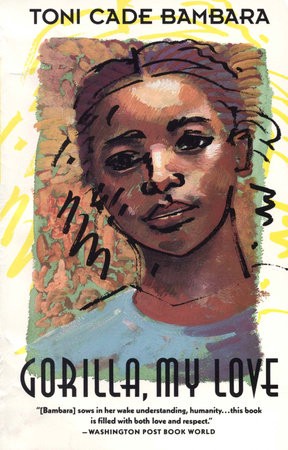
Gorilla, My Love by Toni Cade Bambara

Gorilla, My Love is an unsung classic. It’s a triumphant short story collection that centers on a few African American girls and women in Harlem and North Carolina in the 1960s. The characters in this collection are self-possessed, whip smart, New York City kids. Hazel speaks her mind and doesn’t pull punches. Sylvia can fart with her armpits and is the fastest runner in her public school and curses like a sailor and is all sorts of charming and wonderful and crass and observant. The whimsical and wild Kit spends a summer hanging out on her tenement’s fire escape, falling for and losing her first love, all the while refusing to stop “singing her own song.”

All of these girls speak in the language of Harlem of the time — the dialect, the pulse, the toughness. Every story sounds like New York. Here’s another key thing: Nothing bad happens to the women in this collection. No one is raped. No one is beaten. No one is cruelly abandoned. None of the horrific things black girls are often subjected to in literature happens here. But these characters are not living in some kind of fictional American utopia either. It’s just that Bambara gives them the space to become fully realized people filled with longing and romance and curiosity and poetry. It is a masterpiece of voice and place.

A Tree Grows in Brooklyn by Betty Smith

It’s hard to imagine now that there was once a Brooklyn where a tree struggling to grow on the street was a metaphor for a young woman’s desire to branch out and be a full person, but Brooklyn wasn’t always the built up, hipster, intellectual, wealthy enclave it is now. For most of its existence, it was a borough of immigrants, crumbling and ignored, and everyone in it longed to get out.

The novel centers on Francie Nolan, a young Irish girl in the slums of Williamsburg in the early 1900s. Through her, readers from every time, place, and circumstance are given a lesson about the cruelty of the world, the importance of relying on yourself, and never allowing darkness to dampen your spirit. This may seem like a trite sentiment to an adult, but it shouldn’t. My mother gave me A Tree Grows in Brooklyn to read when I was 11 during a tough period in my youth and I devoured it in one sitting. It was the first book that really introduced me to the transformative power of literature. A Tree Grows in Brooklyn is the kind of book that will get handed down from mothers to daughters until the end of time like a folktale or a wilted heirloom, its weathered appearance all the more meaningful because of how many women’s hands it has touched.

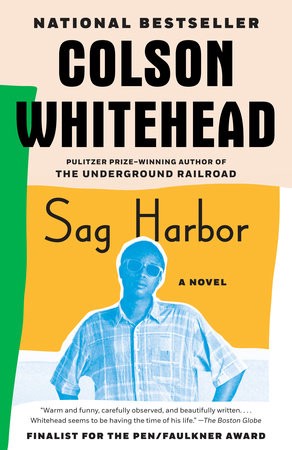
Sag Harbor by Colson Whitehead

While this Colson Whitehead novel only partially takes place in New York, it stars a set of instantly recognizable New York City kids. Every summer Benji and his brother and their friends vacation in Sag Harbor, a middle-class African American enclave in the exorbitantly wealthy, white Hamptons. Benji tumbles through the usual coming-of-age milestones over the course of one summer (his first true taste of independence, his first job, his first brush with violence, his first kiss), but his observations are so sharp, so witty, and so germane to that time and place — late 1980s New York, when hip hop and its abundant slang and neologisms had taken over the culture, the drinking age was 18, and everything cool on the planet was just a short subway ride away — that it doesn’t matter that some of this is well-worn territory.

Benji and his Manhattan friends are emblematic of the exact kind of kid who was going to private school at that time — children of nouveau riche hippies who didn’t expect to make it rain and felt a little guilty about it, offspring of old money prepsters who summered in the tony parts of the Hamptons and wore cable knit sweaters in pastels draped over their shoulders, and the children of Jewish, Asian, and African American middle-class strivers like Benji’s family. On Sag Harbor, though, Benji mixes with black kids from all over New York and the tri-state area and he finds himself posturing as he tries to fit in. The novel is ultimately a meditation on code-switching and being the first generation of wealth-adjacent, upwardly mobile black kids in white America. It’s also really deliciously funny.

The House on Mango Street by Sandra Cisneros

Mango Street is a fictional street in an immigrant Latino community in Chicago, where America and Mexico and Puerto Rico mix to create something new and hopeful and confusing and haunted. American words like Kool-Aid and Cadillac and Buick mix with Spanish words like tortillas and los espíritos and muerto. The vignettes that make up this novel are told from the perspective of the adolescent Esperanza Cordero who suffers from the dual calamities of nostalgia for the present and an immediate longing to escape. She spends her time watching the women on Mango Street sitting in their apartments looking out windows wondering what else is out there. It’s a novel written by a dreamer about a dreamer for a dreamer.

The Feminist Mantra I Learned from ‘The House on Mango Street’

Just Kids by Patti Smith

Just Kids, the rock legend Patti Smith’s memoir of her relationship with the artist Robert Mapplethorpe in New York in the 60s and 70s, is a symphony. It’s the story of falling in love for the first time with that part of your heart only accessible during youth. It’s a story of a young woman determined to create the right life for herself. It’s the story of a city at the epicenter of a movement, when there wasn’t much of a difference between the average beatnik and the one who got famous — a city run by kids. It’s a story about two people discovering and cultivating their art. It’s a story about choosing poetry. Just Kids should be required reading for everyone aged 20, on the cusp of everything. It’s a manual for navigating the pain and the reward that comes with being fully open to life.

Less Than Zero by Bret Easton Ellis

I have no idea if Los Angeles in the 1980s was truly as depraved and drugged out and steeped in nihilism as Bret Easton Ellis made it seem in his first novel, but I will never be able to think of L.A. as anything other than a city populated with Clays, Blairs, Julians and a bunch of other sad, rich kids hanging out on beautiful balconies, doing drugs, having meaningless sex, and talking past each other. Less Than Zero was the first novel that exposed adults to what was really going on behind their kids’ closed doors. “This is one of the most disturbing novels I’ve read in a long time,” Michiko Kakutani wrote in her review for the New York Times and it has become a modern classic not just because 34 years after its release it still has the same power to make grownups squirm, but because the apathy, the gross consumption, the excesses of America’s one percent is still as frightening as it was in the 1980s, what we naively used to think of as the heyday of excess.

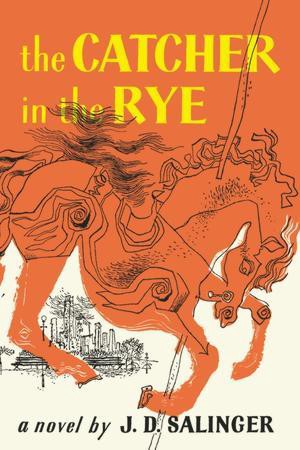
Catcher in the Rye by J.D. Salinger

Look, there’s nothing more to say about that phony bastard Holden Caulfield that hasn’t already been said. But if there were a definitive coming-of-age text, it would have to be Catcher in the Rye. It certainly is the quintessential coming-of-age in New York novel. In the last fifteen years, there’s been a Catcher backlash. Younger readers are finding Holden’s complaints annoying instead of universal. I understand that Holden hasn’t aged well — his musings and anger are sort of the epitome of “first world problems” — but I’ve always felt that Salinger pokes fun at Holden’s self-absorption quite a bit. And credit must be given to Holden for being the first of his kind. Without Holden, would there have been the counterculture of the 1960s? He gave a voice to a generation of kids who were pushing back against the limiting post-war American dream. And, besides, no one writes teenage dialogue like Salinger. Even though the verbal tics and idioms have changed in the last 70 years, the drum beat of teenage conversation and worries and angst have not. No matter how you feel about Holden in 2019, his rebel yell and the stale 1940s New York world he captured is perfection.

Midnight’s Children by Salman Rushdie

Midnight’s Children is a picaresque, bildungsroman, magical realist, political, satirical, philosophical epic novel all rolled into one. It can be analyzed and marveled at from any one of its prism’s infinite sides, but for the sake of this piece, let’s look at it as a tale of a boy coming of age at the same time as his nation.

Saleem Sinai was born at the stroke of midnight, August 15, 1947, the exact moment of India’s independence. As a child, Saleem discovers that he has a secret power: the ability to communicate telepathically with every child born on the day of India’s independence. Though he goes through the same growing pains every young person does — heartbreak, humiliation, disappointment, discovery that his parents are not who he thought they were (in this case both literally and figuratively) — Saleem’s telepathy makes him a conduit for all of India as he is able to communicate with the disparate voices and personalities of his generation across the entire country, none of whom can agree on anything. Through them, we see the vastness of the country, the impact of colonial rule, the in-fighting between all of the religious and political factions and the roiling, exuberant, violent city of Bombay. Midnight’s Children is a novel born out of India’s independence told in the voice of a child of Bombay, in the same polyphonic register. It is, in Saleem’s own words, a “rainbow riot.”

Salman Rushdie Helped Me Recognize Myself—and the Love of My Life

A Tale of Love and Darkness by Amos Oz

Thousands of miles away from Bombay and less than four months later, another partition. This time, the corner of the world is Jerusalem, and the story is memoir, told by Israel’s most beloved writer Amos Oz, who recently passed away. Oz, born in Jerusalem in 1939, tells the story of his youth among the polyglot, intellectual Eastern European and Russian ex-pats who had been expelled from their homes or who had left of their own volition, beginning to sense the nationalist, anti-Semitic fervor brewing in their home countries and to seek refuge in Palestine with the heady, hopeful idea of a free nation. In doing so, they left behind everyone else they’d ever known, who were ruthlessly slaughtered, their entire culture eradicated, and took a land from an already established people.

The only child to an emotionally distant father and a quixotic, depressive mother, Oz grows up in kitchens and living rooms in Jerusalem swirling with language, politics, arguments, ideas, kindness, sadness and literature. And then in 1952, when Oz is 12, his mother commits suicide. At 15, he breaks with his right-wing father, changes his name from Klausner to Oz, and moves to a kibbutz. A Tale of Love and Darkness is a memoir about a boy excavating his mother’s life and death and the tale of Israel, from its beginning promise as an egalitarian, socialist nation to the painful, military state it has become. While Jerusalem is supposed to be the shining city on a hill, through Oz’s eyes, it is a city steeped in melancholia, the shops and apartments buildings and streets built on the lost dreams of castoff European and Russian Jews, a home that squandered its moral and humanistic founding principles. And because she was exiled there from the European life she loved, it was the city that destroyed his fragile mother.

Bridgett M. Davis Explores a Family Secret: Her Mother’s Illegal Lottery

“I’m playing the numbers” is a phrase I heard from my elders many times in my childhood. It meant a quick run to the store for a scratch-off, or playing a combination of birthdays and lucky numbers in the hopes of striking it rich. Huddled on the living room floor or in the dining room over Hungry Man, dinners my family held out hope that this would be the day they’d taste Lady Luck. Needless to say, this didn’t happen for us, and the true ascendency and utilization of the lottery system, especially within Black communities, was lost on me. In reading Bridgett M. Davis’s new book — part memoir but mostly a biography of her mother Fannie Davis, who made her own luck by running a numbers business, a kind of illegal lottery, out of her Detroit home — I gained a clearer understanding of what the phrase really meant and how the lottery’s existence was embedded in the livelihood and welfare of Black lives especially.

The World According to Fannie Davis is Davis’s third book, the first nonfiction, and it’s a kind of love letter to her mother, recognizing the extraordinary woman that Fannie Davis was. Often Black women are pushed to do that much more to keep their families afloat and Fannie’s intrepidness, luck, and all-around good nature kept her and her family more than afloat but living a solid life post-Depression as they migrated and settled in Detroit. I was happy to talk to Davis about not only Fannie Davis but Fannie Davis, about the revelations that came in reflecting on her childhood and what her mother carried, as well as what stories we tend to hold in and why.


Jennifer Baker: I wanted to talk to you about this whole process. Was there any hesitation during the process? Were there thoughts of “Maybe I shouldn’t do this even though I have my aunt’s blessing”? Was there any kind of stumbling blocks that may have occurred before you brought Fannie’s story to the fold?

Bridgett M. Davis: I think my journey is a little unique in a couple ways. First, our secret was not traumatic. It was not a dark secret, but it had to be kept secret because what my mother was doing was illegal. So I think that was both the reason I didn’t feel I could tell anyone and also interestingly what made it complicated for me. I felt no shame around it, but felt I couldn’t tell it. The other thing that was unique for me was I waited decades until I simply couldn’t not tell. Until I simply couldn’t not not tell. I think I am suspecting that when it’s traumatic it really eats at people and there’s this great need to share because that’s part of releasing the shame. But for me it wasn’t that. I could suppress the desire much longer because it didn’t have any shameful attachment to it. But still, even still I did reach that point where I thought, “This is wrong. I’m being remiss in not telling.” Because now I’m acting like it’s shameful and it’s not.

When I finally reached a milestone age and my children were reaching a certain point in their lives I thought “They don’t know who their grandmother is.” So that’s what really lead me to talk to my aunt. And I don’t know what I would’ve done if she had said “don’t tell anyone.” I was fortunate that she instantly responded positively. She really said right away “Oh, you wanna tell Fannie’s story? Yeah you should tell. Because what she did was amazing and people should know.” And I said, oh my god, all these years I was worried about what my mom’s sister would think and in fact she had none of those issues around it. Because remember now my mother has been dead over two decades and it’s like telling would get us in trouble with the law. So, you know, the only issue was is this fair to her memory and legacy? And my aunt answered that.

JB: You’ve written two novels and come into this project with a respect for Fannie. As a reader, I know she’s a person but reading her as character in this space, it’s very interesting to see the way you navigate that. Throughout the book it is: let me tell you about the numbers, let me tell you about my mother, let me tell you about the environment and the world we’re living in right now. Because that’s so essential to bringing it all together.

BD: And I had that understanding before I had the actual research done, before I had any confidence that I could pull this off. I need to provide this story in a context. Some fortuitous things happened to help me tell it with that kind of context and also the more I learned about her story the more excited I got about those pivotal moments in her life story that dovetailed with these critical cultural moments. And that’s what has to happen with nonfiction for it to read as an engaging narrative. You know you can’t make up anything. I knew from novel writing that there are moments where you can adjust the plot to do what it needs to do. I didn’t have that on my side and I knew that going in, so I didn’t have the gumption of knowing the story going in. I knew I was going to find out that story as I found out more about her from the family and I as began to do the research around the stories I had heard all my life. I found it funny, I found that I love this form so much.

I knew from novel writing that there are moments where you can adjust the plot to do what it needs to do. I didn’t have that on my side.

JB: Oh yeah?

BD: It’s crazy that I love this form so much. It’s crazy that I trained as a journalist and had never written a nonfiction book.

JB: But you needed that subject matter to want to write the long-form?

BD: Exactly. I needed something I cared enough about to want to apply it to a nonfiction book also. It was good that I got the novel writing desire or the novel writing bug out of my system. And, you know, I also spent the entire decade of the ‘90s writing screenplays, which a lot of people don’t know and that is amazing skill set also. It’s dramatic writing and it’s really like a coupling of fiction and nonfiction. And so to me, the way I spent years and years learning my craft in each of those genres totally prepared me for this moment when I could draw on my journalistic skills to tell this story.

JB: When you’re talking about telling the story, getting the research, recounting the perspectives then with the realizations now and the material available to you. Was there consistent reawakenings of your childhood or re-examination of your childhood?

BD: It was shocking. It was shocking more than once. First, for me to have had this great 10th birthday party, I’m so excited. It was fabulous. It was huge. My whole class was invited. We were in the new house and so it was just a celebration of so much, you know, that stayed and resonated with me. I did not know that two weeks before J. Edgar Hoover had made it his business to wipe out the numbers in Detroit, and had orchestrated a huge FBI lead bust on the number runners. And confiscated millions of dollars in the process. Or at least claimed to have stopped that business worth multi-millions of dollars. Two weeks before my party. And I never knew it until I started doing the research. One moment you’re like “Wait a minute, let me check this date again.” I’m like what? Now I respected my mother on another level. I just couldn’t believe that she pulled that off with such seeming calm when of course she knew people who had been busted.

Another one is our family home. I did not know, literally until I read an article, I read that seminal article that Ta-Nehisi Coates wrote, “The Case for Reparations.” He was talking about people buying houses on contract in Chicago and they were really shady deals. Basically you got to buy a home, but you had none of the benefits of homeownership. It was like renting really except you had invested your life savings with it. And it wasn’t involving a bank, it was just the seller. And people got ripped off. It was a business to rip people off. I knew my mother had gotten her home through a land contract with the seller. I always knew that story, so you see how I knew a story my whole life but then I didn’t understand it because she never told me. I didn’t know she couldn’t get a house any other way. I didn’t know laws were keeping Black folks from qualifying for mortgages because the U.S. government would not secure loans for Black folks in certain communities. Basically, if a Black person lived in that community at all then it was not going to be insured. Those loans, those home mortgages would not be backed by the federal government, so realtors didn’t loan, banks didn’t loan, sellers didn’t consider those homes for Black folks, etc. So how did Black people buy homes? Through these shady contract deals. That was another moment that just exploded my head.

JB: And you relay in the book these kind of revelations, but at no point did you ever see any kind of crack in the armor that your mother kind of —

BD: I say no, but I also remember she had headaches. She had to spend whole days resting sometimes. I know she was sometimes in a bad mood. We used to say “Oh, Momma’s feeling a little evil today.” Those were the things I saw and then with distance and maturity and context, I now know those were cracks. But she didn’t say —

JB: You mean she didn’t say what was happening?

BD: Right, she didn’t say “This is what’s happening” or “This is rough” or anything like that.

JB: I think about the Black woman’s burden. Especially when you have kids. I feel like I saw that a lot in my childhood with the women. Them gathering alone while the kids were off doing whatever not worrying about the election or Reagan’s oppressive tactics or drug usage. But you write very thoroughly about the crack downs then the Lotto. But this kind of essence we’re not seeing — and this can also be of course children are kind of, “well does it involve me? No? Then whatever.” But I think when there’s a hardship children do feel that. You can feel that kind of tension at any age.

BD: Yes, absolutely.

JB: And the fact that you were imbued with love and Fannie was all “don’t worry about it” and taking calculated risks. The way you wrote about it was something I connected to as the job is to take care of everybody.

BD: It’s a lot of work for a Black woman to take on and it’s not even unique. I’m sure a lot of people could say there’s no moment when my mother thought, “Why should I have to do all this?” I don’t think she ever asked that question. I remember she used to say “A child should never have to worry about the light bill.” And that was her way of saying she knew too many stories of kids who were also engaged in the process. Of “oh we gotta keep the lights on” and “oh we gotta pay that bill.” And she was like, “I don’t like that. I don’t think that’s fair to a child.”

JB: We know the term “I’m gonna play the numbers this week.” But I didn’t realize the impact it had on so many people’s lives who relied on it as a source of income, as sustenance. So it kind of showcases again the issues within the community. “Once we find something, boom, the feds need to come and get it.”

BD: Yup, put their hands in it.

JB: “Wait, we can legalize this!”

BD: And I didn’t know either. I lived it, the sort of tactile experience of being around the numbers but I had no idea of the history. I didn’t know lotteries used to be legal in this country. I didn’t know that the thirteen colonies used lotteries for their capital projects. I didn’t know that Denmark Vesey bought his freedom in part to a lottery ticket, to the lottery that he won. So, from the beginning it’s rooted in American history and in African American history because the first time the state decided to make lotteries illegal it has a lot to do with the fact that they didn’t want former slaves gaining any financial advantage.

The first time the state decided to make lotteries illegal it has a lot to do with the fact that they didn’t want former slaves gaining any financial advantage.

JB: And then that translates to the Lotto? It’s a similar process.

BD: They were like “we’re going to make it illegal” for decades and “we’re gonna castigate Black folks for playing any kind of lottery or certainly illegal lottery.” But now, fast forward to mid-20th century “Oh my god there’s so much money.” So we’re gonna take this over and we’re gonna change the perception of what it means to be a lottery player. Clean it up. And at the same time usurp this business — this multi-million dollar business that Black folks found and created and sustained. We’re gonna take that from them. Because guess what, White suburbanites, this way you don’t have to pay any taxes. You don’t have to pay for your public schools taxes. We’ll use lottery money for that. So see how it was never untied from racist policies?

JB: And you wanted to make sure to clarify that in this book, too? It’s the story of Fannie, which is a very intriguing and engaging story. Add the elements of “now I recognize what we had to rely on in this form of income.” One necessitates the other.

BD: I always thought it was the quintessential American story. And I always thought it was about the “American Dream.” Once it was really time to sit down and really tell I always knew I wanted to do more than just tell her story. I feel like I heard her in my ear. My mother was not vain and glorious, as they say. I felt like I heard her say “Do it right and help people understand the ways in which I was just making a way out of no way.” That’s the voice I was hearing.

JB: How would you like readers to see Fannie?

BD: I would love for people to see her as a woman who worked hard and also thrived. And through it all gave freely. That whole idea that the more you give the more you receive, you’ve got to believe that. I think that was the impression she left. She really enjoyed all three of those: She enjoyed working hard for herself. She enjoyed thriving. And she enjoyed giving.

8 Books about the Beginnings of Countries

During the writing of my debut novel, House of Stone, it struck me how the beginnings of a family, community or country are so amorphous, amenable to the shaping and meaning-making that comes from storytelling.

Purchase the book

The narrator in House of Stone, Zamani, is a young man on a mission to uncover the history of the Mlambos — a family with whom he is staying — and shape out of that history an identity for himself. He’s a glittering, dark-hearted gem; a growling, prowling, strange Zimbabwean Pygmalion. The historical telling, which chronicles the beginnings of the Mlambo family and by extension, the country Zimbabwe, arises from the wonderful philosophical core of the novel — that if only Zamani can lay claim to, and master, a new history, he can begin his life anew and reinvent himself as someone else. This, I realize, unwittingly mirrors the country Zimbabwe’s own quest to reinvent itself from its colonial forebear, Rhodesia.

Here are some of the most pleasurable books on the creative — and often destructive — act of history-making.

Kintu by Jennifer Nansubuga Makumbi

Set both in the precolonial Buganda Kingdom and postcolonial Uganda, this whirlwind of a novel traces the lives of a royal warrior, Kintu Kidda, and his descendants. A reckless action on Kintu’s part, which leads to the death of the son of a close friend, results in a family curse that is passed down to his offspring through the generations. The family curse seems to signify the curse that was colonialism and its effects on the Ugandan people’s sense of self and place in the world. Kintu’s descendants in postcolonial Uganda find themselves steeped in confusion and seemingly inexplicable hardship. Written in energetic prose, this epic animates and delights with its brilliant action and humor.

A Chapter from the Great Ugandan Novel

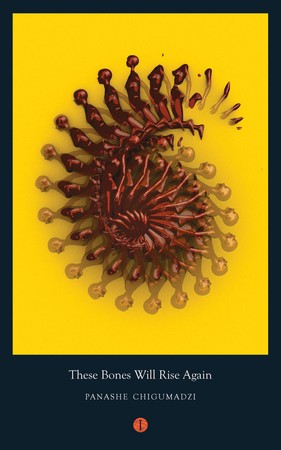
These Bones Will Rise Again by Panashe Chigumadzi

Told in crisp, gorgeous prose, this work of non-fiction was the first to respond to Zimbabwe’s ‘coup-not-a-coup’ which happened in November 2017. It brings a refreshing eye to Zimbabwe’s history and illuminates our human face — much like being privy to fascinating aspects of yourself you’ve never gotten the chance to really know. Through her search for her grandmother, author Chigumadzi takes us on a journey into Zimbabwe’s turbulent past, questioning identity and how it is constructed. The work blends memoir with history and philosophy in stunning ways, lingering on small, precious moments, such as an animated young African woman in 50s Rhodesia seeing herself as though for the first time through the lens of a camera. A precious book after my own heart.

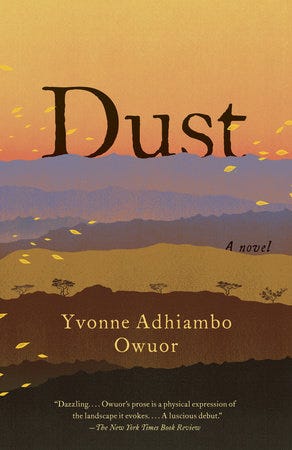
Dust by Yvonne Adhiambo Owuor

This epic novel about the beginnings of Kenya is a tender and searing portrait of love, family and secrets. It chronicles the death of one young man, Odidi, who is gunned down on the streets of Nairobi, and his family’s grief. One of the most beautiful things about the novel is the way it evokes Kenya, both on a micro and macro level. In addition to Odidi, it juxtaposes the stories of his sister Ajany , their father Nyipir and the Englishman Isaiah Bolton. It also delves into the assassinations of Kenyan revolutionaries such as Pio Gama Pinto and Tom Mboya — stains on the country’s conscience — and the impact of such loss on the communal psyche. The novel is written in a stunning, inventive English that encapsulates the rhythms of Kenyan languages like Luo and KiSwahili. The result is a gorgeous, searing exploration of the things that make us human and fragile and beautiful.

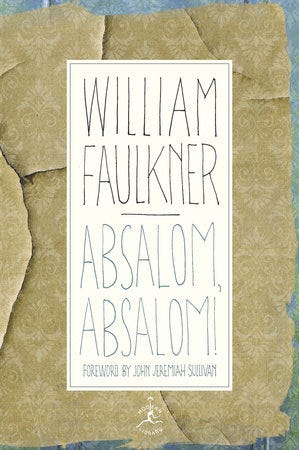
Absalom, Absalom! By William Faulkner

Told by a young man named Quentin Compson, this classic — in my estimation Faulkner’s greatest work — narrates the rise and demise of the family of Thomas Sutpen, a self-made and sinister man who arrives in Jefferson, Mississippi one fine day in the 1883 in search of wealth. The story narrates Sutpen’s lust for legacy and his ruthless quest for power. A man of charm and authority, he (re)invents himself in impressive ways. The story takes place just before, during and after the American Civil War. This struggle of the United States to define and reinvent itself is mirrored in the struggles of the Sutpen Family. An intoxicating read whose sparkling, sinewy prose mirrors the novel’s elusive quest for the truth about a complex and tricky past.

Image result for gabriel garcia marquez 100 years of solitude

One Hundred Years of Solitude by Gabriel García Márquez

This kaleidoscopic classic narrates the lives of seven generations of the Buendia family. It begins with the family’s founding patriarch, Jose Arcadio Buendia, who builds a town called Macondo, in Colombia. The story of the town of Macondo — from the traveling gypsies and their fantastical tricks, to the civil war in Colombia that Jose’s son Aureliano Buendia joins, to the introduction of globalization in the form of an American fruit company that disrupts the lives of the locals — is in effect a story about the whole of civilization. Told in a dead pan voice that renders both the fantastical and the mundane with the same level of seriousness, this sprawling epic is a gift that keeps on giving.

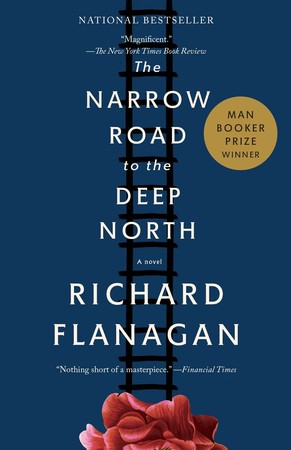
The Narrow Road to the Deep North by Richard Flanagan

This gorgeous novel traces the life of Dorrigo Evans, a doctor and veteran who has become the face of the Australian soldiers who were taken prisoner by the Japanese army during World War II and forced to slave away on the Burma Railway for Japan. Told in scintillating prose, and spanning almost a century, this epic pieces together our fragile humanity, from forbidden love to war to loss to death to reinvention. Reading it, I found myself falling to pieces over and over again.

Destination Biafra by Buchi Emecheta

Set in the decade after Nigeria gained independence from Britain, this feisty novel follows Debbie, an Oxford-educated Nigerian woman living in Lagos, where she has agreed to the task of peacemaker cum negotiator with Biafra, a secessionist-state which has lead to civil war in Nigeria. Debbie, whose identity is delightfully fluid — she is neither Yoruba, nor Igbo, nor Hausa — is then posted to the South-East of Nigeria, where her life of ease is upset by the war camps and casualties she finds there. Ultimately, she refuses what she sees as men’s war, from whose power she is excluded and in whose violence she is inextricably tied. This searing, delightful story illuminates the tensions of a young Nigeria and the inner turmoil of a spunky woman as she tries to understand what ‘home’ means.

Beloved by Toni Morrison

Set right after the American Civil War, this blazing classic centers on a ghost named Beloved, who terrorizes the inhabitants of a house known only as 124 in Cincinnati Ohio. The year is 1873. In order to understand the present, the novel seems to be saying, we must understand the past. We go back in time into the life of Beloved’s mother, Sethe, who managed to escape with her children from Sweet Home, the plantation where she worked as a slave, during the Civil War. Pregnant, Sethe succeeds in making a miraculous journey from Kentucky, where Sweet Home is located, to the free state of Ohio where a black community thrives under the care of Baby Suggs, her mother-in-law. But the past won’t leave her alone, and rapidly catches up with her and her children, forcing her to make what is an impossible choice. It is from this choice that the ghost Beloved springs, angry and ferocious, demanding answers to terrible questions. Told in lush, thriving prose, this magnificent novel made me laugh and cry in good measure, and broke my heart over and over.

About the Author

Novuyo Rosa Tshuma grew up in Zimbabwe, and has lived in South Africa and the USA. She is a graduate of the Iowa Writers’ Workshop (2015), where she was awarded the Maytag and Teaching-Writing Fellowships, as well as a Rydson Award. She served as Assistant Professor of Creative Writing at the University of Iowa in 2015–2016, was a 2016 Writer-in-Residence at the Kimmel Harding Nelson Center for the Arts, and is a recipient of a prestigious 2017 Bellagio Center Literary Arts Residency Award from the Rockefeller Foundation for her novel project House of Stone.

Ethical Advice for Writing About Friends and Family

The Blunt Instrument is an advice column for writers. If you need tough advice for a writing problem, send your question to blunt@electricliterature.com.

Dear Blunt Instrument,

I’ve been sitting on an essay that deals with an extended family member’s private story for about two years, and I’d like to send it out for publication. I think I’ll find a place for it, as it won me a competitive fellowship, and I’ve gotten positive responses each time I’ve given a reading from it. However, the potential reaction from my family is holding me back.

The family member I’m writing about is dead, and the essay is about an abortion she kept secret for many years and only revealed to one other person before she died — my mom. My mom then told it to me and, as far as I know, I’m the only other person who knows. I’m already planning to let my mom know I’ve included this story in something I’m writing and to hear her feelings about it. However, I also know sharing this secret in a public way will deeply hurt at least a handful of other extended family members, especially her sons, in part because of their own long-held prejudices. I love these family members and don’t want to hurt them, even if I believe their prejudices are misplaced.

I feel personally compelled to write about it, as hearing her story changed the way I think about myself and the world in major ways. I also want to honor her choice to have an abortion, which was brave and difficult. However, I don’t want to dismiss or discount her decision to keep it mostly secret during her life, and I don’t want to set off a proverbial bomb in the middle of my family.

I’m likely overestimating my family’s eagerness to seek out and read the things I write. That being said, if one person reads it, it will spread very quickly. Do I wait for these sensitive family members to die? Should I not publish it, for her sake or theirs? Do I need to warn them if I do? What are my obligations in this situation?

I appreciate any advice!

Dear Blunt Instrument,

I’ve written a memoir piece that is set to be published later this year. Everything I’ve published before has been fiction or criticism, nothing that made my personal life so public. I’d love to publish the essay and just hope my family never sees it, but they are fairly internet savvy and supportive of my work, so I know simply going under their radar is not realistic. The essay is about a difficult time in our family life we have rarely and only superficially discussed. So I’d like your advice on the best way to go about sharing it with them, perhaps prepublication, including practical questions like when in the editorial process to do it, how to set clear expectations and boundaries about what sort of changes I might be willing to make (basically none), etc., as well as anything else you think I should consider.

Thanks for the help!

Dear Blunt Instrument,

A few years ago I was successful in getting my first novel published, but now I face a very difficult choice with a follow-up. I’ve written what is ostensibly a memoir, but I am wondering if I should choose a different genre. I’ve been reading and hearing about “auto-fiction” and think it might allow for more flexibility in how I present certain events. I am worried, however, that auto-fiction might just be seen as an easy “out” from potential ethical complications and obligations. Also, it might diminish my aims if some readers feel that not everything is strictly “true” (recalled, as accurately as possible, from memory or diaries). I don’t want to cause harm, especially to some of the older characters (real people) in my narrative, but nor do I want to hold back. What are your thoughts on auto-fiction and ethics?

Photo by Peter Dutton

Secret keepers:

I have occasionally gotten two related questions for this column in close succession, but never three before now — clearly the ethics of memoir, or loosely disguised autobiographical fiction, are at the top of our collective consciousness. (Editor’s note: If you want to discuss these topics in person with other writers including Meredith Talusan and Susan Choi, consider applying for our program on autobiography and fiction in Banff!)

When the first of these questions arrived, the problem struck me as highly delicate and difficult, but time, as it does, had a clarifying effect. I believe there are only five paths you each can take — that doesn’t make your decisions easy, of course, but it does make matters fairly simple. Here are the options, with some historical examples to illustrate where each path might take you.

The first path is what I’ll call Biting the Bullet. You’ll need to make a list of all the people you know who could potentially be hurt or harmed if they read the piece, or if people they are in contact with read the piece. If you truly want to do no harm, you should send each of these people the piece before you publish it, explicitly seeking approval of the parts that concern them. This approach is risky because you may hurt them anyway, you may be forced to change or remove details you’re attached to, and you may not get their blessing in the end. But the best possible outcome is that, after conversation and compromise, you can publish your story as either memoir or autofiction under your own name and not have to worry about hiding it from your family or community.

Spend Two Weeks in Banff with Electric Literature

The second path I’ll call Burn Those Bridges. Some writers do decide that it’s worth it to them if they sacrifice certain relationships and alienate players in their story. (Others, I’m sure, don’t have the awareness to realize the harm their story might cause, but since you’re asking these questions, I know that’s not the case for you.) This path is an option available to you. While I can envision circumstances that make it attractive, I don’t think it’s ever entirely ethical. Nonfiction does not equal fact, but many readers will assume that your version of the story is the truth.

As an example, Ann Patchett wrote a book about her close friend Lucy Grealey after Grealey had died of an overdose. The book and the publicity surrounding it was deeply hurtful to Grealey’s sister Suellen. In an article for the Guardian, Suellen Grealey details the pain that Patchett’s writings about her sister caused her — one article characterized the death as a suicide, while a reading guide included a question about their mother’s parenting skills. “I cried almost incessantly with frustration,” she writes. It’s worth considering these unintended consequences (I don’t think Patchett wanted to hurt Grealey’s family) before rushing to publication.

While you’re coming to terms with the prospect of damaging lives, consider, also, your own motives. Vindictiveness is not a great place to be writing from; are you motivated by the drive to write a great book, or a wish to punish someone or absolve yourself from blame? There’s a danger that in score-settling, you’ll just write a bad book, lacking empathy and imagination. (I think of the first sentence of the author biography in the Penguin Classics editions of Turgenev’s fiction: Turgenev was born in 1818, in the Province of Orel, and suffered in his childhood from a tyrannical mother. Perhaps he did — I don’t know who wrote the bio — but I wonder what his mother would have said.) Before you Burn Those Bridges, I strongly suggest you get multiple opinions from uninvolved parties on whether or not publication is advisable. Don’t just tell these people about the piece — let them read it, in full.

Vindictiveness is not a great place to be writing from; are you motivated by the drive to write a great book, or a wish to punish someone or absolve yourself from blame?

The third path is to fictionalize the story, but this is only an alternative path if you truly fictionalize the story. “Autofiction” generally hews pretty closely to the details of the author’s life, so it’s likely, if you’re working in that genre, that you’ll need to choose between the two paths above regardless. (Karl Ove Knausgaard appears to have sent manuscripts of My Struggle to the real-life counterparts to his characters for approval, with sometimes hostile results.)

But there are plenty of novels with autobiographical underpinnings that don’t get labeled as autofiction. Evan S. Connell’s Mrs. Bridge is one example — he has said the titular character is based on his mother, but also that she was dying when he wrote it and she never read it. In a piece on autofiction for the New York Review of Books, Tim Parks writes that “Almost every character, every scene, every conversation, claims the critic and biographer Angus Wilson, every object even, in Tolstoy’s novels, can be traced back to something in his life. He is the most biographical of authors.” People are bound to speculate if there’s any overlap at all between your novel’s setting and characters and your actual life, but if you fictionalize carefully, you’ll at least have plausible deniability. (My husband, who writes fiction — I do not — adds that if you’re getting a story third hand, autobiographical fiction might be the best medium; a third-hand story has to fictionalize a little to remain compelling at that remove anyway.)

The fourth option, which is usually the least attractive to authors, is to publish anonymously or under a pseudonym. The Bell Jar is deeply autobiographical, and Sylvia Plath chose to publish it under a pseudonym in England; it was not published under her own name until 1967 (she died in 1963) or in the U.S. until 1971, in accordance with her mother’s and Ted Hughes’ wishes. The Incest Diary is a recent example of an anonymous memoir, which was much too sensitive for the author to consider attaching her name to. The trade-offs here are pretty clear. You won’t win fame or notoriety, unless you’re exposed or choose to (sorry, Clue reference coming) expose yourself. But you’ll still get your share of the profits if it sells, and the risk of damage is much lower.

The last option, as one of you already mentioned, is to wait until everyone’s dead. (Well, not everyone everyone, but everyone on your “bite the bullet” list.) Even in this scenario, the ethics can get a little fuzzy — if you promised someone that you’d never write about their secret, do you have to keep that promise even after they’re dead? Quite honestly I don’t know; I’m a writer, not an ethicist! But whether you go down this path, or any of these paths, ultimately comes down to what you can live with. You need to balance the potential rewards of publishing against your potential regrets.

I hope this helps you make the right decision, in each of your cases.

Stop Assuming That I’m Just Writing About Myself

A few months ago, I read aloud an excerpt of a short story I’d written at an event. The story was about a young woman, in the wake of the 2016 presidential election, telling her father who voted for Trump that she’d been raped. At the podium, I redundantly clarified that it was a “fiction short story.”

After the reading, I complimented one of other writers, a novelist.

“Good luck with your dad,” he replied, leaning against the wall, smoking a cigarette.

“It’s fiction.”

“Still,” he raised his eyebrows at me, “good luck with your dad.”

“It’s fiction.” I smiled through gritted teeth. He shrugged.

“We’re doing better now,” I admitted, and walked away. Immediately, I wished I’d made up something to embarrass him instead of acquiescing — told him my dad had died, or left my family when I was young.

I felt angry, exposed, but it wasn’t because of the content of my story. Most people have complicated relationships with their parents, and I try not to keep it a secret that I, like my protagonist, have been raped (it wouldn’t be a secret if I’d been mugged — why hide the fact that someone else chose to commit a crime at my expense?). Even though the novelist was most likely just trying to be nice, it felt like he was calling me out as a fraud — Gotcha! You took the story from your own life!

“I think you’re right to be angry,” a friend from my grad program said to me as I fumed after the reading. “Would he have said that to you if you were a man?”

I didn’t know.

I’m tempted chalk it up to sexism and say he wouldn’t have. A famous example of this phenomenon is Kristen Roupenian’s “Cat Person,” the viral short story about a bad date between a twenty-year-old woman and a man in his mid-thirties. The story was roundly referred to online as “a piece” or “an essay,” implying that it was nonfiction, despite an interview and a recent essay in The New Yorker where Roupenian explains that her current life doesn’t much resemble her protagonist’s — Roupenian is closer in age to the male antagonist and in a relationship with a woman. In The Atlantic, Megan Garber pointed out that many saw the story as “a woman, dreamy and sad, telling the internet about her bad date,” instead of art made by a craft-conscious author. The dreamy and sad protagonist fit palatably into our mold of what women are, perhaps more palatably than the image of a female creator, so we collapsed the character’s persona with the author’s.

That’s not to say that everyone who called “Cat Person” an “essay” is a misogynist who sees women as frail and sad, men as strong and protective. The viral response to “Cat Person” came, at least in part, from people who were interested in the way the story probed women’s issues. But even the most thoughtful and progressive of us are influenced by the labels, categories, and tropes around us. Narratives about women’s oppression are everywhere — police procedurals, sensationally violent news stories, heralded feminist pop culture. While the conversation about what’s been done to women is necessary for change (and a conversation that I personally want to participate in), the tropes that rise from these stories can overshadow the identities that women work hard to cultivate for themselves. The novelist expected me to be the tear-stricken college student from my story, pouring my heart onto the page — not someone who’s spent 40 hours laboring over the language in those ten pages alone.

To him, I was a victim before I was an artist.

We don’t just make assumptions about women authors — our cultural biases influence the way we read marginalized writers from many different backgrounds and identities. As a white woman, I have a substantial amount of privilege, and I’m not above these biases myself. I, too, have put the story I wanted to see over the story someone wanted to write.

In my first MFA fiction workshop, a classmate of mine turned in a first-person story about a girl whose boyfriend committed suicide while they studied abroad. The piece was about the narrator’s journey of trying to make sense of her memories, memories that occurred in a different language than the one she grew up speaking.

I was jealous, intimidated by my classmate’s faculties with language, the way she laid out her narrator’s mind. She was a practicing artist — not like my old undergrad workshops where most people were just looking for catharsis or course credit. I was also attracted to her. I wanted the pleasure of putting the person I knew into the sexual scenes on the page.
So when the two of us were walking to post-workshop drinks, a few paces back from our other classmates, I asked, “What percentage of your piece actually happened in real life?”

“I don’t know,” she said, bewildered. “I’m sure there’s some stuff, but I’d have to look back through it. I studied abroad, but in Ireland, not Paris. I don’t think I know anyone who’s committed suicide.”

I played it off — I’m just so curious about your process — but I was embarrassed. I didn’t want to ask her about how she used the fragmented nature of trauma to structure her story. I wanted to know whether she’d fucked a depressed man while studying abroad.

I’d interpreted her talent as outsourced from personal experience, maybe even a fluke. I wanted the story to be something that happened to her, rather than something she made.

I wanted the story to be something that happened to her, rather than something she made.

But the gender question still stands: Would I have assumed her story was autobiographical if she was a man? Do we make the same kind of assumptions about white men, too — but maybe we assume they’re aging professors preying on undergrads?

I’ve tried to think of examples of white male authors who draw brazenly upon their lives without getting asked if the story “really happened.” Ben Lerner and Jonathan Safran Foer have both named characters after themselves and, scouring Google, it’s hard to find more than the occasional question about autobiography in their work. While it’s impossible to talk about autobiographical fiction without mentioning Karl Ove Knausgaard, I’d argue that we care about whether his work “really happened” because there are lawsuits from his ex-wife probing into that very issue. Perhaps the conversation between me and my classmate would’ve gone differently if she was a man — but like most examples of bias, we can’t play out the two scenarios to pinpoint exactly what would change.

Still, talking about books with my MFA classmates three times a week, I’m stuck on all the instances in which we’ve wondered out loud if a marginalized writer’s fiction is just nonfiction in disguise. One semester, we debated whether a novelist’s husband had cheated on her, just like the protagonist’s had in her book. In a class on marginalized authors, we all were required to do presentations on the authors’ biographies, which, while well-intentioned, inevitably devolved into speculation about what aspects of their life they “stole” for their writing.

My understanding of the way we perceive autofiction cracked open while reading a novel for a course, where the (male) protagonist doesn’t consider a female cartoonist’s work to be “respectable” literature — her cartoons are autobiographical and don’t engage with the high-minded philosophical concepts that his own writing tackles. Our professor accepted the protagonist’s view of the female cartoonist, referring to her a “bad writer,” but I thought we were supposed to interpret the protagonist’s dismissal of her as misogyny. Art doesn’t have to engage with philosophical texts in order to be meaningful and well-crafted, and judging art by whether it engages with this canon ignores who wrote it. The Western dynasty of Great Books are largely written by white men, and depict frameworks for the white male experience, dialogues that excellent white male authors have built on for hundreds of years.

But marginalized writers don’t have the same widespread canon to engage with — not because marginalized artists didn’t exist, but because their work hasn’t been preserved, distributed, and heralded (by the white men in positions of power) the same way as the work of someone like Hemingway or Hegel. Instead of assuming that a writer isn’t intelligent enough to look beyond the biographical to “higher concepts,” we should think about how their absence from the canon has tasked them with creating and cementing the concepts that apply to their own experience.

Marginalized writers don’t have the same widespread canon to engage with — not because marginalized artists didn’t exist, but because their work hasn’t been preserved, distributed, and heralded.

By discussing their fiction first and foremost as autobiography — regardless of whether it’s inspired by their experience — we dismiss the frameworks they’re creating as “an anecdote” or “something that happened to them that one time,” instead of engaging with their ideas. When we look beyond the anecdote, in the best autobiographical writing, we can often see something widespread — something that can maybe only be known by certain groups of people, something that hasn’t been articulated yet in the cultural consciousness. For example, Imogen Binnie says that the protagonist in her novel Nevada sprung from writing about her personal experience as a trans woman. Because of Binnie’s sharp, lived insights, the novel is heralded in the trans community and beyond for illuminating the ways that years of gender dysphoria can impact someone’s life — a subject with increasing cultural relevance where coverage in the literary canon is sparse, at best.

That hidden resonance is my best guess for why Kristen Roupenian’s “Cat Person” was the most viewed New Yorker short story in recent history — leaps and bounds beyond their usual readership. Roupenian didn’t snag a miraculous seven-figure book deal despite writing about an experience that many women have. She succeeded in creating something both intimate and universal — in words that no one had quite used before.

I’ve been asking myself, “Would we be talking about whether the work is autobiography if the author was a man?” But a man probably couldn’t have written anything like “Cat Person” — even though the story didn’t come from Roupenian’s biography, it was shaped by the way her own experience as a woman has compelled her to think about women’s lives.

Instead, I want to ask: Would Roupenian’s words seem less “anecdotal” if we could source them to the Western canon? The story’s viral distribution was history-making, yet many referred to it as a “diary entry.” It didn’t call back to philosophical concepts — instead, it broke new ground.

I want to ask: If we could find a white man who said it first, would we then take her more seriously?

If we could find a white man who said it first, would we then take her more seriously?

Sure, not everyone who writes autobiographical fiction is a misunderstood pioneer. Once, I read a piece in workshop where the protagonist with the same “sandy blonde hair and erudite glasses” as the author was also a Christ figure with an exceptionally large penis. (No one told him, “Good luck with your dad,” or suggested the story had come from his diary.) Still, that personal myopia is different from the myopia an author constructs when writing from the perspective of a single character. Take Lolita — Humbert Humbert convinces himself that his child abuse was justifiable, but Nabokov gives us the tools to unpack the horror of his narrator’s crimes.

But the line dividing the narrator’s thoughts and the author’s ideas isn’t always so obvious, especially for newer writers who haven’t been studied for many years. The Pulitzer Prize committee likely believed Junot Diaz was depicting sexism, while the women Diaz harassed likely believed he was espousing it.

As a student writer, I wrote the story about the girl telling her father about being raped using a messy present tense. I wanted to convey the way it’s hard to communicate under pressure, and how the two characters didn’t know how to show each other they cared.

When I had a friend read an early draft, he told me, “This has got to be at least sixty-five percent true. It reads like a diary. You’re smarter than this.”

“I wanted language to fail her,” I explained. “I’m smarter than this — my narrator’s not.”

“That’s so cool,” he replied, after we looked over the text and I pointed out what I was trying to do, but hadn’t succeeded yet. Then he helped me inch a little closer to what I wanted the story to be.

If my friend, who’s also a writer, had analyzed the text without looking for the secrets behind what happened to me, he could’ve engaged with what I wanted my art to accomplish. To be clear, no one who reads my work is required to think about what I meant to do, rather than what I actually did, but by assuming that I included parts of the story because they happened, not because I decided they belonged in the text, my friend was already considering my artistic intentions. Instead of helping me improve the language I’d chosen, he’d assumed I’d dashed off an account of what happened. To him, my writing wasn’t something I made — it was a product of my father and a product of my rapist.

My friend, like the novelist from the reading, assumed that I was the sad, inarticulate college student. I’ll cop to it: In November 2016, I was. But I’m not anymore. I’m an artist that’s trying to be smarter than I was yesterday. I want to learn more about people, and I want to experiment with my craft to communicate what I’ve learned.

I don’t say this because I’m special — in fact, I say it precisely because I know I’m not alone. In my MFA program, I’ve seen my classmates’ work, and I’ve seen the work they’ve created to describe experiences that many of us have felt, but haven’t yet heard the words for. Some of them are astonishing; some of them need a few more drafts.

That’s okay — we are writing, revising, repeating. We are practicing artists, and we demand to be taken seriously.

Everything You’ve Always Wanted to Ask Christopher Pike

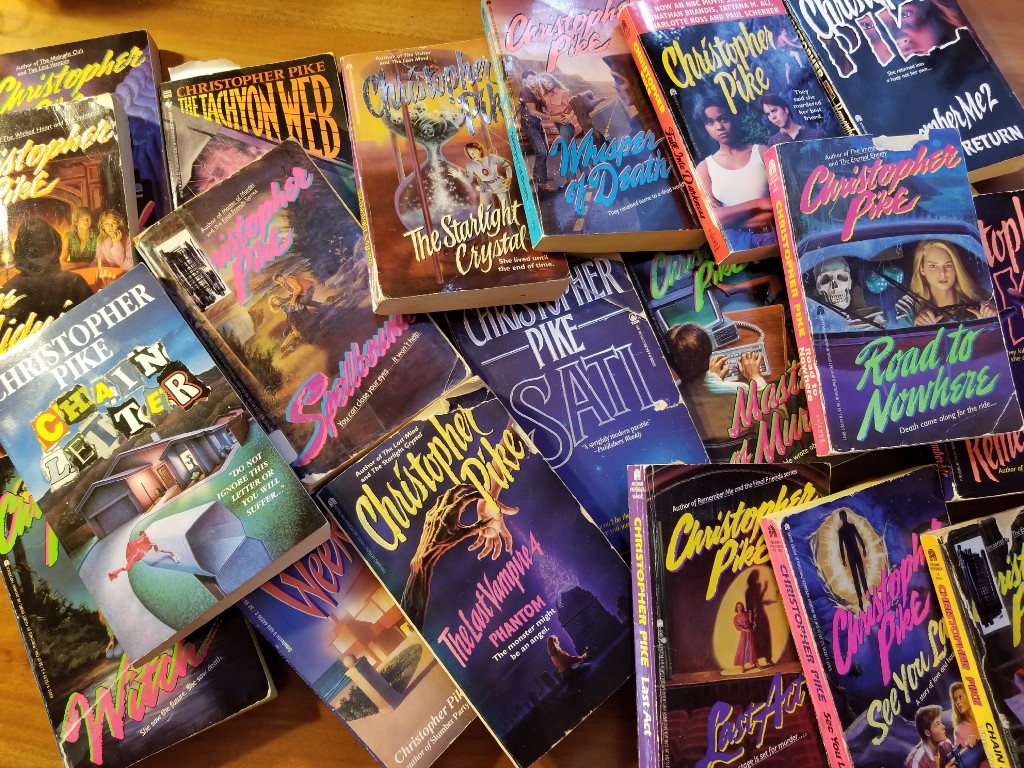
My adolescence was the standard tragi-teen state, but it was illuminated by the neon splash of Christopher Pike titles. Death hung over those books, like a Ouija board at a drinking party, a mashup of teen mortality and fun. At school, they sat atop my Trapper Keeper and then accompanied me to bed each night, a reminder that ghosts, gods, and monsters lurked outside my door.

My own notebooks overran with dark tales as I attempted to leap from obsessive reader to writer. I not only loved Pike’s twisted universe, I wanted to grow into a version of him. I reread and reread his books, hunting for breadcrumbs about Pike himself. I knew little about the man whose words spurred my spiritual questions and the near-sex-scenes that kept my likewise nerdy friends passing his books around like precious contraband.

Then, like the rest of Pike’s readers in the ’90s, I grew up. Occasionally I’d pick up Sati, his adult novel about a girl who thought she was God — but put the rest away with other childish things.

Months ago, at a library warehouse store, I instinctively scanned the “P” section in fiction — muscle memory from my years of going for Pike books first. There was no Pike, but I mentioned him to my friends, who immediately spun into nostalgia with me. Women in our 30s and 40s, perhaps we’d now reached the age where childhood obsessions naturally reemerge. After our conversation, my most industrious friend, Becca, nabbed lots of Pike books on eBay and handed copies to me at our kids’ school pick-up.

Reading Pike as an adult was like going home. Night after night, heroines and villains reemerged from browning paperbacks. And the mystery that had obsessed me came back: Who is Christopher Pike, really? And how does a mere writer become Christopher Pike, spinner of teen nightmares and dreams?

Who is Christopher Pike, really? And how does a mere writer become Christopher Pike, spinner of teen nightmares and dreams?

For two decades I’d believed on some level that when I stopped being a teen Pike fan, he’d simply ceased to exist. But of course he hadn’t — and with the help of an internet that didn’t exist during the heat of my Pike mania, I tracked down Kevin McFadden, pen name Christopher Pike. After a few emails, questions sent in advance to put the normally reclusive Pike at ease, he agreed to talk, as I struggled not to dissolve into a fangirling mess.

Below are excerpts from the interview and later emails, edited for length and clarity. May it answer your questions too, dear grown-up Pike obsessive, and rekindle your affection for the writer who walked your teen soul through murder, reincarnation, and other adolescent messiness.


Sarah Stankorb: I’m choking up here. I can’t believe I’m talking to you.

Christopher Pike: Sarah, I’m like the most normal, boring person. You know, in 7th grade I read Childhood’s End, by Arthur C. Clarke. He was one of the three big sci-fi writers, along with Asimov and Heinlein. When I read Clarke’s book, it totally changed my life. It just opened my mind to all these possibilities, so of course I can understand that a book can do that. I just never thought I could do that for someone.

SS: I think I read somewhere that you thought adolescents are more likely to do just about anything, and so that age range also lends itself to more possibilities. Is that why you got into young adult (YA) fiction?

CP: I found when I was writing teenagers, yes, there was more chance of doing more things, where you could believe it, where you would not believe it in an adult book. The weird thing is, though, I did not set out to write young adult. I wrote Slumber Party just simply to get published.

I had been writing for six years, and getting rejected. My agent thought I was a good writer, but I couldn’t sell anything. Even when I wrote [adult novel] The Season of Passage, it was rejected. Then my agent called me and said there was this one publisher — he said they were doing a series of teen thrillers, teen horror books. He said, “Can you write one?” I wrote Slumber Party initially as a supernatural story. There was a girl in the book who could start fires with her mind.

Now my agent took the book, and he went to the publisher, and this is where I’m not sure it’s totally true, but the publisher came back to my agent and said this book is too good to put in our series, and he said, “You should take it elsewhere.” My agent sent it to Jean Feiwel who was at Avon then. Jean read it and asked me, could I remove the supernatural element, just make it a straight thriller? And I said, “Sure, I mean, if you want it to be on the moon, I’ll put it on the moon. I just want to get published.”

I said, ‘Sure, I mean, if you want it to be on the moon, I’ll put it on the moon. I just want to get published.’

SS: And it all took off from there?

CP: Jean Feiwel left Avon and went to Scholastic and suddenly Avon said, “We’re not interested in this guy’s books, whoever he is.” And so I thought “Oh, my God. I told everybody I’d publish books, and I’m not published anymore.” But when Jean did finally get settled at Scholastic, she bought Slumber Party right away, and then she bought Weekend.

Simon & Schuster came knocking at my door, or my agent’s door, when Slumber Party, Weekend, and Chain Letter sold. Chain Letter right away sold a lot, over a million copies, which was a real big deal in YA back then. And they said, well, we want to build your career. You can write what you want. It was so exciting to get flown to New York after so many years of rejection.

SS: I remember feeling as if your metaphysical worldview shifted after the first few books. Did you have a spiritual awakening, or simply become established enough that your editors supported you playing with different religious philosophies and mythologies?

CP: Well, I was always curious about metaphysical issues. I was raised Roman Catholic, and I guess I was a strict Catholic until my first year in high school. But I remember I didn’t feel anything with first communion, and I told my parents and they were like, “Well, you’re not supposed to feel anything.”

I had asthma when I was young too, and it was quite severe three months out of the year. I found out only later I was allergic to olive pollen, and in the city I grew up in, Whittier, there were olive trees everywhere. I got pneumonia, and one night it almost killed me. I had a near death experience.

I got pneumonia, and one night it almost killed me. I had a near death experience.

I was outside my body, and I was back at my elementary school. It was amazing. It was euphoric. It was the way people describe near death experiences. And I sensed some being near me, who basically was telling me “this is not your path,” and I didn’t even know what that meant. But I also noticed there was white chalk on the ground, and this was at the back of my elementary school, which I hadn’t been to in a long time, and I don’t know why there was white chalk on the ground. Now this was a part of the elementary school that no one went to even when I went there.

After it was all over, I told my best friend about it, Hans, and he said, well, we should go up to the school. We went there and found all this white chalk on the ground, the kind of white chalk you would use to mark off a football field on the grass, or soccer. And so, it was a very real experience outside my body. So even when I was quite young, I had this fascination. First it was about astral projection. But in reading all those books, I kept stumbling across meditation and yoga. I started meditating in high school. I learned [transcendental meditation].

SS: Why were all (or at least nearly all) your female characters such attractive, white girls?

CP: It was impossible to write YA in the ’80s and ’90s and not notice that the covers all had pretty white girls on them and little else. When Simon & Schuster began to publish my books, they were very open with me. They told me I could write what I wanted as long as I sold tons of books. [laughs] But seriously, I thought it was time I addressed a few of the stereotypes I was seeing in the field. My first book with S&S was Last Act, and I asked if I could make the main character “a normal-looking girl.” I didn’t want her to have to resemble a model. That worked out fine and two books later I did the Final Friends Trilogy, and created two important characters that were not Caucasian. It may seem silly nowadays but I felt kind of proud of myself to have a Black guy and a Latina young woman on the cover of my books.

I was very popular during that period, I could have insisted on the race of my characters. But I let the whole thing slide. I wish I hadn’t.

But then — I ceased pushing for a variety of races to play my characters. Was it laziness? I don’t know, maybe. In fact, I don’t think it was until Fall Into Darkness was published in conjunction with Tatyana Ali starring in a Movie Of The Week that I had some color on one of my covers. That was not S&S’s fault, it was my fault. I was very popular during that period, I could have insisted on the race of my characters. I could have added some color to the entire YA aisle. But I didn’t, I let the whole thing slide. I wish I hadn’t.

SS: Well, you had Sweet Valley High for competition, and I think in the first two pages of those books, they talked about their blonde hair, blue eyes, and how they were each a perfect size six. All their drama was over dating guys named Todd or something. It seemed to be all the books back then.

CP: Right, and it did get a little old.

SS: Actually, I’ve heard this from many friends who have recently started rereading your books: your strong, female characters (protagonists and villains) were so unusual for the ’80s and ’90s. Why were female characters so central to your writing?

CP: I had two younger sisters I was very close to, and I felt my mother was a saint. I think growing up I had a very healthy vision of girls.

I sort of romanticized about them in high school. I was very shy. Like if I got a crush on a girl, I put her so much on a pedestal, I couldn’t talk to her.

But at the same time, I just really saw young women as much more complex and interesting to write about, but I also liked this thing of making them into goddesses. It’s just sort of my approach to God, even though I write about Krishna in a lot of the Sita books, but I guess my vision of God, a personal God is a goddess, not a male god. Does that make any sense?

SS: Absolutely does. How did those adult books, Sati and The Season of Passage, finally get published?

CP: Tom Doherty at Tor contacted me after I was a well-known YA author and asked if I had any books that had been rejected, and I said I have Season of Passage and Sati, and he loved them. But I was a much better writer by the time he bought them, so I totally rewrote Season and Sati from the beginning.

SS: Were they written by hand?

CP: Yeah. I remember with Season, I was despairing of ever publishing a book, and I was in [what was] called the computer learning center, where you take a course for a year, and I learned to program computers. I had finished the book, and a young woman offered to type it for $500. And I warned her, “This is a really big book. You’re going to hate me. And you’re going to want more money.” But it was good I got it typed, because I wouldn’t have been able to send it to Tom Doherty.

The first book I wrote on computer, the first book I learned to type was Spellbound.

S: So all those earlier books were written by hand?

CP: The earlier books, I wrote all longhand, with flair pens, spiral notebooks — different colored flair pens, like red and black and blue.

SS: I’m partial to the purple ones.

The earlier books, I wrote all longhand, with different colored flair pens, like red and black and blue.

CP: Purple too. I’d change colors just to amuse myself, and I’d write the whole book, and then I’d have to rewrite it.

SS: Why all the mismatched, solid colored outfits in the books? Yellow blouse, green pants, maybe a red belt?

CP: The thing about the clothes. [chuckles] Near the beginning, [my line editor] Marjorie Hanlon said you’re often doing the thing with the yellow and the green pants, and I said, “Oh that was just the thing, my first girlfriend after high school, was a girl named Linda Johnson, and she wore that a lot…She wore it on our first date.” And I said, let’s change it, and Marjorie said “No, it’s kind of a quirk you have in your books. Quirks are not bad things. Writers often have quirks if you write so many books.” She said, “Leave the quirk in.”

SS: I remember feeling as if your frankness about sex, drugs/alcohol and violence was unusual, honest, and necessary. Did you get pushback from publishers?

CP: Of course I wrote about sex. Well, for one thing, when I started writing in the young adult genre, I didn’t plan to do it. After I published Slumber Party and Weekend, I did read young adult books, and I was struck by how the authors were really talking down to the audience. I didn’t understand that because I thought you know, when I was in high school, I felt like an adult. I thought most teenagers feel like adults. They don’t want to be treated like they’re stupid, so right at the beginning I decided, I’m just going to write them like adult books, but I’m going to have young adult characters.

The other thing about sex, with Simon & Schuster, I generally would cut before I would get to a real sex scene. [In Final Friends] I did have a scene where Jessica and Michael Olsen, they finally confess their feelings for each other at the end of the third book, and they take a shower together. And I just wrote Michael saying it was the best damn shower he’d ever had. But it was all I wrote.

This is kind of funny. What I really did, [Simon & Schuster editor] Pat MacDonald was really conservative, actually, I thought, God it would really blow Pat’s mind — I started to write a really X-rated erotic, scene. [laughs] And I knew Pat was dying to get the third Final Friends book, and I Fed-Exed it and I knew she would get it at 9:30 in the morning. That’s when Fed-Ex would get to Simon & Schuster in Rockefeller Plaza. I knew how long it would take Pat to get to that part of the book. Right on cue, my phone rang, and she’s screaming at me, “You can’t do this! What are doing?” And I just was laughing my head off. I said, “Just, Pat, just turn the page, just turn the page,” and it showed that where it restarted normally. And her blood pressure, she almost had a heart attack, and it was so funny. She never forgave me for it.

SS: I remember at least one book, Master of Murder, in which the character had a parent with an alcohol problem, and in your other books, absent parents were not uncommon.

CP: You know one reason I didn’t have adults in my books too often was because of something Jean Feiwel told me when she was editing Slumber Party. It was my first book and I took what she said to heart, because she was considered the best YA editor in the business. But Jean said she did not think adults worked in YA fiction very well. That it was better if the teenagers had control over their environment. It gave them a sense of empowerment and kids like to read that.

SS: What was the pressure on you like throughout the ’90s? You were churning out multiple books a year.

CP: Oh, the pressure. Yeah, during the Spooksville books. When I was doing Spooksville books and the young adult books and I was doing some adult work, actually the pressure on me was immense in that period. And just at the end, I think my young adult books suffered. Like Star Group, Execution of Innocence, Hollow Skull, I think all of those books at the end of my young adult contract with Simon & Schuster in that period of time were inferior books to the others — the last three or four were weak because I was overworked, I was burned out on young adult, and like I said, having to write Spooksville on top of it — you see, Spooksville came out once a month. And I was still writing some adult: The Cold One, The Listeners, later I wrote the Alosha series.

SS: Then you disappeared for a few years. Why?

CP: At the end of the ’90s was I was in a terrible accident, and it took me awhile to recover, and at the same time, Pat MacDonald at Simon & Schuster retired, and the market changed. Twilight came out, [after] Harry Potter came along. So by the time I could write again, I thought, well this is no problem, I won’t have lost my audience. But I had lost my audience because the teenage audience turns over so fast. I kind of had to start over.

By the time I could write again, I thought, well this is no problem, I won’t have lost my audience. But I had lost my audience.

SS: Still, the impact remained. In my case, I had this very small world, but because I was looking up things from your books, I ended up in the comparative religion section at the library, then studying religion and philosophy in college and graduate school. I traveled, went to India, and I don’t think that would have happened without the spark from your books. You made me want to be a writer. You did that millions of times over, in different ways for different people.

CP: It’s very hard to accept what you said. It’s, it’s, thank you. I just. It’s hard. It’s hard to imagine.

You know as a writer that you write in isolation, so you’re not performing on a stage, or you’re not acting in a movie where people see you. I mean, of course, yes, I knew I was selling millions and millions of books, because they were paying me. [laughs] I knew when I went in the bookstores when there started to be a lot of books on the shelves, but it’s still — You know, most of the time, I don’t know what to say to people.

SS: In some of your books that have to do with the creative process, there’s something akin to a muse. I wondered if you could spell out what exactly you think.

CP: It may sound — I don’t want to sound New Agey — but yeah, some stories seem to be found. I felt that way with Sati, and Remember Me and the Sita books. In that they kind of wrote themselves. It was like I stood on the sidelines. I didn’t plan what was going to happen next deliberately, because what I was writing and what was coming out was better than I could have planned.

Now that’s not to say I do that all the time. The majority of my books, I plot ahead of time.

I tell this story that when I wrote Remember Me, and Shari’s talking at the end of Remember Me, about having died young and not having had the chance to make her mark in the world, and she just says that she wanted people to remember her. Now, when I wrote those words, and I finished the book right then, what happened is, I did have someone touch me on my right shoulder, and say, “I’ll see you later,” and then, I realized the entire time I had been writing the book, at the back of my mind, I felt like someone else had been in the room dictating it, like it was a story that someone who had died had told me. Now that’s just a feeling I had. I absolutely do not know that’s true. I do not know.

But I do wonder… there’s something in the story that resonates. I think there is something in certain stories, that they have a magic that goes beyond any writer.

The Token Black Mother in the Chuck E. Cheese Commercial

“Prime Time”

In one commercial, the token black mother
sitting with a table of friends at Chuck E. Cheese’s
doesn’t care if the mushrooms in the alfredo
are fresh, and she doesn’t need Chef Tony’s recipe.
She just wants to know if he’s married — for a friend.

In another, the lone black girl at the party
has forgotten the relationship between nut allergies
and peanut butter — she just knows her brownies are on hit.
With her stringy weave and badly mimed surprise,
maybe she thought her homegirl’s skin too porcelain,
so she fed her something that would stipple it with welts.

[Revenge is always and never a black woman yelling,
flailing and helpless in a room of shuffling feet.]

At a conference, I sip vodka straight and slip
into a green jumpsuit that looks — almost —
like January Jones’s at the Emmys.
Donika says: jewel tones are good for blondes.
In the lobby, a white man from my cohort holds me
aloft by my elbows, exclaiming: but you look great!
as if he’d opened a menu and found
a gluten-free version of desire: me,
wrong-colored and splayed like blood-speckled currency.
My breasts: two overripe apples in a food desert.
My pussy: convenient as an Epi-Pen — if you keep one around.

Bummer — for my friend, says the mother
when the waitress confirms Chef Tony is, in fact, married.
The choking girl says nothing; neither do I,
but I steady my gaze to meet the man’s
benevolent shock, each almost-word
a pollen-flecked stinger hiving my throat:
Trust me, motherfucker. I always know how it looks.

“Her”

I love the way I did as a little girl:
best in empty rooms. Babble filling my mouth
and dribbling, my tongue roseate
with the breath of my own name. A caboodle
on the bed — each chamber beating
with tiny glass bottles. Beside it, two
grinning dolls talk of their husbands,
both magicians. One sprouts daisies
from his hands on Fridays, makes Kool-Aid
and cupcakes for dinner, stirring
into them the sweet of the air
with arms pre-crooked for his wife’s embrace.
This one is a doctor, a lawyer, a model,
lies rigid on top, never makes demands
and cannot remove her clothes. They shiver loose
after one knock of his polyvinyl lips
and a pair of gigantic hands. I dreamed then:
perfectly-sized to fit any room I could
get my fingers into. Everything
in the future looked like Malibu:
palm-treed and sunned — even I was tan,
with spindly legs and conical breasts,
prancing my permanently arched feet
across a bedspread. I see that girl-self
now, holding every object close
enough for her bifocals to transform it
into a life beyond the bounds of Pines Road.
If I could step into that room to show her
what I’ve become, prove that nothing
would end her, not drive-bys nor
the horned puppet who hisses
at scripture in Sunday School, I’d wait
outside the door, letting her peel
her hot pink dreams open like
Now-and-Laters. I’m not sure she’d need
anything more than an adult’s
undistracted gaze, a tending ear.
And what I want most to tell her — that she was right
in her utter belief she could build a world
and live in it alone; or that she will one day greet
the sag of her imperfect breasts with a murmur
of indulgence, the way she dissolves
a boll of cotton candy into syrup laced
with her DNA, or sips the remains
of rainbow-speckled milk from pilfered
cups of cereal — I cannot say.
It is a singular, decadent life, a truth I know
would kill her, or make her
murderous in its knowing.

Netflix’s “Sex Education” Knows That Boners Are Serious Business

A boner is a funny thing. Funny-ha-ha, yes, as many raunchy comedies remind us every now and then. But also funny-weird, in that it’s still treated as some kind of mysterious and monstrous apparition that both their observers and owners — especially their owners — don’t always know what to do with. Both arrow and target, a boner (especially of the inadvertent kind) is ripe for comedy and horror alike.

Netflix’s aptly-titled show Sex Education is keenly aware of this, so much so that it anchors its first episode on precisely what’s so funny and so disquieting about an erection. In so doing, this series about nominally British high schoolers takes well-worn tropes of its genre (Does he like me? Am I inadequate? Why am I ashamed of what I’m feeling?) and situates them squarely within the hormonal urges of teenagers. Sex is no mere subplot; it is the gravitational force at the heart of the show’s storytelling. It is also, not coincidentally, the gravitational force at the heart of high school. But Netflix gave the show a TV-MA rating, as in “may be unsuitable for children under 17,” despite the fact that it’s dealing with teenage-specific concerns. It’s a stark reminder that stories about young adults that skirt around the pleasures and perils of sex do a disservice both to its characters and their intended audience.

Here’s where Sex Education breaks ground. It takes young male sexuality seriously; it knows boners aren’t mere punchlines. They’re sometimes questions, other times answers; sometimes confessions, other times announcements. By diving into how young men make sense of their bodies as they come into their own, the series wades into conversations about toxic masculinity and homosocial socialization without ever sounding that pedantic about it. These young men may be more than their boners, but their boners end up being the perfect way to understand them.

These young men may be more than their boners, but their boners end up being the perfect way to understand them.

The first episode of Sex Education does provide the promised education, but the opening scene is all sex. A young naked woman is straddling an inordinately bored young man. They’re in his bedroom, and it’s clear this has happened before. “Do you want to cum on my tits?” she asks him, while riding him. He’s indifferent but agrees, only to have her retract her invitation; she got a rash last time. Better he finish from behind. But while her orgasmic moans cap off their athletic encounter, the young man barely musters any enthusiasm. He chooses to fake it and be done with. Alas, he’s not convincing enough: she asks to see the condom, which, as we can see ourselves, is empty. These various details (the close-up of a used condom, the wide-frame that does little to cover the girl’s nakedness, the near-laughable sex talk) do a lot to set this hyper-raunchy John Hughes-ian take on contemporary teens apart from its more prudish compatriots.
Sex Education makes the likes of Riverdale, with its cruising storylines and Abercrombie & Fitch aesthetic, look like an after-school special. And it does so, in that very first episode, by making boners its central concern. We first meet Otis (Asa Butterfield) as he gets up from his bed and does what’s become his daily routine. He takes out a porn magazine, some tissues, and a bottle of moisturizer, some dollops of which he leaves on the now crumpled up tissues. “I’ve noticed you’re pretending to masturbate,” his mom tells him later, “and I was wondering if you wanted to talk about it.” He most definitely does not. For Otis’s mom is a local sex and relationship therapist (played by Gillian Anderson), whose gleeful disregard of all prudishness — she asks her patients things like “tell me your earliest memory of your scrotum?” and “how are you getting along with your penis?” — has, perhaps, left Otis quite unable to healthily indulge in self-pleasure. In short: he can’t masturbate and he’d hoped his mom wouldn’t notice. Yes, he can get boners, but as he tells his (gay) best friend Eric (Ncuti Gatwa), he just waits for them to go away. Eric’s response? “That’s super weird.”

No one-time gag or mere punchline, Otis’s sexual phobias drive much of his story through the show’s eight episodes. Moreover, his sexual inexperience doesn’t handicap the budding sex therapist business he ends up running at school with his crush Maeve (Emma Mackey). His first patient? Adam, the young man from that first scene, who ends up asking for Otis’ help during a Viagra-induced emergency in the middle of the day. Here’s where the show’s fascination with boners breaks new ground. It’d be enough for the show to use Adam’s giant boner (“Sorry, it’s like a third leg!” Maeve quips) as a funny joke. It’d put Sex Education alongside the likes of American Pie and There’s Something About Mary, raunchy comedies that ask you to laugh at men and their ill-advised penis decisions. Here, though, both Otis’s phobias and Adam’s cluelessness are used instead to illuminate conversations about what’s expected of young men. At opposite ends of the male teenage spectrum (Otis is kind, Adam is gruff), the issues these two have with their own bodies and boners are treated with equal care. Adam may be a school bully who relishes shoving Eric in the hallway and calling him “Tromboner” (a nickname that’s stuck years after he was caught with a semi while playing the french horn), but the show still goes out of its way to frame his toxic masculinity in ways more interesting than merely getting us to laugh at his “two coke cans”-dick (the show’s words and, er, visual, not mine).

Adam’s girlfriend tells Maeve that he can be really sweet in private. (In public, during this scene, he’s mock-fucking his male friend out on the lawn.) But the pressures of being the headmaster’s kid, and not a bright one at that, have stunted him. The only way to assert his space in the world is to bully his way around, even if he knows there are snickers about his big package. “I wish I could be a normal kid with a normal dick,” he tells Otis, “and a normal dad.” Otis can relate. Having a sex guru as a mom and another sex therapist as a dad has made hi. too self-aware of his body, to the point where jacking off is a painful experience that triggers family trauma memories. Adam’s aggressiveness has numbed him, and Otis’s restraint has made him hypersensitive. But they’re both examples of how the expectations of masculinity — not only, but especially, in matters of sex — can take its toll.

The recurring focus on boners in that first episode is indicative of a welcome approach to sex. While seemingly self-explanatory and quite blunt, in ways both figurative and literal, boners, the show tells us, demand to be taken seriously. The reason they’re funny and disquieting is because we’ve been told they’re embarrassing (visible proof of urges we may otherwise want to keep secret, for example). There’s a stigma about them; this despite the fact that more often than not they’re involuntary. Moreover, the show acknowledges that we need not shy away from talking about (and seeing!) dicks on screen. If Otis and Maeve’s therapy sessions depend on anything, it is the conceit that the more open you are about sex, the healthier your life can be. It’s no surprise to find the show returning to said unwelcome boners in its final climactic moments.

While seemingly self-explanatory and quite blunt, in ways both figurative and literal, boners, the show tells us, demand to be taken seriously.

Watching Sex Education is a joy precisely because it mines boners for all their worth — be they low-hanging puns or complex insights into crippling self-doubt — but there is more to the show than its refreshing take on dicks and male sexuality. Over the course of its first season we’re treated to stories about unwanted pregnancies, female self-pleasure, consent, and hate crimes with such insightful ease that it all but deserves to be shown in high schools everywhere in lieu of whatever Sex Ed they’re teaching these days. Who we fuck, how we fuck, and why we fuck, Sex Education reminds us, aren’t merely questions for the bedroom — or for adults. We may like to think of them as “private” concerns that need not be brought out into public spaces, as conversations that need to be euphemistically discussed lest we encourage teenagers to think of their own sexuality in non-shameful ways. But much like boners tugging at one’s waistband, sometimes you have to let them out and tackle them head-on.

7 Books by Women about 1950s Gender Dynamics

There are some things that stay with us, sights and sounds from our childhood, places and moods. They may be nothing, but often return in our writing. Be it a color we often use that’s the same as our bedroom curtains, or a character mannerism like one of our babysitters, our lives are revealed in our work even when it’s someone else we’re writing about. One thing I come back to is the fifties, an anomaly since I grew up in the 80’s. Before I could read, some of my formative memories are of watching 50’s movies on rainy afternoons. I loved the women in those films, their floating dresses and pristine gloves seemed a world away from life in a northern town.

Purchase the book

Decades later, when I started writing my novel, Something Like Breathing, I was surprised to find it had to be set in the 50s. The story is about two girls who live on an island and struggle with the sexual double standards of the time. The story needed to be set in what is often called “a more innocent time,” but there was more to it. The more I wrote, the more I became aware of a tension between social expectation and the daily lives of women. I saw I could never be a woman from the 50s. I had seen too many protests, too many women fighting for change. Considering the decade as an age of innocence suddenly seemed a mistake. Writing about women and girls in a close-knit community, I saw to be a woman in the 50s was a complicated matter, a juggling act of appearances, domestic duties and our own desires. Literature by women is filled with such conflict.

Here’s a selection of work by some of my favorite women authors writing about the 1950s.

Behind the Scenes at the Museum by Kate Atkinson

Kate Atkinson’s debut is narrated by Ruby Lennox, a working-class girl living in York. Interspersed with flashbacks from the lives of the women in her family including both world wars, the sexual attitudes of the day are painfully evident from the first page when the narrator describes her conception, an event that takes place while her mother is pretending to be asleep. “1951- I exist. I am conceived to the chimes of midnight by the clock on the mantlepiece in the room across the hall. The clock once belonged to my great grandmother, a woman called Alice, and its tired chime counts me into the world. I am begun on the first stroke and finished on the last when my father rolls off my mother and is plunged into a dreamless sleep.”
A Taste of Honey by Shelagh Delaney

“Women never have young minds. They are born three thousand years old.” Shelagh Delaney was just 19 when she wrote these lines in A Taste of Honey. Though initially conceived as a novel, the work became a play to confront pressing social issues. Class, discrimination, racism and sexual orientation all feature in the story of Jo, a seventeen-year-old girl in Salford who finds herself kicked out by her mother in favor of a new man in her life. “I don’t want to be a mother, I don’t want to be a woman,” a pregnant Jo says. The kitchen sink drama became a hit, sweeping through the theaters of the nation to question the attitudes of post-war Britain.

Blonde by Joyce Carol Oates

Chronicling the life of Norma Jean Baker, the Blonde in the title is truly born in the 1948 when Hollywood makes the actress change her name. Gone is the girl with dishwater blonde hair, a wholesome morale booster pictured working in a factory by a U.S. military photographer. She’s re-christened Marilyn Monroe, a platinum figurehead launched into the 50s. This is the birth of the star. Oates wrestles with constructions of femininity within the era, a lethal concoction of sweetness, desirability and idealization where to be beautiful, a woman, and have artistic ambitions is to be equally desired and loathed. Love it hate it, the work is always visceral. It reads like a struggle between the female body, the heart, the male eye, power, innocence and ambition. Blonde remains a powerful fable of the age.

The Journals of Sylvia Plath 1950- 1962 edited by Karen V. Kukil

If we can forget her poetic legacy and death, for a second, one often overlooked aspect of the journals of Sylvia Plath is her portrait of the decade. In luminous prose, we catch glimpses daily life and a sense of a woman caught between her own creative drive and an awareness of the simpler values of the time: “I may never be happy, but tonight I am content. Nothing more than an empty house, the warm hazy weariness from a day spent setting strawberry runners in the sun, a glass of cool sweet milk, and a shallow dish of blueberries bathed in cream. Now I know how people can live without books, without college.”

Between My Father & the King by Janet Frame

Reading Janet Frame is to enter another world. Though most of these stories were written in the 1950’s, they are a world away to the 50s of the movies or American novels like Breakfast at Tiffany’s. Frame’s New Zealand is a fusion of fairy tales and harsh realities. In the wild landscape of Frame’s imagination, we find households gripped by poverty, wives who don’t question their husbands, and girls who aren’t allowed to go dancing but occasionally find themselves in institutions. The story “Gorse is Not People” is one of the strongest in the collection. Rejected for publication in 1956 for being “sad”, it offers an insight into social expectations. “I have my life to live you know,” the story’s protagonist says, though picturing life beyond her 21st birthday, she can see nothing but getting married.

A Good Man is Hard to Find by Flannery O’Connor

Written in 1955, O’Connor’s spectacular collection is rooted in its Southern surroundings, yet her characters wrestle with their surroundings. “Nothing is like it used to be, the world is rotten,” says Tom Shiftlet in “The Life You Save May be Your Own”. “People are not nice the way used to be,” claims the grandmother in the titular story. People reflect on crumbling morality so frequently it seems the age itself is what will kill them, they are so unaware of anything outside of their blinkered lives, so unprepared for change. Clinging to the notion of being “a lady” and not from “common blood”, as if this should save her from a gunman, O’Connor takes shots at the bourgeoise itself. The future appears godless in the work, but one thing is certain. Witnessing the social snobbery and casual racism of the characters, the reader is never convinced the past they cling to is worth saving.

The Little Disturbances of Man by Grace Paley

The subtitle of The Little Disturbances of Man “stories of men and women at love” makes it clear love is anything but a passive state. Rather, the characters in the collection engage in relationships like going to work, and at times, war. The stories are a long way from a simplistic model of happy families, they ask why people get married and whether adultery is wrong. Married women sleep with their ex’s, mothers raise their children alone and ultimately acknowledge expecting to find fulfillment through the men in their lives was a mistake. In “An Interest in Life” Mrs Rafferty is torn between sexual beliefs we can almost imagine her hearing from her mother and an acknowledgement of her own desire. “A man can’t help himself, but I could have behaved better,” she says, when discussing her sex life, going on to admit how she was so happy in bed with her husband. Never judgmental, but handled with humor, the disturbance in Paley’s collection of 1959 is a sense that the dynamic between men and women is changing.