Just Saying You’re a Feminist Isn’t Enough

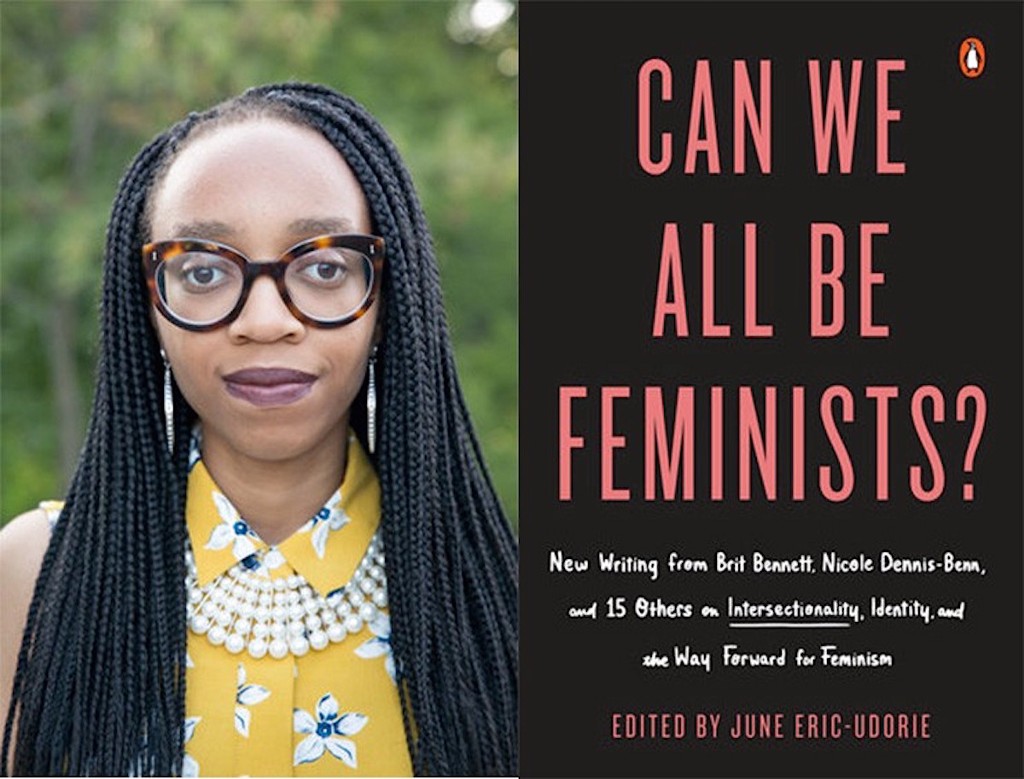
There’s often a proclamation of each year being a great one for story collections, novels, or essays. So I’ll insert my own perspective that 2018 was a wonderful year in anthologies, especially those celebrating and prioritizing marginalized voices. As I said to editor and young activist June Eric-Udorie, when I first heard about yet another book on feminism I was hesitant. The abundance of posts, think pieces, and so on already had my mind reeling. But the question itself—can we all be feminists?—is a good one. It also brings up further questions in its dissection: What is a feminist? Who can call themselves one? How has feminism in itself hurt or helped various groups over the years? What struck me about Udorie’s anthology was that it wasn’t preaching to a choir as much as it was showcasing how we should be thinking about everything in our lives, not solely feminism.

As a woman of color with her own privilege I came to think more on what I don’t know, because that was way more vast than what I do. Reading the contributions in Can We All Be Feminists? I was struck by essays from Nicole Dennis-Benn, Evette Dionne, and Wei Ming Kam discussing what they learned in their own experiences. Gabrielle Bellot discusses the fall from grace of a literary idol who doesn’t recognize harmful thinking and language. Emer O’Toole expounds on the barbaric anti-abortion laws in the U.K. that have led to the death of way too many women. The voices of sex workers, transgender women, women of color, immigrants, the religious inclined, and those in the LGBTQ+ community show the swath of topics and perspectives we need in any book broaching the question of the people we can and should seek to be. I was eager to speak to Udorie, editor to editor, on how the process of compiling such an anthology came to be, whatever struggles she experienced, and the overall goals and needs when tackling such a potent question of how feminism works for us in the day-to-day.


Jennifer Baker: Obviously the title is Can We All Be Feminists? But it really speaks to the issue of privilege. Maybe there’s the concern that these things can be didactic in a way rather than I’m learning something. But we’re learning about sex workers, immigration, and the trans body, and the African body, and abortion happening in Ireland. This awareness is embedded in each essay.

June Eric-Udorie: Yeah, we spent a lot of time thinking and talking on the phone, back and forth on emails. Another thing I tell people is that these essays were edited four or five times, six for some writers. We would say, “This is good, give me more.” “This is good, I can see you digging even more here.” It wasn’t edited once or twice. There was a lot of time in structural edits where I would say to my writers “This is good but you’re not thinking about disabled writers when you’re making this comment here” or “Oh, this is good but have you considered the fact that your argument is kind of racist by leaving out Afro-Latinx people?” And kind of getting them to see their own biases. I think all my writers understood that even though we’re marginalized in some ways, we all have some privileges. And we have to make sure we’re addressing many of them in the essays themselves. A lot of times developing their ideas, a lot of times editing as well. And you know the great thing was I had two U.S. editors and two U.K. editors across the board some were queer, Muslim, working-class, so there were a number of different perspectives that were coming in from everyone throughout the editorial process involved.

JB: When you’re asking people to contribute essays to working a way forward in feminism, is there a way to even not look at the problem? Can We All Be Feminists? is a criticism of feminism, yet also contains elements of how do we have a larger conversation as feminists.

I think all my writers understood that even though we’re marginalized in some ways, we all have some privileges.

JEU: Yeah, that’s why the first step is recognizing there’s an issue and the second step is recognizing we can fix it. And that is why we wanted each essayist to write about what can we do to make this better. I didn’t want it to feel depressing or to feel like there’s no hope because I don’t think that’s the message of the book. I think the message of the book is: here’s how feminism has helped us; here’s the mistakes that’s been made; and here’s what we can do to make it even more effective tool for political activism, personal activism, and for women’s rights. Anything can be off. And I think that’s why I was really kind of clear with my writers of “how would you think it being better.”

JB: After curating something like this, is there something you wish you could’ve included in that sense? You do span a lot.

JEU: We try to do as much as we could. I wish I had Indigenous women, I wish I had those differences represented. I did try, it didn’t work out either because it was time schedules, stuff they were doing, due to publishing trajectory. But yeah, I wish we did have essays from working mothers and kind of talking about craft and motherhood and feminism, how that works. I wish we did have Indigenous women’s voices and thinking about how they fit in this because they’re very much invisible [in this conversation]. I do recognize that we did as much as we could. But there’s always space for us to be better. And I don’t want people to think that this is the perfect book that does everything, it does a lot. I’m definitely proud of how much we were able to publish in this scope everything from immigration to abortion to disability to representation to queerness, and queerness in different forms, and being trans, and being trans in different ways, and class and religion. We tried to cover as much as we could but I think one of the big things at the core of feminism is that even when I think I’m doing as much as I could I’m always reminding myself there are still people who are not in the room. And so it’s never perfect. And I think that’s my thing with feminism, I think it’s weird to always being perfect. I think we keep trying to strive to be as good as can be and maybe in doing that itself you have bring enough people on board to be included. I don’t think feminism will ever be completely perfect. I don’t know that any social movement will be able to do that.

JB: I feel like the pressure on women of color is we feel like we haven’t done enough. [laughs] We could do so much more even though you’ve done so much already. You have so many voices that I haven’t seen in recent feminist essays, in anything that is or isn’t speaking to feminism, so I feel like this is not necessarily a 101 book. But I think if you’re coming into trying to understand more about feminism as well, Can We All Be Feminists? is a book that can help you learn a lot more than what the basics are which is: if you believe we should all have all have equal rights then great, you’re a feminist! And it seems so simplistic when that’s said, like, you’re a feminist now!

JEU: I think that was what we’re trying to do. We’re trying to move away from this whole … “[if] you claim it you are it” [approach]. You have to do the work. You have to examine your power and privilege. You have to think about your past actions, your current conventional ways aside. There’s Women’s March and wearing pussy hats and suddenly you’re contributing and that’s not the case because we really want you to think about the ways in which you react to other women. Think about the ways in which you vote. Women are always, at least they’re saying, women are voting for their interests and I don’t think they are. They’re voting to uphold white supremacy because it benefits them. In the means of pursuing abortion rights you have to think about how much racism plays a factor in America; they’re still able to oppress other people. I think the base part of feminism is actually sitting down and doing personal work and thinking about your own actions over your lifetime. And which issues do you care about? How do we show up for people? Do you show up at that Black Lives Matter rally or is it just okay to go to the feminist one? Whose lives are you prioritizing? Whose issues are you prioritizing? It’s not enough to proclaim yourself a feminist and that’s the beginning and the end of it. You should be able to help us reach liberation. Something I always think about of feminism is which part of me is going to be free first? Because we really have this movement that is not intersectional. Is my gender gonna be there? Is my race holding back? Or I’m queer, is that holding me back? I think as feminists we really should be doing is saying, “yeah, I may be freeing this area but there are still so many people who are not.”

I think the base part of feminism is sitting down and thinking about your own actions over your lifetime.

JB: How have the conversations been so far? In online spaces [feminism conversations] gets so tenuous. I don’t know if you were in the States for the 2016 Presidential Election.

JEU: I was not.

JB: Oh good god. I mean Brexit also happened that year so it was just a mess. But here there was this uniting of Pantsuit Nation, started by white women, moderated by white women. And then the immediate change happened when Hillary Clinton didn’t win. The energy became totally different. We had the stats of a majority of White women voting for the other candidate. And so that discussion couldn’t be had in that space because people said “How dare you! We’re supposed to be united as women!” To me it’s become so expected of how these kind of surface-level uniters change so quickly. And how we use books like this to note that.

JEU: I think the biggest kind of lies we say to ourselves as feminists is thinking that we’re the same. We’re absolutely not the same. And if we can get to a point where we can recognize that we’re not the same then maybe we can have those discussions and start doing the work where we’re examining the situation from the standpoint that is not trying to assume that everybody is on the same, equal footing ground.

This is something Audre Lorde talks about a lot of us trying to figure out our difference. If we can reconcile these differences and kind of acknowledge that they’re okay and that being different doesn’t stop us from working together, then maybe we can start working towards a sisterhood or some kind of movement that understands the fact that being intersectional and living a different intersection is not a problem. It’s not going to inhibit our ability to work towards a greater ideal. This is something feminists of color have been saying, it’s not just Audre Lorde, there have been a number of Black feminists who have been saying this for a long time.

But, I think white feminism is so far gone as saying: let’s pretend we’re the same. You drop your race, your sexuality, your disability, your class, leave it at the door, just walk in as a woman. That’s impossible right? Because all those different intersections inform how I move in the world. And so you cannot ask me to leave that at the door. And I say this in my introduction, none of us should be part of a feminism that does that. I want nothing to do with a feminism that asks me to leave me being Black, queer, disabled at the table. I want a feminism that sees that as a good thing, that sees that as valuable to our freedom. The liberation includes everyone.

JB: I also think as people of color we’re inherently taught to recognize those differences. It comes to privilege: I never had to think about being different. But when you’re marginalized you’re constantly reminded of that. And I wonder if that’s what comes into play?

JEU: I don’t think this is something that only plagues white feminist movements. I think a lot of times we don’t want to talk about homophobia in Black feminism or talk about sexism, let’s just talk about race. As if race is the only mark of oppression. And it feeds into different groups. I don’t know why we do it to be honest with you. We do it inter-community. I think it’s harmful because you’re kind of asking subsume parts of themselves, like different parts of themselves that matter.

JB: I really, really, really loved this book. And [at first] I was thinking “oh gosh how is this going to go?” Even editing one I know not everything might be right. But I came out of it with so much more than what I came into it with.

JEU: I’m so glad. And I think this is something that I’ve been telling people a lot, people keep telling me “Oh you know everything.” There was so much, so so much editing this book. There was so much that I thought I knew. I don’t really know. I don’t really know what it is to have chronic illness. I don’t know what it is to be a fat Black woman. This didn’t make it in the final cut of the essay [but] Thompson once wrote about people throwing bottles at her and people calling her “Fat Black shit.” I don’t know that. Because I had the privilege of not having to walk around the world in a body that we haven’t deemed to be unruly and violent that merits a kind of oppression and violence. And I’m not trans, right? I have friends who are trans but I’ve never had to sit down to interrogate what it might be to lose your family due to the person you are. So I think the lesson I want people [to get]: there’s always so much that we don’t know. Even I’ve been working from this fact for five years and I went into this book and thought “Oh crap” here’s all this shit I hadn’t been thinking about. And I don’t think that’s something you hear.

7 Books About Women Rescuing Women

W e all grew up on fairy tales. Damsels in distress rescued by knights on charging steeds, ladies with exceptionally long hair waiting for a man to climb her braid and rescue her from her tower, glass shoes, poisoned apples, and always, always a prince who comes to the rescue. While for me, there will always be a place in my heart for these kinds of stories (who doesn’t love a good evil queen?), as I got older, I started hankering for stories that reflected the world as I knew it. Sure, sometimes a man would turn up and do me a solid, but the people I relied on most in times of need were mainly women.

Purchase the novel

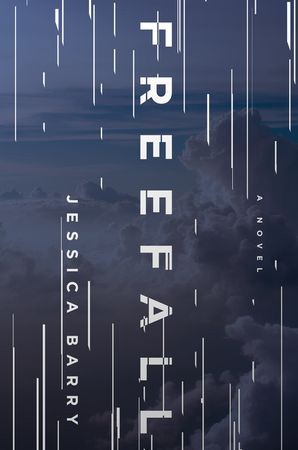
In my debut thriller, Freefall, a woman survives a plane crash and must fight for survival through the Colorado Rockies. On the other side of the country, her mother is fighting to discover the truth behind the crash, and the secrets her daughter was harboring before her plane went down. Both find themselves in grave danger as a result, and only they can save each other. Mothers, sisters, daughters, friends: all have the capacity to be superheroes.

Here are some of my favorite books that celebrate women helping women.

Where’d You Go, Bernadette by Maria Semple

When Bernadette goes missing, her daughter is determined to figure out what’s happened to her — even if everyone around her thinks her mother has just gone off the deep end. Funny, warm and always surprising, this is one of my favorite books about the bond between mother and daughter. A special mention also goes to Audrey, the frenemy-turned-hero of the story.

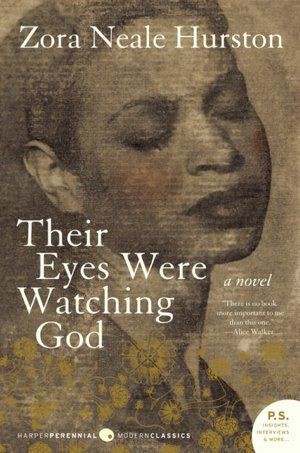
Their Eyes Were Watching God by Zora Neale Hurston

Poor Janie has a rough time of it. Three husbands, two of whom treat her like dirt while the third contracts rabies and goes insane. All Janie wants is to find love, but instead she only finds heartache, trouble and near-imprisonment. The only constant in her life is her best friend Phoeby, who was there for her at the beginning and is a pair of patient ears willing to listen to her story at the end.

Fried Green Tomatoes at the Whistle Stop Cafe by Fannie Flagg

Most people think of the movie first, but the book has all the charm of the film — and it came first! The novel explores two pairs of female friendships: the friendship that blooms between Evelyn and the elderly Mrs Threadgood, and the friendship between Idgie and Ruth in the story Mrs Threadgood tells Evelyn about her youth at the Whistle Stop Café. Both relationships are beautifully drawn and just as affecting as any love story.

The Bloody Chamber by Angela Carter

This one’s a little bit of a cheat as it’s a short story rather than a novel, but Carter’s retelling of Bluebeard deserves to be included for its clever reimagining of a classic folktale and the fact that the person who finally takes out the evil Marquis is the mother of his intended victim, who sweeps in and kills him right before he’s able to murder her daughter.

The First Bad Man by Miranda July

I loved Miranda July’s bizarre, brilliant quasi-buddy dark comedy. Cheryl Glickman is ostensibly pining after her stuffy co-worker, Phillip, but as soon as human-tornado Clee turns up and starts tearing Cheryl’s extreme-minimalist life apart, we know she’s her true soulmate. Sure, they drive each other nuts and beat each other up, but they save each other, too, by rescuing each other from the prisons of their own selves.

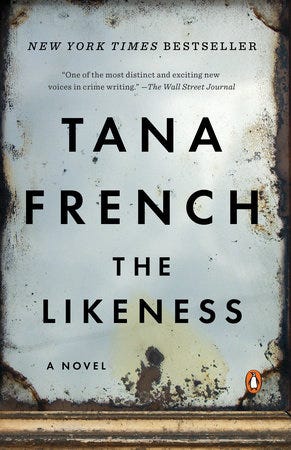
The Likeness by Tana French

Tana French is a master at placing characters in extraordinary situations and watching how their psyches hold up under the strain. Here, her subject is Detective Cassie Maddox, who’s called to the scene of a murder only to discover that the woman who’s been murdered is her exact double. In a wild attempt to crack the case, she agrees to impersonate the dead woman and to assume her old life in the hope that it will flush out the killer. But Cassie starts to lose herself while undercover, and it’s only the memory of the victim and her desire to catch her killer who keep her from going over the edge.

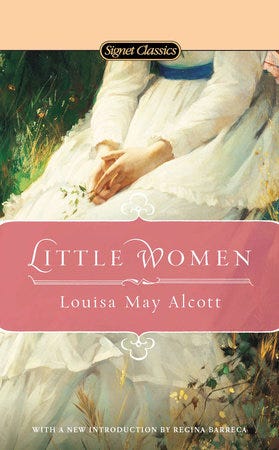
Little Women by Louisa May Alcott

Alcott’s classic story of sisterly love (and, at times, sisterly conflict) is a masterclass in women caring for each other. The tenderness with which Jo nurses Beth when she contracts scarlet fever alone is enough to teach anyone about the bond between sisters, but watching the girls grow into adulthood (and grieve the loss of one of their own) has a resonance and power that explains why it’s still such a favorite.

The Woman Behind the Man is Literally on Fire

Mrs. Longfellow Burns

by Zsófia Bán

[. . .] Henry Wadsworth Longfellow, with his golden hair, his golden hair,

tall and of a port in air, with azure eyes,

in tawny gloves, he took dominion everywhere.

Henry, the national poet, writes verse like a bird sings. From Henry, the national poet, rhyme flows like the trots — oh Mother of God, here’s another one — splat! It hits Henry hard that people think just anyone can write poems. Him, for example. Tell me not in mournful numbers, / Life is but an empty dream! / For the soul is dead that slumbers, / And things are not what they seem. So it goes. Well, yes. Henry, the national poet, is making culture before the nation has even invented it. “Well, well,” says America, “Henry, what is this?” It turns it this way and that, examines the sparkling object, yet still does not understand. “That?” says Henry with his winning smile, “That is the flowering of New England, do you see it not?” In the background nod the members of the New England team, the Patriots: Nathaniel nods, Ralph Waldo nods, Henry David nods, Oliver nods, Herman nods. (The girls do not nod; today the girls are convalescing and have been excused.) Henry sings to himself and plays the flute like some mythological creature. Henry never goes anywhere without his flute. Henry, the national poet, even flutes his way across Europe, stopping at every charming little inn, rustic little hut, and crumbling little bungalow, conversing with peasants, artisans, and traders, with the silver flute — a passport to friendship — right there in his pocket. Henry at a bullfight in Spain. Henry in Italy, in front of the Coliseum. Henry in Germany, on the Alexanderplatz. Henry in England at a soccer game. He’s a fine-looking boy, is Henry, easy to photograph. A ray of hope warms the heart of America, the stumbling babe: it shall have its culture, its photogenic betrothed, its fine-looking bards, its ballsy sages. At 22, Henry was a university professor, a professor at 22, ha-ho. The hearts of his lady students beat wildly for him — oh, pardon, he has no girl students, as they are excused. Lives of great men all remind us / We can make our lives sublime / And, departing, leave behind us / Footsteps in the sand of time. (Video clip here: “Footsteps in the Sand of Time,” Henry singing).

The first Longfellow arrives in America in the bleak winter of 1676 from Yorkshire, England. For he’s a jolly good Longfellow, that nobody can deny. Henry’s pedigree is pristine. His grandfather had been a general in the War of Independence, his father a lawyer. Henry was a young gentleman from a fine house, America’s incorrigible sweetheart. He loves his neighbors and baseball. In his free time, he is optimism personified. Not enjoyment and not sorrow, / Is our destin’d end or way; / But to act, that each to-morrow, / Find us farther than today. Onward, and with dispatch. Henry Wadsworth Longfellow, son of Stephen Longfellow and Zilpah Wadsworth Longfellow, is born on February 27, 1807, a gray and inhospitable day, in Portland, Maine. Portland is a harbor, and those born there have a more profound understanding of the world than the inhabitants of other, more backwater New England towns. Nothing obstructs his view. The waves may be crashing and the cold going to the bone and people blowing into their hands, but the view is great. Buena vista. Whales and shipwrecks and what have you. Fresh air you can practically take a bite out of. The fascinating people buzzing around the harbor, and the buzz of fascinating people stir the interest of the young fellow toward experiences beyond his own, resulting in Henry’s attending school at three (see child abuse). At six, Henry’s teacher writes the following on Henry’s report card: “Master Henry Longfellow is one of the finest pupils in our school. His reading and writing are excellent. Furthermore, he can also add and multiply. His behavior in the last quarter has been exemplary and agreeable.” Signed, Mrs. Helen. A gentleman is a gentleman, even in elementary school. This is elementary. None of that “whined all through class” or “shot spitballs at his schoolmates” or “tried to poke out the eye of his desk-mate with a compass,” or “tugged at the girls’ ponytails.” (The girls — the girls were absent, the girls were excused, the girls that day, as always, were convalescing. Oh, sweet sweet girls of the harbor.)

At bedtime, Henry’s mother Zilpah (yes, there really is such a name), would read to him and his siblings of Ossian, the legendary Gallic hero. This always gave rise to a miniature rebellion, as the children aspired to become Ossian rather than sleep — even the girls, though that would actually be impossible. Then Zilpah would have a hard time restoring order, and always regretted reading Ossian, the legendary Gallic hero, aloud to them when she clearly knew this would incite a rebellion, but there was nothing for it, as the children’s hour was sacrosanct, and this is what they demanded, while their Papa was unavailable at the moment. “Every reader has a first book,” Henry would later write, as the poet of the nation. “In other words there is one book among all that first takes hold of his imagination, that simultaneously excites and satisfies the desires of his mind.” [Can you guess what book this was for Henry? (Hint: his father Dr. Stephen Longfellow used to give him a good thrashing for it with his belt, although, as Henry recalls with a big grin, it was still worth it, because without this, he would probably have had no idea how to father a child. See also: the role of know-how in American culture.)] Time moved on, and the nineteen-year-old Henry found himself a senior at Bowdoin College when that institution decided to establish a Department of Modern Languages. But at the committee meeting, a stick-in-the-mud elder colleague pointed out that, alas, no one at that institution spoke modern languages. Therefore, after some consultation, they decided to ask Henry to be the department’s first professor, but before that, they would send him off to Europe for a little polishing up. Henry agreed under the condition that, in return, they destroy his file, from which it might later come to light that he regularly reported on his classmates. In the blossoming May of 1826, the flaxen-maned young man set out to see the world with those sparkling azure eyes of his, and meanwhile make himself a scholar and professor. As above: flute playing, etc. In the bleak winter of 1829 Henry returns to his uncultured homeland where, ha-ho, he embarks upon his beautiful career. But there was something else: the day after his return, in church, he spotted Mary Storer Potter, who back in the day had attended the girls’ class of the same year (when not convalescing, that is) as a fairly homely, freckled, pigtailed, shovel- toothed little girl, but by this time she had developed into such a breathtaking beauty (I mean really) that Henry could, as one might logically expect, hardly catch his breath. His feet were rooted to the spot, and (oh, Lord!) they almost had to call an ambulance. The voice of the nightingale of the nation caught in his throat for the first (and last) time. He silently accompanied the girl home and, in the shivery winter of 1831, took her to wife. Time, the great organizer, moved on.

In the foggy autumn of 1834, Henry wins the prize for Most Handsome Professor of the Year, ending up on the cover of Life magazine. For this, he receives an appointment at Harvard, but first he is sent off to Europe again for a little more polishing up, as far as humanly possible. In the world’s broad field of battle, / In the bivouac of Life, / Be not like dumb, driven cattle! / Be a hero in the strife! Henry takes with him the lovely Mary, who, after a miscarriage, dies a hasty death on the trip. Mary, Mary, quite contrary! Henry, in the bivouac of Life, decides not to cut short his voyage, bound as he is by the New Deal he had made with Harvard, as well as his gentleman’s agreement. Even before his return he makes the acquaintance of Fanny Appleton, a wealthy Boston heiress, Fanny (Be Tender with my Love) who will later (time moves on — much later) become his second wife. There’s no denying that Fanny at first (i.e., for years) had no desire to reciprocate Henry’s feelings, as she thought him a conceited, puffed-up windbag, and besides, Henry vexed her to no end in 1839 when he dribbled out the circumstances of their meeting in his prose romance Hyperion, which the entire East Coast had set to devouring. Still, they were married unexpectedly in 1843 (Fanny, what were you thinking?) and from that point on, their life became a vexing idyll. The couple had set up an outrageously elegant home, provoking the ire even of the normally unctuous Emerson, who lived in considerable comfort himself: “If Socrates were here, we could go & talk with him; but Longfellow we cannot go & talk with; there is a palace, & servants, & a row of bottles of different colored wines, & wine glasses, & fine coats,” writes the seething Ralph Waldo.

With his tumbling hair, tawny gloves, and trade- mark flowery waistcoats, Henry becomes a well-known and romantic fixture of Cambridge life. Girls and ladies all sighed in unison at the sight of him, while the gentlemen tipped their hats respectfully and the youths of the town swarmed constantly about his house to play with his children — five in number, two boys and three girls, grave Alice and laughing Allegra and Edith with golden hair. In the insufferably beautiful spring of 1854, Henry has had it up to here with teaching and the interminable department meetings he personally directed. He resigns from Harvard and invents freelance poetry, which Fanny (alas!) cannot get too worked up about. Furthermore, in the same period Henry begins to meet up with an Ojibway tribal leader and to write a bit about Indians which is, let’s face it, a fairly suspicious development. Fanny does not see that this was a national culture in the making, does not see that Old Shatterhand and leather chaps will someday come of this; all she sees is that her husband is never home for dinner because he’s down at the old corner public house (i.e., speakeasy) again drinking whiskey with his chubby tribal chief. Time moves on: his oeuvre accumulates nicely while the family reserves dwindle. I will allow that there are many things Fanny does not see, but she certainly does see that you can’t make a living off of poetry. After the publication of Hiawatha, Henry’s Indian best-seller, his entire income from poetry in the glorious years of 1855 and 1856 amounts to $3400 and $7400, plus touring gigs, but otherwise his average annual income barely tops the meager pay he had received at Harvard ($1500). Fanny has to scrimp and scrape to put together money for food, as well as for the two pairs of new tawny gloves and fresh flowery vest they purchase for Henry each month.

Time, the great equalizer, moves on and in 1861 Fanny, known to the public as Mrs. Longfellow, realizes one fine day that her food money has dwindled to nothing, and it was only the middle of the month. Poor Mrs. Longfellow sinks into sorrow, all the while thinking how she might save tomorrow. She must do this by the following day, since if Henry realizes the food money has run out, he will get all worked up and his verse-milk will dry up, and then it won’t just be a matter of the children going hungry (grave Alice and laughing Allegra, etc.), but to top it all off she, Mrs. Longfellow, will go down in history as the one who threw a wrench into the development of a national culture, which, let’s face it, is a bit much. A solution must be found. Meanwhile, the girls, grave Alice and laughing Allegra and Edith with golden hair, are upstairs playing with the dollhouse they got from their Papa, when they come over all hungry and run down to the kitchen to make themselves peanut butter and jelly sandwiches à l’américaine. There they encounter their mother slouched over the kitchen table, despondent of her miserable situation. At the children’s arrival, Mrs. Longfellow raises her sorrowful Anglo-Saxon horseface to see the wheat-gold waves of her little girls’ hair, at which her mind fills with illumination. Not far from the Longfellow home is a Jewish wig-maker, whose workshop Mrs. Longfellow passes nearly every day. In the shop window is a sign: I buy hair for good money. These words thrum in Mrs. Longfellow’s head like bees in an upset hive. For good money. No time to waste in thought; a minute’s hesitation will scuttle her plans. “Edith, Allegra, Alice, come here, my little ones!” cries Mrs. Longfellow in a trembling voice, extracting the large, tonsorial scissors from the bureau drawer. Now the hour of the children has truly arrived. The Children’s Hour.

After the girls have dashed, shrieking and tearful, from the house, Mrs. Longfellow carefully assembles their flaxen locks and folds them into three identical little packages. She prepares to seal the simple brown wrapping paper with wax, as is her wont. But as she heats the wax, it abruptly sparks such a great flame that the packages catch fire, as do Mrs. Longfellow’s hair and clothing. Mrs. Longfellow supposes this to be the Lord’s punishment. Having accepted the will of the aforementioned individual she does nothing to extinguish the fire, allowing the flames gently, unhurriedly to lick at her all around. Several hours later, when Henry arrives home, he finds a sizable pile of ashes still aglow in the middle of the carbonized kitchen. Henry digs around a bit with the poker to determine the nature of the kitchen apocalypse that has left these remains. He finds, at the bottom of the pile, a sooty lock of blond hair and, on the kitchen table, a letter addressed to him in Mrs. Longfellow’s hand. “Henry my dear, forgive me, but I have quite burned through all my cash. The blame is all mine; please do not scold the girls. F.”

Here Henry Wadsworth Longfellow thinks: First the Civil War, now this. To soothe his rattled nerves, he sets to translating Dante’s Divine Comedy into English. His work proceeds quite swiftly. Years later, Queen Victoria will grant him a private audience. It is unknown what words were exchanged between them, but those who stood at the door thought they heard the words G-spot and unmentionables.

ANALYZE the following expressions:

“Ars longa, vita brevis.”

“A pain in the ars.”

In “The Water Cure,” Toxic Masculinity Is Making Women Physically Ill

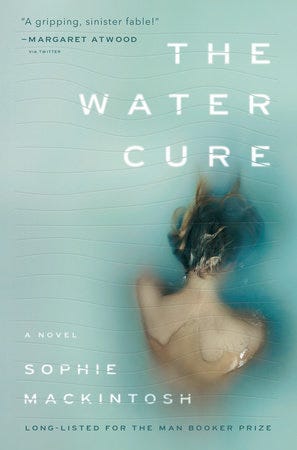
In Sophie Mackintosh’s debut novel, The Water Cure, toxins have overtaken the world, and proximity to men is physically dangerous for women. Three sisters live with their parents on an island, a resort-like sanctuary where women come to be cured by the sea air, and by a series of “cures” administered by the family.

Purchase the novel

Over time, women stop arriving from the mainland. Then, the girls’ father, the only man they’ve ever known, dies. When three strange men arrive on the island, the women must decide how to deal with them — and with their changing impressions of each other.

Sophie Mackintosh is a celebrated short fiction writer, her work having won the White Review Short Story Prize as well as the Virago/Stylist Short Story Competition in 2016. The Water Cure was longlisted for the Man Booker prize in 2018.

Over email, we discussed the power of ambiguity, misogyny, and the looming threat of dystopia in 2019.


Deirdre Coyle: One fascinating aspect of your worldbuilding in The Water Cure is how little we know about the nature of the “disease” from which the characters are being sheltered. We know there are “toxins,” that women wear muslin to cover their faces, and we see “cures” being performed by the on the women. What made you decide to keep the nature of the disease vague, and the nature of the cures explicit?

Sophie Mackintosh: I am very much a believer in the power of ambiguity — how vagueness and insinuation, the things that edge around what is known, can be the most terrifying of all. But the cures to me needed to be concrete, because these are the things that we can see, as readers, through the foggy atmosphere. The cures are more important than the cause. We perform rituals of safety all the time, for fears or conditions real and imagined. In that sense it doesn’t matter if the disease is real or not. What’s important is what is enacted on the body, the illusion of safety and purity it gives to the girls.

We perform rituals of safety all the time, for fears or conditions real and imagined. In that sense it doesn’t matter if the disease is real or not. What’s important is the illusion of safety and purity it gives.

DC: Are any of these ritualistic cures based in reality, past or present?

SM: Water has long been seen as this curative, with real-life cures from history including ones similar to those found in the book, such as cold water immersion and sweating things out. I was on holiday in Budapest recently and getting into the thermal baths gave me an immediate sense of wellbeing, something primal — like the water could heal everything wrong with me. It’s such a basic element and yet one we can ascribe such magical powers to, something mystical and also essentially feminine about it. It’s the element of sea maidens, sirens, water signs and emotion. But there’s something dark and dangerous about water too, the ‘water cure’ being a traditional form of torture as well as something health-giving. I’m very drawn to ritual and to anything that promises me a way to feel better. To this idea that in order to keep myself safe I could make a circle of salt around me and hold my head under the water and go about my day, untouchable and reassured.

Water is such a basic element and yet one we can ascribe such magical powers to, something mystical and also essentially feminine about it. It’s the element of sea maidens, sirens, water signs and emotion. But there’s something dark and dangerous about it too.

DC: Certain elements of The Water Cure remind me of Herland, Charlotte Perkins Gilman’s 1915 novel about three men discovering a women’s utopian society. But while Gilman’s novel maintains that the women-only society is a utopia, in The Water Cure, we see the cracks in the women’s relationships with each other even before the three male characters show up. How do you see The Water Cure in conversation with other fictional women’s societies, whether Herland or Wonder Woman’s Themyscira?

SM: I had not actually heard of Herland before writing The Water Cure! So to me it was interesting to think about these ideas of female-only communities far apart from the world being a universal idea across the decades, with differing opinions on how they might turn out. In another comment online I read someone say about by book that “all the monsters are women”, and I found that interesting too — because of course there is good and bad in everyone and everything, and my intention was not to write a book that pitted perfect women against evil men, a super pure community corrupted. These are real women, and like real women they are often cruel to each other — they are siblings with their own dynamics and rivalries, they perpetuate violence against each other the way that women do in the real world too, even before the arrival of the men.

DC: Some of the chapters are narrated by one sister, others are narrated in chorus by all three. How did you navigate switching into a collective mindset?

SM: The collective voice came to me relatively easily — I saw it as almost a shared trance-like state between the three of them, this otherworldly connection that they have where their individual concerns and personalities become temporarily united. It transcended them. Technically speaking I found it helped to switch between fonts, for all the voices. It sounds really simplistic but it genuinely helped me. Maybe because I’m visual but I can’t imagine a sister as spiky as Grace ‘talking’ through Comic Sans, for example.

DC: In a recent piece for The Guardian, you wrote about how music affects coming-of-age. How do you think the total lack of pop culture affects coming-of-age for the women in The Water Cure?

SM: It was a challenge when writing it, for sure. I think because of the kind of teenager I was, living in the kind of place I was — isolated countryside, where difference was regarded with suspicion — pop culture was integral to my development and became a very important signaling, a shorthand to display who you were and who you wanted to be. I realized how dependent I was on these kinds of signaling when writing the characters of the girls. Who are you when you’ve grown up in a strange vacuum? What are the teenage rites when your music, your books, your media are limited so much in this way? What is a young woman if not something created by outside forces? Most readers think that the women in the novel are much younger than they are, and there is something disturbing in that idea too when you find out their actual ages, in that idea of infantilization, how the lack of pop culture means that the usual codified rites and milestones just aren’t there, and there’s nothing functional to take their place.

Women take the burden of keeping themselves safe from these dangers that men don’t have to think about.

DC: In 2018, how close do you feel we are from this kind of dystopia?

SM: I don’t think we’re so far away from it at all. Maybe we’re not at a point where there’s a literal disease killing women that men are happily (or thoughtlessly) passing on, but for all the celebrated gains of feminism, we’re also seeing a pushback in terms of the normalization of [Men’s Right Activists] and far-right misogynist perspectives, women still don’t have autonomy over their bodies, and worldwide women continue to have their rights stripped from them and violence enacted on them. Women are killed by men every day all over the world, in the name of revenge or misplaced honor or spurned love, or just because they are there. Women take the burden of keeping themselves safe from these dangers that men don’t have to think about. Until this changes for every woman, we’ll never be too far away from it.Women take the burden of keeping themselves safe from these dangers that men don’t have to think about.

8 Books About Immortality

Immortality is a subject of fascination in literature, and for good reason. Who doesn’t fantasize, at least once, about defeating death? Oscar Wilde certainly did in 1890, when he wrote The Picture of Dorian Gray; the story of a man who could never get old, as long as his portrait kept showing his age. But this fantasy is more complicated than it might appear. Defeating death means an eternity on this perilous earth. We don’t want to die, but that doesn’t mean we want to live forever. In 1975, Natalie Babbit examined the contradiction in Tuck Everlasting, the quintessential children’s tale about the dangers of immortality. And the theme has continued to appear in more modern literature as contemporary authors explore the questions that arise in conjunction with the very human desire to live forever. If nothing else, it certainly makes for an interesting story.

If you’re looking for a book about living forever, you don’t have to head straight to fantasy section of the library. Vampires are not the only characters in literature blessed with an eternal life.

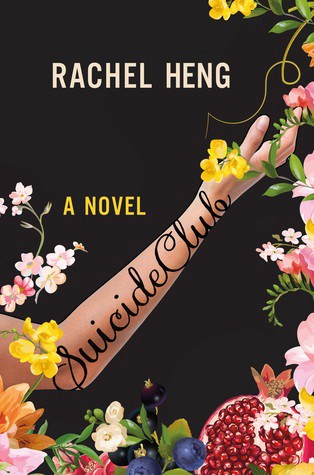
The Suicide Club by Rachel Heng

Heng’s dystopian novel imagines a world in which the cultural obsession with healthy living has become entrenched in the law — where helpful tips for wellness have become government directives. This reimagined world is uncomfortably close to our own world; saturated with advertisements for sugar-free, gluten-free foods, and social media sites advocating for stress-free, happy lifestyles. However, in The Suicide Club, the stakes are raised, and this healthy lifestyle can actually result in immortality, which begs the question: is it worth it?

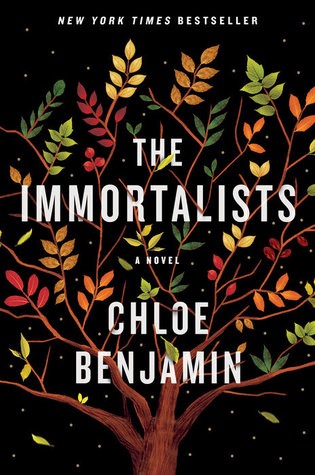
The Immortalists by Chloe Benjamin

Populating numerous “best novels of 2018” lists, The Immortalists asks the question that humans have been contemplating since the days of ancient Greek tragedies; is our life determined by fate or do we have free will? In this novel, four siblings seem to think the former. They decide to visit a seer and discover the date of their deaths, and the stories that unfold thereafter offer an exploration into the minds of those who already know about their own mortality and who seek to escape it.

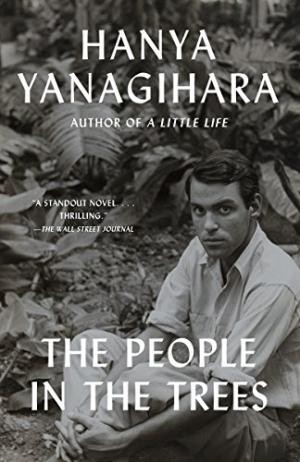
The People in the Trees by Hanya Yanagihara

The author of the beloved tearjerker, A Little Life, wrote her debut about a medical researcher so obsessed with immortality that he devoted and risked his own life to finding the antidote to aging. The novel is based on the true story of Daniel Carleton Gajdusek, a controversial figure in the scientific community. He was the winner of the Nobel Prize for Medicine and Physiology in 1976, revered for his philanthropic custom of adopting children from the South Pacific in order to give them a chance at a better life, but was later accused of pedophilia. Yanagihara’s novel imagines the life of this researcher in a morally ambiguous way, using the effective plot device of getting into the mind of the monster to learn about his motivations. Is finding the key to eternal life, and then sharing it with the rest of humanity, a redemption for the unforgivable things that the protagonist does along the way?

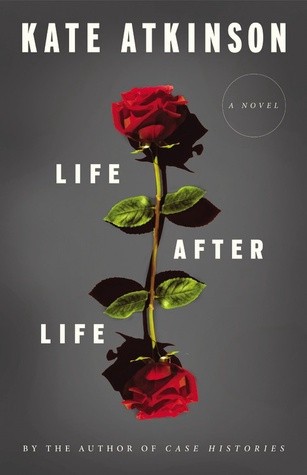
Life After Life by Kate Atkinson

In Life After Life, Atkinson paints the eternal life in a unique way. Rather than consciously being awakened again and again after death, Ursula lives out multiple timelines, unaware of her own immortality. When one timeline ends, we go back to the beginning of her life and watch it unfold in another way — and when that one ends, we go back again, and again. Unlike Rachel, in Eternal Life, Ursula does not tire so easily because she doesn’t have vivid memories of each of her lifetimes. This novel explores another question that haunts the human condition, the “Sliding Door” question; how would my life turn out if I had done this or that differently?

The Postmortal by Drew Magary

Set in the year 2019, eight years after it was published, this novel uses satire and sci-fi to warn its readers about the perils of discovering the cure for aging. In Magary’s utopian-turned-dystopian world, it’s not just one or two characters who can live forever, but everyone. However, discovering the cure for aging doesn’t necessarily mean that one can’t die from any other fatal means. And it certainly doesn’t mean that the world will be a better place. The human population will sky rocket, resulting in all sorts of problems. And the couples that took vows of staying together forever didn’t really think forever meant literal eternity.

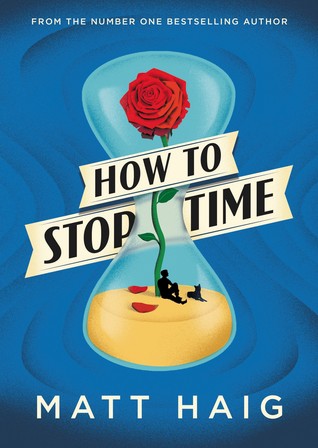
How to Stop Time by Matt Haig

In How to Stop Time, we see another instance of immortality as a curse rather than a blessing, though Haig’s rendition of the eternal life is only about 900 years long. In this world, Haig divides the human population in two; Albatrosses, who have a rare disease that allows them to live for nine centuries, and Mayflies, the mortal people. The novel follows one Albatross in particular, Tom Hazard, whose exceptionally long lifespan has given him the opportunity to meet some of the most important people in literary history. I can’t imagine how living forever could be a curse if it means that I could have worked at the Globe under Shakespeare’s tutelage or had a drink with the Fitzgeralds, but it’s true that there is more to the story.

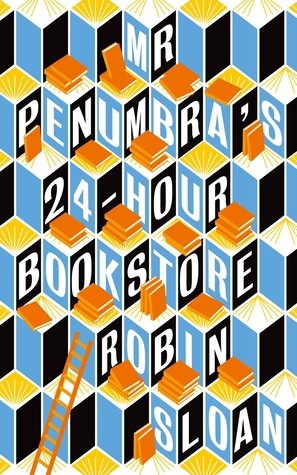
Mr. Penumbra’s 24 Hour Bookstore by Robin Sloan

As the former manager for Twitter, Robin Sloan is a novelist with insider knowledge about the digital world and the culture that surrounds it. He pulls from this knowledge in his book, exploring the terrifying competition between analog and digital; old fashioned print material and increasingly complex, modern technology. The protagonist, Clay, gets a job at an independent bookstore owned by a mysterious man who is clearly keeping secrets among his stacks. Using his own expertise with contemporary technology, Clay is pitted against a group that is devoted to old fashioned research techniques. And the result of the competition? Immortality.

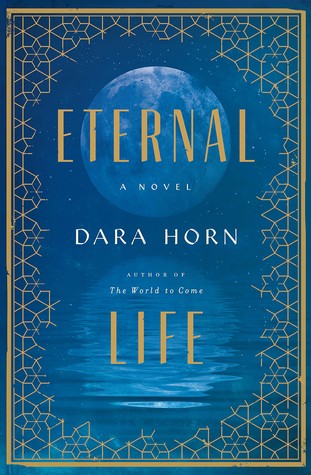
Eternal Life by Dara Horn

Horn’s novel follows Rachel, a woman “blessed” with eternal life. In this take on immortality, it is the consciousness, not necessarily the body, that lives forever. When we imagine an immortal person, we tend to think of it as one body and one soul continuing on forever. But for Rachel, immortality consists of living a full life — youth, adulthood, aging, and death — over and over, ad infinitum. When she dies, she simply comes back to life as an 18-year-old and is forced to do it all over again; forced to endure the heartbreaks, the grief, and the loss. The story of this woman seems not unlike the fate of Sisyphus, who is famously doomed to roll a boulder up a hill over and over and over…and over; just to watch it roll back down to the bottom each and every time.

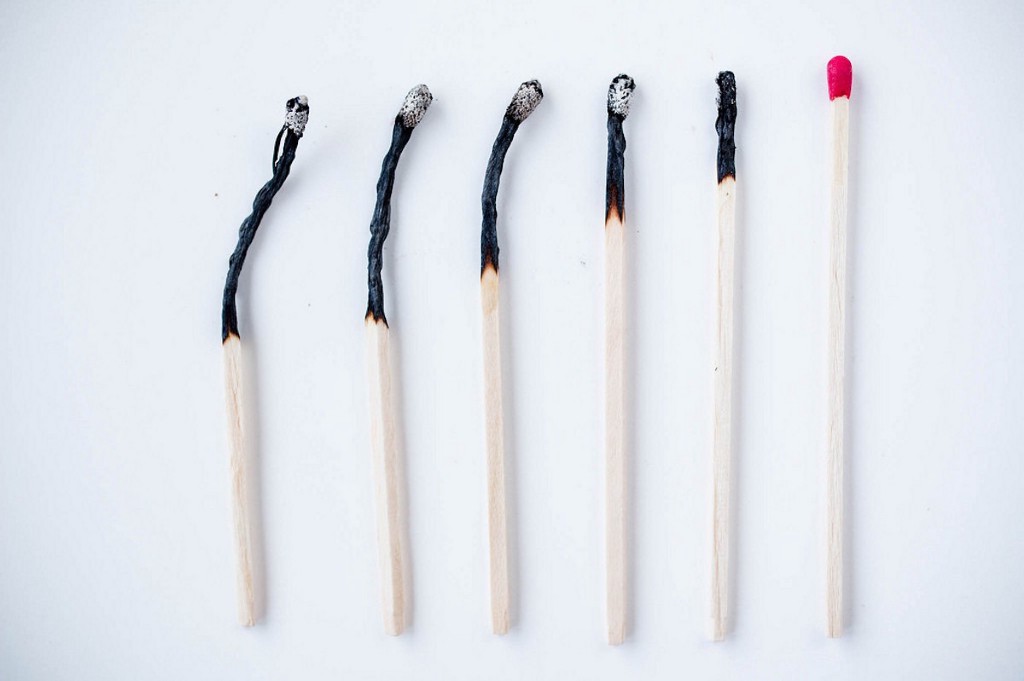
14 Books to Help You Deal with Millennial Burnout

In her popular BuzzFeed essay “How Millennials Became the Burnout Generation,” Anne Helen Petersen tries to understand the strange exhaustion that attacks those of us who don’t bat an eye at 60-hour work weeks but become quivering piles when asked to buy stamps or pick up the laundry or renew our registration. Rather than under-attentive, we’re over-focused and it’s making the world warp. “We didn’t try to break the system, since that’s not how we’d been raised,” Petersen writes, “We tried to win it.” For some, even while winning, it feels like losing. That’s where burnout creeps in. She cites Josh Cohen, an expert in burnout, who writes: “You feel burnout when you’ve exhausted all your internal resources, yet cannot free yourself of the nervous compulsion to go on regardless.”

For those of you nodding, laughing, crying, or a little bit of all three, here are some books to read when you feel like everyone else but you can survive without sleep, without love, without a break, and keep going anyway. (For those of you currently preparing to turn this list into a to-do list, I see you.)

Chemistry by Weike Wang

In Petersen’s article on millennial burnout, she describes “the psychological toll of realizing that something you’d been told, and came to believe yourself, would be ‘worth it’— worth the loans, worth the labor, worth all that self-optimization — isn’t.” In Chemistry, the narrator has a prestigious Ph.D. program to finish to make the parents proud, a boyfriend who needs to be turned into a fiancé, and then there’s the question she doesn’t have time for: what does she want to do, to make it all worth it ? The hours at the lab, the unanswered research questions and love questions, the palpable pressure from her Chinese parents, her cohort, and her all-too-supportive boyfriend lend themselves nicely to burnout. Indecision, self-doubt, general anxiety, and self-discovery ensue.

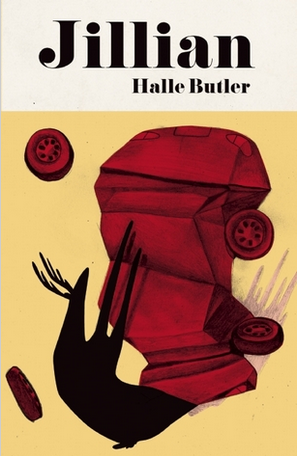
Jillian by Halle Butler

Rather than focus on the structural inequalities and absurd economic realities we are forced to live through, sometimes it feels better to turn to blaming one another. Twenty-four-year-old Megan is an admin assistant in a doctor’s office. Jillian is her 35-year-old coworker. Megan is obsessed with despising Jillian. They have nothing in common except their belief that the life they want is not the same as the life they are living. They characterize two ends of the millennial critique spectrum — Megan, inert and indecisive (“Should I get myself some abstract ambitions and start designing events calendars?”) and Jillian, overactive and indecisive (single, working mom who adopts special needs dog, riddled with shame for needing help). A perfect book for those of us just looking for a break from the self-care regimen, Kathleen Rooney of the Chicago Tribune called Jillianthe feel bad book of the year.”

Pretend I’m Dead by Jen Beagin

Mona is a 24-year-old housecleaner/sometimes artist with a passion for vintage vacuum cleaners. She’s tired of being asked “what else” she does “besides cleaning houses.” When she falls in love with a recovering heroin addict at the needle exchange where she volunteers, things get messy. The man,“Mr. Disgusting,” disappears and breaks her heart, but recommends she move to Taos, New Mexico for a clean start. She follows his advice. In Taos, Mona meets a whole host of bizarre characters who are also looking for spiritual healing, new beginnings, and closure. Read this one to remember why living like a millennial invites really great storytelling. The adventures continue in Vacuum in the Dark, Beagin’s second novel about Mona, out later this year.
Hole

Friday Black by Nana Kwame Adjei-Brenyah

The concept of the “millennial experience” tends to overemphasize the experience of white millennials while ignoring or doing little to acknowledge the different experiences black men and women struggle with in the same generation. In this searing (and darkly funny) short story collection, Adjei-Brenyah challenges that white-washed understanding of our generation and offers more variations on millennial burnout with stories that highlight the absurdity, violence, and racism alive and well in the tradition of American consumerism.

‘Friday Black’ Is a Brutal, Brilliant Satire of American Racism and Capitalism

Conversations With Friends by Sally Rooney

Read to discover that no one knows what the hell they are doing and the best thing to do about that is write about it. Rooney, who is rightfully touted as the voice of the millennial generation, writes about two young women at Trinity on the precipice of living some kind of life while in the middle of living several others. Frances and Bobbi are brilliant and witty ex-lovers who refuse to title their relationship, so other kinds of relationships weasel their way in between the two. There’s ambiguity, there’s inertia, there’s wit, there’s a reason to spend your day alone in bed with this book.

We Are Never Meeting in Real Life by Samantha Irby

If you aren’t following Samantha Irby on Instagram or Twitter, then add it to your to-do list and then go do it and cross it off so you can justifiably feel good about doing some self-care work for the day. In her essay collection, Irby translates the trials of adulting — budgets, The Bachelorette, Costco, mom-friends, etc.—into hilarious insights on how to survive the dumpster fire that is this thing we call life.

My Year of Rest and Relaxation by Ottessa Moshfegh

The year is 2000. The narrator is skinny and beautiful. She has lots of money, inherited from her recently deceased parents, and lives in a beautiful apartment all by herself on the Upper West Side. She’s graduated from Columbia, competed for and landed internships, maintained a low-paying job in the industry she is “passionate” about, and promoted a high-status social life. Until, one day, she stops. She makes sleep (through a prescription-drug-induced hibernation) her new side hustle, and then takes that passion on as a full-time job. While the main character isn’t really a millennial (to be in her early twenties in 2000, she would have been born before 1981), there’s a reason it resonated with people who were around her age in 2018.

Severance by Ling Ma

Candace is in her twenties and feeling pretty okay about leaving photography behind for a stable career managing the logistics of Chinese production for Bible sales in the U.S. Then, Shen Fever, a virus that’s basically burnout (it turns people into brainless zombies who continue doing rote activities until they die) strikes Candace’s office. In a matter of weeks, all of New York City is ravaged by the disease. Candace remains, trying to use the routine of her work to ward off questions about what to do next, until she appears to be the only uninfected person left in New York City. Severance critiques the behavior that leads to burnout: the motions we use to create pseudo-stability in the city are the same ones that point the fevered out as dead on their feet.

‘Severance’ Is the Apocalyptic Millennial New York Immigrant Story You Didn’t Know You Needed

Neon in Daylight by Hermione Hoby

Kate has just arrived in New York City in the summer of 2012. An unfinished Ph.D. and complicated relationship with an ex-boyfriend at her back, Kate settles into a borrowed apartment with a cat named Joni Mitchell. She wanders. She thinks a lot. She meets two people: Bill, a novelist with more accolades for the movie based on his book than anything else, and Kate, a recent high school graduate who prefers Bushwick and Craigslist to the college syllabus. Read to remember why wandering is good for the soul, and why no summer will ever live up to the first summer you spent on the other side of “throwing it all away.”

The Mental Load: A Feminist Comic by Emma

The Mental Load was originally an online comic in French about all the invisible labor we spin into “multi-tasking” aka the stuff of burnout. The address change we need to finish. The voicemail from Great Aunt Sue we haven’t listened to. The to-do list we lost and the laundry we forgot to fold and the iron we now have to buy for said-crumpled-laundry. It’s all there. Reading The Mental Load might not lighten the burden, but makes me feel like I have friends who really get it. Am I laughing or am I crying?

Goodbye, Vitamin by Rachel Khong

For when you are shocked to realize your life is not what you expected it to be, and shit keeps getting worse, anyway. Ruth has broken up with her fiancé, quit her job, and returned home to find her father, the brilliant history professor, now only occasionally lucid as he enters the late stages of Alzheimers. The novel jumps back and forth from Ruth’s comic assessment of the present moment to her father’s journal from the past. It moves quickly, so try not to be shocked if you suddenly jerk from laughing to crying. An efficient catalogue of emotions for all millennial compatriots, and a look at an under-considered component of millennial burnout: Baby Boomers.

Behold the Dreamers by Imbolo Mbue

In her essay on millennial burnout, Petersen points out the paradoxical skill set for millennials: “Our capacity to burn out and keep working is our greatest value.” If you do the right thing, it’s promised, and work hard for the right people, everything will work out. Unless there’s a Great Recession, and you’re not white. Jende Jonga and Neni, two young Cameroonian immigrants living with their six-year-old son in Harlem meet Clark Edwards, an executive at Lehman Brothers. Jende becomes his chauffeur, both Jende and Neni and bend over backwards to find opportunities to continue working for him. But when the Great Recession hits, they are forced to encounter the crumbling facade of their employer’s morality, to so-called American dream, their struggling marriage, and what comes next.

Pond by Clare-Louise Bennett

Jia Tolentino’s review of Pond is perfectly titled: “A Work of Fiction that Will Make You Feel Pleasantly Insane.” While that’s not wrong, it also might be said that this is a book to read when you’ve tried to read the sanctimonious Walden and can’t stop thinking about the time you heard Thoreau’s mom did his laundry for him. In the series of interconnected stories that make up Pond, the narrator is trying to meet the world in an unmediated way, to strip back all the layers of adulthood that obstruct her access to the world. She’s an unapologetic misanthrope and somehow that’s comforting. Maybe that’s the insane part?

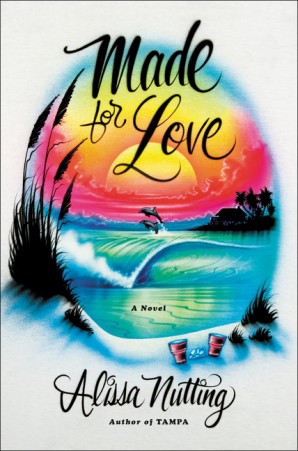
Made for Love by Alissa Nutting

Another story about failed love and dealing with what to do with your life afterwards. Except Hazel’s ex is a sociopathic Silicon Valley dude who wants to plant a chip in her head, and her father has gone all-out on a sex doll as an act of selflessness (because death is nigh, he explains, and sex dolls don’t mind if you die on top of them). Just when you think you’re the only one who is a mess, remember where you come from.

Humans Made of Memories

Dementia impairs not only memory but the personality and ability to reason. A once sensible person appears illogical. Someone with a mind that rarely forgot details has them go fuzzy — blurring the whole picture not only the edges. The loss of memory, as I’ve witnessed, rewrites everything about a person. When it started happening to my grandmother, I readily found explanations for her haze: too much medication, malnutrition, dehydration, water retention, insomnia. The birthday cards and holiday tins she sent, ones that used to arrive like clockwork, had all but stopped two years earlier. The money sent to her? “Who the hell knows,” my mother, her de facto caretaker, answered when asked. Everyone in my family found an excuse for why my grandmother had suddenly become impaired, why the woman we knew didn’t match the one we witnessed and heard about.
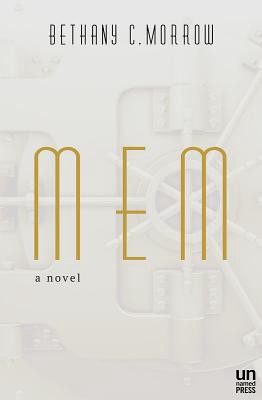
Dementia, Alzheimer’s, a gradual loss of self has been written about in our reality, but in Bethany Morrow’s debut novel MEM, memory loss and removal serves as the impetus for a fight for freedom. The primary character, Dolores Extract №1 (aka Elsie) made similar excuses as I would for my grandmother’s memory loss. Elsie observes her friends “…. losing track of time; … misplacing a teaspoon though she held it in her hand; … missing the trolley stop she used for ages. It turned out these were a very small price for her to pay…” The price to pay for losing memory or, in the case of MEM extracting it, made Elsie a guide for me to consider how instrumental memory is to our personality. Within Elsie’s friend something appears to be missing that she cannot latch onto. For Elsie, once the truth is revealed to her, once she cannot ignore those “quirks,” her friend’s distance is clearly a loss she could not help. It was also one she did not choose. Those parallels struck me hard, because being “in” on the reasoning doesn’t make it any easier; it can, in some ways make the reality scarier.

In Bethany Morrow’s debut novel MEM, memory loss and removal serves as the impetus for a fight for freedom.

When my grandmother’s mind began to fade, it was the little things that got my mother’s attention. The newly purchased box of Ritz now depleted; my grandmother claimed a visitor had eaten all of it. My grandmother insisted she’d talked to people just that day whom she hadn’t corresponded with in weeks. Missing checks, no deposits, depleting bank accounts. She insisted she took pills that upon recount she couldn’t have. These bits added up to bigger holes. My mother called me while I was walking up Queens Blvd, “I think your grandmother has dementia, like her mother.”

These bits of the everyday — something many of us take advantage of in abled bodies and neurotypical minds that recollect process — are lost due to the larger parts of self that have been removed and faded. There is no healing from memory loss. It’s not the same as those “brain fart” moments folks snap their fingers to in an attempt to recollect a name, a destination, a moment. This is far more permanent, the reality blurring, the insistence on why unclear as well. And the frustration, as my grandmother showed, was one of the biggest parts. Having someone witness your decline in real time can’t easily be overcome, no matter how much people like me and Elsie tried to explain it away.

In the world of MEM, Elsie is the titular Mem: a clone of a person (a Source) imbued with certain of the Source’s memories, which they live over and over. But Elsie is not simply a Mem; she is also an anomaly, the longest surviving extraction from another person. As a Mem, as a woman even, Elsie is property, yet she has the opportunity to live as any individual would. Inexplicably to those who came before and after her, Elsie exists as more than Mem, though not quite human to the larger population — it’s an odd and fraught dichotomy. The book begins with Elsie’s return to the Vault, the place of her “birth.” She’s been summoned back as the property she’s deemed to be by those who want her to exist within the confines of her origination, no longer able to live a life of her own making.

As Elsie explains, when Mems look at you they do not see you. “She was trapped in a single moment. She and every other memory were, quite literally, single-minded, replaying themselves every minute of every hour of the day and then watching their origins at night.” They see someone else, are in a different moment altogether. Elsie, as an extract, experiences memories, but she does so as a clone of Dolores, a replication of who Dolores could have been sans extractions. At one point my grandmother did not see my mother, her eldest child. As her dementia crept up and bloomed out, she yelled at my mother, saying she should be ashamed of herself. In that moment my mother realized that her mother was seeing not her, but a woman who had been a part of the dissolution of her 40-year marriage. It was one of the few times my mother yelled back, which turned out to be what it took to snap my grandmother out of this moment. When they talked later my grandmother admitted she hated this, all of it. “I know,” my mother said in an attempt to soothe though this moment in itself would also be lost among many recent memories. My grandmother would mourn many things in her life, but in her last year her inability to retain a sense of self unraveled her as much as it did those of us watching over her.

Much of MEM interprets the reality of recollection; memory itself is a strong indicator of who people are and what makes people whole. As I read it, the book emphasizes how much the essence of an individual depends on memory along with the turmoil and beauty within those retrospections. In MEM, the extraction process creates carbon copies of the Source housing a memory of the Source’s choosing. Aside from Elsie there are shells left behind as Mems expire or become worse off. It’s not only the Mems, but the Sources who may be husks of who they were or could have been. Chapters, passages, moments, brought me back to the loss of memory and its importance, especially within families, in attempting to carry legacy from one generation to another. The memory of an impermeable Black woman was altered when witnessing my grandmother’s mood shifts and her suspicion for everyone around her. This is a memory I know I won’t forget.

No, I Can’t Picture That: Living Without a Mind’s Eye

Does memory make us more or less cautious, more or less mindful, more or less guided in how we pursue our lives? Would my grandmother’s life be different if she didn’t remember the tragedies of losing a child months after birth or another one killed due to an inside job at a bank, his name never once mentioned in the local papers of the time? My grandmother didn’t get to handpick the memories she lost, as wealthy Sources do in MEM, ones that were intended to help them “heal from painful memories” though “the poor had as many as the wealthy.” In fact, the ones she still held on to didn’t seem to cater to what she’d prefer to recollect at will. The painful ones surfaced most often, and perhaps in lieu of that the good ones tended to recede into the background. A certain amount of willfulness was shed as well, an understanding as to what was happening in moments and how depleting it was to know none of this was under her control. In MEM not everyone is in the driver’s seat as to the results of extraction. As Elsie states, “The overwhelming majority of extractions continued to be exercises in purging.” And this “purging” doesn’t come with guaranteed results—it actually creates a big question mark, much like dementia. With dementia there’s no guarantee of anything except this will not stop. It won’t necessarily get better, as I had hoped time and time again as months extended to a year to a couple years. Like dementia for the one dealing with it firsthand and those seeking to provide relief, in MEM and in life, memory loss is not without consequence for all parties involved. But for the wealthy it’s an attempt to protect. The hurtful moments gone or the good ones meant to live on beyond the body of the inhabitant of said memories. This was not so much about retaining culture as it was about retaining power and blissful ignorance. But, for my family, for me, the loss of these memories meant a burden on family to protect what’s been passed down, to try and extract what hadn’t yet been said. To be able to take the good or bad would allow us to understand the person we were speaking to, but the reliving of these moments and the attempt to understand where they came from became difficult as it does for Elsie, as it does for Dolores, as it does for those who care for them both.

In “MEM” and in life, memory loss is not without consequence for all parties involved.

There seems to be a scary legacy in my family that those who are the most verbose, the most ardent and active in preserving the family, end up losing their memories in old age, particularly the matriarchs. I wonder how memory is so unique to each of us but also incredibly necessary as well. The storage of these moments over time, layers upon layers of accumulated knowledge and experiences that allow us to become who we are and to lose those stories, those people, those recollections ultimately casts a fade on our family, our history, our culture. For Dolores, the real Dolores this became evident physically as well as emotionally.

The consequences blend into an erasure of self. Who are you without those inherent memories that lead you to make decisions based on experience? Who was my grandmother without the knowledge of what the South was as a child, as a visitor when she cared for her grandparents in old age, and as a returning inhabitant in old age. The woman she was who was active, who was persistent, who cared for those in the generations that preceded her and came after her would now need a caretaker, was now suffering the same fate she’d seen her mother face as not being able to pinpoint even when this happened but knowing, simply, it was in the past. This will that drove her to get up everyday was sapped and I think with the lack of those memories that struck her as to who she was a clear identity she became, and she admitted this as she had seen it up close in those spurts of recollections that came back to her “a problem.” Where we didn’t see her that way, we couldn’t ignore that she wasn’t who she used to be because of this loss, not due to extraction but without any willful justice that we could perceive. In MEM the extraction process is a luxury; even the creator of the procedure notes it as such, recognizing that even those in a lower socioeconomic class could use the option, but even if they could afford it would they use it and would they do so as frequently as the upper class does to “protect” themselves from harm and hurt? Would that translate across class or mainly be seen as optional?

Who are you without those inherent memories that lead you to make decisions based on experience?

One of the last moments I got to sit with my grandmother in her bedroom to ask a little about her migration from South Carolina to Nassau County. The smoke from a cigarette held between her fingers spiraled upward. The smell of it filled her home and clung to my clothes like a second skin. In her nightgown she sat slightly slumped in bed, speaking in her Southern smoker’s drawl, slower than usual. She sounded like herself, chuckled at a flicker of a memory only she knew, and tried to relay to me to type. It was one of those moments when I attempted to fool myself into thinking, “Perhaps this dementia is not as bad as we all think it is.” My grandmother was telling me that my grandfather failed to inform her of the right station (bus or train) to meet him at when she got to Hempstead. It was 1950, there were no cell phones, and as fate would have it they’d link up. “How’d you find each other?” I asked. She scoffed, “Kindred spirits, I guess.” After a few minutes — these conversations didn’t take place more than ten or so minutes at a time — she expressed her exhaustion and I helped her back into bed. Whether that moment was solely happy or tinged with regret, I couldn’t say. But in the memory I have a strong sense my grandmother wanted to hold onto as long as she could.

Chigozie Obioma Wants to Write a “Paradise Lost” for the Igbo People

Chigozie Obioma’s latest novel draws from his own experiences of growing up in Nigeria and immigrating to Turkish Republic of Northern Cyprus as a university student. At once following the arc of Greek tragedy and drawing on Igbo cosmology, the story breaks away from any traditional Western narrative structure.

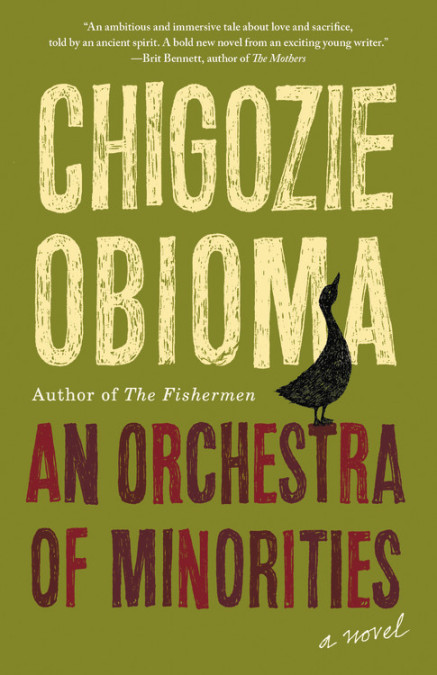
An Orchestra of Minorities
Buy the book

The title of the book, An Orchestra of Minorities, suggests a story of power, loss and justice. It is indeed about those things but mainly centers on the relationship between Chinonso, a poultry keeper, and Ndali, a woman from Nigeria’s elite class. The two fall in love after Chinonso sees Ndali about to jump off a bridge and flings down two of his beloved poultry, killing them, showing the unbearable magnitude of the act. It works and as things grow serious between them, Chinonso realizes he needs a college degree for Ndali’s family to ever accept him. He sells his poultry farm to attend college in Northern Cyprus, only to realize the friend from childhood who’d arranged for him to go there has deceived him and stolen his money. Stranded, Chinonso must find a way back to the country, birds and woman he loves.

With Chinonso’s “chi” or guardian spirit — who’s been around since the beginning of time itself — narrating, recounting the lives of his past hosts and the events they witnessed, Obioma ambitiously maps eras in Igbo history in his novel.

I talked to Obioma over the phone about fate, agency, the choice of language and the impacts of modernization, both within the story and in Nigeria.


Raksha Vasudevan: What was the genesis of the book?

Chigozie Obioma: The idea came when I was studying in Northern Cyprus and met another Nigerian named Jay. Like the main character in this book, Jay was cheated of his money by ‘agents’ who arranged for him to come there. Shortly after we met, Jay died. I wrote about all of this for The Guardian. It was a very brief encounter — I think we spent about six days together before we learned that he had died — but his situation never left me. I spoke with him a few times alone during that period. I remember — although it sometimes comes in flashes — I remember he’d just become engaged to a lady. And that’s one of the reasons he wanted to get back onto his feet as soon as possible. And in the aftermath of his death, I kept thinking what happened to that lady? What was it like to learn that this guy had basically given his life for her hand? We never, of course, had any way of knowing what became of her, how she processed this grief. But that idea of sacrificial love, I wanted to write about that.

RV: Your novel is grounded in Igbo ontology and incorporates sayings and stories from Igbo folklore. Why was it important for you to include those in the narrative?

CO: I see myself as an ontologist — someone who’s very concerned about the metaphysics of existence and being. So, I find themes like fate and destiny very compelling. I think they’re also at the core of the most primal questions we ask ourselves as human beings. I wanted to probe into the Igbo idea of life and how we negotiate the idea of fate and destiny.

Themes like fate and destiny are at the core of the most primal questions we ask ourselves as human beings.

And those questions are deeply connected to the idea of the “chi,” which stands at the very center of Igbo cosmological belief. And I’ve always been fascinated with John Milton’s Paradise Lost. I think he did a great job of probing those questions that form the bedrock of Western civilization: those of free will, pre-ordination and pre-knowledge — like, if God knew that there was sin in the world, why did he allow man to actually commit it? — so I wanted to write something like that for the Igbo people. You know, this civilization we once had and its knowledge has been almost destroyed by the encroachment of Western ways of living and culture. I wanted to have some kind of monument in fiction for that.

RV: Did you have to do some research on those ontological systems or did you know much of it already from growing up in Nigeria?

CO: While growing up, my mother’s father and even my mother and the adults around me would always say “this event was the result of this person’s chi’s transaction with say, death or sickness or whatever ill fortune has befallen this person.” So, there was always a recourse to the chi — I was always conscious of that, even when I said my name. Chigozie is a kind of prayer that my chi will bless me. Many Igbo names have an allusion to the chi like Chinua.

RV: Ah, interesting. I never thought about that.

CO: Yeah, so I would always ask questions like: what is the meaning of the chi? Why are you saying that my chi is responsible for that event? And I also wanted to use the novel to map the history of the Igbo people by having the chi as a reincarnating spirit who has seen different eras. So, yes, I had to do some research in that regard. I read a lot of books and in the acknowledgements section, I list some of these books. But I also did field research with my dad in Nigeria. I went with him to a shrine and we spoke with a priest (one of his quotes actually appears as an epigraph at the beginning of this book).

RV: On the subject of the chi, I wanted to ask how you see the chi as different from a person’s conscience?

CO: From all the research I did, I concluded that there is a tripartite idea within Igbo beliefs on the composition of man — almost like the Judeo-Christian idea of the Holy Trinity. You have the physical being, the chi and the reincarnating spirit. The Igbos believe that a couple can copulate but unless there’s an ancestor who decides that it’s time to re-enter the world, it’s impossible for conception to happen. The reincarnating elder embodies the conscience and is relatively unique to each individual whereas the chi does not die — it’s recycled again and again.

RV: So that explains why Chinonso’s chi often refers to his former “hosts” — other people he’s spiritually accompanied before Chinonso — who range dramatically in their circumstances (for example, a slave, a fighter in the Biafran civil war). How did you choose the other hosts that Chinonso’s chi had inhabited? And why was it important for the chi to narrate their stories as well?

CO: Well, I wanted to chart the evolution of the Igbo nation up until the present time. So, of course, one would look for landmark events such as the first time the Igbos encountered the Europeans, the time of slavery and the Biafran war. But also, there was a host who was Westernized and the chi, through inhabiting him, reflects on how Igbos have become African Westerners. So it was also a way to illustrate certain points.

RV: On the point of Westernization, the chi and other spiritual beings often lament the loss of certain Igbo traditions — e.g. women no longer wearing uli (body drawings), men no longer keeping their ikengas (statues of horned deities) — and they attribute these losses to “the White man [who] charmed their children with the products of his wizardry” like mirrors, guns, tobacco and eventually planes. Can the challenges that Chinonso faces in the story be attributed to this loss of tradition?

CO: You know, Achebe once said that Africans are at the crossroad of cultures. And I think it’s an unfortunate state that I don’t know we’ll ever escape. My idea of colonization is that there are grades of it. In India, for instance, I always wonder why they didn’t become majority Christian?

RV: Yeah, I’ve wondered about that myself.

The primary foundational ethic in the Igbo belief system is that someone who holds a person down also has to be on the ground.

CO: I think the English were a bit more respectful of some cultures than of the Africans. In Africa, it was really vicious — it was really a ‘civilizing’ project. They thought, “okay, these guys are brutes without any kind of religion or belief system.” But in India, they at least saw how complex the Hindu belief system was. If you look across Africa, almost none of the countries retained their religion, their language, none of it. Things were swept completely away. That uprooted the foundation of people and that makes it very hard to make the case that we should keep embracing everything that comes. I think that development should be organic, should come from the soil of that place. Even if it’s coming from the outside, it must come in slowly to give people time to embrace it and make it theirs. You know, just last week in Nigeria, Boko Haram attacked a military barrack and killed over 100 soldiers. And this is a ragtag army that’s not trained in any way.

RV: Wow.

CO: So why was it? Some of the military soldiers said that their equipment was ill-suited to fight even though the government keeps giving money but there are some people high-up who are so wicked that they’ll take like ninety percent of the money and give only ten percent to equip these soldiers who are risking their lives. So why are people like that? If you go back to precolonial times — my dad talks about this all the time — it was impossible to think you could do something like that. In the chaos of trying to merge all these tribes together, something was lost. Now, we don’t even have a central moral culture in Nigeria. But in the separate nations you had before colonization, the primary foundational ethic in the Igbo belief system is that someone who holds a person down also has to be on the ground. Achebe was always saying this. That’s a very radical statement against any kind of marginalization, against any belittling of another person or selfishness but that was lost and nothing came up to replace it. So, the book examines in part how the chi be reacting to these things.

RV: And even Chinonso, the main character, has some of the reactions. For example, when he returns to the ‘new’ Nigeria after several years in Cyprus, he notes “a new bleak humor that trivialized the horrifying” that accompanies rapid urban growth and advances in technology like mobile phones and solar panels. Do you think modernization allows us to ignore dark realities like poverty, climate change, etc.?

CO: Well, I do not hope to idealize anything. But in precolonial times, it was impossible in Igboland that someone wouldn’t have shelter or food to eat. But now, we all have these advancements but if you go to Nigeria, you go to Lagos, you see people sleeping under the bridge or on the side of a street. Modernization has brought good things to us but it also brought its ills. I just wanted the chi to comment on all these changes, whether good or bad. There are some of them that the chi acknowledges are good — for instance, planes and banking. When the Europeans first tried to sell this idea to Africans, people were laughing, saying “how stupid can these people be? How can you expect me to take my hard-earned money and hand it to another people to keep for me?” My people tell stories about this all the time. And they were shocked to discover that you can keep your money with someone else and you even get more interest for it. So, I wanted to show the clash of civilizations and how it manifested in every phase of history of my people — how it still manifests itself today.

RV: I felt like even when Chinonso is in Cyprus, we see that clash in other ways as he encounters the Cypriot culture.

CO: Yes, indeed.

RV: The characters often switch between the White Man’s language (English), Igbo and pidgin, which at times creates some tension: for example, Chinonso struggles to express himself in English yet that’s the language his lover, Ndali, prefers. The reader also has to do some work to decipher conversations in pidgin and sayings in Igbo. Why did you build these tensions into the story?

CO: There’s a dilemma in that I’m writing in the English language, which is the language of education in Nigeria, it is a formal language. But there’s a dilemma in that the chi itself is imbued with a kind of prelapsarian eloquence. If you look at the discourse between Chinonso’s chi and the guardian spirit of Ndali, the register is different than how a Nigerian person might speak. The chi’s register corresponds more to ancient Igbo. But all of these things are being translated to English, which has, in many ways, a flattening effect in that context. But on the other hand, in the human characters, you’re right in saying that Chinonso prefers Igbo. For Nigerians who aren’t very literate or haven’t had much formal school, they resort to Igbo or pidgin. And there’s also a class division that influences all of that: the bourgeois class, or the elite class, that Ndali belongs to, seriously privileges the English language because that makes them feel ‘higher’ than lower-class people. I think the disparity also gives authenticity to the characters.

RV: Do you feel the presence of a chi in your own life?

CO: You know, I still see myself as a Christian but with my inquiry into the ways of the Igbo people, I began to be more curious about religion and faith. There are still many people who never converted to Christianity, my grandfather, for example. So, yes, these days, I find myself looking at life from the lens of Igbo cosmological beliefs. And I do think of the chi sometimes.

RV: The title of the book refers to all the minorities or marginalized of the world who are powerless to control the events of their lives — all they can do is wail or ‘sing’ their complaints. All the characters at various points seem to be part of this orchestra, tossed about by the fates. Does this counter Western storytelling traditions where most characters, especially the protagonist or “hero,” have a relatively large amount of agency in their lives?

In my novel, I wanted to record some of the ways in which immigration can be dehumanizing.

CO: The choice of title was informed by the phenomenon of the hawk attacking the poultry. It happens all the time, I saw it a number of times growing up. Once that happens, people would say “listen to how the hen and other chicks sound now in the aftermath of the chick having been stolen.” And it’s an orchestra of small things. So, the phenomenon is about fate. So, we could just be doing our own thing, and we may not aware of what society, other people, other nations are doing. My grandfather for example did not know he was Nigerian. Nigeria was created in 1914, a few years after the Berlin Conference after the Europeans divided Africa and declared Nigeria to be a British territory. My grandfather died not knowing about this, living in Nigeria. Nobody consulted the Nigerians. So, the hen is there and suddenly, something precious to it is gone. You can apply it to anything. Again, it goes back to the story of Jay. Why him? Why was he chosen to be the victim of this vicious ring of organized crime when the rest of us made it through? Who orchestrates what happens?

RV: There’s one scene after Chinonso arrives in northern Cyprus and we learn that he’s been cheated of his money where he and another Nigerian friend are on a bus and two Cypriot women want to feel their hair. I found that scene quite disturbing even though it was a minor one. Why was it important for you to include this scene?

CO: I wanted to record some of the ways in which immigration can be dehumanizing. And that incident actually happened to me. It was not only to reflect how Africans are treated, like exotic objects or something, but also to heighten the effect of what’s befallen Chinonso. His life has been basically destroyed by this guy who cheats him, yet everyday life, including everyday racism, continues.

RV: When did you decide that Chinonso would be a poultry keeper?

CO: I have always been fascinated with birds. I don’t know why but it was an object of fascination of child. I wanted to imbue Chinonso with this almost radical innocence to contrast the privileged background that Ndali comes from.

RV: That makes sense.

CO: And the Igbos believe in different kinds of reincarnation: there’s not just the reincarnation of the chi or the human being, but also reincarnation of events. So, something can happen now and echo again in the future. You lose something once, have it come back to you in a different form, and lose it again. I’ve always thought about radical narrative structure — of creating a kind of doppelgänger of events. So, I wanted to replicate Chinonso’s love for the gosling — something he loved as a child — and the loss he feels when it’s stolen from him and in trying to get it back, he ends up destroying it himself. There’s a parallel between that and the way Ndali comes into his life and what unfolds between them.

RV: What other books based on Igbo ontology / cosmology do you recommend? And what other books are you reading right now that you would recommend?

CO: I’m very grateful to Achebe. His trilogy — Arrow of God especially — has a lot of Igbo philosophical beliefs. The most interesting book I’ve read on Igbo ontology is After God is Dibia. That book was very helpful. And another called Odinani that’s downloadable on the internet. I’m good friends with Jennifer Clement, the President of PEN International, and I’m re-reading her books Gun Love and Prayers for the Stolen because I want to ask her some questions and publish an interview with her. I’m also about to start reading The Myth of Sisyphus by Albert Camus because I’m working on an essay about differentiating between revenge and justice from both Igbo and Western philosophical perspectives.

RV: That’s interesting because Chinonso struggles with this differentiation when he returns to Nigeria after Cyprus. It’s difficult for the reader, as well, to see what actions would fall into which category.

CO: Yes, there is some overlap sometimes, I must confess, but most of the time, justice can be unfair to the oppressed. And that is very hard for people to swallow. In Nigeria, across Africa, even here, people conflate the two. For example, everybody in South Africa is embracing this guy named Julius Malema who speaks about how black South Africans must treat whites the way they themselves were once treated during apartheid. At the end of the day, what this guy is doing is completely against what Mandela was trying to do, to the extent that Mandela made the guy who jailed him his Vice President just to show how important it is to let go of resentments, of all aspects of revenge. And if white people are now oppressed, people will forget that they were once the oppressor. Sometimes, just letting go is how you get justice.

Could a Daily Poetry Podcast Save Your Mental Health?

Why produce a daily podcast? If your subject matter is the news, it’s the only time frame that can keep up with the snowball-rolling-down-Mt.-Everest pace of what’s going on. If your subject matter is poetry, the point is to slow everything down and keep slowing everything down.

That’s the goal of The Slowdown, from U.S. poet laureate Tracy K. Smith, the Poetry Foundation, and American Public Media. For five minutes every weekday, Smith introduces a new poem, explains why she selected that poem, and reads it. That’s the whole podcast. It’s a REAL THING. You can actually subscribe to a show that gives you permission to listen to a poem for five minutes read by the woman who was nominated twice to spread poetry all over the country. This is a literary once-a-day multivitamin to keep your body going a little bit longer.

Even if you don’t think you’re interested in poetry, a podcast that asks you to spend a few minutes sitting in thought is good for the mind and the body. At the crest of 2019, it can be hard to find the opportunity (or even the willingness) to slow down. We spend so much time multitasking, flipping from task to task to get everything done — not to mention fretting over it all. But the science says that multitasking drains our brain and is destructive in the long run. According to the American Psychology Association, we expend all our energy on “goal shifting” (“I want to do this now instead of that”) and “rule activation” (“I’m turning off the rules for that and turning on the rules for this”) that we never get anything done. By taking time to do one thing for five minutes, we can reorient our brains to focus on one thing for a little while. There is mounting evidence that mindfulness and meditative thinking — let’s say, about one topic or feeling, like in a short poem — can contribute to future health and mental state. And a few minutes is all you need.

There is mounting evidence that mindfulness and meditative thinking  can contribute to future health and mental state.

“One thing about five minutes is that it makes it really accessible and really approachable. There’s no excuse for saying you don’t have time to listen to it,” said Tracy Mumford, the show’s producer. “I don’t think of five minutes as a constraint, I think of it as the perfect package.”

The simplicity of the show — theme song, introduction, poem, credits — is one of its greatest strengths. You can tell how intentional every choice is on the show, like making every single episode exactly five minutes long. As a podcast listener and a poetry reader, there is nothing more comforting than seeing the same episode length over and over again. Like any daily podcast, I can start to build trust with the show because I know it won’t drop an epic into my ears.

The show’s production stays consistent, while Smith’s expertise leads us forward. And there’s no one more suited to lead than her. Smith addresses each piece of work with care and an uncanny ability to see our emotional futures, as if she knew what you wanted to hear even before you did.

Smith addresses each piece of work with care and an uncanny ability to see our emotional futures, as if she knew what you wanted to hear even before you did.

“I draw both from poems I’ve loved a long time, and poems that are the result of careful sleuthing,” said Smith. “I seek poems that will fit in 1 or 2 or 3 minutes, and that use vivid, evocative language to examine familiar aspects of life. Some poems are topical, like Franny Choi’s Gentrifier, while others shed new light on ordinary feelings, like gratitude, or experiences, like coming-of-age.”

While The Slowdown asks for a moment of your time, it isn’t fluffy escapism. The poetry doesn’t shy away from the emotional, the heavy, and the real. In the first few weeks of episodes, we’ve heard poems about alcoholism, Portrait of the Alcoholic in Withdrawal by Kaveh Akbar; the torrid history of blues singers, True Stories about Koko Taylor by Eve Ewing; the contradictions of living, Spring by Adra Collins; and the happiness of owning and living in a body, Hip-Hop Ghazal by Patricia Smith. There’s no theme that unifies the works, and they’re not specifically topical, since Smith and Mumford record in batches weeks before each episode airs. But, Smith continues, “The only thing every poem has in common is that it speaks to me personally while also holding up as a solidly-crafted piece of writing. And that leaves open space for a great deal of range and variety.“

The show’s intention also springs from how Smith introduces each poem. It’s not an academic primer, nor an urge to get you to listen in the first place. Before each poem, Smith relates a memory, a feeling, or idea that she feels is related to the work coming up.

In one episode, as she introduces the poem Spring by Arda Collins, Smith remembers a fight she thought she had with her cousin when she was a kid. One night, she sat up in bed and realized it was about her childhood friend and felt awful. “How reliable is anyone’s memory, and not just things that happened years ago,” she says, “but anything, everything that happens. how clearly can we see ourselves?”

As she introduces Spring, she explains the poem is “about memory, how far we sometimes feel from the things that we’ve done, but we’ve done them. And in a way, even when we don’t remember them or can’t seem to properly acknowledge them, we’re still living with them. I think this means that our lives are full of unacknowledged contradictions, we are full of unacknowledged contradictions.”

“[My] preface is an attempt to open up the thought space, or the emotional space, where the poem might productively land,” Smith wrote to me via e-mail. “I’m getting the reader — who is likely in the middle of doing something else — ready to listen deeply to the poem as it does its own particular work.”

The narration isn’t necessary — as Smith notes, each of the poems she selects could stand on its own — and yet, as a listener, you appreciate that she points you in the right direction every time. It is an honest orientation, like a hiker who has walked this path many times before and knows what mood you should be in to wander amongst these trees.

In 2019, I bet another outlet will declare poetry to be dead yet again. But we’ll know it’s alive and kicking, sending us five-minute missives every Monday through Friday.

Alice Stephens Is Blowing Up the Traditional Adoption Story

There are not enough novels by adoptees about adoptees. When I saw the title of Alice Stephens’ debut thriller novel, Famous Adopted People, and found out she was a Korean adoptee like myself, I couldn’t wait to read it. I wondered how, among other things, she would tackle questions of agency for an adoptee protagonist.

In Famous Adopted People, two adoptees visit Korea: Mindy to find her birth mother, and Lisa just to have a good time. When a birth search and a romantic date go horribly wrong, Lisa Pearl finds herself in a secret compound in North Korea. Uncertain whether she is captive or guest, Lisa must keep her wits about her in order to survive — even thrive — in such a glamorous and terrifying dystopia.

I spoke with Alice Stephens about how her novel resists stereotypes of the “good adoptee” narrative and reorganizes questions of identity, loss, and empowerment surrounding adoption, how global politics influenced both her plot and characters, and what it was like to bring Kim Jong Un to life.


Marci Cancio-Bello: You not only destroy the tropes about adoption — which always centers around the triad: adoptee, birth mother, adoptive family — but also the whole lens through which adoption is comfortably viewed. We need stories about adoptees who are not interested in searching for their birth parents alongside stories about adoptees who are. I loved that while Mindy’s entire story is about finding her birth mother, Lisa doesn’t care.

People don’t want to part with the traditional feel-good narrative of adoption about the infinite capacity of the human heart to love someone who’s not of your family or even of your own race.

Alice Stephens: Thank you so much for saying that. I’ve encountered a lot of resistance. I think people do not want to consider this alternate adoption story. They find it disturbing, and don’t want to part with the traditional narrative of adoption, which is a feel-good story about love and the infinite capacity of the human heart to love someone who’s not of your family or even of your own race. They don’t want to think that adoptees have problems, and I think we all do. We all have identity issues and some sort of feeling about our adoption that isn’t 100% positive. I have a great adoption story, I love my family, they’re great, but I had this problem within myself because I was different from them. I have three siblings who are the biological children of my parents, and I needed to see myself in a story. I hadn’t seen myself in any story, so I decided to write it.

MCB: There are many references to plastic surgery and re-forming one’s identity for both Asian and non-Asian characters. One character even explores how to make a Western eye look more Asian. That moment struck me as a reversal of the constant whitewashing adoptees often feel.

AS: As I sat down, I knew that there were all these themes I wanted to include. I had been reading a lot about North Korea and really interested in that, and a lot of the identity themes transcend even adoption — how people allow themselves to be identified, how easily they can change their identity, how much they want to conform — so I had themes of consumerism and plastic surgery and that sort of thing in there, to hopefully make people think more deeply about identity.

MCB: Whenever I talk to people about North Korea, there is often a veil of disbelief that places like that can exist, that such stories feel too dystopian and bizarre to actually be real.

AS: It’s stranger than fiction.

MCB: Two-thirds of your novel is set in North Korea, and those were the parts I was most interested in. I followed her journey through South Korea, but once Lisa crosses into North Korea, I was hooked.

AS: Oh my gosh. That’s great, because I get a lot of reactions that are the exact opposite. Readers tell me they often start out thinking it’s going to be a light, fluffy jaunt in South Korea and a fun and funny story, and then it takes a sinister turn to North Korea and for some people, that shift turns them off. I’m so glad to hear that that hooked you. That’s really the heart of the story.

MCB: You do a wonderful job of blowing up the assumption that North Korea is isolated, because Kim Jong Un’s character moves about so freely, and we follow so many dark, underground threads from South to North Korea. You also build this terrifying cast of characters, the Gang.

AS: I very loosely based the two Americans on people who actually did defect to North Korea. One of them was Charles Jenkins, who eventually married a kidnapped Japanese woman — because North Korea really does kidnap people. Charles Jenkins was in a little bit of trouble in his home base of South Korea, and walked over the DMZ line to escape his problems, and seemed to survive, even thrive in a way.

Both Americans had a different experience than North Koreans because they were perceived as special. They starred in Kim Jong Il’s movies. Oh, that was another book I read, about Kim Jong Il kidnapping the most famous South Korean movie director and the most famous screen actress and taking them into North Korea and eventually having them make movies because he loved movies and wanted to make prestigious movies that would bring him awards and make North Korea into a place that people saw as a cultural center, and not just as some unpredictable dictatorship.

So all those stories mingled together. I made up the two wives. What I wanted to do was show that North Korea cannot exist without America. America is part of North Korea. The American political system, that Cold War and rivalry, were all complicit. The whole world has made this country. And so that was something that I wanted to make clear.

I also wanted to acknowledge with the two wives that North Korea is not the only place affected by these antiquated notions of right and wrong and the strange sorts of alliances that people build against their enemies. So I took two countries that were very badly managed — Zimbabwe was colonized, and that ruined the whole country, and after they became independent, Mugabe came in and was a terrible dictator, and his story is parallel to the North Korean story. So that’s why I included them. But I did want it to be international, to show that it’s not just North Korea, but the whole world can be encapsulated within the North Korean story.

MCB: I do have to ask how you tackled writing Kim Jong Un as a real, lively character.

AS: It was fun. It was probably the most fun part of the whole thing, just because he can be such a buffoonish character. I made him into a wannabe thug who enjoys looking and acting like somebody dangerous, which he really is, but in an American way. By having him be a large part of the story, I could also introduce readers to North Korea itself and the things that happened there. Also, going back to that theme of how North Korea does not stand by itself but is created by the political situations, to have him be really Americanized seemed really important in the way he acts and the things he likes to do. There are Americans like that. One of them is our president. Yes, he is a cartoonish character, he’s evil, he’s all these terrible things, but people are making him the apotheosis of evil, whereas our allies are just as evil. We have bad things that happen in our own country, and we support people who torture and execute their own people, so his character is just mixing up the morality in the book.

MCB: His relationship to Honey is such a perfect metaphor for two people playing each other, thinking they’re the one in control. I’m not sure who is more dangerous and devious in this story.

AS: Honey made Kim Jong Un and enabled him, giving him his sense of being invincible and special and great, but he has no more affiliation and loyalty to her than anybody else, and it’s all about him and his survival. I think she would do the same if she had to.

MCB: Honey is such an American “ideal” figure — blond, blue-eyed, beautiful, and pulling political strings behind the scenes. We keep coming back to the belief that you can form, re-form, or conform your own identity, and I find that epitomized in Honey.

AS: As I said before, I wanted to blow up the traditional narrative of an adoption story. Instead of some pure source of maternal love that’s going to save the adoptee, I wanted to make her the anti-birth mother who did not conform to that trope. I’m mixed race: my birth mother was Korean, and my birth father was Caucasian American, so I just reversed that. What if my birth mother was actually Caucasian? I based her on a lot of people and attitudes that I experienced growing up, of white privilege — people thinking that because they were wealthy or beautiful or have good taste, they’re more important to the world than anybody else.

MCB: One character I really loved is Ting. She’s so quiet, and yet so tough, even in the smallest moments. Something about her reminds me of the actress Bae Doona.

AS: I wanted to give Lisa an ally. You always need someone to help you, no matter what situation you’re in. It’s a rare person who can do something by herself. The person who you least expect, the person who is the least powerful, is the person who ends up taking that extra step. I wanted to make her female, I wanted to make her Asian, and I wanted to make her feel at first like a child or a minion to the others, but the whole time, she’s thinking to herself, she’s observing, she’s smart, and she wants to escape from her hellish life. She chooses the one person she sees as her best chance, but also as somebody that she can actually morally like.

MCB: I think the moment when Ting’s backstory is revealed, Lisa realizes that other people have suffered for a long time also. She’s also a foil for Mindy’s character.

AS: Yes. Ting is the anti-Mindy, and she’s very strong. She hasn’t had all the advantages that Mindy has. She knows what to do, she’s going to get it done, and she knows who to help. She’s a by-the-bootstraps strong female character. There are a lot of bad characters in the novel, and Mindy is a good character, but I wanted somebody who would actually be a good character and not the expected good character. I wanted somebody who would be a good contrast to Mindy and Lisa, and a good role model for both of them.

MCB: Speaking of role models, I’m really curious about Lisa’s “Famous Adopted People” list that she and Mindy compiled when they were young, and which she references throughout the book. Was that something that you researched specifically for this book?

AS: It was always part of the structure of the novel to have quotes of famous adopted people. Actually, in the first iterations of the novel, each chapter was named for an adopted person, and I connected them a lot more obviously to the story, but my very wise editor, Chris, said that’s too much, just dial it back.

What I wanted to do was show that North Korea cannot exist without America. America is part of North Korea.

I was adopted in 1968, so I was one of the first (what I thought was the first) transracial adoptees. There were people who came before me, but it was very, very uncommon when I was young. Adoption was still considered kind of a shameful thing, and people didn’t admit to being adopted. Some people didn’t know that they were adopted, so when I was growing up, I would always make note if I found out that somebody was adopted. Michael Reagan is Ronald Reagan’s son, a pretty obscure figure, but I remember when Reagan was president, I made a mental note when hearing that his son was adopted.

I would say about three-fourths of the list was made of people I knew about growing up. I wanted to include them and their words, and — in the earlier iterations — a bit more about their stories, just to show that adoptees are such a huge population with a wide variety of their experiences. Some people didn’t care about their birth parents, some people really did, and all had different ways that they dealt with being adopted. I wanted that as a counterpoint for something to show readers, again, that yes, this is one story, but there are all these other stories out there. I’d always been Googling famous adopted people, so when I was writing this book, I did use Google for some of the adoptees that I didn’t know were adopted, like Greg Louganis, Faith Hill, and people like that. I used the internet for that, but mostly the list was made of people I had heard about my whole life, to make their voices heard too, so that the reader would know that all adoptees cannot be put in one bucket. We are all individuals with our own stories.

MCB: The epilogue especially feels like a love letter to all adoptees. I appreciated that it addressed all these stereotypes, acknowledging that everyone is telling stories except for the actual adoptees, which I think is still mostly true in 2018.

AS: I do too. But I do see, nowadays, that there are more and more adoptees speaking out. I think it has a lot to do with that big wave of adoptees, of which perhaps you are one, that started in the 1980s and 1990s but really crescendoed in the 2000s. I didn’t meet my first Korean adoptee until I was in my late 20s, but now I meet them everywhere. When you’re more visible, you feel like you can speak out more. And I think adoptees aren’t taking it anymore. They’re saying, “Come on, we’ve got our own voices, and we’ve got our own stories, and we don’t want other people to control that.”

MCB: I do have to say that this book had a truly satisfying ending, at least for me.

AS: Oh, I’m so pleased. Actually, I have to confess I wanted to just end the book without the epilogue, but my editor said, “No, you’ve got to give readers something to make sense of it.” As usual, he was right.

I think that a lot of non-adoptees read this as a mad caper where the protagonist just happens to be adopted, but it’s really a thriller and I really did want to make it clear that this was a story about identity and adoptees, and how we make sense of the world.