The Author of “Cat Person” on Turning Your Worst Feelings into Fiction

Writers, editors, and publishers alike speak fearfully of the Curse of the Second Novel. Since short stories get shafted in terms of literary respect — made secondary to the Novel in general — “how to follow up a great short story” hasn’t really been a talked-about issue. As a topic of conversation, this is yet another thing we can add to the list of things Kristen Roupenian’s “Cat Person” changed after its publication in The New Yorker in December 2017.
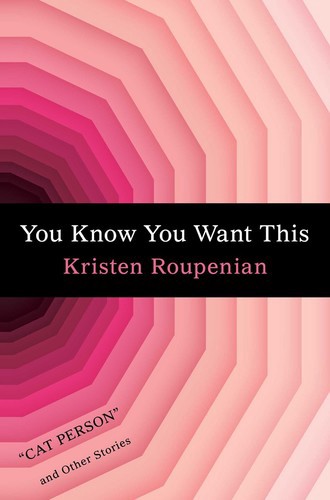
You’ve probably read all the stats about the story and heard about the figures for the subsequent book deal. Those numbers are exciting in their way because they might force some philistines to finally give the short story the credit it deserves. But I would encourage you to go back to the source because Roupenian’s new collection, You Know You Want This, makes for far, far more dynamic reading. The 12-story collection includes “Cat Person,” but the better headline about the book would include “sex slave” or “killing your dad’s new girlfriend by fusing her into a multi-bodied monster made of other hateful people.”

Obviously the second idea is a bit tricky, so we will be forgiving towards people who use Roupenian’s stratospherically successful short story as a means of cluing in readers. In the following conversation, however, we didn’t talk too much about it. We talked about how she crafted her spare prose to explore villous and nebulous social territory. We talked about the way horror and fabulism can be used to do such exploration. And then, looking to the future beyond this story and this collection, we talked about what she believes fiction, at large, is capable of.


Lucie Shelly: Can you talk a little about the genesis of the collection? A lot of people will know your name from “Cat Person,” but I believe many of these stories were written before that piece went viral. Had you conceived the collection before then?

Kristen Roupenian: Yes. When “Cat Person” went viral, I had already begun putting the collection together: I had a title and a set of organizing themes, and I’d chosen the first and last story, (“Bad Boy” and “Biter.”) You Know You Want This includes stories written over the period of about five years. I wrote the first draft of the first story, “The Night Runner,” in 2013. I wrote “Death Wish” in the spring of 2018, after the collection had sold. After the book sold, with the help of my editor, I added two stories, and continued editing the individual stories, moving them around, and refining the themes.

LS: How has your writing been affected since the explosion of “Cat Person”?

KR: It’s been up and down. I’ve finished two stories I’m proud of — “The Good Guy” and “Death Wish” — and I’ve written a lot of nonfiction, but I’m still trying to figure out how to find the time and mental space to finish a novel given everything else I have going on. Talking and thinking too explicitly about what I’m doing in my work has a somewhat paralyzing effect on me, and a certain amount of that is necessary when you’re editing and promoting a book. Overall, though, I’m optimistic — I’m committed to doing the work that’s necessary to usher You Know You Want This into the world, but I’m excited to move on to other writing projects once that’s finished.

LS: As a single body of work, I felt the book could be read as very concept-driven. Stories seemed to take specific labels and stereotypes that are graphed onto women, and examine the effects of those entrapments. The hysterical woman, the sad single mother, the wild and beautiful young girl: it was as if these tropes were narrativized (perhaps horror-ized?). Was that an intentional construction and device? Or are these questions always and generally informing the way you observe the world?

KR: Yes, it is intentional, to a certain degree. I don’t usually write with an explicit device in mind, but I certainly have particular interests (gender, sex, power) that I return to again and again. When I was putting together You Know You Want This I was drawing from a larger pool of stories I’d written over a period of years, so I was able to choose ones that circled even more narrowly around a cohesive set of themes. The focus on teenage girls and young womanhood, in particular, seems like an artifact of the stage of life I was in — and emerging from — during the period that I was writing these stories, but it wasn’t something I was conscious of at the time.

LS: “Sardines” and “The Boy in the Pool” feature friend groups of girls. (As does “Look At Your Game, Girl” I suppose, but tangentially.) Friend groups are such a heady space to be in as a teenager. What kind of work did you do, mentally and emotionally, to put yourself back there?

KR: And so does “The Night Runner”! That was definitely one of the themes that didn’t become fully apparent to me until after the collection had been assembled. I don’t know that I did work to get myself there, exactly — it’s probably more the opposite; that the work of writing involved distancing myself enough from those very intense experiences that I could see them with some measure of clarity.

If I read and loved Stephen King when I was an eleven year old girl who’d never seen a monster, why shouldn’t some theoretical crotchety old man be able to enjoy a book about monstrous teenage girls?

LS: I guess it’s also a testament to how that age and stage is such fecund territory for fiction. What are your thoughts on translating this period into a universal story, one that doesn’t feel the confines of gender (“male/female” fiction), age (YA versus adult), or genre (also YA versus “literary” for the narrow-minded people who are still making that distinction…)?

KR: I tend to think that “universality” is in the mind of the reader rather than the writer; it takes practice to learn how to read across these divisions, and whether people are willing to do that for you depends on their own motivations and values, as well as the way that the book is marketed and sold. There’s probably not much I can do to market myself to a crotchety old guy who sniffs at stories about women, or “genre” stories or YA (I didn’t realize until just now that I’d hit that trifecta!) but once it’s in his hands, the methods I use to captivate and engage him are the same as the ones I use on anyone else. I think growing up with free range in the library and with the license to steal from my parents’ bookshelves made me skeptical of those divisions: if I read and loved Stephen King when I was an eleven year old girl who’d never seen a monster, why shouldn’t some theoretical crotchety old man be able to enjoy a book about monstrous teenage girls?

LS: Fair question! And I think the issues your stories consider reach across all kinds of divisions. In fact, I found that a lot of the pieces would have these striking lines or passages that distilled the story’s “issue,” so to speak. For instance, in “The Matchbox Sign,” you write, “Only then does he realize the full impact of what he’s done: in trying to help, he’s exposed all her weaknesses without asking her permission; used her secrets to prove to an outsider that her pain is all in her head.” When crafting a story, would you ever begin with this kind of kernel, something reduced down to a sentence, and expand outwards? Or do you feel you write towards the feeling, if that makes sense?

KR: It does make sense, and I’d say that my stories usually start with an ill-defined feeling (the claustrophobia of a close, caring relationship; the sickening feeling that arrives in the aftermath of a bad sexual encounter) and then writing the story consists in a large part of figuring out how to articulate the feeling… with the added twist that I usually write fairly introspective and self-conscious characters, so they’re always catching up to the feeling, analyzing it, and then experiencing the feelings that arrive in the aftermath of that analysis. In “The Matchbox Sign,” for example, David has that moment of self-awareness you described above, and yet it doesn’t magically solve anything; he has to keep muddling through. The limits of self-analysis, or self-understanding — where we go after we achieve those moments of “insight” — are very interesting to me.

My stories usually start with an ill-defined feeling and then writing the story consists in a large part of figuring out how to articulate the feeling.

LS: I’m curious about your influences as a writer. In the last few years, surrealism, horror, and fabulism have had a moment in mainstream literature, often as a way of examining the treatment of marginalized peoples. Carmen Maria Machado is a good contemporary touchstone, but Joyce Carol Oates was an early fabulist and feminist, particularly in her stories from the 1960s. In one of your stories, “Look At Your Game, Girl,” the protagonist Jessica is enticed by an older man in a similar way to Connie in Oates’s “Where Are You Going, Where Have You Been?” The moment when the man points his thumb and finger at Jessica and fires, it made my skin crawl in the same way! Was Oates an influence? Who are other writers you always carry with you?

KR: I’m a huge fan of Carmen Maria Machado, and her story, “The Husband Stitch” was transformational for me, I think in part for generational reasons: for the first time, I saw a writer at the height of her powers drawing from the same pool of urban legends and scary stories that I was shaped by as a kid. It blew me away, and expanded my sense of what was possible in short fiction. But you’re absolutely spot-on with the Joyce Carol Oates comparison, to a kind of uncanny degree — I was 100% thinking of “Where Are You Going, Where Have You Been?” when I wrote “Look at Your Game, Girl,” and in fact, in earlier drafts, the story was dedicated to her! Other writers I “carry with me” (great phrase) include Shirley Jackson, Ursula K. Le Guin, Ray Bradbury, and Stephen King.

LS: Looking at her canon, it’s clear how much Joyce Carol Oates did for female writers, and giving a narrative to the subtle, amorphous struggles women face. Do you hope your fiction will serve a similar purpose? Do you think there’s space for fiction and literature to inform the political discussions of today?

KR: I hope it can. At the same time, I think it does a disservice to fiction to try and shoehorn it too quickly, and too neatly, into contemporary political discussions. It can take time to experience a piece of fiction, to live in it, to let it settle in you, and to let it shape you. If you feel obligated to immediately form an opinion about everything you’ve read, and to draft it into serving as evidence for an argument, that can have a flattening effect on your reading experience. Of course, sometimes fiction can prompt a flash of insight or inspire you to act in the world, but it shouldn’t have to, and certainly not right away — so many times, I’ve read stories that have been meaningful to me, but I didn’t see how they shaped my understanding or behavior until years later.

LS: One of the stories in this collection that left me most unsettled was the very first, “Bad Boy.” A story about a three-way friendship (between a couple and a despairing single man who essentially becomes their sex slave), is a powerful narrative of relationship entropy. Your story does incredible work to parse the lines between friendship and lust, and sex and power. Sex and power in particular often seem impossible to disentangle. But, just as you did in “Cat Person,” you managed to spool a deft exploration out of something ambiguous. Can you talk a little about how that story came to be?

KR: “Bad Boy” started the way most of my stories start — I caught myself doing something that took me aback and slightly revolted me; in this case, forming strong opinions about my single friend’s failed relationships while I was part of a couple, and acting like kind of a bully about it. It’s hard to explain how that moment of unsettling self-insight led to the extremity of what happens in “Bad Boy,” but I guess that once I’d seen that flash of ugliness, I wrote a story that pushed it to its limits as a way of exorcising it: or to borrow an image from “Matchbox Sign” — it’s like I scratched at that itch until I was able to drag the parasite out from under my skin.

I’m excited for people who read ‘Cat Person’ to revisit it again in the context of the collection — in many ways, it’s a very different story.

LS: Lastly, I didn’t really get into “Cat Person” because I felt enough had been written and analyzed about that story. But was there anything that you felt was missed in what was said about it, or anything you felt got too much or too little attention?

KR: Oh man, I don’t know; it seems hard to add anything to such a massive conversation. But I will say that I’m excited for people who read “Cat Person” to revisit it again in the context of the collection — in many ways, it’s a very different story.
What to Watch Instead of Woody Allen

I grew up a Jewish girl in Jersey with an eye on New York City. As soon as I graduated high school, I made my move. In many ways, I was primed to love it. There were these films I would watch as an adolescent about a city that had all the virtues I was hell bent on acquiring: toughness and intelligence and the ability to take anything. I’m still unlearning the lessons I took for truth from these films, like that ethical quandaries can’t be seen clearly through so much grey, or that the heart is entitled to want what it wants, or that glittering conversation is a fine substitute for care, or that I was very mature for my age and only a certain type of man would understand me. I never identified with their director-protagonist, but I did like the world he created for me, or groomed me for.

And yet, as with so many of my lousy exes, I did not find it difficult to stop loving these films once I found out their creator was an accused child molester, because I finally saw how they manipulative they were in getting me to shrug off questionable behavior as being merely complicated. If you still need to work through your attachment to Allen’s oeuvre, here is critic A.O. Scott’s reevaluation. But if any shame still lingers that you were ever susceptible to the charm of these movies, I promise that whatever you once saw in them, as with all our lousy exes, can be found elsewhere. And better.

Rom-Com, Jewish

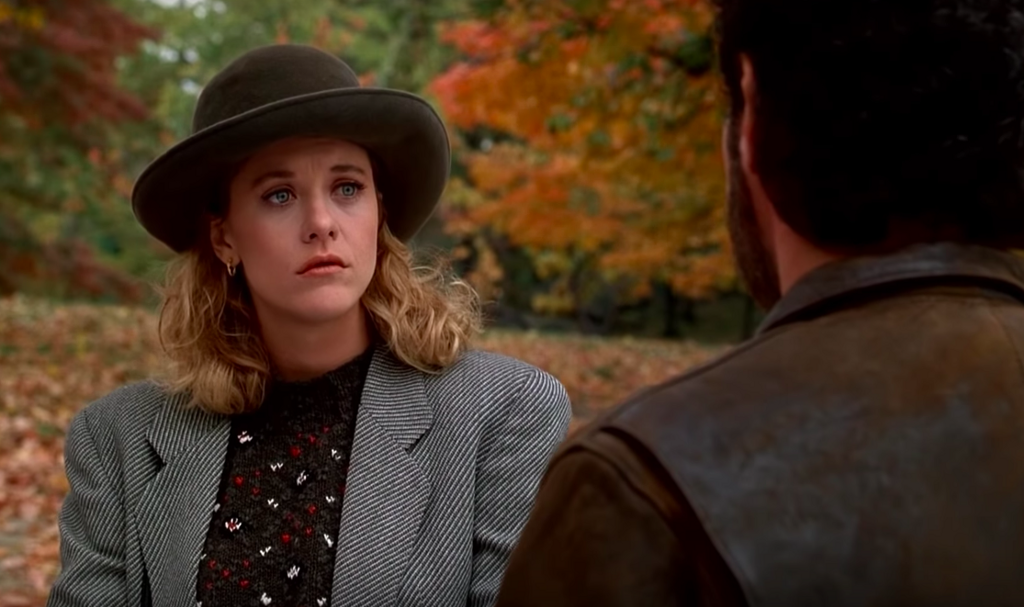
Anything you need from Allen’s most famous films, you can get from When Harry Met Sally, or Nora Ephron’s work in general: dialogue that still surprises you after 50 rewatches, references to Bogart, women in menswear, New York not as a character but as the condition of possibility for love itself, and Jewish delis.

A less obvious choice: Kissing Jessica Stein, because highly strung women can talk to each other while walking around New York City. They can also fuck.

Rom-Com, Demi-Jewish

Orson Welles once remarked that he loathed the director in question because of his combination of “arrogance and timidity.” I imagine James Gandolfini would have been more his type of man. Enough Said is an antidote to the particularly disingenuous form of masculinity that passes as nebbish when it is really snobbish. Director Nicole Holofcener also got her start working on some of the films in question, but unlike those films, Enough Said looks at class differences with tenderness and shows that being cerebral doesn’t belong to the bourgeoisie.

Rom-Com, WASPerational

The Last Days of Disco. The wit you want and the moral exposé of male dishonesty you crave. Also, I once saw Chloe Sevigny at Yonah Schimmel’s.

Rom-Com, Non-Jewish

LA Story. If you absolutely must have a romance with an age difference in your rom-com, make it one with the of-age, consenting, and breezily nonmonogamous SanDeE*. LA Story also offers an age-appropriate love interest who is quirky yet competent and has her own choices to make. She even gets to enjoy the fantastic elements of the story along with the zany star comedian. Plus, the opening montage lovingly makes fun of a city that couldn’t care less about its high potential for satire.

Chewy Moral Dilemmas

One of Allen’s films that I never much cared for asks its audience whether it was wrong to commit a crime if you knew you could get away with it. May I suggest, instead, a film that asks whether it is wrong to kill men, like Under the Skin? After watching Scarlett Johansson contemplate the ethics of her own consumption and the limits of female interiority, I thought she might be a good actress, after all (which was not made clear to me by her appearance in the director’s other movies).

Existential Dread, General

On an obvious level, everything this director ever made is indebted to Ingmar Bergman, including his employment and abuse of brilliant actresses. But did you know that women also think about death? I recommend Agnes Varda’s Cleo From 5 to 7, which follows a woman in wait of a cancer diagnosis as anxious signs of her own mortality follow her around all day.

Cinema as Form of Dreaming

The Oscars will likely have some form of “Salute to Cinema,” à la Jack Donaghy’s “Salute to Fireworks,” that tells us movies are important because they allow us to dream. But if your dreams are more about feeling than plot, are more collaborative than the work of a singular genius, cycle back to the same moment but always seem a bit different, never feel fully finished, or are in black and white, watch Maya Deren’s short film, The Meshes of the Afternoon.

An Actress who is ACTING

Carol, because Cate Blanchett should have won her Oscar for this one instead of for her Blanche DuBois impression. And if there’s a certain dreaminess you desire, you can’t do better than her delivery of the line, “My angel…flung out of space.”

Speaking of Carol, you could also go with Hester Street, staring Carol Kane, who bore the brunt of the director-protagonist’s internalized anti-Semitism in one of his more beloved films. It’s also very Jewish, in case what you are really looking for is —

Something Very Jewish

Just watch anything by Mel Brooks. Mel Brooks is a mensch. Mel Brooks told off Elia Kazan at a Director’s Guild of America meeting for not wanting to enforce hiring quotas that would help more women get employed in Hollywood — and he compared the move to Kazan’s naming names before HUAAC. Start with Madeline Kahn singing “I’m Tired” from Blazing Saddles and follow up with whatever’s clever. My dad likes to say that he went to see High Anxiety when it was in theaters and was the only person laughing the whole time. If you, too, would like to feel exceptional, you could start here instead.

Swooning over New York City

There’s a reason why the director in question has moved his filming locations to fantasy versions of Europe. It’s easy to romanticize a city in the decades when it was left for dead. So much of New York has been homogenized by gentrification that whatever grit or resilience endures in its residents depends on our putting up with unlivable infrastructure, not some ineffable New Yorkness. That said, I do think Man on Wire pulls of the difficult stunt of portraying what is, after all, still romantic about the city: setting your sights on it from afar, and, at great risk to life, and for just a moment, taking a bow as you turn the impossible into the miraculous.

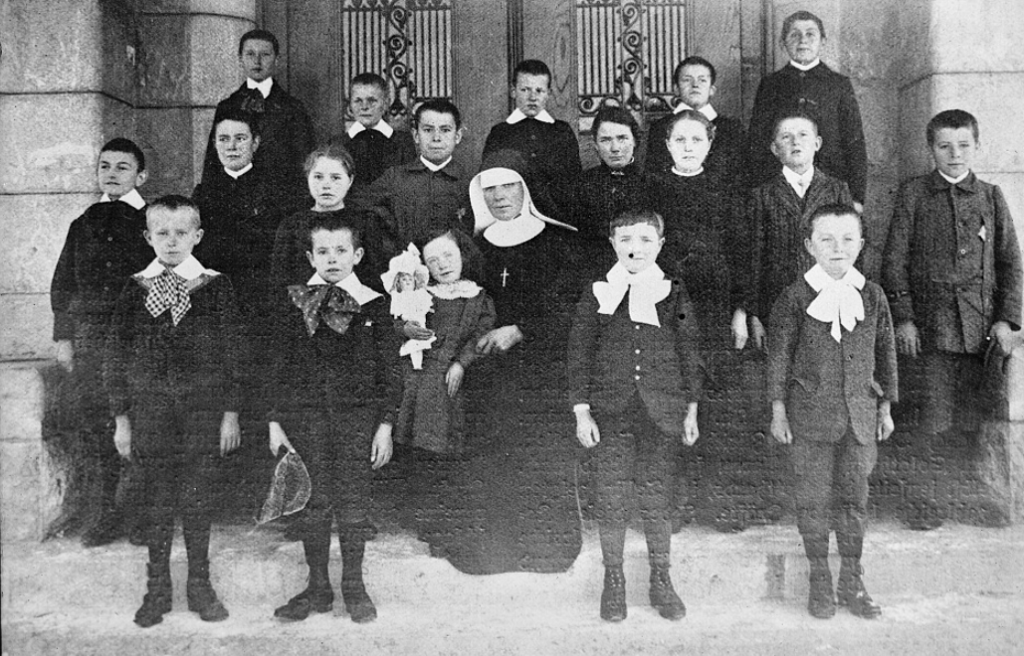
7 Novels about Orphans

From Cinderella to James Bond, via Moll Flanders and Tom Sawyer, there is something about an orphan that appeals to storytellers regardless of era, culture or genre. Perhaps this is because an orphan engages our sympathies before the story even begins: we just have to root for a character (especially a child) who has suffered the loss of their mother and father. But there are other factors too. From a writer’s — and a reader’s — point of view, there is something highly attractive about a character who is self-explanatory and self-fashioning (no need to plough through the biographies of all her forebears in order to make sense of her…). There is also the in-built “quest” aspect — whether this involves a literal search for long-lost parents or a subtler search for self-knowledge and identity. Above all, there is the mystery inherent in someone who sets out on life alone, without the familial structures that keep most of us feeling safe and/or confined.

Purchase the book

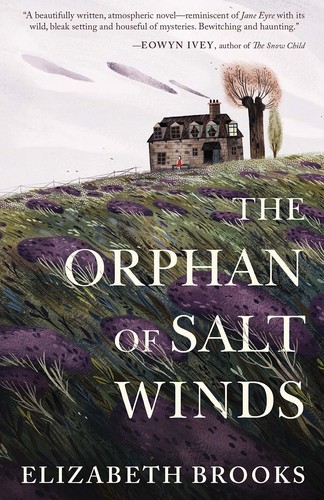
As The Orphan of Salt Winds began to take shape in my mind — and well before I had the title for the book — I knew that my main character, Virginia, would need to draw on this tradition. Virginia begins the novel as a ten-year-old orphan, alone in a puzzling and difficult adult world. Having grown up in a children’s institution, without the safety-buffer of familial love, she is unable to take anything for granted. She sees her newly adopted home, Salt Winds, with a vision that is both anxiously perceptive and childishly skewed: a wonderfully sympathetic point of view from which to write.

The more I wrote about Virginia, the more I found myself looking out for books that made use of an orphan’s perspective. Here are a few of my favorites.

The Orphan Master’s Son by Adam Johnson

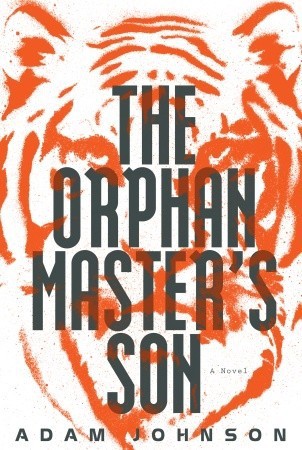
Shortly after Jun Do’s birth in a North Korean orphanage, his mother is carted off to Pyongyang, never to be seen again. His father (the eponymous orphan master) is unable or unwilling to show favoritism, so Jun Do is punished, starved and over-worked along with the other orphans. This is a dark, satirical novel about what happens when love is forbidden and a totalitarian regime attempts to take the place of family.

Red Dust Road by Jackie Kay

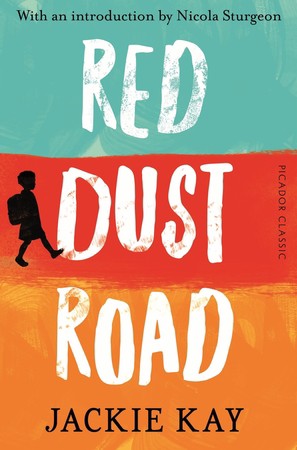
A memoir, Red Dust Road follows Jackie Kay’s search for her birth parents. Given that both are still alive (the book begins memorably in Abuja, Nigeria, with Jackie meeting her father for the first time; she meets her Scottish mother later in the book), you might argue that this is not, strictly-speaking, an orphan story. I think it’s close enough, as it deals with all the issues that arise from the best orphan stories: Who am I, and what does identity even mean? Where do I belong and why? Who or what can be said to define me?
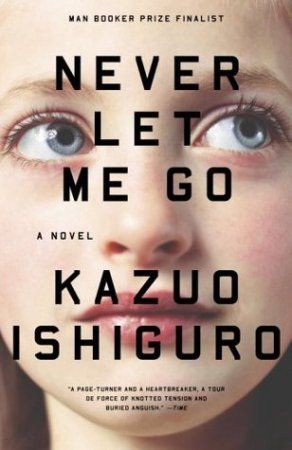
Never Let Me Go by Kazuo Ishiguro

The main characters in this novel — Kathy, Tommy and Ruth — are clones, brought into being by the state for its own utilitarian purposes. The three meet at Hailsham, a sinister English boarding school, where they are watched over and protected by mysterious “guardians.” The story follows them into early adulthood as they slowly discover who, what and why they are. It’s a heartbreaker of a book, beautifully written and chillingly realized, about a society in which the parent-child relationship is neither needed nor valued.

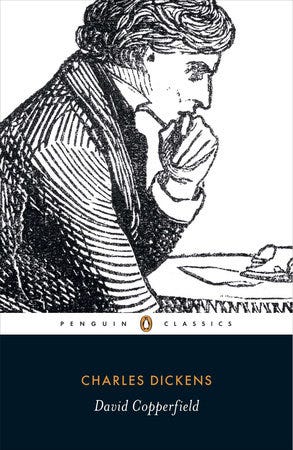
David Copperfield by Charles Dickens

Nobody did heart-rending orphan stories quite like the Victorians, and Charles Dickens was surely master of them all. David is already fatherless when the story begins, but he experiences a few years of childhood bliss before his mother’s catastrophic decision to remarry. David’s sadistic stepfather has to be one of the most loathsome characters in literature. You and I know exactly whose side we are on, though, and perhaps that’s the point. When David is happy with his mother, we can enjoy his story in a relatively detached way. When he is alone and vulnerable, face to face with Mr. Murdstone, our protective instincts leap into action. At that wonderful moment when he turns on his abuser and bites him, we all shout “Yes!” because it’s a victory for our hero, albeit a small and dangerous one.

Jane Eyre by Charlotte Brontë

Like David Copperfield, Jane Eyre is orphaned into an unjust adult world. Her treatment at the hands of Aunt Reed, Mr. Brocklehurst, et al makes her — and us — burn with indignation. It also makes her strong and self-reliant, which is just as well, because these are qualities she will need to draw on, time and again, throughout her story. Jane Eyre, who manages to begin her life anew not once but several times throughout the novel, inspires us. “I am no bird; and no net ensnares me,” Jane famously, and remarkably, declares. Who, in real life, can honestly say the same? Only an orphan (or perhaps only a literary orphan) can lay claim to that degree of autonomy.
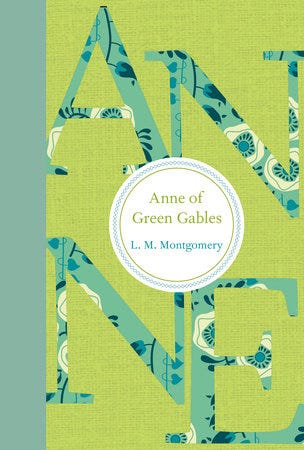
Anne of Green Gables by L.M. Montgomery

Anne of Green Gables is a joyous children’s classic. Like its close relations — The Ugly Duckling, Cinderella, Ballet Shoes, The Secret Garden, A Little Princess, James and the Giant Peach — it is a story about rebirth and blossoming. Anne’s arrival in Avonlea is the start of something good, for herself and for everyone around her. There’s no such thing as normal in the eyes of a newly adopted eleven year old, and that’s an ideal point of view from which to tell a story.

I re-read Anne of Green Gables last week, for the first time since I was little. The color and character of the story had remained with me over the years, although the details had faded. I had no idea, for example, how strangely and darkly my own novel echoed Montgomery’s opening chapters. In both books, an orphaned girl is adopted by a childless couple, and her new father brings her home. She bonds with him immediately, but relations with her new mother are strained. She doesn’t quite fit in; isn’t quite what the neighborhood expects. What will become of her? What will become of them all?

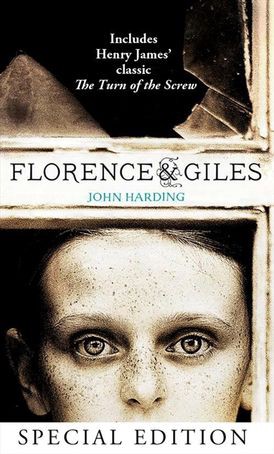
Florence and Giles by John Harding

The childlike and the sinister work well together. There’s nothing creepier than a creepy child (doll/ clown/ nursery-rhyme/empty swing); the innocent and the malevolent meeting like notes in a deliciously jarring chord. A literary orphan is especially well placed to play the creepy child role, because he or she is inherently mysterious. Where did she come from? What has she inherited, and when will that inheritance come to light? What does she remember? What does she know, that we don’t know? Who is she? I love Florence (how could anyone fail to love that voice?) but I’m scared of her too. Every reader’s instinct is to love a lonely little orphan like Florence, but Florence does not belong in the box marked “sweetness and light.” She is a human being: complex, strange, enchanting, cruel and — in the end — unknowable.

A Labyrinth in the Shape of a Book

“This is not really a book. This is a building in the shape of a book… a maze.” —From the directions to Maze, by Christopher Manson

I first read Maze as a child, on a bus. I don’t remember where the bus was going (I’m not even sure it was a bus — maybe it was a van?) because I was thoroughly and instantly inside the book. From the first page, I felt stifled and scared, full of an obsessive drive that I otherwise only associate with moments of sexual awakening. The words of the directions functioned like a spell. The book told me that it was a building, and then it was. And I was trapped inside.

Maze, published in 1985 with the tagline “Solve the World’s Most Challenging Puzzle,” was part of a mini trend of picture puzzle books with real cash prizes, patterned after 1979’s Masquerade. But where Masquerade was dreamy, off kilter, alarming — it seemed to open up somehow to the possibilities of a world of mystery — Maze made me feel like I was sneaking off to read porn. It was like disappearing into a hole.

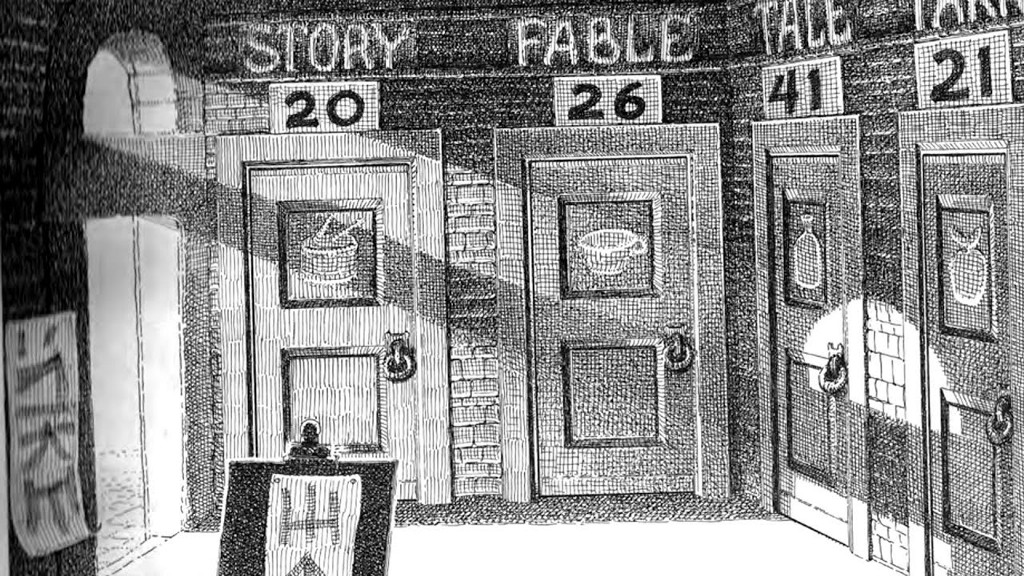
The rules are simple. Each page, numbered 1 through 45, is a room in the Maze. Each room has numbered doors that lead to other rooms. To go through a door, you turn to the indicated page, where you will be faced with another room full of doors and mysterious objects, depicted in Manson’s architectural black and white engravings. Your aim is to reach the center (room 45), and then escape back out to room one, in no more than sixteen steps.

The Great Hall of Many Doors. (Image by Christopher Manson, from Into the Abyss)

When I started work on this article, I was reluctant to pick up the book again, even though I’d remembered it with intense emotion for decades. But Maze was memorable because it was unpleasant, like a drug that shows you the places where your brain can break. I’d spent what felt like days at a time dissecting its images and mapping its paths, getting stuck in its loops and traps, wanting to quit but unable to put the book down until I opened one more door, tried one more path. Rooms leading into rooms, a secret that you are trying to uncover, a chase. A sense of fascination that makes it difficult to lift your eyes or leave your house.

The truth is, I feel the way Maze made me feel all the time now. The big difference between reading it and wandering through the endless rooms of the internet is that with Maze, we are assured that there is a solution. There is an escape. There is even — if we are especially clever and worthy — a meaning.

Because the maze doesn’t just have a solution—it also has an answer. There is a riddle hidden in room 45, with the answer concealed somewhere along the shortest path. And this answer was valuable, not just because of how well it was guarded, but in the grossest commercial terms. Like the riddle of the Sphinx, it had multiple rewards. A publicity campaign offered a ten thousand dollar prize to the first person who could provide all three parts of the solution, but by the time I got my hands on the book, the campaign had concluded.

=> No monetary award enticed me into the Maze. It generated its own sickening fascination.

=> Decades later, the book maintains a dwindling but enduring cult.

=> The campaign had concluded — but no one had won.

ROOM 11

A fair amount has been written on the toxic appeal of clicker games. I try to stay away from them. As a child, I had to ban myself from Tetris because I had stopped doing my homework, and started having geometric, multi-colored dreams. I have never been diagnosed with any kind of obsessive compulsive condition, and I have no reason to believe that I have one. Games do this to me because they are designed to do this to me. The whole point of Tetris is to get you to dream about Tetris, to rewire your brain the way a fetus rewires a pregnant woman’s blood vessels, just so it can live.

Maze was the first work of art that I’d seen turn this nasty impulse into storytelling. There are others — especially now, in this era when the Maze extends everywhere. The ones that stick in my head are digital but low tech, achieving their effects with text and the most minimal of graphics. They also (mercifully) have specific end points.

The astonishing Universal Paperclips uses the perversity of clicking, cannily, to force its player to inhabit the role of a monomaniacal AI, first compulsively generating paperclip after paperclip, but eventually — as the paperclips start to pile up — going on to dismantle the world and conquer the universe. Universal Paperclips has no secret solution, just an objective that you can (must) achieve. But like Maze, it uses the human capacity for obsessive repetition as the engine for its story.
Porpentine’s classic Twine game Howling Dogs takes this feeling of being trapped in a game as a subject. It is also (spoiler) an escape maze; using hyperlinks instead of pages, it spins you in repetitive, exhausting loops full of illusory choices and overwhelming information. And, just as in Maze, there is one simple trick that will let you break the loop and access the center.

What makes this kind of puzzle so devilish is that obsession blunts your ability to shift your perception.

=> Moving between the gears — between the dogged grind and the moment of inspiration — is the key to solving any problem.

=> It is possible to win, but also possible to lose.

=> Maze is so thick with contradictory symbols that you have to put on blinkers to move forward. If you tried to really look at the thing, you’d turn to stone.

ROOM 27

For the history of the puzzle, and its solutions, I turned to Into the Abyss, a website created around 2013. With its comment sections, minute focus, and esoteric design, it feels like a part of the net that is lost, that we are already mourning. Presented in an impish cosplay version of Maze’s goth masonic style, it was maintained by its founder, who went by the pseudonym White Raven, for precisely 45 months after its inception. (Forty-five months, 45 rooms. White Raven vanished, presumably, for numerological rather than sinister reasons.)

But the Abyss is not abandoned. There is a dwindling online Maze community, composed of people who, as one commenter put it, “remember how much this book creeped them out when they were ten.” There are recent comments — including several from today. Many are from the same poster, whose handle appears to be his full, real name. He has an impressive history of essay-length comments on the possible symbols and connections between each room. Clicking through the pages and seeing his name again and again, it is impossible to avoid imagining him as one of the maze’s victims, permanently trapped in a loop.

Browsing Into the Abyss makes you acutely aware of the passage of time, of just how much has happened while you’ve been opening doors and hunting down clues.

=> For example, White Raven, in a brief essay on the immersion puzzles inspired by Maze, muses about the possibility of “Immersion Puzzle Real Locations.”

=> Is there a chance that, even in the age of infinite information, the Maze is still dangerous?

ROOM 14

I put off writing this article because I wanted to make a good faith effort at solving the central riddle of Maze. This was arrogant on my part. With ten thousand dollars on the line, it wouldn’t be easy. As it turns out, it was even harder than that. Because no one had defeated the Guide in time, the publishers had to extend the deadline and release a set of hints — twice. Finally, they released the exact solution and gave the prize, split into even thousands, to the ten people who got closest. It has the rare glamour of a puzzle that has, technically, never been solved.

=> Is it possible to make a puzzle that is both too hard to crack and not total bullshit?

=> Of course, in 2019, it’s a lot easier.

ROOM 5

One of my philosophies about storytelling is based on the idea of a labyrinth. The harder it is to get through your labyrinth, the more your reader will like it, and the more they will value what they find at its center. It’s a trick used both in twisty genre fiction and impossible and esoteric books like Ulysses — make ’em sweat, make ’em feel smart, and they’ll remember what you have to say.

Designing a narrative is exactly like designing a puzzle — a riddle, say, or an escape room. Balance is important. You want to challenge your guests to the very limit of their ability. You want them to get it in the nick of time. And yet, you have to be fair.

=> Even if you are trying to appear aesthetically treacherous, you still must be fair.

=> For a while, this was part of my day job.

ROOM 24

I still remember the actual chill I felt the first time the Guide deposited me in the inescapable darkness of page 24, the room with no doors. “You are here with the rest of us now…” says a voice in the dark, as the Guide, laughing, abandons you.

Room 24 was terrifying. And yet, it was also a release. There were no more doors to open, no more secrets to chase. There was no more reason to try. Perhaps the sensible thing to do, when you reach Room 24, is to admit defeat and lie down in the darkness.

Sometimes, I think it was a mistake to go back to the beginning, a mistake to try again. Because (as you know if you, like the rest of us, have trouble even leaving your house on certain days) when you actually try to escape the maze, the sense of being trapped only gets more overwhelming. This house is not only made of stone and mortar, wood and paint; it is made of time and mystery, hope and fear.

This was the difficulty in returning to the Maze. I live there all the time now. I don’t know if I ever got out.


ROOM 4

In 2018, I worked, briefly, in an escape room, one of those real-life immersion puzzles that have mushroomed up across America in the past few years. This idea must have seemed like a fond and childish dream to the founder of Maze fansite Into the Abyss, who wrote in 2013 that “This type of ‘puzzle in the shape of a location’ is a mainstay of fantasy literature and film but, as far as I know, one has never been constructed.” (They seemed more bullish on the possibility of game locations existing in virtual reality.) I was a keyholder, sole ruler of the little eight-room kingdom, which mean that I did everything from book appointments to wipe baseboards.

My favorite duty was giving hints. My escape room was a chintzy mall chain establishment; the rooms were basic, and the puzzles cheap, but there was a kind of delight in the way boredom and frustration gave way to sudden breakthroughs. I had to phrase my hints carefully so as not to rob the customers of that feeling. For whatever reason, I found it easiest to strike that balance using a sadistic, teasing tone. It was delightful to watch people struggle, and even more delightful to watch them figure things out — a perversity that I connect with in the mysterious guide.

=> This is a recent development. As a child, I found the guide not sympathetic, but sexy.

=> I have some personal experience with this, beyond that day job. I’m a playwright and I care very deeply about constructing mazes for my guests.

ROOM 33

Manson’s guide is at minimum aesthetically treacherous — an unreliable narrator who keeps winking at you about his plans. There is, throughout your journey through the book, a definite sense that he is trying to fuck you. He is definitely trying to fuck the rest of the group. You can see inside his head, and he’s always getting anxious that they might notice something, or privately crowing at their stupidity. He is sinister from page one, when he says “They think I will lead them to the center of the maze. Perhaps I will…”

There are no drawings of the guide, but in those ellipses you can almost see him steepling his fingers like Jafar.

=> You want to trust him, but you can’t.

=> You don’t want to trust him, but you have to.

ROOM 26

Manson had wanted to call his book Labyrinth, but the publishers were anxious about the (then upcoming) David Bowie film, which is, like The Phantom of the Opera, another story in which a sadistic and mysterious man holds sway over a treacherous but expansive piece of real estate. This has always been a good way to get my attention.

There is a particular person in the group of nebulous characters traversing the Maze — gendered as female and described as smarter than the rest — whom I quite clearly identified with, whose story I longed to see elaborated on. At one point, she looks the guide in the eye and asks if he has picked flowers for her. “I had to tell her the truth,” he says, but we never get to know what the truth is.

These unexplored stories, this sense of personality, is part of what makes the book feel bigger than its pages.

=> That, and Manson’s unmistakable style.

=> That, and the way the book invades your mind.

ROOM 30

Manson’s drawing and writing are of a piece: creepy, mannered, austere, but also gothically compelling. The book has the same kind of removed Masonic stiffness that makes the Rider-Waite tarot decks so fascinating. You have no idea what’s going on, but it’s a lot, and it all seems packed with hidden meanings. As the directions tell you: “Anything in this book might be a clue. Not all clues are necessarily trustworthy.”

Within the 45 rooms, the variety is endless. You step into high wind-swept places and fall down slides into dark caves. You rest in comfortable drawing rooms, take in puppet shows, hear music, dig beneath forbidding statues, and sometimes find yourself shrunk to the size of a mouse. The weather is always changing, and everywhere you go, you are meant to be looking for clues.

Room number 30. (Image by Christopher Manson, from Into the Abyss)

In just one (relatively sparse) room, there are: two giant carved letters, a fake apple tree, a giant watch with letters for numbers with the hour hand pointing at F and the second hand pointing at door 15 (which is open) and a sign saying “IF NO EVE” with an arrow pointing at door five. All of the doors are identical except number 34, which is unusually elaborate, and only one of them is the right choice.

Elsewhere, the bottom half of a painting appears to depict the feet of two monsters, one standing still, the other creeping up behind the first. Other pictures depict a wide assortment of human faces, in an assortment of styles, with an assortment of unsettling expressions. Umbrellas appear everywhere, along with variations on the same white bird (full grown, baby, toy). Also there are hats — a whole vocabulary of hats making long incomprehensible sentences, along with lots of signs and symbols that just plain don’t make any sense. These oddities are sometimes referred to darkly in the text, sometimes ignored, and sometimes cackled at by the guide, who is constantly alluding to his parents, his violent past, and the irrevocable doom of his guests.

In fact, it is impossible for everything in the maze to have meaning. It is a crush of meaning. It’s overwhelming.

The fastest way to get to the center is brute force. Ignore the guide, ignore every clue, try every door, make a catalogue and write a map.

Once you do that, you’ll see that getting to the center is impossible.

You’ve missed a trick.

=> You need to take one more step.

=> You need to look at it another way.

ROOM 29

And that, in the end, is the key to getting to the center of the Maze, if not the key to solving the riddle. You take one simple, physical, real-world action and then… like magic… it appears. A hidden door that takes you to the center.

There’s something in Maze that I’ve learned to resent a little — the idea that there is a key. That a single trick will let you into the heart of the maze. This idea bothers me. I’m opposed to it, philosophically.

But perhaps I’m being unfair. The trick is only the first step. It doesn’t let you escape. It doesn’t answer anything.

=> It only leads you to the riddle of the maze.

ROOM 45

The answer to the riddle, hidden along the path is, in fact, another riddle. And the answer to THAT riddle, hidden in plain sight the whole time, is “the world.” The world’s most challenging puzzle. Get it? It’s a house we all live in, a place we can never escape.

A poster on fan site Into the Abyss notes that the Maze has no exit. After you get to the center, you take the shortest path back to room one, where there is a visible, sunlit archway that should lead back outside. It seems to be the other side of the archway from the prologue, which is marked “THE NEXT PAGE,” but it has no number. It has no title or instruction. According to the rules of the Maze, there is no way to pass through it, no way back out after you enter, even if you avoid the trap, and attain the center, and answer the riddle and identify the guide…. you are still trapped here, in the world. The monstrous walls rise up and run away as far as the human eye can see, circling and dividing. Which half is the Maze? Under these circumstances it is good to remember that this is not a building, it is a book. Close it.

Touch Me, Please Don’t Touch Me

“Takers” by Joe Baumann

A girl kisses a boy and takes his earliest memory. She sees him when he was three, all baby fat and washed-out blue eyes, scrunched in a car seat, his mother and father arguing up front about where they would celebrate Thanksgiving, the leaves on the autumn trees bursting into the color of cranberries and satsumas. When the girl pulls back, the boy feels a vacuum in his brain, like someone has yanked something out with an ice cream scoop and snipped it with garden shears. They are both teary-eyed, she from the sound of “Au Clair de la Lune” burbling from the car stereo, him from the booming gap where he knows something belongs but he can’t remember what. When she brushes her hand against his neck, he takes her pinkie finger.

A dental hygienist, flossing her patient’s teeth, takes first his deviated septum and then his eidetic memory. The dentist will forever remember each fleck of plaque she scrapes, each cavity she prods, every gum she makes bleed.

Other things go: a woman’s stomach, taken by her husband when he pinches her cheek. A pop star’s singing voice when her security guy hooks a hand around her arm. Couples making love trade all kinds of things: sense of hearing, corpus collosums, an appendix, ability to play the flute. Fingernails are ripped from nailbeds, veins rope away from cardiovascular systems. One man’s recently digested meal ends up in his new business partner when they shake hands.

People stop kissing, they stop fucking. Fighting comes to a halt when stabbings come along with unintended consequences, victims’ wounds leaping onto their attackers. Most of the taking is random, but one wife beater inherits his wife’s detached retina. She starts to kick him in the crotch and she takes his contused testicles. They flail on the floor together, knees and elbows and ankles clocking against one another. They trade hair, body fat, knuckle bones. She takes knowledge of his extramarital affair, he the number of her emergency bank account.

Presidents and kings and prime ministers are sequestered so they do not lose nuclear launch codes. Spies are wired messages to get themselves into safe houses. Jostling crowds lose so much people crumble and die within seconds. At baseball stadiums, high-fiving fans lose their fierce loyalty and then, purposely, trade hats and foam fingers. A breastfeeding mother takes her newborn’s entire skeleton and is left with a saggy bag of flesh and blood vessels attached to her chest. She cannot cry out because her child takes her voice. His teeth crowd her mouth, and she screams a noiseless echo, vocal cords strapped into his drooping throat.

One philosopher goes on talk news and argues that this is the outward expression of our lack of identity. Pundits wonder if the end of days has come. “The Rapture,” they say. They quote the Book of Revelation. Thousands die each day, but no one floats to the heavens. No robe-clad horsemen come thundering from the clouds or out of fissures and fault lines.

A movement emerges for those who are willing to risk death to change everything about themselves. They gather in parks, smashing together, giving and taking limbs and internal organs and senses of smell and burned-off taste buds and memories of abuse and grief and rage. Addictions futz from one body to another. Everyone leaves new, fresh but often freaky, too many limbs or too few attached to lopsided torsos. One woman walks away with three hearts beating in syncopation. Every third person lies dead on the ground, mouths twisted into grins (that is, if their lips are still there — one man takes four pairs).

Sex is over for all but the most desperate. Masturbation sleeve and vibrator sales skyrocket. Cammers are booked solid for weeks, showing off their unchanged genitals for salivating voyeurs. Money pours in for research on extrauterine incubation; doctors won’t inseminate by hand because one false move and bye bye middle fingers or ulnas or memorized Dewey Decimal Systems or how to calculate factorials.

“What does it feel like?” ask those who remain whole. “When it happens?”

“Like a light piercing you and slurping on your skin.”

“Like being chewed up from the inside out.”

“Like someone has let a hive of bees free in your bones.”

“Like sinking into a swamp.”

“Like hearing someone else’s voice in your head for the rest of your life.”

Those who have not been touched nod and stare into space, wondering what it would be like to have someone else’s eyes, or a different ear canal, the wrong type of blood. They watch those who have been changed as they limp or laugh the wrong kind of laugh or breathe with only one lung. They want to reach out, brush their fingers against foreign flesh, know what it is to become something else. But they stop, hesitate just long enough that their bones remain their own. The changed look at them and sigh.

About the Author

Joe Baumann’s fiction and essays have appeared in Electric Spec, On Spec, Barrelhouse, Zone 3, Hawai’i Review, Eleven Eleven, and many others. He is the author of Ivory Children, published in 2013 by Red Bird Chapbooks. He possesses a PhD in English from the University of Louisiana-Lafayette and teaches composition, creative writing, and literature at St. Charles Community College in Cottleville, Missouri. He he has been nominated for three Pushcart Prizes and was nominated for inclusion in Best American Short Stories 2016.

“Takers” is published here by permission of the author, Joe Baumann. Copyright © Joe Baumann 2019. All rights reserved.

The 20 Most Instagrammable Bookstore Cats

There’s something magical about stepping into a bookstore and finding a cat lounging on a well-worn arm chair surrounded by rows and rows of books. After all, cats make the coziest reading companions. I spent the day scouring social media for the most photogenic feline booksellers so you know which indie bookstore to visit next. Here are the twenty most adorable literary cats on Instagram:

Tess from the Book Bin

Tess recently retired from her full-time job as a bookstore cat, but she’s still an active book reviewer!

Sweet Pea from Copperfield’s Books

Sweet Pea partied a little too hard at the literary party last night.

Emma from Recycle Bookstore

Emma loves 17th-century literature, long walks to the cash register, and mice sandwiches.

Charlotte from Rhino Booksellers

Charlotte’s special ability is hypnotizing humans into buying books. Look into those steely green eyes and walk out with ten new hardcover books.

Owen from Aardvark Books

Feel free to pick up any book but the ones that Owen is sleeping on!

Annika from Cupboard Maker Books

Annika wants to you know that cats make excellent bookends.

Bob from Old Florida Book Shop

Need help reaching that book? Bob the climber is here to help!

Loving Like Cats and Dogs

Princess Reya from Bart’s Books of Ojai

Princess Reya is living her #bestlife outdoors in the California sunshine. #Blessed #PrayerEmoji #WokeUpLikeThis

Tiny the Usurper from Community Bookstore

Tiny the Usurper is the feline co-owner of an indie bookstore in Brooklyn where he rules over his minions (a.k.a human booksellers) with an iron paw.

Walter Dean from Wild Rumpus Books for Young Readers

Where’s Walter?

Otis from Loganberry Books

Otis wants you to know that he has zero tolerance for canines (even emotional support dogs).

https://www.instagram.com/p/B8zGK5IF9E3/

Isabelle from Crescent City Books

Isabelle accepts payment of knitwear.

Samuel Beckett from Atlanta Vintage Books

Store closed for catnaps.

Pico and Lemon from BooksActually

During the day, Singaporean booksellers Pico and Lemon man the desk of a bookstore in Tiong Bahru. At night, they’re hunters on the prowl for chilli crab in Geylang.

Ziggy from Libreria Acqua Alta

This Venetian cat is proof that books make the best sleeping companion.

Harry from Bookhaven

Harry is pondering the meaning of life after his fifth re-read of My Struggle by Karl Ove Knausgaard.

Esmé from Small World Books

Esmé recently wrote a scathing review in the New York Times of Jonathan Franzen’s new book.

Catsby from Gallery Bookshop

Why are the shelves empty you ask? Well, Catsby got a little hungry and ate all the books. He’s sorry, but like not really.

Scout from Hyde Brothers Booksellers

Want to buy a book? You have to pry it from the claws of Scout first.

Apollo from Iliad Bookstore

Who needs a guard dog or a security camera when you have Apollo the Majestic on the lookout for potential book thieves?

The Disastrous Decline in Author Incomes Isn’t Just Amazon’s Fault

There is a scene in the film Moulin Rouge in which a crowd of top hat-wearing men belt out the Nirvana song “Smells Like Teen Spirit” as they riotously descend upon the famous French hall of can-can dancers. “Here we are now! Entertain us!” the suited patrons roar as they greedily reach out for the amusements around them. It’s a high-energy, campy scene that director Baz Luhrmann overlays with a sinister message about the power discrepancy between entertainers and the men who pay them. This scene has been on my mind lately, both in the wake of the #MeToo movement and the horrific stories we’ve heard from actresses and other women in the entertainment industry, and again on Monday, when the Authors Guild published its 2018 Author Income Survey.

This was the largest survey ever conducted of writing-related earnings by American authors. It tallied the responses of 5,067 authors, including those who are traditionally, hybrid, and self-published, and found that the median income from writing has dropped 42% from 2009, landing at a paltry $6,080. The other findings are similarly bleak: revenue from books has dropped an additional 21%, to $3,100, meaning it’s impossible to make a living from writing books alone. Most writers are cobbling together various sources of income like teaching or speaking engagements, yet the median income for full-time authors for all writing-related activities still only reached $20,300, which is well below the American poverty line for a family of three. Writers of literary fiction felt the greatest decline in book earnings, down 43% since 2013.

Most writers are cobbling together various sources of income like teaching or speaking engagements, yet the median income for full-time authors still only reached $20,300.

The Authors Guild has a pretty clear idea of what’s behind this disturbing trend, namely the rise of Amazon, which severely cuts publishers’ margins on book sales. Authors ultimately shoulder the cost because publishers offset their losses by giving out smaller author advances and royalties. The platform’s resale market also means that, within months of publication, books are being resold as “like new” or “lightly used,” a scenario in which no new money goes to the actual author of the book. The Authors Guild acknowledges that Amazon isn’t the only place where authors are losing out, but the culprits are of a kind: electronic platforms like Google Books and Open Library claim fair use rights in order to offer classrooms products without paying authors royalties. This is problematic because those royalties, a kind of pay-to-play model of compensation, are how artists have made their money ever since it went out of fashion to have a patron who could support your entire career.

This year’s Authors Guild Survey is right to focus on the harm Amazon does to working writers; personally, I’ve made my 2019 resolution to put my money where my mouth is and buy all my books at local, independent bookstores. But the survey results made me wonder if that would be enough—if it’s possible, in the age of the Internet, to reverse the belief that content should mostly be free. By content I do mean to encompass all ends of the artistic spectrum, that ill-defined mass of high and low entertainment and art and news that rubs up against each other on the web in a way that makes it more difficult to separate out, and perhaps less meaningful to do so. Basically, people are insatiable for this panoply of words and images; they want mass input. If you do a Google search for “apple pie recipe,” for example, the top results include both Pillsbury’s website and the personal blog of a home cook. The point isn’t that there is anything wrong with the latter, it’s that discernment has taken a backseat to access; we want all the apple pie recipes, all the videos and photographs and articles and books. We are here now. Entertain us.

Here’s What People Don’t Get About Writing as a Job

Like the charging patrons of Moulin Rouge, we see the entertainment around us and we want it now. Worse, we feel entitled to it. That we feel entitled to be entertained is, I think, symptomatic of how our attitude towards art and literature has shifted. Those things used to be much more difficult to obtain; you couldn’t flip through Monets or read some Robert Frost poems while standing in line at the grocery store, and as a result we did what we do with many rare things — we intellectualized them and tried to ascribe them meaning. This had its own flaws, of course. In her 1966 essay “Against Interpretation,” Susan Sontag argued that modern critics were so focused on examining the content and extrapolating the meaning of a piece of art that we were overlooking the thing itself. Our issue now isn’t that we’re overanalyzing art; it’s that it’s all so familiar that, instead of looking for its meaning, we are encouraged to “connect” with it, which is to say, to see ourselves in the work. But if the hallmark of a great work is that we can inhabit it and make it our own, what does that say about how we view the work’s relationship with its creator?

People have always felt a sort of ownership over art, and that’s actually good. It’s why you keep a book on your shelf and return to it, it’s why you hang a picture on your wall that speaks to you. But when this gets out of hand and you mistake access or a personal connection with your rights, as happens so often in our Internet age, it leads to a dangerous sense of entitlement. That’s why readers feel empowered to complain, directly to the creator, that a book or show doesn’t have absolutely everything they want: the romantic pairing they’d hoped for, the language they find most friendly, the ending they desired. And it’s also why, for instance, the last Harry Potter book leaked on the internet before it was officially published: fans saw the book as something they were owed, not the product of labor that deserved compensation. Not that J.K. Rowling needs more money—but she, and all authors, deserve to have their work recognized as work.

Our issue now isn’t that we’re overanalyzing art; it’s that it’s all so familiar that, instead of looking for its meaning, we are encouraged to “connect” with it, which is to say, to see ourselves in the work.

Consumers hold a pernicious power, so this trend towards free content won’t reverse itself unless we want it to. This is a sad thing, and we will all be much worse off if we can only hear stories from people who can afford to write. Nicholas Weinstock, a Guild Council member, said: “Reducing the monetary incentive for potential book authors even to enter the field means that there will be less for future generations to read: fewer voices, fewer stories, less representation of the kind of human expression than runs deeper and requires and rewards more brain power than the nearest bingeable series on Netflix or Amazon or GIF on your phone.” Maybe we will all get what we think we’re entitled to — free art — but what kind of art will that be?

Buy a Copy of Fahrenheit-451 That Can Only Be Read If It’s on Fire

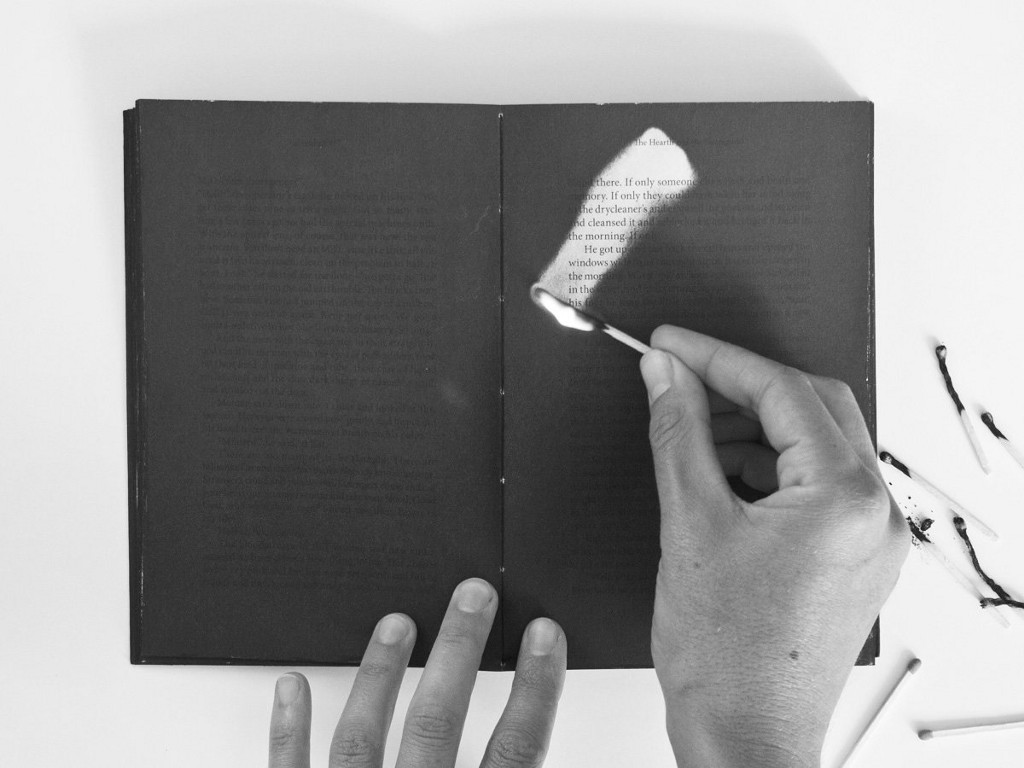
Graphic design studio Super Terrain’s edition of Ray Bradbury’s sci-fi classic Fahrenheit-451 took the internet by storm, thanks to a video showing how its all-black pages become readable text when exposed to an open flame. (This will, and quite possibly should, also work with a hair dryer or something else not completely on fire.) And now, for only $451 — get it? — you can preorder one to keep on a specially-heated shelf in your home! If you have $451 to drop on an artist’s book, we figure you could have custom heated shelves.

What’s next for the discerning collector? How about a copy of The Omnivore’s Dilemma that can only be read if you pour corn syrup on it? Or Steinbeck’s The Pearl but the pages are opaque until you drop it in the water and run away? Cat’s Cradle but you have to freeze it first? An edition of “The Gift of the Magi” that can only be read with special glasses that you have to sell the book to afford? Maybe The Art of the Deal but the words don’t appear until you dip it in cow shit? Super Terrain, give us a call.

9 Books to Read if You Miss “BoJack Horseman”

Since we first published this, BoJack has aired its final season, but the books are still here for you!

BoJack Horseman is a Netflix original animated series depicting the glamorous, though slightly sordid, lives of the people in Los Angeles. The characters mostly take the form of anthropomorphized animals, though there are a few normal people (if anyone is truly “normal” in a world in which bipedal horses and dogs talk in English). The eponymous character, horse man by name and nature, is a former television star now deep in the throes of depression.

BoJack’s themes are unusually dark for an animated show full of animal people. It deals with a wide range of issues, from mental illness to family trauma. Each character can be seen as a representation of the human psyche that we can all, perhaps unwittingly, relate to. Honestly, it makes it difficult to stop watching. You see yourself in the characters. You want to see what happens to them. Maybe you think it’s a forecast for your own life. But, as with all television seasons, it comes to an end. And until the next season is released, here is a list of books to keep you busy.

Coyote Doggirl by Lisa Hanawalt

BoJack Horseman owes its brilliant idea and execution to Raphael Bob-Waksberg and Lisa Hanawalt, respectively the writer and the cartoonist of the show. They met in high school, where their collaboration of stories and images began, but Hanawalt has been drawing anthropomorphized cartoon animals since she was a child. In addition to her work in television, she’s published three graphic novels. The latest of these, Coyote Doggirl, takes on a similar form and satirical undertone to that of BoJack. Instead of poking fun at Hollywood culture with the story of a half-man half-horse, this graphic novel satirizes the misogynistic themes pervading Western literature with the story of a half-coyote half-dog.

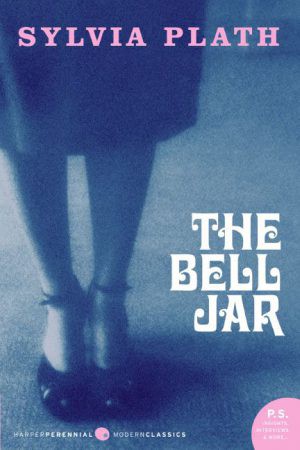
The Bell Jar by Sylvia Plath

BoJack does a meticulous job of depicting mental illness in the modern era, with every character representing a different way that some people cope with depression. But in season 4, a flashback to BoJack’s mother’s family reveals the way mental illness was treated before it became socially acceptable to even talk about it.

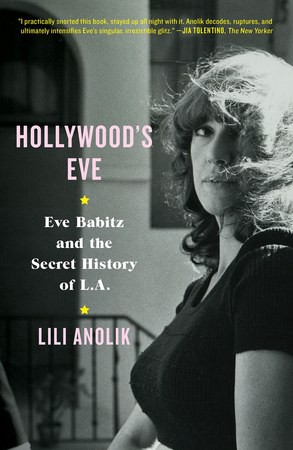
Hollywood’s Eve by Lili Anolik

If BoJack’s troubled young former costar Sarah Lynn were a real person, she might be Eve Babitz. If his autobiography ghostwriter Diane Nyugen were a real person, she would have written this book — about the effects of stardom on people like Lynn and Babitz, women whose lives are defined by the Hollywood (or Hollywoo) tabloids, who cannot escape the sexualization and objectification of mainstream media.

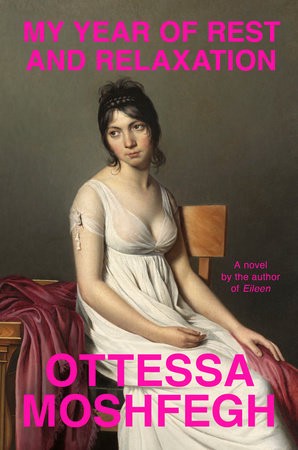
My Year of Rest and Relaxation by Ottessa Moshfegh

If your eyes get tired of staring at a television screen, or if your laptop runs out of battery, or if, heaven forbid, your mother takes away access to her Netflix subscription and you can no longer watch BoJack Horseman, then I suggest reading My Year of Rest and Relaxation. The protagonist is both off putting and horribly relatable, making reading this novel an eerily similar experience to watching the infamous depressed horse self-destruct. We love and despise her for all the same reasons we love and despise BoJack; she sees the worst in everyone around her, her emotionally unavailable parents play a huge role in her depression, she has everything she could possibility ask for and still hates her life, and she turns to drugs as an easy fix to her mental turmoil.

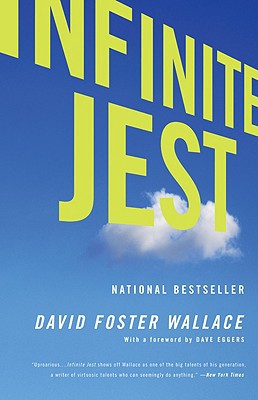
Infinite Jest by David Foster Wallace

In David Foster Wallace’s magnum opus, the main character is dealing with a depression that can easily be likened to that of BoJack. Hal has no specific reason to complain, but he’s weighed down by an inescapable melancholy that he only knows how to combat through self-prescribed marijuana. Meanwhile, BoJack seemingly has everything anyone could want — money, fame, devoted friends — but he still finds himself with a scary black hole in his life that he tries to fill with alcohol. Read more about their similarities in an essay by Katy Koop.

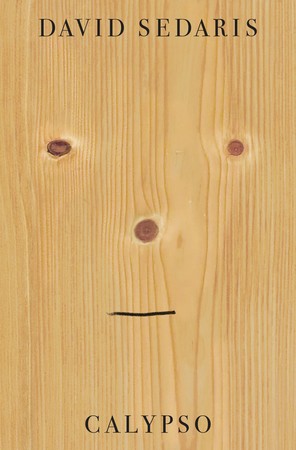
Calypso by David Sedaris

Humor has to be added to this list. BoJack Horseman is, after all, a comedy — a fact that can be hard to keep in mind when almost every episode leaves you feeling like you’ve been punched in the gut. But this style of humor is not unique to the show, nor is the marriage of laughter with melancholy a new phenomenon. Darkness and comedy, as we know, go hand in hand, and David Sedaris is one of the most prominent writers of the genre. His latest book, a semi-autobiographical essay collection, explores the effects of family trauma on the Sedaris siblings — yes, that includes Amy Sedaris, the voice of BoJack’s agent (and one of the show’s most beloved characters) Princess Caroline. The action in Calypso is mainly centered around the oceanfront cottage that David Sedaris bought for his family, a setting not unlike the childhood house that BoJack visits in season 4 to connect with the ghosts of his family’s past.

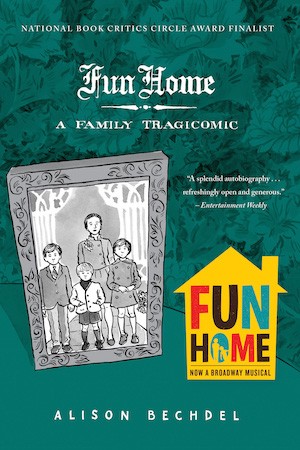
Fun Home by Alison Bechdel

Like the creators of BoJack Horseman, Alison Bechdel cushions the emotional blows of her affecting stories with fun images. In her graphic memoir, Fun Home, Bechdel portrays her memories from childhood, touching on similar themes to those in BoJack, including stoic parents, family deaths, and coming out. Bechdel writes about her father’s death, about how his secrets affected her family, and about her mother’s inability to comfort her when she desperately needed it. If Bechdel drew her characters with animal heads, it might be interchangeable with BoJack Horseman.

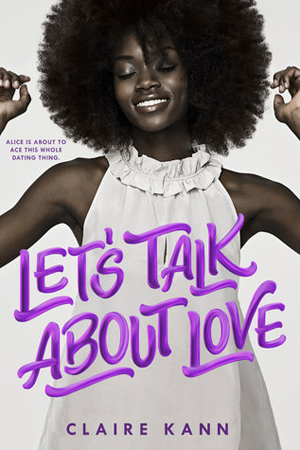
Let’s Talk about Love by Claire Kann

BoJack Horseman did something groundbreaking when Todd Chavez came out as asexual. Asexuality is rarely portrayed in media and entertainment, and when it is, it’s typically not in the form of a main character. The ace community has been talking about Todd Chavez since he sat across from his high school sweetheart and told her he was neither gay nor straight. This year, Claire Kann broke similar boundaries when she published her novel about an asexual character and her experience falling in love.

The Friend by Sigrid Nunez

In The Friend, winner of the National Book Award for fiction, Sigrid Nunez illuminates the highs and lows of the literary community in New York City through a relationship between a female author and her dog. Though the connection to BoJack Horseman might seem a bit obvious — a writer in a devoted relationship with a dog? Sound familiar? — it is the beauty and tenderness with which Nunez portrays grief that really ties these two stories together. Diane Nyugen may have difficulty talking about her own feelings, but she is clearly an expert at writing about the feelings of others. Nunez’s protagonist struggles with identifying her own grief, but talks expertly about the life of the friend she recently lost.

These Writers Will Challenge Your Assumptions About Mississippi

After the runoff election in Mississippi, where Republican Cindy Hyde-Smith won an unusually hotly-contested Senate seat, there was a lot of liberal and media hand-wringing about the state of Mississippi. How it was backwards, deserved what it got, was uneducated. This isn’t a new take though: Joyce Carol Oates got blasted on Twitter in October 2017 for saying “if Mississippians read, William Faulkner would be banned.”

When the media, writers, and Twitter personalities define Mississippi by its most conservative impulses, they ignore the literary contributions made by liberal and radical writers of color from Mississippi, who are working to make Mississippi, and the country, a better place. (In fact, they ignore the existence of Mississippians of color entirely.) There might be a lot of white racists in Mississippi, but that doesn’t mean everyone in Mississippi is a white racist.

The following list focuses on writers of color from Mississippi, whose writing proves that Mississippi is anything but a conservative backwater.

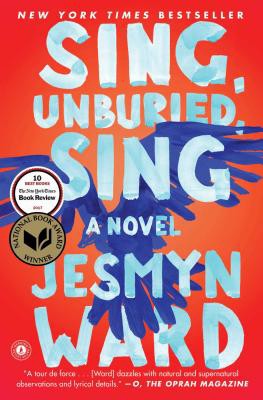
Sing, Unburied, Sing by Jesmyn Ward

Ward, who is proudly from the Gulf Coast of Mississippi (and who moved back to raise her children) has won two National Book Awards for fiction (for Sing, Unburied, Sing and Salvage the Bones). She also wrote a memoir, The Men We Reaped (a tear jerker) and edited the collection The Fire This Time. Her work deals with race, trauma, and the South in ways that never stereotype or assume.

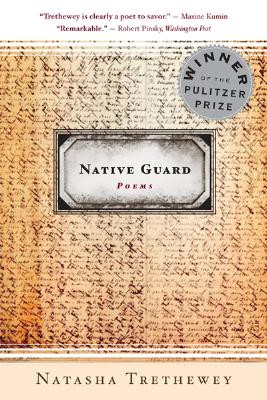
Native Guard by Natasha Trethewey

Trethewey is the former Poet Laureate of the United States and a Mississippian. She is best known for her Pulitzer Prize winning 2006 collection Native Guard, but she has published 7 books including Beyond Katrina: A Meditation on the Mississippi Gulf Coast.

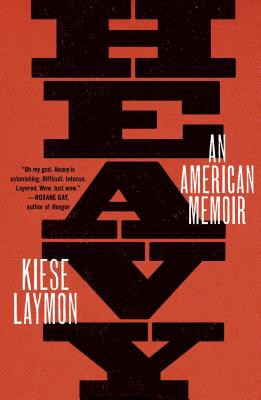
Heavy by Kiese Laymon

This was one of my absolute favorite books of 2018. Originally from Jackson Mississippi, Laymon now teaches at writing at the University of Mississippi. He is also the author of another memoir, How to Slowly Kill Yourself and Others in America, as well as a novel Long Division.

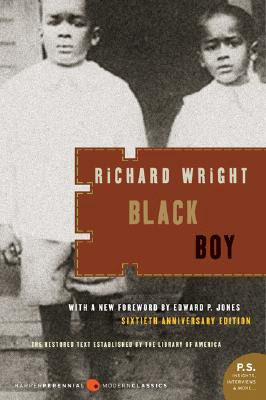
Black Boy by Richard Wright

Wright, one of the most popular black writers of the 20th century, hailed from Mississippi (though he had a complicated relationship with the state, depicted in his memoir Black Boy). He might be best known for his novel Native Son, but he was incredibly prolific, writing eleven works of fiction, as well as non-fiction, plays, and poetry.

The Hate U Give by Angie Thomas

Thomas, another writer from Jackson, garnered attention in 2016 when her novel The Hate U Give became an instant New York Times bestseller. In it, Thomas tells the story of Starr, a teenage girl in Mississippi, who becomes politically involved when she witnesses the shooting of one of her friends by a police officer. The novel was made into a film in 2018. Her second book, On the Come Up, will be released this coming February.

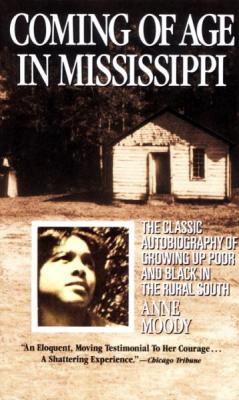
Coming of Age in Mississippi by Anne Moody

A Civil Rights Activist originally from Centreville, Mississippi, Moody became known for her 1968 memoir Coming of Age in Mississippi, which has been praised for its accurate depiction of rural Mississippi during segregation. Coming of Age in Mississippi has also become a commonly assigned book in schools across the country.

Roll of Thunder, Hear My Cry by Mildred Taylor

Mildred Taylor is an award winning author of children’s literature, particularly middle grade. Her most well known book (and one of my very favorites) is Roll of Thunder, Hear My Cry, which won the Newberry Medal in 1977. Roll of Thunder tells the story of African American siblings growing up in Mississippi during the great depression. Taylor has written many other books, including a sequel to Roll of Thunder called Let the Circle Be Unbroken.