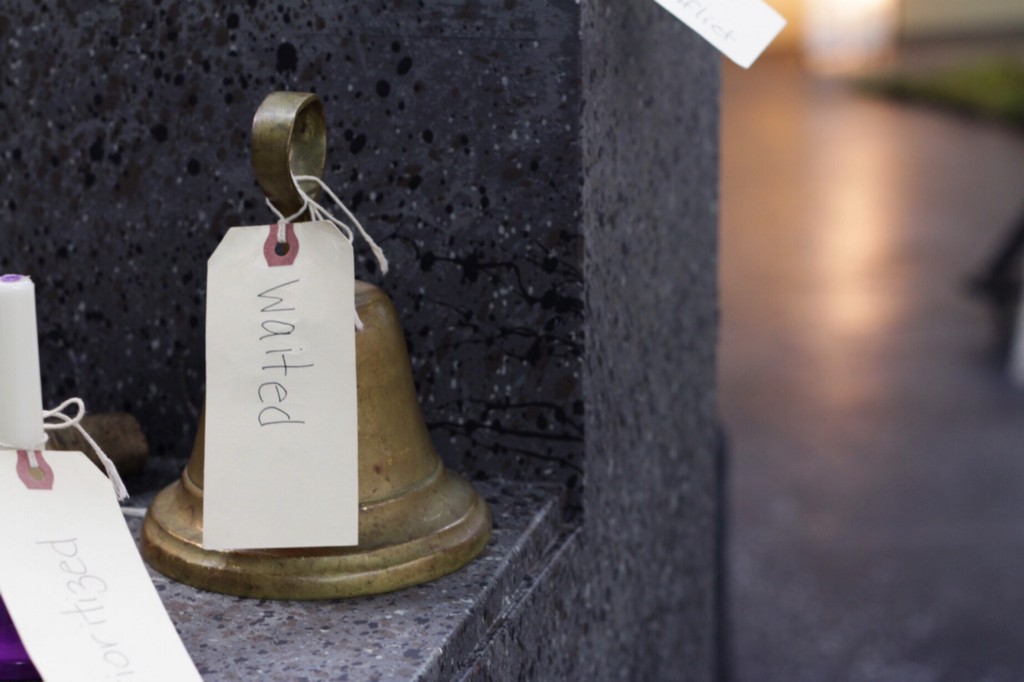
“Labor Date, 1958” by G H Yamauchi
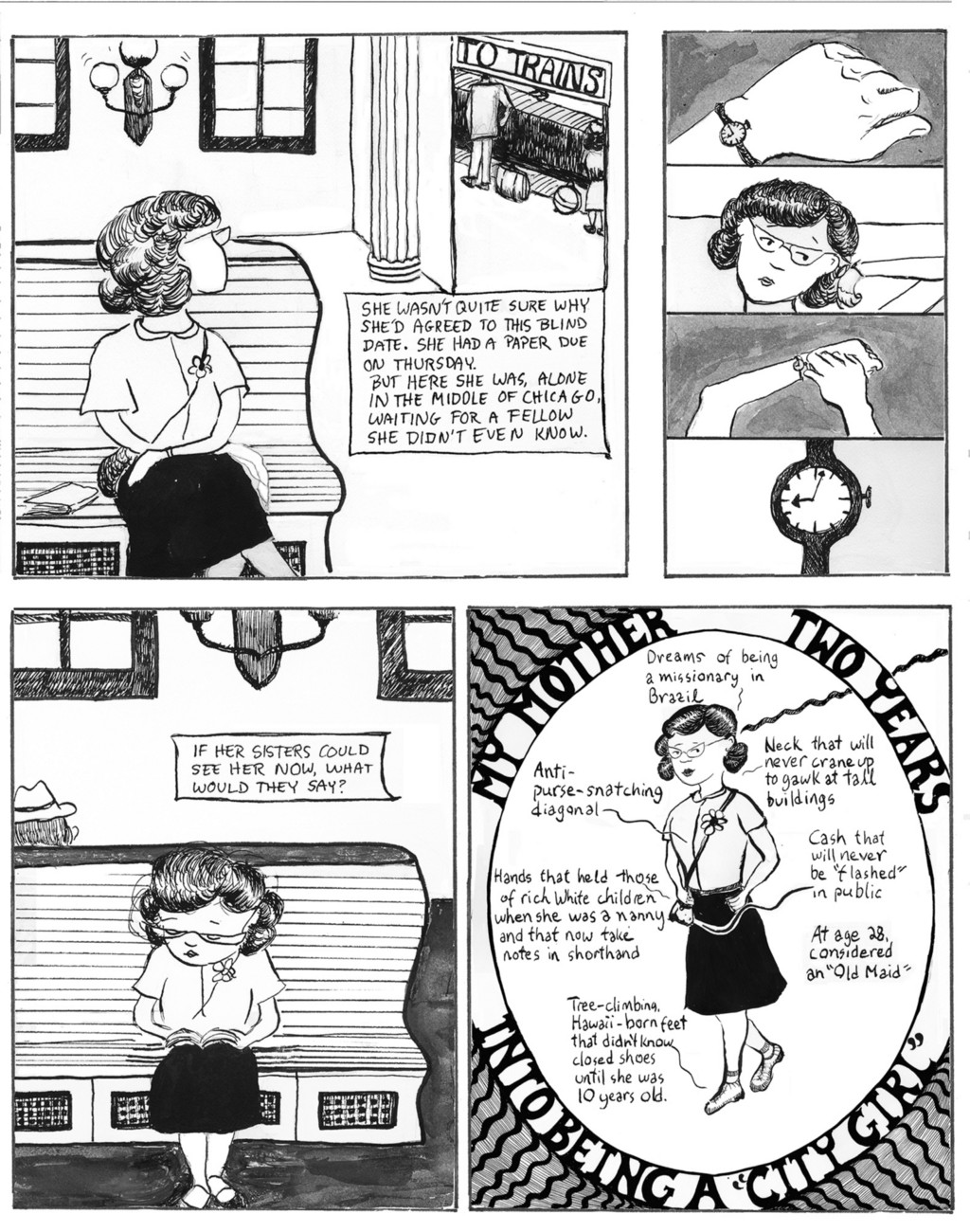
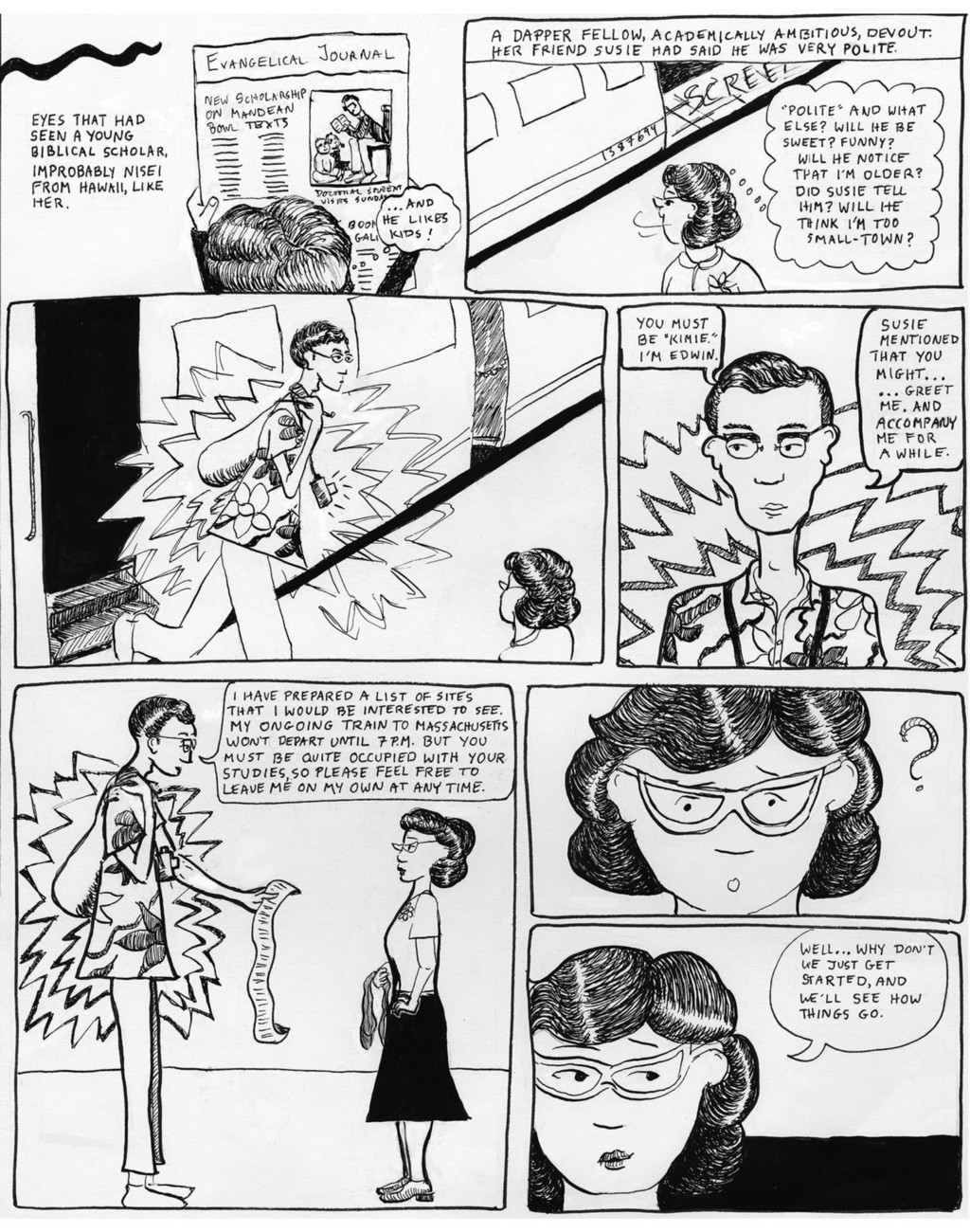

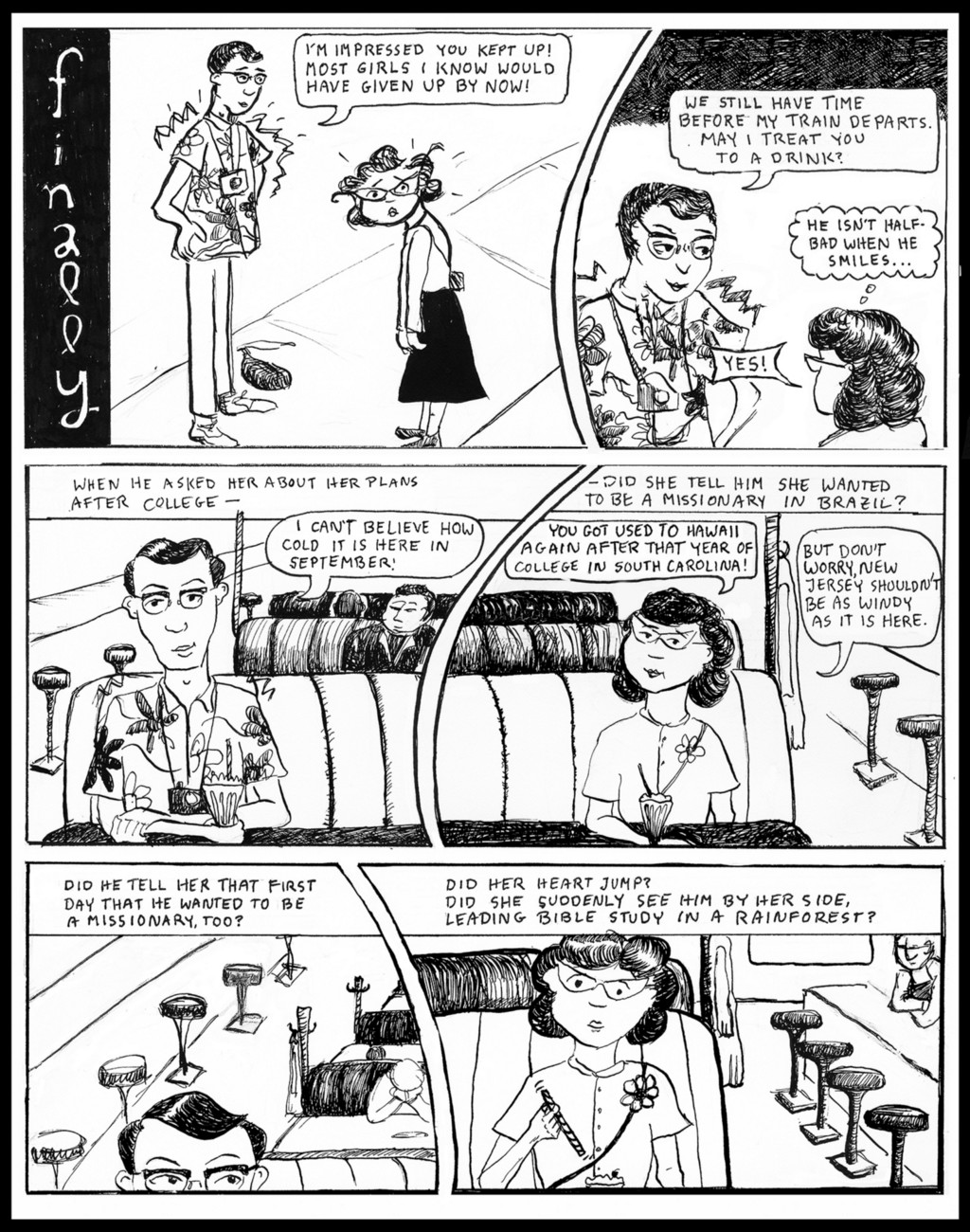


Click to enlarge and scroll.



Click to enlarge and scroll.
I hid my romance novels from my sophomore year college roommate. At least, I tried to. We were living in a narrow dorm room, in such close quarters that she couldn’t do Pilates in between our twin beds without almost brushing my face with her rubber resistance band. I was trying to figure out if heterosexual sex could possibly be worth it, and I didn’t want her to know.
These days, I’m regularly hearing that no, heterosexual sex is not worth it. Last December, writer Roxane Gay tweeted that “Cat Person,” the New Yorker story that went viral for its depiction of unpleasant sex between a college student and a thirty-something man, was “a great way to help women get over any lingering interest in straight sex.” Back in 2015, Rebecca Traister sounded the alarm in a piece for New York magazine that declared the whole heterosexual sex thing “to be rigged in ways that go well beyond consent.” I’ve heard the same from friends: sex is great, but maybe not if you have to do it with a man.
I did not have sex until my late twenties — not especially by choice. For most of my life, I considered myself some sort of freakish outlier. I’m kinder to myself now, but deep down, a part of me still thinks something was very wrong with me (and perhaps still is). Conversations like these make me see my late entry into sex in a new light. To hear other women openly declare that straight sex is not a great deal for us makes me feel a little better in one shallow sense, because maybe I really wasn’t missing out on a lot of spectacular sex in my teens and early twenties. But there’s a deeper sadness here too, because if I’m not the problem, or at least not the entire problem, then the whole damn system is broken. We need to tear it down and start over, but we’re too busy arguing over whether that woman who went home with Aziz Ansari said no in the correct tone of voice. Romance novels might offer a partial route out of this cultural narrative.
The real issue Society in General has with romance novels is that they’re books centered on a woman’s desires.
Especially in the literary world, suggesting people read romance novels can come across like suggesting they go read a book by Ted Nugent. But where does this scorn for the romance novel come from? There are legitimate problems with the genre, some of which you don’t even need a working familiarity with the books to perceive: cheesy covers, sometimes purple prose. But I think the real issue Society in General has with romance novels is that they’re books centered on a woman’s desires, including her sexual ones, and they’re usually written by women. When done right, that sort of thing can feel revolutionary.
It sure as hell felt revolutionary to me when I was nineteen and the accessible narratives around sex and relationships were pretty much all bad.
The most vivid part of my Texas public school sex education was an anti-abortion video I saw at age fourteen. When the video was over and the health teacher/volleyball coach removed the VHS tape from the VCR, I had this heavy, sad feeling. I had never had an abortion. I had never so much as kissed a boy (that wouldn’t happen until I was sixteen). But I still felt weighted down, like something was my fault. I had to have done something wrong. If I didn’t do anything wrong, why did I feel so guilty?
Sex ed in general was lacking in that part of Texas. When we weren’t getting anti-abortion videos, we got slideshows full of graphic STD images. The idea that people had sex for fun was never really brought up, as if we couldn’t be trusted with that information. Condoms were not discussed. Church was also unhelpful. Our clearly embarrassed youth pastor tried to assure the teenagers that if a married couple loved each other, everything would be fine. How or why it would be fine wasn’t mentioned. I didn’t need a lot details, but I needed more than vague assertions. I took the vagueness and warped it into a specific idea that sex was like a lot of things in my church: something you did because a man said it should happen. The woman’s desires were secondary, if they factored in at all. My anxiety convinced me that men want sex all of the time, and women must rein in those base impulses, at least until he puts a ring on it and everything that was once dirty and impure is now mandatory.
My anxiety convinced me that men want sex all of the time, and women must rein in those base impulses.
It all seemed like a bullseye that was impossible to hit, partly because I wasn’t sure where exactly I was supposed to be aiming. I regarded my high school boyfriend suspiciously, like he some sort of rape or pregnancy bomb that was going to go off if I made any sudden moves. He was not sexually aggressive, but I still felt like I was in danger. I didn’t trust myself. I’ve always been an anxious person, and growing up in a religion that viewed women as weak and unreliable only intensified that anxiety. If I couldn’t trust myself, then why would I trust a guy? Guys could get me pregnant, and I had been terrified of pregnancy since before I knew how sex worked. In my mind, pregnancy was an inevitable result of sex. Both sex and pregnancy were things that would happen to me rather than choices I would have any kind of ownership over.
As I graduated high school and left for college, other people in my social circle started having sex, and many of those experiences were not reassuring. My first college roommate said she cried throughout the experience. A friend from out-of-state had sex with a fellow virgin who told her, “Well, it has to go in sometime.” I just assumed that was the price of admission into womanhood, and I judged people who went ahead and did the thing anyway. I was sheltered and scared and secretly wondered if sexual enjoyment were even possible for women as anxious and broken as me, and I tried to cover that up via a sense of superiority. I told myself I didn’t want it so I wouldn’t have to deal with the possibility that I would never have it.
But I must have wanted it, at least a little, because one day I bought a romance novel. Probably a cheap Harlequin one at Walmart. I was to a point where I realized the stories I had been given weren’t going to work for me. The view of sex I’d grown up with seemed both exhausting and unsatisfying. I didn’t want to believe anymore in the narrative I’d been given. At the same time, I had very little confidence that I deserved a better relationship narrative, or that I would be granted one even if I did. At that point, I’m not even sure if I wanted to have sex or just wanted to not hate the idea of having it. I wanted desperately to find some middle ground. I wanted some reassurance that I could have intense sexual feelings and intense sexual experiences without losing myself or becoming tainted.
I wanted some reassurance that I could have intense sexual feelings and intense sexual experiences without losing myself or becoming tainted.
I was also horny, and I was tired of denying that. Expressing these feelings with other people was too dangerous, but suppressing them entirely was no longer tenable.
Romance novels assured me I did deserve good sexual experiences. I deserved to take an active role in sex rather than it have be just an unpleasant or at best neutral thing that happened to me, and I didn’t have to feel guilty about any of it. In good love scenes, the sex is enjoyable rather than transactional. The women are there because they want to be. No one is coercing or manipulating them. If something isn’t right, they talk about it. They find a way to ask for what they want rather rather than just hoping the man will read their mind, because a slightly awkward conversation is always better than bad sex.
In some ways, of course, I was trading one set of issues for another. If you check out the history of romance novels, it’s checkered with books where women get raped by the “hero” and then fall in love with him anyway. At their best, these books are well-written stories that imagine a better, more egalitarian model for intimate relationships — but at their worst, they’re populated entirely by milky white people and their attendant breasts, use way too many euphemisms for genitalia, and suggest a woman isn’t really a full person unless she’s got a strong alpha male willing to wife her up. Just look at the 50 Shades of Grey books. Or don’t, for your own sake. Their popularity (more than 125 million copies sold worldwide as of June 2015) shows how far we have to go when it comes to the plot lines that dominate the conversation (no pun intended). Christian Grey is an abusive dick who gets away with it because he’s rich and allegedly good at boning. Female virginity is also overvalued in romance novels (including Fifty Shades) — though, in recent years, there seems to be more room for women of all experience levels. The Most Sacred Hymen is a bigger deal in the historical romances. I used to read a lot of books about virgins who somehow had vaginal orgasms their very first time out, because the Duke of Girth or whatever was just that good. That seemed unrealistic even before I was sexually active.
Romance novels have issues, but so do all the other cultural narratives about sex. Unlike much of Big Important Fiction, romance novels taught me that good sex doesn’t have to be followed immediately by tragedy or betrayal (looking at you, Atonement). A woman’s sexual development doesn’t have to ruin her. These books helped me realize healthy sex is is a mutual encounter rather than a thing to endure passively. I’ve often heard sex compared to dancing, but it took romance novels to help me realize male-female relations should resemble a Ginger Rogers and Fred Astaire number, not one of those high school dances where you awkwardly latched onto your date and prayed for the song to be over before you were forced to make sustained eye contact. That doesn’t mean I expect sex to be free of awkward or stressful moments, only that I know it’s not supposed to be one continuously mortifying moment. Books can give straight women unrealistic expectations the same way porn can give straight men unrealistic expectations, but at least in romance novels, the women aren’t faking it and the men ask before they finish on someone’s face.
Unlike much of Big Important Fiction, romance novels taught me that good sex doesn’t have to be followed immediately by tragedy or betrayal.
I don’t read romance novels nearly as much as I used to, but I still have a few on my bookshelf. I just started The Wedding Date by Jasmine Guillory. It opens with a man and a woman getting stranded together in an elevator. In most other genres, a woman getting stuck in an elevator with a strange man would feel like the beginning of a horror story. But here, the man and woman chat, flirt, and share some cheese and crackers. The man does not get stuck in a small, confined space with a woman and think “You know what would improve this situation? Me taking out my dick!” The only things more defined than his sense of boundaries are his abs. The sexy stuff will come later, but right now, I’m reading with a distinct sense of relief.
Does anyone have a “normal” relationship with their sister? Once you get someone talking about siblinghood, the crazy stories begin to pour out: resentment, betrayal, zaniness, competition, loyalty. Oyinkan Braithwaite has created a manic cocktail of sisterhood into her novel including all of the above. My Sister, The Serial Killerdoesn’t make a decision about whether to be disturbing, insightful, hilarious, or melancholy: it revels in all of those and more.
The book begins with Korede methodically helping her beautiful sister, Ayoola, dispose of the body of a man she’s killed. But he’s not the first, or the second. He’s the third, and Ayoola shows no signs of remorse, and it’s immediately clear that she will have no problem killing again. Ayoola claims all the men have tried to hurt her, but Korede, who’s spent her life cleaning up her sister’s messes, both metaphorical and actual, knows that Ayoola’s role as a victim is at best a passive act, and at worst a willful manipulation.

Despite her sister’s disturbing extracurricular habit, Korede manages to compartmentalize her brain and retain focus on the rest of her life, most importantly, her recent promotion to head nurse at a hospital. But her duties at her job aren’t quite her main priority at the hospital, either: she’s fallen in love with a surgeon, Tade, who values her professionally but may or may not see her in a romantic light. As the novel progresses, the inevitable occurs: Tade and Ayoola meet, and Korede desperately tries to avert what she naturally assumes will be their fate.
The macabre plot of My Sister, The Serial Killer would be enough to keep you propelled through the novel, but there’s much more buried within the pages: Braithwaite has a razor sharp commentary on power relations, the role of beauty in society, and the way young people operate on social media. We spoke on Skype about the misrepresentation of beauty as a personality trait, the mistakes people make in selecting partners, and, of course, our own experiences with sisterhood.
Rebecca Schuh: What was your initial inspiration for the novel?
Oyinkan Braithwaite: The initial inspiration would have been the black widow spider. The first time I came across the black widow spider, [I learnt] how when the female and the male mate, if the female happens to be hungry afterwards and the male is still around, she’ll eat him. I thought that was hilarious. I wrote a poem the black widow spider and from then I kept playing with the idea, it kept showing itself up again in a poem or a short story or whatever, until I finally sort of got here. Ayoola is obviously the black widow.
I thought it was hilarious how when black widow spiders mate, if the female happens to be hungry afterwards and the male is still around, she’ll eat him.
RS: That’s really interesting! I was going to ask, do you have a sister that you have a very dramatic relationship with — but this makes more sense.
OB: I have two sisters and a brother, and I think that my relationships with all three of them are interesting in one way shape or form. I’m the eldest of all of us and some of what Korede went through, that sense of responsibility and wanting to care for and be there for your siblings and protect them, I can understand.
RS: Early in the book, after one of the initial murders, Ayoola accuses Korede of victim shaming her. Korede finds this ridiculous, but you can see that Ayoola believes the narrative of her as a victim. How did you navigate the relationship of Ayoola as a victim versus Ayoola as a perpetrator?
OB: I do think that she claims to think she’s a victim, but I’m not sure she actually considered herself to be a victim. It’s convenient for her to say “woe is me,” but out of all the characters in the novel, she’s really the one who’s having the time of her life.
She understands the way it works, she’s been through certain experiences through which other people would consider her to be a victim, but whether she herself actually considers herself to be one, I think is open to debate.
That’s what allows the novel to be light in tone, because she’s not doing it necessarily out of a place of pain, she’s doing these things because she can get away with doing them. Ayoola’s not somebody who spends a lot of time reflecting on herself and her behavior and on the things that she’s done. She does things out of impulse as opposed to really thinking, why am I doing the things that I’m doing.
RS: And then she uses the victim narrative later because it’s convenient.
OB: And it’s what’s expected, and she knows how to work what she’s been given.
RS: Something I thought was really fascinating about the book as a whole was how it integrated so much social media, instagram, hashtags, Snapchat. We’re at an interesting point with books because in our lives, we know that social media is fully integrated, but books have not fully made the leap yet.
OB: This book was my first time doing it, and when I was writing the book, at some point, I thought oh, it doesn’t make any sense that social media isn’t here. They’re both females in their twenties, and it’s supposed to be a contemporary novel, and it wouldn’t make sense — you’re on instagram half the day.
Everybody sort of knows this now but we are all a victim of social media in a sense. You know that what you see on Instagram isn’t real. You know that what you see isn’t necessarily people’s true lives. It’s in our nature to represent the best of ourselves. On Twitter, a lot of people sound intelligent, but that’s not how they talk all the time. And yet we still are intimidated by it. Some people have been caught in lies, representing things that just aren’t true. I think that’s really interesting that we go so far to deceive people that we don’t even know. That was definitely something that fascinated me when I was writing it.
You know that what you see on Instagram isn’t real. It’s in our nature to represent the best of ourselves.
RS: I was really fascinated throughout the novel by the descriptions of the power relations between men and women. There was a line that really stuck out to me, when they were at the father’s funeral and the young woman came up to Korede and said oh you know your father paid for my whole university and she says he did it for a lot of women, and then says “When you have money, university girls are to men what plankton are to a whale.” I just thought what a knife of a line. What I thought was so interesting about her attitude was that she was so disdainful but so resigned to this idea of how powerful men interacted with women.
OB: I was having an interesting conversation today with my sister, we were talking about the book and she was mentioning how she had been surprised at some people’s response to the novel. She was like aren’t these things normal? Why are people highlighting them?
I think you become desensitized after a certain while, you just kind of have to. When I first moved back to Nigeria permanently, there were things that bothered me. They used to really get on my nerves. I would be all self righteous. Now I don’t have that same reaction to it.
After a while when you’ve seen things over and over and over again, you kind of have to work very hard to stay sensitive to it. And to stay shocked by it. And to want to even do something about it, to have the energy to want to do something about it.
That’s one of several things in the novel that people seemed shocked by but, what Korede said about the university girls, that’s a very common thing here.
RS: I thought that the pairing of Tade, whose attention is so intoxicating, with Ayoola, who’s a charmer herself, but more impervious to his attention, was, no pun intended, a deadly combination.
OB: There was one thing that I knew at the start of writing this novel, and that was that there was going to be a Korede, an Ayoola, and a Tade. I didn’t have his character lined up but I knew there was going to be a guy who was going to be the middle of the two of them.
Tade is central to the story, and he’s what tests Korede’s loyalty and devotion to Ayoola. Without him, there would be no real conflict — she’s been dealing with this, maybe she just would have continued to deal with it, had someone who she cared deeply about not been at stake.
RS: He created the biggest tension in their relationship thus far. It was so well illustrated in the first few chapters, the methodical nature of just wrapping up the bodies and putting them outside. She’s treating it like it’s her job.
OB: I think it’s the same thing, you know, you become desensitized to it and at first you might think oh my gosh this is so horrible, but once you’ve done it once, I’m pretty sure doing it again isn’t so bad.
It was tough on her, but without Tade being at stake maybe she would have just have kept on getting irritated but getting the work done.
RS: Tade was interesting because she saw him as so charming and perfect but even from the beginning I was like hmm….is this guy….is he really all that?
OB: Tade’s not one of my favorite characters. I think it was very much just how she saw him. I’m not even entirely sure who he necessarily was because at the end of the day we’re seeing the entire story from Korede’s point of view, so I think she put him on this pedestal that he maybe didn’t deserve.
That’s also what the book is about, to not make snap judgments about people. Because again, it’s this whole thing about social media and the time we’re in, people are working so hard to give this impression of perfection. Whether it’s physically they want to be perfect but maybe they also want to come across as good and charitable and kind. And we work very hard to convince other people that this is the way we are, when in fact, most of us aren’t great people.
Let’s be honest. We prioritize ourselves, we prioritize our well being we prioritize the well being of our friends and our family. We claim to care about the world at large but you have to choose. At the end of the day. It takes a lot to be able to put someone else’s well being ahead of yours or ahead of the person that you love. I think it’s good to give people time to reveal themselves, not just to assume that what you see or present is real.
RS: It’s almost like that’s the process that Tade went through with Ayoola where he was so easily like oh my god, she’s perfect. And didn’t believe it even when he was getting warnings about her being a killer.
OB: To be fair to him it’s not easy when someone comes up to you and says oh this girl, she kills people.
RS: Hah yeah, why would you believe it? It doesn’t sound real. There’s a line about how beautiful people get a pass at life, and I was like oh, yeah, again, accurate. That’s a zinger. There was kind of a lot of strains in the book about how beauty is it’s own form of privilege. Did you have any thoughts on that?
OB: It’s something that I’ve always been interested in, beauty being treated as though it were a virtue or a quality that one should emulate. Beauty is attractive, there’s nothing wrong with that. But beauty isn’t a characteristic. It’s not the same as being kind or being patient or being loving. But it’s often treated as though it is one of those things, which is what I was trying to explore with the novel.
When you see someone beautiful, you want to think they’re good. It’s part of the package. One is supposed to go with the other. So then when they do do something that’s not great, you’re more likely to forgive them.
I’ve heard it happen where somebody passes and the person was attractive, people say “oh they were so beautiful.” As if that made it more tragic than if they had not been so beautiful. You can definitely see how people work so hard today to fix their bodies. We’re trying to stay young and beautiful, as thought it would fill some kind of void and satisfy something on the inside. It’s always been something I’ve been interested in, as well as how being treated according to how you look can affect your mindset. Whether it’s that you’re really attractive, or that you’re unattractive, how it can form your character and who you are. Going into the novel again, that’s something I knew, which is how Korede and Ayoola look so different.
When I was younger, I got a lot of attention, and I got older and fatter and the attention changed. It was weird because I was like I’m the same person, I’m not different. I have the same values. I like the same things. But people treat you differently.
I lost a bit of weight this year, and I found myself resenting whoever my future boyfriend would be because I was like “he didn’t love me when I was fatter!”
But I hadn’t met the guy! If he comes up to me now that’s because I’m more appealing to him now. I resented someone I hadn’t met yet. I had it in my mind that I was getting less attention because I was bigger and when I’m smaller I’ll get more attention, so therefore whoever I’m going to date will be shallow.
Luckily I ended up with someone who is pro plus size, so that works, he would have liked me before and he likes me now, I’m at peace with it. But it’s definitely something that has weathered me in my own safe space.
I want to look good, but that’s not essential to who I am as a person. I believe that a lot of women probably have that issue as well where it’s like, I’m a good person, I’m a nice person, why does it have to do with how I present myself all the time?
It’s almost the same thing as when you’re very unattractive, because they’ve summed you up and you aren’t sure how much of it is based on how you look and how much of it is based on your personality. Ayoola is not given a chance to grow because she doesn’t need to grow because she already gets what she wants because of how she looks. She’s boxed in and decides to use it to her advantage. I think that in and of itself can also be quite limiting.
When you see someone beautiful, you want to think they’re good. So when they do do something that’s not great, you’re more likely to forgive them.
RS: When Tade meets her, and Korede asks him, “What do you actually like about Ayoola?” and he says “Everything! She’s special.” And it’s like, you’re not saying any words. Those aren’t things.
OB: Use your words Tade! Yeah, exactly.
RS: I loved that exchange because I feel like I’ve seen it with so many friends where like, “I’m so obsessed with my new girlfriend/boyfriend” and you’re like “Tell me about them,” and they’re like, “she’s just lovely.” And you’re like, sure.
OB: (laughs) And it might be why, I don’t know how it is in the States, I don’t know if this in insane but here it’s kind of started to feel like people aren’t having the right conversations before they decide to get married.
We’re all kind of more shallow than we used to be. You need to say, who are you dating? What are their values? What are their principles? What do they believe in? Are you guys going in the same direction, as opposed to how the two of you look next to each other on Instagram?
RS: It really goes back to the social media question. You can even fall for someone on social media, based on the way they present themselves. When that’s really just a manufactured image. It’s self-manufactured, but still. It’d be interesting to see a relationship that started on social media, how that would play out.
OB: I know people do do it, I’ve heard people do it.
RS: I don’t think it’s all bad. I spend a lot of time on the internet, and we’ve had to accept that it’s the way things are. It’s a fascinating concept.
OB: It’s not bad, but it’s risky. Taking a massive risk. If you start off on social media and then decide you’re madly in love and then take it from there, then it’s a little bit dangerous I think.
I’ve been surprised at how people received the novel. I wasn’t expecting it to receive so much love, and a lot of people have said they have a sister or they have a sibling, and it’s funny how much they empathize with Korede. I thought some things were unique to the culture here, and it’s really nice to see that this is very universal and all over the world where we have these interesting relationships with our siblings.
RS: With my sister and I, I’m older but I’m less responsible and obviously I don’t kill men I date, but I can always tell she gets so frustrated when I make another mistake and she’s like “you get away with so much!” It’s not that she doesn’t get away with anything but you know, straight A’s, she’s now getting her PHD in Economics, and I’m working at a bar in New York, and I can tell every time I mess up again she’s like, “Really? Really?”
OB: My sister, the one who’s right after me, there’s two years between us, she’s the more meticulous one and the more responsible one and I’m more chill. She gets annoyed at how my attitude is like, everything will work out at the end. It drives her crazy, she’s like why can’t you do things properly. We barely get each other, and we’ve been around each other for forever.
RS: My sister and I didn’t get along for our entire lives until we lived in New York at the same time. And then it was like oh we have a common enemy, it’s New York, and we could fight it together, and since then we’ve been fine.
OB: My sister and I we went through a period where we were not friends, we didn’t really like each other very much and now we’re much much closer, and I think with age you become more understanding. She’s actually here. She just said she wishes she could add something here.
RS: I think I’m going to give my sister your book. She’ll probably like oh my god, you’re insane. But I think she’ll like it.
OB: And write a really quirky note so she’s confused. Something like, I hope you have my back if necessary.
RS: Rip this page out if anything happens.
OB: Exactly, it’ll drive her up the wall, like what have you done.
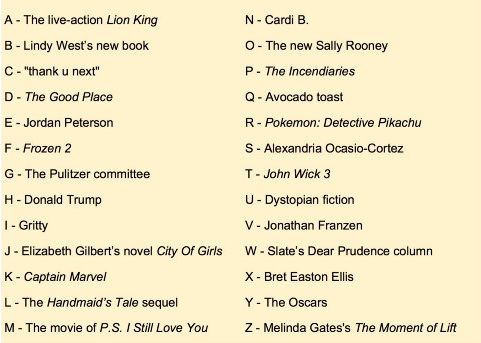
We all know January is the time to make resolutions you probably won’t stick to. But if your resolution is to write more cultural criticism, we have a solution for you: The 2019 Hot Take Generator.
Consider yourself a #woke thought leader, but don’t have the time to keep up on gossip or develop literary and historical nuance? (I mean, who does really?)
Get your pitches ready with the Hot Take Generator.
Simply use the first letter of your name, the month you were born, and your astrological sign and BAM! You’ve got the perfect combo to fill in your clickbaity headline. (Birth months and signs are correlated, so if you know your rising sign, try using that to make it more interesting.)

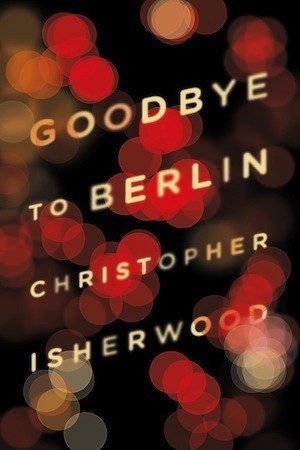
Christopher Isherwood created the Berlin myth. From his apartment in Nollendorfstraße 17, where he lived from March 1929 to February 1933, Isherwood wrote about entrepreneurial astrologers, aging prostitutes, teenage communists, rich businessmen who bought gifts not just for their lovers but for their lovers’ friends. Isherwood depicted a city where sex — gay, straight, anything in between — was given cheaply and enthusiastically. A popular gay bar of the time was called the Eldorado. In the Anglophone imagination, that’s largely what Berlin still is: a kind of El Dorado, a wondrous place, free of consequences and the banal rigors of daily life.
In one sense Isherwood’s vision was prophetic. In Schöneberg, his old neighborhood, the gay excess of his time has reemerged as a way of life. A man cries across a rainy square up to another man on a balcony: Willst du ficken, Schatz? An underemployed gay porn actor looks out from his heated shop at the cold street. Beautiful, surly baristas in Adidas sportswear — Isherwood’s type — serve coffee with a frown. The stuffed-up buy cold medicine at a pharmacy named after the sexuality researcher Magnus Hirschfeld. A cobbler promises to fix heels on the spot. Klaus Wowereit, the first gay mayor of Berlin, called Berlin “poor, but sexy anyway” in 2003. That was Isherwood-style branding.
But Isherwood’s books represent only one side of the Berlin story. He came to Berlin at the height of inflation, a white man with a posh accent and pounds in his pocket, and Berliners was more than willing to satisfy his desires. Recent English-language novels by people of color and women complicate that narrative by showing a city whose generosity was always dependent on who you were and what you had to spend. They illustrate the modern Berlin: richer, resurgent, the free-for-all nearly gone, replaced by new traumas and joys. Without the insulation of whiteness, maleness and money, the place, like so many Western cities, is harsher and more calculating. A city is always many things, which is why its story must be told by many voices. That’s how myth gains depth.
A city is always many things, which is why its story must be told by many voices. That’s how myth gains depth.
In Isherwood’s Goodbye to Berlin (1939), the narrator quickly meets a cast of fascinating characters. He falls in with — doesn’t that cliché elide maddeningly the complicated dynamics of acceptance? — an eccentric cabaret diva, a masochistic middle-aged Englishman, a Jewish heiress, a gorgeous working-class gay man and his brownshirt-sympathizing brother. Not everyone who moves to Berlin is welcomed with such abandon. In Chloe Aridjis’ spare, affecting novel Book of Clouds (2009), loneliness is the narrator’s only constant. Her solitude is “stagnant, infertile.” She tries to befriend her neighbor, a gym trainer who dumps the narrator when it becomes clear that she’s out of shape. The lonelier she gets, the more oppressive Berlin becomes. Out dancing one night, the narrator receives an invitation to join some tourists on a tour of an underground “Gestapo bowling alley.” The Nazi officers’ scores are still legible on a chalkboard. “I had the uncomfortable sensation that we delegates of the present were intruding on the past, every step of ours widening the incision,” Aridjis writes. The other members of the group seem able to take the grotesque scene in stride and leave, but the narrator, haunted, decides to go back and wipe the bowling scores away. She gets stuck underground, alone in the pitch-black depths of history.
The protagonist of Book of Clouds is from Mexico City, and often wonders about the somber sterility of Berlin’s architecture. She visits Marzahn, in the East, which Aridjis describes as “a place with little or no birdsong, as if even the trees were made of concrete.” Berlin is a study in grays. This truth is also essential to Sharon Dodua Otoo’s novella Synchronicity: The Original Story (2015). In the magical realism-inflected work, the protagonist is a graphic designer, a black British woman of African heritage, who has inherited an illness that gradually robs her of her ability to see color. “My days were merging into a kaleidoscope of nondescript grays,” Otoo writes. This inventive conceit allows Otoo to reflect on the construction of her identity in Berlin. Before the illness hits, she points out every time she interacts with a white character, flipping the ludicrous but prevalent idea of a “default” skin color (an idea Isherwood’s Berlin novels leave unexamined) in its head. Once Otoo’s narrator loses brown, though, she is unable to look at herself at the mirror, knowing she’ll see herself in the grim grayscale of her chosen home. Without color, how will she feel that she’s different from the Germans who “authoritatively” say things like “Africans need to dress [warmly] in Europe because they miss the desert heat of their homeland”? How can she retain her identity in a place that is unprepared for her existence?
How Reading About London Helped Me Overcome Agoraphobia
Otoo’s main preoccupation is color, of objects and skin, but she also describes Berlin’s impatient reinvention. “The thought of skidding down the main and looking at things I could no longer afford, in shops I no longer frequented, run by people I no longer respected, didn’t appeal to me at all,” she writes. Gentrification feels like a personal betrayal. In Kate McNaughton’s novel How I Lose You (2018), a Berliner says, “I miss the ruins. They made you feel more free than all this money.” Each of the main characters in McNaughton’s novel knows a different Berlin, and it’s these varying cities which define them and their relationships to one another. Isherwood’s Berlin stories often feature adrift young people, but McNaughton gives her characters backstories which tie them to the place: The narrator, Eva, who was raised in England by a British father and a German mother, has an unexamined reluctance to visit. Her mother grew up in East Berlin under Communism, fleeing by boat and promising never to go back. Eva’s husband Adam, who dies at the beginning of the novel, lived and worked there in his youth. An unencumbered young British man like Isherwood, Adam is the only character able to see the city with a certain lightness, because he doesn’t have a personal stake in its history. This puts Eva’s relationship to the “dark, shadowy, hard to decipher” Berlin in starker relief. Mother and child, even husband and wife can talk about it and not realize they are discussing completely different places. “Berlin was changing too fast, with its building sites on every street corner, its general air of upheaval,” McNaughton writes. “What could be left of the city Adam discovered twenty years ago? What could be left of the city her mother had been exiled from thirty years ago?” How I Lose You is a book about grief that derives a thriller’s momentum from its characters’ competing experiences of Berlin. All these Berlins are real, and yet they seem mutually exclusive.
All these Berlins are real, and yet they seem mutually exclusive.
“That was the year to come to Berlin, 1977,” says Jed, the narrator of Darryl Pinckney’s Black Deutschland (2016). That’s a good joke — back when I moved here is the Berlin expat’s favorite conversation starter. Pinckney’s novel, about a recently sober black gay man who is explicitly following in Isherwood’s footsteps by moving from Chicago to Berlin in the late ’80s, is touching, dexterous, and deeply knowledgeable about the city, including its least sexy corners, like Siemensstadt and Dahlem. Jed comes to Berlin dreaming of a decadent expat life, but gets repeatedly cockblocked by his shyness and fragile sobriety. He falls for a hunky straight white engineer and then, finally, has an ecstatic affair with a black Frenchmen: “In the terrifying beginnings of the worldwide AIDS epidemic, Berlin had kept its Isherwood promises to me.” Like Otoo’s narrator, however, Jed finds that the racism he tried to flee has followed him. In 1962, James Baldwin wrote that “Negroes do not, strictly speaking, exist in any other” country besides America, but Pinckney’s narrator knows better. Clerks still keep an eye on him whenever he enters a store in Berlin: “If I wasn’t thinking I was special, then maybe I made the mistake of thinking Berlin was.” Still, the Wall comes down and Jed stays in the city, observing, “You could crawl into the disfigured city as into a shell. You could treat it either as an inhabited ruin or a blank space.” Jed is able to do what Isherwood couldn’t: he remains.
People keep moving to the city from everywhere, the kind of people with the insight to see the place as it really is.
Usually, the expat novel ends when its protagonist leaves, having learned something about himself while abroad. Isherwood went back to England and eventually emigrated to the United States. In Synchronicity, How I Lose You, and Black Deutschland, however, the main characters all decide to take Berlin as an adopted home. “There was no there where I came from anymore,” Pinckney writes, and the other protagonists seem to agree. Even if the city stopped being cool in ’77, it continues changing rapidly, which is a comfort to the rootless exile. Today, Berlin’s ruins are almost all gone. Six days a week, bulldozers tear down the Soviet barracks, basketball court, and theater at Vogelsang; across from the Berlin Wall, Mercedes-Benz builds a brand-new square and names it after itself. Meanwhile, Syrians turn Sonnenallee into the new vibrant heart of Arab life in Europe. Clubs successfully fend off attempted takeovers by real estate speculators. People keep moving to the city from everywhere, the kind of people with the insight to see the place as it really is. Infinite Berlin tales are still waiting to be told.

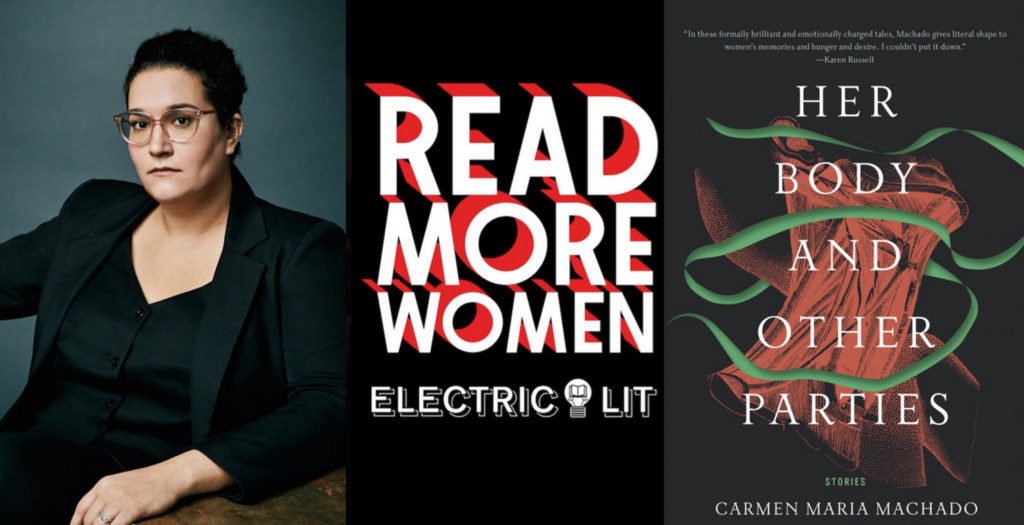
Carmen Maria Machado’s Her Body and Other Parties was shortlisted for a National Book Award despite being a debut short story collection—and as soon as you read her first story, “The Husband Stitch,” you’ll understand why. The collection is beautifully atmospheric and weird, sometimes funny, sometimes heartbreaking—and full of knife-sharp commentary on living as a woman in the world. (Electric Literature’s most-read story of 2017 was an essay about “The Husband Stitch” and the way women are consistently gaslighted.) If you like eerie, slightly magical fiction that disregards the boundaries of the plausible, or if you love books with a bull’s-eye understanding of feminism, you’ll love it—and you’ll also love Machado’s five picks for Read More Women.
Read More Women is Electric Literature’s series, presented in collaboration with MCD Books, in which we feature prominent authors, of any gender, recommending books by women and non-binary writers. Twice a month, you’ll hear about the five non-male authors who most influence, edify, and delight your favorite writers.
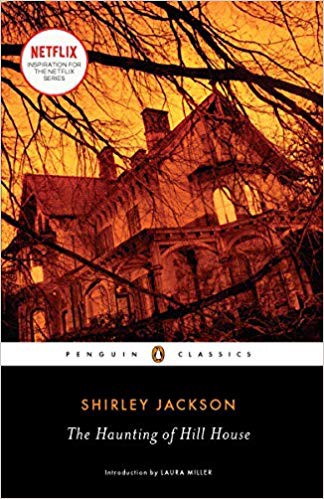
Forget the schlocky, sentimental ending of the Netflix series; The Haunting of Hill House is chilling, gorgeous, devastatingly real, and has an utterly fearless relationship with its genre. The perfect novel is one of the rarest beasts around, but here — sentence by sentence, brick by brick — Shirley Jackson built it. (Arguably, she did it twice — We Have Always Lived in the Castle is its own massive achievement — but Hill House is still my favorite.)
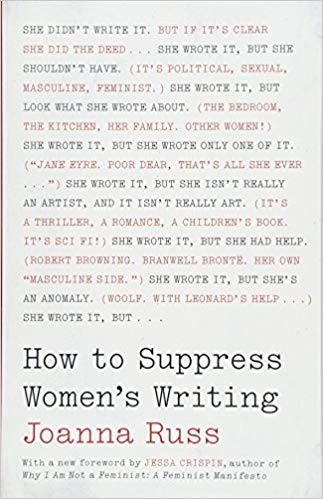
The only work of nonfiction on this list, and a book that, in a just world, would be assigned in every writing, literature, and art class, and handed to every single high school and college graduate. Here, Joanna Russ clearly and articulately lays out the ways in which culture devalues women’s art and cites generations of women writers along the way. It’s one of the most elegant books of feminist criticism I’ve ever read, and I return to it often. (You can read a longer essay I wrote about this book here.)
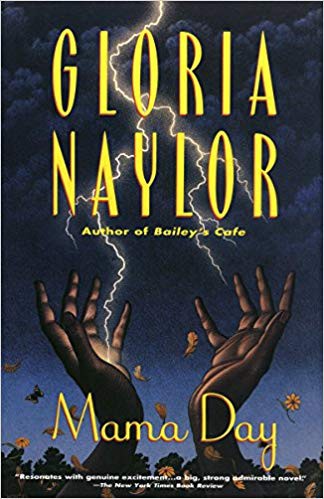
A teacher handed me a copy of Mama Day when I was a teenager, and — to put it mildly — I was not ready. Some of it tapped into narrative pleasures I already loved: multi-generational stories, dark forces, mysterious illnesses. Some of it created new obsessions: magic, fictional islands, tragic endings. Some of it went right over my head. (Shockingly, at fifteen I didn’t quite have a grasp on the perils and pitfalls of trying to be a modern woman.) But there’s no doubt that Naylor’s witchy and beautiful novel created a desire in me to write stories that evoke such a singular mood, hypnotic and unforgettable.
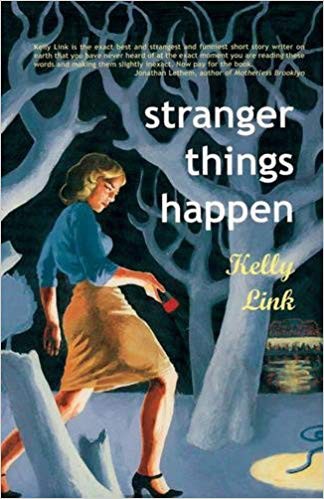
When I was a baby writer, a friend recommended I check out Kelly Link’s stories, and it changed my life. I don’t mean that hyperbolically: if you are a reader who loves my work, you have Kelly Link’s mind-bending, genre-smashing, so-good-you-want-to-die fiction to thank. An entire generation of female fabulists have been profoundly influenced by her, and she was also my gateway drug into some of my other favorite authors: Angela Carter (The Bloody Chamber), Kathryn Davis (Duplex), Shirley Jackson (Haunted of Hill House), and so many others.
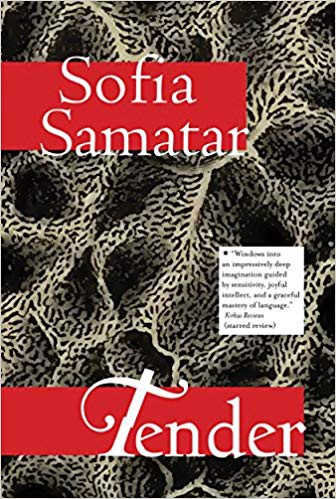
2017 might seem like a pretty recent year for a book to have influenced me, but Sofia Samatar has been publishing these stories in magazines for ages, and they haven’t lost an ounce of their magic or eeriness. Samatar is best known for her secondary-world fantasy duology A Stranger in Olondria and The Winged Histories, but this collection of short stories occupies a different, more liminal space. Samatar’s keen and nimble mind, gorgeous sentences, and incredible imagination are on full display here; she balances beauty and horror in a way that thrills and inspires me. If you love Helen Oyeyemi (What is Not Yours is Not Yours), Karen Russell (St. Lucy’s Home for Girls Raised by Wolves), or Kij Johnson (At the Mouth of the River of Bees), you need this book. (Bonus: It was published by Small Beer Press, owned by Kelly Link and her husband, Gavin Grant. They publish tons of amazing fiction, much of it by women. Check them out!)
If you had asked me three years ago to recommend Asian American poets, I would have not been able to name you one — a shameful secret I’ve kept to myself until this very moment. My journey as a lover of literature began early. Throughout my childhood, I was romanced by the worlds writers could create using just words. This love followed me through adolescence and ultimately determined my course of study in college. With dreams of becoming a writer, I pursued English Literature. For years, I searched for myself in the literature I read, seeking reassurance that a Filipino American voice — my voice — had a place in the artform I love. It was a reassurance I failed to find. Although I loved my courses on Austin, Poe, Melville (just to name a few), I would still browse book covers for names that resembled mine, yearning for mentors whose histories, traditions, and traumas mirrored my own. Soon, I became resigned to the reality that my story was not one that belonged in the hands of readers.
This changed after graduating college. In summer of 2017, I interned for Kundiman, a literary organization dedicated to writers and readers of Asian American literature. For six months, I communicated with Asian American writers all over the U.S., sharing news about forthcoming books, poetry readings, and accolades. I discovered that not only did a community of Asian American writers exist, it was thriving. For the first time, seeing my names like mine on the covers of poetry collections and novels, under article headings and short story titles was no longer a fantasy. When my time with Kundiman ended, I left with a renewed respect for prose, a rekindled desire for poetry, an extensively larger To Be Read pile for 2018 and, most importantly, a list of writers whose stories showed me that mine has a place. As I prepare myself — and my bookshelf — for a new year of Asian American-helmed literature, it is only fitting that I pay homage to ten poetry collections published in 2018.
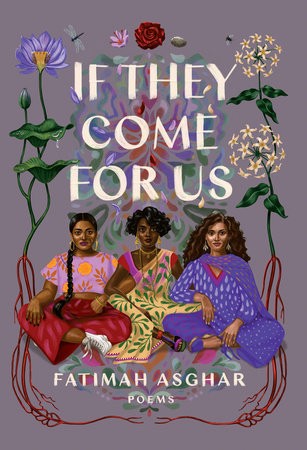
In her debut collection, Fatimah Asghar contemplates the concept of home and what that means as a queer Pakistani woman living in contemporary America. Tackling such subjects as sexuality, gender identity, family, religion and intergenerational trauma, If They Come for Us is a searing search for self.

In this stunning debut collection, Jenny Xie is a restless traveler, trekking through cities in the U.S., Asia, and Europe. She is also a philosopher, meditating upon the reasons why people might leave a place. Xie explores the ever-elusive concept of home, addressing such topics as immigration, recreational travel, and necessary escape as she moves from one country to another.
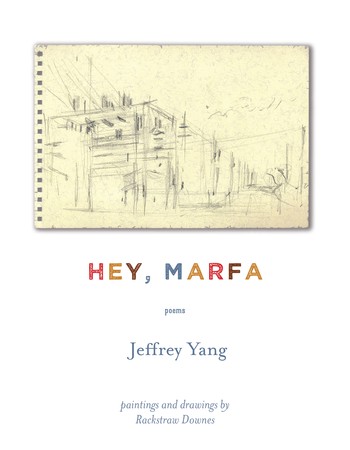
Part-love-song-part-historical-exposé, Jeffery Yang’s Hey, Marfa is a multi-faceted portrait of Marfa, Texas. Coupled with artwork by realist painter Rackstraw Downes, Yang’s third collection celebrates Marfa’s current status as a cultural hub for artists and immigrant communities while simultaneously acknowledging a history weighed down by “the ghosts of the indigenous”. A blend of both traditional and experimental forms, Hey, Marfa gives voices of the past space in the present.
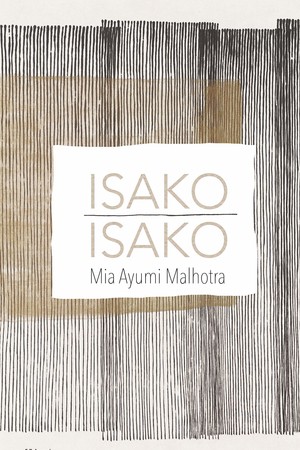
Mia Ayumi Malhorta’s debut collection examines the acts of violence committed against Japanese Americans post-World War II. Following four generations of women from a single family, Isako Isako explores mass interment, displacement and racism, revealing how such traumas are passed from one generation to the next.
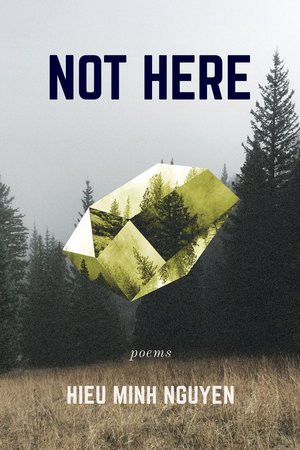
Not Here reverberates with a painful nostalgia, recalling memories of the sexual abuse, homophobia, and racism Nugyen faced growing up queer and Vietnamese American. Nyguyen’s sophomore collection is a study in shame and how easily one can find comfort in such a detrimental feeling.
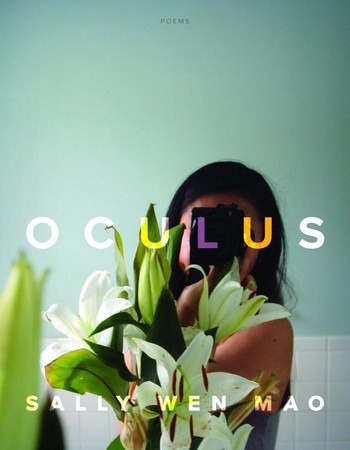
Sally Wen Mao’s Oculus is a cautionary tale. The ghoulish figure at helm of her collection? Technology. In her second book of poetry, Wen Mao manifests images of robots, electronic waste, Instagram-uploaded suicides, casting a suspicious glance on the perpetually-growing nature of technology.
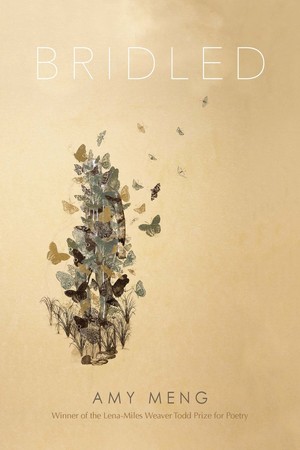
Where the previously listed collections address the necessary process of confronting your traumas, Bridled shows readers what lies on the other side of that work. In her collection, Meng reflects on a failed love with the newfound clarity of one who has experienced, conquered, and grown from heartbreak.
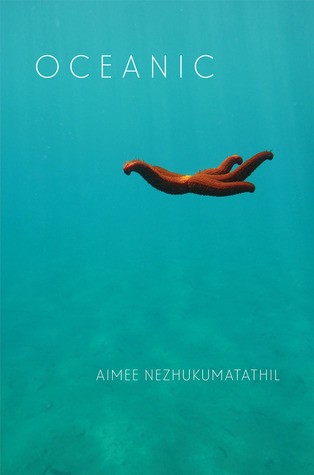
Her fourth collection, Oceanic is Nezhukumatathil’s ode to the natural world. A flurry of dazzling imagery and thought-provoking metaphors, Nezhukumatathil captures the complexity of nature, inviting readers to find peace in the bewilderment it provides.
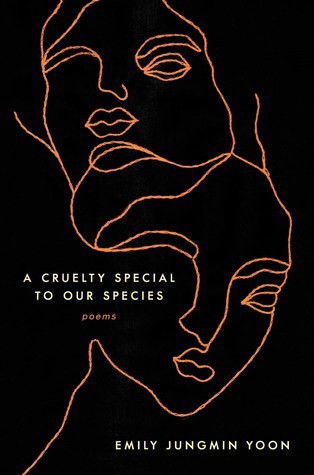
A Cruelty Special to Our Species recounts the stories of “comfort women,” those forced into prostitution for the Japanese Imperial Army during World War II. Fearless in its content, Yoon’s poems evokes images of rape, torture, and death to animate both the victims of this often overlooked atrocity and the resilience that defined their survival.
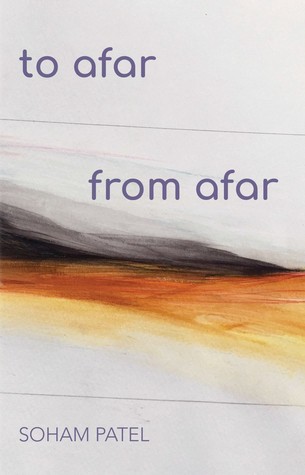
to afar from afar is a haunting collection that addresses the displacement caused by war and globalization. Non-traditional in its format, Patel’s poetry weaves together a medley of literary techniques and visual elements to create an immersive exploration of distance and nostalgia.
Juana woke up to find her hair had come alive on her pillow. It might’ve startled her if not for the elderly voice, so small and papery, “Don’t scream, girl, whatever you do. My ears can’t take it.” It almost sounded like her abuelita’s voice. Except, of course, not dead.
Lying on her side staring at her bedroom door, Juana felt the open window breathing against her back. Had her mother left it open? She supposed she ought to be afraid, but she wasn’t. Even as young as she was, she was already a connoisseur of frights, and very little was left to scare her. Reminding herself of just this fact, she whispered, “Who are you?”
“I’m a vampire bat,” the bat said. “If you’d bother to look, you’d know.”
Though bats were one of the ‘very little’ things left that actually did make her nervous, the girl took a deep breath and sat up in bed. There, on her pillow, tittered the bat. Its tiny bat fingers, like needles, a pair of living fine-tooth combs. Its upturned nose, the shape of a rose petal. Its pointed ears, an elf’s ears.
“I was so tired,” the bat said, perhaps by way of apology, “I had to stop for a rest. Did you know that we vampire bats lose our ability to fly if we go more than a couple days without blood?”
Though the idea of it made her squeamish, the girl said, “That’s terrible,” and she meant it. After all, she could go two days without food and still walk. In fact, she knew from experience that she could go a full four days before anything really bad started happening.
The bat nodded like it’d known all along that Juana would understand. “We’ve been long without a good cave to live in, my colony and me, and all this moving around looking for one gets taxing.”
“Your cave?” The girl looked around her room. She’d never thought of it as a cave before. “What happened to your old one?”
The bat settled into the pillow as if at home, as if it’d been born right there on the moon-and-star print sheets. “It’s far behind us now, back in Mexico.”
Juana gasped her smile, whispering, “I’m from Mexico, too. Or, my abuelos are. Or, I mean, my bisabuelos are. I’ve never seen it.” She almost said, “My sister’s been there before,” but stopped herself. Her sister took so much explaining. The bat might not understand.
“It’s beautiful there,” the bat murmured. “Our cavern was beautiful. Then men came and burned us out of it. When I first opened my eyes, I thought it was the sun itself reaching in to take us. Its endless white hands grabbing us — you’ve seen it; you know. The noise of your city is nothing compared to the screams bottled down in that rock.”
Juana hugged herself. “I’m so sorry,” she said. And then, softly, “Lo siento, vampirita.” She wasn’t supposed to speak Spanish, not where Daddy might hear.
“The noise in your city, did you know it’s called white noise?” The bat shook its head as if to say, How did I never think of that? “Like they stuffed the air with cotton, and who can fly in that? So then I thought, There’s a nice girl in that room. I’ll go take a rest and comb out her hair for her and she’ll share a bit of blood with me.”
“Share my blood?” The idea made Juana think of doctors and syringes and tubes and, if she was being honest, those were all also part of the very little that still scared her.
“Don’t be nervous,” the bat said, attending to an itch beneath its left wing. “This is something all lady vampire bats do for each other. If ever one of us goes too long without blood, we just find a sister, and she coughs up a portion to share.”
“I’m not a bat though,” the girl said, sadly now. She liked the bat’s crinkly voice, and she especially liked the idea of having a sister to share things with. She’d almost had one once, the kind of sister other kids have, the kind of sister other people can see and understand, but then Daddy had thrown Mamá down the stairs.
“That’s all right, I could just bite you. What would you think of that?”
“I wouldn’t like it!” Juana scooted away on reflex. She’d been bitten by cats and bugs before, and even once by a boy named Samuel at school. Being bitten was definitely on the list of the very little that scared her.
“Come on,” said the bat. “It won’t hurt, and I’ll even owe you a bit more in addition to combing your hair. What do you say to that?”
“You’ll owe me?” No one had ever admitted to being in Juana’s debt before. She was so young, her feet dangled just above the floor when she sat at the table.
No one ever thinks they owe anything to people that young. Still, dubiously, “And it really won’t hurt?”
Strange images whorled around the girl’s brain: her little body drained dry right there under the blanket, her girlish blood later coughed by bats into rodent-sized goblets deep in the green-dark woods. There, owls and coyotes sit in solemn attendance, possums hang from branches like fat teardrops, all watching as she, stark and blood-empty, steps out in a dress made of struggling moths, the lunar ones glowing in all the most scandalous places.
“I promise,” said the bat, her beady eyes tired but sincere. “You won’t even feel a pinch.”
Juana squeezed her eyes shut and gave a small, brave nod. If she could’ve kept her eyes open, she might’ve laughed at how the little bat waddled up, clawing its way around as if her nightgown were made of ladders. She held out her arm, but the bat whispered, “No, no, this will be better. Trust me, this will be better,” and before Juana could ask what this was, there were tiny fangs stuck down in that tender spot where her left arm and her ribs and her not-yet-breast converged, the threshold to her armpit.
Normally she was so ticklish she couldn’t stand even the idea of being touched there. But as the peculiar heat of the bite settled in, like a friend scratching something for you, scratching a touch too hard, Juana was sure she’d never be ticklish again.
“Oh, my!” the bat said, smiling and patting its belly. “What a gift!” A little burp, the bat snuggled into Juana’s elbow.
The girl stiffened, trying not to cry out as she looked down at herself. “There’s blood — ” It rolled out of her arm and down her lavender nightgown in a long, bright ribbon.
“Wipe it, wipe it,” the bat said, handing Juana a corner of blanket. “My kiss keeps the blood from clotting. Don’t worry. It won’t go on for long.”
Juana dabbed her armpit. It really wasn’t as scary as all that, she decided. It didn’t hurt; the bat hadn’t lied.
Outside her window, emergency sirens ran weeping, racing from one corner of the city to another. Because somewhere someone was in trouble, dying in a fire or getting shot or feeling half of their face rapidly lose its faceliness, the same way her abuelita’s had done last year. The sirens came every night, all day, wailing for whomever they were rushing to save. But they never cried for her. No matter what happened, they never came crying for her.
Sometimes Juana pictured her little sister as a driver for one of them, an ambulance or a firetruck. (Never a police car, though. Juana hated guns, the angry way they sat curled in Daddy’s safe.) Sometimes she imagined her sister pulling up in front of their rowhome, sirens whooping. She’d stick her firefighter’s ladder right up to Juana’s window and smile as she carried her down, a kitten from a tree. Then they’d pack inside that hollering truck together and off they’d go, away, away.
Juana once told her teacher Miss Sexton about her sister’s driving career, how she saved people. She’d even saved the mayor once.
“Ursie?” Miss Sexton had said, smiling whitely, her trendy ballet-style sandals squeaking on the tile, mua-mua-mua. “I thought you said your sister’s name was Jasmine.”
The bat snuggled closer and Juana giggled. She’d never thought about cuddling a sister before or how nice that might be.
“Now, down to business,” the bat said, yawning up at the faux-copper tiled ceiling. A bunch of rooms in their old house had come with such fancily tiled ceilings, tin squares imprinted with winding vines or paisleys or fleur-di-lis. It was Juana’s favorite part of her room; what kept her company at night as she lay awake, listening. The sirens, the raised voices, the ghost that haunted her mother’s bedroom vanity, crying all the time. What did the bat think of her ceiling, she wondered. Could the tiles ever look a little like the rumpled stone walls of a cave? “Now, now, what can I do to repay you, pretty girl?”
It still dazzled Juana to think that someone owed her something. That someone owed her something and fully intended to make good on it.
They reclined together awhile in silence, thinking on this happy puzzle, letting their gazes blur on the tiles, bringing the patterns to life. Breezes and black starlight fell through the window. Juana wished quietly that Peter Pan or a non-crying ghost boy might fly in to spirit her away.
“I know!” said the bat. “Someone you don’t like — name them, and my colony and I will exsanguinate them for you.”
“You’ll do what?”
“We’ll suck out all the blood from their body. Every drop. You just say the name, and it’s done.”
Daddy was her first thought, and it startled her. Such an upsettingly easy thought, like it’d been sitting right there waiting at the very front of her brain. Juana couldn’t really want such a thing. She didn’t. No, no. She —
She’d never killed anyone before. Of course not. But she knew what death looked like, and she’d given it a good deal of consideration. The way her abuelita had looked, sleeping like an old, old princess in her coffin. (Why hadn’t Abuelito just kissed her awake?) The way her mother had looked on the floor, clutching her swollen middle, moaning, “What have you done? What have you done?”
Feeling panicked, she said, “You don’t have to give me anything. It’s all right.”
Her doorknob rattled, the door in its frame, big angry knocks. BANG BANG BANG. It made Juana jolt and draw her covers up tight. Because there it was, the thing at the top of her very little list: a banging at the door. The loud, violent sound of the uninvited. The sound that hits you, as if you yourself were the door.
“Who the hell are you talking to?” her father demanded from the other side. His name was Paul. He was white and tall and had long, tough arms like rope. Juana sometimes imagined him trapping her mother inside those arms, tying her down to train tracks. “Why the hell is this door locked?”
Hide, Juana mouthed to the bat.
The creature climbed up her shoulder, whispering, “I’ll tuck myself into your hair. I’ll give you advice. This is how I’ll repay you.”
The knob twisted like Paul was trying to wring its neck. “Juana Maria! Why is this goddamn door locked!”
“I didn’t lock it, Daddy,” she said, forcing herself to get out of bed, go to the door, reach for the lock. Her heart, her heart, her heart, her heart; she could feel it in her hands, behind her face.
“You’re going to let him in?” The bat jittered around the back of her neck.
“I have to,” Juana said. We’ll never be rid of him. That’s what the vanity ghost whispered as it cried in her mother’s room, back in the red darkness where it didn’t think Juana or anyone else could hear. We’ll never be rid of him. And he’d only get angrier the longer she made him wait.
The bat burrowed deeper under her hair, hugging the bottom curve of her skull. Juana felt the bat’s comb-fine fingers against her neck, down in the same spot where her mother had a tattoo of an elaborate black flower. A tattoo Juana often stroked with her own fine fingers. A Mexican dahlia, her mother had explained, but that was all she’d say. Her mother, Anna; Anna Full of Secrets.
“Just do as I tell you and you’ll be safe,” the bat promised her. “Just do as I tell you, hermanita.”
The door quaked in front of her and Juana could almost see her father standing behind it, quaking just as hard, fists down at his sides like the big weights inside their grandfather clock. Distantly, Juana heard the vanity ghost crying like it still couldn’t believe it was only a lonely ghost.
Watching the door shiver, Juana had the sudden uncanny sense that she was still lying down looking up, that it was her pounding on the door, her coffin lid. She’d felt her sister do the same thing, pounding against the inside of their mother’s body. Anna had smiled as she’d led Juana’s hand over her middle to feel the knocking. Let me out! Let me out! her sister had cried, banging and kicking, and all while Anna coo-cooed, “There, honey, can you feel it? She’s right there, can you feel it?”
“Juana!” her father yelled. BANG BANG BANG.
“I didn’t lock it, Daddy,” she said again. Her hand trembled up like smoke to turn the lock. BANG BANG — A delicate click.
She’d imagined the door springing open under her touch, one giant jack-in-the-box. But instead her father waited. All was silent outside the door, outside the window, inside her chest, and for a moment, Juana wondered if she’d dreamed the entire thing, bat and all. But no, there were her bare feet cold on the floor. There was the bat tucked beneath her hair, its tiny hands on her neck. Finally, she reached up to touch the knob again. She didn’t think she could actually open it, but she could touch it. Just touch it, and maybe then she’d be brave enough to do more.
“Daddy?” she whispered. There was a heavy thud, a thump, like when her mother flopped a bag of fresh apples onto the kitchen table. Except, bigger. Louder.
“Stay in your room, Juana.” The last voice she’d expected to hear.
“¿Mamá?”
“Stay in your room, baby. Stay in your room and don’t open the door, you understand me? Get back in bed.”
Juana stepped away, nearly screaming when her bare heel landed in something wet. She looked down; blood from her armpit had dripped all over the floor, looking so much like her mother’s blood that day at the base of the stairs, in the car after Daddy had driven Mamá to the hospital. A skinny trail, something a huntsman might follow through the woods to find her. We’ll never be rid of him. He’ll always find us in the end.
The bat gripped her tighter. “Looks like you won’t need my advice tonight, after all.”
The bat napped with her awhile, perhaps hoping she’d fall asleep first, but Juana didn’t sleep at all that night. Staring up at the ceiling, she counted the tiles and then their different embellishments. She tried not to think about the dragging sound outside her door or the way her mother grunted, the same noise she made hefting big bags of mulch and fertilizer for the garden. She tried not to think of the original builder of the house and how they must’ve gone about putting up all the tiles, crawling across the ceiling like a spider, lining each new square with webbing instead of glue, the entire house, one big web.
Juana blinked rapidly as the tiles began to quiver and peel under her unfocused gaze, so many dormant baby spiders, freshly hatched, finally skittering out to feed.
Juana sat with her parents over a breakfast of cornflakes, chocolate milk, and mango slices. Anna even let her drizzle honey on the cornflakes. Juana stirred them in her bowl; she liked how they crackled, reminding her of the little bat’s voice.
“You aren’t eating, gordita,” her mother said.
Juana looked to her father sitting across from her at the table. How could she eat with him looming there like that? Not dead, but not himself either. That big dent in the side of his head.
Anna had first tried hiding the dent under a hat, but it was no good. Paul never wore hats, so the dent only seemed highlighted by the addition. After the hat, she’d tried packing the gap full of play-doh, but the play-doh kept falling back out in a big lump onto the table. And anyway, they only had green play-doh, which didn’t look at all natural with Paul’s blond hair.
The dent was large as a jumbo avocado, right there above the left ear. It was close enough to his temple that it stretched the skin around his left eye, pulling it tight. Juana wondered if eventually that skin would droop and slacken, letting his eyeball go rolling out onto the floor. Tears kept forming there in the corner of that stretched eye, and so Anna was continuously dabbing it with napkins. A crumpled pile of them sat beside Paul’s hands on the table, as if he couldn’t stop thinking of the saddest thing in the world.
“Maybe if you hold his nose and make him blow?” Juana suggested. “Like the way you showed me to pop my ears. Maybe that would fix him.”
“Daddy’s fine,” her mother insisted for the eighteenth time. “Daddy doesn’t need fixing now.”
But Juana could tell her mother was just as bothered by this version of Daddy as she was. This Daddy who slouched. This Daddy who sat perfectly still and said nothing, his endless-large hands unmoving on the tabletop. This Daddy who Mamá had to arrange like furniture, his blue eyes staring off vacantly, forever unfocused. It made Juana shiver to think that he might be seeing the spiders now too, the ones crawling out from between the old sheets of wallpaper. It made her shiver to think he might never stop seeing them.
Her mother stood from the table, exasperated as Juana only continued stirring her cereal instead of eating it. She grabbed a mop bucket out from under the sink and, perhaps with more force than necessary, plunked it down on top of Paul’s head. “There!” she said. “Is that better?”
It made Juana’s stomach ache, seeing her powerful father that way, a fool, an idiot, a man with a bucket on his head, so it surprised her when she started laughing and couldn’t stop. Couldn’t stop, couldn’t stop, until she had to put down her spoon and her eyes watered and her legs kicked and her chair scraped back from the table with the force of it all.
“Stop that now and eat your breakfast,” her mother said, but she’d already begun laughing herself.
They were both still laughing when Juana ran out to catch the school bus, laughing so hard it sounded like they were screaming. Two women screaming and screaming in a tall empty house haunted by a tall, empty man.
All day at school Juana thought of her father with the dent in his head and the old bat tangled in her hair, its tiny hands brushing the back of her neck. Did she have a tattoo back there, too? One she didn’t know about? Did all girls have a tattoo somewhere, marking them for something?
She didn’t get why her mother would’ve chosen a dahlia. It wasn’t like she had any growing in her garden. And what was that down in the center of her flower? — a skull? A tiny baby’s face, grinning? (Did Anna even know this hidden center existed?) Why have it drawn where she couldn’t see it for herself? And why ever show Daddy, knowing how angry he’d be? The night he’d thrown the lamp across the room, the way she’d leaned an arm against the microwave to balance herself, her face so red, scalded by her own tears.
For the longest time, these questions hadn’t existed for Juana. Her parents were, are, always. The streetlights come on at night and the sirens weep and the sky is a hard heavy gray; this is the way things are. But Juana knew mothers and fathers weren’t that way anymore. They weren’t any kind of predictable way. She’d learned as much from school and TV. (Juana watched lots and lots of TV.) Divorces and deaths and “separations.” That boy Samuel had never even met his father. His mother had broken up with him. That’s how Samuel explained it. Broken up with. Though sometimes Juana wasn’t sure if by him Samuel meant his father or himself. His mother was her own woman. Samuel carried this fact around like a badge worn upside-down. His mother was her own woman, something Samuel constantly reminded everyone of, kicking the kid in front of him or dumping someone’s lunch or snapping all the pencils in his case. His mother was her own woman and it was important for boys to grow up knowing that women were their own and no one else’s. Something had changed for Samuel’s mother. So why couldn’t it for her? For Mamá?
Juana touched her armpit, the little pink bite-mark that she’d been able to make out in the bathroom that morning, twisting in front of the mirror. It was the most private place she’d ever been touched.
While Miss Sexton went on about stupid things, Juana filled all available pieces of paper with drawings of bats. She needed to draw hundreds of them if she was going to create a full colony. She’d looked it up online at home: A family of bats is called a colony; hundreds of bats, a thousand! They talked through echolocation and slept dangling by their feet like Christmas ornaments. They could run and jump and fly and flip around at all angles. She drew them soaring and landing and hanging and perching and sharing blood with each other (it looked like they were kissing!). She drew them happy in their cave-palace. A palace full of rocks that forked up and down like teeth, ready to chew up anything that came knocking uninvited.
For three days it went on like this: The vanity ghost crying softly or loudly or grimly (was it moving around the house? — slipping through the walls, riding a herd of spiders?), Anna propping up Paul in various rooms and positions, pouring liquids down his throat like she was watering a particularly troublesome plant, and Juana going to bed early after school, waiting for a weary bat to come and feed at her armpit, a creature she’d taken to cradling as if it was her own little baby fluttered in through the window.
This day would be no different, surely. Except, no, it already was. It was its own day.
Juana wanted to wait in her room for the bat to return just as she had before. She planned to offer it more blood, and she wouldn’t even mind if the bat didn’t want to pay her back anymore. So long as it came at all. Though, of course, she finally knew what she’d ask for if the bat was still interested in giving her something. She’d ask to be somewhere else. She’d ask to go live with them and become part of the colony. She wanted to break up with her parents like Samuel’s mother had broken up with his father. She would try explaining to the bat, I think my mamá hurt my daddy. I think she lost her temper at him — really, really lost it. You can’t lose things more than my mamá. Losing is what she does.
But her mother didn’t want to do that. Her mother wanted to stay up late. “Like a slumber party,” she said. “It’ll be just us girls. Won’t that be fun?”
All through the house Juana felt the heavy presence of her father, though she didn’t see him anywhere downstairs, not stuffed on the sofa or folded up at a kitchen chair to look like he was sitting. Getting home from school, she’d half-wondered if maybe he hadn’t gotten better during the day, his dent popping out like a plastic soda bottle, and gone to work as usual.
But there was his car on the street. There was his manly Daddy-smell, thickening the air.
“He’s upstairs sleeping,” her mother told her, kept telling her. “Daddy’s fine. He’s just upstairs sleeping.”
Juana did and didn’t want to know. She didn’t want to picture him there, lying in bed, his dented head leaving a funny impression on the pillow. But she also didn’t want to turn a corner and suddenly find him tilted back against the grandfather clock, an old lampshade on his head like he was some cartoon character drunk at a party. Or, worse yet, when her mother had put him in “time-out,” turning his chair so that it faced away into a corner. The way he’d stared and stared into the wall, such a bad, bad boy, his hands limp in his lap, his feet on the floor, a silent line of tears leaking from his stretched left eye.
Knowing or not knowing, Juana couldn’t tell which was worse. Though none of it changed the fact: No matter where he was, he was everywhere.
“Come on,” her mother said, using old bedsheets and couch cushions to make up a fort in the living room. “Let’s eat popcorn and tell shiver stories!”
There was an odd edge to her mother’s voice, but Juana didn’t know the name of it. Not that she could blame her. She wouldn’t want to sleep in the same room as that Daddy-thing either.
Her mother hunkered down under the tented sheets with a flashlight and a bowl of kettle corn, a whole twelve-pack of root beers. The way she sat, her pink nightgown rode halfway up her brown legs. Juana hadn’t seen so much of her mother’s skin since she didn’t know when. Even in the summertime, Anna had always kept herself covered. Still, all Juana could think about was her room upstairs, her open window, and what if the bat saw her empty bed and decided to never come back again? What if she was stuck forever in this house with her sad mother and the crying ghost and a hundred unexplainable sisters and that towering zombie of a Daddy-thing?
“I think I’d rather go to bed,” she said, “I don’t feel good.” This was almost never a lie. Stomach-aches plagued Juana constantly. She was well used to the feel of her own arms squeezed about herself, the sharp smell of the nurse’s office at school.
But her mother said, “Oh, you don’t mean it,” and Juana truly didn’t know how to argue with that. “Come on, come on. What story would you like to hear? — the one about the mummy? La Loba? Or the little orphan ghosts?”
“Bats,” Juana said, louder than was necessary. Maybe if she spoke loudly enough, the bat would hear her from upstairs and know not to leave. She drank her soda standing, hoping at any moment she might find some opportunity to bolt. All but shouting, “Tell me a story about vampire bats.”
Anna flinched, rubbing her forehead. “Inside voices, Juana. What’s the matter with you?” Anna scratched her neck; or was she scratching her tattoo? “Vampire bats?”
Maybe a little quieter, “The kind that drink blood.”
“I don’t know any good vampire stories, gordita. Pick something else. And sit down already — come here, come here, cuddle up with your mamá.”
Juana huffed and swallowed her root beer in obnoxious gulps. She couldn’t keep her eyes from straying back to the stairs. “Tell me a true story, then,” she said. “A story about Daddy.”
She was sure her mother wouldn’t do it. She was sure her mother would give up this fantasy and let her go back upstairs. It didn’t usually take much for her mother to give up.
Anna sat back, drawing the sodas and popcorn closer, as if they might protect her. “A story about Daddy?”
The house creaked. The wind was a fist, squeezing and squeezing it. The wind, or maybe her sister. Kaylie, larger than any gripping storm. “Just an old broad’s bitching and moaning,” her father had liked to say of such noises. Would he still like saying that? Did he still like things at all, this new Daddy? Or did he exist only because he had to, because the world knew as well as she did: We’ll never be rid of him.
“Okay,” her mother said, and it surprised Juana so much that she finally did sit down. “Okay, I’ll tell you a story about vampires.”
“And then I can go to bed?”
Anna’s face scrunched and folded, and Juana knew she shouldn’t have said it. She’d hurt her mother’s feelings, but there wasn’t time to feel bad about it. There wasn’t time. Why couldn’t Mamá understand that?
“The vampire was a tall, handsome man,” Anna said, moving her hands through the air as if to give him shape. “He was so handsome, in fact, that he couldn’t wear silk or velvet or tuxedoes because the material was always so jealous of him that it rotted right off his body, out of spite.”
Juana couldn’t help but lean in, scoot closer.
“But the vampire had a problem: No one would invite him anywhere because they’d all learned that he drank blood. So gauche, the ladies said,” and the face Anna made had Juana giggling even despite the Daddy-thing upstairs. “Puts a fellow off his cigar, the men said. And so the vampire had to go looking for people to entertain him — and, of course, for people to drink. He used to be a friendly vampire, never killing anyone and only taking the politest of sips when he had permission, but being lonely is hard. It rubs all kinds of rough edges into a person. It made him angry, it made him look all the more romantic, and it made him so angry. All the young girls thought he was like a steep ocean cliff, stormy and dangerous and compelling.”
Juana shivered; the wind, her sister, was pushing in through her bedroom window upstairs. Could the breeze really find her all the way in the living room? She thought she heard a rustling, a small sound, like a parade of sewing needles down the bannister. The house groaned again and Juana’s skin tried to shrink away from her. It wasn’t him, she reminded herself. He was asleep upstairs.
“And soon there was one young girl — and she was just the right kind of girl; dreamy and hungry to fall in love; she’d never once been hurt, not even splinters could bear the thought — who was convinced by this vampire to go out dancing one night. Just dancing, he told her. Not dinner.”
Her mother grinned like this was a divine joke, a joke that might save them. She grinned, but couldn’t keep her lips from quivering.
Juana shivered again and again. That skittering-rustling sound, as though an entire tree’s worth of dead leaves had fallen down right there in the den, the black night breeze stirring them over the wooden floor. She turned to look, but nothing was there. Of course nothing was there. The Daddy-thing upstairs didn’t move on its own. Hadn’t moved from the bedroom all evening.
But what did it matter if the Daddy-thing hadn’t moved so far? This quiet wasn’t so different from all the other quiet times before. The times when Juana had almost convinced herself that things were better, that things would always be better and maybe they’d never been that bad to begin with. The quiet times when Daddy had smiled a lot and told his own stories and cooked pancakes — he called them griddle cakes — and tried teaching Juana things, like how to make spätzle and to use a computer like a proper young lady. He’d taken her to the aquarium, too. He knew everything there was to know about dolphins and octopuses. He knew why the aquarium’s giant sea turtle had only three fins.
Even Miss Sexton — the boys in class called her Miss Sexy; her blond hair braided up with pink and purple pencils — had hung on Daddy’s every word about all the different underwater creatures, what would bite and what would sting, what would poison and what would lure. Daddy’s stories about hammerhead sharks had spooked Miss Sexton so badly she’d grabbed hold of his hand. The three of them holding hands under all that heavy, pressing blue. And if something had felt wrong about it, Juana was too nervous to say anything, to risk shortening Daddy’s quiet time. Because all quiet times end the same way.
“So the girl went with the handsome vampire for a dance,” her mother said. “It was at a special location, the vampire told her. A special ballroom out in the middle of nowhere, a place so dark and deep that it was said the stars floated out like candles on water, all around. So they travelled through the city and down into the doggy suburbs and out past all the houses and electric streetlights to a place where they had to get out of their car and take a horse and carriage. And all the while the girl thought she’d never met anyone who’d made her feel as wonderful as he did. And all the while the vampire wondered if maybe this girl might really be the one for him, the one who could finally make his angry heart feel full.”
A crinkling, as if a foot had stepped down into those living room leaves, crushing them. Juana startled, looked around. Sometimes her sister liked to make herself invisible and sneak up to run icy hands down her back. A regular trickster, that Roxane. But then Juana spotted it, there on the bookshelf — the bat. The animal waved a tiny claw at her and the girl whirled back around to her mother. If Anna saw the bat, she would shriek. She would hurt the bat’s old ears. She would try chasing it back out of the house.
“Juana? What’s — ”
“What happens next?” Juana asked, scooching closer. “In the story. At the dance.”
Anna’s eyes narrowed on her suspiciously, as if Juana was transforming into someone else right in front of her, into her secret self, her features rearranging. Who did her mother see? Juana gripped her own hands tight to keep from touching her face, to keep from inspecting the change. Was she becoming a vampire bat? Did their bites work the same as a werewolf’s? Who did her mother see? She had her father’s nose, she knew. (Everyone said so.) And sometimes they said she had her father’s mouth or smile. One woman even said she had her father’s forehead. But she couldn’t be turning into him. Not the Daddy-thing lying upstairs. That wasn’t how it worked. Being your father’s daughter, that wasn’t the same as being his were-child. Right? (Right?)
We’ll never be rid of him. Juana almost started crying, the thought pinched her so hard. We’ll never be rid of him.
“What happens next?” Anna repeated, a cold echo, and then her eyes filled with tears as well, as if in answer to her daughter’s. She smiled a mean, trembling smile. “Well, the vampire eats her up right there in the carriage and has the horse for dessert.”
Juana tensed to run, to go anywhere but where she was, but her mother grabbed her wrists and held her in place.
“You must listen to me, Juana. This is the way the story ends, you understand? This is the way it always ends. No matter where the girls go for help, no matter what they look like or what they want, if they’re eaten in one swallow or bite-by-bite for years, no matter — this is the way the story ends.”
“Vampire bats aren’t like that!” Juana yanked at her arms and finally her mother let go. She stumbled to her feet. “Vampire bats share with each other. They take care of each other.”
Her mother shook her head. “Vampires are parasites and they’ll take every drop you give them.”
Daddy. For some reason, it was all she could think. Daddy. Daddy — “Is Daddy really upstairs?” She sucked up tears through her nose. “Will he stay there forever?”
Anna finished her root beer, crumpling the aluminum. “Not forever. I’ll have to take him out to clean and change him. I’ll have to find a different job now that he’ll be leaving his.”
“I don’t feel good, Mamá,” and this time it was true. She eyed the bat, and the creature understood. It scurried from shadow to shadow, making its way back upstairs. “I’m gonna go to bed.”
Her mother flexed the can in her grip, the bones in her hand stark as a bird’s, featherless, flightless. “Dream of somewhere faraway,” she said. She held herself. “Somewhere beautiful.”
Juana rushed up the stairs, but then slowed, almost stopped — what if the Daddy-thing had gotten out of bed? Juana, what have I told you about running in the house? She always forgot. How did she always forget?
Inching down the long, narrow hall toward her bedroom, she looked for the bat but couldn’t find it. She listened for her sister, the wind, but couldn’t hear her. The vanity ghost had gotten into the walls again, dragging its sad sounds around, and the sirens wept a chorus outside. Juana could hear them wandering up and down the streets like La Llorona, another of Anna’s shiver stories. The ghost-mother doomed to roam the world in search of the children she’d drowned before she’d gone and drowned herself. All to please her own handsome vampire. Juana wondered if it wasn’t just another kind of echolocation, those sirens. The heartbroken kind. Did prayer work the same way? Bouncing sound off of God? Perhaps that was the problem; she simply hadn’t been praying loud enough.
Her parents’ door sat endless still in its frame, a dead heart. One that might start beating again at any moment, pounding. Her father had that power, to make hearts pound.
If she crept softly enough, perhaps she wouldn’t wake anything up, the dead heart, the sleeping Daddy-thing. Perhaps if she tiptoed through the entire rest of her life, all the monsters would stay asleep and no one would ever notice her again.
“Little sister!” The noise was small but still made her jump. “Little sister!” the bat said, whispering from her open doorway a little farther down the hall. The creature waved for her to hurry and Juana did, holding her breath as her abuelita had taught her to do. Whenever you pass a grave, always hold your breath. That way the ghosts won’t be jealous of your breathing and try to steal down inside of you.
Daddy might not have been dead, but Juana knew a grave when she saw one.
As far as she knew, the vanity ghost had never been interested in her or her breath. It preferred her mother’s things. Her mother was thin like a ghost and took to wafting around instead of actually stepping anywhere; so maybe that was it, maybe the ghost recognized her as one of its own, a pre-ghost. But then sometimes Juana thought about her mother lying there at the bottom of the stairs. Sometimes Juana thought about her lying there holding her baby-filled middle instead of holding her breath. How she’d been gasping, panting. And sometimes Juana wondered how jealous her sister must’ve been, to feel her own grave breathing when she never would.
She closed the bedroom door behind her, clak clak clak clak, gently as possible. But the careful quiet was nearly ruined when she turned and only just stopped herself from screaming.
The entire room was a-glitter with bats. They crawled over everything, down the walls, under the bed, pointy ears sticking up from within dresser drawers, white fangs testing out the glass bowl of a lampshade, the plastic roof of her dollhouse.
“I brought the entire colony!” the little bat said. And then, her voice falling, “What’s left of us.”
Their presence pushed Juana back against the door and she put a hand to her chest, just like frightened women did on TV. One bat had been fine, fine, plenty fine, but this many — so many of them! — she couldn’t breathe. As if they’d roosted down inside her lungs.
“Why?” she managed, trying to remember to be quiet, her mother in the living room, the Daddy-thing down the hall. “Why did you bring them here?”
“I had to show you to them,” the bat said. “The girl who shared her blood with me.”
“I don’t have enough blood for everyone,” she whispered, tears panicking out of her.
“Baby, baby,” the bat said. “We didn’t come for that. I just wanted them to meet you.”
Juana’s heart sank back down from the top of her head. “Just to meet me?”
All at once her tears changed from dread to wonderment. Because it was coming true. Her dream. They would fly her away just as she’d hoped. They would fly her away to their new home and she would live with them in the woods, in caves, building campfires every night. She would teach them that not all fire was bad. She would traipse and clomp and dance in the mud, and the only time she’d ever have to tiptoe again was when she was hunting her own food, stalking deer through the trees, hopscotching wet stones to fish with a spear she’d made herself. She would be her own woman. She would surround herself with a thousand wild sisters.
“Señora,” she said, suddenly calm, an adult calm, sniffling only a little, “do you still owe me for the blood I gave you?”
The bat blinked, surprised, crawling up the left leg of Juana’s pajama bottoms. “Yes, of course, I do, of course.”
“Then I know what I want. I want to go with you. I want to be part of the colony. I’ll share my blood whenever I can if only you’ll let me come with you.”
The bat settled in on her shoulder, sighing as she braided a column of Juana’s dark hair. “I’m sorry, sweet girl. That’s something I can’t do.”
Juana wanted to scream and fling the bat across the room. She wanted to stomp on one and then all of their tiny winged bodies until they popped. She wanted her walls coated in the shiny blood they’d drunk. Instead, she slid down the door and sat there, her limbs sprawled around her as if deflated.
“You aren’t a bat,” the bat said, trying to explain. “You can’t fly. You can’t make other bats. You can’t do what a bat needs to do.”
“And girls? What do girls need to do?” The words sloshed out of her, a bucket of tears. “Because I don’t know,” she said. “I don’t know. I don’t know. I can’t tiptoe everywhere forever. I can’t. I won’t remember. I always forget. I’ll die. I’ll die. I’ll die.”
“What are you saying?” The bat sounded put out, as if Juana were embarrassing her in front of the other bats. “What is all this, Juana?”
The girl shook her head, all the bat’s good work undone as her braided hair fell loose. She would never be like Miss Sexy, all those pretty pencils in her pretty blond hair and the ballet slippers going mua-mua-mua as she passed by. Like the floor itself couldn’t help but kiss her.
“I can’t stay here,” she whispered. “I have to run away before the Daddy-thing wakes up. Before the dent in his head pops back out again.”
“The Daddy-thing?” The bat waved for all the other bats to gather round, as if for a story of their own.
“It’s in bed right now.” But Juana looked behind her as if it might not be anymore, as if the hulking Daddy-thing might actually have its ear pressed tight to the door. “Mamá says it’s asleep.”
“Show us,” the bat whispered back. “Show us and maybe we can take care of it. Maybe this is what we can do for you.”
Again Juana imagined her father drained of blood, his body like a pressed flower between the sheets. She wondered how different that would be from what Mamá had done. But, no. Unmoving wasn’t the same as dead. People didn’t take care of dead things — clean and change him, Mamá had said, tending him like one of her tomato plants. People didn’t do that for dead things. People buried them. Juana had seen them do it with Abuelita.
And maybe her mother would be glad if he was dead, but Juana thought it just as likely that she wouldn’t be. Mamá’s feelings were a mystery to her, changing constantly like the colors on her face.
Besides, people who killed people went to jail. If Daddy died, then the sirens would come for her at last. They’d come screaming to her door and carry her screaming away. No, no, no. We’ll never be rid of him.
“You can’t,” she whispered to the bats, the sound so soft and wet she could hardly even hear it herself. “You can’t take all of his blood out and kill him. I’d get in trouble.”
The bats exchanged various looks, their dozens of dark heads turning this way and that; it reminded Juana of New Year’s Eve, how the lights had glimmered on her mother’s black sequined dress. They chirped at each other, speaking too quickly and too high-pitched for the girl to catch even a syllable.
The little bat was right. She’d never fit in with the colony, a family with its own beliefs and history, its own secret language full of codes and nicknames and jokes. Her insides went to sludge and all at once her arms felt painfully heavy, as if, in the face of it all, they’d given up the fight of being arms. Why bother. Why try. Why tiptoe when you can simply lie down and die.
“Show us,” the bat said again once all the others had quieted. “Show us the Daddy-thing.”
Before she left for school, Juana caught her mother on her cellphone, cupping the device to her ear and keeping her voice low.
“He left,” Anna said, probably to Miss Chloe, another mom from school. Mamá said they were best friends, but Miss Chloe had never been invited over for dinner or anything like that. (No one was.) Juana liked her all right. Miss Chloe was white and a little older than her mother and had tattoos all over — maybe so no one would notice that first tattoo; the one all girls come stamped with. The one that marks them.
Juana had started searching for her own tattoo each morning in the bathroom mirror. Still nothing. For all she knew, her entire body was one big tattoo, one big ceiling that’d been tiled over at birth. Who knew what might be underneath something like that? Maybe the bat could be wrong, after all. Maybe all it’d take was cracking off a few of those tiles for a pair of dark wings to come poking out.
“He just…left,” Anna said again, and though her voice cracked a little, she was smiling. Then she wasn’t smiling; she was crying. But then she was sort of almost smiling as she cried. “I still can’t believe it. No note or anything. Didn’t even take the car. Am I supposed to file a missing person’s report?”
Juana still couldn’t tell if her mother was more upset or glad that the Daddy-thing was out of the house. Two days it’d been gone already. Two days of no tiptoeing or whispering or taking corners real, real slow. And yet, maybe some part of Juana didn’t miss him a tiny bit, too. The way he’d smile sometimes, or the woodsy look of him in greens and browns. The way he absolutely never slouched, always wide and tall as a knight. If you ever ran into one of his shoulders, it’d be you that was left with a dent.
Even Miss Sexton came up and asked about him. She’d put one of her slim white hands on Juana’s shoulder — they didn’t hold hands in school, Miss Sexton had explained, never in school — and smiled a funny smile, worrying one of its corners with her straight white teeth, asking first, “How’s everything at home, Juana?” and then, “Has your daddy been helping you with your homework?” and then, “I heard there’s a bit of a cold going around. Have your parents been feeling all right? Your daddy?”
Everything’s fine, Miss Sexton. No, I’ve been doing my homework all on my own. And no, I don’t think they’ve got colds. We all got our flu shots together at the grocery store.
Miss Sexton had squeezed Juana’s shoulder before walking away, mua-mua-mua, but tighter than usual. Almost a pinch.
The truth was, Juana didn’t know where the Daddy-thing was anymore. Not during the day, at least.
The excited way the bats had reviewed his empty condition — “Empty as a cave,” they’d said. “Not a person at all!” — they hadn’t spared a thought to telling her where they might head next. Not that they owed her any such information. Not now that they were spiriting away this Daddy-thing for her. How large his body was — “Plenty of room for all of us!” they’d twittered. And then, one after another, they’d plopped inside of him, sliding over his limp tongue and crawling down his throat, so many little hands pushing up against his insides — like her sister’s hands, Juana had realized, stunned, exactly like her sister’s hands had pushed out from deep inside her mamá. The Daddy-thing, their very own portable blood-cave, something that no one would ever burn them out of, their white-man suit. So long as they could keep his heart beating, they could have it all, they could have it all.
“Abuelita was wrong,” Juana had whispered, watching them. “Abuelita was all wrong.”
Manipulating their new body-cave, an army of tiny puppeteers, the bats had a hard few minutes getting the Daddy-thing up out of bed and walking around. But once they had it, they had it. The body a bubbling, shambling mass. Its wet mouth shining in the dark.
“Look at us, Juana! We’re Daddy Dracula,” the bats had all laughed inside of him, their new joke. “Just call us Daddy Dracula!”
Juana put her head down on her desk, looking off at Samuel as he snapped one pencil after another from the latest box his mother had given him. Her eyes felt woolen. She wasn’t sure how much more she could cry. She wasn’t sure how much longer she could keep ignoring the Daddy Dracula outside her window each night, the hobbling man with the undulating face. The one she would never be rid of. The one who made beautiful bats hideous. The one who stood out on the sidewalk, staring up and up at her moonlit window as if it were just another ceiling tile. Perhaps waiting for the night when she’d finally crawl out from under it and join him.
“Everything is sad here. I am excited, but I am weird,” says Casey Middaugh, the artist and founder of Good Mourning, an interactive arts festival about grief and loss. As newly-arrived festival-goers trickle in on opening night she walks with them past an installation of bells, along panels from the NAMES Project’s AIDS memorial, past a floor-to-ceiling-length Human Body Quilt, and towards a cardboard coffin, the kind used in cremation ceremonies, part of the “Arts & Casket” installation.
Scrawled in magic marker ink along the side of the cardboard coffin are the statements like “I am still processing how to be alive every day” and “Why does everything I love leave me?” These are heavy sentiments to ponder for a leisurely weeknight outing. But the overall vibe, banter, and sense of community in the air is decidedly light and festive, yet never shallow or disrespectful. Something else: inviting and liberating.
These are heavy sentiments to ponder for a leisurely weeknight outing. But the overall vibe, banter, and sense of community in the air is decidedly light and festive.
And, yes, a little weird. Death is still a cultural taboo, pathologized perhaps even more so than sex. Stories of death — from the recent Camp Fire in California to the shootings of unarmed black people — are all around us. Yet, death’s aftermath and the grief journey which follows is hidden from plain sight. Grief itself is presented as a neatly packaged story with five easy-to-progress-through stages and primarily experienced for a few weeks following a funeral.
It isn’t surprising, then, that most of us don’t know where or how to start telling the story of our grief, or know the best ways to support our friends and family who are experiencing loss themselves. That’s the idea behind Good Mourning. The festival highlights projects across a spectrum of storytelling options — music, visual arts, performance, games — to offer different ways to contextualize and navigate loss.
Storytelling plays a key role in making grief more manageable. “You must get it out,” author Elizabeth Kubler-Ross writes in On Grief and Grieving, continuing, “Tell your tale, because it reinforces the loss mattered.” No story is too unorthodox or off limits. Good Mourning’s programming reflects this. From the Advance Directive Disco to the “Losing It” comedy show to the “How to Be a Good Grief Ally” workshop, the breadth and depth of artistic mediums employed speak to people all along the grief spectrum. Three exhibits in the gallery serve as a sampling for how the artists involved tell the story of their own journey with grief, exploring both personal and cultural losses, while giving others the tools and words to help them do the same.
It isn’t surprising that most of us don’t know where or how to start telling the story of our grief.
A common thread in many grief stories — particularly in the early days following a loss — center on the daily reminders and small indignities suffered closing out someone’s life, like wrangling with customer service reps shutting off a deceased friend’s electricity. Good Mourning organically grew out of Middaugh’s foundational exhibit, For Whom the Bell Toils, and gives people an unusual way to sound off about these moments.
Following the loss of her grandfather, she realized how overwhelmed she was with the mental and emotional labor that goes into closing out the practical affairs of a person’s life. Yet, no matter how many items she crossed off this un-enviable to-do list, she says, “I couldn’t make things right” — bring back her grandfather, or ultimately heal her grandmother’s heartbreak.
Still, she wanted to make manifest her grieving process. Thinking through what physical mediums would make death work feel seen and heard led her to bells. She explains, “Most people are familiar with bells, they are remarkably easy to find at thrift stores, and the idea that you can ring the melody of your grief appealed to me.”

For the exhibit, more than 130 bells of all shapes and sizes are set up along a table and multi-tiered shelf. Each bell is assigned a label indicative of death and grief’s emotional labor. Things like “clipped toenails,” “wiped the blood off my spouse’s shoes, “cared for grieving children,” “filed taxes for the deceased,” “write the obituary,” and “mediated family conflict.” For the last one, sleigh bell door hangers are the bells of choice as they contain numerous bells attached to a leather strip; no matter how you pick them up, more than one bell rings at once. The bells allow people to express their grief individually but do so communally.
As people move through the gallery, they choose the bell with the experience they find most resonant, pick it up and let it ring. This isn’t a chorus of bells playing in unison. In this way, the bells are representative of the unpredictability of grief itself, which is rarely, if ever in sync with the rest of our lives.
Elise Bernal’s Human Body Quilt tells the story of how grief, loss, and heartbreak live in our bodies. Unprocessed grief can wreak havoc on our mental and physical health. Stress cardiomyopathy, known as “broken heart syndrome” is a medical condition in which grief mimics the symptoms of a heart attack.
“What part of your body needs to heal?” is the prompt leading up to the quilt. Each body part in Bernal’s quilt contains an item relating that part of the body to a resource or inspiring note. A zine called Cancer Care lives in the breast pockets. It shares resources and support for those experiencing cancer in their family. This related to her mom’s breast cancer and the difficulty of finding resources, eating better, and dealing with mental health challenges.
“I lost my Mom in February of this year, and the days and months after have been eye-opening,” she told me. “I learned so much about patience, acceptance, love, and so much about her strength and my strength. The piece became a way to showcase those learning experiences.”
Bernal’s zine is a beautiful art form unto itself, both the language and original drawings. She depicts a scene from the first time she visited her mother’s grave laying down on top of it. What do love and connection mean beyond death? Bernal writes, “I felt her presence free from everything except the earth. In a sense, there is new life in all the feelings and processes, though heavy, scary, and sad, in this process of loss.”
There is no one right way to grieve, nor is mourning limited to only loss of life scenarios. Good Mourning’s Living Room Exhibit designed by Michael B. Maine tells the story of mourning born of cultural and systemic struggle.
Maine replicates the living room of a typical black family in America. It includes the usuals: couch, coffee table, bookshelves, and record player, but with an impossible to miss caveat. A new burial plot replete with a mound of fresh dirt present where you might expect a rug or loveseat to go.
“Throughout the years, it’s been difficult for me to feel like I belong in this world when it seems as though most of the messages I receive suggest that perhaps I don’t,” Maine told me. “In thinking about this seemingly systematic and intentional erasure of blackness, I began to mourn the things that wouldn’t exist without black people.”
The Living Room serves as physical space for participants to hang out in, but also to connect more deeply with contributions from black artists. Vinyl records — everything from classics like Lena Horne to modern day Kendrick Lamar — are on the window sill ready for a listen. Books by the likes of Octavia Butler and James Baldwin line the bookshelves.

Every hour during regular gallery hours, a work of art from a black luminary is buried. When I asked about his motivation for this piece, Maine said, “This project is about the celebration of the fact that we exist. Through all the trauma, successes, failures, experiments, and what often feels like insurmountable odds, we are still here. I think about the huge cultural, technological, and economic impacts that black people have made throughout history. What if none of those people existed and none of those impacts were realized?”
Admittedly, sitting in a living room with a burial plot, at least initially, evokes unsettling feelings. Over the course of an evening, however, while you read Butler, Bee’s zines on hand, or chat with other festival-goers, the plot fades (sort of) into the background. It drives home a central point most of us spend considerable effort avoiding: death is a normal part of everyday life. Telling our individual and collective stories of grief and loss doesn’t have to be so weird.
It’s not as if women don’t have important things to say about work. Behind the scenes, we often trade knowledge and experiences, background about how things are run and what can be expected of a job. We dole out advice; we support one another and reinforce the fact that no matter how dead-end a job or condescending a boss, there is a way to deal. We do this for one another, and ask for this help from others, because there are silent but pressing hazards to being a woman and having a job, pursuing an education, entering a field of study. And not just the hazards of being underrepresented or not taken seriously — although those too. Many of the experiences brought to light via #metoo focused on the workplace — Matt Lauer’s creepy under-desk office door lock button, and horrifying accounts of sexual harassment at Ford’s Chicago Assembly Plant, for example. Women share information about work as a survival mechanism.
And yet, very few of the work memoirs published each year are written by women. This wealth of information that we share with each other isn’t making it into printed form. Presumably, either the potential publishers or the potential writers don’t think there’s a market.
Women share information about work as a survival mechanism. And yet, very few of the work memoirs published each year are written by women.
We need more of these books. I didn’t know just how badly until I published my own, and started looking at the field more closely.
Earlier this year, upon the publication of my debut memoir, Electric Literature asked me to put together a list of memoirs by women with unconventional jobs. Seeking to describe a well-rounded picture of the variety of women’s experiences with paid work, I looked to add to a short list of titles I’d assembled from memory. But when I searched online, I found few new options. There was an astonishing lack of published memoirs by women, either cis or trans, about work, career, and education. A large majority of published memoirs by women fit into two topic areas: marriage and divorce, family, fertility and mothering; and physical or mental illness and substance abuse. When I narrowed my search to memoirs about work by women of color, the results were almost nil. Of the few exceptions, most featured celebrity authors.
Digging deeper, I assembled a snapshot of the current state of this corner of publishing, and found that among the 58 memoirs by women published from April to October 2018, significantly less than a quarter focused on work and career, and of those, only three were by women of color. (For the sake of clarity, I restricted the search to books published for the first time, in hardcover. I excluded self-published books, because I wanted to study what’s being published by traditional houses — i.e., the gatekeepers of the industry.)
8 Memoirs By Women With Unconventional Jobs
Why does the publishing industry restrict women’s memoir mostly to matters of our bodies and family relationships? Perhaps editors are still inadvertently assuming that Americans are more likely to accept stories of women’s life experiences that directly or indirectly confirm traditional beliefs: that readers primarily want stories of women as mothers, wives, and caretakers; and also that our tricky lady constitutions make us susceptible to physical and mental illness. Also, we’re in a period of time in which financial pressures are causing large publishers to play it safe, and that usually means middle-of-the-road publishing decisions. They’re cleaning their lists of “underperforming” authors. The midlist is being whittled down. Celebrity memoirs and advice — as safe as it gets in publishing — end up in the lead title slots season after season.
So what does our culture miss out on when women’s work memoirs are underrepresented?
We forgo freeform, spacious explorations of what it looks like for women to face the external gender-based challenges of work — unequal pay and recognition; work/life balance; frequent references to our appearance or sexuality in the workplace; the persistent view (in some circles) that women should primarily serve as mothers, wives, and caretakers, and only secondarily in paid work roles. We miss out on the chance to see women making good, falling short, and finding paths toward fulfillment that do not center solely on marriage and motherhood. We also fail to benefit from reading about the inner lives of women who work: fear of failure (and of success); self-sabotage; and the careerwoman’s most dogged pursuer, imposter syndrome. Just as importantly, we miss out on witnessing and having models for the positive aspects of work:the joy of finding a calling and of learning about a new field, and then resoundingly kicking ass at it. Of boldly speaking up about better ways to work, and seeing those improvements put into practice. We miss out on seeing other women have the thrill of surprising themselves at how much they are able to accomplish, learn, make real, despite what they may have been told about their capabilities.
We miss out on the chance to see women making good, falling short, and finding paths toward fulfillment that do not center solely on marriage and motherhood.
Most crucially, we miss out on the opportunity to show the world that a successful woman is not an aberration. Determination and hustle is not limited to a few of us, but it does come in many styles, all of which should be given space.
I want to see, for instance, a trans woman’s memoir of navigating career advancement and transition at the same time. I want to read about a black woman running for political office, and a young Latina seeking a foothold in a STEM field. What does it take for a woman in a male-dominated field to operate within a system that wasn’t set up for her? For a woman to get out of bed every day, navigate a provocative world, and do something that might get her slightly closer to living the dream, or just paying the rent? These are narratives as dramatic and valuable as any being published today.
It may be a tough time to take chances, but when a woman’s memoir does well, it can easily blow up. Memoirs by women are surfing a wave of popularity; just within the timeframe I looked at above, we saw the publication of Educated by Tara Westover, a #1 New York Times bestseller and a frequent “Best of 2018” pick; Small Fry by Lisa Brennan-Jobs; Old in Art School by the luminous Nell Irvin Painter; Leslie Jamison’s powerful The Recovering; and Well, That Escalated Quickly by the brilliant cultural critic Franchesca Ramsey. Readers love these books and have bought them in large numbers. Critics and reviewers adored each one. They’ve kicked off countless debates. They’ve influenced the discourse in small and large ways.
Within our culture’s reignited interest in the form, I believe we should be coaxing out more publishing opportunities for women to write about the full expanse of life: the private struggles and joys in family and love and health, but also more public aspects like work, activism, and scholarship. Let’s do both. Let’s do all. It’s a subtle yet intentional change, a slight tilt of the field toward incorporating women’s memoirs that focus on all sorts of work, and all of the hats (and masks) we wear as part of our work lives. The titles I mentioned just above are a wonderfully varied list; wouldn’t it be lovely to see that ratio of work + activism + family + education + personal health become the norm, instead of weighting it so profoundly toward stories of our physical bodies or family lives?
We should be coaxing out more opportunities for women to write about the full expanse of life: the private struggles and joys in family and love and health, but also more public aspects like work, activism, and scholarship.
Classic literary tropes surrounding women’s lives continue to circulate, and since the U.S. publishing industry is (per The Guardian) “blindingly white and female, with 79% of staff white and 78% women,” we can’t blame the patriarchy for that fact. But this is an opportunity: in a majority-woman industry, women can affect change. We can counteract this subtle cultural inertia around the roles we expect women to inhabit.
Women writers, especially women of color and trans women: if you have had an awful, wonderful or unexpected work life, if you work for social justice, if opportunities have been plentiful, sketchy or entirely absent for you: write it! There’s a big open space that you can aim to fill. Write it for other women: write to inspire, to commiserate, to make women laugh and yelp with recognition. Consider this your invitation.
And publishers (full disclosure: I work for one!): let’s ease the limitations we’ve placed on women memoirists. Let’s stretch to cover new thematic possibilities, and to consider women’s examinations of their work and public lives as a vast, unexplored opportunity. Let’s seek this work, in particular, from trans women and women of color. In this age of new attempts at repression, when it feels like the very largest powers are conspiring to invalidate women’s depictions of our own life experiences, let’s move to shout them out ever more loudly.
 Thank You!