48 Books By Women and Nonbinary Authors of Color to Read in 2019

I started compiling this list of anticipated books a couple of years ago, when I was having trouble finding forthcoming books by women of color that I could read and review. It occurred to me that if I was having trouble, others almost certainly were, too.

Here, again, are 2019 books by women of color, as well as by nonbinary people of color: novels, collections, memoirs, and anthologies. This is the third year I’ve assembled such a list for Electric Literature. I’m delighted to learn that the previous two years’ lists have been among the publication’s most shared pieces of 2018 and 2017; I’m dismayed by how necessary the list still seems to be. May this list become less useful, and may we all read more broadly.

(A word on methodology: this is a round-up of books of prose that I, personally, am anticipating. I know I’ve missed wonderful books — if you see something missing, please feel free to mention it in the comments. And though I love and need poetry, I have less of a sense of what’s forthcoming from poets, so, as in past years, I limited the list to prose. Finally, I used an expansive definition of “writers of color,” a necessarily complex and imperfect category that may have different valences outside the United States or even, sometimes, within it.)

January

Adèle by Leila Slimani

Leila Slimani, Adèle

Adèle is the first novel by Leila Slimani, the heralded Franco Moroccan author of The Perfect Nanny. The winner of the La Mamounia literary prize, and now translated into English, Adèle is about a sex-addicted journalist who organizes her life around her extramarital affairs.

February

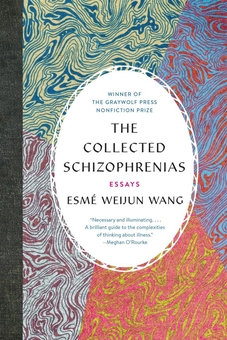
Esmé Weijun Wang, The Collected Schizophrenias

The Collected Schizophrenias is one of the most powerful, affecting, rigorous books of essays I’ve read in recent memory. This exploration of illness is splendid; the book is a gift.

Lost Children Archive by Valeria Luiselli

Valeria Luiselli, Lost Children Archive

I buy five copies at a time of Valeria Luiselli’s 2016 book, the extraordinary Tell Me How It Ends, because of how often I feel moved to give it to others. Lost Children Archive is her fifth book and third novel, and it follows a family driving from New York to the United States–Mexico borderline.

The Care and Feeding of Ravenously Hungry Girls by Anissa Gray

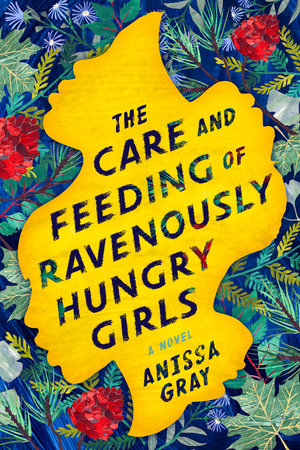
Anissa Gray, The Care and Feeding of Ravenously Hungry Girls

Terry McMillan says she was “immediately taken by the power and honesty of Anissa Gray’s voice” in this debut novel about a mother and father who are arrested, and about the family members who come together to try to raise the couple’s teenage daughters.

Image result for sea monsters chloe aridjis

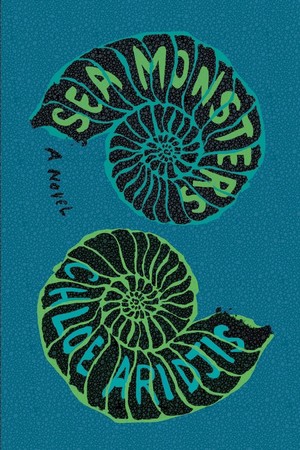
Chloe Aridjis, Sea Monsters

The recipient of the Prix du Premier Roman Étranger for her first novel, Book of Clouds, Chloe Aridjis has written a new book about a girl hoping to find a troupe of Ukrainian performers. Garth Greenwell calls Aridjis “one of the most brilliant novelists working in English today.”

Image result for atlas of reds and blues

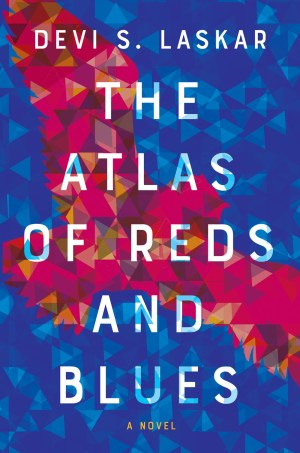
Devi Laskar, The Atlas of Reds and Blues

Kiese Laymon says about The Atlas of Reds and Blues that he’s “never read a novel that does nearly as much in so few pages,” and that the book is “as narratively beautiful as it is brutal.” This debut is about a woman, the American-born daughter of Bengali immigrants, who has been shot by the police and lies bleeding in her driveway.

Image result for am yours reema zaman

Reema Zaman, I Am Yours

I Am Yours is billed as a “shared memoir,” and it’s about Reema Zaman’s experiences as a writer, actor, and speaker in Bangladesh, Thailand, New York, and Oregon.

The Source of Self-Regard by Toni Morrison

Toni Morrison, The Source of Self-Regard

A new collection of nonfiction from Toni Morrison! The book includes essays, speeches, and meditations.

Where Reasons End by Yiyun Li

Yiyun Li, Where Reasons End

Written after Yiyun Li lost a child to suicide, Where Reasons End imagines conversations between a mother and a child. Andrew Sean Greer says it’s “the most intelligent, insightful, heart-wrenching book of our time,” and Elizabeth McCracken calls it “an extraordinary book by one of our most extraordinary writers.”

Image result for hate u give pdf

Angie Thomas, On the Come Up

The writer of the beloved The Hate U Give returns with a second novel, this time about a sixteen-year-old girl who wants to be the greatest rapper of all time.

March

Good Talk by Mira Jacob

Mira Jacob, Good Talk

I’ll leap to read anything Mira Jacob writes and draws, and I’ve been impatiently awaiting this graphic memoir about a woman trying to answer her six-year-old son’s questions about race, family, and belonging. According to Jacqueline Woodson, Good Talk is “a beautiful and eye-opening account of what it means to mother a brown boy and what it means to live in this country post-9/11, as a person of color, as a woman, as an artist.”

Gingerbread by Helen Oyeyemi

Helen Oyeyemi, Gingerbread

Helen Oyeyemi’s seventh book has to do with gingerbread, London, “verbal vegetation,” more gingerbread, and a faraway land called Druhástrana. As Michael Schaub says, “Oyeyemi seems to be incapable of writing anything that’s not wholly original.”

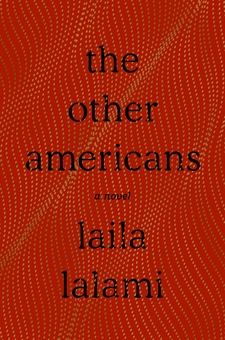
Laila Lalami, The Other Americans

Laila Lalami’s previous novel, the incandescent The Moor’s Account, was longlisted for the Man Booker Prize and was a finalist for the Pulitzer Prize. In her new novel, The Other Americans, a Moroccan immigrant in California is murdered, and a town’s and family’s secrets are gradually revealed.

The Old Drift by Namwali Serpell

Namwali Serpell, The Old Drift

The Old Drift is the first book from the Caine Prize-winning Namwali Serpell. Taking place in Zambia, this multigenerational novel is drawing laudatory comparisons to Gabriel García Márquez’s One Hundred Years of Solitude.

Image result for long live the tribe of fatherless girls

T. Kira Madden, Long Live the Tribe of Fatherless Girls

I’ve been excited to read T. Kira Madden’s Long Live the Tribe of Fatherless Girls ever since I first heard her read last spring. Madden’s debut memoir recounts her coming of age as a queer, biracial teenager in Boca Raton, Florida.

Image result for dealing in dreams by lilliam rivera

Lilliam Rivera, Dealing in Dreams

Dealing in Dreams is a fast-paced novel that follows on an all-girl group called Las Mal Criadas, and Daniel José Older says it “pulls no punches, launching us on a wild, relentless ride through the cutthroat streets of this brilliantly realized dystopian world, where hard choices can tear even the closest allies apart.”

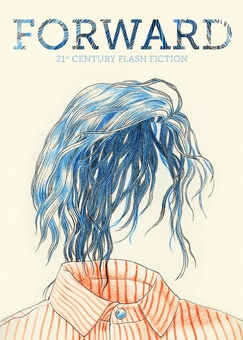
Megan Giddings, Forward

Forward is an anthology of flash fiction and craft essays by writers of color, edited by The Offing’s fiction co-editor Megan Giddings. With contributions from writers including Pam Zhang, Ursula Villarreal-Moura, and Bix Gabriel, Forward looks to be a valuable addition to both personal and classroom bookshelves.

April

Image result for trust exercise susan choi

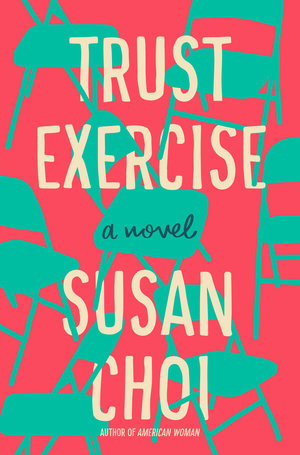
Susan Choi, Trust Exercise

As soon as I finished reading an early copy of Trust Exercise, I hurried online, desperate to talk about the novel with anyone else who’d also read it. It’s a startling, perplexing, fascinating book by a writer I’ve long been—and will always be—eager to read.

Image result for miracle creek angie kim

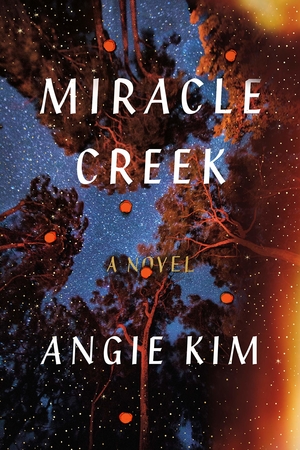
Angie Kim, Miracle Creek

Miracle Creek is a courtroom thriller about a Korean immigrant entrepreneur and a murder trial. According to Alexander Chee, this is “a bold debut novel about science and immigration and the hopes and fears each engenders―unforgettable and true.”

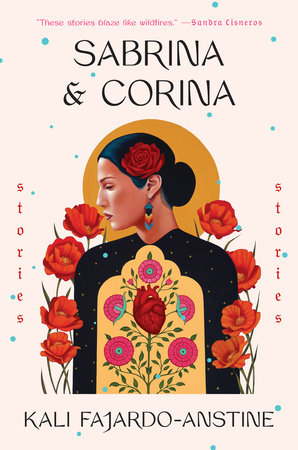
Image result for sabrina and corina

Kali Fajardo-Anstine, Sabrina & Corina

Kali Fajardo-Anstine’s debut story collection focuses on Indigenous Latinx characters living in Denver, Colorado. “Comparisons came to mind: the Alice Munro of the high plains, the Toni Morrison of indigenous Latinas — but why compare her to anybody?” says Julia Alvarez. “She is her own unique voice, and her work will easily find a place, not just in Latinx literature but in American literature and beyond.”

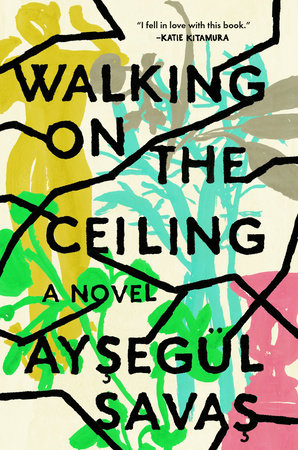
Walking on the Ceiling by Aysegül Savas

Ayşegül Savaş, Walking on the Ceiling

In this novel set in Paris, a Turkish woman starts taking long walks with a British man she meets outside of a bookstore. Katie Kitamura calls it “an elegant meditation on grief, identity, memory and homecoming.”

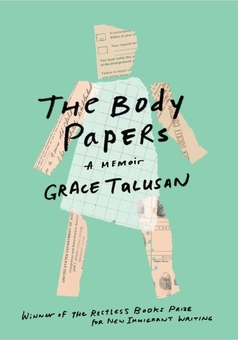
Grace Talusan, The Body Papers

The Body Papers is a memoir about abuse, immigration, cancer, and mental health. Celeste Ng says that “Grace Talusan writes eloquently about the most unsayable things: the deep gravitational pull of family, the complexity of navigating identity as an immigrant, and the ways we move forward even as we carry our traumas with us.”

May

Image result for queer heroes

Arabelle Sicardi, Queer Heroes (illustrated by Sarah Tanat-Jones)

A few months ago, as soon as my brother and sister-in-law had their first child, I panicked, went to the internet, and asked it “how to be a feminist aunt.” So far, my answer has been to buy the child a lot of feminist books. I’ll read anything Arabelle Sicardi writes, and I’ll surely pick up their Queer Heroes, which is a series of portraits of writers, artists, activists, and innovators.

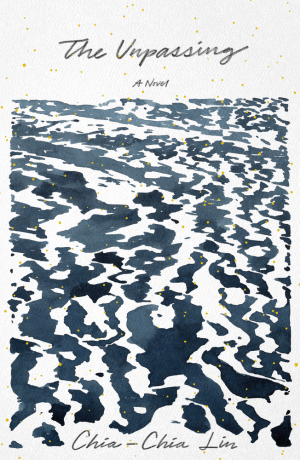
Image result for unpassing chia chia lin

Chia-Chia Lin, The Unpassing

The Unpassing is a novel about a Taiwanese immigrant family trying to survive outside of Anchorage, Alaska. In Esquire, Adrienne Westenfeld says that Chia-Chia Lin “resists received wisdom about the American dream to craft a family saga about the difficulty of grieving far from home.”

Image result for xuan juliana wang

Xuan Juliana Wang, Home Remedies

Called a “radiant new talent” by Lauren Groff, Xuan Juliana Wang has written a debut collection about Chinese millennials. Weike Wang says these stories “surprise and challenge in wonderful, wonderful ways.”

The Memory Police by Yoko Ogawa

Yoko Ogawa, The Memory Police

Plants, animals, objects, and body parts are disappearing, and almost no one notices. The few who do fear the memory police, who want the lost objects to stay forgotten. Yoko Ogawa is a versatile magician, and The Memory Police is sure to dazzle.

Image result for bride test helen hoang

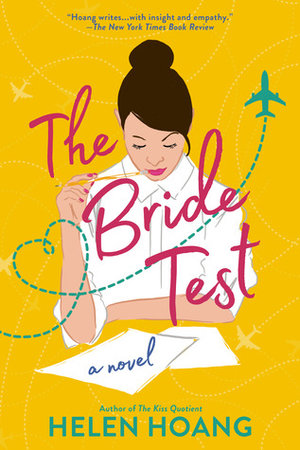
Helen Hoang, The Bride Test

Helen Hoang’s The Bride Test is about a Vietnamese American man whose family returns to Vietnam to find him a bride. Hoang’s first novel, The Kiss Quotient, was a hit that Roxane Gay called “original and sexy and sensitive.”

June

Image result for The Tenth Muse

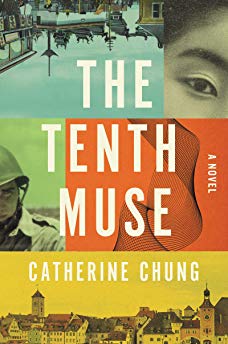
Catherine Chung, The Tenth Muse

The Tenth Muse is about a mathematician named Katherine who’s trying to figure out the Riemann Hypothesis, the greatest unsolved mathematical problem of her time. There’s never enough fiction about mathematicians; Catherine Chung’s first book, Forgotten Country, cut my heart open; I want to read The Tenth Muse right now.

Image result for patsy nicole dennis benn

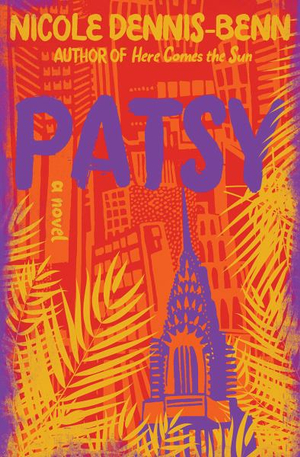
Nicole Dennis-Benn, Patsy

Patsy is centered on a woman who leaves Jamaica and her mother and daughter to live in America, and who, as an undocumented immigrant, works as a bathroom attendant and nanny. “A novel that splits at the seams with yearning, elegantly written and deeply felt,” says Esmé Weijun Wang.

July

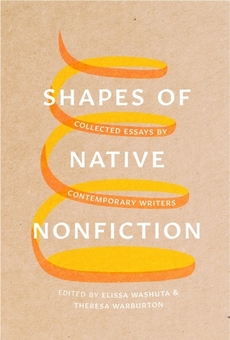
Elissa Washuta and Theresa Warburton, ed., Shapes of Native Nonfiction

This anthology of essays by Native writers uses “weaving techniques such as coiling and plaiting as organizing themes,” and it includes work from writers such as Terese Marie Mailhot and Deborah Miranda.

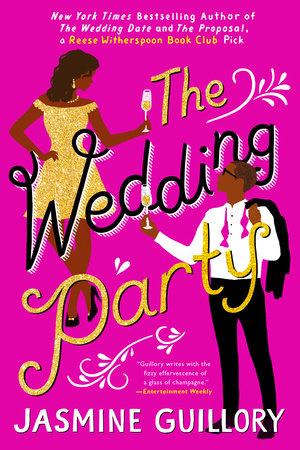
The Wedding Party by Jasmine Guillory

Jasmine Guillory, The Wedding Party

The bestselling Jasmine Guillory returns with her third novel, The Wedding Party, a romance about two nemeses whose physical attraction to each other seems to keep growing.

Sarah M. Broom, The Yellow House

Sarah M. Broom received a Whiting Foundation Creative Nonfiction Grant for The Yellow House, a book spanning 100 years of her family’s history. The Whiting jury praised it for being “a crucial memoir of life on the margins.”

August

Trick Mirror by Jia Tolentino

Jia Tolentino, Trick Mirror

Most readers I know will rush to read any new essay by the incisive, profound New Yorker staff writer Jia Tolentino. Trick Mirror is her first book, and it’s going to be so good.

Image result for The Pretty One: On Life, Pop Culture, Disability, and Other Reasons to Fall in Love with Me

Keah Brown, The Pretty One

This debut essay collection comes from disability-rights advocate Keah Brown, creator of the #DisabledandCute viral campaign. The essays are about romance, pop culture, cerebral palsy, race, and media.

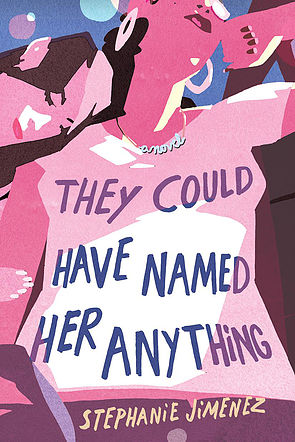
Image result for they could have named her anything

Stephanie Jimenez, They Could Have Named Her Anything

In Stephanie Jimenez’s intriguingly titled debut novel, a Latinx teenager from Queens attends an Upper East Side private school and becomes friends with a rich, rebellious white girl. The book alternates between the perspectives of the two girls and their fathers.

Image result for im telling the truth

Bassey Ikpi, I’m Telling the Truth, But I’m Lying

I’m Telling the Truth, But I’m Lying is an essay collection examining Bassey Ikpi’s experiences of bipolar disorder and anxiety. Ikpi’s collection was a Publishers Weekly preview selection.

Fall onwards

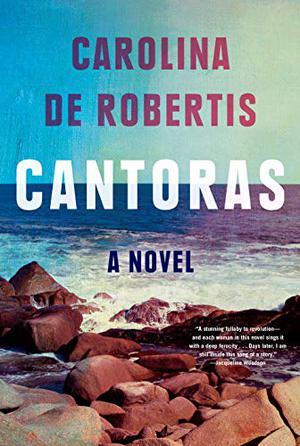
Image result for poster

Carolina de Robertis, Cantoras

Carolina de Robertis has long and reliably been a wise, big-hearted writer and translator, one whose work I seek out. Cantoras tracks five fictional women in Uruguay fighting to live and love despite the restrictions imposed by a ruthless military government.

Image result for dream house carmen maria machado

Carmen Maria Machado, In the Dream House

The fantastically inventive writer of the widely-admired Her Body and Other Parties turns from fiction to nonfiction with In the Dream House, a memoir about her experience in an abusive same-sex relationship.

Image result for poster

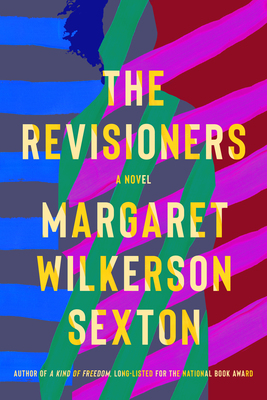
Margaret Wilkerson Sexton, The Revisioners

I loved Margaret Wilkerson Sexton’s first novel, A Kind of Freedom, and her second novel tells two parallel stories, that of an escaped slave who forms a friendship with a white next-door neighbor and of a present-day woman who works as a caretaker for an older white woman.

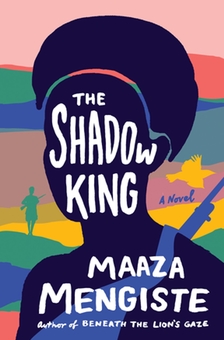
Maaza Mengiste, The Shadow King

Beneath the Lion’s Gaze, Maaza Mengiste’s 2010 debut novel, was deeply moving and hard to forget; now, her next book, The Shadow King, is coming our way. Set during Mussolini’s 1935 invasion of Ethiopia, Mengiste’s new novel recounts the story of an army of Ethiopian women who fight the Italian fascists.

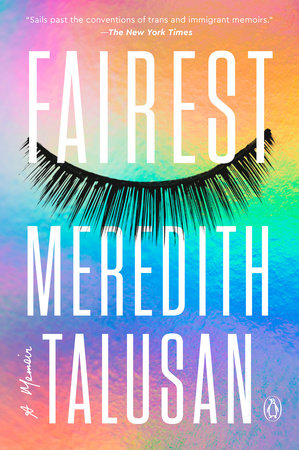
Fairest by Meredith Talusan

Meredith Talusan, Fairest

Meredith Talusan is another writer whose work I always want to read. She’s a writer and journalist, and an editor at Them, and her memoir, Fairest, will be wonderful.

Image result for poster

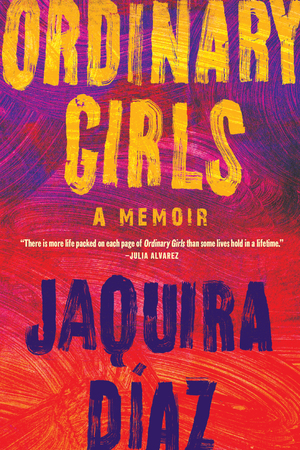
Jaquira Díaz, Ordinary Girls

Ordinary Girls is a memoir about growing up queer in Puerto Rico and Miami Beach as her family splits and her mother struggles with addiction and mental illness.

Pet by Akwaeke Emezi

Akwaeke Emezi, Pet

Akwaeke Emezi’s first novel, Freshwater, is the compelling story of a Nigerian woman who develops separate selves. This fall, the National Book Award “5 Under 35” writer will publish their first young-adult novel, Pet, about a teen who frees a monster from a painting.

Image result for flyer

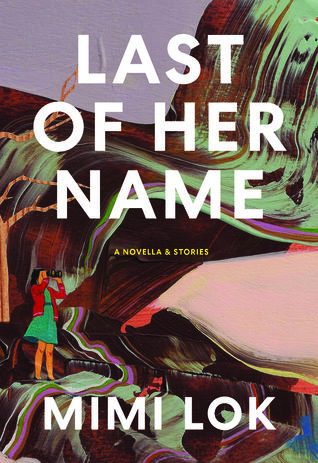
Mimi Lok, Last of Her Name

This story collection depicts Asian outsiders in Hong Kong, British suburbs, California, and Japanese homeless encampments, and it will be part of Kaya Press’s 25th-anniversary list.

Porochista Khakpour, Brown Album

In Brown Album, Porochista Khakpour brings together essays and reviews about Iranian American life and literature, some of which have previously been published in venues including The New York Times, Los Angeles Times, and The Wall Street Journal.

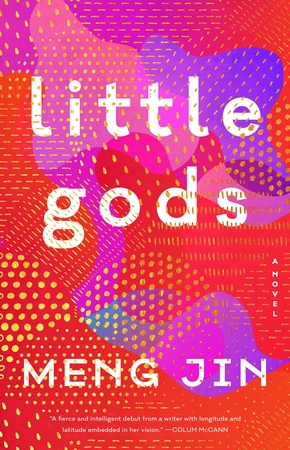
Meng Jin, Little Gods

Steinbeck Fellow Meng Jin’s first book, Little Gods, is a portrait of a Chinese woman’s migrations. The novel is narrated by the woman’s daughter, the husband she left behind, and a friend.

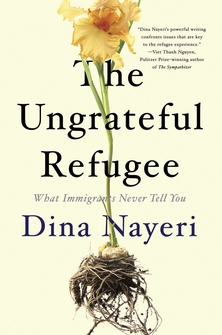
Dina Nayeri, The Ungrateful Refugee

The Ungrateful Refugee is Dina Nayeri’s first nonfiction book, an account of her journey from Iran to an Italian refugee camp, to Oklahoma, to Princeton. In addition, the book reports on the stories of other refugees and asylum seekers. I love this book’s title, and can’t wait to read the rest of it.

Make Me Something That Looks the Way I Feel

“The Invention of Clouds” by Becky Mandelbaum

I was ten years old when I invented clouds. I did it for my little brother, who was sick at the time and had nothing better to do than study how the light lived and died outside his bedroom window. I had invented a spider for his windowsill when he first became ill, but our mother destroyed it as soon as she discovered it there. “What on earth is that?” she said, painted fingers trembling as she approached the spider with a tissue. My brother loved watching the spider spin its web and suck the guts from its prey. (I thought that was a good trick, the web and the gut-sucking — there was nothing quite like it at the time.) Sometimes I’d toss a fly into the web, so my brother could watch the spider spring into action, wrapping the poor critter into a perfect mummy burrito. It reminded us both that life and death — however ridiculous and unfathomable — were happening all around us. No matter how important we seemed, we were exactly as common and fantastic as anything else: the pill bugs in our mother’s garden, the one-eyed jester in the bathroom woodgrain, the great red storm in Jupiter’s eye.

After the spider, I tried to invent a kind of winged kitten the size of a nickel, but I did a poor job and the result was a lifeless puck of fur, eyes backwards, wings where its throat should have been. Luckily our mother never found it — I flushed it as soon as I saw what had happened. She would have thrown a fit, told me to knock off my shenanigans before anything else got hurt. (What she didn’t know, and never would, was that I would one day invent her second husband, a man who would love her far better than my real father ever had.)

But back to the room where my brother lay coughing. It was always cheerful outside then, before clouds, the sky an endless page of cartoon blue. We were in the very peach-pit of summer, a terrible time for a little boy to be ill, and the sun was as constant as my brother’s fever.

One day we were sitting together on his bed, watching alphabet noodles drift across his soup (this was the sort of neutered activity available to him), when the idea for the clouds occurred to me.

I can tell you that the idea is never the hardest part. The hardest part, I have learned, is relinquishing your personal life until the project is finished. I knew this particular venture would mean less time reading books or playing cards with my brother, but I also knew it would all be worth it to see him smile.

In the end, it took me four months. By then my brother had become only a shadow of himself, his frame so small and withered it was like seeing our beloved cat, Grape Jelly, wet for the first time. As it turned out, they were both very small underneath themselves. Each morning, my mother would pull a shirt over my brother’s body as he sat in bed, skinny arms raised in surrender. He never complained. Even when my mother gave him his cherry-flavored syrup in the awful plastic medicine spoon, he would swallow the liquid without even wincing. Perhaps he thought the medicine would save him — I guess, looking back, I believed it might save him, too. We were hungry to believe.

On the day of the big reveal, we were sitting in his bed, looking through a photo album. We had paused on a photo of our old dog, Toast, and I asked if we should pull back the blinds. By now it was late autumn. As a consolation for all the new darkness, the trees wore magnificent outfits. But Benjamin couldn’t get out of bed, so sometimes it bothered him to look out on all the beauty he may never again be able to touch. This time, however, I insisted. When I opened the blinds, he sat up straighter than I’d seen him sit in weeks.

“Do you like it?” I asked. I remember his lips were very pale. He said, quite matter-of-factly, “It looks the way I feel.” And then: “They’re wonderful.”

They really were spectacular, drifting up there like so many great white ships — dangerous, temporary, melancholic. As a collection, they spoke of everything the bright sunny sky could not. One of the lower-hanging pieces looked for all the world like mercury, and I recalled the days when Benny and I had broken open our mother’s thermometer and rolled the silver magic between our thumbs.

How many times, playing together, had we discovered entirely new corridors of magic? There was the time we made a rainbow by running a magnet over the television. The time we opened a dead sparrow to discover the speckled egg she’d never laid. Even then, on the first night with clouds, we understood that soon there would be no more magic between us. For one of us, the world would close its blinds. The carousel we’d come to love and rely on would cease to spin. For the other, somehow, it would continue on as ever — tinny music playing long after the unicorns and tigers had bowed their painted heads. Our mother would take to lying down for days at a time. Our father would become a refrigerator, shelves laden with expired milk and meat. But for now there was only the brand new sky, my gift to Benny. For days it felt like we sat there watching, until suddenly it was raining and there was only one of us.

About the Author

Becky Mandelbaum is the author of Bad Kansas, which received the 2016 Flannery O’Connor Award for Short Fiction and the 2018 High Plains Book Award for First Book. Her work has appeared in The Missouri Review, The Georgia Review, The Rumpus, Necessary Fiction, McSweeney’s Internet Tendency, and elsewhere. Originally from Kansas, she currently lives in Washington and teaches at Hugo House in Seattle. Her first novel is forthcoming from Simon & Schuster.

“The Invention of Clouds” is published here by permission of the author, Becky Mandelbaum. Copyright © Becky Mandelbaum 2018. All rights reserved.

8 Books to Help You Understand WTF Just Happened in 2018

Sometime in the future, I imagine our descendants might gather on their charging pods on a balmy New Year’s Eve to play a party game in which they put real headlines from 2018 into a bowl alongside one line synopses of novels. As they pull out the phrases — children gassed at border, American president investigated for collusion with Russia, AI robot beats human in live debate —it will be difficult to separate fact from fiction.

So much of what’s happened this year has been unbelievable, and yet there’s also been an eerie sense of familiarity as if, despite the lack of precedent, I’ve encountered these scenarios before. It turns out I have: in books. Prescient writers have identified the very issues we’re living through, some in hyper-realist fiction, some in dystopias (whose gap with reality is closing), and some in memoirs which contain the seeds of our present problems. I know that reading a book about the loss of women’s reproductive rights, for example, or a world without private data, might seem less than enticing after a year of depressing headlines, but think of it as a positive alternative to the mind crush of endless sound bites, an opportunity to contemplate what’s happened and what might follow in 2019, if we don’t speak up.

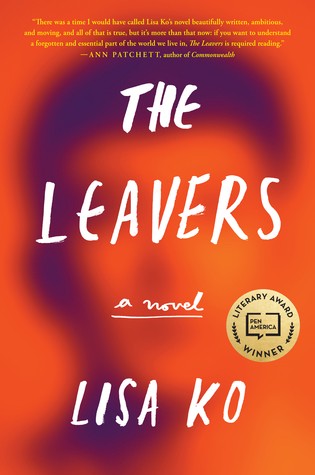
Family Separation: The Leavers by Lisa Ko

Winner of the 2016 PEN/Bellwether Prize for fiction, The Leavers explores the devastating reality around undocumented immigration and the trauma of separating families — a horribly topical theme given children are still being separated from their migrant parents at the border and during detention/deportation. In Polly, a young Chinese woman who moves to the United States and is forced to give her son up for adoption, Ko shows how the people who risk everything to come to the United States have no money, resources, or future at home — in short what looks like making a choice is actually the result of having no choices at all.

Brett Kavanaugh’s Hearings and Confirmation: Those Who Knew by Idra Novey

What happens when a woman suspects that the powerful senator with whom she had an affair as a student is taking advantage of another young woman? Will anyone believe her, and does she have an obligation to speak up about his past behavior? These questions drive Idra Novey’s second novel, and echo those asked at the Supreme Court confirmation hearing that gripped the nation earlier this year when Dr. Christine Ford came forward with an allegation that the then-nominee, Brett Kavanaugh, sexually assaulted her as a teenager. Ford’s testimony wasn’t enough to keep Kavanaugh from holding one of the highest seats in our judicial system, and we were left with no doubt about how much our nation idolizes men of power, or how reluctant we are to hold them accountable for their past misdeeds.

‘Those Who Knew’ Explores How Silence Helps Powerful Men Get Away with Abuse

The #MeToo Movement: The Witch Elm by Tana French

The #MeToo Movement has forced us to acknowledge that men, especially powerful white men, are privileged, and part of that privilege has been the ability to treat women’s bodies as objects available for their pleasure. The dovetail to this privilege is a dangerous sense of entitlement, one that’s so engrained that some men didn’t even realize they felt it until now that it’s being challenged and taken away. This cultural awakening is at the center of Tana French’s mystery The Witch Elm, embodied by a man named Toby who has “always considered [him]self to be, basically, a lucky person.” Is he lucky? Or has he always been advantaged because he’s a well-off white male? Did he behave well towards others or was he simply acting as he pleased and no one told him to stop? French is a master at devising murder mysteries that execute exciting plots while grappling with greater societal issues, and The Witch Elm is both a thriller with thugs and buried skulls and the story of one man’s reckoning with his own privilege.

Tana French’s ‘The Witch Elm’ Is an Exploration of White Male Privilege

Attacks on Abortion Rights: Red Clocks by Leni Zumas

In Kentucky, a requirement that ultrasounds be displayed and described. In Arkansas, a ban on abortions via medication. In Alabama, a ban on a common second-trimester abortion, and in Indiana, new requirements for parental consent before an abortive procedure. The Personhood Amendment, which gives the right of life, liberty, and property to unborn embryos. These are all actual laws passed against women’s reproductive rights in the United States in 2018 — with the exception of the Personhood Amendment, which is the fictional basis for Leni Zumas’ novel Red Clocks. The book follows five women in a small Oregon fishing town and examines the myriad ways that such repressive laws affect women, from the more commonly considered case of the accidentally pregnant teen to an older single woman who is trying to conceive but is barred from using IVF because the embryos can’t give their consent. Such a range of implications is important to consider as states make progress on limiting access to abortion and reproductive health care, and the newly conservative-leaning Supreme Court threatens to overturn Roe V. Wade.

Forget ‘Handmaid’s Tale’ — ‘Red Clocks’ is the Reproductive Dystopia We Need to Read Right Now

Facebook Privacy Scandal: The Circle by Dave Eggers

In March, the New York Times revealed that a firm called Cambridge Analytica accessed the private personal data of millions of Facebook users and used it to influence political events from Brexit to the election of Donald Trump. It all sounded like a chapter from Dave Eggers’ 2013 novel, The Circle, in which a Silicon Valley tech giant has created a super platform that collects all your information under the auspices of bettering your life through ease and transparency. The increasingly invasive technology, including a camera which transmits your life as you live it, becomes a warning to the reader about the danger of giving up your privacy, a message that resonates in a year when we’ve heard almost monthly admissions that major companies have lost our private data to hackers. The Circle also asks us to consider the perils of voluntarily uploading our private lives, and a scenario, like that with Facebook and Cambridge Analytica, where we have lost the ability to take our privacy back.

The Demonization of Immigrants: The River Become A Line by Francisco Cantú

In this searing memoir, Francisco Cantú, who grew up in the Southwest with a park ranger mother, herself the daughter of a Mexican immigrant, recounts his years working as a border patrol agent. The job is physically demanding and emotionally disturbing — he must track humans like animals, dispose of bodies he finds in the desert, and send people, most who are fleeing violence in their home countries, into detention centers to be deported. Eventually Cantú leaves the job to protect his sanity, but he becomes involved again when a friend goes to Mexico to visit his dying mother and is unable to get back into the U.S. and reunite with his family. This is the book to read if you want to better understand the dehumanization of immigrants of color and how negligently simplistic it is to say we should just “build a wall.”

Pulitzer Winner Jose Antonio Vargas Reminds Us that No Human Being is Illegal

Climate Change: The Bone Clocks by David Mitchell

A recent series of warnings from the scientific community have made it clear that the horrifying repercussions of climate change are coming sooner than we think. This makes reading The Bone Clocks a kind of stomach-sinking experience, but perhaps a useful one for anyone who doubts what the warming of the planet will do to humanity. Moving throughout place and time in the 21st Century, the final section of Mitchell’s novel brings us into a world devastated by climate change. Countries have devolved into a kind of government-controlled feudalism, and the scarcity of resources is a tinder box that the heat of the planet is about to light into anarchy.

Gun Violence: If We Had Known by Elise Juska

If We Had Known starts with a shooting in rural Maine similar to one of the 300 mass shootings that have happened in the US this year. In the aftermath of the carnage, a violent essay penned by the shooter surfaces and the shooter’s English teacher finds herself at the center of a growing controversy centered around the issue of guilt. The novel pushes the reader to ask questions about why this domestic terrorism exists and how we, as society, might accept responsibility.

7 Books that Illuminate the People and Places on the U.S.-Mexico Border

The U.S.-Mexico border stretches from where the waves of the Gulf of Mexico lap Brownsville, Texas through the meanders of the Rio Grande to El Paso. There it straightens out overland to where San Diego and Tijuana meet and on to the end of an electric fence that juts into the Pacific’s surf. Close to 2,000 miles long, it is the world’s most-crossed border.

On one side is the richest country in the world. On the other, Mexico and beyond it the countries of Central America. The internal political, social, and economic turmoil in these places have long prompted the upward flow across the border. Immigrants and asylum seekers face multiple hurdles in this journey — unscrupulous smuggler rings, drug cartels, intense wilderness and hellish heat, vigilantes, law enforcement, and subsequently, possible incarceration and family separation — in their journeying for safety and/or economic prospects. While some make it over, for others, the journey ends in the desert when they are apprehended and deported. For others, the desert becomes the grave.

North of the Rio Grande, growing nativism and anti-immigration sentiments have lead to the idea of a border wall — at present, there is some fencing, for example in San Diego-Tijuana area — to keep these seekers out. But in late 2018, the plan to wall the entire international boundary has stumbled in Congress and resulted in a partial government shutdown. At the time of writing, the U.S. President is reportedly determined to continue with the shutdown, which has affected the salaries of government employees, until a deal is made to fund the wall. Even if they are geographically distant from it or politically indifferent to it, the border has crossed well into the lives of many Americans.

Here is a reading list of novels, non-fiction, and an especially powerful collection of border verse to understand the thorny complexities of this demarcation. Each will leave you unsettled in their narratives and prose, and perhaps deepen empathy for those that inhabit these spaces — on all sides.

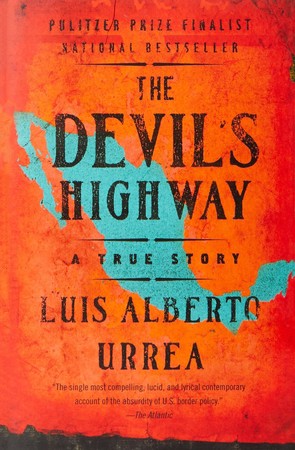
The Devil’s Highway: A True Story by Luis Alberto Urrea

In 2001, twenty-six men crossed the Sonoran Desert through the Devil’s Highway to get to Arizona. Only twelve survived. Urrea begins his superbly-reported reconstruction of this story with their hellish trip and then tracks back to the past — back to their homes, trail’s own notorious, otherworldly history, and the origins of northwards immigration. During the colonial period, Urrea writes, “Europeans settling Mexico hustled north. Where the open land was. Immigration, the drive northward, is a white phenomenon. White Europeans conceived of and launched El Norte mania, just as white Europeans inhabiting the United States today bemoan it.” He also delves into the ruthless coyote system that enables these dangerous expeditions, the work of the Border Patrol, and other assorted characters who inhabit the border universe. The exacting poetry of Urrea’s descriptions makes for hypnotic old-school storytelling. He compares the border of the past, where the first immigrants to be “hunted down in Desolation by the earliest form of the Border Patrol were Chinese” to the present. He notes: “And today? Sinful frontier towns with bad reputations. Untamed mountain ranges, bears, lions, and wolves. Indians. A dangerous border. Inhabitants speak with a cowpoke twang, listen to country music, dance the two-step, favor cowboy hats, big belt buckles, and pickup trucks. That ain’t Texas, it’s Sonora.” Terrific, saddening, but humane and extremely essential even close to two decades after the book’s inciting incident.

Lucky Boy by Shanthi Sekaran

The lead characters of Lucky Boy, the 18-year-old Soli endures a traumatic trip norte, and Kavya, who desperately wants to be a mother, don’t intersect until midway through the novel. Sekaran draws the two women together through Soli’s baby and with nerve-shredding pace. Inspired by a true story of an undocumented mother who lost her custody of her son, Sekaran complicates her narrative by making the adopting couple Indian-American and thus interrogating privilege of different immigrant trajectories. Soli’s observations provide levity to a heart-crushing story: “These people probably believed that in Popocalco they had one Barbie doll, Soli thought, and that they all shared it, and that one summer when the corn wasn’t growing they fried the one Barbie and shared it among the hungry village.” Her hometown, Soli says, was rich in Barbies, thanks to a visiting missionary.

Retablos Stories from a Life Lived Along the Border by Octavio Solis

Playwright Octavio Solis lays out his memoir in retablos, folk paintings made on repurposed metal in gratitude for the divine resolution of life’s crises. Each of the retablos present a vignette from his life growing up in the border town of El Paso, Texas, as an “anchor baby” in the 60s and 70s. The taut, charm-filled stories depict episodes such as encountering a young immigrant while playing hide-and-seek in a cotton field, a tow truck tug-of-war over an abandoned marijuana-packed Jeep stuck in the middle of the Rio Grande, and a young Solis practicing his English pronunciation by reciting names off globe and adorably mispronouncing the Pacific “Ohkeean” to his class.

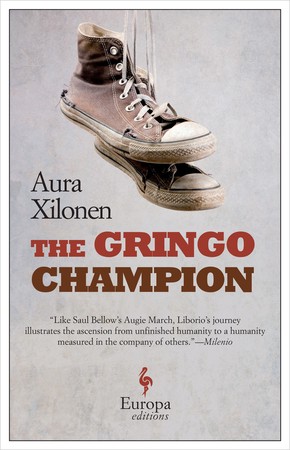
The Gringo Champion by Aura Xilonen

Aura Xilonen published The Gringo Champion — which is based on her grandfather’s dash across the Rio Grande in pursuit of the American Dream and her own stint of being undocumented in Germany — when she was only 19. If her publishing debut age is impressive, then the unflinching prose and electric language-melding prose (“Jefe shriggles his eyebrows and rollicks his eyes”) will stun further. We meet the protagonist Liborio in a border town where he works in a bookstore with a fucking crude owner. From its first pages, the book shatters with its visceral depiction of the violence of Liborio’s life, which will include boxing fame. A more PG example of which is when the bookstore is ransacked: “A few books even seem to have been stabbed to death, or beaten, or ripped up with angry teeth. They lie amputated around us, as if they had a rocket shoved up their ass that blew out their guts.”

Image result for yuri herrera signs preceding the end

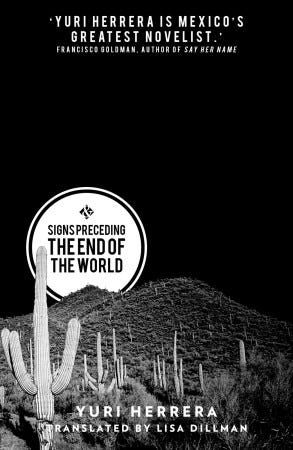
Signs Preceding the End of the World by Yuri Herrera

Makina, a switchboard operator in a Mexican silver mining village, speaks three languages to convey messages between the villagers and those who crossed over to the other side, the never-named United States. She is, Herrera writes, “the door, not the one who walks through it.” A border of sorts herself, Makina is tasked by her mother to head north to deliver a message to her brother, who went in search of an inheritance. The first line of the novel, “I’m dead” uttered by Makina as an earthquake hits and life around her is swallowed up, begins the novel’s journey to and beyond the US-Mexico border — and all its psychic dimensions. Herrera renders her migration with a reconstruction of the layers of the Aztec underworld. Don’t worry though about getting the multiple, Mexican or otherwise, references — My fav was “Pulqueria Raskolnikova” where Makina meets one of her shady fixers. The hallucinatory trip, which Herrera takes to a twisty end, will have you thinking about Makina’s trajectory and those who walk in her steps, well after you’ve turned this crisp novel’s last page.

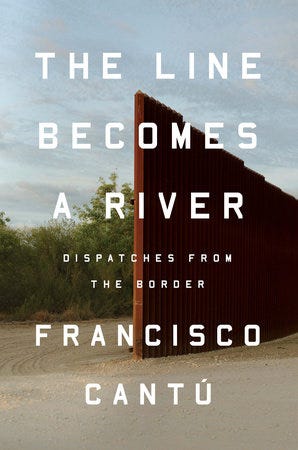
The Line Becomes a River: Dispatches from the Border by Francisco Cantú

Francisco Cantú offers the perspective of the border’s enforcers in his memoir of his time as a Border Patrol officer. From the beginning, it’s a brutal look. An agent jokes about running over an Indian in the desert. A Mexican man offers to do work around office while he’s waiting to be deported. The man tells Cantú: “I want to show you that I’m here to work, that I am not a bad person.” Cantú takes us out into the desert on his night surveillance trips, and to encounters with immigrants and dead bodies. For the latter, his colleagues advise him to rub VapoRub under his nose “or else the smell will stay with you for days.” And then there are surreal (relatively) lighter moments: Cantú guiding a Sonoran coachwhip snake to trying “to find its way into Mexico through the pedestrian fence” and trying chapulines, the Oaxacan grasshopper delicacy from the food stash of the men he’s booking for illegal entry. “For a short time, we stood together with the men, laughing and eating, listening to their stories of home.” But the job’s stress grinds down on Cantú and his teeth, and infects his dreams. He soon leaves the Patrol and works in a coffee shop, where he encounters Jose, an immigrant who leaves the U.S. and is detained by Border Patrol upon his return. Cantú finds himself on the other side, working to help Jose stay in the country. Cantú has been criticized by undocumented activists and writers for amongst other things joining the Border Patrol in the first place and enjoying the privileges of citizenship and white-passing. His response to the NYT is that he wanted to “describe the Border Patrol from within, not justify it somehow.”

Unaccompanied by Javier Zamora

Javier Zamora fled his war-torn homeland of El Salvador and crossed the U.S.-Mexico border on his own — at age nine. The intense, elegant poems of Unaccompanied are Zamora’s excavation of his memories of this long and unfathomable, unless you’ve done it, trek. In “Sonoran Song,” he writes: “She didn’t know 110 degrees,/saguaros, no compass to run/north when like Colorado River toads/ we slid under bushes — officers yelled ¡On your fucking knees! You couldn’t have/ known this could happen, Mom.” His path to the U.S. is tough but Zamora’s arrival and life thereafter is also fraught. In “Second Attempt Crossing,” he offers the story of Chino, a man who protected him in the desert, and how he fared after the crossing: “You called twice a month,/ then your cousin said the gang you ran from/ in San Salvador/ found you in Alexandria.” Zamora’s stories offer the human hearts, hopeful, broken, and yet still with faith, behind the headlines.

How to Write Your Debut Book’s Acknowledgments Section

“It was traumatic.” “I had nightmares.” “It set me back six months in therapy.” Debut authors report struggling to compose acknowledgments, those seemingly endless strings of grateful-fors and without-whoms. While writing acknowledgments for We Love Anderson Cooper, my debut short story collection, I, too, wrestled with questions. Thanks to this no-nonsense guide, you won’t have to.

The number one problem you’ll encounter writing acknowledgments is running out of ways to say “thank you.” Might I suggest any or all of the following alternatives: I’m much obliged to A; shoutout to B; I’ve added C to my will; I’ve promised my first born to X; I’m planning to tongue kiss Y, and might already have.

The next obstacle you’ll face is deciding who to include. For example, do you mention your fourth-grade teacher who hung up your poem rather than Stacy Goodman’s? (Yes.) What about the lactation nurse who fact-checked a detail in chapter three of your novel? (Definitely.) Arianna, the member of your writing group who never returned comments because her computer was always “broken”? This is a tricky one. You’ll be tempted to leave Arianna out. But the answer, again, is definitely yes. There is frankly no one you shouldn’t list in the acknowledgments. Make sure to mention it casually to them all, and they’re sure to buy copies of your book.

Do you mention your fourth-grade teacher who hung up your poem rather than Stacy Goodman’s? (Yes.) What about the lactation nurse who fact-checked a detail in chapter three of your novel? (Definitely.)

But what about Famous Author who blurbed the book? Should she be included, too? Won’t people realize she said those nice things only because she’s your sister-in-law? They will realize that, but too late! By the time they read the acknowledgments, they’ll already have purchased a copy.

Another dilemma is in what order to list people. Is naming someone early in the acknowledgments a greater honor that naming someone later? No doubt that’s true, but my God, what do people want from you? Isn’t it enough they’re listed at all when all they did was hang your stupid poem? At this point in writing your acknowledgments, you should see what mood stabilizers you have in your medicine cabinet. Fix a nonlethal combination and chase it with Glenlivet. Work on your next book for a day or two before returning to the acknowledgments.

“What if I dedicate the book to my partner?” you might ask. “Should I include them in the acknowledgments, too?” I guess you weren’t listening when I just said no one should be left out. Or maybe you don’t love your partner enough to list them in both sections.

Is naming someone early in the acknowledgments a greater honor that naming someone later? No doubt that’s true, but my God, what do people want from you?

Finally, the tone of your acknowledgments should match the tone of your book. If the book is light, you might begin, “It’s a glorious day as I sit down to pen these thanks, the dog napping on my shoe, the cat smiling at me from the top of the Hanukkah bush.” For a heartfelt work, “I’m positively overwhelmed with gratitude. I’ll need a minute.” If the book is dark, a different approach is warranted. Try, “It will be a miracle if I live to see this thing in print,” or, “Aren’t we all essentially alone?”

I hope this guide to writing acknowledgments has been helpful. If it has, maybe you’ll include me in the acknowledgments of your next book. I hardly think that’s too much to ask.

A Changeling in My Own Skin

As a kid I imagined my real home was some magic place — that maybe I wasn’t even human. When I found old piles of stones, they seemed not just mysterious but meaningful. Climbing through snarling blackberry brambles into the woods, I was paying attention. (Remarkable for me then.) I was looking for echoes of stories: places where selkies were trapped but might find their ways home. Where weird girls and women — as I was told I must be — could be witches instead of just crazy. Where an owl might give me a life-changing letter, where anything could be a doorway to a different fate. Where if you joined the dead’s dance you might never leave. Would I want to? I wasn’t sure.

I had plenty of models for my half-serious conviction that I belonged to some other realm. Folklore and fantasy are full of characters claiming their identity and becoming other than what they seemed. From changelings to selkies to The Little Mermaid, they persist. Some recent urban fantasy is both extending and transforming that tradition with an inclusivity that is deeply true to it in some ways. Folklore — which includes fact and fiction — is not decided by cultural authorities. The stories most fantasy draws on have been passed along by everyday people. Gatekeeping breaks the spirit of that tradition.

The traditional idea of a changeling is not literally about a transformation. It’s about replacement and loss: a human child is replaced with something else that’s unwanted. A changeling could be an ugly, distorted one of the good folk themselves, or something that was never alive at all — just a wooden doll.

The traditional idea of a changeling is not literally about a transformation. It’s about replacement and loss: a human child is replaced with something else that’s unwanted.

Historically, someone might be accused of being a changeling if their family considered them shameful, deformed, or unwanted. Sometimes, it was an excuse for abandonment or violence against a family member. The case of Bridget Cleary is one horrific example — she was murdered by her husband and he got away with it because he seemed to really believe she’d been replaced.

These stories resonated with me, because I knew I was weird, and I didn’t really know why. I knew I was bi, but that didn’t explain enough. I didn’t know why I felt lost when at school we were split into gendered groups, or why the body language and outfits that seemed natural for others felt like acting in costume. I was happiest drawing or reading alone, or exploring the woods by my house where no one could see or categorize me. No one fits gender stereotypes fully, but even when I knew I could be a bi gender-nonconforming girl my shape and identity didn’t feel like my own.

I was about fourteen before I met other trans people at summer camp and realized that maybe this was the mythical “other world” where I might fit. I remember sitting on the floor of a crowded LGBTQIA+ group my first year at camp, too nervous to speak. Introducing oneself was optional, andI was afraid of being seen as an impostor. What if I didn’t belong here, either? But I started to suspect I might. And eventually I found names for what I was. I still daydreamed for years about finding my way back to somewhere else — but then it was sometimes summer camp that I pictured, not just fantasy.

Discovering why I felt like a changeling didn’t end my social isolation. I had a few amazing friends, but that didn’t take the sting away from being called “it” by classmates, or having my notebooks stolen, or having people pretend not to hear me speak (especially if I’d corrected their use of pronouns). I remember barely sleeping in my efforts to be good enough at school and art and everything else to make up for who I actually was. But I had some hope of my life improving again, and knew that even if I was somehow not made for the world I found myself in, it didn’t definitively make me a monster. So I would live differently; at least it was something.

Seeing other people like me who could survive, and even be happy, in this world helped me think I could exist fully here. But I still was sure I had something to prove, and I still couldn’t explain all of the wrongness I sometimes felt, especially my desperation to be anywhere but where I was. I still sometimes wished I was actually from somewhere else where I fit, even if I could never go back there.

I spent more time in the woods, and read the ghost stories I remembered from when I was younger. I especially sought out stories about selkies, seal-women who were sometimes trapped on land, because they weren’t evil and often they returned to the sea someday. There were no happy endings, but at least if I was like the selkies, then being other wouldn’t mean being horrifying. It hurt to feel inhuman, unwelcome by humanity, because I didn’t meet other people’s expectations. Changeling stories made it less painful. There wasn’t a place in this world for me, but maybe in another world there could be.

There wasn’t a place in this world for me, but maybe in another world there could be.

When I got to college, I found both community with other trans people, and a new kind of changeling story: stories written by the changeling herself.

At college I was consistently among trans people, and it was like the world shifted under my feet. For the first time I got used to not being out of place because of my gender. I slowly, awkwardly learned how to let myself be a distinct person for who I was beyond that. Changelings in stories are faced with tests of humanity, and I had felt like every interaction was a test of my own. Finally, though, I knew there was no actual failing answer.

Sometimes I still felt like I was being tested, but I had new narratives to back up my own confidence. One of them was a new variation on the changeling story. The October Daye series wasn’t about a human family dealing with a changeling, but was written from the changeling’s own perspective. I remembered the first book, and started the rest, right as I began a semester in a new country with completely new people. Living in Dublin, Ireland was the safest I had ever felt, but it was also extremely lonely at first. It had been three years since I was the only trans person I knew at school. Old fears of wrongness tried to come back with the isolation.

When I couldn’t sleep from anxiety, I would instead listen to audiobooks of October Daye’s adventures clumsily navigating both the human world and Faerie, and feel more comfortable with my own uncertainty. I was struggling all over again with how much to try and blend in. Who to tell my actual identity to, who I could try and be friends with, when it was safe not to pass (more often than it had been, which was in its own way hard to get used to). Those were all problems October (also called Toby) had, but in different enough ways that it was still escapist for me as well.

The changeling protagonist October is constantly pulled between two worlds. Born to a fae mother and a human father, she’s not entirely accepted as either. That echoed how I felt being non-binary. At the time even in online trans communities there was pressure to say one was masc or femme, or even “female-aligned” or “male-aligned.” For me, though, only the ambiguity of words like non-binary fit; I was just me, and I still am. And for Toby and for a lot of trans people, neither world is run with people like her in mind, let alone in power. Nearly every time I have to fill out a form or talk to a stranger, I have to pretend alongside everyone else that people like me don’t exist. It’s rare that we get the chance to change that system a bit. That parallels a lot of queer and other marginalized experiences. What stands out though is how Toby stays in between. She has to make choices, and she does, but she doesn’t become what’s expected of her. She finds her own answers.

Like changelings in folklore, Toby is used as a replacement. Not considered good enough — fae enough — to be more than temporary, Toby is pushed to choose mortality. It’s Toby’s own fae mother though, not a human one, who no longer wants her when she resists. It’s a twist on the tale, but as in the older changeling stories of folklore, Toby is still blamed for not meeting the expectations of her family.

Toby is pulled back and forth from humanity to Faerie against her will, multiple times. She keeps trying to find her balance anyway, often in the mundane ways many of us do. When she’s less able to use magic than most fae, she relies on marsh-water charms and sheer stubbornness instead. She could live in Faerie and not have to wear a disguise, but it wouldn’t be on her own terms. Reading as a non-binary person, I felt for Toby every time someone tells her she should have been more of one thing or of the other. There is no right answer for the rest of the world.

The changeling protagonist is constantly pulled between two worlds. That echoed how I felt being non-binary.

Part of Toby’s choice is a choice between parents and homes. When she chooses fae, her human father thinks she’s died. In folklore being taken by the fair folk is often essentially a death. But Toby isn’t dead — just different than she seemed. Parents of trans kids sometimes lament that it feels like a son or daughter has died, or insist with more kind-sounding rejection that their child will always be their son or their daughter, instead of what they actually are. The problem for so many of us, and for Toby, is not who we are. It’s what other people can see us as.

The October Daye series takes the theme of not belonging and switches the perspective, makes it into something deeply empathetic. There are things Toby can’t do that other fae can. She has to find who she is and how she works on her own terms. But her perspective as a changeling leads her to answers someone else wouldn’t. She’s not a particularly talented detective, but she’s willing to question assumptions.

Her story doesn’t end with rejection. It starts with rejection, and then she makes hers a different story. She’s not on her own; she also finds her own sort of family, a bit at a time.

In real life rejection is commonplace for trans people. But for me it was less painful to see that in Toby. If it happened to the trans character that collective trauma would be thrown back in our faces for what feels like the millionth time. When McGuire writes it happening for different reasons than usual, it’s easier to look closely at. It’s like seeing deeper into calm waters then you could in a churning storm.

There are other new stories being told that draw on the same kind of folklore. My focus is on this series largely because it’s what I’ve read the most of so far, but also because it also has more to say than I could skim the surface of here. McGuire’s extensive knowledge of Irish and Scottish folklore is apparent, and she uses it brilliantly. She doesn’t leave old stories in their past forms only. Instead she grows vital new worlds from them. From stories that mostly had pain for some of us, new stories can include possibility.

Being something unexpected isn’t a weakness, even when it’s stressful. Sometimes — and this is how I usually feel about being trans and non-binary now — it’s pretty special. The oft-made point that we’re normal people is vital and true. I’ve found too though, since starting to discover my trans identity from the strangeness that first made me feel like a changeling, that it’s not the whole story. Finding our own identity, new perspectives, and new community can be magical.

Adapting folklore and creating new stories, as McGuire has, helps with that discovery. I only hope that more of us create worlds so welcoming — in the stories we tell and in real life.

8 Books About Women and Addiction That Are at Least as Good as Bukowski

In literature, the addiction narrative has become a genre unto itself. Populated by a variety of counterculture antiheroes, the addict narrative has given birth to a range of admired weirdos, spastic “cools” and philosophical lone wolves. The stories range from the absurdly surreal (Hunter S. Thompson’s Fear and Loathing in Las Vegas), to the beautifully haunting (Denis Johnson’s Jesus’ Son) to the comically tragic (Jay McInerney’s Bright Lights Big City) to the sentimental and overwrought (James Frey’s A Million Little Pieces)But what they all have in common is that their protagonists are men.

Purchase the book

Female-driven addiction narratives are much rarer, and different in tone; they eschew the lone wolf, the zany ’60s acid-test journey, the psyche’s abyss into self discovery and heroic downfall. Instead they prey on our deepest fears, our collective Mother Hunger, as it’s known in psychiatric circles. Mother Hunger is a deep maternal wound caused by a mother who emotionally or physically abandons her daughter, and it’s been credited with producing a legion of wounded women. These undervalued and improperly-loved women in turn become monstrous. They awaken our anxieties both about our own pasts and about the future; we fear that they too will be bad mothers, stewards of a motherless earth strangling to death on its patriarchal noose. We are both pulled and repulsed by the female addict.

The Space Between Addiction and Recovery

Becoming an addict means deciding, consciously or otherwise, to let slide the obligations of life. But when women commit to addiction they do one better: they drop out. This doesn’t always mean that they quit their jobs or check out of society; rather, they drop out of a patriarchal hierarchy, the agreement made upon entering adolescence that they will be virtuous and maternal, self-sacrificing and tender. The female addict takes her body back from patriarchal demands and feeds it to destruction. To devote one’s life to substances is to trash it all. It is to say, “I don’t care,” and no one is supposed to care more than mom. That’s why Earth got sucker punched into being a mother, and we feel so comfortable trashing her. The female addict often reeks of petulance and narcissism in a culture selling puritanical female piety. She flies the plane of her body, her female currency, into the ground. For this reason the female addiction narrative should be celebrated.

None of these observations argue for an increase in female addicts, only that we allow the female drug narrative out of the closet and offer them a spot next to the Thompsons and Bukowskis. Addicts are selfish and self centered, brutal to those around them and most of all themselves. In this way the female driven addiction narrative is often told from the perspective of highly intelligent, exhausted women, tired of trying, burdened by knowing, seeing and living. Let us celebrate the diversity of their voices.

Here is a list of some sloppy broads.

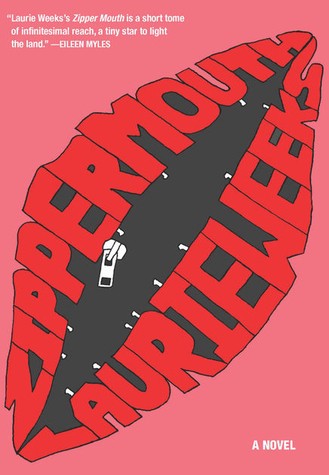
Zippermouth by Laurie Weeks

Laurie Weeks has one novel, one short story in the iconic Semiotext(e) compendium The New Fuck You: Adventures in Lesbian Reading, Debbie’s Barium Swallow, and one screenplay, Boys Don’t Cry — and yet this is enough to place her in the category of greatest living writers. She’s that good. Laurie Weeks is a sentence tornado, taking you out before you’ve had time to grab your things. You thought you were running for the basement but actually you were swirling through mid-air staring into the petrified eyes of a family cow which has taken flight. Zippermouth introduces us to its nameless heroine, a copy editor junkie employed at a big New York publishing house whose ludicrous insights on how to get through life are a funhouse of tight, expertly written sentences. Weeks’ novel is driven by voice, seeped in weird and flourishing with absurdity.

A Piece of Cake by Cupcake Brown

It’s difficult to define Cupcake Brown’s memoir as devastating, although certainly it is, but it is also so much more. Scarred as a girl by finding her mother’s dead body in bed, Brown moves to South Central to live with family, joins the Crips, follows her addictions into prostitution and hitchhikes up the coast on LSD following rock bands with a myriad of other squalors. Along the way she weaves her strange tale with vivid imagery. Brown’s voice crackles with humor, superb original observations about life at the margins, and the ability to build a scene with such deft skill you can see each character, hear the timbre of their voices and smell the Jean Nate on the wrists of the teenage prostitute junkies who pepper the book. Take for instance the opening chapter in which an eleven year old Cupcake discovers her mother’s lifeless body:

I began to cry again and Daddy reached over and turned the radio off. But it was too late. That was now our song; Mamma’s and my song. “Chain of Fools” would be our live song and “Breaking Up Is Hard To Do” our death song.

Shit, I thought. Life sucks.

Drenched in 1970s and ’80s slang and cultural references, the book bounces with life. Brown paints a picture of a dour girlhood caught in limbo and nearing the tipping point.

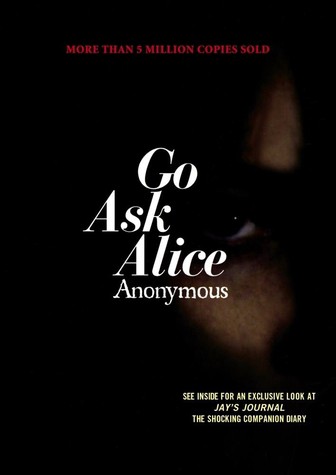
Go Ask Alice by Anonymous

Go Ask Alice gets shit on a lot and I have no idea why. This book is excellent, a mood and vernacular masterpiece. Originally marketed as the “found” journal of a teenage junkie and her slow descent into the abyss, it was later discovered to have been written by a social worker in her 30s named Beatrice Sparks. I mean, are you kidding me? This thing was bound for infamy the moment it was birthed from the ethereal into our dimension. To start with, it is utterly ridiculous. Nothing in this book is moving or poignant in the traditional sense; what it is is a blueprint for snotty petulant teen speak that later took over the world and came to be known as Valley talk. This thing might be the birthplace of like. Ya know what I mean? Our narrator is such a complainer, such a brat, such a teenager I was truly surprised upon learning in high school that the author was actually an adult. It’s virtually impossible to have empathy for our protagonist — she’s wretched and annoying — but she’s also a master of rhythm and a terrific wordsmith. Each sentence of nonsense folds into the next with an urgency only a teenager could muster. It’s all so frightfully important! From the opening chapter:

Yesterday I remember thinking I was the happiest person in the whole earth, in the galaxy, in all God’s creation. Could that only have been yesterday or was it endless light-years ago? I was thinking that that the grass had never smelled grassier, the sky had never seemed so high. Now it’s all smashed down upon my head and I wish I could just melt into the blaaaa-ness of the universe and cease to exist.

This is how we meet our protagonist, who is reacting to someone named Roger not looking at her in the hallway. Who’s Roger? Absolutely no one. Are any of us really anybody? I mean, are we even really here? Named for a lyric from the Jefferson Airplane song White Rabbit, Go Ask Alice is a revelation and the first of its kind, an obvious predecessor to Less Than Zero and other lost youth novels that followed. Get totally lost in it.

Cha-Ching! by Ali Liebegott

Ali Liebegott is a heartbreaker. Her novels and poetry collections are sure to leave you gutted. Be careful not to read them when feeling on top of the world. Going through a difficult time and want literary company? Pick up Cha-Ching! Theo, Cha-Ching!’s narrator is young, queer, new to New York and formerly deeply alcoholic in the way that the word “functioning” means getting out of bed in the morning or maybe afternoon. Now a gambling addict, Theo maneuvers the city looking for work and searching for community while forever pressing her nose up against the glass window of Love. Liebegott understands what it is to be lonely, worn out, and still digging from the dry well of hope. This novel will give you the feels. Luckily it’s also funny and packed with rich scenes sure to make your read worth the journey.

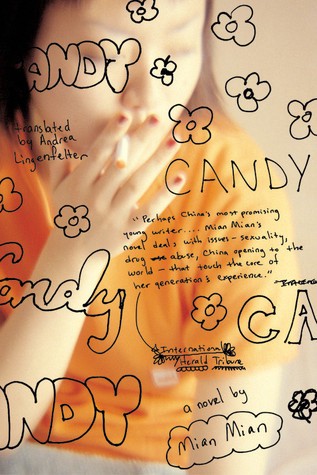
Candy by Mian Mian

Mian Mian is so rad. Banned in China, Candy is a fruit loop of rave bracelets, puke, and insanity. Part of the Chinese post-’70s generation literary movement, Mian Mian is a bona-fide rock star, a true literary wunderkind, and with good reason. Translated by Andrea Lingenfelter, Candy is a tale of a post Mao 1980’s teenager named Hong who succumbs to an increasingly rampant underbelly of Chinese westernized subculture. Based in Shanghai and later Shenzhen the novel explores sex, drugs and rock and roll, told in Mian Mian’s incredibly strange, beautiful and uniquely lyrical sentences:

Strange days overtook me, and I grew idle. I let myself go, feeling that I had more time on my hands than I knew what to do with. Indolence made my voice gravelly. I started to explore my body, either in front of the mirror or at my desk. I had no desire to understand it—I only wanted to experience it.

It has been said by some critics that the novel has an apolitical call to action. A loss of hope for reform and China’s 1980s politics. In this miasma of alleys and sketchy nightclubs our teenage and later twenties protagonist, Hong, falls deeper into the rabbit hole of addiction and psychedelic experiences, one rolling into the next. It’s unclear what she is escaping but whatever it is it’s an anxiety forever pulsating and breathing. Eventually Hong struggles to get sober and becomes a writer. Is this her story we’re reading? That’s for us to decide. A true masterwork of the ick, Candy is a page turner.

Black Wave by Michelle Tea

Michelle Tea is no stranger to the addiction narrative, Valencia and Rent Girl being two of her best. In fact she is in many ways the foremother of the female addiction narrative and responsible for any burgeoning popularity or appeal it might have amongst millennials currently. So it would make sense that Tea’s latest novel Black Wave does more than simply tell a tale of addiction. Rather, it slowly submerges you into a surrealist New Narrative world of the magically real. As our narrator, also Michelle, slips deeper into psychosis, so too does the text until everything crescendos into a wail of tectonic proportions. Los Angeles comes alive in filthy strokes of absurd genius. Agents, writers, Pink Dot delivery men, siblings even the sun plays a role in the end. There is no real way to prepare the reader for what to expect. The expression “it’s a trip” was truly created to describe Black Wave, and Tea buckles us in on the very first sentence.

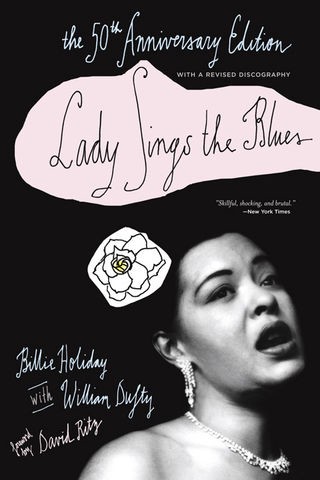
Lady Sings the Blues by Billie Holiday with William Duffy

Holiday’s 1956 memoir—later adapted into the equally arresting and wonderful film of the same name, starring the one and only Diana Ross as Holiday—was one of the first publicly acknowledged books about female addiction. Billie Holiday was such a monumental and important figure in United States history that it’s terrible to remember that she spent the better half of her life struggling with heroin addiction. Holiday’s memoir chronicles a life of adversity, triumphing over racism and poverty to reach the dazzling creative and groundbreaking heights her genre-defining career achieved. A quick glance at this list will also show there are only two other books by women of color, and just as I’m calling for a wider berth of female-driven addiction narratives that move beyond the trope of mother hunger, we also need a tradition of addiction narratives that include more female voices of color. Middle class, poor, tricking or sleeping in alleys, the white female drug addict seems to fill the small bit of shelf space the female addiction narrative has been given to begin with. It’s important to know that addiction happens in all communities across race and class. May this selection also be a call for a wider array of truly diverse female voices.

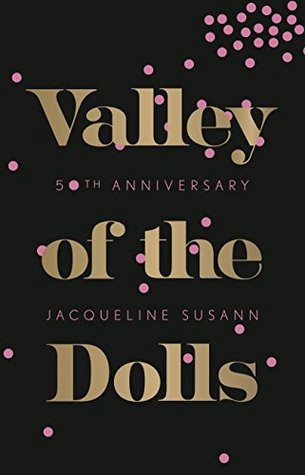
Valley of the Dolls by Jaqueline Susann

And so we end at the beginning. The first novel to unintentionally toy with addiction camp and Go Ask Alice’s very serious predecessor. Jacqueline Susann’s epic soap opera about New York socialites, a secretary-turned-perfume-model-turned supermodel-turned-star, and a struggling actress trying to break it big was the hit of the late 1960s. Dressed as The Bell Jar, a true tour de force, but reading like a cheap script Neely might be handed at an audition, Valley of the Dolls reeks of romance novel hooey disguised as second-wave Helen Gurley Brown glass ceiling protofeminism. As our protagonists fall deeper into the grip of their dolls the reader is treated to lush sentimental scenery, heavy-handed and clunky dialogue, and poorly-written sex scenes and tantrums. If you ever plan to go on a female addiction narrative binge, be sure to start here.

Dissertations Never Die

The Archivist

by Mukhtar Magauin, Translated by Mirgul Kali

I ran into him on a street. We live in the same city, but it’s been over a year since we saw each other last. He looked the same. Not the same as in the last year. Or the year before that. The same as in ten years ago, when we were graduate students. A felt hat, pulled low over his forehead, almost down to his eyes. Black and white scarf, sloppily tied around the neck. Light fall coat, tapered pants, shoes with thick soles. Black leather gloves, held loosely in his left hand. Fashion styles came and went; seasons replaced each other, but Sembek never changed his ways. In fall and winter, rain and snow, he looked exactly the same. And it wasn’t just clothes. His appearance, personality, even his knowledge and intellect — did not seem to have changed a bit.

I knew from the first day we met that he was an extraordinary young man with a brilliant future awaiting him in academia. He was twenty-two when he graduated at the top of his university class with a major in history and was accepted into the university’s graduate program at the Academic Council’s recommendation. He was equally fluent in both Russian and Kazakh and knew German and English well. He was studying Farsi and Arabic at the time and had plans to move on to learning Mandarin Chinese next.

I was also in my early twenties. I was also among the top students. I was. . . In short, I was very proud of my own achievements at the time. But it didn’t take me long to admit that Sembek was far superior to me; that he was a true scholar. Admittedly, our studies were in different fields, and language ability cannot be equaled to an aptitude for science. But it wasn’t Sembek’s comprehension that impressed me; it was the depth of his knowledge. His erudition was limitless and unfathomable. After a while, I refrained from speaking about philology, which was the subject of my studies, in his presence. And I wasn’t alone — all graduates in our dormitory held Sembek in high esteem. We had no doubts about his completing studies well ahead of the time; we knew that he would be the first among his peers to secure his doctoral degree.

Youth is the time when emotions reign supreme. We meet people easily and fall for them readily — only to find ourselves detesting and avoiding them later. A year, then another went by, and we became skeptical of Sembek’s singular ability. Well into the third year, we realized that he was not only an ordinary man but, in fact, a lesser intellectual than many of us. In all this time, he passed just two of the qualifying exams. He hasn’t published any research articles; he hasn’t even begun working on his doctoral thesis. Did he lose interest? Hit the bottle? Take to partying? No, no and no. He spent days and nights in libraries and archives. Traveled to Kazan twice, and once to Moscow and Leningrad each, to gain access to the local records. However, nothing came out of it. Finally, when most of his schoolmates who had finished their studies and defended their dissertations were leaving the school to start tenures at various universities and colleges, Sembek passed his last exam, received a piece of paper about completing the graduate coursework and got himself a job as a clerk at the Central Archive.

Although Sembek and I were not close friends, we kept in touch; when we came across each other, we always stopped to say hello. We inquired about each other’s life, family and work. To be precise, I stopped and greeted him, and he asked questions. Out of arrogance or absent-mindedness, he wouldn’t recognize me even when I came right up to him; only after my greeting would he look at me, startled as if he were just woken up, and grab my hand. He would then go on to interrogate me about my wife’s job, my children’s health, progress on my research — it was as if he was checking these questions off some list in his mind. I didn’t dare ask him similar questions. He never married, so he had no children. He hadn’t completed his dissertation, so there couldn’t be any talk about a doctorate. I attempted to ask about it a few times, then quit. It’s hard to talk to loners and castaways. Misfortunes and failures turn them into very sensitive people. It’s even more difficult if we knew these people when they were starting out. Sooner or later, we meet and talk, and questions are inevitable. We have achieved something, and they have made nothing of themselves. They imagine that we despise them, so we get stuck between a rock and a hard place.

However, it’s somewhat easier with good acquaintances: over time, we learn what to say to them at any moment and what subjects to avoid. I came to know Sembek a little in the last ten years. That day, as we proceeded to shake hands, mention how long it was since we saw each other last, and exchange usual questions about health and life, I saw that my recent impression was wrong — that there was a notable change in Sembek’s appearance. He looked paler than usual. His thin, delicate lips seemed firmer, and the right corner of his mouth curled in a sneer. His slim nose looked sharper; his eyes were blank; a deep furrow between dark, thick brows extended into the forehead, almost cutting it in half before it faded. He didn’t offer regular questions about the health of my wife, whom he had never met; the languages my children, who hadn’t yet started school, studied, and careers they were interested in. Holding my hand tightly with his thin, bony fingers, he paused and looked intently into my eyes as if he wanted to tell me something. I waited to hear some important news, but Sembek didn’t say anything. I looked at his grim face and realized that his mind wasn’t here — it was presently in some strange world, another planet; he even forgot that I was standing before him. As if taunting me, Sembek gave out a random chuckle, his thin nose scrunching in a hideous smile. Still, his mind was elsewhere.

“How is your health?” I said at last.

“What?” His body gave a shudder that startled me.

“You lost weight.” I made an attempt to free my hand from the iron grip of his fist.

“Old Samet passed away,” he said.

Must be someone close to him, I thought. I expressed my condolences.

“No, we were not related,” Sembek said. “You know him. He was one of the archive administrators. The one who used to limp on the right leg.”

I did know him. A frail, sallow little man who always looked askance at people as if measuring their worth against his own.

“But didn’t he die a while ago?”

“Correct,” he let my hand go at last. I had no idea he had this much strength, scraggy as he was. “When we were in graduate school. Today is exactly seven years, nine months and twenty days since his death.”

His words sent a chill down my spine. There were rumors among the fellow graduates that Sembek had been studying so hard that he had gone nuts. I didn’t believe the rumors, but they gave rise to a vague sense of disquiet within me.

“He was afraid of me,” Sembek said. “He knew he would lose against me. That’s why he covered his tracks. Yet I have already done enough work to match his efforts. He was a great scholar, and I left him behind… There are many places that he was not able to get to. And I will get there. Do you know what places I am talking about? The library of the Istanbul University is one. The Topkapi Palace. Then there is the British Museum . . .”

I gave a nod of acknowledgement and prepared to leave.

Sembek grabbed my arm and, after taking a moment to carefully examine my face, burst into laughing.

“By God, you’re thinking that I am drunk or delirious! Wait, you must have believed those people who say I turned into a madman.”

I told him that he was wrong; that I was in a hurry to get to a library and had no other thoughts on my mind.

“Whatever,” Sembek cut his laugh short. “Let people think what they want; I don’t care. But you’re my old friend, and I want you to know. You must know. Who I am and what I have been doing all these years. I will walk with you to the library. My story shouldn’t take more than ten minutes.”

You remember how good I was when we started the graduate school. Everyone expected me to go on to accomplish remarkable things. I, too, have never doubted that I would ascend to the Hall of Fame of Science, and that it would only take me a couple of years. I had knowledge, intellect and energy for that. Half an hour after I had been accepted into the graduate program, I was at the archives. I was in a hurry, great hurry. I ignored weekends, skipped parties, stopped going to movies and theater. Worked fifteen to sixteen hours a day. And you know of my ability to accomplish in one hour a task that would take others five hours, five days, even five months to finish.

I realized on the very first day at the archive that I was being watched. Nothing escaped my follower’s attention: what I was doing, what files I was looking at, which page I was reading, what part of a document I was copying. Squinting his old dim eyes, he would throw a single glance from afar or walk past without so much as turning his head, yet I had no doubt that a few seconds were enough for him to gather all the information he was looking for. At first, I was puzzled; then, amused, finally, irritated by this routine repeated day after day, month after month. There wasn’t a trick left that I hadn’t tried in my attempt to throw him off my back, even to cause him grief. I requested files that were of no use to me and kept many different binders open in front of me, but he always knew exactly what I needed, what I searched for, and what I found. You know how research at the archive goes. There are days, even months of fumbling around to no avail; then there comes a day when you find a treasure trove of material worth a year of research. Well, the old man was nowhere to be seen on my dry days. Absent. But as soon as I hit upon something useful — oh, wonder — he would be immediately found near my desk. I began suspecting that this puny old man had psychic abilities.

Toward spring, my efforts bore fruit. I discovered a rare, previously unpublished record related to Kazakh history. The document was bound to be immediately accepted for publication and would make me an instant celebrity in academia. In those days, I was, like many young people at the offset of their scholarly careers, arrogant and vain. I sought to be recognized, to excel. I was confident that I would make groundbreaking discoveries that would establish my fortune and take me to the top. My findings, therefore, were not altogether surprising to me. Still, I was very happy. I studied the record carefully. Made a photocopy. Transcribed the most important parts of the text. Wrote a brief commentary. Everything was ready for the publication. On that day, I also came to finally face the old man who had been watching my every move.

In the last few days I noticed him circling around my desk and once even stopping to look at what I was doing. However, I became so accustomed to his presence and was so engrossed in my work that I didn’t give it much thought. I had finished my work and was heading out of the archive building when I saw the old man waiting for me at the door. Until this moment, he never approached or uttered a word to me. I didn’t even know who he was and what he did. The moment I decided to walk past him, he held both hands out and said courteously, “Assalaamu Alaikum!” This past year, even when our eyes met, we never greeted each other. Today, we had spent all day in one room and had not once given each other a nod of acknowledgment. Indeed, it was ironic. I accepted the elder’s greeting, but I felt embarrassed for failing to follow a custom that required a younger person to initiate the salutation. We were not acquainted, but we were aware of each other’s existence, and in the last six months, I hadn’t shown him a single sign of recognition. I imagined that the old man was there to reproach me.

That would have been a better outcome, but the old man started a conversation on a different subject.

“You accomplished a lot this week,” he said. “Congratulations. You happened upon a very important record.”

I fell silent. I immediately felt regret for being foolish and letting the old man approach me.

“What do you plan to do next?” he said. “Will you publish it?”

“Absolutely,” I replied and started toward a bus stop. I was determined to escape the man, but he hurried after me, limping on one leg until he caught up with me and blocked my way. I became angry.

Aqsaqal, how may I help you?” I said.

“Please stop first,” he answered.

I stopped.

“Say what you have to say, then stay away from me.”

“I beg your pardon, beg your pardon . . .” the old man panted. “However, you have no right to speak to me this way. I am an academic, just like you. And I am older. Where is your respect for elders?”

I apologized and told him that I had to go.

He ignored my last words. As if afraid that I would escape, he grasped my shirt with neat pale fingers with long fingernails, drew his face close to mine and peered into my eyes.

“Are you certain that you are the only person who knows about this record?” he said pointing at a briefcase in my hand. “Would you state under an oath that it is you, and only you, who first discovered it?”

I had to think about it.

“Aha!” said the old man. “No, you couldn’t do that. Because this is a record that had already been discovered.”

“When and where was it published?” I asked. I knew it had never been in print, but a sinking sensation in my stomach didn’t go away.

“It has not been published anywhere.”

It suddenly dawned upon me.

“You? Did you find it first?”

“Exactly,” he said proudly.

He drew himself up and crossed his arms in front of his chest. Biting his bottom lip, he grinned and squinted his small brown eyes.

“I see,” I said. “You found it last night. I shouldn’t have let you come near my desk. I was being respectful.”

He shook his head.

“You have a quick temper. Not a virtue Kazakhs are known for. But I understand and forgive you. However, you will have to take these words back. You will see what I mean. Let’s go to my house.”

I hesitated for a moment, then followed the old man.

He lived in a single room in a communal apartment with a shared kitchen. The first thing I saw when a door to the room opened were neat stacks of newspapers laid all the way from the entrance to the back of the room to form a floor runner. Five, ten layers, possibly twenty, even thirty layers of newspaper sheets. It looked as if the new sheets were placed on top once the old ones had been worn out. Otherwise, a couple of pounds of newspaper material would be required to replace the entire thing at once. Indeed, as soon as the old man took off his rubber-soled felt boots, he pulled out a rolled newspaper from a pocket in his coat and began laying the sheets on the floor. He used four full sheets placed lengthwise to cover the distance from the door to a window.

“Please, come in,” he said as he completed his task.

I left my shoes at the door, entered the room and looked around. There was a chair with a wire-wrapped back and a small, once-painted, table in the corner by the window. A long narrow iron bed stood along the right wall. The rest of the wall space in the room was occupied with floor-to-ceiling book shelves. However, I couldn’t spot any books on the shelves. Instead, there were rows and rows of neatly arranged binders: made of regular cardboard and cloth-bound; large and small; fat and slim; blue, gray, brown and red; discolored and disintegrating; binders of unknown age and origin.

The old man offered me the only chair in the room and fetched a thin folder with a blue leather-cloth cover from one of the shelves by the door. He turned away from me and skimmed through the papers in the folder until he found what he was looking for.

“Here it is!”

It was a photocopy of the document I had found in the archive a week ago. Six sheets of paper which instantly turned the last six months, not just the last six days of work, into waste.

“I was insulted as an individual and as an academic with your earlier accusations,” said the old man. “That file has been in your possession all week. When would I have the time to make a copy? However, you do have a right to be suspicious — I happen to work in the archive.”

This was news to me. I had no idea that he worked in the Central Archive where I went every day.

“I could, of course, carry out my evil plan in the after hours. But look at this paper! Does it look new to you? It’s turning yellow. Then again, I could have intentionally used old paper for copying. You have a right to think whatever you want. However, my dear fellow, you are perfectly aware of the archive rules. Check their register to find out who had access to this document and when. It was you and I. Only two of us. The date shown next to your name is April 4 to 10, 1963. What date, you think, is shown next to my name? March 7 to 25, 1956. Seven years ago. I discovered it seven years ago! Here, I said it!”

I was crushed. I had nothing to say. I didn’t even offer an apology to the old man.

“Why didn’t you publish it then?” I said, finally admitting my defeat.

“I didn’t have time.” The old man gathered the sheets and placed them back into the folder.

“No time in seven years? But this is such an important document — ”

“Trust me, my dear friend.” He patted me on the back. “This is nothing. Nothing. I am not saying it’s worthless. It’s valuable. A very important document. But, as Shakespeare once said, ‘There are more things in heaven and earth, Horatio, than are dreamt of in your philosophy.’ The same idea applies to history. Especially to the newly burgeoning Kazakh history. Why worry about a drop when there is an ocean?”

“Do you mean that you haven’t done any research and haven’t written any articles? Not even a summary of your findings?”

“No.” He stood with his arms crossed at the chest clutching the blue folder as though it were the only child of an affectionate father.

A glimmer of hope emerged in my heart.

“It’s true that you were the first to find the document,” I said. “But you haven’t made it public. Nobody knows that the document exists, and that you are the person who have unearthed it. Seven years passed. Then I came upon this document. Without your help. By myself. Correct? Would you agree with this statement?”

“Certainly, certainly.”

I felt reassured.

“Well, you haven’t found the time to publish the document. All you are aware of is the nature of the record and its location. You haven’t made any notes about it . . .”

“Go on, say it.”

“What I am to say is that I wrote the article you didn’t have the time for. I offered various interpretations and made objective conclusions. The article was the result of my work.” The old man made a gesture as if he wanted to say something, but I didn’t let him speak. “My work. No one will argue that. However, since you were in fact the first person who knew about this document, I am willing to offer you a proposal. Here, take my article and read it. Let’s see if you have anything to add. If you propose changes to the article, we will discuss them. I doubt that the article needs any revisions though. Reading it closely might be enough. Then sign it. The article will be published jointly.”

The old man’s laugh was disturbing. Clutching the blue folder as if it were in danger of being taken away from him by force, he returned it to its place on the shelf and shut the glass door of the book cabinet.

“No!” He clasped hands behind his back and began pacing up and down the paper floor runner, his feet in socks making rustling noise. “No! No!”

“Why?” I said rising from my seat.

“I can’t put my name under someone else’s article.”

“Then write your own article. We will combine our arguments into a single article.”

“I don’t have time,” the old man said. “I . . . I . . . don’t want to write.”

“Fair enough. I will publish my own article.”

“You have no right!” he shrieked. His voice was so loud and thin that it almost split my ears.

“Why?”

“I found it first.”

“And I say that I was the first.”

“You know that is not true. You saw it. Didn’t you see it just now? I proved it to you a few minutes ago. I found it, buddy. I did.”

“How are you going to convince others? Who will believe that you have kept the document to yourself for seven years?”

The old man fell silent. With his shoulders slumped and the head sunk, he became very small.

“If you choose to go through with your selfish plan, there is nothing I can do. But you — ” The old man grasped my collar with those thin, bony fingers again. “You are a sensible and educated youth. I am not trying to win you over. I have watched you for the last six months. I know that you are a gentleman. Tell me, would your conscience, of an academic and a man, allow you to trample over me as if I were some bug and publish your name along with this document? Sure, the law will be on your side. But what about ethics?”

The old man’s words made sense. Even if I did find the new record on my own, my conscience would not allow me to publish it without a consent of a man who had found it first. But I’ve made up my mind. I gave the old man two weeks to write an article. If he produced it, we would publish the article with both our names on it; if not, I would proceed alone.

That was how I met the old archivist Samet. And that was how two of us were yoked together to draw one wretched cart.

Young people can be unkind, ruthless. Samet was an old man with poor health and heart problems. Now that I think of it, I realize that my actions may have exacerbated his illness and led to his early passing.

In the following days, I placed several requests for archival records which promised to contain important data. However, the records kept turning up unavailable due to being rebound, restored or repaired. I remembered that Samet worked in the archive and became suspicious.

I decided to cut to the chase and went directly to the archive management. All documents in question were found intact. Old Samet was reproached for withholding materials in demand, and I went to a reading hall carrying a heap of dusty thick folders. After this event, Samet made it a habit to meet me outside of the archive building at the end of each day. My heart sank every time I saw him. I didn’t want to believe any of his words, but there was no reason not to believe him. In any case, I refused to visit his place again. I tried not to let him speak.

“Is the article ready?”

Samet’s chin twitched, but he didn’t respond.

“Right,” I said. “You have three days left.”

Three or four days later we met at the entrance again.

“Did you bring the article? All right. I am giving you a five days’ grace. Not because I am sorry for you. I simply won’t have time till then. I found many new records. That document is nothing compared to the new ones.”

We met five days later.

“Seven more days. Not out of respect for you. I am simply too busy. I found a few important things today. Wait and see — this is just a tip of an iceberg. I will leave no paper in this building unturned. Six more months, and there will be nothing new for researchers to find in this place. Goodbye. Don’t forget the article.”

I was merciless. I cared neither about his age nor about his health.

He endured. In the fall, when all material for my dissertation was ready, he invited me to visit his place once more. By then, uncertainty eating away at my heart had become unbearable. I accepted his invitation. I knew that some of my new findings would turn up in his collection. Remarkably, however, all the treasures I had spent an entire year gathering one by one were found on his shelves. Samet had it all; Samet knew about it all.

I felt too weary to be surprised or upset. My head hurt; it was as if my scull were splitting apart. I was close to losing my mind. But I persisted. I sang the same old song. He chanted the familiar refrain in response. None the less, the truth was simple and clear: I lost, and he won.

Obviously, I could have still written my dissertation. Nobody would have prevented me from doing it. A research paper based on the records previously unknown to public would not only earn me a plain old Ph.D. degree but would also bring me recognition, even fame, and would have naturally led me to a professorship and fruitful career in academia. But none of the data I gathered were untouched or new. The data has already been found, discovered, copied, and transferred to paper or microfilm. It was difficult news to accept. But that was the truth.

I lost interest in life; I wished to be dead. Still, I believed in myself. I believed that I was a genius, that I was special. That I was destined to withstand cruel twists of fate, life’s blows and storms and go on to accomplish remarkable things. Yes, remarkable things. It was my duty. Death was not in the cards. I had to raise my feeble body off the ground and continue to live.

I chose another subject for my research. An excellent subject on a very important issue. I had to look for data outside of Kazakhstan — in Moscow and Leningrad, in confidential archives of the Ministry of Foreign Affairs and the Collegium of Internal Affairs of Russia. I spent all winter working. The past year had gone to waste; to make up for the lost time I worked days and nights. I didn’t have time to analyze and summarize gathered material; I resolved to look at all of it later and just kept collecting any potentially useful information. By the summer, I had two large suitcases filled with paper, photos, and microfilms — decent amount of material for a solid doctoral dissertation. I packed it all up and got on a train from Moscow to Almaty.

The train reached Almaty around midnight, with three-to-four-hour delay. I grabbed a taxi and headed to old Samet’s place with my suitcases. He was in bed, but he got up and put on some clothes. He looked ill. Hollow-eyed, with sunken cheeks, he was all skin and bones. Yet he seemed taller than usual. I was anxious, but I hoped that this time the old man would have nothing to show me. I was wrong. Old Samet was aware of the information I had gathered. He went on to retrieve files from one shelf, then another; photographs, Xerox copies — piles and piles of them. He didn’t have all of it, but what he didn’t have was less important, second-rate, mere crumbs. I couldn’t restrain myself any longer and broke into sobs.

The old man tried to comfort me.

“Don’t worry. There are stamp collectors who chase a single stamp all their life and never get hold of it. That stamp simply belongs to another person. They must purchase or exchange it for another stamp. But our work is different; we can do whatever we want, and we decide how much we want to accomplish. Nobody can stop us, and that’s where we have an advantage.”

As if to make sure I stayed put, he continued cheerfully:

“You are an exceptionally talented young man. In twenty months, you managed to do what had taken me seven years. You have a lot of energy. I had spent all my life combing archives. Look at these shelves — the result of forty-two years of continuous work. With your pace, you will be done in fifteen to sixteen years. You will be thirty-nine by then — a whole life will still be ahead of you! You will leave me far behind. That is the truth. This is your era.”

He said many other nice, encouraging words. What was their use after he had taken everything? But old Samet was a good, decent man. He didn’t place demands on me this time.

“If you feel you can’t go through this, then you are free to quit this game. Go ahead, publish and defend your dissertation, only mention that I was the one who found those documents. I will not stand in your way.”

He had never stood in my way. As I said earlier, moral implications of the matter aside, there was nothing illegal in my publishing the documents. But I declined his offer. I found myself disinterested in the current subject of my dissertation. I felt like a man who discovered that his pure, beloved wife had slept with a filthy old man. I apologize for my vulgar comparison. That was how I felt. I threw all my previous work away and decided to take on a new subject.

It was now the third year of my being in the graduate program. The third subject. My professor was very unhappy. He reproached me and tried to persuade me to complete the dissertation, but I was firm about my decision. He was fond of me, poor fellow. He had faith in me and finally chose to go along. Using his influence, he convinced the Academic Council to let me begin new research. Two days later I left for Kazan.

The city of Kazan is one of the cradles of Turkic civilization. “Oh Kazan! Joyous Kazan! Somber Kazan! Radiant Kazan!” If you only knew, my friend, of all the treasures that city holds! It’s brimming with them. Overflowing. I found myself right in the middle of that abundance. This time, however, I didn’t limit myself to a single subject. I grabbed every piece of paper that had not been seen and used by others and threw it into a pile. All that fall and winter I felt as if I was swimming in a vast, endless sea, rousing and stirring its depths.

I returned to Almaty in early spring. Not because my work was done. I had to speak to my thesis adviser, and, to tell you the truth, I wanted to see old Samet. In fact, it was the main reason for my return. But there was an unhappy and somber news waiting for me: Samet had passed away.

He left a note for me — a piece of paper that contained two sentences in sloppy, slanted handwriting: “I have everything! I have it all!”

I believed him. I didn’t doubt his having copies of all the records I had spent gathering that year. Still, I wanted to see them. I inquired a neighbor about Samet’s personal library. Samet had apparently passed his possessions on to a relative who lived a block away from his place. The relative, seeing no use in Samet’s stuff, took it to a thrift store. The shelves, that is. As for the binders, the neighbor wasn’t sure. He told me that the shelves were empty on the day of the funeral. Before his death, Samet spent several days destroying — burning, shredding, throwing into a nearby canal — all his papers. Then he wrote the note for you, he said. I had to take him at his word.

You might think that losing a rival would bring me relief. No. On the contrary, I wish he were alive. I have no certainty these days. I don’t know if a rare item I come upon has already been in Samet’s hands. I can’t claim that I am the first to discover any record I find. I had suicidal thoughts — for the second time in the last three years. But only devil has no hope, and I still believed in my great future. I didn’t die. I couldn’t die. I reminded myself that even old Samet’s lost collection had its limits. It’s impossible for one person, even a genius, to gather the complete information of one nation’s history, art, and literature. I will not be able to have it all either, but I knew I was more efficient and better equipped than Samet. As he said, it would take me fifteen to twenty years to gather the amount of data he had collected in forty-two years.

I gave up everything to reach this goal. You all married, bought houses, had children — and I have none of that. You all finished graduate school; the brightest of you have gone on to pursue doctorates — and I don’t have a single academic degree. But I am the happiest of you all. I am better than you all. While you were chasing superficial titles, I accomplished a lot of work. I have a treasure trove of data! It’s been only ten years since I started my work, yet I have gathered so much material. Yes, in the next five to six, no, three to four years my collection will catch up to old Samet’s. In volume, that is. As for the quality, it will easily surpass his. But I won’t stop there. I will go further. There are still many mysteries to uncover. Just think of all those invaluable records buried in the world’s archives! If only I could spend a year in Istanbul and London each . . .

By the time Sembek ended his story, we reached the Central Library. I was dismayed; I didn’t know what to think or say.

“This is all great,” I said at last. “But why don’t you make these documents public? Why don’t you write about them?”

“There is no time for that, my friend,” said Sembek. “I am too busy gathering data. I am very close to reaching my goal. I need seven or eight more years, ten at the most. Then I’ll get to writing.”

I wasn’t satisfied with his response. “What exactly are you looking for? What did you find in those records?”

“Everything!” said Sembek. “I don’t even know what my specialty is these days. Supposedly, I am a historian. On top of that I am a literature and art researcher, a folklorist and an ethnographer. I have to wear all these hats because I have everything.”

“What is it that you have?” It occurred to me that he might be making fun of me.

“I have been following your writing. You seem to have some knowledge on various subjects,” my friend said. “Here, tell me what type of relations Russia and the Kazakh Khanate had in the early sixteenth century?”

“Well, during the reign of Qasim Khan there were diplomatic relations between Kazakhs and Moscow,” I said. “But we don’t know the specifics of these relations. The records on this matter were lost during the fire — ”

“The Moscow fire of 1812. Along with the original manuscript of The Tale of Igor’s Campaign,” my friend said with a sneer. “There were no planes. No modern artillery. You know how the evacuation proceeded, and who set the fire and when. Which means that these important records could not have simply disappeared.”

“Did you find them?” I asked.

“The correspondence on this subject, written entirely in Kazakh language, was extensive,” said Sembek ignoring my question. “You must understand how important this is — not only for history of our country but also for our culture.”

“Where are they? Did you really find them?” I began losing my patience.

“You must have heard about the Kazakh Sultan Oraz Muhammad Ondanuly who was in charge of the town of Qasim in Ryazan province during Boris Godunov’s rule.” Sembek continued as if he never heard my question. “But do you know that Oraz Muhammad had a splendid library which contained not only works by Arabic, Persian and Turkic scholars but also Russian chronicles and books? What happened to that library? In eighteenth century, a history of Kazakhs, requested by Abylai Khan, was written. Where is that history?”

Sembek kept throwing such rhetorical questions at me until I became quiet. He didn’t respond to any of my earlier inquiries.

“All right,” he said at last. “I took your time with my prattling. Time to say adieu.”

I didn’t like being made a fool of, so I didn’t let him go. I realized that direct questions weren’t working and decided to take a different approach.

“Where do you work these days?”

“Same place,” Sembek yawned.

I was so distraught I couldn’t remember where Sembek worked.

“You look tired,” I muttered. I searched for words. “You need to get some rest.”

“I don’t feel tired. One is never tired of the work he loves. No, I don’t feel tired at all.”

He threw a couple of quick glances around him and asked me if I knew a certain young man. I did — he recently published a couple of excellent articles on Kazakh folklore. If I remember correctly, he had uncovered an unknown version of an ancient heroic epic — a version which was finer and older than the ones already available.

“A shitty guy,” said Sembek. “I invited him to my place and showed him my possessions. Cautioned him. He had no right, no moral right to do it. But young people are disrespectful these days. They don’t listen and don’t care. He went ahead and published it. He spends every day in the archive lately. I’ve been watching him. He found things I’ve already had in my possession. I have everything. I cautioned him again, pleaded with him. But he has no shame. He didn’t listen. Could I ask you to do me a favor? We are old friends. This boy hasn’t defended his thesis yet, but I know he is ready. It cannot wait. Help me. You are well known in the academia. He would listen to you. Could you please talk to him? You may bring him to his senses. After all, I found those documents first. What about justice? What about integrity?”

I didn’t have an immediate response. Although there was some logic in Sembek’s words, the young man didn’t do anything wrong. I decided to tell Sembek that I didn’t want to be involved in this matter.

Perhaps viewing me as a traitor or even the young man’s accomplice, he became angry at once:

“You all are cut from the same cloth,” he said. “You are all fools ignorant of true knowledge. You know nothing. You don’t see what is lying under your feet. Yet you call yourselves scholars. But you are weak; you are cowards. I have no titles, but I am not afraid because I believe in myself. I know my worth, and I speak my mind. Say, you’ve got your doctoral degree. Don’t deny it. People talk. I’ve never heard a rumor that ended up being false. Doctorate, doctorate . . . You have no other purpose in life; that’s all you have. But do you deserve your degree? Have you thought about that? Huh? No, you don’t deserve it. Do you know, for example . . .?”

He proceeded to recite an extensive list of rare records I didn’t know had existed.

“Listen,” I said when he paused, out of his breath. I gave him a hug and patted him on the back. “You must write.”

“What do you think?” Sembek said. “That boy was wrong, wasn’t he?”

“Sembek,” I said. “I understand you. But there is one thing you don’t get. What is it all for? What is the purpose? How are you different from Karabai who had ninety thousand horses but not a single good robe to wear? We can forgive Karabai: he owned his horses. And who owns those works locked in your book cabinets? What right do you have to keep them hidden from others? Those are treasures left to us by our ancestors, and you are a criminal who stole them. And science has nothing to do with philately!”

Sembek ignored my words.

“That boy was wrong,” was all he said.

“He is right,” I said. “Do you expect him to wait until you burn, shred and drown the records? He is right.”

It was at that point when our decade-long friendship ended. The expression on Sembek’s face made it very clear.

Nevertheless, I decided to go on and tell him a few more things. That he must make announcements about his findings and have some of them published as books. That he wouldn’t even have to bother writing articles; a two or three-sentence introduction would suffice. That he must think about his academic integrity and his responsibility before the nation. I touched on quite a few of those lofty matters. Indeed, I went too far in my excitement. But Sembek didn’t flinch. He didn’t hide his disappointment in me. Eventually I shut my mouth. We parted coldly.

Several days went by. I kept thinking about what had happened. I realized that I had never questioned any part of Sembek’s story. As my first impressions faded, I concluded that it was a product of his mad imagination. Gradually, my sleep improved and my appetite returned. I felt like my old self again. Memories of little sallow old Samet, who had spent forty-two years in the archives without producing a single page of research and unearthed an abundance of original records, only to throw it all out before his death, and my old friend Sembek, who took it upon himself to continue Samet’s mission as he wasted away talents he was blessed with, began growing dim. The story of the disturbing encounter now seemed like one of the old fairytales my grandmother used to tell me in my childhood. But in the evening of the day before yesterday, I realized that I’d been deceiving myself.

With a thick briefcase in hand, I was about to leave the archive building when he appeared, like an apparition, out of nowhere. Not Samet, no. Sembek. My attempt to walk by pretending I didn’t notice him failed. He called my name. He didn’t take the trouble of greeting me and went straight to the point.

“I know you have been working on an important paper,” he said. “You’ve gathered all necessary data. Your findings this week, especially this afternoon, have been very promising. But it’s too early to celebrate. All this material has already been discovered and known. I have everything. You don’t believe me? Come with me and see with your own eyes.”

My head began spinning. Yet, somehow, I managed to escape the devil’s trap. I don’t recall whether I flew or run, but when I showed up at home my wife was startled to see my face.

Although I managed not to pass out in front of her or fall ill, I found it difficult to contain what I’d seen and heard. I felt I would burst if I didn’t share it with someone. Finally, after a night of suffocating nightmares and endless tossing and turning in bed, I got up, had three cups of strong black tea and sat at my desk. I wrote all day and revised and edited all night; twenty-four hours later, my story was ready. My wife typed it up, and my son read it through. After work, I hurried to get it to editors of a local literary journal before they left for the day. I kept thinking about my experience on my way to the editors’ office. The story was written and would be published someday. But what to do with a trunkful of material I had gathered in the previous five years? What to do with my interest in further research in the field? By the time I reached the office, I came to a decision. I will have to leave the academia. Not because I don’t value my professorship. Not because I am afraid of difficulties that may be encountered in my academic career. But because I am afraid of Sembek. Not of him exactly. Of his fate. Of it becoming my fate too.

Absit omen.

Growing Up with the Face of a Bad Guy

In the third grade, my homeroom class watched a terrible western-style clip involving a gang of white settlers chasing a Native American boy across the desert. The boy was on foot, the white men on horses. The men were mustached, shoulders broad and square, hands armed with rifles. The footage was grainy, and there was little to no actual fact involved, but I suppose my memory might be faulty in that regard. What I remember most is this: at some point, one of my many torturers snickered to the class, “Hey, he looks like K.” From there, the movie became a sort of game. “Look at K run.” “K got shot.” “K has a flat face.”

We sat in darkness, the whine of the television fading out as I listened to their faux-whisperings. By the time the boy was cornered on a cliffside, most of the class was caught in a kind of chanting mob mentality. “Die, K!” “Shoot him!” I began to pray for his escape. Of course, in the end, the boy died. The lights came on, and the chairs were put away. Under the sudden, blinding hum of the fluorescent lighting, my classmates looked at my face and laughed.

Of course, in the end, the boy died. The lights came on. My classmates looked at my face and laughed.

I attended an expensive private school in Lower Manhattan for six years. My only friend in elementary school, who understandably abandoned me after the bullying reached insurmountable levels, was the child of a rock star and a model/actress. Like many first and second generation immigrants, my own parents worked themselves to the bone to send me to a “good school.” We lived with seven or eight people in our tiny Sheepshead Bay house, depending on the season.

While the children of the city’s white glitterati swarmed to their Caribbean babysitters at day’s end, my own Guyanese grandfather would meet me at the gate after taking the early guard shift at The World Trade Center. We took one or two trains and at least two busses to get home, where my grandmother would be waiting with curry, or roti, or dal. The trip lasted over an hour and a half; I was late to math class every single morning. If I was lucky, after dinner I could watch my grandmother’s prickly cunning decimate every contestant on Wheel of Fortune. In the beginning, I did not want for anything. I was fed. I had books and toys. In kindergarten, I only knew that I was ostracized: for the clothes I wore, for not having a mythical second home called a “Country House,” for the food I brought to school in tins and Tupperware, and for my skin. By nine, I only knew that I was miserable, and that sometimes I wanted to die.

On weekends, my father watched a lot of westerns. He seemed to particularly enjoy John Wayne. Every role blurred together: John Wayne on a horse, on a hill, talking down to a woman. John Wayne wearing a white shirt, broad-shouldered, tanned. After attending school with the children of cinematic luminaries, the distinction between actor and role was difficult for me to parse as a child. In my mind, here was Keanu Reeves fighting a bad guy. Here was Keanu Reeves crying about a girl. Here was Keanu Reeves wearing a cool jacket. (I really liked Keanu Reeves.)

If I was lucky, my father would put on Bonanza. Adam Cartwright was tall and handsome and gentlemanly. He wore a black hat, which I had never seen before in a Western. It made him seem dangerous, but in a good way, like Batman. I liked to watch him get on and off his horse. Eventually, although I didn’t know this at the time, Pernell Roberts tired of the series’ formulaic plotlines and his character left the show, which severely dampened my interest depending on what point the re-run schedule was at. Little Joe was handsome, but he was also far too stupid. He was always running off half-cocked, getting himself into trouble.

What I liked most about Bonanza was that there were no “bad guys,” with the notable exception of systematic injustices, which was important because the bad guys in westerns were almost always Native Americans. Occasionally, there was the Engrish-speaking Oriental, or the lone black extra, but mostly westerns were filled with a kind of racial resentment that my little brown head had no words to explain, despite being called “Walking Dictionary” and “Miriam Webster” by my tormentors. I didn’t have the language to talk about racism then, or the even more complicated racial imposter syndrome.

I wasn’t pale, or fine-boned, or hairless like the Chinese characters I saw on television. In the summer, I tanned to a rich tamarind that I cherished, while my mother burned lobster-red. Despite growing up speaking toddler’s Cantonese, I watched Jackie Chan Adventures and Mulan with a kind of quiet alienation, understanding that the characters did not look like me but not really understanding why. My Guyanese heritage was even more complicated. We were Indian, maybe, but also not. We were Caribbean, and definitely West Indian, but we were vehemently not black. Most people I met had no idea where Guyana was, and there were certainly no Guyanese people on television. I was, in a word, brown. And confused. I identified most strongly with Aladdin and Jasmine, who looked like me and weren’t from any real country, who were clever and oppressed and beautiful.

Most people I met had no idea where Guyana was, and there were certainly no Guyanese people on television. I was, in a word, brown, and confused.

Most of all, I was absolutely in love with Gargoyles’ Detective Elisa Maza. Maza was mixed-race and entirely non-white, intelligent, and kick-ass. She was pretty in a practical way that never interfered with her job, and she was never, ever objectified. She was everything modern racial justice advocates want from representation in media. When Salli Richardson was originally cast for the role, the showrunners changed Maza’s backstory and racial heritage to be respectful of Richardson’s mixed black and Native ancestry. This is a factoid that draws genuine awe from my friends when I tell it, as we now live in 2018, where whitewashing is a controversial norm.

Still, when I remember the actions of my fellow classmates, I am unsurprised at the current state of the industry. I know that I am not quite being fair. Children are, after all, often petty and cruel. They latch onto difference, and if that difference is racial, then so be it. I was harassed for my book smarts, my acne, and my asthmatic clumsiness as much as I was for my eyes or my race or my skin. But I was bullied for the latter, in the end, and the fundamental difference is that those children were never taught that there were some lines that should never be crossed. They were never taught that race matters, insomuch as they should not be racist.

In retrospect, it is easy to understand my affinity for Bonanza. The Cartwrights were about as egalitarian as you could get for a western. They often spoke up on behalf of the oppressed, and sometimes those people were even PoC. And while their Chinese cook Hop Sing wore a long braid and spoke Engrish, he was also allowed to have his own personality, his own feelings and desires. He was never referred to as Oriental, only Chinese; any use of the word “yellow” was firmly corrected. In “The Lonely Man” (1971), Hop Sing finds a traumatized young white woman, Missy, while prospecting in the forest. Missy is near-feral, but through Hop Sing’s patience and his superb cooking skills, he slowly coaxes her into a kind of quiet, comfortable companionship. Finally, in an incredible gender reversal and in contradiction to the ugly slavering stereotype exemplified by I. Y. Yunioshi and Long Duck Dong, Missy is the first to declare her love and propose marriage.

These days, I can talk for hours about the emasculation and feminization of East Asian men in American cinema. This would include a lecture on the Chinese Exclusion Act and the Page Act of 1875, and the way Chinese women were intentionally barred from the country to prevent Chinese laborers from creating communities or settling in the States. There is much to be said about the complexities of trauma, and what it means for a traumatized white woman to find a male Chinese cook with a long braid non-threatening. But I had no understanding of these concepts in elementary school, and so what I can offer is this: in the first grade, the aforementioned only friend of mine and I were caught between friendship and puppy love in the way only children can be. Sam* and I drew ourselves as Sailor Moon and Tuxedo Mask. We exchanged gifts on Valentine’s Day. But one of the other students was jealous, and at quiet reading time this student confronted me at the bookshelf and demanded to know my ethnicity. I answered absently, used to this question from viejitas on the train who thought me Chicanx, and less adorably, substitute teachers who liked to make a guessing game of my racial identity.

“Well,” Harper* responded, “if you’re Chinese, you should have a crush on the other Sam, because you’re both Chinese. And I’m white, so I should get to be with the white Sam.”

I don’t remember how I responded. Probably something along the lines of, “That’s really dumb.” What I do remember is that later, at the snack table, Harper was still dissatisfied with my refusal to back down. What followed was a Harper-led mob-style chanting of “K is Chine-ese!” over and over, complete with several children holding up their eyes at the corners, and the banging of plastic utensils on the table. The two other AsAm students in the class began to cry, notably including Other Sam (who might have actually been Southeast Asian, come to think of it, and not Chinese at all.)

I was seated at the table full of twenty kids who had chanted my racial identity at me as a slur as though nothing had happened. In a way, I suppose, nothing extraordinary had.

Harper was not punished in any meaningful way for this transgression. I don’t think there was even a time out. When the teachers came back in from retrieving our snacks, they quickly rushed to the side of the two sobbing AsAm kids, and left me standing there in absolute confusion. I was not comforted, or even really addressed beyond a cursory glance, which in retrospect may have had something to do with Annie* and Other Sam’s Manhattan apartments, or maybe the fact that Annie was half white. My statement was taken, and then I was seated at the table full of twenty kids who had chanted my racial identity at me as a slur as though nothing had happened. In a way, I suppose, nothing extraordinary had; the teachers must have been used to looking the other way. Soon after this, Sam stopped spending time with me, or inviting me over, or sitting with me at lunch. When my mother tried to insist I deliver a Duane Reade bear-and-chocolate combo to Sam’s desk next Valentine’s Day, we had a blow-out fight about it. In the end, I thrust the bear into Sam’s hands and ran away.

After three weeks of idyllic meals and innocent flirtations in the forest, Hop Sing entices Missy into joining him at Ponderosa, the ranch where the Cartwrights employ him as their cook. He rushes into “#1 Boss” Ben Cartwright’s office to tell him that he is engaged to be married. Outside, Missy is hiding around the corner of the porch. She is dressed in one of Hop Sing’s black cheongsams; her red hair has been braided long in the back. She has, in essence, attempted to assimilate into Chinese culture as she knows it. When the broad, amiable Mr. Cartwright comes out to shake her hand, she flinches away from him; Hop Sing has to take her hand and bring the two together.

The look on Mr. Cartwright’s face in this scene is priceless. It is the look every white person should rightfully have in the face of systematic racism. He looks equal parts horrified and guilty, and the expression does not leave his face for the entire second half of the nearly hour-long episode. Ultimately, both the audience and Ben Cartwright know that his white guilt cannot save Hop Sing’s happiness. We know what Hop Sing and Missy do not: miscegenation was explicitly outlawed. It was not until Loving vs. Virginia in 1967 that anti-miscegenation laws would be banned from the U.S.. “The Lonely Man” aired in 1971; it is damning to think that even to a classroom of uber-rich white kids in 2002, the show’s message was still progressive.

The look on Mr. Cartwright’s face in this scene is priceless. It is the look every white person should rightfully have in the face of systematic racism.

In the end, Hop Sing does not believe Mr. Cartwright when he breaks the news. The heartbreak on Lorne Greene’s face, here, is excellent acting. His heavy brow furrows. He looks like a man collapsing in on himself. Against Mr. Cartwright’s advice, Hop Sing is determined to see the local judge. “He knows me,” he insists. Mr. Cartwright tries to convince him to leave Missy at Ponderosa, but the couple refuses. They go into town together, attracting the hateful glares of the white populace.

There is a story in Chinese mythology of a man who falls in love with the moon. Not the moon goddess, Chang’e, but the actual moon. He sees its reflection in the water, but when he rows out and dips his cup into the placid mirror of the lake, it always comes up empty. He spends all night outside in the dark, dipping his cup into the moonlight and coming up with nothing but lakewater and heartbreak. When Missy begins to warm up to him, Hop Sing comments that talking to her at first felt like trying to catch a moonbeam. For those who happen to be familiar, we recognize this as a foreshadowing.

Sure enough, when they reach the courthouse, the judge tells Hop Sing what the audience already knows, that the law is absolute, that they would both be jailed. By this point, the tension has built to a towering height, each scene more and more menacing. This is, in my remembrance, one of the most horrific episodes ever aired in a show that often traded in comedy and slice-of-life family drama. In the end, the mob waiting outside the courthouse for the “coolie” that is “chasing” a white woman is almost a relief. This, at least, is the devil we know. Here is the Chinese man beaten into the dirt, the sobbing woman re-traumatized, the teeming masses of white violence. Here is the end we always knew was coming for us.

(*Names have been changed.)

I Call All My Exes Darren

“Bad” by Chelsea Martin

I feel like I’ve done something wrong, but can’t put my finger on what. I lie in bed trying to recount all the dumb things I’ve said recently that might blow up in my face. Then I think of all the things I have that are worth keeping and how I might fuck up and lose them. There are a lot of possibilities. But I can always move away again if I want to.

Darren used to say blaming myself for bad things I had nothing to do with was a form of self-flattery. He said I shouldn’t give myself so much credit. I call all my exes ‘Darren,’ and I imagine them as one large mass, bound together by some sticky solution that they contract from sleeping with me. I probe the mass with an extended finger the way I’d probe a Jenga tower, looking for something that feels vulnerable that I can displace for my own gain.

Darren used to wear socks to bed but not underwear. He moved all the way across the country when we broke up and I never talked to him again. After I reinstalled Chrome on my laptop, months later, I realized I lost his Netflix password. It’s sad when things end.

Another Darren started a punk band with my brother while we were going out and they still play shows. Sometimes I go to the shows when I’m back in town to cause petty drama. I pretend I want to get back with Darren. I flirt with him in the green room, where I’m not supposed to be. I compliment him on his cargo jorts. I wave to Darren’s new girlfriend as I leave the venue in the middle of the show.
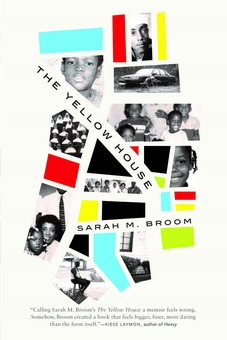
“Their new songs are so good,” I yell to her. “Your face is pretty.”

I’ve been waking up late due to staying up late, which gives me little time in the morning to relax before work. I like to make coffee and walk around my apartment, and move objects around until they feel right. Last week I put a giant hole in my wall trying to hang a picture. I cried. That wall was so easy to take care of before I broke it. Lots of things in life aren’t as easy to take care of as a wall. I know I’ll never take that wall for granted again. I will use all my mental energy making sure.
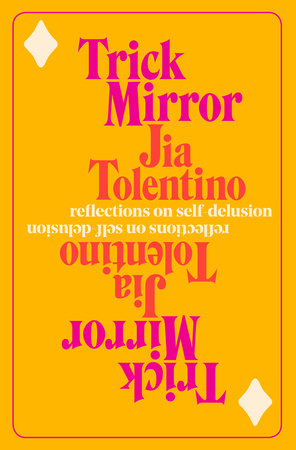

Darren, the real Darren, the namesake of the mass of exes, if I’m remembering correctly, was from Wisconsin. He liked bands I had never heard of, but not in a cool, obscure way. Like, bands with bagpipe players in them. He worked in a building I could see from a distance. He was very proud of being able to ride his fixed-gear without touching the handlebars. I remember thinking, “Deep down inside, everyone is this guy.” I never think of him anymore unless I need a ride somewhere. He was one of those guys who had a working vehicle. Many men before and since have arrived to me on a skateboard reciting the Street Artist’s Code of Ethics. They get indignant when I explain how to use soap. I’m not an expert, but the subject interests me.

Darren invites me over and we have sex in his bunk bed. Our bodies are very close to the ceiling. I keep touching the textured paint, as if it is my duty to involve the apartment in our act. But then I get distracted thinking about the possibility of someone lying on the floor in the apartment above us, less than three feet away. I almost never cum and I think it’s terrible that Darren pretty much always does. It’s completely satanic what men get away with. But in the moment I want what’s best for him.

The next morning I brag about the importance of my work, how noble I am, how great it feels to be needed by others, how feeble and gross old people are, how there is a kind of crust that grows on their scalps.

“It’s not cancer,” I say, but I don’t know if that’s true. I look up from my hands to remember who it is I’m talking to. Darren is spilling frozen hash browns into the sink. I go back to picking my cuticles and try to think of all the storm metaphors. Perfect storm. Stormy waters. Calm before the storm.

“Oh my god, I am bacon master,” Darren says. I think about going home but I don’t want to miss the bacon.

“One of the old ladies at my work loves bacon,” I say, knowing I’m being boring.

Darren starts laughing at his phone and then walks over to me and shows me the screen. I can’t see what’s going on in the video because he is laughing so hard it’s shaking his phone, but the audio sounds like things falling and crashing. Maybe a tool chest going down some stairs. I laugh heartily. Haha! It’s my fault as much as anyone’s that he doesn’t know sex stuff.

After breakfast I walk home. Storms a-brewin’.

The farthest I’ve ever moved at one time is 40 miles, but I live like 800 miles from where I grew up, so you do the math. I like to think of my life as a line extending to the right and upwards, like an unlabeled graph showing positive growth. I freely and openly admit I’m running away from bad memories. I don’t need constant reminders that I’m a bad friend and a bad person. They inhibit my self-esteem.

The town I live in now is unexceptional. Like, in an impressive way. The doctor I see got not-great grades in school. He told me that. But he put the time in, he said, hardly ever missed class, and earned the right to be the sole interpreter between me and my body. He pronounces ‘congested’ like ‘congestured.’ He will not prescribe me Xanax.

“Maybe it would help me sleep,” I say.

“But Xanax is for anxiety. Oh, I see what you mean. But no.”

When PetSmart fired me, I didn’t leave my apartment for days. I did not know how to proceed with life, knowing I wasn’t good enough to be a PetSmart clerk. Several days later, I walked to Walgreens to buy tampons. Just seeing the craggy street again made me feel hopeful. We’re living in a special time on this planet, in the ruins of something that was never good. There is a blatant display of mediocrity everywhere you look. PetSmart would eventually go out of business, I understood with sudden clarity. I could practically smell Office Depot executives drawing up plans for the PetSmart building, like vultures flying over weak prey.

As I walk home I get a text from Darren. It is a photo of a cheeseburger and sweet potato fries and a pickle, with Darren’s hand entering the frame to do thumbs up. We literally finished eating breakfast 20 minutes ago. I don’t know how he had time to get to a restaurant let alone work up an appetite.

“Oops, meant to send that to Roger,” Darren said.

“Lol,” I text back. I have no idea who Roger is.

I shower and prepare myself for work. The residents at the senior center have recently found out I do not volunteer my time, and in fact get paid to serve them dinner, and they are now happy to offer a critique of my work performance. They’ve commented on my punctuality and demeanor and how much food I give them. They’ve shaken their heads in disgust at my shoes, my breath, the way I pronounce ‘ketchup,’ and my arm hair. Everything, to them, is the reason I’m not married.

They’re convinced their dues might go down if I weren’t piling steamed carrot slices so high onto their dinner trays. If I give them slightly fewer steamed carrot slices, they start rumors that I’m stealing food. If I were so hard up for food that I was stealing steamed carrots, you’d think people would have a little compassion. One lady told me I should work on my physical appearance. She was spreading butter onto a roll with a potato wedge instead of a knife.

“Thank you for the constructive criticism,” I said.

“Rat’s ass,” she said.

People can tell I’m bad and that’s why they don’t like me.

When I go home I go straight to bed with my laptop and open the website where I’ve been watching bootleg Star Trek. The longer I lie in bed, the less sleepy I am. The screen makes my eyes hurt, but pain doesn’t scare me, and I hate the idea of closing them.

About the Author

Chelsea Martin is a writer and illustrator living in Spokane, Washington. Her website is jerkethics.com.

“Bad” is published here by permission of the author, Chelsea Martin. Copyright © Chelsea Martin 2018. All rights reserved.