Write Your Own Touching Holiday Story With Our Handy Chart

The winter holidays are a time for overindulgence, family bickering, and most importantly, saccharine but extremely effective tearjerking stories about love, forgiveness, community, family, peace on Earth, and finding a functional application for your weird nose. Sometimes these are vaguely religious, but more often they’re about the Goodness in the Human Heart and how Yes, Virginia, There Is a Santa Claus and whatnot. But after 150 or so years of the same holiday stories, we’re ready for some fresh blood, or at least some fresh milk and cookies. Thus, we are introducing a Holiday Story Generator, so you can sniff out the sentimental holiday narrative hidden within your own name. (Christmas has a real monopoly on this type of emotional manipulation, but we threw in some Chanukah ones if we thought they were funny, including a deep cut for you real Chanukah story fans.)

The aforementioned Virginia, for instance, would choose the V option from column A (“old”), I from column B (“man”), R from column C (“is a humbug”), and so forth, and plug them into the key sentence. Result: “An old man who is a humbug sees his own grave and learns humility.” (We put “their” when a personal pronoun is called for but you’re free to change it according to your protagonist’s gender.) Well heck, that’s basically the plot of “A Christmas Carol” so we know that one works! If your first name is shorter than five letters, go on to use your last—Tiny Tim, for instance, would do “Tiny T” and wind up with “an unhappy man who sells matches runs out of money and gives birth in a manger.” A true holiday miracle.

Click to enlarge

Winter Horoscopes for Writers

We begin this season with the winter solstice: the shortest day and the longest night, the technical start of winter at what feels like the depth of the season. Finally, we start moving back towards the Sun: the days inching towards light, the night slowly pulling back. This has been a long fall, full of shadows and retrogrades and many planets moving through deep, watery Scorpionic energy. A time of self-reflection. A time of healing.

The winter solstice is ushered in by a full moon in Cancer on December 22nd, inviting all of us to take a pause and consider how our emotional home base helps us build the empire that the Capricorn energy of late December gifts to us. What do we need to feel at home, to feel safe? And how will that help us build the dream?

Then, we fly. The energy in the air stirred by Jupiter in Sagittarius is furthered by Mars (the planet of action) and Venus (the planet of love and beauty) moving into fire signs in January 2019. The decisive, powerful earth energy of Capricorn moves quickly when aided by so many planets in fire: the time to act is now.

Chiron, the “wounded healer” minor planet in our chart which marks our great soul-hurts, is moving from Pisces into Aries on February 19th. This new cycle of Chiron invites us to work with our wounds in a new way, with all the grit of fast-moving, independent Aries energy. Chiron asks, “How can I support my healing?”

After the deep, watery soul work of the late fall, 2019 gets off to a start with all the fire and the earthy energy of action and building. But it’s not just about moving through cycles and discarding lessons: we want to integrate all that soul work from 2018 into what we are producing now.

ARIES

The new year will feel particularly new for you, Aries. There is a lot of action happening in your house of self and identity, asking you to consider the tensions between how you take action, how you cause trouble, and how you work with your soul wounds. Uranus, the planet of change and revolution, is traipsing back through the last degrees, scraping out the bottom of the jar, combing through the last nooks and crannies. Odds are good that you’ve had some major (even disruptive) life changes over the last few years; Uranus, here in this final visit to your sign before it leaves for Taurus, wants to wrap up some lessons and make sure that you’ve got everything you need.

The good news? You’ll have the energy for that final Uranian push, because Mars, the planet of action, will also be going through your house of self and identity. After spending so much time in Aquarius throughout the summer and fall, and then zipping through Pisces this December, Mars gets a jolt of action on January 7th, returning to the sign it rules, Aries, where it is a warrior: energetic, fierce, emboldened. When Mars is in Aries, shit gets done. For you, this also looks like drawing boundaries, standing up for yourself (and your work), and having the motivation and self-direction to really push forward on projects that may have stalled out in late 2018.

On February 19th, Chiron, the “wounded healer” planet, moves from watery, nurturing Pisces into fiery, independent Aries — and your house of self and identity. Chiron has spent the last few years in your house of rest, retreat, spirituality, and intuition, and you’ve been working with wounds in perhaps unconscious ways (or, perhaps, consciously, in therapy or through creative work). Now, in Aries, the wound gets spoken. Noticed. Activated. It moves from the unconscious to the conscious, into the body, where it can be integrated into identity — and, perhaps, into the work.

Writing Prompt: What old wounds have informed your work over the last few years? What has caused discomfort? What have you shied away from writing about?

TAURUS

Winter kicks off in Capricorn season, which can feel familiar, in that it is also earth energy: slower-moving, quiet, grounded. For you, Capricorn is your house of travel, philosophy, and long-term plans: a time to look to the year ahead, to get that planner, to put feet under your dreams and consider your growth over time — where you’ve come from, and what you’re moving toward. Use the full moon in Cancer on December 22nd, which highlights your house of communication and short-term plans, to take a look at what projects are nearing completion, which dropped off your radar, and what is worth carrying into 2019.

If you’re feeling restless, even in the dead of winter, there’s a reason. You have a lot of action happening in your house of rest, retreat, spirituality, and intuition, what the ancients called the “house of self-undoing.” Uranus, the planet of change and revolution, disruption and technology, is here for one last visit before moving into your sign in the spring, rooting around the place and making sure you’ve got the lessons they taught during the last few years they spent in this part of your chart. Mars, the planet of action, will enter this house on January 7th for a quick sweep. When Mars is here, they ask, “what is holding you back? What are you afraid of? And what can we do about it?”

All of this unconscious action in your most deeply intuitive house offers a lot of creative juice, if you’re willing to work with it. When Mars goes into your sign, and your so-very-conscious house of self and identity, on February 15th, it’s time to pull out all of the gunk that they dredged up and really use it as motivation (or material). Mars in your house of self is energizing, self-motivating, direct, focused. And most of all? Ready.

Writing Prompt: Think about this time last year. Where did you think you would be today? What dreams did you release over the course of 2018? What dreams did you realize? What dreams were birthed?

GEMINI

You spent a lot of late 2018 learning about the vision for your work: how you dream, how you put feet under the dream, how your daily habits support the dream. Mars (planet of action) has spent a lot of time in your houses of long-term plans and also career and public recognition; meanwhile, Venus, the planet of love, spent forever in your house of daily routine, teaching you how to practice self-care while grinding and how to integrate themes of love and beauty into your daily life or work habits.

You’ve also spent a lot of time this fall thinking about the work you do in love, and the work you do in how you bring beauty into the world. Venus prompts you to bring love, attention, and creativity not only to your work, but to your relationships. First up, she enters fiery, independent Sagittarius, igniting your house of committed partnerships in the first week of the 2019 on January 7th. How are your romantic attachments — and business partnerships (or, say, committed writing groups or contracts with certain publications?) — serving you or affecting your creativity? Then, Venus zips into Capricorn and your house of intimacy on February 4th, really securing the partnerships you worked on at the beginning of the year. On March 2nd, Venus goes into Aquarius, and your house of travel and long-term plans. Time for a writing retreat with a creative partner, or perhaps a trip to the museum for inspiration?

One important note for you: the first Mercury Retrograde of 2019 will be in Pisces from March 5th–28th. While Mercury goes into retrograde several times a year (and, as such, is something to work with rather than to worry about), this one will be in your house of career and public recognition, so be mindful of the communications, newsletters, tweets, and press releases that you are putting out into the world at this time. Dot your Is, cross your Ts.

Writing Prompt: What have you learned about your work habits over the course of 2018? About how you do your best work? About the routines or practices that best work for you, even if they aren’t what everyone else seems to do? (And how are you doing with accepting that?)

CANCER

On December 22nd, the day after this year’s winter solstice, we have a full moon in your sign. Full moons can be energizing; they are also a time of completion and release. The moon is ruled by watery Cancer (which is at home in the home, in the domestic, with women, with the goddess), which makes this full moon particularly powerful. What projects are you completing or releasing, and how can you best recharge? The full moon in your house of self and identity asks you to be mindful of the connection between your body, mind, and spirit, and to honor the needs of all three.

Throughout the winter season, there are many planets traveling through your fellow cardinal signs of Aries and Capricorn. Cardinal signs are the “leaders” of each element group — the sign known for its initiating energy. You, Cancer, mark the summer solstice; Capricorn, the winter solstice; Aries, the spring equinox; and Libra, the fall equinox. Depending on where your personal planets are located in your birth chart, you may particularly feel the effects of the Sun (the ego), Saturn (planet of time and responsibility), and Pluto (planet of transformation), which are in Capricorn, and Uranus (planet of change and revolution) and, later, Mars (planet of action) and Chiron (the “wounded healer” minor planet) in Aries throughout early 2019.

Saturn and Pluto are currently spending years scraping through your house of committed partnerships, completely transforming how you exist in partnership, what you look for in partnership, and what you desire. As we enter Capricorn season, the Sun — the ego, the core — shines a bright light on this part of your chart. These are not only romantic partnerships, mind, though the distinction between the personal and professional can feel increasingly arbitrary as we move through life; of course the personal affects the professional, impacts the spaces we carve out for ourselves, how we see ourselves, even the kinds of work we produce. But this house also governs long-term business and creative partnerships: agents, editors, people you write with. There will be a series of eclipses on the Cancer/Capricorn axis, between your houses of self and partnership, throughout 2019, really asking you to dig deep and do the work in order to bring your lived identity and desired relationships into alignment. The first new moon eclipse in Capricorn hits your partnership house on January 5th. Mark your calendar, and get ready for some journaling and introspection.

Writing Prompt: For you, what is the relationship between the personal and the professional, or the private and the public?

LEO

For Leos, Capricorn season is all about work — literally. The winter solstice kicks off in your house of habits, work, and health, asking you to focus on getting your daily routines in order. Now is the time to clean your desk, get a new planner, and make an appointment with your doctor, therapist, dentist, astrologer, nutritionist — whatever you’ve been putting off for your own well-being. This is the time to take care of your body.

But this winter is not all details for you. 2019 gets off to a fiery start, with Uranus, the planet of change and revolution, in Aries, and other planets quickly following — on January 7th, Mars, the planet of action, joins Uranus in your house of travel, philosophy, and long-term plans (road trip, anyone?). Also on January 7th? Venus finally moves out of Scorpio and your house of home and hearth (where she spent so much of the fall, possibly causing you to homebody it up) and into Sagittarius and your house of creative energy, giving your projects (and your love life) a major energetic boost. Aquarius is your opposite sign, so it’s usually a good time for you energetically, but with all those planets in fire, your creativity in early 2019 is going to be nurtured in a special way. Work with the energy and reap the rewards.

One thing to look out for? The first full moon total eclipse of the year is in your sign! January 21st: mark your calendar. Over the last year and a half, we’ve had a series of eclipses in Leo and Aquarius, asking you to consider your relationship between the self and the other (committed partnerships) — really digging deep and finding the groundedness within. This is the last eclipse in that series. Full moons are a time of completion and release, and this one especially so. Break out your journal.

Writing Prompt: What have you learned about your individuality, and about yourself in relationships (or your desire for relationship, or your patterns in relationships), and about the relationships between all of those things over the last few years? How do these inform (or not inform) your work?

VIRGO

After a long, slow-moving autumn, the winter solstice brings a burst of energy: the Sun in Capricorn moving into your house of creative energy, and a full moon in Cancer on December 22nd in your social consciousness, friendships, and the internet. Capricorn season is an energizing time: crisp and (perhaps) cold, the air is buzzing with ideas and possibility. Finally — finally — we are out of the depths of home and hearth and self-reflection; away we go into your creative projects and work life. Let yourself get carried away by the season, by the energy of the new year, by all of your ideas, even by the connections you’re making on Twitter. No need to get into the details yet. Now is the time for big ideas and expansion.

The creativity of Capricorn energy continues for you even after the Sun has moved into Aquarius and your house of daily habits, work, and health, as Venus goes into Capricorn on February 4th. Venus brings a touch of beauty, delight, and zest to your creative projects, buoying your energy even as Aquarius season invites you to consider the details and the routines necessary to get those projects off the ground.

A full moon in Virgo, in your house of self and identity, marks the beginning of Pisces season on February 19th. Full moons can be energizing, but they are also a time of completion and release. What projects are you wrapping up, here at the start of 2019? What cycles are finishing? Are there creative habits that no longer serve you, that you can finally lay to rest?

Writing Prompt: What projects have you not allowed yourself to work on, because you couldn’t figure out the details? Dream about those.

LIBRA

2019 is all about creative inspiration for you. On January 7th, Venus, which brings love and beauty to whatever she touches, moves into your house of communication and short-term plans, igniting a fire under your current writing projects. Also on January 7th? Mars, the planet of action, joins Uranus, the planet of change and revolution, in Aries, which is your house of committed partnerships. This can mean romantic partnerships; it can also mean business and creative partnerships, like, say, literary agents and long-term editors. Early 2019 is about bringing your creative work into the world with the right people. Let’s make it happen.

The good news is that all this fire is aided by empire-building, earthy Capricorn, one of your fellow cardinal signs. Cardinal signs are the “leaders” of each element group — the sign known for its initiating energy. You, Libra, mark the start of the autumnal equinox. Capricorn is the winter solstice, Cancer is the summer solstice, and Aries is the spring equinox. Lots of planets are moving through cardinal signs right now — lots of initiating energy, lots of “Let’s get going, already!” You know how to work with that: you’re comfortable with it. What you’re less comfortable with? Capricorn’s empire-building earth hits your house of home and hearth and deep family roots, whatever family means to you. Saturn, the planet of time and responsibility, and Pluto, the planet of transformation, are due to spend years in this section of your chart, turning the soil slowly, making sure you are good and comfortable with the discomfort that feeds a lot of that fiery creative energy.

But it’s all about how you integrate the energy, right? All about how you work with it. Towards the end of the season, the Sun and Mercury both move into Pisces, your house of daily habits and routine and health. Mercury will retrograde here, so be mindful of the little things, but this will offer some emotional glue and intuitive softness to the winter season.

Writing Prompt: What are you comfortable initiating, and where do you prefer to take a backseat or let others approach you?

SCORPIO

You didn’t just have your birthday season this fall; you also had a number of planets transit your sign at the height of your season. Now, as the solstice heralds the arrival of winter on December 21st, the last of the planets in Scorpio finally clear their retrograde shadows. What have all those Scorpio planets going through your house of self and identity meant for you? What parts of yourself have been up for review these last few months — how you communicate, how you love and allow yourself to be loved and appreciated, how you look at yourself?

Now, as we enter the depths of winter, the planets turn toward fire. On January 7th, Venus, the planet of love and beauty, enters Sagittarius and your house of value and material assets. Venus rules this house, which is also about how our own sense of self-worth manifests materially around us. What kind of space do you allow for your creativity to flourish? What kind of material support do you think your work deserves? Here, Venus offers a touch of grace, and asks you to sit with the idea of the ways in which you are valuable before she goes into Capricorn on February 4th, igniting your house of communication and helping you to build out your new ideas around value, how your work is worth physical manifestation.

Also on January 7th? Mars, the planet of action, goes into bold and independent Aries, your house of habits, work, and health, where Uranus, the planet of change and disruption, has already been rooting around, shining a light on where it’s time to clean house. The new year is a time when we are often reconsidering and recalibrating habits, but Mars’ presence here gives you the extra energy and motivation to look at what’s working and discard what isn’t serving. It’s a new year, Scorpio. Time to take care of yourself.

Writing Prompt: What values feel like they have shifted for you over the last year? What areas of your life need the most tending in terms of daily routine? Is there overlap here?

SAGITTARIUS

The big story for you is, and continues to be, Jupiter, the planet of expansion, which moved into your house of self and identity on November 8th. Jupiter has had some time to settle in, to root around and get comfortable. What have you learned so far? What areas of your life have taken a turn for the better in the last month? How have you attracted attention, perhaps unwittingly? Jupiter is a magnifying glass that will expand whatever it touches, no matter the nature of what it touches. This is a time to get your house in order, to make use of this lucky transit in the best way possible. All eyes are on you — but how are they on you? Put in the work, put yourself out there, do a vision board, put feet under your dreams: this is how to make the most of a Jupiter transit.

On January 7th, Venus, the planet of love and beauty, goes into Sagittarius and your house of self and identity. Venus brings sweetness to whatever it touches, and when Venus visits your own house, you attract light. Venus will also meet up with Jupiter during this transit — a very attractive time when creative juice will flow and connections will come easy.

Meanwhile, it’s winter, which means there is a lot of action going on in your house of value and money (the Sun, Saturn, and Pluto, which are all in Capricorn), asking you to be extra responsible about your organization and spending (and invoicing and taxes, perhaps?). Venus will also visit Capricorn in early February, asking you to consider the relationship between your self-worth, spending, and underlying values that manifest in the material.

Writing Prompt: What opportunities do you want to attract in 2019? Make a vision board.

CAPRICORN

Happy birthday! Your season starts on the winter solstice: the darkest night of the year, a time of rebirth, renewal, and regeneration. The world spins toward light again, and your energy is at its height. Right now, a number of planets are in your sign: in addition to the Sun, there is also your ruling planet, Saturn (time and responsibility) as well as Pluto (transformation). This is a heady triumvirate of energy roiling through your empire-building house of self and identity this month: a time when all eyes are on you and the projects that you are undertaking and continuing to build in the new year. In February, Venus, the planet of love and beauty, comes along to join the other planets, adding a touch of grace and ease to your hardy efforts.

On January 5th, there is a new moon and partial solar eclipse in Capricorn, and your house of self and identity. This marks the beginning of a new series of eclipses that will take us through the next year: eclipses on the Capricorn/Cancer axis, which is traditionally associated with the public and the private, career and family, recognition and roots. For you, these eclipses will be bursts of energy, spotlighting your house of self and identity (Capricorn) and your house of committed partnerships (Cancer). How you integrate lessons about the self and the other, and your relationship to yourself and to those you partner with, will be under review.

Meanwhile, relationships of another kind are under review: your relationship to home and hearth, roots and family. Uranus, the planet of change and revolution, has been traipsing through Aries (this sector of your chart) for years, helping you redefine what home and family mean for you, and is currently wrapping up its journey here. Mars, the planet of action, enters the fray on January 7th, helping you integrate lessons from this holiday season into Uranus’ lessons. And on February 19th, Chiron, the “wounded healer” minor planet, enters Aries, inviting you to work with your wounds around family and home in a new way. You’ve got a busy winter ahead, Capricorn — but you’ve got the stamina for it.

Writing Prompt: How have your roots and/or family (what you consider to be family) informed your writing life?

AQUARIUS

It’s all about the writing, but sometimes it’s all about the writing. This is one of those times. The start of the year brings a number of planets into fiery, bold, and independent Aries — and your house of communication and short-term plans. Uranus, the planet of change and revolution, is finishing up a long transit here, revolutionizing your relationship to your work. On January 7th, Mars, the planet of action, moves into this house, lighting a fire under your ass: get ready to get shit done. And on February 19th, Chiron, the “wounded healer” minor planet, joins its friends, inviting you to work with your wounds around communication in a new way. Writing through the pain, about the pain? Alrighty then.

During your birthday season, you get an immediate energy boost from the Sun (the ego) shining a light on your house of self and identity. Also during your season, you have a new moon in Aquarius on February 4th, offering you the chance to set new intentions. New moons are a good time to start new projects, pitch stories, send newsletters, meet new people. Put yourself out there.

On March 2nd, Venus, the planet of love and beauty, also goes into Aquarius and your house of self and identity. Venus shines a light on you: on your efforts, and consequently your projects, bringing a sense of ease to your conversations and interactions with people. Venus smooths things over — this is a good time to be out and about in the world, networking and meeting new people. This is the tl;dr of winter, Aquarius: don’t be afraid to put yourself out there.

Writing Prompt: Make a list of intentions for the new moon. (An easy way to start: list five writing ideas that you want to turn into pitches, or projects, in the next six months. Go.)

PISCES

Your birthday season comes at the end of winter: the misty air, the sludgy streets, when the days are longer, the warmth is returning, and we are so desperately waiting for spring. Pisces is the great connector, the most intuitive sign of the Zodiac: you’re the water sign that eases us from the last gasps of winter into fiery Aries and new spring.

So what is winter, for you? It’s the deep unconscious: the Sun goes into the deepest dark of your chart, shining a light on your hopes, your dreams, your spirituality, your unconscious — and then, finally, consciously, on yourself. On March 6th, there is a new moon in Pisces, in your house of self and identity, asking you to set new intentions for yourself in a profound way; asking you to consider how you treat your body, how you feed your mind, how you connect with your emotions, how you honor your spirit, and how you integrate all four. New moons are a good time to start new projects, pitch stories, send newsletters, meet new people. Time to take care. (Also take care from March 5th–28th — Mercury is retrograde in Pisces, again in your house of self and identity. This is careful proofreading time.)

Finally, a major transit from a minor planet. Chiron, the “wounded healer,” has spent the last few years in Pisces, in your house of self and identity, turning over the soil of your wounds around your self-image, your sense of individuality, and how you see yourself. Not insignificant questions. On February 19th, Chiron moves into Aries and your house of value and material assets. Chiron in Aries has a direct boldness that bluntly asks, how do I value myself? Do I treat myself like someone that I value? How do my material surroundings reflect that? Chiron will transit Aries for the next few years, offering you the chance to work with wounds and discomfort around value, materiality, and money. It’s hard work, but the rewards are great.

Writing Prompt: What is winter, for you? And what is spring? How do you see yourself, between these seasons?


What To Read When You Can’t Think About Anything But How the World Has Gone to Hell

In the last month of 2018, the third millennium appears to be going off the rails. The year’s grim news review would take awhile, and it’s not even quite over yet. Voter suppression, an alleged assaulter in the Supreme Court, and the blatant harassment of people #livingwhileblack by the Permit Patties and BBQ Beckys of the world, are just some of the year’s lowlights. Outside U.S. borders, there’s the chaos and limbo of the Central American caravan in Tijuana and a far-right president in Brazil who came to power despite the #EleNão (#NotHim) efforts of the Brazilian people — to list just two of a number of downbeat international developments.

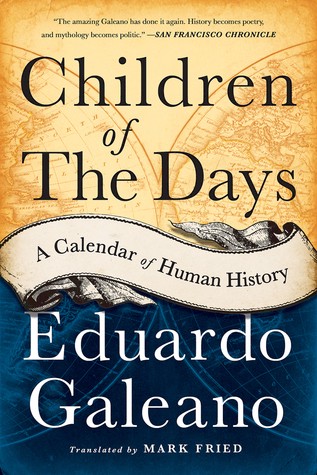
To summarize: The environment, pretty much everywhere, is getting more screwed with each passing day. (That includes the literal environment, in the form of basically irremediable global climate change.) The abyss of despair that awaits each time I log on to Twitter has been overwhelming. I delete and reactivate the app on a weekly basis, and attempt (mostly short-lived) WiFi fasts to stem the psychic suck of the news. These tactics haven’t been all that effective. I’ve spent part of this year traveling in Mexico and have had many unsettling conversations about family, immigration, and borders. On the other side of the divide, I have been stunned by a couple of North Americans living in the region as “expatriates” who support the current U.S. administration’s policies on this front. Right around the time of these exasperating exchanges, desperate for evidence that humanity is not all wretched, I returned to the works of the great humanist Eduardo Galeano, the Uruguayan chronicler of Latin America’s history and global football, as well as the master creator of the vignette narrative form. Having swept through three books of his books, I can recommend Children of the Days: A Calendar of Human History as a soothing literary palliative for our unsavory times.

Galeano died in 2014, so he missed this latest episode of global malaise, but his writing on the difficult times still resonates today. In 2011, he published Children of the Days, a swirling, global history that begins on January 1 and ends on December 31. Each day brings a story that took place on that day in times past. The result is an alternative calendar of historical miscellany, delivered in sharp and often bemusing fragments that take leaps into fiction and poetry. For January 1, Galeano’s entry is entitled “Today,” which notes: “Today is not the first day of the year for the Mayas, the Jews, the Arabs, the Chinese or many other inhabitants of this world.” Still, Galeano encourages the acknowledgement that time “allows us, its fleeting passengers, to believe that this day could be the very first day, and it gives us leave to want today to be as bright and joyous as the colors of an outdoor market.”

After this hopeful start, Galeano rolls out pointed half-page fragments that demanded a gathering of my Internet-scattered attention. The ability to be devoted to these narrative slivers felt like balm in itself. Though my focus in reading was steady, Galeano’s is not; he jumps around the world and back and forth between centuries. On January 20, he notes that the Catholic church in Mexico forbade the representation of serpents on church buildings in 1585. While the Bible takes a low view of snakes, “America was a loving serpentarium,” where the reptiles were symbolic of good harvests and the god Quetzalcóatl. The next day, January 21, Galeano flings forward to 1779 and to James Cook surveying Hawaiian natives who “walked on the sea in communion with her energy.” The “walkers on water” stabbed Cook three weeks after this encounter. Galeano mockingly notes: “The magnanimous explorer, who had already given Australia to the British Crown, never could make a gift of Hawaii.”

People have been odious to each other for a long, long time.

As a compendium of historical curiosities, the book slaked my thirst for other places and times, which in part helped me momentarily slip away the present. The vignettes do get bleak — his subject is human history, after all. For December 3, for example, there is the tale of “The King Who Said ‘No More” to the trade of slaves. The ruler of the West African kingdom of Dahomey Agaja Trudo fought slavers and rivals until he couldn’t. Galeano writes: “Europe refused to sell him weapons if he did not pay in human coin.” Reading this vignette, as well as many others, I felt the transformative power of perspective. As much as 2018 has been a shit show, the world was once worse. People have been odious to each other for a long, long time. It was not quite the succor I wanted, but nevertheless it offered space to consider the continuity of history — and the fact that countries and people have (more or less, and certainly some more than others) survived other, more awful periods.

Galeano’s unsung characters also reminded me that human heritage is not only one of hatefulness. Resistance, sometimes joyful, features. For June 9, there’s the story of two Galician women, who in 1901, “had to invent a husband” to marry in a church. The scandalous news broke in Spain, forcing the women to flee. They were imprisoned in Portugal but managed to escape. “In the city of Buenos Aires the trail of the fugitives went cold” is Galeano’s winking end to the story. I’d like to think they had a terrific happily-ever-after. Triumphs, like this, sweeten the book, and provide life-affirming examples of acts of resistance by feisty individuals who lived in darker times.

The many stories of the endurance of the indigenous universe through the globe were heartening. December 12 is the feast day for the Virgin of Guadalupe, a celebration of the appearance of the Virgin Mary in Mexico City in 1531. “By a fortunate coincidence,” Galeano writes, tongue wryly in cheek, “her visit occurred precisely where Tonantzin, the Aztec mother god, had her temple.” The “outlawed gods” took the form of Catholic figures, such as the rainmaking Tlaloc as Saint John the Baptist and “Saint Isidore the Laborer Xochipilli” who “makes flowers bloom.”

“Silence,” the February 22 sketch, lauds the Greek poet Paul the Silentiary, who was the manager of silence in the palace of Emperor Justinian. Galeano quotes from his poem:

Your breasts against my breast,
your lips on my lips.
Silence is the rest:
Tongues that never pause I detest.

With all that competes for your attention on micro (Instagram, livelihood issues, etc.) and macro (white supremacy, environmental apocalypse, etc.) levels, true quietude, in your own mind and most definitely, in company, feels like an extravagance out of grasp.

Galeano implores us to slow and contemplate the possibilities of a more humane action in the world. Preferably while we are still alive.

With these miniatures, Galeano implores us to slow and contemplate the possibilities of a more humane action in the world. Preferably while we are still alive. Mortality, which is made acute by the non-linear fragmentation of narrative, pulses through the book. For his December 31 entry, “Voyage of the Word,” Galeano offers the Roman physician Sammonicus, who wrote that death could be kept “at bay: by hanging a word across your chest day and night.” That word was “Abracadabra,” which he translates into “Give your fire until the last of your days.” The word’s potency as an immortality talisman may be in question, but its essence, as distilled by Galeano, it is solid, shining guidance of how to be in the world.

Alternatives

My Year of Rest and Relaxation by Ottessa Moshfegh

Is the onslaught of the world making you want to fully check out? Drop out vicariously through Moshfegh’s unnamed narrator, a twenty-something recent Columbia grad who decides to take to her bed in the year 2000. Her aim, aided by pharmaceuticals, is to sleep 24/7. She’s got a fat inheritance so it’s doable. For the rest of us, the novel provides an animated fantasy: what would it be like to sleep our current reality off, job-free in one of the most expensive cities in the world? Not a great deal happens for the most of the novel but Moshfegh’s prose is strangely energizing and will keep you turning the pages. If misery, even the misanthropic kind, loves company, then Moshfegh’s dazzlingly dark world-avoider makes for a prickly and urbane companion.

Severance by Ling Ma

In Ling Ma’s debut novel, Millennial publishing functionary Candace survives the advent of Shen Fever, which decimates New York City. She initially chooses to stay at her job to gain a work bonus. With this, Ma takes office drudgery to the apocalyptic end and pokes at the market economy. The laughs (especially at the office-based ridiculousness) might help momentarily alleviate existential angst. Severance will likely also spark the question: If the world actually slides into a zombie-populated hell, what would you do? Perhaps some strategies might emerge. I am betting they won’t involve staying on at the office.

Friday Black by Nana Kwame Adjei-Brenyah

In his debut collection, Nana Kwame Adjei-Brenyah mines what’s off about our contemporary moment and combusts it all with surrealism. For example, “Zimmer Land,” set in a racism-themed park, might require reading breaks for its intensity. It’s definitely not comfort reading per se. However, if things are indeed going down the tubes, Adjei-Brenyah’s exhilarating writing makes for excellent, if provocative, reading for the ride. Here’s just one chilling line: “People say ‘sell your soul’ like it’s easy. But your soul is yours and it’s not for sale. Even if you try, it’ll still be there, waiting for you to remember it.”

Should You Watch the TV Show of ‘My Brilliant Friend’ If You Loved the Book?

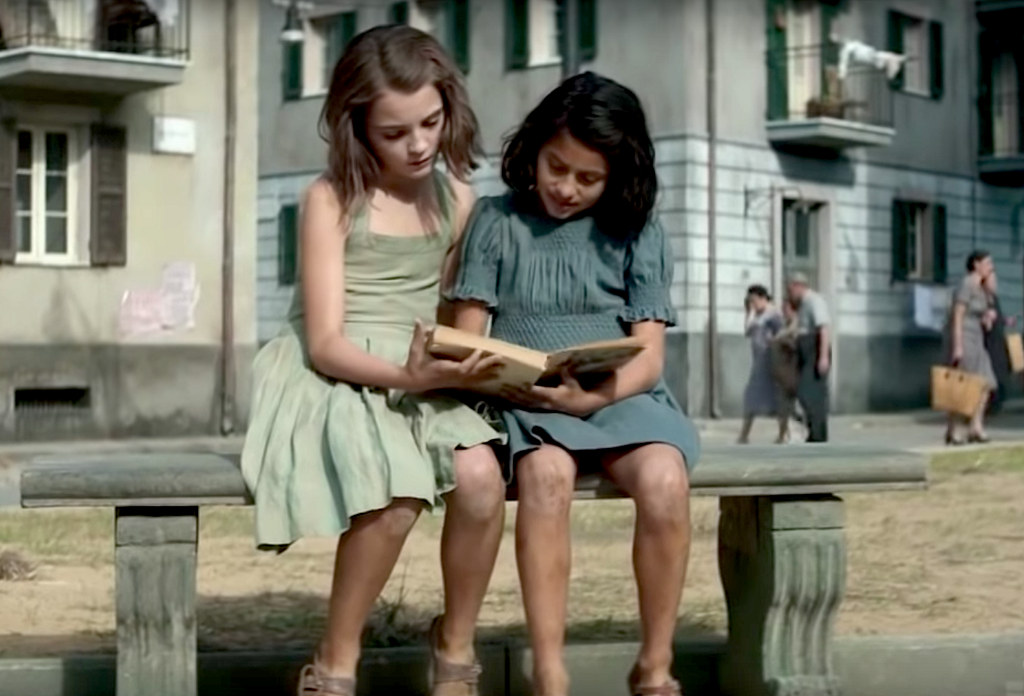
When HBO announced its plans to adapt My Brilliant Friend, the first of Elena Ferrante’s series of Neapolitan novels, fans were equally excited and trepidatious. Television and film have wrecked many fine pieces of literature — in fact it seems like the better the original, the more disappointing the adaptation — and I heard no shortage of grumbling that our beloved books would be better left alone than made into a miniseries. This sentiment was encouraged by the unique circumstances surrounding the series’ author; since the “real” Elena Ferrante maintains her anonymity behind a pseudonym, she couldn’t show up to production meetings to veto a hack job of her text. Fear spiked when it became known that a man would be directing; the Neapolitan novels are ceaselessly described as a story of female friendship, so how could a man possibly portray them? Relief came after the first episode aired in November and positive reviews flooded in, but now that the eight-part series has finally concluded, the question is: how well did the series portray the novel as a whole? A successful TV show would not only accurately portray the relationship between the two main characters, Lila and Lenu, and faithfully follow the timeline of events, but would capture the style and tone of Elena Ferrante’s writing.

Why Do We Care Who the “Real” Elena Ferrante Is?

My Brilliant Friend is a long book in terms of pages, and a sprawling one in terms of content, so my biggest concern was that the TV series would shortchange the novel’s particular, unhurried cadence in an effort to jam in all the characters and their various plot points. Ferrante writes compulsively readable sentences, yet Elena, as a narrator, takes her time; she muses, reflects, explains. Somehow the director, 43-year-old Saverio Costanzo, fought against what must have been an incredible urge to move from event to event. Throughout, he lets the camera rest on faces and rooms and bodies lying in the street. Uneasy moments, like when the characters as teens are packed in the Solara’s car, seem to go on and on, he lets it seethe with Lila’s defiance, Marcello’s spurned longing, Gigliola’s contempt, Michele’s brutishness, and the discomfort of the other three girls, until you want to stop the car yourself. Despite clearly having a mandate of eight hours total, divided into one hour segments, the episodes feel like Ferrante’s novels: unrushed to tell their tale, as though each chapter could stand on its own as a short story. This feeling is explicitly encouraged in the show by the titles of the episodes: “The Metamorphoses,” for example, or “The Shoes.”

Capturing the feel of Elena’s narrative voice was only one part of the battle. The relationship between Lila and Lenu is the heart of the novels, but it’s a particularly difficult one to capture because it is always shifting. In a relationship marked by extremes, there are moments of intense closeness followed by the fraught emotions, such as jealousy and resentment, that such a closeness can bring. Costanzo relies on long, quiet close-ups to capture these moments as well; the actresses are given the time and space to emote, to subtly grapple with their feelings. In the first episodes this technique is less successful, and when the camera rests on the faces of the young actresses you can see a more obvious attempt at “acting,” but Gaia Girace and Margherita Mazzucco, who play teen Lila and Lenu respectively, both have total command of their expressions, and their faces become a visual representation of what we hear from the grown-up Lenu in the novel, her realization that our feelings are never concrete, rather they are fleeting, conflicting, and confusing. The characters’ complex relationship is also expressed by their physical interactions, which subtly evolve from two young girl’s hands reflexively intertwining in fear as they stand on Don Achille’s doorstep to two newly adult bodies joyfully yet somewhat awkwardly juxtaposed as they practice dancing in Lila’s kitchen.

The relationship between Lila and Lenu is the heart of the novels, but it’s a particularly difficult one to capture because it is always shifting.

Overall Costanzo manages to express the imperfect, fierce, complex nature of the novel’s central friendship, which is a relief given the concerns that a male director could successfully capture a tale of female friendship. Of course Costanzo wasn’t being asked to create a female friendship in a vacuum, he was given ample source material in the books and, as he’s made abundantly clear in interviews, he received firm guidance from Elena Ferrante herself. Costanzo first spoke with Ferrante a decade ago, when he received her blessing to make a film adaptation of her 2006 novella The Lost Daughter. Though that project failed to materialize, he went on to produce other critically acclaimed films which put him at the top of Elena Ferrante’s list of people to direct the adaptation of My Brilliant Friend. And though Ferrante didn’t come to set in person, she did weigh in on all of the scripts, which Costanzo co-wrote with Laura Paolucci and Francesco Piccolo. In short, if you want to argue with the choice of a male director, you have to take it up with the author herself.

Much has been made of the Neapolitan novels’ “revolutionary” portrayal of female friendship, but what people sometimes overlook (and this issue was compounded by the covers of the novels, with their children in butterfly wings and gauzily dressed mothers holding babies) is how much these books are also historical novels. Ferrante isn’t pedantic with her details, but she’s accurate enough that people have identified most places the characters go, sparking Ferrante-themed walking tours around Naples, and throughout the series she addresses everything from Naples’ political parties to the terrible working conditions in its food factories. The television show had to be both historically accurate and generous with its visual details, and it takes pains to do both. Sure, the more clumsy moments of the show come when someone, usually Pasquale, has to explain the historical background of Naples to another character, but he’s really explaining to the viewers, who need to how Naples was devastated during World War II, how the fascists begat the loan sharks, how, logistically, the mafia spreads its suffering. The sets and costumes are outstanding (reading interviews with members of the production team relay the painstaking work that went into every decision) and were brought to life by 150 actors and 5,000 extras. Indeed, it struck me how much more situated in Naples we were in the show, and how certain issues became obvious earlier — the limits and location of the neighborhood, how it compared to other areas of Naples, and the larger criminal elements of the city, for example — as though we were actively being offered a lens through which to view the story. Perhaps Ferrante herself wanted to remind us that it’s a disservice to the characters to approach them in a gendered void.

Perhaps Ferrante herself wanted to remind us that it’s a disservice to the characters to approach them in a gendered void.

One area of the television adaptation that made me pause was the violence, which seemed more intense on the show than in the first novel. Part of that may be inevitable; seeing a little girl thrown out a window, for example, or a man being almost kicked to death, is more arresting than picturing it in my head, where there is no sound, and props must be given to the sound mixer for giving us the bone-chilling auditory, the painful gasps, the thump of flesh hitting concrete, the phlegmy cough of spitting blood. Then there is the editing —this is an incredibly thorough adaptation, but things inevitably had to be cut, and the violence begins to stack up on itself in a more obvious way, while the characters are given less time to recover. This is where the series could have become problematic — it was aired on HBO, where there is never such a thing as too much violence — and as much as I worried about an adaptation that isolated the female friendship, there was also a scenario in which it became a sort of period Sopranos. In the books Lenu’s schooling gets more airtime, when she says she hasn’t seen Lila for a while, we experience what she was doing instead, while on the show we hear little of Lenu’s life away from her friends.

While the novel was streamlined in such a way that violence took more air time in any given episode, the series was ultimately a success because the relationships still took prominence the whole way through. And yes, I do mean relationships, plural, because while the two girls are the heart of the story, the camera doesn’t only have eyes for Lila and Lenu. These are epic family novels, the kind which come with an index of characters in the beginning pages, and Costanzo keeps us aware of the larger community. Take the episode with Stefano Caracci’s New Year’s party. The opening scene hinges on the tension between two characters, Pasquale and Stefano, and could easily have been shot by pushing Lila, Lenu, and Stefano through the door, yet we don’t only see the primaries enter, we see everyone, the mothers and fathers and unnamed children come in, one by one, and give their salutation to the host. Pasquale enters last. This is a small directorial choice, but an example of the important care that the show takes with Ferrante’s work, from first page to last.

Araminta Hall Recommends 5 Books That Aren’t By Men

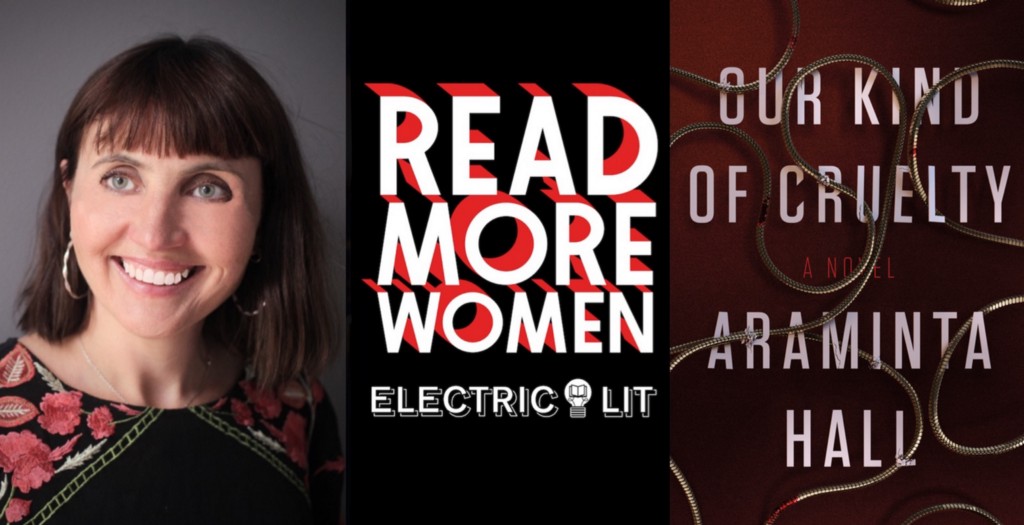
Araminta Hall’s thriller Our Kind of Cruelty gets deeply into the mind of a man: a stalker convinced that the object of his obsession is sending coded signals of romantic interest, even at her own wedding. But listen, sometimes you want to get deeply outside the mind of a man for a while. Here are the books—some thrillers, some not—that Hall recommends when you want to read something by a woman.

Read More Women is Electric Literature’s series, presented in collaboration with MCD Books, in which we feature prominent authors, of any gender, recommending their favorite books by women and non-binary writers. Twice a month, you’ll hear about the five non-male authors who most delight your favorite writers.

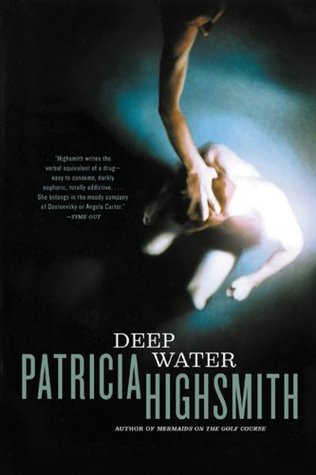
Deep Water by Patricia Highsmith

The oft-dubbed queen of crime wrote a phenomenal number of tense, sharp psychological thrillers, many of which are some of the most well-known crime novels in literature, such as Strangers on a Train and The Talented Mr. Ripley. All her novels are marvels because character always take center stage, but my favorite is the portrayal of a poisonous, disintegrating marriage in Deep Water. Think Gone Girl set in the ‘50s, complete with a bored, sexually promiscuous housewife and a controlling, troubled husband. Also, it has one of my favorite first paragraphs ever, as it basically lays out the whole story without telling you anything.

The Sea, The Sea by Iris Murdoch

I’m a sucker for a deluded male character and they don’t come much more deluded, but also oddly sympathetic, than Charles Arrowby. When he leaves his theatrical life in London for a remote cottage by the sea he reconnects with his teenage girlfriend and, even though she is married, becomes convinced they are destined to be together. A cast of motley characters descend on him as his delusions spiral and the sea beats away at him. A wildly funny book, it will make you laugh, cry, and think deeply. One of the best first-person character studies I have ever read.

A Vindication of the Rights of Woman by Mary Wollstonecraft

When this book was published in 1792 the word “feminist” didn’t exist, but I think it’s fair to call it the first real feminist text. It is a barn-stormer of a book, shouting loudly for the rights of women to be educated so they can take a proper part in daily life. As Wollstonecraft says, “I have repeatedly asserted, and produced what appeared to me irrefragable arguments drawn from matters of fact, to prove my assertion, that women cannot, by force, be confined to domestic concerns.” Although the laws she was railing against have changed, read this and weep at how little attitudes have. Then get angry and go on a march.

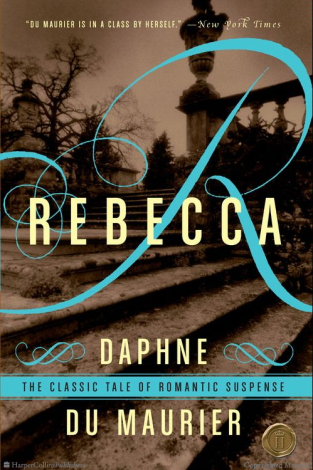
Rebecca by Daphne du Maurier

If you haven’t read this then seriously stop what you’re doing right now and start. To my mind the greatest psychological thriller ever told, it also has a strong feminist message at its heart, revealing the very limited options open to women and how trapped we are by how society chooses to see us. Don’t let anyone tell you it’s a love story; Max de Winter is one of the vilest anti-heroes you will ever read. Also, pay close attention to the first 20 pages, when he is enthralled to our unnamed narrator. A real master class in building and maintaining suspense.

Unless by Carol Shields

Despite her winning a Pulitzer, I have a feeling that Shields isn’t as widely read as she should be because she wrote about so-called ordinary women. We still live in a world in which domesticity is looked down upon, but the women in Shield’s novels rise above these preconceptions to find profound meaning in the everyday. In Unless, a woman’s teenage daughter suddenly decides to live on the streets holding a placard that says one word: “Goodness.” It is one of the best and most affecting pieces of writing on being a wife and mother I have read and is, ultimately, a beautifully uplifting book.

‘The Bus on Thursday’ is a Funny Horror Novel About Cancer

I n the first line of The Bus on Thursday — the latest novel from Australian writer Shirley Barrett — the narrator, Eleanor, discovers a lump in her armpit. Her horror comes true: it’s cancer.

Purchase the book

We follow Eleanor as she undergoes surgery, struggles socially and romantically, and, needing a job, moves to the remote town of Talbingo, where she’s hired as an emergency replacement for a beloved schoolteacher who’s mysteriously disappeared. Along the way, she meets a lively cast of humorous and disturbing locals: a friar who declares her to be full of demons, the missing schoolteacher’s suspicious best friend, and a strangely attractive man of seemingly otherworldly virility. The deeper into the story you go, the darker (and funnier) things get.

The novel — which takes the form of Eleanor’s voicey, unpublished blog — is a romp through literary horror, packed with the stunning images that one might expect from a writer who is also a director. But it also gives life to the crushing reality of a cancer patient — the anger, the grief, the crazy-making self-blame. The Bus on Thursday elegantly rides along the edges of these issues.

Shirley Barrett and I corresponded over email about the demonization of cancer, the challenges faced by cancer patients, and the differences between novel-writing and screenwriting.

Joseph Scapellato: The Bus on Thursday is a darkly comedic combination of a cancer patient/survivor story, a small-town transplant drama, a teetering-into-madness tale, and a genre-bending ride right into the heart of horror. And most impressively, it’s often all of these at once! Where this book began for you?

Shirley Barrett: I was interested in the idea that there is a bit of blame attached to getting cancer: you drank too much, you ate processed meats, you wore underwire bras, therefore you brought this upon yourself with your terrible lifestyle choices. And I particularly liked the idea — popular in some evangelical religions -that cancer is a demonic infestation, if you will, and that perhaps you have unwittingly invited this demon in.

The book began as a screenplay, a screenplay which obviously never got made. I’m a filmmaker and I wanted to make a horror film and I had just the location to set it in: Talbingo! Talbingo is a very pretty little town set in the foothills of the Snowy Mountains here in New South Wales, [Australia], and I happen to know it well as my husband’s grandmother lived there. Every Easter, there would be a regular family gathering, so over the years I’ve spent a bit of time there. I’ve always found location to be very important as a stepping-off point in my writing, and there was something about the moody isolation of this place, even amidst its beauty, that seemed to lend itself to horror.

The novel came from the idea that there is a bit of blame attached to getting cancer: you drank too much, you ate processed meats, you wore underwire bras, therefore you brought this upon yourself with your terrible lifestyle choices.

JS: There are so many ways in which this novel is funny. In my reading of it, the humor pours out of the narrator, Eleanor (her voice, her attitude, her ability to consistently make a bad situation worse), her surprising and mysterious encounters with the sharply-drawn supporting characters, and the novel’s playful engagement with horror.

What is your approach to writing comedy? Where do you try to find it, and how do you work to follow it?

SB: The other big part of the book is my friend Kate. She got cancer very young, at age 29, and had a mastectomy which she freely admits totally stuffed up her life. But she was always very funny, in a dark and angry and uproarious kind of way, whenever she’d talk about it, and at one point I taped her talking about it because I was going to write something else on the subject. And so basically, I appropriated my friend’s voice: in fact, the first paragraph of the book is Kate verbatim. And some of the awful things, like the horrible date, happened to her in slightly different form. She is very decent about the whole thing and is keen for Margot Robbie to play her if it ever gets made into a movie.

But in fairness to Kate, who is in reality a lovely and kind person, Eleanor is also very much me at my worst; lazy, impulsive, quick to judge. As for my approach to writing comedy, everything I write turns out more or less comic — I seem incapable of writing anything else. And I realized that this was at odds with it being truly effective as a horror — the comedy cancels out the horror, in my opinion — so for a while I struggled with that but in the end, I threw up my hands and thought, what will be will be.

JS: One of the things that I admire the most about this novel is how it so honestly enacts certain experiences common to cancer patients/survivors. Early in the novel, Eleanor straightforwardly explains a frustrating expectation:

This is the whole problem with having cancer: everyone expects you to have mysteriously acquired some kind of wisdom out of the experience, and if you haven’t, then it’s a personal failing. I mean, people have actually said to me, “Wow, I guess having cancer so young must have given you a whole new perspective on life?” And I always nod and try to look inscrutable, but in fact, if I am completely honest with myself, I have the same old skewed perspective I’ve always had, except now I get to feel guilty about it.

If that weren’t hard enough to deal with, as the novel goes on, multiple characters covertly or overtly suggest that Eleanor’s cancer is her fault — that she has invited it into her body. This idea eventually takes root in her, and resonates with the novel’s other themes in sinister and surprising ways.

What challenges did you face when writing about a cancer patient? What responsibilities (and/or pressures, and/or fears) did you feel and how did you grapple with them?

SB: I did feel a certain anxiety writing about having cancer when I had never been through such a thing, but I was able to cast this anxiety aside when I went and got cancer myself. In a bad case of the universe having a bit of a laugh at my expense, I was diagnosed with metastatic breast cancer when I was just embarking upon the edit. But in lots of ways, this was useful in that I was able to throw in all my own experiences; the horror of those sinister nuclear scanning machines, the fear of where the cancer will travel to next. I think I would have been really annoyed about it if the book was already published and sitting on a shelf, but I still had time to use what was happening to me creatively. It was quite therapeutic really! In fact, the paragraph you mentioned above I remember writing while I was having chemo.

I did feel a certain anxiety writing about having cancer when I had never been through such a thing, but I was able to cast this anxiety aside when I went and got cancer myself.

JS: I am so sorry to hear this! Are you okay?

SB: Yes, I’m very well, thank you! The drugs are so good these days. If you’re going to get cancer, breast cancer’s one of the better ones — highly researched, well-funded, all the drugs are on the Pharmaceutical Benefits Scheme. Also, I’m fortunate to live in Australia and we have fantastic health care here.

Shirley Barrett Recommends Five Horrifying Books That Aren’t By Men

JS: The Bus on Thursday takes the form of Eleanor’s private blog entries. For some readers, this will bring to mind famous epistolary horror novels — Frankenstein, Dracula. Can you talk about your decision to use this particular first-person form?

SB: I was aware of cancer blogs and thought it would be an effective device for Eleanor to recount this story as it unfolds. In fact, it’s really just a journal because she never puts it up on the internet, and of course later in the novel you think, where could she possibly be finding the time to write all this down? But I try not to worry too much about such things! I like writing in the first person, and I have written enough diaries over the years to know how you tend to express yourself — a free use of caps and exclamation marks, a tendency not to care too much about grammar.

JS: What’s been the book’s reception in Talbingo?

SB: To be honest, I don’t know. The book hasn’t been out long, and I haven’t heard. We no longer have any relatives in the area, and I haven’t been there in a while. I have to say I’m a little nervous about it. It’s such a beautiful spot, I can imagine they’d be aghast at having such a mad story set there.

JS: You’re a filmmaker, too — you’ve worked as a screenwriter and a director. How does your professional experience in film transfer helpfully to novel-writing?

SB: Both my novels began as screenplays, and I think it’s a very laborious but quite effective way of going about it! I guess writing a screenplay is like writing a very elaborate outline, so when you sit down to write the novel, you are free to play — you’ve done a lot of the structural work already, you’ve thought the whole thing through visually. And also, you’ve lived with these characters for a long time. So now you get to unleash! To be honest, I find writing a novel utterly liberating after the constraints of screen-writing. But funnily enough, now I am going through the weird process of transposing it back into screenplay form. I’ve sold the television rights, and I’m writing the pilot. I thought it would be a breeze, but it’s not at all. Having gone from screenplay to book, I have traveled much more into Eleanor’s head — now, going back to screenplay, how do you convey all that without resorting to voiceover?

JS: When you first went from screenplay to novel, what were the most surprising changes that occurred? (And now that you’re going back to a screenplay, for the TV pilot — congrats! — what’s changing that’s surprising you?)

SB: In the original screenplay, I breezed through the cancer stuff very quickly and got to Talbingo quick smart. But when I started writing the novel, I realized there was a lot of rich material to be mined in that whole cancer section and I think it goes a long way in informing why Eleanor responds the way she does to everything that happens in Talbingo. Also, I think it helps her earn some sympathy (my mother would not agree. She has no patience for Eleanor’s whining.) And as I mentioned earlier, transposing the novel back to screenplay form, I am really finding her voice much more challenging to nail. I don’t want her to end up as the snarky smart-mouthed female you see so often on TV. She is snarky and smart-mouthed, of course, but somehow in screenplay form, once you type those letters “V/O”, it just seems…..less than..

JS: What are some favorite novels, screenplays, or films that have meant a great deal to you as a writer?

SB: I would say straight off the bat Robert Aickman, a British fantastic fiction writer of the ‘60’s and ‘70’s. His writing is a huge inspiration to me. I discovered his short story “The Hospice” in an anthology, and I think it’s just one of the most extraordinary pieces I’ve ever read. I re-read it regularly, always in the hope that I’m going to finally figure it out — its meaning feels just tantalizingly out of reach! He seems to successfully manage to juggle humor — a very low-key, dry sort of humor — with a powerful creepiness. If you haven’t already read “The Hospice,” I really recommend it as a Robert Aickman starter. And since we’re talking horror, then I would happily volunteer The Shining and Carrie as my two favorites movies in that genre. I saw Carrie at a preview screening when it first came out and absolutely nobody saw that tag ending coming. My sister slid off her seat onto the floor. It’s an amazing piece of film-making, and still stands up brilliantly today. That Brian de Palma really knew what he was doing.

JS: What have you been reading lately that’s stunned you?

SB: Fever Dream by the Argentinian writer Samantha Schweblin. It has this breathless, urgent pace to it and is absolutely unlike anything I’ve ever read before. It grips you with anxiety and dread from the get-go and doesn’t let up for a moment. Really original and yes, stunning.

JS: Other than the pilot for The Bus on Thursday, what are you working on next?

SB: I’ve just finished a non-fiction piece called Dr. Marshall about a Sydney doctor of the 1900s who had a very lucrative sideline in abortions. I first discovered him in the Morgue Register of the day, because he just kept killing all these young women. He was never convicted, although he faced plenty of charges, and even though he was always in the newspapers appearing at inquests every few months, women continued to go to him.

It’s my first attempt at non-fiction, and I’m hoping I’ll get better at it– one day I hope to write a piece about this conman/fraudster/fabulist of the same period whose name shall remain a secret because I don’t want anyone else to write about him before I do!

Why the New Movies About Queer Friendship Are So Revolutionary

T o judge by what passes for mainstream LGBTQ fare on the big screen, gay stories can be reduced to ones and twos. There are narratives of and for one: those coming out tales that stress a loneliness that needs to be overcome. And then there are narratives all about how those ones become twos: those romantic flicks that stress instead the importance of coupling. Hollywood, like American society at large, is most comfortable with these kinds of stories, because they are anchored by the easiest ways of thinking about gay people: as lone individuals (the friend at work, the cousin who lives in LA, that famous celebrity who came out) or as coupled pairs (that lovely pair who joined the PTA last month, your uncle and his “friend,” that famous now-out celebrity who immediately got married). The former upholds the idea that gay men and women are some sort of unicorn beings, special and worth admiring precisely because of the rarity with which you encounter them. The latter shapes them instead into known quantities, in ways both civil and cultural, that make them legible. But in this focus on ones and twos leaves out — and here my math metaphor is sure to break down — studies of larger groupings, of an LGBT community. What these cinema portraits are missing the most right now are stories of friendship.

Whither are our Bridesmaids and our Girls Trips? Our I Love You Mans and our Trainspottings? Or, more to the point, where are the 21st century responses to films like To Wong Foo, Thanks for Everything, Julie Newmar and the The Broken Hearts Club? To be fair, friendship remains an all-around under-explored terrain on the big screen. Those connections, because of their tenuousness and ephemerality, tend to be undervalued. Which brings us back to the ones and twos: we have plenty of stories about the power of the individual and, in turn, about the power of love. They’re the building blocks of two of the most well-trodden genres out there: the bildungsroman and the romance. But the absence is more glaaring when it comes to queer narratives. To understand why, we have to unpack the way those narrative templates reflect and construct society as we know it today: a society that relies on familial ties and capitalist ideals, the two often walking hand in hand down an aisle and on to a suburban home with a picket fence.

If the stories we tell help model the kind of people we can aspire to become, the messages being sent to queer kids right now leave them at the mercy of self-contained coming-out stories or romances that focus on pair-bonding above all else. That is to say, even as movies like Moonlight and Call Me By Your Name and Carol and Love, Simon (to name but a few of the more talked-about LGBTQ films of the last couple of years) preach necessary lessons about love of self and love of the other, I’ve begun to wonder where are all the films that call forth a greater sense of friendship, of communion. I could turn to TV, of course, where landmark shows like The L Word, Noah’s Arc, Queer as Folk, Looking and Pose have painted fascinating portraits of modern-day queer friendships. And I could likely seek out novels like Dancer from the Dance, Stone Butch Blues, A Little Life, and most recently, The Great Believers, all fascinating looks at clusters of queer friends. But if I’m hung up on films it is because they still dominate so much of our collective consciousness. I want more big-screen images of queer people hanging out, not (merely) longing for one another but attending activists meetings, grabbing coffee, having a drink, partying, or any number of other mundane things we do when we get together.

Thankfully, 2018 may have given us glimpses of what that can look like. In what’s likely to be another watershed moment for LGBTQ representation, films like The Miseducation of Cameron Post, Boy Erased and especially Can You Ever Forgive Me? — all, perhaps unsurprisingly, based on novels and memoirs — managed to put the importance of queer friendships front and center. That may sound a bit hard to believe in the case of the first two: they are based on books that deal in ways both wry and blunt with gay conversion therapy, not the kind of setting one would dream of finding portrayals of queer friendships. But in their own ways they at least gesture towards the value of having people in your life who understand what you’re going through.

Both the eponymous protagonist of The Miseducation of Cameron Post and Garrard Conley’s autobiographical avatar in Boy Erased arrive at their respective “ex-gay” therapy camps because of a flirtatious encounter with a friend that went too far. Their stories feel familiar to many of us who grew up questioning our own sexuality, and who feared and were drawn to the possibility that a close friendship would turn into something else. If films were to offer us more portrayals of queer friendships, more images of non-romantic relationships between gay men and women, we could more easily push back against the kind of conflation that runs through much of the rhetoric in conversion therapy, which sees homosexuality as a predatory practice and gay friends as lurid and alluring sexual traps.

As Conley writes in Boy Erased, one of the pamphlets he first encountered when he attended the Love in Action camp included a testimonial from a boy who’d gone through the program: “I began to recover from not having a male friend unless it involved sex,” it reads. “I started learning who I really was, instead of the false personality I created to make myself acceptable.” This is the kind of fallacy that’s easy to absorb when all the kinds of stories about gay life center on ones and twos: on what you think when you’re alone and what you hope to do when you find someone like you. The idea that every same-sex friendly encounter is a potential slippery slope into sex is perpetuated if we don’t have room (or readily-available images!) to imagine what other kinds of connections can be made within the gay community. This is precisely what Cameron (played in the film by Chloe Grace Moretz) learns when her friend Coley, with whom she’d developed a sexual relationship (the incident which sent her to the “God’s Promise” camp in the first place) sends her a letter re-framing her yearslong friendship: “Dear Cameron,” the letter reads, “I am writing this letter because Pastor Crawford and my mother think it is a good thing for me to do. I am currently working through what happened between us, as I know you are too, but I am very angry at you for taking advantage of our friendship in the ways you did.”

It is Cameron’s friendships while at God’s Promise, with fellow “sinners” Jane (Sasha Lane) and Adam (Forrest Goodluck), that drive the narrative in Desiree Akhavan’s film. It is the image of them setting out on their own (a final image spoiled by the film’s poster) that the director leaves us with, a reminder that such support networks are necessary to survive.

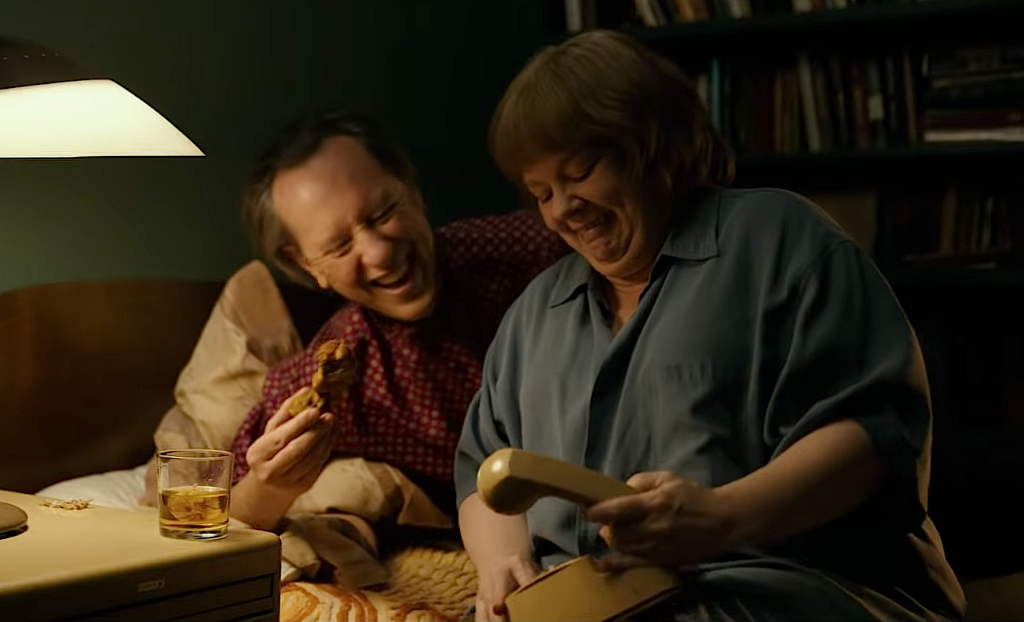
That’s precisely what you see in Marielle Heller’s booze-soaked adaptation of Lee Israel’s memoir Can You Ever Forgive Me? Ostensibly a film about the literary scams Israel (Melissa McCarthy) ran with the eventual help of her friend, the homeless dandy-esque Jack Hock (Richard E. Grant), Heller’s is a portrait of two lonely people leaning on one another when everything around them feels like a rebuke to everything they are. Israel’s loneliness — she lives alone with her cat and can’t get her agent to answer her calls, let alone sell that Fanny Bryce biography she’s been working on for years — is neither a symptom nor a consequence of her attraction to women, but it feels tied to it somehow. Similarly, Hock’s struggles — he’s a jack-of-all-trades who makes a buck however he can, including selling drugs and eventually Lee’s letters, and seemingly prefers having no intimate ties with those he sleeps with — are not presented as mere consequences of his being an out gay man, but neither are they altogether divorced from that fact.

The scenes between the two of them at Julius, the famed (and still standing!) gay bar in the West Village, are some of the more memorable in the film. That’s because they feel particularly radical. The two bicker. They share drinks. They hack schemes. They commiserate about lovers. It’s like something out of a gay Cheers, refreshing precisely because of its mundanity. Even in their final moments together, when they return to that old haunt and reconnect after arrests, warrants, and a health diagnosis have torn them apart, their melancholy repartee made me wish I saw this kind of fraught but nurturing relationship within the LGBTQ community more often. Here is, at last, a story I couldn’t neatly break down into a self-actualizing story about a lesbian or into an uplifting narrative about same-sex attraction.

We need more stories about queer friendship. Stories like Israel’s which put the importance of what it means to rely on and support someone who may have, just like you, lost contact with family and partners because of who you are. We need these stories not just because such friendships are necessary, but because sometimes we only know a story is possible if we see it reflected in the culture. “And was friendship that different in the end from love?” writes one of the gay narrators of Rebecca Makkai’s The Great Believers, one of the year’s most sprawling portraits of what queer friendship looks like. “You took the possibility of sex out of it, and it was all about the moment anyway. Being here, right now, in someone’s life. Making room for someone in yours.”

To the Island, Once More

Island

by Mark Jacquemain

For a long time they barely saw the man who bought the island next door. He visited haphazardly, one or two weekends a month, and did repairs on the sagging sun porch on the far side of his cottage. The echo of hammering across the water was the only sign he was there. In August, he turned his attention to the dock and Joe and his mother could watch him work from the window above the kitchen sink. He wore just a pair of torn jeans — walked right into the lake in them — and his wide pale back reddened beneath the sun. Joe’s mother stood at the window long after she’d stacked the dishes. She mixed a can of pink lemonade, set the pitcher and two glasses on a tray, and — instead of bringing a glass to Joe — said, “I’m going to say hi.” Joe watched her row over in the tin boat; when he looked up from picking dried worm off the fish hook he’d found, his mother and the man were drinking lemonade together on the rock.

Later in the month, the man returned, in a new yellow cruiser. He waded across the shallow marshy channel that separated the islands and presented to Joe and his mother a bowl of just-picked blueberries. Up close, he smelled like Mr. Garfield, the vice-principal at Joe’s school, who smoked when on yard duty. He lowered the bowl to Joe and winked, said, “Poison,” and Joe, knowing better, mashed a handful into his mouth. Joe’s mother invited the man to dinner that evening and for the next several hours she was coiled in anticipation as if he were some big-shot celebrity. She dust-busted the couch, chopped a salad, shook a bag of cheezies into a bowl. She had a violent go at Joe’s hair, a towel-dried tangle this deep into the summer, and got him to restock the outhouse with toilet-paper rolls. He dumped them in a messy pile he knew would aggravate her. One of the rolls separated from its brothers and rolled into the hole, dropping onto the glistening mound of sludge. He peeked, staggered back coughing.

His mother had combed out her own hair and put on her bright orange sundress, but when the man arrived she was nearly as sombre as the time she made dinner for Henry, the Cree man who ran the taxi-boat service. She apologized about not having wine and seemed not to hear his offer to show her his new boat. Joe receded into that comfy zone where he ranked superpowers. (Tornado. Ice fingers. Jedi.) Until, to get them through the dinner silence, his mother shared the humiliating tale of the lemonade stand Joe had set up on the dock when he was little — “It was very sweet; my mom and I were his only customers” — as if lemonade was the only common subject between them.

The man — Stuart he’d said his name was — waded back to his place and returned with beer and a pack of du Maurier cigarettes and she cheered up enough to let him know she thought it a disgrace that he flew the emblem of the Buffalo Sabres from his flagpole, and not the maple leaf. “It’s so ugly,” she said, and he smirked and explained that he was the team’s equipment manager. “Have to stay loyal. They pay the bills.”

Joe didn’t like the way Stuart looked at his mother, but this new information raised the man somewhat in Joe’s eyes. He asked if Stuart got to travel with the club, if he’d been to Montreal. Stuart said sure.

“New York?”

“Uh-huh. I was at Madison Square Garden one time when the circus was in town. That place is immense.” He said he wandered through with some of the guys and got lost. “We might have had a few ‘pops,’” he winked. “I end up in this big dark warehouse-sort-of-room and I hear this breathing like there’s a monster in there with me. Turns out it’s one of the elephants from the show! Scared the living piss outta me.”

Joe laughed. And, though he could see his mother thought the story embellishment or showing off, she laughed, too, tolerantly. Stuart said, “Shit, Ellen, you have a nice smile.”

She looked not embarrassed but disappointed by his forwardness, and Stuart suddenly seemed much younger than her. He made a fumbling attempt to push past this — apologized for swearing in front of Joe. “What about your flag? RCAF? Your father fly in the war?”

“Yes.”

“Yeah? Mine was army — Italy. Did yours make it?”

She nodded. “But he came home with TB and never got better. He died up here, actually. My grandfather, too. Heart attack. Grandpa built this place in 1914 — that’s how long we’ve been here. They found him in his fishing boat in Lost Bay.”

“No shit. Lost Bay. You can’t make that up, can you?”

He apologized again for swearing but she didn’t notice. She’d had enough to drink — Joe could see this too — that she wanted to tell more. “I also had an uncle go through the ice near Minnicog. My mother loves to say that the men are cursed in this family, at least up here. I tell Joe, if he’s not very careful all the time, we’ll have to sell. He doesn’t like me saying that.”

It was true, but Joe was used to it. He was used to her talking of the men in the family and making no mention of his father.

“But so far he’s been invincible,” she said.

It was humid, the bay dead still. She suggested they swim and in the water she seemed a dozen years younger herself. Joe and Stuart dove for beer bottles while she floated nearby with that lazy breaststroke of hers. They watched Joe cannonball off the little rock face known as the Mountain — a name his mother and grandmother had used and he’d adopted. They awarded him scores out of ten like Olympic divers. Then they forgot about him and he imagined he was leaping from the cockpit of a burning-up snowspeeder.

When he woke the next morning, his mother wasn’t in the cottage or anywhere on the island. She rowed the tin boat back before noon and made pancakes.

Joe didn’t think of the man again until the following summer. A week into their first stay his boat appeared on the horizon, though Joe heard it before he saw it. He charged down the trail — pausing to crush in his palms the crowns of half a dozen goldenrod, smearing the pollen on a lawn chair — and clambered up the Mountain to look. The bay’s long fingers reached between the islands. There was no sign of a boat. Then, a speck of fluff. A toy with little figures on it. It veered between the shoals, and abruptly slowed, its bow rearing up like a bathing moose. A thin woman in the back lost her balance and wildly threw a rope toward the dock, which splashed in the lake and began to sink.

Joe watched them disembark. Stuart, in a plaid shirt, half-buttoned, flung two suitcases on the dock and helped the woman with the wobbly first step. Her hair was choppily cropped, like David Bowie’s. There was someone else with them — a girl, spindly inside the baggie Disneyland t-shirt she wore like a dress. She refused Stuart’s offered hand and climbed out of the boat herself.

They vanished inside the cottage and Joe sat, scraped the lichen off the rock with a stick. Flakey lime-green. Tough ochre stuff he couldn’t budge. After a while, the woman and the girl came out and wandered a little. The woman went back inside; the girl descended the humpback toward his island. He wandered that way, in roundabout fashion, behind the outhouse and over Egg Rock. She paused when she saw him and then continued to the water’s edge. Her utter lack of expression, her shielding blonde bob and military erectness, evoked the hard angry plastic of his G.I. Joes. “How do you get across?” she called to him. “Can you walk?”

“Yeah, it’s not that deep.”

She seemed uncertain so he took a few steps into the water toward her. Horsetails sagged. Bullfrogs burped at each other like old men. She raised her eyebrows as if annoyed, and tiptoed in. “Ugh, it’s slimy.” She stumbled and lifted her t-shirt, revealing purple bikini bottoms.

She made it to the bridge. The derelict wooden half-bridge built out from his island ten feet into the shallow marsh before ending abruptly, at the halfway point, overtop a carpet of lily pads. A pail stood at the close end and a net hung from a pole wedged in the planking. She climbed ashore — legs silvered and dripping — and peered in the pail. “There’s baby fish in here.”

“I catch them,” he indicated the net, “with that.”

She stepped carefully onto the bridge. “Why’s it only go halfway?”

He shrugged. “The ice took it out a couple years ago. We used to know the people over there real well, but there’s been a bunch of owners since then.”

He squatted where he was on the rock. She sat, feet reflected in the glassy water, and took hold of the planks beneath her, shook the bridge so it wobbled.

“Don’t do that, you’ll scare them off.” He walked out next to her so the bridge slouched to one side and pointed out the flashing swarm that hovered over the net. “Watch out,” he said, and tenderly gripped the pole, yanked the net up.

Dozens of minnows, shards of sunlight, flip-flapping frantically.

“See?” He carried the net to a flattish shelf of rock and set it down. He gathered dripping handfuls of the tiny fish and dropped them in the pail.

“Do you keep them?”

“Keep them? No, I use them as bait.”

A few of the minnows had wriggled free of the net. He brushed them toward the pond with his fingers. One, powdered with dirt, barely moving, he smushed into the rock with the knuckle of his thumb. She looked on with a displeased face.

“It’s hard to get them all,” he said.

Later that afternoon, Joe and his mother rowed over in the tin boat to say a proper hello. His mother had been abuzz since their arrival, curious about Stuart’s guests. She wondered if the woman was “a new one or an old one,” adding that it was nice that he had someone. “I think he gets lonely.” She took Joe’s hand on the path. “At least it looks like you’ll have someone to play with. Other than your mother.”

Halfway over they realized the yellow boat wasn’t there; a breeze was up and they mustn’t have heard it chug off. But they beached near the dock and climbed the humpback to the cottage. It was the first time Joe had been here in two summers, since Stuart bought the place, but it was familiar. The big deformed pine and scatter of juniper and blackened rock where bonfires were lit. The cluster of boulders like sentries along the path to the outhouse.

The cottage itself was dim and musty and not at all what he remembered. He loitered by the screen door while his mother and the thin woman talked. On hearing that Stuart had gone back to the marina to get firewood, Joe’s mother relaxed and made herself at home, helped open windows and sort the dishes. Joe snuck glances at the girl, who slouched in one of the kitchen chairs eying the floor with what seemed a grossed-out face.

“We have plenty of wood out back. He just likes to drive that stupid boat,” the woman said. Her name was Marlene. She was pretty up close, if not dramatically so, her hair less raggedy. (Maybe the boat trip had done that.) “If he’s not driving it, he’s polishing it. He washed it once in the driveway, already, and he was at it again today at the marina.”

“Sure,” Joe’s mother said, “men and their toys. But you must enjoy it.”

“Jesus, did you see when we got here? You notice my sea legs? I almost fell in the lake.”

Joe’s mother chuckled but leaned away. The grace of it made the other woman seem almost clownish.

“Well, we just came to say hi and invite you over for a drink.”

“Tonight?”

“Sure, whenever.” She turned to the girl and, in that matter-of-fact way she had with kids, said, “And if you like, Laura, you could row back with us and Joe could show you around.”

The girl popped up in her chair. “We’ll just walk over.”

“Hey,” Marlene said.

“What? I know the way.”

She rose, tossed a glance at her mother, banged outside. Joe and his mother exchanged a look of their own; she nodded to indicate that he should go. He joined the girl on the stoop, but she was off at once and he followed her down the path to the marsh, wildflowers swaying at the passage of her stick legs. At the water she hesitated again and he led the way across. He marched her past his cottage and up the Mountain and down the slope to the island’s eastern peninsula — a tiny horn of rock, separated now that the water was high by an ankle-deep canal — and waded out to it. Two haggard gulls flew off but a third, just a humped tuft of feathers, did not. He approached and nudged it with one of his toes. It was dead. He retrieved a wand of driftwood and used it to flip the carcass over, this way and that. It was stiff like shirts left to dry on the line, a dull black eye and yellow grin.

“Gross,” she said.

He hoisted the bird up and returned to the island proper, closing its perimeter — the territory of which he was king — and arriving at last at the nook beneath the Mountain’s overhang, and his driftwood lean-to. He knelt, threw the gull in ahead of him, beckoned her to follow. “Come on,” he said. There was really only room for one and she had to squeeze. “Careful,” he said, and made a little gesture to indicate his collection, neatly arranged in crannies: fish skulls, shells and knobs of bone, a broken lure still clinging to a bit of line, an intact crayfish, cattails puffed out to seed like marshmallow on a stick.

“What’s all this for?” she said. The question oozed disdain, but she stared at him, awaiting an answer.

He noticed in that softer light that she was pretty too. And this irritated him.

“Nothing,” he said, and, inspired, thrust the gull at her, squawking. She stared at him, thoughtfully, and crawled out.

Stuart returned and he and Marlene waded over in their bathing suits. He brought beer again; they all swam. (Joe noted the wisp of dark hair emanating from the edges of Marlene’s suit, and kept his eyes averted.) Then, while the adults drank and talked, Joe and Laura lay on their sides on the warm porch and played cards — or, rather, she submitted to the hands of Old Maid he relentlessly dealt on the damp towel between them. She was either woeful at the game or indifferent and ended up with the bitch every time.

Now and then Stuart came out to smoke. “Jesus, you’ve gotten bigger, haven’t you?” he said to Joe, the sort of adult small talk that could be humored only when no other kids were around. Joe merely nodded. Stuart went back inside and Laura mocked him, his unsteady gait and the perplexed look on his face as he paced with his cigarette when down at the shore. He was drunk, and as evening came on, a seamless grey smothering the sky, he grew drunker. They stayed for hamburgers and he took charge of the grill, managed not to burn anything. But he was surly during dinner, muttering under his breath. Ignoring this, the women talked like old friends.

“Stu thinks I should do my beautician training.”

“I just said that cause you like that stuff, Marlene,” the man sighed.

“What about you?” Marlene said, and Joe’s mother said she was between jobs, too. She told them about leaving the college where she’d taught history. “I was distracted by the divorce. I may go back or I may just use this break to finally start my PhD. If I do, though I’ll probably have to sell this place. I can’t afford it — Joe’s father gives me almost nothing. Sometimes I want to anyway. All the upkeep, you know. With the wind out here you need a new coat of paint every couple years, new shingles.”

“Well, Stu can help you with that stuff, can’t you, baby?”

“Sure,” Stuart said. He backed out his chair, stood, produced a cigarette. “Sure, you just go ahead and offer my services. Like we don’t have a shitload to do next door.”

He clattered out to the porch to smoke.

“Don’t worry about him,” Marlene said, “he’s wasted.”

The women cleared the table and Joe and Laura took their pudding cups to the couch, Laura luxuriating over the last bits she could get with her fingers. They heard Joe’s mother ask how long Marlene and Stuart had been together and Marlene reply, “Couple years. On and off.”

“Oh. I didn’t see you out here last summer.”

“No, last summer was bad.”

Laura met Joe’s gaze and stared back hard as if to say, Don’t you pity me.

From outside drifted the stink of cigarettes, the sound of waves licking the rock. She took a framed photograph from the end table, lay back on the arm of the couch, and held it to the light. “Who’s this?”

“My grandma,” he said. His grandmother as a child, in white shoes and a checkered dress holding aloft a pike nearly as long as she was. He meant to say more, recount the night his grandmother cudgeled a rattler with a rock on her way to the outhouse. But he was staring at the fine hairs on the line of her jaw.

He saw her again when the three of them returned in July for a longer stay. He schooled her on which berries were edible, which not. He took her snorkeling off Whale Island where a sailboat lay on the lake floor, pocked with mussels. They dragged an old sheet of plywood from under the cottage and erected a precarious addition to his lean-to.

When it rained they lay on the rug and listened to baseball on the radio. His mother was a fan and looked up from her Marx reader (always open in the same place) before pitches.

One hot afternoon, Stuart let Joe and Laura lie around on his boat, jump from the back platform. “Who needs a beer?” he’d joke. Or, “I’m not seeing any swabbing. Didn’t one of you promise to swab?” Laura, golden hair stuck to her shoulders, ankles hanging off the side, giggled unreservedly. Joe had to fake a laugh. He noticed for the first time how handsome Stuart was, in a wolfish way. Unshaven, shirtless, black hair slick with sweat. Though Joe hardly glanced in his direction.

Stuart returned to town and the women drank wine together and complained about him, about men in general. But he surprised them the next morning with cans of red paint and announced that he intended to put a couple coats on Joe’s cottage. He was in buoyant spirits. “Early Christmas present,” he said, winking at Joe’s mother. “We all pitch in, we could have her done in a day or two.”

Marlene didn’t help, but Joe and Laura did a little with the rollers. They made a race of it and messily stained the rock, as if with blood. He kept at it even after she left for lunch. He’d almost completed the west wall — he’d had to attach the roller to a broom handle to get the high corners — when he decided to demand lunch of his own. His mother was up on a ladder out front, grinning, and Stuart stood beneath her, a hand on her bare calf. He saw Joe and removed his hand — it left a red print. “Got you,” Stuart said, but sort of as an afterthought. Then he said it again to Joe, with a shrug, “Got her.”

Joe’s mother’s face had gone severe. Stuart sighed, brushed off his jeans, and sat on the steps. He glanced at Joe and a thought seemed to bubble up. “Hey, what do you say we take the boat out tomorrow, real early? Drop in a couple lines?”

Joe looked to his mother. She descended the ladder, saying, “We’re going in to eat, Stu.”

“So,” he said to Joe once she’d gone, “tomorrow.”

The next morning, they puttered over to Lost Bay, just the two of them. Stuart said just enough to create the mystique of great fishing prowess — said he did the bass derby and had won prizes. His tackle box unfolded in a series of miniature terraced shelves, each with four compartments, and each of these containing a marvelous lure. But they got few nibbles and within the hour he grew sleepy and gave up casting. “I’ll man the net,” he said, and lay back, cupped a beer in his lap, contented himself beguiling Joe with dirty limericks. One whose opening couplet featured a lass from Regina.

“But you’re not ready for any of that yet. You don’t have a girlfriend, right?”

“No.”

“But you like girls, don’t you. You like looking at them.” Joe felt a flush explode across his face. Stuart let out a cackle that echoed down the bay.

The see-saw call of an ovenbird in the bush paused, resumed.

“Don’t worry, they like looking at us too. Won’t admit it but they do — that’s how you know a chick’s into you.” He craned forward so the boat tipped and the beer in the neck of his bottle sloshed into the lake. “There’s other signs and whatnot you can pick up with a little practice, but this one’s sure-fire. You got to do like this,” he turned from Joe and turned back quickly, “and then you’ll catch them.”

As advice, it wasn’t much. But Joe was emboldened by it. That afternoon he dragged his inflatable rubber raft out from under the porch — it was fuzzed with a membrane of dust and old cobwebs — and washed it off, blew it up, took Laura out in it. A breeze was up, scarring the bay with white, and they rolled low in the water. The raft was too small for them and her legs got entangled in his. He was fervently disturbed by this. And by the spray of freckles on her nose, the way her hair curled about her brown neck. The purple triangle of cloth below her life jacket. She gazed solemnly over the water, so he could look.

He beached them on the south shore of a tiny island out in the bay and silently guided her over the sparkly black rock, hot underfoot, marred by globs of gull shit. His cottage wasn’t far off — just there, perched on his island’s ridge like a houseboat on a whale — but the lake was between them and the landscape here so foreign that he felt isolated and free. They sat together in a sparse stand of blueberries and he popped berry after berry in his mouth — then put his hand to his throat and tilted sideways. “Poison,” he gurgled, lying prone while she shook and kicked him, giggling as she had on Stuart’s boat.

When he opened his eyes she sat cross-legged across from him and was gazing at him serenely. “What?” he said.

“Nothing.”

He remembered what Stuart had told him and looked away, looked back quickly. She was still staring. But now her expression had changed to one of bemusement. “You have seaweed on your face,” she said. She screamed with laughter. She leapt to her feet and he ran after her.

Stuart dropped Laura and her mother at the marina the following morning, the yellow cruiser bearing the three of them off, without goodbyes. Later that same week, Joe and his mother took a taxi boat to town and got groceries and wine, a new bathing suit for her, Band-Aids for his scuffed ankles. They were late getting back and Henry, who ran the taxi boat, scolded them for cutting it so close. The boathouses dark out in the channel, the pines like hanged men pointing them home.

They had a feast of hot dogs, potato chips, and ginger ale — two cans each.

In the ensuing days, he rowed his raft out into the bay, pretending himself castaway, all alone, days at sea. But as the week wore on, he spent more time floating near the dock, dropping a mask over the raft’s bow and peering down at the lake bottom, glancing every now and then for the sign of a boat. He caught his mother doing it too, just standing at the window.

One morning, beneath a drizzly sky, they listened to the royal wedding on the radio, his mother frowning as Lady Di said her vows. “She’s too young,” she muttered, and peered at him quizzically. He thought about this — the look she gave him — as he struggled to sleep that night under the rain’s erratic patter. Then forgot it. Then a sound at the window: a soft tapping. He got up on his knees and shifted the curtains and Laura was there. Her face pebbled by raindrop shadows. She spoke but her voice was lost. He tried to open the window but couldn’t. Her hair was a dark cap, her lashes stuck together. She made an oval with her lips and pressed against the glass, pushed through, and her lips met his and their tongues touched. He woke to voices. Murmuring from the other room, the shifting of bodies. His mother said distinctly, “When do you have to get them?”

“Friday. They’ve gone to see Marlene’s parents in Windsor.”

The gusting rain blotted them out. Then his voice: “Not sure why you can’t admit it.”

“Admit what, Stu?”

“That you had fun.”

“Stuart.”

A taut silence fell between the gusts. His mother sighed, a noise of censure. She said, “You should go,” and Stuart muttered something, and the screen door clattered.

Stuart picked up Laura and her mother two days later. Laura had a new fishing rod and all week she and Joe caught sunfish off the bridge. They made a game of dropping toilet paper rolls into the outhouse (“stink shed,” she called it) until one wedged atop the shit-pile like an Oreo cookie in a scoop of ice cream. They hunkered down in the lean-to and did pencil sketches of his collection. Hers, accomplished, almost lifelike. His, alien beasts made of crayfish pincers and trout jaws.

One evening, they were listening to Monday Mysteries on the radio when Laura mentioned that Stuart and Marlene were fighting. The dented Chinese checkers board was between them on the couch and they played and whispered during lulls in the program. “She’s been crying a lot.” Then the radio began to muffle with static. They noticed the wind, the anxious lake. A bank of clouds had rolled in and the sky was a curdling green. Laura thought she should get home but Joe’s mother said she should wait it out. “We’re safe in here,” she said, and told the story of the three men crossing from Penetang in a storm. They ran up on a shoal, got stuck, and tried to pass the night, waves shattering against the side of the boat. “In the end they freed themselves and made it here. We’d all gone to bed. Joe, my mother, and I. Then we heard this knocking and I thought, ‘What on earth is that?’ I went to see and there were these three guys shivering on the porch.”

She laughed. She raised her head and listened. “Did you hear that?”

The windows moaned and hissed. Wails ran through the rafters. Then, to their great alarm, there was a knock at the door.

It was Stuart. He staggered inside, drenched. “I came to get her,” he announced, without looking at anyone in particular. “I’ve been sent. So,” he nodded at Laura, “let’s go.”

“God, that’s funny,” Joe’s mother said. “What is?”

“Well, we were just talking about how we never get knocks at the door and then here you come knocking.”

He glared at her. “Ha, ha.”

He was drunk. Joe’s mother made a comment under her breath and he stiffened. “What did you say?”

She sucked in a breath, about to answer. But something caught her attention. She cocked an ear and they all listened together. Beneath the percussion of rain came a distinct skittering across the roof. “There is it again,” she said.

“What?” he said, but she silenced him. She took a step toward the window, and gasped. There was a sharp thunderous whoomp and the radio and several books burst off the shelf. She fell two steps backward and she and Stuart swore together. Laura jumped, tipping the Chinese checkers board, scattering marbles everywhere.

“It’s okay, it’s fine,” Joe’s mother assured them. She stepped outside to investigate, letting the storm in as she went. Gusts riffled the pages of the dislodged books, rainwater puddled on the floor. Stuart cursed again and followed her out. Joe and Laura approached the window. She pointed, and Joe saw the big plywood sheet from the lean-to drenched on the porch. The wind had picked it up and flung it against the cottage.

Joe’s mother seemed not to have noticed it. She was shouting at Stuart, voice lost in the storm, hair ripped in all directions. Beyond them, as Joe and Laura watched, the rest of the lean-to was blown piece by piece from its perch: like a special effect in a B-movie, shadows hurtling in slow-motion out of the dark. Exposed, the dead gull fluttered on the rock. “Look,” said Laura, as it was snagged by a gust and sent skittering, a ball of feathers, toward the lake. They returned to the couch, but now she sat so close against him he could smell the sun on her skin.

The rain lasted two days. It fell like machine-gun fire across the bay. He played hands of Spite and Malice with his mother, disinterested. He lay in bed and carved his name in the wall with one of his father’s knives. His mother came in and spoke to him in a voice harsh with love and seriousness. “I don’t want you going over there for a little while. Not that you’d want to, in this.” She glanced out the window. “Promise me, okay?”

He nodded. She smoothed his hair against his head, and he let her. “I don’t know. Maybe it’s time for a change. A big change.”

He sat up on the pillow. “What does that mean?”

“I don’t know. I don’t know what it means. Maybe nothing. Maybe we just need a good night’s sleep and things will look different tomorrow.”

But the next day things looked the same. And when Laura came to the door he found himself saying stuff he didn’t want to say. She asked if he wanted to come out, eyes wide, as if suspicious of what his answer would be. “I can’t,” he said.

“Why?”

“I just can’t. It’s raining too hard.”

“Not really. Not hardly at all.”

“Well, I just don’t want to. Okay?”

With a sick gut he watched through the window as she dragged home in the drizzle. All afternoon, he imagined her over there, standing back from the window, nervous of it waking again into a storm.

The next morning he woke to a breathy crash of waves, sunlight on the quilt. He got himself a bowl of cereal and ate it on the porch. The sky was clear, the wind was up and rattled his pajama bottoms. Power lines twanged and gulls flew backward. He returned inside to change into his swim trunks and when he came out again he saw her descending the humpback, her loping steps. She reached the marsh and paused on the other side. He met her there.

“Hey,” he said, but she just nodded. The wind danced a loose strand of hair across her lips. He thought he should say something more but before he could get his voice she sighed.

“We’re leaving. God, I don’t even understand what’s happening. It’s like they hate each other. He’s making us take the taxi boat. I don’t know if we’ll be coming back.”

He squatted and picked at the lichen. He wanted to assure her that she was, that it was all going to be okay, and looked up with the words on his tongue. But she was staring at him with such ferocity that his breathing paused. For a moment all they did was look.

Then her mother came out on the porch and called for her. “I should go,” she said.

The boat arrived soon after. He stood at the kitchen window and saw Henry receive their suitcases and help them down from the dock. His mother came to his side. “What’s going on?” They watched together as Henry butted his cigarette on the dash and chugged off backward. Laura looked toward the window, turned away.

He wasn’t sure who to hate. His mother was the only one there. “Joe,” she said, but he pushed past her, banged outside. He dragged his raft from under the porch, carried it to the lake, shoved off into the frothy green surf. He dropped his head and leaned into the rowing, the oars striking little popcorn sprays of water. He was way out, bouncing into the troughs between the waves, when he heard the shouting. His mother, down at the shore, a miniature, wind-tousled version of her. The lake struck fierce and foamy before her. She waved, cried out again, her voice a distant animal peal. He dropped his head. His shipmates had all drowned; only he’d survived. A month of drifting. When he looked up, she was still there, shouting, but now there was no sound. Only then did he row back to her.

What Does Jim Morrison’s Epitaph Really Mean?

If you die young, you’re at the mercy of the friends and family who bury you. You weren’t thinking about the cemetery at the time you bit the dust. The plot where you’ll be laid out eternally isn’t even faintly visible in your remote imagined future. You’re not focused on that plot. You’re living it up and making a name for yourself in the career that chose you (concert pianist, stand-up comic, chef). Unless you’re truly exceptional, a prodigy of morbid foresight, you haven’t given a thought to the inscription on your tomb.

Case in point: James Douglas Morrison. The Doors frontman may have been a celebrated lyricist, but the notebooks he was filling with poetry didn’t include draft verses for his grave. When he died young, it fell to his survivors to choose the inscription that sums him up. The resulting text isn’t in the language that he spoke or sang, or a language that he had any special connection to. It’s not even in a living language.

The Doors frontman may have been a celebrated lyricist, but the notebooks he was filling with poetry didn’t include draft verses for his grave. When he died young, it fell to his survivors to choose the inscription that sums him up.

On the famous gravestone at Père-Lachaise cemetery in central Paris is a bronze plaque engraved with three lines: full name, dates, (“1943–1971”), then a four-word phrase in ancient Greek, “KATA TON DAIMONA EAUTOU” as it’s normally transliterated. The standard translation, found in Wallace Fowlie’s Rimbaud and Jim Morrison: The Rebel as Poet, as well as many guidebooks to the cemetery, and authoritative biographies such as Stephen Davis’ Jim Morrison: Life Death, Legend, is “True to his own spirit.” At first glance, a reasonably apt epitaph. But even a modestly well-read English reader will recognize, at the heart of the phrase, a problematic word which in English usage is essentially untranslatable: daimon. (“Daimona” is daimon in its accusative case.) Some guidebooks, following the lead of most literary criticism, balk at the prospect of translating the word, and render the epitaph as “True or faithful to his daimon.” Acknowledging the expansive field of meaning, however, opens its own can of (graveyard) worms. Daimon can mean spirit, or tutelary deity, or interior voice, or chance or fate—or it can also mean demon, as in the evil being from Hell. Which meaning — or meanings — did the author of the epitaph have in mind?

Complicating this question is the fact that the person who chose the epitaph was Jim Morrison’s father, Rear Admiral George Stephen Morrison. In one version of the epitaph’s origin, GSM (as I’ll refer to him) composed the phrase himself, having learned some Greek after his retirement from the U.S. Navy. In another, he consulted a professor of Classics who provided him with a quote from the canon of ancient Greek literature. As we’ll see, neither version is accurate. But understanding what really happened leaves us with a curious story: a military father, a disreputable son who died young, and a gravestone that broadly hints at demonic possession.

After leaving the Navy in 1975, four years after his son Jim’s death, GSM settled just outside of San Diego and took up, among other pursuits, the study of Greek. Why Greek? Maybe simply because the Admiral was interested in anything and everything, nautical and otherwise. Later in retirement, he would take up Italian. His daughter Anne remembers him bringing a calculus textbook to his chaise lounge by the pool, for recreational reading. He read all the time, as people say. When he left for a long cruise aboard the Bonnie Dick, the aircraft carrier he commanded during the Vietnam era, he packed Ulysses in his gear bag. You’d think that might explain the Admiral’s interest in ancient Greek; if you’d been through Vietnam with Ulysses at your side, and you finished Ulysses and were interested in languages and wanted to take a language path toward exploring Ulysses further, the obvious place to go would be Homer. You would enroll in an intro course in ancient Greek as the first step toward reading the Odyssey in Greek. If you were lucky enough to live close enough to a university that offered a variety of intro courses, you could accelerate your progress by enrolling in an intro course specifically in Homeric Greek.

This isn’t what GSM did. He found an intro course, at San Diego State University, but the course was in the Greek of the New Testament. That’s about as far away as possible, in the spectrum of intro ancient Greek, as you can get from Homer — a distance of six or seven centuries. An entirely different kind of Greek than Homeric Greek or even Classical Greek, and not an efficient path toward reading Homer, or Pindar, or the tragedians, or anything else, really, except the canonical texts of Christian scripture. GSM wasn’t, however, an especially religious man. He didn’t subscribe to a fundamentalist belief that one remove away from the original language of scripture is one very evil remove. According to his family, he didn’t regularly attend church. Yet he ended up in a classroom among seminary students. No one in that classroom was learning Greek as a comp lit approach to fathoming Ulysses.

Whatever GSM’s reasons for choosing to delve into the language of the Gospels — and maybe by then he simply wanted to put some space between himself and his stateroom reading — one consequence would have been the way he was introduced to the fraught word daimon, the word Fowlie translates as “spirit.” Of all the many words in the New Testament whose shadings or outright meanings differ from Classical Greek or Homeric Greek, daimon stands out as an example of extreme difference, possibly of the most extreme difference for any widely used word.

Of all the many words in the New Testament whose shadings or outright meanings differ from Classical Greek or Homeric Greek, daimon stands out as an example of extreme difference.

In authors like Homer and Hesiod and Euripides and Plato, daimon carries a variety of meanings (more on this later). In the New Testament, though, it means only one thing. It and its different forms invariably refer to spirits who are up to no good, demons in the sense of beings that inhabit and possess human hosts: the agents of demonic possession. Basically the same use of the word as in The Exorcist, or the Charmed episode “Exorcise Your Demons,” in which Angela is possessed and then (spoiler alert) ejects the demon in a stream of light from her mouth. That’s a daimon straight out of the New Testament. A similar ejection from the mouth can be seen in many medieval and Renaissance paintings, where the demons often have wings, their skin or hide is red or copper brown, their faces somewhere between reptilian and human. Little evil semi-human otherworldly beings that take up residence in humans and control their human hosts.

In terms of difficulty, the New Testament isn’t Aristotle’s Metaphysics; more like Le Petit Prince for a novice reader of French. I know one seminary student who boasted that after a semester of intro NT Greek, he could easily polish off a chapter of Gospel on his bus commute to class. So for GSM, making his way through the Gospels, it wouldn’t have been long before he encountered his first demonic daimon. The first instance of the word or its variants in the New Testament occurs in the first of the Gospels, at Matthew 4:24, where Jesus is preaching in the synagogues of Galilee, and his renown as a healer attracts throngs of afflicted Syrians, among them “those which were possessed with devils (daimonizomenous).” Interestingly (and I take note of this because it strikes me that GSM would have been interested as well), the verse makes a distinction between the possessed and “those which were lunatick (selēniazomenous).”

More of the possessed come along four chapters later in a passage that GSM, as an educated Navy officer, even if not a churchgoer, already must have known — but reading these familiar passages in the original dead language breathes new life into them. In Gadara, Jesus and his followers are waylaid by two Gadarenes possessed by demons (daimonizomenoi): so begins the famous “Gadarene swine” episode in Matthew 8. The demons menace Jesus, but also recognize Jesus as a threat, an exorcist who can cast them out. Okay, if we’re being cast out, say the demons (daimones), please don’t banish us to Hades, but at least grant us some other host. What about that herd of pigs grazing over there? Jesus laconically agrees: “And he said unto them, Go.” They went. “And behold, the whole herd of swine ran violently down a steep place into the sea, and perished in the waters.” The recently retired Admiral would then have read how the shepherds who witnessed the exorcism race back to town to report on the fate of the possessed (daimonizomenōn).

The word recurs abundantly throughout the other Gospels, including slightly different versions of the drowning of the swine as told by Luke (six variations on the word in just ten verses) and Mark (a lone possessed man, daimonizomenōi; two thousand swine). It’s in the Mark retelling that Jesus asks the demon inhabiting the possessed man to reveal its name, and the demon answers “My name is Legion; for we are many.”

Whenever I discussed these passages with friends who identified as Doors fans, they advised me to spend a night at the Alta Cienega. The Alta Cienega, a shabby motel at the corner of La Cienega and Santa Monica in West Hollywood, is where Jim Morrison lived from 1968–1970 while recording Waiting for the Sun and The Soft Parade and Morrison Hotel. Fans hold séances in Room 32, Morrison’s favorite. Anyone can book a night there. If I was interested in the spirit world, and visitation, and demons and ghosts, and inhabited spaces, I’d be remiss, so I was advised, if I didn’t at least give the fabled room a run for its money. Hole up for a week and hope for some chilling sensation of being visited.

As GSM pushed onward through the Gospels, his son’s grave at Père-Lachaise was falling into disrepair, the plot having become a hub for vandalism, partying, well-intended desecration, thefts, and mischief. The Office of Cemeteries for the City of Paris couldn’t actually exhume James Douglas Morrison, because the plot had been leased in perpetuity, but they leaned hard on the Morrison survivors to clean up the mess.

In the late 1980s, the Morrisons began work to make the gravesite more fan-resistant and to replace the original and now defaced headstone. They also seized the opportunity to add an epitaph, as the first stone gave away only name and dates. GSM took the lead in planning the new inscription. He knew that he wanted it to be in Greek.

In December of 1990 he sought the assistance of E. N. Genovese, Professor of Classics and Humanities in the Department of Classical and Oriental Languages and Literatures at San Diego State University.

Genovese explains his role in the inscription as stemming from pure chance: GSM stopped by the Department one afternoon, seeking guidance, and it just so happened that the right door was open. Genovese distinctly remembers GSM passing through the doorway of his office. Here, though, the facts become somewhat murky. In the account that follows, I’ll rely mainly on letters between Genovese and GSM (access to which was generously provided by Jim Morrison’s sister, Anne Chewning, and her daughter, Tristin Dillon), while also incorporating Genovese’s recollections to the extent that they agree with the evidence in the letters.

Did Translators of Sophocles Silence Ismene Because of Her Sexual History?

GSM had a rough idea of what he wanted the epitaph to say: something along the lines of his son remaining faithful to his spirit, a true believer in himself, constant and truthful and honest in his pursuit of an innermost ambition. GSM himself had been constant to his study of Greek for long enough that he could take a stab at composing a draft. He put the draft in a letter to Genovese, apparently shortly after his visit to the office. In the letter, the proposed epitaph leads off with the word alēthēs, which has meant more or less the same thing — unconcealed, truthful, genuine, real — from its early appearances in a slightly different form in Homer, all the way through Modern Greek. It occurs often in the Gospels, always translated in the King James Version as “true” or “truthful.” “Though I bear record of myself, yet my record is true (alēthēs)” in John 8:14 is an example (and possibly the verse that Elvis Costello, educated in Catholic schools, had in mind when titling his 1977 album that went platinum).

Evidently GSM wanted this word meaning “truthful” to lead toward some word meaning “spirit.” His sketch of an epitaph may have also included the word pistos, “faithful,” pairing it with alēthēs to yield “truthful and faithful” — pistos is another word very common in the New Testament. The exact phrasing of GSM’s draft is impossible to know, however, because the letter in which he proposes it to Genovese thwarts Doors historians with a blank space exactly where the drafted epitaph should be. GSM left the space blank so that he could fill in later, by hand, the Greek words. Only a photocopy of the letter without the blank filled in remains. But the handwritten phrase can be reconstructed from a letter that Genovese wrote back less than a week later. Genovese’s letter mirrors the words alēthēs and (with some certainty) pistos from GSM’s draft, as Genovese gently points out that they don’t quite work syntactically with the remainder of the phrase and, especially, with the word that GSM chose to convey the idea of “spirit,” as in “true and faithful to his spirit.”

That word, beyond any shadow of a doubt, could not possibly have been daimon or any form of daimon. By now, GSM had fifteen years of New Testament Greek under his belt. Anyone even casually versed in the Greek Gospels would not choose, wouldn’t remotely consider choosing, daimon to mean inner light, or guiding spirit, or deepest self; to such a reader, it would mean a possessing force of evil. Given that the letter that Genovese wrote back uses the English term “spirit” to translate the word GSM chose, GSM’s choice almost certainly was pneuma. When you learn the Greek New Testament, that’s one of the first words you learn; it’s ubiquitous in the Gospels. In the King James Version it’s nearly always translated as “spirit.”

GSM’s draft didn’t quite work, but Genovese felt confident that he could replace it with a quote. He believed, he says, that from the corpus of surviving Greek texts he could cull a phrase that captured the essence of GSM’s rough sketch. He estimated that it wouldn’t take long. He would dip into the authoritative Liddell-Scott-Jones Greek lexicon, the Big Liddell as the unabridged version is affectionately known. The Big Liddell would guide him to a quote fitting for the Lizard King.

But it didn’t.

When Genovese cracked open the Big Liddell, he already had a pretty good idea of where in the corpus he might cull a quote. He went straight to the entry for the word daimon. If you’re a pre-New Testament-oriented classicist in search of a Classical Greek equivalent for “inner guiding spirit,” daimon is a reasonable candidate. Daimon in early Greek has a variety of shadings, complex enough that any quick summary will inevitably oversimplify; in some authors the word is virtually a synonym for impersonal or unembodied chance, while in others it refers to actual deities, as for example in Plato’s Phaedo, where a daimon is a guardian deity assigned to each person at birth, and who, when they die, escorts their soul to the beyond where souls gather to be judged before then being transported further into the beyond for a long stay in Hades. (There are other shades of meaning, but this gives an idea of the range.)

Genovese was in fact thinking of Plato, he recounted later when explaining his approach to GSM’s request. He thought he might find a fitting quote from the Apology that referenced a particular kind of Platonic daimon, the “divine and spiritual” (theion kai daimonion) inner voice that came to Socrates at crucial junctures in his life: the Socratic daimon. Inconveniently, though, the Big Liddell failed to point toward any pithy, epitaph-ready quotes in Plato that included Socrates or his daimon and that also incorporated GSM’s sentiment of being true or faithful.

That’s when Genovese became, for all intents and purposes, the author of the epitaph.

In his letter back to GSM, Genovese frames his counterproposal — kata ton daimona heautou — as a reworking of GSM’s draft, but in fact, the phrase he offered GSM was all his own. He’d retained only one word of GSM’s suggestion, the pronoun (h)eautou (“his”). He’d removed the adjectives meaning “true” and “faithful” and shaped the phrase so that it foregrounded to the utmost its one noun, Genovese’s contribution, daimon. GSM’s phrase sounded like it might have been a quote from the New Testament. Genovese’s revision had an entirely different ring. The gist of the proposed epitaph had shifted back in time one whole era, from A.D. to B.C.

Genovese says that he mailed the phrase to GSM with a sense that GSM might well dismiss it: “Almost tongue in cheek I gave it to him.” Presumably he understood how daimon would have struck the ears of someone whose Greek came from Holy Scripture. He may also have had second thoughts about the Socratic overtones, given that the inner voice that spoke to Socrates only did so to warn him off some risky contemplated path of action: not exactly applicable to GSM’s son over the course of his short life.

Genovese mailed the phrase to Morrison’s father with a sense that he might well dismiss it. Presumably he understood how “daimon” would have struck the ears of someone whose Greek came from Holy Scripture.

And yet, within a year after GSM received the phrase from Genovese, the phrase, word for word as it had come from Genovese, had been written into bronze and installed — on December 19, 1990, 28 years ago today — at Jim Morrison’s gravesite in Paris.

Almost immediately after the installation, Anne, Jim’s sister, raised concerns about “daimon” and the impression it would make on casual visitors to the grave. Anne remembers thinking that Jim always considered himself a kind of shaman, so the connotations of evil spirits and demonic possession weren’t entirely inappropriate. On the other hand, as a loving survivor, would you really want to put those connotations front and center? To settle the matter, Anne and the other survivors turned to GSM, the family authority on Greek and, if not now the actual author of the epitaph, the survivor who’d set the wheels in motion.

At that point GSM cracked open his Big Liddell and wrote a letter to Bill Graham — the Fillmore Bill Graham, whose connection to the family was that he’d promoted The Doors. The letter spelled out Anne’s concerns and how they might be addressed through a press release that GSM hoped Graham would distribute to clarify how the epitaph should be understood. “I fear my daughter [Anne] was quite right when she raised the question of an unfortunate interpretation of the Greek text,” he tells Graham — but, he says, that unfortunate interpretation would also be incorrect. The word daimon, he explains, has several meanings. GSM goes on to summarize its meaning in Homer (“divine power”) and in Hesiod (“souls of men of the Golden Age”). These summings-up are in quotes in the letter itself because they’re taken verbatim from GSM’s Big Liddell, as GSM himself acknowledges: he’s appealing to his Big Liddell to bring forth authoritative definitions. Anyone worried about “evil connotations” of the word — as was Anne — would need only go back and read their Homer and Hesiod.

But almost surely, GSM himself hadn’t read his Homer and Hesiod, not in Greek, because he concludes his defense of daimon by saying that “in any case, the word relates to a man’s deepest self or soul.” That’s not its sense in Hesiod or Homer, or in other early authors. The Hesiod citation in the letter underscores this point. In Hesiod, the “souls of men” aren’t souls in the sense of a person’s deepest self. They’re the afterlife spirits of Hesiod’s first generation of mortals, the golden generation, who wander the Earth cloaked in stage fog (ēera essamenoi) as guardians of later generations. They guide from without, not from within.

All this makes clear that for GSM as reader, it was the New Testament alone that had provided his only unmediated experience of daimon in the alphabet of the epitaph. His reading of the word outside the NT came secondhand, via the Big Liddell and whatever translations he consulted.

What then was the Admiral thinking when he signed off on Genovese’s phrase and its problematic New Testament connotations? For his part, Fowlie, in his account, construes the placing of the epitaph as an announcement of reconciliation after 20 years of silence from the parents. Not a warm and fuzzy reconciliation, it would seem. GSM obviously did recognize the ambiguity in the word that Fowlie and the guidebooks translate as “spirit,” and perhaps the father’s goal, to some extent, was to write that ambiguity into his son’s legacy. Public ambiguity is one thing; privately, though, GSM’s background in New Testament Greek must have given daimon a specific personal significance, an unsavory meaning that, for a military officer whose son had rebelled, must have seemed not unfitting. After nearly fifteen years of reading daimon in its New Testament sense as “demon that possesses,” GSM may well have decided that it was exactly the right word to describe the spirit to which his son was true.

After nearly fifteen years of reading “daimon” in its New Testament sense as “demon that possesses,” GSM may well have decided that it was exactly the right word to describe the spirit to which his son was true.

If I were authoring a guidebook to the gravesite in Père-Lachaise, and wanted to be true to the spirit of the epitaph, and its backstory, I’d at least consider including an illustration of the famous New Testament “drowning of the swine” episode or some other scene of exorcism or possession from Scripture.

In early 1992, two years after the installation, GSM mailed a letter of thanks and a photo of the new plaque to Genovese. That was the last communication between the father and the near-stranger who’d engineered an epitaph for his son. Genovese, as of this writing, is alive and well and living in retirement in suburban San Diego. GSM died in 2008 (after a fall while in the hospital, a very uncommon outcome, incidentally, for falling in a hospital). As for an epitaph, GSM himself opted out, choosing instead that his ashes be scattered at sea. If you live long enough, sometimes you get to choose.

Michael Chabon’s Advice to Young Writers: Put Away Your Phone

When Electric Literature was invited to The MacDowell Colony’s December event for Michael Chabon’s special edition book project, Bookends, I was confused. Wasn’t MacDowell a writing residency in New Hampshire? What were they doing in this big noisy city? It turns out The MacDowell Colony’s mission extends beyond the (somewhat legendary) residency, and their new space at West 23rd St. and 10th Ave. is part of that larger project to encourage collaborations among artists and community for their work.

With the addition of the Chelsea space, The MacDowell Colony hopes to bridge the gap between the idyllic but isolated New Hampshire colony, whose cachet comes in part from how insulated it is from the demands of the real world, and the broader public. It’s a place where people will be able to discover new artists through panel discussions, performances, readings, exhibitions and more. And like the residency, it also fosters collaboration within the artistic and literary worlds.

Purchase the book

Chabon, the chairman of The MacDowell Colony, opened the event by highlighting the work MacDowell has made possible for him and others through the rare gift of time. For most, it’s an invaluable moment to finish a work that demands finishing. But for others, something strange happens: A poet may discover what she actually wants to create is a project in collaboration with a composer she met over dinner. An architect leaves with a series of paintings. A composer leaves with a novel. The sheer quantity of time gives artists permission to interrogate their work and discover new directions, even new disciplines for it, in collaboration with others. As Chabon began to read from his collection, I could see the scaffolding of the literary community come into view. Had I but world enough and time, I wondered, what would I make? And with whom?

Michael Chabon and I spoke before the event on the relationship between writing and literary citizenship, how to keep discovery alive, and why we all need to put our phones away.

Erin Bartnett: Writing about motherhood has reached a kind of zenith, and you’ve written so deftly about fatherhood. What do you see as the interplay between those two roles in life and in fiction?

Michael Chabon: I think part of being a writer, regardless of gender, is trying to get more material to write about. And I think it’s inevitable–as men have increasingly become involved in the work of childrearing, it was inevitable, simply because of that brute economics. And I don’t mean economics in the monetary sense–but, there’s always a scarcity of material. So you have this whole load of material, and it’s very natural but also sort of necessary sometimes: “What am I going to write about?” Or you notice this thing emerges in relation to one of your kids, and you just think, “Oh, I’d like to write about that.” I think for me it was natural: here’s material, I’m going to use it in some way, both in my fiction and in nonfiction.

But also, I had a column in Details magazine and I frequently would write about aspects of being a father, being a parent, there. And it did feel like–not that I had the field to myself, entirely–but it did feel like it was very under-trafficked still. And so that’s always appealing, when you feel like you’ve got something to say about something, and you haven’t seen it said too much before in quite the same way. Male writers of prior generations, it just wasn’t–they were men of their generation. It wasn’t part of their lives. For example, I’ve written about my dad. He was–by today’s standards–he was not a good dad in the most everyday sense of the word. He didn’t touch a diaper in his life. He never changed a diaper. When the baby needed to be changed, he’d just hand him to my mom, and that was that. That wouldn’t fly today, I don’t think, in most partnerships. But that was probably true for most men of that time. Whether it was your Bellows, or your Updikes, or whoever. Changing a diaper, to take the one example, just wasn’t part of their experience. For me, it is a part of my experience, so I’m going to write about it.

It’s inevitable as men have increasingly become involved in the work of childrearing that we start writing about fatherhood.

EB: I was struck by this moment in your interview with Fatherly when you talked about about your kids’ view on the future that is kind of pessimistic. You refuse that view. I understand the inclination toward pessimism very well, but obviously want to resist that urge, too. How do you think literature can contribute to that resistance, can combat anti-semitism, xenophobia, and just the general malaise of now?

MC: The thing that I believe about literature more than any other art form, is that it works by putting you into someone else’s shoes. It only works–that’s how it works–by putting you into the mind and the experience of another. When you pick up a novel, and start reading–whether it’s the character living in a time, living in a place, living in a set of circumstances that are completely alien from those that you live in, or whether the author his or herself is writing from a completely different experience–as soon as you immerse yourself in the narrative, as a reader, you are living another life, another person’s life. And there is only one way to do that that we’ve ever invented, in the whole history of the human race, and that’s through literature. Watching a movie is different. Other art forms give you other kinds of points of view on experience not your own, but not in the same sense of that vicarious experience of another consciousness. And I do believe the more you are exposed to that experience, the greater your capacity to imagine the lives of the people around you becomes. Whether those are the people in your own immediate circumstances, or people you pass on the street who are coming from completely different experiences than yours. I think it does strengthen your imaginative muscle, and by strengthening that muscle, it then increases your capacity for empathy. I really do believe that. I’d be very surprised if the world’s torturers spend a lot of time reading literature. The capacity to detach yourself, to punish another person and to see them as less than you, less than human, I’d like to think that’s harder to do if you’ve been exposed to a lot of literature.

Other art forms give you other kinds of points of view on experience but only literature gives the vicarious experience of another consciousness.

EB: Writing is a solitary act, but one that does depend, to my mind, on a community for the writing we put out into the world, a kind of literary citizenship we’re required to take up in one way or another. What is the relationship between the writing and community for you? Where does literary citizenship play into your writing career?

MC: I think you can have the first without the second. And most people, I would imagine — certainly when it comes to writing fiction, maybe it’s different for other kinds of writing — but I think people who become writers tend to be, without overgeneralizing, people who like to be by themselves. People who enjoy their own company or are comfortable being alone. People who, as kids, lived in their heads, and played in imaginary lands, and drew maps of imaginary countries. That’s a kind of paracosmic idea of play, and living in this imagined world by yourself, is, I think, a driving impulse to become a writer.
Writing is, like you say, a very solitary business. And people who do well at it, I mean not financially but creatively, are people who probably are less likely to stand up on a soapbox, or be on the barricades, or lead a march or a protest. While that does happen, I don’t think the responsibility for that kind of activity — to lead a resistance of some kind — I don’t think that’s unique to writers, or even to artists. We all have that responsibility. But it might come less easily to writers than other kinds of people. It’s definitely something that, just speaking for me, I’ve had to learn how to do, how to be that way. It doesn’t come naturally to me.

EB: To be alone or to be a part of the community?

MC: To be part of the community. I’m naturally a very shy person. And I would much prefer not to meet people, not to have to talk to people. Like at parties, I’d much rather be standing in the corner. And I’ve had to learn and fight to overcome that. It’s partly the process of taking on responsibilities as I’ve gotten older. But I really did have to learn how to do it, grow into it. To enter into a room full of people and speak up about something is not part of… to me I don’t think it’s part of a writer’s toolkit. I think it’s definitely another skill set, completely. And some people, I’m sure some writers have both naturally. But I am not one of them.

For example, to be a Chairman of the Board of The MacDowell Colony. When the phone call came it was a message on my answering machine. That’s how long ago it was, 10 years ago, people still used answering machines. And it was Cheryl Young, MacDowell’s Executive Director. She said, “Michael, you’ve probably heard Robin MacNeil’s stepping down as Chair of the Board and I was hoping we could talk to you.” I played the message and I looked at my wife and said, “Oh, she’s probably calling to get some suggestions from me about who could be the next one.” And my wife said “Don’t be an idiot, she’s calling to see if YOU would be…” And I said, “What? That is impossible. Why would they ask me? I can’t do that. I can’t lead things, or schmooze people, or be someone who runs a board meeting.” I didn’t even know what being a Chairman really meant. I figured it was fundraising, and talking to people, and I’m a terrible choice for that. But then, it turned out Ayelet was right. That was what they wanted. And every fiber of my being wanted to say no, I just want to stay in my room, write my books, be with my family. But I love MacDowell, and I had gotten so much benefit from MacDowell, my work had benefited so much from my time at MacDowell. I felt like if they thought I could do it, I would just have to take their word for it.

The capacity to detach yourself, to punish another person and to see them as less than you, less than human, is harder to do if you’ve been exposed to literature.

EB: I recently spoke with Deborah Eisenberg about the advice writers need but don’t often hear. She said writing is both embarrassing and takes a long time (which is part of what makes it so embarrassing). I wonder, what is the one piece of writing advice you think new writers need but don’t often hear?

MC: Well, the thing about it taking a long time, that’s definitely true for me. People say, “How long did it take you to write a book?” And I’ll say three or four years. And they’re always like, “What?!” And then I see it from their point of view, and that does sound like a long time. It feels like a long time. But that’s how long it takes! Like waiting for the wine you’ve made to be ready to drink. It’s just part of the process. I don’t think vintners hear as much of people saying, “Whoa, it takes eight years for it to be ready?”

I used to always have the same sort of pretty “blah” pieces of advice: “Read a lot.” Just the usual kind of things. And those are all still true, but there’s one now that I’m more aware of. And it’s advice I give to myself, as much as to anyone, but especially to younger writers. Writers coming up now. Which is put your — put this [points to phone] — away. When you’re out in the world, when you’re walking down the street, when you’re on the subway, when you’re riding in the back of a car, when you’re doing all those everyday things that are so tedious, where this [phone] is such a godsend in so many ways. As in that David Foster Wallace graduation speech, when he talks about standing in line at the grocery store. When you’re in those moments where this [phone] is so seductive, and it works! It’s so brilliant at giving you something to do. I mean walking down the street looking at your phone — that’s pretty excessive. But in other circumstances where it feels natural, that’s when you need to put this [phone] away. Because using your eyes, to take in your immediate surroundings… Your visual and auditory experience of the world, eavesdropping on conversations, watching people interact, noticing weird shit out the window of a moving car, all those things are so deeply necessary to getting your work done every day. When I’m working on a regular work schedule, which is most of the time, and I’m really engaged in whatever it is I’m working on, there’s a part of my brain that is always alert to mining what can be mined from that immediate everyday experience. I don’t even know I’m doing it, but I’ll see something, like,“That name on that sign is the perfect last name for this character!” Or the thing I just overheard that woman saying, is exactly the line of dialog I need for whatever I’m doing. And if you’re like this [phone in your face], you miss it all. Leaving aside the whole issue of screens being such time-sucks, how when you’re at your desk your computer is sucking your writing time, because we all know that. We all fight against that. It’s when you’re in those tedious, boring, everyday situations where it’s so seductive and so easy to get your email done, or message with somebody. Just put that phone away, and be where you are. That’s my advice.

Is Slow Communication the Future?

EB: Just to push that advice a little further: If I’m on the subway, I may not be on Twitter but I’m usually reading a book. Of course, I want to say that’s different, but is it? How?

MC: I think reading a book is different, because you’re very close to what’s around you still. You can hear it, your eye can drift off the page for a moment and you might see something and then go back to what you’re reading. But there’s something so riveting and all-consuming about your phone. As soon as you get into one of those moments where your attention might dip, if you’re reading a book, you look up, take a look around you. But on your phone, if your attention dips, you just swipe to a different app. Instagram. Now email. Your phone is always there with something new for you. A great book is an immersive experience but your environment can still intrude in useful ways.

EB: Okay, final question. You’ve just put out Bookends, this compilation of your thoughts on literature from some introductions and afterwords you’ve written for other authors’ work. I loved it. There was something very energizing about discovering these books, films, and artists through your enthusiasm for their work. So this project was for me about discovery, because now I have a list of people I very eagerly want to read. I wonder, where are you going to discover new work now? How do you discover new language, new literature?

MC: The most reliable way is the same as it’s always been: through other writers. Things you read lead to other things. You’re reading an essay by Flannery O’Connor and she talks about, I don’t know, some Catholic American writer that you’ve never heard of. For me, it’s almost always been about writers leading me to other writers. In Bookends I talk about Susan Sontag’s intro to Roland Barthes. I had a real thing for Sontag when I was in my early twenties, and here she was going on and on about Roland Barthes. So then I went to check out Roland Barthes, because she’s a passionate recommender. Then there are recommendations that come from people around you. And then finally, I make these accidental, fortuitous discoveries. I’ll just stumble on something, or a new edition comes out of some forgotten book you’ve never heard of. That’s why I think it’s still so important to go into bookstores. That’s where I’ll discover that some publisher just brought out a reprint of some amazing looking book, and I’ll wonder, “How did I never hear of this writer before? This seems so perfect for me!”

Right now I’m reading William Blake and the Age of Revolution by J. Bronowski, which was just lying on a table at, I think I got it at Mo’s, in Berkeley. It’s used. I’ve never heard of it — the cover just caught my eye right away. I like William Blake, and I’ve never heard of this book before, and I love the cover, so…. And it turns out, it’s so incredibly well-written. The opening paragraph I’ve reread about twenty-five times, now, because it’s so magnificently written. And that happened, I made a new friend of this book, just by going into a bookstore. In a way it’s analogous to what I was talking about with the phone. Sure, you could go online and buy books. And you can “browse” that way, and it kind of works, but it’s not like those chance discoveries, where something just catches your eye like that. The book was orange. It was very 1970s. And then that typeface.

EB: I love it. I mean, who is J. Bronowski? I’ve never heard of him.

MC: He was apparently a mathematician, and he was also sort of a literary amateur. I think it was published in 1965, and this edition came out in 1970. And, as I mentioned before, in it he’s made reference to a couple of other English poets that maybe I’ve kind of heard of a little bit over the years, but I’ve never really checked out their work. Lesser-known English poets from the same time as Blake. And now Bronowski’s making me want to go check out their work.