Every year, I look forward to the moment when the self-regard and PR hustle of the year-end best-of list season is punctured by the announcement of literature’s most nose-thumbing honor, a true leveler that can pit a star like Haruki Murakami against the authors of Scoundrels: The Hunt For Hansclapp: The Literary Review’s Bad Sex in Fiction Awards. Mighty and unknown alike are mocked for their cudgeled phalluses, supernaturally objectified vaginas (this year’s “enameled pepper mill” from Scoundrelshaunts my dreams), and surging ejaculatory tsunamis.
Almost any writer, no matter how otherwise accomplished, could wind up in the running: nominees have included David Mitchell, Thomas Pynchon, Tom Wolfe, and Norman Mailer. Sexual intimacy is a realm into which humans travel together and alone, a fraught environment that conceals as much as it reveals, a forbidden, universal place both theater and sincere. Of course it’s hard to write; what could be harder for mere mortals than explaining the divine?
It seems, however, that sex is much harder to write for some of us. Since 2002, nearly 80 percent of nominees for the Bad Sex Awards have been male — 114 men to 31 women. (It’s hard to find the full shortlist before 2002, but before that, all the winners back to the prize’s inception in 1993 were male.) Among the relatively few female writers who have been up for the honor, authors Erica Jong and Eimear McBride stand out, but famous women writers are rarely nominated, while male critical darlings such as Jonathan Franzen and the prize’s laureate John Updike have made multiple appearances on the finalist list. While the gender bias in literature might explain away some of this trend, the male dominance of the honor is not a mere reflection of the fact that men are more published than women. The Bad Sex Awards favor men even more heavily than perpetual VIDA Count worst offender The New York Review of Books; like that storied journal, the Awards, too, could be said to evidence a “continued […] pattern of apathy toward gender parity.”
What, exactly, is being (dis)honored with a Bad Sex Award nomination? Some of the writing is inarguably poor in quality, but the award could hardly be said to be singling out the very worst prose of the year. The quality they recognize is far subtler: what unites the works nominated for the Bad Sex in Fiction Award, year after year, is failure of the imagination. The majority of nominees are not just men but cishet white men, and their work often manifests a classic sexist inability to realize female characters. In Grace’s Day, William Wall characterizes his adolescent girl protagonist’s reaction to her unpleasant first sexual experience as a “pain […] primitive as the clay.” Luke Tredget’s Kismet features a woman rendered “an empty vessel for what feels like disembodied consciousness” by lazy afternoon sixty-nining. The tortured metaphors in Gerard Woodward’s The Paper Lovers intertwine with centuries of misogynist imagery (paging Flaubert and Emma Bovary’s hissing snake corset) to become their own chimeric yet dimensionless female body with “her long neck, her swan’s neck, her Alice in Wonderland neck coiling like a serpent.” And not one but two finalists seem caught in a diminishing feedback loop that lamely links their male characters’ fantasized breastfeeding memories with adult sexual tit play.
What unites the works nominated for the Bad Sex in Fiction Award, year after year, is failure of the imagination.
What makes this sex writing bad is not the writing itself but the revelation of each author’s poorly drawn erotic landscape, in which an overabundance of insisted-upon excitement corrodes and obscures the possibility of intimacy. In this realm of unrivaled joining, they conceptualize the other, the desired one, the obscure object, the lover as flat and dim, a mere surface upon which the protagonist’s fantasies and self-absorbed interiority are projected. A refusal to examine the experience of the other is not only an artistic failing, but a moral one, that perpetuates the restrictive sexual mores that punish everyone, artist or not.
The world of the body is discreet, and tracking and describing its ecstatic experiences is a hazardous endeavor, full of potential misunderstandings, egotistical presumptions, and false starts. “Eating something you’ve never had before is exhilarating,” says the late great food critic Jonathan Gold in City of Gold, the stellar film about his love affair with Los Angeles. “But then what’s even better, I think, is you get through the exhilaration. You go through the infatuation phase over the next couple of meals. And then maybe if you’re really lucky you get to the place of understanding.” Sex is as amorphous and foreign as any unknown realm — we can only visit, taste, and wonder, and try our hand at describing the experience. Bad Sex nominees are too sure of the territory, not reverent enough towards its mysteries, not self-conscious of their limitations.
Nowhere is this more true than in this year’s winning text, James Frey’s Katerina. Given Frey’s rapacious appetite for soul-grinding repetition, quoting Katerina here seems besides the point; if you want to know what the book is like, just interpolate the words “fuck” and “cum” with random nouns. In what I believe is a very genuine attempt to express deep truths about a young person’s heady experience of powerful sexual connection while traveling abroad, Frey is not only cloddishly puerile but even worse, boring. The harder he tries to strike at the secret heart of enigmatic power — its G-spot, if you will — the limper and less sexy he becomes. Like a tech CEO offering a tour-in-pictures of the genocide-torn country where he took a nice meditation vacation, Katerina is all about the solipsistic and juvenile preoccupations of the man at its center and not at all about the world he passes through. He can’t see outside of himself, because he has never departed his perspective. Katerina herself might as well be a Beauty and the Beast-style anthropomorphized Fleshlight.
The harder he tries to strike at the secret heart of enigmatic power — its G-spot, if you will — the limper and less sexy he becomes.
In The Guardian, Sian Cain argued that Frey’s book could only have been published by a privileged white man: “The day someone young, black or unknown publishes something as bad as Katerina, I’ll sing L’Internationale.” Privilege’s impoverishment of the empathetic creativity necessary to meaningfully portray sex has rarely been more exactly portrayed than in the Bad Sex Award nominees. Women’s imaginations can be and often are impoverished by privilege. But women have more experience at countering the limitations of a single story, and they have always had to work harder to prove themselves — as, indeed, have queer and gender-nonconforming writers, disabled writers, non-neurotypical writers, and writers of color. Occupying a subject position outside the presumed norm — able-bodied, white, male — forces upon the human mind intrinsic lessons about how to call others into their world. This type of storytelling is a survival skill, one that demonstrates, over and over again, the outsider’s humanity to those for whom it is optional to recognize it.
“A sex fiend is someone who actually likes sex, not just the getting-off part but the dirty parts, the salty mess of it,” Maggie Nelson wrote in The New Yorker in memoriam of Prince, celebrating “the real divine electric dirtiness that is possible between excited young bodies who have accepted that they have desire and somehow manage to find each other.” The Bad Sex Awards honor poorly imagined sex, sex drenched in Frey’s favorite “cum” and “residue” (thanks, Tredget) but utterly bereft of texture and color and taste. That men have received many more Bad Sex Awards than women suggests not that they are worse than women at writing sex, but rather that they are more likely than women to approach the erotic interior as an already conquered known world rather than respecting it as terra incognita.
The United States incarcerates 2.3 million people in federal, state, and local facilities as well as immigration detention centers. That’s approximately 21% of the world’s incarcerated population. But America doesn’t have more crime than other countries—it just has more prisons.
The war on crime disproportionately targets people of color. African Americans disproportionately constitute 34% of the prison population, though only 12% of the overall population. And incarceration isn’t just hard for those behind bars: after release, people with criminal records face systematic discrimination when applying for jobs, housing, education and in many states, they are stripped of their voting rights.
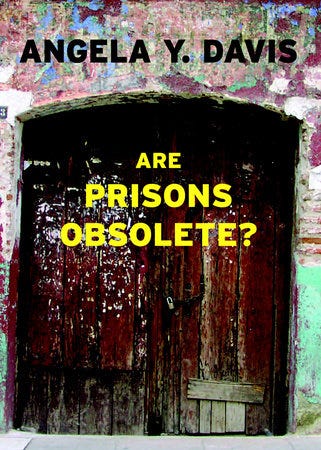
This reading list acts as a primer to understand how and why America developed its prison industrial complex and what it will take to end mass incarceration.
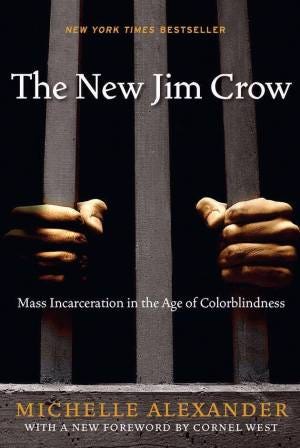
The New Jim Crow was first published in 2010 but is still as timely as ever. Legal scholar Michelle Alexander shows the ways in which policies like crack/cocaine sentencing disparities, over-policing, and mandatory minimums resulted in a disproportionate number of African American men being incarcerated, a phenomenon she christened “The New Jim Crow.” Alexander’s book makes an important argument, but also fundamentally changed the way we talk about mass incarceration and policing in America.
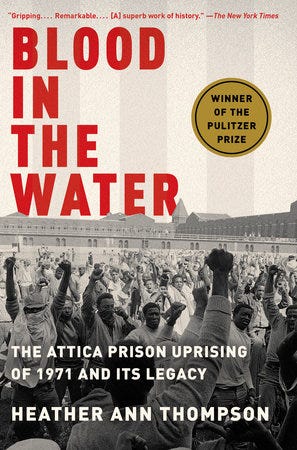
This Pulitzer-prize winning booktells the story of the Attica prison uprising and the subsequent legal battles in exhaustive detail. Heather Ann Thompson spent a decade writing this book, gaining access to never before used sources and interviewing the people involved in the uprising.
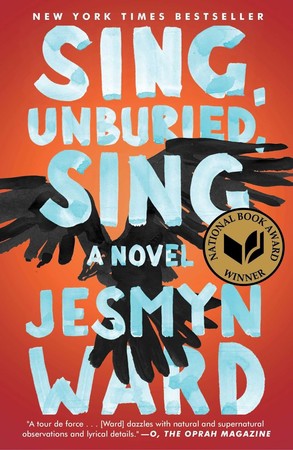
Jesmyn Ward’s novel tells a beautiful story about drug addiction, racism, and incarceration in Mississippi. It’s a road novel filled with ghosts, alluding to both Faulkner and Morrison, while also making the impact of incarceration on her hometown quite clear. I wrote more about it here.
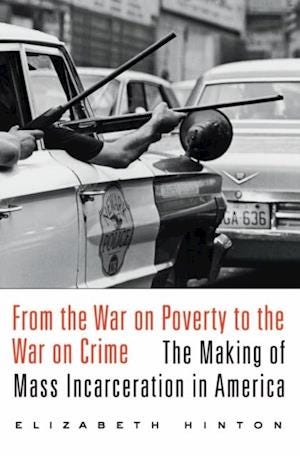
Though many associate the rise of mass incarceration with the Nixon and Reagan administrations “tough on crime” policies, historian Elizabeth Hinton shows the ways in which state apparatuses developed during Lyndon B. Johnson’s War on Poverty became instrumentalized to “fight crime.”
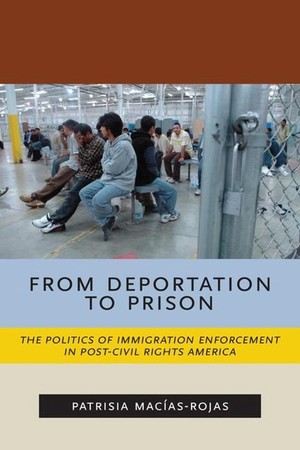
From Deportation to Prison focuses on how the wider rise of mass incarceration led to the increasing criminalization of immigrants through the Criminal Alien Program. This book is a timely and necessary read that highlights the brutality of the for-profit system of immigration detention (one shocking revelation is a government mandates that 30,000 beds in immigrant detention centers must always be occupied).
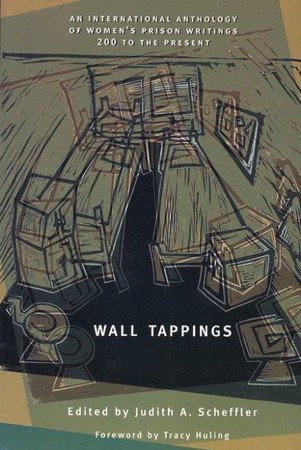
Many of the most well known prison writers are men — think Martin Luther King Jr, Malcolm X, and even Oscar Wilde. Wall Tappings: Women Prison Writings, 200 A.D to the Present is a one volume introduction to writing by incarcerated women, some famous activists and others virtually unknown.
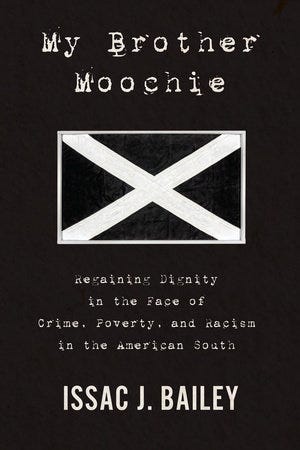
Isaac Bailey was just nine-years-old when his brother was imprisoned for life.His bookis a raw exploration of his relationship to his brother and incarceration writ large, as well as an analysis of the factors that entrap young black men in the South in the criminal justice system.
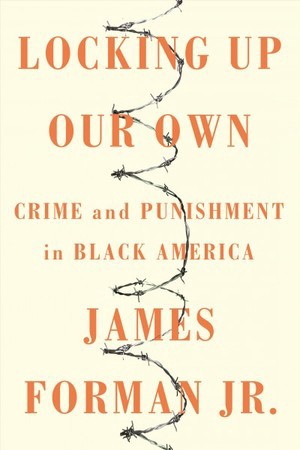
Winner of the 2018 Pulitzer Prize for nonfiction, James Forman Jr.’s book explores why many African American politicians and officials supported “tough on crime” policy that led to mass incarceration of black men.
About the Author
Holly Genovese is a Ph.D student in American Studies at UT Austin. Her work has been published in The Washington Post, Teen Vogue, The LA Review of Books and many other publications. Find her on twitter @hollyevanmarie.
When I was eight years old, my parents rented Godzilla 1985 for our weekly movie night. It was meant to be a sci-fi treat, a fun flick with popcorn and a few gentle scares for the kids. My father could not have predicted that I would spend the last 20 minutes of the film in convulsive tears, my tiny fingers digging into the couch with a tension that marred the upholstery for years, my little heels banging against the floor so loudly that the dog hid in the basement for the rest of the night. My mother chastised him for renting a movie that was too frightening for me, a sheltered orchid of a child who could not handle the 6:00 news without tears. She took me aside and explained that Godzilla was not real, he could not harm us, and that his giant foot would never lay waste to our split-level ranch home half a world away from his natural habitat.
“I don’t care about that!” I wailed in reply. “I want them to be fair! He just woke up!”
From my perspective, Japan was the problem, not Godzilla. After all, this was the third in a long series of Godzilla videos I had seen sitting on the video store shelves. The scientists and military officials obviously knew that Godzilla existed from the previous movies, so how did they not see this coming? They should have been aware that a mighty beast slumbered off the coast of Japan, and that when another human mistake inevitably woke him up, he would not be happy about it. But instead of accepting Godzilla for what he was — a confused and exhausted beast, born once more in a world not built to accommodate him — they brought the fist of the military industrial complex to his big rubber chin. The plastic tanks, the paper-mache rockets propelled on tiny wires into his big glass eyes: it was too much for me. Too unkind. The poor thing had just gotten out of bed and they were already sending helicopters after him. Would it have killed them to just bring Godzilla a coffee and try to talk it out?
Would it have killed them to just bring Godzilla a coffee and try to talk it out?
Perhaps I knew I loved monsters from a young age because I felt I could find a greater sense of acceptance among them. I was a fat, anxious kid that grew into a fat troubled adolescent that grew into a fat clinically depressed adult. If we look to art and culture to mirror our ideal selves back to us, the only mirrors that looked anything like me came from the back of a funhouse. The women who looked like me and acted like me were always portrayed as monsters. Big Bertha. Ursula. Moaning Myrtle. And so on.
I am not unique in identifying as monstrous. We all have our ugly sides, our secrets, the things we fear will draw the mobs of villagers and their pitchforks to our doors. The things we are taught to hide. Who among us hasn’t known the loneliness of the Creature from the Black Lagoon, watching an exclusive beach party of beautiful people from a hidden cove of envy and lust? Who hasn’t hungered for the love and acceptance of others and rebelled against authority to claim it, just as Frankenstein’s monster did? What is female puberty if not a werewolf story? (After all, in what other stage of your life do you grow so much hair and spend so much time trying to get incriminating blood stains out of upholstery?)
Given my empathy towards beasts, it seems only fitting that I would eventually embrace being one. It wasn’t for a lack of trying. I have put great efforts into becoming a villager, rejecting monstrosity, but they were all for nothing. In my life I have gained and lost literally hundreds of pounds, spent years bouncing in and out of therapist’s offices, taken countless pills and cures to address that which is ugly in me. I have never eaten wolfsbane, but I did spent the 15th year of my life drinking Slim-Fast and vomiting it back up whenever anyone’s back was turned. I have never considered a stake to the heart, but I have spoken to a doctor about tying my stomach in literal knots — a process that he cheerfully acknowledged carried a nonzero chance of reducing me to dust. I have let people talk to me and treat me this way without question and without complaint because I understood that, as a monster, I should only wait to be slain.
I even attached hope to these cruelties. I wanted them to work so badly. All monsters do. The promise of being human, being normal, being loved seems worth the pain. It’s worth the lightheadedness, the mood swings, the weakness, the insomnia, the clumps of hair in your drain. These are the sacrifices you make to be seen as human someday. To be seen as worthy of love.
It never works for some of us. I’d say probably for most of us. The curse can’t be broken. So what’s next?
The stories we tell about monsters tend to follow a similar arc. A monster is discovered or created, it imposes its will upon human victims, and then it is either killed or cured. This is despite the fact that the plight of the monster is often a sympathetic one; they are creatures of an understandable desperation, struggling to survive in a world that meets them with pitchforks and torches at every turn. Regardless of how the dreaded creature came into being, we are supposed to be pleased that it ends up dead. It’s a theoretically happy ending, unless you find yourself on the other end of the pitchfork.
As a person who empathizes with monsters, I can’t help but wonder if there’s a way to build a new mythology for these feared beasts. Consider the new stories we could tell if we decided that instead of fantasizing about killing our monsters, it would be worthwhile to imagine safe places for them in the fictional worlds they inhabit. Instead of driving them to the edges of society, our fictional villagers could welcome them, even find ways to live alongside them. Imagine Eagle Scouts at a campfire, roasting marshmallows and telling stories about chipped and tagged werewolves roaming our national parks and rescuing lost tourists from avalanches. Imagine seeing big summer movies where mummies are summoned not by a curse, but by a request from a dashing anthropologist to accurately place ancient artifacts in their appropriate human epoch. Imagine new adult erotica about fetish hookup websites just for vampires and their willing human prey. How would our stories about monsters change, and what would we learn?
Consider the new stories we could tell if we decided that instead of killing our monsters, it would be worthwhile to imagine safe places for them.
The Godzilla films, for all of their faults, eventually end in a place of tolerance for their massive rubber star. Despite Toho’s best efforts to make Godzilla scary, it never really worked: children like me just fell in love with his big doofy face, and we wanted to see him win. Partially because Toho recognized that they were sitting on a merchandising gold mine, and partially because Godzilla became so entwined with Japan’s national identity overseas that it became a self-defeating effort to continue blowing him up, the world of kaiju (or Japanese monster movies) began to expand. Other monsters entered the scene. Some were destructive and yet quietly benevolent, like Mothra, the massively elegant moth whose heart only beat for her children. Some were powerful enemies, like the fearsome three-headed Ghidora, with whom Godzilla maintained a brutal rivalry throughout the 70s and 80s. And some, like the giant floppy lazer-eyed dog known as King Caesar, were just deeply stupid. But one by one, they all joined the campy kaleidoscopic world of kaiju, and Godzilla was the grudging king of them all. He kept the peace, kept them in line, and generally acted as a buffer between the tiny snack-sized people he used to terrorize and the massive plastic new gods born into the world with every subsequent film.
The Japanese people learned to like Godzilla, even trust him. Godzilla was soon given a home of his own: Monster Island, a remote isthmus in the South Pacific Sea, where the new kaiju could live together in peace under his giant immobile eyes. That isn’t to say their lives were conflict-free from then on. Godzilla’s relationship with humans remained mercurial, and the kaiju fought each other in literally every movie, because that’s what they do. But they also teamed up and protected each other, and took care of each other, and defended the people of Japan from a thousand imminent disasters. There’s a true beauty in the harmony between humans and monsters in these films. Just because a giant flaming space turtle is out of the ordinary, there’s no reason we can’t all get along.
Perhaps this view is too optimistic or too childish to hold much weight. What do old cheesy movies about monsters have to do with anything real? And yet, I grew up rooting for Godzilla, and I remain a fan. I have seen every Godzilla movie that has been released in American theaters, although my absolute favorite is Godzilla: Final Wars. Final Wars was billed as the ultimate ending to the Godzilla franchise. It was a no-holds barred battle between humans, aliens, and the kaiju caught between them. And yes, I did cry at the end. Not because I was frightened, or sorry to see my big rubber monster friend put out to pasture, but because the film ended so happily. The music swelled as Godzilla and his large lizard son walked hand-in-hand into the pink sunset ocean, humanity waving him a tearful farewell. Harmony, achieved at last.
As long as Godzilla has been fighting us, we have been fighting him too. It’s never really worked out for either side.
It was especially touching to me considering how the previous film, Godzilla 2000, had ended. After yet another kaiju battle royale, Godzilla had emerged victorious, and was celebrating by throwing himself a building-punching bar mitzvah in Tokyo Square. Watching from a rooftop, a group of scientists argued about why Godzilla keeps coming back. Why do Godzilla’s truces with humanity never last? Why does he defend Japan from alien monsters, and then immediately attack a city for the ten-thousandth time? The scientists’ weary conclusion is that there is a little Godzilla in all of us, an inner monster we ultimately fail to conquer. Godzilla was awoken by Japan’s nuclear ambition, and has endured as an enemy because the society that created him doesn’t know how to stop provoking him, even when it’s trying to be good. It’s a dour ending for a campy film, but it’s worth considering: as long as Godzilla has been fighting us, we have been fighting him too. It’s never really worked out for either side. If we can’t find a way to live with Godzilla, this is just how it’s going to be.
Final Wars, with its happy ending for Godzilla and his son, subverts this in a beautiful way. Yes, Godzilla had to kick his way through a river of rubber-suited carnage to win. And yes, the residents of Monster Island were utterly vanquished this go-around. But Godzilla is undeniably the hero of the film. The ending where humanity celebrates him and allows him to make his own way home is framed as a triumph. Japan has finally accepted the love it has in its heart for its most monstrous son, and this has allowed peace.
For now. I mean, he’s coming back eventually. He’s Godzilla.
If there’s a moral here, it’s that we have to accept that there’s a little Godzilla in all of us. And maybe he’s scary at first, and hard to control, and he might torch a few buildings and crush a couple of tanks while you get to know him. But in the right setting, Godzilla can be a hero too. You can’t kill Godzilla. The only way to win is to treat him with empathy, house him humanely, and learn how to get along with him. There’s a little Godzilla in me, and in you, and that beast within us deserves an island home and playmates of its own and a happy ending where the credits roll as he strides into the ocean, head held high, finally accepted and understood for what he is. Maybe that’s the world we should create for our monsters: the world that we would want to live in, too.
It’s two in the morning, and my son wakes up howling. Jack’s maybe a year old. He’s in the midst of a whopper of an ear infection. As I take over for my wife and settle with him on the couch, I see why he hasn’t yet calmed down. The YouTube app on the TV is stuck on its loading screen.
“It’s okay, Jack,” I say. Then I start singing the theme song to Betty Boop: “Made of pen and ink, she can win you with a wink…”
Finally our playlist of pixelated Fleischer cartoons, both public domain and pirated, loads. Jack calms down enough to exit the Snot Cycle. (You know — discomfort leads to crying, leads to mucus, leads to more discomfort, leads to crying harder, and so on.)
Let’s ignore for a moment the fact that showing a child cartoons from the 1930s is unconscionable. Black-and-white cartoons are a history, in miniature, of racial and patriarchal oppression.
Because when you’re a literary analyst and it’s stupid o’clock, you need something to chew on. Your brain needs something full of contradictions (the Fleischers, for instance, were Jewish, and included Jewish in-jokes in some cartoons — but also flagrant antisemitism in others. They creatively collaborated with African American musicians — but also played up racist stereotypes for laughs.) Whereas something meant for infants, like those soporific Baby Einstein videos, is going to melt your brain faster than Darth Vader armed with Van Halen on a Walkman.
When you’re a literary analyst and it’s stupid o’clock, you need something to chew on. Your brain needs something full of contradictions.
Here’s a thought experiment. Take a series of animated cartoons developed for a certain situation: movie theaters where folks are filtering in, chatting, finding their seats, trying to escape the reality of the Great Depression. These cartoons are decidedly not for children. These cartoons are trying to outdo the competition, upping the ante with physical comedy and sexiness and straight-up weirdness, to ensure their continued purchase and distribution. In short, these cartoons were never meant to be watched over and over again, back to back, for months. So. After you watch every Betty Boop cartoon that exists for the fiftieth time, what happens?
I’ll tell you what happens. One of your son’s first words is “boop boop be-doop.” This is not so bad.
But I’ll tell you what else. You develop theories. Despite the fact that these cartoons were never meant to have continuity, you assign them continuity. You debate with your wife whether Betty’s father, in “Minnie the Moocher” (1932), is wearing a kippah. You’re pretty sure Betty and Koko the Clown have a thing going on the side. You insist that the bearded babies in “The Old Man of the Mountain” (1933) are the result of a rape.
I’ll tell you what happens. You develop theories. Despite the fact that these cartoons were never meant to have continuity, you assign them continuity.
You decide that, when Betty, a supporting character in the Talkartoons series (1930–1932), is given her own series, there’s a reason for the character redesign. As most cartoon historians know, in the Talkartoons, she’s an anthropomorphic dog. Makes sense: she exists in an anthropomorphic world and is romantically involved with another dog-person, Bimbo, the song-and-dance man. In “Bimbo’s Initiation” (1931), for example, Betty has dog ears and a black button nose. But in “Stopping the Show” (1932), the first time she headlines, Betty’s floppy ears have been transformed into hoop earrings, and her nose is a human one.
If you are me, and have inadvertently become the leading expert in the Betty Boop mythos, you know she has changed appearance because the Talkartoons present us with reality from Bimbo’s subjective viewpoint. He, being attracted to Betty, sees her as a dog like himself. But in the Betty Boop series, we see her as she really is, a human.
The results of the experiment are in. You discover — that is, if you are me — that you have become a practitioner of a dark fandom art. You have developed a headcanon.
You discover that you have become a practitioner of a dark fandom art. You have developed a headcanon.
Headcanons, if you’re an old fart, are what happen when fans fill in narrative gaps with plot and character information. This is different from fanon, which is agreed upon by a large camp within a fandom. And different again from canon — what’s actually in the book, the movie, the series.
While headcanons and fanon are similar features of participatory culture, their motives and aims are distinct. Fanon seems to be about proposing plausible extensions of narrative, and seeking consensus, and pitting your camp’s fanon against a rivals. But a headcanon is personal, idiosyncratic, offered with caveats and apologies. Headcanons tend to be more about denial and wish-fulfillment than they are about reason and plausibility.
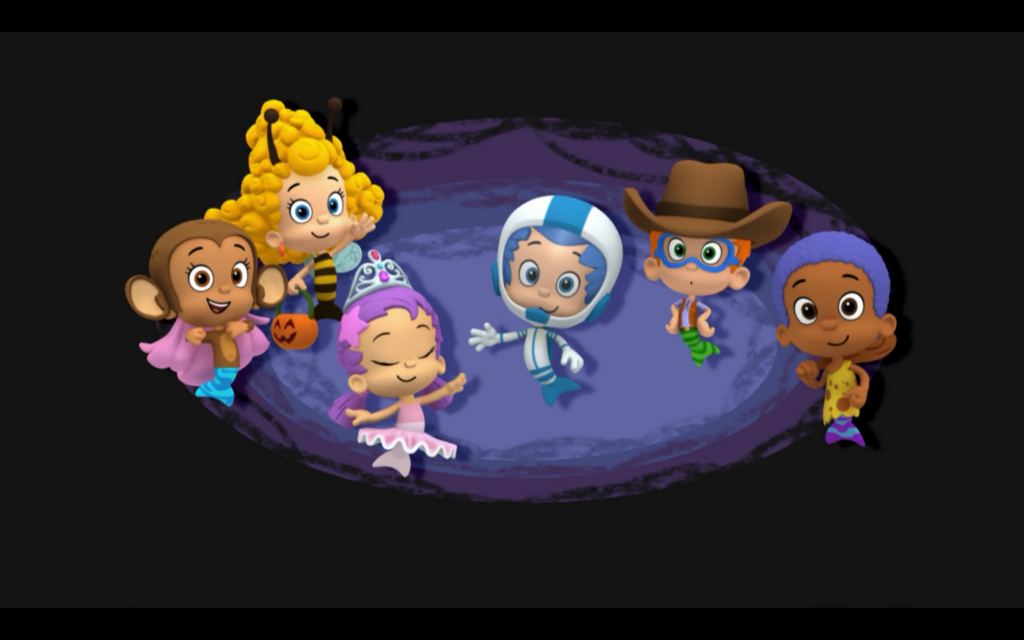
When he was about a year and a half old, Jack got into Bubble Guppies. He was mesmerized by the gang of six young merpeople and their preschool teacher, an orange fish named Mr. Grouper. The show got us through a lot. Teething molars. Stomach viruses. Eight-hour car trips.
Headcanons tend to be more about denial and wish-fulfillment than they are about reason and plausibility.
Only a certain number of episodes are available on Netflix and Amazon Prime. And they don’t sell compiled seasons on the overpriced DVDs. There are 80 episodes of Bubble Guppies, but Jack, my wife and I have only seen about 40. Over and over and over.
Without a headcanon? Unsurvivable.
I could chew your ear off about the guppies — their expanded universe, their backstories, their relationships off-screen. I could tell you all about Mr. Grouper’s checkered past, his depression, his substance abuse.
I can tell you a lot about Nonny, the redhead merboy with glasses. In canon, he has poor gross motor skills, doesn’t smile, and can recall many facts. Another parent posted on Reddit her “theory” that he is on the autism spectrum. But I don’t buy it.
In my headcanon, Nonny is a malcontent. In Season 2, episode 8, the other guppies spend an entire musical number pressuring him to smile. On screen he is forced to relent. But in my heart, I know Nonny finds all their well-oiled cheeriness fake. To keep from exploding, he brings order to the things he can — like the badling of ducks that interrupts a marching band performance (Season 1, episode 5). If he’s so rankled by the saccharine atmosphere of Mr. Grouper’s school, why don’t his parents transfer him elsewhere? A good question. We never see his parents in the show, or any other adult merpeople.
In fact, one blogger posed the idea that the guppies are orphans, the last of an endangered species. And she posed it as an example of a headcanon one might hold.
In my headcanon, the guppies have parents. Someone has to pack those crazy lunches.
In my headcanon, though, the guppies have parents. Someone has to pack those crazy lunches. And when Mr. Grouper helps Gil adopt Bubble Puppy, we can’t assume the dog lives at school. The puppy swims to school with Gil, though we never see where they are swimming from.
I can tell you a lot about Gil, too, actually.
He’s got blue hair, he’s outgoing, he loves sports. And despite being a bit of a screwup, Gil is front and center. He shares hosting duties with Molly, the talented, biracial, pink-haired mergirl he’s always upstaging. (This is problematic. The ensemble cast is diverse enough; but Gil seems to be the de facto lead simply by white, hetero-normative, male default.) And Gil’s relationship with Bubble Puppy is unmistakably the emotional core of the series.
Other characters experience anxiety (over a friend with a broken bone) or loss (over a toy truck buried at a construction site). But only Gil experiences profound, sustained emotion. When he wishes he could take the puppy home, you can hear the heartache in his voice.
Only Gil experiences profound, sustained emotion. When he wishes he could take the puppy home, you can hear the heartache in his voice.
Even worse is Season 3, episode 7. Bubble Puppy is sick, and has to go to the veterinary hospital. Gil spends the episode trying to put his grief into words (while his friends make cookie-cutter get well cards). Finally, Gil writes an eloquent poem, and with Mr. Grouper’s prodding, reads it out loud. I cry manly tears. Every time.
Jack, my son, identifies with Gil. Both are, after all, little white boys with extrovert tendencies.
But in my headcanon, there’s another, deeper reason. Gil is more like my son than Jack realizes.
The show supplies no information about Gil’s family, but I know, without a doubt, that his parents lived through a trauma. This is why he’s a little spoiled. Why his mom and dad don’t hesitate to arrange a spur of the moment dog adoption, lest Gil be unhappy for a moment.
The show supplies no information about Gil’s family, but I know, without a doubt, that his parents lived through a trauma. This is why he’s a little spoiled.
See, in my headcanon, Gil was born two months premature. His mermaid mother suffered a placental abruption. The blood pooled in the uterus, slowly smothering Gil, and his parents made it to the hospital just in time to save his life.
Of course, this is Jack’s story. My wife’s story. And mine.
The day Jack was born was a blur. There’s a lot I don’t remember. But like the C-section scar my wife now wears, certain vivid details will stay in my mind forever. Any birth is a psychological, emotional roller coaster. Many couples are not so lucky as we were.
But trauma is trauma. What we experienced turned our lives into frayed threads. And it happened to do so at a time in our cultural history when serial television shows can be consumed at speeds they were never intended to be consumed. Outside of this moment, this culture of binge-watching, we would never have thought to make Jack a Betty Boop playlist we could auto-loop. Intense amounts of binge and repeat watching, impossible a generation ago, are common viewing experiences now. And the availability of that accelerated narrative consumption is, I believe, the engine powering the proliferation of headcanons.
I had my own reasons for creating my headcanons. They helped me cope. Based on my experiences, it seems to me that headcanoneering, as a practice, is more than just a participatory way to enjoy stories. It’s more than just the intersection of creative writing and criticism, or a natural response to characters and ideas we love — love so much we can’t help but patch up all their holes.
Headcanon is a safe place to indulge in denial. To take into our hands a wonderful but broken world, and hold the mess to our heart and patch it up.
Headcanon is a safe place to indulge in denial. To take into our hands a fictional reality that is as messy or incomplete as a pregnancy cut short by abruption. To take into our hands a wonderful but broken world, and hold the mess to our heart and patch it up. A headcanon is, as Robert Frost would put it, “a momentary stay against confusion.” A kind of poetry. A kind of solace.
One night, lying in bed talking, my wife told me she still wasn’t over being robbed of her last two months of pregnancy. The job still felt incomplete. We were living a story, an amazing story of becoming parents — but with a big hole in it.
Faced with this truth, I’ve come to think of a headcanon as a creative expression of postmodern philosophy: the fact that reality, as we experience it, is socially constructed. Headcanons are about finding value in pathological denial. They’re about finding a healthy place where we can vent our refusal to accept reality. And transmute that denial into creativity. Fixing a hole in Doctor Who or the Harry Potter series can be a form of complaint, of criticism, to be sure. But a form of criticism that adds to, rather than takes away from, a work of art. A headcanon is an expression of the deepest and most generative kind of love.
Now, if you’ll excuse me, I have some questions about Dinotrux.
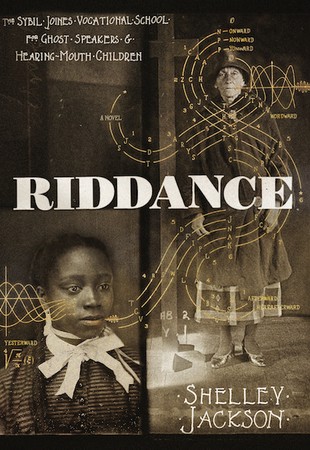
I s there a difference between writing a book and making a book? I’ve worked in publishing for a bit now, and while I’ve seen how many hands go into getting one book out into the world, I’ve never fully revised my understanding that a book is written,not made. Shelley Jackson’s book Riddance has troubled this idea. Why should that matter?
Purchase the book
Riddance follows Sybil Joines, the Headmistress and founder of the Sybil Joines Vocational School for Ghost Speakers and Hearing-Mouth Children. A stutterer since childhood, she founded the school as a haven for stuttering children. But she is an early explorer in the field of necrophysics. Stutterers, Sybil Joines, argues, have the capacity to communicate with the land of the dead. Their stutter is a hiccup in time that allows stutterers to straddle both worlds. These children are also a resource for her studies. Jane, a student at the school, becomes Joines’s stenographer as she travels into the land of the dead. But when a student disappears, the school starts to get the wrong kind of attention.
But story is not all this book is made up of. Riddance is a physical artifact, a material object you need to hold in your hands to fully understand. Riddance defies the existing categories we have for understanding what writing is so Jackson can make space for a new argument about what writing can do. How does she do it? In part, some of the meaning is in the making — the book is organized into chapters that break down into three repeating sections, “The Final Dispatch,” “The Stenographer’s Story,” and “Letters to Dead Authors,” and each chapter is peppered with readings from a visiting scholar’s observations on the architecture of the school or a textbook, Principles of Necrophysics. There are maps and diagrams, beautiful etches of disturbing contraptions to ease a child’s stutter.
Reading Riddance is an experience in being haunted, not by ghosts per se, but by the growing sense that writing itself is a haunted enterprise. Riddance is haunted by undead histories, undead traumas, undead authors, and undead words that were never really our own, that illuminate why a book that is not only written, but made. The parts may be undead, but Shelley Jackson has assembled them, made them through her writing, all come to life again.
Shelley Jackson and I corresponded over email about book-building, meaning-making, and the dead words that haunt our writing.
Erin Bartnett: Riddance is this great assemblage of different writing spaces: there are the “Final Dispatches” from the Headmistress, the “Stenographer’s Story,” the Readings from textbooks on necrophysics, notes from a visitor on observing the school, and then a single letter written from the Headmistress to a dead author.
What about the form — the “scholarly work with the popular appeal of a crime novel” or “the eccentric, muscled back into the white light of judgement” as the editor describes Riddance — was compelling for you while constructing this book?
Shelley Jackson: Riddance began with an essay on the relationship between language, mediumship, speech impediments, and ghosts. Though I was exploring real ideas, I did so through a fictional lens: the point of view of the headmistress of an imaginary school. More pieces followed, elaborating on the history of the school I had imagined, its customs, its philosophy, its homework assignments. When I decided these could make up a larger project, it wasn’t a novel that I imagined. I thought it might be a fake .edu web site, say, plus a scattering of supporting references around the internet, enough to create a little alternate reality, one that you might stumble upon and never quite figure out whether it was real, fiction, a lie, or sincere madness. Even once a story grew up around this material, I wanted to preserve the feeling of an archive of ephemera, related but not bound to a strict narrative throughline or single point of view.
EB: I was interested in the way you use the historical lens of the spiritualist movement. The book is in heavy conversation with the icons and landmarks of the late nineteenth/early twentieth century when the Fox Sisters, mesmerism, and hoaxes, for instance were popular. And then there arealso the excerpts from textbooks and scholarly articles on necrophysics. What about that moment in time when science and spirituality were so entwined was important for you in writing Riddance?
SJ: I was struck by how these spheres that we normally think of as unrelated were for a time joined. How grief and yearning showed through the science, how fantasy and logic converged in bizarrely concrete ways — in spirit photography, in electric devices that purported to contact the dead, in detailed and pedantic descriptions of the nature of the afterlife. For a while, because of scientific advances in our understanding of reality, stranger things suddenly seemed possible. If electricity, if light, if sound — apparently immaterial things — could have measurable, material effects, then why not ghosts? Writing rests on a similar sort of faith, that feelings, dreams, ideas, memories can move the world. I’ve come to regard it as a kind of technologically-assisted mediumship. Not because I use a computer to write, but because for me language itself is a sort of machine or device, but one through which spirits blow. Maybe that’s what a human being is, as well.
Writing rests on the faith that feelings, dreams, ideas, memories can move the world.
EB: One of the most interesting pieces (and there are many!) of this book project is the way you incorporate images of men, women, and children with instruments strapped to their mouths, or scraps of attendance sheets and school records and instructions for teaching particular lessons. They create an uncanny medical history narrative of their own. I’m convinced many of them are “real” artifacts. How did you create these?
SJ: I created some of the images — the drawings of mouth objects, for instance, and the big map — and originally wanted to make all the images myself. But eventually I recognized that if they were all in my own hand (since I’m not versatile enough to convincingly imitate a bunch of different artists’ styles) it would undermine the impression of an archive of real historical ephemera. By that point, however, I had started seeing evidence of the Vocational School everywhere — at a certain stage in a big project, you’re so attuned to the themes of your book that the world outside seems to body forth your ideas completely unbidden. I started collecting found images from out-of-print books I owned or found online (19th century dentistry manuals, experimental pedagogy textbooks, books on how to “cure” stuttering, and so on). My designer did too. We manipulated some of them a little, but they were already so good, with a mysterious quality I couldn’t have created if I tried, that they didn’t need many changes to feel like part of my world.
EB: The stutter, which manifests itself physically in the mouths of the children at the Sybil Joines Vocational School for Ghost Speakers and Hearing Mouth Children, becomes a tool that can be used to access the stutter between “then” and “now” in which ghosts speak. The body has figured heavily in so much of your work, I was wondering if you could talk more about how your focus changes from a project like SKIN, where the literal bodies of volunteers were tattooed with words in your story, to Riddance.Can you talk about what makes the body such an important part of your work?
SJ: In SKIN I was mainly interested in the written word, in the way it bodies forth its meaning, but also competes with it. I wanted to give my words a private life of their own, setting them free to wander around the world.
In Riddance I’m more interested in the spoken word. But the body is involved in speech as well; in, specifically, the physical production of speech, this choreographed dance of tongue and jaw and vocal cords, a process which becomes all the more palpable when it’s a problem, as it is for stutterers, and how that relates to the more ethereal body that is the sound wave and its even more ethereal meaning. In a broad sense it’s the same thing I’m interested in all my writing: how meaning relates to matter. How matter means. How meaning matters. I’m interested in that first as a person, as someone who’s always been a bit bemused by being or having a body, and what the relationship is between that body and who I think I am. But I’m also interested in it as a writer and a reader, who is accustomed to handling the bodies of words, and is conscious that they are not identical with, don’t dissolve into their meaning and that for me that resistance to subsumption is exactly what makes writing writing.
EB: You’ve done a lot of work with hypertexts, and with other ephemeral or “mortal” mediums for your writing — like skin, and snow. The Headmistress, in one of her final dispatches says, “A book is a block of frozen moments — of time without time, which can nonetheless be reintroduced to time, by a reader who runs her attention over it at the speed of living.” For a book about ghosts, I wondered about these “frozen moments” in the book as a physical object. Why did you decide to make Riddance a physical, bound book?
SJ:Riddance is deeply rooted in the 19th century, and I wanted it to feel like a distant relative of the books that gave rise to it, and to take its place among them. And since I’m particularly interested in the tension between ideas and their embodiment, it felt important when writing about ghosts to make a book that took an undeniably physical form, heavy and cornered. Where ghosts are concerned (and ghosts are always concerned, in my opinion) it’s the way they rub up against more material things that interests me. That’s what a book is: a haunted object.
EB:In one of the Headmistress’s final dispatches she asks the stenographer to “turn the page” to see what happens next, but then catches herself in the error. “You cannot flip forward to a page you have not yet typed, to see what is written there. That is something time does not permit. But wait! If what I say comes true in being said, then — listen closely — if I say what she is doing there, two pages from now, as for instance ‘In two pages she will be walking up a cypress-lined drive,’ will it be true? Is it already true in being said? Can I, then, determine the future?”Many moments in Riddance felt to me, like a kind of ars poetica. Can you say more about how writing and being haunted resemble one another?
SJ: The section you’re quoting is dictated from the land of the dead, and describes the experience of traveling there, which in my very particular conception of it is very much like the experience of writing about it: In order to travel there, you have to invent at every moment both the road you’re walking down and yourself, walking. This is also, I hope, close to the experience of the reader, who if I’ve done my job should glimpse the void through the gaps between words, should feel held up only by the flimsiest of descriptions, and those subject to revision or rejection at any moment. Many of my favorite writers — Kafka, Beckett, Calvino — make a sentence feel like a tightrope whose other end isn’t fastened to anything. I suppose it is what dying must be like. Or living, come to think of it.
But writing is like being haunted in a different sense too. We’re all haunted, as users of language. Language is handed down to us from the past. The words of people long since dead are in our mouths. I think writers feel this more keenly than other people do, for the obvious reason that we are more concerned with language, and more aware of how much of what we write is borrowed (almost everything). We are spoken to and through by writers of the past, and speak back to them in our work. It is very easy to have the impression, as a writer, that you’re already dead.
Language is handed down to us from the past. The words of people long since dead are in our mouths.
EB: One of the recurring sections of Riddance is told from the perspective of the scholar studying language, who believes that language is born out of mourning. Language is fixed in some way for him. While for the headmistress, language, once freed from her “self” but “fixed on a page” brings about more interesting questions: “‘ On paper I could be anyone. There was nothing to be stuck in or to stick, only boundless elasticity, boundless subtlety, clarity, rarefaction, light and space and freedom; in a word, joy.” How did your relationship to what language can do, and the ways language makes/unmakes us change while writing this book?
SJ: Writing is more fixed than everyday speech: fixed on the page… fixed in time (while speech dies out an instant later, falls silent)…responsible to (relatively) fixed norms of grammar, usage, punctuation. But it’s also freer: not bound by the even stricter norms of everyday politesse, not bound to the first person or directed to a specific other, and above all free to invent, to fictionalize.
Of course I knew all these things already. But I would say my awareness deepened as I worked, for years, and as I tried to make my fictional philosophy as sound as nonsense could ever be. I was trying to mean what I said on some level, despite my fantastical premise, and I kind of succeeded.
EB:Jane, who is constantly being made aware of the fact that she is a black girl in a school made up of mostly white boys and girls, is haunted by the way her body has been appropriated and described by others after her mother’s death. Before coming to the school, when she arrived at her aunt’s house, I was particularly struck by the way she describes her experience being transplanted into this new language about her body she does not align with herself: “I was given a new home, new clothes, and a new body. This body had various names: stutterer, colored girl, poor relation. I did not recognize it….What I still called my self flickered around this marker, homeless and very nearly voiceless.” The children at the school are taught to listen for what is said in the silence — spoken by those who have been silenced. Does racism figure as a “silence” Riddance is trying to listen to?
SJ: Jane is an attempt to reckon with the real-world consequences of a philosophy that valorizes silence and self-erasure, like the one the headmistress promotes. Is the voluntary silence of a sovereign subject the same thing as the silence of someone denied full personhood by a racist culture? Are the consequences the same for Jane as for the headmistress, who is white? Is there actually a paradoxical power to an openness so radical that it resembles total disempowerment, or is the headmistress, blinded by her relative privilege, playing right into the hands of a not only racist but sexist and ableist culture? I may not answer those questions, but yes, I’m listening to them.
We are spoken to and through by writers of the past, and speak back to them in our work. It is very easy to have the impression, as a writer, that you’re already dead.
EB:I was hoping we could talk more widely about ghost stories. In Parul Sehgal’s recent essay on the ghost story in American Literature, she writes “Far from obsolescent, how hardy the ghost story proves as a vessel for collective terror and guilt, for the unspeakable. It alters to fit our fears. It understands us — how strenuously we run from the past, but always expect it to catch up with us. We wait for the reckoning, with dread and longing.”
Do you think the ghost story is immortal? How do you think it changes, or will continue to change?
SJ: I don’t think it’s immortal so much as undead. And as we know from the movies, the undead are really hard to kill. They just keep staggering on, losing body parts, picking up other people’s. Yes, I do think the ghost story will stagger on, in whatever form. The approaching unthinkable fact of our death is, I think, at the center of what it is to be alive, and the ghost story is a way of taking reconnaissance of that blank spot, or playing around its edges.
Stories are letters to dead authors, letters to dead readers, letters from dead authors to living readers, letters from dead authors to dead authors…
EB:I want to return to something you mentioned earlier about death and authorship. In the Headmistress’s letter to the dead author “Mr. Melville,” she writes: “Perhaps I am more comfortable with the dead than the living, though there seems to me to be scant difference between a dead and a living writer. This is not so much because dead writers seem alive in their words, as because the living ones seem already dead in theirs.” The headmistress is writing a one-way correspondence. These authors cannot write her back.
Is writing, for you, a form of corresponding with the authors that have come before you? Or perhaps even the readers who will read your work, but never “write back” in quite the same way?
SJ: Yes. Stories are letters to dead authors, letters to dead readers, letters from dead authors to living readers, letters from dead authors to dead authors… Life is a temporary condition, a sort of prep school for future dead folks. As a writer you’re always aware of the din of dead voices, and the desire to join them.
The firepit past midnight spat nails
and its heat hammered over us — each got
a big bronze shield. We were royal,
or said so. Sequin and chain. Line of beads
weighty on my white gauze front. I sat
ghostly for hours beside a nodding boy
while others bobbed and left — the lifting
of a shield in layers, flaking and resettling.
Were they bronze feathers? Hot and bright.
Above of course the sky was stamping silver
coin after coin, to fall in the cool wet woods — how do I sit so long?
Holding the threads
between us — those were gold. I possess God
in as great measure as if I were on my knees.
Is There Such A Thing?
Well, Helen. Watered
the garden after dark: avoided
watering rabbits & fireflies. All running
around in a sweet cool
evening, getting too excited.
Me too. Sip wine: how fast
it goes, one glass. Soles
dirty, atrocious, there in the bedroom
mirror. But somebody likes everything. Get a massage, Dan said to Johnny
this afternoon. I can’t, he said, I have
a problem with people touching me.
Then I get hard. There’s such a thing, I said, as a happy ending. He was
delighted. They always think
I’m joking. No one’s joking! Always.
Brought home lots of boxes: iceberg,
romaine, ciabatta, lemon. Next move, Helen,
another happy ending? Second heaven?
Girly Noises
You made a cake with yeast
and a sugar crust:
brushed butter over the top
and baked it, St. Valentine’s day.
We got home too late
for more than a slice
so I ate it for breakfast,
day after. I never made
better pastry. Luxury,
kindness. Dwarf iris, dog violet
now drenched or frosted
on lawns all over. What’s the truest?
What’s truer? Storms outside
on my dream roof, red tin.
Say I reached the horizon
of happiness: my hedonometer
bounced at its brim and stopped.
Your medallion, aureate
under my clothes. Hollyhocks
all set to explode, and glorious
marigold. Have all my indoors: this is yours, this is yours. Medicine, temper, intemperance:
and what do we turn towards?
Houses, houses. Heavens.
One trouble becomes another,
or holds. A returning cold.
Still growing: yet ever
I’ll be the trembler. Be merrier.
The house opens, closes,
keeps roses and oven smells.
It swells: girly noises
I make with your arm around me
in the warm room, loitering:
rising in late light, pearly:
going inside, early.
About the Author
Liam O’Brien grew up on a small island. Recent work can be found in the PBS Newshour, the HIV Here & Now Project, New South, and The Iowa Review. He completed his MFA at the Iowa Writers’ Workshop, where he was an Iowa Arts Fellow. He is one of the founding editors of Vetch: A Magazine of Trans Poetry & Poetics.
Well, this year sure has been a hundred years long! As we struggle out of this enormous frying pan and before we drop into the inevitable fire, let’s revisit some of the stories that took over our news and Twitter feeds this year (and were then immediately supplanted by, like, a Nazi running for Congress and entirely forgotten). We tried to mix it up so that some of them are… well not fun exactly, fun was hard to come by this year, but at least dripping with schadenfreude.
10. Overlooked Women Writers (and Others) Get Belated Obituaries
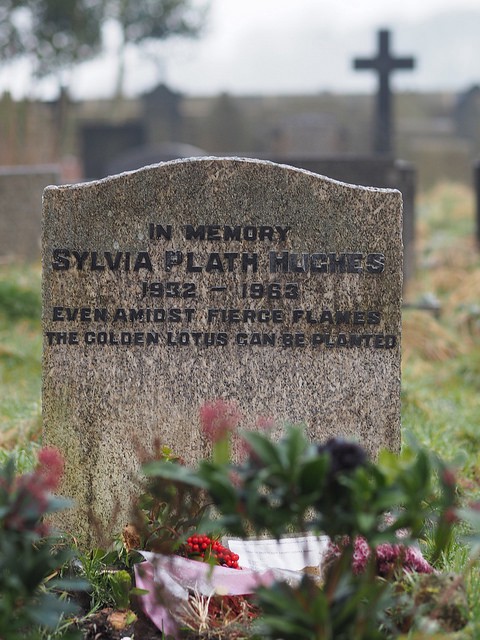
In the 167 years that The New York Times has been covering notable deaths, only 20 percent of the obituaries have been for women. This shocking (or maybe not so shocking) statistic came out this year when Amisha Padnani, the digital editor at the obituaries desk, and Jessica Bennett, the first gender editor at the Times, teamed up to start an ongoing series dedicated to the remarkable people that the newspaper had previously deemed unworthy of taking up space in their pages. Padnani, after joining the obit desk and discovering this blatant oversight, wrote, “It is difficult for me as a journalist to see important stories go untold. But perhaps more important, as a woman of color, I am pained when the powerful stories of incredible women and minorities are not brought to light.” The series, Overlooked, began on March 8th with essays celebrating the lives of Sylvia Plath, Nella Larsen, and Charlotte Brontë, to name a few, and has since been publishing weekly articles. Because of the unique responsibility of these essays to honor people that died in the past, they diverge slightly from the typical obituary style, highlighting accomplishments achieved during their lifetimes as well as the legacies they left behind.
9. Tomi Adeyemi Takes On Nora Roberts, Does Not Win
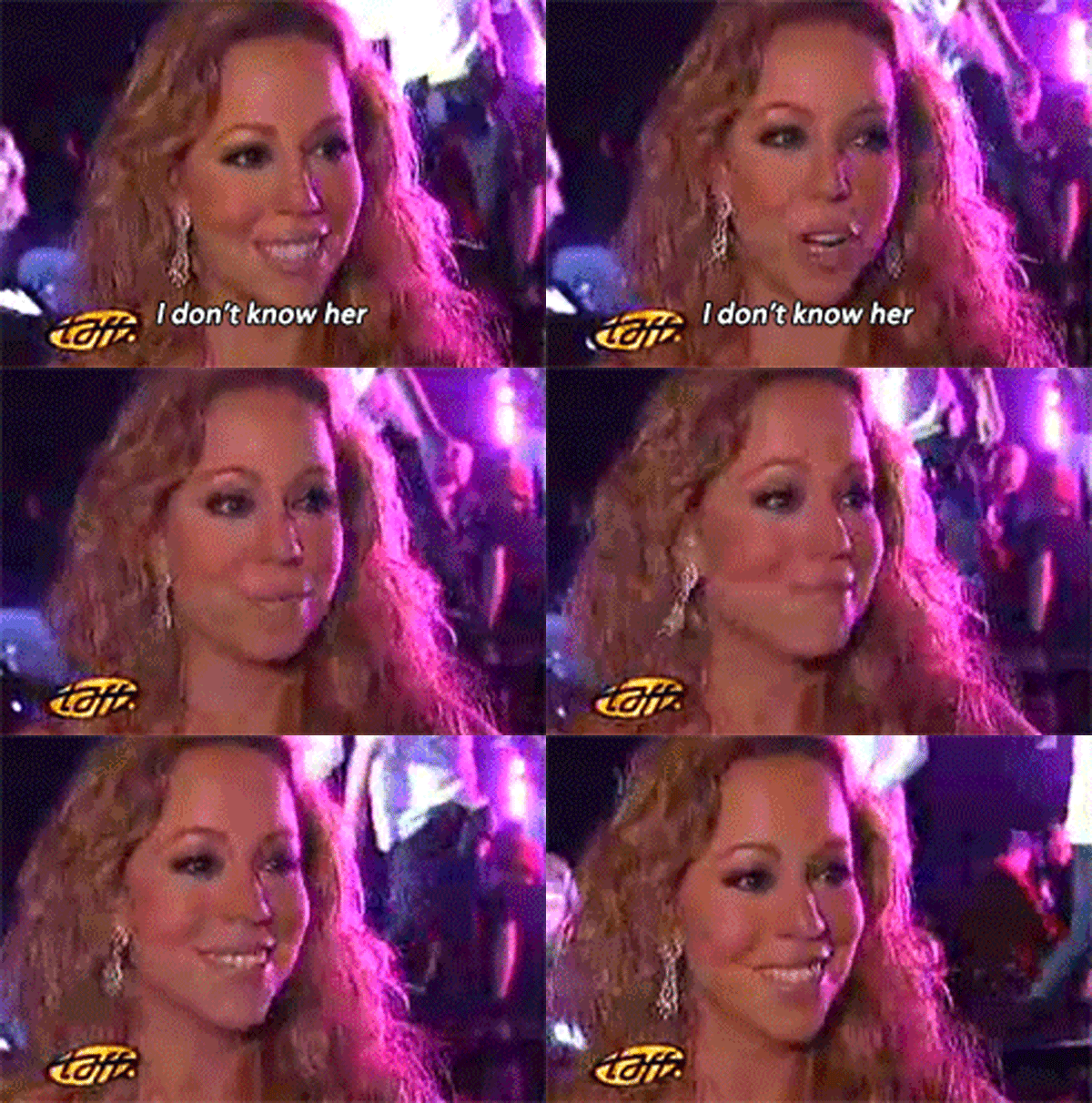
Tomi Adeyemi, the (rightly!) highly-praised and bestselling author of fantasy novel Children of Blood and Bone, has… perhaps never been in a grocery store? That’s the only reason we can think of for why she would accuse Nora Roberts—yes, that Nora Roberts, the one for whom the word “bestselling” is inadequate—of trying to “shamelessly profit off” her fame with a novel called Of Blood and Bone. Roberts set her right with a blog post that a) serves double duty as a primer on publishing (titles can’t be copyrighted! A book that comes out eight months after yours was probably already written when yours was published!), b) serves triple duty as a rousing indictment of social media mobs, and c) belongs in the “I don’t know her” hall of fame. The two apparently spoke afterwards to clear things up, and Adeyemi eventually deleted her tweet alleging plagiarism, but not before giving her publicist a heart attack probably.
8. Incomprehensible Marketing Decisions Rock Twitter
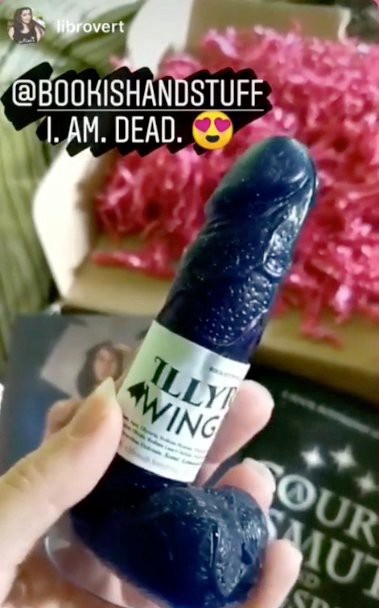
The usual maxim “any publicity is good publicity” got put to the test this year, with baffling book (and book-adaptation TV) marketing schemes that broke, or at least bewildered, the internet. In July, Hulu announced—and, after online outcry, swiftly canceled—a line of three Handmaid’s Tale-themed wine varietals. As we noted at the time, this was a particularly head-scratching entry in a long list of dubious Handmaid’s Tale merchandising schemes, including lingerie. And in August, every tweet on the timeline was briefly about “dick soap,” due to subscription service Book Boyfriend Box choosing to send the above memento in a package (lol) themed after Sarah J. Maas’s A Court of Thorn and Roses series. Read more about the dick soap here, including an explanation of sorts from Book Boyfriend Box (although be warned that we made the same “package, lol” joke. It’s irresistible under the circumstances!).
7. The Summer of Scam Makes Its Way Into the Writing World
Call it Grifter Season, call it the Summer of Scam: 2018 was marked by several sensational deep-dive stories about con artists. Anna Delvey, Anthony Gignac, William Baekeland, Donald Trump — we were mesmerized and horrified in equal measure by their schemes. In July, the literary world got its own grifter: Anna March (a fake name), whose fraudulent acts included charging up to $3,000 for nonexistent writing workshops and raising nearly $50,000 for a magazine that offered writers $25 per piece — and didn’t actually pay it. If you love these kinds of stories, this is the kind of story you’ll love. (And you can follow it up with our list of grifters in literature.)
6. Instagram Post of a Tattoo Reveals Plagiarism
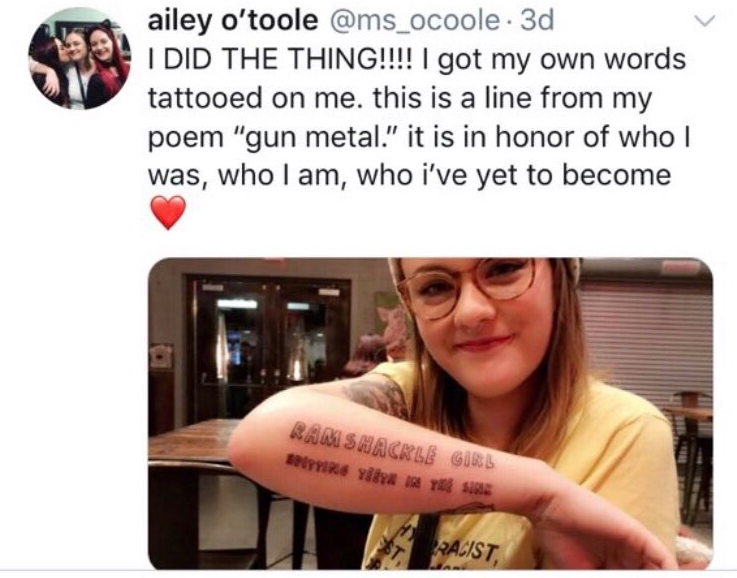
Up-and-coming poet Ailey O’Toole celebrated her Pushcart prize nomination by getting a tattoo of a line from her poem on her arm. After seeing O’Toole’s Instagram post, her former co-worker, Kristina Conrad, felt certain that she has seen that phrase before. Conrad googled the phrase, revealing that it had been lifted from blud, a poetry collection by Rachel McKibbens. Conrad emailed O’Toole’s literary press, Rhythm & Bones, with her findings, which led to the cancellation of the poet’s upcoming collection. In a misguided attempt at damage control, O’Toole DMed McKibbens on Twitter, writing that “in paraphrasing you, I had hoped to put our poems into conversation with each other and go on to explore new terrain opened up for me by your work.” Obviously, this did not sit well with McKibbens, nor did the tattoo’s questionable artistic merits. She told Vulture: “This Trapper Keeper, hollow bubble font. You took the music out of my words, you pulled the teeth out of it, you lessened the work when you rewrote it, and then you went and put it in a really shoddy font. That hurts.” Further investigation revealed that O’Toole had plagiarized from several other poets. And she probably could have gotten away with it if she hadn’t gotten that tattoo!
Leave it to Lauren Groff to shatter a form we thought we knew and turn it into something glittering and sharp. Not once, but twice this year, Groff used the standard Q&A as an opportunity to illuminate the realities of being a woman writer. First, as part of The New York Times’s “By the Book,” Groff was asked which three authors she would have to dinner (a standard question for the column). Her response: hundreds of women writers with “unlimited quantities of excellent wine and we would get blitzed and the conversation may eventually meander to touch on that most baffling of questions: When male writers list books they love or have been influenced by — as in this very column, week after week — why does it almost always seem as though they have only read one or two women in their lives?” It’s worth reading the whole thing — and then going on to read our own Read More Women series, which Groff’s gracious fury helped inspire. But she wasn’t done reinventing the Q&A. When The Harvard Gazette asked how, as a mother of two, she manages the balance between work and life, Groff put the question to bed: “Until I see a male writer asked this question, I’m going to respectfully decline to answer it.” Mic dropped.
Last year was marked by the (initially private) distribution of the “Shitty Media Men” spreadsheet, an anonymously crowdsourced document naming alleged abusers in the media and literary landscapes. It was first circulated as a kind of centralized whisper network, where women shared their warnings about who to avoid, but it almost immediately blew up publicly, causing a great deal of anger—though mostly not directed towards the men. In early January, allegedly threatened with exposure by a (woman) writer seeking to undermine the list in Harper’s, Moira Donegan came forward as the person who started the spreadsheet. (If you read one article on the whole mishegas, make it that piece, which is wonderful.) In October, on the anniversary of the list’s first appearance, professional Aggrieved Man Stephen Elliott (who had already written a long essay about his sexual proclivities/hassling of people who rejected him/conviction that being named on the spreadsheet was the only reason his book didn’t sell) filed a $1.5 million lawsuit against Donegan. Elliott also demanded the names of every woman who contributed to the spreadsheet so he could sue them as well. Gosh, we stand corrected—you must not be shitty after all.
3. Sherman Alexie and Junot Díaz Accused of Abusing Women
Continuing last year’s theme of men occasionally facing a single consequence for their actions, Sherman Alexie and Junot Díaz — each hailed as a star of literary culture — were both accused of abusive actions towards women. Alexie, who was accused of sexual misconduct by at least ten women, lost several honors (the Institute of American Indian Arts renamed its Sherman Alexie Scholarship, the American Indian Library Association rescinded an award it had conferred ten years ago, and Alexie turned down his recently-awarded Carnegie Medal). Díaz, accused of verbal abuse and one instance of inappropriate physical contact, briefly stepped down from but is now back on the Pulitzer board.
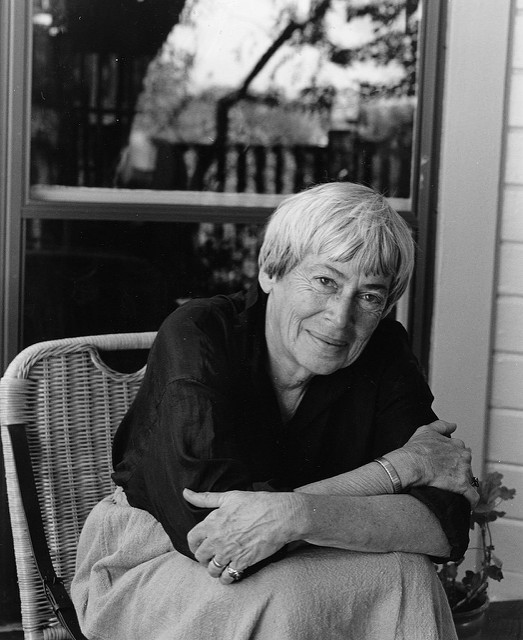
Science fiction mastermind Ursula K. Le Guin was not the only literary figure we lost this year, but she was the most influential and legendary. Not only did she write dozens of seminal novels, children’s books, and short stories; win multiple Hugos, Nebulas, and World Fantasy Awards; and achieve the rank of “Grandmaster of Science Fiction”—she also developed a folk/electronica album to accompany one of her books, which was rereleased after her death. It’s no wonder that she’s inspired not only generations of writers, but several musicians. Celebrate her legacy with an essay about her little-known piece “Introducing Myself,” read some of her previously unpublished poems that first ran in the Commuter, or go back to last year for an excerpt about how to build a vision of utopia.
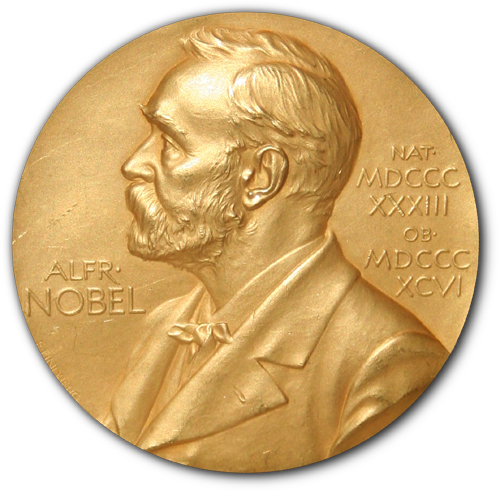
For the first time in almost 60 years, there was no Nobel prize in literature this year. Why? The short: a sexual assault scandal, corruption, and nepotism. The long: eighteen women came forward accusing photographer Jean-Claude Arnault of sexual assault (he is also accused of groping Swedish Crown Princess Victoria). Arnault is the husband of poet Katarina Frostenson, and Frostenson is a member of the Swedish Academy that is responsible for handing out Nobel prize in literature. The assaults allegedly occurred in apartments owned by the academy. The couple are also accused of misusing academy funds and of illicitly profiting from Frostenson’s insider knowledge of the Nobel prizewinners.
D o books still matter in a year when everything seems to be falling apart? Well, Rebecca Makkai, author of The Great Believers, says yes. “I write best angry. Don’t you?” she wrote in an essay for Electric Literature. “I write best desperate, I write best heartbroken, I write best with my pulse throbbing in my neck.” Based on where her book ended up on this list, she knows what she’s talking about.
If you read best angry, this was a great year for it. If you don’t, well, make the most of your limited attention span by prioritizing the novels that Electric Lit staff and contributors voted for as the best of the year. (Read to the bottom for our top pick!)
In this powerful novel about the ethics of art, a photographer accidentally captures an image of a boy falling to his death. Read our interview with Rachel Lyon.
National Book Foundation 5 Under 35 honoree Kiesling’s timely novel centers on a young mother whose immigrant husband is prevented from reentering the U.S., and the group of California secessionists she encounters in his absence. Find out the five books by non-men Lydia Kiesling recommends.
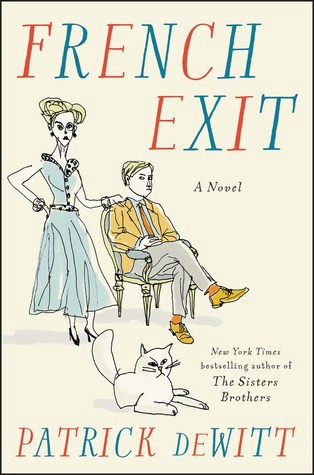
A sort of upper-class Confederacy of Dunces, French Exit is a satirical story of a wealthy mother and son with a Paris apartment, Arrested Development-level baggage, and a cat who’s harboring a secret. Read our interview with Patrick deWitt.
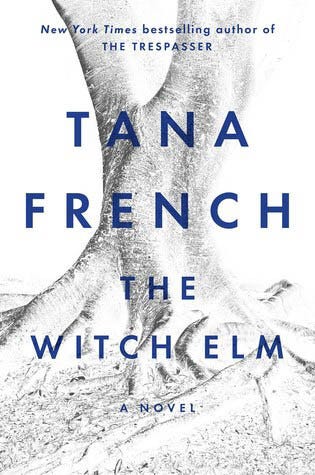
French’s first book outside her Dublin Murder Squad series is about a young man with a traumatic brain injury, and what happens when a decades-old skeleton is discovered in a tree on his family property. We talked to French about how her novel explores white male privilege.
This luminously-written book is inspired by Vladimir Nabokov’s relationship with his wife Vera, and his affair with a young woman who worked for them. Seamlessly Nabokovian letters from the Nabokov analogue are a high point. Read an essay about Nabokov by Adrienne Celt.
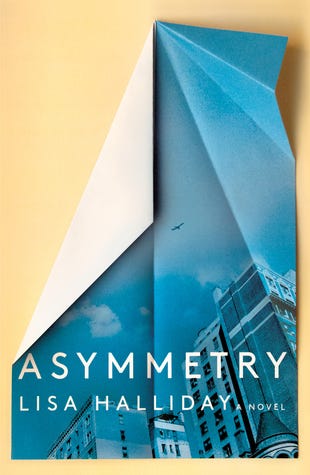
Halliday illuminates the way power operates in our lives with two deftly-handled narratives: one about a young editor’s romance with a famous older writer, and one about an Iraqi American man detained by immigration officials in the U.K.
Nobody updates Classical literature like Madeline Miller, and her reimagining of the Odyssey from the perspective of demigoddess Circe is riveting, devastating, and—for a book about ancient Greece—surprisingly timely. Read an essay about how Circe seizes the power of storytelling.
Eighteenth-century thief Jack Sheppard, the man at the center of Rosenberg’s novel, was a real person—but Rosenberg gives him an imagined backstory that invests him with new depth, sexiness, and intellect. Read an interview with Jordy Rosenberg about writing new trans narratives.
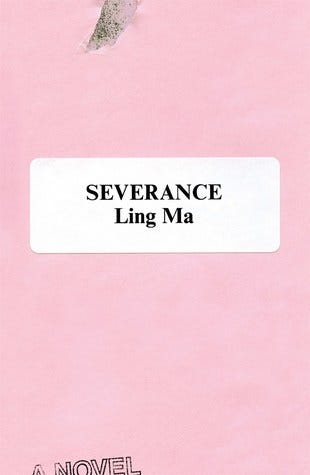
A pandemic has hit, and everyone’s evacuated New York except Candace Chen, a twentysomething working for an exploitative publishing firm. This sharp, funny post-apocalypse is a Millennial Station Eleven with capitalism in its crosshairs. Read our interview with Ling Ma.
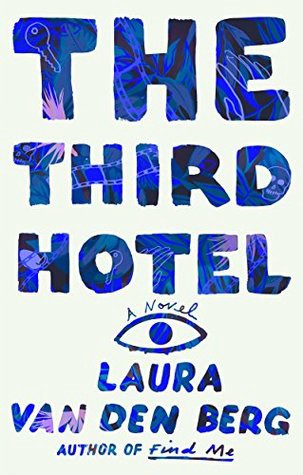
This surreal, atmospheric ghost story immerses the reader in its settings, both physical (Havana) and emotional (grief). Read an interview with Laura van den Berg.
What happens to a marriage interrupted by injustice? When Roy is sent to prison for a crime he didn’t commit, it upends his relationship with Celestial—and when his conviction is overturned, it throws them into chaos again. Read an interview with Tayari Jones, and find out which five books by women she recommends.
Makkai brings the emotional devastation and long-lasting effects of the 1980s AIDS crisis into heartbreaking focus in a novel that follows two friends over 30 years. If you cry at the end (you will), don’t worry: in our interview with Makkai, the author says she cried too.
Are you a trust-fund baby who finds pleasure in setting cash ablaze? Or are you at least shopping for one? Good news! We have curated this gift guide for writers with affluenza inspired by the lifestyle experts at Goop. No inserting gemstones up orifices necessary! (Although are you sure you wouldn’t write better with a rock up your chach?)
Do your best ideas materialize as you’re hunched on the toilet seat suffering from irritable bowel syndrome? Enter Tushy, the detachable bidet which will free your hands to scribble down that spark of genius on toilet paper before it fades from your mind forever.
Banana Lamp ($340) for the Writer Struggling to Find Symbolism
This banana-shaped lamp serves the dual purpose of illuminating light as you scrawl down the pages of your experimental novel on handcrafted Italian-marbled paper and providing inspiration for all the heavy-handed phallic symbols that every Great American Novel must have. (No yonic symbols though because vaginas are gross and should be thoroughly steamed after use.)
Smoking weed makes you a great writer. This is an undeniable, concrete fact. Boost your creativity by rolling your own with these 24K gold rolling papers handcrafted with the finest edible gold. Don’t just be at the literary party. Be the literary party.
Rolex ($10,395.00) for the Writer Who Needs a Deadline Extension
Is your pesky editor haranguing you with endless texts of “when are you going to hand in that draft, it’s been five years now?” With a yellow-gold Rolex on your wrist, you can ever-so-subtly point out that you can’t possibly meet your editor’s deadlines because fine art takes time and time is a Western construct that doesn’t actually exist and really, your editor is being a racist imperialist by imposing his absurd worldviews on you.
We hate to break it to you, but if you’re a writer, you may be a psychopath. But that’s okay. Learn how to fake emotions with these applied empathy card deck (it’s cheaper than therapy!). Pretend to be caring human being one card at a time™.
Brain Dust ($38) for the Writer Trying to Kick a Cocaine Habit
Do you feel distracted? Foggy? Tired? Going through pangs of withdrawal? Replace your cocaine habit with this herbal alternative, Brain Dust! At $38 for 1.5 ounces, this “mental potion” is a teensy tiny bit more affordable than a drug addiction. #Getdusted with the herbs “used traditionally by great thinkers” and produce better writing when you’re in a “superior state of cognitive flow, clarity, memory, creativity, alertness, and a capacity to handle stress.”
The greatest writer on Africa of all time is Ernest Hemingway. His two trips to the continent practically made him a native. Experience the real, authentic (but sanitary) side of Africa the country at this all inclusive bed-and-breakfast where you can return with a hunting trophy of Cecil the Lion II and fodder for your next novel about fearless white expats on the trail of a rare albino rhinoceros interspersed with a sprinkling of poverty porn.
As I prepared to write this letter, in which, full disclosure, I will eventually ask you for money, I did what I always do at the end of year: I reflected on all the shitty things that happened in the world and all the great things Electric Literature did in our corner of the literary internet. We reached over 5 million page views, launch a Read More Women campaign that inspired our readers, and published exceptional writers whose work is urgent and necessary.
This achievements are significant, and worth bragging about. But this year, as a more websites shuttered, and as we prepare to launch our own newly designed website in 2019, I was preoccupied by another question. How can literature not only survive, but thrive online?
A few days ago, one of our Recommended Reading contributors, Michelle Hart, shared her story “Hiddensee” on Twitter on the occasion of her birthday. I dashed off a quick comment: “This story is incredible and everyone should read it.” But something about it didn’t sit right with me. “Hiddensee” is incredible, yes, but it’s not true that everyone should read it. It’s a story about a young woman’s affair with a much older woman — her professor — and how the relationship both damages and engenders the young woman’s world view. It’s a tremendous piece of writing — the humor is harsh and unforgiving, the ethics ambiguous — and it’s not for everyone. No story is.
Literature thrives on direct, one-to-one connection. No matter how many people read a certain book or story, the experience is always personal. The markers of success online are not designed to reward writers for making people think, or cry, or miss their subway stop, but those are the benchmarks we continue to chase. I’m proud of our 5 million page views this year, but what I’m most proud of is something harder to quantify: how much we care about the people behind those page views. We’re not just here to rack up numbers; we’re here to convene a literary community that is exciting and inclusive, and to publish work that entertains, comforts, and challenges the members of that community.
Sometimes this ethos makes it harder to survive. There’s money in doing the least for the most. But we wouldn’t be able to thrive without attention, appreciation, and contributions from you, our literary community.
This year, we hope you’ll include us in your year-end giving by making a contribution to Electric Literature today. (It’s tax-deductible, so if you’re looking for a way to offset your massive freelance earnings, this is the perfect opportunity!)
Butno matter what (if anything) you’re able to give, please remember that support is not only financial. It means reading what we publish, sharing it with friends, and submitting your work. It means making it to the end of this very long email. So if you’re still with me, thank you.
Gratefully yours,
Halimah Marcus Executive Director, Electric Literature
DON’T MISS OUT
Sign up for our newsletter to get submission announcements and stay on top of our best work.
YOUR INBOX IS LIT
Enjoy strange, diverting work from The Commuter on Mondays, absorbing fiction from Recommended Reading on Wednesdays, and a roundup of our best work of the week on Fridays. Personalize your subscription preferences here.