Step away from the astronaut pen. Put down the blank book. And for God’s sake don’t order another clever mug. Writers have it hard enough in this climate of low advances and little-to-no marketing budgets without getting the same tired gifts every year. This holiday season, try one of our completely fictional and guaranteed-to-please-the-literary-types-in-your-life presents, instead. Available in every price range. Money back if not completely satisfied (unless we already spent the money on vape cartridges and homebrew kombucha kits, in which case, you’re SOL).
Pre-rejected stories. Purchased from other writers just like yours, and already rejected by editors from more than 20 top journals. No need to send these babies out and have them come back with phrases such as, “Though there was much to admire here…” or “We receive many more fine submissions than we can publish.” They can simply be filed away with the writer’s other rejected stories without the hassle of actually drafting and sending them out. A gift every serious writer will appreciate. Available in a variety of typefaces. $29.95
Sweater that looks vaguely like the one Emma Thompson wore in Stranger Than Fiction.While wearing this, writers can pretend not only that they have a book deal and that someone actually cares about their writing, but that they’ve been knighted. Reeks of cigarette smoke. $59.95
Writers can pretend not only that they have a book deal and that someone actually cares about their writing, but that they’ve been knighted.
Cat named Dylan Thomas. The must-have accessory for every writer this season. Trained to knock coffee onto the keyboard, distracting writer from hopelessly flawed novel. Also chews query letters that contain the wrong agency name and contracts that specify world rights. We’ll pay you $25.00 to take him.
Reassurance cards. Preprinted with sentiments such as, “Of course you’re talented,” “That editor doesn’t know what she’s talking about,” and “I’m sure an agent would be interested in a novella about a writer living in Brooklyn who shares your physical features and neuroses and in which the main character spends the bulk of her time ruminating about whether to move to Queens to save on rent.” Comes with punch card for Bayside Dunkin’ Donuts and bus map. $19.95
Frozen sand timer. Gives the illusion time is not running out. Ideal for the older writer. Also available in analog and digital clocks that always show 5:30 a.m. $39.95
3D book cover that looks like a tablet. Her friends will think she’s on Insta and Snapchat but the truth is she’s reading an actual book! Perfect for the millennial writer in your life. $49.95
Hamster-wheel desk. For the midlist writer. Guaranteed to get her absolutely nowhere. $1,259.00 or the writer’s last advance. She did get an advance, didn’t she?
Album of random stranger conversations. Simulates working in a café, while allowing writer to drink cheap coffee at home. Includes classic tracks, such as Self-Congratulatory Business Partners, Couple Breaking Up, and Fellow Writers Name Dropping. Single-use license allows writer to incorporate dialogue into work-in-progress. $16.99
If the writer in your life is just starting out, give her a head start with the Beginner Affectations Kit.
Writer affectations kit. If the writer in your life is just starting out, give her a head start with the Beginner Affectations Kit, which includes tips for photographing a cat blocking a computer screen or sitting on a keyboard, a New Yorker tote, and images of a dozen “shelfies” featuring more impressive books than she actually owns. For the more advanced writer, consider the Advanced Affectations Kit, featuring our bestseller, TheFine Art of Humblebragging and Vaguebooking, and instructions for baking your own book cover cake. $29.95 each
Plain white mug with nothing on it. Your writer will thank you when she finally sends in that law school application and isn’t reminded by her cup every morning that she didn’t write like a motherfucker, never really cared about the Oxford comma, and never killed anyone off in a book because she didn’t write that kind of book, though if she had it would have had a much better chance of selling than the quiet domestic fiction she actually did write. Can be purchased, too, for the recovering lawyer in your life who never wants to see, let alone drink out of, another please-do-not-confuse-your-Google-search-with-my-law-degree mug. $5.99
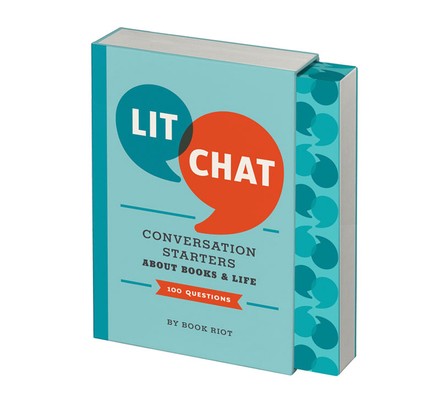
I t’s hard to combine literature and socializing. Reading a book is usually a solitary act. Sure, there’s book clubs, but there’s always that one guy who monopolizes the conversation. And don’t even get us started on literary twitter.
In our opinion, one of the best way to bond with fellow-lovers is to engage in some friendly competition. With these 9 literary party games, you can (finally) put your English degree to good use and have a fun time.
Here is a list of book-themed games for those who love literature and socializing.
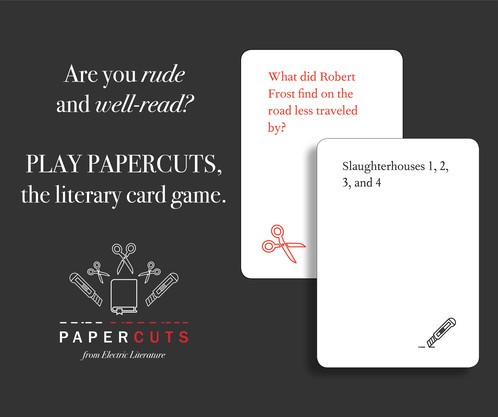
Apples to Apples and Cards Against Humanity might be fun, but do they have enough crude and witty references to literature? I think not. Play Papercuts with your friends and family, and we can guarantee you’ll have a riotous time.
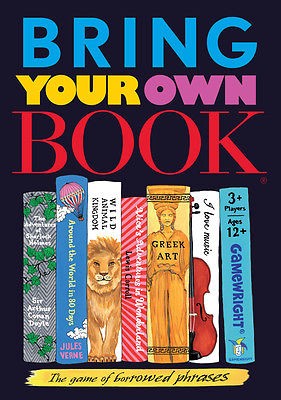
For this game, you’ll be playing in pairs. But you won’t have to team up with your less-than-favorite uncle, but rather your favorite book. To play draw a category card, reach for a book, and then find the most entertaining phrase that fits the prompt (and the judge!).
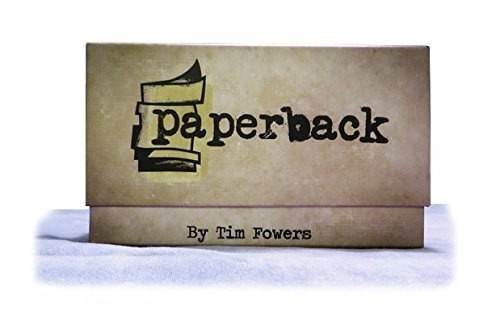
Bond over your love of fan fiction romance with Slash 2: Thirst Blood. The goal of this game is to fantasize and narrate the most passionate love story between two characters from literature, pop culture, or history.
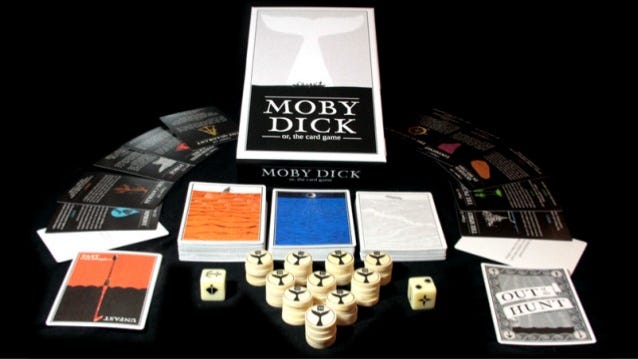
Based on Herman Melville’s novel, this 2–4 player card-driven narrative adventure game lets you collect tokens, assembly a crew, and sail the open sea to capture the Great White Whale.
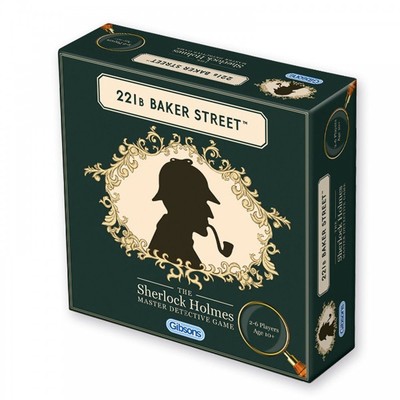
Get out your houndstooth cap and magnifying glass and don your best Benedict Cumberbatch or Robert Downey Jr. impression. This detective game is similar to the classic detective game, Clue — but with a Sherlock Holmes twist.
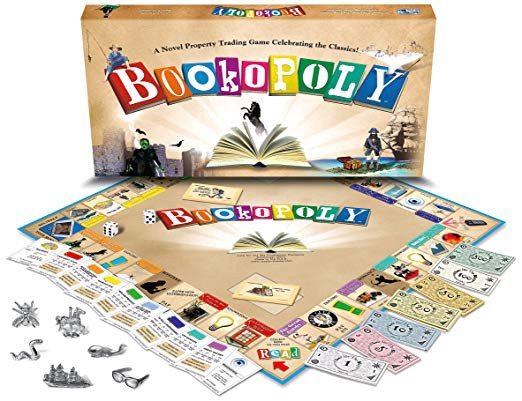
Deciding which rendition of Monopoly to get isn’t always easy. There is an unnecessarily large number of different themes; Dog-Opoly, Dino-Opoly, Game of Thrones Monopoly and even a Monopoly for Millenials. But Bookopoly is clearly the best.
I ’m nine years old and I can’t tell what library I’m in. Tampa? Or maybe we’re in Jacksonville? At some point they all start to blend together.
My parents are the Florida branch directors of an international adoption agency, here to talk about the wonders of adopting abroad. I dress a table with international flags and printed brochures, while my three sisters — ages 8, 13, and 18 — set up the chairs. A few folks start to file in, usually older white couples. Sometimes no one shows up, which seems like a bummer to me, but my parents are never fazed.
On the PowerPoint presentation is the adoption agency logo and ClipArt images of flags — China, Russia, Colombia, Vietnam, Kazakhstan. The next slide is familiar. It’s of me. The image on the left is a baby photo taken in 1996, and the one on the right is a more recent portrait of me taken on one of those cruise ship photo shoots. I have monolid eyes, thin black hair, and blunt bangs — unmistakably Asian. I’m holding a rose.The next three slides are the same, but of my sisters. My parents always started with their miracle story of how their lives changed when they brought their baby girls home from China.
My parents always started with their miracle story of how their lives changed when they brought their baby girls home from China.
At seven months old, I was the first of four girls adopted, all from different orphanages in cities throughout China. My mom, then a doctor’s assistant, and my dad, then the owner of a hardware distribution company, had gotten married a couple years before and hadn’t had a desire to have children until they saw an international adoption commercial on TV. Struck by China’s then-active one-child policy and the number of little Chinese girls being surrendered to orphanages, they couldn’t get the commercial out of their heads.
I knew this story and presentation by heart. I could’ve recited it myself. On the way out, couples would gush about me and my sisters to my parents, astounded at what “China dolls” we were, as if we were made of porcelain. Then they’d smile meaningfully to one another: This is what we could have.
I picked up Celeste Ng’s Little Fires Everywhere earlier this year on the recommendation of the literary Internet. I expected it to be good, but I didn’t expect to finish it in one sitting, staying up until 4 am, straining my eyes by the light of my bedside lamp, recognizing myself in a book in a way I never had before.
I loved the complex characters, the exploration of motherhood, the understated but arresting prose. But what I couldn’t get out of my head was the Chinese American baby. Mirabelle McCullough — or May Ling Chow, depending on what side you fell on — born to an impoverished Chinese immigrant, surrendered at a fire station, adopted into an affluent white family. Though the adoption circumstances of May Ling/Mirabelle, as I’ll refer to her, are not entirely analogous to mine, I related to this character who never speaks.
At the crux of the story is the question of who May Ling/Mirabelle belongs to. This eventually erupts into a highly public, controversial legal battle for custody of the child. The McCulloughs are upstanding members of the Shaker Heights community: long-time residents and homeowners, him a finance professional and her a stay-at-home mom. They love Mirabelle and shower her with toys — “wooden blocks in all colors of the rainbow” and an “entire shelf of dolls” and, conspicuously, a panda plush chosen over the traditional teddy bear — all housed in the bedroom and guestroom-turned-playroom dedicated to her enjoyment. They’d spent years trying to have a child. So when the adoption agency called with news of a baby “who was theirs if they wanted her,” after four years of being on the waitlist, “it felt like a miracle.”
Bebe Chow is a twenty-something waitress, making $2.35 an hour at the local Chinese restaurant. She immigrated from Guangdong, China, to San Francisco and then Shaker Heights, Ohio, conceiving a child with a boyfriend who left her after she broke the news to him. Racked with postpartum depression and no money for formula after her milk dried up, Bebe takes two-month-old May Ling to the local fire station before passing out from hunger and being taken to a shelter herself. But when she is released, she is told by the police that she had terminated her parental rights. Even as her life becomes stable in the months after, her search for her daughter turns up no leads. She recounts, “Sometimes, I wonder if I am dreaming. But which one is the dream? That I can’t find my baby? Or that I have no baby at all?”
At the beginning, I identified with the McCullough family’s plight. I thought May Ling/Mirabelle should be with whatever family is loving and could give her the best shot at life. After all, wasn’t that what happened with me? Growing up, I had never felt an allegiance to or a curiosity over a birth family I never knew. In fact, I didn’t understand why more people didn’t adopt. Why did people insist on having their own children or children who looked like them? It seemed selfish to have a natural-born child when there were so many without a good, stable family. If they really loved a kid, couldn’t they look past their race?
Growing up, I had never felt an allegiance to or a curiosity over a birth family I never knew. In fact, I didn’t understand why more people didn’t adopt.
But as the narrative progressed, I found myself ricocheting between the two sides. Like the residents of Shaker Heights, I was conflicted. These arguments are best summarized in the text verbatim: “A mother deserved to raise her child. A mother who abandoned her child did not deserve a second chance. A white family would separate a Chinese child from her culture. A loving family should matter more than the color of the parents. May Ling had a right to know her own mother. The McCulloughs were the only family Mirabelle had ever known.”
I almost never believe people when they say a book has changed their lives. Reading is my passion and my way of reckoning with the world, but it’s hard for me to point to many books where I could identify a clear “before” and “after” reading. Little Fires Everywhere awakened something in me.Adoption has been at the bedrock of my identity since I was a child, and to hear it challenged from its status as an unquestionable societal good gave me pause. Reading the book also swept the dust off and gave language to feelings I’d had about my race and Chinese heritage my entire life. For the first time, I felt recognition.
Reading the book gave language to feelings I’d had about my race and Chinese heritage my entire life. For the first time, I felt recognition.
One of my sisters recently told me it had never occurred to her that she was Asian until middle school. Up until then, she had been marking “Caucasian” on forms and standardized tests. This came as a surprise to me, because if anything, I was hyper-aware of my Asian-ness. I can’t remember a time when I didn’t scan rooms to see if I was the only Asian or non-white person around.
When you grow up in a multi-racial family, there is no shortage of questions. Do you speak Chinese? Do you remember your birth parents? Do you miss China? And since I attended conservative Christian schools, I was usually one of only a few Asian people in my class. I had a couple recurring bullies in middle and high school who would ask me how I could see with my “slanty” eyes — usually accompanied by a demonstration of what I looked like to them — or shout at me in fake-Chinese nonsense. I don’t remember having any Asian friends until high school.
At some point in my adolescence, I grew into my Asian identity more. On some level I appreciated the novelty of not being white in a largely white space, but I also hated fielding the questions. I still hate it. It’s never the curiosity that bothers me, it’s my lack of answers. No, I don’t speak Chinese. No, I don’t know my birth parents. No, I don’t remember China. I felt like a fake, Asian in name only. I hated that my existence and my right to belong in places always came with an asterisk, begged explanation.
It’s never the curiosity that bothers me, it’s my lack of answers. No, I don’t speak Chinese. No, I don’t know my birth parents. No, I don’t remember China.
Like the “progressive” community of Shaker Heights, I was part of a colorblind family. I had always known I was adopted, but the consensus around colorblindness dictates that those differences don’t exist — or at least, don’t matter. In this pervasive philosophy, hard questions are hand-waved. This is exemplified in one character’s defense of the McCullough adoption: “Honestly, I think this is a tremendous thing for Mirabelle. She’ll be raised in a home that truly doesn’t see race. That doesn’t care, not one infinitesimal bit, what she looks like. What could be better than that? Sometimes I think that we’d all be better off that way. Maybe at birth everyone should be given to a family of another race to be raised. Maybe that would solve racism once and for all.”
Colorblindness is the most convenient worldview to have in the United States, circa 2018. To consider the proposal above a fascinating thought experiment, to use children for virtue signaling and cultural cachet, it’s the height of white privilege. While adherents to the idea that race should not be talked about may mean well, the philosophy has no legs. Beyond being an inaccurate reflection of history and today’s cultural climate, it ignores and silences any narrative to the contrary. It’s an ideal that relies upon everyone collectively — conveniently — forgetting what has transpired in the world since the beginning of time.
My family was an average American, middle-to-upper-middle-class family in every sense. Hot dogs for the Fourth of July, turkey for Thanksgiving, ham for Christmas. Disney Channel and Cartoon Network on TV. Wardrobes from Limited Too and Barbies from Toys R Us. Cats and dogs filling the hallways. English, the only language spoken at home. I felt normal and loved at home, but stepping beyond the front door, I didn’t know yet how to reconcile my insides with my outsides.
In Little Fires Everywhere, the child — named May Ling, her name as indicated by a handwritten note in which Bebe asks the recipient to “give her a better life” — was renamed Mirabelle Rose McCullough hours upon her delivery to the McCullough’s house. They pored over the name dictionary for two hours before settling on a new one to “celebrate the start of her new life.” Mrs. McCullough gushed, “Mirabelle means ‘wonderful beauty.’ Isn’t that lovely?”
Like May Ling/Mirabelle, I have two names. I was born Mao Bao. It’s on my Chinese birth certificate. My given name is Taylor Moore. I was named after the singer-songwriter Taylor Dayne. According to the Social Security Administration, Taylor was the 6th most popular name for girls in 1995, cornering the market with 1 percent of births in the United States.
I have never had to go by Mao Bao, as the paperwork for my name change and citizenship went through almost immediately upon arrival in the US. But Taylor Moore feels even more foreign. I’ve always made jokes about my generic-sounding, unisex name. Everyone knows a Taylor, a Moore, sometimes even both at the same time.
A dissonance exists between my name and my appearance as a Chinese woman. It feels like a placeholder name, something that was made up on the spot, another John Smith. It’s strange to not have your name line up with your sense of self. It confuses people sometimes, that my name contains no reference to where I’m from. They assume that my father must be white and my mother Asian, to have a name like mine.
It’s strange to not have your name line up with your sense of self. It confuses people sometimes, that my name contains no reference to where I’m from.
In the past, I’ve wished I had a Chinese last name, so I wouldn’t be constantly subjected to pointed questions like, “So where are you really from?” I’d probably still get those questions, but at least I would have a tangible connection to my heritage — an allegiance, a line in the sand, a drop-pin on a map indicating, “You are here.” More often, I’ve wished that I were white. To “match” your family is to fly under the radar. We attracted attention wherever we went, especially when me and my sisters were younger. After a while, you get used to being cooed at, stared at like a novelty, revered as a success story.
Having to explain who you are and why you look the way you do is exhausting. Knowing that people have good intentions is even worse because you’re not allowed to affect anything but bright-eyed engagement. They ask, “What is it like to be adopted?” as if I’ve experienced anything else. They tell me, “I want to adopt from China someday,” as if asking for my support. There’s no way to tell people, “It was the best and most confusing thing that’s ever happened to me” and “How much have you thought about this?” without inviting more questions.
The displacement doesn’t end there, because I have never felt comfortable around Asian people either. In fact, my experience around them has been minimal because I’ve always counted myself out. I could’ve joined the Asian-Pacific Islander and Chinese student organizations at my college, but I balked each time I was invited. From my standpoint, those clubs existed to provide forums for people with shared experiences, but what experiences did I share with them? I don’t know what it’s like to, say, make dumplings with my Chinese grandmother. I don’t know the inside jokes that comes with going to Chinese language classes. I didn’t grow up with immigrant parents. Even those examples are conjectures — guesses based on the limited experience I have with people who look like me.
I’ve had both white and Asian friends tell me I’m not a “true” Asian. Those still sting. It felt cruel that I should look the way I do and be subjected to dumb lines of questioning and racist bullying and unconscious bias, only to be stripped of my identity because my parents aren’t Asian.
I don’t know yet how to reconcile the emotional struggle of not fitting in with the objectively good and fortunate life I’ve had from being adopted. Traditional adoption narratives are overwhelmingly call-and-responses of selflessness and gratitude. The selflessness of the rescuer and the gratitude of being rescued. Lost in the narrative is the perspective of the adoptee, unvarnished by platitudes and the ever-present fear of seeming ungrateful. Only recently, with books like Little Fires Everywhere and Nicole Chung’s memoir, All You Can Ever Know, has the dust been blown off to reveal the nuances of these complicated origin stories.
International adoption has been on a steep decline for years, with countries like Guatemala and Russia and Ethiopia having halted the practice. Online, it’s not uncommon to see international adoption decried, often in elite, liberal publications, as “imperialism,” “colonialism,” “abduction,” “state-sanctioned violence,” a product of the “white-savior complex.”
But when my parents send me a “Happy Gotcha Day” text every July 24 to commemorate the day of my adoption from China, how could I see it as abduction? Can I simultaneously hold the beliefs that my family is good and that the cultural displacement that international adoption engenders can be harmful?
In one scene in Little Fires Everywhere, a reporter interviews one of the McCullough family’s neighbors, who says, “You can tell that when she looks down at that baby in her arms, she doesn’t see a Chinese baby. All she sees is a baby, plain and simple.”
“She’s not just a baby,” an Asian woman says as a counterpoint. “She’s a Chinese baby. She’s going to grow up not knowing anything about her heritage. How is she going to know who she is?”
Joan of Arc may be a saint, but she’s still not good enough — at least in the theater community, where she has made repeated appearances in the past few years. The teenage warrior has been the subject of a foot-stomping rock musical, a lengthy drama, and a familial tale told through the eyes of her mother. But none of these portrayals of the Maid of Orleans have satisfied critics. Each of the productions earned middling reviews claiming the portrayal of the teenage soldier wasn’t good enough. Something was missing. Sometimes they couldn’t even articulate what it was.
A skeptical audience is nothing new to Joan of Arc. In the 15th century, after hearing voices in her family’s garden, she embarked on a journey to see the French crown prince, Charles of Valois, claiming that holy visions were commanding her to lead the country’s army against the occupying English. Though the Dauphin (perhaps out of desperation) took her seriously, suspicion dogged Joan and her visions, eventually to her death. Following a successful Siege of Orleans, Joan, who was praised by the French and stood alongside Charles when he was crowned King of France, was captured by the Burgundians at Compiègne and held captive. She was then charged with more than 70 crimes, including witchcraft and dressing as a man. Steadfastly defending her innocence, Joan was found guilty of heresy and burned at the stake.
In one show, she wasn’t religious enough, according to critics. In another, she was too devoted to her cause.
Joan’s story seemingly provides the perfect origins of a thrilling drama. Religious devotion and fanaticism, military battles, imprisonment and an unjust trial should make for a riveting night at the theater. But the three wildly different portrayals apparently failed to do her justice. In one show, she wasn’t religious enough, according to (mostly male) critics. In another, she was too devoted to her cause. In one she was too much of a fanatic, and in another she was too steady and calm.
Joan’s remarkable achievements are seemingly easy to dismiss when she is too passionate or too calm, too masculine or too feminine. Joan of Arc: Into the Fire was discarded as a boring production, despite its pulsing rock numbers and athletic choreography, and Joan’s certainty in her ability and cause were subject to criticism. Ben Brantley wrote in The New York Times: “This is someone who proceeds without reflection or internal debate, and who knows she’s right no matter what anyone else says. She is, in other words, a fanatic, which is a scary thing to be these days.”
By contrast, Condola Rashad’s Maid of Orleans in the 2018 revival of George Bernard Shaw’s Saint Joan was criticized for being too serene. Jesse Green wrote in The New York Times: “Ms. Rashad’s Joan is always relaxed, never riled or cowed… A hero and genius she may be, but somehow also inert: not much different from a statue if it were blessed with leadership abilities.” Green did, however, remark that the production “does have the salutary feminist effect of highlighting competence instead of hysteria.” Then again, perhaps Rashad was too hysterical. The Hollywood Reporter, after praising Rashad’s male co-stars, wrote that the star “never quite gets a handle on the role, changing her demeanor and attitude from one scene to the next.” Like Hillary Clinton — too stalwart through an 11-hour grilling before the House Select Committee on Benghazi, too passionate in declaring racism “deplorable” — Joan of Arc offends both in her calm demeanor and in her emotion.
A mother’s point of view dictates Mother of the Maid, which is playing at The Public Theater with Glenn Close starring in the title role. Jane Anderson’s script focuses on Isabelle, Joan’s mother, and her reaction to her daughter’s reluctant admission that she is “having holy visions, Ma.” Joan, first introduced as a surly teenager resisting her mother’s attempts at matchmaking, is seen through Isabelle’s fierce maternal protection — that inspires her to walk more than 300 miles to visit “Joanie” at the Dauphin’s castle — and her bewildered admiration of Joan’s ascension to being a religious symbol. Interestingly, Anderson’s script fuses the religious and the sexual in a way unseen in the previously mentioned plays. Many critics hardly took note of this Joan, though, choosing to focus on criticizing the script for its uneven tone and praising Close’s performance for its devotion and ferocity. As David Rooney wrote in The Hollywood Reporter, “Matthew Penn’s handsomely appointed production has one affecting interlude close to the end, when Isabelle is granted access to Joan’s cell. She tenderly bathes and dresses her daughter, cradling her with comforting words before the convicted prisoner is torn from her arms to be executed.” Isabelle’s maternal anguish — feminine and pious — was more palatable than Joan’s tragedy, which resulted from her courageous attempt to move beyond the traditional role of a young woman.
Joan was burned at the stake in 1431, and these dramatizations of her life were performed in 2017 and 2018. But despite the many centuries that have passed, little seems to have changed. No matter how much she accomplished, or how eloquently she made her case, the teenage warrior has not been heard. Watching these productions, I kept thinking of the Presidential debates and the criticisms lobbed at Hillary Clinton. Whether a woman is a military commander, a religious symbol, a political inspiration, or simply the most qualified person to do a job, she is unable to prove herself worthy of the respect of a patriarchal system evaluating her performance.
No matter how much she accomplished, or how eloquently she made her case, the teenage warrior has not been heard.
Twenty-five years after she was burned at the stake, Joan was tried again posthumously, going on to earn status as a folk saint. It wasn’t until 1920 that Joan of Arc was declared a saint of the Roman Catholic Church, after much resistance. It took almost 500 years for the Maid of Orleans to be recognized by the church, but her story cannot seem to find a welcoming audience. No matter how it is told, be it edgy rock music or old-fashioned drama, Joan’s accomplishments are lost in the presentation of the story.
Joan steadfastly defended what she believed to be right and true, but her words were lost in the seemingly infuriating impression she made on the men judging her, who (among other infractions) were angered by her wearing military clothes and charged her with dressing like a man. We have not, as a society, moved beyond caring more about a woman’s clothes and demeanor than her principles. Consider the absurd recent slam on Alexandria Ocasio-Cortez’s suit, or the way Dr. Christine Blasey Ford, testifying before the Senate Judiciary Committee about an incident of sexual assault by Supreme Court nominee Brett Kavanaugh, was described as “pleasing” and “attractive” by Senator Orrin Hatch. Or consider the people who told Hillary Clinton she should smile more after she defeated Donald Trump in the presidential debate. It’s the same story in entertainment; sexist commentary packed reviews of the first installment of the Wonder Woman franchise, along with complaints of failed expectations, and meanwhile some observers criticized a newly-revamped children’s cartoon heroine for lacking sex appeal.
A long time has passed since Joan was recognized, and even longer since she was killed, but it appears that no matter how she, or any female hero, appears to the public, Joan’s destiny is to be deemed unsatisfactory — much like women seeking power today. Even being a saint and a hero is not enough.
The one thing the Academy of Motion Picture Arts and Sciences, my grandmother, and every 17–22 year old girl in the country can agree on is that Timothée Chalamet represents a new golden age of film adaptations. After Call Me By Your Name premiered last year, nearly everybody I know picked up a copy of André Aciman’s tear-jerking novel, if for no other reason than to understand how the peach scene was rendered on the page. (The answer? Markedly less shocking than the toilet scene, but you’ll have to read the book to see for yourself.) I was just thrilled to see unusual suspects throwing themselves into literature — which was, for some, the first time in years. After CMBYN’s sweeping success, it seems Hollywood took notes: nearly every huge indie flick and box office blockbuster we’ve seen this year sourced its screenplay on a book. Before the year is out, be sure to check out such budding-cult phenomena as Crazy Rich Asians, Love, Simon, Ready Player One, Annihilation, Boy Erased, To All The Boys I Loved Before, Ava DuVernay’s A Wrinkle in Time, and of course, Chalamet’s Oscar-grabby performance in Beautiful Boy, and read the books that inspired them! 2019 is ushering in a whole new wave of adaptations that you’ll surely want to get abreast of! Check them out below.
After the Before trilogy and Boyhood, I trust Richard Linklater with any and all off-beat romantic comedies, and with Cate Blanchett as the agoraphobic genius at the heart of Maria Semple’s novel, this adaptation is sure to be a riot. Kristen Wiig and Judy Greer round out the perfect comic cast.
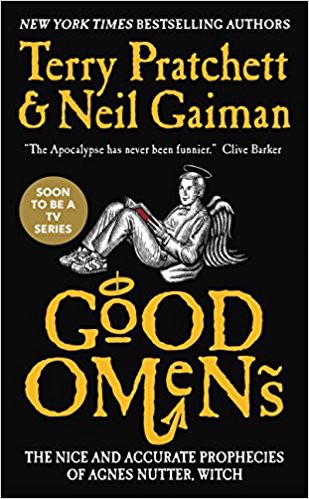
With shows like The Good Place and Westworld still topping the streaming charts, it seems existential despair is the hottest entertainment property right now. Further stoking our communal weltschmerz will be this Amazon series of Gaiman’s uproarious apocalypse book. Sci-fi vets David Tennant (Doctor Who) and Michael Sheen (Passengers, Tron) are joined by Jon Hamm, who proved his own dystopian chops in my personal favorite Black Mirror episode, “White Christmas.”
After we all collectively mourned the tragic death of sweet, innocent Spiderman in the latest Avengers installment, the gods seem to have answered our prayers: Tom Holland is gracing us with another role. Somehow, the producers got Charlie Kaufman to write this YA screenplay, so expect something deeply sinister and nihilistic to underscore the action. Hard to fathom the man behind Anomalisa and Synecdoche, New York adapting a plot written for teenagers, but I’m not complaining. This will definitely be a sight to behold. Plus, who doesn’t want an onscreen romance between Peter Parker and Star Wars’ resident badass Rey?
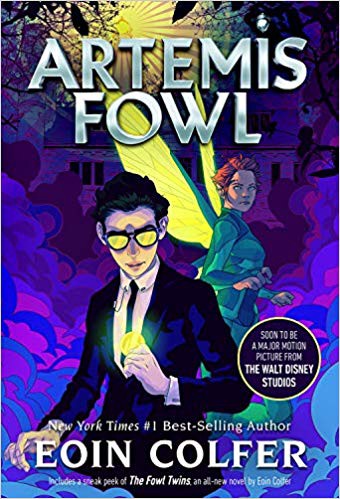
Sir Kenneth Branagh is directing Dame Judi Dench. Need I say more? It’s been ages since all my elementary school classmates collectively came of age with this beloved series, but I couldn’t be more thrilled to bathe in the nostalgia. Don’t lie, when you read the books you too were convinced you were a child criminal mastermind. Just me? Well, in that case, see the film for those bloody good Irish accents.
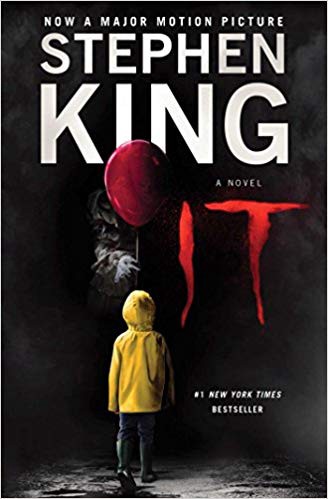
While I found the first film to be… underwhelming, I know I was in the microscopic minority. People went crazy for the (allegedly) spine-chilling blockbuster. For some reason (where were my parents?) I got my hands on the book when I was in fifth grade and, after reading the bathtub scene, didn’t sleep for three weeks. With this foundation, when I saw the movie at a special pre-release screening in theaters last year, I found it to be distinctly un-scary and a disservice to King’s talent. Nevertheless, I’ll be giving Hollywood a second shot with the sequel, in which Jessica Chastain and James McAvoy supplant Sophia Lillis and Jaeden Lieberher as likeable power duo Beverly and Bill.
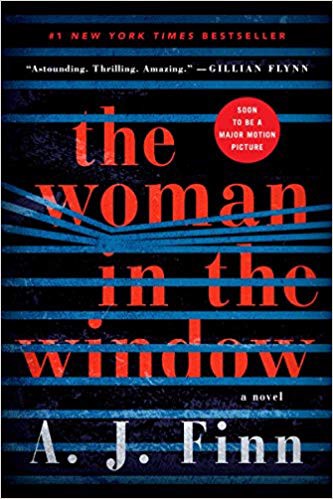
The second story on this list about a woman with agoraphobia, the Hitchcockian New York Times Bestseller Woman in the Window boasts none of the levity and mirth of Linklater’s Bernadette. Child psychologist Anna Fox (Amy Adams) witnesses something horrifying while spying on her neighbors, launching her into a maelstrom of crime and darkness. Julianne Moore and Gary Oldman costar.
Everybody’s choice book club book from 2013 is hitting the big screen, folks. I’m eager to see what stacked ensemble Sarah Paulson, Nicole Kidman, Ansel Elgort, and Luke Wilson bring to the celebrated Pulitzer Prize winner.
More Kenneth Branagh, in case anyone besides me cares. More importantly though, more Agatha Christie! Branagh follows up Murder on the Orient Express as Poirot in Christie’s classic whodunnit.
I haven’t the slightest clue how they intend to cinemafy Heller’s postmodern satire (although it’s been attempted before), but I do know George Clooney does charismatic antihero as well as anyone. Christopher Abbott, otherwise known as my sexual awakening Charlie Dattolo in HBO’s Girls (r.i.p. Charnie/Marlie), will be playing the befuddled bombardier Captain John Yossarian. Coming to Hulu sometime next year, so be sure to snag your ex’s mom’s login info to stream it.
Truth be told, I haven’t read the book for which Lethem won the National Book Critics Circle Award, but I loved Fortress of Solitude and I feel like that gives me substantiated right to speak on the matter. Also, since it won the award, some people probably thought it was pretty good. Also also, Bruce Willis, who’s starring alongside writer/director Ed Norton, Alec Baldwin, and Willem Dafoe, lives in my hometown.
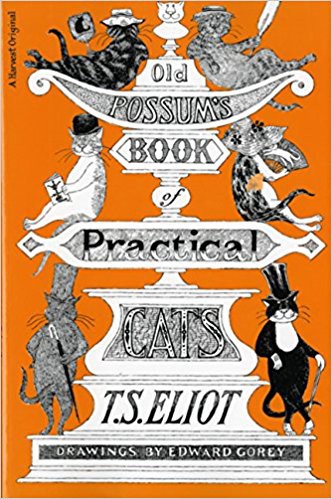
Okay, I’ll be honest again since I’ve set the precedent for that above. I think Cats! is a heinous abomination and nobody should ever pay to see it on Broadway. Don’t @ me. Andrew Lloyd Webber, you did something unconscionable to T.S. Eliot and I do not forgive you. Listen, I’m also bitter because Universal was slated to release Wicked instead, but the seminal Oz story has been reportedly pushed back. Regardless, every time I read something about the Cats! movie it’s somehow more shocking than the last. Ian McKellen, James Corden, and Idris Elba in feline suits? Plus Taylor Swift’s in it, who recently broke her silence against white supremacy, so I guess we can like her again? While the jury’s still out on Swift’s cultural absolution, we can at least thank God that Jennifer Hudson will portray Grizabella. I already know what I’ll be listening to on my morning commutes next winter. Meeeemory, all alone in the mooooonliight…
It’s like Greta Gerwig got my Christmas list a year early. Emma Watson as Meg? Timothée Chalamet as Laurie? MERYL STREEP AND LAURA DERN AS AUNT AND MARMEE MARCH?! I’m proverbially salivating. Been psyched for this one ever since Chalamet posted a behind-the-scenes shot of repeat-costar Saoirse Ronan on set.
Another NYT bestseller. Though Netflix’s IMDb description of this YA flick reads like a tweet spoofing John Green — “The story of Violet Markey and Theodore Finch, who meet and change each other’s lives forever. As they struggle with the emotional and physical scars of their past, they come together, discovering that even the smallest places and moments can mean something” — I’m game for everything Elle Fanning does.
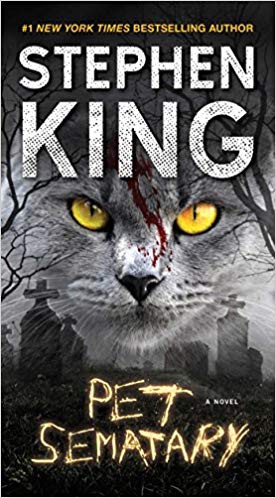
In spite of my disappointment after It, I’ve got a good feeling about this Stephen King adaptation. Should be fun to watch John Lithgow use a Native American burial ground to resurrect the Creed’s dead cat.
Advertised as “perfect for fans of The Fault in Our Stars” so prepare accordingly, Five Feet Apart follows the tragic star-crossed love story of two cystic fibrosis patients, Cole Sprouse and Haley Lu Richardson, after they meet in the hospital. In the trailer, Stella (Richardson) declares, “This whole time I’ve been living for my treatment, instead of doing my treatment so that I can live, and I want to live.” Yikes. Readying my tissues and suspension of cynicism now.
The story of two sisters struggling to survive amidst the German occupation of France during World War II, this triumphant historical fiction novel spent nearly a year on NPR’s Hardcover Bestseller List.
Last but certainly not least — in fact, the bullet point about which I am personally most excited — Oscar winner Barry Jenkins (Moonlight) is developing an eleven-episode series for Amazon based upon Whitehead’s novel of the same name. Jenkins just debuted his first book-to-screen adaptation at festivals this year: the critically acclaimed tour-de-force after James Baldwin’s If Beale Streat Could Talk which hits major theaters nationwide December 14th. If you haven’t already, read Whitehead’s heart-wrenching, erudite, revolutionary Pulitzer Prize and National Book Award winner ASAP. The release date for the film has yet to be disclosed, so the clock’s ticking!
Somebody comes to your door with a “treasure” they’ve found for you, something so hot, it smokes: a recording of a few of your friends or acquaintances, a little drunk at some party, talking smack about you. In this case, it’s the only Havana party I’ve attended in years, yesterday’s party.
I still smell of cigarettes and rum from last night and the consequences are already playing out.
It’s noon and I haven’t had my first coffee of the day yet, I haven’t showered, I haven’t brushed my teeth. I’m sitting on the toilet trying to reconstruct faces, dialogues, circumstances. My soul isn’t even back in my body yet, and everything’s irritating. But it must be time, because there’s a knock at the door. I should pull myself together and show my face. They insist, they come at me in the fiercest way to make me confront the raw, revealing truth.
A golden iridescent string appears like an arrow, the smell of cologne breaks through the tiles. The magic string lands and connects me with life: water on water; I wake up and mark my turf. I spring toward the day, filling it with song, the echoes in the bathroom, and the bad news . . . which won’t wait.
Oh God/ to raise horses again/ they’re nothing/ more than sad beasts . . .
Radio Reloj, noon in Havana, Cuba; 6 p.m., Madrid, Spain; 6 p.m., Paris, France; 9 a.m., Vancouver, Canada;11 a.m., Quito, Ecuador; noon, La Paz, Bolivia; 11:30 a.m., Caracas, Venezuela; noon, Santiago, Chile;5 p.m., London, England;11 p.m., Hanoi, Vietnam . . . now broadcasting, Radio Reloj, from Havana, Cuba . . .12:01 p.m., Radio Reloj.
The State Security guy assigned to my family has finally shown up. It’s the same charismatic, charming, and almost indispensable guy who sat with us at the dinner table while my mother set traps for him so she wouldn’t fall for his ruses. It’s the same guy who informed on my parents’ experiments and their possibilities of escaping while carrying classified information. There’s a very brief moment when Cuban science knows things the intelligence agencies don’t know. For reasons of security, they’re not told about certain decisive steps. These are delicate moments. And, those, surely, are precisely when Alberto, the “family spy,” established the “best” connections between my parents and his superiors.
Which of the recent studies were authorized? Were they on animals or diseased humans? Is the brain an active area of research in Cuba? What are the ethical limits? Has anyone signed a consent form for research in the name of a terminally ill relative? Are unidentified bodies used for research? Are you planning on going to any conferences? Will you see any deserters or relatives during this trip? Do you remember that doctor, also a researcher who defected, the cardiologist who now lives in Puerto Rico? All this was put on the table in the most natural way and, between rum and beer, cigars from the corner store and Populares cigarettes, a chain of jokes would be set loose to get much more out of my mother than a mere laugh.
“Better the devil you know,” my mother would say, resigned, her cigarette held high, making rings that would dissolve on contact with her very thin nose and the thick lenses of her seventies- style glasses.
She’d throw out abstract and alarming adjectives just for him, Latin phrases or very rare grammatical constructions straight out of her incomprehensible scientific vocabulary, her very stiff manners marked by how she was raised, and her medical education. My mother never forgot the Hippocratic oath, and maybe that was what saved her from falling into decadence and treason. She had a canon of wisdom and ethics this society could never change, but which it tried to violate time and again. That’s how she spent most of her life: on the lookout so she wouldn’t lose her way.
My father was the opposite: always silent. He’d sometimes share his rum with the “family spy.” When he came by himself to do his questioning, my father, drink in hand, would signal to my mother as if this matter belonged to some other department. His greatest weapon was always delegating.
In my adolescence, all that always seemed like adult stuff, problems between my parents, and a performance that was well beyond me . . . But I was totally wrong. The representation of that betrayal was just the first step in the disintegration of our family. Later, we would have a front-row seat to view the process of our lives falling apart. It’s possible everything that happened afterward, even the accident, was a result of Alberto’s snitching.
Now I’ve taken my mother’s place. I take a deep breath. I commit myself to her and follow her example. The dinner table isn’t set but the guest continues to play out his dangerous role. I don’t understand why he visits me. Can I be a real object of persecution? Or is it an old habit, his addiction to informing, that compels him to investigate me? Do they still listen to this man in this country? Is he capable of spying on both artists and scientists? What’s his specialty? Are they still using old KGB methods? Why me? Who am I to him, to them?
The techniques have gotten more sophisticated, technology has reached us here, and the “family spy” connects his memory stick to my computer. I make coffee as I listen to the blaring soundtrack from La fiesta vigilada.
I try to imitate my mother’s gestures, to repeat them as if I were rehearsing a ballet. I try to stay calm and go with the flow . . . Oh! But it’s terrible to listen to this bunch of friends and acquaintances, and even strangers, finding the perfect sarcasm to demean what I’ve achieved.
They ignore how difficult it’s been and is to be alive in my right mind.
Jokes, jokes, sarcasm . . . Lies or modifications of the truth. The recording comes to an end. A profound silence.
It would seem as if my world ends right there and then. I want to flee from my own house, which feels confined and suffocating now.
What am I going to do?
How many times have you itemized your parents’ or your friends’ shortcomings aloud, or even your own, crying in a lover’s bed, or in the quotidian darkness of a friend’s room as dawn breaks on a terrible Saturday?
This is overwhelming.
What do they want from me? What do they expect from these games of social daggers? To bring me down? To disarm me? Disconnect me from others? To isolate me more and more until I’m speechless? Why is this man at my door with this stick full of voices? What’s the endgame after they do us the favor of having us deny the few affections that still survive? How did they record this?
You can recognize the accents. There’s irony in the air, and the way they insist on how thin you are, your histrionics, your fears, your weak points, your personal failures, and, above all: your past. Where did Compañero Alberto dig this up? Is it just a coincidence he showed up here with this time bomb in his hands? Should we be grateful to know who’s who? Are you a bad person? Did you behave badly enough in your life to deserve this? Shouldn’t you try to not damage other people’s sacred intimacy? Is this some kind of Decalogue? Or a right violated in the course of the divine and fragile passage of daily living?
I cross the hallway to my studio. I look at a photograph of my mother . . . When the hell have you ever cared what anyone ever said about you? she asks from the picture frame.
Should I thank him? Invite him in for lunch?
No, you can’t be grateful to people who do you these kinds of favors. You ask him to leave your house immediately, you kick him out of your life, and push him into the abyss because of what he is, a traitor. But it’s too late; you’ve heard everything.
And your other friends? And the other parties? And the authorities? And you, with you? Where are you?
You look around your living room, check your bedroom, walk around the kitchen, and analyze the layout of your domestic life. They’ve applied their techniques here too. Where did they put the microphones?
In the picture frames, in the decor, in your clock, in your cell phone, in your stereo equipment . . . Or did you really think they didn’t spy on you?
They say this happens in countries all over the world, that it’s a question of national security. Matters of state, a priority policy to protect the citizenry.
But, me? Who am I? A small woman who writes things and can’t deal with her own fate, much less with State Security or the integrity of the nation.
They record your phone conversations and file them away until they determine you are not a danger to the public. Thirty years will go by, your voice will change, you’ll lose the last of your loved ones and that’s when they’ll be done with you. And for what? Who will feel secure because of your insecurity?
Where are the microphones so I can pull them out by the roots? Where are they?
We can’t know. Can the compañero who records the conversations tell me?
I pick up the phone and ask: “Where are the microphones?”
The truth is that the real microphone — after years of whispering and refraining from saying what you think — the real artifact is already inside you.
I am a short story writer and need your blunt advice on how to build up conflict in a short story.
FA
Note: This month, the Blunt Instrument welcomes a guest columnist, the novelist, essayist, editor, and instructor John Cotter, to answer a fiction question.
Here’s my advice: Write about people you’d want to spend time reading about. Now give them a problem: They need X, where can they get it? They try like crazy. The Big Bad (their ex, or late capitalism, or getting their strength back after a bad course of luck) is creative and multifarious. The Big Bad is a spider and his web “has a thousand radiations, and he knows well every quiver of each of them.” But it’s not just the Big Bad, it’s them, your protagonist, who are themselves conflicted in defeat. Maybe X is a mistake, they wonder, as X seems so far away, and Y is what they wanted all along? Y might be easier, and Y just walked into the bar with an ass you could bounce a dime off. But the next morning everything is clear again, and even though it’s harder to get X than ever (they wasted time on a dalliance, showing something both good and bad about themselves in the course of it, as don’t we all?) they’re more determined. X will be theirs! But it won’t. X itself defeats them. And we love them by now, so we stay with them to see how they’ll recover. But wait…
In “Special Economics,” from her 2011 collection After the Apocalypse, Maureen McHugh writes a story where the antagonist, the Big Bad, couldn’t possibly be Trouble Finding Work because the economy in Shenzhen is cherry: “Everybody knew you could get a job in no time in Shenzhen. Jobs everywhere.”
Nineteen-year-old Jieling — who interests us, because when we meet her she’s hustling in a trash market, busking a not-great hip-hop routine; she’s just come to the city from the North and she’s alive but at sea — needs a job pretty bad. An ad blares “ONE MONTH BONUS PAY! BEST JOBS!” But the reader figures they know the world better than Jieling does and worries she’ll be conned. The work, light lab stuff, isn’t hard, but she lives in factory quarters and they’ve been charging her for food and rent. Her new friend Baiyue’s in the same boat. “I’m almost out of debt and when I get clear — ” Baiyue confesses — “I can quit.” That’s conflict layer one, which ratchets up when Jieling also falls into debt.
Layer two: what they’re making in that factory are biological batteries — sting ray cells altered with bacteria in a slick black box. Americans buy them because they don’t increase global warming. Jieling toys with one of the finished boxes in her room. “Can you see the cells,” she asks Baiyue.
Conflict is the key to an exciting short story
Baiyue shook her head. “No, the feed mechanism doesn’t let you. They’re just like the ones we grow, though, only they’ve been worked on in the tissue room. They added bacteria.”
“Can it make you sick?”
“No, the bacteria can’t live in people,” Baiyue said. “Can’t live anywhere except in the box.”
This is conflict of an ethical kind, and that conflict only increases the story’s tension, due to something I hadn’t mentioned before: This is a slight-future China recently depopulated by an avian flu, in which — as happens often — a virus hopped from a bird to a human, a zoonosis. “No, the bacteria can’t live in people.” What if they jump?
Level three: all the girls at the factory work in debt, to the factory, most over a year’s worth of it. If she could score a promotion, Jieling’s salary would increase, her debt limit would go up, and she could afford the really nice clothes from the factory store. If the reader is perceptive, they have long ago begun to see this as a critique of capitalism itself, its reach toward neo-feudalism, thus implicating the reader. But good fiction’s complicated: Communism, in stories from the characters’ parents, doesn’t sound great either. “What would it be like to just give up and belong to the company?”
Level four: If you run away from the factory, you’re arrested for shirking on a debt. Level five: Busking for cash, they meet a nice man who asks probing questions about their work. Is he a factory spy? No, but he’s a government spy and he’s holding a gun.
So, how does a story writer build tension? Start with questions and, every few pages, answer one of those questions, then ask a new one. A guy who looks a lot like Superman puts on a costume in Vegas and tries to talk tourists into letting their kids pose alongside him. Who is this guy? How’d he wind up in Vegas? Do I care? You do care because he’s sweet and naïve. Is he making bank? Barely, and he’s taunted by other characters in other costumes. Why doesn’t he quit? He can’t — all he moved to Vegas with was this costume. He loves being Superman. Will he make it here in Vegas? He won’t, because his money and ID and phone get stolen. By who? Some punks. What next? That’s Cari Luna’s “Superman” from Guernica.
Start with questions and, every few pages, answer one of those questions, then ask a new one.
Here’s another approach: Start telling one story — a Thanksgiving group finishes dinner by a crackling fire, having “finished off an entire chocolate pie and three bottles of wine” — then tell more stories. Ann, wife of the narrator, relates how she got lost in a snowstorm training dogs in Saskatchewan. She’s the narrator now. She and her client Gray Owl try to find their way home in the fading light when Gray Owl disappears beneath a lake. She tries to find him but it’s a new story, an enchanting one: she and Gray Owl lost in a seasonal cave beneath the ice roof of the frozen lake above. An intimacy builds up between Ann and Gray Owl, mirroring the intimacy of the dinner we started with, but preceding it in time. Will they find their way home? (We know she does, but we wonder anyway.) What will happen between them? And how does Ann wind up years later and far away? That’s Rick Bass’s “The Hermit’s Story.”
A character wants something: to get a job, to find their way home, to survive in a strange new place. They’re determined but things get complex. We worry for them, and for the writer too: Will the conflict remain fraught enough to keep us reading? Conflict isn’t easy. We read on to see.
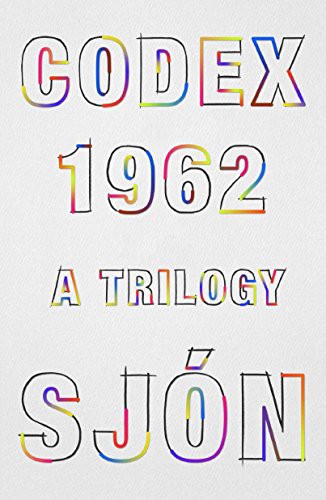
Sjón, born Sigurjón Birgir Sigurðsson, has spent the past two decades writing a trilogy of books about a man who was born at the exact same time as him. Originally, he was influenced by what it meant to create human life, but over the course of 20 years, he expanded his scope beyond what he ever imagined.
Purchase the book
CoDex 1962 is a trilogy of books originally published in Icelandic in 1994, 2001, and 2016 under the titles Thine Eyes Did See My Substance, Iceland’s Thousand Years, and I’m a Sleeping Door. The three volumes weave multiple genres through a decades-long story of a family. While that general synopsis may sound like a typical generational family saga, Sjón moves far beyond that. The narrator, Josef Löwe, is the one who was born exactly when Sjón was, yet this is far from a work of autofiction. The author merely uses his experience in time to set the stage for what another’s life could have been in a different world. He explores Josef’s life (before and after) through three books, each with its own genre entirely. The first book is a love story while the second is a crime story. The third shifts to sci-fi thriller all while exploring the creation of life.
The Icelandic author has won numerous award for his fiction, including the 2003 Nordic Council’s Literature Prize for The Blue Fox. He’s been nominated for an Academy Award for his songwriting. He played an instrumental role in Björk’s early band The Sugarcubes. In addition to his long-gestating trilogy finally coming to completion, he was selected to write a book for the Library of the Future, which will publish novels 100 years from now.
I spoke with Sjón about the history of politics and literature of Iceland, how his trilogy shifted course over the last two decades, and his interests in eccentric world-views.
Adam Vitcavage: What is the background of the Icelandic literary history?
Sjón: Literature is the only constant cultural activity since Iceland’s settlement in the 9th century. They started writing prose narratives in the Icelandic language in the 12th or 13th century. Those were the Icelandic sagas along with historical narratives. It was the recording of the Germanic heritage of epic poetry; both mythical and legendary. On top of that, they started translating European literature such as the Arthurian romances.
This is what they were doing in the 12th, 13th, and 14th centuries. This is the literary history we follow. It has always given us the license at the table of nations in terms of culture. We are an old literary culture.
Let’s say between the 16th and 20th century, Iceland was extremely poor. You could have called it a Third World country. We have very little to show for our existence here during those centuries. There are no cathedrals or any kind of buildings of stone until the 19th century really. There are no paintings or anything. The only thing that we kept working on was writing. We were always a written culture.
There was a great revival of Icelandic literature in the middle of the 19th century with the romantic movement. It was a big national ideal that was brought to Iceland from Germany via Denmark. That is when the renaissance of Icelandic literature.
During the 20th century we, of course, have many great writers. The big man of Icelandic literature was Halldór Laxness, who received the Nobel Prize in 1955.
AV: What sort of stories were being written during these centuries?
S: The sagas are really big prose narratives usually revolving around a real character from the settlement. For instance, there is one of a poet and warrior that tells his story, but also tells about the politics of the time between the Icelandic settlement and Norway. These stories are remarkable because they are told in a Hemingway-esque style. There is not an extra word put in. It’s very sparse. Authors weaved poetry into the text. They included supernatural aspects that were considered part of the world. You just had to battle a group of the walking dead and you’d continue with the story.
They are close to what later became the novel. At the time they moved away from folklore and mythological. They are stories about people and their struggles in the world.
AV: Was there any country in particular that had a heavy hand in influencing Icelandic literature?
S: The mythological base and the world-views that are present in the sagas are the Germanic myths. You have Thor and Loki there. The influence from Celtic mysteries and legends can be found in certain sagas. The people populating the sagas, the character gallery, are from Norway, Denmark, Ireland. They go from Iceland all the way to Jerusalem and North Africa. There is a large reach in those sagas.
They were written by Christian people. By the learned man and possibly women. It was around the 12th century and they were highly versed in literature and allegory. It was an incredibly tight web they weaved in those books. They were also translating very early on and would bring books from Europe to Iceland. For instance, the story of Tristan and Isolde was translated. Translation is nothing new. It has fueled literature always.
Literature is the only constant cultural activity since Iceland’s settlement in the 9th century. We are an old literary culture.
AV: The novels in this trilogy touch heavily on politics. How much has politics played a role in Iceland’s history?
S: For a few centuries after the settlement, Iceland was a rare case because there was no king. We were under the Norwegian crown and the Danish crown. For centuries, we were a Danish colony. We only became a fully independent colony in 1944 just at the end of the second world war.
The movement toward independence began in the mid-19th century. The romantic poets played a role in making people love their country and see the beauty in the harsh landscapes that were monstrous and hostile then. We became sovereign 100 years ago on December 1, 1918.
Because we went through this process of finding independence and then keeping it, there is always an underlying element of nationalism in politics there. It is constantly being juggled and people do not agree how to handle that. It was something we always explore.
AV: This set of books opens in World War II, around the time independence came to your country. The first book is also a love story. Were you thinking about the romanticism of that when you started writing this book two decades ago?
S: It started as one book. It was an idea to write Golem’s story in Iceland. A story that would bring the Golem of Prague to Iceland. I was interested in working with the artificial human. I started thinking about that when I had my first child, a daughter, in 1992. All of a sudden I wasn’t just a creator of words. I was the father to a human being. That’s when I started thinking about creation and what a human being is made of.
Because of my fascination with the Golem legend from Prague and Jewish fantasy from Europe, that was the form the book came. It was only supposed to be one book in the here and now. As I was working on the material, I got the idea to write a short chapter at the beginning to show where the character — this Golem operator — came from.
That started off the whole thing. All of a sudden, I had plotted out the first volume and I realized it would be the story of the impossible creation of this being.
I set it in the second world war because when I thought about where I came from, my beginning is in the war as my parents were born. My parents were born in 1936 and 1939. My existence in this world go back to then. I was born 18 years after World War II and I realized I was born into the aftermath of that horror. It was more about how the trauma of that war colored everything.
I realized I would need more volumes to tell the story. The first book is about the mother. The second is about the father. The third book is about the son. In a way, it’s a classic trinity tale. I also knew it was a race against time and the narrator would not live to tell his tale. That was clear to me from the beginning.
AV: Is mortality something you think a lot about when writing?
S: I never thought very much about the fact that the world will be here when I leave. I am more interested in books as things that only become alive when someone is reading them. That is more important to me that the way that books are the remains of me. A lot of the great works of literature are anonymous. That is something Icelanders are greatly aware of because the sagas are anonymous. We grow up with the idea that the work will become separated from the author.
I am more interested in the idea that while we are here, we need to interact with this world. Literature offers brief moments of clarity within the chaos. We need to help each other with that while we are here.
The narrator of the book is preoccupied with leaving a mark. However, he is aware that the mark he leaves may not be attributed to him. He’ll be satisfied with leaving it. He moved one pebble on the beach, you know?
I am more interested in books as things that only become alive when someone is reading them.
AV: These three volumes were written decades apart. You thought of it originally in the early 1990s. How has the project shifted throughout these years from what you thought it would be to what it became now?
S: When I finished the first volume, I think I believed it would be a more linear narrative. I thought it would be quieter and have more solidity. The first volume takes places over a few days and has a clear narrative. When I started working on the second volume and I needed to make a bridge, I realized it would become a work that disintegrates as we get closer and closer to the contemporary situation of the narrator. The second volume takes place over 18 years and the last takes place over 50 years. The discovery was the main change. That I would have to deal with change in some way.
AV: Earlier you mentioned the birth of your daughter was a big inspiration to kickstarting this idea. Were there any other events from the past two decades since starting this project that influences the work?
S: One thing that happened, which wasn’t on a personal level but in our country as a whole, was in 1996 an Icelandic doctor and specialist in genetic scientist returned from his studies in the U.S. started a genetic research company called deCODE. There was quite the political unrest due to it. He belonged to a generation and group of people who had recently come into power. His company was given license to operate on a level that you would never see in another country.
For example, the medical records in Iceland were opened up completely to this company and you as a citizen had to opt out for it. They didn’t need consent. You needed to opt out.
There was an idea that the research the company did would be the key to cure all illness in mankind. This would be the gift Iceland gave to the human species. They thought what they could do with everyone’s medical records could save the world. This was the dream of our small country that was trying to find our place in the world.
I knew that when this was happening, that it would play an important role in the second volume. Of course, so many things have happened since 1992 when I started working on this book. With the effects of climate change, that brought the element of doom to the third volume. So it’s not just about the death of the individual, it’s about the death of the whole species in the end.
AV: Now that this trilogy is finally complete, what topics do you want to explore moving forward?
S: I am interested in the eccentrics. I am very attracted to world-views. I like to explore how man interacts with the world and how they try to find different meanings through thought. Whether that be philosophical, political, artistic, or religious. I’m very drawn to that field of human existence. Those elements are most clear and visible when those who hold particular views come into conflict in society.
At the moment I am exploring a story which grew from my interested in how the Neo-Nazi thought was possible after the Second World War. It’s something I worked with in the second volume of CoDex 1962, but I want to explore it with more seriousness than I did there.
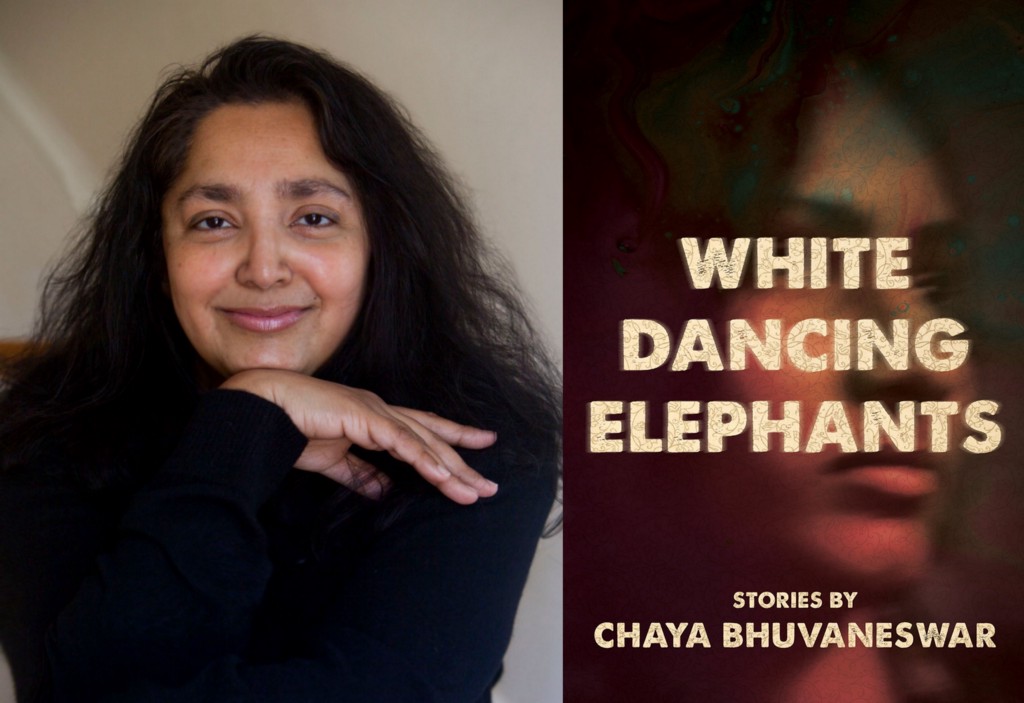
Chaya Bhuvaneswar’s debut collection White Dancing Elephants (winner of the Dzanc Short Story Collection Prize) is not a book you can succinctly describe. Her stories take on rich topics from mythology to assault to history to tenuous relationships. When you turn the page there is never one element tying these pieces together but a wealth showcasing a distinctness in characters, motivations, and language. What struck me most about Bhuvaneswar’s stories was an element of her own fearlessness as author to “go there.” She doesn’t hold back emotional truths, never relies on sensationalized moments for the reader to be entertained, instead we envision, and inhabit, the losses (and the joys) felt by those experiencing them. How will a rape affect a young student over the years? Will cancer be the death of a friendship? How does the loss of a child reveal the tears within a marriage? Where do we gain our strength on an individual level as people, as women? Perhaps the stories in White Dancing Elephants do not always provide readers a clear answer, yet they’re filled with probing questions (and experiences) encouraging us to read on.
Bhuvaneswar is a four-time Pushcart Prize nominee whose work has been published widely on Medium, in Tin House and Michigan Quarterly Review to name a few. She and I had a chance to chat about her approaches, and feelings, on writing novels versus stories, creating “quiet” work that maintains resonance, and the necessity (and her hope) for kindness in life and in our stories.
Jennifer Baker: Can you speak a bit about White Dancing Elephants and recognizing which stories fit within a more compact space?
Chaya Bhuvaneswar: I think the space of a short story is permissive in a way that a project as long as a novel is not. I feel freer to completely experiment and not have any idea where I’m going
JB: I see.
CB: I feel that in general about the novel, but that permissiveness in my case has been an obstacle to finishing/structuring a novel. Whereas with a short story I feel more aware of something else taking over. I think with the first few drafts of a novel I feel that freedom, but then the process of structuring because it’s longer turns the whole endeavor into something so different than story writing whereas my revision process with stories doesn’t involve the same kind of uprooting
JB: So with the novel you don’t feel as free to experiment or due to the shorter nature of the short story there’s an element of “going with the flow” more easily?
CB: When I write a story I feel like it essentially works, and then I just refine, try and try to make things cleaner and clearer. And above all straighten out chronology so it’s clear what happens on the level of a story being “something happens as a result of which something changes.” Or else I feel like a story doesn’t really work, and I can’t yet see why, so i just put it aside. With a novel — because of how deeply I inhabit and dig into that world for hundreds of pages and how invested I feel in characters’ trajectories more or less paralleling my own — there are continuous years. I am more reluctant to put a novel aside once I’ve gotten 200 pages together. So, I think I deliberate more with a novel before killing anyone off, in other words.
JB: There can be a big go-round in either case, but I don’t know if it’s right to say a short story feels “safer” due to space limitations (or perceived limitations). At least it can feel a bit more finite in the road you’re headed to from beginning to end. Or maybe I’m making that up with my editorial mindset.
CB: I guess on a basic level I write so many more stories than novels, it feels like I would be able to move on from writing a story that completely doesn’t work. Versus a novel that completely doesn’t work pretty much devastates me.
JB: Is that because of the time investment or the larger picture of it in terms of “finishing”?
CB: A novel that doesn’t work can feel like a death. Really. Like I failed a person, my characters. I failed her/them. Not myself. If that makes sense. It could be kind of a medical way to think about writing novels. I don’t know, but I do feel that… that I am bound to the characters. They’re so important to me.
A novel that doesn’t work can feel like a death.
JB: But that doesn’t gestate the same way for stories?
CB: Somehow it feels like a story is a moment passing in time, a snapshot, an ephemeral thing, and if I don’t “catch” the person in that story, I could catch them in the next one. Whereas with the novel there are multiple moments, accrued moments, so many opportunities, and I feel like when it isn’t as clear how to capture the whole person within those, it could be that there is some flaw in the story being told, some flaw in larger construction, or some flaw I am just not able to perceive yet.
I love the challenges of both forms, in other words, but somehow novels and stories work on our emotions a little differently, I think, or maybe I just read too many essays by Kundera and Havel and other Europeans about the novel and subjectivity growing up.
JB: I think, sometimes, folks seek to find a “theme” in story collections, sort of like in an anthology. “What connects all these pieces?” I don’t want to pigeonhole. But I think for White Dancing Elephants it’s the necessity of who gets to tell their own stories as narrators/protagonists.
CB: To me the theme that resounded through all of them was one of experiencing violence and then somehow enduring it and making your way in the world “after.” I loved that the Kirkus reviewer pinpointed “aftermath” as a common theme of the stories. Living in the aftermath of some decision or event.
JB: That is true. Stories like “Orange Popsicles” or “Talinda” (which stood out to me in particular), contain the essence of not knowing what’s next for anyone really, but in particular for these characters because so much was left open from what’s happened to them and/or choices they made.
CB: I find that a resonant quality of stories that I love. I’m thinking in particular of Alice Munro’s “Runaway.” Or Lauren Groff’s Atlantic story, “L. Debard and Aliette.” We don’t know what happens to that “kindly” woman neighbor hoodwinked by her beliefs about vulnerability, female loyalty, freedom. We don’t know what happens to Aliette per se. Will she be energized when she wakes up after those hours in bed with the hot water bottle? Will she be dreaming of him? Will she write to him about his poetry, and say that she was there? We don’t know, but in a living way. In the sense when we see any credible, living, fully-fleshed human character in a story, we don’t know what the person is going to do next. Just like in real life: We don’t know what any given individual will do next.
JB: While not wanting to discuss the ending of a story like “Talinda” there’s a certain level of resonance I appreciated that spoke to the dynamics of friendship. I think to some it may appear as a story of “betrayal,” but to me it really speaks to the importance and bond these two women had. And it strikes me from beginning to end how much they relied on one another. I’d love to know how you envisioned this balance of representing women of color in a way that is a tug-of-war. It’s not wholly good or bad, it’s complicated as friendships are.
CB: I think the first model for me of complicated female friendships was actually from watching my mother with her five sisters.
JB: Oh really?
CB: Incredible rivalries, alliances, “fights,” disagreements, some quite brutal. Always a lot of tears and laughter and high expressed emotion and shouting, super expressive. In comparison, not having sisters, but definitely having incredible female friendships and frenemy-ships starting from a young age, particularly with other girls of color, there was so much I felt and so much they felt that we rarely expressed. We were so contained by comparison. Even the Americans I saw with each other were mostly so contained. And not just when they knew I was watching. I say “Americans” by the way as such a sad reflex. I mean “white Americans.” Long years of inculcation (sigh).
So when I started writing about my own female friendships, dating back to a Chinese-American girl who bullied me and a Korean-American classmate so terribly, so mercilessly, that I wrote several stories about it. Then examining my friendship with that Korean-American friend, I started uncovering the emotions we didn’t express directly and becoming quite fascinated with those, with what you point to as the kind of substrate of meaning and closeness (and longing) that the two female characters have in “Talinda.”
JB: There’s definitely something, I don’t know if unresolved is the best word or even unrequited, as it is unspoken. And that impacted me as a reader quite specifically of these two faces staring across the table at one another as one receives horrible news: the stoicness of one and the other reflecting that pain at her during dinner. Quite powerful.
CB: I’m also interested in “constructed” families. Familial bonds that can be substitutes. It counts, I guess, that both female characters don’t have fathers present in their lives.
JB: Someone has to be the strong one right?
CB: One thing I loved about writing this collection was being free to conceive of strength in all kinds of ways too!
JB: Beyond the husband in that story, of course, men seemed a bit inconsequential.
CB: I am grateful that some of the reviews [of White Dancing Elephants] were written by men, and they were so encouraging and felt the stories resonated with them. I think when we write from a fierce self-focused subjectivity, “not caring” what others think, it paradoxically can resonate so much with people completely different from us. In my case, with cis-het men.
At several readings, when I’ve done store walk-arounds right before the event, just checking to see if anyone browsing or drinking a coffee alone would like to come and be part of the event, it’s nearly always been white male readers who come along and stay and say amazing things afterward. They initially come saying something like “Oh yeah, I wanted to pick up something for my daughter/ wife/ etc.” And then end up coming to the signing line and talking about how they were into the stories. The drama.
I think when we write from a fierce self-focused subjectivity, “not caring” what others think, it paradoxically can resonate so much with people completely different from us.
JB: Meaning the drama of the stories?
CB: Yes, the “dramas” represented by the stories!
JB: I don’t think so much of them in the realm of “dramatics” so much as exploration with life thrown in. Not to say that life isn’t dramatic.
CB: I’m glad you don’t necessarily think of “drama” when you read the stories. Ideally, the drama is quiet, the pain visceral.
JB: That is exactly my thinking in terms of “quiet.” Obviously some stories are quite specific due to the level of brutality characters deal with but it doesn’t read as orchestrated at all. And it seems like with Jamel [Brinkley] for Black men, you aimed to look after the Brown women in your stories, yet also not shy away from a truth experienced by women of color.
CB: Yes! I definitely feel there’s an inherent beauty simply in truth telling. But also it would never occur to me to victimize or objectify my characters of color the way that some stories have done. That really shock me. Not as much in fiction, but in film. I’m still wrestling, for example, with The Bandit Queen. It’s a movie about a rape survivor turned bandit herself turned politician and writer. But there is such a strong historic legacy of sensationalizing rape in Indian cinema (really in world cinema) that I had very conflicted feelings about it. I hoped in “Orange Popsicles” by focusing so much on the woman’s experience, on my character’s experience, to avoid that. Avoid making it anything. Just tell it. Just show it as is. Just let the showing tell.
JB: Well, it’s a different case than with the film Foxy Brown where her rape is an instrument of white power and fighting establishment. There’s a brutality in the not “dealing” with the rape but in the performance or butchering of the rapist. It’s wrong and people should be punished, but I keep coming back to Lacy M. Johnson’s The Reckonings of: How do healing and justice truly occur? And how do we talk about this, especially through art?
CB: I’m full of joy and hope that these conversations are even happening. That we are not only creating spaces for people to come forward with their stories and not be shamed or pressured into telling them any specific way. But also we are creating space where we can examine “how we talk about” healing and justice without the fear that if we linger too long in any kind of examination, people will be forced back into silence again. The silence is never coming back. We’re never going back to that. Period.
We are creating space where we can examine “how we talk about” healing and justice without the fear that if we linger too long in any kind of examination, people will be forced back into silence again.
JB: Let’s hope so. Via your interview in Hobart I appreciate that they asked about ableism. You were happy to be able to discuss this as well in relation to your stories. Particularly in relation to the abled lens but also via the disabled lens as well.
CB: It’s such an important dimension.
JB: Being an able-bodied person myself I did come away from pieces seeing the brutality about to be thrust upon someone and thinking “Hmmm, are we seeing our composites here in the reaction to the person in this story?”
CB: It’s important to me to delve into the multidimensionality of “perpetrators” of violence. And I think the genuine fear we all have as human beings, of illness, of the mortality, factors into how cruel people can be to those they perceive as “disabled” rather than differently-abled.
That said, in a larger sense, I believe that the potential for cruelty exists in such a diverse array of human beings. It’s a miracle to me that people can for much of the time actually be very kind to me. And even more of a miracle at how much kindness I personally have experienced from others, from people I know as well as strangers. I feel like kindness should be more automatic than it is. Perhaps it’s something I take for granted.
Time travel is the ultimate conundrum! Would you go back in time to kill Hitler? But …what if you prevent yourself from being born? What if you die of smallpox while you’re there?
Time travel with its infinite possibilities has captured the minds of writers and readers for generations. The ability to change the past, or the future, is intoxicatingly alluring to us humans who like to feel as though we can control the world around us and shape history.
Here are 10 books that will take your back (or forward) in time:
In this novel, time travel is possible in 1981. A shadowy corporation sends healthy people into the future to work in exchange for helping their sick loved ones. Polly enters this horrible contract in order to help her sick partner Frank. The novel follows Polly’s experiences in the horrifying future she is sent into, and the confusion of what exactly she has agreed to.
How to Invent Everything: A Survival Guide for the Stranded Time Traveler by Ryan North
You know when people ask you, “if you could only take one book with you on a deserted island, what book would you take?” If you substituted in “deserted island” with “stuck in the past because your time machine broke,” North’s book is exactly what you want. How to Invent Everything is a charming Kick-started funded manual for everything a stranded time traveler would need to know from how to get safe drinking water to making a printing press.
Harry August finds himself back at his own birth after he dies. Not knowing what is happening, Harry eventually learns that he is part of an organization of people who are continually reborn. Using his lives to acquire all sorts of different knowledge, Harry ends up at Cambridge and makes the acquaintance of a student Vincent Rankis. Their relationship morphs from friends to nemeses and their story will absolutely break your heart.
Oates’ new book is her first dystopian novel. In a not so distant future, a high school valedictorian is exiled by her 1984-like government because of a “treasonous” graduation speech full of questions. Her exile? Back in time to 1959 in Wisconsin. Follow Adrienne’s mind twisting tale as she tries to figure out exactly what has happened to her.
Depressed and lonely Greta is at a hard time in her life and elects to undergo electroshock therapy in 1985. Greta expects her depression to go away, not the ability to travel back to 1918. In this alternate lifetime, Greta’s loved ones are there, but in different circumstances. The novel shows how Greta tries to save her loved ones, and discovers herself in the process.
Kindred is one of the great classics and Butler is a literary genius. In this novel, Dana, an African-American writer, travels back in time from LA in 1976 to a Maryland plantation before the civil war. Butler expertly spins a tale of the enduring impacts of slavery, both in the present and far future.
This one is a classic throwback! One of the first time travel books that most of us have ever read, Meg’s journey to find her father is a heartwarming tale. Follow Meg, her brother, and her friend as they travel throughout different dimensions and try to avoid the evil around them. And now you can pair it with the new movie adaptation starring Oprah!
Outlander is a thrilling TV show with lots of hot actors, and the books are just as good! Claire, a nurse in WWII, is transported to 1743 when she steps through some ancient stones while on a second honeymoon with her husband. Set in the Scotland highlands, Claire finds herself immersed in war, border, and clan disputes. Claire becomes increasingly enthralled with James Fraser, a handsome warrior. But what about her husband? How can she get back home? Does she want to?
Vonnegut’s most popular work follows Billy Pilgrim’s journeys through time as an American soldier during WWII and its aftermath. Slaughterhouse-Five is a confusing and heartbreaking book to read, but absolutely worth it.
Mastai’s time travel book is the wish fulfillment everyone wants right now that our world is the wrong one. In the book, the world is suppose to be a beautiful utopian society, only the son of the inventor of time travel messed everything up. All Our Wrong Todays is an incredibly timely read when you’ve reached a point of just being done with this dumpster fire of a year.
Sign up for our newsletter to get submission announcements and stay on top of our best work.
YOUR INBOX IS LIT
Enjoy strange, diverting work from The Commuter on Mondays, absorbing fiction from Recommended Reading on Wednesdays, and a roundup of our best work of the week on Fridays. Personalize your subscription preferences here.