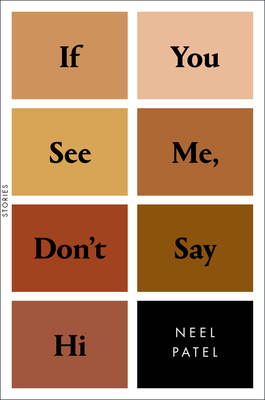
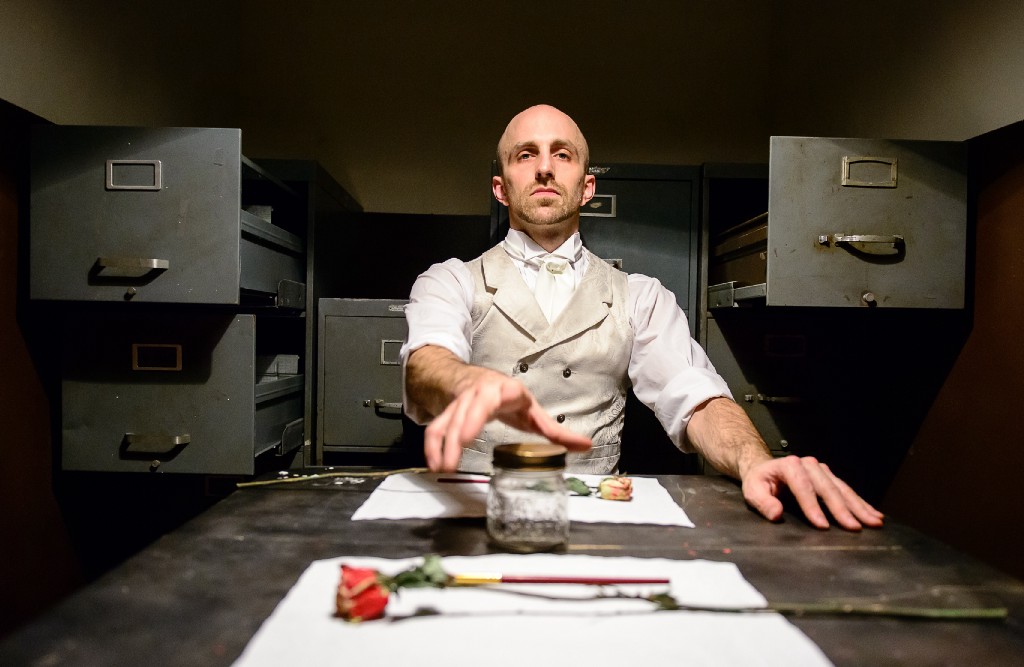
The Indian Americans in Neel Patel’s If You See Me, Don’t Say Hi possess serious real estate square footage and all the trappings of upper bourgeois America. Yet, they’re still saddled with discontented dreams.
Buy the book
Patel’s characters veer from the ambitions of their parents, who came to America for the advertised skyward course of the American Dream. They are straight, queer, single, twice-married, troubled, and unrepentant. Even the ones who become doctors zigzag and transgress the model minority cardboard version of Indians in America.
I spoke to Patel about Midwestern Indian Americana, revenge, and a short story collection as a middle finger to societal expectations.
J.R. Ramakrishnan: Being first-generation Indian-American takes up prime space in your biography. I also read that your parents are from East Africa.
Neel Patel: Yeah, my father is from Kenya and my mom is from Tanzania.
JRR: I grew up in London and know many South Asians there who had families who came from Uganda. That particular trajectory seems like diaspora times two.
NP: Yes. At 16, my mom relocated to London so her family is there. The culture of my household was very different. When you are part of a community that you don’t feel like you really and fully belong to, you have an interesting perspective on it.
I grew up in a small Midwestern town with a tiny Indian community. We were very different. Most of the families there are from India. I know my mom didn’t always fit in. She went to a convent school. She lived in London as a teenager. She went rock concerts. She had a lot of freedom. My parents are pretty progressive. They drink alcohol. My mother is Gujarati and there was a time when she really enjoyed a good steak dinner. The other women in our town would have been horrified that she was eating beef.
Being culturally different from the other Indians certainly informed my writing. As did being othered by white people and feeling like you didn’t have a choice.
JRR: I was in Milwaukee recently visiting a friend, who could be a character out of your collection. What struck me the most was how much of space there is in those suburban houses. You can move without getting close to anyone ever. In your story, “Just A Friend,” the narrator makes a similar observation. And in “The Taj Mahal,” Sabrina says, “you knew you were rich when people wanted a tour of your house.”
NP: I grew up in a house like that. In the Midwest, it’s just cheaper. Indian communities who settled there did so because they knew they could do very well. There is this subculture of Indian doctors in the Midwest. They are in these small towns, where they know everyone, and have these five or six-thousand-square-foot mansions. It’s amazing how you can live with people for 18 years and not fully know them. Our immigrant parents had no idea what our day-to-day lives were like. Their major concerns were: Are you doing well at school? Are you thinking about your future? Are you going to become a doctor, engineer, etc.? Are you going to get married? They didn’t understand that for us happiness was more complicated than checking things off a list.
Being culturally different from the other Indians certainly informed my writing. As did being othered by white people and feeling like you didn’t have a choice.
JRR: In the collection, parental expectations are very linear and your characters stray off the path in all kinds of ways. Was that you in real life?
NP: Yes, it was very much my experience. I grew up feeling like there were so many things that were expected of me. I was not able to meet my parents’ expectations and that was really hard as a kid. I am terrible at math. I was always an artistic kid. I’m gay. I was different from everyone else’s children. I was an A, B, and C student. I got Cs frequently and that was unacceptable. So yeah, I wanted to write about characters who don’t always please their parents or society. Society is like a prison. It can be cruel.
JRR: Your Indians are no model minorities but they are exquisitely human. For example, the feisty Sabrina from “The Taj Mahal,” with whom I fell in love, is not your average young Indian doctor.
NP: What I was trying to say was more complex. The thing I love about short stories is that you can really experiment with different styles and perspectives. I felt Sabrina’s voice was in me somewhere so that’s where I started. That story and “These Things Happen” were the first two I wrote. The last three stories I wrote were the title story and then the two linked ones. Those are more of the traditional narrative that one would expect of this community. I started at an atypical point (“The Taj Mahal” and “These Things Happen”) and brought it back to something more familiar. Sabrina is unlikable. I really like unlikable characters.
JRR: I thought the women in your book are very subversive and aren’t depicted as stereotypes.
NP: Oh, thank you! I think that women, particularly women in our community and Asian communities in general, are expected to be submissive, soft-spoken, and malleable. I wanted to write women who were unapologetic.
JRR: The fixation with material goods is overwhelming. I am thinking of Anjali’s mom in “Radha, Krishna” needing photos of Anjali’s new Jeep and shrimp risotto meals to show off.
NP: It all goes back to expectation. People come to this country expecting certain things — success being the biggest. And I do think that people, especially my parents’ generation, are very obsessed with wealth and status. I remember being at a dinner party where someone was talking about how much money somebody else made. They started arguing about it and then somebody said, “Who’s the richest person in the room?” I thought, my god, this is a sickness.
There is this need to prove oneself. My father always told me as child, “In this country as a brown person if you want respect, you need money.” That’s a very powerful statement to tell a child. That told me that being brown wasn’t good enough. I couldn’t be average. I couldn’t just be me. I had to be successful to be accepted. It’s especially true with the preoccupation with medicine in the Indian community. My friends’ parents who were in the motel industry all encouraged their kids to become doctors, no matter how successful they themselves were. I was aware of the way they regarded my father who is a doctor. I wanted this to be in the stories.
I wanted to write about characters who don’t always please their parents or society. Society is like a prison. It can be cruel.
JRR: How did the two linked stories “World Famous” and “Radha, Krishna” come to you?
NP: I wrote “World Famous” about seven years ago when my friends were graduating medical school. I had heard a story about a med student who didn’t match (for a residency) and had to go back home for a year. I started thinking about what that would be like. When my editor asked me for another two stories, I revisited it and made it a love story. I wanted Ankur to meet someone like him: an outcast. So I came up with Anjali. The story twists and turns and there’s only unreliability in the narrative. Anjali was the tragic figure in that story and I wanted to keep going so I wrote “Radha, Krishna.” We saw Anjali through his eyes and I wanted to see him through hers — and what it would be like to be her in this community.
JRR: The straight relationship dysfunction in “Radha, Krishna” feels so spot-on.
NP: I like writing about straight relationships. Most of my friends are straight. I think especially at college, I was the person who witnessed everything and was completely neutral about it all. Young love is interesting. It’s very insecure and so influenced by outside forces. This is what I was thinking about when I wrote their relationship. Social class is a big part of it. He’s from an upper middle class family and she’s the daughter of a motel owner. They have all these ideas about each other. And then there’s the fact that he ultimately believes his mother when she is actually wrong about Anjali.
JRR: Revenge appears to be quite a force. Sabrina gets back at her friend who stole a boy from her at high school. In the title story, Premal has the satisfaction of seeing a girl who snubbed him at school working at the gas station, while he has become a surgeon. A lot of fuck yous here.
NP: Yeah, I really never felt like I was good enough. I felt scrutinized and having the book published in many ways is a fuck you to society. I was a troubled kid and I made plenty of trouble for my parents. In one of the many lectures my father gave me, he said, “We live in a society.” In my head, I thought, I don’t want to live in a society. My characters are fighting against this society and trying to find themselves in spaces to be comfortable in.
William Golding’s 1954 novel about a group of schoolboys marooned on an island is a masterful fictional take on how societies are built and broken—if you happen to look like the people in charge of society already. What would happen if not everyone on that island was a prep-school white boy? What would happen if nobody was?
Supposedly there’s an all-girls adaptation of Lord of the Flies in the works, an idea that was roundly pilloried on social media but actually has some merit. In the meantime, though, is there a book high school students should be reading that addresses the same issues in a slightly less rarified way?
Fire the Canon is Electric Lit’s limited series on making the standard high school syllabus more inclusive. In this edition, our panel of writers and educators — high school English teacher Larissa Pahomov; National Book Award finalist Carmen Maria Machado; writer Jaya Saxena, who among other things wrote a series about classic children’s literature on The Toast; and writer and professor Kiese Laymon — suggest alternatives and supplements to Lord of the Flies.
This is the most impactful book of fiction I’ve ever read. And somehow, she masterfully creates a collection of characters who all get space, all get interiority and all get hefty amounts of subtext. And when they talk, they talk. And we do more than listen; we move. We run. We get squeamish. We cover our eyes. We bring the book to our literal hearts. It’s a different kind of survival book. And it is everything to me.
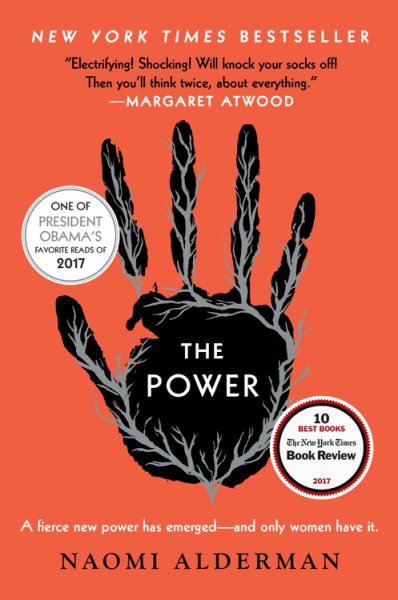
Larissa Pahomov suggests: The Power by Naomi Alderman
I teach Lord of the Flies to high school sophomores. Every year they agree that boys can get violent — and every year they disagree about whether the story would have been different if girls had been present on the island. Would a female presence have turned the boys towards care and cooperation? Or would the girls have been crushed by the male desire to kill? In these discussions, my students automatically assume that female behavior is kind and conciliatory. We assume that the boys have the upper hand because they have the male privilege of larger bodies. Naomi Alderman’s much-heralded book blows this assumption out of the water by giving women the physical power to dominate. The experiment that William Golding ran in isolation now happens all over the world — what happens when the rules can no longer be enforced?
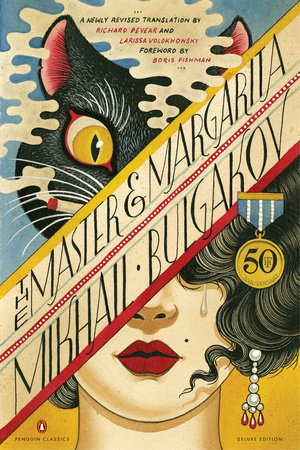
When I first read The Master and Margarita a few years back, I had two thoughts: This is one of the best novels I have ever read. And: Why did no one make me read it in high school? A razor-sharp Soviet satire, this book is metal as fuck: The devil comes to Moscow, wrecks havoc, and holds a ball where most of the guests are murderers who ended up in hell. Also, the titular Margarita covers her naked body in magical lotion, becomes a witch, turns another woman into a witch, and flies into the night. Also, there’s lots of dark humor, a talking cat, a bunch of demons, a story-within-a-story about Pontius Pilate, tons of weird slapstick, and a love story. And Margarita is a feminist heroine for the ages.
It’s weirdly accessible for a book with so many moving parts, and students would respond beautifully to its chaotic beauty, fabulist impulses, and sharp societal criticism.
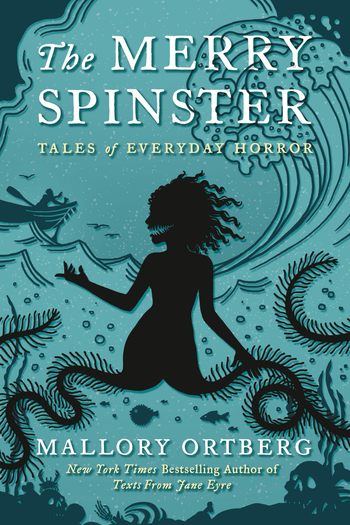
Lord of the Flies is, if anything, a fable — these were never supposed to be real boys, this is an elaborate metaphor about the dark heart of the human psyche. So what better to replace it with than dark fairy tales? The Merry Spinster is full of stories of people, and animals, and mermaids, vying for power and pressuring each other into doing their bidding under the guise of peaceful civilization. Ortberg also swaps out typically pairings of pronouns and gendered words, so that sisters are “he” and princes are “she,” forcing the reader to reconsider their own assumptions of power and privilege. And if the allegory still isn’t clear, you can always show students that one Simpsons episode where they all get stuck on an island.
Electric Literature staff suggests: Severance by Ling Ma
Listen, are we just suggesting Severance to everyone, because everyone in the office read and loved it? Yes, sure. But also, post-apocalyptic novels are perfect crucibles for imagining what happens when the rules we operate under break down. What this particular novel of post-plague America has over Lord of the Flies is that it envisions how we might relate to the destruction of society (and especially postcapitalist society) not only as a group, but also as individuals. What happens to a person’s thoughts, routines, and priorities when they’re abandoned by the systems they relied on?
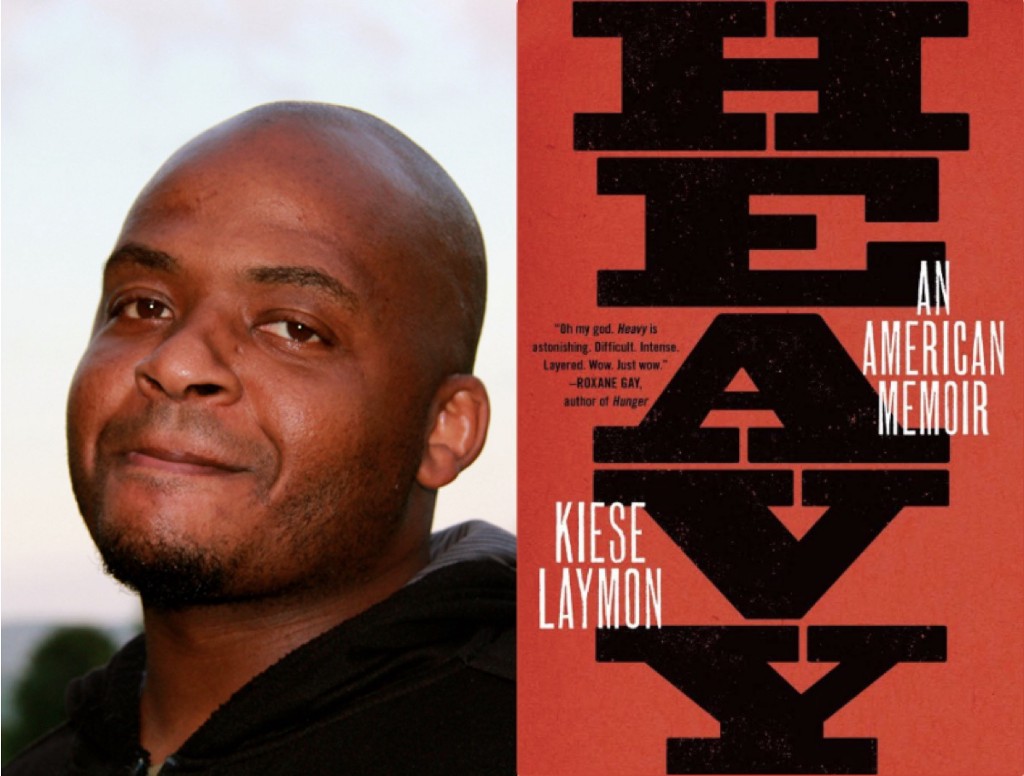
Kiese Laymon begins his latest book Heavy: An American Memoir with an earnest declaration: “I wanted to write a lie.” When writing memoir authors not only tackle their fear but expound on it, even dissect it when one may not be ready or able to. They must consider what it means to write a perceived truth versus the truth versus an experienced truth. All this is pertinent to the craft conversation, especially when it comes to nonfiction and memoir. This also came up as a point of reflection and interrogation in Laymon’s memoir.
When I spoke to Laymon about Heavy we discussed not only the creation of art but the fact that our work is up for consumption. How do we read and process art in order to recognize its inherent vulnerability? How do we reconcile what we portray versus what actually happened, at least to us or the folks we’re documenting? Is truth something that can actually be achieved in writing?
Heavy left me with more to think on as a writer, editor, and person, as did my conversation with Laymon. The strength and potency of his writing lies in his projection of a moment so real it hits the reader in the gut. But also the revelation of such truths through his writing encourages the reader (aka consumer) to not only do better as a scribe but in who we are as participants and observers. To me, the best prose doesn’t just reflect, it acknowledges and attempts to reconcile. Heavy may not be a book meant to provide answers or a clear path to reconciliation with family, Blackness, weight, or class among other things. But it sheds light to a truth that many of us know quite intimately and personally, and were able to grasp on to tightly, thankful for its existence.
Jennifer Baker: I do think everything is generational, passed down, so to speak. From a personal a level you mentioned you wanted to write a lie. So, when it comes to approaching nonfiction, I say the word “honesty” and “truth” but then when I heard you [at Tin House] it made me think “Well, dang. Are we getting at honesty or truth” or just an honesty and truth that works for us? I feel like art is trying to help us get to that answer, but I also feel like Heavy has no resolution. This isn’t the Disney-fied version of a Black boy’s life.
Kiese Laymon: Nah. And I understand why people want those endings. What I was saying at the beginning of that book is my mama wants that ending. And whether or not she really wants that ending in real life, she wants to read that ending. And then she also wants to read her son creating a narrative that has that ending.
So the lies that my mama wants me to create a narrative about our family that ends with everything being great. And everybody valuing where we been, but not too much just looking forward. And I want to write that shit too. I just think that’s bullshit though. I don’t know what truth actually is, but I know what honest attempts at reckoning are. I’m not saying I’m writing honesty, I think I’m attempting to honestly reckon, which is the difference. At the end of that honest reckoning, maybe some people might call it truth. I wouldn’t call it truth but I would call it an attempt. I think sometimes we know when we’re honestly attempting to reckon, honestly attempting to remember, honestly attempting to render. As opposed to when we’re attempting to manipulate. And even in those honest attempts it can be full of lies.
I’m not saying I’m writing honesty, I think I’m attempting to honestly reckon, which is the difference.
When I first started this book it was just gonna be about my mom and grandmama, about their experiences with sexual violence and food and all of that. I was really interested in the words they used to evade what I thought was honesty, or honest reckoning. At some point I asked my grandmama, “You just said something that you and I both know is not true. Why’d you say that?” And she said, “Because you’re writing it in a book, Kie. What you want me to do, tell you the truth?” And at that point I thought, I probably need to write back to y’all. Because I’m not trying to burden you with these white folk and telling all these other people who might read this book and tell all these black folks in different communities your business. But after listening to y’all for like a year and a half let me write back to you and tell you what I experienced. And that doesn’t mean it’s gonna be honest, but it was an honest attempt, you know?
JB: I was on a panel about trauma [writing] at Slice. And in talking, people really wanted to get an idea of how much trauma is too much? How do I approach trauma? There’s no really finite way to say, well this is how to expertly and wisely and considerately express your trauma on the page. But then I think that’s what separates the art from commerce. Art can be commercial, but I feel like there’s a very clear difference between commerce and art. Maybe it’s in the intention, maybe more than the product itself? But I worry about it because this is traumatic. Reading brings out the concern of: Is the writer okay, along with am I consuming this in a way that is ethical myself as a reader?
KL: That’s the question, right? I sort of think people talk about ethical creation, ethical writing a lot. But what does ethical readership look like? Of course I realize at some point that people are gonna talk a lot about trauma in the book. I don’t know if I use that word in the book, I definitely try not to use that word…
JB: Not really, no.
KL: Because I wanted to write a book that didn’t rely on specific words like that. Even though specific words are the basis for it. But yeah, my point is fam is that I don’t know how in this nation how anybody can be okay? I just don’t. That doesn’t mean there’s not joy, that doesn’t mean there’s not radical liberatory community and bonding. But the idea that we’re always even searching for an okay, and searching for a deliverance, and searching for this kind of progress narrative is part of why we’re not okay. And part of why people have to say they’re okay when they’re not.
The idea that we’re always even searching for an okay, and searching for a deliverance, and searching for this kind of progress narrative is part of why we’re not okay.
I think people are right to worry about the writer on something like this. But I’m right too to worry about every reader for something like this. And I think the two have to meet. But to go back to your question, the scary part is that the two meet at this part of commerce. I’m talking about this shit now as if it’s art that is free of slick marketing and all of that, but it’s a product. In my heart I think that the monetization is necessary because of the communities we come from. Because I’m gonna use the money I get from this to take care of myself and take care of my family and take care of other vulnerable people I know. But at the same time something is lost, I think, when it’s sort of transactional. And then not only is it transactional but I created a Black-ass piece of art. And I love my editor and I love my agent. I really do love them like they family and they’re white. And the people that they work for are white people. I don’t delude myself, I don’t think that in any way this shit is pure. Just because I’m creating Black art from a Black place for Black people. But what does it mean that there are so many white hands involved in the actual packaging and delivery of it? I don’t have the answers, but I think about what it means a lot.
JB: Going back to writing. We seek out how to write and I really try to reconcile how I was taught to read. But it was more Dickensian, Huck Finn, Moby Dick. I don’t know that even today if people know how to [really] read. And do people know how to read us? By “us” I mean marginalized people.
KL: For sure. I don’t think even we know how to read us.
JB: Yeah.
KL: Maybe we do. I’ve taught classes where my Black students, amazing Black students, were like “I don’t feel comfortable reading this in this class.” Really what they’re saying is: I don’t feel comfortable being watched reading this. And having white people interpret this art that wasn’t meant for them. I’m torn because pushing through some kind of uncomfortability is what all artists have to do. And again I’m gonna argue that there’s an art to learning how to rigorously read. Sometimes I think we do this thing where we think people who read a lot are better or more moral or less fucked up. We know that the architects of this empire read a lot of books, which tells you that reading books in and of itself isn’t like some moral deliverance. You can’t convince me that people who read a lot of books are better than people who don’t. But I think there’s a kind of liberatory kind of reading and watching that we can hone and that we can encourage.
Beyond all the family stuff, beyond what people call trauma, my book is about reading and writing. I wrote that book because my mama made my ass read and write all the time. But the stuff she made me read and write was not stuff that was going to encourage me to push beyond a particular surface. She wanted me to read and write to protect myself from white folks. I always say the first really dope Black book I read was a biography on Langston Hughes. Then the first real real Black book that my mama did not even encourage me to read was her favorite book, Their Eyes Were Watching God. And I remember reading that reminded me of the first time I saw Michael Jackson moonwalk. And I was like “Damn, you can do this right here on a page?” It’s sort of antiquated to talk about Zora Neale Hurston but I still think people don’t appreciate what she did. I definitely think liberatory reading practices are something we need to get better at. And I think you do that by creating radical, dope, liberatory art. And I think Black art.
You can’t convince me that people who read a lot of books are better than people who don’t. But I think there’s a kind of liberatory kind of reading and watching that we can hone and that we can encourage.
JB: When I first read Their Eyes Were Watching God in high school I didn’t like it. But I think it was because I was taught this is what “proper” English is. Then when you plunk down Zora Neale Hurston amongst John Steinbeck, she stands out. And it may stand out in a way that is: I really am tethered to this, or it may stand out in a way that is oppositional to what I was made to believe. I read it again and that I wasn’t even my favorite Hurston book — I really enjoy her short stories and Dust Tracks on the Road. Then I read more and more and I thought, “Oh, I really like what she’s doing here.” But it goes back to no one taught me how to do that. If I didn’t go back to [Hurston] I don’t think I would’ve appreciated her as much.
KL: Oh, absolutely! That’s what I’m saying about that re-reading. I wrote this book to my mama because she taught me how to read. And I wrote the book the way I wrote it because I was trying not to become her or my father. But it’s the re-reading and the rewriting that I’m most grateful for more than anything else my mama ever gave me. She did teach me early that you haven’t read anything if you’ve only read it once. And you probably haven’t written anything that’s worth being read if you’ve only written it once. I think on a basic level that’s not the fantasy, that’s not gonna make everything better for us. But that is necessary. And I think about how love works. You revisit things you love. People say you love people, they want to see them again. They want to talk to them, like over and over and over again. I’m always interested when people say “Oh I love this book and they only read that shit one time.” Or you love a painting but you only saw it one time. It just can’t work that way, you know. You might really like something in it, but you don’t even know what’s going on if you see it one time, I don’t think.
JB: You said in Heavy specifically that “revision is practice.”
KL: Yeah, I think so. But everything that I was taught about art was from my school. It wasn’t about practice, it was about product. It was about writing that 5-paragraph essay to get that A.
KL: Yeah. And I appreciate my teachers and think they’re underpaid and think they were tremendously undervalued. AndI guess they were trying to get at discovery when they would call it free-writing. But the idea that you can use words to discover what you forget, or discover what you imagine was just something that I never had a teacher tell me that in high school or even in college. Like you gotta write to discover what actually happened. And you don’t have to because a lot of people can’t write and don’t write. They have different recovery practices, different ways to remember, different ways to imagine that don’t entail the writing. But for me, I can’t understand anything I’ve experienced unless I write it a few times. And then that’s the thing about honesty and truth, in the rewriting of it you’re changing it every time you write it. Which means, Is it true? I don’t know. But I know that I’m attempting to honestly reckon and remember. I don’t know if it’s truth. But I can just try to tell you that the attempt has a lot of integrity, hopefully.
I would never have imagined reading this book with Nate, but he came home one night and I was sitting at the dining room table, sobbing. No, I’d already stopped sobbing — I was just looking at the wall. Or, not at the wall really, but in that direction — you know how you can look right at something, but you don’t see it.
I was thinking about when I first heard about AIDS, maybe I was twelve and it was Rock Hudson in the Enquirer and I didn’t even know who that was, a famous actor my mother said and the headline told me he died of AIDS.
Liberace too — pictures of him really scared me, I didn’t know what to do with those pictures. I just knew that I was going to die, if anyone knew, knew about me, and they did know, so I knew I was going to die.
In The Gifts of the Body, the narrator is a home care worker for people dying of AIDS, and when I opened it up the first time I got scared because the writing was so simple and I wondered if all these deaths had changed Rebecca Brown’s writing. When Nate asked what was wrong, I handed him the book and he said we should read it together.
So now I’m already crying again on page 2, which is numbered 4 — the narrator’s talking about leaving little surprises under the pillow of the person she’s taking care of. Or rearranging his toys so the toys are kissing. “Rick loved surprises,” Rebecca Brown writes.
And then, on the next page, Rick is on the floor, or no, I guess it’s not the floor it’s the futon in the living room where he’s curled up in fetal position, writhing in pain. The narrator says to Rick: “I’m sorry you hurt so much,” and I’m thinking about how much I hurt. How much everyone I’ve ever known hurts, or everyone I’ve ever known who’s meant something to me, and what about the ones who act like they don’t hurt, like nothing’s affecting them at all, like Joey, look what happened to Joey.
And then the narrator does something that I can hardly believe. She gets on the futon with Rick. She gets on the futon and lies on her side and puts her arms around him as he’s sweating and in pain.
I’m kind of relieved that I can still cry like this, in spite of the coke cure. I’m only on page 7, and this book already means so much to me. The home care worker is cleaning the apartment while Rick is in the hospital — she wants Rick to come home to a place that’s soothing. She avoids the kitchen table, there’s something she saw there and when we find out what it is, when I find out what it is, that’s where I’m crying again.
Rick had gone out to get cinnamon rolls like he used to, after his lover died but before he’d also gotten sick. He’d gone out to choose the softest rolls, one for himself and one for the home care worker. And now he’s in the hospital. The narrator closes her eyes and lowers her head toward the table and I’m thinking of tears, tears at this table with Nate and how he’s still not looking up, which helps me not try to change anything and I wonder if he knows that.
“There’s something about no one else knowing someone is taking care of you,” Rebecca Brown writes — if Mrs. Lindstrom pretends the attendant is just there on a visit, on a visit saying hi, maybe if she just pretends, all this can become pretend. I look at Nate again, and I wonder what we’re pretending. Ever since I told him about Joey, he says he’s not in the mood for sex so I cook dinner because Nate says he’s trying to get healthy, though I’m sure he’s eating bacon and eggs for breakfast, and a hamburger for lunch, but it’s almost cute how he asks all these questions about my cooking and forgets everything I say. We sit down and talk like husband and wife or father and son or maybe just friends, that’s the best part, when it actually feels like we’re friends. Every now and then, Nate wants me to give him a massage, and then when I get hard he says oh, let me see that, and then he jerks me off until I come on his chest. And then I hate him again.
I should be reading this book with Avery, but he doesn’t like reading, and anyway he said he didn’t want to read a book about AIDS. But what about Joey, I asked, don’t you want to think about Joey?
Joey’s gone, Avery said — Joey’s gone, and he’s not coming back — what’s there to think about now?
It’s so surprising, when you cry and when you don’t. The narrator tells Ed that he can check into the hospice and then leave if he wants to, even though she’s never seen anyone leave. Is this an act of kindness? The narrator is so caring and detached, she feels so deeply for these people she only knows through their illness, and I wonder if this is what community means.
Ed turns down the hospice. He’s enraged, making contradictory demands. He’s a child, and an adult. He wants to have a garage sale. He wants the option to leave his house again on his own. The chapter is called “The Gift of Tears.”
I’m getting used to the light of this chandelier. Nate is behind me, placing another cocktail to my right, thank you. I wonder if I want him to touch my shoulder, but then he doesn’t.
I’m thinking about the way death brings you closer to childhood, does that mean into or away from pain? The way the narrator washes Carlos’s hands, arms, armpits, feet. His innocence at experiencing touch, with and without its implications. And then the fear — that’s the childhood I remember. Can there ever be innocence with so much fear?
Mrs. Lindstrom, who asks the attendant to call her Connie — she seroconverted from a blood transfusion when she had a mastectomy. Before blood was tested for HIV. She has a gay son, Joe, who feels guilty because he thinks he should be the one dying — his mother never did anything wrong.
I’m thinking about this shame we all carry, the shame that means we deserve to die.
Connie, holding onto her routine and hoping that if she doesn’t mention she can’t eat, maybe she’ll be able to. Ed says: “There won’t be anyone left to remember us when we all die.” And I wonder if that’s already true. How Avery has taken Joey’s place at the clubs with all the different-sized vials, and no one even asks, no one even asks about Joey. We sit in his apartment, and it’s like we’re ghosts.
These people want so much. This attendant, she tries to provide what she can. Maybe more. “When the epidemic started there was a shorter time between when people got sick and when they died.” That’s a line that really gets me, because this isn’t the beginning of the epidemic anymore, but one minute Joey was telling us — and I didn’t believe her, I really didn’t believe her, I thought it was some cruel joke. It’s all frozen in my head now, like we’re still standing on the Esplanade in the snow and Joey says: I’m dying. I’m dying. And the next day she went home to her parents’ house in Brandywine, Delaware.
I thought we were going to visit. She told us we could visit. She told us there were castles there. I thought we were going to visit the castles.
I remember that queen who came to our house in San Francisco to look at a room, and she wanted to do touch healing on everyone. I was appalled. I saw her around a few times, and she always acted like we were really close, and at first I was annoyed but then I started to like seeing her. Then the next time I heard about her it was for her memorial.
Or Thomas who arranged all these candles on the bathtub before we had sex in the bath, and I was like what are you doing, we don’t need candles. But he wanted it to be romantic. It was romantic. In six months he was dead.
I had one friend who went to every memorial he heard about, even for people he didn’t know. But I didn’t want to steal other people’s grief. As if there was a limited amount. Now I wonder if I should have gone to all those memorials. Maybe reading this book with Nate at the dining room table is some kind of memorial, but what are we going to say when we’re done?
“Like a bunch of ninety-five-year-olds watching their generation end.” I close the book for a moment and drink the rest of my cocktail, and I notice Nate’s shifted his body to the left, and I’ve shifted to the right, so we’re not directly across from one another anymore.
What is a lie, and what isn’t? Like when the narrator tells a new client that his former attendant misses him, even though she’s never actually met that attendant. And when the new client says: I miss him too. That place between your heart and the fabric on your chest, the fabric on your chest and the world beyond.
The narrator learns that her supervisor is leaving. She’s leaving because she’s sick. Another of these moments that feels like a shock — a shock to the narrator, a shock to me at this table with Nate where I keep crying and he doesn’t look up, except this time he does, just briefly, and then he reaches over for my hand and I reach for his, this gesture that happens so often in the book and maybe it feels nice here too. Although it’s hard to reach that far across the table, I mean reach that far and keep reading at the same time. So I pull my hand back, softly, and I smile — Nate smiles too, and then we both go back to reading.
It’s not that this book doesn’t have flaws, it’s just that there are so few of them. I’m getting to the end of my third cocktail, and there’s that feeling in my head that must be chemical, the perfect combination of liquor and coke, invulnerability on ice. It’s what I need to channel in order to fuck Nate — right now I could easily bend him over that white sofa. He would laugh in that drunk old guy way and say let’s go upstairs.
Maybe I’ll never have to do that again.
The book ends with Connie’s death. The ending is nothing but sobs until I have to put the book down and go upstairs to piss, I’ve been holding it for too long. I study my face in the mirror — under my eyes there’s a rash, and my lips are pressed up into a child’s frown.
I can’t decide whether I need a bump of coke, but I do one anyway, and then I wonder whether closing the book with the death of an old straight woman is dishonest. I go up to my room and lie on top of the velvet comforter and stare at the chandelier, floating in a way but also sinking. Eventually Nate comes upstairs and stands in my doorway. He looks like he’s in shock. I sit up, and he sits down next to me on the bed. For a moment it feels like we’re in the same place.
A month shy of my high school graduation, I was nearly cast out of the National Honor Society. My AP English teacher had accused me of plagiarizing sections of my senior thesis on Tolstoy’s masterpiece, Anna Karenina. This wasn’t my first assignment demanding an engagement with the work of other scholars to analyze literature. At my élite high school I had submitted countless essays following the strict rules of a thesis, leaning on textual examples for support. I usually received A’s or A-minuses and heaping praise. But writing this essay, I teetered at the edge of self-doubt.
My teacher Ms. K. confronted me privately, asking whether all the words in this paper were mine. I didn’t understand the question — words didn’t belong to any of us. Ms. K. probed me to admit whether I’d failed to put passages of text in inverted commas, had failed to attribute ideas to various sources. I politely explained that what she’d read was entirely original, that all the words were mine. I suspect Ms. K. remained unconvinced and would have fed my paper into a software program to detect evidence of plagiarism, if one had been available to her.
My copy of Anna Karenina, translated by Richard Pevear and Larissa Volokhonsky, still sits on my bookshelf in my childhood home. Anna’s story enthralled me. I was all too excited to see how she refused to admit her unconscious desires to herself. The novel’s pages bear my marginalia in perfect, penciled handwriting, along with the index cards of quotes, citations, notes, and themes I’d traced while reading the novel and secondary sources. I’m too haunted, however, to revisit the paper, too afraid to remember whether I’d lifted entire sentences and ideas and arguments out of scholarly works, along the lines of: “Anna Karenina is beset with foreshadowing; we learn that the protagonist is doomed early in Tolstoy’s story; Anna’s passion makes her a fated character.”
I’d followed each assignment leading up to the final paper: compose a thesis statement; assemble an annotated bibliography; organize notes on index cards; produce an outline; submit a rough draft; revise; resubmit. But we hadn’t read Anna Karenina as a class. How would I know whether my thinking was accurate, other than to consult what had been previously thought? I spent time in the public library’s stacks. I grabbed Harold Bloom and others on Anna Karenina. I quickly found myself overwhelmed by the brilliance of some of their ideas. I was too paralyzed to write something as intelligent and stylish and sparkling about Anna Karenina, which Edmund White considers “the greatest novel in all literature.” After all, what more could be said about the pathos of his protagonist’s life?
More than the guilt that I’d been suspected of cheating was the shame I wasn’t credibly attached to good scholarship. What was so unconvincing about those words, that I couldn’t have written them myself? Couldn’t they have been mine? Or was that entirely beyond the realm of possibility? Put another way, was I stupid for getting caught, or just plain stupid, lacking intelligence?
The novelist André Gide writes that “everything that needs to be said has already been said.” It’s even possible that nothing new can be said of plagiarism. In 2007, Jonathan Lethem wrote an essay titled “The Ecstasy of Influence: A Plagiarism,” making a case, through carefully researched examples, for the “generative power of appropriation across artforms [sic] and throughout history” (a line I borrowed from Lincoln Michel’s essay on plagiarism, in which he also cites Lethem). The key to the essay, however, is expertly withheld until the very end, where Lethem, as he writes, “names the source of every line I stole, warped, and cobbled together as I ‘wrote’ (except, alas, those sources I forgot along the way).” Once one’s bitterness dissipates, the reader begins to enjoy the subtle pleasure of being toyed with. We see the history of artistic and literary production as nothing but a history of imitating, copying, lifting, and stealing. Lethem’s sleight of hand shouldn’t surprise us: the very illusion of an original, albeit heavily referenced, essay is exposed in the essay’s subtitle: “A Plagiarism” (not “On Plagiarism”).
My high school thesis reflected a crisis of voice. The heterogeneous amalgamation of scholars, some of whom I’d left unnamed in places, inserted into the fabric of my essay, became awkward interruptions into my argument, anonymous influences speaking in strange keys, pastiched screeches that created little tears in the text I was trying to stitch together.
My high school thesis reflected a crisis of voice. The heterogeneous amalgamation of scholars, inserted into the fabric of my essay, became awkward interruptions into my argument.
I felt the pressure to offer insights at the level of experienced scholars because I imagined myself as already at such a plane. My teachers’ estimation of my precocious intellectualism, which I came to know of myself, set me up to resist doing the difficult work of writing. If I was good at writing, as I was said to be, I must not be seen struggling. And thus we arrive at the question of discipline. Plagiarism demonstrates intellectual laziness. I had yet to learn that the sustained activity and dedication necessary to creating good work — be it scholarship, literature, or criticism — is a measure of one’s own capacity for self-discipline. To this day, I wonder whether I have what it takes.
“Original” has come to mean “authentic” (that is, distinct from a copy). But according to Raymond Williams, “original” separated from its root, “origin,” coming to mean “a kind of work distinguished by genius, growing not made and therefore not mechanical [that is, an imitation].” The irony is that no one can claim to create work out of thin air. Modern scholarship acknowledges this more explicitly, having set in place a formal system to cite and attribute sources to their original author. Art, on the other hand, alludes to earlier works, but it is precisely that: a playful reference suggesting possible connections between compositions and traditions. Allusions, if done well, almost never inspire censure of a work’s unoriginality. Rather, they bring pleasure, find openings in texts, and allow space for readers to create new meanings.
Anxiety abounds when considering whether anything we create is ever truly original. In an age choking on staggering volumes of information, combined with unprecedented access to said information, the potential for infinite reproductions proliferates and the potential for plagiarism troubles us. With a few keystrokes, one can trace an idea through libraries, through sources over time. Added to this anxiety is a deeper paroxysm: in a cultural marketplace that aggressively polices ownership, and in which stories are property rather than shared amongst a commons, plagiarism and piracy are to be vigilantly avoided, and even dreaded at all costs.
In an age choking on staggering volumes of information, the potential for infinite reproductions proliferates and the potential for plagiarism troubles us.
Despite my best efforts, variations (even misreadings) of ideas have become lodged in my mind over time. The terrifying thought that I may utter something I thought I was the first to think, without being accused of plagiarism, speaks to an even more frightening one: the human mind is fallible. Unable to sufficiently organize and regulate which ideas a mind created and which it lifted from another’s, the mind leans on the technology of citation. It follows standards, practices, norms, or rules to avoid the possibility of doubt, or to acknowledge the presence of secondhand ideas. Footnotes and bibliographies alleviate the reader of doubt, while also lending a scientific air of traceability and reproducibility to scholarly work. If citations are roadmaps, I turned in a thesis that covered my tracks, and ignored the adage we heard in math but never in English: “Show your work.”
“Do we need all this stuff from Orwell?”
A professor of creative writing and I were sifting through a draft of a personal essay I had workshopped earlier that week. I’d been clinging to a passage I’d attributed to George Orwell, in which he recounts the days and lonely nights he spent at a boarding school in his youth. I held onto Orwell’s memories in his essay “Such, Such Were the Joys” to strengthen my own experiences adjusting to a new school in seventh grade. I’d sat for an entrance exam (as Orwell had), wrestled with the certainty of my own childhood memories (as Orwell had), and questioned the class disparities I saw around me (as Orwell had). I’d held onto his words to historicize my own experiences, to show that they weren’t particularly unique to me, to resist the trap of solipsism.
“I want to show that I’m well-read,” I told my professor. “That I’ve read what’s come before me, what I’m in conversation with. I don’t presume to be the only person in the world who’s felt isolated in a new school.”
“Your language proves you’re well read,” she replied.
There were joys, it seemed, in the suggestive registers of writing. Still, I held onto Orwell’s words for another round of feedback, subjecting a subsequent draft to my cohort at a summer workshop. One of them mentioned I’d gotten the point of Orwell’s essay wrong. Out of embarrassment, I excised the allusions all together in the next draft. But it was another student’s comment that truly freed me the obligation to defer to those who had come before me.
“You may not think so, but your story has so much heart,” she said to me, outside the classroom as I reviewed everyone’s feedback. “It’s not only that your particular story is only yours to tell, which makes it original,” she continued. “It’s how you tell it.”
In this moment, I began to understand that I didn’t trust my own memories and experiences as legitimate. And while a critical essay and a personal one have different aims, what I’m struggling to tell in this essay comes down to the “how,” or what others might call style.
I knew I had an ulterior, more ambitious motive by invoking Orwell: I sought to connect myself to him, adopt him as a creative mentor, form an intellectual lineage. I’d renounced my senior-year English teacher Ms. K. after I’d disappointed her, and I was since searching for someone to learn from. Why do writers cite the greats at all, if not to choose their parents?
It was so beautiful, that I have never seen many shades of orange, yellow, red, and blue. I also noticed that each and every color was similar to the color upon it, or beneath it. In my opinion, the way the colors blend into eachother [sic], makes me think, “Nothing can come between those colors.”
Tristes Tropiques, first published in 1955, is the only ethnography written by French structuralist Claude Lévi-Strauss, based on fieldwork he conducted in the Amazon fifteen years earlier. A striking passage early in the masterpiece, while Lévi-Strauss’ ship is crossing the Atlantic, eases the discomfort I have with the sentences I quoted above, taken from a story I wrote when I was nine; we were to describe a sensational experience that happened to us. I’d recounted the moment I saw a sunset in 1990 at Myrtle Beach, with the distinct memory of my teacher’s own description of a sunset lingering in my mind. I remember my teacher articulating a sunset while I struggled to find a memory of my own. I wrote about a sunset I’d seen because my teacher’s example of her experience confirmed to me its worth.
Encountering an enchanting sunset of his own, Lévi-Strauss is moved to record the nearly ineffable scene, a vivid display of “fire first golden, then vermilion, then cerise.” We see the same sun differently. With granular precision and patience, Lévi-Strauss traces the geometric, atmospheric, and chromatic changes unfolding before him. Despite these incremental transformations, he realizes, as I did, how “in the end it was difficult to distinguish one color from the next.”
I’ve taken great pains, as early as fourth grade, to present myself as ordered, precise, and in control of my own self-expression. Writing on the page has allowed me to enact this persona more convincingly. Each letter I wrote by hand, in my sunset storybook, was perfectly formed, each letter set on a delicate lean. And the cover’s illustration was stylized, almost desperately so. A child frustrated with his inability to describe his own experiences found solace in embellishment and excess: gratuitous swirls in a range of colors circled the page, as if that’s how a sunset appeared. I didn’t trust my writing to hold weight, and so relied on style to do the work.
I didn’t trust my writing to hold weight, and so relied on style to do the work.
Where the rest of my story can be forgotten, a sentence from my author’s bio bears quoting: “When he grows up, he wants to be an artist, a brain surgeon, an author or an entomologist.” This self, anticipating a future self, intrigues me. Hidden among these words seems to be the origin of a self, the kernel of an author or artist, germinating, eager to bloom.
I learned in my youth not to throw anything away. I’ve recently begun lifting schoolwork from my childhood home to assemble an archive of my own: a photocopied lab notebook from a summer internship at Harvard Public Health; English papers on Lady Macbeth; graceless translations of Ovid’s Metamorphoses. Devoted to the written word and obsessed with my own scholastic prowess, I imagine these files track my own intellectual development, each paper a record of what I thought I knew and how elegantly I strove to say it. As deeply as these papers disappoint me, they record, in addition to what I thought, who I was: a student, who, if not all that insightful or original, was at least docile enough to be pushed, and insecure to the point of impressing those in power.
Still, a voice amidst these essays strains to be heard. Unable to edit my word count, I used to ignore the double-spacing rule and I reduced my font size. I was both verbose and vain. Surely I wasn’t fooling my teachers: the page looked cramped, as if my words were struggling to breathe. I wonder, however, whether hovering in the lessened space between minimized text was a shadow of the writer I might become. What if I’d been honest about what I didn’t know, and about what I sought to know? I simply wasn’t taught, or I had yet to realize, that the shadowy space of uncertainty would always yield originality.
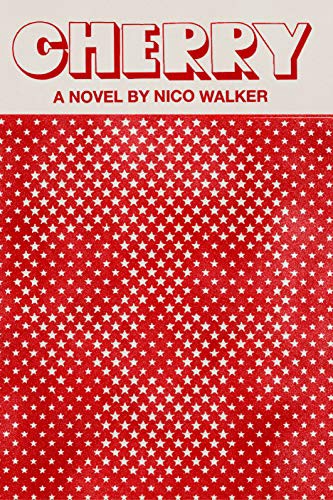
Many debut novelists are churned out of the M.F.A mill, their manuscripts drafted on an MacBook Air in a hip coffee shop and then submitted online to a literary agency for an unpaid intern to discover in the slush pile. Nico Walker is not your typical debut novelist. For starters, he wrote his debut novel on a typewriter in a federal prison where he is serving an 11 year sentence. It’s safe to say that Walker will not be signing his novels at your local bookstore anytime soon.
Walker enlisted in the army at 19 and served as a U.S Army Medic in the Iraq War in 2005 and 2006. After his tour, he came back to America with medals for valor and post-traumatic stress disorder. He turned to drugs to self-medicate the lingering trauma of war and developed an addiction to heroin. To fund his addiction, Walker started robbing banks. When he was finally caught, he had stolen almost $40,000 in 10 bank heists.
Purchase the book
Matthew Johnson, co-owner of Tyrant Books, discovered Walker from a long article in BuzzFeed and, after sending him a collection of Barry Hannah stories, struck up a friendship with him through letters. Johnson encouraged Walker to write a book about his life—and Cherry was born.
Walker writes with a wholly unique voice and structure that shows the possibilities of what can happen when we burn down the fences of what constitutes mainstream narrative. The strength of the narrator’s voice carries you between his youth, years in the army, drug use, and tumultuous relationships with the rapture of an old friend detailing your years apart.
Though the narrator’s story arc has the makings of an American epic, I found myself most rattled by the smaller moments in the novel, the quiet reflections on his lovers and friends, the cadence of a single sentence: “I tried to be good. But I was fucked up.” It was a pleasure to hear further from Nico over email about relationship failure, parallels of women and soldiers in combat, and the physicality of his writing.
Becca Schuh: For those who have yet to read Cherry, can you give a sense of the timeline of your life for the years the book covers?
Nico Walker: Yeah, it starts in late adolescence and it ends in arrested development.
BS: What were some of the challenges you faced in writing and editing a book from prison?
NW: Lots of challenges. It’s hard to tune things out here. I hope maybe I’m getting better at it than I have been before, otherwise it’s going to take me forever to finish the book I’m working on now. But there’s a lot of noise, a lot of stuff that gets in your head that you can’t avoid, you can’t ignore, and it makes you dumb just being around it, and it makes it hard to write. A lot of dudes in prison like to stand around and shout and just go blah blah blah all day, and it’s pretty terrible. Then the mail is slow; they have to go through everything. Mail goes out at certain times, so if you’re in a hurry you’re hit. No word processors obviously. But then that maybe works to my advantage with the way I write, which is all OCD, like all work no play OCD. Up, here we go, a dude at the email terminal next to me just starting screaming about something for some reason, and two minutes ago I had to stop typing so I could bend down and pick up a fireball candy that someone had tried to smash on the ground and that ended up going under my feet. These are good examples. I can’t wait to get out of prison. There were other things too. Like some days I couldn’t go type because we were locked down for fog or because the guards’ radios blanked out or whatever.
A lot of dudes in prison like to stand around and shout and just go blah blah blah all day, and it’s pretty terrible. I can’t wait to get out of prison.
BS: Did you find the process of fictionalizing your past to be cathartic?
NW: The best thing was feeling like it was all over with when I was done. Of course I’ve still got to talk about it now. But hopefully once the book’s in paperback and the movie’s on DVD or Netflix or whatever, it’ll be over then and I won’t have to talk about it anymore.
BS: How does the public perception of the Iraq War conflict with your personal experience as a veteran?
NW: I don’t know too much about it. I’ve seen a couple parts of some movies and they definitely weren’t anything like Iraq as I knew it. But then I was only in one or two places and only for a little while, so I’m not an expert on the war.
BS: Can you talk about the challenges of war veterans facing PTSD, and how the resources (or lack thereof) misalign with the needs of veterans?
NW: I don’t know what anyone can do about PTSD. You can’t un-experience things. I got a letter from a woman with PTSD the other day and she put it well. She said, You can’t unsee things. Which is about right. And you just can’t un-know what you know. What you know about life. What you know about what’s out there. There’s definitely a disconnect between Americans who’ve been to places like Iraq or Afghanistan, or whatever places like that, and people who haven’t ever been to such places. So it’s hard to think of any way that the one can get much help from the other. Time is the best thing that can help someone who’s having problems like PTSD.
[My novel] starts in late adolescence and it ends in arrested development.
BS: In your novel, the narrator starts robbing banks because of his drug addiction. Having gone through addiction yourself, what is your current perspective on the opioid crisis in the Midwest?
NW: Of course I think it’s tragic that all these thousands of people are dying every year. It seems like everyone knows someone who’s died. I definitely don’t think more laws are what’s needed. I definitely don’t think more “drug therapy” will help anyone. I think it’s a cultural problem. I think it’s a spiritual problem. I think there are a lot of people coming up in America who don’t want anything to do with what our country is about, don’t want to be what our society demands that they be. People are lonely. People are not valued. They find a quick way to feel good. Unfortunately it often kills them. Probably something should be done to make pharmaceutical grade opioids, like dilaudid, more easily available, so as to steer people away from the street drugs that are killing tens of thousands; just for a while anyway, while we work on solving the problem of why it is that people have this self-destructive desire to shoot dope.
People are lonely. People are not valued. They find a quick way to feel good. Unfortunately it often kills them.
BS: Your writing voice feels very natural — is this how words flow in your brain, or did you work to cultivate the voice of the narrator?
NW: The word order being out of the ordinary is something that comes naturally to me. Usually it’s something that I do that makes me sound dumb when I talk. But I noticed it and then I tried to develop it some and make it into something useful. Cadence or the rhythm of the sentences when I read them out loud is real important to me, maybe because I’m some kind of narcissist or something when it comes to the sound of my voice. Who knows. But I wanted to get it right, and so I tried a lot of things out for that, trying to get things to flow nicely.
BS: You portray several relationships where the characters have trouble figuring out their partners wants or needs. What inspired this focus?
NW: I was inspired by my own failings in my own personal life. The more distance there was between me and relationships I’d been in in the past, the more I’d blush about how selfish and dense I could be. I hope I’ve grown out of that some.
BS: “I tried to be good. But I was fucked up.” This line felt very simple and true to me. It also felt relatable do you think it’s a universal sentiment?
NW: Yeah, I think it’s true. I believe that most people, not all but most, who get into trouble get into it with the best intentions. For instance the narrator in Cherry, he creates a situation in his relationship with Emily wherein no one’s going to win. He knows that Emily’s heart is not a hundred percent in it and he’s only hoping that this will change for the better and that things will work out because of what will be there after the fact. He counts on things that aren’t true because he wants to believe in them.
BS: You portray a very visceral physicality with regard to injuries — how was the experience of writing such graphic and intense descriptions of wounded bodies?
NW: I didn’t like it. But it was necessary, I thought, for the book. I don’t get off on violence. There are books wherein violence is used for entertainment and I think that shit is stupid. I have a theory that books like that are usually written by soft motherfuckers, but this is neither here nor there. I’m not one for gore for gore’s sake. But I was just trying to show something for what it was like, and I thought it was important to do it that way.
Perhaps no literary character embodied 1990s women’s literature more than Bridget Jones, a London singleton who chronicled her comical and honest experiences with dating, her career, and an aging family in her diary. Initially serialized in the London Daily Telegraph, Helen Fielding’s Bridget Jones series was expanded into a full-length 1996 epistolary novel that gathered Bridget’s diary entries over the course of roughly a year. Bridget’s diary was an unfiltered stream of consciousness, the messy reflections of the original hot mess. Part of her appeal was the raw confessions that recorded her every flaw and mistake, making her both hilarious and deeply relatable, not unlike the friend or celebrity you secretly enjoy watching overshare on social media.
Stumbling upon Bridget Jones’s Diary and its sequel, Bridget Jones: The Edge of Reason, as a teen was a formative experience for me. At that time, I was ready to transition from the epistolary children’s literature I loved―in particular the Dear America and Amelia’s Notebooks series―to a version closer to what I imagined my life would be like as an adult. Having endured a Harriet the Spy-esque scare when my notebook was left behind in my 7th grade math class, I was much more on guard about what I would write in a journal of my own. The hard lesson was that even under lock and key our most secret diaries have audiences.
Helen Fielding announced there would be a third novel in the Bridget Jones series to be published in 2013, Bridget Jones: Mad About the Boy. The new novel would center on the not-so-happily-ever-after after (spoiler alert) Bridget’s longtime love interest and eventual husband Mark Darcy died tragically young, leaving Bridget a wealthy widow and single mother to two young children. The question would be how — if — Fielding would expand beyond the diary format to include some of the contemporary communication that was mostly nonexistent during the peak of Bridget Jones’s fame. Mid-90s and Y2K Bridget had instant message and email to record her misadventures, but failing in the public eye of social media was not available to her. Part of her diary’s charm was its near-claustrophobic intimacy. When Darcy does find her diary at the end of the first film adaptation and reads some of the scathing things she had written about him, Bridget, flustered and apologetic, says, “Everyone knows diaries are just full of crap.” Sure, Bridget is free to record that crap ad nauseam in her private journal, but how would that play out on social media?
Bridget, now casting around desperately in search of a purpose after Darcy’s tragic death, struggles to fit into the wider world. Trying to find relevance and now well into middle age, Bridget awkwardly attempts to negotiate the world of Twitter. There’s a substantial subplot devoted to Bridget’s “toy boy” social media-hip younger lover, and Bridget obsessively records her Twitter stats, becoming acutely conscious of any gains or losses in followers. For myself and fellow fans, the third novel was a flop, but what went wrong? This should be the perfect era for Bridget. Some of her favorite things to write about — her calories, daily food intake, and exercise stats — could easily be translated into in any number of mobile apps while her fragmentary entries could now be dashed off in Evernote. I could even imagine one of her drunken confessions could dictated off to ever-understanding Alexa in a nearby Amazon Echo. Yet social media seemed to do the queen of confession in, laying bare the worst in her vapid tendencies.
This should be the perfect era for Bridget. Yet social media seemed to do the queen of confession in, laying bare the worst in her vapid tendencies.
Surely contemporary epistolary fiction could be done, and done well. Meg Cabot’s novels, such as Boy Meets Girl, and Cecilia Ahern’s Love, Rosie, were known for witty encapsulations that comprised emails, social media posts, texts, and other creative ways to incorporate the bevy of options authors now have to choose from to craft an epistolary narrative. Or, as Gary Shteyngart proved with Super Sad True Love Story, set in a dystopian future and told in diary form, the journal could definitely still serve as a primary and more-than-adequate record even in a world saturated with media. If the epistolary is not the most relevant form of our time, I thought, maybe I can finally take a stab at writing one of my own. As I’d learn by writing my own epistolary novel, while communication has fundamentally changed since the advent of the genre, the fundamental challenge — and opportunity — for epistolary fiction to capture the tension between recording with verisimilitude or with a filter remains strikingly relevant.
Epistolary novels told through diaries or journals illustrate our personal reconstruction of our daily events. In journals, whether conscious of this or not, we often frame our activities and feelings in a way that fits an overarching narrative. It’s no coincidence that the time I started keeping a journal at 15 was when I started getting serious about being a writer, and sorting through my day’s events and reflecting on them — selectively — were some of my earliest attempts at imposing a narrative on my pretty mundane life.
In my earliest journals, post-Harriet the Spy experience, I reflexively fall back on language about how “nobody would ever read these so I can be as honest as I want.” Though I privately hoped that my journal would be read one day, if I ever made it as a person of note. I found an interesting angle to take in my freshman year of college when I read the unabridged journals of Sylvia Plath and Virginia Woolf to try to understand my new diagnosis of bipolar disorder through the lens of other bipolar writers. The idea that a journal might also double as the chronicle of art and the manic depressive temperament fascinated me. I latched onto this and tried to frame my daily events through that lens. My approach launched a pattern of filtering my day’s experiences, emotions, and thoughts into what I hoped would be the larger story of my life as a writer and manic depressive.
What I included in my journals was no less than the carefully selected daily life of a serious writer. Most of my sloppy writing, including late night texts, those tone-deaf earliest Facebook posts that keep haunting my Memories list, and the ever-awkward online dating messages, were deliberately left out.
For my most intimate audience — myself — I was cultivating a version of my life I wanted to remember, cherry-picking the events of the day I wanted to forget, writing them out of my narrative. It was here I found a solution to my problem. Up to that point, to tell the story of my characters in my novel with the utmost veracity, I felt I had to include everything, the good and the bad, the things we wished we could take back, the things we write that wouldn’t make it into a diary entry, never mind the sheer magnitude of data. Our personal records multiply with every text conversation, every email, every social media status; even every heart or reaction we make on a post could be considered another account in an ongoing archive. Yet the cost of that inclusion would be to risk showing that even the serious and sophisticated characters I’d envisioned would not bend to a plot.
Unless, I flipped my approach and constructed the story out of everything that isn’t said on the bloated, unfiltered record, just as I had done in my journal.
Unless the signal was not in the noise at all, but outside it.
Unless the real story was happening off screen entirely.
When I finally sat down to write an epistolary novel I didn’t anticipate it would be both easier and harder than I could ever imagine. The Magicals started out about a group of college friends in their mid-twenties in mid-2010s Philadelphia. Initially, I was pleased at how the page count seemed to reproduce on its own. The sheer amount of data to record — email subject lines, time stamps, usernames — rapidly generated pages and bolstered my word count. Seventy pages in, I was feeling falsely confident at how well it was going. Secretly, though, I could tell the novel read hollow. The characters, all smart and bright people, sounded self-absorbed and shallow, beta readers and fellow workshoppers agreed. I wasn’t satisfied because I was searching for a story and all I was writing was data. What I struggled with the most was constructing a traditional novel narrative out of the vast amount of output we generate daily, what I consider to be the “digital detritus.”
Secretly, I could tell the novel read hollow. I was searching for a story and all I was writing was data.
To wrestle out a plot, I started to deconstruct some of the cues I’d gotten from friends about my social media image over the years. When a relative messaged me on Facebook almost a decade ago to tell me that I should only post upbeat things because people didn’t want to hear about depression, I was offended but unable to get his words out of my head. My struggle with mental illness went by and large underground, which is why when we met up in-person friends were surprised at how much I was struggling. I came away from those conversations wondering how someone so close to me could have such a misunderstanding. That is, until I scrolled through my profile and saw picture after picture of positive thoughts, smiles, cats, positive affirmations, and happy times. What I wasn’t projecting to the world was how crippling my depressive episode had gotten. I had neatly erased that from my public image, either misrepresenting myself or cultivating a version of myself I wanted to star in a novel. I wrote my own narrative, but the bigger story was not being pixelated.
Recently I found myself introduced to more writers than I’d ever met before at my first MFA residency. During and after the residency we started to connect on social media. My grappling with revising the plot had brought a new awareness of the story I was creating online, the one I’d be writing for a new audience. This was also a chance to start new, for a reinvention now that I was at last on a path to the future I’d dared to pursue. For the new characters in my life, what kind of heroine would I be? Could I commit to authoring a narrative with complete verisimilitude, the uncensored, true version of myself, depression and acne breakouts and failures and all — or was this next chapter of the Sarah Chronicles just as carefully written as the reality I’d so often buried to create the person I wanted to be?
With the Bridget Jones series possibly complete, I look back to the woman who I’d idolized for nearly decades. Bridget’s commitment to total transparency, written in compulsively readable installments, proves that messy honesty generates a natural plot of its own. The very proper Mark Darcy’s iconic confession that, “I like you very much. Just as you are,” is significant because it speaks to his affection for her despite Bridget’s unfiltered life, the one her audience of voyeuristic readers consume, the one she cannot revise years later on Twitter.
I applaud Bridget’s sloppy confessions and strident refusal to change even in her latest installments, which challenge the authenticity we applaud in fiction and on social media. When writing modern epistolary novels, we confront the truths and fiction we create each day in our ongoing story.
In my revisions I trashed most of my ideas in order to rethink the epistolary novel. The friends, now aged up to their thirties in the new draft, reunited after several years back together again in the same city. The people they were seeing live would not be the same people they had followed through their twenties online. Omissions were more significant than the crafted life we cultivate online. The story was about the inevitable collision between expectation and disappointment, image and reality, fiction and truth when our relationships move offline and in the same room. The story was the fallout from the epistolary novel we are continually writing every day as the authors of our own digital narrative. What mattered more was unsaid.
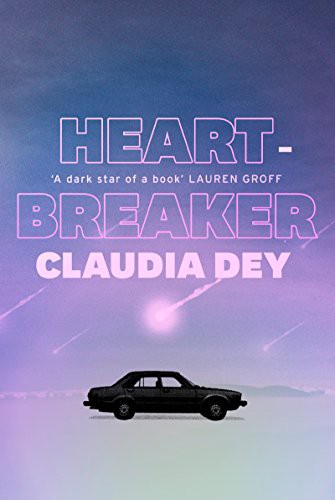
Claudia Dey had me at the title of her Paris Review piece, “Mothers as Makers of Death,” which came out earlier this year. Then I learned more about the author — who has written plays, worked as a cook in a lumber camp, acted in horror films, and is also co-designer of Horses Atelier. My heart skipped a beat. Then I read her novel Heartbreaker. I was smitten.
Heartbreaker is the most original novel I’ve read in some time. The novel is set in 1985 in “the territory,” the residual community of a cult somewhere north of nowhere. We learn immediately that Billie Jean has gone missing. The novel is structured into three different accounts, or sections — “Girl” “Dog” “Boy” — each section powered by one character who loves Billie Jean: her daughter, Pony Darlene, her dog, Gena Rowlands, and a teenage boy named Supernatural, each bearing witness to Billie Jean’s absence. Pony Darlene, Gena Rowlands, and Supernatural have lived their entire lives in the territory, but Billie Jean — the only outsider in the territory — appeared seventeen years ago when she fell from the mouth of a car she stole. She has never spoken of where she came from, or where she might be headed now.
Heartbreaker is lyrical on the line level, but the questions at the center of the book — about women’s struggle for multiplicity and messiness, about the way love can carve losers out of all of us — make the novel sing. Dey creates a cinematic landscape filled with vivid neon jumpsuits and duct tape and DIY and Air Supply. It’s a dark world where men are given another chance in another name, and women are assumed to be happy to stay home, to stay in the same story. And the town’s greatest resource? The literal blood of teenagers, sold at a premium. It is a world you know you should leave, and yet, there is an acute sense of the beauty there, too.
Dey and I spoke over the phone about the case for more “bad” moms in literature the desire to be “more than one thing,” the additive and subtractive nature of love, and why good art needs to be a little wild.
Erin Bartnett: I wanted to start by talking about the genesis of this book. I was so captivated by the dreamlike, near-dystopian atmosphere of the territory. What about that bleak setting was so fruitful for you?
Claudia Dey: I wanted to create a place that could not be pinned to a country, could not be pinned to a continent. I wanted it to be so remote that it was nationless. When I was researching the book I was completely consumed by images of places that I’d never been to but I could feel in my bones — the snowfields, dense woods, endless skies of Siberia, Iceland, Finland.
I used to work as a cook in lumber camps across Northern Canada. We would follow these hand-drawn maps, these unnamed logging roads, and miles into the bush, set up camp. I would be hours away from the nearest, smallest town. Let alone my life. I was so separate from the culture, so separate from the economy. And this was the 1990s — pre-cell phone. So there was this profound un-traceability and unreachability. When the planters were in camp, it had this Wild Wild Country feeling. The elation and dread of a private society, hidden from view. I was so struck by the wish for ease, for comfort, for heat, for closeness, the sense of scarcity, the longing for elsewhere — all of those details entered Heartbreaker. As did the duct tape, big trucks, big dogs, nicknames and bonfires. The moment the planters left, and the camp was vacated for the work day, I was so isolated. I love this George Saunders’ phrase “a hostile dreamscape”; this is how those empty campsites felt — my ears keen to the approach of a truck, an animal. Mud caked on my jeans, ice pelting the roof of my cook shack. And then looking out at this endless wilderness all around me and feeling that sharp sense of what it would be like to disappear. It was those years in those untraceable places that I think were the genesis for writing the Territory.
EB: In your Paris Review essay on motherhood, you talk about how a mother is never alone. And in order to finish this book, you needed to isolate yourself. Is there something productive about loneliness, too? Is there something you long for in that loneliness?
CD: Yeah, definitely. For me loneliness is a soft and familiar place. It’s a natural state. It’s something that I seek out. It’s like a very productive trance; it’s where the writing happens.
EB: Why did you choose to set this book in 1985? And then how did you situate yourself back into 1985 to write this book — what were you watching, listening to, reading?
CD: Now that I have some distance, I think I chose 1985 initially for the aesthetics — they were pleasing to me. I was aware that the novel had a dark and sorrowful heart — it holds a terrible pain — and so I wanted there to be redemptive elements — both for the reader and for myself. Those details can be a salvation. White Snake, Air Supply, The Eurhythmics, Nazareth’s “Love Hurts”, feathered hair, press-on nails, leopard print and hoop earrings — this is the sonic and visual world of the book and it is accompanies the grief at its center. It’s fantasy — fantasy is critical — it’s like a private source of oxygen. It’s also hopeful.
I would have been 13 in 1985. This was the beginning of the most riotous stage of my life — you are swapping out selves in grand, dangerous gestures. I was so inspired by this Dutch photographer who considers her portraits of teenagers to be “abstracts” — given the flux and changeability of the self inside the chaos upon chaos of that time. When you are a teenager, you are forming yourself and you use the culture to do that — another reason why the music and clothing were so important to me.
Lastly I am not sure I will ever write something contemporary because I don’t like what cell phones have done to us. We are like stunned gamblers curved over slot machines waiting for a blink of light rather than inside and attentive to observable life. I also knew that technically it would be very difficult to write a woman who disappears with the tracking hardware available to us now. So the reasoning was initially romantic but then, as I examine it, technical too.
I am not sure I will ever write something contemporary because I don’t like what cell phones have done to us. We are like stunned gamblers curved over slot machines waiting for a blink of light rather than inside and attentive to observable life.
EB: I feel like that’s so often the birth of the things we write — the marriage between some romantic idea and the reality of some technical challenge.
CD: It’s so true!
EB: I was really interested in the way you make love a kind of equation in Heartbreaker. Love can’t be Love without Loss. There’s an additive and subtractive nature at the heart of love for the characters in the book. Which makes sense, given that the book is about the loss of one person three characters love very much. I wanted to talk about how you structured the book around these three characters who love a missing person. But Billie Jean doesn’t share her story directly. Could you talk about the decision to structure the novel around the experiences of those who love Billie Jean rather than the beloved herself?
CD: I love your summation of the love mathematics that form the heart of the book. Truly, the decision to structure it the way that I did was intuitive. I don’t map out novels; I work from some kind of private circuitry. I knew in the earliest hours of writing Heartbreaker that I wanted it to be told by: Girl, Dog, Boy. I very consciously placed an animal at its center. I knew that the book would be built out of the voices and I wanted the voices to work in the way of chambers. Similar to how a theater works — you enter the chamber, the lights dim, they rise, and you’re with the storm of Pony Darlene. The lights dim, you exit the chamber you enter a new one, the lights rise, you’re with loyal, murderous Gena. They dim, you exit, lights rise, you’re across from watchful, beautiful Supes. Each chamber had to be its own dominion.
And I wanted to fulfill that Joan Didion maxim of writing a book that is read in a single sitting. That was from an interview that Didion did with the Paris Review in 1977. I read that interview recently and that line, her casual, never sentimental delivery of this clean and brilliant truth really struck me. Returning to your question of love: what intrigues me — and it’s in the epigraph of the book, ‘In love there’s no because’ — are the darker corners of ourselves that we cannot explain to others, let alone to ourselves, when we lose all logic, all morality, and become kind of rudderless inside a spell of love — that’s what I wanted to go into as deeply as I could. And I wanted Billie to be the center of that.
What intrigues me are the darker corners of ourselves that we cannot explain to others, let alone to ourselves, when we lose all logic, all morality, and become kind of rudderless inside a spell of love.
EB: Can we talk about naming in this book? The names in this book are amazing — Pony Darlene, Neon Dean, Supernatural…but then there’s Billie Jean and her dog Gena, who are the only two characters I noticed that get to name themselves. The others are named or renamed. Can you talk about how naming informs the identities these characters take on and struggle with?
CD: The names indicate the gap between how the characters experience their own interiors and how their interiors are perceived by others. There’s this tradition in The Territory — The Territory is the remains of a cult; you can see the sexism in the tradition — that the men receive these special nicknames and their birth names are eviscerated. This is a moment of ceremony and it marks a man as having progressed from boy to man. The women aren’t assigned any kind of obvious power in that way. As a writer, of course, it’s an opportunity to give the reader clues to a character’s history or true nature. Some of the choices were playful ones. I took a lot of delight in the naming. For the reader but also as a buoy for myself — some of the writing was agonizing.
EB: You mentioned that you wanted the animal narrator for this novel — why did you want to go in that direction?
CD: I think that, autobiographically, I had this moment that struck me so deeply: this was when I first became a mother and my son was about four months old and he was asleep on my chest. I could feel him dreaming. I was reading Anna Karenina, and I was inside this vast peasant scene when suddenly the narrative swerved and I was behind a dog’s eyes, his point of view. It surprised me, rearranged my brain chemistry. It really marked me as a writer. I think the element of surprise is at times underrated in art or misused, and this was employed with such grace.
I put this idea in the novel, but I will say it now because I love it: a healthy human heart has an irregular beat, and an unhealthy human heart a regular beat. And that sleight of hand in Anna Karenina — where we’re suddenly behind the dog’s eyes — showed me how much we need that irregular beat, that unevenness in our art. It’s a form of vitality, of wildness. It’s so easy to overcorrect, to discourage yourself from stylistic and intellectual risk, to, in the editing process, photo-shop a novel — glaze the life right out of it. I also needed Gena in order to further the story. So much of the book is about where secrecy and closeness intersect. All of the unspokens, all that we guard. And yet with the dog, a judgeless, ever loyal dog, who is homicidal on our behalf, we can confess everything.
EB: So that irregular beat — our desire for that, and the frustrated attempt to find that — I wonder too if that’s related to the refrain I found in every section, almost verbatim — that a person is more than one thing, a person is many things. As Billy Jean and Debra Marie both say: “Why can’t a woman be more than one person in a lifetime, why can’t she be two or three?”
CD: Yeah, I love that you note that. That is one of the central questions of the book. I feel if you parse it, you can see that question at work in each character — the adults’ past identities and the teenager’s ever-changing ones.
One point of sinister inspiration was the [Fundamentalist Church of Jesus Christ of Latter-Day Saints]. I have been obsessed by and have read countless survivor accounts — these teenage girls changing into wedding dresses in the backs of vans as they’re being driven over borders to be illicitly married in a roadside hotel to a man five times their age as their mother stands witness. I wanted to look at moral authority; what remains when you forfeit your moral authority? And so in the book you have the wolf pack — all of the initiations, the feeling of being accepted and not accepted, those marks of belonging at work between the women of The Territory. And then you have the lone wolf — Billie. For me, the construction of Billie was to examine the opposite of that wish to belong. In the end, she lived radically — guided only by what she loved. However dangerous, however haunting. Again, the epigraph points to that — that love is senseless.
EB: I wonder if Billie is able to be more than one woman in a lifetime because of her capacity to love. She is okay with loving more than one person in a lifetime — even at the same time — but she also understands, can quantify, how big and dangerous and beautiful her love for her daughter is.
CD: That is a beautiful, beautiful comment. Thank you. I think you are right — we look at multitudes within as a deceptiveness, but it can actually be something much more sublime, productive.
EB: Could you talk about how motherhood functions in Heartbreaker? I think you construct motherhood in a really nuanced way that illuminates the multiplicity in motherhood while pointing out the patriarchal column — a kind of singularity — placed on top of women in general, but especially women who are mothers.
CD: I am so tired of seeing the noble mother in books. We don’t see mothers being bad in novels. For me, motherhood contains all of my most settled and unsettled feelings. Billie talks about the love she feels for her daughter as an injury, a permanent injury. And that is the truth of it for me, your deepest and most vulnerable tenderness exposed to the open air. I wanted to write this version of motherhood — the one that felt closest to me. Essentially, with Heartbreaker, I tried to do the most personal thing in the most fictional way. In Billie, I got to write a woman who is a mother and also cheats, kills, lies, grieves, loves.
I am so tired of seeing the noble mother in books. We don’t see mothers being bad in novels. I got to write a woman who is a mother and also cheats, kills, lies, grieves, loves.
EB: You are a living example of what it means to be multiple selves: you’ve been a horror film actress, a cook in lumber camps across northern Canada, and co-designer of Horses Atelier (which has my dream jumpsuit). I often feel so pressured to be branded, to be one thing (which is another reason why this novel really spoke to me). How do you embrace the plural passions?
CD: Thank you, Erin! I guess I am restless. My experience has been that each form feeds the other forms. Also, identifying that whatever my current obsession might be — it has a form that fits it most precisely — whether it’s fiction or a horror film. I learn so much when I am doing something new. When I am slightly terrified and out of my depth and have to call up a different kind of courage or sharpness. I hate casualness! Or ease around work. I feel it all accumulates somehow — all of this traveling — for Heartbreaker for instance, those hours on set being stalked by a sea creature, trudging through hip-deep snowbanks, as well as the thousands of hours in a theatre, designing costumes — all of it entered the book. Work is work. Work is devotional.
That’s how literary critic Johnny Rotten signed off his long-running column “The Great Rock ’n’ Roll Novel” every month in TheLondon Review of Books. His fans tended to agree with the famous curmudgeon — there were so many remarkable memoirs, biographies, histories, and essay collections about rock, why so few worthy fictional efforts? It seemed like the perfect subject matter, but maybe like rock itself those familiar three chords were hard to animate into something fresh.
Purchase the book
Inspired by Mr. Rotten’s poison pen, Destroy All Monsters is my attempt to write the last rock novel. But as I fantasized about the fiery end of this genre, I knew I owed a serious debt to those novels that managed to capture the immediacy, mystery, identity-shifting allure, and raw power of the best rock. Set among far-flung scenes and subcultures, they share a compulsion to transgress boundaries, embodying the propulsive spirit of the music in their prose even as they unravel the complicated desires that fuel it.
Here are seven books that deserve a shot at the crown of the Great Rock ’n’ Roll Novel.
A haunting novel about obsession, self-creation, fandom, and narcissism — in other words, pure rock and roll. It explores the secret world of musician Nik Worth who has recorded countless albums but never released them, documenting an imaginary life where he’s a star, complete with elaborate press releases, reviews, articles, and fan letters. Narrated by Nik’s sister, Stone Arabia plumbs what music means separated from an audience and the contradictory motivations and sources of true artistry.
This bracing novella breaks the mold of the non-fiction 33 1/3 series which usually traces the history of a single album. It’s written from the point of view of a teenager locked in a psychiatric ward who’s pleading with his counselor to return his prized cassette of Black Sabbath’s Master of Reality. It’s a poignant example of how a band can become your life and a searing defense of music’s darkest emotions. John Darnielle has written more accomplished fiction, but this gut-punch of book remains my favorite.
Morvern Callar isn’t a traditional rock novel, but Morvern isn’t a traditional hero. She narrates a story about theft, identity, and authenticity, which begins with her boyfriend committing suicide and leaving behind his unpublished novel. Her tale is saturated with music — mix tapes, playlists, and the heady abandon of rave culture. It’s about the hedonism of music and allure of losing yourself completely. Director Lynne Ramsay adapted the novel into an equally brilliant film that functions as a sister artwork, telling a different version of Morvern’s story in the same unmistakable off-kilter key.
Graphic novels have proven good vehicles for capturing the texture of rock and there are many standouts, such as Anya Davidson’s Band for Life which details the glorious absurdities of musical collaboration. But my pick is this Love and Rockets collection which focuses on young Latinas Maggie and Hopey navigating the California punk scene, joining bands, going on tour, moving between various romances and communities. Storylines like “The Death of Speedy Ortiz” showcase Hernandez’s masterful characterizations and indelible mix of drama and empathy.
Set in a small Oklahoma town, this novel revolves around reclusive rock star Lena Wells, who was big in the 1970s, and a documentarian who’s supposed to film her comeback. It deals with fame and memory, shattered families and searching for purpose in the midst of tragedy. With songs and poems embedded in the text, Live from Medicine Park plays like a classic roots rock ballad, full of ragged heart and intensity.
The subtitle offers the best summary: “An Hallucinated Oral History of the Post-Punk Music Scene in Airdrie, Coatbridge and Environs 1978–1986.” Keenan is a longtime music writer who knows the potency of local scenes and the legends that spring up around them. The book is an affecting account of fictional band Memorial Device and those in their orbit, revealing the unexpected turns of people’s lives. It’s also an anatomy of Scotland in the 1980s, a shattering collective vision that’s hard to shake.
This early rock novel remains one of the best. Bucky Wunderlick, an amalgam of Mick Jagger and Bob Dylan, flees the Big Tour and holes up in a cold water flat in New York City circa 1972. He feels like he’s hit the limits of language, boiling his songs down to lyrics like “Pee Pee Maw Maw.” The book is set in a downtown scene that resembles a medieval fresco, a dangerous zone of counter-cultural hangover, utopian thugs, and sinister politics. It’s a great novel about retreat and stasis. Or as one of DeLillo’s peers put it: Silence, exile, cunning
“Where is Narnia?” I joked as I stepped through the back of the large wooden wardrobe featured in the center of a Lower East Side basement. I didn’t actually expect to find myself in the magical land of The Lion, The Witch and the Wardrobe, but this tour of Wildrence, a performance space home to inventive immersive projects, certainly invited flights of fancy. After exiting the wardrobe, I was led down a narrow hallway filled with empty picture frames and found myself in a room of stark white walls adorned with child-like drawings. What might have happened here? Or a better question would be: what could happen?
59 Grand Street is home to Wildrence, a self-described “storytelling space and consulting studio,” home to several of the site-specific interactive experiences that are appearing throughout the New York theater landscape. Wildrence’s projects include Here, which was inspired by the location’s set; The Bunker, a live immersive gameabout surviving the environmental apocalypse; and the interactive magic show Six Impossible Things. Currently running is Through the Wren, which invites guests to travel into a Gothic romance fairytale of the 1800s.
These strikingly different shows have all been housed in Wildrence’s basement space,a charming and eccentric series of rooms joined by a single narrow hallway. One resembles a parlor, with old-fashionedfurniture and a built-in kitchen, while down a hallway adorned with empty frames is a large room of stark white walls painted with figures of humans and a library filled with books of every genre.
These settings can and do change for every production — a task quickly undertakenby Yvonne Chang and Jae Lee, former architecture students who, after working in corporate offices, decided to venture into interactive design and established their own company. The duo transformed the space, an underground karaoke bar that was adorned with peeling paint and mold when the women first found it. But the size was right for the two women, who sought to create the kind of atmosphere they experienced in escape room puzzles and at immersive theater pioneer Sleep No More, but on a much smaller level.
“From our architectural experience, we saw potential,” Lee said, adding that some guests find even the narrow staircase descending from the street level disconcerting. “We played off [people’s] notions. Each room will be a rich room, filled with content, that is used enough that it can be useful for a lot of different genres [and] productions.”
The duo worked from the ground up, converting a single room into the multi-layered world of Wildrence, complete with the backlesswardrobe that did not transport me to Narnia but did inspire some flights of fancy.
The experiences offered by Wildrence— role-playing and interaction with performers and audience members — have become increasingly popular in recent years. Adventurous theatergoers have been donning ghostly white masks at Punchdrunk’s Sleep No More since 2011and began attending Mad Tea Parties at Then She Fell in 2012. And this month they are taking to the streets and traveling through time in DUMBO, Brooklyn in Firelight Collective’s Stars in the Night. More and more, audiences want to be a part of the performance rather than simply watch it, a desire that Zach Morris, co-artistic director of Third Rail Projects, ascribes to lack of human interaction in everyday life riddled with smartphones and online interaction. The average American spends more than 10 hours a day looking at screens, so 90 minutes of face-to-face interaction, even with strangers, can have a unique impact on a person.
The average American spends more than 10 hours a day looking at screens, so 90 minutes of face-to-face interaction can have a unique impact.
“We are simultaneously more connected than we ever have been and more disconnected. The way we communicate is through screens, which are essentially prosceniums” like the traditional stage that separates the actors from the audience, Morris told me. “When we seek culture, perhaps we want to be able to engage in it in a way that doesn’t have a membrane between us and it.”
“In the last several centuries we were not able to navigate our content,” he continued. “With the advent of the Internet, we’re not only able to navigate our content but have our content be responsive in a way it never has before. I think there’s something exciting about theater and performance that can be responsive. This type of work is responsive to an audience, it is navigable to an audience and fundamentally we are hardwired to want to be in a room with another human being. We’re longing for that, I think.”
Then She Fell, created by Third Rail Projects, opened in 2012 and was originally slated for a six-week run. First staged atGreenpoint Hospital in Brooklyn and currently running at the Kingsland Ward at St. Johns, Then She Fell thrust audiences into a mysterious and fantastical environment that questions the nature of love and desire. After being checked in by a doctor and nurses holding clipboards, the 15 guests permitted at each performance are guided through the halls of the hospital, encountering characters from and inspired by Lewis Carroll’s story.
Carlton Cyrus Ward as the White Rabbit in “Then She Fell.” (Photo by Darius Sneed)
The 18-year-old company, which has focused on public and site-specific projects, sought to “blow up” accepted conventions of the structure of performances and interactions between performers and audiences with its work. As he worked to put together his first immersive, Morris realized that it was the the audience who was the protagonist in this show, which runs counter to much of established Western drama. Adjusting his way of thinking to create and compose for that kind of work caused his head to “sort of explode,” he admitted.
“We started in earnest knowing we wanted to create an incredibly intimate evening and being fine with the idea that it was going to be for a very small audience group,” Morris told me. “We were going to be throwing all the rules as we understood them out — how a piece of theater could be made, what the formula for it could be, what its business model might be… We knew that because this form was inherently fragmented, so we wanted to have some sort of underpinning, point of entry for the audience to allow them to grab on.”
That entry point became the relationship between Carroll and Alice Liddell — one that inspired controversy and many questions about its nature. Morris did not seek to offer any answers to questions about this ambiguous relationship but instead set out to explore the questions themselves. Visitors to Kingsland Ward witness the Red and White queens interacting with Alice as well as a suggestive dance between Alice and Lewis Carroll; many have their own chances to talk to Alice about the nature of love, or take dictation of a passionate letter for Carroll.
The opening of Then She Fell followed several site-specific public works that Third Rail had created, which inspired reflection and resulted in changes in their approach to creating art and how the performers and audience members could engage with each other. Combined with their interest in large-scale environmental installations, Third Rail began creating immersive work — even though, Morris said, they weren’t familiar with that term at the time.
Engaging with the actors heightened every emotion inside an already charged setting.
In Then She Fell, the immersive atmosphere inspires intimacy. As I was guided through the hospital halls, I brushed a young Alice’s hair while she asked me if I had ever been in love before. Engaging with the actors heightened every emotion inside an already charged setting of excitement and, at times, unease. Hearing a young girl speak of her fears of marriage is one thing, but assisting her in her beauty routine as she confides in you is another. And while many have speculated on whether the relationship between Liddell and Carroll was romantic in nature, watching the two engage in a sensual dance from just a few feet away is so intimate that, while fascinating, is also uncomfortable.
“As we got deeper in the process we realized we wanted to create a piece in which we were posing these questions, either explicitly or implicitly, to the audience itself,” Morris said. “What is the nature of love? What is the nature of loss? What is unrequited love? What is requited but star-crossed love? What are the forces in play that bring people together or tear them apart?”
Wonderland is far from the only world explored by Third Rail Projects, who have also presented The Grand Paradise (an exploration of youth and desire set in a tropical resort), Ghost Light (a glimpse at life — and afterlife — backstage at Lincoln Center Theater) and, most recently, Behind the City (a wistful tour through space and time in New York). Many times, the space is as much a character of the show as the personalities inhabited by Third Rail’s performers. The impact of Then She Fell was decidedly intensified by taking place in an actual hospital ward, and frequent theatergoers (including myself) were thrilled by Ghost Light’s guide through the secret halls of Lincoln Center’s performance space.
“If it is space-driven, it’s about finding the space and building the world around it. If it’s character-driven, it’s about developing that and understanding what kind of space wants to hold it,” Morris said. “Then She Fell was very much space-driven. Though we had been developing work around Lewis Carroll’s writings, it wasn’t until we found the hospital that the setting of the world became the hospital.”
Some of Third Rail’s work is inspired by characters, while others are drawn from the performance space itself. The same applies to Wildrence: the performance space was the inspiration for the content and characters of the show Here, for which producer Kelly Bartnik invited the performers to sit in the space and choose different props or locations to create a story from them. The results, including a room filled with a childhood game of sheet forts, were surprising.
Moving from observer to participant enhances any emotions the show inspires — love, loss, longing, or even confusion — a technique utilizedin the recent show Stars in the Night. Firelight Collective’s show, playing in New York after a run in Los Angeles, guides groups of 12 through Brooklyn’s DUMBO neighborhood, exploring how the effects of a woman’s disappearance ripple through a community. Interactions with the wistful former lover or the frantic brother searching for his missing sibling while standing along the Brooklyn waterfront are heightened by the vast, open-air environment that is both beautiful and isolating.
Moving from observer to participant enhances any emotions the show inspires — love, loss, longing, or even confusion.
The show was inspired by the personal experiences of both artistic directors: Stephanie Feury was leaving a relationship, and Nathan Keyes was beginning one. The writing was sparked by love and loss and the locations soon followed. In Los Angeles, audiences were moved from point to point in an SUV, while in DUMBO they are guided throughout the streets on foot. The rejuvenated atmosphere of the rapidly transforming Brooklyn neighborhood, where the doorway of an historic warehouse can look directly onto the entry of a brand-new, sky-high condo, provides a fitting atmosphere for the already emotionally-charged performance in which the timing of scenes changes as well as locations.
“The story started to speak to us from a different level,” Keyes said. “We embraced the idea of taking the show to the streets and kind of laying the narrative over what was already there as a backdrop… We try to stay with the story and narrative. Once we’ve got a draft and it’s up on its feet, we start looking at the options and how the audience may respond there. Even in our first week, we tried a few different things that maybe led the audience down a road they shouldn’t go down. We’re constantly trying to tighten bolts and being really clear and trying figure out how they are going to respond and have many options for how the actors deal with that.”
As they walk through the Brooklyn streets, audiences encounterheartbroken lovers, but also siblings, children and parents. They are invited into shops, apartments and locales beneath the Brooklyn Bridge and offered snacks and cocktails. Decade pass rapidly during the 90-minute performance, but all the characters are connected— a fact the audiences may not realize until theperformance’s conclusion but quickly come together upon reflection with other people who attended the same performance. Heated discussions about who, where and when each person was took place on the sidewalk following the show I saw.
“As we kind of got deeper into loss, which is death, and losing love, and embracing love, and family and the complications around it, the people and the story began to link themselves,” Feury said. “That’s also happened with the spaces. You started with one space and because of these relationships and the need for these relationships and tying them together, these other spaces were needed.”
Those spaces invited new challenges, including building the sets from scratch and performing amidst MTA traffic. Brooklyn Bridge Park is picturesque, but, it’s also the location of loudsubway lines (that often run off-schedule) and real-life encounters with tourists. As one performance paused under the bridge to listen to a character frantically search for his sister, a police car and ambulance pulled up and began questioning the audience members. Much to everyone’s relief, the actor was able to stay in character.
As adventurousas an immersive show may appear to an audience member roaming the halls of a hospital or the streets of Brooklyn, the productions are well-oiled machines, with precisely-timed interactions moving from one moment to another. But actors are prepared for the unexpected, especially if audience members return to the venue determined to show off their knowledge or arrive intoxicated — two scenarios that took place during performances at Wildrence, one of which required the person to be escorted from the performance.
Unruly audience members or not, no two performances are alike — a distinction Morris said Third Rail Projects strives to cultivate with each production. While certain characteristics, such assensual dance performances, appear across Third Rail’s different projects, the company strives to reinvent its approach with each new show.
Lee and Chang share that goal, seeking to continue diversifying the experiences held at Wildrence so that they are challenged as much as the audiences. Lee likened the space to a game console that can invite audiences into a wide variety of experiences, depending on their taste and preferences.
“Not only does that keep audiences seeing new things that have never been seen before, it also keeps us as creators in this perpetual growth. We can do anything, learn more things, keep growing our skill set, the next time something comes,” Lee said. “Everything that comes through, we try to pick something up from it.”
“Perhaps the biggest lesson or tool is actually how to discover what it is you want to make and craft the tools to make it, as opposed to relying on the same methodology, the same tools, to create the last piece,” Morris said. “How do you blow the formula up and be like, ‘I want to make a piece of work unlike anything I’ve ever made. What are the tools I need to make them? Let’s craft those tools.’”
Those tools have evolved over time,as immersive theater’s popularity has risen. Inviting people to participate rather than merely watch expands the potential for a variety of experiences. Audiences aren’t content to just sit and watch anymore. They want to be a part of it — evidenced in the television shows like HBO’s “Mosaic,” which included an interactive app for viewers to engage with and the recently announced choose-your-own adventure series launched at Netflix. But immersive theater offers an even more intimate experience, as actors converse with and even engage physically with audience members. In a culture of remote cyber/online connections, many audiences are hungry for face-to-face engagement.
Audiences aren’t content to just sit and watch anymore. They want to be a part of it.
“Now audiences are OK with being touched or talked to or the other way around,” Lee said. “And they have some agency in changing the outcome of the conversation.”
That agency, and the different ways in which audiences seek engagement, is carefully crafted for the show by its creators, who never know what a guest at the show is really thinking, Morris said. Remembering that helps prevent the writers and directors from making any assumptions about how the work is perceived and ensuring respect for both the audience members and the cast — an issue reportedly taking place at Sleep No More, where performers claimed they were physically harassed by audience members.
“We believe one of our jobs in performing this work is to really create a space for them to have whatever experience they’re having, and find a way to honor their choices, the way they’re engaging,” he said. “By its nature, you are putting human beings into intense circumstances and creators need to be quite thoughtful about how you’re doing that with care and consent and with armatures in place to protect the audience as well as your performers. We’ve learned a lot about how far we can bring people with us.”
Morris credits the genre’s appeal to the intensely personal experiences the shows inspire, which, he said often differs greatly between guests of the same performance.
“There’s something profound about that. It is less about ensuring that the story is conveyed and more about can we create a space in which audience members can pull these images together in a way that is cogent and meaningful to them,” he said. “How do you continue to do that? How do you bend people’s reality? How do you make the impossible possible? How do you create a work where one person walks out [saying] ‘This is what happened’ [and another says] ‘No, that’s not what happened’ and they’re both right?”
That’s exactly what happened to me. While leaving Sleep No More, my friend and I began comparing our experiences, and they were very, very different. It almost felt like we had attended two separate productions. Wondering how I didn’t see what he did, I felt the urge to return to the show again. If I keep coming back to explore these productions, maybe one day I will end up in Narnia after all.
DON’T MISS OUT
Sign up for our newsletter to get submission announcements and stay on top of our best work.
YOUR INBOX IS LIT
Enjoy strange, diverting work from The Commuter on Mondays, absorbing fiction from Recommended Reading on Wednesdays, and a roundup of our best work of the week on Fridays. Personalize your subscription preferences here.