Nicole Chung on the Complexities, and Joys, of Transracial Adoption

I’m always thrilled, slightly stunned and entirely heartened when I discover a magnificently talented writer who is also an adoptee. It’s a tricky narrative to weave without coming across as resentful or righteous or ungrateful, largely because there’s so little out there written about the adoption experience that goes beyond “adoption speak” — saying things the right way for fragile hearts and severed bonds, newly orchestrated connective tissue and hopes to just be a family.

Purchase the book

I first came across Nicole Chung’s work through her personal essays on the now defunct The Toast, and later other publications like BuzzFeed and Catapult, where she is now Editor-in-Chief. I connected with variations of shared experiences, but was blown away by her prose.

Now, with her first book, All You Can Ever Know, Nicole has done something really remarkable. She has written a beautiful memoir that is also an adoption story, and an adoption story that is also a beautiful memoir.


Rebecca Carroll: We’ve known each other some through social media and the adoption experience, but reading this book was just, I mean, especially since I just sold my own book that will deal with my own adoption — it was a lot.

Nicole Chung: Yes. Congratulations. That’s just so great!

RC: Thank you. It was really so interesting to see how you got into your story — just how different the lens is depending on who is telling the story. Early on in the book, maybe even on the second page, you wrote: “To my family’s credit, my adoption was never kept secret from me.” It stopped me in my tracks, really, because I wondered why you thought they deserved credit for that.

NC: That’s a good question. I didn’t mean it was saintly behavior, or something. I have encountered so many adoptees, especially from older generations, who were never told or were told so late in life. So I suppose in that sense, that’s what I meant. I was glad it was never a secret, always very much — open is probably putting it too strongly — but just the fact that I was adopted was never hidden from me. I guess, nor could it have been, but [my parents] certainly spoke about it without embarrassment, without shame. That was how I learned to think about it too. But, yeah, I can see why that would be jarring to read.

RC: Yes, but also because the default is that there would be something to keep secret. I have also met tons of adoptees who are white and were adopted by white parents to blend in, specifically.

NC: That’s absolutely true.

RC: There were parents who felt a kind of shame that they couldn’t have biological children, and so their adopted kids weren’t told in order to assume the semblance of a nuclear, biological family.

I still feel like we’re not talking about adoption in a way that makes adoption a viable family option — it’s still a thing that really has to be talked about in a thorough way.

NC: I think it’s always relevant and important to talk about adoption — I always just felt really deeply for adoptees I’ve met who were able to blend in with their adoptive families and who weren’t told. Often, they would find out from someone else. They wouldn’t even find out from their parents every time. Sometimes they would find out by accident, from a neighbor, or another relative, or a friend. Somehow this other person had this piece of information they didn’t have about their own history, which just seems so terrible. I can’t imagine what that would be like.

RC: Such a sacred, personal piece of information.

NC: Yeah, I think it’s a tough line to walk between adoption being something that’s extremely common, so we should have ways to talk about it. At the same time, you don’t want to minimize its importance, right, in the life of a family because it is a big thing. It doesn’t just end with placement, as you know so well. I think, like you said, we are still learning how to talk about it and how to adjust those nuances and those complications, which not everybody is going to be familiar with. Not everybody will know how to talk about.

RC: Right. And you wrote about how you have this scripted sense of your adoption. Your parents told you the story, and you knew what role you played in it, and your parents said that your birth parents had made the best decision. And I wonder at what point, if at any point, did you think: “Well, wait a minute.” Because I hear a lot of adoptees say that their adopted parents told them that too, but who is ever making a best decision when a child is given away by her birth mother?

NC: Yeah. That word “best” is so fraught, and also the word “better” — I think what I heard over and over too, and this wasn’t necessarily even from my parents, this was from people who were looking at my family from the outside and saying: “You must have this objectively better life because you were adopted by this family, this white family.” I have people come up and just say to me, “If you’d been raised in a Korean family, you know they don’t value girls so your life would have been so much harder.” It’s amazing to me the things that people felt comfortable saying. I’m sure you’ve got a really long list, as well.

RC: I do. And it grows in real time. Do you remember when you first started really thinking about adoption as something that involved people making choices around you with a particular set of consequences?

NC: I think it did take me until, gosh, probably my late teens, early 20s, to really start questioning and interrogating — what does that mean, best choice or better life? Better than what? That better than what question just kind of started haunting me when I was in my mid 20s really.

RC: Who gets to decide?

No one even told my parents they should think about acknowledging the fact that I was different from them.

NC: Right. I mean, I think that’s just the big question. I understand why my adoptive parents had to believe it was the best decision possible. They wanted a family so badly, they wanted a child so badly. My parents were very religious so they fall in this, not just happenstance, but divine planning. It was just extremely hard, I think, for them to see the adoption as anything but a blessing and the best possible thing that could have happened.

RC: Divine planning for your adoptive parents, but what about your birth parents? Also divine?

NC: I am, frankly, embarrassed that I didn’t really start really thinking about how my birth parents must have felt or what they must have gone through until my 20s. They had never really been presented to me as concrete people, individuals in their own right. I had just been brought up to not to really think about them and their perspective. It didn’t occur to me until much later that they might have been deeply sad, or that something might have happened that shouldn’t have happened, and that was why they placed me for adoption.

RC: When you started thinking about it though, did you feel any kind of resentment toward your parents that you hadn’t been raised to be more curious about them? Or, did you not struggle with that?

NC: I think I did struggle with that a little. It definitely wasn’t all at once. It wasn’t just one moment where a light switched on and suddenly I could see all of these nuances and shades of gray I couldn’t see before and was resentful that they hadn’t been brought to my attention. It wasn’t quite that stark. But, I write in the book — and I don’t wanna give tons away — but I write in the book about how my birth parents, my birth mother, actually tried to contact me when I was very young. That was hidden from me. It was obscured and I didn’t find out until many years later, too late to follow up on it, too late to do anything about it.

RC: And you thought what?

NC: I remember finding out about her attempt to contact me. I don’t know, it was the first time I had really tried to put myself in her shoes and think about the adoption, purely from her perspective. I don’t know. The fact that it was hidden from me was deeply painful. I don’t even know if resentment was the right term, but it was very painful to me to know that she had made this effort, this overture, and was turned away without even really an explanation.

RC: Because our adopted parents are sort of the keepers of everyone’s feelings, and the feelings they want to protect the most are ours.

NC: That was hard and I wondered, were there other attempts that I didn’t know about? There must have been something going on, something that made her think about me at that time and try to reach out. This is not to portray my birth mother as a saint, which she’s not, but it was definitely this notion of, not only had I not seen the full complicated narrative for what it clearly was, no one had ever really tried to help me see it that way. That is something that I wish we had talked more about as a family when I was growing up. Just making room for what my birth parents lives and experiences really must have been like. Of course, it would have been guess work. We didn’t know them. We couldn’t have really gotten firm answers, but it was always just portrayed to me as we’re your family, this is your family. Whatever happened before, it’s not that it doesn’t matter, but, really, we know everything we could know, let’s move forward. It was enough for them, but, ultimately, it wasn’t enough for me.

RC: Right. You also wrote that you’ve never met an adoptee who blamed their birth parents for their decision. You can go ahead and count me as your first.

NC: Oh, I’m sorry. I didn’t mean …

RC: No, no, not at all. I spent the better part of 15 years after our reunion trying to please my birth mother and trying to be what would have made her keep me, to the point where I willfully stunted my own growth while she watched me writhe in the pain of doing that. This is only to say that I agree with you that birth parents are not saints, and yet I wonder why, do you think, adoptees so often see them as being above contempt?

[My parents] knew when people looked at us, they knew I was adopted, they knew that our family was different than a lot of other families.

NC: I think I can say, for myself, I was the kind of kid who was more inclined to look inward — the problem must be me, it must have been something about me, right? I think that’s just my personality and a lot of adoptees I’ve spoken to also felt like it was somehow wrong for us to try to assign blame to our birth parents. I think, especially as I started thinking more about their perspective and why they might have given me up, I really empathized a great deal more with them. It made me even less willing to blame them for the decision. Even knowing who they are now, and knowing they’re complicated, imperfect people, I definitely can see the hard spot they were in. I don’t think it’s a choice I would have made in their position. It still did not feel like something I can blame them for.

RC: I don’t mean to say that I sit around all the time blaming my birth mother for everything. It wasn’t until I was in my late 20s that I really started to understand who she was, and what her own really difficult history and backstory was, that I realized her decision to give me up was deeply convoluted. I guess blame is a very loaded word.

NC: It’s a fraught word, for sure.

RC: You said earlier that your parents wanted you so much that you were a gift from God, that you belonged to them. I just wonder, as a kid, when you first started thinking about adoption, and your birth parents, and being Korean, and what that meant, did the idea of belonging to your adoptive parents feel weird to you, or restrictive? I remember when I first found out that I was going to meet my birth mother, several members of my extended family, aunts, uncles, and so forth, said, “Remember who you belong to. Remember you’re ours.” I was 11 so it wasn’t like I had any kind of super intellectual idea of what that meant, but it did feel weird. Like, “I’m not yours. I don’t belong to you.”

NC: My adoptive mother said something similar to me when I started searching. She told me, “Remember who your real family is.” I didn’t really wanna argue with her about it on the phone. There was a lot going on. I was really pregnant. There was a lot at stake. It took me such a long time to work up my courage to take this step, I didn’t actually want to have a big argument, not just with her, but with anybody about it. I was like, “My mind’s made up. I’m moving forward. This is something I have to do so I’m not gonna sit here and justify it.” I just shrugged off that remark at the time, but I did keep thinking about it later. I definitely understand why my adopted parents thought, still think, of me as theirs. I think it’s very difficult, as a parent, to not think about your children, I guess, as yours. That said, I’m a parent. I don’t feel my children belong to me right now and forever, and ever. And then …

RC: Right. Because you have a biological child, I have a biological child —

NC: I have two.

RC: You have two. My son is of me, right, but he doesn’t belong to me in the sense that it felt these family members were saying to me. “We got you, picked you, you have been gotten by us.”

NC: It felt defensive.

RC: Right.

NC: I don’t wanna speak for your relatives, but I think, first of all, part of it was coming from a place of love. I think they wanted me to always know that they did think of me as their child. I wasn’t their Korean child, or their adopted child, or a child with qualifications. I was their child, as if I’d been born to them.

RC: But you weren’t.

NC: Yeah, but I think they worried that I would feel less loved if they didn’t try to reassure me of that — that I was loved and I was wanted. Part of it, honestly, was—it’s not that they were on the defensive, in the way I sometimes had to be as an Asian American in a white family, in a pretty white town. I got questions. I got micro-aggressions. I had experiences they didn’t have. But I know they had seen enough, and heard enough, they’d gotten enough questions themselves, to maybe feel a little bit defensive about it. I don’t know. This is actually a guess on my part. They knew when people looked at us, they knew I was adopted. They knew I wasn’t born to them. They knew that, in some way, our family was different than a lot of other families. I would not surprised if there was a touch of defensiveness, or maybe even something less strong than that, maybe just wanting to ward off those questions, those external intrusiveness, and just assert to everybody, to the world, and to me, “We’re a family. This is who we are. It’s not a big deal.”

RC: But, do you feel like there was a point where they began to defer to you, and your choice, and how you wanted to go about this search, or not?

If you’re not prepared to talk about identity, race, and racism that you as a white person have not experienced, it’s possible transracial adoption isn’t for you.

NC: First of all, by the time I started to search, I was in my late 20s and I had been living away from home and making decisions independently for many years. To some degree, they would have had to just live with it regardless. Right? But also I think they accepted my reasons. I think they knew it was especially important to me because I was expecting my first child, and there was just all of these practical reasons, too. I really wanted to know more about my medical history and, maybe if I could, understand why my birth mother had gone into labor so early. Just things like that, that suddenly seems much more relevant. I think they did understand. I mean, that said, it wasn’t an overnight process for them either. I think it was only through conversations we had later about things I learned about my birth family. Even years after the fact, I think our conversations about all of this are still evolving. I realize I still talk about my parents in the plural but, of course, my father passed away in January.

RC: I’m so sorry.

NC: Thank you. But, until he died, I would say it was the same with both my parents. I think our conversations about this have been evolving for the past several years. Some days, too, I think they understand better than other days. I think it’s a process. I don’t think they automatically understand it all and then they’ll always accept and understand it. But, I think one thing that’s helped, is they’ve gotten to meet my biological sister, who I’ve gotten close to, and they have gotten to see how much that relationship means to me.

RC: And how has that been?

NC: I don’t think that they have a wish anymore to deny the importance of this connection, this biological connection that [my sister and I] have and this friendship. I think they’re really happy that I have her in my life and have seen how important it is to me to have her. I guess it’s a series of incremental steps, not just a sudden thing. But there are certainly parts of my experience they’ll never fully understand. I’ve had to accept that because we experience the world quite differently, and they are not adopted, there really is, I think, a limit to how much they’ll ever be able to fully grasp, this reality.

RC: How much of your adoption narrative will you share with your own children? My son is very aware of my adoption story, and all the moving parts, and sometimes I’m actually afraid that he knows, or internalizes too much. He understood from a very young age, the pain and the trauma that it caused me and even suggested, when he was probably four or five, that we adopt as a way for me to help figure it out. Of course, it was coming from a place of love, but I said, “We can’t use a person, certainly not a child, to work through our issues.” But, I just wonder, it’s so present in our lives, how much do you share or integrate that with your parenting of your biological children?

NC: That’s a great question. I think, too, the answer changes as my kids get older. Like you, I had a similar experience with my older daughter when she was four-ish. I think it’s the first time she heard me say the word adoption and wanted to know what it meant. I was trying to explain it to her, and it was the simplest definition, but she really grasped it. At the same time, I could tell it really disturbed her, which I hadn’t been expecting, but I think it was clear, up until I said that, she had not really thought about the possibility of being separated from your parents. I remember, she asked me, I’ll never forget this, she said, “Am I gonna be adopted, too?” She said something else later which was that, “Did you like your first momma best because I like you the best?” And I said, “No.” She was already thinking about whether this would this happen to her. Or, if it happened to me, why couldn’t it happen to somebody else? I was so glad to be able to talk with her about it, and have more words, and be really open, and, at the same time, it was a little bit heartbreaking to have that conversation.

RC: And also, of course, there’s the element of race, too. Obviously, your story, my story, they’re not just adoption stories, they are interracial, transracial adoption stories. You can probably tell from the title of my book, Surviving the White Gaze, that it’s really very much about coming out of this whiteness, this space of all whiteness everywhere. My parents had two biological kids before they adopted me. My birth mother is white. I didn’t meet my black birth father until I was in my twenties. All this to say, I ended up coming to this place as a grown adult where I feel so angry about whiteness and the validity and intent of white parents adopting non-white children. How do you feel about it?

NC: I don’t feel qualified to say if given people should adopt, that’s definitely not my role. But, I think people just need to really go into it with their eyes open. And if you cannot do that, and if you’re not prepared to talk to your child about identity, and race, and racism, and things they will experience, that you as a white person have not had to experience, I think if you can’t do that, it’s possible transracial [adoption] really isn’t for you. That is also okay.

RC: Do you feel like your parents talked with you about racism?

NC: Oh no. We were not really equipped to do that. It was also a different era.

RC: A different era, what does that mean?

NC: Honestly, some of it feels like lip service and some of it feels genuine, but there are opportunities for some transracial, transcultural adoptees growing up today, that I didn’t necessarily have growing up. No one even told my parents they should think about acknowledging the fact that I was different from them. I don’t know. The fact that in adoption today, you do hear more talk about the importance of acknowledging, and celebrating even, a child’s culture of origin and helping them to either create or keep those connections. It doesn’t mean that everything’s perfect, but I know that a lot of adoptees today can go to culture camps and there’s just more opportunities to explore their heritage. It might seem small, but it would have been pretty huge for me growing up. Those opportunities just weren’t there. I didn’t really get to know or meet with a lot of other adoptees, and I think that could have been huge, and in of itself, just having those relationships, those networks, and people who understood.

RC: But they did exist.

NC: I think we were really disconnected. I grew up in a small community in southern Oregon. I could see it existing, maybe in Portland, but my parents didn’t know. I think they tried. I think they tried to find groups and networks, and really weren’t able to find anything where we lived.

RC: What do you tell your children about their racial identity?

NC: It’s hard because I don’t want to dictate to them. I want them to be clear about who they are. I also want them to have a chance to think about their identities and work these questions out without me telling them. I really don’t feel like I can define who they are for them. A lot of it, honestly, is support and asking questions, making certain things available to them that I didn’t have — their history and their culture, and to the extent that I can provide it, an idea of what it means to be Korean American. And also what it means to be the children of an adoptee. That has had a profound effect on their lives and it will continue to. They’ll have a different relationship to that fact than I will, but it’s just as relevant in their lives and it is in mine. How could it not be?

RC: You write in the book about your first daughter being born and people saying that she looked like your husband and how that stung a little bit. When my son was really small, we had a picture of me when I was really little too, and in it I’m holding a frog. It had been on the wall since he was born, but when he got to about the age I was in the picture, he sort of noticed the picture for the first time, and said: “Mom, why I’m holding a frog?” And, just that moment was, I mean only an adoptee who has a biological child understands the weight of that moment.

NC: No. It’s true. I actually think both my kids look a great deal like me. I think when my oldest was first born, people would sometimes say she looked a lot like my husband. She looks like both of us, they both do, but it’s still amazing to me to look at them and see all the similarities. That will never get old to me. Even just a casual Instagram comment about how much they look like me — I love those moments and I hold them close. I will never take that for granted. Just like I can’t take for granted the fact that I look at my sister and see someone who is, again, not my twin, but looks so much more like me than anybody else in the world. It’s not looking into a mirror, but it’s the closest thing I’ve got. That will always be so meaningful and powerful for me. I love that [people] can tell that our kids are cousins. You can see that carried on to the next generation, that similarity. It’s just like what you said, I completely agree, as an adoptee you just can not take those moments for granted. They just have so much weight and so much meaning.

RC: And so much joy.

NC: Yeah, absolutely, that. I still can’t believe that I have this much family and these connections. I feel really lucky, honestly. I know lucky is a really fraught term where adoptees are concerned, so I don’t use it lightly, but I do, I feel really fortunate just to have had the chance to reconnect with my sister and to be raising kids of my own. Just the simple fact of knowing that we won’t be separated. To me, it feels like a miracle sometimes.

RC: I loved it when you wrote that in the book — that it is a miracle and that you didn’t have any kind of problem with it sounded like a cliché, because becoming a mother, having the blessing and bliss and beauty of our kids, really felt like a miracle to you. I couldn’t agree more.

NC: It did. It was this unprecedented thing in my life, nothing like that had ever happened to me before. I still think about that all the time.

12 Books That Prove Women Outlaws Are Even Cooler than Women Heroes

While researching and writing my first historical fiction series focused on women’s experiences in the American West, I came face to face with something I should have realized years ago: women — their experiences, their triumphs, and their failures — have been ignored by historians. White heterosexual men have written the story of America and as a result, white heterosexual men have played the starring role. I wish I could say this problem is a thing of the past, but it was recently announced that the Texas Education Agency has voted to write out Helen Keller and Hillary Clinton, the first woman in American history to win a presidential nomination, out of Texas’ social studies curriculum. Women are the majority in this country, but we are still being disbelieved, ignored and, yes, written out of history.

Thank God for fiction, and for the new trend of telling women’s stories in historical non-fiction.

Fiction has focused on women’s stories for decades, but recently there has been a shift in the portrayal of women. Sure, there are still plenty of books with damsels in distress and there will always be way too many female murder victims, but fiction is increasingly focused on showing women in all their complexities. They’re pirates, outlaws, vigilantes, mercenaries, assassins, the smartest person in the room, leaders of the free world, superheroes and (just as importantly) supervillains. More important than being the protagonists of stories, for women to truly have an equal footing in literature, we have to have the opportunity to be bloodthirsty, greedy, intelligent, cunning, and vengeful — just like men. In other words, we have to be not only heroes but outlaws.

Below are 12 books about outlaw women that show female characters being strong, powerful, intelligent, and determined. Some are fiction, some are non-fiction. All are worth a read.

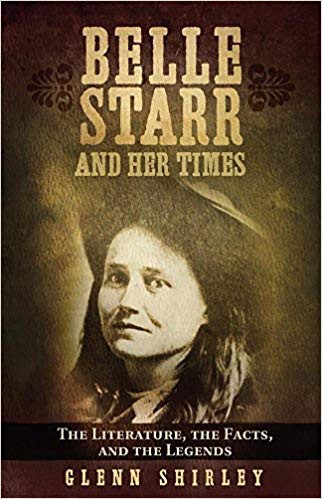
Belle Starr and Her Times: The Literature, the Facts and the Legends by Glenn Shirley

The challenge with writing about women in the West is the lack of official record. Letters, journals, contemporaneous newspaper articles, and word of mouth are the main sources of information, the latter two of which can hardly be considered trustworthy. In Belle Starr and Her Times, Glenn Shirley sifts through the fantastic legends, myths and lies to unearth the facts surrounding the most well-known female bandit in the American West.

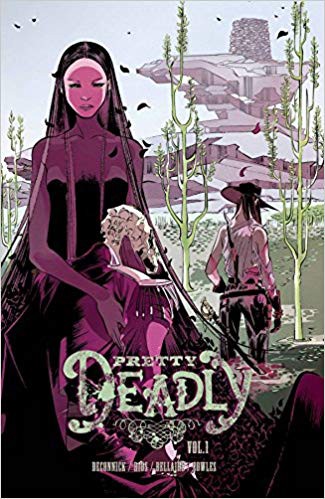
Pretty Deadly by Kelly Sue DeConnick, illustrated by Emma Rios, and Bitch Planet by Kelly Sue DeConnick, illustrated by Valentine De Landro and Robert Wilson IV

There’s good news and bad news with Pretty Deadly. The good news is it’s a rich, complicated take on the mythological Western with female characters in all the main roles. The bad news is it’s a creator-owned comic and, as such, doesn’t have a consistent release schedule (but there are two collected volumes for you to catch up with!). As of now, it seems to be on hiatus, with promises from DeConnick that the next volume is coming soon. In the meantime, you can pick up DeConnick’s other wildly popular comic, Bitch Planet, about the forced subjugation of women on a prison planet. Set in a sci-fi dystopian world where women are second class citizens and men are in charge (hmm…why does that sound familiar) women can be imprisoned for the smallest reasons. But get that many angry women together and you know they’re going to organize and fight back. Bitch Planet is also creator-owned, so new releases might be sporadic, but there are two collections of this one, too.

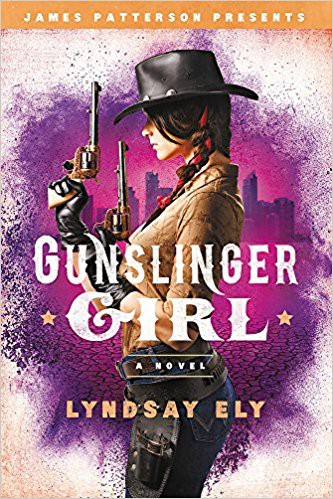
Gunslinger Girl by Lynsday Ely

A young adult novel billed as a futuristic, dystopian Western, Gunslinger Girl tells the story of Serendipity “Pity” Jones, who inherited two six shooters and perfect aim from her mother. On the promise of fame and fortune, she travels to Cessation, a glittering city with an underbelly of corruption, temptation, danger, and darkness. Action-packed, with an unforgettable heroine.

John Larison Fights the Toxic Cowboy Myth By Giving His Western a Female Hero

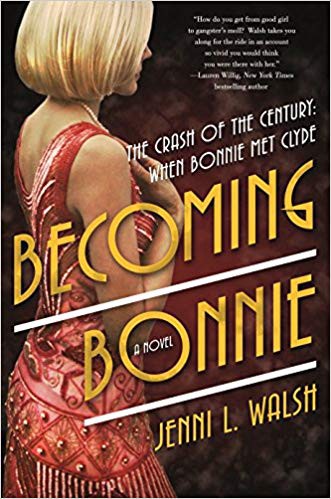
Becoming Bonnie by Jenni L. Walsh

Bonnie Parker, the female half of Bonnie and Clyde, is without a doubt the most well-known American female outlaw. In Becoming Bonnie, Jenni Walsh tells the story of a young Bonnie Parker, a churchgoing good girl who lives a double life as a moll at night to provide for her family. She starts to believe she can have it all: the American dream, the husband, the family. But little does she know that two things are about to change the direction of her life: the Great Depression and Clyde Barrow.

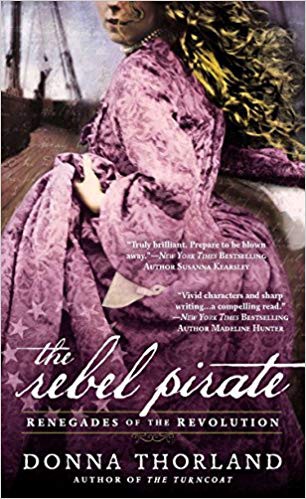
The Rebel Pirate by Donna Thorland

If you’re looking for women who live outside the norms of society, then romance is the genre for you. Romance is filled with women taking charge of their destiny, and their sex lives, and not settling for less. Thorland has written a series of Revolutionary War romances featuring strong women overcoming obstacles and persevering. Any of the Renegades of the Revolution series would be a good read, but The Rebel Pirate is my pick for the heroine’s focus on protecting her family, even if it means breaking the law.

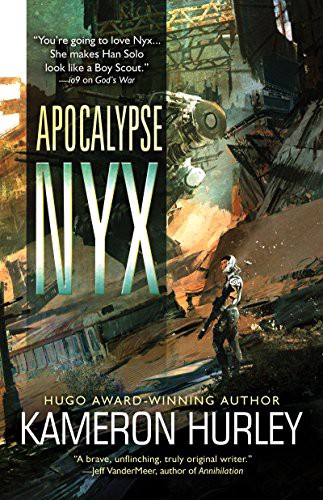
Apocalypse Nyx by Kameron Hurley

A collection of five sci-fi short stories featuring Nyx, a pansexual mercenary who enjoys sex as much as she enjoys killing people. She’s a drunk and almost completely without scruples, but I somehow kept rooting for her and her band of mercs. Here’s hoping Nyx gets a full-length novel from Hurley.

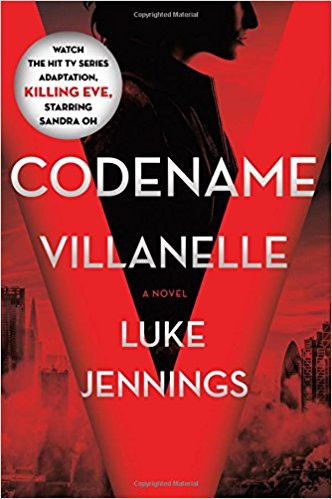
Codename Villanelle by Luke Jennings

A remorseless assassin being chased across Europe by a dogged British spy sounds like your typical James Bond novel. Swap out the two male leads with two females and it becomes something else altogether: a fast-paced, sexy thriller with two complicated, multifaceted women at the center. It’s also the basis for the AMC series Killing Eve, which I highly recommend as well.

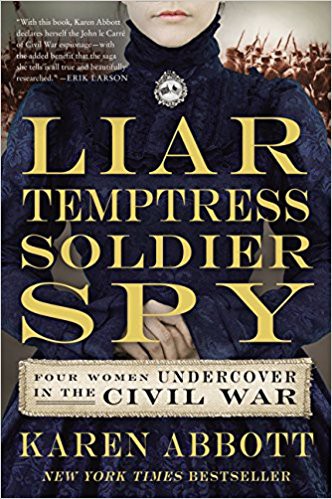
Liar, Temptress, Soldier, Spy by Karen Abbott

Abbott digs into the stories of four women from very different backgrounds who became spies during the Civil War. We have long been exposed to men rising to the occasion when our country is threatened, and now we are finally being exposed to women who rose to the occasion as well. Other non-fiction books that focus on women’s contribution to war efforts specifically include Amelia Earhart’s Daughters by Leslie Haynsworth, Code Girls by Liza Mundy, The Girls of Atomic City by Denise Kiernan, Hidden Figures by Margot Lee Shetterly, and The Woman Who Smashed Codes by Jason Fagone.

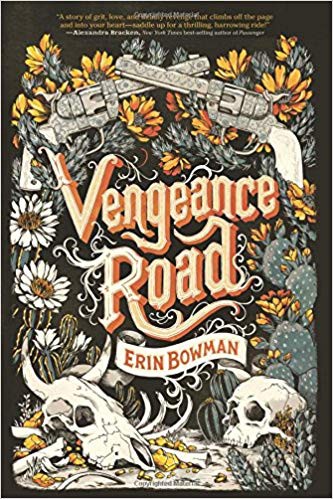
Vengeance Road by Erin Bowman

A YA Western with a heroine out to avenge her father’s death at the hand of a brutal gang. Part road trip story, part coming of age story, all grit and pathos. With vivid descriptions of the Wild West and tremendous character development, this story stayed with me long after I closed the book.

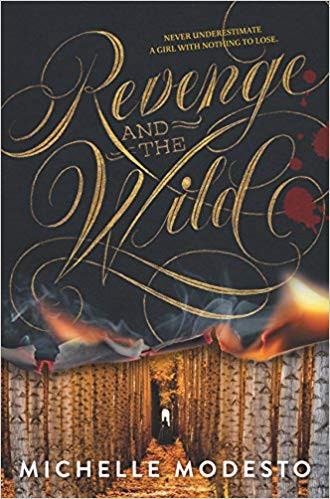
Revenge and the Wild by Michelle Modesto

YA billed as “True Grit meets True Blood.” Need I say more? Okay, maybe a little. Westie, a one-armed orphan who has to control her recklessness and anger, aims to get revenge on the gang of cannibals that murdered her family. There’s magic, gold dust, magical gold dust, a makeshift family, a mechanical arm, a brilliant inventor, zombies, vampires, and the aforementioned cannibals.

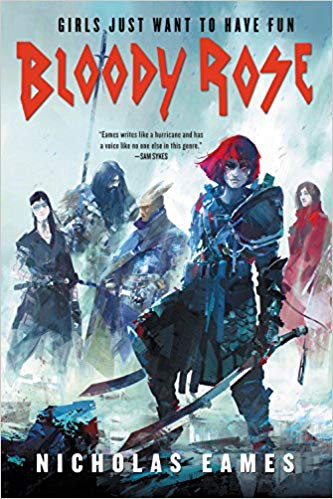
Bloody Rose by Nicholas Eames

I don’t read epic fantasies. I’m one of “those people” who found Lord of the Rings rather boring and it put me off the genre. But Nicholas Eames’ Kings of the Wyld sounded so cool I had to read it, and I fell in love with the world, the characters, the humor, the action, and the writing. Eames’s much anticipated follow-up, Bloody Rose, follows a new band of mercenaries, this one led by the indomitable Bloody Rose who is determined to step out of her legendary father’s shadow and shed the “damsel in distress” label she received after her former band was destroyed at the end of Kings of the Wyld. To cement her legacy, she pushes her band to takes chances and go to extremes — sometimes illegal, always dangerous — other bands wouldn’t dare. This book is full of heart, adventure, action, and danger. Oh, and all of the characters are inspired by different music genres and ’80s and ’90s pop culture references come at you fast and furious. Eames and I shared an editor and when I asked him after finishing and loving the testosterone driven Kings of the Wyld, “Where are all the women?” he said, “Trust me, they’re coming in Bloody Rose.” Boy was he right, and it was definitely worth the wait.

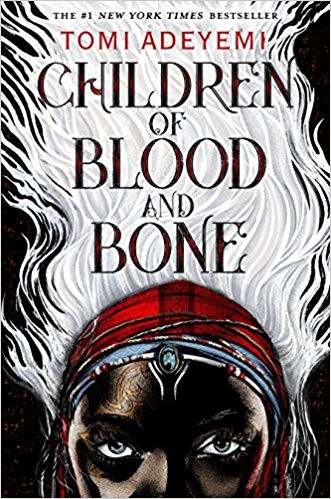
Children of Blood and Bone by Tomi Adeyemi

A YA fantasy inspired by West Africa and its culture, Children of Blood and Bone is the African diaspora’s answer to Harry Potter and Avatar: The Last Airbender. Much like the young adult heroes in those stories, the three heroes in CoBB have to work outside of society, outside of the law, to complete their quest of returning a balance to the two cultures of their land, the maji and k’osidán. Influenced by a number of real world issues such as Black Lives Matter, decolonization, privilege, and discrimination of the other, this novel is told through the eyes of children who have been forced to mature too soon under a government they cannot trust to protect them.

What Does Your Favorite Shakespeare Play Say About You?

William Shakespeare is, in the words of DeMarcus Tillman on American Vandal, “one of the most famous white people ever.” Everyone knows at least one of his works, and everyone has an opinion. But fewer people know that your Shakespeare preferences act as a reliable barometer for your taste, history, and personality. Here is what, according to the best science, your favorite play says about you.

Much Ado About Nothing: You met your partner on Twitter.

Comedy of Errors: You consider icing someone by hiding a Smirnoff Ice in the toilet bowl to be the actual height of humor.

A Midsummer’s Night’s Dream: You own a velvet choker.

Twelfth Night: You have strong feelings about the erasure of bisexual people in straight-presenting relationships.

As You Like It: You know what your roller derby name would be but have never told anyone.

All’s Well That Ends Well: You are going to buy Bari Weiss’s book the day it comes out.

The Taming of The Shrew: You are an r/relationships power user.

The Two Gentlemen of Verona: You are a large good dog, 14/10, would pet.

Love’s Labour’s Lost: You own a fedora but in a whimsical color.

Richard III: You bring up in every conversation that you’re into BDSM and you think you’re being subtle about it.

Twelfth Night: You have strong feelings about the erasure of bisexual people in straight-presenting relationships.

Henry IV, part 1: Every story you tell ends with “lol I was so drunk.”

Henry IV, part 2: Every story you tell ends with “I’m so grateful for my sobriety.”

Henry V: You unironically admire Winston Churchill.

Richard II: Your idea of fun is coming up with a comprehensive list of what people’s favorite Shakespeare play says about them.

Henry VIII: You love that Queen Elizabeth movie with Cate Blanchett.

Julius Caesar: You love Pod Save America! #resist

Macbeth: You bring up in every conversation that you’re into BDSM and you’re not even really trying to be subtle about it.

Hamlet: You think you have experienced true suffering because one time in college your meal plan card ran out for 24 hours.

King Lear: You have written to an advice columnist about your family.

Romeo and Juliet: You attempted to keep dating your high school girlfriend/boyfriend well into college.

Othello: You’re either a person of extreme discernment and top-notch taste or a sociopath.

The Merchant of Venice: You own a “The Future is Female” shirt and would absolutely call the cops on a barbecue.

Pericles: You are a Fox News host who wants a bedtime story.

The Winter’s Tale: You only liked your favorite band before they got “accessible.”

Troilus and Cressida: You pretend not to know the names of the characters in Harry Potter.

Antony and Cleopatra: You have tried to get someone to sleep with you by inviting them over to play Risk! a non-zero number of times.

The Merry Wives of Windsor: You once went viral for posting a screenshot of a man being stupid at you on Tinder.

Henry VI, part 1: You have impostor syndrome.

Henry VI, part 2: You have impostor syndrome, and you’re right.

Henry VI, part 3: You do not have enough impostor syndrome.

The Tempest: You secretly wish someone would ask you to do sleight-of-hand magic at parties, and furthermore you think it would kill.

Titus Andronicus: You have written at least one serious essay about Grand Theft Auto and socialism.

Measure for Measure: You are not at ALL subtle about telling people you are into BDSM.

The Two Noble Kinsmen: You think Shakespeare was Francis Bacon.

Coriolanus: You regularly choose going to the gym over having sex.

Cymbeline: You unironically follow Neil deGrasse Tyson on Twitter.

Timon of Athens: You’re only saying that’s your favorite to lord it over us for forgetting Timon of Athens initially.

King John: You are full of shit.

How Reading Poetry Helps Us Ask for a Better World

Adapted from a keynote address by Jennifer Benka, president and executive director of the Academy of American Poets, at the LitTAP conference on October 1, 2018.

As I’m sure you’ve heard, but it bears repeating, according to a recently released arts participation survey by the National Endowment for the Arts, the readership of poetry nearly doubled in the past five years. In fact, 2017 was the first year in 15 years that the NEA saw an increase in poetry readers. And especially exciting is that the largest growth is among young people, with young people of color leading the way.

Now, there are multiple factors contributing to this rise in poetry readers, but you can be sure that those of us working at organizations that support poets through prizes, programming, mentorship, and publishing have played a role.

I don’t know about you, but if more people are reading poetry, I have hope for us.

Last month, as I was working on an essay about poetry in our present tense, I thought, “We are all bound up together.” And then I thought, who said that? Because even though those words were in my head, I knew I hadn’t written them. So I asked Google and landed on the title of a speech given by Frances Ellen Watkins Harper.

If more people are reading poetry, I have hope for us.

Harper, an African American woman, was an Abolitionist, women’s suffrage activist, and noted orator. She gave that speech in May of 1866 on a stage in New York City as part of a rally in support of women being given the right to vote, which Elizabeth Cady Stanton and Susan B. Anthony also headlined.

“You white women speak of rights,” she said. “I speak of wrongs.” What a perfect expression of what racial privilege affords in justice work. And how revealing of historical exclusions that more of us don’t know Frances Ellen Watkins Harper.

Turns out she was more than a famed activist; she was also an accomplished and celebrated writer. According to several sources, she was the first African American woman to publish a short story in the U. S. She also wrote novels and poems, and was known to weave her poetry into her rousing speeches. Here’s one:

Let me make the songs for the people,
Songs for the old and young;
Songs to stir like a battle-cry
Wherever they are sung.

Not for the clashing of sabres,
For carnage nor for strife;
But songs to thrill the hearts of men
With more abundant life.

Let me make the songs for the weary,
Amid life’s fever and fret,
Till hearts shall relax their tension,
And careworn brows forget.

Let me sing for little children,
Before their footsteps stray,
Sweet anthems of love and duty,
To float o’er life’s highway.

I would sing for the poor and aged,
When shadows dim their sight;
Of the bright and restful mansions,
Where there shall be no night.

Our world, so worn and weary,
Needs music, pure and strong,
To hush the jangle and discords
Of sorrow, pain, and wrong.

Music to soothe all its sorrow,
Till war and crime shall cease;
And the hearts of men grown tender
Girdle the world with peace.

Frances Ellen Watkins Harper knew what we know — that poems have the power to reach us on a level of our humanity where pure, unfettered reception is possible.

She knew as we do — that poems, and fine writing, makes us feel. And our feelings, as Audre Lorde wrote, “are our most genuine paths to knowledge.”

Lorde wrote in her essay, “Poetry is Not a Luxury:”

Poetry is the way we help give name to the nameless so it can be thought. The farthest horizons of our hopes and fears are cobbled by our poems, carved from the rock of experience of our daily lives. As they become known to and accepted by us, our feelings and the honest exploration of them become sanctuaries and spawning grounds for the most radical and daring of ideas.

When we engage with thoughtfully crafted language — when we let sonorous words reverberate with their layers of meaning, and sentences assemble in the mind — we exercise our imaginations and experience the elicitation of our emotions.

This process takes time and attention. And this is one of the gifts of reading — the act transports you out of ordinary time and into a space where other worlds and revelatory reflection are possible. It’s there where insights into the meaning of life are given — not in description but in feeling.

Reading transports you into a space where other worlds and revelatory reflection are possible.

What we are searching for is never spelled out. We must meet truth and look it squarely in the heart.

In addition to prompting emotions that can confer personal and solitary wisdom, great writing can also help prepare us to be agents of change.

Poetry and storytelling work against immobilization — the want to avoid being uncomfortable or rejected, the desire to anesthetize, the fear of having feelings for another human being.

The poet Mark Doty, in speaking about the role of poetry, once said:

The project of poetry, in a way, is to raise language to such a level that it can convey the precise nature of subjective experience… When people are real to you, you can’t fly a plane into the office building where they work, you can’t bulldoze the refugee camp where they live, you can’t cluster-bomb their homes and streets.

Bill McKibben, who wrote the first book about climate change, The End of Nature in 1989, wrote in an article in The Guardian a few weeks ago:

I’ve spent 30 years thinking about climate change — talking with scientists, economists, and politicians about emission rates and carbon taxes and treaties. But the hardest idea to get across is also the simplest: we live on a planet, and that planet is breaking. Poets, it turns out, can deliver that message… This science is uncontroversial. But science alone can’t make change, because it appeals only to the hemisphere of the brain that values logic and reason. We’re also creatures of emotion, intuition, spark — which is perhaps why we should mount more poetry expeditions (and) make sure that novelists can feel the licking heat of wildfire.

We’ve read — and probably even spoken ourselves — about the importance of empathy in these bitterly fractured times. And how the work of our nation’s poets and writers promotes understanding.

But I was struck by something the poet Natalie Diaz shared recently on social media reminding us that empathy is also something hunters need to successfully stalk their prey.

In fact, empathy isn’t an emotion but the ability to imagine and even predict another’s emotions. It is a kind of emotional appropriation.

Perhaps “empathy” is the wrong word.

Perhaps what our country and communities and families need — and perhaps the greatest gift our poets and writers can offer — is more fundamental.

To guard against division and hierarchy, writes philosopher Martha Nussbaum, all decent societies need to cultivate sympathy and love.

“What if the mightiest word is love?” Elizabeth Alexander asked in her poem, “Praise Song for the Day,” which she wrote for and read at President Obama’s first Inauguration. “Love beyond marital, filial, national. Love that casts a widening pool of light.”

Memorist and activist Dorothy Day wrote: “Love and ever more love is the only solution to every problem that comes up… If we love enough, we are going to light a fire in the hearts of others.”

In an interview Gertrude Stein proclaimed, “Love can end the war.” And the reporters laughed and laughed.

We can’t understand the stakes until we feel them — deeply.

We can’t understand the stakes until we feel them.

And sometimes in order to encourage the level and quality of feeling that is transformative, in addition to radiant light, sometimes we need lightning, even flames.

In her book, Moving Politics, about the emergence in the late 1980s of the AIDS COALITION TO UNLEASH POWER (or ACT-UP), Deborah Gould writes:

Affect. Being affected, being moved. Emotion. Motion. Movement. From the post-classical Latin movementum, meaning “motion,” and earlier movimentum, meaning “emotion,” and then later, “rebellion,” or “uprising.” The movements in social movements gesture toward the realm of affect; bodily intensities; emotions, feelings, and passions; and towards uprisings.

Gould argues for the “confrontational” methods ACT-UP employed, often drawing on deep emotions including fear, shame, and despair, which were necessary to address what was “an exploding crisis,” while elected officials were slow to act.

AIDS was first identified in the United States in 1981, the year that Ronald Reagan became President. He did not mention AIDS, however, until 1985 after 20,849 Americans had already died. Two years later, according to the Centers for Disease Control, 50,280 Americans had acquired AIDS and 96% — or 47,993 Americans — were dead.

Two years after that, on October 6, 1989, hundreds of people in San Francisco met in the streets to protest the government’s seemingly disregard of the growing AIDS epidemic. One of them was the novelist Alexander Chee. He recalls the events of that evening in his recent book, How to Write An Autobiographical Novel:

Everyone is running now, and everywhere batons rise. The screams lift out of the street… I am watching a boy I know… the V formation of police approaching (the crowd) breaks as they charge. The point man swings and his baton glances off my friend’s forearm to strike his forehead. My friend crumples, his face already bloody, falling on the sidewalk… I am afraid he will be trampled. He is unconscious and not in view of the panicked crowd. I go to his side… I bend down and say his name softly. Mike, I say. His eyes open and he is already crying. This is his first police riot, mine too. The blood is always heavy on any head wound, I say, remembering something random as I try to calm him. And I tear off a piece of my T-shirt to press against his head.

People surround us, and soon a medic appears. I follow them as they take my friend to the ambulance. “Are you with him?” they ask me, and I say yes, because it is the best thing for me to do. “Put your hand on the ambulance,” they tell me, “so the police won’t arrest you,” and I do.

I stand there, my hand on the ambulance, and a television news crew arrives and asks me to describe what I’ve seen. As I tell the story, I keep my hand on the ambulance the entire time. After they leave, I think about how, up to now, I have thought I lived in a different country from this. But this is the country I live in, I tell myself, feeling the metal against my fingers. This is the country I live in.

In our country, the role of the artist, the writer, and the journalist are key. That is why the framers provided for freedom of speech and the freedom of the press. Democracy relies on checks and balances and an informed citizenry, and the arts, as well as journalism, are a way in which information is shared.

And in our country, which has not yet been able to admit its origin story — all efforts by the people toward the dissemination of truth are essential.

“I love America more than any other country in this world,” said James Baldwin. “And, exactly for this reason, I insist on the right to criticize her perpetually.”

Poets and writers have a supporting role in maintaining Democracy, and by supporting I don’t mean lesser, I mean foundational. Historical correction and forward progress — whether it be incremental, notable, or monumental — needs the culture — our collective understanding, knowledge, beliefs — to ready the way.

As Muriel Rukeyser wrote, “Art is action, but it does not cause action: rather, it prepares us for thought.”

“When communication has broken down,” she wrote, “then it is time to tap the roots of communication. Poetry is written from these depths; in great poetry you feel a source speaking to another source.”

So in this time when language is being manipulated, when people are being duped, when the public debate is made up of barbs. We have an even greater job to do as the keepers and stewards of stories and artfully crafted language, imbued with undeniable meaning.

We have an even greater job to do as the keepers and stewards of stories and artfully crafted language.

We know the secret to survival. It is saying. It is naming. It is telling. It is recording. It is singing. To soothe our fears. To fuel our inner fire. To remember all those who came before on whose shoulders we stand. To illuminate and ignite new guiding lights.

We need to recall the mission statements for our country our poets have offered.

As Emma Lazarus pleaded, “Give me your tired, your poor, Your huddled masses yearning to breathe free!”

And as Langston Hughes beseeched in his poem, “Let America be America again”:

Out of the rack and ruin of our gangster death,
The rape and rot of graft, and stealth, and lies,
We, the people, must redeem
The land, the mines, the plants, the rivers.
The mountains and the endless plain — 
All, all the stretch of these great green states — 
And make America again!

8 Serial Killer Books That Are About More than Murder

Serial killers. Yeah, we get it. A quick search on Google for books about serial killers will yield thousands upon thousands of results. On any list of tropes, the “serial killer” ranks near the top for commonly-used, perhaps even most overused.

Purchase the book

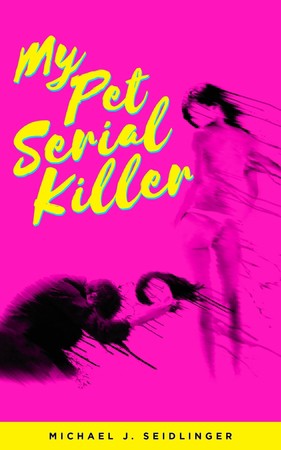
But while easy to dismiss, it’s important to note that when it comes to literature’s use of the serial killer, isn’t just The Silence of the Lambs and American Psycho; as writers became attracted to the serial killer as a concept, they’ve donned the textbook characteristics in their fiction to then dismantle and subvert it, and turn the “serial killer” into a metaphor all its own. In my book My Pet Serial Killer, I use the serial killer trope to dismantle the killer’s “power” to the point of submission, helping facilitate a deep-dive into the complexities of human attraction. Perhaps it’s, in fact, less about the “killer” and more about the kaleidoscopic effect it creates and fosters a bold, alarming narrative.

Here are eight examples where the serial killer becomes a vehicle for the author’s narrative vision.

Perfume: The Story of a Murderer by Patrick Süskind

Süskind’s cult classic about Jean-Baptiste Grenouille, who is born with the gift of perfect smell, is more than a mere perfumer-turned-serial killer. A tale of obsession, the book follows Grenouille as he chases the impossible act of capturing the “perfect scent,” and in doing so lays claim to countless corpses. The book carries a sinister arc, above and beyond the “perfumer killer” concept: it explores the extent of genius, and how being “gifted” with perfection may in fact be less a gift and more a curse.

The Shining Girls by Lauren Beukes

The title of Beuke’s novel hints upon the killer’s bind — the need to kill those with utmost potential. “The shining girls” are the targeted victims of Harper Curtis, a man that stumbles upon the ability to travel through time. Trick is, he must travel through time with a specific purpose: to kill every women that “burn with potential.” Of course, it’s not that simple especially when one of his victims, Kirby Mazrachi, survives. The book never oversells its more fantastical elements, nor does it hide a prevailing theme of personal worth, and how one measures it.

The Book That Helped Crack a Decades-Old Murder Case

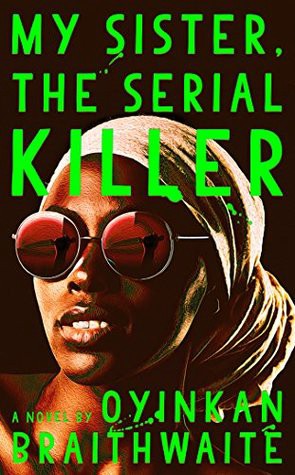
My Sister, the Serial Killer by Oyinkan Braithwaite

I love how this book subverts the very act of serial killing with the decision to have it narrated not by the killer, victim, or detective, but rather by the sister of the serial killer, complete with a refreshing bitter tone that screams “dammit sis: Stop leaving your dead boyfriends for me to clean up!” Using this clever upheaval of the serial killer narrative, Braithwaite explores topics of social media, voyeurism, and jealousy in a manner that feels all too real at times. Talk about getting under your skin.

Altmann’s Tongue by Brian Evenson

Evenson’s first book, first published in 1994, has continued to haunt me long after the first read. His book was also one of the few that frightened me enough that I couldn’t sleep at night. These stories are indeed brutal and horrifying — from feeding a man the tongue of one’s victim to going on a bit of a “joy ride” aimed at killing cats — but what Evenson is really doing here is showcasing human morality, baring it all for readers to see.

The Sluts by Dennis Cooper

Is it strange for me to think, “Ah, this takes me back” when thinking of Cooper’s cult hit, The Sluts? It’s probably because I first read it back when I binged indie lit nonstop, exploring all that was discussed on the literary blog, HTMLGiant. A tale of potential murder and massacre surrounding a highly-rated young escort, Cooper uses the threat of serial murder to explore obsession, identity, and self-destruction, and he folds it all into an innovative structure that successfully captures the feeling of scrolling through a forbidden corner of the web.

Songs of a Dead Dreamer and Grimscribe by Thomas Ligotti

No doubt it comes as no surprise to have Ligotti on this list; the author has carved out his own corner of the cosmic horror genre, so much that his own nihilistic philosophy inspired the iconic character x from the first season of True Detective. His story, “The Frolic,” about an unnamed serial killer of children and the protagonist, prison psychologist David Munck’s budding fear of the killer. True to form, Ligotti aims subverts expectations, further allowing the psychological focus to shine through. The story demonstrates that it’s one’s own past that becomes the “true murderer.”

There’s Someone Inside Your House by Stephanie Perkins

Perkins’ novel begins with a familiar premise — Makani Young has recently moved to a middle-of-nowhere town in Nebraska and is only just beginning to acclimate at the novel’s start. A killer descends upon the town and true to form, both the populous and the media that fuels it plays into the frenzy of paranoia. You see, Makani has a past she’s hiding and worries the media will dig it up, turning her into a person-of-interest. Fill in the blanks with adolescent bonding and intrigue and Perkins’ book makes this list for its effective use of the aforementioned paranoia to explore racism and self-identity.

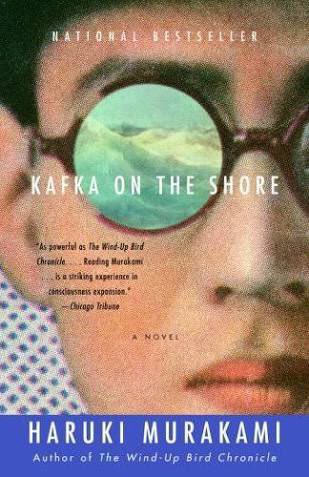
Kafka on the Shore by Haruki Murakami

In one of Murakami’s best hides a serial killer named Johnnie Walker (yes, after the scotch). Walker’s M.O. is to murder, eviscerate, and remove the hearts of cats. It’s a devastating image that sends ripples through the novel’s magical realist narrative. It is perhaps because the killer is so unexpected that Walker becomes a mark from which the novel does an amazing job of examining the depths of cruelty and the reasons with which one becomes blinded from the severity of their actions.

A Story About an Unfinished Love Affair and Readymade Literature

“Emergency in Favor of Twice”

by John Holten

The artworld was always a safe place, a refuge and somewhere I was all to happy to retreat, and sure I’d curated one or two shows, written some exhibition reviews, took part in the wider game but I always considered myself a writer first and foremost. I never expected the artworld to present me with a conundrum I wouldn’t be able to solve, an emergency to which I would not recover. There was always a mystery as to what Duchamp’s first readymade was; note the interrogative what, not which or what ever happened to, although of course the younger sibling Fountain is famous for having been more than likely destroyed after Stieglitz’ iconic photograph of it. Then there is also the theory that Duchamp didn’t even choose the urinal but that it was the Baroness Elsa von Freytag-Loringhoven who signed off as Monsieur Mutt. But who created or what happened to Fountain are not the problems on which this story turn: like so much art history of the last century, they are but the accidental and academic backdrop.

The story begins in Berlin. The bar was full with the neighborhood hipsters though that sounds like a slur I don’t intend to throw. Mostly they were just artists and music heads, people just getting by and working as much as they could in the city — which is to say obscurely or not at all — staying out late as if avoiding their under furnished sublets because to be in them at nighttime, that time of day so full of potential, would only make them lonely. I said hello to the few faces I recognized at the bar, people from my time here around 2011, 2012 and sat down and took in the drinking and conversing, the ordering of drinks and boisterous flirtations. But I don’t really want to talk about the bar. As much as that is possible seeing as I met her there, as I sat at the counter near to the entrance, pretending to myself that I was there to think through my next possible life moves. She was with a large contingent of Spanish speakers, Colombians mostly I learned later, together with the Spanish crowd from the Bartleby bookstore. Out of this profusion she sat down beside me and we got chatting in that interrupted parataxis so common to such a bar at such a time, the Berlin usuals: where we were from, how long had we been here, what did we do in life?

Me: Ireland; just passing through; a writer and curator.

Her: Argentina; two years; artist.

I lost her interest when instead of asking her follow up questions about herself as one is supposed to do and so make her talk about herself more, I stumbled trying to explain how I had lived here before but she didn’t seem to care and then, soon after, she was gone, lost to the back of the bar, lost among the jostling crowd, beyond those two deep waiting at the only available spot to order. The haze of inebriation, myriad lines of attention, attentions kaleidoscopic.

Out on the street I was smoking a bummed cigarette, swaying on my feet and taking in the steadiness of Sonnenallee, when she came from the side and reminded me we hadn’t properly introduced ourselves. Her name was Mina, an anachronistic name I found a tad surprising. Let’s get a coffee sometime? Sure, I said with obvious delight, or a drink. Or a drink, she smiled and turned and looked down the street, continuing to speak: I can tell you my secret theory of the readymade. It involves Duchamp obviously — she had turned back to face me, the trace of a smile lingering — and Borges. A literary art guy like you should love it. She said then we were the same: We’re the same you and me, we both have Irish blood and badly kept hair, our countries both know economic ruin and embarrassment and have lots of cows…

The night was warm and indistinct and I laughed at her cultural analogies. It was drunk hour and people remained neither inside nor outside the bar but rather seemed to be constantly moving between the two. Some women sat around a low table on plastic chairs laughing loudly but speaking quietly as if in mock efforts to respect the neighbors. Mina was talking to a group in Spanish. I finished my cigarette and left soon after for home.

I forgot that she had a theory of the readymade, all I remembered was her confidence. Some detective work on Facebook led me to her quickly enough, we had a dozen or so friends in common, mostly through people from the bookstore, and she used her real name: Mina Vismara. I guess I fancied her a little. She had wanted to meet me again and such was my weak position in the indifferent universe at the time that this was more than enough for me. At the time I was fairly convinced that one never actually meets interesting people in real life, that people are boring or annoying — they’re not like the populace of the novels we love as teenagers. Sure they can be smart and amusing but one has to really work hard in putting them all side by side, to line them up and evaluate their auras as it were and once you’ve done that you might just be able to say, yes, I have lived with the luck of meeting one or two interesting people. Otherwise, I think of Ann Cotten’s dictum: I’m no misanthrope, I just find the people I’m around annoying, stupid or overly glum.

A week or so later I found myself sitting across from Mina Vismara on a low stool in the same bar in which we had first met. I put my elbows on my knees and joined my hands together: I wanted to be open to her, to make her feel confident that she had my undivided attention. But then, like an alchemist, like Duchamp himself, she was going to start dividing everything, including the limits of my attention.

She started talking about graphic design and the books she liked to buy, about Willy Fleckhaus and how she came to Germany because she liked the U Bahn design. She said her favorite books were full of widows and orphans. That her mother gave her to her auntie to raise and she’s never gotten over this relinquishment (she asked me if this was the right word and I said I guessed so but wasn’t sure). She said that she was at the Venice Biennial in 2013 but she hadn’t gone into the German Pavilion, which was in fact that year housing the French Pavilion as both countries had decided to swap their fin de siècle abodes in the giardini. Post-nationalism in the giardini she said, the biggest doubling in contemporary art history! So it came about that Anri Sala was representing France as an Albanian in the German Pavilion. The queues had been very long. The artwork was called Ravel Ravel Unravel and she started to explain in great detail this artwork she apparently never saw. It was a three screen video-work in which two pianists play Ravel’s Piano Concerto for the Left Hand in D Major which the pianist Paul Wittgenstein — naturally the brother to the philosopher Ludwig — had commissioned, one of many, after having had his right arm amputated during the First World War, a radical division as it were. The two renditions are slightly out of sync, creating a disharmony that is at times cacophonous and boisterous but also somehow elegiac as if reminding us that time is out of joint and history itself is unraveling. On a third screen a DJ tries to scratch these two versions together into a harmonious whole, which of course is impossible: people always forget what it is DJs actually do, she said with an exasperation that was a little startling. She said she had sat beside Sala during a dinner once and he was very charming and very smooth, he had a nice wristwatch and eyes that penetrated right through you such that she was deeply attracted to him but also repelled because she knew so many women must have felt the same concentrated attention he so easily dealt out, he was a man that knew exactly what time he had to get up at the next morning and what he had to do. Our primary sources exist online she said, what we have to play with are digital files. Did I lament the demise of books, she asked. I didn’t, I said, because there’s no demise. She demurred: I guess it’s true that we’re all still readers and always will be. Duchamp had explained, she went on, that the choosing of what became readymades was merely a little game between ‘I’ and ‘me’: he wanted to get away from his own tastes, his own eye for the pleasing or the more favorable, but of course to do so he had to fool himself and to limit the amount per year of readymades he would put out into the world. There were, after all, only 20 or so over his lifetime. Borges meant something similar, she said, with his late piece Borges and I: the public and the private persona, the most intimate doubling of them all, and to be in favor of entertaining yourself twice, once in solitude by way of collecting your favorite physical items or consuming food you find pleasing say, and a second by pleasing others around you and sharing the art you may create even in the quietest moments of your limited days — this was a fruitful way of going about life. She said: she remembered growing up in Buenos Aires and going on holidays each summer to the south near Mar del Plata and once upon returning home she had an existential crisis that left her paralytic in fear of having to grow up. She realized that she would one day lose her parents and that the annual ritual of the holidays by the beach would stop and that she would be an adult herself. This had made her cry and led to a talk with her mother in which she spoke of her fear of growing old. She has abandonment issues. She said her favorite musician was Andy Stott but this had nothing to do with what she wanted to tell me, which was her theory about Duchamp and how it included Borges and her hometown Buenos Aires.

It went something like that the first readymade by Duchamp wasn’t Fountain as people who don’t know anything falsely assume, or even Bicycle Wheel or Bottle Rack, but another work called Emergency in Favor of Twice and that the latter had never been photographed nor described in any way, the only thing that was known about it was its name, written by Duchamp in a letter to his sister Suzanne in 1914[1]. It was from Buenos Aires that he also wrote Suzanne in 1919 to mark her wedding with the instructions for her favorite readymade and which Roberto Bolaño used in 2666, and it was called The Unhappy Readymade. Which was a geometry book hung outside to be slowly destroyed by the elements. She started to talk about delay, as a concept, and that Emergency in Favor of Twice was about the same event that happens at different times. I started to lose her and my eyes roamed, first to take in the bar and then back to Mina and her crossed legs and I thought how male writers are always describing women in much the same way as men check them out and I grew ashamed. Ashamed to be a failed writer and ashamed to be a man in the world. But the truth was I had no idea any longer what she was talking about or why she had felt the need to meet me a second time and tell me any of this but I refocused my attention. She was saying that artist projects like Saâdane Afif’s Fountain Archive really bore her, or even annoy her — I started to think she was talking in circles — and that the real work to celebrate was Emergency in Favor of Twice because it demonstrated why Duchamp stopped painting, stopped making art and that decision, to stop making first retinal art and then art altogether and spend his life playing chess and making the odd art deal here and there, was where the real meaning lay. Then a remarkable thing happened: she asked me about my writing and I told her a little about it and how I also edited a book or two ‘a couple of years ago’ and she grew quiet and let me talk and the more I talked the more I realized what failure sounded like and how the best thing to do was stop writing immediately.

We left each other with a warm enough embrace but it was perhaps not what I was hoping for. I may have loved her but it was clear I didn’t have the attention span to love her, and in any case, she would never love me back. We both stood up at the same time and the hug we gave each other was light and fleeting now that I think of it, I suppose you could even call it business like. It was still evening and not yet night and the bar was quiet and the street outside seemed empty. I’ll be in touch, she said, I’ll try and make sure to get you further evidence. She was grinning, checking her pockets that she had everything, whilst also keeping her head held high and I thought how she was almost about to break into laughter and while that may make her seem aggressive or dismissive right at that moment, as if she was merely playing me for a fool, it was in fact the very opposite of those things and I thought she was like a fire engine whose call-out was a false alarm, its siren and lights growing silent and dark, returning meekly to its station. Emergency in favor of twice, I said suddenly, it could also mean something like a false alarm. You know, like the boy who called wolf. No, she said, I don’t think so. It doesn’t mean anything at all, that’s the point, it means everything and nothing and this alone gives a clue to the possibility of its existence. It lies innately in the world, just as surely as you’re going to go to the toilet at some point tonight, after I leave you’re going to keep drinking and at some point you’re going to piss into the descendant of Fountain and you will continue to live in this artwork, to make it real like Brian Eno did with Fountain (he claims he pissed in it at the Whitney), this is the function of the readymade artwork…Seguro azar. Certain chance.

She was right about me pissing in the urinal, in fact no sooner had she breathed out the door leaving the faint hum of the poetry of Pedro Salinas like a waning electric filament than I had gone into the toilet to relieve myself, only curiously there wasn’t actually a urinal of the ceramic kind of Fountain’s ilk, there were buckets, two black plastic buckets sat suspended in a wooden sort of table and one pissed straight into them at the bullseye at the bottom, a metal, domestic plughole. A quaint DIY urinal in a dive bar, one that was trying all too hard. The night that followed I cannot recall but I’m certain it went the route such nights must travel.

I left the city soon after and spent time in Birmingham on a residency, then to Glasgow, Dublin. I was listless and bored and gradually over time I had become fearful of making false equivalences so that I couldn’t enjoy one thing more than another without succumbing to a reading, or a viewing, or a listening that I felt was unjust to the work at hand, a priori. I would listen to an Arcade Fire song and think I could intuit the vestiges of a James Turrell work from the 1980s or I would read Tom McCarthy and spend the entire book scratching notes in the margins like ‘Robbe-Grillet’ or ‘Warhol’ — the inverse of how he probably wrote and this obvious and fickle distillation of mine made me depressed and ultimately unable to enjoy reading.

It is true that I saw doubling and delay everywhere and the meeting with Mina stayed in my mind and I would think about this missing artwork and what emergency lay behind Duchamp’s word games. Each time I was back in Berlin I would look her up but as it was we would always miss each other, she would be back in Argentina on some obscure business trip or preoccupied or simply silent, replying only weeks later with a short apology and a blossoming of energy that would carry my interest in her just a little while longer: she was a consummate charmer, of this I had no doubt.

My career, such that it existed at all, was in free fall and I wasn’t writing a thing. In Dublin I moved in with a friend from my college days, this was just last autumn and I tried to juggle making rent-money with serious efforts to undertake the burden of writing a novel. I thought of Mina (I wrote the words SEGURO AZAR in large print on the wall above my desk) and played with Cagean efforts of chance and randomness. When I realized I was in danger of plagiarizing Perec I took up playing Go with a maniac’s enthusiasm in the hope of purging him. I was clearly losing my grip on things. The writing spiraled off and fizzled out in several directions, never really catching light. The money jobs came and went: bartending, sales, bike courier. I realized I was sinking. I made plans for London, New York. I even thought about returning to Paris where I had started out almost a decade before. I thought about curating something, some exhibition that looked at the readymade from a new perspective. I just didn’t know what that perspective would be.

Around this time I finally read through Calvin Tomkin’s strangely arid biography of Duchamp and not without surprise I noted that the man had no interaction with Ireland whatsoever, and as far as I can see I mean that: none. Nada. In my despair I feared for population explosion, seeing how much smaller the world was 100 years before. Joyce and Duchamp were connected through the figure of John Quinn, the New York lawyer and art collector, who, via Pound, was a patron of Joyce; for Duchamp, Quinn was an integral actor in the first Armory Show and instrumental in getting Duchamp from Paris to New York.

I grew cynical.

‘After Duchamp it is no longer possible to be an artist in the way it was before.’ And the same could go for Joyce. Why exactly write a novel after Ulysses? What did any of this mean? My favorite sneer to anyone who would listen to me was that nobody knew what to do with the readymade in literature, found text and the individual talent, the only example I could find in Ireland was of Joseph fucking O’Connor writing out sentences of John McGahern. In some of the most difficult, cringe inducing passages of reading I’ve ever encountered, O’Connor writes about how he became a writer and one almost reads through your fingers at the sheer intellectual and literary parochialism of it all, as if Pierre Menard had never existed, had never opened Cervantes, as if the actions of a 16-year-old boy should be paraded anew as an adult with the excuse of the former’s innocent naivety.[2]

But I didn’t wish to wallow in this cynicism, god knows there are enough frustrated and mediocre writers out there that I didn’t need to add to their numbers. And besides the story played out elegantly: Mina sent me a message on Instagram, it was an image of a chess game with each player having just two pieces left on the board, caught in suspended delay, her thumb scribbling the words over it in bright blue. And that was it: the first readymade was predicated to solve the conundrum between determinism and free will. Borges taught us that, and Duchamp knew it from playing chess, which he had really got into in Argentina and from which, chess and the parsimony of geometry, he would never really escape. When he did it was just to reprise everything that had gone before. And this is when I’m supposed to outline my epiphany, give it a frame so it is all the more believable yet still shrouded in happenstance mystery: I was looking out the window when I thought I saw the blond of Vismara’s hair. Or, making coffee the thought suddenly came to me as I poured in the water. But, dear reader, no such moment exists. Made-up epiphanies and pious metaphor are — one last false equivalence — to writing what retinal art is to the conceptual. I would never write again and this story would be my last, and that was a good thing.


[1] 15th January approximately. My dear Suzanne, A huge thank you for having taken care of everything for me. But why didn’t you take my studio and go and live there? I’ve only just thought of it. Though I think, perhaps, it wouldn’t do for you. In any case, the lease is up 15th July and if you were to renew it, make sure you ask the landlord to let it 3 months at a time, the usual way. He’s bound to agree. Perhaps Father wouldn’t mind getting a term’s rent back if there’s a possibility you’ll be leaving La Condamine by 15th April. But I don’t know anything about your plans and I’m only making a suggestion. Now, if you have been up to my place, you will have seen, in the studio, a bicycle wheel and a bottle rack. I bought this as a ready-made sculpture. And I have a plan concerning this so-called bottle rack. Listen to this: here, in N.Y., I have bought various objects in the same taste and I treat them as “readymades.” You know enough English to understand the meaning of “ready-made” that I give these objects. I sign them and I think of an inscription for them in English. I’ll give you a few examples. I have, for example, a large snow shovel on which I have inscribed at the bottom: In advance of the broken arm, French translation: En avance du bras casé. Don’t tear your hair out trying to understand this in the Romantic or Impressionistic or Cubist sense — it has nothing to do with all that. Another “readymade” is called: Emergency in favor of twice, possible French translation: Danger Crise en faveur de 2 fois. This long preamble just to say: take the bottle rack for yourself. I’m making it a “Readymade,” remotely. You are to inscribe it at the bottom and on the inside of the bottom circle, in small letters painted with a brush in oil, silver white color, with an inscription which I will give you herewith, and then sign it, in the same handwriting as follows: [after] Marcel Duchamp. [Francis M. Naumann and Hector Obalk, eds.; Jill Taylor, trans. Affectionately | Marcel: The Selected Correspondence of Marcel Duchamp. Ghent, Belgium: Ludion Press, 2000, 43–44.]

[2] ‘Whenever I tried to write, there was only frustration. One evening, in dismal hopelessness, I found myself copying out “Sierra Leone” word for word. I ached to write a story. So I wrote one of his. I must have felt that the act of writing would make the words somehow mine. I suppose it was comparable to aspirant pop-stars throwing shapes and pulling pouts in the bathroom mirror. But something richer and more interesting was going on, too. McGahern was teaching me to read, not to write: to see the presences hidden in the crannies of a text, the realities the words are gesturing towards. Perhaps this is what pulses at the core of the desire to read: the yearning for intense communion with words we love. Not just with what they are saying, but with the words themselves. Perhaps every reader is re-writing the story.’ The Guardian, August 5, 2008

For Women, the Sin of Indulgence Is the Worst Sin Imaginable

I. Story & Sin

For eight years, I have been working on a story about the original sin.

It goes like this: Eve sits alone in a diner at the edge of town. Fluorescent lights glow off linoleum. The air is pale, sick. The narrator, omnipresent as the dense smell of the fryer, watches Eve, believes her grotesque. Eve’s face is ruddy and bloated. Her stomach spills over the tight waist of her jeans, her ankles swell and roll from the elastic top of her socks. There’s a smear of mashed potato on her shirt, something pink and dry crusted to the side of her mouth.

Her table is full of half eaten goods. Dozens of dishes sit before her, small bites taken out of each of them: meatloaf glazed with gravy, doughy crust on a chicken pot pie, a high stack of pancakes, eggs, now cold and stiff, fries smothered in thick, sweet ketchup. Despite this, she is unsatisfied.

This is not a woman we are meant to pity. She has everything she could want before her. And yet.

Saints, Demons, and an Isolated Woman

Here is where things fall apart. Enter the waitress, all yellowed nails, greased hair, dark stains on her teeth. She knows what this woman wants, knows the round taste of desire, the sweetness, relief in giving in. Over and over her quick pink tongue whispers temptation — cinnamon swirls, cream piled high on flakey crust, and, of course, tart, soft, delicious apples nestled in between it all.

This story has taken many forms. Sometimes I tell it as poem found in the words from a large blue Bible on my bookshelf. Sometimes it is a lyric, the pages stained thick and sticky with melodrama. It has been hurtful, helpful, biting, nonsensical. Sometimes what I write is good. Mostly it is bad. No matter what form it has taken, it has never quite worked.

Perhaps this — my need to tell this story, my inability to tell it — is because I started the story at age 19 and try as I might, I just can’t seem to make it less obvious. Woman as rib: clean, bare, sharp. Hunger as sin. The fat, clear juice of an apple rolling down the chin: lustful, obscene.

Woman as rib: clean, bare, sharp. Hunger as sin. The fat, clear juice of an apple rolling down the chin: lustful, obscene.

II. A Woman Takes A Bite

I stopped looking in mirrors at age 14. I avoided my reflection at all costs — not even a glance in a department store window, a flash into a bathroom mirror — knowing that each peek, no matter how brief, would result in a quick intake of breath, disgust. A conscious act of self preservation. It lasted a year.

I went on my first diet at age 8, after my cousins laughed at how tight my shirt fit across my belly, the “little buds” on my chest that refused to blossom. That summer marked a clear line from before to after, the awareness of my body sudden. I was growing quickly, horrified at the ways I was expanding, my flesh swelling around my bones. Although I did not yet fully understand the largesse of guilt, I was warm with shame each time my tiny stomach swelled with after-dinner pie from my grandmother or sweets from the corner store.

I went on another diet at 11, this time alongside my mother. The round curve of my adolescent belly was clear through my ballet leotard; I cried when the scale went from two digits to three. Sweat poured from my hairline down to my chin, from my armpits down the sides of my body, the humid July air made all the more unbearable by the heavy sweatshirt I wore to hide my body at all times.

Unconsciously, food became rapture, repulsion, something I thought of always, with agony and intense desire.

At age 17, I stopped eating altogether, save for one apple (Pink Lady, sweet, whole), one pepper (bell, yellow, sliced), and one nutrition bar (peppermint chocolate, dry) per day. Some days, after school I would break, coming back to myself only when my stomach was distended, my fingers, hands, wrists covered in crumbs from hours of binging. Despite my momentary lapses, this was the age that I was thinnest. The age I still hunger for while teetering on the periphery of recovery.

This trajectory is predictable to the point of boredom, known well by many. It goes on and on, journals full of calorie counting and loathing, years full of better, then worse, whatever “better” and “worse” mean. Even now it exists in my inability to walk into a room without comparing my own body to those around me. The tragedy is in the details (my teeth grew soft from acidic bile! I had a brief spell of religious fervor, hoping that perhaps through prayer, God would grant me a body tiny, delicate!). My disordered eating controlled every aspect of my life.

It comes as no surprise, then, to learn of my obsession with the creation story. A woman takes a bite and the whole world falls.

III. Two Facts and an Opinion

1. According to Mental Health America, roughly 20 million women and 10 million men currently suffer from eating disorders in the United States. This includes anorexia nervosa, bulimia nervosa, and binge eating disorder. The prevalence of eating disorders “is similar among Non-Hispanic whites, Hispanics, African-Americans, and Asians.” Eating disorders take many forms, transcend borders. They exist not, as is commonly believed, in a privileged, white, or even exclusively female world, but rather in collective agony for people of all backgrounds.

2. In 2015, the census reported the percentage of Christians in the United States at 75%. While that number is down from previous years, America still boasts the largest Christian population in the world. While certainly not all of these self-identified believers put faith fully in the story of creation, or any sort of God at all, they have no doubt been taught, at one point of another, about the fall of man, what came before, the consequence in after.

It is old and yet ever-present, this despair. Tertullian, often referred to as the “founder of Western Theology,” once declared to the women in his audience:

And do you not know that you are (each) an Eve? The sentence of God on this sex of yours lives in this age: the guilt must of necessity live too. You are the devil’s gateway: you are the unsealer of that (forbidden) tree: you are the first deserter of the divine law: you are she who persuaded him whom the devil was not valiant enough to attack.

I would venture to say that the numbers of reported eating disorders are a low estimate, made up of the lucky few who are able to seek help. How could they not be? We are surrounded by conceptions of womanhood directly perpetuated by this story. It’s on the periphery of comical, overt, obvious. But whether we are a product of our culture or our culture is a product of us, it is clear that the question of the female body, of what to do with female desire, is all-consuming.

Whether we are a product of our culture or our culture is a product of us, it is clear that the question of the female body, of what to do with female desire, is all-consuming.

One woman in my family bragged often of how, on the day of her wedding, she had a 20 inch waist. Another swung between a strict daytime diet of chalky protein shakes and evenings of chips covered in melted cheese. A girl in my grade would wake up at 4:00am to run for miles and miles every day and eat nothing all day but Diet Coke, her teeth quickly stained yellow. Another would quickly drink hot cups of coffee followed by cold water to tighten her belly as though it were full.

None of these women were ever diagnosed with an eating disorder although their eating was disordered. I myself was not diagnosed officially until age 25, more than fifteen years after I had begun to obsess over my body. When I told a friend, at age 15, that I was worried about how much I was binging and purging, she answered “Kris, we all do that.”

IV. Hollow, Hallowed

Once, I was on a diet that consisted almost exclusively of raw vegetables. An ambitious adolescent, I packed my days with after-school dance lessons, rehearsals for drama club, and a part-time job as a secretary at my ballet studio. So much of my life, of my eating disorder, looked on the outside like discipline. And in between my busy and demanding schedule it was easy to hide what I was — or rather, all that I wasn’t — eating.

On this particular diet, there was no bread allowed, no dessert, no dairy, rarely any fruit or sugar. I spent weekend mornings baking cookie after cake after muffin after pie. I didn’t eat any of it, not even the thick and creamy batter from the bottom of the bowls. Instead I would force my younger brother to eat the many loaves of banana bread, the fruit tarts, the snickerdoodles, sick with envy at his ability as a young boy to eat whatever he wanted, full on pride at my own restraint, and hollow — hallowed — hungry.

During this period, I remember reading a “helpful” trick on a “pro-ana/pro-mia” online forum — yes, you are eating a salad, some celery, a black cup of coffee (perhaps half full of vodka), but close your eyes. Pretend it is something you truly desire. Something sinful, forbidden. Feel all the ways it sits on your tongue, smell its soft sweetness as it enters your mouth, slides slowly down your throat.

And so I would. As I snapped carrot stick after carrot stick between my softened teeth, I would think instead of a banana split. I imagined the thick, creamy puddles each flavor would make as they melted together in an August heat. I fantasized about the hot fudge, heavy in the way it caressed each sugary mound. It was better than an orgasm, an early form of masturbation — the plumpness of the cherry, the whipped cream so light it would cloud the roof of my mouth, the tender grit of each chopped nut between my teeth.

Of course, this meal — chosen because it practically took more calories to chew than it conferred — tasted nothing like the sundae I imagined. I ate furiously, willing each bite to be what I wanted, chugged water until my stomach hurt, until I sobbed with the feeling of fullness, with the fact that not a single baby carrot, a single sip of water, satisfied my craving.

And in truth, no matter how good my imagination, nothing was as wonderful as the one thing I desired. I could have tasted a hundred things, let them all wallow in my mouth as I closed my eyes and pretended and nothing would have satisfied. Nothing would have tasted as sweet.

V. Bones

In the story, Eve looks over the bounty at her table and then shyly up at the waitress. She is ashamed of her own desire but understands she will not be able to taste anything she brings to her lips until she gives in. She is tired of fighting. Exhausting from rationalizing. It’s a fucking apple. It shouldn’t be this hard.

The waitress raises her pen to her pad — “All finished here, dear? Can I suggest some homemade pie a la mode for dessert? It’s just out of this world.”

And this is where I stop.

No matter how many iterations this story has taken, I am never able to continue past this point. I do not want Eve to be weak. I do not know what weak means. As writer, I could take control of this narrative. Give the woman what she wants, no matter what hell there is to pay. I could invert it, change the ending, let Eve taste the forbidden without consequence. Allow room for lust without fear of punishment.

No matter how many iterations this story has taken, I am never able to continue past this point. I do not want Eve to be weak. I do not know what weak means.

But I don’t, because that’s not the point. That’s not the world I live in, the reality I’ve been allowed. That’s not the story I’ve been told.

I am lucky. I have been given the ability to change my own fate (my own story, my own fall), and the tools to do so. I have a job that provides healthcare which allows for medication, weekly therapy sessions. I have a group of supportive friends who understand and give room for my many anxieties. I have a partner who, when we were first dating and I was unable to eat in front of him, would close his eyes and hold my hand while I tasted my meal. I have access to education that has taught me about my illness but also, importantly, so, so much about body positivity. I have a voice with which I can say: yeah, this whole apple-as-sin thing? Maybe I’m being too literal here, but that feels fucked up to me.

But many days there is only so much I can fight, only so much I am able to do, for myself and for other women, for the shame, constant and hot in our stomachs, for the consequences we are forced to bear for this hunger.

Over and over we are told the story of the fall — the banishment from heaven on earth because of one raw moment of wonder. One moment of lust. One moment of taking.

But if we are nothing but bone — a rib, made from man, made from earth, dirt, worms — then we are malleable. We have the ability to sharpen and indeed we are being sharpened day by day, whittled to a point by the rough edges that surround us. Perhaps one day, I will finish my story, give Eve what she desires, fearless of the consequence. Perhaps one day, I too, will be whittled. So sharp, I can cut off a piece of that god damn apple myself.

8 Groundbreaking Experimental Novels That Are More than 100 Years Old

When I describe my novella Northwood to others, I always call it experimental — mostly in order to manage their expectations. I initially conceived of Northwood as a book of poems, and though it settled into being a short novel, it still contains elements of poetry and linked microfiction. I tell people it’s “experimental” so they won’t be confused when it’s not what they expect. But what does “experimental” literature really mean? Experimental in relation to what? Perhaps it’s more accurate to say, not that Northwood is a brand-new experiment, but that it’s part of a long-standing, well-established tradition of literature that pushes boundaries of genre and form.

We tend to forget that there has always been work that plays with form, style, content; work that is modernist before the modern era, or postmodernist before the postmodern age, or avant-garde ahead of its time. Work that anticipates modes and subjects and ideas and structures that would be put to use ubiquitously decades later. But if all of the things so-called experimental writers do now have been done — many times — before, sometimes centuries ago, then what is really experimental or unusual or deviant about these works? What are our our literary norms, and who decides, and defines, that which is perceived to stray from them? What prompts a writer to stray from the path set by an external notion of the mainstream, or one’s own self-imposed categories, habits, genres? And do truly experimental works always feel new?

I don’t have the answers to these questions, but in my own struggle to figure out what the heck I was doing with Northwood, I looked to some books that are 100 or more years old but which still feel strange today, books by writers who informed my own experiments with form and voice and style.

Jakob von Gunten, Robert Walser, 1909

This novel, about a young man who attends a school for servants headed by a mysterious, possibly incestuous, pair of siblings, completely disregards any traditional notion of plot or narrative arc. Full of fanciful, obsessive digressions on the nature of objects, light, and smiles, Walser (whom Kafka cited as an early influence) proved that a satisfying narrative could be almost wholly internal, moving in meandering circles or not at all, much like Louise-Bennant’s recent (and brilliant) Pond.

The Lulu Plays, Frank Wedekind, 1894

Written in two parts, spanning five acts, Wedekind’s mammoth Lulu is a twisted, hyper-sexualized, astoundingly feminist exploration of a young, murderous prostitute longing for freedom. I can’t say enough about the final act, which features one of the most intensely bathetic, horrific, and moving murder scenes I have ever read. It is at once ridiculous and emotional, sympathetic and sneering; it’s a masterpiece of tone ahead of its time, or any time.

Telegrams of the Soul, Peter Altenberg, circa 1890

This collection of Altenberg’s mini-“essays” are, like Walser’s short pieces, largely plotless and charmingly surreal (and, in their darker moods, a lot like Lydia Davis’ fictions — flash before flash was a genre). Take this line from his piece “On Smells”: “even good books never stink, they are the distillation of all the malodorous sins one has committed of which one has finally managed to extract a drop of fragrant humanity!”

The Thief of Talant, Pierre Reverdy, 1917

A novel that looks like poetry, or a book of poetry that looks like a novel — whatever it is, The Thief of Talant is formally fascinating and emotionally engaging. Unlike some of the other works listed here, the idiosyncrasies of which are surprising but sometimes dated in tone, Reverdy’s work feels completely out of time; it could have been written yesterday, and yet it is more than 100 years old.

The Other House, Henry James, 1896

This novel, told almost entirely in dialogue and plotted at a furious pace, reads more like a film script than a novel; there are no interminable sentences or endless blocks of text as per the late Jamesian mode here. A masterclass in economy, it’s a surprisingly cinematic novel written long before the film scripts it so uncannily resembles.

How Queer Writers Are Creating Queer Genres

Death, Anna Croissant-Rust, 1893

The short works of Croissant-Rust (yes, that was her real name) are a mix of wild emotion and detachment, full of exclamation points and exhortations while retaining an eerie sense of distance. Morbid, sentimental, surreal, Rust breaks down narrative into patterns of feeling, abandoning any formal devices or logic. When someone describes a modern work as “dreamlike,” I think of Rust, who is, for me, the original dreamer; these are pieces written by ghosts, desperate to send a message to the living while at the same time utterly resigned to failure.

Mysteries, Knut Hamsun, 1892

Like much of Hamsun’s pre-Nobel work, Mysteries is remarkable in its defiance of plot and traditional character development; not much happens (and, as the title suggests, what does happen isn’t explained), and characters’ motives are entirely obscure, yet Hamsun manages to create an atmosphere as gripping as any pot-boiler. I return to this book every year, trying to figure out how Hamsun manages to make so much out of so little; but it is so subtle, its magic so recessive, I doubt I’ll ever figure it out.

La Bas, Joris-Karl Huysmans, 1891

This book just flat out messes with my head. Its style mimics the decadence of the social world it depicts; dense, wild, intoxicating, repugnant, surreal, more Lynchian than Chekovian, anticipating the excesses of writers like Dennis Cooper and Kathy Acker. For me, it’s fascinating more for its subject matter than its readability as a novel — the depiction of a psychotic Satanic mass alone is worth the price of admission, proving that there has always been an appetite for “edgy” work.

Gary Shteyngart Wants Finance Bros to Do Something Else with Their Lives

Gary Shteyngart's new novel was directly influenced by the dark storm brewing over American politics. Set during the 2016 election on the verge of Donald Trump’s presidency, Lake Success takes readers on a road trip across a divided America to understand how we got to where we are as a country today.

Purchase the book

The anti-hero of the novel is a hedge fund manager in the throes of an existential crisis. Barry Cohen is a Queens-boy turned Wall Street-man who (like the majority of men in their forties) grew up thinking money solved everything. He finds himself on an odyssey into the heart of America via a Greyhound bus. Like Barry, Shteyngart went on a Greyhound road trip in June 2016 thinking Trump would never win.

I spoke with the author while he was on his book tour about writing a tragicomedy, why he hopes he can make at least one hedge fund manager quit their job, and the fallacy of what makes you successful in America.

Adam Vitcavage: A lot of novels published recently that speak to the times were written and sold prior to the 2016 election. When did you first come up with this idea?

Gary Shteyngart: I started a couple of years ago. The idea for the Greyhound trip was in 2016. When I started writing the book, I had no idea Trump was going to win. I had to change the book a bit because he was in the background of it. I had to change it a bit after I realized the thought of civilization collapsing.

AV: You set out on your own Greyhound tour. Why was it necessary for you to go through what Barry does?

GS: You know, I don’t have much of an imagination. I became like a journalist so I could experience it to write about it. It was fun — well, maybe fun isn’t the right word — to get on the Hound as they call it to see America that way. Heading to the West Coast and into the wilderness seems like a very American thing to do. The American Road Trip is one of the great genres of literature. [America] is such a big country, beautiful, and it lends itself to a trip like this that most countries don’t.

AV: After your trip, what do you find that most of America — the general population or the media — misinterprets about the non-coast? The wilderness?

GS: The important thing is that this is a country that is, first of all, absolutely beautiful. People forget because we’re entranced the idea of sitting by the shore and watching the waves collapse. The real beauty of the country the deserts and the foothills.

The people I met, with exceptions, were really striving. This is a hard-working country. We think people kill themselves on the coast because things are so expensive. People kill themselves in the middle just to survive. Everyone I met had plans and dreams. You hear Trump broadcasting we were a finished nation and we had to go back to some period to make ourselves whole again. The country was doing great. It was only around Mississippi and Louisiana that I ran into white supremacists who were spouting Breitbart stuff at me. They were yelling about crucifying Muslims and Jews, which is a similar thing that happens to Barry in the book.

If I can make someone quit their job in finance and realize they can do something else with their lives, that would be a win

AV: Your first three novels dealt with immigrant protagonists and this is your first American one. Why make him American this time around?

GS: The immigrant experience is still in the book. [His wife,] Seema is the daughter of immigrants. It’s not entirely gone because I think it is impossible to write about America without any immigrant experience. But it is the first book without the Russian Jewish immigrant experience, which is the big departure.

I feel like I had written enough of that. I needed a break. My last book was a memoir which I had written about myself to such an extent. I wanted to clear that away. It was wonderful to try something different. Barry is similar, but it is baby steps away from my normal characters. Normally, my characters are underdogs. Barry is not. Power is so concentrated in this country. I wanted to tackle that issue and see what that world was like.

AV: You grew up in New York in the eighties when Wall Street was everything. Was that world something you ever envisioned yourself living in?

GS: Sure, when I was growing up. The movie Wall Street was great when I first saw it. They don’t have to worry because they were rich and that appealed to me at the time. For a while, that’s what I wanted to do but then I went to Oberlin and of course, that wasn’t going to happen.

AV: I find the finance world so interesting. Everyone at one point probably thinks about living in that world because America has taught us to obsess over money, but I don’t really think anyone knows what a hedge fund manager really is. Do you know people in this world?

GS: Oh yeah, I spent three years hanging out with them. I met a couple who were very happy to let me in their lives and were very honest with what they thought of hedge funds. Some were critically so. Putting Barry together wasn’t very hard.

When I was a kid, I thought money could cure everything. I left the project thinking I never want to talk about money ever again. These lives are very circumscribed and boring in a way. You spend all day moving money around and screaming at you competitors then meeting them for a poker game betting them even more money.

Lake Success is about the tragicomedy of trying to change and never quite getting it right.

AV: With people like Barry who have a lot of money, it may be hard for the general public to sympathize with them. Was there ever a concern that readers might not agree or side with Barry?

GS: I never wanted readers to come away thinking they loved hedge funds. That was not the point. In fact, if I can make someone quit their job in finance and realize they can do something else with their lives, that would be a win. In the end, I don’t think people can finish the book and think this is what they want. He’s a mess. He was never loved the right way as a child. He never learned to love his own son the correct way. Without giving too much away, I do offer some chance of redemption. The book is about the tragicomedy of trying to change and never quite getting it right.

AV: Would you consider Barry an anti-hero in a way?

GS: I guess. I’m not against that term. I think he is somewhere in the middle. What he does is so awful, but the fact that he is not consciously malicious — well some of it is — but it’s mostly out of ignorance. He’s an ignorant character. I like characters who aren’t quite sure who they are themselves. I think there is a disconnect between who we think we are and who we really are.

AV: That idea of ignorance is exactly the state I think America is in right now.

GS: Yeah.

AV: I don’t think we know who we are.

GS: I agree 100% and I’ll add to that. All of these wealthy people, which is Barry in a nutshell, who have their ideas of poor people all have idiotic ideas. I went to a school that had a lot of lower-class students but had such ambition. A lot of people I met went to schools like that. People think I work so hard and that they came from nothing and anyone else can do the same. It’s not true. It’s just a fallacy.
The best thing we can do [in Trump’s America] is get off the internet and buy a book in an independent bookstore.

AV: Throughout my twenties, I realized that I spent a lot of time thinking the world owed me something just because I simply existed. So many people I know struggle with that identity crisis.

GS: I think your generation believes more of that. The identity of the country is up for grabs like never before. Especially in such a negative way. I think there are going to be more financial crises. People like Trump abet that. They create their environment to benefit off of that. People like Barry were able to make money because their world was lightly regulated. We were in an environment where greedy and not terribly bright people to succeed. And that’s what happened.

AV: I know this isn’t about the current presidency and it is strictly Barry’s story and that the 2016 election only changed the course of his story. Outside of the book, how much has this presidency consumed your time? Are you reading Twitter every hour or try to push everything aside?

GS: I try to do both. It’s very important to remember we have lives and families. He wants to push into everything and control everything. He’s very totalitarian in that way. That’s absolutely terrible. We need to fight back in some ways. I think fiction allows us to create a personal space. The best thing we can do is get off the internet and buy a book in an independent bookstore. We need to get away from this environment built by Trump.

Three New Poems by Ursula Le Guin

Bats

i
When I used to see bats flying
in the California twilight
their intricate zigzag voices
went flickering with them
but they fell silent with the years
and without that tiny sonar static
to see them flicker
in and out of being
is a kind of blindness

ii
In the twilight in my dream
a little bat was flying
and awakening I wondered
if the bat that I remembered
flying in the twilight
of the dream of California
was in California or the dream.

Ancestry

I am such a long way from my ancestors now
in my extreme old age that I feel more one of them
than their descendant. Time comes round
in a bodily way I do not understand. Age undoes itself
and plays the Ouroboros. I the only daughter
have always been one of the tiny grandmothers,
laughing at everything, uncomprehending,
incomprehensible.

Looking Back

Remember me before I was a heap of salt,
the laughing child who seldom did
as she was told or came when she was called,
the merry girl who became Lot’s bride,
the happy woman who loved her wicked city.
Do not remember me with pity.
I saw you plodding on ahead
into the desert of your pitiless faith.
Those springs are dry, that earth is dead.
I looked back, not forward, into death.
Forgiving rains dissolve me, and I come
still disobedient, still happy, home.

About the Author

Ursula Kroeber Le Guin (1929–2018) was a celebrated and beloved author of 21 novels, 11 volumes of short stories, four collections of essays, 12 children’s books, six volumes of poetry and four of translation. The breadth and imagination of her work earned her six Nebulas, seven Hugos, and SFWA’s Grand Master, along with the PEN/Malamud and many other awards. In 2014 she was awarded the National Book Foundation Medal for Distinguished Contribution to American Letters, and in 2016 joined the short list of authors to be published in their lifetimes by the Library of America.

“Bats,” “Ancestry,” and “Looking Back,” are published here by permission of The Estate of Ursula K. Le Guin. Copyright © The Estate of Ursula K. Le Guin 2018. All rights reserved.