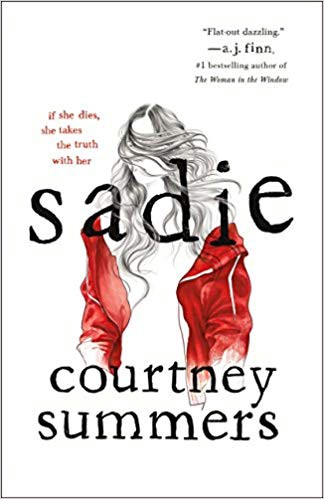
Robin Sloan Recommends 5 Books That Aren’t By Men

Robin Sloan’s latest novel Sourdough, newly out in paperback, has a female main character and is about baking—but don’t let that fool you into thinking he believes women belong in the kitchen. Sourdough is nominally about making bread, but it’s also a magical-realist romp about technology, startup culture, and dealing with forces beyond your control. The main character is female because, as the list below shows, Sloan just really loves oddball adventure stories by and about women.

Read More Women is Electric Lit’s biweekly series, presented in collaboration with MCD Books, in which prominent writers—of any gender—list their favorite or most formative books by women and nonbinary authors.

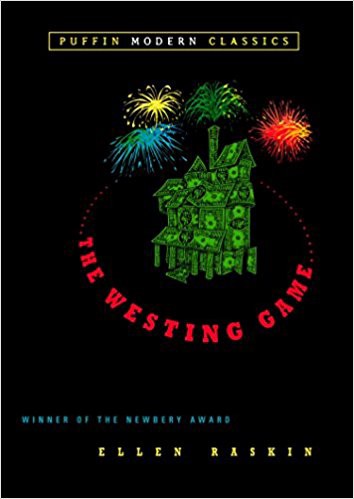
The Westing Game, Ellen Raskin

Like many readers, I can name, without hesitation, a bright clutch of books from my earliest days of reading, the books that delivered my earliest experiences of readerly delight, absorption, and — upon arriving at their last pages — loss. These are the books that made me a reader and, therefore, a writer, and first among them is The Westing Game.

For me to tell you The Westing Game holds up today is like a table telling you, “Turns out, wood is still pretty great!” The claim might be true, but I’m an unreliable source, because The Westing Game made me. If I ever found it lacking, it would be a sign that something fundamental inside of me had changed or broken. So I guess that’s part of it, too: every time I reread The Westing Game, I’m glad to find that part of myself intact, undamaged.

In its text, I can see the inventory of all the things I love most in books, and have tried (mostly unconsciously) to emulate: there’s Raskin’s matter-of-fact pluralism, her secret identities, codes and puzzles, intergenerational alliances, and, at the end, a fast-forward shuttle through time, warm and wistful, that I have cribbed for nearly everything I’ve ever written.

Just this once, listen to the table when it tells you: wood holds up.

The Earthsea Cycle, Ursula K. LeGuin

In a way, my experience with The Earthsea Cycle has been the opposite of my experience with The Westing Game. As a very young reader, I devoured its first installment, A Wizard of Earthsea — perfect proto-Harry Potter. But then, early into the second, The Tombs of Atuan, something just didn’t click. I abandoned it.

When I finally returned, about twenty years later exactly, I realized why: The Tombs of Atuan is different. Wizard school is long gone; this is a book about men and women and beliefs that become cages. It’s about power! Reading as a child, the book was nearly illegible — I wasn’t yet receiving on those frequencies. Reading as an adult, it blew up the radio.

So I kept going. With the last two books in the series, LeGuin completes her deconstruction. Remember, we started with wizard school and dragons, then moved into gender and power. By the time we reach Tehanu, the high fantasy has come home; the final Earthsea book is an epic of domesticity and care. (Of course, there are still dragons. In fact, a dragon figures into the book’s climax, and it’s one of the most breathtaking ever written.)

I’m grateful for my time-shifted experience with the Earthsea books. It’s a pointed reminder that books are patient, and there is real power — something close to the power of Earthsea’s true names — in the right book exactly, at exactly the right time.

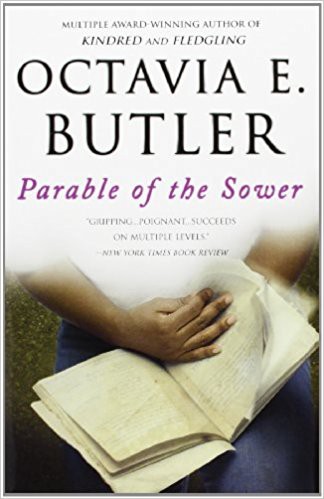
Parable of the Sower, Octavia Butler

I’m someone who thinks a lot about the future, and generally I do so with curiosity and anticipation. If you pay any attention to the world, your response to the previous sentence might very understandably be: give me a break. World-weary fatalism is currently not only fashionable but reasonable.

For me, Octavia Butler is the antidote, because with Parable of the Sower, she wrote a book utterly unflinching in its understanding of suffering — of power and pain in the real world — BUT SIMULTANEOUSLY more soaringly optimistic than Star Trek. I don’t have the skills to describe how she pulls this off on the page; all I know is, it’s there, the bright duality, her optimism as urgent and organic as her realism.

What an achievement: to imagine a bright future without being for a moment naive or blase about suffering in the present. I’m not sure I can do it; not yet. Butler’s book is the lodestar.

Hild, Nicola Griffith

Novels can be good in lots of different ways, but there’s one that might be best among them, and it’s what I would call generosity. The easiest way to understand is simply to read an extremely generous novel, and I can’t think of a novel more generous than Nicola Griffith’s Hild. This is a book that sets up its capacious dream-spell with warmth and poise, then lets you get comfortable. It lets you live there.

Midway through, you feel as if you’ve been in Hild’s world (7th century Britain) for months. Then, you inspect the book — feel more than half of its 560 pages still unread in your right claw — so much yet to happen — miraculous. There’s not a moment of slog, never even the possibility of a skimmed paragraph. Everything savored, and so much of it.

This is deep, cat-purr pleasure, and if it’s the best way for a novel to be good, it’s the one I’m worst at. As a writer, I’m too stingy; I set up the dream-spell, then snatch it away. Reading Hild makes me want to write more, and better. Generosity!

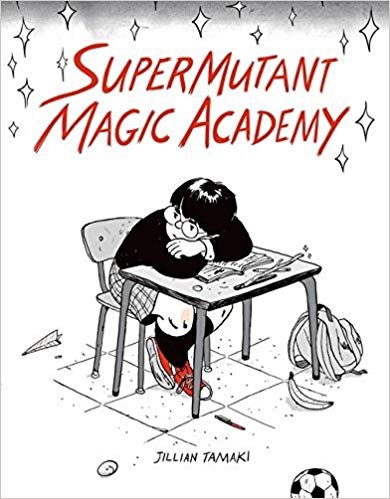
SuperMutant Magic Academy, Jillian Tamaki

Here’s what I love about Jillian Tamaki’s SuperMutant Magic Academy:

  • It’s a digital project, originally a webcomic, now committed to paper so appealingly it feels like it must have been a book all along.
  • Its worldbuilding emerges subtly, at odd angles. Characters sneak into the sides of panels, then gradually attract the spotlight.
  • The spare, expressive cartooning is… perfect. What do you want me to say? It’s just perfect!

I’ve always appreciated compendiums of old newspaper comic strips, the fat ones that go all the way back to the beginning, because you can see the art evolve and improve as the years tick by. In SuperMutant Magic Academy, Tamaki’s drawings are as terrific on the first page as they are on the last, but there’s still that sense of venturing forth without a blueprint, maybe without a net. It’s personal, organic, a bit of a ramble — wonderful.

I learned to write by blogging, and I remember the feeling of starting a post before I knew what I was going to say, or what I even thought. It was a loose, generative way to think and write, and… I hardly ever do it anymore! So, for me, SuperMutant Magic Academy is — well, foremost it’s simply a delight, but besides that, it’s a reminder that you can create and publish in this looser way, have all that fun with digital immediacy and little chunks of humor and story, and still end up with something rich and coherent printed between two covers. How about that!

Young Adult Novels Are Finally Telling the Truth About Internet Friendships

Content warning: attempted suicide

I was sixteen when an internet friend first told me she wanted to die. She and I had met in person once, and for at least two years prior, we’d traded messages about Janelle Monáe and Eternal Sunshine of the Spotless Mind. She’d been diagnosed with depression, and that night, when she thought she was going to end it, I was the first person she told.

I didn’t know what to do. She lived over a hundred miles away, and I didn’t have a phone number for her mom. So I just started messaging her — frantically at first, an onslaught of emojis and reminders of happy moments, until, in staccato sentences, she started responding. I told her I loved her. She told me thank you. When her mom came home half an hour later, she was safe.

Weeks later, I admitted to her that I didn’t really like the person I was. I didn’t feel like anyone at my high school understood me, and I was afraid coming out as queer would only make it worse. I can’t remember what she told me next, but I know it made me realize, maybe for the first time, that I wasn’t alone.

This type of friendship, built on secrets traded from a distance, is one I’ve rarely seen reflected in pop culture. Even though 57 percent of teens have made friends online and the vast majority have never met those friends in real life, according to a 2015 Pew Research Center survey, portrayals of internet friends in mainstream culture still verge on ridiculous. Hollywood has used internet friendships as fodder for slick dramas, like the documentary-turned-MTV-reality-show Catfish, or as the scaffolding of social satires like the Aubrey Plaza-led Ingrid Goes West, where a Pennsylvania woman moves to Los Angeles to befriend an Instagram influencer who replied to her comment one time. (The central joke is that no one acts in real life quite as they do on social media.) In music, up-and-coming groups like Superorganism, whose members were internet friends before they were bandmates, have made meeting online an essential piece of their origin story, though few artists explore those relationships in their actual songs. But in literature, especially YA literature, there has been a quiet explosion of books that portray internet friendships as most people experience them: lifelines in a world where they don’t always fit.

Even though 57 percent of teens have made friends online and the vast majority have never met those friends in real life, portrayals of internet friends in mainstream culture still verge on ridiculous.

Novels are uniquely positioned to capture the depth of an online friendship because fiction operates on the same frequency as online friendships. In each, the vehicle to understanding is written confession. It is the laying bare of your most intimate thoughts for a distant reader to piece into a narrative that, until then, no one else has quite understood.

Readers entering the mind of a fictional narrator are privy to the kinds of intimacies reserved for close friends. You can imagine a fictional first-person narrator typing up all of their hopes and dreams late into night the way I did for my internet friends.

When that novel centers internet friends, readers are primed to understand how two people who have never met could be so drawn together — and how the messages they send could hold so much power.


Mary H.K. Choi’s YA novel Emergency Contact begins with a panic attack. Penny Lee, an incoming college freshman struggling to disentangle herself from her “MILF for a mom,” finds Sam Becker, a 22-year-old barista, passed out on the street. The two had met once before because Sam is related to Penny’s college roommate, so when she drives him home and exchanges phone numbers with him, Sam quips that she’s now his “emergency contact.”

Buy the book

Though Penny and Sam hardly speak in real life, they launch a friendship through texts with a simple premise: they will tell each other all of the things they’re afraid to say in their real lives. For Sam, that means confessing his declining mental health; for Penny, it involves dealing with the aftermath of a sexual assault and her disjointed relationship with her mom.

Sam and Penny aren’t internet-first friends; they met once before they started texting. But for them, as for the closest internet friendships, virtual space has helped them form a two-person support group. Neither is versed in the art of personal sharing, and texting offers them both the time to work through their thoughts and the distance to share them on their own terms.

That’s not to say that they all they do is swap secrets. Most conversations are less about lifelong struggles and more about whatever thoughts cross their minds — the tyranny of supermoons, for instance, or why the American healthcare system is such a mess.

Choi gives them space to wrestle through their own insecurities at their own pace. Their texts run on for pages and pages: it’s a YA contemporary novel that clocks in at nearly 400 pages. In interviews, Choi has joked that Emergency Contact is a book where “high-key nothing happens,” maybe because countless conversations don’t have immediate relevance to the overall plot. But these moments are far from inessential. They immerse you in Penny and Sam’s world. As a reader — if you’re listening — you begin to see how their trust forms. You feel them opening up. Maybe you even feel part of their friendship.

Emergency Contact, which hit the New York Times bestseller list soon after its March 27 release, is only the most visible of a body of YA books capturing how internet friends rely on each other. Roomies by Sara Zarr and Tara Altebrando chronicles the increasingly intimate email exchanges between a pair of college-roommates-to-be the summer before they start college, while The Lost & Found by Katrina Leno plays with magical realism to examine what it means to confess your deepest secrets to strangers in an online support group.

Only a novel can capture that kind of trust, because deciphering a novel is a more artful version of deciphering rambly texts from a friend. When that novel focuses on an internet friendship, readers become part of the dynamic: reading the back-and-forth texts, readers are drawn into the fictional friendship — say, Penny’s and Sam’s — at the same time as the characters are.

Buy the book

In Gena/Finn by Hannah Moskowitz and Kat Helgeson, another YA book, confession takes another literary form: fan fiction. Though Gena and Finn are at different points in their lives — Gena is entering college while Finn is leaving it — they share a love for the buddy-cop protagonists in the fictional TV show Up Below. Gena writes fan fiction about it, and Finn creates fan art. But for each of them, fandom is a way to reckon with their own lives: distant parents, relationship problems, and chronic hallucinations. Even when it isn’t explicit, each girl recognizes something percolating beneath the surface of the other’s fan art. So they start messaging.

Fan fiction is fundamentally about self-exploration, and the online communities that spring up around it therefore traffic in each other’s most intimate questions. What if I like girls? spills into What if Hermione likes girls? It’s a way to reach out without saying the words, because the beauty of the internet is that the right people will be there to listen. That’s what Penny and Sam found. That’s what reading prizes before all else.

Maybe one reason why YA books in particular have so adeptly explored these online connections is that the central idea of an internet friend — entrusting your secrets with someone on the periphery of your world — is an update of a much older children’s literature trope. It runs through Matilda and Miss Honey in Matilda and Liesel and Max Vandenburg in The Book Thief; in times of need, vulnerable young people gravitate to vulnerable strangers.

The central idea of an internet friend is an update of a much older children’s literature trope: In times of need, vulnerable young people gravitate to vulnerable strangers.

These friendships feel especially honest in a world in which even close connections operate out of convenience. Stripped of space, friendships revolve less around who you can drag with you to lunch or to a party and more around the ultimate point — to who cares about you for no other reason than because they do. Toward the end of Emergency Contact, Sam Becker summarizes in a phone call with Penny:

“Let’s be friends,” he said, suddenly serious. “Real ones.”

Penny nodded as tears coursed down her cheeks. “We are friends,” she said lightly. She breathed quietly so he couldn’t hear her cry.

“Yeah, I know that, but let’s be so good to each other.”

His idea is not that their friendship will only become “real” when it migrates out of digital space. Rather, he is acknowledging what he and Penny have been afraid to admit. There is something special about the two of them, about their long-winded text threads, about their tentative secrets. And he doesn’t want to hide from it anymore.


Since the first internet chatrooms, researchers have known there is something special about online connection. In a 1996 study, linguist Susan Herring concluded that people replied to email discussion chains, the precursor to the online forum, because they sought to express themselves in new ways and receive support. The next year, sociologists Starr Roxanne Hiltz and Barry Wellman “suggested that online communities provide emotional support and sociability as well as information and instrumental aid related to shared tasks,” as the 2004 paper, “Virtual Community Attraction: Why People Hang Out Online,” later summarized.

Writing for the BBC in May 2015, writer Charlotte Walker framed the emotional support inherent in online relationships as especially necessary for people with mental illness. “I couldn’t count the times someone has generously held my virtual hand through suicidal feelings or debilitating anxiety,” Walker wrote.

It is here that internet friends become lifelines. Choi’s phrase “emergency contact” is a stand-in for a larger truth that so many people live — the knowledge that your internet friend is the last line of defense, the person you go to when you need to be heard.

Choi’s phrase “emergency contact” is a stand-in for a larger truth — the knowledge that your internet friend is the last line of defense, the person you go to when you need to be heard.

Maybe one reason literature has best captured the ways in which internet friends become lifelines is that it is difficult to dramatize texts on screen, which rules out most film portrayals. But the essential link stretches deeper. The medium is primed to explore internet friendship because it already places immense value on the power of someone else’s written thoughts. When you read a book about internet friendships, you experience all of the dumb jokes and uncertain confessions. You become part of friendship. And you see — in a way no other form allows — how two far-off people could develop such a deep trust.

Editor’s note: This piece originally said that the characters in Gena/Finn were creating specifically romantic fan art and fiction, which is not the case.

My Mother’s Mental Hospital

“My Mother’s Mental Hospital”

by Katya Apekina

The trees are thick on both sides of the highway. They pop out, illuminated by the headlights, then flatten, slip into darkness. For long stretches we are the only ones on the road.

Charlie is telling me about a woman he met in an abandoned subway tunnel.

“She had a whole apartment under there. A c-c-couch. A bed. A fridge. A bookshelf. She had more furniture than I do, and she was tapped into the p-p-power grid. It was basically an apartment underneath 7th Avenue.”

I turn away from the window and look at him.

“Was she beautiful?” I ask. An underground mermaid. Dirt in her long hair. My mother.

“The h-h-homeless woman?” He looks at me.

Was that a strange thing to ask?

“You just said she wasn’t homeless, that she had an apartment inside the tunnel.”

He nods. Then after a while he says: “No, she wasn’t b-b-beautiful.”

“I was just trying to picture her,” I say under my breath, and flip the radio on to cover my embarrassment. I turn the dial through the stations, backwards and forwards, but I don’t find anything. I leave it on static and turn it down until it’s very quiet, then lean back in the seat.

He smiles. “You like static?”

“Yeah.”

“Why?”

“I don’t know… It reminds me of being a little kid.” I look at his profile. “My mom would put Mae and me in front of the broken TV set.”

“White n-n-noise is very soothing. Sounds like the inside of a womb.”

“No.”

“N-n-n-no?”

“No. I mean, maybe it’s soothing, but that’s not why she did it.”

“Why then?” He yawns with his mouth closed. His nostrils flare.

“She’d make us watch the snow on the screen and tell her what we saw.”

“Like a g-game?”

“Yes.” It was. Mae would say it wasn’t. I guess there were times when it hadn’t felt entirely playful. I haven’t told Charlie yet about the mental hospital. I’d just said hospital. If he knew would he still call it a game?

“So, what kind of things d-did you see?”

“I didn’t see anything. I saw snow. But I made things up, described scenes from shows I’d seen at other people’s houses.” I could tell Mom wanted something and I was trying to give it to her. Trying and failing. ithough.”

“What kinds of things?”

“Visions. Strange stuff.”

“How do you know she wasn’t m-m-m-making them up too?”

“I don’t. But she would go into a trance. You could pinch her and she wouldn’t even notice. Also, the kind of stuff she saw wasn’t anything exciting. A snake slithering up a tree. A boy rowing a boat. Like if she were to make them up wouldn’t they be more dramatic? A man with a knife! That kind of thing. Why make up a boy in a boat?”

“She would stare at the TV set and s-s-s-see those things?”

“Yeah. Does that sound crazy?” I’m not sure what I want him to say. Yes, but if he were to say “yes,” I wouldn’t like it. She’d certainly been acting crazy in New York, but not like externally, not in a way I could explain to anybody else. It was the kind of thing where if I tried I’d be the one who sounded crazy.

He shrugs. “It sounds c-creative. My parents never invented games. If our TV broke they would fix it. They wouldn’t see it as an opportunity to nurture my c-c-creativity. They had no sense of h-humor. They weren’t unhappy, just very practical.”

I guess that’s what she’d been doing, nurturing creativity. I yawn. The clock on the dashboard says 3:52 a.m. It’s been a very long day.

“It’s like those M-Magic Eye Books,” he continues.

“What?” I ball up a jacket and use it as a pillow.

“You know. Those p-p-p-picture books that look like abstract art, but if you stare at them and unfocus your eyes, or actually more like f-f-f-focus on some point in the distance, a 3-D picture emerges. A l-l-lion’s head, or a house, or w-w-whatever. You’ve never seen a Magic Eye book?”

I close my eyes. “No, I’ve never heard of them.”

“Yeah, I l-l-like that,” he says after a while, out loud but to himself.

I’m drifting off. My body is heavier but my brain is lighter.

“That s-seems like something your mom would do,” I hear him say through the haze of sleep.

I’m standing in the middle of the kitchen, water is overflowing from the sink. How would Charlie know what my mom would or would not do? I’m asleep. The whistle of the teakettle wakes me up. It’s dark out. I am alone. A train is going by outside the truck. We are parked on the edge of an empty field. Charlie is not in the driver’s side. He abandoned me here. The train is very close, maybe he jumped on one of the cars. Hadn’t that been one of the stories he told me? He rode the rails out to Ohio after his mom died? I roll down my window and squint through the darkness hanging over the field. The air feels very still and wet. I turn and look back and there he is: stretched out in the bed of the truck, asleep.

I wake up and we’re driving through the mountains. They’re beautiful. God, I feel good. I feel like yesterday was a cocoon and today I’ve emerged from it as my true self. I must have been asleep for a long time, because the light coming in through the windshield is yellow. Afternoon light. The best kind, according to Mom. Mom, I will be seeing you in a matter of hours.

I watch Charlie drive, his mouth hanging slightly open, hair falling over his forehead, eyelashes glowing in the sunlight like little halos. He looks so normal when he’s not stuttering, so handsome. I think about the way his lips and chin tremble when he talks. Mae’s right, it’s repulsive, but it’s also kind of fascinating. I picture his trembling mouth on top of mine. His tongue seizing up against my tongue.

“Good m-morning,” he says. He’s noticed me watching him.

I yawn and stretch. Yawn again. He’s squinting at the road, so I reach over and lower the sun visor on the driver’s side, and he looks at me like it’s the kindest thing anybody has ever done for him. I take a sip of lukewarm coffee from his paper cup. The clock on the dashboard reads 5:47 p.m.

“Where are we?” I ask.

“West Virginia. Are you h-h-hungry?”

The billboards along the side of the highway interrupt the view of the mountains. They are counting down to a diner that serves breakfast all day. The eggs glisten, the sausage glistens, the pancakes look like you could take a nap in them face down. We decide to go there. I feel giddy. Giddyup.

In the parking lot, the air is warm. It smells so nice. I grab Charlie by the sleeve of his plaid flannel.

“Do you feel that?” I ask him, lifting my face up to the sky, into the wind.

“W-w-what?” We left spring and entered summer.

“The air. It’s already Southern.”

He laughs. “You s-s-smell that you’re closer to home. Like that dog who always f-f-f-finds its way back.”

“Are you calling me a dog?” I ask, shaking him by the sleeve, laughing. “Are you calling me a fucking dog?”

Our laughter follows us into the diner, invades the hum of the fluorescent lights and the scraping silverware. I ask for the scenic booth facing the mountain, and let go of his sleeve only when we sit down.

“It smells like a swimming pool,” I say.

“They j-just mopped the floor.” Charlie points to a bucket and mop, left out and leaning, in the corner of the room.

The fat waitress brings us water. The skinny one argues with someone in the kitchen through the little window.

“What are you getting?” I ask, unsticking the laminated pages of the menu. There are photos of all the dishes.

Charlie points to a picture of a Jell-O salad and I laugh at this familiar game — find the grossest thing on the menu. “The l-l-l-local delicacy,” he reads.

I flip through to the entrees and point to a picture of a gray slab of meat on a bed of spaghetti. The washed-out colors of the print job make it look particularly gruesome. “I’m gonna go with the crime scene photo,” I say.

He cracks up. We laugh longer than we probably should because it’s not that funny. I look at the picture again and laugh harder. No, it’s pretty funny. Charlie pulls the menu off the table so we can’t look at it anymore. He catches his breath, takes a sip of water, chews on the ice, grins.

And then, we’re just staring across the table at each other smiling and not saying anything. Several minutes go by like this, or maybe much longer. I look away. Something in his face looks so open that it makes me embarrassed. A feeling drills through me, down my throat and between my legs. Our ice water in the plastic octagonal glasses casts long shadows on the tabletop. Little black-and-white oceans.

“W-w-what are you thinking about?” He breaks the silence first.

“I guess… that I’m happy,” I say, looking up at his face, but not his eyes.

He nods. “Happiness was like a bull and they were trying to hold on,” he whispers weirdly.

“What?”

“It’s a l-l-line from your dad’s book,” he says. “S-sorry, I thought you knew it.”

“Oh, no,” I say. “I’ve never actually read him.”

Whose happiness had Dennis been writing about? His and Mom’s? The Happiness Rodeo. I’d say he and Mom did not manage to hold on very well. They both fell off and what? Happiness trampled them? C’est la vie! What a weird metaphor. I wonder how you say bull in French? Vache? No. That’s cow. Happiness is like a cow. The waitress is like a cow. Her belly, bisected by that apron, looks like an udder. She licks the tip of her pencil and takes our order. Neither of us get what we said we would.

When she leaves Charlie lights a cigarette. I gesture for him to pass it to me.

He hesitates. “I d-d-didn’t know you smoked.”

My hand brushes against his fingers as I take it.

“I don’t,” I say, and let the cigarette hang out of the corner of my mouth without breathing in.

I try to do a smoke ring. My mom taught me how once, but I start coughing.

“You al-l-l right?” he asks, taking the cigarette back, and pushing my water towards me.

I nod but can’t stop coughing. An old couple in a booth across the restaurant is watching us. The woman has tubes coming out of her nose connected to an oxygen tank. I wave and cough, wave and cough. Take a sip of the water, a deep breath.

“That was embarrassing,” I finally say after I’ve stopped coughing. He must think I’m a real idiot.

“It’s probably better not to start anyway,” he says with the cigarette in his mouth. The cigarette changes his face. It’s sexy. A little bit tough.

The waitress sets down a monster stack of pancakes in front of me. “Anything else?” she asks Charlie.

I watch him pour hot sauce over his eggs and dip the wheat toast in the yolk. We chew for a while in silence, staring out at the mountain. Unlike the ranges in the distance that look blue or even purple, this mountain is covered in light green grass. It looks like a very difficult golf course.

“So,” I say after I swallow several mouthfuls of pancake. “What about you? What are you thinking about?”

That you’re also happy? That you think I’m wonderful despite my making an ass of myself with the cigarette?

He finishes chewing, swallows, then carefully puts the cigarette in his mouth before answering. “Mountain top removal,” he says.

What?

He keeps the cigarette in his mouth as he talks. “See the grass up there?” He points with his fork, the tines gluey with yolk. “It’s not supposed to look like that. A coal company, probably Massey, blew the top off that mountain to get to the coal, turned the surface of it into a fucking moonscape, polluted the water and air with chemicals. There’s a big toxic lake in there with the runoff, called a slurry pond. People around here, children, are 30 times as likely to get cancer, asthma, all kinds of nasty stuff. Then the coal company ‘beautified’ the whole mess by planting that bullshit grass…”

That’s what it is! He hasn’t stuttered. It must be having a cigarette in his mouth. Maybe that’s why he smokes. Or, maybe it’s because he’s ranting about the mountain. Like if he talks about something he cares about he overcomes it or something.

“What?” he asks.

I shrug.

“You’re l-l-looking at me funny.” The stutter is back. He puts the cigarette out and reaches for my hand across the table. “So, do you want to go?”

“Where?”

“To a s-s-slurry pond. A little adventure.”

“Okay.”

His hand is warm and callused. I want him to touch my face and body with his big, strange hands and kiss my mouth. He’ll taste like hot sauce, cigarettes and coffee. He’s so much more substantial than Markus ever was. The whole thing with Markus was ridiculous. I can’t believe that I was at all broken up over it.

Charlie lets go of my hand and reaches for his wallet when the waitress sets the check down. I offer to pay but he doesn’t let me.

And then he stands as if nothing has just passed between us. He walks ahead not noticing that I am hesitating, that I hadn’t wanted the moment to end quite yet.

I stop next to a table of church ladies. Will he look back and notice I have fallen behind? Turn around and look at me, Charlie. Am I testing him? Maybe. He keeps walking. Am I being immature? Probably.

One of the church ladies, wearing a teal straw hat, puts down the salt shaker emphatically and says to the other: “Nancy Douglas is a bitch.” When Charlie gets to the door he turns around and waits for me to catch up. I run across the restaurant and almost into his arms. Into his truck, anyway.

Charlie gets out a map and traces something with his finger before he starts the engine. I listen to my breath as I watch him concentrating, like he’s full of electric sparks.

“There’s a path to a slurry p-p-pond,” he says, “not too far from here. A b-b-buddy took me once.”

I picture a sludgy swamp, the kind we have back home, hidden somewhere inside that grassy golf course mountaintop. I picture Charlie and me holding hands and sinking into it, slowly, slowly. Warm toxic mud rising up our legs. That’s how fossils are made.

We drive for a while up a narrow road under big industrial metal shoots. They look like broken amusement park rides, metal slides or deconstructed roller coasters. The road has gone from paved to gravel to dirt. By the time we drive off the road and park between two pine trees, the air outside is shadowy and blue. A sound like maracas. Crickets or tree frogs?

“Won’t it be too dark to see anything?” I ask.

Charlie shakes his head and passes me a flashlight. “It’s better in the d-dark.”

I click it on, but he covers the light with his hand. “Not yet,” he says.

We climb over a chain link fence and walk along a dirt path. We walk in silence in the thin gray light, with him several steps ahead of me. At one point the path curves and the trees thin out and we have a view of the highway below, the last bits of sunset reflected off the windshields of the passing pickup trucks.

We keep walking. There is another fence, this one has barbed wire at the top. Maybe we should turn back if someone doesn’t want us here this much. Charlie doesn’t hesitate, though, and I don’t say anything. He climbs the fence in a couple quick movements, drapes his Carhartt coat over the barbed wire and holds it there so I don’t cut myself. Once I’m over, he carefully pulls the coat free without even ripping it. His movements are so swift, precise and controlled — why doesn’t this extend to his mouth?

It’s dark already when we get to a small clearing with the parked cranes and tractors. In the dark they look like dinosaurs. We zigzag between them, then continue on the dirt road into the woods. We see the headlights of a car in the distance, coming downhill and Charlie pulls me in behind a big rock.

“What are they going — ” I start to ask him, but he shakes his head quickly and puts his hand over my mouth for good measure. What are they going to do to us? Is he scared at all?

He breathes against my cheek, and I think he is going to kiss me but he doesn’t. As soon as the car passes, he gets up and we keep going. Even though it’s dark now, he still doesn’t want to use the flashlights. We almost trip when we get to the third fence. It’s waist-high and wooden. The wood is old and mossy, rotten. It must have been put up a long time ago and forgotten.

Charlie and I crawl across the grassy knoll until we reach the drop-off. From here we can see the tarry black lake glistening in the dark below us. On its oily sheen, a yellow smudge — the reflection of the moon. Charlie pulls his shirt over his nose and mouth and gestures for me to do the same. The smell makes me dizzy, permanent markers and dead animals, the guts and bowels of the earth. My mouth tastes metallic.

Charlie grabs my hand and squeezes it. I can’t see much of his face in the dark, just his profile as he looks down below. He whispers through his shirt: “Eight hundred and fifty million gallons of carcinogenic runoff.”

He lists more facts, but they don’t matter to me. The lake is beautiful. It’s something from a fairytale nightmare. It’s the embodiment of everything mean and awful and wrong, contained and glittering.

We don’t stay long because the fumes are so toxic. On our walk back to the truck I keep thinking of Mom, of the pond inside her, of the broken dam and the sludge contaminating her, pouring out into her veins. If Mae were here, what would she think of all this?

I know what she would say. She would say that I don’t understand anything, that it was she who’d been Mom’s slurry pond.

“Are you okay?” Charlie’s voice comes from many steps ahead. “We need to keep walking.”

The night air is warm and wet. I roll my window down all the way and let the breeze blow through my matted hair. I’m home. I’m finally home. This air is enough to make my bones feel like they’ve turned to cartilage.

“Turn off at the next exit,” I say, patting Charlie’s shoulder. He clicks on the blinker. It’s been a long day on the road. Every once in a while he bulges out his eyes as if he’s being strangled, a technique, I think, for keeping himself awake. He’s been doing all the driving because I don’t know how to drive stick. He tried to show me in a dark parking lot after we stopped for gas but it didn’t go well.

“Are w-w-we going to your house?” His question turns into a yawn.

“To the hospital.”

I know it’s late and that the hospital will probably be closed to visitors but I want to feel like I’m near her for a moment. It seems cold to drive all the way down here and not go straight there.

I watch Charlie’s face as we pull up to the building past the sign: St. Vincent’s. There’s no flicker of recognition or judgment. I haven’t told him that it’s a mental hospital, so maybe he doesn’t know. Nothing about the building gives it away as such. Southern Louisiana has a lot of old haunted-looking places, but this isn’t one of them. It’s a newer construction, nondescript, seven stories tall with a fenced-in garden. I’d driven by it a million times and assumed it was an office park or a community college.

The parking lot is mostly empty except for a few cars in a gated section that must belong to the doctors and nurses.

“The lights are on,” I say hopefully, as Charlie pulls up to the front entrance.

“Hospitals always l-l-leave the lights on,” he says.

I get out while Charlie waits in the car. The front doors are locked. There is an empty room, a waiting room maybe, couches, tables, a front desk where a nurse or somebody usually sits. At the end of the room is an open door leading to a long, well-lit corridor. A security guard sits halfway down the hall, reading a newspaper. I knock and wave, but the glass is so thick it barely makes a sound. The guard doesn’t look up.

I walk along the side of the building until I get to a hedge growing around a tall wrought iron fence. I think about all the fences we climbed in West Virginia, but I don’t try to climb this one.

The fence goes around the residential wing of the hospital. The windows are square, ten on each floor. They’re the kind office towers have, the kind that don’t open. Of course they don’t open. Duh. It’s a mental hospital. In the rooms where the blinds are up there’s nothing to see — ceiling tiles and fluorescent lights.

Which of these rooms is Mom’s? Is she even on this side of the building? I try to concentrate on each window. Do any of them give me a “Mom” feeling?

This is stupid. Something Mae would do. If she were here she’d point to a window and be like, “That one! I just know!” like she has some kind of homing device in her brain that I don’t. But really Mae, and obviously I never said this to her, but if you’re so “in tune” and always know everything then why the fuck were you upstairs while Mom was in the kitchen, tying our old jump rope around her neck?

A hand on my shoulder. Jesus. It’s Charlie. I hadn’t heard him get out of the car.

“Are you all right?” he says. “I d-d-didn’t mean to scare you.”

Have I been here long?

“An orderly told me that they start taking visitors at 10 a.m. tomorrow. I caught him on his s-s-s-smoke break.”

I don’t want to leave yet. Charlie stands there and looks at me. I smile. I smile so that he’ll stop looking so closely.

A thump. The sound of a bird flying into glass. And then again. The sound is coming from the top floor. A woman’s face slams into the window, over and over. I feel the smile quivering on my mouth as Charlie pulls me away from the hedge. Two nurses inside rush to the woman, lower the blinds.

For a second, I thought that woman was Mom. But it wasn’t. It wasn’t Mom at all. Just some crazy person. Charlie is guiding me back to the truck, but I’m walking sideways because I can’t stop looking at the wall of windows.

On the fifth floor, I think I see the blinds shift, a shadow move. I stop.

Charlie lets go of my elbow.

“W-w-what?” he says, turns around and squints at where I’m looking.

It’s her. I’m sure of it somehow.

“Nothing,” I say, and get into the truck.

“We’ll c-c-come back in the morning,” he says and starts the engine.

I take Charlie on a night tour of my empty town.

“It’s all on the way,” I lie as I direct him to Old Metairie Rd. I make him slow down as we pass my high school. I point out the adjacent field where people go to dry hump, watch his face as I say the words dry hump, but he just yawns. I make him drive past my favorite record store, which is closed, of course, the metal grate down, covering the windows. I make him drive to the abandoned house by Lake Pontchartrain, where you can jump right off the splintery dock into the water.

“Want to go for a dip?” I ask. We can swim naked in the cold lake, have our first kiss in the moonlight while treading water.

“No, Edie. I’m t-t-t-tired. Let’s go home.” He holds my hand as he shifts the truck into gear. It’s sweet the way he said “home,” not “your house.” He hasn’t realized yet that this is it. This is really our last night together. There’ll be no place for us out here. He won’t fit in with my life, with caring for Mom, and once he sees how I am with my friends he’ll realize that I’ve only been pretending to be someone interesting and grown up.

He drives down Crescent Blvd. We’re getting closer and closer to the end of all this, whatever “this” is. We turn onto my street. It looks the same. The Lewises are watching TV in their upstairs bedroom. I can tell by the flickering blue light. The other houses are dark. This isn’t New Orleans. People turn into pumpkins at midnight.

I don’t point my house out to him, let him drive past it. I can’t go back yet. I just can’t. I’m not ready. Dennis had been in such a hurry to get us out that who knows what kind of mess we left in there. A bowl of rotting fruit on the kitchen table, the bread knife on the floor where I dropped it next to a puddle of piss. No. I want to have one last night that’s my own. Is that horrible? Tomorrow, I’ll come home and deal with everything. But tonight I’m not going to be weighed down by that stuff.

I make a production of looking for my key. “I’m sorry, I guess I forgot it,” I say and give him directions to a motel by the hospital.

“Really? You d-don’t have a spare h-hidden?” He seems a little put out by these drives, these loops, but that’s all he says. I pretend I didn’t hear him, stick my head out the window and close my eyes, let the warm wind hit my face.

The motel I take Charlie to is called The Aquarius. Markus and I once saw our Physics teacher drive up here with the school secretary. We’d joked about getting a room for ourselves, but of course we didn’t. I didn’t have a fake ID, and Markus is a coward.

The room Charlie gets us is on the second floor. It looks just like in the movies — a dark green bedspread, wicker furniture, a glass ashtray on top of the television set. I get undressed and climb under the covers. Charlie pretends he isn’t looking at me. He slowly unlaces his boots and stares at the painting hanging over the bed.

“How’s the b-b-bed,” he asks me only once I’m fully under the sheet.

“Fine.” I stretch out like a starfish. “Comfortable.” I bounce a little and the springs creek.

“You tired?” I say.

“Mhhm,” Charlie says. He angles his body away from me as he gets undressed down to his boxer shorts. His back is pale and muscular. I want to tell him that he looks like a marble statue. He does — so white and hairless — but I’m too shy to say it out loud.

He clicks the light off with the switch on his bedside table. The room goes dark, but then my eyes adjust to the greenish light coming in from the parking lot — from the streetlamps and the motel’s neon sign. Charlie is lying on his back as far away from me as possible.

He turns to face me, hand under his cheek.

“I’m sorry we couldn’t get separate beds,” he whispers.

I shrug. I’m not.

“Are you all right?” he whispers. He doesn’t stutter when he whispers.

I shrug again. He reaches his hand out to me but then puts it back down. “Goodnight,” he says.

I’m not ready for “goodnight.” I watch him shift and close his eyes and my heart starts racing. This can’t be it. I stand up on the bed, take a couple wobbly steps in his direction so my legs are towering over his head. I inspect the painting he’d been looking at earlier, run my fingers over the bumpy surface of the canvas. Even in the dark I can tell that it’s a sailboat on an ocean. At home, in Mom’s room, we have a big oceanscape that my grandfather painted. It’s funny to think that I hadn’t seen the real ocean until I visited Dennis.

I glance down at Charlie’s face. Is he asleep? No, but his eyes are closed. I poke his shoulder with my big toe.

“What?” he whispers. I poke him again. “What?” He smiles, but keeps his eyes closed, wraps his hand around my foot.

“Uh…Have you ever been sailing?” I ask. I can’t think of anything else, and I don’t want him to go to sleep. He doesn’t let go of my foot. He’s stroking the bottom of it with his thumb. I hold my breath and hope that he won’t stop.

“Mmhm,” he finally says, “I have.” And then when I can’t think of anything else to say, he says: “We should get some sleep.”

Disappointment swells in my throat. Does he really mean it? I keep standing there in the dark. I won’t move until he touches me again. 1…2…3…4…5…6. He shifts and looks up. The whites of his eyes glint like a knife. I put my foot on his neck, feel his pulse against my arch. Is it fast? Will he touch me? I feel him swallow. We’re both very still, the feeling between us that has been building over the long car ride… Or am I just imagining this? No. He wraps his hand around my ankle and slides it up my leg.

A weird croak comes out of me, not mine exactly. Maybe I should be embarrassed but I’m not. His hand stops mid-thigh, I step harder onto his throat. He licks his lips. Reach your hand farther, I want to say, but he stays very still, then suddenly he arches his back and grabs my hips, pulling me down onto his face. He kisses me through my underwear. He kisses hard, with his teeth, and sucks through the fabric. He slips his hand under the elastic, puts a finger inside of me. I lean my forehead against the wicker headboard. It feels so good what he’s doing, hot breath between my legs, a finger swirling in a circle, wider and wider. Nobody’s ever gone down on me before, not for real, not like this.

Charlie pushes me onto the bed and gets on top. His mouth, a minty ashtray and also something else. Me? It makes me feel like a cannibal knowing what I taste like.

“Are you sure — ” Charlie starts to say.

“Yes,” I interrupt and jam my tongue in his mouth before he has a chance to change his mind. I reach down and wrap my hand around his dick. It surprises me. From the way it felt against my leg I hadn’t expected it to be so big. Thick and heavy. Markus was always kind of half-mast wobbly. This thing is a cudgel. I squeeze it and watch his face. He closes his eyes, but not all the way, there’s a flutter of white eyeball. It feels powerful, holding him there, like he’s on a leash. So this is what it’s like with a man. I remember that part in Dennis’s book, the part Mae read to me.

His eyes go wide. “Not so hard,” he says. No trace of the stutter. His face looks different in the dark. I don’t know him at all. It’s a stranger who’s pulling off my soggy underwear. Charlie is locked in the bathroom and this is his double, nudging the tip of his dick against me, pushing it in. He gasps, transformed again, another unfamiliar mask, eyes rolled back, jaw clenched. I feel myself stretching and his dick creeping deeper into me, inch by inch. It’s impaling me, I think, as it finally hits against something. A lung? This is how I’d like to die, death by dick, mind totally blank. He puts his hands over my breasts. His hands are rough, like gloves. I don’t like this at all, but as I try to move them, he pinches my nipples harder than I thought would feel good. The pain shoots through me and transforms into something else. Why has nobody done this to me before? I hear a moan. He pulls out a little.

“No, don’t take it away,” I try to say but my mouth trembles in a silent stutter. Is this an orgasm? Pinpricks in my face, like it’s fallen asleep. I try to catch my breath but he stuffs his fingers in my mouth, pushes them towards my throat, and thrusts. Our bones slam. And again. I’m choking and contracting. Nothing exists.

He takes his hand out of my mouth, wipes the strands of saliva on his chest, wipes my stomach with the corner of the sheet. I can’t move. I’m limp, but he’s efficient, like he’s clearing the table. Feeling comes back to my face slowly. He gets up to get the ashtray and his cigarettes from the pocket of his pants, lies back next to me and pulls me into his chest. My cheek is resting against my own spit. I hear the click of the lighter, the inhale.

“Happiness is like a bull,” he says as he exhales.

I look up at him, and he blows the smoke out the side of his mouth.

“You’re happy?” I ask.

“Yes.” He kisses the top of my head.

I want to ask him if that’s why he’s not stuttering, but I don’t really want to bring it up. Maybe I’ve cured him. Or maybe he’s been faking the whole time. This bunny on crutches is actually a wolf.

“What?”

“What?”

“You were smiling.”

I nod. I feel light, like if not for his arm, I could float up, up, up.

He stubs the cigarette out and sets the ashtray on the bedside table. I look at his hand, the same hand that had just been in my mouth and the muscles inside of me tremble. The aftershock.

“Goodnight,” he says. He closes his eyes and slides down into his pillow.

I might as well tell him now about my mother, while he’s too tired to ask me questions.

“St. Vincent’s is a mental hospital,” I say quietly, in case he’s already asleep.

He doesn’t respond. A light whistle in his breath.

There are 127 ceiling tiles. Seven of them are stained. I count again, 129. I start to count a third time but lose interest. I’m not going to be able to fall asleep.

I get up and put on his flannel shirt, stand by the window. The street is empty and the air is wet. The fog is making a halo of green light over the neon sign. I think if I squint, I can see the street the hospital is on. What if Mom is different when I see her tomorrow? What if she has become a stranger? That’s stupid. She will never be a stranger. She will be so happy to see me. So relieved. There are cigarette holes in the hem of the curtain. Someone before must have been standing here, just like me, looking out this window.

“I know,” I hear Charlie say. It takes me a moment to realize he is saying that he knows about St. Vincent’s. I don’t know if he is awake or asleep, but he sits up and reaches for me and so I get back into bed and lie for a long time in the pocket of warmth he created under the sheet. I finally fall asleep as it’s starting to get light out.

14 Writers Imprisoned for Their Work

Writing is dangerous. Novels, social media, poetry, lyrics, journalism, and blogs are dangerous—because when one person speaks, others might just listen.

In honor of censorship’s dedicated efforts to keep innocent minds pure, Banned Books Week closes out September by spreading awareness of literature that no one under any circumstances should ever read. Don’t look up the 10 most challenged books of 2017, their accolades, or their reviews on the top of best sellers list. Don’t discuss their philosophical or sociological implications in your book groups. Don’t read and broaden your awareness of the world. Just remember ignorance is strength and paper burns at 451 degrees.
Joking aside, Banned Books Week is meant to reinforce the importance of literary freedom—not just reading, but also communicating one person’s experience to countless others. Writers around the world are under fire because their work is deemed too radical or too lewd. Luckily organizations exist to stand up for these oppressed writers. PEN International’s mission is to promote writing around the world in a cross-cultural exchange of community and understanding. Founded in 1922, PEN now has over 100 centers and funds to support grants, awards, and literary festivals on a global scale. One of PEN America’s advocacy programs, Artists at Risk Connection, campaigns to support artistic freedom and provides access to resources for individuals at risk, some of whom are in prison, others under house arrest or awaiting trial.

Ithaca City of Asylum is another of these amazing institutions that fights for writers’ rights. As a member city of the International Cities of Refuge Network (the only other one in the U.S. being Pittsburgh), Ithaca welcomes dozens of writers from around the world who are in exile from their home countries. Whether they have been banned, jailed, or discriminated against, Ithaca City of Asylum opens its doors for two-year residency programs where refugee writers are paid, protected, and free to write to their heart’s content. This isn’t a retreat but a period of regrouping in preparation for a literary recovery.

Listening to the stories of writers under attack is the first step to pushing back against censorship. To help get everyone started, here’s a quick debriefing on just a few of the fearless writers, journalists, cartoonists, advocates, and scholars who picked up their pens in a fight against silence and were imprisoned for their work.

Ahmed Naji, Egypt

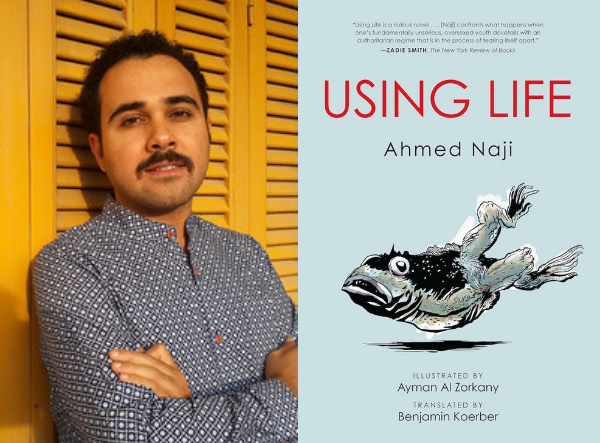
Ahmed Naji’s case was unique because the Egyptian censorship board approved his novel Using Life when first published. Its unfiltered portrayal of sex, drugs, and loose living raised some eyebrows, but overall the work was masterful in its invocation of Egyptian pop culture and anti-authoritarian sentiment set on the dawn on the 2011 Egyptian revolution. International praise was not enough to protect him from the tightening political restrictions of 2014. An Egyptian citizen filed a complaint accusing the author of violating public morals because reading the racy contents of the book allegedly gave him heart palpitations and lowered his blood pressure. In 2015, Naji was sentenced to two years of prison and released after ten months but he was subject to a travel ban pending a retrial. During the retrial, the criminal court overturned his previous conviction and sentenced him to pay a fine instead. Finally free, Naji now lives in exile in the United States with his wife.

Imprisoned in Egypt for His Writing, Ahmed Naji is Finally Free

Galal El-Behairy, Egypt

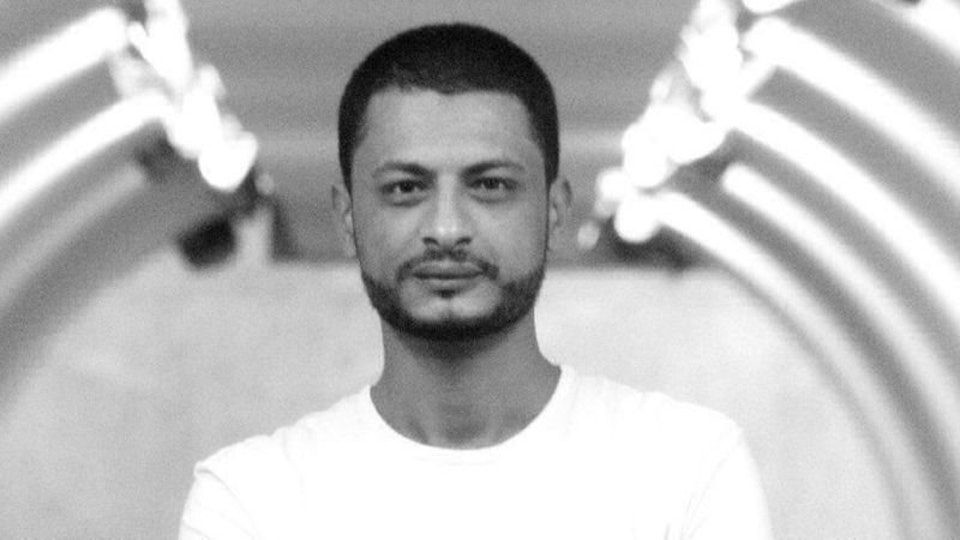
A poet and songwriter, Galal El-Behairy earned a reputation for himself as a voice for nonviolent activism in Egypt. His first two books, Chairs Factory and Colorful Prison met with public approval, but his attempt to publish a collection of poetry failed despite having obtained permission from the censorship board. The Finest Women on Earth, simultaneously an homage to the strength and perseverance of Egyptian women and a political critique, was terminated by the publisher likely due to “Balaha,” a song he wrote for an exiled revolutionary singer, Ramy Essam. “Balaha” was performed a month before the Egyptian presidential elections and the song, much like his poetry, vocally opposed the rampant corruption pervasive in his country. Days after the release of the song, El-Behairy was arrested and tortured. He remains in prison while awaiting trial. PEN centers recently published a poem El-Behairy penned in prison,“A Letter from Tora Prison,” in hopes of drawing attention to his case.

Liu Xiaobo, China

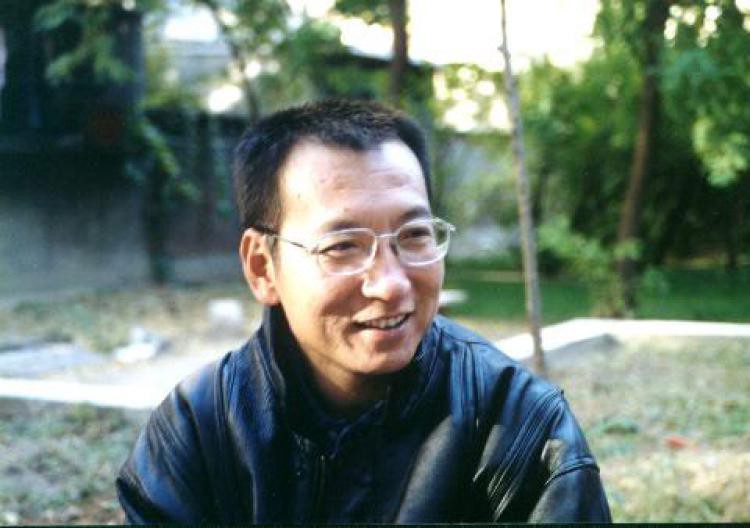
Liu was a literary critic, human rights activist, writer and “black hand”, a label by the Communist Party for the organizers of the 1989 Tiananmen Square protests. In 2008 he helped pen Charter 08, a citizen’s manifesto of nineteen demands for the Chinese government, including the freedom of association, assembly, and expression. His long history of protest granted Liu numerous awards from the international community including a Nobel Peace Laureate, but also costed him multiple stays in prison. Liu’s arrest in 2009 would be his last. Harsh prison conditions and late-stage liver cancer claimed his life eight years into his eleven year sentence.

Nurmuhemmet Yasin, China

Nurmuhemmet Yasin is a Uighur writer and poet in the Xinjiang Uyghur Autonomous Region, China. He was arrested by the Chinese authorities on charges of inciting separatism because of his short story “Wild Pigeon.” The story was about the encaged son of a pigeon king who was caught by humans during his journey to find his people a new home. Instead of remaining enslaved, he chooses to end his life by consuming a poisoned strawberry. In 2005, Yasin was sentenced to 10 years in prison after a closed trial where he was denied a lawyer. The editor who published “Wild Pigeon,” Korash Huseyin was sentenced to three years in prison. There are reports that he has passed away in Shaya Prison following a severe illness in 2011.

Shokjang, China/Tibet

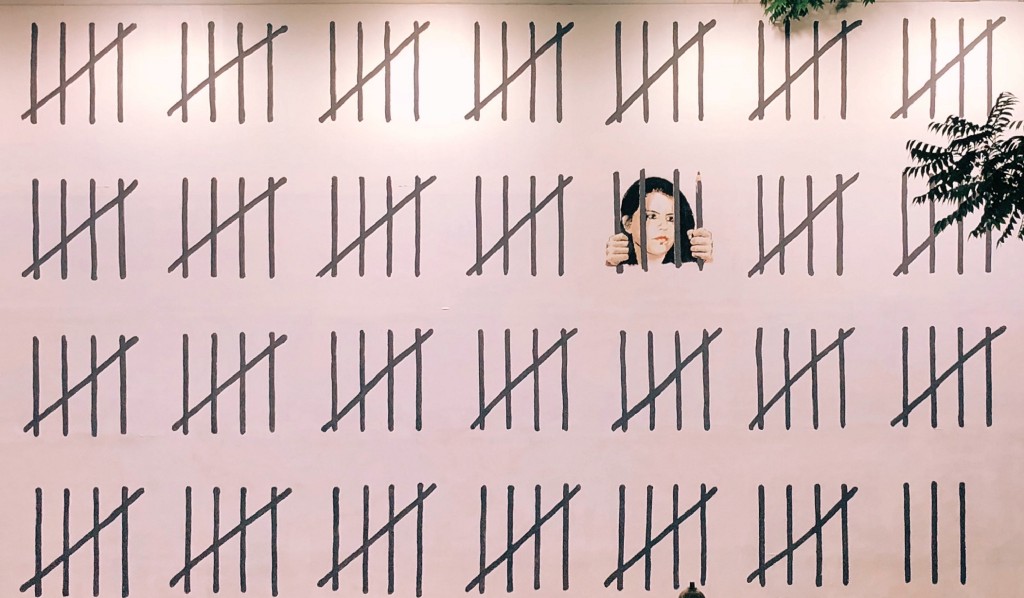
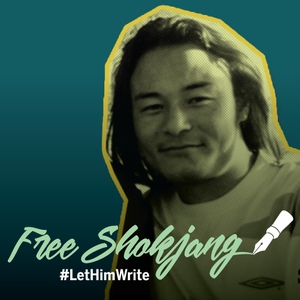
Shokjang is a Tibetan poet and writer who was imprisoned for three years for “inciting separatism.” Among his various trumped up charges, he was found guilty of penning an essay on freedom of religion and reading books banned by the Chinese government. In march of 2018, he was released but remains under strict surveillance.

Faraj Ahmad Birqdar, Syria

Thirteen years do not pass quickly in prison. Poet Faraj Ahmad Birqdar had been detained briefly twice before his final arrest, both times in conjunction with his work in the literary journal he and his friends had created. His third arrest in 1987 saw him imprisoned for three years. For seven years he was in detention awaited trial, tortured and denied medical care. In 1993, he was finally put on trial and sentenced to fifteen years under charges of joining an unauthorized political party. Birqdar wrote his most famous poetry collection, A Dove with Wings Outspread in prison. Writing sustained him through his years locked up, but freedom did eventually come. He was released in 2000 and vowed to write about life after spending so much time dwelling on death. Birqdar now lives in Sweden.

Ramón Esono Ebalé, Equatorial Guinea

Ramón Esono Ebalé, pen name Jamón y Queso, worked as a blogger and political cartoonist critiquing high ranking members of the Equatorial Guinea government and President Teodoro Obiang Nguema Mbasogo with sharp witted caricatures. Said high ranking people were not amused. In September 2017, Esono Ebalé and several of his friends were arrested and questioned about his work. Shortly after, a police officer accused him of money laundering and counterfeiting. For nearly six months he was detained in Black Beach prison. The authorities released Esono Ebalé in March 2018 after the police officer admitted to falsifying his accusation based on direction from his higher-ups.

How Do You Advocate for LGBTQ Rights When Your Culture Has No Word for Gay?

Tal Al-Mallouhi, Syria

In 2009, Tal Al-Mallouhi was a 19-year-old Syrian student whose blog focused primarily on poetry and social commentary. In December, a branch of State Security summoned her with unsupported suspicions about her blog leaking information to a foreign state. That was the last any of her friends or family heard from Al-Mallouhi. For nine months she was detained with unspecified charges. The lack of evidence or charges against her did not stop the court from handing down a guilty verdict. In 2011 the State Security court sentenced Al-Mallouhi to five years in prison. A State Security report in October 2013 claimed that she was released, but alternative sources say she was only transferred to a different facility. Her current condition is unknown.

Asli Erdoğan, Turkey

Asli Erdoğan is one of the many journalists arrested for their contributions to Özgür Gündem, a pro-Kurdish political newspaper. The Turkish courts accused the newspaper of publishing “propaganda for the PKK [the Kurdistan Workers Party].” She was granted a conditional release shortly after her arrest and no longer subject to a travel ban, but Erdoğan and her fellow journalists associated with Özgür Gündem still face charges of terrorism which can result in a lifetime imprisonement in accordance with the tightened restrictions of the government.

Irakli Kakabadze, Republic of Georgia

A trilingual writer of political satire, Irakli Kakabadze received death threats after writing a newspaper editorial demanding an apology for persecution of Western Georgians following the 1992–94 conflict. A determined advocate for peace, Kakabadze faced both assaults and multiple arrests by Soviet and Georgian police in relation to his work as a human rights activist. Even now the possibility of further legal trouble has not stopped him from writing short stories, essays, and articles.

Zunar, Malaysia

Zulkiflee Anwar, known as Zunar, was arrested in 2015 under the colonial era Sedition Act for a series of tweets featuring cartoons he drew that criticized the government. He faced nine charges of sedition and a potential sentence of 43 years in prison. His cartoons satirized corruption and injustice in Malaysian politics that the state-controlled media did not cover. Since 2004, the Malaysian government have arrested Zunar numerous times, conducted multiple raids on his publisher and printers, banned nine of his books and threatened to arrest anyone who bought his works. After the 2018 election ushered in a new government and the arrest of the former Prime Minister and his wife on corruption charges, Zunar has been cleared of all charges.

Writing Behind My Country’s Back

Dareen Tatour, Israel/Palestine

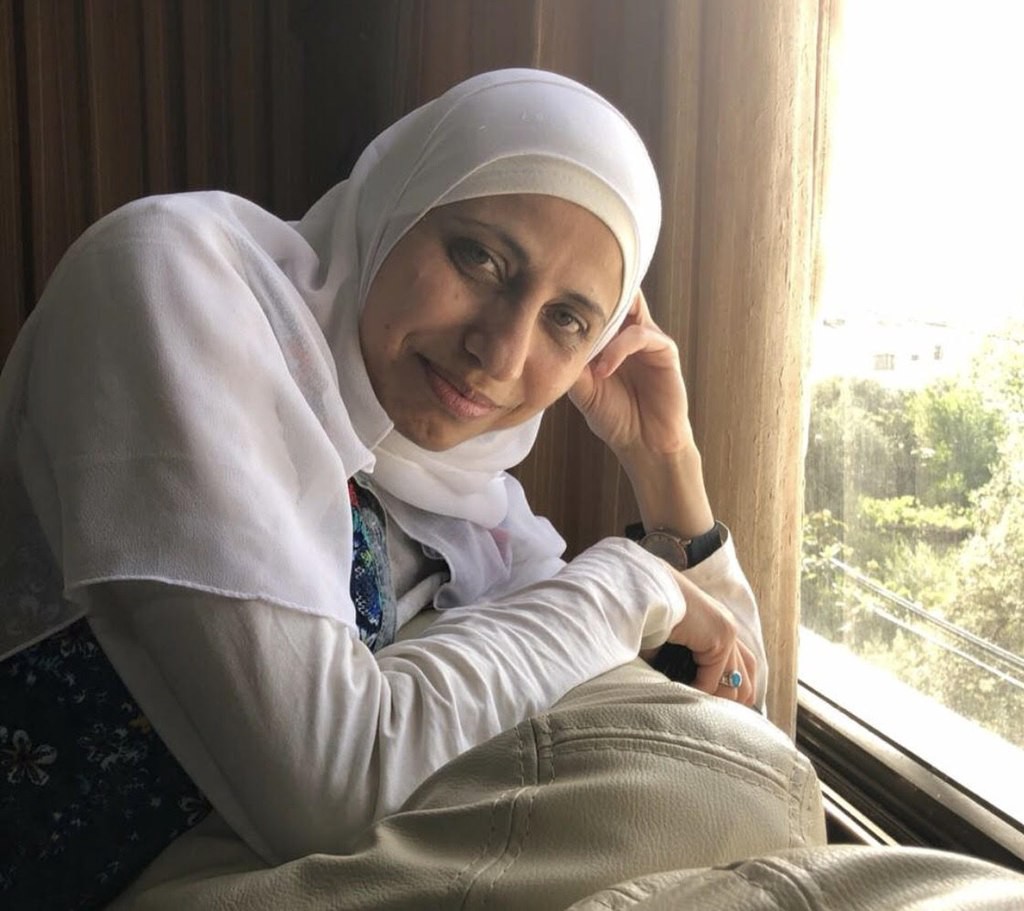
In 2015 and 2016, the Israeli government cracked down on Palestinians and Israeli Arabs, making about 400 arrests on the charge of incitement through social media. Dareen Tatour, a Palestinian poet in northern Israel, was one of them. She was arrested on terrorism charges after posting her poetry on Facebook and YouTube urging resistance. After her arrest, over 300 literary figures including Alice Walker, Naomi Klein and Jacqueline Woodson signed a petition calling for the release of Tatour, saying that poetry is not a crime. In July 2018, Tatour was sentenced to five months in jail. She told Haaretz newspaper that “I didn’t expect justice. The prosecution was political to begin with because I’m Palestinian, because it’s about free speech and I’m imprisoned because I’m Palestinian.”

Ashraf Fayadh, Saudi Arabia

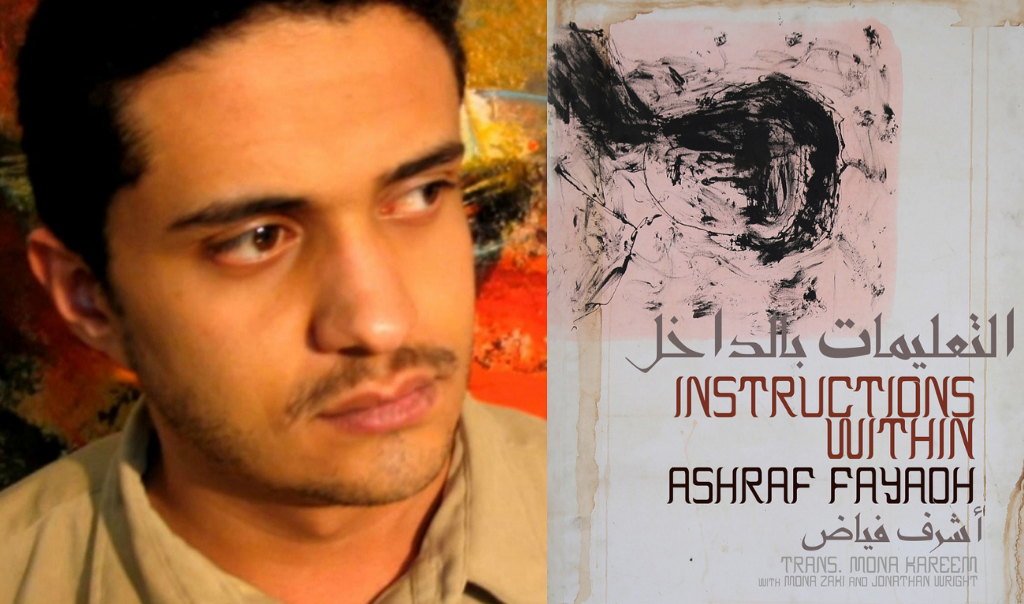
Ashraf Fayadh was arrested in Saudi Arabia in 2013 following an altercation with a man who reported him to the religious authorities and accused Fayadh’s poetry collection Instructions Within of promoting atheism, insulting the Prophet, and casting doubt on the Quran. There were concerns that Fayadh was unfairly prosecuted because he is a stateless Palestinian refugee without Saudi Arabian identification documents. In November of 2015, the court sentenced him to death by beheading on the charge of apostasy, but a last minute appeal mitigated the death sentence to a harsh eight years in prison and 800 lashes.

Mohammed Al-Ajami, Qatar

In 2011 the Qatari state security accused two of Mohammed Al-Ajami’s poems of “inciting the overthrow of the ruling regime” and “criticizing the Emir.” He was sentenced to life imprisonment during a secret trial. After almost 5 years in prison, al-Ajami was granted a royal pardon and was released from prison.

How Do I Become One of Those Writers Who Remember Everything?

The Blunt Instrument is an advice column for writers. If you need tough advice for a writing problem, send your question to blunt@electricliterature.com.

Dear Blunt Instrument,

I’m 24 and my memory stinks!

Besides being a social burden I’m finding it to be a problem in my reading and writing. Facts/lines of poems/details of plot smear in my head, and often I find myself left with impressions of texts that are far too vague for me to build opinion around. Reading non-fiction or heavily referential fiction feels near pointless as things go in one ear and out the other. Marginalia helps, but I get most of my books from the public library and I don’t wanna be a defacer.

And all this wouldn’t be all that horrible if it also didn’t also affect my writing. I find myself often losing the goal of a paragraph in the middle of it, dawdling. It seems as if the writers I admire — Teju Cole, James Joyce, William H. Gass — all have this ability to recall detail (both read and lived) that, more and more, I feel I lack. And it wasn’t always like this, I swear. (I had a concussion just over a year ago, so for a bit I was worried it might be that. But after a couple neurology appointments and some CT scans this was, seemingly, proved not to be the case.)

Have you/people you know experienced this and defeated it? Are my fears misplaced or disproportionate? Is there some kind of training? How do you read to remember?

Sincerely,

Foggy Noodle

Dear Foggy,

The answer is yes, there is training. There is training for almost everything! I think we often assume that other people’s learned skills must be innate talents. I know a lot about perfume and a fair amount about wine, so people are always saying to me, Your sense of smell/taste must be really good. And they are, kind of, but I wasn’t born with some kind of sensory superpower; I was interested in smells and tastes, so I started paying attention, then looked for corroboration of what I noticed. By smelling a lot, and reading about smells, you can learn to have a good nose, and I think you can learn to have a better memory.

The first thing you need to do is stop relying on your brain alone for retention. You must become an obsessive note-taker. Buy small notebooks — find a kind you like, so it’s a bit of a treat — and carry one with you everywhere. Read Joan Didion or Susan Sontag (or me!) on the art of note-taking, and take up the habit. You don’t have to remember everything if you write everything down. The act of writing is a memory aid on its own. Then find a schedule for revisiting your notes, for rereading your notebooks. Reading what you’ve written reinforces the memory — it’s like studying a cribsheet. If you do this regularly, even passing thoughts have a better chance of solidifying in your consciousness and becoming real memories.

The first thing you need to do is stop relying on your brain alone for retention. You must become an obsessive note-taker.

In the past few years, I’ve started taking extensive notes not just from life but from my books. When I own a book I dog-ear and write all over it — it’s almost like I can’t focus on reading if I’m not holding a pencil. But I also take my marginalia outside the book — I’ll create a document on my computer where I can type up notes from the book, both direct quotations (always note the page number) and any thoughts or impressions the book inspires. This makes it so much easier to write about it later, if you should feel moved to. Even if you don’t remember where you read some line or fact that impressed you at the time, you can search your computer for a word or phrase associated with that idea, and you’ll be able to dig it up and “remember” (thanks to your documentation!) where you found it originally. (Take notes with your future, forgetful self in mind — give yourself as much context as possible, like creating a map for buried treasure.)

The great thing about this external notes system is that you can use it for library books too. I commend you for frequenting the library (libraries are one of my great loves!), but remember that you can use library books as a testing ground. They’re free and low (or no) commitment, so check out tons of books. Instead of vandalizing them, use sticky tabs/flags. But if you find a book you really love there, and you think you’ll want to return to it and reference it in your writing, buy the book. Books are worth a lot more than they cost over time in terms of their value to you as a writer — it’s a gift to have a library at home — so make room in your budget for the expense of books. (Painters need paint to make their art; writers need books.)

You’ve said that your memory is getting worse. I know you’re only 24, but sadly I do think memory gets worse with age. I used to resent it when someone I had met before evidently could not remember my name or that we’d met; I always suspected they were faking it. But as I’ve gotten older, I’ve gone to the other side. It’s much harder for me to remember details about people I’ve met just once or twice or, god, even three times. I often forget life stuff about close friends, too, like where they went to college or what their job is or (gasp) what they named their new baby. It actually feels like my database is full. I don’t say that to scare you — I’m just saying you might as well start developing strategies now to compensate for the feeble human brain.

Memory gets worse with age. You might as well start developing strategies now to compensate for the feeble human brain.

I do want to note that when you think of yourself as having a bad memory, it may feel like an all or nothing quality, like other writers have good memories and you don’t. But outside of people like Marilu Henner, who I once heard is one of only six (?!) confirmed cases who can remember essentially everything in microscopic detail about their own lives, it’s generally more complicated. There are many kinds of memory, and most people are better at some kinds and worse at others. My husband has a knack for memorization; he can easily memorize poems and knows many Shakespeare passages by heart. I have trouble remembering even my favorite poems, and while I can memorize stuff if I have to (I’ve been in plays, for example), I forget it all once I stop practicing. But I have a much better memory for names and faces than John, even if my memory for those things is worse than it used to be.

In sum, my advice to you is, stop thinking of “good memory” as a trait you lack, and start thinking of memory as a kind of practice.

‘Bel Canto’ Treats Latin America as an Exotic Backdrop, Not a Real Place

When I first watched the trailer for Bel Canto, I asked out loud (by which I mean, I tweeted) whether anyone knew if Anne Patchett’s “unspecified South American country” had been specified for the film version. Surely, I mused, the filmmakers wouldn’t dare set this hostage narrative in a nondescript Latin American nation — not when it was so obviously based on the 1996 “Lima Crisis” that took place at the Japanese ambassador’s house in Peru. Patchett had gotten away with nodding to her real-life inspiration while leaving her novel devoid of geographical specifics; it’s all “the host country” this and “this godforsaken country” that. But in a film, where you can see the setting, surely they’d have more respect for both the audience and Peruvian history. After catching the film for myself, however, I can confirm that Chris Weitz’s adaptation is as uninterested in Peru as Patchett was. The film of Bel Canto joins the novel in a long line of U.S. cultural objects that treat South America more as a colorful and exotic (not to mention dangerous) image of a place than a real-life location.

Bel Canto imagines a scenario very much like the real Lima Crisis, a 1996 hostage situation wherein fourteen members of the Túpac Amaru Revolutionary Movement took over the residence of the Japanese ambassador for more than 120 days, but puts a fictional opera singer at the center. Roxane Coss (played in the film by Julianne Moore, who lip syncs to recordings by Renée Fleming) has been invited to sing for Mr. Hosokawa (Ken Watanabe) on his birthday. The Japanese businessman has been lured to “the host country” with the promise of seeing the famous soprano, because the president hopes to convince him to build some factories that would jumpstart the country’s failing economy. After Coss sings her beautiful arias, a group of armed revolutionaries take over hoping to hold the President for ransom. They’re unaware that President Matsuda (an obvious nod to then-Peruvian President Fujimori, who was of Japanese descent) is not even present for the performance, having canceled his appearance at the last minute.

Bel Canto joins a long line of U.S. cultural objects that treat South America more as a colorful and exotic (not to mention dangerous) image of a place than a real-life location.

Just as in real life, all the women are released — except for Ms. Coss, who’s just too beguiling and who the revolutionaries know is their main chance at leveraging a better deal. In the weeks that follow, and as negotiations prove more and more futile, her singing proves to be the soothing balm these otherwise violent terrorists require to see the finer things in life. She helps make their months-long ordeal a kind of utopian enclave where French ambassadors cook alongside young girl guerrillas, where a Japanese translator helps set up a daily chess match, where Russian businessmen fall for the soprano (who in turn becomes enamored with Mr. Hosokawa), and where kidnappers and kidnapped learn to live amicably before real life comes crashing into them staging a climactic finale worthy of one of the operas Coss sings so beautifully.

By Patchett’s own admission, her interest in the Lima Crisis stemmed mostly from its operatic plotline. Apart from the obvious source material, there’s nothing about Bel Canto that requires it to be set in Peru. Give or take a few cultural markers, the book could’ve taken place anywhere. All of the action takes place in the Vice President’s mansion-like house which is surrounded by a large wall that further isolates those inside. Her characters may spend a lot of time looking out the windows, but there was little they could see. “They could have been in London or Paris or New York or Tokyo,” her narrator tells us. “They could have been looking at a field of blue-tipped grass or a gridlock of traffic. They couldn’t see. No defining hints of culture or local color. They could have been any place where the weather was capable of staying bad for indeterminate amounts of time.” With such caveats baked into her prose, it was no surprise to find Patchett being candid about how, as she put it in an interview that bookends my edition of Bel Canto, the novel “is not an especially bold or insightful rendering of South America. It’s about a living room in South America.”

South American Women Authors the U.S. Has Overlooked

Both excuse and disclaimer, Patchett’s assertion doesn’t explain why her attentive renderings of Russian businessmen, Japanese translators, French ambassadors, and Dutch Red Cross volunteers stand in stark contrast with her bare-bones sketch of this “host country” and its revolutionaries. Then again, this type of broad-strokes portrait of Latin America is nothing new. Whether you’ve seen the poor sense of Colombian geography that anchors the drug kidnapping romcom Romancing the Stone, the murky politics of the kidnapping drama Proof of Life (set in the fictional “Tecala” country), the soundstage-created images of South American jungles in B-movies such as The Tiger Woman, or even sobbed your way through the brightly-colored vistas of Pixar’s Up, you’ve no doubt come across the hackneyed ideas of the region that Hollywood depends on. Everywhere south of the border (and particularly below Panama) is, in the U.S. cultural imaginary, all jungle and violence. Moreover, as even these brief but telling examples suggest, South America is a Manic Pixie Dream Continent, a mere backdrop for foreign nationals who end up finding themselves, or love, or perhaps both as in Bel Canto, while abroad.

Weitz’s adaptation muddles rather than clarifies Patchett’s nondescript location. His establishing shots may favor images of slum-ridden mountains, but at least the flag his revolutionaries fly looks like the Peruvian one. But on casting alone (and given his decision to shoot in Mexico City, inserting even a brief scene where a Red Cross worker visits the famed Mayan pyramids in its outskirts) he shows himself mostly uninterested in offering any kind of cohesive vision of any one Latin American country, as if they all could be blurred into one imagined nation. What emerges instead is a hodge-podge of a national portrait, with actors from Mexico, Guatemala, Colombia, and the U.S. filling roles from the “host country.” Their disparate dialects and accents stress (for Spanish-speakers, at least) how the film production didn’t even aim for any kind of authenticity. Father Arguedas, a priest who stays behind even after being asked to leave, is played by Bobby Daniel Rodriguez, whose mastery of Spanish is enough to fool those who just read subtitles but which clearly sounds clipped for those of us with an ear for it. Some revolutionaries, like Carmen (played by María Mercedes Coroy, so wonderful in Guatemala’s Ixcanul) clearly gesture to indigenous communities who speak little Spanish. And others still, like Comandante Benjamin (played by Mexican actor Tenoch Huerta), sound like they’re characters straight out of a Mexican telenovela — an underling of his uses the Mexican slang “güey,” a moment that had me cringing for the way it seemed both gesture to and otherwise ignore its own cultural specificity.

South America is a Manic Pixie Dream Continent, a mere backdrop for foreign nationals who end up finding themselves, or love, while abroad.

And speaking of telenovelas, that is where Patchett’s painful indifference to the country she’s decided to represent in the pages of her novel makes itself most known. The reason why President Matsuda opts to not attend the evening dinner with Ms Coss and Mr Hosokawa, we learn, is because he’s obsessed with a telenovela (the Thalía-starring vehicle Maria la del Barrio, as we’re shown in the film). In Patchett’s telling, these soaps air daily during the daytime with one weekly primetime summary episode, which is the one President Matsuda refuses to miss and which prompts him to skip out on the dinner that kickstarts the novel’s plot. It’s arguably a small (if crucial) detail, but this is very much a U.S.-centric vision of soap operas. Telenovelas, especially successful ones like Maria la del Barrio, aired nightly. (I have all-too-vivid memories of teenage tantrums I staged when it became obvious I wouldn’t make it back in time for my prime time soaps on any given weekday.)

Like every other attempt at using South American culture to color this story, Bel Canto cannot help but see its chosen setting as anything more than window dressing. What better way to account for a president’s vanity than have him be obsessed with telenovelas? What easier way to show oneself oblivious to their own cultural production than think telenovelas are strictly a daytime activity? This “host country” remains just a sketch beyond the windows of Patchett’s imagined living room. It’s a beautiful painted backdrop as broad and colorful as the kind that would adorn an opera stage.

Electric Literature’s ‘5 Over 35’ Prove You Don’t Have to Be a Prodigy to Publish

Yesterday the National Book Foundation announced its “5 Under 35” picks: five young debut authors worth watching. But without diminishing the accomplishments of these incredible new writers, we have to note that the tendency of media and publishing to celebrate youth can be discouraging for aspiring and emerging writers approaching (or well into, or beyond) middle age. It’s important to remember that debuts can come later in life, too; you haven’t missed your chance to write a great book just because you’re old enough to run for president. Willa Cather was 39 when her first novel debuted in serial form in McClure’s. Toni Morrison published her first novel when she was 40, and George Eliot published Middlemarch at 52. (Is it a coincidence that many women writers debut work later in life?) Ultimately, why do we put so much stock in a debut author’s age? Authors of any age who write insightful, beautiful books should be celebrated.

So in addition to the NBF’s illustrious honorees, we’re highlighting five stellar debut works published in 2018 so far, written by authors who are over 35—because there’s no right age to start writing, and being a young debut author isn’t inherently more worthy of celebration than not being young. The authors we’ve chosen here deserve a whole lot of praise for writing through a life that offers more reasons to stop writing the longer you live it. We offer this list as an honorary award for those who keep going.

All You Can Ever Know by Nicole Chung (37)

Chung’s memoir traces the storyline she grew up in. Born premature, Chung was put up for adoption by her Korean parents and raised by her white adoptive family in suburban Oregon. She dealt with prejudice her family couldn’t understand as she grew into her own identity as an Asian American writer. When her daughter was born, Chung tried to retrace her roots and untangle some of the past to braid it anew. Was the story she grew up with the whole truth? What does it mean to be family?

There There by Tommy Orange, (36)

How do you reconcile your self against an identity? For each of the characters in Orange’s novel, to be an “Indian” — an “Urban Indian” living in Oakland, California is an evolving question. Time tips toward the Oakland powwow, where Tommy, the first character we meet in the novel, is planning to commit armed robbery. What will happen when the community gathers at the Oakland powwow, and what will it mean to be “authentically Indian?” The New York Times couldn’t help but be effusive: “Yes, Tommy Orange’s New Novel Really Is That Good” they blurted out in their headline for the review. And they’re right.

Tommy Orange Gives Voice to Urban Native Americans

Eleanor Oliphant is Completely Fine by Gail Honeyman (46)

Eleanor Oliphant thinks the ingredients for a “perfect weekend” include a frozen pizza, some vodka, and a call to mom. Be sure to leave out interactions with humans, please. That is, until she and the (otherwise kind of offputting) IT guy from her office, Raymond, both stop to help an elderly man named Sammy when he takes a spill on the sidewalk. The three unlikely, antisocial friends ease into something like friendship as Raymond and Eleanor stumble into love. Reese Witherspoon loved the book so much, she’s making it into a movie.

A Lucky Man: Stories by Jamel Brinkley (42)

The phrase is worn out, but really — this is a book we need right now. Brinkley’s short story collection explores toxic masculinity as it plays out in the lives of boys and young men in Brooklyn and the South Bronx, confronting the choices, mistakes, and desires that erupt between the world as it is and as they want it to be. As one reviewer put it, these stories “find their footing on the violent edge of gender performativity and end in a reach for language to describe the incomprehensible.”

If You Know, Love, or Are a Black Man, Jamel Brinkley‘s Stories Will Feel Like Home

Summer Cannibals by Melanie Hobson (50)

Hobson’s book is an intense family drama, following three adult sisters who confront family tensions and secrets on a trip to their childhood home. It’s a sort of northern Southern Gothic, heavy on the psychosexual baggage; it will not make you feel good about marriage or family, but it will make you feel good about the possibility of publishing a first novel even though you’re old enough to be into Patti Smith. (Please do not email, we know you can be into Patti Smith at any age.)

This Book and Podcast Examine How We Consume Stories About Dead Girls

Courtney Summers is a master of the bitch. For ten years, she has written nuanced, wrenching stories about angry girls, unlikable girls, girls we now call “nasty.” Summers uncovers the stories behind them, explaining why they are the way they are without apologizing for it; her books deal with grief, poverty, trauma, and often, the aftermath of sexual assault. In her newest YA novel Sadie and its podcast tie-in, Summers examines how we consume stories about girls, and how we consume girls themselves.

The book follows nineteen-year-old Sadie, who leaves her hometown to find the man who murdered her younger sister Mattie. In alternating chapters, we read the transcripts from a radio producer named West who starts a Serial-style podcast, The Girls, to find Sadie and bring her home. It’s a harrowing, feminist thriller: Will West find Sadie? Will Sadie exact her revenge? Will she die trying?

Summers’ publisher Macmillan created the podcast in real life using selections from the audiobook as a pre-publication marketing tool, released over six weeks to drum up anticipation for the book. It could be written off as a simple teaser campaign, but it shouldn’t be; listening to the podcast in conjunction with the book, it becomes its own interesting artifact. Both Sadie and The Girls show how we tell stories about girls, but they do it in markedly different ways.

The Girls consists of six 20-minute episodes, and it explains itself thus: “It’s a story about family, about sisters, and the untold lives lived in small town America . . . And it begins, as so many stories do, with a dead girl.” Spurred by Sadie and Mattie’s surrogate grandmother May Beth, West retraces Sadie’s road trip through depressed Colorado towns, always a few steps behind. He interviews acquaintances and learns that the sisters’ mother is an addict, largely absent, and that Sadie essentially raised Mattie on her own. The show ends on a cliffhanger, about two thirds of the way through the story, but there are additional West chapters in the book.

When Summers listened to The Girls, it felt like a real podcast to her, separate from the narrative she’d created.

“I just listened to it on repeat over and over and I couldn’t believe I had written it,” she says. “It’s truly an adaptation so it made me feel one step removed from my own book, and I feel like I got as close as I could be to a reader of my own work.”

It could be written off as a simple teaser campaign, but it shouldn’t be; listening to the podcast in conjunction with the book, it becomes its own interesting artifact.

Even though it’s all part of the same book, certain themes become more prominent in the audio telling. From the beginning, West is reluctant to tell this story, not because of its tragedy but because it isn’t interesting enough. “Girls go missing all the time,” he says. “Restless teenage girls, reckless teenage girls, teenage girls and their inevitable drama . . . I wanted a story that felt fresh, new and exciting, and what about a missing teenage girl was that? We’ve heard this story before.” To West, Sadie is just another emotional runaway, unremarkable, as if all women who make choices he doesn’t agree with are the same. As if girls taking control over their lives is reckless.

As West tells it, girls are all of a type. After he learns that Sadie pulled a switchblade on someone, he goes back to her grandmother:

West McCray: Was Sadie a violent person, May Beth?

May Beth Foster: No. No! Never. I mean…she could’ve been, but in the way we all could be. It wasn’t something she was.

West seems to think that violence defines a person, not that Sadie may have been pushed — by anger, by trauma, by a need to protect herself — to brandish a knife. Later, he interviews a hitchhiker Sadie picked up, and dismisses her too: “Cat, in a lot of ways, is what I expected Sadie to be. Restless, reckless, dramatic.”

Eventually, talking to Cat about her own experiences as a runaway is a turning point for him. “It all suddenly, and belatedly, felt too real, and I didn’t like it,” he says. By the end of the podcast, West comes around to being truly, personally unsettled by Sadie’s story, and Cat’s, and all the stories of violence against women before and since, though it’s frustrating for him to have to come around at all. Still, he’s telling the story, producing it for an audience.

Why is America Obsessed with Dead Girls?

“I thought West would be the perfect vessel to pose those questions and to come to those realizations because he’s someone that is producing content, even as he realizes that, he still has to make this the way that people want to hear,” Summer says. “So he’s forever caught in that place of knowing something and feeling it and then also realizing that he’s an entertainer, he’s a host, he’s still gotta do his job. And it’s completely conflicting with his emotional response to Sadie’s story.”

Reading the book, West can be forgiven all this, but there’s something about actually hearing him say these things and not hearing Sadie’s voice as counterpoint that makes it feel so much more dismissive, more judgmental, and, frankly, more male. Of course, Sadie herself is absent from the podcast, even though it revolves around her. What’s more, Sadie has a stutter — audio wouldn’t be the best medium even if it were allowed to her — so she’s especially distanced from this mode of telling her story.

The book explores the idea that true crime podcasts may capitalize on the pain of victims, and creating an actual podcast with a true crime conceit brings those issues into relief. For Summers, it’s a complicated question.

The book explores the idea that true crime podcasts may capitalize on the pain of victims, and creating an actual podcast with a true crime conceit brings those issues into relief.

“I don’t think it’s true for every true crime story out there that it’s coming from a place of negative intent or an exploitative approach, it’s just that the possibility is there and so I think it’s worth asking the question of why we engage with this media, why we create this media. [Sadie’s] not an indictment against true crime, it’s a question of, why do we love it? What’s in it for us? Who does it potentially hurt, if anyone? How careful are we? Who should we be thinking of?”

We do need to read the book after the podcast, though perhaps not in the way that Macmillan’s marketing department expected. After listening to a grown man from New York attempt to tell a poor young woman’s story, it’s so much more important for her to tell her own. The book gives Sadie agency, and West’s stereotypes of girls seem thinner when juxtaposed with the full story of one.

For her part, Sadie also thinks about girls of a type. The girls working the parking lot of a truck stop. The pretty girls on Instagram. The runaway girl who needs a ride. But where West saw a “they,” Sadie sees a “we.” The way she discusses girls is more sardonic, recognizing that she doesn’t fit in with anyone’s expectations, but maybe no other girls do either. When she allows herself to dance with a boy, she thinks, “I let the music own me, turning myself into the idea of a girl, or an idea of an idea — a Manic Pixie Dream, I guess, the kind of everyone says they’re tired of but I don’t know that they really mean it. The girl nobody ends up loving long or loving well, but nobody wants to give up either.” It’s as if she knows her life is a story, and she won’t be silenced from the telling of it.

Sadie also thinks about girls of a type. The girls working the parking lot of a truck stop. The pretty girls on Instagram. The runaway girl who needs a ride. But where West saw a “they,” Sadie sees a “we.”

Every female character in the book, young and old, bears the weight of something — addiction, single parenting, a difficult family life, a dead husband. Summers allows them to feel their feelings and act on them. In Sadie’s chapters, we learn that sexual violence is a part of her story, and her reasons for seeking out the attacker go much deeper than teenage ennui: vengeance for her sister, herself, and for the protection of other girls. As opposed to West’s shock at the possibility that Sadie was violent, the book allows for female rage in a way that the world often doesn’t. Sadie’s story is about a girl following her anger and pain, recognizing and using her strength in a way that young women are rarely permitted. To put it plainly, Summers takes young women seriously in a way West — and much of our culture — doesn’t.

“I really wanted people to confront their own perceptions of teenagers,” Summers says. “We never take teenage girls seriously, do we? As soon as a teenage girl likes something, whether it was Twilight or Bieber or One Direction, as soon as a girl loves something it’s suddenly not worth our time or attention. We just look for ways to dismiss them. And it’s the same with their pain and the real things that they’re going through. We don’t give it the kind of gravity that it deserves because we treat girls like disposable objects.”

Like a meta Ouroboros, a book about dead girls and crime podcasts became a crime podcast about a dead girl. Summers upends the classic dead girl story by giving us both the story and the girl. Mattie and Sadie are fully-drawn characters. The book revolves around them, and Sadie takes control of her own life and her own story.

Reading True Crime Memoir Helped Me Lay Claim to My Own Traumatic Story

“I think we’re so used to consuming violence against women and girls as a form of entertainment that this is really an extension of that,” Summers says. “You never have to look too far to find some sort of story that centers on a brutalized girl that we sort of come to expect it as something that will entertain and give back to us in that way. And that’s a very strange thing when you pause to think about it. We’ve normalized that sort of violence and that sensationalism and we’ve turned it into bingeable content. We tune into it weekly on certain shows on TV and once you create that kind of relationship with that sort of media how can you not foster that sort of obsession with it?”

Sadie seems especially of and especially for our current moment, without feeling pedantic or ripped from the headlines. Summers shows men who think of abusers as “not the guy I know,” and much later in the book, West is chastised for explaining that he’s drawn to Sadie and Mattie’s story because he has a daughter of his own.

“You never have to look too far to find some sort of story that centers on a brutalized girl.”

“It’s so upsetting to think that they have to have a personal connection to a woman to be able to empathize and show compassion and care towards what women in the world are going through,” Summer says. “You really have to say, ‘I have a mother, I have a daughter, I have a sister,’ to be able to recognize that heinous crimes against women are heinous? It’s like, really? It was funny — well not fun, but I liked being able to articulate that little jab in Sadie.”

Like Summers’ other books, Sadie is dark. The murder of girls, the dismissal of women, the prevalence of sexual violence. The obliviousness of men, even if they are well-meaning. Characters who are attacked, over and over again. Summers jokes that she revels in making people cry, but she has reasons for hurting her characters, and her readers.

“I think it’s because, first of all, I respond to those kind of stories myself,” she says. “They resonate with me. And I think it’s because I sort of see them as a challenge to readers to pick them up. Like this is something I’m telling that is true about the world and it’s ugly and it hurts, but now what do you do about that going forward. What are you going to put out into your world, because we all have the ability to make positive choices, make positive change.”

Pulitzer Winner Jose Antonio Vargas Reminds Us that No Human Being is Illegal

A s a previous Temporary Protected Status-card holder with lots of family and friends who are still undocumented, I knew Jose Antonio Vargas’s work way before he wrote his recently released memoir, Dear America: Notes of an Undocumented Citizen. From his groundbreaking 2011 essay “My Life as an Undocumented Immigrant” in The New York Times Magazine where he came out as undocumented, I knew his was a fearless voice, a voice that gave me the courage to be honest with my immigration status.

In 2011, I was about to enter my last year of undergrad at UC Berkeley, without any federal funding because of my immigration status. I was fed up, I was tired, I was angry. Reading that essay gave me the courage to pursue my dream of becoming a writer. Without it, I would’ve perhaps never written the poems I did in grad school; or they would’ve taken much, much longer to understand that it was ok for them to be written.

Vargas’ voice gave me the courage to face my immigration status, to speak out, to demand humanity. Similarly, his new memoir reminds us that no human being can ever be “illegal,” that there is no such thing as a good or a bad immigrant, that immigration affects a vast majority of people in the US, “citizen” or “non-citizen” alike.

I spoke to Vargas over the phone about his life-long work fighting for the immigrant community.


Javier Zamora: I have a few questions for you, but first off, I want to say what an honor it is to talk to you! I want to thank you for all the work you’ve done, do, and will continue to do, for the undocumented community.

While reading Dear America, I kept thinking of Edwidge Danticat’s Create Dangerously: The Immigrant Artist at Work. In her book, she advises us [immigrants] to “create dangerously for people who read dangerously.” Early in the book she also mentions the following quote by the poet Ossip Mandelstam in which he defines creating dangerously as “creating as a revolt against silence.” You’re certainly doing what both Danticat and Mandelstam envision.

My question is, what do you want your undocumented readers, or previously undocumented readers like myself, to take away from your own revolt against silence? What should we do with this dangerous material? And how can we act?

Jose Antonio Vargas: Edwidge to me is essential. She is one of our essential writers. That’s why I asked her to write a blurb.

JZ: I saw that, which reminded me of her book.

JAV: You know I reached out completely cold? I think I messaged her on Facebook.

JZ: What?

JAV: I was surprised she responded. I was like “I would love for you to read the book and if you feel compelled I would love to have you blurb it.” I love she’s one of the very first people to read the book. That’s how much her work has meant to me. She’s a writer that has created a humanistic language around what being a migrant means and feels like. I would hope that this book honors that work and continues the work she started. Thank you for asking that question.

So, the question you asked… Another writer that meant a lot to me is Toni Morrison. The Bluest Eye is one of the very first books I ever really read and it was a book that really challenged me. When Toni Morrison writes, she writes without the white gaze; meaning that she centralizes the experiences of black people in her books. One of the things she has to do, is make sure she’s writing without the white gaze: meaning writing for just white people.

When I was writing this book, I wanted to make sure that I wasn’t writing for US citizens. That I wasn’t writing to explain my humanity to American citizens that want people like me to “fit.” I was really thinking about how to get into the psychology of understanding this position. Understanding this undocumented position. I think I’ve been depressed since I was 16. I just happen to be one of those people. You know I have friends that smoke weed and say that weed helps them. I just haven’t tried it. I never really tried to do drugs before. Thankfully I haven’t needed drugs to deal with my depression. I’ve dealt with my depression by asking: how many things can I be doing? How many balls can I be juggling? Just so I don’t have to deal with my depression.

JZ: And you talk a lot about that in the book; this idea of compartmentalizing identity, compartmentalizing feelings.

JAV: Yeah, really distracting myself from my own emotions. And part of living dangerously is facing yourself. Which is a very dangerous thing to do. I would argue that a lot of us spend a lot of our time trying intentionally not to face ourselves. This book was my attempt to really look at myself for the first time and try to understand why I am the way that I am. And try to get at the depression/mental health state that I’m in. Why haven’t I allowed myself to be in a romantic relationship? I don’t do that. I don’t. I never have made time for that. To be intimate with somebody you have to be willing to be intimate beyond just the physical intimacy. I never allowed for that to happen. And now I know why. Now I understand myself better by writing this book.

The message from me to undocumented or previously undocumented people is: the language that is so mainstream out there about what immigration is — which is political, politicized, all these acronyms that people have no idea what they are, TPS, DACA — our humanity is more than all these acronyms that people don’t know and all the politics that people don’t even really understand. My goal in writing this book is to say that our humanity is measured by more than pieces of paper and laws that can’t even pass. We owe ourselves — under these conditions, under these oppressive deplorable conditions — we owe ourselves dignity and we owe ourselves every bit of joy we can find.

My goal in writing this book is to say that our humanity is measured by more than pieces of paper and laws that can’t even pass.

JZ: To follow up on that, reading this book after I wrote my book of poems, I wrote it similarly to understand myself and to understand why I was a certain way. But after writing it, I found out that I was very much still traumatized. Writing was not enough to heal from my trauma. This realization convinced me to finally seek counseling out of my own volition. And I learned many coping mechanisms to deal with the stress. Even talking and traveling to give readings around the book was/is stressful.

Having said that, I can’t even begin to imagine the amount of stress you were in while writing this book. While living your life. I kept wondering, besides the juggling, the compartmentalizing that you talk about in the book, there must’ve been something else. Some other coping mechanism. I know you travel a lot and will continue to do so for this book. It must take a toll. I’m interested for other undocumented people, to share some other skills to deal with the stress.

JAV: Another coping mechanism is friendships. I treasure friendships. I was never really prepared to be a public person. I didn’t know what that really meant. The pressure for me to speak for people when I can’t, I’m one person, so there is a lot of expectations that are projected onto me, that have been really painful and hard to deal with. Because of that, the way I cope is to hold my friends very closely and very dearly. The friends that I don’t have to explain myself to. The friends that know I’m totally imperfect, totally flawed, but I’m trying to do the best I can. That is one way for me to cope.

Thankfully, I’ve been really blessed. I have some ride or die friends. The things for them too is that they know when I’m hiding from them. They’re like “Okayyyy. I know you don’t want to see me because you don’t want me to ask you questions, but how are you doing? Here I am, I see you anyway.”

Immigration is not solely about legality because legality has always been about power. About who gets to define what’s legal and who’s legal. That’s always been about who has the power to do that.

JZ: Thank you for that. Ok, now more into form. You were very visible when you wrote your NYT Magazine essay. You were very visible — and I remember clearly — when you spoke in front of Congress. When I watched the video, I feel like you held back in the book. You don’t dwell in the description of your emotions. Yet, I teared up watching the video in real-time. My question is, was the memoir always a thing you were thinking about in the back of your head? For me, trying to explain your life to Congress under five minutes, that must’ve been a turning point into realizing you have to write something larger.

JAV: It was not at all my intention to write a memoir. Initially, I wanted to write a manifesto. I wanted to do a migration manifesto. I wanted to be more academic; so what I did was read about 30 immigration-oriented books, different genres. I had just packed up everything I owned and for the first time in my life, I didn’t and don’t have a permanent address. I really wanted to understand my own mental state and why I never feel at home, anywhere, even though I have a home. The question became, what does psychological homelessness mean? And I tried to look at books that spoke about this and I couldn’t find one. When I was writing the book proposal, I wrote a manifesto book proposal. My editor, after she bought the book, said: “Jose, FYI [laughter] I want to go deeper into the personal.” I was like what? That’s not what I wrote in the proposal! She was like “Jose, you have to let us in, what was it really like?” And then she asked me a really fascinating question that no one had asked before; she wanted me to list the top ten most painful experiences in my life. [laughter] I think my first reaction was no fucking way. But then when I was writing it, it became apparent that every single painful thing was either about lying, passing, or hiding. Each one of those ten moments had to do with those three things. That’s how we came up with the structure.

It took me about nine months to read everything. I read a fascinating book by Dan-El Padilla Peralta who was undocumented, he was actually the first person to write a memoir. Fascinating guy. I read Sonia Nazario, Enrique’s Journey, I re-read that. I reread JFK’s A Nation of Immigrants, I read a lot of Edwidge Danticat. Reading is a lot like writing. I grew up in the Philippines watching Filipino telenovelas. You know, very melodramatic. There were so many moments in the book that were so intense, that I really didn’t want to overwrite anything. I was so careful in making sure that the language was spare and direct and not over-written.

JZ: Why?

JAV: Because I wanted the moments themselves. For example, the morning I left the Philippines and my mom, that was such a dramatic moment. But for me, the most dramatic thing about it was how little I remembered of it.

JZ: And even in the book your time in the Philippines is the shortest section. It’s the place you describe the least. I think another writer would’ve dwelled in it.

JAV: Right? And for me as a writer, what I say, what I chose not to say, is as important as what I do say. For example, that chapter about strangers is two pages! I really wanted to — and as a writer it’s all about momentum — I wanted the book to really build, so by the time you get to the detention section, I hope you understand how trapped this person — me — is: mentally, psychologically, physically. So in that section, the language is longer, is more legato it’s not staccato. For me that was all very intentional. In the beginning it was all very direct, very short. I was talking to a writer in the SF Chronicle — for me, I really appreciate when writers want to talk about craft — and he was like, some of the sections felt like prose poems.

JZ: Absolutely! They’re vignettes!

JAV: Totally! I was going for Sandra Cisneros’ House on Mango Street, with some Baldwin and Didion thrown in. That’s what I was going for, but again, every time I tried to write it, I overwrote. You know I grew up obsessed with The New Yorker, so I love complicated never-ending sentences. I love sentences with the semi-colons, dashes, and commas, all of that. As writers, punctuation is all we have as musical notes; so I really tried to not over-do it. Asking “Ok, Jose, do you really need that semi-colon?”

People migrating to America is much more complicated than the search for a better life and the quest for the “American Dream.”

JZ: A short follow-up, you mention in the acknowledgements, that you wrote and revised this book in people’s couches because you were moving around a lot. And I couldn’t help but wonder if this affected the shortness and brevity of each vignette?

JAV: Yes! OMG! You are the very first person to notice that my man. That’s craft. I call it plumbing. Trying to find the structure. The tempo, the length, the language, all of that matters to me. Thank you for recognizing that. I appreciate that. And you know, the longest sections were all written on airplanes. Yes. The longest sections in the book were all written on airplanes. Why? Because that is usually the only time — flying across the country from the west coast to the east coast — where I’m completely still, where I’m completely in one place and there is nowhere to go.

JZ: Wow. [laughter]. That’s fucking crazy.

JAV: You know for me, as a writer, I’ve written a couple documentaries over the past eight years now. You know architecture, structure is as important as the content, so all of these questions you’re asking, that’s totally what I was going for my man.

JZ: It’s all in the book. Now, let’s shift to my last question. I know you’ve done a lot of fact work with Define American, I think it’s your life’s calling to get at the facts around undocumented issues and anyone can go to your site and look at the truths regarding undocumented immigrants. Which makes me ask, what do you think are the top two facts that you want every citizen to absolutely know and understand?

JAV: First, I’m really proud that I’m an undocumented person and I could start and scale this organization [Define American]. I just wanted to say that. So one, immigration is not solely about legality. That’s one of the first things I want to say. The second thing is…Let me go back to that first one. Immigration is not solely about legality because legality has always been about power. About who gets to define what’s legal and who’s legal. That’s always been about who has the power to do that. The first thing.

The second thing is, we know the what, we know the where, we know maybe some of the when, but when it comes to the issue of migration we don’t know a lot about the why. Like, why are people coming? As you know from reading the book, understanding that question is really important.

People migrating to America is much more complicated than the search for a better life and the quest for the “American Dream.” It’s way more complicated than that. I would argue that the push-pull factors of migration and the fact that we are coming to this country because this country has been and is in our country. That whole section in the book of “we are here because you were there.” And by saying that, Javier, what I want to get at, is that this issue is much bigger than just America. The book is partly dedicated to the 258 million migrants in the world. The question of migration and who gets to be a citizen of a country is a global conversation, that even I — who can’t physically be part of it because I can’t travel outside this country — can’t take part in. Writing this book is me taking part in that global conversation.

The question of migration and who gets to be a citizen of a country is a global conversation, that even I — who can’t physically be part of it because I can’t travel outside this country — can’t take part in. Writing this book is me taking part in that global conversation.

JZ: And it’s a conversation that we’re going to continue to have for a long time.

JAV: For a long time. I would argue that it is, if you think about it, we haven’t even talked about climate change.

JZ: And water, we’re running out of water.

JAV: We’re running out of water! For me, migration is the defining issue of our time. For me, arriving at language that deepens the humanity and complexity of the issue in order to not be afraid of complicating what the issue is, is of utmost importance. That’s where I want my work, as a writer, as a filmmaker, as a storyteller, that’s where I want my work to live.

JZ: I think it does, and it will. I’ll end by thanking you and by going back to that essay by Edwidge Danticat where she says something along the lines of: if you do write dangerously — the immigrants that do — they imagine a future that is unimaginable in which their words are going to be read and people are maybe even going to risk their lives to read their work because they could foresee what was to become.

JAV: That is a high honor from someone like you.

Punk Is a Four-Letter Word

A Tribe of Orphan Aliens Waging War on Language

For AC

The other day I went to the Chopo market with a friend who is a punk music aficionado. On the way he told me that a while ago he went to Other Music in New York and ended up talking with a woman who was also a punk music lover. He told her the NY Dolls were the most punk of all the NY punks. She answered that was total bullshit and introduced him to GG Allin, the most punk of punks. Hours after telling him about the heroin overdose that killed GG after a concert, and about his funeral, where his friends and brother injected more heroin into his corpse and doused it in whisky, they kissed. Most likely, they will never see each other again.

***

A Punk could be an inexperienced young man.

***

It turns out GG’s brother (by the way, for the record, GG’s real name is Jesus Christ) now sells masks of his brother’s face (Halloween costumes?).

***

Before, I thought the most punk people at the Chopo were really the Rastas. Surrounded by metaleros, punks and rockers, their little tricolored oasis was the most rebellious of all.

***

Punk=Different

***

When I was a girl, in my mind there was a free but firm association between punctuation and punk. For me, an asterisk was a punk period. A Star. The best.

***

A punk could also be a passive homosexual, and soft wood for kindling.

***

The other evening, at an experimental music concert (whatever that means!), after much solemnity, finally this old guy came out like a celestial clown, surrounded by stuffed animals and full of mezcal and humor. I would say he was a punk in his genre.

***

Beginners 4ever!

***

In the 1930s, punk day was when children were allowed into the circus, gratis.

***

In German, a period or point is punkt.

***

The Algonquins, who invented the word punk (from ponk, dust-ashes) were neighbors with the Mohawk who invented the famous hairdo. Punk is a tribe.

***

Recently, a fashion or phenomenon called normcore appeared. It’s something like hardcore normal: beige ironed-down-the-middle pants, white button-down shirt and socks, moccasins (not the native kind). A uniform to conform. I was invited to a normcore costume party. I couldn’t bring myself to go. Sometimes some things that are against still aren’t punk — no matter what.

***

Seapunk: yay; steampunk: nay.

To each her own and Anarchy in the UK.

***

The first punk in my life was my grandfather. He was a Spanish Civil war refugee. And even though he used espadrilles, his scars and tattoo said it all.

***

Some would say that punk music is fast and strong.

***

The first time the word punk appears in print and with relation to music is in a 1976 Creem article that references Rudy “?” Martinez, part of the protopunk band ? and the Mysterians. They are Latino; the name of their band is pure Japanese sci-fi.

***

Alien is another way to refer to a foreigner. The immigrant as punk.

***

I remember the first time I saw a “proper” punk (already a contradiction in terms) when I was a little girl: it was London, the early 80s and I was on vacation with my parents. The feeling: awe. I hoped they might kidnap me. Though I worried that if they did, I might not understand their language. I was excited about spiked hair.

***

To declare war on the world!

***

Burroughs is a goddamn punk if you ask me, and I don’t mean because of his homosexuality.

***

Alien Kulture (1979–1981) was a British punk band with members of Pakistani origin.

***

Too drunk to fuck

***

Etow Oh Koam, an Algonquin-Mahican chief, accompanied three Mohawk chiefs to visit Queen Anne in England in 1710. They were popularly referred to as the Four Mohawk Kings. Those would be two good names for a punk band.

***

Nowadays punk is the name people give difference when they are too tired to think. So if someone’s too drunk to fuck but still does, would that qualify as a punk fuck?

***

Palmolive was the drummer for The Slits from 1976 up until she fought with Malcolm McLaren in 1978 and joined the Raincoats in 1979. She and Viv invited Ari Up, age 14, to make up The Slits. Palmolive’s real name was Paloma, of Spanish origin. Ari Up’s real name was Ariane, of German origin. Both had alien accents in the UK.

***

To be against ordinary language!

***

Speaking of punk names, ever think of Poly Styrene? I think some of the hottest sex to be had is while listening to X-Ray Specs.

***

In Mexico City a couple of years ago there was a famous fight that took place between Emos and Punks. But why did it all start, one wonders?

***

Is Glam Punk an oxymoron?

***

Remember the eighties kid TV show Punky Brewster about a little girl abandoned by both of her parents? All punks are orphans.

***

And Jesus died for somebody’s sins but not mine.

***

New Years chez Nina Hagen in LA: There were many amputees, who felt they had an extra limb, an appendix or excretion they had to cut out (in fact it was an arm, a leg or a regular finger). The whole thing might have qualified as punk.

***

And the children shall inherit the earth.

***

Freaks, Punks, Queers, Cunts — in the beginning were the words. And the words were made flesh. And the flesh was cut, marked, pierced, tattooed, inscribed all over and back to words again.

***

Urban jungle battles need Cherry Bombs.

***

We come crawling through these cracks, orphans, lobotomies; if you ask me what I want, I’ll tell you. I want everything. Whole rotten world come down and break. Let me spread my legs. (Cathy Acker, Pussy, King of the Pirates)

***

Punk is also: ashes from a fire that burns fast and strong.

About the Author

Gabriela Jauregui was born and raised in Mexico City is the author of a book of poems in English, Controlled Decay (Akashic, 2008), and two hybrid genre books, Leash Seeks lost Bitch (Song Cave 2015) and ManyFiestas (Gato Negro, 2017) as well as a book of short stories in Spanish (La memoria de las cosas, or The Memory of Things, 2015). Her critical and creative work has recently been published in Art Forum, Huizache Magazine, MAKE, and El País, amongst others. She is founding editor at Surplus Ediciones and has been named one of the 39 best Latin American authors under 39 by the Hay Festival’s Bogota39 list.

“A Tribe of Orphan Aliens Waging War on Language” is published here by permission of the author, Gabriela Jauregui. Copyright © Gabriela Jauregui 2018. All rights reserved.