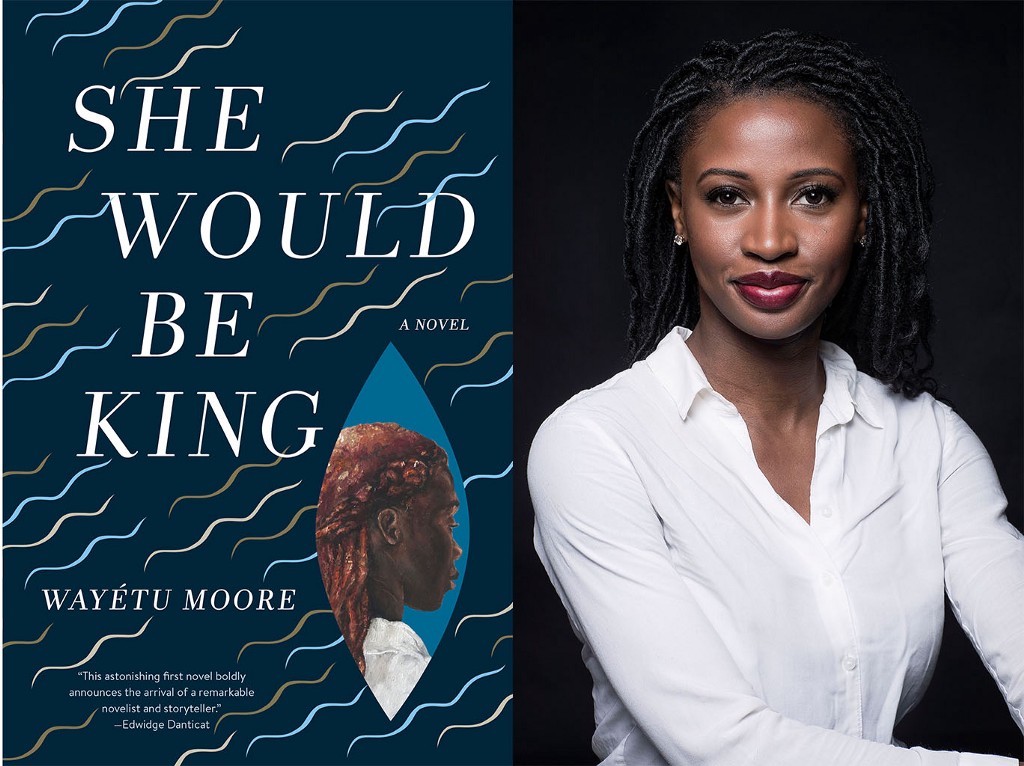
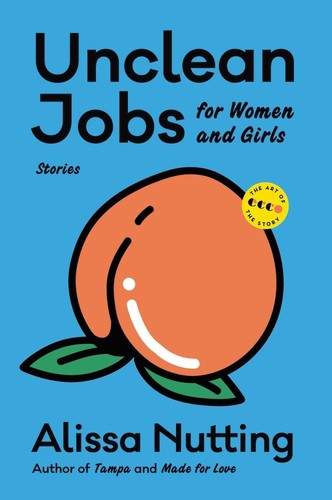
The title of Wayétu Moore’s debut She Would Be King (Graywolf Press) alone incites some expectations. Expectations Moore delivers in this fantastical, historical tale weaving in the realities, both then and now, and the power dynamics of how societies are salvaged and how they fall. What struck me about She Would Be King, from the cover to the premise and ultimately the execution, is that it’s a novel that provokes a necessary conversation while at the same time being relatable to me as a Black woman invested in our history as well as our failings.
Moore and I had a lively conversation on so many of the parallels lushly illustrated and carefully balanced in her debut novel—from the moment we are introduced to Gbessa’s ability after a perilous snakebite to the battles in Monrovia. Even within a historical context of this world, be it in Liberia or Virginia in the 1800s, everything affecting us today is as a result of and indicative of what has transpired as nations were colonized, communities were brutalized, and women, repeatedly, upheld roles as life givers and caregivers. The inclusion of these ties may not have been intentional in She Would Be King, yet there’s no way it could be overlooked.
Jennifer Baker: Because yours is a historical novel there are certain rules to it. So, how do you create characters in this world while balancing a fantastical premise and at the same balancing the rules?
Wayétu Moore: Liberian history is so closely linked to American history and it’s something I knew I wanted to explore. I think being a Black woman in America and having emigrated as a young girl there are some things that have happened to me over the course of my life and things that are said to me even now — things that are done that do sometimes feel surreal — and I feel like some other marginalized groups could possibly relate to that. But I know that for me my experience here, navigating the world in my body, there is a recognition that “Hey, this isn’t how things are supposed to be.” It almost feels as though I live in another reality. At times Black womanhood feels fantastic. [It] feels like you’re living this other world that isn’t based in reality because you are having to juggle so much. You are having to negotiate so much just to survive.
And so, I think that then when I choose to navigate and negotiate that reality on the page then sure it’s going to have fantastic elements. In addition to that I would say being from a West African background, specifically Vai, it was very rare that I heard a story that didn’t include someone flying or shapeshifting or disappearing. That was just a part of what I understood as the architecture of the story. So when I decided that I wanted to become a writer, magical realism or fantasy was something I naturally was drawn to because that was my introduction to storytelling.
Being from a West African background, it was very rare that I heard a story that didn’t include someone flying or shapeshifting or disappearing. That was just a part of what I understood as the architecture of the story.
JB: You bring a character like Gbessa onto the scene and she is one of several, but she really is that tether from beginning to end. And the book is called She Would Be King, so I was thinking “Gbessa’s gonna be running stuff by the end of this.” But that’s not necessarily what takes place.
WM: The title serves as commentary of that strange relationship to a woman’s power and how it functions in male dominated/male-centric context. She wrestles with her power throughout the book. And that’s not so different from a woman now. Even in the most progressive societies women who are considered all-powerful are still wrestling with their power in a patriarchal, male-dominated context. So yes, it would be wonderful where a woman is omnipotent and she is the one who is sort of dominating throughout the book, but the reality of the world we live and certainly the reality of the world that Gbessa lived in was she would have to navigate in the context she was born in and the circumstances that she was born in. So she wrestles with this throughout the book and she always has what it takes to save herself. But she’s in constant negotiation with her power because of the presence and the absence of the men around her.
JB: Mothers are so key in this book. That’s something I think about a lot of in my own work: the influence of Black women, of mothers. Women’s roles and strength and agency and the power dynamics are given prominence in She Would Be King. Let’s discuss how that’s utilized even through the relationships with men and a world dictated by men. Those bonds are so important.
WM: I wanted to be true to the theme of Black womanhood. So I knew I wanted each of the gifts to be intentionally in conversation with motherhood. I wanted the characters, specifically the male characters, to always be in conversation with Black womanhood as a source for their gift. With June Dey, for instance, his birth mother ends up playing the role as the Mother for the entire story. She’s really all of their mothers. Charlotte, her ubiquity pays homage to Black female identity: she’s both everywhere and nowhere at all. I wanted the story to be told through the voice of an ancestor and I knew that I wanted that ancestor to be a woman that I could relate to, and someone who Gbessa could relate to. And someone who could show that there is empathy in the coupled asymmetry and splendor that is being a Black woman in today’s world. I feel like the “She” [in the title] is not exclusively Gbessa it is more the women who forged the women who are telling the story that is very much a story about Black womanhood. So that’s why even for the male characters I wanted their source to be Black women, a mother, and I wanted those mothers to somehow live on throughout the story.
I wanted the characters, specifically the male characters, to always be in conversation with Black womanhood as a source for their gift.
JB: Which is also at the helm of the patriarchy.
WM: Yes, so the “She” is technically Gbessa, but one of the reasons I said, “Oh, you’re my reader” in talking about mothers and Black womanhood is that it’s exactly right. This is what this book is about.
JB: Yes, because I was thinking, “Wow, [the women] are doing all the work here.” This was the ongoing sacrifice that these characters make. And when they are absent it is felt quite heavily, but most especially by Norman and June Dey. This is not to say female relationships aren’t important to Gbessa as well because they are so key in her being acclimated in the new society.
WM: That’s exactly right.
JB: Do you think that this was naturally inherent in the work?
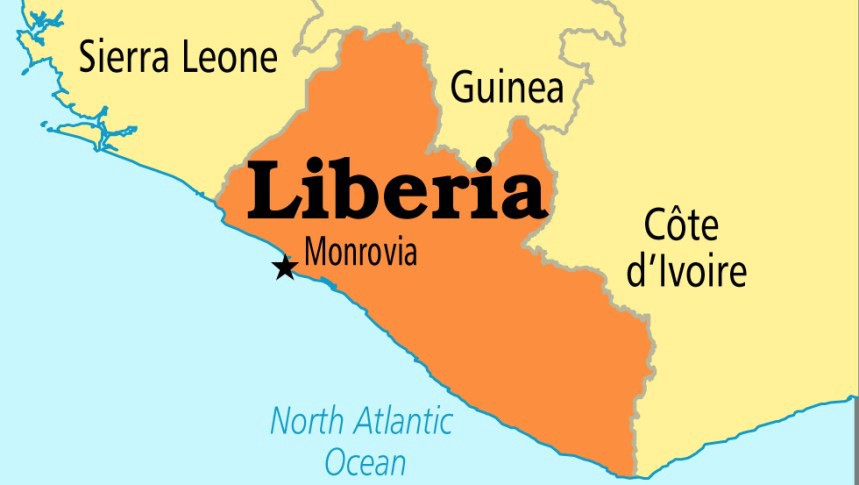
(Liberia highlighted on a map at the edge of Western Africa)
WM: Honestly I can’t say that those parallels were intentional. I knew I wanted to write about Liberian history and I think what it became as I wrote is a story that explored the breakthrough of Black womanhood. It was a story that was very much about the role women play in the salvation of their people. Norman Aragon and June Dey were vehicles for that. But I can’t say that I sat down had an internal dialogue “Oh I definitely want this person’s power to be this and that person’s power to be that.”
JB: I’ve been talking to a lot of people about masks. What we present versus who we are. Or what we present versus what we think we’re supposed to be doing. And each of them — Gbessa, Norman, June Dey — are trying to weave their way within their society. Norman’s trying to be accepted but he is very light-skinned, so he represents the oppressor. June Dey doesn’t even know the truth of his upbringing, he comes from an othered parenting. And then Gbessa, from the get-go she’s dubbed a “witch.” Each of them does not only have abilities, it’s the circumstances of their having to negotiate being in a society where they don’t really belong even when they technically do.
WM: I think that was more of a decision that speaks to my understanding the psychology of who I would consider “good superheroes.” It has to be married to some idea of isolation or early trauma in order for them to be incentivized to use their powers to help. Because I feel like if they didn’t have early traumas or issues with isolation then they very well could have used their powers for other means. And that’s more or less a choice I made based on my understanding of how human beings work and how the human spirit works sometimes. You generally find people who went through more when they were younger end up looking at the world from a more gracious, more compassionate lens. Some of the traumas that you read for each of the characters were intentional in building their characters for what they became later on in the book, and building their desires for their country. To want to build a country and protect people because they themselves had not really experienced this. So wanting to belong was something all of them shared.
JB: And maybe they would’ve lacked some empathy as well.
JB: Maybe. I don’t know. It makes me think, again, there are so many layers to this book, which is why I enjoyed reading it and I sped through it, which I think writers hate hearing.
WM: I read that as perhaps you enjoyed what you were reading and I do like the fact that the book is accessible in that way. There are obviously many characters and many storylines, but the goal was not to write something that was hard to read. I might’ve felt some kind of way if [people said] “Oh my gosh, this is kind of hard.” I say that to say I don’t take that personally at all.
JB: So, when submitting a book like this where people not of this background will read it, how has reception been? You know how some don’t want to talk about what goes on “in the house” with other people. They may feel like “I don’t want anyone to know that there’s intraracial strife, we don’t want people to know that there are intraracial dynamics like this.” And I think, well we need to talk about it.
WM: There’s this trope of marketing anything that’s Liberian that is focused on the question of how former slaves and free blacks from America could then become to the ones who were in Africa treating the blacks there poorly. I had some back and forth after initially writing the book, and I was like “No, this is not what the story is about.” It’s sort of like that’s where people want to go and, unfortunately, I think it alleviates some guilt. “Well okay they went back to the continent and they did the same thing then we’re not that bad.” But when they went back they obviously weren’t doing the same thing. In one of the historical texts that I read, for instance, say one person is Americo-Liberian and another is Indigenous. The Americo-Liberian was paid 50 cents a day and the indigenous was being paid 25. There was a system of social stratification that was established, but I think the dynamic between local groups and Americo-Liberian settlers is greatly exaggerated. To even to compare the two is an indignity and it’s really gross. I was very adamant about staying away from that storyline as a selling point. And in this case it wasn’t about keeping things “in the house.” It’s about making sure that a place with so little representation in literature isn’t misrepresented.
I think that when people of color, distinctly Black people, come together and there is an identifiable enemy that’s encroaching upon their freedom they will unify.
I think that when people of color, distinctly Black people, come together and there is an identifiable enemy that’s encroaching upon their freedom they will unify. And that was I think the larger story that I am trying to tell. Yes, we’re still trying to make sense of the dynamics of this new republic, but right now we know that our freedom to make sense of it is being encroached upon. We want to have the freedom to figure out our history for ourselves. That’s what Black liberation is: not Black perfection, but we want the freedom to figure stuff out for ourselves. And when that was threatened we see that the characters in the story from these different cultures do eventually come together. It is a pan-Africanist manifesto. I haven’t told the whole story. I think I’m just beginning to unpack the nuances of intraracial dynamics. And I’m excited about where this is going to go.
The writerly affinity for cats is well-documented. Hemingway was a famous collector of cats, as was Mark Twain. Raymond Chandler, Yeats, Dickens, Burroughs — the list of cat lovers goes on and on. I suppose this is because we writers see something of ourselves in cats. The cat is introverted, solitary, intelligent, carefully withholding, as any good writer should be. Dogs, on the other hand, are unwriterly. They are neither clever nor sly. They are rough and dirty. They withhold nothing. As Karl Ove Knausgaard wondered recently in The New Yorker, “Has a single good writer ever owned a dog?” He goes on to describe his own failed attempt at dog ownership, saying that his own mutt was “infinitely kind but infinitely stupid,” needy, solipsistic, and that he didn’t write a single line of literary prose in the time the dog was in his possession.
In other words, it seems to Knausgaard that dogs are simply too intrusive for writers who need solitude and quiet. Indeed, it’s hard to imagine, say, Virginia Woolf allowing a big whiny drooler to bark and scratch at the door of that room of her own. Knausgaard’s distaste for dogs is part and parcel of a literary assumption that has prevailed ever since Cicero posited in the first century BC that all one needed to write was a library and a garden: writers must avoid the distractions of public life to write good literature. And what are dogs, if not distraction?
Writers must avoid the distractions of public life to write good literature. And what are dogs, if not distraction?
But perhaps dogs are just the thing we writers need, at least those of us who complain that we struggle with plot. I live with an English bulldog and a pit bull, both of whom are walking, drooling plot machines. They shit on the floor, they bark at the mailman, they fight each other for food and toys, they run into the street — it’s a miracle they even survive, given their proclivity to put themselves in danger at the slightest provocation. But they don’t just survive, for they are intensely desirous. They are hungry for touch, for freedom, for squeaky balls, for meat. They want so much. And with all that wanting, it’s no surprise that these barking, slobbering, desperate creatures produce conflict at least as well as they produce shit.
So how can dogs help us produce conflict? How can we writers think like dogs? At the heart of this inquiry is the question I’ve been trying to answer for as long as I’ve been trying to be a writer, and it has to do with plot. How does one stop writing descriptions or journal entries and start writing narrative, a bonafide story, with real people doing real things? Put simply: How can I make shit happen on the page?
Right now, in the coffee shop where I am writing, there is a flyer for a lost dog:
I’M LOST !!! HAVE YOU SEEN ME? I’M TUCKER.
I didn’t want a bath, so I ran away without my collar near 26th and Grant. I’m all white, fluffy, and about 20 lbs. My daddy is very worried about me. Please call him. Steve at 541–216–0917
This flyer, which I chanced upon while walking to the bathroom, contains one of the most evocative sentences I’ve read all year. “I didn’t want a bath, so I ran away without my collar near 26th and Grant.” I’m transported to a backyard, because where else could this intended bath take place that would allow the rascal Tucker to escape? In my head, it’s one of those strangely charged moments, a Friday afternoon perhaps, getting ready for a dinner party, squeezing in a last minute chore while the wife hollers her impatience out the window. You’re due at 6:30 and it’s already nearly six. We’re going to be late, she says, and you still have to shave. These are new friends you’re seeing tonight, evidently, because she is worried enough about impressing them that you must present a clean face. You sense the ridiculousness in this, this need to make people like her. It’s one of the things you’ve always resented about your wife, but you’ve somehow never told her this. Through four and a half years of marriage, you’ve kept quiet, let her go about this business of acting out her insecurities in public, never once broaching the subject of this enormous flaw in her personality. You suppose you want to support her gregariousness, but the truth is that sometimes she belittles you in front of these new friends. You’re mulling all this over when you see Tucker going over the fence. You weren’t aware that Tucker could leap like this, over an eight-foot fence. In fact, his leaping seems supernatural. There’s no possible way that Tucker can make that jump. However, the first thought that goes through your head is not whether you are hallucinating, or that you should go after Tucker, but rather how you will explain this supernatural phenomenon to your wife, who will surely not believe you. She has, of course, intuited that you have no desire to go to this dinner party at 6:30, and she will only see Tucker’s disappearance as a product of your unwillingness to help her present her best self to her new friends. This prompts you to wonder: What exactly is her “best self”? And why do these other people get it instead of you?
Or perhaps that’s not what happens at all. Maybe you’re giving Tucker the bath inside, in the tub. Maybe you’re not Steve, the beleaguered husband with the superhero dog, but Stevie, a newly single woman, new to this town. Tucker jumps out of the bathwater and runs out of the house through the front door. You’ve left the front door open for some reason. But what reason could that be? Why the hell would anyone leave the front door open? You close and lock the door and make to call the one neighbor you’ve met since you’ve been living here, an old woman named Grace who lives next door, whose begonias were the subject of your only conversation earlier that week. You found her polite, if a little uninviting. No, that’s just how people talk, isn’t it? You were probably just being sensitive. You’re going for the phone, going to ask Grace to help you look for Tucker. And that’s when you hear a strange noise in the kitchen, followed by a familiar voice behind you, and the chilling effect this voice produces in you precedes your cognition that he has followed you here, has found you all the way out here in this little town. You regret locking that door.
Here I’ve tried to reproduce the way I think when my writing is working best. There’s an inciting moment (seeing a flyer for a lost dog), a question (how did Tucker escape?) and finally an image created to fill the hole in my knowledge. But that new image produces another question. This time the question has nothing to do with the missing dog; rather, it’s about something I myself have created (in this case, the marriage between the imagined Steve and his supposed wife). So then I answer that question. This answer poses another question, and the process repeats itself.
At each step, there’s a question with infinite possible answers, but I have to commit to only one of the myriad possibilities and follow it with the dogged certainty that the outcome will be a good one. As I answer each new question, I commit to a new reality. This commitment is essential. Without this commitment, nothing happens. Without a commitment, I will weigh potential courses of action, dabbling with each, never making a real choice. I mean a real choice. There is no going back from a real choice, there is only forward, and the way forward is instinctual.
But don’t forget how this all started: I was in a coffee shop, trying to live seriously — with goals and plans and a sense of importance, trying to live my life in the image of what I consider good and cool and honest and aesthetically appealing — when a flyer caught my eye and my mind wandered far away from all that. The loose dog was a distraction that got the better of me.
If you’re like me, then you think you should resist loose dogs. You are a busy person. You have too much on your plate already. The truth is that I am afraid of loose dogs. I don’t trust myself to follow them because I’m afraid of straying from the path I’ve already decided to take. I’m already bad at accomplishing goals, so why should I follow any thought that takes me further away from what I think I should be doing?
The truth is that I am afraid of loose dogs. I don’t trust myself to follow them because I’m afraid of straying from the path I’ve already decided to take.
There’s a pattern to this fear. This pattern manifests in my thinking, in my daily life, in my dreams, the ones in which I am trying desperately to get somewhere and obstacles keep appearing — the driver of the car keeps making stops, the party is not at the address I was given, the sex keeps getting interrupted by someone knocking at the door. The pattern is one of being infinitely waylaid. And it is this pattern — the total derailment of a set course — that characterizes real life as I know it.
Even in this essay, it has happened. I started out talking about cats, and now here I am confessing my fears and discussing my dreams. On the way from there to here, I have made hundreds of choices, choosing one route from an infinite set of possibilities. I regret this as much as I celebrate it. It seems unfair that we only get to live one path, to write one narrative, out of all the millions that could have been. Even worse, it seems irresponsible to make so many choices in such a short amount of time without considering carefully the weight of each one.
This is the wonderful irony of the loose dog. When you follow the dog, when you don’t resist it, when you embrace it, the loose dog becomes the thing that makes you lose grip on everything else. It forces you to throw away everything you’ve set your mind on and welcome the ambiguous, the absurd, the inane, the unknown. This is exactly what a writer needs. We need to explore the unknown if we are to justify this act of scribbling. We need to have journeys on the page. We need to put ourselves in danger. We need to run into the street, risking death in pursuit of the loose dog, becoming a loose dog ourselves in the process. The loose dog is the thing that shakes you out of your somnolence and forces you to reckon with your true self. It makes you question everything that you take to be real in this world by sending you to another world entirely.
We need to put ourselves in danger. We need to run into the street, risking death in pursuit of the loose dog, becoming a loose dog ourselves in the process.
The loose dog doesn’t have to be an actual dog, of course. (In fact, it probably shouldn’t be. The annals of storytelling are already littered with great dogs.) Instead, Tucker who runs away from the bath can in fact be a llama, a painting, an island of sirens, a stolen car, an iPhone, a rake, an old friend — no, a brother — who shows up at your front door asking for money. The dog is only a metaphor, though you could also call it a white rabbit or a wild goose: annoyances that appear unwanted in your life without your choosing, forcing you to make decisions.
Loose dogs come in all shapes and feelings, but one thing that all loose dogs have in common is that you must follow them. You can’t banish them from the room like Knausgaard or my imagined Virginia Woolf—who, as it turns out, did have a dog, a cocker spaniel named Pinka. In fact, Woolf was an adamant defender of dogs and even wrote an entire biography of the life of Elizabeth Barrett Browning’s beloved dog, Flush. Anyway, it doesn’t matter. What matters is following the dog. That’s what I have to remind myself. When I find myself thinking that life is boring, that there is nothing worth producing on the page, that I cannot tell a story, I have to remember that there’s a loose dog somewhere nearby and an adventure awaiting me, if only I let myself follow it.
Writer and podcaster Joseph Fink’s universe is a bustling one. Like the characters and themes in the beloved Welcome to Night Vale podcast, Fink’s many creative endeavors swirl about him like so many planets with complementary orbits. Along with Jeffrey Cranor, Fink co-created the eerie, playful sci-fi narrative Night Vale as well as novels that expand on its mythos (Welcome to Night Vale, It Devours!); he produced a meditative nonfiction podcast with musician John Darnielle (I Only Listen to the Mountain Goats); and he wrote the gothic mystery Alice Isn’t Dead, a podcast whose associated novel will be released in October.
Regardless of his medium or underlying message, however, Fink always endows his work with an easy, tongue-in-cheek sense of humor. We asked Fink about the nature of comedy in his fiction in advance of his appearance at the new hybrid literature and improv series LitProv at Symphony Space.
Joseph Fink appears at the launch of LitProv alongside Melissa Broder and comedians Dave Hill and Dulcé Sloan at Symphony Space in Manhattan on September 13.
Matthew Love: In the broadest terms, when you’re reading a piece of fiction, what is the value of humor for you?
Joseph Fink: Humor is an integral part of human life, so a work that is entirely humorless often feels inhuman. Even in our darkest moments, there is humor, and to represent it otherwise makes the story ring false. There are always exceptions to every rule, of course.
ML: Humor is certainly a component of Night Vale, as well as your novels, but how essential do you find it?
JF: In my own work? I suppose it’s part of my voice, and I don’t spend a lot of time anymore thinking about my voice. There was a time in which I was actively trying to find it and build it, but now I just sit down and write, and trust that what comes out sounds like me. That usually includes some jokes.
ML: How different should comedy feel in a script versus in prose, as when you’re working on the Alice Isn’t Dead podcast and then the book? How much do you think about the difference between the two when you write?
JF: I approach all writing based on what medium I am writing toward. A script for a podcast and a novel are written entirely differently. A podcast is written to be listened to, obviously, and so the sound of the words is much more important. It’s also being written for a performer, and so as a writer you think about giving the performer gifts, little moments they can work with and make their own. With a novel, you are thinking about a visual rhythm and have a much more direct connection with the reader, but this connection is also quiet and inward-looking. It’s more difficult to make someone laugh in print.
Even in our darkest moments, there is humor, and to represent it otherwise makes the story ring false.
ML: How possible is it to be simultaneously humorless and artful? Any favorite work that eschews laughter and still achieves greatness?
JF: Well, as I said above, it creates a feeling of artificiality when humans are entirely humorless. However, artificiality is not necessarily bad. There can be a solemnity to humorlessness, a feeling of a kind of religious ceremony. One work that I can think of that has little to no humor is It Follows, one of my favorite movies. It uses the quiet and the lack of humor to build a feeling of marching towards an ending that is horrible and unavoidable. The lack of human warmth is used to the advantage of the mood it is creating.
ML: There are recurring characters or conceits in comic storytelling, such as the hyper-articulate, precocious child or the personification of deities or animals. Are there any comic ideas that will always be funny to you?
JF: A cat attempting to jump somewhere and instead falling to the ground clumsily will always be funny.
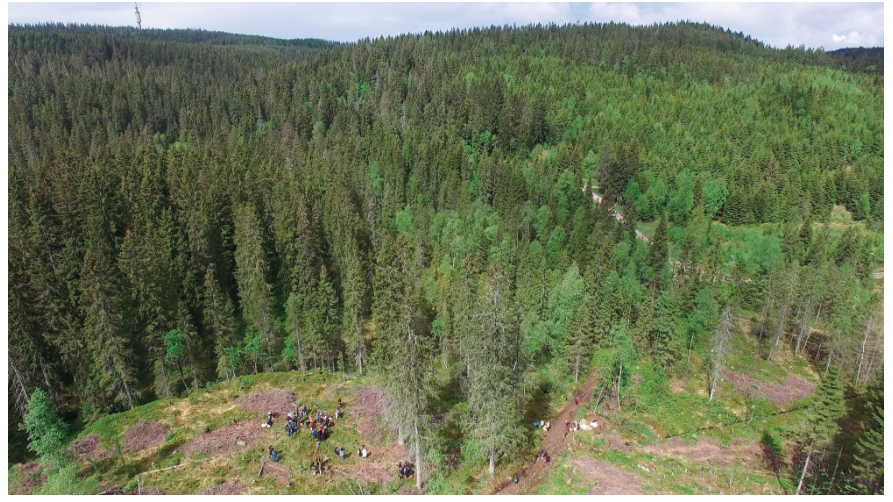
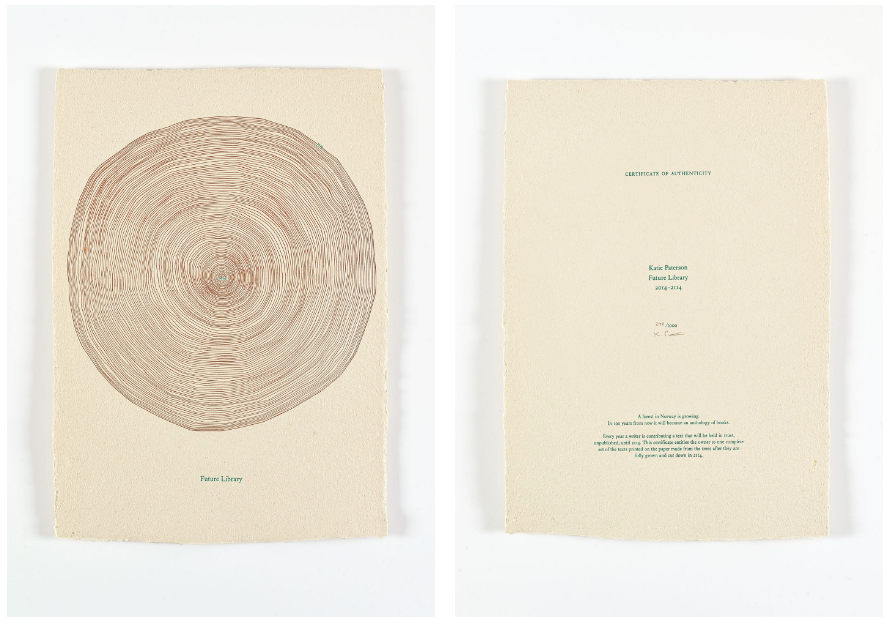
Once upon a time in 2014, the Scottish artist Katie Paterson started the Future Library, a 100-year-long art installation that requires two things: a brand new forest and 100 writers. Paterson cleared a plot of forestland outside of Oslo and planted some trees which will grow over the next 100 years. Every year until then, the Future Library invites one author to write a wholly original manuscript to submit for the Future Library, which the library will hold in trust, unpublished, until 2114. In 2114 the trees will be cut down to print the pages of the collected manuscripts. By that time, Paterson imagines the trees will be infused with “all of the ideas of the writers growing through the roots over the years” (although not literally), and the rings of the trees will be like chapters of the books.
The site of the Future Library
Most recently, as reported by The Guardian, the Future Library has selected South Korean author and Man Booker winner Han Kang to submit her work to the project. The other writers chosen for the real-life fairytale adventure so far include Margaret Atwood (manuscript titled “Scribbler’s Moon”), David Mitchell (manuscript titled “From Me Flows What You Call Time”), Sjón (manuscript titled “As My Brow Brushes on the Tunic of Angels or The Drop Tower, The Roller Coaster, the Whirling Cups and other Instruments of Worship from the Post-Industrial Age”) and Elif Shafak (manuscript titled “The Last Taboo”). The writers are chosen by “a panel of experts” and can write fiction, poetry, nonfiction — really, whatever they want their audience to read in 100 years. Who will be chosen in the next ten years? Twenty-five years? Seventy-five years? Could the Future Library become a future Canon of Master Works of Literature?
Katie Paterson, Future Library
Only time will tell. Until 2114, the manuscripts will be held in the “Silent Room” — a room designed by polyglot Paterson herself in the new Oslo Library, which will open in 2019. The Silent Room will be open to the public (though the manuscripts obviously won’t be), and will only be big enough for two or three people at a time. It will also face the Future Library forest. In an extra flourish of eco-consciousness, Patterson and her team will be using the wood from the trees they cleared for planting the Future Library forest to construct the Silent Room. <cue “Circle of Life”>
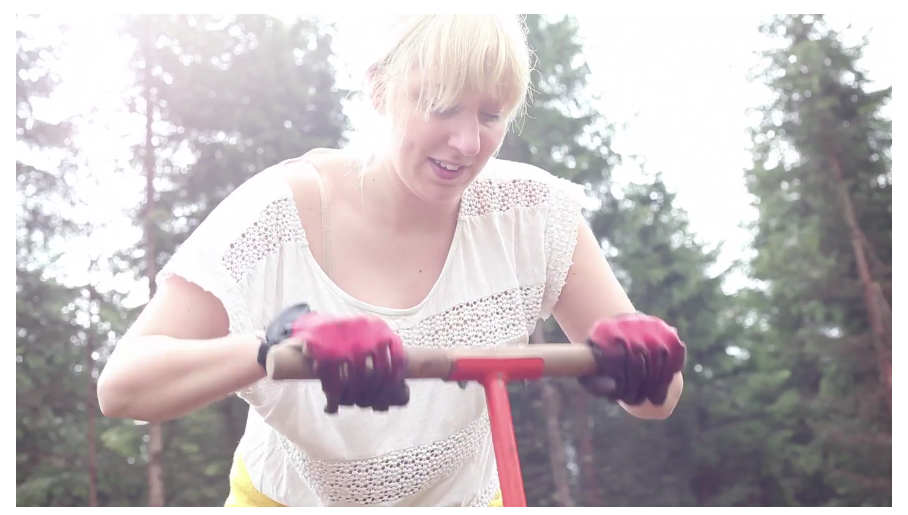
The project relies on at least two generations of readers, writers, and artists. On Paterson’s website, there’s a very Kinfolk-friendly video detailing the project. One contributor says the project has a lot in common with forestry and city planning: “We are making decisions today that are extremely important for generations to come. Not for us only, but the next generations.” In the video, there are are beautiful pans to the fog-saturated evergreen landscape, shots of men and women with mud-caked shovels cradling tiny, skeletal trees that make their shaky descent into the ground. It’s an art installation that brims with hope for the earth that will survive us, and the publishing industry we can pass down, to carry on without us.
Katie Paterson, still from video on the Future Library
The writers are invited to come to the Future Library Forest to muse on the hallowed ground that will feed their unpublished work. Margaret Atwood mused, “How strange it is to think of my own voice — silent by then for a long time — suddenly being awakened, after a hundred years,” and David Mitchell called the project a “vote of confidence” that “the future will still be a brightish place willing and able to complete an artistic endeavor begun by long-dead people a century ago.”
It’s nice to imagine an anti-Fahrenheit 451 future: a future that actually exists, a future that includes people, trees, and dare I say, books. Han Kang, as the newest contributor, has issued a kind of blessing on the project: “I would like to pray for the fates of humans and books. May they survive and embrace each other, in and after 100 years, even though they couldn’t reach eternity.” Is ever-after close to eternity? I’m going to say yes, let’s shoot for ever-after, and imagine a world 100 years from now where we’ve collected a diverse cohort of authors that will inflect the next 100 years of art, literature, and ecological preservation with hope, wisdom, and wit.
No one foresaw that Ahmed Naji would be imprisoned for his novel. After all, no author had ever been subjected to arrest for morality reasons in modern Egypt, and as Naji himself says in this interview: “My writings are not political.”
The novel in question, Using Life (illustrated by Ayman Al Zorkany and translated from Arabic by Benjamin Koerber), reads like a colorful account of someone having a lovers’ spat with the city in which he’s lived all his life. That is to say, the book is full of intimate familiarity, occasional tender scorn, and a fervent curiosity toward city and man’s entwined fates that is also somehow coolly detached.
Opening in near-future, post-apocalyptic Cairo, Using Life combines graphic novel elements and quirky characters to produce a portrait of a man making the best of life in a city on the verge of disaster. It is a rollicking read, at times zooming into dizzying detail (for example, a section illustrating Cairo’s various inhabitants), other times hurtling into madcap, breakneck action (secret societies! Ninja assassins!). Above all, the book is a bold depiction of a person pushing against the boundaries of their given life.
The novel passed the inspection of Egypt’s censorship board and was lauded by critics in Egypt and the wider Arab world. Then the unexpected began. In 2015, a private citizen lodged a complaint against Naji after an excerpt from Using Life was printed in Egyptian magazine Akhbar al-Adab. The private citizen, a lawyer, claimed that he suffered heart palpitations and a drop in blood pressure after reading passages from the excerpt describing cunnilingus. State prosecutors then took these claims seriously, and as a result Naji was sentenced to jail on charges that he “violated public modesty”.
As mentioned, his ordeal is extraordinary, marking the first time in modern Egypt that a writer has been incarcerated for their fiction. Zadie Smith puts it this way: “Naji’s prose explicitly confronts what happens when one’s fundamentally unserious, oversexed youth dovetails with an authoritarian regime that is in the process of tearing itself apart.” While imprisoned, Naji was granted the PEN/Barbey Freedom to Write award, which was accepted on his behalf by his brother.
In 2016, Naji was released from jail but subjected to a travel ban. In May of this year the ban was finally lifted, and Naji was able to leave Egypt. I caught up with him and translator Benjamin Koerber over email shortly after Ahmed Naji’s arrival in America.
YZ Chin: Glad to hear about the travel ban being lifted! How does that change things for you as a writer, if it does change anything?
Ahmed Naji: I’ve finally been able to travel and leave Egypt. I’ve now moved to the United States, where my wife lives, after we’d spent a full year separated from each other by the ocean and passport inspection officers.
I spent the two years after my release from prison in Cairo, and they were some of the most difficult years for me as a writer. First of all, I was under strict surveillance, and I was not allowed to organize any events or cultural activities. We failed to get official approval for the book launch event for my short story collection, which was published after I got out of prison. Only the Goethe-Institut, which is connected to the German Embassy in Cairo, offered to host the event.
Following the advice of my lawyers, I decided to keep away from publishing until the case was over. For the first time in my life, I felt the real weight of censorship. Even worse, I didn’t know what the red lines were. One time, I published an article on the band Mashrou’ Leila. Lo and behold I get a call from a friend who’s close to the security services, chastising me for the article and telling me they considered it a provocation since Mashrou’ Leila supports the Arab queer community, and that this sort of behavior could negatively impact my case and travel ban. Leaving Egypt now allows me to finally breathe and think freely, to test out my ideas, and reexamine everything that’s happened. I’ll finally be able to enjoy the company of my wife and the friends I have here.
But it also raises complicated questions for me: Is this to be a temporary, or permanent, departure? Am I to become a writer in exile? What does exile mean, now? If I stay here for a longer period, what will I do? What will I write about? Will I keep writing for an Egyptian audience, while living in America? Or will I assimilate to the new society and culture, change to writing in English, find a new ethnic or religious identity to subscribe to, and thus turn into one of those writers that talks about “Islam”, “the oppression of women in the Orient”, “the Arabs”, “terrorism”, and other such topics that captivate American audiences? For now, I’m trying not to think about all that, but I know I’ll have to face those questions soon.
For the artist to protect himself from confrontation with the institutions of power and all their violence, he has the three options that James Joyce prescribed for the writer: “lying, exile, silence.”
YZC: I’m very happy to hear that you are reunited with your wife. Sounds like you’re understandably at a difficult crossroads writing-wise. I get the reluctance to become a mouthpiece that caters to American appetite or biases. Are you concerned America will change you or pressure you in ways beyond that pigeonholing?
AN: I’m always ready for change. So far, I’m optimistic and open-minded about this American journey. My first concern is to learn — to understand this country, to take it all in and figure out its rhythm — and through this I’m sure I’ll find the right place for me. I’m lucky because I have a large number of friends here who are writers or work in the cultural or political fields. They’re providing me with support, and the keys to understand the nature of the scene here.
YZC: Do you think there’s also a risk of being pigeonholed as “the writer who went to prison?” As opposed to, say, “the writer who writes about finding joy in a depressing city and the fearsomeness of killer ninjas.” What would you like to be known for as a writer?
AN: I hope to be known as the writer with a thousand faces. I’d be very receptive to any of these labels or classifications. The writer’s challenge, in my opinion, is his ability to open up to the world, to change, to embark on new adventures, and to create new works. The writer that went to prison, the writer who writes about a depressing city called Cairo, is the same writer that might tomorrow write about intrigue and power play in Washington, D.C. Or he might write about a girl’s education in America. Anything is possible. My appetite’s ready for all trials and experiences.
Two days ago, I was talking to Yasmine [Naji’s wife] about something, and said, “As exiles, we don’t have the luxury of holding on to a lot of memories.” The thought terrified her. It hadn’t really set in yet. “Oh my god, we really are exiles,” she said. I tried to lighten the both of us up by focusing on the few real benefits of exile, like the unbearable lightness of being, and the freedom to remake one’s self and one’s image. Exile provides the opportunity for a new beginning, and there’s nothing more thrilling for me than new beginnings.
Exile provides the opportunity for a new beginning, and there’s nothing more thrilling for me than new beginnings.
YZC: As a writer who grew up in an atmosphere of state censorship, I struggled for a long time with self-censorship. Have you had any previous run-ins with the Egyptian censorship board? How do you grapple with the possibility of censorship when you write?
AN: I think a big part of writing is struggling with, and figuring one’s way around, the many forms of censorship that exist. The political censorship exerted by the state is a concern of course, but I never confronted it before the trial. My writings are not political and I was not interested in clashing directly with the state; I hadn’t thought that sex worried them very much. The greater pressure, the form of censorship that I feel impacts the writer more, is the censorship of society and the family. This form of censorship burrows under your skin, without you ever feeling it. It sometimes becomes impossible to confront or to expose, like the censorship that imposes itself under the name of political correctness.
YZC: That rings true for me, the existence of censorship that never gets registered. So you’re saying there needs to be constant self-exploration to understand the pressures that are placed on us. In that case, I’m curious if you think it’s possible to deliberately cultivate our influences as a countermeasure, like garlic against vampires? If so, what is or would be your garlic?
AN: In such circumstances, the garlic can be prepared a number of different ways.
1 — Listening closely to one’s own personal desires and pleasures, however forbidden or prohibited they might be, however useless they might be to society or the “wheel of production”. No impulse should be suppressed, nor should you run after it like a teenager. You just need to listen to it, then take your time polishing it, until the desire turns into a will.
2 — Don’t put too much trust in psychology or self-help doctrines. Do you really think all these books, programs, and talk shows want you to succeed? Do you really think that the secret of happiness can be sold with a holiday discount? Believe me: except for your mother, no one’s really concerned about your happiness and self-interest.
3 — Whatever you do, don’t let them catch you. In Egypt we have a nice little proverb that says, “Fuck the government but don’t show them your dick”.
4 — Always practice in front of the mirror first. A few days ago in D.C., there was a small demonstration of Neo-Nazis and white people. It was really quite small. Facing them was a counter-demonstration of mostly African Americans and anti-Nazis, which was huge. The Nazis, surrounded by police, were waving flags; they were vastly outnumbered by the counter-demonstrators. In spite of this fact, they were marching with full faith in the protection offered by the police. Their demonstration ended before it began, and they quietly left amidst the shouts of the counter-demonstration. The question I kept asking myself was, “What were they [the Nazis] thinking? Did they consider what happened a victory for them?”
YZC: There’s an interesting passage in Using Life where the character Ihab thinks about art: ‘Might not the “truth” of art conflict with its duty? That is to say, the duty art has to be functional?’ It certainly seems that to censors and some readers, art has a duty to uphold morals. What are your thoughts on the duty of art?
AN: Morality is not constant, it’s constantly changing. Otherwise, we’d still have the morality of the nineteenth century that held African Americans in the cotton fields and women in the kitchen. Permanence and stability are illusions. The world and human consciousness are in permanent motion, and the writer is part of this motion. The power of art lies in its ability to strip off the moral veil that society’s institutions impose under the pretext of stability or observing morality. When that happens, art performs its role vis-à-vis the individual by upsetting the ideas and convictions that one has been raised with. Art also performs its role vis-à-vis society in helping to change the prevailing morality.
Of course change doesn’t happen easily. The art that performs these roles puts itself in open confrontation with the institutions of power and all their violence. For the artist to protect himself, he has the three options that James Joyce prescribed for the writer: “lying, exile, silence”.
The power of art lies in its ability to strip off the moral veil that society’s institutions impose under the pretext of stability or observing morality.
YZC: When I saw David Bowie listed in your novel’s Acknowledgements page, I immediately thought it was very apt because Using Life is such a rollicking and at times surreal read. Best Bowie song?
YZC: Using Life flirts with fantasy and magical realism, and of course graphic novels. Do you see more possibilities and avenues for expression in blending genres? Will you continue working across genres?
AN: I hope so. One of the faces I’d like to be known by is that of fantasy writer. Comics for me are my eternal dream. I’m a big fan of comics. None of my current projects involve comics, but I have a file full of dozens of stories and ideas that are just waiting for the right artist to execute them. I have the ambition to write a massive graphic novel, which I hope to realize some day.
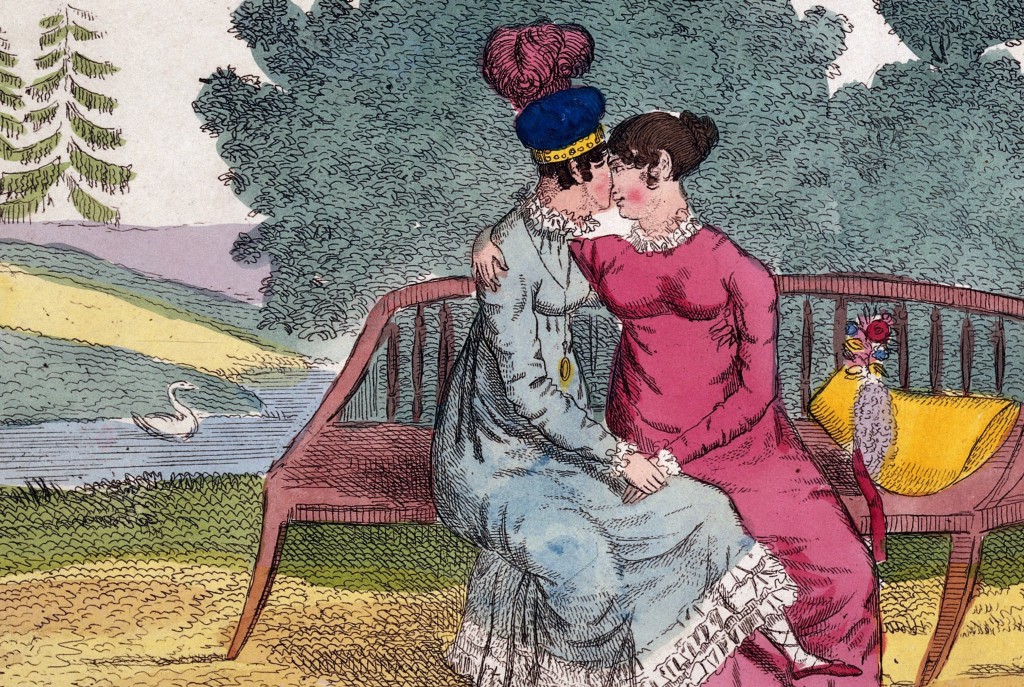
There has been a ton of fiction (and highly-readable nonfiction) coming out recently about the secret — or not-so-secret — romances of people in earlier eras. I’m not talking about illicit affairs and cheating spouses; these are stories of buried love that surpass even the clandestine meetings of Romeo and Juliet. Men in love, women in love, transgender people in love: all stories that are becoming more visible these days, but in their time would have been met with social shunning or worse.
It’s more than just the drama of the love stories that has led to the upswing in period LGBT+ romances. There is an element of historical reclaiming in these novels. Authors don’t need to make up brave, convention-shattering characters when so many incredible examples already exist scattered through the past. From the Elizabethan era to the Cold War, famous (and less-famous) figures who would have otherwise been erased are retroactively coming out of their closets for the sake of representation, present and past.
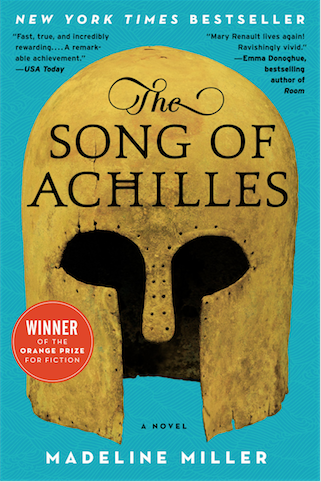
Achilles was a leader, a berserker, a mercurial idiot, and an enemy the Trojans were terrified of facing, but he was also a young man in love. Contrary to the title, The Song of Achilles is less a glorification of Achilles than it is a myth of the lesser known Patroclus — his best friend and lover — and the relationship between the two in the midst of a gruesome war. Miller traces from their childhood to the battlefield, and although we all know how that story ends, the romance shines the spotlight on the true tragedy of the Iliad.
Historians have long wondered whether there was more than just friendship between Herman Melville and Nathaniel Hawthorne. Though their correspondences did not last long, the letters that have been unearthed point to an intensity of feelings that culminate in the creation of Moby Dick. Though largely speculation, The Whale spins a novel out of the repeated and highly suggestive interactions between Melville and the older man who soon inspired him to write one of literature’s great classics.
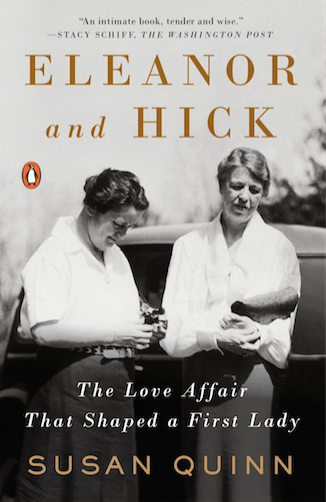
We are all sick of hearing about scandals in the White House by now, but this unexpected romance focuses on the First Lady for once, and her decades-long affair with reporter Lorena Hickok. Quinn wrote this nonfiction account with extensive research. Eleanor looked upon her position as First Lady with distaste, but it was that newfound role as a public figure that brought her into contact with Hickock. Both highly influential and powerhouses in 1930s activism, Eleanor and Hickock’s relationship was not one merely of love but of mutual ideology and political drive as well.
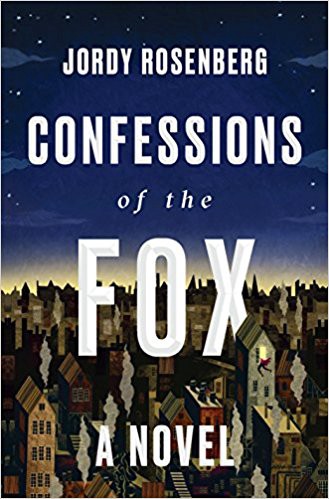
Confessions of the Fox is a fictional novel framed as an 18th-century manuscript. Dr. Voth comes upon a piece of writing from an infamous (real) 18th-century thief by the name of Jack Sheppard. The more Dr. Voth looks into the history of the thief’s exploits, the more queer subcultures of Victorian London rise to the surface. Jack Sheppard, in Rosenberg’s imagining, was not always “Jack.” Assigned female at birth, he first worked as the indentured servant to a carpenter, but with that life behind him and his partner in crime Bess by his side, he leaves behind a legend Dr. Voth can only hope to follow.
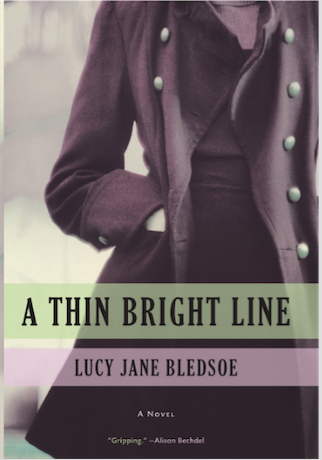
In this Cold War era novel, Bledsoe fictionalizes her aunt’s experiences as a scientist, writer, and lesbian in 1950s America. Recruited by the government for secretive research venture in the Arctic, Lucybelle hides behind a guise of widowhood. Revealing too much of herself and her preferences could prove disastrous, but isolation is a poor alternative. New love and hard earned reputation conflict as Lucybelle helps lay the groundwork for modern climate research throughout the novel. Bledsoe writes with more conjecture than fact, but her work pulls from the faint traces of her relative’s life to reconstruct an image of early LGBT+ America.
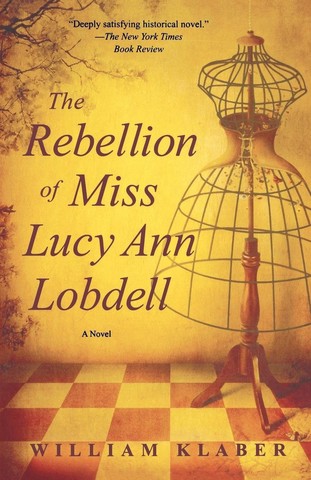
Lucy Ann/Joseph Lobdell is a figure familiar to academics interested in gender and queer studies. As a prominent writer assigned female at birth but living as a man with a wife in 19th-century New York, Lobdell tangled with issues of gender and identity before those concepts existed in common vocabulary. The novel starts at the beginning of Lobdell’s journey and continues on through her determination to attain the freedom men enjoy, her adoption of men’s garb, and her decisions that transformed Lucy into Joseph.
The collection of seventeen short stories by different authors gives a full range of perspectives on fairy tales. Finally breaking away from the strong man rescuing the damsel tropes we grew up hearing, these stories play around with familiar tales, dropping them in new times and places and defying expectations to make the dusty happily ever after endings fresh again. Not all of the shorts pull from well-known tales. Some try their hand at original historical fiction threaded through with the same smooth, lyrical quality that made childhood bedtime stories memorable.
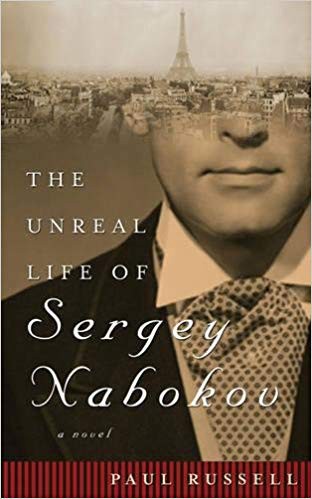
Vladimir Nabokov had a brother eleven months his junior who, in the years leading up to WWII, also left Russia in exile, but Sergey left for a very different reason. Trapped in the shadow of a genius brother and enamored with the arts, Sergey Nabokov made his way to Paris, the popular hotspot for artists and sexual diversity in the 1920s. There a parade of big names came and went leaving their cultural marks on the city and on Sergey himself. While he was never destined for the fame his brother enjoyed, Sergey represented a different Nabokov, unacknowledged but present all the same.
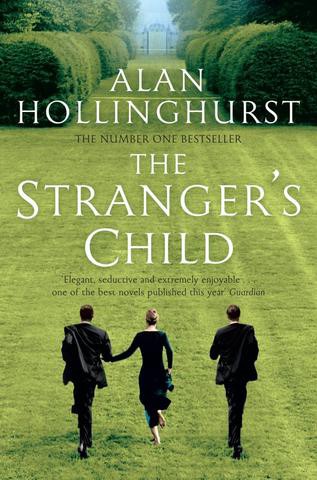
The Stranger’s Child addresses the reflective nature of history. It begins in 1913 when a charming house guest by the name of Cecil Valance romantically ensnares both his host George and his host’s sister. He then writes a thinly-veiled poem about his time at the estate. The novel jumps through time following this poem, which has become a national classic. Scholars squabble to reinvent Cecil and his poem in accordance with their views: gay, straight, a genius, or a hack. As the decades change, so too does the interpretation of history until the distorted past more or less resembles the present.
M y mother likes to point out every year that the reason autumn leaves smell so sweet is that they’re dying. In their final, florid throes, after they lose their chlorophyll but before they start to decay, leaves release chemicals that cause the warm and comforting scent of fall. I have not been able to verify this, but it seems correct for the season: we’re surrounded by death, marinating in it, breathing it in, but we like it. (Incidentally, when you try to check this factoid online you instead find many Quora and Reddit posts asking if there’s a single word for the smell of autumn leaves, and someone always suggests “petrichor,” a word that exists purely for nerds to say it’s a word they know. It does not mean the smell of autumn leaves, at all; the question just gives the type of people who like to say they know the word “petrichor” an excuse to say they know the word “petrichor.” What I’m saying is that there’s a gap in the “word that exists purely for nerds to say it’s a word they know” market. Get on it, linguists.)
It’s easy to feel surrounded by death lately, although it doesn’t smell so sweet. The specter of death from climate change or illegal abortion or medical debt or gun violence is never that far from our minds. So in a way it’s a relief to be coming into fall, a season of death but a colorful death, a fragrant one. It’s a good time to celebrate closeness to death, and to celebrate narrow escapes—not to forget the real dangers, but to maybe find some peace. (It’s also, not for nothing, the season of our Masquerade of the Red Death!)
For the new Novel Gazing, Electric Lit’s personal essay series about the way stories shape our lives, we’re asking: What’s a book that almost killed you? This could mean the book whose ideas landed you in physical danger, or the book that fell on your head and gave you a concussion (assuming that you can tell the latter story in a fully-realized way). If you had a run-in with the Necronomicon, if you risked your life mimicking the exploits of your favorite heroine, if you misunderstood a mycology manual, if you once vowed to eat every page of Moby-Dick and almost choked, now’s the time to tell your story. It’s okay if the “book” in question isn’t strictly a book—movies, TV, and other narrative media will do.
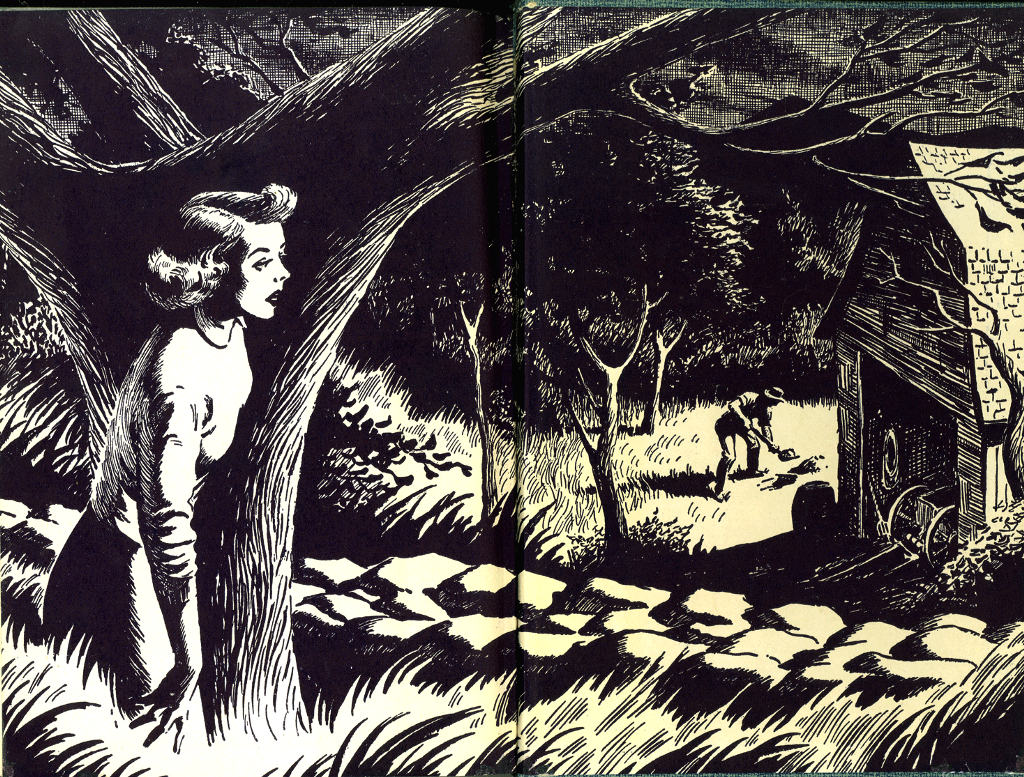
I named my first car, a mint green Toyota Prius, after my first role model, Nancy Drew. To me, it was the perfect homage: like Nancy, my car was pretty, capable, and ready for adventure.
Women of many generations could claim a similar love of the girl detective. Before Buffy slayed her first vampire, before Wonder Woman lassoed the truth out of bad guys, before Leia led the Rebel Alliance, sixteen-year-old Nancy Drew sped her blue roadster all over River Heights catching criminals, getting dirty, and inspiring young girls to step outside of gender expectations.
When the first books were released in 1930, Nancy was an instant hit; to date, more than 80 million copies of her adventures have sold. However, the Nancy we know today is not the same Nancy readers first fell in love with. Thirty years after Nancy solved her first mystery, the original books were revised and shortened. Nancy aged to 18, drove a blue convertible, gained a surrogate mother in the form of her housekeeper, Hannah, and became, arguably, more docile. River Heights became less overtly racist but also more white. Since that first transformation the books have gone through a dozen iterations. These revisions offer one possible answer to the question of how to tackle outdated and harmful aspects of literature: try, try again. The recent controversy around the renaming of the American Library Association’s Laura Ingalls Wilder Award has propelled this question to the forefront of literary conversations in recent months. While the ALA has firmly stated the name change is about the award and is not a statement or recommendation regarding reading the classic Little House on the Prairie series, librarians, parents, and teachers have unsurprisingly found themselves asking: What do we do with these beloved books now?
The revisions to the original Nancy Drew books came in 1959 under the order of publisher Grosset & Dunlap for a variety of reasons — to modernize the series, to diminish publishing costs by shortening the books, and to rid the books of racist stereotypes.
Librarians, parents, and teachers have found themselves asking: What do we do with these beloved books now?
In the original 1930 version of The Secret of the Old Clock, the first book of the series, Nancy chases a clue to a lake bungalow. There, she interrupts a burglary in progress and is thrown into a closet and left to starve by one of the thieves. Eventually, she is freed by the bungalow’s caretaker, Jeff Tucker. Jeff Tucker is an African-American man who is portrayed as a child-like, speaking in dialect and easily fooled into intoxication by the robbers. Nancy scolds him for abandoning his post at the bungalow and grows frustrated when he slows her down by hosing himself off to sober up before they go to the police. At the station, Nancy marches to the front desk and demands to report a robbery, resulting in the marshal and several officers immediately emerging to hear her tale. Even when Jeff Tucker corroborates her story, they pile questions upon Nancy to clarify what he says. Tucker is “gently” pushed back from the car and left behind at the station while the rest, including Nancy, go after the thieves.
The contrast between Nancy and Jeff’s treatment at the police station is particularly disconcerting to me today. It brings to mind Emmett Till and the many instances of white women accusing Black men of various slights with deadly consequences. While Nancy only reports the robbery, her privilege as a wealthy white woman, demonstrated again and again in the book, is never as clear as this moment in the police station.
In the revised 1959 version of The Secret of the Old Clock, Jeff Tucker is white, and he hasn’t been tricked into drinking by the thieves, but is instead locked up in a shed. Nancy comforts him when he frets over losing his job rather than scolding him. At the police station, Jeff Tucker shares his version of the story with no trouble and is advised to call his son for a ride back home. This revision is emblematic of how Grosset & Dunlap chose to deal with the racism in the original texts — simple erasure. River Heights became mono-color.
This revision is emblematic of how Grosset & Dunlap chose to deal with the racism in the original texts — simple erasure. River Heights became mono-color.
While there are many who would say good riddance and allow the original Nancy Drew books to fade into obscurity, Phil Zuckerman, founder of Applewood Books saw value in them despite problematic scenes. In 1991, Applewood Books reissued the first three books in their original forms as an attempt to cash in on the nostalgia of baby boomers who knew and loved the first Nancy best. Zuckerman believed that the quality of writing of the original books outweighed the racism.
The publisher’s note at the beginning of each reprint acknowledges the “racial and social stereotyping” in the books as something the modern reader may be “extremely uncomfortable with” and that the stereotypes may provoke a “response in the modern reader that was not felt by the reader of the times.” Both phrases invoke a white modern reader as well as a white reader of the times. What they fail to consider is what the modern reader of color might feel — and what readers of color felt back then. It is likely a feeling significantly more damaging and painful than extreme discomfort. As a Korean American child, the stereotypes I encountered about Asians in popular media not only provoked anger, sadness, and pain, but were also internalized by me and other consumers — Asian or not. By ignoring the deliberate harm stereotypes were created to inflict, the publisher’s note fails to provide crucial context as well as fully acknowledge the damage of scenes like the one with Jeff Tucker for readers at the time and today.
The reprints went on to sell well enough that Applewood re-released seven additional Nancy Drew originals. I remember reading the reprinted original of The Secret of the Old Clock as a teenager, after having grown up with the revised versions. I recall enjoying the other historical aspects of the book: Nancy’s old roadster, the formalities in conversation, how Nancy ordered dresses to be tailored and shipped home. I remember thinking the Jeff Tucker scene was certainly racist, but did not interrogate it further. Without a full understanding of the history of the stereotyping, I knew it was bad and left it at that. Like Applewood banked on, I was caught up in the nostalgia of Nancy’s adventures. At that age, it hadn’t yet occurred to me that while Nancy was at the center of the novel, her story wasn’t the only one to pay attention to. In a classroom with a great teacher, or with a discussion guide of pointed questions, perhaps I could have gotten more out of it. Perhaps with more acknowledgement, an African American teen would have felt visible in their reaction to that scene. Perhaps guided reading is an answer to the big question posed above. But that may not be enough to warrant keeping these books on the shelves.
The publisher’s note on reprints invokes a white modern reader as well as a white reader of the times. What it fails to consider is what the modern reader of color might feel — and what readers of color felt back then.
Just like in the case of Wilder’s Little House series, there are no easy answers on how to approach its long history and racist past. To leave those texts in the past may feel right for some, and like erasure for others. The ugliness of America’s racism is something that cannot be swept under the rug, yet without the proper context and guidance, particularly for children, the revival of these stories continues a cycle of pain and re-traumatization. What’s certain is that more perspectives besides the default white one need to be considered when leading readers to these texts and determining which to celebrate as “Classics.”
Nancy has lived on with wavering success. New off-shoot series have included The Nancy Drew Files and Girl Detective, both met with criticism for portraying a Nancy with more romantic subplots and less of her earlier brilliance. By disposing of what appealed readers to Nancy in the first place — her grit, intelligence, and bravery — publishers homed in on what they thought teen girls cared about: boys and shopping. A scantily clad Nancy on covers, who spends time thinking about the men in her life instead of mysteries seems to reflect a straight male’s idea of an appealing young woman rather than the perspective of the intended audience. The 2007 movie starring Emma Roberts was met with lukewarm reviews, ultimately failing to breathe new life into the character as well.
Perhaps one of the biggest shake-ups to the series occurred last month with the release of the New Nancy Drew Mystery Stories, an intersectional graphic novel adaptation. In this iteration of River Heights, which takes place in the present, Nancy’s two best friends and sometimes co-detectives, Bess and George, are a woman of color and queer teen, respectively. Moreover, George’s girlfriend is Black. While some backlash is to be expected for any rebooted series, Nancy is, once again, meeting the expectations of the times. Demand for representation is at an all-time high in media, and publishers whether nobly for monetary reasons or other are taking note.
Even with this movement in the right direction, away from the stereotypical Jeff Tuckers and towards a colorful, LGBTQ-friendly River Heights, the question I’m left with is when — if ever — will we see a Black Nancy? An Asian Nancy? A queer Nancy? When color only appears at the edges, marginalized groups remain marginalized. Imagine that scene of Nancy at the police station demanding to report a robbery. Now imagine she is Black. Even today, a Nancy Drew of color would not wield the same privilege a white Nancy has. Changing our titular character in this way would be an opportunity to explore the complexities of the feminism of Nancy Drew, and put a young, capable woman of color front and center, drawing an even larger audience in to this well-loved, long-lasting series.
In 2016, we saw a glimmer of this possibility. CBS developed a pilot of a Nancy Drew TV show, with an older Nancy serving as an NYPD police officer. While the premise left much to be desired in comparison to the books, the casting of Iranian and Spanish actress Sarah Shahi was exciting. Unfortunately, the pilot was not picked up and, while the show is being shopped around to other networks, even if it is picked up the entire cast will be replaced.
For nearly 90 years, Nancy Drew has managed to stay relevant through reinvention and reboots, thanks to her adaptability as a character. Ultimately, Nancy Drew is all things — Midwestern and polite while also cultured and quick-witted; feminine and pretty, yet athletic and tough; popular and wealthy while simultaneously humble and generous. Her near perfection makes her inhuman which in turn makes her easily adaptable to the standards of perfection as they shift over time. The truth is, it’s not Nancy readers fall in love with, but the idea of her and the ideals she represents — bravery, justice, independence. In the real world, her name carries the same credibility it does within the fictional world of River Heights. For this reason, this world needs a Nancy Drew who steps out of the white, middle-upper class mold, who can not only counterbalance the racism that led to the original Jeff Tucker, but grapple with it. She can examine with her magnifying glass the ideals of diversity. Inclusivity. Equity. That’s the Nancy Drew all girls deserve.
On the stretch of pavement in front of my boy Dub’s house, the RV hit a car and stuck like a beached whale. With cars parked on both sides, the road was too narrow for it to back out or continue moving forward. My cousins Isaac and Z looked into the spring dusk that stretched fingers of light onto the porch, bearing witness to the failed escape. Maybe that’s what vexed Isaac. Maybe he wouldn’t have pressed the issue if the boys inside had just acted like men and approached us about it, anyone about it. Isaac was only twenty-six, but he’d been a man almost as far back as I could remember. His face turned to stone as the RV tried to flee the block and drive off into the sunset.
Dub stayed put in the faded green plastic chair. We were all on his downstairs neighbor’s porch, where we burned Blacks and drank during the day. In return, Dub let his neighbor crash the house parties we threw even though the dude was in his forties.
A few neighborhoods over, on my street, someone would have come out, exchanged insurance info, and sent them on their way. Here, they were too far north off Main. We sat around, talked shit, and drank cheap whiskey with ice, just waiting for some drama like this.
Isaac had turned in the years since I’d last kicked it with him. He leaned over the railing chewing ice. I watched him boil, same way our uncle Paul used to before my pops would calm his brother down with that fathead smile and Paul would cool out. I knew better than to try to calm Isaac down. He’s the biggest-man-in-the-room type character. I waited to see if my pops’ blood would come out of Z. But Z drained his drink and watched Isaac, who swirled the ice in his cup and pressed his stomach over the edge of the railing. Isaac put his cup down slow, pulled his pants to his hips, and bounced into the road. Dub and I didn’t really know what was going down, but he followed quick off the porch into the soft, sunlit street. Dub was a world-class instigator, could turn peanut butter against jelly. Z followed them out and stopped in front of the RV. The kin on my pops’ side were all giants, and Z was one of the biggest. He waved his baseball-mitt hands and stood like a roadblock, big as a house. My steps were slower. Isaac knocked on the side door and the driver finally put the RV in park and got out. One after the other, six boys emptied out. Girls’ voices came from the open windows. The boys wore green pinnies. Some had shamrock glasses on. They looked around at the neighborhood, their necks twisting again and again to take it all in. The sun was beautiful at that hour, but it was falling.
At some point, the church and the bars must have gotten all mixed up. Saint Patrick probably never brewed green beer, and Christians most likely shouldn’t get smashed during Lent. My cousins didn’t keep Lent ’cause they kept only Christ, and I didn’t keep Lent ’cause I had lost Him. Since I’d moved out east with my mom after the split, little by little we let the church go. We were a long way from space and mountains, where I was born, where our family had been whole. We were even further from the house of God.
When my cousins had first turned up on my mom’s doorstep, a week before, it felt like they’d brought the church with them. They reminded me of when my mom used to make Bisquick pancakes in the shape of Mickey Mouse, with the butter, syrup, and all. Even back then, when we were little, they still ate her out of house and home.
In the time since, we’d all grown the same, so they were monsters too. Z bear-hugged me like he used to and I felt my feet leave the ground, which I’d thought was impossible. When he set me down, Isaac looked at me with his hat broke off, his lips grinning at the corners. Isaac had more tattoos than me, and right before he wrapped me up, all the initials and dates stretched along his forearms. My mom and auntie Gina, their mom, went way back. Gina was the only one of my aunts who kept in touch, the only one of my pops’ sisters who liked my mom. Gina had left the hate somewhere back in Georgia, when her and Pops were coming up, and filled the cavern with breath. She stood big as all of us, but filled with air. When she sang, she emptied it all into her voice and loosed it on the church. I’d go back to sermon just to hear her sing.
The last time I heard her voice, at my pops’ funeral, she pulled notes from a room of tears. Her boys picked up and sang on too. I sat and cried like a child listening to them belt out “Amazing Grace.” They had fixed my pops’ dead face into a smile — just at the corners, like he kept a secret. That was the end of the Campbell men, the men who sat my ass in church and laughed when I called it Mass.
After my pops’ funeral, Gina couldn’t fill herself up anymore. Both her brothers had been taken by her God inside of two years, and still, she didn’t pick the hate back up. She took the reins. Big Momma laid the weight of the family on Gina’s head the same way she’d laid it on her boys and it was too late for her to change and stop laying it. Last time I heard, Gina was fresh off heart surgery, but her voice still sounded strong.
Isaac was wild even before Paul and Pops died, but afterward I think he felt the pressure. He fucked around at a juco, down in the California desert, had to repeat a few semesters of school, and ended up graduating the same year as young Z. Together they booked it out of that San Bernardino heat with thirty Mexican girls’ numbers, two diplomas, a proud mother, and lives half in motion.
When they came to see me, it was near the end of a long year and I was visiting with my mom before Easter. They were in exodus. They weren’t getting good work back west, felt stuck, so they’d packed up to give themselves a shot out east. Gina was splintering under the weight of Big Momma, and Big Daddy had been funeral-quiet for fifty years. Without Paul and Pop’s money, my cousins had to make it happen out here before Gina’s load got too heavy and she went the way of her brothers.
Their eyes were fixed on the RV. When I was little, Isaac told me everyone either builds or destroys. When you get your fingers on something good, you hold on tight. He wasn’t in the business of taking things apart. I still remembered him, the night before my pops’ service, wide-eyed at 2:00 a.m., scrubbing the church sinks with me because Gina said they weren’t fit for a memorial. The RV was sleek beige-brown — my color. It shined like it had just come off the lot.
In the warm weather, things began to melt and unravel. Images trapped in blocks, dragged through from my childhood, came apart in the thaw. I wished that RV had wings. I wanted those frozen memories of my cousins to wait there as they were — Z sitting on Isaac when they wrestled, ants all over our feet in the kitchen ’cause we dropped beans and cold cuts and spilled too-sweet tea and never cleaned up, northwestern summer hail stinging our backs as we booked it out of the park after playing ball. No lost boys. But there was just the beached RV, the narrow street, and dirty water from the spring thaw running into drains.
We stood, the three of us, facing the six. Dub stepped up next to us.
“You hit my car,” Isaac said.
“It was an accident,” the driver started.
“No shit,” Isaac said.
The driver paused. “We’re headed to Boston for the parade tomorrow, just looking for a gas station.”
Isaac remained silent and sized the kid up.
In the warm spring air, I looked down the length of West Ave., watching time sit on the porches with heavy bodies, pushing them into the small yards that swallowed the refuse of our lives.
“The RV is rented,” the driver said.
Z and Isaac turned to each other without words.
“I don’t give a shit. Look at my fucking car!” Isaac said.
A stranger’s black Camry stood on the street, barely nicked. “C’mon, Isaac,” I said. He shot me a look like when we were young.
“It honestly doesn’t seem that bad,” the driver said.
“You believe this shit?” Isaac asked Z.
Z shook his head all mournful-like. I clocked the strangers’ faces. They started to bunch together. One light-skinned with dreads came to stand next to the driver. A group of kids Dub and I recognized from the Manor started walking down the street — Dub nodded to a few and they broke out in grins. The RV boys watched the crowd forming. The block was swelling.
My cousins had been staying with my mom for about a week before the accident. We’d wandered Division in sweats and hoods and white Nikes — camouflaged with the bricks and parks. Since I’d landed a solid job bartending back in Ithaca, I hadn’t been coming around much. I missed the way the spring wind teased the laundry swinging from tired ropes below Dominican banners that caught the breeze and slowly pulled apart like Tibetan prayer flags.
Since my cousins had arrived, Dub had bounced around introducing them to folks like he was the mayor. He had us kicking it with all his boys, some who weren’t welcome in my mom’s house. Each night, after we danced on walls outside the Manor with white girls who didn’t know they were white, my cousins and I would come home and they would heat up my mom’s cooking — pasta with meat gravy, hamburgers, pork chops. They didn’t touch the salad. Unlike my boys, they cleaned up after themselves. Isaac even tried to take the trash out one night but got shook when he saw a raccoon, and yelled, “Oh, shit,” so loud that my mom crept down the stairs, creaky as a motherfucker, to look in our eyes and see if we were high. Isaac ushered her back to bed, Mom’s spine bent more than I wanted, telling jokes because I think he wanted to protect us all. Back downstairs, he called me a suburb baby ’cause Mom had moved to Rumford, but I called him a punk for being scared of a damn raccoon.
I didn’t know what my cousins had done in those lost years, but as the block filled, the mass of faces rose out to claim them.
The frat boys formed an island in the sea — sleeveless jerseys and green sunglasses. They were already wasted but sobering quick.
“You want our insurance, then?” the driver said.
“I don’t trust your insurance,” Isaac said.
He took a step toward the kid. At the end of the street, the last rays of sun caught pieces of tombstones in Mineral Spring Cemetery, sparkling off the granite. The kid didn’t back up. Isaac’s face was reflected in his sunglasses. I inched closer to my cousin.
“How bad you think the damage is?” Isaac asked.
The driver turned his head toward the car. “I don’t see any damage,” he said.
Isaac walked to the car and squatted down to run his hand over a small dent. He paused. “It’s bad,” he said.
Before anyone could speak, he stood up and turned fast for the RV. Z pushed aside the driver and was through the group to the door, just behind Isaac. They boarded the RV one after the other. The girls remained fixed in the back. Z filled up the entire walkway.
The frat boys, in their shades and jerseys, piled in behind Gina’s boys. “What the fuck!” one of them said. “This is trespassing,” another kid said.
Z spun around fast and I thought he was going to swing, but he just stared the kid down until he dropped his eyes.
The dudes from the Manor gathered around the door and in front, blocking them in.
“Relax!” Isaac said to them.
They all started to panic. Isaac stood closest to the girls in back. They looked my cousins over, then locked their eyes on the boys behind, and we all froze a bit, the nine of us packed in with me all the way in the front.
The driver squeezed around Z to reach Isaac. “Can we please go outside?” he said. “Let’s talk outside.” He was trying to be calm. His voice was low and I could hardly hear him.
“Listen to him, Isaac,” I said from behind the group.
“I’m just saying hi,” Isaac said, and sat down next to the girls. There were four of them, all wearing lacrosse jerseys and leggings. They were pretty, or at least three were. The fourth one could’ve used some sunglasses. Her face was cramped like God had pinched the dough too tight.
Isaac turned to the girls and smiled. “Where y’all headed?” “I told you — ” the driver started.
Isaac paused and pulled that Try me look, the one where he clenched his jaw, and his face became lean; then leaned back toward the girls. “Where you coming from?”
Z clocked the small crowd behind him in the RV, arms loose at his sides. They stared past him to the girls.
“What’s going on?” one of the girls said.
“You remind me of Jersey girls,” Isaac said.
One scoffed.
“You mean trashy?” another said.
“I like Jersey girls,” Isaac said. “They don’t take any shit.” The scoff girl even smiled a bit. Z still stood facing the crowd and no one else tried squeezing through. My cousin was built like two bouncers.
“You guys don’t have enough makeup on to be from Jersey, though,” Isaac said.
“All right, what do you want?” the driver asked. He edged closer to Z, trying to get to the girls.
“Calm down, Kevin,” Scoff Girl said.
Isaac looked her over and I prayed he’d abandon it all. He smiled. I waited for him to ask her name. I pressed into the frat boys until I was next to Z. Then Isaac slapped his hands on his thighs and stood up, surveying the RV, all the alcohol-red faces and dark shades. He sighed and tilted his head toward the ceiling. He pulled his hat off for a minute and massaged his forehead, then pulled his cap down low across his brow and broke it off to the side again like he was deep in thought.
“Body work is expensive,” he said.
“What?” the driver said.
“Compensation,” he said. “Two stacks.” He looked over the driver at me. “G, tell — ”
“They know what it means,” I cut him off, then tried to make a joke. “These damn kids and their internet,” I said and shook my head like Cosby would’ve.
Isaac stared at me for a while like he wanted to laugh at my corniness. I wished he would have, wished I were funnier. His real smile was beautiful and soft and would’ve broke the moment into a thousand pieces.
The driver glanced at his friends.
Isaac finally turned back to the boys and said — “My car’s gotta get fixed.”
Dub pushed through the whispering boys to stand next to Z and me. With so many people in the RV, nobody could move without hitting somebody else. One of the frat boys turned a light on inside. Night had fallen — the RV still surrounded.
When we were teenagers, I felt like Z would’ve stopped him. He would have balanced Isaac out before he laid into those boys. Isaac didn’t have more spirit than Z, but Isaac had always been volatile. Still, when we were young, Z would challenge Isaac because they were brothers and because Isaac needed it when he got all worked up inside.
A day before my pops’ funeral, Isaac was cussing out the owner of the megachurch for leaving the place trashed, but really because his momma was sad her brother would be eulogized in a place so dirty, or maybe just because my pops was gone and they were close. At some point during the yelling, Z wrapped his brother up before the cussing could turn to swinging, and the rawness inside of Isaac melted away.
Z was more like me. He cooked and sang a lot. He and Gina would be two mountains in the kitchen by the stove, pouring the molasses and cutting the ham hocks into the pan of beans, humming hymns together with gentle voices.
Isaac would sit at the table behind a bowl of some sweet cereal and watch. That was years before he began to mark memories on his neck and forearms alongside Bible verses he had known since birth and before. I’d always thought he was made in the image of his namesake — “laugh” in Hebrew, the one waited for, the official son. But a lot had changed since we were kids. Now, that rented laughter had expired and the energy inside him had changed. It had even changed since the funeral. Or maybe it had been changing always and I never noticed.
Back on that cool northwest night when I must’ve been about eleven, under the stars and sirens, with Isaac’s face knotted from his father’s blows, he rested in Gina’s soft arms while she hummed something so sad that I wondered if we’d feel it forever. That’s my memory, his body slung against the rotten wood stairs, draped in his mother’s arms, clear-eyed and harmonizing with her voice. I wondered then if whatever had happened to Uncle Bull that made him try and beat the life out of Isaac would happen to us. I wondered if the water that strengthened our roots would dry up, and we’d be like Big Daddy, crossing the country searching for whatever work, only to find that we’d lost Sundays and home. I wanted to remember my cousins as they were before, when they were smaller and the world was smaller and hadn’t yet reached through to crack their armor.
Dreads came forward next, took off his sunglasses to show sunken, red-rimmed eyes. His blond-brown dreads looked well kept. Even in the dim yellow glow of the RV, I could tell his eyes were light enough to change in the sun. Our complexion always needs the sun — it eliminates questions. My stomach sank.
“Two thousand is a lot,” he said. He stressed the words like he had come to terms with the King’s English.
Isaac grinned and Dub smirked, getting excited. “Not for you,” Isaac said.
The kid clenched his fists, flexing his long arms all the way up to his shoulders. He was younger than Isaac — forty pounds lighter too.
“We don’t have it,” Dreads said.
“You got it.” Isaac paused. “Show me your wallet.” Dreads froze. “That’s what I thought,” Isaac said.
“Somebody call the cops,” the driver said.
Dreads looked at the driver like he’d just yelled “Bomb!” on an airplane.
“Where they at?” Isaac asked.
Dub laughed and the kids from the Manor who’d crept to the door of the RV laughed too.
“Look around you, son,” one said. They laughed more.
To his credit, the driver did look around. He shifted his weight a few times, feeling how many layers of people stood trapped behind him.
The RV grew silent and the sound of more voices from the street rose. Cars honked and people yelled and laughed.
“We might have a couple hundred,” Dreads said.
Isaac was silent for a while. I got nervous staring at him. He widened his stance. Dreads glanced at me, but I looked away. I knew he’d appeal to me. I got closer to my cousins to avoid it. People shouted from outside, asking what was happening, trying to get in.
Dub yelled — “This is pay-per-view, nigga.”
Dreads stared Isaac down and tilted his chin up. With no words he crossed the space to swing, but Isaac had quicker hands. The contact happened in an instant. Dreads stumbled back into his friends. They held him up. The driver reached for Isaac, who leaned away. Before the driver could swing too, Z had put him in a body lock. “Bad move,” he said.
Dreads got to his feet to square up again but faltered and almost fell down. He had heart, but he was giving up near fifty pounds to Isaac. People pushed and shoved. I grabbed Dub ’cause I saw him cock his fist back. Dreads’ friends held him under his arms to keep him from slumping.
Isaac stood with one fist clenched and drew one hand behind his back. “You ain’t want it,” he said, lifting his shirt slow. “Don’t be dumb.”
The people from outside were now trying to force their way onto the RV. “He hit him with the one shot,” someone said.
The girls reached for their phones and Isaac turned to them. “Don’t,” he threatened. “You’re cute, not stupid. Don’t be stupid.” His voice had no shake in it.
I let Dub go and we looked around waiting for someone to leap. The air inside the RV was wet with beer and sweat, and the spring night couldn’t press its way to us. We were caged in.
In the bed of Uncle Bull’s pickup, heading back from cleaning office buildings on a cold night, I sat under the tarp next to Z, where the heat came from. Pops was alive and fat in the front and Bull was okay. In those moments, I was black, or maybe it didn’t matter because we were all black and I was my pops’ son. Or maybe it didn’t matter because we were together and headed to Crack in the Box, all hungry. Or maybe we had just gone and were all full. It didn’t matter ’cause Isaac was cracking jokes while our laughter drowned in the jackhammer rumble of the wind against the tarp and our closeness kept us warm.
Now my cousins were scrambling for scraps. Maybe they just didn’t know how to ease themselves into a world that kept denting their pride. Dreads and I might’ve shared some shallow college stories about waking up one morning dehydrated with some dumb shit drawn on our faces, when we stole our friends’ Pedialyte and knocked back out, but I didn’t know what stories my cousins had. Too much had passed. We couldn’t pick up where we’d left things.
“How much do you have?” I asked Dreads.
Isaac was startled out of his focus. The RV stared at me. The frat boys talked. I avoided looking at my cousins.
“We have to count,” the driver said.
“I know you got two,” Dub said.
“Two.” Isaac nodded and stared at me for a minute, daring me to interrupt again. I wanted the block to push off my family, and these boys to leave my city, and my cousins to find space somewhere and something cool and sweet to drink.
The RV boys turned in toward one another and took out their wallets slow. I saw some kids try to leave money in there. I checked Isaac to see if he noticed. Some kids pulled it all out, even the crumpled singles. Isaac and Z were talking low and I couldn’t make out what they were saying. I snatched the stack from the driver. Isaac reached to grab it from me, but I turned my back to him and counted it out. The scent of money pulled Dub up close to me. I could smell his hair grease as I straightened the bills. My fingers were cold.
“A little over nine hundred,” I said.
“Not good enough,” Isaac said.
He reached for his belt again and the driver broke out to hit him. This time Z grabbed him in a choke hold. Everyone watched as he squeezed. The kids tried to pry him off and he started swinging his elbows. I caught the glow from the porch lights along the street outside the RV. I had my phone in my hands. I pressed nine, then one. I looked at my cousins — Isaac ready to swing if anyone touched his brother — then put my phone away. Dub stared me down like he’d seen. It was my mom in me that pressed the numbers to begin with, that’s what I told myself. I wanted to stand next to my cousins.
I threw my arms around Z’s neck. “Z, stop!” I said.
He let go and the driver fell into his friends, who sat him in a seat next to the kitchenette table. For a moment the group pushed and shoved some more, dangerous close to a brawl. But the next moment they realized, again, what that’d mean. One of the kids shook the driver’s arms to help the blood flow back to his head. He must’ve been a wrestler.
“We don’t have any more,” the driver said real weak. I knew they did but said nothing.
Isaac turned to the girls. “You too,” he said.
“What?” Scoff Girl said.
“Take out your money,” Isaac said.
They weren’t shocked and reached for their purses and wallets. One mumbled under her breath and the others were too shook to speak. I came up next to Isaac and held the money out. He watched the four girls fidget for a long time. As Scoff Girl handed him the money, she stared him straight in the eye like he was clear glass.
Z watched Dreads’ blood drip onto his shirt from his busted lip. In the dim light of the RV, I could see the gash in Isaac’s knuckle pool red and snake down his fingers. Dreads said something through his swelling mouth. I heard only gentle waves, or water, or maybe it was just the hum of the city turning on lights in the night — currents of electricity burning to get away. The narrow street glowed orange. I held the money out to Isaac once more, but he acted like he didn’t see, stayed still. Scoff Girl pulled out her phone on the sly and he slapped it out of her hand. She stopped talking. The frat boys slunk into themselves. Z’s stone face had broken at last. He looked tired and sad. The money clammed a little in my hands.
Finally I stepped toward Isaac. “Cuz, you took this shit far enough,” I whispered.
Our eyes locked for a minute. He smiled, but with something sinister to it. Not the way he smiled when we used to sneak into the fridge and eat pinches of coleslaw on Saturday nights before the church cookout.
“Money’s money” was all he offered.
I wanted to rip the bills and scatter them around the RV. Instead, I held the wad at shoulder height and dropped it. The bills started to fall to the ground. Some caught the air and wobbled.
“You crazy?” Dub said like the money was his.
When they reached the floor, Isaac stooped suddenly, began scooping up the bills in a frenzy, making sure none got lost behind feet or in the dimness. Just as quick, he stood up, straightening himself again. He patted his hand on my face. “You’re lucky you family,” he said.
I stood between the kids and my cousins. Dreads’ mouth was swelling awful. His eyes averted. I went to speak but froze. The drama washed over. I started pushing my way through the RV. Z reached out to grab me, but I was gone. Outside, I made my way through the Manor crowd. More people had gathered. They asked me questions, but I ignored them.
The night was gentle. I walked Lorraine until it met Mineral Spring and kept walking. Under the streetlights, a boy with soft hair and brown skin pushed a plastic car down one of the cracked driveways. I wondered who his parents were. What world of stories they spun around him. Maybe his aunt told him, like mine told me, One drop makes you colored, child, and don’t forget it. He wasn’t old enough to disbelieve it. He wasn’t old enough to believe it wasn’t about that or be convinced that it was. He probably just laughed and smiled while his aunt dragged her long red nails through his mane, turning his hair into braids. But that was my aunt, and my hair was too fine to hold the braid for long. Maybe he had never heard those words. Maybe he wouldn’t need them. The breeze blew and I felt the cool air coming with stories mixed up in it. It was earlier back west and I hoped that Gina was singing —
Alissa Nutting spent the last couple years crushing the literary landscape with her critically acclaimed, sometimes controversial novels Tampa and Made for Love. Banned in many bookstores, Tampa tells the story of an attractive, hebephiliac female teacher sleeping with her students, satirizing double standards for male and female sex offenders — and the role attractiveness plays in public perception. Made for Love covers slightly less controversial territory like technophobia and sexual attraction to dolphins. It made me laugh out loud often and inappropriately.
Purchase the book
Alissa Nutting’s fiction debut, Unclean Jobs for Women and Girls, was published in 2010 by the now-defunct Starcherone Books; the original edition currently sells for over two hundred dollars on Amazon. This summer, Ecco reissued Unclean Jobs as part of their Art of the Story series.
Each story focuses on a woman with an “unclean job,” from familiar positions like “Zookeeper” and “Deliverywoman” to more disconcerting titles like “Hellion” or “Dancing Rat.” These jobs contaminate their heroines both physically (“Corpse Smoker,” “Gardener”) and emotionally (“Bandleader’s Girlfriend,” “Trainwreck”), lines often blurring between the two (“Cannibal Lover”). With varying degrees of realism, these stories pivot around women’s experiences of desire, autonomy, and authority.
Over the phone, Alissa Nutting and I discussed the reissue of Unclean Jobs, the horrors of being a woman on the internet, and our Domino’s Pizza Profiles.
Deirdre Coyle: In your new introduction to this collection, you say that “stories with fabulist, surreal, or strange premises that escape realism lift the veil of everyday order to gaze at everyday terror. What’s revealed to be most surreal aren’t the things that differ from reality — the odd settings or mythical beings — but the things that do not change no matter how bizarre the story’s world. Such as loneliness.”
This seems very applicable to your novels, Tampa and Made for Love — both have very surreal elements, although they aren’t works of fabulism. What do you think caused you to lean away from explicitly fabulist fiction?
Alissa Nutting: I think it was actually the novel form that caused that. What I love so much about fabulism is getting to exercise this premise. And I feel like they have various half-lives, but that normally the half-life is pretty short. It’s something that I still tinker with; I love the surreal so much that I’m not really able to write anything sustained without going back to it. In novels, the technique I’ve most often employed is digression — to find a space where, either by fantasy or desire or hypothetical what-if or anxiety, the character can think, ‘What if this surreal thing were to happen, or to come true?’ But I feel like that’s sort of the trade-off. What I love about fabulism and fabulist short stories is that leap into a premise that is already so set aflame, that it’s just gonna burn out after a few pages. And that’s glorious, but I just haven’t been able to sustain it outside of the short story without modifying it.
DC: In Unclean Jobs for Women and Girls, every story is given the title of an “unclean job.” So I wondered, where in the process of working on these stories did you come up with the concept of “unclean jobs”?
AN: This is clarity of hindsight, it definitely took me a long time to understand this, or begin to feel this. My most recent novel, Made for Love, was when I realized how much I write about performance, particularly being something for someone, or being a role in someone’s life or in society. That comes from my own real, flawed psychology. Growing up in a really religious household, I learned really fast how to pretend. And then that coping mechanism, I immediately began to deploy in other ways, in other really destructive ways in my life.
[Unclean Jobs] was my MFA thesis, when I was sort of conceptualizing — at the time, work was the first thing that came to my mind, like a job. In hindsight, maybe “the labor of performance” is a little more accurate for the things I was thinking about at the time.
Unclean Jobs is about the labor of performance, being something for someone, or being a role in someone’s life or in society.
DC: So it kind of happened naturally as you were working on these pieces?
AN: I think so. In some ways they’re all the same story, you know? In trying to find an agent, et cetera, there was this push to have it be a novel. And that didn’t work. But at the time, I was desperately thinking about ways that maybe it could. At one point it was titled ‘My Avatar.’ It was this implication that this was just me thinking myself into all of these various roles and places. And it has that immediacy of first-person-to-author that I think a lot of early writing does. But I was kind of limited by what I could do at the time. In some ways, my writing has gotten less overtly personal, but more implicitly super personal. Made for Love is probably the most personal thing I’ve ever written, and I could never do that at the time that I wrote the collection.
DC: How do you feel having this collection re-released into the wild in 2018, when your career is in such a different place?
AN: It’s a thing, you know? There is that sense of when you bring home a new significant other, and they find your family photos, and you’re seeing yourself before. You see all of the things that you didn’t know, or all the things you thought you knew. That’s definitely there. But I’m also incredibly grateful. The press that it was on [Starcherone Books] went under, and I’m really grateful that it’s there in the world.
In my own life and reading experiences, as a human and as an artist, many of the things I love most dearly are not the most perfect things, or that artist’s “best work,” or most masterful or most accomplished work. It’s easier for me to celebrate this vulnerability that I do see and still appreciate, and I think that has evolved in my work. From that point of view, I feel incredibly lucky.
DC: Did the collection change at all for the reissue?
AN: Yeah. I did some heavy editing. In its first publication, there was a transmisogynistic story that was horrific, every terrible misstep you can possibly do, taking on a point of view that I had no business taking on, with a lot of arrogance and non-research. Just so much ignorance at the time. I donated the advance for the reissue. It’s something I still rightfully think about every day, and really have informed my point of view in really good ways, both in my writing and outside my writing. That’s the biggest change that was needed when I realized the horrible thing I’d done. I stopped that printing with the small press. It really wasn’t anything that I was okay with being out in the world. So it’s nice to be able to have a copy of it that I feel good about giving to people, recommending people read.
DC: There’s this one section in the story “Cannibal Lover” that I can’t stop thinking about. The narrator says, “A lot of people use admiration to cope with mortality. Their thought process is that if they work hard and become good at something, or famous, or even if they just live a respectable life, that they’ll receive admiration from others and this will soften the ultimate blow.” I realize it’s beside the point, but I really wanted to be admired after reading that passage. Do you think admiration softens death’s ultimate blow? How do you feel about this now?
AN: I would be lying if I said that I wasn’t still desperately searching for what can soften it. And I do still definitely believe that admiration can soften it. But aging and getting older, I’m having to come to terms with the fact that I’m probably not going to be admired, so I’ve gotta start brainstorming other ways.
I’m super fortunate to have a daughter, and to have two step-kids. If I’m honest about why I came to parenting, you know, it was all the wrong reasons, and I think that it’d be dishonest for me not to acknowledge that a possible softening was really there. That having this part of you, these younger people that you devote yourself to and give yourself to in a very unique way — who go on, who exist after you — might be a solace.
But I feel like every softening thing I’m drawn to does the opposite. As a parent, you open yourself to lose everything. And for me, just that thought has made it harder. You know, I can’t even talk, I can’t even vocalize how difficult it would be to miss out. In summary, I think I’m really bad at finding this softening. Maybe that’s where the thinking and the reframing has to come — that it’s not softened. That’s more the space of acceptance.
DC: Last spring, you did this very funny tweet about taking your daughter to the dentist, which went viral [“My daughter started crying at the dentist office bc the dentist ‘is a boy’ and the dentist said ‘sorry, there are no girl dentists at this office’ & my daughter looked at me & said ‘why did we come here.’”]. And, of course, once it went viral, it was picked up on by assholes. I remember reading some of the backlash, mostly anti-feminist stuff. What was that like, and how long did it take your mentions to clear out?
AN: It’s funny because having been a woman on the internet for over a decade, I was really like — the frightening part, was, of course I’m also bad at a lot of parts of technology, like I had location whatever thing on, you know. The safety thing, obviously, that was the distressing component. But I immediately just muted it. And it was like, not even a thing. But my husband did not have the same strategy, and it was this kind of like complete, anxious, high-alert on his behalf, for a long time. And he was sort of doing these replies, and I was like, “Don’t engage, don’t engage!”
DC: Did your daughter know that her words had inspired a controversy?
AN: No, she doesn’t know what Twitter is. That’s a special time in one’s life.
DC: That’s a beautiful time.
AN: It’ll be a funny story for her. I think she will really appreciate it. She thinks that almost everything is hilarious. I love humor and comedy, but she takes it to the extreme. She’ll definitely think it’s funny later.
In novels, the technique I’ve most often employed is digression — to find a space where, either by fantasy or desire or hypothetical what-if or anxiety, the character can think, “What if this surreal thing were to happen, or to come true?”
DC: You’re a professor at Grinnell College now. Has your teaching life affected your writing life or writing process?
AN: Definitely. It’s a unique mode. There’s a mode of writing that I have in summers, in times when I’m not teaching in conjunction with writing, and then there’s the mode of writing that I have while teaching. It’s different but it’s also great. It’s definitely a wonderful and privileged opportunity to get to talk about fiction all day.
I mean, I have a lot of thoughts and feelings about the workshop model, and those are constantly evolving, in terms of thinking about class structure and best practices. But I will definitely say, and I tell this to my students all the time, that having to clearly enunciate what aspects of a story can be improved, and why, and how — I’m just constantly grateful for the epiphanic role that’s able to play in my own writing. Sometimes during class, I’ll finally get the clarity to say something that’s taken me ten years of thought. And the second class is over, I’m running to my office and writing it down and thinking about this great, brand new application that clarity’s given me in what I’m working on.
I have ADD, so hyperfocus is kind of the way and the space that I’m able to work. I’m really good in chunks. It’s hard for me to work for, like, an hour at a time over the course of the day. I need more of a submarine style of working, where I go under for a while and then resurface. Craft and teaching can be such a nice invocation to that spell of concentration, and going off to work. I feel really lucky. Speaking of jobs, I don’t think there are a huge number of jobs that I would be truly excellent at. But I do feel like I’m good at teaching.
DC: Do you think teaching is an unclean job?
AN: [Laughs.] I think if you do it right, it is. If you’re not being honest, if it’s too clean, you’re not opening yourself to the process and admitting how baffled you are as well. And you’re learning, too. The thing that’s been emerging for me for the past few years is that I’m teaching a model of learning. That’s something that I totally benefit from.
DC: I wanted to close with the most important question. I recently read a piece you wrote for Grub Street Diet, where you cataloged your food intake for a few days. You mentioned your Domino’s Pizza Profile, and I am totally obsessed with my Pizza Profile.
AN: Same.
DC: What’s your favorite order currently saved in your Pizza Profile? Mine’s feta, spinach, and sausage.
AN: Okay, so it’s a little gross. I love toppings — I love them. So I get the thin crust and then I get pepperoni, ham, black olives, green olives, green peppers, banana peppers. Sometimes I do pineapple too! [Laughs.] And onions. And then sometimes jalapenos. But I have all of them [saved]. So I have one that doesn’t have pineapple, but does have jalapenos. I have one that has both. I have one that has pineapple but not jalapenos. It’s a lot of toppings. You can see how it is such a time saver to have the Pizza Profile.
DC: That’s so many more vegetables than I put on my pizza. I’m very impressed. That’s really healthy.
AN: It’s the only way I eat vegetables, though, you know? Outside of pizza, it doesn’t really happen. Tacos, occasionally. It’s a surface area issue.
DON’T MISS OUT
Sign up for our newsletter to get submission announcements and stay on top of our best work.
YOUR INBOX IS LIT
Enjoy strange, diverting work from The Commuter on Mondays, absorbing fiction from Recommended Reading on Wednesdays, and a roundup of our best work of the week on Fridays. Personalize your subscription preferences here.