What To Do When Your Time Machine is Broken

Let’s say that you’ve rented a time machine. You travel to another era, you explore, you marvel, you enjoy. But afterward, when you climb back into your time machine, you discover that the thing won’t start. It’s broken. Bad news: you’re stuck in a time that isn’t yours.
Purchase the book

What do you do?

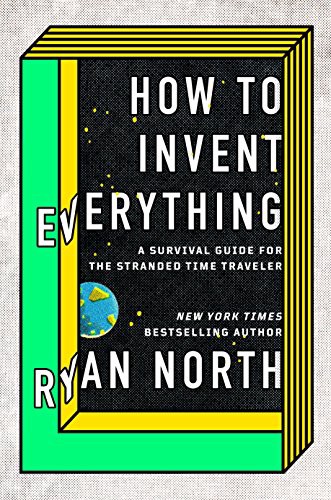
The answer, according to Ryan North’s wonder of a book How to Invent Everything: A Survival Guide for the Stranded Time Traveler, is not to try to fix the time machine — in North’s fictional universe, they’re unrepairable — but to instead “fix” the time that you’ve found yourself in by re-inventing all of the technology that you desire, from scratch. Invention, the book quietly suggests, is its own form of time travel.

With this wonderfully playful premise, North (author of Dinosaur Comics, Romeo and/or Juliet: A Chooseable Path Adventure, The Unbeatable Squirrel Girl) presents a step-by-step guide, complete with flowcharts, a technology tree, scientific appendices, and footnotes, for inventing everything from language to farming to mining to bicycles to computers. Would you like to learn the Universal Edibility Test? Perhaps you’d find it helpful to have major schools of philosophy “summed up in a few quippy sentences about high-fives”? And maybe you’d like to invent buttons way before they were invented in our timeline?

The scale of How to Invent Everything is downright encyclopedic, and the voice, on every page, bubbles with humor. Reading it brought me back to all the afternoons I’d spent as a kid flipping through the big reference books in my local library, and then eagerly running home to tell anyone who’d listen what I’d learned. One of this book’s great achievements is the way it so gracefully combines scholarly rigor with youthful wonder.

Ryan North and I corresponded over email and talked about the book’s formal hybridity, the relationship between technology and civilization, and whether or not storytelling itself is a technology.

Joseph Scapellato: One of the many things that I love about How to Invent Everything: A Survival Guide for the Stranded Time Traveler is how it so exuberantly embraces hybridity. It’s a work of nonfiction, but with a science-fiction frame; it’s part guide, part how-to, and part real-and-imagined history; it’s packed with diagrams, charts, and schematics; and underneath it all runs a lively through-line of voice-driven humor. Can you talk about the genesis of this ambitious project?

Ryan North: The basic idea for the book is something I’ve been thinking about since I was a kid: if I went back in time, what could I change? Once you exhaust the “give myself lotto numbers” angle you’re left with the — to me very vivid — image of being trapped in the past, describing how great the future is, and everyone around you saying “okay, great! How do you invent it?” and me just… shrugging. For decades I’d wanted a book like How to Invent Everything, and finally I decided to write it.

After the book was announced I saw many many people saying “oh wow, I’ve wondered about this exact same scenario myself!” so it seems this fantasy wasn’t unique to just me. I’m really glad to hear that, because it was (and still is) one of my favourite things to think about.

The earliest drafts had a bit more “future history” in them: I had all this detail on the world the time machine had come from. But I ended up taking out most of that and leaving it mostly as broadly suggestive hints, because I realized: once you invent time travel, you’ve invented everything. Need a phaser? Travel to the future, and if it can be invented, you’ll find it there. So I realized I was trying to describe what was effectively the singularity of singularities, and instead refocused on just one element of it: the tourism. The idea that in the future time machines would be rented out willy-nilly to the general public the way Winnebago are now struck me as both a crazy — and really interesting — idea.

I actually wrote a fair section of the book — almost a quarter of it — before I started thinking “okay, yes, this will work”. Because while yes, it’s a comedy book, and while yes, none of us are likely to be stranded in the past anytime soon — I still wanted it to be a sincere book. I wanted it to be an actual guide to actually reinventing civilization, from scratch, in any period in Earth’s history, and I wasn’t at all certain such a book was even possible. I was really relieved to discover that it is!
JS: Do you have any favorite time-travel books/films? (Especially ones that might have influenced the way that you thought about this project?)

RN: Oh my gosh, this whole book exists because I spent most of ages 6–12 thinking about Back To The Future and what I’d do in variations of that situation. And I’m just realizing this now, but How To Invent Everything is really just Gray’s Sports Almanac — the book Marty takes back from the future to give himself an advantage in Back to the Future 2 — taken to its logical conclusion. Only instead of instructions on what horse to bet on, it’s instructions for everything. Marty could really cause a lot of trouble with this book.

Like I said though, the model of time travel used in the book is different than most stories or movies I’ve seen — including the one Marty deals with. By avoiding the one-timeline model and instead having each trip back in time create a new parallel timeline, time travel becomes “safe”, and I think there’s actually a lot of really interesting stories you can tell there!

I wanted “How to Invent Everything” to be an actual guide to actually reinventing civilization, from scratch, in any period in Earth’s history.

JS: The narrator — also named Ryan North — is steadily optimistic and encouraging, but quite critical, at times, of how long humanity went without making certain discoveries. He’s especially embarrassed about buttons:

Look, you know how a button works. We don’t need to explain this. They’re one of the simplest practical inventions we have…but figuring out how buttons work still took humans more than four thousand years […] Buttons could’ve been invented at just about any point in human history. Save humanity from doing the cultural equivalent of walking around with our fly down for four thousand years straight. Invent buttons already.

What, in your opinion, accounts for these long gaps between innovations?

RN: That’s one of the things that was so fun about this book. Lots of popular science takes the approach of “look at us humans, and look at the wonders we have created” — which, yes, is true. But having a book where the voice was “look at us humans, and look at all these times were, in retrospect, we were screwing up the entire time” — that’s fun. And it’s not like there’s a shortage of examples: the countless times we didn’t invent penicillin when we had everything we need to, or kept forgetting that vitamin C cures scurvy, or couldn’t figure out how buttons work, or [etc etc etc, the list goes on for so long].

I think you get these gaps because, in truth, invention is hard. To invent something, you have to take the world as it is, take those pieces lying around you, and put them together in a way nobody else has before to create something original that the world has never seen. That’s hard! And it’s what makes a book like How to Invent Everything possible: by laying out the answers, by showing you what one person can do on their own if they just have the advantage of knowing what they’re supposed to be doing — we can sidestep all those delays and uncertainty, and instead let you skip right to the fun part: making new things.

Buttons are a fun example because we got part of the way there, and then stopped. A modern person would see that and invent the button without even thinking about it, because we all know what the answer looks like. But if you don’t, you think attaching a shell to your shirt is already pretty great, because now you look handsome. You don’t know you can go further to make them practical as well as pretty. You don’t know what you don’t know.

I wonder a lot what scientific discoveries we’ll be looking back on in 200 years and saying “how could they not have seen that?”

JS: The book’s science-fiction frame — the premise that this guide was written in the future, sometime after 2043 — means that the reader is occasionally treated to footnotes that reference future inventions/events. For example: the eventual existence of time machines, weather control machines, and (my favorite) the fact that the moment when time travel is discovered becomes a popular destination for time travelers from the future to visit. At any point, did you sit down and plan out this future setting in detail, or did these references emerge spontaneously?

RN: Generally, most of the science fiction was added spontaneously as I wrote: either as a way to explain something that we don’t know the answer to (like, for example, why the reference kilograms are changing mass, or, in more fundamental questions, why precisely we sleep), or as a way to take a break from some more difficult concepts to have some fun in sci-fi land.

I love the idea that in this utopic future things are so great that that they have retail-market time travel, but people still want to take vacations to get away from it all. And if you think about it, given the model of time travel in the book (each trip back creates a new timeline that doesn’t impact the one you came from, so it’s impossible to mess things up for you/kill your own grandmother/etc) — that’s basically a holodeck. It’s an incredibly ethically-fraught holodeck, for sure, but it’s a scenario in which you can visit any point in history and do whatever you want, and at the end go back to the future again. It’s wildly irresponsible, but also, it would be really, really hard to resist. I can see why people travel through time, even given the non-zero risk of the time machine breaking, stranding you in the past, and forcing you to rebuild everything from scratch.

The Art of Time Travel Through Friendship

JS: You conducted a tremendous amount of research to write this book, as shown by the lengthy bibliography. What emerged from this research that you didn’t anticipate — that surprised you about the history of humans/technology?

RN: Hah, it’s funny you mention the bibliography! Originally my intention was to not have a bibliography — or at the very least put it only on a website — because there’d be no reason for this book designed to be read when you’re alone in the past to have one. But we ended up putting it in the book for a couple of reasons: I thought it was useful to be able to point people towards great texts if they wanted to know more, and it was at least a clue that all those facts and figures in the book are, in fact, real. So that ended up being baked into the premise: the book is from the future, I found it, and in preparing it for publication researched everything I could to verify that it was real — and in doing so, built that bibliography.

But! To answer your question: it was those delays in humans figuring out things that surprised me. Before I started I had this vague idea that as soon as something was possible to be invented, then we probably invented it soon afterwards. But that’s reasoning without factoring in all the ways humans can make things complicated, messy, and wrong. My favourite example in the text is how we learned — and then lost — both the causes of and cure for scurvy over a dozen times throughout history. You’d think something that useful would be remembered, but it’s fascinating how things can change and knowledge can be corrupted or lost. In the scurvy case, one of the reasons the disease returned was because the British had switched to a cheaper source of vitamin C (from lemon to lime juice), without realizing their limes had much less vitamin C in them. Then they started running it through copper pipes, which also destroys it. But they didn’t notice that their scurvy cure was now useless, because steamships had been invented (meaning sailors were spending less time at sea, away from those fresh fruits and vegetables high in vitamin C) and nutrition on land had improved too (meaning sailors had greater stores of vitamin C to begin with). It was only when they started to explore places like Antarctica that scurvy “came back”, and with the old cure apparently suddenly ineffective, they were back at square one.

It’s not hard to imagine how a quick tip from a single time traveller could have a massive effect on history here.

When it comes to building civilizations, you can pick and choose just about everything…except for stories. The one thing we can rely on about humans is that we’ll always tell each other about ourselves through stories.

JS: You have a background in computational linguistics, which no doubt came in handy when you were writing the language and computer sections of this book. What sections, though, were the most challenging for you to write or research, and why?

RN: Hah — I can actually give you the specific section: the bit on calculating dates and times for navigation and timekeeping. Some of these calculations are relatively easy if you have known-good stars to use, but since I wanted the book to be useful no matter what time period you’re trapped in, I couldn’t use any of that: the stars we see in the sky are moving, and though it seems slow from our perspective, go back a million years and any star charts I included would be useless. So they all had to be done based on the only star whose location WOULD be known no matter what time period you could survive in: our star, the sun.

And while on the surface it’s just “the Earth goes around the sun”, once you get into it in detail there’s so many things that are happening: the Earth is spinning, and that spin is at an angle, and it’s wobbling like a top, and it’s speeding up or slowing down depending on where in its orbit it is, and most of these values are cycling over time, etc, etc, etc. It turned out that getting all of these variables sorted across time was way more challenging that I thought, but I’m really proud of the chapter that resulted!

JS: How to Invent Everything makes an argument for what a civilization is (and isn’t). An early chapter, titled “Calorie Surplus: The End of Hunting and Gathering and the Beginning of Civilization,” gives a frank assessment of the challenges of farming — the “Extremely Garbage Features of Farming” — then ends on this note:

In light of these downsides, we would like to take this opportunity to remind you that it is inarguable that farming leads to calorie surpluses, which leads to specialization, which leads to innovations like apple pies, time machines, and the latest mass-market portable music players. If you work hard, you will produce these. If you hunt and gather, you will not. Instead, you will eat bugs you find under a rock. Best of luck with your decision.

A running theme is that certain core technologies are essential for civilization. In light of this, how do you define “civilization”? And what is this concept’s relationship, if any, to the state of being “civilized”?

RN: I see civilization beginning at the moment you look around and take the world not as it is, but as it could be. Pure hunting and gathering isn’t really a civilization, because you’re just taking what you can find — plus, since you’re always moving, you’re not building anything for the long term, because there is no long term: just the seasons of the endless now.

But the second you start saying “you know what? It can be done better.” — that’s when you start building a civilization. That’s when you start taking what you can find and combining it in new ways, better ways, to produce a world in which — ideally — other humans and yourself no longer need to worry about basics like food, heat, and protection, and can instead begin worrying about more interesting things, like what gravity is and how a global network of computers might work. You can do this in a hunting and gathering context, but farming is what makes it reliable, sustainable, and scalable.

As for the second part of your question: for me calling someone “civilized” means that that person is someone I can trust to act in an interest outside their own. A civilization means living with other people, and at some point when you’re living with other people — no matter who those people are — you’re going to need to be able to put the needs of the community above yourself. A civilized person will help someone pick up their dropped bag of groceries, because it’s the decent thing to do. An uncivilized person won’t, because there’s nothing directly in it for them. Saying this out loud, it’s making me realize that I can pretty much draw an equals sign between the words “civilized” and “decent”, which I suppose is why I wrote a book on how to create civilization in the first place. We can be done better too.

JS: Just to press you, a little — would you consider a hunting and gathering society a civilization if it approached the “it can be done better” question through culture, rather than technology? And what’s your take on the argument that hunting and gathering is a long-term approach to living a life with others — that it ensures environmental sustainability/stability in a way that, say, the industrial-revolution approach doesn’t?

RN: Oh, for sure! And I’m not here to say you’re not living in a civilization if you’re in a hunting-and-gathering world and doing more than just hunting and gathering, culturally. One of the core issues I had to address early on is answering this question: what is civilization? And rather than try to tease that apart and draw lines in the sand, I decided to sidestep it all and decided my guide would be to reinventing a technological civilization. That comes with pluses and minuses, of course! Heck, as soon as you invent the technology of animal husbandry, you’re bringing in all the diseases that animals carry that you only really get exposed to by close contact with animals — rabies, plague, salmonella, and more. There’s definite downsides.

And in a place and time where food is plentiful, a technological civilization is absolutely going to be a hard sell. I can imagine people responding with “Wait, you want us to labor in order to eat? You have to farm? You have to take care of animals instead of just eating one when you’re hungry?” We sometimes think that as soon as technological civilization started everyone just jumped on board because we all loved it so much, but I don’t think that was the case. And there are still a few (a very few, but still) societies on Earth that have rejected most of the things we associate with “civilization”, and I’m not going to tell you we’re right and they’re wrong.

The core idea of a technological civilization — like I said earlier, that rather than taking the Earth as it is, we can change it to something that better suits us — is an incredibly powerful one, and it can also be incredibly destructive. Depending on your view of humanity and what it’s managed to accomplish, you might think a smaller, sustainable, less ecologically impactful civilization is better for the Earth, and I’m not sure I could argue otherwise. Heck, I have a friend who believes in voluntary human extinction (where humans decide to stop having kids and grow old peacefully, with the motto being “last one out, turn off the lights”) and we’ve had some great discussions about all this stuff.

But I’m a firm believer that the greatest resource we have on Earth is human brains, and the greatest thing we can do to support those brains is to build things — like civilizations — that let more of them survive, thrive, and reach their full potential. Civilization leads to farming, which leads to more calories produced per meter of farmland than you get with hunting and gathering, which in turn leads to more healthy and creative human brains. A properly-configured civilization should let all of those human brains thrive, because you never know where genius lies.

Can civilization-building be done better than what we’ve done in our own history? Absolutely. The “narrator” of the book is often pointing out the parts where we messed up big time, and imploring the reader to do better. There’s so many opportunities for that!

I’m a firm believer that the greatest resource we have on Earth is human brains, and the greatest thing we can do to support those brains is to build things — like civilizations — that let more of them survive, thrive, and reach their full potential.

JS: Early in How to Invent Everything, spoken and written language are identified as fundamental technologies; later on, there are sections on how to innovate in visual art, with musical instruments, and in music theory; but there are no sections on oral storytelling or written literature. Do you consider storytelling/literature to be essential to civilization? Is storytelling/literature a technology?

RN: What a great question! One of the most interesting things to me is how optional a lot of the things we think are fundamental are: a lot of us structure our lives around them, but most civilizations on Earth got along just fine without computers. Heck, many of them got along just fine without the wheel. And that underlines the fact that so much of what we consider essential really isn’t, and that there’s so many ways to live your life. When it comes to building civilizations, you can pick and choose just about everything…

…except for stories.

I couldn’t find a single example of a group of humans that didn’t tell stories. There’s actually a quote in the book from Ursula K. Le Guin — when trapped in the past, you are encouraged to plagiarize it — that reads “There have been great societies that did not use the wheel, but there have been no societies that did not tell stories.” That really resonated with me. As much as the book explores missed opportunities in our own history, we’ve never missed one with storytelling. The one thing we can rely on about humans is that we’ll always tell each other about ourselves through stories. So that made it one of the few things that didn’t require any sort of explanation in the book: we just do it naturally, and it’s innate!

(And while visual art and music are similar in that humans make them on their own, there’s still technologies required — for example visual perspective, instruments — to really help them reach their potential. All you need for storytelling is a voice, and if you want to write them down, well, there’s technologies in the book for that too.)

JS: What are you working on next?

RN: I’m not sure! I’m in that beautiful spot where you finish one book and you don’t know what the next book will be yet. I write a monthly comic with Marvel Comics — The Unbeatable Squirrel Girl — so that’ll continue, but as for my Next Big Book… that’s still (taking it back to time travel)… in the future.

8 Books about Alien Invasions that Take Place Outside the U.S.

If you read what is considered science fiction canon, you’d be forgiven for thinking aliens only invade the United States or United Kingdom. Though the genre is inching towards inclusivity, the canon, as always, is kind of stuck; most “classic” sci fi books are written by white American or British men. And since alien contact narratives often distill what a society thinks of foreigners, that means we have a lot of books in which malign forces either attack or infiltrate Western societies.

The archetypal alien invasion is War of the Worlds (1897) by H.G. Wells, your basic Imperialism allegory using the Martians as stand-ins for the British Empire. The framework is fairly straightforward: aliens, who are technologically advanced and hostile, attack Earth. Earth (read, the U.S.) fights back with the most advanced weaponry and most savage and ingenious soldiers. Usually we prevail. But aliens may not arrive with sturm und drang, but instead infiltrate, as in The Body Snatchers (1955) by Jack Finney, where the aliens drop pods and slowly replace humans, or The Andromeda Strain (1969) by Michael Crichton, where a super-microbe spreads from a downed satellite. This, too, can be easily read as a xenophobic metaphor.

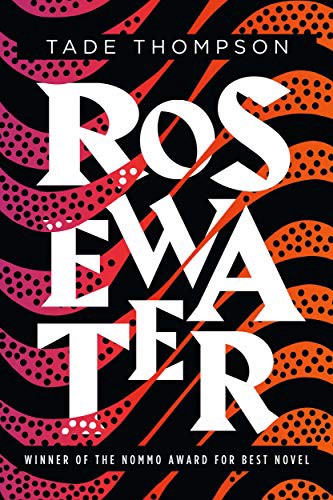
So what happens when we take the U.S. and the U.K. out of the center of these stories? In my book Rosewater, I took the infiltrative approach. I set it in Nigeria, where we have experience of first contact from British colonizers. The book focuses on how aliens change humans, giving some of them special abilities while going about their own agenda.

Here are eight books that feature alien invasions outside the U.S. or U.K.

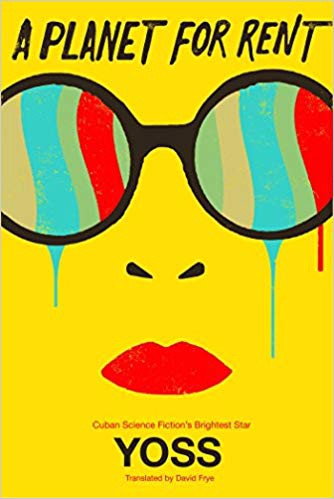
A Planet for Rent by Yoss

Yoss is the most popular and controversial science fiction writer you’ve (probably) never heard of. Yoss is from Cuba and this insane book is about aliens who appear benevolent to start with, helping us resolve the environmental mess we have made of the Earth, but soon turn humanity into an underclass on the outside of their utopia. It is episodic, heartbreaking, and a perfect picture of 1990s Cuba.

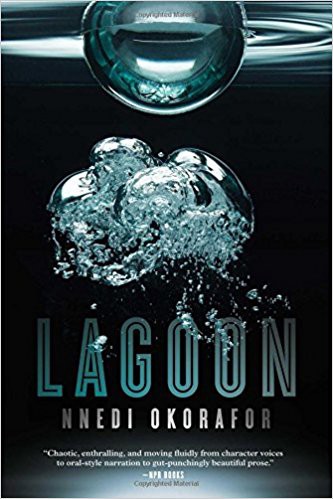
Lagoon by Nnedi Okorafor

Set in Nigeria, Dr. Okorafor’s book was a response to the insulting portrayal of Nigerians in the 2009 film District 9. One of the amazing things about this book is how it shows you the results of the invasion from different strata of Nigerian society and even different fauna. It gives the reader an idea of how extraterrestrials would be dealt with in the absence of a well-funded FBI-style organization, and it’s also a great view of Nigerian society.

What To Do When Your Time Machine is Broken

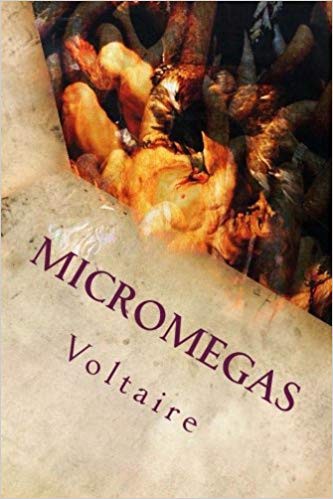
Micromegas by Voltaire

This is one of the earliest works of science fiction, from 1752. The eponymous Micromegas is a giant alien heretic from a giant planet, who visits the “insects” of Earth, around the Baltic Sea. He is surprised to find intelligent life and this book is concerned more about philosophy than space battles or technology.

The Flying Man of Stone by Dilman Dila

The fictional African country in this novella is likely based on Uganda, from which the writer hails. This story has the distinction of speaking about colonization both metaphorically and literally, with ancient aliens who bestow technology or power at a high price. It explores altruism, and the idea of stopping war with superior weaponry, and what that means to the everyday African.

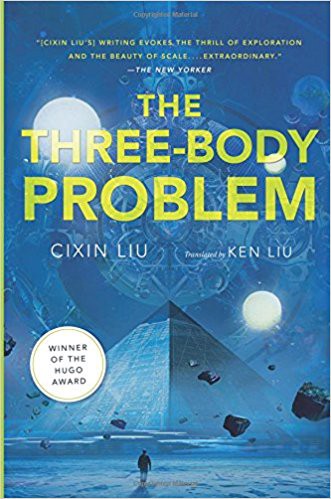
The Three-Body Problem by Cixin Liu (translated by Ken Liu)

This First Contact story won the Hugo award in 2015 and has the honor of being the first full-length Chinese sci-fi work to be translated into English. With three interwoven time periods including the Cultural Revolution, this ambitious novel delivers on all fronts. The aliens (Trisolarans) are of the approaching malevolent armada variety, the ideas are dense, there are lush, mind-expanding set-pieces in the VR game Three Body, and the only parts that flag are the characters.

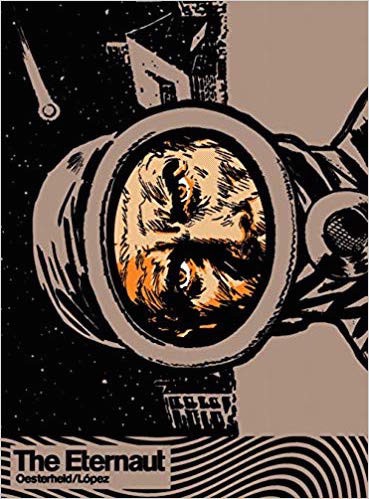
The Eternaut/El Eternauta by Hector Oesterheld and Francisco Lopez

This book is a little hard to find, and I only know of it because I read a version as a child and could not get it out of my mind. Popular in Latin America, with a creator who was “disappeared,” El Eternauta is a story of alien invasion, but also a political allegory. With the presence of a glowing alien dome, radioactive snow, and invulnerable creatures called “gurbos,” it is the best kind of science fiction with a blend of ideas and politics. It is well-drawn, intense and evocative of siege mentality. I am reliably informed that there is graffiti of the hero (Salvo) in Buenos Aires to this very day.

All You Need Is Kill by Hiroshi Sakurazaka

This is a light novel (raito noberu), which is the equivalent of an illustrated Young Adult book. What would have been a standard alien invasion and exo-skeleton-enhanced defence of the Earth is elevated by the presence of a 24-hour time loop a la Groundhog Day. The book was also adapted into a surprisingly effective movie called Edge of Tomorrow.

The Woman Who Thought She Was A Planet by Vandana Singh

Those of us who are fans of Vandana Singh are prepared to fight to the death defending her work. This story (part of a collection) shows us a woman who is inhabited by tiny aliens. Humorous and elegantly rendered, it is told from the perspective of her husband who is perplexed when, for example, she will not wear clothes since planets don’t need them.

Consider these a starter pack. Once you go looking, you’ll find a variety of works in translation from other cultural perspectives, and the question to ask yourself is this: When you look at the aliens, who do you see?

Appeasing the Beasts of Remembering

Procedural

Following the incident in the daycare and the incident in the high school and the incidents in the assisted living facility and the dog park, Barhydt was transferred to the Solved Crimes Division. It was their job to field calls related to cases that had already been closed. It surprised him, how many calls came in. People had a spotty relationship with the past. They revived it and they banished it. They rewrote the existing revisions. They elided months and years with a single word. Barhydt, for his part, was not sympathetic. He believed in a monolithic fossilized past, that behind us was a continuously expanding block of immutable moments. He treated the complainants with scorn and ridicule. He treated their calls as pranks from the void. In late July he took a call from a man who said his son-in-law had robbed him. Barhydt drove to the man’s apartment in Fordham Heights. He introduced himself and threw the closed file at the man’s sallow face. The papers that fell onto the floor detailed the investigation of the robbery, included the confession of the man’s daughter and her lover, who hoped to pin the theft on her husband. It included the transcripts of their trials, where each tried to blame the other, and the Bureau of Prisons report on their incarcerations. It also included a small typed notation that the son-in-law had relocated to Virginia and a clipped obituary from the Richmond Times-Dispatch. He died of pancreatic cancer in 2004. The caller did not understand what had happened. He stood dumb in a puddle of papers. “I am the Avenging Echo,” Barhydt said. “I am the Beast of Remembering.” He gave the man a gentle slap on the side of the head and walked to the door. Soon Barhydt was transferred again. This time he was sent to Uncommitted Crimes. It was a unit for maniacs who could not be trusted anywhere else. They sat around all day and made up offenses they imagined taking place across the city. Barhydt became the most decorated officer in the unit’s long, long history.

Bless This Mess

The ghost was unobtrusive and kept her distance. Then she started doing us small favors: retrieving items believed to be lost, unlocking the door when we forgot our keys, turning out lights we left on. It sounds comforting but it was not. We are messy and absent-minded. In the mortal coil our ghost was organized and tidy. We are her hell. We mumble awkward thanks when we notice any new housework she’s done and, when we’re out, have begun discussing the possibility of an exorcism.

The Criminal Element Adapts and Evolves

I would say things have improved since we began turning criminals into animals. They are generally good-natured or occupied with their animal business. At worst they’re a little confused, and that’s hardly a thing to hold against them. Sure, there’s an influx of manure in the streets and nests and burrows have appeared in places where they aren’t wanted, but a brand new public works project has given would-be criminals jobs powerwashing away the mess. Civic pride is unfamiliar and buoying. We fall asleep at night feeling assured and listening to agile creatures commuting through the trees. Among certain people, though, there is growing suspicion that criminals who’ve yet to be caught have changed their tactics, sinning against us in more subtle ways. They operate in passing lanes and with public utilities. They rent unoccupied apartments strictly for the purpose of having loud, ecstatic sex with the windows open. It’s said they are making us doubt our abilities, resent our children, shorten our temper. If we feel threatened again we can only rely on those we love and trust, and the rabbits and pandas we pass on the street, working so hard to become themselves.

About the Author

Pete Segall’s work has appeared or is forthcoming in Conjunctions, SmokeLong Quarterly, Necessary Fiction, The Literary Review, Matchbook, and elsewhere. He lives in Chicago.

“Procedural,” “Bless This Mess,” and “The Criminal Element Adapts and Evolves” are published here by permission of the author, Pete Segall. Copyright © Pete Segall 2018. All rights reserved.

Dressing Up as Other People Helped Me Learn to Tell My Own Story

O n the day of the April masquerade, I retrieve the supplies I purchased during the Halloween season. Liquid latex, scar wax, isopropyl myristate. I spot-clean my forearms and left shoulder with cotton pads and rubbing alcohol, ignoring the caustic smell.

My younger sister Anna, the make-up enthusiast, is standing by to assist. She selects a foam beauty blender, and I douse it in the pungent liquid latex. As I sponge the mixture onto my skin, it immediately fuses into a solid barrier that traps my arm hair beneath its surface.

For the next hour, she helps me layer on the flesh-colored scar wax, the blending foundation, and burgundy powders until the patches resemble ill-healed wounds. When we’re both satisfied, Anna sets the make-up with a finishing matte and hairspray. She’s not coming with me on my adventure — not her scene — but she still wants her work to last.

The rest of my costume: sleeveless vest, choker, skinny black pants, brown boots, gloves, and an eyepatch I’ve sewn myself. With expert precision, I tuck my wavy brown hair up into a tied-off pantyhose on my head. Anna helps me carefully tug the gold wig from South Korea over my ears. My campy, teenage geek-heart pounds. Each costume piece gets me closer not just to my chosen character, but closer to feeling powerful, feeling adventurous, beautiful, sensual. To tip-toeing toward the dimensions of myself that I otherwise never get to see.

This will be my third anime convention. By now, my Christian parents are resigned to my peculiarities, so they send me off with a promise to check in periodically via text. I punch in a quick message on my flip-phone when my high school friends and I arrive at the downtown hotel just a few miles from the Mall of America. The place is booked solid: wall-to-wall nerds on every floor. After dumping our bags in our reserved room, we race to the main lobby.

The convention’s dizzying atmosphere of color, sound, and pageantry floods red-hot excitement into my brain, my chest, my feet. For the whole weekend, I’ll be pulled in all directions: talking up plot at panels like “The Existential Philosophy of Cowboy Bebop”; fawning over strangers’ complete ownership of their chosen characters, down to the smile and strut; spending my babysitting money on DVDs and art and soft toys; and dancing, for a while at least, at the crunchy neon raves that pump audio voltage through those early-2000s nights.

Although I struggle with limited depth perception from the eyepatch, my left eye lasts a solid four and a half hours before I start to feel the strain. The burn scars hold up beautifully and attract considerable attention, but I give it out just as much. I compliment embroidery, appraise prop weapons, and revel in our triumph of translating the abstract into the flesh through this singular act of love.

In three short days, as after every convention, I will be back at school. I will bring souvenir posters and stickers to the friends who lament having been stuck in “the real world” for the weekend. And I will return to the humdrum reality of tolerating the mousy girl in the mirror.

Like most teenage misfits with odd proclivities, I did not leave what I loved behind as I moved towards adulthood. During a psychology course in undergrad, my professor opened one lecture by showing us a video taken at a previous San Diego Comic-Con. I leaned forward in my front-row seat, excited to see myself in the subject of today’s discussion. After about thirty seconds, though, a searing contempt uncurled between my ribs. The video’s narrator prowled the convention center’s main hall, singled out women and asked demeaning questions about their bodies. He lobbed barbed comments at the men. How old are you? How long have you been doing this? Is your mom okay with you working on this in her basement?

After the video, which was dubiously posited as a segue into identity and stability, the professor remarked that anyone willing to spend that much time, energy, and money on a costume must have unresolved personality issues.

A quick internet search confirms the opposite: perfectly reasonable people have been dressing up in costumes for hundreds of years. Masquerades have been culturally significant in the West since the fifteenth century. Initially, the masquerade’s purpose was both religious and political. It was during the Renaissance period, particularly in Venice, that masquerades developed purely for pleasure. The Venetian mask persists as a symbol of this lavish era. Still, in Venice, they sell masquerade masks by the cartload, although they sometimes bear Made in China stickers that the merchants don’t care to remove.

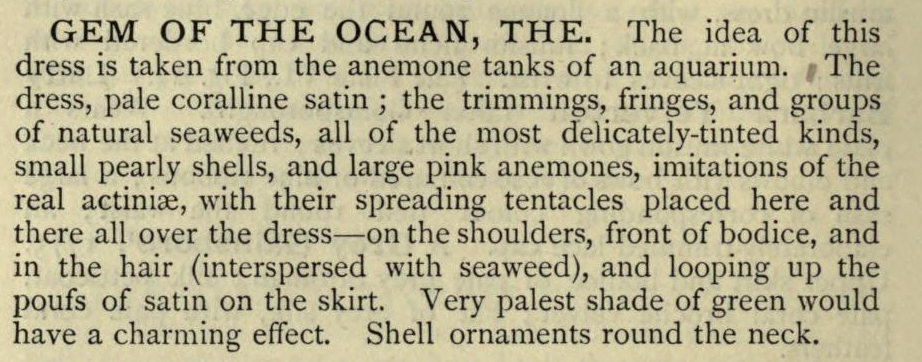
Beginning in the 1800s, costume parties became the high society pastime of both English and American gentry. Often accompanied by guide books, these costumes ranged from abstract concepts to historical figures to literary characters. Arden Holt’s 1887 book Fancy Dresses Described; Or, What To Wear To Fancy Balls details over 200 pages of original women’s costume ideas. Some are nonsensically abstract —

while others point to the more refined elements of nature for inspiration:

As science fiction became popular among the same class of people at the turn of the century, it was only a matter of time until the enthusiasm for fancy balls birthed a new subculture. The inaugural World Science Fiction Convention was held in conjunction with the 1939 New York World’s Fair. It was here that the first green-caped “futuristicostumes” were spotted. Over the next 30 years, the art of costuming would be practiced across national, racial, gender, and class boundaries. By the 1970s, costuming was an international phenomenon. And in the 1980s, it became known as “cosplay,” the Americanization of the Japanese kosupure — abbreviations for “costume” and “play.”

As the professor quieted the class for lecture after his remark, I collected my things and slipped out. After an adolescence of eccentricity, I’d considered myself immune to judgemental comments. But the professor’s words lashed at a deeper, festering thought I’d pushed to the corner of my mind: if you like yourself best when you’re dressed up as somebody else, then who are you?

In the daily life of my early teens, modesty reigned. My private school required a strict dress code. No blue jeans, no hats, no logos larger than two inches. No sweatshirts or sweatpants. No unnatural hair or piercings beyond the earlobes. No flashy jewelry. For the girls specifically, things were more nuanced. Fortunately for my tomboy sensibilities, we were permitted to wear khakis and corduroys. Skirts and dresses had to fall to the knees or below, preferably with tights or stockings. Only light, natural-looking makeup was allowed, although we were encouraged against this. And of course, no cleavage. But all of this was subjective based on body type. A shallow scoop-necked shirt could get you pulled aside between classes and sent to the nurse for a baggy replacement if a teacher deemed it a touch too tight or a fraction too low. Discomfort was a daily nuisance: pants that were alternately too loose or too small, shirts that curled up on themselves and required constant adjusting.

My sister recalls a moment in middle school when the girls in her year were forced to endure an excruciating lecture from the principal. It’s very likely that I also received this lecture at some point, but tuned it out while reading a book on my lap under my desk. The focus of the lecture, as Anna reports it, was simple: their bodies and their budding sexualities were their greatest temptation, a doorway to lustful sin that they must be mindful of every day. They’d have to consider the familiar dress code in the context of their changing bodies. “You may think your shirt is fine, ladies, but look down.” The principal gestured broadly to her own breasts, buried under a blouse and a buttoned blazer. “Is the fabric stretched so tight that you could bounce something off there?” Some girls responded with nervous giggles, but the principal remained clinical in her delivery. “If it’s that tight, you need another shirt.”

As a teenager, I disliked my body. I was small-chested, short, something my soccer coaches called “stocky:” good for dodging and pivoting quickly, bad for clothes shopping. My face was oily and acne-prone. I wore braces. My daily solace was the tight circle of literary-minded friends with whom I discussed everything but the real world.

I don’t remember which of us introduced anime and manga into the circle, but soon our lunch and locker conversations were divided between our latest fantasy read, Japanese comics, and where to find anime episodes online. We strategically maxed out our library cards so we could each check out a different stack of manga books, then lend them to each other before the due date. We burned through entire series at lightning speed: Fullmetal Alchemist, Bleach, Naruto, Fruits Basket, Death Note. We kept ordered lists and schedules and left the little volumes in each other’s lockers with mini Post-It note reviews. Sometimes, I preemptively censored the more revealing comic panels with Post-Its, mostly for the benefit of our group’s survival. We were known for reading during class — me most of all, ahead of my peers in most subjects and perpetually bored. We’d be doomed if a teacher spotted a scantily-clad woman over someone’s shoulder mid-lecture, the private parts obscured only by a flirtatious coil of smoke.

An Autobiography in Anime

We read nothing close to pornographic, and yet, I still had to work to quiet the tiny convicted voice that whispered wrong, wrong, wrong as I devoured stacks of manga. It was the only temptation that I indulged. There was something special in these books that celebrated and imagined the body in all extremes of motion, heroism, and sensuality.

I was not cognizant of all these factors at age thirteen, when I made my first cosplay for a local party: a cut-up shirt made to resemble a tunic, black leggings, and a carefully-traced mock tattoo on my left clavicle. True to the character I was imitating, I flattened the collar wide to display the ink and admired, with surprise, how pleasing and fair that expanse of skin was.

Of the hundreds of women’s costumes in Holt’s 1887 book, just 25 include the suggestion of trousers. Most are paired with a short skirt or petticoat. The most masculine of these are, unfortunately, Orientalist in nature:

In spite of this, it’s easy to see how the mid-century sci-fi boom coincided with a loosening of gender and sexuality norms to create the body-positive, sex-positive, gender-bending cosplay subculture that we see today (a culture that notably, still, struggles with exotifying and othering). At cosplay’s core, though, is this: the allure of wearing a different identity and working its performance for acclaim and applause. I think this was a quiet fear my parents held as I fell fiercely into the cosplay obsession — that I might try something on that I shouldn’t, and that I might like it.

At fifteen, I was head-over-heels for dozens of pretty anime boys. I loved their chic clothes, their ludicrously slender figures, and their feminine faces, irreconcilably soft and roguish. One favorite was a slick-suited bodyguard whose focal feature is a colossal shock of orange hair. I could buy orange hair with my babysitting money. The rest would be easy. I thrifted for a teen boy’s suit and matching Doc Martens. I crafted a nightstick from a light saber, plastic piping, and spray paint. And, after weeks of careful research and eager waiting, the glorious orange wig arrived. I transplanted fat and shiny goggle frames off their elastic band and onto sunglass temples so they’d stay put in the synthetic wig fiber without constraining the hair’s volume. Underneath the fuzzy mane, I saw myself in drag, and I was determined to sell it.

All weekend long at that year’s convention, people called out to me by the character’s name. I posed, quipped, and high-fived. Whether or not people could tell I was a girl was irrelevant. I loved every minute of it. And though my feet blistered from three days in the Doc Martens, I strutted and swaggered with an intoxicating pretty-boy invincibility.

And I was drawn to this performative peacocking, too, regardless of gender. In the darker parts of myself, I was struggling with same-gender attraction and that doublethink of intense denial. In the midst of this, an acquaintance that I’ll call Ash posted a photo.

Telling Queer Love Stories with Happy Endings Is a Form of Resistance

In my teen years, everyone on the Minnesota cosplay circuit was in the habit of posting their costumes-in-progress on social media. Other than my own cosplay group, I hardly knew many of these friends in the “real world.” We’d all met at events and followed each other digitally on that basis. Ash was one of these. In the local scene, Ash’s skill was unmatched. Their talent went beyond meticulous tailoring and craftsmanship. Ash could inhabit a character like no one else I knew. This was due in part to their delicate, androgynous features; features similar to those of the characters we all adored. But Ash had a flair for playing in the character’s skin, even outside the convention atmosphere.

A few weeks before a cosplay get-together, Ash uploaded a photo album of themselves wearing chosen character’s military uniform. They struck various poses, showing off the costume’s fit and craftsmanship. Near the end of the album, though, were sexy close-ups — still in character, but only partly costumed. I stared, wholly overtaken by their short, tousled hair, brows done heavy like a man’s, and their men’s shirt unbuttoned at the throat.

When I fell into cosplay, I was on the tail end of my decade in Christian school. Biblical literalism infected every area of study, from math teachers waxing rhapsodic about the divine perfection of tessellations to the more dangerous claims in our history textbooks. Bible class was just another hour of the day, along with science and music. Angels and demons were as real as Newton’s theory of gravity — and by venturing into the subculture of cosplay, I was warned, I might fall into spiritual darkness just as surely as the sun rises and sets. Yet I went, or was allowed to go, because I was an excellent Christian, and because the grand pageantry of the conventions brought me no greater joy. Cosplay is not, after all, an exclusively sexual subculture. I was trusted to avert my eyes and remove myself from any compromising situations.

When the Power Failed

During that first convention, I met openly gay people and older teens who confessed to cross-dressing regularly. I witnessed no shortage of kinky ensembles worked into the cosplay getups: ball gags, blindfolds, leather and chains, fursuits. I was sheltered, but I knew that these people were reacting against the rigid notions of gender and sexuality that I was taught to stand for. Yet I only felt shame in keeping this company during the limited hours when we were accompanied by a parent chaperone. Their presence reminded me to see this experience through the eyes of a Christ follower, and not the eyes of my own curiosity. In the parent chaperone’s absence, the flagrant flouting of societal norms was less shocking to me, and I felt less guilt for my proximity to it. Inwardly, though, I still drew a line in the proverbial sand that distanced me from those who played in the fluid sphere of the cosplay scene. My narrative was different: I was a straight Christian girl here to explore a comic book wonderland — I wasn’t here to be devious or contrarian. Cognitive dissonance, when applied with enough force, becomes a substitute truth.

Yet every Monday after every convention weekend, I spent my class periods counting out the days until next year’s event in my student planner. I showed off my souvenirs at Wednesday night youth group and endured Sunday sermons by daydreaming about my next costumes, doing mental gymnastics about how to save enough money for two new wigs. My adolescence rested on this ironic crux: that the one weekend a year I spent immersed in a fictional masquerade brought me closer to the joyful truth of myself than a life of dogmatic modesty ever did.

In a 1992 interview with Artforum, philosopher Judith Butler reiterated the thesis of her book Gender Trouble — “gender is performance” — which had been appropriated and misunderstood in the two years since its publication. “The bad reading [of Gender Trouble] goes like this,” she says. “I can get up in the morning, look in my closet, and decide which gender I want to be today…so that what you get is something like the commodification of gender, and the understanding of taking on a gender as a kind of consumerism…Performativity has to do with repetition, very often with the repetition of oppressive and painful gender norms to force them to resignify.”
I consider Butler’s observations of performative repetition and gender roles as I parse out my story — the real story, hidden underneath the dogma and denial. I try to reconcile them with the understanding that my consumerist hobby lent me of my queer identity. I first read Butler in college while away from home and church. During that time, I’d transitioned out of my anime phase and into the broader sci-fi & fantasy subculture. Ages thirteen through eighteen saw me cosplay as pretty boys and warrior women. But in college, something shifted. I was drawn to alluring and mysterious women who populated live-action dramas. Women whom I loved so dearly that I learned to walk in painful heels, apply lipstick and eyeshadow, sway my hips as I sauntered in a tight skirt. Women for whom my admiration was wrapped up in envy and desire.

As I was running out the door to my first general sci-fi convention in such a costume, I returned inside to retrieve a tiny can of hairspray from my mother’s travel case. I had grown into a well-adjusted adult in spite of my persistent peculiarities, so my parents no longer fretted over my hobbies. As I rifled through the bathroom cabinets, my father came upon me, startled. In a long black wig, fitted dark clothes, patterned tights, blood-red lips, and without my eyeglasses, I looked to him like a total stranger.

What a Cross-Dressing Lady Knight Taught Me About Gender and Sexuality

When I think of performance, my first thought is not of Butler’s “repetition of oppressive and painful gender norms”: of my long years and fearful nights praying against my desires, of the lukewarm fraternity boys I dated in college with discomfort and little interest, of the stiff and ill-fitting clothes I had to wear to school. Instead, I think first of that red-hot peacocking swagger, my true self under those repetitive, normative layers, that needed the paradoxical cover of costume to safely come out and play without consequence.

The bad reading of my life goes like this: that the four days out of the year that I spent in costume created a linear path to understanding my queerness. Of course the untangling was more agonizing and more difficult than that. I was barely out of the closet when I attended my last convention in the summer of 2014, but it was enough. For the first time, I didn’t buy a wig for my costume. I dyed my hair a deep, vibrant red that would last months after the one short weekend. And though I knew myself during that last convention, knew the confident charmer could stick around long after the rave lights were cooled and stored away, it was the only time in those seven years when I understood why putting on a costume felt like coming home.

There’s More to Singapore Than Just ‘Crazy Rich Asians’

Singaporeans joked that after the Trump-Kim summit, Americans finally knew that Singapore is not part of China. Any complacency on that score was shaken when the State Department made a faux pas by implying that Singapore is part of Malaysia. Separated by a narrow strait, Singapore and Peninsular Malaysia were governed together as Malaya by the British, but after achieving independence from colonial domination, both Southeast Asian countries split acrimoniously in 1965 over ideological and personality conflicts, and Singapore was on its own.

Nationalistic observers may date the birth of Singapore literature to the birth of the country, but the literary tradition has far deeper Malayan roots. Some of the most interesting contemporary writers of Singapore draw on that rich tradition. It is a literary culture shaped by a complex indigenous and Malay inheritance and by early Chinese, Indian, Arabic, Jewish, Armenian, and Persian migrations. It is still being shaped by more recent migrations from China, India, Malaysia, and the West. From the outset, the new nation-state instituted four official languages — English, Chinese, Malay, and Tamil — designating English as the communication bridge between the different races and ethnicities, and between Singapore and the wider world.

After five decades of nation-wide schooling in English, Anglophone literature in Singapore is flourishing, at the regrettable expense of literatures in the other languages. There is, however, some official support for the other literatures. The biennial Singapore Literature Prize, the highest literary accolade in the country, is given to works of poetry, fiction, and non-fiction in all four official languages. The prize has highlighted well-deserving works of great literary merit, and has attracted, as such prizes do, a considerable amount of controversy for overlooking important authors.

As the founder and organizer of the NYC-based literary nonprofit Singapore Unbound, I seek to bring this exciting literary efflorescence to American attention. The biennial Singapore Literature Festival in NYC brings Singaporean and American authors and audiences together for readings and conversations about literature and society. The 3rd Festival, to be held this year from October 4–6, at Asia Society and the National Black Theater in Harlem, among other venues, features Americans such as Vijay Seshadri, Stephanie Burt, Hari Kunzru, and Chinelo Okparanta, and Singaporeans such as Balli Kaur Jaswal and Ng Yi-Sheng (both in the list of recommended reading below).

In between festivals, we run the Second Saturdays Reading Series, a monthly gathering in private homes around NYC. Over at SP Blog, we publish reviews of American books by Singaporeans and vice versa. Our new imprint Gaudy Boy is dedicated to bringing Asian voices to America.

I hope readers will enjoy the list of Singaporean titles compiled below. These Anglophone authors are who I consider to be some of the most exciting voices in Singapore right now. The presses are all local and independent, and much deserving of our support. While attempting to cover different genres, styles, and perspectives, the list does not aim to be comprehensive. It is a sampler to whet the appetite, and it will have done its job if it encourages readers to explore beyond this list.

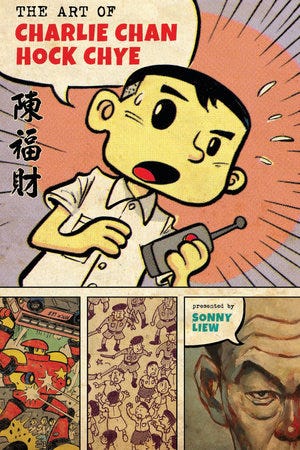
The Art of Charlie Chan Hock Chye by Sonny Liew

Winner of 3 Eisner Awards (the comics world’s equivalent of the Oscars) and the Singapore Literature Prize, The Art of Charlie Chan Hock Chye does the impossible: it makes Singapore history both educational and entertaining. Written from the point of view of a fictional comics artist, the graphic novel counters the monochromatic official state narrative with a colorful world of neglected truths and plausible imaginings. Alternative facts have never been so well deployed. Inventively the novel interweaves the artistic career of Charlie Chan Hock Chye with the rise and fall of leftist politics in Singapore. Comics aficionados will, additionally, appreciate the interweaving of a history of graphic styles, from both the East and the West, into this very Singaporean portfolio by Sonny Liew.

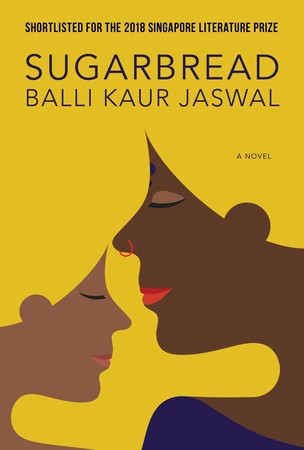
Sugarbread by Balli Kaur Jaswal

Balli Kaur Jaswal’s third novel Erotic Stories for Punjabi Widows was recently selected by Reese Witherspoon for her book club. Female empowerment, and its imperilment by religious, sexual and racial chauvinism, is a common thread through all of Jaswal’s books. Erotic Stories, set in London, is an assured accomplishment. Her first novel Sugarbread, a finalist for the Singapore Literature Prize, paints an intimate and moving portrait of Pin, a young girl growing up as a Sikh Punjabi in supposedly post-colonial and multicultural Singapore. Here are the nuances, the contradictions, the compromises of living as a member of a religious and ethnic minority in a country, all thrown into sharp relief by the alternating narrative of Pin’s mother. Under the winning charm of the writing, Jaswal asks tough questions of our societies and us.

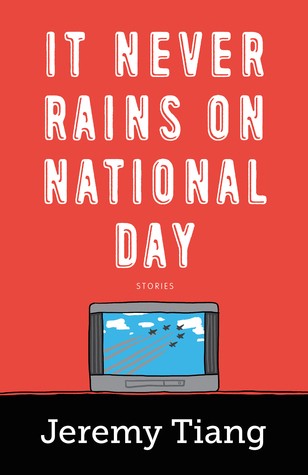
It Never Rains on National Day by Jeremy Tiang

Like the eponymous crazy rich Asians in Kevin Kwan’s novel, Jeremy Tiang’s characters go in and out of Singapore, but unlike Kwan’s complacent and oblivious jetsetters, the Singaporeans who people Tiang’s fictional world are filled with unease, anxieties, and ennui. A teacher leaves her chaperone duty in Berlin to participate in a rave. A young woman marries a rich British banker and is cast into his elite circle in Switzerland. Tiang is the master of the weighted word. In his well-measured style, he probes Singaporeans’ fear of crossing thresholds, what is called schwellenangst, also the title of one of the best stories of the collection. In doing so, he shows that Singaporeans are never more themselves than when they leave Singapore. His first novel State of Emergency won this year’s Singapore Literature Prize.

Writing Behind My Country’s Back

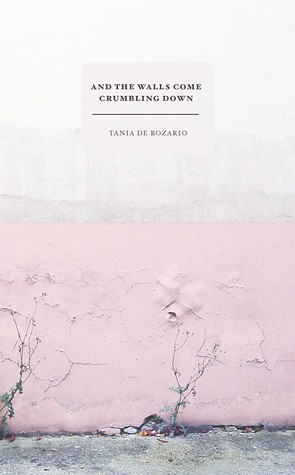
And the Walls Come Crumbling Down by Tania De Rozario

Written with a poet’s sensibility, this memoir tells the harrowing story of a young woman who leaves home without telling her family that she is never going back. What has driven this young lesbian writer and artist to this decision? What is life like, moving from place to place, living on infrequent and poorly paid freelance work, a life so at odds with the family- and career-focused lives of most Singaporeans? The image of a house, deteriorating in the rain, infested with roaches, becomes the powerful lens through which De Rozario view not only her own life, but also the state of the country. What reads as a moving memoir turns out to be also a stinging critique of Singapore. The style, with its keen ear for the cadences of language, befits the poet of Tender Delirium, shortlisted for the Singapore Literature Prize.

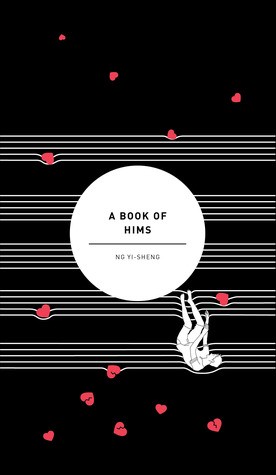
A Book of Hims by Ng Yi-Sheng

What I admire about Ng Yi-Sheng as a writer is that he does not follow anyone’s dictates, but his own. last boy, his debut poetry collection that won the Singapore Literature Prize, is freewheeling and voracious in subject matter and style. His next book, after a long break, is a collection of spoken-word poetry, which he has performed to some notoriety. Heedless of literary boundaries, Ng has written speculative fiction and a novelization of a film. In his third work of poetry A Book of Hims, he gives us a set of tender love lyrics, as daring as ever in their metaphorical leaps, but also courageous and powerful in their plainspoken eloquence. “I am sick,” he confesses, “of chasing beauty; I will choose/ to love another as one loves/ an ancient cat.”

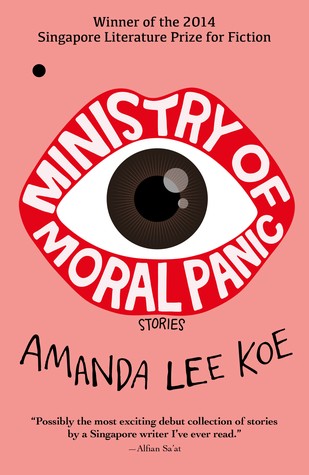
Ministry of Moral Panic by Amanda Lee Koe

The Ministry of Moral Panic electrified Singapore readers when it arrived on the local literary scene. Here is a voice unlike previous voices of Singapore fiction. It is energetic, knowing, nervy, awkward, brash, in a word, contemporary. Dialogue is not courteously set off with quotation marks, but runs along with and in the text. The stories flirt with sentimentality and stereotype but are usually rescued by verve and style. What are they about? The “hot fuss” of love, between a curator and her artist, between a teenage girl and a much older married woman, between a school boy and a ladyboy in the salty form of the country’s tourism icon, the Merlion. Love is interrogated again and again about its negotiations and negations in order to discover what is real. Amanda Lee Koe is a beguiling storyteller.

Corridor by Alfian Sa’at

Alfian Sa’at’s Malay Sketches, published in the USA this year by my press Gaudy Boy, is named by Electric Literature as one of “7 Short Story Collections to Read This Year.” Alfian thoroughly deserves this accolade as he is one of the finest writers produced by Singapore. In addition to being a short-story writer, he is a playwright, poet, and translator. His first collection of stories Corridor already amply displays his keen powers of observation and sympathy. The title refers to the common space that links neighbors in Singapore’s high-rise apartment blocks. In like manner, the 12 stories in the book explore the ties between Muslim Malays, and between the community and others. Fully inhabiting the living spaces of this densely populated country, the stories rise in the imagination to become symbols of our search for affinities.

The Lover’s Inventory by Cyril Wong

Cyril Wong is, to my mind, the best living Singaporean poet. Two-time winner of the Singapore Literature Prize, Wong has written and published profusely. There are poetic gems in all his books, and his latest collection The Lover’s Inventory is no different. It offers his characteristic lyrical intelligence, emotional honesty and biting sarcasm as the lover takes stock of all his past loves. The newer element is the layer of memory, the working of hindsight, the depth of reflection. Without losing any of its bitchiness, the poetry strikes a note of reconciliation, a chord of gratitude, as in “Thanksgiving”: “Thank you for paying for everything/ from the hotel to the lube to the takeaway/ and also, at times, for making me pay.”

The 10 Weirdest Places Shakespeare Plays Have Been Performed

In As You Like It — the play with the most lines for a woman character out of all Shakespeare’s plays, incidentally — Jacques delivers the lines “All the world’s a stage.” He means it metaphorically, but when it comes to Shakespeare, we’ve done our best to make it true. All the continent is a stage: Never forget that Eugene Shiefflien cursed us with the starling, a bullying invasive species that likes to live inside your house, with his plan to bring every bird ever mentioned in Shakespeare to North America. All the solar system is a stage: All 27 known moons of Uranus are named after Shakespeare characters. And we love to perform Shakespeare plays in the unlikeliest places, which means that airplanes, subways, supermarkets, hospitals, and cemeteries become stages too.

Here are 10 performance locations that completely misunderstand Jacques by taking him extremely literally.

Airplane

Photo by Alec Wilson on Flickr

“What’s in a name?” Quite a bit for Easy Jet, the budget airline that campaigned to dub April 23rd National William Shakespeare Day. How did they do it? For starters: a large image of William Shakespeare painted on the fuselage of the plane, a petition to get 100,000 signers to ask Parliament to consider the holiday, staged performances of Shakespeare in the waiting areas of airports. But then, they took to the sky — as lovers do, on borrowed cupid wings and jet fuel to “soar with them above a common bound.” As the penultimate wing of the campaign, the airline invited Reduced Shakespeare Company theater troupe to perform Romeo and Juliet onboard a flight to Verona.

Subway

I’m pretty sure Shakespeare wrote: “Life’s but a walking shadow, a poor player [being held momentarily in the station by the train’s dispatcher].” Those who live in New York live most of our lives underground in delayed subways all over the city. The subway is a capacious space with multiple uses: transportation, hotel room, toilet, and yes, a stage for buskers and “showtime” dancers. But Paul Marino and Fred Jones, according to The New York Times, have more explicitly made the subway their stage for bilingual performances of Romeo and Juliet, Hamlet, and others. No telling what the L train shutdown will do to their careers.

Cemetery

Pretty much any Shakespearian tragedy or even history would be so cozy in a cemetery. (Hamlet even has a scene in one.) But what about a comedy? As part of the Shakespeare in the Cemetery series this summer, the Mechanical Theater company (which specializes in performing theater in historic monuments and museums around the city) performed A Midsummer Night’s Dream in the Laurel Hill Cemetery in Philadelphia. Which I guess does something to sum up the plot of Shakespearean theatre — everyone gets married, but don’t forget everyone dies, too.

The Amazing True Adventures of Macbeth and His Best Friend, the Cereal Guy

Supermarket

“This above all: to thine own self be true” I guess. (Photo by Aiman Zenn on Unsplash)

In southeast London, Supermarket Shakespeare performs scenes from Shakespeare and other plays. They are “disrupting the spectacle of consumerism with their own spectacle,” as reported by Lyn Gardner for the Guardian. Six actors at a time wander through the grocery story aisles performing 20-minute scenes. Spectators get to follow up to three actors in the hour, watching as sometimes their scenes might intersect with one another. Gardner says there’s little actual Shakespeare, but lots of real life colliding with real theatre.

Hospital

Photo by Nhia Moua on Unsplash

We credit Shakespeare with a lot of things, but can we credit him with the invention of modern psychoanalysis? Some argue that the plays provide audiences with a shared experience to help us better understand our actions and our fates. As reported by The Huffington Post, the late psychotherapist Murray Cox studied a series of performances of Shakespeare’s plays at the Broadmoor (the maximum security hospital for patients with severe mental illness who have been convicted of serious crimes). The plays include depictions of severe emotions and their consequences — love, lust for power, envy, greed, murder, treason, betrayal, and so on. The plays were performed by professional theater companies. Many in the audience were convicted of the same crimes being performed. After the performance, according to HuffPost, there was a “therapeutic trialogue” between the actors, patients, and clinicians.

Pub

Photo by H Wong on Unsplash

While the toast “Good company, good wine, good welcome can make good people” doesn’t ring true by the end of Henry VIII, we can still give it a try, no? In Washington D.C., there’s Shakespeare in the Pub. Guess where it’s performed? Bars around the city. And in New York, there’s Drunk Shakespeare, performed on a more traditional stage. Audience members take a shot as they enter and the players are challenged to drinking games that complicate their ability to deliver their lines.

Prison

Photo from SBB, 2017 Cast & Crew of Julius Caesar at Luther Luckett Correctional Complex

Shakespeare Behind Bars (SBB) is a non-profit that has been putting on productions of Shakespeare in prisons “to offer theatrical encounters with personal and social issues to incarcerated and post-incarcerated adults and juveniles.” According to the National Institute of Social Justice stats reported on the SBB website, the national recidivism rate is 76.6%. The rate for Shakespeare Behind Bars participants is 6%. I’m no statistician, but I’m going to call that statistically significant. Maybe we direct more funding to the arts and away from the prison-industrial complex? Just a thought. You can donate to SBB here.

Parking Lot

Photo by John Matychuk on Unsplash

We’ve paved paradise and put up a production of Julius Caesar. Every summer the Drilling Company puts on bare-bones interpretations of Shakespeare plays in a parking lot in New York City for their Shakespeare in the Parking Lot series. The key is that these parking lots are still in use, with performances taking place alongside cars trying to pull in and back out of their spaces. The founding director, Hamilton Clancy, says they chose the parking lot for a stage because it’s “a tremendously accessible gathering place in the heart of the city” and the space gives the traditional performance “an urban wrinkle.”

Zoo

Will the exit be pursued by a bear? Photo by Mark Basarab on Unsplash

Asses, sure, but I don’t remember any Shakespeare with pythons in the backdrop. In “Wild Shakespeare” in Australia, the Wild Voices Music Theater Group performed scenes from Shakespeare “in nooks and crannies” all over the National Zoo to inspire conversation about the relationship between human nature, animals, and the environment.

Briefcase

Last, but not least, but also maybe the littlest stage for Shakespeare. Tiny Ninja Theater performed Macbeth at the New York International Fringe Festival on a “briefcase-sized stage” for an audience of ten, with standing room available for five additional audience members. Mr Smile starred in the role of Macbeth, and Mrs Smile as Lady Macbeth. The directed admitted that working with these inexperienced actors did present some challenges: “Tensions and personality conflicts are bound to arise when a large group of tiny plastic ninjas work this closely on a project that means so much to all of them. But, in the end, we are all stronger for it. I would like to extend a very special thanks to Ninja, who stepped into the role of Donalbain at the last moment, after the original actor was injured in a freak Exacto knife accident.”

Historical Reenactment Is Cooler, and More Progressive, Than You Think

The police marched onto the field, waving their batons. The denizens of Streeterville stared back at them defiantly.

Then the first water balloon hit.

Then another hit, and another, until police, Streeterville residents, and spectators were all throwing balloons at each other in 90-degree July heat. It wasn’t an exact reenactment of noted real estate fraud Captain George Wellington Streeter’s fight against police at the turn of the 20th century, but for reenactors (like me) who were wearing a corset, bustle, and petticoats, it was much more pleasant.

The Police v. Streeterville Denizens

This was one of three components of “Like a Secondhand Sea,” a historical celebration of Lake Michigan put on by Paul Durica’s Pocket Guide to Hell: an organization committed to telling the stories of Chicago, often focusing on its social and labor history, through tours or historical reenactments. (The name came from Chicago poet Nelson Algren’s Chicago: City on the Make.)

The first part of the event commemorated the early history of Chicago: explorers Marquette and Joliet navigating the Lake Michigan coastline in 1673. Performers were dressed as traders, with white clothes and animal skins, and “paddled” around the streets of downtown Chicago in modified canoes that strapped on their shoulders like sandwich boards. The second part was the celebration of the raucous Streeterville and the battle with Captain Streeter and the police over the land that would later become hot real estate in Chicago in 1886. Finally, it ended with a brass band to commemorate the Sanitary District’s reversal of the Chicago River in the last decade of the 19th century.

These events are more than just reenactments; they are new ways of envisioning the meaning of history and culture creation. They are not your typical Civil War battle or camping reenactment. Instead, the events commemorate the past with a modern twist, like the balloon fight for Streeterville battle with the police, a dodgeball fight for the Beer Lager Riots, a mock trial to remember a pig’s 1960s run for president, and many more. These reinventions don’t just recall the past — they bring joy and context to these historical occurrences in the current day.

These events are more than just reenactments; they are new ways of envisioning the meaning of history and culture creation.

As a trained historian, I have always been interested in the overlooked stories in history: the stories of the people who showed up to the marches, who made the newspapers, who cleaned up after the meetings. Histories that focused solely on the leaders didn’t interest me terribly. But often, that’s the history that survives. History is written by the victors, but it’s written about the leaders, whether they win or not — people are more likely to record and preserve things that relate to Great Men and Women.

When I started attending reenactments, and later organizing them with my husband, I did it because I wanted to explore and bring to life the forgotten history of ordinary people. But they aren’t just about the past — we are also creating the new history of our city. Whether it’s a balloon fight, a dodgeball game, sing-alongs, or a scandalous gala, historical reinventions bring the audience into the past while also defining the present. Audience members are invited to partake in this lived history so that the tradition and themes continued beyond the parameters of the event. This will be our history once again.

Histories that focused solely on the leaders didn’t interest me terribly. But often, that’s the history that survives.

The first historical event that my husband and I put together was the infamous First Ward Ball, the gala held for the madams, prostitutes, gamblers, and other degenerates of the Levee, Chicago’s vice district in the first decade of the 20th century. This ball was originally hosted by two of Chicago’s most corrupt aldermen, Bathhouse John and Hinky Dink Kenna. My husband, Scott, played the outlandish and bombastic Bathhouse John, poet laureate of the City Council and bathhouse enthusiast. We held it in conjunction with the This is Not a Studio, an apartment art gallery, and the visual artist Julia Haw.
Our new First Ward Ball was held in the second floor theater of a local bar called Fizz. It was to be a joint art show with Ms. Haw’s work and theatrical performance. Despite our scant budget, we found artists and performers to touch on the themes of vice, sin, and corruption. I decided to celebrate the infamous Everleigh Sisters who ran the gilded house of ill repute. I composed poems from the point of view of different prostitutes, called “butterflies” at the Everleigh club, and performed several of their stories on stage. I wanted to bring their stories and experiences to life for the audience.

It was a start to even more mysterious and wonderful roles in different eras of Chicago history. Through these events, we learned even more about the strange and glorious Chicago history, often forgotten in comparison to the histories of New York, Philadelphia, and Boston.

In commemoration of the Beer Lager Riots of 1855, Pocket Guide to Hell held a beer festival and dodgeball fundraiser for Benton House, a social services nonprofit in Bridgeport. Levi Boone, a notorious nativist, was elected mayor of Chicago and pushed through anti-Irish and anti-German laws including laws outlawing the sale of alcohol on Sundays. When beerhall owner and bartenders were arrested, an angry mob formed to march on City Hall to hang the mayor and free their friends. The Mayor heard of this mob, pulled up the bridge separating downtown from the protestors, deputized a large crowd of people, and went to meet the protesters. The two groups met, shots were fired, and some people were dead. The following year, Mr. Boone was voted out of office and the laws were reversed. In order to remember this riot, the fundraiser had people play in the dodgeball game, protestors v. policemen, with very corrupt referees overseeing the game. At the same time, there were beers from local breweries downstairs. The announcer helped contextualize the game by narrating the event.

Ultimately, the event was supposed to be a celebration of Chicago’s scrappiness: we’ll die for our right to drink! Together, we remembered this ugly history in Chicago’s past when immigrant groups were maligned by the people in power and how they tried to fight back. The U.S. has a long history of denigrating its recent immigrants; only the nationality of the immigrants has changed. But what the Beer Lager Riots and the Benton House event try to show us that we are capable of changing the system. While change was brought about through voting the mayor out of office rather than violence, this event reminds us that we can come together, learn some history, play some dodgeball, and drink beer. That power can turn into the power to protest, the power to call out wrongs. Through storytelling and performance, participants were able to see Chicago’s history alongside its present, and decide what that means for our future.

Through storytelling and performance, participants were able to see Chicago’s history alongside its present, and decide what that means for our future.

More recently, the Illinois Humanities festival held The Flight of the Pigasus, commemorating the 50-year anniversary of the Chicago 1968 Democratic Convention protests. In order to poke fun at the government, the Yippies nominated a pig “Pigasus” for president of the U.S. Several original protestors were invited to speak on stage about their experiences with Pigasus and the protests. Reenactors dressed as Yippies and stood behind the stage, while collectively yelling and chanting. To top it off, a live pig named Rudy was brought to the bar to serve as our Pigasus.

The Mighty Pigasus

Often, historical perspectives on the 1968 Democratic Convention protests focus on the infamous police riot. By focusing instead on the role and eventual fate of Pigasus (allegedly, he was eaten by the cops), we were able to remember the more positive — and sillier — aspects of a protest with long-ranging consequences. Moreover, we got a chance to see the beautiful messiness of history; the three eyewitnesses of the original protest told their stories that intersected and diverged at various points. We were again reminded that we can work as a collective to protest the wrongs that we see and we can even have fun doing it.

For four years, I ran the Jane Addams Day Celebration on December 10th with the American Association of University Women — Illinois in December. Through the help of Jan Lisa Huttner and other AAUW members, Illinois passed Jane Addams Day on June 9th in 2006 for her impact of the state and the rest of the country. For the first two years, I wrote and directed a historical play about Jane Addams and her involvement with the Pullman Strike. It was a combination of historical talk, speeches from historical figures, George Pullman and Florence Kelley, an acrobatic act of an imaginary fight between George Pullman and his striking workers, and culminating in Jane Addams’ speech “A Modern Lear.”

For me, it wasn’t enough to talk about Jane Addams with speeches about her good deeds. I wanted to give the audience a sense of the stakes. The 1894 Pullman strike was the culmination of social and economic forces and a belief in what the worker/employer relation should be. I wanted to talk about Jane’s contributions to ameliorate the strike along with her own presence and style. We even brought back a tradition of “political burlesque” at the time of the strike where events would satirize public figures at the time. The event would end with the Ralph Chaplin’s famous song, “Solidarity Forever” as a way of bringing everyone, audience and performers alike, together.

We are coming together to experience the past; we are there to celebrate the ideals or simply to remember the people who came before us.

And that’s the point of the events. Whether it’s a funeral for a labor activist and songwriter, a water balloon fight, or a dodgeball, these events aim to create community. We are coming together to experience the past; we are there to celebrate the ideals or simply to remember the people who came before us. It’s not just about conveying information, which could be done through a talk or a series of lectures; instead, we want to make the past feel alive, even if it’s a modified way. Reenactments, or more accurately reinventions, of history allow us to interact with other participants and performers and leave with a sense of our shared history. While we all have our own viewpoints and experiences, these historical reenactments make us remember that we are a force to contend with and nothing in history is easily gained.

‘Ponti’ is About How Society Turns Women Into Monsters

Singaporean-born writer Sharlene Teo’s debut novel Ponti weaves dark, arresting narratives about the lives of three women: Szu, her distant and beautiful mother Amisa, and her high school friend Circe. Spanning between 1968 to 2020 in hot and humid Singapore, the novel traces the intimate and vicious ways in which the women’s lives are entangled to one another. Szu and Circe are drawn to the memory of Amisa and her short-lived career as an actress of a cult horror series, Ponti! As characters try to cope with loneliness and failure, the uncanny dimensions of Amisa’s film role as Pontianak, a bloodthirsty female ghost in white dress, seep silently into their daily lives. Winner of the Deborah Rogers Writers’ Award, Teo crafts each sentence with precision, evoking vivid imageries of how women experience their bodies and space, dream and reality, connection and disconnection.

Purchase the novel

I met Teo at the 2017 Sydney Writers Festival, where we spoke in the same panel and exchanged views on women, horror, and Southeast Asia. As an Indonesian writer, I was immediately captured by the universe of Ponti, which felt very close to home; similarities can be found in language, food, cultural expectations, and even in how our actions are structured by what Szu calls “a hot, horrible earth.” The Malay legend of Pontianak, known in Singapore, Malaysia, and Indonesia, could be seen as a projection of the fear towards women who refuse to conform to the societal norms. Ponti explore the rich cultures of Singapore and Southeast Asia while offering a fresh perspective on relationships between women, history, and (screened) memories.

A recipient of the Booker Prize Foundation Scholarship and David T.K. Wong Creative Writing Award, Teo is currently completing her Ph.D in Creative and Critical Writing at the University of East Anglia. Prior to the U.S. release of Ponti, we conversed over email about the Orientalist connotations of Asian femininity, myth-making as ciphers of fear, and turning the pockets of weirdness and decay in cosmopolitan Singapore into its own character in her novel.


Intan Paramaditha: The Malay legend of the female ghost Pontianak is well known in Southeast Asia, especially Singapore and Malaysia. In Indonesia she is called Kuntilanak, although we have a city called Pontianak, where the horror film director in Ponti comes from. What inspired you to explore this myth?

The myth of the Pontianak relates to societal anxieties and expectations around childbirth, childrearing and the female body.

Sharlene Teo: I’ve always been fascinated by the Pontianak, found something subversive, sexy and deeply threatening about her. Lock up your boys and men! She’s pissed off, well-dressed, and out for vengeance. There’s the predatory aspect of this creature, outwardly an unthreatening young woman. There’s the invasion of the domestic space, the uncanny, creepy-crawling aspect of how she mimics baby sounds to fool you into thinking she is far away, when she’s actually very close. The Kuntilanak, Pontianak, Lang Suir (and for that matter another Malay ghost, the toyol)—all relate to societal anxieties and expectations around childbirth, childrearing and the female body, to me. I think that figures of fear and horror are pariahs and ciphers for insecurity and fear—they reflect what is found, at the time, to be undesirable or repugnant. Thus zombies can be metaphors for capitalistic overconsumption and xenophobia—the monster, the neighborhood menace- is the big looming Other.

IP: Motherhood, friendship, and relationships between women are dominant themes in Ponti. Are there any assumptions about women and femininity that you wish to challenge?

ST: Asian femininity, particularly under the Western gaze, has these icky Orientalist connotations of delicacy, elegance and restraint. Like a demure madonna-whore dichotomy. I’ve noticed a welcome uptick in contemporary literature that takes into account the corporeal and scatological aspects of female experience as well as the effects of pregnancy, birth and postpartum depression on the body. The women in Ponti are mostly inelegant, occasionally unpleasant, and avid in their desires and fixations. They spend a lot of time on the outside looking in. I’m fascinated by the ways people hold each other at an intimate distance, how every small act of aggression or rejection furthers estrangement; the subtle strokes of cruelty these characters inflict on themselves and each other. Of course this behavior cuts across gender, but women are competitive and tender with each other in very nuanced and particular ways.

IP: In Ponti Amisa is often described by other characters as unusually beautiful and cold, almost inhuman, but we also see girls struggling with pimples, oily faces, sweat, and other mortal concerns. How do you approach the idea of beauty in this novel?

Asian femininity, especially under Western gaze, has these icky Orientalist connotations of a demure madonna-whore dichotomy.

ST: I remember being told as a child that it takes just 7 seconds to form a first impression on someone. And that really stuck with and saddened me. It seemed unduly harsh. The fairy stories and fables I grew up reading- from 1001 Nights to the Brother’s Grimm, the Chinese and Greek and Norse myths– all involved transformations, from plainness to beauty—as if that was the main object that girls should aspire toward, obtaining the right dress, the right face to win some earnest schmuck who happened to be a prince. It seemed so facile but all-encompassing a goal. These toxic messages continue to be passed down to little girls and boys, really, about performative gender roles and narrow (mostly Eurocentric) ideals of beauty—it hasn’t gotten any better with the interactive, all-seeing mirror of Instagram and social media and so-called wellness culture. These pressures break my heart. Physical beauty comprises the tiniest fraction of how someone really is. Yet we move through the world largely judged superficially first, everything else second. Particularly as women. Particularly as women of colour. It sucks and it’s something I keep returning to thematically in fiction. I enjoy interrogating why we are shallow, digging into this in words.

IP: When I read Ponti, the images of Singapore were very vivid to me, particularly the food, the heat, the rich hybrid Asian cultures on the streets, and — especially in the Circe story — the sense of isolation in a capitalist society. Perhaps you could tell us about how you decided to write a story set in Singapore. How do you envision Singapore in Ponti?

ST: I’m conscious of my position as a Chinese Singaporean who has moved away for a long time and both the privileges and marginality of that perspective, depending on whether you’re looking at it from within Singapore or the U.K. Singapore—as a mutable, deeply cosmopolitan city with pockets of weirdness and decay—is very much its own character in the novel. Ponti is a bit of a love letter to this city I spent the first nineteen years of my life in and which has been so formative of my psyche and development as a writer. I never wanted to depict the island state in a way that was touristic, sycophantic or cliched. Singapore in Ponti alienates, stifles and embraces Amisa, Szu and Circe.

IP: What is also interesting to me is how you portray cosmopolitanism in Asia. The horror film director in Ponti comes from Indonesia and moves to Hong Kong, and there is a reference to a Filipino film as well. How do you view Asian or Southeast Asian cultures? Are there points of connection that you are trying to make?

ST: Singapore is a country comprised of so many different ethnicities and cultures, and transnational migration and mobility in the context of late capitalism is part of what makes the pace of the city so dynamic and relentless. Globalization and the internet has radically effected culture and communication, which sounds and is an obvious statement—but narratively, it’s interesting to consider how things like cosmopolitan trajectories and mass and hype culture—were not parsed or disseminated in the same way even a decade ago.

IP: This book might interest cinephiles with its many references to world cinema, from Hollywood to Hong Kong and Bollywood films. The film Ponti is situated in the tradition of Asian B-movies. Why incorporating cinema in the story? Did cinema influence the process of writing?

Figures of horror are ciphers for insecurity and fear—they reflect what is found, at the time, to be undesirable or repugnant.

ST: I’ve always loved ekphrastic texts—the vivid, illuminative liveliness that comes from having a work described is really fun and fires up the imagination. Cinema haunts the writing both literally and figuratively—I remember reading this Roland Barthes essay, The Face of Garbo, about the face as idea, mask, object—both ambiguous and larger-than-life, how faces in cinema can seem both timeless and inscripted with death. Particularly in the context of a female actor, and all the ageist expectations imposed on them. I read an interview with Winona Ryder recently where she paraphrased a line from the First Wives Club— “There are three ages for women: babe, district attorney and Driving Miss Daisy! I just never got to play that district attorney.”

I also wanted to write a book that incorporated Hong Kong action cinema, Bollywood movies, Hollywood blockbusters, and took into account a period of quietness in Singaporean cinematic history—between the closure of film studios in the late sixties, and the rise of Singaporean auteur cinema in the mid-nineties with Eric Khoo’s Mee Pook Man which kickstarted commercial cinema productions like Jack Neo’s films in the late ‘90s.

IP: Ponti has been praised by many for its rich and compelling writing style. Could you tell us about your creative process as a writer? What were challenging for you? Which authors inspired you?

ST: I write from a place of pure, abject desperation and self-doubt, to be totally honest! I feel like I know nothing and I just try and get to the nub of feeling, what these characters who slowly and messily take shape are trying to convey. I’m not a plotter at all. I write in fragments and see how it goes. I find everything challenging. I find starting, getting through and finishing challenging. That’s not to say, in the sweet spot, the flow and throes of it, that I don’t find it a pleasure. Of course I do, I love writing and always have! But I don’t have a particular process, or I’m still figuring it out intuitively. I read a lot and try to read across genres and boundaries, which usually helps to stave off some of my anxiety and creative inertia. So many authors inspire me because of their strong voices and various methods of making a story hurt and glow in wildly original ways. Most recent terrific reads: Alexia Arthurs, Ottessa Moshfegh, Suzanne Moore, Rowan Hisayo Buchanan, Kobo Abe, Elizabeth Macneal, Niviaq Korneliussen, Dorthe Nors, Akwaeke Emezi.
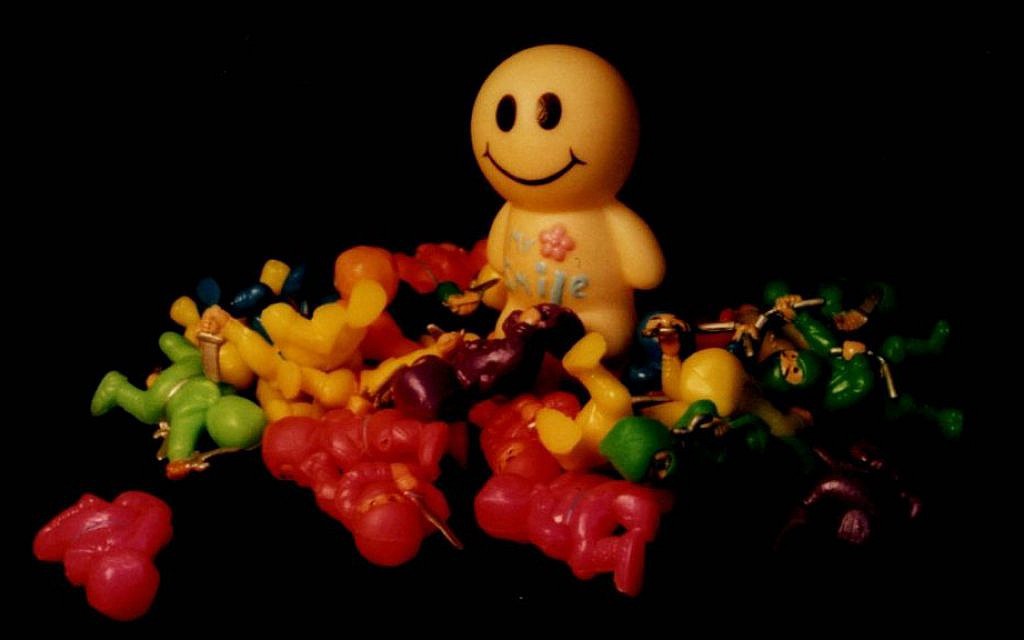
Title Your Inspirational Memoir With Our Handy Chart

What’s your “Eat, Pray, Love”? We’ve made it easy to find out

Elizabeth Gilbert’s Eat, Pray, Love sold more than ten million copies and was made into a movie starring Julia Roberts: in other words, basically the ultimate dream of anyone who writes a memoir. Publishing can be unpredictable, and it’s hard to know which stories are going to take off, but in this case we’re pretty sure the magic is in the title. People love to be handed wisdom on life in the form of short, imperative verbs.

So how can you get a piece of the pie? By creating your own inspirational memoir, using nothing but your initials and our handy chart. (This is designed for people with a first, middle, and last name, but if you have more names, your book will just be bossier, which isn’t necessarily bad! If you have fewer names, just add the initials of whoever you want to play you in the movie.) All we ask is that you donate some of your millions of dollars to Electric Lit when you’re done!

Click to expand

Pulitzer Finalist Luis Urrea Recommends Five Books That Aren’t By Men

Books by women tend to get short shrift overall—they’re less assigned, less reviewed, and priced lower. Specifically, though, books by women get short shrift from men. A recent analysis showed that in The New York Times’s “By the Book” column, male authors recommended books by men four times as often as they recommended books by women. So while it’s fun to find out which women inspired your favorite women writers, we also felt it was important to make sure men participate in our Read More Women series. Everyone needs to read more women and nonbinary authors! Nobody’s off the hook!

We’re delighted to have as our first male participant poet, novelist, essayist, and professor Luis Alberto Urrea, whose novel The Devil’s Highway was a finalist for the 2004 Pulitzer Prize. His latest book, The House of Broken Angels, is a portrait of a Mexican American family in San Diego; Dave Eggers called it “one of the most vivid and engrossing family epics of the last 20 years.”

Linda Hogan, Mean Spirit

Honestly, any one of Linda Hogan’s books is mesmerizing and transformative. But this Chickasaw author’s novel, which was a Pulitzer finalist, tells a story that speaks to our current era of greed and privilege, racism and brute force. It is also funny. And wise to mysteries we all knew, as Linda put it to me, “before we knew what the world thought, when we were seven.” Dealing with white greed and indigenous survival, it is a mysterious epic dealing with “Indian Territories” and the cataclysmic finding of oil under the land. The humor in it is colored with heartache, and is all the more wonderful. I’ll never forget some of the scenes in this book. Or characters like John Stink, who is the nonplussed subject of a funky miracle. Linda said, “What you readers call magical realism, we call realism.” It should have won the award that year.

Ursula K. LeGuin, The Earthsea Trilogy

Wait! I know what you’re probably thinking: for this list, the choice should be The Left Hand of Darkness. Yes. No argument here — read that too. Please. Her gender-bending classic of science fiction went places I think the world has yet to catch up to. It was sheer genius. But Earthsea is a series, so you’ll get several books out of it. All, in my opinion, one large epic. So I see it as a vast novel. And it can change your perception of the world, and of how nature and the divine might work. And had-ass dragons! Forget about the Khaleesi. What seemed then, and seems now, so awesome about this series is the magisterial vision, the utter world-making, the deep understanding of ritual and what we weakly call magic. This was a work to stand beside all those boys’ adventures so full of orcs and Led Zeppelin lyrics from a fierce, fearless writer who would not be placed in a box. Did I say beside those books? In my opinion, it crushes them all.

May Sarton, Journal of a Solitude

This was my mother’s favorite book. She was living a long solitude, and May Sarton guided her through it. Of course, this is a book about more than simple alone time. It’s not about just-doing-you. It is a fierce reckoning with oneself, with aging, with gender, with sexuality, and with writing itself. I have re-read it every few years. It always shows me something heart-changing. It also launched the string of power-bombs Ms. Sarton wrote as she chronicled her movement through old age and into deep old age. Vital books. Great companions. No fluff. No phony jargon. Just words and honesty fit for the rugged Maine coast where she made this long final journey.

Mary Oliver, Devotions

Oh, Mary. People say, “But I don’t read poems.” Or like poems. Or get poems. You know, when I was first in love with my wife, and I didn’t have a cent, I would walk around the big used bookstore in Tucson with her. And I’d grab a Mary Oliver book, and we’d sit in the aisle, and I’d read the poems to her. Every time I read Mary Oliver, I learn how to live just a little more. I submit this wonderful selection to you, only because I cannot list every one of her books here. Start anywhere; go everywhere. “Listen —” Mary once wrote, “are you breathing just a little, and calling it a life?”
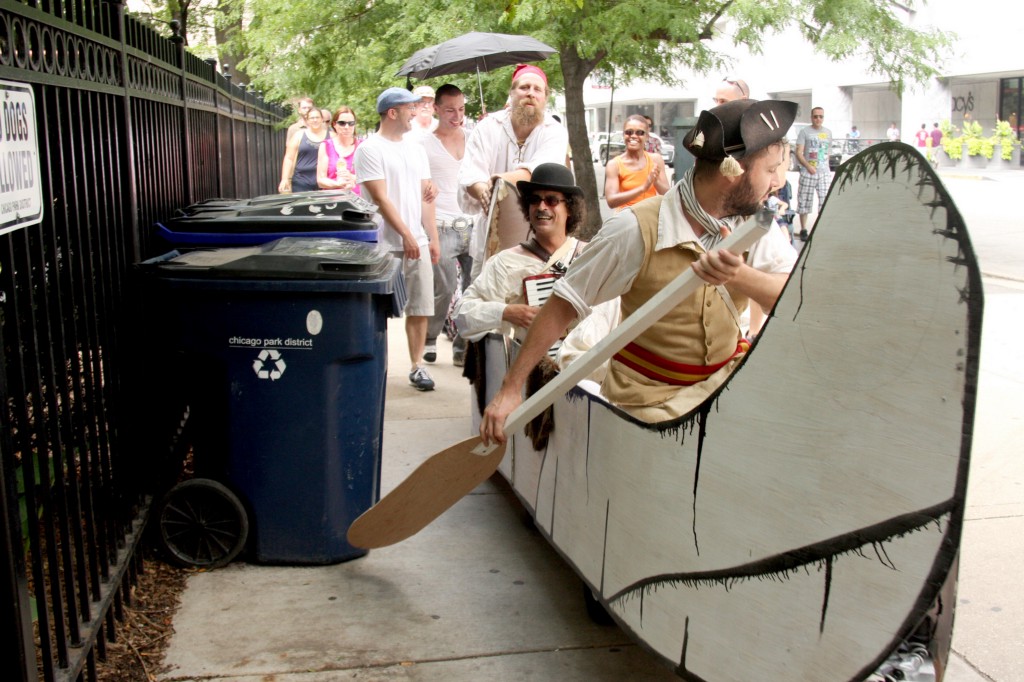
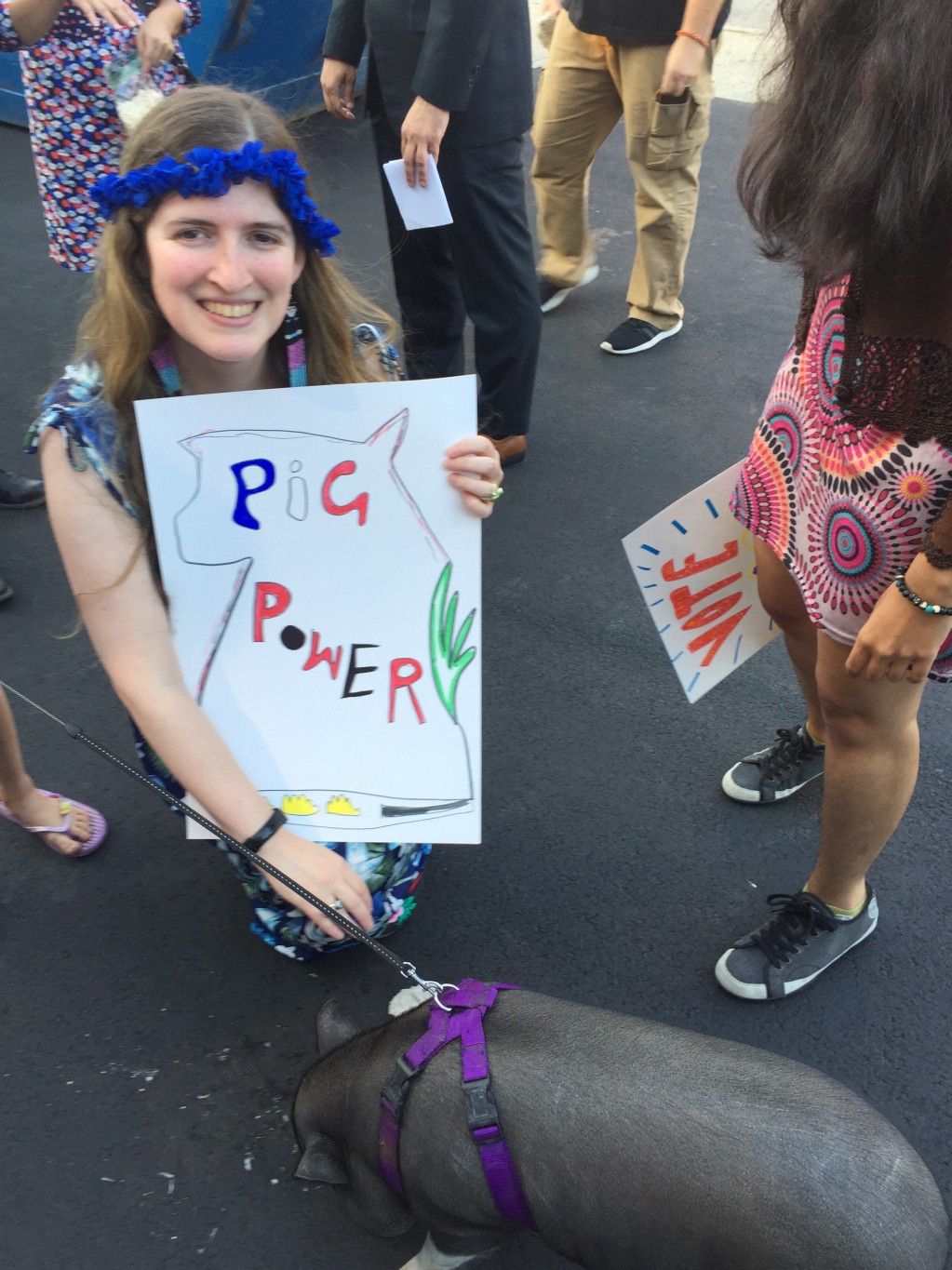
Julia Alvarez, In the Time of the Butterflies

Without Julia Alvarez — as inspiration, mentor and trailblazer — many of us in the Latinx literary community wouldn’t exist. I admire all her work, but this searing epic, based on true history, is the Dominican Republic’s great work of witness. If you love a big, juicy, literate novel with real characters and fierce women fighting the power of dictatorship and oppression, this is for you. Yes, it was made into a film, but read the book. It is heroic.