‘Gilmore Girls’ Was the First Time I Saw a Family Like Mine Thrive

“Have you seen that show Gilmore Girls? You should really watch it. You would love it.”

I must have heard variations of this recommendation dozens of times over the years, to the point where I was almost determined not to watch the damn show. It was irritating how many people would say things like “Oh! You’re totally Lorelai!” which I didn’t understand because I hadn’t seen the show, because I didn’t really watch any shows, because I was too busy being a single mom and raising my daughter on my own.

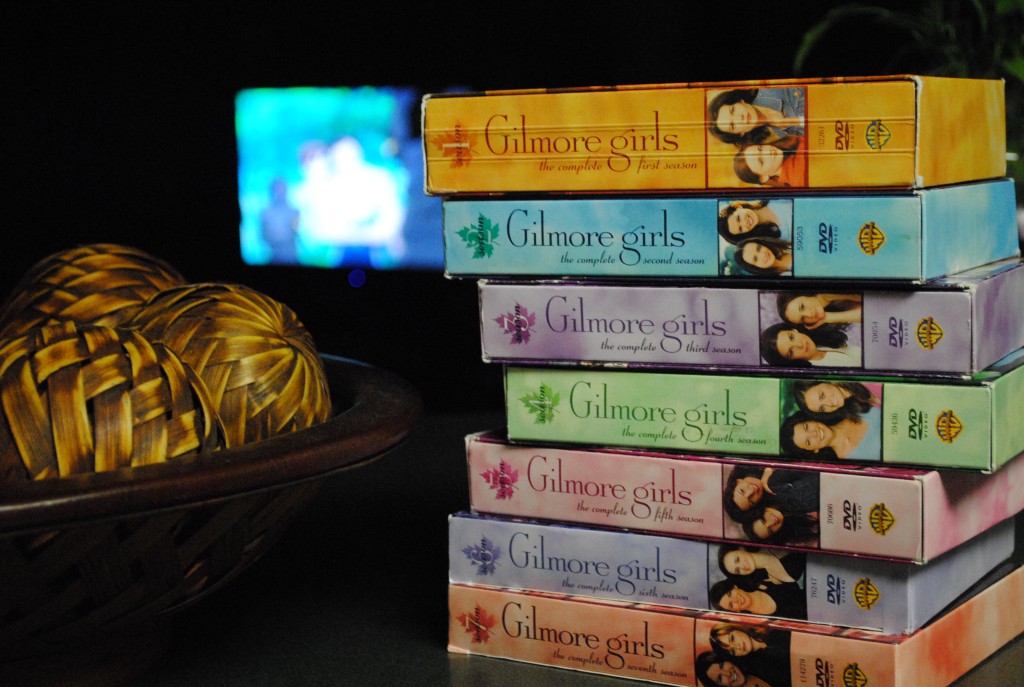
So by the time I finally sat down to watch the show, it was with my daughter, who was 14 now and finally old enough to watch with me. All seven seasons had already aired, but thanks to the miracle of syndication, we started from the beginning. We curled up together on the couch to watch a show that, it turned out, looked achingly familiar. There was Lorelai Gilmore, raised in an upper-middle-class family, throwing her future away by having a baby as a teenager, and yet building a life and a family with her daughter centered on authenticity and humor and love.

Oh. So that’s why people kept trying to get me to watch this show.

I know how important it is to see yourself in narratives. Even as a young girl, I recognized how crucial “mirrors” were in my voracious reading, as I was continually drawn to characters like Jo March, and Harriet the Spy, and other independent, bookish girls. Each time I read a story about a girl compelled to scribble in notebooks or flout social convention, it seemed more and more possible for me to do those things too. And maybe it was, at least in part, my love of rebellious girls in literature and movies that made me think it was possible, when I found myself pregnant at 17, to make the choice I did.

But I didn’t have a roadmap for what my and my daughter’s life could look like after I took that leap. I didn’t have a template for a family that was just one mom and one daughter. I had to create something new out of my own wild imagination, and I can only now see in hindsight how limited that imagination was.

I didn’t have a template for a family that was just one mom and one daughter. I had to create something new out of my imagination, and I can only now see in hindsight how limited that imagination was.

There was only one college narrative of which I was aware, sheltered as I was. You graduate from high school at 18, you go away to college and live in a dorm and stay up late talking about philosophy and go to parties and go to class and eat terrible dining hall food and have exciting hook-ups and maybe do a study-abroad semester or a summer internship (unpaid, of course, but the experience!) and in four years, you’re done.

That wasn’t what college looked like for me. I finished high school at 19 because it took me an extra year because baby, and I went off to college with my one-year-old daughter in tow. We lived off-campus, because you can’t have a baby in the dorms, and my college life was less about parties and philosophy and more about getting my daughter to daycare and taking the bus to campus and rushing back as soon as class and my work-study job were over and fixing terrible meals with the cheapest ingredients possible in our tiny kitchen and pulling all-nighters when she had the croup and staggering to class without the reading done. It didn’t look anything like the brochures, because there were no brochures for my experience; there were no models in my personal canon of narratives for what I was trying to do.

Reading About the Worst Parts of Motherhood Makes Me Less Afraid

In preschool, when the teacher asked my daughter to draw her family, she drew two identical figures, one taller, one smaller, smiling under a yellow sun. She was happy with her drawing, but when I saw it, I cried. That wasn’t a family; that was an incomplete drawing. A holding pattern. That was a temporary arrangement, a blip along the way to becoming a real family. Determined to give my daughter everything she needed, I was convinced that a “real family” was an essential piece of that.

My inability to see that a two-person family could be full and whole and complete led to some of the worst decisions of my early adulthood. I was fixated on creating a family structure for my daughter that echoed what she saw on television and in her picture books. I was trying to fix her reality so that she would see herself mirrored in those stories. I was single-mindedly husband-searching in order to lend some legitimacy to our little family unit, rather than recognizing how rich our life was already. This obviously put enormous pressure on the relationships I got into during that time, as each person I dated was immediately being put on trial as a potential husband and stepfather. I’m ashamed to admit that, in those relationships, I acted like the worst stereotype of a needy woman, unable to reach any kind of actualization without a man in her life.

I was fixated on creating a family structure for my daughter that echoed what she saw on television and in her picture books.

The irony was, I wasn’t really needy at all. I wasn’t looking for someone with whom to share the load of parenting — I had that shit handled. I didn’t need financial support — I preferred to be financially independent and insisted upon carrying my own weight in any partnership. It was as if I didn’t really want a partner for myself, but just to fill in the picture so we could look like a “normal family.” As if normal was a thing that really existed.

In kindergarten, my daughter drew another family picture. This one had the two of us in the center, but she also drew her grandparents, and her dad, and her aunts and uncles, and my closest friends, the ones who had stepped up to be honorary aunts and uncles in her life. The paper was crowded with figures; they barely fit on the page, all surrounding the little girl at the center of the picture with wide smiles and open arms. My daughter was wiser than me. She didn’t see anything lacking.

But part of me still thought our life was somehow lacking — until I started to find other cultural narratives, new mirrors that reflected our family the way my daughter saw it. In Gilmore Girls, Lorelai and Rory have built a life independent of Rory’s father, independent of Lorelai’s parents, but still emotionally interconnected with the family of choice that surrounds them. They are not lonely, or incomplete. In the sixth episode of the first season, Lorelai throws Rory a birthday party and the whole town comes, and it’s wild and fun, and it’s crystal clear that everyone in attendance adores this kid and has contributed to her upbringing in various loving ways. Of course Lorelai can’t be everything her daughter needs all on her own. But she has set up their life, welcomed others into their world, so that Rory’s life is as rich and warm as Lorelai’s own childhood was lonely and cold.

I didn’t discover the show until later, but I wonder how my life would have been different if it had existed as part of my own internal bibliography of possible narratives when I first took that leap at 17. If I had had Lorelai Gilmore as a model, back when I was first trying to figure out how our life could still be rich and worthy and joyful, with just us two. Knowing how susceptible I am to these narratives, knowing how desperately my younger self in particular hungered for examples and archetypes, would it have made a difference? Would I have been just a little more confident, seeing a prototype of how this had been done before? Could I have been just a little more comfortable, a little more relaxed, if I could have seen a little bit of my own possibility in the fast-talking, entrepreneurial, independent Lorelai Gilmore? I don’t know. But I do know what it meant to my daughter.

I wonder how my life would have been different if I had had Lorelai Gilmore as a model, back when I was first trying to figure out how our life could still be rich and worthy and joyful, with just us two.

When she was in high school, we often watched the show together. Even though our family had expanded by then, with the addition of my husband and two more children, watching Gilmore Girls was something we did together, just the two of us. And I saw how important it was for my daughter to see herself in Rory, to see her experience of having a young mom mirrored on television — and to see an echo of our own unusually-close bond, the product of having grown up together, of living for years as a solo pair, knowing each other more deeply and completely than a parent and child in the midst of the noise of a larger family usually do. It was important for her to see, too, the darker side of that closeness — Rory’s need to break away, to establish an identity separate from the sometimes suffocating love and attention of her mother. My daughter got to reap the benefits of having those experiences modeled for her.

When they released the reboot mini-series, Gilmore Girls: A Year in the Life, of course we watched it together. My daughter — now 23 and out of college, living in her own apartment and leading her own independent life — came over and we camped out on my bed, bingeing as much as we could get through in an afternoon. We grabbed each other’s hands, we cried, we laughed, we threw our arms up in frustration at Rory’s directionlessness. But mostly we just reveled in the nostalgia — not just for characters we’d grown to love over years of watching the show (Lane! Sookie!), but for the feeling of being seen, of being recognized, of having something of the truth of our strange and marvelous life reflected on the flickering screen before us.

This is why we need diverse stories, why the world hungers for a multiplicity of narratives. Not just so we can understand the experiences of others — though I did have several friends over the years who admitted that Gilmore Girls had provided a window through which they could understand my weird life a little better — but so that everyone can have that delicious and uncanny feeling of seeing some aspect of their own truth resonating within someone else’s story. To see a roadmap for their own possibilities. I know that for me and my girl, it meant the world.

11 Books That Prove There’s Nothing Wrong with Self-Publishing

No one likes to be told “no.” Whether it’s a child asking for a cookie or a guy handing out fliers on the street, getting turned down hurts. But if you’re a writer, it’s also just part of the job. Getting published is hard, and even successful writers were often rejected dozens or even hundreds of times before something clicked. Too bad you can’t skip the whole query letter part of publishing and do it all yourself.

Except that technically, you can. Self-publishing has existed just as long as traditional publishing, and the current digital age has made the distribution of independent literature more accessible than ever. Of course, some would argue that although self-publishing a work is possible, it won’t land a writer anywhere but in debt. Print-on-demand services demand huge out-of-pocket investments, and online options like Amazon are so flooded with dime a dozen romances that not even the algorithms can sort them out. The results of trying to publish a book on your own are often lackluster at best.

Here is my rebuttal to all the self-publishing naysayers out there: self-publishing may be tough, but as an alternative to traditional publishing it is exactly what we need to give little voices a chance to grow loud. Many of the big names that float around now got their start with self-published literature. They are proof that going the self-publishing route now can lead to greater things down the line.

Still Alice

Still Alice by Lisa Genova

New York Times best selling novelist and a neuroscientist on top of that, Lisa Genova jump-started her writing career with Still Alice back in 2007. Self-published with iUniverse’s print-on-demand service, Genova sold copies out of the trunk of her car for about two years, along with discussion guides in support of people with Alzheimer’s and their caretakers. This was a huge force in getting conversations moving toward a better understanding of the disease. After getting picked up by Simon & Schuster, Still Alice alone has over 2.6 million copies in print in over 30 languages. Genova’s subsequent works have been no less praiseworthy, earning her several international prizes and an honorary degree.

Switched by Amanda Hocking

Amanda Hocking is undoubtedly a star of self-publishing. Her success story started in an all too familiar manner as numerous agents and publisher rejected the manuscript she slaved over for more than a year. It was her first book, and ,unwilling to call it quits, Hocking turned to self-publishing. Switched entered the market at just the right time with a story the New York Times calledThe Princess Diaries meets Twilight.” That book that no one wanted became a trilogy selling well over a million digital copies, and it was the high demand for the series that pushed Hocking around to the traditional publishing path with St. Martin’s and Macmillan. It goes to show that the key to surviving solo as an author is to keep tabs on who’s reading what.

No Thanks, E.E. Cummings

Edward Estlin Cummings was a weird writer. Best known for his experimental, avant-garde style, his poetry undid the cliches of writing about nature, love, and romantic impulse by distorting language itself. Punctuation went out the window, and spelling and spacing were open to interpretation. As a result, Cummings was dynamic in a way no one had seen before, but either because of his experimental style or because of politics that were seen as anti-left-wing, not many publishers would touch him. While critical review was generally in his favor, even when scandalizing the masses with some of his sexier verses, Cummings was forced to rely on his own resources (and his mother’s) to publish some of his work. Luckily, due in part to his own tenacity, Cummings eventually got the fame he deserved.

The Martian, Andy Weir

The Martian went from a simple side blog to a bestselling novel to a Matt Damon Hollywood blockbuster in a tale that sounds more fictional than the book itself. Weir was a science guy with a devoted following of science people. Chapter by chapter he posted a story that followed a guy stuck on Mars, but it was the extraordinary detail and realism of The Martian that drew attention from sci-fi fans and literature lovers alike. Since people seemed pretty into the story, Weir decided to compile the chapters and sell it on Amazon for just $0.99. The blog had been free, so he didn’t want to overcharge. Little did Weir expect the book to blow up from there. The Martian ended up brushing the top of the New York Times bestseller list for both hardback and paperback, and by 2013 the printing and film rights were sold, leaving Weir one happy blogger.

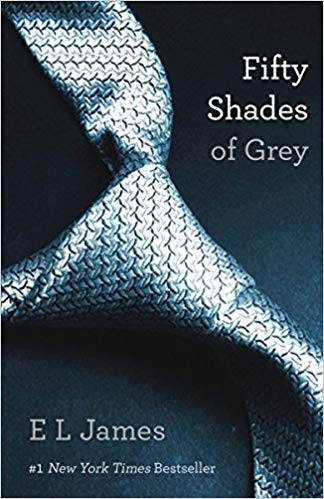
Fifty Shades of Grey, E.L. James

Speaking of internet-to-film sensations, it would be oversight to leave the infamous Mr. Grey off the self-publishing list. Regardless of the critical reception, literary merit, and social health repercussions of the Fifty Shades trilogy, it is impossible to deny its meteoric rise to fame. But Fifty Shades was not always Fifty Shades. It used to be called Master of the Universe, a well-loved Twilight fan fiction that was later taken down from the Fanfiction website due to sexual content. After getting the boot, James decided to repost the story as an original work on her own site. Edward became Christian Grey, Bella became Anastasia Steele, and without the ties to Twilight the already popular series was free game for publishers to scoop up. Thus a fan fiction became a controversial trilogy as well as a household name synonymous with “mommy porn.”

A Naked Singularity, Sergio De La Pava

It took De La Pava 688 pages to explain the hopelessness of the American criminal justice system. As a public defense lawyer in Manhattan, he squeezed his writing time into morning commutes and breaks between court sessions, compiling a massive lament on hypocrisy, injustice, and the destruction of a sense of self. Finally the epic was complete, but when it came time to publish, De La Pava hit a wall. The book was too big. It was too complicated. It was too political.No one wanted to publish. Sergio De La Pava was ready to call it quits there, but Susanna De La Pava took matters into her own hands. Having defeatedly self-published one hundred copies to sell to a few friends, they had a few copies on hand which she sent around for reviews. Eventually they got a bite. The story plays out as you’d expect from there: University of Chicago sent it to the printers, De La Pava racked up reward after reward, and all the publishers who rejected him in the past ate their hats.

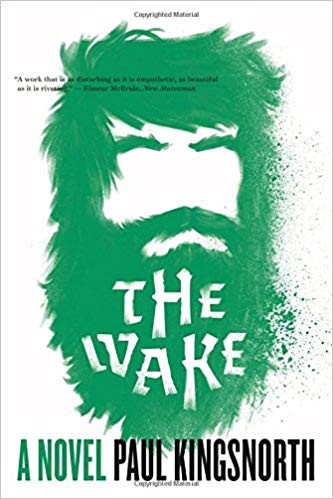
The Wake by Paul Kingsnorth

Though Kingsnorth did not technically self-publish The Wake, he is an example of how to use new, non-traditional publishing methods as a more flexible alternative for experimental books. The Wake was written in a language that does not exist, and Kingsnorth doubted he could find a publisher willing to look past that. He had spent years creating a halfway point between Old English and the vernacular of today for his historical novel, and he was fully prepared to see the publishing process through himself if he had to. Luckily, he didn’t have to. A crowdfunding publisher by the name of Unbound stepped in. Just like with a Kickstarter, Unbound launched The Wake as a project that allowed hopeful readers to pledge their support for Kingsnorth’s work. The novel surpassed its target with roughly 400 subscribers, more than enough to get published with much acclaim.

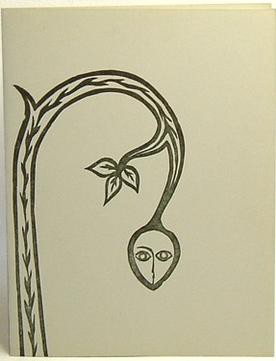
Double Persephone by Margaret Atwood

Margaret Atwood is now a grand dame of Canadian letters who could probably get a six-figure advance for her shopping list, but let’s rewind the clock to 1961 and a little book of poetry called Double Persephone. Atwood’s first published work and eventually the winner of the E.J. Pratt Medal started out with a mere 220 copies, which Atwood set herself with a flatbed press and a cover she designed with linoblocks. Containing only seven poems, Atwood’s book was an immediate success. With close attention paid to themes of opposites and the suffering of women, her later speculative fiction novels only further solidified her reputation as a feminist figure whose writings are no less accurate today as they were with Double Persephone.

19202921

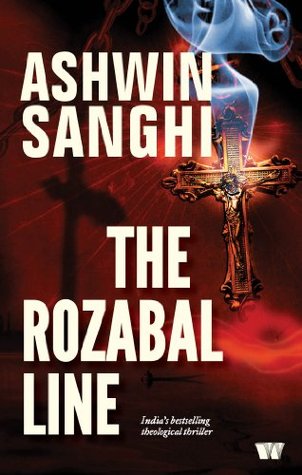
The Rozabal Line by Ashwin Sanghi

One of the highest-selling English fiction authors in India, Sanghi is best known for his crime thrillers, one of which stole the #1 spot in India, breached the U.K. Sunday Times Top 10, and made it into the New York Times Best Sellers. However, nearly a decade before this fame came The Rozabal Line. Written while working full time and only completed after two years of intensive polishing, The Rozabal Line was supposed to kick off Sanghi’s career as a writer. Instead it was rejected 47 times by agents and publishers. With no other avenues available, Sanghi like those before him turned to self-publishing. In 2007 he sent the book out under the pseudonym Shawn Haigins where it built a reputation for itself. By 2008, Tata-Westland and Indian publisher saw the indie book for what it was: a gem just waiting for the attention it deserved.

Image result for The Shack by William P. Young goodreads

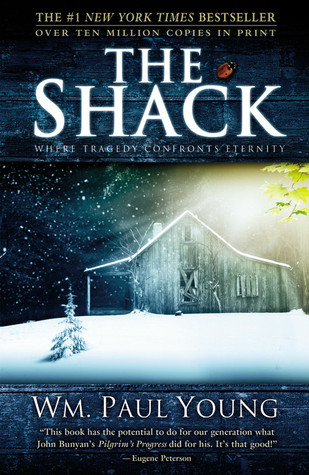
The Shack by William P. Young

This man did not intend to create a Times bestseller; he just wanted a cool story to give his kids for Christmas. The first printing only produced 15 copies, which Young distributed to family and friends. It was those friends who encouraged him to tighten it up and get it published for real. Together they hammered out rewrites of the manuscript and sent it to various publishers, but after 26 rejections they realized the only way to get anything done was to do it themselves. In 2007 Young worked with Wayne Jacobsen, Brad Cummings, and Bobby Downes to establish Windblown Media and publish their sole title, The Shack. With little marketing other than word of mouth, close to no funding, and a dozen maxed out credit cards, their little publishing house supported the book through its climb to the first place spot of the Times bestselling paperback list. Now Young has multiple titles under his name that explore questions of theology and religion.

113436

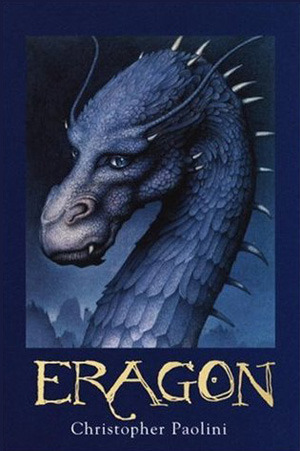
Eragon by Christopher Paolini

A homeschooled kid with a fondness for fantasy, Paolini began his Inheritance Cycle series just for fun. He tried his best to live his adventures by learning animal tracking, archery, survival skills, and weapons crafting, and whatever he couldn’t learn hands-on, he studied and threw into his writing. Eragon was born from the head of a fifteen-year-old boy, and after three years of revision Paolini had boxes full of freshly printed books to peddle around libraries and schools. With all the work Paolini put into promoting, also considering the books already positive reception, it was no wonder Knopf Books for Young Readers eagerly stepped in. The sales speak for themselves with over 20 million copies sold by May 2011. Paolini currently holds an unshaken position as Guinness World Records’ “Youngest Author of a Bestselling Book Series.”

How Gentrification Changed the Brooklyn Literary Scene

The Brooklyn Letters project is a series of oral histories of literary Brooklyn from 1999 to 2009, presented by Electric Literature with support from the New York City Department of Cultural Affairs.

This is the third installment of Brooklyn Letters. You can read earlier oral histories here.

“D o you remember when[insert demolished/renovated landmark] used to be here?” This type of conversation starter is applicable to many cities, not only New York. But it’s especially overwhelming here, thanks to an influx of affluent newcomers, and political and commercial changes intended to cater to them and their money. When it comes to NYC, terms like tumultuous, gritty, and urban are no longer applicable, replaced with up-and-coming, hipster, trendy. These changes extend to the demographics too: the Black population of Fort Greene declined by 30% since 2000, and household income has increased 53%. Gentrification isn’t simply a new form of branding; it’s erasure.

While NYC is known for the arts, being an artist in NYC is a very different story. The Brooklyn literary scene isn’t at a loss for artists: it’s estimated to have the highest population of all the five boroughs, with my hometown of Queens a close second. The numbers for new residents increases each year, as does the turnover of buildings and the cost of rent. This revolving door filters out those who can’t maintain a life here, be it artistic or domestic, thanks to rising costs. The result razes buildings and communities. Artist spaces that provided solace, refuge, and fellowship shift focus or fade away unable to sustain themselves even when they have a steady clientele. As priciest cities go, Brooklyn is right behind Manhattan — but the average weekly wage for Brooklyn inhabitants is actually lower than Manhattan and Queens. Gentrification isn’t solely race specific; it’s also about class.

Gentrification isn’t simply a new form of branding; it’s erasure.

Those of us born and bred in New York City, or who have lived here long enough, are witnesses to the changing landscape. From the erection of high-rise condos to the widespread farm-to-table eatery craze, Brooklyn, like many areas of NYC, is emblematic of change that can come at a cost. For this segment of Brooklyn Letters, I spoke with authors who have experienced (and written about) these ongoing shifts of gentrification in areas like Fort Greene, Williamsburg, and DUMBO. We talked about the spoken word movement, PoC-owned businesses, and lesbian archives: all inherent pieces of not only Brooklyn history but the larger literary canon. Perhaps you heard of these spaces, or maybe you lost out because you arrived too late. Consider this a necessary record.

Ibi Zoboi [author of American Street & Pride]: Local artists used to put their photographs, paintings, or collages on the walls [of the Brooklyn Moon Cafe, a soul food restaurant in Fort Greene that was a haven for spoken-word poets in the 1990s]. It was like a multimedia event. And it was a place to go to meet. You sign up for the Open Mic. There’d be a featured poet and it’d be packed. I was a brand new writer coming across these established writers like Saul Williams, Jessica Care Moore, Sarah Jones who is now an actress was a poet. Liza Jessie Peterson. That strip in Fort Greene was just a hub. To me it was like an Afrocentric Black Arts Movement that I still feel hasn’t really been documented. And it was a second wave of poetry. I don’t know if anything was happening before that, before the ’90s. I think the Black Arts Movement was, what, late ‘60s/early ‘70s?

Hugh Ryan [author of When Brooklyn Was Queer]: A huge number of queer writers have lived/currently live in Brooklyn, and I think that’s part of what has given Brooklyn its cachet starting all the way back with Walt Whitman. Carson McCullers, Richard Wright, John Dos Passos, Hart Crane, Gypsy Rose Lee… Off the top of my head others that come to mind are Marianne Moore, Carson Mccullers, James Purdy, Maurice Kenny.

Zoboi: I know the late ’90s was just huge for spoken word, and I think the Moon, which was Brooklyn Moon Café, had a huge influence on that. After that I used to go to something called the Sunday Tea Party at the YWCA on Third and Atlantic. Like I think it would be every Sunday there was a DJ called Ian Friday who used to play House Music, and before the House Music set there’d be a spoken word open mic performance. This was where Erykah Badu when she was first on the scene would go to the Brooklyn Moon Café. Common, Mos Def, Talib Kweli would frequent this area in Fort Greene. When I started writing it wasn’t books, it wasn’t authors that inspired me. It was the underground spoken word scene of the late ’90s, in this particular area of Brooklyn.

Naima Coster [author of Halsey Street]: Fort Greene continued to be a neighborhood that was home to a lot of prominent contemporary writers like Jhumpa Lahiri, Colson Whitehead, and I think Jennifer Egan. I think Colson Whitehead wrote about being priced out of Fort Greene actually. Which is interesting because this was a few years ago.

Zoboi: People were selling books before Greenlight [Bookstore] started there. People were selling their chapbooks and other poetry books along with the incense and shea butter. This was my entry into publishing. People were self-publishing. Jessica Care Moore had Moore Black Press. Jessica was a Detroiter who came to New York and I think performed at the Apollo. Established poets would publish their own books and start their own poets. Then up-and-coming poets would align themselves with the established poets who would help them publish their own books. Saul Williams is big time now. Carl Haycock Brooks. Asha Bandele. Suheir Hammad. I knew all these people because my last two years of college I went to Hunter College. Hunter College was a creative, political, activist hub. And we’d go from Hunter or City College or wherever other people were coming from and congregate in Brooklyn. And this is the area of Fort Greene, Brooklyn in particular.

Ryan: I would say that over the time I’ve been in Brooklyn I’ve definitely seen queer arts spaces come and go with somewhat depressing regularity. For instance, the first time I ever did anything queer/art related in Brooklyn, it was at this amazing cooperative space called DUMBA, which was in DUMBO. This would have been 1999? They were a collective, anti-capitalist, queer home that was hosting the second annual Queeruption, which was a queer anarchist/political/art convergence that had started in Europe. They threw amazing parties, concerts (L7 and Le Tigre performed there), they acted as a film space (John Cameron Mitchell filmed parts of Shortbus there). Rashaad Newsome lived there! And they had open studio days for the artists living there. And raised money for them. It was an awesome space. But as the years went on, the neighborhood gentrified. HARD.

Zoboi: [Now it’s] gentrified. Greenlight Bookstore is there. It wasn’t there before. The 4W Circle, there was a lot of Black-owned business that sold artwork, that sold handmade jewelry, that supported local artists. 4W Circle was like a Black woman owned shop and you could go there as an artist and sell your stuff, put yourself in the store and get a commission. Moshood is still there, he’s been there from the very beginning. And that was when people on Living Single were wearing Moshood. When Living Single was out it was based on that whole Fort Greene vibe. There was a literary community. Even though there weren’t any bookstores it was very literary. Because you had your poets, your writers. And a lot of the writers from Vibe magazine like Dream Hampton lived in the Fort Greene area and frequented these stores. Biggie Smalls was just down the block. So writers for Vibe, The Source were all living down there in Downtown Brooklyn, especially Fort Greene. And they would buy their clothes there. And to say that there was a café. It’s not like here, nobody was going to a café to focus on their laptops. The laptops weren’t a thing back then. You would go to a spoken word open mic event and lounge.

Nobody was going to a café to focus on their laptops. The laptops weren’t a thing back then. You would go to a spoken word open mic event and lounge.

Ryan: First, rents started going up. Then the [DUMBA] collective decided they wanted to be a specifically QPOC [queer people of color] space, which wasn’t anti-capitalist (they had a really smart critique of the way anti-capitalism was difficult for / made the lives of QPOC folks more difficult, because they often didn’t have the same set of resources to fall back on that white queer folks who were “anti-capitalist” had). I think this was in part (although I don’t know this for 100%, just a guess) an effort to be able to keep the space. Then they had a party to try and raise rent money, and someone was hurt, and the landlords were suddenly like, “What the fuck is going on here?” Then they kicked them all out and jacked up the rents by like a million. I think that was around 2006/beginning of 2007. They were there for about 10 years.

Coster: I think when I really, really noticed [gentrification] is when not so much the neighborhood itself or the face of the neighborhood itself changing. Although certainly the construction of all these high rise, luxury buildings was obvious. It was as I noticed the rhetoric and conversation around Fort Greene changing when I wasn’t there. It was more about how people were talking about it, how people responded to hearing I was from Fort Greene. It really shifted. And it became sort of like I lived in a valued and coveted place and that was never the response that I’d gotten to living in Fort Greene before. People having an awareness of the institutions saying “BAM! [the Brooklyn Academy of Music, a multi-arts institution in Fort Greene] BAM is really great!” And I’d say “Yes, BAM is really great.” It’s been there for a long time and these other ways the community is rich. But that sort of really brought to my awareness the reality of gentrification. It was the way people seemed to respond to me differently and respond to the story of where I was from differently.

Zoboi: ’Cause a lot of these young 20-somethings — because I was that I was just a few years younger than that — coming from Spelman, Morehouse, Howard, Hampton would come up here and start their literary careers. And it was a strong literary community. Even Ta-Nehisi Coates was here in Brooklyn from Harlem. Down the block was Nkiru Books on Flatbush right here across the street at St. Marks. Nkiru Books was owned by Talib Kweli’s mother Brenda M. Greene, who is the head of the Center for Black Literature at Medgar Evers right now. And they hosted these Black authors.

Ryan: They were one of the last groups of artists that had moved to DUMBO for the cheap rents. I remember meeting a ton of filmmakers and other working artists who had huge spaces in that area, and they were all just kicked out one by one. It became a place where only the super wealthy could live. Which was sad because the old warehouse buildings were incredible for artists.

Zoboi: The thing is, the gentrifiers would come here and insert their organic vegan places. But we had them, and they were started by the Rasta community. Rastafarians were on this whole vegan/vegetarian thing. I’m bringing this up because all of this was tied to the literary community. The literary community were the poets who were health conscious, were the artists who were health conscious. Get your salads and your green juice there. And it was a Rastafarian man with these blue eyes and he was 80-something but looked young. It was a very Black bohemian hub. Before your hipsters you had your Black artists here. I miss it.

The gentrifiers would come here and insert their organic vegan places. But we had them, and they were started by the Rasta community.

Ryan: [Gentrification] echoes this really terrible moment in Brooklyn history actually. All of these amazing artists started a collective in Brooklyn Heights in 1940, only to see it destroyed by Robert Moses in 1945 to make way for the BQE.

And it’s funny because all of those spaces — LIC, DUMBO, Soho — they all have the same great warehouse spaces from just after the turn of the century. They all became filled with artists and public art. And then they all got bought up and turned into condos. I feel like they can’t last. Or maybe ‘can’t’ is the wrong word, but don’t. Even more informal ones. I’ve known a bunch of people who have at various times had big apartments in Brooklyn that they turn into community spaces, but they last for like ten years at most. Usually more like three.

Lisa Ko [author of The Leavers, who moved to Flatbush from the more-gentrified Williamsburg]: Flatbush is kind of a whole other place where I feel like my footprint as a gentrifier is a lot more obvious. Not obvious but more felt because the neighborhood is one of the fastest gentrifying neighborhoods in all of New York City. Whereas I think [Williamsburg] has already been gentrified. Timing-wise it’s arriving at that point where stuff is going on and they are building. Even though I feel like in some ways we can blend in with people who live there (our building is a mix of Asians, Latinos, and Black people), it’s also like people are being pushed out after 20 years.

Zoboi: I go to Greenlight Bookstore and I come to cafes, but it’s very different from communing with other Black writers. Well-Read Black Girl reminds me so much of what a lot of these spaces were trying to do with the book clubs and everything. There’s the Free Black Women’s Library. They still have their people. Ola Ronke, she goes to different spots and I guess sets up this library basically, where you bring a book, take a book. And she was on several media outlets.

Ryan: For a while there was an organization known as QUORUM that was trying to routinize it a little bit — create events for all the informal queer communal spaces in Brooklyn, but they only lasted a few years as well. It’s always a question of money. Even when it isn’t directly. Some of my friends just stopped throwing events because it was too hard to do that and make the money to live their normal life. They were making decent money, but the hustle to do that burnt them out. [They did] general event planning, but all around building community — some around the arts, some around sex, some around skill sharing, etc.

Some of my friends just stopped throwing events because it was too hard to do that and make the money to live their normal life. They were making decent money, but the hustle to do that burnt them out.

Coster: You know part of the trouble and the violence of gentrification is this kind of erasure, right? Erasure visually, but then also in terms of the kinds of cultural memory. Which is why I think about films and books providing this important record of creative life. One of the ways people talk about gentrification is they say, “First, the artists move in.” The creative class moves in, which suggests that there weren’t people creating before. Which is simply untrue. That there were no artists or creative people living in the neighborhood. But, it’s usually folks associated with a particular kind of scene or movement, and financial class. I don’t know, except the way that people who understand Fort Greene now do or whether they see it as a sort of energized creative life with these waves of gentrification. Since I don’t live there now it’d be difficult for me to say. But I do feel folks who have lived in Fort Greene and have been connected to the creative life there are vocal about that. But I wonder how it’s understood now.

Brooklyn Letters is supported by a grant from the New York City Department of Cultural Affairs.

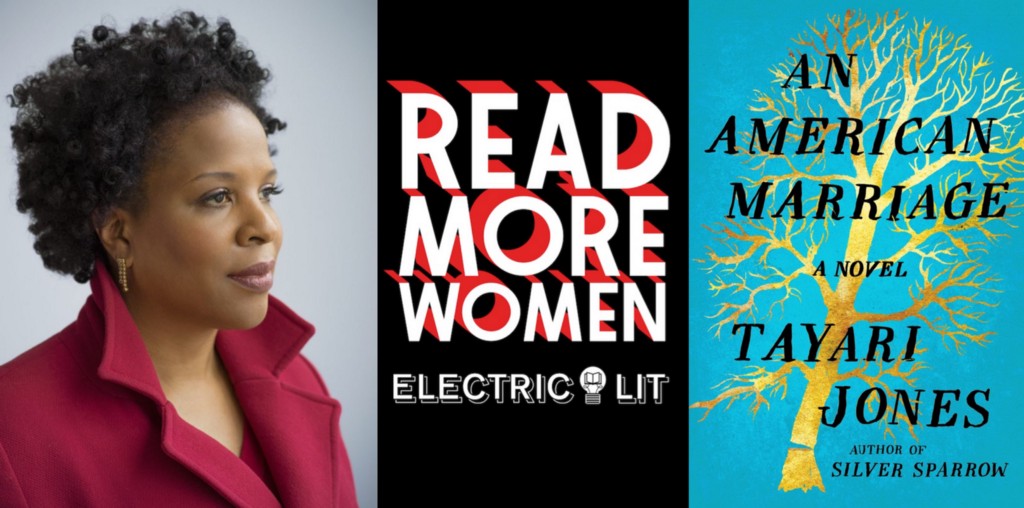
Tayari Jones’s Favorite Books By Women

Read More Women is Electric Literature’s series featuring prominent authors, of any gender, recommending their favorite books by women and non-binary writers. Twice a month, you’ll hear about the five non-male authors who most delight, inspire, and influence your favorite writers. Books by men get plenty of attention in reviews, reporting, and academic syllabi, and have for hundreds of years. It’s time to read more women.

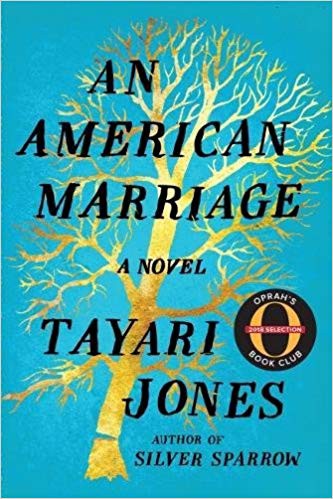
Tayari Jones is the award-winning author of Leaving Atlanta, The Untelling, Silver Sparrow, and most recently An American Marriage, which was an Oprah book club pick and a New York Times bestseller. An American Marriage has gotten almost too much praise to reprint, but just as a sample, Edwidge Danticat called it “an exquisite, timely, and powerful novel that feels both urgent and indispensable.”

For her five recommended and influential books by non-men, Jones chose five books by and about black women. They range from poetry to young adult novels, from tumultuous coming-of-age stories to quiet books about ordinary lives, but always with an eye towards the crucial and undervalued perspectives of black women and girls.

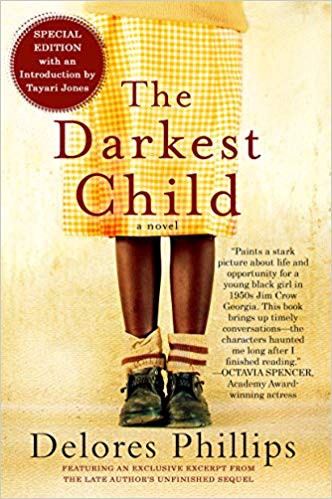
The Darkest Child by Dolores Phillips

This coming of age story set in a small Georgia town on the eve of the civil rights movements is as iconic as To Kill A Mocking Bird. Tangy is an unforgettable heroine who must find a place for herself as a girl who is black, poor, and whip-smart. Her mother is a complete nightmare and Jim Crow threatens her health and happiness as every turn. But somehow she rises.

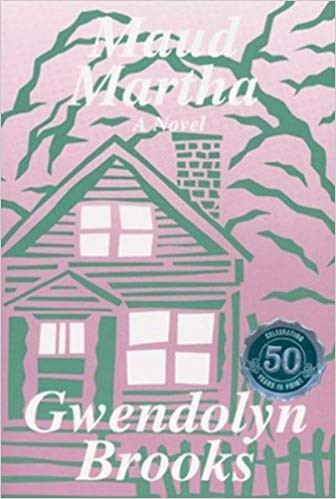
Maud Martha by Gwendolyn Brooks

I love slim novels written by poets. This was the first novel I ever read that told the story of a black women who lives as ordinary life. This is not a story that you will see praised as “devastating” or “brutal.” Instead it is a love letter to everyday challenges and triumphs.

Mercy by Lucille Clifton

This National Book Award winner is sometimes described as Brooks’ “Post 9/11” book, and while many of the poems directly engage that national tragedy, you soon see that it is more a meditation on a single day in our history. Reading these poems you come to see that there are calamities throughout history and even throughout any given day. This is a book about the hard and meaningful work of listening and healing.

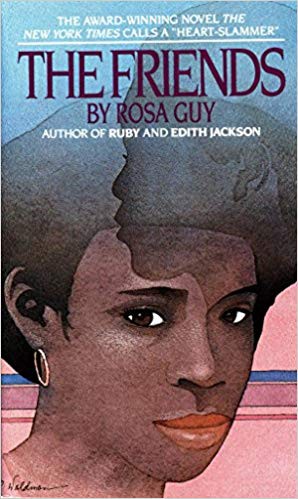
The Friends by Rosa Guy

When I was a girl, this novel was among my favorites. Set in New York City, it is the story of two black girls — one with American roots, the other from the Caribbean. This is a story about love, friendship, class diaspora. I recently read it again for the first time in 30 years, and I cried as hard as I did the first time.

Tar Baby by Toni Morrison

This is a less-lauded novel by the greatest American novelist. Some read it as a wink at the Tempest, but Morrison is always her own best thing. Set on a small island, this is (among other things) a love story that manages to be very hot while interrogating race, class, and gender. It’s sharp in its wit and its brilliant observations about the way we live now and the way we lived then.

Read More Women is presented in collaboration with MCD Books.

How Completely Misunderstanding Henry James Helped Me Survive High School

Novel Gazing is Electric Literature’s personal essay series about the way reading shapes our lives. This time, we asked: What’s a book you misunderstood?

Fourth period was just about over, but I left the art room and headed to the bathroom at the end of the hallway. There was never enough time between bells, anyway. I passed blank bulletin boards, closed classroom doors, and at least a dozen maroon lockers before she saw me and walked over, each step strong and deliberate. She twisted my hair into one fist, crashing my head into the nearest locker; the other fist found my side, my stomach, my ribs. I yelled, maybe for a teacher, probably for my mom, who would hurry across town to take me home just a few minutes later.

This wasn’t the first time my mom left work to rush to my high school. She had come to pick me up from the nurse’s office, bruised from suspicious misthrows in gym class, or from the principal’s, if a rumor made its way to the administration. Each time, she would reach for me, offering a hug or a hand on my shoulder, and she would ask what had happened. I had no idea what happened, though. I had moved to this small town just in time to start my freshman year. My arrival prompted a vehement response from my fifty or so peers that grew more vociferous, more violent when I stayed.

Go home, they told me. You’re not wanted.

Much of the abuse at the hands of my new classmates centered on how I looked (greasy, tired, miserable) and who I might be sleeping with (admittedly, no one). The rest was spontaneous, critical dismissals of my clothes, my speech, my actions. Between classes, I might feel a passing shoulder thrust into my back or hear a “slut” slung sotto voce if teachers were present; if they weren’t, there might be a screeching announcement for the shuffling crowd that I was a prostitute or a prude, depending on the day.

Much of the abuse at the hands of my new classmates centered on how I looked (greasy, tired, miserable) and who I might be sleeping with (admittedly, no one).

At home, if I signed online, the messages were inevitable. Some from familiar screen names, some from thinly veiled pseudonyms, all of them cruel.

The insults were constant and conflicting. I had greasy skin that needed covering, or I wore too much cakey makeup. In local parlance, I was a “dirtbag,” despicably poor because I wore Walmart sneakers to gym class, or I was a “rich-bitch,” a snob who liked to read and planned to go to college. My classmates were always consistent on two points, though: no one liked me, and no one wanted me here.

We were all in agreement there: I didn’t want to be there and couldn’t wait to leave.

Through the rumors, the abuse, the bruises, I read and hoped that books and grades would be my way out of that town and into college, where I planned to reinvent myself. I wouldn’t have to be weighed down with insecurities about my appearance, my sexuality, my self worth; I wouldn’t worry about being too ugly to go school, too promiscuous if I talked to a boy, too much of a prude if I didn’t. No one there would know about the lunch table that formed a club dedicated to hating me (membership always open). Not a single person would know about that party where they dumped a bottle of Sprite over my head the moment I arrived. The sweet, acrid bubbles burned my eyes almost as much as the cheers, but that scene, that sting, would be left behind when I moved away.

I just had to make it until then.

In the spring of my senior year, I decided that I’d be going to a small liberal arts college in Schenectady, New York. It was a few hours down the Thruway but worlds away from my small town. Preparations began immediately. I suspected my school — under-funded, under-populated, and largely confined to teaching to the state tests — meant that I would be less prepared than my incoming classmates, and I was determined to catch up, to fit in this time. I scoured lists of standard high school reading assignments.

Through the rumors, the abuse, the bruises, I read and hoped that books and grades would be my way out of that town and into college, where I planned to reinvent myself.

The one I picked up was Henry James’s 1879 novella Daisy Miller. I can’t remember now whether that was because my favorite English teacher lent me a copy, or the single-room library in town happened to hold a slim edition on their limited shelf-space. I do remember that my reaction was immediate. I was enamored, and I was settled: this would be my reinvention.

The title character is captivating. Confident and pretty, Daisy flirts with men when she wants to and tells them when she doesn’t; she sweeps into high society parties in decadent dresses and visits Roman ruins or Swiss castles with the same style, the same vivacity. She flourishes in Switzerland and Italy just as easily as in Schenectady, New York, her hometown. This coincidence confirmed my affinity for Daisy. I decided to be confident, and I was certain Schenectady would become my stepping stone, too.

The only problem with refashioning myself to be more like Daisy was that I had gotten the story all wrong. I wouldn’t realize it for years, but in that first reading, I glossed over the descriptions of Daisy and her character’s interactions with society. I somehow managed to miss the ending of the novella- and, probably worse, the point.


When I was applying to graduate school after finishing my Master’s program, my boyfriend brought me his complete collection of Norton anthologies. The pages were yellowed, and the spines were crinkled or covered in bookstore stickers. The book of literature from the Middle Ages, a comparatively thin volume, had a dark cover besmeared with undetermined stickiness. I used the books to take notes as I studied for the literature exam, sitting on the couch in the apartment I shared with some of my closest friends from college or setting up camp in the English department with classmates from my Master’s program or, if the day was warm and sunny, relaxing on a park bench downtown in the Common.

It was while reading through this stack of borrowed anthologies that I came across Daisy again. My context for reading the novella couldn’t have been more different — I lived in a city I liked, I felt certain of myself and my worth, I felt supported by a network of close friends and a loving relationship. I was so excited to revisit the story after so much time.

Except reading Daisy Miller wasn’t nostalgic or sweet, after all; it was shocking.

At first, the story was familiar. James opens the novella with characteristic long, winding sentences that lead the reader into the world of a distinctly nineteenth-century high class society. But in the introductory description, James makes it clear that Vevey and Geneva are interchangeable with any other European city, perhaps even American destinations like “Newport and Saratoga,” because of the hotels and the travellers, particularly the young, pretty women of means. In all of these cities, James explains, “is a flitting hither and thither of ‘stylish’ young girls, a rustling of muslin flounces, a rattle of dance-music in the mornings, a sound of high-pitched voices at all times.” Here, barely through the first paragraph, I cringed.

The description of young women that precedes the introduction of Daisy is dismissive at best. The use of “girls” is derisive, the description of their “muslin flounces” drips with dismissal of nouveau-riche decadence. The “high-pitched voices” grate. And this, apparently, was universal.

Introduced when the ex-pat Winterbourne notices her dressed in “frills and flounces” from afar, Daisy is undeniably representative of these girls. While she does travel to these great cities, Daisy is only mildly interested in visiting cultural or historical landmarks. Her speech is indicative of her new money, with contractions like “ain’t” sprinkled in, lest the reader forget this character’s station. She does flirt skillfully and recreationally when she chooses and, quite impressfully, tells Winterbourne point-blank when she doesn’t want to flirt with him. But this moment of empowered denial becomes Daisy’s undoing; when she turns down Winterbourne, she chooses the wrong guy and seals her fate.

As the story progresses, Daisy attends society parties, but her new-money status and her disregard for propriety stand out. Other characters try to warn her: “You’re old enough to be more reasonable,” one of her last friends Mrs. Walker warns her when she sees Daisy walking alone with the Italian Giovanelli, undeniably concerned with the man’s social status and race as much as the unchaperoned walk. “You’re old enough, dear Miss Miller, to be talked about.”

After this, that’s mostly how Daisy appears in the novella. She becomes the subject of other characters’ conversations, most of them dismissive or disparaging. By the end of the story, James reduces this title character to a symbol, a fallen young woman who is to be remembered only as a cautionary tale or, for Winterbourne and Giovanelli, the romance that could have been. In one of the final scenes, these two former suitors remember Daisy as beautiful, as charming, and — an emphatic afterthought—as innocent. In their exchange, this final, almost-forgotten description of Daisy is repeated three times. Even as former suitors fondly remember Daisy, the focus ultimately rests on her specious purity. Reading through this scene, I was baffled at how I missed it the first time. My assigned reading in high school might have been insufficiently broad, but I definitely should have known how to recognize irony.

Even as former suitors fondly remember Daisy, the focus ultimately rests on her specious purity.

I started to question how I had skipped over the clear details and failed to pick up unsubtle messages during that first read years before, but it quickly became evident. My misreading itself was telling. I had glossed over these details and missed these messages in order to read the book that I needed to, in order to read Daisy as the confident, capable character I wanted her to be.

Daisy Miller is beautiful, wealthy, and flirtatious. But she is not well-liked in those society circles. Her proximity to the small communities of rich expat Americans allows her access to these people and their parties, but she’s never really welcome. In fact, it seems like if she had been at my high school, she might have had a lunch table club of her own. If Sprite had existed then, someone might have even dumped a bottle on her, too.

I had completely misread the novella, but maybe my identification with Daisy wasn’t all that off.

After Daisy turns down Winterbourne, he tells her that everyone is talking about how much time she is spending with Giovanelli. Daisy’s response is a matter-of-fact quip, but it’s also an astute observation: “But I don’t believe a word of it. They’re only pretending to be shocked. They don’t really care a straw what I do.” Daisy doesn’t put stock in what these people are saying about her because she recognizes that this disparaging talk, this passing of judgement, is purely recreational for them. She simply doesn’t care.

I had glossed over these details and missed these messages in order to read the book that I needed to.

At 17, after years of enduring insults and rumors, shoulders and softballs, I envied Daisy’s apathy. More than new opportunities, better classes, or bigger cities, I desperately wanted the confidence to not care what my high school classmates had said about me. I needed the assurance that I wouldn’t have to carry that with me forever. Daisy gave that to me.

Sitting in Boston, years removed from those high school hallways, I realized this was more important than than any moral message or societal commentary or even plot point in the novella. Daisy is a character on the fringe of a small circle that rejects her cruelly and consistently. This fictional society — a high-class community of Americans traveling through Europe in lavish hotels and luxe settings — was far removed from my real high school in rural upstate New York. But I still identified with Daisy despite that distance. Even if I didn’t recognize it at the time, by focusing on Daisy’s confidence and glossing over the cruelty she endured, I was misreading James’s story, sure, but I was also using it as a tool for making sense of my own experiences.

Reading the novella now, Daisy’s character is all the more compelling because of her confidence throughout the rejections, the rumors, the cruelty. Maybe I’m noticing this because I’m far enough removed from my experience with high school bullies. Or maybe I’m just seeing myself in Daisy again, but maybe that’s the point of reading, or even misreading, after all.

A New Catherine Lacey Story About Grief Disposal

“Please Take”

by Catherine Lacey

Everyone was talking about having less — picking up everything you owned and asking, Does this bring me joy? And if it didn’t you had to get rid of it. Everyone was doing this, asking themselves about joy. It felt incredibly dangerous. I was afraid for the world.

I was staring into Adrian’s closet. Pants. Belts. Shirts. So many shirts. More shirts than he ever wore, more shirts than anyone could wear in a life. The brown flannel, striped oxford, baggy cardigans — none of it brought me joy. Nor did the jeans and slacks smushed in the back, old, forgotten. I couldn’t even ask myself about the thousand wool socks, the yellowed undershirts, the boxers, or that one decaying sweater I thought, perhaps, I had given him long ago.

There was one shirt, though, pale blue with tiny green stripes, paper-thin and soft — I almost kept it. Adrian had worn it, I thought I remembered, at a picnic. Someone else’s dog was there. We never had a dog. After the picnic we had talked about getting a dog, but we soon forgot we’d wanted one and by forgetting that desire we realized it hadn’t been so true. So we said. That had been years ago. Now all I had was this faded, worn-out shirt and a memory but the memory had to go and the shirt had to go, just as days and people had also gone, just as so many tangible and intangible things enter and exit a life. Heaps grew; the closet emptied. I felt oddly fine.

My neighborhood is one of those where you can leave all manner of things to be taken, leave things on stoops or flung over shrubs, leave household crap or books stacked on curbs, what have you, what has anyone — and passersby will take these things. So I folded the clothes in stacks and stacked the stacks on the steps, draped the coats on a fire hydrant, lined the shoes at the street, and left a sign: please take. Two days, no rain, everything gone. Piece by piece, then a van came.

But Adrian did not go as slowly. He went all at once. Here, then not. That was weeks earlier, a month even, a month and a half. You know, time passes strangely in times like that. You look up and think, Wasn’t I just married last year? No, that was five years ago. Wasn’t I just walking down Arabella when a bird landed on some crape myrtle, shaking white flowers over my head — no, that was decades ago, a childhood memory you keep close by for no reason. Well, wasn’t I just in Guam? You were never in Guam; perhaps you dreamed it? No. No, I don’t dream anymore. Well, wasn’t it just yesterday, just yesterday, wasn’t it? They call it mourning, I’m told, so people in it remember to get out of bed.

The neighbors, having noticed the clothes, asked me if everything was okay. Well, not all the neighbors, but one neighbor, Corina — she asked. Corina is old, all burned up and tiny, and lives alone in 2F. She often receives heavy, large packages — nearly the size and weight of a human body — and I carry them up to her floor. And when I do something like leave my husband’s clothes strewn across our stoop and sidewalk, she asks me about it, asks me just what the hell might be going on.

I told Corina, I’m moving on. And she said, Is that so? Good for you. And I said, You know, it’s really fine. It’s going to be just fine. I nodded and she nodded. I asked her, It’s fine, isn’t it?

I thought perhaps she would tell me some great wisdom to confirm my decision to move on, to get it over with, to begin again.

It’s not fine, she said. Nothing is just fine about this. Can’t you see? It cannot be undone.

And she said, Kate, you must know that death is not that which gives meaning to life. And I told her, yes, that I believed I had read that somewhere, but Corina, having not heard me, continued on — she said, Life is that which gives meaning to life, so I said, a little louder, Yes, Corina, I read that story many times, everything dies and knowledge is circumstantial — and she, having still not heard me or perhaps just unwilling to listen, she said, The human heart has the capacity to make enormous changes at the last minute, and I said, I know this well, Corina, I’ve heard all this before, I must have read it somewhere.

Just that morning, Corina told me, she had been clearing off her desk. It had been months, perhaps years (Who can tell anymore?), and she had been going through the papers, the letters, receipts, tax forms, old postcards, legal documents, currency from countries she couldn’t remember, a pocketknife, another knife, unsent letters, and eventually, she said, eventually she had forgotten what she’d originally been looking for, and she worried that she had accidentally, perhaps, thrown this thing out years ago and she’d only just now realized she needed it. Only — what was it?

I told her I was so sorry, but that I had to go now and she agreed that she too had to go. She’d just realized that she’d left the buttermilk out, so she went to her buttermilk and I went to the park. It was spring so people had their legs out, and good-looking people had become, it seemed, incredibly good-looking people, and even regular people seemed aided by the light.

Habits were helpful, someone had told me — people were always giving me advice for this newly broken life — so the park was my habit, the way I was structuring my days. Habitual bench, habitual time of day. These little things will make life bearable, they said (Who said? I can’t remember).

On the walk to the park I always saw a man smoking cigarettes behind that restaurant, same man who was always there, and a blackhaired woman reading library books on a bench just outside the park, same woman each afternoon, and that tall, large-nostriled man with a little boy in the playground, same man, same boy. How many of them, I wondered, kept these habits for the same reason I did — like a single nail somehow holding up the whole home? I did not dare look at them too closely, didn’t want to confirm anything, to catch a glance that felt familiar.

Returning from the park I would sometimes miss my building and only realize the mistake once I was several doors away, and sometimes I made it all the way to Lafayette, where I stood at the curb wondering where on earth I was or wondering if perhaps my home had been somehow taken away forever this time, and now I was all that was left. But I always turned and walked back. I went inside. I locked the three doors behind me. Once or twice I left all the doors slightly ajar, wondering if anyone might stop by, let themselves in, make themselves comfortable.

The last time I saw my husband it was nearly four in the morning and he had a plane to catch. We had stayed up late fighting about something, who knows what we were really fighting about (what couple ever really knows what they’re fighting about?) but we had worn ourselves out — me shouting at him from bed, him shouting at me from the bathroom, neither of us even able to hear what the other was saying. Then I gave up, mumbled, and wept into the pillow as he sang in the shower, all low and throaty, some jokey country song. We were the sock and buskin, he and I, always understudying each other but hardly ever called to switch.

He packed a two-month suitcase while I was half-asleep, waking me up to do our goodbyes, cool kiss on my meaty face. It wasn’t clear who should apologize or what for.

But in some wordless corner of us we must have also known or felt — this is the last time. So the apology kiss became urgent and more urgent, and it became more like an early-days kiss, like time had bent our love back on itself, folded it like a sheet with the end meeting the beginning. And the urgency built, became animal, and I heard his belt clang just before he pushed me over, pushed the sheets aside, pushed into me, and even though I don’t usually like it this way, face in pillow, hardly able to move, a startling angle — it seemed just then that this was all I could bear. To be done to.

Afterward he stood there at the door, suitcase in hand, and he looked at me not like a man who was leaving but like a man who had just arrived, as if he had just come home and hadn’t expected to find me here. He smiled, uncertain, in the lamplight, said, Bye.

I heard his band almost canceled the tour but couldn’t for some reason, just took two nights off and hired another bassist. Adrian himself had been a replacement for a replacement, so it seemed they had been ready, all along, to replace him as well.

In the park one day a man, a stranger, sat on the other end of my habitual bench wearing Adrian’s worn-out pale blue shirt, the one I almost kept.

I almost kept that one, I said. I didn’t even have to turn my head to see it. My peripheral has always been strangely strong, though I’m nearsighted for everything else. Before us a half dozen tennis players darted and swung themselves across the courts. I kept my eyes on them, listening to every groan and gasp.

The man said, Sorry? And I said, No, you’re not. And he said, What? And I said, Why would you be?

I think you must have me confused with someone else, he said, and finally I turned to him. Very quickly I could tell that this man was in a sort of life intersection. Not a crossroads, not a time where a decision needed to be made, but something like a junction in an old, unplanned city where ten streets hit each other in a burst and there is nothing but choices and no clear answers and no clear path, just chaos, too many options. Perhaps he had spent years of his life in such a place, wandering from corner to corner, wearing shirts picked up off the street.

No, I said after a considerable pause, I’m not confused. You’re the man wearing the shirt you’re wearing.

I slid down the bench to be closer to him, or to the shirt, or the past — it wasn’t exactly clear. The shirt held this man more snugly than it had fit Adrian. A little gnarled and bursting, this man. He told me his name was Frank but that people called him Frankie. The hairs on Frankie’s arm were raised, alert, so I patted them down only to watch them rise again.

It was my husband’s shirt, and now he’s not around and you’re wearing his shirt. Now it’s your shirt.

You mean he’s . . .

I answered his nonquestion in a glance. We already had a shorthand, Frankie and I. It could’ve had something to do with the shirt, maybe. I reached out to touch the sleeve. It felt the same as ever.

And you gave away all his clothes? Frankie asked, and I said, Yes, that’s right.

After a long silence Frankie said, That’s wild, all slow and reverent. You don’t care or nothing? You don’t want to hold on to them?

I didn’t say anything and he took that as an answer, nodded, looked back up at the matches being won and lost.

I’m forty-three years old, he said, and I’ve never known anyone who died. Puts me on edge, you know? Even my grandparents, all four of them, still alive. Everyone’s still alive. All my stupid friends, even though we’ve done such stupid shit — we should be dead, at least one of us, but — nope. Living.

I didn’t see why this was a problem really but I didn’t say so.

I didn’t know how it might work over there, for those still sipping pulpy juices beside a great pool of life.

We kept silently watching the people hurl themselves around the green courts, and I considered telling Frankie the story that Corina had once told me about that long white scar on her arm. When she was a young wife, she said, there were all these temptations, and she’d never quite managed to sweat out all those years of Catholic school, so she bent one edge of a coat hanger into the shape of a snake, held it over the stove flame till it was nearly molten, and branded herself. She didn’t want to forget, she told me, how much she cared about doing right. Now there’s this smooth white snake on her arm, keeping her out of trouble, perhaps, writhing there for at least a few more years. I didn’t know you were married, I told Corina when she told me this, not knowing what else to say. I still am, she said.

I wanted to tell Frankie this story, I guess, as a long way of saying that a person can force whatever issue they want on themselves, but the more I thought about that idea the less I was sure about it, so I kept quiet. Light was leaving, and tennis players were leaving, and eventually I was leaving too. I got up and said, So long, to Frankie, went home, not missing my door this time, knowing right where I belonged.

A few days later Frankie met me at that park bench again. He was holding the blue shirt folded in a neat square.

I don’t like it anymore, Frankie said. Here. I washed it.

I don’t want it back.

Just take it.

I got up and began walking home and it’s not my fault that Frankie followed me. He kept saying, Just take the shirt, just take it back, and usually I wouldn’t accept a strange man following me home but when I got to my door I somehow invited him in. Wordless, he followed, and though I told him to make himself at home he just stood still and dumb by the door before lowering himself, silently, onto the couch.

I got us two glasses of water, adding slices of lemon though I never do that, had never done that before, and haven’t done that since. We sat in the living room for a moment. He looked around. Nice place, he said, though he would have said that anywhere, Frankie, that’s the sort of man he is, I guess, finding niceness in every glance.

I said, Frankie, put the shirt back on.

Listen, is this some kind of . . . But he seemed unable to finish the question. Just what is it you’re after?

Put the shirt back on.

He drank his water, drank it deeply, finished it. He stood up and unbuttoned his shirt as if it were physically painful, as if he were removing a body part. He put on the blue shirt in a hurry then stood there all still and uncertain and my God, I thought he was going to cry, sweet Frankie.

You must miss him, Frankie said. I can’t imagine. I just — I can’t imagine.

He was covering his eyes. I looked at the carpet. I looked at the ceiling. I looked at the shirt and for a moment everything was perfect. Something had vanished and something had been found. I had found some sort of unfolding that was not yet done unfolding and it was golden hour and the light fell into the room like a gift for which I’d already written the thank-you note and could now just enjoy.

I used to wake in the middle of the night and check to see if my husband was still my husband or if he was actually a sack of flour, I eventually said, hiding my hands behind me like a shy child. You know how in high school they used to give teenagers sacks of flour to make them not want to impregnate each other? It was like that except he was a whole human-size sack of flour that looked and acted like a human being but was really a sack of flour.

Frankie said he understood me completely and I believed him. It didn’t matter if I really thought he understood, just that I believed him.

Did you know your fears become your life?

I told him I had read that somewhere.

No, he said, I am saying it to you now.

It’s true, I said. I agree with you. I see the world the way you do, at least in this one regard.

How nice for us. Frankie picked up and finished my glass of water, fishing the lemon slice out and absently ripping it to bits.

I used to always worry that Adrian would die in a plane crash or from some undetectable illness or that he would be mistaken for someone else and fatally knifed. Then he did die, and now I haven’t stopped wondering if I worried it into being.

Well, it was going to happen one day or another, Frankie said. Not to be a downer, but you know it’s true.

He had a point, I just didn’t like his point. I suppose I wanted to feel that I had known all along how it would end, that I contained some sort of foresight.

How did he die? Frankie asked, hunched over the coffee table, pushing the torn lemon rind into a little pile.

I don’t want to say. Or perhaps I didn’t know or couldn’t remember or perhaps it had never happened. I felt sure that I had never known a single thing for certain, but that couldn’t have been true. I must have known something. I knew nothing’s ever been written that can’t be erased. I knew that every idea negates another. Every page I’ve ever read shuts some doors and opens others. Everything breaks even. And maybe I said some of this to Frankie, or maybe he was the one saying it to me. It’s so hard to remember, to keep anything straight. Anytime I speak or listen to another person I feel there is a hand atop mine on a Ouija board and it’s never clear who is moving and who is being moved and I think I’m always looking for the times that the pair can be moved by a third thing, something outside us, better than us.

Just then the door opened and Adrian was there, dragging his suitcase, looking weary from all the places he’d been. He said, You left it unlocked again.

The room was very still and Frankie stood there like a photograph of himself.

Is that my shirt?

It’s joyless, I said to Adrian. You don’t need it.

Says who?

The window was wide open and Frankie was gone, taking the shirt with him. He must have crawled out onto the ledge and dropped onto the stoop, which was a way I had also escaped, at least once in the past and perhaps again very soon — it isn’t such a difficult thing to do. Still, I admired him for doing it, for doing something so simple as leaving.

Adrian opened his suitcase and all the clothes I’d given away were there, dirty from the afterlife he’d returned from, and already he was laughing, already he was smiling again, fine with being undead, coming home to the same home, staying, somehow, always the same.

I weep athletically almost every day and sometimes I cannot get down a city block without collapsing but Adrian is always upright and smiling and glad, so glad, so glad. It may be we do not live in the same world at all. Some nights I wake up and panic, thinking he’s truly gone, for real this time, and I lie there shaking, all my organs going wild in me for hours until I roll over and see he’s been beside me all along. I keep sleeping in the wrong places, I think, or maybe I’m just waking up not where I am.

The Real Reason Conservatives Are Scared of Libraries

O n July 21, Forbes ran an op-ed by economics professor Panos Mourdoukoutas arguing that Amazon should replace libraries. The article has since been deleted, but the backlash from librarians, teachers, writers, and bibliophiles has not quieted. Mourdoukoutas then doubled down on his argument, tweeting that libraries, which are partly funded by taxpayers, are not actually free — a point no one had suggested in the first place.

Those who are pro-library (a phrase so ridiculous I never thought I’d have to type it) are rushing to defend the necessity and importance of libraries. At Vox, Constance Grady detailed Why Public Libraries are Still Essential in 2018, writing that libraries “offer financial literacy training and job search assistance. They serve non-English-speaking immigrants. They serve incarcerated people and homeless people and housebound people.” In sum, libraries help marginalized community members who otherwise wouldn’t have access to life improvement resources and information.

Conservatives hide behind taxes to justify shuttering libraries, but demographic data suggests a more sinister intention. Many of those who benefit from libraries are among the nation’s most vulnerable populations. According to a 2016 report by the Pew Research Center, “Library users who take advantage of libraries’ computers and internet connections are more likely to be young, black, female, and lower income.” In the Pew Center’s 2015 study, researchers found that “lower-income Americans, Hispanics and African Americans are more likely to say that libraries impact their lives and communities than other Americans.”

Conservatives hide behind taxes to justify shuttering libraries, but demographic data suggests a more sinister intention.

In February, the Trump administration released a budget proposal that would effectively eliminate federal funding of libraries, an institution that serves homeless people, addicts, people of color, immigrants, and those living in poverty. The issue isn’t about the cost of libraries; it’s that conservatives believe some people simply aren’t worth the money. Even more insidiously, it’s that conservatives fear what happens when those people get access to information.

I’m evidence that the worst right-wing nightmare about libraries is true: My library gave me the ability to think beyond my small town’s restrictive ideas of sexuality and showed me that happiness and success as a poor, queer, masculine-of-center woman was possible.

As a latchkey kid in Louisiana, the library was my babysitter. My brothers and I walked to the local library after school and waited for our mom to pick us up. We were supposed to stay together and do our homework, but we split up once the automatic doors swooshed open. My brothers hustled to the computer stations, and I, untethered, spent the afternoon exploring. I cozied up on a bean bag chair in the children’s section and thumbed through books and magazines.

My family moved to the next town over in middle school. The Fontenot Memorial Library in Vinton, Louisiana was significantly smaller than the one I roamed as a child, but provided the one thing every teenager in 2006 desired: internet. My family couldn’t afford a home computer so I used one of the two available computers at the library for the allotted two hour time limit to write poetry, print school assignments, and — most importantly — edit my Myspace page. If no one had reserved the computers after my time was up, the librarian gave me more time and I stayed and browsed until closing. My math teacher often occupied the computer next to me and we discussed our shared love of books.

During that time, I was questioning my sexuality. I didn’t wear makeup or straighten my hair and word got around our middle school that another girl and I had kissed. Because I looked the part, I was instantly labeled the school lesbian. The other girl may have participated in the kiss, but in the eyes of the school — I’m the one who liked it. Girls in PE swiped my glasses from my face and put them down their shirts. Reach in and grab them, they taunted. I know you want to. People threatened to jump me after school; a boy threw a bottle at me while I was riding my bike; friends stopped inviting me over.

The only gay person I knew was Marco on the TV show Degrassi. I had never met another queer person in real life. Louisiana had just passed a constitutional amendment banning the state from performing or recognizing same sex unions meaning even if I found someone to love me, our love would be illegal. I didn’t know it at the time, but five students in our class of 60 were queer. They smartly waited until after high school to come out, while I was outed at 13 in a town that didn’t want me and a world that wasn’t ready for me. I sank into a hole of darkness and self hatred that I almost didn’t make it out of.

The only gay person I knew was Marco on the TV show Degrassi. I had never met another queer person in real life.

The library was my place of solace. The rare time kids my age entered the library was to drink from the water fountain after playing at the adjacent park. I could finally breathe without anyone bothering me, judging me, or prodding me with questions. Understanding and accepting myself was a struggle, but having a place to retreat to was invaluable. I secretly and shamefully searched the library’s catalog for books about queerness, but the search returned 0 results out of the 14,000 titles in Fontenot’s collection. The internet, however, was an unlimited trove of information. I found PFLAG, GLAAD, and The Trevor Project. The mere existence of these resources assured me that even though I was isolated, I was not alone.

A capitalist system inherently values profits over people; libraries do the opposite. In “What Exactly Does a Librarian Do? Everything,” fiction writer and essayist Kristen Arnett attempts to synthesize a librarian’s job description. She writes: “the reality of being a librarian is that it’s hardly ever about sitting down and it has absolutely nothing to do with peace and quiet. It’s about assisting others. It’s about community service. Librarianship asks you to do 12 things at once and then when you’re in the middle of those projects wonders if you’ve got any tax forms left or an eclipse viewer.” Had there been an Amazon store in lieu of the Fontenot Memorial Library while I was growing up, I would not have been able to afford books or access. No business wants a dirty unaccompanied kid reading the merchandise and occupying space reserved for paying customers.

A capitalist system inherently values profits over people; libraries do the opposite.

As Cyree Jarelle Johnson argues at Motherboard, Turning Libraries into Amazon Stores is Class Warfare. Johnson’s own library served as an “oasis” for “a black working-class queer latch-key kid with an autism spectrum disorder and an illness…” His library gave him a safe space to escape school and home abuse and exposed him to queer and trans literature which allowed him to see a reflection of himself for the first time. Johnson writes, “Without the library and other benevolent social services, I would have fallen through the cracks that always threatened to consume me like it devoured so many of my peers.” Johnson became a librarian and went on to work at the The AIDS Library in Philadelphia, a place where he could give back to his community and prevent others from falling through the crack he narrowly escaped.

I hope they’re scared, because the revolution will not be privatized.

Alaina Leary, who wrote about reading as a form of travel, “was basically raised in the Malden Public Library.” Due to her family’s limited income and her and her mother’s disabilities, she was unable to go on long distance trips. Her local library was free, accessible, and allowed her to expand her world. Leary is now a queer disability activist and works with We Need Diverse Books, an organization that advocates for inclusive literature.
Stories like mine, Johnson’s, and Leary’s demonstrate that when it comes to libraries, the political is personal. Libraries change lives. We live in a country that puts up barriers to keep the marginalized on the margins. None of us should be where we are today, but libraries offered us a way out, a ladder to climb over the roadblocks. While our stories are inspiring to some, they are no doubt a nightmare for conservatives. And I hope they’re scared, because the revolution will not be privatized.
Virgie Tovar’s Reading List for the Fat Babe Feminist Revolution

So you’re an ahead-of-the-curve babe who senses something just iiiisn’t quite right with the current cultural paradigm around food, weight and body size. Congratulations! This is step one in what will certainly become the global takeover of woke folk who don’t give a fuck about carbs.

Have you heard of fatphobia? It’s an ideology based in bigotry that positions fat people as inferior and weight gain as a sign of immorality. I wrote about it in my new book, You Have the Right to Remain Fat. There are a lot of weird, fatphobic things that are embedded in our everyday life — like our cultural obsession with being as small as possible, insisting that potato chips or cookies are “evil,” the belief that weight-loss is a sign of self-improvement, and the idea that larger people make unworthy romantic partners or job candidate.

It took me a long time to question all this stuff and how it all was kinda totally ruining my life. I dieted and starved myself for almost two decades, believing it was my job to become a thin person. I put my life on hold believing that I would do everything that mattered to me later — when I was thin. That day never came. Today I’m a 250 pound woman who trolls patriarchy while wearing tiny bathing suits, bright lipstick and huge sunglasses.

Reading books about was finally able to break out of that never-good-enough mentality when I started reading books about fat activism and fat feminism. Here’s a list of my personal favorites. Think of it as a starter kit for your own personal body justice revolution:

Dietland by Sarai Walker

Sarai is one of the smartest feminists on the planet. She understands subtle stuff about gender and how the diet industry is a sexist racket. She channels all her insights into this riveting novel. It’s actually a TV show on AMC now starring Joy Nash. Keywords: feminist retaliatory terror, critique of “Waist Watchers,” get ready to be both entertained and have your damn mind blown.

Fat Activism: A Radical Social Movement by Charlotte Cooper

I met Charlotte when she did a keynote at a conference when I was a baby fat activist. She blew my mind with her British accent and all her amazing stories about being a large trouble maker. She even had a girl gang called The Chubsters. In her latest book, she writes about the history and historical importance of fat activism from an insider perspective.

Every Body Yoga by Jessamyn Stanley

Before I knew Jessamyn I was her Instagram stalker. She was documenting her body in a way I’d never seen anyone else — offering unedited images of the fat body in super complex yoga poses. This book includes lots of those images, and is all about how yoga (and movement) doesn’t have a weight limit.

Bodies Out of Bounds: Fatness & Transgression by Kathleen LeBesco and Jana Evans Braziel

This book is for theory fans and high nerds — people who are ready to get super deep into the nuance of weight discrimination and fatphobia (me!). If you want to understand how fatness is a metaphor for capitalist heteropatriarchy, this is the book for you.

The Fat Studies Reader by Esther Rothblum and Sondra Solovay

An easy-to-understand primer for people who are new to the study of how our culture thinks about fatness and treats fat people. This book is a collection of essays written from different perspectives on the intersections of things like fatness and gender, race, and class.

Big Big Love by Hanne Blank

Sexy sex sex. This is the only instructional book written on the subject of fat sex. It covers an array of topics, from positions to communication and negotiation.

Health at Every Size by Linda Bacon

If you want to understand the issue of weight and body size from a deeply scientific perspective, this is the book for you. Health at Every Size argues that thinness is not a sign of health and fatness is not a sign of illness. The book outlines a set of well-researched principles for understanding health through a weight neutral lens.

Miss Piggy’s Guide to Life by Miss Piggy

Fat Babe #1 — Miss P — offers all of her secrets on how to live a robust, highly feminine, and unapologetic life. Her book includes many aspirational photographs of Miss P dressed as, for instance, Joan Collins circa Dynasty as well as advice on how to make a chocolate pudding face mask and hors d’oeuvre etiquette.

Hot & Heavy: Fierce Fat Girls on Life, Love and Fashion by Virgie Tovar

Duh, I have to rep my own books. That’s rule #1 for being a fat lady feminist writer person. Hot & Heavy is a collection of 31 essays by fat women who all answer the question: How did you learn to love yourself and stop dieting? From motherhood to pecan pie to dancing to Taco Bell, their stories will make you cry and laugh and have all the feelings.

This Twitter Thread Collects the Best Overlooked Books of the Last Ten Years

Twitter is not always an easy place to find love. More often, it’s a playground for cynicism, deflationary thinking, sneering superiority, and downright ugliness. But every so often, someone starts a thread that is all about positivity and appreciation. Rebecca Makkai, author of The Great Believers, is using one such thread to pluck the unsung greats of contemporary literature out from obscurity and put them in the spotlight where they belong.

On Friday, Makkai tweeted: “I’ve been thinking about the inertia of literary buzz, the way it’s so often a self-fulfilling prophecy, and about great under-exposed books. Can we start a signal-boosting thread of books from the past 10 yrs that deserved way more attention?”

Makkai posted her own list of recommendations, each with a link to buy the book from Indie Bound.org.

As of Monday afternoon, there were 131 posts, and people continued to respond to the thread with book recommendations. Some of the comments read like micro-reviews, or the kinds of blurbs that would actually make me pick up a book and buy it.

It was also heartening to see the unsung writers respond to the fans of their books. Some, such as Maureen Gibbon, even responded to say that though her book THIEF didn’t get as many accolades as some of her other works, it was the one she was most proud of.

For others like Porochista Khakpour, who is starting to receive more attention for her book, Sick, it was heartening to see praise wrap back around to her earlier work.

Ultimately, the thread challenges the publicity echo-chamber we all find ourselves in, where one dominating opinion is inscribed on our brains over and over and over again. There’s something about the love and enthusiasm each person brings to their recommendation — they’re aghast at the quiet reception the book received, and they’re desperate for other people to talk to about it. This is not a thread filled with “names you probably never heard of” performing as some kind of cultural ribbon for intellectual authenticity. Instead, the thread is filled with readers who are eager to share the work that changed them — if only to shoutout to the author, or to have someone else to talk to, to chat with, to navigate through all this noise. Here are some more of the books they came up with.

Of course, you can go to the Twitter thread itself for more updates—and to add your own. Let’s keep this lovefest going.

Did Translators of Sophocles Silence Ismene Because of Her Sexual History?

What happened to Ismene? In one version of Sophocles’ Antigone, the daughter of Oedipus turns away from her interlocutor, Kreon, the ruler of Thebes, and addresses Haemon, his son, in absentia. Dearest Haemon! she says, how your father does you wrong. In another version, her sister, the doomed Antigone, replaces Ismene in the spotlight and speaks the very same line.

Ismene has been cheated of the line for hundreds of years by translators and editors, her words stolen out of her mouth and given to her sister. The transfer of the line may well be an example of the perpetuation of an age-old injustice against women who are seen as insufficiently pure.

I first discovered this when the line threw a wrench into my homework, or what passed for homework in my somewhat eccentric homeschool regimen.

The transfer of the line may well be an example of the perpetuation of an age-old injustice against women who are seen as insufficiently pure.

Mom, my homeschool educator, had elected to spare me the failings of the California public school curriculum, by far the most glaring of which in Mom’s eyes was that the system, unforgivably, allowed kids to ascend from K to 12 without once being asked to conjugate an irregular Ionic verb or scan an Alcaic stanza.

On that afternoon, Mom tasked me with translating a passage from the second episode of Sophocles’ Antigone. And I cheated. Instead of committing the passage in Greek to memory, as Mom insisted, I visited the nearby Will and Ariel Durant branch of the LA Public Library and cribbed from a translation from the shelves — the well-known David Grene version. I revamped the Grene lines so that they sounded as if they’d been composed by me, Mom’s wayward son. When I brought my work home, I checked it against the Greek text of the play — Mom favored R.D. Dawe’s 1979 Teubner edition — just in case Grene had taken liberties. Mom was exceptionally good at detecting liberties.

And in fact, Grene had done something sketchy, so it seemed — or else Dawe had. The passage assigned was the short back-and-forth between Ismene and Kreon just before Ismene and Antigone are led away by Kreon’s guards at the end of the episode. Kreon speaks a line, then Ismene, then Kreon, and so on: stichomythia, a volleying form of dialogue common in Greek tragedy. Ismene says something like Seriously, you would kill your own son’s future bride? (This and subsequent translations are mine, not Grene’s.) Kreon answers crassly, Oh sure. No shortage of other fields for him to plow. Ismene says, But he’ll never find anyone as suited to him as my sister! Kreon says, Ugh. Suited or not, my sons will never marry enemies of the state.

At this point in the Grene translation, Ismene answers, which makes sense, because in stichomythia usually the same two characters volley without interruption for a solid page of text or two. But in Dawe’s Greek text, Antigone steps in and speaks the line: O most beloved Haemon, how your father dishonors you. That made sense too, because Antigone would naturally address her future husband as “dearest” or “most beloved,” while the endearment seemed a little on the strong side for timid, reserved Ismene. So what was the deal here? Why had the line flipped? To which of the sisters had Sophocles actually given the line?

Mom handled the confusion via our usual homeschool routine, by assigning me to improvise an essay that led off with one of her gnomic utterances: in this case, “I, Ismene, am a daughter of Oedipus, and I have been silenced.”

After she critiqued (meticulously) the essay, Mom walked me through the evidence: the aforementioned Dawe Greek text; a 1978 commentary on Sophocles by Jan Coenraad Kamerbeek which we frequently consulted (“let’s see what friend Kamerbeek has to say”), and the famous Jebb commentary on Antigone, first published in 1888. Each of these editions has been highly influential in its own way, and each gives the line in question, line 572, to Antigone, not Ismene. But this apparent consensus, spanning nearly a hundred years, is a relatively new development.

Without exception, in every one of the early manuscripts of Antigone — that is, all the versions of the text that survived into the 13th through 15th centuries — line 572 is spoken by Ismene. When the play was set in print for the first time, by Aldus Manutius in 1502, in Venice, the line assignment changed: Antigone spoke the line. Many subsequent editors accepted the switch either on the authority of the Aldine edition or according to their own logic. There are, Mom said, technical issues adduced by editors to justify the emendation, but these can be dismissed (for reasons she explained, but which I won’t get into). The true basis for the change is the propensity of male editors — nearly all the editors of Sophocles have been men — to idealize and sentimentalize Antigone, and the discomfort of the editors at a heroine who, in a play culminating in the dual suicides of her and her betrothed, doesn’t once explicitly profess her love for him. Putting line 572 in Antigone’s mouth thrusts her forward, heroically, into the spotlight at a key pivot in the drama, and transforms her into a character who, conventionally, apostrophizes her lover in explicit endearment: O dearest Haemon.

Putting line 572 in Antigone’s mouth thrusts her forward into the spotlight at a key pivot in the drama.

Mom’s reasoning seemed convincing enough, and as I discovered later, agrees with other views of why the line assignment changed. But eventually I came to believe that Mom hadn’t gotten to the bottom of the problem. (“Getting to the bottom” ranked high in Mom’s repertoire of injunctions and often figured in her critiques of my daily essays.)

Let’s first assess the scope of the damage. The editio princeps (first printed edition) of the plays of Sophocles, the Aldine — an easily available, portable version of the plays — disseminated whatever errors it contained with unprecedented efficiency throughout Europe and beyond, not only to readers of Greek, but through translations based on the Aldine Greek text. The Aldine, with Antigone speaking line 572, remained the most influential edition of Sophocles for over three centuries. It was superseded in the middle of the 19th century by a spate of important German and English commentaries, yet many of these, though they drew upon new scholarship, still seized upon line 572 as an opportunity to silence Ismene and put her sister front and center. And now we come to Jebb and his famous commentary, first published in 1888.

The central place of Jebb’s commentary in my childhood household, more than a century later, reflects its longstanding outsized influence: for generations, the Jebb Antigone dominated in the teaching of the difficulties of the play. Even now, Jebb is considered an invaluable resource, as can be appreciated by a quick online scan of undergrad syllabi, many of which rely on Jebb and Jebb alone. Beyond the academic value of Sir Jebb (knighted in 1900 for his contributions to classical scholarship), the commentary, along with Jebb’s other Sophocles commentaries, exerts a potent influence owing to its prominence in the Perseus Digital Library, by far the most widely used repository of classical texts converted into device-friendly bytes. Access to Perseus is irresistible for student learners, as each text is packaged conveniently along with a commentary, translation, links to lexicons, vocabulary tools, and more. And in Perseus, Jebb rules over what survives of Sophocles. For each of the seven extant plays, the sole available commentary at Perseus is Jebb’s; only two (and not Antigone) are provided with an alternative translation. The profound consequence of this near-monopoly is that Jebb’s choice to take line 572 away from Ismene remains in force and continues to make a strong impression on readers both in English, via the translation, and Greek, via the commentary. (The Greek text of Sophocles at Perseus isn’t Jebb’s; it’s from the 1912 edition of the widely read Loeb Classical Library series. But it, too, mutes Ismene at the line apostrophizing Haemon.)

How is it possible for an editor like Jebb or, later, Dawe (1978) and Kamerbeek (1978) and others, to approach a venerable classical text like Antigone, which has a manuscript tradition dating back centuries and centuries — that is, a family of handwritten manuscripts descended from the “official” copies made in the 4th century BCE — and in a single editorial decision, upend the tradition? The manuscripts for Antigone diverge at numerous important points because of copying errors and differences of interpretation, but they’re unanimous in attributing line 572 to Ismene. What entitles an editor to blatantly contradict the unanimity and essentially rewrite the text?

The short answer is that even the oldest and most reliable manuscripts are notorious for failures to accurately label which character speaks which line. In many cases an error is repaired by an editor early in the manuscript history, and the repair is universally accepted without controversy as a repair, an obviously necessary correction. In others, the unreliability of the earliest copyists leaves open an opportunity for editors to impose their own biases, quirks, and editorial agendas.

But the longer answer, as regards line 572 of Antigone specifically, involves the unacknowledged influence of Ismene’s sexual behavior in the classical tradition. Or, as Mom might have formulated it: “I am a daughter of Oedipus, and I have been unjustly silenced because of my sexual history.”

The unreliability of the earliest copyists leaves open an opportunity for editors to impose their own biases, quirks, and editorial agendas.

Within the play itself, the sexuality of the two sisters remains implicit: there is no overt sexual history written into the play for either sister. To the extent that there is sexuality within the frame of the play, it’s entirely sanctioned and belongs only to Antigone in unrealized potential in her role as Haemon’s future bride. Ismene as a character in the play traditionally has been viewed as a foil for Antigone, timid in contrast to Antigone’s recklessness, choosing subservience and conformity when Antigone opts for defiance. Whereas sexuality attaches to Antigone through her connection with Haemon, Ismene has neither future husband nor past or present suitors.

Outside the frame, though, looms a wholly different history for Ismene. The paucity of surviving ancient Greek texts makes it difficult to know exactly how Ismene and Antigone figured into myth and literature prior to their appearance in Sophocles’ Antigone in or around 441 BCE. What is known with certainty, however, is that the archaic poet Mimnermos, writing in the late 7th century BCE, mentioned an incident in the life of Ismene that’s strikingly at odds with the character of Ismene as portrayed in Antigone. The incident has been transmitted indirectly, in a hypothesis (i.e. brief introductory comment) to Antigone written by Salustios, a 5th-century CE rhetorician. Here’s the relevant passage in the hypothesis: “Mimnermos, however, says that Ismene, while dallying with Theoklymenos, was killed by Tydeus who acted at the behest of the goddess Athena.”

This murder can’t easily be reconciled with the events in Sophocles’ Antigone, because Tydeus is one of the seven warriors who joined forces to attack Thebes and were repulsed by, among others, Eteocles, Antigone’s brother whom she buries in defiance of Kreon’s edict: when the play begins, the battle is over and Tydeus is already dead. The word I’ve translated as “dallying” (prosomilousan) can have both innocent and euphemistic meaning. That it has the latter meaning here is proved by a vase by the artist known as the Tydeus painter, which depicts the moment just before the murder.

The Tydeus painter worked in the mid-6th century BCE and almost surely would have been familiar with the incident recounted by Mimnermos. In any case, other vases corroborate the evidence. On the vase in question, now in the Louvre, Ismene reclines on a kline (couch), unclothed, her right arm raised defensively against the drawn sword of Tydeus, who grips her shoulder with his left hand. Meanwhile Theoklymenos, also naked, flees while looking back — not at Ismene, it appears, but at the sword. The setting of the murder is debated — possibly inside the royal palace at Thebes; more intriguingly, in the interior of the temple of Athena where, it’s been conjectured, Ismene is a priestess of the goddess and has incurred her wrath by trysting at the temple: thus Athena’s command to Tydeus to punish her.

This isn’t the Ismene we know from Antigone.

All in all, the Tydeus vase and the Salustios quote, along with other scant remnants, point to a pre-Sophoclean literary tradition concerned with Oedipus, his children, and the battle at Thebes. The epic poems Thebais (nearly all lost) and Oedipodea (same) were at the centers of the tradition. In this tradition as we’ve received it, a key feature is the contrasting prominence, in the bits and pieces that remain, of Ismene and her sister. Ismene survives vividly thanks to the preservation of the incident that blends sex and death. Antigone, on the other hand, is scarcely known at all. Her name doesn’t appear until the 5th century, when Antigone was written, and her involvement in the burial of her brother is mentioned for the first time only a couple of decades before Sophocles’ play, in the closing scenes of Aeschylus’ Seven Against Thebes.

Moreover, for an editor, like Jebb, approaching the play with the intent to craft a new edition, the prominence of Ismene in the earlier tradition is magnified by the fact that her tryst and the violence that ensued, as described by Mimnermos, is appended to the play itself — that is, in the early manuscript versions of the play, the hypothesis written by Salustios either immediately precedes the first lines of the play, or follows the last lines. The upshot is that in the space around the text, Antigone figures only in her 5th-century heroic version, as the sister who defiantly buries her brother, while Ismene is referenced as the woman whom a goddess ordered to be killed because of a sexual transgression.

Ismene is referenced as the woman whom a goddess ordered to be killed because of a sexual transgression.

In terms of sexual history, Antigone enters the play as essentially a blank slate; Ismene at best is guilty of a liaison with an enemy warrior, at worst the desecration, through illicit sex, of the very temple in which she may be a priestess (a priestess, no less, of the patron goddess of the city in which the play was first performed).

Against this background, it’s easy enough to reconstruct, especially for a 19th-century editor like Jebb, the logic that would lead to silencing Ismene at line 572.

The editor already knows that the attribution of the line is in dispute; the famous Aldine switched the line to Antigone, and so did major editions in the 19th century prior to Jebb’s (e.g. Boeckh, 1843; Campbell, 1871; Dindorf, 1873). The attribution of the line thus is open for consideration. If Ismene speaks the line, the line is spoken by a character whose transgressive sexual history literally has become attached to the text of the play. From this tainted character’s mouth is uttered an appeal to rectitude and honor: O dearest Haemon, how far your father goes in dishonoring you! Where’s the propriety, so a biased editor might reason, in Ismene with her unseemly past addressing as “dearest” the betrothed of the (sexually) faultless, idealized and sentimentalized heroine? Isn’t the endearment sullied if uttered by Ismene?

But if Antigone speaks the line, then, in Jebb’s words, “this solitary reference to her love heightens in a wonderful degree our sense of her unselfish devotion to a sacred duty.” The duty — the burial of her brother — is performed by a woman distinguished by, again in Jebb’s words, “intense tenderness, purity, and depth of domestic affection.” The word “purity” is curious here because the play itself touches only lightly on themes of purity of character. “Purity” seems instead to reflect the editor’s awareness of the contrast between the two sisters in their histories outside the play’s frame. To transfer the line to Antigone reinforces this contrast of sexual histories: the editorial decision removes troublesome Ismene in favor of allowing Antigone to speak from her heart in a burst of “pure” romantic love.

If Ismene speaks the line, it’s spoken by a character whose transgressive sexual history has become attached to the text of the play.

Now let’s survey, once more, the damage done.

To some extent Ismene’s silencing has been mitigated by recent scholarship that defends the unanimity of the earliest manuscripts in assigning line 572 to Ismene, as well as by translations, such as Grene (1991) and Fagles (1982), that let Ismene voice the line. Still, beginning with the publication of the Aldine in 1502, the influence of the texts that silence her has been enormous, both for readers of Greek and readers in translation. Friedrich Hölderlin’s renowned translation into German (1804) follows the Aldine and silences Ismene. So does the the widely-read Harvard Classics translation of 1909, a version whose influence persists online. Ismene is silenced as well in H.D.F. Kitto’s 1962 Oxford World’s Classics translation; on Amazon, Kitto currently ranks #25 in ancient and classical drama. These are just a few of the line-572 disfiguring translations. As for Greek editions, the Oxford Kitto is itself based on the Greek text of another high-profile Oxford, the 1924 A.C. Pearson installment in the prestigious Oxford Classical Texts series. (It wasn’t until 1990 that Pearson was replaced by a new OCT Sophocles that gives the line back to its rightful owner.) Then there are all the aforementioned commentaries and their continuing influence, most notably Jebb’s, which, instead of receding into the past, has expanded its influence thanks to its stark online prominence at Perseus Digital Library.

And to paraphrase Mom, an early adopter of Perseus who synthesized her enthusiasm for homeschool rigor with a fondness for new technology, “Reading in translation is a sin that can be forgiven, but reading without a commentary is laziness of the worst kind.”