8 Middle-Grade Books Every Adult Should Consider Reading in Secret

Few adults will proudly or openly admit to reading YA fiction or middle-grade books. Even being seen to be looking through the shelves of the MG section of a bookstore is slightly embarrassing if you don’t have a kid with you.

But you only have to count Harry Potter–themed weddings or Alice in Wonderland tattoos to realize that middle-grade fiction (usually aimed at 8- to 12-year-olds,) is just as engaging and enjoyable for adults as it is for its target audience.

In this post, we’re going to introduce you to eight more middle-grade books that you can secretly read this summer while loudly telling the cashier or checkout person “it’s for my niece!” (Even better: consider reading them openly and proudly and not caring what other people think.)

The Warriors series, Erin Hunter

Incredibly popular amongst children and teens, the Warriors series has been described as a Game of Thrones-style narrative, following the adventures of four clans of cats. As strange as that sounds, the series has been so successful to warrant multiple spin-off productions like audiobooks, manga editions, box sets, and “super” editions.

You’ll find all the aspects of stories you love — gripping action, well-drawn characters, intricate world-building — as well a critical acclaim and appearances on the New York Times bestsellers list!

Mercifully available on Kindle, so you can easily read all six books and no one in your local Starbucks will be any the wiser.

The Dead Fathers Club, Matt Haig

Clever and beautifully unsettling, this novel from British author Matt Haig is intended for readers of all ages. And just like another family classic, The Lion King, this book is a retelling of Shakespeare’s Hamlet, giving you an opportunity to use your English Lit degree for the first time in like, a decade.

The protagonist, Philip, is tasked with avenging his father’s murder at the suspected hands of his uncle. Sound familiar? Only this time, something’s rotten in the family pub instead of the state of Denmark.

Critically acclaimed and intellectually discussed to the point where you’ll soon forget its middle-grade roots, The Dead Fathers Club is an intelligent, thoughtful rendering of a well-known plot that is told through a child’s eyes, to the effect that you still don’t know where the story is going to turn. And on the upside, people who see you reading it in public might think it’s a pamphlet for an actual organization, and will leave you well alone.

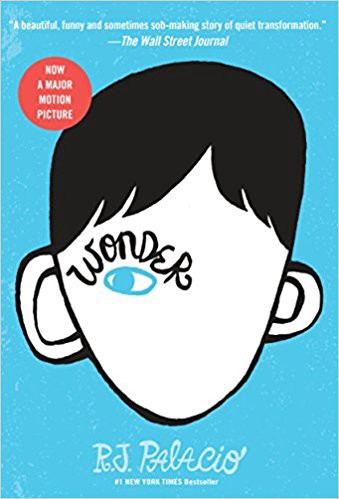
Wonder, R. J. Palacio

Inspired by real life events, R.J. Palacio’s debut novel has given birth to both the “Choose Kind” anti-bullying movement and a film adaptation starring Julia Roberts and Owen Wilson.

Auggie Pullman is a kind-hearted 10-year-old boy with a facial abnormality. Having been homeschooled for most of his early life, his biggest challenge now lies before him: 5th grade.

Wonder is available hardcover if you feel the need to swap the dust jacket out for that of an age-appropriate Tom Clancy novel. But be warned: its moving story might leave your fellow commuters wondering why someone on the train is weeping over a copy of The Hunt for Red October.
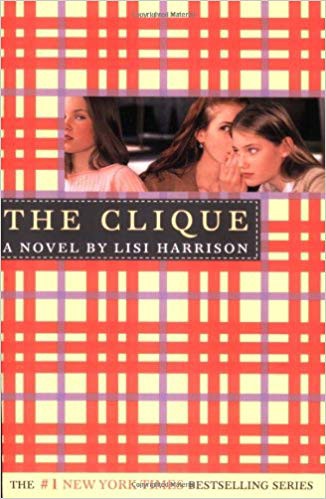
The Clique series, Lisi Harrison

If you love Gossip Girl, then you might unknowingly be The Clique’s next big superfan. Four popular girls known as The Pretty Committee rule the roost at Octavian Country Day — until young Claire Lyons arrives from Florida to upset the status quo at their snooty prep school in Upstate New York.

Getting sucked into the complex inner workings of the Pretty Committee will be almost inevitable — the long summers between school terms bring up plenty of intricate relationships, twists, and turns. If anyone asks what you’re reading, just truthfully say, “some New York Times Bestseller” and quickly move the conversation on.
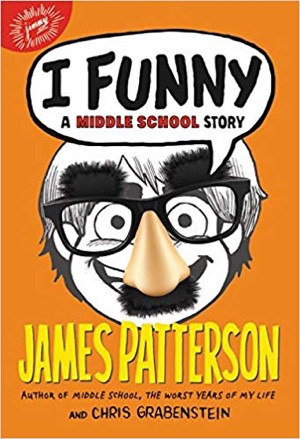
I Funny, James Patterson and Chris Grabenstein

This is the story of Jamie Grimm, a middle-schooler who wants to become the world’s greatest standup comedian despite the fact that he uses a wheelchair. Both humorous and touching, this series of books features familiar middle-grade tropes like an orphan hero who lives with an aunt, uncle, and evil cousin (hello, Harry Potter?)

The I Funny series also happens to be co-written by the best selling author of mainstream crime novels and thrillers. So, if anyone wants to know what you’re reading, you can seamlessly mention, “a James Patterson novel, it’s really good!”
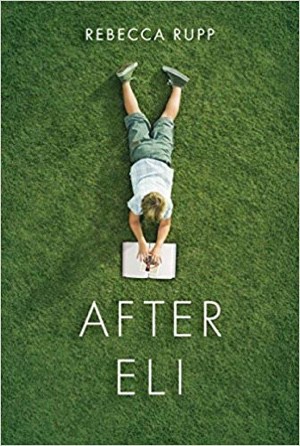
After Eli, Rebecca Rupp

Young Danny creates a Book of the Dead, hoping it will make sense of his brother Eli’s death during the Iraq War. Taking down and researching details like how, when, and why people throughout history died, it prompts reflections on his own friendships and relationships.

Told through a series of flashbacks which add depth and emotion to the story, After Eli is a short, thoughtful, and poignant reflection on grief and growing up.

Be careful reading this book in public: not because of the front cover — which doesn’t look that much like kid lit — but because you will be reduced to a puddle of tears by the end. Maybe read this on the beach, from behind a massive pair of shades.
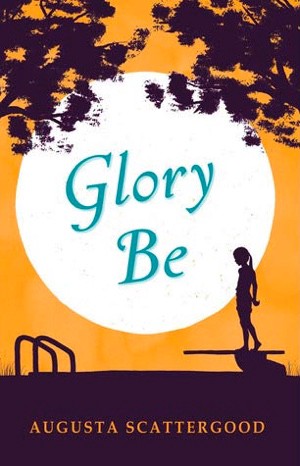
Glory Be, Augusta Scattergood

Set in 1964 Mississippi, the height of the action in Glory Be revolves around an incident at the segregated public pool. Gloriana (or Glory, as she’s known) is just about to turn twelve and recalls the story of a Southern summer she will never forget.

Based on “real-life events,” this is a story of adolescence and everything that comes with it. Glory Be is a vivid snapshot of the fight against segregation that is both personal and universal — and should be enjoyed by both children and adults. No need to hide this one!
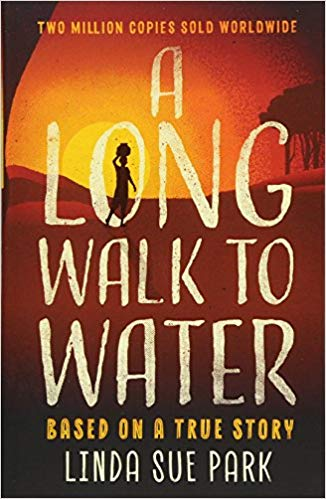
A Long Walk to Water, Linda Sue Park

A book’s description on its Amazon page will often lead with its most impressive accolade, and the one for A Long Walk to Water certainly doesn’t hold back: ”A gripping tale of conflict and survival that has inspired millions of young readers and adults alike, with two million copies sold worldwide.”

Based on a true story, it follows two separate Sudanese children whose stories, despite taking place twenty-three years apart, end up linking together.

A fast-paced narrative that will rivet readers aged 9 to 99, this is a moving story that all can enjoy — though if you’re still self-conscious at this point, an excellent audiobook is also available!

These books are evidence that all quality books, regardless of their readers’ ages, have much in common: bold storytelling, vividly painted characters, and an ability to draw on our emotions. However you go about it — white lies, dust jack swapping, general discretion, or simply by reading them loud and proud — don’t let the target audience of these books keep you from enjoying them!

About the Author

Emmanuel Nataf is the CEO of Reedsy, a marketplace that connects authors and publishers with the world’s best editors, designers and marketers. Over 5,000 books have been produced via Reedsy since 2015.

Actually, Other People’s Dreams Are Cool

One of my earliest memories is of a nightmare. In it, I’m on a train traveling across a wide desert expanse under a big, cloudless sky. This train car is almost entirely empty, and I’m alone, staring out the window at the sunny cliffs in the distance, their golden-brown faces regal in the light. Amidst all the beauty, a giant, winged demon emerges. It swoops across the open plain and flies past my window, its gaping maw emitting a piercing scream before it disappears. In fright, I bend over and vomit up undigested peas and carrots; then I wake up.

What strikes me most about the nightmare in retrospect is not the demon but the desert landscape. I must’ve been five or six when I had this dream: young enough that I remember waking up in my childhood bed, screaming for my mother, and far too young as a resident of suburban Northern Virginia to know what the desert looks like or to have ever traveled by train. And so I’m left to wonder: where did my brain find these images? Had I, while waiting in a doctor’s office, seen a picture of the desert or a Georgia O’Keefe painting? Did I start watching Tales from the Crypt as a small child? I find this hard to believe, given that my television viewing at age five was limited pretty exclusively to Little Bear and The New Adventures of Winnie the Pooh. And yet somehow my brain managed to transport me to a landscape that, to this day, I have never actually visited.

My lifelong fascination with dreams began there, in the mystery of that desert, and has continued since then, spilling over into my waking and writing lives. This fascination is not truly analytical in nature, though I have turned on rare occasions to Freud and dream interpretation manuals. (Did you know that being bitten by an alligator in a dream symbolizes treachery on the part of a loved one, particularly a family member?) Mostly, it manifests itself in a small dream journal, in which I occasionally remember to record the more vivid dreams and nightmares my brain conjures. I rarely share my dreams, for fear that I will become That Person at the party, but I’m always interested in hearing about other people’s dreams. Recently, I picked up Insomniac Dreams: Experiments with Time by Vladimir Nabokov, edited by Gennady Barabtarlo, and was enthralled by the rich depth of imagery in his dreams, as well as in his wife’s. In one, she dreams of a granite hotel where the staff rings a bell every time a large white caterpillar crawls over the furniture. In another, he comes across a box of butterflies and only after trying to squeeze the last living butterfly to death realizes that there’s a man sitting next to him, preparing a slide for a microscope. This delayed awareness of the other’s presence is common in Nabokov’s dreams, as in his fiction. In Lolita, narrator Humbert Humbert describes a dream in which he’s riding horses with the title character and her mother, only to discover there is no horse underneath his bowed legs — “one of those little omissions due to the absentmindedness of the dream agent.”

I rarely share my dreams, for fear that I will become That Person at the party, but I’m always interested in hearing about other people’s dreams.

This “dream agent” is Humbert’s invention, the subconscious factor he imagines controls his sleeping visions. That’s one way to explain the features of dreams that are out of step with the real world, the appearances and disappearances and strange juxtapositions. Another is night-time logic.

“Night-time logic” is a term attributed to author Howard Waldrop, who distinguishes between the daytime logic that governs the waking or “real” world and the more fantastical—but no less internally consistent—night-time logic that governs his writing. Waldrop is a big figure in the world of speculative literature, and he won the Nebula Award and World Fantasy Award for his novelette “The Ugly Chickens,” first published in 1980 in Universe 10. In the story, Paul Linberl, a graduate student in ornithology at the University of Texas, meets a woman who claims that her family raised dodo birds in Northern Mississippi in the 1920s. Paul naturally finds this fascinating and impossible and embarks on a wild dodo chase in search of the extinct bird. While in pursuit of the dodo, he relates a vision he used to have before he struck out on this quest. In his vision, he’s in the Hague; the Dutch royal family is eating dinner; and, as Pachelbel’s Canon in D plays in the background, four dodos enter the dance floor, their awkward bodies suddenly graceful as they move and sway. Reading this, I cannot help but recall the dwarf from Twin Peaks: how he dances stutteringly in the red room of Dale Cooper’s dream (which, he later learns, he shared with Laura Palmer, who dreamed of the red room the night before she was murdered). Like the dodo birds dancing in the Hague, the dwarf is part of a premonitory vision — a moment in which both Paul Linberl and Dale Cooper are offered a window into the future, only to forget or misinterpret that vision upon their return to the waking world.

In order to reconstruct the insight he had in his dream, Cooper has to first understand the night-time logic that underpins it. That means unlocking a series of clues. When Laura says, in the dream, “Sometimes my arms bend back,” she’s referring to the way her arms are bound with twine. And when the dwarf says, “That gum you like is going to come back in style,” he’s referring to the gum that the aged waiter hands to Leland Palmer seconds before Cooper solves Laura’s murder. This is night-time logic at work: seeming non sequiturs existing in a world where they’re not only accepted but later proven essential to the functioning of the world itself.

This is night-time logic at work: seeming non sequiturs existing in a world where they’re not only accepted but later proven essential to the functioning of the world itself.

When I first watched the original series of Twin Peaks, I was in college and did not yet know the term night-time logic. That came later, while studying the works of Kelly Link. I was introduced to Link’s work in graduate school, in a science fiction workshop led by Kevin Brockmeier at the Iowa Writers’ Workshop. We read “Catskin” from Magic for Beginners, the first book of Link’s I read. Like Cooper’s visions in Twin Peaks, much of Kelly Link’s work operates on the level of night-time logic. In stories like “The Faery Handbag” and “The Hortlak,” she introduces readers to worlds where entire villages can be found Mary Poppins-style inside an old woman’s handbag and where zombies drift in and out of convenience stores, never bothering to attack the cashiers. It’s a testament to Link’s skill as a writer that readers never once question the central conceits of her stories. She does this through deft and deceptively simple world building. Take this passage from “The Hortlak” for example:

The zombies came in, and he was polite to them, and failed to understand what they wanted, and sometimes real people came in and bought candy or cigarettes or beer. The zombies were never around when the real people were around, and Charley never showed up when the zombies were there.

At first glance, the passage seems merely utilitarian: the narrator describes a typical night at All-Night Convenience, where the main character, Eric, works as a cashier. In reality, Link is using a moment of exposition to establish some of the fundamental rules of the story: 1) Not everyone in this world is a zombie, 2) the zombies are not particularly violent or interested in brains, 3) other than Eric, humans are never in the All-Night Convenience with the zombies, 4) Charley is never there when the zombies are there, ergo 5) Charley is not a zombie. By presenting these otherwise strange rules as part of the fabric of Eric’s everyday life, Link makes it possible for the reader to suspend disbelief and accept the story on its own terms, according to its own logic.

Stone Animals

When considering the works of Kelly Link and David Lynch in tandem, it becomes clear that the artists are employing night-time logic to two distinct but not entirely dissimilar ends. For Lynch, night-time logic is a tool that he uses to chip away at daytime logic — that is, at the surface image of perfection and normalcy that Twin Peaks the town likes to project. Through a combination of excellent detective work and unusual deductive techniques, Dale Cooper discovers the darkness, madness, and depravity lurking underneath that illusion of perfection, thus uncovering the truth. One could argue that this is the larger goal of Lynch’s oeuvre: to undercut that normalcy, to take the perfect little towns of Twin Peaks and Blue Velvet’s Lumberton and reveal their underbellies. Kelly Link, on the other hand, does not assume normalcy as a baseline, but rather uses night-time logic to establish a new normal: another fantastical world wherein the characters we meet and the events that take place reflect back on our reality, thus teaching us something about what it means to be human. Ultimately, both artists are interested in exploring the subterranean desires that live under the surface of our daily lives, but the mediums through which they do this and the manner in which they explore those desires prove different. For David Lynch fans looking for a way into Kelly Link’s work, I suggest “Pretty Monsters.” For Kelly Link fans interested in David Lynch, I suggest Mulholland Drive.

Studying night-time logic has not alleviated my night terrors (on the contrary, the 2017 revival of Twin Peaks inspired some of my most vivid and symbolic dreams to date), but it has changed the way I think about nightmares in my waking life. Instead of viewing them as visceral experiences of terror or revulsion, I instead think of them as opportunities: narrative filters, like Link’s stories and Lynch’s films, through which I am able to examine the world around me, as well as the inner workings of my own subconscious mind. Like Nabokov with his dream records, I write down my nightmares not to emphasize their power but to understand the linkages between the dream world and the real world and, from there, enhance my own creative practice. This act has opened me up to a wealth of narrative possibilities and coping mechanisms that simply were not available to me as a little girl dreaming of demons. Back then, I felt alone in my terror. Now, as an adult, I know that dreams are not just the bewildering byproducts of our subconscious minds. They are fuel for art.

Boy Meets Girl Without All the Bullshit

Existentialists Sing Sad Songs

Boy meets girl, boy loses girl, boy journeys into the underworld on a rescue mission and girl follows boy back to the world of life, but rules designed to exploit human proclivities for “connection” with idealized loved ones cause complications, so generally this is where a cranky local god would intervene or someone would turn into a tree but it doesn’t happen so girl follows boy, except not quite. Boy sings sad song.

Boy meets girl, except not quite. Boy meets boy and/or girl, and/or girl meets girl and/or boy, except not quite. Boys meet boys and girls, girls meet boys and girls, everybody loses everybody because death is a terrifying inevitability though luckily there’s a happy ending in many forms of highly glossy printed/recorded/filmed entertainment. In a fluffy, white, nominally Christian heaven no one ever sings sad songs, and character actors get their wings.

Boy meets/loses girl he never actually “had,” girl meets both girl and boy and loses both but second girl meets and wins heart of other boy, other boy meets/loses yet another girl and after several weeks of depression-related insomnia and emotional lability decides to “pull a Leonard Cohen,” as he tells friends, and disappear to a Buddhist monastery in the foothills of metro Los Angeles; depressed boy’s current whereabouts are still unknown but a cryptic postcard to a friend from boy reports he has “found love, but it’s not what I had thought” and no one knows what he means or cares much. People seeking closure sing sad songs.

Boy meets girl, boy wins girl, boy loses girl, boy expects to win girl back, boy fails to do so, girl eventually becomes an acclaimed, award-winning actress in elliptical indie films that boy swears never to watch but watches anyway and then expects himself to feel wounded by but is surprised to find he does not. Successful actor’s high school classmates stuck in unfulfilling jobs and prone to romanticizing the film industry sing sad songs.

Boy meets girl, boy and girl fall in love, both brace for complications but things are okay and everyone lives happily ever after, including neighbors and passersby. Acquaintances of boy and girl who aren’t really buying it sing sad songs and sometimes engage in trolling on social media.

Boy meets and loves girl but girl is in love with other girl so boy embarks on elaborate mission to drive wedge of doubt and distrust between girls, girls lose and then, after hijinks, win each other back while boy is involved in bus accident leading to brain injury rendering him unable to love in the romantic sense of the word but endowed with both supernal empathy and psychic ability he uses to game the stock market and fund humanitarian charities; almost everybody lives happily ever after for a while. People involved in bus accidents (ordinarily) sing sad songs and fend off ambulance-chasers, ambulance-chasers stifle any remaining embers of shame and blame socialism and safety standards for decline in business; hijinks ensue and ambulance-chasers sing sad songs that become unlikely but modest Soundcloud rap hits.

Boy meets girl who meets other boy who meets two girls, those girls meet three other boys plus the aforementioned boys and girls and a plastic replica of a Greek statue of Dionysus that can sometimes talk or seem to talk when certain parties are under the influence of certain pharmaceuticals, statue persuades entire coterie of hesitant and confused romantics to visit mysterious island off the coast of Greece where the statue says all will become “clear” but widespread protests over collapse of financial systems in Greece during coterie’s visit hinders quest because island proves inaccessible so everyone complains about “wasting” a vacation and things go downhill as coterie of itchily lovelorn tourists depart for the south of France, which is deemed lovely but not really magical enough to be worth it and consensus is reached that nobody ever really knows what they want or why they want it. Tourists with maxed-out credit cards, persons working subsistence-wage jobs in the tourism industry, and scapegoated public officials sing sad songs.

Boy meets and loses girl but wins back heart of girl, so to speak, and girl and boy begin to entertain nagging anxieties re: what winning someone’s heart means and at what cost and why it always seems to be effort on culturally-agentic boy’s part while girl is mere object so boy and girl conspire for girl to meet/lose second boy and win his heart, but after girl locates second boy, original couple’s well-intentioned but not-well-thought-out plan to ensure loss of boy involving another boy/girl duo hit snag when girl fails to “lose” boy well/completely enough for subsequent heart-winning to be meaningful, intervention is held in which this is explained to patient, generous-in-love boy whose heart was sociocultural test case but much to the consternation of everyone (esp. original boy losing/winning girl and boy half of hired girl/boy couple, whose heart was (accidentally) won by conspiring original girl and ends up losing hired girl) when experimental and plausibly genderfluid boy (no one asks) is informed of heart-winning experiment he doesn’t really mind because of agreement re: basic premise of test regarding gender agency, boy then gives flowery speech re: how a human heart can be available to more than one person and duality is also a social construct, hired/split boy and girl are hella pissed at original boy and girl, hijinks ensue that cause lingering stress beneath original boy and girl’s otherwise happy life together and girl eventually locates experimental boy after sudden death of original boy who “won” her heart, discovers him living in a country villa in the Mexican countryside, happily involved in complex polyamorous relationship he invites grief-stricken but conflicted girl to join; girl declines more out of wanting to save face than out of being weirded out, etc. People overly invested in the allure they hold for others, the power of individual vs. social agency, and how that power/allure can be manipulated sing sad songs, as do people who suffer aneurysms while feeding Mr. Fluff on a cold Tuesday morning before another long day of work.

Boy and girl meet, fall in love, lose/win each other, live happily ever after for a while despite thankless careers in which boy and girl are trapped in order to provide for their three children, two of whom are perfectly nice, but lead both boy and girl to begin to question not just who or what they are or were in love with but the nature and meaning of love itself relative to the formless void of existence; family relocates to remote village in Wales, mean child is maimed by rogue goat, everyone expects to (re)discover the (restorative) power of love in care for maimed child (who recovers but is still kind of a jerk) but fail to do so, boy and girl both disappear separately and without explanation, leaving two nice kids and a jerk alone in remote village to face ambiguous future of unguided, puberty-complicated maturation and eventually launch a successful online marketing consultancy firm selling harvested data on the side; as adults, they are wary of romance (and goats). Existentialists posing as fishing industry workers in a remote village sing sad songs consisting of sea shanty melodies overlain with text borrowed from the work of Victor Frankl, resulting in a New York Times trend piece on existential sea shanties.

Girl meets/loves suspension bridge, discovers she can marry bridge and, with consent of bridge, does so, everyone lives/exists in contentment for a pretty long time even after girl loses job as Elvira impersonator when Elvira-themed restaurant goes under. People (such as evangelical Christians or comedians looking for cheap jokes) easily rankled by the plausibility of the non-normative sing sad songs and/or make cheap jokes.

Girl meets boy, girl and boy fall in love, boy and girl give up because love is failure and failure is a magnificent but terrifying storm headed in our direction that will surely destroy all we know and hold dear but leave us alive to carry the burden of our lives’ erasures across dark oceans of lifespans, except not quite, because existence demands a certain amount of pragmatism from all but the most untouchably wealthy, who sing songs they believe to be sad but are mostly more redolent of a kind of theatricalized ennui. We should give up, according to the latest statistics, except we never do, not quite.

About the Author

After a weird, boring detour in the southwest and a weird, boring detour in the sciences, Simon Henry Stein has recently returned to writing and composing and currently lives in the midwest.

“Existentialists Sing Sad Songs” is published here by permission of the author, Simon Henry Stein. Copyright © Simon Henry Stein 2018. All rights reserved.

A Reading List About Small Towns Where Everyone Has Something To Hide

Before writing Reservoir 13 and The Reservoir Tapes, most of my fiction had been set in big cities, where the idea of community is somewhat amorphous and the edges of anyone’s territory are blurred and unclear. Starting work on a project set in a small rural town, I realised not only what pleasures this setting offers the writer — a defined network of characters, a knowable landscape, a community of shared knowledge — but also that much of my own best-loved reading has also shared this small-town setting.

Purchase the book

American fiction is pretty much obsessed with small towns and gravel roads, of course; but Irish and Scandinavian fiction also seems repeatedly drawn back to the small community. These are places of gossip, neighbourly surveillance, and known family histories, all of which makes for good storytelling.

Small communities are also comprehendable: the anthropologist Robin Dunbar has suggested 150 as the number of people any one human can maintain genuine social connection with (although he was writing before Twitter, so), and the cast of characters in these small town novels — whether named or implied — often seems to hover around that number. These are ‘knowable communities’, as Raymond Williams puts it: knowable for the reader, and knowable for the writer.

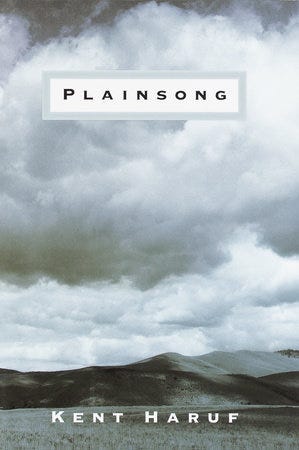
Plainsong by Kent Haruf

Is it still possible to describe Kent Haruf as under-read, or under-appreciated? He still doesn’t seem to be a household name, but he does at least seem to be credited, regularly, as a master craftsperson of this school of writing: not minimal, but plain, and beautiful. In the book, eight disparate characters in the small town of Holt, Colorado experience profound change over the course of one year.

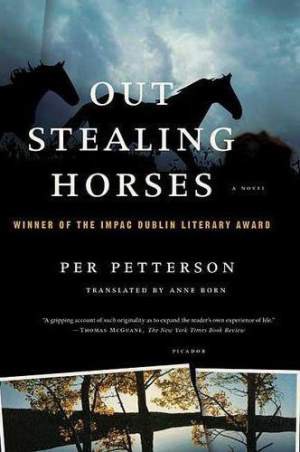
Out Stealing Horses by Per Petterson

Apparently the story of a city man retreating to a small Norwegian village and trying to fit in, Petterson’s book manages to become as much about the shadow of the second world war and the rupturing of old certainties as it is about a man pretending to know how to chop wood.

The Brief History of a Small-Town Deli

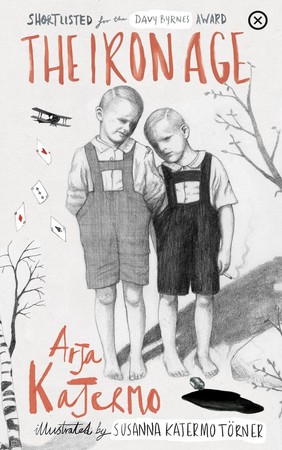
The Iron Age by Arja Kajermo, illustrations by Susanna Kajermo Torner

I sometimes suspect I have some Scandinavian genes mixed in with my Scottish and English ones; I can’t get enough of stories about wooden cabins and deep forests and frozen lakes. Arja Kajermo’s novel is memoir-like in its description of a childhood, barely a generation away, where not knowing how to chop wood meant death rather than social shame.

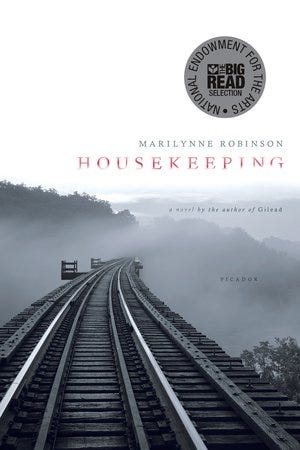
Housekeeping by Marilynne Robinson

The title of this reading list is ‘small towns where everybody has something to hide’, and although I guess I feel like that applies to all towns and all people and especially all the interesting stories — since without having things to hide, how do we get through life? — Marilynne Robinson’s haunting debut novel about two sisters who are raised by a succession of female relatives in a small town in Idaho probably ticks the ‘hiding things’ box more than most.

Sing, Unburied, Sing by Jesmyn Ward

Set not so much in a small town as a small family, I’ve included Jesmyn Ward’s searing novel here for all the hidden things it brings to the surface: the brutal history of America, and the broken bodies on which all those charming small towns are built. The concurrence she creates between plantation and prison is devastatingly vivid, as is the way she makes clear that these hidden things have been there in plain sight all along.

How Jesmyn Ward Brings Writing to Life

That They May Face the Rising Sun by John McGahern

This was the novel that made me want to change the way I was writing, much earlier in my career, and the novel that I came back to when I started working on Reservoir 13 and The Reservoir Tapes. It’s a classic of small town Irish literature, and McGahern’s masterpiece: one small community, scattered around a lake, one year, a lifetime of stories told with ringing simplicity.

The End of Vandalism, Hunts in Dreams, Pacific by Tom Drury

This, the Grouse County trilogy of novels written by Tom Drury over a twenty year period, is the work I keep coming back to when I want to push myself to write better: to find more nuances for my characters, to trace more carefully their detailed connections, to remember that all lives are full of humour, somewhere. I am in awe of what Drury has achieved in these books, and have been nagging people to read them for years. I don’t know what you’re waiting for.

About the Author

Jon McGregor is the author of four novels and two story collections. He is the winner of the International Dublin Literary Award, the Costa Novel Award, the Betty Trask Prize, the Somerset Maugham Award, and the American Academy of Arts and Letters E. M. Forster Award, and has been long-listed three times for the Man Booker Prize, most recently in 2017 for Reservoir 13. He is professor of creative writing at the University of Nottingham, England, where he edits The Letters Page, a literary journal in letters.

Brooklyn Literary Spaces That Have Survived Gentrification

The Brooklyn Letters project is a series of oral histories of literary Brooklyn from 1999 to 2009, presented by Electric Literature with support from the New York City Department of Cultural Affairs.

This is the third installment of Brooklyn Letters. You can read earlier oral histories here.

In order for history to be recorded it also needs to be preserved: in photos, through oral traditions, in letters, or through a continued existence. Sweeping changes don’t totally eradicate the past, but without records we can easily lose those memories. Gentrification affects marginalized and low-income communities hard, but our communities are also pushing back by preserving the past, or at least its echoes — from archives to events to buildings, like the Midland Malls (erected in 1907) welcoming citizens into Jamaica Estates or the still-standing row houses in BedStuy. The spirit of spaces both commercial and residential are upheld by individuals, new organizations, and volunteers who hold fast to their connection to our lineage and our voices.

The continuation of this portion of Brooklyn Letters focuses on spaces surviving (with your help) in Brooklyn. These spaces include the remnants of the all-Black town of Weeksville, whose mission ties into literacy; the Lesbian History Archives preserving feminist and LGBTQ+ history; PoC-owned eateries with food that instills a real feeling of home for Asian/Pacific Islanders; and the public spaces that have encouraged writers to find their voice. These are the heartening stories and spaces that continue to exist, continue to thrive, and continue to need our support.


Bridgett M. Davis [author of Into the Go-Slow & The World According to Fannie Davis]: Weeksville Heritage Center is located in Crown Heights. Weeksville was the first free African American community in Brooklyn. And one of the first free Black museums in the country like Seneca Gulge. At its height they had 400 or 500 families that lived in this area that we now call Crown Heights, Buffalo Avenue. They were, as you would imagine, free Blacks and recently enslaved runaway Blacks who found freedom, who knew to come to this community and be a part of it. It was founded by a man named James Weeks, that’s how they got their community name Weeksville. And it had a church, it had its own school, and it had its own newspapers that were thriving. They could vote because they had land, that was the law in New York — to have a certain amount of land if you were to vote. So that was the thinking behind pulling together this community and bringing people in, and convincing them to purchase plots, etcetera. Believe it or not gentrification are what ultimately caused the community to dissolve and not be as strong. And eventually sort of became less concentrated with African Americans. So into the early 20th century it became less and less of an established community. Fast forward, 50 years ago, some Pratt [Institute] architectural students actually discovered the four original houses.

Hugh Ryan [author of When Brooklyn Was Queer]: The Lesbian Herstory Archives are super important and they’ve managed to stay open, welcoming, and maintain some of that older Brooklyn vibe even as the years pass. They started in Manhattan and moved to the Slope around… I wanna say the late ’90s but I might be wrong. They were super helpful with a number of things, but particularly they have the papers andephemera of a founding member named Mabel Hampton, along with 20-plus or so hours of interviews done with her by the founders of the LHA. She was a Black lesbian dancer and domestic worker, who got her start on the stage (and as a lesbian) at Coney Island in 1920. The interviews with her are incredible, and they offer really rare insight into the world of queer women, Black and white, in NYC between 1920–1980 or so. They also have a lot of random things that I used: a huge library of books, lots of what they call “subject files,” which are basically clippings on different topics, and they’re all volunteer. They have a live-in archivist, and they give you tea when you come over! It feels welcoming.

Naima Coster [author of Halsey Street]: For me, Brooklyn was the place of my coming of age and really starting to understand myself as a writer while I was a girl and then a young woman. So, I wasn’t plugged in during the time that I lived in Fort Greene to any kind of adult literary scene. The places that were really valuable for my formation were places like the Brooklyn Public Library on Washington Avenue in Clinton Hill. And then also Fort Greene Park, which is a park in the neighborhood I grew up in. Which has a rich literary history of writers that I was aware of as a child. So I knew Richard Wright in Fort Greene Park. I knew Walt Whitman — even though I didn’t know who he was — was a figure important in the founding of the park and who the public housing projects across the park were named after.

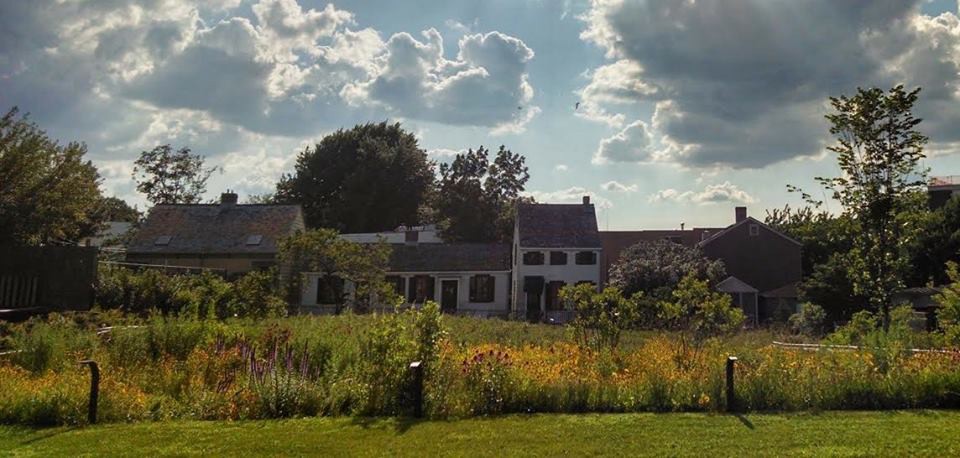
(Hunter Fly Houses, courtesy of Weeksville Heritage Center)

Davis: This is the 50th anniversary of the rediscovery of those [Weeksville] houses. Three of them are [still around]. One burned. Three of them are still there and one of the things they do is they offer tours of the regular houses. They sit right along the road that now faces this beautiful new structure. They’re right next to Kingsborough Housing Projects. The headquarters was in one of the houses for years. For many years. For the first executive director in attempting to get these houses preserved and to create a kind of real sort of community effort to help people understand their history, and to build programming around it etc. They are truly the neighborhood. They are truly in Central Brooklyn. So the mission — there are many things that are important for this center to do — but it’s really trying to create a contemporary thrust that’s based on the original principles the community was founded on.

Coster: I also knew that Fort Greene Park has a different visibility culturally in Brooklyn because of film, because of music — thinking about Spike Lee. And so for me, the park, although it was a place where I played as a girl, also felt like an important site of cultural history in Brooklyn and in stages of production. I felt very aware of that as a kid, that the park in Brooklyn was a place that was known and was seen in the culture. I think that kind of created an important sense that if someone is living in the neighborhood, that creative inheritance was mine and open to me.

I felt very aware as a kid that Fort Greene Park was a place that was known and was seen in the culture.

Lisa Ko [author of The Leavers]: Mountain Provence is a sanctuary. I really didn’t need to live in [Williamsburg] with four thousand bars when I didn’t even drink. So Mountain Provence opened maybe early on from when we came here, but my partner found out about it because a friend of his in the Filipino community was doing an event here, a reading or something. It felt really nice to see — since both our families were from the Philippines — to see a Filipino owned cafe. It is, it is really very motherly, and they also use family recipes in their food. I think that for that feeling for me living as Asian-Americans with family in the Philippines in a primarily White neighborhood, it felt really familiar. The owner’s dad would often be here too.

Coster: The Clinton Hill Branch of the Brooklyn Public Library on Washington Avenue, it’s a place I spent a lot of time just around books and borrowing books where I had unlimited access to books. It was just down the street from my elementary school, PS 11 on Waverly Avenue. And it was a big part of my formation as a reader just to have access to those books. And unlimited access because they were free. At that time there was such a strong connection between the school and the library.

Ryan: My go-tos are always the libraries. I use them everywhere as places to work and I do a lot of research in them. [The Brooklyn Public Library] is great. Especially on a hot day where you can’t find wifi, a place to plug in, or a bathroom anywhere. I also use the Brooklyn Historical Society, especially when I’m doing Brooklyn-based research.

Davis: And so Rob [Fields] as executive director is all about figuring out all kinds of ways, mostly through programming and events and also through partnerships and through liaisons and through opening the doors for the community can have resources, etcetera. There’s just a lot of things that are at play. It’s in a way, Brooklyn’s biggest secret because whenever someone enters they go “What? I had no idea.” That’s what everyone says when they arrive. But I like that larger vision of: What does it mean to bring a literary sensibility and presence to a place in a space that’s not traditionally used to it on a consistent basis?

Ko: I love the Greenwood Cemetery. I live near it now. It’s one of my favorite spaces in New York. I jokingly awarded myself a writing residency there one year when I got rejected from everywhere I applied to. I decided I would be the writer in residence at Greenwood Cemetery. They have a lot of benches, and there are these really beautiful mausoleum type things for the very, very wealthy. You can’t go into them, but they have these almost like porches, and some of these have these benches that are meant to sit on, so you can sit there. They have two or three lakes with benches around them. There’s a lot of open space. I feel like in the city open space is really at a premium. It’s really hard to find somewhere to just sit, read, write, and be quiet. It’s a nice spot, especially on the weekdays when you have an afternoon free or have a flexible schedule. I would go there and not see anybody, which is kind of creepy. You would be sitting there, and you’d look up and realize, “I’m surrounded by ten thousand dead people, and I’m the only person alive.”

I love Greenwood Cemetery. I jokingly awarded myself a writing residency there one year when I got rejected from everywhere I applied to.

Coster: Another site that was important me is called Outpost Cafe. It might be called Outpost Cafe & Bar on Fulton Street. I’m not quite sure when it opened, it was around after I finished college and came back to Brooklyn. And it’s a place I did a lot of writing while I was living in BedStuy. And it definitely had the kind of aesthetic of new Brooklyn. Exposed brick and really nice fair trade coffee and a garden in the back. In 2011, they hosted a cool event for me that I think was my first event really as a writer. I was in conversation with community residents who came with a visual artist. It was after I had published a piece on gentrification on Fort Greene in The New York Times called “When Brooklyn Was Mine” and Outpost reached out to me and said, “Hey can we host a conversation with you and with a visual artist and local community leaders?” And I said “yes, let’s do that.” And it was sort of my first event as a writer though I didn’t have a book at the time. I was only 24, 25. But it was great! That the place I had gone and kind of felt ambivalent about but enjoyed the coffee, and enjoyed being there hosted this really conversation that brought different bulks and when you do events you never know who’s gonna show up. But there was this really great range of folks in terms of age and in terms of race and ethnicity. It was great to be a part of that conversation. And I know that they also hosted music, but I’m not sure how many other literary events they did.
Ryan: I use the main BPL branch a lot because of the Brooklyn collection, but I also use my local, which is called the Saratoga Library Branch, I believe. It’s been very helpful in certain ways. They have an incredible library of Brooklyn books, things you can’t find elsewhere. And incredible photos too. But they’re very small and don’t have a lot of staffing. So it can be hard sometimes. But their main library space is a great location to work in. I also think, just being a writer and not having much money, I’m always looking for spaces that are free.

Davis: There were always different efforts over the years to do things around writing. But it was like let’s try to really create something more formal and consistent because Weeksville’s history traditionally given what they were, they were all about literacy. They had people who like I said were runaway slaves, so you can see they still have facsimiles of these things and they’ve blown them up and they’re in the lobby. There’s a page from their original newspaper. Some of it is just the alphabet, printed to help people learn to read. And meanwhile you have one of the most prominent African American journalists who actually lived in the community, we had all kind of people: tradesman, teachers, typical segregated Black people. And in their case self-segregated. So it felt like something we could do for ourselves and protect ourselves. I feel like what we’re doing is a direct sort of temporary model of where Weeksville began.

Brooklyn Letters is supported by a grant from the New York City Department of Cultural Affairs.

‘Gilmore Girls’ Was the First Time I Saw a Family Like Mine Thrive

“Have you seen that show Gilmore Girls? You should really watch it. You would love it.”

I must have heard variations of this recommendation dozens of times over the years, to the point where I was almost determined not to watch the damn show. It was irritating how many people would say things like “Oh! You’re totally Lorelai!” which I didn’t understand because I hadn’t seen the show, because I didn’t really watch any shows, because I was too busy being a single mom and raising my daughter on my own.

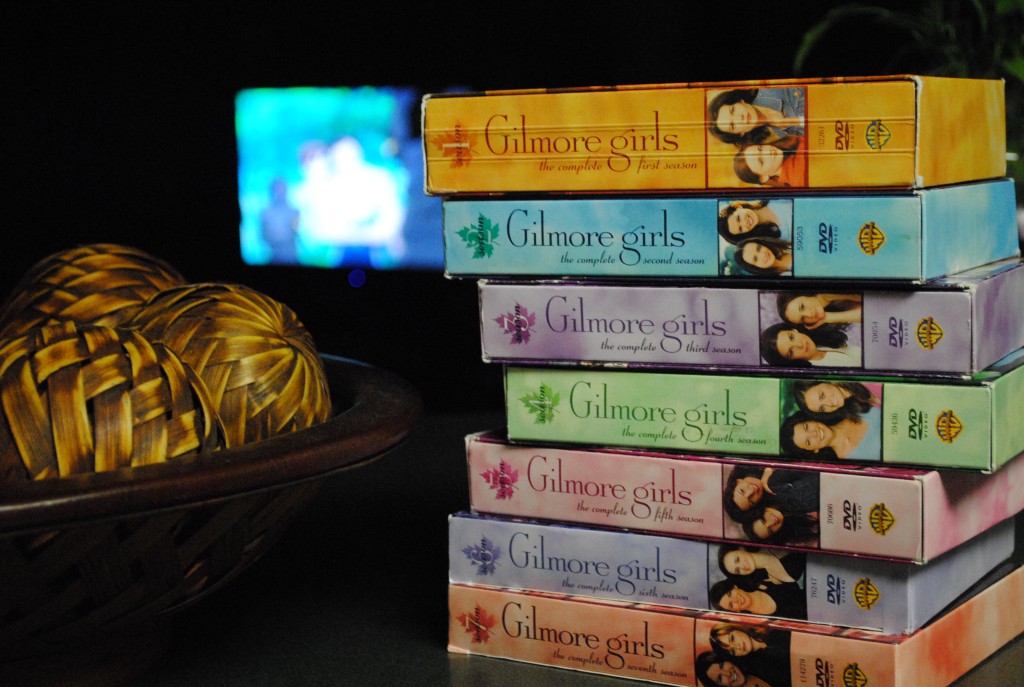
So by the time I finally sat down to watch the show, it was with my daughter, who was 14 now and finally old enough to watch with me. All seven seasons had already aired, but thanks to the miracle of syndication, we started from the beginning. We curled up together on the couch to watch a show that, it turned out, looked achingly familiar. There was Lorelai Gilmore, raised in an upper-middle-class family, throwing her future away by having a baby as a teenager, and yet building a life and a family with her daughter centered on authenticity and humor and love.

Oh. So that’s why people kept trying to get me to watch this show.

I know how important it is to see yourself in narratives. Even as a young girl, I recognized how crucial “mirrors” were in my voracious reading, as I was continually drawn to characters like Jo March, and Harriet the Spy, and other independent, bookish girls. Each time I read a story about a girl compelled to scribble in notebooks or flout social convention, it seemed more and more possible for me to do those things too. And maybe it was, at least in part, my love of rebellious girls in literature and movies that made me think it was possible, when I found myself pregnant at 17, to make the choice I did.

But I didn’t have a roadmap for what my and my daughter’s life could look like after I took that leap. I didn’t have a template for a family that was just one mom and one daughter. I had to create something new out of my own wild imagination, and I can only now see in hindsight how limited that imagination was.

I didn’t have a template for a family that was just one mom and one daughter. I had to create something new out of my imagination, and I can only now see in hindsight how limited that imagination was.

There was only one college narrative of which I was aware, sheltered as I was. You graduate from high school at 18, you go away to college and live in a dorm and stay up late talking about philosophy and go to parties and go to class and eat terrible dining hall food and have exciting hook-ups and maybe do a study-abroad semester or a summer internship (unpaid, of course, but the experience!) and in four years, you’re done.

That wasn’t what college looked like for me. I finished high school at 19 because it took me an extra year because baby, and I went off to college with my one-year-old daughter in tow. We lived off-campus, because you can’t have a baby in the dorms, and my college life was less about parties and philosophy and more about getting my daughter to daycare and taking the bus to campus and rushing back as soon as class and my work-study job were over and fixing terrible meals with the cheapest ingredients possible in our tiny kitchen and pulling all-nighters when she had the croup and staggering to class without the reading done. It didn’t look anything like the brochures, because there were no brochures for my experience; there were no models in my personal canon of narratives for what I was trying to do.

Reading About the Worst Parts of Motherhood Makes Me Less Afraid

In preschool, when the teacher asked my daughter to draw her family, she drew two identical figures, one taller, one smaller, smiling under a yellow sun. She was happy with her drawing, but when I saw it, I cried. That wasn’t a family; that was an incomplete drawing. A holding pattern. That was a temporary arrangement, a blip along the way to becoming a real family. Determined to give my daughter everything she needed, I was convinced that a “real family” was an essential piece of that.

My inability to see that a two-person family could be full and whole and complete led to some of the worst decisions of my early adulthood. I was fixated on creating a family structure for my daughter that echoed what she saw on television and in her picture books. I was trying to fix her reality so that she would see herself mirrored in those stories. I was single-mindedly husband-searching in order to lend some legitimacy to our little family unit, rather than recognizing how rich our life was already. This obviously put enormous pressure on the relationships I got into during that time, as each person I dated was immediately being put on trial as a potential husband and stepfather. I’m ashamed to admit that, in those relationships, I acted like the worst stereotype of a needy woman, unable to reach any kind of actualization without a man in her life.

I was fixated on creating a family structure for my daughter that echoed what she saw on television and in her picture books.

The irony was, I wasn’t really needy at all. I wasn’t looking for someone with whom to share the load of parenting — I had that shit handled. I didn’t need financial support — I preferred to be financially independent and insisted upon carrying my own weight in any partnership. It was as if I didn’t really want a partner for myself, but just to fill in the picture so we could look like a “normal family.” As if normal was a thing that really existed.

In kindergarten, my daughter drew another family picture. This one had the two of us in the center, but she also drew her grandparents, and her dad, and her aunts and uncles, and my closest friends, the ones who had stepped up to be honorary aunts and uncles in her life. The paper was crowded with figures; they barely fit on the page, all surrounding the little girl at the center of the picture with wide smiles and open arms. My daughter was wiser than me. She didn’t see anything lacking.

But part of me still thought our life was somehow lacking — until I started to find other cultural narratives, new mirrors that reflected our family the way my daughter saw it. In Gilmore Girls, Lorelai and Rory have built a life independent of Rory’s father, independent of Lorelai’s parents, but still emotionally interconnected with the family of choice that surrounds them. They are not lonely, or incomplete. In the sixth episode of the first season, Lorelai throws Rory a birthday party and the whole town comes, and it’s wild and fun, and it’s crystal clear that everyone in attendance adores this kid and has contributed to her upbringing in various loving ways. Of course Lorelai can’t be everything her daughter needs all on her own. But she has set up their life, welcomed others into their world, so that Rory’s life is as rich and warm as Lorelai’s own childhood was lonely and cold.

I didn’t discover the show until later, but I wonder how my life would have been different if it had existed as part of my own internal bibliography of possible narratives when I first took that leap at 17. If I had had Lorelai Gilmore as a model, back when I was first trying to figure out how our life could still be rich and worthy and joyful, with just us two. Knowing how susceptible I am to these narratives, knowing how desperately my younger self in particular hungered for examples and archetypes, would it have made a difference? Would I have been just a little more confident, seeing a prototype of how this had been done before? Could I have been just a little more comfortable, a little more relaxed, if I could have seen a little bit of my own possibility in the fast-talking, entrepreneurial, independent Lorelai Gilmore? I don’t know. But I do know what it meant to my daughter.

I wonder how my life would have been different if I had had Lorelai Gilmore as a model, back when I was first trying to figure out how our life could still be rich and worthy and joyful, with just us two.

When she was in high school, we often watched the show together. Even though our family had expanded by then, with the addition of my husband and two more children, watching Gilmore Girls was something we did together, just the two of us. And I saw how important it was for my daughter to see herself in Rory, to see her experience of having a young mom mirrored on television — and to see an echo of our own unusually-close bond, the product of having grown up together, of living for years as a solo pair, knowing each other more deeply and completely than a parent and child in the midst of the noise of a larger family usually do. It was important for her to see, too, the darker side of that closeness — Rory’s need to break away, to establish an identity separate from the sometimes suffocating love and attention of her mother. My daughter got to reap the benefits of having those experiences modeled for her.

When they released the reboot mini-series, Gilmore Girls: A Year in the Life, of course we watched it together. My daughter — now 23 and out of college, living in her own apartment and leading her own independent life — came over and we camped out on my bed, bingeing as much as we could get through in an afternoon. We grabbed each other’s hands, we cried, we laughed, we threw our arms up in frustration at Rory’s directionlessness. But mostly we just reveled in the nostalgia — not just for characters we’d grown to love over years of watching the show (Lane! Sookie!), but for the feeling of being seen, of being recognized, of having something of the truth of our strange and marvelous life reflected on the flickering screen before us.

This is why we need diverse stories, why the world hungers for a multiplicity of narratives. Not just so we can understand the experiences of others — though I did have several friends over the years who admitted that Gilmore Girls had provided a window through which they could understand my weird life a little better — but so that everyone can have that delicious and uncanny feeling of seeing some aspect of their own truth resonating within someone else’s story. To see a roadmap for their own possibilities. I know that for me and my girl, it meant the world.

11 Books That Prove There’s Nothing Wrong with Self-Publishing

No one likes to be told “no.” Whether it’s a child asking for a cookie or a guy handing out fliers on the street, getting turned down hurts. But if you’re a writer, it’s also just part of the job. Getting published is hard, and even successful writers were often rejected dozens or even hundreds of times before something clicked. Too bad you can’t skip the whole query letter part of publishing and do it all yourself.

Except that technically, you can. Self-publishing has existed just as long as traditional publishing, and the current digital age has made the distribution of independent literature more accessible than ever. Of course, some would argue that although self-publishing a work is possible, it won’t land a writer anywhere but in debt. Print-on-demand services demand huge out-of-pocket investments, and online options like Amazon are so flooded with dime a dozen romances that not even the algorithms can sort them out. The results of trying to publish a book on your own are often lackluster at best.

Here is my rebuttal to all the self-publishing naysayers out there: self-publishing may be tough, but as an alternative to traditional publishing it is exactly what we need to give little voices a chance to grow loud. Many of the big names that float around now got their start with self-published literature. They are proof that going the self-publishing route now can lead to greater things down the line.

Still Alice

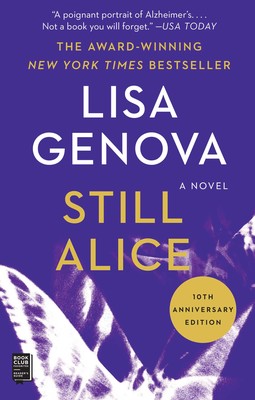
Still Alice by Lisa Genova

New York Times best selling novelist and a neuroscientist on top of that, Lisa Genova jump-started her writing career with Still Alice back in 2007. Self-published with iUniverse’s print-on-demand service, Genova sold copies out of the trunk of her car for about two years, along with discussion guides in support of people with Alzheimer’s and their caretakers. This was a huge force in getting conversations moving toward a better understanding of the disease. After getting picked up by Simon & Schuster, Still Alice alone has over 2.6 million copies in print in over 30 languages. Genova’s subsequent works have been no less praiseworthy, earning her several international prizes and an honorary degree.

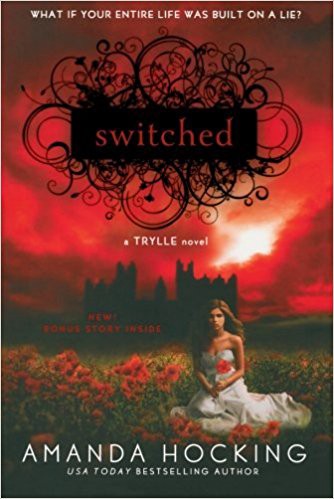
Switched by Amanda Hocking

Amanda Hocking is undoubtedly a star of self-publishing. Her success story started in an all too familiar manner as numerous agents and publisher rejected the manuscript she slaved over for more than a year. It was her first book, and ,unwilling to call it quits, Hocking turned to self-publishing. Switched entered the market at just the right time with a story the New York Times calledThe Princess Diaries meets Twilight.” That book that no one wanted became a trilogy selling well over a million digital copies, and it was the high demand for the series that pushed Hocking around to the traditional publishing path with St. Martin’s and Macmillan. It goes to show that the key to surviving solo as an author is to keep tabs on who’s reading what.

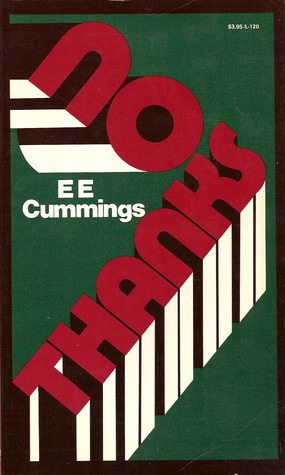
No Thanks, E.E. Cummings

Edward Estlin Cummings was a weird writer. Best known for his experimental, avant-garde style, his poetry undid the cliches of writing about nature, love, and romantic impulse by distorting language itself. Punctuation went out the window, and spelling and spacing were open to interpretation. As a result, Cummings was dynamic in a way no one had seen before, but either because of his experimental style or because of politics that were seen as anti-left-wing, not many publishers would touch him. While critical review was generally in his favor, even when scandalizing the masses with some of his sexier verses, Cummings was forced to rely on his own resources (and his mother’s) to publish some of his work. Luckily, due in part to his own tenacity, Cummings eventually got the fame he deserved.

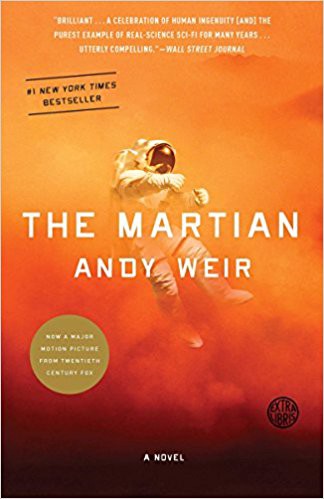
The Martian, Andy Weir

The Martian went from a simple side blog to a bestselling novel to a Matt Damon Hollywood blockbuster in a tale that sounds more fictional than the book itself. Weir was a science guy with a devoted following of science people. Chapter by chapter he posted a story that followed a guy stuck on Mars, but it was the extraordinary detail and realism of The Martian that drew attention from sci-fi fans and literature lovers alike. Since people seemed pretty into the story, Weir decided to compile the chapters and sell it on Amazon for just $0.99. The blog had been free, so he didn’t want to overcharge. Little did Weir expect the book to blow up from there. The Martian ended up brushing the top of the New York Times bestseller list for both hardback and paperback, and by 2013 the printing and film rights were sold, leaving Weir one happy blogger.

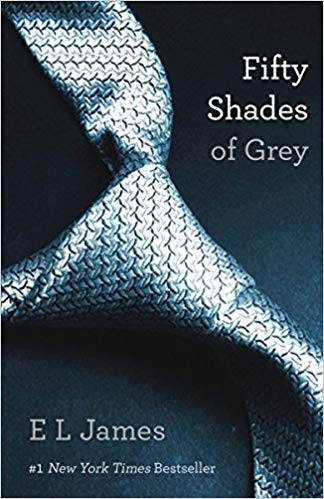
Fifty Shades of Grey, E.L. James

Speaking of internet-to-film sensations, it would be oversight to leave the infamous Mr. Grey off the self-publishing list. Regardless of the critical reception, literary merit, and social health repercussions of the Fifty Shades trilogy, it is impossible to deny its meteoric rise to fame. But Fifty Shades was not always Fifty Shades. It used to be called Master of the Universe, a well-loved Twilight fan fiction that was later taken down from the Fanfiction website due to sexual content. After getting the boot, James decided to repost the story as an original work on her own site. Edward became Christian Grey, Bella became Anastasia Steele, and without the ties to Twilight the already popular series was free game for publishers to scoop up. Thus a fan fiction became a controversial trilogy as well as a household name synonymous with “mommy porn.”

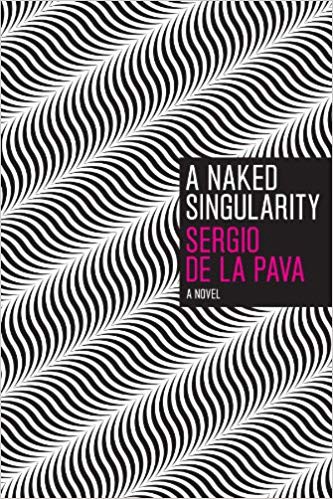
A Naked Singularity, Sergio De La Pava

It took De La Pava 688 pages to explain the hopelessness of the American criminal justice system. As a public defense lawyer in Manhattan, he squeezed his writing time into morning commutes and breaks between court sessions, compiling a massive lament on hypocrisy, injustice, and the destruction of a sense of self. Finally the epic was complete, but when it came time to publish, De La Pava hit a wall. The book was too big. It was too complicated. It was too political.No one wanted to publish. Sergio De La Pava was ready to call it quits there, but Susanna De La Pava took matters into her own hands. Having defeatedly self-published one hundred copies to sell to a few friends, they had a few copies on hand which she sent around for reviews. Eventually they got a bite. The story plays out as you’d expect from there: University of Chicago sent it to the printers, De La Pava racked up reward after reward, and all the publishers who rejected him in the past ate their hats.

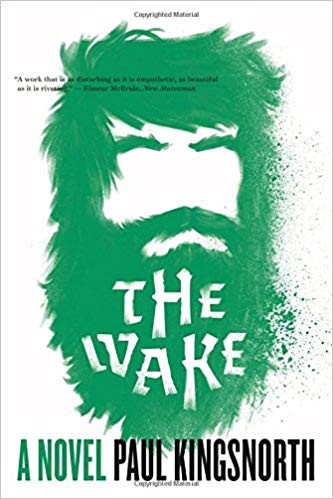
The Wake by Paul Kingsnorth

Though Kingsnorth did not technically self-publish The Wake, he is an example of how to use new, non-traditional publishing methods as a more flexible alternative for experimental books. The Wake was written in a language that does not exist, and Kingsnorth doubted he could find a publisher willing to look past that. He had spent years creating a halfway point between Old English and the vernacular of today for his historical novel, and he was fully prepared to see the publishing process through himself if he had to. Luckily, he didn’t have to. A crowdfunding publisher by the name of Unbound stepped in. Just like with a Kickstarter, Unbound launched The Wake as a project that allowed hopeful readers to pledge their support for Kingsnorth’s work. The novel surpassed its target with roughly 400 subscribers, more than enough to get published with much acclaim.

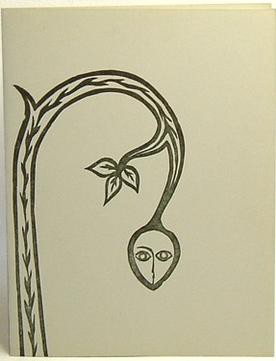
Double Persephone by Margaret Atwood

Margaret Atwood is now a grand dame of Canadian letters who could probably get a six-figure advance for her shopping list, but let’s rewind the clock to 1961 and a little book of poetry called Double Persephone. Atwood’s first published work and eventually the winner of the E.J. Pratt Medal started out with a mere 220 copies, which Atwood set herself with a flatbed press and a cover she designed with linoblocks. Containing only seven poems, Atwood’s book was an immediate success. With close attention paid to themes of opposites and the suffering of women, her later speculative fiction novels only further solidified her reputation as a feminist figure whose writings are no less accurate today as they were with Double Persephone.

19202921

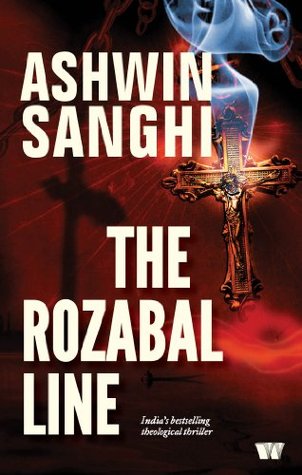
The Rozabal Line by Ashwin Sanghi

One of the highest-selling English fiction authors in India, Sanghi is best known for his crime thrillers, one of which stole the #1 spot in India, breached the U.K. Sunday Times Top 10, and made it into the New York Times Best Sellers. However, nearly a decade before this fame came The Rozabal Line. Written while working full time and only completed after two years of intensive polishing, The Rozabal Line was supposed to kick off Sanghi’s career as a writer. Instead it was rejected 47 times by agents and publishers. With no other avenues available, Sanghi like those before him turned to self-publishing. In 2007 he sent the book out under the pseudonym Shawn Haigins where it built a reputation for itself. By 2008, Tata-Westland and Indian publisher saw the indie book for what it was: a gem just waiting for the attention it deserved.

Image result for The Shack by William P. Young goodreads

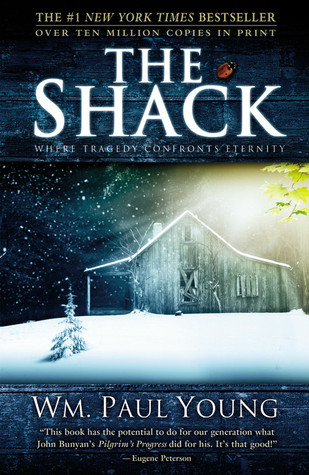
The Shack by William P. Young

This man did not intend to create a Times bestseller; he just wanted a cool story to give his kids for Christmas. The first printing only produced 15 copies, which Young distributed to family and friends. It was those friends who encouraged him to tighten it up and get it published for real. Together they hammered out rewrites of the manuscript and sent it to various publishers, but after 26 rejections they realized the only way to get anything done was to do it themselves. In 2007 Young worked with Wayne Jacobsen, Brad Cummings, and Bobby Downes to establish Windblown Media and publish their sole title, The Shack. With little marketing other than word of mouth, close to no funding, and a dozen maxed out credit cards, their little publishing house supported the book through its climb to the first place spot of the Times bestselling paperback list. Now Young has multiple titles under his name that explore questions of theology and religion.

113436

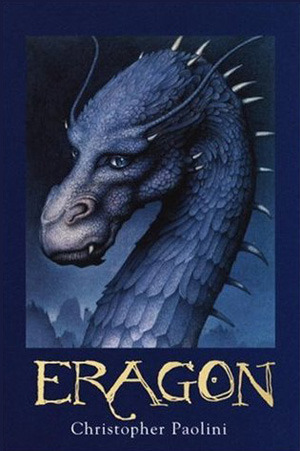
Eragon by Christopher Paolini

A homeschooled kid with a fondness for fantasy, Paolini began his Inheritance Cycle series just for fun. He tried his best to live his adventures by learning animal tracking, archery, survival skills, and weapons crafting, and whatever he couldn’t learn hands-on, he studied and threw into his writing. Eragon was born from the head of a fifteen-year-old boy, and after three years of revision Paolini had boxes full of freshly printed books to peddle around libraries and schools. With all the work Paolini put into promoting, also considering the books already positive reception, it was no wonder Knopf Books for Young Readers eagerly stepped in. The sales speak for themselves with over 20 million copies sold by May 2011. Paolini currently holds an unshaken position as Guinness World Records’ “Youngest Author of a Bestselling Book Series.”

How Gentrification Changed the Brooklyn Literary Scene

The Brooklyn Letters project is a series of oral histories of literary Brooklyn from 1999 to 2009, presented by Electric Literature with support from the New York City Department of Cultural Affairs.

This is the third installment of Brooklyn Letters. You can read earlier oral histories here.

“D o you remember when[insert demolished/renovated landmark] used to be here?” This type of conversation starter is applicable to many cities, not only New York. But it’s especially overwhelming here, thanks to an influx of affluent newcomers, and political and commercial changes intended to cater to them and their money. When it comes to NYC, terms like tumultuous, gritty, and urban are no longer applicable, replaced with up-and-coming, hipster, trendy. These changes extend to the demographics too: the Black population of Fort Greene declined by 30% since 2000, and household income has increased 53%. Gentrification isn’t simply a new form of branding; it’s erasure.

While NYC is known for the arts, being an artist in NYC is a very different story. The Brooklyn literary scene isn’t at a loss for artists: it’s estimated to have the highest population of all the five boroughs, with my hometown of Queens a close second. The numbers for new residents increases each year, as does the turnover of buildings and the cost of rent. This revolving door filters out those who can’t maintain a life here, be it artistic or domestic, thanks to rising costs. The result razes buildings and communities. Artist spaces that provided solace, refuge, and fellowship shift focus or fade away unable to sustain themselves even when they have a steady clientele. As priciest cities go, Brooklyn is right behind Manhattan — but the average weekly wage for Brooklyn inhabitants is actually lower than Manhattan and Queens. Gentrification isn’t solely race specific; it’s also about class.

Gentrification isn’t simply a new form of branding; it’s erasure.

Those of us born and bred in New York City, or who have lived here long enough, are witnesses to the changing landscape. From the erection of high-rise condos to the widespread farm-to-table eatery craze, Brooklyn, like many areas of NYC, is emblematic of change that can come at a cost. For this segment of Brooklyn Letters, I spoke with authors who have experienced (and written about) these ongoing shifts of gentrification in areas like Fort Greene, Williamsburg, and DUMBO. We talked about the spoken word movement, PoC-owned businesses, and lesbian archives: all inherent pieces of not only Brooklyn history but the larger literary canon. Perhaps you heard of these spaces, or maybe you lost out because you arrived too late. Consider this a necessary record.

Ibi Zoboi [author of American Street & Pride]: Local artists used to put their photographs, paintings, or collages on the walls [of the Brooklyn Moon Cafe, a soul food restaurant in Fort Greene that was a haven for spoken-word poets in the 1990s]. It was like a multimedia event. And it was a place to go to meet. You sign up for the Open Mic. There’d be a featured poet and it’d be packed. I was a brand new writer coming across these established writers like Saul Williams, Jessica Care Moore, Sarah Jones who is now an actress was a poet. Liza Jessie Peterson. That strip in Fort Greene was just a hub. To me it was like an Afrocentric Black Arts Movement that I still feel hasn’t really been documented. And it was a second wave of poetry. I don’t know if anything was happening before that, before the ’90s. I think the Black Arts Movement was, what, late ‘60s/early ‘70s?

Hugh Ryan [author of When Brooklyn Was Queer]: A huge number of queer writers have lived/currently live in Brooklyn, and I think that’s part of what has given Brooklyn its cachet starting all the way back with Walt Whitman. Carson McCullers, Richard Wright, John Dos Passos, Hart Crane, Gypsy Rose Lee… Off the top of my head others that come to mind are Marianne Moore, Carson Mccullers, James Purdy, Maurice Kenny.

Zoboi: I know the late ’90s was just huge for spoken word, and I think the Moon, which was Brooklyn Moon Café, had a huge influence on that. After that I used to go to something called the Sunday Tea Party at the YWCA on Third and Atlantic. Like I think it would be every Sunday there was a DJ called Ian Friday who used to play House Music, and before the House Music set there’d be a spoken word open mic performance. This was where Erykah Badu when she was first on the scene would go to the Brooklyn Moon Café. Common, Mos Def, Talib Kweli would frequent this area in Fort Greene. When I started writing it wasn’t books, it wasn’t authors that inspired me. It was the underground spoken word scene of the late ’90s, in this particular area of Brooklyn.

Naima Coster [author of Halsey Street]: Fort Greene continued to be a neighborhood that was home to a lot of prominent contemporary writers like Jhumpa Lahiri, Colson Whitehead, and I think Jennifer Egan. I think Colson Whitehead wrote about being priced out of Fort Greene actually. Which is interesting because this was a few years ago.

Zoboi: People were selling books before Greenlight [Bookstore] started there. People were selling their chapbooks and other poetry books along with the incense and shea butter. This was my entry into publishing. People were self-publishing. Jessica Care Moore had Moore Black Press. Jessica was a Detroiter who came to New York and I think performed at the Apollo. Established poets would publish their own books and start their own poets. Then up-and-coming poets would align themselves with the established poets who would help them publish their own books. Saul Williams is big time now. Carl Haycock Brooks. Asha Bandele. Suheir Hammad. I knew all these people because my last two years of college I went to Hunter College. Hunter College was a creative, political, activist hub. And we’d go from Hunter or City College or wherever other people were coming from and congregate in Brooklyn. And this is the area of Fort Greene, Brooklyn in particular.

Ryan: I would say that over the time I’ve been in Brooklyn I’ve definitely seen queer arts spaces come and go with somewhat depressing regularity. For instance, the first time I ever did anything queer/art related in Brooklyn, it was at this amazing cooperative space called DUMBA, which was in DUMBO. This would have been 1999? They were a collective, anti-capitalist, queer home that was hosting the second annual Queeruption, which was a queer anarchist/political/art convergence that had started in Europe. They threw amazing parties, concerts (L7 and Le Tigre performed there), they acted as a film space (John Cameron Mitchell filmed parts of Shortbus there). Rashaad Newsome lived there! And they had open studio days for the artists living there. And raised money for them. It was an awesome space. But as the years went on, the neighborhood gentrified. HARD.

Zoboi: [Now it’s] gentrified. Greenlight Bookstore is there. It wasn’t there before. The 4W Circle, there was a lot of Black-owned business that sold artwork, that sold handmade jewelry, that supported local artists. 4W Circle was like a Black woman owned shop and you could go there as an artist and sell your stuff, put yourself in the store and get a commission. Moshood is still there, he’s been there from the very beginning. And that was when people on Living Single were wearing Moshood. When Living Single was out it was based on that whole Fort Greene vibe. There was a literary community. Even though there weren’t any bookstores it was very literary. Because you had your poets, your writers. And a lot of the writers from Vibe magazine like Dream Hampton lived in the Fort Greene area and frequented these stores. Biggie Smalls was just down the block. So writers for Vibe, The Source were all living down there in Downtown Brooklyn, especially Fort Greene. And they would buy their clothes there. And to say that there was a café. It’s not like here, nobody was going to a café to focus on their laptops. The laptops weren’t a thing back then. You would go to a spoken word open mic event and lounge.

Nobody was going to a café to focus on their laptops. The laptops weren’t a thing back then. You would go to a spoken word open mic event and lounge.

Ryan: First, rents started going up. Then the [DUMBA] collective decided they wanted to be a specifically QPOC [queer people of color] space, which wasn’t anti-capitalist (they had a really smart critique of the way anti-capitalism was difficult for / made the lives of QPOC folks more difficult, because they often didn’t have the same set of resources to fall back on that white queer folks who were “anti-capitalist” had). I think this was in part (although I don’t know this for 100%, just a guess) an effort to be able to keep the space. Then they had a party to try and raise rent money, and someone was hurt, and the landlords were suddenly like, “What the fuck is going on here?” Then they kicked them all out and jacked up the rents by like a million. I think that was around 2006/beginning of 2007. They were there for about 10 years.

Coster: I think when I really, really noticed [gentrification] is when not so much the neighborhood itself or the face of the neighborhood itself changing. Although certainly the construction of all these high rise, luxury buildings was obvious. It was as I noticed the rhetoric and conversation around Fort Greene changing when I wasn’t there. It was more about how people were talking about it, how people responded to hearing I was from Fort Greene. It really shifted. And it became sort of like I lived in a valued and coveted place and that was never the response that I’d gotten to living in Fort Greene before. People having an awareness of the institutions saying “BAM! [the Brooklyn Academy of Music, a multi-arts institution in Fort Greene] BAM is really great!” And I’d say “Yes, BAM is really great.” It’s been there for a long time and these other ways the community is rich. But that sort of really brought to my awareness the reality of gentrification. It was the way people seemed to respond to me differently and respond to the story of where I was from differently.

Zoboi: ’Cause a lot of these young 20-somethings — because I was that I was just a few years younger than that — coming from Spelman, Morehouse, Howard, Hampton would come up here and start their literary careers. And it was a strong literary community. Even Ta-Nehisi Coates was here in Brooklyn from Harlem. Down the block was Nkiru Books on Flatbush right here across the street at St. Marks. Nkiru Books was owned by Talib Kweli’s mother Brenda M. Greene, who is the head of the Center for Black Literature at Medgar Evers right now. And they hosted these Black authors.

Ryan: They were one of the last groups of artists that had moved to DUMBO for the cheap rents. I remember meeting a ton of filmmakers and other working artists who had huge spaces in that area, and they were all just kicked out one by one. It became a place where only the super wealthy could live. Which was sad because the old warehouse buildings were incredible for artists.

Zoboi: The thing is, the gentrifiers would come here and insert their organic vegan places. But we had them, and they were started by the Rasta community. Rastafarians were on this whole vegan/vegetarian thing. I’m bringing this up because all of this was tied to the literary community. The literary community were the poets who were health conscious, were the artists who were health conscious. Get your salads and your green juice there. And it was a Rastafarian man with these blue eyes and he was 80-something but looked young. It was a very Black bohemian hub. Before your hipsters you had your Black artists here. I miss it.

The gentrifiers would come here and insert their organic vegan places. But we had them, and they were started by the Rasta community.

Ryan: [Gentrification] echoes this really terrible moment in Brooklyn history actually. All of these amazing artists started a collective in Brooklyn Heights in 1940, only to see it destroyed by Robert Moses in 1945 to make way for the BQE.

And it’s funny because all of those spaces — LIC, DUMBO, Soho — they all have the same great warehouse spaces from just after the turn of the century. They all became filled with artists and public art. And then they all got bought up and turned into condos. I feel like they can’t last. Or maybe ‘can’t’ is the wrong word, but don’t. Even more informal ones. I’ve known a bunch of people who have at various times had big apartments in Brooklyn that they turn into community spaces, but they last for like ten years at most. Usually more like three.

Lisa Ko [author of The Leavers, who moved to Flatbush from the more-gentrified Williamsburg]: Flatbush is kind of a whole other place where I feel like my footprint as a gentrifier is a lot more obvious. Not obvious but more felt because the neighborhood is one of the fastest gentrifying neighborhoods in all of New York City. Whereas I think [Williamsburg] has already been gentrified. Timing-wise it’s arriving at that point where stuff is going on and they are building. Even though I feel like in some ways we can blend in with people who live there (our building is a mix of Asians, Latinos, and Black people), it’s also like people are being pushed out after 20 years.

Zoboi: I go to Greenlight Bookstore and I come to cafes, but it’s very different from communing with other Black writers. Well-Read Black Girl reminds me so much of what a lot of these spaces were trying to do with the book clubs and everything. There’s the Free Black Women’s Library. They still have their people. Ola Ronke, she goes to different spots and I guess sets up this library basically, where you bring a book, take a book. And she was on several media outlets.

Ryan: For a while there was an organization known as QUORUM that was trying to routinize it a little bit — create events for all the informal queer communal spaces in Brooklyn, but they only lasted a few years as well. It’s always a question of money. Even when it isn’t directly. Some of my friends just stopped throwing events because it was too hard to do that and make the money to live their normal life. They were making decent money, but the hustle to do that burnt them out. [They did] general event planning, but all around building community — some around the arts, some around sex, some around skill sharing, etc.

Some of my friends just stopped throwing events because it was too hard to do that and make the money to live their normal life. They were making decent money, but the hustle to do that burnt them out.

Coster: You know part of the trouble and the violence of gentrification is this kind of erasure, right? Erasure visually, but then also in terms of the kinds of cultural memory. Which is why I think about films and books providing this important record of creative life. One of the ways people talk about gentrification is they say, “First, the artists move in.” The creative class moves in, which suggests that there weren’t people creating before. Which is simply untrue. That there were no artists or creative people living in the neighborhood. But, it’s usually folks associated with a particular kind of scene or movement, and financial class. I don’t know, except the way that people who understand Fort Greene now do or whether they see it as a sort of energized creative life with these waves of gentrification. Since I don’t live there now it’d be difficult for me to say. But I do feel folks who have lived in Fort Greene and have been connected to the creative life there are vocal about that. But I wonder how it’s understood now.

Brooklyn Letters is supported by a grant from the New York City Department of Cultural Affairs.

Tayari Jones’s Favorite Books By Women

Read More Women is Electric Literature’s series featuring prominent authors, of any gender, recommending their favorite books by women and non-binary writers. Twice a month, you’ll hear about the five non-male authors who most delight, inspire, and influence your favorite writers. Books by men get plenty of attention in reviews, reporting, and academic syllabi, and have for hundreds of years. It’s time to read more women.

Tayari Jones is the award-winning author of Leaving Atlanta, The Untelling, Silver Sparrow, and most recently An American Marriage, which was an Oprah book club pick and a New York Times bestseller. An American Marriage has gotten almost too much praise to reprint, but just as a sample, Edwidge Danticat called it “an exquisite, timely, and powerful novel that feels both urgent and indispensable.”

For her five recommended and influential books by non-men, Jones chose five books by and about black women. They range from poetry to young adult novels, from tumultuous coming-of-age stories to quiet books about ordinary lives, but always with an eye towards the crucial and undervalued perspectives of black women and girls.

The Darkest Child by Dolores Phillips

This coming of age story set in a small Georgia town on the eve of the civil rights movements is as iconic as To Kill A Mocking Bird. Tangy is an unforgettable heroine who must find a place for herself as a girl who is black, poor, and whip-smart. Her mother is a complete nightmare and Jim Crow threatens her health and happiness as every turn. But somehow she rises.

Maud Martha by Gwendolyn Brooks

I love slim novels written by poets. This was the first novel I ever read that told the story of a black women who lives as ordinary life. This is not a story that you will see praised as “devastating” or “brutal.” Instead it is a love letter to everyday challenges and triumphs.

Mercy by Lucille Clifton

This National Book Award winner is sometimes described as Brooks’ “Post 9/11” book, and while many of the poems directly engage that national tragedy, you soon see that it is more a meditation on a single day in our history. Reading these poems you come to see that there are calamities throughout history and even throughout any given day. This is a book about the hard and meaningful work of listening and healing.

The Friends by Rosa Guy

When I was a girl, this novel was among my favorites. Set in New York City, it is the story of two black girls — one with American roots, the other from the Caribbean. This is a story about love, friendship, class diaspora. I recently read it again for the first time in 30 years, and I cried as hard as I did the first time.

Tar Baby by Toni Morrison

This is a less-lauded novel by the greatest American novelist. Some read it as a wink at the Tempest, but Morrison is always her own best thing. Set on a small island, this is (among other things) a love story that manages to be very hot while interrogating race, class, and gender. It’s sharp in its wit and its brilliant observations about the way we live now and the way we lived then.

Read More Women is presented in collaboration with MCD Books.

How Completely Misunderstanding Henry James Helped Me Survive High School

Novel Gazing is Electric Literature’s personal essay series about the way reading shapes our lives. This time, we asked: What’s a book you misunderstood?

Fourth period was just about over, but I left the art room and headed to the bathroom at the end of the hallway. There was never enough time between bells, anyway. I passed blank bulletin boards, closed classroom doors, and at least a dozen maroon lockers before she saw me and walked over, each step strong and deliberate. She twisted my hair into one fist, crashing my head into the nearest locker; the other fist found my side, my stomach, my ribs. I yelled, maybe for a teacher, probably for my mom, who would hurry across town to take me home just a few minutes later.

This wasn’t the first time my mom left work to rush to my high school. She had come to pick me up from the nurse’s office, bruised from suspicious misthrows in gym class, or from the principal’s, if a rumor made its way to the administration. Each time, she would reach for me, offering a hug or a hand on my shoulder, and she would ask what had happened. I had no idea what happened, though. I had moved to this small town just in time to start my freshman year. My arrival prompted a vehement response from my fifty or so peers that grew more vociferous, more violent when I stayed.

Go home, they told me. You’re not wanted.

Much of the abuse at the hands of my new classmates centered on how I looked (greasy, tired, miserable) and who I might be sleeping with (admittedly, no one). The rest was spontaneous, critical dismissals of my clothes, my speech, my actions. Between classes, I might feel a passing shoulder thrust into my back or hear a “slut” slung sotto voce if teachers were present; if they weren’t, there might be a screeching announcement for the shuffling crowd that I was a prostitute or a prude, depending on the day.

Much of the abuse at the hands of my new classmates centered on how I looked (greasy, tired, miserable) and who I might be sleeping with (admittedly, no one).

At home, if I signed online, the messages were inevitable. Some from familiar screen names, some from thinly veiled pseudonyms, all of them cruel.

The insults were constant and conflicting. I had greasy skin that needed covering, or I wore too much cakey makeup. In local parlance, I was a “dirtbag,” despicably poor because I wore Walmart sneakers to gym class, or I was a “rich-bitch,” a snob who liked to read and planned to go to college. My classmates were always consistent on two points, though: no one liked me, and no one wanted me here.

We were all in agreement there: I didn’t want to be there and couldn’t wait to leave.

Through the rumors, the abuse, the bruises, I read and hoped that books and grades would be my way out of that town and into college, where I planned to reinvent myself. I wouldn’t have to be weighed down with insecurities about my appearance, my sexuality, my self worth; I wouldn’t worry about being too ugly to go school, too promiscuous if I talked to a boy, too much of a prude if I didn’t. No one there would know about the lunch table that formed a club dedicated to hating me (membership always open). Not a single person would know about that party where they dumped a bottle of Sprite over my head the moment I arrived. The sweet, acrid bubbles burned my eyes almost as much as the cheers, but that scene, that sting, would be left behind when I moved away.

I just had to make it until then.

In the spring of my senior year, I decided that I’d be going to a small liberal arts college in Schenectady, New York. It was a few hours down the Thruway but worlds away from my small town. Preparations began immediately. I suspected my school — under-funded, under-populated, and largely confined to teaching to the state tests — meant that I would be less prepared than my incoming classmates, and I was determined to catch up, to fit in this time. I scoured lists of standard high school reading assignments.

Through the rumors, the abuse, the bruises, I read and hoped that books and grades would be my way out of that town and into college, where I planned to reinvent myself.

The one I picked up was Henry James’s 1879 novella Daisy Miller. I can’t remember now whether that was because my favorite English teacher lent me a copy, or the single-room library in town happened to hold a slim edition on their limited shelf-space. I do remember that my reaction was immediate. I was enamored, and I was settled: this would be my reinvention.

The title character is captivating. Confident and pretty, Daisy flirts with men when she wants to and tells them when she doesn’t; she sweeps into high society parties in decadent dresses and visits Roman ruins or Swiss castles with the same style, the same vivacity. She flourishes in Switzerland and Italy just as easily as in Schenectady, New York, her hometown. This coincidence confirmed my affinity for Daisy. I decided to be confident, and I was certain Schenectady would become my stepping stone, too.

The only problem with refashioning myself to be more like Daisy was that I had gotten the story all wrong. I wouldn’t realize it for years, but in that first reading, I glossed over the descriptions of Daisy and her character’s interactions with society. I somehow managed to miss the ending of the novella- and, probably worse, the point.


When I was applying to graduate school after finishing my Master’s program, my boyfriend brought me his complete collection of Norton anthologies. The pages were yellowed, and the spines were crinkled or covered in bookstore stickers. The book of literature from the Middle Ages, a comparatively thin volume, had a dark cover besmeared with undetermined stickiness. I used the books to take notes as I studied for the literature exam, sitting on the couch in the apartment I shared with some of my closest friends from college or setting up camp in the English department with classmates from my Master’s program or, if the day was warm and sunny, relaxing on a park bench downtown in the Common.

It was while reading through this stack of borrowed anthologies that I came across Daisy again. My context for reading the novella couldn’t have been more different — I lived in a city I liked, I felt certain of myself and my worth, I felt supported by a network of close friends and a loving relationship. I was so excited to revisit the story after so much time.

Except reading Daisy Miller wasn’t nostalgic or sweet, after all; it was shocking.

At first, the story was familiar. James opens the novella with characteristic long, winding sentences that lead the reader into the world of a distinctly nineteenth-century high class society. But in the introductory description, James makes it clear that Vevey and Geneva are interchangeable with any other European city, perhaps even American destinations like “Newport and Saratoga,” because of the hotels and the travellers, particularly the young, pretty women of means. In all of these cities, James explains, “is a flitting hither and thither of ‘stylish’ young girls, a rustling of muslin flounces, a rattle of dance-music in the mornings, a sound of high-pitched voices at all times.” Here, barely through the first paragraph, I cringed.

The description of young women that precedes the introduction of Daisy is dismissive at best. The use of “girls” is derisive, the description of their “muslin flounces” drips with dismissal of nouveau-riche decadence. The “high-pitched voices” grate. And this, apparently, was universal.

Introduced when the ex-pat Winterbourne notices her dressed in “frills and flounces” from afar, Daisy is undeniably representative of these girls. While she does travel to these great cities, Daisy is only mildly interested in visiting cultural or historical landmarks. Her speech is indicative of her new money, with contractions like “ain’t” sprinkled in, lest the reader forget this character’s station. She does flirt skillfully and recreationally when she chooses and, quite impressfully, tells Winterbourne point-blank when she doesn’t want to flirt with him. But this moment of empowered denial becomes Daisy’s undoing; when she turns down Winterbourne, she chooses the wrong guy and seals her fate.

As the story progresses, Daisy attends society parties, but her new-money status and her disregard for propriety stand out. Other characters try to warn her: “You’re old enough to be more reasonable,” one of her last friends Mrs. Walker warns her when she sees Daisy walking alone with the Italian Giovanelli, undeniably concerned with the man’s social status and race as much as the unchaperoned walk. “You’re old enough, dear Miss Miller, to be talked about.”

After this, that’s mostly how Daisy appears in the novella. She becomes the subject of other characters’ conversations, most of them dismissive or disparaging. By the end of the story, James reduces this title character to a symbol, a fallen young woman who is to be remembered only as a cautionary tale or, for Winterbourne and Giovanelli, the romance that could have been. In one of the final scenes, these two former suitors remember Daisy as beautiful, as charming, and — an emphatic afterthought—as innocent. In their exchange, this final, almost-forgotten description of Daisy is repeated three times. Even as former suitors fondly remember Daisy, the focus ultimately rests on her specious purity. Reading through this scene, I was baffled at how I missed it the first time. My assigned reading in high school might have been insufficiently broad, but I definitely should have known how to recognize irony.

Even as former suitors fondly remember Daisy, the focus ultimately rests on her specious purity.

I started to question how I had skipped over the clear details and failed to pick up unsubtle messages during that first read years before, but it quickly became evident. My misreading itself was telling. I had glossed over these details and missed these messages in order to read the book that I needed to, in order to read Daisy as the confident, capable character I wanted her to be.

Daisy Miller is beautiful, wealthy, and flirtatious. But she is not well-liked in those society circles. Her proximity to the small communities of rich expat Americans allows her access to these people and their parties, but she’s never really welcome. In fact, it seems like if she had been at my high school, she might have had a lunch table club of her own. If Sprite had existed then, someone might have even dumped a bottle on her, too.

I had completely misread the novella, but maybe my identification with Daisy wasn’t all that off.

After Daisy turns down Winterbourne, he tells her that everyone is talking about how much time she is spending with Giovanelli. Daisy’s response is a matter-of-fact quip, but it’s also an astute observation: “But I don’t believe a word of it. They’re only pretending to be shocked. They don’t really care a straw what I do.” Daisy doesn’t put stock in what these people are saying about her because she recognizes that this disparaging talk, this passing of judgement, is purely recreational for them. She simply doesn’t care.

I had glossed over these details and missed these messages in order to read the book that I needed to.

At 17, after years of enduring insults and rumors, shoulders and softballs, I envied Daisy’s apathy. More than new opportunities, better classes, or bigger cities, I desperately wanted the confidence to not care what my high school classmates had said about me. I needed the assurance that I wouldn’t have to carry that with me forever. Daisy gave that to me.

Sitting in Boston, years removed from those high school hallways, I realized this was more important than than any moral message or societal commentary or even plot point in the novella. Daisy is a character on the fringe of a small circle that rejects her cruelly and consistently. This fictional society — a high-class community of Americans traveling through Europe in lavish hotels and luxe settings — was far removed from my real high school in rural upstate New York. But I still identified with Daisy despite that distance. Even if I didn’t recognize it at the time, by focusing on Daisy’s confidence and glossing over the cruelty she endured, I was misreading James’s story, sure, but I was also using it as a tool for making sense of my own experiences.

Reading the novella now, Daisy’s character is all the more compelling because of her confidence throughout the rejections, the rumors, the cruelty. Maybe I’m noticing this because I’m far enough removed from my experience with high school bullies. Or maybe I’m just seeing myself in Daisy again, but maybe that’s the point of reading, or even misreading, after all.