8 Books Featuring Dangerous, Charismatic Characters

I ’m obsessed with people who are so magnetic, you don’t even notice they’re awful. And in America, I’m hardly alone. It’s not just the current “Summer of the Scam”, wherein the likes of Anna Delvey and the Portofino Pirate are grabbing headlines and everyone’s money. We Americans have always adored the charismatic trickster. Our history is brimming with people who gained fame (or infamy) with little to offer but the ability to make others love and trust them. Maybe it’s because we like knowing that there are at least a few among us who are dodging taxes and responsibility in favor of yachts and first-class travel. Charisma feels more egalitarian than intelligence or beauty or humor: you can’t work for it or be born into it. You simply have it or you don’t.

Purchase the novel

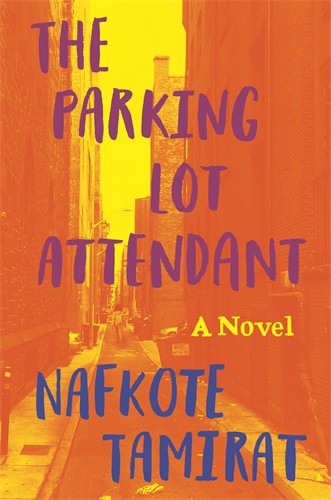
In my novel The Parking Lot Attendant, I wanted to explore how encountering this quality when you’re young makes it that much more potent, and thus, dangerous. Many readers have told me how much they hate Ayale, how monstrous he is. I see what they mean. But I must admit that much like my narrator, I am at times dazzled by his charm; I too have almost been taken in. And here’s the thing: Ayale uses the skills exhibited by America’s most beloved con men (and women) to make money, get land, and pull a fast one on everyone around him. What could be more blessedly American than that?

Here are 8 books whose protagonists embody this deeply discomfiting relationship between the hypnotic and the horrifying as they lead those around them. (I tried to choose books whose problematic potentates had the potential to fool not only the other characters but we, the readers, as well.)

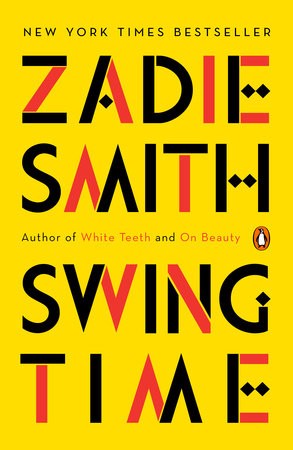
Swing Time by Zadie Smith

Aimee, the one-name pop star sensation, begins as a mystery. On the one hand, she’s a startling voice of truth for the narrator, a force capable of shocking her out of her lifelong passivity. On the other, she’s condescending, blissfully unaware of her privilege, racist, and oblivious as to how her whiteness and wealth are predatory, destructive and completely at odds with the ideals she claims to uphold. Her manner of dealing with what she perceives to be the narrator’s betrayal reveals what was hidden at the start: Aimee is just as petty and immature as her assistant.

Time Swings Widely

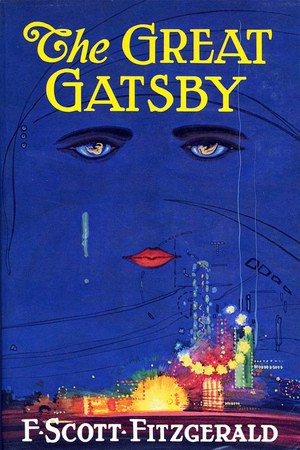
The Great Gatsby by F. Scott Fitzgerald

No one has broken my heart like Jay Gatsby. Much like the narrator, Nick Carraway, we’re tempted to see him as a gleaming example of the American Dream gone great, before we understand that he’s terribly lost and desperate enough to use anyone and everyone to get what he wants. His money is dirty but what takes Jay Gatsby down is his erroneous belief that the amount of money you earn can equal the amount of love you receive.

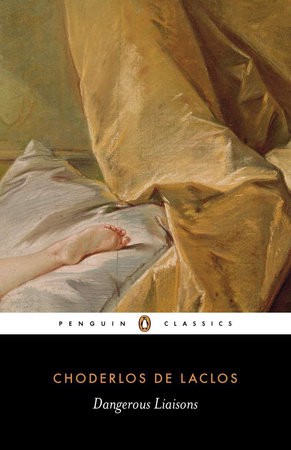
Dangerous Liaisons by Pierre Choderlos de Laclos

The Marquise de Merteuil is one of my favorite characters of all time. Objectively, she’s a horrible person but my God, has anyone else been this vile with such wit and humor? She despises the weak, the stupid, the religious and the lowbred and, what is perhaps most unforgivable in 1782, she’s a woman who knows what she wants when it comes to sex and can’t think of a single reason why she should be deprived. You can’t help but cheer her on, no matter how duplicitous her tactics, if only because it’s such a joy to see her banter and battle with the best of them.

An 18th-Century Erotic Novel Taught Me All the Wrong Lessons About Desire

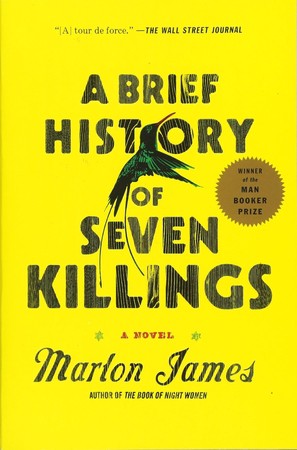
A Brief History of Seven Killings by Marlon James

The character of Bob Marley is a host of contradictions: a symbol of freedom; a proponent of lasting change; a contender against the growing western presence in Jamaica; a greedy capitalist; a predator who uses women. Each character has a different impression of and vision for the Singer, whose actions (right or wrong) and thrilling words transform their lives as well as the legacy of their country.

Great Expectations by Charles Dickens

Miss Havisham is not the most pleasant of jilted brides: she raises her ward Estella to be incapable of love and encourages Pip in his passion for Estella and his dreams of wealth, all while knowing that his hopes are for naught. Despite driving much of the plot with her conniving and vengeful schemes, the truth of her tragic love story and the sources of her deep sadness, while not enough to redeem her, make us feel a certain pity for the molting wreck of a woman she has become.

Mao II by Don DeLillo

The writer Bill Gray seems like the kind of author we can get behind (at least in fiction): reclusive, eccentric, well-spoken, resolute in his isolation. However, as events take Bill out of self-imposed solitude to a leading role in international diplomacy, reality gets hazy: is Bill a flawed man who happens to be a great artist? Is he a good writer or simply lucky when it comes to optics? Is he just as astute an opportunist as the Master of the Unification Church or the head of the terrorist cell, whose latest hostage Bill is (kind of) trying to save?

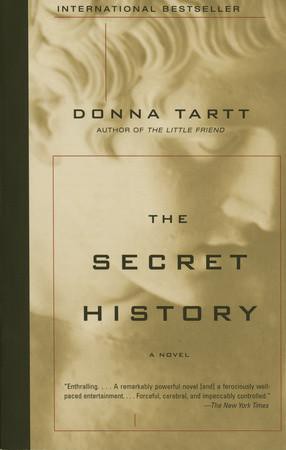
The Secret History by Donna Tartt

When Richard Papen ends up at Hampden College, he falls in with a small group of classicists, led by the inscrutable Henry Winter. Initially, as the shocking events of the story unfold, it seems like Henry is the only selfless and clear thinker of the bunch. Gradually however, as the facts contradict each other and the questions pile up, we’re forced to wonder, is Henry the key to their salvation or the engine of their destruction?

Image result for the neapolitan novels

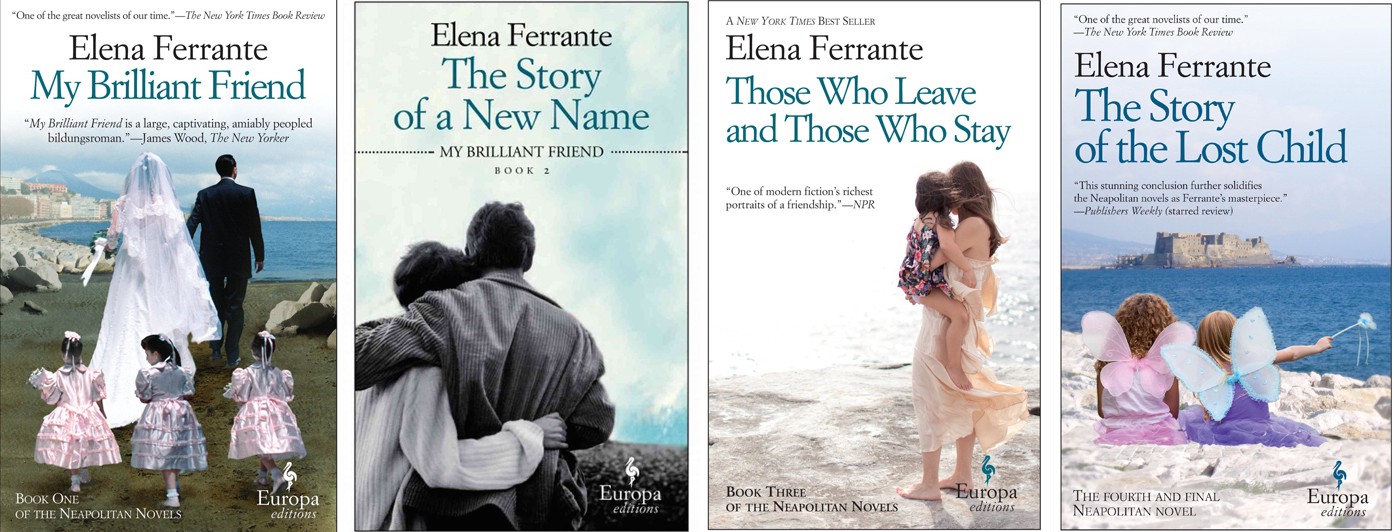
The Neapolitan Novels by Elena Ferrante

Elena Greco and Lina Cerrulo’s friendship is stupendous, cruel, heartbreaking and ultimately, inexplicable. On many occasions, it reads more like a fight to the death than an alliance, and we’re never entirely sure who is manipulating whom, especially since it’s difficult to confirm the accuracy of Elena’s narration. We soon realize that for both, the other woman is the only really worthy opponent they’ve ever met. That wrenching sense of stifled action and dazzling violence, which fuels so much of the books, emerges from observing these two extraordinary people simultaneously attempt to pull each other up and shove each other into the ground.

Course Catalog from the Jonathan Franzen Night School

In honor of Jonathan Franzen’s retirement, here’s a humor piece I wrote about him three years ago that nobody would publish because, I assume, it was too mean. Luckily the world has gotten much meaner since then and also my man has at least like 5 million dollars and can handle some ribbing. (Donate $500K to RAICES and I’ll take it down!) If it’s too mean for you, just substitute the name of any other highly-rated writer who once proposed to ameliorate his sense of distance from young people’s cynicism by adopting an Iraqi orphan.


One of the things that had put me in mind of [adopting an Iraqi orphan] was a sense of alienation from the younger generation. They seemed politically not the way they should be as young people. I thought people were supposed to be idealistic and angry. And they seemed kind of cynical and not very angry. At least not in any way that was accessible to me.”  

Jonathan Franzen

Here at Jonathan Franzen Night School, we respect that your intellectual approach is distinctive, maybe even avant garde. Others might learn about youth culture and activism by talking to young people, but not you — you’re too perspicacious, too heteroclite. Not for you the dry academic consideration of the thing itself. You learn about young people by getting yourself an orphan.

Our fall curriculum is designed to nurture that lateral thinking approach, while also providing flexible class times that fit into your schedule of reinventing the novel and caring for whatever young life-lessons you have at home.

Introduction to Ornithology: This is a required course at Jonathan Franzen Night School. There is no field component, and neither binoculars nor outdoor gear will be required. Instead, we will focus on understanding birds by contemplating the benthic abyss of social media. We will understand the habits and life cycles of birds in the negative space of Facebook’s slick insincerity or the shriek of the Twitter harridan. Once we arrive at the conclusion that birds are real, the internet is fake, and truth manifests only in pain and risk, we will meticulously apply ticks to our legs in order to achieve genuine emotion.

Accelerated German: We will approach the German language not through the deceitful portals of grammar and vocabulary, but through bodily immersion in the Teutonic animus, via eating schnitzel while listening to a recording of my translation of Karl Kraus. Conversational fluency will be achieved through intimate analysis of the psyche of a German woman who once declined to sleep with me.

Home Economics: Students will learn what it’s like to care for a bag of flour by carrying around a human baby for one week.

Students will learn what it’s like to care for a bag of flour by carrying around a human baby for one week.

International Relations: For the lab section of this course, we will hire people from immigrant backgrounds for assistance with childcare, home cleaning, landscaping, personal grooming, and/or vehicle maintenance. For the lecture section, we will explain to our families and colleagues how well we pay these employees and how much we respect their culture.

Women’s Studies 101: For a thorough, intersectional understanding of the challenges women have faced under patriarchy and the complex social and political factors that perpetuate this oppression, we will spend some time deeply contemplating me, Jonathan Franzen. We will stare into my eyes, palms, and navel as I lounge semi-nude on a Le Corbusier chaise longue. Once we have achieved a state of personal oneness with me, Jonathan Franzen, my assistant will ring a single clear bell, and we will experience the profound relief of floating within privilege, both buoyed by it and powerless to combat it. To celebrate our shared unity we will find some women who are engaging critically with my public persona and yell at them.

Special Topics in Creative Writing: In this class, we will explore ways to amplify the honesty, purity, and freedom of our expression of the human condition by slagging off other writers, and/or adopting them.

Please hand-write your application on expensive stationery and deliver it via 8-year-old chimney sweep. DO NOT EMAIL.

The Greatest Failure of All Time

Success Story

We were driving through Turners Falls when I saw the flash of success on the side of the road and I told my wife to stop the car. “Why?” she said. “I just saw some success on the side of the road!” I hollered. My wife made a face. “Pull over!” I shouted.

She stopped the car and I got out and ran — limped — as fast as I could back to the spot where I’d seen the success. Sure enough, there it was: a shiny success half-buried in the leaves. I picked it up and brushed it off. I’ll admit that it was a bit outdated — made mostly of earning a lot of money, buying a big gaudy house, that sort of thing — but still, I thought it might be worth something.

“Oh Kevin,” my wife said, stepping up behind me. “It’s ancient!”

“Even so,” I said.

“Look,” she said, “it’s covered with bugs.” And just as she said that, I noticed the tiny somethings crawling out from a hole in the wet successful wood. “Ack,” I said, and flung the thing to the ground. Then I limped back to the car and we drove away. I never saw that success again — or any success for that matter. I continued to fail — to fail better, and better still. Soon I was one of the best failers in western Massachusetts. Then I began failing strongly at the state level, and eventually in national competitions. By the fall of 2013 I was ranked number one. I even appeared on the Jimmy Kimmel show! “Let me give you a test,” said Kimmel. “OK,” I said. “What is the capital of California?” I peed myself. “Wow,” said Kimmel, and he stood up and clapped.

The following spring, though, I started hearing rumors about a woman in Vancouver named Laura DeNox who was failing in new ways that no one had ever seen before. I saw videos of her on YouTube — one of her failing to eat, another of her not even able to get up in the morning — and her name was all over Twitter: “She might seriously be the best failure in the history of trying,” tweeted @socoool. Someone named @buley responded “No way! Kevin Nace is the best failure since Rhonda O’Dial.” “Nace’s a has-been,” @socoool responded.

I’ll be honest — I was scared of DeNox. Try as I might to avoid a fail-off with her, though, I could not. I trained with world-renowned failer Corduroy Oll for six months before the event. Corduroy had me failing around the clock: failing to tie my shoes, even, and to brush my teeth. Maybe you tuned into ESPN for the competition and saw how I looked when I arrived in Houston: fat, unshaven, wearing two different shoes. That was all Corduroy’s influence.

Like all fail-offs, the challenges were broken down into categories. For the Workplace challenge, they drove us to an office building filled with cameras and broadcast the results live. DeNox found a faux supply closet on set and managed to mistakenly lock herself inside it: a pretty good fuckup, all told. I countered, though, by sending an incredibly personal and embarrassing email to the whole office instead of to the one person I’d written it for, which resulted in immediate termination and the loss of a good friend.

Then we had to fail at Street Smarts. They drove us out to a dangerous street and a man approached me and asked me for money. I didn’t have any, so I offered him my wedding ring.

“All I need is a dollar, hombre,” he said.

“Take it, take it,” I said, dropping the ring into his open palm. “It belonged to my father.”

The crowd, assembled behind a railing across the street, oohed and clapped.

But DeNox one-upped me. When the same actor asked her for money, she kissed him on the mouth and gave him her social security card, which he immediately sold to some hackers who stole her identity. The crowd went wild.

The third and final leg of the fail-off was Marital. Our spouses took the stage in front of an audience and we stood opposite them. DeNox squared her shoulders towards her husband, shrugged, and said, “I’m sorry honey. But I just don’t find you very interesting anymore.”

In retrospect, this was DeNox’s critical error. See, you can’t just not try — that’s not a fail. The secret to failing is trying your ass off. I’d been trying and failing to tell my wife how I felt for years — I could do it again no problem. I walked up to her where she stood and said, “Honey? I am the spoon and you are the fork.”

My wife’s face contorted. “What does that even mean?”

The crowd began to chant: “Fail! Fail!”

“I,” I said. “I am a tree and you are a cloud.”
“What are you saying?” said my wife. “That I’m fat?”

“Fail! Fail! Fail!”

“You are a virus and I am the same virus!” I shouted.

“Gross, Kevin!” my wife said. “What is the matter with you?” Then she stormed off the stage; that was the last time I saw her. The crowd cheered for me and the host ushered DeNox into the wings. Then he placed a glass trophy in my hands and I tried to lift it over my head. It was too heavy, though; I fumbled it and it fell to the floor and shattered. When I bent down to gather the shards, I sliced my finger on a piece of glass. I held up my bloody hand, and the crowd erupted and sprang to their feet.

About the Author

Christopher Boucher is the author of the novels How to Keep Your Volkswagen Alive (2011) and Golden Delicious (2016), both out from Melville House. “Success Story” appears in Big Giant Floating Head, a collection forthcoming from Melville House. Christopher teaches writing and literature at Boston College.

“Success Story” is published here by permission of the author, Christopher Boucher. Copyright © Christopher Boucher 2018. All rights reserved.

What 5 Classic Novels Would Be Called If They Were Published Today

Modern book titles tend to be quite literal. The Hunger Games by Suzanne Collins is about a set of games called the Hunger Games where the contestants go hungry. And no prizes for guessing who’s at the center of The Missing Girl by Jenny Quintana.

But back in the early– to mid–20th century, authors often alluded to other existing works when it came to naming their manuscripts. Whether an intricate metaphor or an intentional sidestep, many book titles from this period only make sense once you’ve read the whole thing. Engaging us in a kind of cyclical journey, they encouraged readers to reassess their outlook on the story before, during, and after they have read it. Or, to put it in another way, these books had some pretty cryptic titles.

In this post, we will look at some literary classics whose titles would never make the cut today. What might they be titled if they were published in today’s ultra-literal book market?

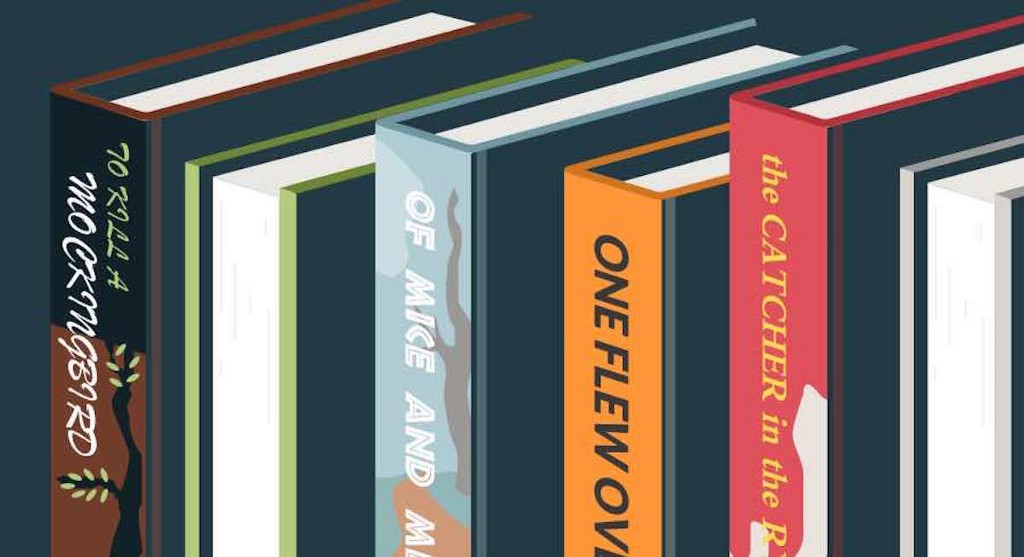
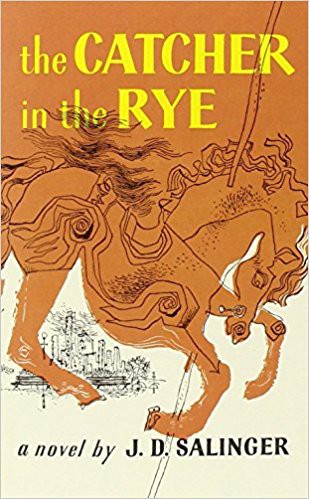
Holden Caulfield’s Day Off, J. D. Salinger

Original title: The Catcher in the Rye

A coming of age bildungsroman about a teenager trying to be true to himself. What it isn’t: literally a story about someone running around in a field of wheat. There are myriad scholarly interpretations of the title — including influence from a Robert Burns poem and metaphors for the fall from innocence into adulthood — but it’s certainly not immediately representative of the book’s content. Still, this title undoubtedly intrigues readers from the off, and keeps them thinking after they’ve put it down. Its power lies in its capacity to grasp, hold, and play with the reader’s imagination and way of thinking. The 2018 version would be less artistic but also lead to fewer generations of confused schoolchildren.

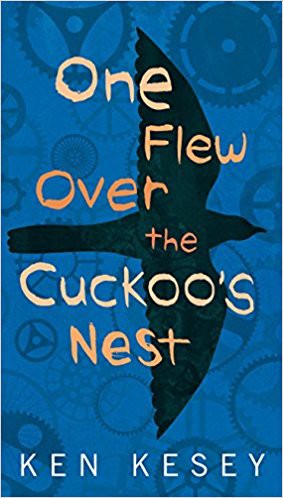
The Man in the Madhouse, Ken Kesey

Original title: One Flew Over the Cuckoo’s Nest

Sometimes titles are so familiar that it’s easy to forget their strangeness, like with One Flew Over the Cuckoo’s Nest — a book absent of any birds, in flight or otherwise. Here, a seemingly innocuous title is what makes the end of the novel so affecting and moving. It is only in the last few chapters that the meaning of the title becomes clearer to us, almost like a resolved grace note, when the nursery rhyme that the title is taken from appears. Thus, the cryptic title pays off, allowing the reader to apply or alter their interpretation of the novel accordingly. Rich in ambiguity, it also lends itself towards a reading of ‘cuckoo’ as slang for mad or crazy. And, of course, “flying over the nest” — in other words, escaping from the asylum — is something that (spoiler!) McMurphy doesn’t end up doing. The title provides readers with an instant misdirect, making the story’s end that much more heart-wrenching. But you’d never know that it was about patients in an asylum, so it could never get published today.

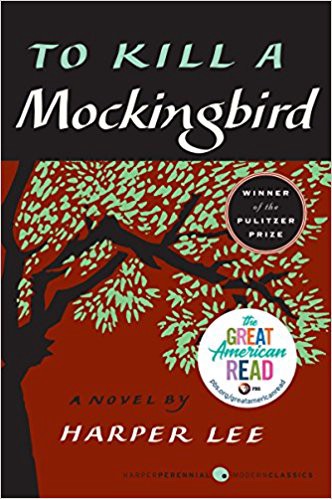
The Girl in the Ham Costume, Harper Lee

Original title: To Kill a Mockingbird

A curious title will stick in your mind to make you read it and remember it. There are multiple literary interpretations of the idea of the mockingbird: since they do “nothing but sing their hearts out for us,” they could symbolize many of the selfless and morally steadfast characters like Tom Robinson and Atticus, or even Scout. Another option would be Boo Radley, the elusive figure who Scout compares to a mockingbird at the end of the novel.

The title draws attention to the novel’s central motif right from the start, and we then spend the novel wondering why, what, and when this will be explained. The “ah-ha” comes at the end of the novel, when Scout underscores the story’s theme by explaining just why it’s a sin to kill a mockingbird. That’s too long to wait for a payoff in 2018, so our updated version makes use of the “girl” trend in book titles.

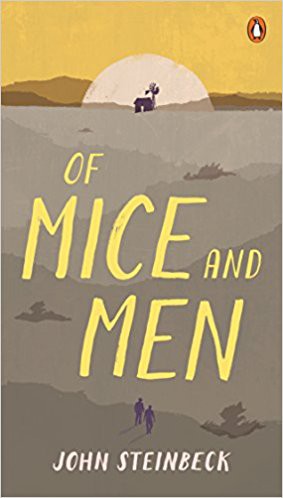
Lenny Kills Rabbits, John Steinbeck

Original title: Of Mice and Men

This title may be intriguing or misleading to readers, depending on their knowledge of Scots poetry (or popular idioms). Indeed, this is the second title on this list to borrows a line from Robert Burns: “The best-laid schemes of mice and men often go awry.”

While it might draw some modern readers in with its opacity and intrigue, one has to wonder if Steinbeck’s contemporary readers would know what the title alludes to. But if they did, the title certainly adds an air of inevitable tragedy to the story — as they wait for Lenny and George’s plans to own a farm and “live off the fat of the land” to go, well, awry. Still, we’re busy people: why not get to the tragedy first?
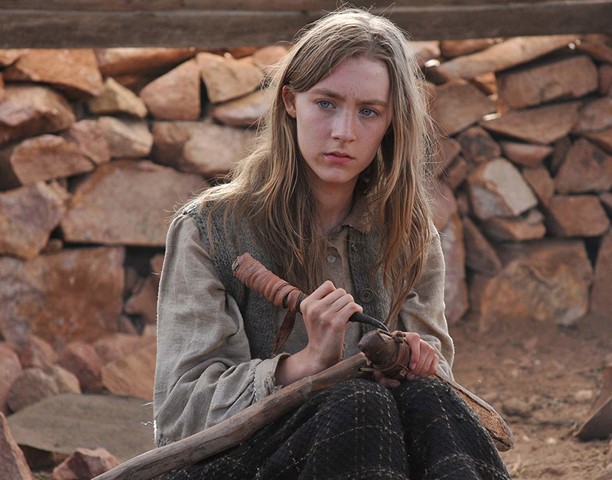
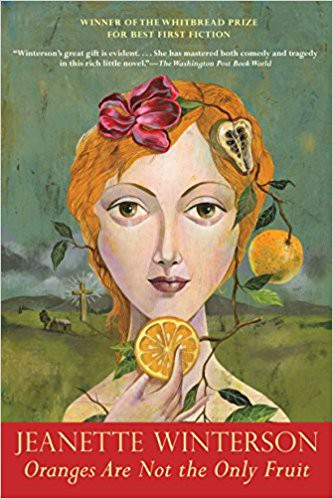
The Secret Diary of an Evangelist Teenage Lesbian, Jeanette Winterson

Original title: Oranges Are Not the Only Fruit

Far from a culinary or domestic handbook, Oranges are Not the Only Fruit is a moving, intricately written account of the nuances and challenges of a religious childhood. The novel is semi-autobiographical fiction, adding perhaps another air of confusion around the abstruse title. The threads of the title’s implications run through the book — restrictions, alternatives, exploration, and adolescence — so that the more you read, the clearer the title becomes. Esoteric and ambiguous, it proves the power a book title has to intrigue a reader and shape our understanding of a text, just as much as it reflects and describes the words behind it. But people are more likely to pick up a book about teen lesbians than oranges, so if you have teen lesbians in your book in 2018 you’d better say so right up front!

Obscure and allusive book titles can do a good deal. They intrigue us to read their contents (and to write about them!). They demonstrate the wit and humor of an author — once the book is finished and the significance of the title is made clear, we are often left with the feeling that the title was a sort of wink from the author, urging us to read on and discover something new. We think it’s very fortunate that these books were published at a time when titles could be more alluring and less obvious. Maybe that time will come around again.

About the Author

Emmanuel Nataf is the CEO of Reedsy, a marketplace that connects authors and publishers with the world’s best editors, designers and marketers. Over 5,000 books have been produced via Reedsy since 2015.

Do Sophisticated Midwesterners Exist?

Curtis Sittenfeld is best known for writing American Wife, a fictionalized memoir inspired by Laura Bush. Some might call her the First Lady of writing about First Ladies but her short story collection, You Think It, I’ll Say It, showcases how wide her talents reach and brings to mind a different type of title: the chronicler-in-chief of the mind of a certain type of American woman.

Purchase the novel

Sittenfeld acknowledges that she can only speak for a specific strata of society, but her command of that voice and thought is all-encompassing. Reading her work is like eavesdropping on the most observant women you know having a conversation about people you’ve never met, and having that conversation somehow become thrilling beyond comprehension.

If you read the book, you’ll doubtlessly find a thread that resonates deeply with an aspect of your interpersonal life. For me it was the way Sittenfeld grasps the miscommunications of early intimacy, but for you it might be her stark look at the awkwardness of couples who cannot understand their partners’ psyche, or identifying with characters who reveal their meanest inner impulses. In a world where judgment is often seen as solely harsh, Sittenfeld reminds us that the ability to discern and judge others can be a useful tool in both survival and the creation of empathy.

Sittenfeld and I spoke on the phone about social performance, representations of the Midwest in media, and ambiguity in fiction.

Rebecca Schuh: In the first story in the book, “Gender Studies,” Nell seems more resigned than sad about her divorce. Why is that?

Curtis Sittenfeld: I write fiction pretty intuitively. I try to not go in the most predictable direction. Writing about someone who’s really devastated about their breakup, there are ways to do it that are interesting, but it does seem predictable. It’s weirder but plausible that she would almost think, well, maybe I should have broken up with him, or maybe I should have known, instead of being destroyed by it.

RS: Yeah that definitely makes sense, it was really refreshing to read someone like that. In that story as well, there’s these notes of her casual elitism but she kind of also acknowledges that her and her ex had this kind of insufferable lifestyle. How does that relates to your fiction as a whole of characters working to overcome their immediate notions of privilege?

CS: I’m not always sure that they’re working to overcome it. I do think that I write about characters who tend to be educated and relatively privileged. We live in such complex interesting times, one thing I’m sort of curious about is if I can do justice to a character and justice to a story, I can write about any topic if I can pull it off. If I wrote about someone who came from a very impoverished socioeconomic background, in some ways I think I would be opening myself up to more criticism or a different kind of criticism from the kind I open myself up to by consistently writing about privileged white women.

I think that the Midwest feels a bit underrepresented to me in fiction, and I think sometimes if there’s a Midwestern character, they’re supposed to be someone who is naive. I like staking out as my territory the sophisticated although also flawed Midwesterners. I really think that a lot of the people who live on the coasts don’t think that emotionally sophisticated Midwesterners exist.

The Midwest feels underrepresented in fiction, and if there’s a Midwestern character, they’re supposed to be naive. My territory is the sophisticated but also flawed Midwesterners.

RS: Lately it seems like when newspapers are going to the Midwest, they’re finding the sympathetic profile of the Trump supporter. And that’s not all that the Midwest is. I’m from Madison, Wisconsin so obviously I have kind of a skewed perspective, but it’s a strange thing to watch in the media.

CS: I agree 100%. There are a lot of those articles where a journalist from a coast comes in like a foreign exchange student and spends 2 or 3 days in the Midwest and a lot of those pieces read to me like the person came in with an agenda and essentially knew how the piece would be written before it was written. It’s really not at all difficult to find people who supported Hillary Clinton all over the Midwest.

Politically I don’t think that there is a coastal versus central divide, it’s an urban versus rural divide. I live in Missouri, the politics of St. Louis and Kansas City are different from the politics elsewhere in Missouri, or for you in Wisconsin, even though you’re visiting.

Stop Dismissing Midwestern Literature

RS: I was struck by the universality of the miscommunication in “The World Has Many Butterflies.” It’s so common to have these interactions where it seems like there’s a mutual attraction but it’s actually one sided. Did you perceive Graham as leading Julie on, or Julie being more delusional, or neither of those, or both?

CS: I definitely want it to be open to interpretation. I want the reader to choose which version is real. I like ambiguity in fiction because I think ambiguity is so common in real life, and people’s motives can be very unclear. Even to the people themselves. In some ways all stories are more interesting if you can’t tell who’s clearly right or wrong.

All stories are more interesting if you can’t tell who’s clearly right or wrong.

RS: That idea came up again, but in a less romantic context, in “Vox Clamantis in Deserto.” The narrator says, “I’d invented my original idea of Rae,” I thought that was kind of a similar thing in terms of characters seeing in other people what they wanted to see. I was wondering about the connection you found between that happening both romantically and in a friendship in this story.

CS: As a side note, do you know what Vox Clamantis in Deserto means?

RS: No.

CS: It’s the motto of Dartmouth, and it means a voice crying out in the wilderness. I think that it’s very natural to interact with people and whether it’s conscious or subconscious, to kind of create a narrative about them or to explain their behavior to yourself and their motives. Depending upon the people involved, maybe that initial narrative is correct or maybe it’s completely wrong. There are times in my life when I’ve had a first impression that later turned out to be totally contradicted, and there’s times when I’ve had first impressions that turned out to be confirmed over the course of time.

It’s really confusing to be a person. I feel more this way now than I did even ten or twenty years ago. It’s really hard to understand the reasons that other people act the way they do. Somebody might be grouchy because they’re fundamentally an asshole, they might be grouchy because they’re going through some kind of incredibly challenging personal situation, they might be grouchy because they’re hungry. Other people’s behavior is very hard to read and to put into context even though essentially reading other people’s behavior is almost professionally what I’m supposed to do.

RS: This miscommunication of behavior is such a common theme throughout the book especially in the stories where people misunderstanding each other were married. I was so astonished at that. I’m not married and I’ve assumed oh once you get to that point, you for sure understand the other person. But it seems like what you’re reflecting in the stories is that it’s actually very common for married people to not understand each other.

CS: One of my motives for writing some of these stories is that I think that any marriage is very difficult to really understand from the outside, only the two people have a clear idea of what’s going on. I’m almost imagining scenarios for different marriages by writing fiction.

RS: Throughout the collection it seems as if the characters were often enacting social performances. In some of the stories we see that veil fall away. How do you relate the idea of social performance in everyday life to fiction?

CS: I think about this in terms of real life and also in terms of social media. We all have two fake selves now, we have our social media fake self and our flesh and blood fake self. Being fake some of the time is not inherently bad. I think it’s actually a form of good manners. I write from a point of confusion rather than a point of clarity and I don’t know where the sort of cut off is for the ideal amount of fake public behavior. And when does it go from being appropriate to being excessive to being unhealthy to being pathological. I’m trying to explore that issue.

We all have two fake selves now, we have our social media fake self and our flesh and blood fake self. Being fake some of the time is not inherently bad, but when does it go from being appropriate to being excessive to being unhealthy to being pathological?

RS: I hadn’t thought about it that way before. That’s such a great way to think of it because there’s a lot in the stories about this idea of suburban fakery and then also intellectual fakery, and then there’s the online aspect. What is the point at which it becomes too absurd and at what point is it that it’s how you survive in the world.

CS: You could say brushing your hair is a form of fakeness, or an artifice. But I’m okay with brushing my hair.

RS: Everything to a certain extent is an artifice but yeah it’s just like getting through the day and going to a job. In both “Plausible Deniability” and “The World Has Many Butterflies,” there’s a male character who sees no romance in a situation where the woman is thinking like this is a budding intimate connection. And I was torn between, oh is this men who are actually able to divorce emotion from intimacy or if it was notes of repressing that intimacy.

CS: In both the stories, what the dynamic is between a man and a woman is open to interpretation. And so I’m fine with different readers interpreting it differently, and if somebody said ‘well which character is right’, I wouldn’t really say either one of them is right or wrong.

RS: You were traveling between characters who were very overcritical of other people, such as in “Volunteers Are Shining Stars,” and characters who were being overly critical of themselves.

CS: Why choose! You can be both! The New York Times review of this book ran a week ago and asked the question: is a judgmental character redeemed by sort of recognizing that she herself is judgmental? And that depends on the reader.

RS: I found myself having sympathy for all of the characters and thinking wow, these are all just very messy personal interactions. Seeing both sides of that is such a valuable thing, it helped me to think about all of these situations that I’ve been worrying about in my own life and realizing that we’re all just kind of floundering around.

CS: I think that’s true. I think we are!

Saoirse Ronan is the Queen of Book-to-Film Adaptations

I n case you haven’t heard the Beatles-level shrieks of joy on the internet — Greta Gerwig just might be in talks to adapt Little Women to the big screen. Gerwig’s bringing some of the Ladybird cast back together to make everyone’s dreams come true— Saoirse Ronan as Jo, Timothée Chalamet as Laurie. It’s like Ladybird went back in time and her dad is a transcendentalist veteran and her mom isn’t afraid to hug her and her first boyfriend is actually an adoring but problematic dude who is kind of obsessed with her family.

The news got me thinking. Keira Knightley, Tom Hanks, Emma Thompson, Oprah Winfrey, and Meryl Streep have all made it into quite a few book-to-film adaptations over the years (Meryl Streep is even slotted for the role of Aunt March in Gerwig’s Little Women). But in the past ten years, has anyone rivaled Saoirse Ronan for bringing books to the big screen? I say no. To prove my point, here is the definitive ranking of all of Saoirse Ronan’s best book-to-film moments, just in case you needed another ten reasons to love her.

#1 —Young Briony Tallis in Atonement by Ian McEwan, 2007

Ronan was twelve years old when she delivered the Academy Award-nominated performance for Best Supporting Actress of young Briony Tallis in the earth-shatteringly beautiful adaptation of Atonement. At the time she was one of the youngest actresses to be nominated for the award. Atonement makes it to the top of our list because both Ronan’s performance and the film hold up exceptionally well to the novel’s own greatness.

#2 — Eilis Lacey in Brooklyn by Colm Tóibín, 2015

The film, adapted to screen by Colm Tóibín and another novelist, Nick Hornby (High Fidelity, About a Boy) follows the young Irish immigrant Eilis to Brooklyn in the 1950s. She falls in love with a young Italian American man, learns how to twirl her pasta and forges on as the only woman in her accounting class. But when she learns of trouble back home in Ireland, she has to choose between who she once was and who she’s become.

Colm Tóibín’s ‘Brooklyn’ and the Art of Adaptation

#3 — Susie Salmon in The Lovely Bones by Alice Sebold, 2009

Susie Salmon tells the story of her own murder, which occurred on December 6, 1973. Susie, now in heaven, is narrating the events she witnesses down on earth as her family navigates the tragedy, her murderer buries his tracks, and the world goes on. And she was only thirteen years old when she starred in the role. Ronan’s delivery is piercing — and pushes Lovely Bones up high on our list.

#4 — Nina Mikhailovna Zarechnaya in The Seagull by Anton Chekhov, 2018

Okay, so this one is kind of a stretch because it’s an adaptation of a play, but it’s too great not to include. One of Chekhov’s most significant plays, The Seagull follows four characters — the young Nina, the middling writer Boris Trigorin, the aging actress Irina, and her son the playwright Konstantin.

#5— Florence Ponting in On Chesil Beach by Ian McEwan, 2017

After 10 years, the all-grown-up Ronan and McEwan teamed up again for the adaption of his 2008 novel. In this one, a young couple negotiates societal pressures and sexual desires in 1962 England. McEwan, who also wrote the screenplay, told EW: “Movies do suffer from not being able to give you the inside of someone’s head — Saoirse just turning away, saying nothing with a look, can do all that for you…I was very happy to cut lines because we didn’t need them because we were in the hands of someone with [the] supreme ability of conveying the inside of a character’s thoughts.”

#6 — Melanie Stryder/Wanda in The Host by Stephenie Meyer, 2013

As McEwan so rightfully pointed out, Ronan is queen of the inner monologue made visible, which is maybe why she is the queen of book-to-film adaptations. What if you could use a love triangle to save your life? In The Host, written by the author of the Twilight series, an invisible enemy is invading people’s bodies and scooping out their memories. When Melanie Stryder’s body is invaded by the “soul” of Wanda, Melanie refuses to disappear, and the two struggle internally to inhabit the same body. Melanie makes Wanda an ally by filling her head with images of Jared — whom Melanie loves. And pretty soon Wanda does, too. The two take off in search of the man they both love. What could possibly go wrong?

#7 — Daisy in How I Live Now by Meg Rosoff, 2013

In this adaptation of a dystopian YA novel, Ronan plays Daisy — the scrubby Manhattan teen sent to live in the English countryside to visit her aunt and cousins during a fictional third world war. Her aunt leaves on business, and in short order Daisy and her cousins are left to fend for themselves on the farm as London is bombed by an unknown enemy and the war gets closer to home.

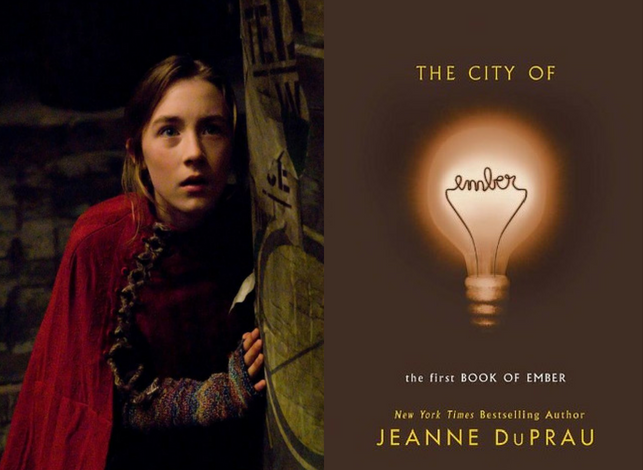
#8— Lina Mayfleet in City of Ember by Jeanne DuPrau, 2008

Right after proving she could take on the heaviest of real-life tragedies of death and war in Atonement, young Ronan showed us how to make the science fiction novel work on screen, too. City of Ember is a trilogy which follows two friends — Lina Mayfleet and Doon Harrow — as they try to save their city from total darkness. City of Ember, built 200 years ago, was meant to be the last refuge for the human race. Once a city of shimmering light, Ember is now starting to dim and flicker. Lina discovers an ancient message that might be the key to saving the city.

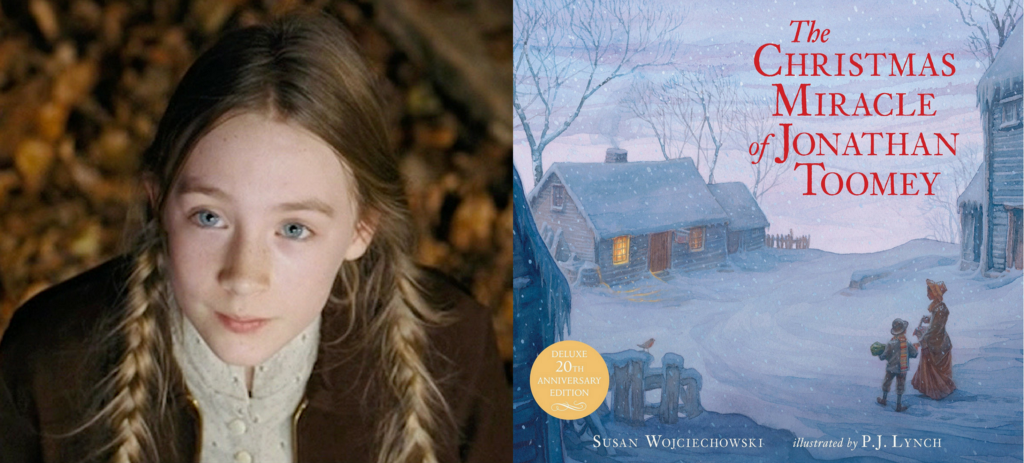
#9 — Celia Hardwick in The Christmas Miracle of Jonathon Toomey by Susan Wojciechowski, 2007

It’s crazy to imagine Ronan starred in Atonement the same year as this one. Originally a children’s book, this film follows three lost souls: a broken-hearted boy mourning the loss of his father, the boy’s mother, and the carpenter she hires to rebuild the boy’s lost nativity set in time for Christmas. The stodgy carpenter has his own reasons to be sour and mournful, which come to light as the Christmas holiday approaches.

#10 — Mary Stuart in Mary, Queen of Scots by John Guy, 2018

This one is only at the bottom of the list because it hasn’t come out yet. But if you’ve been keeping track, this will be Ronan’s third book-to-film adaption to in 2018 alone. The film is an interpretation of the biography My Heart is My Own: The Life of Mary Queen of Scots by John Guy, which retells the story of Queen Mary as a shrewd and charismatic ruler at an unruly time. The film comes out in December, and I will be counting down the days until we get to see Ronan play the tough-as-nails queen who ruled with vigor from the time she was nine-months old and battled for power against Queen Elizabeth I before being executed.

Honorable Mentions

For those films in which books play a supporting role:

Agatha in The Grand Budapest Hotel (inspired by the writings of Stefan Zweig), 2014

Really this one deserves to be in the top ten, but only gets bumped to the “honorables” list because the film was “inspired” by Zweig’s writing, but is also 100% Wes Anderson. Zero Moustafa becomes the entrusted apprentice and confidante of Gustave H, the illustrious concierge of the Grand Budapest Hotel in the Republic of Zubrowka. Zero falls in love with Agatha (Ronan), the badass pastry chef with a birthmark that looks like Mexico, who can whip up a prison break with little more than a palette knife, flour and sugar.

Arrietty in The Secret World of Arrietty (based on the novel The Borrowers by Mary Norton), 2010

A Japanese animated adaptation of the The Borrowers, Arrietty follows the Clock family, the tiny folks living in another family’s home, “borrowing” the small, simple things they need to get by. All is well and good for the Clocks until their daughter, Arrietty (Ronan) is discovered by the family the Clocks are borrowing home from.

Irena in The Way Back (inspired by the memoir The Long Walk by Sławomir Rawicz), 2010

The year is 1941 when three men escaping communist Russia meet four other escapees and a young teenage girl (Ronan) as they trek 4,000 miles on foot to freedom in India. The movie was inspired by The Long Walk, a memoir about Sławomir Rawicz’s personal experience as a Polish prisoner of war who escaped communist Russia in the ‘40s.

This Weird Online Fiction About Football Is Also a Crash Course in Empathy

It’s been one year since Jon Bois’s visceral and unparalleled 17776 was posted on SB Nation, and trying to define it is still a half-impossible endeavor. Wikipedia calls it a “serialized speculative fiction multimedia narrative” — the story unfolds as a transcription of untagged, color-coded dialogue, images, and gifs. Its alternate title — What Football Will Look Like in the Future — is technically an accurate depiction of its subject matter, but it might be better described as “three sentient satellites pass the time watching America’s now-immortal population try to pass the time.” I could say it’s a hilarious and heartbreaking meditation on what it means to be human, even when you have been stripped of the hallmarks and drawbacks of the human body. But the best way to experience 17776 is to just click the link and read — and watch — it for yourself.

Pioneer 9

Three satellites have been roaming space for thousands of years: Pioneer 9 (Nine), Pioneer 10 (Ten), and the Jupiter Icy Moons Explorer (Juice). Nine is the last of the three satellites to gain consciousness, and they serve as our window into this new world, our questioning tether. Ten is their encouraging, self-appointed sister, Nine’s guide (and ours) to understanding America in 17776; Juice is a non-sequitur, rip-roaring delight with diction pulled straight from the depths of the internet.

“On April 7th, 2026, people stopped being born. On the same day, people stopped dying, and people stopped aging,” Ten explains.

“ham cheese. ham cracker. cheese cracker. ham and cheese cracker. ham and cheese,” Juice says. “rip lunchables”

That extra “7” in 17776 isn’t a typo; the bulk of the action in the story takes place 15,000 years in the future. It’s a future that’s at once totally alien and strangely familiar: for reasons that no human or satellite has been able to puzzle out, people stopped dying, aging, and being born in 2026. Everyone on earth in 17776 has been alive for 15,000 years, too. In the time between, humanity fixed everything that needed to be fixed and solved everything that needed to be solved (or, more accurately, decided that they had reached their plateau). All that’s left for mankind now is recreation — they make games, and they play them. In America, they play football.

17776 takes the shape of a horror story where the agony of boredom is the enemy, and empathy the triumphal hero. It’s thrumming with the barely-contained unease of this new world. 17776 doesn’t dwell on the terror of its premise, but horror is pressing up against every part of the narrative from underneath, right below the surface. It’s is a masterwork of suspense, both in individual chapters like Chapter 17 (“No no no no no no.”) and over the course of the whole story (my heart stopped when Nine’s battery warning flashed in Chapter 23). It’s a suspense that makes your skin crawl from the very beginning: though you can access 17776 from a dedicated title page if you’ve visited the link before, it’s first introduced as a seemingly normal SB Nation story that slowly dissolves into repetitions of “Something is terribly wrong. Something is terribly wrong.” In Chapter 1, you feel Nine’s raw desperation and isolation, compounded by the fact that neither you — nor they — understand what’s happening to them. And the format itself just increases the unease — in order to continue the narrative, you have to physically scroll farther and farther, the months and years of the calendar stretching into physical space.

17776 takes the shape of a horror story where the agony of boredom is the enemy, and empathy the triumphal hero.

Even when the narrative dives into the details and goes long about the minutiae of the specific football games, the satellites uncover the human impetus behind each increasingly unbelievable game format. “Boredom is their only enemy,” Ten explains. “And they get up in the morning and fight it every day of their eternal lives.” “the point of play is to distract yourself from play being the point,” says Juice. In Chapter 20, Eddie Krieger — a player who has been hiding out in the same cave, with a football that’s still in play, for 9,313 years — admits to the agony of endlessness: “The game only barely matters to me at this point,” he says. “It’s enough to keep me going. It’s an objective, you know? It’s an objective.” The stranger Eddie is talking to is a missionary — a true believer in God—but he offers up one of the most chilling lines in 17776: “Maybe I am in Heaven, and Heaven is scary.” That’s perhaps the best description for the world of 17776, where mundane anxieties and griefs are swept away in favor of the deeper horrors of eternity: a scary heaven.

The fact that 17776 is funny, and often beautiful, keeps you at arm’s length from the abject horror of what endless life on Earth would actually look like. While Bois fleshes out his world with an enormous amount of detail, there are certain questions that are never answered. Are people unkillable, as well as immortal? Has no one tired of soldiering through eternity and tried to find the answer to that question? But no one talks about death — self-imposed or otherwise — except as a relic of a time that no longer exists.

17776 looks its premise in the face with relentless optimism — an optimism that I found a little bit hard to believe. When Nine asks Ten why technology hasn’t advanced in the past 15,000 years, she replies that “those advances would inevitably intrude on their humanity. People wanted to walk. They wanted to take the bus that smelled like cigarettes. They wanted those precious three minutes between asking a question and knowing the answer.”

Yes, it’s the end of the world; yes, whole cities have sunk into the sea, but our worst impulses have vanished with them.

I’m not sure if this is true of the world we live in, but it’s true in the world of 17776, where all other ills have been done away with. Yes, it’s the end of the world; yes, whole cities have sunk into the sea, but our worst impulses have vanished with them. And that’s because 17776 loves people. That’s its antidote.

It focuses on people at their best and most human, which is made doubly beautiful by the fact that everyone in 17776 has either learned to become human or fought to maintain their humanity in the face of becoming something different. (Are we human without all our worst parts? Are we human without death?)

17776 loves the way that people love people, and the way that people love satellites, and lightbulbs, and the useless, myopic detail of the games we create. The whole narrative is an ode to that same character trait that causes people to reach out and try to pet their Roombas — or to affectionately draw fan art of anthropomorphized satellites.

Juice spends all of Chapter 10 explaining the world’s ugliest stadium with all the pride of a parent, exhibiting an enthusiastic obsession with the people who built it. Whenever anyone apologizes for being boring or annoying, their conversational partner is eager to reassure them. “No, no, no, it’s a beautiful story,” says Nancy in Chapter 8, after listening to a citizen of Bee, Nebraska, talk about a small and inconsequential ballroom. “I love it.”

The world’s ugliest stadium. (Image by Jon Bois)

This hyperempathy is overflowing from every facet of 17776, but I was most affected by it in Chapter 20, where Eddie Krieger — the man in the cave whose isolation rivals Nine’s — is found by the missionary, a member of a group called No Rock Unturned. “No Rock Unturned is a project made up of people like me who walk all across America,” the man begins cheerfully. “Our goal is to eventually count everyone in America as a friend!” In this version of America’s future, no one is left behind; no one and nothing is allowed to be lonely or forgotten — not even the ordinary landmarks that Juice shows Nine in Chapter 16, ponds and sidewalks that no one has visited in thousands of years.

17776 loves small things by watching them. It lavishes attention on things that we would not consider meaningful in 2018, much less 15,000 years in the future. Ten recites a eulogy for the Livermore Bulb, a lightbulb that burned from 1901 to its untimely destruction-by-football in 17776: “The bulb lived, to us, and life deserves to be immortal,” she says. “It will live on in our memories, where it will perhaps find more happiness than it ever did hanging from a ceiling. We love you and we will miss you.”

Even the close-to-last words from our three favorite satellites are simply a mutual declaration: “I love you guys.” “Love you too.” “love y’all too”

After the end of the world, human curiosity is still intact, and it’s what keeps us alive. So even when 17776 centers on the futility of endless play, it walks that razor’s edge between horror and the beauty of love. People latch onto football out of desperation, because it gives them a reason to live. People latch onto football because creating things with other people is what we’re built for.

It’s 2018 now, which means we’re one year closer to April 7th, 2026. The Jupiter Icy Moons Explorer is being tested right now, and we’re fast approaching its 2022 launch. We’re one year closer to 17776, but we seem to be moving farther from its idealized picture of humanity with every day that passes. The past year, on a global level, has been exhausting, and heartbreaking, and full of reminders of the worst and most inhuman things that people can do to one another. The horror of the world is enormous and overwhelming.

We’re one year closer to 17776, but we seem to be moving farther from its idealized picture of humanity with every day that passes.

But: It’s 2018, and right now, the Livermore Centennial Lightbulb is still burning in its socket, soft and yellow-orange, just as it has been for 117 years. Its glass is cloudy. The light it gives off is not bright; it hardly even fills the firehouse of the Livermore-Pleasanton Fire Department. But it is steadfast, it is cared for, and it is loved. It’s a beacon — for some, a pilgrimage.

17776 gave its residents immortality. What they did with it — and the kindnesses they chose to do to their neighbor — was entirely up to them. And every day, they choose to latch on to the things they need in order to survive one more day, because with every new day comes the chance to notice someone for who they are, and for who they are capable of becoming.

The verse on the missionary’s question list in Chapter 20 is Philippians 4:8: “Finally, brothers and sisters, whatever is true, whatever is noble, whatever is right, whatever is pure, whatever is lovely, whatever is admirable — if anything is excellent or praiseworthy — think about such things.”

It’s this sense of awe that permeates the narrative as much as — if not more  than—the horror does. “the mere fact that anything exists is a miracle in the first place,” says Juice. 17776 pays unwavering attention to the beauty in ordinary things, because in the end, that is what’s most important: remembering the things that were, and loving the things that remain.

The world is big, and it is terrible. We are not the sun, or even a street lamp. But each one of us can be the Livermore bulb. In 17776, Jon Bois sees the love that we are capable of. Each one of us can pour ourselves out in the way that everyone in 17776 does, and the way the Livermore Bulb does: quietly and steadily, with empathy for everything and everyone. We can notice, and from noticing, watch; we can watch, and from watching, love.

We can choose to keep living for love. It’s what 2018 needs from us.

I Talked to 39 Women Who Write Nonfiction, and Here’s What I’ve Learned

Three years ago this spring, I began an interview series on Fiction Advocate called Non-Fiction by Non-Men. Despite the name of the parent site, I started this series with the hope of being an advocate of nonfiction. I was a year out of my M.F.A. program at Columbia University, where I studied creative nonfiction, and as I was cleaning out boxes of old workshop drafts and photocopied syllabi, I was dismayed to realize that I had spent most of the past two years reading work written by writers who were mostly men, mostly white, mostly straight, mostly cis, mostly American or European, and mostly dead, or at least well on their way. I made a New Year’s resolution to spend 2015 only reading books written by women writers, and then I decided I wanted to go one step further: I wanted to talk to these women. I wanted to ask them questions about their experiences as writers, how they approach writing in general and nonfiction specifically, and, most importantly, I wanted their names to be known. I also wanted an excuse to email some incredible women I admire and try to trick them into being my friend under the guise of a professional interview.

I began by talking to the women writers I knew personally, through my M.F.A. program, those who had been my professors and mentors — Patricia O’Toole, Margo Jefferson, Lis Harris, Cris Beam — and, from there, the ripples began. Those women recommended other women for me to talk to, who recommended other women, who recommended even more women. (So far all the interviewees have been women, but I named it “non-men” with the intention to include genderqueer writers as well.) Though men were still dominating the nonfiction bestseller list (and still are: as of the writing of this, only three of the fifteen paperback nonfiction bestsellers this week were written by women), I realized there was a nonfiction mafia of women, looking out for each other, supporting each other, and encouraging each other. And from speaking with them and listening to them, I learned, and continue to learn, so much.

So far I have published 39 Non-Fiction by Non-Men interviews, one a month for over three years, and I have no intentions of stopping any time soon. Most recently I interviewed Morgan Jerkins (author of This Will Be My Undoing, interview to be published in August 2018) and Nicole Chung (author of All You Can Ever Know, interview to be published in September 2018). Being able to talk with these smart, kind, thoughtful writers has been an education in itself — I have learned more from them, dare I say, than I learned in my M.F.A.

Here are just some of the things I have learned from Non-Fiction by Non-Men.


THERE IS NO ONE PATH TO BECOMING A WRITER

Some days I am so jealous of my friends who are lawyers. They knew what they wanted to do, and they followed the path to get there: law school applications, LSAT, three years of law school, studying for the bar, passing the bar, and then, boom, they’re lawyers. The path to becoming a writer, however, has no such checklist. Some get an M.F.A.; others never finish college. Some start as journalists; others start by writing secret blogs. Having no set path can be totally terrifying, but also liberating.

Patricia O’Toole: I went to a Catholic grade school, and in the 1950s it was clear — even to a six-year-old — that priests have much more power and many more privileges than nuns. And that boys had more prerogatives than girls. I didn’t want to be in the girls’ choir. I wanted to be an altar boy. And I didn’t want to try out for the cheerleading squad. I wanted to be on the basketball team. Not possible, and nobody could give you an explanation that made sense, so you’re left with a big “Why?” If your temperament takes you toward writing nonfiction, that “Why?” opens field after field of inquiry. In my case, the questions were about the dynamics of power — between men and women, haves and have-nots, the strong and the weak, the citizen and the state

Cris Beam: I really love learning about different types of people, and I love reporting on them. I started out as a journalist–I’ve always wanted to know how people think, and why they do the things they do. I write to try to understand how people make their decisions, how they live together, how they form communities. You can do that with fiction, you can imagine—but nonfiction allows me to actually spend time with people and ask them questions I might not be able to ask in fiction. Nonfiction allows me to be a kind of spy.

Nonfiction allows me to actually spend time with people and ask them questions I might not be able to ask in fiction. Nonfiction allows me to be a kind of spy.

YOU DON’T CHOOSE NONFICTION; NONFICTION CHOOSES YOU

Almost every writer I have interviewed told me that she first thought she was going to be a novelist; fiction seems to be everyone’s first love. But then some of us realize that the things we make up aren’t nearly as exciting as the things happening in real life, some of us start to get paid to write about the world around us, others fall in love with the form of the essay, some are just really bad liars. No little bookish kid ever seems to think, “When I grow up, I am going to write researched longform essays.” Instead, as you grow as a writer, nonfiction seems to choose you.

Mary Mann: I moved into nonfiction because that’s just how things shook out. I had an internship at The Onion when I first started out. Obviously those stories are not real, but they treat it like journalism — writers spit-balling stuff off each other. I liked that world… I applied to the nonfiction program [at Columbia] because it felt natural… I also just love to read nonfiction. I love essays. And I love Geoff Dyer — for a while I was just reading and rereading his books. He was a big draw to Columbia’s nonfiction program, but he was also how I got into nonfiction in general. Looking at him, I realized you can do all the fun things when writing nonfiction: you can write, you can research, you can travel. You can do that with fiction too, but it made more sense to do that with nonfiction. Maybe it was just the examples I had.

Elizabeth Greenwood: Nonfiction feels like the only genre available to me. I wish it were more of a decision! … The best compliment I ever received was from a professor in college who said she thought I lived equally in my head and as in the world. Writing nonfiction is the best way I’ve encountered to honor that tendency. I’ve gained entrée into places I do not belong, and I have the luxury of following my curiosities… And I probably ask inappropriately personal questions at dinner parties.

The Asian American Women Writers Who Are Going to Change the World

FIGURING OUT HOW TO MAKE A CAREER AS A WRITER IS HARD

People don’t like to talk about money, but figuring out how to make money while also giving yourself enough time to write is one of the hardest balancing acts there is. It will take some time for you to find the thing that is right for you, and not everything works for everyone. Some people teach and write, others edit and write, others wait tables and write, others work in advertising and write. And, eventually, maybe, one day, you’ll be able to just write. But it takes time.

Mandy Len Catron: Having the time to really think about a subject and come to a mature, sophisticated perspective feels like a luxury, and a luxury that’s increasingly unattainable. That’s what I love about teaching. It doesn’t pay a lot, but it has a lot of flexibility, and it puts me in this position where my writing doesn’t have to respond to any market pressure. I can take my time thinking about things — but I have less time than I might as a freelance writer. So there are always trade-offs.

Nina MacLaughlin: I wasn’t in a nonfiction-writing mode when I took the carpentry job, and I wasn’t thinking it would be an interesting writing project because I was thinking about short stories and novels. But at the same time, every experience has that possibility. It wasn’t that impulse, though, that drove me to write Hammer Head. Later, I was pretty sensitive about this when the book became a reality — all these gimmicky experiential books like “the year I spent without shoes” or whatever. I really didn’t want to do that. People ask that often, oh, you’re trying carpentry as a woman and writing about it. But it’s been seven years now, so it’s no lark. It wasn’t just a vehicle for a book.

WHEN IT COMES TO WRITING ABOUT OTHER PEOPLE, YOU CAN’T WIN

People get mad if you write about them (“How dare you put my private life on blast?”) and people get mad if you don’t (“What, I’m not important enough to write about?”), so just accept that you can’t make everyone happy. You also can’t predict anyone’s reaction: maybe you think that your aunt is going to take issue with your descriptions of the abuse she suffered as a child; instead, she is pissed you described her hair as “brown” and not “auburn.”

Liz Prince: When I was in my early twenties, a lot of my comics were shorter gag strips about humorous situations my friends and I would get into, so my friends would actively try to make it into my comics. A lot of people assume that my friends would want to avoid being depicted in my work, but it’s actually been the opposite: I had friends who were hurt by the fact that they hadn’t shown up in my comics. They would say, “What, am I not funny enough?” So while I was deciding what I might put in a comic, my friends were trying to guess those situations or manipulate them in some way.

Sarah Perry: I tried to keep myself in the mindset that no one would ever read this thing. Otherwise I knew my tendency would be to self-censor. I would write what I needed to write and cut back later. But there are some family revelations that were really hard things, things that I had heard whispers of, or sideways rumors of as a kid, that only later got confirmed by my one aunt who will talk about these things. There were these big traumatic silences in my family that were, unfortunately, thematically related to Mom’s death. It was really difficult to figure out where my story ended, and what I had the right to say. It’s your story, it’s your life, you have the right to tell that, but you can’t just tell your story alone because everyone’s stories are connected. At some point you have to draw a circle. And I think there are a few things I mention in the book that I arguably don’t have the right to, but I had to make the decision and stand by it.

It’s your story, it’s your life, you have the right to tell that, but you can’t just tell your story alone because everyone’s stories are connected.

ACCEPT THAT YOU ARE GOING TO MAKE MISTAKES

When writing it’s easy to become paralyzed worrying that you are going to get something wrong. You will. Don’t use this as an excuse to be lazy about fact checking or research, but know that you are definitely not going to get everything right. Once you accept that fact, writing becomes a lot easier.

Edwidge Danticat: I am terrified of making mistakes, getting things wrong. Whenever you write nonfiction about anything whatsoever, someone will write to tell you that you maligned them or got something wrong. I like working with fact-checkers. When you work with big publications you get that, but it’s not always a given. Someone will always question your interpretation of things, but I like to get the factual things as right as possible and I feel a bit crushed — and somewhat ashamed — when I don’t. I recently read a profile of a writer who said she cried when she got things wrong and had to have that correction line at the bottom of her piece online. I can totally relate to that.

Daisy Hernández: After [my memoir A Cup of Water Under My Bed] was published, I realized I had never thought to ask [my family’s] permission or engage with them too much, because I felt a lot of ownership of their stories and the stories of our relationships, because my view of them had been so shaped by white America. I never asked my mother if it was okay to disclose that she had been undocumented. The memoir came out and I realized that was wrong, so I asked her after the fact, and she said, okay, why not! I got lucky there. So now I use that to remind my students that when you are going to write about other people, you are going to make mistakes. You cannot possibly see everything and predict everything, so you need to anticipate that you will make mistakes along the road and you will rectify that when the time comes.

They All Laughed at Edwidge Danticat

TRUST YOUR AUTHORITY

You will often doubt yourself, especially when you are writing on a subject that is in a field you are not an expert in. This is okay. Use your status as an outsider as a way into the material, do your research, and, in the end, trust yourself.

Rebecca Traister: I didn’t come to politics writing as an authority, I came to it through feminism, because there was a woman running for president in 2008, which led to me writing about presidential politics. So it was actually okay with me for a long time that I wasn’t an authority. There was a learning curve for me before I accepted my own authority.

Anya Yurchyshyn: My first draft [of My Dead Parents] was 40,000 words longer than it needed to be. That is not a good thing. That is not what an editor wants. I had a whole chapter on my father’s career, as if anyone reading my book was reading it to learn about merchant banking. But I had known so little about his career and I was afraid of my own authoritative knowledge that I wanted everyone to know everything I had researched, to prove to my readers that I had become an authority. But I wasn’t able to make those decisions while researching, and I was so afraid of leaving something out, which is why I over-researched so much, and then, when I was writing, I wanted credit for doing the work. But your own poor time management is no one else’s fault.

WRITING ABOUT YOUR LIFE HELPS YOU MAKE SENSE OF IT

So many of the writers I have talked with said that they were pulled to nonfiction after years of journaling. Even if you primarily write novels or short stories, journaling about your own real life can help you figure out what you think about the world. It can be a form of therapy.

Jennifer Finney Boylan: Our lives are full of chaos, random and contradictory events that make you feel like you’ve just gone off the big flume at the end of Splash Mountain, leaving you dizzy, confused, and drenched. Finding a narrative for your life brings sense to that chaos. I can say that nothing taught me so much about being a woman as writing. In the same way, the challenge of writing is that, while it can be really great therapy, great therapy is not necessarily good writing.

Melissa Broder: Writing has helped to keep me alive and give me a sense of meaning. It gives me a sense of motion and a feeling of control. If I am in this big moveable world, being moved by forces not my control, writing gives me the illusion of having a little treadmill in the abyss. Through writing I can square off an area, and I can move within that area… My journal is largely a lot of exercises I am doing with myself to keep my mind from consuming itself.

The challenge of writing is that, while it can be really great therapy, great therapy is not necessarily good writing.

GENRE IS TOTAL BULLSHIT

While I focused my series on women who write nonfiction, so many of my interview subjects told me that they don’t primarily identify as “nonfiction writers.” Many started as poets or short story writers; others have written fiction and nonfiction simultaneously. Genre is fluid, and you shouldn’t box yourself in. Sometimes writing fiction can help you figure out how to write better nonfiction, and vice versa.

Eula Biss: As a teacher, I sometimes talk about sub-genres of nonfiction as a pedagogical tool to help students think about certain features of the work we are studying, but I understand sub-genres, like genres, as false categories. There’s long-form journalism, for instance, that looks identical to personal essay. There’s memoir that is also art criticism. There’s literary criticism that is essentially memoir, sometimes unintentionally. I think of lived experience as a form of research, so I don’t treat passages that are drawn from lived experience differently than I treat passages that are drawn from other sorts of research.

Suki Kim: I think what is so unfortunate about genre is that people think about it as so black and white. It’s either reported nonfiction or it’s a memoir. But that’s not true. There is a whole tradition of literary nonfiction that involves blending [genres]. There are the bones of the story, which would be the reporting, but then you try to build the story in a literary way — not just handing over information but handing over ideas. But depending on how the publisher packages the book, people only look at it as one way or another… Perspective changes everything.

THE INTERNET IS THE BEST AND WORST THING TO HAPPEN TO NONFICTION

Many of the writers I interviewed got their start through blogging or writing for online outlets. The Internet is great because it has allowed so many more people — often those who have long been denied a platform, such as women and people of color and LGBTQ folks — to be heard. But, at the same time, there is now much more noise, and, also, sometimes maybe people who don’t deserve a platform have one (i.e. Neo-Nazis). The Internet also allows for writers and readers to interact on a more personal and immediate level — for better and for worse.

Dodai Stewart: It’s exciting, because you can discover writers you never would have been able to find in the past. And for all the bad things about the Internet, it is a meritocracy: if something is good, it gets shared, and you will see it, even if it’s a writer you’ve never heard before or the subject matter is something you wouldn’t have looked into yourself.

Samantha Irby: I say all the time that all I want to do is make a woman laugh. Life is trash and it’s hard, and there will be people who make you think and feel and all that, but if I can make you laugh or bring you delight you in some way, that’s why I do it. So when people reach out to me and say hey, I was having a terrible day and I read this thing you wrote, and I felt better, that makes it worth it to me. And I’ve consistently gotten that feedback. Sometimes I wonder why I’m still doing this, like I think ughhh who still has a blog anymore, but then I’ll get an email from someone saying that a post from two months ago made their day. If someone, somewhere, is still laughing at it — that’s the biggest reward. Knowing that people enjoy it. Especially when it comes to my blog — I do that shit for free. I don’t even have ads on it. It’s just a labor of love. So when I get those messages from people, it makes it all worth it.

Why Every Celebrity You Know Has Been Seen Reading Samantha Irby’s ‘Meaty’

WRITE WHAT YOU WANT TO WRITE

Don’t write about something because you think it is trendy or marketable. If you write about the things you really care about, your passion for that subject will come through. Readers respond to that. And don’t let anyone tell you that there are subjects that are off-limits to you because of who you are.

Meghan Daum: I love the personal essay because it can incorporate so many different genres in a single piece of writing. There can be elements of reporting, criticism, memoir, poetry, comedy, and on and on. Certain stand-up comics are essentially essayists in that they’re up on stage reflecting on a set of ideas or observations.

Margo Jefferson: My first official job was at Newsweek in the 1970s. The challenge for a writer of color and for a woman is that it was very easy to get stereotyped as the person who would write exclusively about black literature, women’s literature. I made a very conscious decision to write about both and not to do that exclusively. I would not let myself get pushed off turf, which I was capable of writing about — reviewing European literature, European history, white American male artists. I worked very hard to do all of those things. And I made sure that other people of color, women — I made sure that their work was reviewed by me, because I cared about it — and it was almost never getting reviewed by anybody else… It was my way of asserting two kinds of power and confidence and authority. The power I had as a black person and a woman, and the power I had to look at the world and the larger culture.

LEARN FROM OTHER WRITERS

I asked every writer I interviewed to quote another woman writer of nonfiction that she admires, and the reoccurring problem each writer had was trying to narrow down which quote to choose. Read, read, read. There is no better way to learn how to write.

Ann Friedman: Women writers, or anyone in a competitive, creative field, are bound to feel sometimes that there are limited spaces for success. That if another woman succeeds, there’s no room for them to get great assignments or land a dream job. That’s a fucking lie. Women writers need to recognize that our work is very powerful when read in tandem with other women’s work — and that a success for one of us means opportunities for others, too… I definitely still get jealous. I read things and go, “Oh my god, she’s so good, I’m never writing another word again!” I have to remind myself that our work is different. And try to learn from what makes her stuff so good. And, if I’m in an exceptionally zen mode, send her an email telling her how much I liked her article.

Miranda K. Pennington: In a letter in response to some rough reviews, Charlotte Brontë wrote, “It would take a great deal to crush me.” I want it as a tattoo on my wrist, but I think that would be kind of tempting fate because my wrist would actually be pretty easy to crush.

PEOPLE ARE GOING TO GIVE YOU CRAP

Some people might not like the fact that you are writing. Some people might give you a hard time for who you are. Find the people who support and encourage you, rely on them, and try your best to ignore the rest. They’re jerks.

Scaachi Koul: Ten years ago people started to say oh, women are writing memoirs and essays, how weird, but women were already writing essays and memoirs, it was just then that people started to notice… At the very least the industry is realizing that [nonfiction by women] can be profitable. You’ve got your Roxane Gays, your Lindy Wests, your Jessica Valentis, and your Sam Irbys, who write these really wonderful, interesting books, and they start to make money, and everyone all of a sudden everyone goes what? This is legitimate? And they shit themselves because they never knew it could be possible. I mean, we’re still struggling with people being cool with women writing fiction, so I guess I shouldn’t be too surprised. I’ve done interviews with people where they are like oh my god, get a load of you, you’re a girl and you’re funny? Like they don’t understand how it’s possible, and then I’m stuck explaining how I can have a vagina and be funny… I mean, well, my humor does come directly from my ovaries, straight from vulva to mouth.

Lis Harris: I had people say to me, “Oh, you’re a serious writer! But you’re so pretty!” They think they’re being charming, and you want to spit.

Ten years ago people started to say oh, women are writing memoirs and essays, how weird, but women were already writing essays and memoirs, it was just then that people started to notice.

WRITING NONFICTION GIVES YOU POWER

When you write nonfiction, you are in control of the story. So often marginalized groups do not get the power to control their narratives; writing nonfiction changes which voices are being heard. Keep writing, keep pushing, and keep telling the stories that the mainstream isn’t hearing.

Amani Al-Khatahtbeh: I started writing nonfiction as a means of survival. For me, writing was the only space I could squeeze myself into. Chronicling my experiences became a way to make sense of them. It also felt like the only way I could get my voice out there. When I held the pen, I was the one with the mic. It not only empowered me with a platform, it also connected me with my friends and other likeminded people.

Virgie Tovar: I always got the sense that people wanted me to be silent, that I was some kind of inconvenient witness to the culture and the darker side of people. When you’re a fat woman of color, you see a part of humanity that people with privilege don’t see, and the culture wants to silence that… When you’re a woman, your perspective is not the perspective that society is operating within. Women are constantly getting gas-lit by society, but when we write the story we place ourselves as the director of our own interpretation. Our perspective is no longer up for debate. It is simply truth. So when you are a woman writing nonfiction, you are getting to dictate the terms of the world…

NONFICTION BRINGS PEOPLE TOGETHER

Nothing feels quite as good as relating to a piece of writing — either as the writer or the reader. Being a human can be a very lonely experience, but to send something out into the world, or to stumble on something that someone else has created, and to find someone else who relates to your story… that’s what it’s all about.

Michelle Kuo: Writing about people makes you more compassionate about them, and that’s rewarding. It pushes us to be more ethical, alert, active. I went to Arkansas and Mississippi for a book tour, and the reactions to the book there were so different from on the East or West Coast. People there saw Reading with Patrick as a call to action. It inspired them to get into literacy work, or research how to become involved. Writing nonfiction gives you the sense that there are real, pulsing people out there… Nonfiction helps people realize and become more aware of being part of a web of humanity.

MariNaomi: Some of my stories feel so personal and weird, I worry that people won’t relate. That makes it extra special when readers tell me they identify, or that my point of view opened their eyes a little. It’s the reason I do all this.

9 Books to Expand Your Idea of What Feminism Looks Like

I was hesitant to call myself a feminist for many years because of the archaic and conservative way my elders, and even my contemporaries, seemed to define the word. As with so many things in life, identifying oneself as feminist carries a lot of expectations: expectations on how to act, how to be, what solitary viewpoint should be held as the ideal for the pursuance of women’s rights. In my circles, feminism was a term thrown around as a diss or as an outmoded belief, connecting me with others in what sometimes felt like shallow ways. To some, it meant “ally”; to others it meant “scapegoat.”

In our continuing conversations about the problematic notions of the gender binary and the ongoing issues of the patriarchy, I believe more and more that we’re starting to comprehend that being for equality and equity means looking within as well as outside our lives. With this in mind, I considered more recently published books that speak to feminism in various ways—be it obliquely, directly, or symbolically — all necessary contexts when we consider the levels of expectation attached to the term. These titles by women explore the expectation of who we are to others. Yet they also interrogate expectation of the idea of “womanhood” in the realm of patriarchal structures, be they in our individual mindset and from society as a whole. How are women’s values upheld, if at all? And where do marginalized identities fit into these notions of feminism? Over time, I realized to be feminist is not a singular concept, and these titles expand on that.

What It Means When a Man Falls from the Sky by Lesley Nneka Arimah

What It Means When A Man Falls from the Sky by Lesley Nneka Arimah

Arimah’s story collection starts off with a literal bang in the first story “The Future Looks Good.” The 5 Under 35 notable’s debut weaves in elements of the fantastical and speculative with women of all ages at the helm. Women are witnesses to a world they do not understand, victims of a world that doesn’t understand or care about them, and they are consistent fighters through and through. As daughters try to understand and be loved by mothers; as parents’ aim to protect their youth; as communities weigh in, sometimes wrongly, on decisions without knowing the whole truth, each story centers issues women face head on when showing how the female body is undervalued and often taken. Arimah’s stories give readers a panoramic view of locales and people and at the same time reveals the issues of male dominance, which results in a disdain for the system, not necessarily the people.

Libro.fm | Bad Feminist Audiobook

Bad Feminist by Roxane Gay

Dr. Gay’s first essay collection became a bestseller fairly quickly. Bad Feminist encourages an introspective conversation on the multitude of definitions of femininity through anecdotes, personal analyses, and cultural commentary. When it comes to feminism some folks have a stringent definition, and Gay speaks to that openly and honestly, with humor and consideration that is her trademark. What does it mean to be a feminist? Why do some, like I did, shy away from the word and others embrace it though vilify those who do not fulfill their expectations? Bad Feminist never loses sight of a desire to know how the world works, how it works against certain groups, and what is expected of them.

The Right Novels to Read in Every Life Crisis - Electric Literature

An American Marriage by Tayari Jones

An American Marriage is the latest bestselling Oprah Book Club pick and, at its heart, Jones’s latest holds a mirror up to readers of all backgrounds to push back our own expectations as we celebrate a woman putting herself and her work first. This is not to anyone’s detriment, but at her own necessity. For one of the main characters, Celestial, the “rightness” of her pursuit by not waiting, in the capacity of wife but available in all other ways, on her wrongly incarcerated husband Roy is called into question. What is interesting, and something I had to consider myself, is why we as readers may expect this from Celestial. Once again, expectation becomes a core theme for female identity. When we talk of feminism, or the pushback against feminism, falling in line to support men at the suffering of the self becomes a requirement of female bodies. Broaching that topic directly is why An American Marriage becomes a key tome in this larger discussion, not just for women but for Black women.

Sister Outsider by Audre Lorde

Lorde’s Sister Outsider is a literal testament to the need for society and women, including white women, to bear witness and engage in a real exchange on the problems facing female communities. (This includes marginalized communities that are Black women/PoC and lesbian/queer identifying.) “Racist feminism” (aka white feminism) is a problem when the expectation is we are unified simply because we share the same organs that categorize us as female. As Lorde says, this assumption does not honor or even interrogate inherent oppression Black women face versus that of white women. As a Black queer woman, Lorde’s work is not simply a testament, but a truth one holds close and has become required reading to understand feminism at it’s core. It is not the sole tome on this topic, yet there’s a reason it’s so often referenced thanks to the blunt and compassionate way Lorde presents our humanity as a woman, as a mother, and as an artist.

9 Eerie Ghost Stories - Electric Literature

Her Body and Other Parties by Carmen Maria Machado

National Book Award finalist Machado remains outspoken on the issues of the patriarchy and how patriarchal power invades much of our everyday consciousness. The stories in her bestselling debut collection showcase this in speculative ways and real ones—most notably in her first story “The Husband Stitch” and “Difficult at Parties.” In “Parties,” the invasion of the female body doesn’t focus on brutality, but on the inability for the male consciousness to understand the trials and put upon nature of expectation for the female body. There’s a consistency of women being beckoned to, and thus giving in, for “the common good” because this is what’s expected. Machado’s stories illuminate a truth of what may not always be sadistic, but remains inhumane.

Every Day Is a Good Day: Reflections by Contemporary Indigenous Women edited by Wilma Mankiller

As author Louise Erdrich says in her introduction, Every Day Is a Good Day “is a touchstone book… a companion book filled with the struggles of Native women… an honest book resonating with humor and survival strategy.” Each chapter compiles stories from Native women under various themes that don’t only center womanhood, though womanhood is never lost in the stories. Their vignettes showcase individual experience and the longing for us all to be better people in recognizing our uniqueness as well as our similarities. It’s in this vein that an ongoing advocacy for women, and Native women’s rights, are at the forefront of creating empathy for this path. Even in the chapter “Womanhood” women’s rights advocates mentioned they consider their work “human rights” because it betters us all to recognize the inherent discrimination facing those of other cultures and genders.

Cannibal by Safiya Sinclair

Whiting Award winner Sinclair’s poetry collection has so many wonderful and critical variations on the perception of the female body, the fear of it and the livelihood. In poems like “How to be a more interesting woman: A polite guide to the poetess,” Sinclair’s mastery of set-up and take-down recognizes expectation and shows what a woman can really do. From the biblical Eve to the literal considerations of “good hair,” the symbolism of culture, body, and faith interrogate so much of expectation and self you come away thinking hard on how we look at our bodies and others.

Betty Before X by Ilyasah Shabazz with Renée Watson

Betty Before X is one of the few titles that give a glimpse into the life of Betty Shabazz. This collaboration between Betty’s daughter Ilyasah and award-winning author Watson focuses on her childhood and the evolution of a notable figure in Civil Rights. Readers not only see the world through young Betty’s eyes, but through the work of Black women, which was pivotal. Betty Before X reflects the power of Black consumers through the Housewives League of Detroit (founded by Fannie Peck in 1930) that also became a national movement. The book centers Black women throughout as complicated characters and consistently loving. At the same time, Betty notes the ways communities, including the well-known Bethel AME Church, were crucial areas of sanctuary and service to the Black community.

Pride by Ibi Zoboi

This contemporary take on Austen’s Pride & Prejudice centers a younger, multi-ethnic cast. National Book Award finalist Zoboi tackles gentrification, romance, familial expectations, and the ongoing pursuit of happiness. Feminism, as it were, does not mean having to forgo love in the interest of other desires be they academic or creative or political. In Pride, the title holds sway in so many character’s actions, particularly protagonist Zuri Benitez who never loses sight of who she is and how she sees the world around her change as gentrification, and money take hold in Brooklyn. Zuri is outspoken, a fighter, Afro-Latinx, and desirable for all those reasons. Her femininity is not forsaken due to these characteristics—it’s sought after.

A Trip to Disneyland in Search of the Root of Sadness

“The Last Good Time”

by A.M. Homes

“Are you going?” she asks as she spoons cereal into the baby’s mouth.

“In a moment,” he says, looking out the kitchen ­window—the​ sky is what he calls a winter mouse gray.

“How long will you be?”

He shrugs and adds a small folding umbrella to his bag.

“She’s not dying today, she?”

“I don’t think so,” he says as he goes into another room, returning with an old photo album.

“Again?” she asks.

“She likes it,” he says.

“You like it,” she says.

He nods. “I like it.”

She looks at him as if she’s waiting for something. He ignores her, focusing instead on the way the room has become punctuated by brightly colored pieces of ­plastic—the​ high chair, a cup, a ball, assorted pink toys.

“Why can’t you just say it?” she asks.

“I’m not sure,” he says as he’s putting on his coat.

“You’re so careful that you’re going to end up with nothing.”

“I live in my mind,” he says.

“But you have a heart, I know you have a heart,” she says. “You made the mistake of letting me know.”

“A fatal error,” he says.

“It’s like you’re already gone,” she says.

“I should go, I’m late,” he says, taking a piece of dry toast off her plate. “Bye­-bye,​ baby,” he says, bending to kiss the baby on her head. He inhales as he kisses her, and her ­downy-​soft hair brushes his lips. The child’s scent is clean and sweet.

“Say ‘Bye­-bye,​ Papa,’” the mother tells her, picking up the baby’s hand and waving ­goodbye​ with it. The mother accidentally bumps the enormous cup of black coffee in front of ­her—it​ rocks, coffee splashing back and forth suddenly like a stormy sea. “After a while, crocodile,” the mother says.

“In a minute, schmidgit,” he says, trying to be playful as he’s leaving.

He takes the long way around to the nursing home to visit his grandmother. Driving, he becomes obsessed by curbs. As the population ages, should the height of curbs be lowered? Would four inches be better than six inches? Would more cars jump the road and hit pedestrians? Would it be worse rather than better? Trained as an architect, he now works as an urban planner; his job is to make sense of things, to order the growing sprawl of what once was a small town. It’s up to him to figure out where things intersect, where the overpasses should go, and­ if a new road is to be built,­ in what direction it should go. He is supposed to be able to think about the future without forgetting the ­past—something​ he finds difficult.

He was born nearby, in a place that was often cold and wet. His earliest memories are his feet and fingers perpetually chilled. He grew up obsessed with socks, wet wool socks, the smell of wet wool, of damp animals and fur. Since he was a little boy, he has dreamed of cowboys and California. He imagines it as a place where you wake up and the sun is always shining. He imagines that it is the most American place in ­America—dreams​ are made there. In his imagination it is a place where the Old West meets Marilyn Monroe, where every street is decorated differently­—he​ is conflating Disneyland with Hollywood and doesn’t even know it.

He drives to the nursing home, checking various works in progress along the way. As he’s driving, he’s thinking of the photos in the album, remembering ones of himself as a boy, building the world of the future with plain wooden blocks and the expression of rage and disbelief on his face when his buildings fell down. He remembers that he liked wearing his fringed cowboy vest and gun belt day and ­night—over​ clothing or over pajamas, everywhere he went­—the​ suede made him feel safe. He remembers a photograph of himself on his first day of school, posing outside the building as a cowboy in full costume. And he remembers that on the first day his teacher told him she was pleased to have a cowboy in the class but that he had to leave his hat and his guns in his cubby, and then later that day she came up and whispered that for reasons beyond her control he could not bring his guns to school anymore. “Times have changed,” she explained. “Just being a cowboy isn’t so simple these days. Someone might take it the wrong way, so perhaps it’s best to go undercover.” He remembers not really being sure what that meant but in general thinking the teacher was nice. He remembers the photograph and wonders if that is all he really remembers. Perhaps he made the rest up, or is that really what the teacher said?

“Good morning,” he says as he enters his grandmother’s room. She smiles, and only half of her face moves­—the​ left side remains expressionless. He kisses the good side. Her breath is not sour, not like she’s rotting from the inside out, but sweet like lavender, like wild grasses, which remind him of a trip they once went on long ago. Her fingers trace the purple scar across her skull­—she​ has brain cancer. On the wall around her bed are posters made by the staff to remind her of her name, what year it is, and who the prime minister is. FOR FUN YOU LIKE TO SING, the poster says.

His grandmother is not so old—​her hair has always been white. He’s thought of her as old since he was a child, even though she’s now only in her ­mid-​seventies. As a child he would spend long weekends with his grandparents. He would sleep between them in their bed, their heavy scents and sounds deeply comforting. His grandparents took him trips; they liked going camping in the forest. When he was young, they bought him a Polaroid camera­—he​ took it on every holiday­—​he pictures now fading, like they’re evaporating. When he was fourteen, his grandfather died, and there was a large space­—like​ an unbridgeable gap­—in​ the bed, and he stopped spending weekends. It felt too awkward. Still, it was his grandparents who were the stability in his life, and he hates that he is losing her­—she​ is the only thing that has stayed the same.

“You look tired,” his grandmother says.

He shrugs. “I’ve had a lot on my mind.”

She nods. “What season is it now?”

“Almost Christmas,” he says.

“How is the baby?”

“She is plump and happy.”

“And the baby’s mother?”

“Not happy. She accuses me of living in my head. And she’s right,” he says.

“What is it like in your head?” the grandmother asks.

“Better,” he says. “It’s like in the movies. The sun is always out. When it rains, it pours. Life is large, dramatic. The men are heroic, and the women are beautiful. Things are clearer, life is not so confusing.”

“We all have our dreams,” she says.

“I find it very difficult to stay in the present,” he says. “It wears me out. I get too angry. When she says she loves me, I become afraid. I go cold, and I don’t talk.”

“You must bring something to it,” the grandmother says.

“I have nothing,” he says. And they are quiet. “How about you—how are you doing?”

“I don’t sleep so well,”she says. “Day is night and night is day.”

“This place is not a home,” he says.

“Some people live here for a long time,” the grandmother says.

“Would you like me to take you out? I could get a wheelchair and walk you around the garden.”

“What is it like outside?” she asks.

“Cold and wet,” he says.

“Let’s not and say we did,” the grandmother says. “How is the baby?” she asks again.

“She is plump and happy,” he repeats.

“And your mother?”

“She is with her husband and family,” he says.

“I was always very fond of your mother,” she says. “I liked her more than my son. How big is her new child?”

“There’s a boy and a girl. They are ten and thirteen,” he says, speaking of his half siblings.

“Has it been that long?”

“Apparently,” he says. “Do you want to look at pictures?” he asks, holding up the album. When his parents divorced, neither wanted the photo albums. They wanted no record of their time together, of life as a family. He became an outsider in his own life, an unwelcome reminder. His father was an only child; he is his grandmother’s only grandchild.

She likes looking through the pictures.

“Whatever there was, he took it all,” his grandmother says as she’s flipping through the pages. “It’s odd,” she says. “Your father won’t come to visit me if he knows you are coming.”

“He doesn’t like to bump into things,” he says. “He doesn’t like the unexpected.”

A nurse comes to get his grandmother, to take her for a bath. He tells her that he’ll wait and goes down the hall to have a coffee. “This is my daughter and her mother,” he says, showing a picture that is not in the album to a young nurse­ — he​ keeps it in his pocket.

“Your wife?” she asks.

“No. The baby’s mother,” he says. And then he laughs. “She recently asked me to leave, said I was just occupying space.”

The nurse smiles at him. “I’m sure she didn’t mean it.” “I think she did,” he says.

The nurse pours herself a coffee and goes back to work. He sits waiting.

He flips through the photos of his childhood ­again — the​ last good time.

“I am going on a journey,” he tells his grandmother when she is out of the bath. “I don’t know for how long.”

“So is this ­goodbye?” she asks.

“Would you like me to stay, to wait?”

“No,” she says.

“Where are you going?”

“In search of something,” he says.

“Where will you look?”

“In America,” he says. “I want to go to the desert to put my feet in the sand.”

There is a pause.

“What?” he asks. “You look sad.”

“I just wish you could have found it here,” she says.

He nods. “I have always been somewhere else.”

“I have something for you,” the grandmother says, sending him to her closet, to her bag, and there a sealed envelope with his name on it. “It’s been here all along,” she says. “It’s for you from your grandfather and me.”

“What is it?” he asks.

“It’s your ticket out,” she says.

He opens the envelope, and it is a ticket he made years ago­ — a​ pretend ticket to take a spaceship around the world. And money, a lot of real money. He can’t help but smile.

“I thought you might need it,” she says, laughing.

“This is too much,” he says of the money.

“Take it,” she says. “I have no use for money.”

“I’ll take the ticket and save the rest for the baby.”

“You do what you choose.”

“I love you,” he says, bending to kiss her, and then he has to turn away — it’s too much.

“You always have,” she says. “Let me know what happens.”

On the plane to Los Angeles, the movie starts to play, then stops, then repeats itself from the beginning. Each time it starts again, it gets a little further, and after the fourth time the passengers beg the crew not to try again. “It’s enough,” they say. “We can’t keep watching the same thing over and over” — ​ of course he can. For him each time it is different. Each time he looks at it, he sees something entirely other. He looks at the ticket he made years ­ago — the​ flight is like a giant ride, the turbulence like the up and down of a roller coaster, the whole thing is an adventure.

Upon arrival he puts on his ­unglasses — Ray​-Bans;​ he never wears them at home, but here the glare too much, the shadows bold, directed like slashes of light and dark, dividing the world into patterns, grids playing off the concrete, the parking lots, the chrome of the cars. He gets into his rental car and heads downtown. He is fascinated by what he sees, the cracks in the roadway, curbs that dip down at the corner for handicapped people, confusing inter­ sections with flashing Walk and Don’t Walk signs. He drives for hours and hours, up, down, around, stopping only to look, to think. He drives just to drive, for the pleasure of driving. He drives despite its being decadent and wasteful. He drives because it is something you don’t normally do­ — just​ drive with nowhere to go, driving for the satisfaction of watching the road unfold. The wide boulevards­ — ​Santa­ Monica, Wilshire­ — are​ appealing for the straightforward rise and fall of it all. He drives to the tar pits, to the place they call the Grove, and then toward Hollywood — sex shops, tourist depots, and from there up the hills toward Mulholland Drive and what he thinks of as the top of Los Angeles, looking out over it all, the industry of Los Angeles. On the way back down, he stops for a hot dog, and the guy behind the counter laughs when he calls it a sausage. Still hungry, he gets a burger from a place that you have to have a kind of code word ­for — a​ friend told him it’s not enough to just get a cheeseburger, that he should order it “animal style,” meaning with sauce and pickles and onions. It’s like he waited to arrive in order to eat. He drives, he eats, he consumes everything and feels optimistic for the first time in a long time. He checks in to his hotel, takes the car out again, and drives to a bar downtown. Sunglasses on­ — the​ sky is still blue, the day bright, the street entirely empty. He is a foreigner who feels less foreign when he’s away from home.

“Just coming in from the cold?” an old guy in the bar asks him, noticing his winter clothes. He wears ­ginger-colored​ corduroy pants, his shirt is dark green­ — ​ asically he looks like a tree lost in a forest. The old man is lingering over a scotch. His face is heavily ­weather-​beaten, he’s thin, his hands are gnarled. “I know what you’re thinkin’,” the old guy says, aware that he’s being looked at.

He shrugs.

“You’re wondering if I’ve got a cigarette.”

He shakes his head no. “I don’t smoke.”

“I used to carry them on me all the ­time — I​ used to get ’em for free, cartons and cartons of ’em­ — ‘Just give ’em away,’ they’d tell me. ‘Give ’em to anyone you run into and tell them your story.’”

He listens a bit more carefully.

“I still have the story,” the old guy says. There’s a pause. “You wanna buy me a drink?”

“Sure,” he says.

“I grew up in Texas,” he says. “My daddy worked horses; I did, too. Only went through sixth grade, and then I just couldn’t be bothered.” The old guy is playing with the short straw in his drink, knotting it with his gnarled fingers. “I learned a trick or two, rode in the rodeo for a ­bit — roping​ horses, was a rodeo clown. You know what that is?”

“The fool in the pickle barrel who lets the bull come toward him,” he says.

“That was me,” he says. “Till I got kicked too hard, and then I thought there had to be a better way. I came out west and got into the industry, mostly building sets, doing a little of this or that. Tough when you don’t have much of an education. Anyway, it ended up that sometimes they needed a cowboy, someone good with animals, someone who could stand in and do a trick or two.” The old guy looks at him as if to ask, Are you following what I’m telling you?

He nods.

“I’m it,” he says, tossing back his drink. “I’m the last cowboy.”

“Is that it? Is that the whole story?”

“No,” the old man says. “But you gotta put another quarter in the jukebox.”

He signals the bartender to pour another round of drinks.

“Back in 1955 this fellow Leo ­Burnett — that​ name ring a bell?”

“No,” he says.

“Leo Burnett came up with this great idea for an advertising ­campaign — to​ sell cigarettes. He thought of a cowboy, rugged, masculine, and so it was ­born — the​ Marlboro Man.”

“Are you saying that you were the Marlboro Man?”

“Not exactly,” he says. “I was the stand‑in for the Marlboro Man. I was the one that came early and left late and stood around for hours under the hot ­lights — I​ was the one who ran. I got paid a few bucks and a fuck of a lot of free cigarettes, that’s what I’m trying to tell you.” He shifts his weight on his chair. “I’m in pain,” he says. “My hips are crap. I fell off horses so many times it’s amazing I can walk a single step. But despite it all, I’m the last man standing. Hey, so what about you, Mr. Man, what planet are you from?”

“I just got into town,” he says. “Just passing through.”

“Do you need a place to stay? I’ve got a sweet corner spot in a shelter downtown. It’s pretty crowded, I could put in a good word for you.”

“No,” he says, “I’m okay. I’m heading south tomorrow.”

“It’s comin’ on Christmas, you know.”

He nods.

“You got plans?”

“Not really, just kind of playing it as I go.”

“Well, I’m not one to preach, if you want to go to church, we’ve got some good Christmas Eve services, and there’s a bunch of places to get a hot meal. Some of us, we don’t have much, but what we’ve got we share.”

“I’ll keep that in mind, thank you,” he says, getting up to go. He digs in his pocket and finds a twenty and tries to give it to the guy.

“I can’t accept,” the man says. “It was good enough of you to buy me a drink­ — I​ need nothing more.” And then he stops to think. “I’m lying,” he says, taking the money. “I’ve got ­nothing — twenty​ bucks and I can live another day.”

“Merry Christmas,” he says, still feeling the old man’s fingers on his hand as he exits the bar. The old man follows him out. They step onto the ­sidewalk — it’s​ still bright and warm and so different from anyplace else.

A car cruises by and stops at the light, blaring loud music. The old guy leans toward the driver’s window and shouts, “Make it louder!”

He laughs at himself for still being in love with the idea of cowboys­ — wondering​ what it is he thinks is so magical about men learning to be tough, to hold on to their feelings­ — to​ say less rather than more. He thinks of cowboys as loners, rebels, lovers with wounded hearts, rule breakers, fierce, brave, like John Wayne, Roy Rogers, and Clint Eastwood.

“God love ya,” the old man says, slapping him the back before he ducks into the bar.

He goes to his hotel, orders a pizza, and looks through his photo album, turning to the pages he thinks of as the Last Good Time: the family trip to Disneyland the Christmas before it all went wrong. His plan is to drive to Disney in the morning­ — in​ search of what he has left behind.

Exhausted, he tries to sleep but has lost track of time and finds himself dressed, ready to go at 4:00 a.m. He forces himself to lie back down, remembering that his mother used to say, “Rest­ — even​ if you can’t ­sleep — just​ rest.”

Checking out of the hotel at 5:30 a.m., he arrives at Disney before the gates open. He drives in meditative circles around Anaheim for ninety minutes before parking in the enormous structure and finding his way to the train that will deliver him to the Magic Kingdom. At the train depot, he feels himself begin to recede. What had seemed so clear, so obvious, a return to the place where things were good, becomes opaque. He feels small, in need of direction, lost in a sea of families. He lets the first train leave the station and then the second, and finally after a while the train conductor, noticing that he’s been standing on the platform, asks, “Are you waiting for someone? Do you need assistance?”

“I don’t know where to begin,” he says.

The conductor ushers him into the first car on the train. “It may sound corny, but­ . . .” The conductor begins to sing, “‘Let’s start at the very beginning, a very good place to start.’”

“Thank you,” he says, thinking the tune sounds familiar.

He passes through the ticket booth and enters the Magic Kingdom. Surrounded by people in a frenzy, rushing to get to this world or that, he stands still for a moment, feeling both excitement and trepidation, knowing that there’s a good chance his first re­ action is not going to be one of ­elief — ​ othing the way it used to be.

Last night he made a map for ­himself — a​ kind of agenda based on the photos in the album. His plan to visit each of the attractions he went to with his parents. He hopes to conjure his memories of that day and of his childhood in general.

He breathes deeply; it means too much to him. He looks at the faces of the children and their parents around him taking in the whole thing for the first time, the look of surprise and enchantment, joyous and over the top. His parents came to America because he wanted to, he begged for it. Walking through the park, he tries to think of himself as shorter, smaller, his experience less broad, his understanding only half formed. He tries reimagining himself as naive. It occurs to him that the different lands within the park are like sets for a film, that each tableau is an unfolding scene and the guests are in fact the actors. It is all a fairy tale, all make­-believe,​ and he wants to go in deep, to be the boy he once was, the boy who thought it was real. And at the same time, the brute force of reality, the intrusion of truth, is inescapable, and with it comes sadness. People with FastPasses hurry by, conspiring to find their way around the long lines for each ride. He doesn’t remember there being long lines, doesn’t remember there being such a competitive edge to everything.

At the Mad Tea Party, he gets into his own spinning teacup. He tries to spin fast. He went this one with both parents; he remembers that he sat in the middle, his face stretched in a smile of exaltation. As he turns the center wheel, round and round, faster and faster, the cup begins to spin and his memories unspool; in his mind’s eye, he sees his mother and father, youthful, athletic, playful, taking turns with the camera, taking turns posing with him, and then sometimes asking a stranger to take a photo of the three of them together. Looking back, he’s always wondered if he missed the clues, if he should have seen it coming or if the whole thing happened offscreen.

His father never told him he’d left. One day while he was at school, his father came and packed up his belongings. He also took the train he’d given his son for his ­birthday — the​ boy was not sure why.

He didn’t realize what his father had taken until after he told his mother that his train was missing. “Why?” he wanted to know.

“Ask your father,” she said.

“Where is he?” the boy asked.

“I have no idea,” she said.

“When is he coming home?”

“He’s not,” she said.

“But he was here,” the boy said.

“While we were out,” she said bitterly.

“When is Daddy coming home?” he asked again, and again sure he was just misunderstanding something.

His mother got angry.

“Did he take anything of yours?” he asked.

“He took everything,” she said. The boy followed his mother into his parents’ bedroom, and she opened the father’s side of the closet­ — empty​ except for the Christmas sweater his mother had recently bought him.

“Even his toothbrush?”

“No,” she said. “I suspect he has another.”

“Why?” the boy asked.

“Because there was nothing left,” she said, and shrugged, resigned.

“Me?”

“That’s not a reason to stay together.” She took a moment to collect the shoes he’d left behind and put them in a bag. She set the bag out by the trash along with the Christmas sweater. The man who lived downstairs, who was in charge of taking the trash to the curb, took the bag. More than once the boy saw the man wearing his father’s Christmas sweater and felt his heart accidentally jump, thinking his father had returned.

Dumbo, the flying elephant, is crowded. He waits patiently, and when the family in line ahead of him asks if he minds sharing an elephant with the grandmother, he says he’d be happy to and smiles. Her ­thick-​soled shoes and coiffed white hair remind him of his grandmother. They board their elephant, buckle in, and take off. At first he drives, dipping the elephant up and down with the joystick, pretending they’re catching up on the grandkids in the elephant just ahead. And then he asks if she’d like to drive, and she’s thrilled. When it’s over, she beams. “Thank you,” she says, “you’re a very nice boy.” He wishes it were true. In the canal boats of Storybook Land, he remembers that his father would take him out on Sundays. He wouldn’t come into the house­ — they’d​ have to meet somewhere. Often they’d just go to a park, and before bringing him home his father would buy him an ice cream. On rainy days they’d sit in a museum or sometimes, still in the park, under the shelter of a tree.

“Where do you live?” he asked his father.

“I’m staying with a friend,” his father said.

There was great formality, a distance between them. Who are his friends? he wondered but couldn’t bring himself to ask.

He found out his father was staying with a woman who was a math teacher at his school­ — ​ ne of his friends told him. At first he thought it was a joke and pretended it wasn’t true, but when he saw the math teacher in the halls, he noticed she went out of her way to avoid him. She would see him and pretend she didn’t.

“Does she have any children?” he asked his father after some time had passed.

“No,” he said. “She never wanted children.”

“Why does she work with children if she doesn’t like them?” he asked his father awhile later.

“No doubt she would have done better in a university, but there are very few jobs and she’s a bit older.”

He remembered being with his parents at Disneyland, laughing, his father being silly, the world seeming magical, unreal. “It’s unbelievable, there’s no dirt here,” his father said.

And then he remembered his parents at home after the trip to California, his father becoming more serious, losing his sense of humor, and as he did, his mother became more playful, almost as if mocking him, and it made his father angry. “Grow up!” he remembers his father shouting. He glances at the photographs. What he remembers is true, there was no dirt, everything was spotless, perfect, everything was in its right place. There was a parade down Main Street. There were wonderful old cars, tooting horns, and a float carried Snow White and the Seven Dwarfs, assorted fairies and others. His father lifted him high, sat him down on his shoulders­ — a​ change of perspective. And then there’s a photo of his mother and father, each holding him by an arm and swinging him through the ­air — he​ recalls the sensation of flying like an airplane. He sees it now and realizes how sentimentalized it ­ — the​ railroad station, city hall, the opera house. It’s s­mallt​own America comes to the big city, a utopian vision of a world that might have been but never really was, the budding landscape of power. He is in it, and the conflict remains; is that consciousness or bitterness? he wonders. Is it his adult self mourning a lost childhood? Is it his own anger at himself for being stuck in this place­ — needing​ to make sense of it, needing to make it right?

He doesn’t know what happened, who left ­whom — no​ one would say.

Within a year his mother married a man who was younger and who didn’t like him at all. The feeling was mutual. Suddenly he’d become an intruder in his own life, and he didn’t like competing with a stranger for his mother’s affection, so he spent less and less time at home. His stepfather didn’t go to any of his school events, didn’t do anything for or with him; at best they tolerated each other. Time passed, and his mother had a new baby.

“He’s a good father,” his mother would say.

“To his own children.” He remembers watching his mother breastfeeding the baby.

“Not in front of him,” his stepfather declared, pointing a finger at him.

He went outside and spent the night among the trees. Later he got a job working in the movie theater, sweeping stale popcorn. The owner trusted him so much he went away for the summer and left the place to him. For all intents and purposes, he lived at the theater, watching the films over and over again.

He goes on each of the rides multiple times. He tries to stay focused. The disorientation of going up and down, high and low, and round and round allows him to reprocess his experiences. He is whirling, dizzy, nauseated, thinking about everything. There are moments he believes he may be hallucinating, or maybe it’s just dehydration.

“Are you running from something or toward?” a young woman asks.

“Pardon?”

“I’m Candace. I’m one of the cast members here at Disneyland. I just wanted to make sure everything is going all right.”

“I think so,” he says. “I mean, as expected.”

“Are you with a group?”

“No,” he says. “I’m on my own.”

“Most men don’t come to the park alone,” she says.

“I came with my parents.” He pauses. “Long ago, when I was a boy. This time I came in search of something.”

“What?”

“I’m not sure, I felt I’d left something behind.” He glances up at the tree over his head. “But perhaps I’m just in search of a palm tree.”

“Did you know the palm trees aren’t really from California? They came from Latin America a hundred years ago,” she says.

“I didn’t know,” he says.

“And worse yet, they’re dying of a fungus.”

“After I came to Disneyland, I went home and told my friends I met Mickey Mouse and Abraham Lincoln. They laughed. Now I’ve returned to revisit the dream, Tomorrowland and the ­future — ​ ­to find out if it’s still alive.”

“And is it?” she asks.

“It’s hard to tell,” he says. “Nothing from here anymore. It’s all from China­ — it’s​ like China owns the United States. If I pick up a Disneyland snow globe and turn it over, on the bottom of the world it would say ‘Made in China.’”

“You’re funny,” she says, laughing.

“A regular clown,” he says.

“I’ve finished work for the day,” she says. “You were my last assignment.”

“I was an assignment?”

She doesn’t answer. “Do you want to grab a bite?”

“I haven’t eaten all day,” he says. “Is there someplace you like here at Disney?”

“No,” she says. “We’re not allowed to eat with guests, but we can go off campus. I live nearby.”

“Sure,” he says.

As they’re walking toward the exit, she tells him that the 1955 dedication plaque reads “‘Here you leave today and enter the world of yesterday, tomorrow and fantasy.’ I love that,” she says. “Every day as I come and go, I repeat that phrase, as a mantra.”

And then she explains that “cast members,” the Disney words for employees, check out at a different place and have their own parking area. She tells him that she’ll meet him at the parking structure. She circles and finds him walking up and down the rows in the parking structure, unable to locate his car.

“I have no idea where I left it.”

“What color was it?”

He can’t quite remember. “Gray? A silvery, grayish green?”

“It happens all the time,” she says. “I’ll let the security people know. Worst case they don’t find it until late tonight, after the park closes.”

“I’ve never lost something so large,” he says, getting into her car, which is small, white, and rusting from the bottom up.

“It’s worse when people misplace their ­kids — that​ happens multiple times a day. We have a whole system set up to reunite lost children with their families,” she says as they exit the parking lot.

Along the way they talk about the weather.

“Is this normal for here?” he asks.

“Normal how?”

“Is it always this hot?” he says.

“The heat comes and ­goes — there​ is no normal anymore,” she says. “Is it warm where you live?”

“Not really,” he says. “It rains a lot.”

“Here,” she says, “it’s usually a little bit better than this­ — a​ little more perfect. That’s what everyone likes about it. Have you been to America many times?” she asks.

“A few,” he says. “Have you ever been to Europe?”

She shakes her head. “I wanna go to London sooo bad, but I haven’t even been on a plane yet.”

She drives to a small, low apartment complex about ten minutes from Disney. The complex, called The Heights, has a big sign by the entrance that says electric and a/c included. The buildings deposited here one night. The buildings are ­numbered — that’s​ the only way to tell them apart. Her apartment the middle level of a three-story building.

Before opening the door, she warns him, “We have cats. We’re not supposed to, but we do. And roommates. I have three roommates, but they’re at work right now. We’re all cast members, which is nice because it gives us something to talk about.”

He nods.

She leads him into the dark apartment. She opens the metal vertical blinds, and a small cloud of dust snaps off, rising into the air, catching the light, glittering like fairy dust.

“Would you like a drink?” she asks.

“Sure,” he says.

“We have beer and Tang.”

“Beer would be nice.”

She takes out two and marks a paper inventory sheet held onto the front of the fridge with heavy magnets. “Are you married?” she asks, handing him the beer and a package of saltines.

“Not really,” he says, following her lead and eating the crackers first before taking a sip.

“What does that mean?”

He swallows, washing down the stale crackers with the beer. “A crisis of confidence?” he suggests. “I live with someone, we have a baby. But I’m not as into it as she would like me to be.”

“Does she know you’re here?” she asks.

“She knows I’m gone, but I didn’t give much in the way of details.”

“What do you tell her?”

“Not a lot. I mostly talk only in my head.” He laughs at himself.

“Where did you meet?” she asks.

“At a party. She’s a photographer, a lot of weddings, family ­photos — no​ one calls you to photograph a funeral. After the baby came, she wanted more, I wanted less. It got harder.”

“Are you hungry?” she asks.

“I am,” he says.

“I don’t know if I should charge you for it or give it to you for free.”

Startled, he chokes and beer comes out of his nose.

“We call that snorfing,” she says. “When you laugh while you’re drinking.”

“Is it funny?” he asks.

“Yes, because you weren’t sure what I meant, were you?”

He blushes.

She opens the freezer and shows him it’s full of frozen meals. “One of my friends works in a hotel, and he sells whatever he finds in the rooms on the black market. I pay like fifty cents a meal for food that’s good as new­ — still​ frozen. I’ve got lots of macaroni and cheese and frozen pizza. Things like this one.” She pulls out something called a Hungry Man dinner. “This one is a ­delicacy — very few and far between. I think I paid a dollar for it. The ­gluten-free​ stuff belongs to my roommate­ — it’s​ very ex­pensive.”

He moves to take out his wallet.

“No,” she says. “Be my guest.” She pops the meal into the microwave and sets the timer.

She’s looking at him, wanting something. She moves a little closer, raises her beer, and they tap their bottles together. He knew that something might happen when he accepted the offer to go to her house. She kisses him. “I don’t do this,” she says. “I don’t pick up men at work and bring them home.” The microwave beeps. She opens the door, peels back the wrapper, and sets it for another minute, then kisses him again.

“Then why are you doing it?” he asks, knowing he should be asking himself the same thing.

“I’ve never slept with someone from another country. I’m wondering if it’s different,” she says.

“And I’ve never done it with an American,” he says.

He puts his beer down. Again they kiss. “What do you think?” he asks.

“You taste foreign,” she says, leading him down the hall toward her room, stopping first in her roommate’s bedroom to look for condoms.

Her bed is low to the floor and surrounded by stuffed animals. “It’s like the enchanted forest,” he says nervously, and then asks,

“How old are you?”

“Don’t worry, I’m old enough,” she says. “I just really still like toys. A lot of these I won. I’ve got good aim when it comes to games of chance.”

He follows her lead. There’s something rather mechanical about her approach to lovemaking. “I haven’t done it so much,” she says, shy but clearly proud of what she might think of as her technique. He finds the youthful roundness of her figure sexy. Her skin is fresh and at the same time filled to the edges, like a balloon blown all the way ­up — she​ is taut, almost bouncy.

“My roommates are wilder than me,” she says. “Like, have you ever done it from the back?”

“I have,” he says.

“Should we try it?” she asks, as if it would be some kind of experiment. And as he’s behind her, just breaking a sweat, there is a turn in her mood.

“Something really bad could happen here,” she says.

“Like what?”

“Like if others came in and things slipped out of control?”

“Who would come in?”

“People,” she says.

“And what would happen?”

“They might make us do stuff we don’t want to?”

He pauses. “Do you want me to stop?” She says nothing. “Am I doing something you don’t want me to?”

She seems frightened, undone by what she is doing.

“No,” she says. “I’m just saying.” And she starts to sniffle as though she’s going to cry. “I just really have a hard time letting go. Let’s start again.”

“It’s okay,” he says. “Nothing bad is happening here. I thought you were having a good time.”

“I was.”

They begin again. This time he lies back and she straddles him­ — she​ calls this “grown‑up sex,” and says she saw it once in a porno movie. “It’s kind of like being on a ride,” she says. “Up and down. I’ve only had like two boyfriends, and both of them were a lot like me.”

And when they are done, she puts her top back on and, ­half naked, she carries the used condom into the kitchen, wraps it in a wad of paper towels, and buries it in the garbage.

“Getting rid of the evidence,” she calls down the hallway.

She comes back into the bedroom and gets down on her hands and knees and starts rooting through her closet. It’s a rather odd view of her from the back, naked from the waist down. “What size shoe are you?” she asks.

“I take a forty­-three,”​ he says.

“No, like in regular numbers. You know, eight, nine, ­ten . . .”

“Oh,” he says. “I think it’s a nine and a half.”

“Perfect,” she says, still digging. Finally she pulls out a pair of shoes. “These were my grandfather’s,” she says, handing him an elegant pair of dark loafers with tassels. “Genuine alligator. Put them on.”

He slips his feet in, trying to hide the holes in his brown socks. “What do you think?”

“I like the contrast, your socks, the shoes. You should have them,” she says. “He wanted his shoes to go to a good soul­ — I’ve​ just been waiting to find the right person. Most American men have bigger feet.”

“Did you grow up here?” he asks, walking around the apartment in the shoes, test­-driving​ them, not wanting to take them unless they are a good fit.

“No,” she says, “my family is from Utah. I’m kind of different from them, so I left.” She pauses. “It’s more like I ran away, but I really had to­ — it​ was the only way out. My friend’s brother did the same ­thing — we​ went together to Los Angeles, and then we got into this Scientology church thing there that wasn’t so great, and I had to run away again. And I came down here. This is the first place where I felt really good. I’m someone who needs to be part of ­something — Disney​ is kind of like a religious experience for me, only better. I really like the values and the characters, and it’s a happy place.” She pauses again. “Are you hungry?”

“Starving,” he says.

She reheats the Hungry Man Salisbury Steak and makes herself a Lean Cuisine. They sit on her bed and eat, surrounded by the multicolored plush-animal kingdom.

“Do you find it disturbing that some of the animals aren’t their natural color?”

“Like what?” she asks.

“Like the purple bear,” he says. “Or the ­fluorescent-range dog?”

“No,” she says, shaking her head. “I like it. I’m not afraid of color. How’s your meal?”

“It’s nice,” he says.

“Isn’t it so fun to have sex and then eat?”

He nods.

“I think this is what people are talking about when they say they have the munchies. It’s like I could eat a horse,” she says, sneaking a forkful of his potatoes. “So what are you doing this afternoon? Back to the Magic Kingdom for another round?”

“Actually, I was going to drive out to the ­desert — to​ Joshua Tree­ — but​ with my car missing, I’m not sure.”

“I could drive ­you — if​ you wouldn’t mind paying for gas.” “That would be nice,” he says. “Thank you.”

He finds the concrete highway ­soothing — flat,​ affectless, rolling out for miles ahead.

“What’s nice about concrete,” he tells her, “is that it doesn’t get potholes, so it’s a smoother surface, and you don’t get ruts that collect water, so it’s better in the rain.”

“That’s really interesting,” she says.

He can’t tell if she’s kidding or not and stops.

“Seriously,” she says, “how do you know so much about roads?”

“It’s my job,” he continues. “The average life of a concrete road before repair is about twenty­-seven​ years, where asphalt lasts about fifteen.” He goes on, telling her pretty much everything he knows about roads. The sharing of information relaxing; it helps him to feel closer to her.

“How do you see when there so much light?” he asks.

“We all wear sunglasses,” she says. “Polarized ones work best.”

She hands him a spare pair of glasses that are tucked into her visor.

“Ah,” he says, “these are wonderful. The whole world looks perfect.”

“They’re from the Disney store,” she says. “At Disney they specialize in making things look good.”

“Yes, but then how do you know what’s real?” he asks.

“You bite into it,” she says, laughing.

“It’s true,” he says. “You have hot­ dog stands that are shaped like hot dogs, and yesterday I ate a doughnut at a place that looked like a doughnut. You have ninety­-nine​-cent​ pizzas, Happy Meals, supersized drinks, and roads that go on forever. But why, then, is no one outside?”

“It’s complicated,” she says. “I don’t think anyone is sure why no one goes outside. But my sense is we’re all nervous to be seen just wandering around, like we’re out of our element. We feel more comfortable in our cars­ — they’re​ like our shells.”

“Okay,” he says. “So what do you love about America?” he asks her.

“Well, I love being in the entertainment industry,” she says. “And who knows, maybe one day I’ll go back to school or I’ll keep doing what I’m doing and become a customer­-service​ manager or something. I feel that there’s lots of opportunity for someone like me­ — as​ you can see, I’m really a great people person.”

He nods. “You are good with people.”

“What about you?” she asks.

“I might start painting again,” he says, remembering that as a boy he used to enjoy making paintings of the landscape, paintings of the places he went with his family. “Maybe I’ll paint my view of the world, the details of what in my heart, the fractures.”

“What really brought you here?” she asks. “So far from home?”

“I’ve had a hard time,” he says. “It’s as though I can’t find my feelings, or like I left them behind. That’s why I’m on this journey. I’m looking for what I lost.”

“And have you found it?” she asks optimistically.

He shrugs.

“They say Christmas is a difficult time of year for people.”

He nods. “It may depend on what your expectations are. Do you have big plans?”

“I go out with my friends. We take a taxi so we can get really drunk. We karaoke, and then we do like a Secret Santa thing where everyone gets a present. It’s a lot more fun than when I was a kid. What about you?”

“Often I have dinner with my grandmother.”

His mind wanders, and he replays memories: blowing out birthday candles, learning to ski between his father’s legs, making a snowman. He sees images in his mind’s eye and can’t tell what is a photograph and what is an actual memory, all of it is frozen, frame by frame, into single images­ — moments​. He remembers that when he was about fifteen, his mother’s husband went away for two weeks, and for those two weeks everything was good. He took care of his mother, of the two younger children. They laughed, she was the mother he remembered, and then the husband returned and the closeness vanished.

They stop for doughnuts and coffee. “I just love that sugared‑up feeling when I’m driving,” she says. “I get the best rush, driving really fast, drinking hot coffee. I don’t know how it where you’re from, but here lots of people practically live in their cars.”

The landscape starts to change. There are fewer car dealerships, more blank spaces, and lighter traffic. The traffic thins and thins until they reach Joshua Tree, which is an odd combination of both more and less developed than he’d thought it would be. Exiting onto a smaller road, they pass a bunch of ­lousy-​looking motels, all of which have the word “Desert” in the name. And there are ­rundown­ bars with battered old trucks parked outside. In general there’s the sense of this place as other­ — a​ kind of last stop, a place people come when all else has failed, or when they just need an out. It’s scruffy, sparse, and it looks rough. He pays the fee to enter the park, and they drive ­onward — he’s​ simultaneously elated and depressed and asks if they might turn off the radio and roll down the windows.

The air is cold, bracing. There’s something about it all that makes him feel he’s able to empty himself into the desert. He wants to get out, to run, but he has no idea what direction he might go in.

“Maybe we could park and take a walk?” he suggests.

“I’m not much of a hiker,” she says. “In ­fact — ” She holds up her foot, and she’s wearing sandals with heels.

“I need to get out,” he says, opening the door. “If you don’t want to wait, I understand. I can find a ride home.”

“Oh, I don’t mind waiting,” she says. “I can even just drive out of view and wait.”

He shakes his head. “Honestly, I think you should leave me here. I need a moment alone.”

“You’re not going to do something weird, are you?”

“Like what?”

She doesn’t answer. “It doesn’t feel right,” she says. “I’m not leaving you here. I just can’t do it.”

They’re in a standoff.

“Fine,” he says. “Just give me a couple of minutes.”

He gets out of the car, walks up a ways, stands with his arms open to the world­ — spins​ them in circles, like he’s trying to pick up some speed, and then begins to turn to whirl to twirl around and around again on the same spot, churning up dust and dirt, making a small cloud around himself. And as he’s spinning, a single dark cloud moves over the desert, and it begins to snow. Fat white snowflakes like doilies spin down from the sky.

He stops, opens his arms wide, tilts his head back, sticks his tongue out, and tries catching them.

Seeing him like that reminds her of something. She gets out and calls, “You know, the real name for a Joshua tree is a yucca. The name Joshua tree came from some Mormon settlers crossing the ­desert — the​ shape of the trees reminded them of the bit in the Bible where Joshua reaches his hands to the sky and prays.” She stands the same way he’s standing, letting the snow land on her open arms, on her upturned face. “I only know that because my family is Mormon, and that’s why I had to run away.”

They return to Los Angeles in silence. She invites him to her apartment for “another round,” he declines. “I should be getting on with it,” he says. “I met a guy in Los Angeles, the Last Cowboy, and he wanted to take me to Christmas Mass. I think he’s expecting me to be there tonight.” She drops him off at the Disneyland garage­ — the​ security guys have located his car. He gets out carrying his plastic bag of Disneyland loot along with a few little extra things she gives him as remembrances.

He sits in the car. From the top of the parking structure, he’s got a good view of the evening ­fireworks — Believe​ in ­Magic — ​ ­Sleeping Beauty’s castle becomes a winter wonderland, the air is charged with awe and wonder, and in the end, as Christmas music plays, fake snow floats down. As he’s listening, he’s remembering a trip to the Alps when he was a boy, his father buying him lederhosen and telling him they were just like ones he had as a boy, and he realizing that it was the first and only time his father had ever said anything about having been a child. He thinks of the dedication plaque the girl told him about this afternoon, her mantra: “Here you leave today and enter the world of yesterday, tomorrow and fantasy.”

He digs out his phone and calls home; she answers even though it is late.

“How are you?” he asks.

“We’re fine,” she says. “I took the baby to see your grandmother today — she smiled.”

“That’s nice,” he says. There is silence. “I am standing here, there are fireworks going off, and a magical kingdom is in front of me.”

“That’s nice,” she says.

Again there is silence. “It’s almost Christmas,” he says.

“Yes,” she says.

“I’ll be home soon,” he says. “I think I’ve got what I need.” He pats his jacket pocket, where the crayon­-​colored homemade ticket his grandmother gave him rests. “And I’ve got my ticket right here,” he tells her. “It says it’s good for one free trip around the world.”