10 Unpleasantly Plausible Books About Dystopian America

The president of the United States has yet to prove that he understands the difference between fiction and reality—but in our current moment, who can blame him? Well, okay, we can all blame him, because it’s his fault. But it’s hard for all of us to deal with news that sounds sometimes like a horror story, sometimes like a biting satire on hypocrisy.

This July 4th, we wanted to take a closer look at some American dystopias that are starting to feel uncomfortably close to real life. Dystopian stories — those stories that hinge on new societal structures upheld by militaristic, destructive mechanisms — are written by authors who are inherently horrified by the world they have to live in. But to recreate that horror writ large in a speculative future, they have to think deeply about and truly understand our present—and maybe that’s where our fight against total annihilation lives. Can we learn something about living in—and even making our way out of—an unbelievable dystopia from the writers who’ve envisioned the worst?

Parable of the Sower by Octavia Butler

It’s 2025 and Lauren Olamina lives with her family in a safer neighborhood on the outskirts of a Los Angeles descending into violent anarchy. The Olamina family is trying to preserve and protect a culture being ravaged by drugs, disease, and water shortages. Her father is a preacher who tries to rally the community around faith, and Lauren is an empath who can literally feel the suffering engulfing her neighborhood. A devastating fire thrusts Lauren into the heat of the disaster, and she forms community with other refugees and becomes a prophet for a different future waiting for them all up North. Parable of the Sower is uncomfortably close in many ways to our present, and reading it can shed light on how empathy can save and doom us today.
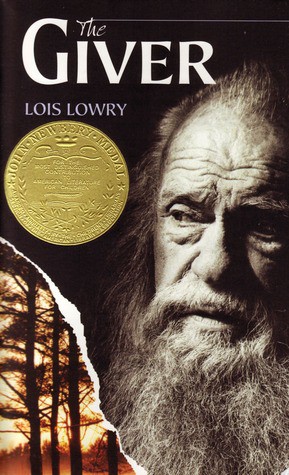
The Giver by Lois Lowry

The supposedly utopian society of The Giver has made pain and unhappiness disappear by choosing “Sameness” over depth and difference. But everything changes for twelve-year-old Jonas when he is chosen to become the next Receiver of Memories. He alone will bear the memories of the time before Sameness, because even this utopia realizes that maybe “those who cannot remember the past are doomed to repeat it.” It’s a lot for a twelve-year-old boy to handle, and spoiler alert: he has a lot of complicated emotions about the ambiguities of good and evil, right versus wrong, and his role negotiating the past and future.

Red Clocks by Leni Zumas

Now that Supreme Court Justice Kennedy is set to retire at the end of July (a swing vote for women’s rights, among many other vital issues) this dystopia is another one that feels close to home. Abortion is illegal, fetuses have rights, and in-vitro fertilization has been banned. Five woman navigate the new reality — women who want to have babies alone but can’t, women who don’t want to have babies and might, and women who help women honor their bodies above and against the law.
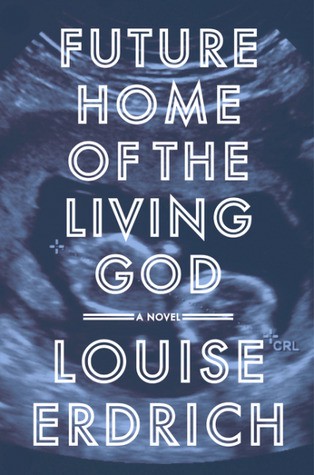
Future Home of the Living God by Luise Erdrich

A lot of dystopian fiction centered on women has something to do with reproduction. Future Home of the Living God envisions a future where women begin to give birth to ever more primitive versions of the human species. The human race seems to be devolving and (surprise) it’s all women’s fault. Our protagonist Cedar Hawk Songmaker, is a woman who is four months pregnant and desperate to protect her unborn, so she returns to her birth mother, an Ojibwe woman living on the reservation, to understand her and her baby’s origins in an effort to avoid the threat of disappearing in the state being overrun by martial law.

The Road by Cormac McCarthy

More post-apocalyptic than dystopian, we had to include this one for a very specific reason. Cormac McCarthy became a father later in life. In a hotel room in El Paso, Texas he thought about what the landscape would look like in 50 and 100 years, and then worried about his inability to protect his son in the future. We are living in a country that is working hard to ensure that the unbelievable nightmare will be a reality for refugee parents and their children, so it feels like an apt time to descend into a post-apocalyptic novel where a father and son struggle to survive in a scorched and barren landscape post-catastrophe.
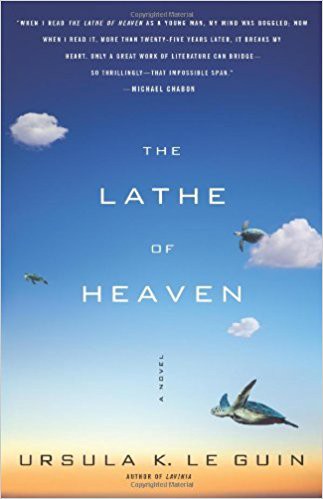
The Lathe of Heaven by Ursula K. Le Guin

Written in 1972, the novel takes place in 2002. Portland is overcrowded by millions of people, it’s always raining, and the poorest are suffering from protein deprivation. George Orr wakes up one day to discover his dreams have altered the reality he and the rest of his fellow Oregonians are living in. (Thank goodness that part isn’t so plausible, since we’ve all been having some doozies about North Korea.) When he consults a psychotherapist to defuse his powers, he slowly realizes the psychotherapist has his own motives for getting involved.

When She Woke by Hilary Jordan

The veil of separation between church and state has been cast off, and the criminal system has given way to literal color code of discrimination. Felons are no longer “rehabilitated” but instead are genetically “chromed” so that the color of their skin reflects the severity of the crime they’ve been charged with. There’s also a sexually transmitted infection which has left most women sterile (again, the dystopia=women+fertility theme?) and in the new Christian state, Roe v. Wade has been overturned in an effort to “save” the country. (Ha ha! Science fiction!) But when Hannah becomes pregnant after an affair with the reverend Aidan Dale, she has an illegal abortion to protect him from the shame of her pregnancy and wakes up in jail, chromed the color red for murder. It’s a critical retelling of the Scarlet Letter on the eve of Trump’s potential appointments to the Supreme Court.
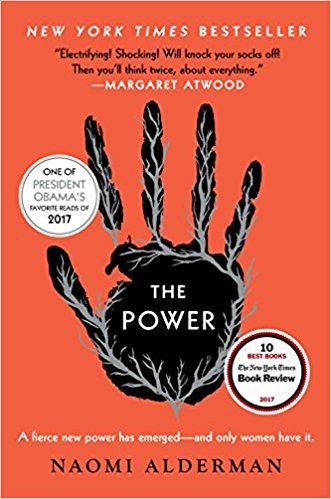
The Power by Naomi Alderman

Alderman imagines a dystopian future where pussy grabs back with a freaking vengeance. In the near-future world, young women everywhere are suddenly gifted with the physical power to violently overtake and even kill those who go against them. Sounds pretty utopian, but Alderman challenges an invisible pattern of behavior that bell hooks also calls out in her book The Will to Change: “When culture is based on a dominator model, not only will it be violent, but it will frame all relationships as power struggles.” It’s a cultural problem. How can women leverage the toxic violence of the patriarchy without revitalizing patriarchy’s forcefulness?
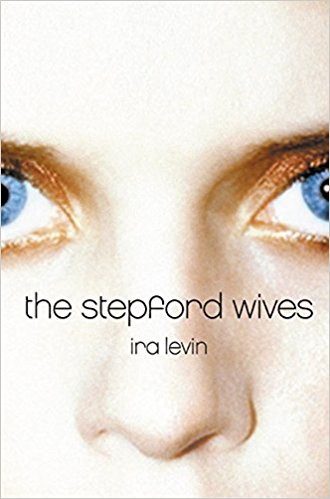
The Stepford Wives by Ira Levin

This one is so hauntingly believable, Jordan Peele used it to inspire his all-too believable dystopian horror in Get Out. The Stepford Wives was written in 1972 as a kind of satirical horror story about the fictional town of Stepford, Connecticut, where the talented photographer Joanna Eberhart moves with her husband. Joanna isn’t prepared for the plastic suburbia she falls into. The women she meets are doll-like — perfect bodies, demure sensibilities, and mindless. She does some digging and discovers that all the women in the town were once political agitators, revered intellectuals. Is suburban culture insidiously brainwashing them? Or is the toxin actually environmental — something in the water? How will she avoid becoming one of them?

Gold Fame Citrus by Claire Vaye Watkins

Because, unbelievably, we still can’t get everyone to believe that climate change is real , here’s some fiction that speaks the truth. All the allure of the California Dream (gold, fame, citrus) has literally dried up. The Amargosa Dune Sea is a shifting sand mass eating up most of the Southwest. The state tried to propagandize water infrastructure efforts years ago, but it didn’t work. Now, Luz Dunn is 25 and living in a mostly evacuated Los Angeles where rain never comes. When she and her boyfriend Ray find/kidnap a toddler named Ig, the struggle for survival takes on a name and small little shape with more urgency than Luz and Ray were ready for.
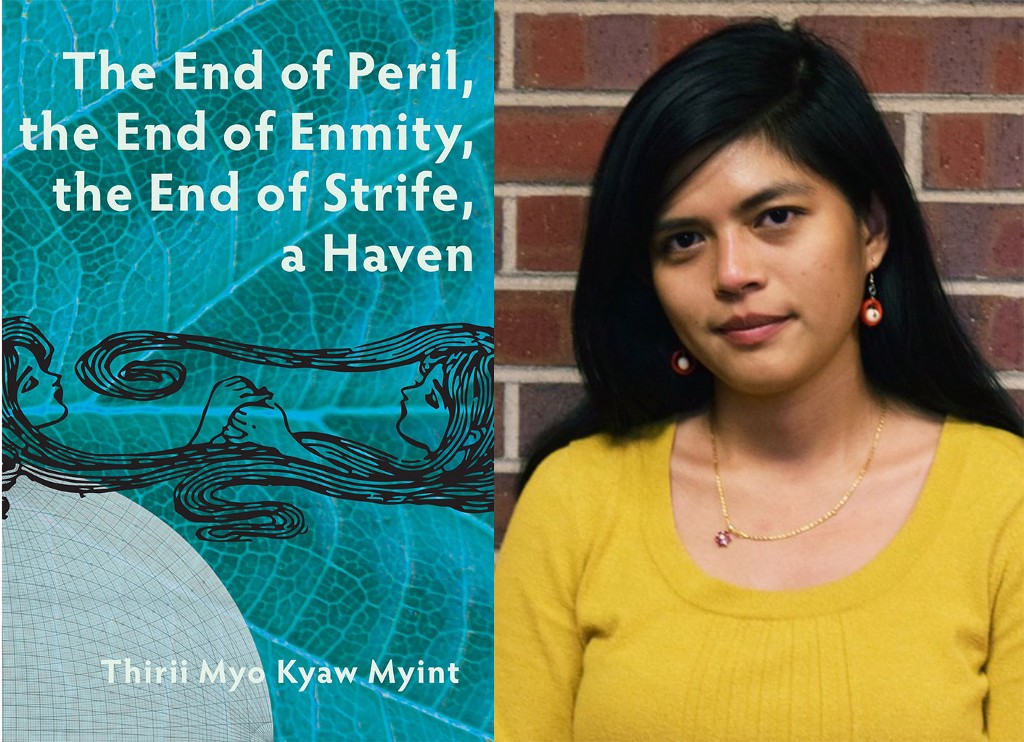
Thirii Myo Kyaw Myint’s Surreal, Haunting Post-Apocalypse

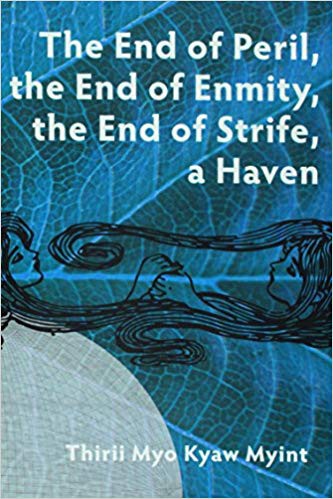
Thirii Myo Kyaw Myint’s debut novel is a powerful work of art. Inspired by Myint’s exploration of embodying hybridity in America and Myanmar, The End of Peril, the End of Enmity, the End of Strife, a Haven tells the story of a young woman returning from emigration to confront “her inheritance of historical violence” while caring for her ailing baby. Through subtle and lyrical prose, the narrator attempts to understand her sense of belonging in a world that at first glance seems futuristic, but, in reality, is a world that devastatingly resembles our own. As the narrator discovers the nuances of her identity, the novel confronts a litany of contemporary themes, including suburbia, the legacy of colonialism, and having a gendered body. Luminous, fresh, and profoundly ambitious, The End of Peril establishes Myint as one of America’s most intriguing young writers.

From her springtime residency at the Millay Colony, Myint found time to generously reflect on her debut novel, the narrative possibilities of hyphenated writers, and how most of the world is living in a post-apocalyptic present.

Tillman Miller: The novel takes place in a post-apocalyptic future, however the details of the story feel fully-realized, lived through, and real. What inspired the story?

Thirii Myo Kyaw Myint: In my mind, The End of Peril takes place in a fictionalized, post-apocalyptic present, not a future. It is important for me to make this distinction because most of the world’s population (the “global south”) already live — presently — in the post-apocalypse. For a person like me, who was born in a postcolonial country, a so-called “developing” country, the apocalypse began centuries ago with European invasion and imperialism. That was the end of the world.

I began this novel because I wanted to write a post-apocalyptic narrative which acknowledged this reality. I wanted the apocalyptic event in my book to be directly linked to the apocalypse of colonialism. I wanted to show how those two events — the speculative apocalypse and the historical one — were actually one and the same, and taking place simultaneously in the present. In the Location of Culture, Homi Bhabha says the “post” in post-colonially doesn’t mean after but beyond. I wanted to show that this was also true of the “post” in post-apocalyptic. The world ended long ago, but it is still ending now.

TM: America is certainly one of the foremost purveyors of apocalypse. And yet, most Americans will justify purveying apocalypse because they believe America is an innocent savior with superior values. Have you found that unhyphenated American readers — when confronted with the fact that colonialism and imperialism have been apocalyptic to the “global south” — are unwilling to acknowledge this reality? Is that part of why you redirected your hope that the book would help break down stereotypes?

TMKM: When people find out that I was born in Burma/Myanmar, I find that they often want to talk to me about the military dictatorship, or the civil wars, or more recently, the ethnic cleansing of the Rohingya — and always in a completely de-historicized, de-contextualized way. I am sure they are “just trying to connect,” but sometimes it almost makes me feel as if they are trying to remind me of how dysfunctional and oppressive “my” country (Myanmar) is, and how lucky I am to be in America. As an immigrant, I am often made to feel as if I should be grateful for having been “allowed” to “become” American. Only a few people have put it in so many words, but that is the general attitude I’ve encountered.

I redirected my hope for The End of Peril because I realized that it’s not my responsibility to change this attitude, so I shouldn’t make it my goal to do so. I admire and respect people who work to educate others, but I don’t want that to be my job. I just want to make art.

As an immigrant, I am often made to feel as if I should be grateful for having been “allowed” to “become” American.

TM: One of the beautiful elements of the book is the deft prose. It’s often haunting and ghostly, which echoes one of the pivotal ideas in the story, that people — mothers, in particular — are haunted by their family history and legacy. Can you talk about the importance of motherhood and familial legacy in the novel?

TMKM: As a child, I remember looking at my mother’s body and my father’s body and not believing that one day I would grow up to look like my mother. Even though I have a woman’s body now, whenever I see pregnant women, I still feel the same way I did as a child. I cannot believe that one day, I might look like them. Motherhood, for me, and for the narrator of The End of Peril, is the limit of the self, both physically and emotionally. It is the point when the self becomes the other, or becomes other to itself. Because the narrator is trying to understand her identity and where she belongs, the mother, becomes this fraught symbol she keeps butting up against. On the one hand, she is still trying to extract herself from her mother, to be separate from her mother, but on the other hand, she has already become a mother herself, already given birth to her own ghosts. She goes directly from being a child to being a mother, without the relief of being herself. Having a family, either in the past or future, I think, is the condition of always being only partially oneself.

TM: Do you consider The End of Peril to be speculative fiction, magical realism, or something else entirely?

TMKM: I think that markers of genre, like all other markers of belonging, are markers of difference, of deviation from a normative center. In the same way that “man” is unmarked and “woman” is marked, “fiction” is unmarked, while “speculative fiction” is marked, and “realism” is unmarked while “magical realism” is marked. I consider The End of Peril to be fiction and realism. It is my interpretation of reality. If the book is strange, it is because I am strange, the way every single person is strange. The “normative center” is, after all, a social-construct. I truly believe no one is normative, no novel is normative, and that reality is nothing like realism.

If the book is strange, it is because I am strange, the way every single person is strange.

TM: There’s a moment near the end of the book where, for the first time, the narrator appears to understand her identity and her desires. The narrator expresses love for another girl and it seems possible that the world can finally accommodate this desire. Does this moment offer the narrator access to something that she’s been denied her whole life — access to hope and freedom?

TMKM: I love your interpretation of the relationship between the narrator and the girl. I think at the end of the book, the narrator does come to realize that she wants to be with the girl — not with her mother and father, nor with the baby — and this realization is empowering and freeing for her. I don’t think, however, that the narrator understands her desire as an identity. I don’t think the love between the narrator and the girl can be labeled as romantic or sexual or platonic. It is simply love — intense, pure, and complicated.

TM: When the narrator says, “My mother does not let me forget I am descended also from the enemy. The raiders from the north who drove the king’s men to the end of peril,” what is that a reference to?

TMKM: In the novel, the narrator is descended from two ancient/mythological peoples, “the king’s people” who are native to the harbor city, which they named the end of peril, and the enemy who are invaders from the north. The two groups are fictional and function as almost mythological tropes: the agrarian civilization, and the nomadic raiders. There are stories of conflict between such groups in many cultures. In the narrative present, the people who live in the end of peril are descended from both of these groups which are “one people now.” The narrator’s mother, however, holds onto the mythology, and reminds the narrator that “[she] is descended also from the enemy,” that some of her ancestors were invaders. It is important to me that the narrator’s understanding of her identity is complicated in this way because I did not want her to be able to view her return to the harbor city as a true homecoming. I wanted her to be wary of the idea of a pure ethnic group, or a pure homeland.

Finding Black Boy Joy In A World That Doesn’t Want You To

TM: There are elements of feminist dystopia in the book. Women are blamed for the sky flying away and the narrator considers disguising herself as a man to defend her country and become a hero. As a result, it seems as though parts of The End of Peril can be read as a condemnation of misogyny and the chauvinistic power structures that currently exist in Burmese society. Was that deliberate? Were you intending to look at the experience of Burmese women and examine a cultural source of oppression?

TMKM: The story about women being blamed for the sky flying away was something I read while taking a standardized test on reading comprehension. I don’t even remember what culture the story originated from. In a way, it doesn’t matter, because the story is universal: women are universally blamed. As a Burmese-American woman, I was well aware that the feminism in The End of Peril might be read by un-hyphenated American readers as a condemnation of Burmese society in particular, but in fact, I meant it to be a condemnation of all misogynistic societies in general. The last thing I wanted to do in this book was try to represent or speak on behalf of anyone, especially people I had little interaction with and knowledge of, such as “Burmese women” (an unwieldy category even for a dedicated expert since the country is so incredibly diverse). I cannot speak about or for Burmese society or Burmese women because I did not conduct any research on those topics for this book. I have however, lived in America since I was seven, and have been a woman since I was eighteen, so I did deliberately try to condemn “misogyny and chauvinistic power structures” that I observed and/or experienced in current American society. The “domed city,” in my mind, is an American city, and it is where the narrator grows up, and comes to understand what it means to be a woman. The main “cultural source of oppression” that I examined in the novel, then, is actually American culture.

The feminism in “The End of Peril” might be read by un-hyphenated American readers as a condemnation of Burmese society in particular, but in fact, I meant it to be a condemnation of all misogynistic societies in general.

TM: There’s no denying that scores of American readers need to broaden their canon. Can you share what books have opened up narrative possibilities for you in the way that you hope The End of Peril will open up narrative possibilities for readers? And who are the young writers you’re most excited about?

TMKM: The books that influenced The End of Peril the most were Tayeb Salih’s Season of Migration to the North (translated by Denys Johnson-Davies), Ama Ata Aidoo’s Our Sister Killjoy, Marguerite Duras’ The Lover (translated by Barbara Bray) and Fleur Jaeggy’s Sweet Days of Discipline (translated by Tim Parks). Even though I am a native English speaker who writes in English, being raised bilingual estranged me to English from the beginning, and I have always been drawn to literature in translation and works by multilingual writers in which I am able to (re)encounter that feeling of estrangement — that feeling that there is a distance or dissonance between language and experience, a gap. I like books that peer into that gap, instead of pretending that it isn’t there. Writers who are gap-seekers, who I am excited to read and follow are Valeria Luiselli, May-Lan Tan, and Sara Veghlan, whose novel The Ladies won the Noemi Press Book Award for Fiction.

My Life in the New Republic of Gilead

You draw my name out of my mouth and it comes out a tiny wisp.

The morning after the thing with you happens I drive 45 minutes to a Barnes and Noble because I live in rural Ohio and, honestly, there are few independent bookstores in existence anymore. I need a copy of Margaret Atwood’s The Handmaid’s Tale. I have a copy but I can’t find it. It’s the same copy I read when I was fourteen, nearly 20 years ago. Before it was mine it was my mother’s, my sister’s; their hands wore it out until the paperback spine broke and it was lazily covered in scotch tape.

Have you read it?

It follows Offred, a Handmaiden in the Republic of Gilead, a fictional toxic dystopia. Gilead is a highly structured patriarchal white supremacist society in which high-ranking men (Commanders) are issued women to fill certain roles taking care of the home (Marthas), becoming wives to the Commanders (Wives), and in Offred’s case (Handmaidens) taking part in a monthly procreation ritual where her Commander pumps away at her lower half while his wife grips her hands, legs twisted around her torso.

Gilead has stripped women of everything: agency, literacy, names.

Gilead has stripped women of everything: agency, literacy, names. The Republic commandeers the bodies of fertile women and sends them to Rachel and Leah Centers — old universities repurposed to house Handmaidens — and wrings their former lives out of them. Handmaidens are sites of potential fertility only. They are fitted with red cloaks and dresses, on their heads heavy white blinders which stop them from seeing and being seen. Wings, Offred calls them. The Rachel and Leah Centers are overseen by Aunts, sadistic women who are true believers in Gilead.

The Republic of Gilead, Aunt Lydia says, knows no bounds. Gilead is inside of you.

When it comes to you I have to be vague. There are many moving pieces. There is us inside of a system, inside of an institution, inside of a world that has particular things to say about girls like me and men like you.

The geographic location of Gilead is in Massachusetts, but before I reread the book, my lazy memory insists it is in the Midwest. It just makes sense to me. The Midwest: all flat and farm, cows and conservatives. Driving out to Barnes and Noble I pass a handmade sign that insists “Blue Lives Matter” and another that declares “America for Americans!!! No Immagrants!!!!” Stars and bars wave gently in early March air. This is Trump Country and Trump Country is the New Republic of Gilead: a place where men call their wives “Mother” and grab other women by the pussy. Take away their names, take away their autonomy. I watch the flat landscape pop up with beige strip malls, hot red neon signs hawking chickens boiled alive, artery-clogging burgers that bleed red.

This is Trump Country and Trump Country is the New Republic of Gilead.

After the thing with you happens I feel like a dissected frog, open and pinned back. Everyone can see my guts and poke at them with sharp bladed silver scalpels — not that dissimilar from an Exact-o knife.

I wonder if I will ever hear you say my name again.

The thing, the thing. I can’t stop thinking about the thing — the thing with my home, with my cat, with my busted boots, or maybe I was just wearing my stupid pot leaf socks when it happened. The thing with you. The thing that I have to be vague about because we both know what happens if I speak your name.

Did you do it because I am so mean, because I made fun of your car and your shoes, because some men like to be talked down to? I sometimes wonder if men like to be talked down to because it’s as close as they can get to understanding what it’s like to live as a woman.

I want to tell you about this time a boy begged me to go out with him. He got down on his knees and everything. His khakis wore thin and the spring grass rubbed against him. I was spring myself; not yet 21. You could see my hip bones and I put cigarettes out on them. Marlboro Reds, cowboy killers. Even then I was caught up in the Commander’s web. The boy wanted me, but more than anything he wanted me to be cruel to him. I said no and no again and then kicked him, swiftly, while he was down. One kick, to the right side of his ribs. Thin skin outstretched over bone. God, he said, will you do that again?

Am I cruel?

Do you like it?

The day after the thing with you happens I notice how I suddenly feel different about my body. Not that it’s so great — it’s lumpy and pale and pockmarked, scarred and cellulited and dimpled. My tits are two distinctly different sizes and sometimes I catch my profile and think my face is shaped like a thick Idaho potato. But suddenly my body and face look golden to me.

Am I allowed to ask if I’m pretty?

I desperately and immediately need to lose myself in The Handmaid’s Tale. I have been thinking about the book since Trump/Pence and their merry band of old white Commanders moved into the White House. However, after the thing with you happens I need a wall-to-wall undoing of my own mental monologue. I need to feel the blankness of Offred’s days, how she tries to feel nothing at all, because that’s what I’m doing. How she avoids thinking about her life before — her husband, daughter, mother, friend — and her situation now. She doesn’t call what the Commander does to her rape. She says she had a choice, that she could have been shoveling toxic sludge in the colonies.

I need to feel the blankness of Offred’s days, how she tries to feel nothing at all, because that’s what I’m doing.

I need to lose myself in the first half of the book, the minutiae of her closed off world, the effort she puts into not remembering the past: here is what she stares at while she lies on her back waiting to be summoned. Here is her room, here is the weight of her protective white blinders — to say her gives Offred pause because it suggests ownership.

Her life is small walks and being fucked by the Commander while Serena Joy, his wife (who I always imagined looks like Tammy Faye Baker) “grips my hands as if it she, not I, who’s being fucked, as if she finds it either pleasurable or painful.” As a teenager this scene invoked a little illicit thrill in me and I read it over and over again, even though it’s not sexy.

It’s not about sex. It’s about power.

I am in this Barnes and Noble to buy a copy of a book I already own because I can’t not read it right now. I have to pee. I walk towards the bathroom. There’s a man sitting on a chair directly across from another chair, talking on the phone. His eyes are on the other chair, his invisible business partner. Then he sees me.

Men maybe don’t think that women see or feel the way they witness us — how some of them fuck us in their minds, or rate us, or hate us. But I can feel it, nearly every time, and he witnesses me and rates me and my rating is just fine. He’d hit this. He continues to follow me with his eyes while yammering on about his partners and files and all that shit.

After I piss I look in the mirror and see something. My face is worn and dragging, underneath my tear ducts little black boogers have congealed, last nights make-up worn into today. I’m not attractive, but sexy. You can displace sexuality upon my body, you can look at it and imagine some truly denigrating shit. Does my body invite this? Do I? There’s something worn, tough, hard and lived about my sexiness. I feel like an ugly teenage girl, who knows that she is still a girl and that there is some kind of power there. When I leave the bathroom I unzip my hoodie so when I walk by the man again he will see that I’m not wearing a bra.

I feel my power.

Offred’s power lies in the swell of her hips. Up against the Guardians, the Eyes, the Commanders she is reduced only to her reproductive status: fertile (she hopes), still of use. In the New Republic of Gilead, the one we really live in, Oklahoma State Representative Justin Humphrey proposes a bill which would require a woman to seek the written permission of her male sexual partner before obtaining an abortion. He says, “I understand that they feel like that is their body, [but women are] a ‘host.’ And you know when you enter into a relationship you’re going to be that host …if you pre-know that then take all precautions and don’t get pregnant…I’m like, hey, your body is your body and be responsible with it. But after you’re irresponsible then don’t claim, well, I can just go and do this with another body, when you’re the host and you invited that in.

It is understood that you feel like your body is your own but your body is your body until it’s determined that it’s not your body. It’s not your body when it becomes a fertile place. It’s not your body when you invite someone in.

I did invite you in.

Offred: He’s so close that the tip of his boot is touching my foot. Is this on purpose? Whether it is or not we are touching two shapes of leather. I feel my shoe soften, blood flows into it, it grows warm, it becomes a skin. I move my foot slightly, away.

Before the thing happens I kick your foot under the table, twice. The first time is a mistake but I feel that you like it. The second time was to see how much I could get away with. I am drunk and reckless and stupid. The hard sole of your shoe melts around the blunt edge of my boot.

What does my desire invite you to do?

This whole thing with you makes me feel ugly and sexy and lost and, to be honest, I don’t dislike it. I keep digging. I can’t help it. I blame society, I blame ambition, I blame neoliberalism, I blame capitalism, I blame other girls and their make-up game, I blame my ego, I blame the culture, I blame the dinosaurs, I blame men telling me they don’t like it when I do Y with my voice or X with my writing. I don’t like it when you use the word neoliberalism. It breaks the tone. I don’t like it when you sound so academic. I don’t like it when you get political. Try not to slip into melodrama.

I blame myself.

Why don’t I blame you?

I blame society, I blame ambition, I blame neoliberalism, I blame capitalism, I blame the culture, I blame the dinosaurs.

I start throwing up again. I can’t help it. My body is just reacting to trauma. When I saw you after and wanted to name you, I instead turned around and walked away and the next time I was alone I unfolded a paper clip. I unfolded it and heated up one end until it was a red hot ember. I stabbed it into my skin over and over again. I held it in the thickest fattest part of my thigh and I cried. It’s healing weird — infected of course, white pus creating two eyes and a smile. Pareidolia.

I started cutting myself when I was sixteen. Then, I would cut because my brain would heat up and boil and hurting myself released steam. Now when I cut myself I crave witness. The marks I’ve made in your aftermath are bright and red against my pale winter skin. They demand my witness.

In my journal I write that I want to feel hollow. I want to hollow out my body. I want to go hungry. I think of the pale War Boys in Mad Max: Fury Road — poisoned by everything around them, so hollow you can see their ribs. Cracked red lips against white skin.

I feel such shame. Hollow it out, dig into me.

In what ways are you ruined like me?

I read the book aloud. I need to hear Offred’s voice.

My voice wavers, it quivers. I am in pain and I am weak. I am weak because when I woke up after the thing happened, after only three hours, not even enough time to let the alcohol metabolize, I threw up until yellow bile burned my nose and when it did I grabbed a small Exact-o knife — the kind for years I wouldn’t keep in the house, the kind I purposefully avoided using — and I ran it across my leg three times then stabbed it into my arm. Enough to draw blood, enough to excuse away…a scratch from my cat, if you’d asked.

When some men touch me it makes me want to hurt myself.

You couldn’t have known that unless you did.

As I read my voice breaks like a prepubescent boy’s. I’ve read the book before. I know that the women were taken from their lives, their assets frozen, their names suspended and put in the Rachel and Leah Centers to be broken like horses and fitted with blinders.

I know what’s going to happen and still I cry openly as I read the second page: In the semidarkness we could stretch out our arms, when the Aunts weren’t looking, and touch each others hands across space. We learned to lip read, our hands flat on the beds, turned sideways, watching each others mouths. In this way we exchanged names…

I hunger for the hands of women.

I hunger for my name.

Offred: Then I find I’m not ashamed after all. I enjoy the power; power of a dog bone, passive but there. I hope they get hard at the sight of us and have to rub themselves against the painted barriers, surreptitiously.

I want you to taste the heat of my breath. I want my name to ring through your head. I want to stand so close to you that you’ll feel my body vibrate and loosen and you will match it, and you won’t consider that what I’m doing is taking all your power.

I have all the power.

Is this how I show my power?

Is this the beginning and end of my agency?

Somehow it’s more complicated. Somehow I don’t want anyone’s feelings to be hurt, even yours. I want you to say my name. I want you to bear me witness.

I think, again, of the War Boys in Mad Max: Fury Road all chrome and shiny and “Witness me! Witness me!” They, too, live in a toxic patriarchal wasteland and scream for witness, though I want my pain witnessed and they want the witness of their leader, Immortan Joe. Toxic masculinity runs deep.

What I don’t tell you is that masculinity hurts us both. And while I bear my scars on the outside of my body, you have to bury yours under being a total dick.

Still, I think that if you told me that it happened, that it wasn’t my fault, that you crossed a line and maybe I was there for that but I shouldn’t feel this bad, then maybe it’d be different.

In the new Republic of Gilead, my autonomy is measured in millimeters and all the time I watch violent and dangerous men measure their autonomy in miles.

But even if you witnessed me, even if you told me I was pretty, even if you told me my power lies in and outside of my body, even if you told me that you were compelled to do this to me because you hurt too, it wouldn’t change the fact that, in the new Republic of Gilead, my autonomy is measured in millimeters and all the time I watch violent and dangerous men measure their autonomy in miles. Are you violent and dangerous? Probably not. But it doesn’t matter. The Republic of Gilead is inside of me and it supports you. You get to keep everything and I was tricked into believing Gilead’s power to be boundless. I believed myself host to the parasite of namelessness. I believed my body was not my own.

When you took my name from me you left me starving in your aftermath. And that hunger made me fierce. I heard the names of women, no longer whispered, no longer hidden, and I filled myself up on them.

What you need to know is that I’m coming for you and I’m going to take back my name.

Here’s What People Don’t Get About Writing as a Job

Louie Mantia has an incredibly cool job: among other things, he designs icons, like emoji and iMessage stickers and the little square images for apps on your phone. But it’s also a job most people haven’t really thought about, and that they must therefore have all kinds of cockamamie ideas about. Which is probably what inspired him to ask on Twitter, “What‘s something that seems obvious within your profession, but the general public seems to misunderstand?”

The tweet has had hundreds of replies, as people in jobs from architect to zoologist rush to set the record straight. There were a few repeated refrains—teachers DO NOT get the summer off, y’all! News reporting is different from opinion columns!—and some inside info that was genuinely new to us. (Did you know anyone can become a real estate agent, but “realtor” is copyrighted and only refers to a member of the National Association of Realtors? We didn’t! Did you know all distilled spirits are gluten-free?) And there was also plenty of wisdom, conventional and otherwise, about writing (books, poetry, and online articles) as a job.

Here are some of our favorite industry secrets resulting from Mantia’s tweet. If you’ve got more, you can share them with @ElectricLit on Twitter—which, per another incredibly common contribution, is run by a seasoned professional and not an intern.

Electric Literature Is Seeking a Marketing and Membership Manager

Electric Literature seeks a part-time Marketing and Membership Manager to join our team. The Marketing and Membership Manager will be responsible for growing Electric Literature’s membership base and marketing its merchandise, publications, and programs to targeted audiences. Additional responsibilities include recruiting advertisers, and coordinating EL’s annual fundraising gala, the Masquerade of the Red Death, as well as other community-building and donor cultivation events. Though this is a part-time position, there will be opportunities to advance and expand the role.

Electric Literature’s mission is to make literature more relevant, exciting, and inclusive. Here’s how you’ll contribute to those goals:

  • Raise awareness and enthusiasm for Electric Literature’s activities and mission
  • Strengthen and grow Electric Literature’s community
  • Think creatively about how Electric Literature can communicate its ideals most effectively, and how the organization should adapt to a changing media landscape

RESPONSIBILITIES

Marketing

  • Manage Electric Literature’s online store and merchandise, including customer service, order fulfillment, promotions, and marketing
  • Contribute ideas for new merchandise
  • Work with the Executive Director to establish and meet sales targets
  • Recruit new advertisers and build those relationships
  • Manage relationships with existing advertisers
  • Manage ad reporting and fulfillment
  • Help establish Electric Literature’s visual brand identity across projects and platforms
  • Pursue promotional and press opportunities for Electric Literature
  • Build a press list and regularly communicate EL’s accomplishments and new initiatives

Membership

  • Manage Electric Literature’s membership program, including communications and recruitment
  • Develop regular promotions to attract new members
  • Strengthen the membership community through in-person events and online initiatives
  • Regularly communicate with members, field member inquiries, etc.
  • Work with the Executive Director to establish and meet new membership targets

Events

  • Plan EL’s fundraising gala The Masquerade of the Red Death, held annually in October
  • Plan small community events such as readings and mingles
  • Plan cultivation events for prospective members and donors

QUALIFICATIONS

The ideal candidate:

  • Is outgoing and friendly; the kind of person who will introduce him or herself to everyone in a room
  • Thinks creatively about how to connect with people
  • Is passionate about literature’s power to bring people together
  • Is patient and organized
  • Has at least two years of professional marketing experience (assistant level and freelance work qualifies), including sales
  • Is able to set and work toward quantitative goals
  • Has professional event planning experience
  • Is organized, calm under pressure, and a quick thinker
  • Is familiar with the New York literary and cultural scenes

SKILLS

  • Mailchimp, mail merge
  • Strong communications skills
  • Familiarity with non-profit membership structures
  • Familiarity with online ad sales
  • Experience writing press releases and promotional material

This is a part time 15 to 20 hour/week position with a monthly stipend based on $20/hour. All candidates must be available to come into EL’s downtown Brooklyn office approximately 10 hours/week.

To apply, please send a resume and cover letter to editors@electricliterature.com with the subject: Marketing and Membership Manager Application: [Your Name]. Applications are due by 11:59 PM on Sunday, July 29.

Chibundu Onuzo Recommends a Reading List of African Authors

I left Lagos when I was fourteen. This year will make it thirteen years since I’ve been away. I’ve spent my whole adult life abroad and yet I’m still drawn to Nigeria. I watch Nigerian shows on YouTube, I listen to Nigerian music on my phone and I read books written by Nigerian authors. I don’t just stop at the borders of Nigeria when it comes to my tastes. I range across the whole continent of Africa and everywhere I look, exciting content is being produced both on and offline. It’s an exciting time to be a Nigerian writer. Although, I suppose, it has always been an exciting time to be a Nigerian writer.

Purchase the novel

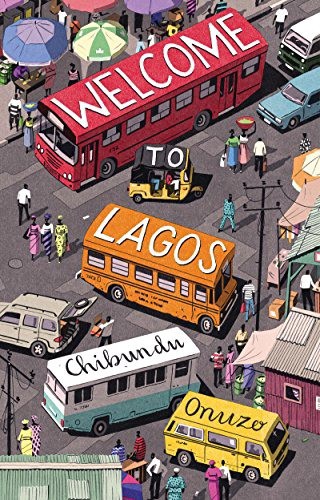
My novel, Welcome to Lagos, is about a group of runaways, who escape to Lagos and band together to survive the city once they get there. Since my novel’s publication, I’ve often been asked how it feels to be part of a ‘new wave’ of African literature. There is no new wave. The waves have always been crashing steadily and regularly against the shore. Over the centuries, new and exciting writing has been created by Nigerians and in Africa. Just ask the abolitionist Olaudah Equiano or the pan-African thinker Edward Blyden. That you just arrived at the party doesn’t mean the party just started. If you look closely, just before you throw yourself into the dance, you’ll see how everyone else on the dance floor is sweating heavily. So here are some of my personal favourites on the African literature playlist.

When the Rain Clouds Gather by Bessie Head

I discovered Bessie Head late but as the proverb says, ‘Morning is when you wake up.’ A political refugee from apartheid South Africa shows up in a small village in Botswana. He comes to learn a new way of life in the agrarian community but he also shakes things up. This one of my favourite “a stranger comes to town” stories.

Everything Good Will Come by Sefi Atta

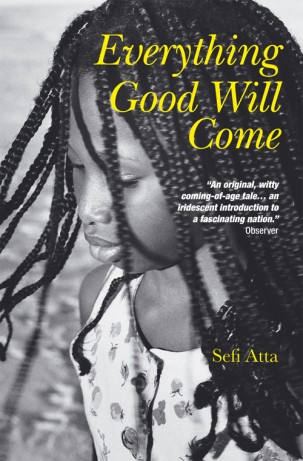
Before Eleanor Ferrante’s Neapolitan Series was Sefi Atta’s Everything Good Will Come, a stand alone novel that I believe achieves in a few hundred pages what Ferrante took a thousand pages to do. Atta follows from childhood, to adolescence, to adulthood, the lives of two female friends, Sheri and Enitan. They are best friends, they’re rivals, and they are sisters. Their friendship plays out against the backdrop of political turmoil in Nigeria.

“Blackass” (Excerpt) by A. Igoni Barrett

Changes: A Love Story by Ama Ata Aidoo

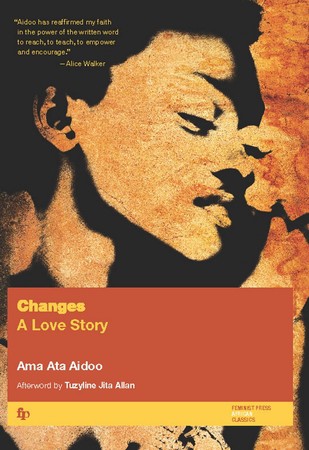
Esi Sekyi, a modern African woman with a successful career, divorces her husband and becomes a second wife to another man. The debate between who is a ‘modern’ African and who is a ‘traditional’ African continues till tomorrow. In this novel, Aidoo gives an excellent answer to the perennial question about African identity: it’s complicated, like every other identity.

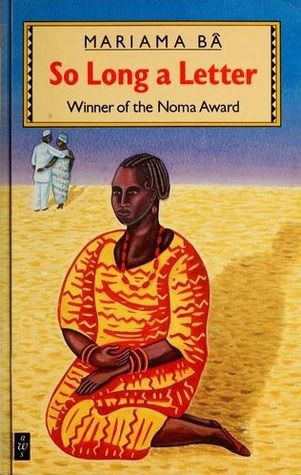
So Long a Letter by Mariam Ba

I think of So Long a Letter and Changes as two novels that are in conversation with each other. In this novel, the tables are turned when the protagonist, Ramatoulaye, another ‘modern’ African woman discovers that her husband has taken a second wife. The novel is written as a series of letters to Ramatoulaye’s friend and the result is a slim novel that stays with you for a long time.

6 West African Books with Unconventional Approaches to Gender and Power

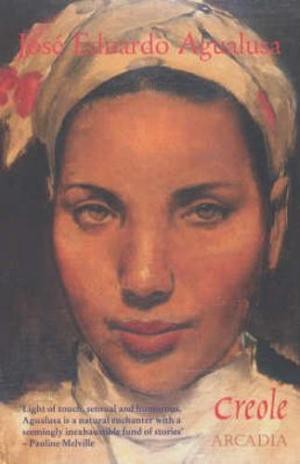
Creole by Jose Agualusa

Like many Anglophone readers, I’m behind on fiction translated into English but I do my best because I know how much I’m missing out on. Creole, first written in Portuguese, is one of those novels that is strange and new and exciting. In 1868, a Portuguese aristocrat sails from Lisbon to Angola and meets a decadent, slave-owning society. It’s an adventure story. It’s a love story and it’s just a very good novel.

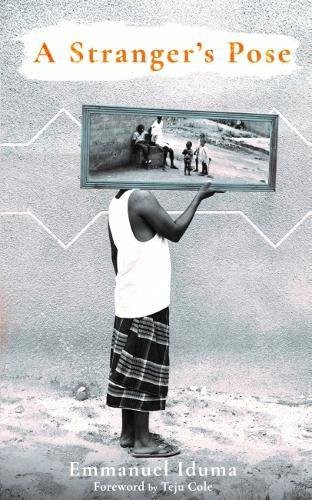
A Stranger’s Pose by Emmanuel Iduma

This book isn’t out yet (the title is being published in the US in November), but judging from writer and curator, Emmanuel Iduma’s thoughtful essays about African art and culture, this is definitely one to watch. Iduma has travelled through several African countries and these essays are an exploration of his journeys.

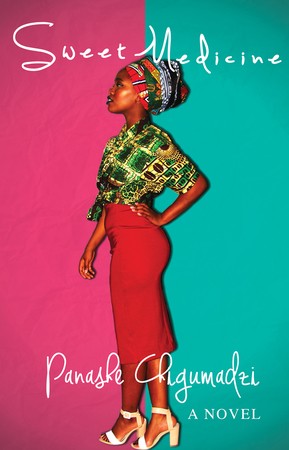
Sweet Medicine by Panashe Chigumadzi

How to be a young woman in twenty first century Zimbabwe? What to do with your principles, when you’ve stuck to the rules of getting good grades and getting a degree, only to graduate and find you can’t get a decent job? Sweet Medicine a novel that speaks to our cultural moment now, no matter what part of the world you live in.

Remembering Ken Saro-Wiwa and Other Essays by Adewale Maja-Pearce

It is very brave to look at the murdered activist Ken Saro Wiwa through a lens that is critical. Yet this is what Maja-Pearce does in the title essay in this collection. Yes Saro Wiwa did much that was heroic in his life but he was also human. A writer’s allegiance is to their vision not to historical consensus.

Secrets of a Happy Marriage

The Big Sleep

He was meticulously rude. Sometimes profoundly nice. When we weren’t arguing, we’d snuggle under our effective sweat-box comforter, frayed from so many happy and sad years of sex and sweat and dog hair. Outside, the whole world seemed to be tanning and wrinkling.

The police popped in one night to see if our fights were murderous. We’d been arguing loudly in the kitchen about the texture of a birthday cake I’d baked for the twentieth anniversary of our sweet dog’s death. It was hard as a rock, and nothing had ever been different. Arguing was part of the cake-eating experience.

When I heard the doorbell ring, I tippy-toed from the kitchen into the bedroom.

“Hello sir, mind if we enter?” a cop-voice said.

“Do you own any weapons, sir?” he asked my husband. It sounded like there were fifteen people, like horses and villagers or showgirls. Lots of feet. A dog toy squeaked. “Whoops!” one of them said.

“With a chef like my bride? Weaponry with this woman here?” then a scratchy minute of silence, my ear to the door. “Where did she go?”

One of the cops let out a giggle. The talkative one sniffed the air, said, “Um. Interesting scent.” He was referring to the sweet smell of marijuana.

It was time for me to enter, so I idled into the living room wearing my “Munch Me” shortie night shirt, and my long-nosed barracuda slippers. Not much else. My legs were still shapely, and tan from bronzing gel.

“Hey! I recognize you! I think I knew your mom!” I said to the younger cop.

He was adorable, with dirty blond hair and an ape-like neck.

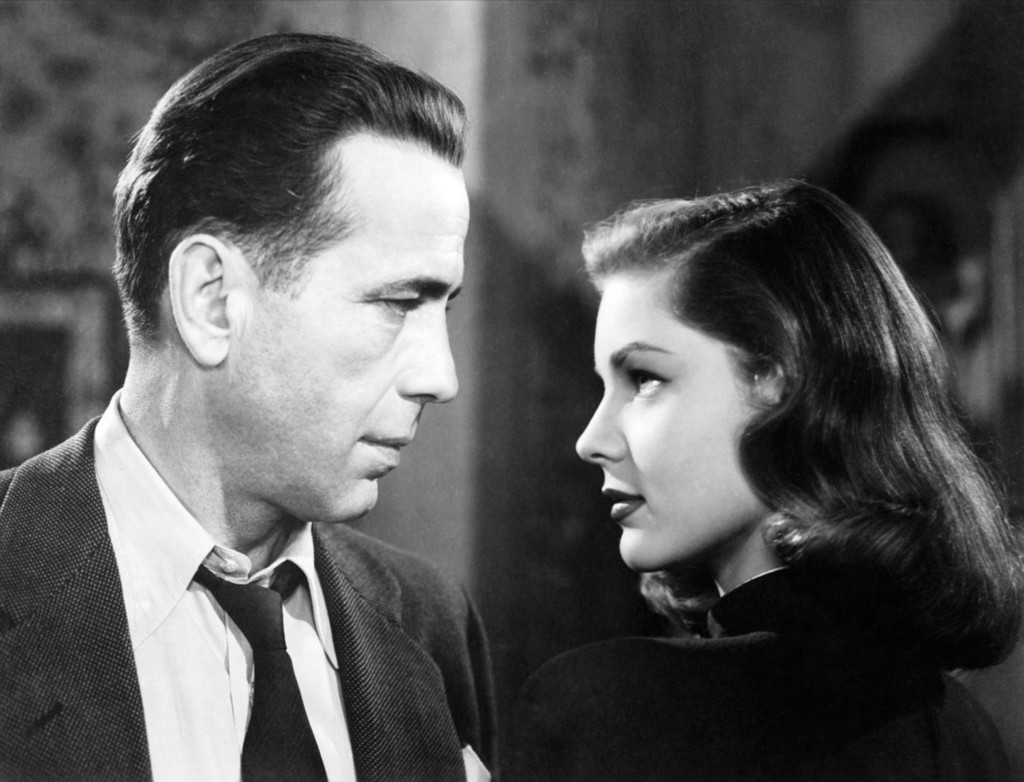
Clicking over to him with my vixen slippers, I looked him over the way Bacall checked out Bogie in The Big Sleep.

“You know how to whistle, don’t you?” I said, with my full, husky voice. And then I laughed.

He smiled sheepishly. “We didn’t mean to disturb your evening, ma’am, just doing our jobs.”

“Ha,” my husband said. “Who in their right mind would kill her? Would you kill her?”

After they left, my husband was in fine spirits. He put on Sinatra’s “Fly Me To The Moon.”

“You have such wonderful moves,” he said. Asked me to dance.

“The Big Sleep” is published here by permission of the author, Meg Pokrass. Copyright © Meg Pokrass 2018. All rights reserved.

The Rise of the Aspirational Divorcée

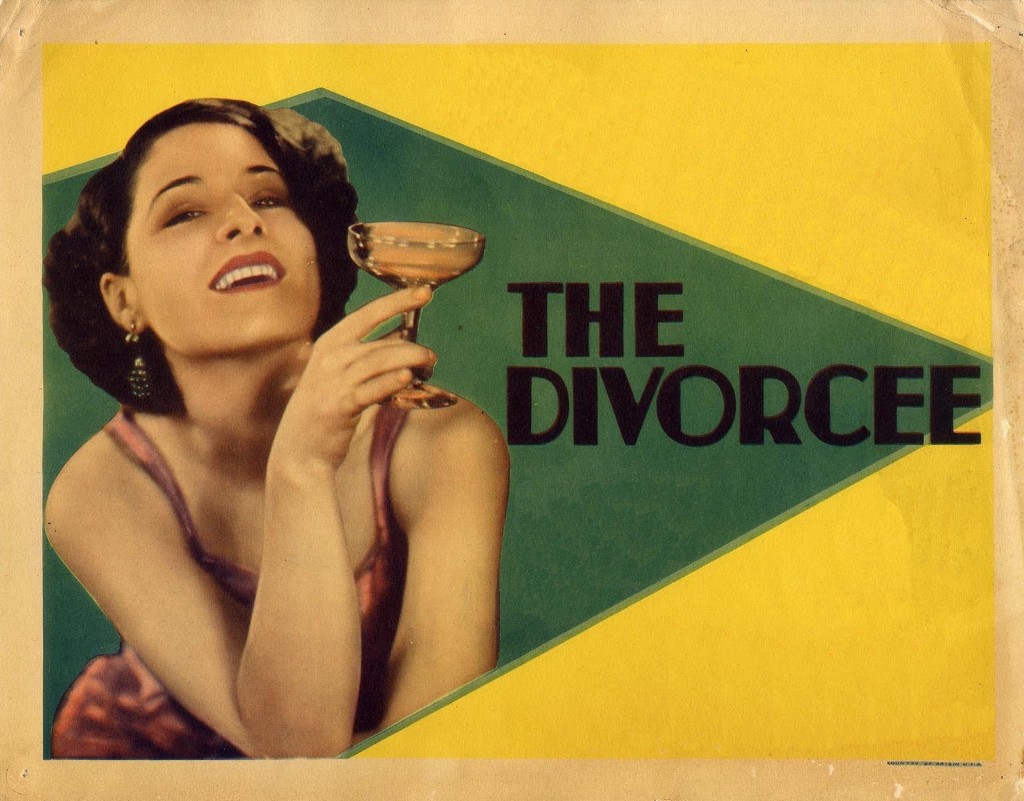
Imagine a woman in her mid-to-late forties. She lets her hair grow in grey. She is wearing a casual flowing dress, which represents her go-with-the-flow attitude. As she sips her chardonnay on the patio of an Italian villa, you get the sense that she has gone through a personal journey. No longer tethered to a marriage of circumstance, she is exploring what it means to be a woman of a certain age. She’s exploring what it means to be a divorcée.

This image, however familiar, is a new one. Many a Nancy Meyers film has cemented this cool, breezy, aesthetic of divorced women in our collective imagination. But it’s not that long ago that the predominant narrative of the divorcée was based in tragedy and social disaster. Historically, we’ve moved from women enduring beheading when divorce was not sanctioned by the Pope, to women legally being able to serve divorce papers through Facebook messenger. And the fictional image of the divorcée has changed in kind: from the tragic figure to the aspirational narrative. But which came first, the cougar or the egg? And what’s next for divorced women in books and film?

Many a Nancy Meyers film has cemented this cool, breezy divorced woman in our collective imagination. But it’s not that long ago that the predominant narrative of the divorcée was based in tragedy and social disaster.

The legacy of the tragic divorcée archetype is epitomized in the tale of Anna Karenina. Tolstoy’s epic Russian narrative explores the ups and downs of Karenina’s marriage and affairs. It also explores the opportunities and limits of divorce laws at the time. Having an affair and living with her lover, Anna finds her place in society turned upside down. Much of the story revolves around whether she and her husband Karenin should and could divorce. The legal decision-making lies primarily in the hands of her husband, who goes back and forth and at one point refuses the request on the advice from a French clairvoyant. The turmoil of Anna’s feelings, treatment in society, and legal limbo culminate in her suicide. Anna Karenina is a cautionary tale of morality: Tolstoy’s perspective offers us a male view that if a woman is unfaithful in her marriage and wants out, the end result is turmoil. It’s hard to reimagine a gender-bent version of this tale taking place in the same time period: men wrote the books about divorcées, and they also wrote the laws. As society evolved, divorce laws evolved too, and more women started telling their own stories of love and loss.

While the 19th century was full of suffragist and legal debate whether divorce should happen at all, the 20th century introduced the important milestone of legalizing no-fault divorce. Prior to no-fault divorce, a marriage could only be dissolved if “abandonment, cruelty, incurable mental illness, or adultery” took place. In theory, this would prevent “needless” divorces which were considered against public interest. In reality, it led to legal loopholes such as travelling out of country, or framing a partner for adultery. No-fault divorce also granted women economic and personal freedom. However, the media of the time reflects the very real anxieties on all sides of the divorce equations — what this meant for families, family law, and divorced women and men’s standard of living. While it was — and always is — easy to demonize those you don’t agree with, bringing in nuance to a complex issue are the stories that often remain classics. Kramer vs Kramer is a touchstone of divorce narratives, earning Meryl Streep an Oscar for her portrayal of Joanna. Initially, the film could have easily come off as cartoonish, the author’s initial intent was to combat what he viewed as “toxic rhetoric” from second wave feminists, and show divorced men as good guys victim to the whims of selfish women. It was Streep, while considering the role, who voiced a level of experience and compassion that led to a much more nuanced film; instead of painting her character Joanna as a villain, she advocated for her to be a portrait of the real struggle women were facing with marriage and motherhood. She would only commit to the role after extensive rewrites. Having women in the room and informing decisions gave us stories that were more reflective of our experiences—and our desires. Women authors of the time explored the intricacies of divorce in no uncertain terms. Without glamorizing the situation, writers like Nora Ephron and Joan Didion were able to share the messy, ugly, and sometimes liberating reality women — and men — were facing. And while this sense of freedom was explored, it also marked that there was a long way to go, as Didion’s protagonist contemplated in Play it As it Lays; “It occurred to Maria that whatever arrangements were made, they worked less well for women.”

Having women in the room and informing decisions gave us stories that were more reflective of our experiences—and our desires.

As women continued to gain cultural power and representation, the image of the divorcée continued to become more positive. The divorcée archetype of today is almost celebrated, and viewed as aspirational. Our narratives focus less on what happens to women during a divorce, and more on the newfound freedom they can find afterwards. Eat, Pray, Love — Elizabeth Gilbert’s memoir, and the subsequent Julia Roberts film — started a movement that trickled into real life. Divorce is the opening of the book and the movie, not the end; while sad, it acts as a catalyst for a middle-aged woman to “find herself.” We can look again to the queen of fictional divorcées, Meryl Streep, in Nancy Meyers’ It’s Complicated. We admire her character’s newfound energy, admire her large kitchen, see ourselves chasing our dreams despite our age, and maybe we buy a fashionable white linen pantsuit. Today’s divorcées are far from tragic; indeed, being a divorcée can be a lifestyle, albeit one exclusively accessible to affluent, white, heterosexual women. Not only does this demographic have the ability to embody this lifestyle, but they are also a demographic admired by marketers for their disposable income to spend on entertainment that reflects them. In these stories, divorce is just a footnote into finding yourself.

While it is fascinating to track the evolution of the divorcée stereotype from utter tragedy to lifestyle brand, there’s room to bring nuance and diversity into our growing narratives. In the age of Netflix specials, saving TV shows with Twitter, and Kickstarter self-publishing, there are more (and more varied) storytellers and fewer gatekeepers than ever before. Let’s smash the stereotype of what a divorcée looks like. Give us the stories of women who experience divorce differently, whether it be women of different socio-economic status, women of color, queer women, women for whom divorce does not equate with freedom, women for whom divorce was a milestone that does not define them, women in unconventional relationships, or women whose stories aren’t centered around their relationship to men. Divorce for women has been presented as a tragedy, a debate, and now a marketed lifestyle. It’s time for it to become just one of the many stories women tell.

Chelsea Hodson on Why Being a Writer Is Such a Slog

Readers go in search of stories for more than mere escapism. In fact, for most of us, to get lost in a book is to be found. The ones that change our lives take measure of the complexities of life. Chelsea Hodson’s debut essay collection, Tonight I’m Someone Else is one of these books.

Purchase the novel

Her essays act like anchors for the themes — identity, sexuality, loss — we so often see reflected back at us. It’s this sort of honestly and deliberation that’s always drawn me to Hodson’s work — from as far back as 2014, when her chapbook, Pity the Animal was released by Future Tense books to her Tumblr performative project, “Inventory” — I found in Hodson’s writing as much mystery as there was meaning to being alive in this strange time.

Over email, Hodson and I chatted about the challenges of making it as a writer and how making art in the face of the future seems like its own quiet rebellion

Michael Seidlinger: Autofiction affords this sense of emotional integrity that can only exist after someone’s parsed the past; but I’m curious about how you view the often blurry boundaries between fact and fiction. What are your thoughts on reliability and memory?

Chelsea Hodson: I think nonfiction affords the sense of emotional integrity that you’re saying autofiction has. I’ve anchored my prose to the facts of my life, but beyond that I feel very free about exploring more surreal, imagined territory. In my essays, there’s a lot of this “what if” element — what if I were to do this, what if I looked like that. Even if those scenarios don’t play out, it still feels “true” to me. This dance between the real and imagined feels unavoidable — a memory is a memory of a memory and so on: All I can do is work with what I remember, and simultaneously trust it and react against it. How does one confront the worst parts of themselves? Perhaps by looking at their memories, and then looking away until they can stand to look again.

MS: Let’s talk about money, the idea of it, and the inevitable need for it: “Money can do that if you let it — if you close your eyes and enter its dream, the one where you are well dressed, fit, successful, in love with exactly the right person.” Do you think it’s possible to buy happiness?

CH: No, absolutely not. I think people take their misery with them no matter where they go or how rich they become. But I also never think to myself, “Ah, if only I was happy.” Life is very sad, and to able to make something beautiful in this sad life is enough of a reason to live. I don’t sit around longing for happiness, though I have sat around longing for enough money to live on while I finished my book. And then as soon as you get that money, you need more. It’s endless, which is why I wrote about it in the book — it seemed like a perfect parallel to desire itself.

How does one confront the worst parts of themselves? Perhaps by looking at their memories, and then looking away until they can stand to look again.

MS: What if we all collectively rejected the idea of paper currency and went back to, I don’t know, living under a rock? Could you imagine a modern or future society wherein value isn’t contingent on numbers, on the amassing of financial wealth?

CH: I stand by my idea I had when I was very young: everything in the world should cost one penny. That just… seems right to me. No, I don’t know, I absolutely cannot imagine a future that doesn’t depend on money, because money determines who gets power, and power determines the future. Making art in the face of that future seems like its own quiet rebellion. Every job I’ve had eventually gave me the opportunity to be promoted, but I’d usually quit shortly after that. I just never wanted a life that would put money before my writing. I remember I told an accountant that once and she laughed hysterically.

MS: In “Pity the Animal,” you disclose quite a bit from your struggling artist days. And I particularly love this sentence from “Simple Woman”: “I was miserable when I was too poor to go to the doctor, too poor to buy more than one meal a day. But, at the same time, everything I bought was accompanied by a new promise, a new possible version of myself.” There is indeed a sort of freedom, isn’t there? Did you find it easier to write, easier to center yourself creatively, more able to make use of the time you had since it wasn’t “owned” by the job(s) that often claim our best hours of the day? If so, do you miss it?

CH: Well, my dream was to magically have enough money to live on and have all the time in the world to write. For several years, I was fitting in my writing wherever and however I could around four part-time jobs, which was sloppy and messy, but somehow I did it. I don’t miss those days, because they were so lonely for me, but I did okay. I have some people now ask me how I wrote my book, hoping for some neat equation, like two hours a day multiplied by five days a week for four years. But the truth is I was scrappy and hungry and, though my writing was bad for a long time, I was actually writing. It seemed like a lot of people I knew talked about making things more than they actually made things, and I was determined to not be like that.

MS: Really, how does any artist survive in NYC, in LA, anywhere?

CH: Endurance. Quitting art is easy, so most people do that. Finishing anything is agony. But if you can train yourself to accept the agony, eventually you finish the thing you set out to do.

MS: How does your relationship with your work change over the course of its creation?

CH: Distance is really important for me — if I don’t have time to put it away, I just have to do something to feel further away from it. Typically, that becomes printing the essay out and manually cutting it up. That allows it to feel tangible to me, and I can look at it all at once to see its shape — something I can’t do with something that lives on my hard drive. My relationship with my works-in-progress usually goes like this over the course of writing an essay: I love it → I don’t know what to do with it → I hate it → I’m a failure → Oh, actually I came up with the solution → This solution is taking longer than I thought it would → OK, I think it’s done.

Quitting art is easy, so most people do that. Finishing anything is agony. But if you can train yourself to accept the agony, eventually you finish the thing you set out to do.

MS: In the essay, “The New Love,” you employ a compelling refrain, “I went to _____ and didn’t tell anyone,” to punctuate the liminal and subliminal spaces navigated throughout the essay. It recalls the liberating feeling of being truly independent, feeling like you could go anywhere, do anything, be anything, with no one searching, ever the wiser. Given the impending book tour, the influx of events impending, if you could go anywhere without telling anyone, right now, completely disconnected from reality, where would it be? What would be a theoretical 1–2 paragraph addendum to the essay?

CH: I was always annoyed by the cliche of the writer alone in the cabin in the woods, but I lived that exact cliche at MacDowell Colony last December, and I loved it. So, I would like the addendum to be, “I went to the haunted cabin in Peterborough and I didn’t tell anyone.”

MS: “I’m trying to identify what drew me to the people I’ve loved. I seem to thrive in a state of in-between, of wanting to love all the way but only receiving a portion of what I want.” Do you feel geography informs desire? Might the in-betweeness be something… reassuring, as though if things went sour you could easily disappear into another town, city, life, with minimal effort?

CH: I’ve never thought about geography itself informing desire, but yes — longing requires distance, whether that’s emotionally or physically. Something is out of reach, and that’s why you want it. I address this “in-between” feeling in the essay, “Near Miss,” when I elaborate on the beauty of waiting. In between one thing and another thing, the ending is still unknown, so that means anything can still happen.

I absolutely cannot imagine a future that doesn’t depend on money, because money determines who gets power, and power determines the future. Making art in the face of that future seems like its own quiet rebellion.

MS: You have experience with performance art and the exploration of the act, experience, and self: I’m curious to know a little bit about what led you to that corner of the arts. Do you have any specific exhibits that resonated and informed your own work?

CH: Encountering Marina Abramovic’s “The Artist is Present” at MoMA really affected me, which is why I wrote it in “Pity the Animal.” I began studying everything she had ever done, and started thinking about the possibilities of the female body as an art object. I sent my chapbook, “Pity the Animal,” to the Marina Abramovic Institute, and shortly after I was invited to collaborate with them, and later, to work on Marina’s exhibition, “Generator.” The endurance training I did for that exhibition really changed me, I think. It helped me understand performance in a new way, and it also made me interested in the limits of my own body. This led me to do more performance work of my own, but also led me to write about the body in a new way than I had before — suddenly I understood that everything I needed was already within me.

MS: In 2013, spanning 657 entries, you cataloged every item you owned alongside a picture of yourself with the item and a poem under the title, “Inventory,” on your Tumblr. It culminated with a 7 and a half hour marathon reading of every entry, without breaks, recorded and streamed live. It’s a daring piece of performance art that spans the digital and physical. Care to talk a little about Inventory, specifically how the experience affected your writing and creative interests?

CH: It began as a simple writing exercise for myself. I had been studying performance art and thinking about the body, so I wanted something that would combine the worlds of the physical, object, and digital. I decided to put myself in each photo with the object simply because I thought it would make the photos more interesting — who would want to look at an iPhone photo of an object on a table? Putting that human element into a photo always improves it. And I thought, if I put it online, then there’s at least the idea of an audience, which was motivating to me, even though I only had about ten followers when I began. The project began further informing my relationship with objects, and contemplating the ways in which the body can become an object, which helped me to complete “Pity the Animal.” By the end of the project, I had nearly twenty thousand followers. I felt very sad when Inventory was over — it became like a friend I talked to each day.

MS: You have worked for Marina Abramovic, for her exhibition, “Generator”; not to give anything away from what is disclosed in the book, what’s the first and most vivid memory from being part of the exhibition? What was it like, watching blindfolded people navigating a foreign space? How quiet was it in that room?

CH: It was extremely quiet — the only sounds were people bumping into the wall, or occasionally saying, “Oh!” in surprise. I loved the job, and often took on extra shifts when they were available. I had a strange relationship to time in the exhibition — in the beginning of the day, it would feel very slow, and then in an instant it would seem as if six hours had gone by. I hate how loud New York is, so I felt grateful to be in a place so quiet. You could feel the energy changing, which was exactly set out to do.

MS: Do you have any other desires or ideas to dabble in the performance art space again?

CH: I would like to someday. Finishing this book has taken all of my energy, so I feel very focused on that, but I can see performance becoming a part of my life again in the future.

MS: Last question: You’re a big supporter of indie authors and the community at large. You’re also a great lit citizen and have helped pave the way for others. Yeah, this is the shout-out prompt. Who showed you the way, made you realize we’re all struggling to get the words down and are less alone than we think?

CH: Sarah Manguso was my mentor for several years, and she changed everything for me. I never knew any working artists until I moved to New York, so the life of an artist was a mystery to me. She helped show me how I might make a life for myself, and also how I might start writing essays instead of poems. After working with her, I continued to seek out classes and workshops that might continue to challenge my writing, and I think that’s been very important for me. I don’t see workshops as a way of getting “better,” necessarily, but a space in which a writer can interrogate their own work and intentions.

8 Books About the Eerie, Awesome Connection Between Identical Twins

M y toddler twin sons seem to believe they might be the same person or copies of each other. For the most part, they only use one of their names interchangeably; it has taken some doing to convince one twin to recognize that the discarded name actually belongs to him and he should reclaim it. For months during infancy, when one twin looked in the mirror, I am fairly certain he believed it was his twin he was seeing and not a reflection of himself. He took great delight in the puzzle of putting his hand on the mirror, and watching his “twin” copy him from the world on the other side. Observing their constant companionship, their hugging and squabbling and tormenting of each other — all in stark contrast to memories of my own childhood — made me think about all of the literature featuring twins I’ve read over the years.

As a visual medium, films can be better equipped than novels to make something marvelous out of the mere image of twins — the playfulness, the uncanniness, and the potential dangerousness of doubles. You only have to watch Alfred Hitchcock’s dread-infused Vertigo or Krystof Kieslowski’s poetic The Double Life of Veronique or Stanley Kubrick’s frightening The Shining to see the immense power of a doubled image to convey meaning. But fiction is powerful because it can reveal what’s inside each twin’s mind, rather than create meaning solely from appearance. The following eight works of literature suggest that the paths we take in our lives are not inevitable, not fated, not wholly dictated by how we appear as an image from the outside, but more often the sum of the individual choices with which we all struggle and how the world reacts to them. These works serve as excellent companions, reminding us we always have something in common with others, whether it is our appearance or our emotions, and that we are not alone.

Twelfth Night, William Shakespeare

Twelfth Night isn’t the first of Shakespeare’s plays to use twins and doubles. But it’s better than The Comedy of Errors, which features two sets of twins. It’s deeper, less wacky, and shot through with magic and melancholy. Twins supply both plot and atmosphere: Viola and Sebastian are fraternal twins who are separated during a shipwreck. Viola washes up on the shore of Illyria and disguises herself as Cesario, a boy servant to Duke Orsino. In spite of being in love with the duke herself, Viola/Cesario must woo the duke’s love interest Olivia. Viola’s a little too good at courting and eventually Olivia falls in love with Cesario. Hijinks ensue partly because of doubling, but also because of the gender play made possible by fraternal twins who look nearly identical: men and women as dualist constructs rather than essential forms.

The Double, Fyodor Dostoevsky

The Double is Dostoevsky’s 1846 novella about a government clerk Yakov Petrovich Golyadkin, who is slowly going insane. He believes that his double Golyadkin Jr., also a clerk, has assumed his identity. As Golyadkin Sr. descends into madness it becomes clear that his double is far more extraverted and charming and capable. He believes that his double is going to ruin him. A strong thread of absurdity runs through The Double. Seeing a double — an alternate life and a more socially successful way of being for one’s physical body — becomes a symptom of madness.

A Tale of Two Cities, Charles Dickens

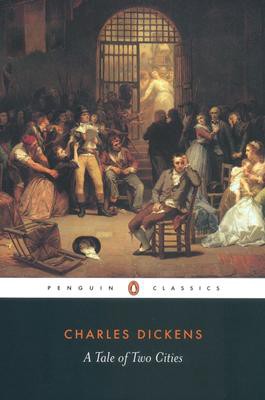
Charles Dickens presents more literal doppelgangers in A Tale of Two Cities, a novel roughly contemporary to The Double. British barrister, Sydney Carton, a dissolute drunk who has never achieved his potential, looks nearly identical to French aristocrat-turned-tutor Charles Darnay. At Darnay’s trial for treason, Carton realizes that their close visual similarity is the means by which Darnay’s lawyer can obtain Darnay’s acquittal, foreshadowing what happens at the conclusion. Carton as Darnay’s doppelganger is also what provides the moment at which we truly understand Carton as heroic and brave.

Lisa and Lottie, Erich Kästner

In Kästner’s 1949 German children’s classic Lisa and Lottie, identical twins separated at birth meet at summer camp, and are initially so horrified by the other’s existence that they can’t look at each other: “Lisa and Lottie did not dare look at each other the next morning when they woke up, or when they ran in their long white nightgowns to the washroom, or when they dressed at neighboring lockers… Only once did their eyes meet in a fleeting glance, and then, frightened, they looked quickly away again.” But in short order, Lottie and Lisa’s uneasy horror at meeting is replaced by delight and affinity. The girls’ twinness is the narrative engine of the novel, allowing them to switch places and try to reunite their estranged parents. Disney adapted Lottie and Lisa to make the 1961 film The Parent Trap, starring Hayley Mills as Susan and Sharon, but the movie amps up the pleasure of long-lost twins reuniting and shaves off the satirical edge of the original.

The God of Small Things, Arundhati Roy

Roy’s Booker Prize–winning novel The God of Small Things takes place in Aymenam, a village in the state of Kerala in India. Centering on fraternal twins Rahel and Estha, it starts with the funeral of their biracial cousin Sophie Mol who drowned one fateful night in 1969 while out on the river with them. At age seven, Rahel is dreamy and is perpetually reinventing the world with her original vision. Estha is silent. All the small things that led up to the drowning are revealed, including the molestation of one of the twins and their Syrian Christian mother’s affair with a Dalit. The novel culminates in a disturbing, but inevitable scene — the twins have grown up to be two lost halves of a whole.

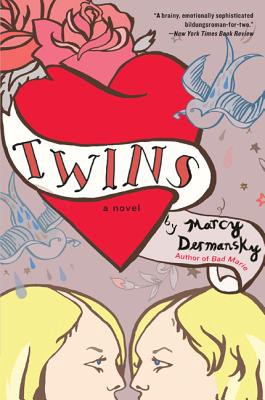
Twins, Marcy Dermansky

Marcy Dermansky’s 2005 debut novel Twins is about blonde teenage twins Sue and Chloe. At the start of adolescence, Sue is obsessive, intense and determined to have her twin all to herself, to stay inside the mutual adoration and “golden bubble of happiness” she experienced with her twin as a child. Sue convinces Chloe to get a tattoo of Sue’s name on her back, while she gets Chloe’s name tattooed on her own. Level-headed Chloe reluctantly agrees, but secretly thinks: “The funny thing was, the tattoos made us different…After we got our tattoos, we were never really and truly the same.” And in fact, the tattoos kick off a chain of events in which the twins find that they aren’t quite who they thought they were. In many ways the novel feels like a startling adult remix of Jessica and Elizabeth from the Sweet Valley High series. If Elizabeth too often showed us that good girls are boring, Jessica rather often did what she wanted, and would, by today’s feminist standards, be something of an antihero, rather than a villain. The same dichotomy is complicated in Twins.

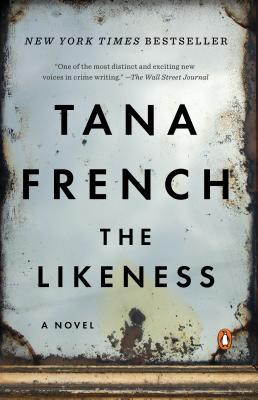
The Likeness, Tana French

In Tana French’s 2008 novel The Likeness, doubles are the source of a mystery. Detective Cassie Maddox is called to a murder scene, and when she looks down at the victim, she sees her double. Startlingly, the victim’s name is Lexie Madison, a handle Cassie had previously used as an undercover agent. Her boss has her pose as Lexie, a graduate student, to solve the crime. It’s a preposterous set-up, perhaps, but one that plays out in a rich, psychologically fascinating, and believable way if you’re willing to accept the terms of the game. Lexie’s roommates accept Cassie’s claim that she is Lexie and in her detective work, she infiltrates the group to such an extent that she could, conceivably, take over Lexie’s old life.

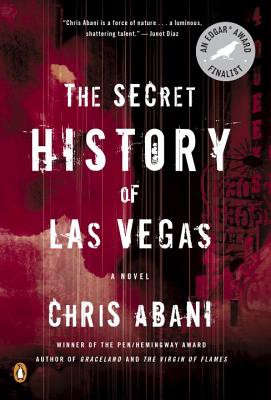
The Secret History of Las Vegas, Chris Abani

The Secret History of Las Vegas is a weird, riveting noir. It is partly the story of conjoined twins Fire and Water. Fire is talkative and snappy and much smaller than Water — he appears to be an appendage. Water is given to providing factoids instead of conversation. Most of their lives they’ve done an act called King Kongo in a sideshow just outside Vegas. When Detective Salazar finds them standing in a lake with a five-gallon drum of blood, they are brought in for questioning to determine whether they are responsible for the deaths of homeless men. They undergo a psychiatric evaluation with Dr. Sunil Singh who is haunted by memories of political violence and the loss of family and loved ones in South Africa. Sunil and the detective team up. The conjoined twins supply both the humor and sense of play, while also injecting the novel with archness and uncanniness, and ultimately subvert our expectations.