Chelsea Hodson on Why Being a Writer Is Such a Slog

Readers go in search of stories for more than mere escapism. In fact, for most of us, to get lost in a book is to be found. The ones that change our lives take measure of the complexities of life. Chelsea Hodson’s debut essay collection, Tonight I’m Someone Else is one of these books.

Purchase the novel

Her essays act like anchors for the themes — identity, sexuality, loss — we so often see reflected back at us. It’s this sort of honestly and deliberation that’s always drawn me to Hodson’s work — from as far back as 2014, when her chapbook, Pity the Animal was released by Future Tense books to her Tumblr performative project, “Inventory” — I found in Hodson’s writing as much mystery as there was meaning to being alive in this strange time.

Over email, Hodson and I chatted about the challenges of making it as a writer and how making art in the face of the future seems like its own quiet rebellion

Michael Seidlinger: Autofiction affords this sense of emotional integrity that can only exist after someone’s parsed the past; but I’m curious about how you view the often blurry boundaries between fact and fiction. What are your thoughts on reliability and memory?

Chelsea Hodson: I think nonfiction affords the sense of emotional integrity that you’re saying autofiction has. I’ve anchored my prose to the facts of my life, but beyond that I feel very free about exploring more surreal, imagined territory. In my essays, there’s a lot of this “what if” element — what if I were to do this, what if I looked like that. Even if those scenarios don’t play out, it still feels “true” to me. This dance between the real and imagined feels unavoidable — a memory is a memory of a memory and so on: All I can do is work with what I remember, and simultaneously trust it and react against it. How does one confront the worst parts of themselves? Perhaps by looking at their memories, and then looking away until they can stand to look again.

MS: Let’s talk about money, the idea of it, and the inevitable need for it: “Money can do that if you let it — if you close your eyes and enter its dream, the one where you are well dressed, fit, successful, in love with exactly the right person.” Do you think it’s possible to buy happiness?

CH: No, absolutely not. I think people take their misery with them no matter where they go or how rich they become. But I also never think to myself, “Ah, if only I was happy.” Life is very sad, and to able to make something beautiful in this sad life is enough of a reason to live. I don’t sit around longing for happiness, though I have sat around longing for enough money to live on while I finished my book. And then as soon as you get that money, you need more. It’s endless, which is why I wrote about it in the book — it seemed like a perfect parallel to desire itself.

How does one confront the worst parts of themselves? Perhaps by looking at their memories, and then looking away until they can stand to look again.

MS: What if we all collectively rejected the idea of paper currency and went back to, I don’t know, living under a rock? Could you imagine a modern or future society wherein value isn’t contingent on numbers, on the amassing of financial wealth?

CH: I stand by my idea I had when I was very young: everything in the world should cost one penny. That just… seems right to me. No, I don’t know, I absolutely cannot imagine a future that doesn’t depend on money, because money determines who gets power, and power determines the future. Making art in the face of that future seems like its own quiet rebellion. Every job I’ve had eventually gave me the opportunity to be promoted, but I’d usually quit shortly after that. I just never wanted a life that would put money before my writing. I remember I told an accountant that once and she laughed hysterically.

MS: In “Pity the Animal,” you disclose quite a bit from your struggling artist days. And I particularly love this sentence from “Simple Woman”: “I was miserable when I was too poor to go to the doctor, too poor to buy more than one meal a day. But, at the same time, everything I bought was accompanied by a new promise, a new possible version of myself.” There is indeed a sort of freedom, isn’t there? Did you find it easier to write, easier to center yourself creatively, more able to make use of the time you had since it wasn’t “owned” by the job(s) that often claim our best hours of the day? If so, do you miss it?

CH: Well, my dream was to magically have enough money to live on and have all the time in the world to write. For several years, I was fitting in my writing wherever and however I could around four part-time jobs, which was sloppy and messy, but somehow I did it. I don’t miss those days, because they were so lonely for me, but I did okay. I have some people now ask me how I wrote my book, hoping for some neat equation, like two hours a day multiplied by five days a week for four years. But the truth is I was scrappy and hungry and, though my writing was bad for a long time, I was actually writing. It seemed like a lot of people I knew talked about making things more than they actually made things, and I was determined to not be like that.

MS: Really, how does any artist survive in NYC, in LA, anywhere?

CH: Endurance. Quitting art is easy, so most people do that. Finishing anything is agony. But if you can train yourself to accept the agony, eventually you finish the thing you set out to do.

MS: How does your relationship with your work change over the course of its creation?

CH: Distance is really important for me — if I don’t have time to put it away, I just have to do something to feel further away from it. Typically, that becomes printing the essay out and manually cutting it up. That allows it to feel tangible to me, and I can look at it all at once to see its shape — something I can’t do with something that lives on my hard drive. My relationship with my works-in-progress usually goes like this over the course of writing an essay: I love it → I don’t know what to do with it → I hate it → I’m a failure → Oh, actually I came up with the solution → This solution is taking longer than I thought it would → OK, I think it’s done.

Quitting art is easy, so most people do that. Finishing anything is agony. But if you can train yourself to accept the agony, eventually you finish the thing you set out to do.

MS: In the essay, “The New Love,” you employ a compelling refrain, “I went to _____ and didn’t tell anyone,” to punctuate the liminal and subliminal spaces navigated throughout the essay. It recalls the liberating feeling of being truly independent, feeling like you could go anywhere, do anything, be anything, with no one searching, ever the wiser. Given the impending book tour, the influx of events impending, if you could go anywhere without telling anyone, right now, completely disconnected from reality, where would it be? What would be a theoretical 1–2 paragraph addendum to the essay?

CH: I was always annoyed by the cliche of the writer alone in the cabin in the woods, but I lived that exact cliche at MacDowell Colony last December, and I loved it. So, I would like the addendum to be, “I went to the haunted cabin in Peterborough and I didn’t tell anyone.”

MS: “I’m trying to identify what drew me to the people I’ve loved. I seem to thrive in a state of in-between, of wanting to love all the way but only receiving a portion of what I want.” Do you feel geography informs desire? Might the in-betweeness be something… reassuring, as though if things went sour you could easily disappear into another town, city, life, with minimal effort?

CH: I’ve never thought about geography itself informing desire, but yes — longing requires distance, whether that’s emotionally or physically. Something is out of reach, and that’s why you want it. I address this “in-between” feeling in the essay, “Near Miss,” when I elaborate on the beauty of waiting. In between one thing and another thing, the ending is still unknown, so that means anything can still happen.

I absolutely cannot imagine a future that doesn’t depend on money, because money determines who gets power, and power determines the future. Making art in the face of that future seems like its own quiet rebellion.

MS: You have experience with performance art and the exploration of the act, experience, and self: I’m curious to know a little bit about what led you to that corner of the arts. Do you have any specific exhibits that resonated and informed your own work?

CH: Encountering Marina Abramovic’s “The Artist is Present” at MoMA really affected me, which is why I wrote it in “Pity the Animal.” I began studying everything she had ever done, and started thinking about the possibilities of the female body as an art object. I sent my chapbook, “Pity the Animal,” to the Marina Abramovic Institute, and shortly after I was invited to collaborate with them, and later, to work on Marina’s exhibition, “Generator.” The endurance training I did for that exhibition really changed me, I think. It helped me understand performance in a new way, and it also made me interested in the limits of my own body. This led me to do more performance work of my own, but also led me to write about the body in a new way than I had before — suddenly I understood that everything I needed was already within me.

MS: In 2013, spanning 657 entries, you cataloged every item you owned alongside a picture of yourself with the item and a poem under the title, “Inventory,” on your Tumblr. It culminated with a 7 and a half hour marathon reading of every entry, without breaks, recorded and streamed live. It’s a daring piece of performance art that spans the digital and physical. Care to talk a little about Inventory, specifically how the experience affected your writing and creative interests?

CH: It began as a simple writing exercise for myself. I had been studying performance art and thinking about the body, so I wanted something that would combine the worlds of the physical, object, and digital. I decided to put myself in each photo with the object simply because I thought it would make the photos more interesting — who would want to look at an iPhone photo of an object on a table? Putting that human element into a photo always improves it. And I thought, if I put it online, then there’s at least the idea of an audience, which was motivating to me, even though I only had about ten followers when I began. The project began further informing my relationship with objects, and contemplating the ways in which the body can become an object, which helped me to complete “Pity the Animal.” By the end of the project, I had nearly twenty thousand followers. I felt very sad when Inventory was over — it became like a friend I talked to each day.

MS: You have worked for Marina Abramovic, for her exhibition, “Generator”; not to give anything away from what is disclosed in the book, what’s the first and most vivid memory from being part of the exhibition? What was it like, watching blindfolded people navigating a foreign space? How quiet was it in that room?

CH: It was extremely quiet — the only sounds were people bumping into the wall, or occasionally saying, “Oh!” in surprise. I loved the job, and often took on extra shifts when they were available. I had a strange relationship to time in the exhibition — in the beginning of the day, it would feel very slow, and then in an instant it would seem as if six hours had gone by. I hate how loud New York is, so I felt grateful to be in a place so quiet. You could feel the energy changing, which was exactly set out to do.

MS: Do you have any other desires or ideas to dabble in the performance art space again?

CH: I would like to someday. Finishing this book has taken all of my energy, so I feel very focused on that, but I can see performance becoming a part of my life again in the future.

MS: Last question: You’re a big supporter of indie authors and the community at large. You’re also a great lit citizen and have helped pave the way for others. Yeah, this is the shout-out prompt. Who showed you the way, made you realize we’re all struggling to get the words down and are less alone than we think?

CH: Sarah Manguso was my mentor for several years, and she changed everything for me. I never knew any working artists until I moved to New York, so the life of an artist was a mystery to me. She helped show me how I might make a life for myself, and also how I might start writing essays instead of poems. After working with her, I continued to seek out classes and workshops that might continue to challenge my writing, and I think that’s been very important for me. I don’t see workshops as a way of getting “better,” necessarily, but a space in which a writer can interrogate their own work and intentions.

8 Books About the Eerie, Awesome Connection Between Identical Twins

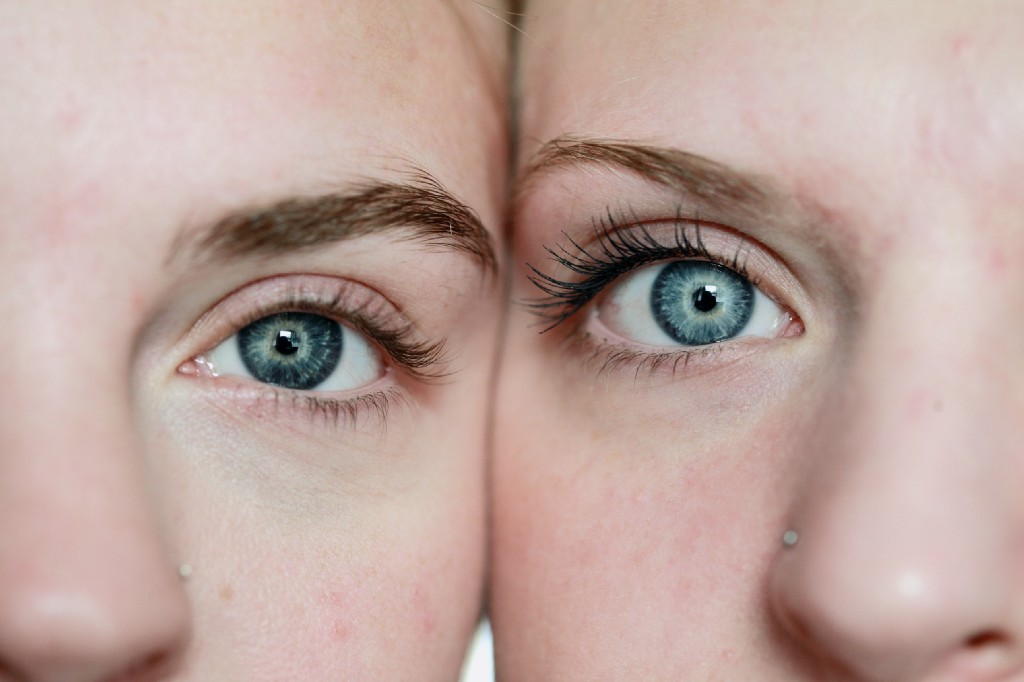
M y toddler twin sons seem to believe they might be the same person or copies of each other. For the most part, they only use one of their names interchangeably; it has taken some doing to convince one twin to recognize that the discarded name actually belongs to him and he should reclaim it. For months during infancy, when one twin looked in the mirror, I am fairly certain he believed it was his twin he was seeing and not a reflection of himself. He took great delight in the puzzle of putting his hand on the mirror, and watching his “twin” copy him from the world on the other side. Observing their constant companionship, their hugging and squabbling and tormenting of each other — all in stark contrast to memories of my own childhood — made me think about all of the literature featuring twins I’ve read over the years.

As a visual medium, films can be better equipped than novels to make something marvelous out of the mere image of twins — the playfulness, the uncanniness, and the potential dangerousness of doubles. You only have to watch Alfred Hitchcock’s dread-infused Vertigo or Krystof Kieslowski’s poetic The Double Life of Veronique or Stanley Kubrick’s frightening The Shining to see the immense power of a doubled image to convey meaning. But fiction is powerful because it can reveal what’s inside each twin’s mind, rather than create meaning solely from appearance. The following eight works of literature suggest that the paths we take in our lives are not inevitable, not fated, not wholly dictated by how we appear as an image from the outside, but more often the sum of the individual choices with which we all struggle and how the world reacts to them. These works serve as excellent companions, reminding us we always have something in common with others, whether it is our appearance or our emotions, and that we are not alone.

Twelfth Night, William Shakespeare

Twelfth Night isn’t the first of Shakespeare’s plays to use twins and doubles. But it’s better than The Comedy of Errors, which features two sets of twins. It’s deeper, less wacky, and shot through with magic and melancholy. Twins supply both plot and atmosphere: Viola and Sebastian are fraternal twins who are separated during a shipwreck. Viola washes up on the shore of Illyria and disguises herself as Cesario, a boy servant to Duke Orsino. In spite of being in love with the duke herself, Viola/Cesario must woo the duke’s love interest Olivia. Viola’s a little too good at courting and eventually Olivia falls in love with Cesario. Hijinks ensue partly because of doubling, but also because of the gender play made possible by fraternal twins who look nearly identical: men and women as dualist constructs rather than essential forms.

The Double, Fyodor Dostoevsky

The Double is Dostoevsky’s 1846 novella about a government clerk Yakov Petrovich Golyadkin, who is slowly going insane. He believes that his double Golyadkin Jr., also a clerk, has assumed his identity. As Golyadkin Sr. descends into madness it becomes clear that his double is far more extraverted and charming and capable. He believes that his double is going to ruin him. A strong thread of absurdity runs through The Double. Seeing a double — an alternate life and a more socially successful way of being for one’s physical body — becomes a symptom of madness.

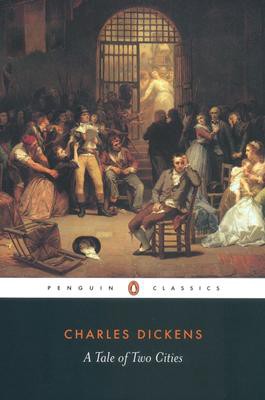
A Tale of Two Cities, Charles Dickens

Charles Dickens presents more literal doppelgangers in A Tale of Two Cities, a novel roughly contemporary to The Double. British barrister, Sydney Carton, a dissolute drunk who has never achieved his potential, looks nearly identical to French aristocrat-turned-tutor Charles Darnay. At Darnay’s trial for treason, Carton realizes that their close visual similarity is the means by which Darnay’s lawyer can obtain Darnay’s acquittal, foreshadowing what happens at the conclusion. Carton as Darnay’s doppelganger is also what provides the moment at which we truly understand Carton as heroic and brave.

Lisa and Lottie, Erich Kästner

In Kästner’s 1949 German children’s classic Lisa and Lottie, identical twins separated at birth meet at summer camp, and are initially so horrified by the other’s existence that they can’t look at each other: “Lisa and Lottie did not dare look at each other the next morning when they woke up, or when they ran in their long white nightgowns to the washroom, or when they dressed at neighboring lockers… Only once did their eyes meet in a fleeting glance, and then, frightened, they looked quickly away again.” But in short order, Lottie and Lisa’s uneasy horror at meeting is replaced by delight and affinity. The girls’ twinness is the narrative engine of the novel, allowing them to switch places and try to reunite their estranged parents. Disney adapted Lottie and Lisa to make the 1961 film The Parent Trap, starring Hayley Mills as Susan and Sharon, but the movie amps up the pleasure of long-lost twins reuniting and shaves off the satirical edge of the original.

The God of Small Things, Arundhati Roy

Roy’s Booker Prize–winning novel The God of Small Things takes place in Aymenam, a village in the state of Kerala in India. Centering on fraternal twins Rahel and Estha, it starts with the funeral of their biracial cousin Sophie Mol who drowned one fateful night in 1969 while out on the river with them. At age seven, Rahel is dreamy and is perpetually reinventing the world with her original vision. Estha is silent. All the small things that led up to the drowning are revealed, including the molestation of one of the twins and their Syrian Christian mother’s affair with a Dalit. The novel culminates in a disturbing, but inevitable scene — the twins have grown up to be two lost halves of a whole.

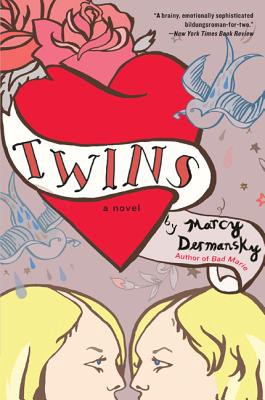
Twins, Marcy Dermansky

Marcy Dermansky’s 2005 debut novel Twins is about blonde teenage twins Sue and Chloe. At the start of adolescence, Sue is obsessive, intense and determined to have her twin all to herself, to stay inside the mutual adoration and “golden bubble of happiness” she experienced with her twin as a child. Sue convinces Chloe to get a tattoo of Sue’s name on her back, while she gets Chloe’s name tattooed on her own. Level-headed Chloe reluctantly agrees, but secretly thinks: “The funny thing was, the tattoos made us different…After we got our tattoos, we were never really and truly the same.” And in fact, the tattoos kick off a chain of events in which the twins find that they aren’t quite who they thought they were. In many ways the novel feels like a startling adult remix of Jessica and Elizabeth from the Sweet Valley High series. If Elizabeth too often showed us that good girls are boring, Jessica rather often did what she wanted, and would, by today’s feminist standards, be something of an antihero, rather than a villain. The same dichotomy is complicated in Twins.

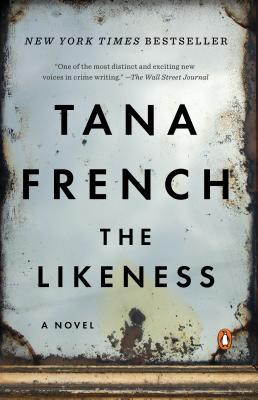
The Likeness, Tana French

In Tana French’s 2008 novel The Likeness, doubles are the source of a mystery. Detective Cassie Maddox is called to a murder scene, and when she looks down at the victim, she sees her double. Startlingly, the victim’s name is Lexie Madison, a handle Cassie had previously used as an undercover agent. Her boss has her pose as Lexie, a graduate student, to solve the crime. It’s a preposterous set-up, perhaps, but one that plays out in a rich, psychologically fascinating, and believable way if you’re willing to accept the terms of the game. Lexie’s roommates accept Cassie’s claim that she is Lexie and in her detective work, she infiltrates the group to such an extent that she could, conceivably, take over Lexie’s old life.

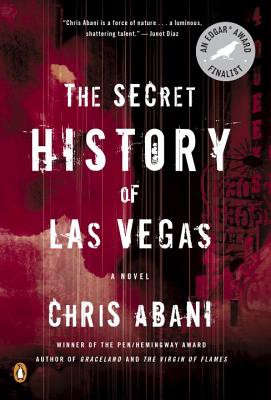
The Secret History of Las Vegas, Chris Abani

The Secret History of Las Vegas is a weird, riveting noir. It is partly the story of conjoined twins Fire and Water. Fire is talkative and snappy and much smaller than Water — he appears to be an appendage. Water is given to providing factoids instead of conversation. Most of their lives they’ve done an act called King Kongo in a sideshow just outside Vegas. When Detective Salazar finds them standing in a lake with a five-gallon drum of blood, they are brought in for questioning to determine whether they are responsible for the deaths of homeless men. They undergo a psychiatric evaluation with Dr. Sunil Singh who is haunted by memories of political violence and the loss of family and loved ones in South Africa. Sunil and the detective team up. The conjoined twins supply both the humor and sense of play, while also injecting the novel with archness and uncanniness, and ultimately subvert our expectations.

I Was Wrong About Junot Díaz, But That Doesn’t Change How He Inspired Me

Novel Gazing is Electric Literature’s personal essay series about the way reading shapes our lives. This time, we asked: What’s a book you misunderstood?

Two months before the #MeToo movement circled in on Junot Díaz’s mistreatment of women writers, I met him at a book store in Porter Square in Somerville. I told him, through my own stuttering, that I’m a graduate student, and a writer, and that his books encouraged me to imagine myself and my family in fiction. That because of his books, I have pursued a more ambitious and risky artistic career. Maybe because I was with my boyfriend, or perhaps because the store was crowded, or even because he had grown after all, he was nothing but kind and encouraging. After his talk, during which he was promoting his new children’s book, I sat on the train with my boyfriend and read aloud to him from the collection, trying to inject all of the flavor of the rich language of the text. On the train, several people put their phones down and listened too, so I wasn’t too careful to hide the verse, to cover up the swears, to be unapologetically loud.

Now, in the wake of the allegations against Diaz, I’ve felt compelled to revisit the words of the works I loved so much.

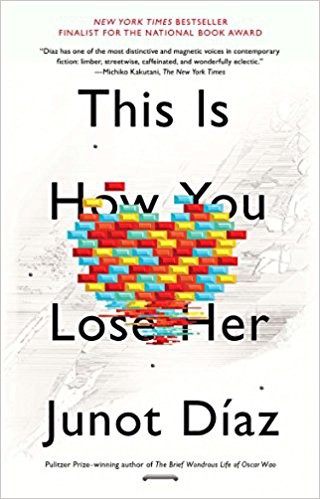
Perhaps if my favorite college English professor hadn’t suggested I read Junot Díaz’s work years prior, when I argued the canon was too white, I would have fallen in love with Edwidge Danticat or Isabel Allende first. But I read Drown in one day of busy travel, starting on the floor of Boston Logan airport by a tired outlet, then on the plane next to a snoring man, then in a taxi, and I finished it in my hotel room when I stayed up much later than I had intended before a conference. After my panel was over, I bought The Brief and Wondrous Life of Oscar Wao and read it at the expense of my spring semester GPA. It wasn’t long before I picked up This is How You Lose Her and fell in love with Junot Díaz’s writing.

Upon hearing the allegations, I picked up my freshly signed copy of This is How You Lose Her (he kept it simple, For Brittany Paz) and flipped through its worn pages. Had I truly misunderstood its message? When I first read it, I thought it was a meditation on Black and Caribbean women, on Afro-Latinas, and on the difficulties they faced because of the men in and around their lives. Tracing over the lines of graphite I had carefully marked under my favorite passages, I realized the book was never for women. Take for example the very first story, “The Sun, the Moon, and the Stars.” In it, Yunior, Junot Díaz’s protagonist, takes his girlfriend to the Dominican Republic on vacation in the hopes of delaying their breakup after their years of cheating. Reading it now, years later, and with more experience with both men and literature, all I see is red flags. After doing something nice for Magda, Yunior explains to the reader, “For this I deserve something nice. Something physical,” as if his kindness itself deserved a sexual reward. In the same story, he also writes about how beautiful Magda is, how red lipstick was made for Latina women, and how her being comfortable in her bathing suit made him insecure. He says that men wanted to marry Magda, and that people hid their wallets from him. The anti-blackness coupled with misogyny is palpable throughout this description; his insecurity is tied to his black manhood in contrast to Magda, the fetishized beauty.

Tracing over the lines of graphite I had carefully marked under my favorite passages, I realized the book was never for women.

However, at the same time, I remember the passages I loved and that informed my writing. At one moment in this story, Magda is feeling conflicted about her relationship with Yunior, but she is on vacation with him already, so I imagine her feeling trapped, and she looks out the window in silence. Yunior explains, “She seemed tired and watched the world outside like maybe she was expecting it to speak to her.”

If I got a dollar for every time I sat in disappointed silence around men who I wished would do better, I could afford my rent in Boston. Truthfully, Black women, Caribbean women, and Latina women are often left to deal with racism like the men in their lives in addition to the sexism directed at them from the men in their lives. When you don’t know if the love you have is enough to overcome real obstacles and struggles, when it seems like the guy will never change no matter how happy you know you can be, and you’re trapped in a situation where you can’t have reprieve for a definite amount of time, that’s exactly what you’re forced to do. She waited it out. I’ve done this, I’ve sat waiting for anything, a sign, a message from beyond, for a man to finally cross the line to physical violence, for the courage to end it. I used to want a sign to tell me that it would be okay if I ended it, that my life would go on and it would go on and I’d still be happy. That sentence, more than any other in literature, has stuck with me through the years as being simple and true.

At the end of that story, Yunior explains that he is trying to tell you the story of the fool he was. He sets the collection of stories up for you to feel sympathy for him for his inability to treat the women he loves the way they deserve. Now, after Díaz’s essay for The New Yorker, we are to understand that sexual abuse prevents Yunior from processing his feelings in healthy ways. However, that wasn’t the understanding I had when I read these books, and I still loved them.

Despite what has happened, and how it has complicated my hero worship of Díaz as an author, “The Cheater’s Guide to Love” is still my favorite short story. In it, Yunior explains, over the course of years, how he managed to overcome the loss of his love. He explains the long, arduous, and twisted road to healing, through the use of second person. It opens with “Your girl catches you cheating. (Well, actually, she’s your fiancée, but hey, in a bit it so won’t matter.” Through the use of second person, you are forced into Yunior’s feelings, to sympathize with his point of view, and to feel the pain he feels (physically, emotionally) while trying to move on from what he wants you to understand was his worst mistake.

Now, reading it, I realize it is a long rumination on the perspective of the abuser. That even within this story, Yunior is found out by his writing, not through clear communication with his fiancée. You as the reader are being asked to read and empathize with the abuser throughout the collection’s last story, with little thought to the women he hurt.

You are being asked to read and empathize with the abuser throughout the collection’s last story.

I recognize that my feelings towards the story are warped by my own projections onto it. I spent years regretting my own relationship with a man, one who left me damaged, broken, and unsure of myself. That healing process was also tedious, and now I find it darkly funny that this is where I found solace: in the ruminations of an abusive character’s pain. That last story, in which you would expect to leave the collection without a doubt that Yunior’s macho perspective is wrong, also features a subplot in which his best friend discovers a woman in his life lied about the paternity of her son. Because, the implicit message is, women are the ones who can’t be trusted.

The story, and the collection, ends with Yunior acknowledging his ex was right to leave, before deciding that he should write a book about the experience. That it would make a good story. That the pain of the women in his life could benefit his career. It’s beyond metafiction. In the story and in life, the writer profits off of the damage he has done.

Here’s what I’m trying to say: This is How You Lose Her was the most formative book to my own writing career. I am trying to say that the worlds Díaz created allowed me to see myself in the predominately white literary landscape, that the characters on the pages looked like people in my own life, that the stories are deeply misogynist, and that they still deeply matter to me. The book that I thought was a love letter to women and girls like me is more of a rumination on male loss of women. Ultimately, Yunior is sorrier that he misses Magda than that he hurt her. But still, the book matters to me. Regardless of how I feel about it now, it encouraged me to seriously pursue writing, and to value the ways my family tells the story of our migration to the United States. Poet Melissa Lozada-Oliva’s collection Peluda features a poem, “Lip Stain Must Ache,” that explores her relationship to This is How You Lose Her. In it, she says, “It doesn’t matter if I can remember the passage correctly, because I remember the way it made me feel, which is seen, which is defined, which is loved.” While the poem was lovely before, it means so much to me now, in that it reminds me that even if book was written for me, it did a lot for my writing. Eventually, because of those works in part, maybe my own books will be loved by women and girls like me.

The book that I thought was a love letter to women and girls like me is more of a rumination on male loss of women.

Despite the stories not being for me, I still hope one day Junot Díaz reads my stories or poems and loves them. In the weeks since the allegations, many have been quick to discard his work, or to rush to his defense (“But it was because he was abused”). I’m not offering any easy answers or quick solutions. I’m angry and hurt too. It’s just also not true that I can pretend this book didn’t change my life. I’m just here, sifting through the pages of my favorite stories, hoping that he really has changed and grown, that he’s really sorry. That the women he has hurt, and that Yunior has hurt, have found some kind of healing.

Why Is America Obsessed with Dead Girls?

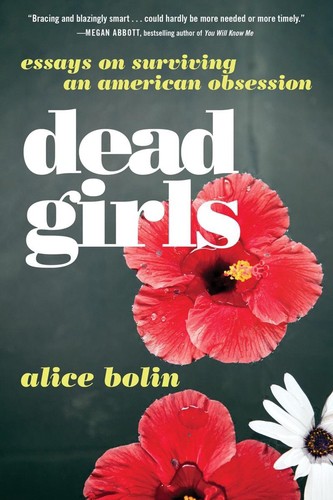
Dead Girls explores America’s obsession with women’s bodies as bright young corpses, from TV shows about fictional murdered women (like Twin Peaks, True Detective, or Veronica Mars) to news cycles about real murdered women. But these stories are rarely about women: “There can be no redemption for the Dead Girl, but it is available to the person solving her murder,” Bolin writes in her opening essay, “Toward a Theory of the Dead Girl Show.” “Just as for the murderers, for the detectives…the victim’s body is a neutral arena on which to work out male problems.”

Purchase the book

Bolin’s essays enfold a range of American obsessions: mass shootings, reality TV, dehumanization, LA noir, and witchcraft — and the ways women’s bodies inform all of the above.

One week before meeting in person at a conference, we negotiated the time difference between Memphis and Brooklyn to talk about the consumption of fictional Dead Girls, the dehumanizing of Britney Spears, and the ways women survive.


Deirdre Coyle: In Dead Girls, you say you find yourself wanting to apologize for the book’s title because it “evince[s] a lurid and cutesy complicity in the very brutality it critiques.” I can’t imagine it being called anything else. What made you decide to fully lean into that luridness?

Alice Bolin: I knew it was going to be called Dead Girls from the instant I knew that I was writing the book. It definitely did have to do with marketing; in my mind I was like, “people will buy a book that’s called that.” It’s a good title. I didn’t really think beyond that. But as I was finishing the book, I became more and more uncomfortable with the idea of selling it on Dead Girls, because I am critiquing all these other people who are selling their thing that is really is not about women or the struggle of girls at all. Quite often, Dead Girl stories are about men and their problems. But the dead girl is the selling point, or the way in. And I was like, well, am I doing that same thing? It gets to my overall discomfort with whether it’s possible to write a subversive Dead Girls story, or whether there’s a place for those stories at all. So I’m thinking, am I part of the problem, too?

DC: Where did you start in the collection? What was the first essay?

AB: Really, the beginning of the essay collection was when I moved to L.A. and started writing a lot about the noir, and about my experience moving to L.A., and literary L.A. That was where it started coming together because I kept coming back to these crime stories that fascinated me. Feeling lonely and bored and kind of morose, I was drawn to stuff that was really morbid: watching true crime shows and Twin Peaks and going to the graveyard and sulking around. My personal life and my more creative interests were dovetailing at that point.

Quite often, Dead Girl stories are about men and their problems. But the dead girl is the selling point, or the way in.

DC: Was this loneliness related to your renewed interest in the noir?

AB: Yeah, for sure. The famous L.A. noir In a Lonely Place by Dorothy B. Hughes typifies for me that sort of Los Ange-lonely thing. Of course, it’s a huge city, but the kind of loneliness you feel there is a bit perverse, because it’s so beautiful, and the weather is perfect. But there is a lot of dread inherent in the landscape and in all of these natural disasters, or the sort of man-made disasters of urban sprawl and drought. That personal loneliness that I felt I tied to this broader loneliness of the city.

DC: You write that Dead Girls is a “book about [your] fatal flaw: that [you] insist on learning everything from books,” which is very relatable, and probably relatable to most people reading Electric Lit. This seems to apply to your relationship to Dead Girl stories as well as your relationship to Los Angeles (you write about reading Khadijah Queen’s I’m So Fine and Joan Didion’s Play It As It Lays). Would you say that your expectations have been dramatically changed by literature in all aspects of your life?

AB: Absolutely. And not just literature. I grew up in Idaho, and in northern Idaho, which is the even more remote and isolated part of one of the most remote and isolated states in the U.S. I was always reading magazines, watching TV a million hours a day, because I was hungry for this world outside what I could see and experience, this world that felt more valid to me than the world around me. So this idea that I could learn everything from reading, or that I could learn about “real life” from reading, comes a lot from that. It’s not a bad thing, and I think that clearly has been my strength — now I’m a cultural critic. A lot of that comes from this voracious interest in the world just beyond my reach. But at the same time, I do think it is a flaw in a certain way, believing what you read more than what you see, more than what you experience, and subordinating my own experiences, or the experiences of the people around me, to the experiences people I consider more important or smart, like Joan Didion. That is how you start to buy into these dumbass myths and romanticized notions.

DC: In your essay “Black Hole,” you talk about two mass shootings in your hometown of Moscow, Idaho. It’s interesting how you can grow up in a place and feel that it’s not “real life,” and it’s boring, but — and you can correct me if you don’t feel this way — when something really horrible happens, it doesn’t make that place feel more like the “real life” that you aspired to.

AB: Right! And I think there’s always been freaky violence in Moscow for a town that’s so small. I mean, it’s a town of 25,000 people. But growing up, there were always murders that happened there, there were always things that you would read about in the paper. I didn’t realize at the time that that level of violence was beyond what would be normal for a town that small. There are lots of reasons why; it does have to do with gun control, it does have to do with it being a little bit of a hub because the University of Idaho is there, so there are lots of people coming in and out, and cultural things, and political things. It affects your self-esteem in a weird way, to be attached to a place where freaky, violent things happen. Where you’re like, what does this say about me? Why did this happen where I grew up? Once when I was living in LA, there were two murders at the laundromat that was thirty feet from my house. And in this very selfish, self-absorbed way, it made me feel terrible. It made me question everything that I was doing, because that kind of violence really taints your experience. I think it has a lot to do with this ambient dread that we experience in America today, with the level of random violence that can happen at any moment. It affects the way we think about ourselves.

DC: Do you think that being around that more than the average person in a small town channeled your later interest in consuming this type of media as well?

AB: Absolutely. I write about this in the book, but there’s a sense in popular culture that the Northwest is serial killer breeding ground. That’s where Ruby Ridge happened; there’s all of these crime stories, even Twin Peaks. There’s this moody, creepy sense that that’s what the Northwest is. I was very aware of that growing up, and was sort of like, “Oh, yeah, sure. There are serial killers everywhere.” It totally channeled my interest at a really young age in horrible crimes, because they were happening very close to home.

DC: There’s a passage in the essay “A Teen Witch’s Guide to Staying Alive” that I found particularly relatable: “I was afraid to make my darkness real by writing it; reading my own dark thoughts was embarrassing and rife with talismanic power. Revising my diary was a ritual to carve those feelings from myself, protecting my inner life even in a space that was supposed to be secret.” Did you ever feel this way writing Dead Girls?

AB: Definitely. When I was writing, I was very conscious of the witchy power of writing, or the sort of magical power or words and letters. You know, a spell is so interesting to us because it’s the words that make something happen. They aren’t just empty; they’re an action in themselves. I don’t know to what extent it’s just human, but in our culture, we do think of words as having this deep power. There’s a level where it feels like when you say something you make it real. And when you write something in a book, it feels more true than if you think it in your head. So I was thinking about that vulnerability, and the scary power that come with writing.

DC: Writing is a socially acceptable power. If you write something down, it changes the fabric of reality, even if it’s just your own reality.

AB: And I think when I first started writing, when I first started writing poetry, I would write poems about boys who didn’t even care about me or know who I was. But in the poem, we could be together, or there could be something going on between us. That sounds so psycho, but for me that truly was something that made me love writing as a college student. I felt empowered by that, that I could change my reality by writing it. And nobody could say anything about it, and nobody could do anything about it. Clearly I’m more interested now in writing things that are truthful, or discovering the truth, instead of slanting the truth or making a truth that I want to be real. But at the same time, I do still feel like you create a persona, or you craft a self, and that is empowering, being able to revise or revisit a past self.

DC: Throughout these essays, your concept of Dead Girls expands to encompass not only the fictional Dead Girls of shows like Twin Peaks or True Detective, but also living celebrities like Britney Spears and reality TV stars like Alexis Neiers. It’s obviously not a direct comparison, but how do you think public consumption of these celebrities relates to our consumption of fictional televised dead girls?

I think about Britney Spears as a ‘living Dead Girl’, somebody who was so coveted by the culture that essentially she became no longer human.

AB: The connection is metaphorical in some ways. I think about Britney Spears especially as sort of a “living Dead Girl.” Especially at the time of what we think of as her “breakdown,” there was truly this hunger for her, to know what she was doing, to talk and gossip about her, to follow her and document everything she did. It really was a dehumanizing process, basically. Somebody who was so coveted by the culture that essentially she became no longer human.

But the subtitle [of my book] is “Essays on Surviving an American Obsession.” I’m also really interested in stories of survival, and the ways that women outrun the Dead Girl, or the ways that women are actually able to become women, and no longer girls. Some of those stories, like about Britney Spears, or Alexis Neiers, or even Lindsay Lohan, are compelling to me because these women, despite all odds, didn’t die, didn’t succumb, and did find a way to survive. Even if it’s not how we would have wanted them to survive, or even if it’s not the story that we would have chosen for them. They did make it through.

DC: That’s one way that you make the book about women. There’s a line in your introduction, “I have tried to make something about women from stories that were always and only about men.”

AB: Yeah, I think so, too. And often, those stories that we make about women are not going to be completely satisfying, or they’re not going to fulfill our moral or ethical ideas about the ways that women should live their lives. But the fact of our culture, and the double-binds that women are put in, mean that survival often does take those dissatisfying paths.

DC: You also say in the witchcraft essay that “It’s clear that if both good and bad witches are going to find ways to survive, their methods will not always be ones we approve of,” which is a similar idea.

AB: That’s one thing that I’m thinking about in [the essay] “Accomplices” too. Like Patti Hearst, white women often survive because of the ways that we are willing to mercilessly cut off other people who we could be helping. So I want to think about the ways that women survive, and do that without judgment, while at the same time trying to encourage people to think beyond survival, to a more fair society.

White women often survive because of the ways that we are willing to mercilessly cut off other people who we could be helping.

DC: There were a number of meta moments in the text, where you step back and address your readers. To me, the most striking was in the essay “Just Us Girls,” where you write that the teenage girl characters in the movie Ginger Snaps, “in their transgressions and their transformations, are still participating in a narrative authored and perpetuated by a society that desires for girls to be wild, perverse, and ‘in need of the civilizing hand of man.’” And then — I gasped when I read the next line — “I am attempting to avoid these traps sprung in the narratives of female experience, like I’m winding my way through some sort of feminist labyrinth — how do you think I’m doing?” There were a number of moments like that in the text that I found really striking, and I wondered if that happened organically for you, when you were writing?

AB: I can’t remember exactly in that essay. That may have been a result of some back-and-forth with my editor, where I just decided to address the elephant in the room, which was, ‘I’m talking about how difficult it is to write it is to write a feminist story, and how difficult these constraints are of what is feminism and what are we allowed to do and not allowed to do.’ And so I was like, well, maybe I’ll just explain what I’m actually trying to do and let the reader decide. Because I’m interested in those negotiations that we have to make to make a feminist text. And to what extent I want to play with being transgressive, or push the envelope, or question received political notions, while also being ethical and appropriate and not just recreating stories that are satisfying but maybe, in the end, not empowering.

I’m speaking in a lot of abstractions, but in Ginger Snaps, two sisters have this suicide pact because they don’t want to grow up and become a part of this really gross, sexist society. But one of the sisters sees that if they kill themselves when they’re sixteen, they’re playing into this culture that wants them to be dead girls anyway. They have no option. It’s an impossible situation.

Writing this book, I came up against that problem many times, of having no way to be a “good feminist,” in Roxane Gay-speak. So I left it up to the audience to decide. It’s something I learned from poetry, too. I had a teacher in grad school who said, ‘Sometimes you should just write in the poem what your hope for the poem is.’ I’ve always found that in essays it works, too. Write what you’re actually attempting to do, and let your audience decide whether that’s what you’re doing or not.

DC: This is a selfish question, because it’s something I want the answer to. Maybe I’m just looking for recommendations. Do you still consume, or enjoy consuming, the conventional Dead Girl story?

AB: Not as much as I used to. My tolerance for violence has actually gone so far down, through writing the book. Even watching Killing Eve, which I think is great, I was like, “Ugh, I can’t do this.” At times I would have to turn it off because it’s so violent and horrifying. Analyzing my connection to some of those stories made me enjoy them much less.

I talk a lot in the book about our addiction to narrative, and that if something is a good story, we implicitly think that it’s true, or that its values are valid. And I think that’s totally wrong. Often a good story is feeding us really bad politics. It’s like a spoonful of sugar that helps the politics go down. That’s why I just watch YouTube videos of people putting on makeup. I can’t even deal with these stories anymore. I overanalyze them to death.

How Queer Writers Are Creating Queer Genres

When I read Maggie Nelson’s memoir-in-fragments, Bluets, for the first time, I felt like someone had taken my singular experience of heartbreak and exposed it to the world — that is, until I realized it was written about a man.

The way the book is constructed, it feels as if the reader has control over who the “you” is, and I felt deceived when I came to understand that the departed lover was male — that, in other words, it was about a heterosexual relationship. But I wasn’t the only queer reader to understand Bluets as queer — not the story, perhaps, but the book itself. Bluets quickly rose into a prominent position as a queer cult classic despite its heterosexual gaze, perhaps because of its fragmented form. For queer readers, the book’s disjointed structure and indefinable genre were immediately recognizable as reflections of our own experience.

For queer readers, the book’s disjointed structure and indefinable genre were immediately recognizable as reflections of our own experience.

There has been a recent trend in literary fiction and memoir toward fragmented structure. In some cases, this means chunks of text separated by blank space, which visibly split the story; in others, the fragmentation is approached in more subtle ways — for example, trisecting a narrative into three parts, leaving gaps in time and perspective, fracturing the identity of a character by only referring to them by their first initial. This could simply be a shift away from the Novel in its traditional sense, but there is also something inherently queer — both strange or unexpected and homosexual — about a form that subverts the established narrative tradition.

When Brian Blanchfield’s tightly assembled collection of essays, Proxies, came out in 2015, he cited Maggie Nelson as an inspiration for his writing. Like Nelson, Blanchfield began writing as a poet and followed his book of poetry with essays. I searched for nods to her writing in his and couldn’t find echoes of her fragmented form anywhere in the collection; each of the essays is titled “On ______,” with different nouns completing the title but the same subheader repeating unchanged under each: “Permitting Shame, Error and Guilt, Myself the Single Source.” But in thinking more deeply about Blanchfield’s work in the context of Nelson’s, it dawned on me that there are less obvious ways to alter form, to queer the structure of a work. This repetition of the header creates an effect of imploring the reader to listen to it and to digest and understand it. At the top of each essay, Blanchfield reminds us that he has the power and authority to impose or claim an identity himself, which, in turn, makes one think of the complicated notion of an identity that is imposed on us by another. Further, this repetition gives a strong voice to a phrase that could be forgotten easily if it only appeared once. It is reminding the reader of a state being that the reader must understand as the pretext for each essay. As queer people, everywhere we turn, we must reassert ourselves and take up space, over and over again.

Blanchfield is playing with the form of his essays in a way that the reader only has the satisfaction of understanding once they reach the end, where there is a section called “Correction.” In “Correction,” Blanchfield fact-checks himself. He admits that all of the information presented as facts in the essays were according to him — “Permitting Shame, Error and Guilt, [him]self the Single Source.” It was with this collection of essays that I realized the interplay between the gay content of Blanchfield’s essays and the queerness of their form. He gives himself permission, but with each header reminds the reader that there is potential for him to make a mistake both as a writer and as a person. He carves out a space for his words and notions to resonate before correcting, providing a delayed unease when the reader realizes the truths in the book are simply his truths through his queer gaze.

Queer authors have carved out and utilized new forms for their work, perhaps not by choice, but out of necessity.

Queer authors are doing something complicated with form, something inseparable from our history of being told that we cannot — and thus, do not — exist in certain physical and ideological capacities. While operating in a culture that necessarily subverts what is “traditional,” queer authors must find forms other than the perfectly resolved traditional novel, other than the narrative memoir, to tell their stories. These fragmented forms and unique structures allow queer authors to replicate what it’s like to exist outside of the “traditional narrative.” Much in the way that queer people have been forced to create spaces for themselves and codes of behavior when out in the world, queer authors have similarly carved out and utilized new forms for their work, perhaps not by choice, but out of necessity, in order to tell their stories and reflect worldviews that have been informed by their queerness.

In Anne Garréta’s two books that have been translated from French to English, she segments her narratives, jumping around in time, which creates a disorienting effect, but also helps establish a dimension for the queer bodies in her stories to freely operate. In Sphinx, the story begins at the end, briefly, before launching the reader into the hazy infatuation that pulses between The Eden — a club where the love interest, A***, is a dancer, and the narrator is a DJ — and the streets and spaces the two occupy. Garréta’s writing enables the characters to feel as if they’re alone, even when they are surrounded by others:

“Basking in a renewal of passion for the world, for life, and for our love, we shared secrets, words, and caresses profusely, allowing ourselves to forget all past hurts and to believe for a moment in an idyll whose state of grace lingered even after we had left its source, that city.”

In beginning with the end, Garréta hints at later doom, but we are quickly wrapped up in a dream-like, intoxicating world and the narrator’s relentless longing for a character only ever referred to as A***. The absence of a name — and even a gender — enables the reader to project a likeness into the character of their own lover or of someone they know. In Not One Day, Garréta employs similar tricks; the book is a catalogue of lovers, broken into short, stand-alone sections. Each is titled with an initial and is simply a list of memories and moments with past loves.

There are two ways of looking at Garréta’s use of a first initial. Yes, it does create an anonymity for these individuals, never letting the reader get close enough to even learn their full name — but in that anonymity to the reader, there is a tenderness and intimacy with the narrator. This way of naming appears in other recently published books, such as Ely Shipley’s Some Animal and Stacy Szymaszek’s Journal of Ugly Sites & Other Journals. The friends and lovers are called “D” and “J” and “K.” I have to imagine that it has something to do with the desire queer authors have to protect their lovers, to keep from outing them. But this is also a way that I have referred to people in my life for years. The better you know someone, the less you need to use their full name.

It is not such a revelatory idea that spaces for queers are limited and hidden, while gay clubs and bars are also commodified by straight people. There’s a prevailing heterosexual idea that the gays know how to party best, but this does not come without a torrid history of erasure and violence. During Pride month, I find myself accosted by spaces and brands that are commodifying queerness; it is everywhere, and yet, as queerness becomes less of a radical idea, the spaces, both literal and figurative, morph. As the space that queer authors take up in their subversive forms becomes more widespread and intriguing — to not only a queer reader, but a straight audience — the formal experiments and implementations are adopted by non-queer authors, commodifying in a similar way that corners we strive to carve out for ourselves.

As the space that queer authors take up in their subversive forms becomes more widespread, the formal experiments are adopted by non-queer authors.

As queer authors find new forms that enhance the stories they’re telling and find forms that resonate with audiences, there becomes the same danger for these elements of style: the potential that they will slip away from the queer minds that have nurtured and developed them into a place of commodification that erases these queer traits.

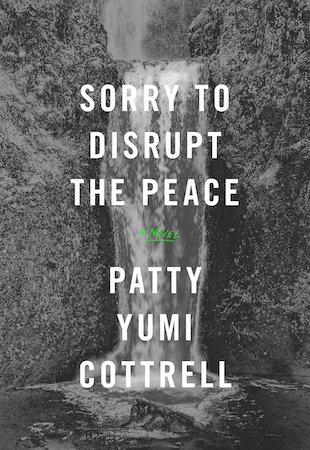
In Patrick Cottrell’s debut novel, Sorry to Disrupt the Peace, there is also a focus on claustrophobic space as the narrator, Helen, returns to the home she grew up in, following her brother’s suicide. She is there to find the answers — what happened to him, what was he thinking — that nobody is seemingly able to provide. Through her journey to discover more about her brother, the reader begins to uncover a likeness between the two, or a doubling; this notion of the queer double, Lee Edelman theorizes, represents the return of the repressed or unseen self and serves to destabilize a narrative.

Further, while Helen is not explicitly a lesbian, she makes comments, throughout the novel, about the fact that everyone thinks she is. This subtle inclusion seems second nature for this queer author and adds a feeling of being on the inside of a queer feeling. The form of the novel itself is actually fairly linear and cohesive. It follows the narrator’s search for belonging and a space to occupy, but while she increasingly identifies with the brother she has lost, Cottrell brings the reader into a queer mind.

As Dale Peck says in Visions and Revisions:

“Queers will always be defined (at least from the outside) not by their sexual desire but by whether and how they act on it. It’s sex that makes you gay, at least in the eyes of the straight world, and it’s gay sex that made gay culture, not the other way around.”

Similarly, queer authors are not defined by their use of fragmentation — rather, the subversive forms they use are a symptom of being queer in the world. Just as queerness has become increasingly inclusive and expansive, there are countless ways to queer a form and make space for these voices. Queer forms in writing express not only the urge to but the necessity of fracturing the traditional narrative structure or genre in order for queer authors or queer characters to express their world and make space for their stories — and in both the ordinary and extraordinary we find these queernesses of form.

The English Language Debut of One of Colombia’s Premier Authors

“Like a Pariah”

by Margarita García Robayo

That advert was on TV, the one with the fat guy who had lost weight by drinking some tea or other: My son didn’t want me to go to his football match and I asked him why — are you ashamed of me? The former fatso cried and asked them to stop filming. They went on filming anyway. Inés always welled up at that commercial. She was not fat, had never been fat. But for some reason, this guy’s story hit a nerve.

That morning she had tried to talk to Michel. Since the day of the move, she’d heard nothing from him. She’d dialed his number, but he didn’t pick up. Maybe he was working. She had called him again just now, but still no answer. It wasn’t even midday yet and she was exhausted, the previous night she had dreamt about her toes falling off. Lately, her feet hurt, and sometimes she felt as if they were gangrenous. It was a feeling like the one she had that time in Boston, when her legs had frozen up altogether. Michel was studying for his master’s and she had gone to visit him; it was winter. The doctor there told her she had serious circulation problems. ‘Like any damn highway, then!’ replied Inés, trying to lighten the tone, but neither the doctor nor Michel laughed at her joke.

The ex-fatso had changed location and wardrobe. Now, wearing a black suit, he was posing on a balcony overlooking a city full of lights: I hadn’t seen my own penis for years.

‘Penis’, mused Inés, ‘what an ugly word.’

‘Good morning, señora.’ The cleaning woman was standing at the door to the study. She was wearing a dress buttoned up to the neck, even in that heat. Inés turned the TV off.

‘Good morning…’ she couldn’t remember her name. It was only the second time she had ever seen her.

‘Glenda, señora.’

Inés nodded. Glenda nodded too, came into the study and handed her an envelope that had been in the letterbox.

‘Thanks.’ Inés sat up, smoothed her hair with her hands. It felt rough, like a man’s stubble.

‘I’ll be in the kitchen if you need anything.’ Glenda turned and left. She was a large, dark-skinned woman with a very deep voice.

Inside the envelope was a card reading “Brunch.” It was from the new occupants of the Las Palmeras condo and was addressed to Gerardo and her, using their full names. She wondered how they’d found out their surnames. They had barely been there a week.

She went out of the study, card in hand. She crossed the living room and opened the blinds, and the light burst into the room like a jet of water. She squinted. The workmen had just arrived; they had come to fix a rusted pipe. The garden stank. It was an old country house, passed down from an unmarried aunt of hers, and nobody in the family used it. Inés’ sister had suggested that she move there temporarily, while she convalesced. Michel helped her move. Even Gerardo helped her. They all wanted her far away. ‘It’s cancer, not leprosy,’ she had told them. They looked at her, offended.

She sat down on the sofa. If she went to the brunch, she would have to cover her head somehow.

On the small coffee table lay a copy of Health! magazine. Michel had brought her a few to keep her entertained; on the cover was an older woman, nibbling on some nuts like a squirrel.

She thought she should go to the brunch and meet her neighbors, after all, she was going to be living there for a while. A year. That’s what she had told them all. Michel, Gerardo, her sister. She fanned herself with the magazine and looked outside: the workmen were slowly unpacking their tools.

Señora.’ It was Glenda. The magazine fell out of Inés’ hands and onto the floor. The woman had appeared out of nowhere. ‘Are you going to have breakfast?’

‘No thank you.’

‘Have you taken your medicines?’

‘No, I’ll do it later.’ Inés ran her hands over her hair, picked up the magazine and put it on the table. Why did she have to ask her that?

‘I think you should eat some breakfast, señora, you can’t take those medicines on an empty stomach.’

‘No, I don’t want any.’

Glenda cleared her throat. ‘Very well.’ She turned around and wobbled through the kitchen.

Inés shook her head. She left the sofa and slowly climbed the stairs. She looked through her clothes to find something to wear. A hat. She would have to wear a hat.

It was like something out of the movies, the stereotypical Californian condo. As if it belonged to a down-at-heel mafioso: curved balconies and tall palm trees planted symmetrically, one next to the other, forming a circle around an artificial lagoon. Then on each side, there were rows of houses, all identical, with their terraces out the 66 front. Inés was on one of these terraces, sitting in a wicker chair. A guy in white Bermuda shorts and a sky blue shirt had sat down next to her. He sipped his drink. In between the two chairs was a blue hat.

‘Mother makes a fantastic fruit daiquiri,’ said the guy. Inés nodded.

Mother? Who the hell talks like that?

The guy was called Leonardo and he must have been around forty. He worked in real estate, he had told her. The host was his mother, Susana, who was making her way towards them with two new colorful drinks. She held one out.

‘Would you like another?’

Inés raised her face to look at her. Susana was silhouetted by the sun: a glowing halo surrounded her hair, which was dyed cherry red.

‘Thanks.’ She accepted the daiquiri, which, they had told her, was a blend of citrus juices. The doctor had told her she couldn’t drink alcohol yet. ‘Not even a small one?’ Inés asked him. ‘That’s a bit mean.’ Then he told her that she could have a small one, but that she shouldn’t drink too much, because her body’s defenses were still low.

Susana sat on her son’s lap, stirred her drink with the straw and downed it in one. Inés tried hers. It was far too sweet.

‘Did Inés tell you where she lives, darling?’ said Susana. Leonardo shook his head. ‘In that house, the one that was falling down, but which now Inés and her husband, who works in…’ Susana frowned and looked at her; she was wearing blue eyeliner. ‘What exactly does your husband do?’

Inés looked down at her sickly-sweet drink. How could she answer that? One: he wasn’t her husband anymore. Two: she had never understood what he did for a living. She never had an answer prepared, like most married women do. She’d heard those replies: it should never be a complete sentence like ‘my husband works in…’; that was too vague and gave the impression that you needed too much time to think about something you should be able to reel off instantly. In those games of questions and answers, the way you formulated your answers could lose you valuable points: ‘Crustaceans are animals that have the following characteristics…’ It was a trap. The possible answers to Susana’s question should be direct, short, efficient. ‘What exactly does your husband do?’ ‘Soil mechanics’ or ‘Computing manuals’ or even ‘Acrylic fish tanks’.

Susana had turned to her son. ‘Anyway, so Inés and her husband fixed up that house and it looks immaculate now. That’s what they say. Isn’t that right, Inés?’

Inés nodded. Who could possibly have said that?

She thought about the rotten pipe running through her garden. Then her mind replayed the ad of the ex-fatso crying: I felt like a pariah.

‘…it’s a very solid and attractive detached house, although…’ Now it was Leonardo who was talking.

Inés sipped her drink; the cold liquid ran quickly down her throat and she wanted to cough but managed to control it. She suddenly felt poorly dressed: it was the hat, she must look like a real hick.

‘…it has some problems with the pipework and electrics.’ Leonardo was balding, and sweat accumulated each side of his widow’s peak, out of reach of the handkerchief he used to wipe around his face every so often. The sweat glittered in the sunlight, making it look as if rays were emanating from his head. But he was not unattractive: he was tall, with blondish hair and one of those large, straight noses that give some guys an air of refinement. Michel had a small nose, but a lot of hair on his head.

‘Having said that’, Leonardo went on, ‘I don’t understand what made you move here, instead of finding a more comfortable option, given the circumstances.’

What circumstances?

Susana stood up abruptly and let out an idiotic laugh. She looked embarrassed by her son’s question.

‘Darling,’ she said with her hand on her bust which, although drooping, was still rounded thanks to the implants. ‘You can’t ask Inés that, for God’s sake.’

Susana was wearing flat sandals, blue, like her eyeliner, like the hat, like Leonardo’s shirt. She must have been sixty-something. Inés was fifty-seven, but she felt about a hundred. She finished off the dregs of her drink. In the pool, a few people were floating around on lilos. Inés couldn’t decide if she liked swimming pools or not. Gerardo hated them — once you’ve dived in and had a splash about, then what do you do?

Susana was still clumsily apologizing for her son’s indiscretion. Inés tried to focus on looking beyond the palm trees, which marked the course of the river, then disappeared out of sight down a sloping hillside. A waiter came up with a tray of daiquiris: this time there was also a whisky on there. Inés grabbed it. ‘I think I’ll move onto this.’

The verandah was the coolest part of the house, but it stank to high heaven. The builders were working out front, and the smell of the rotten pipes was overpowering. Glenda had come up with the idea of placing torches in the garden, and it worked quite well: she had wrapped stakes with rags soaked in citronella. The sweet, lemony oil repelled the mosquitos. She had soaked other cloths in jasmine essence and the resulting scent was penetrating and acidic, interspersed with occasional wafts of sickly-sweetness. A horrendous smell, but more bearable than the broken pipes.

That morning nobody had lit the torches yet. The workmen must have lost their sense of smell because there they were, sitting on the lawn, eating the bowls of food that Glenda had brought out to them, and breathing in that stench.

‘Will you be taking lunch, señora?’ Glenda startled her. She always did that. It was a mystery how a woman so huge could sidle right up to her without making a sound.

‘Why haven’t you lit the torches?’ Inés asked.

‘I’ll light them now,’ said Glenda. She always had a look of slight disgust on her face. ‘Would you like me to serve you lunch?’

‘What time is it?’

‘One o’clock. Shall I serve up?’

‘What did you cook?’

She huffed. ‘Roast chicken and cornbread. That was all you had.’

‘That’s fine, thanks.’

‘There’s no food left, señora.’

‘I’ll tell Michel to do a shop for me.’

‘This came for you.’ Glenda took an envelope out of the front pocket of her apron and held it out. Inés opened it: it was another invitation from Susana. The following day she was having a get-together to celebrate the Day of Our Lady of Carmen. Glenda was still standing there, looking disdainful, her hand furtively covering her nose.

‘What’s wrong?’ Inés asked her.

‘Nothing.’ Glenda went into the kitchen and immediately returned with a tray that must have been sitting there, ready to bring out. She put it down on the table: anemic chicken with a congealed yellow mass next to it. It all looked cold and dry. Inés felt like she was going to throw up: she put a napkin to her mouth to cover the sound of the acidic belch that burned her throat. This had been happening to her since she had drunk those whiskies at the condo, a couple of days ago.

‘I guess you know I won’t be coming in until Tuesday, señora’, said Glenda, who was still standing there, stiff as a corpse.

‘What’s that?’

‘I’m not coming in, and I don’t think the guys are either.’ She gestured to the workmen. Inés pushed her plate away, nauseated.

‘I don’t understand what you’re talking about. When aren’t they coming?’

Glenda drew a deep breath.

‘We won’t be working Friday or Monday because it’s the festival for the Virgin. And I was thinking…’ She cleared her throat again.

‘What were you thinking?’

‘That you might like to ask your son to come and keep you company.’ And off she went into the kitchen, without waiting for a reply.

Michel had called her the previous day. He didn’t approve of her going to that party at the condo. ‘It wasn’t a party, it was a brunch,’ Inés told him. And he replied, ‘I can smell the fumes down the phone.’ How dare he. She hung up. She didn’t say anything; to avoid getting into an argument, she just hung up. He was getting more like Gerardo every day: bossy, judgmental. And she had become like a halfwit daughter to both of them.

She looked out into the garden again: the unlit torches, the workmen sitting on the ground, breathing in the stench. She was so tired. She made her way up to her room, but it was hard work: the stairs seemed steeper than usual.

It was too hot to have Gerardo on top of her. Inés pushed him away and told him not now, later, when it was cooler. But Gerardo carried on crushing her with his sweaty body, with its sour smell. Inés bit his chest, tearing off a piece of flesh in her mouth, and still Gerardo didn’t move. He was even stiller, lying there like a sandbag. Inés breathed slowly, inhaling the sliver of air between her face and Gerardo’s bloodied chest. She started biting him again, stripping away more and more chunks of flesh until she reached his heart, an engorged bloody balloon that exploded as soon as she sank her teeth into it.

The noise woke her up: she opened her eyes. She was still on the sun lounger. She was forced to take a deep breath of the warm, reeking garden air, because she felt like she was suffocating. She touched her forehead with the back of her hand: she was freezing, but she felt hot inside. Her chest hurt, her feet hurt. Where had that noise come from? Next to the lounger was a bucket that had been full of ice. Now it didn’t even have water in it; she had thrown it over herself before she fell asleep.

She had spent the entire day in just her knickers and bra, making the most of being on her own. She got up to fetch more ice and look for something to drink. She crossed the verandah, went into the kitchen and opened the fridge: there was only water in there. She took more ice out of the freezer and filled up the bucket. She went into the guest bathroom and peed, then got into the miniscule shower cubicle. Not even an insect could have showered comfortably in there, she thought. Dripping wet, she went to the kitchen, grabbed a dishcloth and dried her face. The cloth smelled of onions. She hurled it in the bin. She opened the larder, took a loaf of bread down off the shelf and smothered a slice in mayonnaise. It was the first thing she had eaten all day. She went outside and stood in front of the torn-up ground; the trench where they would lay the pipe was the roofless hall of a giant mole’s house. Not a sound could be heard except for the birds and, every so often, a bus beeping its horn in the distance. Inés went back to her lounger. She lay back and closed her eyes.

Again, the explosion.

When she opened her eyes, she saw colored dots in the sky. It took her a few seconds to realize that they were fireworks. They were coming from the village. They were probably for the Virgin. A while later she heard the intercom buzz, it had a strange sound: muffled and nasal. It was one of those devices that were considered ultra-modern in the seventies. She stood up, crossed the verandah, went into the kitchen and glanced at the clock. Seven. The intercom buzzed again.

‘Hello?’ she answered.

Señora, this is the watchman, I’ve got an envelope for you.’

‘Okay,’ her mouth felt furry. ‘Please leave it in the letterbox.’

The man said he would. She waited for him to leave, went to the main gate and took the envelope out of the letterbox. It was a note from Susana, saying that she had been calling her on the phone, that she hadn’t managed to reach her and that she mustn’t miss the party that night, she would send a driver for her at eight o’clock, to make sure she came. Inés went into the living room and picked up the phone; the line was dead.

She took a shower. She put on her turquoise dress, which was nice and cool. She smoothed her hair down and wrapped her head in a silk scarf that Michel had given her. She slipped on some flat sandals, because her feet were so swollen that no other shoes would fit. Before she left, she picked up the phone to see if there was a dial tone. Nothing.

Someone was speaking to her from far away. And even further off, as if from behind glass, she could hear another voice:

‘I’d like to thank all the holes I ever stuck my cock in!’ It was Leonardo’s friend. Inés turned her head and saw him standing on the diving board above the pool, naked, using a bottle as a microphone. ‘Thank you for this award,’ now he held the bottle up in front of him with both hands, ‘my ass is going to really enjoy it.’

Inés touched her head. She no longer had her headscarf on. She felt dizzy.

Thank you to each and every one of the….’

‘So?’ Now it was Leonardo, he was sitting on the floor, by her side. ‘You were telling me about that fat guy who lost weight by drinking a tea. Is he a friend of yours?’

Inés’ throat was dry, she couldn’t get any words out. She felt a pain in her thigh. Leonardo was biting her. She pushed his head away feebly. She was naked, and so was he. Next to the sun-lounger was a side table with a bottle of whisky on it. It was almost empty.

‘Where’s my scarf?’ She touched her head again.

‘What did you say?’ said Leonardo.

In the pool, someone was doing breaststroke.

Thanks to all the lips that have sucked me off…’

‘I can’t feel my feet,’ said Inés.

A little while ago, Inés, Leonardo and his friend had swum in the pool. Inés remembered that, and she remembered fingers pinching her nipples. She remembered thinking, maybe even saying it as well, that when their bodies rubbed together in the water, it did not feel real, as if they were wrapped in cling film. Now Leonardo’s friend and Susana were in front of her, kissing. The guy had her headscarf wrapped around his dick: it was shrunken, purple, stuffed inside it like a stocking. Inés felt a burning sensation inside her. She wanted to ask him to take her scarf off and give it back to her, but no words came out. The guy broke loose from Susana and reached for the whisky bottle on the table. He poured the dregs over Inés’ breasts, and bent down to lick it off, but Leonardo stopped him.

‘Leave her alone, can’t you see she’s totally out of it?’

The guy said something that Inés could not make out, and then leapt into the pool. Somewhere she could hear Susana laughing. Inés closed her eyes and felt something crushing her, so heavy that she could hardly breathe. She opened her eyes.

‘Sshh, don’t move.’ Leonardo was straddling her belly. He wet his hand with his own spit and touched her down below. ‘Your pussy’s all dry and closed like an oyster.’ He slipped a couple of fingers into her, jabbing so hard that one of his nails must have scratched her inside, because Inés could feel blood. A burning sensation.

‘Please…’ she mumbled.

She wanted to say something about her cancer, about her low defenses.

She thought she had already told him.

Leonardo plunged his fingers in and out as if he were unclogging a drain; he jerked himself off with his other hand. He came with a loud moan, and slumped forward onto Inés, smearing his own semen under him.

The following day, Michel brought over the ingredients to make a lasagna. Inés served it at the table on the verandah. Michel cleared the leaves from the garden; he wielded the rake clumsily. The torches were lit.

‘Lunch is ready, darling.’ Inés felt groggy. She had a pounding headache.

Michel came over and poured Coke into two glasses with ice.

That morning, when she got back from the condo, Inés had got into the shower and stayed sitting there for several hours. Then Michel had arrived, making a fuss because she had not been picking up the phone. ‘It’s broken’, Inés retorted. But when Michel went to check, he noticed that it was not broken, only unplugged. That put him in an even worse mood.

‘You’re not looking well,’ he was saying now, chewing his food. ‘Moving here was a bad idea.’

Inés gave a hollow laugh. ‘But you were all so pleased about it!’

Michel pushed his plate away. ‘You’re unbearable, mother.’

Mother? He had never called her that before.

‘Eat up’, said Inés, ‘it’s getting cold.’ She took a bite of the lasagna but could not swallow it.

‘Where’s the cleaning lady?’

Inés shrugged. ‘She’s not coming in until Tuesday.’

‘Why?’

‘Because of the Day of Our Lady.’

‘Which Lady?’

‘How should I know?’

They ate in silence. She was forcing down tiny mouthfuls. Her body hurt. Everything hurt. Soon the midges started bothering them, and Michel went to fan the flame of one of the garden torches, so the smoke would repel them. The putrid air wafting towards the verandah was replaced by the sweet smell of citronella.

Inés touched her breasts. They were throbbing. Michel was talking to her again:

‘What have you been eating lately? The fridge was totally bare.’

‘I know, that’s why I asked you to do a shop for me. It’s not easy to get out to the shops here.’

Michel finished off his plate and she helped him to a second serving. Her hands were shaking; she was shivering. She dried her sweat with the sleeve of her shirt. Michel was looking at her and this made her uncomfortable, as if he were scanning every bone in her battered body.

‘Are you taking your pills?’

‘Yes.’

‘And the vitamins?’

‘Yes.’

‘Are you doing your stretches?’

‘Every day.’

‘Are you sure?’

‘Yes, sir.’

Inés had given up on her food and was looking at the garden: the flame of one of the torches was flickering in the breeze, the smoke rising up from it in a curved, white line, which finally dissipated.

She wanted to smoke.

Once, halfway through her treatment, she had felt the same urge to have a cigarette. What made it even stranger was that she wasn’t a smoker.

‘It’s a way of expressing your desire to die,’ the doctor had said to her. ‘And you are well within your rights to want to die.’

She was being sick all the time, she couldn’t even keep water down. She was picking bloody scabs off her head.

Inés touched her head.

‘Does it hurt?’ said Michel.

‘No, it’s just that my hair’s annoying me, it’s itchy.’

‘Put on that scarf I gave you… don’t you like it?’

That time, near the end of her treatment, Michel and Gerardo waited for her outside the room. They had insisted on staying inside, but the doctor told them that there were some things that needed to be discussed with the patient alone. Inés said, ‘Yes, the doctor’s right,’ and they looked at her like a couple of helpless little creatures.

‘No, doctor, don’t tell me that; I don’t want to die.’ And the doctor looked at her sadly, almost disappointed. ‘How certain can you be, even with the treatment, that I am not going to die?’ The doctor shrugged his shoulders in a gesture that seemed to her the height of cruelty. And she thought, ‘Would it really be so hard for him to lie to me, just a little?’

Michel took a large mouthful of lasagna.

‘You don’t look at all well, mum,’ he said, chewing again. He swallowed slowly, and repeated, sternly, ‘Not at all well.’ He looked away from her, his eyes shining, bitter.

Inés clenched her fist and banged it on the table.

‘Oh, for God’s sake!’ she cried. ‘I’m perfectly alright.’

A Writer Learns to Die

Whenever I think of my heart attack in late September of 2017, I think about my mother’s cardiac arrest in July of 2000. When it happened, she called out to my family and me: “I’m dying and no one cares,” as if she were in one of those TFC dramas that she enjoyed. I was ten when I dressed my mother for her last hospital ride in the flimsy gown that she wore whenever she went: browning at the edges with the smell of hospital sheets mixed with body odor lingering in the front. My mother died when we were halfway to Princeton hospital. She’s had lupus since she was an adolescent, family members told me. Perhaps I carried it too. So when I woke up that early September morning — clutching my chest, breathing heavily, and sweating — I thought of her and dissociated myself from my basement room in Tuscaloosa. I was 28. Yet I was feeling very much like dying. It was here. It was happening to me.

For a while, I thought it was just a severe case of heartburn from the wine I had the night before. I took a cold shower, tried to slow my breathing, and laid on the living room couch hoping it would pass over. After stewing for a few minutes, I called out to my roommate Reilly who slept in the next room over. Although Reilly’s a heavy sleeper, I had to only mention “help” and “heart attack” in the same uneven breath for them to burst out of their room. While this would probably go down as one of the worst things to happen in my life, at least I’d have the company of a fellow writer. We were both in the University of Alabama’s MFA program, having trekked from our Northeast homes to the South so that we could evolve from writers to Writers by doing things such as living just shy of the national poverty line, finding our narrative voices, and applying for food stamps. Reilly is a poet from Baltimore who has specific opinions on Instagram poetry and romantic notions of cowboys and the West. They’re quick to share a drink and offer feedback on a project, often dissecting the meaning behind lines on a page that others would miss. They put as much sensitivity and care into the people they befriend as they do in their poetry. They were also the person to look at my condition and grab their keys without hesitation. “Let’s go,” they said.

While this would probably go down as one of the worst things to happen in my life, at least I’d have the company of a fellow writer.

Reilly’s Prius zoomed eastward, pushing 80 miles per hour on Jack Warner Parkway — I kept the windows down, allowing the 3 a.m. wind to blow back my greasy hair, unable to move most of my upper body except to wheeze deeply. “Everything’s going to be okay,” they said. I kept my eyes to the outside towards the dark of Tuscaloosa, occasionally I glanced back at Reilly, focused and alert, with the hospital’s route memorized. I turned to my side and saw my mother in the red dress and necklace that she was cremated in. She sat in the same place I was when I was ten; we just traded places.

“This is how I went out too,” she said. She was much paler than I remembered her, for a Pinoy anyway. “Maybe you deserve this.”

Maybe I did.

Reilly swerved into the DCH hospital ER driveway from the wrong side. A haggard white man in a hand-me-down security uniform stuck his head out of the air-conditioned sliding doors.

“Going the wrong way, chief,” he said.

I fell out of the hybrid and pulled myself up to reach the door. I was a nuisance — entering the ER from the wrong direction, yelping to my roommates for help, distracting this retiree-looking motherfucker from his infomercial. The guard stopped me in front of the metal detector. “Put your cell phone in the bucket and pass through.” I did as he asked but the metal detector wasn’t even working.

At the sign in desk, the triage nurse asked me what was wrong.

“I’m having a myocardial infarction,” I said.

He took out a sheet of paper attached to a board.

“Sign in please,” he said.

I scribbled an M on the sheet and sat across a group of sorority women and a man in a grey hoodie. I realized my outfit was a white V-neck undershirt and workout shorts, sleeping attire. The shirt, see-through for the most part, exposed my girth sticking out from my sides, my chest, and was probably stained with the occasional blood spot from a bug bite or a scratch.

“Holy shit,” one of the women said, stifling in laughter.

Not holy but definitely feeling like shit, I held the left side of my heart with my right hand and placed my left arm across my chest to cover up. I did this until the nurse called my name. After a series of tests, the ER doctor said that I had to be admitted. “You need to be seen immediately,” she reiterated. “You could very well die today unless we have you go through a stent procedure.” I could ignore her, but that would be rejecting professional medical advice. Who rejects professional medical advice?

If I’d gone out then, it wouldn’t have been so bad. There has been a lot of good in my life. I’m in a relationship with an amazing woman, I got into a fully-funded MFA program, and before that, I spent the past six or so years writing novels. Those works will never see print, but that’s just all right.

One of the books that I enjoyed over the years was Roy Scranton’s Learning to Die in the Anthropocene: Reflections on the End of a Civilization. A former U.S. Army grunt turned Princeton scholar, Scranton’s small and unassuming collection of essays contemplate this dying planet by our hands. One observation is his meditation on death as a Soldier in Iraq:

Instead of fearing my end, I practiced owning it. Every morning, after doing maintenance on my Humvee, I would imagine getting blown up, shot, lit on fire, run over by a tank, torn apart by dogs, captured and beheaded. Then, before we rolled out through the wire, I’d tell myself that I didn’t need to worry anymore because I was already dead.

The rest of the book is pretty optimistic.

I practiced dying in that hospital — in the ER waiting room, on the operation table, and on the bed of the chest pain unit. I thought of likely scenarios that could arise in the next 168 hours post-surgery that could find me in an urn like mom. It was not the first time I thought about death (by my attempt or by accident), but now it was close, tangible. All I had to do was touch my chest and feel my heart roar until it clogged and stopped. This vessel of fat, water, and blood I call my body will depreciate; eventually, it will die, then rot, until I am nothing except a memory to a handful, or perhaps, one person.

I practiced dying in that hospital — in the ER waiting room, on the operation table, and on the bed of the chest pain unit.

I envisioned choking on my saliva and shitting myself to death (and subsequently feeling bad for the person who would have to clean that up). I imagined being able to move after the stent was in place, and suddenly my artery rupturing and bleeding to death. I thought about Reilly picking me up at the hospital, getting a beer with them at a bar; I say “Looks like the MFA almost killed me,” and when I leave to take a piss my heart gives out, not because I’ve been drinking but because I’m a fucking wild idiot, and I die by slamming my head on the bathroom tile. I thought if I fell asleep I wouldn’t wake up again.

After I was admitted, I didn’t see my mother as an apparition or in my dreams. I thought the surreal events of the last few hours would bring her up again, but she never visited me. Late at night, tired and decompressing from the stent, I thought about whether my life had any worth. I came all the way here from Jersey just to write and then die? Should I have stayed my brown ass up north? Should I have listened to my partner, a woman smarter and wiser in me in every way, and taken my time with my work instead?

For the stent procedure, I laid on my back, focused on a bright light as one of the operation technicians shaved off the twisted gloomy jungle on my groin with an electric clipper. “This is for the operation,” she muffled through her surgical mask. I looked to my left to see aides stretch out disposable gloves. People spoke in monosyllable tones. Staccato commands. Machine checks. I’d seen this all before except when it happened to mom, there were gloves and gear all over the floor; no murmurs then, only shouting, the flow of automated machinery.

“While you’re down there,” I said to the technician, “do you mind getting the entire thing?”

She laughed, but I bet they’re trained for patients like me — dazed, slightly nervous, and wondering how they got here. They’re taught to look the patient in the eye and smile, reassure them that everything will be OK. Whether you’re an executive or writer, whether you’re too young or too old to pass, on the operating table those things don’t matter, you’re just. As she finished up, the cardiologist hovered over me. His breath was slightly askew, but he was cordial. He said his name, his profession, and what he was about to do. This is another stranger that holds my life. I have minor heart issues. You’re only a child. So sad. You’ll be fine. You’ll wake up with a stent. Stent. It’ll separate your clogged artery.

'Why Is Illness What Makes You See Us?'

He’s such a good guy. The woman who shaved me said that he is the most compassionate physician in town. But good guys can fail to save the dead just as much as bad guys or the guy who tips 10% or the guy who double parks in a grocery store parking lot. I planned my obituary on the operating table: Filipino American, first-generation, male, 28, never did much for society as a whole, owes an apology to a lot of people. Once entered and lost a hot dog eating contest to a black man dressed up like Hulk Hogan. Once got accepted off the waitlist of a state university to have the space to write, learn, and sort-of/kind-of got paid for it. Once believed in God.

I closed my eyes and woke up in a room with fluorescent lights.

There are other things I could talk about that weekend too. The excellent nurses who took care of me (shout out to nurses Nanette, Clayton, and the entire DCH CPU staff), the time when one of them had to remove the catheter that was inside of me by pressing down on my groin for thirty minutes while another nurse cheered me on — you’re so strong, just a little bit more! — or the surprisingly good quality of Tuscaloosa hospital food. Also the medical bills; so many fucking bills.

I was discharged on Sunday after meeting with the hospital physician who said I had a minor heart attack, a nutritionist who told me what I could find online, and my cardiologist who told me I actually had a full blown heart attack and that I should change everything in my life. I was told to take it easy, although they understand I’m in graduate school. I was told to avoid red meat. I was told everything will turn out fine.

I was told to take it easy, although they understand I’m in graduate school. I was told to avoid red meat. I was told everything will turn out fine.

The cardiologist prescribed a total of five medications, four of which I need to take every day. “Either you take these pills,” the nurse said, “or your artery will clog again, and we’ll see you back here.”

Reilly picked me up from the hospital, and we didn’t talk about the tube that went through my groin, the shaving, or my rambunctious weekend. We went to Rite-Aid and picked up their photographs and my pills.

“That was pretty fun,” I said to Reilly.

“Yeah,” they said.

“What do you think did it?” I asked them.

Reilly drove on, and I thanked my roommate again.

When I arrived at the house, I put my pills away and sat down on the couch, facing the portraits of dead flowers that Reilly repurposed as art. I tried to think of the last time my family visited my mother. In the evening, my partner and I had a discussion over the phone that was partially sympathetic but also prescriptive and scolding of my eating habits and drinking. It circled back to forgiveness and understanding of my condition and our distance but I believe we came back to this because of our close bond. Alone in the dark, I went to work and edited a short story that was due that evening only to have it turn around a few days later with a form rejection. I was frustrated about that until I interrogated my feelings of writing, of craft. What is the practicality of writing at the expense of your health, the ability to pay for it, or to care for those you love?

What is the practicality of writing at the expense of your health, the ability to pay for it, or to care for those you love?

As Scranton wrote in the essay “A New Enlightenment,” coming to terms with dying is about meditation on the self.

Learning to die is hard. It takes practice. There is no royal road, no first-class lane. Learning to die demands daily cultivation of detachment and daily reminders of mortality. It requires long communion with the dead. And since we can’t ever really know how to do something until we do it, learning to die also means accepting the impossibility of achieving that knowledge as long as we live. We will always be practicing, failing, trying again and failing again, until our final day.

I visited death taking my mother on the car ride to Princeton. I felt its touch on the operating table in Tuscaloosa. I pay homage to It whenever I go into a pharmacy and spend fifty dollars on prescription pills or make payments on preventative care just to keep me breathing. I read about Its slow violence on Black Twitter whenever another black or brown body is murdered, detained, or incarcerated at the hands of Federal officials, a police force, a white nationalist. I don’t have to look far to be reminded of Its embrace.

Yet I am fortunate in the small victory that I still exist. I breathe. I wake up in the morning to make generic coffee and write. I go on long walks listening to library audiobooks, strolling through a campus failing to address its past. I read and take notes on good writing. I go online. I discuss the days of my partner who lives a thousand miles away from me, a woman full of life and love. And once the night is really still — just the low drum of my humidifier or the trains braking hard by our house — I recall how this day has ended to give rise to another and the cycle continues.

Perhaps the pursuit of finding continual purpose and joy in life does not exist in feeding whatever selfish understanding I once had of my writing. Perhaps it exists within other means, such as giving voice to those who weren’t elevated before, and celebrating the works of others who deserve it; perhaps it is in giving back by lending a hand or an ear; perhaps it is in the shared communication with my partner and me, with friends, with strangers — a consistent ebb and flow of shared experiences in order to build memories. My life may not mean much anymore, but perhaps my physical body, my conscious, can be a guide for future generations of others like me. The ones I care about. The ones I love.

My life may not mean much anymore, but perhaps my physical body, my conscious, can be a guide for future generations of others like me. The ones I care about. The ones I love.

As Scranton writes towards the end of his essay collection, memory is the only thing that can save those who are already dead. Perhaps whatever medium I end up writing in will become an addition to the conversation of being a Filipino American, being a human, being me, today. My memories laid out in prose are attributed to those who helped me live and continue to sustain my existence. As I practice revisiting my mother’s end and the inevitability of mine, I will impart pieces of her life into my own, tucking away memories of her: her parting, her care, her hope for a better life beyond our world, her fears, her nurturing, her anger, her humanity; through my small attempts at writing and sharing with an audience, someone can be there to remember her; someone will be there to care.

Reimagining the Great American Novel with an Asian American Cast

What does it take for someone to work at a Chinese restaurant for decades? This is the question that catapulted Lillian Li into writing her debut novel, Number One Chinese Restaurant, a multigenerational family saga set in Rockville, Maryland, that reimagines the (somehow always white) Great American Novel with an Asian American cast.

Number One Chinese Restaurant

The novel opens with Jimmy Han trying to sell the Duck House, which his father left to him and his brother Johnny, in order to start a fancier restaurant across town on his own. He finds, however, that a fresh start isn’t so fresh when he tries to extricate from the complicated web of relationships with blood relatives and longtime Duck House employees. When tragedy strikes and unearths family secrets, each character must confront their own limits and decide what they are willing to sacrifice for the life they want.

Lillian Li and I met at the 2017 Kundiman retreat, she as a fiction fellow, and I as a poetry fellow. I was thrilled to speak with Li months later over Skype about the alienation of being a Chinese waiter working in a Chinese restaurant, writing the immigrant underdog who behaves badly, and hiding Easter eggs in her book.


Marci Cancio-Bello: What was your inspiration behind setting your novel in a Chinese restaurant?

Lillian Li: I happened to work in a Chinese restaurant the summer before grad school. However, I didn’t ever think that I was going to write a novel set there. Even when I quit, I wasn’t thinking of how to write about the experience, how to get a story out of it. In fact, I tried to leave that restaurant experience behind me entirely. But it followed me to grad school. I couldn’t stop thinking about it. What haunted me was not how physically hard the work had been, but the emotional challenge of it. I was so lonely and isolated. I was working six days a week, twelve hours a day, serving customers who looked right past me. I mean, no one really treats waiters well, but it felt like an extra layer of alienation to be a Chinese waiter in a Chinese restaurant. Like I wasn’t totally seen as human.

I wondered how anyone could last longer than I did (barely a month), yet all my coworkers had been working in that restaurant for years. It led me to compulsively imagine what it would be like to continue to work in that space for months, years, even decades. What would a person do over the years, how would they change in that environment, what kind of life would they make for themselves as a substitute for the outside world, and what would they be willing to give up to sustain that life?

During this time of compulsive imagination, I was also experimenting with ways to write about Chinese American characters without making their race the most important part of them, but it was difficult because the act of naming a character’s race in your writing inadvertently puts a spotlight on it. At the same time, if you don’t name your characters, most readers default your characters to white. I wanted to define a space where the default was Chinese American. That’s when I realized my experience in that restaurant had been a space where the default was just that, and any reader coming into that space would default to a Chinese American experience. The collision of those two ideas created the novel.

I was working six days a week, twelve hours a day, serving customers who looked right past me. It felt like an extra layer of alienation as a Chinese waiter in a Chinese restaurant. Like I wasn’t totally seen as human.

MCB: This book challenges stereotypes of the Chinese restaurant worker, and I got the sense that both Asian and non-Asian readers would be able to relate this novel to their own American experience. Can you talk about constructing a dual readership for a widely varied audience?

LL: In some ways I felt I had written two books. I wrote this book for me, for readers like me, with my cultural background and reference points that I find familiar. I wanted to be uncompromising. At the same time, I understood that a book is something that everybody gets to read, which is to say, anybody can pick up a book and read it. How do I speak to a reader that I did not write the book for? Do I even try to speak to that reader?

I took a lot of inspiration from Maxine Hong Kingston’s Woman Warrior. In interviews, she said she put “Easter eggs” in Woman Warrior — untranslated words or references, unexplained material that many readers would come across and not notice or recognize, but which wouldn’t distract them from their reading experience. I tried to do something similar in my book, to be uncompromising without being exclusionary. There will be readers who won’t catch any of the Easter eggs, but still enjoy the book, still get something from the experience. However, for the reader who finds those Easter eggs, I want them to feel a moment of communion, to realize that, while this is a book that everyone gets to read, this universally accessible thing has a little moment just for them. I wanted to see if I could have both.

I think it’s also helpful that all readers are, in some way, outsiders in the world of the Duck House. Most Chinese Americans have little experience with the Chinese restaurant space. Even those who have worked, or have family who has worked in a Chinese restaurant will still be partial outsiders because there are so many different kinds of Chinese restaurants, and I tried to write the Duck House to be as specific a kind of restaurant as possible. So in the end, there’s distance for every reader, and I wanted to both close and keep that distance by different degrees for every kind of reader.

MCB: Speaking of closing distances, your characters move so fluidly between speaking English and Chinese that I barely registered the markers. Was that intentional?

LL: I thought a lot about how language was going to be used from the start. In a lot of ways, I wrote this book for myself, and I wanted to replicate how I hear and understand switches between Chinese and English. When I’m talking to my parents, I don’t notice if they’re speaking Chinese or English. What I notice is a change in effort. I notice when they switch from English to Chinese that it’s like they’ve taken a slight weight off their words. The language feels lighter and easier for them. The opposite happens when I switch from English to Chinese. I wanted to try to capture that sensation in the work. I originally wanted no markers at all that something was being said in Chinese or English. I wanted the reader to figure out the language being spoken based on the level of effort in the dialogue. In the end, that was too confusing, and the confusion only called more attention to the switches, not at all my experience with bilingualism.

I also chose not to include pinyin because, again, that points to a self-consciousness in translation that wouldn’t be accurate to the characters who speak Chinese as a first language. I tried always to think about what the characters would notice and what they would hear, rather than what the reader would notice and hear.

MCB: You mentioned that Number One Chinese Restaurant was your master’s thesis at the University of Michigan. Did you feel that your MFA program helped you finish the book?

LL: Definitely. The finished novel looks nothing like my thesis, which was more like a prologue to what became the actual book. In the original manuscript, Jimmy hadn’t even bought the new restaurant until after the first hundred pages.

My classmates and teachers were so helpful in helping me write my way into the novel. Eileen Pollack, one of my thesis readers, was hugely instrumental in helping me learn what the structure of a novel even was. I felt like a baby writing a book. Even though I had read so many books, I didn’t even know how to start a novel. I thought a novel could just be detailing a person’s everyday routine, which some authors can do successfully, but Eileen taught me that most novels look at what happens when that routine is disrupted. I’m sure that’s something most people could learn on their own, but I probably would have written a lot of bad novels before this one if I hadn’t learned so much from people who knew much better.

MCB: Your novel leaps deftly through forty years’ worth of character perspectives. What was your process in organizing the complex maze of plot lines and character histories?

LL: I’ve always loved ensembles, in books, TV, movies. I love communities that both know each other well, and not at all. When I was younger, I wrote a lot of fan-fiction, and I was never interested in the main characters. I was always more interested in side characters, the ones who don’t get much screen time. I thought, “Why don’t we get more of you? You seem really interesting.” So I knew that when I wrote a novel, I’d have multiple perspectives, a real ensemble cast. In terms of how I nailed down the plot and the character histories, in some ways, they ended up being reverse processes.

With the plot, Eileen, again, was instrumental. She gave me this great analogy when she asked me to think of plot as a sequence of dominoes. One plot point creates ripple events that fall to hit the next domino. Of course, then I came to her with fifteen dominoes, and she had to tell me that you really should have at most two or three dominoes. If you have too many plot points, readers have no idea what to invest in and the stakes are constantly in flux. She told me to come up with three big-ass dominoes. I worked a long time to get those dominoes. Once I did, it felt almost like mile markers for a 5k. I wrote until I hit the first marker, and that oriented me enough to get to the second, and so on.

For character histories, I worked backwards instead of forwards. This happened because I came up with characters in tandem with their relationships to each other. For example, I came up with Nan at the same time that I came up with Ah-Jack, because I wanted a friendship that was complicated and intense and long-term. I wanted two brothers with sibling rivalry, so that led to Jimmy and Johnny. I wanted Nan to struggle to maintain a relationship with her child when her restaurant work kept her from being home, and Pat sprang to life. Once I had these specific relationships in mind, I just had to work back from that point. It was a useful guiding light to ask what had to happen to this person in their lifetime, what kind of personality they had to be born with, so that thirty years later they could get into a relationship as weird and specific as the one I’d created. Like with the plot, there was flexibility, but also direction. That’s how I kept the entire book straight in my head.

In a lot of immigrant narratives, people are only ever fighting against external forces, like war or poverty. When they behave badly, it’s because of the tremendous pressure and/or suffering they are experiencing, and it’s much easier to forgive them. What I don’t often see is the immigrant underdog who fucks things up for himself, who faces internal forces like hubris, spite, pettiness, or laziness.

MCB: Craft-wise, you’ve done such a marvelous job with each element that I want to call it a reinvigorated version of the “Great American Novel.” The book had such a satisfying ending for each character too, which I don’t always find.

LL: Realistically, with a timespan of just over a month, I couldn’t expect the characters to be too different from who they were at the start of the book. I understand that it’s satisfying to see someone make radical changes in their life. I love books that show me a better version of ourselves, I find them very comforting and aspirational, but what I write toward is maybe a more honest reflection, which is that it’s really hard for a person to actually change, and that, in some ways, books with really revolutionary character arcs set up unrealistic expectations for our own lives. If people only read novels where big changes happen, I wonder how useful it is when they look back on their own lives and evaluate how they move through the world. Can they really use that book as a model for themselves and the people around them? Maybe what I’m hoping to do is create a more accurate measuring stick to show what change actually looks like on a human scale.

MCB: One of my favorite parts of the novel is the brief internal monologue of Feng Fei, the mother of the two restaurant owners. She describes beautifully the constant struggle between a person’s nature and the stories they tell themselves and others. That theme powers through the whole novel.

LL: That was also my favorite section to write, partially because I finally got to tap into Feng Fei’s internal logic, the values and ideas that dictate her behavior and attitude. In general, I loved accessing all my characters’ internal logics because that was the moment I felt like I really knew them. Every person has their own internal logic to which they tend to be fairly consistent and certain, and I think that consistency creates the familiarity necessary to forge connections between people, even if the logic is flawed or dangerous. I wanted to see if I could make all my characters consistent and convincing in their own logic, and if readers would be persuaded to empathize even when that logic made certain characters act poorly. Like Jimmy, who is consistently an asshole; will readers eventually like him because he has become familiar?

One of the things I wanted to expand in my writing is the idea of the immigrant underdog. What I mean is that I was seeing a lot of immigrant narratives, especially Asian American immigrant narratives, where people are only ever fighting against external forces, like war or poverty. When they behave badly, it’s because of the tremendous pressure and/or suffering they are experiencing, and it’s much easier to forgive them. What I don’t often see is the immigrant underdog who fucks things up for himself, who faces, instead, internal forces like hubris, spite, pettiness, or laziness. It’s harder to love a person who makes their own problems, yet that’s what every single person does. Yes, systemic racism and oppression are always factors — Jimmy acts the way he does in part because he is a Chinese American man in America — but there’s no single reason someone is the way they are; there are ten reasons you can see, and 20,000 reasons you can’t.

Certain novels can feel like lab experiments. So-and-so behaved this way because A and B happened in their childhood, and then incident C catalyzed the reaction, the end. But there are no perfect conditions in life. We will never fully know why we do the things we do, and I want my writing to reflect that mystery and mess.

MCB: One of your characters says near the end, “You are the stories people tell of you.” Getting a bit personal here, what kind of story do you think this book tells about you?

LL: I hope this book is a meeting place, a sort of communion between the reader and myself, a two-way street. Even though the book itself is a static object, the ideas I had while writing it are not. I’m still thinking about them, and I hope the reader can evolve those ideas further too. I want this to be a way for conversations to happen even when I’m not in the room, even if there’s just one person: the reader. That’s the perfect book for me, and I hope in some ways this book will do that.

MCB: Lastly, what question do you wish I had asked you about this book?

LL: A lot of people ask me which authors have influenced my work, but I feel like that’s an answer that I’d prefer other people to answer for me. Instead, I’ve been thinking a lot about asking, instead, “Which authors do you share a worldview with?” The books that resonate the most with me are those in which the authors either share a similar way of looking at and understanding the world and writing’s place in the world, or have a worldview that I aspire to emulate. Two authors who do that for me are Ruth Ozeki and Karen Joy Fowler.

In A Tale for the Time Being, there’s an end that shows the magic and mercy of fiction. Fiction doesn’t always have to be like reality. It gets to have loopholes. It doesn’t always have to follow the rules. There’s something gratifying about authors who know that. They have a chance to fuck up your heart, and they rescue you instead.

Karen Joy Fowler is magical in a different way. Her writing is so funny, and she uses humor to articulate something about the world that I just find incredible. I love The Jane Austen Book Club and We Are All Completely Beside Ourselves because both books are uncompromising about the darkness in the world, while also understanding that humor is a way of both elevating that world and resigning yourself to it. The humor is not there to rescue you, but rather a way to deal with things. This is not always the best way out, but sometimes it’s the only way to keep going until you can find a better way out. That’s how I see the world too, and I hope my fiction communicates that.

Finding Black Boy Joy In A World That Doesn’t Want You To

Ifirst read Darnell Moore’s work in Kiese Laymon’s essay collection, How to Slowly Kill Yourself and Others in America, as part of a letter exchange. I was surprised by the tenderness of the conversation between Laymon, Moore, Mychal Denzel Smith, Kai Green, and Marlon Peterson, which ranged over difficult topics like misogyny and homophobia. In taking on the power structures that often serve to divide Black cis and trans men from each other and the rest of the Black community, this was the kind of Black men’s writing that I, as a queer Black femme, wanted to be reading. So I was excited when I found out that Moore was publishing his own memoir, No Ashes in the Fire: Coming of Age Black and Free in America.

I talked to Moore a month before the release of his powerful text, which digs into growing up poor, Black, and queer in the shadow of domestic violence. What does freedom look like in these circumstances? Darnell may not have all the answers, but with his memoir, he opens up a conversation about the idea that we should look for freedom in the midst of structural forces that regularly remind us Black lives are not supposed to matter. After reading the book, I was especially curious about the role that memoir writing plays in getting free. I began by asking about the process of crafting the memoir, and what he wanted Black people — especially Black men — to learn from it.


Chanda Prescod-Weinstein: You write that you were hesitant about memoir at the beginning. Are your views about that still shifting? Should everyone write a memoir?

Darnell Moore: Memoir is a genre that is an accessible one that all of us can grab hold of. When the book is able to get readers to think differently about things, or to see semblances of themselves, or to have new understandings, that can contribute to the way that they move in the world. This book was really difficult to write, because I went in knowing that I wanted to write a book that combined personal narrative with social and cultural history. And I wanted to do it beautifully, but I also wanted the book to take the shape of something different than I’ve read before.

I often feel like so many people feel pressured to write quickly in response to events or news breaks. I used to do that. I’d write a Facebook post or take to Twitter. And now I’ve been so much more silent because when these things are happening, I’m asking myself, “Okay, let’s think about this.” And this is what this writing process has allowed. So in some ways I feel I’m missing time or I’m missing things, and in another way I feel so free, and so much more prepared, I think, to think critically about things that require or demand of us to be patient. And by patient, I mean to offer ourselves the type of grace, time, and critical distance necessary to have something to say that is grounded, in a type of nuanced way that it requires.

So many people feel pressured to write quickly in response to events or news breaks. I used to do that. And now I’ve been so much more silent.

CPW: In No Ashes you describe the enormous pressures that come with being poor and queer, and how you struggled with depression and the idea of suicide. At one point you say, “Writing about it now feels too theoretical, too poetic, but self-distraction is material, overwhelmingly felt and embodied.” Did you worry about the book being read as what is sometimes called “poverty pornography”?

DM: I remember saying, “I need to say this here.” Because it was at the point of the book where I was talking about suicidal ideation — and attempts. And when I was reading it back I said, “This can mistakenly be read as some poetic ass writing about someone on the brink of a life.” It can almost read so theoretical or almost poetic that it lacks the emotional current that was present during that time, during that experience. And I didn’t want to have the reader believe that even now, given that time has passed, that it’s somehow bereft of the emotional tremors I had experienced in real time. That even in that moment, it was a sort of visitation of the emotional weight that those memories carry.

I really did fear that the book could be, if I wasn’t careful enough, read and interpreted as exploitative. Another story of Black trauma and the eventual overcoming. Or at least, even this sort of nihilistic struggle that also lacked joy, and that lacked love, and that lacked community. All of those things had to be interpreted as appearing together.

I really did fear that the book could be read as exploitative. Another story of Black trauma and the eventual overcoming.

Part of what I wanted to do in a book, too, was to have folks have emotional connections and experiences, so I was trying to write in such a way that folks can not only understand but feel the struggle. What does it mean to have a mom who was practically a single mother, even though my father was around, who was working at a minimum wage job and doing everything she could? Using all of her money to make sure that we are okay, that we could have a Christmas that looks something like what you might see on TV. That is the sort of every day type of mundane shit that so many single women, single moms, who are also economically disenfranchised, undergo, that goes missing when all we wanna do is concentrate on their ability to be “strong” women. That work is not without struggle, and it is not without pain.

CPW: How did you learn to kind of thrive despite the racism and homophobia you faced, and what advice do you have for barrier breakers coming behind you?

DM: Part of what I tried to also illuminate in the book is the value of community, and what I call radical love. It was the presence of caring people and also self-realization. A big part of the book is about the struggle of this young boy, of myself, trying to know who the fuck I was in the world. Trying to love the parts of me, all of me really, the world had taught me to despise. My Blackness, the color of my skin, my lips, my queerness, the sort of quirkiness that I presented with, and my gender expression.

It wasn’t until much later, and part of that self-realization came through my mother being a mirror for me. To be able to mirror that affirmation was pivotal in my being alive. That moment when she sat in my office and said, “I love you. I see you.” I would not be here if it wasn’t for the people in my life, which is why my story is so much about others’ ability to be present, in helping me to be.

CPW: Thinking of yourself as an editor and a literary leader, and someone who’s about to be on the road for several months having conversations about toxic masculinity, and how men of color interact with non-binary, genderqueer, and cis women of color. What are our responsibilities to the people we’ve previously harmed?

DM: Writing about the harm one has brought in other people’s lives requires some thought about ethics. I’m clear about the particular ways that women, cis-gender, and transgender experience misogyny and trans-misogyny at the hands of men. I’m also clear about the ways that queer men, trans men can also reproduce those actions. I don’t want to remove us from these conversations.

I think within literature, it’s important to not see literature, or the canvas of the page, as an opportunity to work out our complicated natures, and the harms we’ve done only — without taking into account the way that writing can also re-inscribe, and harm in additional type of ways. That means that there has to be some deep thought around, “Why are you writing what you’re writing and to what extent?” Kiese Laymon has talked about this quite a bit. If the extent of the writing is such that one needs to air these things out on paper, so as to prevent the possible onslaught of accusations, then that’s the wrong reason to write.

If the intent is to name what the harm is after being in conversation with the person whom you harmed, gaining their consent and ensuring they’re okay, making sure they are okay with you sharing the story or not, that’s the ethical mandate that I think is essential, right? So I shared my writing with most of the folk included in the book. A big part of it was sharing with them, and giving them the option to consent to their stories being shared or opting out altogether. For example, I talk about a moment in the book where I was arguing with a former partner and I swung at him. I gave him the option to read and to let me know if this was okay to share.

A big part of it was sharing with them, and giving them the option to consent to their stories being shared or opting out altogether.

CPW: What do we do with that energy, without getting into a politics of disposability?

DM: I’m still thinking through this. I’m glad you use the word disposability, because that is what I am trying to unpack in the book, about a commitment to not disposing of Black people. In a world that is hell-bent on disposing of us before we are even here, right? Because of the way I’m read as a certain type of man, even as a certain type of queer man, that for those who exist closest to the edges of the margins the stakes are much higher, I want to be clear that talking about disposability becomes a complicated conversation. So I want to be clear that I am not insinuating we ought not be held accountable when we commit wrongs or that we’re all at the place where we have to be committed to this politics of non-disposability. When, in fact, it is because of structural conditions, that there are some of us who show up in the world by virtue of the way we express ourselves via our gender presentations, by virtue of womanhood, and our trans-ness, or what have you, for whom opting out of that process is not an option.

And, yet, I am still thinking through what communal healing might look like — one that centers those who have been harmed and seeks to aid the wrongdoer in their quest for atonement and transformation — that does not begin and end with punishment or incarceration. For someone like my mom, I thank goodness there was some intervention. I hate that we had to call the cops to get my dad out the house when he tried to kill her. But I am also imagining a world where we can think about a different response, without the police. In the absence of the alternative, we had to do what we had to do.

I am still thinking through what communal healing might look like that does not begin and end with punishment or incarceration.

CPW: I think my single favorite line in the book was, “My failure to be the man I assumed others wanted me to become loomed, but some shit we fail at should be counted as a win.” I really love that because I actually think that women need to hear that right now, from cis men. How do we talk about misogyny without centering the men engaging in it, and at the same time recognizing that they are whole human beings that do need to be centered in some kind of dialogue?

DM: I should give credit right away to Jack Halberstam’s book, Queer Art of Failure, which years ago had been critical to my understanding of notions of failure as it relates to what it means to deaden the sort of dreams or norms that are provided to us via white supremacist capitalist hetero patriarchy, right? And Jack’s work is the sort of theoretical foundation that helps me to think through what it means to fail at the things that we are told make us good men, or good White people, via majoritarian group norms. What might it mean to upset those things? But you know, I try not to let myself off the hook in the book either. I’ve received the critique you offered in terms of how I might have been better able to think about how patriarchy put my mom in the position to have to do some of the things she did, not necessarily because she wanted to.

And that’s real. I think if my mom had a choice, and that she could speak on her own terms, some of the decisions she made, she probably didn’t wanna have to make, right? But this is what patriarchy and its consequences put her in position to do. So, the way that I dealt with that was to really try my best to do the work of self-reflective analysis, if that makes sense. And I tried to think about how the very forces that I name as problematic and violent, whether they be patriarchy or homo-antagonism, anti-blackness. I found myself struggling through, impacted by, shaped by. My behaviors, my expressions, and the ways in which I have been guilty of perpetuating those things.

When it comes to cis men, I don’t expect cis or trans women to teach me how not to do the shit that brings them harm. That’s not their job. It is ours, right? And the first work I think, then, is analyzing to what extent we are all, the extent to which I am, implicated in these processes. And by we, I mean the folk who exist on the side of power, and who utilize that power to do harm and or gain access.

The Book That Fueled My Eating Disorder

Novel Gazing is Electric Literature’s personal essay series about the way reading shapes our lives. This time, we asked: What’s a book you misunderstood?

One day when I was in high school, I started a diet. I don’t remember why, only that I went home after school and was so hungry that I laid in bed and cried. I was too hungry to read, to do homework, to watch TV; I tried to fall asleep. Over months I became accustomed to a level of hunger that until that point had been unimaginable to me. I still ate, because my family would have noticed if I stopped altogether, but not much: a small bowl of dry Cheerios in the morning, a no-fat Yoplait whipped yogurt at lunch, the smallest portion I could manage of whatever my mother had made for dinner. I thought that about 500 calories a day was appropriate. My period stopped, I noticed a layer of fuzzy blonde hair emerging on my back, and everyone commented on how slight I was. I was already thin, so probably people thought I was just a little more thin than I had been. A growth spurt, being a teenager.

Fifteen years out, the strangest thing to me about this time was how extensively I researched what I was doing to myself. I remember going to the library weekly, memorizing the aisle where I could find books on anorexia and other eating disorders, reading about women who one day had simply stopped eating. Even as I was eating so little that I would be caught by dizzy spells every time I stood, I was fascinated and repulsed by women who had taken things so far that they were sent to the hospital or even died. Joan Jacobs Brumberg’s Fasting Girls: The History of Anorexia Nervosa was a particular obsession, a book I checked out repeatedly.

It’s well known that girls with anorexia tend to research their own eating disorder, and misuse the available resources. For every website listing the signs of an eating disorder, there is at least one girl with an eating disorder reviewing that list to be sure she doesn’t reveal any of them, but also to assess her own qualifications. In my obsessive, cruel dieting, I considered stories of anorexia as some sort of a guide: do what these women did so successfully, only a little less. This was still early days of the internet, and I logged on a few times to read through forums of women discussing and supporting one another in their anorexia — forums I learned about through one of my library books, though I don’t remember which one. If the world around these women was telling them they were sick, they could come to this website and reaffirm their commitment to a near-total abstinence from food. Probably luckily for me, something about these discussions horrified me, and I retreated to the library’s selection of five or ten books on the subjects.

It’s well known that girls with anorexia tend to research their own eating disorder, and misuse the available resources.

What made Fasting Girls such an intriguing book for me was how it placed anorexia, and my own diet and confused feelings about my body, within a history of disordered eating. It turned out that anorexia wasn’t a new thing but went back centuries, to medieval women whose ability to survive without food was a miracle. It was a history, but it was also a guide and an encouragement: here is how this woman did it, and this, and this. As someone who writes about anorexia, Jacobs Brumberg likely knows that some of the readers of her history are finding it not because they are curious about the topic but because they are obsessed by it, because they need to understand their own inability to ingest food. While I read the entire book, it was the modern section that obsessed me, her placing this disease into the more recognizable world of asylums and psychiatry and forced feeding. Jacobs Brumberg’s writing could be dry, and I wonder if this wasn’t part of the appeal: unlike the forums that would have provided more “useful” guidance, her work was scholarly, something I could explain away — to others and to myself — as a matter of historical rather than personal interest.

That fall, I worked in a Christmas shop in my small town, selling expensive glass ornaments and creepy old-fashioned dolls, made of newsprint under their dresses and selling for a hundred dollars apiece. My most distinct memory of the job is my habit of walking into ornaments, clueless and confused. Every week, there was another shattered $50 ornament that I had to write down in a spiral-bound notebook next to the register. One day, walking around the owner’s house after putting our store’s sign out on the street, I walked straight into a clear decorative glass orb she hung from the porch, breaking it and leaving myself with a bruise and a throbbing headache. The crash was so loud that the whole family came running out to see what had happened. These have for years been some of my best work stories, examples of my endless clumsiness, but all those ornaments would have probably been safe if I just let myself eat a decent meal. When you aren’t eating, life becomes one endless battle against dizziness and hunger, but I remained devoted to the idea that I could be one of these overachieving girls with such impressive willpower I could literally starve myself into nothing, into a person who would vanish when you turned her sideways. I would go home from work and pull my library books from under the bed, find in them an encouragement to not give up.


I had forgotten about Fasting Girls until a few months ago, when I read Emma Donoghue’s The Wonder for my book club. The Wonder is about a nurse who’s been assigned to watch a young girl who is apparently surviving on air — a miracle. Donoghue must have read some of the same books I had obsessed over as a teenager, in researching her story. The Wonder is in part about the tradition of the original “fasting girls,” the namesakes for Jacobs Brumberg’s work. Once the nurse figures out that the girl is in fact starving herself, that she is a troubled child rather than a miracle, the novel becomes a question of how you can fix a physical problem that is actually a mental one. How do you talk someone into eating, when she’s become convinced that the only way to fix her world is to not eat?

Although it’s not an abnormal behavior for someone with anorexia or disordered dieting, it seems strange to me now how carefully and incorrectly I read Fasting Girls. I wasn’t interested in diet books or pro-anorexia forums, but a book that enabled me to intellectualize the harm I was doing to my body had an appeal. The idea of the fasting girls brought with it some idea of reaching another plane of thought and faith, and maybe that’s what I thought I could find — not realizing that by trying to erase my body, my flesh, it would become literally the only thing I could think about. I became more earthbound the more I tried not to eat.

I wasn’t interested in diet books or pro-anorexia forums, but a book that enabled me to intellectualize the harm I was doing to my body had an appeal.

In the end, it was probably my peculiar obsession with Jacobs Brumberg’s work that saved me from crossing the border that separates excessive dieting from the disordered eating that sends you to a hospital and then rehab. Newspaper and magazine stories often unintentionally dramatize their anorexic subjects in a way that is endlessly appealing to a teenager like the one I was. Tell me how much she weighs, how large her arms are, what size pants she wears, and I’ll take those as goals. Tell me how many calories she ate every day, how often she weighed herself, and I’ll do the same. But I could only find these articles by chance — not everything was posted and searchable online at the time — while I could always return to the library, to my same few books. And although I misused her book, I don’t remember Jacobs Brumberg adding any appeal to the idea of anorexia. Parts of Fasting Girls were boring, and I returned to it more for comfort and a sense of my own location than for anything else. I remember her history being a sad one, of offering me a sense of what a waste my actions might make me.

I must have agonized over the decision, but now all I remember is waking up one day and deciding I needed to change. I would eat a regular meal with my family — the whole meal, not picking around the edges. It had been months since I’d had my period and suddenly, something about that frightened me. I realized I had gone too far. Over months I began to eat again, and to avoid the library aisle where I’d spent so much of my time over the previous months. My period returned. Over the following years I sometimes took my incorrect eating in the other direction, staying up late at night to eat muffins surreptitiously purchased from Wawa, entire cartons of Tastykake donuts; then trying, again, to limit myself. I was probably in my late twenties before I felt tentatively secure in my sense of my own body and how I should treat it.

Writing this, I thought I should find a copy of Fasting Girls. I should flip back through it, and remind myself of why I returned to it so many times as a teenager. But my library doesn’t have a copy — one of the largest library systems in the country, probably, and not a single copy. I felt such palpable relief at seeing that blank page. Even fifteen years later, knowing how badly I misunderstood and misused Jacobs Brumberg’s writing, I don’t trust myself to approach it again. I worry that I might fall back in, that whatever part of me aspired to be a worthy subject of her research is still in there, ready to make my body a manageable thing.