The Secret Literary History of David Bowie’s ‘Space Oddity’

“GROUND CONTROL TO MAJOR TOM / Your circuit’s dead, there’s something wrong.” Those must have been startling words to hear in a song being broadcast during the BBC’s coverage of the Apollo moon landing. Pink Floyd’s “Moonhead” wasn’t exactly cheery and upbeat, but at least it was instrumental, leaving the song open to the interpretation of the listener. With David Bowie’s “Space Oddity,” though, the lyrics spelled out everything, leaving no room for doubt: An astronaut named Major Tom has gone into space, only to become stranded due to an equipment malfunction. Trapped in that vacuum, he’s “sitting in a tin can,” drifting “far above the world,” imploring Ground Control to “tell my wife I love her very much, she knows.”

“Space Oddity” was released as a single on July 11, 1969, five days before the Apollo 11 launch, and nine days before Neil Armstrong became the first man on the Moon. Bowie hadn’t intended the release to coincide that way; he’d recorded a demo of the song in January of that year, and the song’s pun of a title couldn’t have made it more clear that his main inspiration was all those nights in the cinema spent rewatching 2001: A Space Odyssey. But Bowie’s record label rushed the release of “Space Oddity” so that it might capitalize on the Apollo craze.

The tactic only partially worked. “Space Oddity” was miraculously broadcast during the BBC’s Apollo coverage despite it’s chilling conclusion, which couldn’t have been further from the typical cheerleading of the astronauts that was being conducted by the media. No one was more surprised than Bowie. “It was picked up by the British television and used as the background music for the landing itself. I’m sure they really weren’t listening to the lyrics at all,” he said. “It wasn’t a pleasant thing to juxtapose against a moon landing. Of course, I was overjoyed that they did. Obviously, some BBC official said, ‘Oh, right then, that space song, Major Tom, blah blah blah, that’ll be great.’ ‘Um, but he gets stranded in space, sir.’ Nobody had the heart to tell the producer that.”

Even musically, “Space Oddity” was melancholy. It was an odd mix of folk rock and cutting-edge electronics — including the Stylophone, a stylus-operated keyboard, and a more complicated sampling keyboard called the Mellotron. The former was played by Bowie himself, while the latter was played by a promising twenty-year-old named Rick Wakeman, who had only been in a recording studio once before. On one hand, the narrative of Major Tom and his calamity in space read like a straightforward adventure story out of one of Bowie’s treasured pulp magazines. On the other hand, the song’s complex arrangement, epic effects, and orchestral impact hinted at the boundlessness of space as well as the murky depths of the human consciousness — two vast reservoirs of darkness.

David Bowie’s 100 Favorite Books

In a short film for “Space Oddity” made in 1969 for Love Me Till Tuesday — a promotional movie that wasn’t released until 1984 — Bowie’s face is cold, serene, composed. It might as well be made of plastic, the artificial flesh of some futuristic android. He’s wearing a silver spacesuit. Unlike the bulky spacesuits in the widely publicized photos of the ongoing Apollo space missions, however, this astronaut is clad in sleek, formfitting chrome, so as to enhance rather than obscure his lithe physique. With robotic precision, he dons a blue-visored helmet. There’s an air of extravagant vanity to this particular space explorer, as well as one of aloofness. His helmet secure, he steps outside his space capsule. He floats. The void beckons, threatening to swallow our hero. He is not humble. His name is no secret. It’s emblazoned on the front of his spacesuit in capital letters: MAJOR TOM.

There are no aliens in “Space Oddity” — those beings would factor greatly in some of Bowie’s best-known work to come — but a devastating metaphysical awe underpins the song. Faced with the vastness of the cosmos, Major Tom laments in newfound futility, “Planet Earth is blue / And there’s nothing I can do.” That ennui, bordering on paralysis, humanized astronauts in a way that NASA’s promotional sloganeering failed to do. “At the end of the song, Major Tom is completely emotionless and expresses no view at all about where he’s at,” Bowie said. “He’s fragmenting . . . At the end of the song his mind is completely blown — he’s everything then.” The influence of 2001 looms over “Space Oddity.” “I related to the sense of isolation,” Bowie said of the film, which had a “seismic impact” on him, “particularly the final, climactic images of the monolith doomed to float eternally in space.”

While Bowie never denied the obvious connection between his “Space Oddity” and Kubrick’s A Space Odyssey, other works may very well have exerted a gravitational pull on the song. The theme of astronauts lost in space was the premise behind 1953’s “The Quatermass Experiment,” the first serial in the Quatermass series that the young Bowie watched in a state of exhilarating fear from behind his parents’ sofa. A more immediate influence may have been “Beach Head,” an episode of the BBC anthology series Out of the Unknown, which aired on January 28, 1969, the same month Bowie worked on his early demo of “Space Oddity.” Based on the 1951 sci-fi short story “You’ll Never Go Home Again” by Clifford D. Simak, it’s a bleak rejoinder to the more heroic, optimistic portrayal of space exploration offered by Star Trek, which was fated to go off the air in June of 1969 due to low ratings. In “Beach Head,” an astronaut faced with the mortal terror of the unknown universe suffers a gradual breakdown — one not entirely unlike Major Tom’s slow descent into numb oblivion. There’s also Ray Bradbury’s famous short story “Kaleidoscope.” Published in 1951 as part of the collection The Illustrated Man — whose framing device, a modern-day fantasy involving a man whose full-body tattoos come alive, was clearly borrowed by Bowie for his 1967 song “Karma Man” — “Kaleidoscope” is the horrific account of the crew of a spaceship who are left adrift in their spacesuits after an accident in orbit. Major Tom would have felt right at home.

“Kaleidoscope” is the horrific account of the crew of a spaceship who are left adrift in their spacesuits after an accident in orbit. Major Tom would have felt right at home.

Many people, the producers of the BBC evidently included, assumed that since “Space Oddity” was about an astronaut, it must be a positive depiction. Bowie offered no such illusion. “The publicity image of a spaceman at work is of an automaton rather than a human being,” he said, “and my Major Tom is nothing if not a human being. [‘Space Oddity’] came from a feeling of sadness about this aspect of the space thing. It has been dehumanized, so I wrote a song-farce about it, to try and relate science and human emotion. I suppose it’s an antidote to space fever, really.” Eventually, though, the BBC caught on. After “Space Oddity” was broadcast on July 20, the song wasn’t played on BBC radio until after the safe return of the Apollo 11 crew. With astronauts risking their lives on the most dangerous new frontier imaginable, “Space Oddity” was temporarily considered too controversial for airplay. The single didn’t hit the charts until six weeks after its release. It took until November to peak at number five in the UK, thanks largely to an appearance on the popular BBC program Top of the Pops that featured Bowie miming the song and playing the Stylophone, interspersed with NASA space footage. In the States, “Space Oddity” flopped. Ahead of its time, it wouldn’t find a permanent place in the American psyche until the ’70s.

“I want it to be the first anthem of the Moon,” Bowie said of “Space Oddity.” It wasn’t an easy process, but eventually “Space Oddity” proved to be Bowie’s pivot from pop hopeful to bona fide star, and it remains the most immediately identifiable sci-fi song in rock history. It also marked a bigger pivot for popular culture as a whole. The hippies promoted a bucolic, back-to-the-land, borderline technophobic way of life, often framed in images of the zodiac and cosmic mysticism; meanwhile, military men in crew cuts were planting American flags on alien soil. As noted by sociologist Philip Ennis, “It is probably not hyperbole to assert that the Age of Aquarius ended when man walked on the Moon. Not only was the counterculture’s infatuation with astrology given a strong, television-validated antidote of applied astronomy, but millions of kids who had not signed up for either belief system were totally convinced.” The social critic Camille Paglia said, “As [Bowie’s] psychedelic astronaut, Major Tom, floats helplessly into outer space, we sense that the ’60s counterculture has transmuted into a hopelessness about political reform,” citing the lyrics “Planet Earth is blue / And there’s nothing I can do.”

Eventually “Space Oddity” proved to be Bowie’s pivot from pop hopeful to bona fide star, and it remains the most immediately identifiable sci-fi song in rock history.

An even less rosy assessment of “Space Oddity” came from The Observer in 1969, whose music critic Tony Palmer wrote that the song was a welcome breath of cynicism “at a time when we cling pathetically to every moonman’s dribbling joke, when we admire unquestioningly the so-called achievement of our helmeted heroes without wondering why they are there at all.” Ironically, Palmer would go on to produce 1979’s The Space Movie — a documentary celebrating the tenth anniversary of Apollo 11 — at the request of NASA.

Anthem or requiem? Celebration or deconstruction? “Space Oddity” was all these things. According to journalist Chris O’Leary, “Bowie once said he considered the fate of Major Tom to be the technocratic American mind coming face-to-face with the unknown and blanking out. His song was a moonshot-year prophecy that we would lose our nerve and sink back into the old world, that we aren’t built for transcendence, that the sky is the limit.” At the same time, it was embraced as the defining song of the Space Age — one full of beauty, horror, awe, and imagination, and a rethinking of our position in the universe, all the feelings that the best of sci-fi meant to elicit.

It was embraced as the defining song of the Space Age — one full of beauty, horror, awe, and imagination, and a rethinking of our position in the universe, all the feelings that the best of sci-fi meant to elicit.

With “Space Oddity,” Bowie set himself up for even greater sci-fi statements to come. But he had one more to deliver before the ’60s were through. Recorded in August and September of 1969, right after the moon landing, and released in November, just as “Space Oddity” was peaking on the British charts, “Cygnet Committee” was his most ambitious song to date. Clocking in at almost ten minutes, it’s a melodramatic, melodically meandering song steeped in a profound sadness and disappointment in failed idealism. Years from now, a utopia has collapsed, betrayed by its own ostensibly compassionate ideology. “A love machine lumbers through desolation rows,” he sings, “Plowing down man, woman, listening to its command / But not hearing anymore.” If “Space Oddity” cryptically augured the demise of the hippie era, “Cygnet Committee” made that point more brutally, encasing it in the blunt messaging of dystopian fiction. The future was barreling down on Bowie — and like the heroes of Starman Jones and the other sci-fi novels of his youth, he was either going to conquer or be conquered by it.
How Books Helped Me Come to Terms With My Daughter’s Illness

The ward is dark, but not really. There are lights on machines, dim lights in the nurses’ station, a blue glow from ceiling-mounted TV screens. Every twenty seconds a beep shrills. My daughter is sleeping, but I can’t, the fold-down vinyl armchair and thin blanket not shield enough against the cold blast from the grill by the window, not to mention the asthmatic two-year-old on the other side of the curtain and her tattooed father who prides himself on having stayed at her side for three days straight. I edge my way around my child’s bed, past the pulled curtains enclosing the father and daughter, and head into the hall for another stunted weep in the family washroom, where the cleaning crew that empties the garbage once a day has not yet come. The can overflows with cookie wrappers, toothpaste boxes, and untold wads of one-ply tissue.

I can’t keep the specialties straight: nephrology, cardiology, hematology, rheumatology, infectious diseases, oncology. This last unleashes the tears, my mind scuttling to the place where words won’t come. I splash cold water from the metal sink onto my face, careful not to touch the foam-clotted toothbrush some parent has left near the tap. I blot my skin with abrasive paper towels. I brush at a stain on my leggings, adjust my bra strap, lift then drop my mat of long hair, and launch back into the hall, hoping my daughter hasn’t woken up. When I near her room, a doctor emerges.

“She has fluid in her lungs and around her heart,” she says, “We have to prepare for the worst.”

The next day, doctors diagnose my daughter with the treatable autoimmune condition lupus. Yet I have already descended irrevocably into the territory of her death. Even now, months after those desperate autumn weeks — she is healing; she has remission in her sights — her loss grips me tight.

During my daughter’s hospitalization, I remember Lorrie Moore’s story, “People Like That Are The Only People Here” — the narrator’s bright, angry tone, her condemnation of doctors and indignation at her baby’s cancer diagnosis:

You turn just slightly and there it is: the death of your child. It is part symbol, part devil, and in your blind spot all along, until, if you are unlucky, it is completely upon you. Then it is a fierce little country abducting you; it holds you squarely inside itself like a cellar room — the best boundaries of it. Are there windows? Sometimes aren’t there windows?

Moore accurately captures the dark, frantic humor that springs from bleak rage in the face of a child’s demise. I take comfort in knowing that she based the story on her experiences with her son, and that her son survived.

During the earliest days of hospitalization, through the bleakest uncertainty and the first hopeful wave of treatment, I wrote a story for a magazine. The story’s optimism fills me now with shame, largely because of how it skates over truths. The story spins a light, woman-against-the-elements tale out of an El Salvador surfing excursion my husband and I took in the time before parenthood. Doctors admitted my daughter to the hospital eleven days before our scheduled wedding date. Nine days later, she collapsed and entered pediatric intensive care. The magazine rejected the story. We postponed the wedding. I haven’t looked at the story since.

Doctors admitted my daughter to the hospital eleven days before our scheduled wedding date. Nine days later, she collapsed and entered pediatric intensive care.

Yet in those September days before my daughter entered PICU — the air balmy, infused with pink-gold light, the leaves turning rosy — I wrote, curled up in an armchair squeezed between the hospital bed and the window overlooking the emergency entrance of the children’s hospital. Between visits from doctors, nurses and child life workers, food deliveries, bloodwork and ultrasounds, I kept pace with my wedding plans, with extensive help from family and friends. And I beavered away at the story.

We had spent that summer in search of an answer to our daughter’s fatigue and joint pain, in and out of Emergency. Yet we camped, went to cottages and weddings. My daughter attended theatre camp and played baseball. We hypothesized, considered depression, a reaction to medication, growing pains and imminent menstruation; we lined up specialist appointments. She was nine.

While my husband worked long days, her sister and I molded our lives around her fatigue, spending our days close to home while she lay on the couch as if in a stupor or sat outside on a patio chair. One afternoon, I fought with her about swimming at the outdoor pool a ten-minute walk from home. She’d woken up from a three-hour nap and refused to get out of bed.

“You promised,” I said, the more childish of the two of us.

“I can’t do it!” she screamed.

I believed her about her fatigue but found it hard to accept how much her illness was affecting our lives and how helpless I felt. Allowing that she might have a serious illness meant acknowledging the possibility that she might die. I resisted entering that territory as long as I could.

Having walked with my daughter right up to the brink, canceling our wedding only 48 hours before it was scheduled, I flog myself with complaints: we could have canceled sooner. I could have devoted myself earlier to my daughter’s care, when the first signs of slowing down and pain appeared. In “People Like That are the Only People Here,” the Mother faces her own moments of self-blame, thinking that her son’s illness is a punishment for her motherly transgressions: “Now her baby, for all these reasons — lack of motherly gratitude, motherly judgment, motherly proportion — will be taken away.” As I castigate myself, I find comfort in stories in which other parents consider their own failings in this light.

Allowing that she might have a serious illness meant acknowledging the possibility that she might die. I resisted entering that territory as long as I could.

The Abraham Lincoln character in George Saunders’ Lincoln in the Bardo is such a parent. Saunders focuses on the time leading up to and following the death of Lincoln’s eleven-year-old son Willie, likely from typhoid fever. Over one hundred voices clamor to tell the story. Many are unwilling ghosts; others are historical accounts of Lincoln, real and invented. These snippets surround the evening of a party the Lincolns hold while their son suffers upstairs on what turns out to be his last night. The testimonials explain and criticize not only Lincoln’s role in the Civil War but his choices as a parent, creating a democratic picture of a personal, though universally felt moment in the president’s life.

“Critics accused the Lincolns of heartlessness, for planning a party while Willie was ill,” fictional scholar Ann Brighney writes in Lincoln in the Bardo. A real scholar, named Leech, makes a related point: “In retrospect, the memory of that triumphant evening must have been blotted with anguish.”

Parenthood presents many opportunities to make a less-than-ideal choice. I made the right, difficult decisions in the end: canceling the wedding, centering my life around my daughter’s care, advocating for support and privacy. But my behavior when she first felt pain and fatigue haunts me. Ghosts populate Lincoln in the Bardo. They speak and relate and evolve and transform. These ghosts also live in denial that they are dead, a parallel denial to Lincoln’s refusal to accept that his son had a condition serious enough to take his life. What better way to flout the unthinkable inevitable than by hosting a party?

In the days leading up to our original wedding date, we consulted with doctors constantly about the likelihood of our daughter attending the event.

As I castigate myself, I find comfort in stories in which other parents consider their own failings in this light.

“Should we hold it at the hospital?” we asked ourselves. “People do that, right?” (Apparently not, unless the bride or groom is dying.)

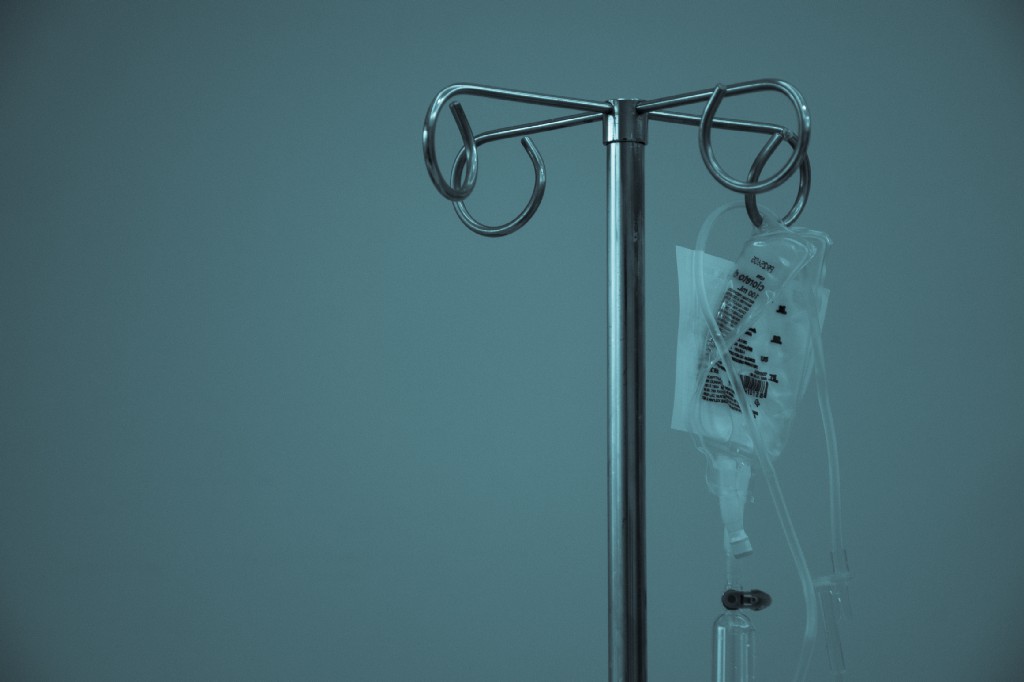
“Should we hire a nurse to bring her?” we wondered. “Could she use a wheelchair? Are heart rate and oxygen monitors, and IV poles transportable?” The doctors indulged us. Our daughter had started treatment which the doctors expected to kick in at any time, but in the week before the wedding-that-didn’t-happen, her levels didn’t budge, the daily blood work revealing no improvement.

Lincoln’s former slave Elizabeth Keckley’s memoirs are quoted in Lincoln in the Bardo: “At least [Lincoln] advised that the doctor be consulted before any steps were taken. Accordingly, Dr. Sloan was called in. He pronounced Willie better, and said that there was every reason for an early recovery.” In our case, too, the doctor assured us our daughter would come home before the wedding.

Denial braided itself into a knot with belief in medical authority, the momentum of an impending event, and self-protection. Never once did we leave our daughter alone in the hospital; always she had a parent in the room. We talked with the doctors and the nurses and stayed present and keen, yet still we didn’t register the signs that she wasn’t getting better, wasn’t responding to the medication, couldn’t conceive of leaving in time to walk down the aisle, her arms full of flowers, at her parents’ wedding.

Yet that denial made more sense than the alternative, sinking completely into what it feels like to lose a child, as the Mother does in “People Like That Are The Only People Here”: “After this, there is no more life. There is something else, something stumbling and unlivable, something mechanical, something for robots, but not life. Life has been taken and broken, quickly, like a stick.”

Our wedding, like Lincoln’s party, represented hope, a sustainable defense against inconceivable loss.

Our wedding, like Lincoln’s party, represented hope, a sustainable defense against inconceivable loss.

Under the guilt Lincoln’s critics ascribe to him lies the expectation of retribution for the bodies dying on his watch on the Civil War battlefields. A child’s injury or illness, the parents’ pain in its wake, can be redemptive, too. This dreadful situation humanizes the parent caught in its net, showcasing her empathy and the care she administers as she rises to the occasion, its wake erasing all shadows of doubt or meanness or empathy withheld or not engaged.

Stories will often present a child’s death or illness to make sympathetic an otherwise despicable character, as The Sopranos does with Ralph Cifaretto in season 4’s “Whoever Did This.” Ralph is a loathsome mobster, despised by his boss, Tony Soprano, for having beaten a stripper to death and considered the act a joke. When “Whoever Did This” opens, a friend’s arrow strikes Ralph’s son in the eye, sending him to the hospital and a life in a vegetative state. Ralph’s pain in the wake of his son’s accident shifts him into a more solicitous light, especially as he seeks guidance from a priest about how to redeem himself in God’s eyes.

Stories will often present a child’s death or illness to make sympathetic an otherwise despicable character.

At the same time, the episode is setting Ralph up metaphorically as the Devil, going so far as to embed three lines from The Rolling Stones “Sympathy for the Devil” in the dialogue: To the surgeon, Ralph says, “Please allow me to introduce myself.” To Father Phil, the priest from whom he’s sought guidance, he says, “Pleased to meet you.” Father Phil says, “Were you there when Jesus Christ had his moment of doubt and pain?”

Ralph’s visit to the priest underscores the searching for answers we all undertake when our child is stricken:

RALPH: God? My son’s lying in the hospital hooked up to a machine. He never did nothing to nobody.

FATHER PHIL: Our Lord gave his only begotten to suffer.

RALPH: Nothing compared to this.

Ralph believes his son’s misfortune is his fault, vengeance on his own wicked ways. “He’s making my son pay for it,” Ralph says. “That’s how he’s punishing me.”

A child’s suffering defies all explanation. The idea that a divine entity engineered an accident or an illness is as unfathomable as the concept that a child’s negative energy could cause her cells to turn on each other or multiply without reason. While it’s easier to frame a child’s misfortune as a sociopathic mobster’s punishment, what about the situation of a more complex, noble figure, such as Lincoln? Should a child lost be a referendum on our worth? What about the rest of us, whose garden variety missteps are the stuff of everyday parenting? Maybe if we can feel compassion for an evil character in pain after an accident disfigures his son, we can stretch it to include our own small failures to ease our child’s suffering. In the throes of guilt, I found it easier at times to feel absolved by the villain than the more honorable man. We can empathize with our own pain as we witness it enacted by another, the more diabolical the better.

We can empathize with our own pain as we witness it enacted by another, the more diabolical the better.

If I ever return to the surfing story I wrote alongside my daughter’s hospital bed, I will align it with the real events of the day it was based on, a day I nearly drowned. My instructor and I had paddled our boards for over an hour towards a viable wave with no success, leading me to believe that we hadn’t gone far. I am an average swimmer, used to chlorinated pools and cold Ontario lakes, and uneasy in water over my head. When a wave finally came and I hesitated in turning and hoisting myself on my board, the water’s force shoved me below the surface as the surfboard skated across my hip, opening the skin. Panicked, I surfaced, clinging to the instructor, choking on sparkling aqua waves, tugging him under until he calmed me down, guided me back to the board.

Only then could I see how far we were from shore, the people tiny colored smears against the buff-grey sand. I berated myself for swimming so far out into the ocean with such little experience. At first, I refused thoughts of how far my feet would have to reach to touch bottom and willed away the sensation of the wave yanking me downward. Then my response evolved, balanced out: sometimes I walk myself up to the edge of the memory now, not to wallow in pity or fear, though that’s part of it, but to remind myself of how improbable and blessed survival is.

Sometimes I walk myself up to the edge of the memory now, not to wallow in pity or fear, though that’s part of it, but to remind myself of how improbable and blessed survival is.

In the aftermath of my daughter’s hospitalizations, I’ve struck a similar balance, if only to make my entry into the fierce terrain of my child’s death more bearable than the Mother’s broken life in “People Like That Are The Only People Here.” The guilt and denial served a purpose as I got down to the business of empathy and care. Finding myself in characters whose hapless parenting experiences matched or exceeded my own consoled me then inspired me to do better, to celebrate in the face of darkness.

The story I wrote — light-hearted and untrue — holds no place now. The story I will write will talk about how it feels to take a risk and fail and then survive, the risk we all take when we choose to love a child. I will tell the story of how not to drown.

Representation in Comedy Is About More Than Just Visibility

When I opened my computer, it was still dark. Morning, but early. I couldn’t sleep. I tried not to wake my husband, Quincy, blissfully passed out. The word on the title page glimmered before me: “Invisible,” in that classic, typewriter-like Courier font, backlit by the blank white screenplay PDF.

I’m new to comedy and performance, and to the comedy improv community. New to the experience of receiving scripts in the middle of the night. I apparently have the part of Sue in this sketch; this white man’s sketch; this white man’s sketch in a diversity-themed comedy show. I am not new to being a brown person in the arts, specifically a brown writer. I’m certainly not new to white men and white people in general traversing art spaces designed for artists who come from the margins. So when I read the title of this man’s sketch — “Invisible” — I only had one thought: Oh no.

I got the premise of the sketch — or the “game” — within the first few lines. Carrie, an actress, is auditioning for a part, but the casting directors don’t seem to see her. Am I dead? she wonders. Nope, she’s just an actress in her 30s. Sue, my character, is a friend of Carrie’s from their college drama club, who happens to also be at the audition. Sue has three lines in total, to be delivered, the screenplay tells me, in a “ghost-like voice”: “No one sees me either, Carrie,” “Then I had the baby…before I knew it no one could see me,” and “I’ll play the sassy friend.”

Somewhere along the way the actor Chow Yun-fat also joins the chorus: “In China I’m a huge star. Here, they put me in a movie with Stiffler from American Pie. No one sees me here, just like you, Carrie.”

“No one sees me either,” “no one could see me,” “I’ll play the sassy friend.” The phrases rotated in my head, along with the random inclusion of an “invisible” Chow Yun-fat. I tried to picture myself in the scene. But I couldn’t see myself in it, not so much because it made me invisible as because the scene itself was indecipherable.

We are not forbidden from writing across the color line. Doing so can, at its best, be a radical act of empathy. I once heard that Richard Pryor wrote many of the lines for Mongo (Alex Karras) in Blazing Saddles, turning Mel Brook’s one-dimensional white hulk into a Shakespearean fool, and that Donald Glover did the same for Kenneth the NBC page (Jack McBrayer) in 30 Rock.

And this sketch was even well written. You could see a sure and steady hand in how it deftly and playfully moved between real and surreal. Acting as our guide is a young boy named Peanut who, like Haley Joel Osment’s “I see dead people” character, has an apparent sixth sense for seeing out of work actors as they “cross over” into obscurity. He’s not dead either, just an out-of-work child star. He’s there to guide Carrie through her emotional journey, and of course the audience along with her.

We are not forbidden from writing across the color line. Doing so can, at its best, be a radical act of empathy.

But at the end of the day he was still a white man writing a sketch for a diversity-centered, not just diversity-themed, program — a white man who has not had to struggle with invisibility to the same degree, the same micro or macroaggressions, that others in the program have, and like I have.

Does he feel the same anger I do when, during an improv show, two white men start a scene with me by pointing to the stage window and saying, “Quick! The Indians are coming! Let’s go get the guns!” Is he left speechless when a white man shouts at me in a Clint Eastwood snarl, “Get off my porch!”? Can this white man — who takes space in a program dedicated to diversity; who, despite his fine writing, is still a white man capitalizing on diversity — really see us?

This was the biggest part I’d ever been assigned at the improv theater. Our first rehearsal was to be later that day. Refusing would mean inconveniencing the group, and consequently gaining a reputation for being an inconvenience.

Does he feel the same anger I do when two white men start a scene with me by pointing to the stage window and saying, “Quick! The Indians are coming! Let’s go get the guns!”

I weighed the scales: to cause trouble, or to be a brown girl in a white man’s diversity sketch? To bow out, or take a bow on stage?

Just a few days later I saw a brown man performing in a white man’s romantic comedy movie.

I was lying on my couch, flipping channels. I stopped at a scene in which Jennifer Aniston is running around in a pink towel, inside a cheery, sun-dappled suburban kitchen. She’s wrangling two preteen boys, her sons, and both of their friends, trying to get them ready for school and out the door. Minutes later the dad, Timothy Olyphant, comes in. “Did you look this good when we were married?” he asks. “No, I actually got better,” she quips back.

The kids take this in. “Your parents are divorced, right?” a friend asks. “Oh, trust me, there’s weirdness,” one of her sons replies.

I pressed the TV remote’s Info button for the runtime and title of the film: I was five minutes into Garry Marshall’s Mother’s Day. I knew Marshall’s star-studded holiday trilogy, having watched the first two, Valentine’s Day and New Year’s Day, in much the same way as I happened to be watching this one, catching bits of them on cable and then piecing them together. Released in April of 2016, Mother’s Day would not only be the last in the series but Marshall’s last film ever — he died just three months later of complications due to a stroke.

The New Voices of South Asian Young Adult Literature

Valentine’s Day blew out the box office. When New Year’s Day came out Quincy and I had joked that the next to follow would be Arbor Day. We imagined this one’s iconic scene and tagline, a young blonde starlet standing in a field without a speck of dirt telling her male co-lead, “Anything can happen on Arbor Day.” Mother’s Day actually came close to this exact scenario, so it made for the perfect thing to watch when you felt like ignoring the rest of your life.

Unfortunately no escape plan is fool-proof, and before long I started to see the cracks. As Aniston’s kids scurry out the door, the next pair of players are introduced — Sarah Chalke and Kate Hudson as sisters Gabi and Jesse, estranged from their Texan, proto-MAGA parents. On Mother’s Day eve, Jesse begins to feel a remorse bordering on forgetfulness about their estrangement, particularly from their mother, to which Gabi replies:

Oh, let me refresh your memory. She saw a picture of you and Russell on Facebook, and even though he’s a doctor, she threatened to disown you if you continue to date a man whose skin was darker than a Frappuccino.

I was immediately drawn out of my couch stupor by this third-person character and his own invisibility. He was somehow less a person than a Starbucks drink. My attention faded in and out from the other storylines, but any talk of this man instantly snapped me back. Eventually, attempting to reconcile, Jesse Skypes her mom Flo (Margo Martindale), who says:

Gabi told me you’re not dating that Indian fellow anymore. Finally came to your senses. But I’m not going to rub your face in it and say, “I told you so” — but I told you so.

I told you so, I said to myself. I reached for the remote. Seconds later Russell himself walks in as Jesse slams the computer closed, abruptly ending their chat. I laid eyes on him for the first time — it was Aasif Mandvi.

Mandvi, the first nonwhite correspondent on The Daily Show, who went on air the same day he was interviewed for the correspondent gig.

Mandvi, whose Daily Show segment in 2013 called “Suppressing the Vote” — about voter suppression in North Carolina in the wake of a repeal of the Voting Rights Act — was cited in the Fourth Circuit Court of Appeals’ decision in 2016 to overturn North Carolina’s racist Voter ID law, specifically drawing on Don Yelton’s comments to Mandvi in the segment (“If it hurts the whites, so be it. If it hurts a bunch of lazy blacks that want the government to give them everything, so be it”) with Yelton resigning not long after.

The creator of Halal in the Family, which took on issues of racism, Islamophobia, and bigotry, all weaved into a spoof of an 80s sitcom. An homage, really, it was almost titled The Qu’asbies.

Mandvi, the outspoken artist-activist, who participated in things like the “Deportation Jamboree,” and “This Alien Nation.”

Who, when I worked for an Asian-American community arts organization, supported our 2009 literary festival and patiently waited for entry, even as my check-in desk volunteers asked, “What did you say your name was again?”

This Aasif Mandvi was playing a character introduced to the audience by being described as a man whose skin was darker than a Frappuccino.

Are these the fruits of surviving in comedy as a brown person?

Are these the fruits of surviving in comedy as a brown person?

I wish I could say that being called an “Indian fellow” whose “skin was darker than a Frappuccino” is as bad as it gets in the film. The sisters’ American flag shirt-wearing father Earl (Robert Pine) is the mouthpiece of these words: “Are you the houseboy?” he asks Russell during the parents’ surprise visit. And then, after the truth is revealed: “Oh holy hell. You’ve got a towelhead for a husband?”

Then there’s Russell having to run panicked out of the house in a skimpy pink silk robe, lying on the ground as the cops racially profile him.

Not to mention Tanner (Ayden Bivek), Russell and Jesse’s unfortunately named child, seemingly designed to serve up the punchline for Flo’s joke that he is “too tan.”

There’s also Sonia (Anoush NeVart), Russell’s mom — or “mother of Russell” as she calls herself — who eventually comes to befriend Flo. In an effort to find common ground Sonia puts up with, and perhaps also cosigns on, Flo’s casual racism. When Flo says that she must love living near Las Vegas because she can “find some sand nearby when you get homesick,” Sonia replies, “I don’t get that joke but it sounds racist, and funny.” No Sonia, actually it just sounds racist.

Ultimately it’s not any of these things — the open and blatant acts of erasure — that get to me most. Not Jesse taking her family photo off the wall when she Skypes, or making Russell hide in the garage when her parents surprise-visit, not “towelhead” or “houseboy”, too-tan Tanner, or the fraught allyship between Sonia and Flo. What gets to me most is something slight, so fast it can almost be missed. At a playground, Aniston’s Sandy and Hudson’s Jesse speak to a third friend, Kristen (Britt Robertson) about her cold feet over marriage. “I get that. You don’t know until you give it a shot…are you ever sure?” Sandy says. “I was sure,” Jesse chimes in, almost regal and in her element among a protective ecosystem of white playground moms wearing athletic gear.

“You were sure? You were totally sure?” Sandy says.

“One-hundred percent, going Indian all the way.”

It’s so quick. And yet it feels like the worst blow of the film. I can see that “going Indian” is intended to be positive and funny. But it’s not. It’s just a reminder that Jesse, despite her hundred percent enthusiasm, doesn’t see Russell either.

When I first joined the improv theater, the repeated act of getting up on stage made me realize just how much of an issue I had with being seen. In his introduction to Invisible Man, Ralph Ellison talks about how his narrator’s voice taunted him with the pseudo-scientific idea of “high visibility,” to not truly be seen by being dehumanized through racist caricature, reduction, and exaggeration. “High visibility” was a forerunner to the concept of the “problem minority” with its falsifications and exaggerations, concocted during the civil rights era to uphold the myth of white supremacy.

As I hit the stage, I felt that I’d fallen into the clutches of its opposite: “high invisibility,” a way to avoid the risk of an audience laughing at my brown body and not with me, by not letting myself be seen at all. Doing improv revealed my long-held assumption that the best thing was for me to keep my head down and avoid notice, to be the docile and agreeable “model minority” — in other words, to be acknowledged, but in a way that demanded the paradoxical and impossible bargain of self-denial.

While I could write (and write and write) pretty unfettered at that point, whenever I got up on a stage I felt the free-flow suddenly go dry. I couldn’t quite let myself enjoy being up there, wanting to make sure I got things “right.” I couldn’t tell you what right was, but I knew that I wasn’t doing it. After my very first class, when I felt particularly foolish about a scene where I acted the part of a space pirate, a classmate came up to me and said, “You looked a little sad when you got back to your seat. But you’ve got good instincts.” But what are “good instincts”?

Up on stage, most often with white people and in front of a mostly white audience, my instincts were working double-time. I could not simply give in to a moment the same way that I could in my writing. Instead, I found myself grappling with competing motivations: What’s better for the scene? What’s better for me?

Doing improv revealed my long-held assumption that the best thing was for me to be the docile and agreeable ‘model minority.’

Class after class I struggled with it. Class after class I tried to figure a way to take ownership of a scene, often despite a white person’s shortsighted initiation. In improv the only rule, the only “right” move, is to say “yes, and” — to accept and build upon whatever your scene partner has initiated. But as a person of color I can never simply “yes, and.” What will I be saying “yes” to? What will I condone by always playing along?

For my survival, I started to realize, it had to be “yes, but.”

Yes “the Indians are coming,” but they are coming for a Tupperware party.

Yes it’s your “porch,” but I bought the house.

With every “yes, but,” I began to feel myself truly turning up. And yet, the more I materialized up on stage, the more I hesitated to integrate myself into the community at large.

We are walking to the bar after our improv class lets out. I count off to myself — one, two, three, four white people out of our group of six. What am I getting myself into? I try to contend with the angry feeling growing as I do this mental accounting. I try my best to notice this anger. In my mind’s eye, I shine a spotlight on it as bright as the midtown block we’re on, so it doesn’t go off like a land mine inside of me.

Soon enough we are having fun, feeling ourselves one group, on the outs with all the people at the bar wearing team jerseys and watching football on the TV.

“My husband always dares me to live-tweet the Super Bowl and even though I don’t know anything about it, I always cave,” I say.

As soon as I say this I feel like I’m being typecast. Is it just me, or are they thinking about the Indian IT guy/doctor/lawyer I must have married? Should I mention that my husband is black?

“How did you guys meet?” says one of my classmates, a white woman. I’m standing beside her and another classmate, a white man.

“Through a friend,” I say. “The two of them went to writing grad school together in Philly.”

That must flag something for them. Writing grad school in Philly means I didn’t go down some expected route. But maybe I’m paranoid.

“I find it hard to meet people through friends,” the woman says.

“It actually didn’t happen instantly. Our friends knew each other for years, and when we finally met they were like, ‘Ah, doi?! Why didn’t we put them together sooner???’”

They laugh and I begin to let my guard down. Is this us becoming friends?

Just then I hear it. The white woman says, “arranged marriage” — something about how she fantasizes about it.

Without missing a beat, I start telling them about biodata — the term that sometimes appears in Indian online matrimonial ads. As opposed to a personal “about you” blurb, biodata is a list of facts — school, height, weight, job.

“Every first-generation kid knows this word,” I say. “It’s like profile information, but less the flirty OKCupid kind, and more LinkedIn.”

They laugh, and I immediately regret what I’ve done. This feels like a bit of cultural capital that I’ve commodified into a quirky, harmless “Eat, Pray, India.” And suddenly I feel as if I’m not there, standing next to my body rather than inside it, watching all of this go down.

This feels like a bit of cultural capital that I’ve commodified into a quirky, harmless ‘Eat, Pray, India.’

The white guy says something like “that’s awesome,” or “that word makes so much sense, all personal ads should have it.” My classmates are respectful, which is the best of situations for something like this. And yet, I leave the bar feeling awful.

The truth is I’d be okay talking about this with a bunch of South Asian people, my community. “Biodata.” This word that I would say loud and proud, perhaps even elongating the vowels and making a few of my friends’ eyes roll as I do. But here, even as my white classmates-cum-friends respectfully crane to hear my voice, over the yells of fans going bonkers because of the game, I feel like I’m farther and farther away from them.

When I picture myself on stage for the white man’s sketch, I don’t so much picture having fun in a “Sixth Sense”-y social commentary kind of way. I see myself as the sole brown-skinned angel in my Catholic preschool play. I see myself dressed as an “Indian woman” for Halloween, until I make my own costume in the 4th grade, dressing up as a hippie, a white 1960s hippie. I see a ten-year-old blue-eyed, blond-haired white boy dressed in a loincloth and getting a standing ovation on “Africa Day.” I see myself so happy to be winning the laughter and applause of my white lunch table crew, at the expense of impersonating my mother’s Punjabi accent. I see myself in college standing in the open quad having agreed to be a living statue of Krishna for my white friend’s Sanskrit class final project. “All you have to do is stay still,” she said.

I felt tired of the choices I’d made and risked continuing to make in the hope of being seen. In this case the choice was still mine.

I felt tired of the choices I’d made and risked continuing to make in the hope of being seen. In this case the choice was still mine.

Morning was turning afternoon. The sun was out, mixing with the computer’s glare, making the screenplay’s “Invisible” a little harder to read. Rehearsals would start in an hour but I was still in my nightclothes.

I am not new to being a brown person in the arts, yes, but, “I’ll play the sassy friend.”

Yes, but, to cause trouble or to be a brown girl in a white man’s diversity sketch.

Yes, but, Aasif Mandvi.

Yes, but, Invisible Man.

Yes, but, “all you have to do is stand still.”

I go to my email, hit reply, and write No.

Vladimir Nabokov Taught Me How to Be a Feminist

When I was in college, I took a seminar on the novels of Vladimir Nabokov, which kicked off my love affair with his writing. I was nineteen or 20, an impressionable age, and at the time, I was given to accepting confident pronouncements as fact, allowing them to color my understanding of the world without further interrogation. Indeed, many of these pronouncements still hold a subconscious sway over my worldview today, though when I’m able to recognize one, I do at least try to subject it to new scrutiny. (Some gems from the era include: my dad telling me that you have to run out the charge on a phone before charging it again, or you’ll mess up the battery; my study abroad house mother exclaiming that of course I got sick, because I went to sleep with wet hair.)

One day a journalist who’d known Nabokov and his wife Véra personally came to visit our class — the kind of entertaining educational bonus-round that I imagine was more common for people who didn’t go to school in the middle of Iowa. For me, it stuck in the mind. The journalist had only met the couple once or twice, at a hotel where he was conducting an interview with the writer, but the casual nature of their friendship did nothing to subdue my response. I’m not sure why; maybe I was just star-struck at the idea of spending time with a literary icon, even by proxy. But more likely, I think, I had been waiting for someone to say what the journalist told us: that no, Nabokov wasn’t some aristocratic nightmare issuing grand pronouncements while his wife limped through the background serving tea. That instead, Vladimir was sensitive and humane, a caring spouse who knew every ounce of Véra’s great worth, and who took her opinion seriously. I found it intoxicating to learn that a historical “great man” understood the contributions of his family members, the silent but vital role they played in his accomplishments.

It’s well-known among Nabokov fans and scholars that he owed much of his artistic success to Véra. She was famously known to lick his stamps, answer his mail, and stand at the front of the classrooms in which he taught, fielding questions from the co-eds and only passing them on to Himself, seated behind her, if she deemed them worthy. Every writer since has probably wondered what more they could accomplish if only they had a Véra of their own, and doubtless many gifted and prolific female writers who have children and day jobs in addition to their literary work have wondered whether Vladimir could possibly have been as bright as all that if he couldn’t even write a novel and also run a load of laundry. So I was happy to hear that he repaid her labor with devotion; it offered a sheen of moral authority to someone I desperately wanted to go on admiring.

The journalist made another, more specific claim, too, and it’s actually this one that stayed with me the most tenaciously. He said that, at Véra’s own request, Vladimir promised that he would never use her as a character in one of his novels.

This idea became such an article of faith for me that when I studied abroad in St. Petersburg a few years later, I picked a fight with a classmate who had the audacity to suggest that a woman in an early Nabokov story we’d just read might be based on Véra. I insisted this was impossible, then insisted again, despite my not-quite-fluent ability to explain why in a class held entirely in Russian. But — the other student pointed out — she’s an émigrée, and has the same family history. I didn’t have any such textual evidence, but I refused to back down; in fact, I remember getting so angry about this classmate’s position that I slammed my hand down on the table several times, all because I wanted to take Nabokov at his word.

Inside my young undergraduate heart, this idea unlocked something. He couldn’t be all bad if he was a good husband.

It’s undeniable that Véra at least influenced her husband’s writing. She stopped him from burning the manuscript of Lolita in despair, and probably offered him comments, suggestions, inspiration, if only by being so close at his side. She devoted her life to his work, and there is no erasing that deep of a mark. But there is a difference between those contributions — given freely, as wife and vocation — and agreeing to appear in a novel, where your fate is decided for you. Particularly when it’s a novel by Nabokov, who was famous for abusing his characters rather torturously. Call it what you want: a god complex, the work of a control freak, but part of the joy Nabokov took in playing with form, with expectation, and with the trustworthiness of his narrators, came from the way that he reveled in making his characters look like fools.

Véra would’ve known this better than anyone, which is what makes both her request and his acquiescence noteworthy. She and her husband organized their entire lives around one shared principle: giving Nabokov the greatest possible freedom with which to pursue his artistic gift. And so his willingness to relinquish even one small piece of that freedom for Véra suggested to me that he loved her very much. Inside my young undergraduate heart, this idea unlocked something. He couldn’t be all bad if he was a good husband.


In the twelve years after that visit from the journalist, I read more Nabokov, and re-read him, alongside many other worthy writers. I finished college, spent some years in the working world, and attended an MFA program. I wrote a novel. And for whatever reason, I never stopped believing that Nabokov fundamentally respected his wife.

One day I was in my house in Tucson, where I spend most of my time — I work from home, writing fiction, drawing cartoons, and doing copywriting for a large tech company to pay the bills. (My husband is great, but is more of an equal partner than a Véra-level provider; he has a good job too, so he doesn’t lick my stamps, and we trade off doing the laundry). I was leafing through a copy of the New Yorker, and happened across a review of Letters to Véra, a collection of Vladimir’s correspondence with his wife, both before and after his rise to literary success. Oh, I love them, I thought, very much the way someone might react to a profile of Jay-Z and Beyoncé. And in that same voyeuristic spirit, I appreciated that some of the new gossip I found in the letters confirmed my existing suspicions about the couple: for instance, I’d always seen Véra as a woman hell-bent on supporting Vladimir, and felt vindicated by the New Yorker writer’s note that she burned many of her own letters so the historical focus would remain tightly trained on her husband.

What I didn’t expect from the review was a casual mention of Vladimir Nabokov’s torrid affair with a dog groomer and fellow émigré, which almost blew up his famous marriage and was apparently immortalized in many of his letters.

I couldn’t believe it. In fact, I was so shocked that I threw down the magazine in a huff (sorry New Yorker!) and began storming around the house, as if I’d received very personal bad news. I felt betrayed, angry, confused: how could he? Nabokov of all people! And then I felt ridiculous for ever having believed that he — Nabokov, of all people! — would not have had one or many affairs. He was, after all, a man with a rather elevated opinion of himself, known for writing sexually explosive novels (most people would point to Lolita, here, but I think we can also look to Ada, or Ardor); in historical context, it’s not particularly shocking that he’d also be a bit of a cad. As soon as I calmed down enough to form sentences, I texted my best friend: Can you believe this?? And though I don’t remember exactly what she replied, I imagine it was probably something along the lines of: …yes?

Why, anyway, did I care at all? What difference did it make to me?


I’ve always taken pride in being the kind of woman who isn’t cowed by men: before I knew what a concept like “patriarchy” meant I intuitively felt its effects, seeing other girls grow fearful of certain abrasive male teachers or classmates and retreat into silence or lose their confidence in school. Some of them fought back, of course, but many more wore their femininity like a mask, pretending to be the kind of people who had no opinions and never made waves. Men liked that mask, I noticed. They rewarded those girls with praise and ease, or simply ignored them — which was often good enough for the girls. They weren’t looking to prove anything, after all. They were looking for a way to slip under the radar and go back to their real lives.

It can be useful to know how to become invisible, and I can’t pretend I didn’t occasionally exercise that option myself, deciding that a fight wasn’t worth it and sitting back, blinking my eyes and chewing my lip until I ceased to register. But most of the time, I preferred being seen. The male teachers who intimidated my friends didn’t seem so tough to me: sure, they used sarcasm as a weapon, but I used confidence and facts. Those men, those boys, were just people to be argued with, and I found it more satisfying to get them to concede their lazy points than to simply know in my heart they were wrong. In return, I received appraising looks and grudging admiration — not to mention As on my report card. I liked flexing my intellect this way, against a hard surface that would eventually break under pressure. I liked being right. I liked cracking hard nuts. That there might be a cost to all this force I exerted did not occur to me for a long time.

But let me tell you, eventually you do get tired.

Loving Nabokov as a woman is a little bit like being a ballsy girl in a high school classroom, for the rest of your life. You know that, in all likelihood, he wouldn’t have thought much of you, no matter how scrupulously you pronounced his name (apparently a point of contention with his co-eds when he taught university; the correct pronunciation is Nah-BO-kov, not NAH-bo-kav). He would’ve palmed you off on Véra, taken your praise and smirked behind your back. This, I learned, was the dark underbelly of being a “cool girl” who can handle tough men: you have to prove yourself with each and every one of them, and after a while, it can stop feeling worth it — especially if the object of your interest is dead, and thus beyond persuasion.

Loving Nabokov as a woman is a little bit like being a ballsy girl in a high school classroom, for the rest of your life.

I’ve never wanted my politics to guide my experience of art, in particular — I prefer art to be personal and transcendent. But I also believe that politics are personal, and shape your experience of everything. In college, my ability to perceive Nabokov as a devoted husband reduced his political charge, and therefore offered me a simpler relationship to his art. I could be moved by the ghost of Lolita’s beloved face, and by the anguish of John Shade’s drowned daughter in Pale Fire, all without paying attention to the fact that he probably wouldn’t have respected my intellect — a fact I found unforgivable in other men. You might say this was right, that literature should always and only be judged on its own merits. But can’t we all agree that’s naïve? Ignoring a political problem is a political choice, too.

What I wanted was an indication of fairness in the world, a sense that some men understood their power to be unnatural and tried to compensate. And though it would never have occurred to me to ask for this particular fairness from Nabokov, I thought I’d found it in him all the same. When that journalist visited our seminar and told us of the writer’s private kindness and honor, I was 19, and I believed him — believed, even, things that he didn’t necessarily say. For instance, that Nabokov’s promise to Véra meant that he never strayed from or betrayed her. And that this meant I was safe with his writing, fully allowed to disappear inside his words without questioning the man who wrote them. Believing that his prodigious talent was all that mattered, since it did matter to me, so very much.

But letting something inside of you that way, designating it as divine, makes you vulnerable to it. And if you later discover that the object of your faith is imperfect, the way I eventually discovered the truth about Nabokov’s marriage, it has the power to crack you open. Maybe it’s foolish, but it’s true: Nabokov’s affair agitated all my tender places, the seat of my fragility, which is my sense of honor and shame. It made me aware of how much I crave goodness, and rely on the places where I think it resides. While I stormed around my apartment and raged to my friend — How could he? and Can you believe this? — I was mostly angry at myself for having been such a fool, for so long.


When my passions had cooled a bit, after reading that fateful review, I felt a familiar stirring of narrative interest in the back of my mind. What kind of person must Véra have been, I wondered, to withstand all this without losing faith in her husband? What did she want out of the marriage, and what did she get? Just proximity to power, or something more?

I wondered, too, about the dog groomer who almost usurped her: what kind of a woman was she? Did she grieve the loss of her affair, or was she relieved by it? Did she let go without a fight? I started taking notes about these women, inventing histories, toying with voice. The initial shock to my system was gone, and in its place was an energy and urgency not unlike the feeling of meeting someone for the first time and knowing you will fall in love with them.

The disappointment I felt taught me something valuable about my expectations for novelists: that maybe I should lower them.

Nabokov will always be important to me, and I’ll probably continue reading him for the rest of my life, returning to his novels and short fiction with the same rush of affection and awe that I felt from the beginning. But he’s no longer untouchable in my mind, no longer that same immovable object of creative energy and holy matrimony. Which is fine. The disappointment I felt on the day when I discovered he cheated on Véra taught me something valuable about my expectations for novelists: that maybe I should lower them. After all, artists are only human. They are imperfect. They err. And I began to reevaluate my expectations for myself, too, thinking that perhaps if a timeless artist can fail in a very human way, then perhaps I, a human prone to failure, can also create timeless art.

In time, my notes about the women who touched Nabokov’s life took on a life of their own, moving beyond any sort of biography until they took on a new form, and became a novel. I wrote the book in a kind of fever over the course of several months, coming back to it in the middle of the night, sneaking off to spend time with it while on vacation. I refused to talk about it with anyone in my life, referring to it only as my “secret affair manuscript” before changing the subject with a knowing smile. My anger, it turned out, became something useful to me once I stopped obsessing over it. Not a piece of armor, or a cloak of invisibility, or even a weapon, but something potentially more powerful.

A story.

‘Why Is Illness What Makes You See Us?’

The story of how Porochista Khakpour and I became friends is this: after I was finally diagnosed with late-stage Lyme disease in 2015, years after being mysteriously ill and diagnosed with, among other things, complex post-traumatic stress disorder and fibromyalgia, someone told me to get in touch with Porochista. She’s also a writer, they told me, and she’s been very public about her struggles with Lyme.

I sent Porochista a Facebook message; to my surprise, she wrote me back. When she announced on social media that she would be in San Francisco, I summoned my nerve and asked if she would be interested in having lunch, which led to an hours-long conversation at the now-defunct Boxing Room. We spoke about Lyme disease, but we also bonded over writing and being women of color, as well as over myriad things that surprised and delighted me. Our friendship, to my mind, began there.

Since that lunch in Hayes Valley, we have shared a room twice at the Association of Writing Programs conference; sought treatment together from her doctor in Santa Fe, whom Porochista wrote about in her book, Sick; bonded for hours in motel and hotel rooms. I think of her as one of my closest friends. In the months before Sick was to come out, Porochista experienced a severe Lyme relapse, the difficulties of which were compounded by mold and lead exposure. She stayed with my husband and me for three weeks while she saw doctors in San Francisco, and in our guest room, we had the following conversation about Sick, Lyme disease, psychic friendships, and, of all things, Costco.

Esmé Weijun Wang: You got here on Monday.

Porochista Khakpour: And then when did I start the IVs?

EW: You started them on Wednesday, I think.

PK: Wednesday. Right, so this is our third day of IVs this week, where… Or rather, my IVs. You’ll join me next week. Of immunity drips: high-dose vitamin C, Myers’ cocktail with glutathione. Just sort of basic IVs. With me, it takes a long time because I have to go really slow. It’s been anywhere from five to two hours today, so that’s not terrible.

My Lyme relapse seems to have gotten very, very, very complicated because of mold, and then lead exposure. This is definitely the most rotten I’ve felt in a long, long, long time. And you’ve been so kind to open up your lovely guest room to me, which I’ve stayed in before, and have had such a lovely time. It was an emergency, basically. I flew out of New York, got to L.A.. Got to L.A., got sicker, and you were just like, “Come on over.”

January, February, March, April, May. God, it’s been a long time. The last four months of my life have been completely crazy. I had a breakup that was really hard. I had all sorts of difficult situations with my family back in California. My dog got very ill at one point; he had to be hospitalized. I’ve had at least three or four hospitalizations with this Lyme relapse. And then I’ve been displaced from my house because in my Harlem apartment, there was demolition going on above and adjacent to me, pretty illegal ones. So there was just a ton of lead, asbestos, and God-knows-what exposure in my apartment. And because I was so ill and depressed, I didn’t really act in time. For the last month of my life, or a little more than a month, I’ve been just crashing with random people with my dog. [chuckles]

The last four months of my life have been completely crazy. I’ve had at least three or four hospitalizations with this Lyme relapse.

I’ve been sleeping on people’s floors, on their air mattresses… Guest rooms of total strangers, people following me on Twitter. And then I’ve been flying around the country. I’ll do two speaking gigs, like a Georgetown speech and SUNY Purchase; and then in between, go to New Mexico to get this Lyme treatment.

EW: I feel like in you discussing the context of this conversation, it’s not only giving context to how perilous life can be with an illness like Lyme, and all of the complications that can come with it; but also just how unstable it is. So many people we’ve talked to have tried so many things and experimented with so many ways of getting better.

PK: It’s endless.

EW: It’s endless.

PK: When I go into remission, I forget that… It’s like I have two selves. The last few years, it seemed like that was half the year; and then the other half, I would be this other person. You’re constantly having to come up with strategies and ways to exist, and, “Oh no, is this a Lyme symptom? Oh no, is that a symptom?”

EW: You and I have had many conversations since you’ve been here in which you’re asking me questions that I doubt even a very smart medical doctor would be able to answer, just because they’re so complicated. You’ll ask me, “Why do you think this is happening with my gums?” Or, “What do you think is happening with my stomach?” Or, “Should I eat this egg?” You’re confounded by all of these complex questions, and there’s not really a good answer at any point.

PK: You become like a child again. That’s what I always think of it as: you suddenly become like a child, and you have to constantly go back to questioning everything.

One thing I think about a lot, for instance, is how important it is to connect with people, and to have friendship and love and support because it is so incredibly unstable. But we started talking, when was it? 2014? And I guess I was doing somewhat well when I saw you.

You become like a child again. That’s what I always think of it as: you suddenly become like a child, and you have to constantly go back to questioning everything.

EW: I remember I was not doing very well when we first met. And I just remember being so blown away to meet somebody who had gone through what I was just starting to realize I was going through. I felt like you were so full of wisdom, and had so much knowledge, and really knew what was going on. I remember feeling so sick at that lunch and being confused and despairing. That was a really important time for me to be able to meet you.

PK: Now that I look back, I’m like, “Wow, how did I do all that stuff? What was I up to? How did I thrive through that?” I think that both of us as writers, and as people with chronic illness and disability, have ways of comparing ourselves to our past selves.

EW: Yeah, totally.

PK: I think part of the business of being a nonfiction writer and essayist, which is only part of what we do… Should we talk about that, too?

EW: We both like to pretend that we’re only practice essayists! Or not practice essayists, but temporary essayists who will return to being novelists.

PK: Yeah, we’re fiction writers. [chuckle] But I think it’s sort of our service. For you, it’s two-pronged because you actually… you have this other life, right?

EW: Yeah. I create a website and resources for people who are ambitious and living with limitations, which are often, with these people, chronic illness or mental illness. So some of those things are paid products, but then I try to make a lot of things that are low-priced or free. And then there’s the freelance-y writing stuff that can make some money, sometimes.

[laughter]

PK: Sometimes, occasionally. Yeah, that becomes an extension.

Service has been a part of my essays and my social media presence pretty much since 2011, I guess. Prior to that, I wasn’t that active on social media. And my really other bad health collapse was 2006… I wasn’t on social media talking about this stuff because I had this scheme to one day write a memoir, to write these essays. To be like, “I need help, and I wanna reach out to people; and maybe also me sharing helps someone, too.” There’s something very human about it. The work you do — my guess is that also helps you, and reminds you too, right?

The Asian American Women Writers Who Are Going to Change the World

EW: Oh, totally. “The teacher teaches what they most need to learn,” as they say.

So it’s May now, and the book is coming out in June. How are you feeling about meeting people who are going to have read this, and are reading it?

PK: The funny thing I started noticing the last few years is that people who would come to my readings were actually coming for something different. My readings would be about my other work, which is often Iranian-American stuff, like essays or my novels, which both have Iranian-American themes; but they would often actually be people who had no interest in that but have followed me on social media because of my battle with Lyme. They’d always be the people who stay at the end. It started happening a lot.

They’d be like, “Oh, you know… We might buy your book one day. We really just wanted to meet you.” And it would always have something to do with illness and disabilities.

So I’ve had this weird practice now because I think I have all these identifiers. It’s always like, What is the thing that will connect to Americans? That’s always been one of my battles since I was a refugee kid who came here. How do I relate to Americans? [chuckle] I never thought it would be illness and disability, but it always is. And I’ve talked to you about this before: in airports, having a wheelchair or cane or this oxygen concentrator now, becomes the subject of conversation and empathy more than anything. The thing that threatens to derail that is me telling my name, and where I come from.

That’s always been one of my battles since I was a refugee kid who came here. How do I relate to Americans? I never thought it would be illness and disability, but it always is.

Like I’ve said in the book, too, illness often makes me extremely white-passing, more than I am when I’m healthy. And so there’s also that funny mess too.

EW: Yeah. I feel like you’ve told me that a lot of times, you’ll meet various people who, if you happen to mention you have Lyme, will say, “Oh yeah, I have an aunt with Lyme” or “My cousin has Lyme.” I have a book about schizophrenia coming out next year and am often nervous about mentioning it to new people, but often I’ll get a response like, “Oh, my sister has schizophrenia.”

PK: It started to become comforting to me in a weird way, even though I have qualms about it, and I have a lot of misgivings about, why is that the thing? Why is that what makes you see us, and you can otherwise think we’re not like you in some way?

EW: It’s interesting to think about the different kinds of stigma that exist with different kinds of illnesses, or even illness in general. You’ve told stories about bonding with people at airports, but you’ve also had some really lousy experiences at airports.

PK: Yeah. I already have this defensive feeling in airports because long before the Muslim ban, there have been all sorts of problems. I only became an American citizen in 2001, and my family and I were on political asylum, so I had these white documents that I traveled with, and we were always pulled aside. “Flying while Muslim” or “flying while Iranian” has been an issue for a while.

But then there’s the stigma with illness, too. I think that actually has to do with the mental illness aspects, too, because I talk about PTSD. You’ve really been witnessing in full force my OCD, which is worst when I’m really ill. People are often like, “Oh, is it clinical?” I’m like, “Oh yeah. It’s really, really bad.”

If I just looked serene in my wheelchair, and I was smiling like Ms. Lyme — in this weird way, [the people I encounter at the airport would] be happy. But if someone pushes me and knocks me over when I’m in a precarious position, I might burst into tears; I’ll really be fragile about it. And then they’re like, “Oh, what’s wrong with this person?” Maybe they’re just hoping I had a sports injury.

EW: Something that we’ve talked about recently is how having a disabling illness can often be so debilitating to one’s self-esteem. That’s been something that I’ve thought about, and even written about a little. The word “disabling” can refer to being “less able,” and the idea of being confident is so often built around what we can do. And so those two things feel very related to me.

PK: It’s so true. I didn’t think of it that way, but when you’re confident, you can’t just be. It’s always about your productivity, and what you do. Common questions like, “What do you do?” And that’s just so American in so many ways, but it’s probably also human, like, “What are you doing on this planet?”

That’s a really, really, really hard part of the illness because I’ve always identified so strongly as a writer in things I do. I’ve always been seen as fairly dynamic and productive and energetic, but god, at 40, I kind of feel exhausted for the first time, or really in touch with my exhaustion.

I’ve always been seen as fairly dynamic and productive and energetic, but god, at 40, I kind of feel exhausted for the first time, or really in touch with my exhaustion.

EW: Yeah. We joke sometimes about how we’re practicing for being old. We’re going to be real experts. [laughter]

PK: I think we will be because that happens to people. You’ll start to see it happen in midlife, and then it goes to the end of their life. They start freaking out about every little thing that goes wrong in their body. But we’ve been doing this for years.

We don’t know what animals’ opinions on mortality are. We have some idea, right? We know that wolves in a pack, if they get injured or something, they might separate themselves. But what we do know is that human beings are awfully anxious about mortality issues.

Just the way like I’ve said to you, Let’s organize our next week for work stuff, that feels good, I think there’s a kind of harmful, macro version of that, which is like, “Okay, let’s organize our lives. And this is how it’s going to be. And these are what my dreams are.” I’ve done that for a lot of my life. I’ve achieved a lot of things I dreamed of, but I didn’t allot space for all sorts of things, like car accidents or illness or sexual assault or all those things that ended up really causing dramatic setbacks.

So I’m trying to be less of that person, even though it’s so deep in my wiring, because you just don’t know. I’ve become really good about living in the present. I’m actually horrified of the future now, especially because I’m having a rough time with it right now. But I can think, “Oh, I spent time with you. Food went down my throat. Oh, we had this moment of sitting in your backyard, and the sun was out. It was so nice.” Little things become so incredibly precious for me, because you and I both know that feeling of entire days spent in incredible horror, where you’re trapped in your own body and you can’t get out.

EW: There’s something that really disturbs me sometimes, and I’ve actually never voiced this thought out loud, so who knows what’s it’s going to sound like when it comes out. But I don’t know if you are familiar with this kind of… very middle-class, white woman cultural phenomenon that’s like, “an ordinary life, the beauty of an ordinary life.” Are you familiar with this?

PK: Yes. Oh, yeah.

EW: I feel like the kinds of things you just said sound like that. It’s a little bit like, “Oh, we enjoyed the beauty of our ordinary day.” But when it’s really taken seriously, it’s a lot harder than making a photogenic muffin and putting it on Instagram.

When it’s really taken seriously, it’s a lot harder than making a photogenic muffin and putting it on Instagram.

PK: I think you and I both often get applauded for being really vulnerable about illness. You know I’ve talked to you about how empowerment rhetoric is hard for me, whether it’s in minority culture, or disability culture. On the one hand, I love it, and it brings me out of a certain place. But on the other hand, it feels like it’s so alienating [to say], “Yeah, we’re sick, and we feel great! We’re kicking ass!” Because it’s also, “Wait, hold on. I’m not yet kicking ass. Wait a sec. I want to, but I feel like it’s hard to know what the strategy should be.”

EW: This is, to me, related to the human need to come to the realization over and over again that we lack such control over our lives. I think this is not necessarily unrelated to having OCD, or in my case, being obsessed with planners and making these long lists, and being obsessed with organization. Back when my major psychiatric diagnosis was bipolar disorder, I once saw a then-new psychiatrist; I came in with my giant Filofax, which was filled with lists and charts and things. I mentioned that I really liked to carry it around with me everywhere, and I really felt a need to have it. And she said, “This is actually really common for people who are dealing with psychiatric illness.” Which made a lot of sense to me, because if your body is so out of control, and a lot of your mind is so out of control, and there’s so little you can control, then why not try to control the things you can control?”

PK: Yeah. PTSD is the one that really threatens it. You’ll often remind me to, say, “Go make a list,” or something like that. As you’ve probably noticed over the years, you always tell me to do that, and I don’t. And I’ve actually really thought about this issue, about why I don’t do it more. This whole book was composed mostly not through journals, but through emails that I would send to people. Because I don’t delete any emails. [chuckle] I have one of those crazy inboxes.

But I think one of the reasons I am so scared sometimes to keep a planner or record things is because of these issues related to post-traumatic stress. I feel like it’s almost like this weird, magical thinking — that if I put it down there, I’m forced to be in a cycle that I’ve been in before. I was really thinking about this a lot today, where I was like, “Why can’t I do it? I’m a writer, I can just put this down in a list.” I have all of these scraps of lists, but I’m terrified of them being material in a way. My spirit wants to say, “This isn’t really happening. I’ll get over this soon, and I won’t be back into these horrible times in my life where I was just drowning.” And I want to say, like, “I have the tools now, and that won’t happen again to me,” but I feel like I’m a little bit there right now, and I’m scared. I have a lot of fear. I see you as someone who doesn’t have a lot of fear. I don’t know how to explain that, but I feel like you’ve conquered some of the fears that I still feel like so much of my existence has become defined by.

My spirit wants to say, “This isn’t really happening. I’ll get over this soon, and I won’t be back into these horrible times in my life where I was just drowning.”

EW: Something that you’ve really helped me to better understand and navigate is the literary world. I feel like I had such an idyllic view of what that world and community were like before I started entering more deeply into it. [chuckle] And it’s kind of sad, in some ways, that it would feel that way, but you were just saying to me recently that the friendships that you make are actually very central, and not necessarily the lagniappe to the real things, which are the laurels and whatnot of that world.

PK: Well, that’s like New York media and the New York literary world, really. It’s like the problems of capitalism in America are so within that culture, even when people don’t want it; but it’s the individuals that make it good. I keep seeing this stuff. I see a lot of millennial writers write things like, “Well, it’s good to have friends who aren’t too supportive.” And I just want to be like, “Really? Because what we do is really hard, and there’s no… There’s never too much love or too much support for writers, ever.”

Then, add all of the other layers of isolation of being, of other cultures of illness and disability, of having… Even the sexual identity thing, we can talk about. There are so many different marginal identifiers — so to think that support will be threatening to me, and love will be threatening to me? That’s crazy.

What we do is really hard. There’s never too much love or too much support for writers, ever.

EW: Yeah, like we really need to feel more alone in the world. [chuckle]

PK: I will always be honest with my friends, but I will never consider being unsupportive of them. I am really loyal, and I feel like I have friendships for life, unless someone really pushes me out. But there’s no chance I would have continued to be a published writer since my first book if I didn’t have really good friendships, of which you’re the peak to me. Because a lot of my friendships were like, “Oh, I could only relate to people with one side. This is my friend I can be this way with. This is my friend I can be this way.” And I think that was the magic of us, that there’s so many things we have in common.

EW: We’ve had so many interesting psychic connections.

PK: Yeah, where we’ll often be like, “Wait. That thing you said — did we talk about this already?”

EW: Yeah, or like the Market Guide for Young Writers, which we both used and read as kids. [laughter] I was so happy when you sent me the photo of your copy because I remember that exact cover, and the color of it, everything.

PK: It’s so crazy that we had that in elementary school. Or that the Californias we grew up in were different parts of California but were somewhat comparable. You brought up vitamins, and I could just say, “Oh you know, Costco. That was a Costco brand that our parents bought.” Or our attraction to certain indie or alternative cultures as a reaction to the rest of our school, or the idea of normalcy, the idea of being a misfit like in the ’90s and onwards. We were kind of born in the right time.

That’s why my whole book tour and all my interviews and stuff like that have everything to do with friends. All of that is just… friends. I don’t have any more desire to do things outside of friends. That’s what the literary world gave me, really. Not riches, not anything else, but just good friends, and that’s a lot.

Gator Butchering For Beginners

It’s easy enough to slip the skin. Wedge your knife below the bumpy ridge of spine to separate cartilage from fat; loosen tendon from pink, sticky meat. Flay everything open. Pry free the heart. It takes some nerve. What I mean is, it’ll hurt, but you can get at what you crave if you want it badly enough.

Start with the head.

The initial incision should be sharp, precise. Don’t hesitate. This will be the toughest part. Do you know how hard it is to end a thing? They’ll say: Wait. They’ll say: I still love you. Remember making out in your car after work? How we named the dog three times before anything stuck? That weekend at the beach we fed birds and one landed on your bare shoulder, then sang for us? That’s a gator mating call; a bellow, rippling vibrations meant to stun prey. Heft the knife and feel for an artery. Nothing’s worse than something left half dead, bleeding-howling, so go for the throat. It’ll help if you drink enough beforehand to razor-sharpen your words. Slip someone else’s name into bed between the two of you. Thrust the dagger called apathy and slice without hesitation. After: hack free the skull. Keep it at your bedside, a gentle reminder not to call at 2am.

Next: the belly.

Bodies aren’t meant to be opened from the middle. Gutting’s ugly work, airing what’s decayed in secret. Gators contort to ingest. They do the Death Roll, a dance of twisted necks, diving to drown their partner before swallowing whole. Cut open a belly and a history spills out: past food lodged in coiled intestines, innards stuffed with a romantic dinner, remnants of a long-ago night you wedged your mouth against something slick and drew out all the pleasure for yourself. Dig into the bowels of the fridge and uncover the last pizza you bought together. Final jar of pickles, solitary spear floating lonely. Deodorant left behind in the medicine cabinet, fuzzy lick of memory on the tip of your tongue from suckling a breast and mistakenly catching the edge of an armpit. Once clean, the meat here is tender, but it’ll always carry the sickly-sweet aftertaste of rot.

Harvest the worthwhile scrape: the tail.

Everyone knows that to outrun a gator you sprint zigzag, but to catch one you have to sneak up from behind. Kneel on its back like a supplicant; brace yourself against its hind end. Ask anyone: all good meat resides in the rump. That beefy, thrashing muscle designed to sweep you off your feet. Below its rubbery hide is the flesh you’ve been craving. Do you wanna get a drink, you ask, cutting carefully to the chase. Forget middle names, Christmas gifts, the flavor of icing on that first birthday cake you shared. Blot out the memory of an unshaved ankle rubbing against your calf under body-warmed sheets. There’s only the sweet, tangy bite of what you’ve been missing. Something savory you haven’t had in years. Let your teeth strike bone, jaws tender with need, salivating. Swallow the meat whole and then drive home alone. Dive beneath sheets that smell only of you. Wallow there, a solitary beast.

Digest.

Now for your trophy. Drape the skin wetly across your shoulders. Zipper the cape snug beneath your chin; pull over the rubbery hood. Feel for the sudden ridge of snout, glance claws off the sharp jut of new teeth. Acknowledge that everything you eat was once part of something bigger. Know that whatever you consume stays lodged inside your flesh as muscle memory.

About the Author

Kristen Arnett is a queer fiction and essay writer. She won the 2017 Coil Book Award for her debut short fiction collection, Felt in the Jaw, and was awarded Ninth Letter’s 2015 Literary Award in Fiction. She’s a columnist for Literary Hub and her work has either appeared or is upcoming at North American Review, The Normal School, Gulf Coast, TriQuarterly, Guernica, Bennington Review, Electric Literature, Salon, The Rumpus, and elsewhere. Her debut novel, Mostly Dead Things, will be published by Tin House Books in Summer 2019. You can find her on twitter here: @Kristen_Arnett

“Gator Butchering for Beginners” is published here by permission of the author, Kristen Arnett. Copyright © Kristen Arnett 2018. All rights reserved.

The Four Rules for a Good Book Club

The first rule of book club is: you have to read the book. It’s one, I’m happy to report, the ladies of the film Book Club are willing to follow. After a photoshop nightmare of an opening montage, in which we learn these four friends have been finding time in between marriages and divorces, law school and child-rearing to talk about books for several decades now, we see them settle in for a discussion on this month’s pick: Cheryl Strayed’s Wild. Rather naively, I thought we’d get to see what these four older women (played by screen icons Candice Bergen, Jane Fonda, Mary Steenburgen and Diane Keaton) actually thought about Strayed’s hiking memoir. I wouldn’t have been surprised if we’d gotten a nod to its Reese Witherspoon-led film adaptation (don’t people in book clubs often opt to watch the movie instead?). And while I admit “a judge, a hotel owner, a chef, and a widowed empty-nester walk into a suburban kitchen to discuss grief, heroin, and the Pacific Crest Trail” sounds like the set-up of a painfully unfunny joke, I was surprised — nay, outright offended — when Fonda’s Vivian went ahead and cut short their conversation on the best-selling book after two minutes. She was all too keen on handing out her pick for their following meeting: Fifty Shades of Grey.

Which brings me to the second rule of book club: you have to talk about the book. Okay, so maybe the Bill Holderman-directed movie wanted to move the plot right along. It was crucial for these women to get their hands on Mr. Grey — it’s what prompts the requisite self-reflections that late-in-life narratives like these are made of. It’s what makes Steenburgen’s Carol try to rekindle her sex life with her husband; what gives Keaton’s Diane the courage to go out with that handsome stranger; what incites Bergen’s Sharon to try her luck at online dating. But by the time they meet soon after to talk about E.L. James’ steamy book they again don’t even bother leafing through their ear-marked copies to share insights on what they’d read. Instead, they giggle giddily and squeal with glee when they get their hands on their next pick: Fifty Shades Darker. That’s when I began to fear the film’s title was slightly misleading.

Because a film called Book Club should be about a book club, and not every book-related gathering counts. A book club, a good book club, has rules. As a book club disciplinarian, I know whereof I speak.

Book Club also seemed designed to break the third rule of book club: don’t make it about yourself. To explain, allow me to, well, make it about myself. Last summer, in an attempt to up my social game — and driven to push back against a certain viral essay that was making the rounds (“Delete Grinder. Join Book Club.”) — I created my very own book club. Surely there was a market for a book club that billed itself not as an alternative to a hook-up app nor as an excuse to score a date. As I continue skidding into my mid-thirties and see the chances of meeting other gay men in socially acceptable situations (freelancing from home doesn’t quite lend itself to building a robust IRL social network), I figured gathering lit-inclined guys would be as perfect a socializing experiment as I could muster. It was surprisingly easier than I’d anticipated: I merely recruited like-minded Twitter acquaintances, suggested we take a stab at reading Call Me By Your Name together, and voilá.

Joining, let alone organizing, a book club was, I’ll admit, a gamble. While teaching freshman writing at Rutgers as a graduate student I often used “book club chat” as shorthand for the kind of solipsistic “this reminded me of that time…” monologues I discouraged when we sat down to think critically through whatever novel or essay we were reading that morning. But I figured I could avoid that sort of woolly thinking by enforcing some guidelines.

I’ve always been a staunch advocate for close reading, and so my motto in the classroom was always “text first.” In my years of teaching I’d learned that students love nothing more than to talk about themselves — often, though not exclusively, I found, as a way to mask the fact that they had not read the text. I was a stickler for staying with the text at hand. If you insist on telling me how your best friend is just as gossipy as Jane Austen’s Emma, I wanted to see you point me to places in the text where her love of gossip is apparent. If you’re wondering whether I imported that insufferable attitude into my book club, the answer is: obviously. I didn’t care that, like the women in Book Club remind us, there’s a large contingent of people out in the world who believe these types of gatherings are only tangentially related to the practice of reading and the art of conversation. (We’ve all seen that “My drinking club has a book problem” tote bag-ready mantra floating around the web, right?) If I was going to spend time reading a book, planning and making an on-theme baked good (we had cream-filled peach cookies that first time), and then moderating a discussion about it once a month, you’re damn sure I was going to have us focus on the book. Yes, that means there’s often a reading guide on my Notes app ahead of our Sunday meetings.

If you’re wondering whether I imported that insufferable attitude into my book club, the answer is: obviously.

It’s served us well, for the most part: Infidels by Abdellah Taïa nurtured a great back and forth on the value of structure, Joseph Cassara’s The House of Impossible Beauties spurred lively disagreements over what constitutes a good sentence, while Maria Semple’s Tomorrow Will Be Different served as a catalyst for an all-too-heated discussion of whiteness in publishing. Conversely, I’ve often seen conversations flounder when they turn into thinly-veiled performative moments of self-analysis. You lose a crowd easily if you see a book as a compact mirror rather than a picture window.

Which brings me to the fourth and final rule of book club: have fun. And here’s where I must admit defeat in the wake of Book Club. For, while these four broads never could spend more than a minute conversing about the novels at hand (as the final pick they unsurprisingly go for James’ trilogy capper), they served as a reminder that ultimately it’s the company you keep that makes a book club worthwhile. I could go red in the face insisting we go around the room talking about what we think this novel is about or making sure we spend as much time looking at the style and language of our chosen book. But it wouldn’t be the same without a game group of guys that, yes, like Vivian, Carol, Diane, and Sharon, just want to find time to unwind with a glass of wine (or two or three) while celebrating the way books can truly bring us together.

Book Club is not a good model for a book club; it breaks almost all of the rules. But it’s a good reminder that not all book club rules are created equal.

9 Weird Literary Relics People Spent Serious Money On

The original 1926 sketch of the Hundred Acre Wood by Winnie-the-Pooh illustrator E.H. Shepard is going up for auction in London this July, and could sell for more than £150,000 (or about $200,000). According to a Sotheby’s employee quoted by the Guardian, the map is “probably the most famous map in English Literature.” (While I love Winnie-the-Pooh as much as the next child raised on Disney reproductions of the British bear empire, I find that statement a little disappointing — and one I disagree with. But I digress.)

Old books don’t sell as well as old art. And somebody’s got to keep the lights on. Luckily, estates can pad their pockets with earnings from every other relic of the author’s life. Here, we’ve collected a pile of weird literary paraphernalia (i.e. not books), that sold for lots of money at auction — everything from locks of hair to used toilets. (In some cases we converted pounds to dollars.) It’s easy to judge the people who think to even sell these things that have nothing to do with the literary works that make our beloved authors immortal. But it might be more productive to wonder if we, the fans, confront the larger question here: have we really come to terms with the Death of the Author?

Photo: Bonhams

Sylvia Plath’s Wallet— $11,674

No money inside, just lots of ID cards — for the Boston Public Library, the Poetry Society of America — as well as a photo of Plath with her mother and brother near a Christmas tree. (Would Plath’s wallet be filled with half-used coffee punch cards, or would she be more scrupulous about these things? I wonder.) The value-add is the fact that the ID cards were obviously “signed” by Sylvia Plath. Among the collection of Plath’s paraphernalia recently sold at auction: her fishing rod, her typewriter (which sold for more than Jack Kerouac’s), her annotated library, her drawings, her watches, and lots of her clothing. And while we all knew Sylvia Plath’s writing was worth more than Ted Hughes’s (I even hate to make the comparison), it’s satisfying to see how the worth of her stuff backs that up. (Ah, capitalism.) According to The New York Times, Plath’s property outsold Ted Hughes’s property by more than double, earning a total of $551,862 by the end of the auction.

Sylvia Plath Looked Good in a Bikini—Deal With It

J.D. Salinger’s toilet — eBay auction starting at $1,000,000

When J.D. Salinger died in 2010, his house in Cornish, New Hampshire was purchased and promptly mined for insights about Salinger’s reclusive lifestyle. What was he doing in there all that time? According to the couple who bought the house, he was writing a lot on the toilet. “Who knows how many of [his] stories were thought up and written while Salinger sat on this throne!” the couple wrote on their eBay listing. Though the toilet was made in 1962, after most of Salinger’s work was published, the toilet lived in Salinger’s home for many years, “used” and “unclean.” Unclear how much the toilet ultimately sold for.

Photo: Nate D. Sanders Auctions in Los Angeles

A letter in which Harper Lee bashes Trump’s Taj Mahal — $3,926.00

An unnamed bidder purchased this letter in the spring of 2016 — which means they bought it before the election. Harper Lee sent the letter to her friend Doris Leopard in 1990. In it, she writes:

“The last set of Visitors departed today: the worst punishment God can devise for this sinner is to make her spirit reside eternally at the Trump Taj Mahal in Atlantic City.”

Photo: Julien’s Auctions

Truman Capote’s ashes — $44,000

That’s right. Some weirdo bought the snuffed out remains of Mr. Capote. For a lot of money. But the truth of the matter is, those ashes didn’t come straight from the fire. The ashes, housed in a Japanese wooden box, were formerly owned by Joanne Carson, wife of the Tonight Show host Johnny Carson. She said holding on to the ashes of her dear friend Mr. Capote brought her “great comfort.” Fine enough, but it gets weirder. Along with Capote’s ashes, the clothes he was wearing at the time of his death were also sold, as well as two of his prescription bottles — the clothes for $6,400 and the pills for a whopping $9,280. Now, I’m doing some quick deduction here, but does that mean Ms. Carson found great comfort in holding onto his death shroud and expired pills, too?

Truman Capote’s Ashes Could Be Yours

Photo: Bonhams

Charles Dickens’s Dog Collar — $11,590

Charles Dickens, according to the auction website, was a proper Victorian in the sense that he liked dogs. The collar is large, and rules out the fantasy of Dickens frolicking down the street with a small Pomeranian. Could he resist the dog, begging for some mo’ supper?

Charles Dickens’ Toothpick — $9,150

Dickens fans must be pretty devoted—and pretty rich—to have two big-ticket items make it to the list. No humbug, really. According to The Washington Post, the gold and ivory toothpick with a “retractable mechanism” was sold “by heirs to the Barnes & Noble family” at the auction house, Bonhams. The toothpick was estimated to sell between $3,000 and $5,000, but the unidentified bidder must have really wanted the gross-ass relic. God bless us, everyone.

A whole beach that looks at a lighthouse that might have inspired Virginia Woolf’s ‘To the Lighthouse’ — $106,342

The 76-acre plot of land on the Cornish coastland was the subject of a wild bidding war, with international bids from the US and even Russia driving up the final bid to a number well beyond the estimated value of the property. The land can’t be developed or used for much — and the new owner can’t even stop people from using the property — but from the Upton Towans beach, you can see the lighthouse on Godrevy Island, which many believe is the inspiration for the lighthouse in Woolf’s novel. According to the auctioneer quoted in the Guardian, the property is “simply a ‘trophy’ piece that someone could take pleasure in looking at and say ‘I own that.’”

A locket that might contain Jane Austen’s hair — $6,382.50

While it hasn’t been proven that the hair is really Jane Austen’s, the “in memoriam” locket, which is made by taking strands of the deceased person’s hair and weaving them into the image of a weeping willow tree, might match the only known lock of Austen’s hair. And it’s a truth universally acknowledged that a single man, in possession of a good fortune, must be in want of this locket.

Photo: Bonhams

An X-Ray of Ernest Hemingway’s Foot — $15,000

The X-rays of Ernest Hemingway’s foot show evidence of the injuries he incurred on the Italian front in 1918, which he would later go on to write about in A Farewell to Arms. Weirdly enough, these medical beauties are still up for grabs, but hold off on buying them just yet, as investment values may wane when it’s “revealed” (i.e. people accept) that Hemingway was an overrated misogynist. (Gasp! Did I write that?)

‘MEM’ Is a ‘Black Mirror’ Episode Set in Jazz Age Montreal

What if scientists could extract memories from your brain? Sure, it sounds like a nice way to forget the worst parts of your past, but what if each extraction created a cloned version of yourself, doomed to re-experience that memory over and over again?

Purchase the novel

That’s the conceit behind Bethany C. Morrow’s debut novel, MEM, a clever work of speculative fiction that reads like a Black Mirror episode set in Jazz Age Montreal. In this version of the 1920s, extracted memories live sequestered in an underground vault while their wealthy “sources” run around care-free in the city above.

Things get complicated when one of these “Mems,” officially known as Dolores Extract #1, somehow remembers every moment of her Source’s life before the extraction, and every moment of her own life as a Mem thereafter. She adopts the name “Elsie” after her favorite movie character and lives independently in an apartment outside the Vault. Like her counterparts on Star Trek and Black Mirror, Elsie forces us reconsider what it means to be a person when she becomes in danger of being “reprinted.”

I spoke with Bethany C. Morrow over the phone about living as a Black American in Montreal, omitting the institution of whiteness in her book, and whether or not she’d go through with a memory extraction procedure herself.

Adam Morgan: Where did this concept of memory extraction come from?

Bethany C. Morrow: Wishful thinking. I was laying in bed thinking about how science isn’t as interesting as science fiction, which is really disrespectful to scientists. I remembered how big of a deal Dolly the sheep was and how people were like, “We’re cloning a sheep!” But I distinctly remember the short shelf life of Dolly’s clones. They’d say “We did it!” and then, “Nevermind, it died.” These sheep didn’t have anything in common. They didn’t think the same thoughts. They didn’t remember the same things. So I thought, “Why isn’t cloning about the actual memories instead?”

I thought, “Why isn’t cloning about the actual memories instead?”

AM: Have you ever wanted to remove a memory? Would you ever go through with a procedure like this?

BM: People might assume that MEM is a cautionary tale, but I think I would absolutely have to know what it feels like to know that you don’t remember something. It’s a horrible experiment, because if the consequences are as far-reaching as you suppose, there’s no undoing it. But I would definitely want to know, how much does this memory impact other memories, and other aspects of my personality. So until I actually met a Mem, I would absolutely want to do it.

AM: The publicity blurbs for MEM mentioned “the shadow of Montreal slave trade.” Were you thinking about that at all while you were writing this?

BM: I wasn’t thinking about it when I was writing Elsie’s story, but I think something that’s really important for people to understand — especially as somebody who does sensitivity reading and talks a lot about own-voice representation — is that I am Black. Elsie herself is very much a product of the version of the 1920s that she lives in, but I wrote the book, so my prior knowledge and my lived experiences and my socio-economic understanding is going to come out.

When I was first decided I was going to move to Montreal, one of the things I started researching was the proliferation of the culture of omission in a country that had 206 years of slavery, but claimed that it didn’t have slavery. So my confusion was, why wasn’t there a huge exodus to Canada? Because all you hear is “Canada was at the end of the Underground Railroad,” and, “There was never any slavery or Jim Crow in Quebec.” So I started doing some research on it because this doesn’t make any sense. If that’s true, where are all the Black Canadians? Where are all the Black Quebecois? Of course, it’s not true.

And also, as a Black American who has lived in two other countries, I can say this: when you leave America, you become American. As a Black American, I don’t necessarily face the same things that I would face in my own country because I’m seen as an American. But you see that the same racism you experienced in your country is still happening to African French people and Black French people. It’s just not happening to you because you’re seen as an American.

I guarantee you that people will see some parallels to enslavement, and in an essay I say that the only thing I’ve actually omitted from MEM is whiteness — as an institution, not a heritage or a race. So we still have enslavement in this book. We still have these hierarchies. We have the supremacy, the ownership. The thing that makes it speculative is that they’re happening in the absence of whiteness.

The only thing I’ve actually omitted from MEM is whiteness — as an institution, not a heritage or a race. We still have these hierarchies. The thing that makes it speculative is that they’re happening in the absence of whiteness.

AM: What drew you to 1920s Montreal?

BM: Elsie was wearing a cloche hat every time I imagined her, so that was the first thing. And living in Montreal, I don’t know anybody who’s not obsessed with the Art Deco architecture. And another thing was the Persons Case, where Canadian women activists were trying to overturn the law that said women weren’t legal persons. That wasn’t overturned until 1929, so I knew I didn’t want the story to reach that point.

I think that the first thing that Americans don’t usually understand is that living in Quebec does not feel like living in Canada. It’s the same country, but culturally it’s completely separate. It’s immediately different as soon as you cross the border from Ontario into Quebec.

AM: Elsie encounters a lot of real-life arts and culture that would have been around in the 1920s. Why did you include the movie The Toll of the Sea, for instance?

BM: It really goes back to what was happening in Montreal, because Montreal is this strange hybrid between North America and Europe — or like a frozen snapshot of a different Europe. So I actually wanted to figure out what sorts of things were they interested in at the time, and The Toll of the Sea was on a short list of movies that seemed likeliest to be shown in Montreal. I watched all of the movies, and The Toll of the Sea just grabbed me because almost felt too modern in terms of its commentary. Knowing how slow society is to recognize its own flaws and white supremacy, it was really startling to watch that movie. It’s about a Chinese woman who falls in love with an American man and they have a child together. I already knew who my character was and I thought, “This is a movie that Elsie would absolutely become obsessed with.”

AM: Does the magazine The Delineator appear for similar reasons?

BM: The Delineator appeared because it had a really pretty cover. I connected so much with what’s inside of that [October 1906] issue, but I knew there were certain things I would just have to ignore because they would not work with my world. Elsie would notice that there are only white people in this magazine. She would notice that there are caricatures of little tar black children in the advertisement section. She would notice all of those things because it’s not something that is normalized in her fictitious version of the 1920s that I placed her in. But I did want to read the stories and the fiction and see what I could use, and the fact that there was so much that I loved, and that Elsie quotes herself, was really just happenstance, because I literally chose that issue based on the cover.

AM: What’s next for you? You’ve got a YA novel coming out with Tor, correct?

BM: I’m very, very excited about The Sound and the Stone. I just got my editorial letter last night and my stomach hasn’t recovered. It’s a contemporary fantasy set in Portland, Oregon. It’s about two black girls, sisters, who both have a supernatural identity, one of which is known and has to be hidden, and one of which is beginning to reveal itself. One of the sisters, who’s named Octavia after Octavia Butler, is a siren, and it’s in a version of the world where only black women are sirens. It’s not romantic. It’s not beloved. It’s not attractive. It’s hated. So within the black community, there’s a network that keeps them safe from discovery.

My sister lives in Portland so I’ve spent a lot of time there, and I’m from the West Coast, and I really want to see more representation of Black American kids who are West Coast, who don’t necessarily have any known ties to the South, or to their roots in the African diaspora. I think it’s a very different experience, because a lot of literature that read, it’s almost like every black person is from the South, and every Black person is aware of where their family is from. But I don’t know that. There are a million reasons why we don’t know that, slavery of course being number one, and also just having a family that’s racially diverse. I feel like those kids don’t necessarily get represented a lot, who still do have very strong community ties, very strong family ties.

What It Means to Be a Writing Teacher in the Age of School Shootings

I’m teaching on a Monday morning when a young guy — distressed denim jacket, headphones — walks past our room. My students and I are seated around a long table, made of three tables pushed together. “Workshop-style,” we call it. It’s an introductory fiction writing course, held in an Art Education classroom — at the University of the Arts, it’s not uncommon for rooms to double as other things. This one has a sink and paper towel dispenser in one corner, and the walls are papered with second-graders’ self-portraits. The classroom is long and rectangular, tucked in the back corner of the tenth floor. On the wall facing the street stand four tall windows with heavy metallic blinds that rattle when it’s breezy. It’s a cold day, but the room is warm, so the windows are cracked. Even ten floors up, the sounds of downtown Philadelphia blow in from the street: impatient honking, throbbing bass, an ambulance’s long wail. The opposite wall faces the hallway. The top half is a window, through which anyone walking by is visible to us, and we to them.

When I arrive, my students are awake, engaged at ten in the morning. I love these students. I hear their chatter from down the hall. This morning, Jaymie is telling us she’s been experimenting with drawing freckles on her face — life hack, she says. Tyra is scraping the inside of a yogurt with a plastic spoon. I flick on the lights, leave the door propped open. Today we’re discussing Miyuki’s draft, which is quite good, and everyone is excited for her. They have taken careful, plentiful notes; their hands are in the air. The story features an unreliable narrator, and we talk about how details can reveal the character indirectly. The tabletop — Micki’s potato chips and feminist literature, Zoe’s giant water bottle — is cluttered in the way of a family’s shared dining room.

I nod, throwing out questions, listening hard to what they’re saying. I’m energized by their insights. To discuss fiction with students like these has been, for more than 20 years, one of the primary pleasures of my life. In my peripheral vision, I see movement, a person, in the hallway. Not unusual, a person in the hallway. Except that our classroom is in a back corner, and there’s very little traffic here. This person, a guy — kid? man? — is moving slowly. My eyes flick toward him: jacket, headphones, patchy beard. He pauses, chin down, and I feel something leap in my chest — a lousy description. We’ve talked in class about how to describe familiar feelings in original ways, but that’s what it is: a leap in the chest. I’m trying to focus on what Liz is saying, but my attention is diverted — I don’t believe my students notice him, or if they do, they’re not alarmed. Of course not. A teenager in a distressed jacket, scruff, headphones. A UArts student, almost certainly. Edgy-looking but probably, like so many UArts students, enormously sweet. He’s pausing because he’s late for class, adjusting his iPod or checking his phone. I watch out of the corner of my eye until he keeps going.

This is new, this vigilance. Or it’s vigilance of a different sort.

When I began teaching college, at the University of New Hampshire, I was 22 and getting my Master’s in writing. It was 1995. Email was relatively new. Flavored things — coffees, bagels — were trendy, popping up along the main street in Durham. Grunge was popular. Bill Clinton was President. The shooting at Columbine would occur three years later, in the spring.

Four months before, I had been a college student, a senior at Bowdoin. Now I was teaching college students. Each semester, as part of my graduate assistantship, I would teach one section of First Year Writing: English 401. I’d spent the entire summer preparing, reading the assigned anthology and tabbing pages, taking notes, drafting schedules — I had no idea, really, what I was doing. Assign a theme, my grandmother had suggested. She’d gone to school in a one-room schoolhouse in northern Maine.

My cousin Jimmy, in fourth grade, asked: What will you do if they ask you something and you don’t know the answer?

An innocent question, but it hit a nerve. I guess I’ll tell them I don’t know the answer, I said.

It was hard for me to believe I would be teaching actual students, which was surprising — or, perhaps, totally unsurprising — since I had been practicing to be a teacher all my life. As a child, I’d had an imaginary class. I stood at the chalkboard that hung in our living room, just to the right of the front door next to the record player, lecturing effusively to the empty room. In real life, I was very shy (I never spoke in class unless called on, not even in college) and beset with fears, both everyday and imagined — robbers, kidnappers, fires, nuclear war — around which I built elaborately detailed narratives in my head. In front of my imaginary class, though, I was confident, articulate and impassioned. I typed up alphabetical lists of my students. Ola Bass, Lester Cable, Cleo Cottsworth, Sidney Douse. I listed their daily activities, scheduled their parent-teacher conferences, assigned them instruments in the school band. Some of them I enrolled in an extracurricular called “Afterschool Adventure Course.” I instructed them to write essays, then wrote said essays, in different handwritings and at different ability levels, grading and commenting on them with a red felt-tip pen — Wonderful true-to-life account or, more often, Highly disappointing effort or Please see me. I was far more harsh than any teacher I’d encountered in real life; it was as if I was playing a part, similar to the brassy, fearless girls I wrote about in my short stories, embodying characters unlike myself.

Now, at 22, these students were real people. I recall staring at the roster of twenty-four names in disbelief. I bought a pale blue spiral binder — TEACHER’S PLAN BOOK — and penned their names neatly on the red lines. I debated what to wear on the first day. I would always dress up more than the other teachers — who, this being New Hampshire, wore mostly jeans and sweaters — but I felt the need to establish my authority. I was young, still shy. Each week was a series of hills and valleys. For the 24 hours that preceded every class — it met for an hour on M/W/F — I subjected myself to mounting, almost paralyzing nervousness. After class, a brief, exhausted reprieve. The next day, it started again.

In the classroom, I was somewhat able (at least, I think) to disguise my shyness. It helped that I came in with the day’s plan more or less memorized. I hadn’t learned yet that the best classes are often the ones that go off-script, allowing for interesting digressions, and wouldn’t have had the confidence yet to let that happen if I had. I knew I could write well and help my students write better. I was diligent and prepared. And I cared — I cared. Whatever I lacked in classroom presence, I believe I made up for in the intense attention I gave every student. I still have all my old teaching notebooks and am astonished by the pages upon pages I devoted to every one: notes on the students, their essays, our meetings about their essays. A wonder I was doing any writing of my own.

In 401, the emphasis was on writing from personal experience. Recreate a moment or experience from your life that was significant, went the instructions. Watch out: don’t just tack the meaning of the event onto the ending but try revising so that meaning is revealed. Naturally, such an assignment elicited deeply personal stories. Deaths of relatives. Near-fatal car accidents. Abortions. Addictions, friends with addictions. As I read those essays, then and for the next four years, I felt concern, and amazement, and also, I suspect, a touch of pride in their openness, even the gravity of their subjects, as if this somehow reflected well on me.

Looking back, there were things my students wrote about that — 22 years old, no prior teaching experience, relatively little life experience — I was not qualified to be dealing with. Often they were revealed explicitly: the students were telling me on purpose. This could be difficult, but was at least clear-cut. Other times, it was more complicated — the unreliable narrator, the accidental subtext, the truth that stormed suddenly, seemingly inadvertently, to the top. Like the essay about a father’s drinking that gradually revealed itself to be about the student’s drinking. By the end of the paper, my notes in the margins dwindled down to nothing. What a powerful piece, I wrote. I made a few suggestions but I had trouble treating this as just a writing assignment because I was — am — concerned.

“What a powerful piece,” I wrote. “I made a few suggestions but I had trouble treating this as just a writing assignment because I was — am — concerned.”

Or the essay about the eating disorder (there were many essays about eating disorders) that was alarming not only in its details but its note of forced resolution, of “meaning.” After our conference, in my notebook, I scribbled for two pages: The paper was difficult to discuss because I believe she is still quite ill. I asked her if she wanted a counseling number — she said no, she liked handling it on her own.

For all my worries, I only actually suggested counseling to students a handful of times. Maybe I was wary of overreacting, overstepping. Maybe therapy felt like a bigger deal to me then. Maybe it was my old shyness kicking in. When I did, I followed the advice we had been given: write down the phone number so they can turn to it later, prevent our conversation from evaporating as soon as they open my office door.

Those first years in New Hampshire were a crash course in teaching, but also in discovering that teaching is about much more than I understood when writing stern notes to my imaginary students: not just a responsibility to the material on the syllabus, but to everything else. Of course this is true for all teachers, but perhaps uniquely writing teachers, who read so much about their students’ lives.

In 2000, I moved back home to Philadelphia and began teaching at the University of the Arts and, in 2004, at the New School in New York. I was now teaching only fiction writing — which was, in some ways, simpler. We never assume fiction is autobiographical, I tell my students early in the semester, establishing the ground rules for our discussions. We refer to “the narrator,” not “you.” Fiction: let’s treat it as such.

But this doesn’t apply to me — how could it? Naturally, over the years, there have been stories that worried me. Or, if not the story itself, then the feeling of the story. The obsessive, digressive references to eating. The description of a murder that is, yes, somewhat cartoonish, but also overly elaborate, gruesome — gleeful. (Is this something? Is it nothing? Is it generational, the by-product of violent movies and video games?) Or the boyfriend character who hits the girlfriend character with no remorse, no seeming awareness that it is even wrong, and — here’s where it gets more complicated — not just awareness by the character but awareness by the story, by the student. (How to navigate these fine points? When to break the wall and step in?)

Rarely is it clear what to do. Fiction is subtle, half-invented, safe. A kind of pact. Usually, unless a story truly alarms me, I don’t address these things outright. I might make an observation in class about the profound sadness of the character, the moral ambiguity of what he does or doesn’t do. Submit a CARE report. Watch my student with a closer eye.

Usually, unless a story truly alarms me, I don’t address these things outright. I might make an observation in class about the profound sadness of the character, the moral ambiguity of what he does or doesn’t do.

Are there times I didn’t intervene, over the past 22 years, when perhaps I should have? Maybe. Probably. I still remember an essay for 401, one of my first semesters, in which a student described how her mother punished her if the bathroom towel was not centered precisely on the towel bar, equidistant from each end. Not the most concerning detail, on the face of it. But I still remember it, and I remember her, and the sense that it was just a sliver of the whole and troubling story. But I didn’t say anything. I probably praised the detail for being so specific.

10/4. UArts Alert: FBI Security Advisory. Violence threat against unspecified Philly area college on 10/5. Be alert for suspicious activity. UArts security increased.

The text message, directed to all faculty and staff, comes in late on a Sunday afternoon. It is October 2015. It’s been almost 20 years since I taught my first college writing class and I am now the director of the undergraduate creative writing program at the University of the Arts. The world is a different place. Filled with new fears, fraught in new ways. The week before, there was a shooting at a community college in Oregon; nine people are dead.

The Columbine shooting was in April 1999. This was before cell phones were ubiquitous or Facebook existed and one heard about news the instant after it occurred. I’d been holed up all day marking papers and hadn’t heard what happened until that evening, from one of the students in my class.

It was at school too (UArts, April 2007) that I heard about Virginia Tech. I was standing by the copy machine outside the door to the dean’s office, heard him suck in his breath. Later, I watched the news, feeling incredulous, nauseous. An interview with the shooter’s creative writing teacher ran on CNN.

Later, I watched the news, feeling incredulous, nauseous. An interview with the shooter’s creative writing teacher ran on CNN.

December 2012. CNN again: this time my husband and I are in a hospital waiting room. I’m having a fertility test; we’ve been trying to have a baby. I was told the test is painful, was instructed to take eight Motrin before coming. The news about the shooting at Sandy Hook is playing on the TV bolted to the ceiling. The waiting room is full but silent, all eyes pointed at the screen. We’re finally ushered into a room, where I’m injected with dye, my Fallopian tubes swimming with ink. The doctor says, If you ask me, they should stop putting these things on the news.

Sunday afternoon, seven minutes after the text, a more detailed email is sent to all faculty and students.

Subject: FBI Safety Alert.

The FBI and Alcohol, Tobacco and Firearms (ATF) have notified all universities and colleges in and around Philadelphia of a threat of violence against an unnamed university or college that was posted on social media. The post alleged that such a threat would take place Monday, October 5 at 1 p.m. Central/2 p.m. Eastern time.

I teach at 10:00 on Monday morning. When I wake up, feeling tense, it’s still dark. I check email and find a note from Glorious, one of my students. The subject line is empty. It had been sent late the night before. It says only: I’m terrified to come to school tomorrow.

I understand, I dash back. If you feel uncomfortable, stay home.

Because who am I to reassure her? I’d like to stay home too. I’d like to not leave my house for a week. But I get ready for work and nurse my son, who just turned one. At 7 a.m., my mother arrives to babysit. She is worried. On her drive over, she heard a report about the threat on the news.

On the subway, another email appears. It reiterates what we know — the threat, the timing — with additional details about increased campus security, patrols by federal law enforcement, Philadelphia police. It is unknown whether the threat is a hoax, so increased safety measures are being taken, the email says. Students who believe it best not to go to class today will not be penalized.

Twenty-three minutes later, a clarification. Faculty and staff, in addition to students, should use their own best judgment re: their comfort level in coming to campus today.

I forward both emails to my husband. Jesus, I write.

Be careful, he writes back.

When I arrive at my building, there are extra security guards at the doorways, standing on the sidewalk instead of sitting in the lobby behind the desk. There’s a cop too, as well as the director of the music program. He is greeting students warmly, trying to inject the familiar into the unsettling and strange.

I arrive at my classroom early, a little before 10:00. Some students are absent. Understood. The ones who are there, I’m impressed by their courage, as impressed as I am sympathetic to the ones who were too nervous to come. Our class feels fairly normal, which doesn’t feel normal. At 11:20, class is done.

If I could, I would head home then, but it so happens that at 1:00, I’m scheduled to visit a Contemporary Novel course. My friend Rahul assigned my book; at the beginning of the semester, we’d planned I would come that day to discuss it. If you don’t want to stay, I totally get it, Rahul tells me kindly. But, I think, if these students have read my book and are showing up to discuss it between the fraught hours of one and four, I should too.

We meet on the sixth floor, in a large classroom near some acting studios. About half the class is absent. Understood. The other half is there, participating generously. We talk about structure and symbolism, about drawing on one’s own life in fiction. Then we hear a loud noise from the hallway — conversation stops. We glance around the room. A shout, we think. At UArts, a shout in the hallway is not so unusual — a vocal major warming up, theater major rehearsing. And that’s likely all it was. The moment passes. Nothing happens, not on our campus and not on any campus. We share a nervous laugh, move on.

This new vigilance is more layered. In 2018, I still worry about my students — what they may or may not be going through, may or may not be alluding to in their writing, accidentally or on purpose. I worry about things they confide to me in my office. They are depressed. Anxious. The whole world is anxious. Anxiety has become the norm. I submit CARE reports; I check in with them, check in again. I commute to school, alert for some unseen catastrophic event lurking around the corner. I realize my reaction is probably somewhat outsized, the by-product of my old fearfulness. I also know that ten years ago, even five, I wouldn’t have stopped to notice someone walking slowly by my classroom, but now I do.

They are depressed. Anxious. The whole world is anxious. Anxiety has become the norm.

11/1. UArts Alert: Threat against UArts staff discovered on social media. Security increased. Philadelphia PD investigating.

It is November 2015, another Sunday, when this text appears on my phone. The previous threat was five weeks ago. The Paris attack was two days ago. This time, my immediate response is fury — is this what it means to be a college professor now? Because I didn’t sign up for this. Neither did my students. Maybe I should hold class in my living room, like my professor in grad school. Or teach online. Write full-time. I weigh what’s most important to me. My family. My husband, my little boy.

My husband, too, is less diplomatic this time. Screw it, he says. Cancel class and stay home.

But I go, because that’s what we do. What we’re doing. By Monday morning, the police suspect this threat is related to a domestic dispute. There’s still extra security on campus. My students, all but one, are in class at 10:00. They seem to shrug this one off, an annoyance, roll a collective eye at the kind of losers who post threats online. Maybe they’re so accustomed to social media that they’re inured to it. Maybe this is just the world they know.

It’s no surprise to me that my son, now three, has his own imaginary class. His students are a motley crew of stuffed pigs and ducks, musical instruments, plastic tools, a wind-up snowman. I love to watch him teach his class, the simplicity of what it means to him. “O-kay,” he says, perched on a makeshift stool made of wooden blocks. He speaks with a funny emphasis that he must associate with adults sounding authoritative. “We’ll eat a snack,” he says, addressing his students, laying out his lesson plan. “We’ll dance. We’ll play with our friends. We’ll build. We’ll think about things.”

Another Monday morning. I’m on my way to school. Lately, my commute feels like one long held breath: the ten-minute ride on the commuter train, apprehensively scrolling through the latest headlines, hoping some new horror hasn’t transpired during the night. The transfer at 69th Street, the twenty-minute subway ride into Center City. The subway feels relatively safe in the morning, less so in the afternoon. A few weeks earlier, midday, I was walking down the stairs to the platform when two guys approached me and asked: Are you nervous? You look nervous. They spoke quietly, smiled slightly. I walked back upstairs (nervous, yes, now of course I’m fucking nervous) and waited until they were gone, until my panic had hardened into anger, not wanting to walk back down to the platform but wanting to just get home. Last week, on the train, there was an altercation in the next car over; we were held at the station until police arrived. A few months prior, the subway was stopped at 56th Street because a Penn undergraduate had jumped onto the tracks. I take a seat now, watching the stations blow past the window, punctuated by stretches of flickering dark. Across the aisle, a guy is playing a video game on his cell phone. It sounds like the spattering of gunfire. I open up Tyra’s story to read again before class. It’s speculative fiction, a love story set in the midst of an imagined global disaster. The government has collapsed. The ocean has risen three feet. When I get off the subway, I quickly walk the eight blocks to my building — coffee, bagel, good morning to the security guards — where I take the elevator to the eighth floor and am glad to reach my office, turn on my computer, shut the door, exhausted. The day has just begun.