In Daytona Beach during the spring of 1943, Zora Neale Hurston penned a characteristically candid letter to the poet Countee Cullen. Both would later become known as quintessential voices of the Harlem Renaissance, but Hurston’s letter to Cullen did not center around their literary success. Instead, it was about their mutual defiance of literary trends and their shared resistance to doing what was expected, approved, or popular.
“You have written from within rather than to catch the eye of those who were making the loudest noise for the moment,” Hurston wrote. “I know that hitch-hiking on bandwagons has become the rage among Negro artists for the last ten years at least, but I have never thumbed a ride and can feel no admiration for those who travel that way.” As the letter continues, Hurston addresses the danger of palatability and the power of its opposite. “Some of the stuff that has passed for courage among Negro “leaders” is nauseating. They are right there with the stock phrases, which the white people are used to and expect, and pay no attention to anymore. They are rather disappointed if you do not use them. But if you suggest something real, just watch them back off from it.”
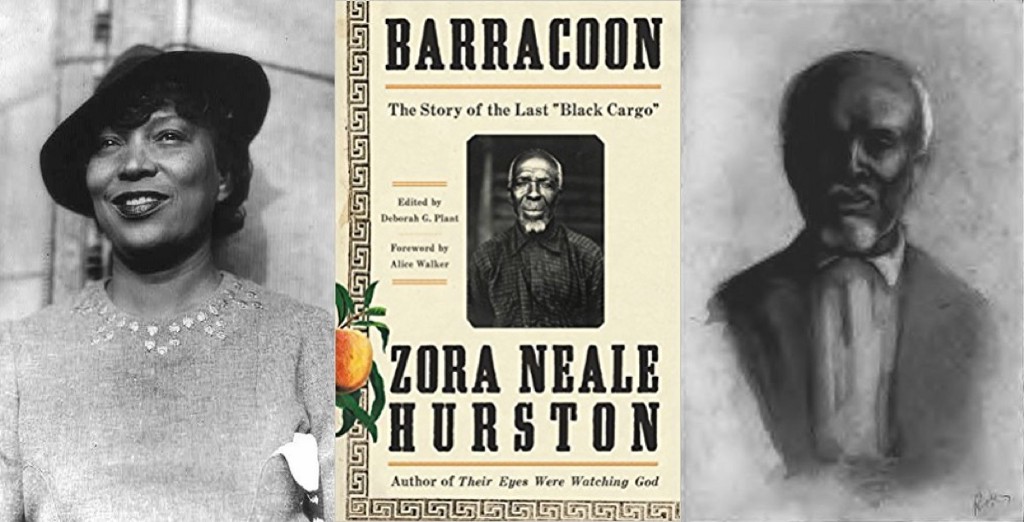
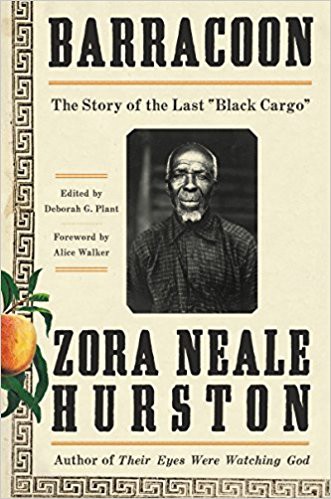
By this time, Hurston knew that her nonfiction work Barracoon, consisting of hours of interviews with Cudjo Lewis, one of the last survivors of the slave trade, would not be published as written. The publishing world insisted that she tone down her subject’s dialect, making the work an easier read for white audiences — and less authentic. But as much as she wanted Lewis’s story, and her book, brought to life, Hurston’s ethos as a writer wasn’t rooted in pleasing the masses, but in offering a true depiction of what it meant to a Black, to be American, and to be human. She would rather see her work rejected than watered down.
The friendship between Hurston and Cullen — as depicted through Hurston’s letter — stems from their shared inability to give way to the status quo. Often interpreted as brazen rebellion, their dedication to storytelling and to the stories of their people is what ultimately made their work legendary. Their words became transcendent and timeless because of their conscious resistance to conformity. Even then, Hurston knew the stakes were high. She, like Cullen, was aware of the risk of taming ones tongue for the sake of audience. And so, despite the consequences, she ignored the expectations of her time. She dug deeper for something truer, and by doing so captured the marrow of who we are as a nation and a people.
Principled and perhaps a little defiant, Hurston was zealous when it came to telling it like it is. The work she left behind proves that Hurston’s confession to Cullen is true: “I have the nerve to walk my own way, however hard, in my search for reality, rather than climb upon the rattling wagon of wishful illusions.” Her rejection of convention and refusal to embrace illusion resulted in touchstone texts like Their Eyes Were Watching God, Go Tell My Horse, Dust Tracks on a Road, and at last Barracoon. Nearly a century after the publication of her first book, the world seems ready to hear the story that Hurston refused to sanitize.
She dug deeper for something truer, and by doing so captured the marrow of who we are as a nation and a people.
Completed in 1931, Barracoon recounts the life of Lewis, also known as Oluale Kossola: the last living African slave to be shipped into the United States as cargo. The book’s manuscript, like its author and the story of its subject, was nearly lost to time due to Hurston’s refusal to tailor Barracoon’s prose to the liking of her white editors, who requested for her to use “language rather than dialect.” Yet, if she had complied with their wishes, the story that she had intended to tell, the story of Lewis, would have been erased. His experiences, as he recounted them to Hurston, would have been muffled by the demands of her publishers. The authenticity of the narrative would have perished. Hurston knew that, and so she chose to preserve her reality rather than the illusion. Consequently, Hurston’s manuscript remained unpublished for 87 years.
Countless writers — then and now — have grappled with what they’re willing to sacrifice in order to become a published author. Whatever the genre, we ask consciously or subconsciously ask ourselves these questions: Do I want to be known? Do I want to be famous? Am I willing to become a commodity? Can authenticity be synonymous with success?
How much of the truth are we willing to sacrifice before it’s no longer the truth? For Hurston, the answer was clear. Compromising her vision wasn’t an option, even if it meant that her manuscript and Cudjo Lewis’s story would never see the light of day. Although fellow luminaries like Richard Wright criticized Hurston’s work as having “no theme, no message, no thought,” her decision to keep the dialect of Barracoon unadulterated suggests that Wright’s admonishments were merely the byproduct of misogyny and the shortsightedness of respectability rather than a valid critique. Amidst the chaos of financial instability, racism, sexism, and the pressure to produce as much work as possible, Hurston was constantly aware of the industry’s interior. “Publishing houses and theatrical promoters are in a business to make money,” she wrote in her essay “What White Publishers Won’t Print” for the 1950 April edition of Negro Digest. “They will sponsor anything that they believe will sell… publishers and producers take the stand that they are not in business to educate, but to make money. Sympathetic as they might be, they cannot afford to be crusaders.” Hurston knew that her editors’ request was as much about her race as it was about profit. Their demands were strategic, but also systemic, revealing that although the work was valid and the story was necessary, that alone was not enough. The book that would become a highly anticipated title in 2018 was not viewed as marketable enough to publish without whitewashing it during the 1930s.
Compromising her vision wasn’t an option, even if it meant that her manuscript and Cudjo Lewis’s story would never see the light of day.
Like the man whose life is depicted throughout the pages of Barracoon, Hurston yearned to be heard on her own terms. In the first chapter of Barracoon, Hurston tells Lewis, “I want to ask you many things. I want to know who you are and how you came to be a slave; and to what part of Africa do you belong, and how you fared as a slave, and how you have managed as a free man.” In response, Lewis replies, “Thankee Jesus! Somebody come ast about Cudjo! I want telle somebody who I is, so maybe dey go in de Afficky soil some day and callee my name… I want you everywhere you go to tell everybody whut Cudjo say and how come I in Americky soil since de 1859 and never see my people no mo’.” Hurston’s adherence to Lewis’ wishes and her dedication to her vision for the book never wavered. Just as Lewis requested, Hurston documented his story as he told it. The world just wasn’t ready to hear it, but now his life is known. Hurston’s book exists, uncompromised.
As a folklorist, anthropologist, novelist, essayist, and playwright, Hurston’s ethos was rooted in the preservation and accurate depiction of her culture. Her refusal to do anything less undoubtedly impacted her career — and yet her legacy persists. Hurston’s steadfast dedication to her truth proves that she was in many ways right, even if she suffered for being so. The lens she applied to the world and the written page never wavered, even when the world asked for something that was easier to consume. Hurston was aware of the power of authenticity, the power of her refusal to compromise. “I not only want to present the material with all the life and color of my people, I want to leave no loopholes for the scientific crowd to rend and tear us,” Hurston wrote in a 1929 letter to Langston Hughes. “I know it is going to read different, but that is the glory of the thing, don’t you think?” Whether it be Barracoon, fieldnotes, a short story, a letter to a friend, or a play, Hurston’s work is permeated with the unfiltered “life and color” of her people. That was her concern, not palatability or fame.
Barracoon’s publication is pivotal for many reasons. It comes at a time of political upset, racial tension, and our nation’s reckoning with the ghosts of its past. Lewis’ life, much like Hurston’s, is a testament to the necessity of telling your story unapologetically. The pages that Hurston wrote prove that even if the world is reluctant to listen, eventually your voice will be heard and your words will urge others to open their mouths and speak. Barracoon urges us to examine what we yearn to gain from a story and ask whether we are willing to really hear what it has to say. Anyone who reads this book will walk away from its pages wondering how many stories as necessary as Barracoon will remain unpublished until we as readers are ready to reckon with unfiltered narratives. It will make you question whose voices you are willing to hear.
The arts of writing fiction and playing classical music have tantalized the greatest minds over centuries. Beethoven’s compositions have been taught to every student who has picked up a violin or sat down at a piano. Shakespeare’s plays have been dissected and adapted more often than any other writer. Both creative mediums are centuries old, but we are still fascinated with both.
Purchase the novel
Aja Gabel spent her life playing cello, but when she realized she wasn’t going to be the next Yo-Yo Ma, she turned to literature instead.
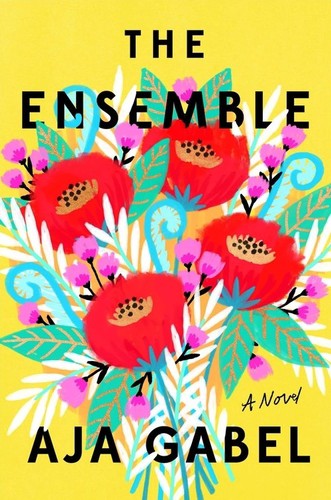
Her debut novel The Ensemble forges her childhood passion for classical music with her current desire to write. The book portrays a group of friends who bond in the cutthroat world of classical music. Over the years, the quartet becomes more like a family dealing with the ever-shifting politics of what their relationships mean to one another. Gabel balances earnest dialogue and warm prose to depict the lives of the group through shifting prespectives.
I spoke with her regarding the relationship between music and writing in her life, how her debut novel unfolded, and what it was like to play Yo-Yo Ma’s cello.
Adam Vitcavage:How much of a role did music play in your childhood?
Aja Gabel: When I was younger, I played cello a lot. All the time. I played music since I was five and I played the cello for twenty-five years. I studied pretty seriously in my childhood. I didn’t go to a conservatory or anything, but I did study at a college. It was a huge part of my childhood.
AV: When did you realize that maybe you could make writing a part of your life?
AG: In my senior year of high school, I wrote a short story. It was about a girl who played violin and I sent it to my high school English teacher that I really liked, Mr. Devlin. He wrote me back the summer before college and he said something similar to “this is the best story I have ever seen from a high school student. I hope you continue writing.” I never had a compliment like that before.
I pursued [writing] pretty hard in college. At Wesleyan, you have to apply to every workshop you take, so I did that. I wrote a lot but I didn’t really show it to anyone.
AV: It seems like writing and classical music have gone hand in hand. You’ve written about it a few times and now the relationship resulted in your first novel. How are the two disciplines similar and how do they differ?
AG: They are very different in practice, which is what I like. I like that when I write, [I am] sitting down to access this semiconscious place of creativity. It isn’t structured at all. When I practiced music, it was very structured. When I sat down, I knew exactly what I had to do.
It’s similar when you go up to perform. Both have this thing which I can’t articulate.
AV: Was it hard writing your first novel?
AG: It was really hard. I went to Houston for my PhD and Antonya Nelson was my teacher there and she told us to do the easiest thing for our first novel. I was already knee deep in this which has four points of view and is told across twenty five years. I thought: “Oh shit, I did the wrong thing.”
She was right. It was hard to write that long of a project and I made it harder on myself. I wrote the beginning a lot because I needed to figure out what the structure was.
I was already knee deep in [the draft] which has four points of view and is told across twenty five years. I thought: “Oh shit, I did the wrong thing.”
AV: She said to write easy, but the structure made it difficult for you. I assume writing about college friends who play classical music was somewhat easy though?
AG: The subject matter was easy and didn’t require a lot of research. I played classical music my entire life and studied it in college. It was the only thing I thought I knew enough about to write 300 pages. Now I feel more confident in being able to research or imagine for that many pages.
AV: And going back to the structure. Was it difficult having four POV characters and a quarter century long plot?
AG: I didn’t feel right writing about the quartet and giving them all a voice. The problem was when I tried to be too formal about it. I thought about writing it in a sonata with an introduction, a development, and a recapitulation. I tried to do that and it was insane.
Then I tried to write it about one weekend and one performance. That was impossible. I really like novels that focus on a short amount of time, but it’s really hard for me to do.
It really came down to the point of the story for me was that they develop a family. They choose this family. To illustrate that takes time. Their relationships evolve and I needed to show that across time.
I did a mixture of both concepts I had initially. Each section is a short period of time, but I wrote many sections across a large period of time.
AV: The sections have different characters telling the story. For instance, section one has Jana and Brit while the next section alternates between Daniel and Henry. Why not have all four characters tell a section?
AG: It was honestly a decision about tidiness. It would have been impossible for me to do all four voices in a section. I didn’t want to skim the surface levels of the characters. I wanted to really get to know them. I realized readers wouldn’t get to know them that way. I did try to write that version but it was hard for even me to keep track of what was going on.
I didn’t want to skim the surface levels of the characters. I wanted to really get to know them.
AV: How far did you get in that draft where all four characters told a section?
AG: I wrote the first section with all four. It was just too loud. Then it was hard because you had to wait five years [when section two begins] to hear from the men. It was a structural problem: do we get enough of Daniel and Henry through Jana and Brit’s narration in the beginning? I ultimately decided that I could make that happen.
AV: All four of the characters are very distinct, but the book is called The Ensemble and they are their own family. How did you manage to keep individuals but also make them a cohesive unit?
AG: That took a lot. I was in a workshop near the middle of the process. The feedback was that people couldn’t tell them apart or tell the difference between the two male characters. At a certain point I had to chart out details for each character. Their characteristics, how people judged them, what they wanted. For instance, I had little notes jotted down that for every scene I wrote about Henry, I had to indicate about his hair, how he has this ease about him, or his curiosity. I was always turning to these notes to help make them individual.
I hope the cohesiveness comes from the longer storyline. Like how people talk to Jana about her personal life becomes more intimate over the course of the book. Or the way Daniel is able to be intimate with people is intensified over the course of the book. The longer game in the narrative is how I tried to make them cohesive.
AV: Each section starts with a selection of classical compositions. I don’t know anything about classical music and I’m sure there will be others like me who only really know Beethoven existed and Mozart was around. So can you enlighten me on why those songs were selected?
AG: I tried to choose pieces that were realistic for that time in their career, but also would illustrate something that was happening. They start with Antonín Dvořák’s “America” and they end with that. It’s a piece that you learn as a student, but also one that when professionals play becomes very transcendent. Then there are pieces that are known to be about turmoil in sections where people are down.
AV: What are some aspects of writing you’re not naturally good at?
AG: Plot. For sure. I thought for so long on a small scale from writing short stories. Writing a long piece was very tricky for me to think about what a story is about and what happens. That was something I had to write out. I wrote out the big arcs that I was working toward so I was always thinking about it even when I was writing the small moments. Those are the moments I like the most.
I know that people continue to read [my book] because a gun went off on the first page and they want to find out who did it, how, and why. But I think people enjoy reading because they see moments that reflect themselves.
AV: Well, you figured out plot because you finished a book. What do you tell people the book is about?
AG: It’s about how difficult it is to make art and a family with people you love. It’s how these people do both over the course of their lifetime.
AV: Finally, I saw listed on the resume section of your website three random trivia facts about you: you saw Sublime’s last concert, you played Yo-Yo Ma’s cello, and you accidentally met Marylin Manson. Which was the most exhilarating of the three?
AG: For sure playing Yo-Yo Ma’s cello. He has many, but the one I played is one of the nicest cellos in the world. I was very young, around fourteen. It was like being a whole different musician. My orchestra was just watching a rehearsal and he was just walking by on a break and he said we could play it. He was just doing sit-ups. Yo-Yo Ma was doing sit-ups. My conductor said I should do it because I was first chair at that point. It was intense. I wish I could do it now.
AV: Was he watching you?
AG: He was not listening. He was in the auditorium but was on the other side. If he was listening, I probably would have blacked out.
“H i! My name’s Chad Sell, and I want to make a comic with you.” That’s the call for writers I saw on Instagram back in spring of 2015. I had been a fan of Chad’s for a while, but mostly for his gorgeous illustrations of the queens from RuPaul’s Drag Race. This project sounded different — the call for pitches was accompanied by a small graphic of a kid in a Hulk-like cardboard costume. Along with Jay Fuller, Chad explained, he had created a short comic titled The Sorceress Next Door about a young boy who’d rather be an evil sorceress. The story had struck a nerve and he was looking to build an entire neighborhood of kids who used fantasy and homemade costumes to create an imaginary world that would give the graphic collection its title: The Cardboard Kingdom.
I was about to be done with graduate school and while I’d never written a comic, I thought, why not? Next thing I knew I was on the phone with Chad. He liked my pitch about a young boy who wasobsessed with Disney-like animated films and gets his crush to role-play with him as his dashing prince, and he invited me to write for his book. But I wasn’t alone. There were to be ten writers in all, working together to create an collaborative world.
Chad had originally imagined The Cardboard Kingdom as a collection of short stories about kids dealing with divorced parents (“The Gargoyle”), friendship (“Professor Everything”) and cookie-loving siblings (“The Huntress”). But it soon became a more interwoven summer narrative where all ten writers worked with the Chicago-based illustrator to integrate characters and storylines alike. We didn’t know each other before we started, we lived in nine different cities in eight different states, and most of us never met, but using social media and other tools we managed to create a diverse collection that feels like one big story.
We didn’t know each other before we started, we lived in seven different cities, and most of us never met, but we managed to create a diverse collection that feels like one big story.
Our group of collaborators are as eclectic as our neighborhood kids. Some, like Fuller (The Boy in the Pink Earmuffs), Kris Moore (Science Girl), Molly Muldoon (Dead Weight), Barbara Perez Marquez (The Order of Belfry), Vid Alliger (Funny How It Goes) and Katie Schenkel (Moonlighters) are comics creators at heart; some even by trade. Others, like me, found this to be an exciting foray far afield from our usual creative work: David DeMeo first pitched Sell while working at Whole Foods (he’s now a jewelry designer and account manager for Chavez for Charity) while Michael Cole pitched while in grad school (he now teaches English Lit at Wichita State), and Cloud Jacobs while working at an elementary school library (he’s now a fifth-grade teacher).
As we near our publication date I wanted to convene a roundtable discussion between all 10 of us (sadly we lost Kris just last year; the final book is dedicated to him). I was curious to talk about how we created a graphic novel while never once being in the same room. You can take a look at our condensed chat below where you’ll learn how we preemptively avoided royalties in-fighting, how we turned to social media to create our very own online writer’s room, and how we’re proof positive that it truly takes a village to build a kingdom.
We’re proof positive that it truly takes a village to build a kingdom.
Manuel Betancourt: I wanted to open our conversation with a question I wrestled with at the start of this process: is this going to be a disaster? That is, I’m curious if anyone (else) had any reservations about embarking on a project that involved so many people.
Vid Alliger: I wouldn’t say I was worried, except maybe on Chad’s behalf, because I knew that he would bear the brunt of any interpersonal conflicts that might have arisen.
Chad Sell: I was worried, absolutely. I worry about everything. Prior to opening up the submissions process, I vividly imagined all the many things that could go wrong with this weird, wonderful project. I tried to think through the various sources of tension that could arise between myself and my collaborators and to plan ahead: In an effort to be totally transparent from the very start, I laid out all my proposed terms for the project, including breakdown of revenue, decision-making, and everything, so that anyone submitting their story knew exactly what they might be getting into. One example: each contributing author gets an even split of the book’s royalties, regardless of how many pages they specifically wrote for the book. I didn’t want my collaborators to have a financial stake in arguing for a longer story, or to feel threatened if I decided to cut a page or two.
Jay Fuller: In the beginning, it was difficult to imagine how so many writers responding to an open call for submissions — from the internet no less! — could possibly be cobbled together to form a cohesive and consistent narrative. It’s a minor miracle and a testament to Chad’s skill as an artist and editor that The Cardboard Kingdom reads so well as a unified, interconnected collection.
Katie Schenkel: I’ve described The Cardboard Kingdom’s entire process success as “a miracle.” I definitely was nervous at first about having so many collaborators on the project. I had started passion projects with one or two collaborators that completely crashed and burned due to my co-creators losing interest or the timing just not working out. And even if we all stuck to our deadlines, what if we disagreed about the direction of the book? I knew how easily this project could fall apart, especially with so many cooks in the kitchen. But we all respected each other’s time and each other’s points of view on the characters, and I think it shows in the finished product.
It’s a minor miracle and a testament to Chad’s skill as an artist and editor that The Cardboard Kingdom reads so well as a unified, interconnected collection.
Manuel: As Jay notes, after working on our individual stories we set about combining them and really weaving them together into one cohesive narrative. This involved giving each other feedback and starting to step on each other’s toes when it came to different characters and storylines. Was this easy for everyone?
Barbara Perez Marquez: Our initial work in The Cardboard Kingdom happened largely while I was still going through graduate school, so in that regard I was very familiar with the workshop environment we created as we worked to refine things. In addition, I feel like we all took care to provide suggestions and edits without “killing each other’s darlings” which is so often part of that process. I felt like whatever guidance we provided each other was coming from a good place, to make the best book we could.
Chad: Yeah, as you said, Manuel, a lot of our efforts were focused on uniting our characters into a community that felt dynamic and alive, and so that was largely very positive and exciting, like, “How about your character shows up here? What would your character’s take be if this happened?” I think each creator made the final determination about their own characters’ motivations and responses, but the rest of the team was able to offer interesting connections and new scenarios that would bring out new aspects of those characters.
A lot of our efforts were focused on uniting our characters into a community that felt dynamic and alive: “How about your character shows up here? What would your character’s take be if this happened?”
David DeMeo: Feedback was always handled delicately, in my opinion. When I first read “Big Banshee” and I saw that Katie had used [my characters] Shikha and Vijay in her story, I was thrilled.
Katie: Aw, David! That means a lot to me. To answer Manuel’s question, more or less writing our chapters in order made it easier to ensure we were writing the other creators’ main character accurately. David’s script was mostly done when I was working on mine, so I felt pretty confident in how I used them in my story. And the constant communication in this project meant I could get David’s feedback quickly and make sure any concerns he had about Vijay and Shikha were handled. And then later in the book we see Shikha and Sophie doing best friend stuff. It was cool to have collaborators take what I had set up and expand on that in a satisfying way.
Jay: Everyone was very aware that these characters are our babies, so we took special care to make suggestions in constructive, open-ended ways. Early on, I think everyone was a little nervous about stepping on toes, but as the process matured, it became more collaborative and led to some fantastic cross-pollination.
Early on, I think everyone was a little nervous about stepping on toes, but as the process matured, it became more collaborative and led to some fantastic cross-pollination.
Katie: Yeah, I was really happy with how Sophie was used in the other chapters. There was only one line of dialogue I suggested an alternative to, plus Chad had a specific idea about how Sophie would be used in the finale that he developed with me. And some of my favorite parts of the book are Sophie’s moments in other chapters, like the “not having it” look on her face when it’s revealed she’s been pushed into the princess role in your chapter, Manuel!
Michael Cole: Going back to something Barbara said, in the time since I pitched my story idea for The Cardboard Kingdom until now, I’ve finished out a graduate program, begun — and nearly completed — another one, bought a house, started a full-time university position, developed and executed several courses as a lecturer on the side. We’re all incredibly busy, but it’s just to say that there were certainly times I really worried that I wasn’t pitching in as much as everyone else was. I think there was always this great attitude of just getting our start and understanding that everyone had lots of other responsibilities in addition to the graphic novel. But it still was difficult on occasion to feel like you wanted to be more involved but could barely keep your eyes open some days.
Manuel: In a way the fact that we’re a big group meant we needn’t carry the burden of the project on our shoulders — though, of course, Chad was doing much of the heavy lifting at times. There were clearly strategic choices you made as you began plotting the next move after we all submitted and workshopped our stories, were there not?
Chad: In developing each individual story, I tried to work pretty much one-on-one with each creator until they submitted a script that I was able to turn into a readable rough “doodle” draft of the full story. At that point, I would generally share it with the full team so that all of us got to know each other’s characters and stories. Which was so exciting! However, I tried to be really mindful of when to solicit the feedback of the full team on a particular story, for fear of there being “too many cooks in the kitchen.” But throughout the whole multi-year span of working on the project, it’s been invaluable to have such a big team of collaborators to cheer each other on and share insight!
Manuel: In that sense I think our collaborative endeavor is both a boon and a challenge, especially as we begin promoting the project. Have you guys found it hard to explain the quirky nature of The Cardboard Kingdom to other people?
Molly Muldoon: When I explain it, I usually say something along the lines of “It’s a neighborhood and each one of us wrote a kid” which is… kind of true? It gets more at the heart of what it is, I think; it’s not so much what we wrote but the character we created which is why I think it worked so well.
Michael: This has been a bit frustrating for me, for sure. I think the collaborative nature of it is hard to explain also. Over the last few months, I’ve had friends introducing me by saying, “This is Michael, he wrote a book.” I went in to get a haircut the other day and the woman who does it yelled, “Did you guys know Michael wrote a book?” It’s Kansas, so there’s not a lot of publishing here. So then I always have to stop and say, “I contributed to a graphic novel with several other co-authors and one artist.” And then to explain that The Cardboard Kingdom is rooted in children’s issues makes it seem like it’s really only for children, but I think so much of what we’ve heard from people who have gotten ahold of ARCs is that they’ve loved it for themselves, that it really appealed to them. It’s got serious themes, but it’s also bright and beautiful and very joyful. But at the same time, I kind of think that the best creative works are the ones that are sort of hard to describe.
I kind of think that the best creative works are the ones that are sort of hard to describe.
Jay: Ha, yes! When describing the book, I think I’ve settled on: “a Children’s Graphic Novel of which I am a contributing author” — that’s not clunky at all, right? Barbara makes a good point, though. The Cardboard Kingdom isn’t quite an anthology and it isn’t quite a single-narrative comic. It’s something special.
David: I’ve had similar experiences to Michael: “David wrote a book!” And I have to raise my hand and politely clarify. When I explain our book to people, I always start with Jay and Chad writing The Sorceress Next Door and how that was the inspiration for our book. Then I explain that once each of our stories is over, our characters continue into the rest of the book written by the subsequent authors. We were all in on the same story, essentially; we just wrote different parts of it. People seem to catch on quickly.
Cloud Jacobs: I’ve nailed a line down for describing the book. Whenever I meet someone or they ask about it I say “I wrote a story for a graphic novel, along with other writers, called The Cardboard Kingdom, it’s about a bunch of kids who deal with their real-world problems through fun, friendships and their superhero alter egos.”
Manuel: To think we did it all remotely! Social media acted as necessary tool for all of us — it was part of the recruitment process with your call for pitches as well as the writing process with Google Docs and Facebook functioning as our hubs for our book-wide discussions. What about these ways of communicating helped being able to work with collaborators that were scattered all over the country?
Cloud: I think we can all agree that this project would have crumbled without the internet and social media. From the call for pitches (which I found on Reddit) to the final draft being uploaded to Google Drive and being able to see everyone’s hard work, the internet has been essential for the Kingdom to come to life.
Barbara: It was certainly better than trying to get everyone on a video or voice chat (!). The early part of the process with the pitch call really showed the power of social media and how far and wide voices can reach (I myself found the pitch call through Twitter).
I think we can all agree that this project would have crumbled without the internet and social media.
Vid: I just don’t know if this book would have been possible without the Internet and social media! I say that not just because these things were our main tools for communicating and sharing ideas, drafts, and critiques throughout this process, but also because I can’t imagine how we all would have found each other and connected in the first place, were it not for the Internet. It definitely still feels a little surreal to me.
Molly: The hardest part for me was juggling this with everything else on my plate, to be honest. I started and graduated graduate school while we were working on this, as well as working on another book. But it was more than worth it! Everyone’s been a joy to work with and the Facebook page really kept me in touch with everything that was going on and let me chat with everyone when I wanted to procrastinate work.
Michael: I will say, what’s been most challenging, for me, is being so separated from everyone else. I want to meet everyone! Like, for real. This has been such a journey and so important to me — it feels weird to have done it without meeting a single other person who has had a hand in the process. I’ve really struggled with it for the past two years, honestly, the last two years. I don’t really think it’s sunk in yet, and I’ve wondered if that’s been because I’m so far away from the other creators. I haven’t really been able to see this reflected in anyone else or maybe even vocalize what it feels like? And the fact that we’ve lost one member of the group (Kris) means that there’s always going to be a part of that particular circle that can’t be closed, which is tragic.
This has been such a journey and so important to me — it feels weird to have done it without meeting a single other person who has had a hand in the process.
Manuel: Yes, there’s this sense that we’re a collective but it’s a fragmented one since we’re all over the place. Some of us are in New York, others in Chicago, Baltimore, Portland… Also, losing Kris means that the collective will forever be missing a key member. Thinking of what we were able to accomplish while being so scattered, I wanted to hear from everyone about whether it feels like the collaborative spirit that’s embedded in the graphic novel genre is a good fit for the stories being told in The Cardboard Kingdom.
Jay: I’ve read a lot of fantastic graphic anthologies, like Beyond: The Queer Sci-Fi & Fantasy Comic Anthology and Little Heart; A Comic Anthology For Marriage Equality, which began life similarly to The Cardboard Kingdom as open-submission projects built around a common theme. It’s a formula that works! However, to my knowledge, The Cardboard Kingdom is one of few, if any, that actually connects all its stories into a single world that culminates in a finale tying all the characters together.
Barbara: For myself as a fiction writer, words can be overzealous. We look to finish whatever we are writing before any others see it. With art, once someone else sees it, it keeps on growing. So, having graphic novels created collaboratively, same as you do with comics, you have a level of uniqueness to whatever is created that is hard to replicate otherwise.
We look to finish whatever we are writing before any others see it. With art, once someone else sees it, it keeps on growing.
Chad: I agree with Barbara, and I think there’s something inherently visual about the essential parts of The Cardboard Kingdom. Throughout the book, kids create homemade costumes out of cardboard, and it was important to me in their character designs that each costume felt tactile and true to that. There’s tape, there are flaws, there are goofy design decisions only a kid would make. And it’s those flaws and the fragility of their armor that contrasts so powerfully with some of the very real emotional and familial struggles they encounter in the book. Periodically, we glimpse the characters as the kids see themselves — often more powerful, graceful, and fully grown. Which is beautiful and powerful, sometimes funny, sometimes sad.
Vid: I think we all worked hard to make sure the writing and overall tone of The Cardboard Kingdom felt consistent throughout, but I think Chad’s artwork really unified all of our ideas and helped make the book the cohesive whole it is. The book has a specific look and feel, and I think that uniformity would have been harder to achieve if the book had been our writings alone.
Michael: I also want to say that, at the end of the day, what The Cardboard Kingdom is about is community. And that was something that we achieved through collaboration — at least I think so. Even for a character like Seth in “The Gargoyle,” who sort of has to be rooted in isolation, there’s this great expansion that happens later where he gets to be part of something bigger. It might be corny to say that it felt like my experience working on this project mirrored that, where I had this nugget of an idea that got pulled into and made a part of something more rich and expansive.
Growing up with a hip older brother, and as a hoarder of crushes, I was struck with the “cool girl” curse at an early age: I felt an obligation to cling to and highlight my dude-friendly interests. My earliest, and perhaps most acute, memory of this was aggressively proclaiming my status as “the fart queen” at age 10 in an effort to impress my 13-year-old brother’s adorable and particularly flatulence-humor-driven friends.
The fart queen evolved into a pop punk princess, then into a sk8r gurl, then into a woefully undiagnosed celiac who would chug forties of malt liquor just to show she could hang. To this day, I still don’t know if Dr. Pepper was always my favorite soda, or if it became my favorite soda because I read in Tiger Beat that Lance Bass had Dr. Pepper on his rider.
As a particularly book-inclined kid, this tendency crept into my reading habits. I devoured much of Palahniuk’s oeuvre in an effort to appeal to all of the members of Panic! At The Disco, a group of humans I would never meet. I worked my way through dude canon, reading Bukowski, Easton Ellis, Vonnegut, Foster Wallace, Roth, Kerouac. Instead of sifting through this mix to identify the gems and the turds, I lauded all of it as absolute genius.
I feel more confident now in my likes and dislikes, but there remains an arena in which we all still try to put our most attractive and interesting selves forward: online dating profiles. My profile on OKCupid admittedly features not just my favorite things and most cherished quirks, but the ones that I thought would make me the most swipe-worthy. This pressure causes a blur of easily mocked stereotypes for a lot of online daters — men boasting their height, women swigging whiskey in bikinis celebrating their love of swigging whiskey in bikinis. The foot we put forward when trying to date isn’t just our best foot; it’s specifically the one we think will be most appealing to our gender(s) of choice. And yet, straight men, even the most well-read men, often fail to list a single woman writer or book by a woman in their online dating profiles.
Straight men, even the most well-read men, often fail to list a single woman writer or book by a woman in their online dating profiles.
I’m definitely not the first person to notice this, but it made me curious.. Did these men not read books by women, not like books by women, or just not care to list books by women on a profile they used to impress…women? I decided to launch a low-key investigation into the dearth of women writers on straight guys’ OKCupid profiles. If an otherwise promising man didn’t list any women writers or books by women writers among his favorites, I wouldn’t go out with him — but I would ask him to explain.
I approached the process as organically as possible, filtering men down initially to those I would be interested in anyway. At the outset I stressed about the parameters. What about men who only list books by men except for Harry Potter? What about men who list books by women, but clearly one or two they had to read in high school? What about men who don’t list any books at all?
Ultimately, my own tastes helped hone the field to a group of men that OKCupid’s behind-the-scenes robots already tag as “bookish”: men with robust, and sometimes even diverse, lists of books and authors in their profile, liberal guys, creatives and creative adjacents, men with glasses and beards.
In order to delve deeper into why some otherwise attractive, interesting, and intellectual men don’t list any women writers or books by women in their profile, I asked. If a man I would otherwise be interested in messaged me first, I would find a way to work in the fact that I wasn’t going on dates with men who didn’t list women writers and ask why they didn’t. When I was feeling particularly bold, I would ask the same of men I would otherwise be interested in, even if we had only matched and they hadn’t messaged me first.
If a man I would otherwise be interested in messaged me first, I would find a way to work in the fact that I wasn’t going on dates with men who didn’t list women writers and ask why they didn’t.
My first swing was an aggressive miss. I matched with a handsome guy who quoted bell hooks in his profile but had a lady-less list in his books section. When prodded about why, he immediately unmatched. Luckily, most of the other men were surprisingly forthcoming. Responses were a mixed bag of thoughtful, defensive, funny, and long-winded. Out of the nine men I spoke with, they fell into three categories — the defensive ally, the reflective “well, actually” historian, and the favorites purist — or some combination of those three.
The defensive allies were rich in performative feminism, but dirt poor in empathy and uninterested in holding themselves accountable as even slightly less than perfect. While none of them called me names, they were quick to assume that I had made a truly despicable value judgement of them based on my one criterion. They would guffaw and list the women whose words they loved, and the work they had done to support women in the past, but they never even tried to answer the question of why none of those women merited a mention in their dating profile. I gratefully did walk out of the experiment without being called a B-, C-, or S- word which is more than I can say about some online dating experiences where I don’t even try to prod a sleeping bear.
The reflective “well, actually” historians were more open to the question. Several said they hadn’t thought of it before, even thanked me for pointing this gap out to them. They did, however, have a different kind of defense, quickly citing the historical reasons why. I was told with surprising frequency that there are just much fewer books by women historically. (This is factually questionable, although there are certainly fewer in the canon — but there are still plenty to read if only one deigns to.) One guy, apropos of nothing, felt the need to share that he had tried and tried to enjoy Jane Eyre, as if Charlotte Brontë were to blame for the fact that no woman could really make it into his list of all-time favorites.
One guy, felt the need to share that he had tried and tried to enjoy “Jane Eyre,” as if Charlotte Brontë were to blame for the fact that no woman could really make it into his list of all-time favorites.
Most often, though, I dealt with the favorites purists — the men who certainly enjoyed books by women, but not enough to have them rank in their top faves. They would explain that they only listed books they had read more than once, authors whose work they had truly pored over, the brilliant minds behind the worn paperbacks they shoved into their messenger bags. One self-proclaimed avid reader listed just shy of 40 books and authors but failed to see that maybe he had some self-reflecting to do if no women made the cut. The favorites purists often seemed horrified at my suggestion that they sneak a woman into the top 40; they saw meddling with their immutable list of faves as disingenuous at best, deceitful at worst.
Beyond a deeper psychological unpacking of why no woman had spoken to these men the same way that Raymond Carver or Philip K. Dick or Don Delillo, this obsession with the genuine felt misguided and maybe even reductive. Dating is an exercise in self-presentation, as much as self-expression. These guys probably chose flattering photos, highlighted cool hobbies, failed to mention disgusting habits, and wore their least holey underwear on early dates. So if they really did love a bunch of books by women, as they claimed defensively when I asked, why were they so shy to include them in a forum where they are explicitly trying to impress and attract women? Why didn’t they think that would make them look cool?
While girls are often shown from an early age that the way to impress a boy is to like boy things, boys are just as often shown from an early age that the way to impress a girl is to…also like boy things. This is not to say that “cool girls,” like the one I was, are manufacturing an interest in culture usually seen as the province of boys; most of us actually do like the “boy things” we advertise as our favorites to the world, but we also highlight those preferences and play down any ones that seem too “girly.” But even if we were genuinely attempting to cultivate new preferences for the sake of connecting with someone, what is the harm in that? One defensive guy asked me if I would rather be with someone who lists their genuine favorites, or with someone who uses some pick-up artist signalling tactic to list books by women just to get laid. I choose neither. I choose a man who truly loves a book — just one book! — by a woman, but failing that, I choose a man who likes a book by a woman and cares enough about what women think of him to say so.
While girls are often shown from an early age that the way to impress a boy is to like boy things, boys are just as often shown from an early age that the way to impress a girl is to…also like boy things.
Only one of the men I messaged with on OKCupid asked for recommendations of more books by women, and the last time I checked, none of the men had updated their profile to list any of the women authors they rattled off to me in direct messages. Their top secret love of Mary Shelley and Margaret Atwood somehow never made it to their public self-declarations, even once I’d pointed out that it’s something women want to see. For these men, the best version of themselves is still all about what they think of themselves first and foremost. Even when presented with the fact in explicit terms, these guys struggle to comprehend that attracting a woman like me — smart, creative, educated, legendarily gassy — might include announcing that they admire women like me.
Part of me imagined witty and flirtatious sparring leading to a mutual understanding and a steamy intellectual first date. Alas, I didn’t fall in love with a handsome rogue after a heated virtual tete-a-tete over the canon of women in literature. I did not find my Mr. Darcy (a reference from a book by a woman!!!!) on OKCupid. I did, however, have a few promising conversations with men who did list women writers in their profile. Some even listed women that I list in mine, like Ottessa Moshfegh, Carmen Maria Machado, Anne Carson, Roxane Gay. In setting a pretty low bar, I was able to create a smaller, and much more compatible pool of potential dates.
Even when presented with the fact in explicit terms, these guys struggle to comprehend that attracting a woman like me might include announcing that they admire women like me.
At the end of the day, I truly was a fart queen, I really do enjoy Vonnegut, and I still drink Dr. Pepper. But I also internalized an idea of how I had to put myself forward in a way that most men don’t. Where were the boys trying to impress me with their love of Judy Blume, tea parties, and Fiona Apple?
At the end of all of this, I’m still single, so if you have a bookshelf jam-packed with books by women that you actually enjoy, hit me up. And if you don’t, I won’t hold it against you, as long as you are open to reading more women until you do.
The following story was chosen by Jess Walter as the winner of the 2018 Stella Kupferberg Memorial Short Story Prize. The prize is awarded annually by Selected Shorts and a guest author judge. The winning entry receives $1000, a 10-week writing course with Gotham Writers Workshop and publication in Electric Literature. The winning work will also be performed live on Selected Shorts at Symphony Space in Manhattan on June 6, 2018.
Joan of Arc Sits Naked in Her Dorm Room
Joan of Arc sits in her dorm on a Saturday night. Joan of Arc is always home on Saturday nights. She does not go out for pizza or beers, or to the movies, or even the theatre, though she would probably enjoy the theatre, for Joan possesses a theatrical heart. When she speaks in class, she thrusts out her chest and focuses her gaze high in the air, as if on some floating orb of light. Though her answers are often wrong. The teacher feels badly having to correct her, though in all consciousness, he cannot show favoritism — not even for spirited and stubborn girls with charmingly ugly haircuts.
The truth is, Joan struggles with school. She usually sneaks a recorder into class so she can listen to the lectures again at night. But Joan is prideful, and will only do this when her roommate is out. Fortunately, Joan’s roommate has a boyfriend and is often out. This boyfriend’s name is Max. He is from Quebec and speaks a beautiful, whispery French. Sometimes, as he waits for his girlfriend to change her clothes, or finish an episode of The West Wing — he and Joan will speak in French. He is very polite and always asks Joan about her classes, or the book she is reading, or the fish she keeps in a wine decanter. He says, How is your little friend? And Joan says, Still alive!
Max has a head of luscious chocolate curls and sometimes Joan dreams of pulling them taut. Of peeling off his wool sweater and kissing the delicate bones at the base of his neck. She does not understand why Max is in love with her roommate, who talks too much, and is a slob, and lacks cursory manners. But oh, is he in love! He kisses Joan’s roommate fervently at the door, and stares at her in awe, as if she is not his girlfriend at all, but rather, some fantastic, complicated woman he’s only ever seen from afar.
On Saturday nights, when her roommate is with Max, Joan takes off all her clothes. She lights a candle and sits cross-legged on the carpet, which scratches her buttocks in a pleasurable way. If anyone asked — though no one ever will — she would say she was waiting for something. Or rather, for someone. Waiting for the candle to go out in a gust of wind, for the smoke to curl into the air in the form of letters.
Joan has always thought of God as a secret friend. When the wind ruffles the back of her shorn hair, or she finds a five-dollar bill on the ground, or when she wakes in the morning from a dream of indelible lust with moisture slick between her legs — well, that is God. Her friend. Her only friend.
And because she likes to give God a face, she often pictures Max. He will come into the room where she is sitting, and kneel before her. She will ask if he wants to take off his clothes, since the room is warm, and it’s strange to be naked alone. And God-who-is-Max will say, D’accord, in that whispery voice of his. And Joan will reach forward and pull his hair very gently. And he will say Joan, how is your little friend? Is he still alive? And she will say, Do not talk to me about fish, not now, and he will say, You’re right, and she will say, I’ve been waiting for you, and he will say, I’m here.
We are in the middle of the Year of Mothers. We can all recall the moment in 2016 when it was impossible to walk into a bookstore without bumping into a book with the word “girl” on the cover. Now it seems, the girls have morphed into moms. No medium is immune to the magnetic force of motherhood, whether it is the TV series Jane the Virgin, the indie film Tully, or any one of the ten books on this list.
On the eve of Mother’s Day weekend, we decided to gather up the 2018 books about mothers piling up on our desk. There are memoirs, essay collections, and novels. Most of the books on this list were written by women who are tired of societal assumptions about having children: the assumption that motherhood looks like a cozy, heteronormative nest, the assumption that motherhood is beautiful and generative, the assumption that women spring fully-formed into mothers, or the assumption that motherhood and womanhood are co-dependent categories of being. Here are ten titles in 2018 that highlight the demand for messier, lived-in accounts from women who do, or don’t, want to be moms.
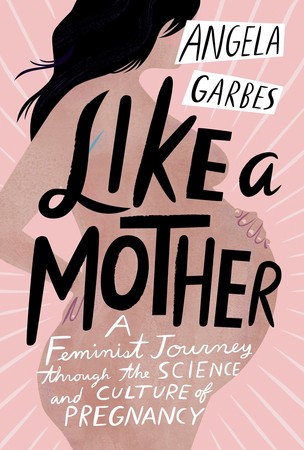
When food and culture writer Angela Garbes became pregnant, she quickly burned out on all of the “advice” (read: shame and judgment) she was getting from statistic-bloated obstetricians and judgmental friends and family. She decided to go about her pregnancy with the same verve and curiosity she would any other assignment. The book is a demand for more honest and nuanced information about pregnancy and women’s health. Like A Mother is a feminist treatise that ultimately makes the case for why women need access to better care. This means more holistic support, cultural inquiry, and science-based information about what’s really happening to a woman’s body before, during, and after pregnancy.
The Motherhood Affidavits is a memoir with a storyline that is stranger than fiction. Laura Jean Baker has found the cure to her lifelong depression in the hit of oxytocin (the hormone released into the body during pregnancy and near-death experiences) she gets during her first pregnancy. The “love hormone” turns into a craving and addiction that makes the size of her family grow beyond the means she and her husband Ryan, a public defender, have to offer. As Laura Jean Baker struggles with her dependency on the hormones produced by having children, she begins to see her own actions reflected in her husband’s clients. She studies alleged murders, robberies, and arsons. In the process she develops compassion for the clients’ actions, while building up more evidence against the benevolence of her own actions. Baker weaves together crime reporting and confessional memoir to present her personal experience of motherhood as addiction.
In his new novel, Alam mines his experience of raising two adopted black sons to tell the story of Rebecca Stone, a mother of two sons in the 1980s. Rebecca is a poet married to a British diplomat living in Washington. She is white, and her nanny Priscilla is black. Rebecca is grateful for Priscilla’s mentorship and friendship, and as a poet, she is deeply sensitive and disturbed by the way her words are born from good intentions but shadowed by racism. When Priscilla dies in childbirth, Rebecca decides to adopt her nanny’s baby. The adoption opens her eyes to the way the world builds language around her two sons, and more particularly the way the world treats her two sons in wildly different ways. That Kind of Mother explores the hyper-visible and invisible identities of mothers and sons, examining the way race, class, and culture require some to stare, and give others permission to look away from the conflicts at the center of what it means to raise a child in America.
Squeamish readers may find O’Connell’s memoir uncomfortably frank; she doesn’t shy away from visceral images like scabby nipples or the giant knitting needles that are used to break a woman’s water if it doesn’t break on its own. And Now We Have Everything strips away all the gauze that pads most portrayals of pregnancy, birth, and early motherhood, and shows the experience for the open wound it really is. It’s a forthright, unsparing, weirdly loving, and eminently human account of the hardships and rewards of motherhood.
PSA: Motherhood and womanhood are not the same thing. In Heiti’s novel, the narrator is surrounded by friends in their thirties, all asking each other when they will or should have babies. But the narrator, deeply skeptical of the assumption that she must have a child, asks herself “if” and “why” she might become a mother, at all. Heiti writes, sharp, clean and elegant lines that try to illustrate and frustrate the assumption that being a woman is inextricably (and problematically) tethered to being a mother. As a young woman being prodded by “concerned” doctors, “well-meaning” strangers, and “responsible” family members about when I, too, will become a mother, Heiti’s question is welcome on my bookshelf.
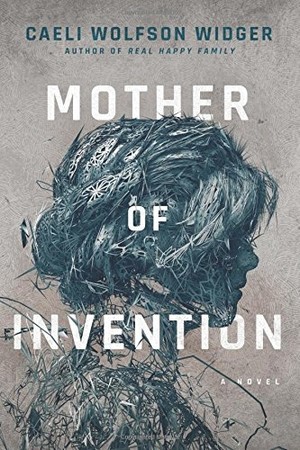
If you learn anything from books like And Now We Have Everything, you learn this: Motherhood changes your life. But what if it didn’t? In Widger’s science fiction novel, tech CEO Tessa Callahan’s company Seahorse is hard at work on products like remote nursing rigs that will make it easier for fathers to care for infants — but it still hasn’t solved the problem of pregnancy. Then Tessa links up with social media heir Luke Zimmerman, who’s pioneering a way to get pregnancy down from nine months to nine weeks, making it only a fraction as disruptive for women’s lives and careers. But as the first cohort of Seahorse subjects begin their ultra-accelerated gestations, shady secrets start to come to light about where the technology comes from and where it’s going. Mother of Invention may be science fiction, but it’s gimlet-eyed about the way pregnancy and motherhood can stand in the way of women’s ambitions.
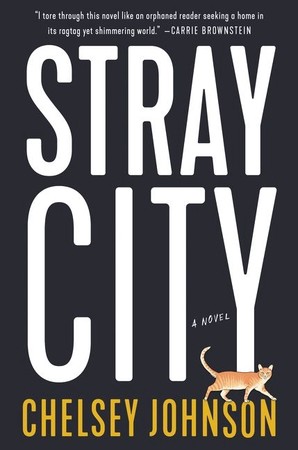
An anti-romantic comedy, Stray City follows the coming of age of Andrea Morales in 1990s Portland. A young gay woman fleeing from her conservative Catholic family, Andrea vows to reject her heteronormative upbringing and finds belonging in a thriving commune of artistic, zine-making lesbians. After a painful breakup with an older girlfriend, Andrea does the unthinkable and begins a clandestine affair with a man. Her brief and intense affair leads to a pregnancy and she decides to raise the baby on her own, much to the chagrin of her parents and the “Lesbian Mafia.”
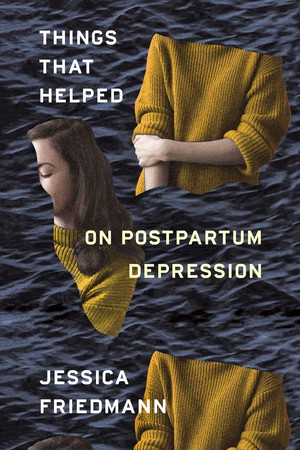
Sometimes the only way to resurface from depression is to focus on small steps, little things that we can stack back up into something that looks like a whole being. In Things That Helped, Jessica Friedmann writes a beautifully lyrical and intellectually complex series of essays that bloom from the focus on one object, idea, or category. The essays are intersectional studies that weave in ecofeminism, cultural studies, and questions about race and gender. Though I am not a mother, I pined for this book after reading the excerpt published by LitHub: “Blood, Birth, and the Talismanic Power of Red Lipstick,” which left me dewy-eyed and jelly-legged on a subway platform, because Jessica Friedmann is able to celebrate and interrogate the vivid, grotesque, and sublime tissues of the female body.
According to Jacqueline Rose, the way we construct motherhood in Western culture is wrong and dangerous. We bury all our problems in mothers, and we have projected unrealizable fantasies onto the mothers in our lives. We blame mothers for all the ills of the world, then idealize them as the problem-solvers tasked with amorphous, unsolvable problems. Rose pulls in everything from Elena Ferrante to Victorian divorce law to make the case that we need to make more space to listen to mothers’ voices, to give the darker characters of motherhood more room to breathe.
We need some humor on this list! Thank goodness for Emma Brockes and her blunt, witty account of deciding to become a single mother at the age of 37. A British journalist by trade, and in the early stages of her relationship with her girlfriend, Brockes decides to travel to the US to undergo IUI (Intrauterine Insemination) procedures. Brockes wrestles with her Libertarian Ob-Gyn and muses on the bulk-order options and existential conundrums brought on by sperm donor catalogues. As the wave of capitalist/tone-deaf Mother’s Day cards and candles wash over us, we can be grateful for Brockes’s challenge to the ways we celebrate motherhood: Why are more and more women choosing to undergo fertility treatments to become single mothers? How does society treat women who try but ultimately cannot have children?
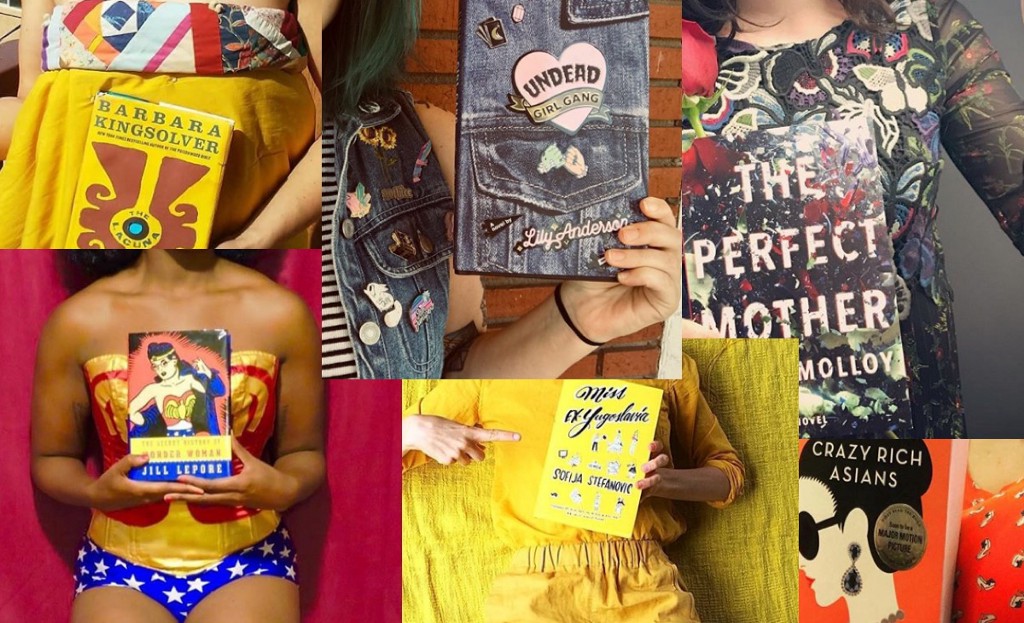
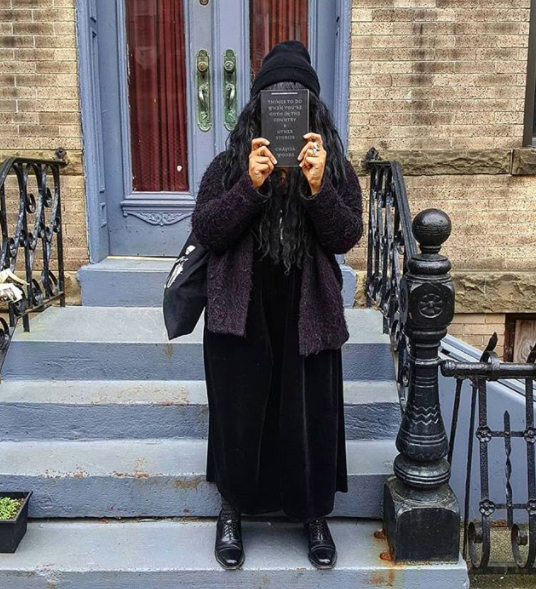
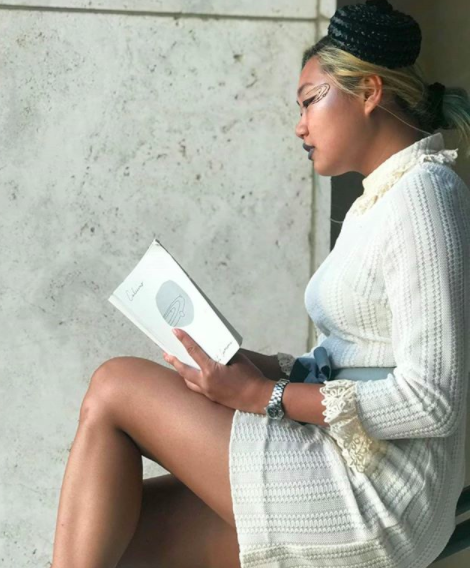
The changing of the season and the influx of new spring titles has inspired us at Electric Literature to up our fashion game and come to the office dressed to match a book cover. Glossy fashion magazine, we are not, but geeky feminist literary publication, yup, that’s us.
To celebrate the season of expensive cold brews, budding tulips, and al-fresco dining, we asked our readers to play literary dress up using the hashtag #DressLikeABook. Behold the 17 best literary inspired outfits and be sure to continue sharing your photos with us on Instagram.
Virginia Woolf once said, “One cannot think well, love well, sleep well, if one has not dined well.” Fortunately for Virginia, she never had to dine at Bouffage.
The problems began as soon as I read the entrée descriptions. Squid ink pasta is so cliché. Why not bull semen pasta? Or Bic-pen ink pasta? Give us something we don’t expect. Also show, don’t tell. Instead of writing “grass-fed beef” on the menu, let me divine the beast’s culinary proclivities by tasting the earthy richness of the field. Let me feel the sun on my hide. Make me one with the cow.
Squid ink pasta is so cliché. Why not bull semen pasta? Or Bic-pen ink pasta? Give us something we don’t expect.
The steak, potatoes and green beans didn’t form a unified narrative on the plate. They were adjacent to each other, but not interacting. It’s like the ingredients were elements the chef wanted to include, but with no real reason why. Let me see the relationship between them. Let me feel the tension, the way they push and pull at each other. Overall, the meal suffered from a lack of cohesiveness. Needs a complete revision.
Olive and Ash reviewed by Quentin Prentice
Olive: round, plump yet firm, with a saltiness that suggests the tears of humanity. Ash: dust carried on the wind for all of eternity. Our waiter said the name came from the intersection where the restaurant is situated, but we think the chef was alluding to the painful arc of human existence, springing forth from fecundity only to become a remnant of destruction.
The first course arrived on an oversized plate with a wide rim. Was the chef saying the food was an insignificant speck floating in a sea of nothingness? A slice of shaved cucumber topped with lemon-caper foam huddled in the center. The foam disappeared when touched with a fork, leaving us to wonder what was real and what we had conjured.
A crackling of crispy chicken skin descended upon our table. But why just the skin? What is — dare we ask — underneath? We invite the chef to go deeper, to delve into the dark realm. True talent lies in not playing it safe.
A crackling of crispy chicken skin descended upon our table. But why just the skin? What is — dare we ask — underneath?
Finally, dessert: cheese and berries served “family style.” But why finish the meal with a shared plate? We enter the world alone, and we die alone.
Taco Bell reviewed by Jay Salerno
What this restaurant lacked in authenticity, it made up for in originality. When I first walked into the Taco Bell on Federal, I was skeptical. The décor was banal and forgettable. The menu had all the elements one would expect — cheese, salsa, guacamole — yet it felt uninspired. I wanted to be transported to Mexico, and I was sorely disappointed. But then I tried the cross-genre hybrid feature known as Nacho Fries. The chef embraced a minimalist aesthetic, presenting the fries in a small cardboard container with a sleek understatement that contrasted delightfully with the gustatory sensory overload. Spiciness. Saltiness. A pleasingly indulgent soupçon of grease. A gooey, rich cheese sauce. The combination was stunning. Leave behind everything you think you know about nachos and fries; this ground-breaking snack is pushing boundaries and challenging our conceptions of the status quo. I believe that Nacho Fries signal the dawn of a new era in the American fast-food canon. What a time to be a gastronome!
A true work of art is never done. And neither was the chicken.
Mercantile reviewed by Blake Cabot Humphries IV
I hate to brag, but I know a lot about the restaurant business. I ate at the Poolside Grille at the country club all the time when I was a kid, so you could say I grew up in the industry. Here is my informed critique of Mercantile: instead of monkfish with puréed sunchokes, I’d suggest swapping the monkfish for ground beef, substituting a burger bun for the sunchokes, and topping the beef patty with a sliver of grilled onion. That’s how they did it at the country club, and it was great. Just thought I’d share.
I’d suggest swapping the monkfish for ground beef, substituting a burger bun for the sunchokes, and topping the beef patty with a sliver of grilled onion.
Ecru reviewed by Jen Stanton
The portions were super small and some of the things were kind of weird. Beet scarpinocc? Nettle salsa? Pearl tapioca sabayon? Honestly, I only do these reviews so I can tell people I’m a food critic and hopefully score some free meals. I spent $110 last month on lit mag submission fees, and my ramen supply is running low.
When I was 5 my teachers refused to read the Beauty and the Beast book I eagerly brought in for read-aloud because Belle’s cleavage was too prominent. When I was 12, they claimed I couldn’t compose a book report on Harry Potter and the Sorcerer’s Stone because of its illicit content on witchcraft. When I was 18, they crossed out lines in Hamlet that alluded to penises. Teachers received these orders from rabbis, because rabbis know this: literature can stretch and shrink and shape the whole human mind.
So instead of secularist literature, I did this: At 5, I read what 15th-century rabbis said about Sabbath. At 12, I read what they said about modesty. At 18, I read what they said about existentialism. And at 19, I flew to Jerusalem for a year to read what they said about everything. Especially marriage.
Did you know the Talmud says that if a young man isn’t married by 18, “God waits for him until he’s 20, and if he’s not married by 20, then God says ‘blast his bones’?” If God is so vengeful with the young man, you can only imagine how He is for the young woman.
Rabbis know this: literature can stretch and shrink and shape the whole human mind.
After Jerusalem, I enrolled in a local Orthodox all-female college, and watched as other girls attended class with locks of unruly Jewish curls straightened to punishing submission and eyes carefully lined. There were no guys in class, of course. But at 19, these Shoshanas, Chanas, and Leahs became beauty-conscious just in case they crossed paths with a matchmaker.
I spent the money I didn’t have on Lancome makeup and keratin hair treatments to be like those girls. I, too, hoped to catch a man who could maneuver through office politics as deftly as he could through the twisting logic of a Talmudic text. What did I dream for us? To caress each other, beside the shadow of Sabbath candles, with the quick eagerness and slow tenderness of a couple who were virgins before marriage (as Jewish law required us to be). And what did I dream for me? For a baby’s warm breath on my breast while flipping leisurely through kosher recipe magazines. This life — oiled to wheel smoothly across the spheres of family and religion — is what we Orthodox girls prayed passionately for.
And so I hurtled myself through dates: with men who said I was too observant because I refused to hold their hand through Central Park (God’s rule, not mine), and with those for whom I was not observant enough because, over bowls of ravioli, I championed reproductive justice. There were also months of silence when matchmakers didn’t phone to suggest a date, and I caught myself doodling crying faces on the corners of college notebooks.
At 20, the weddings were all the same. I sat across from former high school acquaintances who self-consciously flipped their new wigs, symbols of having crossed the great beyond to marriage. They clinked glasses of weak Moscato politely during dinner, clicked their heels delicately during dancing, and gossiped over talks of in-laws during the reception. Meanwhile, bachelors at the wedding couldn’t catch a peek at my then-svelte figure in Spanx because they were shepherded away from women for religious reasons. Another single girl commented, “You look like Rose in Titanic. You know, from that scene where she’s having dinner in first-class. Right before she tries to jump off the ship.” Perhaps, in that moment, when trumpets echoed hollow across the ballroom, we were mirrors of each other. We both knew oppressive alienation when it was there.
At this time, I was still in the all-girls Orthodox college but, in a teeny-tiny rebellion, I switched from Brooklyn to its Manhattan campus. There were no boys, booze, or cannabis on campus and so my brother’s “Be careful of the types of girls in dorms,” was vacuous at best and laughable at worst. There were a handful of pants-wearers. The rest of us still nervously adjusted the length of our skirts in front of male professors.
But as those 15th-century rabbis, the ones whose words I highlighted obsessively in Jerusalem, would caution: It’s not the girls you need to be wary of, Rebecca. It’s the goddamn literature. (Rabbis. They swear when it matters.)
As those 15th-century rabbis would caution: It’s not the girls you need to be wary of, Rebecca. It’s the goddamn literature.
“This semester, we’ll start with Dubliners, James Joyce’s collection of short stories,” said Professor Budick. His voice soft, his eyes sharp. “Here’s one word that I want you to know before we read it: paralysis.”
“Paralysis in literature,” he continued, “means that you cannot change yourself spiritually, socially, or politically even if you’re insides are clawing and begging you ‘Move, fool. Move.’”
Circular journeys haunt characters in Dubliners. By the end of their stories, they return to a staid life, thus choosing stagnation over movement. From boy to middle-aged man, each character shakes with desperate melancholy. The kind that feels palpable only because it reminds us of our own fear of battling the unknown.
Joyce’s writing is so stupidly moving. Sprawled across Central Park’s Great Lawn, I digested all of his realistic dialogue and descriptives over and over. But the story in Dubliners most responsible for changing the course of my sails, the one the 15th-century rabbis are surely tearing up in heaven, was “Eveline.”
The story in Dubliners most responsible for changing the course of my sails, the one the 15th-century rabbis are surely tearing up in heaven, was “Eveline.”
Eveline is about a 19-year-old girl who, at the story’s opening, reflects on the heavy parts of her existence. Ever since her mother and older brother passed away, her father turned abusive and threatened to beat her. Eveline also becomes responsible for providing for her living family members. This does not come easy as her job is dull, difficult, and with no promise of mobility.
But hope arrives in Frank, a sailor whom she loves and who promises to take her to Buenos Aires. Of course, conflict seizes her: “She had consented to go away, to leave her home. Was that wise? She tried to weigh each side of the question. In her home anyway she had shelter and food; she had those whom she had known all her life about her.” There is that strange comfort of predictability in Ireland. There is also the memory of her mother. The night before she finally decides to escape with Frank, she hears a melody on the street that played on the day her mother died. Eveline finds it “strange that it should come that very night to remind her of the promise to her mother, her promise to keep the home together as long as she could.”
So far, this story seems Romeo and Juliet-esque; there’s poetic symbolism and the wrenching romantic conflicts of an adolescent — but where’s the punchline? “Wait,” said Budick. “We’ll read that tomorrow.”
And we did. On this day, we learned why “epiphany” is such a Joycean theme, and then we embarked on Eveline’s very own: As Eveline “mused the pitiful vision of her mother’s life laid its spell on the very quick of her being — that life of commonplace sacrifices closing in final craziness. She trembled as she heard again her mother’s voice saying constantly with foolish insistence: ‘Derevaun Seraun! Derevaun Seraun!’ She stood up in a sudden impulse of terror. Escape! She must escape! Frank would save her. He would give her life, perhaps love, too. But she wanted to live.”
After Eveline’s epiphany that she must escape, readers pray that she will join Frank in Buenos Aires, not because he — a mere man — is the answer to happiness, but because her risk-taking is the solution to paralysis. And so, as ten Orthodox girls held their breath in our intimate English class, Budick reads this moment of truth aloud:
A bell clanged upon her heart. She felt him seize her hand:
“Come!”
All the seas of the world tumbled about her heart. He was drawing her into them: he would drown her.
“Come!”
No! No! No! It was impossible. Her hands clutched the iron in frenzy. Amind the seas she sent a cry of anguish.
“Eveline! Evvy!”
She set her white face to him, passive, like a helpless animal. Her eyes gave him no sign of love or farewell or recognition.
There has never been another writer who has terrified me more with words than Joyce has in this scene. I wondered: amI destined to be Eveline?
Did I inherit “passivity, like a helpless animal” as I did the wide set of my mother’s nose or father’s thick glasses prescription? Epigenetics may answer “yes.” My female ancestry from Azerbaijan seem to have passivity drawn with permanent marker on their double X chromosomes. Cursed by one of the loudest brands of patriarchy, girls hung up sheets post-wedding night to prove they were indeed virgins with freshly broken hymens, trickles of blood and all. These women were stronger workers, fiercer nurturers, and better cooks than I will ever be. But they didn’t stage an uprising. Instead, patriarchy followed mothers to America where they berated their daughters for spending a day on the beach with a new man, fully clothed and barely touching. Am I destined to be Eveline?
Did I inherit “passivity, like a helpless animal” as I did the wide set of my mother’s nose or father’s thick glasses prescription?
Did I inherit passivity through my religion? Oh, there is female baddassery in Judaism! Yael and Judith dashed the brains out of evil anti-semites with tent pegs. But my own cohort of women who wish to revolutionize, seem too afraid to feel empowered as a single woman or wear a shorter skirt for fear of snickering neighbors. Am I destined to be Eveline?
I enjoyed religion, in spite of its laws about minuscule things, like how to tie your sneakers. In high school, I wrote diary entries earnestly headed with “Dear God,” and signed off an even more earnest “Your Servant, Rebecca.” I counted tear stains on prayer books like the bragging rights they were. Each morning, that unknowable, unnameable transcendence was mine to claim. But itches are meant to be scratched. Especially when you grow up and the biblical texts that once excited you feel dry on your tongue. You are estranged in a home you once thought was yours.
Right now, my religion is openness to experience. And my Satan? Stagnation. At 24, I broke a Jewish law and kissed a boy. At 25, I slipped on a pair of pants. At 26, I swayed my hips to music in a way that is necessary to release sadness and also in a way that Orthodoxy forbade. My version of God can flow with the river too.
At 24, I broke a Jewish law and kissed a boy. At 25, I slipped on a pair of pants. At 26, I swayed my hips to music in a way that is necessary to release sadness and also in a way that Orthodoxy forbade.
For my irreverence, I was fined with anguished fights, aggravated silences, and “your grandmother rolls in her grave”-isms. But unlike Eveline, I will take all of that instead of carrying the unbearable weight of paralysis.
The rabbis probably didn’t suspect that it’d be a dead Irishman who’d be my undoing. Ever since I brought in that cleavage-ridden Belle book to school, they probably thought smut and erotica would be the genres to unwound me. But that’s the thing about literary power. It’s unpredictable. And even the most unlikely stories can pour icy water on your back when you expected to struggle under heat for the rest of your life.
DON’T MISS OUT
Sign up for our newsletter to get submission announcements and stay on top of our best work.
YOUR INBOX IS LIT
Enjoy strange, diverting work from The Commuter on Mondays, absorbing fiction from Recommended Reading on Wednesdays, and a roundup of our best work of the week on Fridays. Personalize your subscription preferences here.