11 Books About Outsiders, Weirdos, and Underdogs

I was an immigrant kid who didn’t fit in and I’ve just written a memoir about it called Miss Ex-Yugoslavia.

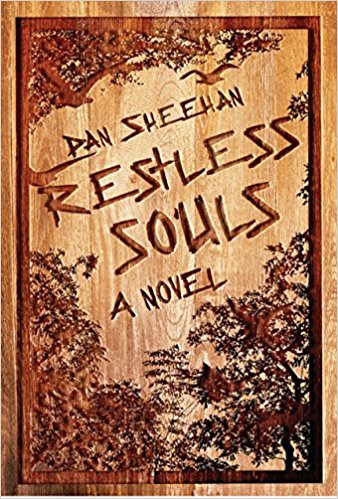
Purcase the novel

My family traveled between a war-torn Yugoslavia that was falling apart, and Australia. In Australia, we became an ethnic minority, and I struggled with the language and my new dual identity.

I couldn’t control where we lived, I couldn’t fit into the mainstream, and I thought I wasn’t brave enough to be a hero. Like a lot of lonely kids, I found solace in books and identified with characters who are outsiders (like me) who happened to be doing something incredible. Give me a book featuring a fish-out-of water and I’m hooked (sorry). Here are some gems featuring a broad range of outsiders that have captured my imagination over the years.

The Love Letters of a Portuguese Nun by Gabriel De Lavergne & Vicomte De Guilleragues, translated by Guido Waldman

I discovered these love letters when I was an awkward teen who did not have a boyfriend but thought about having one constantly. I identified with the 17th century rebel nun who was in unfulfilled love affair with someone other than Jesus. She penned things such as “my passion increases by the minute.” I too was passionate but chaste. There is debate about whether the letters were really written by a love-lorn Portuguese nun or a work of fiction by a French politician.

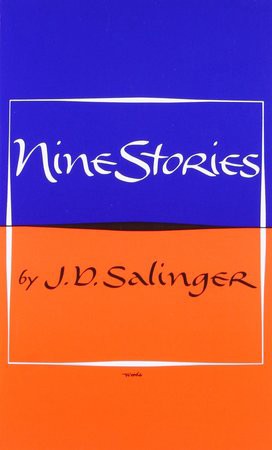
Nine Stories by J.D. Salinger

As someone who identifies with the underdog, I’ve always been charmed by the writing of Salinger. For one, I love the mystery surrounding the writer himself — he was a recluse, and as a teen I thought “He has withdrawn from the world because no one understands him (except for me).” For another, I empathised with his characters, who were always flailing about, trying to make sense of a world that seemed foreign and strange. The very first story “A Perfect Day for Bananafish” introduces the Seymour Glass, an intellectual scarred by his wartime experiences, who finds himself on a honeymoon where he can’t seem to relax — a (banana)fish out of water if ever there was one.

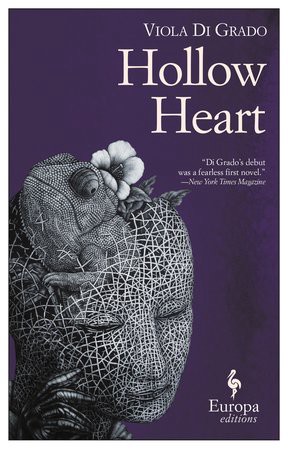
Hollow Heart by Viola Di Grado, translated by Antony Shugaar

This Italian novel starts with a shattering first sentence: “In 2011, the world ended: I killed myself.” Dumped via text by her boyfriend and unwanted by her deadbeat father, Dorotea is an outcast in life as well as in the afterlife, where people who commit suicide are shunned as social pariahs. A ghostly Dorotea lingers on, observing the world and people she left behind but unable to communicate with them. Hollow Heart is a fascinating, bizarre, and darkly humorous glimpse into the afterlife of an introspective, small-town Italian ghost. I met Di Grado at a writers festival last year. She wore black lipstick and writes in a forest where she lives alone, far from the reaches of social media. I wanted to kiss her for being the kind of weirdo artist from the olden days and for being unapologetically strange in life and on the page.

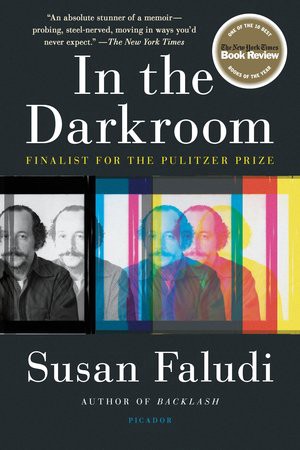
In the Darkroom by Susan Faludi

American Dad, Jewish refugee, photo developer, Hungarian repatriate, and now woman: these are some of the identities inhabited by Susan Faludi’s father. At the age of 76, Faludi’s father has completed sex reassignment surgery, renamed herself Stefánie, and reaches out to her daughter after a prolonged absence. The surprised younger Faludi travels to Hungary to reacquaint herself and study this slippery and complex character, who she spent most of her life resenting. As she tries to come to terms with her father’s new self, Faludi is confronted with more questions causing her to reexamine her notions of identity, gender, family, and war.

Bright Lines by Tanwi Nandini Islam

Bright Lines is a coming of age story about three young women finding their identity and navigating sexual awakening against the backdrop of a multicultural Brooklyn.The main character, Ella, is haunted by hallucinations of her parents, who were murdered in Bangladesh when she was a child. Ella is not the only outsider in this narrative, where multiple characters are reckoning with their own identities, secrets and longings. The book is fun, thrilling, and queer featuring a diverse cast of characters, giving us a glimpse into the immigrant communities of Brooklyn.

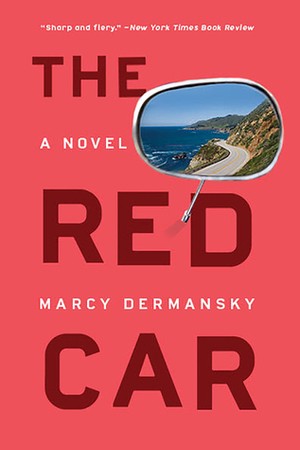
The Red Car by Marcy Dermansky

When Leah finds out her former boss and friend Judy has died and bequeathed her with a red sports car, she leaves her possessive husband to go and claim her inheritance. A spell is broken when she leaves the east coast and arrives in San Francisco, and Leah’s adventures begins as she rediscovers herself behind the wheel of the flashy red sports-car. In the car haunted by the ghost of her dead friend, Leah embarks on a sexy, funny and tragic grappling with her past. This book is sharply written, the protagonist is strange and delightful, and the atmosphere is magnetic; the pages seem to turn themselves, reminiscent of a car with a mind of its own.

A Separation by Katie Kitamura

Another strange protagonist finds herself in a strange place. The narrator, a young woman, arrives in Greece, to find her missing husband. She has kept the separation from her husband a secret from everyone in her life. While searching for the man she used to love, she is forced to deal with her feelings about their failed relationship. In one scene, the protagonist watches a Greek couple have an argument — she does not understand Greek, searching for clues about the source of their argument through their body language.This feeling of being a foreigner, an onlooker on the periphery of something she can’t quite grasp, permeates the novel. Her search through the remote Greek landscape makes her question what she knew about her relationship and if she really knew the man she is married to.

The Unspeakable by Meghan Daum

Meghan Daum’s essays tackle controversial subjects, like the death of a parent and the decision not to have children, in surprising ways. I found myself chuckling in agreement with Daum, who grapples with “that disconnect between what we think we’re supposed to feel and what we actually feel” — a situation many outsiders find themselves in the world over. Except Daum has a way of expressing herself with so much wit and insight, we can only wish we were as articulate.

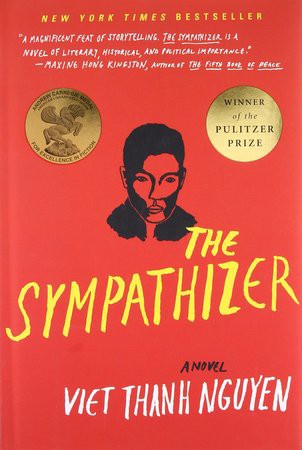
The Sympathizer by Viet Thanh Nguyen

Nguyen throws us deep into this exhilarating spy novel framed as an anonymous confession by a nameless narrator. Not only is the main character of this Pulitzer Prize-winning novel an outsider because he is a North Vietnamese mole in South Vietnam’s special forces, he then becomes an outsider in the United States when he finds himself living the life of an immigrant. The Sympathizer offers readers a complex tale about the Vietnam War and its aftermath told from a Vietnamese perspective, in contrast to the glossed-over Hollywood movies.

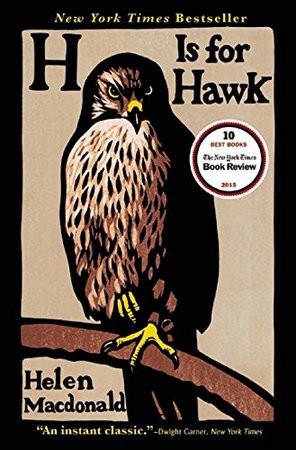
H Is for Hawk by Helen MacDonald

The heartbreaking memoir of a grieving author who acquires and tames a hawk to cope with the loss of her beloved father. In studying and training this extraordinary bird of prey, MacDonald sees herself reflected in the feral fierceness of Mabel, the hawk, and slowly begins to heal. Written during the darkest moments of her life, H is for Hawk is a moving, strange, and occasionally funny meditation on life and death from a gutsy memoirist the rest of us can take our hats off to.

The Invention of Everything Else by Samantha Hunt

As a Serb, I grew up considering inventor Nikola Tesla our country’s greatest hero. An eccentric man, Tesla was under-appreciated despite inventing alternating current, radio, wireless communication, and remote control and he died a penniless outsider. I was delighted to find this strange and magical novel set in 1943 New York during the later years of Tesla’s life. This work of fiction reimagines the elderly inventor living in a hotel room and spending his days walking to Bryant Park to chat with pigeons. During a blackout in the hotel, the chambermaid Louisa discovers Tesla stealing electricity and a friendship is born.

Writing Behind My Country’s Back

Early on as a fiction writer, I assumed that because I was born and raised in Malaysia, I would always write with a Malaysian audience in mind. Little did I know that I would one day write knowing full well my words will not be read in my home country.

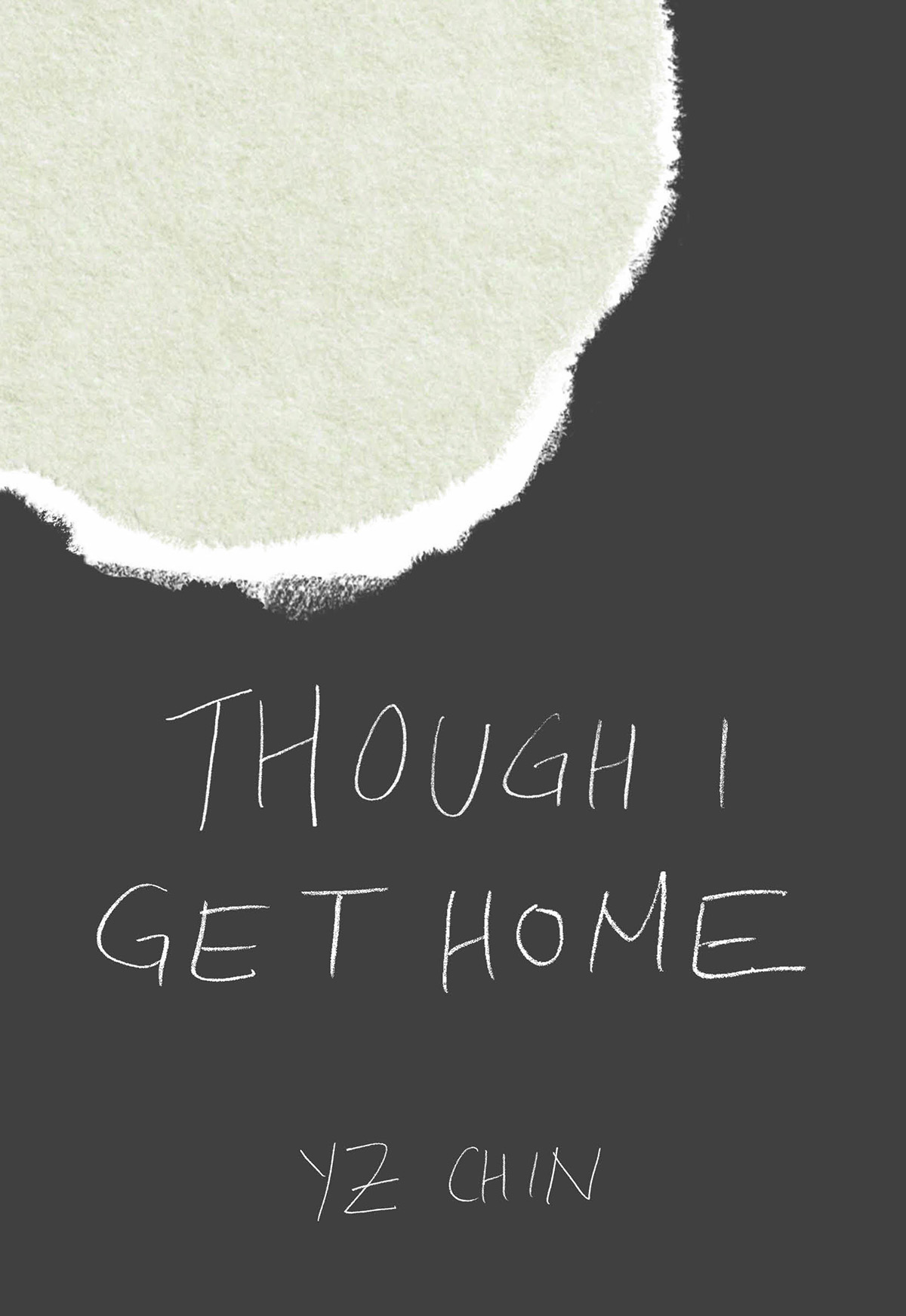
Medium.com is blocked by the Malaysian government, and as such is inaccessible to readers there. By extension, Electric Literature is also censored. This came about because of a single Medium post published in 2016 covering 1MDB, the massive financial scandal embroiling the current prime minister. That is how we arrive at this moment, when I write about my country behind its back. Perhaps this is only fitting, seeing as my book Though I Get Home is (among other things) about censorship in Malaysia. In the book, a young woman named Isabella Sin is arrested for writing “lewd” and “inflammatory” poems, then detained without trial.

When people ask why I chose to write about censorship, I often say that Isabella’s character is based on real life events, such as the arrest and travel ban inflicted on Zunar, a cartoonist, for his art. There is also the trial of Bilqis Hijjas, a dancer who released yellow balloons printed with words deemed so “insulting” as to necessitate her arrest. But there is another reason I wrote about censorship, one that is more personal.

I have no exact memory of my first realization that I live in a censored world. It is hard to be aware that a thing you have never seen is missing. But I imagine it had something to do with watching choppy programs on state TV, and seeing one scene blink into a totally different one with no semblance of transition. Maybe I’d wondered what happened after the man and woman leaned their faces together, eyes closed, or what it was that transpired after the villain lunged with a knife at his victim.

No doubt part of it is becoming an adult and starting to understand that effects don’t always have direct causes, actions aren’t always followed by consequences, and it all just might be chaos after all. But I think those of us who grew up in an atmosphere of censorship might be more conditioned than others to accept warped narratives. Why shouldn’t two people falling onto a bed lead to a man in a business suit waiting for a bus, when election outcomes can be manipulated, and political opponents locked away on made-up charges of sodomy, all without repercussions?

In one scene, a character is alive. In the next, that character is dead, and their mother weeps over their body. Something happened. You can’t see it, but that doesn’t mean it didn’t happen. We learn not to question gaps in logic. We become accustomed to misshapen narratives, so much so that eventually anything at all, from the absurd to the cruel, becomes acceptable, even normal.

We become accustomed to misshapen narratives, so much so that anything from the absurd to the cruel becomes acceptable, even normal.

A man gropes my butt on a busy street. Why not?

I ask a doctor for antidepressants, and end up spending hours in the bathroom with diarrhea. Turns out he’d given me laxatives. C’est la vie.

A politician says citizens should leave Malaysia if they don’t like how the ruling party runs the country. Okay.

A newspaper has its printing license revoked by the Home Ministry for no given reason at all. So it goes.


It might be that I started writing stories as a child in order to live in a more reasonable world, for however short a time. As an adult, I am sometimes drawn to formulaic murder mysteries for the same reason. They open with blood, gore, death. And then they jump, like a censored movie, to a totally different scene, where a detective is day-drinking or something like that. But I don’t have to accept the gap. The mystery eventually reveals motives and uncovers murder weapons. The killer is caught in the end. The opposite of censorship: revelation, and the filling in of intolerable blanks.

The stories I wrote in my childhood were linear and predictable. They comforted me. But by the time I arrived in America at the age of 19, I had moved on to poetry, where leaps of fancy are encouraged, and above all the tying together of seemingly unconnected notions is a prized feature. A couple stumbles onto a bed, and then a businessman waits for a bus. It corresponded more with how I felt, moving in the world.

In America, I learned so many new things about myself. For example, that my pussy is tight. That I look best hanging off the arm of a rich white man, because I love money and will turn out to be either a gold digger or a green card wife. I come notched on a dial with three settings: Chinese, Japanese, Korean, each click of the dial corresponding to the position of index fingers stretching eyes into narrow strips. I eat dogs, or cats, depending. Or I am from a Muslim country, and that in itself is apparently the insult.

I was living and writing in America, but all this time I had carried within me the state censorship of my home country.

The thing about emigrating as an adult from a country that does not wholly love you is that you are already well-versed in a slew of stereotypes and prejudices against you. But in the new land, you have to re-educate yourself on a whole new set of ways that you are rotten. The meanings of insults will be revealed to you only gradually, each accidental groping to enlightenment paving the way for understanding of more nuanced name-calling — until finally the slurs are decoded and start to repeat, and you begin being able to anticipate what you’ll be seen as, before they open their mouths to tell you so.

But there is no fair trade. By taking on this new burden of Otherness, you do not at all shed your previous baggage of being a minority in Malaysia, already yours since birth. You are still the greedy, scheming pendatang, mere visitor. You are a Jew of the East. You are filthy because you eat pig — you are pig. You are insatiable; despite the great kindness given by the dominant culture in allowing your kind to stay in their country, you keep pushing for more and more rights. Apa lagi Cina mau? Go back! Go back to where you have never been.

I yearned to explain all of this to people, especially those who wanted to know where I’m from, and those who were certain they knew where I’m from (they were never correct, Malaysia apparently being a kind of Rumpelstiltskin of countries). But I failed to pack all that I thought and felt into a few spoken sentences. Those encounters always left me feeling wrong and un-whole.

To explain myself, I returned to fiction. In my stories, I tried to convey what it’s like to live as a minority in Malaysia, and an immigrant in America. I thought I was painting as accurate a picture as I could, until my writing professor asked me why, in a novella with lots of ink spent on romantic relationships, there was no sex, almost like a deliberate erasure.

I was shocked. He had seen through to a censorship in my work that I hadn’t even realized was there. The worst part was that this censorship was self-imposed. I was living and writing in America, but all this time I had carried within me the state censorship of my home country. It was distressing to realize this. I’d thought I was a creative writer, but I wasn’t. I was fenced in. All those news reports about the government banning books and raiding bookstores had dammed up parts of my writer self, and I had let it happen without even registering it.

In my mind, the self-censorship became a serious hurdle that I would have to overcome if I harbored any hope of becoming a real writer. So I wrote about sex, and about race relations in Malaysia, and about the oppression faced by queer and trans people there. It never felt like liberation, but with every taboo or repressed subject I wrote about in my stories, I started seeing myself more and more as a true writer, one who explored life through words.

I write for Malaysia, no matter whether its back is turned on me. There is no dedication in my book.

At some point, I inevitably came up against writing about censorship itself. This became the seeds of Isabella’s arc in Though I Get Home. It was a somber realization that if I wished to be unfettered as a writer, then I would have to accept the chance that some of my writing might never be read by anyone in Malaysia.

Yet I also couldn’t give up my desire to connect with Malaysian readers. So what if no one in Malaysia ever read what I wrote? In Existentialism is a Humanism, Sartre quotes an old adage that goes “No hope is necessary to undertake anything.” He follows up with: “All I know is that I will do everything in my power to make it happen. Beyond that, I cannot count on anything.” This is the way I write for Malaysia, no matter whether its back is turned on me. There is no dedication in my book.

Writing for a country this way is also important to me in another sense: I did not want to write books meant to elicit tongue-clucking from international readers, stories that let them sit in judgment as they read, thinking how barbaric it is, the things that people in third-world countries do.

Because look how things have turned out: I am now once more worried about self-censorship, but this time, the fear has its roots in U.S. government policies. Recently it was reported that the U.S. will ask those who want to visit or live in America to hand over their social media history. Already the government has been or plans to monitor the social media activity and search history of all legal immigrants, of which I am one. I am not a U.S. citizen. I feel acutely the risk of writing too much. Even a simple retweet sometimes gives me pause: are these the 200 characters that will one day get me removed from this country?

From a news report covering the plans to monitor search and social media activity: “This would also affect all U.S. citizens who communicate with immigrants, […] who could self-censor out of fear that information they exchange with someone overseas could be misconstrued and used against them.”

So you see, I wrote a book about (self-)censorship to interrogate my relationship to it, but the book is also for you after all.

Sometimes all self-censorship needs is a vague, unspecified fear.

This month, we also learned that the U.S. Department of Homeland Security wants to build a database of journalists, bloggers, and media influencers that will include their personal data and social media information. This, by itself, does not imply censorship, of course. But as I know all too well, sometimes all self-censorship needs is a vague, unspecified fear, or even just a habit of considering how those in power will react to your words.

A white man came up after I read from my book to tell me he couldn’t imagine living in a country “like that.” I hope he and others like him see that the spaces we occupy overlap, and that so many of us have work to do. I hope we all keep wresting the truth out from under the misshapen narratives given to us, and I hope we keep saying what’s true, no matter that our voices are feeble, or that backs may be turned on us. Two people fall onto a bed. You can’t see it, but they are asking themselves and each other: what are we afraid to say, for fear that the powerful will punish us?

7 Novels Featuring Omens of Bad Luck

Today is Friday the 13th, often considered to be a bad-luck day in Western culture—although honestly, how bad can a Friday be? In recognition, we’ve rounded up some novels featuring traditional harbingers of bad luck: letting a black cat cross your path, walking under a ladder, breaking a mirror, seeing your doppelgänger, getting a clock as a gift (bad luck in Chinese culture), and spotting ominous birds like ravens and owls. This Friday the 13th could still be lucky—you could find a new favorite book!

Black cat: The Master and Margarita, Mikhail Bulgakov

Bulgakov’s satirical novel about the devil is packed tight with sly jokes, references, and symbolism, so that the casual reader who doesn’t work through the footnotes may find herself missing a lot. But everyone can appreciate Behemoth, the gigantic talking black cat who’s the Devil’s constant companion. Though he’s capable of taking human form, most of the time Behemoth is just the largest, snarkiest, most magical kitty you’ve ever met.

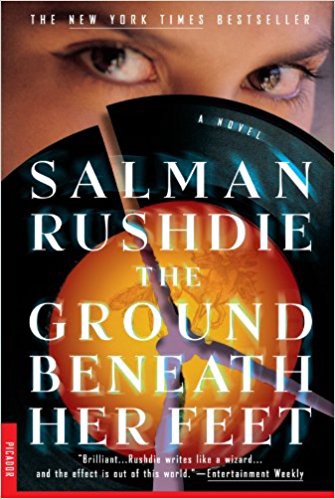
Broken mirror: The Ground Beneath Her Feet, Salman Rushdie

“In spite of all evidence that life is discontinuous, a valley of rifts, and that random chance plays a great part in our fates, we go on believing in the continuity of things, in causation and meaning,” writes Salman Rushdie in his tour de force novel about music, love, and parallel worlds. “But we live on a broken mirror, and fresh cracks appear in its surface every day.” Yes, the mirror is metaphorical, but the theme of cracks—glimpses between universes, fractures in relationships, the opening in the ground that swallows up superstar singer Vina Apsara—runs like a faultline through the book.

Doppelgänger: The Likeness, Tana French

The Likeness is the second in Tana French’s series of novels about Dublin murder detectives, but you don’t have to read the other books to appreciate this eerie, breakneck mystery. Detective Cassie Maddox is called in to investigate a murder because the corpse looks exactly like her. Maddox takes on the dead girl’s identity to go deep undercover with her roommates, who don’t know she’s supposed to be dead—or maybe one of them does?

Clock: The Clock Winder, Anne Tyler

Tyler’s “forgotten novel” was considered flawed by critics, readers, and the author herself, but frankly sometimes it’s a relief to see a genius falter a bit. The protagonist, Elizabeth, has put college on hold to spend some time working, and the work she finds is as a handyman to Mrs. Emerson, an older woman who lives surrounded by clocks in an old-money neighborhood of Baltimore. Elizabeth finds herself caught up in Mrs. Emerson’s family, which—in typical Tyler fashion—is complicated at best.

Raven: Jonathan Strange & Mr. Norrell, Susanna Clarke

These portentous birds are all over Clarke’s massive, enchanting novel about the return of magic to England in a fictionalized 19th century. The Raven King, a shadowy magician who dwells somewhere between the real world and the realm of Faerie, is the engine behind much of the book’s plot, and many of its characters harbor secret (or not-so-secret) allegiances or antipathies towards him, even when they’re not sure he exists or ever did.

Ladder: Mr. Penumbra’s 24-Hour Bookstore, Robin Sloan

The bookstore of the title has many eccentricities, but the most obvious one is its shape: a narrow chimney of books, with shelves reaching five stories up into darkness. The narrator, a bookstore clerk, frequently climbs to dizzying heights on the bookstore’s ladders to fetch one tome or another for the store’s distinctly odd customers—but the novel’s action starts when he begins to figure out what exactly he’s been selling, and why.

Owl: The Blind Owl, Sadegh Hedayat

The nameless narrator of this Iranian classic addresses his disjointed, morbid confessions to an owl-shaped shadow on his wall. When Hedayat first published it, he had to do so in India; the novel was banned in Iran. It only became available in his home country five years later, after the fall of Reza Shah. An opaque, surrealist, and disturbing book, blamed for a rash of suicides in Iran, it’s also considered a masterwork of Persian fiction. Maybe the ideal read for an unlucky day.

11 Highly Literary Tote Bags

Move over Hermès, the humble canvas tote bag is now the new prestige bag. For better or for worse, the tote bag is the new cultural touchstone, imbued with social significance that subtly reveals the lifestyle, status, and cultural capital of the wearer. I scoured Instagram and found these 11 literary tote bags that convey intellectual cachet and effortless chic.

The New Yorker

The original status symbol ubiquitous amongst the intellectual gentry of society who use this simple canvas bag to carry their organic, non-GMO avocados home from Whole Foods while making a conscientious effort to surreptitiously recycle the never read stack of the New Yorker magazines.

London Review of Books

This high-brow literary publication is the unlikely brand behind the cult “it bags” coveted by young Koreans. Only available in LRB’s London bookstore, this blue canvas bag is so popular that there’s even a trending Instagram hashtag (#런던리뷰오브북스에코백) of chicly dressed Koreans casually slinging their new fashion accessory over their shoulders.

Melville House

“I would prefer not to” is a famous line written by which great American author? Hint: He’s a dead white man who has a thing for whales. If you can’t guess the answer, you probably should not be carrying this bag.

https://www.instagram.com/p/BajgJzMDyG5

Shakespeare and Company

Have you really been to Paris if you don’t have a selfie with the Eiffel Tower and this silk-screen printed tote bag from legendary bookstore Shakespeare and Company?

Printed Matter

Nonprofit/bookstore/art space Printed Matter’s $30 tote bag is the perfect gift to annoy the grammar police in your life. Bob from accounting can’t complain about the typos in your email anymore if he’s carrying a bag that says “BOOKS IS POWER”.

Daunt Books

Daunt Bookshop’s cloth carryall screams “I was a English Literature major who studied abroad in London for a semester”.

The Strand Bookstore

Visitors inevitably leave this famed New York City bookstore with a literary-themed tote bag emblazoned with The Strand logo to let the world know “hey, I was in New York for a hot second and look how cultured I’ve become.”

Electric Literature

We’ve all read enough dead white men for multiple lifetimes.

Literary Hub

Do you #ReadToLive? Do you pray to the temple of Joan Didion? Then you must get your hands on this elusive, not-for-sale Joan Didion tote from Lit Hub.

Verso Books

The perfect cloth carryall bags made by “the largest independent, radical publishing house in the English speaking world” for cool, literary socialists who occupy Wall Street and join protests in Washington Square Park.

Riverhead Books

This publishing imprint has a highly-coveted tote bag that only publishing insiders can procure. Unless you’re the lucky winner of their social media giveaway. Update: The tote bag is now for sale!

Belletrist

Are you a #bookstagrammer who loves celebrity bookclubs? I have good news for you! You can now be the proud owner of a Belletrist tote bag that says “Life’s a beach read”.

Instagram Made Me A Better Writer

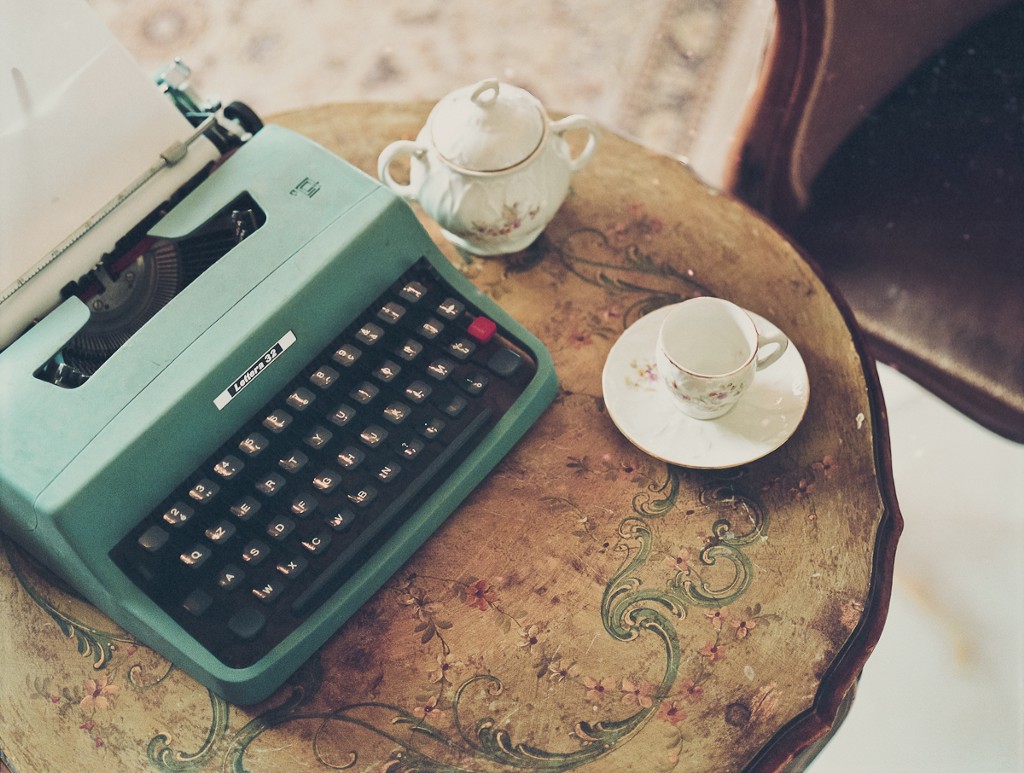
Three years ago, I lugged a Smith-Corona typewriter up a coastal bluff for a writing retreat. The typewriter was a Christmas gift from my husband, kept in immaculate condition since the 1970s by (antique store legend had it) Pink Martini’s songwriter. According to the store’s proprietor, the songwriter had hauled it down to Cuba on several occasions. The perfection of the carrying case belies this legend: open up the case and the original tags, warranty and manual slide out, their only blemish the relentless yellowing of time.

“This is going to help me write,” I said out loud, because that sounded like a practical reason to drive an obsolete hunk of office equipment 100 miles out to the Oregon Coast and lug it up sandy switchbacks to a second-story retreat bedroom. The twenty pounds of casing and keys battered against my shins with every step, and I kept stopping to switch hands and redistribute the ergonomic nightmare knotting in my shoulder.

I could have left this hunk of metal in my car trunk and worked toward the writing goals — finish an essay, start a novel — on my slender laptop. It was the not-so-secret reason glowing under my practical veneer that kept me huffing all the way to the top of the hill.

This typewriter is going to look so good on Instagram.


I signed up for Instagram in 2011 for innocuous reasons, just as I had previously for MySpace (everyone was on MySpace) and Facebook (everyone left MySpace). Not only did it distill social media down to its most expressive, engaging asset — pictures! — but its artsy filters revolutionized what a phone snap could be. Harsh lighting and low-lit landscapes were no longer the enemy, not with the warmth of Hefe or the sepia whispers of Crema. My first photo, taken in September before my 27th birthday, is a selfie in half-profile. I stare out of frame, unsmiling. My eyeshadow is smudged along my brow, and I’m not wearing lipstick. The Nashville filter has transformed it into a Polaroid, awash in blue midtones. Like the rest of my early images it is wildly overproduced, covering up the inadequacies of my iPhone 3. I had yet to learn the rules I’ve developed in the time since, to make something look perfect without looking fake. They function as Personal Branding Guidelines: the slightest head tilt, no flash on that food, bend those arms, point the toes. Upward-facing angles will promptly be deleted.

One of those first photos looks much more like my recent ones. It was snapped backstage at Pacific University before walking out with my MFA graduating class. The two-year how-to-be-a-writer intensive cracked open an identity I’d spent my life scratching and picking at. My tassel hangs perfectly in-line with my bob-cut platinum hair. Lined brows, blended dark shadow, lined and immaculate lip. Eyes into lens, full smile. Fifteen snaps to get it right.

Harsh lighting and low-lit landscapes were no longer the enemy, not with the warmth of Hefe or the sepia whispers of Crema.

The person I was before Pacific doesn’t exist in my Instagram archives. Therefore, as far as my brand is concerned, she is not real. The girl with mousy hair left too long and snaggle-teeth, and an extra 40 pounds after a Great Recession spent unemployed and darkly depressed. She was the self who liked the idea of being a writer in the same way she liked the idea of being a Hollywood starlet or Japanese pop idol — a dream that was impossible to execute, and remained obtuse in the clouds as life stagnated below.

I don’t bring her up much. She’s unnecessary backstory to the narrative I’ve spent seven years shaping into a reality told in 2,400 @tabithabee pixel tiles.


Last month I was in Tampa for a writing conference. I’d been planning the trip for months, knowing it would be an intense four days of Social Media Persona on Parade. There was a lot at stake this year: my first book was coming out. I only saw these friends and associates once a year, at most. There were further connections I wanted to make and opportunities I felt were close, but just needed that little in-person nudge toward my fingertips.

And these people would need to meet Fabulous Aspiring Writer Tabitha, not My-Feet-Hurt Tabitha or I’m-Getting-Shitty-Emails-From-Condescending-Engineers-At-My-Day-Job Tabitha, or I-Said-Fuck-It-To-The-Curling-Iron Tabitha. Those messy, bitchy iterations of myself might get their glimmers on Twitter or Facebook, but I wanted my favorite people to see the best version of me. The Instagram one.

I sketched out a schedule for all my outfits before departure, one for each day and another for the offsite evenings. I picked bright, floral, gaudy Florida patterns and a hibiscus fascinator that I got from a burlesque designer in my home of Portland, Oregon.

At least, that’s what I submit as Home. My actual residence, a rural patch of hop groves and hazelnut trees you’ve never heard of smack between Portland and Salem, gets little mention in my feed.

Would you like to tag Hubbard, Oregon as your location?

Remember my answer: NO.

By Saturday, the last day of the conference, I went off-book to run downstairs in the morning for coffee. I put on my favorite pair of shorts and a new t-shirt from a journal I consider a friend (in that weird way you start to feel, after so many years of hustling in the literary world, that certain publications are your family that accepts you and your particular brand of struggle). It was so comfortable, so fast, so easy. I thought about going back upstairs to my room and putting on the Havana-printed skirt. But instead I walked into the book fair in my casual clothes, the kind I wear the vast majority of my daily life, as I save my swing skirts and wiggle dresses and busy prints for the days that deserve them. The days when people actually see me, when I allow myself to be seen. The days I convince myself that I am in control.

Within a few minutes I ran into a writer-friend from California, one who greeted me with pleasant surprise in catching the subverted expectation. “I don’t think I’ve ever seen you this casual!” she exclaimed, and although she seemed thrilled at the revelation, I felt guilty. I hadn’t tried.

“I didn’t put on my Tabitha drag today,” I said as apology.


There is a tectonic shift in my vast Instagram archive quilt, though even I almost missed it on the first scroll-through. March 2013 begins with images of cats and cocktails, but then there is an In-N-Out Burger. Andersen’s Split Pea Soup windmill in the nothingness of I-5’s California valley. A sign proclaiming that Arizona, the Grand Canyon State, welcomes us.

This year and a half in Tucson was where I began leaning into Instagram as if my life depended on it. My husband’s job was transferred there with an opportunity too lucrative and rare to pass up. I left my Portland community, my new grad school friends, for a place I’d only ever seen on Google Earth.

Instead of the occasional plate of homemade barbecue or trips to a Seattle Sounders game, my feed becomes frenzied. Crammed. Constant.

A citrus grove in the middle of a Hacienda-styled mall: Oranges! On trees!

Scottsdale chalk artist’s half-finished portrait of a hummingbird: To taking flight.

Posed in front of a gypsy stagecoach as a steampunk version of Ariel the Little Mermaid: Too much fun playing dress-up last weekend! #wildwildwestcon

Strange desert bright blue cloud cover with Lisa Frank neon pink edges: If you wait long enough, the sea comes back to you. #nofilter

In these pictures, I’m dolled up in sundresses, quirky headbands, cat-eye sunglasses, and flashy pumps. I decoupaged my own flats. I bought the bubblegum lipstick that MAC keeps locked behind the counter because only Nicki Minaj should be wearing it. There was nothing to lose; I’d made no friends, my coworkers had already voiced their verdict that I was too weird. I was marooned on an island of saguaro and Republicans.

Yes, my true style was starting to finally come together as I ran down the clock on my twenties, but it was more than that. I knew that each of these shots could travel much farther than I was able. To the palms of my family I’m incredibly close with, and the friends that existed to me now only as abstraction, they were 357 postcards scrawled with the same plea: I’m still here. Please don’t forget.

To myself: You’re fine.

Please be fine.

My photos were 357 postcards scrawled with the same plea: I’m still here. Please don’t forget.

My loud outfits were a shout from the desert, and a life preserver until we finally moved home. I took everything I thought about being and compacted it into bottle-rockets. I got back to Oregon, to the same house and jobs we’d left behind. The aspirations to color, to prints, to new recipes on Fiestaware plates, to bucking the monochrome aesthetic of my Northwest birthplace, to embracing the fact that a midcentury-cut dress will fit me better than anything invented subsequently: this is what I’ve kept.

On most days — the casual officewear Mondays through Fridays, the weekends when I’m running around getting flats of Diet Coke at Costco, when I’m in leggings and jeans and would rather cram a banh mi sandwich in my foodhole without the worry of destroying a perfect red lip outline — I do not take my picture. Instead, I scroll through the account to bask in the Mayfair light of better times. Book readings. Dinner out with friends. Vacations. Visits back home to see my family and favorite sports team. Nights I was actually writing and not binge-watching The Real Housewives of Orange County.

This is what life can be, I’m pointing out to myself, if only I apply everything I run short on: patience, effort, focus, time. It’s not a fiction of the self, but the best possibility. I cut out the red herrings and tangents, keeping the breadcrumb trail back to the happiest moments clear and bright. I want you to believe I can get there, because it makes me want to keep trying.

It’s not a fiction of the self, but the best possibility. I want you to believe I can get there, because it makes me want to keep trying.

I didn’t type this out on a Smith-Corona vintage typewriter overlooking the Pacific Ocean tide. Rather this essay comes to you on my Microsoft Surface from a cramped guest bedroom, wearing stained pajamas while my cat won’t stop mewling for pets. But that’s the way it could have been; the way it feels that it should be. An ever-arching aim into a future on the other side of that ocean bluff, the one I can only hope and dress with the costumes and props of my most treasured days.

What Are the Rules for Lending Your Books to Friends?

I have a master’s degree in literature and I live in New York City, which means two things: I have a lot of books, and not a lot of anything else. So when people come over to my apartment and don’t want to talk to each other, they’re forced to marvel at my bookshelves, which are both my only art and my largest pieces of furniture.

After a couple of glasses of wine, I inevitably begin handing out my books like party favors. I always think I will get them back. But then I never get them back. And if I do, the pages are ripped, the cover clinging by one stitch, or there’s a hard, crusty peak of some unidentifiable food item (I hope) trapped on page 47.

I want to feel blithe about these borrowing faux pas. Books are just things, after all. But instead I start to sweat and fidget when someone walks into the room who has one of my books held hostage. And to come clean: I’ve also got some books that are not my own taking up loads of guilty space on the shelves. Should I flagellate myself for my oversights? Should I cut ties with friends who leave chocolate thumbprints on my dust jackets? What, in short, are the RULES here?

I decided to reach out to some librarians, the experts on book borrowing, to find out what their personal policies are on sharing their own treasured property. In honor of National Library Week, here are the words of wisdom from six librarians on the do’s and don’ts of swapping books.

Do librarians lend from their personal collections?

“In general, I rarely lend my personal books out anymore, for a few reasons:

  • I tend to forget who has what.
  • I don’t give people deadlines, and the conversation is always the same (“Hey, did you read Stiff yet?” ‘No! It’s on my list!’), month after month. If I do give a deadline — usually a month or two — the borrower tends to give it back immediately and say ‘I can’t promise anything, so you keep it.’”
  • People lose things.

That last one accounts for 97% of my book-stinginess now; the last few books I lent out did not return to me, and pleas to their borrowers were always met with a blank stare and a refrain of ‘Preeeeetty sure I gave that back to you.’ And I’m always torn about it, because there are books that I just NEED people to read, but I also don’t want to lose my entire library.”—Erica Smith, cataloger in Maryland

There is honestly almost no greater joy in my life than when somebody tells me that they loved a book I recommended, or that I lent or recommended the right book at the right time.

“I do love lending books! It is one of my favorite things. I love it. There are very few books I won’t lend out, and I tend to buy extras of my favorites when I see them at Goodwill or a used bookstore, specifically so that I always have them on hand to lend. My partner, who is an academic, finds my habit of lending books willy-nilly incredibly annoying, since it sometimes spills over into me enthusiastically lending hers as well. There is honestly almost no greater joy in my life than when somebody tells me that they loved a book I recommended, or that I lent or recommended the right book at the right time. I have no idea how many of my personal books have vanished from my lending habits, but it’s like a little hug (even right now thinking about it) to remember when various people came back to me to talk about a book I recommended them, especially if they loved it or if it opened a door for them.”—Claire Scott, children’s librarian in Seattle, Washington

“Since I became a librarian, most of my friends are now also librarians. As a result, I cannot even remember the last time I lent out a book of mine. If I want a book, I usually check it out from the library or get it through interlibrary loan. I rarely buy books anymore, and, as a result, few people ask me to borrow books from me.”—Brian Flota, humanities librarian at James Madison University

“I’ll lend anything out to anyone I like or trust to return it to me. I’ll also give away books on a store-to-own plan when I need space but am not ready to give something up. I guess I won’t lend something if I’m actively using it for my current project or if I BOTH don’t like the person and don’t trust them. Also if it’s really inconvenient.”—James Ascher, former Assistant Professor in U.C. Boulder Libraries, current doctoral student at University of Virginia

“Lending a book creates an obligation between friends and is fraught with potential arguments, from timing to condition of return. So much of my job is spent dealing with late and damaged books that I have no interest in making that a part of my off-the-clock life as well. That doesn’t mean that I don’t hand books to friends. I do. I just don’t expect to get them back.”—Tyler Wolfe, librarian from Baltimore County, Maryland

“My policy is fairly simple, in most cases — if I lend a book to you, I probably don’t expect to see it again. (There’s a very small group of people to whom I will lend books that I want back.) I don’t have a lot of regard for the book as physical object, and 90% of the books that I read get lent out, given away, donated, or returned to the library. I also live in an apartment in Brooklyn and don’t have the space for every book that passes through my life. I’d rather keep an extensive collection of books that I haven’t read yet and a small collection of books that I may want to revisit someday, and that takes up all the space I have. ‘Lending’ books out helps me keep my book situation under control.”—Jessica Harwick, YA librarian in Brooklyn, New York

Rules and regulations

“My own ‘rules’ about damage are similar to library rules: if you damage a book to the point where it’s no longer readable by another human being, you should replace it, if doing so isn’t a financial hardship. If you spill something on it, at least try to clean it off. And for Pete’s sake, come to me about it! If you damage my book, I’ll probably be annoyed, but I’ll get over it; I know you didn’t do it on purpose.” — Erica Smith

My policy is fairly simple, in most cases — if I lend a book to you, I probably don’t expect to see it again.

“If the book is special to me, I give them a very earnest speech about how special it is and why, and tell them that I definitely want it back eventually. I guess this implies that normally my joy in them reading the book is greater than my joy in getting it back? Whatever, it works out fine.” — Claire Scott

“As somebody who successfully completed a Ph.D. in English earlier in my life, many of my books are extensively marked up. Some of them even have taped spines. (I know, my library friends will shudder at the heresy of my actions.) As a result, if any of those books get lent out, I don’t really mind if more marginalia fills their pages. If the book is brand spanking new, I will ask for a little restraint from whomever I lend it out to so that it stays relatively pristine. If it is one of those old paperback editions of a classic printed on very acidic paper and the spine is starting to break, I will ask who I lend it out to to similarly be very careful about it. The due date seems pretty consistent: about four to six months if I really want it back. Most of my friends lead busy lives, especially those with children, and expecting it back within a public library’s due date policy just seems cruel.” — Brian Flota

Most of my friends lead busy lives, especially those with children, and expecting it back within a public library’s due date policy just seems cruel.

“If I think a book is too delicate for the person who wants to borrow it, I’ll probably show them how I’d handle it before they borrow it. If I don’t think that they’d be capable of not destroying the book — maybe they’re going on a sea voyage or live in a tent in the woods — then I’d have to like them enough to accept that I might never get the item back. Mostly, I want people who borrow my books to try to fix them if they break them — signs of readership are interesting to me.

I usually specify a vague timeframe for the book, but I’m grateful for distributed storage, so don’t force anyone to return something if I still know how to get in touch with them.

I write on the front free endpaper ‘James P. Ascher, his book, lent to BLAH BLAH April 2018’ to which I add ‘returned May 2018’ and might have a second, or third, lending there. I really only lend out books to people who would — at worst — forget to return them so writing on them is enough.”— James Ascher

“Even if I only have one copy, I’d usually rather give it away than loan it. There are so many books in the world and I’m confident that I’ll be able to get another copy when the urge to reread it strikes me. And if I never want to reread it, then what’s the use of having it on my shelf anyway? I know the books that I love, the books that I am most likely to recommend, so when I see a copy for a bargain price, at a used book store or a flea market or something, I’ll buy it. At any given time, I have 2–3 worn-out paperback copies of my favorite books on hand and ready to give away. A lot of this is a luxury, obviously. Thanks to my job, I’m surrounded by books and often can find them for cheap. I can afford to buy them and give them away. But even when I’m not comfortable giving a book away (I do have a few that hold particular sentimental or monetary value), I’d rather send someone to the library! Our whole business model is lending books at no cost.” — Tyler Wolfe

At any given time, I have 2–3 worn-out paperback copies of my favorite books on hand and ready to give away.

“Annotate away! Drink wine and be merry! Take it to the beach! Keep it until I forgot that I lent it to you! My only rule is don’t judge me for my own wine spills or annotations or sand/salt from the beach. If you can live with the evidence that I read and loved a book, I can live with yours.” — Jessica Harwick

On what being a librarian has taught them about the way people treat borrowed books

“Most library customers love books, respect books, and want other people to have access to books. Some, though, just don’t give a tinker’s damn. Here is a combination of pet peeves, nightmare stories, and my observation of/opinions on the way people treat borrowed books:

I’ve gotten books back with mold or — on three memorable occasions — live roaches in them. Or that are smeared with candy and Kool-Aid. Or that smell so strongly of gasoline that we can’t keep them in the building and have to exile them to the parking lot. Or that have clearly been kept in the wrong part of a diaper bag. Nonfiction books come with paragraphs highlighted and notes in the margins (in pen). Photography books have pictures cut out. History books are scrawled with racial slurs.

I’ve gotten books back with mold or — on three memorable occasions — live roaches in them. Or that are smeared with candy and Kool-Aid.

In my first year working in the Circulation department, a customer returned a huge pile of books and stood there waiting for me to check them in. I saw that their pages were all warped and the writing was smeared. I picked one up and immediately put it down again.

‘Sir,’ I said, ‘these are wet.’

‘They were like that when I checked them out,’ he responded.

A brief glance at my computer screen. ‘These were checked out three weeks ago.’

‘Yep,’ he said.

‘All of these books were wet — soaking wet — three weeks ago? All of them? From different sections of the library?’

‘Yep.’

By this point, a colleague had drifted over. ‘We have to charge you for these.’

The man smirked at me. ‘They were like that when I checked them out.’

I was a little desperate at this point. ‘But we wouldn’t have checked them out like this.’

The smirk became even more punchable. ‘You did. Someone did. Anyway, you can just dry them out and put them on the shelf again.’

I’ve had that exact conversation — about wet books, about defaced books, about books that have clearly been half-eaten by a dog — more times than I can count.” — Erica Smith

“Most of the patron book condition issues that I encounter are really more about access and circumstances, not willful damage. Often kids’ books will come back super beat up (especially books that have been hanging out in backpacks) but, you know, the kids are seven or ten, it’s amazing books come back at all. I mean, look at how many jackets end up in random corners of the playground after recess! A lot of book damage of adult books is things like damp or dirty pages, or cigarette odor — and those things are often due to the fact that lots of avid readers of print books are insecurely housed and it’s ridiculously hard to keep everything clean and dry and in perfect condition when you’re living out. Considering the sheer volume of library books read by my library patrons experiencing homelessness, it’s honestly incredible how little damage the books get under those circumstances and what good care patrons take of them. Cigarette smoke is a bummer, because there’s nothing you can do but discard that book… but again, nobody wants everything they own to smell like cigarette smoke. It’s not that common anymore, and mostly those books are coming back from folks who are homebound or isolated seniors in small living spaces.” — Claire Scott

“Most people treat books with care. But when you see so many books being checked out and returned, there are definitely some instances where something has gone horribly wrong. Water damage, dog and cat bites, pest bites, food stains, and incredibly destructive (and highly uninformative) marginalia are some of the worst things I’ve seen. But those instances are few and far between.” — Brian Flota

People seem to have more respect for books that they borrow from people they know than they do for library books.

“People seem to have more respect for books that they borrow from people they know than they do for library books. Something about the communal experience of borrowing makes people feel as if they don’t have to be careful with the books. While I don’t care how long people keep my books, I am surprised at how long people will keep books without reading them. If I borrow a book from someone, I usually read it right away. If someone has gone to the trouble of recommending a book to me (or if I’ve sought it out), then I want to read it sooner rather than later.” — Jessica Harwick

The Golden Rule

“Non-librarians are often more worried about a book’s condition than librarians are! We know that things get beat up and that there are plenty more out there.

Know your lender. Be just a smidge more careful than they are.

If you don’t want to read it, just say eh, I don’t think that sounds like what I want right now. We won’t mind! Don’t take the book and then let it gather dust and have the looming anxiety of not having read it build while your eager librarian friend checks in over and over to see what you thought! Because one day, years later, she’ll come to your house and find it hidden in your bookshelf and ask — with a tentative, heartbreaking hopefulness — if you’ve had a chance to try it yet. And you’ll have to mumble no, things got busy, but you’re going to read it soon. And her heart will sink and she’ll know that she did not, in fact, match the right reader with the right book at the right time, and worst of all, you didn’t tell her so she can’t make a better recommendation next time. Honesty is the backbone of every relationship, readers, including your relationship with your book-pushing friends.”— Claire Scott

Love After the Sex Party Circuit

“A Strange Tale From Down by the River”

by Banana Yoshimoto

When, exactly, did my sex life get so wild? I honestly can’t remember. I do know that I tried absolutely everything. I did it with women; I did it with men. I did it in groups. I tried it outdoors. I tried it in foreign countries. The only things I steered clear of were tying people up and getting tied up, getting high on drugs, and necrophilia. That kind of stuff gave me the creeps.

In the end, I realized that sex isn’t that different from any other pastime. You have your people who are rank amateurs at sex, and others who are masters of the art. Some people think of nothing else, while others merely dabble in it. A few approach eroticism with the loftiest of motives, while others might as well be rolling around in the gutter, they’re so base. Like people who are fond of sitting at a pottery wheel and making ceramics all day, or baking bread, or playing the violin, you can get hooked on sex and never, ever let go. Of course, I’m not saying that devoting yourself to sex is comparable to more noble ways of occupying yourself, only that some people get involved with sex the same way they might with any other hobby, high or low.

Everyone has her own michi, or path in life. People live to find their own michi. That’s certainly what I’d been searching for. I thought that I could use sex as a means of forging my own way. I enjoyed doing it in different settings with different people and experiencing so many different emotions. That’s what it all meant to me: the delicious sensations of pleasure that I shared with them, those hours of ecstasy when I felt my body melt into my soul. The clear blue sky threatening to expose me, sunlight, glistening green leaves. The day-time hours, which only reminded me of how much I had to hide from the night before.

But my intention here is not just to write about sex, because, in the end, I think I got into it as a matter of chance, because I had lots of energy, and not because I was particularly cut out for sex. It could have just as easily been something else — ceramics, cooking, or music. I will admit that I craved the feeling of liberation, the release, and loved the anticipation and excitement when we experimented with entirely new ways of making love, and the intensity of desire that drives you to the edge. Sex turned on a switch that made me feel the mind-body connection.

It was when I came down with a liver infection that I had to quit going to the sex parties. That’s the real reason I gave it up.

After my health improved, my father helped me find a proper job as a secretary at a computer programming firm. Sometimes when I was talking with my new friends at work, I’d wonder if perhaps I did have some special talent for sex after all. I used to be so totally involved in sex that it never even occurred to me that I might be different. But I had done it so many times that I guess I could be considered an expert. None of the other girls my age seemed to have much sexual experience, and the way they talked about it struck me as childish and naive. My past had equipped me with a certain degree of confidence.

And then I met my boyfriend. We’d known each other for a month before we first went out (that was about a year ago). From the first date, we got along real well.

He worked at one of the firms that my company did business with. He had one brother, who was quite a bit older. Their father had passed away in July, and my boyfriend’s brother had taken over the family’s business. In fact, we met at his father’s funeral, which I attended in my boss’s place. The ritual moved me tremendously. People had told me what a dignified, splendid man the president had been, how he had run his business innovatively and with integrity. I had also heard that his employees loved working for him.

When I saw the many people who came to pay their last respects, I knew all these stories must be true.

The funeral came as a revelation to me. Everyone willingly set aside quarrels from the past and came together to lament his passing and express their grief. Utterly sincere in their sadness, all of the mourners prayed for the repose of the deceased. The whole thing was almost too beautiful, the birth, life, and death of the man portrayed as totally sublime. For those few hours, the deceased and everyone who knew him were forgiven and forgave.

The floral wreaths looked elegant, and all of the offerings suggested great care and sensitivity. The priests chanted the sutras with dignity and solemnity, and I could sense a feeling of unity among all the mourners, who were glad for the opportunity to commemorate his life. The only times that I had ever experienced such a circle of energy in a gathering of people — although it may seem irreverent to compare the two occasions — were the orgies with my favorite friends.

At the funeral, the man who was to become my boyfriend escorted his mother, who, despite her advanced years, was as distraught as a young widow might have been. Everything about her black garments and her manner bespoke the depth of her grief. I could sense the beauty, if that is the correct term, of their love for each other, as well as her resignation in the face of her husband’s death.

He stayed at his mother’s side constantly, like a shadow, and the black of their funeral kimonos seemed veiled in their grief and powerful determination to make it through the day. I couldn’t keep my eyes off them, and continued to watch, through every stage of the ceremony, from the lighting of the incense to the removal of the coffin from their home.

A bewitching field of energy seemed to surround the pair, energy that took the form of a group of people who had joined together to speak praise of their late husband and father’s life.

I was not being subtle about my attraction, and he noticed me early in the day. Each time our eyes met, I wanted so badly to say something to him, to comfort him.

I knew that he was barely older than me, but he carried himself with such maturity and dignity throughout what must have been one of the most trying days of his life. I wondered if I could have done the same. I could sense how alone, both spiritually and socially, he was feeling, despite the crowd of friends and relatives right there with him. I also felt that only I could truly understand his emotions that day, and also, in some sense, that I already knew him and loved him. I didn’t want to leave, but finally I went over and bowed stiffly to the family before departing. I really, truly wanted to see him again, and felt certain that I would.

And, of course, I did. Not too long after the funeral, he called and asked me out.

He proposed sometime later, during dinner at his place.

“I was wondering — would you consider marrying me?”

“Yes, of course,” I replied, just like that.

His apartment was on the second floor of a building that overlooked the river, so close that when the windows were open you could hear the water flowing. If you stood by the window on a windy day, you could even smell the muddiness of the river below, and, at the same time, see the glittering lights of the city reflected in the water, and the moon lingering in the sky above. At the beginning, I walked along the riverbank every day, headed toward his apartment, as if I would never return. We only saw each other once a week, but sometimes I would stay the night at his place. Before long, I found myself going directly from his place to my office in the morning.

I always listened to the voice of the river, saying to me, “I flow along endlessly. I am constant.” Those murmurs engulfed me, like a lullaby, which soothed me and my anxiety about our love.

I actually felt somewhat uneasy about the fact that he lived in such a large, fancy apartment. After all, he was still in his twenties. It wasn’t as if I were unused to comfort: my father was also a company president, small though his business was, and I had gone to a private girls’ school where success was guaranteed. You could call me a princess, I guess. All the same, I felt somewhat taken aback by his uncompromising love for “true beauty” and his ability to own such objets.

After he’d moved in, he had taken care to select every single piece of furniture and fine china in the apartment according to his own taste, such as it was. It seemed so overdone to me that, if it hadn’t been that particular apartment by the river, I might have been intimidated by his fastidiousness and fled. But he wasn’t weird or anything. I came to understand that it was the view from his window that had attracted him to the apartment in the first place — those big windows, and the river. The river was the core, the center of the apartment.

The window framed a fantastic, dynamic scene outside, like a living picture. Boats chugged by; the streetlights and buildings lit up as dusk crept over the city. The river made music to fill those rooms.

He had been able to capture the powers of nature so evident in the river, and bring them into his home, as one does with bonsai. It was fascinating to me how he had conceived of the vitality of nature and its competing forces as interior design. He had had nothing to do with making the scene outside his home, of course, but rather his possessions and the location of his home, on the riverbanks, complemented each other. Creating a harmonious space seemed to have been his plan, and an indication of his spirit. Everything in the apartment was him.

I wanted to live in this apartment, because I sought to become part of him, and his home, and part of the timeless space there. As I stood by the open window, and felt the chill of the wind blowing off the broad river, I longed to blend into that scene.

“I knew you’d say yes,” he said. “But, I’ve got to tell you, I’m kind of concerned that whoever gives the toast at the reception might stand up and say, ‘It was love at first sight when they met at his father’s funeral.’ It sounds like an inauspicious beginning, don’t you think?”

“You’re right, it does. But people don’t always have to spell things out exactly as they happened. I’ve heard all sorts of lies at my friends’ weddings.”

“I guess I’ll have to take your word for it. If it’s okay with you, then, I’ll go and have a talk with your parents soon. I have to ask for your hand, don’t I? Maybe I’ll go right away.”

I felt overjoyed to see him so happy.

“Why don’t I call them and tell them? They’ll be so excited for us. I know they will. I think you’ll like them,” I said, smiling. “Plus, they already know that I have a boyfriend, and they probably assume that there’s something serious going on anyway, considering my age and all. Don’t worry.”

If there was something to worry about, it was that an important piece was missing from my life. Even though I would literally throw myself into things, I was eternally skimming the surface, never truly hearing or seeing the substance. All along, I’d look for surface beauty to hide the emptiness. But perhaps that’s what hobbies are for, in the final analysis.

I think there was also a big hole in my boyfriend’s existence as well, although perhaps for a different reason. That’s probably why there was a place for me in his home. Although there are many married couples like that, I found it unsettling that it was so patently obvious to me.

I knew that I was at home there, because the river flowed by outside the windows.

Somehow, I could never feel at ease. I felt so blue all of the time, always distracted and thinking about someplace else, far away. And I constantly had the sound of the river on my mind, whether I was eating lunch, or changing my clothes, or sleeping, or drinking coffee in a bright room flooded with morning sunlight. I felt as if I had forgotten something important, that there was something I should regret.

Those parts of me merged with the apartment and the view from the windows, and took on a life of their own. The ones that accepted me, him, and the windows and the river.

“But it’s such a famous, wealthy family. How are you going to fit in?” my mother asked.

I hadn’t been home for quite a while. As I expected, my father didn’t raise any objections to the marriage. My older sister and brother were both already married, so he was used to it. In fact, he hardly seemed to notice what I told him, and went out to play mahjongg with friends, leaving Mom and me alone in the living room. My older brother and his wife had gone to a party somewhere, and weren’t home either.

My parents had a lovely home in an upper middle class neighborhood, like something out of a magazine. Everyone lived the same kind of life there. Only I didn’t quite fit in, even though I was from the same mold.

Mom went out to the kitchen and returned with a bottle of wine and two glasses. She’d been saving the wine for a special occasion like this, she told me. After I’d had some wine and was feeling fairly relaxed, I confessed my conflicting feelings.

“It’ll be fine, though, I’m sure. He doesn’t have any big family responsibilities. He can spend his time any way he pleases.”

“I’ve always had the feeling that’s what you’d like, and it turns out to be true, doesn’t it?” Mother said.

“What do you mean?”

“That you’ve always seemed a little out of touch with reality. You’re such a dreamer, Akemi! But I have to admit that of all the kids you were always the best about helping around the house and taking out the garbage. You never even complained about having to walk the dog. I don’t know — on the one hand, I feel like I need to shake you and tell you about the realities of marriage. It’s not just some pretty dream, you know. But maybe you’ll do okay. Plus — I know this may sound a bit crass — but it makes a big difference if you don’t have to worry about money.”

It was exactly what I had expected her to say, and I loved her for it.

My father didn’t fool around with other women, but he did spend most of his time apart from my mother, with his ceramics collection. He had gone through all sorts of money buying pots, sometimes at outlandish prices. According to Mom, if Dad hadn’t had his ceramics, he certainly would have had lots of girlfriends instead. She was no fool. That’s why she let him putter around with his pots and tea bowls.

My mother didn’t mince words, and I imagine she was right about Dad. Compared to my boyfriend’s father, my dad was not cut out to be in charge of a company. He was too sensitive and kind for that, but he still had to make big decisions and decide how much his employees would make, so he needed his hobby to keep himself sane.

Hobby. Somehow this seems to be a key concept, in my childhood, and in my whole life.

“I think you have your head screwed on right, but you also seem unsettled, as if you could fly away any minute. Maybe that’s because you were born by the river,” Mom said.

“What? What do you mean?”

“Just what I said. You were born by the river.”

“That can’t be. I always thought you had me in a hospital in Tokyo,” I objected. I knew that my brother and sister had been born in the same hospital.

“No, I never told you about that?” Mom said. “I had you in a small clinic in the town where I grew up. Your father was having problems with his business at the time, and he and I weren’t getting along well either. I was very depressed, so I went back to my parents’ home to have you. Their house was right by the river, and you could see the water and the dike from my room.

“I threw myself into taking care of our home and you kids when Dad was away so much. I just wore myself out. By the time you were born, the most I could manage was to sit and hold you and watch the river go by. I think we spent about six months there, until Dad came to take us home. I was so lonesome.”

Surprised, I said to her, “I had no idea, Mom. . . . Did you ever think of jumping into the river and taking me with you?”

“Absolutely not,” she answered, laughing to herself. Then she looked at me and smiled, without a trace of ambivalence.

“No, I was never that desperate. I spent most of my time thinking, because I didn’t have enough energy to do anything else. I’ve never been so calm in my life, before or since, as I was then. You know, I’d just sit there, trying to remember the name of the red flowers on that tree over there, or wondering what the old man who came down for a walk by the river each day was thinking about when he stood there, staring into the water. Everything about the place was so familiar to me since I’d grown up there, and it reminded me so much of my childhood days. I suppose that I needed that time at home. It wasn’t so bad.”

There’s something she’s not telling me, I thought. She was presenting her memories of those days so elegantly, and portraying herself in such a positive light. I stared at my wineglass, unable to listen any longer.

Sometime later, after we’d become engaged, I received an interesting phone call at work. It was a winter evening, around five o’clock.

“Is that you, Akemi?” It was a woman’s voice, but, for the life of me, I couldn’t tell who it might be. “I understand that you’re going to get married.”

Finally I recognized the voice. It was a friend from my old life, a well-to-do married woman.

“That’s right, I am,” I replied.

“I just happened to run into K, and he told me. Do you still see people from the old group?”

“No, I got sick and gave that all up,” I said with a laugh.

“Well, your body is your most valuable possession, after all!” I could hear her laugh on the other end of the line.

I’m the type who doesn’t keep up with old friends. Like when I entered middle school, I stopped playing with my pals from grade school. It’s too much of a bother to do so many things at once.

And in the case of those particular adult friends, we would hardly even say hello to one another in public because it was too embarrassing to acknowledge them in the light of day. That’s why, once I stopped going to the parties, my relationships with them ended. Significantly, I barely even missed them at all.

I felt somewhat differently about this particular woman, though. If anyone else from those days had phoned, I probably would have hung up on them, or just listened, and not very politely at that. I was glad to hear from her, though, and happy that she had remembered me.

She was, of course, one of our group. She was staying at a cottage in Karuizawa one summer, and put out the word that she was looking for a companion, a sensitive, caring woman who didn’t need babysitting. I hadn’t met her before but decided to join her anyway. I stayed with her in Karuizawa for a week, and then we left for a two-week trip to Hokkaido, leaving behind her husband, who was occupied with a mistress, anyway. I hadn’t seen her since, and it had been five years since I’d spoken with her.

“I just wanted to congratulate you.”

“Thanks so much.”

“Once you’re married, you can’t be active the way you used to be. You know that, don’t you? There’s something so special about you. I hope you don’t mind me saying that.”

“What do you mean, something special?” I asked.

“When I was with you, I just knew that I was safe. And it always seemed so fresh, like something new was going to happen at every moment. How can I describe it? I don’t know — a feeling of anticipation, maybe? New possibilities?

“Remember our trip to Hokkaido? I really didn’t feel like going, but I had a great time anyway. You have the ability to create your own little world — Akemi’s world — and that will never change. And I enjoyed just watching you, like watching a movie. I felt comfortable with you, and I didn’t have to do anything, just sit there. I felt drawn to you. I didn’t want to let you go. I really wanted to hold on.”

She spoke slowly, choosing each word carefully. “So even I couldn’t make you happy,” I said.

“Happy? I don’t think of life in those terms. I had a good time traveling with you, I really did. Is there anything better than that? It’s a blessing to have a spark in your soul, something wild,” she continued. “But you can’t behave like that forever. You’re not a child anymore, and it’s not becoming in an adult. Plus, you’ve got to be careful about AIDS. You have to know when to quit.”

“I’m glad you called.”

“I wish you all the happiness in the world,” she said. That was it. We both knew that she’d never call again.

I still had vivid memories of our days together. The first time we met, she looked me over with the utmost care, not critically, but as if she were appraising me. She had greeted me at the door in her bathrobe. I had on a black leather jacket and jeans. I didn’t know exactly how long I’d stay, so I had packed a big overnight bag. In fact, it was my favorite Louis Vuitton satchel, made of green snakeskin. I still use that bag, but at the time I had just bought it and was excited at having a chance to show it off.

I had much more fun than I expected. We ended up being a pretty odd couple. It was kind of touching. She liked to cook, but she couldn’t just whip up meals. Instead, she’d spend hours making plates of fancy little finger foods. Like many wealthy women, she wasn’t so much interested in having sex with other women as in savoring the companionship and the general mood of the hours we spent together. But I liked her because she was very smart and pretty, too.

After she invited me in, she made a clumsy attempt to make a fire in the fireplace. I went over and offered to help her. By the time we finally got the logs burning, our hands and faces were black with soot. We bathed in a sweet little marble tub with lion claw feet.

Later she poured two glasses of whiskey, and we curled up by the fireplace with our drinks, quietly waiting for night to come. I enjoyed sitting there with her, waiting for what we both knew would eventually happen between us. I didn’t feel as if we were just lusting after each other, but rather that we both anticipated a certain splendor, as one does when one looks forward to watching a sunset after a fine day. It was obvious to me that she was feeling a lot of pain, and needed an escape.

At last, we pulled the antique lace spread off the bed and lay down together. I realized that she had probably made love with her husband in that very bed. Our own lovemaking was graceful and lasted for hours, in perfect harmony with our elegant surroundings.

The next morning when I woke up, I felt as though she and I had been together in the mountain cottage for many years. The rays of sun filtering in through the woods seemed to pierce my heart and fill me with longing. I loved her sweet smell and the soft, round curves of her body.

During the days that followed, we spent the afternoons watching movies on the VCR and waiting for the long, warm nights. We didn’t have much to talk about and hardly ever laughed, but I had a good time anyway. We were high up in the mountains, where the air was so thin that I thought I’d melt into the brilliant blue sky above the treetops. When she invited me to go to Hokkaido with her, I felt curious about how long we could keep it up, and what would happen between us. But nothing changed. She would reach out for me repeatedly, and I made love to her gently, bringing her to the point of ecstasy again and again.

One day, at the hotel in Hokkaido, a phone call came from her husband. After they had argued for a while, she put her foot down and told him that she would divorce him if he didn’t come back to live with her. That ended our brief romance. I felt forlorn, because we had done so many fun things together. We’d watched lots of movies and gone shopping in the market. We’d spent hours on the ski slopes, and then gone back to the lodge to drink mugs of hot coffee and complain about our sore legs.

But I always sensed that eventually it would end. Our time in the country together had been so perfect that I knew it wouldn’t work if we tried it again in Tokyo. Sometimes that’s what happens with relationships that are too perfect. The only thing to do is to end them.

On the plane back to Tokyo, I was so distraught that I could barely speak. I wanted to cry. She was wearing sunglasses, but I could tell that she was pretty upset, too. We parted at Haneda Airport in Tokyo. As we were saying good-bye, she gave me a thick envelope with a pretty floral design on it.

I watched her disappear into the crowd of people at the taxi stand and realized that I’d never see her again. It seemed strange to be without her, after spending all those days together, holding hands and kissing. I even knew the softness inside her panties. I was going to miss her.

Inside the envelope, I found 500,000 yen in cash, and two photos she’d taken with a Polaroid. One was of me standing in the woods at Karuizawa, drenched in sunlight and waving at the camera, the blue sky my backdrop. In the other, I was lying naked in bed, drinking lemonade and reading a magazine. I didn’t know exactly why she’d given them to me. Perhaps she wanted to forget everything or didn’t want to leave any evidence of our time together. Maybe she was just being sentimental. In any case, the pictures made me think longingly of our lost days together, and I decided to keep them. In fact, I still have them.

About a week after I heard from her at work, I was hanging out in a cafe in Aoyama, sipping a large cup of espresso. And who walked in but K. It was my fate, I knew, for me to run into him again. Something new was happening. My wedding wasn’t far off, and I recognized that my past was not going to disappear so easily.

By then, I had resigned from my company and had no real reason to be in that part of town. In fact, I could easily have gone over to my fiancé’s place and used his espresso machine, if I’d wanted to drink some. But I sometimes got a craving for the weak coffee they served at the cafe in Aoyama.

That day, I had stopped on my way home from shopping. It was about six o’clock in the evening. I was sitting there, totally relaxed and daydreaming, so I didn’t even notice that this man, whom I would normally have gone out of my way to avoid, was heading in my direction. Frankly, though, if there was anyone whom I thought I should see one more time before I got married, it was K. I felt as if I had somehow unconsciously summoned him.

“Akemi,” he addressed me by name. When I looked up and saw the powerful light in his eyes, I suddenly had the urge to pretend that I didn’t know him. But I didn’t think fast enough and lost my chance to stare at him blankly and then just turn away.

“It’s been years,” I said to him, trying my best to look annoyed.

He didn’t flinch, but smiled and went to get a cup of coffee. He came back and sat across from me.

“So you’re getting married, I hear,” he said.

“And you’ve been spreading the word, I hear.”

“I just couldn’t believe my ears, so I had to tell someone. I didn’t mean any harm.”

“What are you up to these days, now that the bubble has burst?”

In the old days, K had his own business importing accessories and antiques from Spain or someplace. He was extremely aggressive and was always asking high prices, but people liked him anyway because he seemed so sophisticated. But I’d heard that the business had since failed.

“Now? Same kind of stuff. I came up with the idea of a late-night French food delivery service, and it’s been very profitable. I have no trouble at all finding young guys to work for me, what with everyone so underemployed these days. At the start, I was really into it, and would spend a lot of time reading up on different cooking techniques. These days, though, I’m more into keeping the business going.”

“You’ve been through a lot.”

“I like my life now.”

“How’s everybody doing?”

“Getting along well, and no one is HIV-positive.”

“Glad to hear it.”

“I hope you don’t mind me saying this,” he said, “but once you get involved in playing like that, you can never get out of it totally. Especially someone like you. You’re the kind who gets all excited at work, just thinking of the weekend, I bet.”

“Actually, I seem to have forgotten all about it. Being in the hospital made me forget,” I said.

“It doesn’t surprise me to hear you say that. You always seemed above it all. I always thought it was just cheap narcissism, but maybe you were looking for something different from the rest of us.”

“I’m only interested in what I’m involved in at the moment.”

“So are you really excited about being a married lady? Does that powerful family make you feel secure? Will you be satisfied with a fancy house and a comfortable life?”

He was just being honest, not mean. I recalled that he had behaved the same way in bed. Then, all of a sudden, it came rushing back — the mood, the emotional intensity of those days. I felt overwhelmed for one brief moment.

“I just can’t go back. Just like I couldn’t go back to kindergarten after first grade. I’m not interested in that kind of sex anymore.”

“But you were so passionate, so strong. I’ve never met a woman who’s so intense.”

“Maybe so, but I’ve done my time, and I don’t need it anymore. Believe me. Are you criticizing me for doing what I want to do and nothing else? I’m not the only one, either. Who are you to say what people should be doing with their emotions, anyway?” I challenged him. I sensed something strange about him, a feeling I’d never had before. Maybe he’d gotten a little weird after exposing himself to so many people. Most people only show that much of their bodies to a spouse, or maybe a doctor.

“You had a talent for it, though, and I didn’t.”

“A talent for what? Sex?” I laughed.

“No, for living. You know all the right techniques, all the secrets. You understand how to flow with time, and not get stuck in one place. Once you master one thing and have done it enough, you move on. Or at least you’re good at pretending to move on. I think most people live their whole lives repeating the same patterns, again and again and again.”

“I’m not sure I get your point,” I said. “I think I got sick of the group, of how exclusive it was, and how we’d just chew up new people and spit them out. For a while there, we were really cooking. I remember being fearless, to the point that I’d do anything. It couldn’t get any better. I didn’t care if it was day or night — I just wanted more.

“But then things started to break down, and it got to be a real bore. Have you ever ridden on the Space Mountain ride at Disneyland?”

“What does that have to do with anything?”

“Well, have you?”

“No.”

“Once I did and it was so great. When you’re flying through the Spiral of Death with all those people, you really get this feeling that you’re at one with them. I was screaming all the way down, just like the foreigners, and it was such a trip to be right there in Chiba Prefecture, on that ride, on a beautiful summer day. It really got to me, experiencing the same thrill as a bunch of other people I’d probably never see again, and going so, so fast. But that type of intensity is only possible because the ride lasts only three minutes.”

“Right.”

“It seems like it was kind of the same with sex. Once that instant of pleasure was past, I always felt like I didn’t want to be there anymore. Maybe I just overdid it.”

The more I talked, the more fantastic my story became. I didn’t care to share my real story with him, but instead told him what he wanted to hear. Not that I was lying to him, but I wasn’t really talking about myself.

I had left the group as a piece of ripe fruit falls from a tree and is swept away by the current of the river, and finally finds its proper place. So why did I bother giving him an explanation? Maybe because I had once respected him. Or maybe because I regretted having to give it all up.

K said, “Do you remember what you were like back then? You were wild. You really got me excited, but you scared me, too. Sometimes I thought you’d lost your mind, that you were so starved you’d gone over the edge. I’ve been with lots of people since then, but I’ve never seen anyone as earnest and crazy as you, baby. That’s why it really amazed me when I heard that you were getting married. I wonder if you’ll been able to forget that craving.”

I thought, You just don’t get it, do you? I didn’t really put myself into it that much, and, in fact, I never even felt that tired afterward. I was just like a child, getting so involved in what I was doing that I forgot to eat and sleep. That’s all. Maybe our capacities are totally different, or something. You are just the kind of person who would spend his entire life going to the group every single weekend, and I’m not.

But of course I couldn’t say that to him.

K was enjoying his life in his own way, and he didn’t care if that had drained him over the years, or warped his personality and the way he related to other people. “You’re the only one who could, baby.” (That was the second time he had called me “baby.”) “I didn’t think you were the marrying kind. You used to like partying. He must really be something, your fiancé. Is he that rich?”

After I got sick and stopped going to the group, I felt rather strange. I had already found a job to distract me, but I was still going through a rough time psychologically. For about six months, I found that my cheeks would start twitching when I tried to talk, especially if I was tired or at a dinner party where I didn’t especially want to be. I realized that indulging constantly in sex was potentially as harmful as stuffing your face with food all day. I paid for it in the end.

Eventually, though, I started feeling more normal, and only had sex once in a while, like most people. I went to work, ate lunch with people from the office, went clothes shopping. I got up in the morning and went to bed at night; my skin would break out and clear up. I stopped having those terrible attacks of lust that were symptoms of withdrawal from my addiction. While I was learning to appreciate that there are other pleasures in life besides sex, K had kept doing what he’d always done, with members of our group, and their friends, in all kinds of places and all kinds of different positions. That realization freaked me out, and made me feel glad about my new life. I had done the right thing, seizing the opportunity to escape when I could. It even made me feel that there must be a God, who showed me the importance of good timing.

“See you around,” he said as he stood up to go.

“Yeah, see you,” I replied, in the full realization that I would never see him again, unless, perhaps, I bumped into him at the cafe.

I paid my check and left. I walked slowly past the antique shops along the boulevard, and thought about K.

I was crazy about you, too. I really was.

The hem of my coat danced in the cold late-autumn wind. The shadows of the buildings stretched long down the street, so dark that it seemed the sun would never shine there again.

With your body, you embraced people and you pushed them away after you were done — so many times that it filled me with sorrow. But, to me, there was something special about you, something that no one else had. I could lose myself in that, and forget about time.

If you’d only been a bit gentler just now, and less jaded, if you hadn’t assumed that vulgar familiarity when you talked with me, I might have let down my defenses, and gone to spend the night with you somewhere. We could have run away together, just the two of us, and hidden out for a month or maybe even more. We’d have found a cozy little flat where we could have made love, day and night. Forgetting everything, ruining my plans for marriage — even if it had meant that — I might have gone with you.

But you didn’t realize that, and you looked to me like an abandoned newborn puppy, wrapped in a membrane of loneliness and humiliation. I can’t connect with you anymore. We’re in totally different realms.

I kept walking, mulling the encounter over and over in my mind. Then someone on a bicycle passed me. On the back, in a child seat, sat a little girl of about five. Oblivious to the speed at which her mother was pedaling along, the girl’s eyes focused on me, the wind sweeping through her fine hair. She had a mature, almost adult face, and wore an expression of ennui, as if she were mourning something, as if she looked down on everything.

That’s just how I am, I thought. As a metaphor for my life, it was completely on the mark. I had people to cart me around, protect me, spoil me. I lived peacefully in this country, Japan, living an unremarkable life, but feeling for all the world that I was special, and that I had seen and done so much more than everyone else I knew. I had pretended to drown myself in sex, but I actually hadn’t even taken that many risks.

Even with that realization, I wasn’t about to run off to Africa and dig wells for people who needed them, though I wished that I could. I would live and die, hopelessly ensconced in the cynical ways of the city. I didn’t even know what hope was. Even if something like that existed, shining and sparkling brightly somewhere, way beyond my reach, I knew that I couldn’t absorb its force. Anyway, it wasn’t in this town, nor could I find it in the eyes of the people I saw on the street. It didn’t seem to exist on TV, or in any department store. That’s how I grew up, listening to people at the next table talking about such trivial things that it made me want to puke.

K still thinks he can find it in sex. He lives as if that were the answer, as if that were hope. I grew weary of that way of living, and decided to make a bunch of altars and place myself on them. I don’t know whether my way is better or not, but I’m comfortable with what I’ve chosen. In some ways, though, I also feel like I’m running around in circles. I feel certain that my confusion won’t disappear even after I’ve had my gorgeous wedding and seen my parents’ tears of joy. Or even after I’ve given birth to a child of my own and felt her weight in my own arms.

I don’t know whether it’s because of the times, or because of the kind of person I am, or because something that used to exist has disappeared. Once in a while, I get sucked into this maze, and everything seems distant, and all sensations, and joy, and pain vanish. In the end, my sorrow and my sense of beauty are only transformed into the landscape of a miniature garden. What an incomplete existence. I felt so, so down.

Perhaps the ghosts from the past had wielded their last burst of energy and were now dwelling in a dark channel.

One Saturday, I was getting ready to go over to my boyfriend’s apartment when the doorbell rang. I thought maybe it was someone delivering a package, but, to my surprise, I found my father standing there. I couldn’t believe that he had come to visit me alone, without my mother.

“I’m on my way to work,” he said. “I have a taxi waiting for me downstairs, so I can’t stay long.”

Though Dad had been slender and athletic as a young man, he’d put on a lot of weight in middle age. He lowered his bulk onto one of the chairs in my living room. In his hands, he carried a large package.

“What’s that?” I asked

“I wanted to give you something nice, so I went through the storage room and found this. It’s a ceramic piece — Bizen ware. I hope that you’ll use it, and not just leave it on a shelf somewhere.”

He untied the wrapping cloth, and opened up the wooden box inside. It was a large, heavy piece.

“Thanks.”

I smiled happily, knowing that Dad had come to give me a wedding present that meant something to him. I had assumed he would leave right away, because we didn’t have any more to say to each other, but he remained seated.

“Is there something that you wanted to talk about?” I asked.

“Well, actually . . .” he said hesitantly. “I couldn’t decide whether I should tell you this or not, but . . .”

“What?”

“Until quite recently, I really didn’t see any reason for you to know, but when I realized that his apartment is down by the river, I thought we’d better have a talk.”

“Does this have something to do with Mom?” I asked. Why else would he have come alone?

“Yes, it does. And the place where you were born.”

“You always told me that I was born in the same hospital as the other kids, but that wasn’t true, was it? That’s what Mom said.”

Sadly, Father replied, “When your mother was pregnant with you, things at the company weren’t going so well. I also had a lover. When the company failed, I thought of leaving your mother and marrying the other woman, but then your mother was having emotional problems, and then you were born. With so many troubles in my life, my relationship with the other woman went sour.”

“Did Mom know about her?” I asked.

“Of course she did. That’s what made her get so depressed.”

He still looked very sad. That day I learned yet one more reason why my father had put his family first and devoted himself to his pottery after I was born. I saw an entirely different course my life might have taken, because of that other life that he had been preparing for me. Or maybe he hadn’t been thinking of me at all. “Did she tell you that the two of you stayed in that house by the river for about six months after you were born? You were with your grandmother who lives in Tokyo now.”

“Yes, she told me that.”

“I came to see you for the first time when you were six months old. When I got to Grandma’s house, your mother wasn’t there, and when I asked about her, Grandma just smiled and said, ‘She’s down by the river.’ She was smiling, but I sensed that she was trying to tell me something.

“I decided to go and find her. That river had such steep banks that you couldn’t walk all the way to the water’s edge, so if you wanted to get close and watch the current, you had to stand on the big bridge that crossed it. The bridge wasn’t wide enough for cars, but it was sizable.

“When I got closer, I saw your mother leaning over the railing, with you in her arms. It scared the hell out of me, and I’m sure if there had been anyone else around, they would have wanted to pull her back from there, too. “She was holding you, but she was leaning way out, looking down at the water. I don’t think that she was conscious of what she was doing. You were right over the water. I walked over to her and said hello, and she turned to me and smiled, just like she had when we met the very first time, on the first date arranged by our matchmaker. And she even let me hold her in my arms for a minute.

“We were standing there talking, when, all of a sudden, she became quiet. I asked her if everything was all right, but she became hysterical and started screaming. Then she threw you into the river. I jumped in and pulled you out. Luckily, the place you landed wasn’t that deep, and there was hardly any current, so you weren’t hurt. By the time I got you to the hospital, you were already smiling again.

“Your mom, though, was in a state of shock and barely conscious. Her whole body got rigid and she wouldn’t respond to anyone. After an hour or so, she came out of it, and kept crying and apologizing to you. We had to put her in a hospital in Tokyo for a while after that.

“I did a lot of thinking and decided that I had done wrong by her. I wanted to make a fresh start. I went to see her in the hospital every day. By that time, your mother understood that she had been suffering from exhaustion and that she had needed professional help, and even the reasons for her breakdown, but I don’t think she remembered about dropping you into the river. Even now, I think she has no memory of that. I’m just guessing though. Anyhow, in other ways, she recovered, so when she got out of the hospital, we started living together again as a family.

“Your brother might have realized that something strange was going on, but I don’t think your sister was old enough to understand what was happening. So only Grandma and I really knew, and we kept it to ourselves. “I even went to the doctor to ask if that incident might have damaged you psychologically. But you never seemed afraid of water when you were growing up, and I couldn’t detect anything else. But now that you’re getting married, I figured that I should tell you. Sometimes when people get married, old wounds from the past resurface.”

I wasn’t surprised at what he told me. On the contrary, I felt relieved, as if I had been able to confirm something I had known all along. The feeling of relief overwhelmed me so much that for a minute I couldn’t speak.

“I hope that I haven’t shocked you,” he said.

“No. No, maybe if we were having problems, I might not have been able to handle it, but I’m okay,” I reassured him. “And anyway, as long as I can remember, things have been good at home.”

“That’s true,” Father replied, looking relieved. “You’re like a guardian angel to me, Akemi. After you came into my life, I got my business back on track and I haven’t had an affair since, either. I survived that dangerous period in my life.”

I may have been wounded emotionally, I thought, but I can survive too. Perhaps that’s what I gained from that secret incident with my mother, a self-confidence that I would always carry with me.

After Dad left, I took a taxi over to my boyfriend’s. I took the ceramic bowl with me and told him that Father had given it to us. He loved beautiful things, and looked very pleased with this new gift.

“We can use it together after we’re married,” he said happily.

And we talked about what we could serve in it — vegetable dishes, or pilaf would set it off nicely — and how we wanted to use it every day, and not just for special occasions. As we chattered away, I gradually forgot what Father had told me, and even the image of my mother’s smiling face when she had insisted that she had never ever considered jumping into the river. That was what had shocked me — my mother’s carefree expression. But all that faded away as I enjoyed my time with my fiancé in the bright room, talking and sipping a delicious cup of hot green tea.

That’s all I wanted.

No one can survive childhood without being wounded. Everyone remembers at least one time when their parents rejected them, pushed them away, even though they may have still been in the womb, blind, and unable to speak. That’s why, as adults, we all look for someone to become our parents again, and for someone to look after us in times of need. And we search for a person to live with who can provide the companionship we so desperately want.

My fiancé and I went out to a restaurant to have a bite to eat, and when we got back to his apartment, he decided to take a bath. I went into the kitchen for some reason or other, and I noticed a letter lying there on the counter. I don’t know why it caught my eye, or even why I bothered looking at it. I never read his mail, and I could tell that it wasn’t a woman’s handwriting, so there was nothing in the least suspicious about it. Somehow, though, the way the letter was addressed attracted my attention, and impulsively I decided to take a look. I had never done anything like that in my life, but I felt completely at ease, not as if I were snooping. On the contrary, I felt compelled to open it.

But there was no letter inside. Instead, I found several photographs. When I saw what they were, I nearly fainted. They were compromising pictures of me. Some were in K’s apartment, and others in a hotel, and I was nude and, naturally, not by myself. In fact, some of the photos showed me not with just one other person, but with four or five. My makeup had worn off, my eyes looked blank, and I weighed a little more, but it was unmistakably me.

I was stunned. How could this have happened? And then I started to feel angry, wondering who had sent the pictures to my boyfriend. At first I thought it must have been K, but I felt certain that it wasn’t his handwriting on the envelope. So was it someone else from those days?

Then, very calmly, I wondered if my boyfriend would break our engagement as soon as he came out of the bath. He had acted perfectly normal during dinner, but I couldn’t imagine that any man would remain engaged to a woman he’d seen doing things like that, without so much as a word. I resigned myself to our separation.

I stood up and went to sit by the window that looked out over the river. I wanted to get hold of myself before I saw him. I tried thinking about the negative emotions that swallow us up and death encounters that we can’t even recall, but the sight of the river glistening dark outside frightened me.

It flowed by at a terrific speed. I couldn’t think anymore, and instead just gazed out, blankly. A small, round moon shone in the black sky, a pearl over the night lights of the city.

I opened the window, and could hear the faint sound of laughter from the street below. Oddly, the sound of the river made me think less of water than of the sound of night itself. The wind swept in and surrounded me, though I couldn’t tell whether it was right there with me, or at a great distance. It felt as if the outdoors had come right into the room with me. I sat gazing down at the river, until, finally, I heard him getting out of the bath. He walked into the living room, wearing the same pajamas as always. “It’s your turn,” he said with a gentle smile.

He was so matter-of-fact that it scared me. Then I realized that the letter might not have arrived that day, as I had been assuming. It might have come last week, or last month, for all I knew. If I sat there and didn’t let on that I’d seen the pictures, the evening might progress as usual. At least that’s what I thought, until he asked, “Is something bothering you?”

So I decided to ask him point-blank.

“When did that letter come — you know, the one on the counter in the kitchen?”

I watched the color drain out of his cheeks, and his smile disappear. The only other time I’d seen such a somber expression on his face was at the funeral.

“Last Saturday, I think it was,” he answered.

“Why didn’t you tell me?”

“What was I supposed to say?”

“That you want to break off the engagement, or that I make you sick, or that you’re shocked. I don’t know,” I said. “I mean, what would it do to your family’s company if those pictures got out? It’d be a huge embarrassment for your brother.”

“It’s no big deal.”

My mind went blank. I had no clue what to do or say next.

“Why did you want to marry me?” he asked.

“I felt sure of you. I knew that it would work out,” I told him.

“Well, I did too, and that’s no lie.”

“But this really messes everything up.” I didn’t even know what I wanted by then.

“Let me tell you something about myself. If I had become the president of the firm, I could have accomplished so much. I have no way to prove that, of course, but something tells me that I could have done even bigger and better things than Dad did. And, in fact, I’m not sure that my brother has any aptitude for running a business. Of course, I’ll back him up in whatever he wants to try.”

He continued, “I let my brother take over the company because I want to lead my life the way I want to, and at my own pace. After Father died, everyone started grabbing for his own piece of the pie, and it was a god-awful mess. I couldn’t deal with it. But I guess that’s what usually happens when somebody dies, especially if there’s money involved.

“I’d grown up with the business, so I thought that I was comfortable in that world. I also assumed that I’d be at the top someday, but after seeing all that crap, I decided that I wanted out. Everyone told me that Father had intended for me to take over for him, and I knew that to be the case. You know, the guys at the office had been buttering me up for a long time, and when my brother noticed it, he’d start pouting.

“I couldn’t stand it any longer, so I told them that I just wanted a larger share of the inheritance in exchange for not being head of the business. No one at the office could believe what I was doing. They say that nobody, absolutely nobody in his right mind gives up being president of a company.

“But I’m just not into work anymore. I’m still young and I have no ambition. Do you know what that means? It means that I’m finished as a man, I’m deadwood. I know that about myself, but I’ll just keep doing what I’m doing at work. I have no choice.

“I know that it seems pathetic, having a hotshot title but spending my days shuffling paper. No ambition, no goals. I’ve felt that way ever since Dad got sick. I know people probably think that it’s just because I’m a spoiled rich boy with nothing inside, but that’s how I feel.

“So all I want to do is to see you, and be close to you. That’s all. People may look down on me, but I can’t help it. And as for those photos, I don’t know — nothing surprises me anymore. I could tell that you were a lot younger then, and I’m sure if the guy who sent them had more recent pictures, he would have used those instead. If I thought they’d been taken recently, I’d feel differently, I’m sure, but I know for a fact that you’re not leading that kind of life now.”

Although he hadn’t gone into great detail about the infighting at the company after his father fell ill, I had a fairly good idea of what had gone on from the rumors that were circulating when I was still working.

“And anyhow, to be perfectly frank with you, I could tell that you had a lot of experience the first time we made love,” he said.

“You could?” I said with a smile.

“Of course. I knew that you’d done it a lot, more than most women.”

At that moment, I was truly without words. I realized that the world didn’t exist by virtue of my mind. On the contrary, he and I and everyone else were swept up in a great whirlpool, swirling around constantly and not knowing where we’re bound. Our sensations of pleasure and suffering, our thoughts, none of these things can stop the motion. For the first time, I was able to step away from my imagined position in the center of the universe and see myself as part of something larger. This was my revelation, and I now felt — what? Not particularly happy or sad, but just a bit precarious, as if I’d relaxed some muscle that I hadn’t needed to use all along.

“If that’s the way you feel, then I will come and live with you. That’s all right with you?” I asked.

“Couldn’t be happier,” he replied. “If nothing else, I value my ability to judge other people. You are something, you really are. When I’m with you, I feel like I’m watching a movie.”

“Someone else told me the same thing once.”

“And those pictures — well, I was mad at the guy who sent them, but, hey, you look pretty good in them! I wish he’d sent a couple more,” he said jokingly. “You’ll get chilled, sitting there by the window. Why don’t you take your bath now? It’ll do you good.”

I shut the window, and then looked down at the river again. Unlike the river I had seen moments before, full of chaos and anxiety, the water now appeared calm and powerful, like an image frozen by a camera lens. It was peaceful, like the passage of time, flowing by, gentle and unchanging. It amazed me how utterly different things can look, just with a change of heart.

I thought about my mother too, when she stood on the bridge, holding me and staring down at the water. How had she felt when she saw my father walking down among the trees, from afar? I wondered whether she was excited to see him, or upset and angry, but then she probably didn’t understand the exact nature of her feelings at the time either. And the warmth and the weight of me, a tiny baby in her arms. And how had the river looked to her after she had thrown me in, after the water had swallowed me up? Calm and clear or turbulent?

What happens to us when we hide things from others, keep them to ourselves, and then later let them go? Suddenly it occurred to me that the river may have called me there. I would never, ever jump into the river, I promised myself. I felt sure, though, that it had summoned me to its banks, to this window, with the same pull as things that attracted me when I was younger. All those hidden forces, sinister motives, kindnesses, things that my parents had lost and found.

The river possesses the force to guide fate. I think that nature, buildings, and mountain ranges have some effect on our lives. Everything is intertwined and linked together, and within that mass of forces I have survived, and will live on, not because of anything I’ve decided. With that realization, I suddenly felt something shining within me.

When I looked out from that window each morning at the river, I saw the water glistening, like a million sheets of crushed gold leaf, flowing by. The light within me was something gorgeous like that. I wondered if that was what people in the old days used to call hope.

‘The Female Persuasion’ Relies on an Outdated Model of Mentorship

I n October of last year, I attended a press event for Meg Wolitzer’s new novel The Female Persuasion. At the door, the guests, mostly women, were asked to write their name as well as the name of their female mentor on their name tags. “Or a woman who has inspired you,” said the woman behind the table, perhaps sensing I was drawing a blank. “It can be anyone.” I ran through some of my favorite writers in my head. Carson McCullers had inspired me, but so had many others. If I was being honest, Mildred D. Taylor and Gertrude Chandler Warner probably did more to make me a writer, during those important elementary school years, than Flannery O’Connor did in college, when I was already committed.

The arriving guests began to bottleneck behind me as I stood, second guessing. I hastily scribbled something in Sharpie before heading into the private room already packed with writers and media professionals. On other women’s lapels I spotted the names of publishing executives and famous writers. At the bar, I ordered an “I Get to Decide” cocktail and surveyed the room, hoping to spot someone I knew.

“Who’s Bonnie?” a woman, who I later learned worked for a glossy women’s magazine, asked me. I looked down at my name tag, having already forgotten what I’d written. “Oh! She was my coach in high school,” I explained, just stopping myself from adding that maybe I didn’t understand the assignment. The woman told me that her mentor was the woman who first hired her at another magazine, but, she added kindly, “it could have been Lisa,” her high school basketball coach.
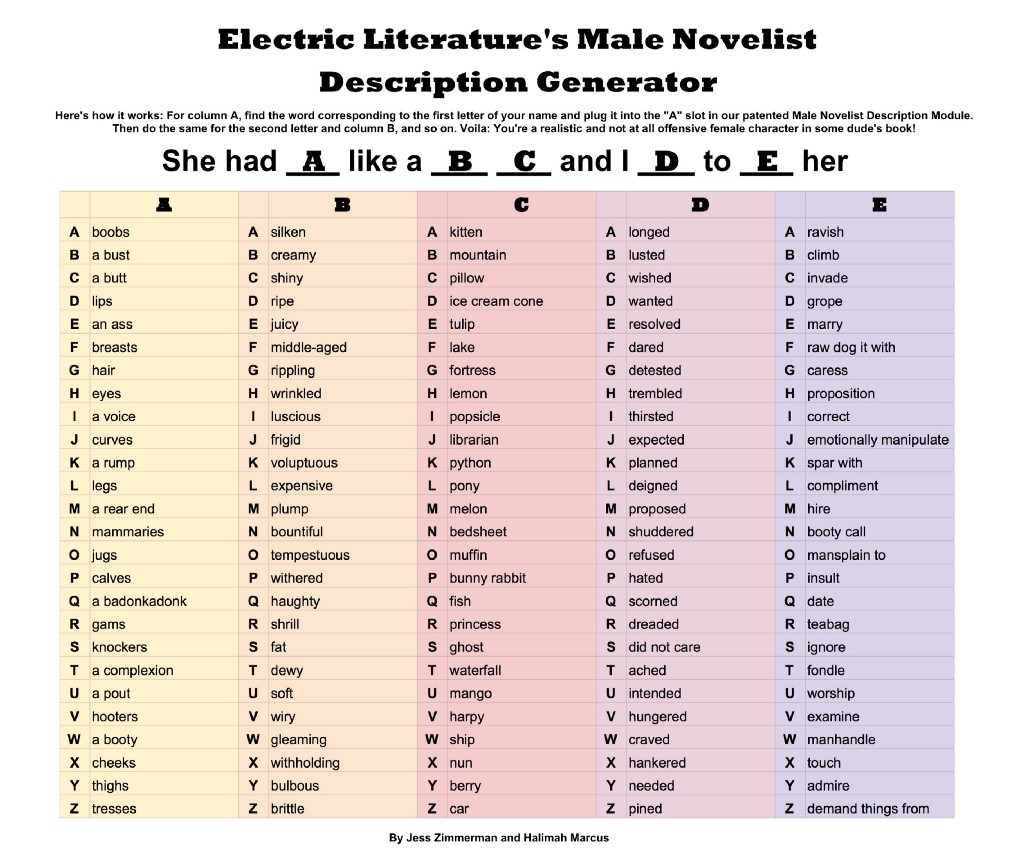
I hadn’t spoken to Bonnie (or almost anyone else I could have written on that name tag) in years. The truth was, I felt the same way about not having a mentor as I did about not having friends from high school: that it revealed a deficiency at my core somehow related to my disinclination to join clubs and teams. I’d thought of Bonnie because she was the first woman I’d ever known who ran her own business and worked hard doing what she loved. She pushed me to succeed in ways that took into account my particular temperament and hangups, a key quality for a mentor to have, in my view.

Implicit in the title of “mentor” is a singularity and hierarchy: the one person, more successful and senior, who helps you achieve your true potential.

But implicit in the title of “mentor” is a singularity and hierarchy: the one person, more successful and senior, who helps you achieve your true potential. I thought of the many trusted advisors I had in different parts of my life, and felt I was being ever so subtly encouraged to ignore them in favor of elevating a single person whom better fit the bill.

That weekend, I settled in to read The Female Persuasion, ready to discover the true meaning of a female mentor. The novel centers around the relationship between Greer Kadetsky, a young woman beginning her career after college, and Faith Frank, a second-wave feminist “a couple steps down from Gloria Steinem.” Faith Frank is the founder of Bloomer, a “less famous little sister to Ms.,” and is noted for her activism and influence as well as her trademark knee-high suede boots.

Greer learns about Faith from her friend Zee Eisenstat, and knows “shamefully little” before she goes to hear her speak. The night before her campus lecture, Greer researched Faith online, but even with Zee’s cultural instruction, the information proves disappointing: “While Google provided timeline and context, it gave her no real sense of how a person like Faith actually became her whole self.” And thus, the project of the novel is laid bare: for Greer to discover and become her whole self.

Eventually Faith hires Greer at Loci, a foundation funded by a venture capitalist for the purpose of hosting “summits” for women. Greer isn’t so much motivated by Loci’s mission as she is infatuated with Faith, who gives her attention like the sun in winter: rarely but with great intensity when it shows up. Greer subjugates herself in large and small ways to curry Faith’s favor, including, on a staff retreat, eating a steak Faith prepared rather than speaking up to say she’s a vegetarian.

The project of becoming her whole self is so intertwined with her idolization of Faith Frank that Greer can’t imagine sharing her mentor. Before her first day of work, Zee asks Greer to a deliver a letter she wrote to Faith, asking to be hired too. It’s an overreaching request, but instead of simply admitting that she’s not comfortable being used as a networking opportunity so early in her career, Greer tells Zee she will deliver the letter and instead lets it languish in a drawer. She even confesses the transgression to Faith, who doesn’t contradict her choice.

Over the next few years, as Zee follows her own path to a Teach for America type program, Greer is promoted through the ranks of Loci, and her relationship with Faith remains warm and convivial but not especially close. Greer imagines a connection between them, formed the day Faith first saw her potential as an insecure college student, but their interactions lead the reader to conclude that this connection is largely one-sided. Greer has imprinted on Faith as her mentor, but there as been no mutual agreement. In fact, there’s little to suggest Faith distinguishes Greer from her many anonymous fans. Suffice to say that if Greer had been at The Female Persuasion party, should would have had no trouble choosing the name for her name tag. But had the roles been reversed, and mentors were asked to write the names of their protégés, Faith might have listed dozens of names, or “young women everywhere,” or no one at all.

Being a Quiet Girl in a Very Noisy Time

After years of working together, their relationship ends when (spoilers ahead) Greer discovers that a project for which Loci collected a significant number of donations doesn’t actually exist. Greer wants to go public and return the money; Faith opts instead to avoid the scandal. Greer quits in protest, and Faith humiliates Greer by revealing to a room full of her colleagues how Greer betrayed Zee years earlier. The lesson Greer must learn in order to confront Faith is to think independently, based on her own code of ethics. Wounded but armed with a newfound sense of self, Greer takes what she’s learned at Faith’s knee and applies it to her own project, a Lean In–type book called Outside Voices that becomes a bestseller.

Wolitzer is clearly interested in puncturing the idealized definition of a mentor — Faith’s admonishment of Greer is cruel, and her motives complicated — but falls short of questioning the innate flaws of this very model of mentorship. At the end of the novel, Faith and Greer haven’t spoken in years, and yet, barely in her 30s, Greer is personally and professionally successful: a best-selling author (with a brownstone!), married to her highschool sweetheart, with whom she has a child. This portrait of “having it all” is depicted as self-actualization: Greer has become her own version of Faith Frank and has discovered her “whole self.” By the assessment of the novel, the mentorship has succeeded. But what the novel doesn’t ask is if Greer might have succeeded in spite of Faith, rather than because of her. If it were up to Faith, Greer would not have struck out on her own. She would still be working in her morally compromised job on projects further and further removed from the mission of helping women that initially inspired her.

Wolitzer is clearly interested in puncturing the idealized definition of a mentor , but falls short of questioning the innate flaws of this very model of mentorship.

In February, I participated in a Lit Hub roundtable of women editors; one of the questions we were asked was whether we’d had mentors who’d helped in our careers. Jennifer Acker of The Common answered that she’d had only male mentors in her career, and wondered why. “While I have had two strong women as bosses in my editorial career, they did not become mentors,” she said. “My real and enduring mentors in the publishing world have been men.” Was it, she wondered, “a question of scarcity, or a question of attitude? Scarcity could mean two things,” Acker explained, “that there are fewer women in positions of power, or that the women who do fill those roles are not in a position to be good mentors,” either because they are overextended or do not feel secure enough in their positions to invite the competition.

As I considered Acker’s experience, I found I was once again hung up on the same question that gave me pause at the doorway of the press party. It wasn’t her questions about why female mentors were harder to come by that fascinated me. Acker’s confidence in who her mentors have been, and who they might have been, felt alien. When did a boss, or an editor, or a professor, become a mentor? Was mentorship something two people agreed upon, like exclusivity in a romantic relationship, or was it years of loyalty you suddenly looked back on with surprise, like a long friendship?

Was mentorship something two people agreed upon, like exclusivity in a romantic relationship, or was it years of loyalty you suddenly looked back on with surprise, like a long friendship?

At the Female Persuasion party, I ran into a women with whom I’d gone to graduate school. She told me she now works for a national nonprofit, and had recently been asked by a younger women, in a very formal way, to be her mentor. My former classmate spoke about her new protégé with glowing pride, and told me about their monthly meet ups and how she occasionally bought her presents, such as a journal or a nice pen.

My reaction, at first, was to feel embarrassed for them both. How quaint, how formal, how rigid, and really, how useless. What would the arrangement lead to, other than a quick answer to a get-to-know you game at party?

For my part, my professional career has been aided by a long list of men and women: professors, bosses, and editors who have hired me, accepted me to graduate programs, introduced me to the right people, offered advice, published my work. Their contributions to my advancement have often been enormously important, but none of them sprang to mind when I was asked to list my mentors — maybe because their influence is usually confined to a specific time in my life. There’s always the knowledge that when the semester ends, when the job is over, when the issue comes out, our relationship will shift quietly into the past tense.

And yet, the people who have truly mentored me — supported me, encouraged me, held me to high standards and pushed me to embrace what I’m capable of—have been my friends. My peers who evolve alongside me, who have no institutional allegiances on my behalf, can advise me without ulterior motive, and I can advise them in return.

The people who have truly mentored me — supported me, encouraged me, held me to high standards and pushed me to embrace what I’m capable of—have been my friends.

After finishing the novel, I wondered how I might have approached it differently, had it not been for the conceit of press party. If only it had been positioned as a book that questions the value of traditional mentors, rather than one that valorizes them, I might have been less inclined to distrust the extent to which Faith had actually supported Greer. Not very much, I concluded by the end. Beyond the initial act of hiring her, Faith had done little to cultivated Greer’s passions and talents and usher her toward a career path that would be the best possible fulfillment of Greer’s ambitions. Rather, Faith had supported her own career path, and supported Greer’s insofar as their goals aligned.

Throughout The Female Persuasion, there are glimpses of the alternative, peer-to-peer mentor structures that have meant so much to me: Greer’s high school boyfriend Cory, who quits his job to take care of his mentally ill mother shows Greer the value of caregiving and domestic work; Greer’s best friend Zee, who has found her calling as a trauma counselor, demonstrates the value of direct, human-to-human services. And beyond their vocational roles, Cory and Zee have consistently demonstrated a conviction of character that Greer lacks, as she seeks the approval of a more public-facing form of success.

Nonlinear professional development requires nonlinear mentorship, in which peers in different stages of life advise one another equally.

Traditional mentorships, which are usually supported by institutions, rarely survive the kind of winding path it takes to make a career these days, when mailroom to corner office is yet another fantasy most people have long-since abandoned. Greer’s unicorn career — hired straight out of college into a prestigious job where she spends four years before quitting and publishing a national bestseller — is the millennial fantasy that has replaced the corner office. By contrast, the millennial reality is much more complicated. A more typical path to Greer’s level of success would require jumping around from job to job and proving oneself in smaller publications before getting a book contract. This nonlinear professional development requires nonlinear mentorship, in which peers in different stages of life advise one another equally.

After Greer quits, she confesses to Zee about the letter. At first Zee doesn’t even remember it, but is then shocked as disappointed. Without making excuses, Greer points out that Zee wouldn’t have even like working at Loci, still failing to quite see that for a long time, she hasn’t liked working there either.

Zee thinks of Greer as “an acolyte of Faith’s” who should have anticipated Faith’s betrayal. And yet, despite Zee’s implicit criticism, the fact and value of Faith’s mentorship goes unquestioned. Zee expounds that there are two kinds of feminists, “the famous ones, and everyone else,” arguing, essentially, that pursuing fame from feminism is an inauthentic, and that mentors — particularly famous mentors — are false Gods. But she admits that she wants one anyway: “I don’t have a mentor, Greer, and I’ve never had one. But I’ve had different women in my life who I like to be around, and who seem to like me. I don’t need their approval. I don’t need their permission. Maybe I should have had a little more of this; it might have helped. But I didn’t, and well, okay, fine, you’re right, I’m sure I would have hated it there [at Loci], and I don’t think I would have stayed very long. But I would’ve liked the chance to find out.”

Zee has had the support of horizontal mentors, yet still lusts after the more traditional, hierarchical structure. And ultimately, the novel validates that lust. At the end of the novel, Greer imagines writing to Faith and thanking her for “crack[ing] her head open in college” and pouring her strength, opinions, generosity, and influence into other women, as a part of “the big, long story of women pouring what they had into one another.”

Zee has had the support of horizontal mentors, yet still lusts after the more traditional, hierarchical structure. And ultimately, the novel validates that lust.

Greer, even with her newfound appreciation for the value of Zee’s friendship, still holds Faith on the ultimate pedestal of of influence, crediting her with the very first acknowledgement in her book, an acknowledgement to which Faith never responds. Greer’s experience has led her to accept the a view of mentorship in which “the older one first encourages the younger one,” until “one replaces the other.” This conclusion is presented as an insight, acknowledging the shortcomings of hierarchical mentorship but failing to fully imagine any alternative. The Female Persuasion falls disappointingly short of upsetting these outdated power structures; instead, it further invests in a future bound by the same roles that have been so limiting to its characters.

If You’re Not Sure How a Male Author Would Describe You, Use Our Handy Chart

The “describe yourself like a male author would” Twitter thread perfectly lampooned the worst habits of male novelists writing female characters. But it also required you to envision yourself as either a brainless sex object or a valueless nonentity, since those views of women are in fact the habits in question. Not everyone relished the idea of either writing salivating prose about their own hooters or acknowledging that their age, race, or size rendered them invisible.

Enter: the Electric Literature automatic male novelist! Instead of objectifying yourself, let this chart objectify you based on the letters of your name. So for instance, if you’re Whitney Reynolds, originator of the Twitter challenge, you’d look up “w” in column A, “h” in column B, “i” in column C, and so forth, and then plug each word into the sentences below. Here’s your final result: “She had a booty like a wrinkled popsicle and I ached to booty call her.” Okay, there’s a little too much booty in that sentence, but since when is a little too much booty a bad thing?

If you run out of letters in your first name, move on to your last—Bo Derek would describe herself as “She had a bust like a tempestuous ice cream cone and I resolved to”… uh, this one gets a little rude, so we’ll just assume you get the idea. Literary greatness awaits!

Click to expand

‘Restless Souls’ is a War Story and Journey Epic that Fights for a New Masculinity

The first work by Dan Sheehan that I ever read was a visceral and twistedly comic short story set in Ireland about a man inheriting his infamous and imprisoned father’s urge to murder. The title, “Our Fathers,” was a double entendre, invoking the Lord’s prayer. I was engrossed. I met Sheehan a few years ago while we were both in New York and he was working as a contributing editor for Guernica Magazine. He had a joyfully hungry ear for a story and a genuine enthusiasm for discussing various pitches and experiences of reporting. He was about to head off to the West Coast to do research for what would become his first novel. A surreal and poignant debut, Restless Souls charts the journey of three young men from Dublin — Tom, Karl, and Baz — who are hoping to find redemption at an experimental PTSD clinic on the edge of a cliff in California.

Purchase the novel.

The shifting narrative flickers between this strange road trip and intimate vignettes from Tom’s memory of the haunting three years he spent in Sarajevo while the city was under relentless siege. Their odyssey from Tom’s mam’s house in Dublin to the Restless Souls clinic, via a random desert commune, is a last ditch effort to save Tom’s unraveling mind. But it is also an unspoken and desperate pact to save themselves from a churning guilt, an exorcising of the collective grief that all three are barely enduring following the suicide of their childhood friend Gabriel.

At the Dublin launch for Restless Souls in The Gutter Bookshop, self-deprecating and unfeigned in front of an audience thick with family and friends, Sheehan read out the first chapter. Even in the first few lines, I was struck by the focus on the act of bearing witness and what that means, a question I would return to time and again reading the book. I had recently returned from an assignment in Syria and had seen the devastation that an intractable war causes up close, but also the resilience of the mundane, the everyday life that continues regardless.

Amidst cruel losses and the most brutal of wars, the three laddish anti-heroes of Restless Souls are animated by a genuine humanity. I spoke with the author about exploring trauma and grief without shying away from the surreal mundanity, imperfect relationships, and strange humor that percolate through these experiences.

Caelainn Hogan: I was expecting to focus these questions on the more concrete themes of male friendship or the trials of survivor’s guilt, both central to Restless Souls and worth exploring. But what fascinated me most about your book was the way it explored ideas of perception, experience, and the concept of bearing witness. You completed years of research and you are writing about two very factual crises. Was the Restless Souls clinic always at the center of the novel? Did these more intangible subjects surface out of the process, or were they always fundamentally what you wanted to raise through the narrative?

Dan Sheehan: I knew that I wanted to find something less grounded in reality, more outlandish, to place at the end of what is essentially a quest narrative. The realities of adult life have been so brutalizing for these men, who, in their teenage years — in a way that many of us do I suppose — assumed that they stood together on unshakable foundations, and always would. They now feel that all of that promise and hope and invincibility has been stripped away and that the last chance to retrieve it is through a bold move, a grand gesture. Having said that, these Californian cliff side facilities do exist (they just usually house Don Draper-esque meditation gatherings rather than PTSD clinics) and the futuristic-seeming memory treatment detailed is real (it just hasn’t reached the human trial phase of research yet).

I had been researching the different therapies available to returning soldiers and trauma victims for a number of months when I came across a fascinating New Yorker profile of a neuro-scientist named Dr. Daniela Schiller and her pioneering work on memory reconsolidation (the process by which fixed long-term memories can be recalled and modified in order to dampen the intensity of their emotional impact, to essentially rewrite the memory). There can be a wariness in people with regard to manipulating memory because we tend to picture mad scientists and cold-blooded dystopias, but there are many out there, like Dr. Schiller, whose cutting-edge work comes from a place of deep compassion and an abiding belief in the duty of care we have toward those sufferers for whom all conventional treatment options have been exhausted.

Matt Gallagher & Phil Klay Discuss the War in Iraq and Finding Purpose at Home

CH: These treatments seem so alien compared to the mental health care available in Ireland, basically as surreal as zebras in a garden…

DS: Absolutely. The fact that in Ireland we’re only now, deep into the 21st century, coming to the realization that a national, multi-faceted approach to the mental health crisis is required, is pretty disgraceful. The bottom line is that before you can address a problem of this magnitude, you have to admit that there is one. You have to cultivate an atmosphere where that discussion can be part of the public discourse, and it took us a long, long time to do that. No country’s mental health services are perfect, of course, and, God knows, if you’re poor in the US, your chances of having access to adequate care are slim to nil, but there has at least been a reckoning with the existence of the problem for some time now, which is more than we in Ireland could say in the nineties and previous years. That’s been no secret of course, but I think spending time with these characters and considering the options they would and would not have had in the Ireland of the early nineties brought it home to me in a deeper way.

CH: This was a project that spanned five years and we have discussed your trips to Bosnia and the way you researched the conflict there, speaking directly with people preserving that history and visiting sites. You said that, when you were young, you were fixated by the images on the TV of the Bosnian war but also felt a sense of shame for being so eager to learn more about the horrors that befell Sarajevo. I sometimes grapple with this in my own work. Looking back, in what ways did the novel and your expectations of it shift? Did you always have that self awareness of the thin line between bearing witness and “disaster tourism” as you described it?

DS: I like to think I did for the most part, but that’s probably not true. From my experience, we (and by “we” I mean tourists, rather than journalists) tend to assume that if we briefly perform our grief — whether in the company of others or just as a sort of montage in our own heads — at one of these sites of recent tragedy or destruction, that we’ve done our job as empathetic, informed human beings. We give ourselves permission to revel, for want of a better word, in the rawness of the experience, as if our moment of silence or sorrow gives us the right to pass unjudged and unimpeded though the wreckage of other people’s lives, other people’s memories, without actually doing anything about it. I look back on my first visit to Sarajevo and I remember my genuine fascination with the food, the buildings, the history, but it’d be a lie to say that there wasn’t also a macabre interest in the conflict that had only ended a decade previous, a desire to suck up as much of that recent tragedy as I could. I still feel a little ashamed about that impulse, to be honest, but I’m glad that I’ve moved, and am hopefully still moving, in the right direction.

We tend to assume that if we briefly perform our grief at one of these sites of recent tragedy or destruction, that we’ve done our job as empathetic, informed human beings.

CH: By the end of the book, there is a distinct sense that no witness is reliable, but that we should perhaps embrace this. We are reminded of the strange power of a eulogy to reanimate a person we have lost, or a single frame of memory that can give us solace. It gives us the sense that we can, in some way, shape our own reality. That surreal monologue at the desert pitstop particularly struck me, with Karl putting himself on trial through the reincarnation of Gabriel, projecting his own guilt through some form of hallucinogenic ventriloquism. These days we seem to live in a state of constant staging and performance. How important was form for you in representing this state, and did you experiment with different approaches?

DS: There’s relief, and escape, to be found in stories, and I think one of the things that’s so fascinating and heartbreaking about the idea of a eulogy is that it provides a loved one the opportunity to briefly bring a person back to life though story, even if it’s only for a few minutes, even if that story is only the half-truth. There’s such a bewildering senselessness to so many deaths, but eulogies give, or can give, a coda to a life in a way that feels right to us, I suppose because we’re a species that needs stories in order to understand the world and our place in it.

I think the fact that these men are so dependent on, and paralyzed by, their memories meant that flashbacks were always going to play a major role in the structure of the novel.

CH: The novel takes on two brutally real crises: suicide and war. You decided to write these experiences through a fairly experimental fictional account, with a solid dose of humor. The sections recounting Tom’s narrative, and indeed his whole character, raise quite a few questions on the futility and limits of journalism. I think the scenes in Sarajevo captured the surreal and intimate mundanity of everyday life within a conflict. The way Tom involved himself in peoples’ lives was ethically complicated and he admits repeatedly he was chasing an experience. You referenced the work of journalists like Janine di Giovanni as important to your research. Her knack for highlighting the everyday humanity within even the most inhumane of conflicts is something I admire. How and why did you decide to make Tom a failed journalist, one who is broken by witnessing, and at the same time, unable to put his observations to any use?

DS: I think you highlight a very important point about di Giovanni’s journalism, and it’s something I greatly admire in your own work — that ability to capture the complex humanity of individual lives alongside the broader sweep of a brutal and dehumanizing conflict that threatens, in the eyes of world only fleetingly interested in their plight at least, to subsume that individuality. I suppose I saw Tom not necessarily as a failed journalist, but more as someone who naively thought he could throw himself into the deep end without pausing to consider the kind of emotional and experiential work required.

A War Story About Searching for the Disappeared

CH: Throughout Restless Souls there is an obsession with the act of recording and also a tension between the importance and the inefficacy of witnessing. Karl is a photographer and Tom a writer. We see a mother risking her life to save books from a burning building surrounded by sniper and mortar fire. A young boy is sent to fetch reporters despite the dangers. At the same time, people are burning obituary sections of newspapers to stay warm. In our so-called post-truth era, can fiction address societal and political issues in a way that nonfiction is unable to?

DS: I hope that there’s still an important role for both fiction and nonfiction to play in spotlighting the most significant societal and political issues we’re facing today, although I regularly end up doubting this. The tsunami of information and opinion and rebuttal (content for content’s sake) that washes over us all these days — most of it designed to be hoovered up but not dwelled upon or considered in any meaningful way — can be overwhelming. I still hope that the best journalism, like the best fiction, works like an oxygen mask or Moses’ staff: it offers a bubble of respite from all this and allows us to breathe again, to really consider what’s happening, even if only for a few extra moments.

I hope there’s still an important role for both fiction and nonfiction in the societal and political issues we’re facing today, although I regularly end up doubting this.

CH: Karl, Tom, and Baz are all affected by trauma and the experience of survivor’s guilt. The varying ways in which the characters lose control, and the impact one person’s pain has on another, seems to illustrate the unavoidable domino effect of trauma. We are confronted with the irreversibility of loss, the way it changes us and the fact we can never return to the same “normal.” The war in Sarajevo and the suicide of a best friend are two very different means to expose these workings of trauma and loss. How did you decide to bring these two crises together and parallel them?

DS: Well it took a long time to figure out how to bring these two traumas — so removed from one another by scale and distance — together in a way that created a narrative that was compelling and coherent and, most importantly, greater than the sum of its disparate parts. I wish I could say that there was a grand plan from the outset — some initial reason why I felt these two tragedies had to speak to one another. But, in reality, the book began as two distinct images I couldn’t shake from my head. The first was that of the beautiful Neo-Moorish library of Sarajevo, which sits on the banks of the Miljacka river, engulfed in flames. The second was of a young man hanging from the goalposts of a football pitch at dusk. Once I decided that they were the anchoring incidents of the two main narrative strands, it was a matter of making sure the stories spoke to one another as they expanded outward.

OIF

CH: Self-help narratives, therapy, and the quest-trip to find oneself are so often associated solely with women. War trauma is often positioned as an exception, a socially acceptable reason for men to seek treatment. Perhaps this explains why three lads would go on an epic journey to a PTSD clinic when they never sought help for the more intimate trauma of suicide. There is a true spirit of “ladism” while the novel simultaneously peels back the defenses and reveals the fragility of these men. They seem surrounded by women they can’t fully connect with, from fussing old mothers who can’t seem to handle the world, to a topless tanned maternal figure in the desert, and countless idealized girlfriends. In the end, as Karl truly reckons with himself, he acknowledges a guilt that he has been trying to escape and wishes his friends had been “more to me than just supporting players in my own story.” It made me think about these men’s perceptions of themselves, the pressures they feel to be a certain kind of man, the ways male privilege can be damaging to men themselves. What were your hopes when you set out to explore the psyches of these three men? And what did you discover through exploring their experience of vulnerability and loss?

DS: I think, for the most part, the women in the novel, even the ones who only briefly cross their path, are far more emotionally attuned to the what these three men are going through than they are themselves, and there’s a shame attached to that for Karl that causes him to bristle and pull away; the shame of knowing that his psychological and emotional frailties — these aspects of himself that he has, at least up to this point, been unequipped and unwilling to come to terms with — are being exposed. We’ve entered an era where the stigma attached to admissions of anxiety and depression in men is dissipating, and that’s a wonderful and necessary thing, but it’s also a very recent development, especially in Ireland. The first time I ever remember encountering a mental health campaign aimed at young men was when I went to college, which was only twelve years ago, so it was very important for me in creating these characters that they exist in a landscape largely devoid of options in this regard, because that was the reality of the time.

CH: Finally, I’m curious to know what you learned about your own processing of memory through writing the book? As much as Restless Souls is a manic road trip through California, it is equally a very intimate ode to Dublin, and I’m sure drew on and resurrected many personal experiences. We spoke about an idea you had for a new novel, also set in Ireland and exploring aspects of bereavement. Are there any unresolved questions raised by writing Restless Souls that you are itching to work through?

DS: It’s funny (in a bleak way), I didn’t realize how preoccupied I was with the themes of bereavement, grief, and regret until I started writing this book. I don’t know whether that’s because eliminating most of the positive side of the emotional spectrum is sort of necessary to create interesting conflicts in fiction, or because that’s just where my brain goes. The scenes in Dublin in the eighties and nineties are fictional of course, but the writing and re-writing of them did at times feel like resurrecting actual memories. I don’t have enough distance from the book yet to know what that means, but it’s hopefully something that’ll become clearer down the line.