The Secret Writing Tips I Learned from Kendrick Lamar

The first time I heard Kendrick Lamar’s song “Sing About Me, Dying of Thirst” was in 2012, on a Saturday spent sick inside my college dorm room. Thanks to a stranger who had decided to kiss me, I had mono. Lamar’s now-classic album Good Kid, M.A.A.D City had just been released and since I wasn’t doing anything but feeling sorry for myself, I decided to give it a listen.

When I got to that song — track 10 — my sick body perked up. The 12-minute, two-part epic’s first half is contemplative and smooth. Seven minutes long, it pulses with a tender, lingering guitar loop (a sample from jazz guitarist Grant Green’s 1971 recording “Maybe Tomorrow”) and spins dizzily with drums (a sped-up sample from Bill Withers’ 1972 song “Use Me”). Kendrick spits an intricate tale of loss, rapping in letter form from the perspective of two people whose siblings have died. It’s a somber, confrontational song about memory and legacy. Between each sullen verse, Kendrick sings the chorus in a static, almost alien voice:

When the lights shut off and it’s my turn
To settle down, my main concern
Promise that you will sing about me
Promise that you will sing about me.

The song gave me a random surge of energy. I suddenly felt ripe, charged with the same sense of longing Kendrick laid out so viscerally on the track. I got further into the song, nodding my head despite the painfully swollen glands along my neck. Kendrick delivered his verses circularly, hypnotically. They seemed to spin and spin around an elusive drain. For just a few minutes, I didn’t feel sick.

But then something happened. In the second verse, Kendrick took on a female persona, transforming into a prostitute who boasts about being invincible. The fury rises in his voice as he repeats: “I’ll never fade away.” The song spins, the pitch grows. Both lyrically and sonically, it was the best part of the song. Then all of a sudden, I heard the voice lose its speed. Second by second, it grew quieter until there was nothing but the beat left. Another verse soon started up. But it seemed the magic of the moment, of the song, was lost. Panicked, I checked my iPod. The volume was fine. I played the verse again, this time monitoring the volume. Again, at the zenith, the voice dipped into silence.

I played the verse again, this time monitoring the volume. Again, at the zenith, the voice dipped into silence.

I rewound the track and played it again. It wasn’t an iPod glitch. He really just ended the verse. The first verse had also been cut short, by sudden gunshots, but the deliberate fade in verse two felt like a mystery. I listened to the song over and over, my ears grasping for the trailed-off lyrics, seeking to decipher the words that were lost. Sitting on my futon, surrounded by tissues and throat nearly sealed shut, my eyes welled. I wondered how a moment of such joy could shrivel up so quickly.


Four blocks, one avenue over. That was the length of my walk “home” from the 145th Street subway station. I had moved to New York just two months prior, and the dingy, yet strangely affordable studio I’d managed to sublet for a few months before I found a “real” place to live felt more like a dorm than a home. The heat did not work, the fridge got cold only when it wanted to, and I had to wear shoes in the shower, which was down the hall. While displeased with my living situation, I refused to complain out loud. I knew that I would have to make adjustments to make it in this city.

I moved to New York from South Africa on November 2nd, 2017. I had spent the year so far working in Durban as a Fulbright English Teaching Assistant. My twin sister met me at JFK and we went to her place. The plan was to spend two weeks there and figure out my life. And I had a lot of figuring out to do. I had no job and no place to live. All I had was a finished manuscript, some savings, and one goal in mind: find an agent and publish my book. In fact, before I even boarded the plane for New York from South Africa, I’d already pitched my book — a short story collection — to dozens of agents. After working eight hours a day teaching high school English, my evenings would be spent maniacally typing stories and obsessively pouring over edits. My plan was to score an agent before I got to New York. But on the day I arrived at JFK, the one agent who seemed most interested in the book sent me an email: a gentle pass.

That first night at my sister’s place, my ears still clogged from the 17-hour flight, she and I went to dinner in Downtown Brooklyn. After spending 10 months in Durban — a notoriously chill seaside city — I met the chaos of New York with a blend of awe and exhaustion. It felt strange to be home, but not quite home. To move from one foreign place to another felt unstable, like setting up shop inside a house of cards. Despite feeling unmoored, at dinner I tried to sit comfortably in my chair, in my skin, in front of the plate of American foods I’d missed dearly, in front of all the unknowns that lie ahead.

All I had was a finished manuscript, some savings, and one goal in mind: find an agent and publish my book.

When I woke up the next morning, my sister was already at work. My body felt disoriented, on the other side of the ocean. Panic settled in. Doubt. Impatience. Maybe another agent had emailed me? I rolled over and checked my phone. Nothing. I took a shower, grabbed my laptop, and went out the door. I was going to find a café to sit in and apply for a few jobs. Just in case.

A couple days of aimless wandering and fruitless email-checking later, I anxiously swallowed my pride and emailed the agent who had rejected me: “Can I revise the manuscript and resend?” I told her I would revise all the stories, cut them down, and make them interlinked. She said yes. But I knew she wasn’t going to wait forever. I responded ecstatically and promised I’d get her a revised manuscript in three months.


Two months passed. In that time, I moved from Brooklyn to the temporary studio-dorm near the 145th Street station in Hamilton Heights. I spent both months hunched in front of my laptop, reading, wincing, cutting, typing. Sometimes I’d write at “home.” But when it got too cold inside, I figured I might as well be outside. So I’d drag myself out of the house and around the city, trying to get inspired. I was drained. My savings were running out, my sublet was ending, and I couldn’t get these stories to do what I wanted. Revising a short story is like being on an episode of Hoarders: you are surrounded by things that you like and would love to keep but should probably let go of for everyone’s sake. At least this is how I felt as I stared at my manuscript with the promise I’d made to the agent echoing in my head. I had nine stories to revise and make more concise. There were thousands of words to purge. Each day was spent painstakingly gritting my teeth and holding down the “delete” button. Time was running thin.

Revising a short story is like being on an episode of Hoarders.

By January, I had revised all the way up to the middle of the collection. But I was particularly stuck on one story: “Addy.” This story — about a pregnant teen who moves into a group home — was like a literary slinky winding down an eternal staircase of doubt. It had gone from short and sweet flash piece to epic meditation on teenage pregnancy in contemporary America, and now I was trying to whittle it down from its bloated 50-page form into something more digestible. In my quest to cut words, I read each line closely, alternating between extreme cringe (“I can’t believe I, a human woman, wrote this”) and irrational hubris (“Jane Austen who?”). Between each sentence lay an unbearable indictment on my worth as a writer and as a human being. “Addy” was a thorn at my side — the impossible hill I needed to climb before handing over a new manuscript to the foot-tapping agent. But I still couldn’t fix it. Despite days spent trying to gather the courage to cut out a scene or a paragraph, I just could not do it. I was holding on too strongly to something. I just didn’t know what.


January 5th, 2017. Walking “home” from 145th Street station, earbuds blasting, my legs were numb from spending the day trekking from café to café on the hunt for Wi-Fi and an outlet. My shoulder throbbed with the weight of the eight-pound MacBook in my bag. Mentally, I was drained, too. I had spent the day revising “Addy.”

As I pounded cement, each dull knock of the laptop on my hip reminded me of the story, of the way it just didn’t work. Of the way this whole “moving to New York and being a writer” thing just didn’t seem to work. I panicked. This wasn’t just about cutting sentences and adding metaphors — it was about getting the agent and the book deal that would allow me to live my dream of becoming a writer. Not just a writer: a full-time writer, with a book! I was only 23, but I convinced myself that I was running out of time.

That day my music was playing on shuffle. For some unknown reason I didn’t feel like listening to the sad rotation of five songs that I usually stick to. My phone is rarely updated, so it’s mostly music ranging from 2009 and 2013 — lots of T-Pain and Dubstep. I’m extremely impatient. If a song plays and I haven’t already choreographed a dance piece in my head by second eight, then I usually turn. But something about the war I’d had with “Addy” that day had me paying closer attention to songs I usually skipped.

I was only 23, but I convinced myself that I was running out of time.

On the corner of Broadway and 145th, that Kendrick Lamar song from 2012 came on. I had loved “Sing About Me, Dying of Thirst” since that first, feverish listen. Still, I tended to skip it, because it always made me cry. The even, teeming drums. The soft, wistful guitar. Kendrick’s dreary, passionate rhymes. They all stirred me, left me feeling overwhelmed. But in that moment in January, walking sullenly along Broadway, the song’s sentiment matched that of my life. I listened without pause. I found myself on that walk “home” feeling more open, more willing to take things in. Maybe by listening to songs I usually skipped, I was somehow redeeming the sentences I’d been forced to cut from my story? Maybe the wishing I’d had that someone would take their time with and value my art had made me want to take my time with someone else’s?

On 148th and Broadway, the song reached its zenith. And then the second verse, as it had once before, suddenly faded away. It should be noted that in “Sing About Me, Dying of Thirst,” the fading away is ironic. The impersonated female voice is begging not to be forgotten. As “she” pleads: “I’ll never fade away, I’ll never fade away, I’ll never fade away,” the verse goes on, intricately rambling, but the voice fades into silence. All that is left is the ticking beat. Echoes of desperation linger as the empty track becomes cavernous, suddenly gutted. My ears strained for more, eager to savor the remnants of the voice.

As the song dimly went on, I found myself blinking back tears and thinking yet again of “Addy.” I thought about the difficult chopping of words and how these sentence-level sacrifices added up to a general feeling of being stripped away. But when the song ended, I rounded the corner and reminded myself that I still loved it. Even though it didn’t go on as I had wished.

Then it hit me: Kendrick’s cutting the volume on a verse was not some ill-conceived decision. It was a bold artistic declaration: just because something is done well, does it mean it needs to be overdone. I initially wanted the verse to go on forever. But what if it did? Would I keep rewinding it just to get to the sweet spot? Or would I simply grow tired and switch the song?

It was a bold artistic declaration: just because something is done well, does it mean it needs to be overdone.

I realized that I could cut sentences, paragraphs, even whole pages out of the story and be okay. Kendrick’s leanness, his courage to cut the line short showed me that I could cut things from my writing. I could end each sentence at its highest point. I didn’t have to cling to every word. The words clogged the page, blocked all attempts at cohesion. Letting go was the only way. After all, isn’t it better to satisfy than to overwhelm? As I walked up the steps of my “home” a maze of possibilities came into view.


The following month, I took Kendrick’s unintentional advice. I found the high point in each sentence and cut them short. I ended lingering scenes sooner. I clipped dialogue, made it more true to life. Editing became a breeze. I was no longer afraid of removing the endless details and context I thought short stories needed. I no longer felt pressure to put every single thought onto the page. Each word would speak for itself. On February 1st, I re-submitted the book to the agent (bless her heart) and prayed that all my private work could become public.

A few months passed. I didn’t hear anything from the agent. My money thinned. I sucked it up and got a job. Two jobs. I sent the revised manuscript to (and was rejected by) more agents. I moved to Bushwick, then to Crown Heights, then to Flatbush. Still, in-between morning shifts at a cafe in Hell’s Kitchen and afternoons as an intern in Midtown, I would obsessively check my email, waiting for the magical “yes” that would change my life. I’d pinch my iPhone screen, scroll down and hold my breath as the spinning circle released, then stayed pitifully stagnant.

One day in June, I checked my email. It was there: the agent’s response. “I found much to admire,” she wrote. “Ultimately, however, there were aspects of the collection that overshadowed these positives.”


In the weeks after I let it sink in that I wasn’t going to be published — and that my book definitely wasn’t as good as I thought it was — my number one feeling was that I had wasted my time. Between the months spent writing in Durban, the late nights spent pitching, the back and forth with the agent, the agonizing edits, and the spiral crossing of my fingers, I clocked a year of my life devoted to one project that had seemingly gone down the drain. What had been the point?

I found myself contemplating the last two lines of “Sing About Me, Dying of Thirst”:

Now am I worth it?

Did I put enough work in?

I had put a lot of work in, but it seemed I just wasn’t worth it. The whole project felt terribly futile. Yet again, I recalled the moment I didn’t want Kendrick’s second verse to end, the time I wanted so badly to know what the silenced voice went on to say. I thought about the act of listening and the act of rapping. The act of receiving art and the act of making it. And I struggled to reconcile my art with its nonexistent audience. The vocal trailing off in “Sing About Me, Dying of Thirst” ironically forfeits the glory attached to presenting art to an audience. This raises the question: what happens when art exists outside the realm of validation? What of an unread novel? What is art unattached to a contract or an auction? Most importantly, what should be made of every artist’s “stripped away vocals” — our stories that no one reads, our songs that go unheard, our paintings that no one buys? Does the lack of validation make them meaningless?

As weeks turned and the rejection settled in, hindsight let me admit that I had been nowhere near as good a writer as I thought I was — and at 23 I was in no way prepared to publish a book. Aside from the obvious lack of substance, it seemed my manuscript failed because it was so rooted in the desire for external validation. What began as an earnest literary pursuit in South Africa turned into a sloppily assembled plan to earn a living in New York. Instead of revising for art’s sake, I became crazed with the task of revising for the agent. I wanted to do whatever it took for my work to be seen. Little thought was given to the possibility that the recognition was not the most important part of writing.

I thought about the act of receiving art and the act of making it. And I struggled to reconcile my art with its nonexistent audience.

July came. Then August. By September I was back in my parents’ house in Milwaukee, unpacking bags yet again. Only this time I wasn’t unpacking South African souvenirs and undeclared foods; I was unpacking the experience I’d had in New York. The experience that started with grand plans to publish a book at 23, and had ended with an empty bank account, crushing rejection, and a series of failed job interviews. In Milwaukee, totally unrecognized, I found the courage to keep writing, even though I lacked an audience. And I loved it. There was no one reading, no obsessive email checking. Kendrick’s writing lessons remained useful. It was then that I realized that visibility, recognition is not essential to being a writer. The writing was the most important part of being a writer. The writing: mining through memory, through fragments of conversation, through sights, and emerging with semblances of beauty and reason. Each time we mine, we improve. We emerge with more precious material.

When I first heard Kendrick’s trailed off verse in 2012, I thought, “What a waste.” But in 2017, as I shelved a book of short stories, I realized that there is value in the things that go unheard, unseen, or unread. We writers often struggle to reconcile our need for feedback and our need for validation. The line between craving validation and desiring visibility is pitifully thin. This isn’t necessarily our fault. Too often our art is forcibly confined to ourselves; to empty rooms, solitary laptop screens and private notebooks. Then when we emerge from the literary abyss, stack of papers in hand, we naturally want to shove it right into someone’s chest. Writing is one of the only art forms that is more hidden than visible. Paintings are on walls; passing strangers see them. Music is played. Ears can’t help but hear. But writers have to work to be seen. We want our work to be seen. We want to be seen. We want our solitary efforts to be recognized. But at what point does that very valid need to not be solitarily scribbling turn into a constant or, dare I say, compulsive desire for our art to public?

Music is played. Ears can’t help but hear. But writers have to work to be seen.

To this day, I toe the line. But thanks to Kendrick, I now tend to err on the side of restraint — I no longer write epic short stories, and I no longer send world-renowned agents poorly assembled manuscripts. But I do find solace in believing that the writings unseen are not valueless. My book still hasn’t been published; I haven’t been able to send a sarcastically-signed copy to all the agents who scorned me. But I do find redemption in my new belief that my failed book had not been a waste of time. Instead, I’ve come to believe that every shelved project is not done in vain. I believe our greatest efforts can remain exactly that, ours. Our greatest stories and novels can remain inside our hard drives — either by choice or not-so-much by choice — and can still be contributing to a conversation, whether internal or external. I think these projects are sitting there, yes. And I do believe they are festering, folding in on themselves. But I also believe that they are deeply planted seeds.

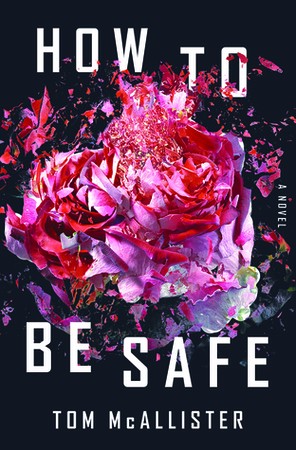
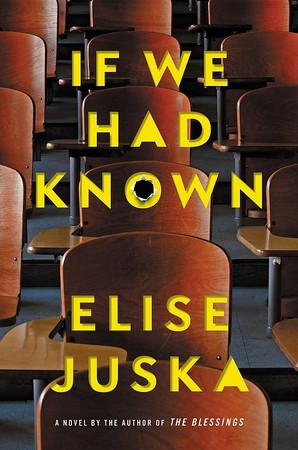
Tom McAllister and Elise Juska on Writing Fiction About the Aftermath of a Mass Shooting

On the 14th of February 2018, a heavily armed former student in Parkland, Florida opened fire at the students and staff members of Marjory Stoneman Douglas High School, leaving seventeen dead. The Parkland shooting has unleashed a renewed wave of protest against gun violence with the survivors championing the Never Again moment. In a country that is constantly mourning the victims of one mass shootings after another but has failed to pass any meaningful gun control, the subject of gun violence could not be more urgent. Published in April, two new novels explore the aftermath of America’s deadly gun culture.

In Tom McAllister’s How to Be Safe, high school English teacher Anna Crawford turns on the TV to find her face flashing across cable news, the prime suspect of a mass murder at her school. The real perpetrator is found, and the police clears Anna of any wrongdoing, but she is still regarded with suspicion in a town that quickly descends into paranoia. Caustically funny and brutally raw, How to Be Safe satires the media frenzy that engulfs a tragedy.

The fatal rampage in Elise Juska’s If We Had Known takes place in a mall in small town Maine. Professor Maggie Daley learns that the shooter, Nathan Dugan, was a former student in her freshman writing class after a classmate’s viral social media post about Nathan writing “a paper that was really weird.” Maggie finds Dugan’s long-forgotten essay in her files that hints at his violent nature. Consumed with guilt, she finds herself at the heart of a contentious public scandal that threatens to destroy everything she has. If We Had Known is a gripping read that asks hard questions about culpability and scapegoating in the wake of a crime.

The authors spoke about writing fiction based on reality, the catalyst behind their books, and wanting their novels to be known as more than the “mass shooting books.”


Tom McAllister: Elise, the first question (that people have asked me a lot too) is when did you start working on this book about a shooting? What prompted you to? How long were you working on it?

Elise Juska: This book has been a strange journey. I actually started working on it ten years ago after [the] Virginia Tech [shooting]. There was an interview with a creative writing teacher, she had taught the shooter. He had been pulled out of class because his instructor wasn’t comfortable with him. This creative writing teacher was working with him one-on-one but then they had seen all this disturbing dark stuff in his creative writing and she was interviewed about it after the shooting.

That interview haunted me and stuck with me as a teacher. I know you too are a teacher, but just for me the prospect of something coming up in student paper as a red flag that I somehow missed and then something horrible happens (not that she missed it, she tried to alert people and made all these attempts to notify people), so that was where the idea originally came from.

TM: My understanding of the Virginia Tech [shooting], just from mass media was that… they start to blame people, scapegoat people. Some of it was like “oh, these fiction teachers never did anything.” It seemed like the popular narrative became that there were all these red flags that the teacher completely ignored, but it sounds like not the case.

EJ: In fact, yeah she told the police, she told the administration. There was this interview on the New York Times daily podcast with the person who owned the gun shop that sold the gun to the shooter. He was being asked (I can’t remember exactly) if he felt responsible after and wished he hadn’t done it. He said something like the teacher should have caught it.

TM: That’s consistent with how the gun industry seems to operate. Have you had students in your fiction classes who were doing things that worry you? Cause students write weird stuff in fiction classes. A lot of times it’s copying the Walking Dead or whatever TV shows they like anyways. Have you had any problems? How do you decide where that line is?

EJ: Yeah, it’s so tough. Do you teach just fiction?

TM: I’ve done non-fiction courses too. I’ve had two students [where] I’ve been really concerned that they were a danger to themselves [and] I’ve reported things.

EJ: I’ve taught both also. When I first started teaching, I had just graduated from college. I was 22 teaching freshman [composition], [I got] all kinds of incredibly serious personal issues showing up and I was so ill-equipped to deal with these things. I was trying, I was worried, I cared but I hadn’t encountered most of these things in my own life.

TM: And you’re still just learning the basics of running a classroom.

EJ: And I’m totally shy, paralyzed by nerves, and reading about some harrowing stuff but at least the assignment is write about a personal experience and this is the thing that they’re choosing, so they’re telling you in effect. It didn’t feel as much as I was interpreting or looking for subtext, but in the fiction classes it can get really dicey.

How could we write about anything else but what’s going on? Fiction reflects the world.

TM: Right after the Virginia Tech [shooting] happened, I had people asking well, what do you think? Some samples of the kid’s stories had gone up and I wouldn’t have noticed them as being bad or not unless it was paired with weird behavior too. Cause so many stories (usually from young men) have so much bloodshed. There’s swords and decapitations and monsters and it’s hard [to tell]. Not so much now, but years ago you get a lot of people doing American Psycho stuff or Chuck Palahniuk stuff. I feel like a lot of times, the only stories they know how to tell.

I also wouldn’t be able to turn off that guilt if I was that teacher. It seems like it would be impossible not to be constantly questioning whether you’re at fault for people dying.

EJ: Same. I’ve seen a lot of student work that’s really into gore and you think it’s a lot of what they see in movies or on TV and sort of mimicking that. Sometimes just the way that it’s written feels different, where there’s glee in it or just something that feels worrying.

TM: I guess that’s so hard to describe unless you’ve read hundreds of hundreds of student papers and stories.

EJ: Sometimes so hard to know if I should intervene in this case. Have you had to?

TM: In fiction class, I had one guy who hadn’t written anything that weird but he did after one of the school shootings. I think he wrote something like “I should have done the same thing, this guy is a hero” and he was removed from school the next day. I never saw him ever again.

EJ: He was your student?

TM: Yeah, I of course did not know him very well. My interpretation was that it was more a twenty-year old kid who taught it would be funny to push people’s buttons and didn’t realize the severity.

EJ: Circling back to your original question, when did you start writing the book?

TM: After Sandy Hook. So we both had five years after. In my book, the teacher is blamed at first. In the frenzy after [the shooting], they see her name and she ends up on TV. That’s all it takes for people to say: yup, she must have done something.

I was really thinking about the Boston Marathon bombing, there was this social media frenzy afterwards. All these people on Reddit who were studying pictures trying to determine who it could have been, drawing circles and arrows on people. Some of these people’s lives were almost totally ruined. The New York Post just put a picture of two men — who were totally innocent — suggesting that they were the suspect of the bombing. I just thought about the toxicity of that kind of culture that’s so desperate to find a quick, easy answer to something’s that’s not an easily answerable problem. That started the idea of the school shooting… and [the media frenzy] gave me some catalyst to move forward after the shooting.

One reason that people are interested in our books is because they say it is timely and it is, but the Parkland shooting hadn’t [happened] when we were writing it. How long ago did you finish [your book]?

EJ: I finished it about a year ago and I had been working on it four years prior to that. It’s felt pretty complicated having the book out right now. Logistically we have been working on this book for years, you hate to think that anyone might feel that you’re exploiting what’s going on. So have you been struggling with that too? With not being too self-promotional?

TM: Absolutely. There have been times after Parkland… where some people were tweeting out screenshots from my book that [they] felt kind of commented on [the shooting]. On one hand, I thought that’s kind of amazing, you wrote a thing where people feel like is kind of relevant to what’s happening in the world. On the other hand, it’s like I can’t have anything to look like I am personally sharing this because it looks gross.

It’s weird because when I did my first reading from the book, there was a shooting at the YouTube headquarters and I’ve already resigned myself to having to start most of my readings with some disclaimer like I know five people got killed last night, sorry. But it’s also kind of why I wrote it, kind of why you wrote it too. That this is an ongoing condition.

EJ: That’s the struggle. No, you don’t want to be exploiting what’s going on in fiction but also how could we write about anything else but what’s going on. I mean, fiction sort of reflects the world.

Going back to why I wrote it, the story to me was about the teacher: what it feels like to be that teacher [knowing] that there is this thing that you missed and how do you wrestle those feelings of responsibility.

TM: The school shooting for you is a catalyst for talking about some other stuff.

EJ: Yeah that’s what I mean cause I feel like [my book] does get described as a school shooting book. [The shooting] is the first scene, but [the book] is really about the aftermath, on the teacher, and on other people and what that ripple effect is like.

TM: [The shooting in] mine is an eight page prologue and then the rest is all aftermath. What made you decide not to emphasize the shooting aspect?

EJ: So the opening scene, the teacher is just hearing the news and then realizing [the shooter] was her student. Shortly after, the classmate posts something on Facebook that goes viral. Something about what he remembers about this kid writing in class and then she goes digging in her class and she finds the papers. So yeah, I guess that’s just the moment. Is yours the actual scene of the shooting?

TM: It’s actually the lead up, none of the violence actually happens on the page. [I was interested] in having to stay in that really traumatic aftermath where a lot of people, for a whole generation [even], are affected by it.

[Two questions] that I have been thinking about and people have asked me about: do you have hopes that the book will have an impact on any social issue and do you think that’s even the job of the novel to do that?

EJ: I guess in some ways that depends on the intention of the novel. I didn’t go into it, in my head, that I was writing this book about this issue. It was I’m writing a book about my own greatest fears as a teacher that I’ve worried about for a long time. What about you? From what I’ve read about your book, it’s really driving towards the end on a collision course. It feels so angry and emotional and hyped up all the way through. Was it hard to sustain that all the way through as you were going?

I’m writing a book about my own greatest fears as a teacher that I’ve worried about for a long time.

TM: A website was doing a roundup of upcoming books and they said if you’re angry read this one first and I felt very good about that. I was afraid I was too didactic with the book and that it would be propaganda then.

Even if it’s what I view as socially desirable propaganda, that’s still what it is and so it was really important to me in the early drafts to make sure I was focusing on an actual person and a character and trying to build out this person’s life and her voice and her worldview. Otherwise I would have just wrote an essay about my thoughts on the issue and I didn’t want that. But it was hard, partly because periodically there would be some new outrage or some new horrifying incident where the same rhetoric happens, the thoughts and prayers and all that stuff.

In one way, that helped to fuel the project. If I was kind of losing steam, I would write. I would remember why I was so invested. Then on the other hand, I had to check myself and make sure even if it’s a book that had clear politics or views, that it wasn’t a book with an agenda.

EJ: I was also feeling the same way. I found the book personally so hard to get through at times because of what was going on in the world. To have those things happening in the real world, to retreat to fiction and to have that fiction be also this harrowing place where I’m researching the psychology of shooters. It was just at times unbearable to be in both.

TM: How much research did you do on it?

EJ: I did a fair amount of reading, even though the shooter [in my book] kills himself at the shooting so his point of view isn’t in there especially for that reason, I wanted to have a pretty good sense of who he was. As he’s seen through the lenses of all these other characters, I was just clear on who that missing person was in the middle. So I did a fair amount of research there. Did you?

TM: I did some kind of real research and some kind of clipping through bits and pieces of some articles. I read Columbine by Dave Cullen which is just really great. I thought I knew everything about Columbine. It happened when I was in high school and I was really invested in following that story. It turns out I knew very little of what happened. Twenty years later, he can point out the bad reporting and the misconceptions.

There was the book called One of Us [by Åsne Seierstad] about the Anders Breiviks mass murder in Norway. That guy was a real different thing, a hero to a lot of alt-right type whereas the Columbine shooters, they’re in the more traditional school shooter mentality.

EJ: Is there anything else you want your book to be known as besides a school shooting book? Do you think for your next book that you’ll go towards the loaded cultural topic or something else?

TM: I think there’s a certain temptation to suddenly to feel like a certain kind of writer, like I’m going to be the trending topics guy or I’m going to throw myself into becoming this whole thing. That kind of scares me, limiting myself in that way. I don’t have a lot of good projects rolling right now but I want it to be something similarly as exciting for me to work on. I bet for certain anything I would do won’t have the weird, somewhat fortuitous timing of having just showing up at the same time people are talking about whatever the next thing is. Do you have a plan for the next thing?

EJ: I don’t really, I would like to have a next thing for the next book that comes out just to feel that I have traction on something else. I’ve been writing a lot of essays lately. Writing this book was so hard and so harrowing and kind of emotional. I’ve just backed up and been writing essays which I’ve really been liking. I actually feel like I’m a short story writer, that’s where I feel most happy and most comfortable and that’s who I kind of essential am.

What Does It Take for Ultra-Orthodox Women to Leave Their Repressive Lives?

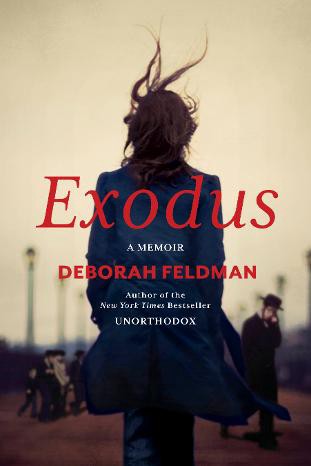
I met Deborah Feldman in Brussels at the end of January, when she was invited by the Goethe Institute to talk about Überbitten, the expanded German edition of her second memoir, published in English as Exodus.The book renders with bare honesty Feldman’s experience parting from orthodox Judaism, the only world she knew, and reinventing herself in a different country.

Deborah Feldman

Feldman achieved notoriety after her first book, Unorthodox, was published in the U.S. in 2012. In it, she describes the repressive nature of her life within the Satmar Hasidim community in Williamsburg, her arranged marriage at 17, and her subsequent decision to take her son and leave the community.

For Feldman, history is a kaleidoscope where the past can morph if observed from different angles. In the second half of Überbitten, she explores her life in Germany, her relationship with Germans, and the way the Holocaust is understood and integrated in the collective consciousness there. As a descendant of Holocaust survivors, she asks fundamental and tough philosophical questions. Had she been a Nazi, would she, in all certainty, have refused to carry out acts of violence and annihilation? As in most aspects of life, the answer is not cut and dry.

I spoke to Deborah about her books in Brussels, and later continued our conversation through email. Our conversations focus on the Hasidic community’s relationship with motherhood, infertility, and women’s bodies.


Mauricio Ruiz: In Unorthodox, you explore the themes of motherhood and fertility. These days, some women have the choice to decide whether they want to have children or not, and when; others still do not have that choice. How do women who do not want to have children cope with this reality in Hasidic communities?

Deborah Feldman: I do not think this is a reality anyone I knew ever “coped” with. The greatest social misfortune in this community is infertility. It is grounds for divorce. Women who cannot produce children are relegated to the lowest possible position in society, they are seen as completely useless, purposeless, valueless. In Unorthodox I describe how I was treated in the first year of my marriage in which I failed to become pregnant: I was threatened with divorce, homelessness, complete abandonment, I was subject to abusive criticism of my basic worth as a human being, I was made to understand that my ability to have a child was my only value and that if I failed to fulfill this expectation I would be treated like waste. So I think in this atmosphere it is not actually possible to entertain ideas about rejecting childbirth, because reproduction itself becomes a form of survival, and those survival instincts are very strong.

MR: Could you talk a little about your mother? What were your thoughts and reflections about her while you were growing up? Did you have mixed feelings (because she had pursued the life that she really wanted; sad because you couldn’t spend time with her)?

DF: I think my feelings could be described as a mixture of fear and curiosity. The latter because it was this great unknown, this outside world to which she had fled, and the concept of a life and an identity out there, and the former tied to the understanding that we are doomed to repeat familial patterns, that her fate could determine my own.

MR: When talking about Exodus, you mentioned that when a Hasidic woman in Israel decides to leave the community, she doesn’t enjoy the same rights as another non-orthodox woman under the Israeli Constitution. Could you elaborate a little bit more on that? Wouldn’t this be a violation of human rights?

DF: I think to understand this you have to research how the Israeli government works. There is this awkward coalition between the secular and orthodox parties in which exceedingly questionable political deals are made that have very little to do with democracy, but are a result of what happens when a democracy includes a sizable anti-democratic element. You have an agreed-upon segregation of Israeli society, in which members of orthodox communities are subject to biblical law and religious dictates, while secular members have access to a whole different set of laws and rights. A problem occurs when a member of the orthodox world wants to cross over. Orthodox parties will not accept that secular Israeli society will step in to support this “runaway” with its granting of new civil rights or defend it against the laws and restrictions of the society he or she has left. It demands that all of its members, both current and former, be seen as in their “jurisdiction.” So in the name of a fragile political detente, runaways are left in a kind of no man’s land between the two worlds; they are required to make their way across to the other side completely at their own risk.

Runaways are left in a kind of no man’s land between the two worlds; they are required to make their way across to the other side completely at their own risk.

MR: Referring to the case of a famous Israeli writer’s sister happily living in the settlements, you explained that human beings tell themselves everything is okay, that they are happy. It’s a self-preserving mechanism. What do you think it would take for women living in the settlements to be able to see what you’ve come to realize?

DF: I really do not know. I think my realization came about because I had this curiosity about another world, another perspective, and I sought contact with it. So I was able to develop alternate modes of thinking. But what do you do with people who are to afraid to nurture this curiosity

MR: While explaining the religious philosophy of the community you grew up in, you mentioned the three oaths upon which orthodox Judaism was founded after the destruction of the Second Temple:

a) Do not try to take the land.

b) Submit completely to the authorities in exile.

c) Establish and make clear the differences between yourselves and the people in the countries where you live.

How was that reshaped after the Holocaust? What narrative was created by the scholars and rabbis?

DF: These are the Three Oaths, and they are known to all Jews all over the world, and may be interpreted differently depending on the community, but they are part of a common diaspora heritage. I think the way my community reshaped the “myth” of oath-based punishment versus redemption after the Holocaust was to claim that we were living in a time when Jews wanted to cast off this pact they had made with God, they wanted to take back the land (zionism) assume political authority or at least equality in their various countries and cast off their differences by clothing themselves, naming themselves, and speaking in a manner that was customary in whatever society they might find themselves. The Rabbis claimed that this was not only rendering the promised eternal redemption impossible but also bringing on a kind of apocalyptic temper tantrum from a God who had proven, with the Holocaust, to no longer be able to contain his rage and frustration with this forgetful children.

Meaghan O’Connell Thinks Motherhood Is What Keeps Women Oppressed

MR: In your books you explore women’s relationship to authority, especially religious authority. Why is it, in your opinion, forbidden for women to read the Talmud? Will there be a day when it isn’t?

DF: The tradition of reading and discussing the canon of Jewish texts has always been masculine in the orthodox community. On the other hand women are reading these texts in reform Jewish communities. The ideology of Orthodoxy will not allow for women to do so within their own world. This is just how religion works. I think it is not very realistic or productive to discuss ways in which radical patriarchies can make adjustments or allowances for women, since to do so would require a crumbling of their very foundations. Perhaps we need to learn to accept that the two poles are irreconcilable, and it is not our obligation to find ways in which to render such communities more acceptable to us. I find efforts to engage in “cultural understanding” very naive and counterproductive. I would appreciate it if Jewish secular liberals had more confidence in their own value system and were able to criticize instead of chalking it all up to cultural differences.

MR: You read a beautiful passage from Unorthodox where you, for the first time, decided to break an imposed rule. I really liked that, the idea of questioning the rules that govern our lives. How do you think people living in Israel, and the world in general, could become more conscious of the rules that govern their lives?

DF: Isn’t our whole capitalist society structured in a way as to prevent this?

MR: In Unorthodox you recount the anecdote where one day you forgot to put on one of your garments (the rule being: knitted on top of woven fabrics to avoid revealing too much of the female figure) and later being sent back home to change. There seems to be a constant control of women’s bodies, and women are often made to feel, unjustly, guilty for bad things that happen in the world. Do mothers, grandmothers enforce those rules (given that they know what it means to feel that themselves)?

DF: Yes, women do enforce this, because they are taught that they will be rewarded for this with approval, even power. This happens in the Jewish secular world as well.

Biking Through the Land of Ghosts

“The World Holds What It Remembers Most”

by Tess Allard

It rains every day now — if these are days, in the traditional sense. Tangled masses of autumn clematis overspill the rotting fences. The sky is flat white, a cap to the world. Everything is spongy and yields to the touch; everything is coated with moss and algae and scales of lichen. But at night the clouds clear and the stars arrive, and they are strange stars now, the ghosts of ancient constellations, ever-changing. The sky is the only place that does not repeat itself. Each night I study them and make up names: the Drowned Sailor, the Hungry Wolf, the Lost Child. Long-ago humans must have gazed these stars, right where I lie. They must have had names for them too.

Without the confines of linear time, the rain does not bother me. Out of habit I wear a raincoat, but when I’m soaked it’s not unpleasant — it just is, like everything now. It’s never cold or warm. It’s the perfect neutral temperature that so many years of climate control sought to obtain. I ride my bike under the laden clouds, along routes I’ve deemed to be safe: past the marina, where the moorings of boats both real and remembered moan and creak in the river’s sway; along one stretch of empty highway, where shimmering ghost houses teeter on knotweed hills, ghost children in their windows, ghost wives hanging laundry, ghost steelworkers forever climbing down rickety stairs to the mills. But if I go much farther, there will be the pileup. The twisted wreckage, the sobbing, the flashing ambulance lights and the smell of blood and burning rubber, all of it unceasing. Like a record caught in its final loop, a little pop as the scene begins again.

When time collapses, what is left? Which events have imprinted themselves most indelibly onto the fabric of the world? At my house, I found, it was the death of a draft horse, back when this land was still a frontier. It lies on its side among my strawberry beds, feebly lifting its head, wild eyes rolling, skin stretched taut over bones — and it screams, a high panicked whinny that echoes across the vanished fields. I tried for a while to stay at home, comforted by the objects of my former life, but I couldn’t stand the sound. And down the street was something worse. A woman screaming for help, two gunshots in quick succession. I didn’t have to investigate that; I remembered it from the news.

Now I stay in a quieter place, a new-construction building on a dead- end street where apparently nothing has ever happened. Ghost rabbits dart through the rooms. I should be used to it, but it still unnerves me. I’ve made a space for myself in the attic, where nothing loops at all. Blankets and candles and a stack of books. I could stay here, but my body always itches to move. I think sometimes about leaving the city, but what must the rest of the world look like? If I biked east I know I’d find Johnstown flooding, the unimaginable horror of Gettysburg; to the south, mine collapses and Flight 93 — and what smaller, personal crises in between? The worst moments of someone’s life, endlessly replayed.

But there are happy memories, too. Down in the hollow where I sometimes stop to sit beneath the sheltering oaks, a tangle-haired little girl in a deerskin dress plays in a field, picking dandelions, spinning until each puffed strand detaches, and they rise in a cloud around her, and on her face is perfect joy.

I miss you, Matthew. I miss you, Sarah and Susan and Raja and Julian. I miss all you people out there in the streets, on the buses, at the checkout line in the grocery store. Real human bodies exhaling, sweating, moving of their own accord: who would have thought I would long for strangers so fiercely?

Yes, there are the shapes of people: dark-coated Victorian men and ancient tribeswomen and marching soldiers and Iroquois fathers teaching their children to hunt — but I can walk right through them. They have scent and sound and look almost solid, but there is no corporeal heft. Their bodies do not stir the air; the earth is not marked by their passing. I can sit in the middle of a howling fire and feel nothing but the rain beading on the vellus hair of my hands.

I remember these small joys the most: walking barefoot in fresh-cut grass, clover crushed between my toes; getting off work early on a summer day; grilling burgers in a friend’s backyard. Playing catch with dogs. Bubble tea. Sex on a snowy morning. The sun. My god, I miss the sun. I like to imagine that someday this will end, and the orderly world will return, and there will be other living humans again, and we will ask each other: where were you when time collapsed? And I will say: I was stepping off a city bus, like any other day. The square was thronged with people — but they weren’t hurrying to work, they were just standing — and they were dressed like in old movies, and there was a shimmer in the air like heat off asphalt, and I knew right away that something was wrong. In the center of it all was a huge, mangy bear in a vest and top hat. Two mustachioed men were prodding him in the back with metal poles. They were making him dance.

It wasn’t an art piece; it wasn’t a flash mob; it was the world eating itself, the telescoping of all time into a single moment. The bear stumbled, howled, and dove suddenly into the crowd. People scattered. I watched the bear pull a baby from its pram and shake it between its teeth, tearing at the air — and then a gunshot, filling the air with reeking smoke. The bear crashed to the ground. The infant’s nanny sobbed. The scene blinked out of existence for a fraction of a second and then began again.

I will say: how long did it take you to figure it out? Did you spend hours upon hours trying to ferret out the rules, to make some sense of the chaos? Did you wander in circles, thinking: why is it only me? Did you believe we were all still alive, trapped and hidden, waiting for the key to release us? But for now there is no one to ask. It is only me, the ghosts, and the rain.

Sometimes I am brave enough to venture into uncharted territory. Uncharted — funny to think of it like that, these places I once loved. I am an explorer and cartographer now: I mark the map of the city on the wall of my room with little shorthand doodles. Smiley faces, sad faces, question marks. Skulls and crossbones for the worst. When I go out exploring I take a notebook and write down my discoveries. Is this what it felt like to be an ancient sailor, setting sail into the boundless unknown? Here there be monsters. Here be the edge of the world.

I set sail on my two wheels, backpack and notebook and raincoat. I speed downhill on the empty road as fast as my bike will take me, helmetless with wind pummeling my cheeks, a thrill rising high in my chest. I sail blindly past the child getting hit by a bus. I detour around the arsenal explosion. I ignore the forest fire shimmering through the rowhouses. I pass through the middle of a buffalo stampede. I am getting better at this unmoored existence.

At the bridge I turn left instead of going straight, and I am suddenly aware of the drumming of my heart. I haven’t been here since everything changed; all things imaginable await. But I cross the bridge anyway, passing over the ghosts of clattering rail yards, and pedal up the hill until my calves burn with effort.

At the park a group of boys run circles in the basketball court, and if I squint and ignore the repetition of their movements I can almost pretend they are real. Imagine that: children playing. Walking past the playground on a summer Saturday when the light is fading and the streetlights are coming on and listening to their joyous shrieks, these creatures of infinite possibility.

I walk up toward the court to watch. The boys are lanky, awkward, maybe thirteen, with the thin gold chains and frosted hair of the late ’90s. I sit in the damp grass and watch them circle. One of the boys trips on each go-round, and I focus on him, studying his face — why does he look so familiar? And then it hits me, suddenly, like a wave breaking against my chest. It’s Matthew. It’s Matthew as a boy. I am certain of nothing so much as this, though he was already broad-shouldered and bearded when I met him, though I’ve never seen photos of him at this age. The world has brought Matthew before me to show me what I have lost.

I stand and move toward him, hands outstretched, as if I could touch him if I just wished hard enough, but of course I pass effortlessly through. I stand in the center of their whirling circle, willing the air to move around me, for something, anything about this to be real. Matthew’s face flickers with surprise as he trips, laughter as he rights himself, determination as he catches up. I would know those expressions anywhere. It is the cruelest kind of irony.

How do you mourn your husband when the whole world has disappeared? I spend the night in that circle, right at the spot where Matthew trips so his weightless body intersects again and again with my own. I watch him as the new stars traverse the sky and I listen not to the whirr of insects or the distant sirens that used to fill the city night but instead the echoed sounds of history. I fall asleep and when I wake my hair is soaked with rain.

It is hard to pull myself away. I keep looking back as I pedal, testing the limits of my balance, until the playground is hidden above the crest of the hill. Halfway home I realize I’m headed to my old house. Not the rabbit- run, blank-walled house I’ve been staying in but the one I shared with Matthew in the vanished world, where we cooked pasta primavera and hung up mismatched curtains and lounged in the shade of our old white oak, its beaded strands of pollen dusting our shoulders. I stop in the middle of the road. I watch a nest of huge speckled eggs wriggle on the ground, something with claws just beginning to break the shell. I hesitate for a long moment before turning around. I can’t get mired in my own past when I’m already mired in everyone else’s.

But it’s easy to say that, isn’t it? Like it used to be easy to say I’ll wake up at five-thirty to go to the gym, or I really don’t need to spend fifteen dollars on lunch. But the whole time you feel the pull of what you truly desire. I lock my bike to the railing of the porch, though there’s no one alive to steal it. At least it’ll slow me down a minute, give me time to think.

At night, as I lie in my pile of blankets in the attic room, it plays itself over and over in my mind like one of the memory loops: that moment when I stepped off the bus, the dancing bear, the frantic fumbling for my phone to call Matthew only to find a useless hunk of plastic. A dead screen that looked into nothing. Walking all the way home, the route filled with incomprehensible scenes. Finding our house empty. Seeing the horse in the strawberry beds and falling to my knees and sobbing, bereft of understanding, unable to put the pieces together to assemble anything like sense. And thinking then, and thinking still, that surely Matthew had not disappeared. Surely he too was wandering this foreign world, separated from me by some kind of spectral veil. If I puzzled this out, perhaps I could lift it. Perhaps I alone was meant to undo this.

I know that if I stay here I’ll be drawn to the playground again and again. I’ll camp out in that spot, yearning. I’ll forget my maps and my expeditions and my careful attempts to unravel this mystery and I’ll plant myself there like a dog waiting for its master. And so I leave. It’s not as difficult as I imagined. I pack my messenger bag and panniers and test my brakes and fill my tires. I go back one last time to lie on the ground and let Matthew trip over me, his face coming so close to my own that if he were real I could feel his breath on my cheeks.

I take the long way out of town. I ride through ghost houses, long ago demolished for construction of the highway. I ride through a disappeared lake, plunging into the depths where fish weave in and out of the spokes of my wheels, passing beneath of the shadows of rowboats. I stop in the hollow where the little girl twirls, struck with light from an invisible sun, gazing with pure rapture at the dandelion seeds. I put my hand on her head and pretend I can feel her warmth. I kneel and wish her goodbye.

I bike through open country, vine-choked forest, four-lane highways with nothing but ghosts. I raid abandoned rest stops for road atlases. I dangle my legs off the edge of an overpass and look out at the mudslide hills, bare roots reaching like fingers from the dirt, not strong enough to hold the earth together when faced with endless rain. What will happen when it all slips away? Will the memories stay if the true earth dissolves?

Ohio gives me a fiery plane crash, a farmer’s daughter falling from an attic window, brilliant mounds of snow as high as my chest. Indiana gives me a howling tornado. It gives me a baby tugging on the ears of a golden retriever, rolling in the dust of a long-gone lane. I mark all this carefully in my stack of maps, labeling a key in the corner of each. I shortcut across dead fields where water gathers in the rut from my tires, a sodden scar on the face of the earth. Matthew and I took a road trip, once, getting a third of the way across the country before our Volkswagen’s engine blew — did we stop beside this field when we changed a tire? Did his feet graze this asphalt before it was cracked? But there’s no use in wondering. Matthew is not here.

In Illinois there is a massacre, a wide bloodstained meadow of bodies and panicked horses and people being shot right where I stand, Shawnee with blood streaking their bare chests and settlers with filthy coats and gleaming guns. I swerve as a horse careens toward me and lose my balance, tumbling into the grass. Its massive form tramples substanceless over me. I lie there with my eyes closed, breathing quietly. I can still hear and smell it. My heart does not know this happened long ago.

I know I should go on, but I lie there as dusk gathers, thinking about all the days to come. I will keep riding across this country, weathering the worst. I will forge a path into the unknown. I will map it all until there is nothing left to discover. I will quantify, categorize, trace careful lines of roads and borders until I’ve crowded out the mystery with reason. And I’ll wait. I’ll wait for that morning when I open my eyes to an astonishing day, pure crisp sun-soaked blue, and all the people I used to love will be waiting out there, and the world will be simply itself.

By now the light has faded. I roll onto my side, the wet ground yielding as I move. Across the road is a cornfield, which is a cornfield in this layer of time, too, though in the memory it is tall and tipped with gold. The ghosts of a thousand fireflies are winking out there. They rise up from the ground, drifting like embers. They climb the tassels and perch on their precipice and blink their secret song into the night, searching for their mates. They will search forever. They don’t know that they are dead.

The Best Book Is the One You Can’t Remember

One Saturday when I was very small, probably only 4 or 5 years old, my father took me and my brother to our local library. I sat on one of the tiny chairs (an attraction in themselves), towered over by creaking shelves stacked with books of all ages, forms, sizes, shapes, colors. A librarian handed me two tickets, stiff card, colored a municipal green-grey, my name written on them in an institutional hand. They felt powerful; they made me feel powerful. Not only was I being recognized as an autonomous citizen for the first time, granted membership in a serious institution, but I now also had the possibility of picking anything I liked from the laden shelves then taking it home for a week before returning to repeat the process. (Last year, on beginning work at an academic institution, when handed a barcoded piece of plastic with my picture on it, I felt something of the same glow.)

The small local library (still there, I am pleased to note, despite severe cuts to library services in the U.K.), seemed enormous to me, its treasures surely endless. Early on, there was one book I borrowed that enchanted me. I wasn’t a strong reader at the time, but remember the book intensely. Not the plot, mind, nor much about the characters. I certainly can’t remember anything as helpfully specific as the title or the author. I distinctly remember a house being on fire, at night, a palpable sense of both danger and excitement. Later, I seem to remember melancholy, or sadness, the characters having to set out on a journey. I’m pretty sure fireworks appeared at one point. A family was involved, the protagonists a pair of siblings, perhaps. It was illustrated, I’m sure, but sparsely, pencil drawings in muted colours. Not much to go on, a librarian or bookseller’s nightmare when a customer walks in and asks for it, certainly, but the atmosphere that book created and the feeling it provoked in me was vivid, indelible.

I wasn’t a strong reader at the time, but remember the book intensely. Not the plot, mind, nor much about the characters. I certainly can’t remember anything as helpfully specific as the title or the author.

It stayed with me, as books can do, and a few weeks later I decided I wanted to read it again, but was unable to find it on the shelves. I had an idea the cover was red, mostly. I looked through every red book on the shelves. It wasn’t there. I thought I may have accidentally taken it from the ‘teenage’ shelves, so looked there, to find nothing. I may even have asked a librarian who couldn’t help me (no computerized records of lending then.) I never found it.

I’ve been looking for that book ever since.

No bookshop, the older and dustier the better, is safe from my attempts to rifle its shelves; no library containing a neglected children’s section will be spared my attempt to track down that missing volume.

And yet, I know full well that were anyone ever to say, “Oh yes, I know exactly that book you’re looking for,” and hand it to me, in pristine condition or terribly tattered, I’d be disappointed. Partly, it’s the search for the book that’s the pleasure, an excuse to endlessly trawl book vendors of all stripes. Mostly, though, I fear its reality: in my mind, that book can be anything I like. If it were real, it would have to be what it is, and nothing more.

In my mind, that book can be anything I like. If it were real, it would have to be what it is, and nothing more.

Books have a strange relationship with memory. I have sometimes been convinced that a certain book contains a lengthy, rapturous, intricately-detailed description of a place, or a clear yet careful elucidation of a complex idea, only to go back and find a scant couple of sentences. On the other hand, there are entire chunks of books that my memory elides (did anyone else forget the whole second half of Wuthering Heights?). I was pleased when a well-known writer (and yes, I’m afraid I’ve completely forgotten who) recently remarked that they couldn’t remember plots at all, only characters and settings. Two fans of the same book may each remember a different experience entirely.

Indeed, two readers of the book may experience something different entirely: a book isn’t just a collection of words on a page, but our emotional and intellectual engagement with it, the context we read it in, or the stage of life we’re at when we read it. Our impressions or understanding of a book can be affected by what we think we know about the author, or the fact that someone you don’t like told you it was great, or by the fact you’d just fallen in love the first time you read it, or maybe the cover matched your favorite shirt. All these influence how we remember, or mis-remember, the things.

A book isn’t just a collection of words on a page, but our emotional and intellectual engagement with it, the context we read it in, or the stage of life we’re at when we read it.

Re-reading after a long interval can be a haphazard pleasure. We may indulge in immersing ourselves in our pasts again, or perhaps find previously unearthed treasures, or — quite possibly — remain faintly disappointed. When I was thinner, younger, and somewhat more intense, a book to be seen with was Milan Kundera’s The Unbearable Lightness of Being. I remember making sure its smart red jacket poked out of my pocket for a good while toward the end of the 1980s: I thought I loved its narrative swerves and shows of the author’s hand, the philosophical enquiry, the heavyweight references, the political heft, the obliquely glamorous Prague setting, the meditations on chance and destiny. (And yes, in my memory this has somehow got mixed up with the film I’m not sure I’ve ever actually seen all the way through.)

No, I Can’t Picture That: Living Without a Mind’s Eye

I’ve long since lost the book. I suspect I gave it away to someone in an attempt to impress them, someone who remained resolutely unimpressed, and I have — occasionally — thought about going back and reading it again. But I won’t, for fear it should have aged worse than I have, for fear it would feel clunky and hectoring, for fear that protagonist Tomáš would reveal himself the sexist git I suspected he was even then.

Unlike the childhood book I scarcely remember, I fear I remember The Unbearable Lightness of Being only too well. Going back to it may mean having to go through the excruciating process of being myself again, as a callow 20 year-old. It’s better, I think, in this case to take what I remember about the book and consider how it can be useful for me now: its mixture of essay and story, of history and fiction, its shifts in tone and register, its digressions, its wide-ranging intellectual curiosity.

It’s better, I think, in this case to take what I remember about the book and consider how it can be useful for me now.

And yet, there are also those books we cannot re-read, either because they’ve got lost or have vanished, or because our own faculties fail us and we simply cannot remember what they are.

What can we do with them? The same thing, I’d argue. Take what you do remember, or at least what you think you remember, and build your story from that. you may never find the lost book, or even want to find it, but what you can discover in the search for it may be invaluable.

In his book Not To Read Alejandro Zambra claims we “write only when others haven’t written the book we want to read. That’s why we write one of our own, one that never turns out to be what we wanted it to be.” So I have tried, but even that attempt will never stop me grubbing through second hand bookshops and old libraries, looking for that experience I hope I may, one day, be able to recreate.

Chelsey Johnson’s ‘Stray City’ Deals with Queer Reality, Not Queer Theory

When I moved to Virginia to begin my MFA, I had a girlfriend as handsome as a star. She held my hand at the kickoff barbecue and accompanied me to the welcome drinks gathering, but after an appropriate amount of strife and struggle, we split up. When I eventually brought around a new beau, one of the guys in my program wiggled his eyebrows. Yes? “He’s a man,” this guy sputtered. And? “I thought you were a, you know,” he said, tugging at his collar button, “gay.”

I understood his confusion, yet it was not the confusion that struck me so much as the other feelings: the fear, the animus. That guy in my program regarded my “new guy” with suspicion, touching only the tips of his fingers when he offered a handshake, as if he were a bomb that might detonate. My queer friends felt betrayed by this new development and stopped inviting me to queer events, queer organizing meetings. My new boyfriend was much more of an activist than my old girlfriend had been, but this didn’t matter. One friend could only say his name in a rush, pushing it up against other words in case it was contagious. It came from me too, don’t get me wrong — this recalibration messed with my identity. I had been straight, then gay, then bi, then queer, and now I was going to date a guy again? Was I real? Did I still belong to the outsiders who had made me?

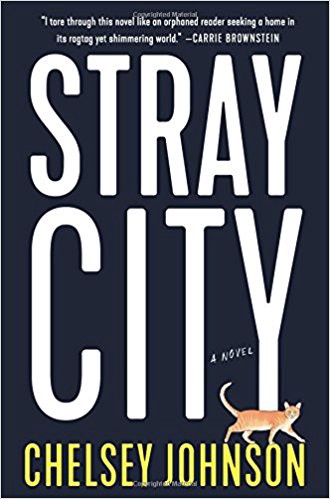
Into this space comes Chelsey Johnson’s much-anticipated debut novel Stray City, which tells the story of a lesbian-identified woman named Andrea who suddenly finds herself involved in a sexual gray zone with a man and with the idea of being a mother. This ambivalence, between Andrea’s commitment to wanting the things a “good lesbian” should want and the things she finds she wants, is in many ways the engine of the book. What happens, Johnson asks us, when doing the politically liberating thing is at odds with your body’s actual desires?

The context of Stray City is essential: it is in many ways the story of how the loose queer communities we move in now worked when they were at their tightest. The book’s first two parts unfold in pre-gentrified Portland, during the years 1998–1999, when, as Johnson puts it, “queer survival was still not guaranteed.” Matthew Shepard had just been beaten and left to die on that Montana fence, and the film Boys Don’t Cry, chronicling the murder of Brandon Teena in Nebraska, had just been released. Johnson’s protagonist is herself from Nebraska. “And in all the miles and miles of green fields stretching toward the horizon as far as I could see from the end of our driveway, there was not a single place for that feeling to exist, except inside me,” writes Johnson, in some of the loveliest and most complex writing about rural queer awareness I’ve yet read.

What happens, Johnson asks us, when doing the politically liberating thing is at odds with your body’s actual desires?

For this queer woman reader, to see characters like me and my friends rendered with an expert — and insider — hand is pure pleasure; you’ve never seen the fierce loyalty and tenderness and humor that is the very lifeblood of a queer ecosystem depicted quite like this. Andrea is soon enveloped by the vibrant community of queers and punks and musicians that made up Portland life in the late ’90s, even finding her chosen family with a group of cool dykes known as the “Lesbian Mafia.” But the Lesbian Mafia has rules, it is its own kind of system. “It seemed in our urgency to redefine ourselves against the norm,” writes Johnson, “we’d formed a church of our own, as doctrinaire as any, and we too abhorred a heretic.”

Systems are made so we can break them. Andrea meets a cis man named Ryan one night, a gentle drummer with a philosophy of non-attachment. They kiss, they fuck; Andrea vows never to see him again, then does, and does again. Is she attracted to him? Doesn’t know. Does she love him? Can’t say.

“I asked myself, What was it like?” writes Johnson, after Andrea and Ryan share penis in vagina sex for the first time. “And I answered, Like sex…I closed my eyes and imagined a harness and a girl behind it, but this patch of fur around his navel kept rubbing against me, animal-like.” No matter how many ways Andrea tries to lean in or out of her connection to Ryan, she cannot quite seem to find purchase. They fuck again, and Andrea gets pregnant. At one point they engage in a passive aggressive karaoke battle to try to figure out who they are to each other. Lover? Friend? Their connection is perhaps best understood as a kind of fellow feeling or the tenderness that can flow, once or twice in a lifetime, between two artists.

Yet the world, as it tends to do, rises up to categorize. Andrea’s friends find out and kick her out of the Lesbian Mafia. Ryan wants her to be his girlfriend.

‘Call Me By Your Name‘ Finally Shows the Kind of Bisexual Narrative I Want to See

I didn’t stay with that guy in Virginia. Instead I went on to have several important relationships with women, but my most recent ex is a man. While my ideal partner is probably a non-cis man who presents masculine, there are at least twenty times more cis men on dating sites; add in the fact that I like weird books and it’s plain that the numbers are really against me. There was a moment with this most recent fellow when he looked at me in the light from his bare bulb and called me his girlfriend. I agreed. “But,” I said, “I’m still queer.” “If you’re with me now,” he wanted to know, “why does that matter?” “It matters,” I said, “because it’s who I am.” We didn’t last a year.

In Johnson’s book, it’s not clear how much Ryan needs to claim Andrea in some legible arrangement, but it’s clear he needs it a little bit, and that she fears this need in him as much as I feared it. “Why does it matter if people look at us and assume you’re straight?” that fellow asked me. I don’t know. It didn’t make sense. “It matters,” was all I could say, over and over again.

At its best, Stray City illuminates the ways that subjective experience and truth are always pressed up against objective systems of thought, particularly about marriage, family, and sexuality. In an interview, Johnson described the mainstream heteronormative imperative as the expectation “to pair up, marry, and reproduce.” Some queers decide to follow these instructions and others decide to resist them; Stray City shows us how these differences can create fault lines much deeper than the assigned sex of the partner you choose.

As a queer person open to dating people of any gender and as an artist not necessarily looking for a partner with whom to reproduce, I often feel less comfortable and less politically sympatico with married lesbians who have kids than I do with my straight single lady artist friends. It can be hard, even impossible, for queer people who love each other but who have made different choices about these systems to stay in loving community together.

It can be hard, even impossible, for queer people who love each other but who have made different choices about these systems to stay in loving community together.

These are uncomfortable truths that I wished Johnson’s novel had pushed on even more deeply. In Stray City, Andrea decides to keep the baby, and the perfect butch lover ultimately appears for her, completing the nuclear trio. Andrea’s best friend Meena, who resists being coupled or reproducing, at first rejects Andrea for her transgression into straight world but quickly takes her back without much struggle, and queer order is restored.

Perhaps what I’m really questioning here is the idea that any specifically queer family can provide me with shelter from the storm. As someone who is not queer in the “right” way, i..e the most stable and legible and politically helpful way, I’ve never had one that feels right, and the family that has sheltered me has been a broad coalition of queers yes, but also writers and straight people who live in the woods off the grid. I worry that Johnson’s notions of queer family are nostalgic or no longer possible, a notion left over from a time when we had fewer choices and that scarcity bound us together and bound us better.

Andrea decides to keep her baby in part so that it might become “one of those Portland kids who had always seen piercings and tattoos, who knew what a heroin addict looked like, what a gay person looked like, what a protest looked like.”

Though I grew up on the other coast, I was such a kid. Yet I feel just as confused and ambivalent about what makes a partnership as Andrea, and about what makes a body, and a sexuality. What, I would like to know, happens now?

How Applying to Grad School Becomes a Display of Trauma for People of Color

A few years back, I had the misguided notion that I would get a Ph.D. in English literature; I hoped to remain within the safe confines of academia, the only place I’d thus far thrived. During a meeting with my advisor, she fervently counseled against the Ph.D., telling me about the difficulties of success and the job hunt. Then she paused.

“Can you close the door?” she asked, hesitating slightly.

I stood and shut the door to her office, confused about the sudden need for privacy.

“Can I ask what your background is?”

It took me a moment to understand the question, but I quickly said, “Oh, I’m Egyptian.” She squinted, as if thinking of how to proceed.

“I probably shouldn’t say this,” she said, “but play that up. Ph.D. programs love hearing about that. Talk about it in your personal statement.”

Her stance suddenly switched, and rather than advise against the Ph.D., she spoke as though she were passing down some secret wisdom — a way to game the system and achieve unlimited success through some sort of minority trauma story. I went home and laughed, and although I knew my minority status didn’t guarantee anything, I also realized she was right. My best bet of garnering an admission officer’s attention was to play up my background.


A personal statement for a Ph.D. program is tricky for a number of reasons. You are required to talk about yourself — hence the “personal” — but also to talk about your research and somehow seamlessly connect both. At that time, I was studying modernist literature, and I wrote my thesis on James Joyce and Nietzsche. I remember sitting in my room attempting to put together some loosely connected thoughts on Joyce, Egypt, and my cultural upbringing. I still have a document titled “Personal statement ideas” saved on my computer in a folder called “Ph.D. stuff.”

At that time, we were also right in the midst of the Arab Spring, and the Egyptian revolution had happened fairly recently. So I began my personal statement with a story about watching the revolution’s footage on the news and discussing what freedom meant to me. Then, in the middle of the second paragraph, I suddenly transitioned into talking about my future research, with a poorly constructed sentence that jumped from modernist literature to the idea of freedom as a concept to freedom for Egypt. I didn’t get into too many specifics because I didn’t really know what I was talking about at the time. Looking back at that personal statement now, it showed.

Needless to say, I did not get into a Ph.D. program, which turned out to be more of a blessing than anything else, as I quickly realized that track wasn’t for me. However, the experience taught me that society, white America specifically, regularly asks minorities and people of color to tokenize and exploit themselves, talking about their cultural backgrounds in a marketable way in order to gain acceptance into programs and institutions we are otherwise barred from.

White America asks people of color to tokenize and exploit themselves in order to gain acceptance into programs and institutions we are otherwise barred from.

I wonder now what my personal statement would have sounded like if my advisor had not given me that advice. I likely would not have talked about Egypt or my culture at all, and maybe I shouldn’t have. Maybe I could have formed a more cohesive narrative about my research instead. But I was writing about James Joyce, competing with hundreds of white men doing the same, and so I needed a unique angle. My advisor made me aware, for the first time, that as a woman and a person of color, I had to “play up” my background in order to enter these primarily white institutions.


Two years later, I applied to MFA programs in creative writing, realizing that what I really wanted to focus on was writing fiction. I remembered what my advisor said, and I knew her advice still applied. But again, I struggled with how to bring up my ethnicity in an organic, uncontrived way. Simply discussing my cultural background abstractly would not work, as I’d learned from my PhD applications. I needed to tell a story, one that would garner the attention of admissions committees. However, I hadn’t suffered any particular hardship or trauma as a result of my ethnic background. I grew up with a certain amount of privilege not afforded to others. My parents were doctors, and they’d been supportive of me all my life. Still, I knew that it wasn’t enough for me to simply identify as a person of color. I had to fit into the POC stereotype: someone who has faced adversity, racism, and maybe even economic hardship.

I lay in bed, computer open in my lap, reading sample after of sample of MFA personal statements. I bought a book about applying to MFA programs. I scoured the internet for advice, reading blogs and testimonies of people who had been accepted and were now passing down their wisdom. I sat alone in my room for hours at a time scrolling the web for information, making lists in notebooks — of schools and possible ideas to write about. If I wanted them to know about my background, I had to do it in the personal statement. I was applying to programs in fiction, so I didn’t have the advantage of continuing the story of my life through a non-fiction writing sample. I did, however, decide that my writing sample would be a short story I’d written about Egyptian-Americans. There weren’t enough stories about us, so I hoped admissions committees would see that I could bring something different to their program. I wrote and revised and revised and revised, but still, I couldn’t bring myself to start the personal statement.

I didn’t want to talk about my personal life. I didn’t want to exploit myself or tokenize myself for the sake of admission. My advisor’s words rang true in my head. “Play that up,” she’d said. But I could only play it up so much.

In my personal statement, I noted that I grew up in an Egyptian home and for that reason felt different from my peers. Outside of that, though, I resisted making up or exaggerating some trauma. I thought of all the people that had experienced hardship as a result of race, gender, or sexuality, and I knew that their personal statements would likely cover those details, perhaps as a mode of performance in order to gain admission to elite programs, but I couldn’t bring myself to create a narrative of adversity. Though I couldn’t voice it in these terms back then, I felt that it was unfair that as a minority, I had to delve into my suffering and put that on display.

I did get into MFA programs, although more schools rejected me than the other way around. While I wrote a fairly strong personal statement, I can’t help but ask myself: if I’d displayed some sort of trauma, would I have been accepted to more programs?

I felt that it was unfair that as a minority, I had to delve into my suffering and put that on display.

MFA programs, in my experience, are littered with white men; there is even a parody Twitter account called “Guy In Your MFA” that tweets from the point of view of the typical straight, white man in an MFA program. I wonder if these men faced the same anxiety and mental turmoil I experienced in putting together their personal statements. I struggled to talk about my ethnic background in a way that would garner attention, while also trying to avoid exploiting myself or having to create a narrative of minority trauma. This is not something asked of white men, but people of color regularly have to share their hardships with the world in order to obtain admission into these spaces.


During my time in my MFA, I began to think about identity in a more nuanced way. My MFA thesis was a draft of a novel about an Egyptian-American brother and sister raised in a Muslim family. The novel’s themes pertain to the idea of living between two cultures: American and Egyptian. Though the story I created is fictional, many of the ideas pertain to my own life. As an Egyptian-American, I live in two worlds. One world is that of my parents and my family. While I don’t always agree with their values and traditions, those principles and their way of life will always be a part of me. However, I also live in American society, and liberal, American values course through my veins. For this reason, I will never feel truly Egyptian, but at the same time, I will never feel truly American, either. I exist between two different cultures and two different ways of life. In writing my novel, I wanted to encapsulate these ideas so that hopefully, other immigrants and children of immigrants could have a story they relate to.

When ‘Good Writing’ Means ‘White Writing’

As I began to finish up my MFA, I also thought about my future as a writer, and I started to apply to different jobs, programs, workshops, and fellowships. Each of these asked for some type of written statement, whether it was a cover letter, personal statement, or teaching philosophy. Almost all of the jobs and programs I’d applied to wanted to know something more than what they could find in my résumé. Again, I found myself trying to “play up” my Egyptian background in order to gain some type of approval. This time, though, I had more to say. I talked about identity and what it felt like to grow up between two cultures. I related back personal stories about my upbringing and my parents’ desires to have me retain aspects of their Egyptian culture.

Though I didn’t relay anything particularly traumatic, again feeling that my personal hardship was not the business of these strangers, I still resented having to include these intimate details of my childhood and my upbringing in these so-called professional applications. I wanted to focus on my work and what I could bring to the specific jobs and programs, but like graduate schools, they often called for a personal statement, so I had no choice but to get personal.

I wanted to focus on my work and what I could bring to the specific jobs and programs, but I had no choice but to get personal.

This year, I applied to an upcoming writing retreat exclusively for women of color. The retreat consists of a series of workshops and lectures all led by women writers of color, and they offered a set number of fully funded fellowship opportunities. I applied to the Arab Women Fellowship. As I began my application, I expected some type of personal statement requirement, and having written an entire novel draft that deals with cultural identity, I was now prepared. But as I scrolled through the application requirements, I found no mention of a personal statement. All they required was a project proposal, a reference, and a writing sample. For the first time, I wasn’t being asked to share intimate details of my life for an admissions committee, and I soon realized that this was because the retreat was being run by women of color. No doubt the women running this program had been asked to share their traumas and adversities for any number of applications over the years, and like me, had bristled at the expectation. They weren’t interested in asking a group of fellow WOC to trot out our back-stories in an effort to appear the most disadvantaged — our only trump card when competing against white men who had been afforded every privilege. For once, I could focus primarily on my work.


As I thought more about the idea of people of color being forced to put their trauma on display, my cousin Sarah was applying to law school. She asked me to take a look at her personal statement and give her some feedback. Her essay was beautifully written and moving, but she wrote about a deeply personal incident that she should never have had to share with an admissions committee. She knew, though, that sharing the private details of her life would capture their attention and maybe guarantee her acceptance. She told me that though she felt uncomfortable having a group of strangers read her essay, she could predict their reactions and therefore felt the need to exploit her own experiences.

My cousin’s law school application process also involved a series of “diversity statements.” Often, for people of color, it’s not enough to simply write a personal statement; there’s an additional “optional” essay asking you how you as an individual can contribute to diversity, and what in your background or life experience should be considered in the application process. Programs usually don’t require a diversity statement, but it’s implied that if you are a minority, you should write one.

Diversity statements are a relatively new phenomenon, and not every program asks for them, but when Sarah applied to law school, she wrote a diversity statement for every school she applied to — fifteen schools in total. Like me, Sarah read sample essay after sample essay in order to get a feel for what schools wanted.

“These essays are just rants of how race or ethnicity or class brought you down,” Sarah told me. “It was literally just people talking about these traumas.”

I was glad in that moment to have never had to write a diversity statement, though in my application experience, I still felt the pressure to discuss some type of adversity. If you are a minority, you are expected to display your hardship to the world.

If you are a minority, you are expected to display your hardship to the world.

During a phone call with my cousin, as we talked about her applications, I told her that the implicit obligation to focus on trauma wasn’t fair, and I asked how she felt about the whole process, recalling how I felt while putting together my grad school applications.

“It just felt really disingenuous,” Sarah said. “Because I wasn’t talking about my religion or ethnicity in a space I would have felt comfortable doing that. I felt like I was pandering to what they wanted so that they could say, ‘We’re such great people because we accepted this racially ambiguous, Muslim girl.’ I felt like I was exploiting myself.”

She expressed what I couldn’t at the time that I applied to MFA programs. I didn’t want to talk to a group of strangers about my race or ethnicity or how that affected my life and identity. It was none of their business, and while I made mention of my background, I refused to really exploit myself in the way that Sarah had to for her diversity statements.

Hearing her talk about her law school admissions process repeatedly reminded me of my own experiences. This self-exploitation is what schools and programs want. As Sarah points out, it’s almost though admissions officers want to pat themselves on the back for accepting a student who’s overcome so much and who brings “diversity” to their program.


A few weeks ago, I tutored a student who came to me with her personal statement for dental school. She was Pakistani-born and had lived there all her life, only recently moving to the States with her family. In her personal statement, she made no mention of her cultural background or ethnicity, and when she spoke of her childhood, I pictured a childhood in America. After we went through the essay, she then told me of her upbringing and her recent move to the US.

“I didn’t know any of that from the essay,” I said.

“Well, I don’t want them to read it and tell me to go back to my country.”

I was shocked at her words, at her assumption that an admissions committee would bar her entrance because of her Pakistani background — though living in this country today, it’s easy to see why she would have those fears.

“It’s just the opposite,” I said to her. “Admissions people love hearing stories about how you moved from another country and what made you do that and everything you overcame.”

As the words left my mouth, I recalled the conversation with my advisor seven years prior. I was giving the same advice, telling someone to play up her background in order to gain acceptance into a program.

It’s not fair to expect me, as a minority, to have some sort of harrowing back-story, and it’s not fair to those with actual traumas in their lives.

When I was asked to “play up” the fact that I’m Egyptian, I found myself grasping for some disadvantage to show what I’d overcome to get to where I was, but in many ways, this is not fair. It’s not fair to expect me, as a minority, to have some sort of harrowing back-story, and it’s not fair to those with actual traumas in their lives.

Before I really grasped what I was advising, I turned to my student and said: “Even if you didn’t have any obstacles, make something up. They love that.”

I hated myself for giving that advice and questioned the ethics of my telling her to make up an obstacle. But I wanted to help her in any way I could, and I knew the reality of admissions, having been through it myself. Minority students should not have to mine our traumas to prove our worth, but if we want to be afforded the same opportunities as white students, we have to exist within an unfair system. In the future, if an applicant asks me for advice, I hope I can better explain the nuances of the application process, rather than perpetuate the same rhetoric of “playing up” our hardships.

7 Crime Novels Written by Irish Women

Crime lovers take out your knives and carve yourself a slice of crime fiction from this stellar list of Irish women writers. Darkness is not a stranger to Irish fiction, even novels peppered with humor often favor the odd dark theme and the past couple of decades has seen a huge surge in crime fiction.

Purchase the novel

Ireland has seen many shifts in the social, political and economical landscape in the past twenty years. These changes have allowed for a greater dialogue around some of the country’s darker issues: domestic violence, social oppression of women, cases of sexual abuse from the church, political, gang and drug-related crime. It’s natural crime writers would want to explore these themes.

When writing Too Close To Breathe, I was acutely aware of this grand wave of “emerald noir,” particularly from female authors. Seeing these books, with their atmospheric covers and tantalizing blurbs, spread out along the shelves of my local bookstore, reassured me there was a home for what I was writing. So let me take you through some of those books and women authors who prefer to write in a darker shade of green.

Broken Harbor by Tana French

This novel was my first introduction to Tana French and I have pushed it into the hands of many readers since. French’s novels feature compelling plots, great writing and characters that could walk from the page and take that pint of Guinness right out of your hand. There’s just enough of an Irish tilt to the dialogue to not trip up the tongue but I love the little verbal gifts she gives her characters, words like “scarlet,” a shorthand in Ireland for embarrassment. Each of her novels focus on one detective or investigator as part of Dublin’s Murder Squad. The case presented usually challenges the detective both professionally and on a personal level. Her books ask not only who is responsible for this crime but who is this detective. In Broken Harbor, Patrick Spain and his two children have been murdered in one of the abandoned housing developments that litter Ireland. Detective Scorcher is plagued by the strange details of the case: why is the house full of holes in the wall? Why are there six baby monitors all facing the holes? For Detective Scorcher, the case becomes increasingly personal with long-suppressed dark family memories rising painfully to the surface.

One Bad Turn by Sinead Crowley

Three books under her belt and Crowley’s D.S. Claire Boyle series keeps thrilling. One Bad Turn sees D.S. Boyle take her young baby to the doctor’s surgery where they both become embroiled in a dangerous hostage situation. Crowley’s novels often focuses on personal conflict between characters. In this novel, the hostage taker is the childhood friend of the doctor. The Irish Times raved that One Bad Turn is sensationally good.

The Confession by Jo Spain

Set in the midst of Ireland’s recession, the novel is a whydunnit that opens with a confession from the killer on the first page. The killer brutally attacks a disgraced corrupt banker in his own home in front of the victim’s wife. An hour later, he turns himself in to the police but claims he has no idea who the victim is or why he did it. Spain’s books are gripping and filled with intriguing, original plots inspired by Ireland’s social history. Her best-selling debut novel, With Our Blessing, features Inspector Tom Reynolds investigating the murder of a nun linked to a notorious institute for “fallen women.”

Unraveling Oliver by Liz Nugent

Remember what I was saying about the Irish and our penchant for darkness? Author Ruth Ware praised Unraveling Oliver as “pitch-black and superbly written.” I feel like my work here is done. The novel begins with a savage depiction of domestic violence, told from the chilling voice of the offender. Nugent’s story is all the more unsettling because the book’s main narrator, Oliver, is a successful children’s author with an outwardly stable family life. Told in flashbacks starting from Oliver’s unprovoked near-fatal assault of his wife to his unhappy childhood as an unwanted son, the novel slowly unravels to the nightmarish event that brought everything crashing down.

Let The Dead Speak by Jane Casey

Seven books down in the Maeve Kerrigan series and fans are clamouring for more of Casey’s special brand of crime fiction. Always one foot in reality, Casey’s novels enjoy plenty of interesting layers that all keep one another warm until the final conflagration. In her recent novel, eighteen-year-old Chloe Emery returns home to find her West London home covered in blood and her mother nowhere to be found. London detective Maeve Kerrigan suspects Emery’s ultra religious neighbors are responsible for the murder but there’s one problem: there’s no body. Crafted with sharp dialogue, some of which might raise a smile, and clever plotting, Let The Dead Speak, will take you on a race through the pages.

The Liar’s Girl by Catherine Ryan Howard

With her second novel, The Liar’s Girl, hitting shelves as I type, the time has never been more ripe to begin your obsession with Howard’s novels. The Liar’s Girl takes us back to the canals of Dublin in a story packed with psychological trickery and playing on the theme of the bad boy, and a very bad boy indeed. What do you do when you realize your boyfriend is a killer?

Mr. Flood’s Last Resort by Jess Kidd

Jedd Kidd’s mysteries refuse to conform to genre in the most delicious of ways. She sculpts her imaginative storylines with a deft hand managing to bring otherworldly elements into the intriguing mystery at the center of her plot. Her latest, Mr. Flood’s Last Resort, is set in a Maurier-esque mansion in London and her sleuth takes the form of Irish careworker, Maud Drennan tasked with looking after a hoarder, Cathal Flood. The detective story begins when Maud is sorting through the junk in Flood’s eerily decrepit mansion and stumbles across family photographs with the faces of a little girl and a woman burnt out. Kidd takes her readers for an unsettling journey into the abyss of a Gothic family saga inspired by religious mysticism and Celtic folklore.

“Circe” Shows Us How Storytelling Is Power—And How That Power Can Be Seized

Last year, British classicist Mary Beard published a slim book that aimed to chronicle how power, in Western civilization, has been set up from the very beginning to shut out women. The first example she gives in Women & Power is from The Odyssey: Telemachus only truly comes into his own as a man, she says, when he tells his mother Penelope that talking is men’s work. She dubs it Western literature’s “first recorded example of a man telling a woman to ‘shut up.’”

The first, maybe, but far from the last. The works that form the bedrock of our canons — Christianity, Western lit — often erase women by not allowing them to speak, or casting doubt on them when they do. At its heart, storytelling is a tool: from rewriting history books to having your press secretaries lie for you, shaping a narrative to suit your own ends is one of the most powerful cudgels an aspiring despot can wield.

But storytelling can subvert norms as well as establish them. That’s the grand, praiseworthy project of Madeline Miller’s new novel Circe: to take on the vast canonical text of The Odyssey, and the overpoweringly male world it describes, by telling the story from a woman’s perspective.

Even the bare sketches we get of Circe in The Odyssey already outline a potential feminist icon: a witchy woman who lives alone, turning men into pigs. Miller’s Circe, fully fleshed-out, is a towering, passionate figure whose life seems to be an unceasing stream of men failing her: Her brother Aeëtes, who she rears from birth, grows up and leaves to rule a kingdom without a backwards glance. Her father, the sun god Helios, literally burns her when she defies him. She falls in love with a humble mortal fisherman named Glaucos and turns him into a sea god; once changed, he promptly rejects her for the most attractive nymph he can find. When she’s eventually banished on some spurious charge to a small island named Aiaia, Circe finally disavows marriage, family, and all the trappings of confined female life. There are satisfying scenes in which she roams the island’s lush forests, defies a threatening (male) boar, summons a majestic (female) lion familiar, develops her witchcraft, and finally comes into her own. “Had I truly feared such creatures?” she thinks of her catty cousins. “Had I really spent ten thousand years ducking like a mouse?”

Much of the delight of reading Circe is recognizing just how many other Greek myths Circe finds her way into, informed by ancient texts or Miller’s own imaginings and woven into a coherent shape by Circe’s perspective. She’s the one who unintentionally transforms Scylla into the horrifying sea monster we know, the one whose six heads snap up Greek heroes from their ships. In a gnarly scene straight out of Breaking Dawn, Circe helps her cruel, beautiful sister Pasiphaë birth the Minotaur — and meets Daedalus and Icarus, before their fateful flight, on that same visit.

Of course, what really lends Circe’s narration that patina of lived experience are the many slights, great and small alike, of the men she encounters. She asks a sailor if she can borrow his cloak, and he greets the request with suspicion and defiance. (“I would come to know this type of man, jealous of his little power, to whom I was only a woman.”) She opens her home to a ragged crew of sailors, and when they discover that she lives alone, the captain rapes her. (“Brides, nymphs were called, but that is not really how the world saw us. We were an endless feast laid out upon a table, beautiful and renewing. And so very bad at getting away.”) When she casts a spell to look like her brother and speaks with a deep, commanding voice, all the men around her hop to attention. (“I almost wanted to laugh. I had never been given such deference in my life.”) Of course, you think, that’s how it would play out.

But since she’s embedded in this world, she also gets to see the legend-spinning in real time — and call out the bullshit as it gets made. One day, Jason of Golden Fleece fame and his wife Medea, Circe’s niece and also a witch, stop by Aiaia so Circe can ritually cleanse them of the various heinous crimes they’ve committed. Listening to Jason talk, Circe thinks, “I believed that he was a proper prince. He had the trick of speaking like one, rolling words like great boulders, lost in the details of his own legend.” In the ancient texts that are available to us, Jason’s own legend is the only one we have. But here, his story comes annotated with Circe’s irritated commentary, and Jason’s omissions — the casual but crucial omissions of motivated storytelling — become all the more glaring. “In his mind, he was already telling the tale to his court, to wide-eyed nobles and fainting maidens,” she notes, pointedly. “He did not thank Medea for her aid; he scarcely looked at her. As if a demigoddess saving him at every turn was only his due.” That’s the story of the Argonautica, but it’s not the story of Circe.

Since she’s embedded in this world, Circe gets to see the legend-spinning in real time — and call out the bullshit as it gets made.

Years after the events in Circe, Circe hears a rendition of The Odyssey more familiar to us, and she is not impressed. “Humbling women seems to me a chief pastime of poets,” she says. “As if there can be no story unless we crawl and weep.” In one widely-read modern translation, Odysseus rushes her with his sword — no Freud needed — and “she screamed, slid under my blade, hugged my knees with a flood of warm tears and a burst of winging words:…‘You have a mind in you no magic can enchant!’” and then propositions him in the same breath. Within the context of the novel, it’s Circe who has the authority to say what really happened; she knows what the truth is because she was actually there. Outside of the book, there’s no “really” or “actually” or “there”; the events of The Odyssey are fiction. But Circe’s authority is as good as Odysseus’s. She just needed the chance to speak.


Madeline Miller is not the first to give voice to the silent women of the canon. More than a decade before Circe, Margaret Atwood produced The Penelopiad after finding Homer’s original wanting. “The story as told in The Odyssey doesn’t hold water: there are too many inconsistencies,” she wrote in the novel’s introduction. “What was Penelope really up to?” And Jean Rhys’ 1966 novel Wide Sargasso Sea explores the backstory of Jane Eyre’s madwoman in the attic, raised in the West Indies and married to Mr. Rochester in Jamaica. Rhys, herself a white woman from Dominica, greatly respected Charlotte Brontë. But, as she wrote to an editor, “I…was vexed at her portrait of the ‘paper tiger’ lunatic, the all wrong creole [sic] scenes, and above all by the real cruelty of Mr. Rochester.” In another correspondence she simply wrote, “That unfortunate death of a Creole! I’m fighting mad to write her story.”

These texts are correctives, reparations; they exist to address injustices in the world of literature. (Think also of the recent trend of nonfiction that highlights the unheralded but pivotal roles women played in scientific advancements.) People who were formerly cut off from the story-making apparatus, who were not allowed to matter to the story — because of gender, but also because of class and other ways of being on the margins — now shape the narrative. This is true not only of the central heroines, but of more minor characters who were also shuffled aside. Both adaptations of The Odyssey, for instance, make much of the hanging of the maids — the 40-odd lines in book 22 where Odysseus and Telemachus round up the servant girls who slept with (or were forced to sleep with) Penelope’s suitors, and kill them for “rutting on the sly.” In The Penelopiad, Penelope’s narration is interspersed with songs and skits from the maids, who act as a “chorus line” (like a Greek chorus, but, well, you get it). In the end, Penelope says she deserves the blame for their deaths, but the maids haunt Odysseus in the underworld for eternity, and they get the last words in the book. In Circe, Telemachus himself claims that he will be tormented by the image of their twitching feet for the rest of his life.

People who were formerly cut off from the story-making apparatus  now shape the narrative.

There’s something gutsy about revising a story already enshrined in a canon, because canonical stories somehow feel truer, whether it’s the Star Wars canon, Harry Potter, or the O.G. Christian canon. They have more authority because they were written first, everyone recognizes those stories, and anyway, all retellings owe their existence to the originals.

But this embroidering of stories, changing the parts that seem off or lame, is an old, old tradition. “Except for dull encyclopedias and stories told on grandmothers’ knees, there was no such thing as a ‘straight’ version of Greek myth, even in antiquity,” Mary Beard wrote in her review of The Penelopiad in 2005. “Every literary telling we have is already a reworking, a prequel, a sequel or a subversion, which then (as so clearly with The Iliad and The Odyssey) becomes ripe for reworking itself.” This is a different model of power in storytelling: not canon/non-canon or authorized/unauthorized, but something more diffuse, where power is wielded by individual storytellers and authority constantly shifts.

But read Circe, The Penelopiad, and Wide Sargasso Sea together, and you’ll notice striking differences between Circe and the other two books — differences that I think outline two distinct ways of thinking about how women can claim power through stories. The older works change the form of the story, from the thrusting male hero’s journey to more traditionally “feminine” narratives. Circe, by contrast, merely snatches up the hero’s role and lays claim to it, just as it stands.

Circe, as a character, already has power, even within Homer’s world; the other two protagonists lack it completely. True, all three of them — Circe, Penelope, Antoinette — have absent and/or awful mothers, lonely childhoods, and cloistered adult lives (an island, a palace, the drafty attic of Thornfield Hall). But unlike Circe, a goddess who has personal autonomy, independence, and the power of witchcraft, Penelope and Antoinette are bound to men. Penelope’s story involves an arranged marriage and hordes of suitors occupying her home and eating her food at will; all of her attempts to control her fate must be executed in secret — like unraveling the shroud she’s weaving in the dead of night. She’s only speaking out “now” in The Penelopiad, thousands of years after the fact, because she’s safely in the underworld and “all the others have run out of air.” And Wide Sargasso Sea is basically a chronicle of Antoinette’s inexorable sidelining — from an arranged marriage (yes, her too) to her husband’s growing mistrust and hatred of her, and finally, in Part Three of the book, her imprisonment in England and her own madness. In those two books, the women’s only source of power comes from the fact that their stories are being told at all — not, as with Circe, because within those stories they do mighty things.

The older works change the form of the story to more traditionally ‘feminine’ narratives. Circe merely snatches up the hero’s role and lays claim to it.

Just take the language in Circe, which is elevated, arch, formal, chock full of strong adjectives — it draws on the stylings of epic poetry, and thus seizes the power of the epic for itself. Each sentence of Circe’s lofty narration puts her at a remove from us humble modern readers. It’s a constant reminder that she’s larger than life, different and greater than your average human: “The stink and weight of blood hung still upon me, and at last I found a pool, cold and clear, fed by icy melt. I welcomed the shock of its waters, their clean, scouring pain. I worked those small rites of purification which all gods know.” The dialogue, too, feels labored and inflated. “Be welcome,” Circe tells one character; “Let me not see you again,” she tells another. Her father terms her “worst of my children, faded and broken, whom I cannot pay a husband to take.” No one actually talks like that — but the fact that they do in this story lends everything an archaic, and implicitly powerful, sheen. Everything about the way the story’s told, in fact, focuses so intently on playing up Circe’s momentousness that the stakes take on a certain teenagery melodrama: “[Odysseus] showed me his scars, and in return he let me pretend that I had none.” Legends as a general rule are not subtle — and Circe, which resembles a legend far more than it does a novel, isn’t either.

Contrast that with Atwood’s aggressively casual Penelope. She starts explaining the context of her betrothal to Odysseus, then goes off on a tangent about “an overdose of god-sex,” and then suddenly returns to the topic. “Where was I? Oh yes. Marriages.” We hear about her horticultural tastes as she strolls through the underworld’s fields of asphodel: “I would have preferred a few hyacinths, at least, and would a sprinkling of crocuses have been too much to expect?” And Penelope is savvy about 21st-century life: she snarks about the use of steroids in athletic competitions and the fact that we worship “flat, illuminated surfaces that serve as domestic shrines.” Her relationship with Helen, her famously beautiful cousin, is positively petty. The Penelopiad punctures the loftiness of its epic forebear with the promise of real talk; its concern isn’t to spin a legend about people who are larger than life but to point out just how disappointingly life-like those people actually are. Compared to the strained grandness of Circe, it’s a relief.

Then there’s the fact that The Penelopiad and Wide Sargasso Sea are both polyphonic works — their structures accommodate multiple perspectives. The man Antoinette marries (Rochester, though he’s unnamed in the book) narrates much of the novel’s second section — in it, we hear about his own growing alienation, and we feel sympathy towards him even as we note his prejudices and injustices towards Antoinette. “There is always the other side, always,” Antoinette tells him — but Rhys might as well be speaking directly to her readers. And the maids in The Penelopiad break up Penelope’s more linear narration with a whole range of forms, from a jump rope rhyme to an anthropology lecture. Jarring and a little hokey they might be (though the sea shanty is excellent), they put a fine point on the fact that every story has a side that hasn’t been told, that narratives are never monolithic.

This all seems to me strikingly similar to Mary Beard’s suggestion of what exactly to do about this problem of women and (lack of) power. Instead of thinking about power as “the individual charisma of so-called ‘leadership,’” and attempting to fit women into a system that’s already “coded as male,” she says, we should redefine what power is. To her, that means “decoupling it from public prestige…thinking collaboratively, about the power of followers not just of leaders.” Something that’s democratic, inclusive, residing in many voices. Just think of the #MeToo movement, which has been built from the unified voices of a tide of heroic but often-unnamed women.

Circe does not fall into this vein. It doesn’t aim to tear down the whole edifice; instead, it seeks to claim its power for itself, and, by proxy, womanhood. Circe’s perspective throughout the book is unbroken, the story runs chronologically straight, there’s nothing so radical or destabilizing as redefining the nature of power itself. The Odyssey is basically a book about one man’s deeds and adventures; Circe is the same, but about a woman. Even the sizes of the books on my desk are drastically different. Neither Wide Sargasso Sea nor The Penelopiad break 200 pages; my shiny, embossed copy of Circe, nearly twice as long, looks much more imposing next to them.

Circe doesn’t aim to tear down the whole edifice; instead, it seeks to claim its power for itself, and, by proxy, womanhood.

Obviously, I’m ambivalent about this book. Burn it all down like Antoinette! I want to cry. But I think we do benefit from reclaiming history, especially an imagined one (those are much more potent), as long as we also make room for other, more subversive expressions of power. And there’s delight to be had in showing your truth unapologetically. While Penelope schemes in secret and Antoinette drugs her husband in a last-ditch attempt to win him back, Circe asserts herself directly. “You do not know what I can do,” she tells a threatening god; when she defies her father, she says, “I will do as I please, and when you count your children, leave me out.” Rallying cries are unifying, after all.

So this question of women, speech and power. Should we try to cultivate a different, more diffuse kind of power, as The Penelopiad, Wide Sargasso Sea, and Mary Beard suggest? Or should we take on traditional notions of power and make them our own? The answer, I think, is yes.

How Watching ‘Caddyshack’ Helps Me Stave Off Depression

I stare into a dark, star-filled screen. A white, illuminated “O” appears, and spins out the words “An Orion Pictures Release.” Outside, the sky is blue. Birds fly across my window. I lie on the couch as a choir of Kenny Loggins fades in from the speakers.

I have watched Caddyshack, the 1980 film directed by Harold Ramis and starring Chevy Chase and Bill Murray, more than 100 times. This is a conservative estimate; it does not include partial viewings, clips online, or the times it’s been played with the sound turned off.

Not once during any of these screenings have I smiled or laughed.

I have watched Caddyshack more than 100 times. Not once during any of these screenings have I smiled or laughed.

I don’t hate Caddyshack. I adore it. I can’t get enough of Caddyshack’s “snobs against the slobs” tale, set inside the members-only Bushwood Country Club. I relish the scenes with Al Czervik (played in a star turn by Rodney Dangerfield), a nouveaux riche condo magnate, who humiliates Judge Elihu Smails (Ted Knight), Bushwood’s slow-burn villain. I still find myself imitating the cadences of Chevy Chase’s Ty Webb, the golf prodigy playboy who speaks in clipped Zen koans. I adore all of it: the weak main storyline of working-class caddie Danny Noonan (Michael O’Keefe); the set pieces included for no reason other than to feature Smails’ lusty niece from Philadelphia, Lacey Underall (Cindy Morgan), in various stages of undress; Bill Murray’s unscripted performance as Carl Spackler, the louche and unhinged assistant greenskeeper, chasing an elusive gopher with firearms and explosives.

I don’t appreciate Caddyshack as a golf comedy. I’ve never golfed. I’ve never seen anyone tee off, never been to a driving range. I might not even classify Caddyshack as a comedy. Over the past decades, I have screened Caddyshack not as comic relief, but as something else. Spiritual comfort food comes close. It’s more like meditation or saying the rosary, a nourishing ritual. I experience Caddyshack to stitch my mind back together again, to receive what we might call “total consciousness.”

I have screened Caddyshack not as comic relief, but as something else. It’s more like meditation or saying the rosary, a nourishing ritual.

I watch Caddyshack alone. Always. These Caddyshack screenings typically occur in late spring, when my mood turns gloomy, inconsolably sad. I’ve called these periods a number of things over the years: ennui, melancholy, malaise, doldrums, afternoon stupor, feeling down-in-the-dumps. I know now this is depression, with dollops of generalized anxiety and an allergy to pollen. I watch Caddyshack as a rite of spring, to be return to a world where the biggest concerns include whether or not Judge Smails’ nephew, Spaulding, will pick his nose and then eat his own boogers. Watching Caddyshack’s mechanical gopher dance to Kenny Loggins has proven to have as much efficacy as my prescribed medications.

The restorative power of watching a familiar comedy is that it replaces in the depressed person’s mind the real source of their sadness, whatever it might be.

Humor, Simon Critchley writes, “exploits the gap between being a body and having a body.” When I’m depressed, that gap is exploited further. I enter an animal-like, non-intentional state. My own story ends or is paused. The restorative power of watching a familiar comedy like Caddyshack, over and over again over several decades, is that it replaces in the depressed person’s mind the real source of their sadness, whatever it might be. It narrows the gap, however temporarily. It allows you to imagine a body and mind restored to health.

I was too young to see the R-rated Caddyshack in the movie theater. I saw it a few years later, at the dawn of cable TV. It aired constantly. I’m part of the first generation that got to re-watch movies at home on cable and VCRs, over and over again, committing scenes to memory. How many others have Caddyshack imprinted into the minds? Thousands? Millions? Sure, Caddyshack is funny, but what is it about this movie, a modest success when it came out, that merits these re-watchings? Caddyshack: The Making of a Hollywood Cinderella Story, Entertainment Weekly film critic Chris Nashawaty’s new book-length study just out this month, burnishes the film’s reputation as one of the “most beloved comedies of all time.” How did a movie written off by critics like Vincent Canby of the New York Times as “immediately forgettable” trash become part of the comedy canon?

In the most famous monologue from Caddyshack, Carl Spackler recounts to a young caddy an obviously bullshit tale of jocking for the “Dalai Lama himself” in the Himalayas. Pitchfork in hand, poking prongs in the caddy’s neck, Bill Murray’s character tells the story of how “the Lama” utters the mysterious phrase “gunga lagunga”:

So we finish the eighteenth and he’s gonna stiff me. And I say, ‘Hey, Lama, hey, how about a little something, you know, for the effort, you know.’ And he says, “Oh, uh, there won’t be any money, but when you die, on your deathbed, you will receive total consciousness.” So I got that goin’ for me, which is nice.

AL CZERVIK
Did somebody step on a duck?

Here’s the part where I admit to being one of those annoying people who rattles off Caddyshack lines in social situations. Most times I trade Caddyshack lines with another person, I do sense a connection, even a deep one.

TY WEBB
We have a pool and a pond…pond’d be good for you.

These quote-sharing moments mark the only times I have laughed or smiled in relation to Caddyshack. I also feel myself on the edge of crying. My eyes well up. My lips quiver. My brain feels lighter.

JUDGE SMAILS
I’ve sentenced boys younger than you to the gas chamber.
Didn’t wanna do it, but felt I owed it to them.

In these moments, I don’t need to worry about connecting with another person, or think about what to say next. Time moves forward, onto the next object of attention.

Thank you, home video. Thank you, collective narrative. Thank you, total consciousness.

There’s a good chance that Ty Webb suffers from depression. Chevy Chase’s character is WASPy, his demeanor understated, sure. He is also withdrawn, disengaged. He stares into space, and avoids eye contact. When Lacy Underalls, the movie’s femme fatale, visits him unannounced, we see his bachelor bungalow littered with leftover pizza, samurai swords, and newspapers.

“Here’s an uncashed check for seventy thousand dollars,” Lacy says.

“Keep it,” Ty answers.

Throughout their scene together, Ty never looks into Lacy’s face, never cracks a smile.

Words associated with comedy: masochism, narcissism, trivia, hysteria.
Words associated with melancholy: masochism, narcissism, trivia, hysteria.

On my desk: a Hallmark Caddyshack Christmas ornament of Ty Webb, dressed in his golf shirt and khakis. He’s barefoot. From the packaging: “Whenever he took to the links with Danny Noonan, Ty offered the caddy not only lessons in honing his golfing abilities but also zen-inspired insights on the game…and the nature of life itself.”

Press the button on the ornament’s base and you hear a recording of Caddyshack’s second most famous monologue, in which Ty holds forth about a “force in the universe that makes things happen”:

The Zen philosopher Basho once wrote, “A flute with no holes, is not a flute. And a donut with no hole, is a danish.” Funny guy.

Webb then chants some mantra-type sounds as he makes trick shot after trick shot on the putting green. All of this is on the recording. Other than taking out the battery, there’s no way to stop Ty Webb from talking. Once you press the button, it just continues its monologue until the end.

In 2007, psychologists at the University of Pittsburgh studied the facial expressions of 116 people. Subjects were shown “neutral footage” of a train moving down a track, followed by “robust positive stimulus”: a four-minute clip from Chris Rock’s 1996 comedy special Bring the Pain, selected “to reliably elicit positive emotion.” Using something called a Facial Action Coding System (FACS), the researchers confirmed their hypothesis: that depressives are more likely to “control their smiles.”

Depressed individuals, in other words, keep thinking about depressing things. Even when Al Czervik tees off and nails Judge Smails in the crotch with a golf ball.

In Praise of Tender Masculinity, the New Non-Toxic Way to Be a Man

I can’t really look at Caddyshack in the same way I did when I was young. Bill Murray, now a kind of living meme, has hard flirtations with right-wing politics. Chevy Chase regularly appears in the news after beating up a motorist or uttering some racist comment. I can no longer look up to these men, if I ever did, as models of some masculine ideal.

The last couple of times I have watched Caddyshack, I have found myself focusing on the more ancillary characters. Like Spaulding Smails, the judge’s spoiled nephew. Or Motormouth, the smart-alecky caddie. Or maybe Lou Loomis, the head caddy played by Billy Murray’s brother, Brian Doyle-Murray, who co-wrote the script with Ramis and Doug Kenney.

I now look at Caddyshack as a version of pastoral, in the way English critic William Empson defines the term, an offshoot of proletarian literature in which all the classes exist on the same plane. To put a finer point on it: Empson’s description of Alice in Wonderland and its “blend of child-cult and snobbery” reminds me of Caddyshack’s class warfare angle, the movie’s “snobs versus the slobs” tagline. I know that, by the movie’s end, the slobs will triumph, and that Danny, the main character, will not yet be put down by civilization in the way its star characters have suffered, in both the movie and in real life.

To escape the world into a Caddyshack screening while I’m depressed means suspending time and entering another world. In this world, body and mind, self and soul, coexist side-by-side, not naturally, but as conjoined twins. In this world, I need beginnings, middles, and endings. Inside this world, I need Kenny Loggins overtures, bromances, cliffhangers, sight-gags, dumb homunculi and military-grade explosions. In this world I need Caddyshack.

In this world, I need beginnings, middles, and endings. In this world I need Caddyshack.

Caddyshack draws from several Shakespeare plays. I realized back this in college, stoned and watching Caddyshack to put off writing papers on Shakespeare. Ty Webb’s spliff-smoke man-to-man with Spackler mirrors Henry V’s “gentlemen of the company” walk-around before the Battle of Agincourt. The scenes on the links — Maggie O’Hooligan’s frolic on the 18th hole after a pregnancy scare, the caddy tournament in the last act — recall Northrop Frye’s idea of Shakespeare’s “Green World,” a forest or meadow outside the main action that “charges comedies with the symbolism of the victory of summer over winter.” In a final scene, when Al Czervik summons his henchmen, Moose and Rocco, to shake down Judge Smails after he loses the $40,000 tournament bet (“help the judge find his checkbook, will ya?”), I can’t help but think of the cruel punishment meted out to Shylock at the end of The Merchant of Venice.

I could be wrong about this. If you stare at an object long enough, it changes into something else.

I met Bill Murray once, at a 1998 screening of Rushmore at NYU, where I worked as an administrative secretary. I scored tickets easily. Wes Anderson wasn’t a famous director yet, and Bill Murray was a star, but this was Space Jam–era Bill Murray, before his renaissance as a wedding-crashing Buddha-trickster. At the Q&A, an acting student talked about voice projection, and asked if Murray could do a reprise of his lounge singer character from Saturday Night Live. The audience clapped, egging him on.

But Murray offered a serious answer instead. Your body is an instrument, he said, like a clarinet or saxophone. As air moves through your body, it’s important to be open and in the moment. If you can do that, he said, your body will open up, and whatever you’re trying to say or sing will come out clearly, loudly, in that moment. There was a moment of silence right there, a beat before he finished his answer.

“The rest,” he said, “is bullshit.”

I watch Caddyshack whenever I experience, in the words of those Pittsburgh psychologists, “difficulty disengaging from negative stimuli.” Examples: breakups, fallings out, failures, deaths, losses, stressful days at work, public scolding, bad reviews, negative evaluations. I might marathon a day’s worth of multiple Caddyshacks, order in a pizza, close all the blinds to shut off and disengage.

My Caddyshack viewings started before the days I turned to beer, wine, and pot; before mushrooms and LSD; and well before Celexa and Wellbutrin and the occasional codeine, all to dull an anxiety over dealing with people, anger at the world, being a body and having a body.

Melancholy, more than happiness or anger or calm, needs plot. Melancholy moves through time.

In blue fogs, I struggle to get back my mind. Melancholy, more than happiness or anger or calm, needs plot. Melancholy moves through time. The melancholic is analytic, detail-oriented, a perfectionist insofar as it means fine-tuning what will or will not lead down paths of worry or despair. Lately, trying to sleep, I imagine one of my daughters injured by any number of large forms: a rusty swing, metal breaking off a bridge, boxcutter knives. I will shake my head and curse myself to sleep. To drive horrific visions away, I imagine myself in a room, alphabetizing hundreds of records, from Alpha Blondie to Zebra. Melancholy is measured by objects of attention: clouds across a window, Joni Mitchell albums from her folk to jazz periods, a mechanical gopher that tears up a golf course.

I’m not sure if I need narrative as much as one particular story. Caddyshack-watching, for me, is a component prayer of burlesque; it deepens each time Carl Spackler sight-gags a garden hose between his legs like a big schlong, each time Ty Webb calls Judge Smails a “tremendous slouch,” each time Spaulding Smails eats his own boogers.

Caddyshack allows me to dream outside my body, one that is restored to health. When I watch Caddyshack, the story pauses; it starts up again inside another story. It’s total consciousness. The rest is bullshit.