A Murder Told in Reverse

Life Was Beginning

10.

The body landed in the gravel between the train tracks and Gilbert Snyder’s alfalfa field. Gilbert had looked up at the passing train just before the body was flung from it. He’d seen a figure in a long coat push the object — he didn’t know yet that it was a body; he thought it was a duffle bag — and disappear back into the caboose.

Gilbert braked the tractor, let it idle. Now Gilbert knelt in the alfalfa. The man’s neck was mottled. His windpipe looked crushed. He was wearing a dirty seersucker suit. His feet were bare.

Gilbert knew you’re not supposed to touch a dead person. But there was a piece of paper sticking out of the man’s pocket. He pulled it out carefully and squinted. Cecilia — 309–565–4821. He pushed it back into the pocket and wiped his hands on his own dungarees.

9.

Daniel was nervous when he boarded the train; he imagined Cecilia greeting him with flowers. He imagined them lying together in her cottage, what she’d expect him to do. Past a certain age, there was never a good way to explain your virginity.

At Peoria, a wide-shouldered man boarded. Daniel watched him move down the aisle past several empty seats, his long coat brushing against the handles. He sat next to Daniel without asking if the seat was taken, but he smiled, seemed pleasant. His clothes smelled of something like smoked meat. Daniel couldn’t shake the feeling that he’d seen the man before. But where?

His thoughts returned to Cecilia. She likes you, he told himself. You like her. And more important: she’s made of flesh and blood, not ectoplasm.

He hoped she liked seersucker.

8.

Cecilia, I’m down on my knees, I’m begging you please… The drunk man with the ponytail and tie-dye sang to the luscious black-haired girl.

She’d heard this a thousand times before, Daniel could tell. She rearranged some vegetables on her table and ignored the old hippie.

It was a gloomy, sparse day at the Farmers Market. Daniel was in St. Louis on assignment, covering a money-laundering scandal involving a city councilman. He’d been feeling weird since he arrived — what had Grandfather said about St. Louis? Go there? Don’t go there?

The girl with black hair looked up at Daniel and smiled. Her teeth were square and white.

7.

Daniel tried to quit journalism school on the first day. One look at all the other students — their eager eyes, their fast fingers — and he knew he’d made a mistake. “I think maybe I’m a different kind of writer,” he told the Dean that afternoon. The Dean resembled Daniel’s grandfather. So when he asked “What kind of other writer?” and Daniel said “A poet?” and the Dean laughed, Daniel felt as though his grandfather rose from his grave to caution him against writing poems.

6.

He walked away from Sigma Nu. Nobody would notice his absence from another keg-and-wings fundraiser. He’d found the empty farmhouse a week earlier. He’d wandered inside and felt something shimmering there like heat waves, but cold. Now he was returning with a notebook. Maybe he would write another poem that nobody would ever see.

He felt the waves again. He lay down on the floorboards. She emerged, then, from nowhere: the pale blond girl in the blue dress. “You’ve come back to me,” she said. “I’m so happy.” She was translucent.

“Yes.”

5.

In the summertime, Daniel worked in construction. He’d volunteered for the Restoration Guild— “You have to give colleges a reason to take you, Danny,” his mother had said — and soon enough it turned into a job. Up on that tall ladder, when no one was looking, Daniel would sometimes bring his arm to his mouth; the taste of his sweat was proof. He was alive.

He developed deep feelings for those big empty houses. He suspected that wasn’t normal. Once, he wrote a poem about a farmhouse: “Wearing Blue.”

4.

His older sister’s slumber party: her friends in Hannah Montana pajamas; their braces with pink rubber bands; the Ouija board on the purple rug. He stood at the door, watching.

“Danny, Danny!” Suzi, his sister’s best friend, was always nice to him. She beckoned and patted next to her. “It’s called a planchette.” Suzi guided his fingertips to the plastic heart. The girls giggled. The planchette began to move. Everyone grew silent. It skated over the board. His sister wrote down the message. Meet me in the farmhouse Danny I’ll be wearing blue.

“What does that mean?” His sister squinted at him.

“I didn’t do anything.” He was shivering.

She kicked him out.

But later, Suzi told him, “I believe you.”

3.

Whenever his grandfather visited, Daniel slept on a cot beside him. Once, the old man shouted in his sleep and woke the six year-old up. “The slaughter house! Corruption!” Daniel touched his grandfather’s shoulder. “Popup, shhh.” The old man opened his eyes, stared at Daniel for a long minute. “Do you know about St. Louis?” he asked. Daniel yawned. “Whatever you do,” his grandfather said, “always stay away from St. Louis.”

2.

“Danny-boy doesn’t like having his socks on. Right, my little Danny-boy?” His mother rolled the socks back over the baby’s feet and up his ankles. The baby laughed, looked into her eyes, pulled the socks off again.

The grandfather, visiting from St. Louis, poured two scotches and handed a tumbler to his friend. The baby looked up at the young man with the wide shoulders and burped. The mother laughed. “He’s smelling the meat off your clothes!” she said. The man reached into the bassinet, tickled the baby’s toes.

Oh, Danny — you were so small then. I would have to wait a long, long time.

1.

Daniela could get fired for wearing civvies in the delivery room, but that was the only way to maybe make it to her Neil Young concert; when Dr. Khan finally arrived, Daniela would dash out. This woman had been in labor for almost fifty hours, poor thing. That baby did not want to come out!

When Khan was checking the charts, Daniela squeezed the woman’s hand goodbye. The woman squeezed back so hard that Daniela shrieked. And then the birth started moving fast, with Mom squatting and Daniela kneeling to guide the baby out. When she held the newborn, she noticed a spot of blood on her new blue dress. But this kind of moment was the point of it all, wasn’t it? A new life was beginning.

End

About the Authors

Shelly Oria is the author of New York 1, Tel Aviv 0 (Farrar, Straus and Giroux, 2014). Most recently, she co-authored a novella, CLEAN,commissioned by WeTransfer and McSweeney’s, which received two Lovie Awards from the International Academy of Digital Arts and Sciences.

Nelly Reifler is the author of a collection of stories, See Through, and a novel, Elect H. Mouse State Judge. She teaches at Sarah Lawrence College.

“A New Life Was Beginning” is part of Dead is the New Alive, a collection of linked stories that Oria and Reifler are writing together.

7 Books About Different Writing Lives

Jenny Boully’s Betwixt-and-Between: Essays on the Writing Life begins with a preface about J.M. Barrie’s Peter Pan, who is described as “betwixt and between.” She likens Peter’s liminality to her own experience as a writer and the duality of writing about life and writing as a way of living. Her collection is a testament to this between-ness: it’s not quite a guide to writing, but it’s not wholly memoiric.

Betwixt-and-Between, out April 3rd from Coffee House Press, is an assemblage of essays written at various points during Boully’s life, and it shows. The collection is unique because it’s not an author’s remembrance of “a writing life.” Rather, every piece was written when the author was present in each stage of that life, and so the book encompasses a life as it was being lived. She compares writing to witchcraft, to violent weather, to a sacred place, to kissing. She likens love to moveable type and rough drafts. She’s fascinated by interiority — hidden lives, imagined experiences. These stories cover everything from opera to Roland Barthes to outer space to gardening.

Boully plays with the very premise of the book; essays have titles such as, “How to Write on Grand Themes,” and “The Art of Fiction” but do not, on the surface, contain any advice on how to write grand themes or fiction. When she does weave in advice, it is done seamlessly, so subtle you might miss it; and yet she delivered what is perhaps the most startling piece of writing advice I’ve read: “I need to begin treating my thoughts, observations, and inclinations…as if they too are dying and will not be remembered again, will never present themselves with the opportunity to be written down. In order to be a better writer and better reader, I need to believe in my own death and the death of others.”

Boully’s collection reminds us that there is a story not just on the pages we produce, but for every phase of our writing life, and for every genre, voice and style we pursue. Craft guides don’t teach us all we will go through as writers. We find advice, guidance and support in a wide range of spaces, and rarely do they include the phrase “How To”. Below are seven more books that, like Betwixt-and-Between, blur the divide between stories of a writing life and essays on the craft.

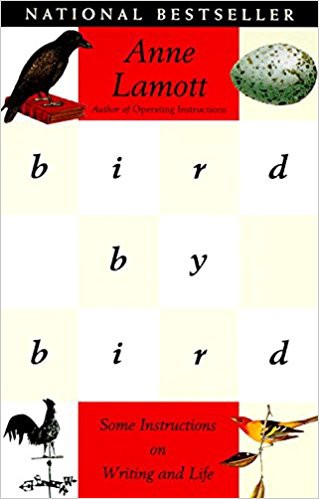
Bird by Bird: Some Instructions on Writing and Life by Anne Lamott

Bird by Bird is the creative writing craft guide you’re assigned in your first college workshop, and wakes you up to what it feels like to call yourself a writer. Much like Boully’s collection, Bird by Bird didn’t just change the way I approached writing, it changed the way I thought about being a writer. It’s a more straightforward book-about-writing than Boully’s is, but the frank, confessional tone taught me that, as a writer, when you ask for instructions on writing, you’re also asking for instructions on life.

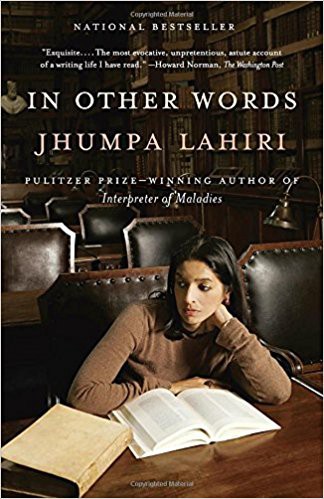
In Other Words by Jhumpa Lahiri

As an adult, Jhumpa Lahiri moved to Italy and dedicated her time to speaking and writing in Italian. In 2015 she announced that she would now only write in Italian. In Other Words is a fascinating rumination on what it’s like to not just learn another language, but to commit yourself to it fully.

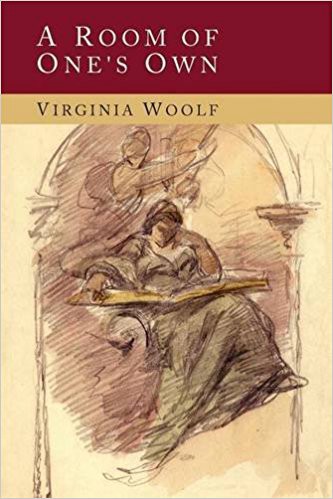
A Room of One’s Own by Virginia Woolf

A Room of One’s Own is, nearly 80 years later, just as revelatory as it was in 1929. Taken from Woolf’s lectures, it’s an extended essay about fighting to become a woman writer in an industry (still) dominated by men. It remains startling for its frank demands: that women have been robbed of space to write and that we need financial support to dedicate our lives to the craft.

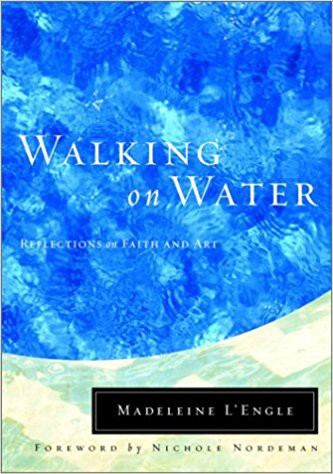
Walking on Water: Reflections on Faith and Art by Madeleine L’Engle

Madeleine L’Engle’s place as a Christian writer is fraught — she believed strongly in the concept of universal salvation, which earned her rebuke from Christian bookstores and libraries, yet at the time of publication, many critics found her books too religious. In Walking On Water, L’Engle probes what it means to be a writer who is also a Christian, while eschewing many of the traits people associate with Christian writers. It’s a book written from a particular and religious place, but as welcoming and universal as her fiction.

The Hidden Writer: Diaries and the Creative Life by Alexandra Johnson

Diaries are often a gendered medium, and the divide between public and private writing is still troublesome for women writers. In The Hidden Writer, Alexandra Johnson gathers the innermost thoughts of prominent writers, such as Anais Nin and Katherine Mansfield, together in one collection to examine to role of journal-keeping in the life of a writer.

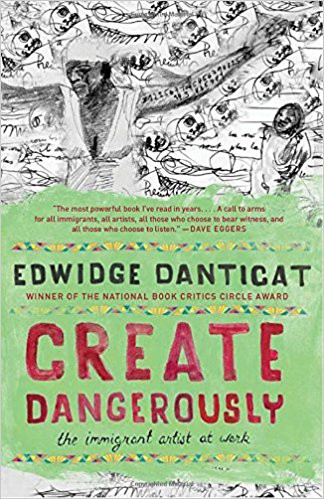
Create Dangerously: The Immigrant Artist at Work by Edwidge Danticat

A hybrid collection of memoir and essay, Create Dangerously focuses on the power of immigrant art, and its ability to heal, or at least confront, feelings of isolation, disconnection, and ostracization with which people contend after being driven from their homelands. It’s a testament to writing’s ability to bear witness.

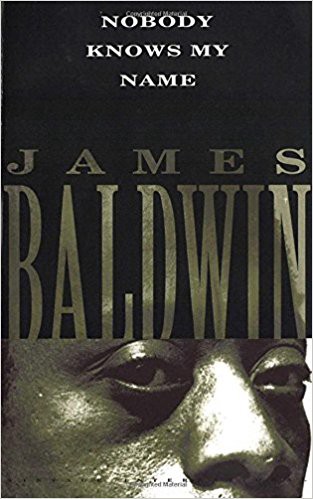
Nobody Knows My Name: More Notes of a Native Son by James Baldwin

Nobody Knows My Name is a firebrand. James Baldwin takes on Richard Wright, Norman Mailer, and William Faulkner. It’s a brilliant collection of essays in which he parses what it means to be a Black writer in America, and what kind of black writing white America will allow.

What Is the Point of Literary Awards?

According to an AP release shared by The New York Times, Thomas Pynchon has just been awarded the first Christopher Lightfoot Walker Award, a lifetime achievement that comes with a $100,000 prize, from the American Academy of Arts and Letters. It’s unclear whether the reclusive author of Gravity’s Rainbow, The Crying of Lot 49, and Mason & Dixon will show up to receive the award at the ceremony on May 23rd. Other authors receiving cash prizes for lifetime achievements ($10,000) at the ceremony include Rick Moody, Mary Gaitskill, and Marlon James.

I’m not here to say that Thomas Pynchon doesn’t deserve honor for his literary achievements. But this news comes the day after the Whiting Award winners were announced—emerging authors who will each receive $50,000 for projects they are already working on. With that kind of contrast, it’s hard not to wonder: What are literary prizes really for? Are they intended to contribute to literary development by providing up-and-comers the means to survive while they write? Or is the purpose to simply celebrate literary development, by heaping a bunch more money on people who’ve already succeeded?

The history of literary prizes, chosen by committees with their own subjective tastes, is fraught with the politics of favoritism and outright discrimination. And while some may chalk up their dismay at an award winner to a difference in “taste,” it’s important to think critically about what these awards offer for the material future of the winners. The two most significant things are money (because writers gotta eat), and recognition, which hopefully means more money and more opportunities to write. There are really great awards that fund and celebrate emerging authors, besides the Whiting — awards like the Rona Jaffe Award for women writers ($30,000), or the Judith A. Markowitz Award for Emerging LGBTQ Writers ($1,000), or the Louise Meriweather First Book Prize for a woman or a non-binary person of color ($5,000 + publication). They offer crucial resources and new opportunities for recognition.

But these emerging author awards, aside from the Whiting Award, generally don’t offer nearly the same payout as the big lifetime achievement awards like the Nobel (around $1.4 million), the Dorothy and Lillian Gish Prize ($300,000) or the Donald Windham-Sandy M. Campbell Literature Prize ($165,000).

When Bad Men Define Good Art

In the midst of our #ReadMoreWomen campaign, I am still trying to think through the implications of literary awards for communities that have often been silenced or marginalized. Why do we give out the big cash money to the folks who have already “made it” as writers? To be clear, I think we should have awards that celebrate both literary achievement as well as the future successes of unpublished writers. But what if we tipped the scales, so that more high-paying literary awards were granted for the promise of a literary future, instead of the praise for a literary past? Whose voices would emerge and be recognized?

What if we tipped the scales, so that more high-paying literary awards were granted for the promise of a literary future, instead of the praise for a literary past?

We’d be worse off, as a culture, without Thomas Pynchon, but we already have Thomas Pynchon. By contrast, the Whiting Award winners might not be able to finish their projects without that support, and we’d be worse off without them, too. (This is a good time to familiarize yourself with their work! Here’s Weike Wang’s Recommended Reading, Esmé Weijun Wang on writing and activism, and Patty Yumi Cottrell on finding inspiration on the F train.) Functionally, the purpose of awards may be to reward success. But rewarding success just makes famous writers richer. Rewarding potential enriches us all.

How to Name Your Small Indie Press

Running a small independent press is a romantic notion—just reading manuscripts in your cozy armchair, casually discovering the next Jesmyn Ward. Yes, that’s not at all what it’s like, but counterpoint: shut up. Let us have our dream.

And the only stumbling block to achieving that dream, besides the thing where you need money to live, is the difficulty of coming up with a really compelling name for your publishing effort. Luckily, we’ve solved that problem. (For the money thing, you’re on your own.)

Here’s the formula: Combine an adjective describing your favorite item of clothing (“soft,” “grey,” “flannel,” etc.) with your favorite natural or organic design element. This could be a natural feature or material you’d incorporate into your ideal home, or the flora or fauna you most like to see represented in clothing or home goods or jewelry. So if you love your stripey sweater and your bedspread is printed with foxes, congratulations: you’re running Striped Fox Press. If you have a potted fern in every room of your house and water them in your fuzzy slippers, we can’t wait to see what Fuzzy Fern Press puts out.

Feeling uninspired? That’s okay: we’ve built you a Press Name Generator. And below are some logos we generated for some of our favorite press names shared on Twitter. If you make your own, and especially if you give it a logo, and especially especially if you actually start publishing books, share it with us at @ElectricLit.

How Learning to Shoot Hoops Taught Me to Write

We were down three points in the District II semifinals against John Glenn High School. I had the ball and was dribbling somewhere near the hash mark, 25 feet from the basket. There were ten seconds left in the final quarter. I was a senior and I had been practicing for this moment since I was six years old.

Playing basketball in the Steubenville’s St. John Arena was like playing in a cement desert. It was one of my favorite places to play because it was huge and old, a relic of an arena from the early part of the twentieth century that easily fit thousands of people and also doubled as a hockey rink and as a home to the circus. I always imagined I could smell hay in the locker rooms. The basketball floor had to be assembled; it was made up of interlinking wood panels a few feet square in size. The wood creaked and sagged and our footfalls created hollow sounds. The parquet also deadened the ball so that, at certain soft spots on the court, the ball failed to bounce back up to the expected height.

Newspaper clipping of a photo of the author as a high school player taking a shot

Because of St. John’s multi-purpose use, the bleachers were at least a good 30 feet beyond the court, creating an eerie cement slab between the cheering crowds and the court, filled only sparsely by a meager line of cheerleaders. The combination of the distant fans and the nearly constant cacophony of the hollow parquet made me feel happy, far removed from the pressure of the coaches and the expectations of the crowd. Others hated playing at St. John’s because of these exact qualities. It lacked the frenetic intensity of, for example, our home court in Cambridge, Ohio, whose pep band-infused roar was famous. In fact, the loneliness of playing in St. John’s felt comfortable because it so well matched my experience as a person. I had always been popular, so much so that I was noted in both my junior high and high school yearbooks as Class Favorite, which was ironic because I had zero friends, never hung out with anyone, never went to parties, and had only one girlfriend in all of junior high and high school—for a few months. Rather than partying, I spent Friday nights sitting with my mom in matching reading chairs in front of the floor-to-ceiling bookshelves that spanned the walls of our suburban ranch.

Rather than partying, I spent Friday nights sitting with my mom in matching reading chairs in front of the floor-to-ceiling bookshelves.

My shelf, incidentally, did not foretell any kind of literary future. It consisted mostly of the Hardy Boys and Louis L’Amour, and I have an especially fond memory of a glossy biopic of Willy Mays. Nevertheless, it pleases me to look back over my childhood and adolescence and see my would-be writer self peeking out: in these Friday evening read-a-thons, I see the quiet introspection that, while perhaps awkward at the time, has always been the part of myself I feel most at home in.

Zack Pauley, John Glenn’s best player and my basketball nemesis since junior high, wasn’t fast, and he wasn’t a particularly good defender, but he was a good two inches taller than me, and yet I was a good enough shooter to know that if I gave myself the room to shoot over Pauley, I could make the winning shot. I don’t really know why I was a good shooter, or how I became one, other than I practiced thousands and thousands of jump shots. Still, I knew plenty of people who practiced their jump shots and weren’t particularly good. It’s all about how the ball leaves the last inch of your hand, which is such a small aspect of the things that make a good jump shot (feet alignment, leg strength, jumping ability, upper body strength, elbow alignment, support hand position, eye sight, courage, confidence, practice and probably another half dozen intangible elements). But how the ball leaves the top of one’s middle finger…that’s it. A poet might work forever on a turn of phrase or a title, but it all comes down to a poem’s final line, that’s it. How the poem leaves the reader’s mind determines if the poem hits its mark to remain lodged in memory, or if it’s forgotten.

My life could’ve been a farcical movie entitled ‘Shoot More!’

And yet — and here is the crux of my basketball career — when given the chance to select, at a summer basketball camp, one of three T-shirts (The Rebounder, The Shooter or The Passer — each complete with a mock personality description), which one did I choose? The Rebounder. I wore it to practice once and our center, who was a very good rebounder, saw it, tipped his head and asked, “Why are you wearing that shirt?” I couldn’t really answer him. I think he was slightly offended, like I was making fun of his realm, and I don’t blame him for his response.

People were always telling me I needed to shoot more. There were stages in my career where people told me I needed to shoot more so many times, and in so many strange places, that my life could’ve been a farcical movie entitled Shoot More! These interactions felt like the people were wrenching my insides with their knuckles, but I always smiled and tried to take their advice, as if I’d never heard that before. Why yes, I’ll consider shooting more.

One answer to the question “Why don’t you shoot more?” can at least be partially found in what I am doing now, which is making my life as a writer. Shooters shoot without thinking. Shooters never think about the past. Writers, on the other hand, seem to only think. Thinking is a writer’s material. It’s all about thinking and questioning and self-reflection. Writers take all that through an alchemical process, and if we’re lucky, come up with a manuscript, which then needs rethinking, revisioning, and reworking. But not Shooters; they just shoot. I always thought someday I would shed my introspection and become a Shooter. But it never happened. At least not in the way I imagined.

The essence of a pull-up jumper, the kind of shot I would need to shoot as Zack Pauley guarded me to tie the game and send it into overtime, is simple, though its execution can be difficult. It’s the shot Michael Jordan made to beat the buzzer in the 1997 NBA Championship. The offensive player takes one or two dribbles toward the basket, making as if they are going to drive to the hoop, but then, once the defensive player has been driven off and the defender’s momentum is going toward the basket, the offensive player jumps backwards into shooting position to execute a wide-open jump shot. For those like Michael Jordan who are gifted with high vertical leaps and supreme quickness, it is a very effective shot because it is virtually unstoppable. I practiced the shot all the time and at that point in the game against John Glenn, I had just hit a string of three-pointers over the course of a minute or two to bring us within three points.

Shooters shoot without thinking. Shooters never think about the past. Writers, on the other hand, seem to only think.

There are some athletes who love the spotlight. The bright gymnasium lights, the roar of the crowd, the hollering of the coaches, the shrill calls of the referee’s whistle — it all heightens the experience and they play better. But I was not that kind of athlete and that was shameful. I was the kind of athlete who most loved shooting baskets outside at the Cambridge City Courts at six AM with my father, or driving with my brother out to a barn, way-the-hell-and-gone out in Cadiz that my dad had rigged up with a basketball court to spend the afternoon. I was also the kind of athlete who shirked the obligatory post-game MacDonald’s trip to soak in the tub and read. I so seldom enjoyed, actually felt comfortable and good, playing varsity basketball for Cambridge High School. Even on the rare occasions when I scored over twenty points in a game and we actually won, I couldn’t feel good about it. Shouldn’t I have done better?

Newspaper clipping of the author as Athlete of the Week

Ten seconds on the clock. I knew I needed a pull-up three to tie the game. Instead I drove left around Pauley, easily making it around him, and headed for the basket, where I thought I could draw a foul and maybe even make a three-point play. It seemed like the entire John Glenn team was waiting in the paint. I jumped toward the basket, tried to draw enough contact for a foul, and threw up a left-handed runner, one of my favorite shots, hoping it would bank in off the glass.

To use the backboard is not easy, nor is it very popular. It requires the use of angles, similar to shooting pool, but without any of pool’s slow methodical shot preparation. One of my coach’s favorite rants against me was when I drove to the basket, tried to draw contact, and threw up a lefty runner. He called this “a fuckin’ Flyin’ Wallenda.” I now know that the Flying Wallendas were dare-devil circus performers, but back then, I didn’t have any idea what he was talking about and didn’t want to find out because I knew it wasn’t good. Often I made my Flying Wallenda shot, and sometimes I didn’t. That part didn’t matter to my coach. He thought it was too desperate a shot.

And that was the shot I took at the end of the game against John Glenn. Of course — how could it be any other way? — I missed. It was close to going in, but not that close. Nor did I draw a foul from the referee. The buzzer went off and we lost the game. We shook hands with the other team. Zack Pauley told me I played a great game. My coach put his arm around me and told me I gave it a good try. I walked toward the locker room. This was the last game of my high school basketball career. A middle-aged woman who I didn’t know leaned over the railing as I entered the tunnel to the locker room. “We love you, Jeff!” she shouted. I sat on the bench in front of my locker. Some of my teammates were crying. My brother gave me a hug. The police chief said I played a real good game. I didn’t say anything. What could I say? But what I felt was the biggest sense of relief. The season was finally over. Or at least until next year, as I had committed to playing college basketball at Denison University for my freshman year. But maybe that would be different, I reassured myself.

Some of my teammates were crying. My brother gave me a hug. I didn’t say anything. What could I say?

The next day in my English class, my teacher made a special point of pulling me aside. “You really went for it last night,” she said and patted me on the shoulder. I forced a smile. But what did I actually go for, and why was I going for it?

This essay is the first time I’ve tried to write about basketball and my muddled experience in it. I realize now that it’s been muddled in part because I’ve avoided the obvious: despite holding the record for highest career three-point percentage for 23 years, despite the modest hometown fame that persists to this day, it turns out that I failed at basketball. When I eventually quit playing a few years into college and instead focused on writing, it wasn’t anything more romantic or courageous than an acknowledgment of what had always been true about me — I was a well-rounded kid with some natural athleticism that almost made me a great basketball player. But at heart, I was a shy, socially awkward, gentle bookworm. I avoided reckoning with this suspended experience of failure because it seemed really depressing for a long time. I’d dedicated a large chunk of my childhood and adolescence to something I would never be great at. Forget the movie montages where practice leads inevitably to greatness. Those thousands of hours led me nowhere. Wasn’t there shame in that?

Those thousands of hours of practice led me nowhere. Wasn’t there shame in that?

I’m in my forties now. I realize there is more to this story than avoidance and failure and shame. Because to write well, and to be happy doing it, we have to lose our fear of failure. And we have to accept the unfair truth that hard work and talent do not automatically lead to success. And further, success is not the point! I loved playing basketball, and I love to write. Writing without fear of failure is a true pleasure. It allows us to be loyal to our weirdness and vulnerability. Through my experience with basketball, I lost the deep, elemental fear that I sometimes see in the eyes of other writers. I have faced the stark truth, and I no longer doubt — I just shoot.

A Novel for 2018’s Moribund American Dream

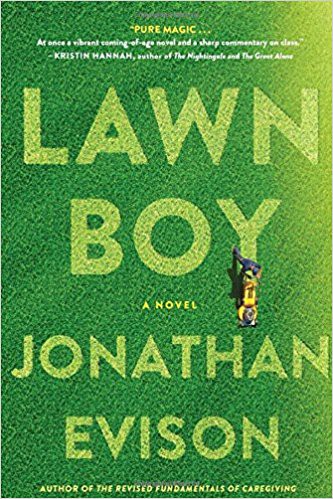
Jonathan Evison may be a bestselling author now, but he was broke for most of his life. At the age of twelve, he started working odd jobs and continued to do so until his first novel was published in 2008 at the age of 40. In the decade since, he has written five emotionally resonant and quirky funny novels.

His latest book, Lawn Boy, follows Mike Muñoz, a young, struggling landscaper who grew up on a reservation and now works as hired help in a wealthy neighborhood near Seattle. The book uses the struggles to the working class poor to ask whether the American Dream that we know and cling to is still attainable today.

I spoke with the author about how the meaning of the Dream has changed, and how literature can reckon with the shift.


Adam Vitcavage: Let’s talk about being broke, the unfortunate state of many a writer, and a serious problem for families and individuals across the U.S. You’ve talked before about being poor for a long period of your life. How did those years shape you?

Jonathan Evison: Working hard was just a continuation of my childhood, really. We never had any money. My mom was a single mom of four kids, originally five, so I started working young. [When I was an adult], I was really compelled to write. For most of my adult life, I didn’t usually work more than thirty hours a week which was to protect my writing time. I just made the decision to be broke and live on rice cakes and cheap beer so I could have more time to write. It’s so hard to give yourself fully to writing if you have to work a full work day. It’s why I don’t teach.

My life hasn’t changed. I have money from writing now, and that’s awesome. The money doesn’t make me happier. I was always happy to have the work. As long as I have just what I need, you know?

AV: When did you start to write?

JE: Third grade. My family started falling apart after my sister died in a freak accident. My dad left us. I just had a lot of external pressures pushing against me. I’m bipolar and I was always a manic kid. Thank god they didn’t put me on Ritalin. I started to become a handful in school and my third grade teacher, Mrs. Handford, saved my life. She saw I had a thing for writing and she just let me sit in a corner and write. She made a writer out of me.

I got published in fourth grade and then nothing for thirty years.

I got published in fourth grade and then nothing for thirty years. Eight, nine books and hundreds of rejections. But writing is how I manage my freaky-biochemistry. I can get a lot of stuff done but I finally realized in my forties is that the real reason I write books is because I like the focus. I need to focus. When my mind is going a hundred different directions, writing has always been there for me. It’s something I can really get inside of.

AV: What gets you focused when it comes to writing?

JE: I approach writing like an athlete. I write for two or three days in my cabin for sixteen hours a day. All week long I am preparing myself mentally for my workflow, making notes organizing my thoughts. By the time I get to my cabin, I can finally focus and get into writing pretty easily. It’s a lot of mental preparation.

I have three kids, so I don’t have a lot of me time. I’m always tending to someone else’s needs. I’m not complaining though. My wife sometimes thinks I’m sitting around, drinking beer and listening to records, which I am, but that’s not me time. I disappear completely into the story when I’m writing. I’m not even aware of my surroundings. People always say how beautiful my cabin is for writing, but I don’t really notice. I’m just inside of my story. Maybe I’m an escapist.

AV: What inspired you to write a story about a struggling landscaper?

JE: Wealth disparity and social imbalances. I think the American Dream is pretty moribund. We teach The American Dream as a 20th Century, post-war ideology but it has a different meaning in 2018. I wanted to write a book about how poverty, race, and class could thwart aspirations. A lot of people with money don’t understand what it’s like for the working poor. They can’t wrap their brains around somebody working two jobs and still having to live in their car. It’s so abstract for some people.

I always wanted to write a novel about class. West of Here was my novel about history. I wanted to subvert all of the tropes in history. I always wanted to do that with class, but with a wider scope. Every now and then I will just write anonymously. I started writing a blog by a landscaper called Mike Muñoz Saves the World. It looked like a 1996 website with this murky, shit brown background, terrible html and corny little lawnmower gifs. I was just screwing around when I found the irreverent working class voice I needed: Mike. The theme of class just embodied itself in him.

AV: How much of your personal landscaping experiences have seeped into Mike’s story?

JE: Anytime the novel waxes poetic about landscaping, that’s me. I love the instant gratification that comes with working with my hands. In fact, I just mowed an acre before I got on the phone with you. Mike is mixed, but identifies as white. Obviously, I’m just a white guy. Mike was based on my nephew, who’s his age and like a son to me. All of those experiences are based on observations I have had.

I’m in all of my characters. I’m even in Harriet from This is Your Life, Harriet Chance! I think there are universal emotional responses to things. There’s always the saying to walk a mile in someone’s shoes. Take that a step further and strip away the self. Instead of being a 49 year old guy, I was a 79 year old woman. My history was her history. You start piling that stuff on and the new character’s decisions start to become real. That’s the greatest thing for me: coming out of the other end of a book and feeling like I’m a more expansive person.

The range of experience I can access without having to leave a chair is what keeps me about writing. I write about reinvention, that’s the unifying nature of my works, but I love exploring the lives of characters. I can ride a bus through downtown Seattle and my mind is racing. I can see a guy out the window standing on a corner wearing a jacket and my mind is thinking about what his home life is like.

‘The Great Gatsby’ is the Great American Novel for WASPs.

AV: I know a lot of high school teachers use The Great Gatsby as the gateway to introduce students to the American Dream —

JE: The Great Gatsby is the Great American Novel for WASPs. I’m not degrading the book; it’s a beautiful book. It’s an amazing, luminescent piece of literature. But for me, it’s just the Great American Novel for a very small cross section of the world. If I were to look at the Great Jewish American Novel, for instance, I would suggest What Makes Sammy Run? by Budd Schulberg. I wanted to write the Great American Landscaping Novel. I wanted to write the Great American Novel for the working class poor.

AV: What are the plans now that the Great American Landscaping Novel is out in the world?

I turned in a new book last week. The working title is Legends of the North Cascades. It’s a big book that jumps through 15,000 years of history about the American Northwest.

What Should I Do If I’m Ashamed of My Published Work?

The Blunt Instrument is an advice column for writers. If you need tough advice for a writing problem, send your question to blunt@electricliterature.com.

Dear Blunt Instrument,

I am back with a sadder question. Since publishing my book, I have come to hate it. Hate is maybe the wrong word. I am ashamed of it, and in turn, myself. I believe now that I rushed into publishing it because the opportunity was there. I got swept up in the excitement. Part of me knew I wasn’t ready, but another part of me thought, go for it. I went for it and now when I even think about it, I feel terrible. I never received any negative feedback about it (I received quite a bit of positive feedback about it, in fact, including some decent coverage on websites and such — ew sorry), but the small press world is kind, for the most part (unless it determines that you are deserving of less than that, for say, being an asshole). All of that said, I can’t seem to get over it. I think the book is juvenile and confused, and I am not a juvenile. I am in my 30s. But I am confused.

I saw a tweet a little while ago from someone who said, “I would never forgive myself if I wrote a bad book.” I don’t know if I’ll ever forgive myself, either, and I can’t figure out how to move on. For a time I thought that I would just work hard and write something else that would be so much better and erase the collective memory of my first book (I think I flatter myself to even think there is a collective memory), but I remain filled with doubt. And self-loathing. This might be a better question for a therapist, but here’s the short version: how do you recover from publishing shame?

I am sure many people feel this way, but I never see anyone talking about it. Shame is shameful.

Thank you xxo

Hi Blunt Instrument,

I’m a fiction writer and have been publishing online and in print for about 5 years. When I look back over my past publications, there are a number that just mortify me. In some cases, I just submitted too early, too eagerly (especially at the beginning). In other cases, I just feel that I’ve evolved, and my tastes are not the same as they were, say, three years ago.

I don’t really hear writers talking about this phenomenon. Maybe because it’s so obvious that this is part of the whole deal, or maybe because writers don’t feel comfortable admitting to having negative thoughts about their work. Either way, I often feel really alone in this. I worry about not being able to recover from work that now embarrasses me. Sometimes I wonder if it’s narcissistic to think that anyone gives a shit what I published three years ago, but there’s also the matter of just feeling disappointed in myself.

Anyway, all of these thoughts and feelings breed a neuroticism that can feel paralyzing and dooming at times. Would love your thoughts.

Thanks very much,

Jenny

Dear partners in shame,

I was struck by the similarities in your two letters. Both of you note that the embarrassment you’ve been feeling isn’t something writers often talk about, so there’s a meta-shame in even acknowledging writerly shame. (“Shame is shameful”!) However, I am sure you’re not alone in these feelings. One writer I know was quite proud of his first novel, until recently; he only regretted that it didn’t receive more attention. Now, more than a decade after he finished it, I’ve started to hear him say, when people tell him they plan to read the novel, “I’d sort of rather you didn’t.” What was our life’s work eventually becomes our juvenilia.

What was our life’s work eventually becomes our juvenilia.

There are two problems we need to address here: One, how do you deal with the shame you’re feeling now, so you can feel good about writing again? And two, how do you avoid feeling that kind of shame in the future?

To figure out a solution to the first problem, we need to talk about the idea of progress. Is or isn’t it illusory? As a writer, you’re going to be more or less cognizant of your progress on two different levels. One level is really about your private experience with your own development. Do you feel that you’re getting better? Is the writing you produce getting closer to the ideal of what you want to write?

It makes sense that young people, because they lack experience, would tend to undervalue experience and overvalue talent, which may be all they have. It also makes sense that older people would place a higher value on experience, now that they have it. I am not especially young, so you can take my bias into account, but I believe that experience is important, and that more life experience, reading experience, and writing experience are going to make you a better writer. Oddly, though, writers don’t talk a lot about this kind of progress. I’ve heard lots of writers say that “you can’t teach writing” — i.e., you’ve either got it or you don’t. This seems to be based on an assumption that writing ability is something static and unchanging, like a gene. Some writers, perhaps, don’t want to admit that writing can be taught (which is to say, that writing can be learned), because admitting that you can get better at writing means admitting there was a time when you weren’t a great writer.

The other kind of progress is more external — essentially, are you becoming more successful over time? I once asked a question on Twitter of writers with multiple books: Do you think your most successful book — the one that sold the most and got the most attention — is your best book? Most authors said no. As for me, my second book got a lot of attention, at least for a small press title, so I expected my third book to get even more. Well, that wasn’t the case. Careers do not inevitably progress according to some natural law. Success is mostly a matter of random luck; hard work helps but is no guarantee of success.

I think writers’ expectations of these two kinds of progress are usually backwards: They believe their talent is basically static, and progress will come mostly in the form of their talent being gradually more recognized. But the healthier and more realistic way to think about your career is that your writing will probably get better over time — if you work diligently and consistently, along with doing ancillary writing work like reading — whereas your publishing success will follow a much less predictable trajectory. Sometimes the writing you’re most proud of will get minimal attention, whereas things you barely care about, or that you don’t feel are representative of your style, might find a large audience. Once the work is published, it has a life of its own.

Of course, it doesn’t always work out this way; some people write a great first book, immediately experience explosive success, and then write crap for the rest of their lives, because it sells anyway and they can get away with it. But my point here is this: It is natural and normal and good, or in any case perfectly fine, that you should feel a story or poem or book you wrote in the past is not your best work. That means you’re getting better as a writer, by your own standards, and why should there be any shame in that? I want you to feel that what you’re writing now is the best thing you’ve ever done — and, moreover, that your best work is coming in the future. That kind of progress should excite you and keep you going.

It is natural and normal and good, or in any case perfectly fine, that you should feel a story or poem or book you wrote in the past is not your best work.

So how should you think about that older work? You should try to feel good about it. Remember that someone thought it was good enough that they spent time and energy and money to share it with the world, knowing their name would be associated with it. Remember it might be finding the right readers at the right time; just because your own tastes are evolving doesn’t mean there aren’t readers out there who are falling in love with your earlier writing the way your editors and publishers did. But go ahead and use it as motivation too — finish that better book you’re working on so that your readers can follow your progress.

(One quick aside: I don’t think it’s pertinent to either of your situations, but I feel I should mention this. I can imagine a scenario where you might want to take more aggressive action — for example, if you realized that something you published years ago was unforgivably racist or sexist. If something you published online is now morally repugnant to you, I think it’s fair to contact the editors and request that they take it down. They might not, but it’s worth a try. If the same thing happened with a book you wrote, you could talk to your publisher about it; they might agree to pull the book. At the extreme end you could try to buy all the extant copies, an expensive but viable solution. But I wouldn’t pursue these options just because you don’t think your old work is as good as it could be; it would be an insult to the people who published it.)

Now let’s get to that second problem: How to avoid future publishing shame?

Unfortunately, you have no guarantee that your future selves will feel the same about anything you do as your current self does. Your style as a writer and your tastes as a reader will evolve over time. But you can mitigate discord between these versions of yourself by practicing generosity and patience. Be generous toward your past selves; forgive them their writing and publishing mistakes. Those mistakes are part of your personal progress, and you’ve learned from them. Further, just because your tastes have changed doesn’t mean your old writing is bad; I often enjoy writers’ earlier books for their impulsiveness or loose ends, qualities that get ironed out as the writer matures.

Be generous toward your past selves; forgive them their writing and publishing mistakes. Those mistakes are part of your personal progress, and you’ve learned from them.

And be patient about your publishing success. Give yourself plenty of time with a piece of writing before you send it out. Try to find at least one trusted reader that you can share your drafts with before submitting them to publishers. That trust component is important — make sure you can count on your early readers for an honest opinion, not just empty encouragement. Remember that once published, things can stick around for a very long time, so be sure that a piece of writing is as good as you can currently make it before you set it free. But understand that there is no perfect amount of time to wait that will protect you from all possibility of regret; you won’t get a sign from the universe that your work is done; it’s a decision you need to make on your own.

Finally — let’s do our part to end the culture of meta-shame. If you hate a thing you published, go ahead and say so, but then let it go. Feeling a little bad about something — who says we should feel good all the time? — is not as debilitating if you take away the part where you feel bad about feeling bad.

Best of luck to you both.

The Mayor Who Gave His Town a Holiday for Sex

“Template for a Proclamation to Save the Species”
by Ramona Ausubel

Perhaps it is the shittiness of the northern Minnesota town that keeps her residents from reproducing. Theirs is not a furious protest, a political movement. It is as if their lives are so boring, so deeply muddy that it hardly even occurs to two people to couple with enough feeling to create anything other than a disappointed sigh.

The small town’s mayor, Tom Anderson, reads a story about a mayor in a small Russian town, also cold and dark and relatively poor, also reproductively slow, who declared September twelfth “Family Contact Day.” The Russian mayor said he had chosen the date because it was exactly nine months before Vladimir Lenin’s birthday and he offered prizes — a station wagon, a refrigerator — for babies born on the same day as the Great Leader.

Tom had not meant to go into politics and hadn’t even wanted to remain an American. He had spent a semester in college in Russia and gotten a taste for fish eggs and first wave communism and had planned to stay and study literature but had to go home to the cold, flat north of his own America to take care of his aged aunt.

Tom thinks about a designated sex day. Everything around him is dreary. The economy droops. Winter is nigh. He takes solace in the fact that the whole city seems to have reached the sloppy bottom place, has sunk to the pond-scummy floor and that anything, it seems, would be an improvement. Tom begins to draft an announcement for the newspaper. He changes the name of the holiday to Love Day. He does not mention anything about communism or Russia — though some politicians seem to admire the brute force of Russia, this is a town where ‘socialism’ is the dirtiest word and Tom does not want to navigate the narrow channel between admiration and fear — so he claims the idea as his own. Everyone will get the day off, and they will stay home, and they will screw. And, the part that makes the mayor squeeze his fists in pride is the prize he will arrange: the first mother to give birth on June twelfth wins an economy car, a tiny white Ford.

The mayor’s decree is published in the newspaper. Online, the comments are mocking. The mayor wonders how it is taken in Russia, what the Great Leader would think. Would he be proud? Or is he watching from death as his birthday is commemorated with a badly made refrigerator bestowed upon a disinterested mother, her unprepared husband and their howling alien of an infant. On one side of the glass, there is a dream of perfect equality, and on the other, life in exchange for a kitchen appliance. There is something Russian about this, the mayor thinks to himself, but he is American and doesn’t know what it is.

Along with declaring the holiday, the mayor has a bench installed in the park, shaped like two hearts, side by side. The seat is curved to encourage couples to slide close together. He names this the Bench of Love. Teenagers immediately notice that from behind, the bench looks like two large butts.

In the newspaper, one Ruby Goebels is quoted: “I’m glad to have the day off. I have a lot of canning to do.” Still, a day off is a day off. No one considers not taking advantage of it. The question is whether the people will allow their city government to dictate their sex-schedule. For many, it is a humiliation, and instead husband and wife plan to sit side by side on the couch with the television blaring, drinking three fingers of whiskey at a time until someone gets hungry and opens a package of hot dogs.

For the teenagers, there is much confusion. It is in their nature not to do as they are told, yet what they have been told to do is so acutely in line with what they want. It is only when some of them point out that no one wants them to have babies, unmarried as they are, that they all rejoice, head to the big park after dark — thrilled to have been returned to that beloved state of disobedience — to find vaguely hidden hollows in which to fuck. Every few decades, the teenagers think, a politician might have a good idea.

Martha and Jeff act as if it is a Sunday — they cook bacon for breakfast and have beer with it. Martha does their laundry, folding her husband’s dozens of similarly striped t-shirts and baggy jeans and laying them in piles on the sofa. Across the street, Fat Henderson is standing naked, in profile, examining himself in the mirror. He looks pregnant. Martha cannot see his crotch, a fact she is grateful for, but she can’t help but think of the sad little display it must be: a deflated prize resting on two swollen, purple pillows. Martha imagines that Fat Henderson is trying to find a way of asking his wife to take up the Mayor’s suggestion, despite the fact that they are beyond the age of conception.

Martha and Jeff have been married since they were both pretty. She still is; the American man has a shorter window. His mother told him each morning in high school — “Your hairline is already beginning to retreat, your eyeballs will bulge like your father’s, your ears will grow and your lips will thin. You had better sign something with that girl of yours before it’s too late.”

Martha believes that her looks have a very specific expiration. She believes that no matter what kind of care she takes of her body, of her face, she will turn into an old lady the moment she has a child. It is like a fairy-tale curse on these mid-western plains. The short mom-hair, the square-shelf of a butt, the mini-van: they are fate, unavoidable, and their emergence will begin as soon as sperm and egg meet.

Whether this sad progression could be thwarted is untested. No generation of women has ever avoided becoming parents. Martha’s mother was a baby machine, congratulated by the church for her eleven children. For eighteen years straight, Martha’s mother had a shitting baby in the house. Martha had arrived in the middle, between Paula and Matthew, the only boy. She had no special role to play, not the oldest nor the youngest, not the idolized boy. Martha was part of an assembly line. She grew up with the feeling that children must simply appear, unbidden. Who would want to make any more of them? It was as if they hatched in some dirty, neglected corner like so many baby cockroaches and the grown-ups had had no choice but to try and raise them.

Martha and Jeff are pressed up against the wall in the living room on Love Day. They do not draw the shades. Martha can see a ghost of their reflection in the glass panes of a china cabinet she inherited from her grandmother. She admires her husband’s butt and her own lithe arms around his back. In the middle, Martha thinks to herself — There it goes. She can almost feel her calves fatten, her feet flatten and her hair turn grey. It is the exact ending of youth. Yet somehow, she is not completely sorry to see it go. She has been pretty a long time, and she is curious what the world looks like for someone who is invisible to men. What will it be like to walk down the street without getting the looks from every truck driver, every guy standing outside in the bitter cold, his own stale breath billowing out as dark and dirty as smoke.

From her position, she has a view of the whole room. Like a hologram, she sees the way it will change. The wicker basinet will take up that corner, there will be toys all over the floor, a pile of laundry. She sees herself, and it makes her tired. When the baby comes, Martha knows, it will make her wonder whether anything else has ever been true. You thought all that mattered? the world will say. That old life was a set, just a painted background.

For the next nine months, a small Ford will sit in front of the Mayor’s office adorned with a big red bow, which fades in the meager sunlit. He will look out at every few hours and allow the warmth to fill his chest.

In February, at the supermarket, Martha runs into Nathalie, a math tutor and the wife of the high school wrestling coach who really wants to win the car. “It’s the only reason good enough to ruin this body,” Nathalie says, running her hands up and down her hips and waist like they are for sale. Nathalie asks if Martha’s disinterest in the competition is a carefully crafted strategy, some kind of conniving.

In a unique fertility ritual, the wrestling coach hangs up magazine ads of small American cars around the bed. He is already picking out accessories for the new car. He has decided that he will have a car-shower on the day his wife has a baby-shower so that each pink or blue bib will be met with an after-market alarm system, an expensive looking stereo, a mountain-lemon scent air freshener in the shape a sexy mermaid and a set of perfectly unnecessary mud flaps, considering that the car will barely have enough clearance for a mall speed bump.

He does not say it out loud, but Tom has complicated feelings about being in power. There is shame, of course, in the fact that he had won his election with no opponent. All the other men in town must have figured out that they could make much more money — and suffer much less scrutiny — by working in office buildings and construction sites rather than serving the public. The mayor’s constituents assumed he was in it for the same reasons politicians here always had been — a little money skimmed off the top to buy veal, blondes. No one begrudged him because no one believed anything really would, perhaps even could, be changed. What man could convince the sun to stay up past 2:00 pm in winter? They were born in this place, on these high plains, and it put short borders around the territory of hope. Yet, Tom believes in something better. A little better, anyway.

In spring, the Mayor likes to drive around spotting bellies. It is frustrating to be a single man in a moment such as this. Tom cannot participate in his own game. But still, he feels personally responsible for each of those fetuses, as if he is their godfather. If not for him, the world would have less life in it, less actual life. He is always a little surprised when the women do not come up to him and offer their thanks.

But the mayor had not thought of how long the middle would feel. He had only considered the beginning and the end. Like two cans with a string tied between them, conception and birth connected in a way that is both miraculous and plain. For the mayor, who has no everyday miracle taking place in his own house, who eats leftover pizza for breakfast and runs on the treadmill in his basement and wades through the City Council meeting and has lunch with the football coach, the wait is frustrating and overlong. He worries that by the time he gets to the end, the story will not be his anymore, that when he proudly stands up and announces the dozens of lives born of his imagination, everyone will be at home, coddling babies they consider, wrongly, Tom thinks, their own.

For Martha too, the middle is a very long space of time. In it, she tracks the disappointments. At first, she does this in order to make counter-arguments, to explain to her baby that yes, it is dark almost all day long in winter, but in summer, you don’t have to sleep at all, I will never force you to go to bed. Instead, we will all three climb up the roof and lie on our backs in bathing suits, tanning at nine at night.

In the windows: women change shape and men change shape too and then feel angry with themselves for it. It’s the fat of sympathy building up, the men think. Devotion. Really, it is boredom and bad weather and probably would have happened anyway. Across the street from Martha and Jeff’s, Fat Henderson again stands in profile, naked, observing his inglorious façade.

Tom sits out on the two-hearted bench alone, sliding into the middle with no one to drift closer to. In the square appears a nurse he hired to talk to what he imagined would be a throng of expectant parents. She is carrying a paperback novel under arm and breathing on her hands to warm them.

The mayor goes over. “Hello, Ms. Walker,” he says. “Thank you for coming.” He motions to a podium he has dragged out from his office along with a series of connected extension cords and a microphone.

“I have the right day?” she asks. “I thought you said you had advertised.”

“I’m sorry. Would you like to give the talk anyway?”

“No one is here.

The nurse walks up the microphone. On the small black amplifier beside her, she switches a switch and taps the microphone to test it. Her eyes flicker over to the mayor every few seconds, asking a very obvious question.

“So,” the nurse says. She waits for someone to relieve her. “It’s not very good to drink when you are pregnant.” The mayor smiles warmly, nods.

“Husbands who smoke should do so outside.” The nurse’s voice booms out like some god of boring advice. And truly, no one passes. Not girls with rounded bellies, not young men, not old women, not children. It is as if the streets have been cleared in preparation for a terrible storm, a bomb threat, an asteroid headed straight this way. No matter how tightly tucked the nurse’s brow, Tom just smiles at her. Tell the world what you know, his eyes say.

“It’s getting dark now,” the nurse says. “I think I’ll pack up and go home.” It starts to snow. The low sun makes everything seem suddenly brighter for a moment before it shuts the light out altogether. The mayor feels that they are in a very old place, dust gathering around them, hundreds of years passing while the nurse folds her notes back into her book and brushes the flakes off her fake fur collar.

“Thank you,” he says. “It was helpful.” He means it. She realizes this, and it makes her just sad enough to hold his hand a little longer than she would have otherwise.

In the week before June twelfth, four babies arrive in all their pudgy, yowling glory. The mayor makes a special point of showing up to meet them all, have their pictures taken, commemorate the moment despite its lack of prize-winning-ness.

On June eleventh, Martha feels the first contractions and goes to the hospital after several hours of pacing, rocking, getting in and out of the shower, the bath. In the maternity ward, the miracle of life is an every day occurrence, a job to be completed and cleaned up from. One of the nurses brought in muffins. Someone is watching a talk show in another room, loud. The pain never lets up completely, just changes intensity. Sometimes Martha is not sure she can breathe. The nurses look at her, bored by her anguish.

At 11:00 pm on the night before the winning day, the wrestling coach and Nathalie arrive, he pulling her by the elbow. She has felt no contractions, not even a twinge, but he thinks maybe a change of scenery will help get things started.

“See, baby?” he says to her belly, “you are in the hospital now. Time to come out. You only have twenty four hours.”

The nurses refuse to give them a room so Nathalie sits in a plastic chair and drinks soda while the wrestling coach hovers outside Martha’s room with his watch in his hand, observing the minutes tick. “Come on, come on, come on,” he says to the minute hand, coaxing it to slow down. If he has a chance of winning the car he needs this other baby to be born in the next fifty-two minutes, on June 11th. The mayor joins him, his own watch in his hand, “Come on, come on, come on,” he prays to his watch, begging it to slow down. God, should he be following this small drama, is going to have to choose a side. 11:15 turns to 11:35. Martha is pushing. She is crying. 11:47 and the baby crowns. 11:58pm, and he is born. The baby, two minutes shy of a prize-winner, cries. Martha does not even check the clock, cannot consider the time. Her husband allows himself one small glance, but his heart only sinks so far before the tossing fists of his son buoy it. The wrestling coach does a robot dance down the hall to celebrate.

Nathalie does not go into labor. No one goes into labor. For the first time in the hospital staff’s memory, the ward is silent. The mayor walks the halls, saying, “You never know. Any minute.” The wrestling coach knocks on his wife’s belly like it is a door behind which someone has overslept his alarm. The nurses drink coffee and read gossip magazines. The muffins dwindle. “You should have more contests,” they say. “In a town as unlucky as this one, it will guarantee us the day off.” And indeed, it does. On June twelfth, no babies are born. There isn’t even another close call, a team to cheer for. Tom wonders how they’re doing in Russia. He imagines a shiny new Lada Neva sitting outside the hospital awaiting its new owners.

Seeing that her husband will not allow her to go home, the nurses finally let Nathalie into a room, only so she can fall asleep.

Martha looks at her baby who knows nothing yet of the world waiting: corruption, bribery, teenage drivers, being flat-footed, having too little money and too much beer, doing the dishes, going out for dinner and being disappointed in the overboiled spaghetti sauce, getting up for work before light, coming home after sunset, the roses wilting on the table, the list of jobs that need doing around the house: cleaning the tiny screen on the faucet, breaking down the boxes your aunt sent and writing a thank you note for terrible smelling bubble bath that was inside, scrubbing the frozen-on pink sticky in the refrigerator. This is life. Barring environmental or political catastrophe, Martha expects the world her child lives in to look much like this one. It can be difficult to see the miracle in it. To her bundle, she offers an out-clause: you were born, innocent and beautiful and straight from the lips of God, but if you look around and see the pot-holes streets, the mud puddles, the old nurses in too much makeup, and you decide you want to be an angel instead, I will understand. I will wrap you in a soft blanket, cover you completely up, and allow you to make your decision in private. If I open the blanket and you are gone, evaporated, I will forgive you for it. But if you are still there, pink and fussing, I will know that you have chosen to stay, to endure the old world. And I will try to teach you the tricks to make it easier. How to get on the bus without buying a ticket; how to pay for one movie and see three; how to fight with your father so that you always win; how to insure maximum darkening of the skin in the sun; how to find your life’s horizon — that place just far enough in the distance to keep you moving forward but not so far as to be discouraging. “For my part,” Martha says aloud, “I will give you food when you are hungry and warmth when you are cold. Let’s start with that promise. I’ll swear to it, my love, I will cross my tired heart.” She folds the blanket loosely over her infant until she can’t see him anymore.

Outside, the Ford’s red bow is slumped and bleached. The car is a minor celebration in front of an old blocky hospital. None of this went as planned, yet somehow Tom feels fulfilled. He was part of something, if only on the periphery. In the morning, he will give the car to Martha for being the closest, and Martha will sell it to the wrestling coach for a good price and put the money away. It will be enough to buy plane tickets to someplace warm every winter until the baby is grown. She does not need a car — for transportation, Martha has feet and the bus.

Light, heat, now those are worth paying for.

8 Books About Witches and Spirits That Will Bring Magic to Your Life

On full moons, I used to gather with a group of women at a candle-lit table while we drank red wine and passed around bundles of sage. We had no idea what we were doing, but it felt cool to be coven-like. We’d all watched a lot of Buffy the Vampire Slayer and got Tarot cards as gifts once, and wanted community that wasn’t another networking opportunity. Turns out we weren’t very original. According to the Pew Research Center, Americans have been getting less religious but more spiritual, and the witchy and supernatural are experiencing a surge into trendy territory.

But while Buffy-inspired covens may be a trend, witchcraft, sorcery, spiritualism, and all things magical have been alive and well in literature for a long time. Under the giant umbrella of magic we find spirits haunted by the trauma of ancestral stigmas or unnamed violence; an otherwise silenced group of people wielding new forms of agency and power; and alternate retellings of some real-world societal pressures. Here, we’ve collected 8 novels with witches, mediums, spirits, and other forces of magical might that continue to help us realize what we are cursed or enchanted by, and help us reimagine what might be possible instead.

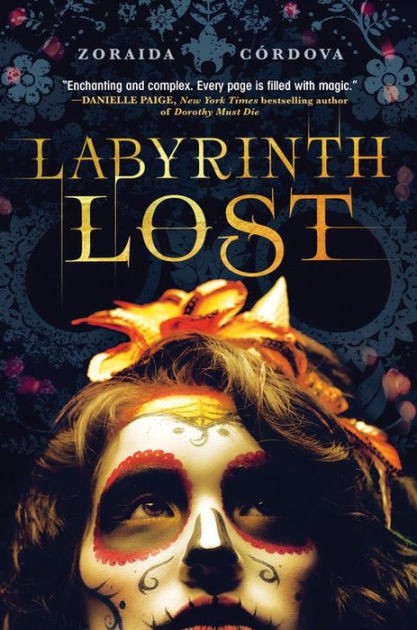
Labyrinth Lost by Zoraida Córdova

Alexa Mortiz is the most powerful bruja of her generation and she’s only about to get more powerful. On her approaching Deathday, she’ll receive the cumulative power of her bruja ancestors before her. And she’s dreading it. She hates magic. In the past, the “power” has accumulated into a lot of pain — there was her godmother’s death, and her father’s disappearance after Alexa performed magic so horrific it chased him away. When she decides to cast one last spell that will strip her of her powers, she sends her entire family into the underworld of Los Angeles, Los Lagos. As Ana Grilo writes in her Kirkus Review for the book: “Mixing ideas from Ecuadorian, Spanish, African, Mexican, and Caribbean backgrounds, Labyrinth Lost is a story of dichotomy and identity: between here and there, between childhood and growing up, bruja and non-bruja, between independence and the pull of family.” And now, there are whispers of it becoming a movie, too.
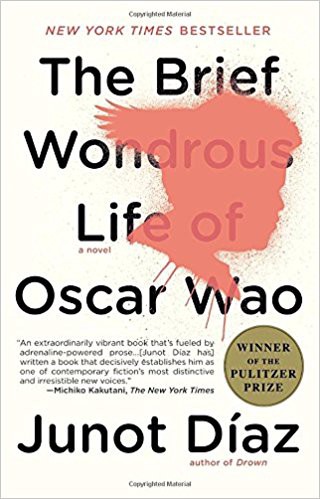
The Brief Wondrous Life of Oscar Wao by Junot Diaz

When witchcraft and colonialism collide, you get fukú. According to The Brief Wondrous Life of Oscar Wao: “They say it first came from Africa, carried in the screams of the enslaved; that it was the death bane of the Tainos, uttered just as one world perished and another began; that it was a demon drawn into Creation through the nightmare door that was cracked open in the Antilles. Fukú americanus, or more colloquially, fukú — generally a curse or a doom of some kind; specifically the Curse and the Doom of the New World.” Whether it’s a demon, a curse, or something else, the science-fiction aficionado, wordsmith, and virgin Oscar is intimately aware of fukú. Is the fukú to blame for his virginity or is Oscar just not Dominican-man enough? When Oscar finally finds love with a woman in the DR who is attached to some violent political figures, everyone pleads with him to let her go. The curse is a slithering thing that wriggles into and out of focus, but haunts Oscar and the others all along.

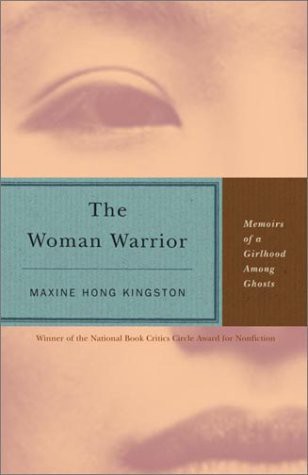
The Woman Warrior by Maxine Hong Kingston

Brave Orchid, Maxine Hong Kingston’s mother, was a doctor in China before coming to America. In the first section of The Woman Warrior, “White Tigers,” we learn about Brave Orchid’s battle with ghosts, with the smells and sounds of death, and the non-Western forms of medicine she practiced before moving to America. Maxine Hong Kingston asks what parts of her are American and Chinese, which parts are her own, and which parts are inherited from her mother and the women before her? Ultimately, which parts are made up, and which parts are real? Kingston collects the assemblage of identities and names them memoir. Transgressing the lines between myth-making, magic, and reality, story becomes the capacious category Kingston uses to generate both a sense of herself, her mother, and others.

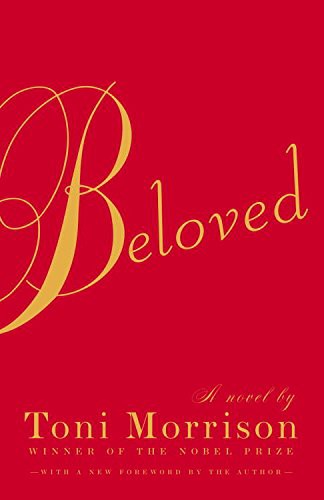
Beloved by Toni Morrison

Morrison’s novel is inspired by the story of Margaret Garner, who escaped slavery and murdered one of her children and tried to kill the others in order to protect them from re-enslavement. As Morrison describes in the foreword: “To invite readers (and myself) into the repellant landscape (hidden, but not completely; deliberately buried, but not forgotten) was to pitch a tent in a cemetery inhabited by highly vocal ghosts.” In addition to the ghost of Garner, the novel is haunted more directly by the ghost of Beloved, killed by her mother Sethe. Beloved has now shown up on the steps of the house she lived in as an infant—only now she is a grown woman. She roosts in the house and expands as her mother Sethe, desperate to give her everything, withers and thins. In the end Beloved must be exorcised by Baby Suggs, the matriarch and healer for Sethe and the rest of the ex-slaves living in their Ohio town.

The Famished Road by Ben Okri

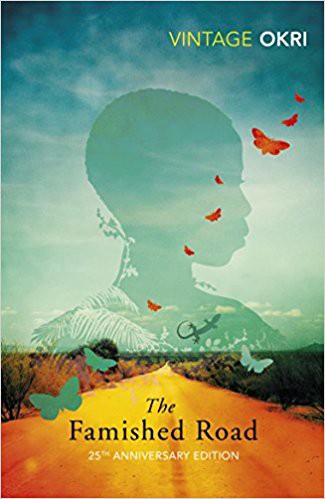
Azaro is an abiku, a spirit child, living in an unnamed Nigerian city. He narrates his experience straddling the spiritual and material world, as his spirit brothers and sisters try to pull him back into the world of the spirits, and Azaro tries to stay in the material world. Azaro loves his mother, who loves him and protects him, and his father, who is frustrated by having an abiku for a son, but becomes a boxer and later a politician to protect Azaro and the rest of his family. Then there’s Madame Koto, the whispered witch of the town who takes a liking to Azaro and his family, though her motives get murkier as the novel moves. The Famished Road won the Man Booker Prize for fiction in 1991. There’s myth, fantasy, legend, and just straight up piles of beautiful sentences in Okri’s novel.

When the Moon Was Ours by Anna-Marie McLemore

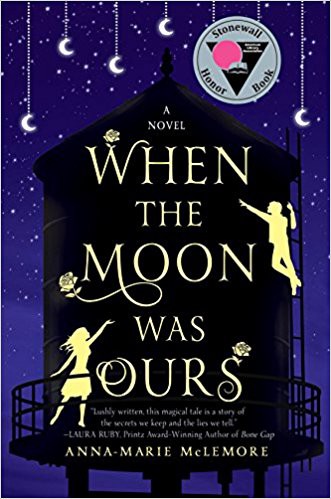
This one’s a middle-grade novel, but the story is irresistible. Miel is a queer Latina girl whose wrists bloom into roses, and rumor has it she was born from the spills of a water tower. Sam is a transgender Italian-Pakistani boy who paints moons and hangs them in the trees, and no one knows where he and his mother came from. Sam and Miel have each other, and know enough to stay away from the four Bonner sisters, the four witches in town, who want to harvest the roses growing from Miel’s wrists to make an infallible love potion, and will bewitch, ensnare and bedevil the secrets out of Miel and expose them to the world in order to get what they want.

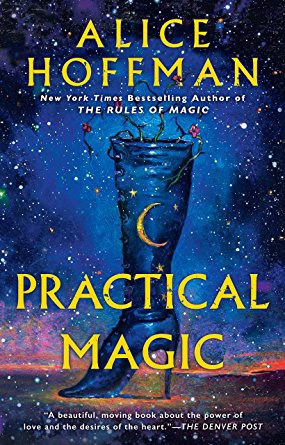
Practical Magic by Alice Hoffman

Sandra Bullock and Nicole Kidman introduced me (and many of us) to the syrupy-sweet Practical Magic when they starred in a 1998 film based on the book by Alice Hoffman. Gillian and Sally Owens live in a small Massachusetts town with their beloved aunts. They’ve inherited their status as outcasts from two hundred years of Owens women who have been blamed for everything that’s gone wrong in the town. Though Gillian and Sally will both devise their own escapes from the black cats and love potions of their childhood, it’s their magical roots that will bring them back together.

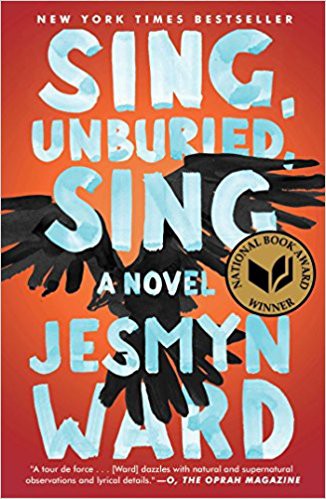
Sing, Unburied Sing by Jesmyn Ward

Sing, Unburied Sing opens with Jojo, a thirteen-year-old boy, trying to prove he is a man by killing a goat with his grandfather, Pop. When his father, Michael went to prison and his mother, Leonie, fell apart, Jojo got used to becoming a man too soon: he takes care of his baby sister Kayla, helps Pop on the farm, and sits quietly by his dying grandmother. Leonie loves the children’s father, Michael, in a way she cannot translate for her children, even though his white family will not acknowledge her or her children because they are black. Leonie, meanwhile, is also struggling with drug addiction and trying to ignore her own mother’s questions about whether or not she has “the sight”—and every time she gets high, her brother, who died in a violent accident as a teenager, keeps showing up by her side. When Leonie, Jojo, and Kayla go on a road trip to pick up Michael after he’s released from prison, it turns out Leonie isn’t the only one with “the sight.” Sing, Unburied Sing delivers more of Jesmyn Ward’s prolific lyricism, so get ready to be haunted by the story and enchanted by the prose all at once.

An Autobiography in Anime

W e came to them early. The foremost of these passions, for most everybody but especially the girls, was Sailor Moon — the English-dubbed version that came on at 2:30 in the afternoon right after Bananas in Pajamas, always too early for those of us who commuted to schools outside of the South Bay and only got home around four or five, after free daycare, after aunt’s houses, after being snuck into the hospital canteens until our moms’ shifts ended on the days when every relative who might have a few hours to spare for childcare alongside a beer and television, didn’t have a few hours: not for the child, the beer, the television.

At home my family didn’t have a working VCR; our old one had a tape stuck in it that no one had bothered to dig out a second time after the first attempt with a screwdriver nearly ended up electrocuting my cousin to death, the one ten years older who used to employ long tickling sessions at his mother’s house as an excuse to feel me up, but we eventually bought one towards the end of Sailor Moon’s first season. My great success of that year was successfully timing the VCR to record the season finale, the one where Sailor Moon and Tuxedo Mask reveal their secret identities to each other at last. This is who I really am. Me, too. I didn’t know. Me, neither. It was an early lesson on what mutual revelation and mutual witnessing might have to do with love. I watched the episode again and again and again, then recorded it onto another videotape at a friend’s house, just in case the first copy broke. It did.

I watched the episode again and again and again, then recorded it onto another videotape at a friend’s house, just in case the first copy broke. It did.

Once hooked on the English dub, we wanted more. There was a biracial girl in our sixth grade class, Yumi, who almost passed for white. She owned videotapes of most of the original Japanese episodes, unsubtitled, nearly all of which were unaired in America, and which she rented out to the rest of us — rented, not loaned. That was how she told us we weren’t really her friends. I could swallow enough pride to rent one videotape, just one time, and so that year I watched, without understanding a single word, three filler episodes from the Sailor Moon Stars arc, more than a hundred or so episodes further along in the series than what had been broadcasted in California on UPN, a network that no longer exists, having been turned into the CW. The Sailor Moon run in America ended after two seasons due to poor ratings, a fact that to me beggared belief, since back then it seemed like everyone I knew was watching, everyone in the whole wild world. But it turned out we were the only ones.

We didn’t watch those exotic shows, like Beverly Hills 90210 or Baywatch, the shows about Californians who might as well have been Martians, for all they were familiar to Californians like us — children of Filipino, Mexican, and Vietnamese security guards, nurses, cleaners, cooks. Crystal Tokyo felt both liberating and knowable, more than any show about California where no one ever eats Filipino barbecue in a strip mall, where no one’s parent works sixteen hours a day at the hospital bedsides of Korean War and Vietnam War veterans, except when they were having PTSD episodes and all the Asian nurses were ordered to avoid them.

Crystal Tokyo felt both liberating and knowable, more than any show about California where no one ever eats Filipino barbecue in a strip mall, where no one’s parent works sixteen hours a day.

In our seventh grade class there was even a white girl — rare — of the kind that read fantasy novels alone at lunch time, who upon finding out that we watched Sailor Moon, successfully befriended us by saying she had an extensive collection of tapes and books at home that she’d happily loan to us. Loan, not rent. Through her eager, faintly clammy friendship came Fushigi Yuugi: the full series, some of the manga, even some of the OVAs (Original Video Animation, made for DVD release rather than TV). The story was corny, but we loved it: girlfriends who found an old book that turned out to be a time-travel portal. Entered it easy, like passing through a door, or a rite. Found themselves in another world. Made friends, lost friends, fell in love, got molested, staved off the end of the world. High realism, for where I was at twelve.

My Life as a Berenstain Bear

It wasn’t always just the girls. In high school, they showed Neon Genesis Evangelion late at night on PBS, and one of my best guy friends and I watched the episodes while on the phone with each other; sometimes commenting, sometimes sheltering each other in the kind of bonded silence that was easier to bear back when you could still twist up the telephone cord in your hands. We held each other on the line. We must have been fifteen; both Pinoy, both moreno, both with nurses for mothers, both with skin stretched gossamer in places from years of abusing corticosteroids to treat lifelong eczema. We went to our junior prom together, him in a rented tuxedo, me in a gold sequined dress with a slit that went up to my thigh.

My favorite character in Eva was Misato. Katsuragi Misato: 29, rarely without a beer, wears a grin so calcified it’s actually become real. A great shot with the Heckler and Koch USP sidearm, eschewing the Glock 17 of her fellow Nerv personnel; taking life lightly, her shutters closed up tight. I still remember loving the small detail that Misato and her college boyfriend Kaji once locked themselves up in a room and had sex for days, stopping only for beer and food. Two-dimensional aspirations, a dream of desire. It sounded like heaven, only bearable.

I still remember loving the small detail that Misato and her college boyfriend Kaji once locked themselves up in a room and had sex for days, stopping only for beer and food.

Director and creator Hideaki Anno described Misato as a loser girl-woman, an adult Tsukino Usagi — which is to say, an adult version of the main protagonist of Sailor Moon. Katsuragi Misato is what happens when the magical girl, the beautiful soldier and messiah (all epithets by which Sailor Moon was often described throughout her eponymous show) becomes an adult. Has to navigate problems that aren’t about saving the world, but surviving in it: day to day, meal to meal, missed connection to made connection. In fact, in the Japanese versions of Evangelion and Sailor Moon, Katsuragi Misato and Sailor Moon are played by the same voice actress, Mitsuishi Kotono. But PBS showed the English dub, so we couldn’t have known.

It was weird, admittedly, that Sailor Moon was blonde. At the time, we didn’t know anything about the postwar aesthetics of anime in Japan, or about the country’s own reckonings with war, whiteness and America. Consciously or not, we had been seeking out universes that might be populated by people like us, and Japanese anime seemed as good a place to land as any, so we took the yellow and orange-haired protagonists the way a realist takes on life, bad with the good. Though over the years we learned, as young Filipinx morenos in the Bay, that people like us was both far more and far less mutable than we imagined: we’d all been told that Filipinos weren’t “real” Asians, always from the mouths of the more middle-class, light-skinned East Asian kids in school, who as I remember were some of the first people I ever heard refer to Filipinos by the n-word.

We had been seeking out universes that might be populated by people like us, and Japanese anime seemed as good a place to land as any.

And certainly there was some controversy, at least in my family, over the fact that anime was a Japanese art form in the first place. My grandfather had worked in Guam for the U.S. Army during the Second World War, and my grandparent-age uncle had been shot and bayoneted by Japanese soldiers during the Bataan Death March, surviving only by jumping into the Pampanga River, falling unconscious, and waking up in the home of the woman who had retrieved his body from the river, and who would later become his first wife. My grandmother still told stories about how she and every girl she knew had to smear their own faces with dirt and charcoal, wear rags, all in the brittle hope that Japanese soldiers wouldn’t steal them from their homes and sentence them to a life of imprisonment and rape. Asian America was a universe, as many-starred and many-scarred as the universes in Sailor Moon: there were no knot-free pleasures. Twists, compromises, flexing an image like a funhouse mirror so the reflection almost, almost takes your shape: that was how we had to watch things, sifting the pixels for gold. But if you give kids next to nothing, they’ll still make a world out of it. That’s something any magical girl anime worth its salt will teach you.

Even now, long after all the playground theater has ended, one of my favorite characters of all time is still Sailor Saturn. She doesn’t even show up in the English dub of Sailor Moon; I had to discover her in high school, after my friend and I ordered videotapes of fan-made English subs off the Internet, from some late 90s/early 2000s Angelfire website with a tinny MIDI file of the Sailor Moon theme song that would start playing when you loaded the home page. Sailor Saturn’s the one with the sickly constitution and the physician father who goes off the deep end, the one called the Soldier of Death and Rebirth, the one called the Soldier of Silence and Ruin, the one called the Goddess of Destruction — all of which sounded just melodramatic enough for my tastes at the time. Sailor Saturn looked like me in all my kid photos: thick black bangs, fighting, hoping that pretending to be strong might actually count as strength.

At the climax of one season, Sailor Saturn’s the one who makes the turning-point decision to jump right into the heart of pure groaning evil to do what Sailor Moon herself — yellow hair, blue eyes, pretty as a main character, believes in happy ending — can’t do. Accept death, including her own. Go into the ugly groaning of the world and not come back from it.

But the show isn’t called Sailor Saturn: a girl like her is always the sidekick, not the protagonist. That was one early lesson. Predictably enough, Sailor Moon does end up going after her — and saves them all in the end, including Sailor Saturn, soldier of death and rebirth, soldier of silence, soldier of ruin, goddess of destruction, sickly dumbass set on suicide via demonic abyss. Sailor Moon isn’t a show about anyone jumping into the heart of pure evil and losing. You’d have to learn about that later.

But the show isn’t called Sailor Saturn: a girl like her is always the sidekick, not the protagonist.

Still, when Sailor Moon comes back from her rescue mission, her eyes are vacant, her face slack with shock. The background music plays Sailor Moon’s beloved theme song, but a new, unfamiliar rendering of it, with a forlorn, music-box timbre; the sound of an adult woman facing the apocalyptic debris of childhood. In Sailor Moon’s rictus-stiffened arms is the successfully retrieved Sailor Saturn, now transformed into a baby, swaddled in cloth. Survival-new. Second chance-new. They’ve both seen some shit — but they came back. Here were the episode’s lessons, magical as true love; as being saved by a friend who won’t let you down; as girls who survive. Not all wrecked things are wrecked forever. You could return from the ugly. You could live.