Recent accusations and revelations have made their way to the fore of discussions in the Native/Native American/American Indian literary world: we are now aware that a number of women say they’ve been harassed or abused by Sherman Alexie, the writer whom the white literary establishment has anointed as what Alexie himself has referred to as the “Indian du jour for a very long day.” After weeks of Twitter discussion, some of Alexie’s accusers went public yesterday, talking to NPR about what they endured. Though many of us look forward to the clarity of having this mistreatment out in the open, we find ourselves at an hour where we can see the gates from every side, and all that’s rushing against them.
At the moment, Sherman Alexie has addressed some allegations of abuse and abusive behavior, and refuted others. But this is also a time of reckoning for the literary world’s treatment of Native writers. As an extremely popular writer in the mainstream who has written a number of young adult works, Alexie is often the only Native voice heard in many social studies, language arts, and English curricula. White writers and scholars may find themselves wondering, “who should we get to replace him?” They may not even realize that this question highlights the gates that tend to surround Native lit, their complicity in maintaining them, and the consequences of their actions — actions which are akin to literary colonialism.
This question highlights the consequences of their actions — actions which are akin to literary colonialism.
I’m not comfortable writing this, but none of us should be. Many of the women in my community are too upset to talk about this yet, and I’ve been asked to speak up — but how do I write about what this means for contemporary Native literature? I want to make it reflective of our work; respectful, joyful, and solemn, and funny, imaginative, and caustic, far-reaching and future-looking, mindful of the past yet anti-ossificative in nature, punk and classical, both non-traditional and deeply so, conflicted, chock full of pain, irreverent and angry acknowledging all the relatives while selfish for our field and ourselves, deeply in love with who we are and more so who we need to and can be, acknowledging the fuckedupedness of it all while we eat tradish for supper and zingers and twinkies for dessert and we laugh.
We’ve been brought to what is likely a singular moment in the history of “Native lit,” whatever that might be, one that our kids will teach and write about some day. How do we adapt to this moment in ways that work for all of us, that honor what we all (note, all, of course) do?
How do we adapt to this moment in ways that work for all of us, that honor what we all (note, all, of course) do?
But before that, an apology. From me. Alone. Not for all men, because that’s just lazy. They can do it themselves. They should do it themselves. Because we are relatives and family and kin and colleagues and know better, can do better, will do better, better do better. I am also sorry, yet again, that this collective weight has fallen on all of you, and I think we men hope that you will ask us to share whatever bits or entirety of it you would like us to. And if you’re hesitant to ask because you’re worried we’ll get it wrong, well you’ll be right about that. So as an aside, I’ll ask any men reading here to get it together. Be ready to do some work when asked. Get. Your. Shit. Together.
Now. The question we’re being asked, directly or indirectly, by the white establishment is: “What do we replace it with?”
“It” being the one text, the one book, even the one writer.
That “one?” That’s a problem. That one definition of Native, the one arbiter of taste, the one writer of the moment, the NDN du jour, the one chief to sign all the treaties.
That’s America’s problem.
Since Day One, Europeans have been incapable of seeing the diversity of nations and communities and people in this hemisphere.
And it hasn’t changed.
So here’s what I’m proposing.
Maybe this time, we’ll tell you. When we’re ready. (Some of us have already begun — see, for instance, Elissa Washuta’s constantly expanding thread of Native writers on Twitter. One isn’t going to be good enough anymore.) Again, you’re asking for a whole lot of unpaid labor, countless hours of research and reading, talking, tending, and listening goes into our “field,” our work as the makers. And in this moment, we have an opportunity to change a whole lot of rules. And since, just as in 500 years of settler mismanagement of their stolen spaces on these continents, we are about to need a whole lot of indigenous science and knowledge to bring things back into balance, so are we going to need to decide what this particular segment of cultural production and art needs to have for balance, and for health. Because right now there’s a whole lot of words and stories pushing up and forward. And I think the pin that’s been holding it and us all back is loose enough to fall out at any minute.
Which means you’re gonna have to sit down, settlers.
While you’re doing that, maybe ask yourselves why you have no backup plan for your selection, your one text, book, writer, in what you do, what you teach. Maybe ask if you need to rethink what and why you do what you do.
Ask yourselves why you have no backup plan for your selection, your one text, book, writer, in what you do, what you teach.
It’s gonna take some lifting from you too.
In the meantime, we’ll get back to you on all this. Women will of course be figuring it out. Like they always have, like they always do, like they always will. Men, step in where and when asked. Be ready. And listen.
On the listening? I’ll be listening for the one thing I know is coming. The one thing I always wait for.
Laughter.
But we won’t laugh until the women do. If they can’t, or won’t, we don’t deserve to.
Because when they do, it’s the finest sound the world has known. It’s how we know it’s going to be okay.
Two years ago I exchanged a human being — brown-eyed, alert, filled with complex nerve endings and a fluency in several languages — for a stack of books the length and weight of a person, a stack that now occupies the left side of my bed. Do I regret the trade? The short answer is: often. The medium length answer is: not enough to do anything about it. The long answer, because there is always a long answer, is what follows. For, who are we, what are we, if not a combination of books we have read, conversations we have had, regrets and anxieties we have suppressed, and promises we have allowed ourselves to hope for? If each life is “an encyclopaedia, a library, an inventory of objects,” as Italo Calvino suggests, then this is my attempt to re-shuffle the last few years of my life, to understand what it means to be a reader, a woman reading, a single woman who chooses books.
If you asked him, my former human, he’d say I exchanged him for a city, a program in which one is required to read a book a day and not a slim book, a fat one with tiny margins and no dialogue (otherwise known as a Ph.D.). This is not entirely accurate. I didn’t leave him for a city or even a country — but I did leave him, in some small way, for the books I now sleep with. That is to say, I left him for a life that is shaped by the abundance that books offer us but also by the solitude they bind us to.
The pursuit of an intellectual life and the desire for intimacy should not have to be mutually exclusive. Yet, for many women — particularly, women writers, academics, and artists — this continues to be the case. They are faced with a choice between the cultivation of love, companionship and family, and a retreat into solitude and creative work. Of this gendered double standard the poet and essayist Leslie A. Miller writes, “The image of the male poet in retreat can be attractive to society. But the image of a female poet in retreat is somehow against nature, a liability that can lead to emotional bankruptcy.” There is, thus, a form of solitude that attends the female artist, one that suggests deviance, stubbornness, abnormality and precarity.
This leads me to ask: Is there a particular solitude or separateness unique to the female reader? I’d like to pause on this question. For if there is something distinctive about the solitude of the female reader, what form does it take? How does it disrupt the delicate emotional economy in which we live? What does it reveal about our culture’s perception of reading and of women who read?
The pursuit of an intellectual life and the desire for intimacy should not have to be mutually exclusive. Yet, for many women — particularly, women writers, academics, and artists — this continues to be the case.
In the late 18th century, before she wrote her seminal work A Vindication of the Rights of Women, the philosopher and women’s rights advocate Mary Wollstonecraft put together an anthology for women entitled The Female Reader. It was designed as a pragmatic guide that would enable women to function as intellectual adults. For her and the other proto-feminists of the 18th and 19th centuries, reading was a technology of access, a way of introducing women (though not including them necessarily) to a worldly conversation. It promised a retreat from domestic obligations and an entrance into public life.
We see the same gesture 200 years after Wollstonecraft in Elena Ferrante’s globally renowned Neapolitan series. One reason Ferrante’s novels are so popular is that they foreground reading as a radical act, one in which we, readers, can participate, revealing the ways in which the female reader causes a threat to the patriarchal order. As a precocious and brilliant child, Lila issues library cards in all her family members’ names in order to access a world beyond the grey courtyards of her neighborhood, though even this does not allow her and our narrator Lena to shape a life that is not patrolled by arrogant, dismissive, and abusive men.
Reading, for these writers, relays a direct access to power. The female reader is a powerful reader. But at the same time, she is a neglectful woman. Is this, then, still the case in 2018? What is the role of the female reader in our era? What is at stake for women when we open a book, when we turn our critical attention away from the demands of our everyday lives and toward the open conversation of the page?
I read, much of the night, and go south in the winter. In university a professor drew our attention to this line from T. S. Eliot’s The Wasteland. The speaker is reading, he said, so that means she is not having sex. The line has stayed with me ever since.
She is reading so she is not conceiving children.
She is reading so she is not listening to you.
She is reading so she is alone.
Or she is not alone but separate. She is in what Frederic Nietzsche calls “the inward cave, the labyrinth of the heart” into which “no tyranny can force its way.” She is reading and so is locked within a solitude of her own making and her own protection.
A girl alone on the sand, writing in a journal.
One reason that the solitude of the female reader might be more political, and more controversial, than that of the male reader, is that time operates differently for women — so we are made to understand. Women’s bodies, we learn, are living clocks, which cannot keep pace with men due to their biological utility. As men careen to the peak of their careers, women are faced with a paralyzing set of questions and decisions to make. Lydia Davis, whose writing has been described as a “grammar of loneliness,” sums it up well in her one-line story “A Double Negative”:
At a certain point in her life, she realizes it is not so much that she wants to have a child as that she does not want not to have a child, or not to have had a child.
By inviting books into her bed, the female reader’s retreat becomes an attempt to find refuge from the impasse that this double negative evokes.
Someone I met on a dating app once told me that at 33 he was the prime dateable age for a man. The prime age for a single woman was, of course, significantly younger. I’m not sure why he told me this. Perhaps to remind me that the cards were stacked in his favor, that men age more productively, increasing in value with each grey hair. As proof he cited charts, assembled by dating sites like OKCupid, exhibiting the “official” decrease of women’s desirability and the increase of men’s desirability. Like two mountain peaks, one red, one blue, they change course over a person’s lifespan. The red (female) peak experiences a quick drop off after the age of 23 while the blue enjoys a long, luxurious decline down the slope of undesirability. Similar charts depict deeply entrenched racial biases (see Hadiya Roderique’s excellent article “Dating While Black”). These charts make painfully legible the systemic racism and sexism that shapes not only our desirability but our desires.
What I have learned over the past three decades and what I am trying to unlearn, is that for women love, durable intimacy, and companionship is an economy of scarcity.
What I have learned over the past three decades and what I am trying to unlearn, is that for women love, durable intimacy, and companionship is an economy of scarcity. With each year our stocks depreciate. As Olivia Laing reflects in her study of loneliness, The Lonely City, single women in their mid-30s find themselves at an age where “female aloneness is no longer socially sanctioned and carries with it a persistent whiff of strangeness, deviance and failure.” This “whiff” of strangeness haunts the female reader as she claims her separateness from the world, when she bows her head to the page rather than the baby monitor.
“There is never a right time to start a family,” a doctor once told me when I went to get a prescription for birth control. “I just wouldn’t want you to regret it later.”
“Do you have children?” I asked her. I had just turned 30.
“Yes,” she said proudly. “I have four.”
Regret. This word takes on a particularly gendered connotation in this instance. Like the Davis short story, I questioned my actions, staring at the birth control prescription (I didn’t use it in the end). I did not want not to have a child, to carry with me that “whiff” of abnormality, failure, and prickly eccentricism — did I? Not having a child, it seemed, was the worst possible case of FOMO a woman could experience in her lifetime. Despite my resistance to societal demands, I could feel myself being pulled in. Now, three years later, even though I’m closer to my reproductive “expiry date,” this anxiety has lessened. This is thanks to the conversations I have had with other women, conversations about the books we are reading, about our strategies of navigating a world that is still largely hostile and blocking rather than enabling to women.
This is something we are particularly adept at: using storytelling and its trivialized genres — confession, complaint, “gossip” — as a means of negotiating, and potentially even dismantling, the impasses that structure our lives and shape our experience of the world.
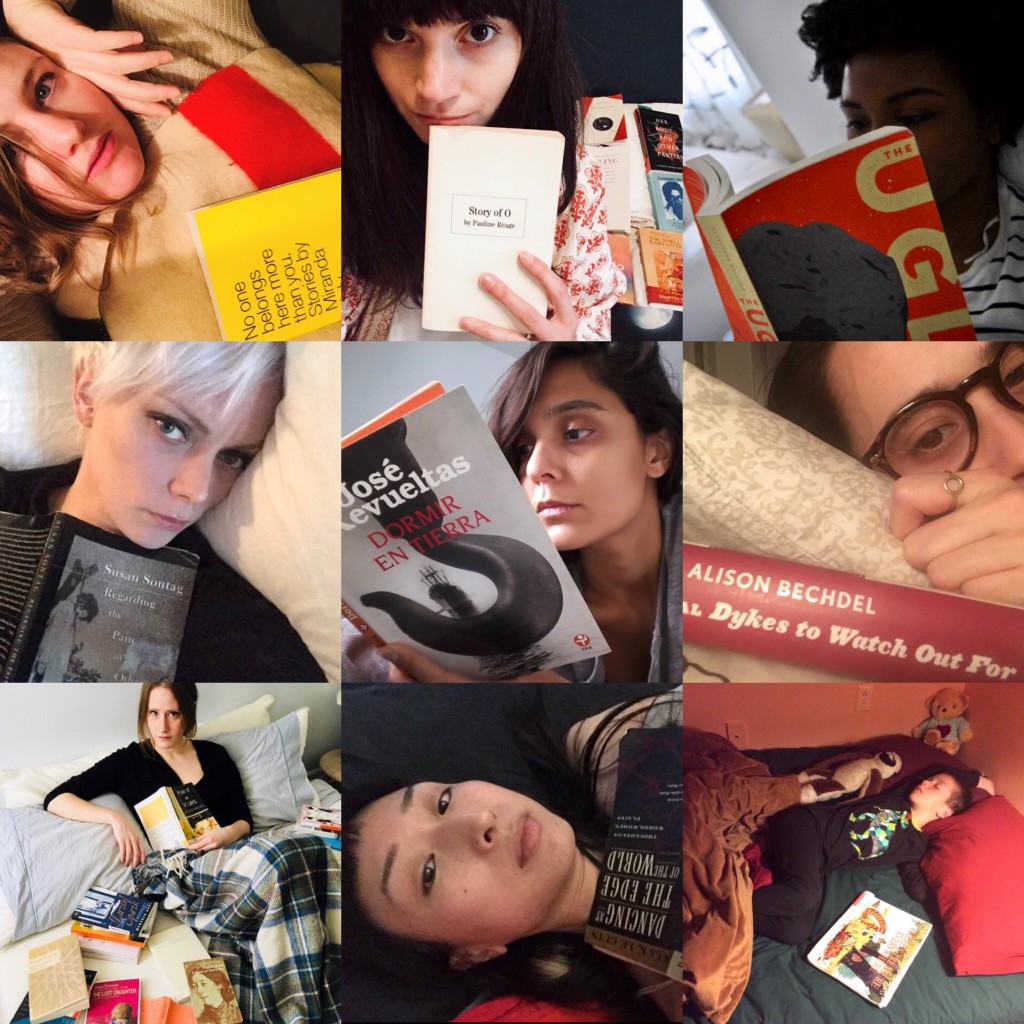
A collage of women with the books they sleep with
How to take down the patriarchy? 1. Build a network of brilliant and difficult women. 2. Sleep with more books.
Yet the question remains: does reading make us lonely or less likely to “find a mate”? Or does our dissatisfaction with our societal position, with the dudes we meet online, with the double standards we face in our professional and personal lives, turn us into readers?
Perhaps the answer is: a bit of both.
Reading turned me inward, but not to escape men. To survive men.
I won’t describe my past life, because if I did I would have to describe him. I would have to tell you about how, as we prepared for sleep, he would turn to me and say “last look” before he switched off the light, so that we could memorize each other’s faces in the moment before the blackout. This was so that we would recognize each other if by chance we should share the same dream.
I no longer meet him in my dreams. Or if I do, we no longer recognize each other. As Neruda says, “the same mouth / is now another mouth.” We pass each other without a second glance.
These days I have instead been dreaming of babies — the Instagram famous babies of my friends. I’ve memorized their tiny faces in all the configurations of joy and despair captured by their many daily, hourly, updates. Theirs are the last faces I see before going to sleep. They are my “last look.” And their faces, and the faces of strangers, men on dating sites gripping giant fish or crouching in front of Machu Picchu, ads promoting a new miracle diet (ice cubes and self-discipline), cat videos, pug videos, a heavily documented Christmas vacation, brunch, group brunch, someone’s bathroom selfie, these are the last images to be imprinted on my retina. These are the visions that I bring with me into that horizontal world of sleep, and which, until recently, have dominated my dreams.
I have taken to sleeping without my phone. The phone, a tool of communication, of connection, is also a technology of loneliness.
For this reason I have taken to sleeping without my phone. The phone, a tool of communication, of connection, is also a technology of loneliness. Banished, hypnotic, it pulses in the far corner of my room. But I will not be seduced. I will resist its vibrations with the perseverance of Odysseus at the mast, with the self determination of the ice cube dieter. (Though sometimes I’ll wake up in the middle of the night and stalk across the room to check it.) For now, and I’ve made a rule of it, only books are allowed near my bed.
Tonight, I’m reading in order to examine my own solitude and the solitude of the women around me, who, for whatever reason, have not found companionship through conventional routes. Because of the breakdown of a long-term relationship, a series of disappointing intimacies, or the prevailing insistence on “informal” relationships (where one is not supposed to “catch feelings”), or because of circumstance, or choice, or a refusal to settle, we have become difficult women. Misfits. Killjoys. Ours is, to borrow a line from Emily Dickinson, “The Loneliness One dare not sound”; ours is a political solitude. Yet, as Audre Lorde reminds us, “anger is loaded with information and energy.” Though it may be attended by visceral disappointment and sometimes even despair, it makes legible a broken system. As Laing writes, our “difficult feelings” are not a simply a consequence of “unsettled chemistry, a problem to be fixed, but rather a response to structural injustice.” Disappointment, dissatisfaction, irritation — these are political emotions. They are useful and dangerous. Or, rather, they are useful because they are dangerous.
It is not lost on me that solace and solitude share the same root. I find myself suspended between these two wor(l)ds.
It is not lost on me that solace and solitude share the same root. I find myself suspended between these two wor(l)ds. I sleep amongst dead authors but living books. I sleep beside living authors and silent books that lie, opened, awake, beside me. In a way it is not dissimilar to sleeping beside a lover; there is the alien consciousness, encased in the soft shell of the book. There is the quiet angular weight, the blunt spine, the pages warm and musty as skin. “What makes lovemaking and reading resemble each other most,” Calvino observes, “is that within both of them times and spaces open, different from measurable time and space.” The reader submits to the act of reading. She forgets herself, suspended, as poet Lisa Robertson puts it, “in the vertigo of another’s language.” To be shaped by a text, by the contact with another’s innermost thoughts — this is a form of pleasure.
It is a form of love as well.
For, as the cultural theorist Lauren Berlant observes “what being in love secures is the evidence that you have had an impact in the world by being a condition of possibility for someone else.” To be a condition of possibility for someone else is not only to be someone’s fantasy but to be the conduit for that fantasy. This is not unlike the relationship between the reader and the book.
To love then is to read. To be loved is to be read.
Here, in the lamplight, I enter into a slow communion with my book. I enter into a space beyond measurable time. This becomes my last conversation of the day. Perhaps my most important one.
Books have become my cure to the overstimulation of the screen and the small but cumulative disappointments of my everyday; they have become the soft technology that mediates the hard, flickering machinery of my waking life. They offer a retreat from life but also an entry point into understanding my life. They are more than a consolation prize; they are the trapdoors into what Virginia Woolf in her diaries referred to as “the real world,” the expansive and private world of the mind.
After a protracted fall during the length of which the leaves perpetually seem on the verge of turning, winter arrives in one swift blow. Overnight, the trees shed their leaves and the low hanging boughs are lined with snow. For a few days, the air turns frigid. A ghastly wind blows through the streets, glazing the roads with a thin layer of ice. It is a rough and forbidding initiation, a grand entrance that clears the city of walkers, sends everyone indoors. The silence is palpable. The heavy load of snow that is rudely dumped on our homes mutes the noise of distant traffic and the whistle of the train as it cautiously chugs down the tracks that cut across the city.
It is here, in South Bend, Indiana, that I first read The Odyssey. I am not ashamed to admit that there are many great books I have not yet read. Quite the contrary: It is a fact that delights me, makes me feel hungry, alive. I prefer to remain aware of all of the great books I have not yet read, not to mention all of the great literature that has not yet been written. And since so much of literature is about navigating the spaces we inhabit, then it follows that I also orient my inner compass towards those remote landscapes in which I have not yet lived. To further stitch the two together — literature and landscape — I tend to think carefully about where it is I am living when I suddenly take an intense unforeseen pleasure in a great book. A classic. So, I fell in love with The Odyssey in South Bend; and, like a perfect mirror effect, that falling transformed my relationship to the city.
This is a strange, magical place; it is also harsh and withholding. Living here requires a great deal of fortitude and patience, not to mention an appetite for solitude from those of us who weren’t born or raised here and who don’t have built-in networks we can fall back on to bolster us through the seasons. Here in South Bend, the sun appears sparingly in the winter. When it makes a rare appearance, people rush out of doors in droves; they stick their faces in the light, breathe the fresh air, shake off the stale, sooty climate of their homes. Our neighbors dust off their cross-country skis and go around the block while their children make snow angels, or fly downhill on their sleds at the park as the family dogs watch over them with bemused looks from their fixed position under the unrobed sycamore on the hill. These are the tell-tale signs of South Bend’s unrelenting winters. It won’t be long before Lake Michigan — immense, magnetic, temperamental — will be a glacial mass embellished with translucent ice floes.
Landing on the shores of the Third Coast after years of wandering was something I never saw coming. The landing was not easy. I felt emotionally shipwrecked. I had left North America for Spain two years prior with the intention never to return, a failed search for home that had taken me to Italy and then back to the U.S. It was at this particular juncture in my life, during those first psychologically demanding years of living in the Midwest, surviving its winters and coming face-to-face with its brutal legacy of distaste for otherness, that I started reading The Odyssey. I discovered a few vague parallelisms: Lake Michigan is haunted with shipwrecks, and the landscapes that hug the Third Coast have been shaped by The Great Migration, transformed by Polish, Italian, Latin American and Arab immigrants, globalized by Somali and Hmong refugees. And The Odyssey, a tale of loss, reckoning, and encounters between civilizations, is full of shipwrecks, digressions, wandering, narrowly escaping death, being blown off course and arriving at the most unexpected shores.
As it turns out, Ulysses’ nostos — his difficult, mesmerizing journey home by sea — brought into sharp relief my own strange journey across Europe, North America, and the Middle East. Nostalgia (which comes from nostos) has kept me company, an unrelenting philosophical mentor, as I have crossed and re-crossed the Atlantic in search of a place to put down roots. Instead of the goddess Athena who guides Ulysses and his son Telemachus on their travels towards and away from home, a nauseating nostalgia for the past hovered over me, simultaneously attracting and repelling me. But, no matter how many times I retraced my footsteps, one thing remained unclear: Nostalgia for what? For which version of my past? A country? A person? An atmosphere? A smell?
Ulysses’ nostos — his difficult, mesmerizing journey home by sea — brought into sharp relief my own strange journey across Europe, North America, and the Middle East.
Given the disorienting cartography of my life, there isn’t a singular home for me to return to. I am from nowhere; or, perhaps, I am from a constellation of places which habits and social codes violently contradict one another, leaving me empty handed. That emptiness, though excruciatingly painful, has also allowed me to cultivate emotional and psychological dexterity, to embrace digression, and to comfortably linger on the shores of foreign cities on my impossible search for a place to call home. While Ulysses had Ithaca, an exact geographical point to which to return, I am still waiting to find the story of my return, the many dizzying returns, that will likely lead nowhere except further inwards, a descent I make willingly and on which my writing depends.
This spiraling structure, of returns nested within returns, echoes the narrative blueprint of The Odyssey: ten years after the Trojan War, Telemachus leaves Ithaca in search of his missing father, and almost simultaneously, after a long sequence of fantastical near deadly events, Ulysses leaves Calypso’s island and arrives shipwrecked on the island of Scheria. Along the way, Telemachus hears tales of his father’s adventures through Nestor, King of Pylos, and Menelaus in Sparta. Five books into the epic, we begin to hear the story again, but this time told by Ulysses himself; the inhabitants of Scheria have promised the help he will need to return home safely, but only after he has recounted the story of his adventures. So, before we arrive at Ulysses’ own telling, the tale of The Odyssey is told and retold by a varying cast of characters whose own stories have intersected with Ulysses’ narrative. These retellings of the past are crucial to the narrative’s future. The memory of Ulysses’ journey — his nostos — is kept alive by different tellers, echoed and re-echoed, safeguarding the continuity between the past and the future. In his essay “The Odysseys Within the Odyssey,” Italo Calvino writes beautifully about the “risks of forgetting the future” by allowing the past to slip from memory. He reminds us that woven throughout the song of The Odyssey are the lines “to think of the return,” “to speak of the return.” This echoing, or infinite return to central events of the past and to the shape of the hero’s journey, is a linguistic and mental structure familiar to most exiles and to the loved ones they have to leave behind along the way.
Before we arrive at Ulysses’ own telling, the tale of The Odyssey is told and retold by a varying cast of characters whose own stories have intersected with Ulysses’ narrative.
I wholeheartedly believe that preserving the possibility of a future in which justice has been restored depends in large part on remembering the past, on actively recalling and retelling our struggles. But I am also intrigued by the architecture of The Odyssey as a whole, and, in particular, in the great spatial and temporal leap that occurs between books IV and V, that momentary negative space in which Telemachus’ telling pauses and Ulysses’ telling begins. It is in this electric tension that their songs of longing for one another reverberate at the highest frequency, paving the path for their critical future encounter in Ithaca. Like absence and presence, loss and reckoning, the two parts of the narrative are interdependent: to preserve the story of The Odyssey we must hear the song of the exiled hero alongside the song of those Ulysses leaves behind. These two experiences, of those who leave their homeland and those who remain, do not fit together squarely; they do not add up to an exact whole. Central to their respective integrities is that charged space in between, that hollow dimension or hiatus against which silent surfaces our hopes, desires, longings, and despairs echo, reaching a crescendo, a critical mass.
Understanding, therefore, surfaces through narrative accumulation, through the circulation and recirculation of the story of our struggles and the silences when those stories are not being told. Those in-between, liminal spaces — the silences — are critical not only to preserving the differences in our songs of sorrow, but also to creating the necessary space for us to sit with our collective struggles without requiring them to be perfectly synchronized. In this context, the possibility that The Odyssey was written by several people, or gathered by Homer from oral tales that had been recounted for generations, becomes doubly charged. It is a classical collage, a song of multiplicity, an epic poem that doesn’t seek to erase the fault lines and fissures that become a part of our identities in the process of learning to be human while we may be lost at sea, or faced with a disorienting number of shifting cultural, geographical and linguistic points of reference. It is a poem that is as much about speaking our story as it is about moving beyond reason, and into a quiet space of reckoning, where the embodied experience of grief and desire is not forsaken in the process of giving shape to the memory of the journey through language. The silences, too, repeat. And a great deal of unabashed weeping and wailing occurs throughout The Odyssey.
For better or for worse, I am extraordinarily sensitive to space. The first year of living in South Bend, I wept incessantly. Some of the tears I shed in longing for the balmy air of Barcelona in the summer, some for the streets and sounds of Florence, Italy, where I had ended up living, a brooding city with a bloody history exquisitely masked by ornate buildings and laced with the sapphire waters of the Arno. Unlike Florence, South Bend is no open-air museum. It is a rust belt city dotted with abandoned warehouses, homes with blown out windows covered with plastic to keep out the frigid, winter air. It is a city in the process of recovering from financial collapse, and when I first arrived here six years ago it was much less recovered than it is now.
The Midwest is an inspired, but scarred landscape. It’s haunted with the legacy of racism and segregation and marked by rampant poverty. These issues are not ghosts of the past — which would be difficult enough to reckon with — but ongoing realities. Here, the pain of our great human failures is not masked by exquisite architecture, but rather by that well-known brand of Midwestern politeness, the ability to look the other way practiced so often and with such diligence that it has been raised to an art form. And then there is the warmth and hospitality that comes at a high price, subjecting those of us who are not from here to a line of questioning so alienating that one might wish to be invisible. Surviving in the Midwest as an outsider requires subterfuge, cunning, a robust temperament — qualities Ulysses possesses and which Telemachus is taught to acquire in his journey from boyhood to manhood. But weeping is as much a central note in the symphony of the poem; the weeping is cathartic, yes, but it also serves as a form of remembering and reminding us of the characters’ emotional memories, their embodied experiences. In fact, the first time we see Ulysses he is alone, weeping on the beach: “. . . as always, / wrenching his heart with sobs and groans and anguish, / gazing out over the barren sea through blinding tears.”
Weeping, longing for home, unsure of how it was I had landed in such unexpected shores…these were the circumstances that lead to me to fall in love with The Odyssey and that taught me an unforgettable lesson: in order for a great book to have a lasting impact on us, the circumstances of our lives have to have ripened for the encounter, the frequency of our character calibrated to that of the book. I am writing here of The Odyssey, but also of all of the great books people always claim to be rereading or apologetically concede to not having yet read: Bleak House, Middlemarch, Don Quixote, War & Peace, The Shahnameh, The Epic of Gilgamesh. The list goes on and on. What excites me is the fact that sometimes we are lucky enough that our life intersects with a book at a critical juncture, almost instantly transforming our consciousness, or illuminating a fact or feeling we have always suspected but preferred not to acknowledge about ourselves. Such books haunt us for years by stirring awake our own dormant ghosts, by reminding us to remember.
Weeping, longing for home, unsure of how it was I had landed in such unexpected shores…these were the circumstances that lead to me to fall in love with The Odyssey.
I suspect I will forever circle around the notion of home, searching for it despite knowing that it can only exist on an abstract plane within my imagination. I also suspect that for most of us the feeling of belonging is almost impossible to locate, but that once found it is transportable to anyplace. For now, I’ll continue to linger on the shores of the Third Coast, surrounded by fertile plains of soy and corn that unfold as far as they eye can see beneath the wide, pearl-pink skies of the Midwest. Once the glacial winter cedes to spring, the tulips emerge, their silky bulbous shapes sway in the cool April breeze. The geese will return, waddling around in single file and honking at drivers. The ground will thaw and the grass will regain its color. Thunderstorms will roll in, the silver veiny flashes of lightning radiant in the twilight. Summer will be green and lush and the air will be filled with the song of canaries and blue jays and woodpeckers carving holes in the trunks of the trees. There’s great beauty here. It is not all strain and sorrow. I no longer weep about living in the Midwest, but I couldn’t have remained here without weeping, without sitting in that uncomfortable and, at least for me, unfamiliar space beyond language.
To return again to where I started: the shame we are required to perform upon admitting that we have not read a certain classic. Well, according to Calvino, “All that can be done is for each of us to invent our own ideal library of our classics; and I would say that one half of it should consist of books we have read and that have meant something for us, and the other half of books which we intend to read and we suppose might mean something to us.” Calvino is one of my authors, the way that Homer was one of his. But I find myself dissatisfied with the inventory he proposes. My library is also filled with books that, for some reason or another, I never intend to read. The negative capability created by those books serve as fuel for me to search for the books that I will read and that will momentarily steady my restless nature. I am soothed by the idea that there will always be an enormous number of books I will never be able to read — that my life, however long it shall be, is too short to allow me to fully exhaust literature’s possibilities. Those books help me hone my search and give a certain gravitas to the choices I do make. After all, I consider the intersection where life and literature meet a window that allows us to simultaneously look without and within, a vantage point onto infinity. And in order for that space to be meaningful, we each have to craft it in our own time, at our own pace.
The genius of the Bechdel test is that it doesn’t sound like a challenge. How difficult can it be to write a movie with two named female characters who talk to each other, just once, about something that isn’t a man? Clearly, though, it’s more rare than it sounds. You really have to think to come up with examples of movies that pass the test — and it’s only when we’re forced to provide them that we realize it shouldn’t be this hard.
Such was my experience brainstorming novels without romantic subplots. In January, “Tired Asexual” wrote to Slate advice columnist Dear Prudence, looking for suggestions of books that didn’t include the pursuit of romance. Helpful readers responded with a short list, many from young-adult fiction, but, surely, the list of eligible novels had to be much longer.
For my own test, I developed the following criteria:
The novel is not young adult fiction or science-fiction/fantasy. (There are plenty of YA books without romantic subplots, both because intended readers are younger and because recent YA authors are more likely to incorporate characters along the sexuality spectrum.)
The novel is not “about” romance, and romance — or yearning for romance — isn’t a major plot point even if it’s there. So, maybe there’s a couple, but their relationship is taken for granted and the book doesn’t focus on its evolution. Maybe someone goes on a date, but dating doesn’t move the story forward.
The novel has no explicit sex scenes or sexual themes (including sexual assault, even if it’s not described).
The novel doesn’t present romantic love as necessary and central to flourishing. This last requirement is crucial. Even if there are no sex scenes and nobody goes on a date, if the main character is constantly thinking about how he should be dating or what a loser he is without a romantic partner, the novel is disqualified.
Go ahead, see what you come up with.
I, like the reader who wrote to Dear Prudence, identify as asexual, often abbreviated as “ace.” (I’m also writing a book about asexuality). Aces often split sexual and romantic attraction — so you can be ace and still be romantically attracted to, and desire romance and relationships with, people of various genders. Those who don’t experience romantic attraction to any gender identify as aromantic. (To be clear, not all aces are aromantic, and not all aromantics are ace.)
It’s easy to understand why it would be frustrating for someone who is aromantic to constantly read books implying that life is pathetic without romance. But in fact, this state of affairs is harmful no matter how you identify. If we believe that cultural representation matters when it comes to class and race and gender and sexual minorities, we must believe that representation also matters when it comes to storylines — the narratives we tell about what matters, what we want and should want, and what is necessary for a flourishing life.
Representation matters when it comes to storylines — the narratives we tell about what matters, what we want and should want, and what is necessary for a flourishing life.
Even for those who long for romance and enjoy love stories, being steeped in this culture narrows our lives. The scholar Elizabeth Brake calls this privileging of romantic love “amatonormativity”; in her book Minimizing Marriage, she investigates the ways we prioritize romantic relationships over friendship even though friendship can be more nourishing, and infantilize those who fail to achieve coupledom.
Take, for instance, Hunter (not his real name), an asexual man I interviewed for my book. At age 35, Hunter has been married for 11 years, yet only realized that he was ace six months ago. He grew up in a very conservative, evangelical Christian environment, where casual sex wasn’t considered “cool” or liberating. But even as he followed the religious narrative that emphasized chastity, he found himself believing in a parallel narrative, a secular one that taught that losing your virginity marks you as a true adult.
When Hunter came out to a close friend, the friend asked how he could be asexual when once, years ago, he had discussed wanting to have sex. “That comment stumped me, until I realized that — and it’s embarrassing to admit — this comment he referred to was me talking about the movie American Pie,” he says. “When I first saw it years and years ago, it made me want to have sex on this intellectual level. The kid was a loser and then he became the hero of the story, and that’s what I wanted: to be a hero.”
When we remain unaware of how deeply steeped we are in romantic plots, we don’t realize how much of our desires come from social scripts.
Culture may not necessarily create desires for the things it valorizes — sex, romance, money, status — but having a single story about what these desires signify and bring can amplify them and make them seem necessary. If the vast majority of stories posit sexually active people as heroes, love as the ultimate goal, and unpartnered people as losers, you’re less likely to think outside those narrow lanes — or even notice how you’re being corralled. When we remain unaware of how deeply steeped we are in romantic plots, we don’t realize how much of our desires come from social scripts, how we’re limiting ourselves without knowing it.
I am not aromantic; in fact, I crave romantic drama, the more dramatic the better. Recently, I confided to my friend Betsy my fear that this craving would ruin my life. Either I would give in to the desire and complicate my relationship for no good reason, I told her, or, more likely, I would not give in and eventually feel bored and miss the intensity of romantic intrigue. That intensity was exactly why I sought love stories, and believed that a novel that lacked them was boring. Love stories are thrilling; they almost always invoke the big emotions that I have long believed give life its meaning.
This framing, said Betsy, was simply a failure of imagination. Yes, I wanted romantic drama, but I wanted it because I wanted emotion and intensity and purpose and desire. Was romantic drama the only way to get that? she asked.
It’s a shortcut and a template, that’s for sure. It may even be the easiest way, both in fiction and in life. But the lack of dramatic stories without romance had taught me that it was the only way to access intensity. Hunter wanted to feel like a hero, and he was told that the easiest way to become one would be to have sex. I want to feel deeply, and the story I see all around is that the way to do so is to stir up romantic drama by creating a crucible for my own mixed emotions.
The lack of dramatic stories without romance had taught me that it was the only way to access intensity.
“I hate that friendship is so devalued in this culture,” says Lauren Jankowski, a Chicago-based fantasy writer who identifies as both asexual and aromantic. Jankowski is the founder of Asexual Artists and her stories, even when they don’t have ace protagonists, rarely focus on romance. “Why can’t we just have more narratives where you find two best friends fighting for each other and to protect each other, or a group of friends going off on adventures?” she asks. “People think, unless you’re attracted to somebody, why would that be a story? Well, because it’s fucking interesting.”
The ubiquity of romantic subplots — even in books that aren’t romance novels — suggest that the only stories that can involve big emotions are romantic, that romance is automatically more interesting than almost all of the other strands of human experience. What if books focused more on the emotions that you could get from friendship, ambition, family, self?
There are, of course, books that meet the criteria of my test. Philosophical novels like Albert Camus’ The Stranger and The Plague and many works of Knut Hamsun fit within the parameters, as do surrealist novels from Borges, Calvino, Markson. Other tricks are to think about novels without women, or religious novels.
Historical and family stories are also a good bet: Per Petterson’s Out Stealing Horses and Harry Mulisch’s The Assault deal with complicated family dynamics during World War II. More contemporary selections include Marilynne Robinson’s Housekeeping; Catherine Chung’s Forgotten Country, about family secrets, the Koreas, and immigrant experience; Chaim Potok’s My Name is Asher Lev about individual desire versus community expectation. The story that has moved me most in recent months — Duncan Macmillan’s play “People, Places, and Things” — chronicles an actress’ repeated attempts at rehab. Cormac McCarthy’s The Road is bleak and dystopian; in that universe, the most important love is between a father and a son.
The catch is that almost all these selections fit into a secondary genre. All are acclaimed and considered “literary,” but they’re also usually described as philosophical novels, or Holocaust novels, or immigrant novels; they’re always pegged to something else. You need always to be looking for something that makes the novel “other.” At the core, as one friend pointed out, the nuclear family and romantic love are key parts of the genre that we declare “serious literary fiction” without needing to add another descriptor.
Romance is so taken for granted we often don’t register it, the way we rarely register if all the characters in a novel are white.
In fact, some of the books I mentioned may still feature romance; because I lack the time to re-read them, I fully expect to discover that some include a romantic subplot or fail my criteria in some way. Others who helped me brainstorm encountered the same problem. Again and again, friends would respond with a suggestion, only to see someone else chime in and point out that, actually, Watership Down and East of Eden do have romantic and sexual themes, you just forgot. Romance is so taken for granted we often don’t register it, the way we rarely register if all the characters in a novel are white. The hegemony of this message affects our values and our hopes, all while fading so cleanly into the background that it’s barely even evident.
It is so easy to go this route. Romantic plotlines are so automatic a source of tension, and to look elsewhere takes deliberate choice. My longing for stories about cruel betrayals or sudden reunions remains, but I now try to turn away as much as possible. It is time to retrain myself, to investigate all the other ways of leading a rich, intense life, to use my choice of literature as a lesson in endless stories and endless possibilities.
The act of coming out is an unveiling. Since queer people live in a straight, cis-gendered dominant culture, we have the burden of proclaiming our sexual orientation or our gender identity. As a narrative, the coming-out story is one we’re familiar with, and one we’ve embraced. Crime stories have a similar structure, which perhaps is why they resonate with queer readers and writers: the tension of withheld secrets, the satisfying snap of the puzzle pieces fitting together, the wonder of the reveal. We’re drawn to a narrative where the unknown becomes known. Where motives are made clear. Where identity is made evident.
Purchase the novel.
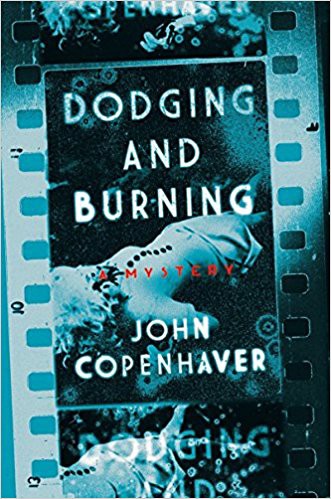
The best crime books are inquiries into character. While plot plays a vital role in the mechanics of storytelling, it’s the richness of character that makes a crime story memorable. We may read to know whodunit, but what lingers in our minds is what we’ve discovered about the characters and what those discoveries tell us about ourselves. When writing my novel, Dodging and Burning, I designed the plot to unfold around a crime scene photo, but the mystery I wanted to solve was essentially psychological: Why would WWII photographer Jay Greenwood show this photo to the debutant with a crush on him and the kid sister of his dead lover? It’s a question about motivation, which of course, is a question about character.
The list of books and authors below is a selection of my favorite crime stories. Some of these writers are dead, some are living, some are well known, others should be well known, all of them are queer authors, and all emphasize character in their work. I’ve also included several true crime books because they, like their fictional counterparts, explore motivation and human psychology.
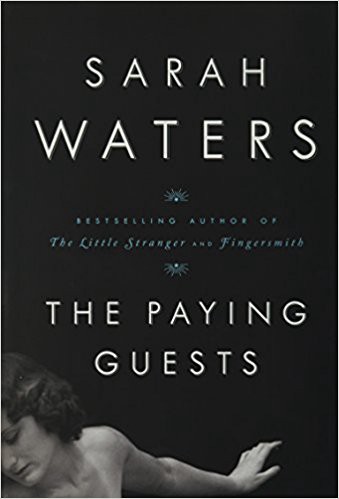
In the struggling post-WWI British economy, to make ends meet Frances Wray and her mother are forced to rent rooms to a married couple, Lillian and Leonard Barber. Frances and Lillian fall in love, and when Leonard finds out, the covert love affair turns ugly — and bloody. Waters’s ear for period dialog and attention to detail evoke 1922 London beautifully, making us feel how confining it was to be a woman and a lesbian during this era. The novel takes a violent turn when the oppressive British legal system threatens not only to separate Frances and Lillian, but also to destroy their love. For these women, the injustice is that criminal behavior is determined by conservative social norms, not a sign of inherent moral corruption.
Renee James’s Bobbi Logan is a 43-year-old transgender woman, who juggles the responsibility of being a small business owner, a friend to a distressed ex-wife, and the primary suspect in a renewed investigation into a cold case murder. Although not a flawless novel — the plot has a few rough edges — James’ triumph here, and it’s an important one, is writing a detailed, positive, and mature transgender character into the pages of a crime novel. James not only gives Bobbi many layers, but also, in a gesture of empathy, she provides the transphobic counterpoint to Bobbi, Detective Allan Wilkins, with a textured and multifaceted existence, making the conclusion of the novel human and poignant.
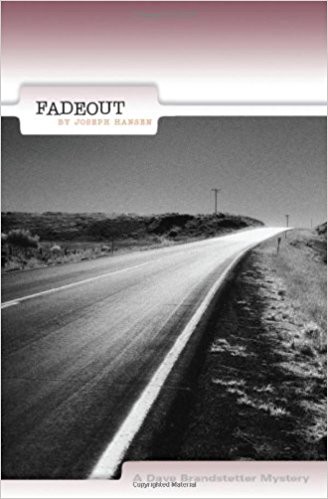
Insurance investigator Dave Brandstretter is unapologetically gay, tough, and masculine, but also tender. In this first installment of the series, he investigates a death claim on a local radio personality’s car accident. There’s no body, so he’s suspicious the accident was faked. Hanson’s lean prose drives the story forward with great energy, and although Brandstretter gains greater emotional texture through the twelve subsequent mysteries, he emerges as nuanced and complex early on. While mourning his dead lover Rod, he quotes Ginsberg’s “Song”: “The weight of the world is love. Under the burden of solitude, under the burden of dissatisfaction, the weight, the weight we carry is love.” Published in 1970, the book launched a groundbreaking series, the gold standard for serious gay crime fiction.
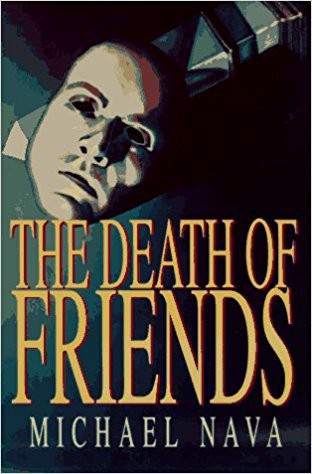
Gay and Latino, Nava’s defense attorney Henry Rios echoes Brandstretter’s mixture of vulnerability and hardboiled edginess. Although The Death of Friends is the fourth in the original six book Rios series, it — as well as the books that precede and follow it, The Hidden Law and The Burning Plain respectively — are my favorites, because they explore the various facets of Rios’s relationship with Josh Mandel, who is dying of AIDS. Friends, in particular, follows Rios as he cares for his friend and ex-lover, and solves the murder of another old friend, who after many years and many lies has recently emerged from the closet. The specter of the AIDS epidemic hovers over Rios’s personal and professional life, and Friends brings them together in an unsettling conclusion, the aftermath of which permeates The Burning Plain.
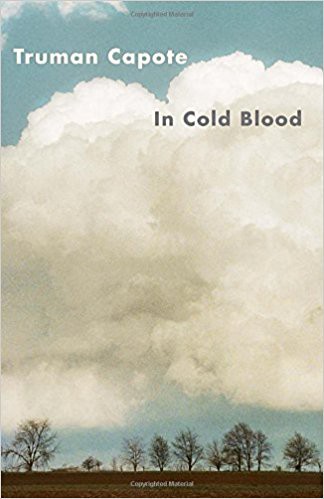
Often heralded as the first non-fiction novel, In Cold Blood began as an article for TheNew Yorker about the 1959 murders of four members of the Herbert Clutter family in Holcomb, Kansas. It quickly evolved into a book-length exposé about the perpetrators Dick Hickock and Perry Smith. Its brilliance lies in the marriage of Capote’s refined instincts as novelist and the compassion he develops for the victims and the murderers. As he was writing it, he developed a close emotional bond with Perry Smith in whom he saw a fellow outsider, a dark reflection of himself. When Perry was executed, something broke in him, and he never completed another book. The personalities he investigates fascinate, but it’s the complex emotional subtext that continues to resonate.
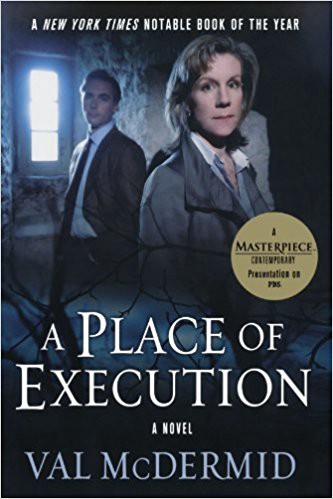
Scottish crime writer Val McDermid’s Place of Execution is a master class in structure and pacing. In 1963, a girl goes missing on a cold December night in Derbyshire and newly promoted Detective Inspector George Bennett becomes obsessed with solving her disappearance and possible murder; the case defines his career. In the late 90s, journalist Catherine Heathcote sets out to write a book about it. When the truth finally emerges, the twist doesn’t disappoint and yet it feels wholly plausible; for both these reasons, George forbids her from publishing it. The characters (and the readers) are thrown into a moral quandary: Is publishing the truth, no matter how compelling, always the right thing to do? That question lingers long after its final pages.
Forrest’s detective Kate Delafield has a complex relationship with the closet. She’s a dedicated, sensitive, and skilled detective, but she remains closeted in order to navigate the homophobic LAPD. Through Forrest’s sharply written nine-book series, the first to feature a lesbian police detective, Delafield struggles with the isolation of the closet and its effects on her personal and professional life. Although it’s difficult to choose a favorite of Forrest’s novels, Apparition Alley, which centers on an internal affairs investigation of Delafield’s conduct during a deadly arrest, is particularly compelling. In Alley, the door to her closet is knocked open, causing her to question the faith she’s placed in her police department.
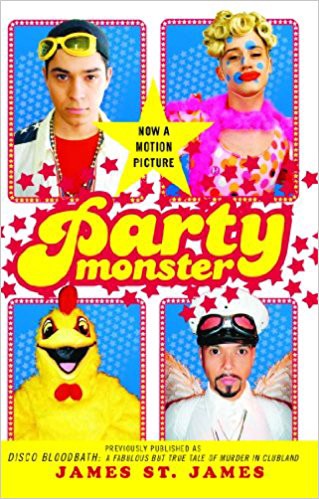
In a drug-addled mania, King of the hedonistic 90s NYC club-kid scene, Michael Alig and his friend Freeze bludgeoned, injected with Drano, and smothered fellow club-kid and drug-dealer Angel Melendez. Later, they attempted a cover-up by dismembering the body and dumping it in the river. James St. James, a close confident of Alig’s, writes his account of the period leading up to the murder, a blend of affection for the freedom of the 90s party scene, and criticism of its debauched denizens, including himself. Between his wry and exuberant characterizations of the club kids, he cringes at his younger self, at times playfully, at times with a somber appraisal. The combination is charming, hilarious, and disturbing. By the end, you understand the allure of this manic and creative party scene — and why it had to end.
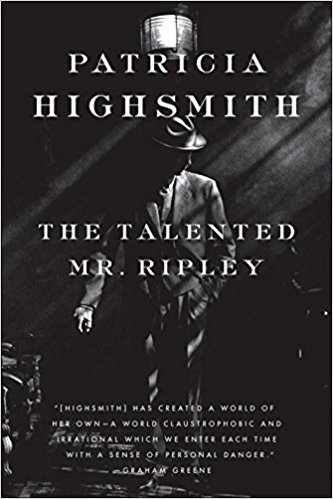
Highsmith’s detached, keenly observant prose is the perfect vehicle to explore a complicated man like Tom Ripley. Ripley stands in the shadows just outside the sun-drenched world of Dickie Greenleaf, the son of a wealthy industrialist, and wants in. What begins as fascination with Dickie’s lavish and carefree lifestyle turns into murderous obsession. Through cracks in Highsmith’s beautifully controlled prose, Ripley implicates us. We are invited into his vulnerabilities, his anxiety about his social position and his desire to live well. We appreciate his artistic sensitivities, his cleverness. Soon this carefully constructed charisma falls away to reveal a cool, remorseless rage. But it’s too late, we’ve already been seduced.
In Bollen’s third novel, we luxuriate in the beauty of the Greek island of Patmos, its whitewashed mansions, its glassy water, its looming Monastery of Saint John. We peer voyeuristically over the shoulders of its inhabitants, both its native islanders and its wealthy vacationers. We enter a richly imagined world, a lush backdrop for a story about the collision of the colonizing American elite and the island’s indigenous community. Like Highsmith’s brilliant Talented Mr. Ripley, we delve deep in an exotic Mediterranean milieu and its moral murkiness. Bollen is a superb writer of scenes, a quality he shares with the great Highsmith. As characters dine, chit-chat, and drape themselves across the bows of yachts, the underlying tensions surface gradually, a slow boil, until they satisfyingly crescendo in violence.
Are you suffering from Wakanda withdrawal? Don’t worry. You’re not alone; we’re all homesick for the fictive world of Marvel’s historic Black Panther. Whether viewed once, twice, or weekly, the movie’s ability to envelop its audience in a visually arresting re-imagining of Africa never gets old. It’s difficult to witness T’Challa’s determination, Princess Shuri’s brilliance, and Killmonger’s passion without yearning for more and wishing that all of it was real. After the first five minutes of Black Panther it’s clear that Ryan Coogler has created an Afrofuturist masterpiece well-deserving of acclaim. So, if you find yourself daydreaming about booking a flight to Wakanda, head to your local bookseller instead and pick up one (or all) of these books.
The first of Octavia Butler’s Patternist series to be published, Patternmaster places readers to a distant future where the world is ruled by oppressive telepaths. The result of generations of selective breeding, the clairvoyant tyrants use their power to enslave those who lack psychic abilities. Throughout the pages of Butler’s narrative, the telepaths simultaneously make the lives of “mutes” and “clayarks” (those who lack telepathy) difficult and cause dissension amongst the Housemasters, the government officials who rule the world with greedy hearts and iron fists. A tale of political and familial division, human cruelty, and resilience, Patternmaster is a haunting critique of capitalism, colonization, and exploitation.
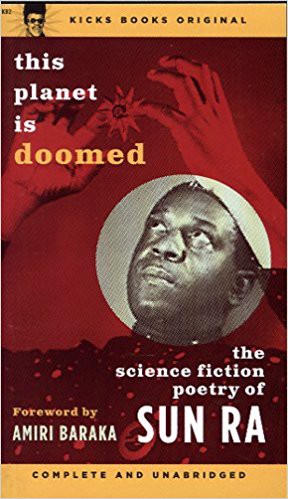
The poetry of Afrofuturist and jazz legend Sun Ra is undeniably cosmic. Comprised of galactic visions and futuristic musings, the luminescence of each stanza is infused with stardust and an ancient wisdom that examines the complexity of the cosmos and humanity. Much like his musical compositions, Sun Ra’s poems thread together mythology, mysticism, and sci-fi, offering his audience a unique glimpse into the mind of a visionary. This Planet is Doomed volleys between retrospection, humor, and joy. The prophetic urgency of his work transcends time. The worlds that his poems conjure will leave you in awe.
The third novel in Tananarive Due’s African Immortals series is set in the wake of the AIDS/HIV pandemic and centers around Fana Wolde, a teen immortal whose blood gives her the power to heal miraculously and read minds. When her close friend — who is a mortal — is captured by Fana’s family, Fana makes attempt to right her family’s wrong and risks her own safety in order to rescue her friend. Once the two escape, they become a part of the underground network of smugglers who are being strategically slaughtered by an ancient sect of immortals bent on destroying the sale of a life sustaining drug called “glow.” Determined to uncover the murderous sect’s obsession with an archaic prophecy and the motivation for their violence, Fana fights tooth and nail to determine her own destiny and protect those she loves. Blood Colony is a story about sacrifice and the cost of survival.
Penned by Black Panther: Long Live the King’s Nnedi Okorafor, Zahrah the Windseeker takes place in the Ooni Kingdom, a region where children born with vines growing in their hair are considered magical. The novel’s heroine Zahrah Tasmi is one of these children, despite how ordinary she considers herself to be. As time passes and the plants in Zahrah’s hair grow, so do her abilities, which makes her an outsider amongst her peers—save for her best friend Dari. When the two embark on an adventure in the Forbidden Greeny Jungle, Dari is bitten by a deadly snake, forcing Zahrah to embrace what makes her different: her magic. Though aimed at younger readers, Zahrah the Windseeker is an immersive and heartwarming story for people of all ages, celebrating the power of friendship and self-acceptance.
River Solomon’s deservedly buzzworthy debut unfolds on a massive ship in outer space. Aboard the H.S.S. Matilda, the novel’s protagonist Aster struggles to uncover the truth about her mother’s death while grappling with demons of her own. Coupled with the horrors of the racially segregated hierarchy of the H.S.S. Matilda and its sovereign’s ailing health, Aster’s quest for truth becomes intertwined with the fate of the entire ship. This dystopian tale examines how confronting the past can lead to revolution. Like Octavia E. Butler’s Kindred, the pages of An Unkindness of Ghosts will transport you to another time and world.
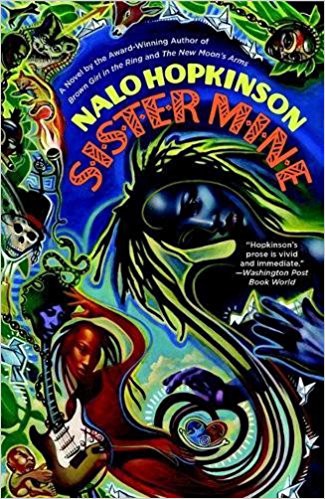
Daughters of a demigod and a human mother, formerly conjoined twins Makeda and Abby grow apart when one sister develops magical abilities and the other does not. Without the powers that her sister possesses, Makeda decides to leave the childhood home that she shares with Abby in order to find her place in the world of those without magic. By doing so, Makeda discovers a new sense of independence and fulfillment until her father disappears and she and her sister are forced to work together in hopes of finding him. From start to finish, Nalo Hopkinson’s Sister Mine is as much about family as it is about autonomy and courage.
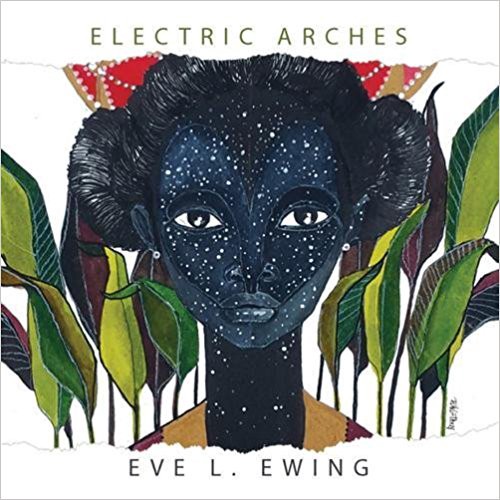
In her noteworthy debut, Eve L. Ewing writes, “I am magic. Life / and all its good and bad and ugly things, / scary things which I would like to forget, / beautiful things which I would like to remember / — the whole messy lovey true story of myself / pulses within me.” Seamlessly teasing the lines between poetry, memoir, and fiction, Electric Arches’ pages prove that words are magic too. Whether conjured through “Affirmation” or the “The Device,” Ewing’s way of looking at the world feels ancestral, futuristic, and intimate all at once. Each line pulsates with truth.
Dark Matter: A Century of Speculative Fiction from the African Diaspora is a touchstone text. Edited by Sheree R. Thomas, Dark Matter features quintessential voices like Octavia E. Butler, Samuel R. Delany, Tananarive Due, Jewelle Gomez, and Steven Barnes. Through stories, essays, and novel excerpts, Thomas’ anthology gives readers an mesmerizing survey of the wealth of talent, vision, and craft that can be found in the stories by Black speculative fiction and sci-fi writers. This necessary collection reminds the world that writing about the future has been and will always be inextricably linked to the Black literary canon.
André M. Carrington’s Speculative Blackness surveys the way race is depicted in fantasy, sci-fi, and dystopian narratives and how fictive imaginings of Black identity impact contemporary culture and communities. Throughout this inarguably timely book, Carrington grapples with what these genres mean to Black Americans and their ability to shape the future in an empowering way. Whether analyzing the way race is handled in Marvel comics or the implications of Star Trek: Deep Space Nine’s Benjamin Sisko, Speculative Blackness is an accessible and academic meditation on the limitless potential of Black storytelling.
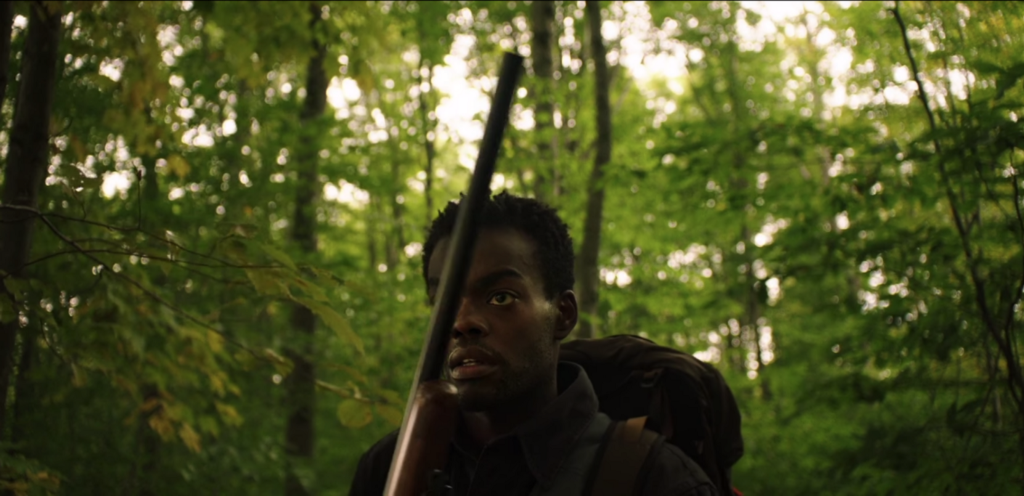
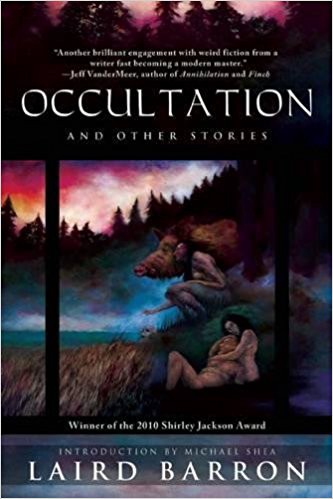
Among the most unsettling stories in Laird Barron’s body of work is a novella called “—30—”, which magnificently blends a rigorous attention to detail with a haunting sense of ambiguity. Now, writer/director Philip Gelatt (The Bleeding House, Europa Report) has adapted Barron’s novella into an unsettling film, They Remain. William Jackson Harper (The Good Place) and Rebecca Henderson (Mistress America) star as Keith and Jessica, two scientists working for an unnamed corporation assigned the task of surveying a plot of land that a sinister cult once called home.
To say that things don’t go according to plan would be an understatement. Keith and Jessica have a complex and prickly relationship from the outset which intensifies as they try to reason with the surreal landscape around them. This landscape disorientates by challenging the characters’ understanding of their environment and the forms present—or absent —within. Triangles are a visual motif throughout the film, and, as a place that once was home to death and atrocities, the residue of past traumas emerge in physical and abstract ways. There’s a menacing dog, some bizarre behavior from insects, and — most unnervingly of all — a massive horn that shows up midway through the film that looms over the personal and sexual dynamics.
I talked with Gelatt about the challenges of adapting Barron’s novella and how he went about finding a visual translation of the story’s precise pacing and carefully woven ambiguities.
Tobias Carroll: Where did you first encounter Laird Barron’s fiction? What first drew you to the novella “—30—” out of his body of work as something you might adapt?
Philip Gelatt: The first Laird Barron story I read was “Old Virginia.” It was recommended to me sometime in 2008 or 2009. I remember reading it and loving it. It was pulpy and profound and delightfully dark. But then, for reasons I can’t remember, I didn’t read any deeper into his work at that time.
Purchase the collection with “—30—”
I got back into him around the time The Croning came out. I went back and read everything he had published up to that point. Occultation, the whole collection, just wrecked me. It’s such an artistic statement, as a piece. Everything in there is daring and gripping and you can feel the way Barron is pushing at the genre and exploring styles and voices.
And “— 30 —” is, of course, in that collection. I quickly became obsessed with the idea of making it into a film.
When I try to explain what drew me to that story, I think I might sound a little bit crazy. But reading it for the first time, I found it aggravating. I was frustrated by it BUT productively frustrated. The kind of frustration that makes you want to go back and figure something out. Like, “how dare this story do this to me!”
I found myself re-reading the story, parsing its details, exploring its shadows, and trying to figure out just what the hell was really happening there.
I loved that it was, on its surface, such a simple story: “two scientists go into the woods, they go crazy and try to kill each other.” But underneath there seemed to lurk an almost bottomless depth of implication, meaning, and subtext. Everything was just slightly out of frame, just a hidden enough that you couldn’t tell what was really there and what wasn’t.
And that felt to me like a great cinematic challenge: how do you make a horror movie where almost everything is off screen? How would that turn out? How would it make the audience feel?
Underneath there seemed to lurk a bottomless depth of implication, meaning, and subtext.
There was one other aspect to it, as well. After writing Europa Report I felt the urge to do something that I could consider its dark twin. Europa is very hopeful about science, about mankind’s ability to learn and to know. It’s basically saying, “if you can give your life to make a discovery, it’s worth it.”
I read “ — 30 — ” to be a nightmare reflection of that. It’s skeptical of our ability to ever know anything. Its scientists are perhaps noble, but they’re also driven by flawed, hidden motives. Europa was a hopeful film for a hopeful time; this is an uncertain film for an uncertain time.
And, in the end, it posits a death that is filled with unanswerable questions. In a sense, it’s the abyss’s answer to the hopeful deaths of Europa.
TC: What was the process of adapting the novella like?
PG: So much fun! If I could only adapt literature for the rest of my career, I’d be happy. Such an interesting process to enter the work of another writer and attempt to figure out why certain decisions were made, why scenes were put in that order and what other things can be done with the work. It’s like borrowing someone else’s toys.
I started by printing the story out and cutting it up into scenes and pieces. Like an arts and crafts project. Just a huge mess of paper and words and scraps. I then spent maybe a month re-arranging those pieces and then rubber cementing them into a notebook. Then I filled that in with notes and sketches and ideas and used that as my outline for the first draft of the screenplay.
Because the story is so dreamlike and odd, that process really helped me get into the right headspace. I found all kinds of strange details and odd descriptions in the story that gave me a strong footing for the script.
TC: The repartee between the two central characters, and how each of them reacts to their environment, is central to both the film and the novella. How was the process of casting the two leads?
PG: A little arduous. I didn’t want to do traditional auditions. My thinking was that this whole movie was going to be just these two people and because of that I wanted to find actors who had, in their own personalities, something that felt true to these characters.
So instead, we brought prospective actors in and I had a conversation with them about the script, the story, and the characters. I’m a big believer in finding strong collaborators so I was looking for people who had engaged with the material, who had intense opinions about it and who felt right for the roles.
Rebecca came in and just was her role. Smart and sly and inquisitive with just the right amount of aggression. And Will came with a great emotional rawness about him. Though he copped to not having much woodsman-like experience, he felt ready for it. Ready to immerse himself in it and see how it would change him.
I can’t say enough good things about both of them. Neither role was easy at all. The whole movie is on their backs and they both gave it everything.
TC: Was there any aspect of “— 30—” that was particularly challenging to translate onto the screen?
PG: The single hardest thing was getting the tone right. The more I work in film, the more I’ve come to believe that tone is the single most important part of any project. It’s foundational and informs everything from character to plot to the style of lighting you use for a scene. And yet it is always so hard to pinpoint, so hard to codify. And if you get it wrong… then nothing coheres.
Finding the tone of this story in particular was tricky because it isn’t really a traditional horror story, or science-fiction story, or doomed romance, or whatever. It’s an ambiguous, frustrating, strange, weird, dream-like investigation. What the hell is that tone?
Then there were certain physical aspects of the story that were difficult. Like filming the giant sex horn. Not quite as easy as it sounds.
So much of this story is about the things you’re not seeing. Capturing the lack of something, making a viewer realize they’re supposed to be thinking about what’s not there as much as what it is… that was not easy.
Then there were certain physical aspects of the story that were difficult. Like filming the giant sex horn.
TC: The region in which They Remain is set has seen a fair amount of history before Keith and Jessica’s story begins, including the presence of the cult alluded to numerous times. How did you find the right balance between history and ambiguity?
PG: It was a constant balancing act. Early versions of the script had way more exposition, which we cut out to lean into the ambiguity, and then went back and sprinkled in history.
There were many, many cuts of the movie before we settled on a final version. I think my first cut was 2 hours and 20 minutes maybe? And a lot of the changes from that cut forward were working on the issue of ambiguity and how much to give the audience. If anyone is curious, a lot of the deleted footage will be available when the film comes to disc and video on demand.
But yeah, this question relates back to the things that attracted me to the story in the first place. That it is opaque. That it’s about trying to see things that you just can’t see and never could. I think that applies as much to the history of the land, as it does to the cult, as it does to the interior lives of our lead character, as it does to the mysterious company who brought them there. It’s all loaded with meaning but it’s on the viewer to parse that ambiguity using the bits of history they are given.
The story and the movie both work by loaded insinuation and accumulation of detail. For a certain kind of viewer, I think that kind of story is catnip. It’s a mystery and it’s there for you to solve but you have to work at it. For another kind of viewer, well… they’ll probably just hate the hell out of it for all the reasons I think it’s interesting.
TC: In both the film and the novella, the characters move between waking states, dreams, and conditions somewhere between the two. As writer/director, how did you attempt to convey these shifts in perspective and state?
PG: I knew that I never wanted there to be a clear, definitive way to say, “well it was all a dream!” or even “that’s where reality ended and the dream began!”
I wanted to sink the viewer into that “dream or reality” ambiguity. I wanted people to, at different points, wonder if we were in a dream sequence or not in a dream sequence and actively engage with the film to try to sort that out.
Ultimately, a lot of this film is designed to try to get viewers lean forward and engage with the story’s ambiguities and mysteries. It’s not a movie that’s going to tell you a story — it’s going to give you some pieces and ask you to tell yourself the story.
TC: Some of the film’s editing uses jarring transitions between disparate scenes to illustrate a feeling of disorientation, and there’s an extraordinary triple (or is it quadruple?) exposure shot at one point. How did you arrive on that as a visual equivalent to the hallucinatory states of the characters?
PG: For that scene with the quadruple exposure, I knew I needed something to… break the spell of the film? Or maybe elevate the spell of the film? Basically, I need an upping of the stylistic ante. The horn is there, the characters are having sex, Keith’s mind is starting to slip and so is reality.
Originally, the idea was to digitally alter that shot. Change the sky to red and otherwise mess with the image.
Then in the edit room, I started playing with the pieces of music our composer Tom Keohane wrote for the film, and I landed on that frantic piece. That piece of music plus that scene just felt propulsive. Like it was hurling us to some place new.
But I was still having a hard time figuring out what take of the shot to use. So, in a fit of frustration, I layered them all together to create that effect, mostly as an experiment.
And it felt immediately correct — the right kind of way push the characters and the viewers into a new liminal headspace where they’re both in the scene but separated from the scene and just completely, aggravatingly, and yet productively, unsure of what is going on.
TC: Cinematic references abound in “ — 30 — ,” from an early scene in which the two characters discuss who would play them in a film, to a later reference to the work of Dario Argento. Did the allusions to movies found within the story have any impact on how you adapted it for the screen?
PG: Only a little bit, to be honest. Recently, I’ve found myself exhausted by the ongoing trend of movies referencing other movies in either style or plot or soundtrack. A lot of pop culture has become a kind of hall of nostalgic mirrors. So, I tried very hard not to do “a John Carpenter scene” or an “Argento scene” or even a “Phase IV scene.”
Don’t get me wrong, I love the horror genre deeply and madly. But when I set out to make this I tried to slip the genre wherever I could. I wanted to make a thing that felt different… that felt sort of inescapably itself. If that makes any sense, at all.
That being said there are a few stylistic reference points in the film, though they might be so slight as to not really be noticeable. I’ll leave that nice and mysterious for viewers who might want to dig around and see if they can figure out what they are.
Celebrity can get you a lot of things — like your own publishing imprint, for instance. In the past few years, celebs like Johnny Depp, Sarah Jessica Parker, Oprah Winfrey, and Lena Dunham have all made forays into the business of books. Now, there’s a new celebrity publisher in town, and this one we’re actually excited about. On Tuesday, Amazon announced that writer and producer Jill Soloway will launch their own publishing imprint, TOPPLE Books—as in “topple the patriarchy”—which “will spotlight the voices of women of color, gender non-conforming, lesbian, bisexual, transgender and queer writers.”
In a statement from Amazon, Jill Soloway said, “We live in a complicated, messy world where every day we have to proactively re-center our own experiences by challenging privilege. With TOPPLE Books we’re looking for those undeniably compelling essential voices so often not heard.” The imprint shares its name with Soloway’s production company, which, according to their website, also aims to help “women, people of color, queer people and their allies…use the power of story and voice to change the world.”
Jill Soloway is the Editor-at-Large, and will be partnering with Little A, Amazon’s literary fiction and nonfiction imprint at Amazon Publishing to bring TOPPLE Books to life. Amazon Publishing, which launched in 2009, is still pretty new to the traditional publishing game. The company’s early emphasis on self-publishing and heavily-discounted book prices was met with serious criticism by those in the traditional publishing world (which had, in some cases, already clashed with Amazon), and the tension hasn’t really gone away. But Soloway is a familiar name for the folks at Amazon, the place where their Emmy and Golden Globe award-winning Transparent and I Love Dick have both found a home. Jeff Bezos seems to get the mission of the imprint, too. In a moment at the Golden Globes last year, as reported by Recode, Soloway told Amazon’s founder Jeff Bezos about their goal to combine their vision for an intersectional power movement with their TV and film career. Bezos told Soloway the jobs were one in the same: “The way that a story can make change is so much faster than the way that politics can make change…You create culture that has a story in it that says something as radical as ‘trans people are people’ and then laws follow,” Soloway recounted. Now, Amazon’s giving Soloway another shot at creating something radical.
If we’re going to let celebrities have their own publishing imprints, Jill Soloway is the kind of celebrity we want for the job. Soloway is an activist for LGBTQ rights in the arts, and one of the founders of the #5050by2020 campaign for gender equality and the #TimesUp campaign to end sexual misconduct in the industry. Not to mention Soloway has written their own books, too: an erotic novella, Jodi K., and a memoir, Tiny Ladies in Shiny Pants.
Annihilation, Jeff VanderMeer’s 2014 novel, is short, clocking in at just over 200 pages in paperback. There’s not an ounce of fat on it; VanderMeer avoids the all-too-common speculative fiction trap of overindulging in world-building by focusing strictly on his protagonist’s inner life. We know her only as the biologist, and the story unfolds as an entry in her journal, which serves the neat double purpose of making the biologist the only character with interiority, and holding the reader at an extra degree of remove — we’re not reading the events of the narrative as they happen, but rather as the biologist relates them to us after the fact. It’s a cerebral story, with sparse dialogue, no names, little action, and a healthy dose of ambiguity.
The concept is gripping from jump — a team of scientists ventures into a mysterious and abandoned area of coastline, called Area X, that’s thwarted all previous research attempts. Though Area X appears tranquil, there is an eeriness to its flora, fauna, climate, and remnants of civilization that builds over the course of the novel. In the climactic scene, the biologist encounters the Crawler, an amorphous ectoplasmic entity and the catalyst for the biologist’s ultimate transformation. The Crawler, understood in the text to be the evolution or mutation of what used to be the lighthouse-keeper, moves up and down the stairs of the Tower (a living structure descending into the depths of the earth), writing a mysterious text over and over on the walls. The biologist, having found herself beginning to change from the spores she inhaled in the Tower at the beginning of the novel, finds herself undergoing a trial by fire as she encounters the Crawler on the stairs. It passes over her, cataloging her, recognizing her. Afterwards, she’s not the same.
The movie adaptation, written and directed by Alex Garland, translates much of the book’s weirdness into a language that works on-screen: the mutated flora and fauna of Area X, fairly understated in the book, are punched up, artifice raised to the level of transcendent natural beauty, which makes perfect sense in a visual medium. The characters are given names — the biologist becomes Lena, her husband becomes Kane, the expedition leader (a psychologist) becomes Ventress — which helps the audience keep the characters straight and keeps the dialogue from feeling too stilted. There’s added action and gore and interpersonal conflict to appeal to a broader commercial audience.
Despite the common refrain of “it wasn’t like that in the book,” deviance from the source material is not inherently a bad thing in an adaptation. The language of film is fundamentally different than the language of literature, and there are certain literary devices that don’t translate from text to screen. But what the best adaptations do is update the trappings while keeping the bones of a story the same — and that’s not what happened with Annihilation. Instead, Garland has effected a total transformation of the novel into something that shares its name but few of its defining qualities — a process that mirrors the biologist’s evolution in the novel — and that raises some of the same questions. How much of a thing’s DNA can you change before it becomes something utterly new?
Garland has effected a total transformation of the novel into something that shares its name but few of its defining qualities — a process that mirrors the biologist’s evolution in the novel.
For one, Garland makes Area X itself into the enemy, rather than staying close to the biologist’s conflicted inner life and the interpersonal dynamics of the expedition. In traditional terms, this is now a “man vs. nature” story instead of “man vs. man.” The film removes the element of human monstrosity that underlies the book’s narrative — the psychologist’s insidious conditioning of her teammates, the creeping realization of the extent to which the researchers have been manipulated by the government agency that sent them, the black boxes supposedly monitoring for danger (revealed ultimately to be placebos, useless pieces of plastic), and the revelation that there have been far, far more previous expeditions than they were told. Narratively, replacing the psychologist with Area X as the primary antagonist changes Lena’s ultimate relationship with Area X; the film becomes a story of her triumph over the space, rather than her adaptation to it.
Garland also disambiguates a lot of the questions posed and then deliberately unanswered by the book. In Annihilation, VanderMeer is distinctly uninterested in telling us what Area X is, where it came from, because, frankly, that’s not the point. (He does address some of these same questions in later books, but those weren’t yet published when Garland wrote his treatment.). Garland, on the other hand, is much more interested in explanations. The opening scenes show some kind of projectile hitting the lighthouse from above, and the characters seem to settle on an extraterrestrial origin for the whole phenomenon. Josie (Tessa Thompson) theorizes that Area X (or the Shimmer, as the movie calls it) refracts DNA the way a prism refracts light, accounting for the endless iterative mutations around and within them.
It’s the omission of the Crawler, though, that most seismically alters the story. Garland includes a version of the Tower under the lighthouse, and Lena and Ventress certainly encounter something down there, but it’s an adversary, where the Crawler is both catalyst and a glimpse of the biologist’s future, a distillation of Area X itself. The Crawler is both creator and adapter, writing an endless living tract, disassembling and reconstructing to fit its own worldview.
The characters in the Southern Reach Trilogy enter Area X as one thing and exit (if they do at all) as something different. Suspended in the medium of the unknown, they’re irreversibly altered by it in a way that’s informed by everything else Area X has ever encountered or absorbed. The adaptation process moves in parallel: a director or screenwriter digests a source text through the lens of their own personal cultural patina — the stories they’ve consumed, their life, their views — and recombines the pieces into something new.
But where’s the line? At a certain point, the biologist is no longer the same person as she was at the beginning of the novel. Where in the narrative that change takes place may be a matter of opinion — was it the moment she inhaled the spores from the wall of the tower, or was it when she finally passed through the Crawler? — but that it takes place is indisputable.
Pose that same question to Alex Garland: at what point have you changed your source material so drastically that you’re telling a completely different story? At what point do you yourself become the Crawler?
At what point have you changed your source material so drastically that you’re telling a completely different story? At what point do you yourself become the Crawler?
At the end of the novel, the biologist leaves her journal in the lighthouse and journeys off along the coast, deciding to stay in Area X indefinitely. She feels close to her late husband there, and has come to believe that the inevitable encroachment of Area X on the rest of the world isn’t such a bad thing — would it be so terrible, after all, if this eldritch Eden engulfed the whole planet, given how humans have exploited and squandered the natural world? As readers, we’re inclined to agree. VanderMeer gives us little to love in the human world, and while Area X is strange and frightening, it’s honest. There’s a distinct desire to wander up the coast with her and explore.
But on-screen, in a bravura piece of filmmaking, Lena has a showdown in the lighthouse with an entity that doubles her, attempting to take her form. She kills it, and in doing so seems to defeat Area X, before returning triumphant (yet altered in some tantalizingly vague way) to the copy of her husband, still living. She’s a hero, of sorts, and in her debrief at the Southern Reach we learn that Area X has collapsed and the lighthouse is reduced to ashes. The threat is eliminated, though some part of Area X lives on in her husband’s double, and in the shimmer in her eyes. There’s a sense of loss here, since there was so much more of Area X to explore. It feels conservative in a way the book never did, to choose the violent rejection of change instead of embracing it.
It feels conservative in a way the book never did, to choose the violent rejection of change instead of embracing it.
You can’t see the full shape of a story until it’s over, which is why endings have such weight. The ending of the movie throws into sharp relief just how differently VanderMeer and Garland see this story — where Vandermeer conceived of a loner becoming one with a strange land, Garland saw a woman driven to solve the mystery that wounded her husband. Neither view is wrong; one story is not objectively better than the other. But when a filmmaker strays this far from his source text, it ceases to be an adaptation and becomes something else.
Or, to quote Lena, “It’s not destroying… it’s making something new.”
Mark Sarvas’s new novel Memento Park is a moving and compulsively readable story about the journey of a piece of stolen art, and an account of one man coming to terms with a past he barely knows.
I tore through it, caught in its spell the entire time. I was particularly struck by how Sarvas managed to gracefully navigate a six-way intersection of the political, the personal, the historical, the contemporary, the inherited, and the improvised. We sat down together to talk about how history — both the personal and the global — has a way of reemerging in the present, perhaps despite our best efforts.
Antoine Wilson: Memento Park comes a decade after your debut novel Harry, Revised. Can you talk about the origins of this book, and what took you so long to follow up your first?
Purchase the novel.
Mark Sarvas: I’d been thinking about the subject in some form or another since the late 90s, since well before my first novel. I knew I wanted to write about looted art but I also knew I didn’t have the chops to pull it off as a first novel, so I stuck the idea in a drawer and wrote Harry, Revised.
I had greater ambitions for this novel, and I was also excavating some personal stuff that I wasn’t in a hurry to delve into. I wanted something deeper and (dare I say it) more lasting. For my first book, I was in a hurry, and I’d felt like I’d allowed “good enough” to be good enough. I was determined not to settle this time.
As for the actual writing time, a few things intervened, major life changes like the birth of my daughter, moving, collapsing marriages, and so on. From my start in January 2009 to the sale to FSG in May 2014 ate up six years. But as I always tell my students, each book takes as long as it needs.
AW: Memento Park is in first person, narrated by an American of Hungarian descent who shares your initials. Is it safe to say that this novel and its protagonist are close to you?
MS: That was super subtle, the initials thing, huh? The plot of Memento Park is wholly fictionalized; there’s no valuable art in my family, sadly. My stories tend to start out as “what if” questions: Here it was, “What if a guy became aware of a painting that might belong to his family, how would he be able to reach back into the past to prove it?”
The stuff that’s closer to home is around the relationship between my narrator Matt and his dad. I had a pretty complicated relationship with my dad, a tough, demanding immigrant of the old school. I think I felt in some ways a bit of a perpetual disappointment to him. He was remote and not particularly warm or easy to know, though I did love him (and fear him). So a lot of him went into Gabor’s characterization, and a lot of the anxieties and conflicts between Matt and his father are, shall we say, inspired by life. That said, I should add that Gabor still is a fiction, a heightened and more monstrous (for dramatic effect) version of my father. (My sister would insist I tell everyone that; and it’s largely true.)
Similarly, Matt isn’t me, though we share a good deal more than just initials. Early on, I made a big break between the two of us, and made Matt an actor. It’s a profession I couldn’t in a million years undertake, but I know actors, so I could write about the work knowledgeably. The moment I opened up this gulf, Matt stopped being “me” and became “him.”
AW: One of the fascinating things about Memento Park is how alienated Matt Santos is from his religious heritage, his family history, even his given name. An actor living in Los Angeles, he’s practically an exemplar of the American affinity for self-reinvention. The novel can be read as a study of his reluctant emergence from the daydream of an identity unfettered by the past. What motivated you to write about this journey?
MS: My parents are both survivors of the war in Europe, and in my 30s, I would badger my mother to tell me her stories. (My father wasn’t really the story-telling type, though he opened up a bit toward the end of his life.) She tried once or twice but couldn’t finish a sentence without crying. I even bought her a microcassette recorder, thought it might be easier if I wasn’t in the room. No dice. And so I think there was a little bit of frustration at a story closed off. I resist overly neat readings of any work of fiction (as, I know, do you), but I think a central idea that preoccupied me and is expressed throughout the novel is: What happens when the past is permanently out of reach? When you wait too long to ask important questions? As the last generation of Holocaust survivors begins to die, that felt more pressing than ever.
AW: It’s a fascinating take on the legacy of trauma, where the ordeal of the past shuts off not only painful stories but also interrupts intergenerational transmission of religion and culture.
MS: That seems a very common phenomenon, this generation of postwar Jewish immigrants who lived a secular, American life. (Yes, we had a Christmas tree!) The more I researched Memento Park, the more resentful I became about losing my Jewish heritage. I actually had to take a 12-week Introduction to Judaism course at the American Jewish University because I knew so little about being Jewish.
I think there was also a little bit of self-indictment, honestly, a reckoning with my own disengagement and lack of curiosity for so long. Ours was a secular house where certain things just weren’t talked about, but I’ve come to see I accepted that silence a little too easily. Maybe it was easier for me not to have to deal with my parents’ pain and loss. I don’t know.
You’re also very astute to pick up on the self-reinvention theme — I re-read The GreatGatsby every year, it’s my favorite for a reason. Memento Park surely casts at least a sidelong glance at the ways in which I’ve run from myself, a feeling that can be especially acute in Los Angeles. The choice of making Matt an actor, one who freely and easily assumes and discards personae, isn’t an accident.
AW: While reading Memento Park I found myself googling the artist Ervin Kálmán and his “Budapest Street Scene,” only to discover that you’d invented them. How did you go about creating the artist and his work? Did you go through many different ideas for paintings before settling on “Budapest Street Scene”?
MS: Ha! I never thought anyone might google him. I didn’t invent them so much as more or less steal them. He is modeled very closely on Ernst Ludwig Kirchner (again with the initials), one of my favorite German expressionists, who painted an iconic series of Berlin Street Scenes. I thought at first of simply using the real art and artist but I didn’t want to be bound by his history, and I wanted the painter to be Hungarian. But Kálmán’s biography leans very heavily on Kirchner’s, including the fact of his suicide, and all of the paintings I attribute to my painter are Kirchner’s.
I’ve long wanted to write about art and painting, and it’s a real writerly challenge, isn’t it? Trying to bring a picture to life, to make people see what you’re seeing. Some of the most fun I had writing the novel (which wasn’t often much fun) was writing about the art.
AW: Writing novels isn’t very much fun, is it? And yet we persist. What is it that keeps you writing, or, at least, kept you going while writing Memento Park?
MS: I think, for me, there’s always a nugget at the center of each novel, a question, that draws me in and keeps me working. With Harry, Revised, the question was small and personal — what does it really mean for a person to change, and is change even possible? But for the long haul of Memento Park, it felt like I was dealing with something a little more important, a little deeper — what happens when the past is lost beyond our ability to retrieve it? And so, through those days when you wrestle with scenes that don’t add up, or characters who don’t come to life, you can always return to that animating question as a touchstone. I need those big, important questions to push me forward. To make me feel like this is something worth writing down, because it’s tackling something that matters.
AW: What was the greatest discovery you made in the process of writing the book?
MS: There were many discoveries, as befits a book that you spend seven years on. But the one I’ll share here is something I’ve told my students ever since. If your work doesn’t surprise you, it won’t surprise your readers. I’d always known that as an intellectual fact, but in Memento Park, a story twist (which neither of us shall reveal here) came to me when I was well into the writing and caught me totally off-guard. And it works the same way in the book, because it doesn’t feel like there’s a long, conscious set up, it just unfolds organically. And I felt the truth of that advice.
I also wrote without an outline, which I hadn’t done before. That unnerved me, but I trusted the world and the characters to show me the way, and although it took time, I believe it paid off.
AW: You mentioned Gatsby, but are there any other books or authors you return to again and again? Stories that are, as you wrote Memento to be, lasting?
MS: Sort of. There’s always so much to be read that I try very hard to keep moving forward, give new work its due. At the same time, some works just never quite exhaust their demand on your attention, and other works seem to magically unstick you when your writing gets mired in mush. My main influences these days are the two Johns, Berger and Banville. The first for his luminous humanity (his death last year was a deep blow), the latter for his unparalleled style.
There are other writers I love very much, who inspire me but who don’t necessarily influence my style, though I like to think they press on my thinking. Those include writers like Zadie Smith, W.G. Sebald, Marilynne Robinson, and J.M. Coetzee.
Sometimes, I will go back to a book to answer the question “How on earth did she/he pull that off?” A recent example was Max Porter’s brilliant and moving Grief is the Thing With Feathers, which breaks every single rule as it soars.
DON’T MISS OUT
Sign up for our newsletter to get submission announcements and stay on top of our best work.
YOUR INBOX IS LIT
Enjoy strange, diverting work from The Commuter on Mondays, absorbing fiction from Recommended Reading on Wednesdays, and a roundup of our best work of the week on Fridays. Personalize your subscription preferences here.