Leesa Cross-Smith is Taking Back Kentucky

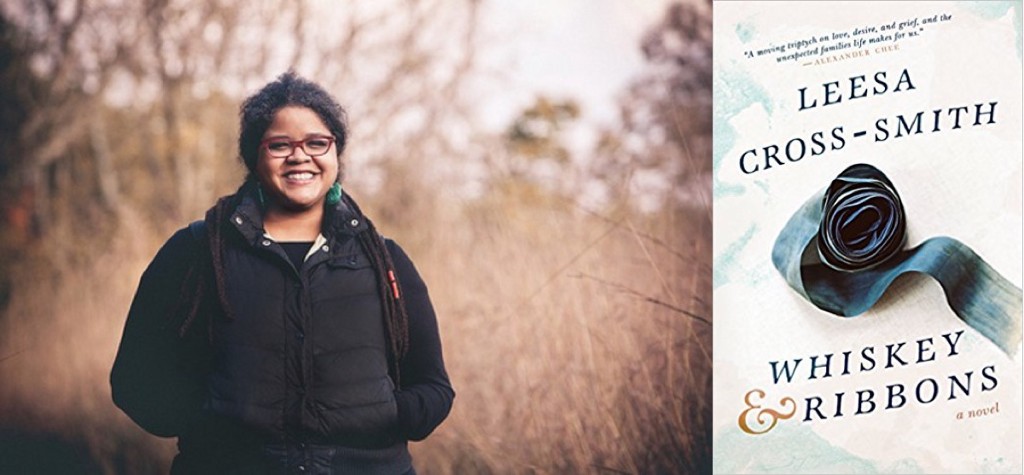
Leesa Cross-Smith started her writing career composing obituaries for the local newspaper. She has since changed her focus, from the departed to the fictional, but her ability to encapsulate a life in a couple of sentences still serves her well.

Cross-Smith’s debut was the story collection Every Kiss a War (Mojave River Press, 2014). Her upcoming novel Whiskey and Ribbons chronicles the relationship between Evangeline (Evi) Royce, a ballerina, Eamon Royce, her police officer husband, and Dalton Berkeley-Royce, Eamon’s adopted brother. When Eamon is killed in the line of duty, Evi and Dalton are left to cope with their grief. Whiskey and Ribbons recounts a timeless story of love, grief, resilience, and family set against the backdrop of modern Louisville.

Cross-Smith’s work has received Editor’s Choice in Carve Magazine’‘s Raymond Carver Short Story Contest and been a finalist for both the Flannery O’Connor Short Story Award and the Iowa Short Fiction Award. Her work has appeared in Oxford American and The Best Small Fictions 2015, among many others. She is also the founder/editor of the literary journal WhiskeyPaper.

Cross-Smith and I took some time to talk Southerner to Southerner about misconceptions of Southern African-American life, delayed gratification, and hip-hop in Louisville.

Latria Graham: There’s a 20-year arc between when this story was started in school, and it’s publication with Hub City Press. Can you talk a bit more about Whiskey and Ribbon’s origins and how it developed?

Leesa Cross-Smith: I started it when I was in college. Originally it was a simple story about a woman who was torn between two brothers/adopted brothers/best friends.

A local police officer in my town was killed right after my daughter was born. I started thinking about his widow and how her life looked now, and felt now, and I was so touched by it just because those things always affect me but because I just had a baby and I was so dependent of my husband. I just couldn’t stop thinking about that and tying that to the story I started in college. You’re always encouraged in writing to dig into those really dark places. I was compelled to continue working on it, so it just kept coming back to me. I made it a short story, and then I couldn’t stop thinking about it, so I just kept writing it and made it a novel.

LG: I was listening to the Spotify playlist that accompanies the book. There’s classical, there’s country, there’s the Grateful Dead in this lineup. Even the way the novel opens is musical. What does music do for you as a creative?

LCS: I always make playlist to everything I’m working on, so it’s always been something that I do, whether I’m assigning a song to a specific character, or creating a mood. So I’ll always have something in mind to create a mood, or I will say to myself, “I want to write a story, like how this song makes me feel.”

LG: What role did you intend for music to have in the novel?

LCS: Originally I had no idea how to structure this novel. It drove me crazy. I would go on long walks, I would walk three miles. I would just think about it, and I couldn’t, I absolutely could not figure out how to structure it.

While reading, I came across the idea of a fugue, which is defined as a piece of music that intertwines several different voices, some of them repetitious, and then a voice drops out. That’s exactly what I needed to do when I was putting this book together. I have their voices come together as if they’re all singing a song, and then we have Eamon’s voice drop out.

While reading, I came across the idea of a fugue, a piece of music that intertwines several different voices, some of them repetitious, and then a voice drops out. That’s exactly what I needed to do when I was putting this book together.

LG: Everybody thinks of Kentucky, musically, as a country music kind of place. I don’t know whether or not you agree with this, I see the state as a middle ground for music — where rock, bluegrass, country, hip-hop and blues intersect.

LCS: We have so many dope hip hop artists here in Louisville. There’s rock, and there is a lot of bluegrass, and then there’s a lot of punk bands in the 90’s, and a lot of alternative music and stuff like that. My Morning Jacket is from here, and they’re super alternative. Kentuckians know how much diversity there is, but then people in other places, yeah they will ask if we ride a horses.

Louisville is a big city. A lot of people don’t really know that, but in Whiskey & Ribbons, what I’m trying to show is that there’s Black people who live in Louisville and it’s wild, but yeah, they get married too. They go out to dinner, they go to work, they own businesses. There’s black people here, you know, dancing and listening to music. And they get in fights, and they have sex, and they get hungry. Eamon is a Black dude and he listens to Grateful Dead.

LG: What do you wish people understood about the Kentucky?

LCS: There are people here existing in that middle space. It’s just a matter of listening, which I think a lot of people don’t do, especially in this climate. So there’s a lot to say there but I think it requires a lot observation, which people aren’t that good at. It’s easier to make snap judgements, or rely on what you see on television if you’ve never been to a place — the way people think California is all about surfing.

Stop Dismissing Midwestern Literature

LG: I understand that this may be more of a craft question, but when reading the book I realized that a lot of the power in this novel was gained by the restraint — not saying too much, letting glances and touches linger instead of spelling them out. How did you know which moments to prune and which you should allow to bloom?

LCS: I cut everything about the kid who killed Eamon, because that wasn’t important to me. It really is just an isolated, random act of violence. There’s so many people in families that have to deal with that. They don’t have the answers. There’s no court case. The kid is also deceased now. There’s just nothing else to say. It’s just a tragedy. So that’s something I stripped down a lot and took outside completely.

In terms of allowing sections to bloom, when I talked to my editor, I really thought really hard and wanted to make sure what we had in there were a lot of the really comfortable, intimate moments between Evi and Dalton when they’re snowed in together. I wanted it to be so confessional, and they know each other so well, but then there’s intimacy there that has not been breached out of respect. Creating that intimacy was important to me. And one other part, in terms of blooming was allowing the reader felt Evi’s jealousy and anxiety she has about Dalton potentially being in love with another woman.

LG: I know you draw inspiration from your surroundings but what helps you keep going when you’re in a real rut?

LCS: I’m stubborn. I am, for lack of a better word, a finisher. I feel blessed because I’m really easily inspired, if that’s a term. I’m really easily inspired. I can see a man’s cuffs on TV, or the way someone steps out of their house, or something like that, and I’ll get a story I could write from that. So it’s really not the inspiration, it’s just keeping in the flow of it that’s hard. The publishing business is designed to break you down, designed to make you want to give up. I have this desire to dig in and be like, “No, I said I was going to finish this, I’m going to finish it.” I’m okay with letting things go if I know they’re not working or something but Whiskey & Ribbons would not let me go.

The publishing business is designed to break you down, designed to make you want to give up.

LG: I know the internet literary community helped you with some of those moments — you’ve been very candid on Twitter about what goes into your writing and what it took to make this debut novel happen. What did the internet literary space do for you at the start of your writing career?

LCS: The internet is how I learned. I was not a part of an MFA program. I did not have my MFA because I couldn’t afford it. And so I really just would see that people in MFA programs are reading like a craft book, and then reading a book of short stories, and I’d go and see where they got published, and I would go to those literary magazines and see if I liked their stuff there. And if they did, I would send them my stuff. And that’s kind of where I started. So I started reading a lot of what people were writing and then when I loved it, I would write them immediately and be like, “I loved this.” My husband and I started our own literary magazine. And so that really helped a lot. I made a lot of connections, and ended up connecting with the man who published my short story collection, through Whiskey & Ribbons. And so I made a lot of connections that way because then I got to spotlight people, which I feel far more comfortable doing than the spotlight being on me. I wanted to add something positive. I really do think that kind of community is what you make it.

8 Medieval Texts that Prove Things Haven’t Improved that Much

For legitimate reasons, many of us consider the Medieval period a backwards time. Women were second-class citizens, homosexuality was illegal while misogyny was lawful, and religion controlled everything.

But the Medieval period was also a rich and complex time. History is written by the oppressor, so we don’t hear as much about the women from this era who were running businesses, leading their communities, having healthy sex lives, and — yes — writing. Entering college, an English major with her eye set on teaching, I had no love for Medieval literature. I thought it was boring, outdated, so far removed from my own life, experience, and the conversations I had around those topics. And then, as they magically do, a really fantastic professor changed that. In Medieval lit, we read Chaucer — all of Chaucer — in the original Middle English. Three years later, I was starting grad school with a concentration on gender in Medieval literature.

I return to Medieval literature again and again. Each time I pick up one of these texts, I find them full of relevant questions about gender, class, sexuality; they help me examine encounters that I have now, in 2018. The following texts prove that the conversations we are having currently about women’s writing, gendered experiences, and female authority are similar to those that writers like Marie de France, Julian of Norwich, and others were having as early as the 12th century. Which tells me that either the Medieval period was much more progressive than it’s given credit for, or the 21st century intelligentsia isn’t as advanced as it thinks.

Piers Plowman by William Langland

Although written by one of the many, many white men that fill the Medieval lit canon, Piers Plowman is a standout work. It’s a strange, distorted story of a man who splits his time almost equally between sleeping and waking. In both dreams and waking moments, he finds himself on a journey of theological, political and social discovery. In Piers Plowman, women are given agency, which isn’t as uncommon in literature of this period as people might expect. But Langland’s women are also central to major philosophical discussions — this text touts values that, hundreds of years later, would become tenets of socialism and liberation theology, making concise arguments for giving all of your money to the poor and questioning class hierarchies.

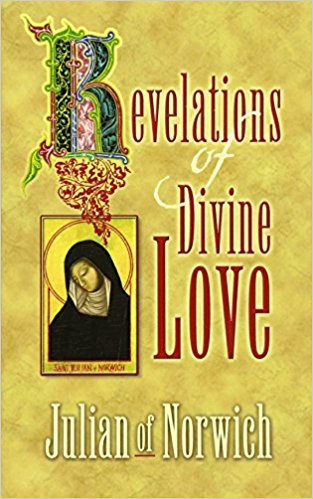
Revelations of Divine Love by Julian of Norwich

In 1373, Julian of Norwich was given her last rites on her deathbed. She then experienced a series of visions, depicting Christ’s crucifixion in gory detail, which miraculously restored her to health. She spent the rest of her life in a small room, as an anchoress, giving spiritual guidance to her local community. Revelations of Divine Love is her theological thesis on Christ, suffering, and of course love. Texts like this, written by mystics, were daring at the time because women were not meant to write, much less write about theology or the Church. Julian’s text, some 600 years later, reads as a complex essay by a woman ruminating on the trauma of a near-death experience.

The Fire of Love by Richard Rolle

Richard Rolle is one of the few male Medieval mystics, mostly because the term “mystic” is a gendered term. The label suggests emotion and otherworldliness; minus the etymological connection, it’s associated with women in a similar way to “hysteria.” But Richard Rolle’s Fire of Love is full of sensual, mystical energy that disregards the limitations of the gender binary. His work was extremely controversial in his time, for a number of reasons. He held a strong fascination with women’s clothing, chose a life of hermitude, and his writings on God and Christ read, today, as overtly sexual — all making him a popular subject of Medieval queer theory.

Lais of Marie de France by Marie de France

Marie de France was a French poet who lived in England in the 12th century. She’s most famous for her lais, which are short poems that tell stories of chivalry and romance. The Arthurian lais “Lanval” is what she’s known for, but it’s “Bisclavret” that earns her a spot on this list. “Bisclavret” is considered one of the first werewolf stories and, while it’s not explicit, it’s easy to read as a queer narrative. It tells the story of a young man who is the King’s favorite knight. His wife starts to worry because he’s disappearing into the woods every night, and returning “happy and gay.” She fears he’s living a double life with another lover, but soon finds out he’s a werewolf. She leaves him for another man, and he goes to live in the castle with the King, happily ever after — just your classic gay werewolf tale.

The Canterbury Tales by Geoffrey Chaucer

It’s difficult to write a list of texts from the Middle Ages without including Chaucer. Chaucer is certainly the most prolific Medieval writer, and his works are rich, determined, and funny. He plays around with genre and language in ways that shock and delight even now. I chose The Canterbury Tales over his other work because it’s full of bawdy women and biting class critiques. There is not enough space here to go down the list, so I’ll just throw out my favorite: to spurn his unrelenting advances, a young woman farts in a man’s face.

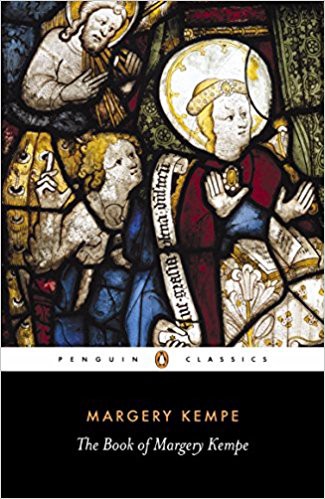
The Book of Margery Kempe by Margery Kempe

The Book of Margery Kempe is a lot — the first autobiography written in English and penned by a woman who lived a textured life. Margery Kempe defies every preconceived notion most people have about women in the Medieval period. Breaking the stained glass ceilings of her time and writing this book is even more impressive given that she wasn’t a member of the upper class. She lived independently running a brewery. She saw visions of Christ and cried openly in the streets, overcome with emotion. What sets Margery’s book apart is that it’s a theological doctrine written by a devout mystic, yes, but it’s also a memoir written by a woman about her own body, her own emotions, her own experiences.

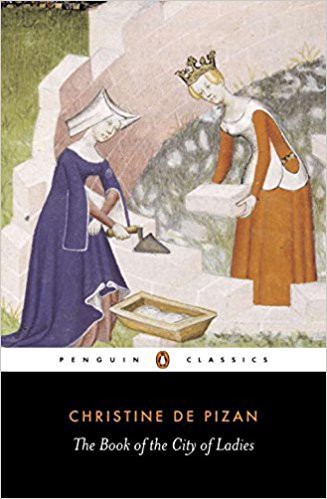
The Book of the City of Ladies by Christine de Pizan

Whenever I see Molly Roy’s imagining of a NYC subway map with stops all named for women (an illustration in Rebecca Solnit and Joshua Jelly-Shapiro’s Nonstop Metropolis), I think of Christine de Pizan. Christine de Pizan wrote a text around an idea that Virginia Woolf (and Molly Roy) would pick up hundreds of years later: What would the world look like if women were afforded the same opportunities as men? In A Room of One’s Own, Virginia Woolf invented Shakespeare’s fake sister, who wrote successful plays because she was given the funding, education, and space her brother was. Christine de Pizan rewrites whole chunks of history to situate women from famous myths and histories in one city and names monuments after them to show what a city who values women would look like.

The Trotula (author unknown)

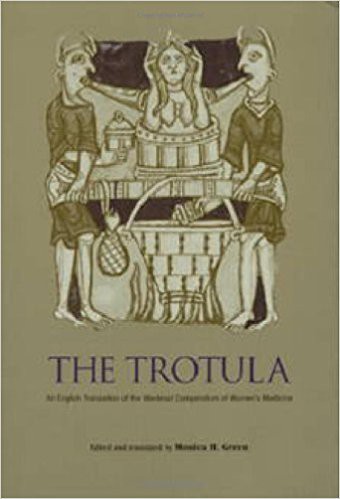
The Trotula texts are actually three medical texts from the 12th century. They explored different areas of “women’s medicine,” touching on everything from menstruation to makeup. The practices within, inaccurate and dangerous, were used to backup pretty much every misogynistic idea Medieval men had about Medieval women. It’s difficult to read in 2018, and it would have been horrible for everyone with a uterus to read when it was published, due to it’s grotesque renderings of anatomy, bizarre medical practices, and the language it uses to describe women. It was thought to have been written by a woman — Trota of Salerno, a medical practitioner — but that’s been hotly, and mostly successfully, contested. There’s no doubt it had a huge impact on how men approached women’s medicine for centuries. I’m including this text on the list not because it should be followed, but because it raises questions relevant to today: who are we going to let shape the conversation about women’s health? How far have we gone to take away women’s authorities on their own bodies? This text and history have shown us what happens when the wrong people and messages dictate power over women. Trotula, as I said, was published 9 centuries ago. Don’t we think it’s time to break old patterns?

The Book That Made Me Realize I Was a Mansplainer—And Saved My Marriage

Novel Gazing is Electric Literature’s personal essay series about the way reading shapes our lives. This time, we asked: What’s a book that made you fall in love?

You already know the efficient neologism “mansplaining,” but let me tell you about it anyway. The word has bite, immediate resonance, self-definition, and even a dash of humor. It carries a critical weight behind it like a sledgehammer yet delicately situates a reader in context. It is powerful, one-word, informative. Merriam-Webster name-checks it in their “Words We’re Watching” section, claiming it is “clearly not going to be dropping out of use anytime soon.”

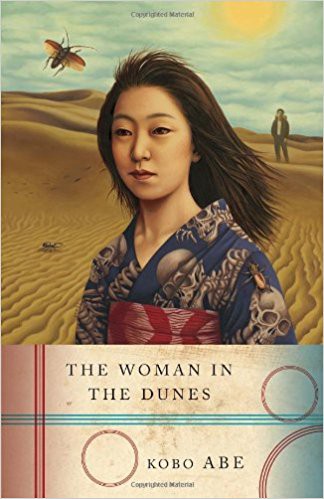
As you can tell from my mansplanation of mansplaining, I have a tendency to mansplain. Given that most men do annoying things much more than they realize, I probably mansplain more often than I think. And, just as a bullshitter knows one, a mansplainer knows his own kind, even if in another time and on another continent. Sometimes, it’s only another mansplainer who can save us from ourselves. This is why I am smitten with Kōbō Abe’s unlikable protagonist in his allegorical 1962 masterpiece, The Woman in the Dunes — not just because I recognize him, but because recognizing him helped me be a better partner.

Though the novel was a best-seller and translated into twenty languages, it was made even more famous by the 1964 movie filmed by Japanese-Renaissance director Hiroshi Teshigahara, which won the Jury Prize at Cannes and two Oscar nominations. The movie made a splash for its sexuality, the film poster showing a couple, mid-coitus, sprawled across sand. Like the film (also written by Abe), the novel Woman in the Dunes is remarkable for its profile of an inveterate mansplainer who meets his reckoning in a bright-but-bleak desert, a place that cleanses him and holds up a sandy mirror to see his own pompous face.

Jumpei is a teacher and beetle collector, obsessed with finding rare and beautiful things and killing them and showing his colleagues to make them jealous. The man is unenthusiastic about his job, his life, and thinks, “Rarely will you meet anyone so jealous as a teacher. Year after year students tumble along like the waters of a river. They flow away, and only the teacher is left behind, like some deeply buried rock at the bottom of the current.”

I too am a teacher and was one when I read this book in 2008 while living in Japan. I taught English and felt, as Abe’s narrator does and as I assume many teachers do, the Sisyphean exhaustion of pushing children up a knowledge curve only to watch them cartwheel back down. And, perhaps like many teachers, I thought I’d be doing something else at that point in my life (I’d wanted to be an outdoor guide). The conflict between my career fantasy and my often thankless reality caused me to internalize failure. This, coupled with standard, toxic, masculine expectations bred in West Texas, created anxieties I was only fleetingly aware of. Unconsciously, I went looking for an outlet.

I was already engaged to the person, Yumiko, who would be my partner for the next ten years and counting (she knew more than I, it turned out, about Sisyphean labor). I was still at that post-adolescent-still-really-adolescent stage of finding a well-fitting partner but doubting my luck, and I kept trying to fill that Grand Canyon-sized insecurity with obstinate proclamations of knowledge. My favorite tactic was talking over her. Abe’s book didn’t help me see commitment more clearly, but it did help me understand the kind of asshole I was being as we planned our wedding and Yumiko’s immigration to America.

Abe’s book didn’t help me see commitment more clearly, but it did help me understand the kind of asshole I was being.

At my most un-self-aware moment, I remember mansplaining something about the kanji alphabet to Yumiko. I’d been studying Japanese for a year, and one day there I was, in a car on the way to a venue we were considering for our wedding, trying to mansplain to a native Japanese person something I’d just heard on Japanesepod101. If I’d been listening to myself, I would have realized that I sounded just like Jumpei.

To cure his malaise, Jumpei takes frequent trips to wildernesses to collect bugs. He travels to the coast of West Japan, hoping to find a rare beetle he has not yet cataloged. Approached by seaside villagers, Jumpei asks where he can stay for the night, and they bring him to a house bundled in steep dunes that are hundreds of feet tall. A rope ladder must be used to descend into the home. There he finds the woman of the title. Then the rope ladder is removed, and he is not allowed to leave.

The villagers’ designs are for Jumpei to take up with the woman and help her shovel the sand that nightly cascades into her home, preventing the thatched dwelling from collapsing, which would directly lead to the collapse of the village nearby. Logically, the plot makes little sense. Why are the woman and the village forced to live among dunes? Why would the village collapse? Why would the man not be able to climb sand? Film director Teshigahara found constructing steep enough dunes to make the predicament believable almost impossible.

The plot creates a parable for coupled struggle, something Abe knew well. Before the publication of this bleak novel, which ironically made him rich, Abe was living hand-to-mouth, selling vegetables and charcoal with his wife, an artist, in recently fire-bombed Tokyo.

Abe is clearly interested in allegory. Though Jumpei has a name, he is almost always referred to in the book as “the man.” Likewise, his eponymous companion is simply “the woman.” This helps make the characters purified, sterile, like the sand they are surrounded by. Their namelessness helps the novel rise into parable.

It is ironic that Abe’s protagonist is held against his will, made to do arduous chores, and yet I am rooting against him. To survive, the woman and man receive supplies from masked, elderly villagers from above, who lower water, food, cigarettes, and sake, and haul up the sand. They sell the sand, cheaply, to construction companies to make cement. It is not clear whether the woman’s descent into the dunes was a trick or her choice, but she has accepted her condition, and would not escape. Her former husband and child are buried there, she tells the man. She participates in the capture of Jumpei because she must. “Well, life here is really too hard for a woman alone,” she tells him. Alone, she cannot shovel enough sand to stay ahead of the drifts. The woman has accepted fate, but Jumpei has not. That first morning, he refuses to help. Then he starts on the action that defines him in the book.

Mansplainers are legion. It might be, and probably is, that every man who has ever talked to a woman is guilty of it. But Jumpei takes this to another level. He argues with the woman, yells at her about her living, about her goals, her house, her body, her food, all the work she has to do to keep the sand from waving over her home. He mansplains radios. He mansplains the effects of heat. He starts to explain dishwashing. He mansplains why the villagers give them sake. He mansplains that she is a victim of the villagers’ action as much as he, even though she demurs. He says, “‘What are you hesitating for? Come on, I’m not the only one concerned. You’re as much a victim as I am, aren’t you? Well, aren’t you?’” He goes on to explain what he has no intimate knowledge of, but which she obviously does. Jumpei, in a feat all mansplainers should admire, mansplains sand:

I’ve done some research on sand; I’m especially interested in it. That’s why I made it a point to come to a place like this. Sand has a strange fascination for people today. There’s a way of taking advantage of this. The place can be developed as a new sight-seeing spot, for example.

He drones on, sandsplaining. The woman closes her eyes, bearing his diatribe, before revealing the reason his musings are ridiculous: There is nothing to invest in a tourism industry with. David Mitchell, writing in The Guardian, suggests that village in Woman in the Dunes is populated with burakumin, “hamlet people,” or Japan’s traditional lowest caste, often made to do work like shovel shit all day and butcher animals. They are engaged in a class war for survival that upper-crusters like Jumpei hardly acknowledge.

He mansplains radios. He mansplains the effects of heat. Jumpei, in a feat all mansplainers should admire, mansplains sand.

I didn’t catch this dynamic on first read, but it makes the novel snap into focus. The woman, whether or not she chooses to be in the dunes, doesn’t matter. She clearly is trapped, perhaps by the memory of her family, by her status as a burakumin, or by the concern she has for the other villagers. Yet the man is uncomprehending, uncompassionate, spiteful. She makes him meal after meal, sprouts an umbrella over his soup to keep out the sand, offers to wash him, love him. He never once thanks her.

It wasn’t Yumiko’s fault that I related to a character who’d been kidnapped into hostile terrain where dunes threatened to drown him daily. Like the woman of the dunes, who tries everything to make life easier for Jumpei, Yumiko was my stalwart defender and my saving grace. Yumiko was, when I met her, a cosmopolitan translator at a major Japanese automotive company. She could be compassionate to strangers to the point of tears, goofy as a sock puppet when it was the two of us, and tough enough on swindlers to make them wish they’d never met her — I regretted not recording one hour-long conversation in which she berated an asshole working for American Airlines, the kind of confrontation I avoid. Yumiko, as I know now with a decade’s hindsight, is the best person I was going to find for the matrimonial foxhole.

But still, I felt unmoored. Besides externalizing the hidden poison of failure and retrograde masculinity, I was also struggling with commitment; the idea of marriage spooked me and led me to behave even worse than I might have, despite how good I had it. As an undergraduate, I had planned (because I was the kind of guy who planned things like falling in love), to live in Japan for three years, have flings, travel, then return to grad school, meet a fellow academic, marry, and work at each other’s universities, encasing our life with bookshelf fortresses. Yumiko didn’t fit my plan. She wasn’t an academic, had entered my life before I was ready for fidelity. She stood, in testament, as a critique of my wisdom. In turn, I behaved foolishly. Like at the plush ring store with family when I openly mocked prices like an errant uncle at a used car lot. Or when I kept denouncing her wedding ideas because they were too expensive, but happily added to our costs based on my own whims. Or the time I screamed at her in the car for no good reason other than I stress-freaked and she wouldn’t agree with whatever silly point I was making.

Yumiko didn’t fit my plan. She stood, in testament, as a critique of my wisdom. In turn, I behaved foolishly.

Jumpei goes through something of a similar arc. He stays with this woman and initially refuses what he interprets as sexual advances. She sleeps completely nude in the living room the first night, with only a towel on her face. He finds her sand-coated body irresistibly erotic. But instead of confronting his feelings, he yells at the woman, taking his frustrations out on her.

In the midst of all this anxious lashing-out, reading Woman in the Dunes was like holding up a mirror. The desert is so stark and bleak and bright that as it scours Jumpei, it also shone brightly into my eyes, which recognized themselves. This was not a pleasant experience. Denial exists because realizing you’re an asshole is painful. Early on in my reading, I noticed connections between Jumpei and me, our teaching and escaping into nature, our feeling trapped and compensating by positioning ourselves as superior to a person who tried very hard to care for us. As a reader, I wanted to reach into the book and pinch close Jumpei’s lips. I wanted to whisper, you didn’t even like your old life and now you’re in a support system with a hard-working, benevolent partner! But of course I couldn’t do that, and the power of literature is that sometimes the change I want to enact on like-minded characters, I can make on myself.

So, I began shutting up when I would otherwise speak — chewing on what Yumiko said, trying to understand, only responding when I’d run through my mind a few times anything that would otherwise have triggered my mansplation. Yumiko suspected something had changed when I became less hostile in our wedding preparations. When dinner conservations were more cordial, like-minded. She herself, of course, had grown doubts about me (who wants to marry an inveterate mansplainer?), but the change solidified whatever spark she’d originally seen. No one else was going to be as patient as she’d already been with me. I don’t want to suggest that it saved my marriage and possibly my life, but I might have to.

This was in 2008, right around the time Rebecca Solnit wrote that article in TomDispatch.com that would help make the term “mansplaining” vernacular. The term “mansplaining” was brand new; Solnit’s essay, “Men Explain Things to Me,” inspired its coinage that year. I didn’t know the term, but I knew what I was — thanks to Kōbō Abe, who laid what I was doing bare before me.

The Woman in the Dunes alone wasn’t enough to cure me. Solnit’s work has also been especially illuminating, but so has reading The Toast (R.I.P.) and essays like “Men Recommend David Foster Wallace to Me.” That is the thing about being an ally, with our lovers and with our colleagues. We former and current mansplainers have to remain vigilant with ourselves lest the sores of our privilege erupt on our tongues and cause us to speak ill. To slip back into privilege-speak, to harangue, to harass, feels powerful, like Anakin Skywalker crossing to the Dark Side, though it’s important to note that he lost his love in the process. I’m happy to report that I haven’t lost mine. I haven’t yet been the man from American Airlines on the other side of the line from my wife, having my mansplanation served back to me.

The power of literature is that sometimes the change I want to enact on like-minded characters, I can make on myself.

Which is what happens to Jumpei — his obnoxious mansplaining sandwich is served back to him by the end. One brilliant aspect of the book is that Abe gives the game away at the beginning. A brief first chapter lets readers know Jumpei went missing, was hardly missed, and was never seen again. Readers know he will never leave the confines of the dunes because they provided a purifying cleanse to his sickness. That he, after declaring over and over he’ll never submit to the villagers’ and woman’s plotting, in the end embraces his lot and the woman who wants to work by his side. He begins to look forward to eventually raising a child, keeping a home, and forming part of the wayward village. Jumpei is never heard from again because really, he isn’t the same person.

Like any good allegory, Woman in the Dunes is ambiguous. At the end, when the pregnant woman is lifted away to receive medical care, the villagers forget to raise the rope ladder, giving Jumpei a means of escape. He stares at it but declines, instead choosing to remain in his home. Other critics have found this ending bleak. They read in the novel a struggle and failure for existence beyond soul-sucking labor. I see his decision to remain in the dunes as a spark of belonging, of responsibility, of a desire to stop escaping and becoming a better man — which is what I hope I’ve done with Yumiko, who was kind enough to give me space to recover from an inward sense of failure and the bullshit West Texas breeds into its men.

There is an elemental quality to the book. At one point, still hopeful of escape, Jumpei says to himself, “Men have escaped through any number of concrete walls and iron bars.” But we know from the opening chapter that our protagonist will never escape. He will be absorbed by sand, which he came from and to which he will return. The woman shows the man how to clean dishes using only sand. Later, the man recalls a blackjack, sand packed into a leather sack, “striking power comparable to that of an iron or lead bar.” Sand as cleanser, sand as weapon. Eventually, the sand erases him, the “he” that was impetuous, self-absorbed, limiting, ungrateful.

I like to read into this that men’s initial, natural state is not as mansplainers, that the toxic part of masculinity is an aberration. That when pushed against elements, or returned to them, we become better allies, better partners, better lovers; that a book can cleanse like sand wiping guck off a dish, and also serve as weapon, slapping the head of the errant mansplainer that pokes its head from the hovel of dunes.

What Anaïs Nin Can Teach Us About Online Dating

I t’s 2018, and if you’ve spent any chunk of the last decade single, you have probably tried online dating. Since we are the first generation where online dating is so ubiquitous, we’re learning and creating the etiquette as we go. What happens when we swipe on a coworker? How forward is too forward? What do you do when you run into someone at the bar who you earlier ghosted on OkCupid? It’s easy to think that we are in a new era when it comes to romance; not only do we have apps that can match us with hundreds of potential dates with ease, but society is re-examining ideas around monogamy, what relationships look like, and so much more. But while the technology may have changed, the fundamental issues of dating and relationships have barely budged since the age of dowries. Plenty of pre-Tinder minds have applied their literary genius to the problem of love, and their wisdom still applies. Which is why, when I’m facing a dating dilemma, I like to turn to Anaïs Nin.

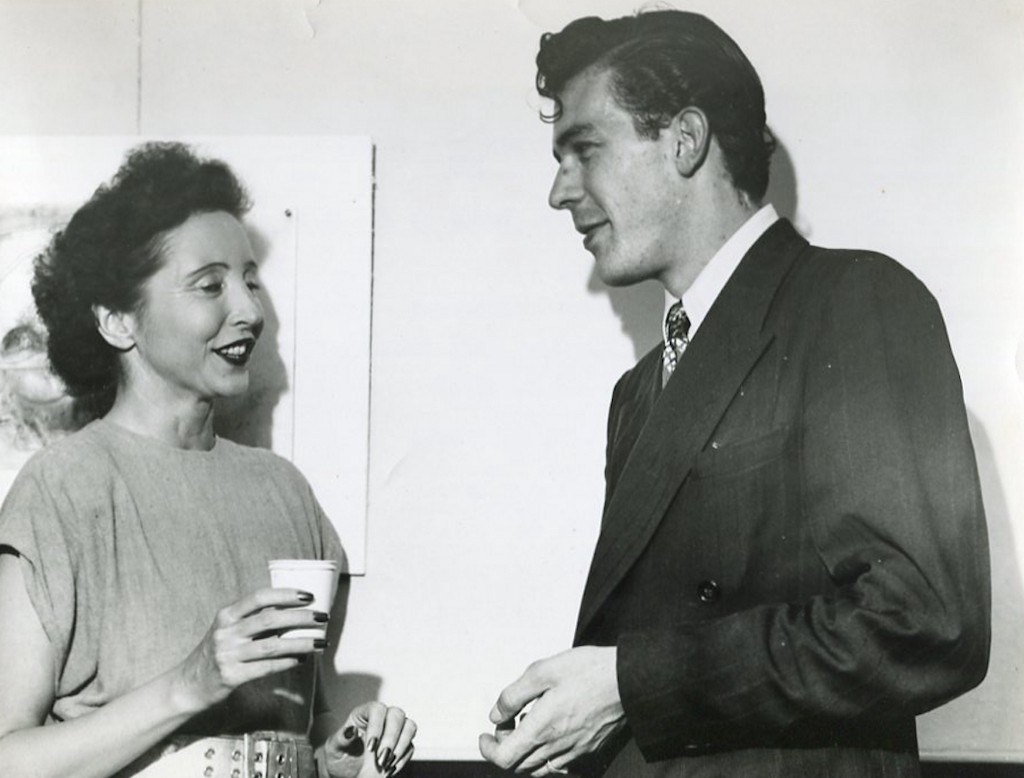
Nin, a French author who split her time between France and New York City, contributed to literature through her short stories and personal diaries published in the 1930s through the 1970s (some posthumously). They are refreshingly open and honest looks at erotica and female sexuality, and worth reflecting on if your mental real estate has a healthy portion around the state of sex today. When I first read Nin I was amazed at how I kept forgetting that she was writing from a completely different time. I identified with so many of her experiences that and I find myself revisiting her work when I’m finding the dating game in 2018 especially tricky. So without further ado, here are the lessons we can learn from Anaïs Nin’s writing that still apply to the world of online dating today.

1. Learn how to sext

Let’s look at a not uncommon exchange I had the other day:

Me: Hey! How’s your Tuesday treating you?

Them: It’s ok. It would be even better if you were sucking my dick.

<Unmatch/Delete/Unsubscribe me from this newsletter for the love of all that is good>

By all means, insert some sexting into your courtship ritual, but if you want to actually get anywhere you’re going to need to put some effort in. Luckily, you can find some Ninspiration here.

Here’s what Nin would say about that slapdash approach: “There are two ways to reach me: by way of kisses or by way of the imagination. But there is a hierarchy: the kisses alone don’t work.” This is even more true now than it was in Nin’s day; the imagination is especially critical when you’re communicating through a screen! Without body language and physical chemistry to rely on, the imagination needs to work double time. So by all means, insert some sexting into your courtship ritual, but if you want to actually get anywhere you’re going to need to put some effort in. Luckily, you can find some Ninspiration here too. Her erotica was controversial when published, but today we can look to her lyrical prose as a model: “When she closed her eyes she felt he had many hands, which touched her everywhere, and many mouths, which passed so swiftly over her, and with a wolflike sharpness, his teeth sank into her fleshiest parts. Naked now, he lay his full length over her. She enjoyed his weight on her, enjoyed being crushed under his body. She wanted him soldered to her, from mouth to feet. Shivers passed through her body.”

Quick poll, are you more aroused by Nin or by “Hey babe, DTF?” If you’ve done it right, by the time you catch eyes in the dimly lit bar you agreed upon with your Tinder match, sparks will fly. The best case scenario for your effort will echo this sentiment: “He had not touched me. He did not need to. His presence had affected me in such a way that I felt as if he had caressed me for a long time.”

2. Smash false dichotomies

Part of why Nin was so controversial during her time is because she challenged people to rethink the heteronormative and patriarchal principles forced upon her. This is most present when reading Henry and June, her published diary that documents her relationships with Henry and June Miller while she was married to her first husband, Hugo. Nin’s diaries aren’t just about sex as recreation, they actively reflect her examining of the sexual role she was told to play by society: “Often, though, the passivity of the woman’s role weighs on me, suffocates me. Rather than wait for his pleasure, I would like to take it, to run wild. Is it that which pushes me into lesbianism? It terrifies me. Do women act thus? Does June go to Henry when she wants him? Does she mount him? Does she wait for him? He guides my inexperienced hands. It is like a forest fire, to be with him. New places of my body are aroused and burnt. He is incendiary. I leave him in an unquenchable fever.” Throughout the novel we see Nin explore a not-always-ethical polyamorous dynamic, her attraction to women, and even voyeurism. Later, when asked for life advice Nin would reflect “you should experiment with everything, try everything…. We are taught all these dichotomies, and I only learned later that they could work in harmony. We have created false dichotomies; we create false ambivalences, and very painful one’s sometimes -the feeling that we have to choose.”

3. Set emotional boundaries

If you’re going to experiment with everything, though, you also need to be honest with yourself and others — something Nin learned the hard way. Nin’s affairs with Henry and June are often cited as a catalyst that broke up the Miller couple, but it is also clear that Nin found herself in the middle of a sometimes volatile relationship. All while balancing her marriage to Hugo. While she was navigating the complex dynamics between Henry, June, and Hugo, she also had to navigate her own complex emotions. “The truth is that this is the only way I can live: in two directions. I need two lives. I am two beings. When I return to Hugo in the evening, to the peace and warmth of the house, I return with deep contentment, as if this was the only condition for me. I bring home to Hugo a whole woman, freed of all ‘possessed’ fevers, cured of the poison of restlessness and curiosity which used to threaten our marriage, cured through action. Our love lives, because I live. I sustain and feed it. I am loyal to it, in my own way, which cannot be his way. If he ever reads these lines, he must believe me. I am writing calmly, lucidly while waiting for him to come home, as one waits for the chosen lover, the eternal one.” By the end of the book, you can sense her emotional exhaustion from balancing three different partners. It’s a good reminder that just because you can smash dichotomies, it doesn’t mean you have to if it doesn’t work for you.

6. Click “share”

Over-sharing and over-documenting is framed as a real concern in the digital age, especially when it comes to broadcasting our relationships. However, Nin’s work makes an excellent case for the benefits of sharing and documenting your life. For Nin, writing about her life wasn’t just acceptable — it was essential: “I believe one writes because one needs to create a world in which one can live. I could not live in any of the worlds offered to me… Had I not created my whole world, I would certainly have died in other people’s.”

If you’ve ever related to someone’s twitter thread, been endeared by someone’s earnest OkCupid profile, or had an “aha” moment about dating thanks to someone’s Facebook status, you have Nin to thank.

Nin was a trailblazer in women writing openly about their personal experiences. We can easily get caught up in the wild and sexy life she wrote about, but as Deena Metzger reflects “We often forget that we are in the presence of a woman who lived through war, and a woman that decided that he would have her own life, and we forget that there was a time when that didn’t happen. That women did not have their own life.” So if you’ve ever related to someone’s twitter thread, been endeared by someone’s earnest OkCupid profile, or had an “aha” moment about dating thanks to someone’s Facebook status, you have Nin to thank. “She brought in the journal. She brought in the articulation and the recording of one’s own life, and how important that was. She brought in the intimacy, she brought in the personal.” reflects Deena.

5. Make Mistakes

Which leads us to our last piece of advice: “You have a right to experiment with your life. You will make mistakes. And they are right too.” Nin is the patron saint of exploring her romance, even if it hurt. Time and time again, she so clearly articulated how being afraid to make mistakes holds us back romantically: “Anxiety is love’s greatest killer. It makes others feel as you might when a drowning man holds on to you. You want to save him, but you know he will strangle you with his panic.” However, she was also clear that being willing to make mistakes doesn’t absolve you from responsibility, but that responsibility isn’t limiting “The knowledge that we are responsible for our actions and attitudes does not need to be discouraging, because it also means that we are free to change this destiny.” So yes, try new things, take that leap, make mistakes, learn from them, and don’t let fear hold you back.

Nin’s work is timeless, messy, steamy, and thoughtful. Embracing our inner Nin is freeing not only for ourselves, but for the folks we try to court and for the wider dating pool. I hope the next time you find yourself swiping you think of Nin, and open up your mind, your heart, and your inner eroticist.

How I Bought Into Gone with the Wind’s Mythology of Whiteness

I am a re-reader. I have been all my life. The habit was born of necessity: I grew up poor and itinerant. The books I accumulated were from thrift stores, picked up in paperback for fifty cents or in hardback for a lofty dollar. I tried to pick books that were long and would last me a while. Periods away from the library or school left me without fresh books, so I would read the good ones over again.

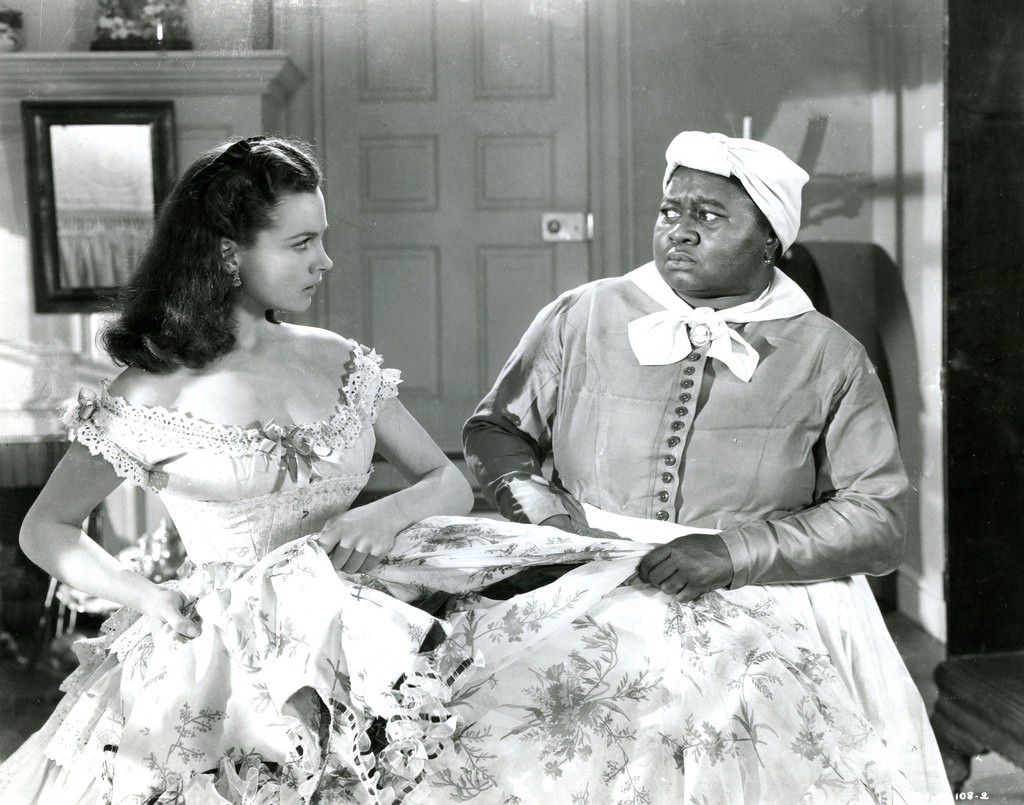
Gone with the Wind was one of the longest books I had ever laid eyes on that wasn’t a history or a Bible. I knew the title from conversations about the movie. The cover made it look sexy, those flames and dark-haired lovers. My mother never had the time to censor what I could read, so at nine years old, I dove into Margaret Mitchell’s epic of the Civil War.

Except it isn’t. Written in 1936, Gone with the Wind predates the concept of Young Adult literature, or really even the idea of a young adult. But as the novel begins, Scarlett O’Hara is a sixteen-year-old girl caught between two cultures and about to embark on the greatest adventure of her life. If that’s not YA I don’t know what is. It indulges in some of the most common trope constructions of the genre: Scarlett isn’t beautiful, except that she definitely is. She is torn between two love interests who are both very attractive but appeal to different parts of her nature. She is set against insurmountable odds, yet gifted with privileges of which she is never made aware. She proves astonishingly competent at skills never taught to her: mathematics, running a business, shooting a trained soldier in the face. Scarlett O’Hara is Katniss Everdeen in a hoop skirt.

Scarlett proves astonishingly competent at skills never taught to her. Scarlett O’Hara is Katniss Everdeen in a hoop skirt.

I fell in love with this book. Scarlett was easy to identify with: bratty, cunning, manipulative, emotionally turbulent, artificially disguised as a victim. She flouts social convention and disagrees with the limits set for her by a restrictive society and a boring family. As a burgeoning pre-teen, this was like catnip. The short sex scenes were smoldering promises of what was to come in my own sex life. I read these scenes in that deliciously furtive way that kids do; trying to discern the mechanics from flowery euphemisms. I wept over the personal and political tragedies of Scarlett’s life like they were my own. I was hooked.

I read Gone with the Wind the first few times as all kids read books: innocently. I did not yet know how to evaluate assertions or assumptions in fiction, to discern through an author’s use of tone what she valued and what she despised. I did not yet have the tools to understand the book’s racist content or consider my dissimilarities to Scarlett O’Hara. I was her and she was me and that was it. I entered adolescence with this book as my sorting hat. In the same way people use the Harry Potter houses to decide who among their friends is a Slytherin or a Gryffindor, I divided the girls I knew into Scarletts or Melanies, boys as either Ashleys or Rhetts. The Hufflepuff types around me were minor characters: the India Wilkses and Charles Hamiltons.

I came back to Gone with the Wind as a teenager, finally in early womanhood as Scarlett is in the first section of the novel. This re-read was brought on by scarcity; I was losing my home. It was not the first time. I can’t count the number of times we were evicted, either formally by a landlord or informally by family or my mother’s partners, but I was familiar with the process at this point. I crammed all that I could into my backpack and prepared to leave a place and never return. On this occasion, I was the last one in the house. My mother’s boyfriend, who owned the place, had gone for the weekend, having made it clear that he wanted to return to his home with all traces of my mother and her children gone from it. When my work of packing up was done, my mother was supposed to come pick me up.

She didn’t.

The electricity had been turned off and the cupboard was bare. I was no stranger to these conditions, either. I lay down on a couch in a back room without supper, lit a candle, and began to read. The book on the top of my pack was Gone with the Wind.

This time, I expected to identify with Scarlett in the post-war years at Tara. After all, she was starving. She had to pick cotton to survive. She was saddled with her mentally ill father and functionally orphaned by her mother’s death. She had nothing, yet her indomitable spirit carried her through and back to prosperity.

I began to dislike Scarlett. I saw how privileged she was. She had literal slaves to contribute labor to her household.

At least, that was what I remembered.

Instead, for the first time, I began to dislike Scarlett. I saw how privileged she was. She owned a home and a farm that could not be taken from her, even by the tax collector. She had literal slaves to contribute labor to her household, who were inexplicably devoted to her as if she were their own child rather than the issue of two rich white people. She had family who loved her, including the unfailing sweetness of her despised sister-in-law, Melanie Wilkes.

The first time I read “I’ll never go hungry again,” I had cried. I was a baby feminist and I saw only a stubborn, brave woman following her ambition and refusing to suffer the slings and arrows of outrageous fortune.

This time, I laughed. Yes, Scarlett is stubborn. Yes, she basically decides to resort to sex work in order to keep her property. But she has no idea that she’s still a princess in this ruined kingdom. When Scarlett adds up her assets after this declaration, she has the cold eye of a jeweler considering a flawed gem: she has her own prettiness, a pair of diamond earrings, and a set of velvet drapes hanging in her house. Her million-dollar estate, populated and run by three unpaid human slaves, are not included in her inventory, even as she plans to gather up most of them and travel to Atlanta to engage in the aforementioned sex work. She is so blinded by her privilege that even in her ruinous state she cannot see these things for what they are: the unearned gifts of her station.

I was not Scarlett O’Hara. I never would be. She was just another rich bitch who had no idea how lucky she was.

By the light of a candle, I laughed in a house with no heat as the snow fell outside. My laugh echoed in the empty darkness where no family or friend might have heard me. Certainly no domestic servants came to ask what was wrong, did I maybe need some corn whiskey or warm milk to calm me down?

I was not Scarlett O’Hara. I never would be. She was just another rich bitch who had no idea how lucky she was.

I read the novel again in college, my own post-war period. I had dropped out of high school and failed to launch. I had passed through several periods of homelessness, reading Gone with the Wind in starlight as it filtered through an olive grove, hoping not to be hassled by the cops. When I was hungry, I would read the passage about Scarlett’s hunger at post-bellum Tara, where she dreams of feasts of the past. I can recite that section from memory:

How careless they had been of food then, what prodigal waste! Rolls, corn muffins, biscuit and waffles, dripping butter, all at one meal. Ham at one end of the table and fried chicken at the other, collards swimming richly in pot liquor iridescent with grease, snap beans in mountains on brightly flowered porcelain, fried squash, stewed okra, carrots in cream sauce thick enough to cut. And three desserts, so everyone might have his choice, chocolate layer cake, vanilla blanc mange and pound cake topped with sweet whipped cream. The memory of those savory meals had the power to bring tears to her eyes as death and war had failed to do, had the power to turn her ever-gnawing stomach from rumbling emptiness to nausea.

I would consider my own prodigal wastes: the last few cold fries I had thrown away when they failed to entice me, or the burnt edge of a frozen pizza cut off and tossed in the trash. I would read this section again and again, thinking of Thanksgiving dinners given by parents of friends who’d invite me out of pity. The fast food jobs I had had that included a discounted meal during my shift. Once I knew Scarlett for a spoiled brat, there was no going back. But at least I could suffer hunger with the O’Hara’s instead of suffering it alone.

It did not occur to me to ask how hungry her slaves were. When the household suffered food shortage, how did it affect those who had always received the scraps of the table? I was hungry like Scarlett was hungry: in a way that did not consider other people.

I was hungry like Scarlett was hungry: in a way that did not consider other people.

Community college taught me to read critically, and then to read as a writer. I began to pick apart the choices Mitchell made. As my racial consciousness was shakily born, I began to encounter Gone with the Wind as a cultural touchstone of whiteness. I saw the reverent references to it in other works: in Prince of Tides, in Divine Secrets of the Ya-Ya Sisterhood. The Southern writers of the next generation held Mitchell blameless and enshrined her as the keeper of the Old South’s identity. In doing so, they helped preserved the myth of the happy slave, the people who had made the whole story happen without ever existing at its center.

Additional works in the same universe failed in the same way to examine the book’s relationship to whiteness. Critical disasters in every sense of the word, Scarlett and Rhett Butler’s People were pale and puny fanfic-quality imitations of Mitchell’s competent prose, while also taking no action to advance the storylines of any of the black characters beyond their subservient roles in the original. Only Alice Randall’s unauthorized parody, The Wind Done Gone, does any of that work, and the Mitchell estate did everything in its power to try and stop that racial recontextualization and queering of the original novel from happening.

It was in reading these other books that I began to see the irony in my love and rejection of Scarlett O’Hara. I wasn’t her; I wasn’t born to privilege, a slave owner, a rich widow who was neatly handed the tools for triumph during the only adversity she had ever experienced. As a poor white woman, I was more like the O’Hara’s unfortunate neighbor, Emmy Slattery, who attempted to buy Tara when Scarlett was down on her luck. As a fat woman working in food service and manual labor, I was more like Mammy: seizing my dignity by force of will beneath the yoke of terrible oppression. As a self-made success, I was more like Rhett Butler, who made his living as a gambler and discarded the morality of his culture to live as a hedonist and drunkard.

As a poor white woman, I was more like the O’Hara’s unfortunate neighbor who attempted to buy Tara when Scarlett was down on her luck.

Except I was none of those characters. I was, in fact, Scarlett O’Hara.

The last time I read this book, I was older than Scarlett will ever be. The novel ends when she is 28, estranged from her husband, and the negligent mother of three children, one of whom has died. She has not grown up, nor learned anything from her mistakes. She is still a spoiled brat, insisting that she will get what she wants in the final words of the book. Because she has never known a life where that isn’t the case.

Re-reading is a way of encountering your former selves, tucked neatly between the pages like pressed spring flowers and autumn leaves. If you are honest and your memory is good, your former selves will speak to you as if this often-thumbed volume is your own diary. The last time you passed through this story, you were someone else. Because I have now read it over a hundred times in thirty years, Gone with the Wind holds many, many versions of me.

Re-reading is a way of encountering your former selves, tucked neatly between the pages like pressed spring flowers and autumn leaves.

It holds my youngest conscious self; the one who had just begun to experience lust and doubt and accept that I am separate from the universe and subject to it. It holds my teenage self, trapped in homelessness and loneliness and searching for a way out, even if it means following Scarlett’s blueprint of marrying young for a shot at a soft bed and some hot meals. It holds the dawn of my adult consciousness, when I was finally able to see the way this story is tilted to keep Scarlett always in focus and deprive slave characters of any equivalent humanity in the narrative.

Finally, in this last read, I was able to grapple fully with my own privilege and lifelong investment in white supremacy. I am ashamed to say that I never understood how truly hollow and mean-spirited the archetype of the Southern Belle is until I saw a comic of the ubiquitous hoop skirt made up of a slave ship in the article “The Southern Belle is a Racist Fiction” in 2014. I had thought (as most white liberals often think) that I was good enough, anti-racist enough, that I was not invested in racist fictions anymore, nor deriving benefits from slavery and the structural forms of inequality that followed it in in my everyday life. These, too, are racist fictions. It took me far too long to see that even my optimism was a gift that helped me move toward the life I wanted.

American schoolchildren are taught a sanitized version of their own history; one that corresponds neatly to Gone with the Wind. We are induced to believe that many slaves were happy, treated as members of the family, and were transported out of Africa as “workers.” We are told that everyone has been equal since 1776 and free since 1865, glossing briskly over the struggles of 1965 with a video of Martin Luther King delivering a speech that solved racism so that Obama could be elected in 2008. Congratulations, it’s a post-racial America! We are taught, explicitly and implicitly, that anyone who says different is just complaining because life is hard for everybody.

Congratulations, it’s a post-racial America! We are taught, explicitly and implicitly, that anyone who says different is just complaining because life is hard for everybody.

As the product of this myth treated as truth, of the policies of redlining and disenfranchisement and brutality that are the legacy of this American mythology, all white Americans are complicit. We are all Scarlett O’Hara. Some of us are Scarlett O’Hara at her richest and most viciously powerful: Ivanka Trump in a ball gown thinking herself the favorite child of a self-made man who tells it like it is. Some of us are post-war Scarlett, taking an inventory of our privilege and remaining blind to over half of it being the product of plunder.

When I thought of myself as rising from the ashes of a ruined life and congratulating myself on digging my way out of poverty, going to college, rising to my own well-earned pride, I did not realize for many years that much of what came my way was luck. It was unearned privilege. Doors were open for me when they remained closed to others because I am white. Because I am not disabled. Because I am not trans. I worked hard just as Scarlett worked hard. But it took witnessing her ignorance for me to realize that I was also standing on someone’s back to reach these heights. The trouble with most white Americans is that we never look down.

It took witnessing Scarlett’s ignorance for me to realize that I was also standing on someone’s back to reach these heights. The trouble with most white Americans is that we never look down.

I have read Gone with the Wind over a hundred times. I have seen countless stories and videos that strive to explain who these angry poor white people are who elected Trump and insist on border walls and believe that abortion is murder and vote time and time again to keep themselves in poverty so long as their black neighbors suffer just a little worse than they do. I have spent my life in the presence of white feminists who have only read Gone with the Wind once and never got past the initial rush: what a trailblazer Margaret Mitchell was! Scarlett O’Hara is #goals! The O’Haras are the blueprint for the temporarily embarrassed millionaire: dirt-poor but still better than you because of how they were born. Gone with the Wind sells the white bootstrapper myth as romantic reality for white people. It has been doing it for nearly a century and it can be found in every book store, every thrift store, and every library in America.

It takes real work, as a white person, to realize the racism in which you have been steeped all your life. It takes re-reading the texts you hold most dear. It takes literacy and critical thinking and listening to people of color to realize that not only is Gone with the Wind fiction, but most of what you know is fiction. Your family history is fiction. Your elementary school textbooks are fiction. Your construction of yourself is fiction. We all have to read ourselves more than once. We have to proofread and edit ourselves. We have to rewrite ourselves every day. We have to learn to separate truth from fiction from fake news. This is a monumental task, and most of us will fail.

Kids and adults will continue to pick up this book for the first time. Gone with the Wind is in some little girl’s hands right now, and she’s seeing the world through Scarlett O’Hara’s eyes.

I hope she goes back and reads it again.

11 Literary Characters Who Should Run For President

President’s Day was conceived as a day to honor particular past presidents. But in this crucially important midterm election year (you’ve checked that your registration is current, right?), we’ve decided to use the opportunity to think about our dream leaders of the free world. Here are some of the fictional characters we think could do a great job in politics—or at least a better job than our current options.

Snowball, Animal Farm by George Orwell

Though he’s eventually defeated and scapegoated by a more violent-minded pig, Snowball is the equal-opportunity leader that the farm needs. He gets everyone reading and simplifies ideologies in order to ensure that all animals on the farm understand the plans for the future. He is an orator beyond the oink, one that can unify and rile up the people and use words as a tool for persuasion rather than creating conflict—you wouldn’t find Snowball in the middle of a Twitter rant. Concerned that a pig can’t legally be president? We invite you to look at the current administration.

Sean Phillips, Wolf in White Van by John Darnielle

What this country needs is a President who will speak out against the horrors of gun violence. Sean Phillips survived a (self-inflicted) gunshot to the face as a young adult, and his subsequent guilt and isolation might give him the perspective and empathy a politician needs to get something done.

Hermione Granger, the Harry Potter series by J.K. Rowling

Hermione Granger is whip-smart, a cultural chameleon (she was raised by Muggles but thrives in the magical world), and has been shutting down mansplaining since before we called it mansplaining. She understands the importance of reading and the arts (or at least the Dark Arts), and you would never find the founder of S.P.E.W. cutting funding for important organizations that support people living in poverty.

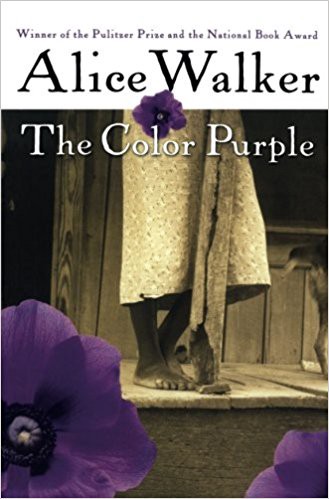
Celie, The Color Purple by Alice Walker

Though she comes from far less privilege than the typical presidential candidate, Celie has survived and triumphed, coming out victorious and learning how to love herself through the process. She would be a strong candidate for those who have survived sexual assault and an example of how to find community through adversity. In this time of “thoughts and prayers,” it would also be nice to have a politician whose faith is more than a cynical pose.

Sherlock Holmes, the Sherlock Holmes series by Sir Arthur Conan Doyle

We’ve had movie stars become President, so why not a detective? Sherlock Holmes’ skills and legacy could make him an ideal candidate; he’s famous, brilliant, sought-after, and so, so detail-oriented. Sure, Watson describes his knowledge of politics as “feeble,” and he’s also a huge asshole, but these things are no longer barriers to the presidency. He’d probably have to cool it on the casual cocaine, though.

The narrator, Invisible Man by Ralph Ellison

The narrator of Ellison’s novel is smart, a skilled orator, and knows firsthand how cruel this country can be to young black men. It is through his passionate speeches that he is picked up by the Brotherhood, where he strives to serve his community in Harlem. Although he’d have a lot to overcome—the bigotry of voters, his involvement in a riot, the uncertain motives of the Brotherhood itself—by the end of the novel he’s looking for a way to speak for other downtrodden people rendered invisible by society. What better way than for this community organizer to run for president?

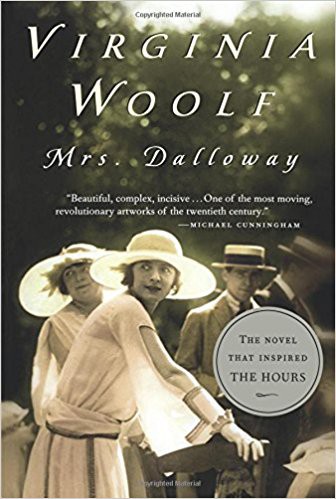
Clarissa Dalloway, Mrs. Dalloway by Virginia Woolf

Clarissa Dalloway would be the cool, calm, collected President who would react well under pressure since she has come to terms with the reality of death. Class- and propriety-conscious Clarissa would also be a master of diplomacy, keeping foreign affairs running smoothly.

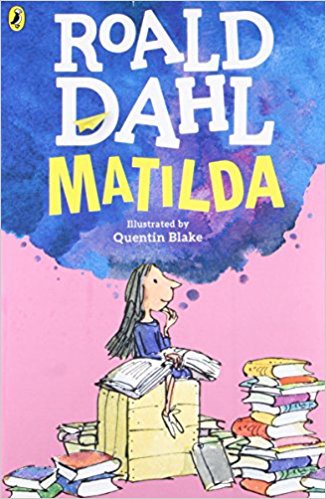
Matilda, Matilda by Roald Dahl

At five and a half years old, Matilda is a little too young to legally run, but you can already tell that her brilliant and serious mind and lack of tolerance for bullies would do the country a world of good. And though we’ve never had a leader with telekinesis, we’re guessing it would come in handy in dozens of ways. Unfortunately, Matilda was born in England, so she’s probably out—perhaps she can be the first telekinetic secretary of defense?

The Man in the Shack, The Restaurant at the End of the Universe by Douglas Adams

We’ve already gone on record suggesting that the best president would be a president that had zero interest in ruling over anybody—or, as Douglas Adams put it, “those people who most want to rule people are, ipso facto, those least suited to do it.” The only solution: a solipsistic ruler, who doesn’t believe anything is real besides himself, though he’s willing to suspend disbelief when it comes to cats and whiskey. That’s a slogan many millennials can stand behind.

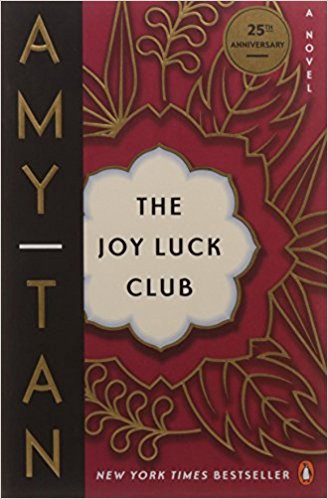
Jing-mei (June) Woo, The Joy Luck Club by Amy Tan

After June’s mother dies of a sudden brain aneurysm, June steps in to take her place at the table of the Joy Luck Club—and comes to terms with her mother’s memory by reconnecting with her lost siblings in China. This ability to take the reins, step into a gap in leadership, and move forward with extreme gumption is what can save families in this country. And it would be great to have a president with experience understanding and uniting immigrant families, rather than splitting them apart.

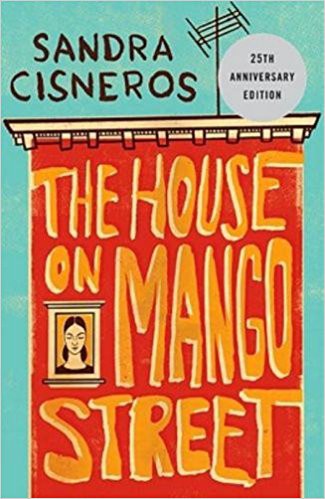
Esperanza Cordero, The House on Mango Street by Sandra Cisneros

Esperanza’s story speaks to a group that is destined to be a quarter of the U.S. population in the next 50 years—not to mention any child that has felt the need to leave their hometowns for something “greater.” Esperanza, whose name means hope, spends her life coming to terms with the pressures that keep down women, specifically Chicanas. Hmm, hope, presidential campaign… why are we feeling so nostalgic right now?

Alternate Shakespearean Endings

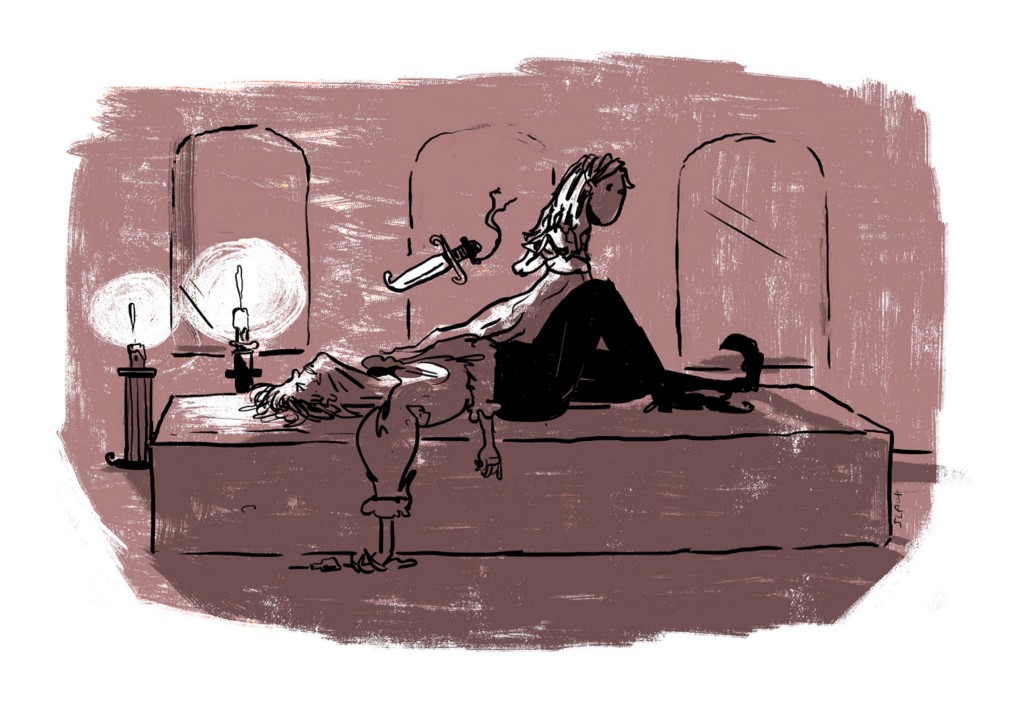
“Juliet Changes Her Mind”

by Amelia Gray

It was right around the moment all seemed lost and her man lay dead on her lap, the moment the friar had left her to do whatever, when the candles addressed their warmth to her alone, their crackling sound like angel wings, like insects pinched above the flame, the moment her lover’s lips lost their warmth, and the slab felt extremely slablike, cold as the crypt around her, which she had chosen as the best location for this performance but was lately feeling a bit dramatic and — she could admit — a little silly, the candles smoking up the place and dripping wax all over, walls lined with wrapped figures of the proud familial dead, this place being so gross and forbidden even from her most wicked cousins’ most wicked dares that she had never so much as touched its heavy iron door and now here she was camping out, long after dark with a man’s body pinning her, it seemed, to the slab; pushing him off her required setting down his dagger, but at last he slumped aside, and his head when it tipped from the low-set stone bumped on the floor like a fresh summer melon and she saw him then for what he was, a dead boy in his own grave, glory fading with the night, candle wax stuck to the long lashes she had loved until that moment. When she pulled herself up and felt the pins and needles of feeling come back to her legs, she nearly cried out with a keen and sudden sense of everything, of the whole glorious world filled to bursting, wild and ready for her and, stumbling over herself, she made a break for the iron door and the east, where life itself would rise to meet her with the sun.

Psyche in the Dark

by Miranda Schmidt

When he comes at night, he is invisible. She hears his approach in the sound of his footsteps, in the pulse of his breath in the dark. He could be anything.

Some nights, she imagines him human. Some nights she imagines him monster. A man’s head. A snake’s body. A wolf’s teeth. Hooves.

She is not here by force, though she has trouble remembering when it was that she made this particular choice, how it was that she entered into this peculiar marriage. The rules are simple: she cannot see him. She may roam the castle freely but, when he comes to her, she must cast no light.

Her sisters believe she has married a monster. They visit her. They give her advice. Light the lamp, they tell her. See the monster. Kill him. Free yourself.

Sometimes they almost convince her. Sometimes, when they leave, she feels so sure of what she must do. But, as she listens to the deep breaths of her husband’s helpless sleep, she cannot bring herself to cast the light.

In the dark, she lives in possibility. Her husband might be a monster or a god or a man. He may be ugly or beautiful. He may be human or beast. Sometimes she believes it would be possible for her to spend her life in this way, to trust in not knowing, never knowing, the truth of her marriage.

But when the lamp is lit, as she knows, one day, it must be, her marriage, her life, all the nights behind her and all the nights to come, become singular. So, for now, she keeps the lamp beneath the bed, the knife beneath the pillow, and when her husband comes to her, she keeps her eyes closed so she can feel him in the dark.

‘Phantom Thread’ Is the Love Story for Assholes We’ve All Been Waiting For

I f you’ve ever been to a wedding, you’re likely to have heard the following lines wistfully recited by a teary-eyed bridesmaid reading from a perfectly embossed cue card printed by the bride: “Love is patient, love is kind. It does not envy, it does not boast, it is not proud.” Or perhaps you’ve gotten to see a best man reach back to his English major roots to serenade the happy couple with the Bard’s wedding-themed sonnet: “Love is not love/Which alters when it alteration finds,/Or bends with the remover to remove.” These words, staples of nuptial readings, hope to both invoke and describe the union being celebrated. Their rose-colored (or, rosé-colored) vision of love feels self-evident — love is obviously kind, Karen. But this Hallmark ideal of “love,” which is also “not self-seeking, it is not easily angered,” and, “is an ever-fixed mark/That looks on tempests and is never shaken” does us all a disservice. Much like the ideals of romance that Hollywood tends to lob our way, these images of love oppress in their implausibility. Some of us aren’t as patient and kind. Nor are we as easy to love as these anodyne readings would have us aspire to be. How dispiriting then to have to preclude oneself from these capital-L love stories.

Those hollow if hallowed banalities came flooding back while watching Paul Thomas Anderson’s Phantom Thread — mostly because the entire film seems hellbent on snidely snickering at such naive if aspirational ideas of romantic love. It may well be the perfect swoon-worthy paean to romance between two equally-matched pricks I didn’t know we needed. Turns out, it is possible to make a romantic movie about love relationship that’s not exactly exploitative—at least not in the expected ways—but nevertheless hinges on quite appalling behavior from both parties involved.

Reynolds Woodcock, the charmingly cantankerous fashion designer played by Daniel Day-Lewis, is not someone you’d describe as patient nor humble, and most of what he alters are hems and sleeves. He’s a perfectionist when it comes to his work and he doesn’t suffer fools, holding both those who make and wear his designs to the same high standards — at one point he all but yanks a dress off a woman whom he feels is disrespecting his gorgeous gown. One doesn’t envy the person who chooses to be with him, and yet the film gives us not the story of such a woman, but has us rooting for them both by the time the credits roll.

“Reynolds has made my dreams come true,” Alma (Vicky Krieps) tells us in the opening moments of the film, “and I have given him what he desires most in the world…every piece of me.” As an introduction to the power dynamics at play, the line all but demands you be horrified. Warmly lit by the fire and placidly looking at her off-screen interlocutor (a doctor, we find out later), this young woman comes off as perfectly happy and pliable. We’re not given any indication of what her dreams may have been — surely just getting to be by Reynolds’ side — but that she’s so happy to have paid such a high price for them is discomfiting. When Anderson then cuts to images of the fastidious Reynolds getting ready in the morning, applying face cream, brushing his hair, pulling his socks up, adjusting his pants, you fear this will be yet another tale of a brilliant but difficult man strong-arming women into submission.

You fear this will be yet another tale of a brilliant but difficult man strong-arming women into submission.

The tyrannical man and his ever-doting wife may well be a story as old as time — would she then come to domesticate him or would she merely learn to bow and genuflect? — but once we see the idyllic meet-cute between the young waitress-turned-muse/model Alma and Reynolds (she stumbles, he smiles) the film hints that the prickly love affair that ensues will be something much more entrancing. He is imperious and demanding. This is what he orders for breakfast: Welsh rarebit with a poached egg on top (not too runny!), bacon, scones, butter, cream, jam (not strawberry!), lapsang tea, and some sausages. She, on the other hand, is accommodating, letting him keep the order form where she’d just jotted down all of this, blushing at his clear advances though showing she’s no wilting wallflower when she hands him a note with her name on it addressed to “the hungry boy.”

The infantilizing nickname, not to mention the unavoidable connection Alma makes between Reynolds and his hunger, give her a welcome sense of agency. She’s coy but also cutting. She may wince when, on their first date, he takes her measurements and offhandedly comments that she has no breasts. “It’s my job to give you some,” he adds. “If I choose to.” But she keenly understands how someone so boisterously insecure as Reynolds needs to be handled. She no doubt takes her cue from his sister Cyril (Lesley Manville) who appeases her brother when she needs to but reveals herself to be just as deliciously cold as Reynolds can get. “Don’t pick a fight with me,” she advises him at one point, without even batting an eyelash. “You certainly won’t come out alive. I’ll go right through you and it’ll be you who ends up on the floor. Understood?”

‘Call Me By Your Name’ Made Me Realize What the Closet Stole From Me

To love Reynolds is to bear the brunt of his unkind behavior, suffering through breakfast quarrels, dinner spats, and occasional bratty outbursts. But to live with him is to find ways of going on the offensive without resorting to those very same tricks. Lest she be mistaken for a compliant little girl who’ll merely turn the other cheek and soon be discarded — like the young woman who’s dating Reynolds at the start of the film and gets summarily dismissed as if her contract work at the house had been fulfilled — Alma soon finds ways to stand up to her lover. She does so with kindness, yes, but with a kindness that’s rooted in cruelty.

Like some witch in a grim (and perhaps Grimm) fairy tale, this beatific beauty actually goes ahead and poisons Reynolds with mushrooms she picks herself. It’s her way of dominating him, her way of claiming supremacy within the domestic space of the kitchen while also indulging in his most base desires. The “hungry boy” is punished by the very means he was ensnared. Earlier in the film, knowing she still has an unwavering grip on his wants, she asks him if he’s had enough to eat (“you seem thirsty,” she adds), appropriating the language of consumption to lead them giddily into the bedroom. That the film frames this gesture as romantic — Alma gets to be the one to take care of Reynolds, nursing him back to life, and quieting his insufferable bouts of arrogance — offers a radical image of what love can be between two people. Perhaps not one worth emulating, but one worth witnessing in mirth and horror from afar. Marrying its bombastic score (provided by Anderson staple, Jonny Greenwood) with its rom-com trappings (its comedy is more mordant than usual for the genre, but one can’t deny the fact that Anderson takes us from meet-cute to makeover to domestic rift to a happy reconciliation in ways that feel decidedly familiar), Phantom Thread begs to be understood not as realism or didacticism but as mythic and archetypal. At first offering a portrait of the toxicity of masculine bravado, which Reynolds outright admits is mostly a front, Phantom Thread ends up telling the story of a couple who finds tenderness in cruelty and who looks on tempests with the eagerness of a storm-chaser.

At first offering a portrait of the toxicity of masculine bravado, Phantom Thread ends up telling the story of a couple who finds tenderness in cruelty.

Though the film warps it into something twisted, Anderson says that his inspiration was a genuinely tender moment with his wife. “I was very, very sick in bed one night,” he told the audience at a Q&A in New York back in November of last year. “And my wife looked at me with a love and affection that I hadn’t seen in a long time. So I called Daniel [Day-Lewis] the next day and said, ‘I think I have a good idea for a movie.’” Only, if you’ve seen the film, you know Anderson turned that joyous moment of domestic bliss — his wife Maya Rudolph staring at the father of her four children with an affection she always harbors but perhaps rarely shows so nakedly — into a kinky, near-sadistic confrontation that’s as much about affection as it is about power. “I want you flat on your back,” she tells him the second time she serves him the poisoned mushrooms which he then gladly and knowingly ingests. “Helpless, tender, open with only me to help,” she continues. “And then I want you strong again. You’re not going to die. You might wish you’re going to die, but you’re not going to. You need to settle down a little.” She not only stands up to him but, crucially, makes him lie down. Reynolds may yell and abuse her even when she tries to do kind things for him like bringing him tea (“I didn’t ask for tea,” he mutters in exasperation) but she’s unconcerned, eventually realizing that if she shows weakness she’ll be easily replaced. After unsuccessfully trying to ingratiate herself to him, she opts to assert her power in as unassuming but effective a way as she can.

Alma dangles the power she has over Reynolds not to scold or abuse him but to show him just how much she loves him. To love a man, in the world of Phantom Thread, is to know how and when to weaken him, how to help him settle down a bit, how to defang him long enough for him to be thankful you’re there to build him back up. That sounds very intense until one puts it in romantic terms we’re more comfortable celebrating: “I’d trust you with my life.” “Kiss me, my girl, before I’m sick,” Reynolds tells her in the flush of desire he feels when finishing his poisoned meal. And in that sentence, which empowers, belittles, demands, and relents, I heard yet again another romantic truism taken to the extreme: you must be vulnerable, you must be open to one another. Actually, Alma doesn’t just require it, she demands it — in her own twisted way. As a literal coupling Reynolds and Alma should make you wary, but as metaphorical avatars for romantic love, they’re not as monstrous as they sound.

To love a man, in the world of Phantom Thread, is to know how and when to weaken him.

This is the kind of romance I wish were more exalted at wedding receptions. The kind where the fight for one another’s submission is an ever-swaying see-saw that requires constant attention. The kind where kindness in spirit if not in action fuels the fiery embers of desire. Except that just makes me sound like I’m advocating for consensual poisoning as a necessary element of modern-day romance—or, worse yet, hoping bridesmaids and best men make sure to remind the couple how toxic their life together may yet become. This is not, in fact, Anderson’s point, nor mine. But the argument of the film, mushrooms aside, focuses on the effort that goes into making a relationship work, especially one that still functions within gendered archetypes (artist/muse).

What Phantom Thread does away with is the asinine image of romance as mere bliss. Paul Thomas Anderson’s Grand Guignol of a rom-com acknowledges and represents love affairs that make room for petty tussles and bratty spats. Not as things that should be brushed (or blushed) aside, but as reinvigorating elements that strengthen one’s bond, that help one negotiate how to live with one another. At the end of the film, Alma daydreams about a future together where she’ll finally understand Reynolds, charting a course for their life as a couple as striving for more balance, an endless deferral of the unattainable ideal of romance those nuptial readings prescribe. “Yes, but right now we’re here,” Reynolds tells her as he rests in her lap, bringing her back to the push-and-pull dynamic they’ve come to master, “and I’m hungry.”

Technology and Religion Share the Power of Destruction

I n great short story collections, the stories work both in tandem and against one another. Across their separate worlds, characters speak to one another; sometimes themes and motifs emerge, other times contrast illuminates subtleties. In other words, the best collections are much more than an accumulation of work; they are completed puzzles.

Anjali Sachdeva’s nine-story collection, All the Names They Used for God, is filled with surreal stories grounded in reality. A comparison is Black Mirror, the TV sci-fi anthology show that explores the dangers of technology when it’s too deeply integrated into our lives. Similar to the show, Sachdeva is fascinated with exploring how large-scale movements like technology and religion impact our humanity. She sets her stories all over countries and eras, from a pioneer prairie farm to modern day Africa, and occasionally casts her reader into the future. The stories usually begin under the premise of normalcy, but slowly and deftly, Sachdeva weaves in something other.

I spoke with the author about her fascination with the danger and thrill of religion and technology, and how that fascination has affected her writing, and her life.

Adam Vitcavage: When exactly did you start writing this collection?

Anjali Sachdeva: A couple of the stories were written between 2004 and 2006 when I was at Iowa. The rest span from then until now. The most recent one, the title story, was finished a few months before I sent it out to try to find a publisher.

I wrote other stories over the same stretch of time and picked these ones because I felt they had some thematic connection. I’m an obsessive editor and go through eight to ten drafts of everything. There was nothing in there that I hadn’t read through many, many times already. It’s kind of a different experience to think of them as a group.

8 Pieces of Modern Technology That Science Fiction Predicted…Or Invented

AV: When new collections come out, I feel the publicity engines and review publications often assign buzzwords that can be disingenuous. How do you describe your collection?

AS: All of the stories in the collection are dealing with larger forces that affect our lives. Technology, religion, nature. I was really thinking about how those things could be both terrifying and wonderful. What is appealing about them, and why we like to interact with them, is that there is that touch of something being bigger than you and that’s thrilling. But for the exact same reasons those things could be really destructive.

A long time ago people were more conscious about that. People thought more about how something larger than you could benefit you or destroy you in some way. These days, people think they can be separated from those forces, that they are autonomous, but I don’t think that’s true.

People think they can be separated from the forces that destroy, but I don’t think that’s true.

All of the stories approach that, but in very different ways. They all have some surreal element because that’s how I like to think about the world and work through problems.

AV: You open the collection with “The World by Night.” Why was that the first story you wanted readers to consume?

AS: I picked it in part because it is a story about entering another mysterious world. It felt like a good gateway into the collection as a whole. The main character Sadie is trapped in this confined environment and she discovers an underground cave system. That becomes her escape from the constraints of the real world. I hoped this book as a whole would provide a world for readers and I felt like this story was a good place to start.

AV: There’s a lot of strong realism mixed with almost supernatural elements. How did you end up with such a wide variety of scope?

AS: It comes in part from my own reading. I’m an opportunistic reader. I don’t set out to read somebody’s whole set of books or focus on one genre. I tend to read whatever looks interesting to me. Along the same lines, I will often come along an idea or a piece of information that is fascinating to me and the story builds out words from there. With most of these, there was some piece of information that caught my imagination and I couldn’t let go of it. Because I read such a wide range of stuff — like with “The Glass Lung” I was reading about fulgurites, which are these objects when lightning hits sand. That idea was so fascinating to me and the story really built out from there.

Once I got interested in that idea I came across all of this information about deserts and living desert glass, which is found in various parts of the Sahara. People think that a meteor struck the sand because there is a lot of it. So topics like that will chain together in my head and I try to figure out how that becomes a story.

The Future of Technology Is Freedom from Technology

AV: The story “Logging Lake” is set in a real place, Glacier National Park. Can you talk about the park’s role in inspiring your story?

AS: I love to hike. I love backcountry hiking. A friend and I were at Glacier National Park and we thought we were going to cut a hike short. We ended up at a campsite that had a sign saying it was closed because it became inhabited by wolves. In the stories the characters go to the campsite anyway; in real life we did not.

Years later, I went back to that memory and started thinking about the story. That hiking trip was when I was in college. But I’m currently in a couple of writing groups — I find them to be really great emotional support, but also a great place to get feedback and have deadlines. It was one of those weeks where I had something due but I didn’t have anything to turn in. I was sitting at my desk thinking what could I write about. I ended up thinking about this hiking trip from undergrad. It was the first trip I had planned on my own and my first time heading out into the wilderness of my own accord, so I drew from that.

My first drafts are always a hot mess so I just revise and revise and revise.

AV: When you’re drafting, are you okay with throwing everything against the wall and seeing what sticks?

AS: My first drafts are always a hot mess so I just revise and revise and revise. I know some people really love writing first drafts and that it’s exciting to get the words down on paper. I hate writing first drafts. I find it painful. I really love the editing and revising process. The first draft is just something I have to push myself through so I can get to that next phase that I love doing.

“All the Names of God” had about six or seven drafts. Some of them had huge changes while some of them were more refined to start. At one point I felt that story was finished and I sent it to my agent to look at it. She noted how there was so much implied violence in the story but how the reader never sees what happens. There wasn’t a push to have sensational or gratuitous violence but there were glimpses of what the women in the story have gone through.

In one scene, the women are kidnapped at an encampment; there’s no attack described, but people come to rescue them and there is this bloody encounter. That scene wasn’t in there up until close to the end.

I know some people talk about writing by committee and question if you’re writing your own story if you’re getting advice from people, but to me it’s just that I want to hear what reaction people had. I run that through my own filter and think about which of it makes sense to me as a writer.

AV: Do you prefer working in the short story form to the novel?

AS: I love short stories. A lot of my reading from high school onward was short stories. Not just contemporary, but also old-fashioned short stories. And I do love reading sci-fi and fantasy. To me, the golden age of sci-fi was when all of these stories were being published in pulp magazines. There is a wealth of short stories in those genres. There are now many speculative fiction novels being published, but not as many collections.

It’s harder for me to write a novel. I’ve done drafts and find them much more difficult to write. What I love about short stories is that you have this ability to really dig into one idea through one event or closely related series of events. Because I get enchanted by very different topics, writing short stories allows me to explore all those ideas. I couldn’t have a novel where you have modern day Nigeria and also 19th century frontier land or a futuristic setting. It gives me that freedom.

But I am working on a novel now. Fingers crossed that it will work out better this time — I’d like to think that I’ve learned some things as a writer over the past ten years since I’ve been out of grad school.

I love about short stories because you have the ability to really dig into one idea through one event or closely related series of events.

AV: And I know no one likes to talk too much about the novel they may or may not be working on, but is yours in that speculative fiction wheelhouse?

AS: It is. If you’ll forgive me, I have this superstitious fear of talking about it. I don’t want to hex myself.

Playground Infatuations

“Thumb Wars”

by Andrew Bales

It was sixth grade, and Mandy Winder texted in a way that made Thomas feel things. He didn’t know who she was texting during class, but he could sense by the way her thumbs jutted and poked that her words were kind.

At lunch, Mandy always sat with the Peterson sisters. The Petersons liked to talk, and Mandy would listen. The sisters were taken out of class one morning to get their teeth cleaned, leaving Mandy to sit alone. She rotated an oatmeal cookie in her hands, eating it carefully from the outside in.

“That’s cool,” Thomas said. “How you eat.”

Mandy set the cookie on her tray, and Thomas knew he’d spoiled things.

“Want to thumb war?” he said.

“Okay,” Mandy said. Thomas sat down, and Mandy stuck out her hand. They hooked their fingers together and tightened their hands into a big fist.

“One, two, three, four,” Mandy said, and Thomas joined her: “I declare a thumb war.”

Mandy didn’t waste time. She bobbed her thumb from side to side. It was long and smooth and seemed sophisticated somehow. Thomas tested forward and Mandy batted him away. They flicked their thumbs, sizing up each other’s moves.

It was developing into a kind of conversation. In fact, it was the best conversation they’d ever had. They lunged forward and smacked the soft pads of their thumbs. They swiped low blows that brought the bone of their knuckles together.

“Wow,” Thomas said. “Yeah,” said Mandy.

Mandy found leverage and clinched Thomas’ thumb near the base. She began to count out her victory.

“One,” she said, but Thomas could already tell it was over. Her grip was true.

“Two,” she said, and Thomas saw Mandy smiling right at him.

By the time Mandy Winder said “Three,” Thomas had stopped resisting altogether.

Love Has No Inertia

“The Boy on the Bus”

by Julia Ridley Smith

Every afternoon, the schoolbus would pass a bungalow whose porch sagged under a refrigerator that once had been white. I’d seen the people going in and out, the kind adults around me called white trash because they hadn’t managed to translate their one advantage into any kind of success.

One morning my mother read about a boy found dead inside another defunct refrigerator, and warned me never to get into anything I might not be able to escape. I scoffed: getting stuck inside an abandoned appliance struck me as a thing only a boy would be fool enough to do. A girl would be too smart to do that to herself; surely, it would have to be done to her, as in a romance I loved that told of a sexy, disobedient medieval lady, walled up and forgotten. I’d figured that kind of thing only happened in the old days, mostly to Catholics; now I knew that it had never stopped being possible that you could be buried alive.

That afternoon, as the bus rumbled past, I saw that things were doubtless bad in the bungalow. Any place to hide must have looked like a good idea. I put myself inside the once-white refrigerator, gulping and scratching in the airless dark. I imagined pulling my boy out into safety, his grateful smile as good as breath to me.

Riding day after day, I came to believe that he was there on the bus with me, a few seats up, where I might see if he was picked on, where I might kiss him if I found the nerve. I figured I never would. Each afternoon he sat at the smudged window, waving shyly to me as he rode on and I walked backwards up my driveway, still looking after him.