Poetry Is For Everyone

I first met Jason Reynolds in 2015 at Symphony Space for a memorial honoring the late Walter Dean Myers. At that evening’s festivities, organized by Myers’ son Christopher, we heard from an array of writers and musicians who knew and were nurtured by Myers’ breadth of work. Early on in the night a statuesque Black man clad in black recited poems in Myers’ honor. His words reverberated throughout the dimly lit space. This was Jason Reynolds.

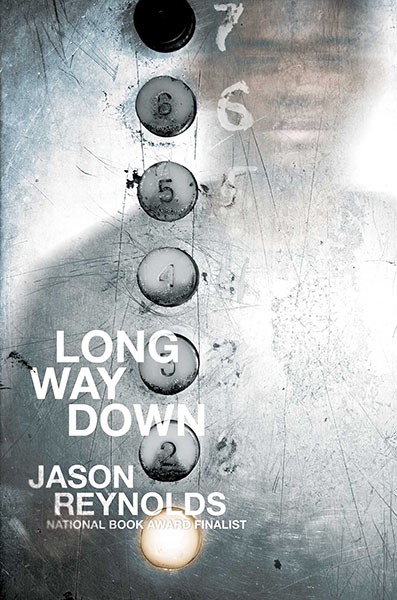
Jason’s poetry and delivery are his signature: booming, powerful, pointed, each word meticulously chosen for impact. Two years after that introduction, this voice has made him one of the most lauded contemporary authors for young people’s literature. His style, delivery, and work ethic have also lead to him being a National Book Award finalist, winner and honoree of numerous Coretta Scott King awards, and four-time New York Times bestseller. His latest bestseller, Long Way Down, a novel in verse, was also longlisted for the National Book Award. When I sat down with him during a whirlwind tour, he discussed how poetry has produced some of the most politically charged writing and how it dictates his methods for prose.


Jennifer Baker: I primarily see you as a poet. So, as a poet, how hard is it to construct a novel in verse?

Jason Reynolds: Novel in verse is not the same as a novel in poetry. That’s like calling Romeo and Juliet poetry.

JB: Which people do.

JR: Really it’s just a play in verse. Hamlet is a play in verse, it isn’t an epic poem. It’s just in verse. And I think what you can do with verse — because of the sort of suspension of rules — you can kind of fool around with format in a different way. You can play with language in a way that you can’t always do with prose. It literally becomes more of an art project for me. So in terms of if it’s difficult to write it, I think that the rules of narrative stay the same.

When you write a novel in verse, you realize how many extra words we write in prose that aren’t always necessary.

When you write a novel in verse and you do it well, you’re trying to write something that’s nuanced and complicated. I think you realize how many extra words we write in prose that aren’t always necessary. You can really trim and trim and trim when you’re writing in verse. There’s a lot that you don’t have to say. And that doesn’t mean your story has to suffer. In Another Brooklyn Jackie didn’t even write adjectives into the book. That’s where the genius lies in people like her. I think that’s where the genius is in the manipulation of language. When you’re writing in verse it’s literally about every word counting. I’ve edited this book more than any other book.

JB: I was taught poetry as specific form, this specific structure, the wording and symbolism, all that stuff, that we lose when we don’t see poetry in its many forms. I was taught the old standbys like Emily Dickinson, Shakespeare as poetry, and Yeats. It can make it feel less accessible in a way, and accessibility can mean different things to different people.

JR: One of my favorite poets is Countee Cullen, and he only wrote in tight form. But it’s powerful stuff. It hits you, every single one. And I think of Lucille Clifton who wrote these really short poems. She was the master of brevity. You may get five or six lines but it’s a gut punch. It may not be a particular structure like a sonnet or a sestina, but that also doesn’t mean that when structure doesn’t have a name it’s not structure. The danger in talking about free verse the way we normally do, we typically don’t complicate the structure of free verse. What it does is it strips the poet of agency and decision-making. There is a structure. That poet chose to break a line here or add a stanza. To punctuate or not punctuate. And that constitutes the structure of that piece.

I think accessibility has less to do with form and more to do with the poet’s ability to articulate a specific narrative. Or to be free enough to break form when form can’t fit function. In Long Way Down there are a few poems that are structured, structured poems. One of them has a tight rhyme scheme. And most people don’t know it’s there. But I put it in there because I think poetry is all the things. I think it’s a haiku. It’s a sijo. I think it’s a sonnet. I think it’s free verse. It’s three lines or five lines or a paragraph.

JB: When I spoke with Jesmyn Ward, she found when she taught undergraduates that everyone was versed in the classics in the academic atmosphere. It’s that we have to choose to learn about what’s contemporary and use that as comparison to the classics. Which is inspired by the classical, yet we do need to know about Danez Smith, Tommy Pico, Morgan Parker

JR: And Ocean Vuong. For sure. Let’s read whoever from the past and let’s read Terrance Hayes, art about grief. Or let’s read [Edgar Allan] Poe about grief and see what’s changing over time is the form, the language, perhaps the syntax.

(Poet Sonia Sanchez in 1972. New York Public Library Archives. The New York Public Library Digital Collections.)

All of Danez Smith’s class, the Danez Smith’s, the Saeeds [Jones], Solmaz Sharif, Safiya Sinclair. I mean these people are killing it. Even Claudia Rankine’s stuff. They are reframing what poetry is. And their work is derivative, to me at least, of the ‘70s Black Arts Movement with the fearlessness of Sonia [Sanchez] and [Amiri] Baraka. Baraka wrote pow pow pow. He wrote onomatopoeia in poems that he took from comic books as a kid. He was inspired by that. And I think what does it mean to be able to write pow pow pow? Well, I think 40 years later you get Danez Smith. You get people who have a certain level of irreverence, a fearlessness.

JB: I also think about the stories that poetry tells. What would you tell the person who writes prose to get them into poetry? What I keep noticing with some prose writers, or simply non-poets, is there’s a fear (or intimidation) of poetry and I’m not sure where that comes from —

JR: That comes from the classics. It comes from the over-intellectualization of poetry from the classics.

JB: But isn’t prose over-intellectualized too?

JR: It’s all over-intellectualized. But I think that the poet has always been seen as the intellect of the literary community. The poets were supposed to be the scribes of all the things. The poets were the leaders of the literary community for a very, very long time. And so, I think it just comes from the echelon this BS caste system that’s carried over. I think it’s that nonsense on top of racism, which is always there, on top of the undervaluing or de-valuing of diverse voices. The truth is Gwendolyn Brooks’ “We Real Cool” should be considered a classic. “We Real Cool” is familiar, it’s accessible. It’s interesting.

In poetry you have to know how to create stakes and in poetry you only get a little bit of space to create stakes.

What I would say though to a prose writer is I look at [poetry] as this is the ballet. You learn ballet and you can do other dances because you learn the discipline. You understand a sort of form, body, strength, muscle. But that’s what poetry is. It doesn’t mean you only have to write ballet though. Nor does it mean ballet is something that can’t be perverted or muted and flipped on its head. That’s what poetry is to me. And it’s the greatest thing that I learned how to do because it helped me learn how to write prose.

I approach the page in a specific way because I write poetry. I know how to enter, I know to exit. In poetry you have to know how to create stakes and in poetry you only get a little bit of space to create stakes. I know I’m not afraid to repeat. There’s no literary device I can’t do. I want to repeat the same word ten times. If I want to break a line in the middle of a paragraph to prove a point. If I want to jump down three lines for effect I will do that in prose because I know what it does for poetry. For me, poetry is the most distilled version of how the brain works, if it’s done right. If you can figure out how to do that right than you can implement that into your prose.

How do you create moments of trauma? How do you create moments of urgency? In poetry you’d almost create jab-like words, you’d break the line over and over again. Perhaps there’s only one word in a line, perhaps you stagger the lines. There are ways to do that in poetry that you can also do in prose. It’s actual poetic license.

JB: Thinking about what you said with the poet starting out as the thinker, we move into prose or even books as entertainment, which is fair as a form of entertainment as well as a form of education. I think in comparison to how it’s presented that becomes intimidating to some.

Poems that are the most abstract are coming from people who had the freedom to write with ambiguity, and that was rarely Black people.

JR: But there are so many different markers on that spectrum that have to be discussed. Let’s pick Shakespeare. Shakespeare’s been over-intellectualized historically. But the truth is when he was writing it at the time he was writing it for lay people. They were basically called, now, reality TV shows, sitcoms, or soap operas. That’s what he was writing, sort of pulp with jabs at the royals. But it was pulp back in the day that we over-intellectualize now. Take Langston [Hughes]. “Life for me ain’t been no crystal stair,” there’s a directness to that. There is nothing about that that is vague or ambiguous. In so many of those during the movements when people of color were writing poems, whether it be the Black Arts Movement, the Harlem Renaissance, whether it be Pablo Neruda or poetry of the exile — we can run a list — typically the poems that are the most abstract or vague are coming from the people who had the freedom to write with ambiguity, and that was rarely Black people. We still rarely make art that is ambiguous. There’s no freedom to do so. There’s no space to risk the people that we’re writing this for to understand it. I actually think we’ve been working in that tradition of accessible poems for a very long time. So for people who say they don’t understand it, it’s like “Yo, you just haven’t read the right poetry.”

JB: If you have had time to read this year, what poetry has stuck for you? I’d highly suggest Nature Poem by Tommy Pico.

JR: T’ai Freedom Ford. Her new book is brilliant. I mean so good. So good. Solmaz’s Look. Safiya Sinclair. Looking forward to reading Kevin’s [Young] joint. Danez. Liz Acevedo’s “Beastgirl.” She has a novel in verse coming out but she has a chapbook and it is dope. A little bit of everything. I don’t have time to read, but I try to jump in there.

‘Murder on the Orient Express’ Brings Color to Agatha Christie’s All-White America

“I saw a perfect mosaic,” says Agatha Christie’s detective Hercule Poirot, discussing the passengers (and suspects) in Murder on the Orient Express. The implication is that, on this train, he can see America. There are twelve other passengers besides Poirot and the murdered Mr. Ratchett, an eclectic array of people with seemingly little to no connection to one another.

It’s the very eclectic nature of these suspects, from motormouth American Mrs. Hubbard to Italian car salesman Antonio Foscarelli to the Russian Princess Dragomiroff, that serves as the crux of Christie’s book, and of the solution. Everyone is, in the context of Christie’s vantage point, diverse, reflective of the United States. How else could all these random people on the train at the same time — and witnesses to a mastermind murder, no less? The novel serves as Christie’s commentary on America, its diversity, and its troubled idea of justice — but for modern audiences, it’s a commentary that doesn’t really land until Kenneth Branagh’s 2017 film. (Spoilers for both follow.)

Everyone is, for Christie, diverse, reflective of the United States. How else could all these random people on the train at the same time — and witnesses to a mastermind murder, no less?

Ratchett, it turns out in both novel and book, was only a pseudonym for a man named Cassetti, whose paranoia was rooted in the guilt that haunted him as one of the men responsible for the kidnapping and murder of Daisy Armstrong, the daughter of a famed pilot (a la Charles Lindberg) and granddaughter of an iconic stage actress. Cassetti was never charged with the crime, leaving a complicated web of suffering behind him, an intricate Rube Goldberg contraption of grief and death. But from where he escaped, and where the crime took place, is critical: “Ratchett had escaped justice in America,” despite the fact that “there was no question as to his guilt.” Poirot, considering the suspects, the twelve stab wounds, the impossible nature of their togetherness, correctly speculates: “I visualized a self-appointed jury of twelve people who condemned him to death and were forced by exigencies of the case to be their own executioners.” If the actual American justice system couldn’t ensure that justice be served for the murder of a child, then why not take matters into their own hands? The people on the train are, in essence, the jury of peers on which American justice theoretically relies — a justice that the criminal system can rarely be trusted to provide.

In fairness, Christie’s vision of America, and America’s conception of justice, was born of outsiderness. The Queen of Crime came from an affluent background in England, wrote most of her novels about and in England, and almost intentionally wrote with an insularity that highlighted how people within certain statuses dealt with outsiders, in terms of class, race, and gender. Her murders often involved someone of a marginalized background — someone poor or not male or something — falling under suspicion, only to find that in fact the rich folk that were the perpetrators. Or perhaps those outside the dominant group committed these crimes as poetic justice, as in Death on the Nile, where a young woman takes revenge on the rich best friend who’s emotionally robbed her for most of their collective lives. Christie’s murders either sought to subvert expectations in terms of what justice looks like for what she conceived as marginalized people, or to reify the idea that those already in power will do almost everything to keep that power.

In Murder on the Orient Express, published in January 1934, poetic justice is the primary M.O. and subtext. But this poetic justice — whose conclusion is structured, depending on the read, either like a the jury of a court or like a socialist utopia — serves to illustrate how Agatha Christie saw the United States and to what degree she understood its functions mechanically.

Miss Marple vs. the Mansplainers: Agatha Christie’s Feminist Detective Hero

Though Christie would elucidate on her thoughts about how the criminal system works in books like Sad Cypress and Witness for the Prosecution, Murder on the Orient Express is concerned with an outline of what American justice looks like. In a conversation with Col. Arbuthnot about justice, Poirot says, “‘In fact, Col. Arbuthnot, you prefer law and order to private vengeance?” “Well, you can’t go about having blood feuds and stabbing each other liken the Corsicans or the Mafia,” the Colonel replies. Say what you like, trial by jury is a sound system.” Arbuthnot is firm when he says that, that the evaluative nature by “twelve good men and true” (said in the 1974 film) is the best way of ruminating on guilt and innocence. For Christie, at least as far as this book is concerned, she seems to doubt the institutional context of that approach; it is entirely possible for the trust we put into an institution, one whose goal is for liberty, justice, and goodness, to be betrayed. Something in the machine may fail and the only logical next step will be to act autonomously. For Christie, the United States was incredibly fallible in its institutions, if not its intentions. Her understanding of justice fluctuates between nuanced and shortsighted, understanding when things aren’t fair, but not exactly to what degree and what systems of oppression are at play.

It is mildly curious how clear-eyed Christie can be about American justice while remaining relatively myopic, or at least limited, when it comes to what diversity may mean for American national identity. Poirot’s “perfect mosaic” is actually made up of different shades of white — which means there are only so many ways that the justice system can fail the people on that train.

It is not that ethnic white people are not a form of diversity, exactly, but that conceptualizing of America coheres with Christie’s tendency towards whiteness in her stories. America is kind of exotic to her, but the exoticism she perceives — or at least the exoticism she’s willing to put in her book — is limited to different kinds of white: an Italian immigrant and a Russian socialite and a German maid. It’s exotic to have a random mass of people, a melting pot. But not so exotic that actually nonwhite people exist there.

America is kind of exotic to Christie, but the exoticism she perceives is limited to different kinds of white.

Neither Sidney Lumet’s 1974 adaptation of the book, with Albert Finney as the detective, nor the 2008 adaptation for the TV series Agatha Christie’s Poirot, dig very much into the implications of the social makeup of the passengers, at least no more than the book already did. Though it’s crucial to hear Finney boisterously say “America” again and again, the former is a star-studded trifle, and the latter is a self-serious TV movie made in the “prestige TV” vein, belaboring Poirot’s moral dilemma about whether or not to let the passengers off the train, knowing they were the ones that stabbed Cassetti. Neither takes a necessarily empathetic view of the systems and hierarchies at play. But, perhaps shockingly, Kenneth Branagh’s 2017 adaptation of the book, with himself in the role of the detective, is willing to probe these questions of race, justice, and America — and it does so without becoming an overly dour affair.

Support Electric Lit: Become a Member!

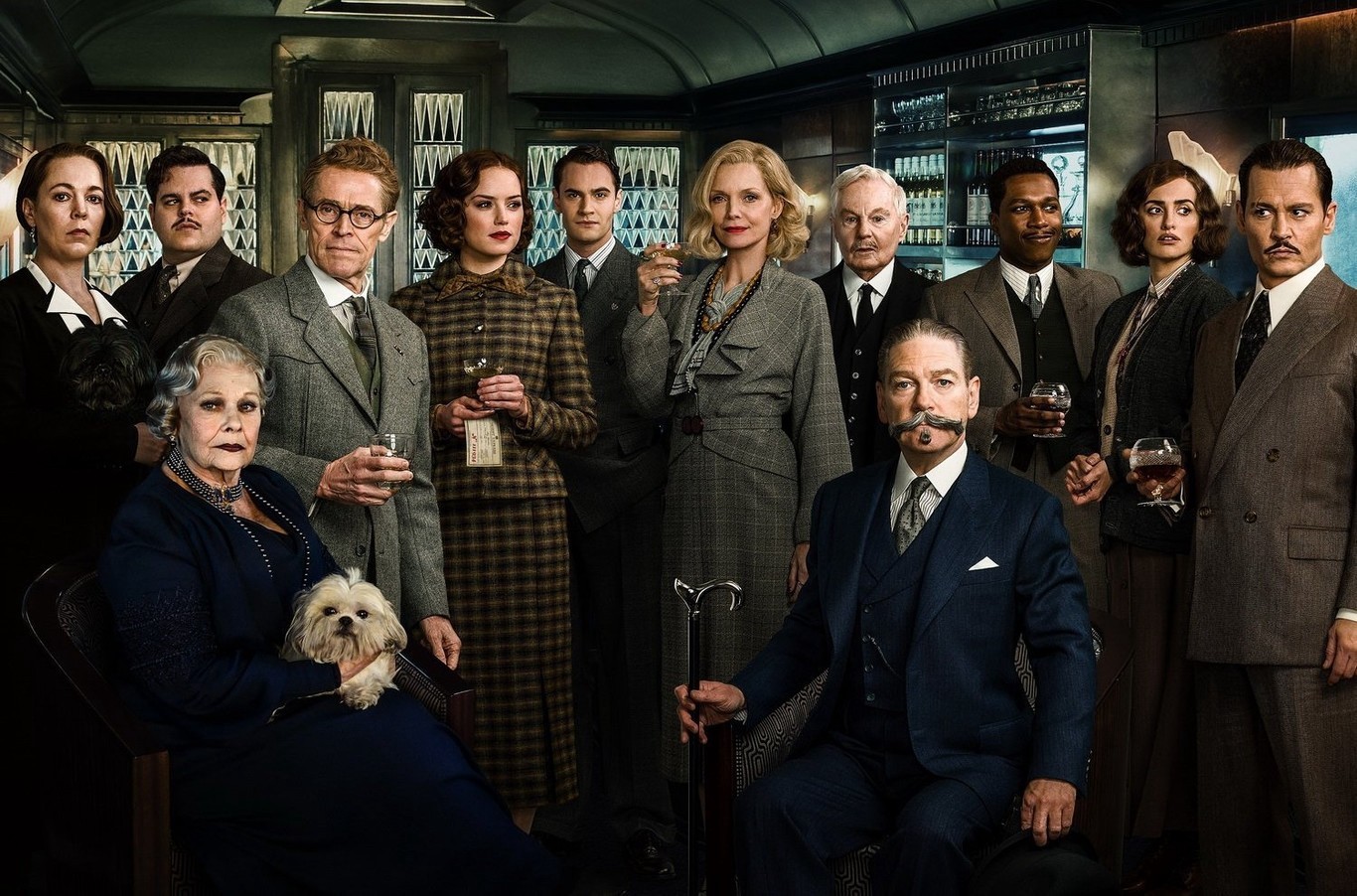
Not only does the 2017 version seem more engaged with the politics of identity, there’s also a tacit understanding of the very racism that underlies much of Christie’s work. Branagh and screenwriter Michael Green make some changes to the cast of characters: Greta Ohlsson (played by Ingrid Bergman in the 1974 film) is replaced by Pilar Estravados (Penelope Cruz); Col. Arbuthnot (Sean Connery), once stationed in India, is now Dr. Arbuthnot (Leslie Odom Jr.), an amalgam of the Colonel and Dr. Constantine; and Foscarelli (Denis Quilley) is traded in for Biniamino Marquez (Manuel Garcia-Rulfo). This is not just colorblind casting or neoliberal lip service. With characters like Hector MacQueen (Josh Gad), assistant to the late Cassetti (Johnny Depp) basically saying, “I’m not racist, but check up on that Cuban guy,” and Hardman (Willem Dafoe) just being a straight up white supremacist (and implied Nazi sympathizer) who makes snide remarks about Dr. Arbuthnot, Branagh’s version dares to challenge Christie’s reputation. The film acknowledges that not only were Christie’s characters racist themselves, but that she, by sidestepping the reality of how white people and non-white people interacted in favor of stereotypes and tropes, had a racist streak too.

Branagh’s version of Christie’s version of American national identity is not as concerned with the artificial or presentational Americanness that Christie envisioned, but it does not feel revisionist so much as it feels like a rectification of something that Christie overlooked. For all of her travels to Baghdad or on the Nile, Christie is unable or unwilling to imagine a version of diversity that would be meaningful today. Branagh’s reconceptualization of the passengers on the Orient Express makes her “mosaic,” and Poirot’s ethical questions, more potent and more real.

Branagh’s reconceptualization of the passengers on the Orient Express makes her “mosaic,” and Poirot’s ethical questions, more potent and more real.

The film feels more aware of the political values that would have existed at the time, making mention of American climate in the context of different approaches to how the U.S. views Stalin and communism (MacQueen and Arbuthnot both think the other is wrong about Stalin), how British colonialism either was an act of shattering or binding (Arbuthnot’s role as doctor of color serves to complicate his role in the British’s colonial history), the bigotry faced by mixed race relationships (Arbuthnot and Debenham), and the manner in which certain suspects try to throw others’ under the bus nods to how white privilege may operate in this space. There is, like in America, an intricacy to the operation of power and politics, right here on the train.

Branagh’s update is not only the next logical step for what an Agatha Christie adaptation should be — decadent with a dash of contemporary fun. It also deepens the source material with a much more nuanced understanding of American national identity. In adding more shades of black and white, it has more little grey cells than you would think.

Does Any Book Really Need to Be 1600 Pages Long?

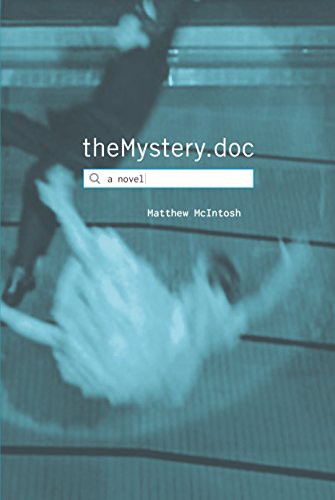
Double Take is a literary criticism series in which two readers tackle a highly-anticipated book’s innermost themes, successes, failures, trappings, and surprises. In this edition, Tobias Carroll and Bradley Babendir explore Matthew McIntosh’s metafictional epic, theMystery.doc.

A book of this size demands to be noticed. There’s something so jarring and compelling about publishing a 1600 page monster of a novel in 2017 — a time when most novels are trimming down and narrowing their focus — to a perhaps an intentional lack of media coverage. Yet Matthew McIntosh lays the foundation with the necessary metafictional suspects: multiple concurrent narratives, typographical decoys, computer code, television stills, and even some pop-up ads. The end result is a book that’s equal parts puzzle and brick. With little else like it, theMystery.doc’s unique stature alone could be worth the price of entry.

Tobias Carroll: There is a point, 990 pages into Matthew McIntosh’s 1660-page theMystery.doc, where a character loses their mind while pondering the size and scope of a theoretical novel that sounds a whole lot like the one in front of us. Reading that, I was alternately amused that McIntosh was acknowledging the elephant in the room — this book, a supposed giant book about literally everything — and frustrated that we were getting metafictional and self-referential humor at a point when most books have begun to wrap things up.

That blend of admiration and frustration characterized my reaction to theMystery.doc pretty well. It’s about a host of things: a writer who wakes up with no memory of his life until that point, an online chat where at least one of the participants may be a computer program, a woman trapped in the World Trade Center on September 11, the nature of God. It’s also a genuinely experimental work — maybe the literary equivalent of a sprawling independent film like Chris Marker’s Sans Soleil — that does wholly unorthodox things with images and spacing.

Sometimes I felt as though I was tapping into something transcendental; at others, I felt like I was literally wrestling with it. So I’m curious to know what you thought.

Bradley Babendir: My reaction to the book is mostly in line with yours: awed frustration. I’m glad you pulled out that specific metafictional moment (in a book full of them) because I found it to be disappointing too. There was something so typical about it that left me a little cold. In one sense, I agree: I was comforted by McIntosh’s acknowledgement of its hubris. In another, the acknowledgement fell flat, almost redundant.

I don’t know if you had a physical copy of the book or not, but the size and scope of it is self-evident. It is gigantic. It is physically difficult to read because it is so heavy. It’s over four pounds. Without getting too abstract: What does that mean? What does it mean to have the reader physically wrestle the book to be able to read it? My initial thought: The exhaustion of reading it was essential to many of the book’s powerful and beautiful moments. The book is many things all at once, and, to make the framing here slightly more specific: What parts were working best for you? I thought the chat sequences with the computer program (or programs) was the most engaging and exciting to read. The more conventional narrative — the sections about the author — were a little tougher to get through.

What does it mean to have the reader physically wrestle the book to be able to read it?

There isn’t really a level of interest on a specific subject that’s going to make someone who has a visceral, negative reaction to a book of this size want to read it. Openness to the size would be the most important piece, and I think that in the eyes of most readers, that will be, more so than its content, what ultimately defines it. Luckily for McIntosh, the ambition of his project matches well with the general ambitions of a reader who is drawn to something so massive.

TC: In terms of the “about everything” aspect of the book, I’m curious about your take on the more metaphysical parts. Initially, I took the title as a more straightforward riff on what a mystery is — and that’s certainly the case as well, given the somewhat classic setup of a man awakening sans memory. McIntosh’s metaphysical stakes seem a lot larger, and they don’t really ever contract over the course of the book. Did you also find this to be present? Also, did you come away with any greater understanding as to, for lack of a better phrase, the universe according to the Mystery.doc?

BB: I should admit that invocations of Christianity are something I tend to struggle to understand, having been raised Jewish. I often end up with a more surface-level of understanding because I’m never quite sure I have enough knowledge to really “get it.” Still, I found a lot of the invocations of religion compelling, like the speech or sermon beginning on page 1207 that ends with a reassuring sentiment offered to a character for whom some of “language will be lost.” McIntosh writes, “…the bible says in Romans 8, that he speaks in ways that when we can’t even articulate, God still gets said what he wants to say.” I don’t know the scripture and I don’t really believe in God, but that struck me as a beautiful idea in the context of this book.

‘The Book of Disquiet’ Is the Weirdest Autobiography Ever

I think the more general question of metaphysical stakes is a wonderful one. I grew to understand “the mystery” differently over the course of the book. I don’t know if I have a greater understanding of the world according to theMystery.doc, though I think that if I did, I might have missed the point. A lot of this book is about alienation from “reality” which, to use Phillip K. Dick’s definition, “is that which, when you stop believing in it, doesn’t go away.” That’s worth considering alongside theMystery.doc since McIntosh plays with this notion. For example, large portions of the book appear redacted. Whole pages are redacted, and there are pages almost entirely redacted with a word or two that are not. I’d like to know how you considered those passages. If I assume that McIntosh is referencing the type of documents that are often portrayed with redactions — like secret government reports — then what is redacted is most important and most sensitive. Then again — maybe they’re just black lines? As in, what’s the point? For me, the metaphysical stakes emanated from the structure and style as much as the content, though with a book like this it’s not necessarily possible to separate each, which just adds to the puzzle.

TC: I read the redactions in a couple of ways. On one level, it seemed of a piece with McIntosh’s attempts to fold in as much of early-21st century American life into this narrative as he possibly could; like it or not, I feel like redacted government documents have become associated with George W. Bush’s presidency in an inexorable way. On that level, it reminded me of Jenny Holzer’s Redaction Paintings, where the raw materials of the abuses of the War on Terror were turned into art without necessarily losing their potential to make a sociopolitical point. I also wondered if these didn’t have certain qualities of erasure poetry to them as well, which would also be in tune with McIntosh’s way of working in different artistic disciplines and aspects of other media.

Did the use of film stills, to an extent that there was a kind of interpolation of cinematic language, mesh interestingly with the rest of the narrative? And what did you make of the moments of linguistic static, where characters ran rampant across the page, but which came off like gibberish? I was reminded a little of how books like Mark Doten’s The Infernal (which also grapples with some of the same recent history), Jennifer Marie Brissett’s Elysium, and Sarah Hall’s Daughters of the North use a kind of random distortion effect in the text to suggest a document that had been somehow corrupt. McIntosh also does that on a much, much, much grander scale, which at times felt a little excessive. This is a book roughly the size of a human head, so excess becomes relative.

This is a book roughly the size of a human head, so excess becomes relative.

BB: I found most of what McIntosh was doing to be emotionally and intellectually compelling. I found a cinematic language and logic emerging as I explored the film stills and photographs. The static had a similar effect on me, in that it became more of a visual experience than a linguistic one. When there are 15 pages filled with mostly asterisks, a narrative meaning inadvertently looms but it also calls attention to itself, to look at it. I found it all so complicated and worthy of inspection as I was experiencing them and that is an argument in their favor. At the same time, their place in theMystery.doc’s narrative is much less clear to me.

Did you feel like this book is a coherent? I found it aimless. Structurally, it’s unpredictable and that — of course — becomes part of the reading experience. Eventually the book establishes its own logic. Most importantly, this was incredibly emotionally coherent for me, in that I think the book has an affective emotional arc that is, both frequently and ultimately, quite deliberate and moving. Do you agree?

TC: I’d agree with you 100% about the novel having an emotional arc that worked, even as some of its components seemed more (intentionally) bewildering. I haven’t sat down and read any interviews with McIntosh, nor have I read his previous novel–which, if the nods to it in this book are to be believed, is much more traditionally-structured than his followup. So I’m curious if he’s intended it as a kind of collage, or if there is in fact a massively complex narrative unfolding that both of us have evidently missed.

Earlier, I’d talked about the sense of this text as a kind of embedded digital work; looking back on it, that’s only increased. The book’s title is a filename; the first word we see on the first page (technically page i) is another file name: “foretellcometell.wav.” And the initial structure is such that these different narrative strands—and some of the digital-ish static that surrounds them—are distinct… until they aren’t. By the end they’ve started mashing themselves together and recombining into different forms, which seems like a very 21st-century thing, from popup links on video clips on YouTube to situating a digital animation in the middle of a news article. I wonder if this might not also be one of the themes of the book: the way that, over the last decade or so, the lines between different forms of media have become increasingly blurred, and the narrative potentials that that might offer. The fact that a different version of the title page turns up on page 1565—that this has all been a kind of prelude—supports that, in my mind.

Support Electric Lit: Become a Member!

And with that also comes questions of what humanity and authorship mean in this new context: on page 1567, there’s another variation on a chat window conversation that may or may not be between a computer program and a human being. Did you get a similar feeling: that this question of the creation of art in the early 21st century was also below the surface of some of these narrative decisions?

BB: I do get a similar feeling about theMystery.doc’s wrestling with the creation of art in the 21st century. There is certainly an interest in blurring, but I’ve thought about it more in terms of juxtaposition. I read a lot of books on my tablet, and I use the same device to watch movies, play games, send emails, check twitter, and more. This is perhaps not a new revelation but I think it’s the idea that McIntosh is really grappling with. It’s almost like a challenge. He’s asking “does this seem bizarre to you?” and it does when he’s literalized it in his book, but there’s also a reflection in daily life. We are (or at least I am) always switching between words and pictures and videos, all the time. There are writers that grapple with this in different ways but I think that McIntosh’s method is effective and provocative. Everything is available all the time and McIntosh sees the urgency of that and its consequences.

I’d like to draw us toward a larger thematic question about what McIntosh is writing toward. What binds this book together? I think it has a lot to do with the overflowing post-9/11 sadness, paranoia, and anxiety. A lot of the photographs in the book, like the set of the couple dancing, or the set of an American flag, have a paranoid sense of being surveilled; it registers to me, at least, as unsettling.

What binds this book together? I think it has a lot to do with the overflowing post-9/11 sadness, paranoia, and anxiety.

TC: I’m with you on theMystery.doc thematically addressing the national mood in the early years of the 21st century. I think that a lot of what we’ve been talking about taps into that, from the questions of religion posed throughout to the Turing Test-esque rumination on what makes someone human versus a machine to the direct evocation of national symbols and national traumas. To take that a step further, I think there’s a pervasive mood of questioning, from the title onwards–a sense that (perhaps in response to the chaos of American life post-2000 election, post-September 11, etc.) nearly everything that could be taken for granted is now ripe for interrogation.

Part of that is baked into the novel, with the “am I talking to a human or a program” dialogues that recur throughout the narrative being one significant example, along with the narrative of amnesia that’s probably its most familiar narrative element. But there’s also the way the novel makes use of a traditional three-act structure, but constantly subverts it; there’s the way that it appears to be grand literary epic that reads more like a metafictional collage; and there’s the way that the novel’s title evokes a file name–something that can still be edited, something malleable. (See also: Kanye West’s decision to keep updating his album The Life of Pablo after its formal release date.)

So maybe that’s where all of this is going—this is McIntosh’s way of simultaneously channeling the joy and potential of early-21st century American life—where certain rigid hierarchies have begun to crumble, and there’s more freedom to create something new and unclassifiable—alongside the dangers that come along with it, and the feeling that you’re increasingly being watched, whether by governmental agencies or private enterprise.

To an extent, I think McIntosh’s book is one that resists easy categorization or analysis—but I also think there’s a lot more happening in it than simply an arbitrary jamming together of numerous disparate narratives. Even if that was the case, it seems as good a place as any to evoke the collective modern-day American headspace.

Happy Thanksgiving from Electric Literature!

Dear EL Members,

On behalf of everyone here at Electric Literature, I want to tell you how grateful we are for your support. It means so much to know that you not only read what we publish, but more importantly, believe in our mission to make literature exciting, relevant, and accessible. So this Thanksgiving, we want to say thank you!

As always, you can access the full Recommended Reading archives and submit your own fiction year round. And please feel free to email editors@electricliterature.com with any questions.

Wishing you a wonderful holiday weekend!

Halimah Marcus
Executive Director, Electric Literature

10 Novels About Family Gatherings Gone Bad

Fiction has no shortage of unhappy families — since they’re all unhappy differently, there’s a lot to write about. Chronicling the ups and downs of various familial groups has been the goal of many a novelist — and, over the years, it’s led to countless stories about family gatherings gone awry. Some books tell the tale of a dysfunctional family falling into outright conflict over the course of a meeting or meal; others use explosive arguments or discord to expose a deep fissure within an otherwise healthy family.

Here’s a look at ten novels featuring family gatherings gone memorably awry–from the comic to the tragic to the decidedly surreal.

The Brothers Karamazov

The Brothers Karamazov, Fyodor Dostoevsky

Sometimes, getting together with families reminds us of the flaws of those who we’re related to; sometimes, they remind us of our own inadequacies. The title characters in Fyodor Dostoyevsky’s classic novel experience all of the above as they struggle with the legacy of their father and of their own wildly different approaches to life.

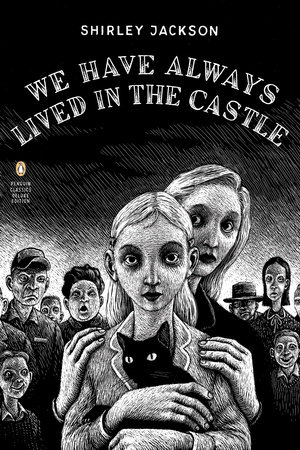
We Have Always Lived in the Castle by Shirley Jackson

We Have Always Lived in the Castle, Shirley Jackson

If we’re talking about family meals gone awry, there’s a very special place at the table for Shirley Jackson’s Gothic classic We Have Always Lived in the Castle. A fateful family dinner is at the root of many of the novel’s strange conflicts, and the precursor to its haunting mood of isolation and alienation.

The Vegetarian by Han Kang

The Vegetarian, Han Kang

The title character of Han Kang’s The Vegetarian is a woman who, one day, decides that she no longer wishes to eat meat. To say that the people closest to her are bewildered by this decision is something of an understatement; it leads to a series of strange acts of violence, shifts in identity, and one of the most harrowing fictional family dinners in recent memory.

Problems, Jade Sharma

Thanksgiving festivities can make for a host of squirm-worthy moments, from discussions about politics to unexpected intrusions of food allergies. And then there’s the Thanksgiving featured in Jade Sharma’s Problems, which raises the bar of in-law awkwardness to a new level when the novel’s heroin-addicted protagonist travels with her husband to visit his family for the holiday.

Image result for o fallen angel kate zambreno

O Fallen Angel, Kate Zambreno

Nearly every variation on the traditional American nuclear family is turned on its head in Kate Zambreno’s haunting, stylized novel O Fallen Angel. Here, the bonds between parents and children are chillingly frayed, family meals are occasions for excess, and the difficulty that different generations have in communicating with one another brings tragic effects.

10103214. sy475

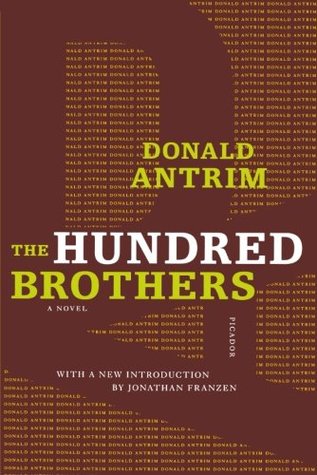
The Hundred Brothers, Donald Antrim

Many family gatherings are inspired by unpleasant events. The title characters in Donald Antrim’s wonderfully bizarre novel are brought together by the death of their father. The hundred siblings gathered together is your first clue that this isn’t a strictly realistic novel–in fact, it takes numerous turns into increasing levels of surrealism, even as it explores familial dynamics and long-standing resentments.

Bright Lines by Tanwi Nandini Islam

Bright Lines, Tanwi Nandini Islam

Early on in Tanwi Nandini Islam’s novel Bright Lines, there’s a scene of familial discord as dinner is prepared. Reading it may stir familiar memories of intergenerational clashes between parents and children. It’s a dissonant moment in a novel that explores both sides of familial connections: how they can lead to conflict, but also how they can bring people together.

Dunbar by Edward St. Aubyn

Dunbar, Edward St. Aubyn

Few contemporary writers describe imploding families and the long legacy of trauma with the skill and style of Edward St. Aubyn. For his novel Dunbar, he reimagined King Lear as the story of an aging media mogul with three daughters, and ups the amount of familial dysfunction to an operatic level. The result is a story at once familiar and revitalized.

12021

The Crow Road, Iain Banks

Iain Banks’s novel The Crow Road traces the diverging pathways within a sprawling Scottish family, exploring questions of art, skepticism, belief, and mortality along the way. At the center of the book is a clash between father and son in which their differing views on atheism spark a conflict that runs throughout much of the novel.

darkansas final art.jpg

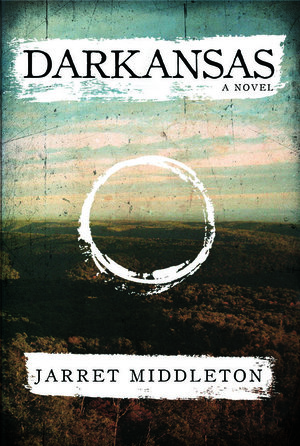
Darkansas, Jarret Middleton

In Jarret Middleton’s Darkansas, the tensions and frustrations found at most family gatherings are accentuated by the uncanny — it emerges that the protagonist’s family includes a pair of twins in each generation, one of whom is destined to kill the other. And on the periphery is a sinister duo with a vested interest in seeing destiny run its course, heightening things dramatically.

The 9 Weirdest Naps in Literature

Listen, we’re all tired, pretty much all the time. But is it really safe to nod off? For you, probably yes, but for the characters in these nine novels and stories, definitely not. Some of them awaken from a deep slumber to discover that decades (even centuries) have passed and that the world they knew no longer exists. For others, it’s the opposite—it turns out they’ve been dreaming all along. And sometimes, they just wake up covered in tiny men. Before you snooze, read up on all the ways naps can go really, really weird. And then, good luck getting to sleep!

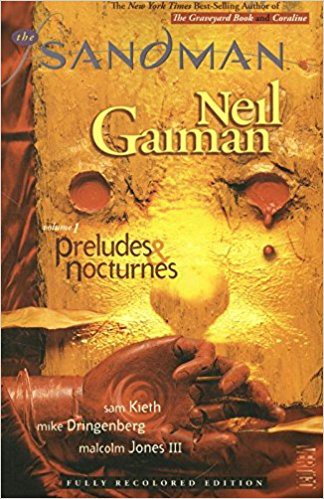
The Sandman by Neil Gaiman

This whole comic series is about sleep—the main character is Morpheus, the Lord of Dreams (not the guy from The Matrix). But one nap stands out as particularly chilling. Morpheus punishes one of his enemies by cursing him with “eternal waking.” From the outside, the man is in a coma-like permanent sleep. But inside his head, he’s constantly waking from a horrible nightmare—into an even more horrible nightmare. People who cross the Lord of Dreams don’t often sleep well.

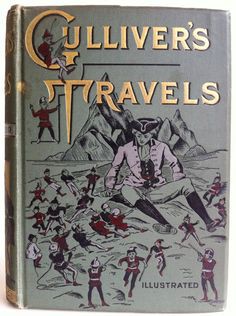
Gulliver’s Travels by Jonathan Swift

Gulliver, a failed English surgeon, takes to the sea to find his fortune, only to find himself shipwrecked after getting caught in a storm. He swims to a nearby island, passes out from exhaustion and awakens when the island’s six-inch-tall inhabitants tie him up with miniature ropes. If you think it sucks waking up with the couch pattern imprinted on your face, imagine waking up with your hair staked to the ground and a tiny man standing on your chest.

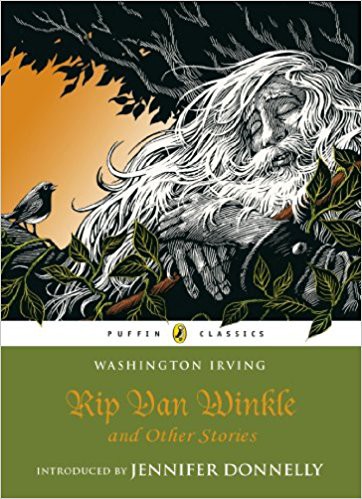
Rip Van Winkle by Washington Irving

Perhaps the canonical Weird Nap in Literature. Rip Van Winkle is a lazy Dutch colonial villager in the Catskills who wants nothing more than enjoy some alone time away from his nagging wife. He runs away to the mountain and bumps into some mysterious bearded men who offer him a drink. He drinks some of their gin, falls fast asleep, and wakes up… twenty years later. PSA: Never accept alcohol from a green dwarf with glowing eyes.

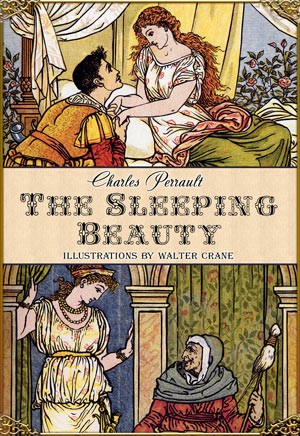
The Sleeping Beauty by Charles Perrault

An evil fairy feels snubbed that the King and Queen forgot to invite her to the royal christening, so she shows up uninvited anyways. To make matters worse, her meal is served on plain old china while the other silly fairies, not even half as senior as her, get gold plates. Rude, much? So the evil fairy has to curse the baby princess to prick her finger on a spindle and fall into a deep slumber for 100 years until a prince’s kiss awakens her. The evil fairy really didn’t want to be the bad guy, but she had her reputation to protect, after all.

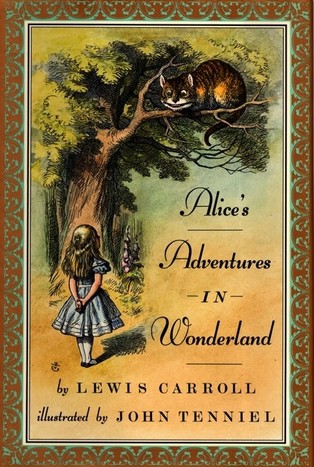
Alice’s Adventures In Wonderland by Lewis Carroll

Alice was sitting by the river with her sister, bored to tears with nothing to do, when suddenly a White Rabbit with a pocket watch appeared and “down the rabbit hole” she went. She falls into a surreal world inhabited by a chain-smoking Caterpillar, an invisible Cheshire Cat, a Mad Hatter hosting a tea party and other eccentric talking animals. Just as a hysterical Queen of Hearts orders the girl to be decapitated, her sister rouses Alice from her sleep, leaving a confused Alice wondering if her adventures were real or just a dream.

Romeo and Juliet by William Shakespeare

Juliet follows some bad advice from a well-meaning friar and becomes convinces that the best way to reunited with her lover is to drink a potion that induces a death-like sleep. A distraught Romeo finds his sweetheart interred in the family crypt and consumes real poison. Juliet finally wakes up, all refreshed and well-rested, only to find her beloved’s lifeless body. Damn, so much for that plan. Juliet then dramatically stabs herself with Romeo’s dagger. Everyone dies, the end.

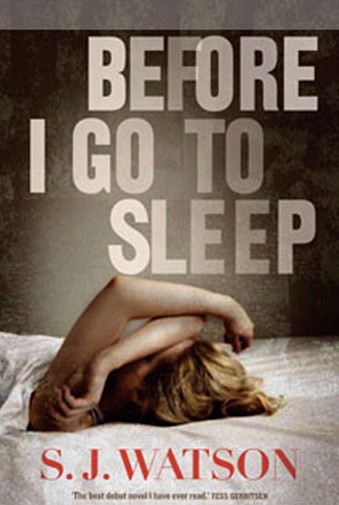
Before I Go to Sleep by S.J. Watson

Christine Lucas wakes up every day in an unfamiliar house next a strange man who insists that he is her husband. She suffers from anterograde amnesia and her daily memories are erased in her sleep. Unsettled, Christine tries to piece together the 20-year gap in her memory with the help of a diary and her therapist.

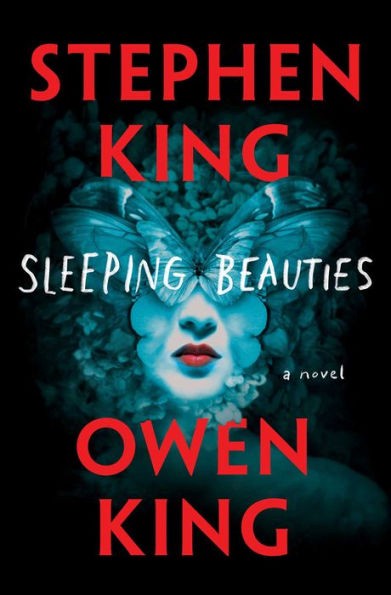
Sleeping Beauties by Stephen King and Owen King

The women in a small Maine town fall asleep and don’t wake up (probably because of boredom and lack of stimulating activities), instead growing giant tendrils of cocoons. The men in the town try to destroy the cocoons which of course turns the sleeping women into homicidal zombies. They should have attached a Do-No-Disturb: Dangerous Sleepwalker sign.

Dawn by Octavia Butler

Two hundred fifty years after a nuclear war that devastates the earth, Lilith lyapo awakens from a deep sleep. She is one of the last human survivors, held captive aboard a spaceship by strange beings who offer to make her world inhabitable again. But of course there is a catch: The aliens have rescued (wo)mankind in order to make little tentacled babies with their human captives.

Wednesday Addams is Just Another Settler

Thanksgiving is upon us, so it’s time for the internet to celebrate that video clip of Wednesday Addams in a beaded headband. “How! I am Pocahontas, a Chippewa maiden,” she says through a forced smile in the 1993 film Addams Family Values. Wednesday (Christina Ricci), my goth ancestor, has been sentenced to a summer of wholesome outdoors activity at Camp Chippewa, but she reviles the camp and its sun-soaked golden children. As a self-defined outcast and hater of fun, she chooses the camp’s pageant as the site of her rebellion, going off script with a monologue:

You have taken the land which is rightfully ours. Years from now, my people will be forced to live in mobile homes on reservations. Your people will wear cardigans and drink highballs. We will sell our bracelets by the roadsides. You will play golf and enjoy hot hors d’oeuvres. My people will have pain and degradation. Your people will have stick shifts. The gods of my tribe have spoken. They have said, “Do not trust the pilgrims, especially Sarah Miller.”

This clip’s Facebook rounds used to be one of the things I liked about Thanksgiving. I, too, am the “little brunette outcast,” knife-eyed and long-haired, seen only in dresses black as bat wings even through summer. I, like Wednesday, do not trust the Pilgrims. Smug in my embrace of the macabre and hoping to grow up to be Morticia, I paint my lips red as a guillotine’s blade. I’m the kind of girl who flirts by asking, as Wednesday says to her love interest while they stare across a skeleton’s ribcage, “Do you believe in the existence of evil?”

But Wednesday Addams is a settler. I can only trust her if she gives me reason to. This year, I will not celebrate her monologue.

In Addams Family Values, loving parents Morticia and Gomez send Wednesday and her brother Pugsley away to summer camp at the recommendation of the homicidal nanny, who seeks to shuttle off the precocious children to a place where they won’t interfere with her plot to marry and kill Uncle Fester. The camp scenes were filmed in California, far from the New Jersey lake community where I grew up, but the locations look alike. Though at my lake, there was nothing like Camp Chippewa, “America’s foremost facility for privileged young adults.” There was a cluster of mobile homes by the shore, across the road from the swamp. There was a restaurant (now vacant), a bar (collapsed, I think), and a general store (bulldozed).

Wednesday Addams is a settler. I can only trust her if she gives me reason to.

The location of the Addams family’s mansion isn’t specified in the film, but in creating the original cartoons, Charles Addams drew inspiration from his hometown of Westfield, an hour’s drive from my lake. The television series places the mansion adjacent to a cemetery and a swamp. Near my parents’ house, the swamp is supposedly full of ghosts, but I wouldn’t know, because it’s also full of bears and West Nile virus-carrying mosquitos. Far beneath the winding road lined with houses that belonged to the city businesspeople who brought their white vinyl siding into our woods, the swamp always seemed to be the last place colonization hadn’t reached.

Last November at Standing Rock, four days before Thanksgiving, South Dakota law enforcement attacked water protectors with rubber bullets, tear gas, concussion grenades, and high-velocity blasts from water cannons and streams from hoses. The temperature was in the 20s; seventeen people were taken to the hospital for hypothermia treatment. A non-Native woman was hit by a concussion grenade that night. It nearly blew off her arm. She didn’t lose her limb, but the hand still has no feeling.

About a month earlier, Hillary Clinton’s director of coalitions press Xochitl Hinojosa released a statement:

We received a letter today from representatives of the tribes protesting the construction of the Dakota Access Pipeline. From the beginning of this campaign, Secretary Clinton has been clear that she thinks all voices should be heard and all views considered in federal infrastructure projects. Now, all of the parties involved — including the federal government, the pipeline company and contractors, the state of North Dakota, and the tribes — need to find a path forward that serves the broadest public interest. As that happens, it’s important that on the ground in North Dakota, everyone respects demonstrators’ rights to protest peacefully, and workers’ rights to do their jobs safely.

I declined Thanksgiving invitations so I could spend the day alone in avoidance of football, gluten, and turkey smells that cling to my long hair, instead refreshing Facebook for updates from my friends who had traveled to Standing Rock for the long weekend. How do I talk to my family about politics at Thanksgiving? the internet kept asking itself. While militarized police kept their guns pointed at people without weapons, Hillary Clinton tweeted, “Hoping everyone has a safe & Happy Thanksgiving today, & quality time with family & friends,” and I spoke to no one. I was like Wednesday, refusing to be hugged. It didn’t feel right, but it felt safe enough.

It’s been a decade since I spent a Thanksgiving with my parents. After I moved to the West Coast, the holiday wasn’t important enough to me to justify the expense of a cross-country flight. For the last ten years, I’ve spent Thanksgiving with friends or relatives or alone. I’ve never liked Thanksgiving and for a while, I couldn’t figure out why: I like and love my family and I like to eat. I decided it was the football, or the years of packing my body with stuffing while suffering from undiagnosed celiac disease, or the anxiety, later, of trying to avoid both gluten and the anxious shame of making others think about it. Really, though, I’m uncomfortable committing to a six-hour stretch spent with other people (even those I’m fond of), no activity planned but eating, no hiding place for me to retreat to, and no way to silence the mean critic in my head who begins analyzing my words at the two-hour mark. I dread any event that fits this description. Thanksgiving is only different because my Nativeness has let me get away with hating it.

I dread any event that fits this description. Thanksgiving is only different because my Nativeness has let me get away with hating it.

When Wednesday and Pugsley arrive at Camp Chippewa, directors Gary and Becky introduce themselves to the campers and their families. “We’re all here to learn, to grow, and to just plain have fun,” Becky says. “Because that’s what being privileged is all about!” Gary adds. Everyone applauds but Wednesday, who drinks from a bottle of poison.

Later, the children receive bows and arrows, line up, and take turns at the target. Pugsley aims at the sky. A bird falls dead to the ground. “It’s an American bald eagle,” Becky laments. “But aren’t they extinct?” Gary asks. Wednesday says, “They are now.”

Addams Family Values opens with Fester howling lonesome at the moon and ends with Wednesday telling her love interest, “If I wanted to kill my husband, I’d do it, and I wouldn’t get caught.” He wants to know how. “I’d scare him to death,” she says.

I am neither Wednesday nor Fester. I am not the grim girl with her own guillotine, not the unsmiling camper who would let the blonde girl drown. Neither am I the old ghoul who wants a companion so badly he clings to the woman who tries to electrocute him in the bath. But I am a loner and a weirdo. Even in our kindergarten Thanksgiving celebration, for which I was assigned a construction paper feathered headband that signified my affiliation with the half of the class playing the Indians, I didn’t belong, because I was going to be Native the next day, too, and every one after, while they were going to forget we’d even played this game.

On Facebook, a few days after last Thanksgiving, Alicia Smith wrote,

White people are colonizing the camps. I mean that seriously. Plymouth rock seriously. They are coming in, taking food, clothing and occupying space without any desire to participate in camp maintenance and without respect of tribal protocols.

These people are treating it like it is Burning Man or The Rainbow Gathering and I even witnessed several wandering in and out of camps comparing it to those festivals.

Two months earlier, Jen Deerinwater wrote, “We need allies, not patronizing people with a God complex who drown out our voices by further colonizing our spaces.”

White friends texted me questions about Standing Rock, and I Googled the answers that hoped would make up for the fact that when they asked me whether I was going there, I had to say that I wasn’t. I had a job and too many PTSD triggers, like cops and shouting. “I can’t,” I kept saying, by which I meant that I wouldn’t, because my own needs lived in my body, and everyone else’s were on the other side of some moat I chose not to cross.

At the end of Wednesday’s Thanksgiving speech, she says, “I have decided to scalp you and burn your village to the ground.” Her fellow misfits proceed with the latter. They torch the set and rope the blonde nemesis to a stake at which she’ll be burned. Wednesday, smug as a pardoned turkey, strikes a match.

I didn’t belong, because I was going to be Native the next day, too, and every one after.

After the pageant, having proven themselves the outcasts, through with their revenge and accountable to no one and no place, Wednesday and Pugsley go home. The buildings are still on fire, but someone else will watch them burn.

When I graduated from the University of Washington in 2009, I was invited to Raven’s Feast, an annual salmon dinner honoring all Native graduates. Not wanting to take up space at one of the banquet tables, I stood by the doors and ate salmon and cake from a precarious paper plate while faculty members called the graduates’ names. At the mic, I couldn’t find the words of gratitude the other students so easily expressed. I was grateful to my family, but I hadn’t thought to invite them.

The next year, by then a university office assistant, I went to Raven’s Feast to help. I liked being at the edge of the room, quiet in my apron, taking direction on how much wild rice to scoop onto plates. I stayed on to work for the university through seven more Raven’s Feasts. My colleagues and I made massive Costco runs and triple-checked sheet cake specs. We assembled massive bowls of salad. We smiled at graduates and their families while making sure everyone’s serving of salad had at least one cherry tomato. Over time, returning to the same tasks, I saw myself changing. I wanted to help and I wanted to belong. I was growing out of isolation.

Non-Native people have asked me, How many gods do you believe in? None, exactly. I believe in as many spirits as there are animate and inanimate beings. There are no gods to tell me who to trust, only people who tell me how to stop hiding in dread and how to stay close to the other beings who will protect me from evil.

There are no gods to tell me who to trust, only people who tell me how to stop hiding in dread.

As I stepped into the kitchen during my final Raven’s Feast, a colleague handed me a small, burning hot piece of salmon belly, straight from the fire. The belly is my favorite part. The salmon promised my ancestors that we could count on their sustenance. Every spring, my tribe holds its First Salmon Ceremony to show reverence to the salmon that have agreed to feed us. Each of us takes a small piece of cooked flesh and gives thanks for it.

After my last Raven’s Feast, I went home and wept. In a room of hundreds of Native students and relatives, I’d felt at ease, and I wanted to belong there forever. I cried into hands that smelled like salmon, even though I thought I was alone.

This Thanksgiving, Ivanka Trump suggests we solve the problem of Thanksgiving table decorations by filling an oversized clamshell with small pumpkins, pinecones, and brambles. Daniel Kibblesmith tweets, “FILL A GIANT CLAM WITH GARBAGE FROM THE WOODS YOU ARE THE GARBAGE GOD NOW.” This Thanksgiving, having moved a day’s drive from the lake, I will be with my parents and my grandma. No one will enforce festivity through the use of an overwrought centerpiece. We will eat my favorite dessert salad and tell each other the stories of our lives: theirs before I was born, everyone’s in the months we’ve been apart. That is the belonging I want. The gods of my tribe, if that’s what they are, have spoken since the beginning of time. I don’t know what they said but I do not believe they wanted us to be alone. I’m trying.

Mother-Daughter Relations and Other Horror Stories

“If My Mother Was the Final Girl”

by Michelle Ross

“…in the end, bloody and staggering, she finds the highway.” — Carol Clover

My mother’s laugh echoes. It’s Disney sinister, like a witch peeping her head into the magic cauldron to see that the hawks’ beaks and chickens’ hearts are brewing as they should.

Her face is buried inside a humidifier-like contraption, which sits on the coffee table like an altar. What I see is a large plastic box topped with curly, frosted hair.

I’m watching a program in which a psychic helps people communicate with their dead relatives. I don’t laugh along with my mother, though I too am skeptical.

It’s New Year’s Eve, and I’m waiting for the microwave to beep. We were supposed to go out for dinner, but my mother has one of her headaches. It’s her sinuses that are the problem. They’re always blocked.

These headaches make her lose her appetite. They’re so bad sometimes that she doesn’t move for hours. She lies on the couch, and closed, her eyes look more pained than when open. It’s like she’s trying to push the headache out through her forehead, like pushing out a baby.

The contraption her face has disappeared into is new to my mother’s collection of headache helpers. There’s the rice bag that she heats in the microwave and wraps around her neck. There’s the eye patch filled with a green liquid. There’s the headband with magnets stitched into it. And the dish that she heats and fills with therapeutic oils that are supposed to open her breathing passages and relax her muscles.

These things help a little, but never enough. She’s looking for the invention that takes her headaches away forever. She’ll collect every gadget she can get her hands on until she finds it, even if it means she can open up her own museum.

She discovered most of these products on television. Half the contents of our apartment, from kitchen gadgets to electric wall art, are wonders she saw demonstrated on television. I hate that. I think it’s tacky, and I’ve told her so.

I’m lucky I don’t have an apartment of my own, according to my mother. She knows a woman who put her fifteen-year-old daughter up in her own apartment because they couldn’t stand the sight of each other. There are days when my mother swears that if she had the money she’d do the same thing. In another year I’ll be eighteen, old enough for her to kick me out legally. She’s made note of this fact on a number of occasions.

The one thing my mother and I share is a love for slasher films. When the first girl gets hacked up or sawed in half or stabbed in the breast, my mother says, “Now there’s real life for you.” And I glance at her sideways and think, you can say that again.

What you have to understand if you’re going to appreciate slasher films is that one, there is slasher etiquette; and two, the killer and the final girl are inextricably linked. The chief rule in slasher etiquette is that you laugh at neither of them.

What can you laugh at? The teenagers who decide it’s a good idea to have sex in the woods. Bimbo victims who slip and fall as they’re running away in high heels. Or very sad, pathetic attempts at killing, like shrunken old grandpa in The Texas Chain Saw Massacre, but there is always pain behind that laughter.

And the final girl? The killer? They’re nearly one and the same. They’re the two characters you can’t help but identify with. When the final girl is hiding in a closet that the killer is trying to break open, you’re in there with her as his knife slashes through each wooden slat. Her too-loud breathing is yours.

But you’re also out there with him as he approaches that door. You understand his rage, his desperation. You remember when he too was intruded upon, attacked — when someone broke into his house and screamed at him. He is as scared as she is. Fear and violence reproduce themselves. Or at the very least there’s the trauma that lasts forever and ever. And so you know that at the end when the final girl escapes, she hasn’t really. She’s bound to the killer in a way that the truck she jumps in back of can’t save her from. She will take the killer with her wherever she goes. She will never not be afraid. She will never not be angry. And this neverendingness will wear her out. It will ruin her. And she knows it. But there’s nothing she can do about it.

New Year’s morning my mother says she has to get out of this apartment before it kills her. She gives me an accusatory look, as if I have held her here against her will. It’s not worth mentioning that we didn’t leave the apartment yesterday because of her headache. I ended up taking NyQuil and going to bed at eleven. I’m as stifled by this space as she is.

“You coming?” she asks.

It’s bleak out there too. The sky is a sickly yellow. It’s the color that’s left when a bug dies on a windshield. The color of a sharp blow to the head.

The snow is two weeks old, and anything but clean. It’s the kind of weather people disappear in. I want to turn myself inside out, wring, and start over.

“Why not?” I tell her.

At the casino, she takes out forty dollars for herself before handing her wallet to me.

“If I ask for more money, don’t let me have it. Forty’s my limit. If I can’t win with forty, then it’s just not meant to be.”

I’m not old enough to gamble, not that I would anyway, so that means I sit in the buffet and read. Mostly the food is bland, but it’s hard to go wrong with ice cream and all the toppings you want. I have bowl after bowl until I feel ill. My waiter, who wears the requisite New Year’s star-spangled hat, gives me a packet of antacids with the check. He tells me his name is Julian, and he wants to know if I’ll be there this evening for the New Year’s Day party. They’re going to have a band and champagne and dancing.

“All the works,” he says.

When my mother is empty-handed, she collapses onto the chair across from me.

“You know the next nickel that goes into that machine is going to win,” she says.

“Mmm,” I say.

She doesn’t ask me for her wallet, but she muses aloud as to whether she should play just twenty more dollars’ worth. I am silent, which only irritates her further. She told me once that when I don’t say anything I seem like even more of a snob than when I do.

What I know about my mother’s childhood amounts to a smattering of abstractions about her mother, my grandmother: that she was an alcoholic, a chain smoker, a depressive, that she cheated on my mother’s father, and that she was abusive. I learned long ago not to ask for details. My mother shields herself from her memories as though defending against a sharp instrument, withdrawing into her bedroom for days at a time.

This is what I imagine:

My four-year-old mother finds a dying bird lying on hot concrete. Its wings and legs must be broken because it just lies there, flopping like a fish out of water. My mother, transfixed by it, watches until it makes its last flop. Then she pokes the bird’s feathers with her fingertip; already her nails are bitten to nubs. When the bird doesn’t move, she picks it up, one hand for its body, one to hold its head. To save the stiff, soft body from the sun, she brings it in to her mother, who is taking a bath.

Her mother’s body looks unusually large and curvy, magnified by the water’s surface. There is a hardness about her too. She is a sunken gourd, the hollow inside swollen with water. Her knees peek through the surface, two bony turtles’ shells.

What’s most striking is her hair, the yellowest yellow you ever saw. Really her hair is darker like mine and my mother’s. Years of nicotine have created this baby-doll, too-bright yellow.

When my mother brings her the bird, her palm opened for her mother to see, what she has in mind is to lay the bird body along the porcelain edge of the tub, like an offering. But before she can place it there, her mother splashes her and the bird and tells her to get out of the house.

“You have no sense,” she yells.

My mother hides the bird under an empty, upside-down flower pot for later because her mother is already calling after her again. Naked except for a frayed lime-green towel around her middle, her mother knocks her on the head several times, each one harder, and tells her to scrub her hands.

“Thick, thick skull,” she says. “Nothing but bone in there.”

Minutes later, her mother emerges from her bedroom in a bright orange sleeveless dress, low cut in the front, a red scarf wrapped around her still-damp hair. My mother thinks she looks like an angry vegetable.

“Get your shoes on,” her mother says, wrapping a pecan roll in brown paper and giving it to my mother to carry. This is when my mother is the youngest child, and her siblings are all in school.

My mother trails behind watching the orange skirt hem fall behind and catch up with round, pink calves. Her mother does not ask her to hold her hand. She doesn’t turn around to see if she is still there.

When they get to the man’s house, my mother is left alone on a scratchy sofa. Her mother throws her arms around the man’s neck, and he all but drags her away, a bag of stolen goods that must be quickly hidden. My mother stares at a painting of an owl on a tree limb.

I return home from school to find The Texas Chain Saw Massacre on the kitchen counter, a fresh bottle of vodka next to it. Texas Chain Saw is our favorite. It’s the triple chocolate truffle of slasher films. When the Sawyer men place the hammer into shrunken old corpse-looking grandpa’s hand and he keeps missing Sally’s head, dropping the hammer like it was a pencil, you just can’t help but smile. I mean it hurts so bad that if you don’t smile, you’ll cry.

Slasher films mean one of two things, either a really good day or a really bad day. Most often it’s the latter.

“Know that Colleen woman I told you about?” my mother says when she comes out of the bathroom in her robe. The skin under her eyes is yellow. Her sinuses.

“Who?” I say.

“I came back from lunch today with a slice of cheesecake, and she had the nerve to roll her eyes at me. She said that I sure ate a lot and that there’s just no possible way someone could eat so much and stay so small. I swear to you she was trying to say I must have one of those eating disorders, bulimia or something, or else I’d be fat like her and the rest of them in there. All of them are just plain jealous of me because I’m not fat. They’re all just a bunch of miserable old cows.”

“You’re just the belle of the ball, Mom,” I say. “Everyone knows it’s lonely at the top.”

“I just can’t stand a single one of them. They’re all so mean and hateful. It’s hard to believe people can be so terrible.” She rubs a purple towel against her hair.

“Not so hard,” I say. I unscrew the top off the vodka, get a bottle of tonic from the pantry, and set out two glasses. I put three ice cubes in each, fill them half way up with vodka, the rest tonic.

I pass her a glass.

“I worked hard to be where I am. I took night classes while working full-time and raising you, and all by myself.”

“I know,” I say. I show her a pizza from the freezer and wait for a nod, which she gives.

We put in Texas Chain Saw and each curl up in our own blankets at opposite ends of the couch. A few times our feet accidentally touch through the blankets, and we bounce off each other. We’re like mollusks or clams or conches. We like being sucked up inside ourselves, safe in our own salty warmth.

I saw the house she grew up in just once. This was also the only time I ever saw my grandparents. My mother took me to visit them the Christmas before her father died. They’d found cancer in three different places in his body, so I guess she wanted to see him one last time.

The living room was like a place deep under the ground. Whenever I thought about being buried alive, usually I thought no oxygen, bones desperate for space, and the worst kind of aloneness you could imagine. But being buried alive with other people, your family, and the smell of them as they suck up oxygen that could have been yours: that was worse.

Three scrawny, hairless dogs were piled on top of each other in a round bed next to the television. The house smelled like hairless dog skin.

The rest of the house was closed doors with thick, mottled glass, so that all I could see were faint shadows. There was almost no light in the house except for in the kitchen.

My grandmother’s hair was thin and yellow and half-hidden under a pale blue scarf. Her face seemed yellow too, and I could barely understand what she said. I remember that I asked my mother later whether my grandmother was from another country.

My mother said, “You can’t understand her because she’s smoked cigarettes her whole life. She’s lucky she can make sounds at all.”

The kitchen table, which was nothing more than a large card table, the kind my mother would erect so that we could put together a puzzle, was covered with sweets my grandmother had made. Metal pans were arranged like a mosaic. There were brownies, oatmeal cookies, butter cookies, a cake with cherries and marzipan, and fudge, peanut butter and chocolate. She pushed the pans toward me, and I hesitated. I knew the story of Hansel and Gretel. Maybe my grandmother wouldn’t try to fatten me up to eat me, but something bad would surely happen. If I put those gruesome sweets into my mouth, my hair would fall out or I’d turn a dull, sickly green.

My mother didn’t touch the food, so I felt I had to. I felt sorry for this woman, my grandmother, who seemed so small and whom my mother didn’t touch or smile at. But I was afraid of her too. My mother wouldn’t treat her that way unless she’d done something awful. My mother held her father’s hand. She asked him if he was taking care of himself. She brought him packages of summer sausage and a cheese log. She wasn’t a bad daughter.

“I’m sure going to eat good,” he said.

Before we left, my grandmother stood and lifted a cardboard box from the top of the refrigerator. She handed it to me, and I noticed that her nails were bitten down like my mother’s. She said, “Merry Christmas,” and I looked at my mother.

“Go ahead,” she said, so I opened the box to find a little book with a faded orange cover, the spine barely holding on. It was called Bitsy the Spider.

“It was your mother’s. I found it in the hall closet,” my grandmother said.

In the car on the way home, my mother asked me if I really wanted to keep that old torn-up book. “We could go to the bookstore. I’ll get you some nice, new books. I’ll get you whatever you want.”

“I want to keep it because it was yours,” I said.

My mothers’ dark blonde hair was tucked behind her ears, and her lips were pulled tight. She looked fierce, like she was going to tear up the road.

It’s a Friday night, and though we’ve hardly spoken all week, my mother comes home with a large gold plastic bag.

I’m making tea when she enters the door. She smiles at me.

“I got you a present,” she says.

“A present? What for?”

She gives me a look that asks why I’m not playing along.

Earlier in the week I developed a rash on my stomach, and when I told her I was worried about it and wanted to see a doctor, she told me it was nothing and that it would go away.

“I don’t think so,” I said.

She said I was a hypochondriac — this from my mother, who is sick all the time.

I went to the doctor on my own, and it turned out I had scarlet fever. Within a couple of days, the rash covered most of my legs and arms and chest. They weren’t little spots like hives. My rash was like a puddle of purple ink, spilled all over my body. I looked like a burn victim.

It was thirty degrees outside, but I walked around the house in shorts and a tank top, not just because I was burning up half the time, but because I wanted my mother to see my skin, to see what she had called hypochondria.

For three days I was in so much pain I couldn’t sleep. No over-the-counter pain medication would do the job.

She hasn’t said a thing to me, though. What she did was yesterday she brought home a bag full of soup packets.

Now there’s this gold bag.

“Open it up,” she says.

I’m scared to look. My mother’s gifts are always disappointing, if not downright depressing. Inside the bag are two plain white boxes, and I lift the lids to find two wigs. Both are long and straight, but one is red and the other is blonde, a good deal lighter than mine or my mother’s hair.

“You pick whichever one you want,” she says.

“And you’re keeping the other?” I say.

“That’s what I was thinking, but if you want both of them, that’s okay. Try one on.”

“I don’t know,” I say.

“Come on. Put one on.”

“Did they cost a lot?” I ask. This always makes her angry, but I hate to think of money wasted.

“No,” she snaps. “They were a bargain. Why don’t you try the red one?”

I lift the red wig from its box. It’s longer than I realized, and it’s the color of cinnamon. My hair is already up in a bun, so I slip it over my head. I haven’t a clue how to do this. My mother adjusts it for me. She’s grinning from ear to ear.

“Look in the bathroom mirror,” she almost whispers.

I look like a stranger. The wig must be a pretty good one because I think that if I didn’t know better, I wouldn’t know it was a fake. I imagine myself running through the aisle of a drug store, knocking bottles from shelves. My lipstick is smeared across my cheek, and I am singing at the top of my lungs.

“I was thinking Sally,” my mother says. She doesn’t have to say Texas Chain Saw. There is no other Sally.

“But Sally is blonde,” I say.

“I don’t know. It’s long and straight like hers. You could try the other one. It’s blonde.”

“But why should I want to be Sally?” I ask.

My mother cannot answer me. She is quiet, and then she says, “I’m so sick and tired of your mouth. I try to do something nice for you, and this is what I get.”

“I like it,” I say, and I think that perhaps I’m telling the truth. This girl fits my mood. I feel malicious. “It’s pretty. It fits real well. Why don’t you put yours on?”

“They’d both look better on you,” she says, still agitated. “You keep them both.”

“No,” I say. “You always do that. I want you to put the other one on. It’s yours.”

“No, no.”

“Yes. I’ll help you.”

I pin back her hair with a handful of bobby pins. I feel cruel somehow, my hands in her hair like this. Her hair is dry and brittle from years of coloring. The bobby pins give her the look of a woman who hangs out in laundromats, smoking cigarettes and coughing. My mother has never smoked a cigarette in her life, yet she has aged like a smoker. Stress has laid its hand on her. I set the blonde wig down upon her head. I pull and tug until it seems snug. She was right. It doesn’t look good on her. The blonde is too blonde.

“Look at you. Now there’s a Sally if I ever saw one,” I say.

“It’s heavy,” she says.

“Yes, I know,” I say.

“Do you think people get used to it?” she asks. She is running her fingers through the strands. It hurts me to see her do this.

“Somehow I don’t think so,” I say.

When I won a couple of awards at my junior high commencement, my mother told me she was proud of me. Then she told me I was lucky that I had someone who was proud of me. She said she never had that.

“It’s not like your mother wanted you to fail,” I said. I didn’t believe then that a parent could intentionally hurt her child. It’s not that I never felt hurt by my mother. It’s just that I believed she wanted the best for me. I never had anyone to compare us to. I didn’t have anyone but my mother.

“She told me I was worthless,” my mother said.

“She didn’t use that word,” I said.

“She used that very word. She said terrible, mean things to me. You can’t begin to imagine how terrible a mother can be to her own children. You’re lucky. You have a good mother who works hard for you, and who loves you.”

And I remember thinking, but what about all the times she called me a jerk? If it’s terrible to call your child worthless, is jerk harmless?

And once my mother called me a “fucking bastard,” but that was an accident. My mother almost never swears. She believes that swearing is one of the surest ways to tell if someone’s trashy. On the rare occasions when I’ve let foul words slip out of my mouth, my mother has let me know in no uncertain terms that talk like that will hold me back from everything worth wanting in life. Goodbye good job, goodbye respect, goodbye boyfriend or husband.

“I just want you to have a good life. My mother never did care what became of me,” she said.

And I thought, what about her brothers and sisters? There are six of them. As far as I understand, they are all still in contact, with each other and her mother. It’s my mother who left. She’s the only one who ran away and never went back. She’s the only one who escaped.

So, is she the only victim? Or the only survivor?

After putting on the wigs, we get drunker than we ever have before. Usually, we have just one or two vodka tonics, just enough to make us warm and tipsy. And even that is rare, maybe once or twice a month. My mother is adamant that we don’t “overdo it.” This is so we don’t become like her mother. If I start to pour more than two drinks, she tells me that I better not become an alcoholic. “It’s in your blood. Don’t let it out,” she’ll say.

But in these wigs, we are not ourselves; or maybe we are more ourselves than ever. We drink, and we drink. We end up sitting on the apartment balcony, which is barely large enough for two chairs and the terra cotta flower pot containing only hardened clods of dirt and snow. The chairs are covered in snow too, so we brush it off with our bare hands. I’ve changed into sweatpants and a sweater. I can no longer feel the aches in my tired, fever-ridden body. The vodka has numbed me. Instead I feel a dull throb in my head. My head is a dancer in a deranged music box. It spins and spins.

My mother holds the bottle of vodka in one hand, her glass in the other. She is slumped back, but her gaze is focused. In the long, too-blonde wig, she looks like a puppet or a mannequin.

“I can’t imagine how you could be more different from me. That’s the problem. We’re just so different,” my mother says.

She isn’t looking at me. She’s looking at the porch opposite ours. It’s strung with red Christmas lights, and the chairs are turned upside down to keep the snow off the seats.

She’s got it all wrong, I think. We are the same, she and I. We are nearly identically flawed. And that’s usually what I fear and hate the most. But for this one night, I love it all.

“Oh, Mom,” I say. I’m giddy. “You’re so silly. We’re not different. We can’t talk, and we can’t say sorry and love and — ”

“You don’t even know how different,” she says.

My knee bumps into hers, and she shifts in her seat.

“My head hurts,” she says. She sets down the vodka and rubs her temples.

“Let’s just say it all. Please. Let’s say everything,” I say.

“I’m going to bed,” she says sharply.

Oh God, all I want is for her to hold me. I want to tuck myself into her stomach and neck. And she could touch my hair and kiss my forehead and eyelids. I want to smell the salt on her. But none of this is going to happen.

She stands and fumbles with the sliding glass door. In the reflection, she is a dark smudge in the shape of a person, a smudge that is close enough to wrap its fingers around my throat.

Without turning around, she says, “Sometimes I really hate you. And then I have to stop myself and remember who you are and that you weren’t sent here to eat me up.”

I don’t feel shocked by this confession. Somehow, this seems the most natural thing. It’s like getting the dish on someone, and you just want more.

So I say, “Sometimes I really hate you too.” I can’t feel my lips enough to know whether I’m grinning as wide as I think. I want this to go on all night. I want us to have it out until we’re kissing each other on the mouth. There is a part of me that knows I probably won’t feel so good about this in the morning, but for now I’m spinning with desire. It’s like I’m all tentacles, a giant squid. Give me, give me, give me.

But my mother claws the porch door open. “I can’t breathe out here,” she says.

Alone on the porch, I see my mother running through brambles. Everything is gray and orange. She is barefoot, and her hair is long like the wig, but real. There is blood on her face. Her skin is scratched and torn. I hear her breathing, thick rasps in and out. Something is chasing her, a loud rumbling. It’s a crunching, heavy noise. She throws large stones over her shoulders as she runs, trying to kill or slow down whatever it is.

With my mind, I try to reach into this picture and lift my mother out. I try to switch us. Let me run for a while, I think. I’m stronger than her, younger. But it’s no use. Trying only wears me out. I know I better get myself inside. It’s dangerous to pass out in the cold, and it must be twenty or below out here.

8 Books About the Horrors of Parenting

T o say that parenthood is scary is an understatement. A little seahorse shape inside another human becomes a live thing that can do nothing for itself, whose life, survival, and ability to eat and sleep with a normal circadian rhythm depends entirely on two people who might have only recently learned to cook (or still haven’t). Sometimes, advice and tough love are exactly what is needed to get through a rough patch or overcome an irrational (or rational) fear, and that’s when the self-help books section is great. Other times, sympathy and empathy make you feel more understood, more normal, than any Instagram-famous life guru ever could. Parents, below you can find solidarity through great fiction that captures the real terrors of parenting.

The Changeling by Victor LaValle

Victor LaValle’s latest follows first generation Brooklyner and bookseller Apollo (oh yeah) and his wife, Emma Valentine, through the mysteries of New York and the trials of a newborn. There are the familiar, real-life challenges: neither parent seems to appreciate how much the other does, their ideas of the best way to handle a baby are…different, the advice from grandma (Apollo’s mother) feels outdated to the point of disconcerting. Emma, who shoulders most of the parenting hours, starts to lose her sense of self and her sense of who — or what — her child is. Invoking Nordic legends, witchy fairy tales, and the nightmares of technology, The Changeling is a literal and fantastical portrait of new-parent horror.

Rosemary’s Baby by Ira Levin

Everyone remembers Mia Farrow’s Oscar-nominated performance as a hysterical mother-to-be haunted by her demonic unborn baby, but Rosemary’s Baby originated as a thriller by Ira Levin. The author, bored at a lecture, was struck by the idea “that a fetus could be an effective horror if the reader knew it was growing into something malignly different from the baby expected. Nine whole months of anticipation, with the horror inside the heroine!” In the book, Rosemary Woodhouse moves into a creepy old building with her husband, next to some nosy neighbors who are just a tad too eager to befriend her. She promptly gets knocked up after a trance-like dream of involuntarily engaging in ritual sex with a shadowy presence that looks like her husband but with glowing yellow eyes. Ba-da-daammm. Spoiler alert: She ends up giving birth to the Spawn of Satan a.k.a. Adrian. The book ends with Rosemary tenderly nursing the Demon Child while the worshippers surround her in slavish awe. Ahh, the power of a mother’s unconditional love.

Some Possible Solutions by Helen Phillips

Helen Phillips is a master of finding the weirdness in the mundane, the absurdities that we accept as entirely normal. So the idea of gestating a human life for nine months and then having to make sure the rest of its existence goes okay makes for ripe material. The whole collection makes small strange things bigger, takes them to their plausible — sometimes disturbing— extremes; the story “The Doppelgängers” shows the blistering world of new motherhood to be personal and intimate and inherently terrifying. It also shows how it is bizarrely public: strangers touch growing stomachs in the supermarket; passersby stop to comment on the creature in a stroller; too many people have something to say about the choice to breastfeed. Phillips doesn’t fail to sear with her honest and imaginative eye.

Beloved by Toni Morrison

Parenting during the time in which this novel is set — post Civil War — looked very different to today. Beloved is the names of a two-year-old who was killed by her mother Sethe in a desperate attempt to save her children from a life of slavery. Beloved comes back as a revenant to haunt Sethe, feeding on her mother’s guilt and draining her life force. This is a story that doesn’t shy away from the potentially frightening depth of maternal passion, how it can result in a subtle death: the mother’s identity.

Breed by Chase Novak

Meet the Twisdens: Him, a rich lawyer desperate to pass down his blue-blood lineage. Her, an infertile trophy wife living on the Upper East Side surrounded by stroller moms. Together, they travel to the backwaters of Slovenia, placing their last hope for an heir in a mysterious doctor with a reputation for conjuring pregnancy miracles. Bad idea. The treatment works but at a cost. The once impeccably dressed power couple transforms into unkempt hairy creatures, finding new joy in things like gnawing on the furniture. The feral father Alex coos at his newborn twins, “Oooh, I could just eat you up,” and he means it. Ten years later, the twins, Alice and Adam, are perfectly normal, *cough* well-bred kids in a happy home. Except for the part when the Twisden parents lock them up in their bedrooms for the night and dine on their household pets. Soon, Mom and Dad’s predatory impulses overwhelm them and the twins, now the specials on the menu, are on the run for their lives.
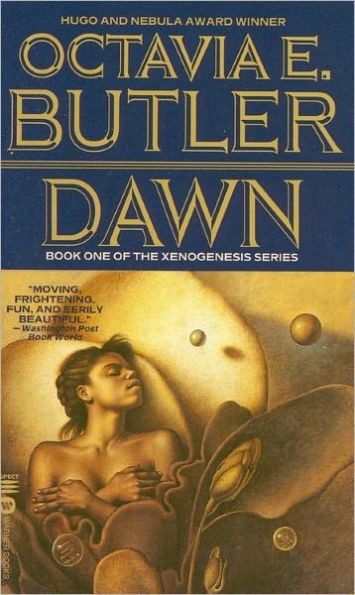
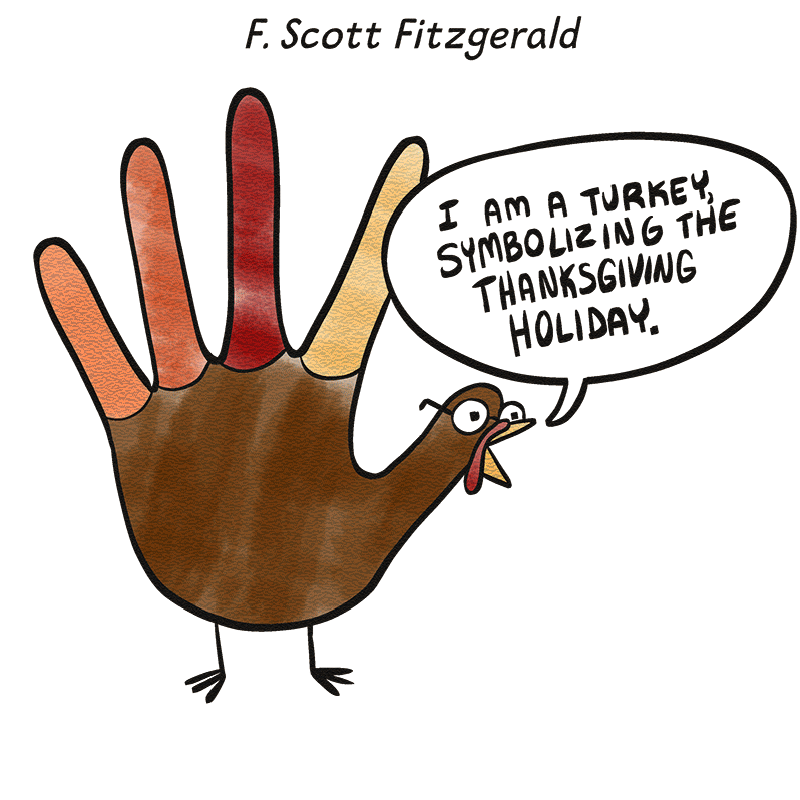
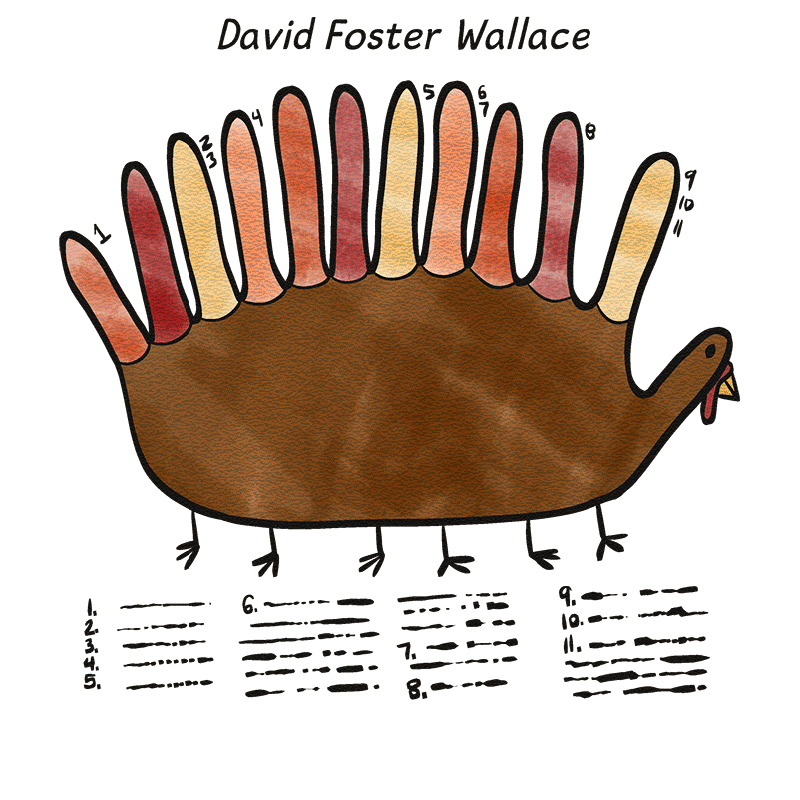
After Birth by Elisa Albert

After Birth considers the camaraderie of parenting — those strollers parked together, those dads carrying diaper bags, that woman handing another woman a tiny dropped sock, knowingly. But what is surprising about After Birth is that Albert isn’t looking for comfort in the village of people raising the child — her narrative is fueled by the anger that comes when one parent betrays another and the envy of other women, the perfect mothers who have it all together. From the outset, Ari seems set up for difficulty as a mother. Her c-section is scarring both literally and mentally, her husband is emotionally vacant and she is bitter in her loneliness, lacking any close ties in her life. When Ari talks to her infant, she plays the role of the loving mom that she never had, obsessively chanting: “We’re happy. We’re blessed. We are we are we are we are”—believing that if she says it enough, it will come true.

Quicksand by Nella Larsen

In this wonderfully subversive novel, first published in 1928, Helga Crane is a half Danish, half Black woman trying to find her identity in a society that values conformity. After a period abroad in Denmark where she was regarded as a exotic sexual object, she returns to the US and becomes trapped in an unhappy marriage. Despite earlier vocally rejecting motherhood, Helga delivers child after child, her pregnancies consuming her body to the point that she is unable to get out of bed and slowly wastes away, angry and bitter. Society has stripped Helga of her autonomy and forced her into the undesired prisons of sexualized other, wife, and mother. Larsen uses Crane to dismantle the notion of black motherhood as a racial imperative — that black women can only inhabit the roles of either mother or objectified woman. In doing so Larsen uncovers a version of maternity that destroys a woman who has tried to reject that role.

Life Among the Savages and Raising Demons by Shirley Jackson

Writes the publisher, “America’s celebrated master of terror turns to a different kind of fright: raising children.” Life Among the Savages began as essays that were edited into a novelistic, sometimes fictionalized memoir, while Raising Demons has an almost instructional tone — but both books are concerned with the trappings of being a working mother and running a home. These days, we hear a lot more from working mothers about the struggle to balance their lives, but Jackson was writing from a small town, and as a female author in the male-dominated literary landscape of 1950s America. Her honesty was groundbreaking, as well as hilarious, insightful, and necessary. While her fiction, such as “The Lottery” and We Have Always Lived in the Castle, now receives due celebration, her nonfiction (once termed “domestic memoir”) is equally deserving of acclaim.