Where I Come From, Paulo Coelho is for Grandmas

I first started suspecting something odd about Paulo Coelho in one of my publishing classes. When the professor mentioned the author’s name, I noticed I was the only one doing what I thought of as the traditional smirk of dismissal. Many of my fellow students — smart, admirable English majors — whispered excitedly among themselves the way one does when a favorite author is mentioned. I was confused, but class had moved on.

After that, I started paying more attention when I heard the Brazilian author’s name around American bookish and literary spaces. I noticed that the translation for his most recent book at the time, Adultery, was available in bookstores very close to its release date in Latin America. Having a translation released close to the original release date is a definitive sign of admiration and popularity. I noticed, too, that booksellers and other people whose taste I respect and admire from social media quoted Coelho or mentioned The Alchemist among their favorite books.

All of this was, to put it mildly, perplexing. The popularity of Paulo Coelho in itself is not surprising. He is an internationally-known bestselling author. What took me aback was the difference in fan demographic. Back at home in Colombia, and generally across Latin America, there are those who love Coelho and those who would not be caught dead with any book of his in their hands. The first group, the fans, tend to be older — a lot of aunts and grandmothers, a lot of inspirational quotes on Facebook with idyllic mountains as the background. Certainly my aunts and grandmothers. In the other camp live those who despise the author. Plenty has been written in Latin America by literary luminaries like Héctor Abad Faciolince about the reasons why Coelho’s work is not good writing. To be fair, a lot of what has been written against Coelho has the subtle smell of bestseller-shaming. But the general perception is that Coelho writes self-help books wrapped around fables that are easy to read and digest. They are uplifting books with enough empowerment in them to make you feel capable, but light enough to require a second and third subsequent fix to keep the high going.

Granted, some U.S. fans are also into inspirational Facebook quotes. (Photo by BK)

I am not a fan of hating on any phenomenon simply because everyone else is doing it — I believe in informed and educated hating of things — so one wild spring break many years ago, I took on the personal project of reading the whole shelf of Coelho books that my mother nurtures and grows every year. I found his stories predictable, his writing of women clichéd and flat, and his prose less than sparkling. When I tried to tell my mother this, she promptly told me I “just hadn’t lived enough to appreciate his books” — never mind that I had been studying and training myself precisely to issue informed opinions on books since my third semester in undergrad.

None of my literature-studying friends in Colombia can take Paulo Coelho seriously, yet the same demographic in America seems to derive inspiration from his work. While I was perusing the Latin American translation stacks at the McNally Jackson bookstore in New York, I found a fake book instructing me to ask at the front desk if I wanted a book by Coelho. The bookseller at the cash register told me that his books were kept hidden with Kerouac and Bukowski because they were stolen at a similar rate. Young men who write, she told me, stole Coelho and Bukowski at the same time. Young men who write in America and my mother was a cross section of a Venn diagram I had never expected to find.

The bookseller at the cash register told me that his books were kept hidden with Kerouac and Bukowski because they were stolen at a similar rate.

When I asked at Brookline Booksmith in Boston about the sales and audience for Paulo Coelho´s books, Rick, a bookseller there, informed me that in the past three months they have sold 20 copies of The Alchemist. The people who come looking for his books are mostly young people who might want self-help but are also looking for a narrative or poetic book. Another bookstore in Boston has sold over 300 copies — basically guaranteeing one copy per day — of the anniversary edition of The Alchemist; not only that, but over 20 copies of the graphic novel version of the book have been sold as well. Only 20 copies of the book in Spanish have been sold over the past year in that same store. How many copies does Cortázar sell in a month in the U.S.? How many books by Clarice Lispector?

The Second Death of Clarice Lispector

Meanwhile, in Colombia we have bookstores like Wilborada that choose not to carry Coelho. Wilborada is an independent bookstore in the heart of Bogotá. Like Brookline Booksmith, Wilborada is the kind of local bookstore that holds readings, hosts book clubs, and has gathered a loyal customer base that enjoys, and trusts, the tastes of their booksellers. According to Dario Quimbaya, bookseller there, they decided to curb Coelho’s books because they made the decision to limit the shelf space dedicated to self-help. On top of that, Coelho is not even as popular as he used to be within the intended audience. New authors have been recently cornering the market, like María Elvira Pombo, who presents a form of introspection through conversation with angels. In Dario’s years of experience in the bookselling business, the people who have asked for the kind of self-help that Coelho writes tend to stay away from literary fiction or short stories.

Any translation is an interpretation, and as such it should not be terribly surprising that new nuances and shades come up and attract an audience that the original language might have ignored. But the shift in the age and interests of the audience for this author, with language being the biggest apparent change, is quite fascinating. Like the kid who changes schools and suddenly becomes cool, Paulo Coelho earned a new reputation in his English iteration. It is often we hear that by translating a piece of writing we are left with a slightly lesser version of the original, but it would seem that with Coelho he gained more merit.

Like the kid who changes schools and suddenly becomes cool, Paulo Coelho earned a new reputation in his English iteration.

Even though I don’t enjoy his books, I don’t believe there is anything inherently wrong about reading or enjoying Coelho, the same way I don’t really find anything wrong with Dan Brown or the trashiest romance. To each their own, and in current times we have to get our happiness wherever we can get it. Having one foot in the Latin American publishing market and the other in the American one, I am particularly aware of how hard it is to promote literature in translation. Marketing and publicity is key, and even so, just a sliver of the books sold in the U.S. are works in translation. No doubt it helps that Harper Collins publishes Paulo Coelho in English. His books can get the full muscle of a big publishing house in order to promote and get them strategically placed in front of a large audience.

But to see that sliver of books being overtaken by just a couple of authors raises questions. Is it possible for smaller publishers to tap into this wealth of interested readers to promote other translated authors? How did an author dismissed for his lack of literary merit in one half of the continent become the go-to for young authors, readers, and men recommending books on their dating app profiles in the other? If we can learn anything from all of this is that we should all be moved into reading even more books in translation, and perhaps even translating more books. If Brazil’s Dan Brown is changing lives in the U.S., imagine the wealth of knowledge and narratives lying in the bookstores of America waiting to get picked up.
How Audre Lorde Helped Me Reclaim My Voice

Novel Gazing is Electric Literature’s personal essay series about the way reading shapes our lives. This time, we asked: What book was your feminist awakening?

I was 25 years old the first time I thought about my voice. It was during my second year as a graduate student at a small liberal arts college outside of Philadelphia. Seated in a semicircle in a fluorescent lit classroom, I quietly looked over the syllabus for EN 444: Women, Writing, and Rhetoric, or “feminist literary theory” as my white self-described third wave professor gleefully called it. Smoothing her skirt, she smiled before assuring me and my classmates that this course and this classroom would be a safe space where we could openly dismantle misogyny and subvert patriarchal pedagogy. Before she could review the required reading list, a woman seated to my left interrupted, asking for the definition for “patriarchy” and whether or not there we would be required to memorize any key terms throughout the semester. Another student, the only man in the room, asked if the course was only for women (he later dropped the class).

While my professor replied to their questions, I paged through the syllabus. Familiar names of women whose works I’d read in undergrad appeared in Times New Roman: Adrienne Rich, Alice Walker, bell hooks, Simone De Beauvoir, Toni Morrison, and Gloria Steinem, a.k.a. the matriarchs of the feminist canon. There were also a few names I didn’t recognize. One of those names was Audre Lorde.

Each class, we focused on two or three women writers. As a group, we’d discuss the structure of their pieces and way they used language to captivate their audience. While my classmates cooed over Virginia Woolfe’s wit in “Professions for Women” and Dorothy Day’s spirited conviction in a speech from the late 1930s, I drew zig-zags in the margins of my notebook. A few times, I tried to jump into the conversation, suggesting that many women writers possess accessibility that others lack. One classmate mentioned Woolfe’s famed “A Room of One’s Own” as an example, citing how Woolfe’s economic stability allowed for her to dedicate herself solely to her work. As names of other women writers were mentioned, I decided to chime in, suggesting that Phillis Wheatley, although a slave, was able to occupy various intellectual and physical spaces in ways that other Black women of her generation weren’t able to. Seconds later, a white classmate (dressed in a burnt orange sari and Birkenstocks) cut me off. Her face was bright red. “How could you say that,” she shouted. “She was a slave being held against her will. How is that a privilege? Do you even understand the implications of the Transatlantic Slave Trade?” Before I could answer, my professor suggested that we take a five minute break.

From that point forward, I found myself caught between frustration and fury, hesitant to share my thoughts. As we made our way down the proverbial timeline, I remained silent. Although we were assigned pieces by women of color, class discussion rarely centered around those voices. Instead, we spent the majority of our time examining works written by white (and primarily heteronormative) women. Or at least we did, until we got to “The Transformation of Silence into Language and Action.”

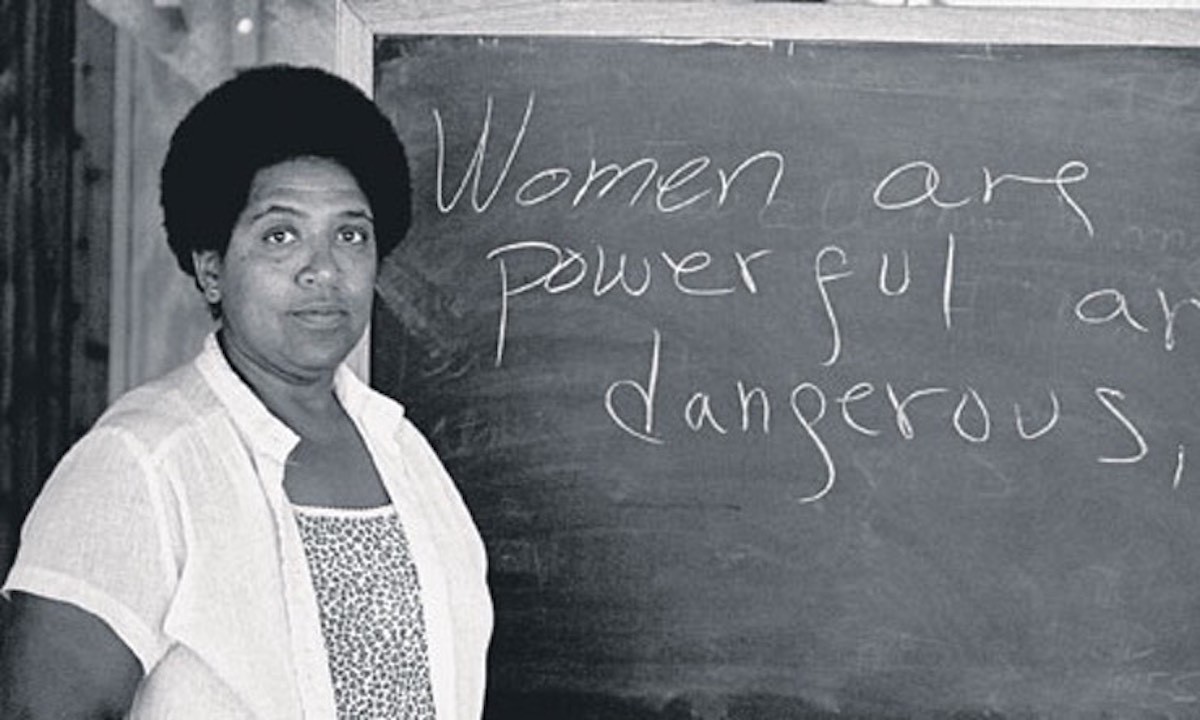
To say that Audre Lorde’s words changed my life would be cliche, but it would also be the truth. At that point in the course, I dreaded going to class. Despite my high-spirited and well-intentioned professor and the unknowingly microaggresive white women in my class, as one of two POC students in the class, I felt like I had few allies within the “safe space” my professor had promised at the beginning of the semester. I can’t remember why we focused on Audre that day instead of someone else. Perhaps it was because her essay was shorter than the piece assigned by Adrienne Rich, or maybe my professor had finally realized how racially homogenous the focus of our class discussions had been. Regardless of the reason, that day stirred something inside me. Audre’s words dissolved a wall I didn’t realize I’d been hiding behind.

Audre’s words dissolved a wall I didn’t realize I’d been hiding behind.

In the opening to her iconic essay, Audre writes, “I have come to believe over and over again that what is most important to me must be spoken, made verbal, and shared, even at the risk of having it bruised or misunderstood.” The first time I read that sentence I was sitting at home on the floor of my bedroom and yes, the world seemed to drift away. I felt as if she saw me, that she knew the story of how I lost the confidence to share my experiences and truths with others. Somehow she saw the countless ways that the world turned an opinionated little Black girl into a reluctantly silent woman. I reread the sentence again and again. Each word reminded me that what was most important to me must be spoken, even at the threat of being dismissed, refuted, or misinterpreted. Within the span of a sentence, she helped me remember that I not only had a voice, but that my voice was necessary. Silence was no longer an option.

The day we discussed “The Transformation of Silence into Language and Action” was the first time I willingly participated in class. Every time that a classmate failed to contextualize the intersectionality of Audre’s identity as a Black lesbian poet, I reminded them to return to the text. When a middle-aged white woman tried to relate Audre’s experiences to her own, I cut her off without apology, mentioning that due to her privilege as a white woman, her experience, although valid, is not “just like” the experiences of women of color. When my professor asked if anyone was comfortable with sharing how our silences had failed to protect us, I volunteered. I briefly shared a childhood memory of being spat on and called a n*gger by an elementary school peer. I told them how I lied to my mom at the bus stop when she asked me why I was crying and how I denied the whole incident despite it being recounted to my parents by my bus driver. As I spoke, I could feel my classmates’ eyes on me, a few exhaled empathetic sighs while the others slightly shook their heads in disbelief. My professor thanked me for sharing before taking a deep breath and quickly adding, “I’m so sorry that happened to you.”

In that moment, I felt freer than I ever had, but it wasn’t because of them. Sure, their empathy — however performative or authentic it might have been — was appreciated, and the ability to insert myself into a dialogue that I’d merely watched from the sidelines for so long felt great. That freeness, the looseness in my shoulders, and the less heavy weight on my chest, that was because of Audre. She shook me awake. She taught me that I can dispel my own fears with the sound of my voice. Through her words, I reclaimed my life.

She shook me awake. She taught me that I can dispel my own fears with the sound of my voice. Through her words, I reclaimed my life.

Five years later, I sit on a bus headed back to Brooklyn from the Women’s March in Washington, D.C.. My arms are tired from carrying a laminated protest sign with Audre’s words written on it. The landscape blurs as we cross state lines and I lean my head against the cool glass of one of the bus’ many windows. I’m on the brink of 30, more or less out of a job, and Donald J. Trump, or 45 as my friends and I have chosen to call him, is horrifically the President of my nation. As I sit, my fears about the future swarm inside my mind. I pull my phone out of my pocket and open the only PDF saved on it. I dim the light on my screen, and begin to read: Of course I am afraid, because the transformation of silence into language and action is an act of self-revelation, and that always seems fraught with danger.

And again, Audre sees me. Across space and time, she reminds me that I’m not alone — that none of us really are. And just like that, the weight of my silence and my fears is lifted.

12 Novels About the Power of Journalism

Two things that are equally true at this point in time: journalism is especially necessary to the continued health of our nation’s safety and civil rights, and journalism is in a moment of deep peril, with newsrooms being cut, advertising-based business models in jeopardy, and political polarization wreaking its own form of havoc on the industry. Good journalism can give people a greater sense of the world around them; irresponsible journalism can stoke hatred or give cover to corrupt or immoral actions.

Needless to say, journalists and journalism have been the source of inspiration for many a novelist. Some examine the institution itself, finding compelling narratives in the story of how news is reported. Others reiterate why the fourth estate matters; still others provide cautionary tales for why journalistic excesses can lead to a grim place. And another group finds the power in the lives of writers: how their job affects their home lives, their perceptions of the world, and their ability to function. Here’s a look at a dozen disparate takes on the media, spanning from the 19th century on into the near future.

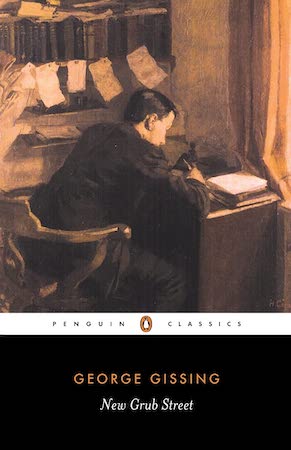
New Grub Street by George Gissing

At the heart of George Gissing’s sprawling 1891 novel New Grub Street are two writers: one, a high-minded author of serious fiction, struggling to find an audience for his work; and one, a far less idealistic figure far more apt to compromise when the prospect of money is at stake. They reside in a world where literary authors struggle to make ends meet, where new publications seek funding from wealthy benefactors, and where public feuds are commonplace. No eerie resonances with the present day there, nope.

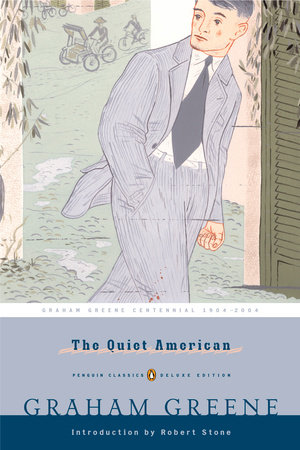
The Quiet American by Graham Greene

The Quiet American by Graham Greene

Politics and journalism are often interwoven; how a tense geopolitical event is covered can often shape public perception of it and, thus, the governmental response. The narrator of Graham Greene’s 1955 The Quiet American is a British journalist in Vietnam, who comes to clash with a mysterious American with his own agenda. Questions of idealism, honesty, and war all come to a head over the course of the narrative.

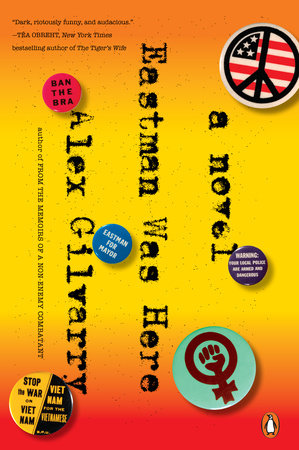
Eastman Was Here

Eastman Was Here by Alex Gilvarry

The title character of Alex Gilvarry’s Eastman Was Here is an aging literary lion of the New York scene who, by the early 1970s, is still coasting on the acclaim of a book he wrote shortly after World War II. The outsized personalities of the likes of Norman Mailer—as well as their excesses and other flaws—are certainly the template here. But as Eastman heads to cover the Vietnam War and begins to question his own approach to life and craft, a host of other literary touchstones—from Graham Greene to Joan Didion—further complicate the narrative.

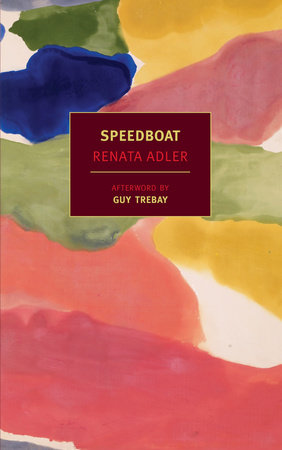
Speedboat

Speedboat by Renata Adler

Renata Adler’s literary work has explored questions of journalism and the media from both sides of the fiction/nonfiction life—including 1999’s Gone: The Last Days of The New Yorker. On the novelistic side of things, there’s her debut novel Speedboat, first published in 1976, which filters a host of impressions of urban life in the mid–1970s through the particular lens of one journalist’s perspective. The result is a singular and unpredictable work which still feels vital 40 years later.

Philadelphia Fire by John Edgar Wideman

Journalists can help uncover moments in history that have been overlooked and help expose moments of injustice. The central character of John Edgar Wideman’s novel Philadelphia Fire is engaged in exactly that: he’s in the city mentioned in the title to research a book about the time in 1985 when the city’s police bombed a building housing the group MOVE, causing a fire that destroyed a number of homes and killed eleven people.

The Shipping News by Annie Proulx

There are numerous elements in play in Annie Proulx’s award-winning novel, from questions of family and human connection to an immersive portrayal of a small community. But here, too, journalism plays a part: the novel’s protagonist is a reporter, looking to make a fresh start by taking a job and moving his family to Newfoundland. As with everything else in the novel, Proulx offers a sharply-observed take on newsroom life.

Jeff in Venice, Death in Varanasi by Geoff Dyer

The life of a journalist has, at times, offered perks—for a rarefied stratum, that could include global travel, access to elite spaces, and a general sense of the high life. In the first half of Geoff Dyer’s Jeff in Venice, Death in Varanasi, a journalist makes his way around the Venice Biennale, engaging in various acts of excess—all of which makes for a bold contrast with the book’s stark, philosophical second half.

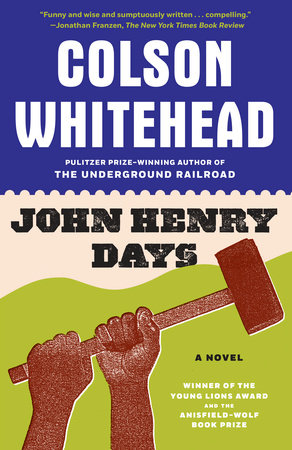
John Henry Days

John Henry Days by Colson Whitehead

In Colson Whitehead’s 2001 novel John Henry Days, Whitehead follows the travails of a journalist on assignment from an online publication to cover a stamp prominently featuring John Henry. Whitehead raises a host of questions of national memory and heroism as he tells this story, all the while juxtaposing it with the surreal and mundane world of press junkets through which the novel’s protagonist moves.

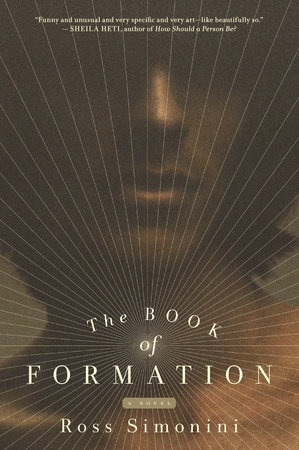
The Book of Formation by Ross Simonini

The Book of Formation by Ross Simonini

Over the course of Ross Simonini’s novel The Book of Formation, we see a journalist’s career shift over the course of many years. This unnamed figure engages in a series of interviews with the scion of a self-help movement based around, essentially, creating a new identity for oneself. Over the course of the novel, Simonini explores the boundaries between reporter and subject, probes the nature of celebrity, and holds a funhouse mirror up to the face of American celebrity culture.

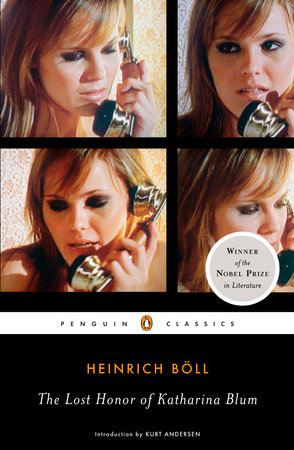
The Lost Honor of Katharina Blum

The Lost Honor of Katharina Blum by Heinrich Böll

Out of the chilling atmosphere of radical politics in 1970s Germany came Heinrich Böll’s taut, precisely written novel The Lost Honor of Katharina Blum. It examines a case in which journalistic excesses lead to tragic ends: the title character is circumstantially connected to a crime, and is hounded by an amoral reporter, which leads to a violent and harrowing conclusion.

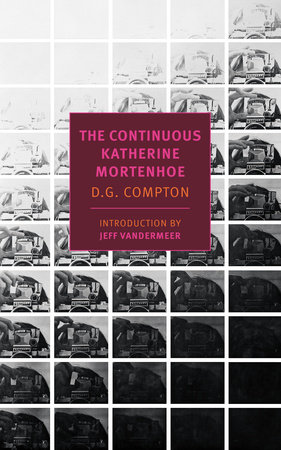
The Continuous Katherine Mortenhoe

The Continuous Katherine Mortenhoe by D.G. Compton

In D.G. Compton’s 1973 novel The Continuous Katherine Mortenhoe, he provides a chilling view of a potential future of journalism—one that’s only gained in power as the years have gone by. The title character is dying in a world where most diseases have been cured; one of the central characters is a voyeuristic journalist whose eyes act as cameras, invasively documenting her last days.

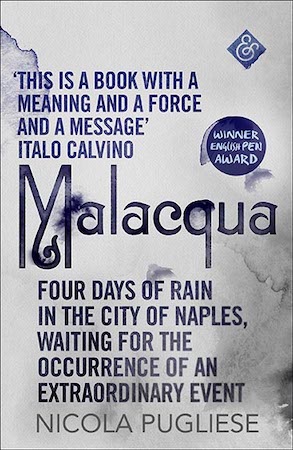
Malacqua by Nicola Pugliese

Sometimes, journalists are tasked with providing an explanation of events that might not otherwise have one. Sometimes, events are so bizarre that no such explanation is possible. That’s certainly the case in Nicola Pugliese’s Malacqua, in which a series of downpours in Naples heralds a sequence of bizarre events—including a terrifying sequence involving an abandoned doll—and a reporter attempts to understand something that lacks a rational explanation.

Have We Gotten Better at Writing About Sex?

Auberon Waugh of the Literary Review founded the Bad Sex in Fiction Award in 1993, out of a need to note the superfluous and unnecessary writing about sex in literature and to encourage an evolution away from the idea that “sex sells.” Now entering its 25th year, with the nominees out last week and the winner announced yesterday, the award is still necessary. Yet this year, even the judges agreed that the nominees were really not all that bad. Could it be that writers have started to get better at writing about sex?

This explanation makes sense to me because the first year of the Bad Sex Award, 1993, was also my first year of life. I still have a ways to go in reaching my peak maturity as a writer and as an overall citizen (i.e, credit card bills and life-style choices), but I’ve also come a very long way, especially in terms of sexual maturity (hi Mom). Maybe it just takes 25 years of tasteful public shaming for a person—or sex writing—to mature.

This year, even the judges agreed that the nominees were really not all that bad. Could it be that writers have started to get better at writing about sex?

If we want to continue to ride my timeline and align it with the existence of this award, then it would be appropriate to note that 2006 was a banner year for famous nominees—and, for me, the beginning of puberty. What’s worse than the sixth grade, filled with braces and weird pains and awkward, awkward, awkwardness? Well, have you read Pynchon’s excerpt that put him in the 2006 nomination? The one where we find a dog that has been trained to give his owner oral pleasure and is left with a curious character? It’s worse. Or at least just as bad.

I don’t even want to reproduce the original text on the page. If you want to read the full excerpt, click here. Otherwise, just know the passage ends with “Reader, she bit him.”

This is really bad. I’m talking “choking on the lunch your mom packed for you in the middle of the cafeteria and having to give yourself the Heimlich maneuver in the sixth grade while eating next to your crush” bad. The kind of stuff that makes you embarrassed that you even read and visualized it bad. But this didn’t even win the award! Iain Hollingshead won the award for his “bulging trousers” entry. The editors of the Literary Review magazine wrote this in their defense, “Because Hollingshead is a first-time writer, we wished to discourage him from further attempts. Heavyweights like Thomas Pynchon and Will Self are beyond help at this point.” (Pynchon and Self weren’t even the only hard-hitters on the list that year; David Mitchell was also nominated for Black Swan Green. Puberty is hard on us all.)

But have we matured in our ways of reading and accepting sex in writing? Last year, Erri De Luca won the 24th annual award for the following:

My prick was a plank stuck to her stomach. With a swerve of her hips, she turned me over and I was on top of her. She opened her legs, pulled up her dress and, holding my hips over her, pushed my prick against her opening. I was her plaything, which she moved around. Our sexes were ready, poised in expectation, barely touching each other: ballet dancers hovering en pointe.

The bad sex is starting to be not that bad, per se. There’s no discussion of any kind of the cringe-worthy metaphors to sex you hear from that guy in your MFA. It’s actually kind of funny, to imagine two people overwhelmed by sexual desire yet poised like ballet dancers, maybe even in tutus. The prize seems to have finally gone to someone that wrote a funny-bad passage on sex and not a simply bad passage on sex like Morissey’s boob erotica (sorry, love the Smiths but this intimacy is nothing like the kind of whimsical connection we feel during “This Charming Man”), or Sean Thomas’ “own Toshiba, dinky little JVC.”

This year, the sex writing is pretty mild in terms of the outrageous. Eliminating sex from literature would be ignoring the importance of talking about sex in western culture, and these authors are trying to keep the conversation going. But when we put Melvyn Bragg’s florid sex from A Time to Dance (1993 winner) next to Giles Coren’s I-don’t-even-know-what in Winkler (2005 winner), and compare them both to Laurent Binet’s passage that was nominated this year, you can see how the writing has matured from “fuck it, this needs a sex scene” to “let me at least try and relate this back to ‘The Seventh Function of Language.’”

The writing has matured from “fuck it, this needs a sex scene” to “let me at least try and relate this back to ‘The Seventh Function of Language.’”

Here’s Bragg from the contest’s infancy:

We came together, do you remember, always tenderly, at first standing, like a chivalric introduction to what was to be a voluptuous sensual battle? Just stood and kissed like children, simply, body to body, skin to skin, you slightly stirring against me, myself disregarding for those seconds the ram of sex aching below.
Eyes closed . . .reaching into the melting fluid rubbered silk — a relief map of mysteries — . . . reeking of you, our tongues imitating the fingers . . .

Coren from 2005, puberty:

And he came hard in her mouth and his dick jumped around and rattled on her teeth and he blacked out and she took his dick out of her mouth and lifted herself from his face and whipped the pillow away and he gasped and glugged at the air, and he came again so hard that his dick wrenched out of her hand and a shot of it hit him straight in the eye and stung like nothing he’d ever had in there, and he yelled with the pain, but the yell could have been anything, and as she grabbed at his dick, which was leaping around like a shower dropped in an empty bath, she scratched his back deeply with the nails of both hands and he shot three more times, in thick stripes on her chest. Like Zorro.

Puberty, all right.

And Binet, a 2017 nominee:

He puts his hands on Bianca’s shoulders and slips off her low-cut top. Suddenly inspired, he whispers into her ear, as if to himself: “I desire the landscape that is enveloped in this woman, a landscape I do not know but that I can feel, and until I have unfolded that landscape, I will not be happy …”
Bianca shivers with pleasure. Simon whispers to her with an authority that he has never felt before: “Let’s construct an assemblage.”

Even this year’s winner is comparatively decent, if slightly perplexing in its metaphors—congratulations, Christopher Bollen.

The skin along her arms and shoulders are different shades of tan like water stains in a bathtub . . . Her face and vagina are competing for my attention, so I glance down at the billiard rack of my penis and testicles.

The Literary Review’s justification for Bollen’s win doesn’t even pretend he’s as bad as the offenders of yesteryear. “Bollen goes overboard in his attempts to describe the familiar in new terms, leading occasionally to confusion,” the judges decided. “In the line quoted … they were left unsure as to how many testicles the character in question has.”

Shedding Skin: Sex, Intimacy, Writing, and Social Media

Side by side, the errors of the writers’ ways seem to be fixing themselves. No more do we see “crude” sex happening on the page as an experiment. Instead, the “bad” comes from the uninspiring metaphor of a woman to a bathtub and testicles to a billiard rack. As readers, we are not stuck to a word or a phrase that makes our reading face pucker and squint, like “melting fluid rubber silk” did for me. Nor are we engrossed by the pacing and the horror of being marked “like Zorro.” Rather, this year’s nominations and winner invite us to laugh at the awkward. We can chuckle at the different ways we understand sex, how every experience can vary, and we can look at this award as a sort of pact that with every year we will be one step closer towards better prose in sex.

20 Authors I Don’t Have to Read Because I’ve Dated Men for 16 Years

Certain writers — or artists, or film-makers, etc.— are so embedded into their particular cultures that one doesn’t need to have consumed their work in order to understand its impact. In particular, there are a bunch of white male authors it is possible to just about forget you haven’t read if you’ve dated the type of dudes you meet at an n+1 party. Certain books are so central to this type of dude that getting through a relationship — or even a few dates—constitutes the same level of knowledge of these authors that one might get from actually reading them, and gives you just as much right to hard-earned lifelong knowledge about their books, knowledge that need not ever be fact-checked by actually reading the books themselves (unless, for some reason, you really want to). Presented below, 20 authors on whose work I have involuntarily ended up with a strong opinion due to my unfortunate heterosexuality.


1. Philip Roth: I’ve never read any of Philip Roth’s books, but I have dated enough men who have that I can carry on a decent small-talk conversation about why I don’t like them. (If you would like to achieve this without dating men, you could just read a description of one of Roth’s books, in particular the one in which a man is transformed into a boob). Roth and I live in the same neighborhood, and a friend of mine once ran into him in the local pharmacy, where he was buying hemorrhoid cream or Cialis or something equally embarrassing, and glared at my friend for noticing him. Telling this story, I always imagine Roth holding a box that just says BAD DICK CREAM.

I’m sure the thing I say where I call him ‘the manic pixie dream girl of American literature’ is probably wrong, but I’m not gonna stop saying it.

2. Kurt Vonnegut: Honestly, I feel pretty guilty that I’ve never finished a Kurt Vonnegut novel, and I’m sure the thing I say where I call him “the manic pixie dream girl of American literature” is probably wrong, but I’m not gonna stop saying it. Even if it isn’t an accurate description of Vonnegut himself, I stand by it absolutely, and in perpetuity, as a description of every single dude with a tattered copy of Breakfast of Champions on his nightstand.

3. Tom Robbins: On the other hand, I feel pretty guilty that I have ever read any Tom Robbins books.

4. Arthur Miller: I’m sorry about your dad.

5. Jonathan Franzen: Anyone who really, sincerely loves Franzen’s writing has also probably really, sincerely told someone that “learn to code” was the solution to all their problems. The Corrections also contributed to the obsession with the literal and figurative “big book,” in which the size and weight of a novel directly equals its importance, a concept applied almost exclusively to novels by men.

6. Jonathan Safran Foer: I think the general opinion is that the most Jonathan Jonathan, the Ur-Jonathan, is Franzen, but bear with me here, because it’s actually Foer. Foer is the most successful of the Jonathans, in financial terms, and his personal life is a like a movie about the Brooklyn book world created by the Sex and the City writers’ room. The only thing I know about his recent prose is that scene about the doorknob, which made me unable to have sex for a week after I read a review that excerpted it, which I guess is technically an example of “impactful” writing.

7. J.D. Salinger: I’ve never read Salinger because I suspect that his books are at least 30% descriptions of ways in which women can be small, but I have read the best thing he ever (inadvertently) produced, which is this tweet. A lot of wonderful people love Salinger, but so do a lot of people whose job seems to be staging their meals on Instagram.

8. Chuck Palahniuk: Fight clubs aren’t real, you aren’t in one. (The less flippant thing I have to say is that the horror of the human body is a deeply important and nearly inexhaustible topic for literature, but it is close to impossible to find a white, male, famous writer whose writing on this subject is anything but a thinly disguised demonstration of violent misogyny, and maybe you should read Angela Carter or Carmen Maria Machado instead.)

9. Charles Bukowski: Alcoholism is a disease, not a personality.

10. John Updike: I’m sure that short story was very sad but also you have never had to have a job.

11. Bret Easton Ellis: I don’t like cocaine which is great because it means I have mostly avoided the people who want to sincerely talk about Bret Easton Ellis. A favorite of dudes hoping their sociopathy will be mistaken for genius; a more obvious favorite of dudes who quit their MFA a year in to go to a second-tier business school. A super-favorite of a guy who doesn’t mention his real estate license is how he actually makes money until you’ve known him for a couple months.

12. Ayn Rand: I’m sorry about your start-up.

One of the greatest things about getting older is that nobody has tried to talk to me about Jack Kerouac in at least five years.

13. Jack Kerouac: One of the greatest things about getting older is that nobody has tried to talk to me about Jack Kerouac in at least five years.

14. Thomas Pynchon: I’m sorry about your unfinished novel. (I actually love Pynchon and this burn is very self-directed).

15. Norman Mailer: The favorite author of every guy who loves to talk about bar fights but has never been in one.

16. Tom Wolfe: The favorite author of every man with an unfinished novel and a “writing outfit.”

17. Martin Amis: The favorite author of every dude who hates women but loves telling people about the year* he lived* in London. (*three months) (*studied abroad)

18. Donald Barthelme: Barthelme is a beautiful, strange, important writer beloved by dudes who will interrupt two out of every three sentences you say to them.

19. David Foster Wallace: A list like this wouldn’t be complete without DFW, but at the same time his inclusion feels disingenuous, because when it comes to Wallace, I am the literary bro cornering you at a party to ask if you’ve read him and why not. I love DFW’s work in the same over-personal obsessive way this list is meant to mock. Wallace is also an author whose body of work defies the kind of easy summary that can be gleaned from listening to a dude talk at a party about his favorite writer, or applied independent of actual engagement with the writing. I came to his work on my own without the suggestion of any dude, and I’ve probably rhapsodised obnoxiously about his work to most everyone I’ve dated since then. Furthermore, the circumstances of his death render pretty much all of jokes I could make here distasteful. In a better world, DFW would still be alive and we’d all gleefully roast dudes who suddenly start wearing a sweaty bandana to their undergraduate creative writing classes for no reason. The problem with dudes who love DFW, though — not all of them, certainly, but too many of them — is that they miss the lesson in his work that’s most useful to the type of person — like these dudes, and like myself — who tends toward hero-worship of authors they admire. The things that dudes who aggressively love DFW tend to imitate in DFW’s life and work are the very things that are meant to be openly foolish, interrogative rather than proud, at once offering levity and intense self-skewering criticism. That this enormous vulnerability has been either utterly elided or turned toxic by any of his most fervent fans doesn’t come close to being the greatest tragedy regarding the author, but it’s still immensely regrettable. In unpopular opinions, however, I still think “Big Red Son” is the best essay he ever wrote about America, and I wish he had lived long enough to revise a Large Adult Son joke into it.

20. Ernest Hemingway: The only truly feminist thing I have ever done is never finishing a Hemingway novel.

The Best, and Most Literary, Icebox Plums Jokes From Twitter

William Carlos Williams’ poem “This Is Just to Say” has always somehow lent itself to parody. (See Kenneth Koch’s “Variations on a Theme by William Carlos Williams”: “We laughed at the hollyhocks together / and then I sprayed them with lye. / Forgive me. I simply do not know what I am doing.”) But never has that parody been more relentless than on Twitter, where every so often people just pick up the poem and run with it. The current iteration of this meme seems especially widespread and frenetic, perhaps because of the increase in Twitter’s character limit (or perhaps because of the increase in Twitter’s Nazis; we could all use a little break). And, to bring extra joy to our book-nerd hearts, many of the jokes are quite erudite.

Perhaps the best, or at least the most crowd-pleasing, examples of this meme integrate Williams’ 83-year-old poem with modern pop culture in a way that seems weirdly seamless. (Yes, all of these examples of “modern” pop culture are from 2000 or earlier, deal with it.)

In recognition of the upcoming season, there have also been some catchy holiday tunes:

But our favorites are the ones that reference other poets and novelists, or even William Carlos Williams himself:

But for real literary insider points, if you want to get a meme started, please note:

The 11 Worst Brats in Literature

I wish this was an article about bratwürsts, but alas, in my reading I haven’t come across many references to hot dogs in literature (if you have, let me know). Instead, I want to highlight some of the würst brats — as in the child kind — in fiction. Like hot dogs, they are the result of some gloriously congealed nastiness, but they don’t need any condiments to spice things up. Of course, if I came across any of these trouble-makers in real life, I would likely find them unbearable. Safely tucked away in words and pages, however, the pranks, cackles, and uproar these brats bring to their stories makes for some choice reading.

Fred Vincy, Middlemarch by George Eliot

Brats always want what they can’t have, and they show their true colors when in a state of pursuit. Fred wants to live lavishly, while his father wants him to join the Church. The bullish son develops a gambling problem because of his need for a luxe lifestyle and then can’t pay off his debts — which are owed to the brother of the woman he wants to be his wife! (Good move, bro.) This puts him in quite the pickle, and he ends up working for his co-signer. And of course the whole time, he is whinging about not having what he wants.

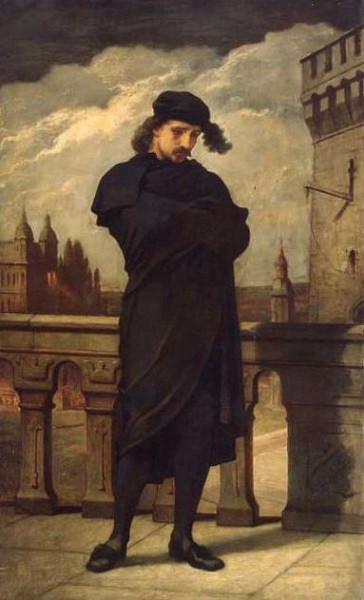
Hamlet, Hamlet by William Shakespeare

Hamlet’s brattishness is almost hidden by the play’s lush iambic pentameter, a kind of wrapping you might equate to a soft, chewy bun. His mood swings are out of control and he can never make up his mind. His soliloquies are wordy woe-is-me’s — it’s true that his new stepdad is a jerk and his father’s ghost is demanding revenge, but does that justify his treatment of Ophelia? Can’t a guy think of someone other than himself once in awhile? Like a proper tragedy, everybody dies at the end, and by the second act you’ve already decided that Hamlet is an obnoxious brat.

Support Electric Lit: Become a Member!

Mary, The Secret Garden by Frances Hodgson Burnett

My next list is going to have to be “Best Insults by Narrators, Ranked,” because this description of Mary would take first prize: “As tyrannical and selfish a little pig as ever lived.” Mary is a product of her absent parents, but she doesn’t do a lot to encourage sympathy. Unlike the other brats on this list, however, Mary undergoes a change, becomes the kind child we all want to love. Better late than never, I suppose.

Huckleberry Finn, The Adventures of Huckleberry Finn by Mark Twain

The classic brat, the ultimate brat, the mega brat — Huck Finn put the brat on the map. He’s the nightmare of every mother in town, smoking cigars and stealing livestock. Although the kid is kind of a jerk, it doesn’t feel like it’s all his fault. Society let him down, turned him into a rebel! If I’m honest, I’m kind of fond of this rascal, pranks and all.

8 Books About the Horrors of Parenting

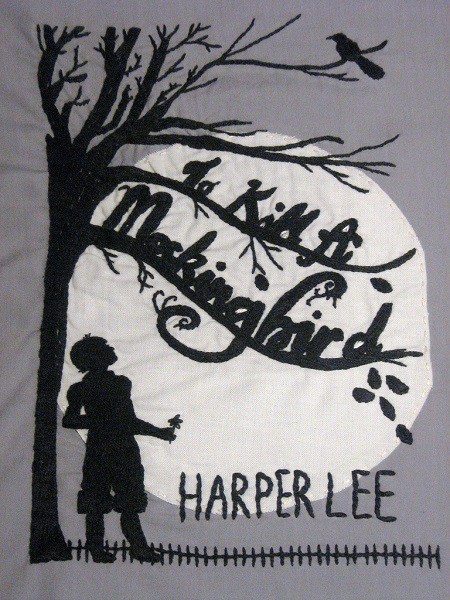
Francis Hancock, To Kill a Mockingbird by Harper Lee

Nothing is worse than having to swallow your retorts to a jerk. Harper Lee had it right in her classic — Francis Hancock needed the good smack in the back of the head for the words he used about Uncle Atticus. Finally, justice is served.

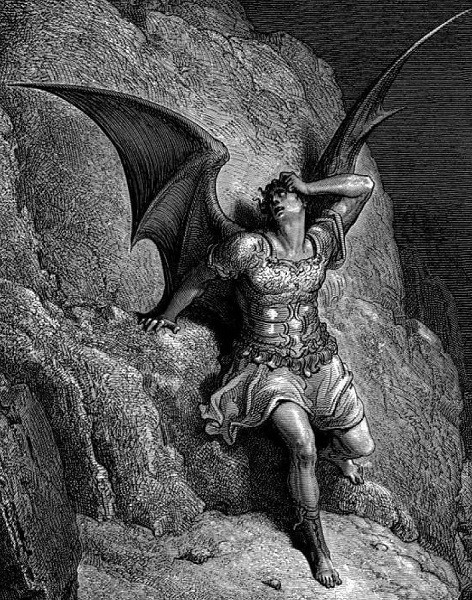
Satan, Paradise Lost by John Milton

Satan is our ageless brat. Milton initially has the reader feel sorry for Satan, that is, until you realize he’s just a mope. His hatred of God is really a hatred of being told what he can’t do, and his temper tantrums rival those of a toddler who’s missed his nap. He hates God so much that he ruins the lives of the only two people on earth, thus ruining it for the rest of humanity. By the end of the epic, you’ll be surprised you ever felt sorry for him.

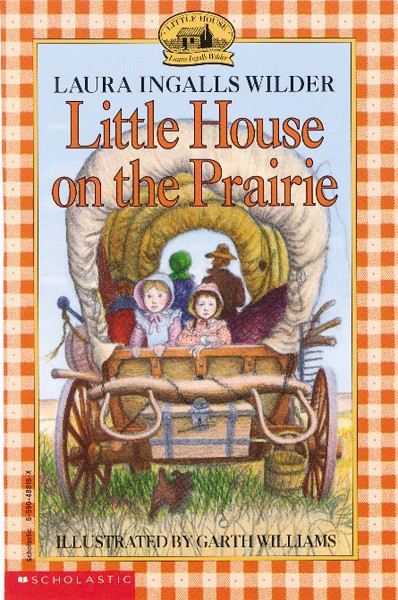
Nellie, Little House on the Prairie by Laura Ingalls Wilder

Nellie’s trouble to begin with, but let’s remember that the trouble she inflicts is on two girls whose parents are battling the fever ’n’ ague, have just moved across the county in a wagon, and who don’t know anyone in their new town. There is an argument to be made that Nellie is bigger than a brat — she is a next-level nemesis.

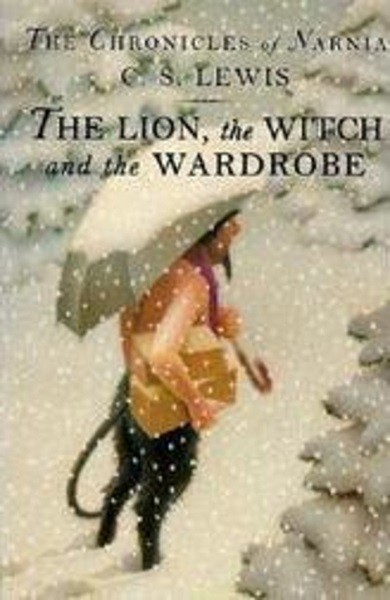
Edmund Pevensie, The Lion, The Witch, and the Wardrobe by C.S. Lewis

Edmund Pevensie is the typical, bullish older brother in The Lion, The Witch, and the Wardrobe. But his behavior eventually goes beyond your average sibling taunts and becomes inexcusable when he betrays his brothers and sisters to the White Witch in exchange for Turkish delight. The little taste of evil power, though, freaks him out. He’s not malicious to his core, just easily persuaded by sweets.

A Series About Teens Who Turn Into Animals Taught Me How to Be Human

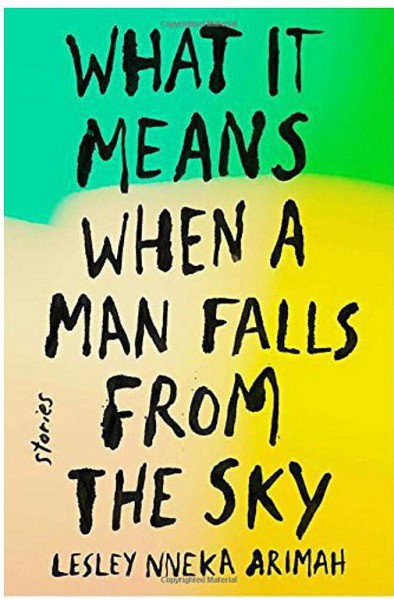
Glory, “Glory” by Lesley Nneka Arimah

Behold! An adult brat! Lesley Arimah introduces us to Glory, a fully grown wet blanket who “has something rotten in her, her chi is unwell” (according to her grandfather). Her decision-making skills are terrible (for everyone), she’s constantly asking her mother for money, and worst of all, she steals food from the communal work fridge. Things work out for Glory, though, and she meets someone special. There’s someone out there for all of us, even the brats.

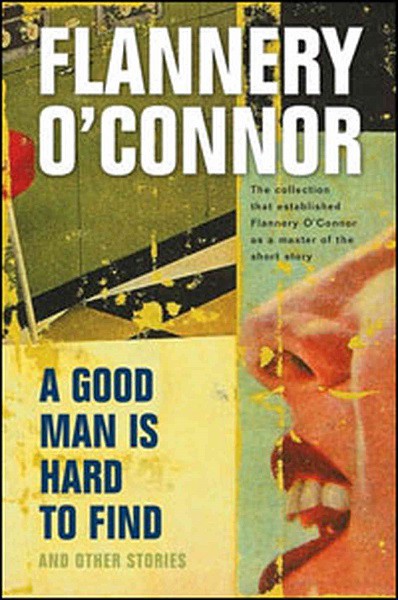
Hulga, “Good Country People” by Flannery O’Connor

Originally named Joy, Hulga changed her name because she wanted to have the ugliest name possible (her words, not mine), one that reflected her true nature (those were mine). She earned a Ph.D. in Philosophy just to piss off her mother. When a Bible salesman shows up at her door, she decides she wants to seduce him. But at the end, Hulga loses her prosthetic leg to the salesman who is actually a nihilistic atheist, thus leaving Hulga stuck in a circle of irony.

The Girls, The Girls by Emma Cline

These girls are bratty and creepy. They are in their 30s but their demeanor is still that of twelve-year-olds. The girls read and laugh at a personal diary, they have a strange fascination with their cats (I get the fascination of cats, but there’s a difference between taking pictures of your cat in cute poses and pretending your cat didn’t take the legs off a mockingbird). They are constantly talking trash about other people in the story, and they push their father into alcoholism. And without saying too much, there’s a certain death for which they might or might not be responsible. These are more than meddling kids.

Writing About Motherhood is a Portal Experience

I met Anna Prushinskaya in 2009, when we were classmates at Brooklyn College’s MFA program. I immediately fell in love with her writing, which is intense, precise, and lyrical. The next year, I began to work alongside her here, for Electric Literature—in the olden days it was still a print quarterly and the online presence was a blog called The Outlet. Working together, I felt annoyed at her, because not only did she have time to get all our coursework done, she was also quick and on top of things with her editing duties — and still found time to regularly attend yoga classes. In truth, I admired her passion, efficiency, and focus.

Purchase the collection.

These traits show themselves in her first book, A Woman is a Woman Until She is a Mother, an essay collection that was published by MG Press earlier this month. The focus of the book is, as you might guess, motherhood, but the compiled essays are about much more than that: the act of creating something, the act of defining ourselves in the world, the act of reshaping an identity. It would be easy for a book about motherhood to lean toward the saccharine and sentimental, but Prushinskaya doesn’t go down that easy route. As a result, the essays are relatable not just for mothers, but for anyone who’s ever had to redefine themselves.


Juliet Escoria: Pregnancy and motherhood are some of the most visceral and personal experiences a woman can go through. Did you feel it was a risk in making these experiences the focus of your book? Was there anything you wanted to avoid while writing it?

Anna Prushinskaya: Definitely, this book feels risky because I don’t necessarily like to reveal deeply personal things to the world. But when I bring this issue up to people, I am usually reminded that this vulnerable information is what makes books good.

JE: I remember you feeling reticent about writing about your son because he has no say in the matter, and also because to be a parent is to be vulnerable. An essay of yours that originally appeared in The Atlantic and mentions your son, “The Quantified Baby,” received some nasty and judgmental comments upon publication. Did that experience make you approach writing about being a mother and woman in a different way?

AP: Right now, I am thinking about this question in the context of the current heightened awareness of sexual assault, harassment, and rape culture. The title of the book is A Woman Is A Woman Until She Is A Mother in part because I was thinking about the categories of ‘woman’ that I have contended with in my life — motherhood being one of them — the broader implications of those categories, and about the power of a woman’s story. I keep this in mind when I review reactions to my writing, but being aware of that doesn’t change the fact that I still have work to do when it comes to nasty comments and how I process them.

The Knowers

JE: In between beginning and publishing this book, you had a second son. Does having another child change your perspective on being a mother in any way, or your sense of identity?

AP: It has been interesting to reread the book as part of the publishing process after having my second son. I added an afterword, the upshot of which is that my second son has made me a different mother. I feel like I knew abstractly that things would continue to change and develop, both how I think of myself as a mother, how I think about motherhood more broadly, and my relationship with my kids, and all that. Someone said to me that each time a baby is born, a new family is born, and I think that has also been true for me in that I felt re-born as a different mother.

Mother-Daughter Relations and Other Horror Stories

JE: I feel like as a society, we’ve gotten better at looking at women’s roles, and mother’s roles, and family rights — but obviously we still have a long way to go, considering that when you were working at a prestigious university, you had to pump in a storage closet. What are some frustrations or annoyances you’ve had to deal with since you’ve had your sons that you were surprised by?

AP: Ha! Yes, the storage closet and I have gotten to know each other well. Well, it’s hard for me to answer in terms of frustrations and annoyances because I think there is much more to it than simply frustrations and annoyances. This is not a revolutionary point, but to me we should be thinking about universal leave for parents, access to quality medical care for all, and better support for women’s options across the spectrum of choices related to reproductive health, whether that includes having children or not.

JE: What are some books that you feel are similar to your own, in either tone, approach, structure, subject matter?

AP: Recently Facebook served me up a picture of M Train by Patti Smith that I took two years ago, pretty soon after my first son was born. Her writing about creativity and motherhood resonated then, and now I am re-reading to see what it’s like two years later. To be honest, with school and little kids, I wish I had more time for other reading. My guilty pleasures that I have been revisiting in this particular climate include Pema Chodron’s Heart Advice for Difficult Times and some Jack Kornfield.

9 Stories About Family Conflict

JE: You and I went to school together, at Brooklyn College’s MFA fiction writing program. It’s now been six years since we graduated. What do you think that degree did for you, and didn’t do for you?

AP: I think the most valuable thing for me was to have the chance to live in New York City for a bit and to meet all you BC MFA writers. Right now I’m in the process of shifting directions professionally in a pretty significant way — I want to become a nurse. So, I can’t say that my MFA degree is directly contributing to my current professional life. I also still ask myself questions about the MFA in terms of student debt and degrees.

JE: That’s amazing — a lot of my English students are in the nursing. What made you want to switch? Do you know what type of nurse you want to be? And do you see any similarities between writing and nursing?

AP: I realized I had some passion for directly caring for people while I was working on a series of stories about the 1,4-dioxane pollution in the Ann Arbor area. I thought at the time that the best place for me to have impact might be to write these kinds of stories. But in talking with people who have been directly affected by this pollution, I realized I wanted to care for people directly. Does that make sense? It’s not an “aha” moment I can articulate very well, but it has changed my life pretty dramatically.

I’m just taking prerequisite courses right now, hoping to begin in a program sometime next year if I’m lucky. I’ve taken things like anatomy, physiology, pharmacology, etc., and have been learning a bit about the complexities of the body, both when things are working and when things are not working. (I’ve also been learning about this from fiction such as The Emperor of All Maladies). I don’t know what type of nurse I want to be. After thinking about birth and pregnancy as part of writing this book and having my kids, maybe something related to that. But what attracts me to nursing is that nurses hold space for people navigating all parts of life, and I have so much respect for that.

Writing and nursing — interesting question. Right now they seem like very different aspects of my life. For me, writing has felt very internal lately. Nursing feels the opposite. I have felt a growing urge to be of service more directly.

JE: The first essay in your collection, “Love Letter to Woody Plants,” talks about learning to identify plants in the woods around where you live in Ann Arbor. I got into the same thing this past summer where I live in West Virginia — I wanted to make some sense of the sea of green. It was interesting to notice how once I learned to tell the difference between plants, the woods and roadsides took on a whole other dimension. I see a connection to writing in that, the desire to give words to complicated ideas or feelings. Did you have a similar reaction to identifying plants? How did writing this book clarify your thoughts and feelings about your subject matter?

AP: I think the desire to identify plants was related to some aspect of what eventually led me down the path to considering nursing, actually. I think I wanted to be more grounded, and I thought that maybe learning the details of 300 plants or so would help with that. There is something about that degree of care in describing a plant, or in the context of a basic anatomy and physiology course, a bone or muscle, that anchors me to the moment.

Pregnancy, birth, and children have, for me, done the same thing. In a way, writing the book was a portal experience. I really felt like I could get through those months through writing, and I haven’t felt that same energy propelling me to write since then. Did the book clarify my thoughts? I think the book was the process of how I made my way through those experiences, not a clarification of them.

Daniel Alarcón Brings His Journalism Skills to Fiction

Daniel Alarcón’s short story collection, The King Is Always Above The People, longlisted for the 2017 National Book Award, is a triumph of understatement. Alarcón unspools tales of loners and drifters with dark secrets. Low-key and unemotional, his prose and plots prove that great storytelling doesn’t need to be filled with action and red herrings to pack a punch.

His first collection, War By Candlelight, was a finalist for the 2006 PEN-Hemingway Award. His first novel, Lost City Radio, won the 2009 International Literature Prize given by the house of World Culture in Berlin. His next, At Night We Walk in Circles (2013), was a PEN/Faulkner Fiction Award Finalist, a California Book Award Finalist and was named one of NPR’s books of the year. Feeding his ability to constantly create is Alarcón’s own life. He has lived around the world and been celebrated as reporter for The New Yorker and The New York Times Magazine. He currently teaches journalism at Columbia University.

Jeff Vasishta: Many of the stories in The King Is Always Above the People are about loners or those who seem to be running away from family discord. Some, such as “The Bridge,” are so unique and quirky they seem to be drawn from real life, or a newspaper headline. Were they?

Daniel Alarcón: Yes, actually. “The Bridge” is the anomalous story in this collection in that it’s based on true events. The anecdote of the damaged pedestrian bridge, the debris cleared from the highway, the entrances that no one blocked off, and the tragedy that ensued — a version of that actually took place in Lima. A friend of mine was working as a journalist in Lima and he covered it for a local paper. Years later, over a drink, he told me the story, and I was transfixed. It seemed to have everything you’d want in a narrative, elegantly exposing the pathos and absurdity that so often characterizes life in a city like Lima.

JV: You’re good at paying attention to the smallest of details, like the constantly spinning motorcycle wheel in “The Provincials.” Do these specifics come to you on a first draft or are they the embellishments you add at the end?

DA: First of all, thank you. That’s a kind thing to say. I don’t know where these details come from, or at what point they’re introduced into a draft. I can say that if there’s an aspect of being a writer that I take most seriously, it’s the task of observation. I look for those specific moments, gestures, physical details that reveal a place or a character. My revision process is slow, painful and involves a lot of despair — nothing ever feels good enough, worth publishing or sharing. I often have to let things sit for a while before I have enough distance to know whether it’s any good. Then I re-read. Rewrite. Cut like a savage. Rewrite some more. Let it sit. Show it to one or two friends. Talk about it endlessly with trusted readers. Write some more. Cut again, mercilessly. Then it’s done.

If there’s an aspect of being a writer that I take most seriously, it’s the task of observation.

JV: “The Auroras” is dark, unsettling, and brilliantly done. At first it seems that Hernán has fallen into a great situation — a place to stay and commitment-free sex — but of course the tables are turned. Are there writers that specifically influenced you in this kind of slow unveiling of the truth? It’s not easy to pull off.

DA: Nothing worth doing is easy to pull off. If it were easy, what would be the point? That story took me ten years to write. I’d come back to it again and again, never knowing quite what to do with it, how to make it turn in just the right way, at the right speed. The key ingredient in drama is when you, the reader, know more than the character, and you’re watching them slide inevitably toward misfortune. I read in order to be influenced, but I’ve never been able to point out where an individual strand of the narrative or one particular element of style comes from. Sometimes you let yourself down. For example, I read so much Borges when I was younger, but see almost none of him in my work, which, as you might imagine, is a tremendous disappointment.

JV: Having written both novels and short stories before, how do you decide which form you want to do? Some of your short stories feel that they could be developed into novels.

DA: I never decide before I start what something is going to be. It’s more a process of listening, of following the characters where they go. A novel is just a story that overflowed its banks.

A novel is just a story that overflowed its banks.

JV: You’ve lived in Lima, Peru, Birmingham, Alabama, New York and San Francisco — all quite different places. How did each place influence you as a person and influence your writing, if it is possible to make such an analysis?

DA: I’ve also lived in Accra, Oakland, and Iowa City. All very different places. Birmingham is where I learned to be American, a place I love, but where I never felt truly at home. Accra, where I lived for six months in 1998, was amazing as well; I’d never felt so foreign and I discovered I loved that sensation. New York is my home now, and has been since I moved here in 1995. I don’t mean that literally — I left a month before 9/11, but even when I left to live elsewhere, I thought of myself as a New Yorker, something in the energy of the place felt right. Like a lot of New Yorkers, 9/11 cemented my love for the city, made it concrete. The fact that I was gone when it happened only made me more determined to return. Lima is where my heart is, a city where I’ve spent much of my imaginary life since I was a kid. There’s no question that living there changed me, gave me an important part of my identity. You can draw a straight line from Lima in 2001, when I arrived as an adult in search of myself, and my work ever since. I wouldn’t be the same writer without that experience. Iowa City — I wrote my first collection there, and half of Lost City Radio — and I remember most a great sense of quiet, peace, a sense of being relaxed and having time to work. It’s where I discovered that the most important thing a writer did was go to the library every day and write. Talk less. Write more. My other love is Oakland, of course — a place with no pretensions, but so much history, so much personality, and a spirit that I’ve not found anywhere else. What a town.

But now I sound like a tour guide. You learn something everywhere you go.

JV: How do investigative journalism and fiction co-exist in your writing life?

DA: They feed each other. The clearest example of this comes from 2010, when I was writing At Night We Walk in Circles. By December, I’d finished a draft, and I was afraid it wasn’t any good. I showed it to a couple of friends, who agreed, and I was bereft. I had no idea how to fix it. Coincidentally, I’d pitched a story to Harper’s about one of the prisons in Lima, Lurigancho, and so I set my bad draft aside and went down there to report and write on this overcrowded prison that had developed its own idiosyncratic version of democracy. It was a bizarre, illuminating trip. I negotiated with the inmates to stay a night inside, and saw every aspect of the governance of this place from the point of view of those who are condemned to live inside it. I had so much material. I wrote my 7,500 word story, but could’ve easily written 10,000 words more.

The Upside of Losing Everything

So what do you do with all that extra material? You fold it into your fiction, of course. There were things I knew, but couldn’t prove. There were anecdotes that piqued my interest, but which I didn’t follow up on because I knew them to be tangential to the story I was covering for Harper’s. When, in the middle of 2011, I was finally prepared emotionally to deal with the wreck of my novel, having all this knowledge about the prisons helped tremendously. I re-read the draft, confirmed it was a piece of crap, and started thinking deeply about what I’d misunderstood about my characters. I realized one of them, Henry Nuñez, had spent time in a prison like Lurigancho. That he’d lived through these difficult years that many of the men inside had so generously described to me. His backstory, which was a minor part of the first iteration of the novel, became absolutely central. I wouldn’t have had the confidence to imagine any of that without having reported on it first.

So versions of this symbiosis between journalism and fiction happen all the time — and even in the opposite direction. I often imagine who might be the best characters to populate a piece of nonfiction. What are their profiles? What position do they have? What might I learn from them, and how would I recognize them? This imaginative work helps a lot. I start hearing a story in my head before I even report it.

Reading Joan Didion in the Swimming Pool

I n the worst month of the most severe drought in California’s history, my parents built a swimming pool. Reserve your judgment for a moment: they also replaced the lawn with native planting and powered the thing with an Israeli solar-powered saltwater filtration contraption strapped to the roof. Their architect said Tom Brady and Giselle also used it; my dad wondered whether the Brady-Bundchens had as many problems with it as he did.

If you still question this choice for either hypocrisy or environmental irresponsibility, I refer you to Joan Didion’s 1977 defense of swimming pools written in the midst of the second worst drought in California’s history. Rebuking those not from California who took smug pleasure in the idea of Californians having to drain their pools during drought, Didion explains “in fact a swimming pool requires, once it has been filled and the filter has begun its process of cleaning and recirculating the water, virtually no water.”

I happened to read this vindicating passage in Didion’s essay Holy Water on a floatie in the new pool — a fitting first encounter with Didion’s work, whose life as an author, wife, mother, and Californian is the subject of the new documentary “The Center Will Not Hold.” Although she is now associated with the cool detachment of New York City, Didion’s native California served as her first inspiration and subject in works such as Run River, Slouching Towards Bethlehem, and The White Album. In her reflective later work as well, the character of California as a mood continues to emerge and evolve. And as another California native living in New York, the experience of reading, in later months from my apartment, Didion’s description of the Los Angeles summertime evening’s smell of lavender, filled me up; her often tender fascination with California warmly energized, and continued to stoke, my own.

Her often tender fascination with California warmly energized, and continued to stoke, my own.

So during that first interaction with The White Album in the swimming pool, I gleefully read on as Didion delved into an examination of the pool for its symbolic meaning to Californians like herself. But despite the connection with this author I was discovering, I was puzzled by her conclusion that pools symbolize “order” rather than the more commonly “misapprehended” symbol of affluence and a “hedonistic attention to the body.”

Thanks to their prominence in everything from tabloid photos to David Hockney paintings, pools are a focal point for imagining California for both residents and observers. But before reading Didion’s passage on swimming pools it never occurred to me that pools could mean different things to different… swimmers. I saw that pools represent more than just a small body of water common to California backyards; my dad’s pride in his new pool and the affectionate enjoyment I take from diving in make me sure of it. But where does the meaning different Californians attach to pools originate?

The California Joan Didion etches in her writing is a place both laconic and volatile, arid and abundant. Drawing on her heritage as a member of an Old Sacramento family, many of whose ancestors barely survived crossing the plains in covered wagons in order to claim an unruly coast as their own, she comprehends California’s existence as a perpetual state of struggle and contradiction. She says “California is a place in which a boom mentality and a sense of Chekhovian loss meet in uneasy suspension,” whose residents both revere and fear a “river running wild and undammed.” Despite the adversarial relationship between the land and its earliest (white) residents, Didion, in early writings like Run River, Notes from a Native Daughter, and Holy Water, invokes this pioneer-era California with affection and pride. Didion locates her identity in a romanticized era of California history defined by taming land and water.

Didion is her most true California self while either struggling with or marveling at mastery of the elements.

This California identity is Didion’s frame of reference when she assesses the symbolic meaning of swimming pools as a symbol “of control over the uncontrollable.” The same impulse, born from her heritage, for control, fuels her fascination with agricultural water systems, or causes her to envision the Hoover Dam while driving down Sunset Boulevard, and to venerate her home in Malibu, about which she says “I never loved the house on the Pacific Coast Highway more than on those many days when it was impossible to leave it, when fire or flood had in fact closed the highway.” Didion is her most true California self while either struggling with or marveling at mastery of the elements. In an interview with Michiko Kakutani after publishing The White Album, Didion says “order and control are terribly important to me,” a statement which surprises no reader; no wonder Didion’s swimming pool reverie ends with “a pool is water, made available and useful, and is, as such, infinitely soothing to the western eye.”

Late in Joan Didion’s career in the book Where I Was From, she reflects on her early writing about California and her relationship with her home state. Assessing her self-described “nostalgic” view of California in her earliest writings, she teases apart the ways in which Californians lament change. She cites California’s constantly booming population history, and, in contrast with other states that have longer institutional memory, finds that change is and always has been a constant in California; that there has always been “obliterating increases, rates of growth that systematically erased freshly laid traces of custom and community.” She deduces that because California has experienced many population transformations, the California of the time a person arrives will always represent the way things ought to be. Didion concludes “discussion of how California has ‘changed,’ then, tends locally to define the more ideal California as that which existed at whatever past point the speaker first saw it.”

I would amend this statement. The idealized version of California depends not upon when an individual first arrived, but instead, when that person’s family became Californian. Didion remarks in Where I Was From that the family events of settling California that most define her vision of California occurred before her birth. Similarly, my idealized version of California rests not so much in my own childhood — a good one, but still filled with the usual angst — as in my family’s stories of what becoming Californian meant to them: how my grandparents moved from the land-locked Midwest to Los Angeles, where, away from their immigrant parents, they got to buy homes and eat oranges. The easy haze I associate with California originates with my parents’ stories about cruising through the Valley on their bikes, or trekking over the Santa Monica Mountains to and from Zuma Beach, sunburned thighs sticking to vinyl car seats, relieved only by jumping in the swimming pool.

For me, as well as in the larger cultural imagination of California, pools do symbolize this coastal, hybrid urban-suburban dream that I imagine my parents and grandparents lived. Based in Los Angeles, the 1960s iconic film The Graduate communicates Dustin Hoffman’s character Benjamin Braddock’s resistance to that dream by putting him in a swimming pool in a scuba suit, essentially suffocating under the weight of family expectation. That expectation or dream of career, family, house did not repulse my father, who graduated at the top of his class at three California institutions of higher learning, married a girl from the Valley, and settled on the West Side of Los Angeles — a “native son” if I ever saw one. So he eventually built that swimming pool.

For me, pools symbolize this coastal, hybrid urban-suburban dream that I imagine my parents and grandparents lived.

Like Joan Didion, I call myself a “native daughter” of California, a statement with which I do not know that she would agree. Claims to this title aside, Joan Didion and I inhabit and idealize different Californias in our minds precisely because our families arrived at different times, and became Californian in different ways. The regular mention of swimming pools in Joan Didion’s writing about California indicates that, for Didion too, the swimming pool is significant in the imagination of California. But because of the difference between Joan Didion’s heritage and my own, we disagree on the meaning of its symbolic significance. As Didion says, pools are “soothing to the Western eye.” But the symbolic readings Didion rejects — pride in “affluence” and “hedonistic attention to the body” — are also aspirational elements of the California urban-suburban dream that pools symbolize. Perhaps, as Didion says, “the apparent ease of California life is an illusion.” But pools, for their owners and swimmers, help maintain that illusion within urban-suburban life, whether “real or pretended.”

Perhaps early in her career Didion would conceive of one symbolic interpretation as more valid than the other. Didion wrote in Notes from a Native Daughter “which is the true California? That is what we all wonder.” But comprehending California in Where I Was From as a generational palimpsest where the only constant is change, perhaps Didion could see that both conceptions — of control, and of leisure — are true about pools, and about California. In California, the truth of the place is not just “elusive,” as she says. It is, inherently, fluid.