Each month “Unfinished Business” will examine an unfinished work left behind by one of our greatest authors. What might have been genius, and what might have been better left locked in the drawer? How and why do we read these final words from our favorite writers — and what would they have to say about it? We’ll piece together the rumors and fragments and notes to find the real story.
The world nearly lost Clarice Lispector in 1966. After taking a sleeping pill on a September evening, she got into bed to smoke a cigarette and soon woke to find her apartment engulfed in fire. “In a panicked attempt to save her papers,” Benjamin Moser writes in his biography Why This World, “she attempted to put out the fire with her own hands.”
Lispector’s son eventually walked her over to a neighbor’s, but not before she had been badly burned from head to toe, her clothes melted onto her skin. Footprints of blood marked the carpet where she had stepped.
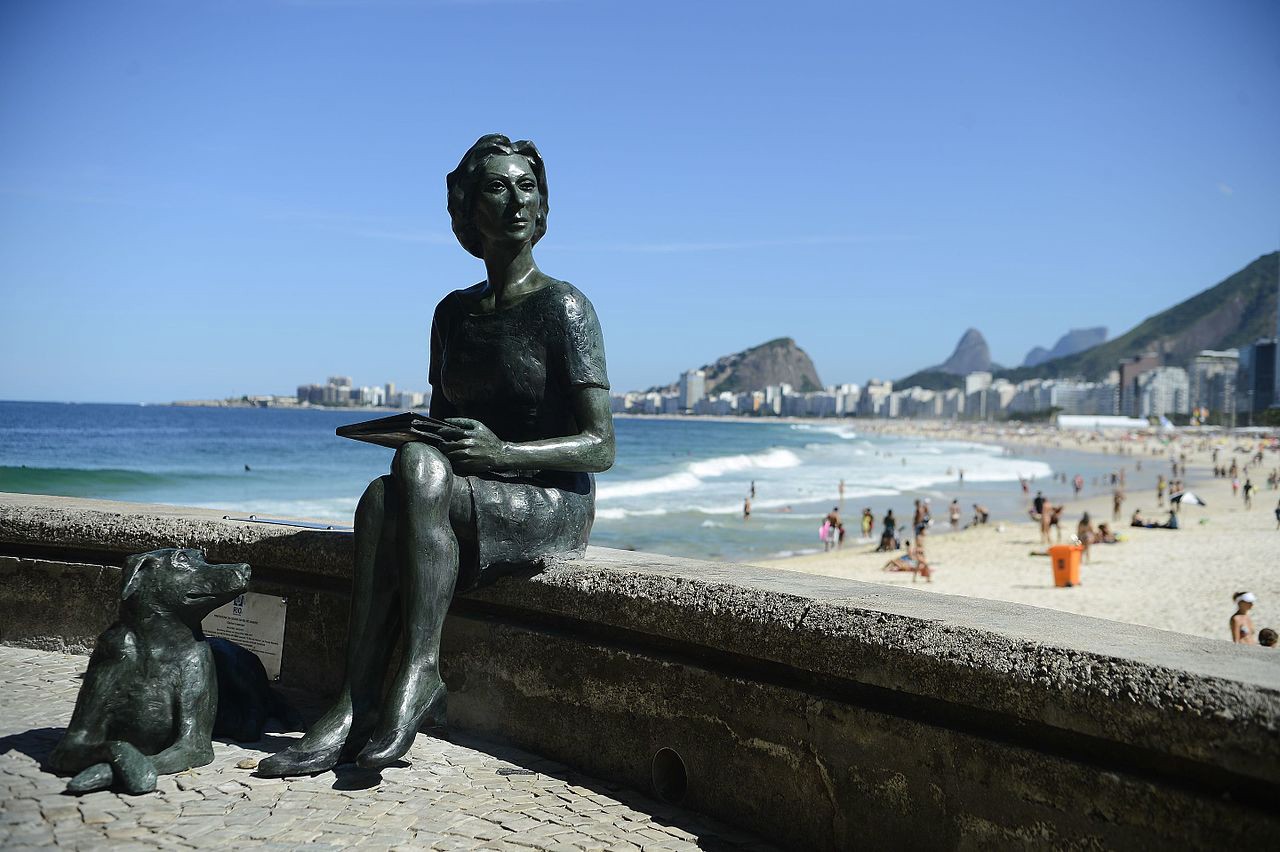
Had she died that night, Clarice Lispector would still have been remembered as one of Brazil’s most famous writers. At 46, she was the author of eight books, including Near to the Wild Heart and The Passion According to G.H. Her masterful, mystical stories and novels were like nobody else’s, and beyond this she was a fashionable and public figure, mesmerizing both on the page and in real life. One critic wrote that her work had “shifted the center of gravity around which the Brazilian novel had been revolving for about twenty years.”
Thankfully, Clarice Lispector did not die, not then. She was, however, hospitalized for three months with third-degree burns, experiencing immense and lasting pain. Her right hand, which she had used to write, was blackened and horribly bent. She kept family, friends, and neighbors nearby, and in time she pulled through — albeit to a life irrevocably altered.
She was hospitalized for three months with third-degree burns. Her right hand, which she had used to write, was blackened and horribly bent.
Lispector faced a grueling physical recovery, but the damage to her work was perhaps even greater. All her unfinished writing had been lost in the fire. She had been struggling for some time to follow the success of The Passion According to G.H. Now, after this trauma, Lispector began to despair, feeling increasingly isolated from society. “As time goes by, especially in the last few years,” she wrote, “I’ve lost the knack of being a person. I no longer know how one is supposed to be.”
Despite the setback, during this time she published two novels for children and wrote, in 1968, a novel called An Apprenticeship, which critics enjoyed, though she expressed dissatisfaction. Soon after, she announced that she would not write another book. When asked why in an interview she replied, “What a question! Because it hurts too much.”
But Lispector did keep fighting — not to get back to her old self, but forward into something else, which would eventually amount to a kind of second life of letters. She reinvented everything: her style, her methods, and even the very questions at the heart of her writing. In the years following, she would write dozens of new stories and several beautiful novels, including the masterpiece Água Viva and The Hour of the Star, which would carry her reputation beyond Brazil and into the waiting world.
To face these huge new challenges, Lispector got some help. She began to see a psychiatrist, Jacob Azulay, five days a week, an hour a day — for the next six years. Sometimes, he recalled, she would write sentences and fragments in his office.
“I am nothing,” she wrote, once, according to Azulay. “I feel like those insects who shed their skin. Now I lost the skin. The name of that skin is Clarice Lispector.”
She also hired an assistant named Olga Borelli, who, according to Moser, “would become a key figure in the last years of Clarice’s life and whose tireless dedication and intellectual affinity facilitated the creation of Clarice’s great final works.” Borelli, a former nun, had been an ardent fan of Lispector’s writing, and after seeing her on a television program one night, decided to call her under the auspices of fundraising for a charity. They spoke on the phone and two weeks later, the women met.
Lispector gave her a typed letter declaring their friendship:
I have found a new friend. Which is too bad for you. I am an insecure, indecisive, directionless, rudderless person: the truth is I don’t know what to do with myself. I am a very fearful person. […] Do you still want to be my friend despite all that?
She did. Borelli henceforth dedicated her life to the remainder of Lispector’s. She became a part of Lispector’s day-to-day world. She cared for her, talked with her, comforted her, and played a singular hand in the construction of her late works, editing and arranging them from disparate fragments, including until her very last — A Breath of Life, published in 1978, just a year after Lispector’s death from cancer.
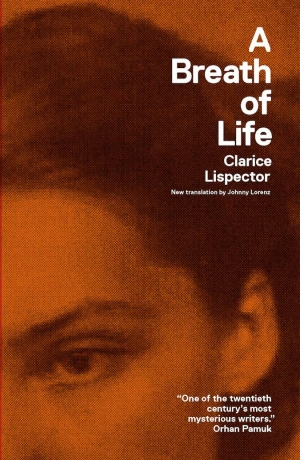
A Breath of Life (Un Soplo de Vida), which was translated for New Directions in 2012 by Johnny Lorentz, is primarily a conversation between two characters: an unnamed male Author, and Angela, the character that the Author is creating. “The title,” according to Moser, “refers to the creation, mystical or ‘Frankensteinian,’ of one being by another.”
Over the book’s 160 pages, Angela and her Author discuss the connections between Creator and Created and what this breathing of life entails — the creation of a character, the process of filling its days and years with pain and joy. There is a strong preoccupation with knowing that creation means, inevitably, death. Some critics have noticed that the voices of the two characters often switch and merge together. The Author has a tendency to override Angela’s voice, who in turn sometimes influences her creator’s mannerisms in spooky ways.
Publisher’s Weekly called it a “schizoid duet” (in a nice way) when the book was translated into English — the Author and Angela being two sides of Clarice Lispector, struggling both with the challenge of creation and with her own imminent death. Throughout the book, the Author, and Clarice, struggle with having to come to an end, meaning that Angela will come to an end. “Do I kill her? Does she kill herself?” he asks. Angela remarks later, “At the hour of my death — what do I do? Teach me how to die. I don’t know.”
But in some sense, the novel as we read it is actually a “schizoid trio,” for between the arguments of Angela and the Author, who together may make up Clarice, there is also Olga Borelli — the woman who transcribed, edited, typed, retyped, and reedited hundreds of fragments during Lispector’s lifetime, and, after her death from ovarian cancer, ultimately organized those fragments into their final form.
Olga Borelli transcribed, edited, typed, retyped, and reedited hundreds of fragments during Lispector’s lifetime, and, after her death from ovarian cancer, ultimately organized those fragments into their final form.
According to Benjamin Moser, before meeting Borelli, Lispector had never permitted her literary work to be edited by anyone. Olga Borelli would be more than just an editor, however; she was a silent collaborator. Possessing “a sensitive, well-educated reader with a refined sense of language,” she would later write her own memoir of her time with Lispector. Organizing and editing was exhausting for Lispector at this stage, and she was prepared to fully abandon a several-hundred-page mess she was calling Loud Object. Instead, with Olga’s help, they shed its skin and exposed a 96-page masterpiece, Água Viva.
Borelli’s contribution to A Breath of Life was even more crucial, since the book was still in fragments upon Lispector’s death. In a half-page introduction to the book, Borelli briefly notes her role in finishing Lispector’s unfinished “definitive book,” which was, “in the words of Clarice, ‘written in agony,’ for it was born from a painful impulse she was unable to contain.” Reflecting on her eight years of working closely with Lispector, Borelli remarked, “I wrote down her thoughts, typed her manuscripts and most of all shared in her moments of inspiration.”
Borelli described her method as “breathing together” and likened the experience to building a puzzle, in this case out of sometimes scavenged fragments of writing: “on the back of a check, a piece of paper, a napkin […] some even smell of her lipstick. She would wipe her lips and then stick it in her purse.” The fragmentary nature of Lispector’s writing and Olga’s editing is part of the book’s atmosphere. In her introduction, Lispector wrote, “This I suppose will be a book made apparently out of shards of a book. […] My life is made of fragments and that’s how it is for Angela.”
Moser notes that A Breath of Life was “not only published but also, to some extent, written after Clarice’s death” by Borelli, “breathing together” with the memory of Clarice. Thus the book, Moser argues, achieves its perfection “precisely by its incompletion and imperfection.”
After this final book’s publication, Olga Borelli confessed to having left out one crucial line of the Author’s: “I asked God to give Angela a cancer that she can’t get rid of.” This was, she said, out of sensitivity to Lispector’s family. Lispector had told several people throughout her life, including Azulay, her psychiatrist, that she knew she would someday die of “a nasty cancer.” When Lispector was hospitalized in 1977, just a few days after publishing The Hour of the Star (which Olga also edited), doctors soon diagnosed her with terminal ovarian cancer—although she was never told that this was what she was dying of.
Lispector again spent three months in the hospital, but this time she did not leave. Olga Borelli passed the time with her, taking dictation right up to the day of the hemorrhage that would end Clarice’s life.
In the letter that Lispector wrote to Borelli at their first meeting, she asked if, despite all her fears and problems, Olga would want to be her friend. Just following that, she wrote:
If you do, don’t say I didn’t warn you. I don’t have qualities, only fragilities. But sometimes… sometimes I have hope. The passage from life to death frightens me: it’s like passing from hate which has an objective and is limited, to love which is limitless. When I die (as a matter of speaking) I hope you will be near. You seemed to me to be a person of enormous sensitivity, but strong.
Clarice Lispector died, again, almost eleven years after the fire that had changed her life, and her art, forever. Olga Borelli was there, holding her hands as it happened.
For much of the past five decades, Joan Didion has been both subject and curator of her own work. Whether mining her own insecurities to talk about self-respect or plumbing her own loss to ponder the meaning of grief, Didion’s books have nurtured a particular idea of “Joan Didion.” But now, in her 80s, she’s begun to see others take the reins to tell her story. On the heels of The Last Love Song, Tracy Daugherty’s 2015 biography of the California native, comes the Netflix documentary Joan Didion: The Center Will Not Hold.
Featuring interviews with writers David Hare, Hilton Als, editor Shelley Wanger, as well as candid one-on-ones with Didion herself at her New York City apartment, the new documentary offers a personal look at the onetime Vogue copywriter. This may be the only film where you get to see Didion prepare herself a sandwich, talk at length about why her forays into fiction never quite worked the way her nonfiction seemed to, and later engage in a touching conversation with Vanessa Redgrave (who played Didion in the theatrical adaptation of The Year of Magical Thinking) about their gone-too-soon daughters. Like Didion’s best work, the documentary manages to paint a portrait of an artist who constantly felt the need to turn to the blank page to make sense of what was happening, both inside and outside herself.
I got to talk to Annabelle Dunne, who produced the documentary alongside her cousin Griffin Dunne (Didion’s nephew — it truly is a family affair!). In our conversation, Dunne talks about the many obstacles she and Griffin faced in first getting the project off the ground, shares the most surprising thing she learned while working with Joan for so long (it involves a freezer), and why she thinks Didion remains such an iconic American presence, both timeless and timely.
Joan Didion: The Center Will Not Hold is available on Netflix starting October 27, 2017.
Manuel Betancourt: Let’s start at the beginning. I wanted to hear about how it all began, how you guys ended up going the Kickstarter route, and how that lead to its release this month.
Annabelle Dunne: It began almost six years ago. We’ve sort of lost track exactly when. Right after Blue Nights came out. Knopf, Joan’s publisher, had approached Joan and Griffin, her nephew, about doing a short film that would accompany the release of the book. It was something that they would play when she went on book tour because it would ease the necessity for long-drawn out production on her book tour. So we did a one day shoot in New York. It was really really fun. Griffin approached her after that and said, would you be open to doing a documentary? She agreed and we then spent a considerable amount of time trying to find a home for that documentary. We knew we definitely wanted to do it, and it’d be a great opportunity — she’d never said yes to anyone before and we felt she wouldn’t, so we needed to seize that opportunity. But we had a hard time finding full financing. We had interest here and there but we had a hard time finding the amount of money we needed. I had some friends who had done Kickstarter campaigns. So we decided to do a campaign. It was a really incredible experience. To be honest, it didn’t actually fully finance the film. It was probably one tenth of our budget but what it enabled us to do was a kind of marketing campaign. It got the word out that this was something we wanted to do. Based on the incredible reaction to the Kickstarter we met our goal in 24 hours. Then we went on to get a lot of money over the course of the campaign and a lot of support and press. It was clear that there was an audience for a movie about Joan. With that in tow we then were able to get Netflix to come on board and fully support us. It was a long road and there were a lot of different people who were involved at one point or another but we ended up with Netflix which has just been great.
MB: Especially because it’s going to reach so many people.
AD: For sure. That was really wonderful about working with them and knowing that it would be global and that all these people would see it. It was important that it be something that would resonate with people who were familiar with Joan and her work, but that it would also hopefully attract a new group of readers, a new generation of people who didn’t know her yet or who are older but who may have known her later work but didn’t know her earlier stuff.
MB: That was my experience. I’ve read The White Album, The Year of Magical Thinking,and some pieces here and there but if there’s something you really get a sense of in the film is just the sheer amount of work Joan has written over the years — which is also all over the place in terms of genres and themes. Was it hard to winnow her canon down and choose what we eventually see in the documentary?
We knew we weren’t going to be able to look at all of her work. We knew that, from a family perspective, it was always going to be a personal movie.
AD: Yeah! It was. We knew we weren’t going to be able to look at all of her work. We knew that, from a family perspective, it was always going to be a personal movie. So we knew that we were gonna have to be very judicious about what we covered. And we really tried to pick a variety of pieces. Also, things that had a through-line. Central Park Five [Didion’s “New York: Sentimental Journeys”] feels as relevant now — if not more! — than it did back when she wrote it for different reasons. So we really tried to find things that had been true then and were true now. Things that spoke to the spirit of her as a person. But it was tough. Griffin tried to take them as needle drops on an album. That was the thinking. But it was definitely hard and daunting. Because there’s a lot of people out there who know a lot about her work — certainly more than Griffin and I do! So we were intimidated by some of the more scholarly aspects of dealing with this person’s canon.
MB: She has been around long enough that many people have pored over what she’s thought and written. Which brings me to something I also wanted to ask you about. How did you decide who would be the talking heads in this film? We see David Hare, Shelley Wanger, even Vanessa Redgrave at one point.
AD: It just ended up being a group of people that are or had at one point in their lives been incredibly close to Joan. We talked to a lot of other people that didn’t end up in the movie. People who had known her personally and who hadn’t known her personally. We talked to people about her style. About her impact on New Wave Journalism. People from a fashion perspective: we talked to photographers and designers. We talked to people who were young up and coming writers on the impact she’d had on them, almost like a Greek chorus. Ultimately, those things didn’t make it into the film because it became much more personal. We felt like it served it better in the end have it be a very small core of people who clearly had had a meaningful past with her personally. That seemed to work. But that was hard — it’s hard to cut a lot of people out! Certainly we were very grateful for their time and their energy.
MB: It’s okay, I won’t ask you to name names.
AD: (Laughter) Well, that’s when you just have to look at the Thank Yous in the credits, you know?
MB: But the set of people you landed on does make it all feel like a rather intimate affair. What did you and Griffin hope they (and the documentary itself) could tell us about Joan that we wouldn’t perhaps get from her writing?
She’s seen as cold or remote. Or private. Those may all be true in a sense. But she’s incredibly warm.
AD: How warm she is! I think she gets a very severe reputation. She’s seen as cold or remote. Or private. Those may all be true in a sense. But she’s incredibly warm. She has a great sense of humor. She’s incredibly loyal to her family and her friends. We knew that that would come through. Clearly in any of the interviews she does with Griffin you can see that. That was something that was important to us. I was surprised at the how harsh she is on herself with regards to everything that happened with Quintana, which comes through in the film a bit. She’s clearly feeling guilt. That surprised me, that that came up.
MB: There is a way the film turns into a rather melancholy portrait of Joan-as-mother, especially in her discussion of Blue Nights. Was there anything else that surprised you as you were working on the film?
AD: What else was surprising? The fact that she put her manuscript in the freezer was truly surprising. I loved hearing that — that was kind of funny. There were a lot of things, and we worked with her for such a long period of time. I was surprised at how supportive she was, even when it went on and on. I’m sure she wondered privately if we were ever going to finish it. But she let us keep going which was really cool and nice.
MB: And has she seen the film?
AD: She saw an early cut, when it was really long and rough (about 3 hours long!) So she saw that and then she saw later cuts. She’s seen various versions.
MB: What does she think? I can’t even imagine looking at something like this about my own life and work.
AD: I think it’s really weird to see your life in front of you, while you’re alive. Most people don’t have that in their lifetime. I think that was really intense for her. But she’s been incredibly supportive and encouraging. She really took both Griffin and me in. I think she likes the film, it’s safe to say. Or, it passes muster!
MB: The one film it reminded me of, and which I only later realized you’d also executive produced, was the Nora Ephron documentary directed by her son Jacob Epstein, Everything is Copy. In my mind they’re almost like twinned films about these wildly talented women being captured by those closest to them.
She’s always been herself. And herself is just this very unwavering, tough, spare, elegant being.
AD: Yeah, there’s a lot of similarities. You know, both Jacob and Griffin were first-time directors — this is Griffin’s first documentary and it was Jacob’s first feature, period. I know that they both were very very clear that they didn’t want — well, Jacob always said, “I don’t want to do a hagiography.” We felt the same way. We wanted this to be a personal look at this person’s life but we also wanted to keep it fair. Both Griffin and Jacob had incredible relationships with their editors who really helped them, because they were a degree removed and weren’t related and hadn’t known the subject the entire lives. They were instrumental in helping to tell that story from a perspective that felt real but fair. Obviously, with this movie we had the advantage of still having Joan. We didn’t have Nora anymore when we started Everything is Copy. And that was hard — it’s hard for a number of reasons. The interviews are tainted. It’s very hard for people to speak candidly about someone that’s gone if they don’t have the best things to say. I think Jacob did a really good job of painting an accurate portrait of his mom despite all that. And we did have all of her books on tape, which was helpful. Because you hear her voice in the same way that we do with Joan. I do wish — I mean, there are so many questions I wish we could’ve asked her!
MB: Oh, especially about, well, the end of it all. It’s funny, I’d never quite thought of Didion and Ephron as contemporaries but it did strike me that these two films end up being portraits of women who blazed trails by being quite candid about their own lives.
AD: Yeah. I think they were both fiercely ambitious, even if they may have revealed that to different degrees, but I don’t think there’s anything wrong with being ambitious. They both clearly valued the work. Both seemed to find salvation through work. They worked through things that were hard in life and found answers in working it out and writing it out. That’s what I think they both share: they clearly both worked from a very very young age to, well, I mean, Joan is still working! It’s something they both valued a lot. Like they have to think through writing.
MB: You truly get a sense of that in the film. You get a peek at the Joan behind the page. In that sense, what do you think it is about Joan that so captivates readers to this day?
AD: She’s herself. She’s always been herself. And herself is just this very unwavering, tough, spare, elegant being. She looks the way you think she’s gonna look and you want her to look. She photographs the way she — it’s all very much in keeping with the work on the page. If you track her work, it’s always been like that. And we try to show that with “On Self-Respect.” I mean, that’s her voice! Her voice evolves and matures but that’s really her voice on the page, from the very first thing that she writes. I think that’s what keeps people coming back. She’s always been that and will continue to be that way for people.
Librarians from Invercargill, New Zealand had a “totally impromptu, definitely not planned” photo shoot spoofing The Hollywood Reporter’s The Kardashian Decade cover, and everyone is losing their minds. But did you know that librarians have always been lowkey the most fun people on the planet? Here are seven times that librarians have debunked the stereotype that they are uptight scolds ready to shush those who dare to have fun in their sacred institution.
Caution: These musical tributes to libraries and the amazing people who run them will have you wanting to break out in song and dance at your nearest library. And then you really might get shushed.
What happens when librarians at the University of Washington go Gaga? They sing “Ca-ca-catalog.” Perez Hilton called this video “positively awkward,” a designation the librarians would probably accept with glee.
The Topeka and Shawnee County Public Library has a message for you: #CheckItOut #CheckItOut. These dollar bill throwing librarians adapted Taylor Swift’s “Shake It Off” into a public serving announcement reminding everyone that the library is a place to “play play play play play” and borrow “high-def Blu-ray ray ray ray.” Fun fact: The book and movie titles featured in the video double as Swift’s song titles.
Ever wondered what librarians do on a Saturday night after the library has closed? They dress up in literary costumes and have a dance party, of course! This remix of Bruno Mars’ Uptown Funk by Pogona Creative and the Orange Public Library in association with Chapman University is rife with slick book references (“Got cancer and a cool boyfriend, any guesses?”) and killer dance moves by a very snazzy Neil Patrick Harris lookalike.
Faced with the prospect of making yet another snooze-worthy powerpoint for their end of the year report, the Shoalhaven librarians decided instead to highlight their accomplishments by rocking out in boa feathers and hamming it up on air guitars to Queen’s “Bohemian Rhapsody,” singing: “Is this nonfiction? Is this just fantasy? Working the library, escaping from reality.”
This Ohio librarian is not having any my-dog-ate-the-book excuses. Drowning in stacks of overdue notices, Mary Evelyn Smith set out to warn the students of Liberty Elementary School to return their books by getting her grove on, transforming “All About That Bass” to “All About Them Books” with the help of an ensemble of cute book-swinging kids. Not a bad way to publicly shame those book-stealing kiddos.
A campaign promoting studying in the library of a Mormon university is the last thing you would expect to go viral. Brigham Young University’s Harold B. Lee Library’s shot-by-shot riff of the popular Old Spice ads has than 3.5 millions views thanks to snarky lines like “Did you know that 8 out of 5 dentists say that studying in the library is six bajillion times more effective than studying in your shower?”
Move over, Carly Rae Jepsen! The New York State Reading Association’s ode to libraries will have you singing “got a library card, it kind of caught me off guard and now I’m on my way. Then this one book seemed to shout come on and come check me out!” We guarantee an ear-worm for days.
Bonus Video: So this one’s not technically a parody by a librarian, but we couldn’t help but include this hilariously subversive SNL skit. Margot Robbie plays a sexy librarian acting out the raunchy fantasy of some college bros, or so you think… She lets her hair down, takes off her glasses and just as it looks like she’s about to make the wet dreams of every straight male come true, she rips the hair off her head (ouch), reveals her then-and-now Joel Haley Osment tattoos (ewww) and then gleefully murders everyone in sight with her demonic powers (so badass). Watch out fanboys, Margot Robbie is coming to get you!
Novelist, critic, and essayist Zadie Smith, winner of the Orange Prize, James Tait Memorial Prize, and Betty Trask Award among others, can now add the Langston Hughes Medal to the list. Smith will be presented this medal on November 16th during the annual Langston Hughes Festival at The City College of New York (CCNY) in Harlem. The event is free and open to the public.
Smith joins an array of legendary authors of the African Diaspora who have been previous recipients, including the first ever honoree in 1978 James Baldwin, playwright Ntozake Shange (2016), National Book Critics Circle Award winner Edwidge Danticat (2011), National Book Award winner Jacqueline Woodson (2015), Lucille Clifton (2003), Chinua Achebe (1993), Octavia Butler (2005), and Ralph Ellison (1984) to name a few.
Langston Hughes Festival director and CCNY publishing certificate program assistant director Retha Powers says that the Langston Hughes Festival and the medal is considered a cornerstone event of CCNY. With regards to this year’s honoree, Powers mentions that Zadie Smith is an “excellent example of a writer who stands in the tradition of [Langston] Hughes.”
She adds, “[Smith] writes about identity, race, class, the life of the city and of relationships that intersect on all of these levels. She is also a prolific critic and essayist with a passion for music so her work intersects with just about every form Hughes wrote in.”
Langston Hughes remains an iconic name not only in the literary field but also in New York City history, specifically Historic Harlem. Last year the I, Too Arts Collective formed to extend his legacy by renting his brownstone as a space for the larger artist community. Hughes’ poem, “I, Too” has served as a rallying cry, published and quoted regularly in the midst of a consistently tense political climate in the United States. His poetry, commentary, and influence is rooted deeply in the criticism and analysis of the existence of Blacks in America as well as a reflection to the specificity and universality of our experiences during his lifetime. #LangstonsLegacy continues to have an effect on artists of all ages. The Langston Hughes Festival also encourages and awards essays on Hughes’ influence through a contest open to City College students to read and reflect on his work and how it applies today.
The Festival begins with a symposium on the legacy of Zadie Smith’s work with speakers Kaitlyn Greenidge, Nicole Dennis-Benn, Tracey L. Walters, and Vanessa K. Valdés and others at 12:30pm in Aaron Davis Hall on Thursday, November 16th. The celebration will conclude at 6:30pm when Smith will be in conversation with Emily Raboteau, after which she will be awarded her medal.
One spring afternoon in 1593, four men walked into an inn. Some hours later, three walked out. What happened in that room has been the subject of speculation from gleeful Puritans, a solemn, mournful Shakespeare, and generations of critics, because the man who died in that room — although some claim he did not — was the playwright Christopher Marlowe.
Christopher Marlowe is not nearly so well-known as Shakespeare, of course, though he was more famous while he was alive. He was born exactly two months before Shakespeare. He went to Cambridge on scholarship, where he probably became a spy. He wrote about compelling demons, Christian hypocrites, atheist tyrants persevering without punishment, and a king in love with his courtier. Rumors about his own life abounded — necromancy, atheism, sodomy — and likely played a part in his death, allegedly in a brawl over the bill — the reckoning. It’s suspicious that all the men in the room at the time were in some way involved in Elizabethan intelligence networks; the story of the three survivors is a bit hard to believe. If he could summon his own shade, we might get some answers, but everyone knows to speak to a ghost you must make the right offering, speak the right words. For a poet, perhaps, the words themselves are the offering.
Marlowe is buried, they say, somewhere in the corner of a churchyard in Deptford, near where he died. No one knows exactly where his grave is; on the far wall there is a plaque commemorating him, and a rosemary plant, for remembrance. In Westminster Abbey the stone with his name bears a question mark after his death date. Some conspiracists theorize that he faked his death and went on to write Shakespeare’s plays under a pseudonym, which makes for a good spy story but poor reading comprehension; the two men, both brilliant, have such different syntaxes, such different focus, such different pace, that it is impossible to mistake them.
Some conspiracists theorize that he faked his death and went on to write Shakespeare’s plays under a pseudonym, which makes for a good spy story but poor reading comprehension.
There’s a simple answer to this question mark, though, or simple enough to a certain kind of person, which is the kind of person I was in 2013 when I graduated college and followed in Marlowe’s footsteps to Corpus Christi College, Cambridge. Unlike him, I wasn’t studying divinity, but like him I was using a subject I had only the barest intention of following through to a career in order to get to a place that seemed like a ladder to another world. I was 22, and if someone had asked me to spy for the Queen I probably would have said yes, for the sake of danger, a good story, and a hill to die on. So I also thought it entirely reasonable to dig up a churchyard looking for answers about a long-dead poet whose primary audience these days is English professors and college students who have tried more than once to see what happens if you summon a demon in Latin in the woods.
A plaque commemorating Marlowe’s death place (Photo by Loz Pycock)
Of course, my advisor, the church in question, the University of Cambridge, and probably the British government would likely have had other ideas, and so I could not excavate the graveyard where Marlowe was supposedly buried. I was left to try digging up anything else I could find. I was studying biological anthropology at Cambridge with the vague aim of doing forensic anthropology. A few years earlier, splitting my time between English and anthropology, driving between a forensic anthropology and pathology lab at UMass and my Shakespeare class at Smith, I had thought that I could combine the two by reading narratives into bones. I got into Cambridge on this metaphor; my admissions essays included a long paragraph about how I overcame my fear of death and the dead by studying their bodies, learning their stories, becoming an instrument of a kind of afterlife for them in the capacity of evidence-gatherer, storyteller, witness.
This was something of a falsehood: I was still afraid of death, and the only immortality I was interested in at the time was real, physical, vital immortality, the kind involving a literal beating heart. I had once been afraid of hell, and then I stopped believing in God, and now I was afraid of dying, of nothingness, and also, still, a little bit, of hell. I read Doctor Faustus and recognized myself in the title character’s inability to ask sincerely for salvation. I wrote my undergraduate thesis on it, a play that a friend directed and I acted in; there was a time I knew the entire play by heart, and that was the same spring I’d wake up with nightmares of red eyes and glowing furnaces.
One of the critics I read for my thesis said something that has stuck with me ever since: To read or watch Doctor Faustus, you must, for the length of the play, enter into the mind and spirit of a Christian. You must believe in it for the trick to work, for the play to horrify you completely. Part of the horror of the play is that, on a basic level, it is completely theologically orthodox: What happens to Faustus is what should happen. But it is not right that it happens, not morally or instinctively or emotionally, and in that dissonance lies a world of subversion. The God of this play has no mercy, and it is in part because Faustus knows this, and knows the moral universe to which he is unwilling subject is unfair, that he is damned.
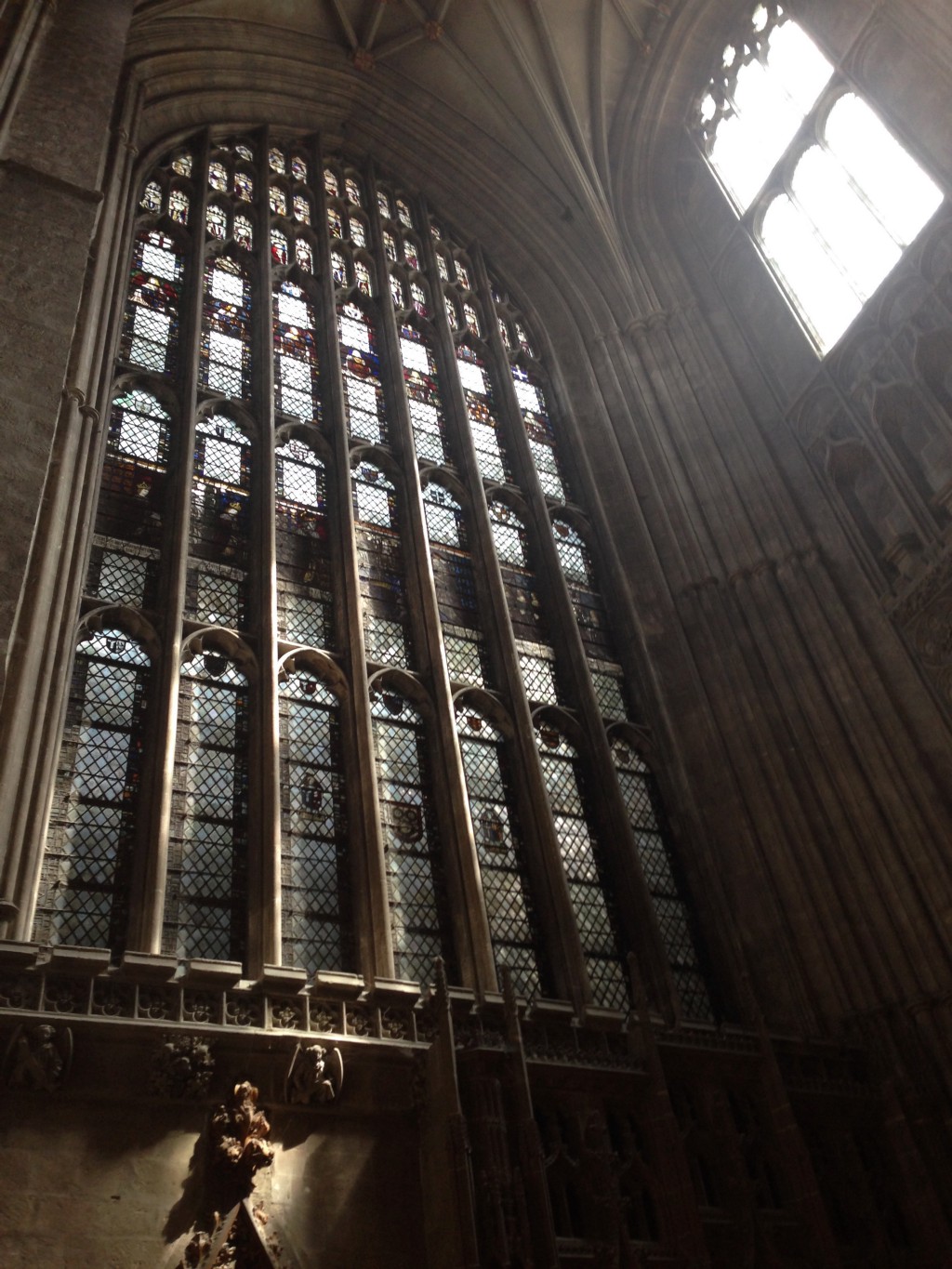
The Old Court at Corpus Christi College, Cambridge, where Marlowe lived from age 17–23.
Most of what we know about Marlowe is shadowy. A lot of the conventional knowledge that gets passed down is, at its heart, story; scholar after scholar, however brilliant and credible, will note, We are not sure if this is true; however, it seems true, and if it is not, it should be. There is a portrait of a young man, unidentified, from 1585; his age is noted as 21, which is the right age for Marlowe. It was found at Corpus Christi in the 1950s. On it is a motto: Quod me nutrit me destruit, what nourishes me destroys me. There is no evidence other than the age and the college to suggest that it is Marlowe, and probably he wouldn’t have had the money for either the portrait or the elaborate doublet the young man in the picture is wearing. But the face seems right, and the motto is so perfect that it is almost a thing out of fiction.
Even Marlowe’s name could be mysterious. Christened Christopher, he was almost ubiquitously called Kit; his surname is rendered, variously, as Marlowe, Marley, Marlin and even, resonantly, Merlin. Another story, almost certainly untrue, is that Kit’s spy code name was Mercury (there was a Mercury who worked in Elizabethan intelligence)—a trickster, quick and ever-shifting. A figure emerges from these stories: laughing, irreverent, driven by an internal fire. Reckless and grinning, but tortured. Almost immediately after his death, the stories started: Moralists wanted him struck down by the hand of God, a cautionary tale; an anti-theatrical pamphlet published not long after the murder claims that he died cursing. Others have him as a reckless hero, a kind of martyr, the muses’ darling. His story, the way we like to tell it, seems irresistibly to follow the pattern of one of his own plays: the son of a tradesman comes to glory from nothing, is a miraculous success, but is torn apart by his own overreach, his desire for something deeper, his inability to stand still or to be contented. Quod me nutrit me destruit.
One of the stories about Marlowe, one with more meat to it than some, is that he was an atheist. This is implied in the accusations that got him arrested, stated outright in the note written by another spy in an attempt to incriminate him, and bandied about a great deal because of his associations with Walter Ralegh and other freethinkers, and because in his plays he wrote things like I count religion but a childish toy. I tried to imagine what it must have been like not to believe in God in a world where it would have seemed that everyone did. Catholic or Protestant, they all believed, and many so strongly that they’d kill or die or torture in the name of it—surrendering their own souls in hope of righteousness, martyring each other in hope of becoming martyrs.
Catholic or Protestant, they all believed, and many so strongly that they’d kill or die or torture in the name of it.
In the environment I grew up in, everyone believed in God. Everyone went to church. When I was thirteen and my faith shut off like a switch and my sense of God disappeared as though some inner eye was either at once opened for the first time or blinded, I did not at first think there is no God. At first I thought God has taken away my faith, and I am damned. When you feel yourself at odds with the whole world, perhaps the whole universe, you feel, inevitably, a deep sense of wrongness. You can either attribute it to yourself and try to stamp it out, killing some essential part of yourself in the process, or you can cultivate it, nurture the dark seed in you like a flower, take pride in it and show it off, even if it hurts.
The River Stour near Canterbury, where Marlowe was born. Photo: Emily Atkinson
I chose pride, and from his plays it seems that Kit did too. This was what made me first fall in love with him, or a least into obsession. If I could not read his bones, I would read his plays, and what wasn’t in those I would find out from history. While I was meant to be studying primate aggression and head trauma in medieval Irish cemetery populations, I was learning Marlowe’s biography. One critic went so far as to have a medical examiner read the 400-year-old inquest report into Marlowe’s death and write up what he thought that death must have been like. I wondered about that but I wondered, too, who had buried him. His family was in Canterbury, two days’ ride away. Ten days before his death he had been arrested on charges pertaining to blasphemy, but released pending investigation. Had they known? His mother could not read, nor his sisters; his father could scrawl his own name. What would it have been like to go to Cambridge, to speak and write Latin and Greek and French, to wear English like your own skin, and to go home to people who had never had the chance to learn to read? To wonder at your own luck, at what might have happened to your whirring mind had you not been so fortunate?
What would it have been like to go to Cambridge, to speak and write Latin and Greek and French, to wear English like your own skin, and to go home to people who had never had the chance to learn to read?
When I was six, the Calvinist school I went to took away my books and told my parents not to let me read so that the other children would catch up. I would slam my fingers in my desk on purpose so I could sneak a book from my backpack and read it in the nurse’s office, escaping boredom for ten wonderful minutes. By that age I already spent a lot of time thinking that I was damned; that I didn’t really believe in Jesus, I just believed that I believed because I knew that that was what one had to do to go to heaven. Nothing transactional, I thought, could possibly be pure.
Canterbury Cathedral, July 2014. Photo: Emily Atkinson
This is John Faustus’s central problem and Marlowe writes it like someone who has felt it, who has found himself trapped in that unending damning logic puzzle. Sure, Faustus compounds it by summoning a demon, but if you believe yourself to be constitutionally incapable of receiving salvation, why not get what you can while you can? Why not sign your own death warrant, appoint your own time and place, gain some modicum of control?
I did not know what had happened to Kit Marlowe in that little room in Deptford that led to him getting stabbed in the eye, but somewhere at the crossroads of my research into the osteological effects of torture, the history of serial murder, and the life of Christopher Marlowe, I came across a figure straight out of hell who might offer some explanation as to why a knife to the eye might have seemed a kind of mercy. Crossroads, after all, are where traditionally one finds such demons.
Richard Topcliffe was about the same age as Queen Elizabeth, in his 60s in the 1590s. He was from a wealthy, highborn family; he had known the Queen since they were young. Topcliffe was the Queen’s own demon. He hunted priests and tortured them. He loved his work so much he built his own torture chamber in his house and got permission to take prisoners there. He made men who had worked at the Tower of London all their lives cry and resign.
Torture was illegal in Elizabethan England until the 1580s, which may come as a surprise; our modern understanding has everyone before the Victorians racking people on the slightest pretext. But it was held to be morally reprehensible and beneath the Queen’s men — until an uptick in radical Catholic plots on the Queen’s life led to a royal lawyer writing out a justification for torture in specific cases. Something like a torture memo, arguing for the legality of certain methods in extenuating circumstances — you know, for national security. Youthful opposition to the Bush administration doing essentially that exact thing had sparked an interest in human rights abuses and forensic anthropology as a method of investigating and prosecuting them. It was difficult not to see the parallels to Elizabethan England, where an exception to the ban on torture, initially meant for those directly involved in a regicide plot, widened and widened, slipping open until finally it could be twisted to encompass almost any Catholic in England — Catholics whom men like Marlowe were employed to spy upon.
One story about Marlowe is that he was cruel. He wrote violent plays and he met a violent end, and in between, we know, he got in several fights. One ended in a death, though he didn’t strike the killing blow, and had backed off well before it came. But still. His heroes kill and sometimes go unpunished. He writes of blood. Once at a production of Tamburlaine, the bullets in the musket onstage were real, and a woman and her child were shot and killed in the audience. A violent man involved with other violent men ends violently; this is not an uncommon story, and if he was a spy, an informant who turned people in to be tortured, well, that fits with the narrative.
But another story about Marlowe is that he was kind. Another playwright called him “kind Kit Marlowe,” in fact. All his contemporaries called him Kit, even those that didn’t know him well; they were on familiar, friendly terms. He certainly had a lot of friends; he was invited to the great houses, and after his death poets and playwrights wrote glowing eulogies to him and referenced him long after he was gone. His plays are dark but they are also often funny. They are brutal, but in them is a thread of universality: we all suffer, we are all human, we all deserve mercy and it is unkind and unfair that the world will not give it to us. How can we not expect better, from it, from each other, from God?
In his plays is a thread of universality: We all suffer, we are all human, we all deserve mercy and it is unkind and unfair that the world will not give it to us.
Whichever story is the truer one, we know that Marlowe wrote those plays and poems with their brutality and empathy and beauty. We also know he was probably employed as a spy, did dirty, ugly work, and that he died of it. We don’t know what he was like, really, or what he believed, or why he was killed. But we feel like we do, because we know the stories he told, and those stories resonate with something — good or bad — inside those of us who feel compelled to untangle the knots of Kit’s narrative. Somehow, when it comes to a story, the probable answer — that he, like all of us, was sometimes cruel and sometimes kind, and was capable of doing wrong and also of great bravery, and that he did some but not all of the good and terrible things our narratives attribute to him — does not satisfy.
So I found myself asking, knowing the impossibility and foolhardiness of the question: how could a poet and radical himself in danger of prosecution and torture, someone to whom I felt a keen connection, whom I liked — have involved himself in something like that? At a production of Edward II, at the National Theatre, I found myself hit by the full force of this difficulty. Near the end of Edward II, just before Edward is murdered in a particularly horrifying way, he enumerates the trials he has endured: his captors have systematically deprived him of sleep and decent food. They have made him stand so that he has to remain upright and still. They have played loud music. They have shaved his beard.
This isn’t sensationalized torture; it’s not the rack or what you see in 24. It could have come out of the CIA’s playbook on “enhanced interrogation,” except in Edward’s case he wasn’t being interrogated. But the description chilled me because it wasn’t at all the sort of thing someone would make up. It was described in detail, with intimate emotional awareness; it felt, in other words, like the account of someone who had been there.
The description chilled me because it wasn’t at all the sort of thing someone would make up. It felt like the account of someone who had been there.
Edward isn’t a good king. He’s not particularly sympathetic. For most of the play, he’s selfish and overdramatic and makes frustratingly stupid choices. But in this scene, he is undeniably the one with whom we are meant to empathize. He is a victim, quite clearly, and Lightborn, his killer, is literally an Anglicization of Lucifer, a monster who defines himself based on how creatively he can kill. Though certainly the usurper of Edward’s throne could make a compelling argument for killing Edward — on the basis of national security, even — we cannot, watching the play, agree with him (and in fact, he ends up getting executed, too). Marlowe uses brutality to evoke empathy, even for characters we might otherwise think deserve what they get. Faustus knows what he is doing, but in his final monologue, desperately pained, we cannot help but feel for him. Edward has done bad things for the wrong reasons, but when he is brutally killed his scream echoes our own.
For a long time, perhaps since I lost my faith, I thought logic and evidence was the only way to solve a problem or a mystery. But watching that play, I realized I was never going to know how Kit Marlowe knew what kind of torture spies really use. I was never going to know which side of those techniques he had been on, or who he’d heard it from. I was never going to know with any certainty or satisfaction what had happened in that room, not from a medical report or an inquest. Not even from digging up half the graves in St. Nicholas’s churchyard looking for a late 20s male with some kind of orbital trauma and disintegrating finery that didn’t belong in an unmarked grave.
Maybe if I did it I’d find him and put an end to speculation that he’d run away to Italy and written the plays we call Will Shakespeare’s. But the answer to that is already in poetry; his influence on Shakespeare is monumental and undeniable. Shakespeare gives him an epitaph better than any tombstone: Dead shepherd, now I see thy saw of might/He never loved, who loved not at first sight. Marlowe wrote two well-known poems, “The Passionate Shepherd” and “Hero and Leander,” and it is that latter that that line about true love comes from, the one Shakespeare quotes in As You Like It. Some people think Mercutio is an homage to Marlowe. Prospero in The Tempest is an inverted Faustus, an aging man’s answer to a young man’s fury. Some people live long enough to know when to give up their magic, to know when passion has become danger, when one has verged from grey into black. To know that there is such a thing as grey, and to know too that living in that alone is not always as satisfying as it might seem.
Writing is a kind of necromancy, and a shade from the underworld, if fed with blood, can tell us much more than his bones.
What did Shakespeare think of him? What was it like for the two of them to meet and recognize each other, so different but firing along the same track, working in ways of which no one else was capable? These fictional answers beget more questions, and these fictional delights must have fictional ends. Margaret Atwood’s book on writing, Negotiating with the Dead, references The Tempest as a kind of touchstone; I think she mentions Faustus, too. Writing is a kind of necromancy, and a shade from the underworld, if fed with blood, can tell us much more than his bones. All writing is conjuring, and all ghosts come to us with secret histories. I had made myself a shade of Marlowe, a vivid image of a man I had come to care about, if not to fully understand. But I could understand him with the right magic. With the right words. And so I set about conjuring my spell.
Atwood writes that “all writing of the narrative kind…is motivated, deep down, by a fear of and a fascination with mortality — by a desire to make the risky trip to the Underworld, and to bring something or someone back from the dead.” All stories are ghost stories. Stories are what assure us that we will always be more than bones, however insubstantial the facts of their foundations, and if that is the only path out of mortality — the only way both into and out of that little room in Deptford — then I will take it. “Danger is in words,” Marlowe has Faustus say, and that is true, but so is everything else.
They Can’t Kill Us Until They Kill Us, the first essay collection from Hanif Abdurraqib, is a towering work full of insightful observations about everything from the legacy of Nina Simone to the music of Bruce Springsteen. Throughout the book, Abdurraqib juxtaposes the societal with the intimately personal, and the end result is a powerful work about art, society, and the perspective through which its author regards both.
In the waning days of summer, I talked with Abdurraqib about the way his book came together, how it relates to his work as a poet, and how the powerful and cumulative structure of They Can’t Kill Us Until They Kill Us emerged. An edited version of our conversation follows.
Tobias Carroll: Your book opens with back-to-back essays about Chance the Rapper and Bruce Springsteen, both of whom are very much associated with particular places. Did you have that structural decision in mind from the outset, or did it come later?
Hanif Abdurraqib: It came later. But I think it makes sense, right? They’re both artists who are speaking to a unique American experience, more than just a distinctly geographical one. Their vision of what freedom in America looks like is governed by two vastly different frames. That’s in part because of their demographics: Chance is younger; he is black; he is of a different era and a different place. I was really interested in examining Springsteen’s relationship with labor as freedom, and who in America gets to claim that gleefully and who gets to feel like that’s a burden.
I was interested in Chance particularly because his idea of freedom is tied to this idea of inexhaustible joy in the face of whatever is trying to take it away. I don’t know if I believe in that, but I was interested in his belief in that. With both of these artists, it’s the same thing. I don’t know if I believe them. I don’t know if I believe in what their ethos is telling me, but I’m interested in why they believe it.
TC: Did you find that the process of writing about these musicians caused your views on them to change over time?
HA: It’s refined it more. I’ve been a Bruce Springsteen fan for pretty much my whole life. I’ve grown up with, and grown into, the great Springsteen narrative, so my interest in Bruce Springsteen is always shifting. Especially because in so much of his work, particularly in his earliest eras, he’s hinting at some sort of escape. But it’s not an escape from anything, really, because all of his characters are still riddled with this Jersey lower-middle-class minutiae of waiting for a weekend. Listening to Bruce complicates my opinions of him.
The piece in the book is more about complicating what it’s like to be at a Bruce Springsteen show, and to take in everyone at a Bruce Springsteen show and the Bruce Springsteen of now. That’s different than the Bruce Springsteen of the Hammersmith Odeon in 1975. The audience is dreaming more, but he’s decidedly more cynical; he’s performing to an audience of dreamers, but I don’t know if he believes himself as much as he used to.
TC: As someone who grew up near the Jersey shore, that mythic Springsteen figure has definitely loomed large in pop culture for me.
HA: It seems like the songs he believes most now are the ones where there’s no happy ending. Like “Atlantic City,” for example. “Atlantic City” is this harrowing tale where you’re on the edge of your seat, waiting and waiting and waiting for this terrible life to resolve itself into something better. The song opens with the image of a house being blown up, and it doesn’t resolve itself. That’s why I think “Atlantic City” is great — it opens with this image of a house being torn apart and a fight on the boardwalk in a city that doesn’t know how to handle itself. The central character in that story, the speaker of that song, can’t make a better life for himself. He never makes a better life for himself. The last verse of “Atlantic City” is so harrowing, that last line of “Last night I met a guy, and I’m going to do a favor for him.” It’s a person who’s at their wit’s end, and we are to assume that they’re getting by on ill means. Everyone in the song is facing consequences for things they’ve done wrong, and in the end, the character himself says, “Well, I am now one of these people who is going to do something wrong, despite the consequences and how I know it’ll play out.” And that is the Springsteen dream turned on its ear.
Author Hanif Abdurraqib
TC: Did most of the pieces about music in the book originate as freelance assignments, or were they written with the book in mind?
HA: About half and half. Some of that stuff was published in places like MTV News, where I worked for about 18 months. There’s a piece in there from the New York Times, one from Pitchfork…The thing for me is that I love music, and I think about music all the time. A cool thing about having an essay book is that you’re not beholden to any strict timeline. There were things I wanted to explore that I certainly couldn’t publish anywhere because they weren’t “topical.” I could really grind away at them in that book in a way that felt good. A lot of the things that were rattling around in my brain for several months could finally get outside of my body and have a place to live, outside of me rambling to my friends in bars about pop-punk.
TC: There are a few places in the book where you quote Lester Bangs, including a piece that’s written as a homage to “Sham 69 Is Innocent!” Were there any other music writers who you wanted to invoke or engage in dialogue with through this book?
HA: Bangs is important to me. I’m glad that you mentioned the “Sham 69 Is Innocent!” thing, because that’s my favorite piece of music criticism ever written. It’s this absurd collection of statements, and I feel about Twenty One Pilots the way Bangs felt about Sham 69. I feel that there was a clear lineage for me to bring him up in that piece. He was endeared to Sham 69, but also, “Oh…..those guys.” I’m from Columbus; Twenty One Pilots are from Columbus. I’m endeared to them, but I also have moments where I go, “Oh…those guys.”
I think that Bangs and Greil Marcus are in a similar lineage. Greil Marcus is so good at drilling through the music to get to the story underneath it. I really wanted to do that. And I wanted to honor both Bangs and Greil Marcus, especially because Bangs was so good at making the reader feel like they were in on the joke. I don’t want to write about music in a way that makes people feel like they have to be a music fan to understand why I like it. I don’t want to write about music in a way that makes people feel like they have to be up on the latest things to appreciate what I’m trying to get at. I’m not trying to get the reader to like the music I like — I’m trying to convince them that it meant something to me. The music is kind of perfunctory.
Jessica Hopper is a massive influence on me. There was actually a piece that got pulled from the book that was written after a piece of hers. I really wanted to honor the impact that she’s had on my writing. She was my editor for several months at MTV; she edited me when she was at Pitchfork. There’s a working relationship there, but I’ve also just been a fan of her criticism and her insistence on the fact that music is not a small or stupid thing. Pop culture is not small or stupid. It should be treated with respect; critics should look at it with respect and write about it with a level of respect. I was trying to honor that as well.
Pop culture is not small or stupid. It should be treated with respect.
TC: Is that why you began the book with music and gradually expanded it to include questions of family, faith, and race?
HA: Yeah — it’s a reverse blooming. I opened with music because I want to open my palms so that everyone can feel welcome. I don’t want to crush people, obviously, but slowly making the stakes smaller and smaller and making the space more intimate — that’s a gift that a writer can give a reader. I opened with music to say, “Here is a conversation I want you to be in. Here’s a peg that you might be comfortable with, and I want you to be in on this conversation that I’m going to get to later.” And by the time you actually get to the conversation, people are either uncomfortable or a little more comfortable, but they’re there. I wanted people to feel like I was talking to a part of them that they were comfortable with. I wanted people to be able to step comfortably into a conversation that was going to get gradually more difficult.
TC: In the book, you talk about having spent time in the Columbus punk scene. Do you feel that that had any influence on shaping you as a writer?
HA: I think I am less romantic now about being in a punk scene than I was then. I was often the only black person on the punk scene, or definitely othered by a punk scene. When you are a token in a setting that is branded as a familial setting, even your othering can feel like it’s a part of this familial ritual. Even the fact that you are being distinctly othered by people can feel like it’s done out of this sense of brotherhood. Which, at the time, I needed. At the time, I was in my late teens, and that was a thing I needed. That was where I felt most like I fit in.
It did also teach me a lot about the lengths that we will go to — and when I say “we,” I mean “me,” and I particularly think, at least in my punk scene, of young straight men — the lengths that will go to to escape emotions, and the reckoning that comes when those emotions come back to live, to live a full life. If anything, growing up in in a punk scene pushed me to a level of vulnerability in my writing that I don’t think I ever would have gotten to. I want to be vulnerable because I did not see a blueprint for vulnerability in the scenes I was in, and I saw the damage that did to people. And I saw the damage it did to me, personally.
At least in the scene that I was in, there was a lot of performed vulnerability in the musicians. We demand a performance of vulnerability that we think is going to transfer to us, but instead it all feels like a performance. I think it’s easy to perform vulnerability when the stakes are low. It’s significantly harder to come correct and come through with real, actual, sustainable vulnerability that allows you to, for lack of a better term, be in your feelings when you need to be in your feelings, and handle that in a way where it doesn’t harm or put other people at risk.
I want to be vulnerable because I did not see a blueprint for vulnerability in the scenes I was in, and I saw the damage that did to people.
TC: You write about the phenomenon of bands playing songs that express sentiments that they felt in their 20s a decade later, and how that doesn’t always age well. Do you find that that’s the case with a lot of the artists that you liked at a certain point in your life, or does it vary from artist to artist?
HA: I think it varies from artist to artist. I do think that there’s a specific brand of early-to-mid-2000s emo or pop-punk album wherein a dude or several dudes are angry at a woman or several women. I’m thinking of the first Fall Out Boy album. The longest piece in the book is a piece about Fall Out Boy, so I have a lot of love for them, but that first album is horrifically violent. It’s all about how much Pete Wentz wants his ex-girlfriend to die. That’s played out in a very literal way. I’m thinking of Mayday Parade’s A Lesson in Romantics, which is kind of bad in the same way, and Cute is What We Aim For’s The Same Old Blood Rush With a New Touch. The first Brand New album is also in that same vein. There’s a brand of album that really leans into this idea of punishing women who rejected the men in the band.
That’s not specific to this genre, and it’s not specific to music. It’s specific to men and the world we live in. Just a couple of days ago, there was a story of a man in Dallas who rolled up to his ex-wife’s house and shot everyone inside.
I don’t want to pretend that this is a specific thing to a genre. But if you’re talking about things that don’t age well, that hasn’t aged well for me. In my criticisms of those albums and those songs, it’s been vital for me to be honest with myself and remember that there was a time when I loved those songs. There was a time when I sang along with those songs. In order for me to properly critique them and properly write on them, I needed to reckon with myself on why I liked them, and not just chalk it up to, “Well, I was young.” That’s an easy window out, and I’m interested in creating harder windows out for myself so that I might, hopefully, be a better critic at the end of it.
TC: You mentioned your book of poetry. Did you start writing nonfiction before you wrote poetry, or did the two go hand in hand for you? Have the two started to influence one another?
HA: They’ve definitely started to influence one another. First, I was a freelance music journalist writing for no money for a long time, or writing for very little money. I started writing poems in 2012, and then I decided to take poems very, very seriously. I stopped writing all other things, and really studied poetry. I got a lot of poetry books and locked myself away and studied poetry the best I could without going to get an MFA–and then came out writing poems that were better than the ones I started writing.
I returned to music writing around 2015. I wrote a thing about “Trap Queen” and it picked up a lot of buzz. That’s when Jessica [Hopper] reached out to me about writing for Pitchfork, and eventually for MTV. It was kind of like a domino effect.
I hope this shows up in the book: I think the poetry and the longform work both inform each other. There’s a thing in the book that’s literally a poem; I just removed the line breaks. There’s that thing about Michael Jackson and Whitney Houston. It’s a poem–I just made the sections in the paragraphs instead of having line breaks, like it was before. But that’s not an essay. That’s not making a linear, clear argument for anything. It’s making a metaphorical argument for a thing. I think “Defiance, Ohio is the Name of a Band” is more of a poem than an essay, but it’s kind of like neither.
I know that, because of this book, a lot of people are going to want to talk to me about genre. I get that. But I don’t know how to explain this idea that I sit down to write and I am, at my heart, sitting down to write a poem every single time. I envision everything that comes out of that to be driven by my desire to write a poem. If I write an essay, in some ways it’s an essay because people say it’s an essay. But it was driven by desire to write a poem. That doesn’t mean I’m a poet and only a poet; it just means that my idea of genre is not restrictive. My idea of genre is that I have many ways to get to many end results. But I’m driven to the page by my love for poetry, and if I’m lucky, then other things come out from time to time.
Novel Gazing is Electric Literature’s personal essay series about the way reading shapes our lives. This time, we asked: What’s a book you read in secret?
Saturday night on the banks of the Piscataqua River. Seagulls battle the wind, land to rest on the metal frame of Memorial bridge. The first alarm sounds and the gate arms descend, one after the other, like domino tiles. In a moment, the bridge will rise with a screech to let a gundalow barge through.
I watch the boat while I settle at my own gate, an entrance to the arts festival where I’ve been working as a gatekeeper all summer. There’s a concert tonight. Behind me, musicians unpack their instruments for a sound check, cover their arms with bug spray. It’s an outdoor stage and by evening the mosquitoes will swarm. The Piscataqua is a water boundary between New Hampshire and Maine. Earlier this summer, a band joked you can hear them perform in two states at once when the wind is right.
It’s still hours before the show. I twirl a package in my hands, a crumpled plastic sleeve with line after line of stamps and my mother’s neat handwriting. She memorized the list of items approved for mailing to the States by heart. Russian chocolate, gingerbread cookies, newspaper clippings, socks — all okay. No luck on tea bags, CDs, religious paraphernalia. Sometimes she gives packages a false bottom and hides an icon for this saint or that. She says she worries about my spirit. This package came earlier today and I know, before I rip the plastic open, that it’s a book. A copy from my childhood, worn edges, the price — six kopeks — listed on the back cover.
The Adventures of Dennis by Victor Dragunsky is classic Soviet literature — Soviet, not Russian. Does the difference matter? It didn’t when I was a kid. My grandfather read those stories to me at bedtime. In them, a mischievous eight-year-old boy finds all sorts of trouble. Perched on my stool at the gate, I open the first page. These titles! “3rd Place, Butterfly Stroke,” “Exactly 25 Kilos,” “Who Ever Heard of It?” Each one resurrects a memory. In one story, Dennis forces himself to drink a full bottle of soda to weigh exactly 25 kilos and win a year’s subscription to Murzilka, a children’s magazine. In another, he performs “satire verses” during a Young Pioneers concert, only to suffer from extreme stage fright and be stuck singing the same line. Twin stories “Things I Like” “…And Things I Don’t” list with lucid detail the tastes of a young boy in the 1950s, one of them playing “Reds and Whites.” He doesn’t like to be a “White,” Dennis says. He’d rather drop out of the game.
Pioneers, Murzilka, Reds and Whites were relics by the time I entered school in the early ’90s. Things of the past, but not forgotten. Reds, of course, were the Bolsheviks in the Civil War; Whites were the remains of the old society, the side that lost. My great-grandfather, a White Officer, disappeared in the prison camps. “I love stories about Red Army cavalrymen who always win their battles,” Dennis says in “Things I Like.” I did not hear it as a child, but now that I sit with this book 25 years later, I wonder. Did my grandfather’s voice falter when he read this story to me?
The audience gathers. The gate is a formality. There are no walls around, only strings of colorful flags creating a square in the middle of a public park. Every night I watch children tug on them, jump over, sling themselves into the arms of parents as if from a catapult. One night a boy kept walking the length of the string taking every flag between his fingers and saying its color — green, blue, pink, yellow, green, red, pink. There are no tickets, only donations I collect in a black apron tied around my waist. Now, as I spot the first people in the distance, I hide The Adventures of Dennis in my bag. A couple races through. “Just going to our boat,” the man says over his shoulder. The stage is adjacent to public docks. I watch them until they descend to the water and disappear from sight. I take the book out again.
My great-grandfather, a White Officer, disappeared in the prison camps. Did my grandfather’s voice falter when he read this story to me?
I want to slow down, savor the stories, but the moment I finish one my eyes find the first line of the next. “The Mystery Clears,” “Chicken Soup,” “Twenty Years Under the Bed.” New editions of the book come every year, but it’s becoming harder and harder for parents to translate the realities of Soviet life to their children. “Chicken Soup” begins with Dennis’ mother bringing home a whole chicken, which she hangs on the window frame. The English translation published in 1981 by Raduga has the mother put it in the fridge instead. Playing hide-and-seek with his friends in “Twenty Years Under the Bed,” Dennis enters an unfamiliar room only to be accidentally locked in by the room’s occupant, the elderly Efrosinya Petrovna. This won’t make a bit of sense unless you’ve lived in a communal flat.
The Cyrillic letters, the choppy sentences of a children’s book with their dropped subjects, the long unpronounceable patronymics erase the reality around. As if I never left my hometown, where fluff of poplar trees floats down the streets in July and the chocolate factory fills the air with a thick oily smell in the mornings. As if I never grew up, and my grandfather still lives, still reads those stories to me every night. Then I look up and people at the gate are waiting. I hide the book before accepting the crumpled dollar bills they hand me. One is a two-dollar bill, and I set it aside. Later I will replace it with my own money, bring it home, and add it to the growing stack on the fridge. One of the things I have learned in five years in the States: two-dollar bills are rare.
As the start of the show nears, people pass through more often. I collect the money, count the change, hand out small round reentry stickers from my fingertips. Between these exchanges I open the book, read a page, close it again. I hid it on impulse the first time. I didn’t want to appear bored. But after that, I begin to wonder. Is it the cover? The book is flimsy, with a faded image of a boy bundled in a thick winter coat marching in front of his father. It doesn’t scream of being a children’s book, not unless you can read the title in Russian. Or is it my connection to this book? After all, The Adventures of Dennis is an intimate part of my childhood. Somewhere in it are chocolate stains from my six-year-old fingers. Trapped between its pages is the smell of meatballs and pickle soup my grandmother made every month.
What would you think of a woman if you saw her stealing glances at a children’s book in another language? Would you think she missed her homeland? Would you think she was happy?
On their own, these things don’t matter. It’s when I put them together that I understand why I hide the book each time someone arrives at the gate. What would you think of a woman if you saw her, in the middle of her shift, stealing glances at a children’s book in another language? Would you think she missed her homeland? Would you think she was happy?
I am part of the last generation born in the U.S.S.R. A thread connects me to the world of Pioneers and soda at three kopeks a glass. But the thread is thinning. On days like this, as I watch the American flag soar over Memorial Bridge, I begin to doubt myself. Memory is not like a bridge that goes up and down, allowing you to cross. It went up long ago and never came down. Now you can only stand on the shore and look at the lights across the river, and wonder. But if the wind is right, sometimes you can perform in two states at once.
What is St. Crispin’s Day, you ask? Technically speaking, the Feast Day of St. Crispin, October 25, venerates the martyrdom of Christian saints Crispinus and Crispianus, who were twins (rude, Mom). But let’s be real, no one cares about that. Instead, today we honor the most prolific playwright of all time, William Shakespeare, and the greatest speech from one of his greatest plays, Henry V. If you haven’t read Henry V, well, you’ve been done wrong. For some reason public schools rarely teach the histories, but the Henriad and the War of the Roses cycle should be required reading. Fuck Romeo and Juliet. You heard me. [Ed. note: This is an official editorial position.]
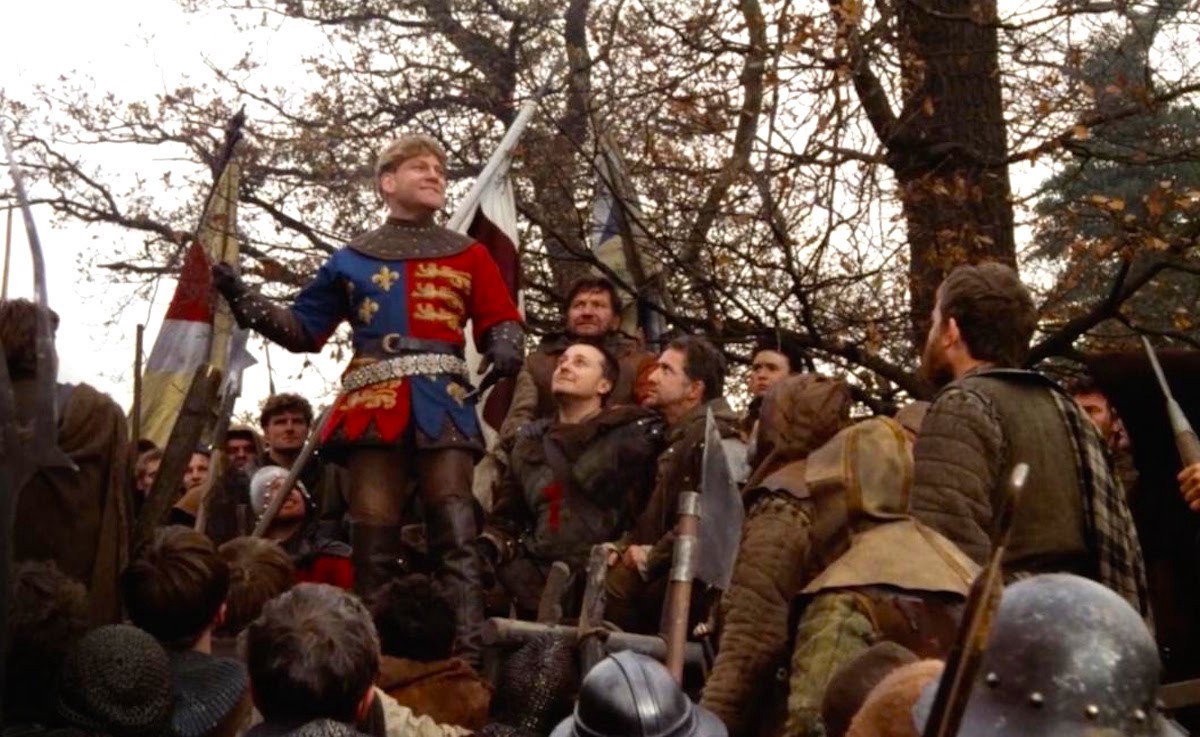
Greatly outnumbered by the French on St. Crispin’s Eve, King Henry V rallies his demoralized army with a rousing soliloquy promising brotherhood, greatness and legacy:
We few, we happy few, we band of brothers; For he to-day that sheds his blood with me Shall be my brother; be he ne’er so vile, This day shall gentle his condition: And gentlemen in England now a-bed Shall think themselves accursed they were not here, And hold their manhoods cheap whiles any speaks That fought with us upon Saint Crispin’s day.
SNIFFFFFFF. Anyway, his soldiers, aroused with visions of glory, win a staggering victory at the Battle of Agincourt on St. Crispin’s Day. In summary, this kick-ass soliloquy will make you feel like you can do ANYTHING! Conquer that biochemistry exam! Vanquish that evil pigeon that pooped on your head! Win over your prospective mother-in-law who hates your guts because you’re a freelance writer with no steady income! Okay, maybe not that last bit.
Watch these these interpretations and cry God for Harry, England, and St. George:
Now that you feel the burning fire of patriotism in your veins, we suggest invading France. Or at the very least, plant a miniature American flag in front of the Eiffel Tower.
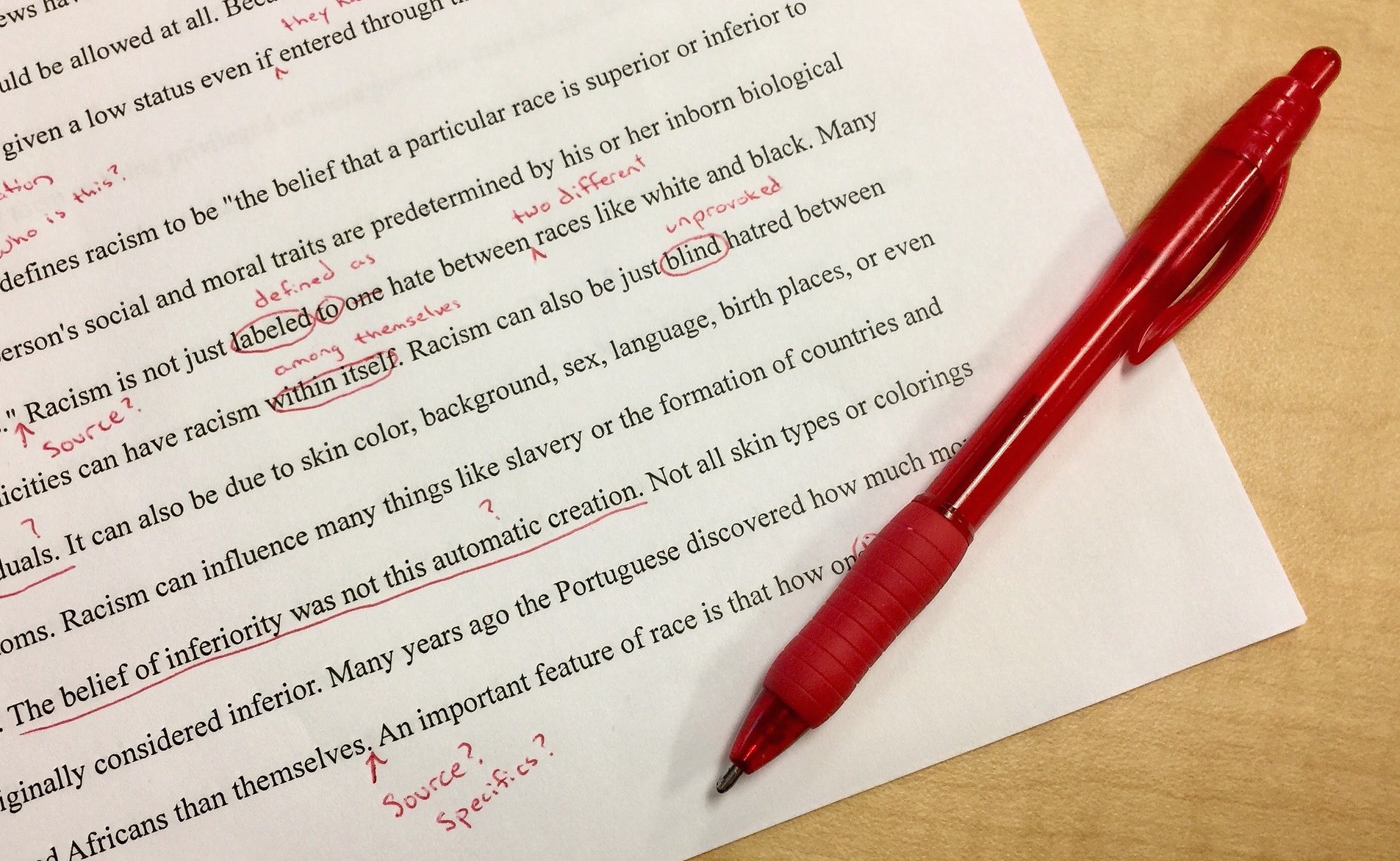
The saying “it takes a village” may sound hokey but it applies to publishing. I’ve played many roles myself: I’m a writer. I am also a freelance editor and do authenticity reads (also known as sensitivity reads). By profession I’m a production editor (aka managing editor), technically one of the last lines of defense as a book becomes a finished product you find on a shelf. We’re responsible for consistency, clarity, error checks, and making people in-house as well as out-of-house happy, but we’re only one of the cogs in a machine that has input on a book’s content, presentation, and promotion. Prior to the manuscript hitting my desk it goes through the agent, the acquiring editor, the editorial assistant, possibly additional editors, beta readers, and authenticity readers (should the author choose to hire them). The book is then launched to marketing, publicity, and sales teams who attempt to sell it in many ways to many people before it’s a physical object. A book goes through many hands and is seen by many eyes before it hits the shelves.
And that means all those eyes that look at this book during the publishing process have a responsibility to speak up when said product is problematic, when the issues are glaring, when alarms have been signaled.
All those eyes that look at this book during the publishing process have a responsibility to speak up when said product is problematic.
The most recent dust-up over an ill-conceived book has people again asking the question: “Who can/should write what?” That is not the right question to ask. How about: What’s your reasoning and responsibility when choosing to write outside of your own experience? Craft does come into play, but skill is not enough. I agree with Brandon Taylor that empathy is a factor, too. To write a Black character as a white person is not the same as using the “we” narrative voice. To write a transgender character as a cisgender person is not the same as attempting to create a braided essay or tell a story nonlinearly. There are points of structure and personal bias that writers bring to their work. This is also inherent in how we read and critique work. Recognizing that we view certain groups under certain gazes can help editors offer feedback to better deconstruct what’s working and what isn’t, as well as why. We need to acknowledge that craft and empathy go hand in hand before attempting to martyr ourselves as victims of “mobs” when we’re not owning our own failures to spot the issues we’ve created and/or edited.
I’m learning my own lessons as an editor of a short story anthology. The contributors are amazing and ethnically representative; I am humbled and honored by those contributing to the anthology and am reminded of how varied and full the voices are each time I re-read stories to suggest edits.
Among the stories that were submitted to me were two written by abled people that include disabled characters. Where my marginalization (as a woman of color) can help me identify problematic areas, my privilege (as a cishet, abled person) can easily allow me to dismiss it. This is why it’s important for me to listen to and engage with friends and voices in other communities — in this case, voices like Alice Wong who leads the #CripLit chats and the DisVisibility Project, Karrie Higgins who is vocal about disability on her blog and on social media, Vilissa Thompson’s Ramp Your Voice, Keah Brown’s essays on feminism & disability and creation of #DisabledandCute, Alaina Leary’s writing on disability representation on and off screen, the existence of Disability in KidLit, comedian Zach Anner’s videos on YouTube reflecting how inaccessible the world is, and Cara Gael O’Regan’s In Sickness + In Health podcast. Because of their work and the work of so many others I had sources that helped me determine something was off in these stories.
I asked, “What is the reason for this (disabled) character in this piece?” As in, are they there to serve the abled protagonist? Are they someone you still don’t have a hold on yet? What gaze are you viewing them through and why? By asking this question I hoped to spark the understanding that while the story was good, these particular characters weren’t working as written. These writers are not bad writers, nor are they bad people. Mistakes get made and both sides can catch them sooner rather than later. And when we can’t catch them in time or at all, the next step is to acknowledge this and do better — and sometimes, that means cutting an incompletely thought-out character or story, rather than trying to fix it. In this case the revised stories were scrapped and we decided on other ones. Even if it meant one less story in the anthology, I had to stand by this. As editors that is our job.
I could’ve done things better as an editor. I shouldn’t have waited as long as I did to be firm about my concerns. I hired authenticity readers after revisions and should’ve hired them for that first draft. The readers noted things that I as an abled woman couldn’t catch, specific words that I had glossed over. This more direct perspective can have more impact with the writer.
The burden of editing is heavy when you’re the only one doing it. My main concern is that I do the authors and their work justice. I want to make sure their voices shine and that their stories feel complete. An editor’s job is not to “push an agenda,” but to help the stories be what they are in full. Our job is not to force our voice but to help clarify the authorial voice. Our job means analyzing what does or does not work (and why). There will inevitably be criticism that is not always boasting but biting. This is writing. This is the profession.
An editor’s job is not to ‘push an agenda,’ but to help the stories be what they are in full.
Do you know what a character (especially a marginalized character) is who isn’t fleshed out? A device. As writer I also have to recognize this. I wrote a story where one of the side characters was a gay man dying of AIDS. He was a representation regularly seen in media, practically a corpse. A friend and reading partner who clearly remembered this moment in recent history, had been a nurse to afflicted friends during this time said to me, “Give him more humanity.” That’s when it hit me: I wasn’t seeing this character as a person. He was a tool in a story I was telling and that wasn’t fair to him or the reader or the community I was portraying. I was filling a trope dictated by my own ignorance.
If the writer cannot see these issues, then we as editors (and as agents, friends, and readers) can help. The ultimate responsibility always falls on the creator, but the many people who see the book on its way to publication are culpable too. We’re here to aid writers, and in a sense that does mean protecting them. But protecting the writer also means ensuring the work works. Understandably editors (and agents) are “worried about their clients.” We’re worried about how things may be taken or dissected. I do wonder, though, if this concern stems more from the desire to protect the privileged masses over the marginalized ones. This can also be part of the inability (or unwillingness) to make the effort required to see inclusivity and parity come to fruition. It means that someone, possibly those of us in a position of power, will be uncomfortable and need to face that discomfort. Senior editor Kate Sullivan at Delacorte wrote about the need for editors to “check ourselves.” Checking ourselves includes not prioritizing the white gaze; analyzing the prose at a micro not just macro level; and discerning why editors don’t connect with marginalized voices and do connect with white, socioeconomically well off, cishet ones. To not do any of these things under the guise of “protecting” the writer or more so enhancing the work is a failure on our part.
An editor has the power to make sure these issues don’t see the light of day. An authenticity reader does not have this power or say, and shouldn’t be the only line of defense. Even with our commentary, our pleas, our well-crafted letters saying how harmful this portrayal is there can always be a rebuttal from the author, a perceived “workaround,” a way to fix something that can and has reduced people to facile creations, almost marionettes for a particular gaze. As my friend said, Give us more humanity.
I wonder if this concern stems more from the desire to protect the privileged masses over the marginalized ones.
If we’re making the same mistake when it comes to bad representation, when it comes to the consistent issues brought up by marginalized communities, it’s because we’re not listening. It’s because the wealth of information available at our fingertips, often for free and much of it online, is not something we’re taking the time to digest. We can ask authors all day long to become more informed, but how does that help progress within the industry if those of us representing them do not do the same, or do so only when inclined and shamed? For those of us in the publishing profession, are we listening and learning or posturing? Is commerce more important than community? Are we also uplifting unheard voices to find their stories and helping them start and maintain their careers? There are a lot of questions we should be asking. Not about what we have the “right” to publish; that demeans those continually fighting for the right to live and exist, to have equality on a daily basis. What we (especially editors) should be asking is: Who’s responsible for where we are now, and how will we see actual change?
DON’T MISS OUT
Sign up for our newsletter to get submission announcements and stay on top of our best work.
YOUR INBOX IS LIT
Enjoy strange, diverting work from The Commuter on Mondays, absorbing fiction from Recommended Reading on Wednesdays, and a roundup of our best work of the week on Fridays. Personalize your subscription preferences here.