BoJack Horseman and Infinite Jest Are Basically The Same Story

If you talked to me in 2015 in any capacity, chances are I would have recommended two things: BoJack Horseman and Infinite Jest by David Foster Wallace. I was spending my days working in a movie theatre box office, and when I didn’t have lines to memorize or wasn’t trying to come up with the next great comedy bit, I was re-reading and re-annotating some of my favorite passages. I even bought a bigger purse so I could haul all 1,079 pages of it with me every day to work. When I got home, maybe just to feel something, I would go to Netflix and get a pep talk from Princess Carolyn or a nihilistic statement from Secretariat or even just watch BoJack go on a bender. The book and show became my bibles of sadness, a road map of my own neuroses and the ones I’d seen in my family for years.

In 2015, a full year after I had graduated college, I had seen few of the changes I had hoped “post-grad” life would bring. I was still working at a movie theatre, I was still pouring most of my paycheck into helping my mom buy gas and groceries, Sallie Mae was calling me almost every day demanding the money they said I must have available based on my part-time salary, and I was just stuck. I was using my theater degree to stand around wearing three layers of wool in 90 degree heat to say five lines in iambic pentameter, and I was using my English degree to write ebooks, blogs, and web content for less than $5 an hour. I was living with my mom, who after two suicide attempts in the last four years, seemed almost okay but barely surviving on the few job prospects available to women who took breaks from careers to raise children. When I wasn’t at home, I was with my dad, also still recovering from losing a job at the bank around 2008 by working as an accountant at the treasurer, a job he gained through working at a temp agency.

The book and show became my bibles of sadness, a road map of my own neuroses and the ones I’d seen in my family for years.

So, when I watched BoJack Horseman, a character obsessed with escaping through entertainment and make-believe and a couple substances, I saw myself. Whenever he had a run-in with his mother telling him about the darkness inside him, I saw my mom’s parents printing out her bank statements and demanding, in front of me, why she spent $3 on a video rental when she should be worrying about rent. Standing onstage, the air hazy from kicked-up sand, humidity, and the steam of my own sweat while I told Macbeth he was surrounded, I felt like BoJack or his character Secretariat — running after this impossible thing that made that empty feeling standing inside the box office worth it.

When I opened up Infinite Jest, I saw myself in Hal. The descriptions of his family and the way the brothers spoke to one another resonated with me so much. More than anything, it was the way the characters talked about lying. As Hal says to his brother Mario,

Boo, I think I no longer believe in monsters as faces in the floor or feral infants or vampires or whatever. I think at seventeen now I believe the only real monsters might be the type of liar where there’s simply no way to tell. The ones who give nothing away.

Hal spends a great deal of effort trying to break liars into different categories. I’ve been lied to in one way or another my whole life: that internet and hot water going to come back, that rent has been paid, that mom and dad are just working things out, that dad is attracted to mom and they’re in love, that dad is away taking care of grandma, that it’s going to be okay, and that a college degree guarantees a paying job. So watching Hal navigate the lies and deal with the world, it was cathartic to see a family not unlike my own.

I even tried to articulate it to a coworker one time in the box office. He asked about the book and I said, “Yeah, I like how it talks about sadness.” I’d made him watch BoJack, too, so maybe he put things together. “Are you sad?” he asked.

And I guess I was.


Years later, after watching the most recent season, I know now that these two pieces of media that got me through my post-grad funk have more in common than I thought.

The reasons I started reading Infinite Jest and watching BoJack Horseman weren’t far from each other. Before I got into the book I obsessively read biographies of famous comedians. I found out that Infinite Jest was the favorite book of the showrunner of Parks and Recreation Mike Schur. I wanted it because I thought it would teach me about the entertainment industry, and maybe also about writing. BoJack Horseman, something billed as a “animated comedy you might like” on Netflix, hooked me in the way it spoke about being an actor, being someone in entertainment. After spending hours in auditions, and then in rehearsals that wasted my time with hours of waiting, I got it. I got BoJack’s drive and his need to run away. I got that while being in the performing arts can feel like a way to escape your life, you keep running into the same problems. What I didn’t get was that Infinite Jest and BoJack Horseman are telling different versions of the same story.

The story: A man is talented in his field. In the back of his mind, something is eating at him. There’s something about his home life or his parents or just maybe his brain that he’s trying to get away from, that he’s trying to get past. So, he tries as hard as he can. Eventually he turns to substances to help, but they actually make it worse. Then he has a choice: either move forward or get stuck.

The story: A man is talented in his field. In the back of his mind, something is eating at him. Then he has a choice: either move forward or get stuck.

Hal is a young man at a tennis academy with nothing but a great future in front of him, but he’s addicted to pot. The more he thinks and talks to people, the more we see it turns out that his substance use is a symptom of something deeper. Whether it’s due to the horrific death of his father, the fraught relationship between his brother and his mother, or the lies nearly every member of his family tells, he can’t function and desperately wants to.

BoJack Horseman is not a young man. Years after his successful but mediocre sitcom Horsin’ Around, he’s addicted to multiple substances and desperate for a comeback. He works with a ghostwriter and has to deal with both his past and how he can change for the future. Over the course of several seasons he also intentionally sabotages the future of his roommate’s rock opera, drags a costar along on a bender that ultimately results in her death, abandons a movie project where he plays his dream role, Secretariat, to see his friend, and almost rapes her daughter. For me, the whole show revolves on the question of whether BoJack Horseman, despite the way he tends to abuse drugs and alcohol and drag people down with unhealthy behavior, can actually move forward and be a “good person.” Like Hal, he seems to want to, but ultimately always gets in his own way.

Both stories deal with the idea of entertainment and how it can consume you; in Infinite Jest people are literally killed by their addiction to escapism, while in BoJack it’s the entertainment industry that sucks them under. As BoJack’s friend Charlotte says in season 1, episode 8: “Look over there. See those tar pits? Hollywood’s a real pretty town that’s smack on top of all that black tar. By the time you realize you’re sinking, it’s too late.” But the real tar in both of these stories is the legacy of family trauma.

As Adam Piper writes in “Chained in a cage of the self”: Narcissism in David Foster Wallace’s Infinite Jest,

Parental neglect and abuse, drug and alcohol addiction, and obsession with entertainment all work to increase characters’ narcissism and self-absorption. This increased narcissism prevents characters from developing meaningful relationships, and this absence of meaningful relationships contributes to the feeling of sadness[…] Rather than confronting reality and working to overcome their sadness by attempting to form meaningful relationships, characters instead seek to escape this sadness through the various fantasies provided by drug-use and entertainment. These fantasies […] [increase] their unhappiness. Certain characters are able to break free of these narcissistic impulses by turning outwards to form meaningful relationships.

Netflix could use this as a show summary for BoJack Horseman.

Just like Hal, BoJack is raised by parents who don’t have the capacity to really care for him due to past trauma or even just ineptitude. Pain and suffering is a part of his development. As his mother, Beatrice Horseman, says to him in season 2, “You were born broken, that’s your birthright. And now you can fill your life with projects. Your books and your movies and your little girlfriends but it won’t make you whole. You’re BoJack Horseman. There’s no cure for that.”

Because of that kind of upbringing, BoJack has a hard time holding on to relationships without just burning them to the ground by doing something horrible. The real difference between Hal and BoJack? Hal sinks into the tar, and at the end of this season, BoJack seems to be moving out of it.

The real difference between Hal and BoJack? Hal sinks into the tar, and at the end of this season, BoJack seems to be moving out of it.

Three quarters of the way through Infinite Jest, in “The Year of the Adult Depend Undergarment,” Hal loses control of his voice and body when he tries to communicate. What happens after Hal starts developing symptoms is unclear. He definitely does his best in school, despite what happens whenever he tries to communicate with another person. He definitely tries to go to a college interview and is subsequently hospitalized. He also attempts to dig up his father’s head in relation to a Canadian terror plot. But the book doesn’t tell us Hal’s eventual fate. Does he get better? If he doesn’t get better, what does he do? While he’s still able to be a remarkable tennis player, he is presumably never able to communicate with another person and probably becomes addicted to pot again. His whole life has been dedicated to tennis, but without the ability to communicate, he won’t be able to be on a collegiate team. He loses all agency.

BoJack, even with all of his issues, does have the ability to take action — because unlike Hal, he can recognize the patterns that are imprisoning him and dragging him down. Though BoJack goes on more substantial benders and seems to relapse more than we ever see from Hal, he actually proves that he can change for the better and get past his family trauma. The horrible experience his mother had is passed down to him affects him every day, but in this season proves he can walk away from it. He can take control and make things right and walk away from the horrors of his family’s past. Hal, on the other hand, simply can’t. When he gives up pot, he finds it so unbearable to stay vertical that he decides to be horizontal. He is also grappling with how easy it was for his best friend to lie his way out of a urine test for him and how much lying that easily scares him. So he lays on the floor, and like BoJack watching “Horsing Around” over and over, he watches every single film his father made. When he finishes his entertainment bender, he finds he has lost the ability to even speak.

The book is agnostic on why, exactly, Hal loses his power of speech — a powerful drug? Mold he had eaten as child? The ghost of his father? But at any rate, he loses everything. Hal fades into the background of a story that he started. BoJack, despite everything that has happened, is moving out of the tar, and for the better.

What allows him to succeed where Hal fails? The turning point for BoJack may be Todd’s speech in season 3, episode 10:

You can’t keep doing this. You can’t keep doing shitty things and feel bad about yourself, like that makes it okay. You need to be better […] BoJack, just stop. You are all the things that are wrong with you. Not the alcohol or the drugs or any of the shitty things that happened to you in your career or when you were a kid. It’s you. Alright? It’s you.

Before that moment, it seemed like BoJack ruining his and everyone’s lives over and over and over again was going to be the formula of the show. Every season it would get bleaker and bleaker until he destroyed himself. Instead, BoJack seems to gradually learn first how to stop living in the past, then how to stop running from his problems, then how to consider running towards something, and finally, how to stop. At the end of Season 1, we see BoJack looking over the sea, trying to reclaim his past. At the end of Season 2, we see him trying to run and that other runner telling him he has to keep running every day. At the end of Season 3, we see him almost kill himself by letting go of the wheel but then pull over to watch wild horses run together. At the end of this past season, he’s not looking to escape and he’s not running. He’s not going off to escape on a bender. He’s standing at home and he’s talking to his sister on the phone. He’s not running, but he’s moving forward.

To be a BoJack, and specifically a BoJack at the end of season 4 and not season 1, is to recognize when you’re living in a pattern. More than that, it’s to recognize that you’re not letting yourself taking control of it.

To be a BoJack, and specifically a BoJack at the end of season 4 and not season 1, is to recognize when you’re living in a pattern.

I didn’t see my pattern until July 2016. It was staggered at first. Every two years my family would have a major incident: a suicide attempt, followed by past due notices, and a big move sometimes, other times not taking enough insulin. December 2015, a little after Christmas, after a feverish night of limited mobility, I called an ambulance. A paramedic screamed at me, “Why did you wait so long? HER FOOT, IT’S LACRIMOSING!” In the car, my sister sobbed while we waited to follow the ambulance, and said “she said it was lacrimosing, does that mean it’s dead?” I remembered Latin class in high school and said: “I think that means it’s crying.”

They ended up cutting off my mom’s foot. She was able to get disability after going into rehab and got a nice apartment. That worked out for a while. It was back into the pattern: big disaster, solving the disaster, finding a new place to live, and everything’s okay again for now. The pattern repetitions got faster, though: several months later my mom started having mini-strokes and we received an eviction notice. She went to the hospital and came out again. She started staying with friends while my sister and I backed out on a roommate deal and started looking for a place. Mom went to the hospital again maybe a month later, for surgery to remove her gallbladder, apparently the trigger for the “mini-strokes.” After the surgery, her friends were worried about letting her stay. Sitting in this hospital room in the middle of this pattern accelerating and accelerating out of control, spending the night because I promised I would even though I have an opening shift as a hostess in the morning, and my mom has sobbed herself to sleep because we don’t know what to do, I realized I had a choice. I could do what we’ve always done: crawl back to my mom’s parents on our bellies and ask them for help even though I know there’s a cost, even though I know it will make me feel like shit, even though I know it will force me to swallow their poison — or I could do something different.

On July 7th, 2016, I published a GoFundMe and raised $2,825 dollars from Facebook friends. That money allowed us to stay in the Red Roof Inn for a little over a week and provided us with the down payment of the apartment we currently live in. We haven’t gotten the help of our grandparents since they stormed out of the hospital room just a few days later. I now work as a full time writer at a marketing company, which pays the rent for this apartment totally out of the pattern.

Like BoJack, I had to realize the things I was letting happen to me and my family: borrowing money, being beholden to my grandparents, not being able to pay rent, late notices, and mental health crises. I realized in that hospital room, I had to make conscious choices to make things better. I had to try something different. That’s the saving grace of BoJack this season. He tried something different and so far it’s working. Hal did make an attempt to change — he tried to quit pot, he saw that people were lying to him, but in the end, he didn’t break the pattern. He got overwhelmed with the lies people told him and didn’t change his narrative. But BoJack’s trying, and I am too.

The Secret Life of Curry

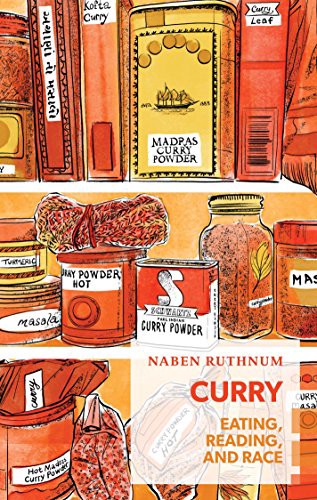
What is a “currybook”? Canadian author Naben Ruthnum coined the term to describe a particular kind of diasporic writing that combines easy South Asian cultural touchpoints, swaths of old world nostalgia, and a vague sense of the exotic coalesce beneath a paperback cover — and is then mass-marketed towards both homesick immigrants and curious outsiders.

Growing up in a Mauritian household in sleepy Kelowna, British Columbia, Ruthnum was always unimpressed by the warm rows of these currybooks — their covers tinted orange, plum, or persimmon — that he’d find lining his parents’ bookshelves. As he got older and settled into his career as a multi-genre fiction writer, he began to question his dislike of this particular type of “immigrant as identity” diasporic writing, as well as the publishing industry’s penchant for these so-called “sari and spice” affairs. In Curry, his debut for Coach House Books, Ruthnum set out to investigate his own fraught relationship with curry — as a spice, yes, but more so as a greater symbol of his own identity. He explores how eating curry, reading other writers’ thoughts on curry, and the racialized dynamic surrounding curry play into his own identity as a brown, diasporic writer.

The book is a sort of jumble; it’s part memoir, part literary critique, part culinary history, and part rant, the sort of mashup that makes quite a lot of sense once one considers Ruthnum’s own varied writing background. He doesn’t hold back on his opinions of the more damaging or reductive tropes associated with his target, but pulls no punches when it comes to himself, either. Throughout Curry, Ruthnum grapples with his own prejudices — against currybooks, against their more exoticized, feminized counterparts (which he calls “mangobooks”), against the glut of diasporic novels that felt both too familiar and utterly foreign to his own experience. That penchant for clear-eyed self-interrogation keeps the book from feeling too polemical; instead, it makes Curry all the more accessible, steered as it is by an author who is, quite simply, working through his own shit.

Discussing big, sensitive ideas like identity, authenticity, and the immigrant experience may be a tall order, but in Curry, Ruthnum digs in with gusto.

Kim Kelly: The idea of the “currybook” and your conflicted feelings about the genre is a central theme of Curry. Could you break down what exactly a “currybook” is, and why they’ve become such a thorn in your side as a South Asian writer?

Naben Ruthnum: “Currybook” is a term I had for a certain kind of diasporic brown novel when I was a teenager: the type I didn’t want to read. The way I describe these books in Curry is as “nostalgic, authenticity-seeking reconciliation-of-present-with-past family narratives,” and that tends to spur recognition in readers who know what I’m getting at: often, these books will have drifting red silks and a braid on the cover, or a scatter of powdered spices, maybe a mango or two. And often, as I discovered when reading this book, books that happen to adhere to these rough genre guidelines are well-crafted, heartfelt works of art, not just parroting of the “sari and spice novels” (a more popular term for currybooks) that have come before them.

But the themes and relationships at the heart of these novels didn’t resonate with me as a writer — at least not across all of my work. Problem is, I did write one short story, “Cinema Rex,” that dealt with brown kids on the island of Mauritius in the 1950s and their subsequent, film-obsessed lives in the West as adults — classic ingredients for a currybook, and the first piece that garnered me any real attention from awards juries, publishers, and agents. Many of the people who liked that story were put off by the rest of my work, which ranges from thriller to literary fiction that isn’t always centered around brown protagonists. Pushing forward over the next few years as a writer, I realized that the pressure of expectation to create a literary persona and work that is recognizable as fitting into pre-existing versions of Western brownness, complete with tragic looking back, generational disconnect, and an inability to cook amma’s aloo gobi, was a real part of what was standing in the way of me getting to publish what I wanted.

Wealth and Family in the New India

KK: In the book, you talk a lot about the demands that are placed on brown writers by the publishing industry as well as the reading public — this sense of needing to either seamlessly assimilate or exoticize oneself. How do you think this way of thinking can be effectively challenged? How can the industry make more space for brown writers to be whoever they want to be?

NR: That pressure to exoticize my writing and work in a way that is, funnily enough, actually asking me to conform to a pre-existing story template that we’ve read dozens of time before, a sort of prefab exotique, has been a dominant pressure in my career. The go-to answer to this problem tends to be getting more people of color in editorial boards and agencies. But, as I say in the book, it’s not simply white audiences who gravitate toward echoing, nostalgic stories of brown identity repeatedly: it’s a significant contingent of the brown audience as well, and readers of all backgrounds. So just getting an editor of color to read your book isn’t the magical fix-it to getting stories of unique brown identity in the West out there — or the stuff that I tend to write, which is clearly informed by my racial and class background, but doesn’t often plainly foreground issues of racial and cultural identity. I think the key to getting more space for stories out there is something like a serious version of what I’m doing with this book, where I make fun of and create discomfort in readers and publishing industry operatives who have an extremely narrow internal definition of “diversity.” It has to be an ongoing, and sometimes mean, discussion.

The pressure to exoticize my writing and work is, funnily enough, actually asking me to conform to a pre-existing story template that we’ve read dozens of time before.

KK: The subject of family consistently appears throughout the book, from your own Mauritian clan to the overarching concept of “authenticity.” How did writing this book lead you to interrogate your own relationship with family? What’s the most significant thing you learned as a result?

NR: Family dynamics are so often at the heart of currybooks, good and bad, and there is a very recognizable pattern that many of these books tend to stick to, which often reflects the lived reality of their authors. You know what I’m going to write — conservative parents who don’t understand why their children are listening to rap and sometimes dating white people. I’m being wildly reductive here to get a point across, and that point is that the lived reality of some brown people in the West may fit this pattern — but bring individuality, class, education, artistic leanings, religion, isolation, generational distance from the subcontinent into it — and what you get is an incredible range of different parents and children interacting differently.

For example, the scolding aunties that I see in certain novels are a type I recognize as real, a type that resonates with young South Asian people I’ve talked to — but the closest aunt in my family lived in London, is highly progressive and independent, and was taking me to bizarre Wooster Group plays when I was in university, encouraging me to think and write exactly what I wanted. That extended-family-disapproval thing was never a part of my life, while it’s embedded in the lives of many other brown Westerners.

I did learn, as elsewhere in the process of researching this book, that my initial, childish dismissal of trope-heavy books by South Asians was immature and incorrect. There are truths about family relationships that don’t become any less true from being repeated: it’s just that there are other truths that I’d also like to read about, and they need to be published more often. There are also truths among the currybook tropes about family, nostalgia, and homecoming that are distinct, odd, and hyper-specific, that risk being lost as these books are marketed and promoted as belonging to one mass of shared experience.

KK: The concept of curry is itself rooted in sociopolitical turmoil, stretching from the earliest days of the British Raj to the racism still experienced by South Asian people. How do we decolonize curry?

NR: Pushback is embedded in curry’s recipe, I think. The chilies in Indian curries come from Portuguese traders centuries ago, planted on Indian soil to make commerce with Europe and elsewhere easier: but Indians took ownership of the spice through culinary ingenuity. Adapting the incredible variety of dishes that are classed under the curry banner to Mughal courts and the Raj afterwards expanded the definition while catering to certain palates, but there’s no sense of the colonist owning the dish — I feel that curry is a dish that has the world in it, a historical, evolving food that can’t perhaps ever be properly “decolonized,” but it can spur a discussion for just how complex and worth unpacking these terms and this insane history is. That discussion has to be about making these different historical and colonial paths to what’s on your plate known.

I feel that curry is a dish that has the world in it, a historical, evolving food that can’t perhaps ever be properly “decolonized.”

KK: Your discussion of Soniah Kamal’s essay “When My Authentic Is You Exotic” and the “mangobooks” seemed to hit a particular personal nerve, especially the idea of how diasporic brown people feel forced to police themselves to avoid falling into perceived stereotypes. What is at the root of your (and other brown writers’) professed dread of writing to “serve” white audiences?

NR: I’ll speak for myself, but it’s probably a sentiment many brown writers share — the idea of serving your own banal existence as exotic to white readers, or, even worse, inventing a sense of connection to the past, or a sense of alienation that you might not properly feel in order to create an effect in a white reader that is based on seeing your name and author photo then reading a narrative about an orphan trying to reconnect with their severed homeland — is just plainly chilling.

I certainly try not to let this get in my head too much. Despite having written this book, I do think it’s extremely important for my time spent writing fiction to take place inside my own head and in the story, as divorced from ideas of audience reception as possible. That’s part of what I was working out with Curry: exactly what it was I thought of all this stuff, and how I could find a way to have a career that didn’t involve me trying to outsmart industry expectations behind the scenes. Making my part of the discussion public seemed to be a good way to do both.

Support Electric Lit: Become a Member!

KK: As a writer, what did you seek to accomplish by publishing this book? And now that it’s out, would you say you’ve achieved that goal?

NR: Now that the debate about diversity in literature is loud and ongoing, it’s important to have disagreement-within-ranks about what constitutes diversity, and what the various problems in the industry may be. I had to work against this obstacle personally when it came trying to get my work published, because I kept running into a tacit definition of what brown writing looked like: a definition that my work didn’t fit into. “Being accepting of diverse narratives” risks morphing into an acceptance of “being accepting of THE diverse narrative,” whatever that may be for one’s insert-cultural-group here. Of course, writers like Chimamanda Ngozi Adichie have already precisely nailed this problem, and in part, my book was just adding to the work they’ve already done — but the other thing I wanted to do with this piece was to joke, to suggest, to discomfit people, whether they be of color or not, into thinking about these issues for themselves, and not just seizing onto a solution that I myself never arrive at, in the book or in my own career.

And I can’t forget the publishing-my-first-book part of the deal, especially because I’ve been fortunate enough to get press and reader attention for Curry. My selfishness as a writer, my desire to have books out across genres and to write for other mediums, is a motivation that I never want to underplay, and I think that’s useful in making the points I made the way I made them — in talking about the career and aims of an individual writer who is constantly confronted with a genre-cast mold of what he is supposed to writing, I’m telling to story of the racialized writer as an individual, not a type, not a category: a weird person shaped by race and class, certainly, but too many other important and trivial factors to enumerate.

How Long Is Writing Supposed to Take?

In 2010, I was three years into writing my linked story collection when I took my first trip to Vermont to attend a writers’ conference. My workshop was a group of seven that included our instructor, Ellen Lesser. With a couch and cushioned chairs set in an oval everyone talked around me and about my story. I remained “in the box” (that is, not allowed to speak) during my classmates’ deliberations and discussions. My only additions were steady nods or pursed lips. Once I was allowed to speak, I thanked them, but bemoaned the fact that this particular piece in my collection was taking a long time. Ellen crossed her legs and met my eyes. She tucked a salt and pepper lock behind her ear and said in a kind and confident tone, “You’re acting as if writing should be an efficient process, Jennifer. It’s not.”

Six years later, I returned from yet another conference where I workshopped another story in this same collection. The instructor in this case, Tayari Jones, recognized the character, having seen a previous iteration of a story a few years earlier. Like Ellen, she gave me the tough love stare and asked, “What’s taking so long?” I had no answer.

Who, exactly, determines what “slow” means when it comes to the writing process?

Where Ellen’s comment attempted to help me reconcile the writing process. Tayari’s question pushed me to try and understand my process. I was unable to pinpoint my reasons — personal, professional, creative — for not finishing, but I also had a hard time accepting that the process is the process. Ellen’s words rang as a kind of “it is what it is” lament that has no finite answer or fix. For many of us we’re still figuring out “our process.” We tinker with methods of productivity as “process.” “Process” is not always efficient nor pretty. In fact, it is a pain in the ass.

A popular post on Electric Literature is an infographic of how long it took authors to write their most famous novels. The timing ranges from 2.5 days for The Boy in the Striped Pajamas to 16 years for the Lord of the Rings trilogy. I’m unsure if these metrics provided relief or added anxiety. Did this mean that I was right on track because Victor Hugo needed 12 years in the 1800s to finish an epic novel, or that I was way behind schedule compared to the 4 years it took Audrey Niffenegger to produce The Time Traveler’s Wife? Pulitzer prize winner Donna Tartt, a notably reclusive writer, seems to publish a novel every 10 years. Another Pulitzer winner, Junot Díaz, has called himself a “slow writer,” too. Slow doesn’t keep the words from coming, yet is it a fair measurement? And who, exactly, determines what “slow” means when it comes to the writing process? Is it us writers, the business, public expectation, or the characters and stories that need time to develop?
I also work in book publishing where schedules for manuscript to final product is part of the job. We need to know how long it will take to copyedit, typeset, and print a title. I know that preparing a book for the printer can take several months, to print and bind it a few weeks. The pace of reading, meanwhile, can fluctuate due to a reader’s eagerness to turn the page or scroll further. The act of creating is in itself an immeasurable thing and yet there are barometers readily available, ones we also put on ourselves when it comes to meeting deadlines, applying for residencies and grants, and so on.

The same year I first visited Vermont, Susanna Daniel wrote about the “quiet hell of 10 years of novel writing” it took for her to complete and sell her debut, award-winning book Stiltsville. “Quiet hell” is a great description for the time it takes to hone in on what you want to do and what the work is, along with the insecurity and fear of pursuing such an endeavor, as well as the growth required to continue this bizarre act of writing. Susanna mentions a sense of “non-accomplishment” as one of the factors tempting her to ditch the pursuit. Writing is hard, she wrote, but what’s harder is not writing and not finishing. Ultimately, we return to the tortuous page because we feel that urge and need as artists.

This sense of non-accomplishment triggers anxieties: the pressures of perfection writers place on ourselves in addition to whatever expectations the outside world may push into our orbit. I recall Tayari saying as much at the Well-Read Black Girl Festival in September: Perfection can be a form of procrastination. Something is keeping us (me) from finishing. Enter the internet, which bestows a bevy of information: notifications of a sale; news of a story about an author taking a year to create what’s taken me a year to contemplate, thereby initiating an internal competition of when one “should” be done. In those moments of seeing or reading about others’ progress, I have a niggling doubt about whether or not I really am a writer. When was the last time I submitted something? When I stare at my drafts and my eyes settle on dates connected to documents I see the growth, yet it feels as though I’m barely inching away from the start of the marathon and the massive banner for the end is miles away.

The pressures of perfection make it appealing to click away from my Word document and open a web browser. It’s kind of masochistic, wondering why I’m not finished with a particular project while at the same time baking a bundt cake, editing someone else’s work, checking email I checked three minutes ago, and going on social media using the hashtag #amwriting to relay my progress even though we all know I’m not writing in that moment. Once I begin to question the words on the page, a scene’s progression, and/or my overall concept, it’s a brief reprieve to go for a bike ride rather than tackle the problem at hand. The pressure of being perfect as an artist in a world full of artists, residing in one of the most artistic cities in the world, living with characters for almost a decade, has me throw up my hands and say “I put in enough time, right?” before I log onto Twitter. (#TheStruggleIsReal.) It leads me to settle in my chaise with a book and be optimistic that I won’t be as hard on myself for the time not spent on the work. The pressure has me hope that the distance I felt growing between myself and the words on the screen isn’t as broad as I perceive it to be.

Song of the Shank author Jeffery Renard Allen told me that writers “actively seek ideas.” We may be so dogged in our pursuit that we want, or even expect, to be able to come up with the kernel of one at will and within a specific amount of time. But there’s also a level of development that needs to happen, this also takes time. Jeff was one of my instructors and my mentor as a grad student at the time he had been working on Shank — a fictional account of the prodigy Blind Tom. Eight years after I graduated, I purchased Song of the Shank at a reading at Housing Works remembering the project he’d been researching and drafting as he critiqued my own writing. “Song of the Shank taught me that we have to be patient and let the ideas find us,” he told me.

And sometimes, what feels like the finish line may be the halfway point. Bellwether Prize winner and New York Times best-selling author Heidi Durrow’s debut The Girl Who Fell From the Sky “went through at least twelve major revisions over the course of the years I worked on it and three of those were after I had a book contract,” she said. Heidi estimates she deleted 150 pages of her prize-winning manuscript and “built it back up.” The idea that the work ends once the deal is sealed is a fallacy, reflecting the constant growth and development writers go through to get their writing to a place we’re comfortable with before releasing the reins.

Michele Young-Stone, author of The Handbook for Lightning Strike Survivors, told me that time constraints are “comical.” Michele wrote the first draft of her novel in 2004. “By March 2005,” she said, “I thought I was finished. It took four years of revision, letting the manuscript sit for months, to see the bigger picture. I sat down and rewrote the whole book in 2008.” The Handbook for Lightning Strike Survivors would publish in 2010, six years after Michele began.

Writers will never stop setting unrealistic timestamps to finish a story and send it out. In fact, the pressure we put on ourselves can be paralyzing in its intensity, and the feeling of non-accomplishment is a pervasive weight. I began this process thinking “oh yeah, this collection will take a couple years at most,” but the weight increased with each critique, workshop, meeting with an instructor at a conference or a friend for brunch who read it over and said there was more work to be done. “You’re getting there” is a phrase I hear often. “I see what you’re trying to do” is another. My eyes become shiny every time I hand off the latest draft to my cohort. I’m thinking, “Validate me, please. I think I finally got this right. Please tell me I’m done.”

Nowadays when this happens, the words “It takes time” echoes in my head, in Ellen’s voice. It takes time to know your characters and for them to speak to you. It takes time for the feedback to sink in and for a resolution to burst forth. There are moments I hate the people I’ve created on the page, and there are times where I love them so much I cannot bear to press the backspace button to delete a scene they appear in. There are moments when I grin at my perceived brilliance and am humbled, grateful and slack-jawed when someone says, “This works” or “You did a great job with structure” or “I love this and want to publish it.” These factors, the bits and pieces that come through, the material that’s kept and what is cut further illustrates the “inefficiency” of the process. A process that can’t always be measured, no matter how many times I hear “slow” versus “fast” or find out how long it took such-and-such award-winning writer to get their project out in the world.

I asked Susanna how she was able to persevere in her “quiet hell,” despite outside barriers as well as internal ones. She told me she “realized that writing — in the long form especially — is an act of faith and that I needed to generate that faith for myself in a prolonged way.” Jeff noted that the man he was in 2000 “was not a man capable of writing” his most recent novel. I don’t know if this made me feel better or not, but it did provide more insight than I had before. I once heard Ron Carlson say at a workshop, “stay in the room.” He meant this metaphorically and literally. In order to stay in the room, I will not think about the person who initiated this anthology at age 27 as the same person to finish it several years down the line. To stay in the room and accept my process, whatever it may be, also means not dwelling on something I cannot change. But I may have to turn off the wifi.

When ‘Good Writing’ Means ‘White Writing’

Teaching a writing course every semester dedicated to first-generation, low-income students at CUNY, students who were once upon a time me, I always hear these words, “We have never had a professor like you before.” This makes me feel adequate, makes me feel some kind of good amidst my ever-increasing doubts over the choice I made of pursuing a Ph.D. instead of an MFA, choosing the fully-funded option so I didn’t have to hassle my underpaid, overworked, and undocumented farm-working father for money again. I know what they mean by this, though. I know what they mean when they say “they appreciate all the diverse readings on the syllabus.” I know, from my own experiences traversing these inhospitable walls we call Higher Education, that what is said openly and honestly is at the mercy of some all-knowing Doctor of Philosophy or Master of Fine Arts, both the same shade of pale. Our resistance in these spaces must be coded.

My being in the classroom and my overwhelming exclusion of those “canonical” writers like Melville, Shakespeare, Woolf, Orwell, and many others is fine and dandy. Pat on the back for representation. But is representation the end of my responsibility? Is getting there and shaking up the syllabus enough? Is my presence progress in and of itself?

At a faculty meeting geared specifically for these courses, the diversity of the faculty ranges from a Joanne with blonde hair to a Joanne with pink highlights, all of the Joannes flaunting their MFA credentials and their radical visions for pedagogical change. As the only Latinx member of the faculty, I automatically become the Debbie Downer. I tell them about a student who, after taking my class, came to me the following semester to tell me how a professor of literature told them they “needed to write their essays more intellectually.” “The student,” I tell the Joannes, “was disappointed because I had told them their style, their way of writing and thinking and speaking, was analytical, intelligent, and intellectual.” For my student, this was the story of yet another betrayal. Another moment of unexplained and inexplicable disciplining so prevalent behind our fortresses of education. I feel like I let my student down.

At a faculty meeting, the diversity of the faculty ranges from a Joanne with blonde hair to a Joanne with pink highlights.

The immediate response from the faculty: “Did you teach them about code-switching?” They speak as if I have never once encountered the words “code-switching,” as if I have never been told I should speak and behave in certain ways while in school, as if I do not include code-switching in my classes. Gloria Anzaldúa’s Borderlands/La Frontera wonderfully demonstrates to my students how two languages can come together to create a genre-bending masterpiece. How one speaks to different kinds of people in different kinds of settings takes center stage for my students in Walter Dean Myer’s young adult classic Monster. Tupac and Kendrick Lamar teach my students about address, audience, and the many ways language can be put to use to do things in the world. I don’t know how to tell them any of this in the faculty meeting room. I don’t know how else to explain myself besides giving a level-headed, “I did.” My relative newness to teaching, and the fact I am still a Ph.D. student, makes me hesitate to provide a counter-argument. In this moment I feel like my students, as if I have no say in what happens to me behind these walls of white.

In their radically liberal and progressive and student-centered pedagogies, the students are the ones who have to adapt, to change according to a professor’s shifting standards. The underlying assumption beneath my colleague’s question is that my student’s use of language, with their specific ways of speaking, writing, knowing, and experiencing the world, is not of the university and the writing classroom. This implies to students that their everyday speech and their everyday forms of composing the written word is not intellectual, is not appropriate for sharing with others on the page. The words in Spanglish, the humorous inversions of logic at the end of a thought, the hard accent and emphases of a student born and raised in the South Bronx, the means of interpreting the world unique to their kind of body and their bodily history, is deemed not good enough. In that case, whose language is universal? Against whose language are we judging the quality of prose? Who are we asking them to try and become? What is this limit my student reached?

Whose language is universal? Against whose language are we judging the quality of prose? Who are we asking them to try and become?

The student concludes their testimony of betrayal with these words, “This whole thing made me even madder because she was like us.” There go the pronouns. The intimacy of a “like us,” the familiarity in the collective “we,” of being people of color in a space marked all white. Maybe that is why I omit this last portion to my colleagues — afraid this will validate some theory in the minds of these many white folks who are freedom-fighters for the downtrodden and excluded, worried this might betray any of my theories about white folks being the sole perpetrators and perpetrators of the many –isms structuring the educational system from pre-K to graduate school. I am even more terrified I have done the same thing as a professor who is “like us” to my students: judging and evaluating their writing according to what is “intellectual,” what is “good writing,” without questioning the foundations of those assumptions. In other words, failing them.

An answer, a means to more questions: the limit is the limit of sensibility. The standards and tastes which judge writing are not on the table for discussion today, nor ever. We seem to have no language available in which to discuss this matter of sensibility, style, aesthetic judgments, and their relationship to how words are formed on the page. This standardization of writing, expression, and sensibility is not found in the communities my students and I belong to. This standardization, in fact, is used against our communities, used strategically to alienate and control and to include our communities in certain kinds of ways according to certain logics. This is a standardization my colleagues do not question when they talk about diversity. Faculty and administration understand this whole thing of representation and diversity as mere presence in a classroom, in the faculty lounges, in the admissions committee, the scholarship application. Representation is happening, they will remind you, progress is on the rise, don’t worry, all a matter of time until full equality is achieved. They want more and more diverse bodies to fit into their standards of being, thinking, and writing. Progress has a limit and the example of my student is case in point. True diversity, and its nuances, its many complexities, exceed the bounds of what is understood to be appropriate and standard and quality. The diversity of my students challenges these logics of style and sensibility we take for granted.

The first day of my classes, and many subsequent classes during the semester, I preface with these cautionary words: “In this class I will be asking you to try and find your style. I want you to use your slang, your sentence structures, your poetry, your many languages, your very self in your writing. In order to be better writers, we first have to know how we relate to our writing, how our writing develops from our very bodies and lives. But know not all professors are like me. They will ask you to write a certain way, judge your work according to certain rules, and demand you speak in intellectually sophisticated ways — whatever these things even mean. Your success, the grade or the job, depends on molding yourself to the criteria and standards they give to you, unfortunately. Going forward, please be aware of this when you are in these other classroom spaces. As much as I hate to say it: it is what is — for now.”


In my final semester of coursework for my Ph.D. in English and Literature, I take a class on the notebooks, diaries, and other miscellaneous forms of writing from well-known writers. The doubts over my writing abilities because I don’t have an MFA are at a peak high. Depression and psychosis inform every writing encounter. Most days I get angry because I never even gave myself the chance to pursue an MFA, to workshop again like I enjoyed to do in those undergraduate courses, to learn the insider secrets to being a writer, to feel included in a writing community. Not to mention I feel I am a flop of a scholar, each essay idea I suggest to professors met with an oh so-courteous “mmmm, I see,” knowing this response is brought on because my ideas are too personal, too creative for a traditional academic setting. I take the notebooks and diaries class with only the most minor of interest.

One of my mentors teaches the class. As is his style, each week a text is given, no lesson plan involved, the classroom discussion goes in whatever direction it so heads in. Improvisational teaching, let’s call it. The class is not a workshop style class but each week we are to bring in a one-page nonfiction fragment in the style of a notebook entry. I submit several drafts of the same one- to two-page piece throughout the semester, each time reworked, each draft closer to that final specimen of perfection we like to call a “final draft.” This approach gives me the impression of workshopping, a continued dialogue on a piece of work, a feeling of community. The effect gives me some kind of satisfaction.

How does one come into a writing style? My professor does not tell me what to do with my writing, how to write into certain kinds of structures according to certain publishable guidelines, or how to make a more marketable style to make my writing “good.” He, instead, nudges an idea, notes thematics in use, analyzes a technique I am using that I am not even aware I am using, a sentence which moved him to feel something. He does not teach me to write but lets my writing, my re-writing, my writing practices teach me. Detection of style, not the imposition of style, is his style.

Tiny White People Took Over My Brain

I think of myself as both student and teacher in this class. This approach to writing helps me think about how I can respond to my students’ writing, how I can forge a sensibility attentive to the nuance in letters, words, sentences, paragraphs. Without an MFA, this approach teaches me writing is a process of the body; the body in writing is its own best workshop, writing what it does and does not like and able to explain why. No one told me practicing what I preach would feel so good.

Junot Díaz published MFA vs POC in The New Yorker in 2014 detailing his experience in an MFA program, and the systemic issues of diversity within MFA programs. I have seen this article retweeted and cited and mentioned and alluded to many times. I have read through many of the responses to Díaz’s thoughts but I can never bring myself to read the article fully. I scroll through and read random paragraphs, re-read them time and time again, reading them when I need to read them. Something about belonging and not belonging — and the fear of where I fall on that spectrum, or the fear of not belonging anywhere on this spectrum — holds me back from reading it from beginning to end. Something about knowing I might not even belong in an MFA program, might not even be welcomed in one because I am a poor writer of color, holds me back. On one run of my mad-dash scrolling, I get to this line near the end, near that point in a text you are not supposed to traverse unless you have followed the argument completely, earned the reward of conclusions, “To create in the present a fix to a past that can never be altered.” Cherry-picked brilliance, an entire essay condensed to a fifteen-word sentence that won’t leave my mind.

If the instructors in writing programs ranging from the MFA to the required freshman composition course to the primary school classroom are all Franzens and Didions and their disciples, syllabi and pedagogies and methods reflecting back writers similar to Franzen/Didion, students aspiring to produce works Franzen/Didion-like, then, inevitably, we are judging work according to a Franzen/Didion-esque sensibility. All is Franzen/Didion: from how we outline to how we draft to how we get A+ grades to how we pitch to how we publish to how we market ourselves to how we measure ourselves to how we take pleasure in writing. The measure of style, and whether a piece of writing is good or bad, sellable or not, is this sensibility.

All is Franzen/Didion: from how we outline to how we draft to how we get A+ grades to how we publish to how we measure ourselves to how we take pleasure in writing.

Those qualifiers students like mine need for a grade — “intellectual,” “articulate,” “A+ worthy” — operate according to the logic of this mass-produced sensibility. Those of us unwilling, or downright unable, to acquire an MFA due to stifling student debt or undocumented parents to care for, or denied because some diversity quota was filled or they already had their token person in the program, are still judged according to an MFA sensibility. The MFA is not just a degree that trains you in how to write but, like all degrees, trains us to write and to evaluate writing according to the rubrics of those in charge of the discipline. Good writing feels like a universal standard. We just know it when we see it. The individual in a position of power who says no and ascribes this “no” to subjective tastes — just not their style — assumes their judgment and sensibilities are cultivated in vacuums of nothingness, without cultures and beliefs and biases shaping what they deem good, their judgment endowed from some beyond of white (cishet/able bodied) universality. Subjective tastes, the reasoning behind a low grade or a rejection letter, is, for certain kinds of people, a well-disguised and acceptable form of executing one’s biases. Our idea of what is “literary” or “intellectual” derives from somewhere, has a history.

We forget that the writing of the Franzens and the Didions, like those of “diverse” writers, are created by the cultures, communities, and experiences they live.

We forget that the writing of the Franzens and the Didions, like those of “diverse” writers, are created by the cultures, communities, and experiences they live. They are not products of some universal void in white. The privilege to form, experimentation, and sensibility is rarely given to those writers living and writing in the margins. A debate about content versus form versus sensibility is not a debate at all — the three happen all at once. Our sensibilities must be allied against the MFA/Academic marketization in order to meet the needs of students trying to write from the margin, those students like my students trying to challenge the margins, those students like myself trying to write the margin itself. The revolution of our writing classrooms, as well as its radical diversification, must attend to sensibility. Inclusion is no longer enough.


Each semester there are several exercises I have my students do. For each text I ask, “What did you not like about this text?” New York City undergraduates do not play — they will give you an impassioned and elaborate and intellectually rigorous breakdown of why they did not like something. The authorial voice was too pompous, the language was unnecessarily complicated to say something they could sum up in a paragraph, the use of literary devices was too much, the organization of the essay could have been done differently to make them feel a bit more. They cite the sources to back up their arguments of dislike. To dislike is to pass judgment, to dislike is to analyze nuance, to dislike is to create a sensibility of antithesis. As a writer on the margins, a writer living in marginalization, a writer who rarely sees himself in the literature he reads, a writer who still feels sometimes he is not worthy of being a writer because he does not have an MFA, my sensibility has always been determined on what I don’t like, on where I don’t see myself, on where I don’t belong.

One of my favorite exercises I do in class is for my students to underline three sentences in an essay they wrote: a sentence they really loved, a sentence they liked, and a sentence they did not like at all. They then must explain in one paragraph for each underline why they feel this way. (I participate in the exercise with my students. I want them to know I’m learning too, that I’m not an infallible arbiter of judgment.) The best part of this exercise is to read the explanations of why my students didn’t like a sentence of theirs. I find it compelling how they can still identify beauty — the beauty of attempts made, the beauty of trying at perfection, the beauty of awareness to one’s use of language — in what they don’t like. Their evaluations instruct me on how writing is always a means of doing better, of testing and experimenting with the possibilities of what was, what is, and what can be, the exposing oneself to the unexpected that is the experiencing your own words. MFA or no MFA, they teach me that to be a writer is to be a student, to be open and willing to keep learning about what it means to write.

9 Walking Books That Let You Follow in Literary Footsteps

My new novel The Miranda features a lead character who wants to walk around the world but doesn’t want to leave his own backyard, so he decides to walk 25,000 miles — the circumference of the earth — by doing laps around his own garden path. However, his sinister professional past proves difficult to walk away from.

I join a very long line of writers who have walked, and walkers who have written. I’m not in competition with my predecessors, either as a writer or as a walker, but here are some works by a few of my favorite literary fellow travelers. Some of these are fiction, some non-fiction—although all the fiction contains autobiographical elements, and there’s considerable invention in all the memoir.

Dublin: Ulysses, James Joyce

An obvious one to start with: the novel follows Leopold Bloom and Stephen Dedalus as they spend a day wandering around Dublin, pursuing their separate, then crossed, destinies. There are endless books, guides, maps, organized walking tours to help you follow the characters’ routes in the real world. And the great thing is that any of these walks can easily be turned into a pub crawl. Ulysses also contains what I think is one of the truly great statements about walking: “We walk through ourselves, meeting robbers, ghosts, giants, old men, young men, wives, widows, brothers-in-law. But always meeting ourselves.”

Munich to Paris: Of Walking In Ice, Werner Herzog

In the winter of 1974, Herzog walked the 500-plus miles from Munich to Paris in the firm belief that this walking pilgrimage would save the life of his friend, the film historian and critic Lotte Eisner, allegedly suffering from a serious illness. The walk was as arduous as you might expect, tramping through snow, sleeping in abandoned buildings, and Herzog is his usual heroically gloomy self. But the surprising thing is (or maybe we shouldn’t be surprised at all) — it worked. Lotte Eisner lived for another decade.

Tierra del Fuego to Panama: The Rucksack Man, Sebastian Snow

They don’t make ’em like Sebastian Snow anymore, and they never made many. Rejected from the army because of a knee injury incurred playing school sports, he became one of the twentieth century’s most relentless and eccentric world travelers. The Rucksack Man is his account of walking 8,700-miles from Tierra del Fuego to Panama, along the way getting his contact lenses fused to his eye balls, being bitten by a vampire bat, and having the amazing strength of character to refuse the many lifts he was offered.

Yorkshire moors: Wuthering Heights, Emily Bronte

The title is the name of an isolated farmhouse in the wilds of the Yorkshire Moors, the home of Heathcliff. It’s a long way from anywhere and yet the characters rarely think twice about walking the considerable distances there and back, and even a heavy snowfall only deters them slightly. Admittedly these journeys are sometimes necessary to further the plot, and of course the servants do at least twice as much walking as the property-owning classes.

New York: Open City, Teju Cole

Julius, a Nigerian student in New York, walks around Manhattan, explores the city, and tries to forget about the girlfriend he’s recently broken up with, observing the present while remembering his past in Nigeria and Belgium. This strikes me as one of the best aspects of walking: it requires you to pay attention to where you are and where you’re going, but because walking is also partly automatic, it leaves the walker’s mind free to set off in other directions.

London: Mrs. Dalloway, Virginia Woolf

It would be more or less possible to track the route that Clarissa Dalloway takes — Westminster, St James Park, Piccadilly, Bond Street — as she sets out to buy flowers for a party she’s having in the evening. Like Teju Cole above, she too takes the opportunity to think about her current life and the missed opportunities of her past. For those seeking to replicate Mrs. Dalloway’s ramble, however, the route may be problematic. Critic and contrarian John Sutherland suggests that she couldn’t possibly have done the walk in the time available unless she’d taken a taxi.

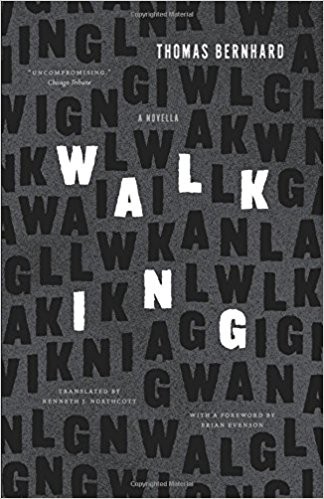
Vienna: Walking, Thomas Bernhard

Two men habitually go on long walks through the streets of Vienna and have intense philosophical discussions, often about the nature of walking and the nature of thinking. But since Bernhard is one of history’s greatest misanthropes, the conversation inevitably turns to the evils of the Austrian state, madness, suicide, and a hatred for children. It is, of course, a comedy.

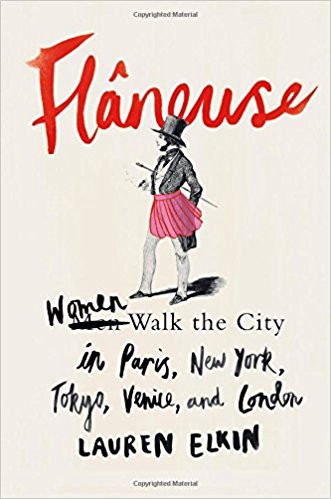
Paris, New York, Tokyo, Venice, and London: Flâneuse, Lauren Elkin

For all-too-obvious reasons, women walk much more cautiously than men, but there are plenty of serious women walkers, and Elkin’s book could be a sacred text for them. One of my favorite parts is her description of living in Tokyo, where she didn’t have the very best time. “What bothered me most was the certainty I felt that there was a great city out there full of places I wanted to discover, but I didn’t know where to look for them … I didn’t know where to go, where to walk.” A problem all walkers sometimes have.

Los Angeles: Westward Ho, Jim Harrison

A rarity, a Los Angeles walking story, and a novella rather than a novel, about Brown Dog, a native American, who walks the 47 miles from Cucamonga to Westwood to reclaim a bearskin taken from him by a “deeply fraudulent Indian activist.” It takes him a “leisurely” thirty-six hours to cover the distance. Google maps clocks it as 51.7 miles, and although the walk looks perfectly doable, I imagine very, very few people have ever done it.

Inside the house: Voyage Around My Room, Xavier de Maistre

And here’s one for those who want to walk but can’t to go anywhere. In 1790 de Maistre, a French aristocrat and army officer, was sentenced to forty-two days under house arrest for the crime of dueling. For those forty-two days he walked the length and breadth of his own room, treating it like a strange, newly discovered land, seeing it with new eyes, and also creating a parody of travel writing that is still extremely resonant.

The Danger of Calling Her “Baby”

“It’s a Shame About Ray”

by Lara Williams

Ray had given up answering questions. There seemed to be, he thought, too many of them. Best to just go with the flow. Be that guy; some easy-going dude, in sunglasses and a papaya print shirt. That guy didn’t hit fifty, take up jogging and have an embolism. That guy didn’t split a dick trying to find decent asparagus, ambling around puzzled; all salt and pepper hair at the Sunday farmer’s market. That guy embraced his paunch, the inescapable inevitabilities of age, the unconquerable ravages of existence, replying “whatever you say, doc!” when asked by his GP if he’d considered cutting down on salt, then went straight out for burgers. That guy was alright. That guy was, as you might say, a cool guy.

“Hey, baby,” his wife called from the nursery. They’d always called each other baby, babe, babes; it was their thing, but now they had a living, breathing baby, there was a hesitation in it, something else that needed shifting. She was perched halfway up a ladder, holding the handle, her hair pulled into some vegetal tangle. What was she doing up there? — pawing at the ceiling like a mad thing, feet over the ground, like her body was some unbreakable, undamageable object. He imagined her falling, the slap of her skin and the crack of her bones, and felt jets of adrenaline surge to his heart, a geyser of dread; then recalled his persona, his cool guy schtick. “What do you think?” she asked, fixing some paper birds, some whimsical mobile, over the cot. He held his hands up — I surrender! — shrugging his shoulders, flexing his face. The rehearsed gestures of the recently laidback. She fussed with it some more. The nursery was half-done, in flux. Vinyl wall stickers, scattered stars and half-moons, on the right, on the left, Anita Ekberg, head thrown back, breasts thrust forward, rhapsodic, in the Trevi Fountain. Oh! — it had been quite the guest room.

It would take the weekend to finish the job, the transition near complete, the house almost fully baby-proof. “We’ll soon be set,” he’d said, regretting the phrase, which jarred, summoning images of insects set in amber, jelly tough as varnish. Whatever remained in the mold, doomed to stay there, forever.

He navigated the peripheries of the room, his feet pressing tenderly against the carpet. Since the baby’s arrival, the household had changed. Changed not in the plastic bottles that were everywhere. Changed not in the breast pump that lingered to the side of the bathroom sink like a perplexing adult aid. Changed not in the used nappy containing a single brown blob, which remained on the countertop for hours; the nappy’s frilled edges the split shells of a clam, the blob an offered pearl. No. The changes were more abstract, more semiotic. He increasingly found himself bumbling around in socks and soft clothes, feeling like some senile old fool, some forgetful old pop pops, a lost guest in his own home.

“Things,” his wife said, descending the ladder, with infomercial grace. “We need things.”

Things were her latest demand. An abstract bric-a-brac she willed at random. Like the space around them was significant. Like it needed filling. It was as if she had plopped this squirming animation onto the planet and couldn’t figure out why he too could not create something from nothing. Baby, we need things. Baby, we need stuff. Baby. Baby.

“You can get all this from the supermarket,” she said. “I’ll write you a list.”

She left the room, leaving him with the baby. He looked past him with blissful incomprehension. Babies, with their smug ignorance, their swaggering oblivion. How gladly and giddily they were bewildered. He was propped in the corner, moored to his mobile, with that glazed expression Ray had trained himself not to think too much about. A squidgy, unknowable tumor. A flesh thing. With shining white eyes, roly-poly wrists and the gurgling pomp with which he filled his nappy.

He started to whimper, a soft woolen whimper, as his wife called him from downstairs. Ray froze, unable to decide who to tend to first, mother or baby, apples or oranges. She returned upstairs handing him the list, picking up the baby, who immediately settled. Babies, Ray had concluded, were mostly stupid. But this they did understand. The implicit responsibility of their mothers for them.

Ray scanned the list. It seemed straightforward. “See you later, honey,” he whistled, leaving, and she kissed him on the rough shadow of his cheek. He was trying to introduce honey into their hypocoristic vernacular. Honey was neutral. Honey had no further implications beyond sweetness.

Ray recently found supermarkets stressful. He was used to stress. Of course, he was used to stress. But it was a different kind of stress at the supermarket. Different to the scattered flotsam of swaddling on their living room floor. Other to the lockstitch zigzag of the rush hour drive. The wolfish snapping of the customers, the hummed din of the registers, unique to the shop floor. Life, Ray had decided, was exchanging one type of chaos for another.

He paced the aisles looking at all the things. The crackling packeted things. The primary-colored cardboard things. So many things. All reaching out, wanting to be chosen. He felt like the world was perennially bulleting questions at him. At every turn there was another question; semi or skimmed, paper or plastic, cash or card; another question that needed an answer. Like the whole world was made up of two lost halves of a whole, searching for each other, eternally.

Beneath the requests for wood glue and mason nails, his wife had written “one cooked chicken,” he noticed, with some relief. There wasn’t nuance in cooked chicken. There weren’t gradations. You just picked the thing; you just picked the one thing. His wife had taken to eating chicken since the birth when she’d been practically vegetarian up until then. Ray assumed it was something primitive, something lunar he didn’t understand; to do with nesting and menstruation. He, the man, sent out to score meat.

He approached the rotisserie, the chickens circling in front of him, roasting to a red gold crisp. He stared at them, entranced; the methodic spin of the rods, the earthy odor, broken, when he noticed the butcher in the background, yanking apart the legs of a pink, plucked chicken, forcing his hand inside, pulling out the giblets. Ray felt suddenly sick. He squatted, with his hands placed over his knees, the world a swirling Lazy Susan, swaying in tandem around him. He tried to forget the scene, as he had tried to forget the scene it reminded him of; his wife lying supine, her legs pulled apart, the baby dragged out of her. How they had treated her like a thing, a meat thing, to be cut up and hollowed out. It had been an awful birth. A day he would forever remember as the worst of his life. He retrieved his phone from his pocket, prodding its glassy surface, dialing home, thinking if he could just hear his wife’s voice, if she could just give him some instructions, some direction, he’d be fine. “Baby?” she said, over the thin crackle of static, the shitty supermarket reception. He had the feeling of trying to suppress a cough, that convulsing heaving panic.

“Baby?”

On the way home Ray called in for a drink. It seemed like a cool guy move; a leisurely interval before they were set; elbows resting on the gravy polish of the pine bar, a single malt whiskey cooling with two cubes of ice.

He sipped his drink, feeling the heat settle in his stomach, wondering why all comforts were thermal. The muted television flickered foreign atrocities, genocides Ray no longer felt pathos for. It was like grieving the seasons, pining the moon; it was so far away, so abstract, it seemed senseless to engage. Even the television didn’t look like a real-life television, like a television within a television, a film within a film, a dream within a dream, the way a life could feel like a life within some other life, some scripted, unknowable life, some non-linear narrative. Well flip the script, buddy! Ray thought. Spoil the ballot! Throw your homework onto the fire! — as he knocked back the last of his drink and considered asking the guy next to him whether we all saw the same colors. He ordered another drink, turning over the cocktail menu, thinking next he’d have a piña colada, easy on the piña, with a side of shrimp and fries.

He rubbed his face. The suggestion of stubble. The threat of it. Resonating a satisfying scratch. Like the ice chiming against his glass, the clack of high heels on a hardwood floor. A bar sound. One of his favorite sounds. He wandered to the jukebox, put on some music; Johnny Cash, Roy Orbison, Pete Seeger. Some cool guys. Some guys who got it. He returned to his seat and wiggled his glass at the waiter, the way he’d seen in movies, gesturing for another, and then another; stamping his feet in time to the songs. Dance like nobody gives a crap. Drink like you don’t have a family to go home to. Love because what else is the point. By the time last orders arrived, he was a slop; as sloppy as an old sloppy joe, slopping everywhere, slopping his keys onto the carpet, slopping spittle from his jaw. What Ray learned about drunk driving that night is that no one intervenes, no one steps in; like wildlife documentarians, they let nature take its course. And when he came to, his head pressed against the steering wheel, a pool of blood in his lap, flashes of blue from the corner of his eye, he thought, sometimes all you can wish for in life is the physical manifestation of pain.

He woke up in a hospital bed, handcuffed to the rail. It seemed unnecessary. He really wasn’t going anywhere. He lifted up his free arm, bandaged, like lazy fancy dress. His hand had gone, removed; only a white stub remained. A giant q-tip. He told the nurse when he came to he didn’t care; and he still didn’t. What was a hand, anyway? Just another thing. Just another with or without. Everything was just a thing; there was no agency, no ability to affect change. It was the curse of the modern age, options; who needed options, when everything was essentially meaningless?

He thought of his wife during the birth. How he had watched her, her chest heaving up and down, like something equestrian, like something breathing because they meant it. Wondering how so much blood could come from one tiny human person. How he held the baby, but felt like he could be holding anything, any old thing, any old rock or piece of string.

He looked up; his wife hovered over him. It was the first time he had seen her since the accident.

“Baby?” she said. “Are you alright, baby?”

She seemed like she wasn’t really there; superimposed onto the scene, like the Cottingley fairies. She had this ghostly halo of gentleness about her; it was the thing he loved most, like she was from some other planet, lingering inter-dimensionally.

“Listen,” he replied. “Can you stop fucking calling me baby?”

He couldn’t bear to hear the word again.

He couldn’t bear to say the word again.

Mother or Baby, they had asked. A simple question requiring a simple answer. Choose your own adventure. Complete your character arc. They stood facing him, mint green and masked, eyebrows expressing emergency. Like bit parts waiting for their line, waiting for their SAG card. Mother or Baby. Mother or Baby. And he had said Baby. It was instinctive. He didn’t even recognize the voice that said it as his own. Decision made. He had let her go. Let her go like she was a thing. Bon voyage, sweetheart! See you on the other side.

Hospitals, he used to joke, were where you came when your body sprang a leak.

He’d registered some hurt, but it seemed insignificant, infinitesimal; a pinprick of pain among a swarming miasma of emotion.

One thing or the other; how could you choose between one thing or the other.

“Are you okay?” she repeated.

He looked past her, wanting to answer, wanting only to say the right thing.

He stared into the half-light beyond the hospital curtain, the corners gently heaving, in the clear corridor air. The lazily bleeping heart monitors, the silent hurry, the breathless calm, experienced as stop motion, snippets staggered, partially digested. His wife flickering in and out of focus. And a thought, somewhere, papered beneath the cracks, slippery and evasive and impossible to pin down; that everywhere, maybe, is exactly the same.

What Book Was Your Feminist Awakening?

Novel Gazing is Electric Literature’s personal essay series about the way reading shapes our lives. Submissions for Novel Gazing are open through November 15.

This isn’t the Novel Gazing prompt I was going to write.

We were going to do something a little spooky, in honor of what is usually a time of encroaching darkness and meditations on mortality. But the real scary stories this season haven’t been about witches or hauntings. They’ve been about powerful men who exploit their positions for sexual gain. Forget Freddy and Jason—this year the bogeymen are Harvey, Leon, Lockhart, Mark, Kevin, Bill, and (lest we forget) Donald.

In the last few weeks, we’ve been saturated with horror stories about the physical and psychological burdens influential, compassionless men can visit on the people they think they control. I’m not going to ask you for more of those. Instead, let’s talk about the books that helped you see a better way. What stories made you realize that something was wrong with this culture’s attitude towards gender, or beauty, or sexual entitlement? What stories showed you how to name the injustice, and how to fight?

Maybe you read about an abusive relationship, and reluctantly recognized yourself. Maybe you encountered a male villain so utterly vile that he could only exist in fiction, and then realized that you’d known him all along. Maybe your favorite heroine seemed untouchably strong and that helped you to be strong too. Maybe a book or a show or a mythological monster (little self-plug there) was the puzzle piece that snapped the big picture into focus, that taught you it was okay to be angry or ambitious or sexual or celibate or fat or loud or unfeminine or too feminine or any of the things a masculinity-dominated culture doesn’t want you to be.

Support Electric Lit: Become a Member!

These could be explicitly feminist books, but it’s probably more interesting if they aren’t. (And as always, they don’t need to be books at all; film, television, and even games will do, as long as they’re narrative media.) Feel free to write about your first encounter with Judith Butler, if you can do it with wit and heart that will travel beyond the ivory tower—but even more than that, I want to hear about your experiences with Jessica Fletcher or Honoria Glossop or Susie Derkins. If you’d like inspiration, try this beautiful essay Electric Literature recently published about Carmen Maria Machado’s “The Husband Stitch,” or maybe this Tumblr post about Susan Pevensie that reliably makes me ugly-cry.

Essays should not be longer than 4,000 words or shorter than 800, and payment is $60 per piece. Submissions will remain open through November 15. And because I know someone’s going to ask me, of course non-women are welcome to submit their work.

Are you exhausted from the last few weeks and also the rest of your life? #Metoo. Let’s compile a reading list for getting through this together.

The Masquerade of the Red Death Was Halloween’s Most Literary Party

On October 26th 2017, book lovers and literary insiders clad in masks of red and black gathered at Littlefield in Brooklyn for a night of spooky revelry. Burlesque performers Cassandra Rosebeetle, Gin Minsky, and Jezebel Express haunted the masquerade as partygoers sipped on cocktails and danced the night away. At the end of the night, revelers brought home tote bags bursting at the seams with free books. Here are some of our favorite pics from the photo booth and photographer Aslan Chalom.

Image result for The Masquerade of the Red Death Was Halloween’s Most Literary Party

Burlesque performers Cassandra Rosebeetle and Gin Minsky with Electric Lit executive director Halimah Marcus and her pet crow Bob. (Hey Halimah, his name is Bob now.)

A Littlefield bartender mixing the signature cocktail of the night: the Red Death. (They didn’t even know it was a masquerade event, Littlefield bartenders always dress this way!)

The Red Death stalks us all.

Writer Catherine LaSota and Paul Morris of the Authors Guild getting their groove on.

This dance move is called What’s That On The Ceiling.

Electric Lit social media editor Michael J. Seidlinger and Rosie Clarke of Housing Works smirk for the camera. Their friend didn’t get the no-smiling memo.

Dancers Adrienne Wienert and Peter Bullen dressed in eerie chic.
Smile for the camera and say “BOO”!

Note to all party planners: All you need to pack a house is free masks, free books and free booze.

Check out highlights of the masquerade on Facebook (make sure you follow us too!) and click here for more spine-chilling photos from the photo booth (sponsored by The Authors Guild). See you next year!


Thanks to everyone who bought a ticket, and thanks once again to our generous sponsors.

Gigawatt Sponsors:

Photo Booth Sponsor:

Megawatt Sponsors:

Kilowatt Sponsor:

What “Halloween” Taught Me About Queerness

John Carpenter’s Halloween opens with the post-coital murder of a half-naked adolescent girl at the hands of her younger brother, Michael Myers. He has just witnessed his sister’s seduction of a beautiful young man while spying on them through a window on Halloween night. What follows is a dreamlike first-person sequence that ends with the viewer looking through the eyeholes of a mask. As his sister’s lover bounds down the stairs and out the door, casually pulling on a striped T-shirt over a perfectly toned chest and torso, Michael seemingly takes the young man’s place, retracing his steps up the stairs and into the bedroom where his sister sits topless at a vanity table. He notices that the bed behind her is unmade, the sheets ruffled, evidence of an exchange that Michael doesn’t yet understand but for which he intuitively believes she must be punished.

The revelation of heterosexual desire seems to have triggered the onset of a latent evil inside Michael’s young body. This evil finds its mode of expression in the shiny blade of a kitchen knife, the first iteration of what will become his weapon of choice. After donning a clownish mask that had been discarded on the floor by the departed lover, Michael hacks his screaming sister to shreds before enacting his own post-climax exit down the staircase and out the front door. Outside the house, he encounters his parents emerging from the family car, and his father calls out to him by name as he approaches the street. But rather than relieve his son of the bloodied knife, Michael’s father first removes the mask. The imperative in this scene isn’t immediately to disarm the costumed Michael Myers of a murder weapon — rather, it’s to reveal him, to show his face.

The opening of Halloween is a coming-out story.


I was maybe ten years old when my father took me to the video store during one of the weekends when I was staying with him at the old house where we had all lived before the divorce, and we came home with a VHS copy of Halloween. I remember wandering the aisles alone while my father waited in the car, nursing one of the beers that he brought with him for even the shortest of drives. I inspected every film in the store before finally settling on Halloween, charmed by the haunting simplicity of the cover image of a vicious jack-o’-lantern seemingly gripping the exaggeratedly angled blade of a knife, the fire inside the pumpkin visible only through the carved-out holes of its eyes.

I was reminded of the horror paperbacks that lined the shelves of my mother’s bookcase. Their covers featured eyes glowing in perfect darkness, or headlights in the distance on an otherwise empty street, or a dark house on a hilltop beneath a stormy sky with just the uppermost attic window glowing bright, as if to say that the only person inside was to be kept hidden upstairs, perpetually out of sight. By then I had already read most of those novels, shuttling them in my backpack to and from school and then from one parent’s house to the other, and I already knew that what interested me in the world was also what scared me: the unexplainable, the supernatural, characters suffering random violence at the hands of strangers.

I instantly became obsessed with Halloween. The dread-inducing and methodically paced score quickly became the soundtrack to my own life, and I would hum its provocative notes as I walked or cycled through the streets and sidewalks of a small town that was to me a direct facsimile of Haddonfield, Illinois, where the future victims of Michael Myers sauntered home from school clutching textbooks and discussing their plans for the night. I could see myself in the universe of Halloween, recognizing its contours for the shape my own life had taken. I grew up a few hours south of fictional Haddonfield in the suburbs of St. Louis, Missouri, but when Laurie Strode — the film’s protagonist and Michael’s primary obsession, his victims almost always being the people closest to her — peered out the window onto sidewalks filled with trick-or-treaters, she might as well have been looking out onto my street, my sidewalk, my house next door.

I recall my first furtive glances at other boys and longing for the safety of something like Michael’s mask.

I was entranced by the way Halloween’s villain moved so slowly and ploddingly, knife in hand and mask firmly attached to his face, and yet always still managed to catch up with the young people who would eventually become his victims. As if the act of being deliberate about his choices was enough for him to get exactly what he wanted. After Michael’s escape from the asylum where he’s presumably been housed for the fifteen long years since his sister’s murder, he’s now returned home to Haddonfield, the scene of the original crime, and the camera in Carpenter’s film adopts not only the pace of Michael’s defining lope but also the nature of his perspective. Many of the exterior shots are framed as if viewed not by an audience, but by a bystander — someone watching unnoticed, just off to the side of its characters’ immediate focus, waiting for the perfect time to strike. The film teaches a voyeuristic way of being in the world, a way of looking without being seen. I recall my first furtive glances at other boys in the locker room after gym class and longing for the safety of something like Michael’s mask, the ability to hide a desire that I knew would be made plain by a quick glance in the direction of my gaze.


I watched Halloween countless times after that first viewing with my father, always in the dark, always aware that I was coming closer and closer to unearthing something locked up within myself. Sometimes I would rewind and start the film over immediately from the beginning after delighting once more in the revelation of Michael’s uncanny escape after having been presumably vanquished. I recognized something in the expression of existential anguish settling onto Laurie’s young face as she realizes that she’s been consigned to a lifetime of looking over her shoulder for the bogeyman.

The reason I was able to watch the film so frequently was because my father never returned it to the video store. The tape and its plastic box remained at the house, the small label on the otherwise blank container revealing only the name of the film, the year of its release, and its genre: horror, a word that would come to imply a kind of comfort for me throughout my childhood and adolescence, an increasingly necessary escape from the real.

I finally stopped watching Halloween on a continuous loop when I stopped going inside my father’s house during the mandatory visits after the divorce. The film remained on the other side of a doorway through which I had come to dread entering. My father was an all-day drinker by then, his eyes always glassy and far away, empty cans littering every surface of the kitchen, the carpet in the hallway perpetually soiled. He would pass out and wake up and start drinking again, cases of beer at a time, like it was some kind of race to get it all down. My mother would drop me off outside his house on Saturday mornings and I would wait for her to drive away before storing the cooler containing my lunch in the backseat of his car, always left unlocked in a neighborhood like the one we lived in, and then I would play with the neighborhood kids until dusk, when my mother would pick me up again. And by then I saw the streets of my old neighborhood through Carpenter’s lens — danger lurking behind every hedgerow, the possibility of the bogeyman stepping out onto the sidewalk in front of me and the knowledge that he would catch me no matter how fast I ran.

No one knew where I was. Anything could have happened.


I was afraid of being a teenager long before I became one. What I knew or at least expected of adolescence was that it would involve performing desire in the form of pursuing girls and trying to lure them into dark corners. The heavy petting I had seen in movies always took place in closets. I didn’t yet have a name for what I was, but I knew that it was derogatory. Schoolyard jeers portrayed queerness as a weakness, an affliction, some kind of monstrosity. I watched with a barely containable resentment as the girls flirted openly with the most alluring of the boys in the hallways of my large public middle school, all of their bodies having sprung suddenly from awkward childhood into something resembling beauty, and I didn’t understand yet that I hated these girls because I wanted to be them, or at least to hold the power that they held over the boys chasing them, pawing at them, trying to claim them. I didn’t understand yet that what I wanted was to be claimed by those boys in exactly that same way.

Schoolyard jeers portrayed queerness as a weakness, an affliction, some kind of monstrosity.

In one of my last memories of my father, we met in a public park, the old house having been lost to foreclosure, and he tried to talk to me about girls. I was twelve years old and a girl named Sarah had recently pursued me at school, leaving notes in my locker and then in a brave show of vulnerability asking me to a school dance. I accepted because I was afraid of what would happen if I turned her down, failing to play the part I’d been assigned. But the night of the dance came and I pretended to be sick and I avoided her afterwards at school in the most cringingly obvious of ways. She never asked me out again after that, and we eventually became just two young people who would pass each other in the hallway with maybe a smile, maybe a small wave, the confusion and hurt in the wake of what had happened never exhumed or made right.

But I couldn’t tell my father about any of that. Instead, I invented a crush and invented a failed pursuit of this imaginary crush, invented an explanation for why I spent all of my time alone.


Watching Halloween was the first time that I knowingly witnessed a blatant representation of human sexuality — in this case, heterosexual human sexuality, the kind of buzzing horniness most explicit in representations of adolescence on film and television — and what I saw confirmed to me that I was not welcome there. There’s a scene in the second half of Halloween in which Laurie’s friend, Lynda, welcomes who she believes to be her boyfriend, Bob, back into the bedroom in which they’ve just finished having sex. She slowly reveals her naked breasts to him from behind a bed sheet, the camera’s gaze sliding down her body in imitation of Bob’s own, until she is fully revealed, smiling seductively as if she knows that she is giving Bob exactly what he wants. She understands his desire, and she knows how to satisfy it. But she doesn’t know that the man she thinks is her boyfriend is actually Michael Myers in disguise. She doesn’t know that he has just stabbed Bob to death after rushing out at him from a closet, and that what he desires is something different entirely.

I understood that I should want to look, too — that what Lynda expected Bob to gawk at was something that I was also expected to gawk at — but I ended up identifying more with Michael Myers than with these young, doomed characters who would shortly succumb to the actualization of a desire that does not match their own. The experience of adolescence as a closeted queer boy is one of constantly attempting to imitate the expression of a desire that you do not feel. Identification with a bogeyman, then, shouldn’t be so surprising when you imagine the bogeyman as unfit for society, his true nature having been rejected and deemed horrific.

And Michael as Bob is not only wearing the familiar mask now ubiquitously associated with his character in the Halloween franchise. He’s also wearing a white sheet covering his entire body, with Bob’s glasses resting delicately where his own eyes are, and the imitation is deliberate and well-imagined. Michael is pretending to be a straight man — a straight, sexualized man — in order to make possible the expression of his true desire, a pursuit far more deviant than the enactment of a heterosexual coupling. He is wearing a mask over a mask. And he seems so cartoonish in this moment, his desire to conceal himself having reached the level of self-parody. How silly it looks to hide in plain sight.


The second time Michael Myers is unmasked in Halloween — after his father removes his mask in the film’s opening sequence — is by Laurie Strode herself. She has just risen from the hallway floor where she had been recovering from the shock of what she believed to be her final encounter with Michael, having stabbed him with his own knife and believing him to be dead, when he suddenly rises from the floor behind her. He begins to walk toward Laurie just as she steps out onto the landing, and she is alone in the frame for only a moment — believing herself to be safe — before Michael catches her from behind and turns her around to face him, his hands at her throat. He begins to choke her.

My body seized with an urgent, almost unbearable need for him to put the mask back on.

Laurie’s panicked astonishment is palpable as she thrashes about within his grip, and in the commotion, we think she’s grappling for his throat, perhaps trying to weaken his hold on her. But then we see that she’s instead trying to remove his mask, as if she intuitively recognizes the source of his power. To disarm him, she must reveal him. And I remember the horrified expression on his face when it was finally displayed onscreen — ugly and confused, blinking in the sudden light, all of the threat he had previously posed dissolving in his sudden nakedness. He releases Laurie in the effort to conceal himself, fumbling desperately with the cheap plastic, and I remember hating the look of him without the mask. My body seized with an urgent, almost unbearable need for him to put it back on. I didn’t want to see him like that.


Early in the summer in which I would later turn thirteen years old, my mother took me on a weeklong vacation to Florida with the man she had been dating for the past several years. The sprawling seaside resort was magical to me — it was the first time I had seen the ocean, and now we could see it out of almost every window — and I often explored the grounds while my mother and her boyfriend were upstairs in the rented room, sleeping off the effects of morning poolside cocktails. I would get myself lost and then make a game of finding my way back to our building again, one of several identical towers in the complex, mapping the space between them as lizards scurried across the sun scorched path at my feet. One afternoon, I was swimming alone in the shallow end of the pool when a man waded toward me. He said he’d been watching me, that I looked lonely, like I could use some company. His chest hair was thick and his arms looked strong. He had large teeth that revealed themselves when he smiled and suggested that we play a game.

The game we played was that I would swim between his legs, straddled wide at first, with the goal of not touching him at all as I swam through, and then each time he would narrow his stance further, closing the gap, making it more and more difficult for me to pass without our skin touching. I thought I was winning the game because I kept angling my body just so, and I would get through each time without my own legs rubbing against his. But then I went down again and saw that he had pulled himself out of his swimming shorts, his cock now lolling in the water above me.

I knew that he wanted me to touch it, to willfully or even accidentally lose the game. It was clear what he wanted to provide for me, and what I would be expected to provide in exchange. I wondered later, after the fear and confusion and disgust with myself had dulled to a gnawing sense of dread, what I had done to show him that I might have wanted it. Had he seen me watching the older boys in the pool whose bodies were already lined with smooth, curved muscles snaking down their arms and torsos, loose swim shorts hanging just below the stark tan lines on their waists, clinging tightly to their bodies as they pulled themselves up the ladder out of the pool? Had he known how badly I wanted to be with them, to wrestle with them in the water and allow them to hold my head under until my lungs were bursting, but that I was too afraid to approach them, too afraid that they would recognize what I really wanted from them if I got too close?

I swam away and hurried up the ladder, running all the way back to the room without bothering to gather my things. I pounded frantically on the door until my mother let me in, complaining about how much noise I was making. But the man from the pool had followed me. He knocked on the door shortly after I came inside, and when she opened it for him, he asked my mother whether I wanted to come back down and continue the game we had started. I imagined him walking slowly up from the pool while I scrambled toward safety, thinking that he could get what he wanted just by asking — by showing up and telling me exactly what was going to happen next, whether I liked it or not.

I remember shaking my head vigorously, refusing to even look up at him in the doorway from where I’d burrowed into the cushions of the cheap couch, and my mother eventually turned him away, perhaps baffled by the exchange, expecting me to have chosen a different kind of friend. But even after he was gone, I knew he had taken something from me. What I had thought was only a secret desire had actually been visible on my body all along to those who knew how to look. I had never really been wearing a mask at all.


My father died while we were in Florida. We didn’t find out until we got back home because no one had wanted to interrupt our vacation. I was in my mother’s bedroom unpacking when she answered the phone next to the mirror at her vanity table.

The last time I’d used the telephone she was holding was when I’d hung up on my father just before our trip. He was slurring his words and I angrily accused him of being drunk yet again. Our last conversation. When my mom told me that he was gone, I thought at first that he had died from a sudden relapse of the cancer he had suffered through a few years before, during which time we would visit him in the hospital, a dimly lit room full of the various machines to which he had been attached. But the truth was that he had drank himself to death. He had been driving home from a bar. He was often drunk when he drove, beer cans nestled between his legs and at his feet; sometimes he’d pull over to vomit out the open window. He had pulled over to the side of the road this time, too, crawled out and waited for his heart to stop.

My father died while we were in Florida. We didn’t find out until we got back home because no one had wanted to interrupt our vacation.

I became a teenager one month after my father’s funeral. I entered adolescence during a summer in which I didn’t sleep, simply waited up every night in darkness, thinking that if I succumbed to sleep then I’d succumb to death. I watched endless horror movies on the small television above my bed in an effort to keep myself awake, and I became acquainted with other villains aside from Michael Myers, each with his own particular desire and his own particular method of enacting its consummation. I was giving myself an education in what to expect from the world, or in how I expected the world to eventually receive me, and those long nights alone in the dark were spent paralyzed at the threshold of a reckoning I could not yet imagine.

My father had been there, too, and he’d seen his way through to the end. Maybe that final night wasn’t the darkest he had ever known, but it was the last of a series of dark nights, the end of a long pursuit by his own relentless bogeyman. Because in his story, he was the one being chased.


I finally recorded Halloween onto a blank tape from a late-night television broadcast after searching in vain for the old video store copy in the boxes in the basement from my father’s house. I watched it over and over again that summer, renewing my obsession with seeing the world through Michael’s eyes. Watching it again, I was struck for the first time by the final moments of Carpenter’s film. Following the revelation that Michael Myers has indeed escaped into the night largely unscathed, the camera lingers on images of interior domestic spaces now made fraught by Michael’s various intrusions into their presumed realms of safety, as if he’s perhaps still there, lying in wait behind the couch or the curtains, appearing suddenly at the top of a dark staircase. And the final shots of the film are static images of the Haddonfield houses in which the murders and attacks have been committed, as if to show us that what seems innocuous on the outside can in fact contain deadly secrets. The lights are all off, and we can’t see in through the windows, but we know what might be lurking just beyond those seemingly inviting front doors.

By the end of Halloween, earlier representations of the suburban landscape as benign and knowable are rendered short-sighted, and the film asks us to gauge our expectations about these domestic spaces against the knowledge we now have about what they might contain. I would lie awake in bed during the summer of my father’s death and picture what my house looked like from the outside, a small two-story house in a modest row of small houses in a quiet neighborhood where young children often played in the street until dusk. Mine was the only upstairs bedroom window that faced out onto the street, and I often wondered whether it was obvious from the outside that someone like me was living there.

In the early morning hours, long before dawn but after the house had fallen asleep around me, the windows would be dark and the horrors on the television would be muted and I would allow myself the pleasure of my own touch. And just before I came, the man from the pool would always resurface like some kind of secret companion in my mind. I fantasized relentlessly about what might have happened if I hadn’t run away that day, hadn’t come up for air, but instead had done everything I imagined he might have offered. I followed him to an empty room at the resort, photographs of sea shells in cheap frames on the wall, a painting of an endless horizon at sunset hung at a slight tilt above the unmade bed. He turned off the lights, drew the curtains, and stepped toward me in the dark. I was already hard when he grabbed me by the shoulders and threw me over to the bed before scrambling toward me, his body heavy on top of mine as he tugged my wet swim shorts down to my ankles.

I wasn’t twelve years old anymore. He wasn’t doing anything wrong. After all, I had been begging for it. Everyone had seen.

My Life as a Berenstain Bear

I ’ve been imitating literary characters since long before anyone hired me to do it. As a child, my commitment to craft ran deep: cryptic notes left by a spy signed H; muttered asides to the invisible daemon that floated behind my right shoulder; orange juice in a mug, microwaved until it gave off steam (the nearest thing I could imagine to the hot dandelion wine drunk by the tiny furred creatures of Redwall). There was always a very natural connection between reading and performance. When faced with a book or character that I loved, I would promptly consume, internalize, and project it all outward, like an efficient little machine that ran on imagination and hot orange juice. I was the kind of kid you put in community theater, where my first role was in a stage adaptation of — fittingly — Anne of Green Gables. I played the bit part of a pie-obsessed child (though this may have been invented backstory; that particular character doesn’t appear in the original text).

My house held no shortage of stories in which to seek my models. Some books I can remember acquiring after I’d badgered my parents to make the trip to our local library, while others can’t be traced to a point of origin and feel instead like they’re braided into the fabric of my childhood. For me, and in much of the collective imagination, The Berenstain Bears books give off that kind of eternal glow. I don’t remember a time when the four bears — Mama, Papa, Sister, and Brother — didn’t occupy a solid, perennially expanding chunk of bookshelf. These stories were read to me until I could read them to myself; I read them to myself until I had a steady stream of younger siblings with whom to share them. Or more accurately, on whom to inflict them — when I’d insist on reading books aloud, I liked to do them in funny voices.

I don’t remember a time when the four bears — Mama, Papa, Sister, and Brother — didn’t occupy a solid, perennially expanding chunk of bookshelf.

The very first Berenstain Bears book, The Big Honey Hunt, was published in 1962. Billed to Stanley and Janice Berenstain, before the author-illustrator dream team abbreviated it to the chummier (and much more on-brand) “Stan and Jan,” the book was the product of a harrowing editorial meeting with Theodor Geisel, alias Dr. Seuss. As booklore has it, Seuss sat the couple down and proceeded to dissect the first draft in front of them. His advice included the suggestion to “see the lumbering creatures as real people,” shorten the sentences, harden the rhymes, and keep children’s “eyeballs glued to the page.”

For some children, that kind of magical gluing can only occur in the presence of the sensational or supernatural. I was the type of reader whose literary tastes were fairly Type A, favoring books that mirrored my love for organization and efficiency (a Type A flexible enough, however, to allow for anthropomorphized bears). I put a high premium on dependability, and the Berenstains delivered. The comfort I took in the books came as much from their adherence to formula as from their unchanging presence. Each series installment was slim, floppy, and perfectly square. The family name was inscribed across the top in sophisticated semi-cursive, but the subtitle was always done in a boxier, bolder font that promised drama — but not too much of it — that would untangle itself and provide a key takeaway. Whether she was squabbling with Brother Bear, throwing a tantrum, or exploring Bear Country, Sister Bear’s pink bow remained unflappable, crowning her furry curls at the same jaunty angle.

Combine reliability with quantity and you’ve got a potent recipe for customer loyalty. Stan and Jan set an absurdly high bar for productivity, sometimes publishing more than fifteen books in a year (though to be fair, those are also the years where you’re more likely to find their weirder B-sides, like The Berenstain Bear Scouts and the Sci-Fi Pizza). The result of this prolific output, combined with the series’ overtly moral tone, is that there’s a book for almost every situation imaginable. Are you an incurable asshole? Then try The Berenstain Bears: How to Get Along with Your Fellow Bear. Disillusioned with the democratic process? There’s The Berenstain Bears and the Big Election. Pet catfish got a cough? The Berenstain Bears and the Coughing Catfish. For those who seek more spiritual guidance, there’s even a recent religious spinoff by Stan and Jan’s son Mike, which includes The Berenstain Bears Discover God’s Creation and The Berenstain Bears Follow God’s Word.

Disillusioned with the democratic process? There’s ‘The Berenstain Bears and the Big Election.’ Pet catfish got a cough? ‘The Berenstain Bears and the Coughing Catfish.’

This explicit turn to religion feels like an unsurprising, albeit amusing, progression from books that were already highly moralizing — usually at the younger bears’ expense, a move that I found unfair as a child reader. The public misbehavior of fellow children struck me as horrifying in general, not out of any obsession with propriety but because I always felt strangely implicated by it, as if the heads of the adults in the vicinity would swivel towards me as if to say you’re all little shits and this just proves it.

Which means that when I first met Sister Bear on the page, I thought she was kind of a drip. I recognized myself in a lot of her more quotidian struggles — fear of going to the doctor, the anxiety of making friends — but tended to take a harsher stance when it came to her decision-making. A five-year-old has next to no critical faculties, but even then I knew enough to think: If you eat all that cake and are horrible to your mother and complain about your presents, well then how did you expect your birthday party was going to turn out? (See The Berenstain Bears and Too Much Birthday, 1986). I suppose what that means is that the books, in their didactic mission, were working perfectly.

By age nine, I’d outgrown the Berenstains books, devoured everything to emerge from the pen of Beverly Cleary (even sitting through the substandard spinoffs that centered on Henry Huggins, Beezus Quimby’s much less interesting male friend, because I couldn’t get enough of his dog Ribsy), and was just starting to move into the vitamin C-rich epoch of Brian Jacques.

‘The Little Prince’ Leaps Off the Page and Onto the Screen

I’d also outgrown community theater. Crowds full of school peers and camp friends no longer made me sweat (The Berenstain Bears Get Stage Fright, 1986) and I was hungry to start acting out in front of strangers. I begged my parents to help me get an agent, started showing up in tiny rooms to stand in front of a camera or microphone, and landed my first real gig as Sister Bear in the 2003 reboot of The Berenstain Bears (there’d also been a cartoon version in 1985; my fandom extended from the book series to a thick stack of VHS tapes). After getting the call that I’d booked the series, I used my dad’s email address to send a note to Stan and Jan. They were sweet enough to write back.

I hadn’t given much thought to voice acting before I got my start in the entertainment industry. The goal had been to get on a screen or a stage, the bigger the better. But it was in the invisible work of voice acting that I found the most pleasure. Much more than with on-camera projects, I came to see recording sessions as an extension of my literary play-acting, akin to the empathic, immersive pleasures provided by books. In the studio, I could slip into the self I’d comfortably inhabited for most of my life: a reader with an affinity for playing with the text. Going to work every week brought the same joy as sitting down to add a few chapters to my epic of Meg Murray fan fiction.

In the studio, I could slip into the self I’d comfortably inhabited for most of my life: a reader with an affinity for playing with the text.

But it took me some time to see any existing relationship between my life as a reader and my newfound responsibilities as a cartoon voice actor. That first day in studio was pure terror. My voice squeaked out of a body that seemed to have forgotten how to operate properly. Not that feeling comfortable enough to flail my arms around would have made much of a difference. As the creative team watched me from behind the control room’s glass, I faced up to the full weight of a seemingly impossible undertaking: fashioning a character entirely out of the inflections of my voice.

Eventually, I came to recognize that I wasn’t alone in this task. Being a childhood fan of the books meant that I had years of material and backstory to play with. I was armed with a low-grade distrust of Sister Bear’s numerous poor decisions (The Berenstain Bears and Too Much Junk Food/Forget Their Manners/Get the Gimmies). I had a history of identifying with the social pressures she’d faced as a young girl (The Berenstain Bears and No Girls Allowed/The In-Crowd). I had the power to shape my performance to reflect, or even limit, those tendencies. It wasn’t a fantasy of revision, but an act of collaborative storytelling. Not only was I working with a character that had a past — it was a character whose past I knew and in many ways felt like I’d lived. As an actor, especially a novice one, this was a tremendous gift.

There’s another important element of collaboration to this, too — the fact that I would record the show with the rest of the cast. I was rarely in the booth alone. Usually, I worked in an ensemble that included the two actors cast as Mama and Papa Bear — theater veterans both — and the boy who played Brother, a thirteen-year-old who had his sights set on moving to L.A. to become a comedian. His name was Michael Cera.

Support Electric Lit: Become a Member!

Your job as a voice actor is to bring to life the words on a page, which is certainly possible to do in isolation. But there’s a particular kind of vitality that can only be attained by pursuing the goal as a group. My awareness of this vitality has transcended the work of cartoons. Reading scripts aloud every week, observing the journey that language takes off of the page and into the world, I learned the varied shapes and cadences of conversation; the distinctiveness of speech patterns; the full spectrum of tone. The Berenstain Bears, and much of my voice work since, was also a crucial step in my education as a writer.

A few years ago, I was startled by a flurry of Twitter notifications from a bunch of cartoon fans demanding to know “if it was really true.” If the surname of their favorite bear family, one of the sturdiest fixtures of their childhoods, was indeed spelled “Berenstain” rather than “Berenstein,” as much of the world seemed to mistakenly remember it. More importantly, they wanted to know if I could confirm or deny the existence of a parallel universe, the working hypothesis to explain away this fracture in their childhood foundations. As the voice of Sister Bear, I was regarded as a definitive source on the conspiracy. I joked about mysterious NDAs, but I had little to say to substantiate the theory (if you’ve seen the name written at the top of sixty scripts — moreover, if you’re any kind of close reader — you’re going to remember how to spell it correctly). It was both the most dramatic and anticlimactic resurfacing that the show has made in my life since we wrapped more than fifteen years ago. But it also speaks to the reach of Stan and Jan’s world — a mere allegation against the reliability of their beloved bears can stir the internet into a mass frenzy, even if that frenzy is tongue-in-cheek. I was surprised, and a little flattered, to see the depth of people’s commitment to the performance.

A couple of months ago, my partner and I were in New Zealand. We’d chosen to pass on the bigger, more obvious cities — high-drama landscapes were our priority, with bonus points if they’d appeared on Top of the Lake — and were staying just outside of a tiny, historic gold mining town with a population of 2,000 and restaurants that would start to close just as we were getting hungry. Nowhere, in other words, where you’d expect to find any evidence of yourself or your life on the opposite side of the International Date Line. While pawing through our Airbnb’s movie selection I found, tucked in next to the complete Lord of the Rings (our hosts knew their audience), a DVD of The Berenstain Bears. The first episode on the disc was The Berenstain Bears and Too Much TV, one of the storylines lifted directly from the books. I decided, for the first time in over a decade, to take a trip to Bear Country. Once again, albeit for different reasons, Sister Bear was the focus of my judgment. Yes, she still had a startling lack of self-awareness, but with the aid of time and distance — and maybe, a little bit, the performance — I was able to read it as innocence rather than idiocy. I admired the perfect pertness of her little pink bow. I was touched by how easily and often she laughed.