In a lawsuit filed September 14, a former Swarthmore College baseball player named Charles Green accused Chad Harbach, author of The Art of Fielding, of stealing significant plot points from Green’s unpublished autobiographical novel, Bucky’s 9th. “The two baseball novels bear a substantial similarity that could occur only as a result of Harbach’s access to a version (or versions) of Bucky’s and his large-scale misappropriation of Green’s creative efforts,” the suit claims. Among the “uncanny” parallels cited: Both are baseball stories. Both concern, specifically, the baseball teams of Division III liberal arts colleges. Both involve a baseball prodigy coming of age, and incorporate a “Recruiter-Mentor Plot” and an “Illicit-Romance Plot.” Both feature an estrangement between a father and his adult child. Also, both have a “climactic beaning scene.”
Does this amount to plagiarism? It’s hard to say. The two novels share a number of elements, but many of these elements are also present, in, say, the Futurama episode “A Leela of Her Own.” Unlike cases of stolen language, à la Jonah Lehrer or Melania Trump, claims about stolen ideas are challenging to prove. But that doesn’t stop people from trying. Here are five other interesting, weird, or downright ridiculous claims of literary theft.
Claim: Chelsea Clinton stole Harriet Tubman
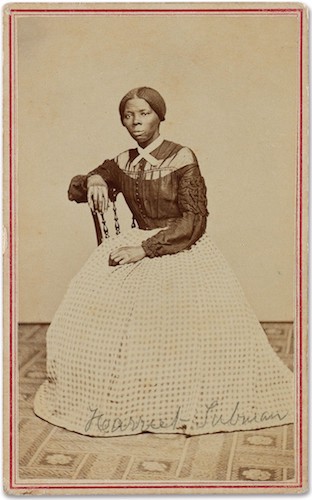
Chelsea Clinton’s children’s book She Persisted features famous historical women who, in Clinton’s words, “overcame adversity to help shape our country.” Due to that very adversity, famous historical women are in notably shorter supply than famous historical men, and while the book does feature heroines you might not have encountered in school, its slate of role models is still relatively obvious: Ruby Bridges, Sally Ride, Sonia Sotomayor, Oprah Winfrey. Still, Christopher Janes Kimberley was convinced enough that Clinton copied his idea that he sued her and her publisher, Penguin Random House, for $150,000. Kimberley had submitted a pitch for a children’s book called A Heart is the Part That Makes Boys And Girls Smart to Penguin Young Readers (directly to the president of the imprint, no less!). Instead of publishing it or responding, he said, Penguin gave the idea to Clinton. His proof? She used quotations from three of the same women that he proposed to cite in his “Quotable Questionnaire”: deep cuts Harriet Tubman, Nellie Bly, and Helen Keller. Right-wing and alt-right media salivated over the suit, but everyone else seems to have given it all the credence it deserved.
Claim: J.K. Rowling stole the word “muggle”
J.K. Rowling has been accused of idea theft, and vice versa, so many times that there’s a whole Wikipedia page for “legal disputes over the Harry Potter series.” The earliest was American writer Nancy Kathleen Stouffer, who sued Rowling for infringement in 1999, when only three of the books had been published (although it was already clear that the series was turning a handsome profit). Stouffer claimed that she’d invented the word “muggle” in her vanity-press book The Legend of Rah and the Muggles, and that another of her works featured a character named Larry Potter. This is thin enough—but the court didn’t just rule that the similarities were too vague to amount to much. It actually found that even Stouffer’s weak evidence may have been fabricated. “In connection with this litigation, Stouffer has produced booklets entitled The Legend of Rah and the Muggles that were allegedly created by [publisher] Ande in the 1980s,” says the judgment. “However, plaintiffs have submitted expert testimony indicating that the words ‘The Legend of’ and the words ‘and the Muggles,’ which appear on the title pages of these booklets, could not have been printed prior to 1991.” Ditto for the tale of Larry Potter, which the judgment describes as the story of “a once happy boy named Larry who has become sad.” Stouffer said that the ’90s provenance of the words “muggle” and “Potter” wasn’t related to the case; she attributed it to “the fact that she continued to revise the story into the 1990s.” But the court found the whole thing unconvincing. Not only was the case dismissed, but the judge fined Stouffer $50,000 for “intentional bad faith conduct.”
Claim: Stephenie Meyer stole sex on the beach
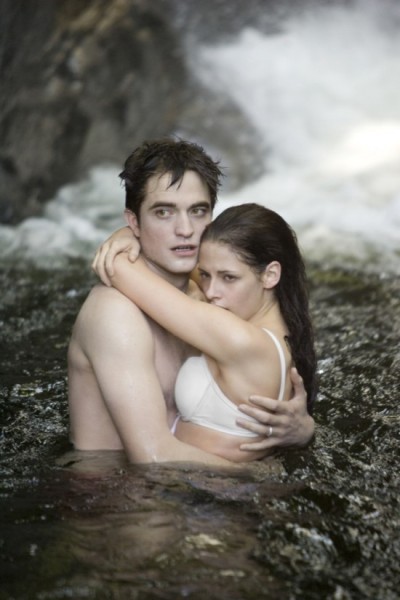
In a general sense, the Twilight saga is like every vampire novel and also every teen novel ever written. But in a more concrete sense, according to Jordan Scott, it is specifically like the vampire novel she wrote as a teen. Scott said she published excerpts from her 2006 novel The Nocturne online, where Stephenie Meyer could have (and, she alleges, did) use them as the basis for the fourth Twilight book, Breaking Dawn. Among the evidence: both books include a wedding, and a sex scene on a beach. Not only that, but both beach sex scenes involve such elements as oceans, kissing, happiness, and someone being called “beautiful”! Characters in both books also have nightmares, become pregnant, are sad when someone they love dies. The case was dismissed, but the lawsuit is worth reading, mainly because the excerpts it includes are so comprehensive that you no longer have to read The Nocturne or Breaking Dawn, if indeed you ever did.
Claim: Cassandra Clare stole the urban fantasy genre
Unlike many of the plaintiffs in these cases, Sherrilyn Kenyon is herself a successful, New York Times bestselling author. The titular “darkhunters” of her Darkhunter series have supernatural powers and defend the world by slaying demons. Her suit alleges that also-bestselling author Cassandra Clare infringed on her copyright for Clare’s Mortal Instruments series, which features a similar band of supernaturally-powered demon-slayers called “shadowhunters.” The complaint includes a 15-page comparison of the two series; one character in each, for instance, is “rebellious and beautiful,” can’t cook, “seems flamboyant and loud, but is generous and tender‐hearted,” and “wears tall boots,” so I will be suing also.
There are certainly a lot of similarities, and maybe they add up to something—but as Laura Miller reported at Slate, “After the Guardian wrote about the suit, my own social media feeds filled up with writers alarmed at the notion that a litigious author seemed to be claiming ownership of some very commonplace motifs of the fantasy genre.” Some of the similarities, as described in the suit, seem eerie; others are simply tropes. (And some are reaches. One comparison lists only two traits: “jet black hair spiked with color” and “bisexual.” Pretty sure the idea of queer kids dyeing their hair is not copyrighted.) Is it possible that two authors independently came up with the idea of “mortal or normal objects…including without limitation a cup, a sword, and a mirror, each imbued with magical properties to help battle evil and protect mankind”? Considering the genre, it’s almost impossible that they wouldn’t. And “Both works take place in an urban world that is not what it seems” sounds less like an accusation and more like a definition. But are the rest of the parallels enough to support Kenyon’s claim? We’ll find out when the case goes to trial in 2018.
Claim: Dan Brown stole the secret of the Holy Grail
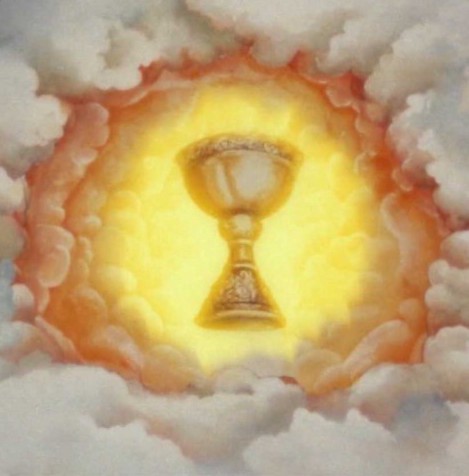
Like J.K. Rowling, renowned author Dan Brown has weathered several lawsuits. The most interesting, though, was the one brought by Michael Baigent and Richard Leigh, authors of Holy Blood, Holy Grail. The case itself wasn’t all that exciting; the judge eventually decreed that historical research, however broadly interpreted, is fair game as a substrate for fiction. In fact, Brown himself openly acknowledged Baigent and Leigh’s book, which argues that the “Holy Grail” refers to the bloodline of Jesus’ descendants after he married Mary Magdalene, as an influence. (Many other novels, including Foucault’s Pendulum and the comic book Preacher, have name-checked or been inspired by the book as well.) The really interesting part about this suit didn’t come to light until a few weeks later, when lawyer and Guardian writer Dan Tench noticed that the judgment was scattered with seemingly-random italicized letters. “I did not seriously consider that the judge could have implanted a hidden message in the judgment,” Tench wrote. “High court judges simply do not do such things.” But at the urging of judge Peter Smith, Tench took a closer look. The first ten italicized letters spelled out SMITHYCODE, and a Fibonnaci-based formula applied to the rest spelled out “JACKIEFISHERWHOAREYOUDREADNOUGHT.” “This must be taken as a doubtless riposte by the judge, who lists the study of the early 20th century admiral, Jackie Fisher, as a main interest,” wrote Tench. “When asked who was Jackie Fisher, how many times must he have answered that Admiral Fisher conceived of the great battleship HMS Dreadnought?” Of course. Much easier to embed that answer in a code in a judgment about a book about the Holy Grail.
“Double Take” is our literary criticism series wherein two readers tackle a highly-anticipated book’s innermost themes, successes, failures, trappings, and surprises. In this edition, Scott Esposito and Bradley Babendir discuss Fernando Pessoa’s The Book of Disquiet.
The Modernist master Fernando Pessoa’s work remained largely unnoticed during his lifetime. He left behind a chest full of writing that would be later known to many as The Book of Disquiet. The book has been deemed an “autobiography” and a “diary,” but it’s equally a novel or an essay collection or even a kind of pre-internet codex blog. Pessoa ruminates about pretty much everything, often entering enlightening and sorrowful spaces while battling life’s eternal questions. Recently released by New Directions with a brand new translation, The Book of Disquiet is in its most complete form ever.
Scott Esposito:The Book of Disquiet is enormous — in every sense of the word — and I’m eager to get into some of the granular details with you, but I thought we might start off this conversation with a more general question: In what sense is The Book of Disquiet a book? Is it a book? Just what is it?
Famously, The Book of Disquiet is an incomplete work, composed of 500-some fragments that were not even published until 1982, decades after Pessoa’s death in 1935. No one knows what order these fragments should be placed in, or even which fragments constitute the work itself (and if there are more hidden somewhere that have yet to come to light). Nobody seems to know just what genre this book is: Is it a novel (it’s supposedly written by one of Pessoa’s most famous alter egos, Bernardo Soares)? Is it a journal? Is it a commonplace book? Something along the lines of a Portuguese version of Italian poet Giacomo Leopardi’s infamous Zibaldone?
I want to pose the question of just what this item is, but before I do that I’d just like to quote the critic George Steiner on The Book of Disquiet:
The fragmentary, the incomplete is of the essence of Pessoa’s spirit… The very kaleidoscope of voices within him, the breadth of his culture, the catholicity of his ironic sympathies… inhibited the monumentalities, the self-satisfaction of completion… As Adorno famously said, the finished work is, in our times and climate of anguish, a lie.
It was to Bernardo Soares that Pessoa ascribed his Book of Disquiet, first made available in English in a briefer version by Richard Zenith in 1991… What is this Livro do Desassossego? Neither “commonplace book,” nor “sketchbook,” nor “florilegium” will do. Imagine a fusion of Coleridge’s notebooks and marginalia, of Valery’s philosophic diary and of Robert Musil’s voluminous journal. Yet even such a hybrid does not correspond to the singularity of Pessoa’s chronicle. Nor do we know what parts thereof, if any, he ever intended for publication in some revised format.
Modernism, of course, was a movement of fragmentation, a movement of missing pieces — think of Kafka, the modernist writer par excellence, who never finished a single novel (and who indeed intended his manuscripts to be burned), yet who is often lionized as one of the greatest novelists of all time. Those incomplete novels always seem to be drawing us toward meaning, toward completion, but then stop short, endlessly frustrating our desire for some kind of ending, so the fact that Kafka never managed to finish them is oddly appropriate. Modernism is all about incompletion, and many modernists have been considered great writers in spite of (or rather, because of) their incompleteness, something that is very clearly present with Pessoa.
Bradley Babendir: The question of exactly what The Book of Disquiet is has been on my mind since I started the book, and I’m glad that you opened broadly. In one sense, of course it’s a book: it looks like a book, feels like a book, and is organized like a book. That is, of course, facile, so I suppose what I’m getting at is that it’s presentation as a book is in some sense inextricable from my interaction with it on those terms. Still, its incompleteness and lack of known order undermine the idea that it is a book, in the sense that it’s not any one thing. In other words, there is not one The Book of Disquiet, but many.
Part of what makes this enthralling, and as you said, one of the greatest literary works to ever emerge out of modernism, is that incompleteness feels intrinsic to its project. What would a truly finished The Book of Disquiet look like? It seems like it could never be finished, which makes it an almost perfect manifestation of modernism. Steiner’s Adorno quote is exactly right. With this in mind, I can’t think of it as a novel. With Kafka’s work, for example, I can see how and in what way those books could be finished, if they were truly finished. This isn’t the case for The Book of Disquiet.
The most interesting part of Steiner’s quote is that desire to categorize it alongside an admission of its impossibility. When reading it, alongside considerations of how it compared to the works of writers that you and Steiner mentioned, I couldn’t help but think about it alongside the work of writers like Sarah Manguso, particularly her books 300 Arguments and Ongoingness. Her commitment to efficiency sets her apart, but the reading experience feels somewhat similar. Those books, too, don’t have a sense of completion.
In that sense, to get back to the central question, I suppose it feels to me most like an essay collection. Yet that feels unsatisfactory to me, obviously, because it’s such a limiting category for something so irregular and so unique, but any designation more specific seems destined to be more wrong than it is right.
What do you think about that? Is that a useful in understanding the book? What would it mean to accept that a book is uncategorizable? And what about it makes it so, because it’s not just the lack of organizational direction intrinsic in the text, but the text itself that makes it one-of-a-kind.
Modernism is all about incompletion, and many modernists have been considered great writers in spite of (or rather, because of) their incompleteness.
SE: I think you are smart to point out the desire to categorize, which is an obsession that we’re all a little prone to, but which ultimately is just one, somewhat arbitrary, way of looking at a work. What does it mean to accept that a book is uncategorizable? I think that we would effectively be stating that this book constitutes a category of one, that it is revolutionary, without precedent, a book that establishes another way of seeing, a work that is a new thing under the sun. Does Pessoa live up to that? Perhaps, or perhaps not, it is a difficult question.
The Portuguese have a famous, untranslatable word called saudade, which is often translated as “nostalgia,” specifically a melancholic and/or longing nostalgia, although it seems this scarcely suffices to explain this deep and complex emotion. I bring it up because Soares’s temperament is absolutely saturated with this saudade, you find it everywhere in this book; I quote, almost at random, “Everything wearies me, even those things that don’t. My joy is as painful as my grief.” Or consider the beautiful dictum, “I dream because I dream.”
Soares is a flâneur, a person whose vocation is loafing around a city, wandering through it at random, and though The Book of Disquiet does offer many remarkable descriptions of Lisbon, to me its real project is a very detailed exploration of the mental topography of Soares’s saudade. One of the things I find so impressive about this book is how Pessoa makes it feel so full of life, of knowledge, of wisdom, of beauty, of mystery, despite basically always going back to this one enervating emotion. The book is so incredibly dense, so exact in its very inscrutability, so endlessly ponderable that I always end up reading it very slowly, and with many breaks, as every page just bristles with so much. It’s so dense, mystic, and inexplicable that it’s practically a divination tool, like a Portuguese I Ching.
What has been your experience of reading this book?
It’s so dense, mystic, and inexplicable that it’s practically a divination tool, like a Portuguese I Ching.
BB: My experience was rather similar to yours. The density of thought on each page is staggering, and it can make the longer sections in this book (which are usually no more than a handful of pages at most) seem daunting. Even the shortest sections, sometimes no more than a sentence or two, can be intellectually daunting. One of the sections I’ve thought about most from the book is numbered 19: “Let us absurdify life from east to west.” Only seven words, but as you said, it’s endlessly ponderable. I’m not sure, even after thinking about it for a long time, I’ve approached what feels to me like an understanding of it. What exactly does Soares mean by absurdify? On its own, the sentence feels emphatic, perhaps declarative and triumphant, but the book is drenched in saudade and in that context it exchanges an energy for weight.
This brings me to something I’m interested to hear your thoughts on, which is the worldview conjured in the book. There are so many incisive passages in The Book of Disquiet that seem worthy of unpacking. Take, for example, the frequent invocation of dreaming throughout the book. The dictum you mentioned is an excellent place to start. “I dream because I dream” is elegant and simple and imbued with an inevitability that is often times comforting. At other points in the book, however, dreaming is not so easy. Soares writes, “Being able to dream the inconceivable and make it visible is one of the major triumphs that even I, great dreamer though I am, only rarely achieve.” He also draws clean lines around dreaming and other activities.
He distrusts anything he perceives as action, and goes so far to say:
“To think, yes, even to think, is to act. Only in absolute daydreams where no activity intervenes, where all consciousness of ourselves gets terminally stuck in the mud — only there in that warm, damp state of non-being can one truly abandon all action.”
Passages like this certainly read like divinations, and that’s one sense in which they should be understood. But I also wonder about the line between thinking and dreaming, which is difficult for me to navigate. Dreaming to me seems an imaginative process, especially if, as Soares claims to sometimes do, it is possible to dream the inconceivable. I wonder what you think about Soares’s conception of the dream, as it frequently recurs in the book.
I’d also like to know what you thought about some of the darker observations that appear in this book. At one point, Soares writes, “We are made of death.” And another: “all loves are the abomination of love.” A third: “To express oneself is always a mistake.” These are odd, counterintuitive, sad, and entirely fascinating to me. How did you take them?
What does it mean to accept that a book is uncategorizable?
SE: These quotations you’ve given us regarding dreams immediately take me to another one of Pessoa’s heteronyms, namely Alberto Caeiro. Caeiro is a very special character: here’s a sort of foundation of all of Pessoa’s other heteronyms, the poet-master, the ultimate genius, even though Caeiro himself is scarcely an artist as we usually understand it. He’s just this very naive, simple, somewhat fragile man in the Portuguese countryside who writes beautiful verse as if by sheer instinct. Here is what Pessoa has to say about him:
“He sees things with the eyes only, not with the mind. He does not let any thoughts arise when he looks at a flower . . . the only thing a stone tells him is that it has nothing at all to tell him . . . this way of looking at a stone may be described as the totally unpoetic way of looking at it. The stupendous fact about Caeiro is that out of this sentiment, or rather, absence of sentiment, he makes poetry.”
My gut instinct, although I hardly feel able to generalize about such an enormous, confounding, and contradictory volume as The Book of Disquiet, is that Soares yearns toward this kind of immediacy, this (to draw from one of your quote) “warm, damp state of non-being [where] can one truly abandon all action.” And I think this also gets at the contradictory dictums that one finds in such prodigious numbers everywhere here, for instance, “all loves are the abomination of love” and “To express oneself is always a mistake.”
The desire to get into a state analogous to Caeiro’s mystical oneness with everything outside of himself in the world is a kind of skeleton key for unlocking these sorts of statements — that, perhaps, if once dreams well enough, one might escape into the realm of dreams entirely, where there would be no division between “dreams” and “the real world” — or between “love” and “the abomination of love,” etc, etc — and one would attain the sort of consciousness that Caeiro has by pure instinct.
In this way, of course, Pessoa is doing his own rendition of one of the key questions in the European philosophical tradition, this question of being estranged from “being,” a question that begins with the likes of Spinoza and Schopenhauer, and continues right up through Heidegger and Sartre (of course), and which is a major concern of French post-structuralists like Barthes, Derrida, and Lacan. To me, this impossible desire informs much of that saudade that one finds endlessly throughout Pessoa, this omnipresent sense of one’s own estrangement, and this wish that one might be like Caeiro and enter into a sort of pre-linguistic relationship with the world — this complete absence of all artifice would yield the most beautiful poetry possible.
To conclude, let me go back to a word you used to describe some of these quotations: dark. I see what you mean, and I do think that there’s a definite darkness to Pessoa’s vision of reality, but whenever I read this book I also always feel like Pessoa just “gets away” with so much, in the sense that observations which, in a different book, might come off as overly trite, sentimental, dark, simplistic, or what have you always end up sounding miraculous when Pessoa makes them.
So perhaps this is a good segue to a question that I feel we must grapple with, which is: what about the title of this book? What exactly is a book of disquiet? And is disquiet — at least in the way we commonly define the word — really the major organizing principle of everything that one finds in this volume? I don’t know that I can answer any of these questions satisfactorily, but to get us started I will note that in the “preface” to this book, Soares claims that “this book is the autobiography of someone who never existed,” a certain Vicente Guedes for whom “dreaming was a religion.”
BB: I’m not sure what a “book of disquiet” would be, but I did find reading this book to be disquieting. It does not feel like an organizing principle, at least as I think of them, in that it does not feel like there is an organizing principle imposed on the book. The Book of Disquiet reads like something that happened. There is an inevitability to it. This fits with how Soares claims the book came to be, which you quoted. Autobiographies are an inevitable type of book. Their course is set before the writing begins.
The claim that this is an autobiography of a man for whom “dreaming was a religion” is fascinating to me because, as we’ve discussed, dreaming is treated as a spiritual experience, something akin to becoming one with ones thoughts and the world around them. I’m also interested, in contrast to this, in how on page 28 (section 17), the project of the book is described like this:
I am offering you this book because I know it to be both beautiful and useless. It teaches nothing, preaches nothing, arouses no emotion. It is a stream that runs into an abyss of ashes that the wind scatters and which neither fertilise nor harm — I put my whole soul into its making but I wasn’t thinking of that at the time, only of my own sad self and of you, who are no one.
I wonder what you think of this quote and of the questions it raises. I find the conflicting arrogance and self-criticism fascinating, and I am of course struck by how viscerally I disagree with it. I’m not sure what to make of a passage wherein a writer assesses their own book in a way that seems so wrong. This leads to me a somewhat related question: What does it mean to read a work like this in times so saturated with irony? For me, I think it created quite a beautiful experience, and part of that was because I was constantly navigating the space between my perception and what seemed to be the intended impact of the text.
SE: I like what you say about this book not having an organizing principle so much as reading “like something that happened.” Like you, I don’t read this book as being “about” anything so much as being a tendency, an immense body of thought that came out of a particular way of inhabiting the world. Also like you, I don’t find this book disquieting per se (or, at least, the disquiet that one finds in it is just one of many, many emotions encountered here). But I could perhaps see it as being the product of someone’s disquiet, this regular writing out of short prose fragments a way of coping with a profound state of anxiety.
The Book of Disquiet is saturated with irony in the sense of a unreliable narrator — a person whose words we don’t quite know how to regard.
As to the quote you’ve shared, my opinion is that, like so much in this book, it’s made of discrete chunks that on their own are quite simple to parse but when all put together baffle me with their complexity. Regarding the irony, I feel that this is part of the immense depth of this book, that one never knows what to take seriously and what to read between the lines. Just look at where Pessoa calls this book both “beautiful and useless:” what writer would really admit his work has no use, and in which sense would he mean that his writing is “useless?” And would he really be so arrogant as to flatly call his writing “beautiful?” It seems so out of character.
In my reading, The Book of Disquiet is saturated with irony in the sense of a unreliable narrator — a person whose words we don’t quite know how to regard. I think is a quite richer and more interesting sort of irony than the way we tend to use the word popularly nowadays, as a kind of shorthand for a sharp, biting humor where the intended meaning of a remark is never in doubt (it’s usually the exact opposite of the superficial meaning of the statement). I think this gets back to what I was saying about how hard I find this quote to parse, and which you mention at the end of your remarks: the level of irony in Pessoa seems to constantly be shifting — some of the quote reads as quite earnest, while other parts seem almost impossible to take on their face, and then right in the middle is that beautiful poetic metaphor (a different kind of discourse altogether), which dances right on the precipice of incoherence (as Pessoa so often does).
It strikes me that this is one of the great, unique things about literature — as opposed to other forms of art — the way that it can combine these different registers of communication into statements of intense depth. I find it a little like the end of 2001, when David Bowman looks into what he takes as a black monolith floating in space and suddenly realizes that it is in fact full of stars, that this object that seconds before was simply a metallic rectangle of some 20 feet or so becomes an object of profound depth, a portal to another world. And that to me is the longed-for experience of reading great literature, an experience that Pessoa excels at evoking to a rare degree, this sense of feeling chasms open up before your eyes as you work your way through these seemingly mundane statements.
Let’s go a little bit further in interrogating Pessoa’s claim that his book is both “beautiful and useless.” I think you and I will have no difficultly agreeing that The Book of Disquiet is quite beautiful; I’m more curious about this word “useless.” What, if anything, have you found The Book of Disquiet useful for in your lifetime? Does a great work of literature like this have a “use” (in any sense of that word), or is Pessoa correct that his book really is useless? In which case, why do we read it and spend so much time talking about it?
BB: I’ve spent a lot of time thinking about the ways in which I find The Book of Disquiet useful. I’m not certain that I’ve got a satisfactory answer. It is useful in the ways that all remarkable and uniquely structured books are, in that it has taught me how to read differently. That is insufficient because this is also a book that has given me a profound, emotionally complicated reading experience, unlike any that I’d had before or will again.
Maybe its biggest use is this: It’s changed the way I think about thinking. One way to describe The Books of Disquiet is a collection of thoughts. (Not thought, which would, I think, imply a less idiosyncratic and contradictory book). I don’t mean this in a cheeky way, wherein one could describe all books as collections of thoughts. Of course, all things written had to be previously thought. What I mean in reference to The Book of Disquiet is that most sections describe how the narrator sees the world. I wouldn’t say that I agree with most of those points of view, but the processes the narrator goes through of explaining his conclusions and how he arrived at them is fascinating and has impacted the way I conceive of seeing and analyzing the world around me.
Is this really a use? Perhaps not. I don’t tend to look at works of literature in terms of their uses, and I would not have if the writer himself had not described the book itself as “useless.” I have a knee-jerk defensive reaction against that sentiment, which I suppose amounts to wishing to defend the book from itself. To me, that sees the mark of a very powerful work.
I’d like to hear what you have to say about the book’s uses, too. I your original question you rightly mentioned the number of meanings ‘uses’ can have and I am sure I’ve left many stones unturned.
I think literature can contribute to the national architecture, it can elevate a simply great city into one of the world’s truly unique places.
SE: The phenomenology — the very texture of the narrator’s experience of the world — is perhaps the chief draw for the book. It’s so multiple, and so strange, that it’s just dazzling. It’s taught me to read in new ways and simply to be sensitive to aspects of the world that I never noticed existed, which, truly, what more could you want from a book?
I could go on and on (and on) in that vein, but, okay, here’s a very different “use” for The Book of Disquiet. A couple years ago I traveled to Lisbon, and as happens when you cross nine hours of time zones I had some pretty severe jet lag. Lisbon, incidentally, is an incredible city, full of hills and beautiful architecture, a castle, an unbelievable monastery, world class art, that incomparable music known as fado, and of course espresso, which they refer to as “bica.” I was so severely jetlagged that each morning I would awake at approximately 4:00 am, completely awake and utterly unable to fall back asleep. So I would take my copy of The Book of Disquiet out into the common room of the guest house I was staying in and read as the sun came up. Not only was it a glorious way to pass what otherwise would have been a chore, it felt like the ideal way to start each morning in Lisbon (Pessoa is, of course, celebrated everywhere in Lisbon). It is one of the reading experiences I can best recall out of the two and a half years since I was in Portugal.
I think literature can contribute to the national architecture, it can elevate a simply great city into one of the world’s truly unique places, it can be the exact right thing at the right moment, it can help you transform from a tourist into a traveler. Those are uses, right?
I mean, what else can do all that, and fit right into the palm of your hand? I loved The Book of Disquiet before I went to Portugal, but after my time there it had taken on an altogether new importance in my life.
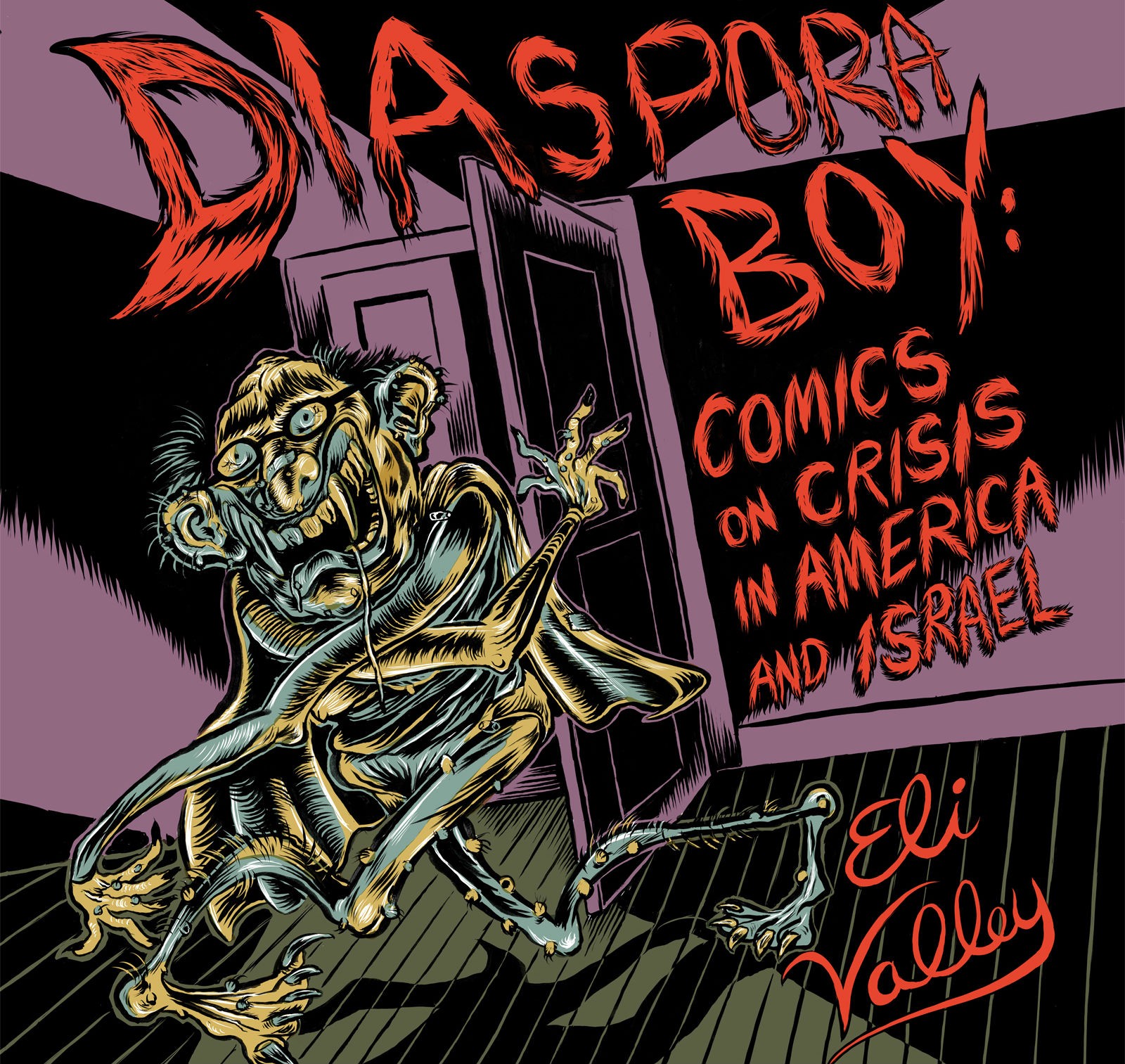
When Eli Valley introduced his book Diaspora Boy: Comics on Crisis in America and Israel last month at McNally Jackson, he spoke to a room rapt with attention. Valley is not only a singular artist and incisive writer, he’s also a hilarious and dynamic performer. Through a visual presentation incorporating his comics, he made the audience laugh while lampooning conservative critiques of his work (Bret Stephens called it “grotesque” and “wretched”) and showed photographs of himself engaging in activism throughout his life, culminating in photographs from protests this year in the wake of the Trump election.
Though the comics in the book end with Valley’s interpretations of the Republican primaries, the ten years of work provide a timeline and analysis that helps make sense of the cultural shifts that led to an America where Donald Trump could gain widespread support. With both micro analyses of specific events in the Jewish political and cultural communities and macro interpretations of large scale issues in the U.S., Valley’s work helps the reader understand the cultural structures underlaying the problems facing a divided nation. Valley’s work blends history with satire in an effort to both inform and entertain the reader on the complex relationship between America and Israel.
Valley and I met in the East Village to talk about constructing a book made of both comics and essays, the threats facing political journalists and artists, and the backlash his work has received.
Rebecca Schuh: I love that Diaspora Boy integrated so many artistic and narrative elements. Can you talk a little bit about the process of bringing together the comics and the analytical writing?
Eli Valley: The comics themselves came about over the course of ten years. A lot of them were based on things that had happened years prior. I’ve gathered visual materials related to my work, from a hobbyist perspective, for the entire ten years as well: postcards from Israel, stamps, I have one book over a hundred years old from Germany. I accumulated a lot, and on a trip to Israel I took these photographs myself, at Yad Vashem and the Diaspora Museum. If you’re passionate about something, you’re able to combine a hobbyist interest with an actual rigorous exploration.
RS:I love that. I was really impressed with how much you were able to integrate.
EV: I give presentations on my work, so I like to keep in mind the slideshow format, which is in some ways similar to comics with the combination of the narration and the visual. A presentation is live so it’s different, but the storytelling via visual narrative is similar in slideshows so I accumulated a lot for that purpose as well. For the introduction I mined a lot of that material.
RS: In terms of the timeline of publishing, I was thinking about how most of the comics, if not all, were before the election.
EV: The last one was done for the book exclusively, and the last two before were done during the primaries.
RS: How did your perception of the world that the book is being published into into change after the election?
EV: For one thing, I spoke in the introduction about Donald Trump the way we all thought of him at the time. It was the middle of last year. I wrote about him as a buffoon, a dangerous buffoon, someone who wouldn’t actually become president. And so I spoke about him in terms of what it revealed about Jewish leaders who were supporting him despite his being a hero of American naziism — this was clear long before Charlottesville. I’m glad that is in the introduction. It makes it relevant today. It’s about chronicling American Jewish communal support for the same forces of demagoguery and bigotry that prevailed in Israel over the past decade, and that now prevail in America. We’re all wondering how it’s happened here — when you look at the stuff in this book, it’s in some ways a harbinger of where we are now.
Author Eli Valley
RS: That’s so interesting, I guess I hadn’t thought about how you were tracking that ascent. No one could have known he was going to get elected, but reading your book makes it obvious that there were definitely some cultural shifts that could have predicted that someone like him would come to power.
EV: Absolutely. I call Trump Netanyahu with smaller hands in the introduction. Netanyahu shares a lot in common with Trump. Including demagoguery, bigotry, attacks on the press, attacks on institutions of democracy, attacks on human rights organizations. I don’t know if Trump has gone that far yet, but he will. It’s a similar method of autocrats. It was inconceivable to me for the past ten years that anyone in a Jewish communal organization or institution would allow Netanyahu into its doors, because he’s the kind of thing that we have feared. And yet, he’s the head of the Jewish state.
RS: You talk in the book about backlash you got at different points for the comics. Do you have any memorable stories about an incidence of that backlash?
EV: There were so many. The main one that changed a lot of things for me was the one where I positioned Abe Foxman as an anti-semite. I talk a lot about how he waged this war on The Forward until they stopped running me. The Forward didn’t want to make an immediate cut because they didn’t want to make it look like they were bowing to McCarthyite pressure, so they did a slow, don’t accept his pitches, we’ll take a smattering, but it’s over. I was able to get in three or four over the course of the next year, I don’t remember exactly how many, but…it really left me…it wasn’t a great experience.
EV:The Forward of all places, I liked it because it was a Jewish communal institution. While I was there, it was writing critical introspection and calling out hypocrisy among readers, and that was important, and when that became unavailable it was depressing because in terms of personal expression you want a higher outlet, but also the idea of the strength and sustainability of Jewish institutions — the only newspaper to consider itself an independent watchdog bowing to McCarthyite pressure was disturbing.
RS: Journalists are really concerned right now about the freedom of the press, with good reason. Have you noticed that in practice yet?
EV: I think we’re mostly talking about it in theory. I think the larger problem for political art is just outlets in general. They don’t want to pay for something that isn’t clickbait. The outlets for journalists of all types are shrinking, not just political artists.
Without mentioning specifics there was one outlet where they said the publisher and editor weren’t pro Trump, but they didn’t accept something of mine because they did not want to rock the boat too much. It’s not happening yet to the degree that we have feared, although that can still come. The main issue is the continuing erosion of the print landscape and lack of options and diversity of outlets. The main one recently being the Village Voice print edition.
The outlets for journalists of all types are shrinking, not just political artists.
RS: That was so upsetting and it happened so quickly, I don’t think anybody saw it coming. They were such a stalwart.
EV: Yeah exactly, Honestly, thirty years ago, alt-weeklies were the lifebloods of communities. Now, you can count them on one hand.
RS: It’s scary too to think of how, in journalism, we’re at this point where the funding is so scarce, and like you were saying there’s the problem of clickbait, and now it’s intersecting with the political persecution of journalists — it’s coming from all sides. You had this focus throughout the book on events that maybe the average layperson might have forgotten had happened in the past few years. How was it revisiting these events now, especially when we’re now so inundated with fifteen breaking news items every day?
EV: In some ways it was exhausting revisiting these crazy policy and politics debates, and also actual actions and behavior, but in other ways the introduction is so in depth it provides this underlying skeleton for the whole book, it allowed me to see each comic through the lens of the cohesive vision of Israel and the diaspora.
Panels courtesy of Eli Valley.
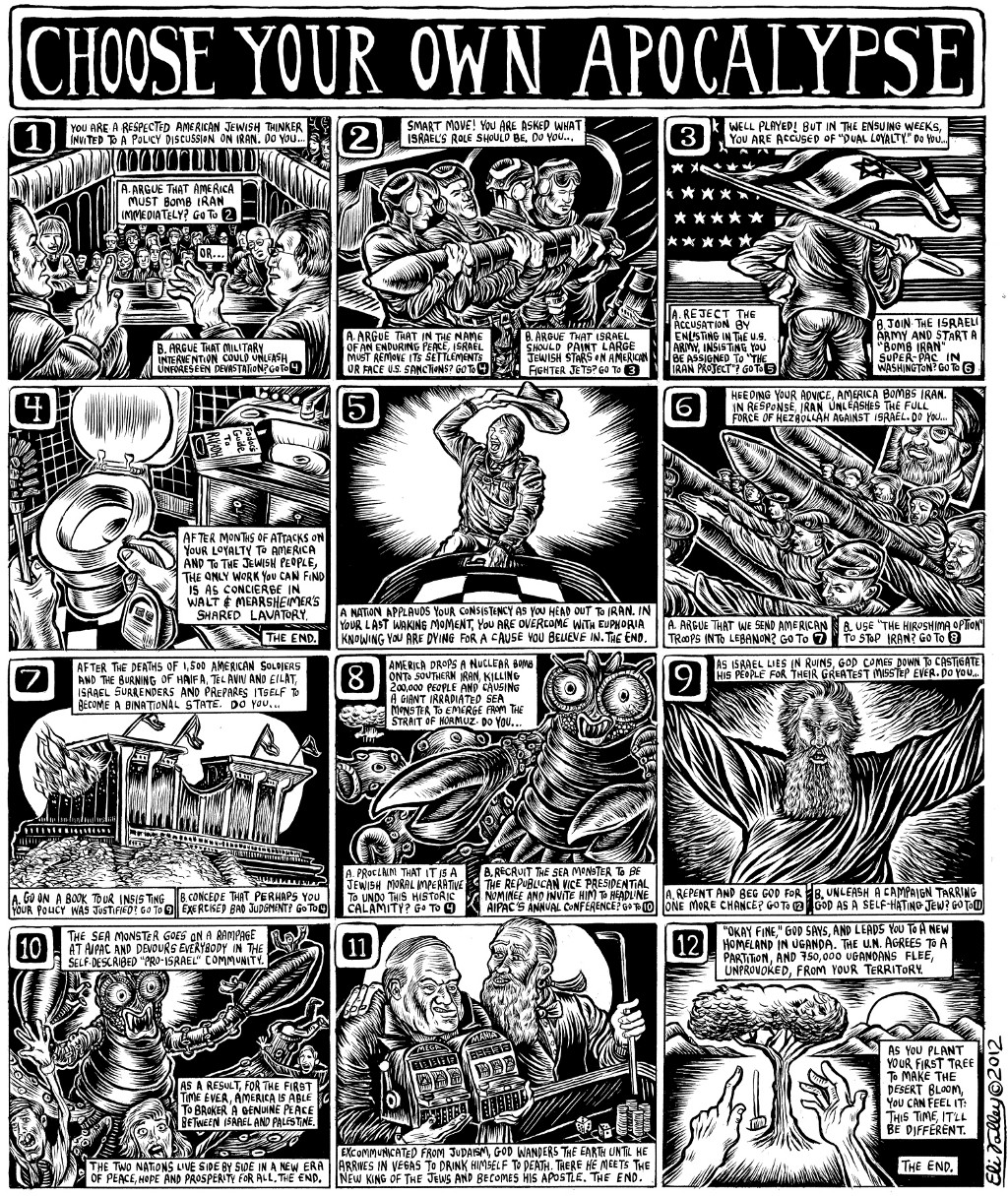
RS: That’s a great metaphor, thinking of it with the vertebrae, all books have that to a certain degree but it’s especially apt for a book that contains so much art. You did talk about a lot of events I didn’t know about, but I found with your descriptions I was definitely able to contextualize it very quickly, there wasn’t anything that I was like, I don’t get this at all. Another thing I really loved was how you played with these pop cultural forms through the art, like the Obama paper doll and the Choose Your Own Apocalypse. Can you describe the process of how you pick cultural tomes like that and then integrate them into your art?
EV: Basically I have an extensive idea file. With Choose your Own Apocalypse and some of the noir comics, I love these ephemera from the past, and I always want to find some way to make it fit. Once I find something that matches, I go with it. It’s like there’s something that I’ve always wanted to do, and then an opportunity arises.
RS: I love the comic where you had the Chagall painting integrated. I thought there was something really unique about how you took the painting and put it into the comic but then also took Chagall’s specific art style and integrated it with yours in the panels. Can you talk a little about the actual artistic process of that, how you go about learning different styles?
EV: With me for this one, form followed function. Because I was talking about these horrific animal rights abuses in Postville, and the Chabad movement that I was going after at this time likes to portray themselves as embodying Jewish folkloric things of yesteryear, like Norman Rockwell ideas. Or Chagall paintings, including this one. They think they’re in a Chagall painting but it’s a twisted Chagall painting. So I went to this painting, which I always loved, and tried finding things in it that would relate to the actual horrific abuses. So this is what determined it, and then I developed it into different panels with very specific horrors that were perpetrated by this company.
RS: Another one I was really fascinated by was your Amy Winehouse comic.
EV: I’m glad.
RS: It was one of my favorites, but more than just being a big Amy Winehouse fan I loved how this really critiqued gender relations in a way that was so piercing. There was one line, about the effort to “define her potential through such an archaic lens.”
EV: This comic was wrestling with ways that her life and death were being distorted for political ends but also noting how I, too, was distorting it, and inventing an idealized version of a female celebrity, but I realized I was doing it, so I tried to call myself out within the comic.
I love over the top. I love insanity. I think that the political debates I’m satirizing are insane, so I tweak them a little bit to make it a distorted mirror of reality.
RS: Another thing I was struck by in the book was how funny it was. I wasn’t expecting it! Can you talk about how you developed your sense of humor, or how you would define it?
EV: Basically I love over the top. I love insanity. I think that the political debates I’m satirizing are insane, so I tweak them a little bit to make it a distorted mirror of reality. The specific antecedents are the Mad Magazine comics of the 1950’s which lampooned a lot of the sacred institutions of Americana in a period of mass commercialization and consumption — things like Mickey Mouse, which they made into Mickey Rodent, or Archie, they went after all these popular cultural bulwarks, and they just eviscerated them. While they were making fun of both the comics or television shows or movies themselves, they were also using them as a way to satirize elements of a capitalist society at the time including McCarthy. So the early Mad comics were an intense inspiration from that perspective, but also the perspective of the actual method of the two stalwarts that were Harvey Kurtzman and Will Elder. With Will Elder, in particular, it was the way he drew, it was so beautiful and intricate but also so wild and out of this world in terms of the way he would pack every panel with so many different details and asides and illusions.
RS: Now that the book is published, what kind of comics are you working on?
EV: Right now I’m focusing on what’s happening in the Trump administration and the perspective and the levels of Jewish complicity within that.
Whether it’s Charlotte’s Web, Animal Farm, or Watership Down, stories about animals have the potential to hold and enrapture us, across all age groups. What’s true for books is just as true on the screen: this past summer brought with it the satirical science fiction film Okja, with a massive genetically engineered pig at its center; and stories of wildlife behaving in unexpected ways have held viewers’ attention in everything from Zoo to The Lion King. So here’s a look at a dozen books that memorably explore the lives of animals — some to mysterious effect, some focusing on their interaction with humans, and some using them to counterpoint the foibles or challenges of humanity. They range in tone from the comic to the tragic, from the esoteric to the surreal.
1. André Alexis, Fifteen Dogs
The realistic and the metaphysical coexist to magnificent effect in André Alexis’s moving tale, which brings together gods, humans, and canines. In the opening scene, a wager between two ancient gods endows a group of dogs with sentience and human-level intelligence. Alexis takes this central concept to unexpected places, movingly exploring questions of mortality and devotion in some scenes, and charting out the ruthlessness of some of his characters in others.
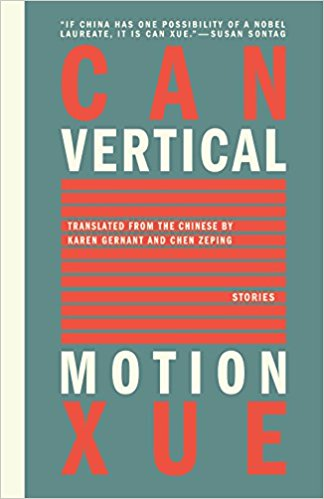
2. Can Xue, Vertical Motion
One could convincingly argue that Can Xue’s fiction explores the natural world, but frequently in a skewed or altered manner. That’s certainly the case with the title story of this collection, told from the perspective of a group of strange creatures that dwell underground. Through her use of language, she conveys the alien in wholly familiar terms, flipping questions of humanity on their head.
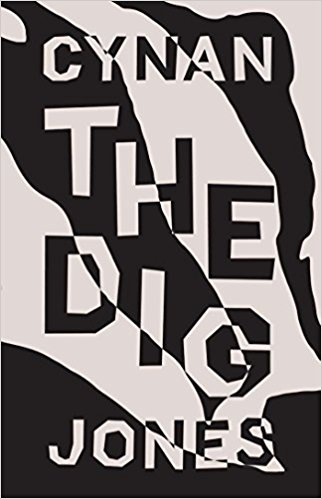
3. Cynan Jones, The Dig
Animals looms large in the world of Cynan Jones’s taut, powerful novel The Dig. Part of the action centers around a sheep farm, including a host of decidedly visceral scenes; another subplot involves the baiting of badgers. Though farming can frequently be a source of pastoral or even whimsical scenes in certain novels and stories, here it’s presented as a way of life that’s as tense and fraught with danger as the petty criminals who’ve shown up in some of Jones’s other fiction.
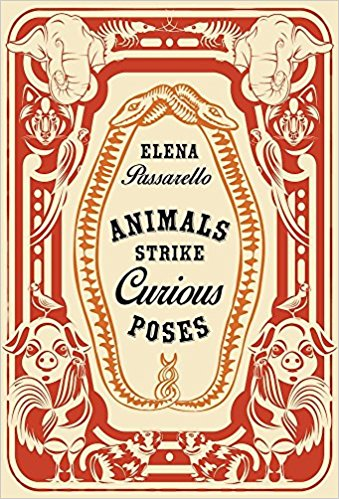
4. Elena Passarello, Animals Strike Curious Poses
After a book of essays dedicated to the human voice in different permutations, it seems fitting that Elena Passarello’s second collection of essays focuses on fauna of all kinds, and throughout history. She often roots these in particular moments in history, from 19th-century circus elephants to prehistoric mammoths. In telling the stories of these animals, she’s also telling the story of human societies from an unexpected (and memorable) perspective. (Good luck getting “When Doves Cry” out of your head, too.)
5. Noëlle Revaz, With the Animals
In this taut and nerve-racking chamber piece, Noëlle Revaz makes powerful use of a rural setting to contrast the natural lives of beasts with the frequently-abhorrent masculinity of the novel’s protagonist. Paul is a thoroughly unpleasant figure, crude in his rhetoric and obsessed with the animals on his farm far more than with the rest of his family. But Revaz’s sense of juxtaposition makes for a memorable comparison between brutish man and empathic beasts.
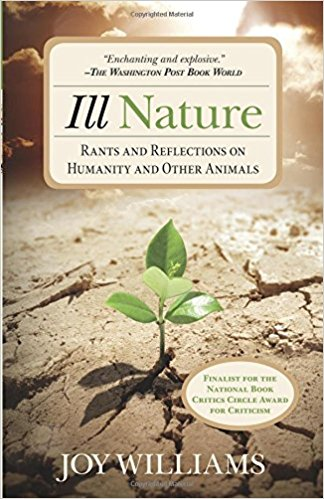
6. Joy Williams, Ill Nature: Rants and Reflections on Humanity and Other Animals
Joy Williams’s writings often show the natural world in a strange or unsettling way, sometimes veering into the atmospheric and surreal, at others tapping into something primal. In this nonfiction collection, Williams delves even further into this world; in the stunningly good essay, “Hawk,” she explores how even the most familiar animals in our lives — say, a beloved dog — remain fundamentally alien to us.
7. Sakutarō Hagiwara, Cat Town
Cats. For some of us, they’re beloved companions; for others, they’re mysterious creatures that hiss and claw at a moment’s notice. In the novella Cat Town, Sakutarō Hagiwara taps into this mysterious aspect of felines, telling the tale of a narrator who becomes disoriented and stumbles into a town with a sinister abundance of cats. It’s a dreamlike story with more than a little mystery and menace, which seems apt, given the animal that lends the novella its name.
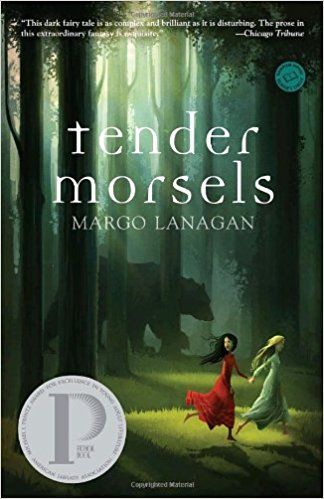
8. Margo Lanagan, Tender Morsels
Talking about animals in literature without acknowledging the role of fairy tales would be an incomplete conversation. In her novel Tender Morsels, a retelling of the story of Snow White and Rose Red, Margo Lanagan explores the legacy of sexual violence and the nature of familial bonds in a story that involves parallel worlds and strange transformations. (Specifically, a man turning into a bear — hence its place on this list.) Though the storytelling is primal, the emotional complexity of the narrative is anything but.
9. Haruki Murakami, The Elephant Vanishes
Strange animals abound in Haruki Murakami’s first collection of short stories, and, as is often the case in his work, reality tends to fluctuate in and out of realism when they’re around. In the title story, this reaches its apex, as the main character ponders the disappearance of an elephant from his local zoo, a mystery that has a decidedly surreal solution.
10. Jeff VanderMeer, Borne
Strange animals abound in the fiction of Jeff VanderMeer, from the slightly off-kilter creatures found in the Southern Reach trilogy to the sinister fish, penguins, and bears in his collection, The Third Bear. In his most recent novel Borne, a devastated city lives in fear of Mord, a flying bear the size of a building. Sinister, intelligent bears are never not scary; throw in the ability to fly, and you have some serious nightmare fuel on your hands.
11. T.H. White, The Goshawk
Early in his career as a writer, T.H. White decided to adopt a goshawk and train him. The fluctuating bond between White and his hawk, Gos, makes up the bulk of this mesmerizing study of the interaction between the two. White’s training methods come up for a fair amount of critique in Helen Macdonald’s excellent H For Hawk, which also explores questions of the bond between humans and falcons while also venturing into questions of how that bond has been manifested in literature and culture.
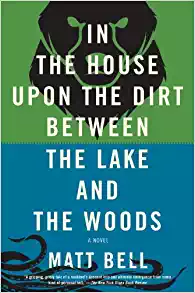
12. Matt Bell, In the House upon the Dirt Between the Lake and the Woods
Matt Bell’s debut novel begins with a couple moving into a home in an isolated part of the world and rapidly becomes a hallucinatory creation story like no other. Along the way, there are sinister moments involving a bear and a squid that live in close proximity, and a host of bizarre transformations both corporeal and topographical.
13. Lina Wolff, Bret Easton Ellis and the Other Dogs
Lina Wolff’s deftly constructed book Bret Easton Ellis and the Other Dogs is about a lot of things: it’s a coming-of-age novel with a tinge of metafiction to it, and just a bit of animal imagery thrown into the mix. And there’s the conceit that gives the novel its title: a group of stray dogs adopted by sex workers and named after male authors.
“Double Take” is our literary criticism series wherein two readers tackle a highly-anticipated book’s innermost themes, successes, failures, trappings, and surprises. In this edition, Shanthi Sekaran and Nayomi Munaweera, two authors with their own recently-released second novels, share their impressions of Arundhati Roy’s Man Booker Prize longlisted The Ministry of Utmost Happiness.
There are no accolades to be found on the back cover of Arundhati Roy’s new novel, The Ministry of Utmost Happiness — only a quote from the book: “How to tell a shattered story? By slowly becoming everybody. No. By slowly becoming everything.” Whether Roy succeeds in this endeavor — whether it’s even possible to succeed in such an endeavor — is almost an unanswerable question. Better, perhaps, to focus on the everybody and everything that populate this shattered story: Hijras and Dalits, old diaries and a busy cemetery, a government assassin and an abandoned baby girl.
Twenty years have elapsed since the release of Roy’s Booker-winning first novel, The God of Small Things, and this week she made the Booker long list again. It’s with measured breath that one opens The Ministry of Utmost Happiness. Roy takes us on a meandering and unpredictable journey, from the teeming boroughs of Delhi to blood-soaked Kashmir, from activist hotbeds to staid American suburbs. To read this book is to tear into the skin of modern-day India, a land of deeply embedded societal roles, to examine the daily tragedy of a land in conflict — its living bodies, its corporate mask and its ever-morphing identity.
Shanthi Sekaran: There were times in this book when I was like, what is Arundhati Roy smoking? And where can I get me some.
Nayomi Munaweera: Ha! Which parts? And do you think smoking whatever it was would make you a better writer?
SS: The zoo, for example. And various people’s private papers.
NM: Yes! I loved that bit.
SS: There are so many riffs in this book. You think, as a reader, you know where things are leading and then Roy switches tracks. You’re suddenly running alongside the story you thought you were in. She doesn’t create complete departures, but sometimes what you think is a quick tangent becomes an entire chapter. So many times, reading this book, I had to give up my illusion of control, and just go with what was happening. It really seems to just do what it wants to do.
NM: I agree. But I also feel like she was very much in control. It’s a book with a wide range. It sprawls, it takes up room but I think she was very aware of that.
So many times, reading this book, I had to give up my illusion of control, and just go with what was happening. It really seems to just do what it wants to do.
SS: I remember when she was speaking at City Arts & Lectures [in San Francisco, CA], she said, “I wanted to tell the story of the air and everything in it.” I take that as meaning that she wants to tell the story of India, in a geopolitical sense, as she’s spent so many years steeped in those matters. This is the India of social paradox and border battles and communal violence. This isn’t peacock ’n’ mangos India.
NM: It’s amazing we both got to see her speak a few weeks ago. People keep saying she hasn’t written a book in two decades but they forget that she has various nonfiction pieces. She’s been grappling with India the entire time. And it all shows in the book. I think her project has gotten much bigger in those two decades.
SS: India is no longer, in the world’s imagining, a quaint, unfathomable and exotic place. It’s now a player on the global scene, and I feel like readers and the Western public are finally ready to engage with the inherent intricacies.
NM: Did you read Michiko Kakutani’s review? Kakutani essentially thinks the book was too big. That it was a failure because it took on too much.
SS: I think you have to accept this book on its own terms. If you start applying narrative tradition and expectation, you sort of miss the point. Roy wanted to tell the story of everything. So by necessity, that story is going to feel fragmented. But that doesn’t diminish its value. It’s just attempting something that most novels don’t.
NM: Kakutani said, “Roy’s gift is not for the epic but for the personal as God of Small Things so profoundly demonstrated.” I had to disagree with that analysis. It’s always a bad idea to compare a writer’s books. The fact that she told a very personal tale successfully and beautifully in God doesn’t mean she can’t take on the multiplicity and complexity of India in a second book. So, as you said, you have to approach with no expectations.
India is no longer, in the world’s imagining, a quaint, unfathomable and exotic place.
SS: Yes, though some would argue that to tell the epic tale, or the political tale, you focus on the personal. That the personal becomes a reductive mirror for the political. But I’m guessing that’s not what she’s trying to do with this book. It’s not like she’s trying to reflect India in a personal story and failing. There are elements of that reflection in the book. But more than this, I get the sense that she is actually trying to tell the story of contemporary India itself — specifically contemporary Delhi and Kashmir. And how does one even do that? Do you think she succeeded?
NM: Personally I do think she succeeded. It’s an enormous story and task to take the tremendous multiplicity of South Asia. It’s even mentioned in the back cover copy, “it’s not the story of everybody, it’s the story of everything.” So she’s talking about the fate of people but also the fate of animals, the fate of the forests, the fate of the rivers. It’s an enormous undertaking and I think she did it brilliantly.
SS: I’d say she succeeded in telling a compelling, sometimes surprising, story of “everything” in India. But of course the attempt to do such a thing — to tell the story of everything — is doomed to fail. Especially when it involves the maddening paradoxes of India.
From the broader view, what I especially appreciate is that this book turned a leaf for me. It made me look at today’s India in a way I hadn’t yet considered. I was one of those “Oh look! They have malls now!” people. Roy flipped that for me, made me look at the underbellies of those malls, the reality that I, like so many Indians, would rather not see. Being in India involves a lot of “not-seeing.” But it seems Roy won’t stand for that.
NM: Yeah, I can see that. For me, too, I was aware of the anti-Muslim Hindu fundamentalism, as in Sri Lanka we have anti-Muslim Buddhist fundamentalism, but I wasn’t aware of the scope of it. Or the way caste has played into it. The way globalization is a continuation of colonialism. At the talk, Roy said a reader came up to her and mentioned she was studying post-colonial studies. Roy replied, “Is colonialism really ‘post?’” That stayed with me. The idea that the exploitative means of a previous age have only morphed with modernity.
In the book, this really became clear in that moment when history and fiction merge and she has Warren Anderson, the American CEO of Union Carbide, come to India after the Bhopal gas leak killed so many and continues to destroy lives. He looks at the cameras of the gathered press and says, “I just got here. Hi mom.” And that “Hi mom” is repeated over and over on the television as it becomes clear that the company isn’t going to redress their dire wrongs. It was a powerful moment in the book and clearly one that points to her own activism.
SS: I’ll never forget her comparison of capitalist, globalized India to a grandmother tarting herself up.
NM: Yes, Delhi or India herself as the grandmother who is being dressed up to seduce foreign multinationals. That was an amazing description. They try to hide all her ugliness in push-up bras and high heels.
Old secrets were folded into the furrows of her loose, parchment skin. Each wrinkle was a street, each street a carnival. Each arthritic joint a crumbling amphitheater where stories of love and madness, stupidity, delight and unspeakable cruelty had been played out for centuries. But this was to be the dawn of her resurrection. Her new masters wanted to hide her knobby, varicose veins under imported fishnet stockings, cram her withered tits into saucy padded bras and jam her aching feet into pointed high-heeled shoes. They wanted her to swing her stiff old hips and re-route the edges of her grimace upwards into a frozen, empty, smile. It was the summer Grandma became a whore.
SS: That leads me to the question of the body. The body plays a huge role in this book.
NM: This is a book about all kinds of bodies. There are the bodies that don’t conform. One of the main characters is a Muslim Hijra — a transgender woman, recognized in India as a third gender — who is transforming from male to female. She goes from being Aftab to Anjum. There is also the body of the tiny black female baby whose coming is rejoiced at as if she were a goddess come in the final page of the book. She’s female, she’s black, both of which are often undesirable qualities in a traditional South Asian context. Yet Roy is positing these outsider bodies as the truly heroic: that which will rescue us from a frightening insistence on homogeneity. Anjum is celebrated for her ability to cross the bodily boundaries.
SS: Yes, Let’s talk about Anjum, whose narrative dominates the first half of the book. There are so many evocative connections between Anjum and India. The Hijra’s body, for example, is a body in conflict — at least in this book’s depiction. It presents a fragmented experience of gender.
NM: As a Hijra character says to a young, uninitiated Anjum, “Indo Pak is inside us.”
Arre yaar, think about it, what are the things you normal people get unhappy about? I don’t mean you, but grown-ups like you — what makes them unhappy? Price-rise, children’s school-admissions, husbands’ beatings, wives’ cheatings, Hindu-Muslim riots, Indo Pak war — outside things that settle down eventually. But for us the price-rise and school-admissions and beating-husbands and cheating-wives are all inside us. The riot is inside us. The war is inside us. Indo-Pak is inside us. It will never settle down. It can’t.
The riot is inside us. The war is inside us. Indo-Pak is inside us. It will never settle down. It can’t.
SS: Also, as a Hijra, Anjum is placed firmly on the outskirts of society. But paradoxically, the Hijra’s role is well understood and integrated into Delhi society. It’s not a wide-ranging role; there’s not much freedom or opportunity in it, but the Hijra’s role is included and understood, both accepted and reviled.
NM: Right. She becomes part of a very old community of Hijras in the city. As one of the older Hijras reminds them, they’ve been part of the city’s history for centuries. The Muslim rulers of Delhi entrusted their mothers and queens to the court eunuchs. So they came out of a very old tradition. But that’s a Muslim tradition so somewhat at odds, perhaps, with modern Hindu fundamental India.
SS: One of my favorite scenes is when these activist filmmakers visit Jantar Mantar (the protest and activism center of Delhi) and ask Anjum and her posse to say, in Urdu, “Another world is possible.” You can imagine one of those video montages of people of all castes and creeds repeating this one hopeful phrase, a plea for unity, a tidy you-tube viral thing. But what does Anjum do? She doesn’t repeat the phrase as instructed. Instead, she looks into the camera and says “We’ve come from there…from the other world”.
She won’t be convinced that she is part of the “Duniya,” part of the mainstream. She’s lived so much of her life understanding her separation from it that she seems altogether incapable of saying something which, to her, feels wholly irrelevant. She is her own form of resistance, resisting the filmmakers who themselves are making a video on power and resistance.
NM: Right. And I think Roy is saying that it is the misfits, the ones who don’t belong, who refuse easy categories, who reject nationalism, who are our best bet for a better world. Anjum refuses to be rescued. She finds sorority first in the Hijra house and then in the cemetery. But it’s always with others who are also fractured and outcaste.
SS: So, Anjum leaves her Hijra compound — she’s had enough of it — and sets up camp in a cemetery. She’s essentially homeless. But slowly, she takes in other wandering souls, and builds a shelter. And then the shelter grows more complex, more people join her. People with loved ones whose occupation or status exclude them from traditional funeral rites start to come to her. Her ramshackle lean-to becomes the Janaat Guest House and Funeral Services. As I read this, the American me is thinking: Does she have a permit?
Why do you think Roy chose a cemetery for Anjum’s home? What is it about a cemetery that speaks to Anjum’s experience, to the ideas of exclusion and inclusion, life and death, the body?
NM: It’s another in-between place. Where the dead and living coexist and circumvent the rules most people are governed by. For example, they make up their own rituals to honor Miss Jebeen the Second’s mother and Tilo’s mother as well as Saddam Hussein’s father. All three of those characters were not honored or recognized in the traditional ways. This band of misfits honors them in very specific ways.
It’s also, I think, a way to be in touch with history while India crashes into modernity. What do you think about the cemetery setting? And the fact that our other main character Tilo also ends up there?
SS: I agree about the cemetery being a liminal space, somewhat outside the confines of mainstream everyday activity, but still with its societal role. In this specific way, the cemetery’s role reflects the Hijra’s role. I think the cemetery also brings us back to the notion of the body. What is a cemetery, but a place to dispose of bodies? And death brings us into a final, ultimate reckoning with the body. When you die, there’s no getting around your body. There’s no surgery or makeup or spin class that can save you from your body. Anjum, of course, has been dealing with the demands of her body her entire adult life. But the cemetery as a resting place, as a solid, unmoving repository for the body — I think this says something about India itself.
What is a cemetery, but a place to dispose of bodies? And death brings us into a final, ultimate reckoning with the body. When you die, there’s no getting around your body.
NM: Well, early on Anjum does say that she’s waiting to die. So she goes to the cemetery. But then she creates a very vibrant, colorful, peopled existence there. I’m not sure it is unmoving. I saw it as a very dynamic place as these characters take up residence. Tilo starts a school in the cemetery. They bring in all those animals. Saddam Hussein gets married there. I think it’s set forth as an alternate vision of a community that could be. A place of refuge, as it were, to the larger India which is beset by caste, war, misogyny etc. Even the goat whose job it is to be sacrificed for Eid doesn’t get sacrificed for sixteen Eids in the cemetery!
SS: Yes, Anjum and her coterie of friends, misfits, animals: they bring life and dynamism to the place. Without them, though, the role of the cemetery is fixed, the rules of inclusion and exclusion are fixed. They bring life to death.
NM: Right. So it’s a place Tilo can come to when she and the baby, Miss Jebeen the Second are threatened. What did you think of Tilo and the Kasmir storyline? We leave Anjum and go on this huge ride to Kashmir. Did you find that jarring as some readers have expressed?
SS: We switch, about halfway through the book, to the viewpoint of Dasgupta, who introduces the reader to Tilo. We’ve left the misfits of Delhi society now, and come into contact with the upper echelons, the boarding school types. I didn’t find this switch jarring, most likely because I was drawn in by Dasgupta’s narrative voice, which was quick, clear, chatty. I did have to trust that we’d come back to Anjum. Roy hadn’t simply dropped this character. For a while, I didn’t love the fact that we were hearing about Tilo from Dasgupta’s far removed viewpoint. The second half of the book really came alive for me when I was hearing directly from Tilo. So we approach Tilo from a distance. She’s a mysterious female student, unreadable to her male classmates, an object of fascination precisely because of her inscrutability, and because she seems to have no use for any of them. There’s one line I’ll always remember about Tilo.
NM: Is it about being in a country of her own skin with no visas granted?
SS: Yes: She marries a man — a former classmate — whose mother is minor royalty. Tilo herself comes from a less certain pedigree, though it’s known that she’s part Dalit. Naga, her descended-from-royalty classmate, is ceaselessly devoted to her. As Roy explains it, “It had to do with the way she lived, in the country of her own skin. A country that issued no visas and seemed to have no consulates.” I began to understand, from that line, why we were approaching Tilo from such a distance.
NM: Yes, I loved that too!
SS: It’s her distance, her inscrutability, that defines her as a character. If we’d dove right into her head, that mystery would be shattered.
NM: This reminded me of how she described Rahel in God of Small Things, as someone perfectly contained in her own body and her deep solitude. No desire to please or impress anyone. And also as a woman who is aging but doing nothing to fight it. Which, I might add, tends to describe Roy herself beautifully.
SS: I must admit I visualized Tilo as Roy. I wonder if the inscrutable character pops up more often in literature than we realize.
NM: It’s Tilo’s deep interiority that seems to make her unforgettable to all three of the men: Dasgupta, Naga and Musa. I think she’s interesting as a foil to the fact that people are being asked to be citizens of India in a particular way — nationalism being such a pervasive, pernicious force.
And then we have a character who is staunchly answerable only to herself. Analogous to Roy, who continues to live in India and claims the right to critique it no matter what.
SS: This gets back to the idea of post-colonialism not being post. There’s been so much emphasis on the “new India,” the world’s largest democracy, the hot new tech market, the Bollywood movies that deliver a luxurious, Westernized, sanitized vision of India — more tourism video than cinema. The “new India” seems to overlook vast regions of the “real India.”
The “new India” seems to overlook vast regions of the “real India.”
NM: For example, the war being fought between the government and indigenous people over the forests in the middle of the country.
SS: And this relates to the idea of colonialism because Indians and non-resident South Asians are being told, consciously and subconsciously, to look at THIS but not THAT, to talk about this but not that. We’re losing the freedom to see, in the name of progress and globalization. We’re facing a colonization of the mind.
NM: Right — whereas Roy is brave enough to look at and talk about everything. I think that’s a major point of this book. Globalization at what cost and to whom? Who is left behind, who is slaughtered in the rush to modernize?
SS: As an immigrant, or child of immigrants, it’s a scary thing, frankly, to point out the negative things about your country — or your parents’ country. India has existed on the margins of American consciousness for so long that I, for one, want to show everyone the glitzy, shiny, progressive stuff. It’s scary to point to the inequities, the violence, the injustice.
NM: Interesting! My first book was all about the Sri Lankan civil war so I was interested in pointing out all the atrocity. But living abroad in Nigeria and then in the U.S. I was granted the privilege of safety to talk about those things in a way I couldn’t if I lived in Sri Lanka and definitely if I was Tamil and living in Sri Lanka.
SS: I’ve been asking myself what saves the book from becoming preachy — especially the blood-soaked Kashmiri sections. Is it the format? Often we’re presented with this information through old journals. There’s one section of whimsical reading comprehension exercises compiled by Tilo, in the style of a children’s workbook, but detailing individual tales of religious violence. The material is horrifying, but the format is almost humorous.
NM: Yeah, it’s almost funny, but obviously not. An incredible feat to produce that particular heartbreaking, yet funny tone.
It’s interesting to me that Amrik Singh, the government agent-torturer in Kashmir, escapes to the U.S. with his family. But clearly they cannot escape the past since many years later he ends up killing himself and his family. The implication being that Kashmir destroyed everyone’s lives. Not just those of the civilians and the rebels but even the agents of the government.
I have to add that I think this book is incredibly brave. I can’t imagine being so openly critical of so many forces in the way that Roy is. I have to say I worry for her safety.
I was in India some years ago for the Jaipur festival and was with some Indian friends of friends. A woman asked me who my influences were. I mentioned Roy and she said very casually, “Oh, the hooker with the Booker.” She had no compunction saying that. She had never read Roy but didn’t think she needed to.
SS: That’s terrible.
NM: It’s deep misogyny. There’s also a claim that she shouldn’t be writing about Dalits, etc., because she isn’t one.
SS: Which points to the question of exploitation, writing from the outside about the Dalit experience. Can a novelist write about a marginalized group that one isn’t part of? It’s a valid question, and one I’ve dealt with in writing Lucky Boy (which tells the story of an undocumented woman). The question we have to ask ourselves is, what is Roy doing with the Dalit narrative? Does she exploit it? Does she use its superficial surface details or does she delve deeply into character? Does she illuminate the humanity of the Dalit experience?
NM: As a novelist I think it’s imperative that we write about whatever we want as long as we are able to approach our subjects with respect. Otherwise every writer is limited to memoir.
As a novelist I think it’s imperative that we write about whatever we want as long as we are able to approach our subjects with respect. Otherwise every writer is limited to memoir.
SS: We won’t give away the ending, of course, but how did you feel when you read the final line and closed the book? What were you left with?
NM: I cried. A lot. The whole book just washed over me. The intensity of what she had achieved. I listened to the book on audible first and I cried at the end. Then I read the book and at the end I cried again. The second time I think because I was just in awe of the whole project and at the fact that she ends on that particular beautiful and hopeful note. I tend to do this with the ones that hit me deep. What about you?
SS: My final reaction was a sort of pain in my gut. Between my gut and my throat. Like acid reflux. It’s the pain I get when I feel possibility, when I see the dark depths of a situation and the injection of hope. So much of the beauty and power of this book lies in recognizing what Roy achieved. It lies in the knowledge of India’s history, complexities, troubles and beauty. India is a force that stands behind this book. It streams through the book like light. Maybe that’s what happens when you tell the story of a country, when you take on that impossible task and succeed.
NM: Yes! Beautiful way to wrap up that particular reading experience. Not easy reading by any means but very deeply affecting. What more can you ask for from a book? I think it’s a book many of us will be affected by and return to for decades.
Thanks so much for chatting about the book with me.
SS: Thank you.
Shanthi Sekaran lives in Berkeley, California. Her latest novel, Lucky Boy, was named an Indie Next Great Read and an Amazon Editors’ Pick. The New York Times calls it “brilliantly agonizing” and the Chicago Tribune writes that “it engage(s) empathetically with thorny geopolitical issues that feel organic and fully inhabited by her finely rendered characters.” Her essays and short fiction have appeared in The New York Times, Canteen Magazine, Huffington Post and Best New American Voices. She’s a member of the San Francisco Writers’ Grotto and teaches writing at CCA and St. Mary’s College. www.shanthisekaran.com
Nayomi Munaweera’s debut novel, Island of a Thousand Mirrors was long-listed for the Man Asia Literary Prize and the Dublin IMPAC Prize. It was short-listed for the DSC Prize for South Asian Literature and the Northern California Book Prize. It won the Commonwealth Regional Prize for Asia. The Huffington Post raved, “Munaweera’s prose is visceral and indelible, devastatingly beautiful-reminiscent of the glorious writings of Louise Erdrich, Amy Tan and Alice Walker, who also find ways to truth-tell through fiction. The New York Times Book review called the novel, “incandescent.” The book was the Target Book Club selection for January 2016. Nayomi’s second novel, What Lies Between Us was hailed as one of the most exciting literary releases of 2016 from venues ranging from Buzzfeed to Elle magazine. Her non-fiction and short fiction are also widely published. www.nayomimunaweera.com.
After you were dead, I worked non-stop at night sewing your poems back together, or where necessary, pulling them apart, subsisting on tear-
and-eat items at the gas station on the corner, push-button milkshakes, microwaveable popcorn. I picked my body up like a folding suitcase
every morning and every night hung it back up in the closet, in love with that weightlessness, hating feeling heavy and useless
one leg still a little longer than the other, a dead father and mother, the history of cinema before 1960 playing on loop inside my brain.
One day I’m Janet Gaynor in the Parisian sewers, another, I’m the mountain in The Searchers John Wayne is walking toward and then I’m the ranch house door
that closes on itself to consecrate the darkness, the liquid border dividing the Country of Time from the Country of Loss.
O, my mentor, my minotaur, the hospital where you held my hand is gone, and with it the labyrinth and the latticework, the chandeliers of tubes,
the horrible food, the buffet of ways to be dead and still falling in love with how the light blinds the television, how the body stays exactly where you leave it
laid across the crux of sheets like Helen Hayes in A Farewell to Arms, a pillow for an aureole, and no one to lift you up so I lift you up now —
I take your body to the cherry blossoms, the bell choir, the thawing lake, the din of the armistice. You weigh almost nothing. My arms are giving way.
Dover Beaches
The sea is a bomb tonight. The moon illuminates it Like a yard light keeps the yard from going black Like an embassy flies a single flag or a church Choir stands in unison to sing. The sea is an invitation, A car on fire, an unopened letter.
Long ago, so-and-so heard it Speaking to him through the legs Of a table. You know how Table legs can be unstable, one a little shorter Than the other so the table wobbles? It’s a small thing but it’s a reason To eat hemlock, to put rocks in your pockets, To run through the temple screaming.
The Sea is the Earth Humanless and impenetrable. It swallows Light and air and deposits What’s left At its outermost exterior or gathers it On the surface in swirls the size Of Texas; at its heart, the sea is clean And cold and uninhabitable.
Ah, Love, should we even bother Touching one another? You’re married. I have psoriasis, and we’re inside this FedEx Office making flyers For a pet we promised to protect And now is lost and likely dead, or worse. The world is a bad, awful, no-good place. We are the world.
Wagner & Nietzsche
They first met in his office. Wagner showed Nietzsche the view of the water. The younger man looked down and felt dizzy. The view is what makes a god, Wagner said. They could see every border of the city.
Nietzsche must have looked like the water, too. One thick coat of sunlight across the chrome of surface and the mystery of depth. To Nietzsche, Wagner was an office: the perfect chair, the perfect desk.
The oldest crime on record is a young man falling in love with an older one. Another word for it is fatherhood. We know the world is flawed for good because the world requires it.
Let us gather to celebrate our fathers, our father says. The world was better before we entered it. Every son is a curse carrying the antidote inside of him.
When Nietzsche stopped coming to Bayreuth, Wagner’s wrath was sad and comical. In public, he rebuked his adopted son. In private, he missed everything about him.
O Father who is not my Father I forgive you, Nietzsche wrote. I forgive you for doing what you do. When the Good Father finds your door, I will feed his horse a sugar cube.
Alex Gilvarry’s highly acclaimed debut, From the Memoirs of a Non-Enemy Combatant, has been followed up by a dark, funny, page-turning novel called, Eastman Was Here. The story follows the misadventures of an unforgettable antihero: Alan Eastman.
It’s 1973 and Eastman is a washed-up writer, public intellectual, cultural critic, and philander whose wife just walked out on him. Now in the depths of personal crisis, he believes the only way to win back his wife — while simultaneously proving to the world that he’s still that great American novelist from twenty years earlier — is to exhibit his virility by flying to Saigon and covering the end of the Vietnam War as a war journalist. I had the chance to chat with Alex about how he fleshed out this thrilling book and how he reflects on some of the larger issues it touches upon.
Karim Dimechkie:I’ve got to say, I was pretty confused by how much I cared for your main character. He is immature, brutish, misogynist, hypocritical, irresponsible, and exists far beyond the acceptable baseline of human selfishness. Yet I loved being around him, read the book every chance I could and thought fondly of him when I couldn’t. The humor in the story certainly helps, but there’s something else happening here. Is it his transparency? The fact that we always have a sense of the insecurities and wounds lingering behind his brash behavior? Whatever it is, it inspired an inexplicably compassionate read from me. Can you talk about how you developed such a layered character and if your feelings about him changed over the course of making this book? Do you find him as improbably likable as I do?
Alex Gilvarry: What you’re talking about is how I feel about some of my favorite characters. Rabbit Angstrom. Why do I feel for that man? He’s all the things you say Eastman is — immature, irresponsible, a misogynist, and then I can’t help but care. That is, in the realm of Updike’s Brewer, Pennsylvania. I don’t care for misogynists and womanizers at all. Same thing with Raphael Nachman, Leonard Michael’s sort of alter-ego in his Nachman stories. God, I love Nachman. I love seeing both these characters fail miserably. I suppose I was thinking of this type of man when I imagined Alan Eastman, a fading war correspondent, a big “man” of a writer in the Hemingway sense. And then I tried to make him as real as possible…show how our urges conflict with our values. Show the lies we tell ourselves daily. Sometimes, I think you need to allow your characters to do some very bad things. That’s how I wanted Eastman to be. My feelings did change as I began to make things up. When you allow your characters to do bad things, you have to reconcile those in order for the reader to understand. When they stop understanding, they should put down the book.
KD:I can relate to wanting to see Eastman fail, but it was entirely out of a desire to see him learn rather than wanting for his punishment. Again, the miraculous contradiction of this character for me is that he somehow still feels like a good guy while not being much of a good guy.
AG: Yes, of course, you’re right. But I don’t think, in my way of working, I was conscious of him learning from his mistakes. Or that I intended him to learn or change in the beginning. On a first draft I’m just trying to make somebody seem real, and in that process I’m more unconscious of how to resolve events and character arcs if that makes any sense. In later drafts and especially working with my editor, I can think of the reader and what they want from the story. And either give them what they want or withhold it.
KD:I want to talk about the humor. This book isn’t just hilarious, there’s a profundity to the comedy. It’s a means of depth and increased vulnerability. Can you talk about how you see the role of humor in your work, and why some writers seem to deliberately avoid using it in theirs?
AG: I think you risk not being taken seriously when you write humor or satire. I’m not complaining. That’s just the way it is. And believe me, if I could write me an All the Light You Cannot See I would. I’d write it all the way to the bank! A lot of novelists avoid humor, like sex. What happened to sex? Both those things went out the window after the ‘80s. I suppose humor can be misunderstood too easily. It can also undercut the emotion of a scene. Which could interfere with what readers want out of a book. So that’s when I’ll edit something out, when it’s messing with what’s going on or the purpose of a scene or moment. I used to think every line needed to be funny. I’m moving away from that now. Drama is hard for me. That’s where the challenge really is.
And there are many writers with a great sense of humor. Francine Prose, Mary Gaitskill, Rivka Galchen, Gabe Hudson, Paul Beatty, Sam Lipsyte, my wife Alexandra Kleeman…you, Karim Dimechkie. Enough to keep my reading list full each year.
A lot of novelists avoid humor, like sex. What happened to sex? Both those things went out the window after the ‘80s.
KD:Okay, allow me to backpedal a little and get some of the basics down. How did the book originate? When did you realize you had a novel on your hands, and how long did it take to finish?
AG: The book is partially inspired by Norman Mailer. I found myself at his house in Provincetown, writing my first novel, as part of the Norman Mailer Writers Colony. I was doing my homework because I wasn’t very familiar with Mailer’s work, just his persona. While there, I read in a biography that Mailer was asked by the New York Herald to go to Vietnam, to follow marines, but the deal fell apart and he never went. Like much of his short non-fiction, I imagined he would have eventually turned it into a book. What would it have been like? The idea never left me. And knowing how Mailer worked, this book would probably be more about himself than Vietnam.
So I started thinking about a roman à clef based on Norman Mailer’s life. That’s how Eastman was born. But it took awhile to figure out how it should be written. And once I read The Armies of the Night, where Mailer writes about himself in the third person, I knew — that’s how I’ll do it. There’s something so brash about that. The book took three years to write, which isn’t so bad. And this one I did in four drafts, which I think means it wasn’t too problematic as a manuscript.
KD:There’s this wonderful way you pepper in your research without it reading like research at all. I saw it in the dated language (i.e. “Now, you listen here…”), and in the subtle, perfectly placed details that triggered my brain to flesh out worlds I’ve never known: Vietnam, Hawaii, New York in the ‘50s, ‘60s, and ‘70s. You also place us in the company of characters who have professions I’m assuming you have no first hand experience with — war journalists and army generals to name a few. How and at what phase in the writing process did you conduct and implement the research?
AG: I research at the beginning, really. When I’m figuring out what I want to write about. In a period novel I’m looking for language and texture. Good details I’ve never read or seen before. Outdated language. I wanted my book to sound like it had been written in the 1970s — that was most important. When I read fiction about a certain period from the past and it sounds like it was written yesterday I don’t buy it. I had trouble with Martin Amis’s The Zone of Interest for that exact reason. The Nazis sounded like a bunch of Brits.
I went to the Harry Ransom Center in Texas to look through Norman Mailer’s letters. In a letter to his first wife, Bea, during WWII, she used the term “salt petered.” That’s the stuff from the past I was looking for. I let all those expressions soak in for a few years.
I knew it was integral that I go to Vietnam, so I did, and stayed in the Continental where a lot of the book is set.
My father is a vet of the Vietnam War. He enlisted early, I think in 1964. He planted his stories in my head at an early age. We went to see all the war movies together and we still do. Next week we’re going to see Dunkirk. When I was eight years old he took me to see Full Metal Jacket. I didn’t understand it at all. I still remember wanting to cover my ears.
Oh, and Michael Herr worked on that script whose book Dispatches I read while researching. What a great book. There. Full circle.
When I read fiction about a certain period from the past and it sounds like it was written yesterday I don’t buy it.
KD:It feels like every scene in the book has conflict, large or small. They each have their own arc while also contributing to the central narrative. I’m wondering whether you have some scene-building philosophy. Do you have any rules regarding what one of your scenes must accomplish?
AG: Not really. I studied playwriting in college, so maybe some of that has stuck with me. There needs to be dramatic tension, of course. And in some of those playwriting exercises, I remember they would press you to introduce a third character, just to complicate matters. But I don’t think in terms of what characters want from the other and vice versa like a dramatist. I do, however, know when I get stuck in a scene, which happens frequently, I will realize “Oh, that’s because I only have one person in this shitty scene.” And to get things moving, I just need another character to enter the room for things to happen. That’s the only thing I’m conscious of in my scene method. Put in more characters.
KD:Let’s talk about the misogyny in Eastman’s character. One of the unsettling moments in the book is when he lectures a supremely talented journalist about why the world won’t want to read her war novel. We later learn that, above all, Eastman is threatened by her being “the real deal.” I’m curious about how you reflect on what he says about U.S. readership not wanting a war novel from a woman, and what he is claiming the publishing industry does and does not want to help out into the world.
AG: The world was a sexist place in 1973. The women’s movement and feminism was breaking through in America, and yes, these men were threatened by it. Mailer himself, early on, confessed to not reading women at all. He didn’t consider them to be on the level. Later in his life that might have changed. But not in the ‘50s and ‘60s. He was only in competition with other male writers, those he thought of as major novelists. The great novelist would be male, and so on. It’s a very sexist attitude that I needed to reconcile with my own character, Eastman. Because he, too, believes in such things. I think this attitude toward women writers still persists, even in my own reading habits and book buying. Why do I buy more male work than female? Why is it that I size myself up to other writers (mostly male)? I don’t like this about myself and am constantly trying to fight it. Having worked at a publisher, and having been on both sides of this business, I also feel that men still get paid more than women in their advances. It’s hard to prove this, as one would need confidential access to what writers get paid, and creative economies are harder to pin down in this respect. But I think there’s still a systematic problem in our industry that favors men.
I think there’s still a systematic problem in our industry that favors men.
KD:Which is shocking since the numbers clearly show that women read more books than men, and the majority of editors at publishing houses are women — yet we still hear about women writers getting better results when employing a man’s pen name, like Catherine Nichols who, as recently as 2015, found that using a man’s name brought her eight times the positive interest from agents when soliciting them. What’s going on here? Has the publishing industry just not caught up to the demographic reality of their consumers?
AG: I should say that the publishing industry is well aware of the problem and I think we’re doing a relatively good job compared to other creative industries, say compared to film and Hollywood. There was the VIDA study a few years ago that showed the gender imbalance in book reviews — men being reviewed more than women. I don’t know what the statistics are today, but our problems won’t go away in a year. It’ll take a generation or two. Pamela Paul has done a good job with the TimesBook Review. Even back in 2012, when I was pitching profiles and interviews of writers, I remember Sheila Heti turning one of mine down because of a backlog of interviews with white male writers at the Believer. I couldn’t argue with that. But I do find it frustrating, as do many of my female friends, that so many women writers get boxed into the “women’s fiction” category. That sucks. I take Jennifer Weiner’s side in all this.
Calvin Gimpelvich was awarded the CODEX/Writer’s Block Residency through Electric Literature and Plympton. The residency was available to authors who had published an original story in Recommended Reading, Electric Literature’s weekly fiction series, in 2016 or 2017. Read his winning story, “You Wouldn’t Have Known About Me,” here.
I spent a month at a residency in Las Vegas at the hottest time of the year — up to a hundred and sixteen degrees in late day. Trash cans melted and the heat functioned as a sort of inverted blizzard, trapping indoors. I spent most of my time sweating in the studio in mesh shorts and bare skin, pacing or reading or typing. I tried not to use the air conditioner, because it was loud, and because I can’t shake the planetary guilt of energy inefficiency. The most shocking part of Las Vegas, to me, amidst the drinking, gambling, prostituting, weed-smoking, neon, tourist-packed spectacle zones — the only excess that gets me — is the number of businesses that keep their doors open. They’re climate controlled, pumping cold air to the open desert. Some places, mostly restaurants and bars, spray a cool mist on their patrons outdoors. The only place I visited without air conditioning was a musician’s workshop in an old auto garage. He worked nights and kept his laptop on a fan to avoid overheating. When that didn’t work, he stuck it into a miniature fridge.
While I was at the residency, my girlfriend was home applying gold leaf to hundreds of skeletal leaves gathered from neighboring parks. She spent two months doing this, working full time, coming home, and gilding the leaves — which involves finding them, applying sizing, applying the gold or fake gold, and brushing the excess away. We live in Seattle and the sky is a uniform grey — which wouldn’t be strange, except it’s the middle of summer. Smoke mimics the usual fog; Canadian forests are burning to bad you can see it from space. The mountains and trees are indistinct shapes, giving a dreaminess to the present, heightened by fighter jets overhead, demonstrating our military strength in an airshow. Formations appear in the haze, it sounds like the sky is ripping apart, and the sun is a pulsing bloody orange. My girlfriend paints the gallery black, to better contrast with her leaves.
This piece is a fairytale task — and it’s not her first one. She constructed and wore a wolf pelt from moss, she sewed (stitched?) a blanket of leaves. I can see these labors condensed to one line in a story: “She gilded a thousand dry leaves.”
The reality isn’t so fine. She’s exhausted, her house is a mess, she spent all her savings on gold — and fake gold, when she couldn’t afford the real leaf. Accumulative tasks require endurance, and there’s tension around the sustainability of working two jobs — one for money, one is the art — and ideally, when the viewer walks in, all this plodding reality consolidates to a beautiful relevant thing. The labor remains, but seen through an elegant lens. It’s quiet. The chaos from which it emerged, the all-nighters and stress, hides in the final product.
(Photo: Ripple Fang)
I wanted to write about how Las Vegas was founded by Mormons and how that fits into Western expansion, ideas and ideals built into the United States. I thought about John Winthrop and his “city upon a hill,” about the religious and utopian communities formed. I wanted to write about the myriad people who came to Vegas in search of a dream — Mormon settlements, the laborers who came to build dams, the Air Force, the mafia starting casinos, the gamblers who hoped to get rich, as well as the showgirls and other performers. I thought about the recent effort, because the recession hit entertainment (and Vegas) so hard, to diversify their economy — which led to a tech company moving in and making headquarters in the old city hall. Vegas seemed uniquely open to people’s imaginings of it, and I wanted to build a piece around the virtues and dangers of this acceptance: how Vegas welcomed immigrants and hosted the United States’ first refugee writers program, and how other imaginings — like that of being a segregated society, the “Mississippi of the West” — were not so benign. I found it interesting how the dreams in Vegas stacked up, both how much and how little the groups interact. Everything seemed to connect — from the history of the Paiute tribe, displaced by Mormon missionaries, who have 25 acres of land, a sovereign nation, within city limits, to Nevada’s high suicide rate, buffered by access to guns, by the deaths in glitzy hotels.
That essay didn’t work out.
Sometimes every word is pushing a boulder uphill. When I stop to read what I’ve done, the rock comes tumbling down.
It’s particularly frustrating, because I got so much done in my studio there. Working most every day, eight hours a day, I revised seven chapters. This productivity erases the loneliness and difficulty of being away, takes whole difficult days and shrinks them to trifling moments. I’m already seeing the residency as a montage. Here is me working, here is me pacing, there I get bored, I get stuck, but then production returns. Reality folds into a memory, just as the notes and old drafts fold into the work that I make. When I finish a piece, I forget the work that went in — and if I, as the writer, forget, why should an audience care?
Vegas is interesting because the spectacle requires such a density of artists, artisans, and performers. A casino-hotel that changes displays must have sculptors, florists, designers, and more, depending on final product. Glass blowers make and replace neon signs; video ads need actors, models, photographers, film crews, editing teams; casinos don’t sprout those strange patterned carpets themselves, they need some graphic design.
A show, dependent on subject, needs actors, acrobats, musicians, singers, dancers, MCs, magicians, comedians, a stage manager, lighting and soundboard technicians, and a city billing itself as “The Entertainment Capital of the World” has to come through — meaning jobs for a lot of performers. This is a place where people who never hit big, or who flared once and out, can live off their gigs. Where a musician who released a single hit — in 1973 — headlines a regular twice-a-week show. I hear complaints that fine arts, less commercial arts, aren’t particularly supported — which I believe — but there’s something wonderful about going to a variety show drawn from a community of middle aged performers (none of whose names I know) displaying the comfort and skill of decades inside of their trades.
Jobs for artists swells that population and the city must cater to them. Grocery stores accommodate unusual hours — a couple I know, a baker and chef, moved partially because Vegas obliges their schedules. Performers form voting blocs whose needs are brought to the City Council. Doctors and dentists and lawyers serve them. They need housing, glitter, costumes, chiropractors, accordion tuners, child care, water, and transportation. A starlet runs errands in comfortable shoes. The concentration of artistic jobs makes it easier to recognize the mundanity from which entertainment is formed.
When I was younger, I had a romantic idea — the montage idea — of what being an artist entailed. In this vision, the final product — say, the gallery filled with gold leaves — expanded backwards, touching all aspects of life, imbuing them with meaningful golden drama. Collecting and gilding those leaves would have the serenity of a fairy tale sentence. Writing a book would have difficulties; stormy romantic difficulties, that had nothing to do with back pain or remembering that I’d forgotten to get more peanut butter to make another last-minute sandwich. I thought it would make life glamorous — in a different way, though in the same vein, as the tourists who come to Vegas for an aspect of celebrity life; the costumes, parties, and catered-to whims seen in rock star biopics.
I’ve only had minor celebrity contact, but I’m convinced that this vision is a marketing ploy. It doesn’t matter how rich or famous you are — regular life will creep in. Even movie stars get cavities, they too must endure the dentist.
For a minute I did grunt work on reality television. Nothing destroys the illusion so much as poking behind the scenes (or, in my case, hauling endless set dressing). Television flattens to an image of itself, lacking depth, and yet the reality collapses so easily into a dream.
I’m more interested in myself as a person than as a monodimensional writer, and I’m more interested in Las Vegas as a place people live than a symbol of pleasure and excess. I saw the concrete effects to others’ imaginations — creation set into the world.
The bookstore hosting the residency is split in two parts and run by a couple. The front stocks merchandise — books, objects related to books — and the back functions as a flexible workshop/classroom/performance/community space. The back, Codex, invites children to write and print their own books, using the bookstore’s professional printer. Classes for minors are free, happening independently and as field trips tied into the schools. Nevada’s public schools rank behind most of the country — switching between last and second-to-last when ranked against 49 other states. The bookstore entices children to literacy through its workshops, pet rabbit (“the boss”), and an artificial bird sanctuary — hundreds of stuffed birds hung from the ceiling, with stories and names.
Adults get book clubs, writing groups, and sundry events. I’m invited to read in a flash reading: five authors with five minutes each; the shortest and most variant reading that I have seen. There is a woman reading an excerpt of vampire noir/romance with such intensively smoldering eyes, she could easily be a character in her own piece. There is a poet who works for the bookstore, a poet who does not, an Afrofuturist essay, and me. I meet a local author, who runs a young publishing company with her husband, and who I see read at a casino bordering town.
Certain casinos — not the big ones — double as community centers. Childcare, bowling, movie theaters, restaurants, and games. I get lost trying to find the right room, but do, with enough time to use the bathroom before the reading begins. The vampirist and essayist are both there, as are a handful of local writers who schlep to each others’ events. This is part of being a writer, if not writing, finding a community to support, who will support you in turn, people whose feedback you trust, drafting and trading critiques.
It’s the writing and publishing couple who show me around, drive me to the historically black West Side, to the suburbs of Summerlin and Henderson, to affluent mountain towns, and Chinatown, and the jail, and, finally, to that open mic cabaret where career musicians and singers perform.
There was an evening I looked out the studio window and wondered why I’d never noticed that the glass was tinted before. But it wasn’t the glass that was tinted; it was the sky. I opened the window and stepped through the gap and felt the heat hit, into a world of pink and orange. Light flooded the courtyard, making the desert, with its everywhere sky and the rocky naked mountains, seem beautifully, unnaturally present. For ten minutes this stayed, and then the sun set, and the wind blew diffuse trash past the door. Somewhere it rained, and the dry air carried that smell. Lit signs popped on the darkening sky as I walked past the bookshop and to the grocery store, more than a mile away, breathing the dusty dry air, feeling sweat collect between my shirt and backpack, continuing in the repetitive tasks around which everything forms.
The wait in line for the Emmett Till memorial was about 45 minutes. I stood with the crowd in the National Museum of African American History and Culture as we shuffled forward slowly, like a real funeral procession. As I approached the doorway of the memorial, a guard gestured at a sign bearing Emmett’s name and, below that, one that read visitors weren’t allowed to take photos. The memorial, she explained, was set up like Emmett’s funeral in 1955, constructed to emulate the experience of those who had stood on line for hours to bear witness and pay respect. Through the memorial doorway were pictures of the funeral painted on the walls above Emmett’s coffin, organ music and gospel pumped through speakers, a surround sound of mourning.
Emmett’s actual coffin was present, mended and buffed to look as pristine as it had the day he was laid to rest. A photo of his battered face lay within, purposely set deep inside so that it was not in view from where we stood. Over 60 years ago Mamie Till Mobley had placed photos of her living, smiling, breathing son to the top of the open casket door. At the time, his beaten body rested behind glass as a before-and-after comparison. Outside the room, however, was a small photo of Emmett’s unrecognizable face, the same picture that appeared in Jet and brought a world, as well as Mamie, to its knees. As the guard had explained prior to entry, the setup was meant to serve as a moment of introspection and education. This display was constructed to understand the pain, reflect, and be immersed in a time in history those like myself were unable to witness.
To this day there’s no lack of evidence of Black pain. I’ve done a Google search for “lynching,” and let me say that you’ll not only see current listings of nooses hung as warning and threats, but the act as entertainment, as family time. Black pain as we have seen it in record, how it’s been described as fiction based off of history, includes the defilement of a human being, not only adults, not only children, but also the unborn ripped from mothers’ stomachs. This imagery can be numbing in its severity and proliferation. The record itself is necessary, and sadly isn’t even close to complete in reflecting the issues we see to this very day.
Now, when I say “Black pain,” I mean the transgressions that afflict Black people based on our ethnicity. I mean the violence and reaction to said violence that’s been part of the narrative for Black people in media. These narratives have been absorbed in stories that one cannot always turn away from. You know the car accident comparison? It’s applicable here in ways too. While the violence isn’t new, the medium has evolved. It’s available on a loop, on screens of varying sizes, in texts of all kinds. It’s neither accurate nor considerate to call the interest in Black pain a “trend.” Yet there appears to be a fixation with comprehending, or perhaps dissecting, what Black pain entails, particularly in texts. The yearning to understand can border on exploitation, resulting in that dissection becoming a primary narrative but also the most brutal to gain attention. In this respect I ask: When the bodies are available, scarred and brutalized beyond measure, are we seeing the deeper pain beneath? Or are we mainly reacting to the horror in disbelief, or to the relief that, supposedly, the worst has passed?
While the violence isn’t new, the medium has evolved. It’s available on a loop, on screens of varying sizes, in texts of all kinds.
Black bodies are piling up, in life and literature. I see the influx of the slave narrative regurgitate America’s history in various ways by artists, both of the Diaspora and not. The “reinvention” of Black pain aims to show the life we have while at the same time denouncing the violence we experience, yet the portrayals don’t always tap into the versatility of the Black community, nor do they examine the systems in place that created the disparity. For example, Underground Airlines, written by a non-Black author, was praised for taking a “risk” in exploring the slave narrative in a “new” way. The author was admired for focusing on the pain and motivations of a former escaped slave, but not for examining or critiquing the establishment that created this world via a privileged White gaze.
This is why the publishing industry may be quick to label books “Black Lives Matter” for marketing purposes as “an easier sell,” rather than acknowledge that the Black Lives Matter movement and the terrorizing of Black bodies are not one in the same. When the Black pain narrative is used to try to bring awareness but doesn’t examine the systems in place, these stories cater to the idea that Black people need to be saved, not that our political structures need to be questioned and altered.
As someone of African descent burgeoning on my own self-awareness, I ask of myself as editor and creator: To what extent am I adding to our pain and our humanity? When I write an abused Black woman or an incarcerated Black teen, am I introducing them with solely pain on the page or am I giving the character an existence someone else can see themselves in? I consider this as a woman of color, as an editor of color, and also upon seeing reactions to these stories. And I wonder, does the reader see me in these characters or do they see a narrative that makes them comfortable in the assumption of our helplessness? For the non-Black author it may be a challenge to imagine and illustrate this pain, but it also seems a preferred method to examining their privilege. It looks, to them, like a way to engage with hurt that seems easy to tap into, because it’s presumed that’s all there is to our existence.
Ward’s anthology picks up where James Baldwin left off with The Fire Next Time. The tome was released last summer during one of the tensest and most absurd presidential elections of this century, which in a way means it published at the right time. What I found in those pages from the 17 contributors, including editor Jesmyn Ward, echoed life stages and legacy, parenthood and pain, coming-of-age stories and comeuppance, humor and history. These essays provided a deeper connection because Black pain was part of the story; Black identity, self-recognition, our own awareness brokered every page. Black pain was not the sole criterion for the anthology’s existence.
At a dinner — prior to the announcement that the policeman who shot twelve year-old Tamir Elijah Rice would not be charged — a friend exclaimed that no one can truly know the fear of being a Black mother of a Black child, particularly a son. The clattering of silverware against plates punctuated her dismay as she slapped her palm against the table. “I’m scared right now,” she added, to silence from all of us present. The intensity in her eyes and the directness of the words alone were enough for everyone seated, parent and non-parent alike, to comprehend that this fear is rooted so deep it never goes away. These are the fears of women like my friend, of Mamie Till Mobley, of Claudia Rankine.
The starkness and sparsity of Rankine’s “The Condition of Black Life Is One of Mourning” in The Fire This Time echoed the apprehension of my friend, a Black mother, at dinner: “At any moment she might lose her reason for living.” That sentence echoes the pain of Lezley McSpadden whose teenage son was described as a “demon” by the man who shot him and as “no angel” in a major publication. I could only imagine the kind of rhetoric Mamie felt at the hearing and later ruling from the trial of her son’s murderers. That, to a segment, this child was deemed “deserving.”
“Like Rachel Dolezal,” Kevin Young writes in his contribution “Blacker Than Thou,” “I too became black around the age of five. I first became a ni**er at nine, so I had me a good run.” Harriet Jacobs wrote similarly in Incidents in the Life of a Slave Girl that she didn’t come to know she was property until she turned seven years old. My own awakening means I first became a “ni**er” at eighteen, so by Young’s calculations I guess my run was longer than most. “Ni**er” was thrust at me through plexiglass at a movie theater I worked in, marked with the disavowal of my humanity by a woman older than me with a child by her side. From then on I couldn’t not see myself as one because I knew that others possibly did. That descriptor held in the air, making me wonder if my persona was immediately and irrevocably tied to a slur.
We need to better understand that the Black body is not simply a conduit that receives violence but also one that exudes beauty and complexity.
From Ward to Clint Smith to Mitch Jackson to Rachel Kaadzi Ghansah to Edwidge Danticat the essays and poems in The Fire This Time dissect the emotional toll of Blackness in America, but also the dynamics that make our lives visceral and not tragic by standard. In the call for more representative narratives, are we seeing a diversity of voices and explorations of our lives? Are we contributing to the bounty, and am I seeing myself in the stories present? Or are we reflecting on the issues, but not the reasoning behind them nor the ways to move forward? Not every book can or should be a map to “fix” society, yet we need to better understand that the Black body is not simply a conduit that receives violence but also one that exudes beauty and complexity.
When I ask myself about my aims as an artist, I go back to Emmett’s memorial and reflect on its construction, the intent behind the erected symbol in a national monument. A moment in history recreated with purpose to invoke emotion. Not necessarily the automatic outcry that can flood the streets, but that which makes us as individuals, and me as an artist, consider this nation’s history and it’s potential. By withholding Emmett’s battered face the memorial showed us the beauty of him in the before, the person he was prior to mutilation. Those of us on the outside can reflect on the teenager that could have been yet wasn’t allowed to be. I didn’t react to the horror alone, but to the reality that this was a child — a child in the same way of those who came after him such as Clifford Glover in 1973 and Trayvon Martin in 2012. I thought about the gravity of not seeing Emmett’s face, but instead experiencing the visceral feeling of the presentation — all the way to the video at the end, where we heard Mamie and Emmett’s cousin, now deceased, speak on that moment in time. I settled into what was presented to me and dissected how, in my own work, I could present this in a way that was also palpable.
In this frame of mind, thinking about “needing words,” I sat with each essay in The Fire This Time. Essays that furthered and inspired the conversation as Emmett’s reconstructed memorial did. I sat with Black pain, our pain, that is not to be refuted or ignored, erased or dictated.
The fabled year 2000. Survived the apocalypse that was foretold. Need a job though, being just out of grad school. See the ad, interview.
I’ll write your closed captioning, sirs. I’m fresh out of writing school! I can write anything!
I have my shrine to Cather and Hem. I’ve been eating words for breakfast since ’72 — Daniel Pinkwater, Narnia, and so much more. I’ve just done a thesis on Cheever. I pshaw mightily. Behold my MFA, of which I keep a replica in my wallet.
I’ve just done a thesis on Cheever. I pshaw mightily. Behold my MFA, of which I keep a replica in my wallet.
Start on the humble evening shift. 3:30 to midnight. Training mode — you know, like when the manager stands beside the register watching the kid count change. Most everything in the TV industry is on a rush schedule. Most things air “in a couple days.” I am ready to be a cog in the industry, but the industry is not ready for me, for reasons I don’t yet accept. There are rare shows with long turnaround times, and these are the shows that trainees like me do.
Saddle up to the workstation: 13-inch color TV, desktop with hardware interface that makes F2 pause and makes F3 forward a frame and makes F4 play and makes F1 reverse. The familiar qwerty keyboard, once the conduit to prose description, dialogue, imagery, is now a command center, a piece of interfacing hardware like a steering wheel. It controls the VCR.
The what?
The Video Cassette Recorder.
Oh, this is an ancient story, like the bible or mythology?
Yes, and jobs come in on Beta-Max, a plastic tape the exact size of a hardback book with magnetic reels inside it. They come from Burbank, California (I’m in Minneapolis, MN) from production houses working for all the major cable networks. TNT, USA, HBO, TBS, HSN. If you have three letters and [sultry saxophone music], congratulations, you are a TV show maker. Workers in the room down the hall dub these beastly Betas onto VHS and carry them into the front office where we Caption Writers are. They carry them by the armload. Admins process them, assigning us jobs.
Workers in the room down the hall dub these beastly Betas on VHS and carry them into the front office where we Caption Writers are.
Footless Footnote: The back room down the hall is windowless and kitted out with racks and racks of tape duplicating equipment strung together with veins of patch cables. Multiple monitors show silent speakers, captions flashing beneath them. There are level meters twitching and so many fans running that the place hums and you have to speak up. It is 95 degrees in the back room and smells of hot plastic and microchips.
I do as I’m told. I slide my tape into the machine (it seems to hungrily swallow it), and clamp headphones over my ears. I watch the show once, just transcribing straight through, typing up every word I hear spoken, every line. A big blob of half-chewed text, regurgitated words.
It is 95 degrees in the back room and smells of hot plastic and microchips.
I write in a program that accepts two lines of 36 characters and displays words in white fixed-width font over a black background, which is exactly the opposite of the black letters on white pages and white screens that I’ve been reading all my life. Next step in the workflow is I watch again, breaking up the lines, positioning bite-sized blocks, adding line breaks at punctuation. Commas and clauses are like perforations in crackers — unless the dramatic timing calls for something else. Unless…
I add (narrator) or, for certain clients, (voiceover) or (Joan) when Joan is off-screen. Breaking takes hours.
Finally, I watch it a third time, letting it roll and smacking the space bar to assign times. Time stamp, time stamp, time stamp. Using F2 and F3, I find the cuts and tweak the timecode to hit the cuts square.
There are 23.97 frames per second in TV film — or there was then. That’s less than there is now in some HDTVs, but still much more than the number of words that typically pass in one second of reading — then or now! But TV hasn’t bent time: there are as many seconds in a minute as you would expect to find, and the same quantity of minutes in an hour spent in a library, not surprisingly.
The question arises: Is a Caption Writer a writer or a transcriptionist?
I had thought this was a writing gig, but it’s not exactly. Everything is written already. Well, scribbled upon the universe’s scroll — not to say the annals of The History Channel. Whether drafted or not, lines have been spoken; therefore nothing can be created. Not by the captioner, anyway. It looks like writing — yet it’s not.
Or is it?
I go home and check my MFA: yes, it is for creative writing. So what the hell am I doing here?
Foot-loose Footnote: Easy! Earning money to pay back the college loan!
Whether drafted or not, lines have been spoken; therefore nothing can be created. Not by the captioner, anyway. It looks like writing — yet it’s not.
What I know now that I didn’t know then is: The Caption Writer is some type of linguistic intermediary between a machine and a hearing-impaired person or an English-language learner or a noisy room. Accuracy is the CW’s watch word. Verity. The CW is impartial, using punctuation and presentation to represent the speaker’s imperfections, emphases, uncertainty, directness or indirectness. Their ennui, their —
The Grind
Every day, I show up, bring my bike upstairs and change out of sweaty clothes. Not to be literal — and not to be punning with false declarations of “unintended” — but my new workplace is a sweatshop, with dozen of captioners on the floor, sharing desks in shifts from 7 AM to 3 PM, and 3 PM to midnight. In the kitchenette, a 27” inch TV (big!). Like our mother, or a hearth fire. Some type of Sauron’s Eye.
Study the handbook, study the grammar rules. I’ve interned at a publisher, I know about em dashes versus hyphens. The son of a high school English teacher, I grasp my homonyms and I carefully differentiate. Or so I believe.
Soon I’m told that until I reduce my errors-per-job, I will not move to day shift, when the tight turnaround jobs are done — the prime programming. It turns out I do not know essential from non-essential clauses. And I do not know how to punctuate which, which is odd because I usually know which sentences take which punctuation. And all the Norton anthologies in the world could not teach me the difference between PHEW and [sigh], or a [disbelieving scoff] over an [exhales heavily], or the fine gradations on the surface of what I thought was a humdrum HMM and ho-humm MM-HMM.
Quiz!
Good news — you aced it. But isn’t it shocking that TV, not books, makes me learn interjections and introductory clauses. Who could have predicted that, more than my graduate school course of study, more than my workshops and my thesis, it’s a job as TV typist that gets me to finally iron out my it’s/its.
The ultimate captioner’s kōan: to punctuate:
You aced it again!
Comma Chameleon
Over the coming three years, I will type a million commas with a million direct addresses. And 16 years later, I will instruct writers not to overdo their use of proper names with direct address in their stories. “It reads like bad TV, class,” I will say to them, “when your characters are always calling each other by name. Don’t you think, class? I mean, come on, class. Have you ever paced back and forth in front of a whiteboard in a Manhattan classroom like this, class? Have you? Class?”
But I don’t get to write rules yet. And meanwhile, there are as many technical rules to caption writing as grammatical ones. Every caption is data, and data takes time to load. This isn’t some static page that once pressed in ink exists free-floating in an atemporal world! Primitive notion! This is TV! Image and sound! It’s a production! A 35-character caption appearing on the cut, displaying when speech is first uttered, needs to begin loading in the TV’s internal decoder 18 frames prior. That’s 2 characters per frame stored: 35/2=17.5, rounded up because there’s nowhere to put that single odd character but in another, entire frame. Eighteen frames. That’s nearly a second. Imagine if you were reading a book, and words began to be seen before you read them.
There are as many technical rules to caption writing as grammatical ones. Every caption is data, and data takes time to load.
Not how it works, is it? But in captioning, it’s mathematical. When my work is done, a tech guy takes my floppy disk to that tech-packed room down the hall and encodes the text file, the literal .txt, onto a physical space on edge of the magnetic Beta-Max tape, which is taken up 95% by image and audio data. He’ll funnel it, triggered by timecodes, through that patchwork of cables I mentioned footnote-arily. As if in some Orwellian fantasia, my slavish words will flutter across the impersonal monitors. Then tech guy will send it out, job done, and Burbank will be blanketed by our company’s deliveries.
So though a 22-minute show takes hours to caption, and though my ears are hot when I remove my headphones for a break, my work is a handful of kilobits, encoded in ASCII — which is a language agreed to by a consortium to be an OK way to capture English in the lingua that’s the most franca of all: binary. So many on-screen dramatic worlds shriveled down to alpha-numerics.
But this digital load-bearing has its limits. Regardless what is said in any show, the CW cannot overload the viewer, who is after all, a reader. Adults shows must cap at 255 wpm max, children’s programming much less at 160.
But this digital load-bearing has its limits. Regardless what is said in any show, the CW cannot overload the viewer, who is after all, a reader.
I learn to optimize language. Drop the interjections. Keep the meaning. But clip the clutter. It’s an art in itself.
For six months, it’s night shift, swigging coffee, ass in the chair, a dark office in the evening, just desk lamps, and cigarette breaks outside with Kathy and Mel, onto the cold concrete of the former warehouse dock. Shows in, shows out, just like goods that were once dropped here on pallets, jacked and stacked. In this business, words are inventory, but they are weightless. You can’t put them on any dockside scale. So how do you toss them to market — to the fresh-keeping ice?
2017
Where I live now, there’s a company making captions. I’ve heard about them, and I’ve seen their employments ads. When they’ve been hiring, I have not applied.
Also where I live now, I mingle in insular circles, and more than once I’ve chatted with a guy who has done this work as well. The same guy. The first time the subject came up, questions tingled on the tip of my tongue. “Did you do real-time captioning or off-line? What software did you use? Who were your clients?” But before I could pursue any of these mundanities, he launched into stories of captioning softcore for Cinemax, which everybody knows goes by the moniker “Skinemax.” As if the only question on party-goer’s minds is, Was there sex involved in this occupation?
Oh, man, can you imagine.
Shut up, you. I just nod.
Well, here’s the story. Cover the children’s ears. Shut the door if you must. We have to go back to 2001 again.
2001
I’m in training mode for months and months. You misheard this line. There was a timing problem here. The narrator was off-screen here, and you should have done this. Missing or botched antecedents: at, it, as. Damn our/out invisible typos. Every few weeks, my manager, Kendra, sits down with a job I’ve done, and we review the show, watching the captions display, watching the file scroll through as it loads. We pause, we fix, we learn. My ego is hammered. I was in advanced reading groups as a kid! My father was English teacher! I have an MFA!
No one cares here about your literary ambitions or connections to Booker-shortlisted authors or that Alasdair Gray, Scotland’s Kurt Vonnegut, gave your creative thesis a Pass. The company you keep now is Xena, Warrior Princess; The Monkees; Ward Cleaver, and countless medieval swordsmen in beaver pelts whose swords go [schwing!] when drawn from leather scabbards. Leather! Oy, the fakery! How many punches faked? Let me count the ways. You’re not even as smart as the local televangelist with his shining blasphemous prosperity gospel. You’re not as literate as the snakeoil medium receiving messages from (with gravitas) “the other side.” Day after day, you come in, pick up your VHS from the cubby, remove the job sheet rubber banded around it and the floppy disk premade with the label. You watch, you transcribe, typing faster and faster, pausing and resuming with the foot pedal when that hardware is attached. You time, you rewind, you pause, go forward. Time stamp, time stamp, time stamp.
No one cares here about your literary ambitions or connections to Booker-shortlisted authors or that Alasdair Gray, Scotland’s Kurt Vonnegut, gave your creative thesis a Pass.
Didn’t I — yes? — as a youth spend two weeks one summer doing a typing class at the high school, typing a s d f when little a’s s’s d’s and f’s floated by on the screen? Didn’t my Shakespeare-teaching dad encourage me to play with his typewriter as a kid, rather than stare another hour at what he called “The Boob Tube”? Yet how is it I never really learned to type until now?
Damn you, television!
As for that predictable party anecdote: So, yes, one day my boss saddles up at my station for a review, and it’s the 60-minute Skinemax show I captioned over the course of two blush-inducing days. Salacious women flutter on my screen, flashing, strutting. When you pause a VHS tape, its frame can stutter, just vibrate sometimes; and these shows take place in a steamy L.A. world where women are left alone with criminal frequency, and they need to arch their backs on the divan and run their hands…and they need a cold shower with open drapes…and they need the night club restroom stall…
Not that the dialogue is complex, but Kendra cares inordinately about the correctness of these captions! As if the hearing-impaired, or anyone, is paying attention. As if this show is being watched on mute in a Jiffy Lube or podiatrist’s waiting room. She takes issue with the music descriptor. We change it to
I thought I had become a man of letters. And yet the evidence indicates otherwise.
2001 Still
In this condition, after 8 hours at the workstation, I bike home after midnight in the quiet, darkened city, from downtown to South Minneapolis. I am among the ranks of the nightowls, the dog-walkers, the partiers, the nurses, the security guards. At home, I’m too wired to sleep. I’m up until 4 in the morning, 5 in the morning. This is my time off, to pursue my personal interests, but I can’t type! I’ve been typing all day. And I can’t read! I’ve been reading all day too. I sprawl on the couch watching TV.
This is my time off, to pursue my personal interests, but I can’t type! I’ve been typing all day. And I can’t read! I’ve been reading all day too.
My girlfriend, who works normal hours, is in bed. We have a small apartment, so I lower the volume and — “the ironing is delicious,” quoth Bart Simpson — I put on the captions. Sometimes I see my own work. Captioners get to put their names in the funding credit — the very last caption of any show.
It runs for 3 seconds and often doesn’t load, because the station cuts to commercial too soon.
It doesn’t load.
I…don’t load. In this medium.
I wonder how my grad school colleagues are doing, with their Booker Prize short lists and their publishing contracts?
The Graduate
Dustin Hoffmann’s 1967 Benjamin Braddock was a graduate and a Ben. At last, I am both. I graduate. I’ve got all the conventions down. My word counts are right, my captions load properly, and my grammar is finally up to speed, though there’s no fixing the scattershot, stop-and-start way that people speak. I’m on day shift. I’ve been doing this six months. I have watched hundreds of TV shows.
My word counts are right, my captions load properly, and my grammar is finally up to speed, though there’s no fixing the scattershot, stop-and-start way that people speak.
Now I can anticipate a cut, and use replaceable short codes for “you know” and “definitely.” The 7 key is my wildcard, because it’s in the center. Find/Replace d7 >> definitely. I save hours. I know what your average VH1 Behind the Music host will say before she says it. I know when Vlad says he must go, to start typing [horse galloping]. I can capture Wolfgang Puck’s accented, fragmentary English within the limits of our house style. (“We gonna” in this instance, is acceptable.)
There’s an employee incentive program now. Every program type is given a target completion time. E.g., a 22-min sitcom: 3.5 hours to produce the captions, end to end. An hour-long documentary: 6.5 hours. A 90-minute feature film: 8 hours. Beat the time, and I get paid dollars per quarter hour I’ve shaved off. The company has grown; we lease more space in the building. All the major networks are clients now: the broadcast networks, additional cable networks, we have Spanish-language captioners doing Telemundo and Univision. And we’ve transitioned to digital: no more FedEx’d BetaMax tapes, but .mpgs and .avis streamed down networks. The VCRs are taken out of our workstations, and the PCs upgraded (Win NT!). But the new software still uses the function keys for video playback commands. Word counts are calculated on the fly. The software can auto-find cuts and auto-place a caption on a cut. Brilliant!
We can crank out even more.
I regularly bank bonus bucks on this incentive program. When I work from home, my girlfriend is disturbed by the speed of my typing, the sound of its rapid-fire hammering. Yet the novel I’ve started in grad school sits, gathering digital dust.
Am I a writer anymore?
2002
After two years of doing this, 8 hours a day, 5 days a week, headphones on, eyes on the screen, now the words themselves have vanished somewhat. There are only dramatic tropes.
There’s false pressure to finish remo’s, find clues, solves puzzles, balance budgets. There’s phony setups, like guests just popping by.
Ted just happens to be sales rep from a manufacturer of high-density laminated stone shingles.
There’s hokey plots and inexplicable British accents in ancient Rome, ancient Mesopotamia, even ancient Egypt.
There are more car explosions than can be counted.
There’s vamped up intrigue.
Well, we already know from the tease at the top, and the bumpers, that they lay some bones out on a table later.
Terminally, clocks are running down. Will they run out of time and money? Of course not! They never run out of time or money. If they did, there’d be a sad ending and viewers wouldn’t feel bolstered to go out and spend money with your sponsors.
One of the more egregious dramatic sureties is the wordless response. You can set your watch by it. It happens at the end of the scene — and every seasoned captioner has an intuitive feel for the length and scope of a segment, whether it’s reality, game show, sitcom, informational or anything. Many a time I have transcribed, transcribed, transcribed, paused, played, transcribed, transcribed, transcribed, and based on the weight of a line, gone straight to fast-forward, and indeed, as guessed, hit the black bumper.
The line could be anything. It might be:
Or:
Or:
Then there is the pensive reaction shot, which takes no caption.
Closed captioning, a.k.a. CC. Through no fault of this service — which is valuable to many — CC comes to mean, to me:
Cookie Cutter.
Can’t Comprehend.
Clouded Creativity.
Possibly the Last Subhead
I put in three years before moving on to a job in publishing. Three years of 40-hour weeks, sometimes more. That’s 6,200 hours of TV watching. More than is advisable, I’m sure. My dramatic sensibility was jaded. What had become of my prose style? I think at this time there wasn’t such a thing, despite the training I received in grad school and was still paying for. And then once I was done Caption Writing, I was off TV for good.
Fast-forward out of myth and biblical times, right over The Enlightenment, to these here present (looking around) still rather Biblical-seeming times, and now here’s the scene at many a café gab session, dinner party, or lunch with colleagues.
Colleague/Friend: “Have you seen Breaking Bad?”
Me, wincingly, because the conversation never ends well: “No.”
I don’t use the phrase “I don’t watch TV anymore” anymore. A few years out of my captioning job, I re-activated my bookish life. I got a job as an editor on dayshift, back in the world of black-on-white, plain prose for paper publications, feeling sane, etc., I did watch all seasons of Lost over the course of a year, just after the final season concluded. Watched every one while standing on an elliptical machine in a basement. The same with The Wire. Enjoyed them both, as silly as Lost often was.
Since then, it’s: tennis matches (torrent’d), and the occasional film with my eternal love Theresa. We both, in fact, do quite well in a TV-minimal world. This does not make us superior, it just makes us like-minded. When I need an uproarious laugh, I watch old episodes of Mr. Show. (A footnote to TV history is that Odenkirk/Cross=comic genius.)
And meanwhile, here in the Dark Ages, a recent trip to “Barnes Ampersand Noble,” as I call it, revealed an escapist literature section and a featured magazine that contained nothing but essays on TV. At checkout, The New Yorker magazine’s “The Television Issue.”
There you have the titular phrase — and no, it offers no sight of breasts.
Also meanwhile, online I observe the general abandonment of punctuational norms even on mainstream sites, an abandonment made in seeming earnest — like people in the biz don’t intend to return to the tiresome business of clear expression. I would contend that mine is not a “get off my lawn” stance either; it’s much sadder than that; and scarier when you consider the apparent trickle-up effect from culture into the electorate.
The language is degenerating. But I’m not saying TV has single-handedly eroded literacy. Maybe TV to language…
Yes, thank you. Maybe it’s a bit like the role of cow farts in global warming: It may not be doing the most damage, but it doesn’t help.
Maybe it’s a bit like the role of cow farts in global warming: It may not be doing the most damage, but it doesn’t help.
But it doesn’t matter. Socially, if you say you don’t watch TV, it sounds like a policy. It sounds like you’re being — as I regret to say they put it now — “judgy.”
Have I been diplomatic in my every response? No.
Once, a few months ago, someone started the question, “Did you see — “
And I jumped in with a too-hasty, “No.”
In my defense, I knew what the answer was going to be. Because I have not seen: Parks and Rec, The Office, Breaking Bad, Community, Battlestar Gallacita, Boardwalk Empire, The Sopranos, Mad Men, Six Feet Under, Game of Throne, Veep, Girls. And many others. All of them.
But there’s sometimes no way to deliver this explanation that isn’t divisive. That’s no conclusion at all, as you can see. But my only point in all this was precisely to say that not everything is black and white. Or white on black. With some things, you have to read between the lines. Something we’re less and less and less and less and less and less and less and less and less.
Unpause. Bang on keyboard. Mash with fists.
DON’T MISS OUT
Sign up for our newsletter to get submission announcements and stay on top of our best work.
YOUR INBOX IS LIT
Enjoy strange, diverting work from The Commuter on Mondays, absorbing fiction from Recommended Reading on Wednesdays, and a roundup of our best work of the week on Fridays. Personalize your subscription preferences here.