10 Things You Have to See from the New PEN Digital Archive

We scoured PEN’s incredible new digital archive for these gems.

Today, PEN America launched its long-awaited Digital Archive, a collection of more than 1,500 hours of audio and visual material available for free online. The project, which took five years to compile, spans more than 50 years of PEN cultural programming aimed at exploring the intersection of literature and freedom of expression. The Archive features speeches, discussions, and panels from some the world’s most renowned artists and intellectuals, covering a range of subjects from religion to free speech to the dangers and possibilities of new technology. Below is a list of ten items you shouldn’t miss from this exciting new resource.

1. Toni Morrison Discusses Freedom of Expression and the Writer’s Role

Toni Morrison receives the 2008 PEN/Borders Literary Service Award and discusses important topics including oppression, conflict, freedom of thought — and how writers fit into it all.

2. PEN World Voices: Writing the Story of Life in Fact & Fiction

A panel discussion, part of the 2008 PEN World Voices Festival, explores the increasingly hazy distinction between fiction and memoir. Speakers address how authors decide what information to reveal and what to withhold, when to be specific and when to keep it broad.

Support Electric Lit: Become a Member!

3. New York Writers: Writing Through One’s Cultural Background

Six authors, including Cynthia Ozick and Fay Chiang, talk about whether and how their cultural backgrounds affect their work. They discuss the weight of the term “ethnic subculture” and the realities of marginalization and division.

4. Gabriel García Márquez: Everyday Magic

A tribute to the Spanish writer who popularized magical realism, this event includes Paul Auster reading excerpts of Márquez’s short story “Sleeping Beauty and the Airplane” and Salman Rushdie discussing his notable writing style in One Hundred Years of Solitude. The night ends with a message from Márquez, read to the audience by Patricia Cepeda.

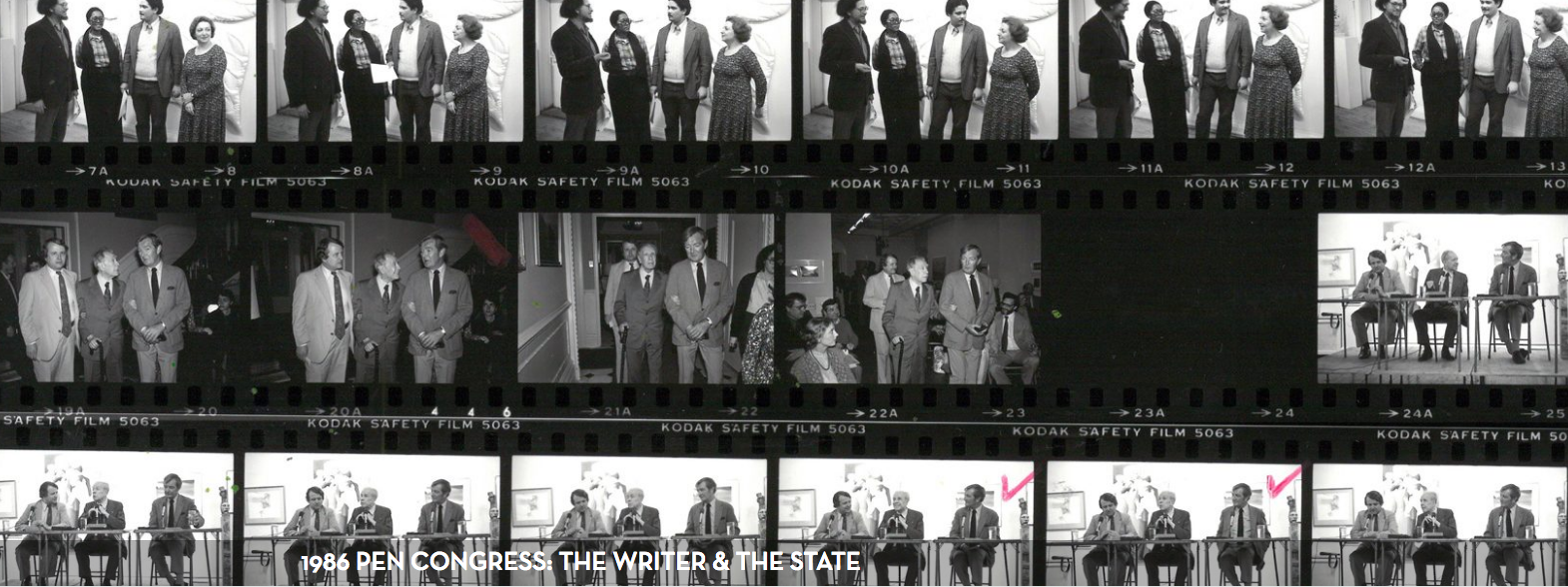
5. An Evening of Forbidden Writing, 1986

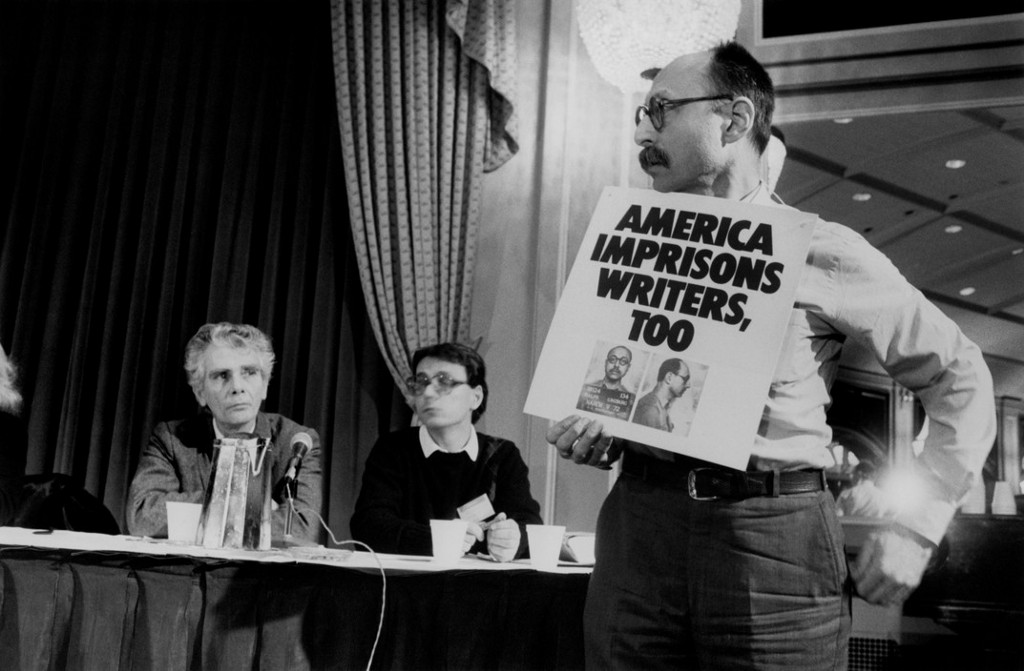
Joseph Brodsky, Toni Morrison, Edward Said and others read the banned, forbidden, and exiled works of writers such as Osip Mandelstam, Aleksandr Solzhenitsyn, and Mila D. Aguilar. They delve into a discussion about political imprisonment, freedom of expression, and the immeasurable power of words.

6. 48th PEN International Congress — Opening Ceremony

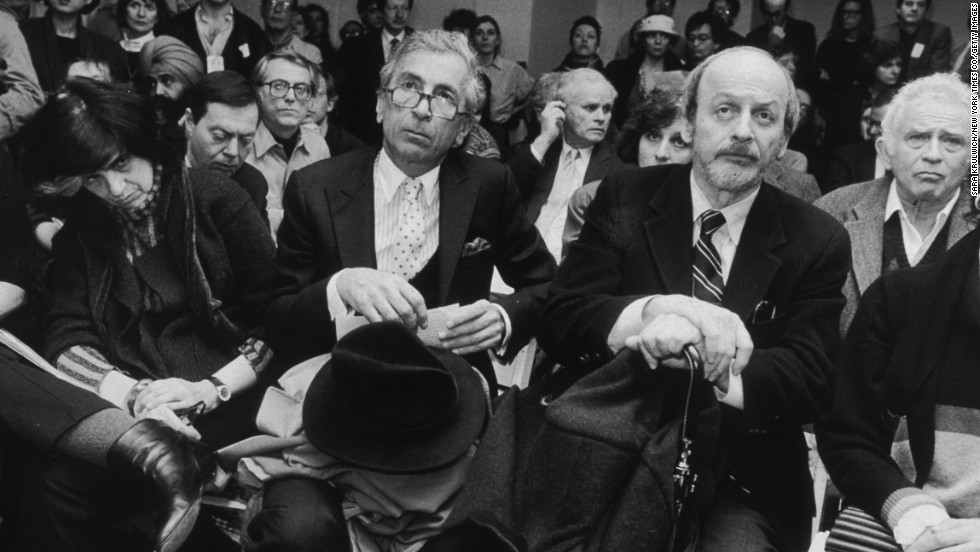
This 1986 event stirred up quite a bit of buzz. The recording begins with introductory remarks from then-president of PEN International, Per Wästberg, and then-president of U.S. PEN, Norman Mailer. Later, Ronald Reagan’s Secretary of State George Shultz speaks, ending his remarks with the line, “Don’t be surprised by the fact that Ronald Reagan and I are on your side.” At the end, Mailer explains his controversial decision to invite Shultz.

7. Writers in Support of Salman Rushdie

A number of writers including Joan Didion and Norman Mailer show their support of Salman Rushdie and read from his book The Satanic Verses, which at the time (1989) had been pulled from shelves by three major booksellers. Speakers discuss the hazards of political leaders making judgements about books and the value of freedom of expression.

8. 1966 PEN International Congress — The Writer as Public Figure

Noteworthy cultural and literary figures, including Arthur Miller and Pablo Neruda, talk about how writers fit into the public eye. They question why people read classics — because their lessons and characters are universal, or because of their authors’ historical role? They ponder how technology and media effect the public personas of writers.

How to Write About Love and Atonement in the Midst of a Humanitarian Crisis

9. Making It In The Mainstream: Writers Who Reached a Larger Audience, and How They Did It

This is the sixth annual PEN-AAP symposium, in which five writers and their publishers/editors discuss what components are necessary to create a successful book and how to reach an expanded audience. The audio recording features Dominick Dunne and Terry McMillan, among others.

10. Thirty Years of Feminism: Literature and the Movement. Taboos — Striking Them Down and Striking Back

“Thirty Years of Feminism” was a multi-part event in 1992 about the influence of female writers. In this segment, participants discuss a writer’s relationship to taboos, gender discrimination, and how women can fight back against societal stigmas.

A Burial Story About Far-Away Family

“What We Lose”

by Zinzi Clemmons

We returned to Johannesburg one year after my mother died. Of the two weeks we spent there, I spent one afternoon with my grandfather. He sat in his recliner, in front of the TV, switched to the cricket game, and I halfheartedly arranged papers, went to the store to buy milk, and brought him cups of tea.

“You don’t seem well,” he said.

I laughed and said that I was fine.

“My feet ache,” he said, pointing down at his blue velvet slippers. His diabetes caused his feet to swell, and they caused him great pain. I removed the slippers and found his skin dry and red. His toenails were black.

“Papa . . .”

“I’m in pain every day,” he said. “It’s not just my feet, it’s all over.”

I saw his eyes fill with tears and then looked away quickly. My father had spent most of his time in Johannesburg with my grandfather, running him all over town, sitting with him, talking. They had always gotten along, but now they behaved as old friends, reunited after a long time apart. They shared a bond over my mother’s death that the rest of us couldn’t know. My grandfather’s pain was as unknowable to me as my father’s but multiplied several times over. I was afraid that if I looked into his eyes, I might see what it was like to lose a child. In- stead, I excused myself to the bathroom.

“I’ll get you some muscle rub, Da.”

In the small room lined by eggshell tiles, unchanged since my mother bathed in there as a baby, I gazed at his neat arrangement of ointments and creams, the same bottles that he’d used since I was a child. I cried until I felt so empty that I knew no more would come, and then I went back outside.

We assembled at my family’s gravesite, at the large coloured cemetery a few minutes from my grandparents’ house. As we walked from our cars to the small plot marked by a few lines of white folding chairs, I remembered my grandmother’s funeral, held here ten years ago. My grief had been simple and remote. I had had no clue of the depth of feeling beneath my own mother’s tears; this time I finally did.

My mother’s brother Bertie led the ceremony. He had made a small fortune and a name for himself by opening a string of gas stations in coloured townships that employed neighborhood people and quietly exploited them. He walked to the front of the group with a serious look that bordered on a smirk. He could barely contain his glee at being in front of a captive audience. He rubbed his belly with a gold ring–laden hand; his children sniffed loudly from the front row.

Bertie took the urn holding my mother’s ashes from the pedestal nearby. He handed it to my grandfather, who laid it in a small hole next to my grandmother’s headstone.

My cousin Lyndall squeezed my hand.

“I hope his fat ass falls in that hole,” she whispered under her breath to me. We both laughed, and Bertie’s children — clad in designer clothes and shades, comforted by their respective spouses — shot us disapproving stares. Though we were close as children, our relationship became distant when my cousins became certifiably rich, in a way none of us could really understand; it ended completely when they married. Their wealth made them paranoid. They closed ranks against people or conflicts that challenged any one of them. The rest of us saw this happen, felt a different kind of grief for the people they had once been.

I started to sob in huge bursts again, felt my face getting hot.

“Are you okay?” Lyndall whispered to me.

I felt Stephanie, my older cousin, poke me in the back. She opened her palm and revealed a small blue pill.

“For your nerves,” Lyndall said. I held it in my hand.

“Don’t think about it,” Lyndall said, and raised my hand to my mouth.

The pill kicked in just as Bertie waddled back to his seat, and everything turned gray. I stopped crying. We waited in line to throw dirt on my mother’s ashes. I held my father’s hand. We said our final prayer and went back the way we had come.

My cousin Lyndall is beautiful and wild. She has wavy sandy- brown hair flowing down to her back that she flicks off of her neck mischievously whenever she is lying. She’s the pariah of our family because in high school, her parents caught her doing tik. They screamed and beat her and she didn’t apologize, so they sent her to rehab in Botswana for a month. She came back wilder than ever, but better at hiding it.

Lyndall is that fatal mix of beautiful and visible brokenness that made all the guys swarm us whenever we would go out. When I first arrived, she took me out into the small rectangle of my grandfather’s backyard and handed me a joint. As we hunched under the clothesline, Lyndall held the garments away from our smoke. “Aish, if my mother smells this I’m in for it.” I chided Lyndall, still a captive to her parents’ old ways. For the millionth time, I told her she should move to America. No one as free as her should live in this country. She waved off the weed smoke.

“This is dangerous,” Lyndall said, putting the joint be- tween her teeth. She led me up to the roof of our grandfather’s garage just like she did when we were kids. We hoisted our- selves onto the wall, then onto the storm pipe, and up onto the tin roof.

“Papa used to hate us doing this, hey?” Lyndall said with the joint still in her teeth, casting a cautious glance into the living room window. When we were little, our grandfather had a sixth sense for our mischief. As soon as we put a foot on the house’s whitewashed wall, he would be at the window, yelling threats at us to get down.

A dog barked. We lay side by side, blowing smoke into the air. We could hear pots clanging in the kitchen sink, our aunties cleaning up the funeral lunch.

“Do you remember when we were little,” Lyndall said, “when we used to pretend we were grown-up? You always wanted to be twenty years old and living in New York.”

“I did,” I said, chuckling. “We used to practice putting on lipstick and kissing our pillows.”

“I was going to marry a footballer,” Lyndall purred, drawing long on the joint. “I still can.”

We laughed.

“How you doing, really?” Lyndall asked.

“How do you think?” I sighed. “It feels like everything has fallen apart.”

“Your mom and I were close in a — different kind of way.” My mother generally disapproved of Lyndall’s wild behavior, but there was some part of her that obviously identified with it. They called each other often to share gossip, and when Lyndall got in trouble, my mother would be the first to call and chastise her. But at the end of the conversation, they would end up laughing.

I looked over and Lyndall was crying. She wiped her eyes on her forearm, the joint in her fingers.

Ahhhh!” She flicked the joint off the roof. “It’s time to get out of here and get drunk!”

From an article on a planned high-rise in Maboneng, the fast-developing neighborhood in Johannesburg, by London-bred Ghanaian “celebritecht” David Adjaye

“I think it will be a double take with a lot of people, because you will look at this building and think that it is in some other city, and then you will realise its in Johannesburg; it’s in Africa,” he said. The aim is to “combine an African aesthetic with a contemporary vision.”

But why do “African” and “contemporary” have to be incommensurate? Why (and to whom) is it appealing to think you are in another city besides the one, in Africa, that you are in?

The Rise of Dystopian Fiction: From Soviet Dissidents to 70’s Paranoia to Murakami

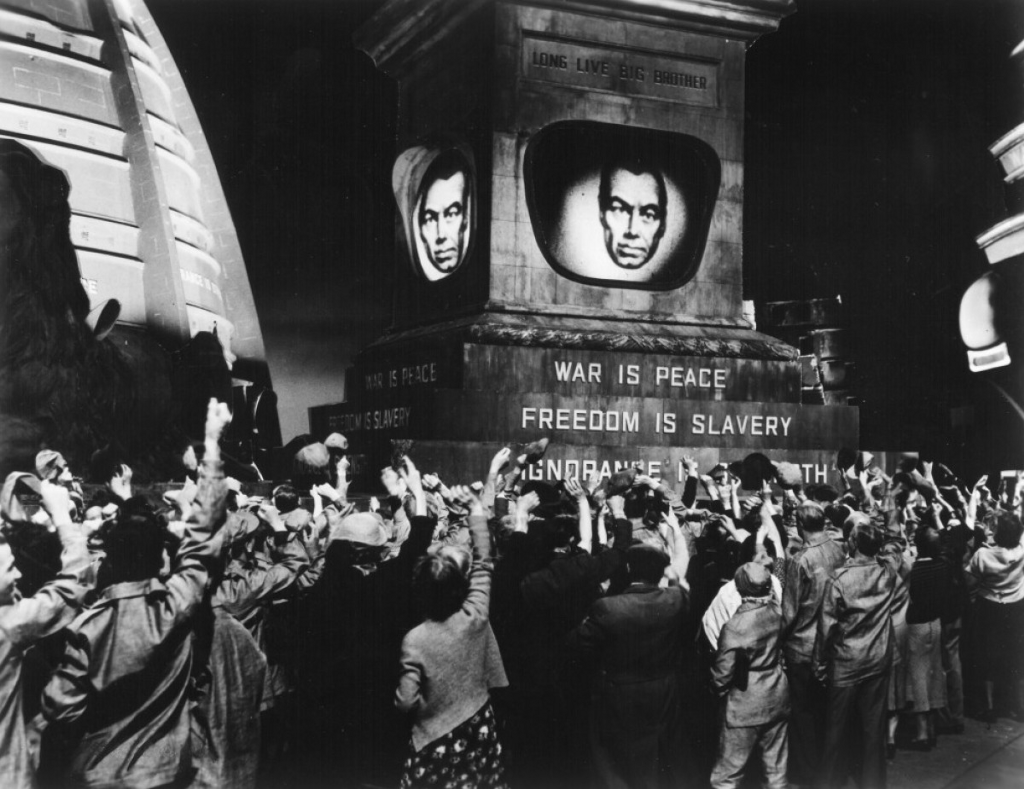
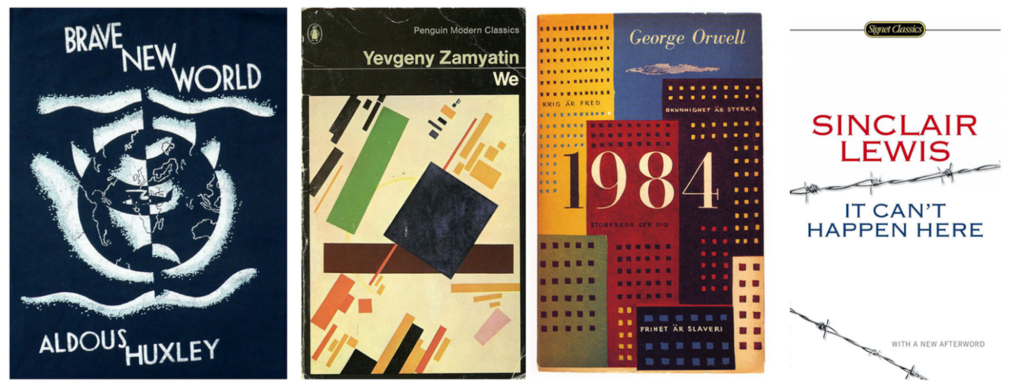
George Orwell is back in vogue these days — a far cry from 2014, when The Guardian was debating whether or not 1984 was good bad or bad good fiction. In January this year, 1984 shot up the bestseller charts, and the trail doesn’t just go cold there. Soon joining it at the top were 1984’s old dystopian buddies, Brave New World and It Can’t Happen Here; in the meantime, sales of The Handmaid’s Tale were up 30 percent in 2016.

We are re-reading these past giants of the genre, even though we’re used to the idea of dystopia in our pop culture by now. (Credit where credit’s due: The Hunger Games was something of a big factor.) Yet the dystopian novel — as we know it, in its full totalitarian glory — is itself a relatively new phenomenon. Before 1900, only the British satirist Jonathan Swift wrote books that could, with one eye squinted, be called dystopian. So when did dystopias and dystopian themes start taking off in modern fiction? And is there a pattern to their rise and fall throughout the past?

Origins

First, there was the concept of utopia, the yin to dystopia’s yang. The former sprung from the mind of Sir Thomas More, who wrote Utopia in 1516. Ironically, More possessed serious reservations about the existence of utopias. (The word itself could be a pun, derived from the Greek word u-topos (“no place”) and also eu-topos (“good place”). Such a good place, More seemed to reason, was not anything we knew, and so it must not exist.)

If a utopia is a place that’s too good to exist, a dystopia is a place that we certainly don’t want to exist.

Today, we can define dystopia as “an imagined place or state in which everything is unpleasant or bad, typically a totalitarian or environmentally degraded one” (OED, 2017). The first public usage goes all the way back to John Stuart Mill in 1868. In a speech to the House of Commons, Mill said, “It is, perhaps, too complimentary to call them Utopians, they ought rather to be called dys-topians, or caco-topians” (‘cacotopia’ was relegated to the Wastepaper Basket of History). But it wasn’t until about 50 years afterward, when authors made the word their own, that the idea of dystopia began to actually take root in the public consciousness.

1920s & 30s: Defining The Genre

Perhaps it makes sense that the modern dystopian novel emerged at the turn of the 20th century. It was a time of political unrest and global anxiety, with two world wars awaiting in the near future. Jack London’s 1908 novel Iron Heel was said to be a remarkable prophecy of the impending international tensions that would give way to World War I. Yet we don’t see dystopian fiction becoming a more defined genre until the publication of Yevgeny Zamyatin’s slender We in 1921.

Before We, fiction about an “ideal” society (with the exception of H.G. Wells and London) tended to end utopian. After We, the genre took a grim downturn (or upturn, depending on which way you’re squinting). We set up many of the tropes that would come to dominate dystopian fiction. These included troubled, unresolved endings (very fun!) and a totalitarian government gone mad.

Also importantly, Zamyatin’s book greatly influenced two fictional works that tower over the rest of the genre to this day: Orwell’s 1984 and Aldous Huxley’s 1939 Brave New World. Both were written in the shadow of a world war. Both predicted an even darker future. Admittedly, the worlds within these two dystopian novels differ vastly, and the influences that Orwell and Huxley feared were not the same. According to critic Neil Postman:

“What Orwell feared were those who would ban books. What Huxley feared was that there would be no reason to ban a book, for there would be no one who wanted to read one. Orwell feared those who would deprive us of information. Huxley feared those who would give us so much that we would be reduced to passivity and egotism. Orwell feared that the truth would be concealed from us. Huxley feared the truth would be drowned in a sea of irrelevance. Orwell feared we would become a captive culture. Huxley feared we would become a trivial culture, preoccupied with some equivalent of the feelies, the orgy porgy, and the centrifugal bumble puppy.

In short, Orwell feared that what we fear will ruin us. Huxley feared that our desire will ruin us.”

But the stage for the genre was set, in spite of any differences. In this early crop of dystopian fiction, we can see the themes over which future novels would continue to obsess: political capital, the meaning of free will, and, perhaps most significantly, fear of the state and the unchecked power of government.

Prominent Dystopian Fiction from the Era

In Huxley’s colossally chilling vision, people come to adore the very authorities that undo their capacities for thought. Half of the Big 2.

Whereas Huxley’s dystopia is based upon affluence and pleasure, Orwell’s 1984 is just gray totalitarianism: a towering cross-examination of government surveillance, information, and the meaning of freedom. Gave rise to the concept of Big Brother. Half of the Big 2.

An often unacknowledged father of modern-day dystopian novels, Yevgeny Zamyatin’s We predated both Orwell and Huxley, and inspired Brave New World.

A semi-satirical novel that experienced renewed popularity after 2016. It Can’t Happen Here was written in 1935 and predicted a fascist America under the control of a dictator.

1950s and 60s: War And Tech

OK, we’re out of the woods of World War II, you say. Time to breathe a sigh of relief! Surely, post-war optimism means that authors are going to start cheering up, right?

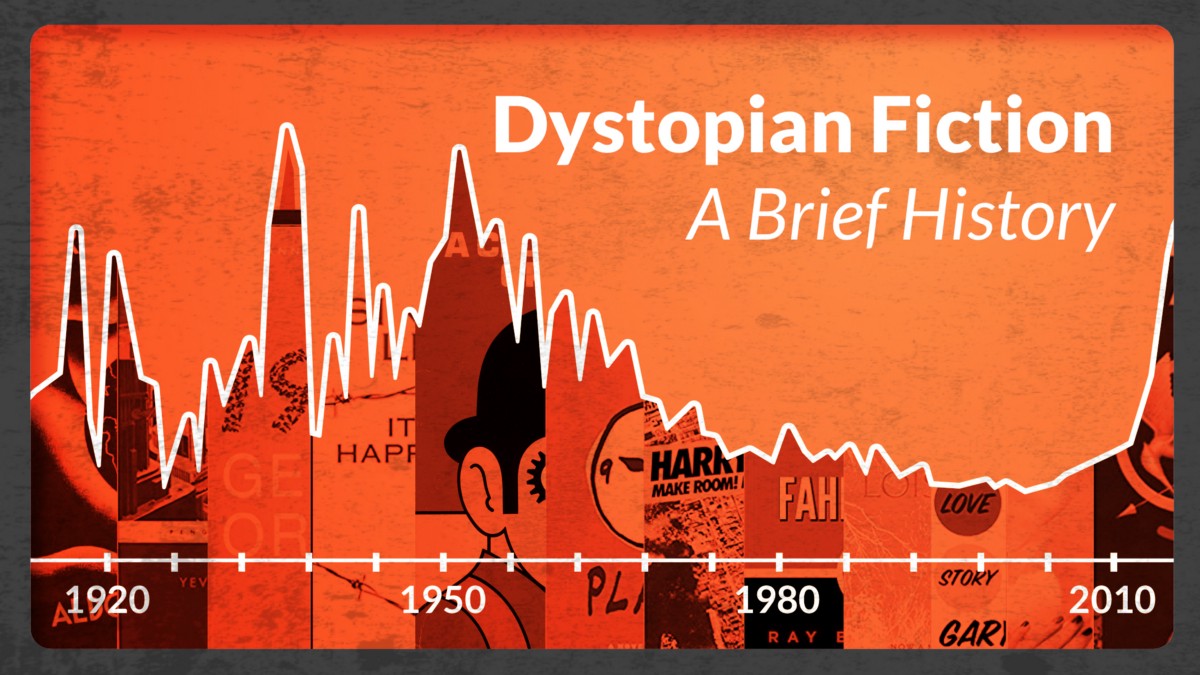
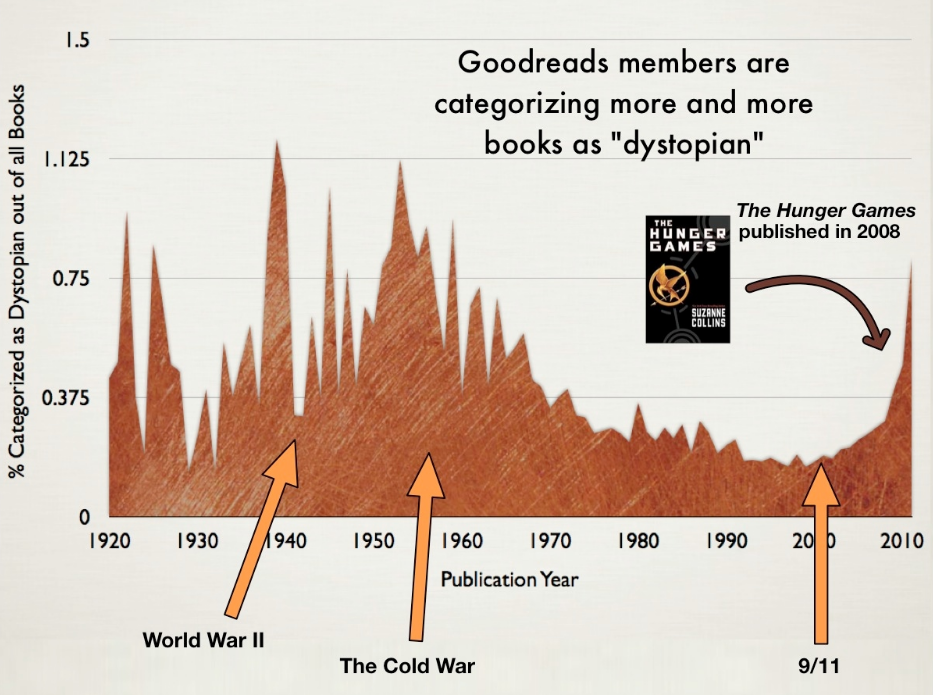
A graph showing the frequency of dystopian novels over time, 1920-2010, with peaks around WWII and the Cold War but a valley around 9/11 (and then another peak in 2010)

Sorry. This chart from Goodreads says, nope!

Political commentary shouldered many of the dystopian themes that emerged from the end of the war. And World War II fueled the prospect of World War III and apocalypses. (See: Kurt Vonnegut’s classic Player Piano in 1952 and Philip K. Dick’s 1964 The Penultimate Truth.) We do differentiate between apocalyptic fiction and dystopian fiction — but there’s always a fair bit of crossover when crumbling societies and their governments are involved.

Incidentally, it was during this time that authors’ growing suspicion of technology bubbled to the surface. Some major technological advances during this time included:

  • the inception of the Turing test (a test for intelligence in computers)
  • the creation of Sputnik I
  • the invention of the first personal computer

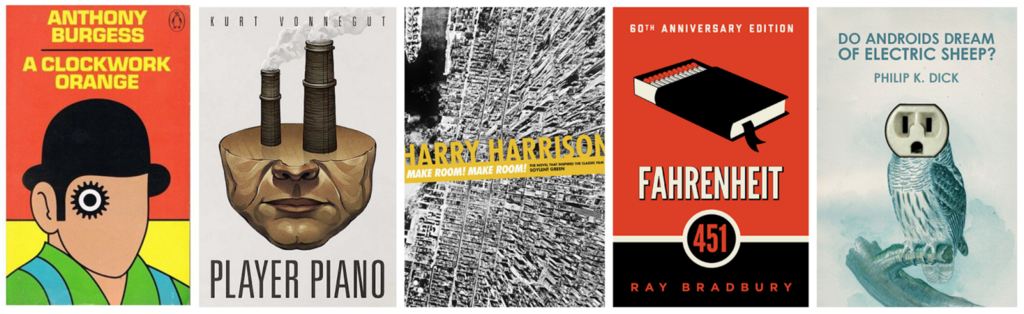
As a result, dystopian novels began to cross paths more regularly with science fiction worldbuilding, such as in Dick’s 1968 novel, Do Androids Dream of Electric Sheep?

After witnessing war, authors grew particularly concerned with totalitarian governments’ ability to regulate the arts. One of the most popular examples continues to be Ray Bradbury’s Fahrenheit 451, which breathes into awfully vivid life the possibility of a future in which books are burned. (Today, Fahrenheit 451 is banned in many schools in the United States, and so one cannot say that real life does not possess a solid sense of irony.)

Prominent Dystopian Fiction from the Era

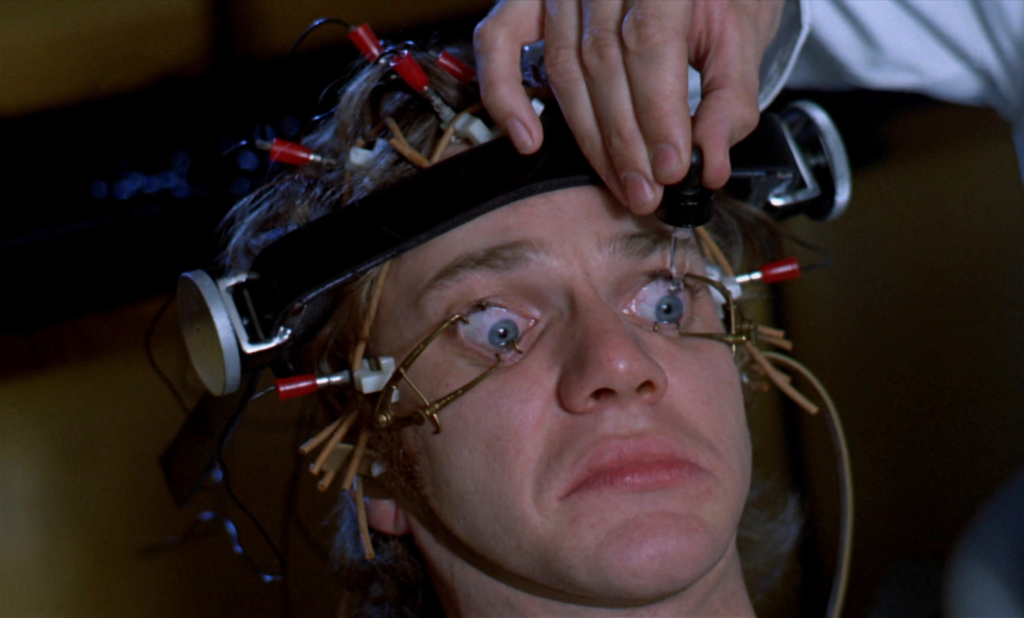
The brainwash of an ultraviolent youth in A Clockwork Orange’s dystopian but complacent society allows author Anthony Burgess to pose this question: “Is it better for a man to have chosen evil than to have good imposed upon him?”

Internet thinkpieces about machines presiding over the future are nowhere near as grim as Vonnegut’s Player Piano, set in a class-divided society after World War III.

A classic novel of overpopulation. In a crime-ravaged New York City, food is scarce and the government is rationing portions of a mysterious substance they call “Soylent Green.”

You wonder: why the title, Fahrenheit 451? It’s the temperature at which the paper of books catches fire. In Ray Bradbury’s world, all books are banned — and burned.

In which a man who increasingly wonders about the difference between people and androids he must kill. Also the inspiration behind 1982’s Blade Runner.

1970s-1990s: Corporations and Poisoned Bodies

While the volume of dystopian fiction declined for a period entering the 1970s, the variance within the genre broadened. If the genre reflects our fears back to us, then in the 1970s we see the public moving past a perpetual fear of war to explore new meadows. Environmental crises dominated the conversation (the Clean Air Act was only passed in 1980) while the onslaught of advertising, misgivings over the body, and economic stagnation ushered in a new era of cynicism.

It was a catalyst for quite a few dystopian classics that took the genre in brilliant new directions.

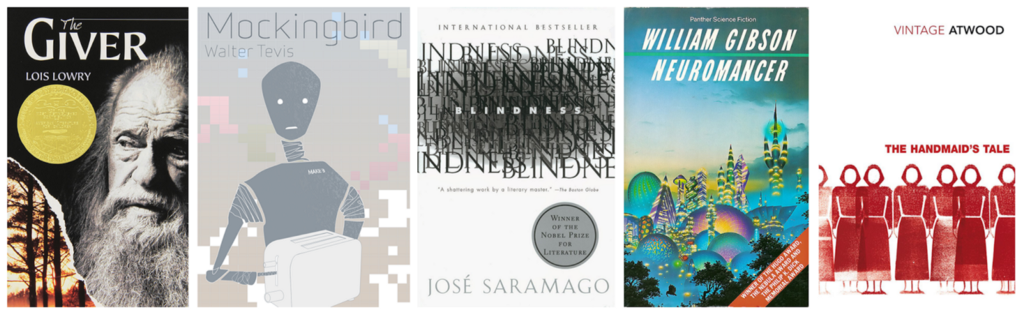
The Handmaid’s Tale, a book in which women’s bodies are nothing more than reproductive machines, shook the world when it was published in 1985.

Cyperpunk was born out of William Gibson’s 1984 Neuromancer.

Private corporations became a wellspring of repression and public enemy #1 alongside totalitarian governments in many dystopian novels, such as Neal Stephenson’s Snow Crash.

And meanwhile, black satire became all the more pronounced in the genre, as José Saramago showed in the Blindness and its sequel Seeing, which both use an omniscient narrator to great effect.

Perhaps most notably, in 1994, Lois Lowry quietly published The Giver. A slender book about a community in the future that doesn’t feel pain anymore, The Giver was a dystopian novel for young adults before the breed was cool. It built upon past traditions of adult dystopian fiction while managing to popularize the genre among young adult readers. This would be significant because of what would occur in the next decade or so…

Prominent Dystopian Fiction from the Era

“A world without color — fantastic!” said no-one ever. Yet people embrace this society within The Giver, which asks what a world with Sameness really is: a dystopia in sheep’s skin.

About a robot’s death wish in a world where people don’t possess the ability — and, worse, the desire — to read.

Saramago uses a third-person omniscient narrator and an ever more ominous tone to create this chilling and ultimately bewildering work about a society suddenly afflicted by blindness.

The dystopian world found in this romping science fiction novel was one of the first to introduce cyberpunk to society, capturing first-time novelist William Gibson the Hugo, the Nebula, and the Philip K. Dick Award in 1984.

A vision of a dystopia steeped in gender discrimination, The Handmaid’s Tale was giving folks the shivers decades before it became a popular television show on Hulu.

The Turn Of The Millennium: Youth Betrayed

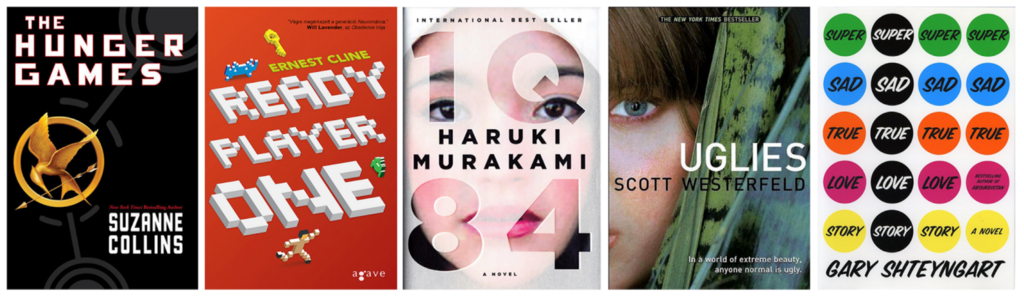
Today, dystopian fiction is predominantly associated with the young adult genre. Young adult dystopian series — Maze Runner, Divergent, Ready Player One, among countless more — dominate the shelves, bleeding into Hollywood. The Divergent films alone grossed over $700 million in box office receipts worldwide.

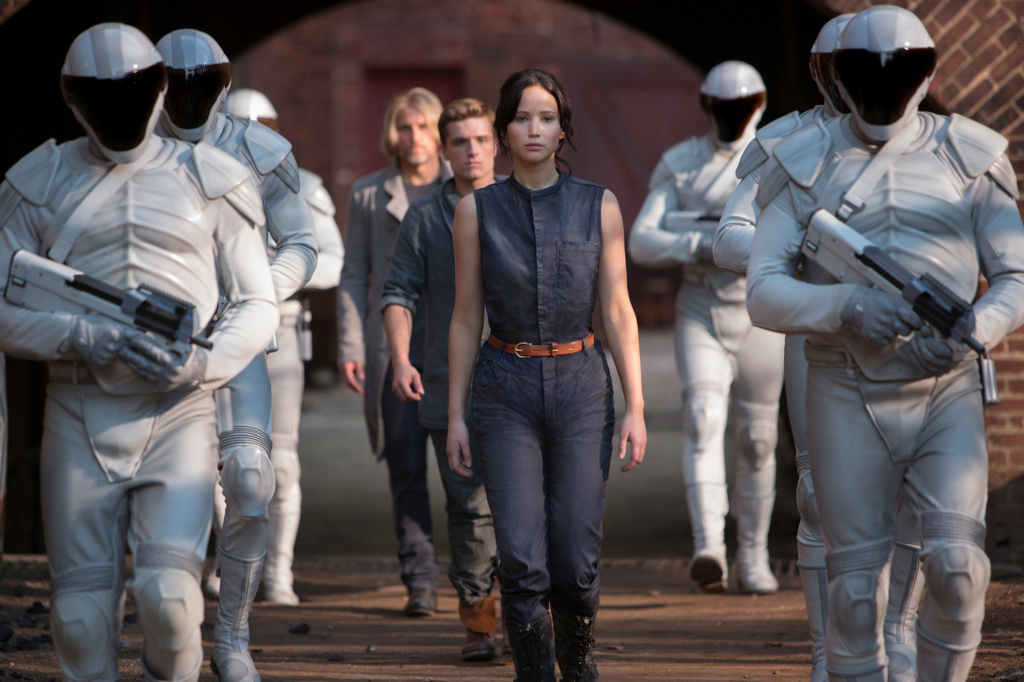
How did we reach this point? In big part, it’s due to The Hunger Games, as the trend that The Giver began exploded in popularity among young adults with the publication of Suzanne Collins’ series. In dystopian fiction, young adult readers can find a tangle of themes to identify with: themes of self-discovery, of one young person pitted against the whole terrible world. Overall, the rise in dystopian novels since 2000 is said to be a symptom of the pooling anxieties that followed 9/11 and other troubling geopolitical events.

But The Hunger Games still managed to change many aspects of the game. In an essay, the AV Club noted:

The Giver comes from what seems to be a lost tradition in dystopian storytelling. It used to be okay for genetics to eventually yield an individual who wants to break free from societal homogeny, and choose to escape that oppression to a safer community. Now, merely escaping isn’t enough — dystopian-thriller protagonists must learn brutally militaristic tactics and enact violence that brings tyranny crumbling down in increasingly bloody action sequences.

And so in today’s crop of dystopian fiction, the stakes are bigger than ever. Continuing in a proud tradition, they carry on vindicating the definition of a dystopia: a worst possible world. But what each of them (sometimes) offers is a brief, shining belief that such a world can be fixed. And now, the resurgence of sales for books such as 1984 and Brave New World shows that a vast contingent of us continue to turn towards the genre for comfort, or answers.

Prominent Dystopian Fiction from the Era:

A part of the trilogy that ends with Mockingjay, Hunger Games needs no introduction anymore. Except this: may the odds be with you when you read it.

Like MMORPGs? You perhaps won’t be such a fan of them after you read Ready Player One, which won the Alex Award from the American Library Association and the 2012 Prometheus Award.

(Un)coincidentally, 1Q84 is only one number removed from George Orwell’s 1984. Once called the dystopian novel to end all dystopian novels, this winding epic is a feat of brilliant imagination that only Murakami could’ve conjured.

In the background of a burgeoning romance between a Korean-American and a Russian, America teeters on the brink of economic collapse and consumerism threatens to overwhelm all.

Who says you’re ugly? This book does. Uglies turns a very dystopian eye upon plastic surgery: in this future, when you turn 16, you get an operation to turn “pretty.”

The Internet Has Some Thoughts on the Trailer for Spielberg’s ‘Ready Player One’

We all love the ‘80s, but is this movie going overboard?

A still from ‘Ready Player One’ — or, the third horsemen in the cultural apocalypse, possibly

Another year of San Diego Comic Con has come and gone, leaving behind a whole slew of teasers and trailers that will have people buzzing for weeks to come. The newest controversy raging on Twitter? The trailer for Ready Player One, the new sci-fi movie directed by Steven Spielberg, set to be released in March 2018, and based on the 2011 novel written by Ernest Cline.

Ready Player One tells the story of a dystopian near future in which the world’s population uses an advanced gaming system for all facets of life. When the creator of this new world order dies, it’s discovered that he hid his fortune in the form of an easter egg within the game, and — here’s the kicker—only those who share his love of the 1980s have a real chance of finding it. Spielberg called the film’s world “a flash future that is awaiting all of us whether we like it or not.” Cline noted that it will expose people to the coming possibilities of virtual reality. In other words, we should all prepare for the fast approaching day when a virtual simulation of ALF serves as our all-seeing, all-powerful, all-cat-consuming overlord.

Which brings us to the controversy, controversy being the inevitable result of just about any combination of Comic Con + Internet. At first, people seemed to be generally on board with the Ready Player One movie, or at least keeping an open mind, especially with Spielberg at the helm. His work, of course, is a seminal element to the fictional universe’s worship of all things ‘80s. But those positive vibes quickly changed with the reveal of the teaser trailer at SDCC.

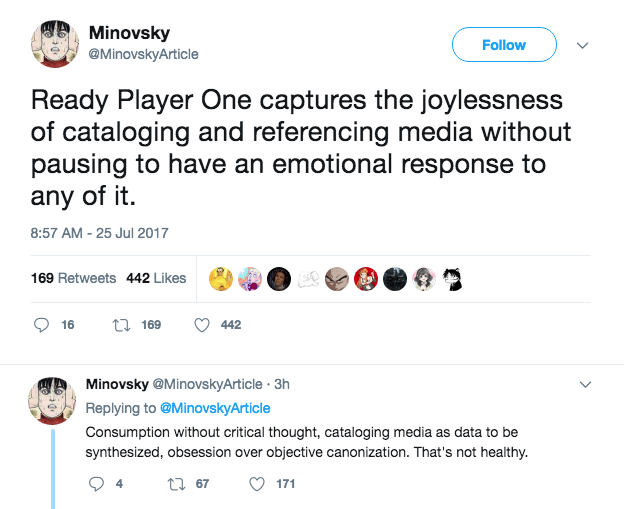
The question now — or anyway the question overtaking a certain segment of the web — is whether we’ve reached a saturation point with our nostalgia for recent times, and whether projects like Ready Player One are an indication that we as a culture have lost our capacity for original creation and are completely dependent on and beholden to the recent past, and in fact are spiraling downward into an abyss of retreads, rehashes and kitsch. Or something like that. Entertainment Weekly noted that the trailer alone has over 20 references to other works, including Willy Wonka, Back to the Future, and A Nightmare on Elm Street. While some are excited about this world of homage, dubbing it a mixture of Willy Wonka and The Matrix, others took to the internet and Twitterverse to voice their concerns.

A.V. Club noted that the debate seems to be focused on whether the increasingly mainstream “nerd culture” is a distinct aesthetic or just a collection of pop culture references. Other outlets such as The Ringer and Vogue have criticized the movie’s reliance on nostalgia commodification.

Given that we are living in the era of reboots, with a fascination (read: obsession) with all things late ‘80s and ‘90s, it’s no surprise that shows like GLOW and Stranger Things are doing so well. But is Ready Player One going too far?

Donnie Cuzens, a web developer and writer, voiced his concern over Twitter about the problems associated with nostalgia. “Ready Player One being made into a film is the apotheosis of aggressively weaponised and monetised nostalgia but maybe it’s what we deserve,” he tweeted. Cuzens posts reflect many people’s frustrations with the emotionlessness of references in film — of consumption without thought. USGamer calls the trailer a reflection of the book that’s “about nothing.” While visually enticing and designed to make you say “Woah, cool!” — it lacks deeper meaning.

So, is Ready Player One a sign of the coming cultural apocalypse? A brilliant meta-fiction? The corruption of your youth or an avenue toward the future?

Probably we should all come to a conclusion before seeing the actual movie, just to be safe.

Keep Culture Weird: 10 Eerie & Monstrous Books for Fans of Netflix’s Stranger Things

Trauma, Storytelling, and Time Travel

A writer questions the reliability of witnessing her own experience and the faithfulness of narrative

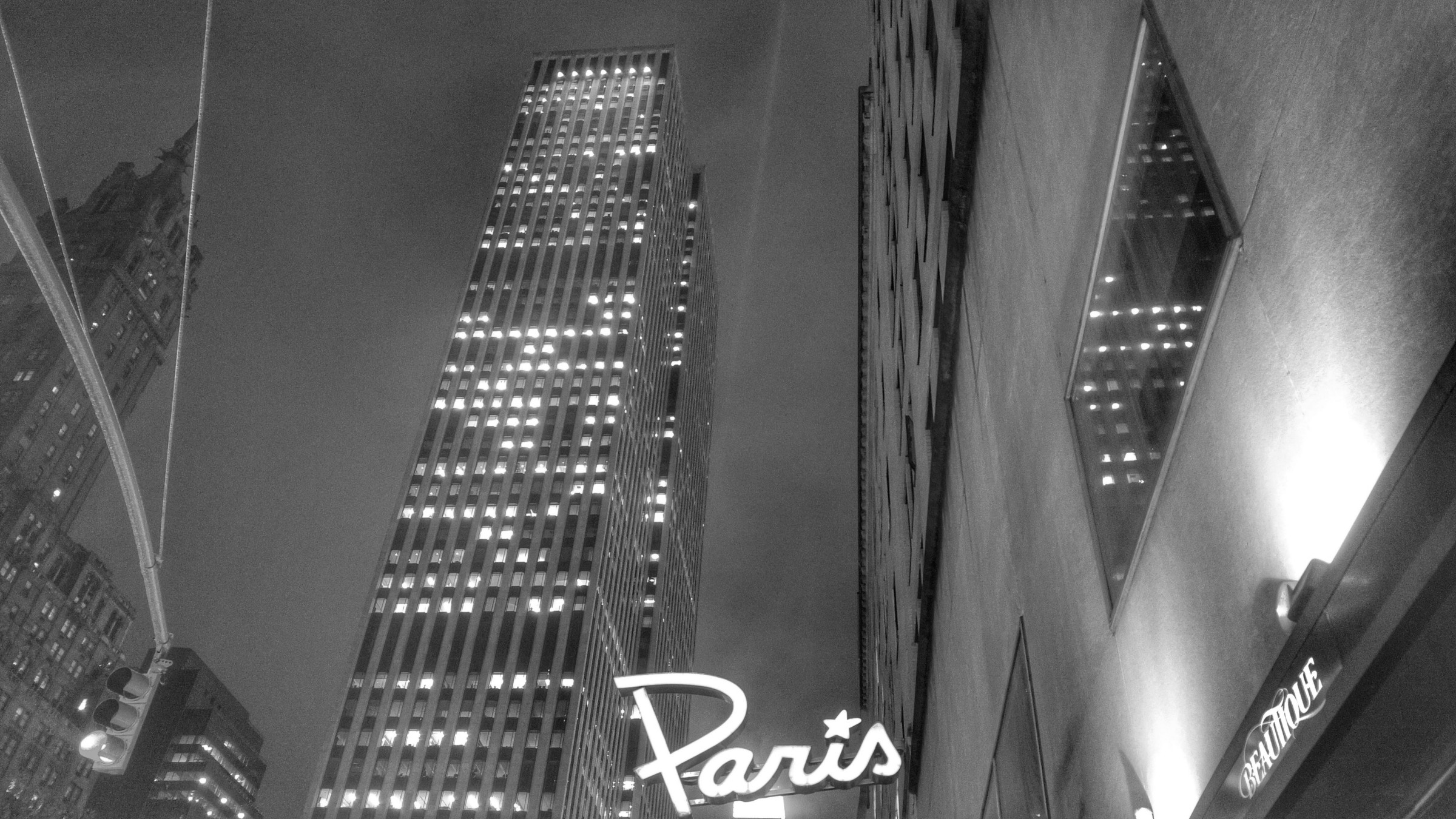
Paris Theater, Manhattan. Photo: Leslie Kendall Dye

“I live on West 76th Street, near Broadway,” said the mother on the playground, as we watched our girls romp on the jungle gym.

I hesitated. Then I replied that I had a friend who had jumped out a window on that block many years ago. “That man was a friend of yours?” she asked. I was taken aback; evidently the story had traveled the neighborhood and was a frequent anecdote. I thought of Mrs. Lovett in Sweeney Todd. “My, you do like a good story, dontcha?” she asks Sweeney suggestively.

Who doesn’t?

I have my three-year-old in the stroller a few days later; we are headed to another playground in Riverside Park, which is perched above the waters of the Hudson. The sun shines brightly but the wind is sharp.

We frequently walk up and down Broadway, my toddler and I. We arrive — it seems — quite suddenly at the corner of West 76th Street.

On most days, this is just another bustling corner of Manhattan. Today I decide it isn’t.

I pause — just for a moment, because my child is not the sort to appreciate a break in momentum. Then I turn onto 76th.

I used to live on this block. I used to live there with a man named Joe.

Eleven years ago, the doorman found Joe’s body below the window of the apartment we’d shared. The doorman had gone to sweep leaves from the previous night’s storm and there was Joe — rain soaked, crumpled — in the middle of the courtyard. He had jumped in the night.

Eleven years ago, the doorman found Joe’s body below the window of the apartment we’d shared.

Joe didn’t leave a note.

I point to the maroon awning.

“Mommy used to live there,” I tell my daughter. The man at the newsstand remembers me and waves when I pass, even now, a decade later. Joe used to buy me magazines and candy at this newsstand. He loved to bring provisions — to sneak luxuries into the tower, to comfort the prisoner. One day he found me watching Fatal Attraction on cable; he laughed raucously.

“Mommy used to live there,” I say again. “Let’s go inside.” I roll the stroller into the building.

I see the doorman who found Joe’s body; he’s on duty today. Jeanne smiles at me to demonstrate that he remembers me. He called the police a lot when we lived there — either to keep me safe or to appease neighbors annoyed by the noise.

“Is this your little girl?” Jeanne asks. She looks just like you!”

Is he wondering if I’ll bring it up?

“How old are you?” he asks my little girl, trying to win her with a smile.

When a man asks my daughter about herself, I don’t like it.

“She is three,” I tell him.

Joe had me followed by a private investigator. He put software on my keyboard so he could read everything I wrote and sent. He woke me to berate me — nothing could wait until morning. Once, after reading my diary, he tossed me like a rag doll onto the doorstep, in my nightgown; then he slammed and locked the door.

My daughter escapes her stroller and jumps up the steps leading to the elevator.

Do I only think I remember the red and gold pattern swirling on the carpet below me? I see myself walking across that carpet twelve years ago — the day I moved in. Joe had just given me a small diamond ring. He’d taken me to Fifth Avenue and I’d sleepwalked up the aisles of Tiffany with him, listening to him ask questions about cut and clarity. He gripped my hand.

Do I only think I remember the red and gold pattern swirling on the carpet below me?

I wanted to vanish and reappear inside my father’s dusty study in California, to be a child again, running my fingers along the edges of his books. Or, better yet, to hear my mother’s voice meting out advice — advice that I must have missed. Or did I? Did she advise me about these things? Or would she have been unable to imagine her daughter in this predicament?

I found the restroom — Tiffany has many floors and the elevator took a while so when I got there the impulse to vomit had passed. I sat on the plush couch in the ladies’ lounge room and waited for Joe to forget I was there. But he was just outside the door when I emerged; he was pacing, sweating. What, he asked, had taken so long? He took my hand again and returned me to the diamond counter. On the way, he shoved the small of my back and when I stumbled, he smiled and caught me just before I fell.

Joe was once profiled in GQ; he was not famous but he caught a photographer’s eye as he walked down the street one day. He used to say it was silly; he was not handsome; he was a PR executive, not a model. It’s true, he was not handsome. His bright blue eyes gleamed with feral rage, he twitched anxiously and smoked compulsively. He could not go long without a cigarette and the deep lines in his face revealed a body ill-cared for, shrouded in paranoia and agitated depression. The GQ spread was framed on his wall, which amused me considering how disdainful he claimed to be of the whole enterprise. How easily our hypocrisy shows! It might have been lovable or charming had he been a nice guy; everyone hides things and everyone displays other things that misrepresent. Everyone engages in faux modesty and subtle half-truths at times. Whether we are charmed or repelled by a person’s inconsistencies is merely a question of what it is that a person is hiding.

Sometimes I’m on a bus and I see Joe getting on at a later stop — I’m certain of it. I get off at the next stop and I don’t make eye contact. He is dead twelve years but sometimes he boards buses I’m riding.

Jeanne the doorman studies me. “I’m glad you are okay,” he says. That’s as much as we’ll talk about it. I’m certain Jeanne was thrilled to find Joe in the courtyard that rainy night. He hated Joe, but that’s not the reason he’d be pleased. It made for a great story. I know how Jeanne felt. I used to say: “I drove my boyfriend up the wall — and eventually out the window!” And people would laugh and then I would say, “No, really!”

Everyone engages in faux modesty and subtle half-truths at times. Whether we are charmed or repelled by a person’s inconsistencies is merely a question of what it is that a person is hiding.

Today, I’d wanted to show Jeanne my child. I’m a mother now. I am all the things I was before — an actress, a dancer, a person, but I stand up straight when I speak now. I’ve made sure Jeanne sees this so that I can leave our brief reunion triumphant.

The first time Jeanne called for the police, one of them said something about how common the whole scene was — a large apartment in a pretty neighborhood, and look what goes on behind closed doors. How ordinary, how routine we are, I thought. If anger and harsh words are common, I thought, if some degree of dysfunction is the norm, then happy couples must be fascinating.

Filling out paperwork for a restraining order is tedious. Taking photos at the precinct is a nightmare. I joked that fluorescent lighting is an actor’s kryptonite; it makes bruises darker, more purple, and it exaggerates swelling. “This isn’t a joke,” my mother scolded.

The last fight Joe and I had was over an actor who worked at the pottery shop at which I earned a meager wage. Joe thought I had seduced him. “When would I have done that?” I asked. I locked myself in the bathroom. I moved out two days later, packing a few things in secret, running toward the Broadway bus late at night. Perhaps I heard the clock ticking — counting the seconds before Joe detonated.

I went to free PTSD therapy after Joe jumped — Mount Sinai Hospital was doing a study. My counselor was pregnant. I filled out questionnaires but grew distracted by her belly. Surely I was not destined to have a husband or a pretty pregnant belly draped in a silk blouse.

We see this all the time, the policeman had said.

“No points for originality, then?” I had asked.

“This isn’t funny,” the cop said.

Not even morbidly so? I asked, but not out loud.

When I moved out, Joe came to my mother’s apartment, where I’d sought refuge, at two AM. My mother was out of town for the summer; I hung tough as he rang the bell and whispered at the lock. I sat frozen, wrapped in a quilt I’d won in a lottery at work. The quilt was exquisitely soft; its faded green flowers were meant to look vintage. It suggested a meadow, fresh air, homespun wisdom. It was my “new life” quilt. Someday it would be on a bed in a sunny room in a cozy apartment in some other Manhattan. I would find this other Manhattan — this is what I promised myself. I would make a new life. I didn’t answer the door. He rang the bell for over an hour, but I did not answer it. A few days later, he would plunge to his death — alone.

A police officer took me to dinner a few days after I’d moved out and before Joe jumped. He’d met me at the precinct, when I’d had the photos taken. He leaned in and advised me on how to tell if I was being followed. He’d done a sweep of the restaurant, he told me, before we sat down.

It was meant to turn me on. I asked him not to call me again — just because of timing, I told him. I didn’t want to hurt his feelings. He had a gun.

Three months after Joe died, I met my future husband. He asked me on a date and on the first night of December we saw a movie at The Paris Theatre.

Christmas lights flooded Fifth Avenue. Horses clopped by, leading carriages. If you squint on Fifth Avenue on a dark winter’s night, you can see top coats and bowler hats. You can see 19th Century passersby navigating a snowy thoroughfare. You can see Zelda Fitzgerald jumping in the Plaza Hotel’s fountain, or Eloise peeking from behind the curtains of the penthouse. You can see the other Manhattan of your dreams.

On our date, we didn’t pretend to be calm — we both felt nervous and shy. Still, I took off my shoes and crossed my legs when we’d settled into our seats in the theater’s lavish balcony. I trusted him.

On our date, we didn’t pretend to be calm — we both felt nervous and shy.

I had met Joe in an elevator. We’d only exchanged a few words before he reached over and pulled up my sweater, warning me that it was cut too low. He wanted to protect me, he said. I wore the same sweater to The Paris Theatre. My future husband didn’t touch my sweater; instead, he placed his hand just above mine, asking silently for my permission.I grazed my finger against his palm, giving him my answer.

Nothing Comes Back from the Dump

Our daughter looks like both of us. On this brisk spring day, we say “goodbye” to Jeanne and leave The Colorado. We buy a baguette at Maison Kayser — a French bakery on the corner of 76th that has replaced a previously bustling Greek restaurant called Nikko’s. There were rumors of money laundering at Nikko’s — something about how they moved on every few years to evade inquiry. No newspaper ever wrote up a story; it was merely whispers.

My daughter and I sit on a brownstone stoop and scoop out the baguette’s spongy interior. We watch New Yorkers departing their homes, checking cell phones, racing toward the subway.

Who wants to know a story like that about her mother? Not every “good” story should be told.

“Did you know Mommy used to live in that building?” I ask my toddler again. I don’t expect a response; the question is boring. Perhaps it will be a story for another day — a day many years in the future. Perhaps not. Who wants to know a story like that about her mother? Not every “good” story should be told. And is it a good story? In it, someone dies a lonely death. Still — in it, someone survives, escapes,and begins again. But who is to say if I’m telling the truth? More than a decade has passed and I can’t be sure I have everything right. No one can be sure she has everything right. And Joe isn’t here to defend himself. At least I haven’t used his real name.

My daughter and I stand up and stretch, and I gaze at the street I once lived on with a man I now call “Joe.” The Cerulean blue of the springtime sky electrifies 76th Street. I could stare at it all day.

“Mommy?”

“Mmm?”

“Can we please go to the playground now?”

A note from the author:

Two years ago, I found myself passing the same street nearly every day. I was always with my young child; she consumed my days, as toddlers do. As my daughter ran gleefully past this particular intersection, in a busy area of Manhattan’s Upper West Side, I was struck by the embodiment of my present day — my child — racing by a street that in my past had become endowed with darkness. For me it was not just an intersection in space, it was an intersection of two time periods. I used to live on that street, and a few things happened there, in a building just beyond the corner. Perhaps I had never sorted through those events properly, and as a result, I was compelled to revisit the street, not just in my mind, but on foot.

My child rooted me solidly in the present day, but if we strode up the street, could we slip through a portal to an earlier time?I thought a lot about the book Time and Again, by Jack Finney, as I began to write this story up. If we spend enough time in an old neighborhood or building, might we also travel in time? Might we sweep together the particles of the past and recreate the events that occurred there? Could we witness those events anew, could we see the old characters walking right by — so close you could hear them and smell them and touch them? It became an exercise in imaginative power — but was I summoning the past accurately or recreating it? And what, exactly, is the difference? The great acting teacher Uta Hagen said that we tell stories for reasons, we don’t simply re-live an experience for its own sake, and that when we re-tell a story, whatever compels us to do so shapes the way in which we tell it.

What, then, was my reason for telling this story?

My mother used to refer to a type of behavior she called “approach-avoidance.” The term perfectly describes my frame of mind when I wrote this. The subject matter disturbed me greatly but the exploration of a physical space that no longer held any danger fascinated me. I am a rational person, but I enjoy the idea of ghosts. Remnants of people and events remain in the machinery of the brain — they may fade but they never disappear altogether. If you seek out a ghost, if you name a fear, does it lose its power? I recently read that this is sometimes called The “Rumpelstiltskin effect.”

I approached a scary topic by circling the periphery, feeling around in the dark for sense memory rather than trying to face it head on. And so the essay came to be about things peripheral to the experience — it came to be about stories, and the game of telephone through which our stories pass on the streets of New York City, onto playgrounds, among strangers, and it also came to be about the side players in our stories — the witnesses — and the bits of wisdom they dole out, wanted or not.

Am I reliable?

Last night, I walked past the building again. I noticed that the lobby’s carpet is a dull beige — in my essay it is a swirling nightmare of red and gold. Did I remember wrong, conflating my anxiety at that time in my life with the color of the lobby’s rug? Maybe, maybe not. I visited the lobby with my toddler two years ago; maybe the rug has since been replaced.

Why Do We Still Crave Epiphanies?

David Burr Gerrard on insecurities, the dream of radical transformation, and the enduring power of epiphanies

David Burr Gerrard’s second novel, The Epiphany Machine (Putnam), opens with a user’s manual, a promotional pamphlet of sorts. It is meant to entice and intrigue, to obfuscate and dissuade. Dissuade who? Well, you and me, of course. Like the best paper collateral (and the best openings of novels), there’s a friendly pull and push at work in these first pages. It’s impossible not to keep going and find out what happens next.

The subject here is the book’s eponymous artifact, a tool that looks like a sewing machine and functions like a prophet. The epiphany machine is an antique device that exists for the sole purpose of tattooing epiphanies on the arms of its clientele. ABANDONS WHAT MATTERS MOST is an example of one. Or, SHOULD NEVER BECOME A FATHER. Beware of easy answers, promises, and fortunes: “An epiphany is not a parachute,” the pamphlet warns. It’s almost never a blessing. We follow the machine on its circuitous path through the annals of history, through the tattooed forearms of its detractors and devotees, and into the life of Venter, the protagonist and central figure of the novel. How and why and when the epiphany machine comes to shape Venter’s life is the epiphany we are waiting for, the momentum that keeps this lively novel moving forward.

At its best and its darkest, Gerrard is interrogating the nature of human interaction and human inaction with aplomb. The book, at its heart, is an examination of why people do the things they do, and don’t do the things they don’t, how knowing and not knowing can change the course of a life. “My father did the best he could,” Venter says, “which as a description of human behavior sounds like a tautology but is actually true of very few people.” The people of Gerrard’s novel are doing their best and their worst, and the epiphany of their behavior is the very best kind: the dawning of someone hoisting themselves over the horizon of our expectations. The Epiphany Machine is a tapestry of tattooed souls; the words on their arms become a refrain, a chorus, the twenty-four-hour ticking chyron of lived experience.

I recently spoke with David Burr Gerrard. Over sushi and diet cokes, we discussed writing workshops, John Lennon, and social media. He even prescribed some brand-new epiphany tattoos for a few people who are in urgent need of self-reflection.

Hilary Leichter: When Venter, the protagonist of your book, starts taking testimonials from people who are receiving epiphanies, he gets some advice on giving an interview from a writer named Catherine Pearson: “The only way to get people to talk about something important is to leave them with no other option.” So, this is our interview! This is your testimonial. Tell me something important about this book. What was the epiphany that led to The Epiphany Machine?

David Burr Gerrard: The Epiphany Machine started when I was in grad school, which is now more than ten years ago. I first wrote a short story called “The Epiphany Machine” in spring of 2006, for a workshop in Ben Marcus’s class. I had absorbed the idea that short stories were supposed to have some kind of epiphany, even though actually my professors really never told me that, and I had no idea how to write with epiphanies. On the one hand, I wanted to write stories that had epiphanies, on the other hand I thought it was clichéd and reduced human experience to slogans. On the one hand I thought I was too good for epiphanies, on the other hand I thought I wasn’t good enough for epiphanies. I worried that I didn’t really have any kind of wisdom to share. I couldn’t distill life into that kind of essence. I started wishing for an epiphany machine that would dispense wisdom for me, and then I had the epiphany that I could just write about the machine. I also came up with the idea that the epiphanies would be dispensed by something that looked like a sewing machine, largely because I love Franz Kafka’s “In the Penal Colony,” and I wanted to use a needle.

In my original story, the epiphanies were just written on a piece of wood. And it didn’t occur to me until much later to actually make them written on the body in the way that the judgments are written in “In the Penal Colony.” The story was received well in my workshop, and I thought, this is great! I’m going to turn this into a novel, and I’ll be done with it in about a year or so. And that led to the very painful and protracted epiphany that it was going to be much more difficult than that. I wrote many, many, many drafts that went nowhere, and I had what I thought was my final epiphany over and over again, which was that I was a terrible writer and it was never going to work. Finally, I put it down and went back to this novel I’d written in grad school, Short Century, revised that, had that published. I was very nervous about going back to The Epiphany Machine. Because I thought okay, this is just a trap that’s going to lead to me wasting my life and my writing career.

HL: I have this theory that the longer you have an idea you’re excited about, and you don’t write it, the more it becomes the weight that you wear around your neck.

DBG: It’s totally true. I think in general that’s very good advice. I think the best advice that I could’ve gotten in 2009 or 2010 would have been to stop writing this book and never think about it again. But now I’m glad I didn’t take what would’ve been good advice.

HL: I’m glad, too!

DBG: The fact that good advice is not always good advice is also a big part of this book.

HL: It didn’t occur to me when I was reading, but there is some similarity between the process of a writing workshop and the process of getting the epiphany tattooed on your arm. Waiting to hear people’s critique of your work, and waiting to hear this machine’s critique of your life. And the pain! Waiting to hear while you’re in so much pain! So, it’s interesting to me that when you were writing this, the epiphanies didn’t start out on the skin, on the actual arm, because there was so much about that in the book that brought to mind other things. It made me think of Shelley Jackson’s Skin Project, and how when you’re an artist you’re always told that you should have a “thick skin.” I thought your book was an interesting play on that idea. But what is the relationship, for you, between words and skin?

David Burr Gerrard

DBG: I always feel like brutally negative judgments about myself, whether they come from me or from someone else, kind of dig their way into my body. Not in tattoos, and not necessarily in a bunch of words, but certainly on my face. I’ve never had a really good poker face. I sit around worrying about some dumb thing I said at a party a few days ago —

HL: — and everyone can tell that you’re upset?

DBG: Exactly. Or rather, I imagine that everybody can tell. Because really, nobody else cares about you that much. Realistically, somebody sees a tattoo on your arm, in the world of this book, and they might think, “Oh, he’s a weirdo who got an epiphany tattoo.” But nobody really cares. You see a strange tattoo on somebody, in our world, on the subway, and you might think, “Oh, that’s a little weird,” and you don’t think about it again. We really don’t care about anybody else’s interior life.

HL: Why did you choose the forearm as the given spot for an epiphany tattoo?

DBG: That’s a good question — it just seemed to be a place that was both conspicuous, but also concealable. For a while I had them on the face, and it just seemed like too much. A face tattoo is a lot. And it would be really difficult to sort of go through your daily life with a face tattoo. With a forearm tattoo, it’s hard to hide it all the time, but it’s easy to hide it a lot of the time.

HL: The world of the book is so well-built. I really believed that the epiphany machine was a part of the culture, even if it’s a cult-culture. It’s a point of reference in everyone’s life, and that was interesting to me. It’s also a kind of antithetical social media that we don’t have in our world. Instead we have 140 characters that do the opposite of what these forearm tattoos do, concealing instead of revealing who we really are. Can you talk a bit about the relationship between epiphany tattoos and social media?

DBG: It’s so interesting because I started this book in 2006. It was very different. I had Friendster at the time!

HL: That was a thing!

DBG: It was a thing! But I wasn’t really thinking about social media. It didn’t seem that important. And then a couple of years later, I joined Facebook, and I would still say as I was writing these drafts, it didn’t really occur to me that there was much connection between Facebook and what I was writing. That may flatten the way I was thinking, because another thing you do in interviews is you try and create a story about process. So, I probably did, at certain points, think “Oh, okay, obviously on Facebook there’s a certain kind of self-presentation that’s related in a complicated way to the self-presentation in deciding to get an epiphany tattoo.” Once Twitter became so dominant, in maybe 2011 or 2012, it absolutely did become very important to how I was thinking about this book. And that’s part of why I ended it the way I did, with a new device that’s keyed into your internet history. With social media, you’re trying to curate your presentation. But at the same time, I feel that there’s an inevitable failure in that presentation. People can see through what you’re doing. I see people all the time trying to make themselves seem happy, and I don’t buy it. Then again, what do I know!

HL: There’s a character in your book who provides imitation epiphany tattoos. He says that when someone comes and asks him for a certain tattoo, it nevertheless reveals an opposite thing, the real thing that they fear or loathe about themselves. A Facebook post about extreme happiness can maybe leave the viewer feeling an opposite emotion about that post.

DBG: Even if you don’t use social media, we live in a world where everything you do on the internet is widely visible. We are exposed to the world in a way that we perhaps weren’t even when I started writing the book.

Double Take: ‘The Epiphany Machine’ Takes Tragicomedy Into Terrifying New Corners

HL: The moments from history that you brought into the book were very powerful — particularly moments of violence, moments of war, genocide, slavery — moments where people are committing either emotional or physical violence against each other. And you found a way to insert the epiphany machine into each of those experiences, creating a hidden history for our world. I was wondering what your research process looked like, and how you decided which real historical moments to include, versus invented ones.

DBG: We’re all thrusting through a very long and very violent history, of which we only know a tiny fraction. I was interested in throwing in this device, and changing things a little bit. Because of that, I don’t think anyone would go to this book for history, at least they certainly shouldn’t. I decided to give myself free rein in terms of making stuff up. I would consult books as a last resort, if I were stuck as to how to do a certain thing. These are very clearly fictional fictions, and I wanted to get at how certain preconceptions about history kind of float around and get turned around in our heads, and integrated into our sense of self.

HL: John Lennon features prominently in the book — why John Lennon?

DBG: Well let me turn that back around on you. Why do you think John Lennon?

HL: If we’re still talking about these cultural moments that are punctuated by violence, then that’s a big one. And he’s more than just a singer/songwriter. He’s a touchstone for people. He’s a slogan! He’s an icon on a shirt.

DBG: He’s a big part of walking through the more touristy areas of New York. And he’s part of the mythology of New York in a way that I really liked, and that I wanted to interrogate. Because there are a lot of things about him that are terrible. At the same time, I do admire him for his art. And his art changed so dramatically over a very short period of time, and that interested me as well. That dream of radical transformation that’s so important to the epiphany machine, seemed to be an important part of his life and career. And also, the way that radical transformation was unsatisfying to him, and to others.

HL: I think you probably knew this was coming: if you had an epiphany tattoo, do you know what it would be?

DBG: I’ve had a long time to think about this answer. And to be honest, I think there’s no way for me to know because the essence of an epiphany tattoo is that you both know what it is and least expected it.

HL: It’s a blind spot.

DBG: Exactly — it’s something I think about all the time without knowing that I think about it. That being said, I gave Venter the DEPENDENT ON THE OPINION OF OTHERS tattoo because that’s what I’m most afraid of in myself. I am terrified it would be my epiphany tattoo. And when I was thinking about what Venter’s tattoo was going to be, that’s really how I got there. Because I do find that even my opinion of this book can veer wildly depending on how recently I’ve refreshed Goodreads.

HL: This book is your epiphany tattoo! It’s the thing you wear into the world for people to comment on, or not care about, or love.

DBG: In general, I do find myself being convinced fairly easily by other people. And I think that’s something that’s true for a lot of us. I think we try and deny that, because everyone wants to say, “I think for myself. I give zero fucks.” I see this all the time: some article gets attacked [on social media] and there’s a huge pile-on. And I think, well if the first few people who read it had the opposite opinion, then would all of these other people have the opposite opinion?

I hope that writing the book has made me more aware of this. I do find that sometimes I start to get swayed by what someone is saying, and then I think, “There you go, David. You’re DEPENDENT ON THE OPINION OF OTHERS.” Being aware of that dependency to has to some extent freed me of that dependency, which is how epiphany tattoos ideally are supposed to work. But as you see in the novel, things can always get turned around.

HL: Since you are the literal inventor of the epiphany machine, and since I fear that questions of truth are very relevant right now in a dire way, I was hoping that you would be willing to prescribe some epiphanies for other people?

DBG: Right. Okay.

HL: Donald Trump.

DBG: I think that there’s nobody who is more abundantly and accurately characterized than Donald Trump. I don’t think I have much in the way of original commentary! The general Google diagnosis of him is as a child who thinks only of himself and thinks only of what he wants at any given moment, and I think it’s an accurate one. That might as well be tattooed all over his body. You can see it in everything he does.

HL: I would think that maybe he’d get the very common epiphany tattoo, CLOSED OFF.

DBG: Most politicians are CLOSED OFF, and closed off to that particular aspect of themselves as well. I think this is key to both Trump’s popularity, and to people like us who hate him and nevertheless can’t stop looking at him. I think he reflects something back in all of us. So, he’s sort of an epiphany tattoo for America. We’re all like him, to a degree. We’re all children who want what we want, and want praise all the time, and instant gratification, constant validation. We don’t want to think about how our actions are going to affect other people. I think that is both appealing and repellent, to a degree that it allowed him to command enough attention to get into the White House.

HL: What about Ivanka’s tattoo?

DBG: Ivanka is a much more interesting case, and I do think that she is very contradictory in many ways. And so, she might be a prime candidate for an epiphany tattoo, because the sense that I get is that she knows the truth about herself, but she doesn’t want to admit it. I think she knows that she helped a fascist become President of the United States. And yet she wants to believe that she is advocating for good policies within the fascism, even though that fascism wouldn’t have been as successful without her apparent normalcy, which I think helped convince people, “Oh, he can’t be that bad if Ivanka loves him.” So, I think her role is really as a cloak of normalcy that her father can wear when he feels like it, but has no actual consequences as to what he does. And I think she knows that’s her role.

HL: So maybe her tattoo is something like, PROTECTS FATHER?

DBG: PROTECTS FATHER AND PROTECTS SELF.

HL: What about Kafka?

DBG: I feel like every sentence that Kafka wrote was an epiphany tattoo for me. I don’t feel worthy of turning it around. The one tattoo that comes to mind for Kafka is, DIDN’T WANT MAX BROD TO BURN HIS MANUSCRIPTS. I think he asked Max Brod because he knew that Brod wouldn’t do it. To generalize: he actually wanted the fame. I’m sure there will be many Kafka enthusiasts who will yell at me for that.

HL: Yes. On the message boards.

DBG: On the Kafka message boards.

A Hidden World

Continue reading Episode 7: A Conclusion in the Caves
Previous Episode: Episode 5: The Monster of the Green Lake

1. Shelley looked up and saw a ghostly shape sitting a few feet away on a limestone slab, the form of some hulking man who was upset or lost. It appeared that the person was crying, as several short, muffled exhalations were coming from its direction. Before she backed away, she took in the figure of the specter, its outline — the enormous, sloping shoulders, the outsized, frayed coat, the dime store Halloween mask in the shape of Casper the ghost, and got her breath back. She held the empty shoe in her hand and put the other out toward the gate to steady herself.

The man was Norris Ambley, who often wandered town dressed in different Halloween masks. On some days it was Donald Duck, other days He-man from the eighties cartoon, and during the holidays, a worn and dented version of Santa himself. Each of the masks he wore were thin, molded plastic that barely obscured his wide face. He was well over six-and-a-half feet and had to be several hundred pounds. Shelley had never heard the man speak, only knew him to communicate by claps and whistles.

On the way to work, or even out wandering by the lake, she had seen him appear, startling her for a moment, before vanishing into the woods, cigar box in hand again.

She had watched him at the diner every Saturday, arriving with his elderly uncle who was his caretaker. Though it was hard to tell his age — somewhere in his mid-fifties — whenever he raised one of his masks to eat a double order of chocolate chip pancakes, there was something oddly youthful about his face. She had seen men like him once when her grandmother had gotten her hip replaced. Wandering around on the wrong floor of a rehabilitation hospital in Springfield, she had come across a television room full of the lobotomized and developmentally delayed. This man, Norris, usually had the same peaceful, vacant kind of expression. But tonight it seemed he had been crying.

The man looked up, noticing her.

She raised an unsure hand and when she thought she was safe, took a seat beside the mournful giant.

“Norris, is that you? What are you doing out here alone this late?”

The ghost looked away regretfully.

“Everyone has got some story about you, and your mother and father, and how come you stopped talking. One of them said you found out your mother and father had been killed in a train wreck and you didn’t say another word after that. I guess you were so sad, you didn’t have any use for words.”

The man shuddered and looked down at the cigar box that was sitting in his lap. Shelley had seen him carrying it everywhere with him for as long as she had known him.

“What do you got there?” Shelley asked. “Your treasure?”

The ghost tipped his head forward.

“Everybody’s got all kinds of stories about what’s inside that box. But you never open it in front of anybody, do you?”

The man shook his head. Shelley could feel his eyes moving behind the mask, studying her face.

“I understand. There’s nothing in this world more important than having a secret. Having something small that belongs to you.”

The man seemed to consider this. Several seconds later he held out the box, and gently lifted the paper- and wood-covered lid.

Inside were several black and white photographs, and an odd number of Polaroids — faces and frowns, an entire family history, a town unto itself in faded film and colors.

“Is that Mrs. Cooper, Norris? And this one, is that your father? And Mr. Dart? You got most of the town here. Mrs. Divan and Mrs. Plimpton. You got almost everybody in town in here.”

The man took a picture of his father out of the box and pointed up to the sky. Overhead the clouds had become sparse. Shelley felt her face go flat, tight. “They’re all dead. They’re all dead, aren’t they, Norris? You got a collection of everybody in town who’s dead?”

The ghost dipped its head forward.

“Who else do you have? Mrs. Pauley. And Dwight Sprue. And who’s that?” There was a photograph of a girl, cut from an old newspaper. Shelley read the caption. Abigail Farnum. “Is that Deputy Will’s sister? Look at how pretty she was. Back before I was even born.”

The ghost did not move.

“How come? What’s it all for?” the girl asked.

The man placed his fingers over his heart and then the eyes of the mask.

“To look at?”

The mask shook gently.

“To remember?”

The mask shook its head again.

“To watch over them?”

The mask nodded.

“You’re watching over them, huh? An entire town of your own. I’m glad to know you’re watching over them. It’s beautiful. It really is.”

The mask did not move.

“So how come you’re out here crying?”

The man pointed at the pair of train tracks that ran parallel to the cemetery gates. Behind the mask, Norris offered up an off-key whistle.

“What? The train? The train came by?”

The ghost turned his large palms upwards, signifying his fright.

“And then you got scared?”

The mask nodded solemnly once again.

“How long have you been sitting out here?”

One gesture of the mask tilting forward was enough for her to realize it could have been several hours. “Better get you home,” Shelley said, checking her watch. “It’s past eleven already. Strange things are happening tonight.”

Norris gave a low whistle and stood. The girl saw how enormous, how physically intimidating he was, but the youngster-sized mask and the small cigar box gave her the feeling of being in the presence of a child.

It was then that the man seemed to notice the small white shoe Shelley had been holding. He put his hand out and Shelley, without thinking, gave it to him. “It’s Jamie Fay’s. She was the queen at the Founder’s Day parade last year. You know Jamie, don’t you? She’s missing.”

Norris lifted up the mask and stared down at the shoe seriously, his far-off eyes a shade of blue the girl had never noticed before.

“Did you see her out here tonight, Norris? Do you have any idea where she might be?”

The giant took hold of the shoe and quickly began moving off toward the woods.

“Norris? Norris, where are you going?”

But he was already stalking off and Shelley had no choice but to follow.


2. Before Shelley could take in the height of the failing wire fence, she knew they had come to the Doves’ property. There was the faint smell of sulfur and gasoline, and something much more caustic which she could not place. Though the rumor was the eldest Dove, Raymond, had been known to cook and distribute methamphetamines, she thought it was something closer to burnt hair or clothing.

The giant stood, pointing to a large hole in the rusty wire fence.

“In there? You saw Jamie Fay go through there? When?”

He held up a finger and pointed at his large, open palm.

“Tonight?”

The giant signaled to a part of the fence where the shoe’s mate had been caught. Shelley reached out and touched the second shoe, seeing the initials scrawled along the instep.

“You saw her?”

Norris did not move, but suggested by his absolute stillness that he’d seen the girl.

“Was she alone?”

The man slowly shook his head.

“Was someone after her?”

He did a series of signs with his large hands, which Shelley did not understand. “Did you see her go in there?”

The man pointed seriously.

“Okay, I’ll go. But will you wait for me?”

The giant slowly shook his head. It seemed to Shelley that he was afraid to step any closer to the fence. The girl looked beyond the opening, between the trees and saw three or four trailers, each of which was moldering with rust, sitting uneven on concrete blocks, with power-lines running in knots from one to the other. When she turned back, the giant had gone.

“Okay,” she said to herself. “You can do this. You can do this for Jamie.”

Once she had seen the eldest brother, Raymond Dove, at the diner, having been recently released from jail up in Pontiac, cleaning his teeth with the edge of a serrated pocket knife. Something about the gesture felt vulgar and overwhelming, more prognostication than threat.

“All you have to do is walk through the hole in the fence. You can do that. Just think of Jamie Fay, and wherever she is.”

She put a hand out and began to walk through.

Once upon a time, there was a fox. There was a fox who could play the fiddle, she muttered.

Before she made it ten paces, she heard the dogs. It was what she had smelled, the wet, patchy fur, the tang of their metal collars.

One moment later they were upon her. Shelley could not count them at first, and then did, three, tangled in their chains together like some mythological beast from a book she had once read to Jamie, the two of them hidden beneath a blanket fort they had made. A light went on in one of the trailers, the door jerking open as the girl tried to back away, and fell to her knees.

Mrs. Dove appeared in the weak light in a dirty housedress faded to rags, and a moldy-looking bandage over one eye. There was nothing she reminded Shelley of other than a witch.

“Maggie! Tizzy! Allie! Stop that fucking noise!”

The dogs continued to howl. Mrs. Dove reached over and picked up a hammer and began banging it against a misshapen frying pan.

“I said cut all that fucking noise and get inside the fucking house!” Quickly the dogs obeyed, dragging their chains with them. The old woman unchained each and peered into the dark with her one good eye and said, “Who’s out there?”

Shelley stepped forward, knees dirtied with mud again. “Mrs. Dove?”

“Who’s out there?”

“Shelley. Shelley George. From the diner. We used to see you at church. I was in school with your youngest.”

“I don’t care who you are. Don’t you know whose property you’re on? What are you doing in my woods in the middle of the night?”

“I came because…I’m looking…I heard Jamie Fay might be out here. She’s missing. Her parents, the Sheriff, everyone’s looking for her.”

“That ain’t got nothing to do with me. I ain’t seen that girl. You got no business on this property.”

“Yes, ma’am, I know. But are you sure she’s not out here?”

“I told you. That’s none of my business. Now you clear out before I call out those dogs again.”

Pleading, Shelley said, “Please, Mrs. Dove, I’ve…I’ve looked everywhere. Someone told me thought she was out here. Are you sure you haven’t seen her?”

“Are you going to go, or do I have to call Raymond to carry you off?”

Shelley began to cry a little, shaking her head, but still she did not move. The shadow in the door disappeared, and ten seconds later another shadow appeared, angular, wiry, mean.

In a second, she could see Raymond Dove, the eldest, in a sleeveless white t-shirt spotted with oil and blood. There was his wide face and misshapen left arm, smaller than the other, cradled across his chest as if in a sling.

Before she knew it, he had gotten his one hand under her armpit, had his greasy hand over her mouth and was shoving her back toward the fence. The door to the trailer closed with a bang and all light went with it.

Because she could not scream, because she knew she would not be heard, she began to bite and fuss, but the man kept shoving her further into the woods.

She fell once but got dragged her to her feet, once more, the man covering her mouth.

“Be quiet now. Go on. Hush up. I’m going to show you something.”

“No. Please,” she was able to mutter.

“Just be quiet and I’ll show you.”

She pushed his hand away and the man spoke, his t-shirt appearing translucent in the dark, revealing the jailhouse tattoos beneath: “Do you want to find that girl or not?”

He pointed, and once again Shelley saw a loop of pink and white string hanging from a tree, a God’s eye momentarily divisible from the branches.


3. Beneath the underpass that crossed the highway one half mile from the Doves’ property, there was a small moth-eaten mattress full of beige and black holes, surrounded by stuffed animals, children’s drawings, and other pieces of broken furniture, all of it pink and white and red.

Shelley stood, disbelieving.

“That girl. The one that’s gone missing,” Raymond Dove began. “She dragged all this stuff down from those old piles at the back of our place. I watched her do it. She dragged that mattress all the way from the dump across the highway by herself. Almost got herself killed but she did it. Worked on it all summer.”

Shelley began to look around, inspecting the wet stuffed animals, the dolls missing limbs, the almost invisible, secret world Jamie Fay built for herself. Shelley leaned over and found a drawing of a forest of intersecting pink and white lines hung up on a strand of pink yarn.

It was like stepping right into a twelve-year-old girl’s feelings and mind, the colors, fragments, the collision of fairytale pictures, aged paperback novels, and cut-out photos of teen idols from worn celebrity magazines.

“She made all this? It’s perfect. A perfect world. A perfect, secret world of her own.”

The man cleared his throat and said, “I come down here sometimes. When she’s not around. It’s pretty. I like to pretend that I’m a kid again. I pretend to be someone different, like I can start over, like I’m that girl, with a whole future ahead of me.”

She nodded, kneeling down, paging through a sketchbook of drawings, most of which were pink maps of castles and magic forests. Beneath the sketchbook was a small pink music box, which had been locked. Shelley tried to force it open, but was unable. Then she remembered the key. Digging into her pocket, she found the small silver key and slipped it inside the opening. The music box quickly sprung to life, playing a toy piano version of “Claire de Lune.” The girl smiled, finding a gold necklace on top of a pile of small, folded notes.

“What did you find?” the man asked.

“It’s a necklace. It’s got a locket on it of some kind. It’s pretty.”

“It looks old.”

The girl tried a few times to unclasp it but the locket had rusted closed.

Without a word, the man handed her his pocket knife. Carefully, Shelley opened the serrated blade and slipped the edge into the clasp. The locket sprung open. She turned and handed the knife back to Raymond Dove.

“Look here. It says Abigail. Why would Jamie have that?”

She lifted one of the notes out of the music box and began to page through them.

“What are those?” Raymond Dove asked.

“Look like love notes. From some boy. I don’t know who. It’s just an initial. Somebody named W.”

Shelley unfolded one of the notes and began to read:

You are as bright as a rainbow. I see everything through your eyes and everything seems good. You’re also a true friend and good listener.

She opened another and read:

Don’t let anyone ever tell you what you can and can’t do.

Everything good is eternal and unchanging, your name and age, everything about you.

She folded up the note and searched through the box again, and found, at the bottom, a golden pin. “What’s that?” Raymond Dove asked.

Shelley turned the pin over in the half-light from the highway and saw it for what it was. A pin, in the shape of a star, with a circle in the middle. Jus. Fidus. Libertatum.

“Oh my God. I know who it’s from,” she said.


Continue reading Episode 7, the finale: A Conclusion in the Caves

Family History, Preserved in a Hole in the Ground

Things go missing all the time in our house. It is evening when we sit on the bench behind the house facing the field of tall grass that extends for a number of miles ahead of us. It is just me and my little brother Kaito and the smell of dinner is heavy in the air around us. Our mother would be calling us in for supper soon but we have to finish our game, this game we play every other evening.

The rules of the game are simple; grab something and throw it as far as possible into the bush in front of us. We observe the trajectory of the projectile and in turn determine the winner. This has been the only rule until this evening. The things we throw are usually the things we do not like seeing in the house anymore, like the cane my father used on us, or the cigarette packets my mother hid in her panties drawer. This is the reason things go missing all the time in our house. As we stand there, throwing all we can lay our hands on, I think Kaito gets carried away. I do not see it before he throws it but as soon as I look up to note the trajectory of his missile and declare myself winner — because I always win, he has weak arms and doesn’t throw so well — I notice that his missile is my Russian nesting doll. A gift from my father, from a time when he used to travel, a time before he lost his job and started drinking and beating me and our mother, a time before Kaito could speak.

“Why did you throw it?” The rage in my voice is not the shy type, it feels hot in my throat.

“But you said I could throw anything…” The confusion on his face tells me that he too does not understand why I am angry, because I had not mentioned it in the rules.

“Go and pick it right now, go into the bush,” I say to him as I point my index finger in the direction of the tall grass.

I watch him walk toward the grass slowly and soon I do not see him again, his bright red cap and orange jacket are swallowed in the green and brown of the swaying tall grass.

“Rumi, there is a hole,” he starts. “The things we’ve thrown are all here. Come see.” His words are laced with glee.

I hesitate but soon I start to move in the direction of his voice, he is giggling now as I draw closer. I get to the place where I am certain his voice had been and there is a clearing where no grass grows. I look around for him because I start to hear my mother call for us. I call his name and hear a faint response. It is coming from the clearing, from a small hole in the ground.

How to Write About Love and Atonement in the Midst of a Humanitarian Crisis

Jenny D. Williams discusses aid work in Uganda and South Sudan and the long road to a novel set within a misunderstood crisis

Kitgum, Uganda (2009) Photo by Jason Nolte, via Flickr.

I first met Jenny D. Williams in 2009. We were in the same class at the MFA program at Brooklyn College. Shortly after arriving, I found out that we’d been at the same high school at the same time — which felt like a pretty big coincidence, considering the small (15 people) size of our program. As the two years progressed, I always looked forward to reading Williams’ work. Her writing had a lyrical precision to it, and a sense of pacing that felt unusual for an MFA student, where most writers are still finding their footing. She had traveled widely, and it was always refreshing to read about her fictionalized experiences in places that mostly only existed on maps for me, and she’d spent enough time in them that the work felt truly rooted in the locations, rather than the experiences of a thrill-seeking tourist.

Her first novel, The Atlas of Forgotten Places, is an extension of that writer from eight years ago — lyrical sentences, an empathy for both the places and people in her novel, and a pacing that makes the book hard to put down. She’s managed to make one of those rare gems — the smart, well-written page-turner, an escapist read that is far too nuanced to be a guilty pleasure.

Juliet Escoria: I know that this book was not a straight shot from writing to publication, and that there was a point where you thought it might be shelved altogether. What were some of the obstacles and blocks you had to go through before the book found a publisher?

Jenny D. Williams: I’ve heard writers talk about how difficult it was for them to find an agent, but once they did, their book sold really fast. I had the opposite experience. I queried three agents with an unfinished manuscript in early 2012 and signed with one almost right away. I finished writing that draft the same year, and it went on sub and got some very encouraging rejections, including a revise-and-resubmit. But I had a kind of revelation, where I felt like — I don’t want to just revise. I wanted to widen the scope of the story in a radical way. So I set that manuscript aside and started from scratch. Strangely, I felt energized by this decision rather than discouraged. I had this feeling that I couldn’t “break” the novel; the only way to fail was to not try at all.

When I finished the second version and my agent sent it on submission in early 2014, we both felt that the wait was worth it. Three days later, my agent called me and said, “Have you seen today’s New York Times book review?” There was a terrific, lengthy review of Susan Minot’s new novel, Thirty Girls, which was eerily similar to mine: both set in northern Uganda centering on the LRA, both with dual narratives following a Ugandan protagonist and a Western one. I had no idea her book was coming out. It was a tough blow for my novel. Editors were unlikely to take a chance on a debut writer covering territory already explored by a seasoned novelist. My agent and I decided to put Atlas on hold for a while.

“A while” turned into a year and a half. And then more rounds of submissions, and more rejections. At a certain point I accepted that the novel might never find its way into the world. I began to make peace with that. Then I came across Quressa Robinson’s profile on Manuscript Wishlist; she said she was interested in untold stories from Africa featuring strong women protagonists. (At that time she was an editor with Thomas Dunne/St. Martin’s Press; she’s now an agent at D4EO.) I thought, “If she doesn’t want this novel, no one will.” Happily, she loved the book. The offer came five months later.

Altogether it took four and a half years from the time I got my agent to the time we got the offer, and another year-plus for the book to be published. And that doesn’t include the five years I’d spent researching and writing “around” the novel before that, or the year and a half between offer and publication. When we’re starting out as writers, we hear these “horror” stories of books being a decade or more in the making — we hear about writers throwing out hundreds of pages, years of work — and we think, “That’ll never be me.” And then it is, and it’s OK. It’s maybe even better this way.

JE: I love that story. It seems helpful to other writers — to know that good things come in their own time — and it also has a happy ending. I’m curious what the earlier version of the book, and the writing you did “around” the novel looked like.

JW: My experience could have just as easily ended up without a happy ending — that’s also important to remember. Really, there’s nothing separating me from any other writer with a manuscript that hasn’t found an agent or an editor, except that my pages managed to make their way to the right person at the right time. There’s so much in this process that’s subjective, and so much more that’s just plain luck. Of course, Atlas would never have been read by Quressa if we’d stopped submitting one round earlier. Maybe the lesson is to be stubbornly persistent until fortune falls your way. It’s not a very romantic way of looking at it! But I think the magic has to be in the writing itself. Publishing is a business. Writing can be whatever you make it.

“Publishing is a business. Writing can be whatever you make it.”

As for writing “around” the novel, I spent five years or so after leaving Uganda trying to find a way into the material. I wrote a handful of short stories set in northern Uganda and East Africa more generally. I wrote a few bad poems, had a micro-essay published in The Sun, and created a “graphic novel”-style illustrated memoir about volunteering in South Sudan. Instead of feeling satisfied with these smaller pieces, I felt like the stories I was interested in kept getting bigger and bigger. I needed more space to explore them.

Finally, when I moved to Germany, I gave myself a year to draft a full novel. That was the first version, which I was calling “Birds of Africa.” Most significantly, that version is structured as a diptych, with the two perspectives (Western and Ugandan) “facing” each other instead of braided. The aid worker protagonist leaves Uganda because of a failed love affair; the Ugandan protagonist is a young, male Internet cafe owner. There’s no disappearance, not a single mention of the word ivory. So many divergences! The only thing that survived in the second version was the swan scene from the opening chapter.

JE: That swan scene was one that has really stuck with me, and also seemed to be a metaphor for so many things in the book, but not in an overt or forced way. Was that something you saw in Germany?

JW: Pure invention, I’m afraid. My husband told me stories about how firemen in his hometown of Aachen would go around the city in the winter rescuing birds stuck in the ice. I found the image so compelling that I knew I wanted to find a way to put it into the novel. The beginning seemed like the right place for it — I think if it had come later, it would have felt too obvious.

10 Great Novels of Exile and Dislocation

JE: One thing I really admire about the book is the care you took to tackle the potentially “problematic” aspects that might come from a book written by a white American woman about African issues. You don’t paint aid work as some sort of perfect crusading force. Rose, a Ugandan woman, is a central character, and rather than having her be some sort of stereo- or archetype, she’s dealing with the complex social and physical repercussions of a civil war. I assume these decisions were intentional, right? What sort of research did you do to ensure that you weren’t going the way of exclusion or stereotypes?

JW: I first began thinking about this novel in 2006 while I was a long-term volunteer for an aid organization in Uganda and South Sudan. I came into aid work already disillusioned — I’d read The Road to Hell and Lords of Poverty and The White Man’s Burden — but I was also moved by the stories I heard and the people I met, especially in northern Uganda. The experience surfaced a lot of difficult questions about my role there — broadly, as a representative of the West’s development agenda, and specifically, as a person cognizant of my intrinsic complicity, yet also hopeful that there were ways to respond to humanitarian crises with understanding and compassion.

Fiction has always been a way for me explore things I don’t understand — I love what Jacqueline Woodson has said: “I write because I have questions, not because I have answers” — and so I began to envision a novel that would purposefully expose those questions. A dual narrative presented the most interesting possibilities to do that.

For research, I read a lot of nonfiction — academic publications, NGO and governmental reports, journalism, local newspapers, accounts of formerly abducted children — and fiction, poetry, and memoirs by Ugandan authors and writers from across the African continent. I had my personal experience to draw from as well; during my time in Uganda I’d interviewed and worked closely alongside Ugandans who had been directly affected by the LRA. I returned to northern Uganda twice after 2006: once in 2010, when I ended up in Kampala during the World Cup bombings, and again in 2013, when I got a grant that enabled me to cross the border into the Democratic Republic of the Congo and visit Garamba National Park, an LRA stronghold. I also had friends and acquaintances — both Western and Ugandan — read the novel at different stages to keep me honest.

All of these things helped provide a structure for creating characters who would feel authentic. But it still required a leap of invention to write Rose, specifically, and not just any Ugandan woman with a particular set of experiences. That’s where I had to step away from the facts of research and slip into the fiction of an imagined life. I’ve tried to do so with curiosity and empathy, as I do for any character I’m getting to know. In the end, I hope that readers don’t just see this as a Ugandan story or a story about aid work — but instead as a story of family and atonement and love. And perhaps it will encourage them to sit with the same questions, and engage in more self-examination around activism and humanitarianism. The questions are messy and deeply personal, and I think that’s a good thing.

JE: All the work you did behind the scenes really shows. That’s amazing that you were able to travel to DRC. I’m jealous. I was Google Earth searching the various locations in the book as I read it, and from my barely-ever-left-the-US perspective, it seems crazy that it would be possible for an American to go to those places. What was that trip like? What was the ratio of “scared” to “excited”?

JW: I kind of feel like “scared” and “excited” are different interpretations of the same fundamental state — “anticipating the unknown.” When we expect the unknown to go badly, we’re scared; when we expect it to go well, we’re excited.

When I was planning my trip to the DRC, I’d just spent months immersed in research about the horrifying atrocities committed by the LRA in exactly the places I was traveling to, so my expectations were definitely infused with a strong dose of fear. At the same time, I’d traveled to “dangerous” places before — South Sudan in 2006, Haiti in 2010 — and I knew that while risk is real, it’s also rare. For every story of violence and terror that gets broadcast to the world, there are many more stories of people going about their lives: bickering with siblings and falling in love and haggling over the price of a tomato and laughing in the streets. The opportunity to experience the latter in a place so central to my novel outweighed any misgivings.

“For every story of violence and terror that gets broadcast to the world, there are many more stories of people going about their lives: bickering with siblings and falling in love and haggling over the price of a tomato and laughing in the streets.”

JE: What are some Ugandan writers or works you’d recommend?

JW: Abyssinian Chronicles and Snakepit by Moses Isegawa, Tropical Fish by Doreen Baingana, Song of Lawino by Okot p’Bitek, Waiting by Goretti Kyomuhendo, and Kintu by Jennifer Nansubunga Makumbi (which has been getting lots of press lately!) are all fantastic. Monica Arac de Nyeko, an Acholi writer, has published several excellent stories in AGNI and elsewhere; I’d love to read a novel by her if that’s the direction her writing takes her. The Caine Prize for African Writing publishes a collection every year, which is a great introduction to lots of upcoming writers.

For nonfiction about the LRA, I Am Evelyn Amony is the memoir of one of Joseph Kony’s wives; When the Walking Defeats You is the story of one of his bodyguards. Both are gripping, powerful accounts. Atlas was already written by the time they were published — I wish I’d been able to use them much earlier in my research. But that’s the nature of the process, too. At a certain point you have to let the work be done.

Literature’s Great Swimming Pools

The sea is an image endlessly described in literature — an ineffable, uncontrollable mass looming just beyond our hometowns and our imaginations. Pools, on the other hand, offer us something different. Yes, they may be giant contaminated vats of bodies, germs, and definitely urine, but they’re also staples of summer and a reminder of the season’s possibilities. The presence of a pool is never a simple matter. If Jung’s theories have any merit, bodies of water, especially the artificial constructions that are part of our homes, offer great insight into the psyches and unconsciouses of people in and around them. For some, they are embodiments of order, structure, even control. For others, class symbols. Without a doubt they’re the backdrop for a fair share of literature’s steamiest, most memorable scenes. And always, pools conjure up the glories of a season full of sweat, splashing, sleeping in, a season of perpetual youth.

So, if you’re slowly cooking in the relentless summer heat, here’s a list of books and short stories featuring swimming pools in all their evocative glory, in hopes that even the descriptions offer a little bit of a cool-down.

Burt Lancaster in ‘The Swimmer’ (1968)

1. “The Swimmer” by John Cheever

John Cheever’s short story begins on a summer Sunday afternoon as everyone laments the poor drinking choices they made the night before. The main figure of the story, Ned, decides he will swim home via his neighbors’ swimming pools. In the beginning of his “journey,” his mood is vibrant and happy. However, with each passing pool darkness looms and Ned’s sense of self wavers. The story takes readers on an emotional roller-coaster that is as temperamental as the summer weather.

2. The Great Gatsby by F. Scott Fitzgerald

Picture this: a limp body floating in in the pool, surrounded by a growing red cloud, slowly threatening to sink to the bottom. Sound familiar? It’s a classic murder scene in books and movies alike. Ditto for The Great Gatsby. But, Gatsby’s pool is more than just the bearer of his body after he is brutally shot; it’s also a class symbol and the embodiment of all that has happened in the novel (especially between him and Daisy) — it is the summer.

3. High Dive by Jonathan Lee

As can be garnered from the title, a swimming pool plays a pivotal role in High Dive. But how is swimming in any way related to a book focused around a plot to kill Margaret Thatcher? Well, it refers to the once vibrant diving career of one of the book’s characters, a man who is now out of shape and on the cusp of crisis. He decides to attempt a dive while at his local swimming pool, and well, it doesn’t end great. In the book, diving through the air into a swimming pool — a moment of vulnerability and possibility — is both a physical sensation and a mental, metaphorical image of possible despair.

4. The White Album by Joan Didion

In her book of essays, Didion discusses swimming pools a number of times. She expresses her consistent desire to own a swimming pool, especially as a Californian suffering through the drought. She posits that pools are wrongly thought to be symbols of wealth and hedonism. “A pool is water, made available and useful, and is, as such, infinitely soothing to the western eye,” she writes. Towards the end of the novel, there is a powerful image of Didion sitting at the shallow end of her sister-in-law’s pool when they get a call from a friend telling them about the murders of actress Sharon Tate Polanski.

5. The Pregnant Widow by Martin Amis

The cautionary Greek myth of Narcissus runs between the lines of this novel. The Pregnant Widow’s pivotal image is a group of young university students sitting around a pool in Italy, looking at themselves and each other, observing changes in the world around them. It takes place in 1970, and there sure was a lot shifting back then, especially in gender dynamics.
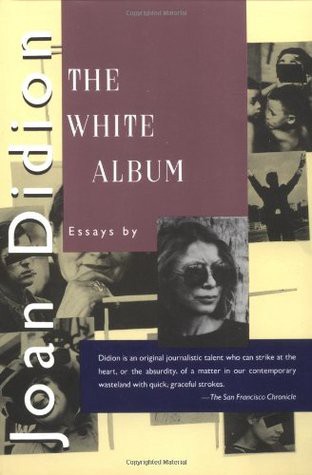
6. The Secret of Evil by Roberto Bolaño

“I Can’t Read,” a short story in Bolaño’s collection of stories, features a classic case of peeing in the pool: “urinating, not in the pool, underwater, as almost all kids do, but from the edge, for everyone to see.” The act, although an embarrassing one, means so much more than that; it’s a representation of the characters’ friendship and one’s existence within the world. Deep, I know.

7. The Diving Pool by Yōko Ogawa

In Ogawa’s novel, romance blossoms at the local pool, where teenage Aya is enamored of Jun — and his diving. Their situation is complicated by the fact that he is her foster brother, and she just can’t stop looking at his muscles: “warm and soften like silk floss.” Sounds steamy.

8. “Forever Overhead” by David Foster Wallace

David Foster Wallace uses imagery about a pool to talk about a boy’s growing up and all of the unglamorous bodily changes that accompany it. A boy standing at the edge of a diving board contemplates the question some of us ask ourselves every day: what am I going to do with my life? Realizing that the pool is a “system of movement,” the 13-year old boy has the courage to “step into the skin and disappear.”

10. “Hello Everybody” by AM Holmes

This story talks about a type of people that we all know, or at least have heard of: “pool people.” They live in LA, avoid getting wet to preserve their constantly new hairdos (yet wear bathing suits all year-long), love AC, and are terrified of old things. Generally, a pretty chilling image.

11. “Man Boob Summer” by David Gordon

In “Man Boob Summer,” David Gordon describes the assortment of characters that can be found at pretty much any pool. Screaming kid, old man exposing WAY too much in a speedo, an attractive lifeguard…This story has got it all.