What Sam Shepard Taught Me About Gods, Dads, and Death

I like to think that Sam Shepard would have approved — or, at least, disapproved in a deeply sympathetic way — of the fact that I started reading his work because of my dad. Shepard’s plays are, like so much canonical mid-to-late-twentieth century American theatre, just full of dads: horrible, mythic dads, dads as original sin, dads striding Zeus-like across the landscape, everywhere dads. Shepard was, both by his own admission and in the myth that grew up around him, influenced by his own father, a raging alcoholic who named his son after himself and who disappeared and reappeared like some kind of vengeful, absent ghost throughout Shepard’s childhood. His father haunts his work like a shittier version of Hamlet’s dad, showing up again and again in one form or another across more than 40 years of published work.

A perhaps apocryphal story goes that one of Shepard’s plays, probably Buried Child or Fool for Love, was staged somewhere out west, near his dad’s old stomping grounds. An older drunk man, seemingly a town local, bought a ticket and sat down in the front row. During a monologue by the character based on Shepard’s father, the old guy started talking back to the character. “Sam,” he yelled “you’re a fucking liar, and you’ve always been a liar! You always said that, but it was a lie!” He then vanished into the night, muttering, and although no one could ask him, it was easy to assume that this man had known Shepard’s dad, and that the facsimile on stage was so close to the truth that seeing the play had resurrected some long-standing argument with the older Sam.

Support Electric Lit: Become a Member!

I doubt the veracity of this anecdote only because it’s too perfect; it seems like something that might happen inside of one of Shepard’s plays. But it also captures the legend that swirled around Sam Shepard, how difficult it is to untangle the influence of his writing from the legend of his life, and why it might be unnecessary to try. Sometimes it’s best to believe the story even when you know it probably isn’t true, and sometime it’s useful to let someone like Shepard exist as something larger than a human individual. Perhaps what seems most devastating to me about Shepard’s passing is that I never thought he could die, because I never quite believed he was real.

This blurring of reality and fiction is a lot of what made Shepard famous, and a large part of what gives his work such a runaway, addictive quality. It’s one reason why so many writers who read his work when we were young and impressionable felt that it cracked something open, that it offered a new and heady kind of permission. One of the points of celebrity is that we are all looking to make gods for ourselves. Another way to say this, of course, is that we’re looking for dads. We want figures whom we can claim as our own origins, in the way traditional conceptions of the family allow children to narrate their identities out of the story of who their parents are. This desire for precedence is why some of us invent our parents as figures larger than human, and is perhaps also why many of us turn to artists or public figures — and Shepard was both, even if he didn’t always want to be the second one — as influences by which we can define our identities. From what they represent, our ideas of ourselves can be born.

One of the points of celebrity is that we are all looking to make gods for ourselves. Another way to say this, of course, is that we’re looking for dads.

It’s hard to talk about Shepard because he ends up sounding like a parody– this swaggering, sexy cowboy genius who wrote like Samuel Beckett if Beckett had gotten high on LSD on a road trip across the American West, this extraordinarily fuckable hobo with his evil father and his mysterious past, who played in bands and had relationships with both Patti Smith and Jessica Lange, who had hung out with Bob Dylan but also wrote plays that fit easily into the same pantheon with Williams and O’Neill. A figure this outsize inspires a religious sense of devotion, and all gods act as a crutch for the people who choose to turn to them. Not in the sense of holding us back, but that their existence, their example, allows us to get somewhere we wouldn’t have been able to go without their influence.
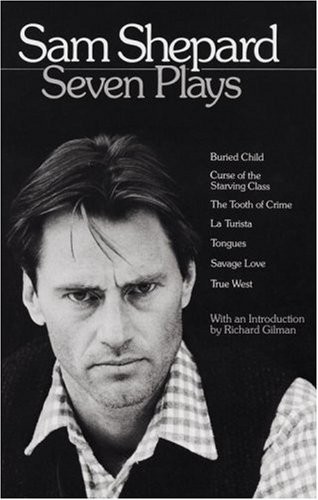
Anyway, I found Sam Shepard’s plays through my dad, who was born in 1950s and lived in New York in the ’70s and ’80s and, like a lot of intellectual dudes of that same age, thought of Shepard as the be-all and end-all of American masculinity, thrilled that someone could be manliest strong silent cowboy in the world and also win the Pulitzer Prize. My dad had copies of almost all of Shepard’s published plays in our house when I was growing up and, because as a kid I was constantly trying to fast-forward myself into adulthood by reading things that adults liked to read, I picked up Buried Child one day, and in very quick succession, at around age fourteen, read everything else Shepard had written.

I had never been to the American West, had never been drunk, had never had a fight that involved real physical violence. I had never experienced any of the emotions or situations, the grand and awful things, with which Shepard grappled in his plays. And yet I found them to be exactly what I needed at the time, unsettlingly and necessary and generative. I was looking for art that was the opposite of myself. Shepard’s work spoke to a desire to access something uglier than my reality, something where all the yelling happened out in the open. It offered a landscape, both literal and emotional, that matched the roiling emotions I carried around inside myself, emotions I still thought I couldn’t share with anyone else. (One of the joys of adulthood, of course, is discovering the many, many, many people who got into writers like Shepard around the same age I did because they felt exactly the same sort of emotions).

In this way, Shepard’s work was sort of like pop music. People imagine that because pop music is marketed to teenagers, it must be about the teenage experience, but as actual teenagers we listened to pop music not because it was about us, but because it pointed toward an imaginary future we hadn’t experienced yet. Often we like art not because it speaks to our experiences, but because it opens up our ability to imagine future experiences. It creates a preparatory and hopeful emotional landscape, a map of places we have not yet been.

Pulitzer-Winning Playwright Sam Shepard Has Died

When I first encountered Shepard’s writing, I was looking for things that said I could be big in a world that, both literally and figuratively, constantly urged me to be smaller. I was looking for monstrous, capacious work with a bottomless appetite, for a vision of a world that was expanding rather than shrinking. Shepard’s landscapes and his people were one and the same thing. Many of his plays were ostensibly about, or at least set in, the American West, but what gave them such a sense of expansion was the humanity of the characters within them, rather than the size of the country. Shepard was the writer who showed me that characters could speak in pure emotion, and that just two people in a room together could be electric, could be an entire world. The way in which the landscape inside and the landscape outside became one and the same echoed what I would later connect with when I discovered Melville — writing in which the vastness and weirdness of the country was just a way to get at the vastness and weirdness of the human beings in it, caged in their relationships and their rooms and their bodies, howling that frustrated vastness into the edge of an endless desert. His plays confront the enormity of trauma and of grief, which is why they’re often also very bleakly funny — these emotions are too large, too inconsolable, to stay within the bounds of logical expression. His writing offered the idea that these worst, weirdest, ugliest human emotions were how we break free from the smallness of ourselves and our lives, how we break into the vast landscape looming out beyond us in the night.

When I first encountered Shepard’s writing, I was looking for things that said I could be big in a world that, both literally and figuratively, constantly urged me to be smaller.

Shepard once described romantic love between men and women as “basically impossible.” His work posits that most human relationships — not only romance, but family and friendship and all attempts to be close to one another — are fractured and unfeasible, an experiment that fails over and over again. Yet when I come back to his plays as an adult, they seem more than anything to be about forgiveness, despite their depictions of our human failures to be good to one another. That very admission of impossibility, of the brokenness of our attempts to know one another, and the fact that Shepard presents this without pretending to offer any answers, is perhaps why his work ultimately seems to radiate forgiveness. It’s also what is both devastating and comforting about his death.

Shepard was enormously influenced by Samuel Beckett. Both men were writers who set up shop up right against the omnipresence of mortality, and the total absence of answers that mortality carries with it. They were both writers willing to put up a fight against the bleakness of existence, while knowing from the start that they would lose, that the point of the fight was its inevitable loss. An old friend of mine works as a doctor at the VA out in a part of the country where a lot of Shepard’s plays take place. She once described how her relationship to death had changed over a few years on the job: “It used to be a fight with a mortal enemy,” she explained, “but now it’s more like a pick-up game with an old buddy.” That casual pick-up game with death was what both Shepard and Beckett were writing: a ferocious game, but one full of the acceptance of loss, the open and forgiving acknowledgement of futility. Maybe the greatest forgiveness is admitting that one does not have any of the answers, that there is ultimately nothing to be done.

Shepard’s work said that within this futility, one could make a lot of noise, could leave a lot of claw-marks on the walls. A long, sustained career becomes a text in itself, and his life was a stunning progression from noise into a stillness, a long arc of forgiveness without absolution. Shepard’s late works were still relentless and bloody, but he aged into a taciturn elder statesman, someone who had lived enormously, who had filled up every corner of every room available.

A long, sustained career becomes a text in itself, and his life was a stunning progression from noise into a stillness, a long arc of forgiveness without absolution.

It’s dangerous to link one’s identity and the things one loves to human legends, but Shepard’s life, as much as his work, offers an exploded view of humanity, an argument against a world that asks us to make ourselves smaller and to shrink from hard truths. As it did when I first read his plays, his writing offers a route by which to expand into the horrors and rewards of living, a bloody and capacious permission for both rage and forgiveness. Both dads and gods are untrustworthy, worth breaking with and casting oneself far away from, growing up into languages that move beyond their imitation. But, as Shepard’s work and life show, these ghosts still stalk the landscape after we leave them behind. To confront them is to remind ourselves how we got where we are, and what we dreamed of being when we first looked to larger figures — to seek imaginary dads, to learn how to begin to speak ourselves into existence.
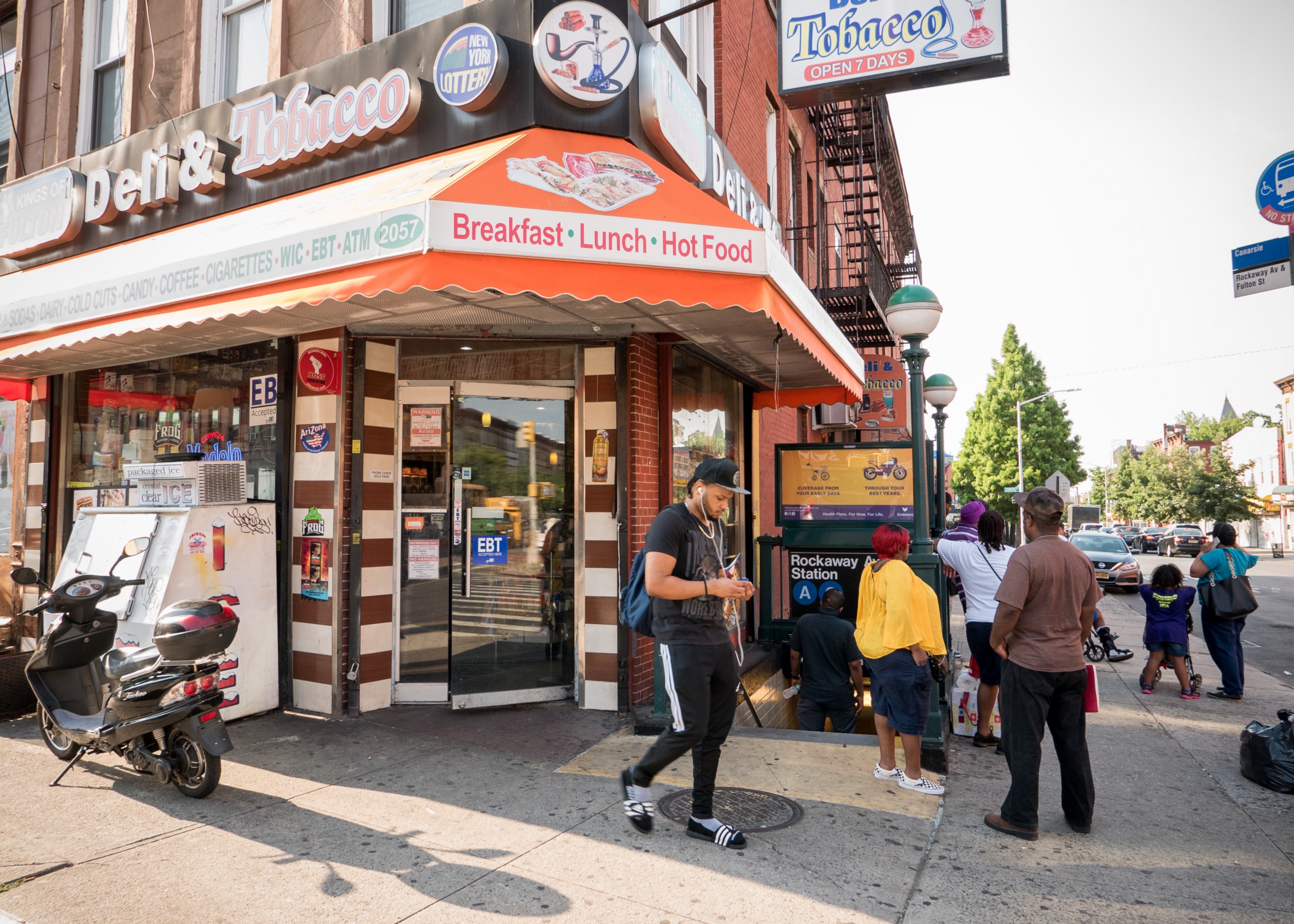
Paying Homage to the Kings of Fulton in Brooklyn

By t’ai freedom ford

Presenting the ninth installment of The Bodega Project, where authors from across New York reflect on their communities through that most relied-on and overlooked institution, the bodega. Read the introduction to the series here.

The hood determined to stay hood. Even when outsiders have other plans. We stay hood. Roll up in that new French joint on Malcolm X and sit at the bar. Order beers. Fries to go. Then, when the fries come boxed and bagged, ask for two plates. With hot sauce. And ketchup. Murder them plates with the vinegary red. Sop it up with French fry after French fry. Douse the plate and repeat.

This how the hood get down. Which means we don’t need no bodega facelifts for the new neighbors. No Plexiglas blinging like cubic zirconia. No hummus no shredded parmesan no pita chips no kombucha no neon-hosed hookahs. No fucking craft beers (okay, maybe a decent IPA). No organic nothing. This the hood. Or at least I thought it was.

They followed me. From Bed-Stuy. The Original Hood. The one Biggie and Jay-Z boasted about — toasted to. Then everything got bought up. All these modern monstrosities boxed up against our brownstone beauties. And suddenly a bunch of Caspers ghosting up the block. Rents blowing up like Baghdad. So we move. Another hood. A train stop away. Some call it Ocean Hill. Some say East New York. Borderline Brownsville. When I looked up the crime stats for the neighborhood, on a red to green scale from less safe to safer, our new apartment was all up in the red zone. Less safe. But that’s relative right? I scanned a list of reported crimes near this home:

Armed Robbery. @gunpoint. 2 Indian male perps fled.

Shooting/Stabbing. Person shot in left temple & EMS transporting victim to Brookdale hospital.

Grand Larceny. From Motorcycle.

Petit Larceny. From car.

Robbery. Bicycle.

Burglary. Residence Night.

Perp Search/Chase. MOS in foot pursuit, aviation requested.

And the list went on and on. For some reason I thought, Okay, I’ll be safe here. The hood will remain the hood.

A year later I watch them come up from the train. White and transparent as a glass of milk. The luggage-laden Airbnb’ers, with their pale skin, black socks, and white-white sneakers. They look lost at first — twirling themselves in circles, looking at the phone in their hand like it’s a compass. The blue-haired girl with thigh tats and a nose ring. The bald guy with a ratty knit cap, beard, and cut-off pants. They look hella comfortable bouncing down Rockaway Ave with their newly adopted pitbulls. They act like they grew up here: chilling on stoops with their coffee mugs and their New York Times, bleaching the block with their blatant sense of entitlement.

Don’t get me wrong. I shop at Whole Foods and Trader’s and greenmarkets and food co-ops same as the new neighbors. Hell, I’m bourgie AF. The kind of girl who appreciates artisanal goat cheese and fresh figs, purple basil and heirloom tomatoes, olive focaccia and aged balsamic vinegar. The kind of girl who throws cocktail parties and dinner parties and tea parties. The kind of girl who’s inevitably humbled when she must make a last-minute hustle to the bodega for aluminum foil… ice… safety pins… cranberry juice. In those instances I’m reduced to basic bitch. Bodega hood chick. And I’m okay with that.

Cause you can take the girl out the hood, but you can’t take the hood out the girl. Plenty of times, after a night of bourbon and boogieing, I’ve rolled up in the bodega for a chicken vegetable Cup O’ Noodles or can of Beefaroni. I’m not ashamed to say that I’ve ordered a deli sandwich through a Plexiglas window at three something in the morn. But bodega runs is in the blood. Cause back in the day, you thought you were grown when your moms would send you to the bodega by yourself. Back before restaurants and sneaker boutiques and art galleries were all clamoring for the name, and the street cred it now conjures.

Growing up in the projects of Astoria in the 1980s though, bodega was not a part of our ghetto vocab. We called them corner stores, and the two we frequented were known simply as the front store and the back store. The front store sat on Astoria Boulevard directly across from the “Welcome to Astoria Houses” sign. On our way to school we’d stop in to buy Salt and Vinegar Bon Tons and hot pickles, Charleston Chews and Chick-O-Sticks, quarter water juices and Italian ices. When our mother sent us to the front store it was most often for loosies (three for a quarter), packets of Kool-Aid, or the coffee-colored pantyhose that came in a plastic egg. The back store was on First Street, a shadowy block lined with broken down private houses. In one of those houses lived Charlie, this white boy with cerebral palsy who pulled from his father’s tobacco stash to teach us how to roll and smoke cigarettes. Our mother didn’t really like us going to the back store. But the back store had the best spiced ham heroes, so we’d scour the projects to collect enough cans to sneak over for a sandwich every now and then.

Bodega was not a part of our ghetto vocab. We called them corner stores, and the two we frequented were known simply as the front store and the back store.

When we left New York for Atlanta in 1985, we found there were no corner stores, bodegas or otherwise. There were 7-Elevens, and what they called convenience stores, even though you had to drive miles to get to one. If you lived in the hood or in any Black neighborhood in Atlanta there might be a candy lady, which was like the hood equivalent of a teenager’s dream bodega. The candy lady stocked her own ziplocked bags of chips and crème-filled cookies, and penny candies like Tootsie Rolls or Jolly Ranchers. Plastic cups full of frozen Kool-Aid. Jars of pickles, which she’d fish out from the briny liquid with her long curved fingernails. Those candy ladies were probably the first Black-owned businesses I’d ever witnessed.

Living in New York the last seventeen years I’ve zigzagged all over Brooklyn, adapting to each new hood and adopting the perks and quirks of each new bodega. When I lived on Nostrand Ave, Big Vic used to sit on a milk crate in front of the beverage coolers scribbling through math problems. When I came into the store for a couple of beers he would say, “Ay yo, ma, don’t you teach? Think you can help me with this?” and I’d squint at his Algebra textbook and walk him through an equation.

On Franklin Ave, Mami and Papi owned the entire building that housed their bodega. Every morning at 7:57 they’d come down from the apartment above to heave up the heavy corrugated gate. Papi would listen to Yankees games on a little handheld radio, and when there weren’t any games that interested him he’d croon salsa ballads to Mami. While I practiced my Spanish on Mami and Papi, their son, who went to Baruch College, would be there on weekends helping out. I’d talk college and politics with him from time to time, noticing his perfect English, all proper and American and missing the music of his parents’ Puerto Rican accents.

Mami and Papi seemed to have everything crammed into that little store. Lightbulbs. Pork rinds. Electrical tape. Tube socks. Cat litter. Spaghetti sauce. They’d accept packages for me before UPS turned this into a formal service. They also knew the block’s gossip — told me about the strange white men who’d been snooping around my building. Eventually those white men would buy the building and send me packing once again.

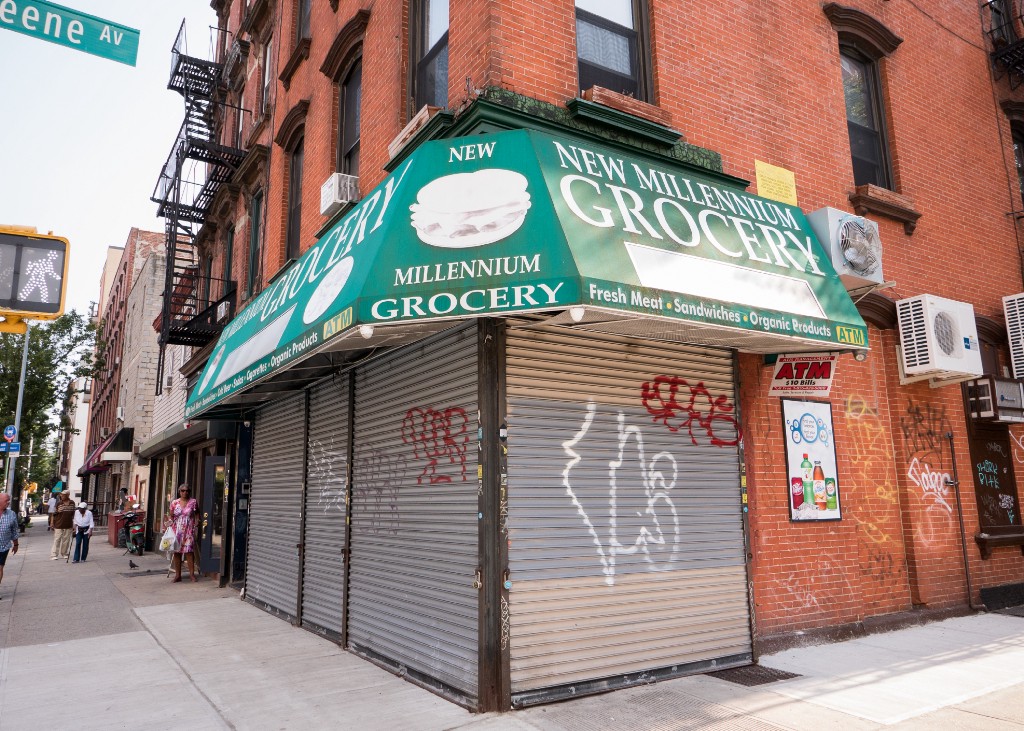
Then Mami and Papi get some competition from the bodega down the street: New Millennium. The Dominican owner flirts with me and my girlfriends. Holds my hand when I hand him the money. I like this place because they have Sabra hummus and bags of pita bread in the deli case. The windows are crowded with organic popcorns and exotic flavors of kettle chips. I’m impressed. Maybe flattered even, until I realize these fancy foodstuffs ain’t for me. I mean, sure, I can buy them, but no one really cares if my black ass is impressed. This is the moment most people in a gentrifying neighborhood experience — when resentment sets in because all these improvements are for somebody else.

This is the moment most people in a gentrifying neighborhood experience — when resentment sets in because all these improvements are for somebody else.

Where I live now, the bodega is wack. No music. No one to practice Spanish with. No lottery when I’m feeling lucky and need a couple of Win 4 Life scratch-offs. No oatmeal when I’m trying to make peanut butter oatmeal cookies. We making nachos, but my bodega don’t have restaurant-style tortilla chips. And how come when I’m craving watermelon I can’t walk into my bodega and walk out with a big ass watermelon? Not diced-up in a cup. Not a plastic-wrapped wedge. Not watermelon Now & Laters. Not watermelon Arizona iced tea. I mean a whole, country ass watermelon.

Clearly I need to chill. Especially when there’s a dude on Atlantic near Saratoga selling gigantic watermelons out the back of a rusty pickup. And I need to remind myself that a bodega that could care less about the new neighbors is just what I’ve wanted all along.

On Saratoga Avenue near Eastern Parkway there’s this bodega now called Hipster Gourmet. Sounds about right. You can see where they painted over the old word and plastered the word hipster on top of it. It makes me realize how even a bodega’s name matters.

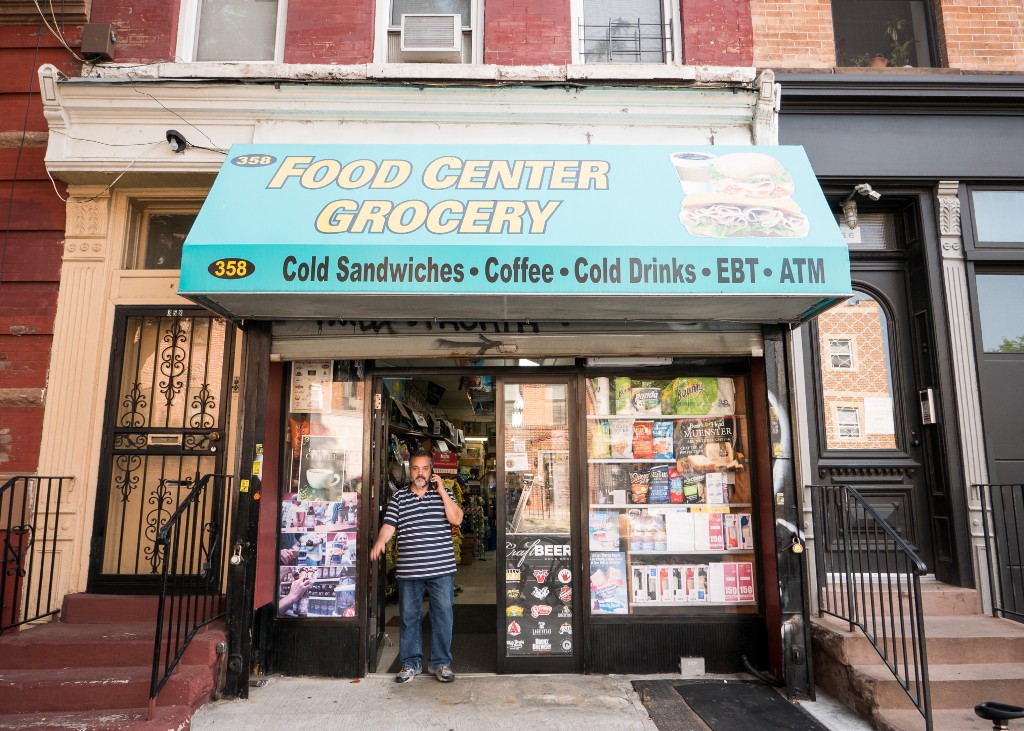
My bodega is called Kings of Fulton. Its position on the block is not unlike a throne. The corner of Fulton and Rockaway Avenues is its kingdom. It’s flanked on one side by a bus stop, the other side, a subway entrance. The Yemeni owner keeps quarters in a brown paper bag worn soft and wrinkled like my grandmama’s hands. In spite of our complaints, us patrons are its loyal subjects. Even though there’s a sign outside that reads:

NO HANGING OUT!
This is a business and we
need space and tranquility
for our customers.

Please —
DO NOT HANG OUT HERE!

I’m like yo — this is a business in the hood. You can’t be expecting space or tranquility. Plus, the minute a hood dude buys a bag a chips, he becomes your customer. If he chooses to eat those chips over the course of an hour while standing outside then it is what it is. This is the county of Kings. Here, we all wear crowns.

By the school where I teach, at the corner of Myrtle and Clinton Aves, there used to be a bodega my students affectionately called “The Sprite Store,” because it had a logo of the soda brand on its awning. But then the Sprite store moved to the middle of the block, and a restaurant my students couldn’t afford took its place. Now they loiter out front as they wait for the bus to come. Brown and boisterous they startle the pale patrons seated at the sidewalk tables, all the while respecting the architecture that subtly tells them they’re not welcome.

I ask my students if they would ever steal from their neighborhood bodega. They flinch and frown and shudder at the thought, Noo! They say. When I ask why, one student says, “Because I go there like everyday. They dead know me.” So, I ask, but what if you were broke and needed some food, a bacon egg and cheese or something. And she says, “Then I would just be like: bruh, hold me down.”

This is why, at the end of the day, bodegas are indispensable. They give us glimpses into worlds beyond the boroughs. They nourish and sustain us. They are the life of the party. They wash our clothes. They clean house. They feed stray cats. They give us credit. They anticipate our random ass needs. And sometimes they betray us. Spiffy themselves up for the new kids on the block. But mostly they hold us down.

About the Author

t’ai freedom ford is a New York City high school English teacher and Cave Canem Fellow. Her first poetry collection, how to get over, is available from Red Hen Press. t’ai lives and loves in Brooklyn, where she is an editor at No, Dear Magazine.

–– Photography by Anu Jindal

Read other installments of The Bodega Project

The Bodega Project – Electric Literature

— The Bodega Project is supported by a grant from the New York City Department of Cultural Affairs.

12 Books That Epitomize Summer in NYC

Romantic and serene, but also kind of gross and smelly

Flâneurs of NYC

Yes, New York City is a magical place — the concrete jungle, the city that never sleeps; if you make it there, you’ll make it in Kansas for sure — but when summer hits, the Big Apple morphs into something new entirely. How to describe it? It’s sort of…a vortex of stink and suspicion, where iced-c0ffee addicts stumble between air conditioned buildings and straphangers jostle for the breeziest real estate on an A train that runs nowhere and is always late. But then there’s Shakespeare in the Park! And your friend’s roof deck!

Despite these very real drawbacks that surely reduce the appeal of NYC come summer, writers have still managed to depict it as an intriguing place, with adventure and romance aplenty. Below is a list of twelve books with pivotal scenes taking place in New York during the hottest time of the year. Unlike our pools list, this one offers little to no prospects of cooling down.

1. A Tree Grows in Brooklyn by Betty Smith

For Francine Nolan, the protagonist of A Tree Grows in Brooklyn, Williamsburg in the summer is a place of peace. “Serene was a word you could put to Brooklyn, New York. Especially in the summer of 1912,” the book’s first sentence reads. In fact, the whole first section is a description of the many things Francine does and places she goes on a typical Saturday, including cashing in some junkyard scraps for pennies, visiting the library, seeing her family, and falling asleep comfortably. Doesn’t quite sound like Williamsburg of overpriced coffee and Instagram-able food we know and love today.

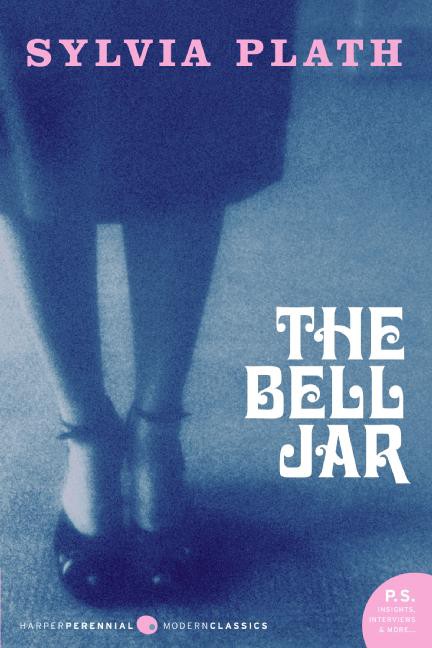
2. The Bell Jar by Sylvia Plath

The Bell Jar begins in the summer of 1953, with Esther Greenwood going through an experience many young New Yorkers can relate to: a summer internship. The 19-year old gets a prestigious editorial intern position at a women’s magazine in the city, but it all goes downhill from there. As the various occurrences unfold during the summer, Esther begins experiencing symptoms of depression.

3. City on Fire by Garth Risk Hallberg

City on Fire tells the story of a number of individuals scattered throughout corners of New York. They are linked by an occurrence that shocks and scares the city: the blackout of July 13, 1977. Over a thousand or so pages, Hallberg delves into the lives of these people and how they are influenced by a single tragedy, as the city is thrust into madness one summer night. “Beyond the window, dew coaxed scents from inert earth: the loam of treeboxes, the faintly salty asphalt, the whole summer perfume of rotting fruit peels and faisandes coffee grounds wafting from the trash piled at the curbs,” one character observes. Sounds about right.

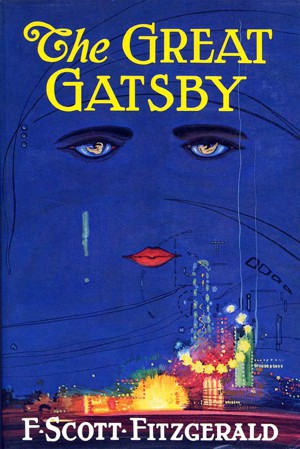
4. The Great Gatsby by F. Scott Fitzgerald

Time plays an important role in this novel. It begins in early summer and the events unfold in the coming hot months. Gatsby’s hope for a relationship with Daisy reaches its peak during this season, when the earth is in full bloom. However, as the summer comes to an end and so does the vitality of the land, and things start to get grim. (Remember that scene at the Plaza?)

5. The Goldfinch by Donna Tartt

The 2014 Pulitzer Prize-winning novel is an old-fashioned Bildungsroman that tells the story of 13-year old Theo Decker and his misadventures after swiping a famous painting. Spanning both time and space, a large chunk of the novel takes place in New York City throughout its various seasons. Tartt, who spends a great deal of time in the city, perfectly captured the “fever hot sidewalks,” “hot wind from the subway grates,” and “humidity and garbage smells” that just about sum up the experience of being in Manhattan on a scorching summer day.

11 Novels That Take Place During One Summer

6. Sag Harbor by Colson Whitehead

Although Sag Harbor doesn’t take place in any of the five boroughs that make up New York City, the plot unfolds in the quintessential weekend retreat spot for many New Yorkers: the Hamptons. The novel’s main characters are Benji and Reggie Cooper, African American teenage brothers just done with the academic year at their Manhattan prep school and spending the summer in the predominantly white Long Island village.

7. Money by Martin Amis

The 1984 novel is narrated by and tells the story of John Self, an advertising director invited to NYC to shoot his first film. Self is what you would expect a successful person in the entertainment business to be like: messy, hedonistic, narcissistic, and drunk more often than not. The novel takes place in the summer of 1981 as he moves between London and NYC. In both locations, he spends his time at strip joints, fast food spots, and bars — Self is the embodiment of the era’s greed and the city’s tendency to facilitate and encourage it.

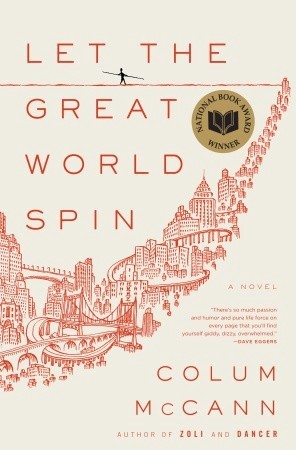
8. Let the Great World Spin by Colum McCann

The 2009 National Book Award for Fiction winner, Let the Great World Spin centers around one summer day in 1974, when a French tightrope-walker crosses a wire suspended between the World Trade Center buildings. Throughout, McCann gives readers a glimpse into the city’s past, comprised of stories starring immigrants, socialites, and prostitutes. The book casts NYC as a place where unbelievable things can and do happen on a daily basis.

9. Summer in Williamsburg by Daniel Fuchs

The title of this book says it all. Summer in Williamsburg evokes the powerful Jewish-American experience as it unfolds in a tenement building in 1930s Brooklyn. The rooms and apartments within are comprised of an assortment of people: families, students, artists, idlers, etc. In describing the “ordinary” residents, Fuchs illustrates a dynamic community that speaks to a larger, collective history.

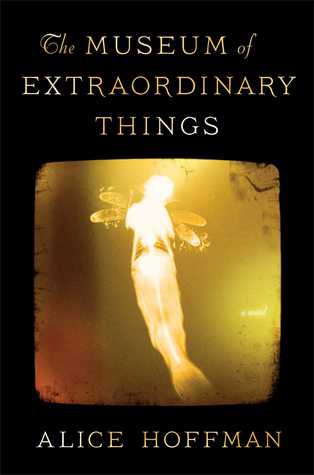
10. The Museum of Extraordinary Things by Alice Hoffman

This novel takes place at a longtime monumental location for New Yorkers during the summer: Coney Island. Coralie is the daughter of the sadistic owner of the beachside freakshow, The Museum of Extraordinary Things. She is forced to swim in the sea every night during the summer months to hone her skills as the show’s mermaid. Incorporating both romance and mystery, the novel captures the essence of early 20th century New York City.

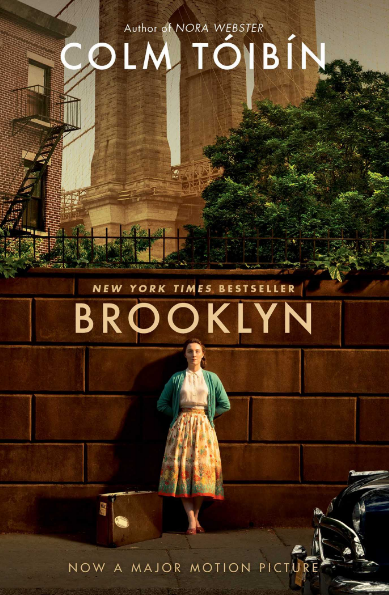
11. Brooklyn by Colm Tóibín

Brooklyn tells the story of Eilis, young Irish immigrant moving to New York in the 1950’s. When settled, she meets an Italian-American named Tony, who teaches her the ins and outs of the borough and the city. They go to stereotypically New York summer sites — Coney Island and a ball game…

12. Tar Beach by Faith Ringgold

A children’s picture book, Tar Beach tells the story of Cassie’s biggest dream coming true: going where she wants. One day, the stars help her fly across the city on a summer night from the rooftop of her Harlem apartment building (the “tar beach”).

“A Ghost Story” is Haunted by Virginia Woolf

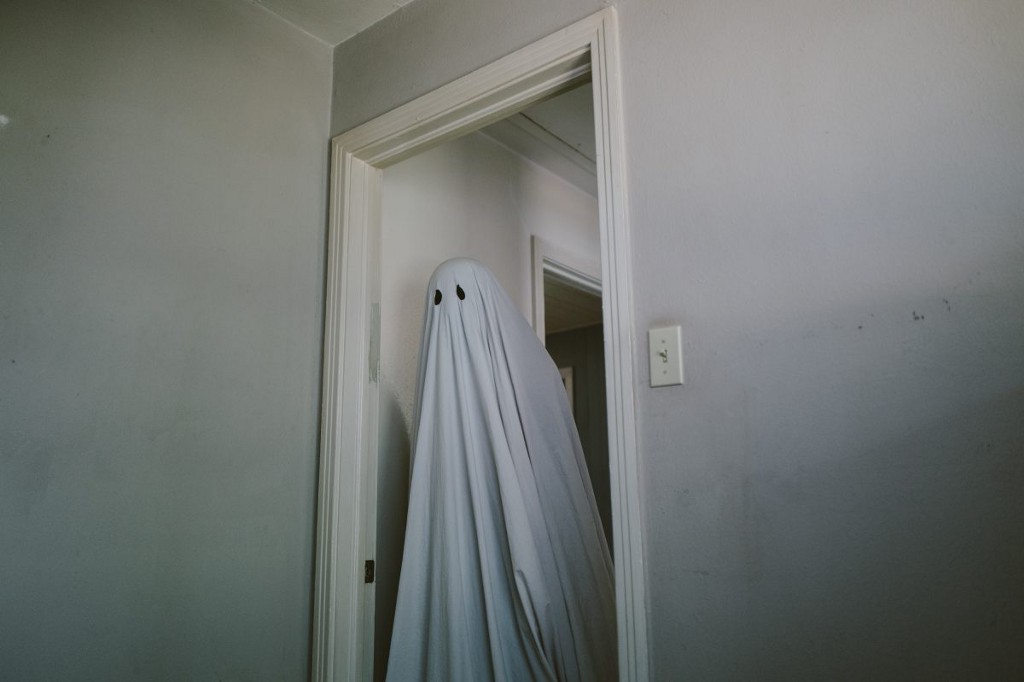
There’s a cheekiness to titling your film A Ghost Story. It’s as if writer-director David Lowery chose to forego coming up with an actual title, and instead left a subtitle to do all the heavy lifting. Then again, it hardly seems unintentional to give a simple generic moniker to the tale of a man who, after a deadly accident, elects not to follow the light and instead haunts the house that he once shared with his wife. The title’s bluntness ends up being visually replicated in the film itself, as the ghost of C (played by Casey Affleck) dons a white sheet, complete with two holes for eyes, which he’ll wear for much of the film. As it turns out, the film’s interest is not only in telling a ghost story, but in questioning just what a ghost story can be.

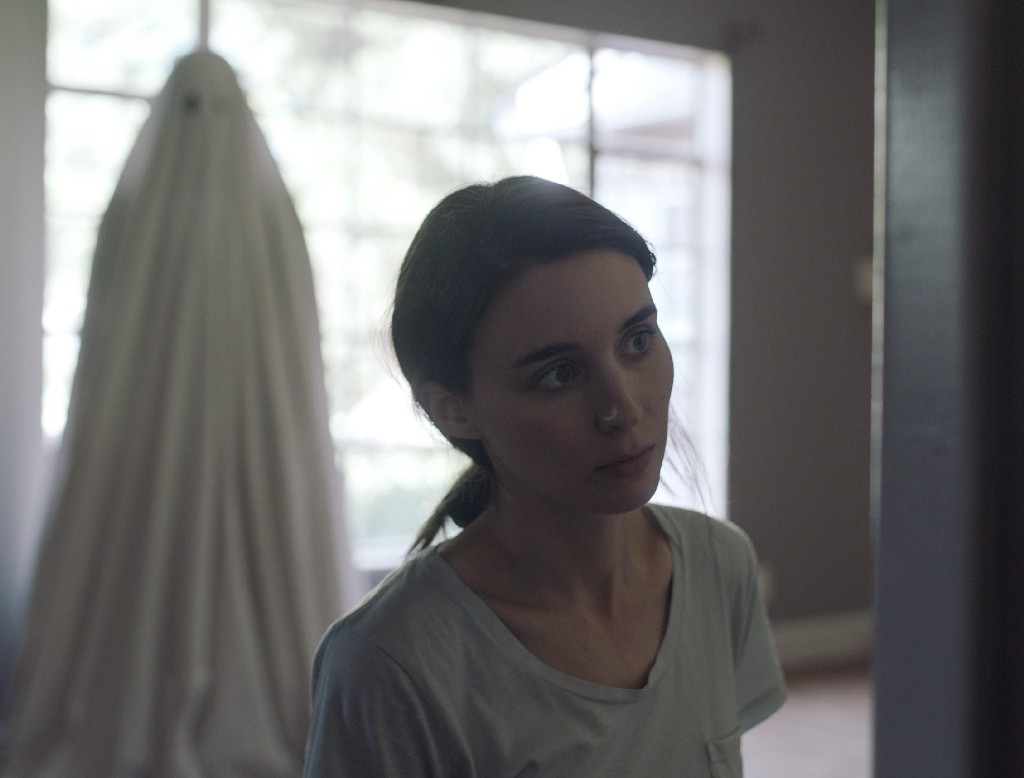
Reversing the usual framing of a haunted house narrative, Lowery’s film follows C as he watches the residents of his former house come and go. Affleck’s comparatively imposing build (he is five foot nine) makes his white sheet-attired ghost an incongruous figure that becomes, given both his stillness and the film’s penchant for long static shots, practically an architectural element of the house. He skulks in a corner while watching his wife (played by Rooney Mara) swallow her grief by eating an entire chocolate pie; he stands by the piano where he used to compose songs, while in the meantime parties rage on, families move in, and eventually, the house is demolished. The film is a quiet meditation on loss, though it achieves that feeling by making C’s permanence even more devastating than his mere death would.

Casey Affleck and Rooney Mara in ‘A Ghost Story’

Our assumptions of what a ghost story can be are upturned when Lowery steers away from the genre’s more supernatural elements, and instead focuses on the tragedy of being a person who remains. A Ghost Story’s epigraph makes this even clearer, a line that will end up haunting and reframing what follows: “Whatever hour you woke, there was a door shutting.” This line’s second person address, as well as its recursive image, invites us to imagine a world in which ghostly specters are present all around us, constantly waiting to be noticed. Such is the scene that Virginia Woolf sets in “A Haunted House,” the 1921 short story from which Lowery has lifted his epigraph. As the director suggested at the Sundance Film Festival where the film premiered, Woolf is everywhere in A Ghost Story. Her writing “corresponds perfectly to my difficult-to-grasp perspectives on ghosts and specters and their relationship to life and time.”

Support Electric Lit: Become a Member!

Barely a few pages long, Woolf’s approach to the ghost story is to deconstruct it, with a narrator who knows that someone (a couple, as it turns out) is haunting her house. Woolf distills the genre to its very essence, unmooring the reader and narrator alike in otherwise familiar surroundings. As is the case elsewhere in her fiction her language is deceptively simple, yet she works carefully to destabilize the grasp one has on it. Take her opening lines:

Whatever hour you woke there was a door shutting. From room to room they went, hand in hand, lifting here, opening there, making sure — a ghostly couple.

“Here we left it,” she said. And he added, “Oh, but here too!” “It’s upstairs,” she murmured. “And in the garden,” he whispered “Quietly,” they said, “or we shall wake them.”

The focus of Woolf’s brief story is on the sheer mundanity of residing in a haunted house. Her narrator seems neither perplexed nor concerned by the presence of the ghostly couple; instead, she tracks their movements from garden to drawing room, up the stairs and into the bedroom, all the while trying to make sense of what they’re looking for. There is no mysticism, nor a desire to question (or explain away) the evidently supernatural. In fact, the final moments of the story put the ghosts’ concerns squarely in the realm of the living. What they are looking for is “the light in the heart” that they’ve glimpsed in the narrator herself, when she lays next to her husband in bed.

During his interview with critic David Ehrlich at Sundance, Lowery made clear that while he is an atheist who doesn’t believe in the afterlife, he does believe in ghosts. This mode, of the secular supernatural, is perhaps why he sees Woolf as a kindred spirit. After all, in novels such as Mrs. Dalloway the author, like her Modernist peers, made the individual the fulcrum of the narrative, a project at once indifferent and antithetical to a theological understanding of the world. The stories these writers were producing made palpable, in sociologist Max Weber’s words, “the disenchantment of the world.” Man had turned to look within. And when he did look outside himself, he turned not to the magic of religion, but the rational certainty of science.

Given their spiritual concerns, one might’ve expected that ghost stories as a form would disappear. They didn’t of course. But there still was, in Woolf’s eyes, a difference from the ghost-centered narratives that had come before. Discussing the use of the supernatural in Henry James’ fiction, she articulated what may well be the guiding principle behind Lowery’s tale. James’s ghosts, she wrote,

have their origin within us. They are present whenever the significant overflows our powers of expressing it; whenever the ordinary appears ringed by the strange. The baffling things that are left over, the frightening ones that persist — these are the emotions that he takes, embodies, makes consoling and companionable.

Injury by Proxy: Why “The Handmaid’s Tale” Is So Painful to Watch

The character of C in A Ghost Story is one such embodiment. The sense of his melancholy, which one gathers from his languid posture (given that Affleck’s facial gestures have been withheld), suffuses the film. In general the images have a poetic tone, forcing viewers to see the passing of time. Paint begins to chip. Metal rusts. Furniture decays and is soon destroyed. And yet throughout, C remains. He watches helplessly as the world turns around him, losing track of time himself. By the time the film temporally doubles and folds in on itself — as we watch C witness the prehistory of his house long before his death, until we are rewatching events we have already seen, with another ghost of C joining the one we’ve been following — the character comes to represent both what is left over and what still persists.

In all these stories — Lowery’s, Woolf’s, and James’s — ghosts are not just symbols or markers of grief. They are grief incarnate. Whenever Affleck walks through the house you can feel the weight of the sheets hanging off him, which only get dirtier as the film goes on. He may be invisible and untouchable to those he haunts, but to the audience watching, he is an embodied and encumbered presence throughout. We might not be able to see his face, nor read his reactions to what he sees as he becomes untethered from time. But the film nonetheless manages to locate, in that personified blankness, the sense of melancholy which pervades his entire being. And it’s here that the ambiguity of the film’s title ultimately pays off. This isn’t just a ghost story, nor a story about a ghost. It’s a narrative that is both concrete and ethereal. A story that will linger longer than you’d like.

Sweet Valley High is Getting A Totally Rad Movie Adaptation

Plus Baron Trump is a character in a 1800s book series and Twitter’s Astro Poets are writing a book

In today’s literary news, the ‘80s are making a comeback (yet again) with a “Sweet Valley High” movie adaptation, a 19th century book series depicts a character named Baron Trump (among other coincidences), and the Twitter Astro Poets scored a book deal.

“Sweet Valley High” is getting a movie adaptation

The ‘80s strike again. After an endless chain of remakes, TV series reboots, the explosion of Netflix’s “Stranger Things,” and the controversy surrounding “Ready Player One,” the Hollywood machine will not stop resurrecting the era of mom jeans and mixtapes. This time, Sweet Valley High, the iconic series written by Francine Pascal, is getting a movie adaptation. The 603(!!) novels follow the lives of identical twin sisters Elizabeth and Jessica Wakefield, who live in Sweet Valley, CA just outside of Los Angeles. The blond twins deal with typical teenage stuff: prom, talent shows, plane crashes, a murderous doppleganger…they managed to cover a lot in the the 20+year series. Deadline reports that Paramount has hired Kirsten Smith, who also worked on classics such as “Legally Blonde” and “10 Things I Hate About You,” and Harper Dill of sitcom “The Mick” to co-write the movie. There is no information yet about the specifics of the adaptation — the time period, the amount of material taken from the books, or whether we’ll find out whatever happened to that vampire Jessica dated one time.

[The Huffington Post/Priscilla Frank]

Nineteenth-century book featuring a “Baron Trump” character has the Internet losing its mind

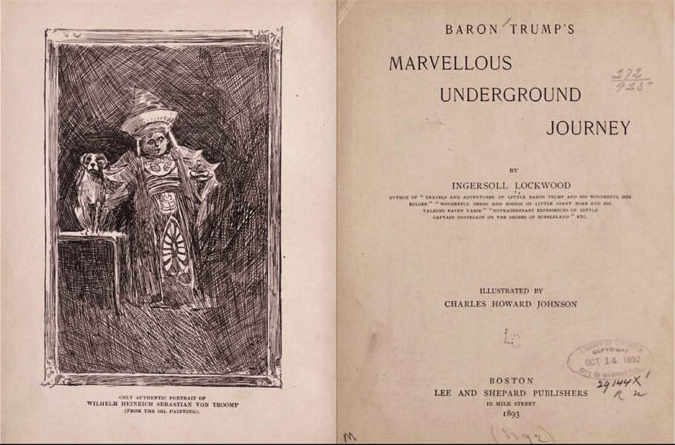
Apparently, the 19th century was way ahead of its time. The internet is flipping over a series of books from the 1800s that include a character named Baron Trump, among other uncanny similarities. The books, written by Ingersoll Lockwood, have the conspiracy theories rolling in all over the web. In Baron Trump’s Marvellous Underground Journey, Baron is a rich young man living in Castle (read: Tower) Trump, until he is inspired to travel to Russia (hmm) by a man named Don (sounds familiar), then finds a portal that allows him to travel to other lands. In Lockwood’s third novel, The Last President, New York City is in tumult over the election of an opposed outsider candidate. “The Fifth Avenue Hotel will be the first to feel the fury of the mob,” the novel writes, mentioning an address in New York City where Trump Tower now stands. “Would the troops be in time to save it?” The series has resurfaced online thanks to Reddit and users quickly began sharing theories about the eerie similarities to the present, such as the belief that the Trump family has been time traveling for years. One filmmaker and Trump supporter is even trying to crowdsource funding to create a fantasy feature film based on the books. Isn’t the internet just fantastic?

[The Huffington Post/ David Moye]

Twitter’s Astro Poets duo is writing a book

Astro Poets, a massively popular Twitter account merging astrology and pop culture, is getting a book deal. The savvy duo behind the hilarious and too-real tweets, Alex Dimitrov and Dorothea Lasky, have garnered close to 200,000 followers on the social media platform. They have signed a deal with Random House for a horoscope book sure to be heavy on their notorious wit and psychological insight. Dimitrov and Lasky began tweeting after the election, saying that the world needs as “much magic and cosmic help as we can get in addition to, you know, health care.” In honor of their success, here is a selection of typical tweets on @poetastrologers.

We predict great things in their future.

[Bustle/Emma Oulton]

We Need Diverse Books, But We Also Need Diverse Reviewers

We Need Diverse Books, But We Also Need Diverse Reviewers

A sofa, a circle of light, a novel, maybe a beverage near at hand. It could be 1981 (when I was four and had just learned to read), or 2017 (when I am 40, and a beverage is a pre-req). Either way, the setting is about the same. Then and now, you can find me lying in the crook of a sofa, reading under a small glow. My childhood traumas were small in the world, but in my head and heart, overwhelming. When I was nine and my father left to work in another state, which meant that I would see him only once or twice a year, I would have raging fevers days before his every departure. I’d lie listlessly, sometimes crying for hours, days even, until, tired of my misery, I’d open a book and read. My refuge has been, is, will be, a book.

These days I go for books that do more than give me asylum; I seek out the books that I have loved, or admired, or that provoke me, that force me to think about them.

Every day since January 20, 2017 feels like a throwback to a (not-so-distant) anarchic era or a time jump to a moment close to the apocalypse or both at the same time. I feel as if I have a constant fever: cold and achy, and hot and bothered, all at once. Now, as before, I turn to reading, but these days I go for books that do more than give me asylum; I seek out the books that I have loved, or admired, or that provoke me, that force me to think about them.

Image result for james baldwin giovanni's room

I had been thinking about Giovanni’s Room for some time. In October 2016, a writer friend was reading it, as I was re-reading Notes of a Native Son and we exchanged emails about both books. Now, in the era of Trump, where every day different rights are set ablaze and turned to cinder, our pure pleasure at Baldwin’s prose feels like a luxury. Nevertheless, recently, I found myself on the sofa, luxuriating in Giovanni’s Room for the first time. The book was assigned for a class I’m taking, and inevitably, when we talked about it, we talked about its reception on initial publication, which was, in a nutshell: not good. Baldwin’s U.S. publisher, who had published Go Tell It on the Mountain, refused to even print the book. A reason for the lack of enthusiasm was, in part, because of the subject — homosexuality — and in part because of the characters: all white, and written by a black author. Which, of course, led us in class, to discuss the ever relevant, and to me, always vexing, topic of “Who Gets to Write What?” — an argument that, in my opinion, Kaitlyn Greenidge has settled admirably.

But, as we talked about the politics of a black author writing white characters, and vice versa, and many good points were made, I found myself considering the role of the critic, the reviewer, the judge, whose word can make or break a book’s sales, and sometimes, even a writer.

In 1956, in a review published in The New Leader, a liberal, and one can assume, sympathetic to Baldwin, magazine, critic Leslie Fiedler wrote:

“There is not only no Negro problem in Baldwin’s new book: there are not even any Negroes — and this, I must confess, makes me a little uneasy. His protagonist, David, is a shade too pale-face, almost ladies-magazine-Saxon, gleaming blond, and “rather like an arrow”: but this is not what troubles me. It is rather the fact that he encounters no black faces in his movements through Paris and in the south of France, that not even the supernumeraries are colored; so that one begins to suspect at last that there must really be Negroes present, censored, camouflaged or encoded.”

On November 2016, Garth Greenwell, in The Guardian, writes:

“Homosexuality is portrayed in racial terms repeatedly in Giovanni’s Room. Joey, the childhood friend with whom David spent one passionate night, is described repeatedly as “brown” and “dark”. Giovanni himself is “dark and leonine”; more pointedly, he’s imagined in this first scene as standing “on an auction block”. Race is an imaginary category, under constant negotiation; it’s worth remembering that in America, not long before Giovanni’s Room, Italians and other southern Europeans were viewed as non-white.”

I don’t present these two readings of Giovanni’s Room as counterpoints to each other; Greenwell’s was written fifty years after Fiedler’s, after Baldwin has been revered for decades, and in a climate arguably less hostile, or perhaps, differently hostile, to conversations about race and queerness. And Greenwell, unlike Fiedler, is gay (openly so). But both of them are white. And both of them are critically thinking and writing about Baldwin. Both of them have power, as critics, though Greenwell is a writer, writing less as a critic and more as an admirer (which of course, does not preclude him from thinking or writing critically). Both of them have power as white men in America, and both of them have different entry points in to the text.

And both of them seem to miss that Baldwin, in writing about race in Giovanni’s Room, is writing specifically about whiteness, without making it the obvious focus of the book, veiling it beneath the cloak of invisibility that whiteness often wears.

These observations lead us then to the question of “who gets to critique whom.” This is an important consideration. No one less established than George Packer writes about it, in “Race, Art, and Essentialism,” published in the New Yorker in April 2016. Packer was responding to the view that African-American writers have a special insight into African-American musicians, which Rick Moody expressed in a review of James Bride’s biography of James Brown. Packer’s point is that if we view the authority of critics as based in their identity, we limit the possibilities of critical inquiry to identity. He warns, “Watch out: a few more steps and you’ll find yourself saying they sure do have rhythm.”

Baldwin, in writing about race in Giovanni’s Room, is writing specifically about whiteness, without making it the obvious focus of the book.

It’s a valid point. I believe that a writer can and should be able to write about anything she wants, with a responsibility to writing well, especially when writing outside one’s comfort zone, and that a critic should be able to take on a subject with which she has expertise, experience, interest, curiosity, irrespective of her identity — but again, from a place of self-awareness and accountability to one’s position and its limitations. I also can’t help but note that, here too, we have two white men — Packer and Moody — arguing about James McBride, a bi-racial author, who has written a book on James Brown, a black musician. But beyond this, Packer and Moody are arguing and setting the terms of debate about who gets to critique whom and what.

This simple observation necessitates a somewhat meta question: who is writing about who gets to critique writing? Who gets to decide who shapes and participates in the public discourse on questions about who has authority? I am eternally grateful for VIDA, for the stats they compile and for explaining them, an undertaking I could never attempt. From their “2015 Count,” looking only at two “mainstream” magazines that publish book reviews, the New York Review of Books published only fifty-two reviews by women, as opposed to 216 by men. The New York Times Book Review fared much better, with 475 female reviewers and 469 male reviewers. But a closer look reveals that of the 871 women published or reviewed at the New York Times Book Review, 294 female writers responded to VIDA’s survey, and among them, 216 self-identified as white. Similarly, of the 44 women who self-reported at the New York Review of Books, 34 were white. The numbers are evidence: even just taking into account the categories of race and gender, women of color reviewers and critics are published at far lower rates than white males.

Here too, we have two white men — Packer and Moody — arguing about James McBride, a bi-racial author, who has written a book on James Brown, a black musician.

But VIDA compiles statistics from the pages and posts of what’s already been published. No one has, to my knowledge, aggregated the editorial and publishing staff and analyzed these compilations for race, gender, and sexuality disparity. We do not know who is in the room, much less what discussions are had, as decisions are being made about who reviews and critiques what and whom.

In our class discussion of Giovanni’s Room, we argued about the racial ambiguity of Joey, whom Greenwell mentions. Joey is the first boy that protagonist, David, sleeps with, and then, deeply ashamed, throughout the book, suppresses, conceals the intimacy, and the person. If, as Fiedler suggests, Joey is black, and his identity is concealed deliberately, what does that suggest about David — that he cannot accept his intimacy with a black boy? That he can make the black boy, the black body, other, and disassociate from it? Or, if Joey is not black, but is presented as racially ambiguous — “very quick and dark;” “Joey’s body was brown…” — then is David camouflaging Joey as black because to be sexually intimate with a white boy would require him to face his sexuality, whereas being sexually intimate with a black boy can be dismissed? In other words, by making Joey racially ambiguous, and possibly black, David can dupe himself that his deliberate disassociation is more because of race than sexuality? But, because Baldwin has written this, and not a white writer, we’re then forced to think about what it means for Joey to exist at the intersection of race and sexuality (and class).

No one has, to my knowledge, aggregated the editorial and publishing staff and analyzed these compilations for race, gender, and sexuality disparity. We do not know who is in the room.

Such a reading isn’t easy to come by. I don’t know if it’s a “correct” reading, and who can ask Baldwin now? I do know that it is a more nuanced, a more critical, and a more careful reading than one might initially have. I know it is not the reading with which I arrived to the classroom. It emerged through the discussion among seven people, of which four are women of color, and one is a white woman. We are of different races, ages, abilities, and sexualities. We do not always have productive conversations; we certainly do not always agree; and we have multiple, competing, and sometimes changing and incomplete authorities on a wide variety of subjects and identity positions. Our conversations, like our selves, are never static, but they are always critical.

A classroom has its place, and an independent, even solitary line of inquiry done on one’s own has its merits. As a writer, I would never want to indulge in “group think” for my creative work, or my critical work. But, as someone who has been in — and sometimes benefitted from — workshops, and who actively and joyously participates in literary conversations, I see value in critical conversation with people on a range of experiences, identities, and positions, who also have the ability to be self-critical, or at least, capable of self-reflection and open to receiving critique. This last condition is imperative. Where is the critic who is self-critical? (I don’t mean the inner critic.) We need critical voices in order to be better at critiquing, and at writing. And it matters too, who is participating in and leading such critical conversation, because the voice of the critic shapes and changes public perception and discourse.

In my class, our teacher is a woman, Asian Latina American, queer, whose scholarship is on African American literature; this matters. Her authority — of experience, education, research, and of identity — makes a difference to the quality, breadth, depth, and freedom of the conversation. Is it perfect? Not by any means, but the conversations are thoughtful, considered, nuanced, provocative, and respectful.

And it matters too, who is participating in and leading such critical conversation, because the voice of the critic shapes and changes public perception and discourse.

Which is to say, the opposite of Donald Trump’s tweets, opinions, eruptions, rants, and accusations. Nobody who genuinely wants to engage in intellectual and critical work wants to follow that lead. This I have to believe.

In 1984, Audre Lorde wrote “The Master’s Tools Will Never Dismantle the Master’s House,” and as we find ourselves now inhabiting Orwell’s 1984, we must find it in ourselves to push beyond the immediate questions of “who gets to write or critique what,” to actively dismantling how we approach the enterprise of critical thinking and writing in the public sphere. We must create/build/expand a model of “doing” public discourse that is the antithesis of a dangerous blowhard and trumpeter. One way to “…burn this motherfucking system to the ground and build something better,” as Claire Vaye Watkins demanded, is to re-design how we approach and conduct public discourse: so that it centers the voices and perspectives of those who have historically been at the margins, and so it that enables conversations from multiple viewpoints about writing and books, so that the discourse is more nuanced, considered, and critical.

Imagine a set of reviews, a critical exchange of sorts, on Giovanni’s Room between Roxane Gay, Alexander Chee, Saeed Jones, Rebecca Solnit, and a new, brilliant writer or critic we’ve yet to discover. Imagine a discussion between this same set on The Argonauts, or Swing Time, or literally anything else. Imagine a back and forth on The Underground Railroad or The Round House by Kiese Laymon, Claudia Rankine, Chang-Rae Lee, Porochista Khakpour, Teju Cole, Junot Diaz, Garth Greenwell, Noviolet Bulawayo… the list is long, and these are just some of the best-known names. Imagine deliberately centering this type of critical exchange in the public sphere among thinkers who bring their identities and their acumen to the conversation. And imagine this taking place, consistently, for the next five, ten, fifteen, twenty, years, so that for a whole generation of people, this is the norm. Now imagine the rhetorical shift that could take place. Would that shift prevent or stall an injudicious, over-simplified, unreasoned, loud and relentless tweet-tide? Possibly not. But it might disrupt that torrent. And from where I sit, that makes the circle of light bigger, brighter.

A War Story About Searching for the Disappeared

“René from Vukovar”

by Spomenka Štimec

“Is this the Esperanto Center?”

“Yes. Please come in.”

“Can I speak with you? I’m René’s aunt. René, from Vukovar. You know that René’s disappeared. We’ve been looking for him, trying to find him any way we can — the Red Cross, Amnesty International, the Croatian Army Commission on Disappeared Persons. There’s no sign of him.”

The words cascaded from the woman’s mouth. She still remembered how to speak Esperanto. She wasn’t thinking of the famed role that the Universal Esperanto Association played during the First World War. She was reacting instinctively. Esperanto is international. It must be able to do more than these rigid institutions.

René from Vukovar. Vukovar — the new symbol of our destruction. The war’s most suffering victim for whom Yugoslavia ended its seventy-three year existence. The easternmost city in Croatia, on the Danube, decimated by grenades during battles weeks in length. Vukovar’s bombed-out hospital was the site of the city’s last pulse of life. For weeks, neither medicine nor food could reach the city. Its wounded and its children, its pregnant women and its elderly — none of them could be evacuated. The roads into Vukovar had been turned into minefields, impossible to approach.

In these cruel battles, international norms of conduct are no longer observed. This is a war where the flag of the Red Cross is shot like a bullseye. Those shots are fired from the guns of the Yugoslav Army and Serb extremists, those who are convinced that only guns can prevent the democratic dissolution of Yugoslavia, or can stop Croatia, once an integral part of that country, from becoming an independent state. The will of the voters isn’t important. Let the guns decide.

For days on end, those of us who lived in more peaceful regions listened to the news of Vukovar’s suffering. The siege. The massacre of people defending the city. The destruction of its most important buildings. A shortage of blood plasma in the hospital. A shortage of — Day after day, each broadcast more terrible than the last. If we in Zagreb heard the air raid sirens only twice in one day or spent only a few days at a time in our basements, we were ashamed to leave our shelters knowing that the people of Vukovar wouldn’t be able to leave their cellars for weeks. To go draw water from the well meant death. To go bury your bullet-ridden neighbor in the closest garden similarly meant to lie yourself down dead next to him.

The half-destroyed hospital was set up as a refuge for survivors who had lost their homes. How could one live in those ruined buildings? Under the earth, in their cellars and basements, in underground shelters, the inhabitants struggled to survive. One story more horrific than the next. You couldn’t spread butter on your toast in the morning without your conscience gnawing: how can you do this in Zagreb when people were starving in Vukovar?

Vukovar is the easternmost city in Croatia, located in the region of Slavonia. On the other side of the Danube, Serbia begins. When the war began in 1991, the city of Vukovar suddenly became a point of grave strategic importance. It’s a small place, made famous on account of a clay dove. An ancient ritual artifact, the renowned dove is a work of art dating back from sometime between the Neolithic Era and the Bronze Age, discovered in 1938 at the Vučedol archaeological site near Vukovar. Consisting of painstakingly glued-together small pieces, it can now be seen in the Archaeological Museum in Zagreb. When the war broke out, the museums put all of their greatest treasures in basement shelters. The Vučedol Dove probably lies carefully packed away in some box. She spends the war better protected than the citizens of Vukovar itself: already shattered long ago, nothing will happen to her in the present conflict.

It is truly a breathtaking archaeological treasure. I’ve marveled many times at the oblique, angular carvings on the dove’s earthen neck and breast. The dove is a symbol of peace. Vukovar is a symbol of conflict. Heavy winged, the dove has fled through the smoke of the smoldering city of Vukovar. A bird of peace thousands of years old, shot down. At the time when it seems that the bloody twentieth century is finally giving way to the twenty-first, the Balkan passion for primitive weaponry has been reawakened.

I have never been to Vukovar.

Several months before the war began, René wrote to our Esperanto Center in Zagreb to ask if someone might be able to come and give a presentation about the language sometime after “the situation” quieted down. Back then we used the word “situation” to describe the constant state of chaos that swirled around us. The situation back then was typified by a few bombings here and there on the railroad tracks that ran from Belgrade to Zagreb and Zagreb to Belgrade. It had suddenly become dangerous to travel on several railway lines. We would wait for the situation to calm down.

Soon it was impossible to travel by train in any direction. The situation sharpened.

We listened to the news, our stomachs turning to stone. The “situation” had decided to cast us out from our former, fleeting lives. Cruelty moved into our thoughts and invaded our senses.

Lucky were those who didn’t have a television. My eyes held onto the memory of more serene times longer than others — I didn’t spend my nights watching atrocities on the screen. I only heard about them on the radio. The ears are more superficial than the eyes. In the morning, I could not yet tell whether what I heard had really been the truth or just some horrible nightmare.

“I’ll go to Vukovar as soon as it’s possible. In the autumn.” I said that summer, René’s invitation in my hand.

I never made that visit to Vukovar. The autumn never came to Vukovar either. A deadly summertime frost had already ravaged the city.

“When did he disappear?”

“November 17th, 1991. They entered the city and…”

Who entered the city? This was not a question one really needed to raise. We heard about the horrors in Vukovar every day. “Vukovar” was the word with which the morning news began. “They” were the Serb extremists, the White Eagles, the followers of Šešelj or Arkan or whatever they called those monsters who thought that military campaigns could solve everything.

The Serbs nursed an image of their history deeply immersed in myth. They had convinced themselves of the idea that anywhere in Yugoslavia where Serbs lived was in fact Serbia itself. As it was in Vukovar, so it was later in parts of Bosnia. These places were targeted in Serbian campaigns that sought to defend the local “endangered” Serbs. From Belgrade’s perspective, it was necessary to liberate the “transplanted Serbs,” that is, the Serbs who lived in republics other than Serbia. And this is how the catastrophe at Vukovar came to pass: to liberate a city meant to destroy it.

Vukovar has been liberated! announced the newspapers in Belgrade.

Vukovar has fallen! cried the Croatian newscasters.

Fallen into enemy hands. Liberated by the heroes. Two expressions for the destruction of Vukovar.

What did it mean to liberate a city if it no longer existed?

Could Esperanto help find René? I’d not yet given up hope. I liked to believe that Esperanto could.

I messaged the headquarters of the Universal Esperanto Association in Rotterdam.

Rotterdam responded kindly and promptly that the relatives of the missing person, rather than his fellow Esperantists, needed to fill out a questionnaire with all its attendant details in order to submit a formal request to search for the missing person. What is the Last Known Address of the Missing Person(s)? read one question. Božidara Adžije 36 I wrote sadly, trying to imagine a building with the roof still intact and glass still in the windowpanes. What is the Last Known Telephone Number of the Missing Person(s)? Such precise European bureaucracy! Try and call that number and find out what’s happening! Is it not grotesque to ask for these phone numbers? These people are coming from bombed-out cities where even the postal service stopped functioning months ago.

I remember my last visit to René. He’d already married Nevena. They’d just moved to Zadar, her native city. Both of them had trained as dentists and moved into her grandmother’s house while looking for work. Positions were few. René cooked, she complained. The third bottle of oregano this week for his delicacies! He could not get in the habit of measuring out his ingredients from the spice bottles in the cabinet. Grandma’s doilies hung over every surface.

I had met them at an Esperanto club meeting in Zagreb when we were all still students. They were quite affectionate with one another.

Too affectionate. This won’t end well.”

In Zadar, their wedding photo hung by the mirror. How young they looked! She on his shoulder. He, a gentleman in a white suit and white gloves.

I held the photo in my hand. I liked the image very much.

“We were already beating each other up by the time that was taken” René commented on his first year of marriage. There was still love hidden in his eyes as he turned to her. “Our guest thinks that I’m speaking metaphorically.”

The whole time I was in their home, a welcome poster hung on the wall in my honor.

She had a certain grace. Their life was still good-hearted, the darkness yet unseen. On holidays, he still took the tie from his wedding suit out of the closet.

They showed me their wedding gifts. One was a porcelain replica of the Vučedol Dove. It had broken in transit from his city to hers. “Now it looks more like the real thing” quipped René. Their reglued dove did indeed bare a stronger than usual resemblance to its Neolithic counterpart.

I found out about their divorce only afterwards. He found work in Žegar, a small village where “God says goodnight,” in the vicinity of Zadar. Not far from the village was the Krupa Monastery, an Orthodox church and an outstanding example of Serbian art in the region. The locals took to René quickly. Nowadays it’s necessary to say that he was beloved by both the Serbs and the Croats of the region. René — who had grown up in a Croat Catholic family — was often invited to have dinner with the Serbian Orthodox Bishop. He started collecting regional idioms and even began to write in the local dialect. He sent a long letter to us in Zagreb filled with vulgar, yet witty and nuanced village expressions. He told how he had the best dentist’s office in the region, seeing as how he knew all the latest techniques and mastered all the latest instruments. I didn’t save the letter. I had no idea it would be his last.

From Žegar, René moved back to Vukovar. He found a position in the dental practice at the rubber factory in the nearby town of Borovo. His brother, four years his elder, worked alongside him.

By the middle of September 1991, it was no longer advisable to drive from Vukovar to Borovo — to leave the house meant to be in the line of fire and to put one’s life in constant danger.

The home in which René lived with his brother and mother was a family-owned property left to them by his grandfather Jan, an ethnic Czech who sold agricultural machinery. The machines sold well in the agrarian region of Slavonia and in the city center their family home grew with their prosperity. It looked a bit like a castle. Their wealthy grandfather decorated it with carefully selected oaken furniture.

In September 1991, grenades shattered every window in the house and damaged the roof. During a half-hour lull in the shooting the brothers climbed up to the roof and tried to protect their home with plaster. Then the rains came, dense and cold. The cellar was, fortunately, strong and secure.

One day an oak desk suddenly took flight and slammed through the bathroom wall. No one was injured. Everyone had been in the cellar when the house was hit.

For decades, their grandfather’s grape vines had crawled up the bars of the iron gate that surrounded the courtyard. A grenade ripped the bars out from the cement and flung them onto a neighbor’s lawn.

It was the middle of September when René’s aunt last spoke with him. For hours, she dialed all the numbers she knew in Vukovar trying to reach her relatives in the besieged city. The overloaded phone lines prohibited family members, longing for contact, to get in touch with their relatives. Levelled by bombs, the post offices no longer functioned.

All of a sudden, she succeeded. She could hear clearly how the telephone echoed in Grandpa Jan’s great house. No response. Lost in thought, she let the phone ring. Unexpectedly, René picked up. He grumbled, complaining against those who would wake up their sleeping relatives during one of their brief nighttime breaks from the shooting. His typical wit and spirit, renowned within the family and outside it, was beginning to wither. In his voice, one could hear the pain — there was no exit from this situation. He felt isolated in the isolated city of Vukovar.

This was how René’s aunt interpreted the conversation in retrospect, after she had understood that this was the last time she would get to speak with her nephew.

Later it was no longer possible to call Vukovar.

It had seemed then that Vukovar was the Croatian Hiroshima. But after the fall of the city, it seemed like so much of the country had become Vukovar.

We heard about René’s last day from his brother Robert.

The 17th of November was the high point of the Vukovar tragedy. A round of bullets followed by several knocks on the door. The dog jumped. Robert opened the door.

One of the gunmen had deep lines on his face. He wore a uniform. A beard. A red star on his cap. A white ribbon on his shoulder, the symbol of the White Eagles. Two grenades hung from his belt. And a knife. He held his rifle in his hands.

“How many people are here?”

“Three” said Robert soberly.

The language wasn’t foreign. Besides a few variations, it was the same. This was a war in which the aggressor and the victim could understand each other very well. No interpreter necessary.

“You have three minutes to vacate this building.”

The family wasn’t ready to leave. No one had believed that the worst would happen. And yet it had.

René handed his mother her shoes. In the excitement, he took the wrong ones, her Dutch-made slippers that she wore around the house. She instinctively refused the slippers and put on her boots. A stroke of luck.

Outside, on the other side of the glassless windows, it was November.

Their mother quickly grabbed the family’s box of gold and jewelry. Her hand went straight from the box to thinking about food. She managed to shove a pair of long sausages into her bag. Later she realized that in her haste she took the wrong box, taking instead the one next to the valuables, the box filled with beads. The gold stayed at home, along with the house’s greatest work of art — Grandpa Jan’s marvelous old style fireplaces. As she came to the front steps, she realized that she’d forgotten her eyeglasses.

“My glasses” she said to the uniform, wanting to go back inside.

“Your glasses or your life. Take your pick. Clear enough for you?”

She didn’t go back.

She wasn’t allowed to turn around. That might aggravate him. She sped up.

Coming towards them was a woman from the neighboring street. She had had more than three minutes to pack. Loaded with multiple bags, she stumbled. René’s mother ran ahead to help the fallen woman.

“Where do you think you’re going?” growled the uniform.

“Don’t, Mama, he’ll shoot! Don’t go!” That was René’s voice.

The civilians were gathered together and brought en masse to the Velepromet storage facility.

“Are there Serbs here?”

This was the first way the group was divided. Take the Serbs out from the rest.

Silence.

“Are there any Serbs here?”

Two women announced themselves and were taken away. The non-Serbs remained.

The second way the group was divided was according to sex. Family members were separated. The men who had been led away turned over wine crates in the warehouses and sat down. It was clear that they would be waiting a long time. One day, maybe two. Without food, without water.

The boxes on which the men sat were made for wine bottles, for those famous wines with a picture of the clay dove on the label.

From time to time someone would enter the dark warehouse and abruptly shine a flashlight on the prisoners’ faces. Fear. Eyes squinting, blinded by the light.

Repeatedly, they called the prisoners in one-by-one for questioning. Would the prisoners ever come back?

What time was it when the man called René’s name? He was called as one of three, rather than alone. With him were two officials from the wine industry, the director of distribution and the city vinologist. René put on his glasses and was taken to the door. Eyelids heavy, Robert caught a glimpse of his brother in his peripheral vision. At the door, a ray of light shined from the outside. A scream. Robert recognized René’s voice. There was no doubt. René had cried out. A howl. The last sound his brother would make that would ever reach his ears.

Shots were heard immediately after the scream.

None of the three came back to the warehouse.

That night the brothers’ friend in the warehouse tried to slit his wrists with a crooked piece of sheet metal. He was stopped. Some hours later, his name was called. He never returned.

On the third day, Robert was taken to the barracks outside Vukovar. There, for the first time, water and bread were distributed. A box of sardines. A slice of bread. Their last meal had been eaten at home three days before. Breakfast.

The International Red Cross acted as an intermediary between Zagreb and Vukovar. Relatives in Zagreb waited for the buses to arrive with people from Vukovar. Many came back as a result of population exchanges — so many Croats for so many Serbs.

René’s aunt stood at attention waiting for each bus. A quick glance at each of the crumpled faces. No one familiar. Day after day, a new bus filled with survivors. A hopeful insomnia — maybe in tomorrow’s transport…

“Your nephew is alive. He bandaged my wounds in the camp” reported one man from Vukovar.

The comfort of those words warmed her waiting.

How many buses did she wait for? She held photos of her three missing relatives — René, Robert, and their mother — at the ready in in her handbag. “Have you seen them?” The question repeated itself endlessly.

Her sister, the boys’ mother, turned up on November 22nd dressed in the jumpsuit she had been wearing the day the White Eagle knocked on her door. René’s aunt had left her house that morning later than usual and drove to the hotel where the bus would bring the survivors from Vukovar. It was freezing outside and her car hadn’t wanted to start. René’s mother, coatless, stepped off the bus and met her sister’s gaze. They looked at each other through tears. Only afterwards, at home surrounded by familiar objects, could the mother begin to talk. It would take her hours to explain what they had been through.

The hopeful waiting continued. Eighteen days later, from a bus filled with people brought in exchange for Serbs, Robert emerged. René’s scream was still visible in his face. The aunt thawed out his frozen spirit with the warmth of family.

They waited for every subsequent bus of refugees from Vukovar. René wasn’t in any of them. Neither was his name on any list of dead, wounded, or imprisoned.

No one has ever found René.

Many returnees planted seeds of hope: someone saw him in the camp in Stajićevo, others in Niš, three people saw him in Banjica. A few claimed that they heard his “yes” during a roll call.

The women prayed.

God, thank you for saving one boy. Bring back the other one from whenever he is.

He disappeared in November 1991.

In February we celebrated his birthday without any hint of him.

Summer gallops closer.

At night, an uncertain idea awakens us.

Scream.

Hope.

School’s Out for the Summer, but Libraries Are Still Taking Care of Kids

Plus, a new PBS series will ask us to vote for our favorite American novel, and a lost J.M. Barrie play is found

U.S. Department of Agriculture

If you’ve got those start-of-the-week blues, here’s some literary news that is sure to get you pumped for some more long summer days. Libraries across the country are serving free lunches to keep children nourished during the summer, a new documentary series on PBS will explore great American novels, and a “sensational” lost play by Peter Pan author J.M. Barrie play has been found after half a century.

Libraries across the United States are offering free lunches to children who need it

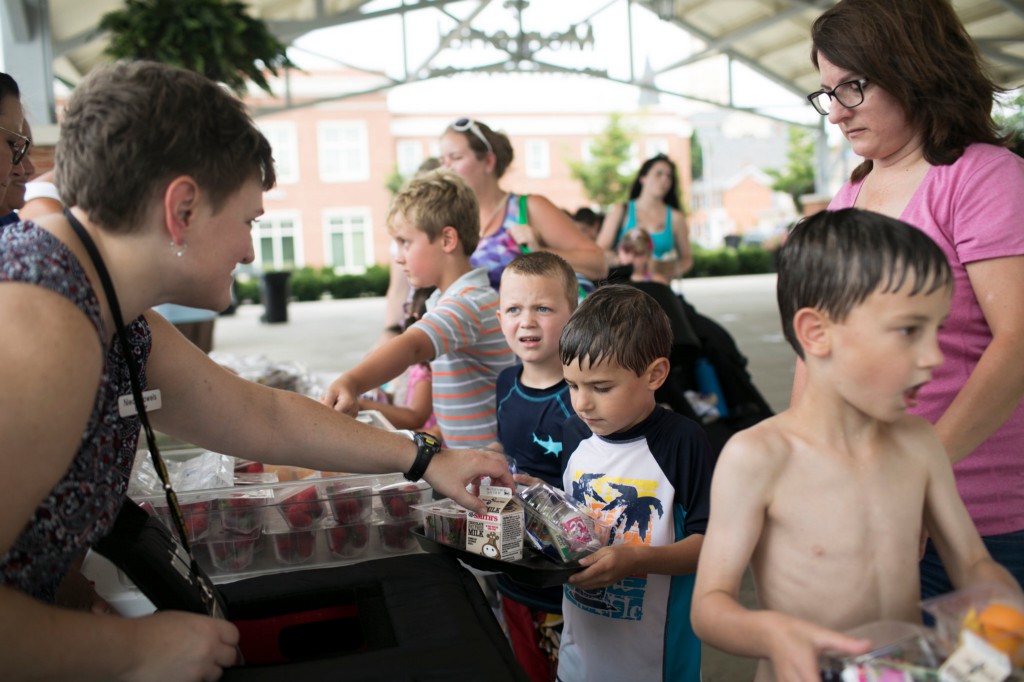
It’s undeniable that libraries make the world a better place. This summer, they’re continuing to rack up their good karma by keeping America’s children well-read and well-fed. Hundreds of libraries across the country are serving federally-funded meals in the summer in an effort to bring nutrition into an important discussion about learning and play, especially among lower-income communities. All of these meals are paid for by the Department of Agriculture’s summer food service program, serving about 179 million to nearly 4 million children this year. Not only are children of low-income communities fed, the program is also bolstering the use of the libraries for their other academic resources. “Our summer lunch effort has pushed more people into our libraries. They don’t just come for the meals and leave. They come for meals and stay,” said Andie Apple, the perfectly-named interim director of libraries for Kern County Libraries in California.

[NY Times/Catherine Saint-Louis]

11 Fictional Restaurants We Wish Existed

PBS documentary series will explore the country’s most beloved books

Get ready to battle over the best American book. PBS has announced that it will be releasing a show, titled “The Great American Read,” to spark a conversation about the country’s most beloved and influential novels. The eight-part series will explore the top 100 works identified in a market research survey that asked people to reveal their favorite reads. There is a catch: there can be only one title or series per author on the list. Additionally, throughout the show’s run, people will have the chance to vote on America’s favorite author, with the number one pick to be revealed during the finale. The documentary special will feature appearances by everyday Americans as well as citizens to explain their personal connections to their favorite books. It will begin in May 2018 and continue throughout the summer, with the finale scheduled for September, sure to incite some heated debates about books both hype-worthy and overrated.

[Variety/Daniel Holloway]

A lost J.M. Barrie play is found

Finding an unpublished, forgotten, hidden work by a famous writer is a dream for readers and scholars, but it doesn’t happen all that often in real life. So we should all get very excited about The Reconstruction of Crime, a play by Peter Pan creator J.M. Barrie, which was found after 50 years of languishing in a Texas archive. The play involves a great deal of audience interaction, asking for assistance in solving a horrible crime. It begins thus: “Please don’t applaud. Of course I like it; we all like it. But not just now. This is much too serious.” The Ransom Center, the site of Barrie’s archives, says the play is undated and runs to 33 pages.“It is unclear why he never had this play premiered — it might have been during a period where he was penning more serious dramas,” said Strand magazine editor Andrew Gulli.

[The Guardian/Alison Flood]

Essay Submissions are Open!

Electric Literature is opening submissions of personal and critical essays starting today, August 1. We’re particularly interested in pieces that examine the intersection of the literary experience and other creative endeavors: film, fine art, music, video games, science, tech, architecture. Submissions will close August 15.

Some of our favorite recent personal essays include pieces about what it’s like to live without a mind’s eye, about a writer’s journey out of her father’s house and into feminist rage, and about why men have to stop telling women to read David Foster Wallace. Has a book changed your life, or has your life changed how you read a book? Do you have a personal story about your favorite story? Bring us your sad, thoughtful, funny, illuminating experiences.

Critical essays may cover a single book, multiple books, a whole genre, or non-book pop culture like TV, music, and games. In the past, we’ve been interested in why we need dystopian stories without apocalypse; the metafictional elements of Dungeons & Dragons; why people are so critical of “I Love Dick”; and why we should all have imaginary friends. Some essays may be both personal and critical, like a meditation on how angry female heroes helped a writer with her depression.

Payment for essays is $50. Length is up to you, but we suggest aiming for 1,500–4,000 words.

Submissions will be accepted on our submittable account here.

Upending the Small Town Murder Mystery

Danya Kukafka on small town tragedy, teenage angst, and pushing beyond the question of whodunit

Danya Kukafka’s debut novel, Girl in Snow, tells the story of what happens after 15-year-old Lucinda Hayes is found dead at a playground in her Colorado suburb. After the death is declared a murder, all eyes turn to Cameron Whitley, a loner who hardly knows Lucinda but spends his nights watching her and her family from their front yard and drawing portraits of Lucinda. Girl in Snow is made up of alternating chapters following Cameron, Jade Dixon-Burns, an angsty teen with an unexpected connection to the victim, and officer Russ Fletcher. The question that propels the narrative of Girl in Snow forward isn’t “Who killed Lucinda?” but “How will Lucinda’s death change the people she left behind?”

I spoke to Kukafka over email about how she played with the form of the murder-mystery novel, why she decided to focus in on these three characters, and her unpublished novels.

King: Obviously, your book is not the first murder-mystery book about the death of a beautiful, popular girl. I think one of the things that makes this book unique is that, yes, you’re reading to find out what happened to Lucinda Hayes, but as a reader I became equally invested in what will happen to Cameron, Jade, and Russ. How will Lucinda’s death affect the three of them? How is it changing them, how will it continue to change them? When you were writing and editing, were you cognizant of using certain genre tropes to your advantage, turning them on their head, in a way?

Kukafka: I was cognizant, yes, and I wanted to do something different. I decided very intentionally to stay on the periphery of the central event (Lucinda’s death), and to make sure that in the end, the story wasn’t about that. I never found the details of Lucinda’s death particularly interesting. I wanted to focus on the way death affects people, especially in small communities, and the things we learn about ourselves during disaster. But of course, there is a body, and in the end, there is a murderer. I knew I couldn’t leave the reader unsatisfied, so in that sense, I did decide to adhere to the tried and true structure.

King: Are you a big reader of murder-mystery novels (apologies for that phrase, which I think oversimplifies your books and many other books that get placed in that genre). If so, what are some of your favorites? What appeals to you about the form?

Kukafka: I am! Some of my favorite books are those that play with the form. Celeste Ng’s Everything I Never Told You is wonderful, because it uses a similar murder-mystery structure to talk about family, social class, and race. Megan Abbott’s books take teen lives seriously, and allow them to be ominous, dangerous. I love books that scramble the usual equation — The Lovely Bones by Alice Sebold is one of my classic favorites, and so is The Virgin Suicides by Jeffrey Eugenides, and I even think Never Let Me Go by Kazuo Ishiguro could fall in this category. I’m also a big fan of Gillian Flynn, Paula Hawkins and Emma Donohue.

King: I’d like to hear how you decided on the ending. When you were writing, was the ending changing? When you began, did you know how the story would end, what happened to Lucinda and how? Or did that reveal itself along the way?

Kukafka: I had a very hard time with the ending. When you set out to write a murder mystery where the murder doesn’t really matter, you trick yourself into thinking it will just work itself out, which isn’t true. The murderer was always the same person (except for a brief period at the very start where I thought maybe Lucinda’s mother did it, but that made no sense). I did a lot of intensive work with my editor to pull all the plot points together, and to make sure we were striking the right balance. At one point, there was too much information about the murderer, and at another, there was too little. A lot of work went into getting it right, keeping the focus on the main characters while also coming to a gratifying conclusion for the reader.
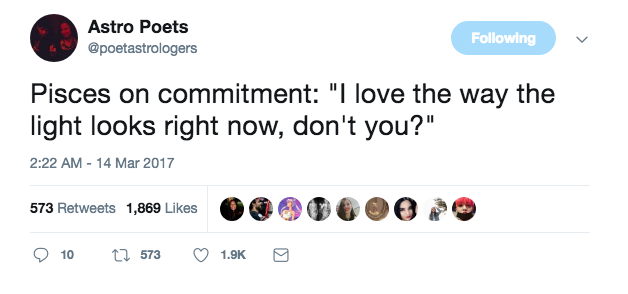
King: The setting seems so important in this book — and not just because of snow. When I was reading, I kept picturing everything in shades of white, blue, and smoke grey. Yes, probably because of the cover, but there’s also something about this story that seems like it has to take place in winter in Colorado. Why did you decide on Colorado for the setting?

Kukafka: Well, I grew up in Colorado — though I grew up in a city much bigger than the fictional Broomsville. Having lived in New York for seven years now, I realize when I go back to visit just how unsettling the landscape can be. On the front range of the Rocky Mountains, where Broomsville is supposed to be, you have these towering peaks on one side, with a sprinkling of suburbs tucked into the base. Then on the other side, you have miles of open plains. Moving away made me realize just how jarring this setting is, and also how beautiful.

King: Girl in Snow is being called your first novel, but am I correct that it’s only your first published novel? I’ve read that you wrote your first novel at age 16 and several thereafter. Are there parts of Girls in Snow in those novels? How do you think writing those unpublished novels at such a young gage helped you understand the form of the novel and develop a voice?

Kukafka: Alas, you are correct! I wrote a couple of very rough young adult novels before I began Girl in Snow. They were really different from my current work, though — they all contained paranormal elements, and they were absolutely of the young adult genre. They were also rejected by dozens of agents.

But they certainly helped me develop a voice, and to realize I wanted to write about teens, for an older audience. And they helped me understand just how much work goes into getting a novel to its final draft.
10 Great Vanishings in Literature: A Reading List from Idra Novey, Author of Ways to Disappear

King: Let’s talk about Cameron. if we didn’t get so much of the story from his perspective, the reader might be — to use a less than eloquent term — creeped out by him. But you allow us to understand the tenderness in Cameron’s obsession, and so much of his personality can be explained by what happened to his father. How did you go about developing his character?

Kukafka: I went into this novel wondering: can you be a good person, and still do something bad? I’m curious about people who commit atrocious crimes, what gets them to that point, and whether they do these things with a level of awareness. How do you reckon with that? Cameron, of course, is only slightly creepy, but I set out to create a character who could do questionable things, and still be lovable. I was also interested in his personal trauma, and how that can manifest, especially in the mind of a fourteen-year-old. Cameron is always straddling that line. His age, his psychological past, and even the little things that make him “not normal” all allowed me to work with a sense of unreliability, which I loved.

“I’m curious about people who commit atrocious crimes, what gets them to that point, and whether they do these things with a level of awareness. How do you reckon with that?”

King: Both Russ and Cameron’s chapters are told in close third-person, but Jade’s chapters are in first-person. Can you tell me about this decision?

Kukafka: Everything is immediate and explosive for Jade, and the first-person just felt right for her. She’s a teenage girl — her emotions are her life, and she experiences the world viscerally, always looking for meaning. First-person felt closer, and more volatile, which was perfect for Jade.

I chose the third person for Cameron because it allowed me to hold certain things back; what he may or may not suspect about himself. I don’t think he understands himself well enough to narrate his own life in the first person, and the same goes for Russ.

King: Okay, last question. What books are you reading now that you’re excited about?

Kukafka: I recently read Chemistry, by Weike Wang, which I loved, and I also really enjoyed What We Lose by Zinzi Clemmons. Lately I’ve been on a bit of a galley kick — two upcoming books I’m excited about are Red Clocks by Leni Zumas, and Back Talk, a short story collection by Danielle Lazarin (both come out in early 2018). I also finally read The Secret History, by Donna Tartt. I know I’m very late to that party, but I’m glad I showed up eventually.