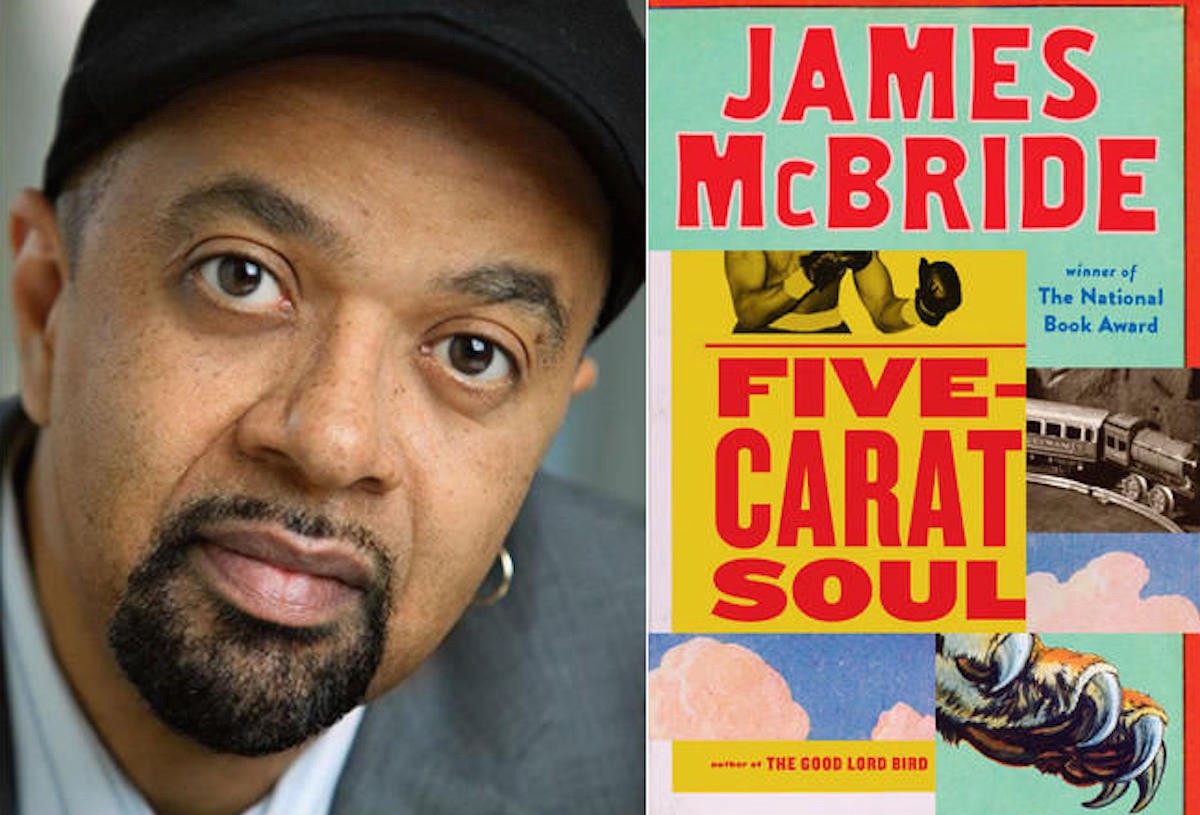
National Book Award winner James McBride has assembled a broad cast of characters, stretching over 150 years, for his new book of short stories Five-Carat Soul. (A story from this collection, “Buck Boy,” was published in Recommended Reading in September.) Poignant and painful, comedic and cutting, McBride’s collection covers the larger themes of race and humanity through riveting, intimate, uniquely-told tales. During the Civil War era, Abraham Lincoln gets an undercover lesson on race by observing his stable-hands. In an unrelated story, “Father Abe,” a mixed-race orphan believes he is Lincoln’s son. “The Under Graham Railroad Box Car Set” spans the past and present as a white antique toy dealer traces an almost priceless 19th-century train set to the home of a poor Black preacher in modern day New York. “The Moaning Bench” is set at the doors of Hell as an unlikely cast of characters, led by a boxer who resembles Muhammad Ali, wrestle themselves from the grasp of old Beelzebub himself.
McBride’s originality is in part due to the experiences he’s lived. He was a staff writer for the Boston Globe, People, and TheWashington Post before he quit journalism to be a full-time musician, writing songs for Anita Baker and Grover Washington, Jr. among others. But McBride would find his steadiest recognition through his books and stories. His memoir The Color of Water, about growing up in a poor Black family whose matriarch was a white Jewish mother, was on the New York Times bestseller list for two years, and his 2002 novel Miracle at St. Anna was made into a movie by Spike Lee. His last work, The Good Lord Bird, won the National Book Award for fiction in 2013. Five-Carat Soul joins the ranks of an already strong artistic catalog for McBride.
Jeff Vasishta: Had you been writing these stories over a very long period of time or did they arrive to you fairly quickly?
James McBride: I wrote them over the years. Some were written years ago when I was in my 20s. The lion story I wrote while I was a reporter at The Washington Post back in the ‘80s.
JV: History plays a big part in many of these stories, both recent and older. “Under the Graham Railroad Box Car Set” is fascinating. It works so well telling it from the viewpoint of the white antique dealer. Where did that story come from?
JM: I don’t know… it was in the air. I used to know a toy collector, and I was amazed that in a world where millions of children go to bed hungry every night, people pay enormous sums for old toys. But the toys are simply the vehicle in the story to get those two characters, the toy collector and the preacher, moving. Good stories should have characters that connect. We all connect in life, by accident, or God’s will, or by karma. Once that happens, it’s the writer’s job to show how these connections and histories intertwine, or don’t. Those connections, or missed connections, are what makes the world spin.
JV: Race relations are an underlying theme in many of your stories. In the previously mentioned one, both the dealer and the box car owner think of the other with a certain amount of incredulity. Just so I’m clear, does the Reverend know the value of the toy all along? Was he playing the antiques dealer?
JM: I can’t answer that easily. The Reverend is himself, to me. He’s a real living thing in my mind. I don’t think he really cares about the value of the toy. I think he cares only about his second life, which expresses the rage that his first life cannot. He was not trying to con the antiques dealer. If you think like that, by the way — hustle, con, etc.— you can’t be a good writer. It destroys your creativity. Writing requires innocence. If there is judgment, there is no journey.
Writing requires innocence. If there is judgment, there is no journey.
JV: You grew up in Red Hook, Brooklyn and went to school at Oberlin and the stories set in Uniontown, Pennsylvania, like “Ray-Ray’s Picture Book” and “Blub” have real resonance. Why choose Uniontown during the 70s? Did you think they would have a different, smaller town, blue collar feel than if you set them in Brooklyn?
JM: My brother-in-law grew up in Edenborn, Pennsylvania. He’s a doctor now. I enjoyed his talks about growing up in that town. That town also produced C. Vivian Stringer, the coach of the Rutgers women’s basketball team. It seemed a good place to put these characters. I’m a little worn out with stories that continually depict African American characters in city landscapes with chain link fences and basketball hoops. Similarly, I’m done with the usual stereotypical versions of working-class white characters who howl to the moon, drink beer, and shoot pistols. Americans are dynamic and varied. It doesn’t matter that the stories take place there, in a way. The feelings are the same. The story is the same everywhere. Kids are the same the world over.
(Five-Carat Soul, published by Riverhead Books)
JV: I found “The Moaning Bench” very moving. And has direct parallels to Muhammad Ali. Why did you chose to give him another name?
JM: Nobody is Ali. Rachman Babatunde has to be himself on the page, otherwise it really becomes Ali, and then it’s not my character, but rather Ali himself, and you cannot create someone on the page as strong as Ali was. In fiction, you are just borrowing humanity. I met the real Ali at his training camp once when I covered him as a young reporter. I will never forget his kindness. I wanted to pay tribute to him — and to Joe Frazier — without cheapening what they meant to those of us who respected them. That story tries to show what Ali meant when he said “I am the greatest.” He was really speaking to all of us, showing us where our own greatness lies. He was a wonderful man, a wonderful Muslim; one of the greatest figures this country has ever seen.
JV: “Mr. P & the Wind,” is mind-blowing, literally. The concept — animals speaking to each other in Thought-Speak — humanizes them. When writing the animals voices in such a way did you have cultural distinctions in mind?
JM: Not really. The lion’s voice is strong, and he’s Black, and it helps to have a strong Black character who is not saying “shit” and “fuck” all the time. The other characters are just… who they are with attendant issues. Rubs for example is a female gorilla who has all the issues, or some of the issues, of any older woman. If you start splitting hairs about characters, you’ll really be screwed up. You can’t approach a story and say “I’ll write the Black perspective.” There is only one perspective. The human one. That helps keep your characters fresh. Writing about animals as humans was refreshing. Animals have no prejudice. The only prejudice in that story, I’m sorry to say, is mine.
JV: There is twist in many of the tales. I’m never quite sure how they are going to end. Did you try out alternate endings for many?
JM: No. The stories end where they will end. In fiction, you’re getting out the way of the story. Just wave the cape and let the bull pass, then run out the arena before he catches his breath and turns around. Get out. You’ve had your fun.
The stories end where they will end. In fiction, you’re getting out the way of the story.
JV: You’ve had a varied creative career — journalist, musician and fiction writer. Which has been the most enjoyable or the least stressful?
JM: Writing is hard because it requires a lot of research. But it’s less stressful than music. Music is more enjoyable but much harder overall. Nobody respects musicians, really. Everyone is paid so poorly, except maybe Hollywood composers. And serious Black musicians are at the lowest end of the totem pole. There is no one group in American artistic life who bear the burden of racism implicit in history and culture than serious Black musicians.
JV: I actually knew of you first as a musician and songwriter. I used to be an editor for Blues & Soul Magazine and I have the CDs you wrote songs on. So realizing literary James McBride and the musical one were one and the same was quite a shock. The paths of jazz musicians and literary figures don’t usually intersect. Do you ever wake up in the morning and say, “Do I want to write songs or write fiction today?”
JM: No. That time is past, but you bring up good memories. I loved writing for Anita Baker. She gave me my first break. Grover Washington was a music pioneer who never got credit for starting “smooth jazz.” I was starving in those days. When Anita recorded that first song. “Good Enough” and I got paid — and it took so long for that dough to come — I went to the bank, got out $500 in singles and threw them across my bed. But then I had to pick them all up. I was young. I was living in Fort Greene, Brooklyn back then. This was the ‘80s. In those days Brooklyn was a forgotten country. It was so much fun. But that time has past. My job now is to make a way for others, just like Grover and Anita and Little Jimmy Scott did for me.
JV: How did winning the National Book Award change your career, if at all?
JM: I think the award verified that I can write fiction on a high level, and I thank God for it. But in this world, you’re only as good as your last book.
JV: Many people don’t know that you were on the Victory Tour with the Jacksons for 6 months when you were writing for People, which I guess brought together many of your worlds. If you had to name one thing from being a musician and journalist that had the most effect on fiction what would it be?
JM: A good writer has to walk the earth and take notes. That’s the first thing. And Hollywood is not a place to pursue happiness. That’s the second thing. A writer has to do every job that comes, as hard as they can, as long as they can stand it. The jobs and hustles and struggles you endure are bank books that you draw on later. They’re emotional savings accounts that draw interest so long as you don’t let the bitterness of failure cloud your vision and soil your innocence. That tour was difficult for me. Other than meeting Michael Jackson’s mother — Mrs. Katherine was a special person, a wonderful person — I hated that tour. I hated what went on. I felt the Jacksons were exploited and misunderstood. The fact is, I’m just not a Hollywood kind of cat.But I learned a lot about humanity, and met some nice people, and learned why money isn’t the most important thing in the world. I spent a lot of time in my hotel room practicing my horn and writing fiction. I put myself in God’s hands and He led me through.
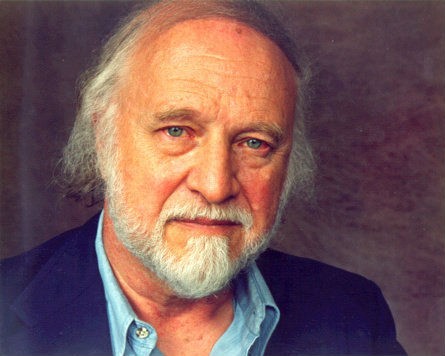
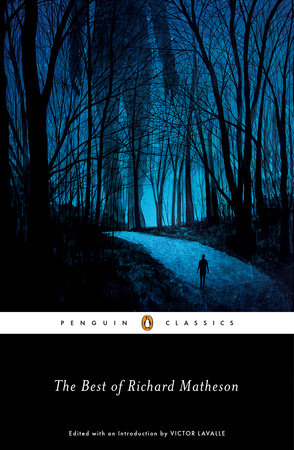
I recently had the enviable task of reading nearly every story Richard Matheson ever wrote and selecting 33 tales to be included in Penguin Classics’ The Best of Richard Matheson. This turned out to be like stepping into a time machine, transported back to the age when I started reading him. I was fourteen. The year was 1986. My introduction to his fiction, his short novel I Am Legend, was one of the first books that made me run up to my friends and tackle them so they’d all check it out, too. If you haven’t read it (what the hell is wrong with you?), it manages to be a work of science fiction, a vampire story, a progenitor of the “biological plague” apocalyptic novel, and also an excellent thriller. All that in about 160 pages. I had to find out more. I dove into The Shrinking Man (the film added “Incredible”) and Hell House and wow. I wish I had a more sophisticated way to describe my reaction to the seismic effect of Richard Matheson on my young mind, but “wow” gets at the raw, awestruck nature of thing. And then I came to find out the man had written short stories. I tracked them down with gusto, with glee. And with time I began to relate to the man’s writing in a way that seemed damn near mystical.
I want to explain exactly what I mean by that. There’s a lot I need to say about Matheson, and the importance of his fiction, the reasons why this collection is so vital and worthwhile, but I can’t get to that directly. I will go there eventually. But first I have to tell you about my Matheson moment. I don’t mean that I met the man. I mean I stepped into a story he could’ve written. I have to tell you about Cedric and his mother.
2
My mother made good when I turned fourteen. At least that’s how she saw it when she moved us out of an apartment in one part of Queens and took us to a house she’d bought in another. The woman emigrated from Uganda in her twenties and now, in her forties, she’d worked like a machine to stop renting and start owning. From a two-bedroom to a two-story home, damn right my mother felt proud. Me, my sister, and my grandmother were the grateful tagalongs.
We moved in over the summer and when September rolled around I started going to school. The local public school was Springfield Gardens High, and just before I arrived the place had been outfitted with the newest, latest technology: metal detectors. And with good reason. This was 1986, the Crack Era, and as old news reports will tell you some people had a propensity to shoot guns wildly in places where teens gathered. My mother took one look at the school where she was meant to send her child and she made changes posthaste. This woman was not about to have her kid ushered through those contraptions every morning before heading to homeroom. More to the point, she didn’t want to get some phone call about how I’d been caught by Stray Bullet Syndrome while standing around outside. She found a private school out on Long Island and before I could say “where the hell is Nassau County” she’d gotten me enrolled on a scholarship. My mom was no joke.
My mom also wasn’t a car owner. She got to work and back by taking a bus to the Long Island Rail Road and the train into Manhattan. Suffice to say there weren’t any such choices at Woodmere Academy. People either got dropped off by their parents (Mercedes, BMW, Audi) or they took a school bus. Mom enrolled me in the pickup service and every morning, around 7:45, I’d go out and stand on the corner of 229th Street and 145th Avenue and there I’d wait for one of those long yellow buses to pick me up.
I waited in front of a single-family home with yellow aluminum siding. One morning, maybe around November or December, when the chill weather set in heavy, the front window of that house slipped up and a kid my age stuck his head out the window and called to me.
“Aye,” he called. “Cheese bus.”
I turned, baffled. He had an enormous round head and close haircut. This gave him a kind of Charlie Brown look. A brown Charlie Brown. He wore a white tank top. He was, by no definition, a skinny kid. In fact, me and him might’ve been body doubles.
“Cheese Bus,” he said again, and I realized he’d given me a nickname. Before I could speak he reached one meaty hand out of the window and waved me away.
“Go stand down the block,” he said. “Your bus is fucking up my vibe.”
“You don’t own the sidewalk,” I said. Citing basic property law was the best I could do.
“You sound like a herb,” he said. “Cheese, are you a herb?”
“Well how come you’re not getting ready for school?” I said. What kind of kid treats cutting school like an insult? This one. And with that I cemented my herb status.
“I would try to help you,” he said. “But I can’t even guess where I’d start.”
I walked up to the chain link fencing at the edge of his parents’ property and leaned my elbows on it so that I was posed just like him.
“Seriously though,” I said. “You’re skipping?”
He thought about this a little bit. He sighed and said, “I’ve got company coming over.”
“Like, you’re having a party?”
“Party for two,” he said, then he looked to his left and pointed, discreetly, with one finger.
When I looked up I saw two things: my bus — the cheese bus — chugging toward me; and a girl, fourteen, moving down the block with much more grace. This would turn out to be Lianne, Cedric’s sweetheart since seventh grade. They kissed sweetly when she reached him. He led her inside without even saying good-bye.
After that me and Cedric talked each morning. He’d lean out the window and gab with me before the bus showed up. I made nice, but not because I found him so charming. I’ll admit I had ulterior motives. New in the neighborhood and being bused to a school miles away. How was I going to meet anyone? I wanted to girlfriend, too. Couldn’t Lianne call in a friend for me?
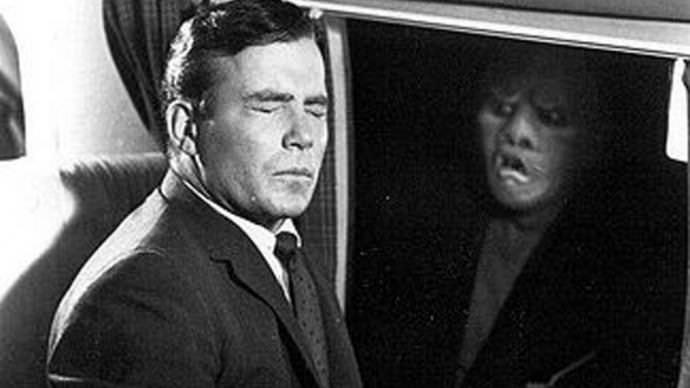
“Nightmare at 20,000 Feet,” The Twilight Zone (1963)
3
It turned out to be surprisingly easy to cut school. Just don’t be on the corner when the bus shows up. After two minutes the driver simply drove on. Meanwhile I’d been tucked inside Cedric’s house, peeking out through the blinds like some secret agent at risk of having his cover blown. The bus left, then Cedric tapped me on the shoulder and said, “Stop hiding.”
Easy to do when two young women knocked at the front door. Cedric went to let them in and I stood there in the living room feeling quite sure I’d ascended to some higher plane of existence. Or was about to. He opened the door and kissed Lianne, then stepped aside so she and her friend Tasha could slip in. The front door fed right into the living room where I stood. The living room fed right into the kitchen. Apparently there were two bedrooms elsewhere — Cedric’s and his mom’s. When I’d asked him if I could use hers — in case things went well with Tasha — he patted me on the arm and said, “Don’t get ahead of yourself.”
Now let me cut in with a message from me as a grown man, as a father. It is absolutely insane that four fourteen-year-olds were sneaking off to get intimate in the middle of the day; I can’t pretend it wasn’t. But at the time it felt wonderfully sane.
Anyway, I’m standing there and Tasha and Lianne are coming through the doorway and then I heard it, a sound in the kitchen. Knocking. Not all that loud, but I was close to the kitchen and getting closer. By that I mean that Tasha and Lianne were taking off their coats and I ran away. Later I told Cedric I went to “get them water,” but there’s no other way to say it: I fled.
As soon as I entered the kitchen the knocking stopped. I figured it might be their boiler kicking in. It was winter after all. I knew I’d run away though so I came up with the water idea and went scrounging for cups. This led me on a chase through the cupboards as, in the other room, Cedric called for me. And then I reached their pantry door. This style of one-family home had a separate little pantry, about the size of a small walk-in closet. I found the door there and, still hunting for glasses, I tried the handle and found it locked. Then Cedric walked into the kitchen.
“Cheese,” he said. “You making me look bad.”
When he said it he didn’t sound playful. He’d convinced his girlfriend to bring someone with her and then his boy had gone and run into the kitchen. But I also wondered if that was really the reason he seemed unhappy with me. He peeked at the pantry door then back to me.
“Cups is over here,” he said, taking four down from a cupboard by the sink. Then he rushed me out of the kitchen.
He put on a movie. I definitely don’t remember what it was. He closed the blinds so the living room went dim. Lianne leaned into him. Tasha and I hardly spoke. She was as nervous as me.
At some point Cedric went to the bathroom and left us alone in the living room. Lianne patted the cushion beside her and Tasha hopped over, the pair whispering and I sat there alone. Hadn’t even sipped my water once. And then I heard it — that knocking — coming from the kitchen again. I didn’t hesitate. Maybe I felt stupid sitting alone. I walked in there and went quiet.
The knocking, low and insistent, came from the other side of that pantry door. I checked for Cedric but he wasn’t around. I tried the door but found it locked. Meanwhile the knocking kept on, regular if weak. It damn sure wasn’t the boiler.
I whispered, “Who is it?”
When I spoke the knocking stopped. I mean instantly. What followed next was a scratching sound. Claws on the floor. I even thought I heard something panting softly.
A dog.
Cedric had a dog and he locked it up when company came over.
The knocking, low and insistent, came from the other side of that pantry door. I checked for Cedric but he wasn’t around. I tried the door but found it locked.
I got to my feet and laughed at myself and now thought only of how I would not fuck things up with Tasha, who — it turned out — was exactly as geeky as me. All I had to do was finally speak to her and find out. We finished the movie together in the living room, all four of us. By the time it was over even me and Tasha were kissing. At some point she mentioned a smell in the room. I almost laughed because I knew it was just the funk of four teenagers fucking around. But she persisted. It was worse than that. Could there be something going rotten in the fridge? In the walls? Maybe there was a mutt somewhere in the house, an animal that had had an accident.
Cedric hardly pulled away from Lianne’s lips. He answered her casually, thoughtlessly. He said, “My mother would never let me have a dog.”
I remember hearing those words and going utterly numb.
4
Which brings us to Richard Matheson.
Just because you may have heard of him, read him, watched the countless shows and movies that he wrote or inspired, that doesn’t mean you may have thought so much about his meaning in the history of the genres of science fiction and fantasy, horror and thrillers. Why bother hashing over all that when you could just dive into the tales themselves? A fine point. I wouldn’t blame you. Actually, I’d encourage such a thing.
I find it interesting to note that Matheson was the son of two Norwegian immigrants. I like to think on that because he is, to my mind, such an American writer, and it’s always good to be reminded that for almost all of us that means, at some point, our people came from elsewhere and landed here. There’s so much journeying in Matheson’s writing — across time and space, across the threshold between life and death, across town to get to work on time (though of course you’ll never get there safely) — as I read through all the stories I wondered how much the journeys of his parents meant to Matheson, the young man. It might be that as the son of a more recent immigrant my mother’s course — her bravery, her drive — informs so much of what I imagine, what I write.
If nothing else he’s written about how his parents came from Norway and found each other, then circled the wagons around family, fearful of the outside world and clinging to each other. Inside the walls sat a young, bookish Richard Matheson. They kept him close but his mind roamed.
Richard Matheson
We should get The Twilight Zone out of the way now. Yes, Richard Matheson wrote some of the most beloved and enduring episodes of that classic show. Let’s rattle off just a few: “Third from the Sun,” “Death Ship,” “Nightmare at 20,0000 Feet.” You’ve seen them and loved them. You’ve sat down with some friend during a Twilight Zone marathon and giddily anticipated when one of them would play. But before they were on your screen they were in magazines, collected in books. I know this seems almost silly to say, but they were all stories first. And what’s so remarkable, when you read them, is to see how perfect they were right from the start. The clarity of the language, the promise of a pleasing mystery, the mounting tension of the confrontation — the revelation — to come, and the cool satisfaction of seeing Matheson pull off this magic again and again and again (and again). Matheson regularly did the patient work of illustrating an ordinary existence only to have it smash directly into the monstrous, and this becomes the moment of a person’s greatest test. Sometimes they triumph, sometimes they fail but Matheson knew that in a way the pushing is the point. The stress and anxiety, the drama and fear, that’s when humanity truly gets to understand itself, understand the world.
Matheson began his writing career with short stories. He worked that form for twenty years, and all were published between 1950 and 1970, a Golden Age for Matheson’s fiction and also for the world of science fiction and fantasy magazines. He started with short stories and an industry existed to support him. Such an idea can seem like fantasy these days. But the pairing was auspicious. These genres were reaching a wider readership, so they’d better have some good content. And Richard Matheson was there. In many ways he was inventing the template that generations of writers would copy.
Matheson regularly did the patient work of illustrating an ordinary existence only to have it smash directly into the monstrous, and this becomes the moment of a person’s greatest test.
The problem with being a pioneer is that you often die out before your settlement thrives. You’re in the ground for years before the village becomes a town; decades before the town becomes a city. Matheson, thankfully, got to see countless kinds of success. It’s always nice to be able to say a writer enjoyed the fruits of his labor. How rare is that? Let’s celebrate it.
But the other issue with being a pioneer is that the generations who come later may forget the ground you tilled, the innovations you brought into being. You hear Matheson’s name on the lips of so many greats, from Stephen King to Joe Hill. (A little family joke I just couldn’t resist.) But he deserves to be spoken of by so many more. His stories became the bedrock of many genres: thriller, horror, science fiction, fantasy, so essential it’s almost impossible to really grasp how much he accomplished. How many people take a moment to give thanks for the sidewalks and highways? Yet most of us couldn’t get anywhere without them.
“Third from the Sun,” The Twilight Zone (1960)
The other reason this may be the case is that Matheson had such an effortless, clear writing style. He threw the reader into the story and made very little attempt to force attention on himself as Author. This is great for stories, but not so good for getting credit. Writing is like life: too often we praise the show-offs, the ones who wink at us when they toss out some abstruse word. Many tend to think of this as artistry, but I’m less inclined. Or maybe I only mean to highlight the grace, and confidence, of a writer like Richard Matheson. Clarity can be artistry as well. It implies confidence, too. You won’t notice much of what he’s doing the first time you tear through these stories, but on your second pass you should take your time.
His central concern is survival. What threatens your existence? Even more important, what will you do to get through? Think of the man in “Nightmare at 20,000 Feet” who risks popping open the emergency window of an airplane at cruising altitude so he can fire a gun at the being he’s seen tearing at the plane’s engine. He’s nearly sucked out into the night sky, but he must do something. He, and the other passengers, must survive. The ordinary meets the monstrous and every life is at risk.
But let’s not only talk of the classic stories, the ones you no doubt know; they’re worth the price of admission alone, but Matheson has so much more to offer. There’s my personal favorite find, a story called “Witch War.” Matheson plays out the idea of a conquering army powered only by the occult abilities of a handful of teenage girls. In between decimating the opposing army they talk smack about one another, they mock and joke, by the end they even revel in the fear they cause to the men they’re meant to defend. It’s a subtle and stunning little tale and it shows off another aspect of Matheson’s talent: he can be wickedly funny.
Then there’s “Dance of the Dead.” I don’t want to spoil anything for you, but it’s straight up disturbing. It’s a kind of postapocalyptic undead tale that also predates, even anticipates, the reprobates of A Clockwork Orange. (It was also made into a deeply troubling and memorable episode in the Masters of Horror anthology series, written by Matheson’s son, Richard Christian Matheson, and directed by Tobe Hooper.) Where Richard Matheson often had his stories come out on the side of safety or triumph, this one has no time for such treacle. This one wants to hurt you. And it, too, is a product of the same singularly gifted mind.
The depth and variety of the man’s imagination seem nearly unparalleled. His influence exists even for those who have never read him. He’s in the DNA of too many other writers to count. When you enjoy science fiction and fantasy today, when you read modern horror, you are still reading Richard Matheson.
5
The next morning I decided not to skip school. This also had to do with the fact that Tasha — with whom I was now smitten — told me she couldn’t cut twice in one week. So I showed up at my bus stop right around 7:45, and sure enough the cheese bus turned the corner a few blocks west, right on time. But then Cedric’s living room window opened and he leaned out looking as blasé as always. Yet again he had on my Champion sweatshirt, one of many articles of clothing I’d lent him, never to be returned. He leaned on his elbows and watched me quietly for about the count of three.
“All right then,” he said, keeping direct eye contact. “You want to see?”
Did I? In that moment I didn’t really know.
Cedric opened the front door. I walked into the house with my head down, my curiosity tinged with dread.
The living room looked like it hadn’t been cleaned — or even occupied — since me and Tasha had been there yesterday. The couch cushions still in disarray. Cedric walked ahead of me. He entered the kitchen and I hesitated.
“Well?” he called out.
I moved toward the kitchen, but I can’t say it was my choice. I felt compelled to take a step. Pulled in, drawn closer. As moved I heard the pantry door’s lock click and a faint groan as it swung open. At the same time I smelled it again, what Tasha had been talking about the day before. A kind of rot so strong I experienced it as a wave of heat that made my eyes flutter. And still I stepped through the threshold and entered the kitchen.
There’s a look to ships that have sunk to the bottom of the ocean and remained there for decades. When they’re brought to the surface they’re scaly with barnacles and orange with rust. They look vulnerable and indestructible, simultaneously. A sunken ship, now risen, Cedric’s mother seemed much the same.
As I said, it was the Crack Era and I recognized what had torpedoed this woman. I tried to greet her but there wasn’t time. Cedric’s mother came at me, her hands dug into my coat pockets, she yanked my book bag off from where it dangled on one shoulder and, right in front of me, she unzipped it and tossed everything out on the floor.
“Ma!” Cedric shouted, but he didn’t try to stop her. He’d never looked so young.
Each of us must’ve outweighed Cedric’s mother by two hundred pounds but I knew I didn’t have the strength to challenge her. She tossed through my things and sucked her teeth and both us boys just watched her.
“Ma,” Cedric said again, but much softer this time. “Please, Ma.”
Then she turned and leapt at him, her own child, and sent him flying backward. He went to the ground. She climbed right up onto his chest, that’s how I remember it. She pulled at the sweatshirt, my sweatshirt, and I heard the fabric tear. I went down on a knee and tossed everything back into the bag and that’s when Cedric cried out, I swear I thought it was an infant wailing from another room. When I looked up she’d torn open his sweatshirt and her hands dug at his flesh. I saw blood. I thought she might devour him right there.
And there I’d finally reached my Matheson moment. The ordinary was over. The monstrous was here. I wish I could say I helped him, but I didn’t. I picked up my bag and I scurried backward. If someone was going to survive, better it be me. Even today I can still hear him whispering, pleading, that same single word. “Ma. Ma.”
And there I’d finally reached my Matheson moment. The ordinary was over. The monstrous was here.
I got to the living room and crawled to the front door. I opened it and pulled the door shut behind me. I stopped skipping school after that. I told Tasha about what happened and, bless her, she believed me. But when I went back to the house, knocking for what seemed like hours, Cedric didn’t answer. I’d never seen a place look so lifeless. Lianne told Tasha she couldn’t reach him. She’d call the house, but the phone only rang and rang. I never saw him pop his head out his front window ever again.
Obviously I’ve turned this history into a story, my homage to Richard Matheson, to my old friend Cedric, and even to his mom. While some of this tale is indeed fiction, there really was a monster living in that house.
Which brings me back, one last time, to Richard Matheson. What did this son of Norwegian immigrants who spent the majority of his life writing in California know about the Crack Era nightmares of a black boy from Queens? On the surface I’d say nothing. Superficially he and I could hardly seem farther apart. But then why, when I wrote out what happened between me and Cedric and his mother, did I hear the echoes of so many of Matheson’s tales? I’m not talking about the plot points but the essence. The fight for survival, the monstrous breaking in on the ordinary, no one holds the sole rights to such real estate. But Richard Matheson tilled the soil long before me and, likely, long before you, too. He even built a house in which so many of us still dwell. All hail the architect!
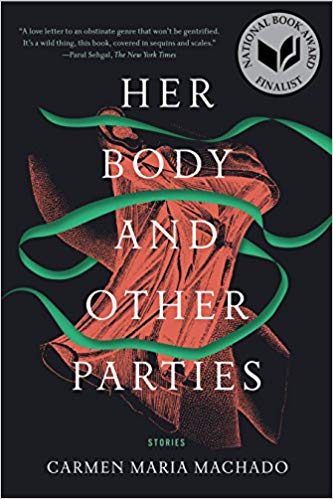
When I teach Carmen Maria Machado’s story “The Husband Stitch,” the first in her collection Her Body and Other Parties, to my fiction workshops, it’s unlike teaching any other story. For one thing, the men in class don’t speak. I’m not sure if, like me, they don’t know what to say, something I admit before we begin. “I don’t quite know how to discuss this story,” I say. “I’m really having us read it because I love it.” Or maybe they feel like they shouldn’t because it is, among other things, a story about being a woman. The conversation limps along, uncharacteristically weighted with all the things the students are thinking and not saying. Often, one woman admits she cried when she read it, and when I nod and ask why, she says she doesn’t know. Always, a student says that she sent it to all of her friends.
I have that impulse, too, to share it, which is why I have my classes read it. There is a truth in the tales that I recognize viscerally but have never been taught. Machado’s narrator tells the story of meeting the young man she knew she would marry, their mutually desirous marriage, the birth and raising of their son, and an inevitable betrayal by her husband whom she loves. “He is not a bad man, and that, I realize suddenly, is the root of my hurt,” the narrator says. “He is not a bad man at all. To describe him as evil or wicked or corrupted would be a deep disservice to him. And yet — ” The title refers to the extra stitch sometimes given to a woman after the area between her vagina and anus is either torn or cut during childbirth. The purpose of the extra stitch is to make the vagina tighter than it was before childbirth in order to increase the husband’s pleasure during sex.
Often, one woman admits she cried when she read it, and when I nod and ask why, she says she doesn’t know.
I was first introduced to the husband stitch in 2014, when a friend in medical school told me about a birth her classmate observed. After the baby was delivered, the doctor said to the woman’s husband, “Don’t worry, I’ll sew her up nice and tight for you,” and the two men laughed while the woman lay between them, covered in her own and her baby’s blood and feces. The story terrified me, the laughter in particular, signaling some understanding of wrongdoing, some sheepishness in doing it anyway. The helplessness of the woman, her body being altered without her consent by two people she has to trust: her partner, her doctor. The details of the third-hand account imprinted into my memory so vividly that the memory of the story feels now almost like my own memory. Later that year, Machado’s “The Husband Stitch” was published, and sometime after that, I read it, and the details of Machado’s scene were so similar, down to the laughter, down to the words “don’t worry” (though in Machado’s story they’re directed at the woman), that I’m not sure now what I remember and what I read.
Reliable information about, or even an official definition of, the husband stitch is conspicuously missing from the internet. No entry in Wikipedia, nothing in WebMD. Instead there are pages and pages of message board entries and forum discussions on pregnancy websites, and a pretty good definition on Urban Dictionary. In James Baldwin’s 1979 New York Times piece, “If Black English Isn’t a Language, Then Tell Me, What Is?” he writes, “People evolve a language in order to describe and thus control their circumstances, or in order not to be submerged by a reality that they cannot articulate.” How can a practice like the husband stitch be warned against if there’s no official discussion of it, no record of it, no language around it, nothing to point at, to teach? Every time a woman received a husband stitch, is it in her medical file? Does it say, “2nd degree perineal laceration repaired + husband stitch”? Or might the record leave off the extra stitch, whether it happened or not? I asked three male friends in medical residencies in different areas around the country if they’d heard of the husband stitch and only one had, but not from medical school; he knew it from Machado’s story. And yet it happens, based on the chatter on message boards, women’s chatter, which I have been conditioned to approach with skepticism, a category of information I might dismiss as an “old wives’ tale” (a term with its own troubling connotations). It happens even now.
But this is not an essay about the husband stitch. It’s an essay about believing and being believed.
My mother has always had a flexible relationship with facts. She is constantly solving mysteries, including (often incorrectly) the mystery of what you’re about to say next, or the mystery of someone’s motivations. Sometimes in recalling these instances, she’ll substitute in her solutions for the truth, her prediction for what I actually said. “I thought you said you weren’t taking the baby to Portugal because of Zika,” she’ll say, and I am exhausted by the prospect of unraveling all of the inaccuracies. “No, that’s what you said,” I say, like a child. “I said I am taking the baby to Portugal and there’s no Zika in Portugal and the reason people worry about Zika in the first place is if you’re pregnant and neither I nor the baby are pregnant.” But of course she’s not confused, though there are times when she is; in this case she’s knowingly using incorrect facts to tell me her emotional truth, that she doesn’t want me to take the baby to Portugal because, like me, she’s afraid of everything. The truth that she is afraid of everything is as real as the truth that there’s no risk of Zika in Portugal. Both are true. By working backwards from her emotional truth I can understand why her facts are wrong.
Machado’s narrator tells a story from her own youth, when she’s certain she has seen and felt toes among the potatoes at the grocery store. Her mother thinks she’s misunderstood the word. Potatoes, not toes, she tells her, but the narrator remembers the detail of the way the toe felt when she touched it. Her father lays out the logical case against the existence of toes among the potatoes, a clean, five-point position: she knew the grocer, why would he sell toes, where would he get them, what would be gained from selling them, and finally, why did no one see them but her? She reflects on this, “As a grown woman, I would have said to my father that there are true things in this world observed only by a single set of eyes. As a girl, I consented to his account of the story, and laughed when he scooped me from the chair to kiss me and send me on my way.” Machado is teaching us that truth and logic only occasionally overlap. When you start poking at the idea of an absolute truth, a truth unfiltered through someone’s perception, it can fall apart entirely.
When you start poking at the idea of an absolute truth, a truth unfiltered through someone’s perception, it can fall apart entirely.
“Of all the stories I know about mothers, this is the most real,” Machado’s narrator begins, and goes on to tell a story of a mother and daughter traveling to Paris. The mother falls ill and the doctor sends the daughter to get medicine, a task which takes so long, a meandering cab ride, the doctor’s wife making pills out of powder, that when the daughter returns to the hotel she finds her mother gone, the walls of their room a different color, a hotel clerk who doesn’t remember them. Then the narrator says there are many endings to this story, one in which the daughter persists, stakes out the hotel and starts an affair with a laundryman in order to finally discover the truth: that her mother died from a highly contagious disease and in order to prevent widespread panic, the doctor, cab driver, his wife, and the hotel employees conspired to erase any trace of the mother and daughter’s existence there. Another ending to the story is that the daughter lives the rest of her life believing she’s crazy, “that she invented her mother and her life with her mother in her own diseased mind. The daughter stumbles from hotel to hotel, confused and grieving, though for whom she cannot say.” I would tell you the moral, the narrator says, but I think you already know.
We are taught to value simple, elegant truths. In science, philosophy, theology, and politics, we apply Occam’s razor, the idea that between competing hypotheses, the simplest one is the right one. That the daughter is crazy is a much simpler explanation than that a whole cast of characters conspired to hide her mother’s death and erase their existence, simpler than the introduction of a contagious disease, simpler than the construction and remodeling done to the room. And yet —
In class, I don’t say to my students, “Do you feel it, too? Or can you imagine it? The perils of living in a world made by a different gender? The justified and unjustified mistrust? The near-constant experience of being disbelieved, of learning to question your own sanity? How much more it hurts to be let down by ‘one of the good ones?’” Instead I say, “What effect do the horror tales have, placed associatively where they are in the story? What effect do the stage directions have? What would be lost without them? Do you see how they’re braided together? These are tools you can use in your own stories.”
In class, I don’t say to my students, ‘Do you feel it, too? Or can you imagine it? The near-constant experience of being disbelieved, of learning to question your own sanity?’
One night we had a thrilling summer storm, bright and crashing, wind and rain blowing into the house from every direction. I wanted to open all the doors and windows wider and run around, but it was better for the house, the wood, to close them tight. We hadn’t been in the house long, and it was the first time in this house we’d had to close all the windows. In the morning I smelled gas, strong, unmistakable. “I smell gas,” I said to my husband. “I don’t smell it,” he said. He had a friend come over. “Why are you having a friend come over,” I asked, “when it doesn’t matter if he can smell it or not, and none of us can fix it?” His friend didn’t smell it, either. I called the gas company. The gas company employee didn’t smell it, either. He waved his reader around and it blasted off in three places, substantial leaks behind the stove and in the basement. “Always trust a woman’s nose,” the gas company employee said.
Yes, I thought, believe us.
Then, No, I thought, I’m not a fucking witch. Believe anyone who smells gas. If someone smells gas, believe them.
But what if this story had a different ending? What if his reader hadn’t picked anything up? What if there had been no gas? I was so relieved there was gas, so afraid I was crazy. If I smell gas and there is no gas, am I different than if I smell gas and there is? Am I crazy, then, and does my value come from not being crazy? Does my value come from being right? If there is no gas, am I not right? Does it mean I didn’t smell gas or does my experience of smelling gas still remain?
Why are we disbelieved? Why am I skeptical of women’s chatter? Why does my husband think I don’t smell gas? Later, in the same piece, Baldwin writes, “There was a moment, in time, and in this place, when my brother, or my mother, or my father, or my sister, had to convey to me, for example, the danger in which I was standing from the white man standing just behind me, and to convey this with a speed, and in a language, that the white man could not possibly understand, and that, indeed, he cannot understand, until today. He cannot afford to understand it. This understanding would reveal to him too much about himself, and smash that mirror before which he has been frozen for so long.” Maybe this is why we don’t believe women. If their experience is true, we can’t stand to see our role in it.
Once, after class, a student approached me urgently. “That happened to my mother,” she said. “I didn’t want to say it in class, but they did that to her. The husband stitch.” Her eyes were wet, unblinking. “It’s real,” she said.
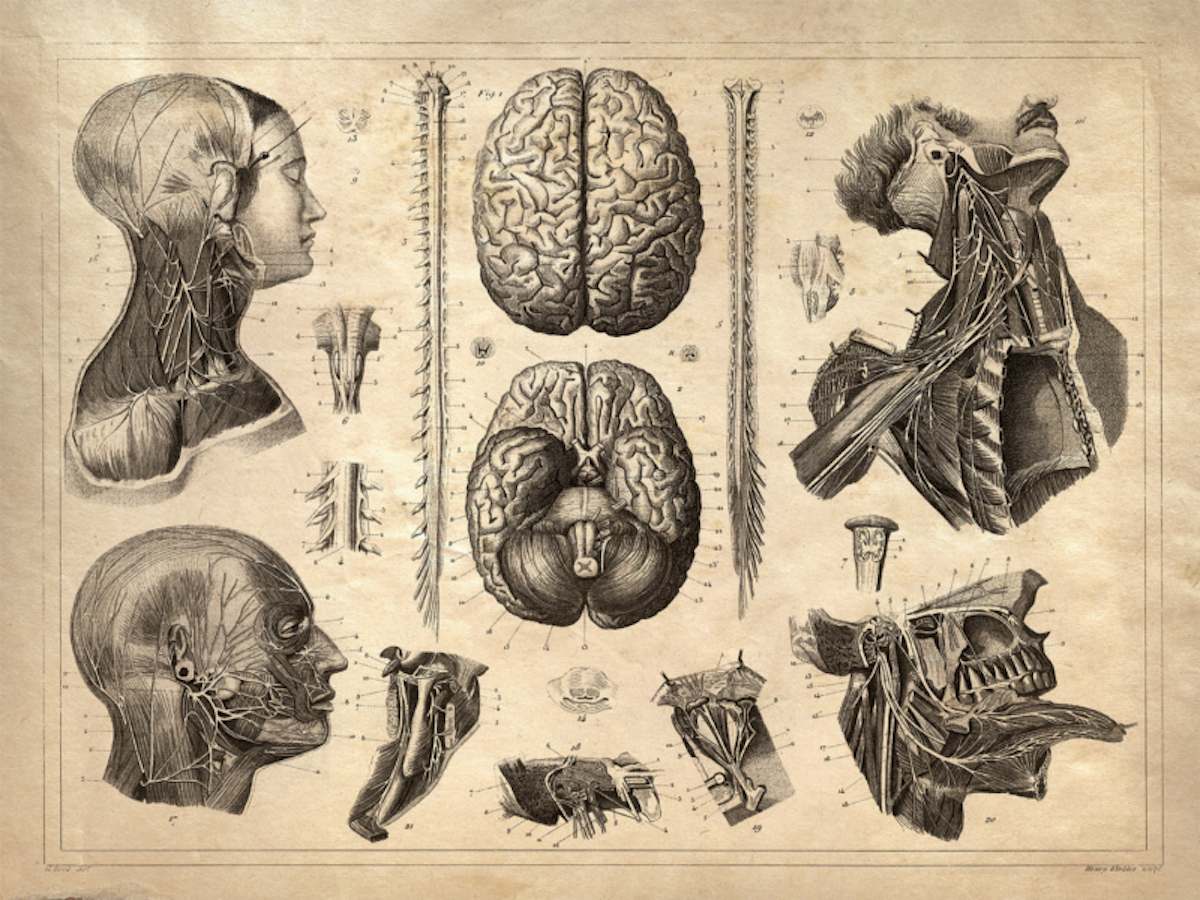
I n 2009, Marco Roth started a minor controversy by declaring in N+1 that the so-called “neuronovel”—the novel that deals in detail with the workings or malfunctions of the brain—was “another sign of the novel’s diminishing purview.” By Roth’s account, “the rise of the neuronovel” signaled the death of the novel. His primary target was Ian McEwan, specifically his novels Saturday and Enduring Love, both of which offer neurological explanations for psychological behavior and social circumstances. Roth’s list of neuronovelists also includes Jonathan Lethem (Motherless Brooklyn), Rivka Galchen (Atmospheric Disturbances), and John Wray (Lowboy).
Roth argues that these novelists are capitulating to deterministic biological accounts that reduce the complexity of life to mere physiology. That’s where I think he got the story wrong. These writers don’t reduce life to biology. They play with biology to experiment with literary form; they include physiology as a category of human experience, and they explore the mysteries inherent in the fact that we are physical creatures whose brains play unknown roles in the making of our fantasy lives, our sense of self, our feelings, our identities, and consciousness. Even McEwan’s Henry Perowne, the hyper-rationalist neurosurgeon who narrates Saturday, wonders “that mere wet stuff can make this bright inward cinema of thought, of sight and sound and touch bound into a vivid illusion of an instantaneous present, with a self, another brightly wrought illusion, hovering like a ghost at its centre.” Philosophers and neuroscientists call this “the hard problem” — figuring out how the wet stuff might make consciousness.
I might not agree with Roth, but he coined a great term — neuronovel — and recognized a genre on the rise. Simultaneously, a genre I’ll call the brain memoir — an autobiography in which the brain’s role in the making of identity is central — has also been flourishing. Dozens and dozens of neuronovels and brain memoirs have been published in the last couple of decades. These are some of my favorites.
I should admit: I’m biased. I’ve published a brain memoir, and I’m publishing a book about the “rise” of both genres next spring. But anyone, even those who don’t have a stake, can enjoy these books about the human brain.
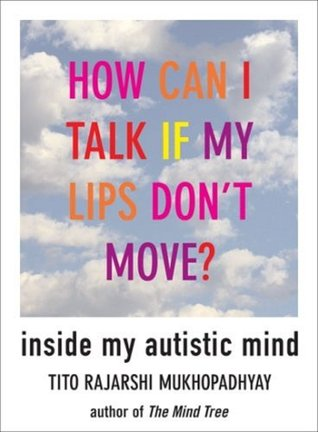
1. Tito Rajarshi Mukhopadhyay, How Can I Talk If My Lips Don’t Move?: Inside My Autistic Mind
Mukhopadhyay was sixteen when he published his first book of poetry and nineteen when he published his memoir. Publishing a book at age sixteen is a remarkable achievement, but that’s not the primary reason age matters when it comes to Mukhopadhyay’s books. His youth is significant because it represents the development of the culture’s response to autism. Mukhopadyhay has become a spokesperson for neurodiversity — the idea that there is value in the neurological differences between one person and another. He’s a profoundly social writer, inviting readers to get intimate with the way his mind works. Not so long ago, it was widely believed that autistic people, particularly non-verbal ones like Mukhopadhyay, couldn’t communicate at all. Mukhopadhyay’s lyrical, sure-toned writing is one of many recent memoirs that force us to rethink brutal history of autism and imagine a more just and compassionate future.
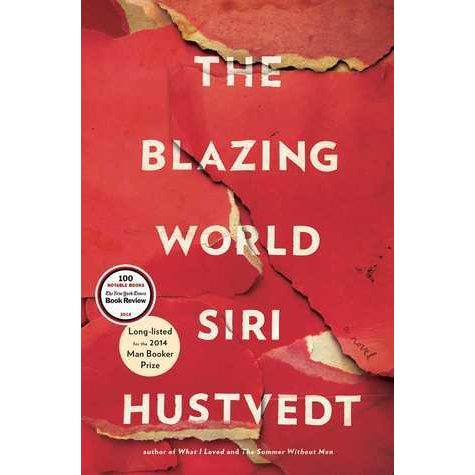
2. Siri Hustvedt, The Blazing World
In The Blazing World, Hustvedt tells the story of Harriet Burden (Harry for short), an artist who takes elaborate revenge on the sexist art world by borrowing the bodies and identities of three different male artists — and disseminating her work under their names. As one of the novel’s narrators describes Burden, “The woman was chin-deep in the neuroscience of perception, and for some reason those unreadable papers with their abstracts and discussions justified her second life as a scam artist.” Harriet is interested in making art that elicits discomforting and eccentric neurological experiences. Hustvedt emphasizes Burden’s didactic mission. She conceives her exhibitions quite literally as laboratories. She wants her audiences to feel, in a visceral sense, the fundamental relationality involved in being an organism — a relationality that entwines biology, identity, social life, and culture.
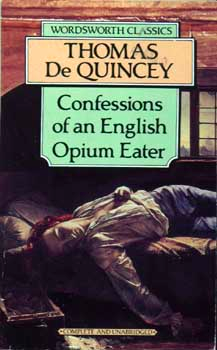
3. Thomas DeQuincey, Confessions of an English Opium Eater
In his famous Confessions, DeQuincey delights and despairs in opium’s effects. “A theatre seemed suddenly opened up and lighted in my brain,” he writes. He recognizes his visions as the product of brain chemistry, but sometimes feels certain they are remaking “objective” reality — the one we share — in the image of his fantasies. In his preface, DeQuincey worries that his “moral ulcers and scars” will be revolting to an upright English audience, who wince at “the spectacle of a human being obtruding.” He needn’t have worried. His obtrusions made him a literary celebrity. Some things haven’t changed.
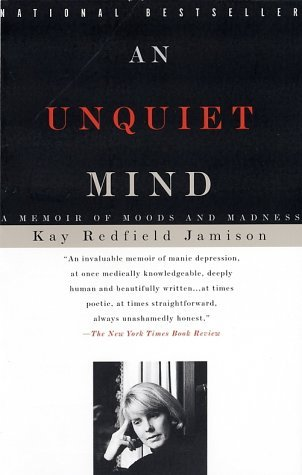
4. Kay Redfield Jamison, An Unquiet Mind: A Memoir of Moods and Madness
In An Unquiet Mind: A Memoir of Moods and Madness, Kay Redfield Jamison stresses a problem with writing about her bipolar disorder central to any memoir about neurological difference: “I have become fundamentally and deeply skeptical that anyone who does not have this illness can truly understand it.” Jamison’s professional identity — as a research psychologist and a writer — is linked fundamentally to her illness. The difficulty she describes, “weaving” the disciplinary methods of science with her emotional experience is cultural more than intellectual. Throughout her memoir, Jamison demonstrates the many ways the symptoms of mania allow her to approach her research and writing with imagination and energy.
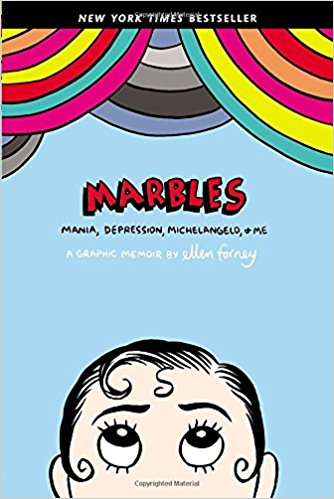
5. Ellen Forney, Marbles
Ellen Forney’s Marbles: Mania, Depression, Michelangelo and Me tells the story of its author’s evolving identity in response to a bipolar diagnosis. Marbles portray its characters’ brains as part of an ensemble of images that define their search for what it means to suffer as a result of neurological conditions beyond their control. Forney is explicit about her urgent need for knowledge about the brain as well as her awareness that this knowledge can only be hypothetical and contingent. Forney offers a vivid example of her chosen form’s capacity to transform ideas through images, with her depiction of a page from the DSM as a dreamlike carousel, a pictorial metaphor designed to encompass her ambivalence about her bipolar diagnosis. Forney uses the carousel to parody the DSM’s linear list of bipolar symptoms. On her carousel, depression curls up under a pony; “mixed states” tears the pony in two, clinging to its upper torso and balancing precariously on its back; mania stands on the pony with a single foot, her head bumping against the merry-go-round’s ceiling.
6. Miguel de Cervantes, Don Quixote
People — or critics like Harold Bloom — like to say Don Quixote is the first modern novel. If so, it may also be the first neuronovel. As Sancho Panza narrates the story of his squire’s antic wandering, he attributes his deranged fantasies to two related sources. He has read too many books. As a result, his brain is “dried up,” “cracked or broken,” “full of wind.” At one point, the nobleman from La Mancha tells Panza his “brain is melting.” In the original Spanish, the word is cabeza, meaning both head and brain, but also the brain as an abstract concept, as opposed to the actual organ inside the head. Like all the best neuronovels, Cervantes plays around with the relation between that physical organ and the immaterial experiences of mind and self.
7. Kazuo Ishiguro, The Unconsoled
Ishiguro has told interviewers that his most audacious novel — people love it or hate it — is an experiment with writing in “the language of dream.” Each section begins with Ryder, the novel’s bewildered narrator, waking up from sleep he can never get enough of, and finding himself in a world where closet doors lead to art parties, where strangers turn out to be his wife and child, and where there’s a city full of people who are certain his opinions about aesthetics will save them. It’s an experiment in disorientation, and I guess that’s why so many readers find it frustrating. But to me it’s a page-turner. If I pick it up, I can’t put it down. Ishiguro is a master.
8. Paul Beatty, The Sellout
Beatty’s narrator tells his hilarious LA story about reviving both racial segregation and slavery from inside the Supreme Court, while he smokes outlandish amounts of artisanal weed he’s been growing, along with watermelons, back in LA. This is a story told by a guy who’s incredibly high, a guy experimenting with his brain chemistry while he addresses the most sober institution in the United States. It’s also a story told by a guy whose father was a fairly unhinged academic who conducted psychological studies on him, starting at an early age. The narrator’s father is like Dr. Frankenstein or Jean-Jacques Rousseau with his creepy fantasy about raising the perfect little girl. He experimented on his son to explore some hazy theories about the construction of race and the internalization of racism. Beatty turns the hard problem into social satire about the racism that plagues American culture.
9. Richard Powers, The Echo Maker
The Echo Maker tells a story about a man with a rare neurological syndrome called Capgras Syndrome, embedded in another about a breed of crane whose nesting habitat is threatened by real estate development. As a result of brain injury sustained in a car accident, Mark Schluter awakens with the delusional belief that his intimates — especially his sister Karin—are impostors. It features a character based on Oliver Sacks, a neurologist famous for turning his patients into stories. Power’s lyricism is key to understanding his novelistic response to neuroscience. Powers begins the novel not with the accident, the coma, or the awakening, but with a lyrical description of cranes returning to the small Midwestern town where the Schluters were raised, a passage that begins with a “sky, ice blue,” that “flares up, a brief rose” as the “nervous birds, tall as children, crowd together” on a river “they’ve learned to fly by memory.” When Mark finally speaks, his sister asks his neurosurgeon a crucial question about the combination of his echolalia and disorderly speech. Does the apparent nonsense mean anything? “Ah! You’re pushing up against questions neurology can’t answer yet,” he replies. And that’s where literature comes in. Powers opens his novel with a lyricism that depends on the interplay of words to create novel meanings, to transform skies into roses and cranes into human children. Literary language, he seems to be suggesting, shares with Mark’s echolalia a capacity to blur the boundaries between sense and nonsense — or to create speculative knowledge that works as much through feeling as it does through thought.
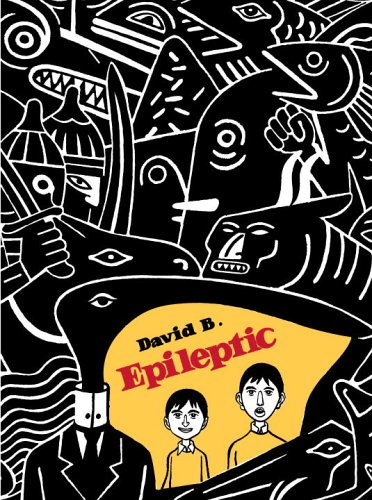
10. David B., Epileptic
In David B.’s graphic memoir Epileptic, he portrays an impossible fantasy: that he might find a doctor who could “transfer” his brother Jean-Christophe’s epilepsy into him. He fantasizes that an exchange of brain matter might enable him to feel what it’s like to be his brother. “I fantasize,” David B. writes, “that I could take on my brother’s disease if a resourceful scientist were to transfer it into my skull.” It’s a fantasy of overcoming the explanatory gap, a term coined by philosopher Phillip Levine to describe a persistent obstacle to understanding consciousness from a neurobiological point of view: nobody can explain how immaterial experience — self, consciousness, cognition, memory, imagination, affect — emerges from brain physiology. Throughout Epileptic, he struggles to empathize with Jean-Christophe. In his fantasy, brain science will rewrite his failure and undo the mutual alienation of two siblings. But no scientist is that resourceful.
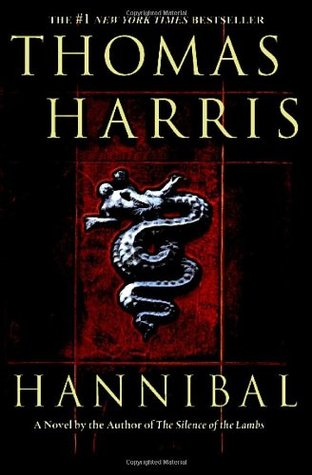
11. Thomas Harris, Hannibal
Harris’s Clarice Starling hunts Hannibal, the brilliant psychopath, only to become his willing abductee (though at novel’s end readers are primed for a sequel that will unravel the plot of its gothic melodrama). Harris wrote four Hannibal books, two of them adapted into films starring Hopkins. While Silence of the Lambs (1991) was the more critically successful of the two films, the brain-eating scene in Hannibal (1999) is legendary. Both books were international bestsellers, but their details tend to be obscured by the notoriety of the films. As a novel, Hannibal is not well remembered for its pervasive discussion of theories about the mind and memory. Lecter fancies himself an expert on human minds, both a theorist and a practitioner, one who believes he alone possesses the keys to the brain: “The memory palace was a mnemonic system well known to ancient scholars and much information was preserved in them through the Dark Ages while Vandals burned the books. Like scholars before him, Dr. Lecter stores an enormous amount of information keyed to objects in his thousand rooms, but unlike the ancients, Dr. Lecter has a second purpose for his palace; sometimes he lives there.” In the novel’s most famous scene, Hannibal feeds a drugged Starling the brain of her professional rival, with the intent to control her mind.
12. Christopher Isherwood, A Single Man
Christopher Isherwood’s A Single Man (1964) is an early neuronovel — and a particularly prescient and sophisticated one. Its protagonist, George, is a professor grieving for his lost partner, Jim. His grieving is solitary. The homophobia of his world curtails communal mourning rituals. In response, he narrates himself in ecological terms, as an organism, his brain and body commingling with an environment fundamentally changed by the loss of his most intimate companion. George wrestles with his brain throughout the novel. He worries that his students see him as “a severed head carried into the classroom to lecture to them from a dish.” He laments that they “don’t want to know about my feelings or my glands or anything below the neck.” As he tries to sleep, “the brain inside the skull on the pillow cognizes darkly” — enabling him to consider “decisions not quite made,” decisions “waking George” can’t face. When he sleeps, “All over this quietly pulsating vehicle the skeleton crew make their tiny adjustments. As for what goes on topside, they know nothing of this but danger signals, false alarms mostly: red lights flashed from the panicky brain stem, curtly contradicted by green all clears from the level-headed cortex. But now the controls are on automatic. The cortex is drowsing; the brain stem registers only an occasional nightmare.”
About the Author
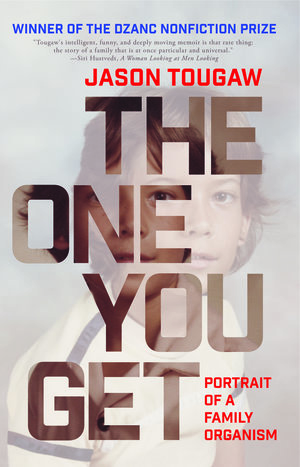
Jason Tougaw is the author of The One You Get: Portrait of a Family Organism (Dzanc Books). Portions of this list are excerpted from his forthcoming book The Elusive Brain: Literary Experiments in the Age of Neuroscience (Yale University Press). Tougaw blogs about art and science at californica.net.
Begin your journey when a boy in class asks you if you’re from Afghanistan. That’s where all the Muslims are, he says. When he inquires if you have an Uncle Osama, ignore him with the air of a nine-year-old who doesn’t have time for these petty questions. After all, your fourth grade teacher put your desks together only because she thinks you will set a good example for the class troublemaker.
Transportation
Navigate an atmosphere that is not quite clear of the smoke and rubble left by the Twin Towers. With the media panic surrounding the Middle East, you will discover how easily activated your own panic button has become. Brown bodies in the tri-state area will vaporize, their own families uncertain of their fates. The shadows they leave behind will appear in your night visions as you lie awake.
Dining
The Indian boy in school will get asked by the social studies teachers to bring his mother in for show-and-tell. She will talk about Hinduism and why they don’t eat cows. She’ll bring gulab jamun for everyone to try and your classmates will shriek with disgust as they pluck apart the gooey balls. The boy who inquired about Uncle Osama will now ask if your mom makes this dessert at home. You will scrunch up your face and say that that you’ve never even heard of it before, to which he will reply, that’s good because even your food is probably better than this.
Shopping
Your sixth grade teacher will talk about why the Twin Towers fell, and hand out TIME for Kids articles for you to share with the person sitting next you. You’ll see pictures of women in black niqabs and shouting men with unibrows. The caption reads: Protesters in Saudi Arabia wearing traditional Arab clothing. Kathryn C. and Catherine B. both will ask why you don’t cover your hair.
Climate
At 17, pack up and head west with two suitcases, one full of short sleeves and capris. When you land in San Francisco, you’ll discover that you did not pack nearly enough outerwear to survive the Bay Area in August. Bundle up in a gift-shop I Heart SF hoodie and tuck the sandals into the back of your dorm closet. The resident advisor will assure you that the layers will be shed by September. We call it Indian Summer, she’ll say.
Now that you’re far away from the person you were, imagine a new version of yourself that escapes all religious and ethnic labels. In the mirror you will see urban brown stretching towards a California chic that could only decorate pale skin. You are compelled by magazines glossed with translucent blue eyes, wispy hair and summer freckles. The hope that you will one day unravel into a person that is worth loving will give you solace after the flood of night terrors evaporate away with the sunrise.
Language Barriers
Think about Mahmoud Darwish and Rhythm and Poetry. Think about a victim of systematic racism, marked by years of historic oppression, submerged in a genre invented by people who are also stained bottom-up by bloody water. Muslims will be surprised to learn that you can memorize rhymes in the bleached language of the colonizers but the history and complexity of your Arabic has been wrung dry by the dread of a transcontinental banishment. You are only completely fluent in apologetics.
Popular Attractions
Get involved in politics very early in your college career. Your parents were always apathetic towards social justice. We can’t change what the world has become, they would say. But now, student groups send you back to the West Bank border with a rifle resting on the taxi’s open windowsill right beside your temple. Flash mobs for Syria, mock checkpoints for Palestine, protests for Egypt. Apathetic students brush by while white boys with ponytails shout at them to brew up a disorderly civil unrest that fails to materialize.
You will be a useless volunteer for these causes. Hold a stack of quarter-sheet flyers and chat with other bored advocates. You will get tired, not from lack of sleep, but from the fake smiles you force and the sideways glances that scan you. Go sit on a bench by yourself and watch the sea of slumped shoulders and book bags blur by. Your attempts at identity transformation are never complete or whole.
Sightseeing
The television lays out blueprints of your faith to serve as guides for the construction of a religious fundamentalist, and you are not quite sure what these fundamentals are. Panic consumes you under the looming threat of surveillance, both by the government and your own peers. And despite the performances you put on to assert your national loyalty, to self-define your religious fundamentals as something perfect and beautiful, you will still be diminished to a veil and beard. You have always been dissolved in homogeneity, tangled up in a role-play, encoded in an alienation you couldn’t uncover until now.
Rest Stops
Cry in the shower about your shitty grades. Smash a dish in your apartment kitchen because your roommates’ friends are over and you can’t breathe. Take a bus to Oakland because you are so sick of this goddamn city where no one cares about you or where you go. Get off the train and realize you still have nowhere to go. Try not to cry. Read The Lord of the Rings and think about Middle Earth.
You’ll wonder if your parents ever felt as displaced in America as you have in your own body. You’ll call your mother to tell her that she is the reason why you moved across the country. Your constant state of dispossession begins to feel like home.
Arts & Culture
You are a hastily assembled structure that constantly needs the approval of others to stay composed and intact. You, who cannot breathe when you speak in front of strangers. You, who cuts herself to see the blood of the Intifada from which her parents fled. You, who reads and reads and inhales and soaks up every word, movement, and face but still cannot project half of what you take in.
Attend a gallery fundraiser for a Middle Eastern children’s charity. Meet one of the main organizers, a Colombian-American with clear eyes and baby skin. She tells you Subcomandante Marcos was a supporter of Palestine, and you tell her that you are a supporter of The House on Mango Street.
Getting Back
The departure from your hometown makes you study yourself, explain yourself, and doubt yourself. And when you finally return, you mother will fill you with pita and shorbat adas after you’ve cried yourself empty. Remember she spends her days sweating the salt of the Dead Sea, tries to cleanse you of demonic shadows until your high-maintenance body thwarts her. Muslim women tuck grief into their wombs and let it cultivate, hardening into a child of despair that can only be cut out with a sword. We somehow hold together with the faith that someone will hold our hands as we stumble through darkness.
B y now you’ve heard the news that the favorite social-media platform of trolls everywhere (President included) will soon afford its cabal of miscreants twice the space to rant, rave, and make typos. Yes, Twitter is undercutting everyone’s favorite excuse for backing out of an argument—“sorry, can’t do this in 140 characters”—by doubling maximum tweet length to 280. To that, we offer a resounding WHY PLEASE NO. But we also can’t help but wonder: What will this mean for the blue-checked literati? What will the fiction writers of the world do with the extra space?
Back in 2009, Electric Literature published “Some Contemporary Characters” by Rick Moody, serialized fiction written in 140-character bursts. Three years later, The New Yorker, which gets all its best ideas from us, followed with “Black Box” by Jennifer Egan. (You’re welcome, David Remnick!) David Mitchell tried again with “The Right Sort” in 2014, which became the first chapter of his book Slade House, and surely there were many since and in between.
It’s fun to experiment, but let’s be honest, do we really want our stories carved up into sentences of arbitrary length? The answer is yes! We are Oulipian sycophants who need rules to create!
In that spirit, we’re hosting a 280-character fiction contest. And we’re asking you to be inspired by doublewide tweets not only in form, but in content: the story must be about something getting magically, randomly, inexplicably, or mysteriously bigger, longer, or just… more. Think Mary Poppins’ bag, that dream where you find another room in your apartment, House of Leaves, the story of Hanukkah, the feast of Cana, or clown cars. Feel free to steal any of these.
Submit your tiny story via our Submittable by Monday, October 16. The prize is publication in Electric Literature. We’ll also tweet the best stories, if Twitter ever gives us 280.
There is an oft-repeated story in most biographies of Sylvia Plath, concerning her return to Smith College after her suicide attempt and subsequent hospitalization. It was the start of the 1954 spring semester, and Plath was meeting, for the first time, the young woman who had occupied her dorm room during her illness — Nancy Hunter, later Nancy Hunter Steiner, who would go on to become Plath’s close friend, and pen a short memoir about their relationship, A Closer Look At Ariel.
As the story goes, Hunter had spent her time in Sylvia’s room feeling “haunt[ed]” by its former occupant. Plath had taken on a legendary status at Smith, thanks to both her brilliance as a student and her suicide attempt. According to Steiner, “…as the months passed I grew familiar with the details of the Plath legend through the speculative gossip that raged at the mention of her name.” In Plath’s absence, Hunter formed an image of her as a “girl-genius… as plain or dull or deliberately dowdy, a girl who rejected all frivolity in the pursuit of academic and literary excellence.” Now, meeting this mysterious figure for the first time, at a campus luncheon, Hunter was so taken aback by Plath’s appearance that she blurted out, “They didn’t tell me you were beautiful!”
This snapshot from Plath’s college years already contains the amalgamation of myth, rumors, misinformation, and surprise turns that has hallmarked Plath’s literary and personal legacies since the publication of Ariel in 1965. It’s all there, from the sudden mysterious disappearance (“speculative gossip, [rage] at the mention of her name”), to the wild projections of the missing woman (“dull…deliberately dowdy”) to the gobsmacked reactions to Plath’s actuality (Surprise! She’s beautiful!). Plath is always either under– or overwhelming her readers — Janet Malcolm famously wrote in The Silent Woman that Plath “disappoints her” in photographs. She’s looking for a red-haired witch who “eats men like air,” and all she gets is this lousy housewife, clutching her babies, hair done down in braids. Jessica Ferri, writing of handling those very braids when she worked in special collections at the Lilly Library in Indiana, exclaims, astonished, “There was so much of it!”
In my own life, more than once, I’ve been asked “Who’s that, there, on the cover?” while handling my dog-eared copy of Plath’s Unabridged Journals, which plainly state her name. When I reply, “That’s Sylvia Plath,” the response is almost always the same — it can’t be. They are looking for a magical witch, a goth girl, a myth. The image of Plath, smiling in her Smith graduation robes, causes cognitive dissonance and, ultimately, disappointment. It’s the same cognitive dissonance we, as a culture, collectively suffer about Sylvia Plath, and indeed about any woman lauded for her intellect who also has the nerve to inhabit a body: That’s her? Isn’t she a little too beautiful? Isn’t she not beautiful enough?
This pattern plays out in reaction to Plath’s image each time there is a new Plath publishing “event.” The latest is the U.K. edition of Plath’s Collected Letters, which sports as its cover art a photograph of a twenty-something Plath grinning for the camera in a white bikini. I first became aware of the cover, and its accompanying outrage, in a Facebook post from a well-known American poet, in which she (and, in the comments, other well-known American poets) expressed deep anger and exhausted frustration at the inherent sexism the choice apparently symbolized. Last week, I woke to Cathleen Allyn Conway’s piece about exactly this, in which she not only critiques the cover art for the Letters, but also that of a half-dozen other Plath books.
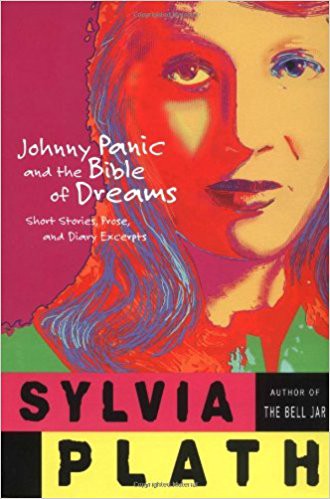
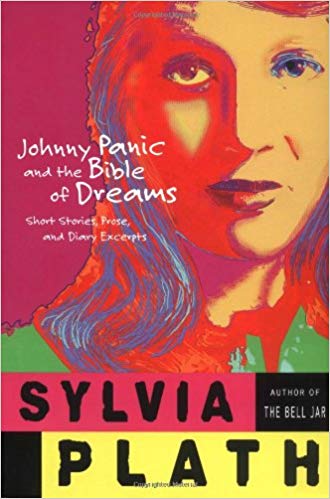
As I write this, all of those books, sometimes in multiple editions, stare back at me from between their bookends on my desk, reminding me that the politics of Plath somehow always end up as the politics of reduction and essentialism. Conway notes that the same bikini shot appeared on the cover of a recent edition of Johnny Panic and the Bible of Dreams, a collection of Plath’s prose; she lumps this cover in with a widely criticized edition of The Bell Jar as “proto-chick-lit” imagery. Presumably she would prefer covers like that of an earlier edition of Johnny Panic, whose psychedelic colors underline the idea of “mental illness” while also reinforcing the popular conception of Plath as a magical witch. While Conway does write “the rationale is that pictures of smiley Plath counterbalance the darkness in her work, lending extra tragedy to her illness and death,” she dismisses the notion because “this kind of correlation is not made for male authors.” This assessment fails to take into account another possible reason for including photographs of Plath that aren’t, frankly, morbid: they paint a fuller, more accurate picture of the living woman, rather than highlighting her tragic death.
In his introductions to Johnny Panic, to the heavily abridged 1982 edition of Plath’s Journals, and to her Collected Poems, Plath’s estranged husband Ted Hughes claims that Plath had one, singular “true self” which she hid from everyone but him; her poetry and prose, he says, were an attempt to put this “true self” into writing. Ariel, Hughes once said, “is just like her, but permanent,” an incendiary statement that would invent and bolster two absurd facets of the Myth of Sylvia Plath: that the “I” of the Ariel poems was the “true” Plath, and that the book itself was a finished thing — a mausoleum which you could enter at will, encountering the dead woman at every turn, enshrining one bleak version of Plath in the cultural mindset. Conway rightfully takes Hughes and his sister Olwyn to task in her piece, pointing out that they actively tried to construct Plath as an hysterical lunatic in the wake of her suicide; there can be no doubt about that. Unfortunately, in her assessment of Plath’s image, her “true” self, Conway is netted in the same dull trap that Hughes built and set in his public writing about Plath. According to Conway, Plath had one definitive look that was deeply connected to her true self, and it wasn’t a blond woman in a bikini. She quotes a 1954 letter from Plath to her mother, Aurelia, that states “[my] brown-haired personality is more studious, charming and earnest,” then extends this notion with her statement that, “We know brunette Sylvia was how Plath wanted to present herself.”
And herein lies the real problem: We don’t actually know this at all. One line in a letter to a worrying mother in Eisenhower’s America (who, as other texts describe, was shocked and dismayed when Plath dyed her hair blond in the first place) does not a “true” self prove. Moreover, this furthers Hughes’ dangerous idea that Plath, or any of us, has a single, definitive “self,” an idea we visit almost exclusively upon the heads of women writers. We celebrate Whitman’s celebration of himself, with its numinous notion that “I am large, I contain multitudes.” We have no problem reconciling the idea that he was both queer and a hetero-braggart who claimed to have fathered six illegitimate children, yet we take to task a photograph of a bikini-clad Plath in her college years — as though she could not possibly be both the genius she was, and a woman who was body confident, sexy, happy to smile for the camera.
The dangerous idea that Plath, or any of us, has a single, definitive ‘self’ is an idea we visit almost exclusively upon the heads of women writers.
Conway notes that Robert Lowell, Plath’s contemporary, is always pictured sitting gravely in a library or a study, with a back wall of books, as though this is the only way we can understand a writer or take them seriously. But to understand Plath at all is to know her as a woman of her time, which demanded that a woman of Plath’s race and class choose a single narrative — marriage and family — and stick with it, as she so famously chronicled in The Bell Jar. In pursuit of this end, women had to be experts, if not slaves, to material culture, as exquisitely documented in Elizabeth Winder’s Pain, Parties, Work. To deny Plath’s love affairs with beautiful things is to deny the reality of the conditions of her life.
But it’s also to deny the part of her personality that was not bleak, that was not morbid, that was not dictated by her illness or her marriage. She loved Revlon’s “Cherries In The Snow” lipstick and nail lacquer, and always dotted her clothes with a pop of red — red ballet flats, red scarves, the famous red bandeau headband Hughes ripped from her hair the first night they met, as a souvenir. These were a result of the world she occupied, but they were also extensions of her passion for aesthetics, for fashion and fine art — the current Plath exhibition at the Smithsonian contains the multitude of excellent paintings she produced in the Smith College studios. When Esther Greenwood, Plath’s Bell Jar protagonist, goes to the roof of her downtown Manhattan hotel and tosses the beautiful clothes she took with her for her summer job as a guest editor for a fashion magazine, item by item over the sleeping city, she isn’t doing so because she’s become some kind of ascetic, or because she now understands her true self, and beautiful things have nothing to do with it. She does it because she lives in a world that demands she be either/or, that makes no room for both/and. Rather than choosing a self, she begins the terrifying process of giving up any self at all, which culminates in a suicide attempt.
I’d like to believe that by now, the room for both/and exists, but reactions to the image of Plath in a bikini — which, incidentally, is a holiday snapshot taken by a boyfriend, not the calculated and manipulated result of a photoshoot — bode otherwise. This picture of Plath is not, as Conway claims, “a visual antithesis to the ambitious, intellectual poet.” It was taken, in fact, the summer she dated Gordon Lameyer and Richard Sassoon, who loved her equally for her physicality and her extraordinary intellect, and whom she loved for those things, in turn. The dialogue between the carnal and the intellectual was one Plath started as a very young woman, and did not give up until her death. At no point did she see these as mutually exclusive; she often described her love for Hughes as being the force it was because he embodied the physicality and intellectualism and artistry she both possessed and craved in another.
The reality, and it’s astounding to me that I have to write this sentence down, is that we can take a writer who wears a bikini seriously.
The reality, and it’s astounding to me that I have to write this sentence down, is that we can take a writer who wears a bikini seriously. I have three in my closet;, the most recent of which is a vintage-inspired red-halter. I bought it because I love red; I love red partly because I love Sylvia Plath. I wear “Cherries In The Snow” lipstick to the classes I teach, to parties, to intimidating meetings with condescending men, and when I do, I invoke her, just a little bit — for inspiration. For luck. For permission, which she gave me, which she gives me — to be brave. To try and astound. To say the things no one wants to say, or hear. To be beautiful, and to be smart, and sexual, and to never, ever fall into the foolish trap that these cannot coexist.
Carmen Maria Machado’s debut collection Her Body and Other Parties has been shortlisted for the National Book Award, and readers everywhere are talking about her intricate stories. Machado’s collection is dark, disturbing, sensual and sexy. Her work refuses to fit neatly into a category, and includes elements of psychological realism and science fiction, comedy and horror, fantasy and fabulism. In these eight stories, fables and classic fairy tales mix with a meditations on Law and Order: SVU, Girl Scouts lost in the woods, and a liposuction procedure.
The cover for Her Body and Other Parties picks up and intensifies the ambiance of the book. Kimberly Glyder, who has created numerous covers for Graywolf, Scribner, Little Brown, and more, captures Machado’s unique voice with a striking and sinuous image. Her design captures the simultaneous violence and sensuality in Machado’s work, in which women’s bodies both desire and disappear in fantastical and disturbing ways.
I talked to Machado and Glyder about the process of creating the cover, and in the process, discovered that this beautiful image has a secret.
Liz von Klemperer: What, if any, were your expectations for the cover?
Carmen Maria Machado: I had a Tumblr that I put together of visual inspiration, so when the time came I sent it to Kimberly. I also filled out a questionnaire my publisher gave me that included key words, images, and things I absolutely didn’t want on the cover. I suggested the colors black, white, grey and green because of the green ribbon in the first story, “The Husband Stitch.” In terms of themes, I just wrote “women” and “queer women,” and then I suggested the image be mid-century to modern, but the book isn’t really time period–dependent.
LVK: What were the things you absolutely didn’t want on your cover?
CMM: I said “no dudes!” for obvious reasons. Nothing pink or girly either. I just don’t think it would be appropriate for the tone of the book. I also wanted to avoid women with Spanish fans, or salsa dancers. Nothing like that. I’ve noticed this happens a lot with women of color, and it just wasn’t what the book was about. I wouldn’t want that imagery on my book just because I happen to be Latina. They also asked for word associations and I said dark, moody, sexy, sensual, erotic, haunted, physical, death, ghost, decapitation, mouth, lips, organic, and sex at the end of the world.
LVK: Wow, that’s pretty thorough! Could you talk more about being apprehensive about your book cover being too derivative of your identity as a queer, Latina woman?
CMM: It’s complicated because booksellers want to sell your book, and obviously writers have their own ideas about what their book is about. My wife is a publicist, and we talk a lot about selling a book and packaging it for sale, and it’s an interesting dynamic between what’s going to sell and what’s not. A problem that happens a lot is that the people who want to sell your book want it to be pinkish or girly. I know Asian women take issue with publishers who put an Asian fan on the cover. So I’m really sensitive to imagery that is drawing on stereotypes or pat imagery that connects to the author’s identity, whether it’s gender or race or anything like that. For me luckily it wasn’t an issue with Graywolf at all, but I do know cases where that is a problem with the publisher, and I feel really grateful that I didn’t have to deal with it. But I was worried about it enough that I felt the need to mention it.
LVK: What was your first reaction when you saw the cover design Kimberly made?
CMM: She sent me two different covers at first. I had mentioned in the questionnaire that the image of the ribbon around the girls’ neck was unique to my book. I also mentioned the image of ghosts with bells in their eyes, which is from my Law and Order story. We ultimately chose the first option I mentioned, but with different colors. The black background was originally coral and green, and there was also pink and orange. The option we scrapped was a watercolor image of a woman’s face with bells for eyes. The watercolor image didn’t resonate with me, but I loved the other one. I wasn’t sure about the colors, though, so I threw it into Photoshop to mess with the colors and I realized I liked a dark background with a green ribbon. I sent that back to the publisher and suggested the color change. They made the edit, and I loved it. It was pretty low stress, compared to experiences I’ve heard with other publishers!
A problem that happens a lot is that the people who want to sell your book want it to be pinkish or girly.
LVK: Many of your stories feature women who disappear. I’m thinking specifically of “Real Women Have Bodies,” “Eight Bites,” and “Especially Heinous.” How did you go about envisioning these bodiless characters, and what that process was like?
Carmen Maria Machado: The imagery in “Real Women Have Bodies” is pretty straightforward. That story started with the play on words in the title, which is real women have curves. But what if real women just have to have bodies? What if the physicality of a body was validated someone as a “woman?” What would happen if women started to lose their bodies? There are actually a lot of moments of physicality in that story. For example, the moment where she looks through her fingers and she can see her bones. I was thinking about being a kid and putting your fingers on a flashlight and seeing your flesh glow orange though the shadow of your bones. That’s where the image of seeing through yourself came from.
I just read Roxane Gay’s new memoir Hunger, which is about how fat people are highly visible and completely invisible, and it really resonated with me as a reader and as a fat woman. It’s very strange. Women’s bodies are both put on pedestals and scrutinized down to every detail, but also we are blacked out of various conversations and elements of culture. That’s true of all women, and I think when we look at different iterations of non-white women, of queer women, of fat women, there are all these ways in which things are complicated. I feel that that state of being scrutinized and invisible is an incredibly real way to think about gender and the body in our current situation and probably forever. I think that’s why that imagery pops up.
LVK: Yeah, the cover really does justice to that idea. As in, how do you depict a body that’s disappearing? I love how Kimberly’s illustration is a red corset, cinching a waist. The green ribbon is loosely coiled around it, which to me indicates absence and empty space.
CMM: You know it’s also a neck, right? If you look at the illustration it’s actually a lower part of a jaw and the muscle of a woman’s face. But it also looks like a corset. That’s what’s so amazing about it! It’s so good!
If you look at the illustration it’s actually a lower part of a jaw and the muscle of a woman’s face. But it also looks like a corset.
LVK: Wow! I see it now!
CMM: Yeah, it’s inspired by an old medical illustration and turns into an optical illusion. It’s either a neck with a jaw but it looks like a corset and the ribbon is either being tied or untied, which is unclear, which I really like. There’s a lot coming out of it, you can read it in a bunch of different ways and it has so many dimensions.
LVK: Thanks for clarifying, that adds so much to the image. Is there anything else you’d like to add?
CMM: I’ve always loved collaboration and other artists working from my words. This is a really cool example of how that worked beautifully.
Liz von Klemperer: I talked to Carmen yesterday and she said in the Graywolf author questionnaire she mentioned words like dark, moody, sexy, sensual, haunted, physical, death, ghost, decapitation, mouth and lips. How do you interpret such disparate images?
Kimberly Glyder: I was struck by the medical image I found because the woman is looking up, exposing her neck. It has a sensual feel to it but it’s also quite haunting and spooky. I’m usually not entirely literal and also try not to be too conceptual. Words like “haunting” and “decapitation” might not draw a viewer in, and I’m specifically trying to look for visuals that will be beautiful or at least engaging on a cover. I want to intrigue people, but don’t want to scare anyone away. I thought that this image is a nice balance between all of the words Carmen mentioned. Originally I’d had a line across the throat, which I turned into the green ribbon, which I think is more evocative and beautiful.
I want to intrigue people, but don’t want to scare anyone away.
LVK: I originally thought the image was just a corset, and then Carmen pointed out that it’s also a neck. That took me a minute to figure out, and I like that it’s not immediately apparent, and that you have to mull it over.
KG: Yeah, I think that that’s an interesting way to look at the cover because, like her writing, it is nuanced and can be interpreted multiple ways. There’s a lot of raw, graphic detail in her writing, so to me this diagram is a pretty interesting take on that.
LVK: The book in general is so dark but there’s a delicate aspect to it that I see translated on the book cover. How did you balance those two tones of the book, and translate violence and the sensuality so effectively?
KG: Going into the book I was prepared for a disturbing read, because the questionnaire Carmen filled out was very dark. I was surprised, though, by all these moments of sensuality. Specifically the story the cover is based on. The ribbon is tied around the woman’s neck, and there’s something that’s very, as you said, delicate about that. So I was trying to find a balance. I wanted people to be drawn into the imagery, but not be literally scared off. I didn’t want it to look like a certain kind of genre, and I really wanted it to be open enough for people to be curious but intrigued enough to buy and read the book.
LVK: I also read Deb Olin Unferth’s Wait Till You See Me Dance, and the cover you created for that collection is distinctly different. It’s more paired down and simple, and has a different vibe. How do you bring your own style to book covers while giving each one a unique look to it?
Kimberly Glyder: The thing about Graywolf books is that they’re all so incredibly diverse and interesting. There are so many visuals I can pick up, and I look at every book as a completely unique project with a completely unique style. A consistent through line in my work is that I do a lot of hand lettering and drawing, but I do try to approach each project as a unique challenge.
LVK: What’s a common challenge that you come up on when you’re designing book covers?
KG: It’s very different and depends on the publisher. I had a great relationship with Graywolf because they fit me with the right books, and I also think that they trust me as a designer and trust my part in the creative process. Other publishers try to do this, but there are a lot more people weighing in in terms of sales reps and marketing people. It can get very difficult the more people are involved. It can really strip down your design sometimes. Most of my Graywolf covers have been chosen as-is and they go out in the world and they’re exactly how I would hope they would be.
LVK: It sounds like the process of designing a book cover is fairly collaborative with the artist, author, and publisher weighing in.
KG: When I do book covers I look at the information that’s given to me but it’s also very much a solo project, and I don’t think of it as collaborative. I’m just given a manuscript and a lot of publishers don’t give you information from the author, so many times I have nothing, I’m just told to design the cover. Although it feels like a solo process, I am always thinking about the buyer and about how people will engage with the cover either if it’s online or in a bookstore. I want it to be engaging enough that they will want to pick it up. So in that way I am being directed, but I’m also outside of the publishing process. My personal work consists of drawing and painting, and it’s exclusively my own and not something that I’m being directed to do.
LVK: Is there anything else you’d like to add?
KG: I had a great time working with Carmen, and I’m excited to hear what she has to say about the process!
There’s something about seeing a book that’s been well-worn. The annotations, dog-eared pages, and cracked spines tell a story entirely separate from the one between those creased covers. A book has a life of its own, and with any life comes the effects of age. It’s easy to get precious or self-congratulatory about one’s investment in literature, but books that have been handled, hauled around, creased, marked up, and carefully taped back together remind us that reading is also an act of love.
Back in early September, we fired up the hashtag #ReadtoShreds to seek out the most loved-to-bits books on the internet, and the result made us want to dig through our bookshelves to find more, more, more. (Well, not my bookshelves. I’m disqualified from this hashtag because I laminate all my paperbacks.) Take a look at some of the highlights, and be sure to share some of your own with us on Twitter and Instagram. And if you already have, who’s to say you can share just one?
It started with Benjamin Samuel’s bruised and battered high school copy of The Catcher in the Rye, which probably looks a lot like all of our high school copies of the book.
As promised, here are the Hitchhiker's Guide books I've #ReadtoShreds! Stay tuned, I have… a LOT more of these
Our editor-in-chief, Jess Zimmerman, set the tone with these Hitchhiker’s Guide paperbacks. All the trademarks are there: missing covers, yellowed pages, a brittle spine on the verge of giving up.
Passed down from my great aunt @ElectricLit #ReadtoShreds
I had this exact edition of Anna Karenina but my copy remained pristine (because I never read the book until years, and at least one new edition, later).
A #ReadtoShreds stack from my old pal @zzrellis. Apparently that's my copy of The Goldfinch. We love us some Tartt.
Ryan Ellis’s stack of books reminds me of those quiet, used bookstores you stumble into on a whim with stacks of books from floor to ceiling, all of them so weathered they’re unreadable and you’re pretty sure its where books go to die.
Morgan Parker’s copy of Invisible Man is stripped bare, its pages as naked as it was when the book-block was first printed.
Favorite in middle school and still going strong @ElectricLit #readtoshreds
When is a book officially retired from circulation? Is it when the spine no longer holds the pages and, like Alanna Cotch here, a reader has to use tape, rubber bands, and more to keep it whole?
Heather Scott Partington with a life hack: If a book’s length and size is too intimidating, cut it into more readable, less overwhelming pieces.
@ElectricLit my #ReadtoShreds are three of my all time favorite books
Contributing editor Kelly Luce’s copy of Italo Calvino’s Invisible Cities has traveled and been taken along to perhaps as many cities, places as varied as those found in this experimental classic. This is what a book looks like when it is with you for life.
I call this one — from author, Ryan Britt — the end of an era. A book truly devoured, read through so completely it no longer is a book.
H i. I’m Rahawa Haile, an Eritrean-American writer and lifelong Star Trek fan. I’m joined by Nicole Chung, a writer and editor who’s still a little disappointed she couldn’t attend Starfleet Academy and troll Wesley Crusher. She and I both wanted to write about the new Trek series in anticipation of a mostly white/mostly male flood of episode reviews and thinkpieces. Since Star Trek: Discovery used leads who were women of color to promote the show and its commitment to diversity, who better to give feedback than us?
Star Trek: Discovery streams on CBS All Access on Sundays at 8:30 p.m. ET. If you want to watch and yell about it with us (not at us, please), we’re on Twitter at @rahawahaile and @nicole_soojung. But if you haven’t watched it yet, be aware that this conversation will contain many, many spoilers.
Nicole Chung: Hi Rahawa! Maybe before we get to SO WHAT DID YOU THINK?? about the long-awaited Star Trek: Discovery, we should talk about what brought us to sci-fi and Star Trek in the first place. I’ve been rereading favorite books with my older daughter, who certainly doesn’t need me to read to her, but I did not go through all that labor only to sit on the bench while she reads my favorite books by herself. Somehow I hadn’t realized just how many of the books I’d want to read aloud with her would be sci-fi and fantasy, from A Wrinkle in Time to The Lord of the Rings. Which seems like a silly thing to have overlooked! These books were life-giving to me as a kid.
Still, you can’t necessarily draw a line from loving Madeleine L’Engle to attending a small-town Star Trek convention (which I did, in early high school; my Starfleet Academy class ring no longer fits). When it comes to my love of the Trek multiverse, I must point the finger at my dad. We’d watch whatever Trek was currently on CBS on many a Saturday night, and often we’d stick around for very late Original Series reruns. We owned all the movies. Dad still loves Star Trek in all its iterations — except for NuTrek, about which we argue with no bitterness (he says “it’s Star Trek for people who don’t know anything about Star Trek”; I agree to a point, but don’t necessarily think that’s a bad thing, and I find the new cast utterly delightful).
I have a hard time ranking the Treks because they are so different, but Star Trek: The Next Generation is my sentimental fave and Deep Space Nine is the one I’m most likely to rewatch nowadays — I think it is the strongest and also the weirdest of all the series.
Rahawa Haile: I met Star Trek as a young girl in love with all things “space” as many children are. I grew up watching Star Trek: The Next Generation, proceeded to watch Deep Space Nine, and gave up a few seasons into Voyager. At 16, I was so thrilled for Enterprise’s premiere I begged my mom to buy me a small bottle of Alizé so I could pretend it was Romulan ale (I settled for “Cool Blue” Gatorade); it was to be a short-lived excitement. Enterprise was terrible. I came late to Star Trek: The Original Series. An episode here and there, sure, but rarely more.
Star Trek: Deep Space Nine felt like a revelation. As an eight-year-old in Miami — three hours south of the rocket launches at Kennedy Space Center — watching Avery Brooks, a black man, command a space station meant everything to me. It still does.
Watching Avery Brooks, a black man, command a space station meant everything to me. It still does.
NC: Brooks was so good throughout that entire series, and it was such a strange role — boilerplate Star Trek storyline at first, and then things got wild. The weirder that show got, the more I loved it.
I would have been excited about Discovery anyway, but two women of color leads in a Star Trek series seemed, well, too good to be true. I have been grappling with the fact that I was fully ready to be pandered to with this series, as a longtime sci-fi fan who’s not white. (When you’re usually ignored, honestly, a little pandering can be welcome.)
For me, it was thrilling just to see promo photos of Sonequa Martin-Green (who plays Michael Burnham) and Michelle Yeoh (who plays Philippa Georgiou) in their new uniforms, on the bridge, looking badass. I got choked up seeing Michelle in the captain’s chair. In their first scene together, when they’re walking through the desert on an alien world, discussing the mission and whether Martin-Green’s character is ready for her own command — it was about as happy as television has ever made me.
I was fully ready to be pandered to with this series. When you’re usually ignored, a little pandering can be welcome.
RH: Right. But I wish everything about Discovery didn’t feel so…opportunistic? The CBS All Access subscription. Their treatment of Yeoh (death) and Martin-Green (incarcerated). If the allure of diversity in this series — which their promo material relied on heavily — lies not only in who is seen but who has agency, the show is off to a very questionable start.
NC: I would like to talk more about this, because I too was rather dissatisfied — and it wasn’t just the early death of Yeoh’s character, though that was one disappointing result of larger plot and character issues. As you point out, just having people of color on the show is not enough; you also have to write them well, give them the kind of background, development, and agency nonwhite characters lack on so many shows.
I couldn’t understand why Martin-Green’s character would throw away seven years of camaraderie and mentorship to knock out her captain and attempt a mutiny, for example (even to save lives?). That move just felt rushed, like we’d need more backstory and a better grasp of the characters in order to fully understand it. Yes, Michael was triggered by a run-in with the Klingons, who killed her parents — but it seemed too great a leap to have her attack Captain Georgiou in the pilot.
As for Georgiou, she was allowed to be seen nurturing her crew, being an encouraging mentor . . . and yet, somehow, she was not shown to be a very good captain? She was rather hapless during the battle, anyway, until the (white, male) admiral showed up. Now the captain of Discovery, the ship where Michael Burnham (Sonequa Martin-Green) is headed, has in Jason Isaacs’s Lorca a captain who is in it to win it, and you could read this as a decision to give us yet another white male captain who can do the job an Asian woman couldn’t.
It doesn’t sit well with me that these two women I was so excited to watch in this universe had such a strange, almost nonsensical beginning and a relationship I just could not figure out.
Just having people of color on the show is not enough; you also have to write them well, give them the kind of background, development, and agency nonwhite characters lack on so many shows.
RH: Yes! I called Martin-Green “Michael Thrace” (a reference to the Battlestar Galactica reboot’s Kara Thrace) at one point because of this impulsiveness. If you’re going to part ways from Roddenberry’s utopian vision that starkly, give me the character development to back it up!
I’m uncomfortable with how much this series is indebted to the Battlestar Galactica reboot. I don’t care how impressive the CGI was: Episode two did not earn its battle. No episode two does, because television is not the movies. Visuals are not the reason Star Trek has enchanted viewers for 50 years. I need more than 40 minutes of set-up to care about the people in a battle like the second episode’s. My lifelong history of rooting for previous Federation leads does not mean Discovery gets to skip the heavy lifting of building characters in favor of shootouts. Action is meaningless if I know nothing about those who are acted upon.
I’m disappointed as much as everyone else by Yeoh’s death. Charlize Theron received endless praise for learning to fight during the filming of Atomic Blonde, but oh my God does Michelle Yeoh deserve an Emmy for managing to act like she doesn’t possess her legendary fighting skills in this episode.
NC: Yeah, as I keep saying to everyone, there’s no way Michelle Yeoh loses that or any fight IRL, sorry. And I liked the BSG reboot, except for the last bit of the series finale and literally two episodes I always skip (BSG fans can probably guess which ones), but I don’t think it’s a model for Star Trek.
RH: I tweeted that I don’t think Discovery knows what science fiction show it wants to be yet. It’s streaming on a subscription service meant to lure established fans; it’s promoting(ish) women of color leads meant to entice wider audiences; it’s action-driven and shiny because it believes it has to be as visually immersive as the recent films. I want stronger writing and more exploration.
Two scenes stuck out the most to me from the Discovery premiere. The first was when Martin-Green’s face looks almost golden in her spacesuit. That look of awe — that is what I’m here for. The other was in the brig, when her cell was about to be exposed to the vacuum of space. “How does a character face death?” will always be an interesting question. Watching her before she found a way out — her body language, her silence, everything — is what gives me hope for this series. (Although I’m a little surprised she didn’t close her eyes for the scene! Same with Chris Pratt in Guardians of the Galaxy. Readers, if you’re ever about to be exposed to the vacuum of space, please close your eyes.)
Overall, I think my kindest takeaway is that Martin-Green has the range. She can be stoic. She can be emotional. She can be a reserved soldier. She can lie. This is more dexterity than most Star Trek characters usually get to show. That kind of depth just isn’t written into them. These next few episodes are going to matter a lot. I want to see how she interacts with her fellow crewmen. Great emphasis has been placed on the novelty of having a series told from the POV of a character other than the captain, which might be neat, but is also incredibly vulnerable to the chemistry between Martin-Green and the rest of the crew. Can you imagine a DS9 told from Odo’s POV versus, say, Bashir’s? A TNG told from Worf’s POV versus Data’s? We’re talking about wildly different shows that would get old or stale for different reasons at different times.
I hope Discovery doesn’t waste Martin-Green. I hope it isn’t a show about her having to prove herself over and over again. Star Trek is about connections, successful or absent. I hope it shows us some.
I hope Discovery doesn’t waste Sonequa Martin-Green. I hope it isn’t a show about her having to prove herself over and over again.
NC: I’ve wondered about perspective on Discovery, too, because while other series have centered the captains, they’ve also been strong ensemble shows with different episodes unfolding from different characters’ perspectives. On TNG, I appreciated weird little episodes like “Suspicions,” which gave us a whole episode of Dr. Crusher playing detective; or “Data’s Day,” all about Data and his friendships with O’Brien, Keiko, and Crusher. I don’t know that a serialized show leaping from conflict to battle to shocking twist can do that kind of storytelling or perspective-shifting. And maybe we don’t miss it so much if Michael turns out to be the wonderfully developed character Martin-Green deserves! But it’s another one of those things I tend to think of as quintessential Star Trek, and it’ll feel odd if we don’t see it later.
RH: Let’s talk about the Klingons. I’m deeply disturbed by how flat they made them, how singularly intolerant. They may as well be DS9’s Jem’Hadar. The slogan “Remain Klingon” has made waves across the fandom as an allusion to the political climate in America. But listen, are the Klingons in Star Trek: Discovery the other or the bigots? Are they both? Because if so, I feel like I’ve just walked into someone telling me black people are the real racists. Who does the show want them to be? And, based on that answer, what does it mean that they’re the villains?
NC: That’s such a good point. It’s a little disappointing after the world-building with the Klingons I grew up watching on TNG, who were sometimes allies and sometimes not, but always complex and compelling. I thought the “Remain Klingon” rallying cry signaled the Klingons are meant to be the bigots, but the portrayal was confusing! I kept thinking of Worf’s line from the DS9 episode when Sisko and crew go back to Kirk’s Enterprise and witness the encounter with the Tribbles; they see some Klingons and note how different they look, and Worf is like, “Yeah, we don’t talk about that.” These Discovery Klingons were pretty much unrecognizable to me, which would be okay if the portrayal wasn’t so one-dimensional so far.
Of course, even on other Star Trek shows, whole species are often whittled down to a single trait: the Romulans are sneaky, the Klingons are warlike, the Cardassians are ruthless, the Ferengi are greedy. And yet within those broad strokes you see individuals (I guess I’m thinking about Garak now, because I am rewatching DS9 as I write this) who get to be full, interesting characters, of but also distinct from the general cultural stereotypes.
I’ve been trying to think of a sci-fi offering that’s been especially good when it comes to race and culture (both literal aliens, and also actors of color in all sorts of interesting roles). I keep going around, arguing with myself about whether sci-fi does race better or worse than other types of stories. I am not sure. It’s probably a silly question. But I ask it because sci-fi is where I’ve sometimes felt just slightly less invisible than I do in other genres (cozy mysteries, love stories, literary fiction…). I guess I’ve always appreciated Star Trek for its “diversity,” even when I have wanted a hell of a lot more of it.
I guess I’ve always appreciated Star Trek for its “diversity,” even when I have wanted a hell of a lot more of it.
RH: I hear you. DS9 excelled at portraying Ferengi (Rom) and Cardassians (Garak) who broke away from stereotypes. My gut reaction is to say, yes, of course sci-fi handled race better than other stories, but I wonder how much of that is still true; there’s an argument to be made that comics are currently doing this better and more consistently than just about any format out there. Televised sci-fi today can bring us representation in ways that are important within the context of their stories, sure, but that are also intrinsically tied to the historically exclusionary nature of that medium.
My takeaway from episode three is that this Star Trek is going to do whatever the hell it wants. No one trusts anyone. The captain might be good or bad. Whatever sense of camaraderie might develop among the crew will take longer than most old fans are used to seeing. I hope they stick around.
DON’T MISS OUT
Sign up for our newsletter to get submission announcements and stay on top of our best work.
YOUR INBOX IS LIT
Enjoy absorbing fiction from Recommended Reading on Mondays, strange, diverting work from The Commuter on Wednesdays, and a roundup of our best work of the week on Fridays. Personalize your subscription preferences here.
Thank You!
Manage Consent
To provide the best experiences, we use technologies like cookies to store and/or access device information. Consenting to these technologies will allow us to process data such as browsing behavior or unique IDs on this site. Not consenting or withdrawing consent, may adversely affect certain features and functions.
Functional
Always active
The technical storage or access is strictly necessary for the legitimate purpose of enabling the use of a specific service explicitly requested by the subscriber or user, or for the sole purpose of carrying out the transmission of a communication over an electronic communications network.
Preferences
The technical storage or access is necessary for the legitimate purpose of storing preferences that are not requested by the subscriber or user.
Statistics
The technical storage or access that is used exclusively for statistical purposes.The technical storage or access that is used exclusively for anonymous statistical purposes. Without a subpoena, voluntary compliance on the part of your Internet Service Provider, or additional records from a third party, information stored or retrieved for this purpose alone cannot usually be used to identify you.
Marketing
The technical storage or access is required to create user profiles to send advertising, or to track the user on a website or across several websites for similar marketing purposes.