Stop Using Autistic Characters as Plot Devices

In the middle of my 8th-grade year, I somehow found time in my busy schedule of academic excellence, teen angst, increasing social isolation, and constant overwhelmed meltdowns to watch a 1993 drama called House of Cards.

The film starred Kathleen Turner as the mother of Sally, a young girl who stopped speaking after her father died and started building intricate playing card houses around herself. Tommy Lee Jones played some sort of expert who showed up to diagnose Sally with autism and lend support as Turner valiantly fought this wretched affliction and tried to reach her child. It was terrible, pandering shlock, full of pathos introduced with all of the subtlety of someone sweetening their coffee with an unscrewed sugar dispenser.

As a budding film snob, I loathed it. As a confused and isolated girl who was starting to worry that she’d never figure out how to understand other people, though, I was enthralled. House of Cards wasn’t intended for people who identified with Sally; it had been crafted to appeal to those who wanted to cry over the misfortune of people who weren’t like them. But I imposed my own fears and dreams onto it, and I crafted my own image of autism out of it. “I wish I was autistic,” I whined to my parents, my one friend, and anyone else who would listen. “Because then people wouldn’t expect so much of me.”

Thirteen years later, my prayers were answered, Saint Teresa of Avila-style, when I was diagnosed with autism spectrum disorder. Thirteen years and a day later, I learned that whatever vision I’d had of a diagnosis inspiring empathy and compassion and occasional indulgence from those around me was — much like House of Cards and Rain Man and every portrayal of autism I’d grown up watching — a work of fiction.


“You start pretty much from scratch when you work with an autistic child,” Ivar Lovaas, the clinical psychologist who founded Applied Behavior Analysis, told Psychology Today in 1974. (Science writer Steve Silberman quotes the interview in his book NeuroTribes, which you can read for more background on what passed for autism research in the ‘70s.) “You have a person in the physical sense — they have hair, a nose, and a mouth — but they are not people in the psychological sense. One way to look at the job of helping autistic kids is to see it as a matter of constructing a person. You have the raw materials, but you have to build the person.”

This idea of the autistic as a mere body, as cumbersome raw material that someone else must shape into a semblance of personhood, permeates every facet of autistic existence. It’s in the studies about us, baked into the hypotheses and methods of non-autistic scientists, who start by putting subjects through batteries of invasive tests instead of asking them questions. (Approximately 75% of us can talk and all of us can communicate in some form.) It’s in the media about us; journalists interview parents and experts, but rarely quote an autistic person on the subject of their own lives. It’s in our treatments, where children undergoing “applied behavior analysis” are subjected to up to 40 hours of training, akin to dog training, every week. It’s in the charities that appoint themselves our spokespeople and portray autism as a vengeful demon that possess us and ravages our families. “I’m visible in your children, but if I can help it, I am invisible to you until it’s too late,” a disembodied voice that identifies itself as Autism intones in “I Am Autism,” a 2009 promotional video for Autism Speaks. The autistic child is somehow a vessel for autism, a shell.

So it’s hardly a surprise — even if it is a constant disappointment — that the art and entertainment about us follows this philosophy. Our empty shells become the blank canvas or blank page. Our raw materials become the fodder for non-autistic creators who piece together characters based on our most noticeable and most stereotyped behaviors, or on a fiction — like the one I grew up with — of what autism means. If we have no internal lives, then artists are free to make them for us, or to use us as tools for providing depth and motivation to the non-autistic characters, the real ones. If we aren’t people in the psychological sense, then obviously we’re not part of the thinking, judging, listening audience. We can be objects in a non-autistic character’s journey, or we can be the projection of a non-autistic’s fears, but we couldn’t possibly be heroes. We couldn’t be viewers or readers. And we certainly couldn’t be artists ourselves with our own stories to tell.

We can be objects in a non-autistic character’s journey, or we can be the projection of a non-autistic’s fears, but we couldn’t possibly be heroes.

Almost three decades after Rain Man, narratives about autistic people remain dominated by non-autistic writers, directors, and actors. The ostensible visionaries who make these works, who are able to imagine autistic people as math savant assassins or savant doctors, never seem to have quite enough imagination to envision us as producers or consumers. While autistic novelists exist and are publishing work that speaks to their real lives, the books about autistic or autistic-coded protagonists that receive the most attention are those like Ginny Moon and The Rosie Project: books by non-autistic writers that either imagine or parody the autistic experience. The Accountant, the 2016 action film that starred Ben Affleck as a brilliant but awkward autistic accountant/assassin, consulted Autism Speaks while making the film, but did not employ any autistic creatives. Presumably the same will go for its sequel, which was recently greenlit. Atypical, the new Netflix dramedy about an 18-year-old autistic boy who decides that he wants to try dating, followed this pattern as well. Autistic performers were considered for the lead role, but it eventually went to non-autistic actor Keir Gilchrist. The show’s Twitter account claims that one of the other actors in the show and a member of their social media team are on the spectrum, but the people most directly involved in creating the narrative and bringing it to the screen are only guessing about its main character’s internal life. The Good Doctor, a drama about a young autistic savant working as a surgeon that premieres this fall on ABC, appears to have even less autistic involvement.

At least a portion of this work is likely being produced with good intentions, but without our input or even a respect for the fact that we might have our own stories, the bulk of it is everything that Lovaas and so many other experts and armchair experts have said that we are: empty, soulless, and lacking in empathy.

For the careless or the self-serving writer, an autistic character is nothing more than a writing exercise or a thought experiment. It can be a way for someone to demonstrate how visionary they are by assuming the voice of a character who is supposed to be voiceless (which is sort of the esthetic equivalent of setting up a charity for autistic children, failing to appoint any autistic people to leadership positions for the majority of your existence, and having the gall to call it Autism Speaks). Or it can be a way to demonstrate how clever they are by mimicking the by mimicking the tics and stereotypes that they’ve witnessed — or maybe even studied with the help with a non-autistic expert in the field — and shaping them into quirky prose and whimsically-placed diagrams. Even characters in good books by good writers, like Mark Haddon’s The Curious Incident of the Dog in the Night-Time and Jennifer Egan’s A Visit From the Goon Squad, can sometimes feel more like a collection of symptoms and behaviors — a thought in pictures, a repetitive tic, a missed social cue — than a person.

It’s not just outdated beliefs about our internal lives or lack thereof that limit and distort autism-related narratives, though. Preconceptions about our place in the world are perhaps even more disheartening and disturbing. In life, we are often discussed in terms of the imposition our existence places on others. We are a burden to our parents, the cause of so many divorces, and a drain on education and health systems. When empathy is present in news stories or nonfiction essays about us, it is for the people who love us and must deal with us — even when they kill us.

In art, this concept of the autistic person as something that happens to someone turns us into objects, plot devices, catalysts at best. The heroes of stories that are ostensibly about us are instead the people around us, who are given humanity and character development at our expense. It’s an idea that can trip up even the most empathetic creators — “I Am Autism” was directed by Gravity and Children of Men filmmaker Alfonso Cuarón. And it’s the driving concept behind even some of the most beloved work about autism. Rain Man isn’t really about Dustin Hoffman’s Raymond; it’s about his brother Charlie’s journey and how Raymond makes him feel. The 2015 romantic dramedy Jane Wants A Boyfriend, which was somewhat lauded for its take on a woman with Asperger’s looking for romance, is truly about Jane’s sister’s journey as she struggles to deal with Jane. Atypical is at least partially Sam’s story, but it’s also about how his autism affects his family. Our characters exist to make their characters feel something. And our stories exist to make audiences who identify with those non-autistic characters feel amused, entertained, or inspired.

Our characters exist to make their characters feel something.

There’s a glaring contrast between these works and a pair of young adult novels by autistic authors that I recently had the pleasure of reading. In both The State of Grace, by Rachael Lucas, and On The Edge of Gone, by Corrine Duyvis, autism is not a quirk or a hook but a living, breathing part of the worlds the writers have created. Lucas and Duyvis’ autistic characters have some of the outward symptoms and habits that non-autistic creators latch onto, but these inform the plot and meld with the characters’ rich inner lives. Their autistic characters navigate their own stories, forming more complex portraits of the autistic as a person in both the physical and psychological sense. These books aren’t just better representation. They’re simply more interesting than anything a non-autistic has envisioned so far.

I don’t believe that non-autistic people shouldn’t write about us at all, but I’ve yet to find much evidence that they can. Taking on characters and experiences outside of your own is supposed to be one of the great, mind-expanding purposes of the artistic process, and yet so much of what I see and read about autism feels limited and limiting. It’s a exercise that’s about as creative and mature as a confused, petulant teenager watching a bad film in the ’90s, figuring that she now knew everything about being autistic, and concluding that having this condition would somehow magically solve all of her problems.

There’s nothing bold, brave, clever or inspiring about accepting commonly-held beliefs about us at face value and perpetuating them. There’s nothing groundbreaking about using us as objects to satisfy a the creative urges of a writer and the demands of an audience that doesn’t want to be challenged. There’s nothing remotely humanizing about an entire subgenre about a certain type of person that’s made without any participation from those people at all.

Autism can be isolating, but it’s even more isolating to watch these hollow plot contrivances made in the images of people like me be used solely for the entertainment of people who aren’t. It’s also frustrating, because it doesn’t have to be that way. I understand the power of art to open people’s minds and stoke empathy for people outside of your worldview — after all, as someone who isn’t naturally good at acting “normal,” I’ve always used books, television, and movies to help me understand non-autistic people’s perspectives and motivations. I’m ready for the world to return the favor and eager for other people to benefit from that experience as much as I have.

I want non-autistic writers to ask themselves what their motivation is when they decide to write about us. Is it a test of their skill, or do they actually want to get to know us? And if it’s the latter, I want them to actually try. I want them to read our work, to listen to our complaints about what we’ve seen so far. I want them to force themselves to truly think about what life is like for us. I want both writers and audiences to ask themselves what it feels like to be us — not just what it feels like to be near us. I want stories about being us to matter as much as stories about being near us do now.

I want all of this, because most of all, I want the next little Sarah to be able to watch a film and — instead of a caricature or a punchline — see herself.

Is Roxane Gay’s ‘Hunger’ a Memoir or a Polemic?

“Double Take” is our literary criticism series wherein two readers tackle a highly-anticipated book’s innermost themes, successes, failures, trappings, and surprises. In this edition, Electric Literature contributors Natalie Coleman and Apoorva Tadepalli discuss Roxane Gay’s Hunger: A Memoir of (My) Body.

I n Hunger, Roxane Gay bares all, writing from her innermost depths to come to grips with the nightmares of her past and how they’ve shaped her present and future. Gay has written a truly harrowing and unabashed depiction of what it means to live with and within the body we are born into and tasked to understand.

Natalie Coleman is a writer living in New York. She tweets at @_nataliecoleman. Apoorva Tadepalli is a graduate student of Cultural Reporting and Criticism at NYU. She is from Bombay and lives, of course, in Brooklyn. She tweets at @storyshaped.

Natalie Coleman: Books that deal with weight loss, even if they talk of appetite, often know nothing of desire. Roxane Gay’s new memoir, Hunger: A Memoir of (My) Body serves as a taxonomy of its author’s insatiable desires: for food and sex, kindness and freedom, love and respect. It is a book about the human need to consume and be consumed, as well as the pleasure — and pain — that comes from indulging. “The story of my life is wanting, hungering for what I cannot have or, perhaps, wanting what I dare not allow myself to have,” Gay writes.

Gay revisits each phase of her life as a large woman, from her lonely years as an overweight adolescent through the unhealthy relationships and eating disorders that shadowed her adulthood. We first see a young Roxane as the happy girl from a loving, middle-class Haitian-American family. The little girl grows up quickly after being brutally gang-raped as a twelve-year-old girl in a cabin in the woods. From then on, Gay made herself bigger: She ate herself into an invisibility that could only come from making herself large and undesirable, as she saw herself. Gay formed her body into a bastion, eating until she felt safe, until her skin stretched and resembled nothing of the girl she once was.

Roxane Gay’s new memoir, Hunger: A Memoir of (My) Body serves as a taxonomy of its author’s insatiable desires: for food and sex, kindness and freedom, love and respect.

In fragmentary chapters, Gay meditates on the burden of living with her “unruly body” — a term she adopts for its rebellious spirit — and the daily trials of simply existing in a fat body. But ultimately it is a story of her own particular body. As Gay said recently in an interview with Guernica, “This is a memoir, not a polemic, and I’m not a spokesperson for the fat community by any stretch, nor would they want me to be.”

Apoorva Tadepalli: No, she’s not a spokesperson for any community. Her career has kind of been defined by a sort of humble, individual voice that is good at finding fresh ways to talk about the “underdog,” while still remaining relatable. I think the most important and interesting thing to note about Roxane Gay, looking at both this book and her career since it really took off, is what a genius she has been at reading and responding to the conversations of the zeitgeist. She created a version of a good feminist in order to posit herself as a bad one, and this is brilliant because it makes her a trustworthy critic. She is trustworthy when she talks about her body, and the body — her sexual desires; the effects of being touched in certain ways, both violent and not; the significance of clothes and popular clothing in our consumerist culture; the connection between food, cooking, her adolescent shyness and her relationship with her family — because she carefully details very familiar experiences in a very raw and honest way.

In this modest way, she is the perfect Tumblr idol: She’s always been able, as she continues to do in this book, to combine pop culture with feminist theory with teenage girl crazes — and she was talking about identity politics and body positivity when it was still really the conversation of the underdog, or of the socially handicapped, or of the lonely fangirls intimately familiar with the dark corners of the internet. And as this book indicates, that is a space and a conversation she understands very deeply, perhaps instinctively as a cultural critic — and in theory, it is a space and conversation that are imperative to any cultural conversation.

Support Electric Lit: Become a Member!

On the other hand, I’m unsure of how I feel about the book given its timing. Much of the book, which critiques beauty standards and rape culture through both cultural commentary and personal history, is both essential and true. But to a great degree, it is also a repetition — of both her own work as well as of the conversations of our time. I think I would have found the book much more moving had I read it five or ten years ago; at this point, I think it is natural for a reader, or maybe it’s just me, to find the language of identity politics — like the use of “patriarchy” or “male gaze,” for example — that she uses to make her statements, a little flat and a little obvious.

NC: I agree with you there, in that when Gay shifted into politicized discussions of feminism and body positivity movements, it wasn’t persuasive. There’s almost the sense that — for anyone who’s read Bad Feminist, or even Gay’s Twitter feed — we’ve covered this territory with her before as a reader. But still, I think Gay transcends the Tumblr feedback loop of self-affirmation. Though she may speak to the interests of the community on Tumblr — who seem to regard her as a divining rod of all that is feminist — I found the memoir free from the public figure we’ve come to (think we) know. This book is an exposure, a flash bulb illuminating the corners of Gay’s mind, the closed doors, the rough edges.

Gay’s writing can feel deflated by an overuse of cliché and repetitive phrasing, though I agree with how Hannah Black addressed this in Bookforum: “A critique of her style would be elitist and pointless — her many fans love her regardless, and her work does not ask to be read as literary.” As a reader, I don’t need literary language to fathom the shame Gay feels when she is introduced to a family friend who has never met her and sees reflected in their eyes the disbelief that Gay could come from such a fit, beautiful family. Even from her own blood, she is relegated.

Roxane Gay created a version of a good feminist in order to posit herself as a bad one, and this is brilliant because it makes her a trustworthy critic.

For me, much of the memoir’s honesty lies in the prosaic description of favored, and sometimes heartbreaking, memories, like when Gay describes how her mother spent hours smoothing out her angular, little head with the steady stroke of her hand. Toward the end of the book, Gay searches for her assailant online, finding his social media profiles and job title. She learns everything about the person he became and even calls him at the office, hanging up after a long pause of charged silence. This need to find him, to see the man he became, was a moment of clarity for me when I realized that this book is a way for Gay to acquit herself from the ensnaring memories of her past.

Later in her life, when Gay became a successful writer, she attended a literary event in New York during her book tour for Bad Feminist. The venue, Housing Works, where she was scheduled to be on a panel, had no preparations for Gay’s size. As the event began, she suffered through a humiliating attempt to raise herself onto the raised stage platform, requiring help from another panelist. “To tell the story of my body is to tell you about shame,” she writes, and this shame is one that many large women and men will find familiar, the shame that accompanies the literal navigation of a fat body.

At times, the act of reading Hunger can feel like an imposition, as though you are spying on Gay as she whispers secret shames to herself in the mirror. These revelations can be harrowing, like the details of her years spent binging and purging her meals, when her hair began falling out, her knuckles sliced by the points of her teeth. But sometimes the whispers read more like a personal mantra, repeating endlessly phrases like “I ate to get bigger, to become invisible” or “to hide in plain sight” which, after each appearance on the page, lose their potency.

AT: Hannah Black’s comment is really interesting — it does describe Gay’s style, which is very plain-spoken. While at times this plainspokenness slips into stylistic carelessness — like the paragraphs where every sentence begins with “I”, or where the same adjective, like “awkward” or “cruel” is used multiple times in the span of a few sentences — there is something extremely likable about her, both as a person and as a narrator, and maybe this is because the two are not very different. Almost every review of the book praised in particular its honesty, and this is connected to the straightforward tone and the “mundane” descriptions, which are riveting.

She is, for example, very invested in cooking — like, the enthusiastic, over-descriptive, joyful kind of invested. I couldn’t put the book down while she was talking about Ina Garten’s cooking show, the tips Ina offers, the specific brownie she makes for a group of construction workers, the fact that she loves rhetorical questions, or Gay’s own experiences with cooking, using Blue Apron, and the step-by-step process of making her first meal (cannellini bean and escarole salad with crispy potatoes). These details, sometimes several pages of them, speak for themselves and only strengthen the connection she trying to make between her relationship to cooking and the broader theme of hunger. “When the potatoes were ready, they went onto a baking sheet and I drizzled them with olive oil, salt, and pepper. They baked at 500 degrees for twenty-five minutes and my kitchen got unbearably hot,” she writes.

“I began thinking about the melancholy of cooking for yourself when you are single and living alone. One of the many reasons it took me so long to learn how to cook and learn to enjoy cooking is that it often feels like such a waste to go to all that trouble for myself. Dinner would not wait for melancholy, so after rinsing and draining the beans, I softened a yellow onion, then assembled the salad, adding tomato, the beans, the lettuce, the dressing, all served over the crispy potatoes.”

I give such a long quote because I think that this sort of ritualistic, visceral experience of the world that she shows us is really powerful, and very inspiring, in terms of both writing style as well as life. It makes very clear, without explicitly saying so, that she is grappling with self-care and productivity, and social attitudes towards these things. She does the same when she describes clothes, her love of fashion, the cuts and colors and styles she likes — and also what getting dressed feels like for her, the “performance” of it, how she has two wardrobes (one for her everyday clothes and one for the clothes she doesn’t have the courage to wear), how she enjoys staring at her dress slacks and not putting them on — and the vivid, precise moments when clothes are put on. “My throat constricts. The clothes shrink. Sleeves become tourniquets. Slacks become shackles.” It is an exhausting procedure and very intimate to read about. And then finally when she says, “Sometimes, I decide on an outfit and leave my bedroom. It’s a mundane moment, but for me it is not,” something about it just makes complete, immediate sense and almost glows.

The act of reading Hunger can feel like an imposition, as though you are spying on Gay as she whispers secret shames to herself in the mirror.

NC: I really enjoyed reading Gay’s description of her wardrobe and the struggle with finding clothing she’s comfortable with. The dearth of wearable, stylish clothing for large women has been well covered, but Gay’s writing pinpoints the small moments when your desire for the way you want to look doesn’t comport with reality. She wishes to wear beautiful clothing: patterned shirts in unique styles, dresses in brilliant colors. As you mention, she has a separate wardrobe filled with dream garments. I, too, keep around two or three pieces of clothing that I adore, but can’t wear — fitted lace dresses that scold me from the corner of my closet, reminding me that they are unattainable for my current body. Gay wants to feel pretty, she wants to feel comfortable in lipstick and low-cut tops. “Fierce vanity smolders in the cave of my chest,” she writes. “I want to look good. I want to feel good. I want to be beautiful in this body I am in.”

I think you’re right about Gay’s attempts to practice self-care. For years, the act of eating was time to binge, to control what was going on around her. It wasn’t about nutrition or feeding the body. It was an act of pure desire, followed by immediate shame. For her, eating was temporarily filling, but ultimately unfulfilling, a never-ending cycle of disappointment. To break her unhealthy eating habits and replace them with patient, organized eating marked the beginning of Gay’s effort to restructure her life around health, rather than the fulfillment of a hollow desire.

For so long, the desires of Gay’s body have been on the horizon line, forever unattainable and just beyond her grasp. She punished herself for her trauma, finding intimacy in the arms of people who were bad for her. “For far too long, I did not know desire. I simply gave myself, gave my body, to whoever offered me even the faintest of interest,” she writes. After her rape, Gay became forever detached from her own skin. Her body was removed from who she was: a frame to live in, but not to live a life in.

AT: That’s a good way to phrase it — that tension is really what drives the book. The life that she lives in her body is often defined by the ways in which she can take ownership of it — “take my body back,” as she calls it. One of my favorite chapters is the one about her tattoos. She has several, and they don’t have particularly significant meanings, which I think is interesting because, as she points out, tattoos are more about the experience of getting marked than they are about the actual design that you then have on your body forever. The experience is a very specifically and strangely amorous one, because of what she calls the “controlled surrender” of it. These moments of willingly turning herself over to a stranger for them to inflict pain on her as they will are some of the interesting ways that she deeply explores her body’s needs and the possible ways of creating a life inside her body. “Here, in the middle of my life, I would do things differently if I had to do it all again, but I would still have tattoos,” she says, and we get a sense of the imperfect intimacy she has created with herself over time that the book sort of turns on.

The life that she lives in her body is often defined by the ways in which she can take ownership of it — “take my body back,” as she calls it.

This is also what makes her myriad relationships significant in the book. When she moved to Michigan she started playing poker at a casino, and one of the men there followed her home once, and then again and again, standing on her porch and talking to her through her screen door while she stared out at him from inside, and it took her a long time to realize that he was not stalking her but trying to ask her out, and longer still to realize, after they started dating, that he wasn’t going to hurt her. This is how many of the characters in her life function in the book. We understand her, and the way she struggles with and sometimes denies herself happiness, through the people around her who sometimes hurt her and sometimes don’t — and vice versa.

NC: Exactly, and what I loved most about her writing on relationships was her absolute refusal to explain and give excuses for her choice in partner, even when those choices may have been a mistake. When Gay was 19 years old, she came out to her parents over the phone. She was in a relationship with one woman, but vying to be with another, one who treated her horribly. Gay was “a gaping wound of need,” and threw herself into relationships with people who continuously beat her down — even one who criticised the way she walked, breathed, even slept. She admits that at times, she chose relationships that made her into a victim. Coming out to her parents, she thought she knew what she wanted, that she was attracted to women (Gay now identifies as bisexual) but she admits that the truth is always messy, and that she “wanted to do everything in my power to remove the possibility of being with men from my life.”

Her relationships can be very unhealthy, but she doesn’t concern herself with psychoanalyzing her actions. Instead, she writes about her relationships as a reflection of who she was at that time, like a measurment of her growth, and each one reveals a Roxane that is more focused on herself and less on giving herself to others. Gay writes about the need to force herself to feel attracted to anyone who showed any interest in her: the fear that, if she did not reciprocate, she would have lost her only chance to be with someone, to be intimate, to be loved. These admissions define Gay’s suffering: the belief that her self-formed fortress of a body is not so much a protection as it is a cage barring her from genuine love and happiness.

There is something about having an unruly body that withholds you from tenderness, and Gay’s life of abuse is an example of this. Those who see an imperfect body as less — than human, than valuable — often treat that body brutally. Whether you are overweight or disabled or elderly or even a different race, the disconnect between them and your unwelcome, unknown body leads to an unrestrained roughness, dealt physically and emotionally. For Gay, her body is a means of protection, but it has also brought her a great deal of pain in relationships. “Lovers were often rough with me as if that was the only way they could understand touching a body as fat as mine,” she writes. “I accepted this because I did not deserve kindness or a gentle touch.”

Roxane Gay Is Feeling Ambitious

AT: Gay’s own tenderness is a really significant part of this book and the narrative voice; we witness acts of violence towards her that shape her tenderness, and we also witness acts of tenderness towards her that trigger her detachment. At the end of the day, the book in many ways is her gentle touch towards herself, and indirectly towards us, that she has craved from others: an attentive and unjudging document of a life.

It reminds me of what she told Guernica about this being a memoir, not a polemic — she is not, as she says, a spokesperson for the fat community and she is absolutely not advocating for thinness; and it’s through her life experience that she challenges our culture’s toxic understanding of “health” and the way we often mix it up with some imagined ethical code for how to live life. And what makes her a likeable and interesting narrator, of course, is not that she can or cannot lose weight but that she doesn’t want to.

At the same time, I think the tenderness of the book, especially the ending — where she talks, among other things, about healing — is also polemical, in a way, maybe unintentionally. “I am as healed as I am ever going to be,” she says, and “doing the best she can to love well and be loved well, to live well and be human and good.” But the fact that her healing has been imperfect and messy is in itself a kind of “perfect resolution,” which I found a little predictable and therefore disappointing. But it’s also a resolution that subtly calls for a better understanding of what healing can be and how self-love can work, and in this way it can be called a “body positive” work too, which is why I think it’s a kind of polemic as well as a memoir. Healing and self-love are important in our culture, and she responds to this, sincerely and acutely. We need kind people who can tell us, and posit to the world, that it is okay to be messy and incomplete, and for our healing to be messy and incomplete, as long as we do the best we can. We’ve always needed that. Understandable, because it’s true — but I don’t think it’s new.

We need kind people who can tell us, and posit to the world, that it is okay to be messy and incomplete, and for our healing to be messy and incomplete, as long as we do the best we can.

NC: Right, because there is no skinny, smiling Roxane waiting for us at the end of the book, drowning inside a giant pair of Levis. Instead, we encounter a woman equally as happy, who also happens to be unchanged physically. The book does not promise a personal revelation, and Gay isn’t concerned with the book’s universal impact. Her personal story isn’t meant to inspire readers to lose weight as some attempt at happiness, but rather Gay is showing us that freedom can come from accepting our own hunger.

At the end of the book, Gay begins the long battle of “tearing down” her walls, as she writes in the final chapter. Her hunger, which will always be a part of her, is no longer something she must succumb to; instead, her desire is the source of her strength.

60 Years of Elmore Leonard on Screen

We look back at the crime master’s legacy and rank the 10 best movies and shows from a flashy, sexy, foul-mouthed oeuvre

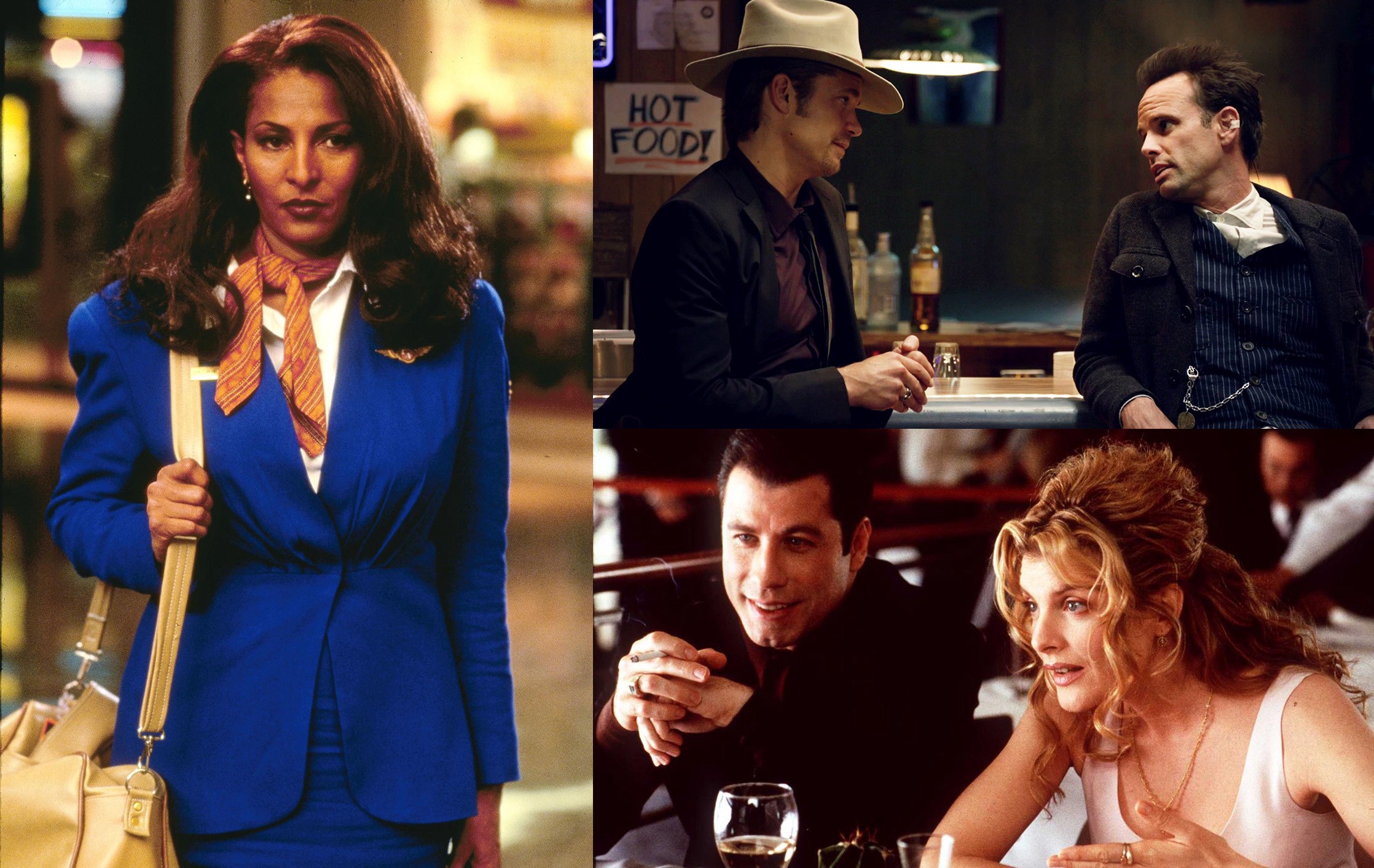
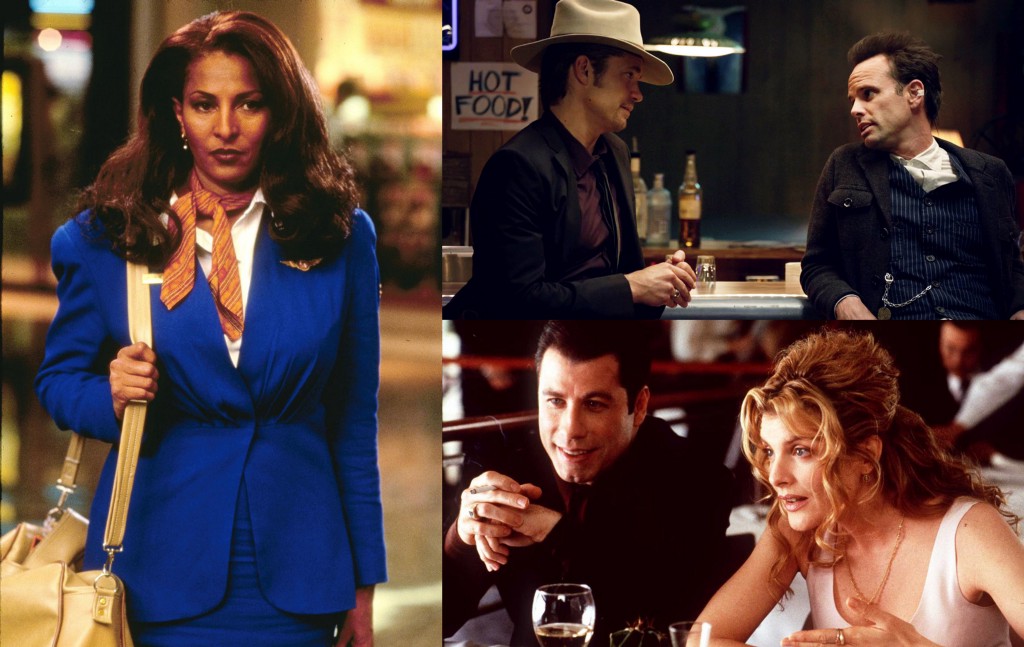
clockwise from left Pam Grier, Timothy Olyphant, Walton Goggins, Rene Russo, John Travolta, and boom, back to Pam Grier

What makes for a great Elmore Leonard adaptation? After 60 years of hustlers, gun-slingers and femme fatales — that’s right, they’ve been adapting his work since 1957 — we can distill a few lessons on how best to bring the crime master’s work to the screen. In five basic steps:

(1) Embrace the chit-chat.

(2) Film somewhere sunny.

(3) Film in restaurants, bars, diners, coffee shops, and more bars.

(4) Hire Samuel L. Jackson. Or Pam Grier. Ideally both at the same time.

(5) When in doubt, throw somebody in the trunk of a car.

That’s pretty much the established wisdom. But what is the right ratio of caper to cool? What’s that perfect balance where an (almost absurdly) intricate plot plays out with enough space for the characters to breathe and let loose and just bullshit in that inimitable way that made Leonard’s material so iconic? The beloved author, one of the genre’s great craftsmen, has tempted many a screenwriter over the years. The results have been hit-or-miss. For every Travolta turn there’s a Caruso made-for-TV flick dragging the oeuvre down. But overall the track record is pretty impressive, especially if you like your crimes to play out in attractive climes, perpetrated by small-time hustlers with rakish lawmen on the trail. The last couple years, the pop culture has remained sadly outside the Leonard universe, ever since the end of FX’s long running hillybilly noir hit, Justified. The hiatus ends this weekend, when Epix launches Chris O’Dowd as Chili Palmer in a new adaptation of Leonard’s Get Shorty. How does the new iteration stack up against the old? Can O’Dowd come out of Travolta’s shadow? We’ll see.

For now we’ve taken it on ourselves to count down the top-10 adaptations of Leonard’s novels and stories. So, put on your cowboy hat, roll down your convertible top, and get ready for some flashy, sexy, fast-talking mayhem.

1. Jackie Brown (1997)

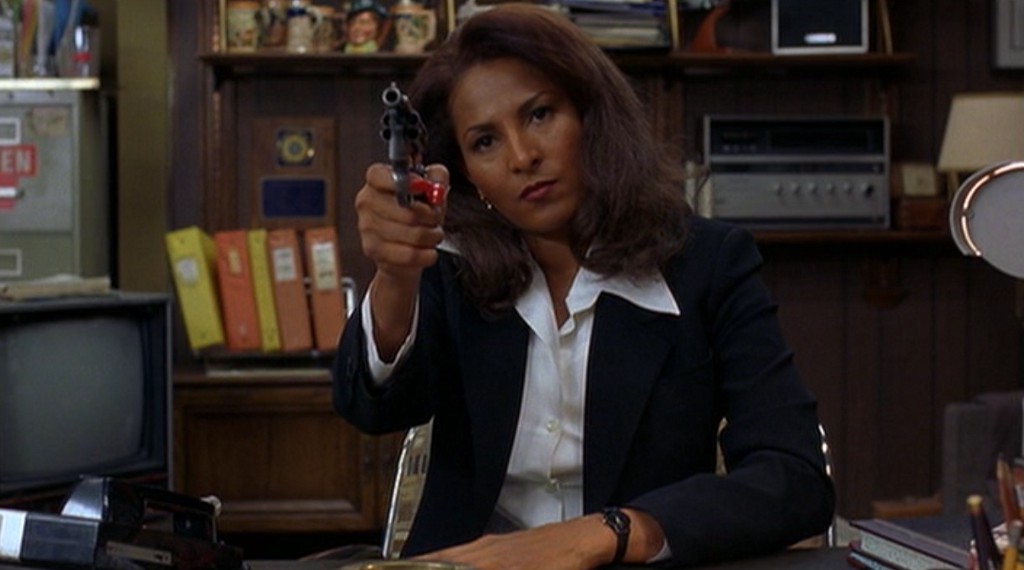
Can you think of a better pairing of director and source material? Leonard and Tarantino were a match made in a chatty, sleazy, violent heaven, and the author himself considered Jackie Brown the best of the many adaptations of his work. The 1997 flick boasted a jaw-dropping cast, starring Pam Grier at her most powerful, savoring every second of those long, slow Tarantino tracking shots. Who ever walked through an airport with more style? Not a damn person. Years later, Leonard told Martin Amis that Tarantino was nervous about having taken so many liberties in adapting the 1992 novel, Rum Punch. According to the author: “Quentin Tarantino, just before he started to shoot, said, ‘I’ve been afraid to call you for the last year.’ I said, ‘Why? Because you changed the title of my book? And you’re casting a black woman in the lead?’ And he said, ‘Yeah.’ And I said, ‘You’re a filmmaker. You can do whatever you want.’ I said, ‘I think Pam Grier is a terrific idea. Go ahead.’ I was very pleased with the results, too.” Now that’s a solid working relationship.

2. Justified (2010–2015)

Justified — built out of Leonard’s short story “Fire in the Hole,” about US Marshal Raylan Givens chasing fugitives in his hometown hills of Kentucky — finally wrapped in 2015, after six seasons on the air. What began as a fairly run-of-the-mill procedural transformed into an ambitious serial, and one of the most enjoyable programs on TV. (It also seemed to be following a full-employment model for any actor who ever appeared in HBO’s Deadwood.) Timothy Olyphant as Raylan, the sly, wry gunslinger, was a revelation: a charmer with a conscience but more than willing to put the toe of his boot up your ass. But the show’s secondary characters were the real feast, with Damon Herriman as the unforgettable Dewey Crowe and Walton Goggins as Boyd Crowder, who began as a stock villain but would eventually build a case as the show’s co-lead. There wasn’t much source material for Graham Yost and the writing staff to go on with Justified, but they always kept true to the spirit of Leonard’s work, reportedly wearing WWED wrist bands so that whenever they hit a bind in the plot or characterization, they would remember to ask, “What Would Elmore Do?” And the admiration was mutual, too. Leonard called the show “terrific” and told a 2012 FX panel that, “I’m amazed sometimes that they’ve got the characters better than I put them on paper…My god, it’s a lot better than what I would have written in the scene, you know.” Leonard even went so far as to write his final novel, Raylan, inspired by the show’s ideas and Olyphant’s work as Marshal Givens.

3. Get Shorty (1995)

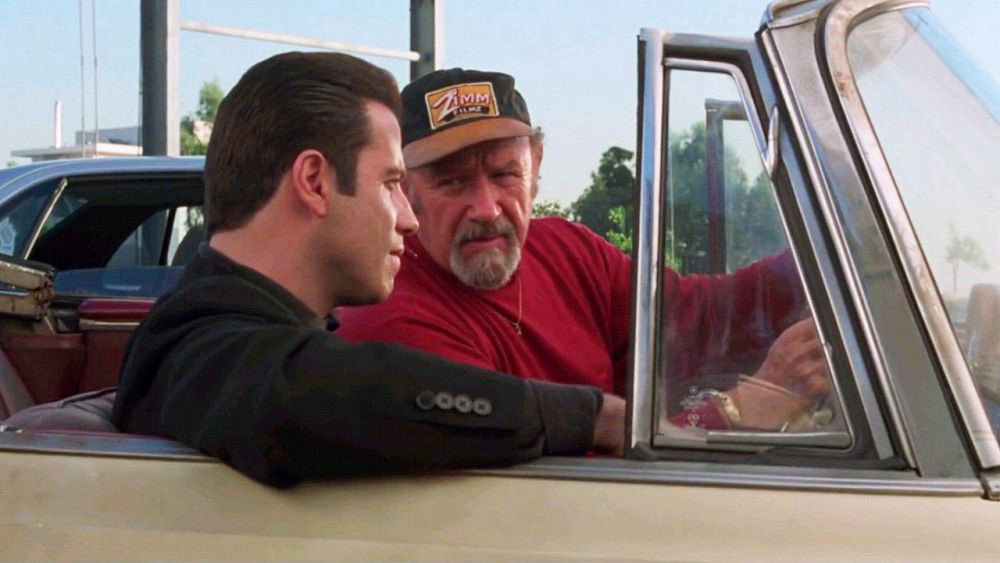
Barry Sonnenfeld’s 1995 Get Shorty is probably the purist Leonard adaptation around: a snappy satire dripping with cool customers, hapless losers, and schemers of all stripe, all hopping between Miami, Las Vegas, and Hollywood in a madcap plot that’s really just a vehicle for a certain skewed and colorful worldview. And let’s get real: John Travolta is one of the ultimate Leonard actors. His Chili Palmer is preternaturally cool and endearing, a Bensonhurst tough guy seduced by Hollywood lore (seduced by Rene Russo, too, because who wouldn’t be?) and oddly expert at navigating the ins-and-outs of a troubled studio production. Throw in turns by Danny DeVito, Delroy Lindo, Gene Hackman, James Gandolfini, and yes, Bette Middler, too, and you have the makings of a damn entertaining Leonard romp, one that holds up surprisingly well all these years later and is just about always available for streaming on one service or another.

4. Out of Sight (1998)

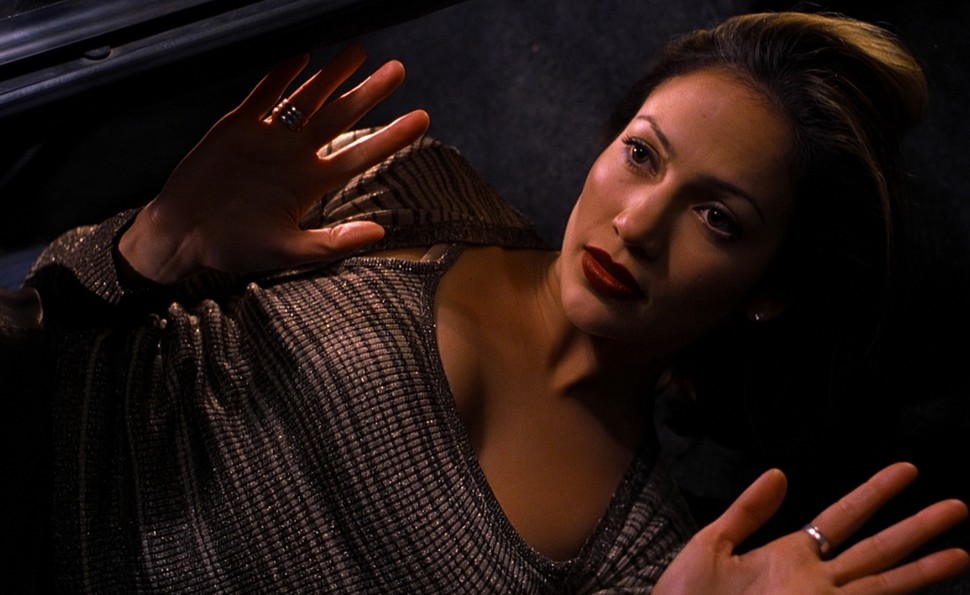
This 1998 adaptation is best remembered for the heat emanating off its co-stars, George Clooney and Jennifer Lopez. And with good reason. Even Leonard owned it at the time: ‘’You put Jennifer Lopez in it,” the author said, “that’s going to make it sexy.’’ The movie’s opening sets the tone with one of the great meet-cutes in modern film history, as Clooney and Lopez are thrown in the trunk of the same car and get to know one another in those almost intolerably close confines. (It’s a fine line between claustrophobic and erotically charged, turns out.) Scott Frank, who also adapted Get Shorty for the screen, wrote the screenplay for Out of Sight, too, and brings the same zip to Leonard’s scenes. And Steven Soderbergh, fresh off a string of indie hits, proved with this one that nobody was more capable of telling a flashy, fun heist story (and thus the Ocean’s franchise was reborn…)

5. 3:10 to Yuma (1957)

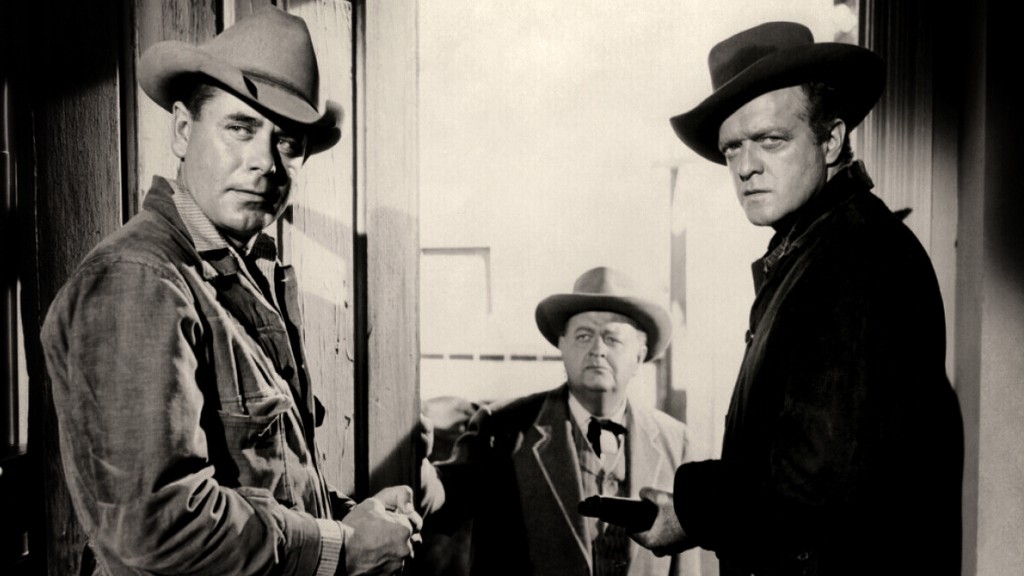
3:10 to Yuma is the original, and still among the best Leonard flicks. Adapted from a short story in Dime Western Magazine, the 1957 film was directed by Delmer Daves and had about as striking a visual style as you’re likely to come across in any classic or modern Western. The story is simple — a prisoner needs to be escorted to a train; a good man takes the job, and the forces of evil and corruption align against him — but the suspense is astonishing. Glenn Ford and Van Heflin put on a master class in Old West drama, while Felicia Farr makes a damn fine barmaid/damsel. And for some trivia: the movie was such a hit in Cuba, of all places, “Yuma” has apparently become an everyday slang term on the island. That’s a pretty impressive cultural reach for a story that’s been around for more than six decades.

Ranking Every John Le Carré Adaptation

6. 3:10 to Yuma (2007)

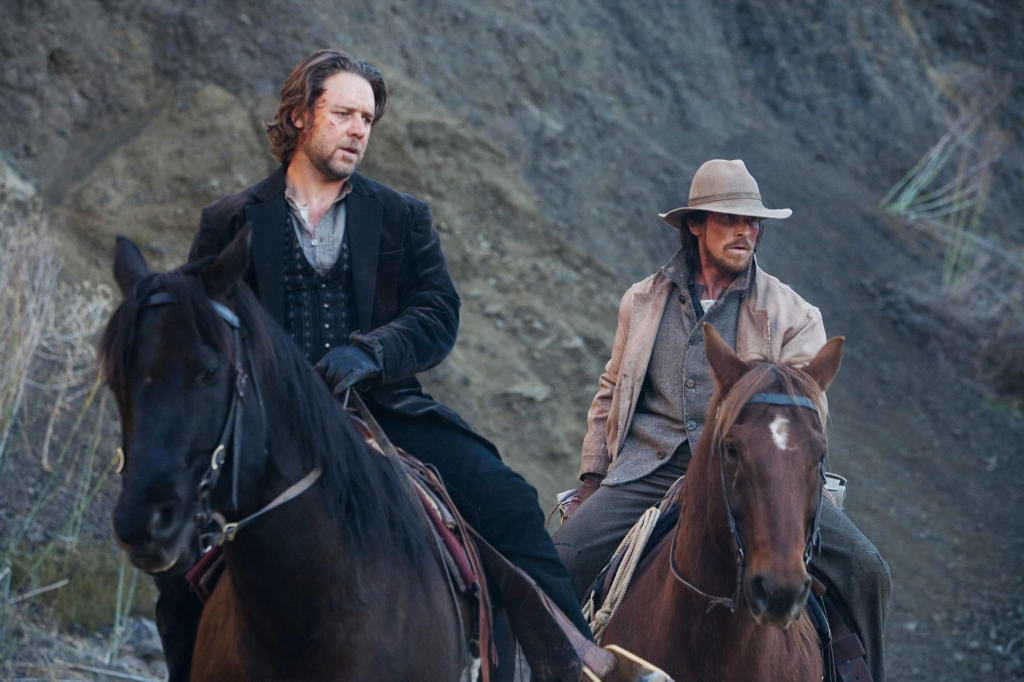
A solid, almost inspired remake, all things considered. Christian Bale and Russell Crowe don the white and black hats and do their level best to exude the rugged morality and style that made the American West into a myth. The most interesting feature, though, might be James Mangold’s direction. Yuma, it turns out, was his apprentice project, with 2017’s Logan the payoff.

7. Hombre (1967)

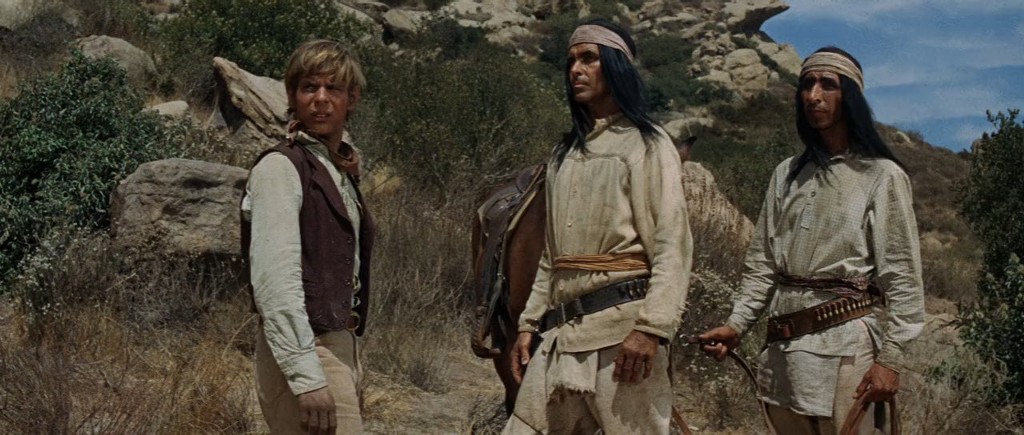
Hombre doesn’t enjoy 3:10 to Yuma’s elevated status in the canon, but it brought to the screen a considerable style of its own and drummed up a leading role just about worthy of its lead actor, Paul Newman, who played John Russell, the gunslinger raised by Indians and forced to reckon with the cruel winds of change sweeping across the West. Plus it’s worth seeing what Martin Ritt (Hud, The Spy Who Came in from the Cold, Norma Rae) does with a Western.

8. Be Cool (2005)

Look, is this just a re-tread of Get Shorty without any special panache or perspective of its own? Sure, but so what? It gives us one more spin with Travolta as Chili Palmer. And it was the first movie where Dwayne Johnson, currently reigning as the world’s most magnetic movie star, proved that he was more than just a set of pecs and in fact had real comedic acting chops. Oh, and if Vince Vaughn had better advisors, he would find a way to only act in Doug Liman movies or stories set within the expanded Elmore Leonard universe.

9. The Big Bounce (2004)

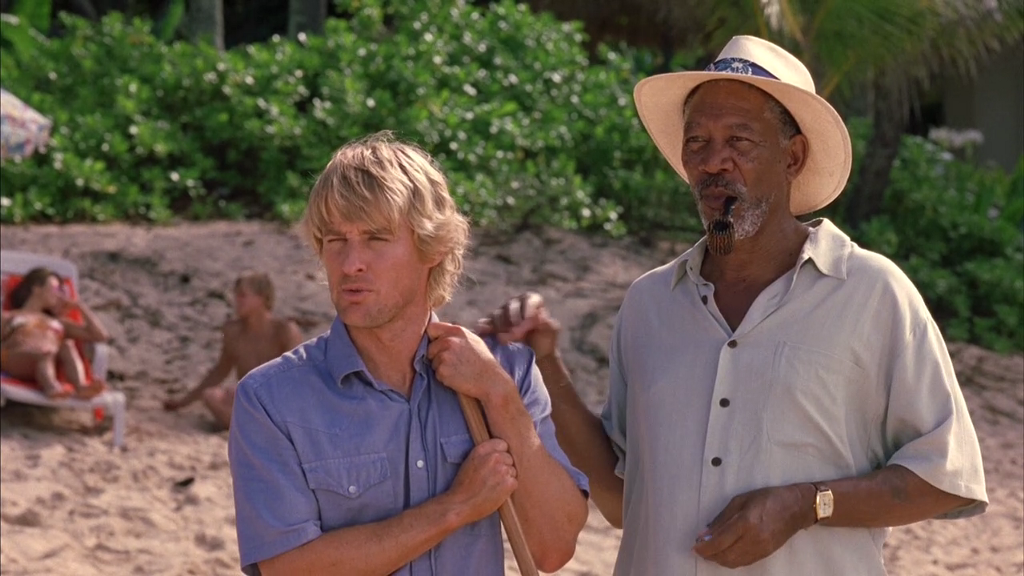
Leonard’s first crime novel was twice forgettably adapted, once in 1969 and again in 2004. It’s hard to give one film an edge over the other, especially since hardly anyone alive has seen the 1969 version, although the New York Times called it a “hothouse item about swinging sex and crime, junior division,” which admittedly sounds…okay? Leonard cited the 2004 version as one of the worst adaptations of his work. “I know The Big Bounce was bad,” he told an FX panel back in 2012. “I don’t think anybody in the picture knew what it was about. The second time it was made they shot it in Hawaii and they would cut to surfers when they’d run out of ideas.” Still, the latter movie stars Owen Wilson and Morgan Freeman, not a bad pairing, and ‘when in doubt, cut to surfers’ isn’t really all that terrible a maxim for moviemaking, is it? Better than cutting to not-surfers.

10. Gold Coast (1997)

By all means, tune in for David Caruso and the South Florida scenery, but if you decide to stick around, it’ll be for Marg Helgenberger as the sultry widow. This was Leonard’s first trip to South Florida’s underbelly — a crime story about hustlers, mobsters, and real estate. The adaptation first aired on Showtime, way back before the Golden Era of TV. It was mostly a Miami Vice nostalgia vehicle for Caruso, looking also to capitalize on Leonard’s spike in popularity in the mid-90’s. Is this going to change your life or your opinion of Leonard’s place in the crime pantheon? Probably not, but you could do worse. And after all, how many authors have 10 great adaptations?

Honorable Mention

Killshot (2008)

This one barely made it to theaters, having pulled off the somewhat difficult trick of making an Elmore Leonard story dull. But then again Mickey Rourke and Diane Lane in any sort of crime flick are almost worth the price of admission.

Valdez is Coming (1971)

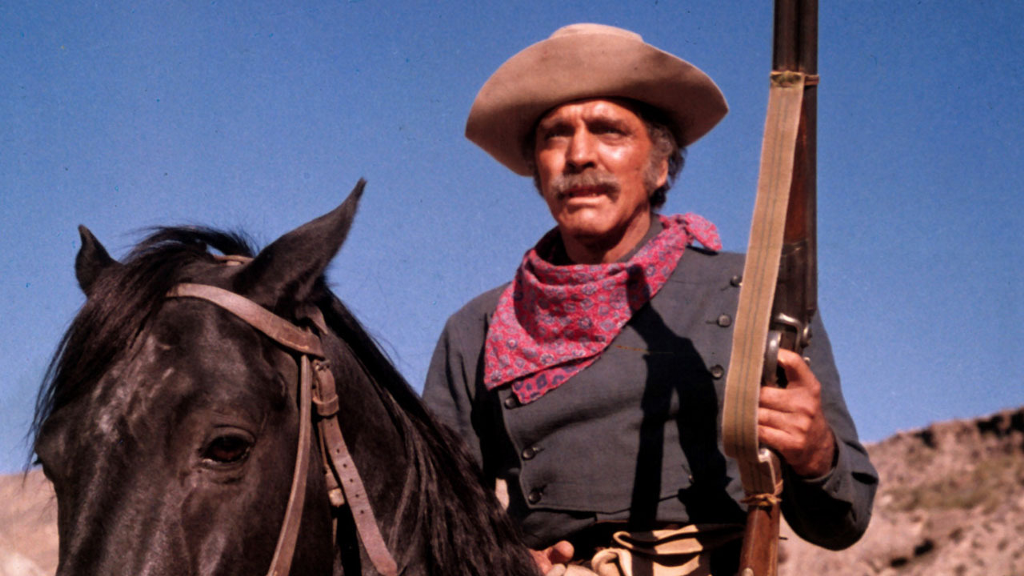
Burt Lancaster is Valdez. And He. Is. Coming.

Electric Literature Seeks Editorial Intern for Fall 2017

The deadline for Applications has been extended to September 8!

Electric Literature internships introduce undergraduate and graduate students, emerging writers, and aspiring publishing professionals to digital publishing and the New York literary scene. Because we are a small, not-for-profit publisher, we provide unique opportunities for professional development and resume-building.

As an Electric Literature intern, you are encouraged to become involved in any aspect of our work that interests you. You’ll sort mail and go to the post office, but you’ll also do things like contribute to editorial decisions, write for the site, and attend cool literary events.

Responsibilities:

  • Comb the web and social media for breaking literary news
  • Write daily news items for electricliterature.com
  • Staff events (including our table at the Brooklyn Book Festival on September 17)
  • Select images to pair with articles
  • Format, copy edit, and draft articles
  • Update contact databases
  • Fulfill online merchandise sales
  • Transcribe interviews
  • Write and schedule social media posts
  • Perform other administrative tasks
  • Open mail and catalogue books

Skills:

  • Personal experience using Medium, Tumblr, Twitter, Facebook, and Instagram — professional experience is a plus
  • Excellent writing skills and a unique point of view
  • Basic understanding of Photoshop and inDesign
  • Firm grasp of grammar and spelling
  • Organized and fastidious

The ideal candidate:

  • Has an educational background in journalism, literature, or creative writing
  • Has prior internship or entry-level job experience at another publishing, media, or non-profit organization
  • Participates in the contemporary literary scene
  • Regularly reads literary magazines and literary websites (including but not limited to Recommended Reading and electricliterature.com)
  • Believes strongly in the Electric Literature mission: To expand the influence of literature in popular culture by fostering lively and innovative literary conversations and making exceptional writing accessible to new audiences
  • Is hard-working, pays great attention to detail, and can work independently
  • Writes clearly and with personality
  • Has an eye for design and knows what images will grab reader’s attention

This is a part time internship (10–20 hours/week). There is no stipend, but interns will be paid for pieces they contribute the site. Candidates must be able to come to our office in Downtown Brooklyn at least 2 days/week. We are happy to work with universities and MFA programs to provide course credit, though you do not need to be a student to apply. This four-month internship runs from September 5 through December 22 (exact dates are flexible, and there may be an opportunity to extend the internship into 2018).

To apply, please send a the following to editors@electricliterature.com with the subject “INTERNSHIP APPLICATION: Your Name” by midnight on Friday, September 8, 2017.

  1. A cover letter and resume
  2. A sample Scuttlebutt post, along the lines of “Readers are Superior Lovers” or “Steve Bannon’s Touchstone Book is a Xenophobic, Racist French Novel.” Choose a news story you think will be relevant and interesting to Electric Literature readers.
  3. Complete the social media test below. (Copy and paste into a new document.)

Electric Literature Social Media Test

  1. Create a shareable image for this quote: “Not everything that is faced can be changed, but nothing can be changed until it is faced.” — James Baldwin
  2. Electric Literature just announced the Bodega Project, with the support of the New York City Department of Public Affairs. Write a tweet sharing the news and linking to a source with more information.
  3. Create a Facebook post about this article: “11 Fictional Restaurants We Wish Existed.”
  4. Write a Facebook post and a Tweet about this article: “Literature Needs Angry Female Heroes.”
  5. Write a tweet and a Facebook post encouraging readers to become members of Electric Literature.
  6. Create an Instagram post and a tweet promoting Papercuts: A Party Game for the Rude and Well-Read.
  7. Write a link roundup of 5 articles not published on Electric Literature, with at least one sentence about each.

Now More than Ever, We Wish We Had These Lost Octavia Butler Novels

Each month “Unfinished Business” will examine an unfinished work left behind by one of our greatest authors. What might have been genius, and what might have been better left locked in the drawer? How and why do we read these final words from our favorite writers — and what would they have to say about it? We’ll piece together the rumors and fragments and notes to find the real story.

In 1989, Octavia Butler set out to write The Parable of the Sower, the first in a planned trilogy of novels about humanity’s uncertain future. Her many earlier novels had already established her as a titan of science fiction. She’d written awesomely weird books about telepaths and time travel and aliens and psionic vampires. Butler was an anomaly in the sci-fi world; in interviews, she often described herself by saying, “I’m black, I’m solitary, I’ve always been an outsider.” She had already upended a genre that had long been both very male and very white. But she wanted to do something even bigger.

In a lecture at MIT titled “‘The Devil Girl From Mars’: Why I Write Science Fiction,” Butler recalled reading that Robert Heinlein had once delineated three kinds of science fiction stories: “The what-if category; the if-only category; and the if-this-goes-on category.”

She had mastered the first two categories, and was intrigued by the third. The Parable of the Sower would be a starkly realist novel about where American might carry itself in a few short decades — if this goes on.

To do this, she amalgamated her own memories of growing up in the racially integrated Pasadena of the 1950s with contemporaneous news reports about rises in global warming, racism, violence, prison populations, and mega-corporations. In this way, she created the shattered America described by Lauren Oya Olamina, a black fifteen-year-old with “hyperempathy” living in a walled-up town outside of LA in 2024.

Told through Lauren’s diaries, the novel envisions the crises facing America thirty-some years later with eerie accuracy. Clean water is getting scarcer. Whole towns are being privatized by individual companies. Literacy is deteriorating—and, oh yeah, there’s a charismatic President promising to make the country great again.

As Gloria Steinem wrote last year in an essay celebrating the novel’s 25th anniversary, “If there is one thing scarier than a dystopian novel about the future, it’s one written in the past that has already begun to come true.”

The Parable of the Sower was published in 1993 and became a New York Times Notable Book the following year. Already a Hugo and Nebula award-winning writer, Butler soon became the first science fiction writer to ever receive the MacArthur Foundation “Genius Grant.” She said she hoped the prize, which at the time was $295,000, would help her to complete her work on the trilogy.

A year later she published a sequel, The Parable of the Talents, in which a religion based on Lauren’s diaries, called “Earthseed,” struggles against Christian fundamentalism.

At the time, Butler spoke in interviews about her ideas for the third book, The Parable of the Trickster, in which adherents of Earthseed would attempt to build a new society on another planet.

Butler spoke in interviews about her ideas for the third book, The Parable of the Trickster, in which adherents of Earthseed would attempt to build a new society on another planet.

But, struggling for years with depression and writer’s block, Butler would not finish the trilogy as she planned, though she would complete several new stories and a novel, Fledgling, about a race of vampires trying to co-exist with humans.

In 2006, Butler died of a stroke outside her home in Lake Forest Park, Washington. Her many papers now reside at the Huntington, a private library in San Marino, California. Curator Natalie Russell describes the collection as including “8,000 manuscripts, letters and photographs and an additional 80 boxes of ephemera.”

On display there now are numerous treasures, including working manuscript pages from The Parable of the Sower covered in her brightly colored notes: “More Sharing; More Sickness; More Death; More Racism; More Hispanics; More High Tech.”

There are the beautiful, bold affirmations that recently went viral online, which she wrote to frame her motives for writing: “Tell Stories Filled With Facts. Make People Touch and Taste and KNOW. Make People FEEL! FEEL! FEEL!” On one page of her journals she visualized the success that she desired: “I am a Bestselling Writer. I write Bestselling Books And Excellent Short Stories. Both Books and Short Stories win prizes and awards.”

But what is not on public view are the drafts — the things she had hoped to write someday and never did, including The Parable of the Trickster.

Scholar Gerry Canavan described getting a look at that work-in-progress for the LA Review of Books in 2014:

Last December I had the improbable privilege to be the very first scholar to open the boxes at the Huntington that contain what Butler had written of Trickster before her death. What I found were dozens upon dozens of false starts for the novel, some petering out after twenty or thirty pages, others after just two or three; this cycle of narrative failure is recorded over hundreds of pages of discarded drafts. Frustrated by writer’s block, frustrated by blood pressure medication that she felt inhibited her creativity and vitality, and frustrated by the sense that she had no story for Trickster, only a “situation,” Butler started and stopped the novel over and over again from 1989 until her death, never getting far from the beginning.

The novel’s many abandoned openings revolve around another woman, Imara, living on an Earthseed colony in the future on a planet called “Bow,” far from Earth. It is not the heaven that was hoped for, but “gray, dank, and utterly miserable.” The people of Bow cannot return to Earth and are immeasurably homesick. Butler wrote in a note, “Think of our homesickness as a phantom-limb pain — a somehow neurologically incomplete amputation. Think of problems with the new world as graft-versus-host disease — a mutual attempt at rejection.”

From there Butler became hopelessly blocked — though not exactly in the commonly-held image of writers’ block, of staring day after day at a blank page, lacking inspiration and confidence. In fact, as Canavan describes, her “dozens upon dozens” of drafts represent a wide range of ambitious ideas.

In some versions, the colonists struggle with a creeping blindness. In others, they develop a terrible telepathy. There are versions where Imara must solve a murder and versions where Imara herself is murdered but becomes a ghost. “Sometimes Imara is an Earthseed skeptic; other times she is a true believer; sometimes she is, like Olamina, a hyperempath; still other times the cure for ‘sharing’ has been discovered in the form of an easy, noninvasive pill,” writes Canavan. “Sometimes Bow is inhabited by small animals, other times by dinosaur-like giant sauropods, and still other times by just moss and lichens; sometimes the colonists seem to encounter intelligent aliens who might be real, but might just be tokens of their escalating collective madness; and on and on and on.”

In some versions of The Parable of the Trickster, the colonists struggle with a creeping blindness. In others, they develop a terrible telepathy.

Canavan reveals that Butler hoped to for this book to serve not as the last in a trilogy, but as the middle of a seven-part series. (Take note, George R.R. Martin!) Trickster was to be the first of four new novels about life on Bow and the colonists’ struggle to build a better humanity. He writes that the colonists “can choose: either live together, work together, struggle together, and pray together, or else hoard food alone, scheme alone, lose their minds alone, breakdown and die and murder each other alone.”

Four more books. That would be how long it would take, in Butler’s estimation, for the human beings of the future to move past their homesickness, their biology, and their history and truly become capable of working towards a common decency. She saw hope, but only a long way off.

In 2001, during a speech to the U.N.’s World Conference Against Racism, Butler explained that before embarking on the first Parable novel she had instead dreamed about writing a novel about a utopian civilization where everyone possessed a kind of hyperempathy. For a time she thought that, at least in fiction, she could create a world where “people were inclined either to accept one another’s differences or at least to behave as though they accepted them since any act of resentment they commit would be punished immediately, personally, inevitably.”

But soon she realized this would never work. “Popular, painful sports like boxing and football convinced me that the threat of shared pain wouldn’t necessarily make people behave better toward one another,” she said. “And it might cause trouble. For instance, it might stop people from entering the health care professions. Nursing would become very unpopular. And who would want to be a dentist in such a society? So much for fiction.”

Instead she created Lauren, a lone hyperempathic girl in a society of the empathy-deficient. Empathy was, she realized, not the solution but an affliction.

So much for fiction? I don’t know about that. Butler may have ended up writing a dystopia instead of a utopia, but what she wrote gets right to the heart of our crises. It was not, she said, intended to be a prophecy, but rather a cautionary tale.

Butler may have ended up writing a dystopia instead of a utopia, but what she wrote gets right to the heart of our crises.

The rest of her speech to the U.N. that day is an exact outline for what she wanted the rest of the Parable books to be about — a way out that she did not live to write herself. Fortunately, what she did leave us influenced a generation of writers from every margin in society to continue her work.

“Whatever is the source of our intolerance, what can we do about it?” Butler asked. “Of course, we can resist acting on our nastier hierarchical tendencies. Most of us do that most of the time already. […] Will this work? Well, it hasn’t so far. Too many people will not, perhaps cannot, do it. There is, unfortunately, satisfaction to be enjoyed in feeling superior to other people.”

She lists the basic human traits that catalyze our nasty tendencies into nasty behavior: ignorance, fear, disease, hunger, suspicion, hatred, war, greed, and vengeance.

“Amid all this, does tolerance have a chance? Only if we want it to. Only when we want it to. Tolerance, like any aspect of peace, is forever a work in progress, never completed, and, if we’re as intelligent as we like to think we are, never abandoned.”

Study Proves Literature Has More Swear Words Than Ever Before

Readers are a dadblame heck of a lot more likely to encounter cusses in contemporary books

Lady, we can all see what you’re doing. (Credit)

Get ready to wash your library out with soap: In what is arguably the most entertaining survey of literature of the past half-century, a group of researchers has discovered that there has been a shocking, SHOCKING (not really that shocking) increase in swearing in American literature.

The study, led by author and San Diego State University psychology professor Jean Twenge, analyzed the works in the Google Books collection of American works published from 1950–2008. They searched for uses of classic profanities—”shit,” “piss,” “fuck,” “cunt,” “cocksucker,” “motherfucker,” and “tits,” the “seven words you can’t say on television” identified by George Carlin in 1972. If anyone’s upset about a dignified literary website using those words, well, bad news — apparently those words are literature now. Some of them you still can’t say on (network) TV, but you sure as shit can say them in print. The results show that books published between 2005 and 2008 were 28 times more likely to include swear words than those published in the prim and proper days of the 1950s. Specifically, the word “motherfucker” was used 678 times more often in the mid-2000s than the 1950s and “shit” was 69 times more frequent (nice).

The paper documenting this study notes that the dramatic increase has been concurrent with the growing focus on individualism and self-expression. With hypersensitivity giving way to the rebellious breaking of social norms, swearing has come to the forefront as a great way to fight the system. But our personal theory is that literature strives to reflect and interpret reality, and these days, shit is just a lot more fucked.

[The Guardian/Alison Flood]

From Convicted Murderer to Debut Author

The Writing Life on the Road: Lydia Yuknavitch’s Portland

Electric Literature’s contributing editor Michael J Seidlinger is on the road as part of his project #followmebook, visiting writers and exploring the limits of social media. As part of a limited summer series called “The Writing Life on the Road,” he’s sharing his conversations with writers he encounters as he makes his way from New York to California. This week, writer Lidia Yuknavitch shares details and insights from her writing life in Portland, Oregon.

What follows are highlights from Lidia’s interview with Michael. Her responses have been edited for clarity.

Setting the Scene: Writers, Underground

We are at Ringler’s Annex, which is a bar kind of across from Powell’s Bookstore and furthermore, we are downstairs in the basement bowels of Ringler’s so that we can be by ourselves in a cave-like bat people setting, because sun is bad.

Writing Process: Space as a Reflection of the Mind

I do believe in over-ritualizing your writing situation because life is so fucking hard and the drudgery of daily existence makes you feel not creative and gross. I so much believe in going into the literal place you write, even if it’s a closet because I’ve written in apartments where my writing space was a closet. Wherever it is, make that space amazing, and in my case, I try to make the room match the inside of my head. There’s shit on the walls. I’ve tacked up dead things, the skins of trees and hair because I have a hair fetish, and paintings, drawings. Our imaginations are cluttered, weird messes filled with id and wrongness and beauty. Somehow, being in a room with all of that helps me tap into it faster.

Our imaginations are cluttered, weird messes filled with id and wrongness and beauty. Somehow, being in a room with all of that helps me tap into it faster.

But then also when I’m in a new book and a new project, I make a special space that’s devoted to that book or project. It’s in the writing space, like a wall or a table. That’s where I’ll bring in images or objects to help me stay in the project. I like dead birds. Someone I know very well just gave me a brooch she made from a tiny dead bird and it’s now going to be one of my most precious objects. Bones of animals. I’m often finding partial jaw things with teeth still in them. Those fascinate me. I guess like in the Georgia O’Keefe way, bones and skull and stuff like that endlessly fascinate me. Rocks everywhere. Shells are good. Dead insects.

And then I drink. My go-to for writing remains a single malt scotch or wine. Red wines that are higher end, but wine has only developed as I’ve gotten older and less able to keep drinking scotch. I kind of put myself in a trance. I guess what I mean is really leave reality and go the other place, which is my better world. I would stay there.

The Creative Process for ‘Book of Joan’

Well, I had images that were anything but God, because I took God out of the equation for the story. So all kinds of images of the cosmos and space and planets. What that led me to was antimatter and black holes and stuff like that, so my friend sent me a photograph of this new color black that they’ve developed in a lab that’s so deep that when you look at the image it looks 3D because it’s so beyond normal black. I also had a bunch of hair pinned up, because in the story I wrote, everyone is hairless except Joan. Because I have a hair fetish, I have a collection of swatches of hair and I pin those up to remind me of the loss of our humanity. The story I wrote breeds an extreme desire to reclaim humanity, so having human hair around me, even though it sounds gross, was really important. It’s truly creepy.

Support Electric Lit: Become a Member!

So there’s this other thing that got taken out of the book through the editing process but used to be a much bigger deal: The color people are. There’s pigment, there’s skin tone. In The Book of Joan, they are the color of an entire Pantone sequence. They are every color we know of instead of the ones we are reduced to that make all the race wars. So I bought this beautiful set of oil pastels that has every color you can imagine and I just kept it open while I was writing so I could remind myself. There’s a character in the book who is literally aqua, and so it was a big deal to me to think about race, but go back to color and dislodge our tired arguments about race.

The Physical Power of Books

I have stacks of books all around me. But then there are the go-to ones. Always Marguerite Duras, always Walt Whitman, always Mary Shelley’s Frankenstein. It doesn’t matter what the project is, it will release me, or loosen my imagination. You know when you get anxiety and panic and tightness when writing and it’s not going well? It will loosen it for me. So if I just rub those books on my head, I feel better.

You know when you get anxiety and panic and tightness when writing and it’s not going well? If I just rub those books on my head, I feel better.

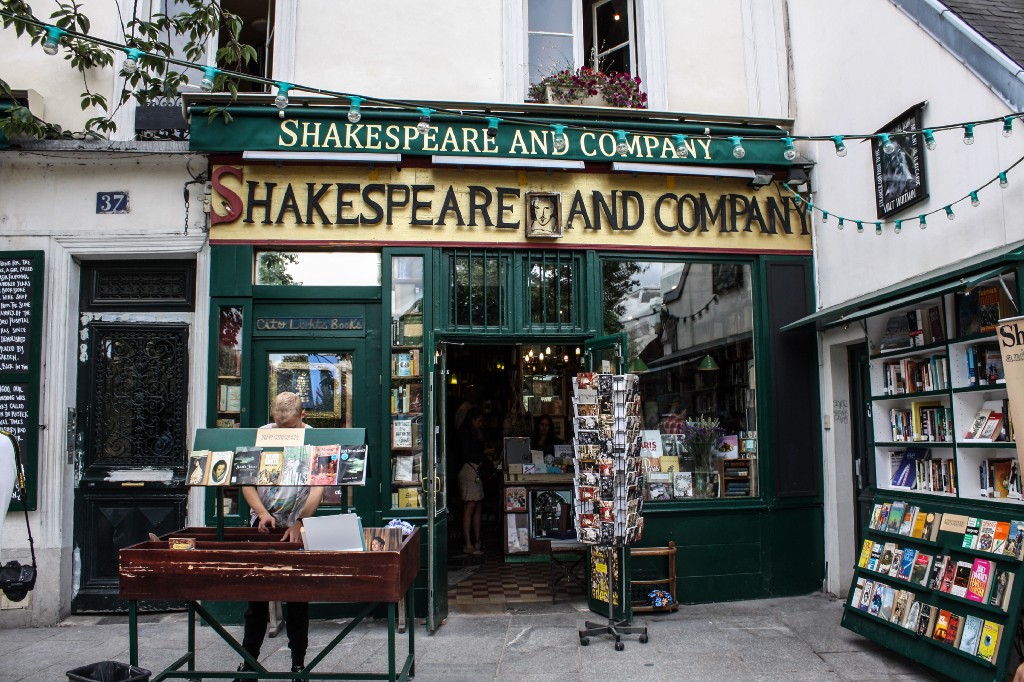
We both have a love affair with France, so we both say the books we got in France smell exactly like that even if they don’t. The Shakespeare & Company books smell like history, the place in the world where art and literary history still exist. I also love new book smell because it’s the smell of our present tense and it’s a complicated smell. It’s the product, it’s capitalism, it’s the speed of art and light and I also love that smell. I also think that poetry books smell different than fiction and nonfiction books, but I might be in the minority on that.

The Social Life of an Artist

First, people walking around thinking they can be solo artists are either lying or idiots because I find you can’t make anything without others, so there’s that. Then I have a history of having found community that started when I first found people at Fiction Collective 2, where Lance Olsen is among others. How I stumbled upon them and found connection was that they all believed writing should be against the grain of culture. Every single one of them. And every single one of them was coming at it from a different angle. And I suddenly felt like being freakish, you could have a home instead of always being alone and on the outside.

The Writing Life on the Road: Jeff VanderMeer’s Tallahassee

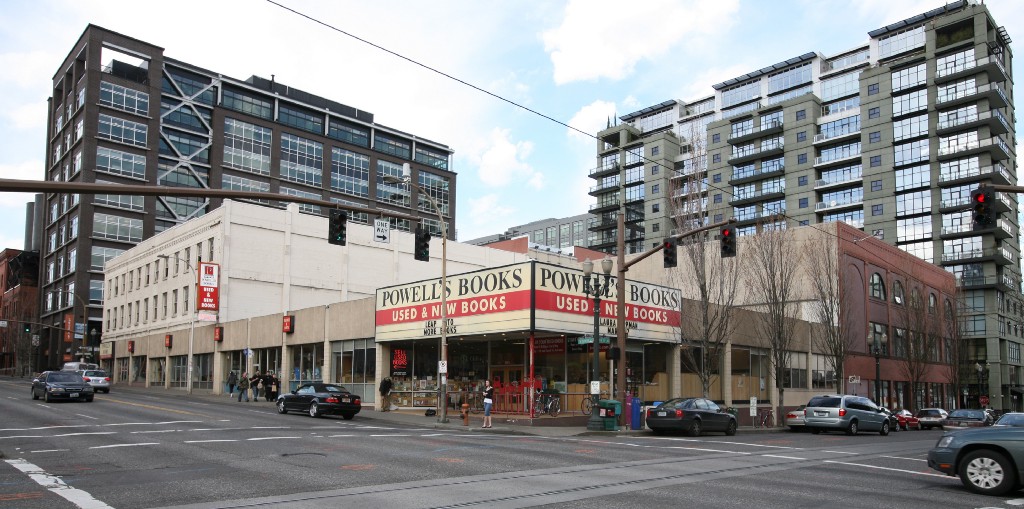
Moving to Portland, what I discovered is that Portland is amazing for musicians, and writers, and artists, and actresses and actors because there’s several different cells of creative folk and they are not trying to annihilate each other. And that’s actually unusual and good. There is competition among creative groups, but that’s to inspire and challenge each other, not to cancel each other out. Maybe Portland is guarded from it, but right this second it is true that the different cells of creative community help each other. If you’re a writer, I can’t imagine a cooler place to come and create. We have the world’s greatest bookstore: Powell’s City of Books, because it literally is a city. But we also have a whole ton of tiny bookstores all over the place that we all keep alive because we remember that Portland has blood that’s made of art.

A Child’s Story About a Love Triangle

“Solee”

by Crystal Hana Kim

I count the stray dog’s ribs on my way to school. Five bones protrude, like the rounded claw of a Dokkaebi clutching his club. Last month, there were six showing through the skin of his belly. I am happy. I am fattening him up after all.

He walks alongside me every day, and at the school yard entrance I give him a treat. He is so hungry he leaves a puddle of drool in my palm. But today he is frightened by a thunderclap rumbling through the air.

A man on a motorcycle. Wheels licking up bursts of dust. He waves and smiles. I am the only one on the road.

As he disappears, I wave back.

Solee (Electric Literature’s Recommended Reading Book 273)

I hear laughter before I take off my shoes. Daddy and Mommy in the kitchen, singing with the girls.

“Why is everyone so happy?” I ask.

“Come say hello to your uncle.” Daddy hugs me with his good arm. He is in a rare light mood; alcohol already swims in his mouth.

With Jieun and Mila and Mommy is the man from the morning. There is dust on his face and his skin is dark, like the farmers in the fields.

“Kyunghwan, meet Solee. She’s my oldest and smartest, like a boy.”

I tug down my short hair. I hate it when Daddy calls me a boy. “You’re the man on the motorcycle,” I say.

“You’re the girl who feeds the starving dog.” He laughs. Everyone laughs.

Daddy tells me to go bow to him properly, but I stick my head into Mommy’s soft stomach. She holds me, brushing my hair and letting my embarrassment drain out.

“Say hello like this!” Jieun stands on her chair, leans over Mila, and kisses the man on the cheek. Everyone laughs again.

He hugs me as though we know each other. His cheek is softer than Daddy’s, and his breath smells like tea, even though they are all drinking makgeolli. “Hello, Miss Solee,” he says.

They get drunk as if we girls are invisible. It’s nice. Once, on Jieun’s third birthday, Mommy and Daddy drank so much at dinner they stumbled out of the restaurant. They left us at the table, our hands sticky from rice cakes and sugar tea. In the doorway, they kissed. I hope they will do that again.

It’s early when I wake up. I lie still, letting the cool of the floor collect inside me. It’s my job to make tea in the morning. Jieun and Mila sleep with open mouths. I imagine dropping seeds down their throats, so the kernels will settle in their bellies and grow. Pear blossoms flowing out between their lips, crawling up the walls of the room. I could puppet them around by their stalks, have them get the tea.

I’m not the only one awake. Uncle is seated at the table with a book. Washed and brushed, he doesn’t look like a farmer anymore. I stare at my feet. I am wearing my nightclothes decorated with small frogs. They are too short in the sleeves and at the ankles.

“Morning, Solee.”

“Morning, Uncle.”

“That makes me feel old. Do I look like an old man to you?”

“I don’t know.”

“Call me Kyunghwan.” He points to the tea he has already made. The napkins are folded into flowers and tucked underneath each cup.

“I need to bring these to my parents,” I say.

“They’ll wake up soon. They can get their own tea. Come, sit.” He nods at the seat across from him. He gives me an American cookie. It is rectangular and beige and patterned with small, square indents. The sweetness makes the back of my ears hurt. I decide he is a nice man after all.

“What are your plans for today, Miss Solee?”

“I have school, and then I come home and help Mommy.”

“Jisoo says you could go to college. What subjects do you like?”

“Math is easy. Composition, because we get to write stories. Science, because we learn about animals and plants.”

Kyunghwan quizzes me with addition and subtraction problems. I start to boast that I even know multiplication, but I stop. Mommy says girls should show their smarts, but no one likes a bragger. That’s the reason the other school kids are not nice to me.

“What’s your dog’s name?”

I want to say something clever. “Dokkaebi.”

Kyunghwan smiles. “Those gremlins gave me nightmares when I was your age.” He tells me stories of Dokkaebis playing pranks on children and old men. He is a good storyteller, using his hands and baring his teeth in suspenseful moments. Soon it is seven o’clock. “I have to get dressed for school,” I say.

“I’m going hiking this afternoon. Do you want to come along?” He nods, as if I have already said yes. “We’ll buy you some sturdy shoes.”

“Bye, Kyunghwan,” I say, waving and bowing at the same time.

I’m glad Jieun and Mila are still too young to make tea.

Teacher Han raps my knuckles twice during mathematics. He tells me to pay attention. This afternoon, I will walk up a mountain with Kyunghwan. I play with my hair, brushing it down with my fingers. I wish Mommy hadn’t cut it short. Kyunghwan likes long hair. Last night during dinner, his eyes spiraled as Mommy twirled a long, loose strand.

After school, I play gonggi stones with my classmates and wait. Chunja is the best, throwing and catching quickly. She has her own set of stones, and they are smooth from all her hours of practice. I’m in the middle of catching the stones with the back of my hand when the talking starts.

“Look!”

“Who is he?”

“He looks like a movie star.”

“Someone’s daddy?”

“He’s handsome,” Chunja says.

The boys stare, too, pointing at his hairy legs and the big lump at his throat.

He calls my name, waving brown shoes. I drop the gonggi stones into Chunja’s hand, smiling at her surprise.

We arrive at Gasan. Even before we start climbing, there are large stains underneath Kyunghwan’s arms and around his neck. When the boys at school sweat, we make fun of them. But on him, it looks different.

“Movie star,” I whisper, hoping he will hear me.

He names flowers and trees. I try to remember them all, but the words bleed together.

“You see this?” Kyunghwan points to a strange little plant with nubs that curl inward, like a ram’s horns. “It’s Haemi’s favorite side dish. Gosari. Wouldn’t it be nice if we picked some for her?” He sets his hand on my head.

“My favorite side dish is fried eggs rolled up,” I say.

“Well, if you help me with this, I’ll make my most delicious eggs especially for you. All right?”

I nod. He opens his canvas bag, making room in the middle. We search for Mommy’s favorite plant. I pluck one and stare. It looks as if a fuzzy caterpillar is curling up on my palm, ready for sleep. I will not eat any of them, I decide.

As we collect, he explains that these are babies, that when they mature the leaves uncurl and bloom. When we have a big enough pile, we take a break. He lies down with his hands clasped behind his head, maybe drying his armpits. I copy him. He explains how we will dry the baby plants in the sun, dust them lightly with salt and oil, and then fry them over a fire.

“How did you know it was her favorite?”

“Haemi and I were friends. A long time ago. I introduced her to my cousin, Jisoo. And that’s how you and your sisters got to be here.”

It’s funny how he calls them by their first names. I roll over. I pick a dandelion and blow white fluff at him. “Do you have any children?”

“I wish I could have daughters as lovely as you girls. I missed my chance. Now I’m old and ugly.”

“I think you’re handsome,” I say. I turn my head to his chest, so he can’t see my face.

We head to the backyard and Kyunghwan finds the right spot for the gosari. Out of reach of the roof’s and the tree’s shadows, where the sun heats the ground all day. The back of my neck prickles, and I don’t want to watch these plants shrivel up any longer. I kick at a mud clump while Kyunghwan works. He is spreading them out to make sure they dry evenly.

“I’m tired,” I say. Dokkaebi is circling the tree and I whistle him over.

“We’re almost done.”

Dokkaebi snuffles his head into my hands.

“No food for you,” I say. I break a dirt clump over his back, mixing brown into his yellow fur. “I’m tired,” I say again. I know I’m whining, but I can’t help it.

Kyunghwan looks up. “I’m sorry. I should have brought you home earlier.” He pulls a handkerchief from his pocket. It is the color of boiled spinach. He dips it in a bucket of water and washes my face. From forehead to nose to chin. He is not tickling me, but it feels like he is.

He wraps the kerchief around my neck, and a trickle of water drips down to my belly. I follow the stain with my finger. “I want my special eggs now.”

“Go inside and let Haemi know we’re home. I’ll finish here, then I’ll cook you up something delicious. You can keep the handkerchief for being such a good partner today.”

I run into the house with my head raised, so everyone can see what Kyunghwan has given me to keep. “Look!”

“My wood nymph.” Mommy kisses me. “How was your hike with Uncle?”

“He picked some baby plants for you. He said they’re your favorite and that you like to eat them with your mouth wide open. Like this.” I copy Kyunghwan’s chewing, smacking my tongue against the roof of my mouth.

Before I can start describing the peak and my new brown shoes and the eggs that I will get to eat, her eyes close.

“Mommy?” I shake her, trying to bring her back to me. She does this sometimes. “Kyunghwan is waiting for you.”

She smiles slowly, like a goddess returning to her human body. She squeezes my hand. “Watch the girls while I talk to your uncle.” Raking her fingers through her curls, she walks out.

It has become a game between the two of us. I get up earlier each day, but Kyunghwan always wins. He sits in the kitchen with the hot tea ready. As we wait for the others to wake up, we talk.

Jieun and Mila come next, always running to him with their orange blanket dragging behind them, like an open dress. He pulls them onto his lap and feeds them spoonfuls of tea. I want him to feed me too, but he winks and I straighten up. He thinks of me as a grown-up.

At night, though, when everyone has gone to bed, I imagine him hugging me. I want to see him, and when I sneak into the hallway no one stops me. No three-legged crow guarding the door from intruders, as Mommy tells us on nights full of shouts and stomps.

At his door I bend down, dusting my ear against the crack to listen for his breathing. I have to lie as still as possible, but then I hear it. The in and out of Kyunghwan asleep.

It is Kyunghwan’s ninth day here and Daddy is in a good mood again. It is a Saturday, a no-school day for me, and Daddy is eating breakfast with us.

“Listen,” he says. “When Kyunghwan and I were boys, he found a secret pond.”

“Where the air tastes sweet and the water is clear!” Kyunghwan sings.

Daddy grins, gulps down his tea as if it is makgeolli. “We said we’d never show the pond to any women. But today we’ll go!”

Jieun is already jumping and swinging Mila around. Mommy shakes her head, not at the girls but at Daddy and Kyunghwan, singing a song we do not know.

At the pond, my sisters and I pull off shirts and skirts, and run into the water in our panties. Mine are covered in apples, Jieun’s in cucumbers, and Mila’s in orange pumpkins.

When Kyunghwan sees, he sings, “My face like an apple, how pretty I am, with eyes bright, nose bright, lips bright. My face like a cucumber — ”

“No more! Don’t sing the next part!” Jieun sprays water at Kyunghwan, but it doesn’t reach him. She doesn’t like her long face, even though we tell her it’s just a song. As we play, the adults bake themselves on boulders, squid laid out to dry.

Mommy wears a real bathing suit. It is black and shiny, with white trim. You can see the roundness of her breasts where the fabric stretches tight. I look down. I have two little nipples but no roundness. Little soybeans no one would want to look at.

“I’m going to catch a great big fish and fry it over a fire!” Daddy yells before jumping off his rock. One arm glued to his side and the good arm in an arch, pointing at the water. He makes a huge splash, and we whistle and whoop. Our voices echo off the rocks.

“Don’t forget who won the diving contest every year!” Kyunghwan starts with his back against a tree and runs straight off his boulder. As he falls, he flails around like a panicked animal.

He sinks, screaming.

Mommy shrieks his name.

A silence stretches out in ripples.

“Kyunghwan?” Daddy yells. “Stop it!”

Kyunghwan’s head bobs up with a howl. He winks at me.

“He’s a Dokkaebi!” I yell.

He fills the pond with a laughter that floats. It is contagious, and soon we are all laughing, holding our stomachs and chucking our heads above the water to stop ourselves from drowning.

“That wasn’t funny.” Mommy stands above us all, her arms across her chest.

“Oh, come on,” Kyunghwan says.

She turns, and Daddy leaves the water to comfort her. Kyunghwan shrugs, gulps air, and goes under.

When everyone is happy again, we cavalry fight. Jieun on Daddy’s shoulders, Mila on Mommy’s, and me on Kyunghwan’s. His hands push against my butt, nestling me until I am sitting with my legs draping his chest. His body is slick and I’m worried I’ll fall off. He lifts my arms, flaps them up and down until I feel it — I am high and soaring.

When the water weighs heavy in our bones and it becomes harder to float, we head to the hills above. Boulders crumble into pebbles. My skin smells like water and sun.

“This is where we’d fry fish,” Daddy whispers. He is so calm and peaceful, carrying sleepy Mila on his back. There is no fire pit anymore, but he describes one until I can almost see it: the logs burning and the fish skin crisping in the heat.

“Let’s get some wood,” Kyunghwan says. He and Daddy leave, their bodies hulking together into the forest.

We lie down around Mommy. She sings the apple-cucumber-pumpkin song, squeezing our noses at our parts. Jieun doesn’t mind so much now, and we hum along, rubbing Mila’s cheeks as Mommy sings, “Our funny round pumpkin.”

When Daddy and Kyunghwan come back, Mommy leaves us to sit with them. It is dark now, and Jieun draws a picture of our family into the sky, using the night’s stars to trace our crooked elbows and noses. Mila drools onto my shoulder. I try to stay awake.

On the first evening of Kyunghwan’s visit, the adults told stories when they thought we were asleep. Of the war that split our Korea, of a president who controls us, and of people who are dead. But they are quieter tonight. When Daddy goes to pee in the woods, Kyunghwan sits closer to Mommy. She looks over at me. I want to hear what they are saying, but their whispers twist together into streams.

The next day, Daddy is sick. I bring him his tea and he grumbles that his head is wound too tight.

“Come eat with us,” I say.

He wasn’t in the kitchen to see it, how Kyunghwan and Mommy smiled at each other. But Daddy gulps his tea and pushes the drained cup into my hand.

He leaves the house without saying good morning or goodbye. When he’s gone, Kyunghwan turns to me. “Solee, can you do your uncle a favor? Can you watch Jieun and Mila?”

“Where are you going?”

Mommy stares out the window, but there’s nothing there.

“Gasan. Haemi wants to collect more of those plants she loves. Can you be the lady of the house, Solee?”

“Can we go hiking tomorrow, just us?”

“Of course.” Kyunghwan squeezes my shoulder.

I smile at Mommy but she doesn’t see me. She touches my head, glances at the room where Jieun and Mila are still sleeping.

“Are you really going to Gasan?” I ask.

She bends down to me. She is pretty, with big eyes and pale, freckleless skin. “Where do you think I’d be going?”

I don’t know, but I know she’s lying.

“Don’t worry so much.” She smiles. “I’ll be back soon with an armful of plants for us.”

They don’t come home for dinner. Mila whines because I burn the rice, and Jieun says she wants oxtail soup, not dumplings. I give them two rice cakes and tell them they are brats, smacking my spoon against the table the way Mommy does when we misbehave. They cry, and everything is worse.

I don’t know where Daddy is. I want to tell him everything. How Kyunghwan and Mommy have gone to Gasan. How I am supposed to be the only one hiking with Kyunghwan.

“I miss Mommy,” Jieun says.

In bed, she asks for the goddess story. Even little Mila sighs happily when I begin.

“One day,” I say, “when the world was new, a goddess came down from the heavens. A man found her and fell in love with her beauty. Knees mucky from kneeling in the dirt before her, he asked her for her name. ‘Haemi,’ she said. The man snatched the name from the air and swallowed it. He wrapped her in a piece of silk, scooped her up, and brought her home. Mommy is truly a goddess from the heavens, and sometimes when she thinks of the sky, she fades away.”

“Again,” they mumble together. I stroke their heads and tell them the story again.

I fall asleep in the hallway, against Kyunghwan’s door. When I wake up, though, I am floating. “And who do I love?” I hear. It is Kyunghwan. He is holding me in his arms.

Mommy laughs. “Go to bed.”

I nestle my face farther into his shoulder so she can’t see my gloating. He loves me.

“Good night, Haemi.”

In the room, when he pulls the blanket over me, I open my eyes. “I love you, Kyunghwan.”

His laughter washes me with the sweet smell of alcohol. There has been so much laughing since he’s come, no shouting and stomping. He puts his mouth on my nose, just once and too quickly, and leaves.

I’m not sure what’s woken me up again. At first I think it is Kyunghwan coming back to me. But then I hear fighting, the deep snarl in Daddy’s voice. I try to go back to sleep.

This time it doesn’t end the normal way. There are louder yells, a thud. Mommy’s high pitch, though now Daddy is silent. It is shameful. Kyunghwan will hear.

I run into the hall to yell at them. How embarrassing! I will say. The way Teacher Han does when we get a question wrong in front of the principal. You are embarrassing yourselves!

What I see stops me. Mommy walking into Kyunghwan’s room, her face smudgy in the shadows. Glancing around like a thief. She closes the door behind her.

I check on Daddy. He lies on his back, his stomach bulging. One hand between his legs and the other clasping a stick he uses against our calves and palms. How embarrassing! I want to yell. He doesn’t wake when I shove his shoulder.

“Mother is in Kyunghwan’s room,” I say loudly. I prod him again. He grunts, a mess of noise erupting out of his mouth. “Did you hear me? Wake up!”

The dead-asleep look on his face doesn’t change.

I sit cross-legged outside Kyunghwan’s door. I think I can hear them. It sounds like she is crying. It sounds so painful that I clutch my stomach. I want her to stop. They whisper each other’s names. I imagine they are kissing. That they are naked, with her round breasts and his hairy, musty armpits.

I clutch Kyunghwan’s handkerchief, still tied around my neck. I put it to my face. I kiss it. When I stick my tongue out, it tastes dirty, not like what I imagined.

I am wearing my best shorts, light blue with pink stitching. He will hike with me today, and I will tell him again that I love him. I set two cups of tea across from each other and place the kettle in the middle, just the way he does. I try to fold the napkin into a flower, but I give up. A simple square will have to do.

But instead of coming into the kitchen, he is leaving. I see him out the kitchen window.

I rush into the yard. “Where are you going? Aren’t we hiking?” I grab at him. He is petting Dokkaebi’s nose.

“I have something to do today. Sorry, Miss Solee.” He squeezes my hand. His eyes are doing what Mommy’s do. She has infected him. “I have to go.”

He is carrying his bag. He is heading to his motorcycle.

“Hiking tomorrow?”

He shakes his head.

“Are you mad at me?”

Kyunghwan unties the handkerchief from my neck and I think he’s going to take it back, that he is angry.

He only wipes my face.

“I don’t want you to go.”

“I’ll try to come back soon, Miss Solee.”

“You don’t love me,” I say.

When he hugs me, I thrust my face to him so he will kiss me, at least this once, but he shifts and pulls a white envelope out of his pocket instead. “Can you give this to Haemi? When Jisoo leaves for work?”

He shoves it into my closed hand.

He doesn’t kiss me goodbye.

Dokkaebi walks with him as he pushes his motorcycle all the way to the end of the road. He turns, a little speck waving. A dog thief. A bad man. I don’t wave back this time.

Social Media is Blowing Up Over Problematic Young Adult Novels

Plus children’s books are addressing the refugee crisis and Netflix’s first acquisition is a comic-book publisher

In today’s literary roundup, intense YA Twitter posts are calling out books way before publication, the refugee crisis is the subject of more and more books for children even as young as four years old, and comic-book publisher Millarworld has been acquired by entertainment giant Netflix.

The YA Twitter community is not happy about ‘The Black Witch’

It turns out that the young adult literature world is a hotbed of internet callouts. An article in Vulture focuses on the furor over The Black Witch, a debut fantasy novel released on May 1. With reviewers calling it a compelling tale of romance and rebellion with valuable discussion about prejudice, many were excited for its publication. The positive buzz surrounding it came to a screeching halt in March when blogger/bookstore employee Shauna Sinyard wrote a scathing review of the novel saying it was “the most dangerous, offensive book I have ever read.” Her criticism of The Black Witch gained traction via social media, where her post asking the Twitter community to share her review got nearly 500 retweets. The call-to-action within the short post is a common feature of the YA social media community, whose determination to pinpoint and eradicate books deemed problematic is relentless. And the community surely did deliver; the publisher, Harlequin Teen, received a flood of angry emails demanding that the title be pulled, and the Goodreads rating dropped to a shocking 1.71. At the heart of this campaign against The Black Witch is an ever-thriving discussion about the overwhelming lack of diversity in publishing.“In the fight for racial equality, white people are not the focus. White authors writing books like #TheContinent or #TheBlackWitch, who say it’s an examination of racism in an attempt to dismantle it, you. don’t. have. the. range,” author L.L. McKinney wrote in a representative tweet. The Vulture article is stirring up strong opinions too; if nothing else, it makes for a gripping read.

[Vulture/Kat Rosenfield]

From Convicted Murderer to Debut Author

More children’s books are addressing the refugee crisis

Determined to convey the importance of addressing the ongoing Syrian refugee crisis, a number of authors are taking on the subject in their children’s books as a way to raise awareness in readers from a young age. Writers wanting to humanize the conflict are featuring young Muslim refugees as the protagonists of their forthcoming titles. Some books are designed for readers as young as four years old, while others are geared toward middle and high school-aged students. The books delve into complicated issues such as the rise of the Islamic State as well as the Sunni and Shia divide. For instance, Atia Abawi’s A Land of Permanent Goodbyes is about a Syrian family that escapes an ISIS stronghold for Istanbul and then Greece. Teachers and librarians are using these titles as a way to explain the refugee crisis to students and give them perspective about the lives of other children and families in the world.

[NY Times/Alexandra Alter]

Netflix’s first acquisition is comic-book publisher Millarworld

The time has finally come. The ever-growing entertainment empire that is Netflix has made its first acquisition: the comic-book publisher Millarworld. The purchase was made with the intention of adapting the company’s titles into series and movies for subscribers. Under the deal, the comic-book creators will continue to develop stories and characters under the Netflix label. More and more, Netflix has been determined to create self-produced shows and limit reliance on licensed content from other studios. And with the superhero market thriving, Millarworld is the streaming giant’s next step into uninhibited growth. Some of Millarworld’s hit comics have already been turned into movies, such as “Kick-Ass” and “Kingsman.” “I’m so in love with what Netflix is doing and excited by their plans. Netflix is the future and Millarworld couldn’t have a better home,” Millarworld creator Mark Millar said in a statement.

[LA Times/David Ng]

The Future of Electric Lit is All About You

Dear readers,

Electric Literature is sparking some exciting new goals and projects, and as the new editor-in-chief, I want to share what you can expect from the future of the site. It’s going to be welcoming, wide-ranging, intimate, curious, and hopefully — dare I say? — electrifying.

Over the last eight years, Electric Lit has built a loyal and energetic following, many of whom are writers, aspiring writers, and other members of the literary community. We love you and hope you never leave us, and we will continue to bring you your favorite EL content—like interviews with up-and-coming authors, criticism of exciting and important new work, and the choicest hand-picked fiction from Recommended Reading.

But we also want to get back in touch with what made you become a reader in the first place. And we want to reach out to new readers who may not be part of the literary world, but whose lives have still been shaped by books and stories. Literature isn’t just about the required reading you may or may not have done in high school. It’s about the way we transmit our hopes and fears, our cultures and philosophies, our uncertainties and identities, through the medium of the story. If you’ve loved a book, if you’ve shared a book, if you’ve been changed by a book, if you’ve had an excited conversation about a book (any book!) in a bar at 2 a.m.: we’re talking to you.

Essay Submissions are Open!

And we hope you’ll talk back. To that end, we will introduce a new question every few months as a prompt for personal essays — questions that aren’t just about the process or analysis of books, but about the effect of books, the feeling of books, the way books make us feel electrified. The first prompt will be: What is a book you read in secret? I’ll be back in a few weeks to talk more about this question, what kind of stories you might tell about it, and how to submit, but I’m excited for you to get thinking, and I’m even more excited to tell you the name we’ve come up with for this series: Novel Gazing.

Of course, it won’t really be navel-gazing; we want you to look outward, from the works that influenced you to the people who might feel the same. Perhaps more importantly, the books won’t always be novels. They won’t even always be books. Maybe you’re interested in television, movies, art, dance, theater. We certainly are! Electric Lit has already been publishing some terrific work about film and TV, and we’re also going to give special attention to stories that bend or break the limits of the book in other ways. In the coming months, we’ll introduce you to stories published as pixels, stickers, cards, puzzles, 20,000-square-foot art installations, and tattoos. The book is a wonderful vehicle for a story, one of my favorites — but literature is much bigger than just the book. It’s the size of your life.

I want Electric Lit to be a place where we’re talking about what books mean and what they could become, how stories shape us and how we shape stories. I want to mimic the feeling of having that excited conversation about a book in a bar at 2 a.m. And I hope you’ll join us — by reading, by writing, or by becoming a member. Your support helps us pay writers, bringing you more and better content — and it also gets you other perks, including access to the full Recommended Reading archives, over 250 stories hand-picked by authors, presses, and Electric Literature staff. Our current membership drive is extremely cool: If you join in August, you’ll get a set of seven “Literary Witches” postcards, featuring portraits and poems from the upcoming book Literary Witches: A Celebration of Magical Women Writers. These are sold out, so you can’t get them anywhere else.

I’ll be sending more letters like this one, including letters introducing the Novel Gazing prompts. If you want to get them first, make sure to become a follower of Electric Literature on Medium.

So welcome, or welcome back. Let’s get started.

Can’t wait,

Jess