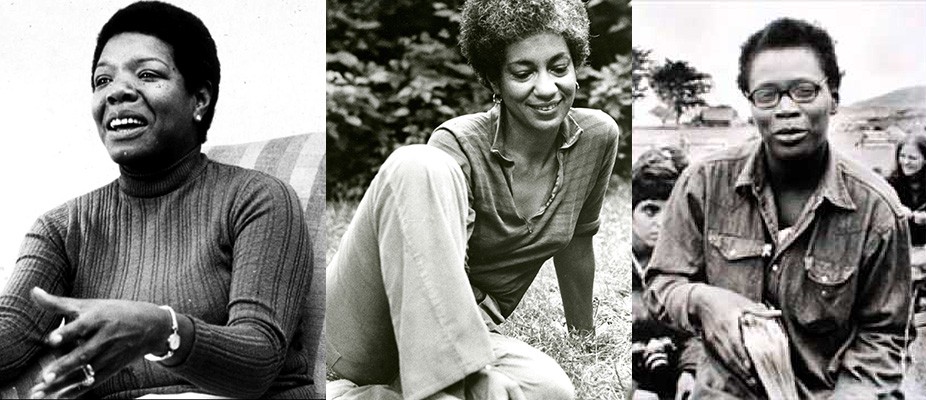
Walking the East Bay in the Footsteps of Maya Angelou, June Jordan & Pat Parker

Going through old paperwork from visiting writers at the Poetry Center and American Poetry Archives — at director Steve Dickison’s suggestion — revealed some interesting stuff. There were 8×10 headshots, newspaper clippings, and Pat Parker’s typewriter-typed resume; I read handwritten notes from Ai, Jayne Cortez, and one note from June Jordan about battling breast cancer. There’s a memorandum June sent in 1976, dated August 18th, that begins:

To: Everyone empowered to bring poetry into the environment that depends upon her commitment to that art

From: The Black Woman Poet, June Jordan

Audre Lorde sent a letter on her own monogrammed stationary, and there was a photo of Gwendolyn Brooks taken by Jewelle Gomez. Maya Angelou sent the Center a galley copy of Just Give Me a Cool Drink of Water. And there were addresses. Maya lived in Berkeley in the 70s, Pat Parker lived and worked in the East Bay, and June at one point was living on 8th Avenue in Brooklyn and then moved to Berkeley in the late 80s to teach at UC. I realized that I could go to these places.

Maya Angelou sent the Center a galley copy of Just Give Me a Cool Drink of Water. And there were addresses.

Two summers ago, while a poet-in-residence at the Juniper Summer Writing Institute, I was invited to write in Emily Dickinson’s bedroom. The room was bare, with the exception of a dresser and a desk and chair. Behind a roped area, I sat for an hour, writing whatever came from my stream of consciousness. In her room, Emily became more than her words; I understood her as a body that shaped and was shaped by spaces she inhabited. Now, I could do a similar thing with these poets. Luckily, my doctor’s appointment that following week put me a block away from the Oakland Women’s Health Center that Pat Parker resigned from in 1986.

It is no longer there. There are now offices for an internist, chiropractor, and naturopath, and across the street is my old therapist’s office. I went there weekly to work out the aftershocks of my Saturn Return and the anxieties of living 3,000 miles from home. Then I didn’t know I was a stone’s throw away from the workplace of the poet whose “wit and challenge” Pamela Sneed says she hears in my poetry. I didn’t know much about Pat Parker. But her name was familiar. She often appeared in anthologies with Audre Lorde, Cheryl Clarke, and June Jordan. She was a dyke poet.

In 2014, a few other poets/artists and I were invited to read Parker’s “Movement in Black” at a gathering for Older Lesbians Organizing for Change. I sat outside of 2930 McClure Street, eating a BLT and reading aloud the poem to passersby:

Movement in Black

Movement in Black

Can’t keep em back

Movement in Black.

Vickie Randle, who knew Pat personally and had an original copy of the poem with notes from when they would perform the piece, said that Parker asked, wherever she went, for the organizer to gather black women to read this piece. And I understand the need to do this. I give readings and sometimes wonder where the folks who share my intersectional struggles are. Even though I sometimes skirt the idea of a target audience when I write, I do imagine myself, in all my external and internal qualities, to be that audience.

I am the Black woman

& I have been all over

up on platforms & stages

talking about freedom . . .

I go into the office building. For some reason I thought it would be an open area and a receptionist would greet me. Instead there were three floors, with five doors on each level. On my way out, a woman who works behind one of those doors comes in and I inform her that a famous poet used to work here in the 80s. At that moment, I wished I made a copy of a poem to give her. She knows nothing about the Women’s Health Center, says the owner Dr. Tufts would know, but the doctor isn’t in.

It’s interesting to go where the poet once lived, and not their final resting place. In these spaces is where they lived, where they were in routines that defined their living. Like at Dickinson’s, I felt the dimensions of a space that held and influenced Pat — how it feels on my sides and the top of my head. These spaces are the (physical) forms and structures to their poetry.

I felt the dimensions of a space that held and influenced Pat. These spaces are the (physical) forms and structures to their poetry.

I get on the 18 bus that takes me to Solano and Colusa in Berkeley, walking distance from Maya and June’s former homes. Doing all this humanizes these poets — they are removed from their pedestals when I literally walk the same streets they’ve walked. I’m having a rooted experience of their poetry — it belongs to space and time, to people, to a constellation of exchanges and encounters that rooted them to this world. As the bus crosses the various ecotones that delineate neighborhoods and class, I wonder, what makes these poets different from me? The bus goes by Pegasus Bookstore on Shattuck, and when I recognize myself alongside them, as poet-to-poet, I see we are part of a poetic lineage. They have contributed to my presence in the now.

After being at Pat’s former employment with nothing to share, I make a detour. Solano Avenue has an assortment of businesses and I immediately spot a stationery store and figure they must have a photocopy machine. It is broken and the sales associate says I’m two blocks away from another one. It is six blocks, but I’m grateful to have writing to offer.

Colusa Street is lined with mature trees, there’s an elementary school where the children are in recess; the homes hide behind tall gates, and I feel I am being watched from curtains, from windows, from people who know their neighbors and I’m not one of them. I ask myself, Will you go to the door? Will you ring the bell? Will they know Maya Angelou?

I ask myself, Will you go to the door? Will you ring the bell? Will they know Maya Angelou?

She was the poet people exclaimed back at me when I said I wanted to be a poet. All the women, particularly my family members, had a line or two they would recited from “Phenomenal Woman.” Maya made things identifiable. And who didn’t know Maya after she read at Bill Clinton’s inauguration? My high school English teacher said that would be me one day. There was Maya’s “Still I Rise” recited by Alfre Woodard in the movie Beauty Shop — the women getting their hair did serenaded with celebratory words about their black womanhood, their will to survive, and their beauty. Angelou is easy on your spirits. When I listened to the 1971 audio recording of her reading from Just Give Me A Cool Drink of Water, enunciating each word like a machete cutting through sugar cane, I appreciated her dramatic voice and the music of her rhyme schemes, and understood why audiences loved her poetry. She was self-possessed and confident in her hereness.

I arrive at Angelou’s former residence and no one is home. The gate is in need of repair. One section leans to the side, and I peek into the opening it creates. There is a backyard, and surely Maya sat out there and wrote a poem or many. At the gate’s door, I leave five copies of “They Went Home”:

They went home and told their wives,

that never once in all their lives,

had they known a girl like me,

But . . . They went home.

They said my house was licking clean,

no word I spoke was ever mean,

I had an air of mystery,

But . . . They went home.

My praises were on all men’s lips,

they like my smile, my wit, my hips,

they’d spend one night or two or three,

But . . .
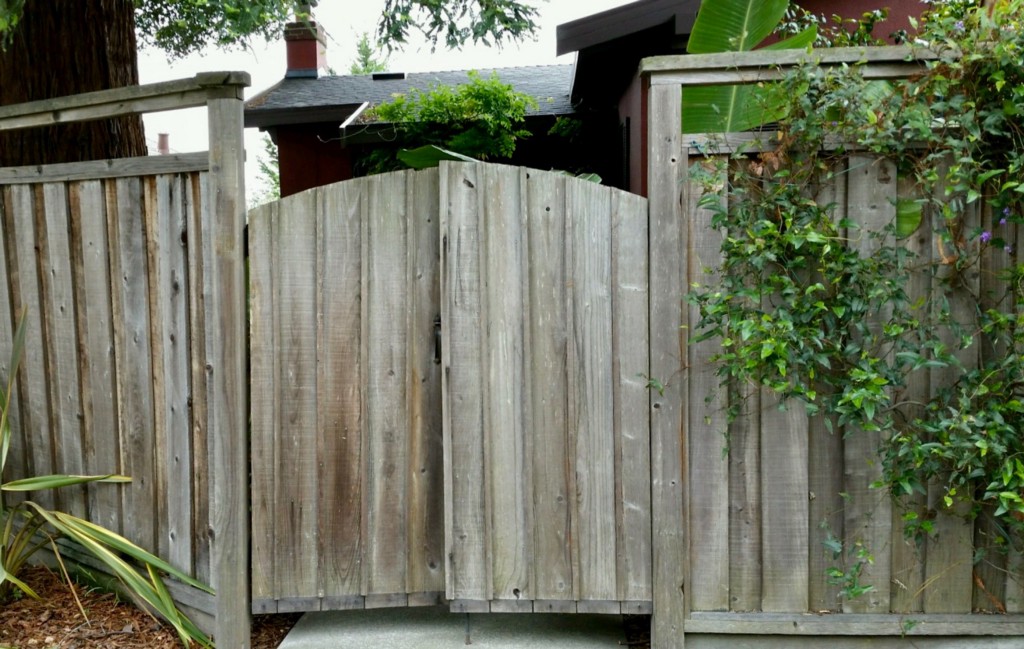
Gate at Maya Angelou’s former residence. Photo: Arisa White

This is the first poem of Angelou’s I read over and over again from an anthology of women’s poetry from around the world. Ain’t I A Woman was a gift from my high school global studies teacher. On the photocopies of “They Went Home,” I write: “Happy National Poetry Month” on the top and “Maya Angelou lived here!” on the bottom. I leave a rock to keep the poems from blowing away, but also for the heaviness of the heart. This is what I was told as an exchange student in Israel. A group of us wanted to know why there were stones on the graves. As I walk from Maya’s gate, a breeze cools my face, and I grab a handful of gravel from a neighbor’s yard, walk back and pour more heart on her poems.

I leave a rock to keep the poems from blowing away, but also for the heaviness of the heart.

I go back to Solano, make a left, then a right, then walk for about 20 minutes to get to the home where June Jordan lived and died. I notice the ravens — on the phone lines, near the dumpsters, and atop a mailbox. At one point I pass a house that has an enclosed bookcase, hiked up on a pole. You can take a book, but need to leave one in exchange. Finally, I’m at the street that promises to deliver me to June. This neighborhood feels more alive than Maya’s old street, with a school, a church, shops in walking distance, and people in motion. I am excited to see a car parked in front of Jordan’s former home, and the lights are on in the kitchen, and I dare myself to knock.

June Jordan’s former home. Photo: Arisa White

I’m not sure what I will say, how to introduce myself really — Hi, my name is Arisa White and I’m a poet researching black poets in The Poetry Center Archives at San Francisco State University and I recently found out June Jordan lived here. Feels so wordy. I debate just leaving a copy of the essay “Finding the Way Home” on the front steps and letting it be a day. My first knock is tentative. My second knock has more presence to it. I want whoever is home to come answer.

My second knock has more presence to it. I want whoever was home to come answer.

Heather peeks through the side window with that “Who are you?” look on her face. I smile back, completely understanding that protectiveness you feel when a stranger arrives at your doorsteps. Heather opens the door, I introduce myself with a pared-down version of my rehearsed original, end it with: “Did you know June Jordan lived here?”

Indeed she knew and it was one of the pluses for purchasing the home from Chris, June’s son, in 2006. Heather invites me in and there I stand in June’s home. There were some renovations, the exterior used to be painted cornflower blue, and she points to the trumpet vines that run alongside the house and into the backyard. Heather tells me that Jordan wrote about the trumpet vines in the later years of her poetry.

Trumpet vine sneaks in

dressing up the window screen

tendrils wreck the wall

We go into the backyard, and Heather informs me that “June hosted salons.” They were quite memorable — the neighbor across the street still remembers them. June kept a lively home, and Heather’s former boss was often at those parties. This is the boss from the organization where Heather did environmental breast-cancer awareness, using June’s poetry to further illuminate the issue. She tells me that she keeps the place happening as well, which is one way she’s continuing Jordan’s legacy.

Heather excuses herself and goes back into the house to find a particular June poem, and the grass in the backyard is so green, even in my memory it remains emerald. She can’t locate it, and I have nothing more to ask or say, but I am grateful. I thank Heather for inviting me into her home and for sharing her stories. Before I go, I give her a copy of Jordan’s essay and leave my information just in case anything more comes to mind.

Heather and I have emailed each other a few times since; she has introduced me to her former boss Jeanne, and when I asked her what’s her favorite June Jordan poem, she wrote back to say, “Calling on All Silent Minorities”:

HEY

C’MON

COME OUT

WHEREVER YOU ARE

WE NEED TO HAVE THIS MEETING

AT THIS TREE

AIN’ EVEN BEEN

PLANTED

YET

I don’t have a favorite June Jordan poem yet, but this journey to her home was a gratifying way to find my way to one. I now own her collected poems. I’ve watched all the videos they have of her in the poetry archives, and this tour of poets’ spaces was an embodied way to honor the dead and find where they live on. This is how we meet them over and over again. How they stay breathing.

Black Women in the Archives, a digital collection, at The Poetry Center’s American Poetry Archives is now live.
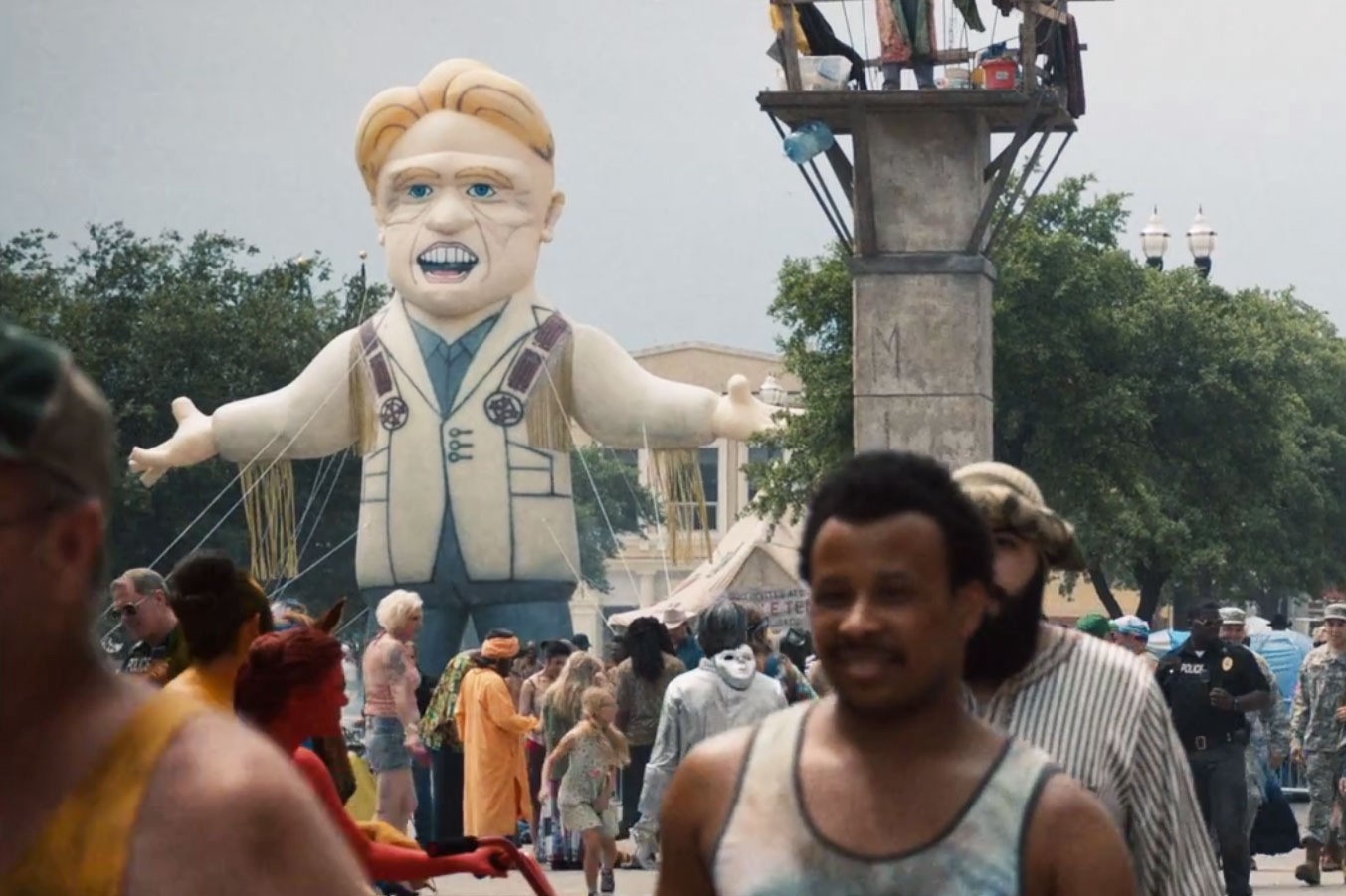
9 Weird and Unexpected Visions of the Post-Apocalypse

These are not your standard, run-of-the-mill worldwide cataclysms

We live in a time when post-apocalyptic settings abound in popular culture. The acclaimed horror film It Comes At Night is set after society has been left in ruins; the television series The 100 has put its survivors through everything from warring quasi-medieval factions to sinister artificial intelligences. Over the course of its three seasons on HBO, The Leftovers earned abundant acclaim for its depiction of society recovering from a mysterious event that could be interpreted as a cosmic blip, a miracle, or the beginning of the end-of-the-world. And while Darren Aronofsky’s planned adaptation of Margaret Atwood’s MaddAdam novels seems to have stalled, other works — including Ana Lily Amirpour’s film The Bad Batch — will soon show off new ways to depict society after society-as-we-know-it has ended. It’s a topic literature has been thinking about for years. What follows is a look at ten novels that take on the crumbling of all that is and the birth of a new society in unconventional ways. These aren’t the post-apocalyptic stories you expect; they aren’t set in the aftermaths of wars or following some sort of scientific miracle gone horribly awry. These are subtler apocalypses, all the more unsettling thanks to their strangeness.

1. Dhalgren by Samuel R. Delany

The cultural influence of Samuel R. Delany’s Dhalgren is a significant one: it’s a book that posits an end more delirious than violent. It’s a sprawling novel set in the isolated city of Bellona, where at times reality itself appears to have broken down. Delany’s novel is innovative both for his use of prose and for the constantly fluctuating nature of its setting; it’s a powerful, singular work that helped redefine what the end of the world could be.

2. Kalpa Imperial by Angélica Gorodischer; transl. by Ursula K. Le Guin

Technically, I’m not sure if Gorodischer’s history of a fictional empire falls into the category of the post-apocalyptic. Still, it opens in the ruins of an industrial society after an unspecified war or cataclysm — so Gorodischer certainly leaves readers plenty of room to interpret. And the points she makes in the book that follows about the cyclical nature of societies and the stories they tell themselves hit with a deep resonance.

3. City of Bohane by Kevin Barry

Kevin Barry’s hallucinatory crime novel is set in the near future in an Irish city on the coast. And while its setting is a few decades off, it seems clear that something has gone wrong with society: the landscape has turned harsh, the level of technology has declined, and struggles for power have only become more violent. And the tales Barry tells in this book are heightened by the surrealism of its setting and the haunted possibilities of its tomorrows.

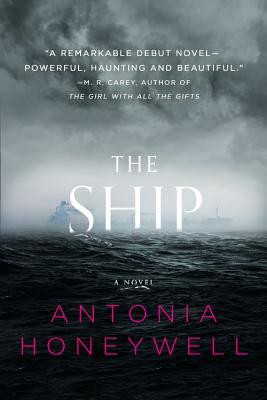
4. The Ship by Antonia Honeywell

Lalla, the protagonist of The Ship, has lived much of her life sheltered from a society that’s crumbled around her. As London turns in on itself, she and her family escape to a seemingly better place: a community that will travel on the ocean, at once embodying and seeking a better life. Honeywell captures the dangers of life in a crumbling city and the claustrophobia of shipboard living; the result is a disorienting take on the quest to preserve the best parts of a vanished world.

5. Novi Sad by Jeff Jackson

In Jeff Jackson’s novella Novi Sad, a group of people hole up in an abandoned hotel and wait for the world to end. The city around them continues to function, though: people vanish, crimes are committed, bodies are found. It’s a haunting work, both for the way in which Jackson writes about the end of everything and for the suggestion that the end of the world is a different experience for everyone.

Injury by Proxy: Why “The Handmaid’s Tale” Is So Painful to Watch

6. Amnesia Moon by Jonathan Lethem

It’s probably fair to say that Amnesia Moon is one of several works of fiction with a literary lineage connecting back to Delany’s Dhalgren. It begins like a more conventional post-apocalyptic narrative: readers will encounter characters seeking to survive in the wake of a nuclear war. Soon, though, the landscape turns into something stranger; reality is revealed to be more malleable than it seemed. And in the midst of this, Lethem deconstructs post-apocalyptic stories even as he remakes the subgenre.

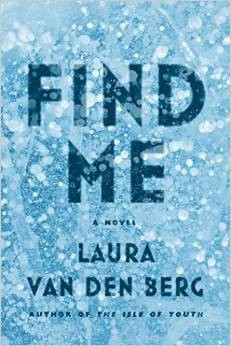
7. Find Me by Laura van den Berg

Many stories set at or after the end of the world involve attempts to remember the world as it was before — a better place, or a more stable one. Find Me turns that idea on its head. Here, society has become shattered due to a plague that leads to extensive memory loss. Here, it isn’t infrastructure or the weather or some sort of menacing creature that’s plaguing the landscape; instead, it’s something much more intimate, and even more unsettling.

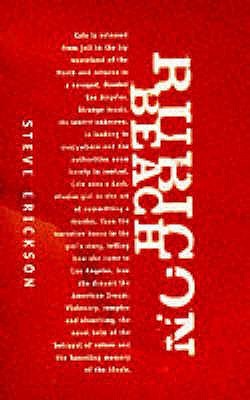
8. Rubicon Beach by Steve Erickson

Many of Steve Erickson’s novels feature altered or devastated cities, whether through cataclysm, warfare, or political unrest. In Rubicon Beach, he writes memorably of a near-future Los Angeles that’s been flooded, a crumbling urban landscape that’s evolved into something altogether different from the place familiar to most readers. Erickson’s fiction blends the anxieties of today with the ravages of history and the strangeness of tomorrow; Rubicon Beach exemplifies that synthesis.

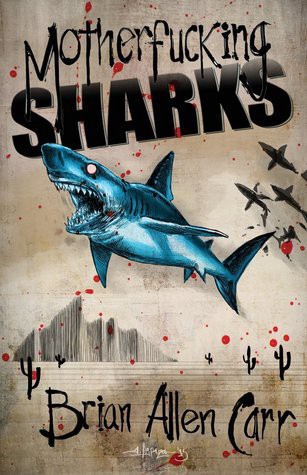
9. Motherfucking Sharks by Brian Alan Carr

Sometimes, the end of the world is just weird. Brian Alan Carr’s Motherfucking Sharks is set in a Western-tinged wasteland, albeit one that has a very crucial difference between it and the archetypal Old West. When the rain comes, it brings with it sharks that swim through the air and devour everything they see. Violent and bleakly comic, Carr’s short novel packs a nasty punch.

Dracula Is Getting the Sherlock Treatment

Plus José Eduardo Agualusa may use his prize money to build a public library in Mozambique, and interactive storytelling is back

If today’s literary news tells us anything, it’s that the magical force that is storytelling is alive and well. Sherlock creators are set to reimagine Dracula for the BBC, Puss in Book lets viewers choose the feline’s fate as part of a new interactive Netflix series, and José Eduardo Agualusa wins the prestigious literary prize for his novel about the tumultuous past of his home country.

Is Dracula finally getting the Cumberbatch makeover it deserves?

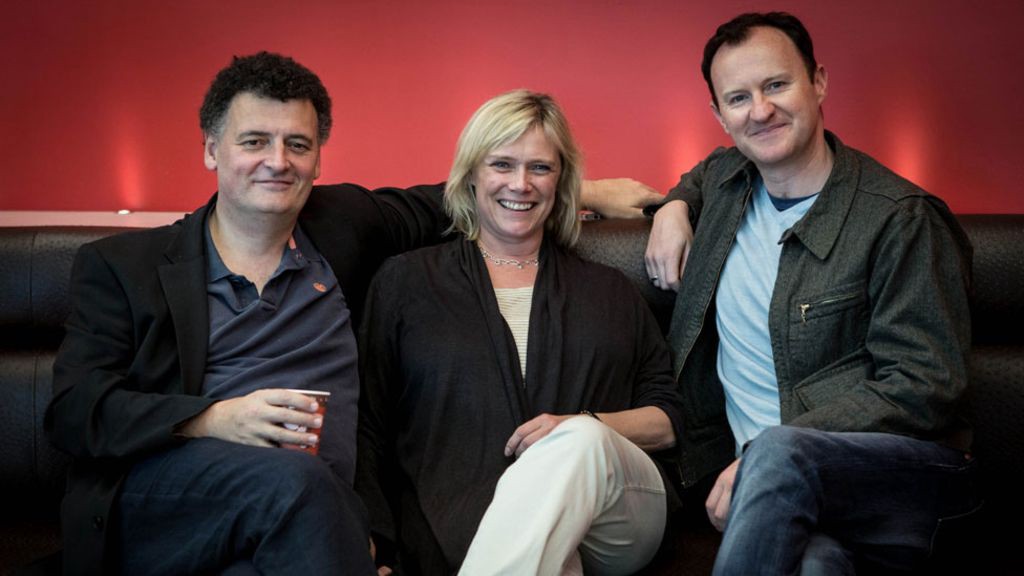
For Sherlock fans who have been mourning the possible end of the show since January’s finale, there is some good news on the horizon. While there has been no official word about if/when Sherlock is returning, there are talks that the creators behind the modern-day detective series, Mark Gatiss and Steven Mofatt, are working on a new project: a series based on Bram Stoker’s Dracula. Like Sherlock, this will be a mini-series consisting of feature-length episodes to air on the BBC. The famous books on which the two series are based bear some similarities as well; both were published in the late 1800’s and take place (at least in part) in London. There is no word yet on the show’s lead or setting, but it is likely to air in 2019. Seeing as there is a general exasperation with vampires since the Twilight saga, we trust that the geniuses behind Benedict Cumberbatch as Sherlock Holmes will do Dracula justice. (Cumberbatch in cape and fangs, anyone?)

[Variety/ Stewart Clark]

How to Write an Expat Novel Without Succumbing to the Old Clichés

Winner of the International Dublin award wants to build a library

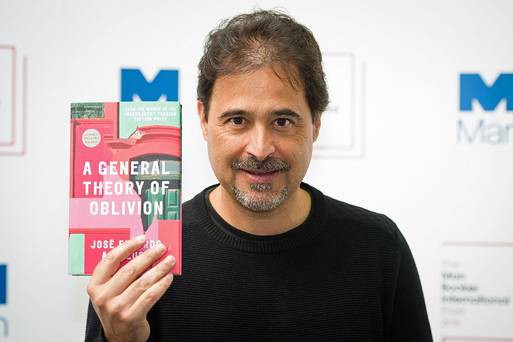
Angolan writer José Eduardo Agualusa has scored some big bucks. Earlier today, he was declared the winner of the 2017 International Dublin literary award for A General Theory of Oblivion, an honor that comes with a cool €100,000 prize. He has expressed a desire to build a library in his adopted home of Mozambique. In fact, a location for the library, which will be open to the public, has already been chosen. Over 100 novels from around the world were longlisted for this year’s International Dublin award (previously known as the Impac award), including Margaret Atwood’s The Heart Goes Last and The Japanese Lover by Isabelle Allende. Agualusa’s book tells a unique story of an agoraphobic woman who bricks herself into her apartment on the eve of Angolan independence and remains there for 30 years. The novel, which was also shortlisted for the Man Booker International Prize, explores themes of othering and xenophobia that Agualusa said “couldn’t be more current.”

[The Guardian/Danuta Kean]

Netflix’s interactive “Puss in Book” series lets viewers choose the plot

Netflix continues to explore innovative storytelling in TV and movies (innovative and sometimes downright bonkers — looking at you, OA), but it isn’t afraid to give the old models another go around, too. On Tuesday, the streaming service released a new episode of its animated series Puss in Book: Trapped in an Epic Tale,= that has a choose-your-own-adventure spin to it. In the interactive show, Puss has trapped himself in a book of fairytales and must find a way to get out. To do so, he enlists the help of the viewers who have to make decisions for him (via a remote or touch screen) in order for the story to continue. In this first episode, there are 13 choices, 2 different endings, thereby allowing for 3,000 different ways one could watch the show that ranges from 18–36 minutes in length. Netflix will continue to experiment with interactive technology, with a second show of the same kind, Buddy Thunderstruck: The Maybe Pile, to premiere on July 14th. So, nostalgic 30-something readers. It may just be time to get those choose-your-own-adventure books out of your parents’ attic like your Mom has been asking you to do for the last twenty damn years.

[Refinery 29/Madeline Buxton]

How to Write an Expat Novel Without Succumbing to the Old Clichés

Nicholas Bredie on life in Istanbul, the start of an uprising, and subverting the tropes of the expat novel

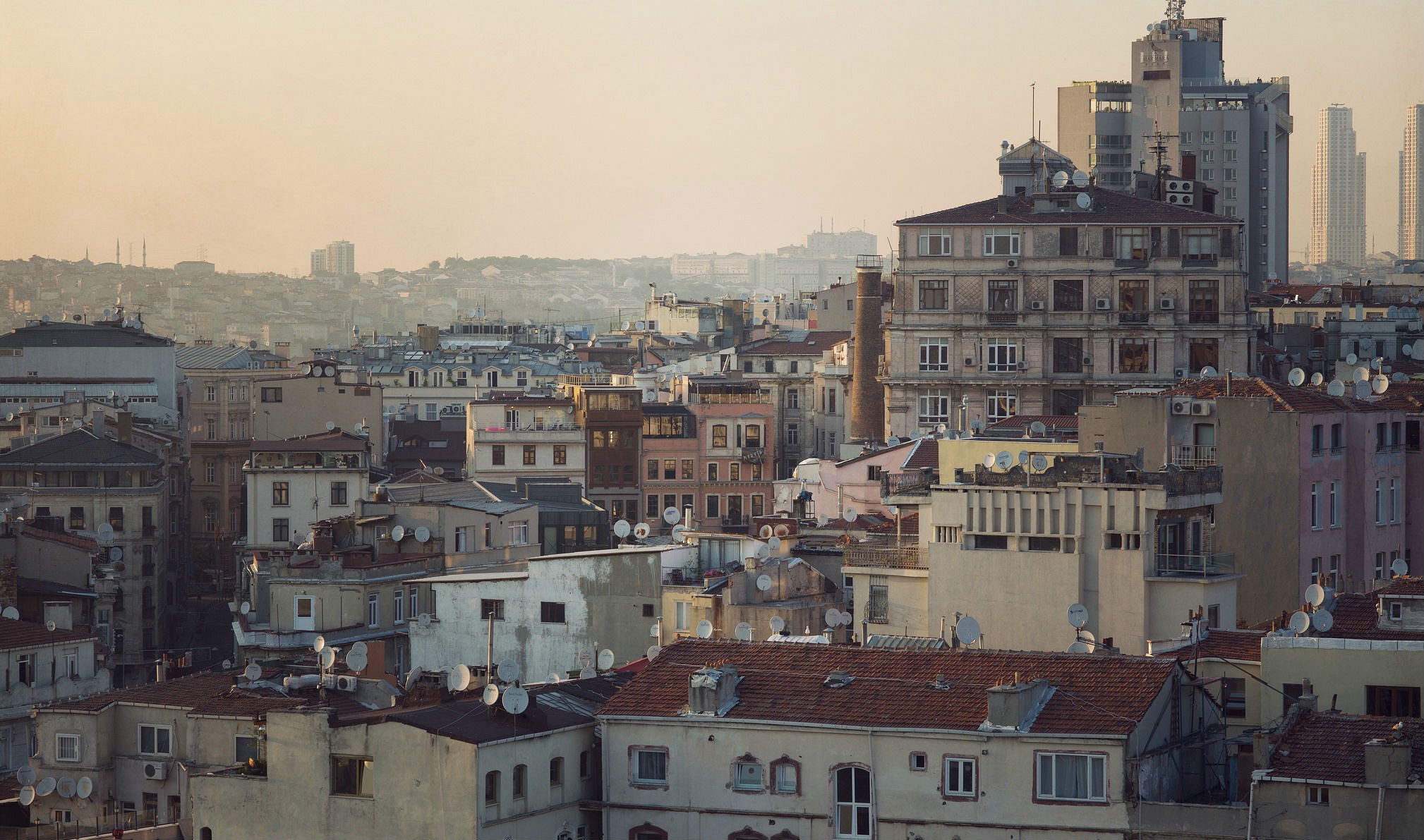
Sunset in Istanbul. Photo by 仁仔 何 via Flickr.

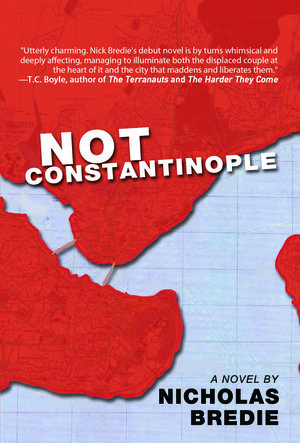
After having spent a few weeks “living” in Turkey with author Nick Bredie and Nora Lange and experiencing the thrilling 2013 Gezi Park uprising alongside them and millions of Turks, I sat down to read Bredie’s new novel, Not Constantinople, with romantic ideas about revisiting the Turkey I’d seen and felt, and stepping into the fictional characters he’d created loosely based on his partner and himself. And so went those expectations. Bredie’s novel took me, instead, on a wild ride of disillusioned expats and the drama they attracted and created for themselves in contemporary Istanbul. It did everything but disappoint, and although I was hungry for more, I at least got to ask the author a bit more about how he conceived of the whole thing.

Maureen Moore: You’ve written a captivating story, an expat adventure, a chronicle of an American teacher in contemporary Turkey, with romance, intrigue, political drama…all to say a good part of which was inspired by your own three-year experience of living in Istanbul. Having walked some of the very streets you describe in the book with you, I couldn’t help but be transported back to magical, mysterious Istanbul. And yet, for your main characters Fred and Virginia, there seems to be more a feeling of disenchantment and disillusionment with the place. What were you hoping to say about Istanbul with this book?

Nicholas Bredie: As the book quickly diverged from the experience of living in Istanbul to what I guess you could call an expat adventure, I started looking at other expat novels as models for how the story might go. It’s kind of a genre, the expatriate story. You read enough of them and things like travel, romance, intrigue, and a privileged male protagonist ‘living all he can’ seem to reoccur. What befalls this guy can really vary: happy self actualization a la Chad Newsome or Midnight in Paris, total loss as in Tender is the Night or Let it Come Down, or what I’d term the Spanish solution, the sort of mild melancholy epiphany you get at the end of For Whom the Bell Tolls and Leaving the Atocha Station. This might be the most satisfying outcome. However, I didn’t really want to go in any of these directions. The more I thought about it, the more I wanted to undermine these possibilities, along with a lot of the romantic orientalism which attends a place like Istanbul. I think this is something about the book that can throw readers expecting the magic of the east, or a love story. When you strip away that stuff, what you’re left with is a kind of disillusionment, which can be funny and absurd but also naked and unsettling. That’s what I was aiming for.

MM: Something that contributed to that unsettling feeling was seeing everything about the city written in its American English equivalent. I think I found that to be rare, finding these foreign names of places and things in English. Even one of Turkey’s most famous writers is referred to as Mr. Cotton. I’d love to hear it a little bit about this choice.

NB: I think it is connected to the idea of undermining or disenchanting. Having the names in plain English takes some of the exoticism out of them. There are some linguistic jokes in there too. For example Mr. Cotton’s neighborhood, Orhan Pamuk’s neighborhood, is Nişantaşı. He takes some care explaining the origin of that name in Istanbul, his memoir. It translates as “target stone,” because that was where the Ottomans set up their targets to practice archery and shooting. But Nişantaşı is also the Turkish word for “starch,” and it’s a kind of tony neighborhood, so I translated it as ‘The Starch.’

MM: For the reader, I also felt it further marked Fred and Virginia’s foreignness, as if they didn’t want to call those places by their Turkish names. It further separated them from the expected experience of the place.

NB: When we moved abroad, my uncle who was a foreign correspondent for a number of years said that the most important thing you can do is abandon analogy. To not try and compare, and make your experience fit some preconceived notions. How the characters behave and how they diverge ultimately in the book has to do with how they deal with their expectations of life abroad. In real life it is a situation of extremes: there is no family and no old friends and little language and a host of received notions about the place. Insert a Greek family who may or may not have the rights to your apartment and you have a real high-pressure fictional situation.

MM: That’s so true; I spent some time abroad as well in Portugal, living and working, and daily life is more complicated or sometimes stressful. People deal with it in different ways. There’s a quote somewhere that the narrator says about the character Fred: that he hadn’t left his own well-tamed country to play by rules abroad.

NB: Yeah and that is Fred’s particular maybe misguided understanding of his privilege of a foreigner abroad, later on he compares himself to a pirate, whether that’s a fair analogy or not, let the reader decide. But he certainly decided that what it means to be abroad is to be above rules.

MM: Right, take certain liberties, one of which is this elaborate scheme that he invents with the Greek. Are you interested in sharing that?

Author Nicholas Bredie

NB: Oh yeah, I think that’s even on the jacket copy. The essay-writing scheme. The essay-writing scheme is something that, I hate to say, was in part taken from life. There was an illicit essay-writing service at the university where we worked, and there was a certain amount of pressure put on teachers to try and discover the plagiarized papers. I mean this is common, it happens at Harvard too. After a while though you started feeling like you should be paid extra to play policeman, and you also felt bad for these kids who were doing an undergraduate degree in a second language. I could never do that. They’re under an enormous amount of pressure to produce and obviously that kind of situation drives people to cheat. And then you as a teacher heard about how much money they were paying for these papers, you started thinking, I mean, yeah, *nervous laughter.*

MM: So the other big event already mentioned is that this Greek family moves in to Fred and Virginia’s apartment right off the bat. Reading it, I couldn’t help but think: I was in your apartment in Turkey, and for a second I was like wait, did this happen to Nick and Nora in real life? Because I never heard about it, and I think I would have. Is this something that has happened, or could happen, in contemporary Turkey?

NB: To say that I have any expertise in the real estate laws of Turkey would be a lie. That said, we moved into a gentrifying neighborhood that was a mix of very hip cafes and these abandoned buildings. It took a while for us to understand that the buildings were abandoned because their ownership was contested. That it was a neighborhood where Greeks and Armenians and Jews had lived until the 1950s, when there were pogroms and other repressive measures which drove them from Istanbul. I don’t know if the ownership was contested for our apartment. But our landlord was like ‘don’t change the name on the electricity or the water bill, just link your bank account. This is what everyone does.’

MM: Link your bank account to a bill that’s in someone else’s name that you don’t know?

NB: Yeah, you just linked the account number of the bill to your account. At the same time, a building that was abandoned one day would be lavishly restored the next day, and you had to figure that somebody had received a deed or lease to it somehow. That was the seed of the idea of having the Greeks come back for their apartment.

10 Great Novels of Exile and Dislocation

MM: Did you have any contact with someone who had experienced something remotely similar to a family moving in to reclaim their property?

NB: I had heard stories of squatters ‘selling’ apartments and then reappearing later. Then around the time that I was starting the novel, Nora was teaching this great article by the scholar Amy Mills about the minorities, the Greeks and the Jews and the Armenians, and the void that they had left having been suddenly driven from the city, and it reminded me of stories of people trying to get their property back after the Holocaust, not only art or money but also property.

MM: In terms of the writing process, I was curious how much of that story did you write while living there versus here in L.A.?

NB: I wrote about three quarters of the first draft there, starting in 2012. In retrospect, what’s interesting was I was writing about real estate and development tied up in Istanbul’s history and minorities. Beyond the stuff in our neighborhood, I had heard stories about a historic Roma quarter near the city walls that had been demolished and replaced with what they called Ottoman style townhouses. That happened in 2008, and while I was writing the first draft there had been rumors that the park at Taksim Square was going to be replaced with a recreation of the Ottoman barracks that it had in turn replaced in the 1940s. It was one of these sort of absurd stories that you felt couldn’t be real. I mean there were like ten kids with flyers standing outside the metro station saying, ‘there are plans to change this park into a shopping mall in the form of the original artillery barracks,’ and you know you kind of shrug it off like ‘this is impossible.’ But then of course I was writing and I kind of thought, ‘well this would be a funny fictional story to explore’ whether it actually happens or not. And then lo and behold that plan turned out to be true. As you know, because you were there, the protest against the destruction of the park developed into this huge movement and protests and sometimes riots that consumed the city and also made it into the book. The book was headed towards some version of that event, the destruction of the park, before it became a reality. And so when it happened and we were caught up in it, I did have this incredible sensation of life imitating art. This led to a decision that I’m of two minds about. Since the book was already underway, I decided not to change the timeline of the narrative to fit the historical facts. So the Gezi moment in the book takes place in ‘mid-autumn,’ while the real event took place in May and June, 2013. I didn’t change it in part because I don’t want to claim ownership over the Gezi events, they belong to the people who put their lives on the line standing up to the powerful and the cops. At the same time, Gezi happened to be the perfect culmination of themes already at work in the book. And since there is no such thing as coincidence, Gezi also gave me a way to fill the hole I’d dug undermining the tropes of the East and expat romance, which was commitment, of a political nature.

MM: That’s pretty wild you had heard of some notion of this before it all unfolded.

NB: Yeah, well it was absurd on paper, which was what attracted me to it in the first place. But in retrospect nothing was out of the realm of the possibility considering what has happened since. I think what’s sadder is that in some ways that Gezi moment was a kind of high point and things have gotten a lot tougher after that politically and economically. And so in some ways the world that is portrayed in the novel almost a historical period.

MM: I remember being there with you guys. Literally the day after the initial uprising or revolt in the park, the Saturday after people had gotten gassed and everything, there was this incredible feeling of solidarity and unity and people of different generations, different walks of life. It was so fascinating to be an outsider, even with a superficial understanding of things. Just to kind of witness that moment.

NB: It was a special time and place.

A 9/11 Story About the Arrogance of a Man’s Apathy

“Alexi & Kurt”

by Catherine Lacey

Traffic was backed up for blocks, holding his car at a standstill in the neighborhood he used to live in, on his old street. The car rolled slowly past the door that had once been his and he found himself staring at it, waiting for his past self to come walking out. Still painted the same blue, he noticed, nauseated and annoyed by how much time had passed. Fifteen years already? He didn’t want to do the math.

Traffic, the driver said, flicking his eyes at him in the rearview.

Yeah. Kurt rolled down the window, peered up at his old balcony. He could almost see it and began to feel wistful, almost weepy — No. He was being ridiculous. He raised the window, but the memory of his time with Alexi sat like a pill in his throat. They’d had a good run for a few months, hadn’t they? Or had they? Maybe they’d even been in love for a little while or maybe it only seemed that way from a distance. A vague set of images cued up — Alexi across a room at a party they’d gone to, pretending to not be together. He and Alexi sharing a midnight cigarette on his roof — or was it hers? Alexi in the second row of some theater somewhere, staring neutrally at him onstage as he was interviewed for a film festival — though he couldn’t now remember what it had been. Anyway. It had been a good summer, he thought. They’d had a good time.

But then a bomb went off — or at least what sounded like a bomb — a plane crashing into a building a mile away. Alexi had been at her place that morning, a microscopic two-bedroom she shared with another actress in a hazardous walk-up, and when she heard it, she immediately thought of Kurt, became increasingly frantic when he didn’t pick up the phone, then terrified that something had happened, then certain that something had happened because he would have found a way to reach her by now, and her body went wild trying to escape itself — vomiting and achy and collapsing — and she thought of how tragic it was that this, potentially losing him to whatever had happened out there (so many rumors in the street), had finally revealed that their love had a real weight, real roots in her. Against her roommate’s shouts and tears, she walked out into the ash-hazy streets, surrounded by a chorus of sirens as she dashed to his place, arriving coated in ash and sweat at his door, trembling. His first words to her: You should take a shower.

So she did, crying but keeping quiet, not wanting him to worry.

How was it that he seemed so calm? Hadn’t he been worried about her? Hadn’t he been afraid? Or perhaps, she thought, he was swallowing his fear to be steady for her, that his love had manifested not in mania but in solidity, that this was the way they balanced each other. This moment, this horrible moment, had made them see, she thought, how necessary they were for each other. She stood wrapped in a towel, feeling so changed and important.

Kurt gave her a change of clothes, jean shorts and a T-shirt that she’d left at his place that Kurt had put by the door for the last couple weeks, hoping she would take them home. He handled her toxic, dusty clothes with dish gloves, sealing them in plastic bags and disinfecting everything they’d touched.

This is all outside of our control, he said as Alexi clutched on to him, her hair wet, eyes red.

Her outsize emotions bothered him. The few people she knew in the city — her roommate and her two other real friends — had been accounted for. She didn’t know anyone who worked in the Financial District. She hadn’t personally lost anything. This wasn’t her tragedy. She was reacting too much like a certain kind of actress would, taking any opportunity as a chance to perform.

They didn’t speak much for the rest of the afternoon or night, just listened for a while to a radio that worked, turning it off to have athletic, wordless sex to which they each ascribed a different meaning.

Weeks later, when she asked him what he had been thinking of that day, she was unnerved (then upset, then repulsed) by what he said. It wasn’t Alexi’s safety or his safety or even his friends’ safety (and did he even have any friends?) and wasn’t even the staggering heaps of human life wasted only blocks from his luxury west SoHo loft. No. He confessed to Alexi that he thought of how the funding for The Walk would probably fall through now — and, yes, Kurt said, he realized she might think this was shallow or detached, and he realized that he wasn’t experiencing the attack in the emotionally penetrable way that she was, not that there was anything wrong with that, per se, but there really sort of was, if you thought about it, but listen, he told her as she began to sob, will you just fucking listen to what I’m saying for once instead of obsessing over your own emotional reality? Huh? For once? Can you do that for me?

The way his beautiful face went hard — eyes molted with his young-man beliefs — this would be the image Alexi kept with her long after she left him. Maybe his heart had atrophied after being so publicly beloved, and maybe that’s why he seemed unmoved by the shrines to the lost, the faded, photocopied portraits of the dead on every street corner — Have you seen this person? — a city of unashamed eye contact, millions of people now reverent with each other, seeing the holy in each other, and this man, this little monster, was worried about his fucking production schedule.

Everyone out there right now, he said, all the volunteers and firefighters and everyone having their big come-to-Jesus, everyone crying over this admittedly truly horrible and terrifying thing — listen — no, listen!

She tamped down her tears to hear the exact ways in which he was terrible.

You may think you’re crying because all those people died and it’s tragic, but you’re still crying for yourself. You’re crying because you know it could have been you. You’re crying because life is not special and everyone dies and the complexity of your “self” is still going to vanish someday and there’s no such thing as justice.

Her tears had stopped.

No one can cry for someone else.

She examined his face as if he were an object.

I’m not prone to ecstatic displays of emotion to get attention, but I still feel things. I just organize that experience in a different way. I process it logically.

It saddened her that this was the man she had chosen to sleep with for a whole summer into autumn, a man so stingy with himself that he refused to witness another’s pain.

When I realized what had happened, I thought, one, human life is temporary; and two, the only way I can cope with this fact is making something that outlives me; and three, the film I have been developing for the last three years is probably going to get delayed yet again if there are problems with funding; and four, yes, I could be so much as a pile of dust tomorrow and that’s sad; and five, the only way that I can deal with that fact is by working, that I could make something bigger than me, something that has an effect on other people.

She felt nauseous as she considered the many ounces of him that she had sucked into her body. What was he really made of? Do you understand what I’m saying? Or do you just want to think I’m a bad guy because I don’t cry the way you do?

(She remembered him sipping a goblet of red wine in his living room the night of the attacks, after they’d had what she thought was emotionally potent sex. He was enjoying the most expensive bottle he had, alone, because Alexi was on a diet for a role, so he sat in the living room reading a novel — a fucking novel! — while she stayed in bed, the dust on the windows filtering the light all gauzy, her head swimming in the sincere enormity of the present, distantly wondering why he had gotten out of bed without explanation, why he didn’t answer when she asked where he was going, why he wasn’t in bed with her, warm at her side.)

I’m a different fucking person from you. I see the world differently, I process emotion differently. And there’s nothing wrong with that. You just need to grow up and accept it.

(He had returned to bed that night with lips edged and breath heavy with Cabernet, and though Alexi’s face was swollen red and salt-gritty from tears flowing, drying, and flowing again, he made no move to comfort her, just turned out the light and was snoring in minutes.)

I don’t need to become more like you. Hell, you probably need to be less like the sort of person you are.

That was the last thing he ever said to her. He had trouble getting to sleep after she left mid-argument, and not because his call had gone straight to voice mail and not because she had tried to make him feel coldhearted, and not because he missed her, because he didn’t, because he enjoyed being alone, really enjoyed it, and he didn’t lie awake that night for two hours because of the World Trade Center, and when he later woke up crying, he knew it wasn’t sadness for life lost or the victims’ families or the bravery of people who risked their own insignificant lives for the insignificant lives of others. No. He must have just been crying for himself. Simple anxiety. He crossed his arms, felt his biceps, his chest, his belly, moved his hands down to his thighs. He was here. He didn’t need to cry for himself. He didn’t need to cry at all, he thought, and he stopped, fell asleep, slept until noon.

The traffic had finally loosened but Kurt hadn’t noticed, had been completely folded into this memory. The car was crossing the bridge when he opened his eyes, night-black river below, people walking along the lamplit waterfront in pairs, staring at each other or at the skyline, all of it so much more fragile than it seemed, everyone on the edge of oblivion, as usual. He watched the bridge beams rush by outside the window and thought about something he read once about some tiny muscles in the human face that send signals to other brains while bypassing a person’s awareness, skipping the eyes, going straight to their core. An unknown sonar, some language none realized they were speaking, an honest whisper. He wondered what his face may have said to her.

Bookstore Owner Takes California to Court

Want a signed copy of your favorite author’s novel? Get ready to jump through some hoops. Plus, more of the day’s literary news

There’s good news and bad news on the literary front today: a new California law has really ticked off a bookstore owner, rare books by President Obama’s father were sold at auction, Chuck Palahniuk has been creating coloring books, and finally yes, this is really happening outside of Fahrenheit 451: more than 6,000 books were just burned in Libya.

New California law requires authentication of autographed merch

Getting an autographed book in California just got a whole lot tougher, and booksellers aren’t standing for it. According to a new law in the Golden State, every piece of autographed merchandise valued at more than $5 must be authenticated. The rule was initially intended to apply to sports memorabilia, but in effect covers anything with a signature on it. Bill Petrocelli, who co-owns Bay Area bookstore Book Passage, has decided to go ahead and sue the state over this new regulation. Book Passage is a beloved community locale that sells books and hosts over 700 author events. All autographed books are sold for their cover place (no premiums!), but now that practice could prove unworkable. In addition to producing certificates of authenticity, the law would require booksellers to keep detailed records of every (autographed) sale for seven years, with excessive penalties hanging over their heads if they fail to do so. Petrocelli claims this extensive process will both be an inconvenience and a breach of customers’ privacy rights. As someone who hates waiting in long lines and loves book signings, I wish Bill the best of luck with his lawsuit.

[NPR/Mandalit Del Barco]

SOLD: Obama Sr.’s books put up for auction

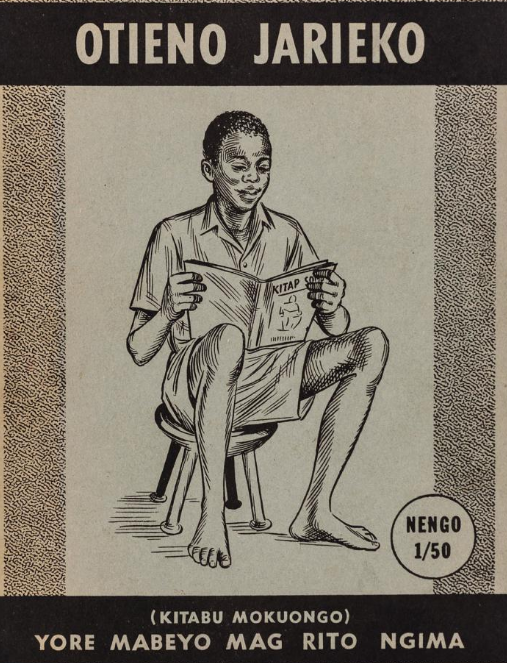
One little book decided the course of history. Books written by former president Barack Obama’s father (of an identical name) were put up for auction by Dutch online auction house Adams Amsterdam Auction and have now been sold. Written in the 1950’s and in Obama Sr.’s native language, Luo, the series of books was intended to promote adult literacy in Africa. Director of the program Elizabeth Mooney noticed the author’s talent and encouraged him to apply to an overseas study program at the University of Hawaii. As we all know, the rest is history…In Hawaii, he met Ann Dunham and married her; their union eventually graced us with future President Barack Obama. For this reason and also on account of their rarity, these books possess a special significance. The auctioned set was owned by a private Dutch citizen who bought the books to teach himself Luo when he was a volunteer in Africa. Besides this set, there are only two known copies: one owned by the Library of Congress, and the other by Northwestern University.

[NY Times/Nina Siegel]

Chuck Palahniuk is releasing his second coloring book novella

Chuck Palahniuk is a man of many talents. Besides being the award-winning Fight Club novelist and freelance journalist, the renowned author can now add coloring-book creator to his résumé. Last year, Palahniuk hopped on the adult coloring book bandwagon when he came out with Bait: Off-Color Stories For You To Color, which paired his stories with illustrations from various artists. His second novella (his first was Inclinations in 2015), Legacy: An Off-Color Novella For You To Color will be released on November 7th. It will feature artists such as Duncan Fegredo and Buffy the Vampire Slayer cover artist Steve Morris. According to Palahniuk, Legacy will be a fantasy story based in the modern world. And knowing Chuck, it should definitely be…interesting. (The first rule of coloring books is you don’t talk about coloring books. Or is that the second rule?)

[EW/Christian Holub]

Forces in Libya are seizing and burning books

Books, as popular conduits of society’s multitudinous ideas, often have to suffer the unfortunate consequences of closed-mindedness. Some people are even hellbent on eliminating ideas they find disagreeable. According to a video on a Libyan media platform, police forces in Benghazi, loyal to rogue general Khalifa Haftar, have now set fire to more than 6,000 books. The video shows a police officer claiming the tomes promote violence and the “ideas of Muslim brotherhood.” This is nothing new for Libya; authorities have been seizing books they deem “erotic” or “anti-Islamic” for quite some time now. In January, following a roundup of books deemed to advocate secularism, over 100 Libyan writers and a roster of international artists and academics condemned this censorship, calling it “intellectual terrorism.” This is all starting to sound a little too Fahrenheit 451 for our liking.

[Al Jazeera]

Double Take: Dan Chaon’s ‘Ill Will’ is the Darkest Novel You’ll Read This Year

Now Is the Time to Read These 11 Novels About Female Artists

Books that take women and their creative inspirations seriously

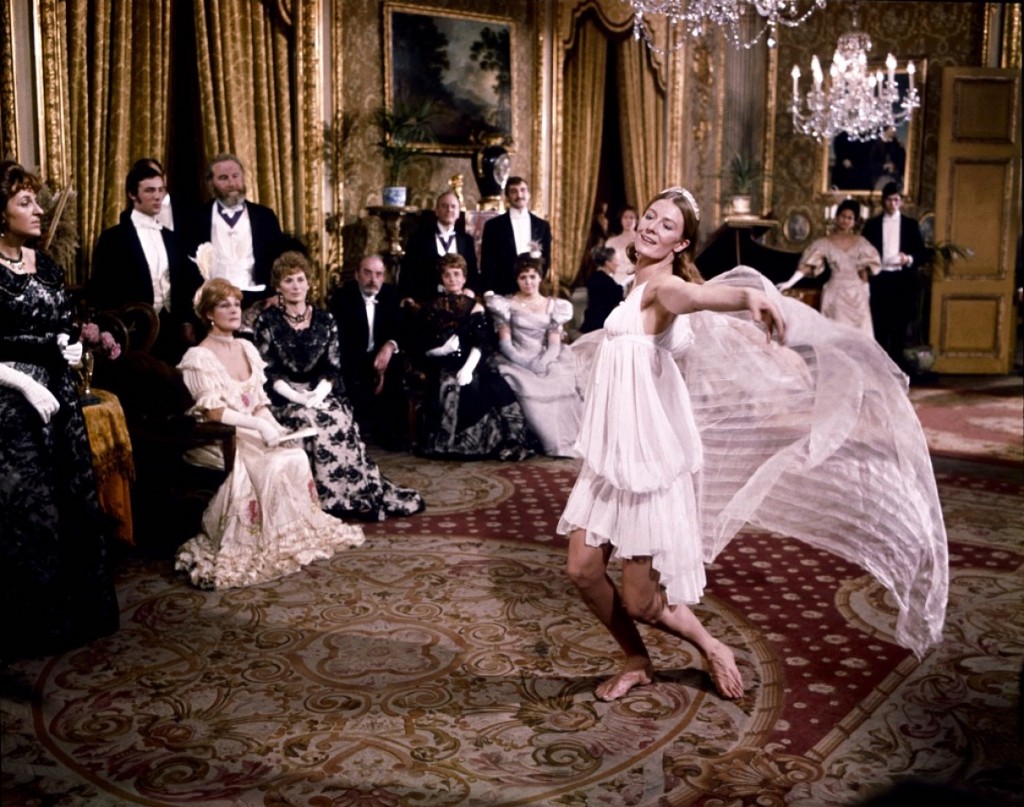
Vanessa Redgrave as Isadora Duncan. Isadora (1968)

Countless novels depict the fictionalized life of a real artist, or the artistic life of a fictional one. Think of works like The Master by Colm Tóibín, Portrait of the Artist as a Young Man by James Joyce, or An Artist of the Floating World by Kazuo Ishiguro. If you noticed that these are all novels about men, that’s the point. A quick scan of the literature shows that the writerly gaze has been most often turned on male artists and their creative processes and passions.

Lately, however, the cultural spotlight is increasingly shone on the experiences of female artists, whether it’s a television show that dares to portray a female filmmaker using a man as her artistic and sexual muse, or a conversation about why books about women are less likely to win major literary prizes.

Novelists also seem to have taken a noticeable interest in women in the arts. Many of these eleven books were published in the last few years. The type of artist varies; there are dancers, painters, writers, and singers. In some, the characters are entirely invented. In others, they’re based on real lives — it turns out there is a smaller, yet no less interesting, pool of real women artists to choose from. All seek to capture not just the life and work of one woman, but the process of becoming an artist.

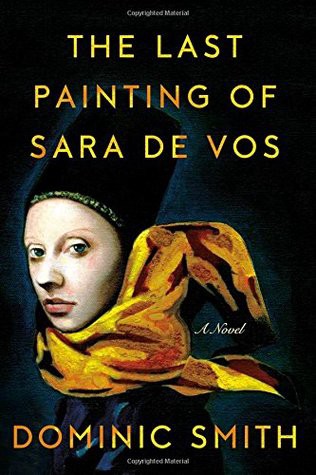
1. The Last Painting of Sara de Vos by Dominic Smith

Dominic Smith’s novel is an engaging mix of art heist and art history. In 1957, a painting is stolen from the de Groot family’s home in New York City. The artwork was painted by Sara de Vos, who Smith based on one of the real, though rare, female members of a 17th century Dutch masters guild. Jumping between Holland, New York, and Sydney, this novel intertwines the life of two passionate women painters who have much in common, despite living three hundred years apart.

2. Isadora by Amelia Gray

Thanks to her fluid, free-moving dance performances, Isadora Duncan is known as one of the founders of modern dance. She was also infamous for her private life — at the turn-of-the-century, she shocked with her bisexuality, heavy drinking, and string of personal tragedies. In this novel, Gray chronicles Duncan’s varied life, as well as her commitment to a new, less rigid dance that suggested that the natural female body could be a form of artistic expression.

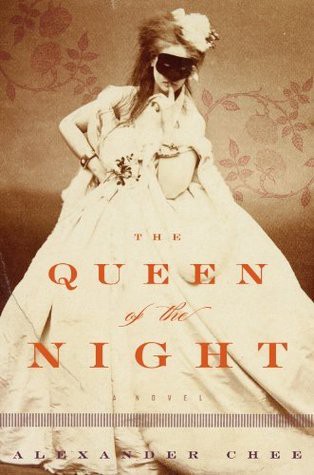
3. The Queen of the Night by Alexander Chee

Anyone who’s felt a shiver watching The Phantom of the Opera will love the richness with which Chee recreates the world of the 19th century Parisian opera in his lyrical second novel, Queen of the Night. This is the story of Lilliet Berne, an American soprano who gets what seems like the offer a life time — an opera written just for her — until she realizes the show is based on her past, one she’d rather keep secret. Chee did a ton of research while writing the novel, and opera fans will appreciate the details he brings to Lilliet’s role.

4. Cat’s Eye by Margaret Atwood

If you’re looking for a mix of art-as-emotional-mirror and complex female relationships, who else to turn to but Margaret Atwood? Elaine Risley is a middle-aged Canadian painter whose past comes bubbling up when she attends a retrospective of her work in Toronto. It turns out that Elaine’s artistic success is directly related to her fraught relationship with her childhood friend Cordelia, a fact which literally stares her in the face at her opening.

5. Swing Time by Zadie Smith

Zadie Smith has been obsessed with dance since she was a child, in part because “you see visually what in other art forms, we have to talk about metaphorically.” So it’s no surprise that dance shapes Smith’s latest novel about two biracial girls in London who both aspire to be dancers, though only one has real talent. The other, who is the book’s nameless narrator, must substitute being an artist-creator for proximity to an artist, working as a PA for a mega pop star.

6. The Woman Upstairs by Claire Messud

Most artists are preoccupied with the question of legitimacy — how successful, how recognized must you be before you can consider yourself a true artist? Messud ponders this question in the tale of Nora Eldridge, a forty-something third grade teacher in Massachusetts who becomes beguiled by her new students’ parents. The Shadids are smart and world-traveled, so when the wife, who is a respected artist, invites Nora to share her studio space, Nora is thrilled. This simple act quickly leads into a psychological spiral as Nora wants what she can’t have: talent, fame, and the assurance that she is a true artist.

Why People Don’t Like “I Love Dick” (Hint: Because It’s About Women)

7. The Hours by Michael Cunningham

This Pulitzer Prize-winning novel jumps back and forth between three narratives to showcase the timeless influence of great art — and one of history’s greatest artists, Virginia Woolf. In one thread, Woolf herself struggles with finding an opening to the beginning of her novel, Mrs. Dalloway. In another, Clarissa, a modern-day Mrs. Dalloway, plans a party for her friend and ex-lover who is dying of AIDS. In the last, a California housewife, inspired by Woolf’s own act of suicide, wonders if there is a way out of her airless life and sham marriage. All three stories stand on their own while also resonating with and building on Woolf and her work.

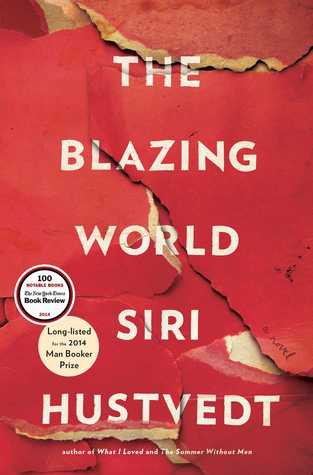
8. The Blazing World by Siri Hustvedt

There may not be a more apropos time to read Hustvedt’s Booker Prize-nominated novel about a female artist who, frustrated by the misogyny of the art world, shows her work under the guise of three different male artists. To her satisfaction, her art becomes a huge success, to her dismay, some of the men won’t cop to the true author of the work. This is a novel about art, the perceptions of the artist, and frankly about the way that society still imparts inherent value to men over women.

9. The Children’s Book by A.S. Byatt

At the center of Byatt’s novel, which was shortlisted for the Booker Prize, is Olive, a woman who runs a seemingly ideal late-19th century household, filled with summer parties and frolicking children. However hidden behind the manor’s beautiful facade is a tangled web of affairs and jumbled parentage, which Olive slyly writes into her stories for children. Byatt always includes a fair amount of history in her novels, and this one nods to many other children’s writers of the time, including J.M. Barrie, Edith Nesbit, and Kenneth Grahame.

10. The Last Nude by Ellis Avery

The protagonist of Avery’s novel sounds like someone a writer would invent to encapsulate the roaring twenties, however Tamara de Lempicka was a real Polish-Russian painter who became famous for her scandalously realistic nude paintings. Lempicka was also known for her bisexual relationships, including the one with a 17-year-old Italian American prostitute named Rafaela Fanoat, which is the heart of this novel.

11. The Painter from Shanghai by Jennifer Cody Epstein

This novel is based on the unlikely true story of early 20th century Chinese painter Pan Yuliang. As a child, Yuliang was sold into prostitution by her uncle, who needed the money to support his opium habit. Pan became the concubine for a wealthy customs inspector who allowed her to go to art school in Shanghai and eventually Europe. The move made Pan into a talented painter, but when she returned to China, which was on the brink of revolution, her art was considered too modern. Pan’s journey questions the inherent value of a piece of art versus the society and lens that its viewed in.

Double Take: Dan Chaon’s ‘Ill Will’ is the Darkest Novel You’ll Read This Year

“Double Take” is our literary criticism series wherein two readers tackle a highly-anticipated book’s innermost themes, successes, failures, trappings, and surprises. In this edition, Electric Literature’s own Halimah Marcus discusses Dan Chaon’s bleak thriller Ill Will with Sam Allingham. Allingham is a former contributor to Electric Literature’s Recommended Reading and the author of The Great American Songbook. He also happens to have been Chaon’s undergraduate student at Oberlin College. (Fun fact: one of the dead guys in Ill Will is named Peter Allingham, because Prof. Chaon recognized that Allingham is a good last name.)

Ill Will centers around the life of Dustin Tillman, a psychologist and widowed father living in the suburbs of Cleveland. Dustin has recently begun treating Aqil, a former police officer obsessed with a series of drowning deaths in the region. Aqil plies Dustin with an elaborate conspiracy theory about a satanic serial killer, until Dustin is eventually persuaded to join the ad hoc investigation. At the same time, Dustin’s traumatic past resurfaces when he learns that his adoptive brother, Rusty, who was convicted of murdering Dustin’s mother, father, aunt, and uncle, has been acquitted and released from prison. Rusty’s trial embodied the height of the “Satanic Panic” of the 1980s and led Dustin to write his thesis about Satanic cults and recovered memories. As Dustin becomes increasingly preoccupied with his and Aqil’s investigation, his youngest son Aaron’s recreational drug use grows into a crippling addiction. The novel’s tangled plot is told through a multi-perspective and formally experimental narrative, making for a gripping, blood-chilling read.

Spoilers are encouraged and fair-warned, with the hope that readers purchase the novel and join the discussion in the comments.

Halimah Marcus: One of the reasons I want to talk about Ill Will — which I think is pretty brilliant — is that it’s formally experimental but also, in many ways, a traditional mystery or horror story. There’s the formula of the past childhood trauma informing the present day. I’m thinking of In the Woods by Tana French, or even Season 1 of Dexter, and I’m sure there are many other examples. In the case of this novel, Dustin Tillman’s parents were murdered when he was a child and now he’s a psychiatrist “investigating” a possible serial killer. Formally, there are the broken sentences, the weird spacing, and the parallel narratives, which are both physically parallel in vertical columns and chronologically parallel. And then there’s the plot, which is dark as fuck. So where do you want to start?

Sam Allingham: I’m glad you started with the ways in which the book is and isn’t a traditional thriller; I love how it manages to maintain such a creepy atmosphere while also providing some high-level postmodern winks about the thriller form. Putting “investigation” in quotation marks feels right, because Dustin is so self-conscious (and a little too excited) about stepping into his role in the thriller. It’s like his past has made him obsessed with the structure of these sort of crimes — so obsessed that he can’t quite see the real horror staring him in the face. Not for nothing does his patient-turned buddy (and co-investigator) Aqil introduce him to people as a guy who’s writing a book about a serial killer. But it’s not quite Dustin’s book; as Dustin begins to unravel, the narrative unravels too. It gets more diffuse, with more parallel narratives, bigger gaps. Maybe we should talk about these gaps, divisions, and disjunctions. It’s hard to get across to someone who hasn’t read the book how upsetting it is to have awful stuff suddenly elided, or to be ripped out of a character’s scene just as something horrible is about to happen!

Double Take: Joan of Arc in a World of Endless War

HM: It’s also very effective! Inextricably connected to these post-modern winks is the fact that Dustin is one of the most intensely unreliable narrators I’ve ever encountered. Ill Will reminded me that an unreliable narrator can be more than a crafty trick. It’s a workshop term that’s usually applied to self-interested or self-aggrandizing narrators telling stories in a way that flatters themselves, and I forget that it can also refer to so much else. Dustin is an easily manipulated, traumatized person with shaky psychological footing, and occupying his perspective is, as you say, really upsetting. Karen Russell’s Swamplandia was the last book that I read that totally exploded the concept of an unreliable narrator and how such a character could shape a story. Both novels use their narrator’s confusion about what’s real and what’s imagined to catch the reader off guard with something horrific. But Swamplandia was entirely from the point of view of one person, Ava Bigtree. Whereas Ill Will features multiple narrators and some sections in the third person, which provide reality checks and supply information Dustin can’t. I guess my point is that Dustin is a character that justifies those gaps, divisions, and disjunctions because he himself is so disjointed. There’s a joke in the book about how his sons are always finishing his sentences because he trails off before obvious words. When Chaon ends in a sentence abruptly or drops a period or put extra spaces in the middle of a line, it mimics Dustin’s brain on the fritz. And you don’t realize until the end how deep those disjunctions go and the tragedy of their consequences.

SA: Yeah, you’re absolutely right — it’s the sense of tragedy (or maybe doom?) that keeps the whole thing from feeling like an exercise in style. Chaon is just so good at manipulating the terms of sympathy we feel for Dustin, especially since (spoiler alert) the death of his wife from cancer is such a central part of the story. For such a propulsive and structurally ambitious thriller, there’s a surprising number of scenes that stick because they represent Dustin in incredibly sensitive, emotional moments, like the one from his childhood where he and his newly adopted brother Rusty, who later gets blamed for murdering their parents, first watch the stars together. You can tell that Rusty isn’t entirely to be trusted, but Dustin’s loneliness is so palpable that his growing fascination with his brother and the trauma that follows both feel understandable. There are other flashbulb moments like these, in which Chaon communicates the emotional intensity of Dustin’s inner life so beautifully that you forget the disjointedness of the episodes, not to mention the fact that some of them might be misremembered, or even made up! I love how he places these little observational epiphanies that might satisfy in the context of a character-driven narrative in the midst of this thriller that’s really about psychological deterioration. It’s like he’s saying: sure, you can have these moments of realization, but what do they mean when your mind and your daily life are both falling apart?

But maybe we’re focusing a bit too much on Dustin. You’re right that as his point of view gets weirder his younger son seems like more of a reliable character, although his life is maybe even darker than his dad’s! What did you think of Aaron?

Dan Chaon Isn’t Shy about His Obsessions

HM: Because drug addicts are the original unreliable narrators, right? Poor Aaron. I really feel for that kid. His mom has just died and his dad is so far out to lunch he doesn’t even notice his son is a heroin addict. It was heart wrenching but also kind of funny when Dustin realizes Aaron is doing heroin and says, “For some reason, I had thought it was a fashion choice — that he was trying to be what we used to call ‘Goth.’” Aaron also has a total lack of self-awareness, but in a more familiar, decodable way. Chaon is incredibly clever about circumnavigating his character’s limitations. For example, the way Aaron behaves with Terri, his best friend Rabbit’s mom, who is also dying of cancer, betrays his unprocessed feelings about his own mother’s death from the same disease. Somehow I knew more about Aaron than he knew about himself, and I felt tremendous compassion toward him, similar to how I might feel toward a friend who was spinning out. Yet even though I understood Aaron to be an isolated heroin addict, I didn’t get my head around how doomed he was until it was too late. I’m curious to know what you thought of him, and I also want to talk about Rusty and Aqil on our way to spoiling the shit out of the ending, which I completely failed at predicting.

Chaon is incredibly clever about circumnavigating his character’s limitations.

SA: I think one of the hardest parts of Aaron’s character is the way in which he doesn’t quite have the language or the perspective to handle what’s going on. I mean, his romance with his friend’s dying mother is just so painful to witness; like his father, he doesn’t seem to realize his desires or the desires of others until things have gone too far. And then there’s the weird hellscape he enters when he visits House of Willis, the drug house/abandoned funeral parlor. We can’t be sure whether the place is truly as creepy as it seems, or whether Aaron’s perspective is so fractured and high and paranoid that it comes across as a nightmare. But then again, the people he meets there really do seem like demons…

I found myself rooting for Aaron, even if at times I wanted to get out from behind him to see the world he was moving through from some more distant vantage point. But that’s precisely what Chaon doesn’t let us do, and it makes the horror feel more visceral.

The ending is one of the most delightfully horrible aspects of the book; it recasts everything that came before. I almost don’t want to give it away, so maybe I’ll give the spoiler warning again, so that people really can just go read the book. (DO IT: read the book.)

Dustin’s relationship with his “patient” Aqil feels codependent and a little odd, sure, but once you find out that Aqil is the killer it curdles everything. When the news came out, I immediately remembered an early part in which Aqil, who enters Dustin’s life as a patient in his therapy practice, kneels in front of Dustin and takes his hand: a weird moment on first read, and uncomfortably intimate, but when you realize Aqil had already essentially marked Dustin as a pawn, a true mark… it becomes almost unbearable. And we’re implicated, too. How could Dustin miss the truth? But then again, so did we!

The ending is one of the most delightfully horrible aspects of the book; it recasts everything that came before.

HM: I’m about to go even deeper into spoiler territory, but how did you interpret Aqil’s motivations for involving Dustin in his investigation/murder plot? At one point, Aqil speculates that the alleged serial killer, nick-named Jack Daniels, is opportunistic. That he noticed the pattern of young, white, frat boys getting wasted and falling into rivers, and recognized a chance to get away with murder. Serial killers often target vulnerable populations such as sex workers and the homeless. Young white men are not usually thought of as vulnerable, and everyone assumes their deaths are a result of reckless self-endangerment rather than foul play.

Later, Aqil posits a technique Jack Daniels might use to subdue and disorient the victim, involving a sensory deprivation tank and a feeding tube of whiskey. So what came first, the plot to manipulate or the plot to murder? Was Aqil obsessed with a serial killer to the degree that he became one, or was he Jack Daniels all along?

I’m able to find plausible motivations for his behavior in the former possibility, but struggle with the latter. If his plot to murder Aaron was pre-meditated from the first time he walked into Dustin’s office, it’s not clear to me what role he needed Dustin to play. Aaron is a vulnerable, isolated, and defenseless drug addict. Aqil doesn’t need to become close with Aaron’s father in order to gain access to him. Perhaps he wanted to eliminate Dustin as a witness, but the only reason Dustin knows Aqil from Adam is because Aqil sought him out in the first place.

Even though the situation is ambiguous, I come down on the side of Aqil committing a murder of opportunity. He began as an obsessed investigator, albeit one with horrific proclivities, and transformed into a killer.

“Sensory Deprivation Tank” by Jon Roig on Flickr. Terrifying, right?

SA: You’re blowing my mind a little, I must admit. It never occurred to me that Aqil could be anything other than a committed killer, working his way slowly into Aaron and Dustin’s life for the pure enjoyment of it. That was what made the retrospective reading so intense for me — but, in some ways, the idea that Aqil slowly transformed due to the intense nature of the investigation is actually more horrifying. Still, I don’t see any reason why Aqil being interested in murder from the start as being implausible. Part of the enjoyment would be in becoming Dustin’s trusted confidant, and drawing the web tighter, bit by bit. (An episode like the “lost wallet” is an example of this.) Though if there’s anything in the whole book that seems a bit too grotesque to be real, the sensory deprivation tank is definitely it, whiskey or no whiskey.

Since we’re talking about the ending, I’m interested in talking a little bit about Rusty, Dustin’s adopted brother. For most of the book he’s an off-stage figure, but in the end we get to spend some time with him, post-prison, and I found these sections some of the most interesting in the whole book. Obviously returning to society after a roughly thirty-year prison sentence is bound to cause all sorts of dislocations, but I liked how Rusty’s observations about our current society — the fixation on smartphones, for example — added to the dark, semi-apocalyptic tone of the whole book. At a time when the rest of the book was sort of flying off the rails, his struggle to deal with regular life (and a horrible kitchen injury) added an unexpected spike of sympathy in the midst of what was clearly going to be a gruesome finale. It’s like we get this sudden glimpse of humanity before he gets snuffed out.

This leads me to one big question for the ending, with the ultimate spoiler alert. There’s such a body count at the end, and pretty much all of the characters you might have sympathized with are dead; despite all this work Chaon puts in to make us feel for these people, he doesn’t spare any of them! Certainly this seemed in keeping with the book’s overall tone, but how did you feel about the ending?

HM: For being physically absent for much of the novel, Rusty is incredibly well-drawn. The sections you site about his post-prison life really complete his characterization. A lesser writer would try to get away without giving Rusty his due. Like Aqil, he’s a master manipulator. Unlike Aqil, we have information about his history of violence. Aqil did something to get kicked off the police force, but we don’t know what. Rusty was falsely convicted of murdering Dustin parents and Aunt and Uncle, and is suspected to have burned down his foster home, murdering his foster family as well. These are accusations and rumors, but we know with greater certainty that Rusty sexually abused Dustin when he was a kid. Specific sexual acts he performed with Dustin are corroborated by Dustin’s cousin Kate, with whom Rusty had a sexual relationship. It’s possible Dustin could have misremembered these experiences, as he did others, but Rusty himself admits his intentions when he says, addressing himself in the second person, “You knew from the beginning that you could fuck him up.”

That line really punched me in the gut. Despite everything I knew about him, Rusty was winning me over. On his phone calls with Aaron, Rusty seemed sane compared to Dustin. Rusty seemed like the one who had Aaron’s best interest at heart. I guess in the end, the novel’s two master-manipulators, Rusty and Aqil, manipulated me too.

I suppose it’s time you and I offer our own satisfying conclusion, to the best of our abilities. So, what was your biggest take away from, or lasting reaction to Ill Will? For a novel populated by deeply dishonest people, I’m still in awe at the relentless honesty of the project as a whole. It’s rare that narrative art eschews redemption to this degree, but to offer redemption would be to undermine the weight of the story. Which isn’t to say the story isn’t resolved; killing everyone off is a resolution unto itself.

SA: I was deeply, deeply impressed by this book. As I think the reader can tell from both of our responses so far, Chaon is equally good at the more traditional pleasures of literary character building and the spikier, slightly stranger realm of post-modern storytelling. He can evoke readerly sympathy for his characters by presenting these uncomfortably intimate moments from their lives, while also showing how the stories they tell about themselves have frightening gaps, and that they resort to all manner of cobbled-together narratives to fill these gaps. I keep coming back to the fact that Dustin’s attempt at playing detective was what led him to Aqil. He thinks he’s entering this genre playacting as a detective, but it’s not playacting — and he’s the victim, not the detective. And, because Chaon is so good at both sides of the narrative, by the time he meets his fate, you know exactly why his way of seeing the world led him there. There’s something very tragic about the narrative construction: the hubris of wanting to solve these murders, the flawed “hero,” the sudden reversal of fate.

Chaon is equally good at the more traditional pleasures of literary character building and the spikier, slightly stranger realm of post-modern storytelling.

But I’ve also been mulling over the only aspect of the book that I found slightly unsatisfying: not on a technical or emotional level, but on a moral one. I know it’s a little bit unfashionable to talk about morality in fiction, and maybe it’s not even the right word to use here, but there’s just no moral center whatsoever in this novel: moments of beauty and human connection get snuffed out, one by one, and anyone who seems to be a source of comfort ends up revealing themselves to be hopelessly compromised. I can see why you think of the novel as brutally honest (it is!) and I agree that any sense of redemption would have cheapened the sense of devastation the reader gets at the end — and yet in the breakdown of Dustin’s character and the half-transfer of our sympathy to Aaron I feel like we lose sight of some of the investment we had in Dustin initially. When he comes to Rusty with a gun, that particular part of the tragedy feels inevitable but not quite as emotionally affecting as it could have been.

But that might be asking too much. I certainly felt an enormous sense of terror at the end of the novel, as everything unraveled. Maybe the end of the book is more about the revel of Aqil’s character, and is meant to be satisfying as a horror novel; maybe all the sympathy was just a way to buckle me in tight, so I couldn’t turn away!

Sam Allingham grew up in rural New Jersey and Philadelphia. After graduating from Oberlin College, he worked for many years as a music teacher for adults and small(ish) children, before receiving an MFA from Temple University in 2013. His work has appeared in One Story, American Short Fiction, and N+1, among other publications. He lives in West Philadelphia and teaches at Temple University. The Great American Songbook is his first book.

Halimah Marcus is the Executive Director of Electric Literature and the Editor-in-chief of its weekly fiction magazine, Recommended Reading.

The Girl Goes Missing

Continue reading Episode 2: Shelley Enters the Woods

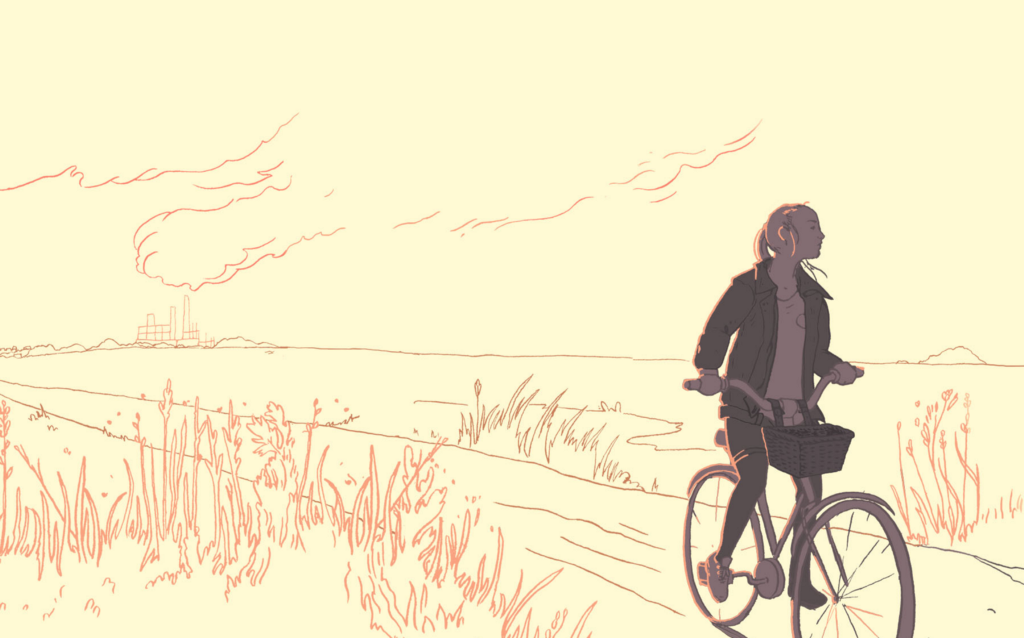
1. On the way home, the girl did not notice the color of the sky or the shape of the night, as she was too busy questioning why there were no secrets anymore.

She pedaled past the town square, the abandoned shops, the gas station sign flickering in its insignificance, feeling upset. Everything — the empty roads and lonely looking houses set far back from the road, the dilapidated buildings spaced several hundred yards apart — seemed to lack mystery.

Even the diner, where she had spent the better part of the past nine hours on her feet waiting tables, was no place for anything fascinating or curious. Before her shift ended, her boss, Mr. Dupont, had the nerve to accuse her of daydreaming and flirting with one of the short-order cooks. Out of embarrassment — for the accusation was partly true — Shelley had turned and spilled an entire tray of ice cream, then mumbled a few extraordinarily tame epithets. She repeated these now as she rode: “Oh Hell and Holy Ghost.”

Her one good pair of nylons now had a rip somewhere at the back of her right thigh, which had happened when she knelt down to clean up the overturned dessert. Although she tried to ignore it, she could feel the broken seam inching up her leg as she rode along, reminding her of everything that had gone wrong that day.

Sometimes 19 was too young and too old at exactly the same time.

The girl had an interesting face — almost anybody could see. Her brown eyes were flecked with green, and her expressions usually carried an open, questioning quality that most people considered friendly or unserious.

Up the back stairs, she could hear her grandmother speaking to somebody inside the kitchen. As Shelley approached the door, she realized her grandmother was talking to herself once again, addressing the dozens of photos of her former kindergarten students that were posted on the refrigerator. She was reciting a familiar story to them, her voice punctuated by the sounds of the police scanner buzzing faintly on the kitchen table and the chatter of Mr. Peepers, their pet bird, in his cage by the window. Shelley stood by the screen door and listened quietly.

“Then, of course, there was the sly fox,” her grandmother said. “He played the fiddle so sweetly that it sounded like a mother bird singing to her young. And he would hide out in the woods, just beyond the shadowy fields, and he would play his fiddle at midnight, and all the chickens would begin pecking at their doors. And then the fox, he would begin to play quieter and quieter, and all the hens in the henhouse would begin fussing until they had each crept out, and they would scoot across the field and into the dark shadows of the midnight woods, and one by one, the fox would wring their necks and gobble them up in his razor-sharp mouth.”


2. Shelley entered the kitchen and found her grandmother at the table, putting a blob of white frosting on an uneven red velvet cake. She leaned over and kissed her grandmother on her powdery forehead, then stood on tip-toe to put a wad of cash into the coffee can on top of the refrigerator.

It was only 6 p.m. on a Friday, and all she wanted in the world was for the day to be over.

“Don’t you look bushed?” her grandmother said with a grin, keeping one hand on the frosting knife, the other on the cake plate.

“I am.” Shelley collapsed into a seat at the opposite end of the table, took off one of her canvas tennis shoes, and began massaging her left foot. “I swear I must have walked as far as China, running back and forth from that kitchen all day.”

“You want me to draw you a bath?”

“No thanks. I’ll just sit here a minute,” she said, putting her feet up on the empty chair beside her. “I tell you, I just can’t believe how unfair the world is.”

“Now why’s that?” her grandmother asked.

“Because Wayne and I got in a load of trouble at work today. He was back at the grill and the only one working on the line through the rush, and wouldn’t you know there was some kind of outfit moving these little yellow houses on the back of their trucks—five or six of them on these flatbed trucks—and Wayne and I were staring out the window daydreaming, and he asked me if maybe I’d like to sneak into one of the houses with him. Like we could live together, and our kids would never have to go to school, and we could see the whole world traveling around like that. I said I’d like to, but then a bunch of orders got called up, and he ended up burning some eggs. Then Mr. Dupont came up and laid into us about paying attention instead of spending our time daydreaming and love-talking. Then I got upset and dropped a tray of ice cream. And I had to pay for it out of my tips.”

Her grandmother smiled, adding another glob of frosting. Glancing up, she said, “Don’t move. You look just like the picture of your mother sitting there.”

Shelley frowned, ignoring the comment. “Is that for the cakewalk tomorrow?”

“It is.”

“The sheriff picking it up?”

“Said he would.”

Shelley looked across the small linoleum table and again noticed that the police scanner volume had been turned all the way up. It chirped with a far-off though consistent static. Her grandmother’s black-and-white composition book was open to a page where she had scribbled something nearly illegible. “What’s that?” Shelley asked.

“We got a new one today: 11-26. Abandoned bicycle.”

“Oh, that is new. I never heard that one before.”

“It is. I had to check the code book myself.” Her grandmother leaned forward conspiratorially. “A call came from over at Wright and Evergreen about 20 minutes ago. Somebody found a bicycle just sitting next to the curb. No one knows whose it is. Gary Polk’s the officer on the scene.”

“Gary Polk? Oh, I don’t like him at all. He came into the diner yesterday and looked me up and down like I was a pony at the 4-H. And when I walked past him, he pinched my behind. I like Deputy Will better. He’s tall…and nice. He never tries to make a grab at anyone.”

“You just be thankful someone makes a grab at you every so often.”

“Very funny,” she said. “Anything else exciting happen?”

“Well, earlier there was a 10-91A. A stray animal. It was the Hanford’s cat that run away. The black one. It was at the grocery store. It went inside, right down to where the cat food aisle was. Mrs. Hanford had to come pick it up. By the way, did you hear that Junior Hanford’s back in town?”

“No. I didn’t.”

“I thought you used to have quite a thing for him.”

“I never did!”

“When you used to pal around with his sister. You had a crush on that boy. I believe you were in the fifth grade, and Junior was in the eighth.”

“I shouldn’t have ever told you,” Shelley said with a short smile. “But you always find a way to wheedle things out of me.”

“It just so happens that I can’t abide secrets, big or small.”

The police scanner interrupted with harsh static.

“Unit 304 to base. Located the bicycle. It’s a girl’s one. Pink, with streamers. Going to try and find out who it belongs to. Over.”

“Ha. Some mystery,” Shelley sulked. “Friday night and this is all the excitement they got for us.” She took out her pad from work and began to finish a sketch she had started earlier in the day.

Audio: “Star Witness” | A Story in Seven Parts

Over the past several months, the girl had begun using the ticket book from the diner as a kind of notepad, drawing the lunch counter’s customers in a series of furious lines and curves. They looked like a series of police sketches. More than once, Shelley had followed customers home after her shifted ended, adding details about the kinds of cars they drove, where they lived, what their houses looked like—a rogue’s gallery of all the interesting inhabitants of town. She was now working on a drawing of a man who had come into the restaurant the day before — Raymond Dove — a felon, known arsonist, and suspected methamphetamine distributor who had a wide, rangy-looking face and one arm that was noticeably shorter than the other. She now settled into the drawing, ignoring the subtle buzz from the scanner until it abruptly announced:

“Unit 304 to base. Approaching a group of kids on the corner of Fourth. One of them gave me the finger. Think it was Mike Lee’s son. Going to ask them who this bike belongs to. But are you sure the sheriff don’t have anything better for me to do than chasing kids around?”

It was then that Shelley noticed that Mr. Peepers had become uncharacteristically quiet. Shelley stood up and peered through the wire cage and found the creature lying among the pages of yesterday’s newspaper. She turned to her grandmother and used the nickname she always did when faced with trouble of a serious nature: “Honey.”

“What is it?” her grandmother asked.

“It looks like Mr. Peepers is dead.”

The grandmother slowly stood and leaned beside her granddaughter. “I thought something was wrong with him. He didn’t say nothing but swear words all day.”

Shelley stared forlornly through the slats of the cage. “Now I’m going to have to go bury him, I guess.”

“Where you plan on doing that?”

“Behind the library.”

“You’re going to get in trouble. Ms. Briff already told you that’s not your own personal cemetery.”

“I don’t care,” Shelley said. “It’s public property. And it’s got the best view of any place in town. Which is the least I can do for him. Besides, I’ve got four other animals buried there already.”

Her grandmother gave her a skeptical look.

“I’ll be quick. Nobody’ll notice. I promise.”

Her grandmother nodded and put one last swipe of frosting in place. Maybe it was the heat, or the bird dying, but the cake looked like a lopsided heart, collapsing in on itself.


3.Outside in the garage, the girl searched for a coffin. There was stack of old shoeboxes her grandmother had collected from “before the war,” but Shelley never had any idea which war she meant. The war in Korea maybe. She found a blue one and climbed up the back porch stairs, stopping on the top step to listen to her grandmother again.

“And where were we, boys and girls? Oh, yes, well, that wily old fox, that wily old fox began to play that fiddle, he began to play and not just any old song, but ‘Wildwood Flower,’ and the woodsman, he had lost one chicken too many and followed those feathers out to the woods, and then he heard that sound. He was standing there in the middle of that darkened forest, and he began to think of his wife, his one true love that had drowned a year before, and then his axe began to feel mighty heavy, and it fell from his shoulder, and he laid it there in the grass where it disappeared, and then he started to march off to where the sound of that lovely voice was calling, deeper and deeper into the midnight forest, and when he looked up, he saw that the trees all wore the sad face of his lovely departed.”

Shelley opened the door and found her grandmother beginning on a second cake, dolloping on pile after pile of white frosting, humming to herself. The girl closed her eyes, took a deep breath, and carefully reached inside the cage for the deceased bird, feeling its cold, reptilian feet. Carefully she deposited the animal in the shoebox, found a piece of blue tissue paper in the junk drawer, placed it over the bird as a ceremonial cloak, and closed the lid.

“Okay, I’ll be back in a bit,” she said and kissed her grandmother on the forehead again. She paused at the door, staring at the profile of her grandmother sitting there frosting the cake, imagining it, like a moment from some soap opera or crime show on television, as the very last time she’d ever see her.

Once more, she heard the police scanner crackle with static.

“Unit 304 to base, unit 304 to base…”

Outside, she placed the shoebox in the wire basket on her bicycle and began to pedal off. She looked around and saw almost everything had gone a faint blue.

Trees passing by looked skeletal, unfamiliar. The sound of the wind hid her unease. She stuck to Fayetteville Road, riding as fast she could.

Up ahead, somewhere in the distance, a pair of lights flashed. A police cruiser fled past in a fury, and Shelley pedaled as hard as she could, desperately trying to keep up.


Continue reading Episode 2: Shelley Enters the Woods

Haunted Servitude on a Cruise Ship

The part of a cruise ship that is under the water line is called “below,” and everything that is upwards is called “above.” Two different worlds inside a huge body. Once you get inside this huge white shining girl, your own world suddenly gets its particular dimensions: its height is 19 decks (there is no 13th, of course), length — 1,083 feet, weight — 143,724 GT.

Countless doors, stairs, twists and turns, and a single throughway, the 4th deck that separates “below” and “above,” and connects bow and stern. You can cross the ship through that highway called M1, and you can get anywhere from there through the numerous doors on both sides of it. The main gangways are there, and that M1 is where the lowest illuminators are.

Below are mechanical rooms, electrical rooms, engine rooms, laundry, tailor’s shop, crew cabins, and no illuminators. Circuits and mechanisms; pumps and drives; propellers and thrusters; broken garments and broken hearts; fixed garments and non-fixable hearts; dirty laundry and dirty secrets; clean and pressed laundry, and unpurified, messy truths; love and hatred; brutal lies and touching revelations; orgasms and fights; gossip and tattle; whispers and shouts; break-ups and make-ups; vows and betrayals. Everything that keeps the ship moving is below.

Above is the playground, the display, the stage where the fascinating show runs called Happy-To-Be-A-Crew-Member. It is where crew members get, and passengers give. Money. It is where passengers get, and crew members give. Perfect service. Food. Entertainment. Crew members make passengers’ dreams come true. Smiling. Joking. Serving. Months without a vacation. Hoping to make their own dreams come true some day. Everyone gets what they come for. They consume each other, they leave their prints on the ship’s skin, and they don’t leave any trace in each other’s lives. They’re all being consumed by the ship. Every day, cruise by cruise, non-stop. Turnaround day turns into a new one, each cruise turns into a new one, just the same. Tons of food being thrown every day down to feed fish. Tons of food. Tons of shit. Everything goes below, and down, and out into the ocean.

The ship recycles crew members and passengers. She spits them out on turnaround days, their fingerprints erased, their words dissolved, their emotions dismissed. She empties herself, getting ready to consume new joiners, to do with them all just the same. She does with them “what spring does with the cherry trees” but in a cruise ship way.

Once you get behind these walls, once you’ve given your passport to some officer with a glossy smile and Italian accent and got your crew member’s ID, you can be your true self in here. Or you can be the opposite. You can be whoever you want. No one cares as long as you have your name tag and cruise pin on the left side of your breast. You are what is written there. A buffet steward, a waiter, a supervisor, a cook, a cabin attendant, whatever. What’s behind your name tag, cruise pin, and your courteous smile — doesn’t really matter. Light makeup, hair done in a neat knot — if you’re a female crew member; perfectly shaven face and short haircut — if you’re a male. Clean, tidy uniform, no alcohol or cigarette fumes but no explicit perfume either, no suffering or longing of any kind in the eyes, no visible tattoos — for both male and female crew members. You are a walking light tidy odorless smiling courtesy. No one looks you in the eye — they look at your name tag. You are surrounded by fleeting people who don’t give a damn about you, as long as you do your job properly. And very soon you learn not to give a damn either.

What happens on the ship stays on the ship. If you’re married on land, you can be single again here. If your partner finished their contract and went home, you can find another one among new joiners. If you have kids to take care of, you are free from all obligations, just keep sending money. If you’re shy, you can be daring. If you’re lonely on land, you can find yourself any sort of company here. If you’re in the closet, you can come out in here. If you want solitude, you can be lonely — no one cares. You can do whatever you want each contract, each ship.

Once you step over the gangway, you start counting days of your life. Counting down until the end of the contract, and then counting down the days at home until a new ship. You call ship life “shit life,” but you keep living it. Someone tells you when you are allowed to go out, when you are allowed to eat, sleep, pee, puke, or whatever. Months without a Saturday — six if you are European, nine if you are Mexican, Filipino, Indian, or Indonesian. You stop seeing the difference between yourself and other nations, you only see the difference in uniforms, but your inequality is safely recorded in your contracts — in the Term of a Contract and Salary columns.

You can extend or you can reduce your contract. But you need to have a substantial reason for that. And you don’t.

And then you come back home for your two months vacation. You can extend or you can reduce. But you need to have a substantial reason for that. And you don’t. So you count days to your next contract. You can’t sleep till noon like you were dreaming of doing while you were on the ship. You wake up at 6 a.m. because of the sunlight coming from the window. You didn’t have a window for months, you would wake up under water. You hear birds sing, and dogs bark, and brakes creak, and kids scream outside. It is all so loud, and so much of it. So you can’t sleep.

You are constantly hungry, because you need to cook and wash up now, or you need to think where and what to eat, and you are too lazy to do that. You didn’t think about that for months, you had all you needed at crew mess to keep you alive.

You have plenty of time but you don’t know what to do with it. You can go anywhere but you don’t know where to go. Your course was set by somebody for months, your schedule was made by Assistant Maitre D’, your breaks were defined, and you didn’t have many choices. You start thinking that that was the freedom. Freedom from choice.

Your apartment is a mess because there are no Crew Rounds to check on your tidiness. You’re a total mess. You need your cabin boy to have that all done for 10 bucks per cruise. Your hair is a mess, because you don’t know how to do it if not in a neat knot, and no one forces you to do it a neat knot for now.

You stare at people’s breasts, looking for their name tags. Who are they if they don’t have it defined on their name tags? And who are you?

You wander around like a ghost. It is so hard to take your course if it’s not set by someone. You were moving to your particular destination at a speed of 22 knots for months, and now … now you just drift. You are already not the one you used to be, and you are not yet the one you want to be, whoever that person is. And that point, that ideal you, seems so distant and so blurred, and it seems you’ll never reach it. Because it’s shaken and shifted too often and too much, like a ship may be shaken in a few storms during a 5-day Hawaii to Catalina crossing.

You meet your friends, they laugh, make jokes, talk about the times they had when you were away. You have your stories as well, but these people are not part of them, and you are not part of their stories anymore. They have land stories, and you have sea stories — their edges slightly contact but never mix up. They are not your people anymore. You are surrounded by fleeting people wherever you go.

You’ve been everywhere, and you end up nowhere. You are in a temporary place, in the middle of waiting — wherever you go. Your suitcase is your most constant companion. The place that used to be your home now is just another port where you have some more overnights than in other ports. You can drop anchor here and settle here again, but you need a substantial reason for that. And you don’t have it.

So yeah, you actually count days to your next contract, to a new round of your shit ship life, because once you get “below,” from then on you will be suffocating on land, and crave a breath under the water line.

ESSAY: Consumption by Elissa Washuta