Ted Wilson Reviews the World: A Watermelon

★★★★☆

Hello, and welcome to my week-by-week review of the world. Today I am reviewing a watermelon.

It’s summertime, which means watermelons are still available to purchase just as they are any other time of year — but what makes summertime watermelons stand apart from the rest is that they don’t taste like a sheet of paper.

I recently bought a watermelon because I wanted my groceries to weigh 10 lbs. more than usual for the exercise. Unfortunately the watermelon I purchased was too large, and halfway home my arms gave out, so I had to abandon my groceries and roll the watermelon the rest of the way.

With watermelons there is always a certain amount of mystery. Will it be ripe? Will it have been hollowed out by a worm and replaced with hundreds of baby worms? You never know.

I had a good feeling about the one I’d purchased though, but when I cut it open I was met with the most surreal sensation. It was ripe — that wasn’t the issue. The strange thing was the pattern of the seeds looked just like Jesus’s face. Not Jesus the biblical figure, but Jesus my mechanic.

I thought it was a practical joke, or maybe a subtle marketing campaign on behalf of Tech Auto Repair. In Japan they can grow square watermelons, so it wouldn’t be that much of a stretch to think someone could grow ones with seeds in the patterns of a specific human face.

I think the campaign backfired because now the next time I see Jesus I’ll have to pretend I’m not picturing my knife slicing into his face and red juice running out.

The other issue with the seeds was I kept getting them stuck in my teeth. Normally I don’t care if I have food stuck in my teeth because my charm and confidence allow me to gracefully overcome such superficial trivialities, but I always worry about the possibility of a seed taking root in my gums. Getting a tooth removed is expensive. I can’t imagine what it costs to get an entire plant removed.

This watermelon was quite delicious and made even more so with the addition of feta cheese. I don’t know what part of the cow feta cheese comes from but it’s the perfect accompaniment to a watermelon.

BEST FEATURE: I saw my neighbor watching me while I ate the watermelon and I could tell she wanted some too and I’m not proud to say it but I enjoyed the power I held over her.
WORST FEATURE: I found some worms in the rind when I was done.

Please join me next week when I’ll be reviewing a Crayon.

TED WILSON REVIEWS THE WORLD: GRAVITY WAVES

Sundays in Flushing at the Korean Grocery

By Patricia Park

Presenting the third installment of The Bodega Project, where authors from across New York reflect on their community through that most relied-on and overlooked institution, the bodega. Read the introduction to the series here.

Everyone knows the Korean bodega, that ubiquitous fixture of the New York landscape — with its flowers and fruit out front, Tropicana and Corona in the cooler, Marlboros and Trojans behind the counter. But no one stops to wonder where the Korean bodegueros go for their own daily provisions.

Ironically enough, we didn’t have “Korean bodegas” in Flushing — home to the largest Korean community in New York, and second largest in the country after L.A.’s Koreatown. They’re an American construct, designed to please the Western palate. Instead we shopped at the Korean grocery store, teeming with the sorts of goods (usually of the fermented, pungent, foreign variety) no bodega owner would dare stock in his own Manhattan store.

We were a family of grocers, and on Sundays after church we went to Hanyang Mart on our side of Northern Boulevard, next to the Kentucky Fried Chicken. The parking lot would be filled with other Korean families also stocking up on the week’s groceries. On the opposite side of the boulevard, next door to Edward D. Jamie Jang-ui-sa where my grandparents had their funeral Mass, was another mart called Hanareum — now donning the English-friendly appellative H-Mart. Pre-dating both was the Guhwa in the heart of downtown, where we used to shop before my mother learned to drive a car. If you’ve ever passed down Northern, with its auto body shops, ethnic eateries, and fast foods of both the chain and mom-n-pop variety, you’d know there was nothing trendy about our corner of Queens.

In the colder months we’d pull up to the aroma of goguma — Korean sweet potatoes — roasting over a coal fire under a tent. It was my parents’ favorite treat when they were growing up, but my siblings and I were not interested in goguma. You had to peel back its cumbersome purple skin to scoop out the soft, caramelized flesh steaming inside. “This like pure candy!” my father would argue. We begged to differ, preferring our desserts to be more obvious, more American, the kinds a Korean grocer carried but never brought home to his family: Oreos and Reese’s Pieces and Jell-O Pudding so cloying our taste buds were shocked to numbness.

I realize now that for my parents, and for most of their immigrant generation, the goguma was their madeleine — one bite brought them right back to childhood and the home villages they had left behind.

Most days my mother’s shopping list was simple:

— dashima: dried kelp
 — miyeok: dried seaweed
 — myeolchi: dried anchovies
 — doenjang: fermented soybean paste
 — gochujang: spicy red pepper paste
 — bundles of scallion, watercress, and mugwort
 — mackerel for pan-frying
 — 40-pound bag of mepssal: short-grained white rice
 — 10-pound bag of chapssal: sweet, glutinous rice
 — various namul — wild herbs — whose names I never learned in English (if they even exist at all)
 — a box of Asian pears, because invariably someone in the community was moving house, or opening a new business; giving birth, or passing on.

It was only on banquet days that my mother would toss in the extra-fancy foods: cellophane noodles for japchae, mandu wrappers for dumplings, rice flour for scallion pancakes, or beef short ribs for barbecued galbi, which she marinated in soy sauce sweetened with kiwi or Asian pear. A box of Napa cabbage and ten pounds of Korean radish would be added to the cart maybe once a season, to make large batches of kimchi to share with extended family.

Yet each item that landed in our grocery cart, I would later learn, had been a negotiation between my mother’s Northern roots and my father’s Southern ones. Take, for example, the staple dish miyeok-guk: seaweed soup. New mothers eat it to replenish nutrients after giving birth. Children eat it on their birthday, perhaps to honor their mothers’ suffering during said childbirth. Some families eat the soup with every meal — which makes me wonder about the filial guilt ladled with each spoonful.

Yet each item that landed in our grocery cart, I would later learn, had been a negotiation between my mother’s Northern roots and my father’s Southern ones.

My mother grew up eating a version of miyeok-guk with bits of beef to flavor the broth. “Because so cold, North Korea,” my mother would explain. “We needing the meat.” While my father’s family, who lived near the Donghae Sea, prepared it with clams or mussels.

My mother’s American compromise combines both seafood and meat.

It is funny to think of my mother as a grocery shopper, because much of what she buys (often in bulk) ends up immediately stashed in the freezer or aging in the larder. She eschews her brand-new purchases in favor of the older ones decomposing in the crisper or passing their expiration date in the pantry. For her, cooking is an endless game of preservation and survival — salvaged scraps stretched into something if not delicious, then at least nourishing in the most fundamental sense. According to my father, my mother is a terrible cook. According to my siblings, she is still reliving the War, frozen in her refugee ways.

I’d peer into the carts and baskets of the other Hanyang shoppers to see variations of our same Korean meals. Similar negotiations must have taken place in each of those households. Which cultural practices were forced to assimilate, and which were simply lost?

We did not socialize at Hanyang; that happened in our church basement. Yes, you were seen and heard at the market (our community was only so big) but it was not a place to linger. Still, sometimes we ran into other ajumma’s — ma’am’s — from church. They shared the same diminutive stature, permed bobs, and pancake makeup to prevent tanning from the sun. We’d bow, and they’d share news of which melons were on sale, which greens looked fresh and which to avoid. We’d exchange short pleasantries like these before pushing on our way.

Though once, as a teen, I refused to get out of the car to accompany my mother into Hanyang. I was wearing perhaps my bulky volleyball uniform. I feared running into someone I knew from church, I feared being judged for my unfashionable clothes, I feared how their judgment would reflect badly on my family as a whole. The anonymity that comes with grocery shopping was a sensation I would only experience after I moved out of my parents’ home.

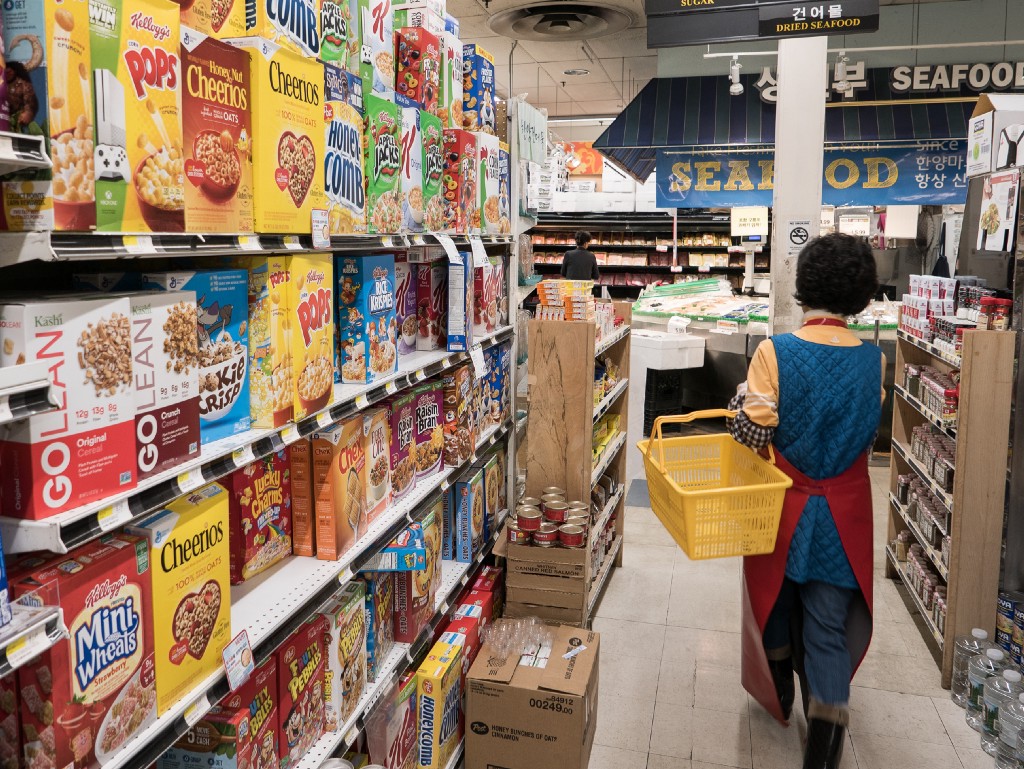
Over time, Hanyang devoted an aisle to “American” merchandise: Kellogg’s cereal, Wonder bread, Skippy peanut butter. But I never saw white kids from school shop there. Their families went to the Key Food just off Utopia Parkway — which has since closed.

I don’t shop much at Hanyang anymore. In yet another irony, the very foods I felt ambivalent about in childhood have seeped into the mainstream. Bibimbap is a regular fixture on the midtown lunch circuit. Kimchi, gochujang, toasted seaweed all come in hip packaging with no embarrassingly misspelled English labels. Korean food is #trending.

Just as Flushing is also changing. On my most recent trip to Hanyang, to buy ingredients to prepare my mother’s seventieth birthday dinner, I recognized not a single face from my community. The old waves have migrated east toward Long Island, or have passed away. The new waves speak a modern Korean that sounds foreign to my ears. The butcher’s assistant, a young Latino man, helped me select cuts of meat for the miyeok-guk, the japchae, the mandu. We spoke a pastiche of Spanish and Korean — when a word in one language failed us, we switched to the other. Once or twice I bumped carts with ajumma’s who were not Korean at all, but Chinese.

The old waves have migrated east toward Long Island, or have passed away. The new waves speak a modern Korean that sounds foreign to my ears.

I recently learned Hanyang was the name for Seoul during the Joseon Dynasty. Schoolchildren in Korea learn this fact from Day 1, and I imagine there is something laughable about the disconnect between a plain grocery — seated on this blue-collar, commercial stretch of Queens — and the regal capital of kings and queens from six hundred years ago. But for me, it evokes beyond its historical legacy. Its American identity as a Korean grocer’s grocery is the only Hanyang I’ve ever known.

About the Author

Patricia Park is the author of the novel Re Jane, named Editors’ Choice by The New York Times Book Review, Best Books of 2015 by American Library Association, and currently in development for a television series with Paramount and TV Land. She was born and raised in Queens, NY.

— Photography by Anu Jindal

The Bodega Project – Electric Literature

— The Bodega Project is supported by a grant from the New York City Department of Cultural Affairs.

Who Was the Absolute Worst Father in Shakespeare?

If the literature is any indication, the Elizabethan era was probably not the best time to be a “good” father, at least by today’s standards. While we may be thanking our own dads this Father’s Day, all Shakespeare’s characters have to be grateful for are ruined childhoods, emotional abuse, and bartered love. In the 1500 and 1600s (not to mention the historical and mythological periods in which Shakespeare set so many of his plays), the paterfamilias dictated everything from the the family’s coat of arms to its holiday travel plans. Oh, and marriage? You better believe that was the father’s call. In short, only complete submission and respect was tolerated from children.

In tragedies and comedies alike, Shakespeare shows us that fatherhood came with a lot of responsibilities, including selling your daughter to the highest bidder. Shakespeare not only nailed the expectation for obedience in his works; staying true to universal teenage rebellion, most children in his plays are not on board with their controlling fathers’ ridiculous demands.

For this Father’s Day, here’s a rogues’ gallery of Shakespeare’s most famous patriarchs. We’ve tallied up their sins and ranked them, from the sort of unpleasant, overbearing, or bloodlustful to the outright dastardly. Warning: a good deal of this behavior would now be considered criminal; in other cases, the fatherly transgressions are still very much a part of our culture. From nonstop hovering to threats of exile, the playwright’s works lay bare (some) tropes and truths of fatherhood that simply seem to transcend time.

— From lousy to worse…

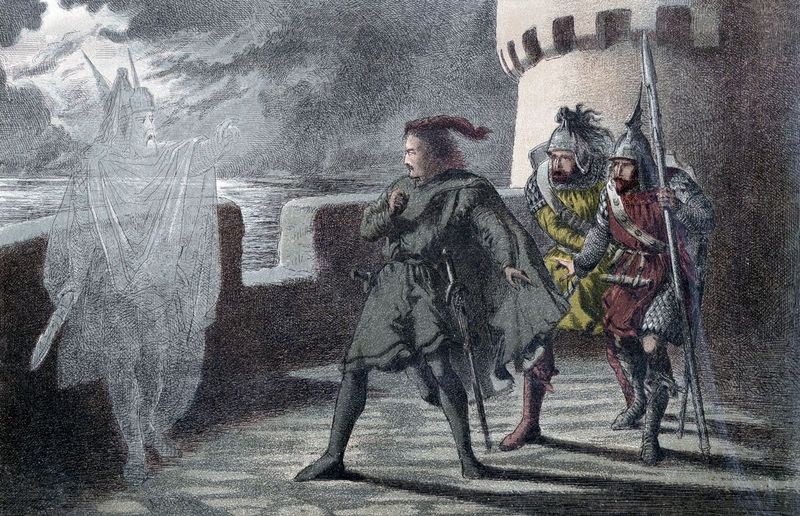
You thought death would stop me from nagging?

9. King Hamlet from Hamlet

All things considered, King Hamlet is the best of a bad lot — mainly because he isn’t around all that much. Appearing as a ghost to a number of the characters, his interactions with his son (other Hamlet) is mainly focused on avenging his death. It’s hard to be a good father when you’re busy calling out for blood and harping about your wrongful murder, but the King does his level best. Is he taking his son on camping trips or teaching him how to drive stick-shift? No, but then again he does care enough to return from the afterlife.

Sure, this seems like a good match.

8. Prospero from The Tempest

Prospero, the former Duke of Milan and father of Miranda, seems to have his daughter’s best interests at heart, which makes him an all-around decent parent. Because they are stranded on an island, he acts as both a father and mother figure, telling Miranda, “I have done nothing but in care of thee, of thee, my dear.” Despite their removed setting, they still can’t escape those pesky old-fashioned norms, which dictate that Prospero choose Miranda’s husband. All in all, his overbearing nature is minimal compared to the other patriarchs. Plus, he gets points for being able to perform magic tricks to keep things entertaining on those long, lonely island nights. His cruel and inhumane treatment of Caliban, on the other hand, is another matter and pretty unbecoming of a supposedly decent dad.

To thine ownself be true. That definitely won’t get you killed.

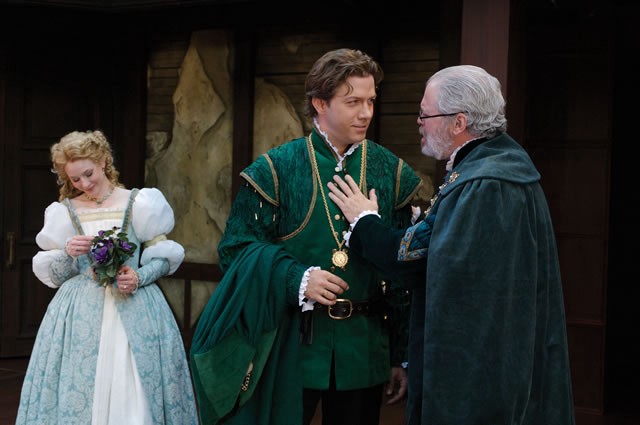
7. Polonius from Hamlet

Polonius is a classic helicopter parent: annoying but reasonably decent. Despite his mouthiness and nosiness (yes, that rare combination), I can’t help but see some sincerity in his preoccupation with Ophelia and Laertes. When Laertes departs for France, he gives him fatherly wisdom before having his servant go and spy on him to ensure that he is behaving morally. Still, he tells him “to thine ownself be true,” a piece of advice fathers are giving their children to this day. The advice only goes so far, unfortunately — both his children end up dead, like just about everyone else in this play.

Family meeting time!

6. Leonato from Much Ado About Nothing

It’s hard to determine whether Leonato’s fatherly intentions are as true as Prospero’s. Like most other Shakespearean fathers, he is completely controlling of his daughter, Hero. Despite a vast difference in age, he tells Hero to welcome the advances of suitor Don Pedro. Yet, when a rumor is spread that Hero is no longer pure, he is both outraged that his daughter is unchaste and affronted that people are talking negatively about his child.

Follow your gut, Lear. Banish her.

5. Lear from King Lear

King Lear’s insecurity is certainly to blame for his questionable expressions of fatherly “love.” Or, his dream of being king while his children handle the responsibilities of the position simply drives them further away. Lear stages a test of flattery to determine which of his three daughters loves him most (and who he can give the biggest piece of the kingdom to). After Cordelia refuses to participate, he orders her out of the kingdom, then proceeds to throw the king of all tantrums and eventually descends into madness. Essentially, Lear and his children manage to turn a family squabble into all-out civil war — all in the name of (basically) a minor filial rebellion. Typical.

The golden rule of parenting: nobody gets any until Julia Stiles gets some.

4. Baptista from The Taming of the Shrew

In typical Shakespearean father fashion, Baptista spends way too much time interested in his children’s love lives. Thankfully, while his daughters, Bianca and Katherine, don’t have to suffer through any sort of love tests, Baptista isn’t opposed to shamelessly taking bribes from their suitors. In a scene that results in him looking pretty damn foolish, he is duped by a costumed suitor who runs off with Bianca. Ah, karma.

Time to meet the boyfriend.

3. Brabantio from Othello

Brabantio takes the “disapproving father” trope to a whole new (horrible) level. Although he humors Othello by inviting him over to his home, Brabantio does not think it’s possible she actually fell in love with him, short of being drugged or bewitched. Thus, in a charming combo pack, Desdemona’s father is both racist and sexist. Lovely. Thinking his daughter to be his property, he is terrified of her interracial marriage. His solution? He disowns her after unsuccessfully trying to strip Othello of his title. His only redeeming fatherly act is that he dies of grief upon his daughter’s escape.

This is why you don’t give kids bedrooms with balconies.

2. Lord Capulet from Romeo and Juliet

Lord Capulet is a pretty horrible father, mainly due to his short temper and itchy finger (yes, that’s his own twisted euphemism for an inclination toward child abuse); he takes Brabantio’s manipulation to a whole new level by making emotional and physical threats. The father of Juliet, he seems like a good dad at the beginning when he shoos away Paris’s advances after his much-too-young daughter. However, his character quickly deteriorates in the eyes of the audience when he finally allows Paris to propose to her and her refusal throws him into a rage. He’s not too great at giving compliments, either. So fed up with her, he says, “Out, you baggage, / you tallow face.”

Give me obedience or give me death.

1. Egeus from A Midsummer Night’s Dream

Fatherhood may not be Egeus’s strong suit, but threatening people sure is. The worst father of them all, he’d rather not have his daughter around than have her disobey his orders. Egeus tries to keep Hermia from marrying the love of her life, Lysander, and instead urges her to marry Demetrius. So intent on controlling her, he demands that her punishment be the death penalty should she not comply with his orders. The Duke of Athens, Theseus, has more mercy on her than her own father, reducing the sentence from death to exile to a nunnery.

10 Fictional Mothers Who Will Make You Thank God for Yours

Summer Camp Is a Microcosm for Life

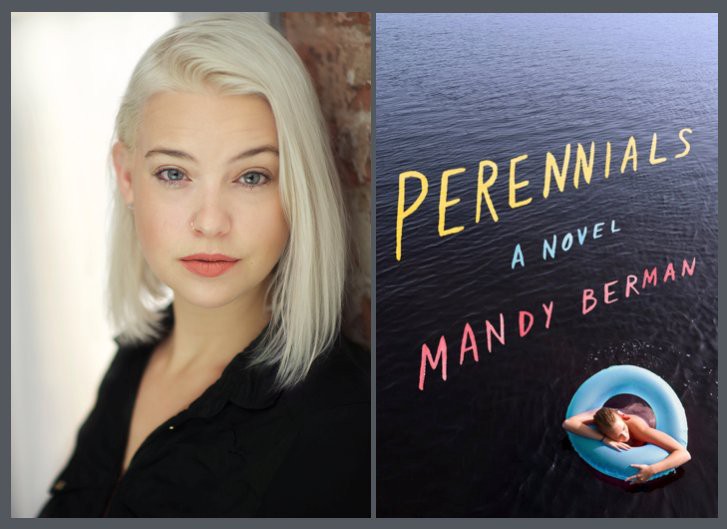
Mandy Berman’s debut novel, Perennials, opens with Rachel, age thirteen, trying to wake up her mother so that she can be driven to summer camp. Soon, we arrive to Camp Marigold, in the Berkshires, and meet Fiona, Rachel’s best “camp friend.” A book that tracks a summer in a sleepaway camp might sound like a saccharine beach reach, but Perennials is far from sweet. Berman tackles the changing female body, power dynamics in sex, and the pain involved in going from a girl to a woman. Soon after arriving at Camp Marigold, the novel jumps forward six years to give us insight into the lives of many people from the Marigold days: young campers, the director, Rachel’s struggling single mom. Perennials is about camp, but camp turns out to be more than just a place to spend the summer.

I recently met up with Berman in Brooklyn, where we discussed writing about the female body, turning a string of short stories into a novel, and why Philip Roth’s masturbation scenes get taken more seriously than Judy Blume.

Michelle Lyn King: I was thinking of your book yesterday because I heard a Brooklyn Heights tween in CVS discussing how one of her friends didn’t want to be in her cabin at sleepaway camp and she was really upset about it. She was so hurt.

Mandy Berman: Oh no! That’s a real issue. That’s a legitimate issue.

King: It was! She was really hurt. It reminded me how camp is this microcosm for…life. Okay, so, why don’t we begin by talking about how the book began? I know you went to Columbia’s MFA program. Did you start it there?

Berman: Yeah, I did start it there. I basically wrote it throughout the two years that I studied there. It started as a collection of linked stories. I knew that I wanted to write something in a camp world because it was something about that this idea — like you were saying — of the microcosm that really appealed to me. This sense that so much tends to happen there within such a short period of time. It’s really kind of this pressure cooker. I thought it would be a really perfect setting for fiction. Mo’s story was the first one I started writing. There was someone I knew when I worked at summer camp who had a similar story, who was a woman in her 30s and was a virgin. I was really curious about how a person gets to that place in their life and how things turn out that way for them, so I took that and ran with it. From there, all these different characters were appearing, like Rachel appeared, and Nell, and then Fiona appeared when I wrote Rachel’s story. I actually kind of worked backwards, in a way. With every workshop [at Columbia], I was essentially workshopping what was a different story and then they eventually became chapters.

Author Mandy Berman. Photo by Martin Bentsen.

King: That’s really interesting. I love that. I want to talk more about camp. Obviously, this is fiction and I don’t assume what happens to these characters happens to you, but I do assume you went to camp…

Berman: Yeah, I did. Yeah, I went to sleepaway camp for four summers, so from when I was 11 to 15 at Camp Sloane, which is in The Berkshires in Connecticut. So, same kind of setting. And then I went back for one summer when I was 19 as a counselor. I was there both of those ages that I write about. The 13-year-old summer and the 19-year-old summer were both formative for me.

King: Why is that? Other than those being really formative years, in general.

Berman: There was something about camp being the kind of place where you could try things out for the first time. It felt like a safe space to be able to figure out who you were, away from the “real world.” Middle school, where everything is…you know. I was bullied a lot as a kid. Camp was a place where I could get away from that. I could figure out another aspect of myself. I could try out being more outgoing, more friendly, less afraid to speak my mind. It was also a place to try out experiences for the first time. The first place to kiss a boy. You know, I feel like I might’ve even been a bully-er. I was a completely different person at camp. I took on a leadership role there. It was trying things on for size.

King: Yeah, you really get to be whoever you want at camp. There’s no one to fact-check you. I’m thinking of how in her Manhattan school, [the character] Rachel isn’t that experienced compared to her other city friends. But then she comes to camp and she’s the girl from the city, one of the more experienced girl, especially compared to Fiona.

Berman: Yeah, and in comparison to Fiona, Rachel is able to see how Fiona sees her and she seizes on that. I think there is power in being the girl from the city, who has seen a little bit more of the world. Things start earlier there. I think she uses that to her advantage.

King: Let’s talk about their friendship a bit. I haven’t really seen a female friendship written about in this way, mostly because they’re not part of each other’s “real life.” It’s a really specific type of friendship. They can tell one another things that they might not tell their friends who are in their day to day life. For example, Fiona tells Rachel that she wishes [her sister] Helen had never been born, and Rachel tells Fiona things about her dad that she doesn’t tell her friends back home. It seems like you get to be this other person, yes, but also you get to be the most pure version of yourself. You can tell people secrets and know they’re not going to tell everyone at school because they don’t know anyone at your school. I’m interested in hearing how you developed their friendship. There’s so much there. There’s a really intense power dynamic, the most obvious one being that Rachel is more outgoing. Guys naturally like her more. But Fiona has this family that Rachel really craves. I’m thinking of that moment when it’s Visiting Weekend and Rachel is so excited because her mom bought her all these snacks at CVS and then Rachel gets a horse. It’s this, Oh, fuck moment. Rachel realizes Fiona is always going to be able to one-up her when it comes to money and family.

Berman: Right. And then later in that chapter Rachel sneaks out to see Matthew [the guy Fiona likes]. I think the reason that chapter is so important is that it’s a pattern we then see for the rest of their friendship. It’s Rachel’s first moment of realizing, Okay, well, I might not have money and I might not have this nuclear family, but I have power over men and this is the way I’m going to use my power and then I’m going to withhold it from Fiona because that’s another form of power. So, there’s definitely that. There’s also…so much for Fiona is a given. It’s actually quite hard for her to see the ways in which she’s privileged and lucky. She doesn’t really have a lot to compare it to, except for Rachel. That moment where she goes to Rachel’s apartment [in New York] and she’s like, You only have one bedroom? That’s not the world she grew up in. She grew up in Westchester. Her whole life is very much life the family that she grew up in. I don’t think she quite realizes until she makes a friend like Rachel that those things aren’t a given. Those things are actually privileges and they’re something to be grateful for. I don’t think she even knows to use that to her advantage because she doesn’t realize it’s something she’s been given, and so she ends up playing the victim a lot because, as far as she knows, she is. In her sphere, she’s the middle child. She was kind of neglected and less good looking and less outgoing. I think Rachel forces her to see something outside the scope of herself.

King: For sure. Fiona doesn’t have the best image of herself at all. How females consider their body plays a large role in this book. Within the first few pages Rachel gets her period for the first time and is like, I didn’t know it could be brown. That really stuck with me. And then when Fiona goes to college and gains weight and feels so uncomfortable in her body. You write about women’s relationships to their body in a really honest way. I would love to hear how you considered women and their bodies when you were writing this book. That’s a terrible way to phrase that. I hope you know what I mean…

Berman: [Laughs] I do. And that was something that was really important to me in terms of writing a narrative about young women. Your body and your changing body is such a huge part of your life. How the outside world reacts to these changes that you have no control over winds up being so formative. You experience the male gaze for the first time. It was important for me to talk about the changing body in an honest way because so often we don’t. I don’t want to stay destigmatize because I don’t think it’s something that needs to be destigmatized. I think it’s just something that I wanted to talk about in the way that it had happened to me. It’s just a part of life. We talk about men’s bodies. You read early Philip Roth and he’s going on and on about the way he masturbates. Those things are so part of cannon and we don’t really get that in the same honest, unapologetic way for women’s bodies. And then with Fiona’s weight gain, that was something that happened to me. Gaining the Freshman Fifteen. It’s something that’s talked about and joked about a lot, but it was such a huge moment for my insecurities, for my self-confidence. Seeing your body look different than you’ve ever seen it before. I remember when I lost that weight and went back to school sophomore year, all the extra attention that I got and how easy that was to get. It’s so fucked up and fascinating at the same time. I think every woman goes through it in one way or another.

“You read early Philip Roth and he’s going on and on about the way he masturbates. Those things are so part of cannon and we don’t really get that in the same honest, unapologetic way for women’s bodies.”

King: Absolutely. When you wrote that Fiona wanted to tell people, This isn’t actually me. I was like, YES. I broke out in acne my sophomore year of college after basically never getting a breakout before, and I remember feeling like I wasn’t in my body. I was just constantly aware of my body in a way that I had never been, and felt ashamed for that, but couldn’t really help it. I find that a lot of books — even books that do write about women in a complex way, even books by women — kind of avoid writing about the body because it’s such tricky territory. I think sometimes…I don’t want to speak for all women here, obviously. I’m speaking about my own experience. I think it can be difficult to admit that gaining weight or breaking out in acne or whatever made you feel really bad and insecure. But that’s a lot of people’s experience. That was my experience. I was so glad to see it written about.

Berman: Oh, good. I remember there were some notes in workshop [about this]. Fiona’s body stuff used to be more pronounced in the first draft. The way the scene in the hotel room ended was with her throwing up originally, and a lot of workshop notes were, No. It’s too much. We read enough about about bulimia and eating disorders and it sort of borders on trite. And while I ended up taking that out, I ended up taking it out for different reasons. Not because eating disorders are trite, but because something less strong ended up feeling more powerful. Her running her hands under hot water ended up being weirder and more memorable than making herself throw up. But it kind of bummed me out that everyone thought writing about eating disorders was trite and bordered on YA. Everyone was like, Yeah, it’s really hard to do this without it getting too YA, too Lifetime movie. That sucks.

King: That absolutely sucks. It makes me mad. I have to say, before I read this book I expected it to be just about the best friends, about Fiona and Rachel. I don’t want to say it’s marketed in that way —

Berman: It is.

King: Yeah. Well, there have been so many books about female friendship that have come out in the last few years — I hesitate to phrase it that way because obviously they are also about a hundred other things and each one is very different — but I understand it’s a buzzy phrase. I think Rachel and Fiona very much are the beating heart of this novel, but there’s a lot more happening here. The first time I read the book, when it shifted to Denise [Rachel’s mom] in her car driving back from sleepaway camp, I was the tiniest bit thrown. I was like, Oh, wait. I thought we were just staying with the best friends. I thought we were just staying with these girls. That’s when I understood that the book was going to open up and give us insight into all these different characters. I know a little bit about that that decision, based off you talking about starting the book off as a linked collection, but I’d love to hear a bit more about how you decided to focus in on these characters. Were there characters that you thought you were going to focus in on or maybe you did write and then they were cut?

Berman: The one character I cut was Mikey. It was just too hard to write a twelve-year-old boy. It sounded so silly. I couldn’t do it. It sounded so juvenile. It just didn’t work. I was trying to write about his obsession with comic books and I was like, You know, this just isn’t going to happen for me. [Laughs]

King: Oh, yeah. I could never imagine what goes on in a twelve-year-old boy’s head. [Laughs] Truly, who knows?

Berman: But, yeah, as far as the form goes, it started that way. All these different narrative perspectives. I think it’s marketed the way it is because it’s easy for people to understand just one storyline, like just in terms of picking up a book and buying it. But I’m really interested in how different people react differently to the same events. So, over the course of one summer, you get so many different people’s internal experiences. Ostensibly, all the same things happened that summer, but the way that they all experienced those things are completely different. For example, the Jack chapter, which is probably the most different —

King: Yeah, I want to talk specifically about him.

Berman: Yeah, his chapter was one of the earliest I wrote. [SPOILER] I just felt like Rachel would definitely sleep with an older guy. It just felt like what she would do. So, I thought, why don’t I just write this guy’s story and see what comes out? The way that I write is I don’t outline beforehand. I just sort of discover as I do, and I was just really drawn to writing everyone’s experiences. Everyone came in at different times. Helen actually didn’t come in until much later. Shira was another one who came in early. I wanted to know what the experience was like for someone who wasn’t white to come to this predominately white camp. I wanted that voice to be in the book. I just kept being drawn to different people. I’d start with one story and be drawn to a character that showed up in that story. Rachel and Fiona’s mothers were much later voices. I didn’t want the whole book to feel too young. I wanted it to be more well-rounded. It was a good challenge.

King: That’s interesting that you say Helen didn’t come until much later, because [SPOILER] her death is the thing that will ultimately end up defining that summer for all those people. Everything else sort of pales in comparison, especially for Fiona and her family. So, when did she come in?

Berman: She…I think probably when I started writing Fiona’s chapters. Helen showed up at the dinner table scene, and then I was like, Oh, well, she’d most likely go to this camp, too. I think I had already written Shira at this point and was like, Well, they’ll be around the same age, so why don’t I put them together? And I’ll put them in Rachel’s tent. It was a way of condensing all those stories. And then it just…it sort of hit me that Helen was the martyr of the story, that she needed to die, and that she needed to die before her first period. That was so important to me. That became what interested me the most, writing a narrative about a girl who is still a girl. I wanted at least one of those. Writing that was…it was fun and it was sad, but getting to write about all these things that she was doing for the first time, I felt like we needed that younger spirit.

King: And she still has this darkness to her. I’m thinking of when she’s at a birthday party and she eats another slice cake, because she knows she can and she knows it’ll make the adults jealous. She can eat two slices of cake and not gain a pound.

Berman: Yeah. She has some rebellion to her. She sneaks over with Mikey at one point to go to the shed. She’s at this point where she’s starting to play with all the different ways she can rebel and test her limits.

King: Which is what camp is for, in a way. I want to talk more about Jack [the camp director]. Let’s begin by you talking about what your character development was like for him. It would’ve been so easy for you to make him into this incredibly sinister, predatory man, and it’s much more complex than that. He understands that he’s just a conquest for Rachel. He understands their power dynamic.

Berman: I definitely struggled with that for a long time, how to not make him a cliche, especially because he’s the only male voice. I didn’t want him to be “the bad guy,” because even though he is a bad guy, I wanted you to feel for him until the very end. Going into his family was certainly important in that regard. Learning that he had been heartbroken and that he didn’t have a much of a relationship with his son. I actually probably did the most research for that role. Just like…what do camp directors do during the year?

King: What do camp directors do during the year?

Berman: They raise money, basically. But a lot of camp directors do just live year-round at these places. I thought there was a lot of opportunity for loneliness there. I think loneliness tends to be a pretty good motivator for almost anything. Writing about his background story allowed me to recognize the things that were a bit more tender and sad about him.

King: Yeah. He’s almost too sad to hate. He’s…

Berman: He’s pathetic.

King: Yeah, he’s pathetic. I want to talk about the sexual assault, and how you went about writing that. I reread that scene a few times and would be really interested…I imagine it was a difficult scene to write. It seems like you were…I don’t want to use the word careful, but it seems like you were in control of the scene.

Berman: The most important thing to me is that it was ambiguous. That readers were left feeling uncomfortable about it and not quite sure how to take it. I wanted it to be a slow-burn over the following chapters. The ambiguity and the drunkenness was really important to that, but I think that writing a character…I wouldn’t necessarily call Rachel promiscuous but I would call her in control of her sexuality. I wanted to write someone who would maybe, in previous narratives, be dismissed as a slut or “asking for it.” I wanted to explore how that happens, the ways that young women’s lives are so complicated that it’s not just a matter of asking for it. It was important to me to have a nuanced portrayal of it.

King: Yeah. That makes sense. And I feel like the kind of people who use phrases like “she was asking for it” are also the people who say, If she knew him, it doesn’t count. And Rachel admits, he was her friend. She liked him. They hung out together.

Berman: Yeah. There’s such a fine line. She knows him. They’re both wasted. She’s letting him walk her home. She doesn’t push him away, really. But she is clearly too incapacitated to sleep with him and afterwards it’s clear that it’s not what she wanted. That situation is a little microcosm of what we as women experience every day.

King: We keep going back to this word microcosm, and that’s really what camp is. I was reading some of the Amazon reviews and you tweeted one —

Berman: Dark and creepy! [Laughs]

King: [Laughs] Right. As if that’s a bad thing! I think a lot of times when people hear a novel is set in a sleepaway camp, they might thing, That must be a really fun book.

Berman: Totally. And it’s being marketed as a summer read. Yeah. I’m sure there will be more people who think they’re picking up a light-hearted beach book and might be unpleasantly surprised. As a woman writer, I think you’re always going to get a lighter treatment than you might want. If you’re a woman writing about women and writing about women’s inner lives, it’s not always seen as serious as you want. I hate to keep going back to the Philip Roth analogy.

“As a woman writer, I think you’re always going to get a lighter treatment than you might want.”

King: I am happy to talk about Philip Roth for three hours.

Berman: I love Philip Roth for many reasons. I’m probably not even well-versed enough in his work to be talking about him as much as I am, but I guess I’m talking more about the treatment of his books versus the treatment of books about young adolescent women. We just don’t have those as serious members of the canon in the same way Portnoy’s Complaint is. Books like that, for me at least, are Judy Blume books. And those are considered fluffy, but books like Are You There, God, It’s Me, Margaret? and Summer Sisters were so formative. They were one of the first things that reflected back on me as I was growing up. All of those books that were young adult, “girl” books were so real and beautiful and moving and important to me, and they’re not considered serious literature.

King: Absolutely. This is a book that takes girls and girlhood seriously. One scene that really stayed with me is when Mikey and Shira go out on the canoe and when they come back late the counselor asks where they were. Mikey lies and when the counselor asks Shira if he’s telling the truth, you write that Shira understands the rules are different for boys —

Berman: For white boys, especially.

King: Yeah. Can you actually talk more about Shira’s character? She’s this outcast in many ways.

Berman: It was important to me that the book was not one note in a lot of ways. I didn’t want it to be one note class-wise. I didn’t want it to be one-note with gender, with sexuality, with race, with age. Any of these things. I wanted so many different varieties of voices. So, it made the most sense to me to have one non-white character. I wanted to pull out of scope for a little bit, and I think Rachel does some of this, as well. She’s obviously from a different class than Fiona and Helen are, but I wanted to shed some light on some of the ridiculousness of this camp world and the insular nature of it. Some of the irony of it, as well. The fact that these kids who come here every summer to ostensibly be in nature actually have no interest in boating or hiking or swimming in the lake. They just want to go to the dances and get dressed up and gossip. I thought Shira was a really good example of someone who just wanted to be outside. I think of her as pre-sexual. She’s not really interested in boys yet. She just wants to have new experiences in a way that a kid might, especially a kid who has spent most of their life in a small apartment in the Bronx. That was a difficult one to write. I will say that Victor LaValle, again, was hugely helpful with this. He’s black and I’m obviously not. He was…he helped usher me through these double-standards in terms of the way Shira might need to protect herself and react in that experience and the way that Mikey wouldn’t have to. Being new to this camp but also being a girl of color who is genuinely more afraid, with good reason, of getting in trouble. Of becoming the scapegoat. So, even though it kind of tears up the relationship between Mikey and Shira, she needs to do it in this moment of self-preservation. And later she gets really homesick because she just wants to be a kid again. She’s faced with this really adult decision that she instinctively knows to do, but isn’t really ready for.

King: Is there anything we haven’t talked about that you want to talk about?

Berman: One of the most important things to me writing this book was that I wanted the experience that I had to be written down. I haven’t read enough of them.

King: Like what?

Berman: Well, when we were talking about women’s bodies. Your changing body and the way the world is reacting to it. But just the complexity of female friendships. How they can be simultaneously be so loving and so…girls can be so loyal to each other and have a deep connection that is only possible between two girls, especially of that age, but also with just such an ability to be cruel to each other, too. To pick and pick and pick at these little things until they grow into a lifetime of resentments and insecurities and issues with other women. I wanted to explore how that duality is possible.

California Soul: A Literary Guide to SoCal Beach Towns

Before the Internet, TV Guide was the Place for Smart Criticism

My family was a TV Guide family. Every Thursday the issue would arrive, flexible and thick, giving promising weight to that day’s batch of mail. On the table next to my father’s recliner was a marked-off spot where the TV Guide was to be stashed when nobody was using it. This rule of order was a rare critical point of agreement in our house. It was a stop-the-presses moment whenever the TV Guide went missing, on the same level as having to scour the neighborhood whenever the dog wandered off.

I watched a lot of television as a kid in the eighties, and my family couldn’t afford cable until my junior year of high school, so the machinery of pre-digital TV broadcasting was an object of fascination for me, much the way that some commuters follow upgrades to public transit. I memorized call letters, channel numbers, and network affiliates; I knew which affiliates belonged to the same network because their program listings were bulleted together in the TV Guide.

It was a stop-the-presses moment whenever the TV Guide went missing, on the same level as having to scour the neighborhood whenever the dog wandered off.

Nowadays, nobody even identifies channels with their numbers anymore, except when they’re painted on the sides of news vans. But in the days before remote control I could spin the dial through the void of snowy frequencies — extending to the faraway UHF tundra of Channel 83 — to stop on a dime on any channel I wanted.

We lived north of Boston, a TV hub that had four low-number network stations and three decent independent stations. Since our house had a rotating aerial antenna, we could also watch, with tolerable levels of snowiness, affiliates in New Hampshire, Worcester, Rhode Island, and even Maine when the weather cooperated. The compactness of New England geography meant that all of these channels got listed in our TV Guide. More than any young adult novel, it was my weekly mandatory reading.

Why People Don’t Like “I Love Dick” (Hint: Because It’s About Women)

On one level, TV Guide was a template for planning your TV-watching week. The front matter was crammed with articles, reviews, and interviews that teased new episodes of shows. If a new episode of MacGyver ran up against a Very Special Episode of The Hogan Family, you knew you would have to make a decision. You could read the brief present-tense episode summary (“MacGyver joins a U.S.-Soviet team trying to salvage gold from a wrecked World War II transport plane”) and work out a schedule — not a small thing if your family owned only one TV.

If a new episode of MacGyver ran up against a Very Special Episode of The Hogan Family, you knew you would have to make a decision.

It’s a dated notion now — evaporated, of course, with the advent of TiVo, On Demand, and Internet TV, all of which encourage at-will binge-watching on our laptops in bed. (Even the red TV Guide cover logo evolved with the shape of television screens — rounder in the Philco years, corners squared off in the 1970s, and, in its 21st-century incarnation, stretched horizontally to match the aspect ratio of flatscreens.)

TV Guide covers from the Philco years, the 1970s, and the 21st century

But in its best years, TV Guide was more than a guide; it allowed you to participate in the cultural conversation of television even through those shows you never watched, like you might read The New York Times Book Review about books you don’t ever plan to read. Before the Internet was available to host this conversation, TV Guide was the document that brought it to the masses, physically and metaphorically denser than the gossipy, photo-filled space-holder we find in the supermarket today. Its editors were determined to ensure that Americans embrace television as serious, even highbrow art. Toward that end, the magazine brought in the heavy lumber, a who’s who of literati, to write for its pages. It brought in John Cheever, a National Book Critics Circle, National Book Award, and Pulitzer Prize winning author, to write about the experience of watching TV commercials:

I am not an aesthetician, but in my opinion any art form or means of communication enjoys a continuous process of growth and change, rather like something organic, and one must be responsible to one’s beginnings.

Also delivering critical wit and social commentary for the magazine were Clive James, Anthony Burgess, Margaret Mead, John Updike, Joyce Carol Oates, David Halberstam, and William F. Buckley, Jr. (“The Winter Olympics aren’t a velleity for the Swiss,” wrote Buckley in 1988. “They are a compulsion.”). For much of its early existence, right alongside The New York Review of Books, TV Guide treated television as a medium of cultural heft and assumed that its readers wanted it that way. Its vocabulary took for granted that its audience, when they weren’t tuning in, were reading books.

TV Guide was more than a guide; it allowed you to participate in the cultural conversation of television even through those shows you never watched, like you might read The New York Times Book Review about books you don’t ever plan to read.

And so into the living room it brought theory: “Why the Feminists Condemn Television” reads the cover of the August 8, 1970 issue, with Marlo Thomas of That Girl lying on the grass.

It tackled social concerns: “How TV Police Shows Give Police a Headache” (December 18, 1971, over a picture of the Partridge family).

It even attempted conscientious media criticism: over Michael J. Fox on the cover of the September 21, 1985 issue are headlines teasing a retrospective of the hostage crisis in Iran. “Were There Payoffs to Terrorists?” “How Fair Was the Reporting?” “Was TV a Good or Bad Influence?”

This was the forum against which the anthropologist Mead, in January 1973, profiled An American Family, the twelve-part PBS documentary series widely considered to be one of the earliest entries in the genre of reality television. Observing the members of southern California’s Loud family from the bushes, Mead identified the then-unnamed genre as “a new kind of art form … as significant as the invention of drama or the novel — a new way in which people can learn to look at life, by seeing the real life of others interpreted by the camera.”

In was in this cozy medium that Joyce Carol Oates, in 1985, wrote a simmering defense of Hill Street Blues, a show that shocked her for presenting something beyond what she expected of television, something “Dickensian in its superb character studies, its energy, its variety; above all, its audacity.”

In was in this cozy medium that Joyce Carol Oates, in 1985, wrote a simmering defense of Hill Street Blues, a show that shocked her for presenting something beyond what she expected of television.

Oates’ essay came more than twenty years after Susan Sontag defended the value of camp to high culture in Partisan Review and twenty years before dramas like Mad Men would be analyzed by television critics, such as The New Yorker’s Emily Nussbaum, as avenues for the complex moral reasoning once offered almost exclusively by novels. Nussbaum was awarded the 2016 Pulitzer Prize in the category of Criticism precisely for her capability of leveraging the art as it reconciled its auteurist and commercial ambitions. “There’s something … that I find myself craving these days,” she wrote in response to the Mad Men finale in October 2015, “that rude resistance to being sold to, the insistence that there is, after all, such a thing as selling out.”

The boundaries once closely and politely hewn by television are gone: not just the tidy genres — the “Comedy” or “Western” or “Crime Drama” suffixed onto the entries TV Guide’s listings — nor the screen dimensions, but the size of the bite. Episodes aren’t episodic anymore. Not only can shows be watched in binges, they can be ­re-watched just as easily, so arcs are written with a forgiveness of the leaky human memory. It can take three series binges of Arrested Development before you realize that its visual gags (the dozens of hand references) in Season One set up a plot line (Buster Bluth losing his hand to a seal) late in Season Two. Where television used to be vegging material, now it’s presented in a way that expects the viewer to subscribe.

TV Guide’s writers cared about how media was received by the viewer, held hostage at home by four networks and a scatter of affiliates. This was a time, after all, when the literary and the visual often intersected: when Dick Cavett had to separate the feuding Gore Vidal and Norman Mailer, when Sontag and Marshall McLuhan were cameoing in Woody Allen films. TV Guide understood that, for many, television was the conduit through which history would be learned and events of the day critiqued. And its forays into the highbrow were not limited to the written word. For the cover of the March 5, 1966 issue, Andy Warhol featured Get Smart’s Agent 99, Barbara Feldon, in a Beatles-esque foursquare silkscreen. Salvador Dalí painted a moonscape-as-commentary for the June 8, 1968 issue that also featured an interview with the artist. Such was the occasional dispatch of culture that ended up in the hands of homemakers and teenagers and anyone who just wanted to know who Johnny Carson’s guests would be that week, or which Creature Feature movies were showing on Sunday afternoon.

TV Guide covers designed by Andy Warhol and Salvador Dalí

Walter Annenberg was already descended from a publishing family when he launched TV Guide in 1952. (His father, Moses “Moe” Annenberg, published the Daily Racing Form and later purchased The Philadelphia Inquirer.) Annenberg’s TV Guide essentially took the formats of preexisting local TV-listings publications out of New York, Boston, Chicago, Philadelphia, Washington, and Scranton — all of which he purchased — and streamlined them into a national resource with regional tangents. The first national issue hit newsstands on April 3, 1953. The cover featured a blanket-wrapped Desi Arnaz, Jr., who had been born to Lucille Ball three months earlier via a Caesarian section that was scheduled to coincide with the birth of Lucy Ricardo’s son, Ricky, on I Love Lucy, on January 19, the eve of Dwight Eisenhower’s inauguration. The tabloidish headline — “Lucy’s $50,000,000 Baby” — was the first wry grenade tossed in the magazine’s critique of celebrity endorsement, suggesting that corruption was at hand in the decision to bring into the world a child with no choice but to be famous.

Curating a New Literary Canon

With that, TV Guide seized the reins as the playbill that introduced television to its audience of new users. There were other television viewing guides, but the ubiquity of TV Guide was so accepted that some chair manufacturers would include pockets sized precisely to keep the digest-size magazine close at hand. In the 1980s I owned a TV Guide-branded board game, with TV trivia questions printed in booklets the same size as the magazine.

In 1988, Triangle Publications sold TV Guide to Rupert Murdoch’s News Corp. for $3 billion. It was under Murdoch that the magazine was thinned into more of a pop culture pamphlet, stripping away the challenge and commentary, outside of its “Cheers & Jeers” section. (The move suggests that Murdoch, for all his hard editorial influence on his other properties, felt that politics had its place, and it wasn’t in the home.) Ten years after the News Corp. acquisition, TV Guide was acquired by what would later become GemStar International Group, maker of VCR Plus recording devices, at which point the brand’s focus switched to digital menus, interactive programming, and producing Entertainment Tonight-style spotlights on the TV Guide Channel.

TV Guide, in its best incarnation, was doomed long before the developments of DVRs. As digital cable guides became more of a preferred utility, the magazine changed its format, abandoning the digest size in 2005 in favor of the larger-size format, doing away with local editions, then switching to a biweekly publishing schedule the following year. It still gets sold in the checkout aisle next to Us Weekly and Soap Opera Digest, and, if reports are to be believed, it still makes money.

TV Guide, in its best incarnation, was doomed long before the developments of DVRs.

I don’t watch anywhere near as much television as I used to. I TiVo Jeopardy! every evening. When I do binge-watch a show, it’s usually an older series such as The Rockford Files or thirtysomething, something I missed the first time around that taps into my nostalgia for older production models, storylines forged to maneuver around analog limits, or even just for cars with bumpers made out of metal.

Part of that can be attributed to snobbery, I’ll admit, but I think it also arises from a hesitance to subscribe to something new that I know will ask so much more of me than it used to. Even a great series like Sherlock, with its feature-film-length episodes and piling up of clever dramatic twists, can be an exhausting project to watch, requiring not just a blocking out of time but a strategic intake of breath before the journey begins.

It used to be that television was the medium through which powerful external forces subverted their way into your living room. But then television broke out of the living room, knowing that the consumer would follow it wherever it went. And maybe that’s why the model that once thrived for TV Guide can no longer work: it’s because we already know more about what we watch and how we watch than John Cheever or Joyce Carol Oates or any critical mind can tell us.

Black Mirror Will Soon Unsettle You to Your Very Core in Book Form

Plus Tracy K. Smith is our new poet laureate, Stephen King is blocked by Trump, and the handmaids strike again

In today’s literary news, Black Mirror is set to unsettle and unnerve you in ink starting next year, red-cloaked women stage a sit-in to fight an abortion bill in Ohio, Tracy K. Smith may be coming to your area as the new poet laureate, and it finally happened: President Trump blocked Stephen King.

Black Mirror will be adapted as a series of books

Get ready to be unnerved and unsettled by Charlie Booker’s twisted sensibilities and preoccupations…in print! The British show turned Netflix hit, Black Mirror, is being adapted into a three-volume series of books, according to an announcement from Penguin Random House. Booker is set to edit the series, which will feature contributions from a slew of TBA literary talent. Booker described the project in typically wry fashion: “All-new Black Mirror stories from exciting authors — that’s a joyous prospect. And they’re appearing in a high-tech new format known as a book…Apparently, you just have to glance at some sort of ink code printed on paper and images and sounds magically appear in your head, enacting the story. Sounds far-fetched to me, but we’ll see.” Like the series, the books will take anthology form, but you can count on a consistently skewed worldview.

[Entertainment Weekly/Dan Heching]

Tracy K. Smith is America’s new poet laureate

Tracy K. Smith has been named the new U.S. poet laureate. 45 years old, Smith has already won a number of awards, including the Pulitzer Prize. Librarian of Congress Carla Hayden bestowed the title on Smith today saying, “Her work travels the world and takes on its voices; brings history and memory to life; calls on the power of literature as well as science, religion and pop culture.” Smith, whose new status provides her with an office in the Library, a travel fund, and an official budget, is free to do what she likes with her new resources. The current Princeton professor expressed a desire to travel to small towns and rural areas where literary festivals usually don’t take place, and to expose young people to poetry. Smith is now among a group of distinguished poet laureates who came before her, including Robert Hass, Rita Dove, and Robert Pinsky.

[NY Times/Alexandra Alter]

It finally happened: Stephen King blocked by Trump on Twitter

Stephen King’s online war against President Trump seems to have come to an end. Apparently fed up with King’s continuous criticism via Twitter, Trump has blocked him from seeing his posts. The famous author, who has a large following of 3.3 million, has been using his platform to mock the POTUS and voice his concerns about the new administration since November. Finding out about his barred access to Trump’s controversial Twitter page King tweeted, “Trump has blocked me from reading his tweets. I may have to kill myself.” The block didn’t go down without a fight from the literary community. Fellow Trump critic J.K. Rowling assured King that he would still get his doses of Trump ridiculousness from her: “I still have access. I’ll DM them to you,” she tweeted at him. Literary camaraderie is unbeatable.

[HuffPost/Maddie Crum]

Women dressed as handmaids protest abortion bill in Ohio

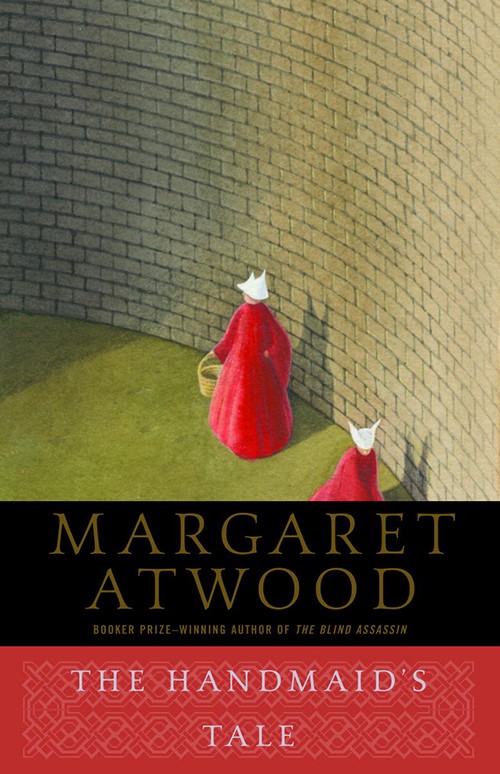
A red cloak and a white bonnet speak a thousand words these days. Over the past few months, women have been donning costumes from Margaret Atwood’s dystopian novel The Handmaid’s Tale as a way to protest in favor of reproductive rights all over the United States. Protests in Missouri around the state capitol garnered attention in early May. Now, Ohio is the latest state to experience the handmaids’ silent rally. On Tuesday, a group of costumed women went to the statehouse to protest State Bill 145, which would ban a prevalent method for second-trimester abortions. They took the front row of the hall, silently observing the decision process. Protests of this kind are garnering a lot of attention on social media, bearing resemblance to Hulu’s own depictions of the fictional group caped and hooded in red and white. NARAL Pro Choice Ohio documented much of the protest via Twitter, noting the statements made during the hearing. Photos depict the women walking in pairs with eyes downcast, as would be typical in the oppressive, fictional land of Gilead.

[HuffPost/Catherine Pearson]

Kurt Baumeister Envisions an Even More Bizarre America

Injury by Proxy: Why “The Handmaid’s Tale” Is So Painful to Watch

I was telling a friend how I couldn’t stomach violence on TV lately. I recently had a baby — “had” being the most outrageous euphemism for labor — and since then I’ve found that I involuntarily imagine my child’s body in place of the characters, his body receiving whatever pain is inflicted on them. I have similarly begun to think of how these characters, these actors, and everyone around me in real life, are all someone’s baby, the product of every ounce of someone else’s resources. As one of my care providers put it, when you’re pregnant the baby takes all the best parts of everything you consume and leaves you with the dregs, its body too precious to go without. If you don’t drink enough water, the baby takes what it needs and you just don’t get any. As babies, we each did the same––our bodies were also precious. We don’t have a word for the specific and infinite preciousness of a body; my friend had just lost a family member, and like me he also couldn’t stand violence on TV, said it made him almost literally sick, that now it felt too real.

Alexis Bledel in “The Handmaid’s Tale”

“Too real” is how it feels watching Alexis Bledel — as Ofglen, in Hulu’s adaptation of Margaret Atwood’s The Handmaid’s Tale — forced to see her lover being hanged to death. Imagine your lover, the preciousness of their body. Can you bear the thought of something happening to it? Of death happening to it? Of seeing death happen to it? Too real is how it feels watching a handmaid in labor while the woman who owns her mimes labor beside her; how it feels to watch the handmaid deliver a baby and have that baby taken from her body, handed to the woman who owns both her and her baby, her labor. Too real is watching Ofglen wake after a clitoridectomy to be told it was irrelevant, to watch her realize what has been done to her unconscious, precious body.

These specific examples are all in Hulu’s extensions of Atwood’s 1986 classic, and don’t appear in the original text. But they are logical extensions. In the novel, widespread pollution has lead to a fertility crisis in the United States and beyond. This, combined with distant threats of terrorism, lays the groundwork for Gilead to take over, a totalitarian regime under which it becomes illegal for women to read, make money, or own property, and where a certain category of fertile women — called “handmaids” — are cast into reproductive servitude for rich men and their infertile wives. Atwood herself wrote the tale as a work of speculative fiction, because even if the world was imagined, the particular details were not. In an interview with PBS, Atwood admitted, “I made sure that every horrific detail in the book had happened somewhere at sometime.”

American slavery is one of the times and places to which Atwood refers, when women were institutionally owned, raped, and forced to bear children, only to have those children taken from them. In her piece “For black women, The Handmaid’s Tale’s dystopia is real — and telling,” Melayna Williams writes, “This, of course, was the reality for black women in America for hundreds of years, a period where it was nearly impossible for a woman to be born, live, and die of old age under a social system that deemed neither her body nor the fruit of her womb to be her own.” An American slave mother would have nine to ten babies on average (would “have”). How many slave mothers? How many women’s precious bodies? How many precious bodies were they forced to make from their own?

There is more than one way of forcing women to have babies — they don’t all resemble America’s history of slavery, or Atwood’s speculative Gilead. They may take the form of legislation restricting access to healthcare for women, or changing regulations so that clinics have to close, or changing access to insurance so that the poorest women’s options for contraception, education, and abortion are geographically or financially unattainable. As Mike Pence — who signed a law in 2016 that mandated funerals for fetuses — was made vice president, and as bills pass like Texas Senate Bill 25, which allows doctors to lie to patients about fetal abnormalities that might cause them to seek abortions, it seems as though we are headed farther and farther from the kind of country in which no women are forced to have babies — not black women, not poor women. No women.

Recently, at a talk she gave at BAM, the poet Claudia Rankine spoke about moral injury:

There’s a phrase called ‘moral injury.’ It’s a phrase they use for the military, and it’s when a soldier goes into war, goes into battle — and the things that they’re forced to do, the things that they’re forced to see, don’t line up with who they are as human beings. And so they experience a break in themselves. That’s what’s called the moral injury: their moral idea of how they are in the world has been broken, and they’ve become broken because of it.

Rankine was referring to our current moment, in this country, right now. When we see, since 2015, a “near tripling of anti-Muslim hate groups,” and see the president taking down the Spanish language-version of whitehouse.gov, as well as the pages on civil rights, climate change, and LBGTQ issues, we experience moral injury. When the president withholds federal dollars from sanctuary cities, and publishes lists solely of crimes committed by immigrants, we experience moral injury. When we see Donald Trump acting out old totalitarian ideas, as though The Handmaid’s Tale were a playbook — with Muslim bans and distant wars, the rolling back of environmental protections and the appointing of a global warming denier to head the EPA — we experience moral injury. When we see Vice President Mike Pence’s puritanical view of women being enshrined as law, it causes moral injury.

Moral injury is about bodies, how we treat each other’s bodies. Black bodies, Muslim bodies, LBGTQ bodies, immigrant bodies, Spanish-speaking bodies, women’s bodies, bodies that breathe air and drink water. We are implicated in what our president does; we live in the country he is the president of. We are represented by him to the world. We are participants in his reality, this reality TV star, whether in support or in protest, because it has become our reality now. And it is our moral injury when a body is hurt because of our country.

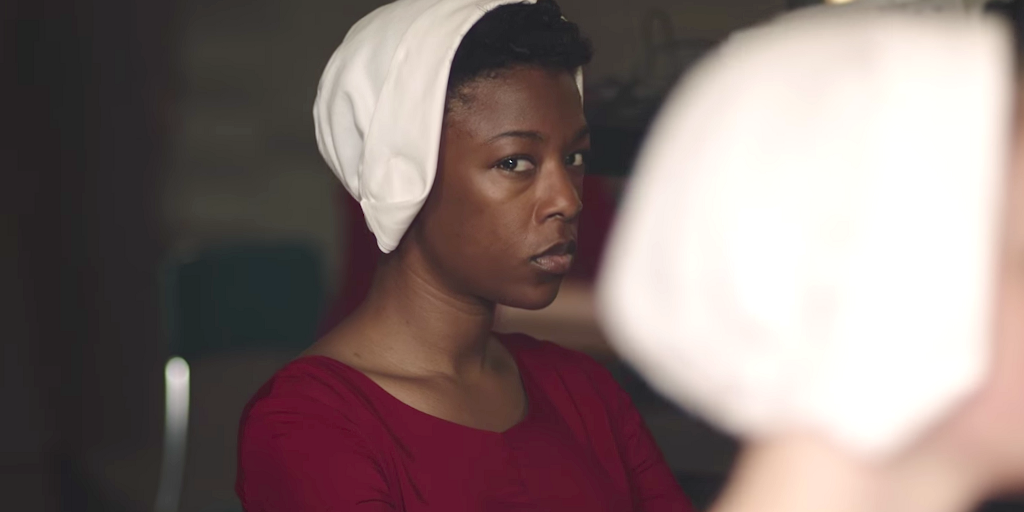
Samira Wiley as Moira in “The Handmaid’s Tale”

Hulu’s adaptation of The Handmaid’s Tale makes its moral injuries feel real, more so even than Atwood’s novel, in part because it is so visceral. To watch Elisabeth Moss in the opening scene as she tries to escape through the woods with her daughter, to hear her black husband get shot, and hear her beg, “Please don’t take her, please don’t take her” as their daughter is ripped from her arms, to see her knocked unconscious by the state agents who’ve rendered them all powerless to do anything, is to feel morally injured. The performances of Moss, Bledel, and Samira Wiley (as Moss’s friend Moira) are key to the series’ visceral impact. In flashbacks to the gradual takeover of the nation by Gilead’s repressive regime, Moss and Wiley have a conversation that many Americans had, following our presidential election and what was promised to come. “They can’t just do this. They can’t,” the characters say. “We’re pulling together a march for Thursday morning,” they say.

And then we see those same characters — characters we relate to, in a world we recognize — as they begin to become powerless; their bodies brutalized, their priorities shifting to mere survival. In the reeducation center, where women are tortured and broken into becoming handmaids, Moss and Wiley’s characters join in with a group’s chant, shaming a woman for the fact that she was raped. During the monthly “ceremony,” Moss submits to being held by the woman who owns her, Mrs. Waterford (Yvonne Strahovski), while she is raped by the woman’s husband, Commander Waterford (Joseph Fiennes). And when Bledel’s lover is hanged, the only possible protest comes from her eyes, her mouth muffled by some sort of mask. I will never forget her eyes. If the book is a cautionary tale, if reading it is like a warning to look both ways before you cross the street, the performances of Moss, Wiley, and Bledel make watching the show like being hit by a bus. We feel their injury in our bodies.

Zadie Smith, in her essay “Man vs. Corpse,” writes that, “I’m a sentimental humanist: I believe art is here to help, even if the help is painful — especially then.” Smith is looking at a picture of a corpse. “Imagine being a corpse,” she writes. Hulu’s series invites us to imagine a lot of things, though perhaps the scariest is imagining the loss of control over one’s body, imagining being forced to have children. Many people now living in America don’t even have to imagine. Nevertheless, I believe The Handmaid’s Tale is here to help, and maybe in more concrete ways than expanding our capacity for empathy. Already the image of the handmaid has become a disturbing and powerful counter-symbol for women’s rights, employed in protests where those rights are imminently in danger. Which is good news, given that we now live in a world where it’s possible to imagine Vice President Mike Pence watching The Handmaid’s Tale and thinking, “What a brilliant idea. I can’t believe a woman had it.”

Why People Don’t Like “I Love Dick” (Hint: Because It’s About Women)

A Hollywood Story of Star-crossed Philanderers

“Mr. and Mrs. P Are Married” By Elizabeth Crane

Mrs. P is born on a cold day in West Virginia in 1947, eyes open, to a homemaker and a general practitioner. Worrying everyone terribly, she does not speak until her third birthday, when she says, I have to go. No one knows what this means. When directed toward the bathroom, she looks in and shakes her head. The child is immediately signed up for Catholic school.

Mr. P is born in Los Angeles, California, in 1941 with a slap to the bottom that literally knocks the shit out of him, and it’s not so much a sign of what’s to come, it’s the opposite if anything, as it is the first in a long series of unfortunate incidents.

His parents had once been in vaudeville, if that has anything to do with anything. We doubt it, but just putting it out there.

Upon turning thirteen, Mrs. P’s mother cuts her daughter’s long blond hair into a Jackie-style bob, which does not suit her. It’s the latest thing, her mother says, but Mrs. P will have short hair only one more time in her life, which will also be a mistake. Mrs. P loves her mother (if not as much this day as others), but she is now and will always be a daddy’s girl. (I’m hideous!/Baby girl, you couldn’t be hideous if you grew a camel’s hump on your back. Hair grows, sweet thing, you just hold on./She hates me, why else would she do this?/Sweet pea, your mama doesn’t hate you, I reckon she’s just a speck jealous because the bloom is off her rose and yours is just opening up.) Mrs. P wonders for a moment what will happen when the bloom falls off her own rose, but as soon as that thought passes, she tears off for the dime store, where she pockets a mascara and a “Fatal Apple” red lipstick. In addition to bloom-loss prevention, young Mrs. P hopes this will bring some edge to her style, and this look isn’t really her either, but she gives it a good go for the better part of seventh grade. However, this move does not bring her great popularity, and she quickly remodels herself one more time with a ponytail and a smile. This will carry her a long way.

Mr. P, tall, skinny, and Irishly handsome, gets into some trouble the summer before his freshman year of high school, the usual 1956 fare: smoking behind the bleachers, fistfight on Sunset Boulevard having something to do with a girl, drinking/ throwing up whiskey into Echo Park Lake. His punishments escalate accordingly from grounding for a day to a yardstick-whipping, and these whippings will continue throughout his high school career. From this Mr. P will learn two things. Thing one: that yardstick-whippings modify his behavior only for the length of time it takes for the physical pain to go away (a lesson Mr. P the elder will not ever learn). Thing two: just because yardstick-whippings as a method of parenting may not be effective does not mean he won’t keep it in mind. (In fact, when he has his own children of yardstick-whipping age, he will not resort to this, but he will consider it, often.) Mr. P is not the dumbest guy on the planet, but he’s not super quick.

Mrs. P joins the pep squad in high school and is nominated for captain before the end of the year. She has become quite a natural beauty, although in the brains department she’s pretty much on the level of her future husband, maybe a half notch up. Mrs. P does spend a lot of time thinking, about life mostly, she just doesn’t get very far with it. She looks at the world around her, and it sort of looks nice, post-football bon res, pie-baking contests, Main Street parades, church potlucks, but even from the center, she feels removed from it somehow. It looks to her like a class photo they took without her. She thinks she’s supposed to want it, but imagines everyone walking around with nothing but clouds in their skulls because it’s easier than coming up with any idea of what they really think. At times she wishes she had clouds in her own skull in place of thoughts like these, but even the effort to assimilate only results in further thoughts about why no one sees what she sees. She tries to enter the picture by dating the quarterback, Ned Crawford, for most of her junior and senior years of high school, leaving him devastated when she decides to break up with him right before prom. Ned had been planning a prom night proposal, but Mrs. P had been secretly fucking her mechanic since he fixed her Ford Falcon. The mechanic had seduced her, quite easily, with talk of life’s small beauties: the Baptist church on South Elm just after it lets out, the Potters’ old blue barn that leans like a parallelogram, a pink Band-Aid on a boy’s skinned knee, the percussion of a car engine. He talks at length about the details that give meaning to the mundane. (It’s not about looking, it’s about seeing, you dig?) Mrs. P has never heard talk like this before, certainly not at home, and Ned speaks mostly of football and taking over the family shoe store, neither of which interest her. The mechanic sparks more in her than her sexual nature (which is no small portion of her overall nature); it’s almost as though he activated a hidden mechanism or replaced a missing part she’d hardly known was gone, and suddenly she feels as though her whole self has finally been assembled. When she tells him she needs to go, he nods and sends her off with a farewell fuck. After reading a tiny ad for an art school in the back of Photoplay, Mrs. P takes off for Los Angeles, just before graduation. Disheartened to discover that the art school is actually just a suburban post office box, she redirects and answers a casting call for all-American types for a game show hostess in the same magazine. She does not get that job, but lands a mayonnaise commercial right after putting in an application at the Chicken A-Go-Go.

Mr. P is at this time on the amateur boxing circuit, mostly getting his ass kicked, but it doesn’t matter, because a talent scout from one of the networks spots him and offers him a screen test for a new soap opera. Mr. P, like Mrs. P, had shown little interest in acting before jumping in (in spite of occasional suggestions from his parents to try bringing back vaudeville) and his talent hasn’t quite been uncovered at this point (although he does have some), but on the basis of his resemblance to the actor hired to play his brother, he’s given the part. The show becomes a hit and Mr. P makes the cover of Photoplay and Mrs. P sees it and thinks he’s kind of cute in a bland sort of way, a guy who manages a grocery store kind of way, but she won’t give him another thought for fifteen years. At this time, nineteen-year-old Mrs. P is involved with a much older television producer who gets her a few lines on some popular situation comedies and not much more. She’s not with him for this reason, that’s not her thing, and she’s not with him just because he tells her she has a quality (because she has no idea what this means), nor is she with him because he talks to her as though she understands what he’s talking about (even when she doesn’t). She’s with him because when they fuck, he does this thing with a scarf around her neck that makes her feel like Jesus himself is fucking her.

Mr. P at this time, has not gotten much further, sexually speaking, than pounding his costar missionary-style. This is good enough for making a baby, which they do, a red-headed girl they call Maggie, but not good enough to hold on to his costar, who briefly becomes his wife after they discover the pregnancy. They divorce quickly, because his drinking has sent him on one too many two-day benders, and his wife has heard one too many lame excuses (I had to shoot a night scene in Malibu/I had an important meeting in Malibu/Something happened in Malibu/I don’t have to tell you everything). Also she doesn’t much like being called a cunt. From his second wife, he will learn about cunnilingus, but he won’t enjoy it, and they too will reproduce, a boy they name Seamus, and ten months later, a girl they name Erin (as in Go Bragh, which he thinks is hilarious one drunken night and briefly tries to convince his wife would make a great middle name, Right, she says, because I’m sure high school was a smashing success for Ima Hogg), but again, the drinking and cunt thing, so this marriage will also be short-lived. In 1972 he will land the role that will be the first line of his obituary, a wildly popular weepy drama (Love Lives on Forever) about a widower whose daughter dies of a rare disease but who finds love with her private nurse and learns to live again. For a while he pounds this costar as well, but she refuses his proposal. Mr. P, raised Catholic, has always believed in marriage, even though he doesn’t know why and doesn’t question why, even though the example set for him by his parents was not particularly inspiring (twin beds in his parents’ bedroom, the door to which was almost always open/not much in the way of dinner conversation beyond Pass the green beans/not much in the way of motherly affection beyond a pat on the blanket after she’d tucked him in/Dad liked to drink and sleep with prostitutes). Still, he feels that there’s something holy about it, marriage, or should be, at least; he believes this is the true and right thing for a man and a woman to do and is determined to find a wife he’ll stick with one day.

After leaving the television producer, Mrs. P does a guest spot on an action series and quickly marries the star of the show, causing a sensation by hyphenating her last name. Her new husband doesn’t much care for this, he’s a bit of a traditionalist, but he’s mad for her and takes it as part of the package. Frankly, he’d just as soon have her stay at home, which he lets her know on numerous occasions, to which she always says sweetly, some variation of, Oh . . . well . . . I don’t think that’s for me. In 1976 Mrs. P gets her big break on a new action series created with her in mind, this one featuring an all-female ensemble cast, for which her thick blond hair is cut to accentuate its natural wave, a hairstyle that will seemingly be copied by every woman in America for a time. It’s around here that Mrs. P becomes acquainted with the tabloids, who declare that she is involved in everything from sex cults to sorcery. None of these things are ever true, and as much as she’d like her privacy back, a part of her wishes they’d go ahead and print the truth as she sees it, which is simply that she has the sex drive of an eighteen-year-old boy and likes to try new things (new things here including activity considered by some to be risky but which she sees as merely exciting and, perhaps most important, no one else’s damn business). Because of the negative attention, Mrs. P cuts her hair into a pixie style (which looked good on Jean Seberg and, she realizes too late, only Jean Seberg, and which of course serves only to bring her more unwanted attention) and leaves the series that made her a star after just one season, and although her hair will be talked about for decades, she is not heard from again publicly until the ’80s. Privately, between 1977 and 1983, several things happen, beginning with two miscarriages and three months in a private mental care facility — exhaustion is the reason made public, but in fact Mrs. P suffers a protracted and debilitating bout of depression brought on by the miscarriages, wonders if god thinks she’d be an unfit mother, wonders if she could love a child she didn’t give birth to (she could, but will not find out), wonders if having a child would make her want to stay in one place (it won’t), wonders if anything matters without children, which for a time leaves her profoundly hopeless about more or less everything else she’d previously cared about, even sex (What does it really mean, anyway, nothing). Intensive psychotherapy and brief affair with a yoga instructor help her to snap out of it, but all of it figures into, if not causes, the breakdown of her marriage.

Mrs. P’s husband makes a serious miscalculation in introducing his wife to his best friend during this period, believing that his friend Mr. P will keep an eye on his unreliable wife while he’s out of the country filming a made-for-TV movie about an Australian bounty hunter. (I know she’ll fuck somebody else if I leave her alone. Never met a woman or a man as horny as her in my life. And I’ve met a lot of women. And I’m horny.) What happens instead is that though Mr. P initially does remarkably well with this task, dissuading the future Mrs. P from a dalliance she’s interested in having with a tile man doing work on her patio, Mr. P is thoroughly unable to resist her advances when they are made, and because they have begun to confide in each other during this time of their relationship troubles (He just doesn’t get me/Women always leave me/Who would leave you, baby?/Ah I guess I can be a jerk sometimes), their bond is not merely sexual (especially given the initial absence of the cunnilingus Mrs. P is quite fond of), but as it turns out, a genuine connection that neither is prepared to give up. Mr. and Mrs. P talk about god and life (I just think, this can’t be all of it, right? Like, stars? at can’t just be explained by astroscience, right?/No, no way, baby/I know, right?) and even art (I’m completely taken with Matisse’s colors/I can’t say I know who that is/Here look at this book, baby, see, doesn’t it just make you want to lay some paint down on the floor and roll around in it?/You are so fucking sexy, baby, I am over the moon for you), which is something Mrs. P has secretly been thinking about trying again someday, painting, and Mr. P says, If you were my wife, I’d build you a studio, and Mrs. P smiles and brushes it off as just a hobby, anyway, tells him he’s sweet and changes the subject. Mr. and Mrs. P think these conversations are deep, even though they aren’t, although who’s to decide that, really, because they are with each other one hundred percent by now, and because they do really connect here, because they both feel something they haven’t felt before, something they both believe no one has felt before, and maybe that’s as deep as it ever needs to be. Mrs. P acquires a quickie divorce before her husband even returns to the country, and immediately moves in with Mr. P at his Beverly Hills mansion. Mrs. P’s husband deals with this betrayal by waiting for a respectable ninety days before telling his side of the story to Barbara Walters.

Unsurprisingly, Mrs. P, in her soft-spoken way, her voice like a pot-smoking kitten, will inform Mr. P that he’ll need to learn a few new tricks if he’s interested in keeping her around. Mr. P makes a few initial stumbles but learns to please. In fact he learns a few extra tricks thanks to Mrs. P’s interest in bondage and knife play. Some tricks he will flat-out refuse, like the time Mrs. P hears there’s a new trend in Japan where people are utilizing electrically charged squid as one might use a dildo. (I’m not sure where the pleasure in that would be for me/It just goes where the dildo goes, honey/I don’t think I want an electric sea creature shocking me up the ass/How will you know unless you try it?) He’s about to say, I just do, but the look on Mrs. P’s face is so inviting that she might be able to convince him that an atomic missile up his ass would be even better. For a time, this behavior will remain in the bedroom and will also involve weird third-person dialogue (Yeah, she loves his big dick in her mouth!/He’s cumming! Mr. P is cumming! Here it comes!/Cum on her face!) and role-playing (teacher/underage student, pimp/drug-addicted whore, mommy/little boy, daddy/little boy [Mrs. P is always the daddy in this scenario; Mr. P is initially taken aback by this not because it’s incestuous but because it seems gay, but it’s another chance for Mrs. P to use a strap-on], priest/altar boy [a variation on the previous, with a few Biblical verses], brother/sister, farmhand/sheep).

For nearly a year, things are good, and outside of the bedroom they do a lot of the typical things couples do, travel, go to the movies, the beach, throw dinner parties (although admittedly, someone at their dinner parties always gets drunk enough to either break a large piece of furniture or punch someone). Once, on a leisurely hunt for beach glass, Mr. P gets down on one knee with the narrow end of a nicely sanded green beer bottle and places the glass ring on her finger, the look on his face as he proposes that of a puppy who just chewed up your grandmother’s needlepoint pillow but still hopes to sleep in your bed. Mrs. P says, You’re sweet, and resists the mysterious urge to pat him on the head, and tells him if she were to marry again, it would only be him, but he knows that tiny little if is the major problem with the entire sentence. Around this time, Mrs. P rescues a skinny calico kitten that shows up behind the air-conditioning unit, realizes, as she treats it for worms, lovingly salves its wounds, feeds it with a bottle, that her maternal instincts haven’t abandoned her, perhaps even grew while she wasn’t looking, and perceives an almost spiritual connection with the animal, would go so far as to say she feels not just appreciated but understood by the kitten, and is so moved by the experience that she begins donating large sums of money to animal-rescue groups. She has been asked to appear on behalf of various causes over the years, always declining but donating anonymously (Well, I just don’t see why anyone needs to know, she’ll say with a coy smile) and making no exception now. Mr. P, to date, has never gotten much more involved in anything terribly munificent outside of buying a few boxes of thin Mints when the Girl Scouts come around, and has vocally disapproved of Mrs. P’s inclinations in this area (You’re going to go broke!/I have more than I need./You can’t give to every pathetic person out there!/Yes, I can!), but has recently softened, partly in the hopes that it will make him seem more marriage-worthy (Will you marry me if I give a million dollars to sad dogs?/Maybe/Get me my checkbook).

With Mr. P’s encouragement, Mrs. P will endeavor to get back in the acting game after a couple years absent, takes acting classes for the first time, finally auditioning for and landing a part in a feature as a woman whose child has been abducted. Around the time that Mrs. P’s career begins to take off again, Mr. P’s begins to take a nose dive, not crashing completely but forever remaining in middling comedies and the occasional cameo in a drama that shows the potential he had but never fully proved. It is during this period that Mr. and Mrs. P begin hurting each other. It could be argued that the origin of this behavior began with some of the sex play, but that remains uncertain. There is an incident when Mrs. P drips hot candle wax on Mr. P’s testicles, which turns them both on for about a minute until Mrs. P accidentally drips a little too much and gives him a second-degree burn, which he believes she has done on purpose because she’d been angry with him about his unwillingness to try the squid. (Cunt! You know you meant to do that!/Why would I do that on purpose?/I don’t know, maybe you see me as a father figure!/I don’t need a father figure, my father’s nice!/I bet he is, fatherfucker!/Maybe you were really fucking your father!/That doesn’t even make any sense!/Don’t you even say one more word about my daddy!/Fatherfucker!/Well, maybe you were fucking your mother! Motherfucker!/ Bitch!/You’re the little bitch!) This fight continues off and on for a good while, and will always be referred to in later fights. (You were supposed to pay the gardener/No you were supposed to pay the gardener/No my assistant was supposed to pay the gardener/Was the assistant supposed to read your fucking idiot mind?/Why are you so worried about the gardener anyway, do you want to fuck him?/Yeah, I’m a faggot now, I want to fuck the gardener/Hey, I don’t know, maybe you do/Well maybe the gardener wouldn’t burn me on the balls!/Let it fucking go, did you cum or not?) In any case, who throws the first punch is up for debate, but what is certain is that they’re both throwing them. Mrs. P, being of a petite stature, does not inflict a lot of damage with her bare hands, but has great aim with pottery and is not afraid to throw it. After these incidents, there is always make-up fucking, and sometimes they’re still bleeding, which makes them laugh. Sometimes they call each other Cunty and Motherfucker, affectionately. Several years later when Mrs. P leaves, it is not for this reason, but it may be the reason she comes back. In the summer of 1986 Mr. and Mrs. P conclude this period of their lives with the birth of their only child, Charlie, which as she’d long ago imagined, provides a meaning to her life that trumps everything else that matters to her, a meaning she tries unsuccessfully to explain to Mr. P, who feels something he doesn’t care to call jealousy but looks a lot like it. (It’s just . . . I feel . . . a knowing/A knowing./A knowing./ . . . /If you don’t understand without me explaining, I don’t think you’re going to.) In spite of Mr. P’s unknowing, the early years are magical, filled with trips to Disneyland and the redwoods and Maui, with playdates, Happy Meals, and bedtime stories. Mr. P sees Mrs. P bathing the infant boy in the kitchen sink, carefully soaping the baby’s bald head, whisper-singing “Mockingbird,” wrapping the baby in what looks to him like a velvet towel, and knows beyond doubt that he will never feel for another woman what he feels for this one. Mr. P, however, in spite of this example, will, on the occasion that he actually picks the baby up, continue to hold the boy as one might deliver the Thanksgiving turkey to the table, with about the same measure of pride, and as though the only purpose for lifting the boy is for the purpose of transporting him from one place to another. Mrs. P, the primary caregiver by a lot, will love the child as much as a child could be loved, but by the time he turns fourteen, he will have stolen and sold most of his mother’s jewelry for drugs, wrecked a car he wasn’t licensed to drive, and gone missing several times. An early excuse involving Malibu is not accepted, for obvious reasons. (I should have beat your ass with a yardstick like my father did/Yeah that worked out real good for you, Pops/ . . .)

Mr. P’s relationships with his children have only rarely resembled anything falling on the positive side of the parenting scale. His relationship with his younger daughter, Erin, has never been good, considering that her mother moved her to the East Coast when she was six and he’s visited her exactly four times in fifteen years, and has been strained even more ever since Erin decided that sex for any purpose other than procreation is a black sin and that her father will go to hell for it unless he accepts god, which Mr. P thinks is horseshit even though he considers himself to be a practicing Catholic, albeit one who sins and doesn’t go to church. Mr. P tells his daughter that if he does go to hell, that’ll be the least of the reasons. His son Seamus, now in his thirties, is a seventh-grade history teacher, the only P child to attend more than a semester at college, and who now has a family of his own, is by all accounts but his father’s the well-adjusted one, perhaps due to the presence of a loving stepfather who entered his life early on, or perhaps just by luck of the draw, since this didn’t seem to help his sister at all. No doubt Mr. P’s hostility toward his son is exacerbated by Seamus’s calm and easygoing demeanor. Seamus loves his father, but has learned from years of Al-Anon meetings to do so from a distance where there’s no chance of being hit. Seamus sends his father and Mrs. P (whom all the P kids have always adored; You’re too good for him/Why are you with him?/I love him/But why?/Why not?) birthday cards and holiday letters, calls a couple of times a month; Mr. P rarely offers any return communication, and rarely even returns Seamus’s calls. When asked why by Mrs. P (or anyone for that matter), he says, I hate that guy, and that’s all he ever says about it. Maggie, Mr. P’s other neglected daughter, whose birthday he forgot every other year since she was five, endeavoring, unsuccessfully, to make up for it with cars and credit cards (She doesn’t need a car, she’s twelve/Well, did she like it?), is currently serving a three-year sentence at a women’s prison for breaking and entering, a charge she pleaded no contest to on account of it being true; she had broken and entered her ex-husband’s house and taken back her engagement ring, which she pawned for an ounce of black tar heroin. This causes Mr. P no small amount of anguish, which he deals with by smoking some black tar heroin. This, however, is not his drug of choice, so Mr. P adds to this some Percocet and Scotch, which leads to his third DUI arrest. Mr. P, who once had to pound milk shakes to keep his 150 pounds, still has his boyish looks, but has put on some weight and is puffy in the face from the drinking. He’s thinking about an eye lift. Later he will get one, which will make his eyes look slightly inhuman, which he will attempt to remedy by adding eyeliner, which is one of those things some older men in Hollywood do that we shouldn’t even try to understand. Mr. P is sentenced to ninety days of community service picking up trash on the 101 freeway, wearing dark sunglasses and the required pinny that in bold letters says LOS ANGELES DEPARTMENT OF CORRECTIONS, and during this time gives several autographs, which makes him happy and sad at the same time, which confuses him (as you might imagine, this inability to understand complexity of feeling has not aided him in his acting career either). Mrs. P leaves during this period, and even though there are plenty of obvious good reasons, it’s not any of these. She just needs to go. She tries to explain this to Mr. P, that it’s just a drive she has, that it doesn’t have anything to do with him, and it doesn’t, but he doesn’t get it, and he’s demolished, like when they fill up old buildings with dynamite and they’re utterly flattened, like that, he tells her, flattened. He begs her not to leave, promises her anything she could possibly want, anything he could possibly do to make things work, couples therapy, liposuction, anything, but she just smiles, sadly, kisses his weird eyes and goes, takes troubled thirteen-year-old Charlie with her, and except for one horrendous incident with a prostitute, Mr. P will not get involved with anyone sexually or otherwise until they reunite. He will flirt a lot, in restaurants, in bars, in the grocery store, on the street, or his version of flirting (You ever see Love Lives on Forever? You want to?), mostly with women younger than his daughters, but none of this will result in sexual activity of any kind. Mr. P stalks Mrs. P a little bit periodically, moping in his car outside her house, showing up places he thinks she might be, leaving horrifically out-of-tune heartbreak songs on her answering machine (She’s gone! Ain’t no sunshine when she’s gone! She’s leaving! Leaving! On that midnight train to Georgia!) and sending sad, nonsensical letters (this period of my life, babe, is like smoke signals, and without you my mind goes to lunch), and she actually thinks it’s kind of sweet, and she actually knows exactly what he means.

Mrs. P drops out of acting during this time, this time for good. She takes up painting and even though it’s halfway decent, she doesn’t get much in the way of critical acclaim, which she seems to understand (Yeah, it’s a little they don’t get it, a little “look at the girl with the hair having her fun”), but doesn’t really care, because she sells a boatload of it. Also it fills her spirit, and in early 2002 she up and marries and quickly divorces a gallery owner. Needless to say, when Mr. P learns that she’s married someone besides him, he calls her immediately and asks why she didn’t just stab him in the stomach with a fireplace poker instead. Around here she watches a lot of Oprah, reads The Road Less Traveled, and starts listening to NPR, which she thinks is really interesting. She tells people, I just love learning, you know? even though she may not be fully comprehending the material being consumed. Often she learns things altogether wrong (Did you know that Kim Jong-il is responsible for the deaths of millions of babies in Taiwan?) or memorizes bits at the most basic level (the problems in our educational system can’t be solved by throwing a bunch of money at it), nevertheless she’s invigorated, and will tell anyone who will listen about the latest thing she learned.

In a blackout, Mr. P hears about the gallery guy on Access Hollywood, tracks him down, and kicks the shit out of him. Mr. P has never thought of his relationship with Mrs. P as abusive and neither has she. They always like to say passionate or tumultuous. They always like to say their love is one of a kind, even, or maybe especially, at times when they aren’t technically together. We aren’t really sure what to call it, love isn’t the first word that comes to mind, but we haven’t got another one. If you catch Mrs. P after she’s heard this kind of scuttlebutt about her relationship, she’ll say, Who are they to say what love is or isn’t? You know what I think? I think love is easy. It doesn’t mean you don’t throw things at each other sometimes or take a few years off for yourself. Mrs. P gets word of what Mr. P’s done (via the tabloids, which she of course doesn’t read but is hard-pressed to overlook at the supermarket checkout) and dreamily tells her best friend how romantic she thinks this is. In truth, Mr. and Mrs. P have never really been out of touch since the split, Charlie being their excuse for multiple daily phone calls that go well beyond what time he should be picked up from his AA meeting, but there are things they don’t discuss, or we should say she won’t discuss, for obvious reasons. So but Mr. P gets word from her girlfriend that she was touched to hear he defended her honor so gallantly, and starts writing her love letters again, really sweet, if unsurprisingly odd and misspelled love letters (I love you like a bonfire loves a marshmallow), and Mrs. P finally answers him back and tells him that if he goes to rehab, she’ll consider taking him back someday, even though rehab doesn’t have much to do with it, she just wants a little more time. Mr. P goes to rehab, and it doesn’t take the first time, or the second time, but it does take the third time, which coincides with him being around long enough to become ironically popular again, getting some interesting parts in independent films and finally a sitcom. Mr. P sends flowers and gifts to Mrs. P every week (picked out by her girlfriend because he’s inclined to pick out antelope-sized arrangements and Elizabeth Taylor–type bling for her even though she prefers freesia and hardly wears jewelry at all), but it isn’t until she hears from her friend that he has prostate cancer that she begins seeing him again. Mrs. P visits him every day in his room at Cedars-Sinai, even though they’ve been apart for some time. She won’t have any of what the nursing staff is selling her in terms of visiting hours (but does so in her charming way — Oh, I’ll be on my way in just a few, and then sleeps in his bed next to him for the length of his stay). Mrs. P also avails herself to Mr. P during his entire recovery, baking fresh berry scones every day, bringing flowers and reading Anna Karenina to him, mostly because Mrs. P has always loved the first line. (Usually, she just reads a page or two before he falls asleep.) Mr. P does everything he can to use his illness to get her to come back (I might croak tomorrow/ Nice try, baby, the doctor says you’re all clear/Ah, I don’t know, I’m not feeling that great unless you’re around/I’m always with you, baby, you should know that). Mr. P soon recovers and promises never to hurt Mrs. P again, and he doesn’t.

Mr. and Mrs. P’s son, Charlie, takes his turn in prison, also on drug-related charges. It’s a terrible time for the Ps, much worse than the cancer, for Mrs. P the hands-down worst time in her life. Charlie doesn’t blame her (prison dialogue, all family members present: Charlie, I should have done better by you, my sweet baby boy/Please don’t blame yourself, Mom, I just got some shitty genes from Dad/So it’s my fault/Yeah, well, you could have at least tried to make up the difference somehow/Did I not give you everything you needed? You live in our goddamn guest house with freaking maid service/Not now I don’t/You’re just an ungrateful little bitch/Stop it! Stop it right now!), but she can’t help herself. At home, Mrs. P cries and cries, mostly alone in a secluded corner of her garden, until Mr. P finally pulls his head out of his ass and admits to her that he’s fucked everything up with their kid, and that he wants to try to do right by her (Don’t do it for me, baby, do it for him/I will, baby). Mr. P goes back to the prison without Mrs. P (for the first time) to see Charlie and weeping, confesses his sins.

(I’ve fucked all you kids up, I know it/Nah, Dad, the odds were against me in the womb/I still could have tried harder/You did the best you could, I know you got fucked the same way I did./I’m so, so sorry, Son/Hey, I thought love meant never having to say you’re sorry/Yeah, that’s a big load of horseshit/ (actual laughter here)/I want to do better now, if you’ll let me try/Okay, Dad.) This particular Okay, Dad has any number of layers to it, including but not limited to total skepticism, lingering resentment he’s too tired to express, and hope, a little tiny bit of hope that he might someday have a dad that acts like a dad, even now. Mrs. P, whose bright light is dimming just a bit now, leans on Mr. P, lets him stay over most nights now, and they no longer fight or throw anything, they make healthy dinners, watch movies, and have some sex that’s a somewhat less energetic version of times past, but that has a tenderness that had never been there; Mr. P often lies quietly next to her after, while she falls asleep. He likes to say that he loves to watch her dreaming, he imagines, of kittens in palaces, dining on lobster rolls and ice cream sundaes, romping under rainbows and sleeping in canopy beds.

Mrs. P comes down with cancer herself, of the colon, unfortunately it is discovered rather late for anything but a miracle, which is what they both hope for, and now Mr. P tends to her. Mr. P shifts into a brand-new gear for this exercise, goes to great lengths to find a cure for his wife, learns to use the internet (for a while he hadn’t even believed it existed; he would say, Who uses that really?, this around 2004), reads articles and calls around the world, everyone from doctors to shamans to the pope (the latter of whom is not easily reached for miracle-making, he discovers). He prepares most of her meals as smoothies because she can’t tolerate solid foods and hardly has the energy to chew anyway. Mrs. P doesn’t love all of these smoothies (I’m not crazy about the split pea, honey/Come on, it’s just like soup, you love soup!/This is not like soup/Okay, sweetness, I’ll fix you something different, what do you want, you name it/Chocolate banana/Okay baby, chocolate banana coming up/With whipped cream/You got it baby) but when he delivers them to her bed with a loopy straw and an edible violet blossom on top, she gives him a grateful, loving smile, albeit a cancer-stricken, half-lit version of her famous smile, a smile that makes him know his time on the planet hasn’t been altogether useless. Mr. P gets down on his knees every morning and evening now, something he hasn’t done since third grade, praying to god to cure Mrs. P, trying to make any deal he can think of, even some unsavory ones (Take me, take Seamus), weeping and even admitting some of his flaws (I know I’m a shitty father, I know I’m a dick in sixteen different ways, Mother Mary, but she’s an angel, you probably already know that, and she doesn’t deserve this, please don’t take this out on her, she is good and kind and I don’t think I can live without her). It is during this time that Mr. P makes the first of a number of marriage proposals that Mrs. P turns down. (Oh, silly, when are you going to stop asking me that?/When you say yes./I want to grow old with you./Sometimes I think people like me aren’t supposed to grow old./What does that mean? What kind of people are you? Don’t say that.) Mr. P thinks they’re the same kind of people, the kind of people who like a good cheese and an old movie and who think too hard about the wrong things (which he thinks to say just in the moment, but which may be as insightful a thing that ever comes to him), who got lucky in the most important way when they found each other, the kind of people who are meant to grow old together, forever, until they’re old and feeble and take an overdose of pills so they can die at the same time, in an embrace. This has been Mr. P’s plan ever since he met Mrs. P. He knows there’s not much time left but he still wants to be able to call her his wife, once and for all. (Please, baby, make me the happiest man in the world, we can do it however you like, a big church wedding, at the courthouse, I could rent a yacht, we can go to Vegas, whatever you desire/Oh I don’t know.) But Mrs. P does know, she thinks maybe she’s just meant to sparkle brilliantly for a short while and when the shine starts to dull, she’ll just fizzle out quickly, like a bottle rocket.

Several days before her death, in a bit of a morphine haze but not at all unclear about her decision, Mr. and Mrs. P are married. She has mere days left, so it’s hardly as he always imagined, an all-white barefoot ceremony on the beach, close friends (and even some family), vows they wrote themselves, Mrs. P with a single gardenia behind her ear. The only thing that’s white in reality is the harsh fluorescent lights above them, and the only people present besides them are the hospital chaplain, an uninvited nurse who randomly walks in with a handyman, insisting that one of the monitors needs to be checked at this exact moment, and Mrs. P’s best girlfriend as a witness. Mrs. P has, with the doctor’s permission, cut her morning dose of morphine in half, but is still drowsy and in pain and distracted by a fly buzzing around her head. At Mrs. P’s request her friend has dabbed a tiny bit of rose lipstick on her lips and cheeks, and Mr. P has brought a gardenia for her hair, which she uses for a bouquet instead, because she loves the fragrance, says the fragrance is so heavenly that when she closes her eyes for a second it positively takes her away. The chaplain weds them with the traditional vows, although Mrs. P’s not listening at the moment, Mr. P smiles and snuffs and makes a slashing motion across his neck when the chaplain says “obey,” her friend gives a small inaudible chuckle, and although Mrs. P has been unable to prepare anything, Mr. P has with him the dog-eared, folded-up vow he’s been hanging on to since he wrote it thirty years ago. Tears run down his puffy face as he reads it, the others in the room are welling up too, all but Mrs. P who’s in and out, and returns only long enough to see Mr. P wiping away tears and telling her that he knows he’s still not a very good man, but she’s made him a better one, and that fourteen lifetimes from now when he’s an armadillo and she’s a gazelle, he will still love her as much as he does this day, as much as always.

At the funeral, Mrs. P’s bereaved, ninety-two-year-old father is led down the aisle, held tightly by Mr. P on one side and Charlie on the other, because he can barely stand from the grief. He asks Mr. P, weeping, not expecting an answer, Why her, I’m an old man, why not me? Why my sweet angel girl? Mr. P says he’s not sure his wife was really made for this world. Mr. P’s father considers this for a moment before he speaks. What world do you suppose she was made for, then? I don’t know, Mr. P says. A better one.

A Standing Ovation for The Public Theater’s Controversial Julius Caesar

Plus Voldemort gets his own movie, Russia continues to work against the Ukrainian Literature Library, and more literary news

Never a boring day on the literary front. In today’s roundup, the resemblance between Trump and Caesar is uncanny, Harry Potter fans will have a new storyline to obsess about, and the war between Russia and the Ukrainian Literature Library rages on.

Photo by Joan Marcus

The Public Theater’s Trump-like Caesar gets strong reactions

Dramatic, tyrannical, narcissistic. Sound familiar? Well, the Public Theater certainly thought so when it decided to cast Julius Caesar as a figure resembling our very own POTUS, Donald Trump, in the new Shakespeare in the Park production. Since its debut on May 23rd, the show has stirred up a great deal of controversy from the right wing, pitting a beloved New York arts institution against the President’s fervent supporters. The play features violent scenes of a Trump-like Caesar, complete with dangling red tie, assassinated by a group of women and minorities. The depiction has elicited outrage from right-wing media outlets including Breitbart and Fox News. Despite the criticism (and the withdrawal of sponsors Bank of America and Delta Airlines), the Public Theater’s artistic director Oskar Eustis stands behind his provocative choices, sending out an email to theater supporters saying, “Such discussion is exactly the goal of our civically engaged theater; this discourse is the basis of a healthy democracy.” It appears that many are in agreement with Eustis; yesterday’s show received a standing ovation from an approving crowd. If the Public Theater has taught us anything, it’s that to this day, Shakespeare’s iconic play Julius Caesar stands as a testimony to politics, democracy, leadership — and the violence of it all. The play’s last show will be on June 18th, so see it while it’s still hot and hated by conservatives.

[Variety/Gordon Cox]

Voldemort finally gets the limelight in fan-made movie

If there’s anything the literary world knows by now, it’s that Harry Potter fans are dedicated (read: relentless). Unsatisfied with the undeveloped Voldemort/Tom Riddle storyline in Rowling’s hefty seven books, a group of Italian filmmakers have set out to leave no detail or ambiguity unnoticed. Production company Tryangle Films has released a number of teasers on YouTube for the fan-made film “Voldemort: Origins of the Heir,” which have garnered millions of views thanks to passionate Potterheads. While the project looked first to Kickstarter to receive some funding, the campaign was quickly shut down by Warner Bros. Now, it has been revealed that Warner Bros. and Tryangle have an agreement to release the project online, creating it via nonprofit means. The film will be released on YouTube for free, in what may be the ultimate homage to one of literature’s most despicable villains.

[HuffPost/Claire Fallon]

Former director of Ukrainian library sentenced to prison term

For quite some time now, we’ve been hearing about Russia’s apparent vendetta against the Ukrainian Literature Library in Moscow. After closing the institution in March, citing the supposed presence of anti-Russian propaganda materials amongst the 52,000 tomes, a Russian court has now convicted former director Natalia G. Sharina to a four-year suspended prison term. She has been charged with purchasing anti-Russian materials aimed to help Ukrainian nationalists undermine Russian authority in Moscow. While the Russian government has promised to preserve the books (but is still moving them to another library), Sharina will serve her time for accusations of ethnic hatred. She has actively denied any guilt, saying “Nobody gave a library director the right, moreover the responsibility, to censor legally published books.” All of this is getting a little too dystopian, if you ask me.

[NY Times/Serge Schmemann]

Down and Out in Post-Communist Slovakia

Down and Out in Post-Communist Slovakia

Petržalka, a major neighborhood in the Slovakian capital of Bratislava, is the most densely populated residential district in Central Europe. It’s made up of paneláks, massive concrete apartment buildings from the communist era when leaders sought to provide large quantities of housing and to slash costs by employing cheap and uniform design. Elza, the protagonist of the novel Seeing People Off, describes the buildings like advent calendars, “Window after window with a common backstage.”
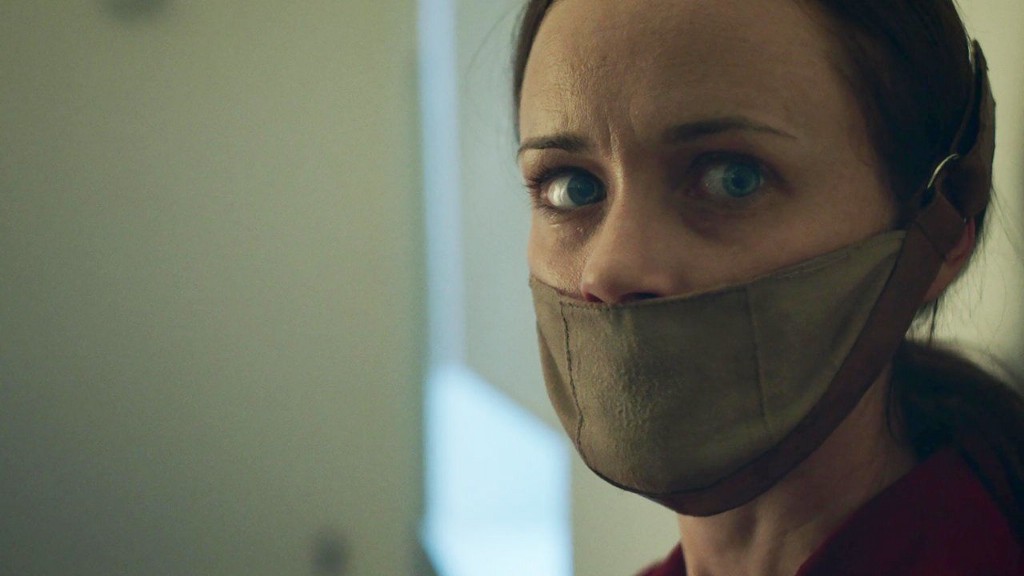
The setting of Jana Beňová’s first book in English, translated by Janet Livingstone and published by Two Dollar Radio, is mirrored in how the novel itself is built. The bursts of narration — as short as a few words and rarely longer than a page — are recurring contained units, and they provide a stabilizing uniformity to an otherwise eccentric set of characters and scenes. These vignettes are self-contained, but just like in those paneláks, the noise travels between them.

Elza says, “In Petržalka apartments all the walls play music and talk.” Far beyond the common struggle of early-morning garbage trucks or the footsteps of the people upstairs, Elza wakes up before dawn to the rhythmic singing of the Petržalka muezzins, their voices thudding against the walls, coming down from the ceiling, and throbbing from below.

Elza tries to pee in the comfort of her own bathroom, but the neighbor is laughing so aggressively that the sound encircles her “like a strap that’s too tight,” leaving her frozen on the toilet. “I leave the living room and look for a refuge,” Elza says in another scene as she escapes the noise coming through one wall. “But here the shouts of the woman in love reach me. I have the feeling that they woke up at night, took me out of my cell and sat me down in front of a porno film. But not just any porno film. The kind of porno film where they shit and piss.”

Sorry to Disrupt the Peace is Deeply Moving and Honest

Elza still somehow finds a lot to love in Petržalka, and the forced community in this book is one of its central joys. Many of the characters in Beňová’s book are rugged underachievers and one character claims that “the genius loci of Petržalka is in the fact that, in time, everyone here starts to feel like an asshole who never amounted to anything in life.” In the case of Elza, Ian, Lukas, and Rebeka, they’re a quartet of artists.

While some artist get their stipends from prestigious fellowships, Elza, Ian, Rebeka, and Lukas manage it in a much scrappier fashion: One of them works and makes money while the rest sit around drinking coffee and booze and creating. They rotate this responsibility. Beňová writes, “They were always shivering with cold, not dressed heavily enough, warming their hands on the hot mugs, mixing all kinds of alcohol, and continually writing something or making notes in books or magazines. Sometimes they would close a book loudly, put their hand on the spine and look off into the distance with a sigh.”

But while this posture of artistic indolence in the midst of post-Soviet disrepair can feel fun, the inactivity also claws at the characters, particularly Rebeka who’s made anxious by the productive bustle of others. In one vignette, Rebeka excitedly realizes she can levitate a shot glass using her mind. “She thought that her telekinesis abilities would save her life,” Beňová writes. “She wouldn’t have to earn money. They would leave the city and live in a little house by the sea. On one of the Greek Islands. Preferably Patmos.” But scientists later test her and find her telekinesis to be too humble and inconspicuous. “Three out of five people can do this. They just don’t know about it,” the experts tell her.

Petržalka is a major part of Bratislava, but Elza grew up in the old part of the city. She was raised believing that the Old Bridge was the beginning of an unpredictable road, where “a Sunday stroll changes to a fights for one’s life.” The experience of living in the nondescript towering apartment buildings of Petržalka is embodied in an early scene in which a young Elza goes to an outdated amusement park with her grandma. After getting rocked around while riding the old bumper cars, and staring at the bent-over men wandering the muddy complex, Elza enters the mirror-maze with her grandma. “We can’t get out — no way, no doors, the mirrors aren’t windows, nothing, just me and Grandma, Grandma and I, and our faces in the mirrors getting paler and paler.”

While there are two sides to this city, they are worlds apart. As Elza points out, even the rats don’t cross the bridge (the perk of which is that city officials can poison one side of the city at a time to exterminate the vermin). But when Elza’s mom and grandmother get on the wrong bus that ferries them deep into the high-rise apartment buildings, they grow frantic, just like Elza and her grandmother did in the mirror maze. “Miss! Miss! Excuse me, how can we get to Bratislava?” Elza’s mom blurts out to a stranger. “But you already are,” the woman says, “You are in Bratislava.”

They would be horrified to know that this is the Bratislava their own Elza would grow to happily call home.